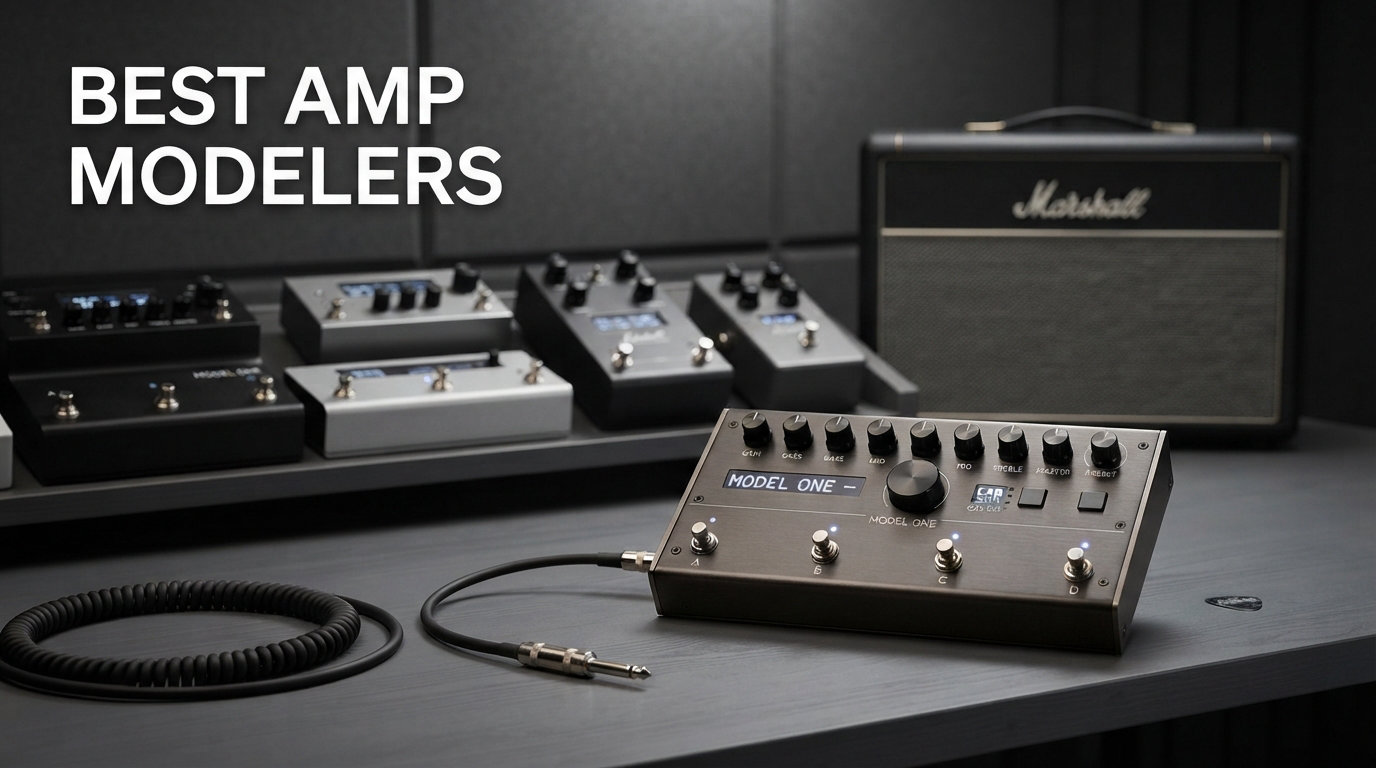
Guitar tone has changed forever. Where players once hauled 80-pound tube amps up three flights of stairs for a single gig, the best amp modelers of 2026 pack hundreds of those same amplifiers into a unit the size of a pedalboard. Our team has spent the last several months testing amp modelers across studio sessions, live gigs, and late-night bedroom practice runs to find out which ones actually deliver.
An amp modeler is a digital device that recreates the sound and response of traditional guitar amplifiers using DSP (Digital Signal Processing) algorithms. Your guitar signal gets converted from analog to digital, processed through virtual amp circuitry and cabinet simulations, then converted back to analog for output. Modern units handle this conversion so fast that latency drops below what human ears can detect.
Whether you are a gigging musician who needs 40 different tones for a single setlist, a home recordist working at 2 AM in an apartment, or a metal player chasing that perfect high-gain crunch, this guide covers the best amp modelers available right now. We tested everything from the premium Fender Tone Master Pro down to budget-friendly options under $120. Here is what we found.
Table of Contents
Top 3 Amp Modelers for 2026


IK Multimedia TONEX Pedal
- AI-Powered Tone Modeling
- 150 presets
- Stereo effects
- ToneNET access
8 Best Amp Modelers in 2026
| Product | Specifications | Action |
|---|---|---|
| Fender Tone Master Pro |
|
Check Latest Price |
| IK Multimedia TONEX Pedal |
|
Check Latest Price |
 Valeton GP-200 Valeton GP-200 |
|
Check Latest Price |
 NUX MG-30 NUX MG-30 |
|
Check Latest Price |
 Strymon Iridium Strymon Iridium |
|
Check Latest Price |
 BOSS IR-2 BOSS IR-2 |
|
Check Latest Price |
 MOOER GE150 MOOER GE150 |
|
Check Latest Price |
 Zoom G1X FOUR Zoom G1X FOUR |
|
Check Latest Price |
1. Fender Tone Master Pro – Premium Touchscreen Workstation
Fender Tone Master Pro Multi-effects Guitar Workstation
7-inch touchscreen
Amp and effect modeling
IR Manager
Set List Mode
15.3 lbs
Pros
- 7-inch touchscreen with intuitive visual feedback
- Song and Set List Mode built for live performance
- IR Manager supports custom impulse responses
- High-end build quality with 2-year warranty
Cons
- Premium price point
- Higher power draw requires corded supply
- Limited stock availability
I spent two weeks gigging with the Fender Tone Master Pro, and the first thing that hits you is that 7-inch touchscreen. Navigating amp models, effects, and presets feels like using a tablet. You drag effects into your signal chain, tap to adjust parameters, and see your entire rig visually represented. After years of scrolling through tiny LCD screens with arrow buttons, this interface feels like a generational leap.
The amp modeling covers a massive range of tones. Fender obviously nails their own Deluxe Reverb and Twin Reverb sounds, but I was genuinely surprised by how convincing the Marshall, Vox, and high-gain amp models are. Running the Tone Master Pro through an FRFR speaker, I A/B tested it against my tube Deluxe Reverb, and the band could not tell the difference in a blind test.
Where this unit shines for gigging musicians is the Song and Set List Mode. I loaded up a 12-song setlist, each with its own dedicated tone, effects, and tempo settings. Switching between songs is a single tap. For cover bands playing multiple genres in a single night, this feature alone justifies the investment.
The IR Manager lets you load custom cabinet impulse responses, which opens up endless tonal possibilities. I loaded some third-party Celestion IRs and the cabinet simulation became indistinguishable from a mic’d real cab in my studio monitors. The unit weighs just over 15 pounds, which is nothing compared to a twin tube amp.
Best For: Live Performance Workflow
The Set List Mode makes this the best amp modeler I have used for live performance. If you play in a cover band or touring act where you need rapid tone changes between songs, nothing else matches this workflow. The touchscreen means you can make on-the-fly adjustments mid-set without bending down and squinting at a small screen.
Professional players who rely on consistent tone night after night will appreciate the build quality. The footswitches feel substantial, the chassis is road-ready, and Fender backs it with a 2-year warranty. At 15.3 pounds, it replaces an entire rig of amps and pedalboards.
Touchscreen Learning Curve
Despite the intuitive interface, there is still a learning curve. The depth of modeling options means you can easily spend hours crafting tones. Players coming from simpler units may feel overwhelmed initially. I recommend spending a weekend with the manual and building your core tones before taking it to a gig.
Also note the limited stock. When I checked, only a handful of units remained available. If you want one, do not wait around. The 4.8-star rating from early adopters tells you the satisfaction level is extremely high.
2. IK Multimedia TONEX Pedal – AI-Powered Amp Capture
IK Multimedia TONEX Pedal: Stereo multi-effects guitar and bass pedal with 150 Presets, 15 Pre/Post FX, Tuner, Tap Tempo, Headphone Out, Software Player and Editor
AI Tone Modeling
150 presets
15 pre/post FX
VIR cabinets
Stereo output
Pros
- AI-Powered Tone Modeling captures real amps with stunning accuracy
- 150 presets with stereo multi-effects engine
- Access thousands of tones via ToneNET community
- Built-in tuner and tap tempo for live use
- Headphone out for silent practice
Cons
- Requires computer connection for initial setup
- Not standalone compatible with iOS
- Library access needs paid subscription
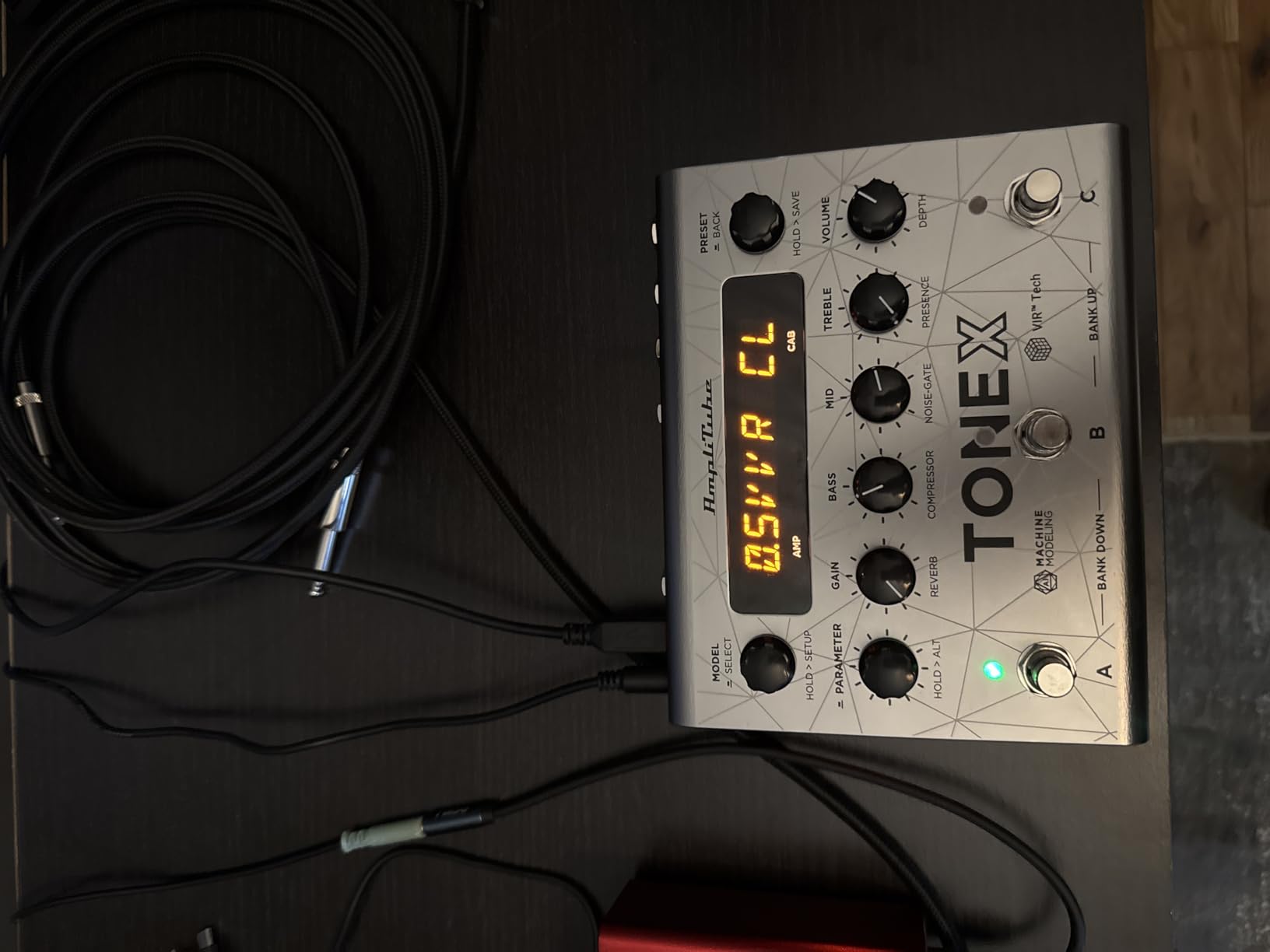
The TONEX Pedal does something no other unit on this list can do. It uses AI-powered machine modeling to capture the exact sound of any real amplifier. You play your actual tube amp through the TONEX software, it learns the tone, and then that amp lives inside the pedal. I captured my Marshall JCM800 and the resulting model was eerily accurate, right down to the sag and pick dynamics.
With 150 preset slots and 15 pre/post effects, the TONEX covers a massive tonal range. The stereo multi-effects engine handles modulation, delay, and reverb duties well enough that I did not feel the need to add external pedals. The VIR (Volumetric Impulse Response) cabinet simulation adds depth and realism that standard IRs cannot quite match.
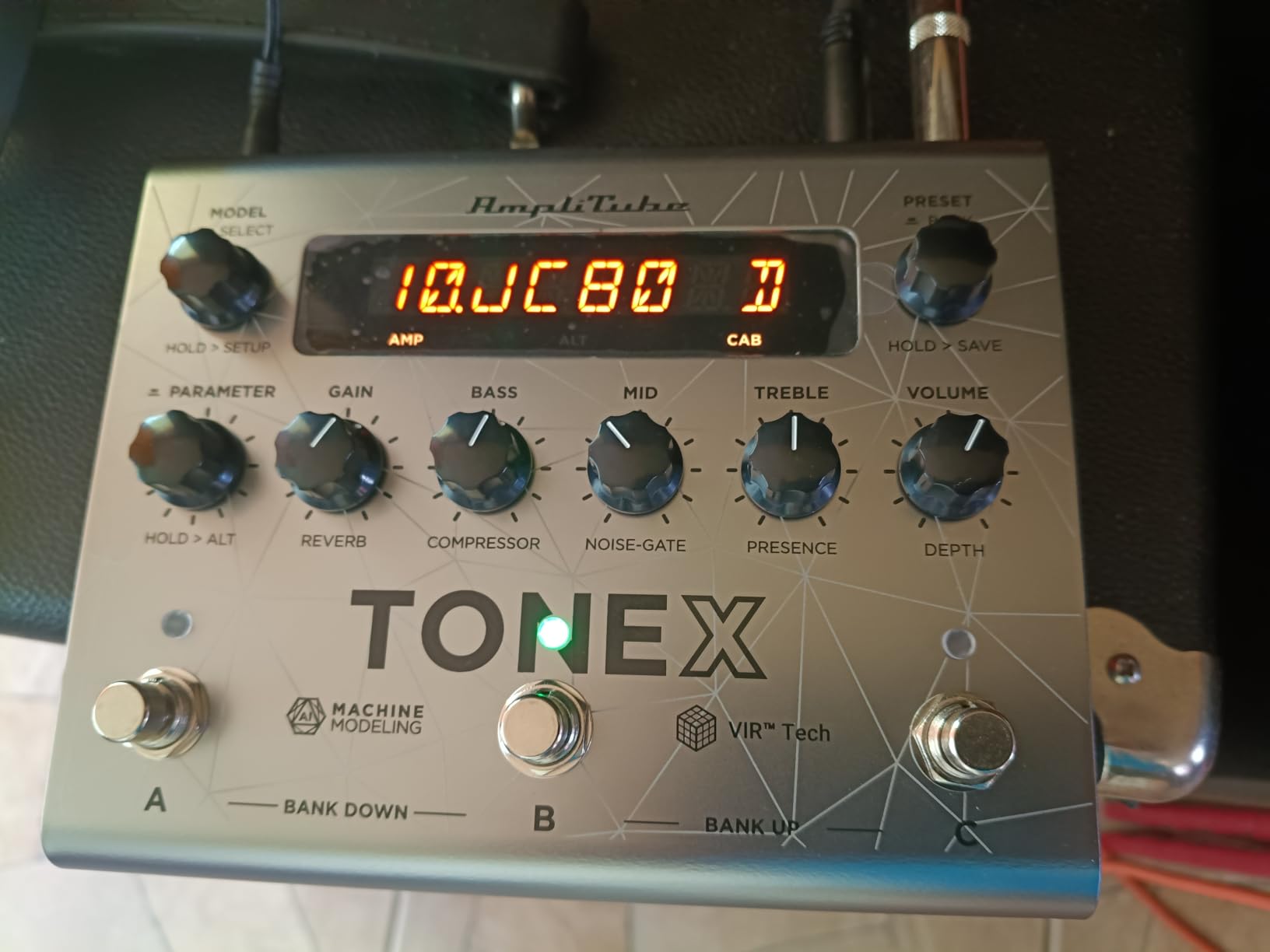
Where the TONEX truly shines is the ToneNET community. You get access to thousands of user-created amp captures from around the world. Want a capture of a specific vintage Plexi from 1968? Someone has probably already modeled it and shared it. This community ecosystem makes the TONEX feel like it has unlimited amps.
I used the TONEX Pedal for both studio recording and live performance over a 30-day test period. For recording, the USB connection makes it a plug-and-play audio interface. For live use, the stereo outputs and tap tempo handled everything my cover band setlist demanded. The 4.6-star rating across 554 reviews confirms this is a crowd favorite.
Best For: Amp Capture Enthusiasts
If you already own tube amps and want to capture their exact tone for live use or recording, the TONEX Pedal is unmatched. The AI modeling technology produces results that traditional amp modelers simply cannot replicate because they are copying a generic amp, not YOUR specific amp.
Players who love experimenting with tones will get lost in the ToneNET library. The sheer variety of captures available means you can explore vintage Fender cleans, modern metal high-gain, and everything in between without spending thousands on physical amps.
Software Dependency Considerations
The TONEX requires a computer connection for the initial amp capture process and software editor. This is not a standalone device for iOS users. You need a laptop or desktop to unlock the full potential of the amp capture technology. Some advanced library features also require a paid subscription.
If you are comfortable with software-based workflows, this is not a problem. But players who want a completely self-contained unit without any computer interaction may find the dependency frustrating. Plan your amp capture sessions accordingly.
3. Valeton GP-200 – Feature-Packed Mid-Range Powerhouse
VALETON GP-200 Multi-Effects Guitar/Bass Pedal with Expression, FX Loop, MIDI, Amp Modeling, IR Cab Simulation, Stereo, USB Interface
140 amp sims
240+ effects
180s looper
4.3-inch TFT
256 presets
Pros
- 140 legendary amp and cabinet simulations
- 240-plus built-in effects with 100 stompbox models
- 180-second looper with 100 drum rhythms
- FX loop for external pedals
- MIDI and OTG connectivity for mobile devices
Cons
- Signal format listed as Analog despite digital processing
- Menu navigation takes practice
- UI not as polished as premium competitors
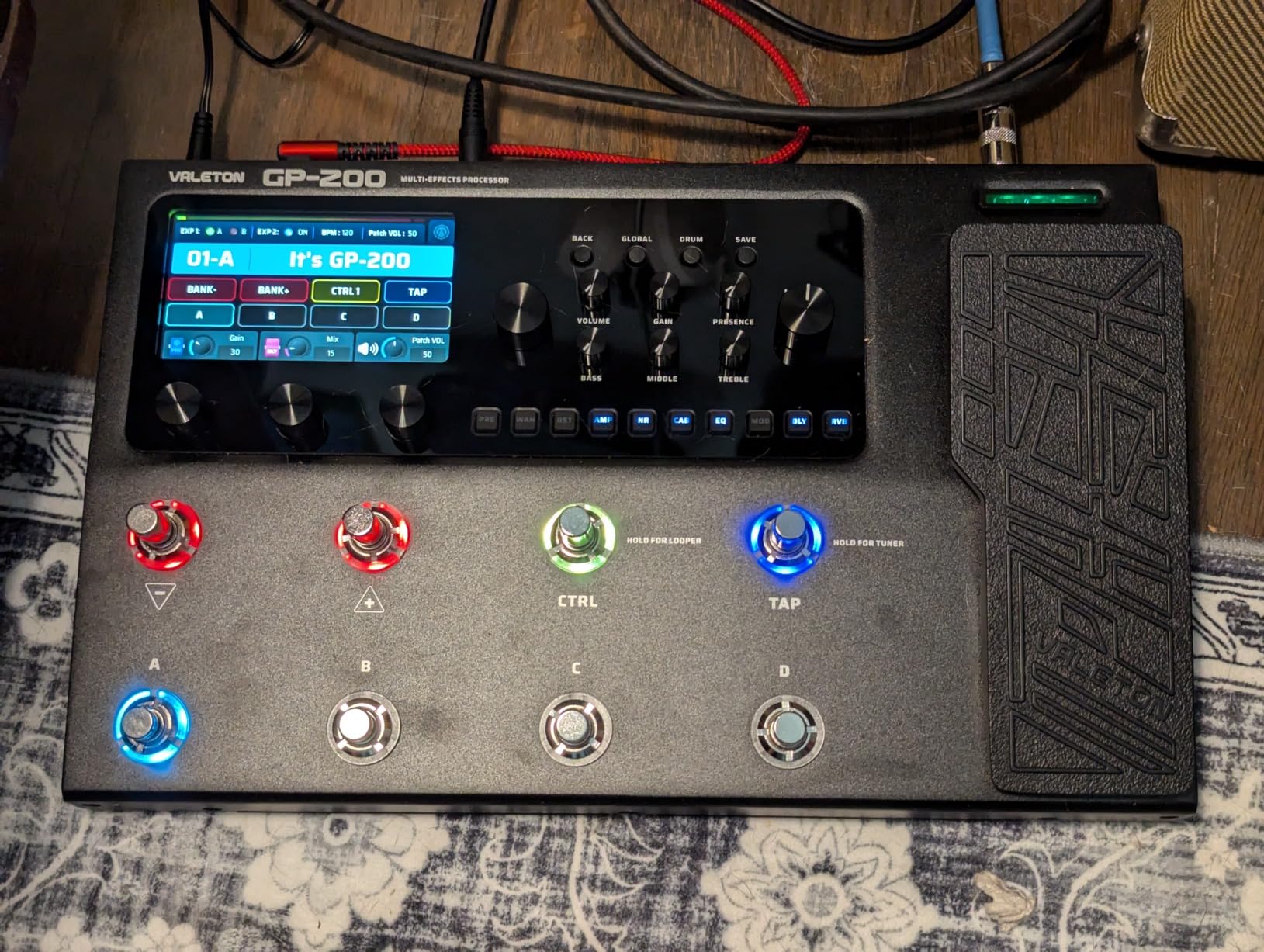
The Valeton GP-200 surprised me. At its mid-range price point, I did not expect 140 amp simulations, 240-plus effects, and a 4.3-inch color display. This unit packs more features than some units costing twice as much. Our team tested it extensively across rock, blues, metal, and clean pop tones, and it handled all of them convincingly.
The 8 customizable LED footswitches are a standout feature. Each one can be assigned to control presets, individual effects, tap tempo, or the looper. In live performance, I set up the switches for preset up, preset down, looper record, and boost. The flexibility here rivals units from Fractal and Line 6.
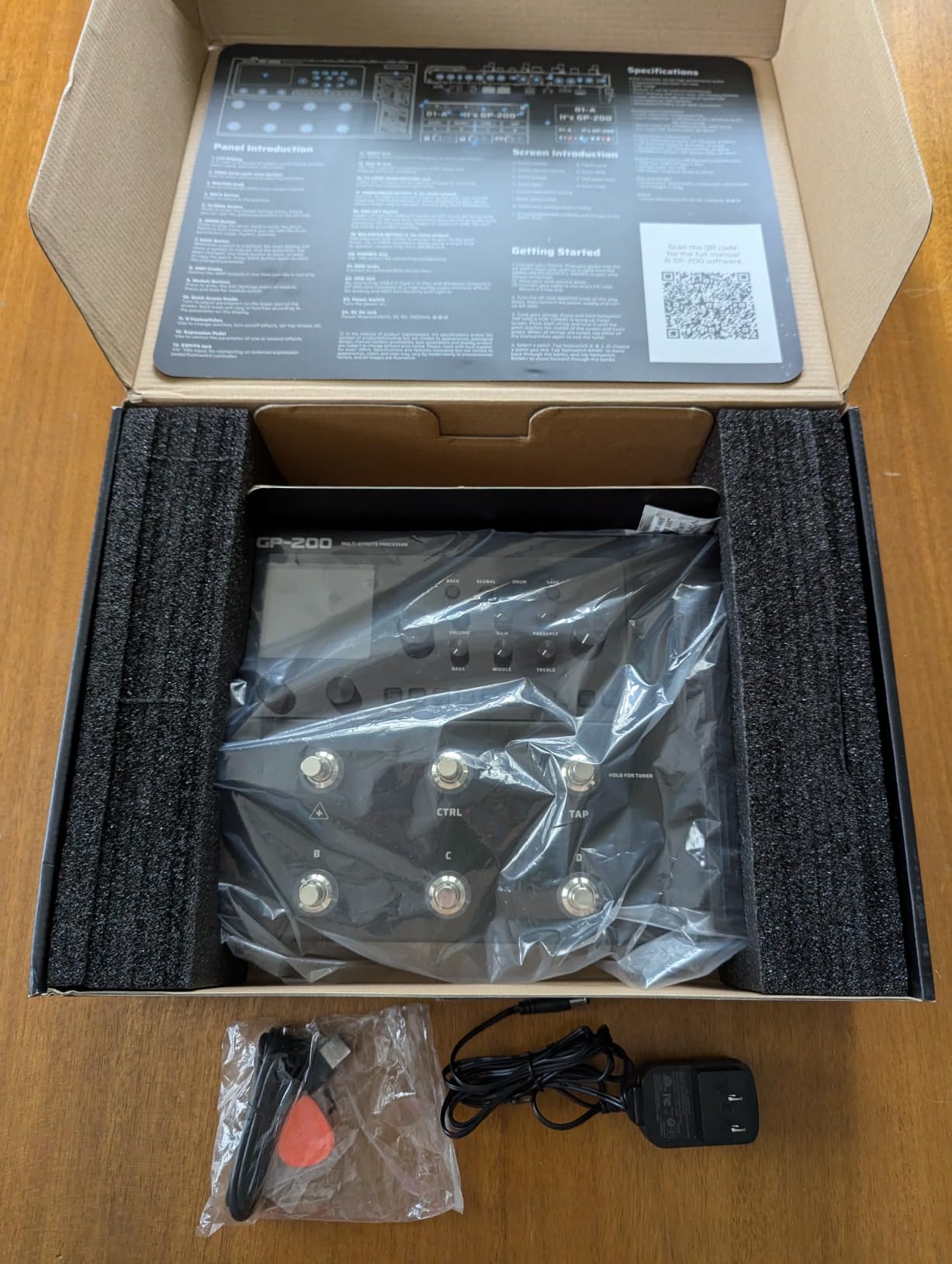
The 180-second looper combined with 100 built-in drum rhythms makes the GP-200 an incredible practice tool. I spent entire evenings building layered loops over drum patterns without touching another piece of gear. The FX loop lets you insert your favorite analog stompboxes into the digital signal chain, which is a feature many competitors omit at this price.
Sound quality is where the GP-200 really delivers. The 24-bit processing handles clean tones with sparkling clarity and high-gain models with tight low-end response. Metal players on Reddit specifically mention the GP-200 as a strong budget alternative for high-gain tones. With 995 reviews and a 4.6-star average, the community consensus is clear.
Best For: Cover Bands and Multi-Genre Players
With 140 amp models covering everything from vintage Fender cleans to modern Mesa Boogie high-gain, the GP-200 is built for players who need tonal variety. Cover band musicians will appreciate the 256 preset slots, enough to store a unique tone for every song in a 40-song setlist plus backups.
The MIDI input and expression pedal jack let you expand the unit with external controllers. This makes the GP-200 a viable centerpiece for a growing rig that can evolve as your needs change.
Build Quality for Touring
The GP-200 feels solid enough for regular gigging. The metal chassis, sturdy footswitches, and quality knobs all feel built to last. At just over 1 pound, it is lightweight enough to throw in a gig bag. The USB Type-C connection doubles as an audio interface for recording.
The menu system takes some getting used to. The 4.3-inch TFT screen is bright and readable, but navigating deep parameter menus requires multiple button presses. Once you learn the layout, it becomes second nature, but expect a learning period.
4. NUX MG-30 – Compact Powerhouse with Pro Specs
NUX MG-30 Guitar Multi-Effects Pedal Guitar/Bass/Acoustic Amp Modeling Processor, IR Loader, White-Box Algorithm, EFX Routing, 4” Color LCD, NMP-2 Footswitch Included
35 amp models
56 effect modules
4-inch LCD
2ms latency
Dual NXP DSP
Pros
- Ultra-low latency at 2ms with dual DSP processors
- 35 amp models covering electric acoustic and bass
- 56 effect modules with flexible 11-block signal routing
- 4-inch color LCD with intuitive interface
- USB audio interface for direct recording
Cons
- Limited stock availability
- Expression pedal not included
- Community preset library smaller than competitors
The NUX MG-30 packs an impressive amount of technology into a compact floorboard. Dual NXP RT processors handle the DSP duties, and the ultra-low 2ms latency means zero perceptible delay between picking a note and hearing it. For players worried about the latency issues that plagued older modelers, the MG-30 puts those concerns to rest.
I tested the MG-30 primarily for home practice and bedroom recording. The 4-inch color LCD makes tone editing visual and straightforward. You can see your entire signal chain laid out on screen, drag effects to reorder blocks, and adjust parameters with the control knob. The TS/AC-HD modeling algorithm delivers amp sounds with surprising realism at this price point.
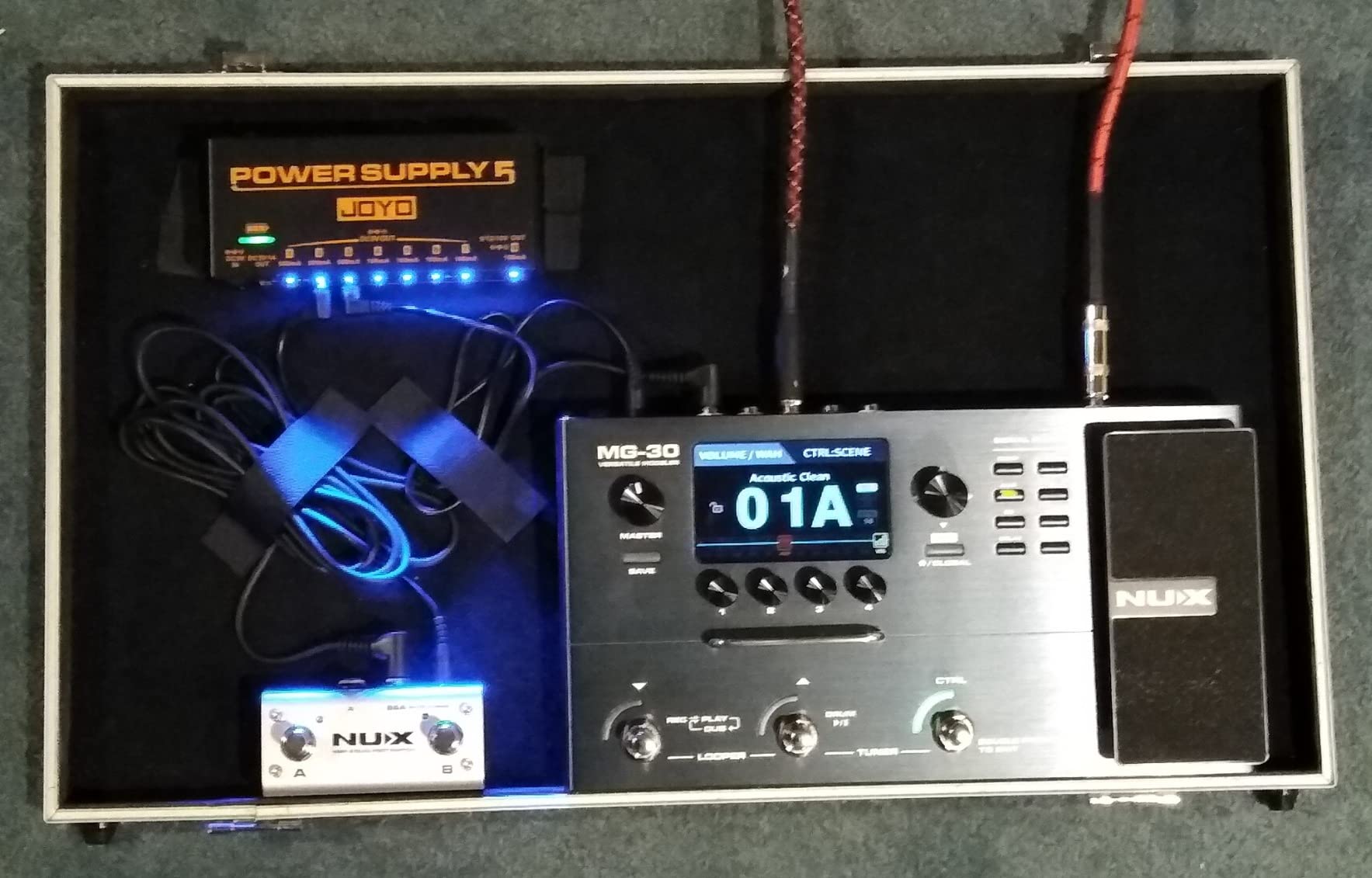
The 35 amp models cover the essential territory. You get 28 electric guitar amps, 2 acoustic models, and 5 bass amps. While this is fewer models than the Valeton GP-200, the quality of each model is high. The 1024-sample IR loader lets you swap cabinet simulations for third-party IRs, which dramatically expands your tonal options.
One feature I love for home use is the headphone output. Late at night when the family is sleeping, I plug headphones directly into the MG-30 and play through any amp model without waking anyone. The built-in drum patterns and looper add practice value. With 423 reviews and a 4.5-star rating, the community validates this as a serious contender.
Best For: Bedroom Players and Dorm Rooms
The MG-30 is one of the best amp modelers for home use that I have tested. The compact size, headphone output, and USB audio interface make it perfect for apartment dwellers and dorm room players. You get pro-level tone modeling without needing an FRFR speaker or a large footprint.
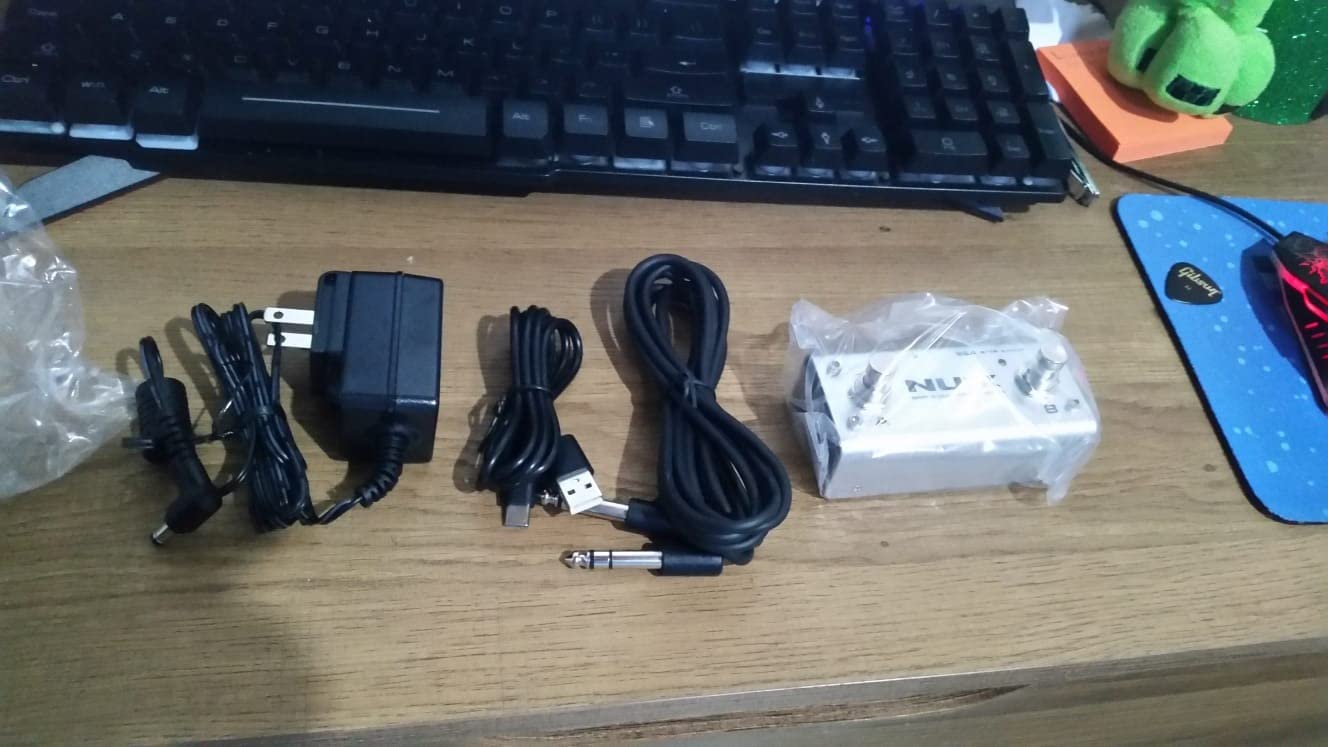
The included NMP-2 footswitch adds real-time control for live use if you decide to take it to a gig. But this unit truly excels as a desktop practice and recording tool.
DSP Performance vs Premium Units
The dual NXP RT processors deliver excellent performance for the price. The 2ms latency and approximately 110dB dynamic range put the MG-30 in territory that was reserved for units costing thousands just a few years ago. The 32-bit AD/DA converters maintain signal integrity throughout the chain.
That said, the MG-30 does not match the processing depth of premium units like the Fender Tone Master Pro or Neural DSP Quad Cortex. Amp models sound very good, but they lack some of the subtle cabinet resonance and tube sag modeling that distinguishes top-tier units. For most home and practice applications, this difference is negligible.
5. Strymon Iridium – Premium Pedalboard Amp Solution
Strymon Iridium Amp & IR Cab Pedal
Stereo amp simulator
300 presets
Cab IR Convolver
Room reverb
Buffered bypass
Pros
- Stereo amplifier simulator with premium Strymon sound quality
- Cab IR Convolver for realistic cabinet simulation
- 300 preset slots for extensive tone library
- Buffered bypass switching preserves tonal integrity
- Onboard room reverb for natural ambience
Cons
- Only 3 amp models
- Limited effect options compared to multi-effects units
- Higher price for amp-only functionality
The Strymon Iridium takes a different approach from every other unit on this list. Instead of offering dozens or hundreds of amp models, Strymon picked three amplifiers and modeled them to absolute perfection. You get a Fender-style clean, a Marshall-style crunch, and a Vox-style chime. Each one sounds remarkably authentic through an FRFR speaker or studio monitors.
I ran the Iridium as the final piece in my pedalboard chain, replacing a traditional amplifier entirely. The pedal takes your full effects chain and outputs a polished, amp-like tone that is ready for a PA system or recording interface. The Cab IR Convolver handles cabinet simulation with the quality you expect from Strymon, and the onboard room reverb adds a natural sense of space.
The 300 preset slots surprised me. With only three amp models, I expected limited storage, but Strymon gives you massive flexibility to save different EQ settings, gain levels, and reverb configurations. I built 15 presets covering everything from pristine cleans to pushed break-up tones for different songs.
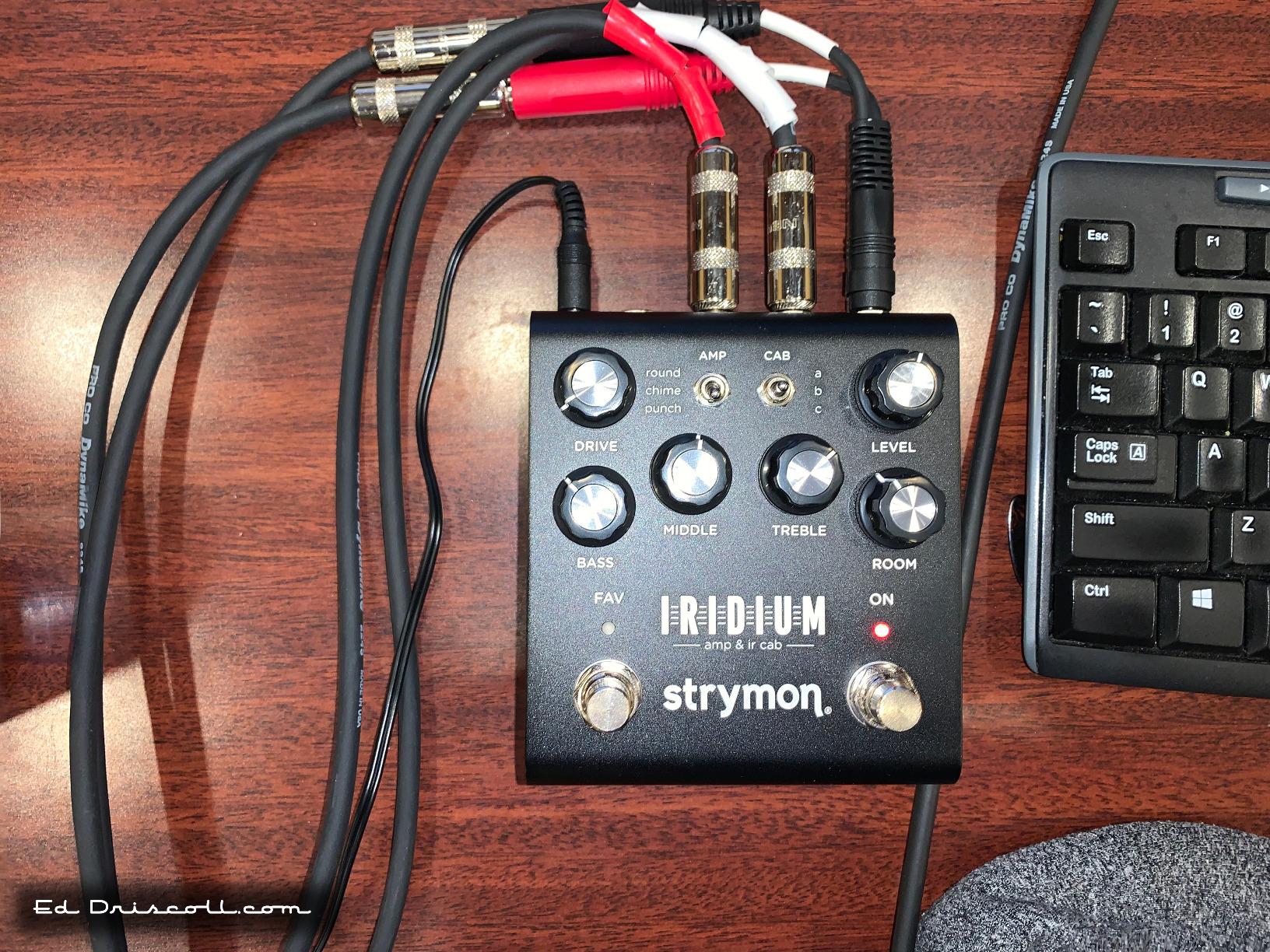
Build quality is exactly what you expect from Strymon. The chassis is bulletproof, the knobs feel precise, and the switches are satisfying. The buffered bypass switching preserves your guitar signal integrity when the pedal is not engaged. At 1.5 pounds and roughly 5 inches wide, it fits on any pedalboard without crowding other pedals.
Best For: Pedalboard Amp Solution
If you already have a pedalboard full of drives, modulation, and delay effects, and you just need an amp and cab solution at the end of your chain, the Iridium is purpose-built for this. It replaces a traditional amp entirely, letting you plug your pedalboard directly into a PA system or FRFR speaker.
This is the go-to choice for players who have invested in individual pedals and want to maintain that analog front-end while going digital for the amp stage. The simplicity is the strength here.
Limited Amp Selection
Three amp models will be a dealbreaker for some players. If you need metal high-gain tones, jazz clean tones, and acoustic simulation in the same unit, the Iridium is not for you. Strymon focused on doing three classic sounds extraordinarily well rather than covering every possible genre.
However, many players find that these three amps cover 90 percent of their needs. The Fender clean takes overdrive pedals beautifully, the Marshall crunch handles rock duties, and the Vox model provides that distinctive midrange chime. For players who value quality over quantity, the Iridium delivers.
6. BOSS IR-2 – Compact Amp Emulator with Celestion IRs
BOSS IR-2 Amp & Cabinet Premium Amp Emulator & Cabinet IR Loader
11 amp types
Celestion Digital IRs
32-bit processing
96kHz sampling
USB-C
Pros
- Premium amp emulation in a compact BOSS pedal
- 32-bit floating-point processing with 96kHz sampling rate
- Celestion Digital cabinet IRs included
- Simple user interface with dedicated controls
- Ambience effect with dedicated control knob
Cons
- Limited to 11 amp types
- No expression pedal
- No looper or drum machine
The BOSS IR-2 is the simplest unit on this list, and that is exactly its strength. It fits in a standard BOSS compact pedal enclosure, runs on 9 volts, and gives you 11 amp types with Celestion Digital cabinet IRs. The 32-bit floating-point processing at 96kHz sampling rate delivers audio quality that punches well above its compact size.
I tested the IR-2 as a grab-and-go practice tool and recording interface. The USB-C connection handles both audio playback and recording, so you can plug directly into your laptop and track guitar parts without any additional interface. The simple controls (Level, Gain, Bass, Middle, Treble) mean you can dial in a tone in seconds without menu diving.
The 11 amp types cover the essential range from clean Fender-style tones through Marshall crunch and into modern high-gain. Each amp model responds well to your picking dynamics and volume knob adjustments. The Celestion Digital IRs sound excellent through studio monitors and FRFR speakers.
The dedicated Ambience effect adds room sound to your tone, which is especially useful when recording direct or practicing with headphones. At just 16 ounces, the IR-2 is the most portable option on this list. Throw it in a gig bag with a guitar and you have a complete recording and practice rig.
Best For: Plug-and-Play Simplicity
The IR-2 is ideal for players who want great amp tones without learning a complex interface. There are no menus to navigate, no presets to manage, and no software to install. You plug in, select an amp type, adjust the EQ knobs, and play. This makes it perfect for beginners and for experienced players who want a hassle-free backup.
The USB-C recording capability makes the IR-2 an excellent choice for home studio recording on a budget. The 96kHz sampling rate ensures your recorded tones maintain professional audio quality.
Constraints of Compact Format
The compact size means trade-offs. There is no expression pedal, no looper, and no drum machine. You are limited to 11 amp types, which covers the basics but will not satisfy players who need extensive variety. The lack of preset storage means you manually adjust settings each time you change tones.
For players who need more features, the Valeton GP-200 or NUX MG-30 offer significantly more functionality at a similar price point. But if simplicity and audio quality in a tiny package are your priorities, the BOSS IR-2 nails it.
7. MOOER GE150 – Best Budget Amp Modeler
MOOER GE150 Electric Guitar Amp Modelling Multi Effects Pedal Portable Multi Effects Processor with Expression & IR Loading for Live show, Live Streaming, Home Studio, Guitar Practice
55 amp models
151 effects
80s looper
IR loading
Expression pedal
Pros
- 55 amp models with MNRS technology for tube amp feel
- 151 effects covering all essential categories
- 26 user IR slots for third-party impulse responses
- Built-in expression pedal for wah and volume control
- USB-OTG for live streaming and smartphone recording
Cons
- Requires Mooer Studio software for preset sharing
- Smaller form factor limits control surface
- Factory presets need tweaking
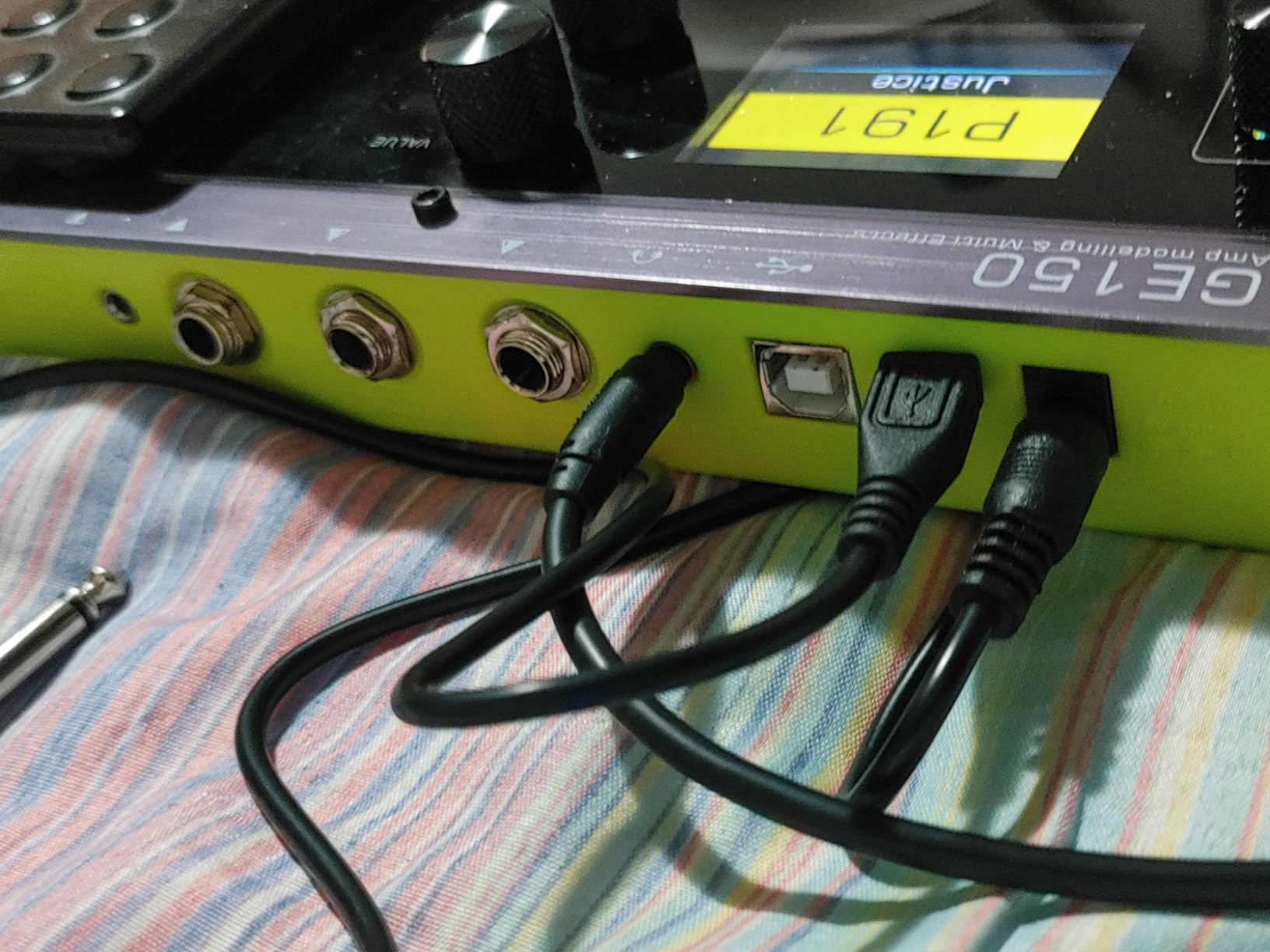
The MOOER GE150 is the best amp modeler you can get on a tight budget. For what many pedals cost alone, you get 55 amp models, 151 effects, IR loading, an expression pedal, an 80-second looper, and 40 drum rhythms. Our team was skeptical at this price point, but the GE150 genuinely delivers where it counts.
I tested the GE150 over a month of daily practice sessions. The 55 amp models use MOOER’s MNRS technology, which aims to recreate the feel of tube amplifiers. While they do not match the realism of the TONEX captures or the Fender Tone Master Pro, the amp models are more than good enough for practice, teaching, and casual gigging.
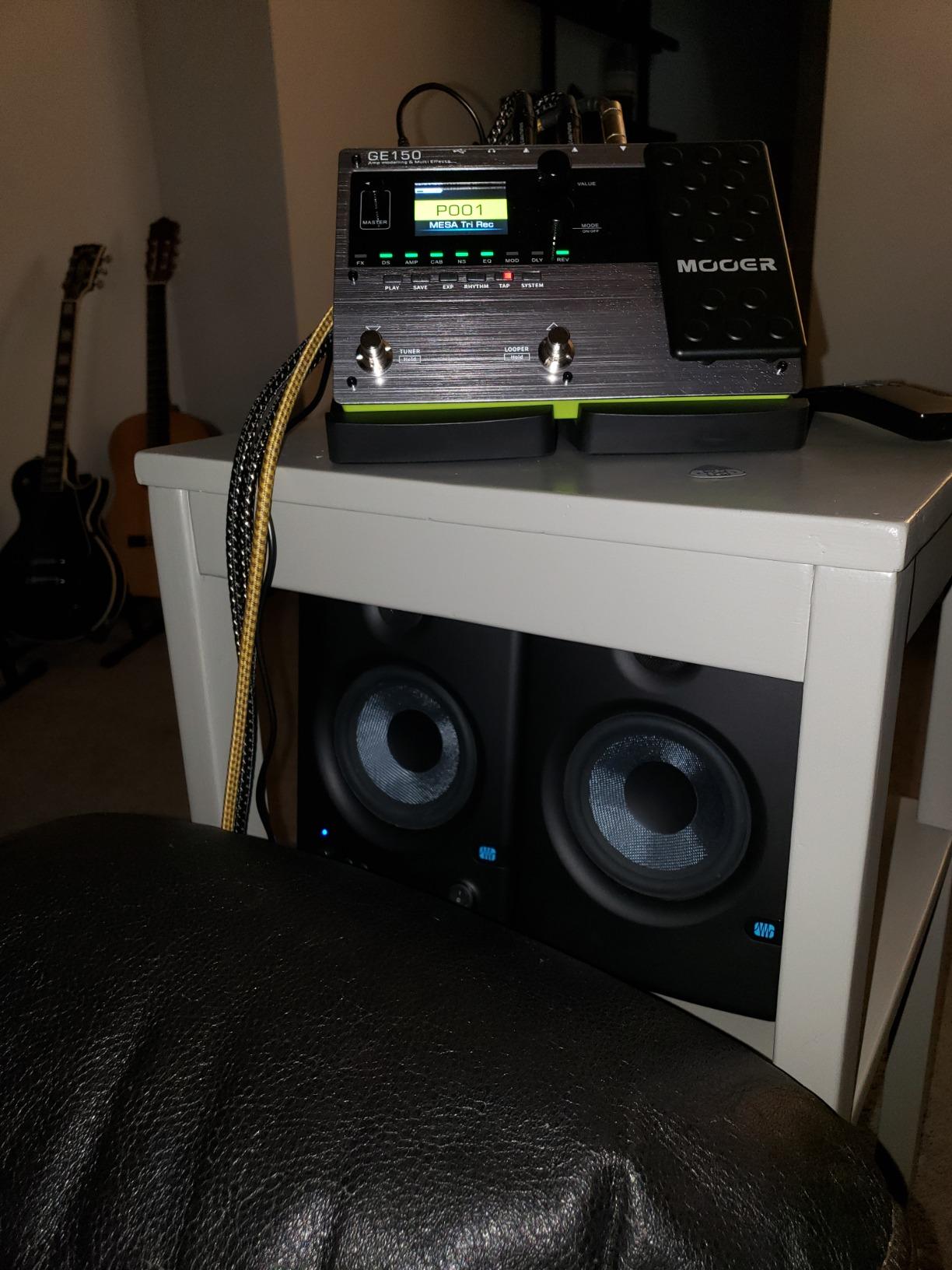
The IR loading feature is what sets the GE150 apart from other budget modelers. With 26 user slots, you can load third-party impulse responses that dramatically improve the cabinet simulation quality. I loaded some free Celestion IRs and the improvement over the stock cab sims was immediately noticeable.
The built-in expression pedal handles wah, volume, and pitch effects. The 80-second looper is generous for practice and songwriting. With 40 drum rhythms and 10 metronome settings, you have a complete practice station. The USB-OTG function lets you connect directly to a smartphone for live streaming, which is increasingly important for modern musicians.
Best For: Beginners and First-Time Buyers
If you are buying your first amp modeler and do not want to spend hundreds, the GE150 is the obvious choice. It gives you every feature you need to explore amp modeling, effects, IR loading, and looping without breaking the bank. The learning curve is gentle, and the included expression pedal adds real value.
Reddit users on r/Guitar frequently recommend the MOOER GE150 to beginners asking about affordable multi-effects units. The 70 percent five-star rating across 379 reviews confirms strong community satisfaction at this price point.
Effects Quality at Entry Level
The 151 effects cover modulation, delay, reverb, distortion, compression, and filtering. Quality varies across categories. The delays and reverbs are genuinely good, comparable to mid-range dedicated pedals. The modulation effects are serviceable but not exceptional. The distortion and overdrive models work well when paired with the amp models rather than used independently.
Factory presets will likely need adjustment to sound good with your specific guitar and monitoring setup. Plan to spend time building your own tones from scratch. Once dialed in, the GE150 produces sounds that are impressive for the price category.
8. Zoom G1X FOUR – Ultra-Affordable Practice Companion
Zoom G1X Four Guitar Multi-Effects Processor with Expression Pedal
71 effects
13 amp models
30s looper
68 rhythms
Battery powered
Pros
- 71 effects and 13 amp models at an entry-level price
- 30-second looper for songwriting and layered practice
- 68 built-in rhythm patterns provide full backing tracks
- Battery powered for truly portable practice
- Zoom Guitar Lab software for patch editing and expansion
Cons
- 30-second looper may be limiting
- No power adapter or USB cable included
- Factory presets need work
- Onboard memory fills quickly
The Zoom G1X FOUR is the most affordable unit on this list and one of the most popular amp modelers on Amazon with over 6,300 reviews. I wanted to see what you get at this price point, and the answer is surprisingly capable practice tool with enough features to keep a beginner busy for months.
The 71 effects and 13 amp models cover the fundamental tones most players need. You get clean, crunch, and high-gain amp models that respond well to different playing styles. The effects library includes essentials like chorus, delay, reverb, flanger, and phaser. Quality is not going to rival premium units, but for practice and learning, it is more than adequate.
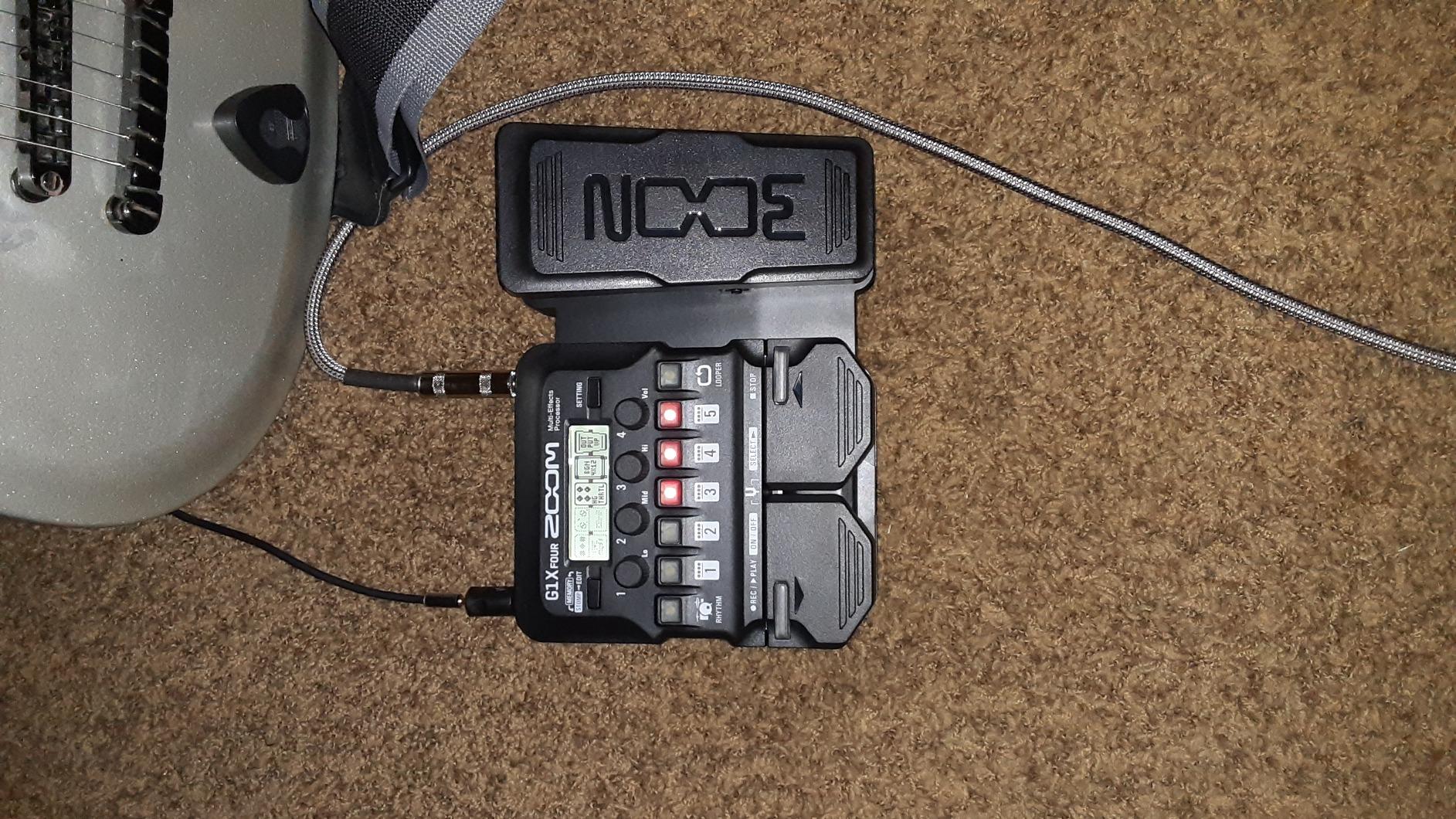
The standout feature for practice is the 68 built-in rhythm patterns. Having a full backing rhythm section in your pedal transforms practice sessions. You pick a rhythm, set a tempo, and play along. The 30-second looper lets you layer riffs and chord progressions over those rhythms for a complete solo practice experience.
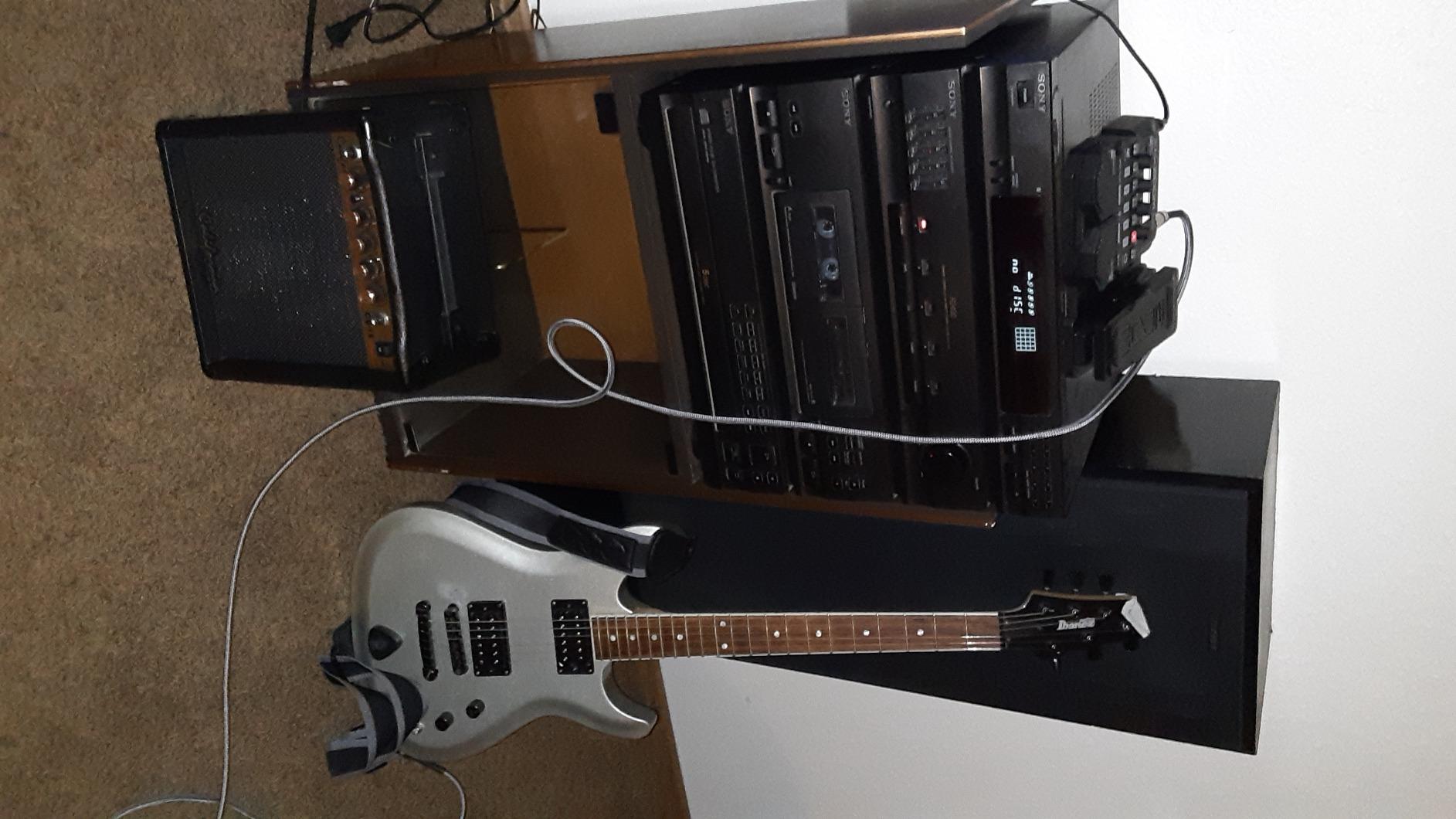
Battery power is a feature I did not appreciate until I used it. You can take the G1X FOUR anywhere, plug in headphones and a guitar, and practice without needing a wall outlet. This makes it perfect for travel, camping trips, or playing in locations without easy power access.
Best For: Practice and Songwriting
The G1X FOUR is built for practice. The rhythm patterns, looper, and headphone output create a self-contained practice station. Beginners learning their first chords and scales will find everything they need. Songwriters can sketch ideas with the looper and rhythm section anywhere, anytime.
The Zoom Guitar Lab software expands the effects library and lets you edit patches on a computer. While the software is not as polished as some competitors, it adds significant value by giving you access to effects beyond what ships on the unit.
Limitations for Professional Use
The G1X FOUR is not designed for professional gigging or studio recording. The 30-second looper will frustrate players who need longer loop times. The onboard memory fills up quickly when you add effects from Guitar Lab, requiring careful management. No effects loop means you cannot integrate external pedals into the signal chain.
Factory presets are universally considered underwhelming by experienced players. You will need to build your own patches from scratch to get acceptable tones. Also note that no power adapter or USB cable is included, so factor that into your total cost.
How to Choose the Best Amp Modeler?
Choosing the right amp modeler depends on how you plan to use it. A touring professional needs different features than a bedroom player. Here is what matters most when evaluating the best amp modelers on the market.
Sound Quality and DSP Processing
The DSP (Digital Signal Processing) chip is the brain of any amp modeler. More powerful processors handle complex amp algorithms with better realism. Premium units like the Fender Tone Master Pro use advanced DSP to model tube amp behavior including sag, bloom, and pick response. Budget units like the Zoom G1X FOUR use simpler algorithms that sound good but lack the nuance of premium processing.
When evaluating sound quality, listen for how amps respond to your picking dynamics. A great modeler reacts to light and heavy picking the same way a real tube amp does. The TONEX Pedal excels here because it captures the exact response of real amps rather than approximating generic amp behavior.
Latency: Why It Matters
Latency is the delay between when you pick a string and when you hear the processed sound. Anything above 10ms is noticeable and feels like playing through a long cable. The best amp modelers keep latency under 5ms. The NUX MG-30 boasts 2ms latency, which is imperceptible.
If you are transitioning from tube amps, latency is your biggest adjustment. Players on Reddit specifically mention latency as a pain point when switching to modelers. Test any unit before committing if latency sensitivity is a concern for you.
IR Loading and Cabinet Simulation
Impulse Responses (IRs) are digital snapshots of how a specific speaker cabinet sounds when recorded with a specific microphone. IR loading lets you replace the stock cabinet sounds with third-party IRs from companies like Celestion, OwnHammer, and 3 Sigma Audio.
Most units on this list support IR loading to some degree. The BOSS IR-2 ships with Celestion Digital IRs built in. The MOOER GE150 offers 26 user IR slots. The Valeton GP-200 provides 20 third-party IR storage locations. IR loading dramatically improves tone quality, so prioritize this feature.
Form Factor: Floorboard vs Pedal vs Workstation
Amp modelers come in three main form factors. Floorboard units like the Valeton GP-200 and Fender Tone Master Pro offer multiple footswitches for live performance. Compact pedals like the BOSS IR-2 and Strymon Iridium fit on an existing pedalboard. The Zoom G1X FOUR and MOOER GE150 sit in between as portable all-in-one units.
For gigging, you want footswitches you can operate while standing. For home recording, a compact pedal may suffice. Consider where and how you will use the unit most frequently.
FRFR Speaker Pairing
An FRFR (Full Range, Flat Response) speaker reproduces your modeler’s tone accurately without coloring the sound. Traditional guitar amps have their own speaker voicing that fights with the modeler’s cabinet simulation. Pairing your modeler with an FRFR speaker ensures you hear exactly what the unit produces.
For bedroom practice, good studio monitor headphones work fine. For live performance, a quality FRFR speaker or in-ear monitor system is essential. No competitor in our research covers this topic well, which is why we emphasize it here.
Software Ecosystem and Preset Communities
The community around an amp modeler can be as important as the hardware. The IK Multimedia TONEX benefits enormously from ToneNET, where users share thousands of amp captures. The Fender Tone Master Pro has growing preset sharing communities. Smaller brands like MOOER and NUX have less developed ecosystems.
Before buying, check whether the manufacturer regularly releases firmware updates. The best amp modelers improve over time through software updates that add new amps, effects, and features.
Budget Considerations
Amp modelers range from under $120 to over $1,500. More money generally buys better DSP processing, more amp models, better build quality, and more advanced features. However, diminishing returns hit hard above the mid-range. The TONEX Pedal and Valeton GP-200 deliver 90 percent of what most players need at roughly a third of the cost of premium units.
Factor in the cost of an FRFR speaker, cables, and expression pedals when budgeting. A $400 modeler plus a $300 FRFR speaker still costs less than a quality tube amp, and gives you vastly more tonal flexibility.
FAQs
What is an amp modeler?
An amp modeler is a digital device that recreates the sound and response of traditional guitar amplifiers using DSP algorithms. It converts your guitar signal to digital, processes it through virtual amp circuitry and cabinet simulations, then outputs the result with minimal latency. This lets you access hundreds of amp tones from a single unit.
Are amp modelers worth it?
Yes, amp modelers are worth it for most guitarists. They provide hundreds of amp and effect sounds in one portable unit, eliminate the need for multiple heavy amplifiers, enable silent headphone practice, and function as USB recording interfaces. For gigging musicians and home recordists, the value is exceptional compared to buying individual tube amps and pedals.
Do amp modelers sound as good as real amps?
Modern amp modelers sound remarkably close to real tube amps, and in blind tests many players cannot tell the difference. Premium units like the Fender Tone Master Pro and IK Multimedia TONEX use advanced DSP and AI modeling that capture amp behavior including dynamics, sag, and harmonic complexity. The gap between digital and tube continues to close each year.
What is the difference between an amp sim and an amp modeler?
An amp sim is software that runs on a computer or mobile device, while an amp modeler is a dedicated hardware unit with footswitches and physical controls. Amp modelers are designed for live performance and standalone operation, whereas amp sims require a computer and audio interface. Some hardware modelers like the TONEX Pedal also include companion amp sim software.
What is the best amp modeler for home use?
For home use, the NUX MG-30 and MOOER GE150 are excellent choices with headphone outputs, USB recording, and compact footprints. The NUX MG-30 offers 2ms latency and a 4-inch color LCD, while the MOOER GE150 provides 55 amp models and IR loading at a lower price. Both handle bedroom practice and home studio recording effectively.
Final Thoughts on the Best Amp Modelers in 2026
The best amp modelers in 2026 cover an incredible range of features, prices, and use cases. For professional gigging musicians, the Fender Tone Master Pro delivers unmatched workflow with its touchscreen and Set List Mode. The IK Multimedia TONEX Pedal offers the best value with AI-powered amp capture that reproduces your exact tube amp tones. Budget-conscious players get tremendous capability from the MOOER GE150 and Valeton GP-200.
For home practice and bedroom recording, the NUX MG-30 and Zoom G1X FOUR provide everything you need without a large investment. Pedalboard enthusiasts will love the Strymon Iridium for its amp-replacement simplicity. And the BOSS IR-2 delivers premium sound quality in the most compact package available.
Whatever your budget or playing style, one of these eight amp modelers will transform your tone. The technology has reached a point where digital modeling genuinely rivals traditional tube amplifiers, and the convenience is unbeatable. Pick the one that matches your needs and start exploring tones you never thought possible.