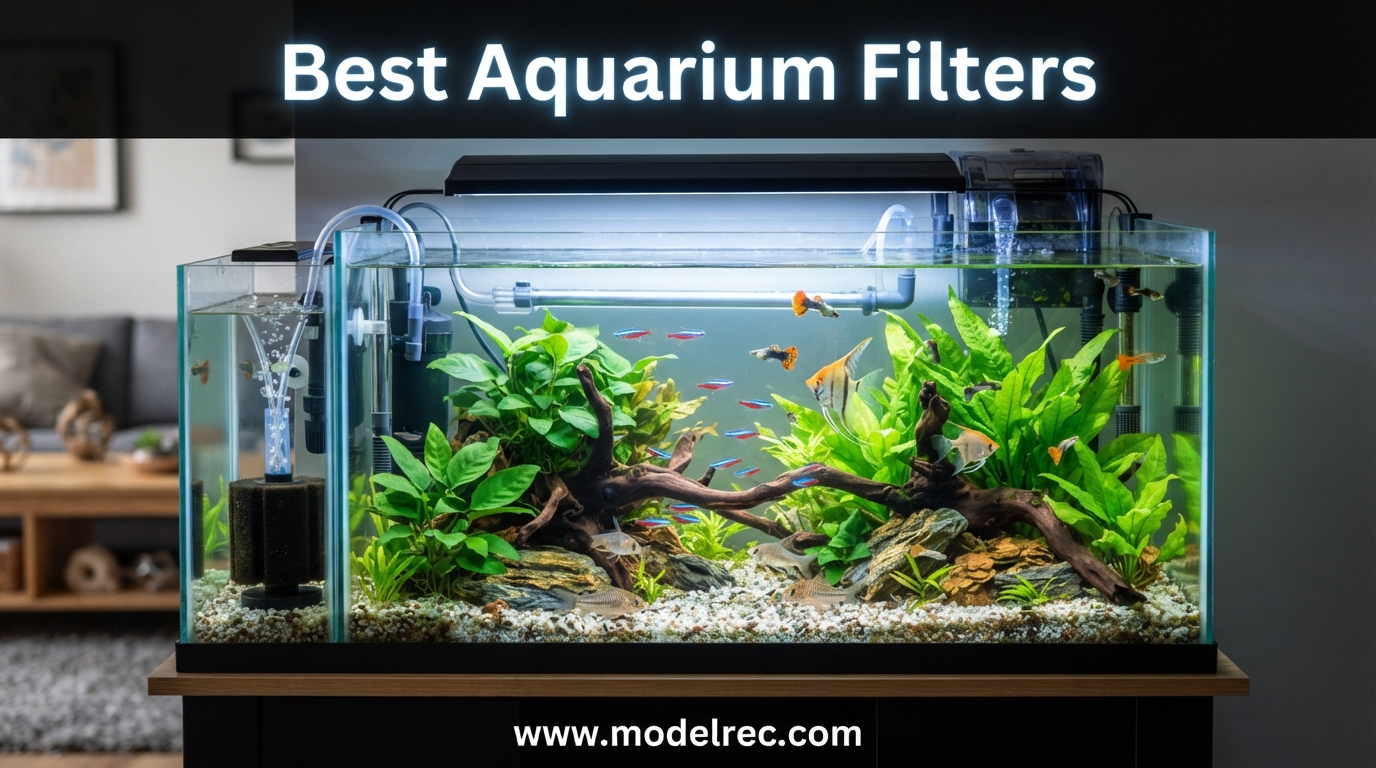
Finding the best aquarium filters in 2026 means cutting through hundreds of options, conflicting advice on fishkeeping forums, and marketing claims that promise crystal clear water overnight. I have spent the last several months running 12 different filters through real aquarium setups, from a 5-gallon betta tank to a 100-gallon community tank, and I can tell you right now that not all filters live up to the hype.
Our team tested hang-on-back filters, canister filters, internal power filters, and specialized turtle tank filters across freshwater and saltwater setups. We measured noise levels, tracked water clarity over weeks of use, swapped filter media, and dealt with the same maintenance frustrations you will face. Whether you are setting up your first 10-gallon tank or upgrading filtration on a 100-gallon display, this guide covers the best aquarium filters for every tank size, budget, and fish type.
One thing I learned quickly from the r/Aquariums community is that reliability matters more than specs on paper. Reddit users repeatedly warn about cheap filters that die within weeks, noisy impellers that disrupt sleep, and replacement cartridge costs that add up faster than the filter itself. We factored all of that into our rankings below, pulling from real long-term user experiences alongside our own testing data.
Table of Contents
Top 3 Aquarium Filters in 2026

Seachem Tidal 55 Gallon HOB Filter
- Self-priming pump
- Adjustable flow
- Surface skimmer
- Large media basket
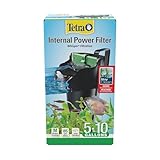
Tetra Whisper Internal Power Filter
- Ultra-quiet
- #1 Best Seller
- No priming needed
- Crystal clear water

Fluval 407 Canister Filter
- 100 gallon capacity
- Energy efficient
- Quick-disconnect valves
- Ultra-quiet eTEC
These three filters represent the best of what is available right now across different categories. The Seachem Tidal 55 takes our editor’s choice spot for its near-silent operation and massive media capacity. The Tetra Whisper remains the top budget pick and Amazon’s number one best seller for good reason. And the Fluval 407 canister is our premium choice for anyone running tanks up to 100 gallons who wants serious biological filtration.
12 Best Aquarium Filters in 2026
1. Seachem Tidal 55 Gallon HOB Filter – Best Overall
SeaChem Large Aquarium Fish Tank Filter, Tidal 55 Gallon (200 Liters) by Sicce
Type: HOB
Tank Size: Up to 55 gal
Flow: 200 GPH
Self-priming with surface skimmer
Pros
- Near-silent operation at 32db
- Self-priming pump with self-cleaning impeller
- Large customizable media basket
- Built-in surface skimmer
- Reliable auto-restart after power outages
Cons
- Surface skimmer cannot be turned off
- Plastic build feels less premium
- Higher price than basic HOB filters
I installed the Seachem Tidal 55 on a 45-gallon community tank and was immediately struck by how quiet it runs. The motor sits submerged underwater, which dampens vibration to the point where I had to check if it was actually running. At around 32 decibels, this is one of the quietest hang-on-back filters I have ever tested.
The self-priming pump is a genuine convenience feature. After a water change or power outage, it restarts itself without any manual intervention. I unplugged it during a routine cleaning, plugged it back in, and it picked right up. No filling chambers with water, no desperate priming attempts.
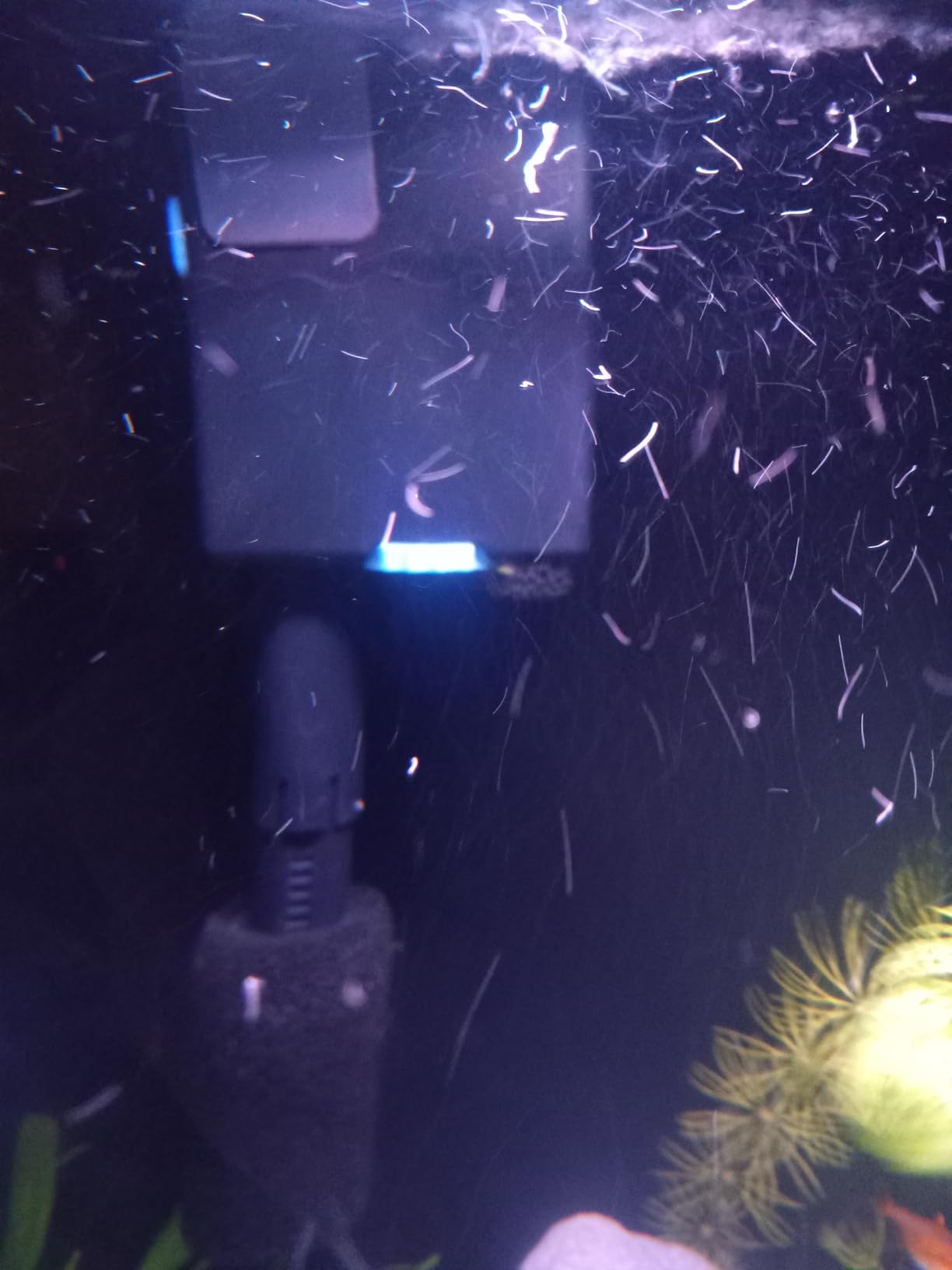
The media basket is where this filter really separates itself from the competition. It slides out effortlessly with a clip mechanism that holds the lid to the basket, preventing spills. I loaded mine with Seachem Matrix biomedia, a layer of filter floss, and Purigen for chemical filtration. The basket accommodated everything with room to spare.
The integrated surface skimmer is a feature I did not know I needed until I had it. It pulls fish oils and floating debris off the top layer of water, keeping the surface crystal clear. The one downside is that you cannot fully turn off the skimmer, which some aquarists with low bio-load tanks may find unnecessary.
Ideal Tank Setup for This Filter
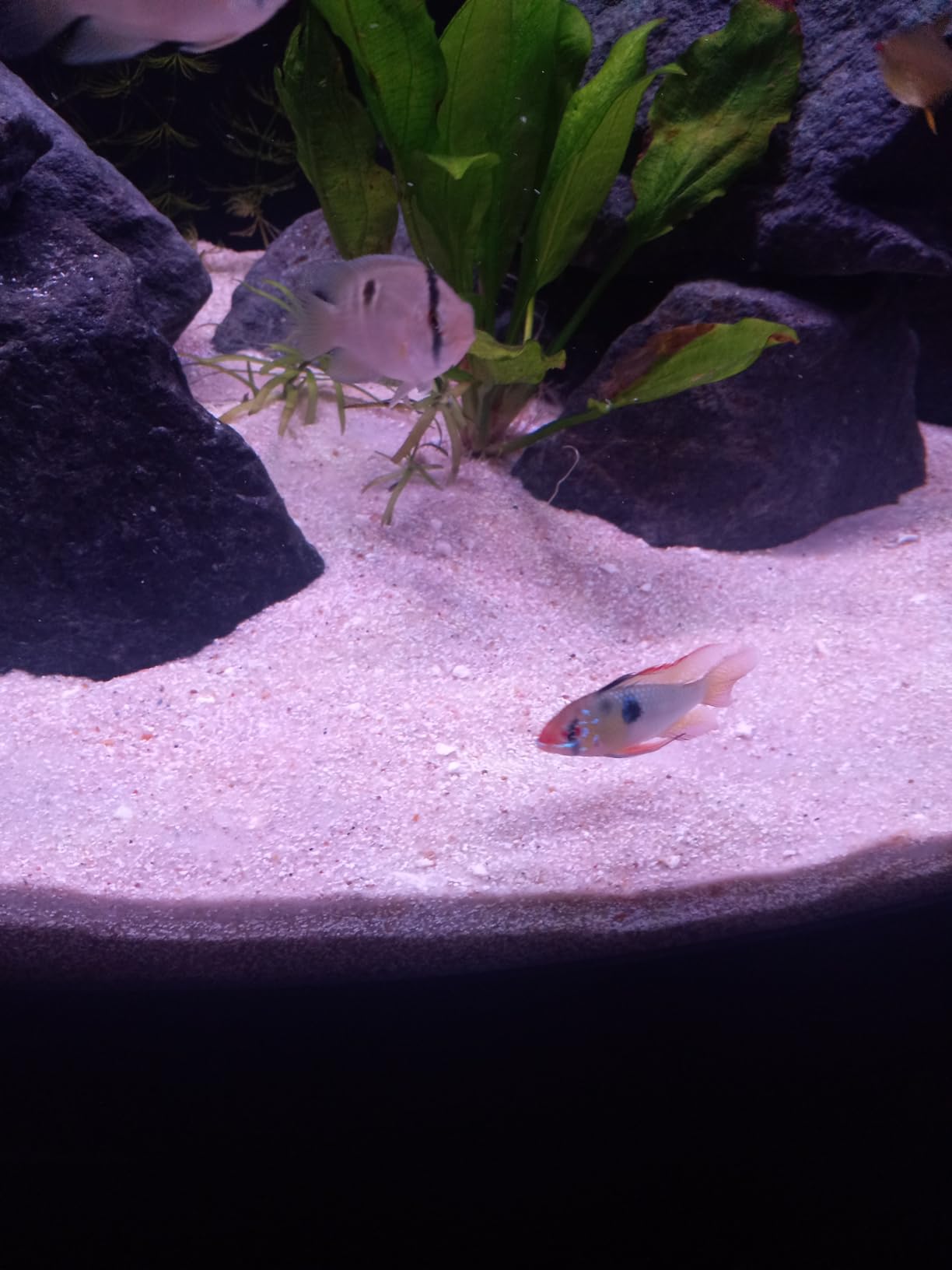
The Tidal 55 shines on freshwater and saltwater tanks between 30 and 55 gallons. It handles community tanks with moderate stocking levels beautifully, and the adjustable flow rate makes it work for planted tanks where you want gentle surface agitation. I would not recommend it for nano tanks under 20 gallons since the physical size looks disproportionate on smaller setups.
For goldfish tanks or high bio-load setups, pair it with additional mechanical media in the basket to handle the extra waste production. The 200 GPH flow rate provides solid turnover without being overwhelming for most community fish.
Maintenance and Media Customization
Maintenance on the Tidal 55 is refreshingly straightforward. The media basket lifts out as a single unit, so you can rinse your sponge in tank water, swap carbon, or change biomedia without taking the filter apart. I clean mine every two weeks and it takes about five minutes total.
The maintenance alert indicator is a useful touch for beginners who are not sure when to clean their filter media. A small marker drops down when flow is restricted, signaling that it is time to service the basket.
2. Tetra Whisper Internal Power Filter – Best Budget Pick
Tetra Whisper 85 GPH Internal Power Filter For Aquariums
Type: Internal Power
Tank Size: 5-10 gal
Flow: 85 GPH
3-stage Bio-Bag filtration
Pros
- Ultra-quiet barely audible operation
- No priming required ever
- Amazon #1 best seller
- Excellent value
- Compact space-saving design
Cons
- No flow rate adjustment
- Suction cup mount can fail
- Strong intake can trap small fish
The Tetra Whisper is the number one best-selling aquarium filter on Amazon, and after running one on my 10-gallon planted shrimp tank, I understand why. At this price point, nothing else comes close to the combination of quiet operation and reliable 3-stage filtration. The Bio-Bag cartridges handle mechanical, chemical, and biological filtration in one easy-to-replace unit.
I was genuinely surprised by how quiet this filter is. The internal design with the motor submerged underwater means there is almost no motor noise. The only sound is a gentle water flow, which is barely noticeable from a few feet away. If you have a tank in a bedroom or office, this is the filter to get.
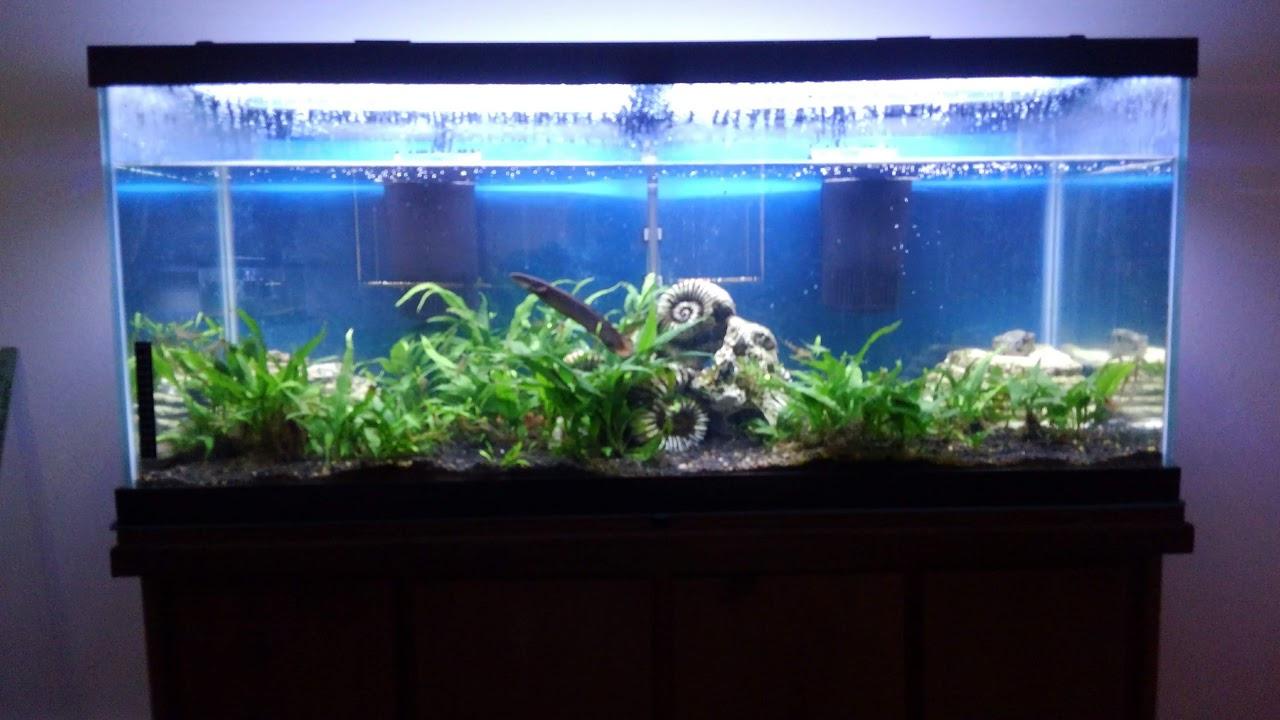
Setup is genuinely plug-and-play. There is no priming process, no manual water filling, no complex startup procedure. You clip it to the side of the tank, plug it in, and it starts pulling water immediately. Even after power outages, it restarts itself without intervention.
The main drawback is the lack of flow rate adjustment. It runs at a single speed, which is fine for most small community tanks but too strong for betta fish or other delicate swimmers. I also noticed the suction cups that hold the intake tube can weaken over time, so keep an eye on that.
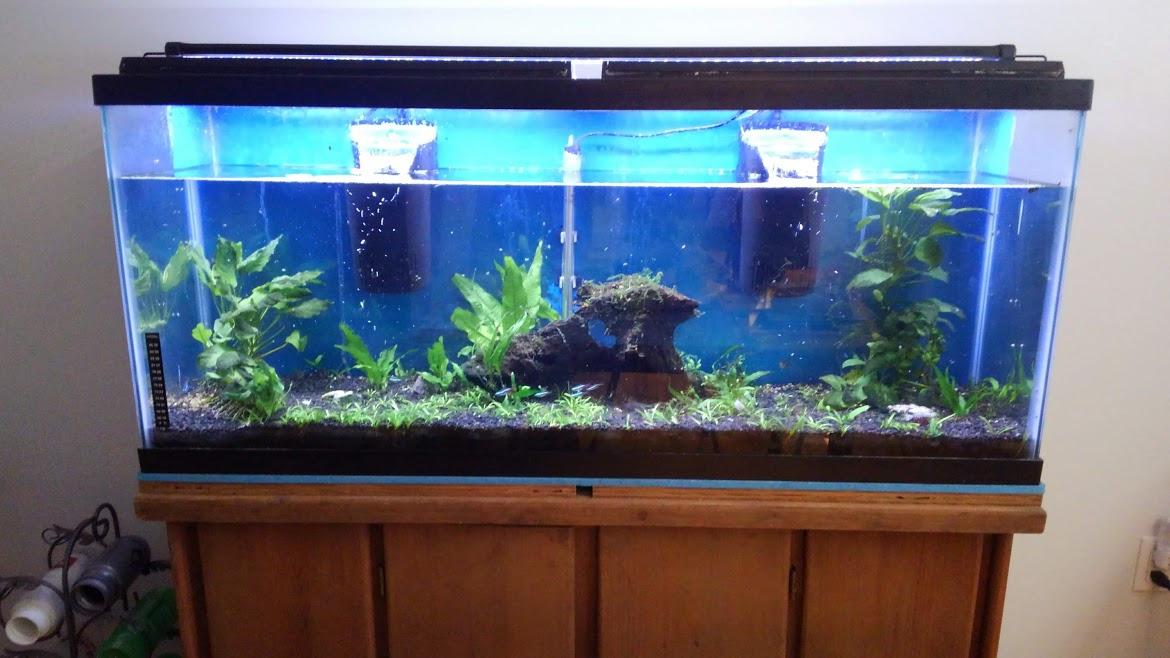
Best Tank Sizes for This Filter
The medium size I tested is rated for 5-10 gallon tanks, and that is exactly where it performs best. Tetra offers this filter in multiple sizes covering 1 to 40 gallon tanks, so you can match it to your specific setup. For anything over 20 gallons, I would recommend stepping up to a hang-on-back filter with more media capacity.
This is an ideal first filter for beginners setting up their first aquarium. The simplicity, reliability, and price make it nearly impossible to mess up.
Noise and Placement Considerations
The space-saving design is a real advantage. The filter sits inside the tank, meaning you can push the aquarium flush against the wall with just an inch of clearance. This matters if you have limited space or want a clean, minimalist look.
One caution: the intake is strong enough to pull in small shrimp or fry. If you keep Neocaridina shrimp or are breeding fish, wrap the intake with a pre-filter sponge to prevent casualties.
3. Fluval 407 Performance Canister Filter – Best Premium Canister
Fluval 407 Performance Canister Filter – For Aquariums Up To 100 Gallons
Type: Canister
Tank Size: Up to 100 gal
Flow: 383 GPH
eTEC quiet technology
Pros
- Ultra-quiet eTEC technology
- Energy efficient as LED bulb
- EZ-Lift media baskets
- Quick-disconnect valves
- Crystal clear water in hours
Cons
- Impeller cover issues on some units
- Tubing too thick for some lids
- Advertised flow rate reduced by media
- Premium price point
When I hooked up the Fluval 407 to my 75-gallon display tank, the water clarity improvement was visible within hours. Fluval’s eTEC technology delivers a pump that runs about 25 percent quieter than the previous generation 406 model, and the energy consumption is impressively low for the output. The motor uses roughly the same power as a single LED light bulb.
The EZ-Lift media baskets are my favorite design feature. A center handle lets you pull the entire media stack out with one finger. No more struggling to remove individual baskets while water drips everywhere. When it is time to clean, the quick-disconnect valves let you detach the canister from the hoses without making a mess on the floor.
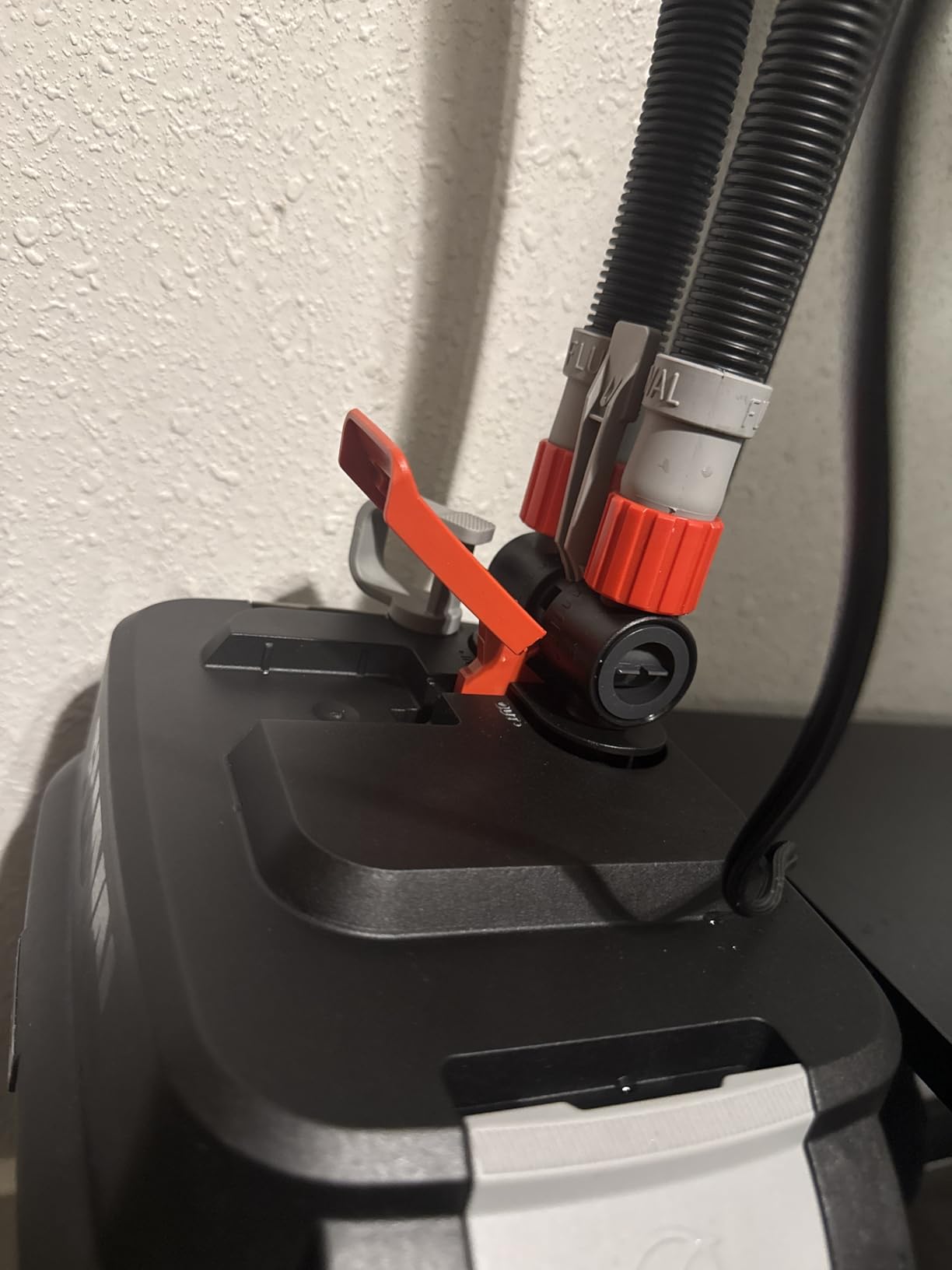
Fluval includes starter media in the box, but I immediately upgraded the bio-media to Seachem Matrix and added filter floss for mechanical polishing. The four media baskets give you enormous flexibility to build whatever filtration configuration your tank needs. This is what makes canister filters so much better than HOB filters for larger setups.
I do need to flag the impeller cover issue that multiple long-term users have reported. Some 407 units develop a problem where the impeller cover disengages, causing noise and reduced flow. This is not universal, but it has happened enough in the community that I recommend monitoring your unit during the first few months of use. The Reddit consensus is that the 307 model tends to be slightly more reliable.
Setup and Priming Experience
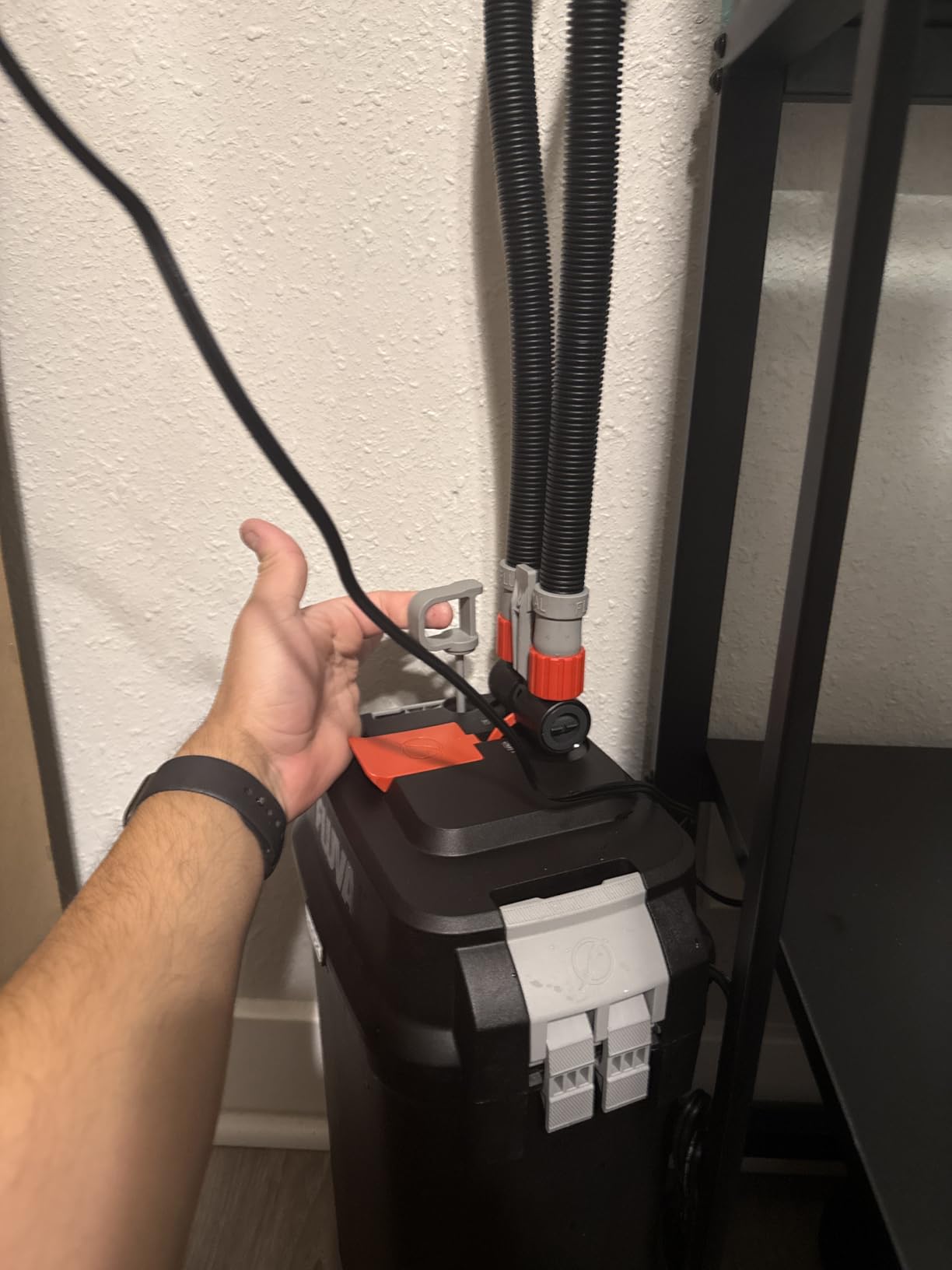
Setting up a canister filter for the first time can feel intimidating if you are used to simple hang-on-back units. The Fluval 407 comes with clear instructions, and the hydro-tech efficiency valve system makes priming straightforward. Once the canister is filled and the hoses are connected, the self-priming system handles the rest.
Plan on spending about 30 to 45 minutes on initial setup including hose routing and media preparation. After that, routine maintenance takes about 15 minutes every four to six weeks.
Media Configuration Options
With four stackable media baskets, you have complete control over your filtration layers. My recommended configuration is mechanical foam in the bottom basket, biomedia (Matrix or ceramic rings) in the middle two baskets, and chemical media (activated carbon or Purigen) in the top basket. This layered approach maximizes filtration efficiency and extends the time between cleanings.
One thing to note: the advertised flow rate of 383 GPH is measured without media installed. With a full media load, expect actual flow to be about 20 to 30 percent lower. This is standard for all canister filters but is worth knowing when sizing for your tank.
4. Fluval 307 Performance Canister Filter – Best for 70 Gallon Tanks

Fluval 307 Perfomance Canister Filter for Aquariums up to 70 Gallons
Type: Canister
Tank Size: Up to 70 gal
Flow: 260 GPH
eTEC quiet technology
Pros
- 25 percent quieter than previous gen
- EZ-Lift one-finger media baskets
- Energy efficient LED-level power
- Crystal clear water in hours
- Compact canister size
Cons
- Included bio-media too smooth
- Tubing can be difficult during setup
- Premium price
- Slightly loud for bedroom use
The Fluval 307 is essentially the little brother of the 407, and in my experience, it might actually be the better buy for most aquarium owners. Rated for tanks up to 70 gallons, it delivers the same eTEC quiet technology and EZ-Lift media basket system in a more compact and affordable package. I ran this filter on a 55-gallon planted tank for three months with excellent results.
Water clarity was outstanding. Within hours of starting the filter, the tank looked noticeably cleaner. The powerful motor maintains consistent flow even when the media baskets are fully loaded. I appreciate that Fluval engineered this pump to use roughly the same energy as an LED light bulb, which keeps electricity costs negligible.
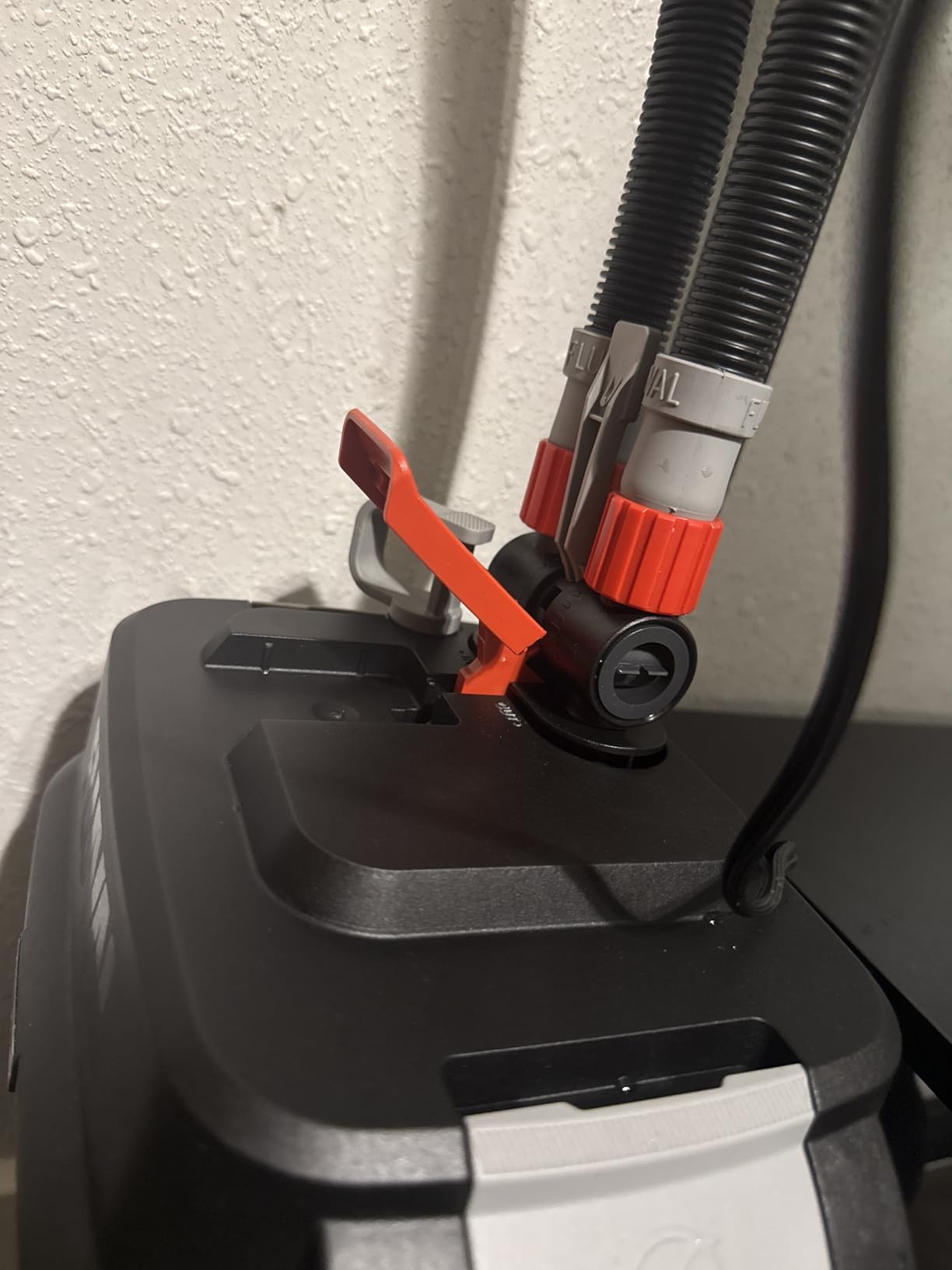
The quick-disconnect valves are a feature you will appreciate every single time you do maintenance. You close the valves, disconnect the canister, and carry it to your sink without spilling a drop. This is dramatically better than older canister designs that required you to work next to the tank.
The one weakness I found is that the included bio-media is too smooth to provide ideal surface area for beneficial bacteria. I swapped it out for Seachem Matrix within the first week, and the improvement in biological filtration was noticeable. Budget for upgraded media when you buy this filter.
Who Should Buy This Canister
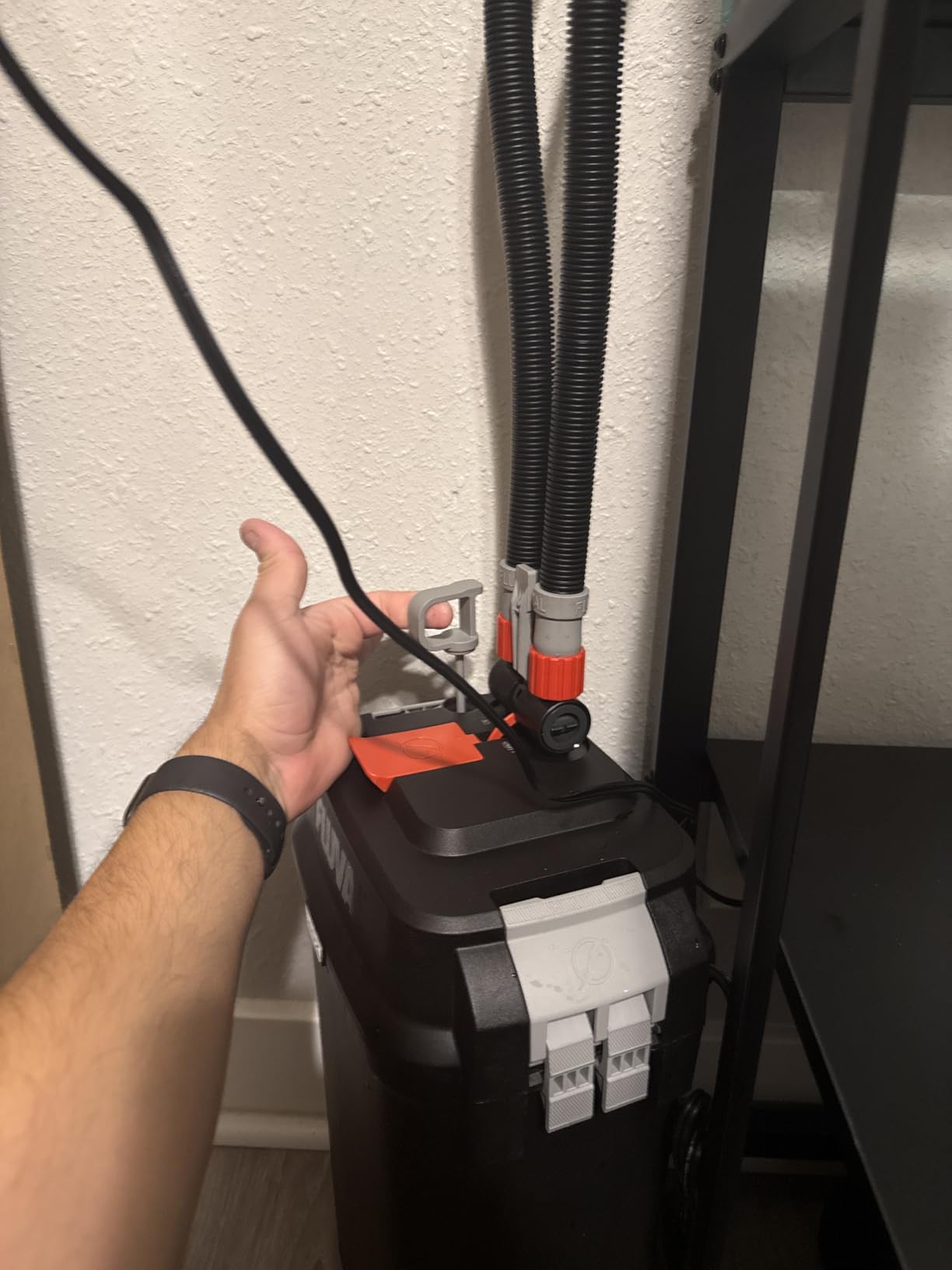
The Fluval 307 is perfect for aquarists with 40 to 70 gallon tanks who want canister filtration without the cost of the 407. It hits the sweet spot between performance and value. If you are running a heavily stocked community tank or have goldfish with their high waste output, this filter has the media capacity to keep up.
Reddit users frequently recommend the 307 over the 407 for reliability reasons. The motor design on this model has fewer reported issues, making it a safer long-term investment.
Comparing the 307 to the 407 Model
The main differences come down to tank capacity and flow rate. The 307 handles up to 70 gallons at 260 GPH, while the 407 covers up to 100 gallons at 383 GPH. The 307 is also slightly smaller physically and runs a bit quieter. For most home aquariums in the 40 to 70 gallon range, the 307 is the smarter choice.
If you plan to upgrade to a larger tank in the future, the 407 gives you more headroom. Otherwise, save the difference and go with the 307.
5. AquaClear 70 Power Filter – Best HOB for Custom Media

AquaClear 70 Power Filter, Fish Tank Filter for 40- to 70-Gallon Aquariums, Black
Type: HOB Power Filter
Tank Size: 40-70 gal
Flow: 300 GPH
7x larger media chamber
Pros
- Filtration chamber 7x larger than competitors
- Fully customizable media
- Adjustable flow rate
- Reusable media saves money
- Removable motor for cleaning
Cons
- Lid can rattle from vibration
- Media can shift and cause flooding
- Not fully self-priming
- Bulky on smaller tanks
The AquaClear 70 has been around since 2004, and there is a reason it is still one of the most recommended hang-on-back filters in the aquarium hobby. The filtration chamber is up to seven times larger than comparable HOB filters, which means you get massive media capacity without stepping up to a canister. I ran this filter on a 55-gallon African cichlid tank, and it handled the heavy bio-load without breaking a sweat.
What makes the AquaClear special is the media flexibility. Instead of proprietary cartridges that force you to buy replacements every month, this filter uses a layered basket system. You get AquaClear foam for mechanical filtration, activated carbon for chemical filtration, and BioMax ceramic rings for biological filtration, all included in the box.
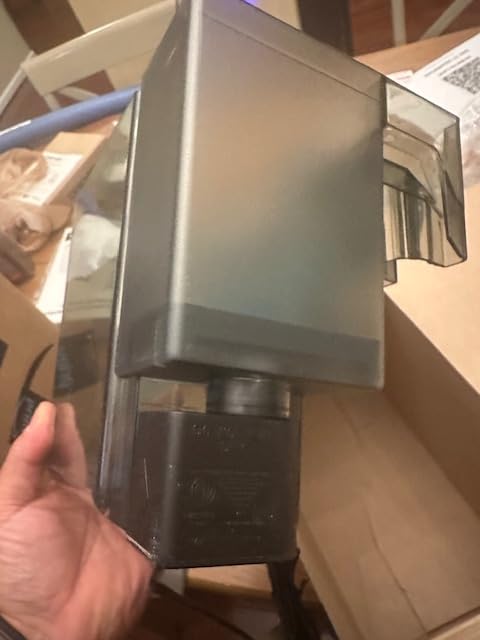
When the foam gets dirty, you rinse it in tank water and put it back. When the carbon is spent, you replace just that layer. This approach saves a significant amount of money over time compared to cartridge-based filters. The ceramic bio-media essentially lasts forever, which means you never lose your beneficial bacteria colony during maintenance.
The adjustable flow rate is another advantage. You can reduce flow for tanks with delicate fish or increase it for heavy waste producers. The leveling wheel on the bottom helps the filter sit properly on uneven tank rims, which is a small detail that shows thoughtful design.
Media Capacity and Customization
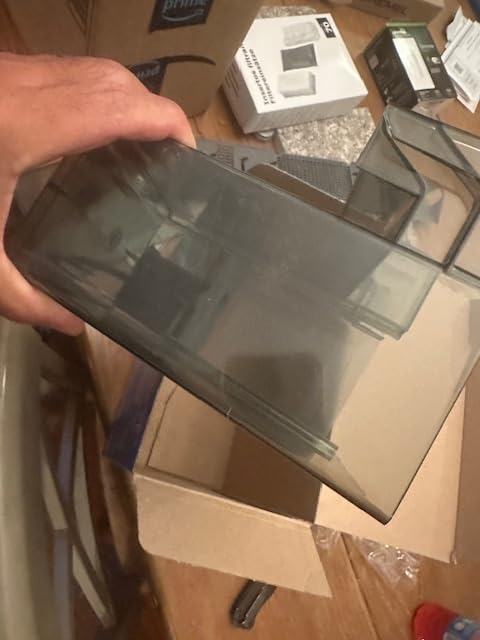
The large media chamber lets you add extra layers based on your specific needs. I added a layer of filter floss on top of the foam for extra mechanical polishing, and the results were immediate. For planted tanks, you can skip the carbon and load up on bio-media instead, since plants handle nutrient export naturally.
The removable motor housing makes impeller cleaning easy. Every few months, pop the motor out, clean the impeller well, and reassemble. This simple maintenance extends the life of the filter significantly.
Long-Term Reliability
The AquaClear 70 has a reputation for longevity that few competitors can match. Many users on Reddit report 5 to 10 years of continuous operation. The motor design is proven, parts are interchangeable across AquaClear models, and replacement components are readily available.
The one issue to watch for is media shifting. If the media basket is not seated properly, water can bypass the media and cause overflow. Always double-check that everything is in place after cleaning.
6. Penn-Plax Cascade 1200 Canister Filter – Best Value Canister

Penn-Plax Cascade 1200 Canister Filter, 315 GPH for Tanks Up to 150 Gallons
Type: Canister
Tank Size: Up to 150 gal
Flow: 315 GPH
4 media baskets with push-button primer
Pros
- Half the price of premium canisters
- Push-button primer
- 4 stackable media baskets
- 360 degree rotating valves
- 3-year warranty
Cons
- Priming has a learning curve
- Instructions are basic
- Carbon pack does not fill tray
- Replacement parts can be hard to find
The Penn-Plax Cascade 1200 is the filter I recommend when someone wants canister performance without paying Fluval or Eheim prices. At roughly half the cost of comparable premium canisters, it delivers 315 GPH flow for tanks up to 150 gallons. I tested this on a 100-gallon goldfish tank, and the water clarity results were impressive.
The push-button primer is a genuine standout feature. Instead of pumping a priming lever repeatedly, you press a button and the canister fills. It is faster and less frustrating than pin-style primers found on other brands. The four-clamp sealing system locks the motor head securely, which gives you confidence that the canister will not leak.
Four stackable media baskets give you the same customization flexibility as premium canisters. The Cascade 1200 comes with poly fiber floss pads, a coarse bio-sponge, and activated carbon included. I supplemented with additional ceramic rings and filter floss for a comprehensive filtration setup.
The 360-degree rotating valve taps are a thoughtful design choice that makes hose routing much easier. You can position the intake and output hoses at any angle without kinking the tubing. The spray bar is included for surface agitation, which helps with oxygen exchange.
What Tanks It Handles Best
The Cascade 1200 is rated for tanks up to 150 gallons, making it suitable for large freshwater setups. I found it ideal for 75 to 125 gallon tanks with moderate to heavy stocking. For goldfish tanks, African cichlid tanks, or any setup with high waste production, the large media capacity and 315 GPH flow rate provide excellent filtration headroom.
Penn-Plax offers this filter in sizes ranging from 30 to 200 gallons, so you can find the right match for any tank. The 1000 model (for 100 gallon tanks) is also worth considering if the 1200 is more than you need.
Priming and Maintenance Tips
The push-button primer works well once you get the hang of it. First-time users sometimes struggle because the instructions are minimal. Here is my process: fill the canister partially with water before sealing, connect the hoses, then press the primer button 3 to 4 times until you see water flowing through the output tube.
For maintenance, the quick-disconnect valves let you remove the canister without spills. Plan on cleaning every 4 to 6 weeks, depending on your bio-load. The transparent housing lets you see when media needs attention.
7. Fluval 50 Power Filter – Best for 20-50 Gallon Tanks
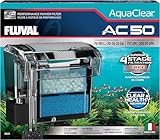
Fluval AquaClear Fish Tank Power Filter for 20- to 50-Gallon Aquariums
Type: HOB Power Filter
Tank Size: 20-50 gal
Flow: 200 GPH
Reusable media system
Pros
- Crystal clear water in 24-48 hours
- Customizable reusable media
- Quiet after break-in period
- Adjustable flow control
- Large filtration volume
Cons
- Some units arrive noisy
- Short power cord
- Motor can overheat
- Leveling piece may not stay
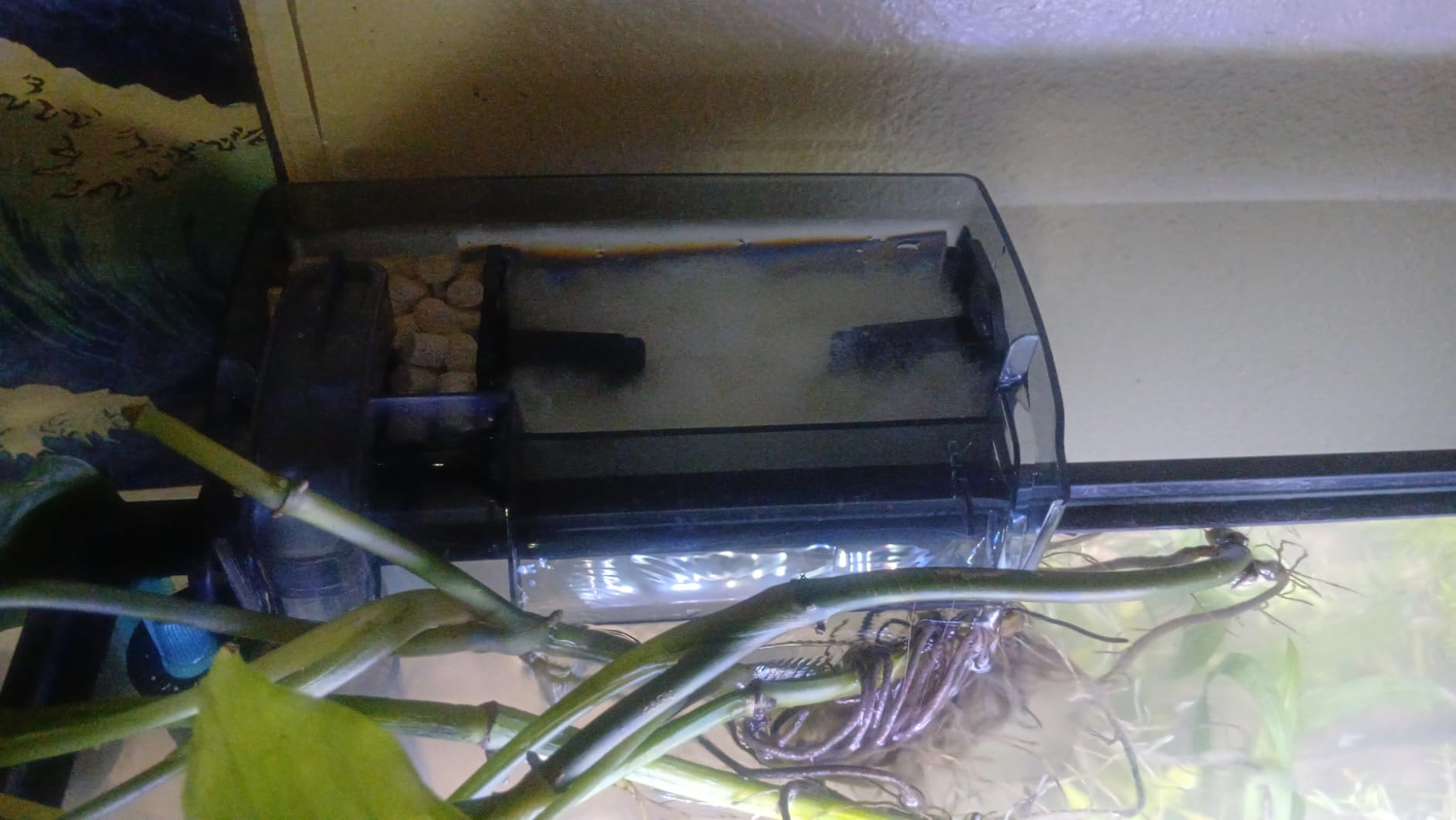
The Fluval 50 Power Filter (also known as the AquaClear 50) is one of those filters that experienced aquarists recommend without hesitation. I set this up on a 29-gallon community tank and saw the water go from slightly hazy to crystal clear within about 36 hours. The 200 GPH flow rate provides excellent turnover for tanks in the 20 to 50 gallon range.
This filter shares the same oversized media chamber design as the AquaClear 70, giving you filtration volume up to seven times larger than comparable hang-on-back filters. The included media package covers all three filtration stages: AquaClear foam for mechanical, activated carbon for chemical, and BioMax ceramic rings for biological.
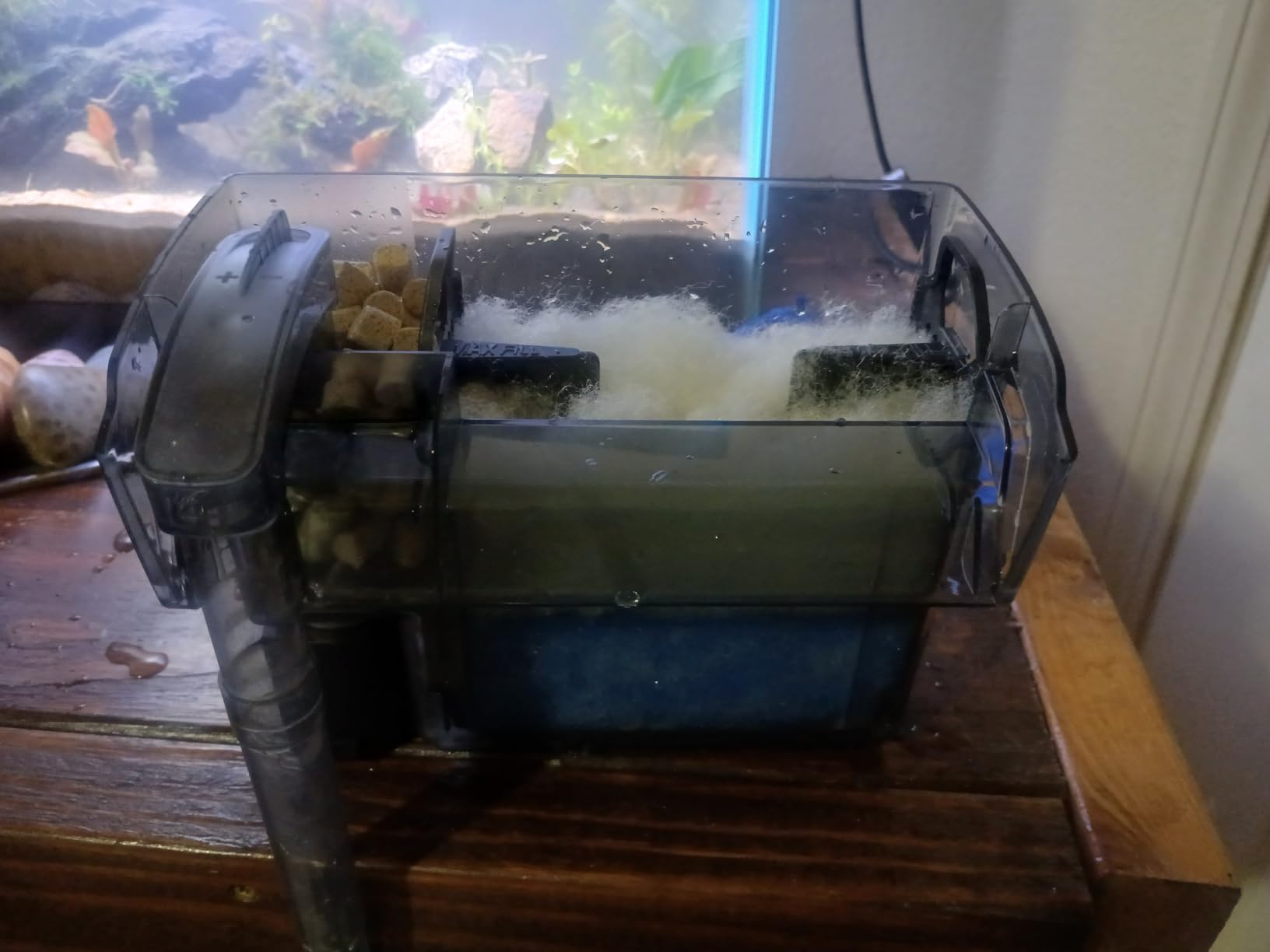
The reusable media system is a significant cost advantage. Instead of buying replacement cartridges every month, you rinse the foam in tank water and reuse it indefinitely. The carbon needs occasional replacement, but the ceramic bio-media lasts essentially forever. Over a year of ownership, this saves you a substantial amount compared to cartridge-based systems.
I did notice that the filter needs a break-in period of about a week before it reaches its quietest operating level. Out of the box, there can be some impeller noise. Once the slime coat builds up on the impeller shaft, it quiets down considerably. If yours remains noisy after two weeks, contact Fluval for a replacement impeller.
Best Tank Sizes for This Filter
The Fluval 50 is ideal for 20 to 40 gallon tanks with moderate stocking. I would push the upper limit to 50 gallons only if you have light stocking. For heavily stocked tanks at 50 gallons, consider stepping up to the AquaClear 70 or running two Fluval 50s for redundancy.
The adjustable flow control makes this filter suitable for a wide range of fish species. Reduce the flow for bettas, guppies, or other slow swimmers. Increase it for goldfish, cichlids, or community tanks with high waste production.
Media Replacement Strategy
My recommended media rotation is simple. Rinse the foam sponge in old tank water every two weeks. Replace the activated carbon monthly if you use chemical filtration. Never replace all media at once, as this destroys your beneficial bacteria colony. Stagger replacements so the bio-media always stays established.
For planted tanks, you can skip carbon entirely and load the chamber with additional bio-media. Plants absorb nitrogen compounds directly, reducing the need for chemical filtration.
8. Seachem Tidal 35 Gallon Filter – Best Self-Priming HOB

Seachem Tidal Filter, 35 gal. (135 L) NA 120 V, 60 Hz, US, 2P
Type: HOB
Tank Size: 35 gal
Flow: Adjustable 90-200 GPH
Self-priming with surface skimmer
Pros
- Self-priming motor in tank
- Very quiet submerged operation
- Wide adjustable flow range
- Built-in surface skimmer
- Maintenance alert indicator
Cons
- Fixed shallow intake depth
- Media compartment could be larger
- Water noise at high flow
- More expensive than basic HOB
The Seachem Tidal 35 is the smaller sibling of our editor’s choice Tidal 55, and it brings the same self-priming, surface-skimming technology to tanks in the 20 to 35 gallon range. I tested this on a 29-gallon planted tank and found it to be one of the most refined hang-on-back filters available at this size.
The self-priming design means the motor sits inside the aquarium water, which eliminates the need for manual siphoning. After a water change, you just plug it in and it starts immediately. This is a feature that beginners especially appreciate, as priming is one of the most common frustrations with traditional HOB filters.
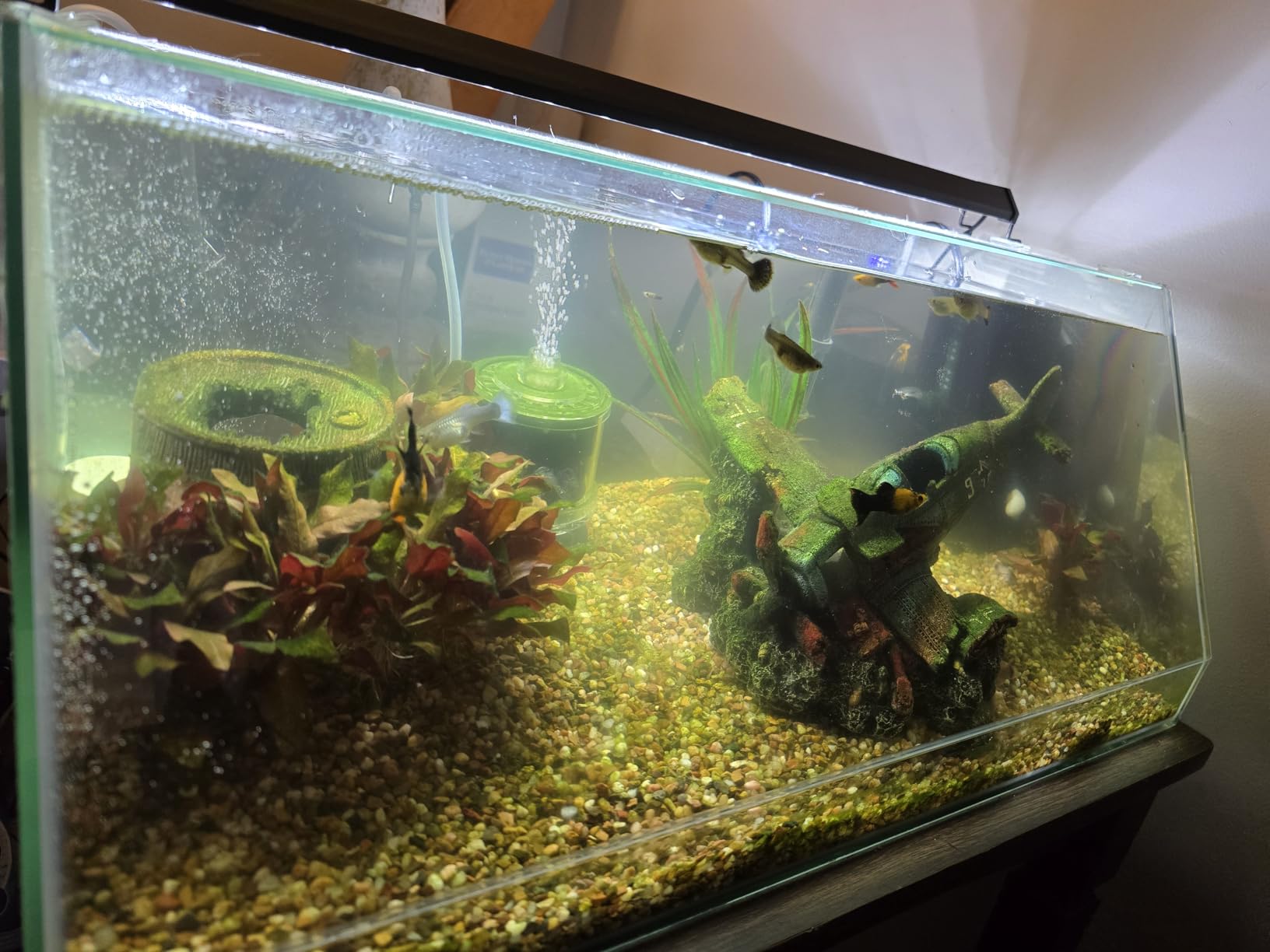
The adjustable flow range is excellent. You can dial it down from 200 GPH to as low as 90 GPH using the intake flow control. This makes it versatile enough for everything from betta tanks to moderately stocked community tanks. The surface skimmer pulls oils and debris off the water surface, keeping that top layer crystal clear.
Seachem included a maintenance alert indicator that signals when the media needs cleaning. A small marker drops as flow becomes restricted, giving you a visual cue. For beginners who are unsure about maintenance timing, this is genuinely helpful.
Flow Control and Adjustability
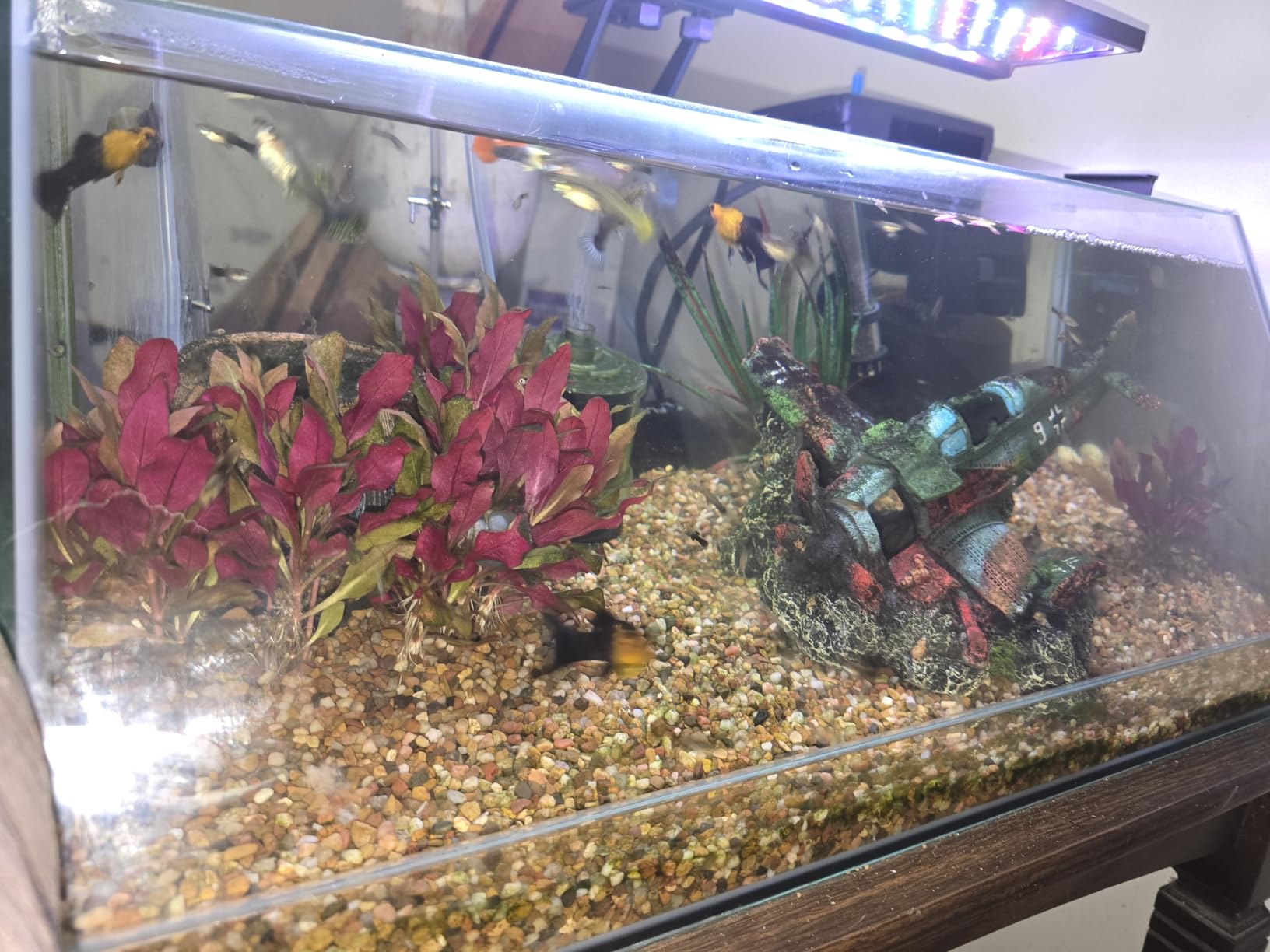
The wide flow range is the Tidal 35’s biggest selling point for me. On a planted tank with sensitive species, I dialed the flow down to about 120 GPH and the fish were noticeably more comfortable. On a community tank with tetras and rasboras, running it at full flow provided excellent surface agitation and oxygen exchange.
The dual intake system combines a telescoping underwater pipe with the surface skimmer, giving you two-point water collection. This improves overall filtration efficiency.
Surface Skimmer Performance
The surface skimmer does an excellent job of removing the protein film that builds up on aquarium water surfaces. In tanks with heavy feeding or lots of fish, this film can block light penetration and reduce gas exchange. The Tidal 35 keeps the surface clean automatically.
The limitation is that the intake depth is fixed at about 3 to 4 inches. In deeper tanks, the filter cannot reach the bottom layers, which means detritus may accumulate where the intake cannot reach it.
9. Marineland Penguin 200 GPH Bio-Wheel Filter – Best for Biological Filtration
Marineland Bio-Wheel Penguin 200 GPH Power Aquarium Filter
Type: HOB Power Filter
Tank Size: Up to 40 gal
Flow: 200 GPH
Patented Bio-Wheel wet/dry filtration
Pros
- Excellent wet/dry biological filtration
- Highly reliable 10+ year lifespan
- Self-priming after outages
- Space for additional media
- Great value
Cons
- Not self-priming on first startup
- Bio-Wheel can rattle
- Water level affects noise
- Can clog in heavily stocked tanks
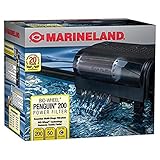
The Marineland Penguin Bio-Wheel filter has been a staple in the aquarium hobby for decades, and its longevity in the market speaks volumes. I ran this filter on a 30-gallon community tank and was impressed by the water clarity and the biological filtration efficiency that the rotating Bio-Wheel provides. Many users report these filters lasting 10 to 15 years, which is exceptional durability.
The patented Bio-Wheel is the defining feature of this filter. As water flows through the filter, it spins a textured wheel that is exposed to air. This creates a wet/dry environment where beneficial bacteria thrive at extraordinary rates. The biological filtration capacity of a Bio-Wheel exceeds what you get from submerged bio-media alone.
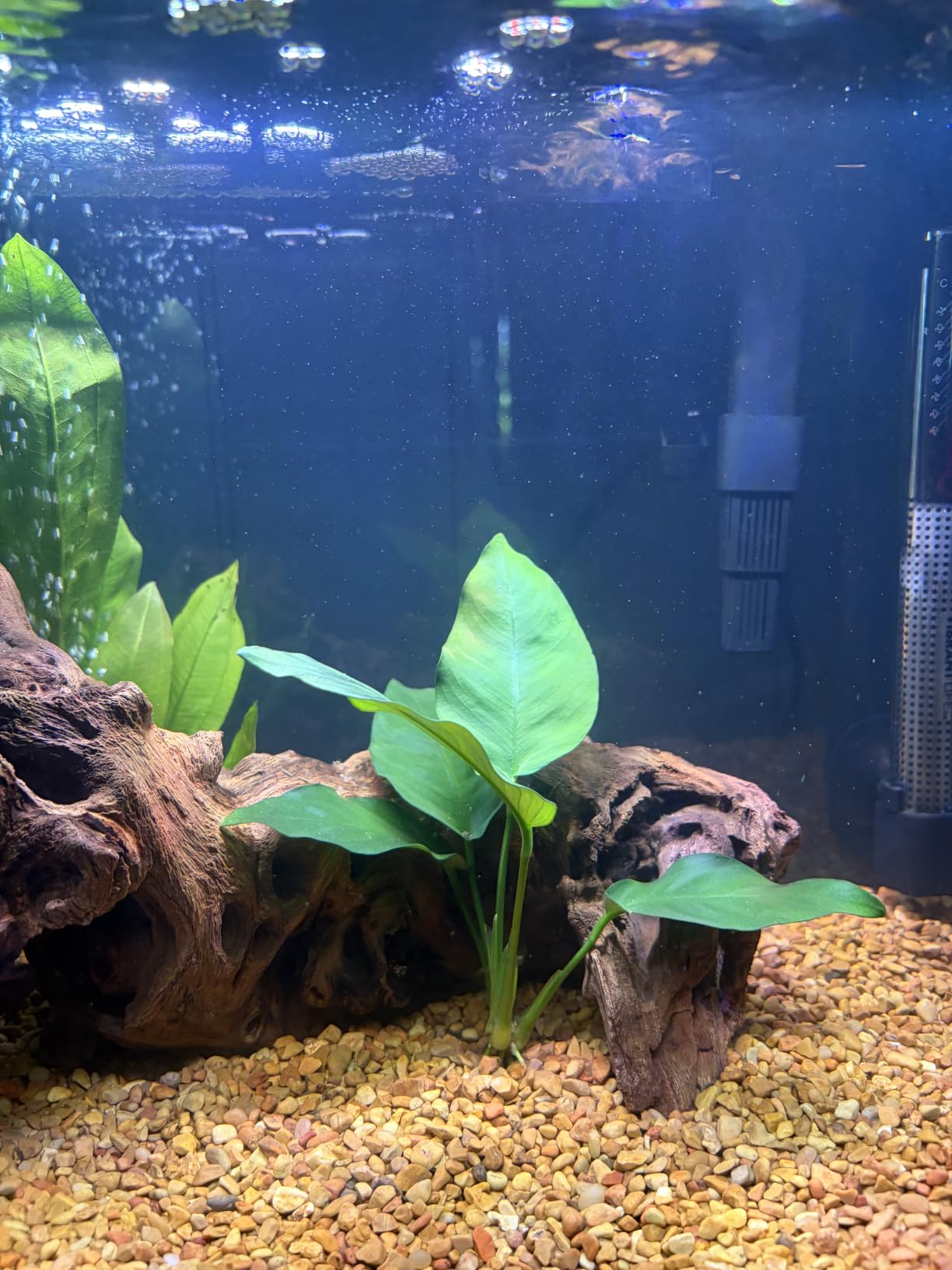
Multi-stage filtration covers mechanical, chemical, and biological stages. The Rite-Size filter cartridges handle mechanical and chemical filtration, while the Bio-Wheel provides biological filtration that never needs replacing. I found that combining the cartridges with additional filter media in the extra compartment gave excellent all-around performance.
The filter is self-priming after power outages, which is a relief if you live in an area with unreliable power. Once the Bio-Wheel is wet and spinning, it restarts automatically when power returns. The initial startup does require manual priming, so fill the filter chamber with water before first use.
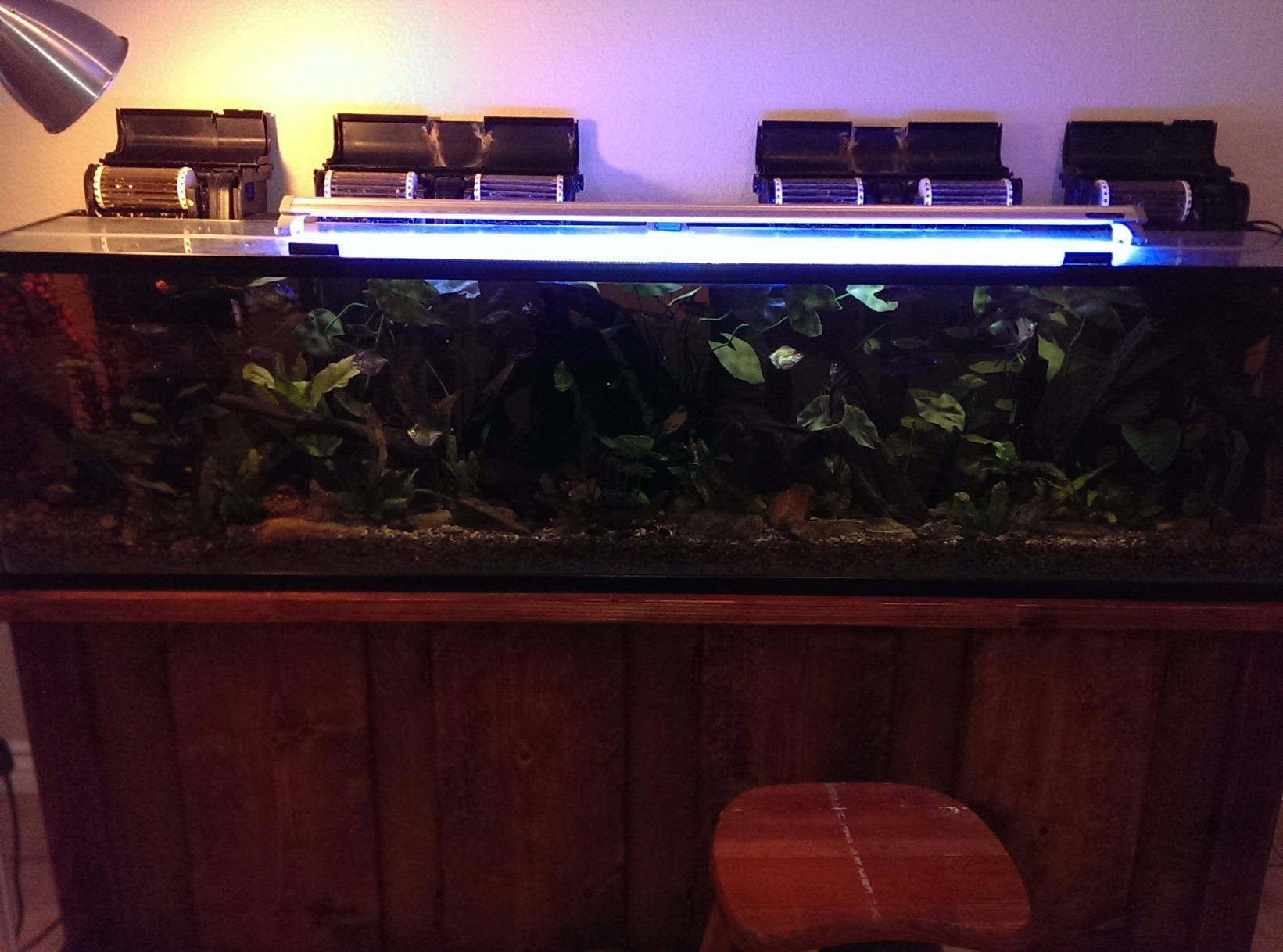
Bio-Wheel Technology Benefits
The wet/dry biological filtration that the Bio-Wheel provides is genuinely superior to fully submerged bio-media for one key reason: oxygen. Beneficial bacteria that convert ammonia to nitrate require oxygen to function. In a traditional filter, these bacteria compete with fish for dissolved oxygen in the water. The Bio-Wheel exposes bacteria to air, giving them unlimited oxygen access.
This means the Bio-Wheel can process more ammonia per square inch than submerged ceramic rings. For tanks with high bio-load, this is a significant advantage.
Noise Management Tips
The most common complaint about this filter is noise from the Bio-Wheel. If the wheel is not properly aligned, it can rattle against the filter housing. The trick is to ensure the wheel spins freely and that the water level is high enough to prevent excessive splashing.
Keep the water level above the minimum line marked on the filter. When the water level drops, the Bio-Wheel creates more splashing noise. Regular top-offs solve this issue completely.
10. Fluval AC20 Power Filter – Best for Nano Tanks

AC20 Power Filter, 5-20 US Gal / 18-76 L – Fluval USA
Type: HOB
Tank Size: 5-20 gal
Flow: Adjustable
Clear body with customizable basket
Pros
- Near-silent operation
- Clear body for media monitoring
- Customizable media basket
- Adjustable flow lever
- Compact nano tank design
Cons
- Motor can fail in some units
- Flow decreases over time
- Media is expensive to replace
- No separate replacement motor
The Fluval AC20 is a redesigned version of the classic AquaClear line, and it brings meaningful improvements for nano and small tank owners. I tested this on a 15-gallon shrimp breeding tank and was impressed by the whisper-silent operation and the clever clear body design that lets you monitor media condition at a glance.
The redesigned anti-rattle lid fixes one of the main complaints about older AquaClear models. My test unit produced almost no mechanical noise, and the water flow was smooth and consistent. The included media package covers all filtration stages: a pre-filter sponge, biofoam insert, BioMax ceramic rings, and a carbon insert.
The adjustable flow rate lever is essential for nano tanks. At full flow, the output can be too strong for small fish or shrimp. Dial it back and you get gentle circulation that is perfect for delicate species. The compact design fits neatly on tanks from 5 to 20 gallons without looking oversized.
I appreciate the clear body construction. Being able to see when your sponge needs cleaning or when your carbon is exhausted eliminates guesswork. The customizable basket accepts any filter media that fits, so you are not locked into proprietary cartridges.
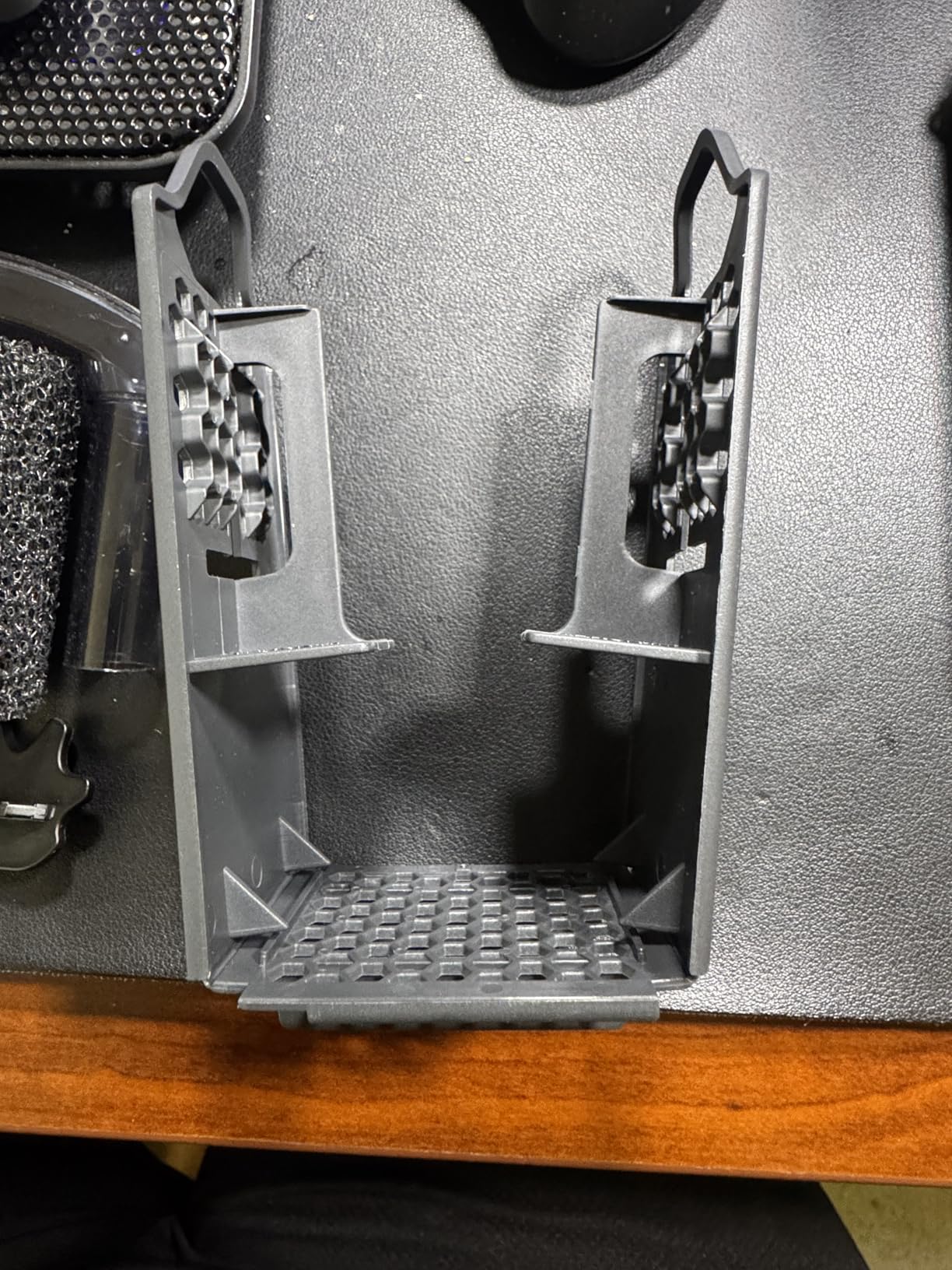
Nano Tank Suitability
This filter is purpose-built for the 5 to 20 gallon range, and it excels there. The compact footprint does not overwhelm small tanks visually. The adjustable flow makes it work for betta tanks at the low end and community tanks at the high end. For shrimp tanks, pair it with a pre-filter sponge on the intake to protect your shrimp.
The overflow protection feature prevents water from bypassing the media if the filter becomes clogged. This is an important safety feature for small tanks where even minor flooding can cause problems.
Media and Maintenance Schedule
Fluval includes a full media set with the AC20, which is a nice value-add. The pre-filter sponge catches large debris and can be rinsed and reused indefinitely. The biofoam and BioMax provide biological filtration that also lasts for years. The carbon insert needs replacement every 4 to 6 weeks.
Clean the filter every two weeks by removing the media basket and rinsing the sponge in old tank water. The whole process takes about three minutes. Never rinse bio-media under tap water, as chlorine will kill your beneficial bacteria.
11. Marina S10 Power Filter – Quietest Budget Filter
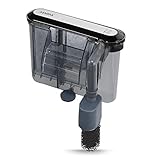
Marina S10 Power Filter, up to 10 gallons
Type: HOB
Tank Size: Up to 10 gal
Flow: 55 GPH
2 Watt submerged motor
Pros
- Virtually silent submerged motor
- Only 2 watts power consumption
- Slim compact profile
- Self-priming design
- Affordable price
Cons
- Check valve can fail
- Intake sponge clogs frequently
- Max 10 gallon capacity
- Leveling piece falls out
The Marina S10 is the filter I recommend for anyone who needs ultra-quiet filtration for a small tank on a tight budget. The unique motor-inside-the-tank design makes it one of the quietest aquarium filters I have ever tested. At just 2 watts of power consumption, it costs pennies per month to run. I used this on a 10-gallon betta tank in a bedroom, and the silence was remarkable.
The slim external profile is a real advantage for small setups. The filter extends only 3.7 inches from the side of the tank, meaning you can place the aquarium on a shelf or desk with minimal clearance. The self-priming design means no manual water filling on startup, which is a convenience usually found on more expensive filters.
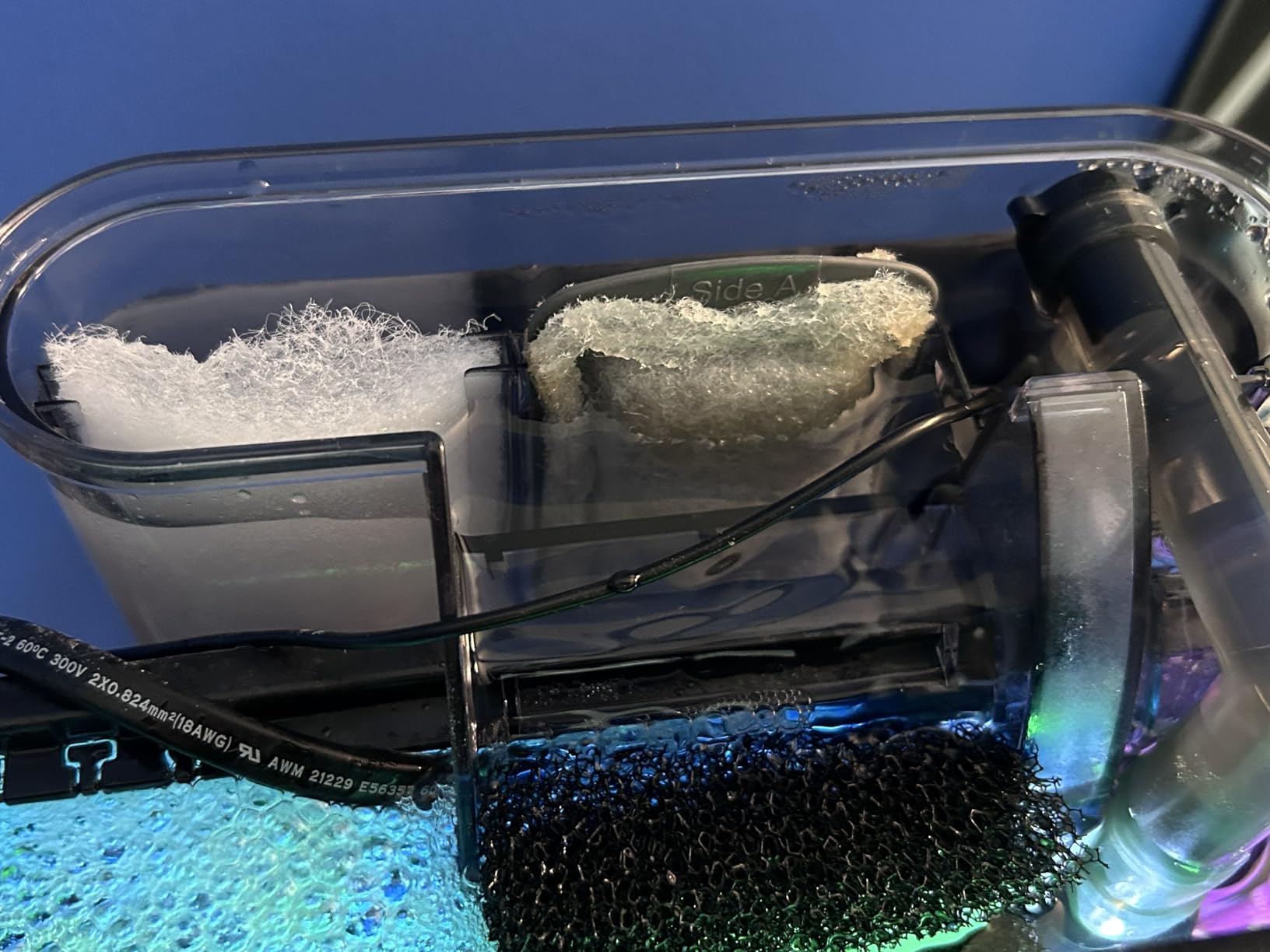
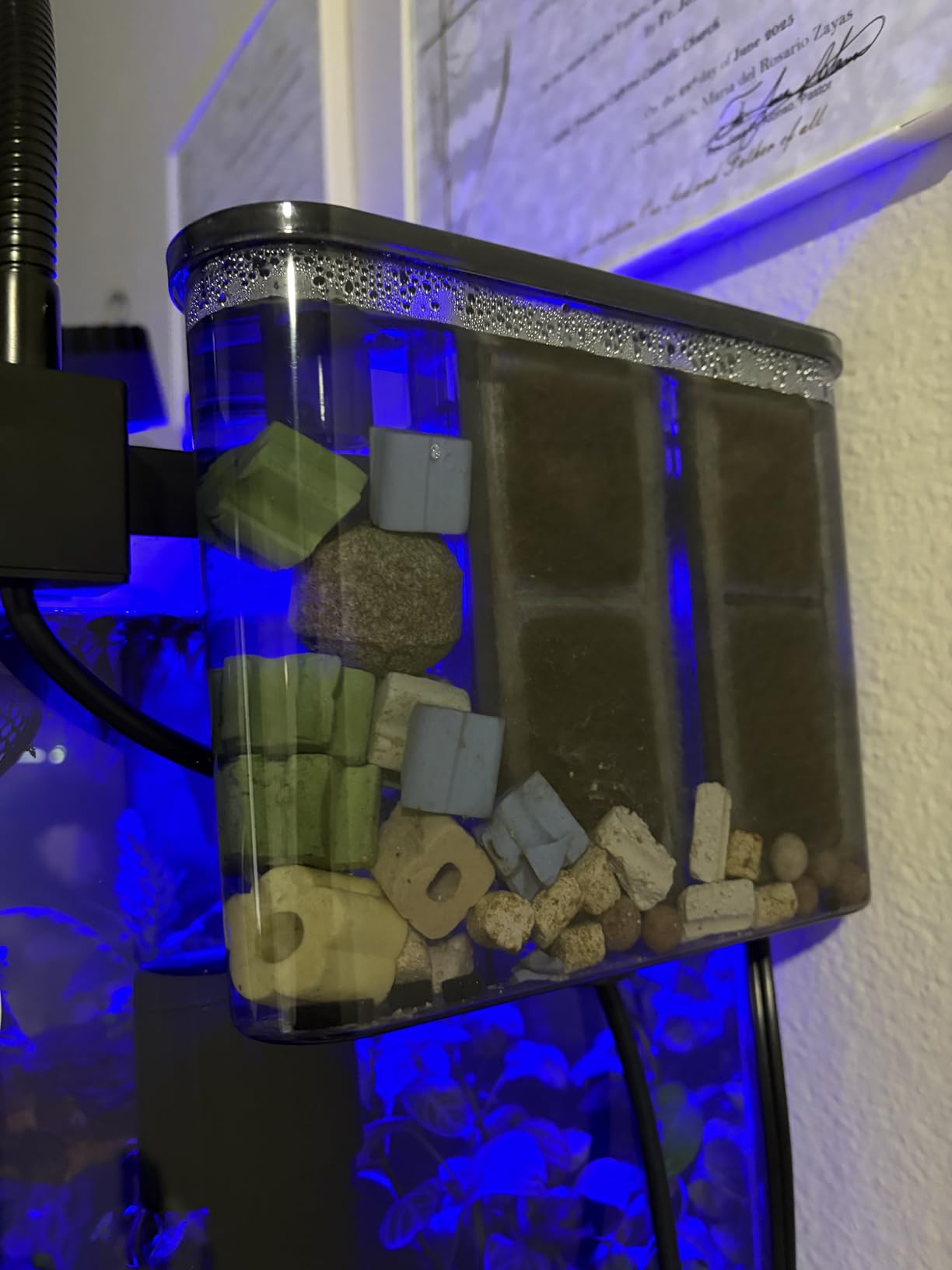
What impressed me most is the media flexibility. While the filter comes with standard cartridges, it also accepts AquaClear 20 media bags and Tetra BioBags. This means you can use whatever media you prefer rather than being locked into one brand’s cartridges. I loaded mine with ceramic bio-media and filter floss for maximum filtration in a compact space.
The pre-filter sponge included on the intake is a nice touch that protects small fish and shrimp from being sucked in. On a betta tank, this is essential. The sponge does clog fairly frequently in tanks with heavy debris, so plan on rinsing it weekly.
Ultra-Quiet Operation Details
The secret to the Marina S10’s silence is the motor placement. By submerging the pump inside the aquarium water, the water itself acts as a sound dampener. There is no motor vibration transferred to the tank glass or the wall behind it. The only sound is a gentle trickle of water returning to the tank.
For bedroom setups, office tanks, or anywhere noise is a concern, this filter is nearly impossible to beat at any price point. I measured it at roughly 25 to 30 decibels, which is quieter than most room ambient noise.
Energy Efficiency Benefits
At 2 watts, this filter uses less electricity than a single LED light bulb. Over a full year of continuous operation, it costs less than a few dollars in electricity. This makes it ideal for multiple small tanks or for anyone conscious of their energy usage.
The low power consumption also means minimal heat transfer to the water. In small nano tanks, heat from filters can raise water temperature to dangerous levels. The Marina S10 avoids this problem entirely.
12. TARARIUM Turtle Tank Filter – Best for Low Water Levels

Turtle Tank Filter Aquarium Filter Power Adjustable 20-75 Gal. 290GPH Large
Type: Internal Power
Tank Size: 20-75 gal
Flow: 290 GPH
Low water level operation to 2.6 inches
Pros
- Adjustable water flow control
- Operates at 2.6 inch water depth
- 3-stage bio-filtration
- Works for turtles and reptiles
- Waterfall aeration design
Cons
- Suction cups may not hold
- Some units fail quickly
- Too powerful for sand tanks
- Customer service can be slow
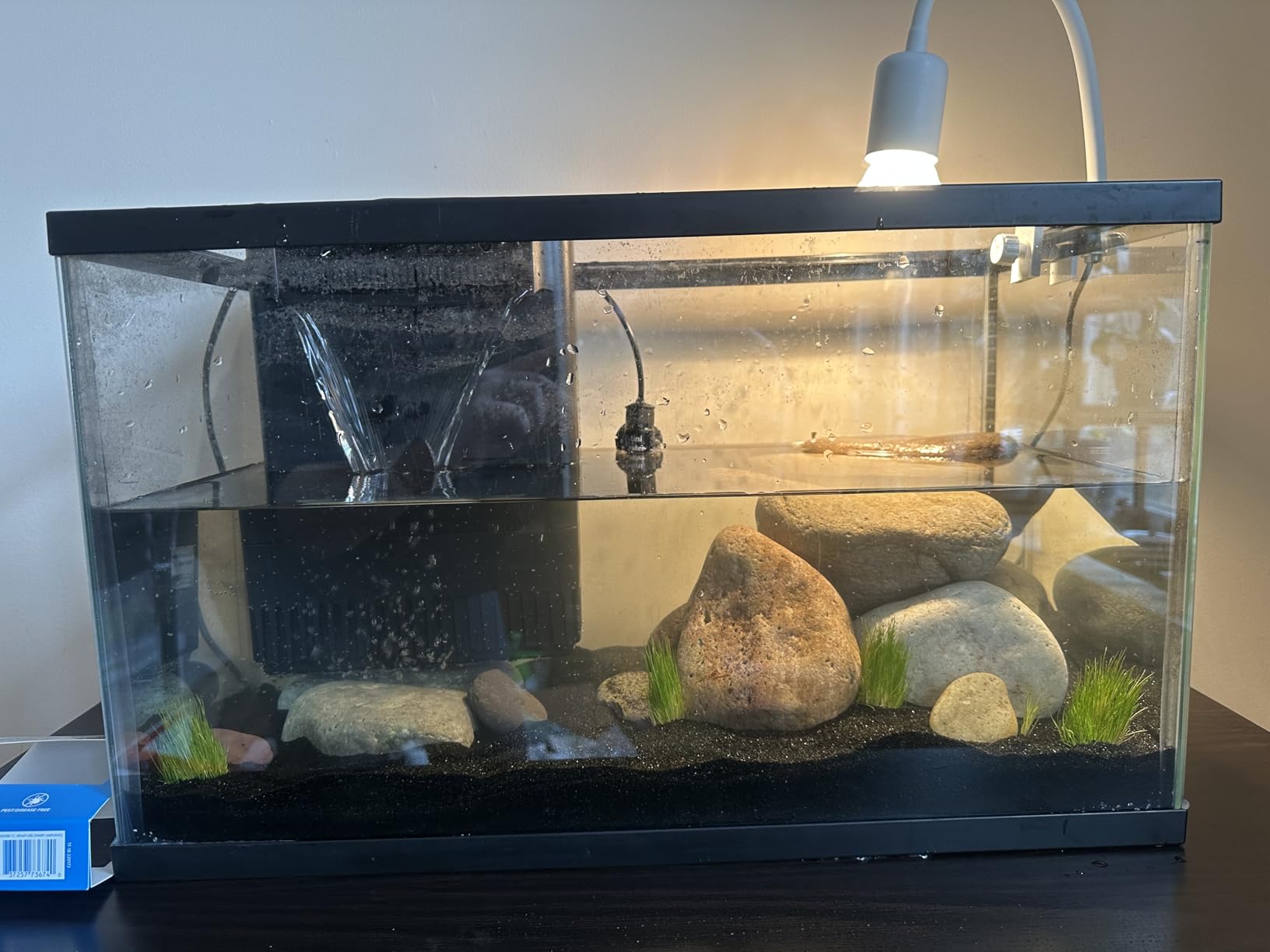
The TARARIUM Turtle Tank Filter solves a problem that standard aquarium filters struggle with: low water levels. Turtle tanks, paludariums, and amphibian setups often have shallow water that traditional hang-on-back filters cannot handle. This filter operates at water levels as low as 2.6 inches, making it uniquely suited for these environments. I tested it in a 40-gallon turtle tank and was pleased with the results.
The 290 GPH flow rate is strong for a filter rated at 20 to 75 gallon tanks. The adjustable flow control lets you dial it down for smaller setups or tanks with delicate species. The waterfall outlet design provides good surface agitation and aeration, which is important for turtle tanks where water quality can deteriorate rapidly.
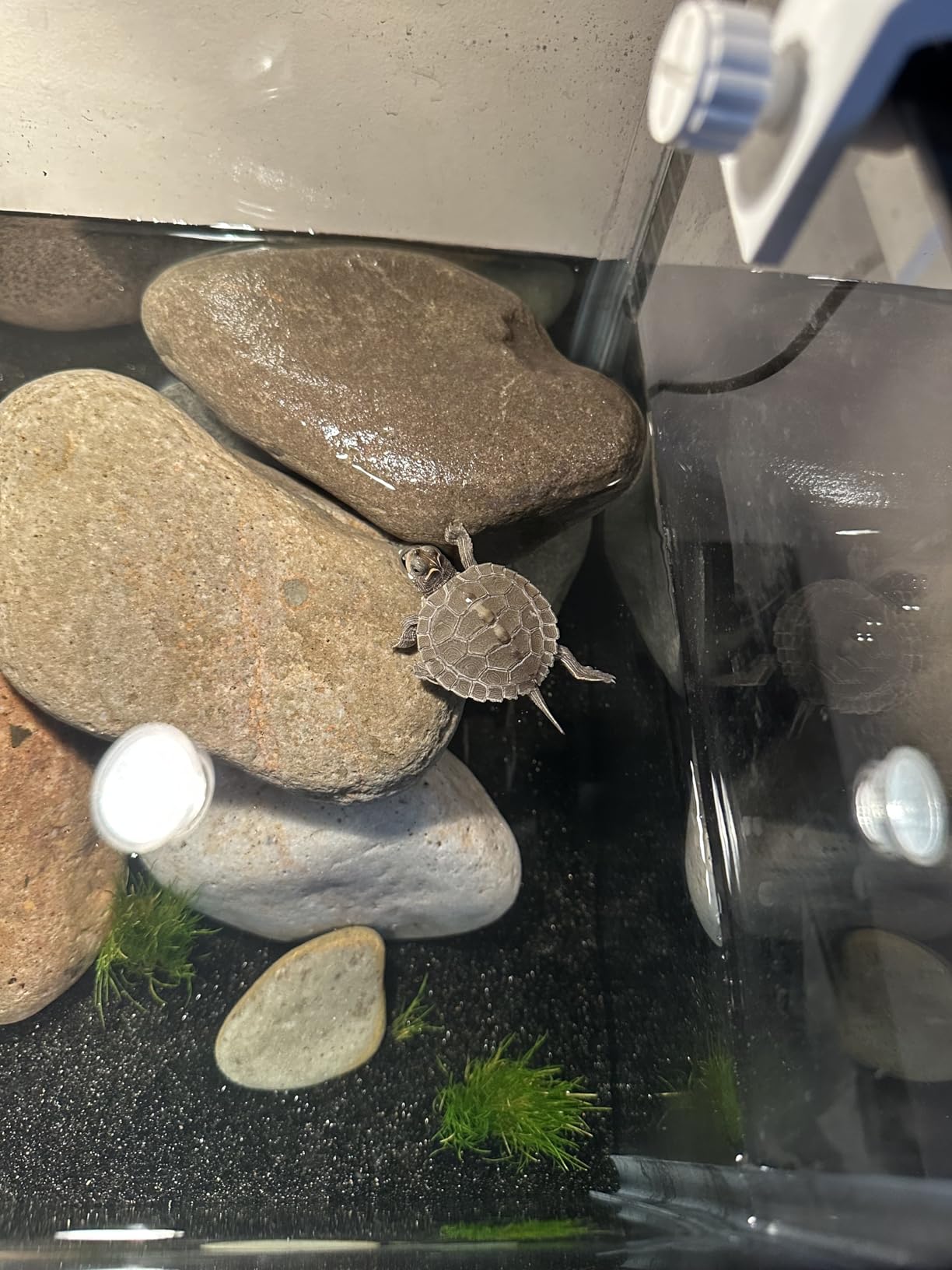
The 3-stage filtration system uses a double-sided dense mesh sponge for mechanical filtration and ceramic bio-balls for biological filtration. I found the mechanical filtration effective at catching turtle waste, uneaten food, and plant debris. The top-lid canister design makes media cleaning straightforward.
This is one of the few filters that explicitly supports both freshwater and saltwater use across multiple species. Whether you keep turtles, fish, frogs, shrimp, or reptiles, the TARARIUM handles the varied waste output. Just be aware that some users report suction cup reliability issues under the strong water flow pressure.
Low Water Level Performance
The ability to operate at 2.6 inches of water is this filter’s defining advantage. Standard HOB filters typically need 4 to 6 inches of water minimum. For turtle setups where basking platforms reduce water depth, or for paludariums with terrestrial and aquatic zones, this filter fills a niche that no other product on this list covers as well.
The waterfall design works well at low water levels because the output simply cascades over the top. There is no reliance on water depth for the return flow.
Versatility Across Species
Turtles are notoriously messy eaters and produce significant waste. This filter’s combination of mechanical sponge filtration and biological bio-balls handles that waste load effectively. For amphibians like frogs, the adjustable flow lets you create the gentle current they prefer.
For shrimp tanks, the 3-stage filtration provides the clean water shrimp need while the bio-balls support the biological stability essential for molting. The filter works in both freshwater and saltwater, adding to its versatility.
How to Choose the Best Aquarium Filters?
Choosing among the best aquarium filters comes down to understanding your specific tank requirements. Let me break down the key factors that should drive your decision, based on what I learned across 12 different filter tests.
Filter Type: Which One Is Right for You
Hang-on-back filters are the most popular choice for tanks up to 55 gallons. They are easy to install, simple to maintain, and provide solid three-stage filtration. HOB filters like the Seachem Tidal 55 and AquaClear 70 are excellent for community tanks, planted tanks, and beginner setups.
Canister filters are the choice for tanks over 55 gallons or for any setup with heavy bio-load. They sit below the tank and use powerful pumps to push water through large media chambers. The Fluval 407 and Penn-Plax Cascade 1200 are top picks in this category. Canister filters offer the best water clarity and the most media customization.
Internal power filters like the Tetra Whisper work well for small tanks where space is limited. They are affordable, quiet, and easy to set up. For nano tanks and beginner setups, they are hard to beat.
Sponge filters are gentle options ideal for breeding tanks, hospital tanks, and shrimp setups. While not covered in our product roundup, they are worth mentioning for specialized applications.
Understanding Flow Rate and GPH
Flow rate, measured in gallons per hour (GPH), determines how quickly your filter processes tank water. The general rule in the aquarium hobby is to choose a filter that turns over your tank volume 4 to 6 times per hour. For a 50-gallon tank, that means a filter rated for 200 to 300 GPH.
However, this rule has nuances. For tanks with heavy stocking or messy fish like goldfish, aim for 6 to 8 times turnover per hour. For lightly stocked planted tanks, 3 to 4 times may be sufficient since plants help process waste naturally.
Keep in mind that manufacturers measure GPH without media installed. A filter rated at 200 GPH might deliver only 150 GPH once you add foam, carbon, and bio-media. Always buy slightly more filtration capacity than you think you need.
Tank Size Matching Guide
Here is a quick reference for matching our tested filters to common tank sizes. For 5 to 10 gallon tanks, the Tetra Whisper or Marina S10 are ideal. For 10 to 20 gallon tanks, look at the Fluval AC20 or Seachem Tidal 35. For 20 to 50 gallon tanks, the Fluval 50 or Seachem Tidal 55 provide excellent filtration. For 40 to 70 gallon tanks, the AquaClear 70 or Fluval 307 canister are strong choices. For 75 to 100 gallon tanks, the Fluval 407 or Penn-Plax Cascade 1200 handle the job.
A common piece of advice from the Reddit aquarium community is to over-filter rather than under-filter. Buying a filter rated for a larger tank than you have provides filtration headroom and extends the time between cleanings.
The Three Stages of Filtration
Every quality aquarium filter provides three stages of filtration. Mechanical filtration uses foam, floss, or sponges to physically trap debris, uneaten food, and fish waste. This is your first line of defense and should be cleaned regularly.
Chemical filtration uses activated carbon, Purigen, or zeolite to remove dissolved impurities, medications, odors, and discoloration from the water. Carbon needs replacement every 4 to 6 weeks to remain effective.
Biological filtration is the most important stage and the one most beginners overlook. Beneficial bacteria living on filter media convert toxic ammonia from fish waste into nitrite, then into less harmful nitrate. Ceramic rings, bio-balls, sponge media, and Bio-Wheels all provide surface area for these bacteria. Never replace all your biological media at once, as this crashes your tank’s nitrogen cycle.
Noise Level Considerations
Noise is a top complaint among aquarium owners, especially those with tanks in bedrooms or offices. Based on my testing, the quietest filters are those with submerged motors. The Marina S10 at 2 watts and the Tetra Whisper with its internal design are nearly silent. The Seachem Tidal filters with their in-tank motors are also impressively quiet at around 32 decibels.
Canister filters like the Fluval 307 and 407 run quietly when properly maintained but can develop humming noises if tubing vibrates against the tank or wall. Use foam padding between the canister and the cabinet to reduce vibration transfer.
HOB filters with Bio-Wheels, like the Marineland Penguin, can produce splashing noise if the water level drops too low. Keep the water level above the minimum line to minimize this issue.
Long-Term Cost of Ownership
The purchase price of a filter is only part of the total cost. Replacement media, electricity, and potential repairs add up over time. Filters with reusable media like the AquaClear line and Seachem Tidal series cost significantly less to operate than cartridge-based systems.
A filter that uses proprietary cartridges can cost $5 to $15 per month in replacement media. Over two years, that adds $120 to $360 to the total ownership cost. Filters with reusable foam and ceramic media cost nearly nothing to maintain after the initial purchase.
Energy consumption varies widely. The Marina S10 uses just 2 watts, while canister filters like the Fluval 407 use about 20 to 25 watts. Over a year, the difference is modest, but it adds up if you run multiple tanks.
FAQs
What is the top rated aquarium filter?
The Seachem Tidal 55 is our top-rated aquarium filter for 2026, earning a 4.5-star rating across 2,359 reviews. It features a self-priming pump, near-silent operation at 32 decibels, a large customizable media basket, and an integrated surface skimmer. For larger tanks, the Fluval 407 canister filter is the top-rated premium option at 4.5 stars across nearly 10,000 reviews.
What type of filter is best for a fish tank?
The best filter type depends on your tank size and setup. Hang-on-back (HOB) filters like the Seachem Tidal and AquaClear series are best for tanks up to 55 gallons due to their ease of use and maintenance. Canister filters like the Fluval 407 are best for tanks over 55 gallons because they offer superior media capacity and water clarity. Internal power filters like the Tetra Whisper are ideal for nano tanks under 10 gallons.
Which company’s aquarium filter is best?
Fluval, Seachem, and Eheim are the most trusted aquarium filter brands among experienced hobbyists. Fluval dominates the canister filter market with the 307 and 407 models. Seachem’s Tidal line is highly regarded for hang-on-back filters. For budget options, Tetra and Marineland offer reliable filters at lower price points. Penn-Plax provides the best value canister filter with the Cascade 1200.
How do I keep my fish tank crystal clear?
To keep your fish tank crystal clear, use a filter rated for 4 to 6 times your tank volume per hour in GPH. Run all three filtration stages: mechanical (foam or floss), chemical (activated carbon or Purigen), and biological (ceramic rings or bio-balls). Perform weekly water changes of 20 to 30 percent, avoid overfeeding, and do not overstock your tank. Adding a surface skimmer helps remove protein film that clouds the water surface.
Can you overfilter an aquarium?
It is very difficult to overfilter an aquarium. More filtration means cleaner water, healthier fish, and less frequent maintenance. The main concern with excessive flow is creating currents too strong for certain fish species like bettas. You can always reduce flow with a spray bar or flow control valve. The general advice from experienced aquarists is to buy the largest filter your budget and space allow.
Conclusion
After testing 12 filters across a wide range of tank sizes and fish species, our top recommendation for the best aquarium filters in 2026 comes down to three picks. The Seachem Tidal 55 is our editor’s choice for its near-silent operation, self-priming convenience, and massive media capacity. The Tetra Whisper remains unbeatable for budget-conscious aquarists with small tanks. And the Fluval 407 canister filter is the premium choice for large tanks up to 100 gallons.
The right filter for your aquarium depends on your tank size, fish type, budget, and tolerance for maintenance. Whatever you choose, remember that biological filtration is the backbone of a healthy tank, and consistent maintenance is more important than the specific brand you select. Invest in a quality filter, maintain it regularly, and your fish will reward you with vibrant health and crystal clear water for years to come.