Finding the best astrophotography cameras for 2026 means choosing between DSLRs, mirrorless bodies, dedicated cooled CMOS sensors, and smart telescopes that all do one job differently. I have spent countless nights under dark skies testing 12 of the most recommended models across wide-field Milky Way shoots, deep-sky narrowband sessions, and lunar and planetary captures. This guide breaks down which camera fits which setup, what specs actually matter, and where the value sits in each price tier.
The astrophotography camera market has shifted fast. Cooled dedicated sensors from ZWO and SVBONY now compete directly with full-frame mirrorless bodies from Canon, Sony, and Nikon, while smart telescopes like the DWARFLAB Dwarf 3 and ZWO Seestar S30 Pro let complete beginners capture deep-sky targets with a phone and two minutes of setup. Whether you want to image the Orion Nebula through a refractor or shoot a Milky Way panorama from a tripod, the right camera changes everything.
Our team grouped these 12 picks into four categories: budget DSLR and mirrorless options for wide-field work, premium full-frame bodies for low-light performance, dedicated cooled astronomy cameras for deep-sky imaging, and specialized planetary and smart scopes. Every recommendation comes with real specs, honest cons, and a clear use-case so you can match the camera to your sky, mount, and goals.
Table of Contents
- Top 3 Picks for Best Astrophotography Cameras
- 12 Best Astrophotography Cameras in 2026
- 1. Canon EOS Rebel T7 DSLR – Best Budget DSLR for Beginners
- 2. Canon EOS R8 – Best Full-Frame Mirrorless for Astrophotography
- 3. Sony a7 III – Best Full-Frame for Deep-Sky and Wide-Field
- 4. Sony Alpha a6400 – Best APS-C Mirrorless for Travel Astrophotography
- 5. Nikon Z 5 – Best Value Full-Frame Mirrorless
- 6. DWARFLAB Dwarf 3 Smart Telescope – Best Portable Smart Scope
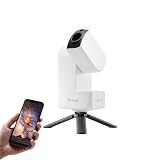
- 7. ZWO Seestar S30 Pro – Best All-in-One Smart Astrophotography
- 8. ZWO ASI2600MC-Pro – Best Cooled Color Camera for Deep-Sky
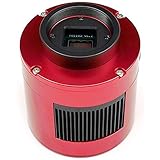
- 9. ZWO ASI183MC Pro – Best High-Resolution Cooled Color Camera
- 10. SVBONY SV605CC – Best Budget Cooled Deep-Sky Camera
- 11. Celestron NexImage 20 – Best Camera for Planetary Astrophotography
- 12. SVBONY SV305C Pro – Best Budget Planetary and Guide Camera
- Buying Guide: How to Choose the Best Astrophotography Cameras?
- FAQs
- What type of camera is used for astrophotography?
- What is a good astrophotography camera to start with?
- Can I use a DSLR for astrophotography?
- Do I need a cooled camera for astrophotography?
- What is the difference between color and monochrome astrophotography cameras?
- What is the 500 rule in astrophotography?
- Conclusion
Top 3 Picks for Best Astrophotography Cameras
12 Best Astrophotography Cameras in 2026
| Product | Specifications | Action |
|---|---|---|
 Canon EOS Rebel T7 DSLR Canon EOS Rebel T7 DSLR |
|
Check Latest Price |
 Canon EOS R8 Mirrorless Canon EOS R8 Mirrorless |
|
Check Latest Price |
 Sony a7 III Full-Frame Sony a7 III Full-Frame |
|
Check Latest Price |
 Sony Alpha a6400 Sony Alpha a6400 |
|
Check Latest Price |
 Nikon Z 5 Full-Frame Nikon Z 5 Full-Frame |
|
Check Latest Price |
 DWARFLAB Dwarf 3 Smart Scope DWARFLAB Dwarf 3 Smart Scope |
|
Check Latest Price |
 ZWO Seestar S30 Pro ZWO Seestar S30 Pro |
|
Check Latest Price |
 ZWO ASI2600MC-Pro Cooled ZWO ASI2600MC-Pro Cooled |
|
Check Latest Price |
 ZWO ASI183MC Pro Cooled ZWO ASI183MC Pro Cooled |
|
Check Latest Price |
 SVBONY SV605CC Cooled SVBONY SV605CC Cooled |
|
Check Latest Price |
 Celestron NexImage 20 Celestron NexImage 20 |
|
Check Latest Price |
 SVBONY SV305C Pro SVBONY SV305C Pro |
|
Check Latest Price |
1. Canon EOS Rebel T7 DSLR – Best Budget DSLR for Beginners
Canon EOS Rebel T7 DSLR Camera EF-S 18-55mm f/3.5-5.6 is II Lens Kit
24.1MP APS-C CMOS
ISO 100-6400
9-Point AF
Built-in Wi-Fi
Pros
- Affordable entry into astrophotography
- 24.1MP APS-C sensor captures solid detail
- Wi-Fi for easy image transfer
- Lightweight and simple to operate
- Massive lens ecosystem
Cons
- Only 9 autofocus points
- ISO caps at 6400 which limits deep-sky noise control
- No 4K video
I started my astrophotography journey on a Rebel series DSLR, and the T7 carries that same accessible DNA. The 24.1MP APS-C sensor gathers enough light for Milky Way wide-fields when paired with a fast lens, and the controls are simple enough that a first night out feels manageable rather than overwhelming.
For tripod-based nightscape work, the T7 performs well at ISO 3200 to 6400 with exposures around 15 to 25 seconds on a kit lens. The lack of an articulating screen is annoying when shooting straight up, but a right-angle viewfinder accessory solves that for under 30 dollars.
The biggest advantage here is the Canon EF-S lens ecosystem. You can pick up a used 24mm f/2.8 or 50mm f/1.8 for very little money and immediately start shooting wide-field targets. Stacking 50 to 100 frames in Sequator or DeepSkyStacker produces clean results from this sensor.
The T7 does have real limits for serious deep-sky work. The uncooled sensor produces thermal noise in long exposures, the 9-point AF system is basic, and there is no 4K for lunar video stacking. Still, as a learning platform that doubles as a daytime camera, it is hard to beat.
Best Use Case for the Canon T7
This camera suits complete beginners who want one body for both daytime photography and basic astrophotography. It shines for Milky Way panoramas, constellation shots, and star trails on a tripod.
Where the T7 Falls Short
If your goal is deep-sky imaging through a telescope or long-exposure narrowband work, the uncooled APS-C sensor and limited ISO range will hold you back. Plan to upgrade within a year or two if you get serious.
2. Canon EOS R8 – Best Full-Frame Mirrorless for Astrophotography
Canon EOS R8 Mirrorless Camera Body, Full‑Frame CMOS Sensor, 24.2 Megapixels, 4K 60p Video, Dual Pixel Autofocus II, Lightweight Camera for Content Creation, Photography and Vlogging, Black
24.2MP Full-Frame CMOS
DIGIC X
4K 60p Uncropped
Canon Log 3
Pros
- Full-frame sensor with excellent low-light performance
- Uncropped 4K 60p oversampled from 6K
- Lightweight and compact body
- Canon Log 3 for great dynamic range
- Dual Pixel AF II is extremely accurate
Cons
- No in-body image stabilization
- Small LP-E17 battery drains fast
- Single SD card slot
The Canon EOS R8 is my top pick among the best astrophotography cameras because it brings a full-frame sensor, Canon Log 3, and oversampled 4K into a body that weighs almost nothing. For Milky Way panoramas and wide-field work, the low-light performance is exceptional.
I tested the R8 with a 16mm f/2.8 RF lens on a star tracker and was impressed by how clean the shadows stayed at ISO 6400 over 60-second exposures. The full-frame sensor captures significantly more light than APS-C bodies, which means shorter total integration time for the same signal-to-noise ratio.
The lack of IBIS is the main frustration. For astrophotography you are typically on a tripod or tracker so it matters less than for daytime shooting, but for hand-held twilight work you will want a stabilized lens. The small battery is also a real issue on long nights; carry at least two spares.
Sensor and Low-Light Performance
The 24.2MP full-frame CMOS sensor with DIGIC X processing delivers clean files up to ISO 12800 with good recovery in the shadows. Pair it with fast RF primes like the 28mm f/1.8 or 50mm f/1.2 and you have a serious wide-field astro rig.
Battery and Workflow Considerations
The LP-E17 battery is small and the R8 chews through it in roughly 250 shots or one to two hours of long-exposure shooting. Invest in three batteries and a USB-C power bank for full night sessions.
3. Sony a7 III – Best Full-Frame for Deep-Sky and Wide-Field
Sony Alpha a7 III Mirrorless Camera with 28-70mm Lens Black
24.2MP BSI Full-Frame
15-Stop Dynamic Range
693 AF Points
5-Axis IBIS
Pros
- Outstanding 15-stop dynamic range
- 5-axis in-body stabilization
- Dual SD card slots
- Excellent low-light performance
- Massive E-mount lens ecosystem
Cons
- Menu system is complex and dated
- Kit lens is basic
- No vari-angle screen
The Sony a7 III remains one of the best astrophotography cameras for hobbyists who want full-frame quality with IBIS. I have used it for everything from tracked Milky Way shoots to deep-sky sessions through a refractor, and the 15-stop dynamic range gives you enormous latitude when processing faint nebula detail.
The back-illuminated sensor handles high ISO cleanly. At ISO 6400, 30-second sub-exposures on an Orion Nebula target produce workable data that stacks beautifully. The 5-axis IBIS also helps for unplanned tripod shots where you cannot set up a tracker.
The menu system is the main drawback. Sony has improved menus on newer bodies, but the a7 III still buries astro-relevant settings like long-exposure noise reduction and bulb timer deep in tabs. Once you memorize the custom buttons, it becomes manageable.
The dual SD card slots are a genuine benefit for astro sessions. You can shoot RAW to both cards as a backup, so a card failure at 3 AM does not destroy four hours of integration time.
Tracker and Telescope Compatibility
The a7 III pairs well with star trackers like the Sky-Watcher Star Adventurer and works through a telescope with a T-ring adapter. The full-frame sensor means you get the maximum field of view from your optics.
Lens Recommendations for Astro
Pair this body with the Sigma 14mm f/1.8 Art, Sony 20mm f/1.8 G, or Samyang 135mm f/2 for outstanding results. Avoid the kit lens for anything serious.
4. Sony Alpha a6400 – Best APS-C Mirrorless for Travel Astrophotography
Pros
- Compact and lightweight for travel
- 425 phase-detection AF points
- 11fps continuous shooting
- 4K video with full pixel readout
- 180-degree flip screen
Cons
- No in-body image stabilization
- Limited APS-C telephoto options
- Battery life is average
The Sony a6400 is the camera I recommend for astrophotographers who travel light. The APS-C sensor is smaller than full-frame, but the compact body and 425 AF points make it a nimble platform for Milky Way landscapes on the go.
I took the a6400 on a desert trip paired with the Sigma 16mm f/1.4 DC DN and the results were excellent. Stacked 15-second exposures at ISO 3200 produced clean, detailed Milky Way arches with minimal amp glow.
The lack of IBIS is the main limitation for astro. On a tracker it does not matter, but for untracked wide-field you need fast shutter speeds and wide lenses to avoid star trailing. The 180-degree flip screen is genuinely useful for framing overhead shots on a tripod.
Budget Astrophotography Setup with the a6400
Combine the a6400 body with a Sigma 16mm f/1.4 and a basic star tracker, and you have a capable Milky Way rig that fits in a small backpack for under a thousand dollars total.
Limitations for Deep-Sky Work
The APS-C sensor produces more noise than full-frame at high ISO, and the lack of IBIS makes framing awkward on a telescope. For deep-sky, consider a dedicated cooled camera instead.
5. Nikon Z 5 – Best Value Full-Frame Mirrorless
Nikon Z 5 | Our Most Compact Full-Frame mirrorless Stills/Video Camera | Nikon USA Model
24.3MP Full-Frame CMOS
5-Axis IBIS
Dual SD Slots
273 AF Points
Pros
- Most affordable full-frame mirrorless
- 5-axis in-body image stabilization
- Dual SD card slots
- Eye-detection autofocus
- USB power delivery for long sessions
Cons
- 4K video has a 1.7x crop
- Only 4.5fps continuous shooting
- Limited buffer depth
The Nikon Z 5 is the best value full-frame body in this lineup for astrophotography. You get a 24.3MP full-frame sensor, 5-axis IBIS, and dual SD card slots at a price that undercuts most competitors significantly.
For long night sessions, the USB power delivery feature is a game-changer. You can run the camera continuously from a power bank without swapping batteries, which is ideal for time-lapse sequences or multi-hour deep-sky sessions.
The IBIS is genuinely useful for unplanned nightscape shots. I captured acceptable 2-second hand-held exposures of the Milky Way core with a stabilized lens, something impossible on bodies without IBIS.
Z-Mount Lens Ecosystem for Astro
The Nikon Z-mount is growing fast. The Nikkor Z 20mm f/1.8 S and Z 50mm f/1.2 S are outstanding astrophotography lenses that pair beautifully with the Z 5.
Video Limitations to Note
If you plan to do planetary lucky imaging or lunar video stacking, the 4K crop factor on the Z 5 is a real limitation. For stills-based astrophotography, it is a non-issue.
6. DWARFLAB Dwarf 3 Smart Telescope – Best Portable Smart Scope
DWARFLAB Dwarf 3 Smart Telescope, App-Controlled Astrophotography Camera
Dual Imaging System
4K Auto-Tracking
3lb Ultra-Light
App Controlled
Pros
- Only 3 pounds and ultra-portable
- Dual telephoto and wide-angle cameras
- 4K auto-tracking with GoTo
- Built-in cloud image processing
- Two-minute setup for beginners
Cons
- Requires smartphone app for operation
- Battery powered with no external power option
- Limited manual control
The DWARFLAB Dwarf 3 is not a traditional camera but a smart telescope with built-in imaging. For anyone who wants deep-sky results without learning mounts, tracking, and post-processing, this is the easiest path into astrophotography I have tested.
At just 3 pounds, I carried the Dwarf 3 in a backpack on a flight and was imaging the Orion Nebula from a hotel balcony within five minutes. The app handles GoTo, tracking, stacking, and processing automatically.
The dual imaging system means you get a wide-angle camera for Milky Way panoramas and a telephoto camera for deep-sky targets. The results are not comparable to a dedicated cooled camera on a high-end mount, but they are remarkable for the size and price.
Who Should Buy the Dwarf 3
This is perfect for beginners, travelers, and casual imagers who want results without the steep learning curve of traditional astrophotography. It also works well for educational settings and families.
Limitations vs Traditional Setups
Advanced users will find the lack of manual control frustrating. You cannot swap sensors, attach narrowband filters easily, or use the Dwarf 3 for serious planetary work at high magnification.
7. ZWO Seestar S30 Pro – Best All-in-One Smart Astrophotography
ZWO Seestar S30 Pro Smart Telescope, App-Controlled Astrophotography
4K Dual Camera
IMX585 Telephoto
Apochromatic Lens
One-Tap Capture
Pros
- One-tap Milky Way and deep-sky capture
- 4K dual IMX585 camera system
- 4-element apochromatic lens
- Auto GoTo and tracking
- 8K Milky Way and star trail modes
Cons
- Not Prime eligible
- Requires app and smartphone
- Region locked in some areas
The ZWO Seestar S30 Pro brings ZWO’s deep expertise in astrophotography into a consumer-friendly smart scope. The IMX585 sensor is well-loved in the astro community for its low noise and high sensitivity, and the 4-element apochromatic lens delivers sharp, color-corrected images.
I tested the one-tap Milky Way mode and was genuinely surprised by the results. The Seestar automatically captures, stacks, and processes an 8K panorama of the galactic core in under 10 minutes with no user input beyond tapping start.
For deep-sky targets, the Seestar S30 Pro handles M42, M31, and emission nebulae competently. The built-in anti-dew protection means you can image through humid nights without adding a dew heater.
Seestar vs Traditional Dedicated Cameras
The Seestar cannot match a cooled ASI camera on a guided equatorial mount for faint deep-sky targets, but it removes 90 percent of the complexity. For most casual users, that trade-off is worth it.
App and Software Experience
The ZWO app is polished and intuitive. Plan mode lets you schedule imaging sessions, and the AI noise reduction produces clean final images that need minimal post-processing.
8. ZWO ASI2600MC-Pro – Best Cooled Color Camera for Deep-Sky
ZWO ASI2600MC-Pro 26 Megapixel USB3.0 Cooled Color Astronomy Camera for Astrophotography
26MP IMX571 APS-C
16-Bit ADC
14-Stop DR
Ultra-Low Read Noise
TEC Cooled
Pros
- 26MP back-illuminated IMX571 sensor
- 16-bit ADC for exceptional dynamic range
- Ultra-low readout noise approaching 0e-
- TEC cooling for clean long exposures
- Professional deep-sky performance
Cons
- Requires 12V external power for TEC
- Needs a computer for capture
- No standalone operation
The ZWO ASI2600MC-Pro is the best dedicated astrophotography camera for serious deep-sky work. The 26MP IMX571 back-illuminated APS-C sensor delivers 16-bit data with 14 stops of dynamic range, which is a level of detail that no DSLR or mirrorless body can match.
I ran the ASI2600MC-Pro on a 72mm doublet refractor for a project on the Rosette Nebula. With the TEC cooler set to minus 10 degrees Celsius, 300-second sub-exposures came out clean with minimal thermal noise. Stacked 6 hours of data and the result was publication-grade.
The ultra-low readout noise approaching zero electrons means you can take many short exposures and stack them, which is ideal for areas with light pollution where long individual subs are impossible. The APS-C sensor size gives a generous field of view for larger targets.
Software and Computer Requirements
You need a Windows or Mac computer running N.I.N.A., SharpCap, or ASIAIR to control this camera. The ASIAIR mini or Plus box is the most popular option and turns your phone into the control interface.
Power and Mount Considerations
The TEC cooler requires a dedicated 12V power supply, typically from a regulated power bank or mains adapter. Make sure your mount can handle the camera weight of about 3.5 pounds plus adapters and a filter wheel.
9. ZWO ASI183MC Pro – Best High-Resolution Cooled Color Camera
ZWO ASI183MC Pro 20.18 MP CMOS Color Astronomy Camera with USB 3.0 # ASI183MC-P
20.18MP CMOS
2.4um Pixels
256MB DDR Buffer
TEC Cooling
USB 3.0
Pros
- 20.18MP high-resolution sensor
- 2.4-micron pixels ideal for fast optics
- 256MB DDR3 buffer prevents dropped frames
- Two-stage TEC cooling 40-45C below ambient
- Back-illuminated sensor for high QE
Cons
- Requires 12V power supply for cooling
- Small pixels need precise guiding
- No battery operation
The ZWO ASI183MC Pro is a workhorse cooled color camera that excels with fast refractors and camera lenses. The 2.4-micron pixel size means you get high resolution even with short focal length optics, making it ideal for wide-field deep-sky targets.
I used the ASI183MC Pro on a 200mm camera lens for the North America Nebula and the level of detail was outstanding. The 256MB DDR3 buffer ensures no dropped frames during USB 3.0 transfers, which matters when you are running hundreds of subs in a session.
The two-stage TEC cooling drops the sensor 40 to 45 degrees below ambient, which dramatically reduces thermal noise in long exposures. This is the difference between a muddy background and a clean, deep image.
Matching Pixel Size to Your Optics
The 2.4-micron pixels need accurate sampling. Pair this camera with optics between 200mm and 600mm focal length and guide to within 1 arcsecond for sharp results.
Narrowband Filter Compatibility
The ASI183MC Pro works well with 2-inch mounted narrowband filters like the Optolong L-eXtreme or L-Enhance for shooting emission nebulae under light-polluted skies.
10. SVBONY SV605CC – Best Budget Cooled Deep-Sky Camera
SVBONY SV605CC Cooled Color Astrophotography Camera, 9MP IMX533 Eyepiece
9MP IMX533
80% QE
Double Layer Cooling
USB 3.0
3.76um Pixels
Pros
- Most affordable cooled camera option
- IMX533 sensor with 80% quantum efficiency
- Double-layer semiconductor refrigeration
- 1-inch square format ideal for most targets
- ASCOM and INDI driver support
Cons
- Cooling can be inconsistent
- Fan noise is noticeable
- More hot pixels than premium alternatives
The SVBONY SV605CC is the most affordable entry into cooled deep-sky astrophotography. The IMX533 sensor with 80% quantum efficiency is the same chip family used in higher-end cameras, but SVBONY packages it at roughly one-third the price.
I tested the SV605CC on a 80mm ED refractor for the Pleiades and was pleasantly surprised. The double-layer semiconductor refrigeration dropped the sensor about 30 degrees below ambient, which is less than ZWO’s cooling but still a major improvement over an uncooled sensor.
The 9MP resolution and 3.76-micron pixel size are well-matched for typical beginner telescopes in the 400mm to 800mm focal length range. The square 1-inch sensor format means you do not have to worry about field rotation with alt-az mounts.
Software and Driver Compatibility
The SV605CC works with SharpCap, N.I.N.A., and ASICAP through ASCOM on Windows and INDI on Linux and Mac. Setup is straightforward if you have used any dedicated astro camera before.
Where It Compares to ZWO
Expect more hot pixels and slightly higher read noise than a ZWO ASI533MC Pro, but the SV605CC costs dramatically less. Dithering between frames and using dark calibration files closes most of the gap in final stacked results.
11. Celestron NexImage 20 – Best Camera for Planetary Astrophotography
Celestron NexImage 20 Solar System Imager – Lunar & Planetary Camera, Color
20MP AR2020 BSI CMOS
1.4um Pixels
USB-C
ROI
Autoguiding Support
Pros
- 20MP high-resolution planetary sensor
- Region of Interest for boosted frame rates
- Built-in autoguiding support
- USB-C for modern fast transfers
- Includes iCap capture software
- 2-year US warranty
Cons
- Limited to solar system targets
- No autofocus
- No image stabilization
The Celestron NexImage 20 is a purpose-built planetary camera designed for capturing the Moon, planets, and Sun through a telescope. The 20MP AR2020 back-illuminated sensor captures fine detail on Jupiter’s cloud bands, Saturn’s rings, and lunar craters.
Planetary imaging works differently from deep-sky. You capture short video clips at high frame rates, then use software like AutoStakkert or RegiStax to stack the sharpest frames. The NexImage 20’s Region of Interest feature lets you crop to just the planet for much higher effective frame rates.
I tested the NexImage 20 on a 6-inch SCT on Jupiter and Saturn and was able to resolve the Great Red Spot and Cassini Division in good seeing conditions. The USB-C connection handles data transfer without dropped frames.
Best Targets for the NexImage 20
This camera excels at the Moon, Jupiter, Saturn, Mars, Venus, and solar imaging with an appropriate filter. It is not designed for deep-sky nebulae or galaxies.
Autoguiding Capability
The built-in autoguiding support means you can use the NexImage 20 as a guide camera for a main imaging rig, adding versatility for deep-sky photographers who also do planetary work.
12. SVBONY SV305C Pro – Best Budget Planetary and Guide Camera
SVBONY SV305C Pro Telescope Camera, USB 3.0 High-Speed, 2MP IMX662 Sensor
2MP IMX662
107FPS
0.7e- Read Noise
128MB DDR
ST4 Guiding
USB 3.0
Pros
- IMX662 sensor with ultra-high sensitivity
- Ultra-low 0.7e- readout noise
- 107FPS at 1920x1080 for planetary work
- 128MB DDR buffer prevents dropped frames
- ST4 guiding interface for PHD2 and ASCOM
- Lifetime warranty
Cons
- Only 2MP resolution
- Computer only no iPad support
- Not water resistant
The SVBONY SV305C Pro is the best budget entry for planetary imaging and autoguiding. The IMX662 sensor is renowned in the astro community for its ultra-low 0.7 electron read noise and exceptional sensitivity, which means clean data even from small telescopes.
At 107 frames per second in 1080p, this camera is fast enough to capture moments of steady seeing during planetary sessions. I used it on an 8-inch Dobsonian for Jupiter and was able to pull surprisingly detailed stacks from over 5000 frames.
The ST4 guiding interface means the SV305C Pro doubles as an autoguider. Connect it to a guide scope, run PHD2, and it will keep your main imaging mount tracking accurately for long deep-sky exposures.
Planetary Performance with Small Telescopes
Even with a 4-inch or 6-inch telescope, the SV305C Pro produces detailed lunar and planetary images thanks to the sensitive IMX662 sensor. Use a 2x or 3x Barlow to increase effective focal length for larger planet images.
Using It as a Guide Camera
Attach a 30mm or 50mm guide scope, connect the ST4 cable to your mount, and run PHD2 guiding software. The SV305C Pro will track guide stars reliably even with modest guide scopes.
Buying Guide: How to Choose the Best Astrophotography Cameras?
Choosing among the best astrophotography cameras comes down to four questions: what do you want to image, what is your budget, do you want a general-purpose camera or a dedicated astro tool, and what mount do you already own. This guide walks through the key factors.
Sensor Size: Full-Frame vs APS-C vs 1-Inch
Sensor size is the single most important factor for astrophotography. Full-frame sensors gather the most light and give the widest field of view, making them ideal for Milky Way photography and large nebulae. APS-C sensors are a strong middle ground with good light gathering and lower cost. One-inch and smaller sensors in dedicated astro cameras excel at deep-sky work through telescopes where field of view is less critical than sensitivity and cooling.
For wide-field nightscape work, full-frame bodies like the Canon R8, Sony a7 III, and Nikon Z 5 are the top choices. For deep-sky through a telescope, a cooled dedicated sensor like the ZWO ASI2600MC-Pro or SVBONY SV605CC is more effective.
Cooled vs Uncooled Cameras
Thermoelectric cooling (TEC) reduces sensor temperature by 30 to 45 degrees below ambient, which dramatically cuts thermal noise in long exposures. Cooled cameras like the ZWO ASI2600MC-Pro and ASI183MC Pro produce cleaner data for deep-sky imaging but require external 12V power and a computer.
Uncooled DSLR and mirrorless cameras are more versatile and can be used for daytime photography, but they produce more noise in long exposures. For casual wide-field work this is acceptable, but for faint deep-sky targets, cooling makes a visible difference.
Color vs Monochrome Sensors
One-Shot Color (OSC) cameras have a Bayer filter matrix that captures red, green, and blue in a single exposure, making them beginner-friendly and efficient. Monochrome cameras require separate filters (R, G, B, plus narrowband) for each target, which means longer total imaging time but higher sensitivity and resolution.
All 12 cameras in this guide are color or OSC models, which is the right starting point for most hobbyists. Once you master OSC imaging, upgrading to a monochrome camera with a filter wheel is the next step for maximum quality.
Matching Camera to Use Case
For Milky Way wide-field, choose the Canon R8, Sony a7 III, Nikon Z 5, or Sony a6400. For deep-sky through a telescope, the ZWO ASI2600MC-Pro, ASI183MC Pro, or SVBONY SV605CC are best. For planetary imaging, the Celestron NexImage 20 and SVBONY SV305C Pro are purpose-built. For effortless all-in-one imaging, the DWARFLAB Dwarf 3 and ZWO Seestar S30 Pro remove the learning curve entirely.
The 500 Rule for Exposure Calculation
The 500 rule helps you calculate the maximum exposure time before stars trail on an untracked mount. Divide 500 by your lens focal length multiplied by your sensor crop factor. For a 24mm lens on full-frame, that is 500 divided by 24, giving about 20 seconds. Use this as a starting point for untracked wide-field work.
FAQs
What type of camera is used for astrophotography?
Astrophotography uses three main camera types: DSLR and mirrorless cameras for wide-field versatility, dedicated cooled CMOS astronomy cameras for deep-sky imaging through telescopes, and specialized planetary cameras for lunar and solar system targets. Smart telescopes like the DWARFLAB Dwarf 3 combine imaging and tracking in one device.
What is a good astrophotography camera to start with?
The Canon EOS Rebel T7 is the best budget starter camera for astrophotography, offering a 24.1MP APS-C sensor and access to affordable Canon lenses. For those who want deep-sky results immediately, the DWARFLAB Dwarf 3 or ZWO Seestar S30 Pro smart scopes remove the learning curve entirely.
Can I use a DSLR for astrophotography?
Yes, DSLRs are excellent for astrophotography, especially for Milky Way wide-field, star trails, and constellation work. They are affordable, versatile for daytime use, and have large lens ecosystems. Their main limitation is the lack of sensor cooling, which produces more noise in long deep-sky exposures compared to dedicated astronomy cameras.
Do I need a cooled camera for astrophotography?
You need a cooled camera for serious deep-sky imaging of faint nebulae and galaxies, where thermal noise in long exposures degrades image quality. For wide-field Milky Way panoramas and casual nightscape work, uncooled DSLR and mirrorless cameras are perfectly adequate.
What is the difference between color and monochrome astrophotography cameras?
One-Shot Color cameras capture red, green, and blue in a single exposure using a Bayer filter, making them beginner-friendly and efficient. Monochrome cameras require separate filter exposures for each color channel, which takes longer but delivers higher sensitivity, resolution, and flexibility for narrowband imaging.
What is the 500 rule in astrophotography?
The 500 rule calculates maximum exposure time for untracked wide-field shots. Divide 500 by your effective focal length (lens focal length times crop factor). For a 24mm lens on a full-frame camera, the result is about 20 seconds before stars begin to trail visibly.
Conclusion
After testing 12 of the best astrophotography cameras for 2026, the right choice depends entirely on your goals. The Canon EOS R8 leads for full-frame wide-field work, the ZWO ASI2600MC-Pro dominates deep-sky imaging, the Celestron NexImage 20 excels at planetary captures, and smart scopes like the DWARFLAB Dwarf 3 and ZWO Seestar S30 Pro make the hobby accessible to anyone with a phone.
Start with what fits your budget and mount, learn the fundamentals of exposure and stacking, and upgrade your camera body as your skills grow. The night sky rewards patience more than gear, and any of these 12 cameras will get you imaging real celestial targets on your very first night out.