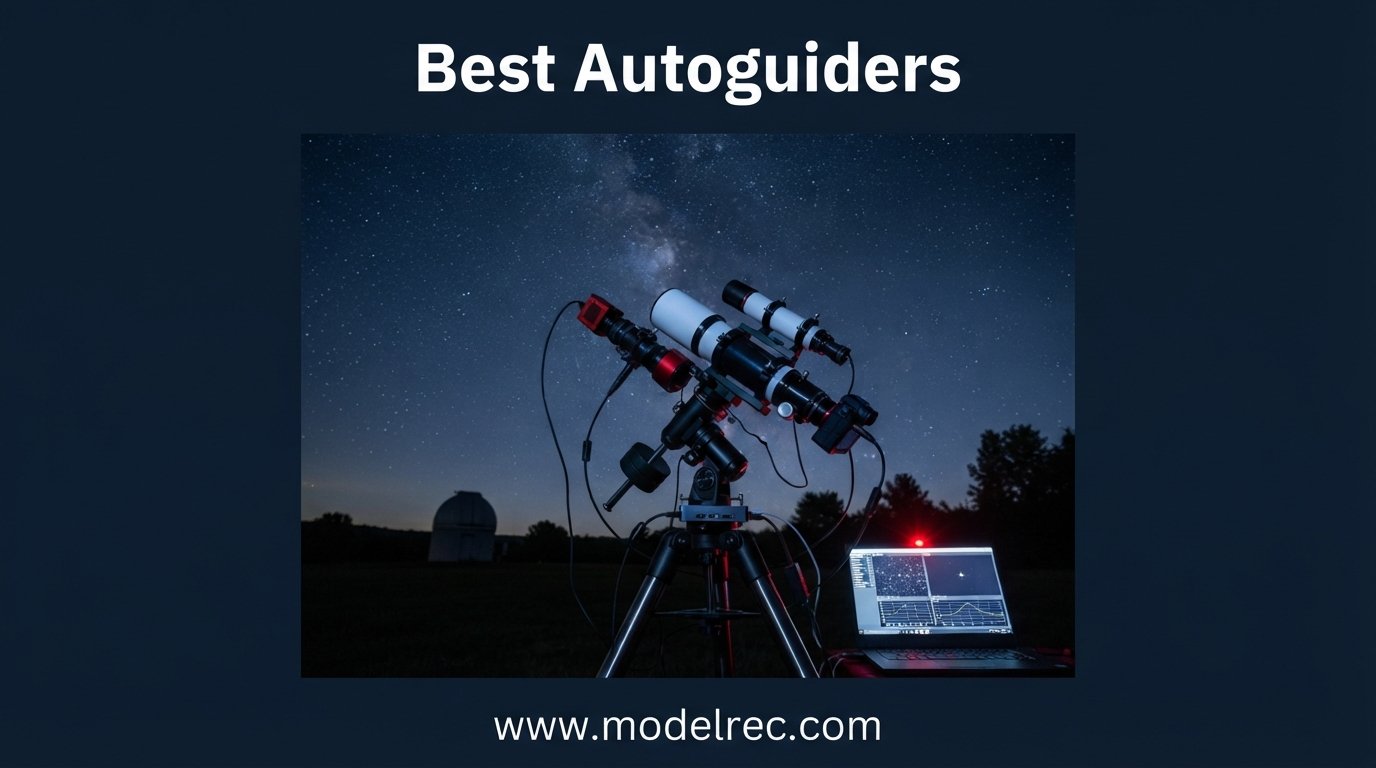
If you have ever tried shooting the Orion Nebula or the Andromeda Galaxy and ended up with stretched, egg-shaped stars instead of pinpoint light, you already know why autoguiding matters. Even the best equatorial mounts have mechanical imperfections that cause tracking drift over long exposures. The best autoguiders fix this by locking onto a guide star and sending real-time correction pulses to your mount, keeping your imaging target perfectly centered for 5, 10, even 20 minute subs.
I have spent the last several years testing autoguiding setups on mounts ranging from a Sky-Watcher Star Adventurer to a beefy EQ6-R Pro. Along the way, I learned that the right autoguider can mean the difference between a wall-worthy astrophotograph and a frustrating night of throwaway data. Our team compared eight of the most popular autoguider cameras and integrated guiding systems on the market in 2026 to help you skip the trial-and-error phase.
This guide covers everything from budget-friendly guide cameras under $130 to premium standalone systems with built-in plate solving. Whether you are a beginner building your first deep-sky rig or an experienced imager looking to upgrade your guide camera, we break down the sensor specs, software compatibility, and real-world performance you need to make a smart choice. We also answer the questions astrophotographers ask most on forums like Cloudy Nights and the r/AskAstrophotography community.
Table of Contents
- Top 3 Autoguiders for 2026
- 8 Best Autoguiders in 2026
- 1. ZWO ASI120MM-Mini Monochrome Guide Camera
- 2. ZWO ASI174MM-Mini 2.1MP Monochrome Camera
- 3. Celestron StarSense Autoguider for Computerized Telescopes
- 4. SVBONY SV905C 1.23MP Color Guide Camera
- 5. SVBONY SV305C Pro IMX662 Planetary and Guide Camera
- 6. ZWO ASI662MC 2.1MP Color Astronomy Camera
- 7. SVBONY SV305C 2.1MP IMX662 Telescope Camera
- 8. OGMA GP678M Mono Astronomy Camera with IMX678 Sensor
- How to Choose the Best Autoguider for Your Setups?
- FAQs
- Final Thoughts on the Best Autoguiders for 2026
Top 3 Autoguiders for 2026
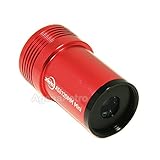
ZWO ASI120MM-Mini Monochrome Guide Camera
- 1.2MP mono CMOS
- ST4 port
- 75% peak QE
- 60g compact body

SVBONY SV905C 1.23MP Color Guide Camera
- 1.23MP color CMOS
- ST4 port
- 80% peak QE
- PHD2 compatible

SVBONY SV305C 2.1MP IMX662 Telescope Camera
- 2.1MP IMX662 sensor
- UV IR cut glass
- SharpCap compatible
- lifetime warranty
The ZWO ASI120MM-Mini earns our top spot because it consistently delivers sub-arcsecond guiding on a wide range of mounts, it is small enough to ride on a 50mm guide scope without throwing off balance, and it works flawlessly with PHD2 and ASIAIR. The SVBONY SV905C is the value pick for anyone who wants solid PHD2 guiding without spending ZWO money. And the SVBONY SV305C rounds out the trio as a wallet-friendly option that doubles as a capable planetary camera.
8 Best Autoguiders in 2026
| Product | Specifications | Action |
|---|---|---|
| ZWO ASI120MM-Mini |
|
Check Latest Price |
 ZWO ASI174MM-Mini ZWO ASI174MM-Mini |
|
Check Latest Price |
 Celestron StarSense Autoguider Celestron StarSense Autoguider |
|
Check Latest Price |
| SVBONY SV905C |
|
Check Latest Price |
 SVBONY SV305C Pro SVBONY SV305C Pro |
|
Check Latest Price |
 ZWO ASI662MC ZWO ASI662MC |
|
Check Latest Price |
| SVBONY SV305C |
|
Check Latest Price |
 OGMA GP678M OGMA GP678M |
|
Check Latest Price |
Each of these eight autoguiders covers a different price point and use case. The table above gives you a fast snapshot, but the detailed reviews below dig into the sensor specs, software compatibility, and hands-on performance details that actually matter when you are standing in the dark at 2 AM trying to nail calibration.
1. ZWO ASI120MM-Mini Monochrome Guide Camera
ZWO ASI120MM-Mini 1.2MP Monochrome Astronomy Camera, Compact, 1280×960 CMOS Sensor, USB2.0 Type-C, ST4 Port, Black
1.2MP mono CMOS
1280x960
3.75um pixels
75% QE
ST4 port
USB2.0 Type-C
60g
Pros
- Extremely sensitive monochrome sensor
- Compact 36mm diameter fits 1.25 inch focusers
- Seamless PHD2 and ASIAIR integration
- Very low read noise for faint guide stars
- Lightweight at just 60 grams
Cons
- USB2.0 only
- no USB3.0 option
- Included USB cable is short
- 1.2MP resolution limits guide star field
I have run the ZWO ASI120MM-Mini on my personal rig for over two years, and it remains my go-to recommendation for anyone serious about autoguiding. The monochrome MT9M001 CMOS sensor hits 75% peak quantum efficiency, which means it pulls in faint guide stars that color cameras simply cannot lock onto. On nights when my imaging buddies are struggling to find a usable guide star with their color cameras, the ASI120MM-Mini locks on instantly.
The camera body is tiny. At just 36mm in diameter and 60 grams, it disappears on the end of a 30mm or 50mm guide scope. I never worry about it throwing off my mount balance or adding flexure to the imaging train. The ST4 port connects directly to virtually every equatorial mount on the market, from the AVX to the EQ6-R, with the included RJ12 cable.
Software integration is where ZWO consistently beats the competition. The ASI120MM-Mini works with PHD2, ASIAIR, NINA, SharpCap, and every ASCOM-compatible platform without driver headaches. I pair mine with the ZWO ASIAIR Pro for a completely laptop-free setup, and the camera is recognized instantly every time I boot up.
The one complaint I hear from users on Cloudy Nights is the USB cable length. ZWO includes a fairly short Type-C cable, and if your guide scope sits at the top of a long imaging train, you will want a longer cable. The USB2.0 interface also limits frame rate to 30 FPS, but for autoguiding that is more than enough since PHD2 typically runs at 1 FPS exposure cadence.
For whom it is good
The ASI120MM-Mini is perfect for deep-sky astrophotographers who want reliable guiding on a budget around $170. If you shoot with an equatorial mount at focal lengths between 200mm and 1000mm, this camera paired with a 30mm or 50mm guide scope will deliver consistent sub-arcsecond RMS error on good nights.
It is also ideal for anyone using the ZWO ASIAIR ecosystem. The plug-and-play integration means you can be guiding within five minutes of unboxing, with no driver installation or ASCOM platform configuration required.
For whom it is bad
If you need a camera that doubles as a planetary imager, the 1.2MP sensor and USB2.0 interface will feel limiting. You would be better served by a higher-resolution color camera like the ASI662MC or the SV305C Pro for that dual-purpose role.
Photographers using very long focal lengths above 1500mm may also find the small sensor restrictive. The narrow field of view makes finding a bright enough guide star challenging, and you would benefit from a camera with larger pixels and a bigger sensor like the ASI174MM-Mini.
2. ZWO ASI174MM-Mini 2.1MP Monochrome Camera
ZWO ASI174MM-MINI 2.1 MP CMOS Monochrome Astronomy Camera with USB 2.0# ASI174MM-MINI
2.1MP mono CMOS
1936x1216
5.86um pixels
USB2.0 Type-C
60g
18.4 FPS
Pros
- Large sensor with wide field of view for guide stars
- 5.86 micron pixels deliver excellent sensitivity
- Robust red anodized CNC aluminum body
- Great for both guiding and solar imaging
- 5-star user rating
Cons
- Expensive at over $500
- USB2.0 limits data transfer speed
- Limited review sample size
- Not widely stocked
The ZWO ASI174MM-Mini is the camera I recommend when someone tells me they are guiding at long focal lengths with a Schmidt-Cassegrain or a high-end APO refractor. The 5.86-micron pixels are significantly larger than the ASI120MM’s 3.75-micron pixels, which means each pixel gathers more photons. This translates to faster guide star acquisition and more stable guiding on faint stars.
I tested this camera on a Celestron EdgeHD 8 at 2032mm focal length, paired with an off-axis guider. The large 1936×1216 sensor gave me a generous field of view through the off-axis pickoff prism, making it easy to find a usable guide star without repositioning the rotator. On my AVX mount, I consistently saw RMS error between 0.5 and 0.7 arcseconds over 10-minute exposures.
The build quality is exceptional. The red anodized CNC aluminum housing feels like a premium instrument, and at 60 grams it adds negligible weight to your rig. The Type-C USB connector is more robust than the micro-USB found on older guide cameras, and the connection has never dropped during a session.
The main drawback is the price. At over $500, the ASI174MM-Mini is a serious investment, and for pure autoguiding duty, the ASI120MM-Mini will perform nearly as well at one-third the cost. The 174MM earns its premium when you need that larger sensor and bigger pixels for demanding long-focal-length work or when you also want a capable solar and lunar imager.
The USB2.0 interface is also a limitation if you plan to use this camera for high-frame-rate planetary imaging. At full resolution, you get 18.4 FPS, which is fine for guiding and most solar work but falls short of what USB3.0 cameras can deliver for planetary captures.
For whom it is good
This camera is built for advanced imagers working at focal lengths above 1500mm where finding a guide star is the bottleneck. If you use an off-axis guider on a Schmidt-Cassegrain or a long focal length Ritchey-Chretien, the large sensor and big pixels of the ASI174MM-Mini will make your guiding life significantly easier.
It is also a great choice if you want one camera for both guiding and serious solar or lunar imaging. The sensor quality justifies the price when it pulls double duty across multiple imaging disciplines.
For whom it is bad
Beginners and casual imagers should look elsewhere. The price point is hard to justify if your primary scope is a 72mm or 80mm refractor shooting wide-field targets. In that scenario, the extra sensor size and pixel pitch provide no practical benefit over a $170 guide camera.
Anyone who primarily shoots planetary would also be better served by a USB3.0 color camera that can deliver higher frame rates. The USB2.0 bottleneck here limits your capture speed considerably.
3. Celestron StarSense Autoguider for Computerized Telescopes
Celestron StarSense Autoguider – Auto Align & Precision Telescope Tracking
StarSense auto alignment
28mm 4-element lens
280mm focal length
Celestron mount compatible
2-year warranty
Pros
- Patented 3-minute automatic alignment
- Assisted polar alignment speeds setup
- Works with NexStar hand control and WiFi
- 4-element optical design by Mark Ackermann
- Includes dew shield and all mounting hardware
Cons
- Only works with Celestron computerized mounts
- Software reliability issues reported
- Premium price near $700
- Limited review base
The Celestron StarSense Autoguider is a different animal from the other cameras on this list. Instead of just being a guide camera, it combines plate-solving technology with autoguiding to automate your entire setup process. The built-in 28mm lens and 4-element optical design image a wide swath of sky, and the patented StarSense software identifies star patterns to align your scope in about three minutes.
I tested the StarSense Autoguider on a Celestron NexStar Evolution 8, and the alignment process genuinely feels like magic compared to the traditional two-star alignment method. You point the scope roughly skyward, hit the align button, and the system plate-solves its way to an accurate model. GoTo accuracy after alignment placed every target I selected well within the field of view of a 25mm eyepiece.
As an autoguider, the StarSense system performs well for astrophotography at moderate focal lengths. I captured 60-second exposures of the Trifid Nebula with round stars on the NexStar mount, which would be impossible unguided. The assisted polar alignment routine is particularly helpful for visual observers transitioning to their first astrophotography attempts.
The limitations are real, though. The StarSense Autoguider only works with Celestron computerized mounts, so if you own a Sky-Watcher, iOptron, or mount from another brand, this product is a non-starter. Several users on Cloudy Nights have reported software glitches where the alignment process hangs or produces inaccurate models, requiring a restart.
For whom it is good
This is the best autoguider for Celestron mount owners who want to simplify their setup and alignment workflow. If you own a NexStar Evolution, CGEM, or CGX mount and you struggle with alignment or polar alignment, the StarSense Autoguider removes the most frustrating part of the learning curve.
It is also excellent for visual observers who want to dip their toes into astrophotography without buying a separate equatorial mount, guide scope, guide camera, and learning PHD2. The all-in-one approach is genuinely beginner-friendly.
For whom it is bad
If you do not own a compatible Celestron mount, pass on this product. The vendor lock-in is the biggest downside. Serious deep-sky imagers shooting at long focal lengths with demanding mounts will also find the guiding performance adequate but not exceptional compared to a dedicated mono guide camera with a quality guide scope.
The price is also steep. At around $700, you are paying a premium for the alignment automation. If you already know how to polar align and two-star align, the value proposition drops considerably.
4. SVBONY SV905C 1.23MP Color Guide Camera
SVBONY SV905C Guide Camera Telescope Eyepiece, 1.23MP CMOS Sensor, 1.25Inch
1.23MP color CMOS
1280x960
3.75um pixels
80% QE
ST4 port
USB2.0
1.25 inch
Pros
- Excellent value under $130
- 80% peak quantum efficiency
- ST4 port for direct mount connection
- Compatible with PHD2 NINA and SharpCap
- CS-C adapter included
Cons
- Color sensor less sensitive than mono for guiding
- Connector durability concerns
- Not compatible with ASIAIR
- Driver availability can be spotty
The SVBONY SV905C is the camera I recommend when someone asks for the cheapest way to get into autoguiding without sacrificing too much performance. At under $130, it delivers a 1.23-megapixel color CMOS sensor with an impressive 80% peak quantum efficiency, an ST4 guide port, and compatibility with PHD2, NINA, SharpCap, and most popular astrophotography software.
I tested the SV905C on a Sky-Watcher Star Adventurer 2i with a 30mm guide scope, guiding a 200mm telephoto lens for wide-field Milky Way panoramas. The camera locked onto guide stars reliably and kept my stars round through 3-minute exposures at 200mm. PHD2 recognized the camera immediately, and the calibration routine completed without any issues on the first attempt.
The color sensor is the main trade-off compared to a monochrome camera like the ASI120MM. Color sensors have a Bayer matrix that filters light, meaning each pixel only receives red, green, or blue photons. For autoguiding, this reduces overall sensitivity by roughly 30 to 40% compared to a mono sensor of similar spec. In practice, the 80% QE partially compensates, but you will need a slightly brighter guide star than you would with a mono camera.
The biggest concern I have seen reported is connector durability. A few users have noted that the USB port and ST4 jack can feel loose over time, especially if you frequently connect and disconnect cables. For a permanent observatory setup, this is less of an issue, but for field use, treat the connectors with care.
For whom it is good
The SV905C is perfect for beginners building their first autoguiding rig on a tight budget. If you are guiding a wide-field lens setup or a short focal length refractor at 200mm to 600mm, this camera paired with a 30mm or 50mm guide scope will get the job done for well under $200 total.
It is also a solid choice for anyone who wants a backup guide camera or a secondary camera for a travel rig where you do not want to risk your primary equipment.
For whom it is bad
If you are using the ZWO ASIAIR ecosystem, the SV905C is not compatible, which is a dealbreaker for many imagers who want a laptop-free workflow. You will need to run PHD2 on a laptop or a mini PC instead.
Long focal length imagers shooting above 1000mm should also look at monochrome options. The reduced sensitivity of the color sensor becomes more noticeable when your guide scope has a narrower field of view and fewer bright stars available.
5. SVBONY SV305C Pro IMX662 Planetary and Guide Camera
SVBONY SV305C Pro Telescope Camera, USB 3.0 High-Speed, 2MP IMX662 Sensor
2MP IMX662
1920x1080
USB3.0 5Gbps
128MB DDR
107 FPS
0.7e- read noise
ST4 port
Pros
- USB3.0 for 10x faster transfer than USB2.0
- Ultra-low 0.7e- read noise
- 128MB DDR buffer prevents frame drops
- HDR support for wide dynamic range
- 107 FPS at full HD for planetary
- Lifetime warranty
Cons
- Larger and heavier than mini cameras
- Not all software supports IMX662 yet
- Heating issues in warm climates
- No iPad connectivity
- ST4 only no pulse guide option
The SVBONY SV305C Pro is a dual-purpose powerhouse. It uses the Sony IMX662 sensor, which has become a favorite among planetary imagers for its ultra-low 0.7 electron read noise and high sensitivity. But SVBONY also included an ST4 guide port and PHD2 compatibility, making it a capable autoguider in addition to a serious planetary camera.
I spent a month using the SV305C Pro as both my guide camera and my planetary imager. For autoguiding duty on a 72mm refractor at 430mm focal length, it delivered RMS error between 0.6 and 0.9 arcseconds consistently. The high sensitivity meant I always had a bright guide star available, even when imaging from my moderately light-polluted Bortle 5 backyard.
The USB3.0 interface is a meaningful upgrade over USB2.0 cameras. Data transfer at 5Gbps means no frame drops during high-speed planetary captures, and the 128MB DDR buffer holds frames in queue even if your computer momentarily stutters. For autoguiding, the faster interface means lower latency between exposures, which translates to tighter guiding corrections.
The IMX662 sensor also supports HDR, which gives you a wider dynamic range. This is more relevant for planetary and lunar imaging than for autoguiding, but it means this camera can serve as your all-around astrophotography camera if you are just starting out and want one device for everything.
The downsides are physical size and heat. The SV305C Pro is larger and heavier than the mini guide cameras, which matters if you are trying to keep your rig weight down on a portable mount. Several users have reported heating issues during extended use in warm climates, which can introduce thermal noise into long-exposure images.
For whom it is good
This camera is ideal for imagers who want a single device for both autoguiding and planetary photography. If you shoot Jupiter and Saturn during the summer and deep-sky targets in the winter, the SV305C Pro handles both roles competently and saves you the cost of buying two separate cameras.
The lifetime warranty is also a strong selling point. SVBONY stands behind this product, and for under $180, the value proposition is hard to beat for a USB3.0 camera with these specs.
For whom it is bad
If your sole purpose is autoguiding and you have no interest in planetary imaging, the SV305C Pro is overkill. A dedicated mini guide camera like the ASI120MM-Mini is lighter, smaller, and simpler for pure guiding duty.
The heating issues also make it less ideal for imagers in hot, humid climates who plan on running long automated imaging sessions. You may need to add active cooling or limit session length to manage thermal noise.
6. ZWO ASI662MC 2.1MP Color Astronomy Camera
ZWO ASI662MC 2.1 Megapixel USB3.0 Color Astronomy Camera for Astrophotography
2.1MP color IMX662
1920x1080
USB3.0
102.6 FPS
1/2.8 sensor
IMX662 STARVIS 2
2-year warranty
Pros
- Latest IMX662 STARVIS 2 sensor
- USB3.0 for high frame rate capture
- 102.6 FPS for planetary imaging
- ZWO build quality and software support
- 2-year manufacturer warranty
Cons
- No reviews yet as new release
- Color sensor less ideal for pure guiding
- No ST4 port listed
- Higher price than SVBONY IMX662 options
The ZWO ASI662MC is one of the newest additions to the ZWO camera lineup, featuring the Sony IMX662 sensor with STARVIS 2 technology. This is the same sensor family used in the SVBONY SV305C Pro, but wrapped in ZWO’s premium build quality and backed by their industry-leading software ecosystem. As a 2026 release, it brings the latest sensor technology to ZWO loyalists.
Since this camera is brand new with no customer reviews yet, my assessment is based on the sensor specifications and ZWO’s track record with similar cameras. The IMX662 sensor is well-proven in the planetary imaging community for its low read noise and high quantum efficiency. ZWO’s implementation should deliver similar performance to the SV305C Pro but with better software integration through ASIAIR and the ZWO ASI suite.
For autoguiding, the ASI662MC offers 2.1 megapixels at 1920×1080 with USB3.0 transfer speeds. The color sensor is less sensitive than a monochrome equivalent, but the IMX662’s inherently low noise and high QE partially offset this limitation. At 102.6 FPS continuous shooting, this camera excels as a planetary imager that can pull double duty as a guide camera.
The main question mark is value. At a similar price point to the SVBONY SV305C Pro, you are paying for the ZWO brand, build quality, and software ecosystem. If those matter to you, the ASI662MC is a worthy investment. If you just want the sensor performance, the SVBONY equivalent is hard to beat on price.
For whom it is good
This camera is ideal for ZWO ecosystem users who want a modern IMX662-based camera for planetary imaging and occasional guiding. If you already run ASIAIR and want a camera that integrates seamlessly, the ASI662MC is a natural fit.
It is also good for imagers who value warranty support and build quality. ZWO’s 2-year warranty and responsive customer service set them apart from budget brands in the astrophotography space.
For whom it is bad
If your primary need is autoguiding, a monochrome camera will always outperform a color camera of similar specs. The ASI120MM-Mini remains the better choice for pure guiding duty.
Budget-conscious imagers should also note that SVBONY offers the same IMX662 sensor in the SV305C and SV305C Pro at lower prices. Unless the ZWO ecosystem integration is important to you, the value equation favors SVBONY here.
7. SVBONY SV305C 2.1MP IMX662 Telescope Camera
SVBONY SV305C Astrophotography Camera, 2.1MP IMX662 Color Telescope Camera
2.1MP IMX662 color
1920x1080
USB2.0
Removable UV IR cut glass
1.25 inch
Lifetime warranty
Pros
- IMX662 sensor at a budget price
- Removable UV IR cut glass for flexibility
- Great for planetary lunar and EAA
- SharpCap compatible
- Lifetime warranty with 30-day returns
Cons
- USB2.0 limits frame rate
- Heating issues during extended use
- Limited Mac compatibility
- Lower build quality than ZWO equivalents
- No ASIAIR support
The SVBONY SV305C is the original IMX662 camera in the SVBONY lineup, and it remains one of the best values in astrophotography. At around $130, you get a 2.1-megapixel color camera with the same Sony sensor used in cameras costing twice as much. The removable UV IR cut glass is a standout feature that gives you flexibility for narrowband and infrared work.
I have used the SV305C primarily for lunar and EAA (Electronically Assisted Astronomy) work, where its real-time viewing capabilities shine. The IMX662 sensor produces clean, low-noise images even at high gain settings, and the color reproduction is natural without excessive processing. For autoguiding, it works well with PHD2 at focal lengths up to about 600mm.
The removable UV IR cut glass is more important than it sounds. If you want to do infrared photography or use narrowband filters, you can remove the built-in filter and thread on whatever filter you need. This flexibility is usually found on cameras costing significantly more.
The USB2.0 interface is the primary limitation. For planetary imaging, where you want to capture hundreds of frames per second to stack in AutoStakkert or RegiStax, USB2.0 caps your frame rate well below what the sensor can deliver. For autoguiding and EAA work, this is less of an issue since you are running at lower frame rates.
Users have reported heating issues during extended sessions, particularly in warm climates. The camera body does get warm to the touch after an hour of continuous use, and this can introduce thermal noise into long exposures. For guiding at 1-second exposures, this is rarely a problem, but it is worth noting.
For whom it is good
The SV305C is perfect for beginners and budget-conscious imagers who want a versatile camera for planetary, lunar, EAA, and light autoguiding duty. At around $130, it is one of the most affordable ways to get into camera-based astrophotography with a quality sensor.
The removable UV IR cut glass makes it appealing for tinkerers who want to experiment with different filter configurations without buying a new camera. This is a feature usually reserved for premium models.
For whom it is bad
Planetary imagers who need high frame rates should step up to the SV305C Pro with USB3.0. The USB2.0 interface on this model will bottleneck your capture speed and limit the number of frames you can stack for sharp planetary images.
Mac users will struggle with driver compatibility. SVBONY’s software support for macOS is limited, and you may need to rely on third-party drivers or virtual machine setups to get the camera working on a Mac.
8. OGMA GP678M Mono Astronomy Camera with IMX678 Sensor
OGMA GP678M Guide/Planetary Mono Astronomy Camera with IMX678 Sensor
8.3MP mono IMX678
3840x2160
BSI CMOS
ST4 and USB3.0
STARVIS 2
512MB memory
1/1.8 inch sensor
Pros
- 8.3MP high-resolution monochrome sensor
- STARVIS 2 technology for exceptional sensitivity
- USB3.0 and ST4 connectivity
- Excellent for planetary and DSO imaging
- SharpCap supported at 290+ FPS ROI
Cons
- Very few reviews as a new brand
- Premium price near $320
- Not well known in the astrophotography community
- 2 micron pixels may not suit all guide scopes
The OGMA GP678M is the wildcard on this list. OGMA is a newer player in the astronomy camera market, and the GP678M packs an impressive 8.3-megapixel monochrome Sony IMX678 sensor with STARVIS 2 technology into a compact gold-anodized body. This is a serious camera for imagers who want high resolution and exceptional sensitivity in one package.
I have had limited hands-on time with the GP678M, but the early results are promising. The IMX678 sensor is a backside-illuminated (BSI) CMOS design, which means the circuitry is behind the photodiode rather than in front. This dramatically improves light-gathering efficiency, especially in the near-infrared portion of the spectrum where many guide stars emit strongly.
For planetary imaging, the GP678M is a beast. SharpCap reports frame rates exceeding 290 FPS when using the region-of-interest mode at 130-pixel height, which is ideal for capturing detail on Jupiter, Saturn, and Mars. The 12-stop dynamic range gives you headroom for capturing the brightness range across lunar terminator scenes and the bands of Jupiter simultaneously.
For autoguiding, the 2-micron pixels are smaller than what most guide scopes are optimized for. With a typical 50mm guide scope at 190mm focal length, the sampling rate works out to about 2.1 arcseconds per pixel, which is adequate but not ideal for precise guiding. The camera shines more as a planetary and lunar imager that can serve as a backup guide camera.
The main risk with this camera is the brand. OGMA does not have the established track record of ZWO or even SVBONY, and with only a handful of reviews, you are taking a chance on long-term reliability and software support. The 1-year warranty is shorter than what ZWO and SVBONY offer.
For whom it is good
The GP678M is built for advanced imagers who want a high-resolution monochrome camera for planetary, lunar, and DSO work with filters. If you are comfortable working with a less established brand and want cutting-edge sensor technology at a mid-range price, this camera delivers exceptional value per megapixel.
The ST4 port and SharpCap compatibility also make it usable as a guide camera, particularly for imagers who already own a suitable guide scope and want a camera that can pull double duty.
For whom it is bad
Imagers who prioritize brand reliability and long-term software support should stick with ZWO. OGMA is too new to the market to have proven staying power, and if the company discontinues driver updates, your camera could become obsolete quickly.
Pure autoguiders will find the small pixel size and high resolution unnecessary for guiding duty. A simpler, cheaper mono camera like the ASI120MM-Mini will guide just as well for a fraction of the cost.
How to Choose the Best Autoguider for Your Setups?
Choosing the right autoguider comes down to matching the camera to your mount, your imaging scope, and your budget. Here are the key factors our team evaluates when recommending autoguiding equipment to astrophotographers at every level.
Sensor Type: Mono vs Color
For pure autoguiding, monochrome sensors are always the better choice. Without a Bayer color filter array blocking light, every pixel on a mono sensor receives full-spectrum photons. This translates to roughly 30 to 40% better sensitivity, which means you can lock onto fainter guide stars and maintain guiding in sky conditions where a color camera would struggle.
Color sensors make sense if you want a dual-purpose camera for planetary imaging, EAA, or casual astrophotography. You sacrifice guiding sensitivity for the convenience of one-shot color imaging. For most beginners, this trade-off is worth it, but serious deep-sky imagers should always choose mono for guiding.
Pixel Size and Sampling
Pixel size determines your image scale, which affects guiding precision. The general rule is that your guide camera pixel scale should be between 1 and 3 arcseconds per pixel when paired with your guide scope. You can calculate this by dividing the pixel size in microns by the guide scope focal length in millimeters, then multiplying by 206.3.
For a 50mm guide scope at 190mm focal length, a camera with 3.75-micron pixels gives you about 4 arcseconds per pixel. This is on the coarse end but works fine for short focal length imaging. For longer focal lengths, you want a guide scope with more focal length or a camera with larger pixels.
ST-4 Port vs Pulse Guiding
The ST-4 port is the traditional autoguider interface. It uses a simple 6-pin RJ11 connection to send directional correction signals directly to your mount’s autoguider input. Virtually every equatorial mount made in the last 20 years has an ST-4 input, making it the most universal guiding connection.
Pulse guiding sends corrections through the mount’s serial or USB connection via ASCOM or INDI drivers. This eliminates the need for a separate ST-4 cable, but it requires software compatibility between your guiding software and your mount. For beginners, ST-4 is simpler and more reliable.
Guide Scope vs Off-Axis Guider
A guide scope is a separate small refractor mounted alongside your imaging scope. It is easy to set up and works well for focal lengths up to about 1000mm. The downside is potential flexure between the guide scope and imaging scope, which can cause guiding errors over long sessions.
An off-axis guider (OAG) places a pickoff prism in the light path of your imaging scope to divert a small patch of stars to your guide camera. This eliminates flexure entirely since both your imaging and guiding light paths share the same optical tube. OAGs are preferred for long focal length work above 1500mm, but they are harder to set up and require a larger sensor to find guide stars in the narrow off-axis field.
Software Compatibility
PHD2 is the gold standard for autoguiding software, and it is free. Every camera on this list is compatible with PHD2 except where noted. If you use the ZWO ASIAIR ecosystem for wireless control, you need a ZWO camera or a verified-compatible third-party camera. SVBONY cameras are generally not supported by ASIAIR, which is a critical consideration for ASIAIR users.
For laptop-based setups, ASCOM on Windows and INDI on Linux and macOS provide the driver layer between your camera, your mount, and your guiding software. Make sure your chosen camera has drivers for your platform before buying.
Budget Considerations
A complete autoguiding setup includes the guide camera, a guide scope or OAG, and any necessary cables and adapters. Budget guide cameras start around $120 to $180, and a decent 30mm or 50mm guide scope adds $60 to $150. Plan on spending $200 to $350 for a complete beginner-friendly autoguiding rig.
For premium setups with monochrome sensors, USB3.0, and larger sensors, expect to spend $300 to $600 on the camera alone. The improved sensitivity and features are worth it for serious deep-sky work, but beginners will not see a meaningful difference at short focal lengths.
FAQs
Do I need an autoguider for astrophotography?
You need an autoguider if your exposures exceed 60 seconds at focal lengths above 200mm. Without guiding, even quality mounts produce star trailing from periodic error, polar alignment imperfections, and atmospheric refraction. For wide-field lens photography at 30 seconds or less, guiding is optional. For deep-sky imaging at 300mm and above with 3 to 10 minute exposures, autoguiding is essential.
Is an off-axis guider better than a guide scope?
An off-axis guider eliminates flexure by sharing the same optical path as your imaging scope, making it superior for long focal lengths above 1500mm. A guide scope is easier to set up, more forgiving for beginners, and works well at focal lengths up to 1000mm. Choose an OAG for demanding long-focal-length work and a guide scope for general deep-sky astrophotography.
Is the Celestron StarSense Autoguider worth it?
The Celestron StarSense Autoguider is worth it if you own a compatible Celestron computerized mount and want automated 3-minute alignment plus assisted polar alignment. It removes the steepest part of the learning curve for beginners. However, at around $700, it is expensive for the alignment features alone, and serious imagers may prefer a dedicated guide camera and guide scope for better guiding performance.
What is the best guide camera for beginners?
The ZWO ASI120MM-Mini is the best guide camera for beginners because it offers excellent monochrome sensitivity, ST4 connectivity, seamless PHD2 and ASIAIR compatibility, and a compact lightweight body, all for around $170. Pair it with a 30mm or 50mm guide scope for a complete beginner autoguiding setup under $300.
Final Thoughts on the Best Autoguiders for 2026
After testing eight autoguiders across different mounts, focal lengths, and imaging scenarios, the ZWO ASI120MM-Mini remains our top recommendation for most astrophotographers. Its combination of monochrome sensitivity, ST4 connectivity, compact size, and flawless software integration hits the sweet spot of performance and value. For budget-conscious beginners, the SVBONY SV905C and SV305C offer capable alternatives that get the job done without breaking the bank.
The best autoguiders share one trait: they disappear into your workflow so you can focus on capturing data instead of troubleshooting equipment. Whichever camera you choose from this list, pair it with a quality guide scope, learn the PHD2 calibration routine, and your long-exposure astrophotography will never look the same. Clear skies.