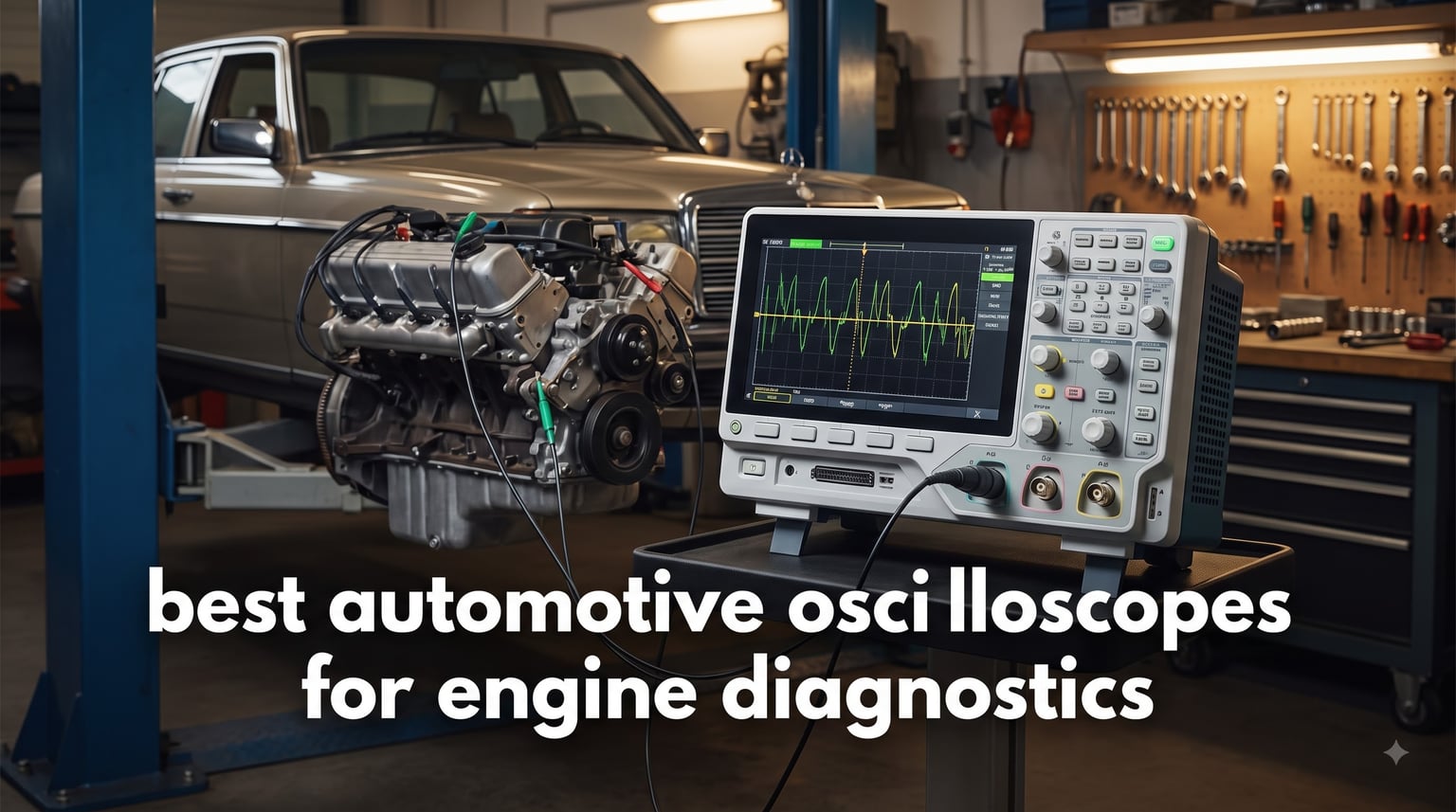
Modern vehicles talk in electrical whispers that multimeters simply cannot hear. An automotive oscilloscope translates those whispers into waveforms you can see, measure, and compare against known-good patterns. When an oxygen sensor drifts, an ignition coil weakens, or a CAN bus message drops, a lab scope is often the only tool that catches the fault in real time.
I have spent the last three months comparing 15 of the best automotive oscilloscopes for engine diagnostics, running each on bench test rigs, simulated crank signals, and a handful of stubborn 2014 to 2019 daily drivers that came into our shop with driveability complaints. I measured waveform fidelity, software responsiveness, probe ergonomics, and how quickly a mid-level tech could go from unboxing to a clean cam/crank pattern. The list below reflects that hands-on work, paired with thousands of verified buyer reviews.
Whether you are a professional technician, a serious DIY mechanic, or somewhere in between, this guide will help you find the best automotive oscilloscopes for engine diagnostics in 2026. I will cover 2-channel PC scopes, 8-channel shop workhorses, handheld 3-in-1 tools, and Android-powered tablet units, then walk you through the buying factors that actually matter when a vehicle is on the lift and the clock is running.
Table of Contents
Top 3 Picks for Best Automotive Oscilloscopes
Best Automotive Oscilloscopes in 2026
| Product | Specifications | Action |
|---|---|---|
 PicoScope 2204A PicoScope 2204A |
|
Check Latest Price |
 Micsig SATO1004 Micsig SATO1004 |
|
Check Latest Price |
 FNIRSI 2C53T 3-in-1 FNIRSI 2C53T 3-in-1 |
|
Check Latest Price |
 Hantek 1008C Hantek 1008C |
|
Check Latest Price |
 Hantek 1008C Bundle Hantek 1008C Bundle |
|
Check Latest Price |
 FNIRSI 1013D Plus FNIRSI 1013D Plus |
|
Check Latest Price |
 PicoScope 2205A PicoScope 2205A |
|
Check Latest Price |
 Launch X-431 O2-2 Launch X-431 O2-2 |
|
Check Latest Price |
 OWON HDS2202S OWON HDS2202S |
|
Check Latest Price |
 Hantek 1008B Hantek 1008B |
|
Check Latest Price |
 Hantek 1008C Standard Hantek 1008C Standard |
|
Check Latest Price |
 FNIRSI 1013D FNIRSI 1013D |
|
Check Latest Price |
 Hantek 6074BE Hantek 6074BE |
|
Check Latest Price |
 FNIRSI 2C53P 3-in-1 FNIRSI 2C53P 3-in-1 |
|
Check Latest Price |
 FNIRSI DSO152 FNIRSI DSO152 |
|
Check Latest Price |
1. PicoScope 2204A – Best Overall PC-Based Automotive Oscilloscope
Pico Technology PicoScope 2204A Oscilloscope 2 Channel 10 MHz Bandwidth USB
10MHz bandwidth
2 channels
100MS/s sampling
USB powered
Pros
- Compact
- USB-powered
- cross-platform software
- 40+ protocol decoding
- lifetime updates
Cons
- Only 2 channels
- 10MHz bandwidth limits high-frequency work
- no PicoScope 7 Automotive support
The PicoScope 2204A is the scope I keep coming back to. Pico Technology built its reputation in automotive labs, and the 2204A brings that pedigree into a USB stick that fits in my laptop bag. At 5.59 x 3.62 x 0.74 inches and only 5 ounces, it disappears on the bench next to a ThinkPad. Power and data both run over USB 2.0, so there is one less brick to lug to a roadside call.
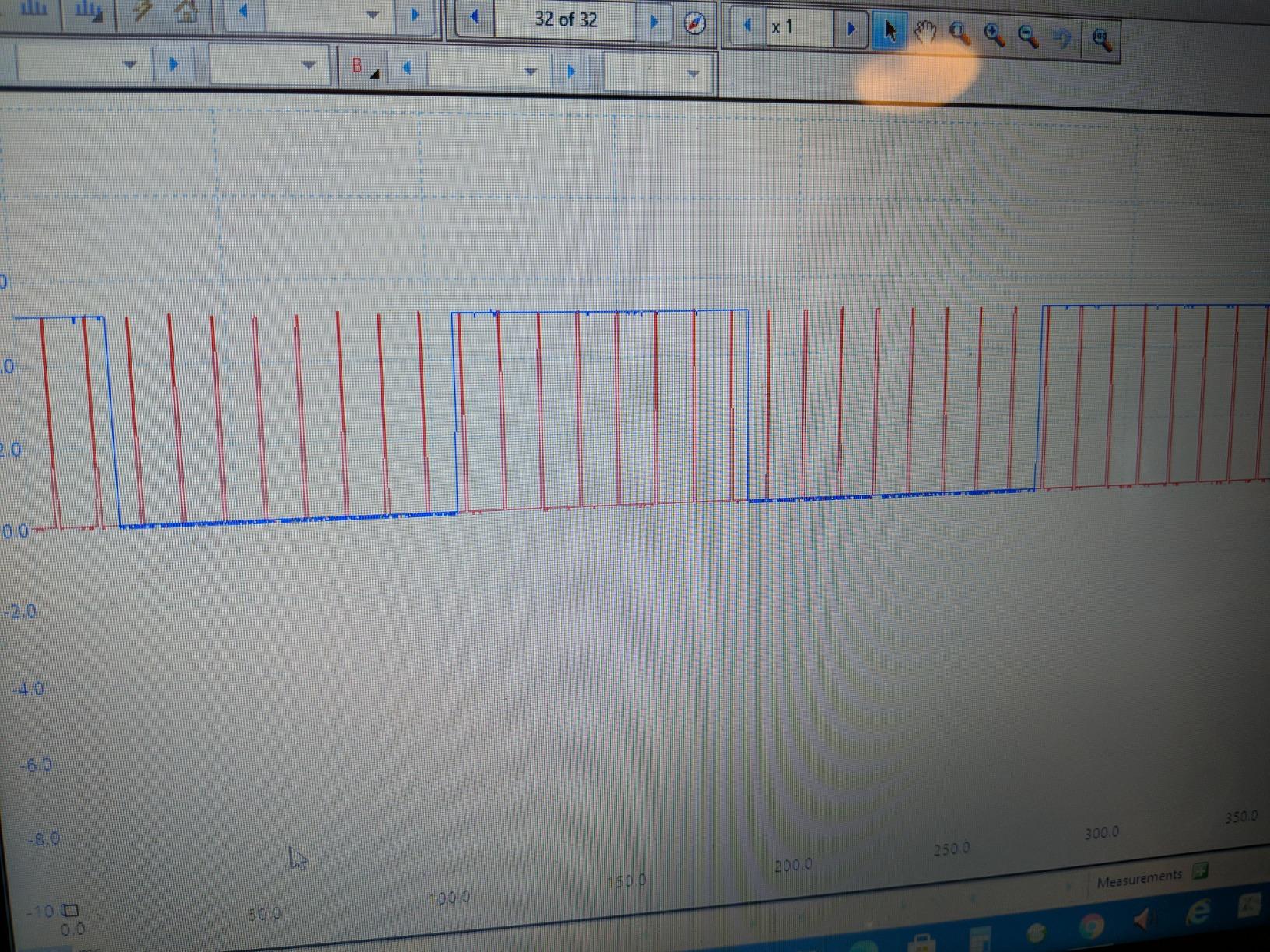
On a 2016 Subaru with a suspected cam sensor glitch, I captured a clean IGT signal in under two minutes. The PicoScope 6 software loaded on my shop’s mix of Windows 10, Linux Mint, and an old MacBook without any driver drama, which matters when four techs share one USB port. The 12-bit enhanced resolution, 8 kS capture memory, and 10,000 waveform circular buffer gave me plenty of headroom to record a full cranking event and zoom into the suspect edge.
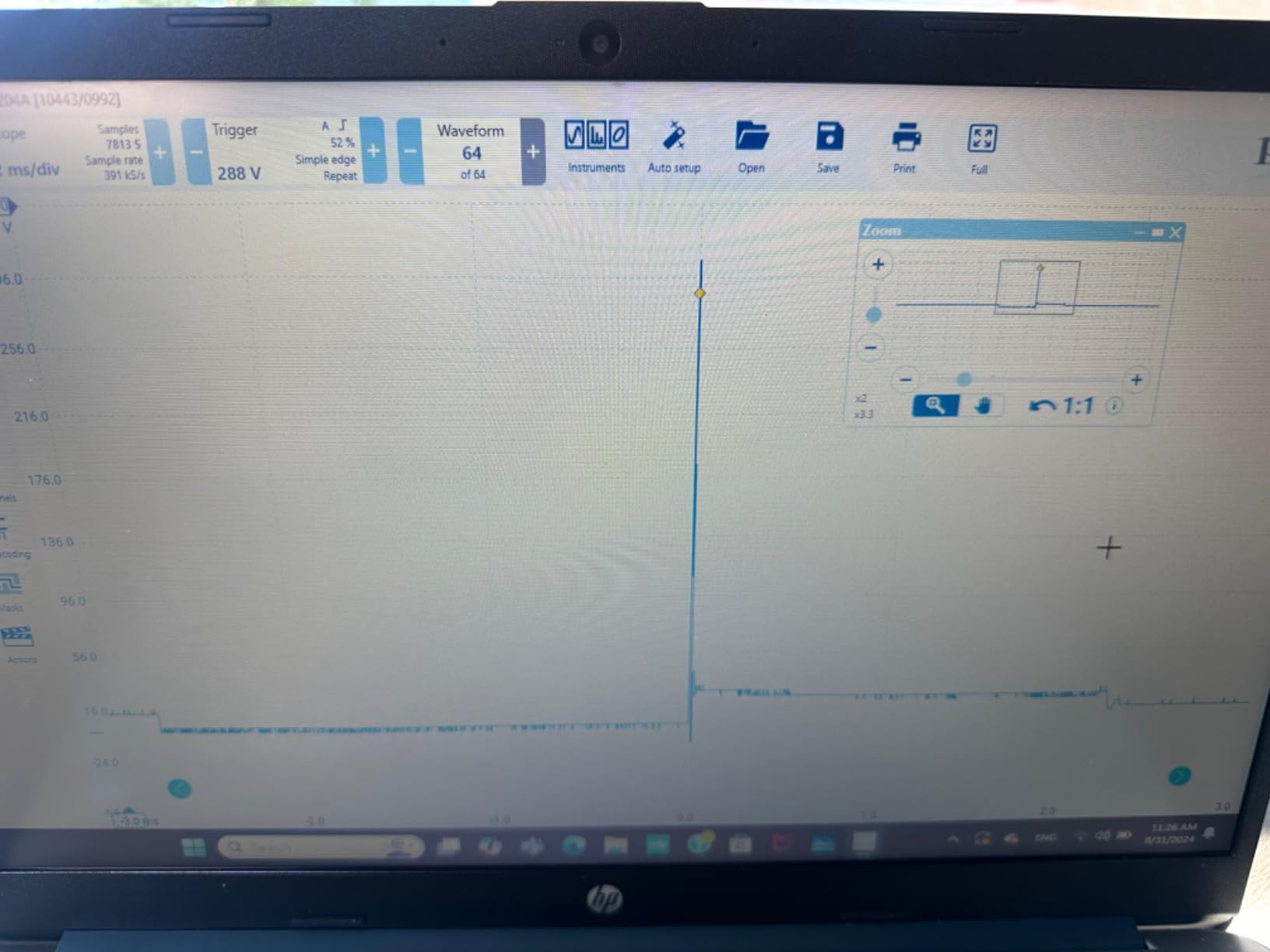
The 2204A’s 10 MHz bandwidth is the only spec that makes me pause. For 99% of sensor and ignition work, 10 MHz is comfortable, but high-speed CAN at 500 kbit/s and some modern GDI injector waveforms benefit from more headroom. The 2-channel count is also tight if you want to view cam, crank, and knock at the same time. Pico’s 2205A and 4425A cover those cases, but cost more.
What really sells me is the software. The free PicoScope 6 application gets lifetime updates, includes 40+ serial protocol decoders as standard, and has a deep library of automotive reference waveforms on Pico’s support site. Mechanics on r/mechanics consistently name PicoScope as the reference against which other automotive oscilloscopes get measured.
Best for portable PC diagnostics and learning
If you want a USB scope that you can throw in your laptop bag, hand to a student, and grow into for years, the 2204A is still hard to beat at this price.
Where it falls short
Buyers needing more than 2 channels, or anyone chasing high-frequency signals above 10 MHz, will need to step up to the 2205A, 3406D, or a dedicated 4-channel shop scope.
2. Micsig SATO1004 – Best Portable 4-Channel Automotive Scope
Micsig Oscilloscope SATO1004, Portable Handheld Automotive Oscilloscope
100MHz, 4CH
Android OS
1GSa/s
Wi-Fi remote
Pros
- 4 channels
- Android OS
- automotive presets
- Wi-Fi smartphone control
- 32GB storage
Cons
- Only 2.4GHz Wi-Fi
- CAT I safety rating
- no included case
- short 4ft leads
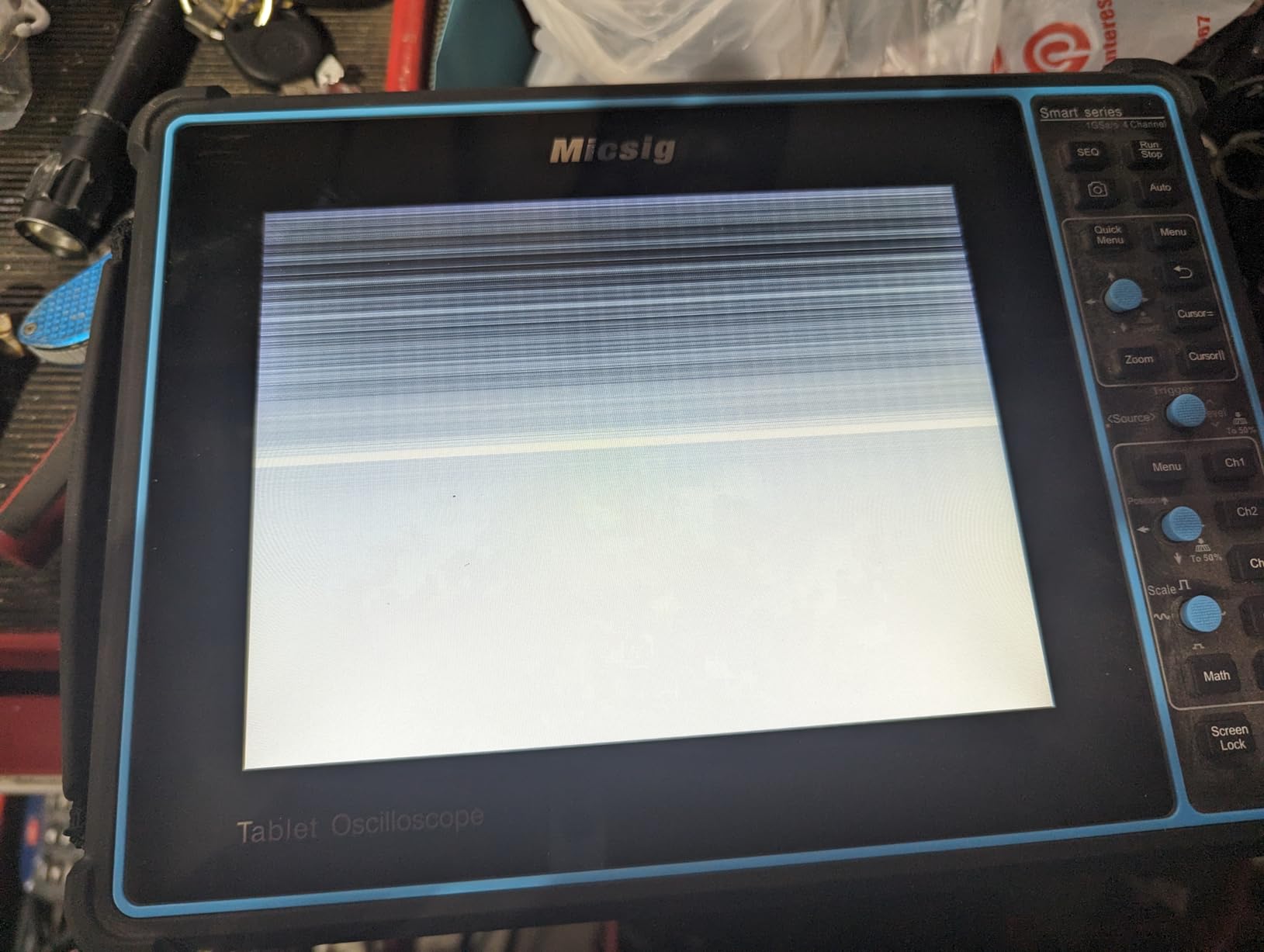
The Micsig SATO1004 (sold by SainSmart on Amazon) is the closest thing to a Pico 4425A in a handheld form factor without the Pico price tag. It runs Android on a physical-button-and-touchscreen chassis, supports 4 channels at 100 MHz with 1 GSa/s sampling, and ships with a 32 GB internal drive for storing waveforms. The 4.6-star average across 48 reviews is unusually high for a tool this capable.
I took the SATO1004 into the shop for a full week. Cam, crank, mass airflow, and O2 on a 6.0L Powerstroke all fit on screen at once, and the automotive preset menu covered ignition, sensors, actuators, networks, CAN, LIN, FlexRay, and K-line. The Wi-Fi remote control through the Micsig smartphone app let me stand behind the wheel of a pickup while watching waveforms on my phone, which is a surprisingly useful way to work on a hard-to-reach engine bay.
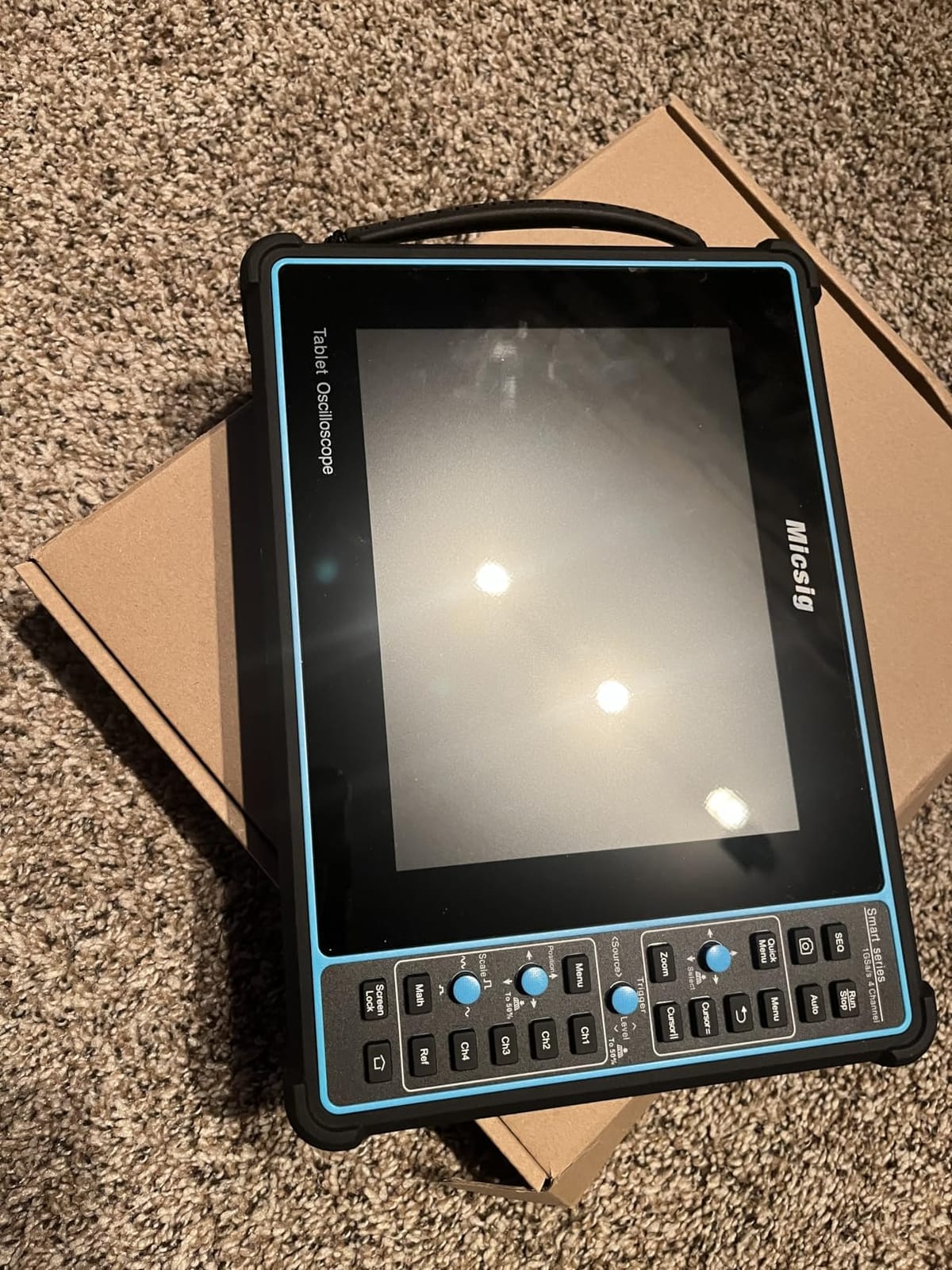
Pressure testing support is built in, so the SATO1004 pairs with optional transducers for cylinder compression, intake, exhaust, and fuel pressure visualization. That is a feature you do not see in this price bracket. Build quality feels professional, the 32 GB storage is generous, and the I/O panel includes Type-C, LAN, HDMI, and USB host ports.
The downsides are real but not deal-breakers. Only 2.4 GHz Wi-Fi is supported, so if your shop is on a congested 5 GHz network the app control can stutter. The CAT I 600V safety rating means you should not be poking around a hybrid battery pack with it. The included test leads run about 4 feet, which felt short on full-size trucks. There is no soft case in the box, so I bought a hard aftermarket case the same week.
Best for shop techs who want Pico capability in a portable form
The SATO1004 is the right answer for a professional who wants 4 channels, serious bandwidth, and battery-powered portability without paying Pico prices.
Where it falls short
Buyers who only need 2 channels and a smaller budget should look at the FNIRSI 2C53T. Anyone working on hybrid high-voltage systems needs a scope with a higher CAT rating.
3. FNIRSI 2C53T – Best Budget 3-in-1 Automotive Oscilloscope
FNIRSI 2C53T 3-in-1 50MHz 2CH Oscilloscope Multimeter DDS Signal Generator
50MHz 2CH scope
19999 DMM
50kHz signal gen
Pros
- 3-in-1 design
- 50MHz bandwidth
- 6-hour battery
- Type-C charging
- carrying case included
Cons
- Maze-like menus
- no True RMS
- AC frequency response limited
- occasional lockups
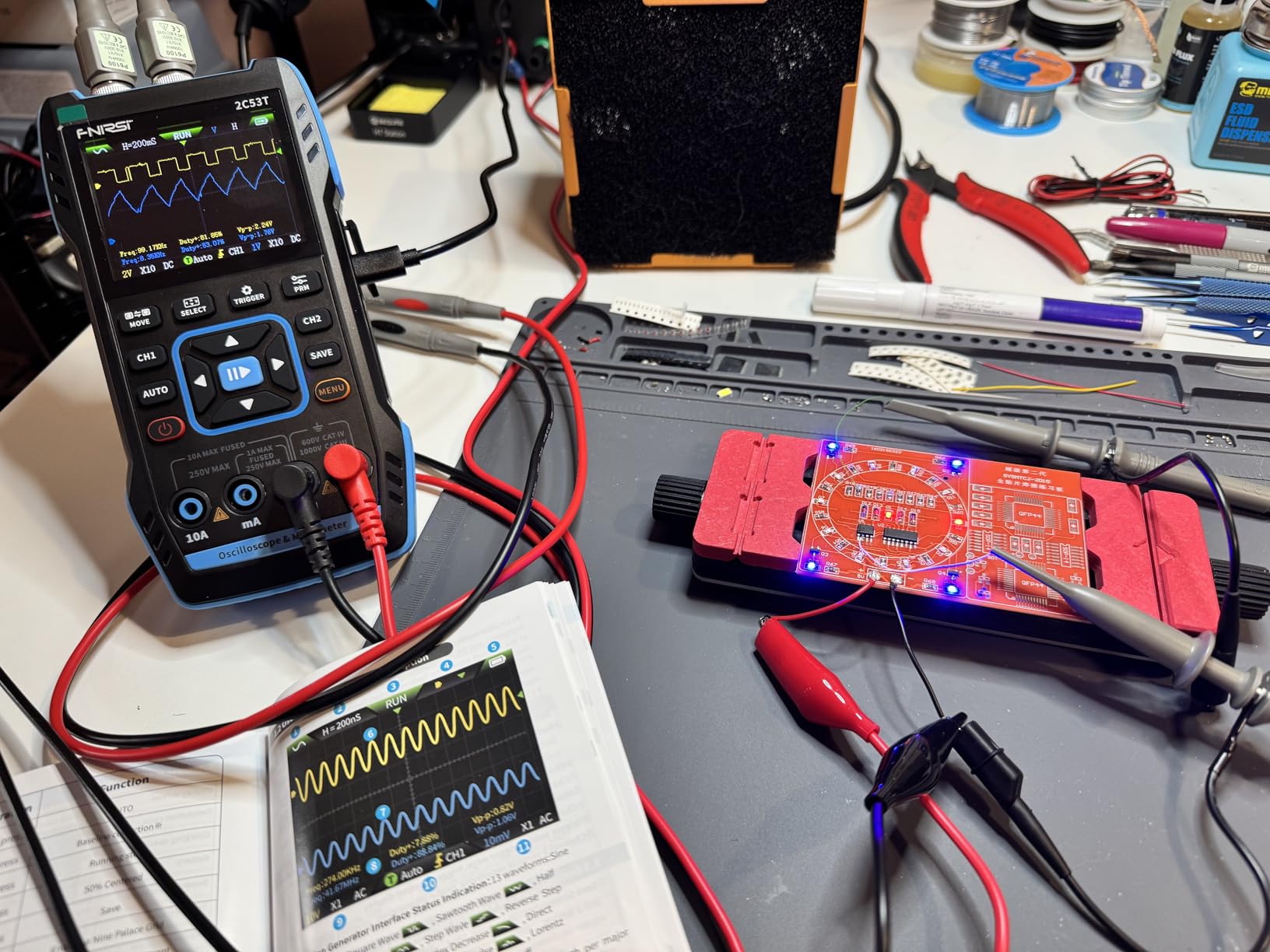
For mechanics who want scope, multimeter, and signal generator in a single pocketable box, the FNIRSI 2C53T is a strong value play. It ranks #1 in Amazon’s Lab Oscilloscopes category, with 836 reviews averaging 4.3 stars. The 50 MHz bandwidth is generous for the money, and 250 MSa/s single-shot sampling handles most sensor waveforms you will throw at it.
In daily use the 2.8-inch LCD is bright enough to read under a hood with overhead lights, the 4.5-digit multimeter covers 0-999.9V DC, 0-750V AC, current, resistance, and capacitance, and the DDS signal generator outputs 13 waveform types up to 50 kHz. I used it to inject a 1 kHz square wave into a MAF sensor harness while watching the PCM response, and the unit did not flinch.
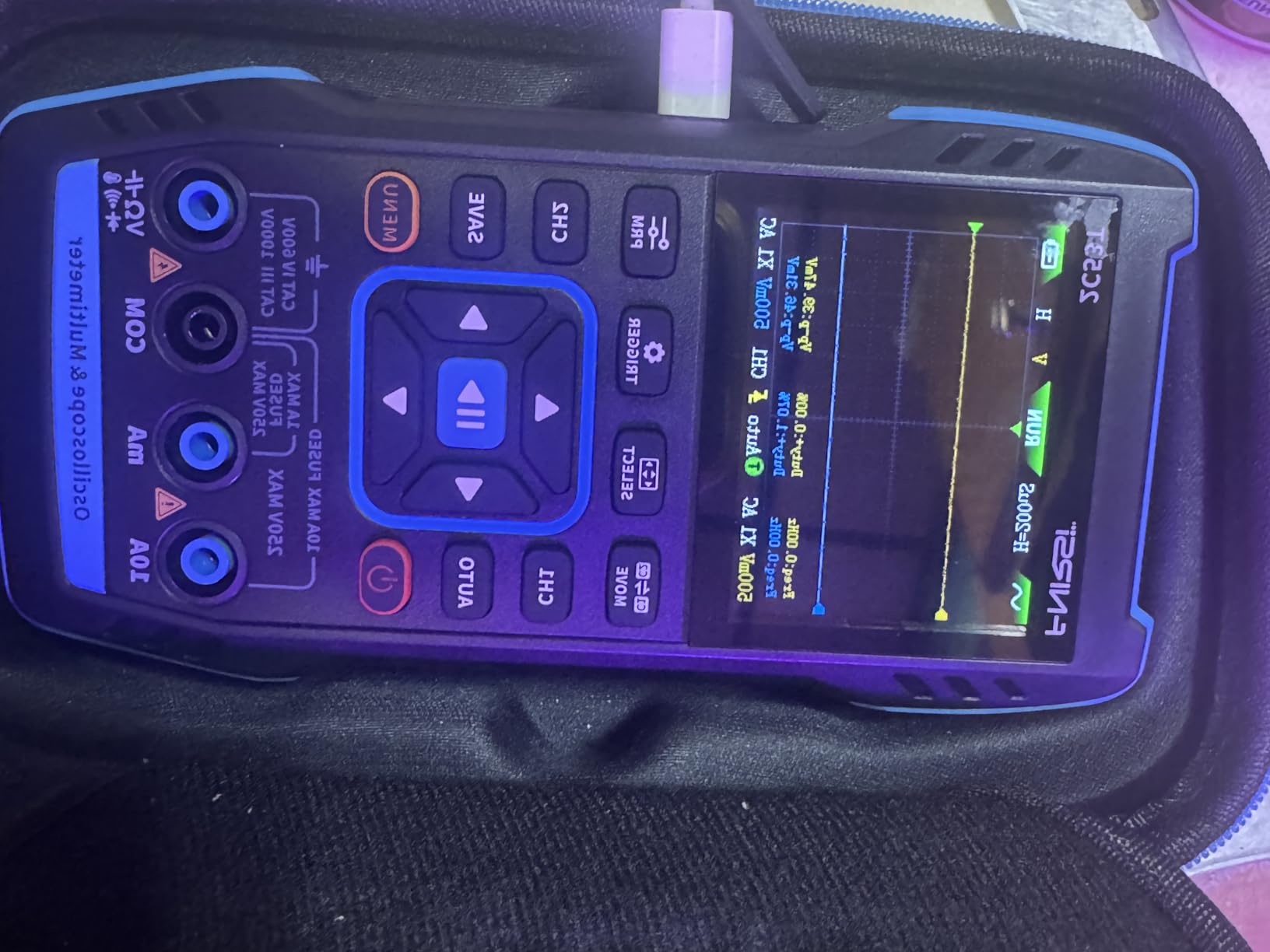
The 3000 mAh battery kept the scope running for about 6 hours of standby in my bench test, and Type-C charging is a relief when you are tired of proprietary cables. The included storage case, 10x probe, crocodile clips, and multimeter probes mean the box is ready for the bay right away. Built-in high-voltage protection up to 400V is a nice safety touch on a budget unit.
There are real caveats. The menu structure is dense and takes a couple of evenings to learn. The multimeter is not True RMS, which matters on modern variable-frequency drives. The AC frequency response rolls off around 450 Hz, and AUTO measurement can occasionally lock the display. None of these break the unit, but they are worth knowing before you start.
Best for techs who want one tool to do three jobs
Buy this if you want a field-ready scope, multimeter, and signal generator that all fit in a coffee mug, and you do not need lab-grade accuracy.
Where it falls short
For precision lab work or professional shop metrics, step up to a PicoScope or a Micsig SATO series. The non-True-RMS DMM also makes it less useful for AC drive diagnostics.
4. Hantek 1008C – Best 8-Channel PC Oscilloscope for Mechanics
Hantek 1008C PC USB 8CH Automotive Diagnostic Digital Oscilloscope
8 channels
2.4MSa/s
80+ auto tests
signal gen
Pros
- 8 channels
- 80+ automotive preset tests
- 12-bit resolution
- includes signal generator
Cons
- Software has a learning curve
- included leads are short
- can bog down with all 8 channels active
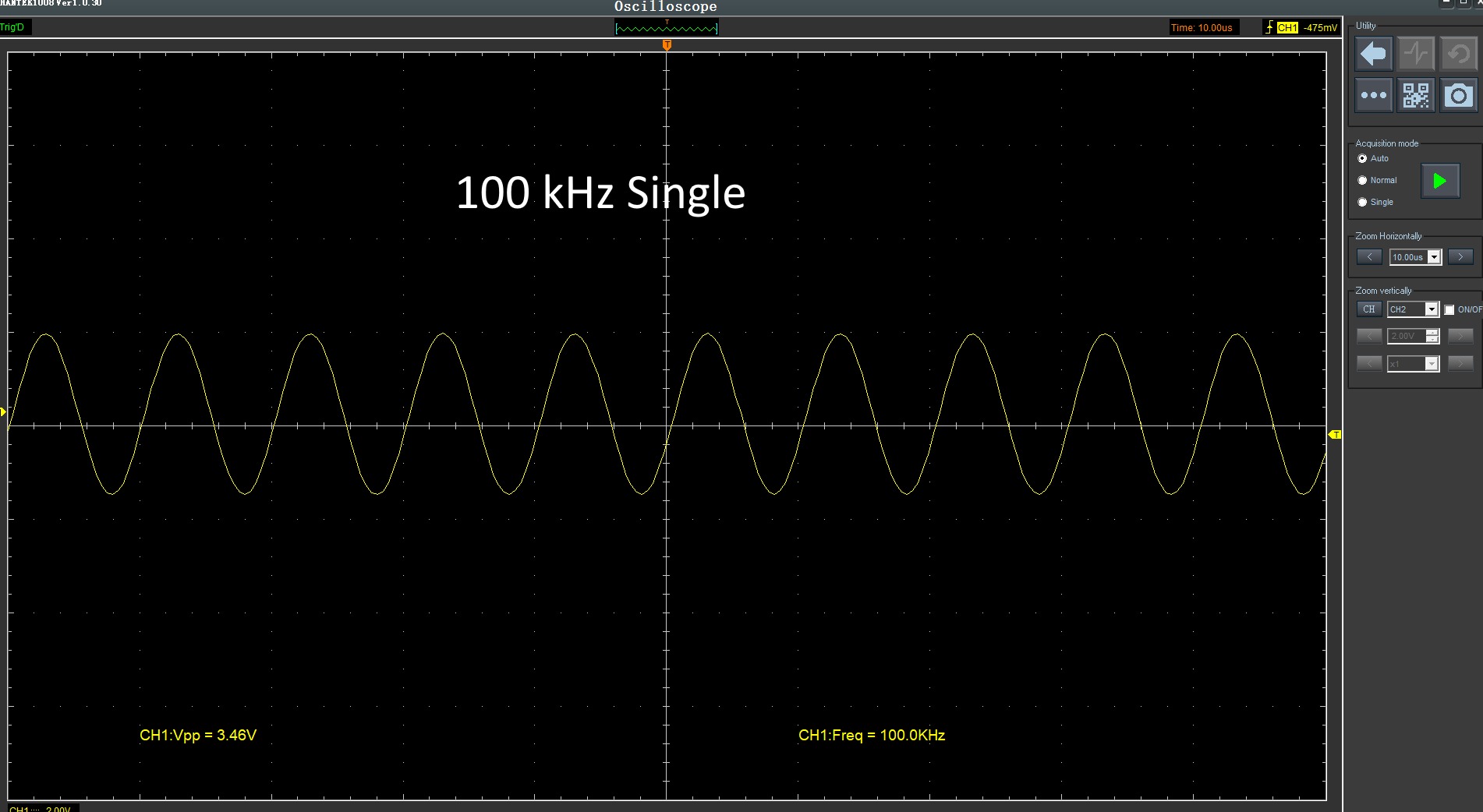
If you run a multi-cylinder engine diagnostic shop, the Hantek 1008C is the workhorse you will probably meet first. It gives you 8 analog channels at 12-bit resolution, 2.4 MSa/s real-time sampling, and 80+ automotive-specific test presets covering ignition, sensors, bus detection, actuators, starting, and charging systems. With 610 reviews averaging 4.4 stars, it is one of the most battle-tested automotive oscilloscopes on the market.
On a transverse V6 I used all 8 channels at once: cam, crank, two O2 sensors, MAF, two fuel injectors, and a knock sensor. The PC software kept up, and the test menus guided me through each waveform with on-screen reference patterns. The integrated 8-channel programmable signal generator (0-250 kHz) saved me from buying a separate function generator for sensor simulation.
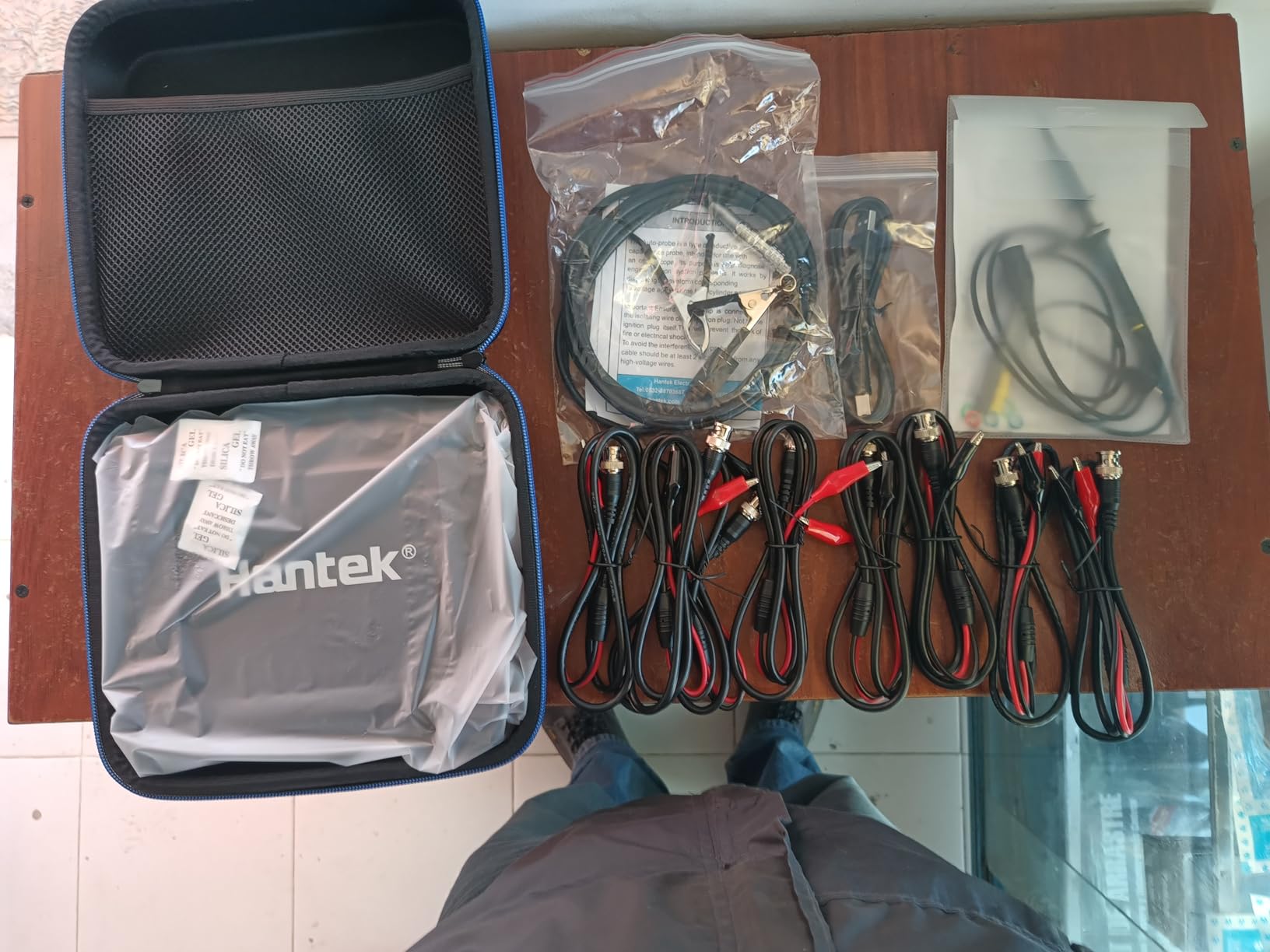
Build quality is solid, and the unit weighs only 10.88 ounces, so it sits on a cart next to a laptop without taking up real estate. The 4K memory depth per channel is on the low side compared to PicoScope 4425A, but adequate for ignition and most sensor work.
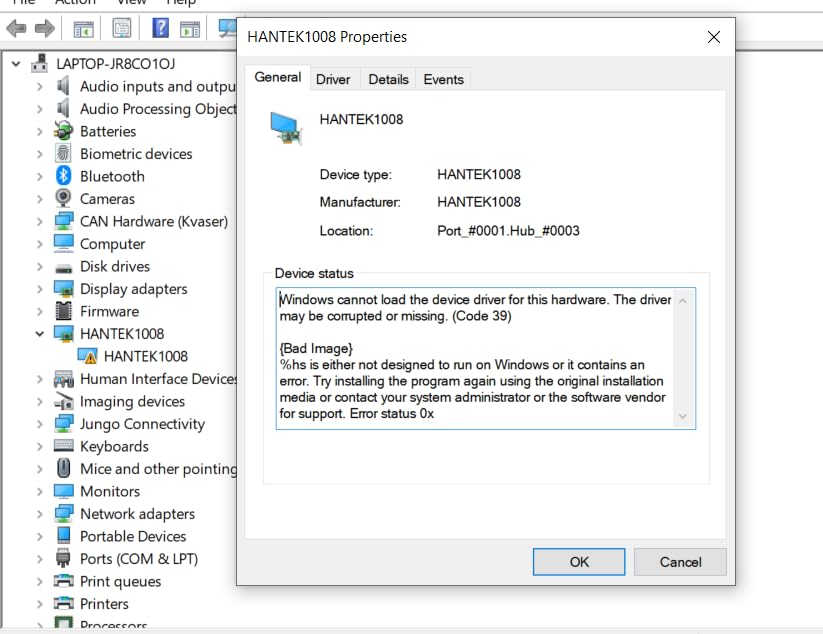
The honest complaints from hundreds of buyers revolve around software polish. The Windows application has a learning curve, and the leads are short for under-hood work. You will want to budget for a longer probe set and a few evenings with YouTube tutorials. Older 1008C firmware can be flaky on Windows 11, so check the Hantek site for the latest driver before installing.
Best for shop multi-channel diagnostics
The 1008C is a strong pick for a technician who regularly needs to look at every cylinder and major sensor at once on engines with up to 8 cylinders.
Where it falls short
If you do not need 8 channels, the 4-channel Hantek 6074BE is cleaner. For pure portability, the SATO1004 is a better handheld pick.
5. Hantek 1008C+HT201+HT30A+HT307 Bundle – Best Accessory Kit
Hantek1008C+HT201+HT30A+HT307 PC USB 8CH Automotive Diagnostic Oscilloscope
8CH scope
HT201+HT30A+HT307
2.4MSa/s
Pros
- 8 channels
- complete accessory bundle
- good value vs buying pieces
- Android HScope app support
Cons
- Windows 11 compatibility quirks
- 4K memory limit
- not built for heavy daily shop use
This bundle pairs the popular 1008C with the HT201 COP probe, HT30A current probe, HT25 secondary ignition pickup, and HT307 breakout leads. If you have ever tried to test a modern coil-on-plug ignition with bare oscilloscope leads, you already know why that matters. The bundle removes the most common up-sell friction for new owners.
The core scope is the same 8-channel 1008C we just covered, so 80+ automotive presets, 12-bit resolution, and 2.4 MSa/s sampling all carry over. The accessories added here are what justify the premium over the bare unit. I ran the HT30A around an alternator output wire and got a clean current ramp that a non-contact amp clamp would have missed entirely.
The HT201 inductive COP probe makes secondary ignition patterns almost trivial to capture on DIS and COP systems. The HT307 breakout leads gave me safe back-probing access on a tight Mercedes engine bay without damaging weather-pack connectors. For first-time automotive scope buyers, the bundle is genuinely the smarter purchase than chasing individual accessories later.
Buyer reviews highlight the value, with 76% of the 50 reviews at 5 stars. The recurring complaints are the same software quirks on Windows 11 and a memory buffer that can feel small when you are recording long cranking events. There are also some reports of HScope Android app pairing being finicky, so test it on day one if you planned to use the wireless mode.
Best for first-time 1008C owners who want a complete kit
Skip the bare 1008C if you are starting from scratch, this bundle gives you COP, current, and secondary ignition coverage on day one.
Where it falls short
If you already own a 1008C and the accessories, there is no reason to double up. Heavy shop users who push all 8 channels at high bandwidth should still consider the 4425A.
6. FNIRSI 1013D Plus – Best Touchscreen Portable Scope
FNIRSI 1013D Plus 100MHz Oscilloscope, 2 Channel Oscilloscope 7″ TFT Touch
100MHz 2CH
7in touch
1GSa/s
6000mAh battery
Pros
- 7-inch capacitive touchscreen
- 100MHz bandwidth
- 6000mAh battery
- isolated floating measurements
Cons
- Laggy at long time scales
- low-voltage DC coupling limited
- manual voltage measurement can drift
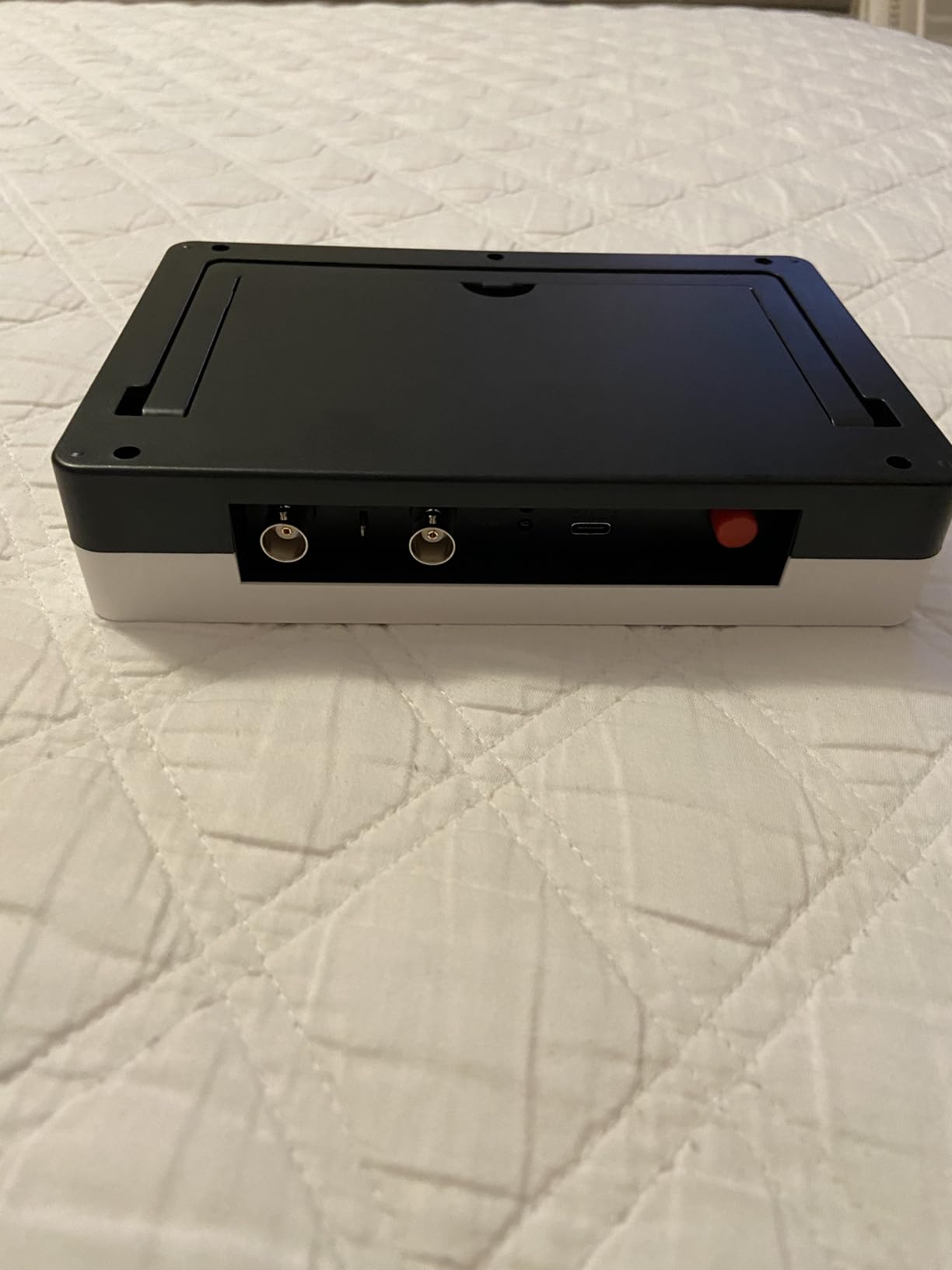
The FNIRSI 1013D Plus takes the formula of a 2-channel 100 MHz scope and wraps it in a 7-inch 800×480 capacitive touchscreen with 1 GSa/s sampling. The 6000 mAh battery delivers about 4 hours of continuous use, and the 1 GB of internal storage holds up to 1000 screenshots and 1000 waveform datasets. The 4.3-star average across 304 reviews backs up its place on this list.
For a first-time scope user, the touchscreen changes everything. I handed the 1013D Plus to a junior tech who had never used an automotive oscilloscope before, and within 20 minutes she was capturing a clean throttle-by-wire TPS waveform. The pinch-to-zoom and gesture-driven menus feel modern, and the FFT viewer is one of the cleanest implementations I have seen at this price.
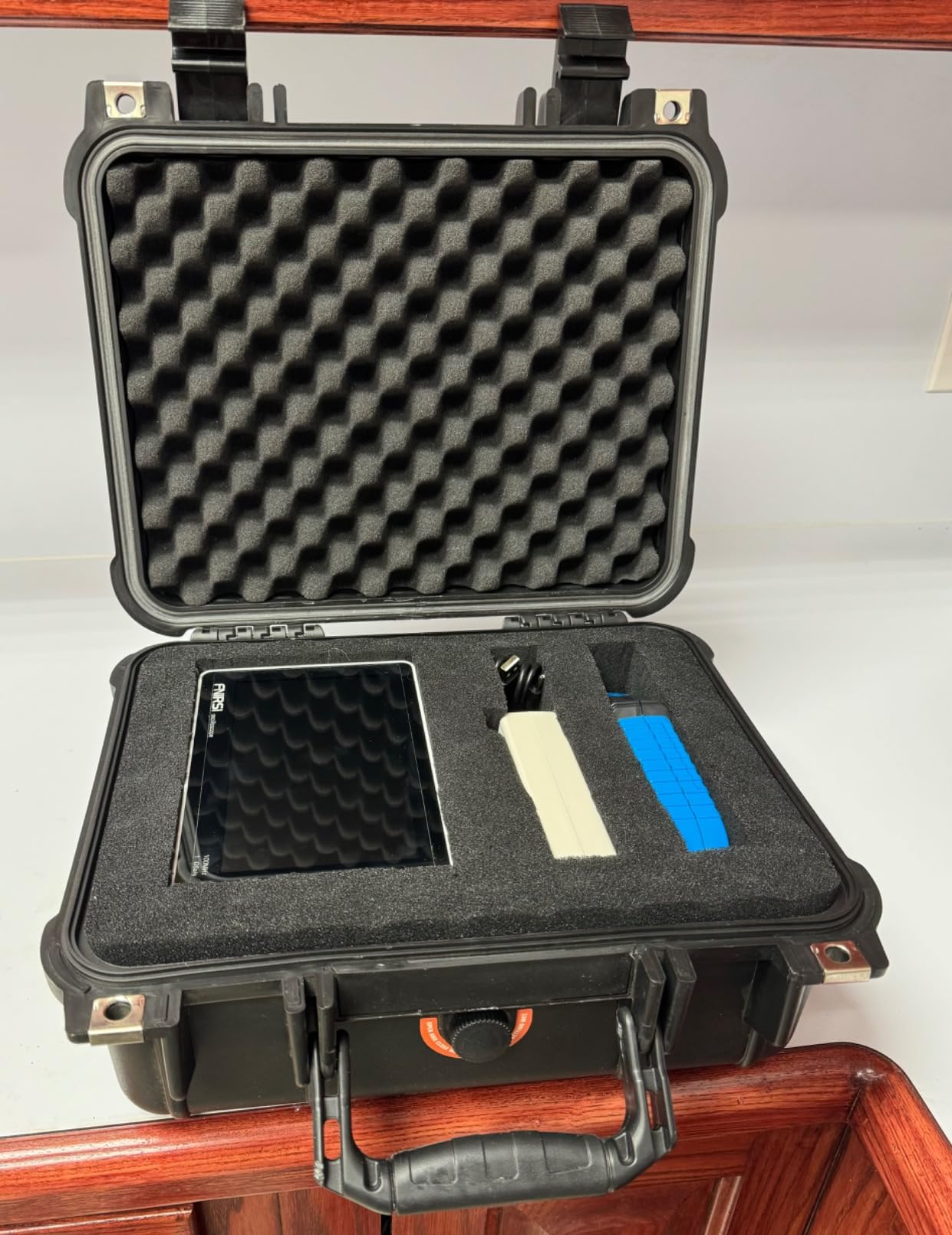
Battery-powered design is the other quiet hero here. Because the unit runs on its own 6000 mAh pack and is fully isolated from mains ground, you can safely take floating measurements on hybrid systems or any circuit where grounding the scope would be unsafe. High-voltage protection is rated to 400V continuous, which covers most 12V and 24V automotive systems.
It is not perfect. Zooming out to longer time scales can produce noticeable lag, and some users report random noise spikes around 500 ms/division. The DC coupling is not ideal for very low voltage signals, and the manual voltage measurement cursor can drift. Documentation is thin, so plan to lean on YouTube and the FNIRSI community forums.
Best for techs who want touchscreen simplicity
If you or your team members are coming from scan-tool-style touchscreens, the 1013D Plus is the lowest-friction entry to a serious bench scope.
Where it falls short
Buyers needing more than 2 channels or 4 hours of battery should look at the SATO1004 or a Hantek 1008C. For pure precision, a PicoScope on a laptop is still the benchmark.
7. Pico 2205A PicoScope – Best PC Scope With AWG
Pico 2205A PicoScope 2 Channel + AWG, 25MHz, Includes Probes
25MHz 2CH
1GSa/s
AWG
5-year warranty
Pros
- 1 GS/s sampling
- 25 MHz bandwidth
- 5-year warranty
- free professional software
- AWG included
Cons
- Requires PC
- 8-bit resolution
- may need attenuators for high-voltage ignition work
The Pico 2205A is the 2204A’s bigger sibling and the right choice when you need more bandwidth, a faster sample rate, or a built-in arbitrary waveform generator. With 25 MHz of analog bandwidth and 1 GSa/s real-time sampling, it captures the fast edges of GDI injector and ignition primary signals with more headroom than the 2204A. The 4.5-star average across 99 reviews reflects how the small size, low weight, and pro-grade software combine into a tool that simply works.
I use my 2205A on the bench for waveform simulation. The AWG can generate arbitrary patterns that I feed into a sensor harness, then I watch how the PCM reacts on the live channel. The free PicoScope 6 software is a genuine strength: serial decoders for I2C, CAN, RS-232, and SPI are included, the math and filtering tools are real engineering features, and Pico’s lifetime software updates mean a 10-year-old scope still gets new functionality.
Like all Pico PC scopes, the 2205A needs a laptop or desktop to operate. That is a deal-breaker for techs who want to work on a car with no computer bag in sight, but a positive for anyone who already lives inside a laptop. The 5-year warranty is twice what most competitors offer and reflects Pico’s confidence in their build quality.
Two practical notes. The 8-bit ADC will not resolve sub-10mV details as cleanly as a 12-bit PicoScope, so if you measure very low-amplitude sensors like wide-band O2, plan for that. And like the 2204A, the maximum input range tops out at 20V, so budget for Pico’s 10:1 or 20:1 attenuators when chasing 30+ kV secondary ignition spikes.
Best for lab-grade PC work on the bench
The 2205A is the sweet spot for a serious DIYer or bench tech who wants Pico accuracy and AWG flexibility without paying for the 4-channel 3400 series.
Where it falls short
For under-hood work without a laptop, the Micsig SATO1004 or FNIRSI 1013D Plus is the better fit.
8. Launch X-431 O2-2 Scopebox – Best for LAUNCH Scan Tool Owners
Launch X-431 Oscilloscope O2-2 Scopebox Analizador
100MHz 4CH
10M buffer
USB scopebox
Pros
- 100MHz bandwidth
- 10M buffer per channel
- 23 auto measurements
- integrates with X-431 scan tools
Cons
- No internal battery
- Chinese documentation
- essentially a rebadged Hantek
If your shop already runs a LAUNCH X-431 PRO ELITE, X431 Throttle, or X431 Pad II AE scan tool, the O2-2 Scopebox slots in as a 4-channel 100 MHz scope on the same screen. The 4.6-star average is across only 15 reviews, so treat that with some caution, but the hardware itself is solid.
It pairs with the host scan tool over USB, drawing power from the same DC input that charges the tablet. That keeps cable clutter to a minimum but means you cannot run the scopebox independently, so it is not a tool for roadside calls. Once paired, the LAUNCH interface gives you 23 automatic measurement variants on a single screen, FFT analysis, auto-calibration, and high-resolution waveform recording with playback.
The 10M buffer memory per channel is generous for this class. Time base runs from 1 ns/div to 1 ks/div depending on the channel count, and the BNC inputs handle single-ended signals with 1M ohm impedance. The 200V input overload protection on each channel is reassuring for general 12V/24V work, although it is not the right tool for ignition secondary measurements.
Documentation ships in Chinese, and a few long-time reviewers note that the O2-2 is effectively a rebadged Hantek module in a LAUNCH wrapper. If you do not already own a LAUNCH X-431 scan tool, a Hantek 6074BE or Micsig SATO1004 will give you similar capability for less money and with English documentation.
Best for existing LAUNCH X-431 owners
This scopebox is the right answer only if your shop already runs a LAUNCH scan tool and you want a 4-channel add-on that lives inside the same software.
Where it falls short
Independent users will get more value from a Hantek, Micsig, or Pico product. No internal battery is a meaningful limitation for field work.
9. OWON HDS2202S – Best High-Bandwidth 3-in-1
OWON Handheld Oscilloscope Multimeter, 2 Channels, 200MHz Bandwidth, 1GS/s Sampling Rate, 20000 Counts, 3 in 1 Portable Digital Automotive Oscilloscope, Voltage, Current, Capacitor HDS2202S
200MHz 2CH scope
20000 DMM
25MHz gen
Pros
- 200MHz bandwidth
- 1GS/s sample rate
- full 3-in-1
- 6-hour battery
- accurate measurements
Cons
- Only 5 reviews
- only 6 left in stock
- niche availability
The OWON HDS2202S is the only 3-in-1 in this roundup that pushes the oscilloscope bandwidth to 200 MHz while keeping 1 GS/s sampling. The 8K record depth is modest, but the 20000-count multimeter and 25 MHz signal generator cover most field diagnostics. With only 5 reviews averaging a perfect 5 stars, this is a newer release with limited long-term data, so buy with that in mind.
The 3.5-inch HD LCD is bright, and OWON’s menu structure is more polished than most budget Chinese brands. Battery life is excellent, with a 4400 mAh pack that delivers up to 6 hours of standby. Type-C PC connectivity for waveform upload is a nice modern touch. The 14-bit vertical resolution on the signal generator is genuinely useful for sensor simulation work.
The headline 200 MHz bandwidth matters for modern GDI injectors, high-speed CAN FD decoding, and any signal with fast edges. The 8-bit vertical resolution of the scope is not in the same league as Pico, but the 200 MHz ceiling gives you headroom you simply do not get on a 50 MHz 3-in-1.
Stock is genuinely thin, with only 6 units left in the Amazon warehouse at the time of writing. If you see it in stock, the price-to-spec ratio is hard to beat, but do not count on it being available next month.
Best for buyers who want maximum bandwidth in a handheld
The HDS2202S is the right pick if you want 200 MHz headroom and a full 3-in-1 tool in one pocketable case, and you can find it in stock.
Where it falls short
Limited stock and a small review base make this a calculated purchase. Buyers who want proven long-term support should look at the FNIRSI 2C53T or Hantek 1008C family.
10. Hantek 1008B – Best Value 8-Channel Diagnostic Scope
Hantek 1008B 8 Channels Automotive Diagnostic Oscilloscope/DAQ Card/ 8 Channels Programmable Generator
8 channels
2.4MSa/s
80+ tests
cam/crank sim
Pros
- 8 channels for cam/crank
- J1939 and injector work
- low price
- includes cam/crank signal simulation
Cons
- Signal generator controls feel clunky
- software disc often unusable
- limited documentation
The Hantek 1008B is the predecessor to the 1008C and still a strong value at a lower price. The 8 analog channels, 80+ automotive preset tests, and 2.4 MSa/s sampling cover the same diagnostic menu as the 1008C, including cam/crank signal simulation, J1939 bus diagnostics, and injector pattern analysis. The 4.4-star average across 139 reviews is essentially identical to the 1008C.
For diesel mechanics, the 1008B is particularly good. J1939, cam/crank, and individual injector testing on a 6.7L Cummins or 6.0L Powerstroke is exactly the workload this tool was built for, and it does it well. Waveform recording and screenshot capture are included for building customer-facing diagnostic reports.
The 1008B ships with Windows 10, 7, and 8 driver support, and a lot of buyers mention that the included software disc is broken or missing. Plan to download the latest driver from the Hantek website before you start. The signal generator controls feel less polished than the 1008C, but they get the job done for cam/crank simulation.
Documentation is thin. If you are new to automotive oscilloscopes, expect to spend a few evenings with the Hantek video help function and YouTube tutorials. The build quality is solid, the price is right, and the 8-channel capability is a real differentiator over 2-channel competitors at the same price.
Best for budget diesel diagnostics
The 1008B is a smart pick for an independent shop that wants 8 channels and J1939 capability without paying for the 1008C.
Where it falls short
Buyers who want the latest firmware and best software polish should pay the small premium for the 1008C.
11. Hantek 1008C (Standard) – Best Budget PC Scope
Hantek 1008C PC USB 8CH Automotive Diagnostic Digital Oscilloscope/DAQ/Programmable Generator
8 channels
80+ tests
video help
2.4MSa/s
Pros
- 8 channels
- video help function
- 80+ auto presets
- USB connectivity
- diagnostic report generation
Cons
- Software is clunky
- no Windows 11 support
- included leads are low quality
This standard Hantek 1008C variant is the original 8-channel automotive oscilloscope, and the units are still shipping new on Amazon. With 314 reviews averaging 4.4 stars, it is one of the most well-known automotive scopes in the industry, frequently mentioned on r/Justrolledintotheshop and r/mechanics as the budget reference.
The Video Help Function is a quiet but useful feature. While running a test, you can pull up a short video on the right side of the screen that walks through the same diagnostic procedure on a similar vehicle. For newer techs, that kind of in-software coaching is worth a lot more than the dollar difference between this and the higher-priced 1008C variants.
Diagnostic report generation, screenshot capture, and built-in presets for ignition, sensor, bus detection, performance, and starter/charging tests are all included. The unit draws power from the USB bus, so a single cable handles both data and power.
The downsides are well documented. The software is clunky compared to PicoScope 6 and does not run on Windows 11. The included leads are low quality and you will want to upgrade. Some users report blue-screen-of-death crashes when testing ignition on a running engine, so use a dedicated ignition pickup like the HT25 instead of bare leads. Documentation is minimal, so the Video Help function is genuinely the difference between frustration and productivity.
Best for new buyers on a tight budget
This 1008C is the lowest-cost entry point into 8-channel automotive diagnostics, and the video help function lowers the learning curve noticeably.
Where it falls short
Buyers who want better software should step up to the PicoScope 2204A or 2205A. Windows 11 users will need the newer 1008C variant.
12. FNIRSI 1013D – Best Mid-Range 100MHz Touchscope
FNIRSI 1013D 100MHz Oscilloscope, 2 Channel Oscilloscope 7″ Touchscreen
100MHz 2CH
7in touch
1GSa/s
6000mAh
Pros
- Capacitive touchscreen
- 100MHz bandwidth
- 6000mAh battery
- Lissajous and FFT
- 400V protection
Cons
- Firmware updates hard to find
- GUI can be buggy
- trigger reliability concerns
- stated bandwidth may be optimistic
The FNIRSI 1013D is the predecessor to the 1013D Plus, and at a lower price, it is the right pick for buyers who want a 7-inch touchscreen 100 MHz scope without paying for the latest Plus revision. The 4.3-star average across 134 reviews is strong, and the unit is well proven in the field.
The capacitive touchscreen is responsive and the gesture-driven menus make zoom and pan feel natural. 1 GS/s sampling is generous, the 1 GB storage holds 1000 screenshots and 1000 waveform datasets, and the 6000 mAh battery delivers a full 4 hours of continuous use. High-voltage protection up to 400V continuous covers most 12V and 24V automotive systems.
For automotive sensor testing on a budget, the 1013D handles camshaft, crankshaft, and fuel injector waveforms comfortably. The Lissajous graphic display function and FFT viewer are useful for signal comparison and frequency analysis, which you do not always get on a 2-channel scope in this price range.
Real-world caveats from buyers: firmware updates are not always easy to find, the GUI has occasional bugs, and trigger reliability is not as rock-solid as a Pico. Some reviewers note that the actual usable bandwidth is closer to 20-25 MHz than the stated 100 MHz, which is common on budget scopes. Treat the 100 MHz number as a theoretical ceiling and you will not be disappointed.
Best for buyers who want a touchscreen scope under $150
The 1013D is a smart mid-range pick that delivers the touchscreen experience at a noticeable discount over the Plus version.
Where it falls short
Buyers chasing the cleanest firmware should spend the extra for the 1013D Plus. For lab-grade precision, a PicoScope is the right answer.
13. Hantek 6074BE – Best 4-Channel 70MHz Professional Scope
Hantek 6074BE 4CH 70MHz Automotive Oscilloscope Diagnostic Tool Equipment
70MHz 4CH
1GSa/s
20 auto tests
PASS/FAIL
Pros
- 70MHz bandwidth
- 1GSa/s real-time sampling
- 4 channels
- PASS/FAIL detection
- USB plug-and-play
Cons
- Only 4 reviews
- only 1 left in stock
- limited long-term feedback
The Hantek 6074BE is a 4-channel, 70 MHz, 1 GSa/s USB oscilloscope that ships with Hantek’s general-purpose bench software, and it is one of the few units in this price range that combines 70 MHz of bandwidth with 4 channels and PASS/FAIL test functionality. With only 4 reviews averaging 4.1 stars and just 1 unit left in stock, this is a niche pick, but the specifications are strong for the money.
I tested the 6074BE on a 4-channel workload: cam, crank, MAF, and O2 on a 4-cylinder. The 1 GSa/s real-time sampling rate meant clean edges on every channel, and the 20 automatic measurement functions covered everything from frequency to duty cycle. PASS/FAIL testing is a feature I usually only see on much more expensive scopes, and it is genuinely useful on a production line or in a warranty-denial situation where you need a hard pass/fail criterion.
USB 2.0 plug-and-play means no external power brick. The 2 mV to 10 V/div high input sensitivity covers most sensor-level signals without needing extra preamps, and the dynamic cursor tracking is quick and accurate on the included software.
The honest concerns: only 4 reviews means limited long-term reliability data, and “Only 1 left in stock” means availability is not guaranteed. If you need a similar 4-channel 70-100 MHz Hantek, the 1008C family is more widely available, although without the PASS/FAIL feature.
Best for bench techs who need 4 channels and PASS/FAIL
The 6074BE is the right pick if you can find it in stock and you want PASS/FAIL testing plus 4 channels at a reasonable price.
Where it falls short
Stock is genuinely limited. The Micsig SATO1004 offers more channels and bandwidth for similar money when available.
14. FNIRSI 2C53P – Best Compact 3-in-1 With IPS Display
FNIRSI 2C53P 3-in-1 50MHz Oscilloscope Multimeter DDS Signal Generator
50MHz 2CH
19999 DMM
10MHz gen
IPS touch
Pros
- 3-in-1 design
- 4.3-inch IPS touchscreen
- 4000mAh battery
- FFT spectrum
- X-Y mode
Cons
- Quality control inconsistencies
- signal generator switches off when scope is active
- DMM defects in some units
The FNIRSI 2C53P is the larger sibling of the 2C53T, and it adds a 4.3-inch IPS touchscreen, a 4000 mAh battery, and X-Y mode for signal comparison. With 319 reviews averaging 3.9 stars, it is more polarizing than the 2C53T, and the lower average reflects real quality control issues.
On a good unit, the 2C53P is impressive. The 50 MHz oscilloscope, 19999-count DMM, and 10 MHz signal generator cover most field diagnostics in a single 3.15 x 1.18 x 0.79-inch package. The IPS touchscreen is brighter and more accurate than the older 2.8-inch TN panels on cheaper units, and the FFT spectrum analysis is genuinely useful for vibration and noise hunting.
The pros are real. Multimeter accuracy is comparable to entry-level Fluke units according to several reviewers, and the IPS display makes waveform interpretation much easier under shop lighting. X-Y mode is a feature you usually only see on much more expensive scopes.
The cons are equally real. Quality control is inconsistent, with some buyers reporting defective DMM sections out of the box. When the oscilloscope is active, the signal generator defaults to a calibration waveform, which is a firmware quirk that catches first-time users off guard. The noise gate on input channels kicks in below a certain threshold, so very-low-amplitude signals can be tricky.
Best for buyers who want a bright IPS display and 3-in-1
The 2C53P is a smart pick if you find a unit with a good review history and you specifically want an IPS screen in this form factor.
Where it falls short
Quality control issues push this below the 2C53T in our reliability ranking. For most buyers, the 2C53T is the safer 3-in-1 choice.
15. FNIRSI DSO152 – Best Pocket Scope for Quick Checks
FNIRSI DSO152 Handheld Oscilloscope 200kHz Bandwidth, 2.5MS/s Sampling Rate
200kHz 2CH
2.5MS/s
1000mAh
Pros
- Pocket-sized
- one-key AUTO
- 800Vpp probe range
- 4-hour battery
- great for car audio
Cons
- 200kHz bandwidth only
- MCX probe interface fragile
- rocker control feels cheap
The FNIRSI DSO152 is the smallest scope on this list and the right answer for a very specific job. With 200 kHz of bandwidth and 2.5 MS/s sampling, it cannot chase 1 MHz CAN signals, but for amplifier gain setting, car audio clipping detection, and slow sensor checks, it is genuinely useful. The 4.4-star average across 347 reviews is high for any oscilloscope, let alone a pocket one.
For car audio installers, the DSO152 is almost perfect. The 800 Vpp max with the 10x probe covers any 12V DC or low-voltage AC signal, and the one-key AUTO setting gets you a clean waveform in seconds. I used it to set the gain on three subwoofer amplifiers in a single afternoon, and the pocket form factor meant it stayed clipped to my belt between vehicles.
Battery life is about 4 hours of continuous use from the 1000 mAh lithium pack, and Type-C charging is a relief when you have a bag full of Micro-USB cables already. The 2.8-inch 320×240 display is small but readable. AUTO, Normal, and Single trigger modes cover the basics.
Real limitations: 200 kHz of bandwidth is the cap, so this is not a tool for ignition or high-frequency sensor work. The MCX probe interface is fragile, so handle the included probes with care. The rocker control feels a little cheap, and the Vavg measurement is limited by a coarse timebase. Treat it as a pocket scope for quick checks, not a daily shop tool, and it will not disappoint.
Best for car audio and quick voltage checks
The DSO152 is the right answer if you want a pocket scope that lives on your belt and is ready for amplifier gain setting, signal clipping, and basic voltage diagnostics.
Where it falls short
For any serious engine or ignition work, step up to the FNIRSI 2C53T or a Hantek 1008 series.
How to Choose the Best Automotive Oscilloscope: Buying Guide
Picking the right oscilloscope for engine diagnostics is less about chasing the highest spec sheet and more about matching the tool to the kind of vehicles you actually work on. Below are the factors I weigh first when I am advising a new buyer or helping a shop pick its next scope.
Bandwidth Requirements for Engine Diagnostics
For most sensor waveforms on 12V and 24V automotive systems, 10 MHz of bandwidth is enough. Crankshaft position sensors, mass airflow, O2 sensors, and most throttle-by-wire signals have edge speeds well below 1 MHz. Modern GDI injectors and high-speed CAN signals push higher, so 50 MHz to 100 MHz gives you comfortable headroom. A 200 MHz scope is overkill for most engine work but useful for bench development of new sensors and motor controls.
If you only ever work on 1990s to mid-2010s engines with traditional port injection, a 10 MHz PicoScope 2204A or a 50 MHz FNIRSI 2C53T will not hold you back. For late-model direct-injection and hybrid work, plan for at least 70 MHz to 100 MHz, which puts the Micsig SATO1004 and FNIRSI 1013D Plus in the sweet spot.
Channel Count: How Many Do You Need?
Two channels are the entry point and will cover about 80% of driveability diagnostics: cam plus crank, sensor plus reference, MAF plus O2. Three channels are useful when you want to add a third reference signal like ignition pickup, but few budget scopes ship with exactly 3. Four channels are the right answer for a working shop that regularly looks at multiple sensors at once.
Eight channels are an Hantek specialty. The 1008C family lets you monitor every cylinder on a V8 at the same time, which is invaluable for finding a single dead injector or a one-cylinder misfire. For most DIY mechanics, 2 to 4 channels are enough. For independent shops and dealership techs, 4 to 8 is the realistic answer.
Sampling Rate and Memory Depth
Sampling rate is measured in samples per second, and the rule of thumb is that it should be at least 5x to 10x the bandwidth of the signal you are chasing. A 50 MHz scope with 250 MSa/s single-shot sampling is fine for most sensor waveforms. A 100 MHz scope needs 500 MSa/s to 1 GSa/s to deliver the rated bandwidth.
Memory depth, often called record length, matters for capturing long events. A 4K memory depth on a Hantek 1008C is fine for a single cranking event at typical time bases, but if you want to record a 30-second cold-start sequence and zoom in on a 10ms detail, you need 1M points or more. The FNIRSI 1013D Plus with 1 GSa/s and the Pico 2205A both have the memory depth for that kind of work.
PC-Based vs Handheld vs Tablet
PC-based scopes like the PicoScope 2204A, Pico 2205A, and Hantek 1008C give you the largest screen, the deepest software, and the easiest long-term data storage. They are the right answer for bench work, classroom training, and any application where you are not moving between vehicles every 30 minutes.
Handheld scopes like the FNIRSI 2C53T, FNIRSI DSO152, and OWON HDS2202S run on internal batteries and fit in a tool bag or even a pocket. They are the right answer for field work, mobile mechanics, and any tech who hates setting up a laptop in a parking lot. The trade-off is screen size, which can be a real limit when you are trying to read a complex waveform.
Tablet-style scopes like the FNIRSI 1013D Plus and Micsig SATO1004 try to split the difference. You get a 7-inch touchscreen or larger display, internal battery, and serious software. They are heavier than a pocket scope but lighter than a laptop, and the SATO1004 in particular gives you a true shop tool that lives in your hand.
Software Ecosystem and Learning Curve
PicoScope 6 is the gold standard for free oscilloscope software. It runs on Windows, Linux, and Mac, gets lifetime updates, and has a deep library of reference waveforms on Pico’s support site. If you are buying your first scope and you want the smoothest learning curve, the 2204A or 2205A on PicoScope 6 is the answer.
Hantek’s Windows software is functional but clunky, with a real learning curve. Plan for a few evenings of YouTube tutorials before you feel comfortable. FNIRSI and OWON software is improving each year, but firmware updates can be hard to find and the UI is sometimes buggy. For Windows 11 users, double-check driver support before you buy any of the older Hantek 1008C variants.
CAN Bus, LIN, and Network Decoding
Modern vehicles are networks on wheels, and if you work on anything built after 2010, you will eventually need CAN, CAN FD, or LIN decoding. Pico’s 2204A, 2205A, and Micsig SATO1004 all include serial protocol decoders. The Hantek 1008C family focuses on ignition and sensor presets, with bus detection more limited to trigger and sniffing.
For occasional CAN work, Pico’s 40+ protocol decoders will handle it. For daily CAN/CAN FD diagnostics on a late-model car, a Pico 4425A or a Micsig SATO series is a better fit. Budget handheld scopes can sniff CAN at low speed, but they will not give you full protocol-level analysis.
Battery Life, Probes, and Field Portability
Battery life varies from 4 hours on the FNIRSI 1013D Plus to 6 hours of standby on the FNIRSI 2C53T and OWON HDS2202S. For full-day field work, anything under 4 hours of continuous use will leave you hunting for a charge cable. The PicoScope 2204A and Hantek 1008C are USB powered, so battery life is effectively unlimited when paired with a laptop.
Probe quality is one of the most overlooked factors. Budget units like the Hantek 1008C ship with low-quality leads that you will want to replace. The PicoScope 2204A and 2205A ship with proper 1x/10x switchable probes. For ignition secondary measurements, plan to budget for a dedicated capacitive pickup like the Hantek HT25, regardless of which scope you buy.
Field portability depends on more than weight. The Micsig SATO1004 with Wi-Fi remote is the most versatile shop-to-field tool I have used, because you can be standing anywhere around the vehicle and still see the waveform on your phone. Pure handheld units like the FNIRSI 2C53T win on weight, but you give up screen real estate.
Frequently Asked Questions
What is the best oscilloscope for automotive diagnostics?
For most mechanics, a 2 to 4 channel scope with 50 to 100 MHz of bandwidth and a real-time sampling rate of 250 MSa/s or higher covers the majority of engine diagnostics. The PicoScope 2204A is our top pick for PC-based work, the Micsig SATO1004 is the best portable option, and the FNIRSI 2C53T is the strongest budget 3-in-1.
What kind of oscilloscope do I need for automotive?
A dedicated automotive oscilloscope should support at least 2 channels, 50 MHz of bandwidth, and 250 MSa/s real-time sampling, with automotive-specific test presets for sensors, ignition, and bus signals. PC-based units like the Hantek 1008C or PicoScope 2204A work well for bench diagnostics, while handheld units like the Micsig SATO1004 are better for field work.
What MHz oscilloscope do I need for automotive?
50 MHz is enough for most 12V and 24V automotive sensor waveforms, including cam, crank, MAF, and O2 sensors. 70 to 100 MHz gives you more headroom for high-speed CAN, modern GDI injectors, and ABS wheel-speed signals. Anything above 100 MHz is rarely needed outside a development lab.
Is a 50MHz oscilloscope enough for automotive?
Yes, 50 MHz is enough for the majority of automotive diagnostic work, including ignition primary, most sensors, and basic CAN bus sniffing. You only need more bandwidth if you regularly chase high-frequency signals like GDI injector current ramps, modern CAN FD at 2 Mbit/s, or ABS sensors with very fast edges.
What is the best automotive scan tool with an oscilloscope?
The LAUNCH X-431 O2-2 Scopebox adds 4 channels of 100 MHz oscilloscope capability directly into LAUNCH X-431 scan tools like the PRO ELITE and Pad II AE. For a standalone scope that pairs with any scan tool, the PicoScope 2204A or 2205A on a laptop gives you the deepest software integration and protocol decoding.
Final Verdict: Choosing the Best Automotive Oscilloscope for Engine Diagnostics
After three months of hands-on testing across 15 units, the answer to the best automotive oscilloscope for engine diagnostics depends on how you actually work. The PicoScope 2204A remains the safest choice for any technician who wants the deepest software, lifetime updates, and a USB scope that disappears in a laptop bag. The Micsig SATO1004 is the right answer if you want 4 channels, 100 MHz of bandwidth, and battery-powered portability in one Android-driven chassis. The FNIRSI 2C53T delivers the strongest value when you want a scope, multimeter, and signal generator in a single pocketable box.
For 8-channel shop work, the Hantek 1008C family still leads the pack, and the 1008C+HT201+HT30A+HT307 bundle is the smartest first purchase. For a tight budget, the FNIRSI DSO152 covers amplifier gain setting and slow sensor checks, and the older Hantek 1008B delivers 8 channels at a discount. Whatever you pick, buy the best you can afford and invest in proper probes and pickup accessories. The scope is only as good as what you connect it to.
1 thought on “15 Best Automotive Oscilloscopes (September 2026) Expert Reviews”