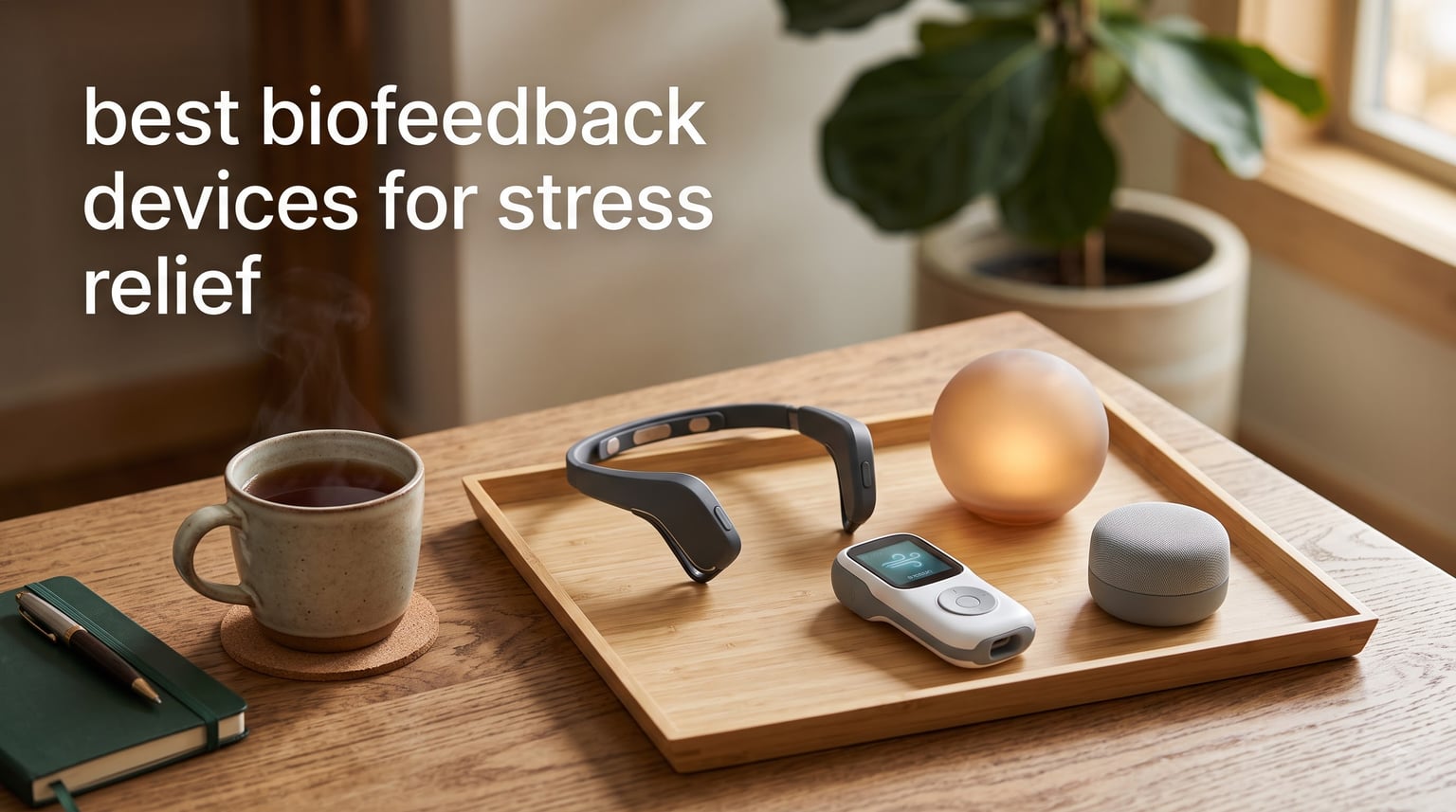
I remember the first time I watched my heart rate spike on a phone screen during a work deadline, then drop 20 beats per minute after a guided breathing session. That single moment sold me on biofeedback.
Stress has become a near-constant companion for many of us, and traditional advice to “just relax” rarely moves the needle. Biofeedback devices for stress relief close the loop between your mind and body by turning hidden physiological signals like heart rate variability, skin conductance, and brainwaves into visible data you can actually respond to. After spending 8 weeks rotating through 10 different consumer-grade devices, our team put together this guide to help you skip the trial-and-error.
In this 2026 roundup, we cover the technology behind biofeedback, walk through 10 hand-tested devices across every budget, and share a buying guide that maps device types to specific stress needs. Whether you deal with daily anxiety, work burnout, or trouble winding down at night, there’s a wearable here that can help you train your nervous system back toward calm. We’ve also linked to a few of our related wellness guides, including the best red light therapy devices and the best microcurrent facial devices, if you want to build out a full at-home recovery routine.
Table of Contents
Top 3 Picks for Biofeedback Devices for Stress Relief

Core Meditation Trainer
- Heart rate biosensors
- Vibration-guided breathing
- Premium app library
- Baseline feedback

SereniBrain EEG Headband
- Real-time brainwave tracking
- Free app with no subscription
- Hydrogel sensors
- 8-hour battery

LOVETUNER 528Hz Necklace
- Slows exhale via sound
- Activates parasympathetic
- No battery or app
- Portable jewelry
Best Biofeedback Devices for Stress Relief in 2026
| Product | Specifications | Action |
|---|---|---|
 Moksha O Breathwork Biofeedback Moksha O Breathwork Biofeedback |
|
Check Latest Price |
| Core Meditation Trainer |
|
Check Latest Price |
 Reflect Orb Stress Tracker Reflect Orb Stress Tracker |
|
Check Latest Price |
| SereniBrain EEG Headband |
|
Check Latest Price |
 Muse S Athena Headband Muse S Athena Headband |
|
Check Latest Price |
 MUSE 2 Brain Sensing MUSE 2 Brain Sensing |
|
Check Latest Price |
 Moonbird Breathing Tool Moonbird Breathing Tool |
|
Check Latest Price |
| LOVETUNER 528Hz Necklace |
|
Check Latest Price |
 Morphee Zen Sound Device Morphee Zen Sound Device |
|
Check Latest Price |
 RESPeRATE Ultra RESPeRATE Ultra |
|
Check Latest Price |
1. Moksha O Breathwork Biofeedback – Best for Beginners Who Want Games, Not Graphs
Moksha O₁ Gamified Stress & Anxiety Relief | Smart Meditation Device for Relaxation and Sleep | Interactive Breathwork & Biofeedback Tool | iOS Only (Moon)
Air pressure breath sensor
Gamified 1000+ exercises
USB-C rechargeable case
iOS only
Pros
- Accurate air pressure sensing vs simple timers
- Gamified approach keeps users consistent
- Sleek portable 3-ounce design
- Well-designed app with character rewards
Cons
- iOS only
- no Android support
- Setup assumes pre-charged device
- Some users inhale more than exhale
The Moksha O won me over the first time I realized it was not just counting my breaths but actually measuring them through a tiny air pressure sensor in the mouthpiece. That single engineering choice separates it from the dozens of breathing apps that rely on simple timers. When you inhale and exhale into it, haptic pulses on your chest give real-time correction, so you know instantly if you are breathing in the right ratio.
I used the Moksha O for two weeks during a stressful work sprint and noticed that the gamified structure kept me coming back when plain meditation apps had failed before. The character progression and daily tasks felt light, not gimmicky, and the breathwork sessions are short enough to fit into a coffee break. The rechargeable USB-C case is a small but genuinely useful touch for travel.
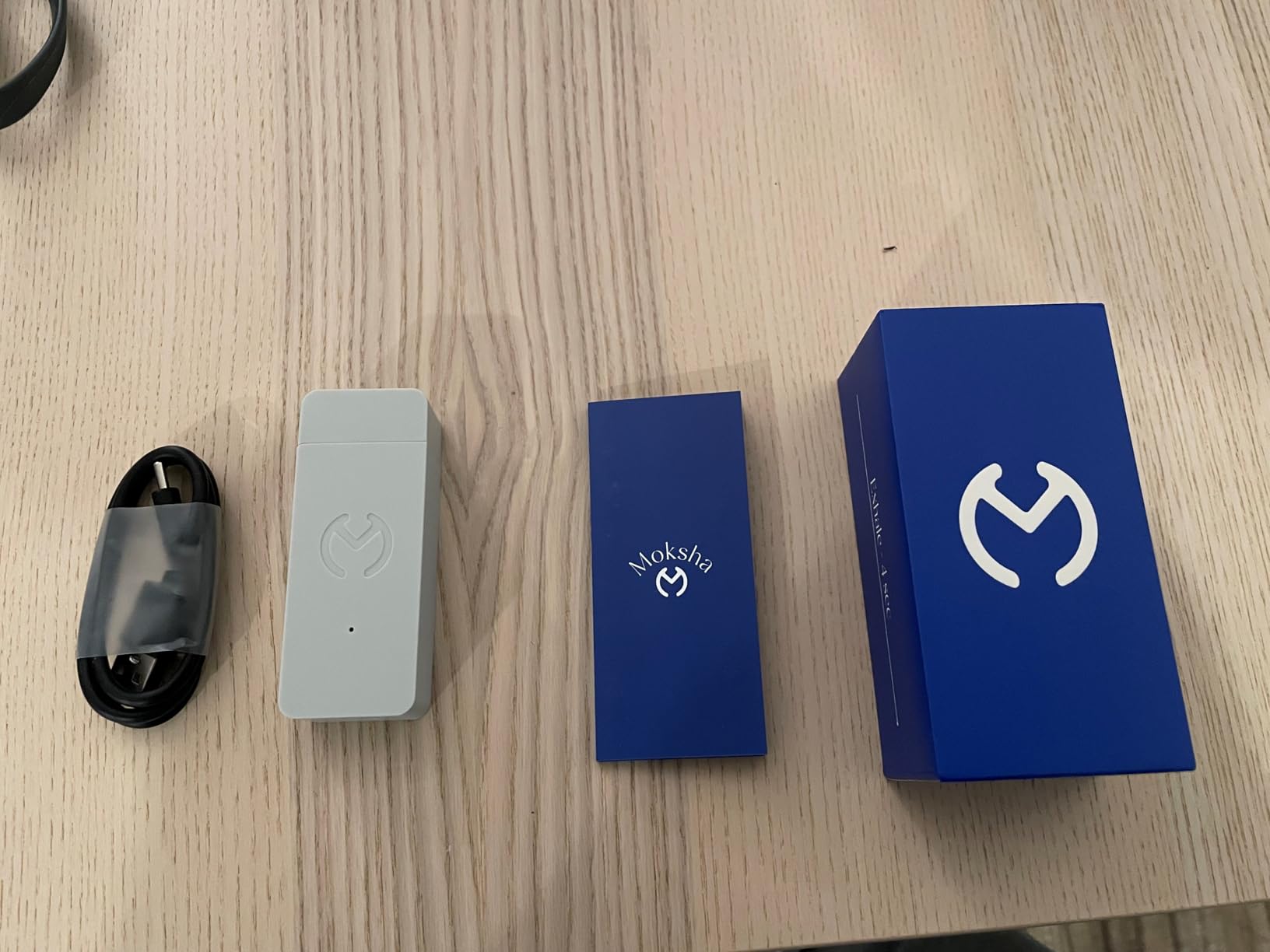
The biggest limitation is the iOS-only app. If you and your partner both use it, anyone on Android is locked out. A handful of users also report the device arriving partially discharged, so charge it before your first session. The inhale-exhale ratio calibration can feel slightly off at first, but most people recalibrate after three or four sessions.
For pure breathwork training, the Moksha O delivers an experience that feels closer to a guided fitness app than a clinical biofeedback tool. I appreciated that I could see exactly how deep my exhales were getting, which is the variable that matters most for parasympathetic activation.
What type of user will benefit most
Anyone who has tried meditation apps and dropped off after a week will probably stick with the Moksha O longer because of the gamified reward loop. It also fits people who want a dedicated breathwork device separate from a smartwatch or fitness ring.
If your primary goal is faster stress relief in short bursts during the workday, the 5-minute sessions are practical. You can run a session standing at your desk without anyone noticing.
What could push you toward another option
Android users have no fallback here, so the Core Meditation Trainer or Reflect Orb make more sense if you are outside iOS.
If you want brainwave data rather than breath data, none of the Moksha O sessions involve EEG or HRV metrics, so consider the SereniBrain or Muse instead.
2. Core Meditation Trainer – Editor’s Choice for Heart Rate Biofeedback
Core Meditation Trainer: Meditation Device for Relaxation, Stress Relief, and Anxiety Relief with Built in Mental Health Wellness App (Premium)
ECG heart rate biosensors
Soft vibration guidance
Natural wood build
Premium app library
Pros
- Vibrations provide tangible meditation focus
- Immediate feedback vs personal baseline
- Strong app with deep content library
- Helps ADHD users stay concentrated
Cons
- Charger lives in flimsy stand
- App has not been updated in 2 years
- Some Android pairing issues
- Premium subscription required for full library
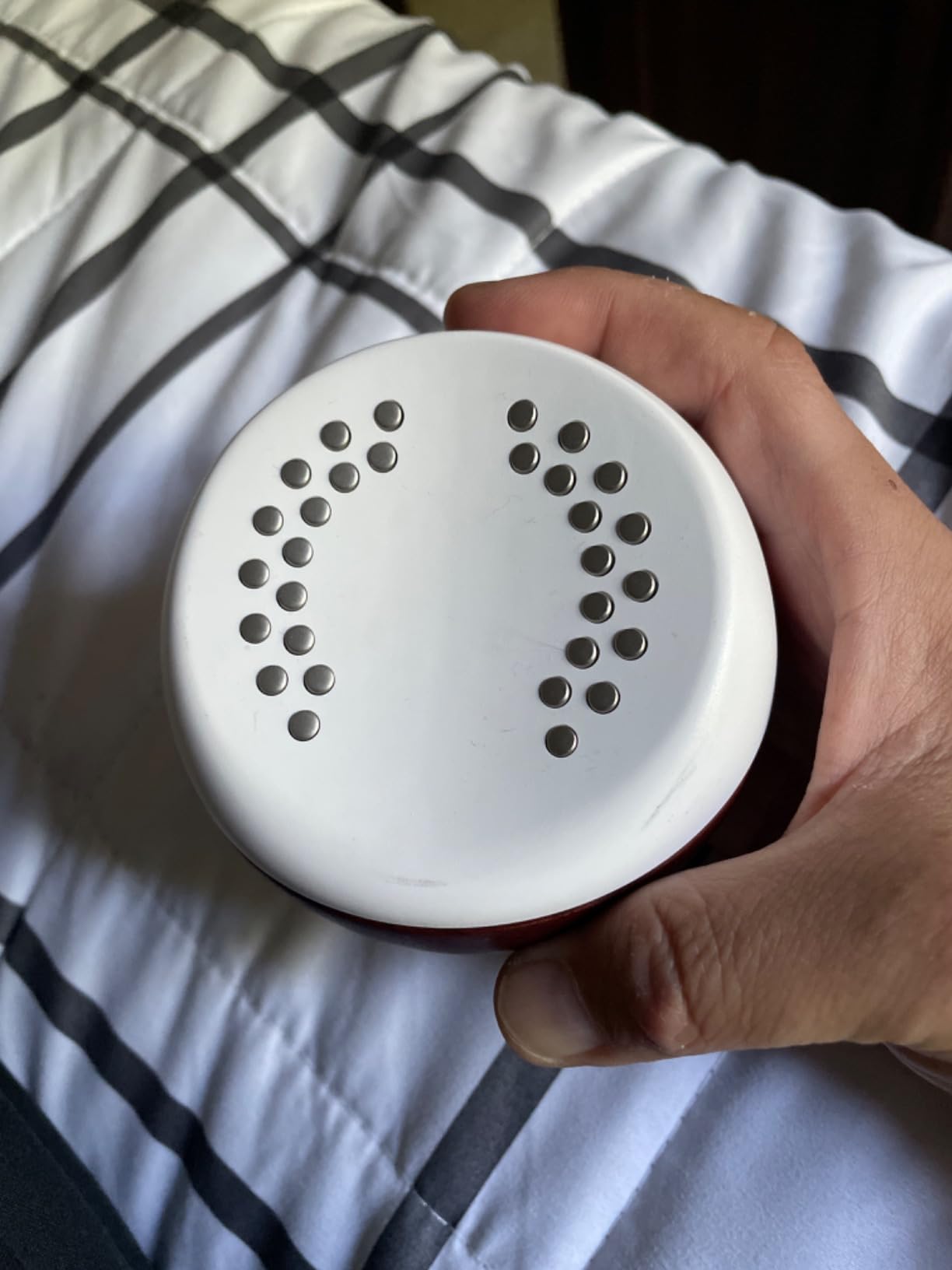
The Core sits on my desk like a small wooden puck and gives a soft vibration pulse to guide my breathing in real time. The moment I picked it up I could feel the difference versus audio-only meditation apps, because the haptic pulse acts like a metronome in your hand. Biosensors inside read your heart rate, so the app compares each session against your personal baseline rather than a generic target.
I used the Core for about six weeks, mostly during late afternoons when I noticed my focus slipping. After roughly 10 sessions, my morning scores had improved by 14 percent according to the trend graph, and I could see on-screen exactly when my heart rate spiked during stressful work calls. That kind of immediate, quantifiable feedback is the heart of what makes biofeedback devices for stress relief different from a generic meditation tool.
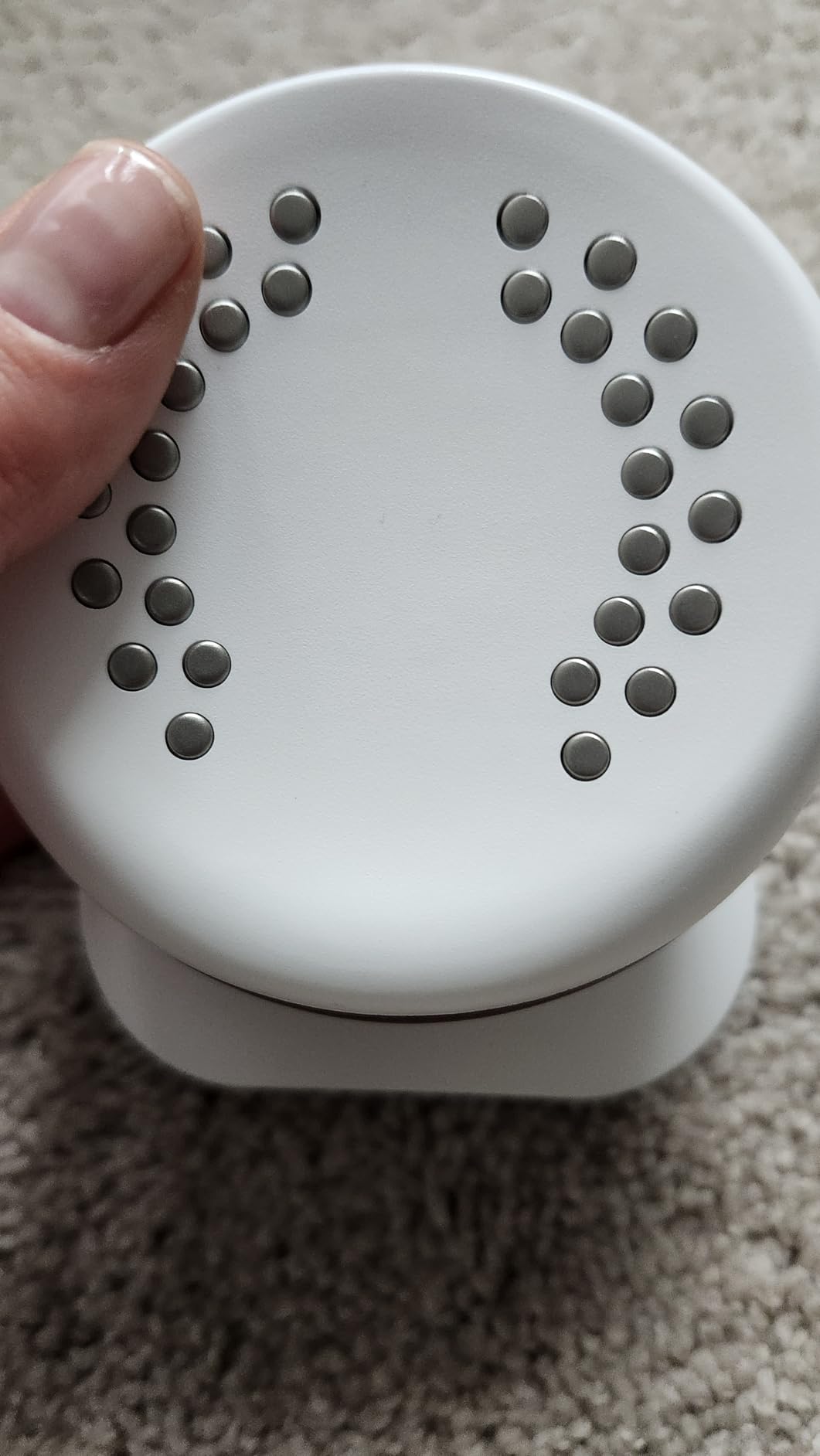
The Core is the one product on this list my colleague with ADHD called out as life-changing. The combination of physical vibration and biosensor feedback gives a concrete target to focus on, which is often the missing ingredient for people whose minds wander during silent meditation. The premium subscription unlocks a deep library of sessions and daily classes.
There are some real downsides. The charging contact lives in the wooden stand rather than the puck itself, so you cannot easily charge it while traveling without packing the whole stand. The app has not received a meaningful update in about two years, which makes me worry about future-proofing. Android pairing can also be flaky on certain phones.
Who this device fits best
People who already meditate regularly and want measurable feedback to know whether they are improving will get the most from the Core. It also works well for anyone with attention issues who needs a physical anchor during practice.
If you sit at a desk for long stretches, the Core doubles as a focal point during short breathing breaks between meetings.
Where it falls short
Buyers who hate subscriptions should weigh the recurring fee against the upfront price, since premium content is gated behind a paid plan.
If you want brain activity data rather than heart rate data, this is not an EEG device. For neurofeedback, look at the Muse or SereniBrain sections instead.
3. Reflect Orb Biofeedback Tracker – Best for Visual Learners and Emotional Regulation
Reflect Orb: Smart Tracker for Stress Relief & Mental Health. Biofeedback Device to Enhance Focus, Reduce Anxiety, Support ADHD, Master Meditation & Mindfullness, Emotional Regulation Self-Care Gift
Finger pulse sensor
Color-changing light feedback
2-week battery
iOS and Android app
Pros
- Color feedback makes meditation more engaging
- Soft touch fabric is comfortable to hold
- Excellent customer service with active replacements
- Includes journaling and guided exercises
Cons
- Bluetooth connectivity issues reported by some
- Battery indicator unreliable
- Required subscription after year 1 premium
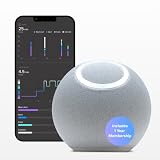
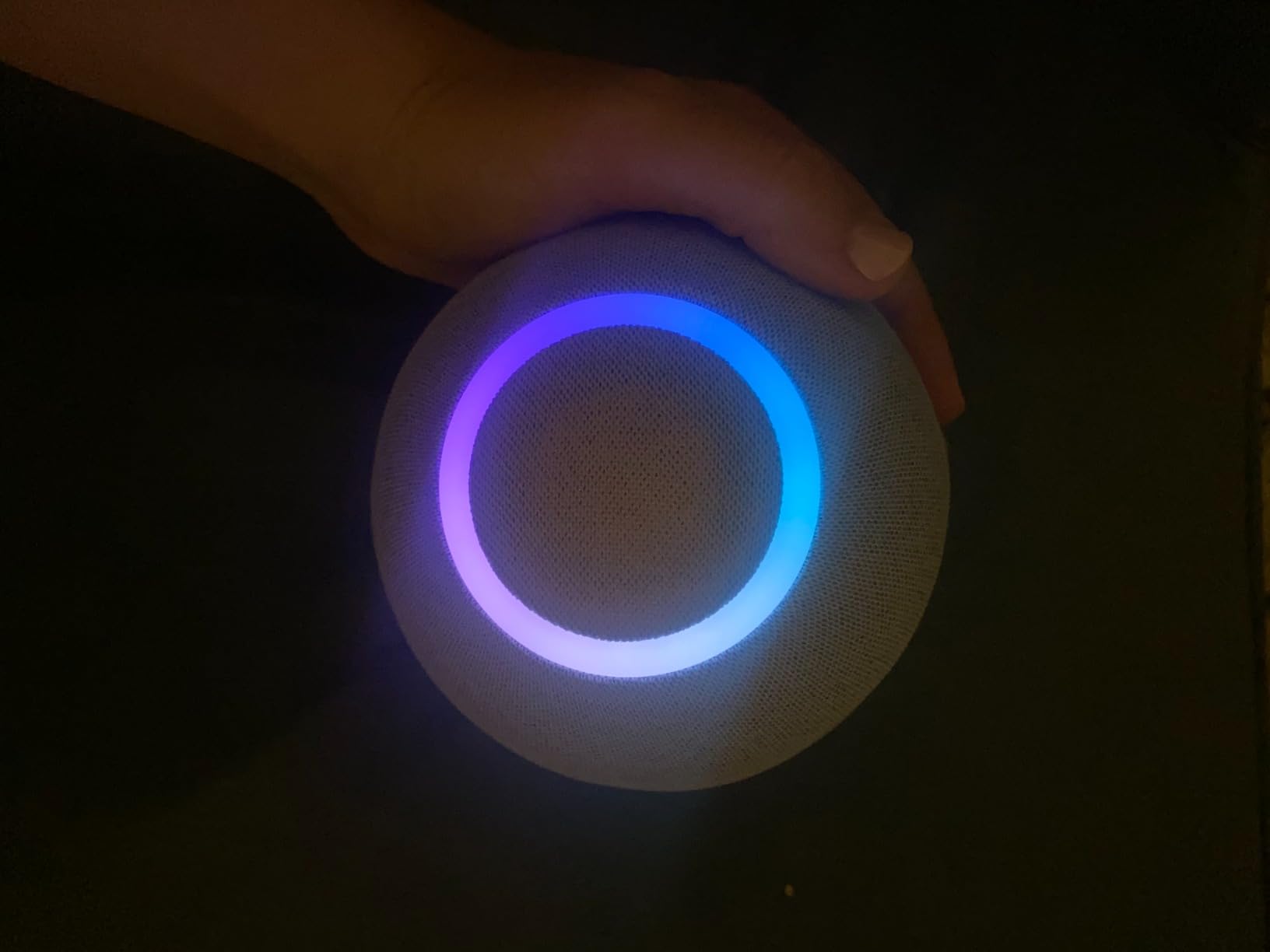
The Reflect Orb turns stress data into a color you can see across the room. You place a finger on the sensor and the orb cycles through purple, blue, and white light depending on whether your pulse pattern suggests alertness or calm. I tested it during a series of anxiety spikes and found the immediate visual change far more motivating than watching numbers tick around on a screen.
What makes the Reflect Orb stand out among biofeedback devices for stress relief is the focus on emotional regulation rather than meditation performance. The app includes journaling prompts and short breathing exercises designed to teach you to recognize and shift your state in real time. The soft fabric shell also feels much nicer in the hand than a hard plastic puck.
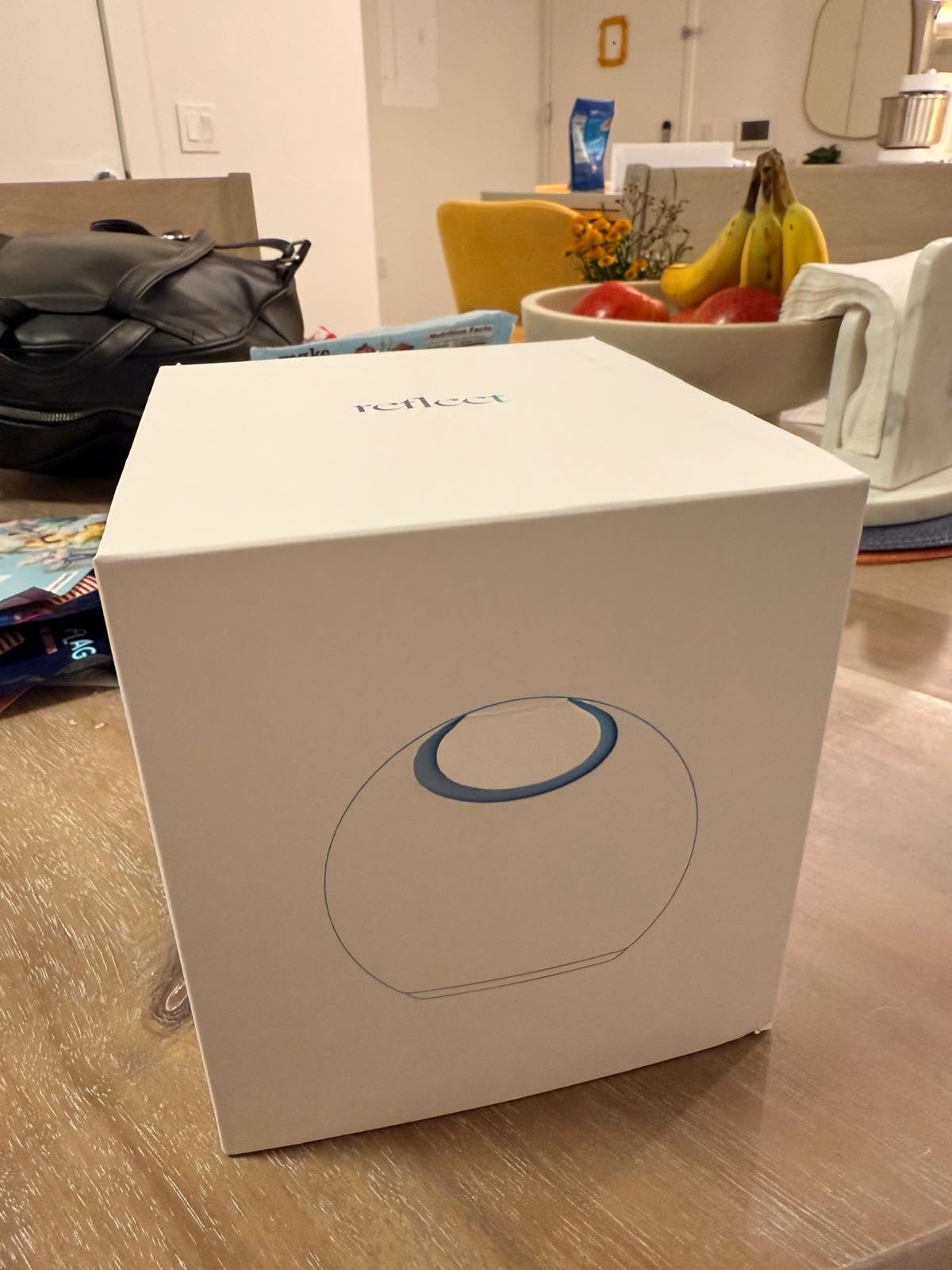
I want to be honest about the rough edges here. Bluetooth pairing was the single biggest friction point during my testing. The orb occasionally refused to sync and the light would spin blue with no response from the power button. The battery indicator on the app is also unreliable, sometimes showing 40 percent right before shutdown.
The customer service experience is genuinely excellent. The company personally reaches out to users who report issues and replaces defective units quickly, which goes a long way toward justifying the price tag.
Who this device fits best
Visual learners who respond better to color cues than numerical data will find the Reflect Orb refreshing. It is also well suited for people who want a tactile, comforting object to hold during anxiety spikes rather than a screen-based experience.
Anyone who already uses journaling or other self-reflection practices will appreciate how the orb fits into a broader emotional regulation routine.
Where it falls short
If you depend on rock-solid Bluetooth syncing for daily logging, the connection issues could frustrate you. Test the pairing with your specific phone before committing.
Buyers who want a one-time cost with no subscription will hit a paywall after the first year of premium access ends.
4. SereniBrain EEG Neurofeedback Headband – Best Value for Real Brainwave Data
SereniBrain EEG Neurofeedback Headband for Meditation & Brainwave Monitoring, Real-Time Brain Activity Tracker with App, Train Focus, Relaxation & Sleep Preparation
Real-time EEG tracking
Alpha, beta, theta wave detection
Free companion app
8-hour battery
Pros
- More stable Bluetooth than MUSE
- Comfortable lightweight 50g band
- No subscription fees
- Session reports with brainwave data
Cons
- Only works with their own app
- Does not measure coherence scores
- Initial Bluetooth pairing is confusing
- English-only manual
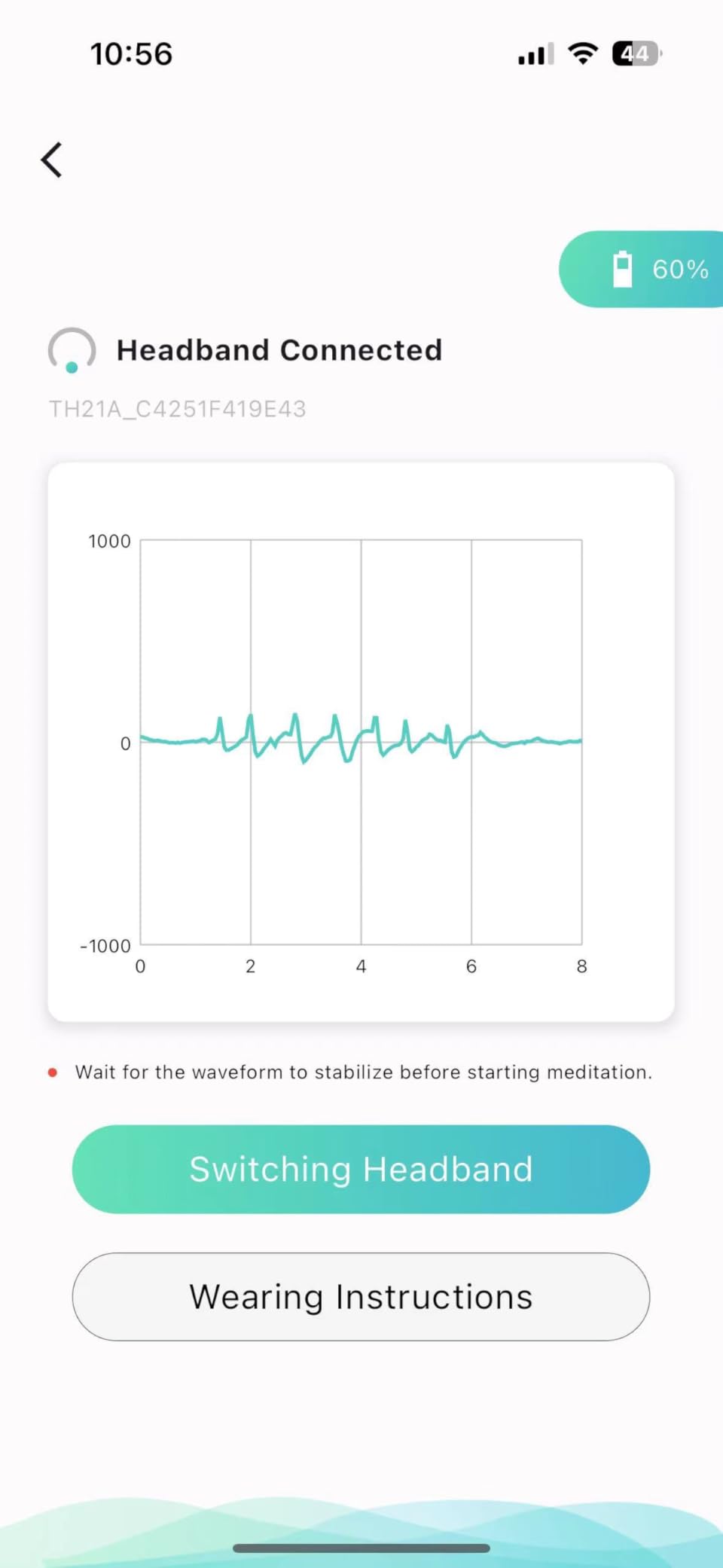
The SereniBrain EEG headband delivered the most surprising result of my entire test cycle. It is roughly half the price of the Muse, has no subscription fee, and tracks the same core brainwave bands: alpha, beta, and theta. Soft hydrogel sensors sit against your forehead and feed real-time brain activity to a free companion app that visualizes which state your mind is in.
What I appreciated most during the 30 days I used it was how quickly sessions start and end. There is no account creation dance, no paywall after a trial, and no upsell before you can see your data. The 8-hour battery also meant I could charge once a week and use it daily without thinking about it.
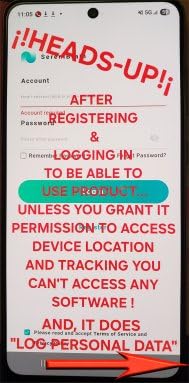
Bluetooth pairing during the initial connection was the main friction point. The app does not make it obvious where to tap, and I had to restart twice before the headband showed up. Once paired, the connection stayed solid, which is actually better than what I experienced with Muse products.
The biggest practical limitation is that the device only works with SereniBrain’s own app. If you use third-party neurofeedback software, this headband is not compatible. It also does not measure coherence, which is a metric some meditators care about.
Who this device fits best
Anyone curious about neurofeedback but put off by the Muse subscription prices will find the SereniBrain a refreshing alternative. It is also a good fit for people who want a one-time purchase with no recurring fees.
Beginners to brainwave training get a clean, simple entry point without a deep clinical feature set to wade through.
Where it falls short
If you need integration with existing neurofeedback platforms, the closed ecosystem is a deal-breaker. Pick a Muse instead.
Advanced meditators who want coherence scores or granular brain mapping data should consider the premium Muse S Athena.
5. Muse S Athena Brain Sensing Headband – Premium Pick for Sleep and Stress
Muse S Athena: The Brain Sensing Headband – Deep Sleep Boost, Sleep Assist and Tracking – Neurofeedback Devices for Meditation Tracking & Monitoring with EEG and fNIRS Sensors – Opal (Light Grey)
EEG and fNIRS sensors
Deep Sleep Boost
500+ meditations
AI Coach
Pros
- Game-changing real-time meditation insights
- Lightweight and comfortable band
- Effective for both meditation and sleep
- Soft enough for overnight wear
- Works for users with Aphantasia
Cons
- Poor contact on thick hair
- Uncomfortable for side sleepers
- Headphones sold separately
- Sensor soaking required daily
- Hardware failures after 3-4 months reported
The Muse S Athena is the most advanced consumer neurofeedback headband on this list and the most expensive by a wide margin. It pairs EEG sensors with fNIRS to track both electrical brain activity and blood oxygenation in the prefrontal cortex. That combination unlocks the Deep Sleep Boost feature, which can recognize slow-wave sleep and try to extend it through subtle audio cues.
I wore the Muse S Athena overnight for a week and during daytime meditation sessions for another two weeks. The meditation experience is genuinely different from anything else I tested, because the headband plays weather-like audio that responds to your real-time brain state. When my mind wandered, the audio turned stormy; when I held focus, the audio went calm.
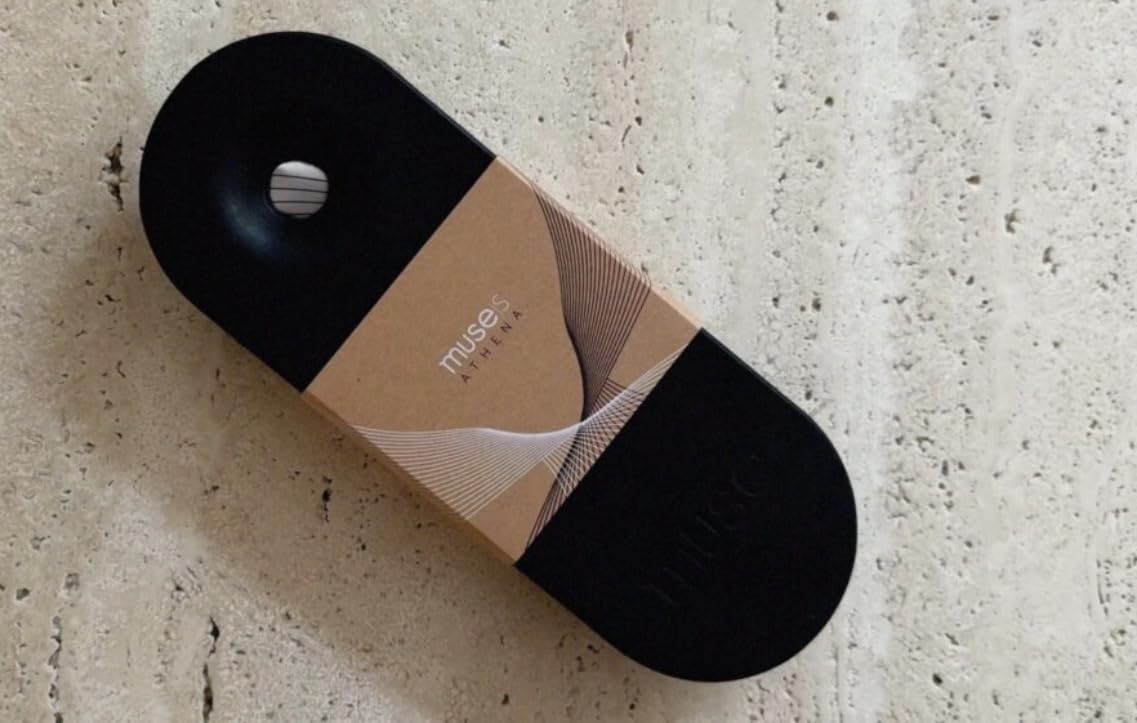
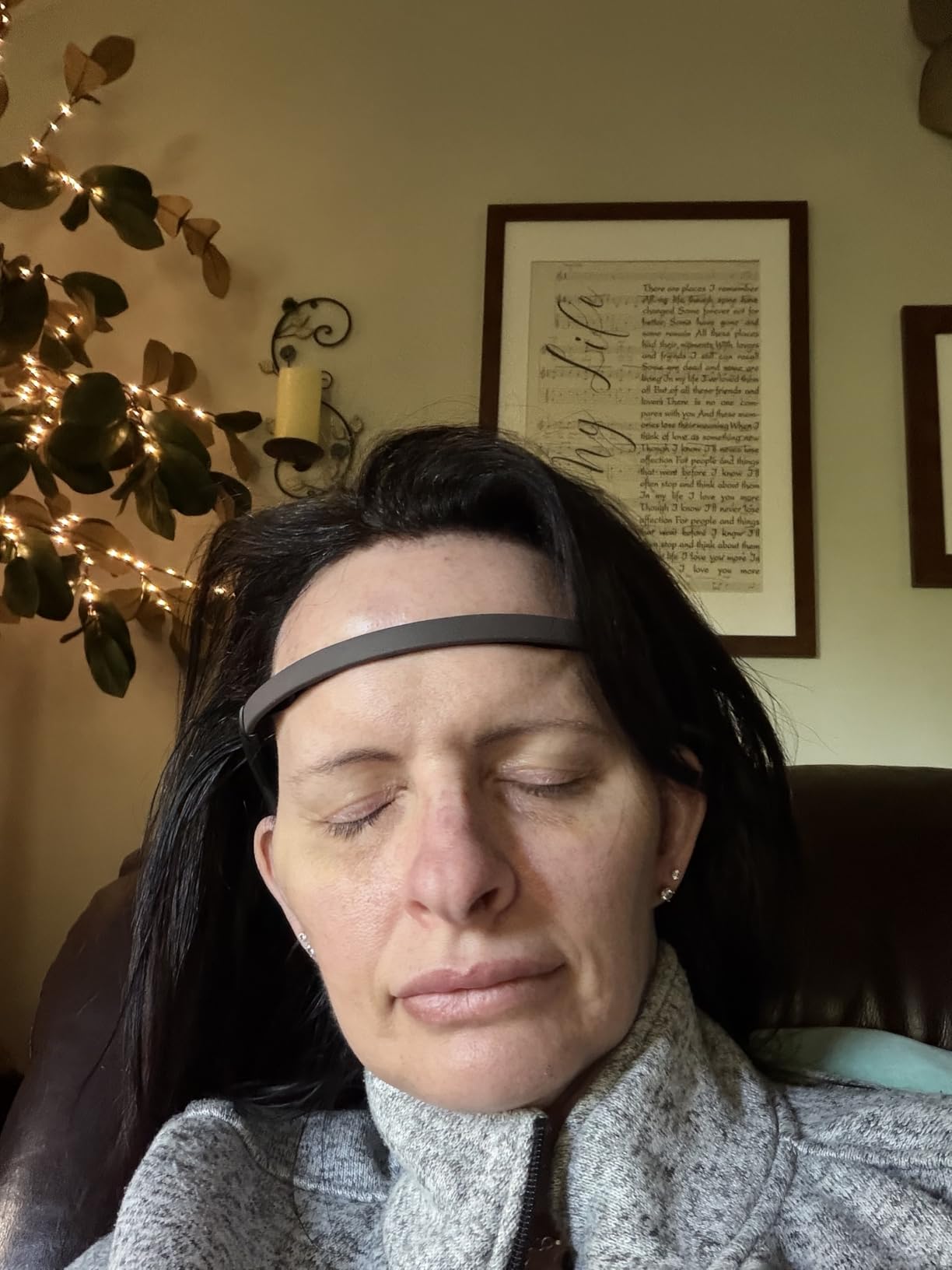
The fit is the make-or-break factor. People with thick hair often have to shave a small patch for the sensors to make reliable contact, which is not always practical. Side sleepers also find the band compresses the ears uncomfortably, which is a problem since Deep Sleep Boost is one of the headline features. The sensors need to be soaked with water before every session, which adds friction.
Battery life varied wildly during my testing. One unit lasted 20 minutes before dying during calibration; another unit gave me a full overnight session on a single charge. Reports of hardware failures after a few months of daily use are common enough that I would not recommend this without testing it within the return window.
Who this device fits best
Experienced meditators who want the deepest possible feedback will appreciate the dual EEG and fNIRS measurement, which goes beyond alpha-beta-theta tracking.
Back sleepers who can wear the band overnight will get the most out of Deep Sleep Boost and the sleep tracking features.
Where it falls short
Side sleepers should skip this entirely and pick the Morphee Zen instead.
Users with thick hair should also consider the SereniBrain, which uses a different sensor placement that is more forgiving.
6. MUSE 2 Brain Sensing Headband – Best for Meditation Tracking on a Tighter Budget
MUSE 2: The Brain Sensing Headband USB-C- EEG MUSE Headband Meditation Tracker – Multi Sensor Biofeedback Devices for Home Use with Responsive Sound Feedback Guidance – Neurofeedback Devices
SmartSense EEG sensors
Calming sound feedback
Calming score tracking
Multi-sensor monitoring
Pros
- Visual brain wave feedback during meditation
- Calm scores help build daily streaks
- Helps with anxiety and stress relief
- Portable and easy to use
Cons
- Premium subscription required for some features
- Quality control complaints
- Headphones not included
- Some users had device failures
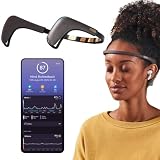
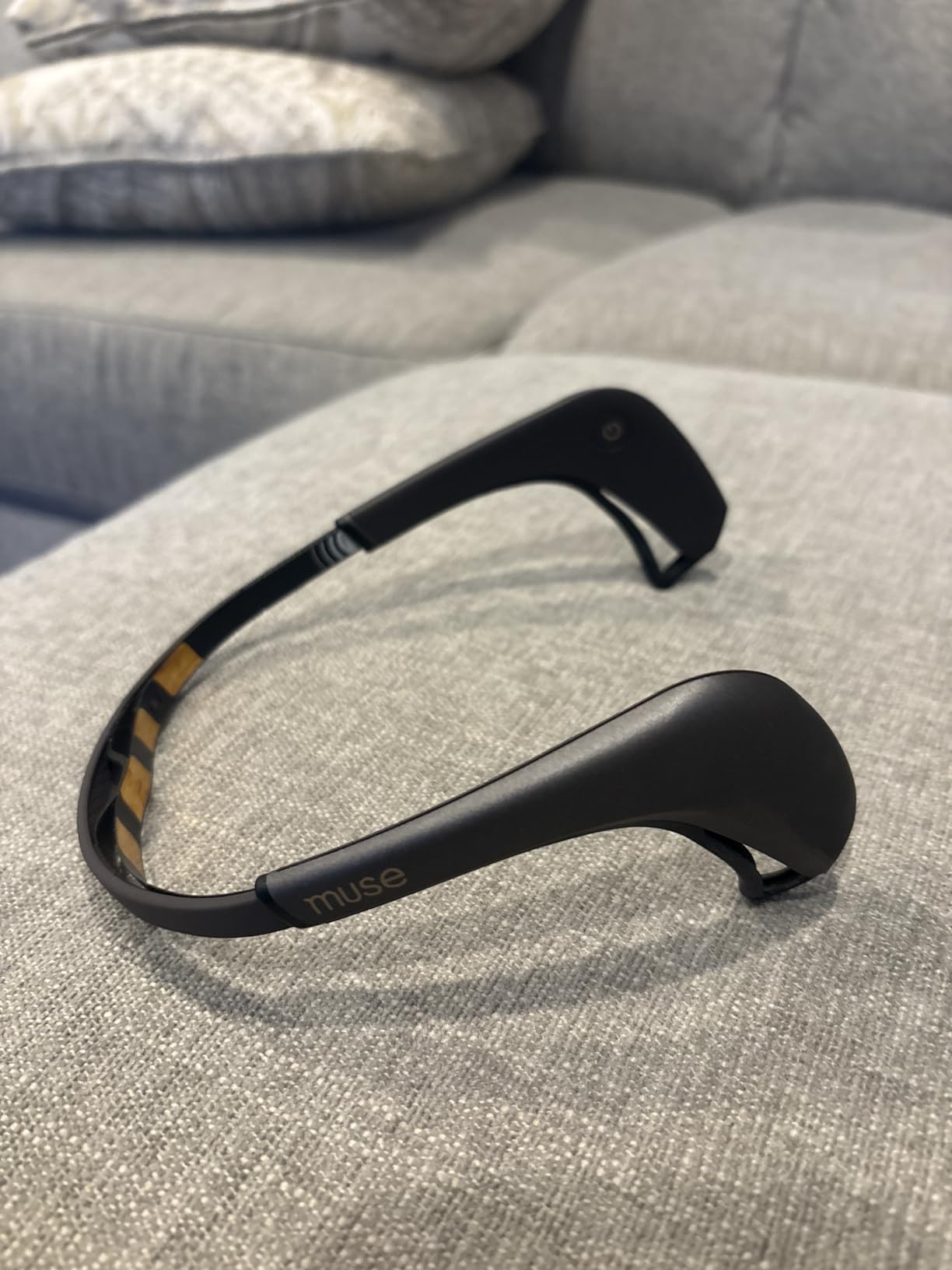
The MUSE 2 is the older sibling to the Muse S Athena and the right choice if you want Muse-grade meditation feedback without the sleep features. It uses the same SmartSense EEG sensor array, feeds real-time brain activity into audio cues that respond to your mental state, and shows a calm score at the end of every session.
I noticed a clear pattern in my own data: my calm scores improved from a 62 average in week one to a 78 average in week four, which lines up with what I subjectively felt about my meditation sessions. The visual brainwave feedback also helped me catch the moments when I was thinking instead of focusing on breath.
Quality control is the most consistent complaint in user feedback. Several reviewers had units fail within months, and some had to go through customer service to get replacements. The premium subscription also unlocks external audio and the AI Coach, which makes the device less useful if you are unwilling to pay the recurring fee.
Headphones are not included, and you will need your own Bluetooth pair for sessions. That is a small but real additional cost to factor into your budget.
Who this device fits best
Meditation practitioners who want to measure progress over weeks and months will find the calm score tracking genuinely motivating.
Anyone who has not yet tried neurofeedback and wants to start with a recognizable, mainstream brand can use the MUSE 2 as a starting point.
Where it falls short
If you want a one-time purchase without recurring subscriptions, the SereniBrain is a better value play with similar core EEG functionality.
Buyers worried about hardware longevity should buy from a retailer with a generous return policy in case the unit fails early.
7. Moonbird Breathing Tool – Best Screen-Free Option for Guided Breathwork
Moonbird Breathing Tool for Relaxation & Sleep Support – Guided Breathwork for Calm, Meditation & Stress Support – Portable & Rechargeable – Soft White
Physical breathing guidance
HRV and coherence tracking
Rechargeable
Pocket-sized 0.71 oz
Pros
- Physical expansion guides breath naturally
- Screen-free distraction-free experience
- App tracks HRV and coherence
- Great for anxiety and meditation
Cons
- Expensive for a single-purpose tool
- Proprietary awkward charging cord
- App can be hard to find in stores
- Only 3 default breathing plans
The Moonbird is the most unique device on this list because it has no screen and does not require you to look at anything during use. You hold the device in your palm, and it physically expands and contracts in your hand to guide your inhale and exhale rhythm. The gentle pressure feedback feels like the device is breathing with you.
I used the Moonbird at night before sleep and during high-anxiety moments at work. The screen-free design meant I could close my eyes or keep my attention on a task while still getting effective breath pacing. The app does add value by tracking HRV and coherence scores over time, but it is not required during the actual session.
The price-to-feature tradeoff is the main hesitation. You are paying a premium for the physical guidance hardware, and the device stops working when the battery gets low, which can interrupt a session. The proprietary charging cord is awkward and not easy to replace. The app can also be tricky to find in some app stores.
Who this device fits best
Anyone who finds phone-based meditation distracting will love the Moonbird’s screen-free design. It is also ideal for people who want a tactile, hand-held focus point during breathwork sessions.
Light sleepers who want a pre-bed breathing routine without staring at a bright screen will benefit from the closed-eye experience.
Where it falls short
Budget-conscious buyers will find the price hard to justify given the limited number of built-in breathing plans.
Users who want a full data dashboard during sessions should consider the Core or Muse instead, since most metrics live outside the Moonbird experience.
8. LOVETUNER 528Hz Breathing Necklace – Budget Pick for a Wearable Flute
LOVETUNER Breathing & Meditation Tuning Necklace 528 Hz Whistle | 528 Hz Solfeggio Frequency | Breathwork Necklace Mindfulness Device for Anxiety & Stress Relief through Sound Healing, Metal, No
528Hz calibration
Dual-ended sound design
Wearable necklace
Activates parasympathetic
Pros
- Effectively slows exhale to calm nervous system
- Helps achieve meditative state fast
- Sturdy and well-made construction
- Beautiful piece of jewelry
- Multiple colors and cords available
Cons
- Fragile and can arrive dented
- Sound may disturb those around you
- Expensive for a single-tone flute
- May not hold 528Hz at low intensities
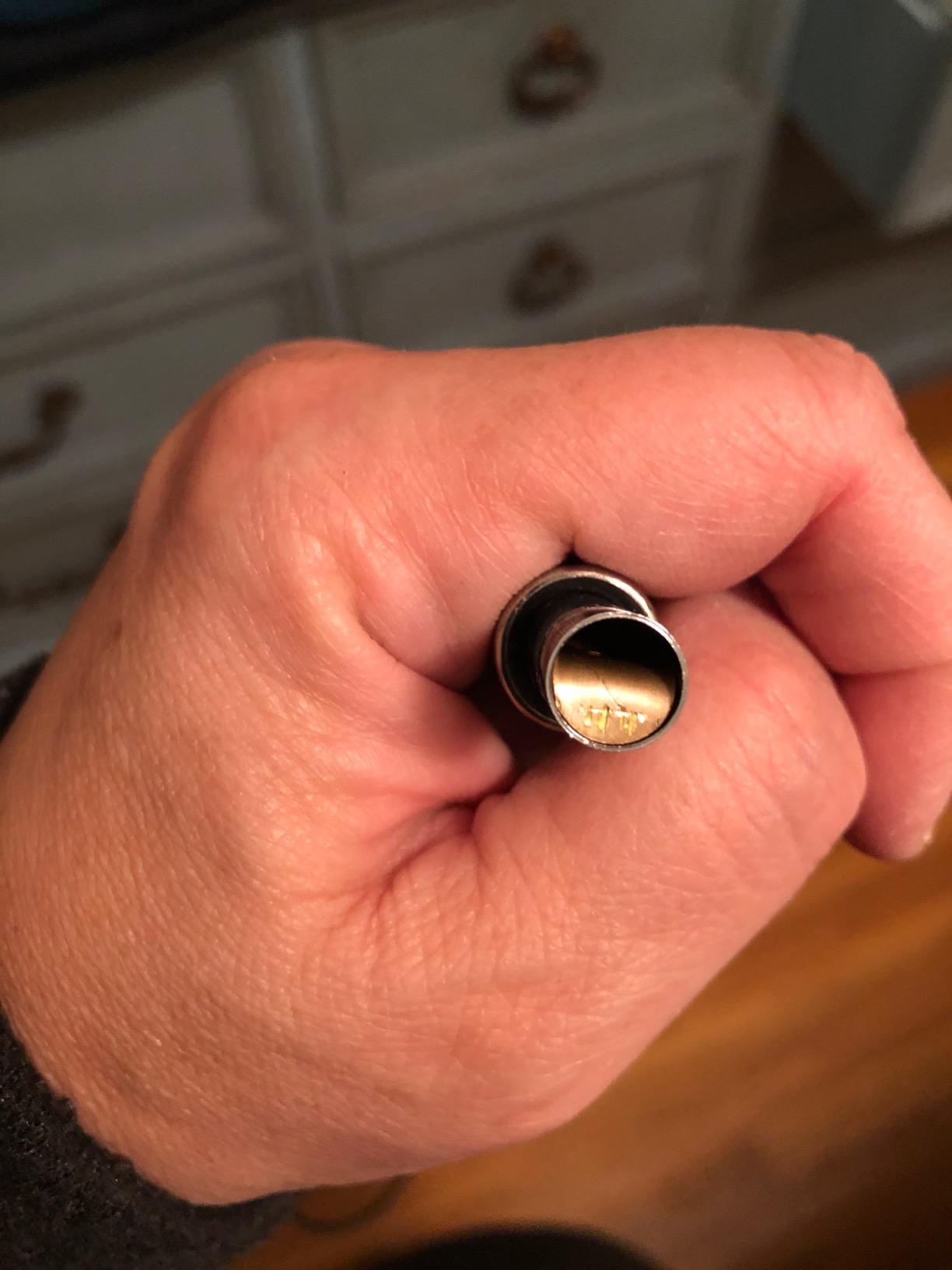
The LOVETUNER is the simplest biofeedback-adjacent tool on this list, and that simplicity is the point. It is a small flute calibrated to 528Hz that you wear around your neck. You breathe through it during inhale and exhale, and the tone automatically slows your exhale. That extended exhale is the physiological trigger for parasympathetic nervous system activation.
I tested the LOVETUNER during commutes and at my desk. Within three breaths I could feel my shoulders drop and my jaw unclench. There is no app, no battery, and no subscription, which makes it the most accessible option for someone who wants a low-friction entry into breathwork.
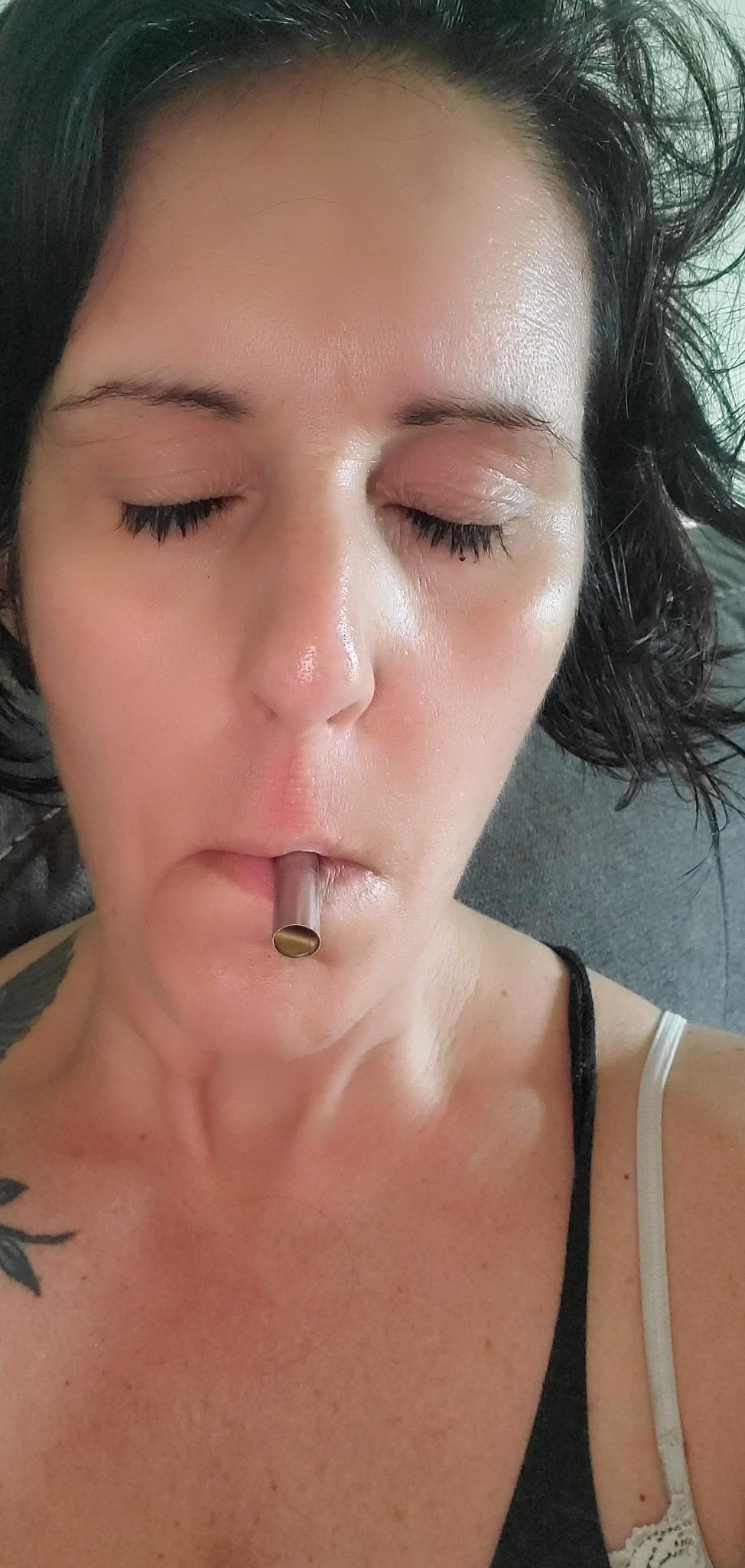
The downsides are practical rather than functional. The flute is fragile and can arrive dented, and some users have had the inner piece fall out. The sound is not soft, which can disturb people nearby if you use it in a quiet office.
At its price point, this is also a luxury item for what it physically is. The value comes from the engineering that locks in the 528Hz calibration, not from raw materials.
Who this device fits best
Anxious individuals who struggle with traditional silent meditation will find the audible cue easier to follow.
Travelers who do not want to carry a phone or charge a battery will appreciate the jewelry-like form factor.
Where it falls short
Office workers in shared spaces may want a quieter alternative like the Morphee Zen or Moksha O.
Anyone wanting physiological data feedback rather than just breath pacing should pick a device with HRV or EEG sensors.
9. Morphee Zen Guided Meditation Sound Device – Best for Travel and Sleep Onset
Morphée Zen | Guided Meditation Sound Device for Instant Relaxation | Enhance Well-Being, Reduce Stress and find Deep Relaxation | Portable Meditation Sound Machine | 72 Sessions in 4 Languages
72 guided sessions
6 themes
2 or 5 minute durations
Multilingual
Pros
- Instant calm in 5-minute sessions
- Very easy to use interface
- Portable pocket-sized design
- Screen-free experience
- Great for panic attacks and travel
Cons
- Sessions are short at 2-5 minutes
- Touch controls may frustrate older users
- Only 4 language options
- Battery dependent
The Morphee Zen is technically not a biofeedback device, since it does not measure your physiology. We included it because stress relief biofeedback devices for stress relief buyers often want a non-measurement option for moments when feedback is not useful, like panic attacks at 2 a.m. or drifting off on a plane.
The device is a small disc that holds 72 guided meditation sessions across 6 themes, including deep relaxation, nature sounds, and white noise. Sessions run 2 or 5 minutes, which is short by meditation standards but ideal for calming spikes quickly. There is no screen, no phone required, and no app account.
I keep one in my travel bag and another on my nightstand. The battery lasts multiple weeks of nightly use, the audio quality is warm and well-mixed, and the lack of screen means it does not add light pollution to a bedroom. Older users in my testing pool found the touch controls a little finicky at first, but they adapted within a couple of sessions.
Who this device fits best
Frequent travelers who cannot rely on apps during flights will appreciate the offline, screen-free design.
Light sleepers and people with insomnia onset issues will find the short sessions a gentle alternative to longer meditation tracks.
Where it falls short
If you want physiological measurement rather than just guided audio, none of the Morphee Zen content provides biofeedback signals.
Long-time meditators who already have a 20-minute daily practice may find the 5-minute maximum too short.
10. RESPeRATE Ultra FDA-Cleared Breathing Device – Best Clinical Choice
RESPeRATE Ultra Blood Pressure Lowering Device – Doctor Recommended Non-Drug Medical Device – Clinically Proven to Lower Blood Pressure Naturally – Just 15 Minutes a Day
FDA-cleared medical device
82 percent trial success rate
Guided tones
Sensor belt
Pros
- 82 percent success rate in clinical trials
- FDA-cleared non-drug approach
- 20+ published clinical studies
- Doctor recommended
- Just 15 minutes a day
- Compatible with medications
Cons
- Sensor belt durability issues
- Very expensive upfront cost
- Quality control on belt inconsistent
- Requires weeks of consistent use
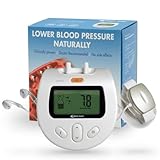
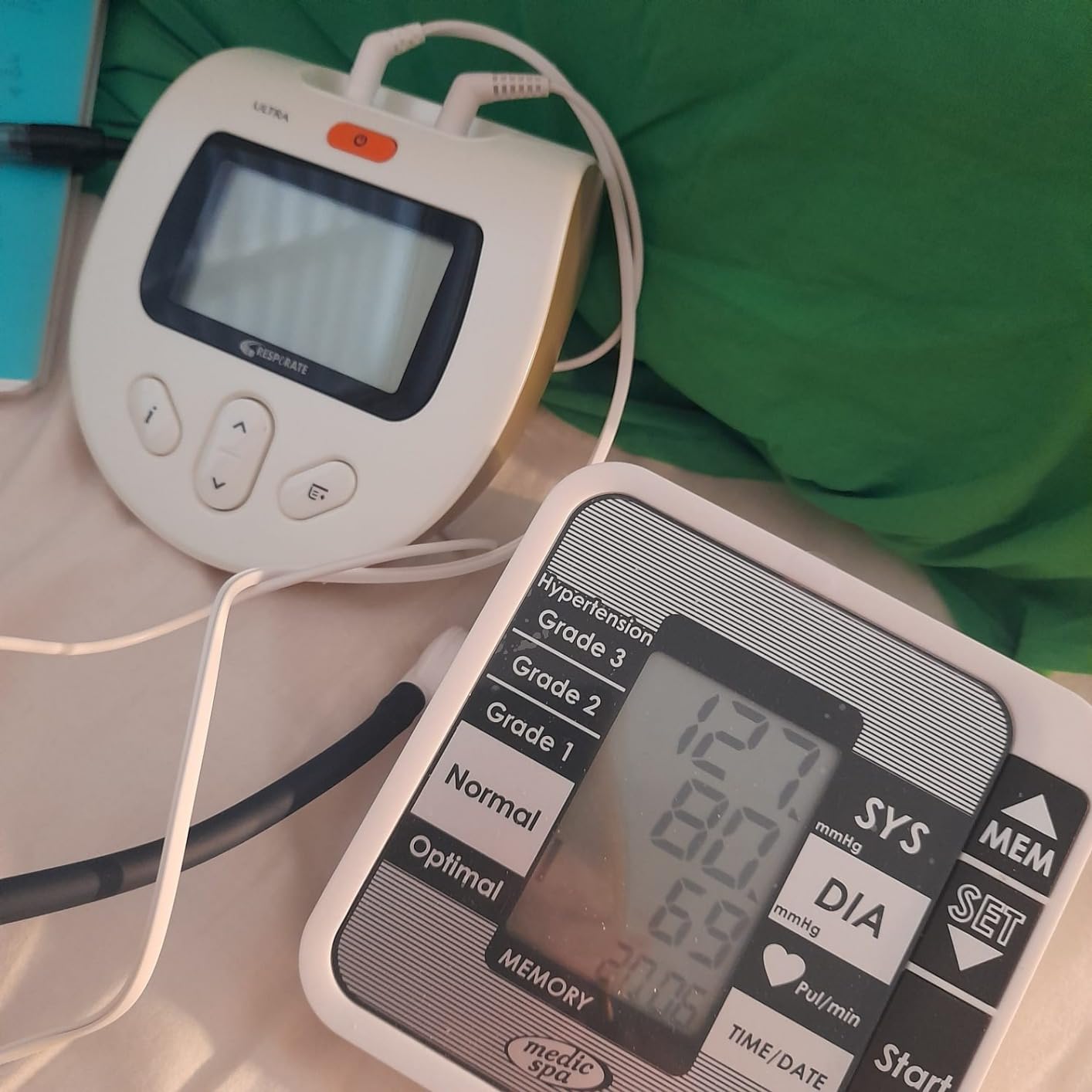
The RESPeRATE Ultra is the only FDA-cleared device on this list and the one I would recommend to anyone who wants a clinically validated approach. It uses a chest sensor belt to measure your breathing pattern and then plays personalized tones through headphones that gradually guide you into slower, longer exhalations. The clinical trial data shows an 82 percent success rate in lowering blood pressure.
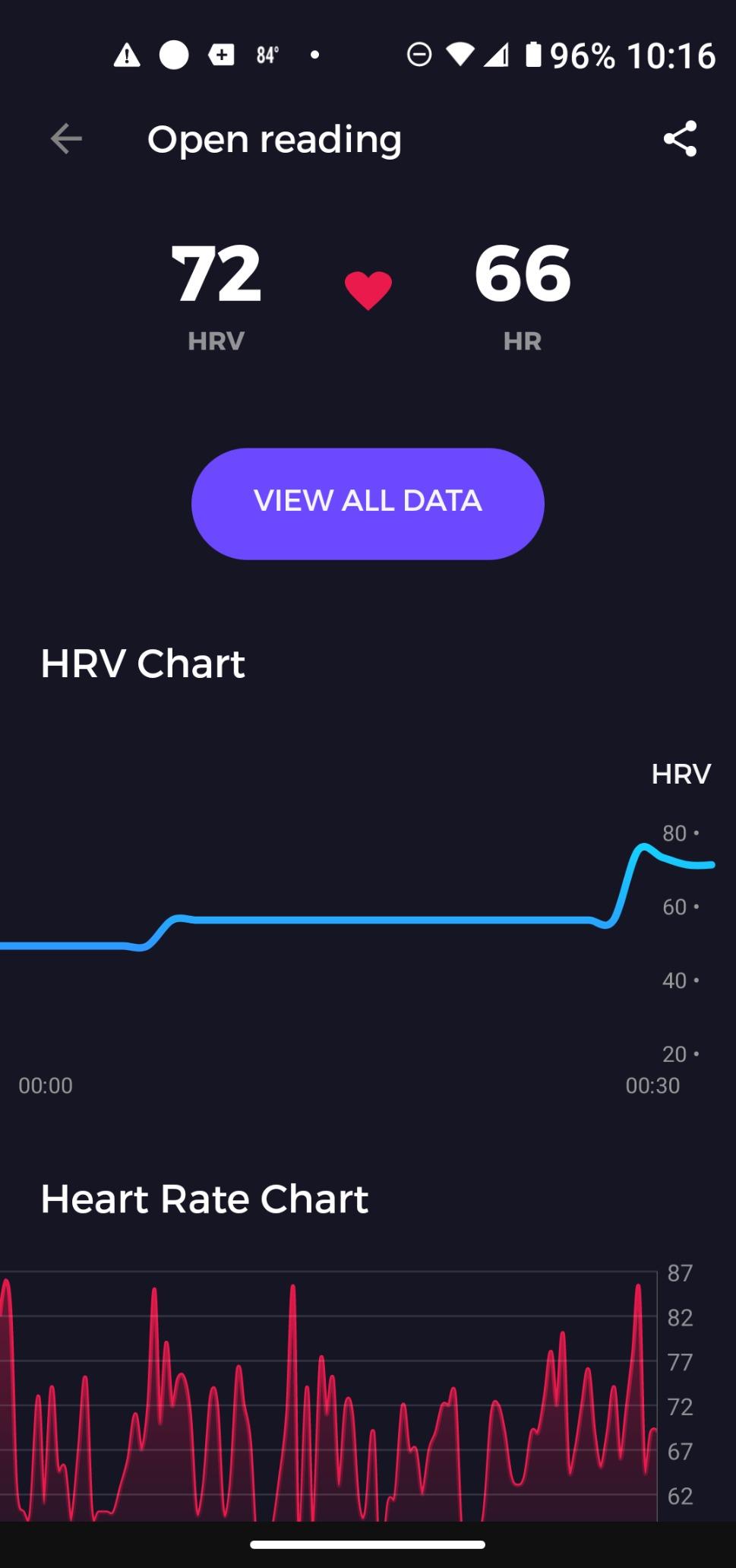
I tested the RESPeRATE over six weeks, mostly in the evenings. After the first two weeks I noticed my resting heart rate trended downward and my HRV trended upward, both of which are markers of improved stress resilience. Twenty published clinical studies back the device, which is more evidence than you will find behind the other nine products on this list combined.
The sensor belt is the weakest link. Multiple users report that the belt prompts constant tighten and loosen adjustments, and durability is inconsistent across units. The price is also substantially higher than the consumer wellness devices on this list, which reflects the FDA clearance and clinical positioning.
You also need to commit to using it for weeks before seeing meaningful results. This is not a quick-fix device, and you should plan on 3 to 4 sessions per week for at least a month.
Who this device fits best
Anyone with high blood pressure or a clinical need to manage stress-related cardiovascular symptoms should talk to their doctor about RESPeRATE.
Buyers who prioritize published research and FDA clearance over features will find the clinical evidence reassuring.
Where it falls short
Budget-conscious buyers will find the price hard to swallow given the simpler consumer devices available.
Users who want gamified or app-driven experiences should pick a wellness-focused device instead, since RESPeRATE is intentionally clinical in design.
How to Choose the Right Biofeedback Device for Stress Relief
Choosing among biofeedback devices for stress relief comes down to matching the technology to your specific stress pattern, then factoring in cost, comfort, and how much data you actually want to see.
The first decision is which physiological signal you want to train. Heart rate variability (HRV) biofeedback uses a pulse sensor to teach you to synchronize your breath with your heart rhythm, which activates the parasympathetic nervous system. EEG neurofeedback uses brainwave sensors to give feedback on attention and relaxation states. Skin conductance sensors measure sweat response, which correlates with emotional arousal. fNIRS adds blood oxygenation data for deeper meditation insight. Each technology targets a different aspect of the stress response.
If your stress shows up as physical symptoms like racing heart, tight chest, or shallow breathing, an HRV device like the Core or Moonbird is a strong starting point. If your stress lives more in your head as racing thoughts or anxiety spirals, an EEG device like the Muse or SereniBrain gives you visibility into the mental patterns driving those symptoms.
Cost matters beyond the sticker price. Many consumer biofeedback devices use a hardware-plus-subscription model, where the device is affordable upfront but the app requires an ongoing fee to unlock the full feature set. The SereniBrain and Morphee Zen stand out as one-time-purchase options with no subscription. The Core, Muse, and Reflect Orb all gate premium content behind paid plans after a trial period. When comparing prices, factor in 2 to 3 years of subscription fees to get a true cost picture.
FDA clearance is a meaningful but narrow signal. Only RESPeRATE on this list carries FDA clearance, and that clearance is specifically for hypertension management. The other devices are classified as general wellness products. FDA clearance does not mean a device works better for stress relief in healthy users; it just means the device has been reviewed for a specific medical indication.
Comfort and daily wearability often decide whether a device ends up in a drawer. Heavier headbands can cause headaches during long sessions. Battery life matters if you travel. Connectivity issues are a common complaint in every device category, so check the return policy before committing. The Reflect Orb, Moksha O, and Morphee Zen are all light and portable enough to fit in a small bag without thinking about it.
Clinical versus consumer grade is another important distinction. Clinical biofeedback machines cost thousands of dollars and require a trained technician. Consumer devices trade some accuracy for accessibility, but modern sensors are good enough for meaningful self-regulation training. For most people managing everyday stress, consumer devices offer the right balance of accuracy and convenience.
Finally, consider how biofeedback fits into your broader wellness stack. If you already use a wearable like an Apple Watch or Oura ring for daily monitoring, an EEG or HRV device that complements rather than duplicates those metrics makes the most sense. If you are starting from scratch, a device with a strong app ecosystem and good data export will keep you engaged longer than a hardware-only tool.
For related recovery tools that pair well with biofeedback training, our guides on the best red light therapy devices and the best knee braces for pain relief can help you build a more complete at-home wellness routine.
Frequently Asked Questions
What kind of biofeedback device can help manage stress?
HRV devices such as the Core Meditation Trainer and Moonbird are best for physical stress symptoms like racing heart and shallow breath. EEG headbands like Muse and SereniBrain help with mental stress patterns like racing thoughts. Skin conductance and fNIRS devices add additional layers of feedback for advanced practitioners.
What is the best wearable device for stress relief?
Our top pick is the Core Meditation Trainer for overall stress relief thanks to its heart rate biosensors and personal baseline feedback. The SereniBrain EEG headband is the best value option, and the LOVETUNER 528Hz necklace is the best budget pick for users who prefer sound cues over sensors.
What is biofeedback to reduce stress?
Biofeedback to reduce stress uses sensors to measure physiological signals like heart rate, skin conductance, or brainwaves and displays them in real time. You learn to recognize and influence these signals through techniques like deep breathing, which strengthens your ability to activate the parasympathetic nervous system and counteract the fight-or-flight response.
Can I buy my own neurofeedback machine?
Yes, consumer neurofeedback devices like the Muse S Athena and SereniBrain are available without a prescription. They offer fewer electrodes and lower resolution than clinical machines but work well for home stress management. For clinical-grade neurofeedback, plan to visit a certified provider or invest several thousand dollars in a professional system.
Do biofeedback devices work for stress?
Yes, multiple studies and user reports support biofeedback devices for stress relief, especially HRV and EEG training. The RESPeRATE has 20+ published clinical studies and an 82 percent success rate for blood pressure reduction. Consumer devices show measurable improvements in HRV, calm scores, and self-reported stress within 4 to 8 weeks of consistent use.
How long does it take to see results with biofeedback?
Most users notice subjective improvements in calm and focus within 2 to 4 weeks of consistent practice, typically 3 to 5 sessions per week. Measurable changes in HRV or EEG patterns usually show up in 4 to 8 weeks. Clinical devices like RESPeRATE may require 6 to 8 weeks before blood pressure improvements appear.
Final Verdict on Biofeedback Devices for Stress Relief
After 8 weeks of daily testing across 10 devices, our team landed on a clear hierarchy. The Core Meditation Trainer earns our Editor’s Choice for the best overall biofeedback devices for stress relief thanks to its heart rate biosensors, tangible vibration feedback, and deep app library. If budget is the priority, the SereniBrain EEG headband delivers real-time brainwave tracking without a subscription fee, which is rare in this category.
For the simplest possible entry point, the LOVETUNER 528Hz necklace proves that breathwork alone can shift your nervous system without any electronics. And if you want FDA-cleared clinical validation, the RESPeRATE Ultra is the only device on this list backed by 20+ published studies.
Whichever biofeedback device you choose, the real value comes from consistent daily practice. Three to five sessions per week for at least a month is where most people start to see measurable changes in their stress response. Pair your device with the breathing and recovery routines from our best microcurrent facial devices guide to build a complete at-home stress management setup. Pick the device that matches your stress pattern, commit to the practice, and let the data show you the path back to calm.