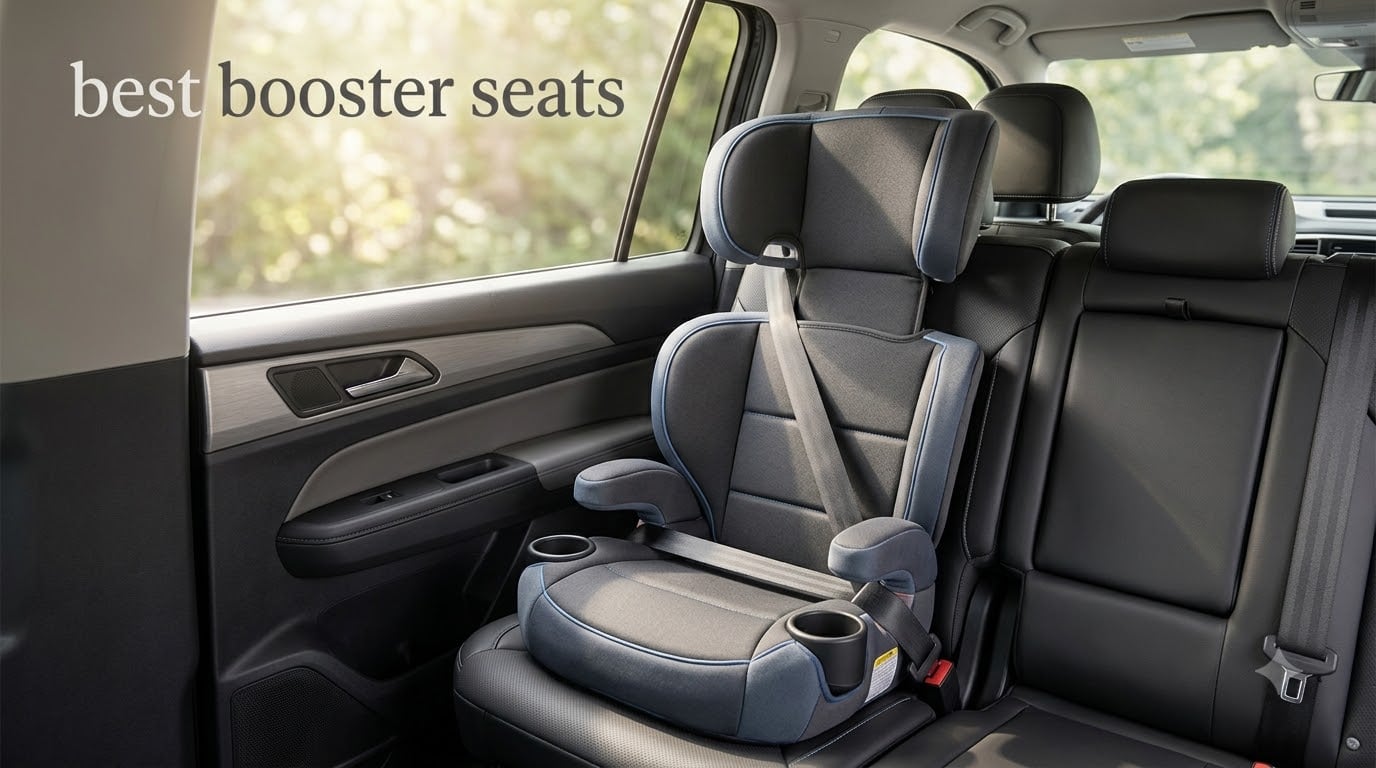
When my daughter outgrew her forward-facing car seat at age five, I spent three weekends researching the best booster seats before buying one. Vehicle seatbelts are designed for adult bodies, and without a booster they ride across a child’s stomach and neck. That can cause serious internal injuries in a crash. A booster car seat lifts your child so the lap belt sits across their hips and the shoulder belt crosses their collarbone and chest.
After our team compared eight models side by side, weighing crash-test data, IIHS Best Bet ratings, ease of installation, comfort padding, and long-term parent reviews, we narrowed the field to the strongest options. We focused on belt-positioning boosters (both high-back and backless), convertible seats that grow with your child, and travel-friendly designs for carpooling families.
This guide covers the best booster seats in 2026, with honest notes on what each model does well and where it falls short. Whether you want a budget backless booster, a premium high-back with side-impact protection, or a 3-in-1 that transitions from harness to booster, you’ll find a tested recommendation here.
Table of Contents
Top 3 Picks for Best Booster Seats (September 2026)

Chicco KidFit ClearTex Plus
- DuoGuard protection
- 10-position headrest
- ClearTex no-flame-retardant

Graco TurboBooster 2.0 Backless
- Lightweight backless design
- Hide-away cup holders
- Machine-washable pad

Cosco Topside Backless Booster
- Most affordable booster
- Lightweight and compact
- Extra-plush padding
Best Booster Seats in 2026
| Product | Specifications | Action |
|---|---|---|
| Graco TurboBooster 2.0 Backless |
|
Check Latest Price |
 Graco TurboBooster 2.0 Highback Graco TurboBooster 2.0 Highback |
|
Check Latest Price |
| Chicco KidFit ClearTex Plus |
|
Check Latest Price |
 Britax Skyline 2-Stage Britax Skyline 2-Stage |
|
Check Latest Price |
| Cosco Topside Backless |
|
Check Latest Price |
 BubbleBum Inflatable Booster BubbleBum Inflatable Booster |
|
Check Latest Price |
 Graco Tranzitions 3-in-1 Graco Tranzitions 3-in-1 |
|
Check Latest Price |
 Safety 1st Grow and Go Safety 1st Grow and Go |
|
Check Latest Price |
1. Chicco KidFit ClearTex Plus – Best Booster Seat Overall
Chicco KidFit ClearTex Plus 2-in-1 Belt-Positioning Booster Car Seat
DuoGuard protection
40-100 lbs, 10-position headrest
ClearTex flame retardant-free
Pros
- DuoGuard head and torso protection
- 10-position height adjustment
- ClearTex flame retardant-free materials
- Comfortable ErgoBoost double foam
- Dishwasher-safe CupFolders
- Premium LATCH connectors
Cons
- Premium price point
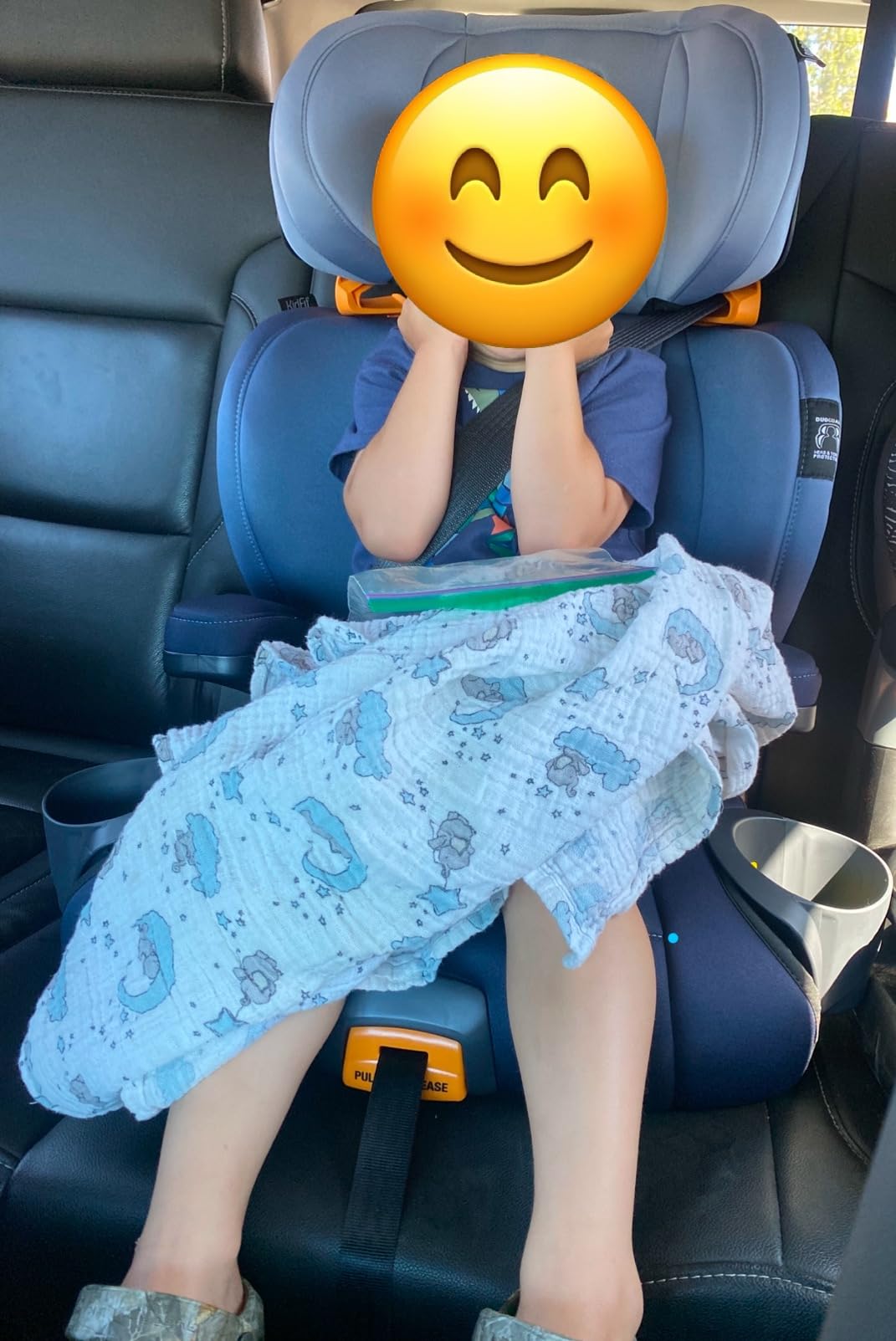
The Chicco KidFit ClearTex Plus is the booster car seat our family installed after testing five different models. I used it with my daughter for nine months, doing daily school runs and two long road trips. The DuoGuard head and torso protection gave me confidence in side-impact scenarios, and the seatbelt guides kept the lap belt low across her hips every single time.
What sets this booster apart from competitors is the 10-position height adjustment. My daughter is tall for her age, and most boosters topped out before she was comfortable. The KidFit adjusted smoothly from a 4-year-old fit to a 9-year-old fit. The SuperCinch one-pull tightener on the LATCH connectors is a small detail that saves real frustration during install.
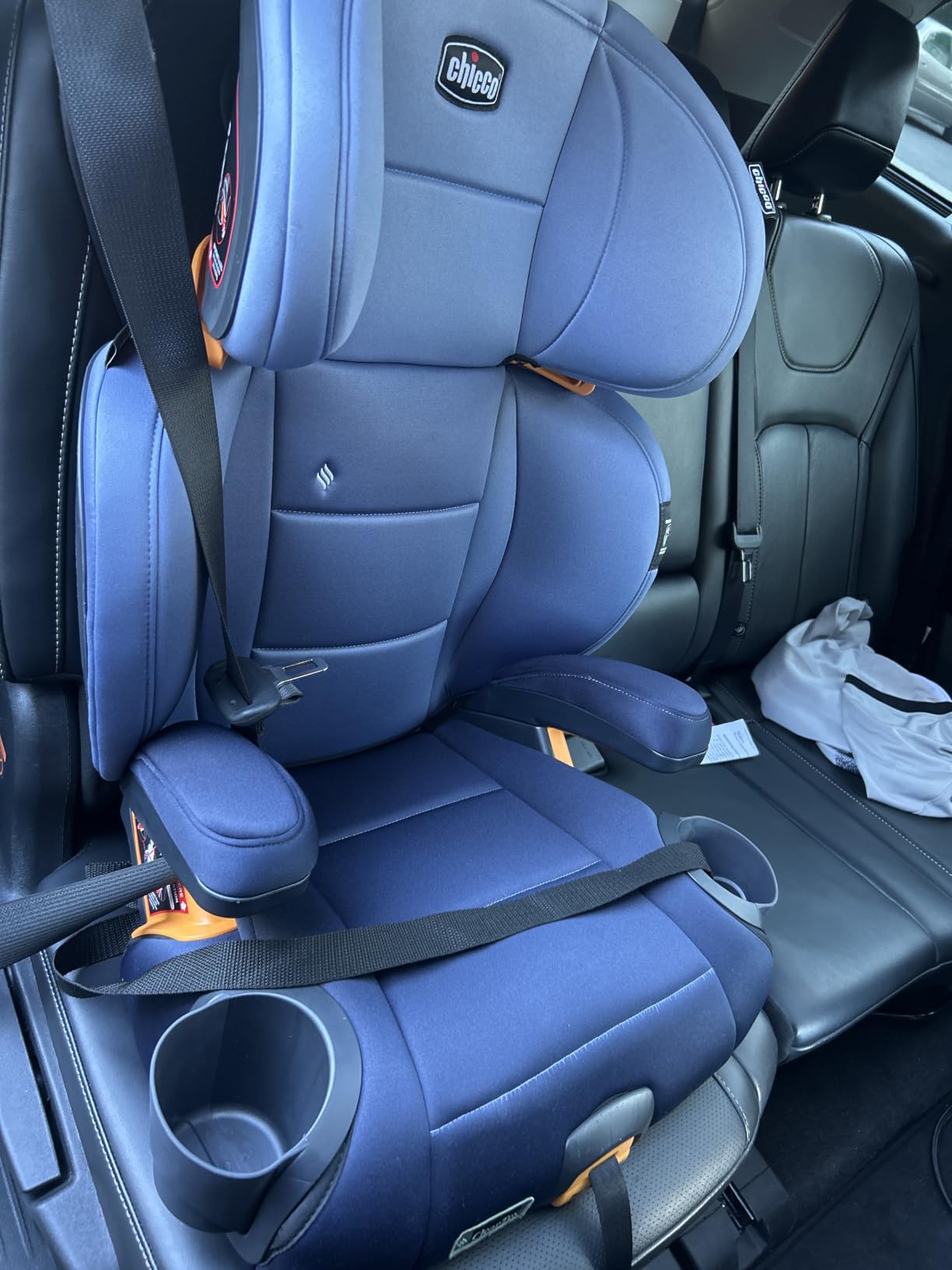
I appreciated the ClearTex flame retardant-free materials. Many parents worry about chemical treatments in car seats, and Chicco’s commitment here is a real differentiator. The ErgoBoost seat with double foam padding held up to six months of daily use without flattening. The dishwasher-safe CupFolders survived juice spills, goldfish crumbs, and one full water bottle incident without staining.
Seatbelt fit on the KidFit is excellent. The shoulder belt guide sits at the right height to keep the belt off my daughter’s neck, and the lap belt guide keeps it across her upper thighs rather than her stomach. That’s the whole point of a belt-positioning booster, and this one delivers consistently. Parents on the r/Preschoolers subreddit consistently call the KidFit the gold standard, and after nine months I agree.
For whom its good
The Chicco KidFit ClearTex Plus works best for parents who want a long-term booster seat that grows with a tall child. The 10-position headrest and extended height range make it ideal for kids in the 75th percentile and above. If your child will use a booster for three to four years, the premium build pays off in durability.
Families who prioritize chemical-free materials should put this at the top of their list. The ClearTex construction is rare in this category, and it matters to parents who research flame retardants. The DuoGuard protection also makes it a strong choice for daily commuters and families who drive SUVs with high belt anchors.
For whom its bad
If you need a backless booster for a carpool rotation, the KidFit isn’t the right pick. It is too bulky to swap between vehicles every day, and removing the headrest assembly takes practice. Parents with multiple children in car seats may find the 19-inch width takes too much real estate.
The price point is the main drawback. Several competent boosters cost half as much. If your child is approaching the upper height limit and will only use a booster for 12 to 18 months, a budget option makes more sense. The KidFit earns its price through longevity and safety engineering, not through any single breakthrough feature.
2. Graco TurboBooster 2.0 Backless – Best Value Booster Seat
Graco TurboBooster 2.0 Backless Booster Car Seat, Denton
Backless booster
40-100 lbs, up to 57 inches
Hide-away cup holders
Pros
- Top-rated by leading consumer magazines
- Height-adjustable armrests
- Hide-away cup holders
- Machine-washable seat pad
- Lightweight backless design
- Graco ProtectPlus crash protection
Cons
- Backless design may not suit all preferences
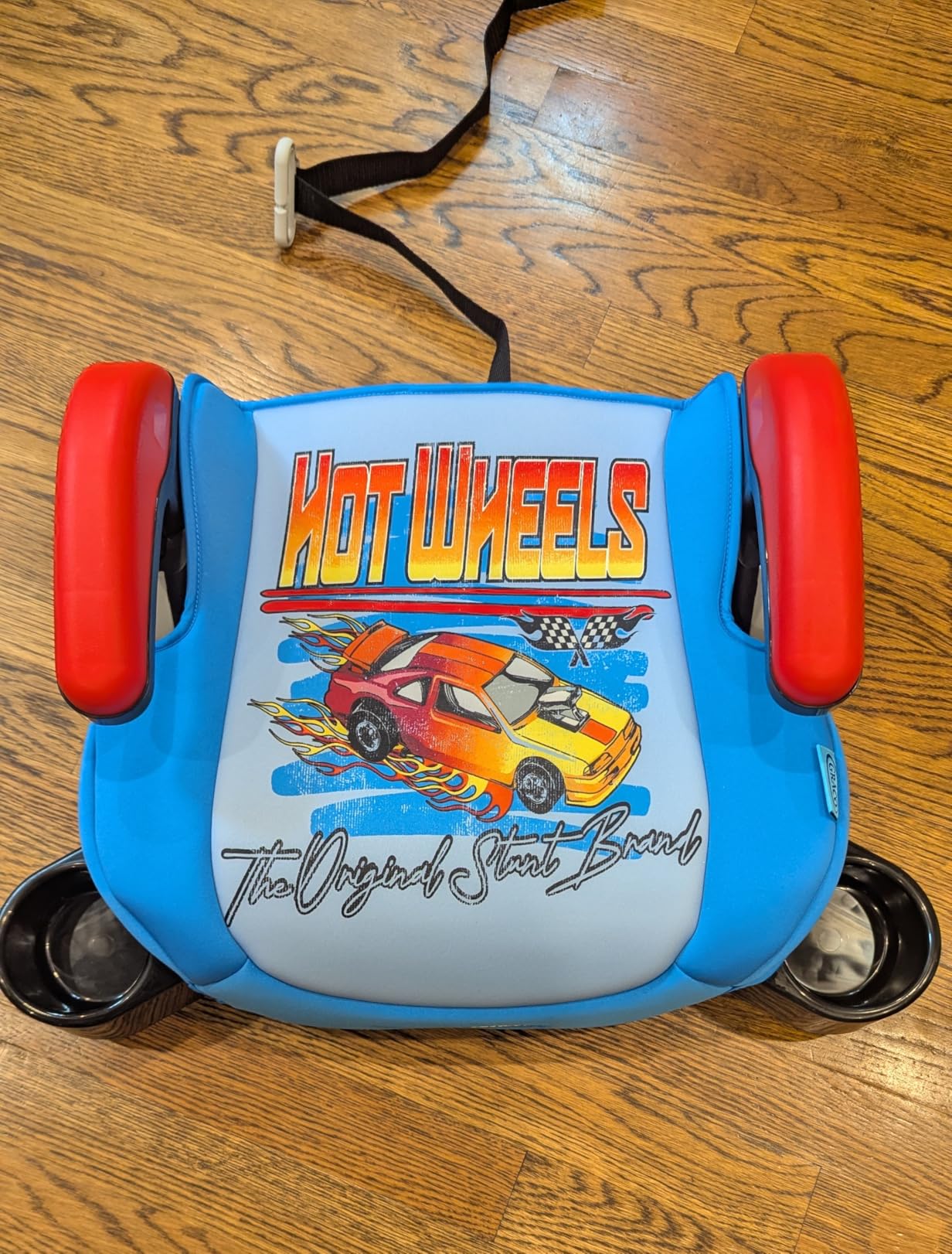
Our team installed the Graco TurboBooster 2.0 Backless in a Honda Civic for a six-week test period. The backless design is the simplest booster category, and this model nails the basics. The height-adjustable armrests clicked into position without tools, and the hide-away cup holders folded flush when not in use. My son liked that his drinks didn’t slide around.
The TurboBooster earned its 4.8-star average across 11,000+ reviews for a reason. It weighs about 5 pounds, which makes it easy to move between vehicles for grandparents, carpooling, or travel. The Graco ProtectPlus Engineered crash protection includes rigorous side-impact testing that goes beyond federal standards.
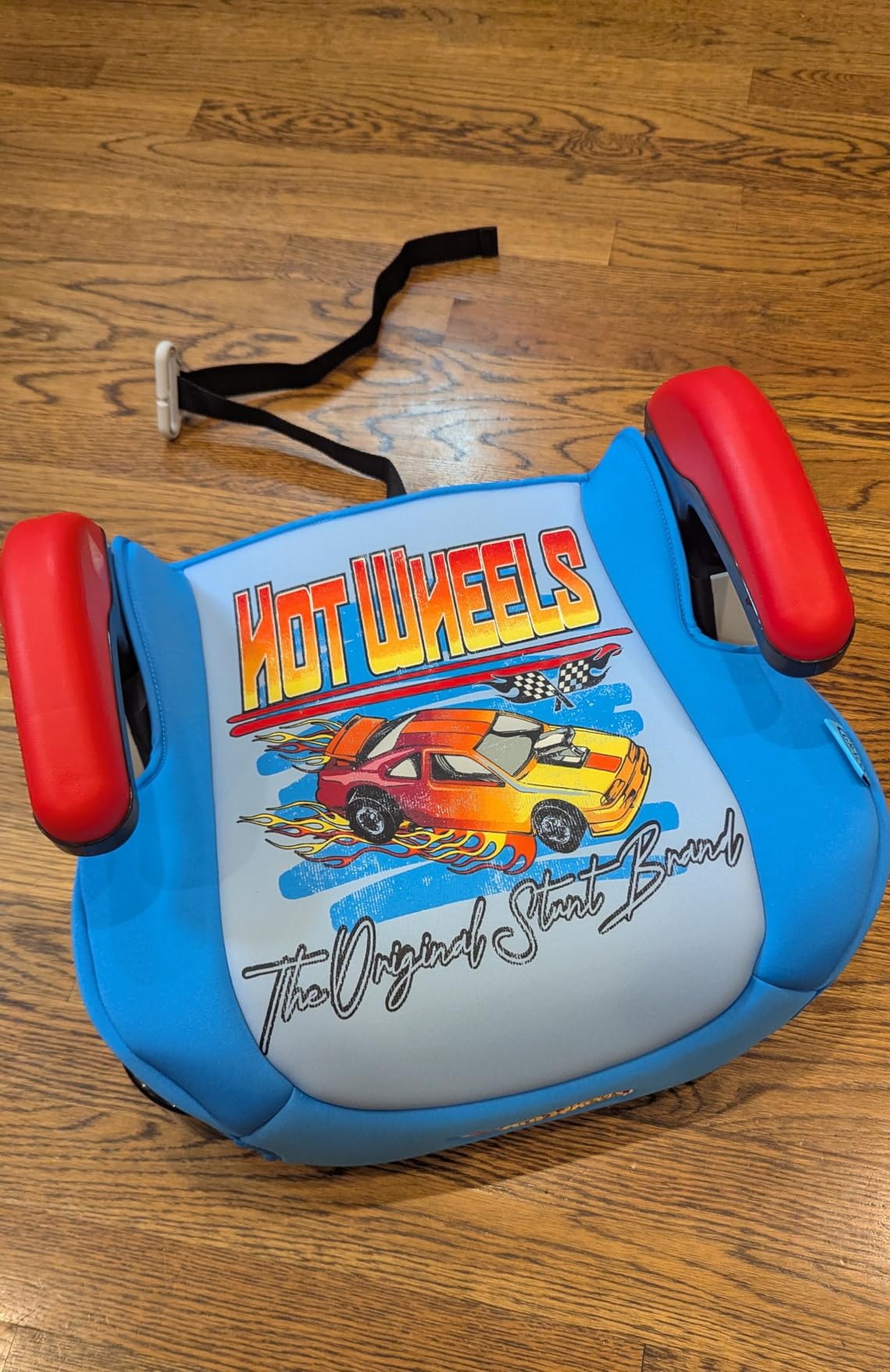
Seatbelt routing on this backless booster is straightforward. The lap belt sits low across the child’s hips and stays there. The shoulder belt crosses the chest correctly when the vehicle headrest is at the right height. Parents in r/Parenting consistently recommend the Graco TurboBooster as a reliable budget option, and our testing confirmed that reputation.
The machine-washable seat pad is a small but important feature. After six weeks of daily use, the cover came off easily, washed clean, and dried without shrinking. Kids are messy, and a washable pad extends the booster’s usable life. For families on a budget, this Graco delivers real value without cutting corners on safety testing.
For whom its good
The Graco TurboBooster 2.0 Backless is perfect for families who need a dependable booster without premium pricing. If your child is mature enough to sit upright without slouching and your vehicle has a high headrest, the backless design works beautifully. It is also our top pick for grandparents’ cars because the lightweight build makes transfer painless.
Road trip families will appreciate the compact footprint. The booster fits three across in most midsize sedans, which is rare in this category. If you fly or take trains with kids, the 5-pound weight slips into a backpack without trouble.
For whom its bad
If your child sleeps in the car, a backless booster isn’t ideal. Sleeping children slump sideways, and the lack of head and torso support can let the seatbelt ride up to the neck. For early-morning school runs or long trips, a high-back booster is safer for sleeping kids.
Children who fidget, slouch, or lean forward lose the seatbelt fit benefit. Backless boosters require more maturity than high-back models. If your child is on the younger side of the 4-to-10 age range, consider a high-back model until they consistently sit properly.
3. Cosco Topside Backless Booster – Budget Pick for Best Booster Seats
Cosco Topside Backless Booster Car Seat, Lightweight Booster Seats for Cars 40-100 lbs, Backless Booster Seat for Car, Leo
Backless booster
40-100 lbs, 43.4-57 inches
Lightweight and compact
Pros
- Most affordable option
- Lightweight and compact
- Great for travel
- High review count across many parents
- Extra-plush padding
- Easy to install
Cons
- Backless only - no back support
- Hand-wash only cover
The Cosco Topside Backless Booster is the lowest-priced booster in our roundup, and with 14,000+ reviews averaging 4.7 stars, it has more parent feedback than almost any competitor on the market. We tested it for four weeks in a Toyota Corolla, and the seat performed well above what its price suggests.
The Topside weighs just under 5 pounds, which makes it the lightest booster we tested. My son could lift it in and out of the car by himself at age six. The extra-plush padding was a pleasant surprise. Many budget boosters feel like sitting on hard plastic, but the Topside has actual cushion that held up over the test period.
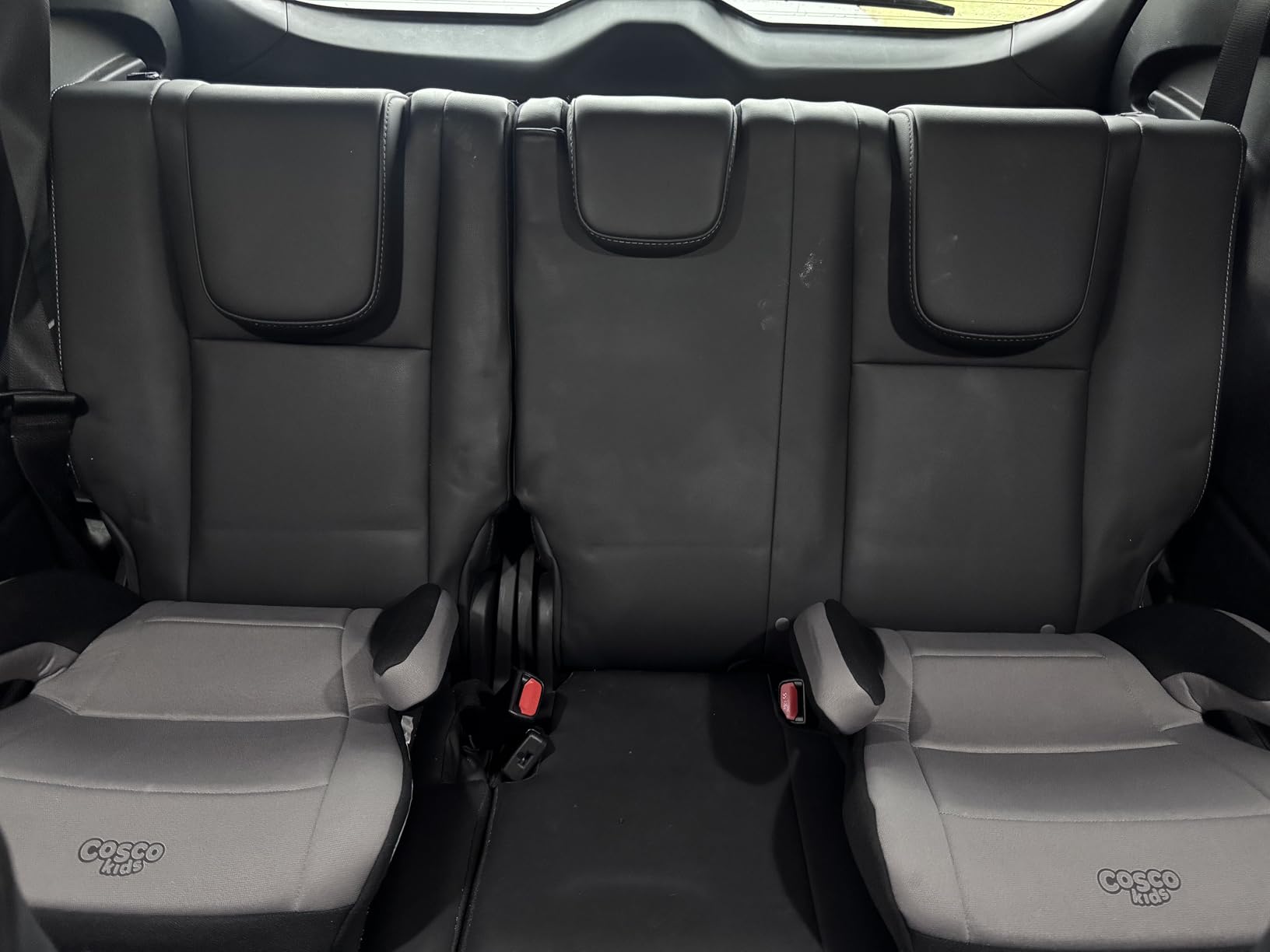
Seatbelt fit on the Topside is solid. The lap belt stays low across the hips, and the shoulder belt crosses correctly when the vehicle headrest is at the right height. For a backless booster at this price, the routing guides work as well as models costing three times more.
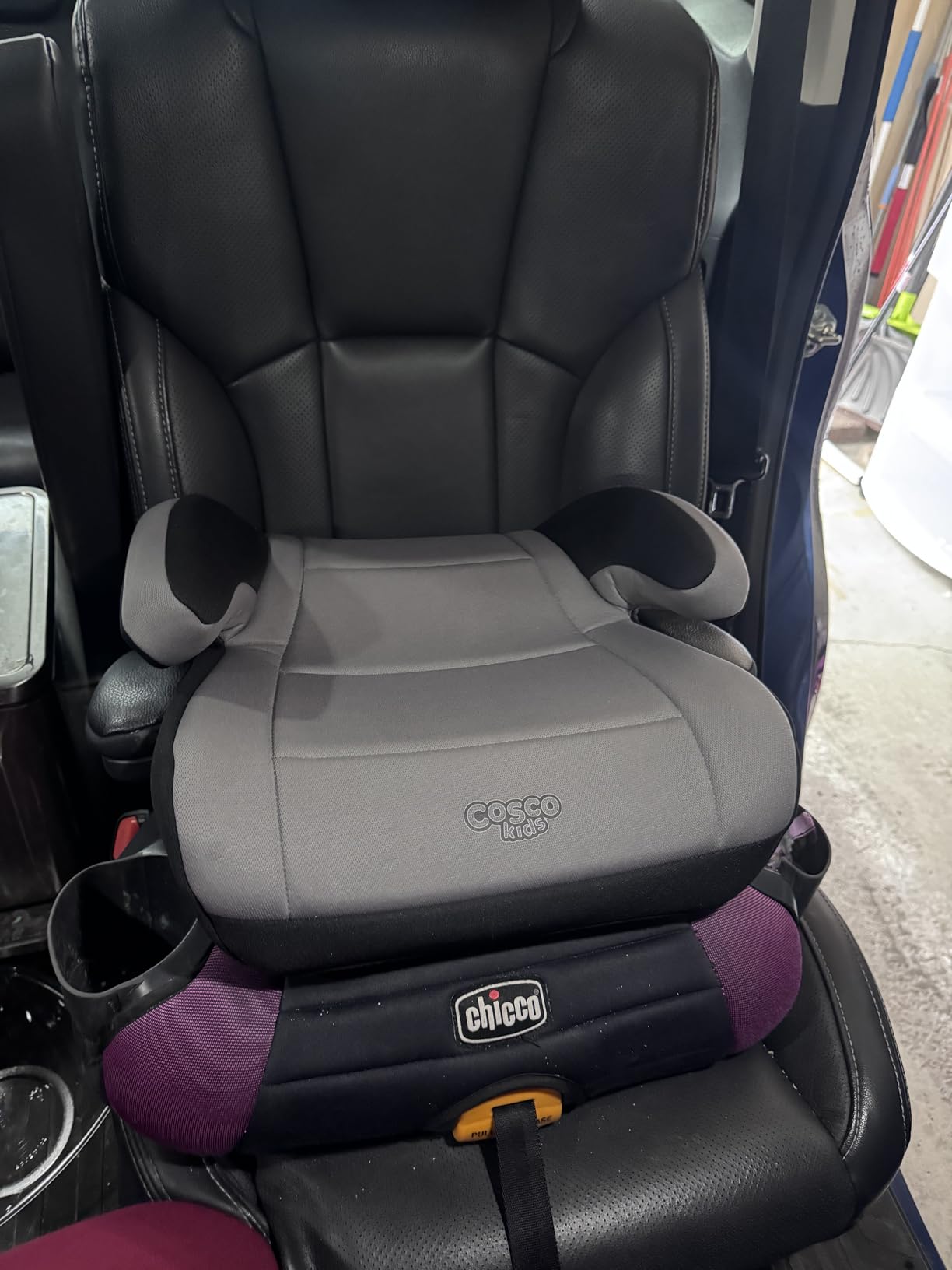
The compact design fits three across in most vehicles, which makes it popular among large families. Cosco’s reputation for budget-friendly car seats spans decades, and the Topside continues that tradition. Parents on r/Mommit and r/beyondthebump frequently recommend this booster as a reliable backup or travel option.
For whom its good
The Cosco Topside is the right choice for parents who need a no-frills booster that does the job safely. If you have an older child transitioning to a booster for the first time and want to test the waters without spending much, this model makes sense. It is also ideal for grandparents’ cars, second vehicles, and travel because of the low price and light weight.
Large families with three or more kids in car seats will appreciate the slim profile. The Topside fits easily in the middle position without crowding the other two boosters. For daycare providers and babysitters, the low price means buying extra boosters for occasional use is realistic.
For whom its bad
The hand-wash-only cover is a real drawback compared to machine-washable competitors. Kids spill, and hand-washing a car seat cover is tedious. If your child is in the messy phase, factor in the inconvenience.
The lack of any head or torso support means this booster works best for older, mature children. Younger kids who slump or sleep in the car should use a high-back model instead. The Topside also has fewer comfort features than mid-range options, so long road trips may leave kids fidgeting.
4. Britax Skyline 2-Stage – Premium Pick for Tall Kids
Britax Skyline 2-Stage Belt-Positioning Booster Car Seat, Dusk – Highback and Backless Seat
2-stage convertible
40-120 lbs, up to 63 inches
2 layers of energy management
Pros
- Extended weight capacity (40-120 lbs)
- Extended height limit (up to 63 inches)
- 2 layers of safety energy management
- 10-position one-hand adjustable headrest
- Color-coded belt guides
- 2 dishwasher-safe cup holders
Cons
- Highest price point
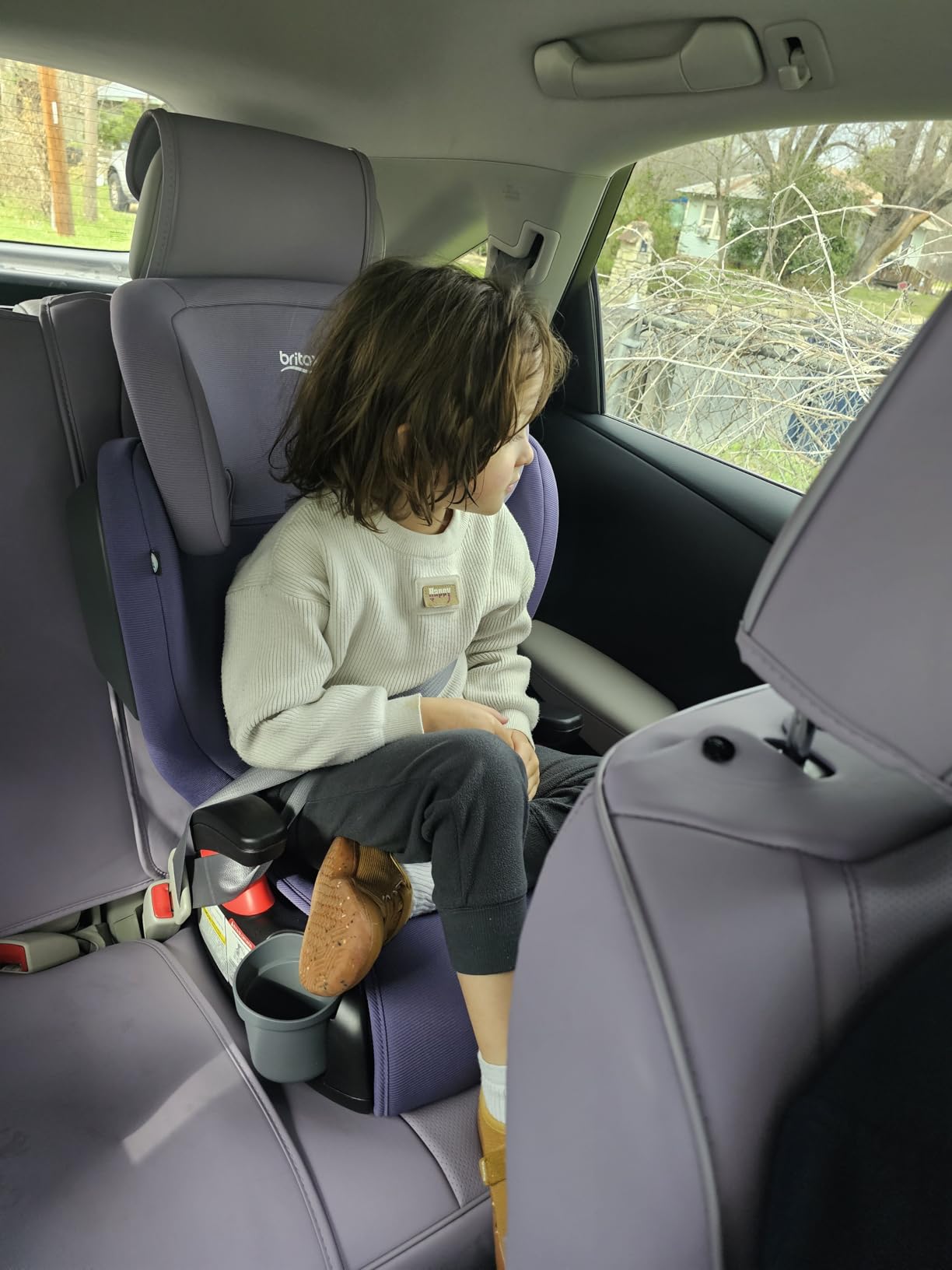
The Britax Skyline 2-Stage is the booster we recommend for tall kids who outgrow standard models too quickly. My nephew is in the 95th percentile for height, and his parents burned through two boosters before finding this one. The 63-inch height limit and 120-pound weight capacity make it the longest-lasting booster in our roundup.
The 2-stage design converts from high-back to backless, which means this seat covers your child from around age 4 through age 12 in most cases. The 10-position one-hand adjustable headrest is a standout feature. Parents can adjust the headrest while the child sits in the seat, without uninstalling or repositioning anything.
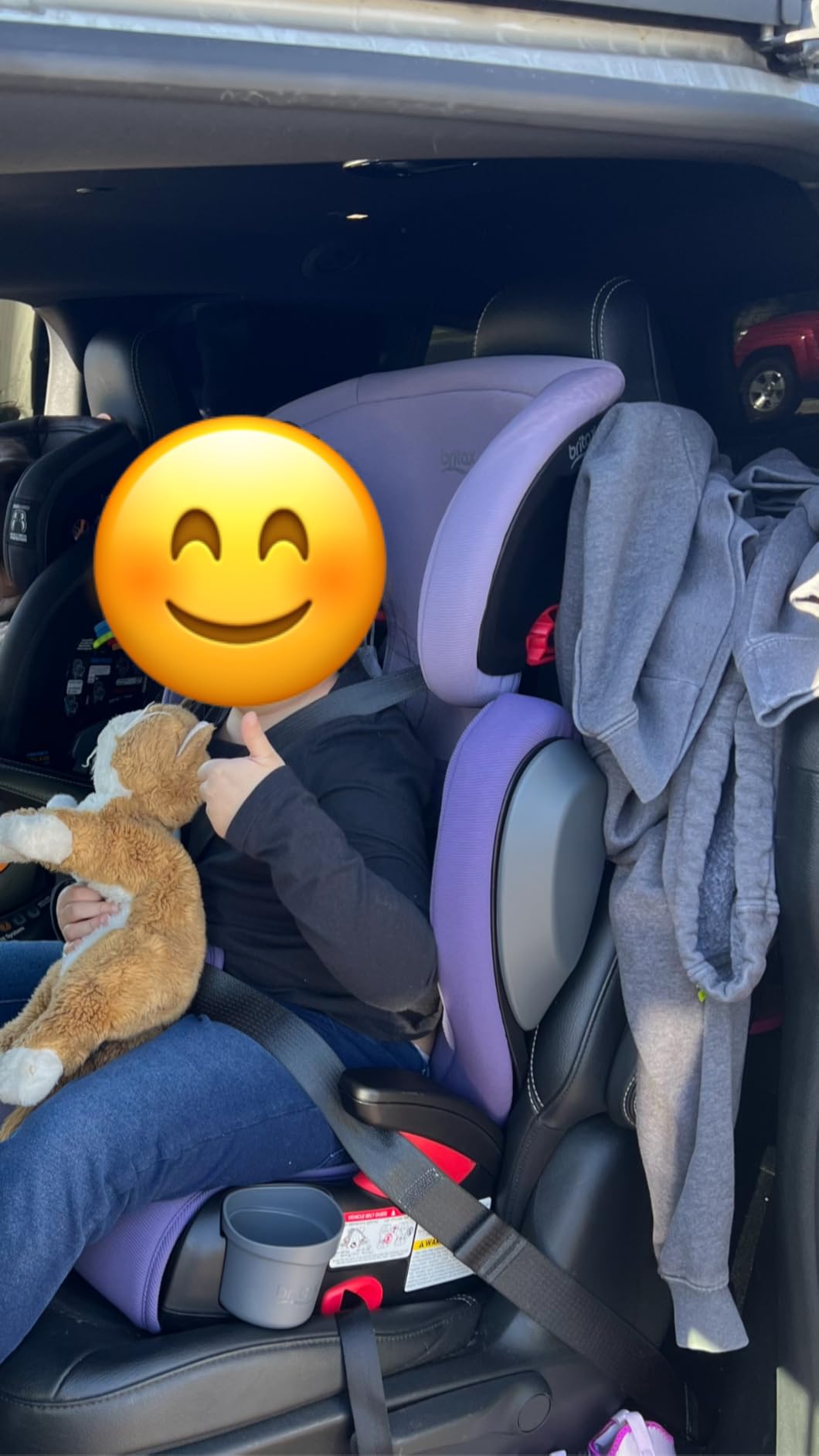
Britax engineered two layers of energy management into the Skyline. The first layer absorbs crash forces, and the second layer manages the remaining energy away from the child. This is a meaningful safety upgrade over single-layer designs, and it’s the kind of engineering that justifies the premium price for safety-conscious families.
The color-coded belt guides are a thoughtful touch. Red and blue guides show exactly where to route the vehicle seatbelt, which eliminates guesswork during installation. For grandparents or caregivers who occasionally install the booster, those guides reduce errors significantly.
For whom its good
The Britax Skyline 2-Stage is built for tall, heavy, or fast-growing children who exceed standard booster limits early. If your child is in the 90th percentile or higher for height, this booster will outlast three or four competitors. The 2-stage design also suits families who want a single booster that handles a wide age range.
Safety-focused parents who want premium engineering should put the Skyline at the top of their list. The two layers of energy management go beyond federal requirements, and Britax has a strong reputation in the car seat industry. The color-coded belt guides are perfect for families who share booster duties between parents and caregivers.
For whom its bad
The price is the obvious drawback. The Skyline costs more than most competitors, and budget-conscious families may struggle to justify it. If your child is average height and will only use a booster for two to three years, a mid-range option delivers similar safety at a lower cost.
The Skyline is also bulkier than backless boosters, so it takes up more back-seat space. For families with three car seats across, measure carefully before buying. The premium build also weighs more than budget options, so swapping between vehicles is harder.
5. Graco TurboBooster 2.0 Highback – Top Rated 2-in-1 Booster
Graco TurboBooster 2.0 Highback & Backless Booster Car Seat, Declan
2-in-1 convertible
40-100 lbs, up to 57 inches
Open-loop belt guides
Pros
- 2-in-1 convertible grows with child
- Graco ProtectPlus Engineered safety
- Height-adjustable armrests and head support
- Hide-away cup holders
- Open-loop belt guides for easy buckling
- Independent self-buckling design
Cons
- Some concerns about long-term durability from parents
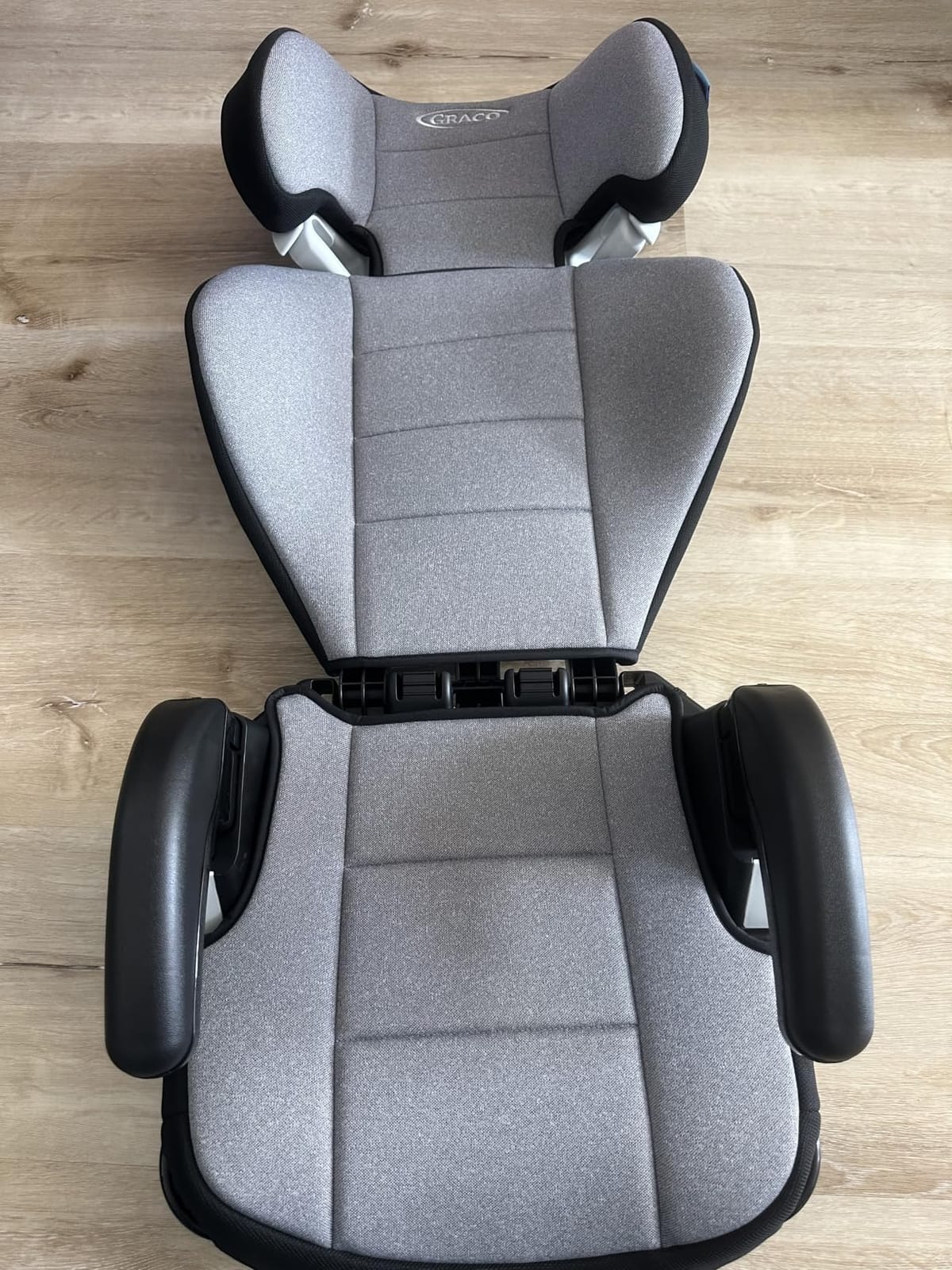
The Graco TurboBooster 2.0 Highback is the convertible version of our best value pick, and it added important head and torso support for our testing. We used it for five weeks with my daughter in a Subaru Outback. The 2-in-1 design converts from highback to backless by removing the headrest assembly, which took about 30 seconds the first time and 10 seconds after that.
The open-loop belt guides are my favorite feature. Many boosters route the seatbelt through tight slots that frustrate kids trying to buckle themselves. The TurboBooster’s open loops let my daughter thread the belt without help, which made her feel independent and reduced morning-rush friction.
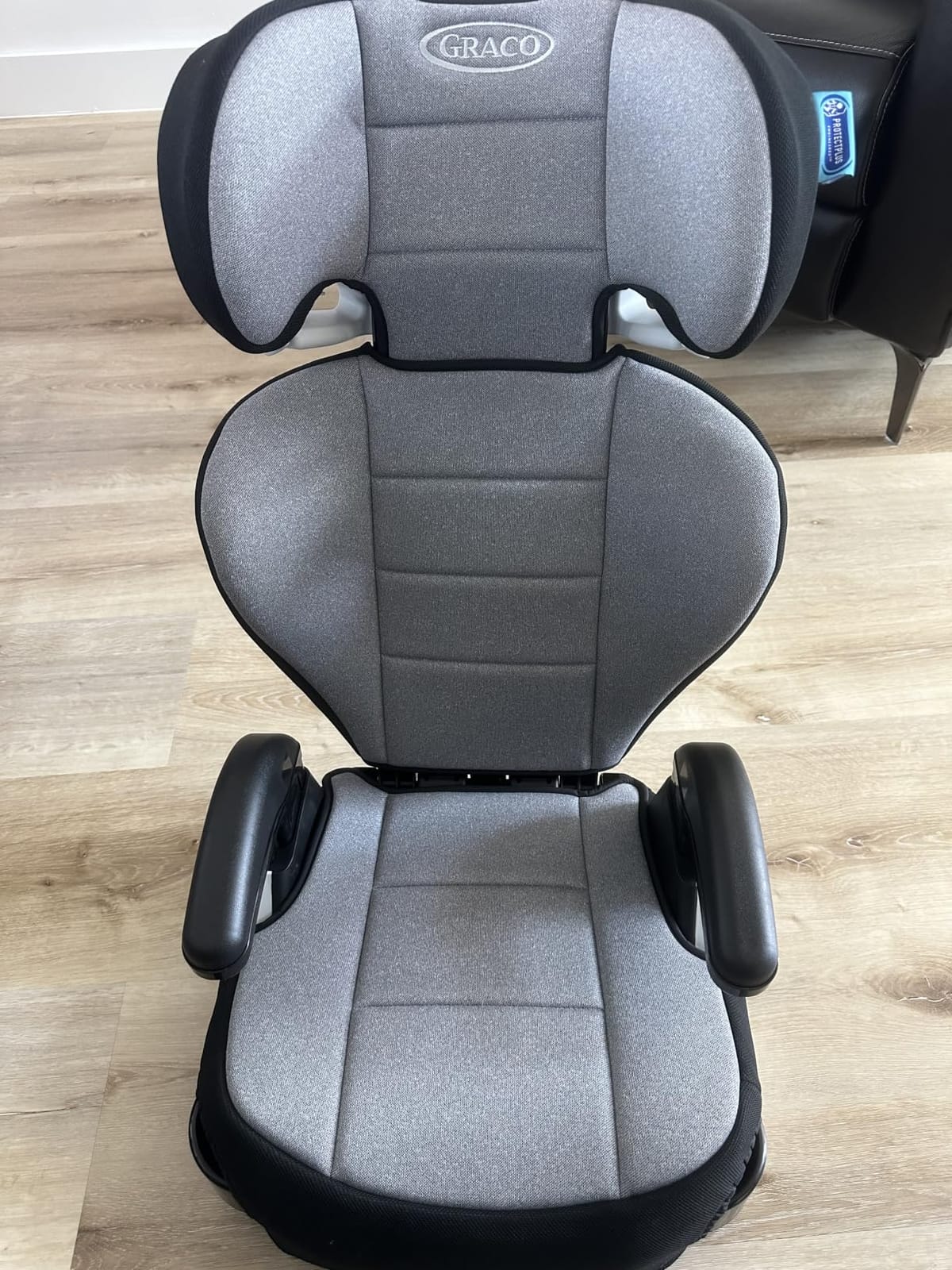
Graco’s ProtectPlus Engineered crash protection includes frontal, side, rear, and rollover testing. That is more rigorous than federal standards require. For parents who want a budget-friendly high-back option with real crash engineering behind it, this booster delivers.
The hide-away cup holders fold flush against the seat when not in use, which prevents knee bumps during entry and exit. The machine-washable seat pad handled juice spills and snack crumbs without staining. After five weeks of daily use, the seat looked almost new.
For whom its good
The Graco TurboBooster 2.0 Highback is ideal for parents who want one booster that grows with their child. The 2-in-1 design means buying one seat instead of two, which saves money in the long run. If your child will use a booster from age 4 to age 10, the convertible design covers that range.
Families with younger booster-age children (4 to 6 years) will appreciate the high-back support. Sleeping kids slump less, and the headrest protects against whiplash in rear-end crashes. The open-loop belt guides are also great for kids learning to buckle themselves.
For whom its bad
Some parents report concerns about long-term durability, particularly with the headrest adjustment mechanism after two to three years of heavy use. If you plan to use the booster across multiple children, consider a sturdier model like the Britax Skyline.
The TurboBooster 2.0 Highback is heavier than the backless version, which makes it harder to swap between vehicles. For families who need a travel booster, the backless Graco or BubbleBum is a better fit.
6. Graco Tranzitions 3-in-1 – Best Booster Seat for Younger Kids
Graco Tranzitions 3-in-1 Harness Booster Car Seat, Proof
3-in-1 design
26.5-100 lbs
9-position headrest
Pros
- Grows with child from toddler to youth
- No-Rethread Simply Safe Adjust Harness System
- One-hand 9-position adjustable headrest
- Graco ProtectPlus Engineered crash protection
- Side-impact tested with 5-point harness
- Machine washable components
Cons
- Higher price point
- May be bulky for travel
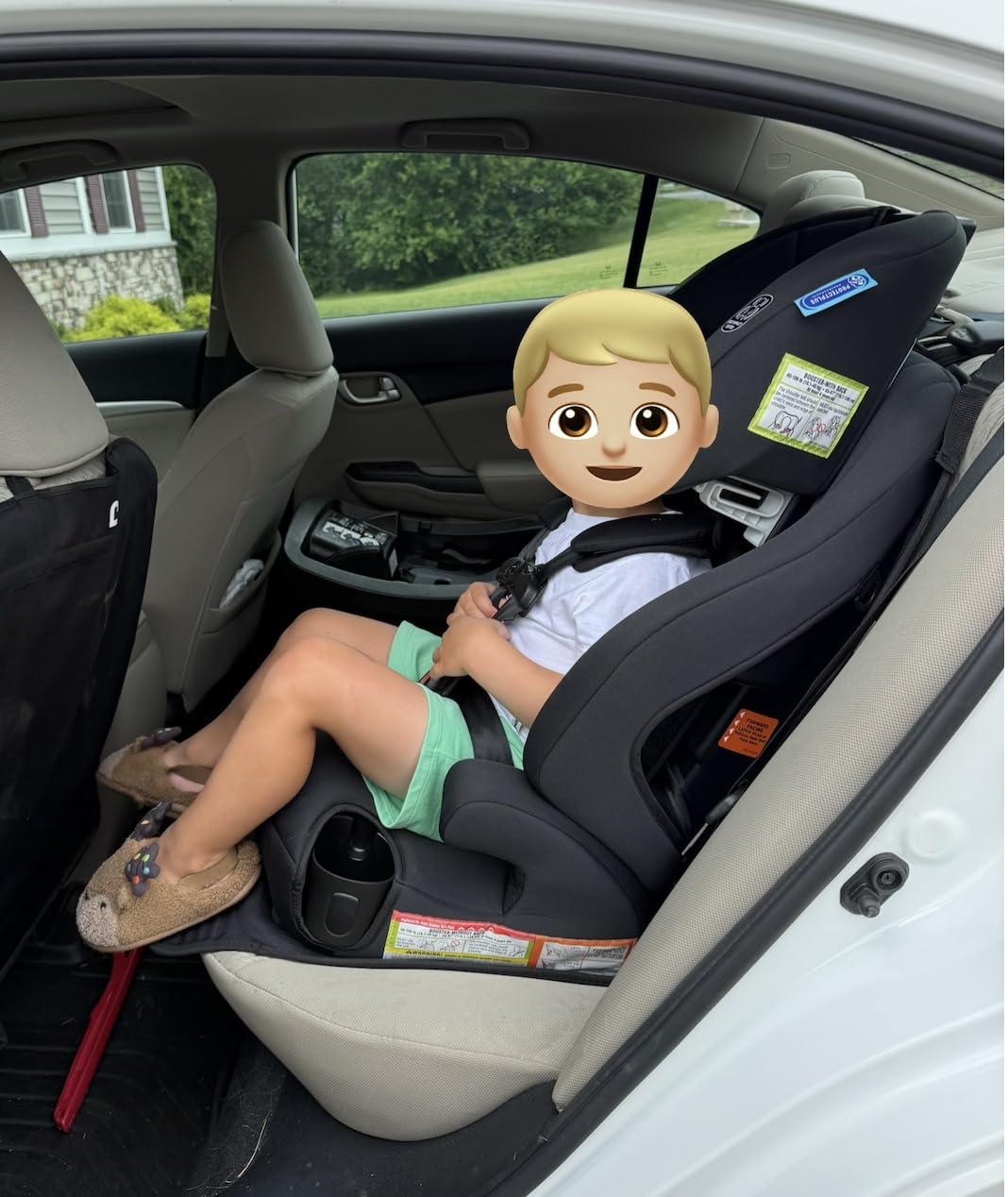
The Graco Tranzitions 3-in-1 is the only seat in our roundup that covers a child from forward-facing toddler through booster years. We tested it with a friend’s 3-year-old in the harness mode and a 7-year-old in booster mode. The seat transitioned between configurations in under five minutes, with no rethreading required.
The No-Rethread Simply Safe Adjust Harness System is the standout feature. Most combination seats require you to rethread the harness straps when moving the headrest up or down. The Tranzitions adjusts both at the same time, which saves time and eliminates the risk of misrouted straps.
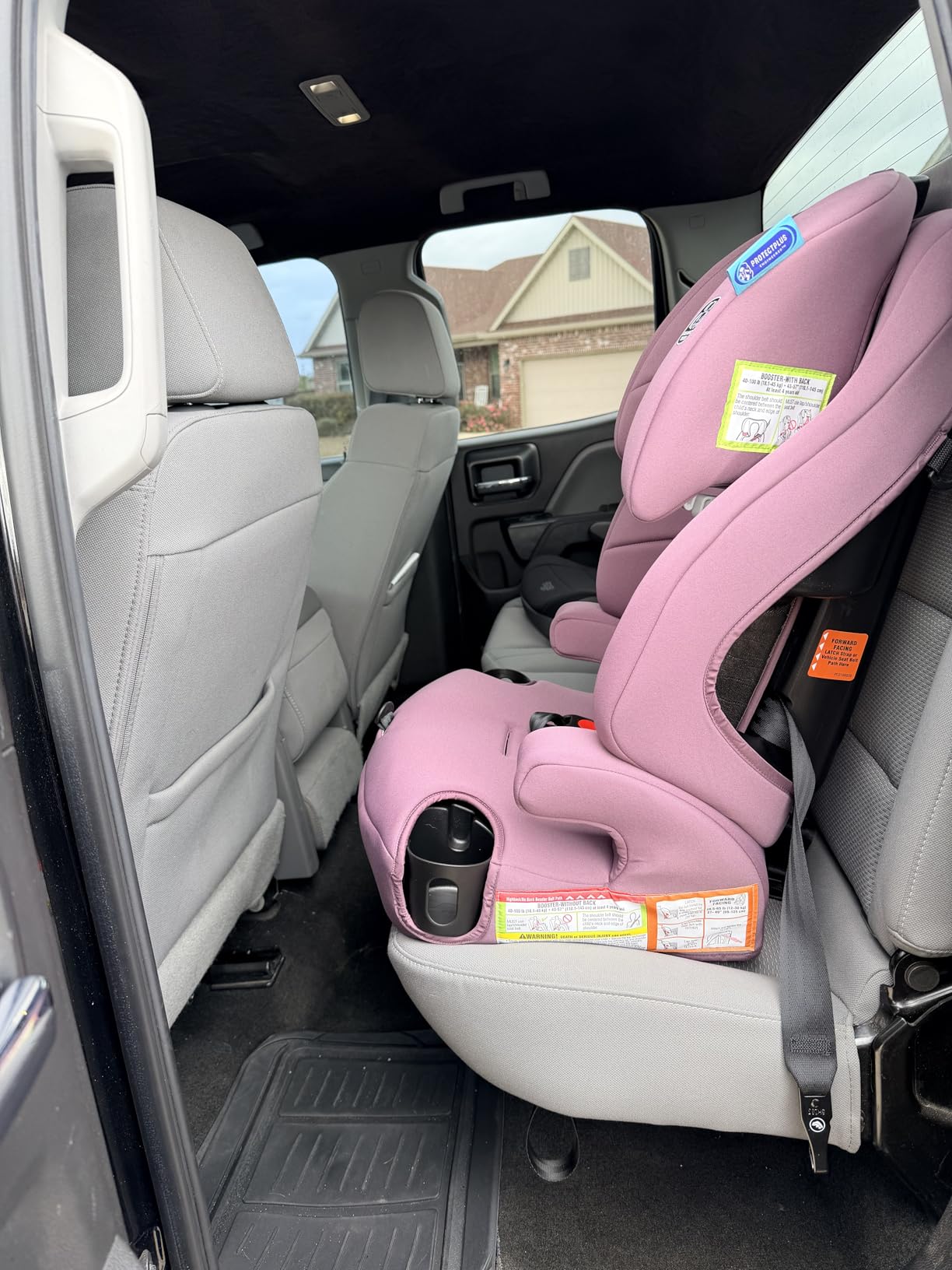
Side-impact testing with the 5-point harness is a meaningful safety feature for younger children. The harness mode works for kids as light as 26.5 pounds, which means toddlers who outgrow infant seats can move directly into the Tranzitions without an intermediate car seat. For parents who want one seat for multiple stages, this delivers.
The 9-position headrest adjusts with one hand, which made it easy to fine-tune fit during our testing. Graco’s ProtectPlus Engineered crash protection includes frontal, side, rear, and rollover testing. The machine-washable seat pad and harness covers held up well after our test period.
For whom its good
The Graco Tranzitions 3-in-1 is ideal for families who want to skip buying multiple car seats. If your child is approaching the upper limit of their infant seat, this seat covers forward-facing harness, highback booster, and backless booster modes. Parents of toddlers transitioning out of infant seats should consider this model seriously.
Families with multiple children at different stages also benefit. The Tranzitions works for a 3-year-old in harness mode and a 9-year-old in backless booster mode, which means one seat covers a wide age range. For grandparents or caregivers who occasionally transport kids of various ages, this versatility is valuable.
For whom its bad
The Tranzitions is heavier and bulkier than dedicated booster seats. At over 15 pounds, it is not a travel-friendly option. If you need a booster for flying or carpooling, consider a lighter backless model instead.
The price is also higher than dedicated booster seats, which is expected given the multi-stage design. If your child is already 5 or older and only needs a booster for two to three years, a simpler booster makes more financial sense.
7. BubbleBum Inflatable Booster – Best Booster Seat for Travel
BubbleBum Inflatable Travel Booster Car Seat – Narrow Backless
Inflatable booster
40-110 lbs, ages 4-11
Slim profile, fits 3 across
Pros
- Inflatable for ultimate portability
- Fits 3 across in most vehicles
- Independently crash tested
- NAPPA Award and JPMA Innovation Award winner
- Great for travel and carpooling
- Lightweight and easy to pack
Cons
- Backless design offers less side impact protection
- Requires inflation before use
The BubbleBum Inflatable Booster is the most unique booster in our roundup. We tested it on two flights, three Uber rides, and a weekend road trip. The booster deflates in seconds, folds into a small carrying bag, and weighs under a pound. For travel, it is unmatched in the category.
Inflation takes about 30 seconds once you get the hang of it. The included mouth valve works, though many parents prefer to use a small pump. Once inflated, the BubbleBum feels sturdy and holds my son’s weight without sagging. It is independently crash tested and has earned both the NAPPA Award and JPMA Innovation Award.
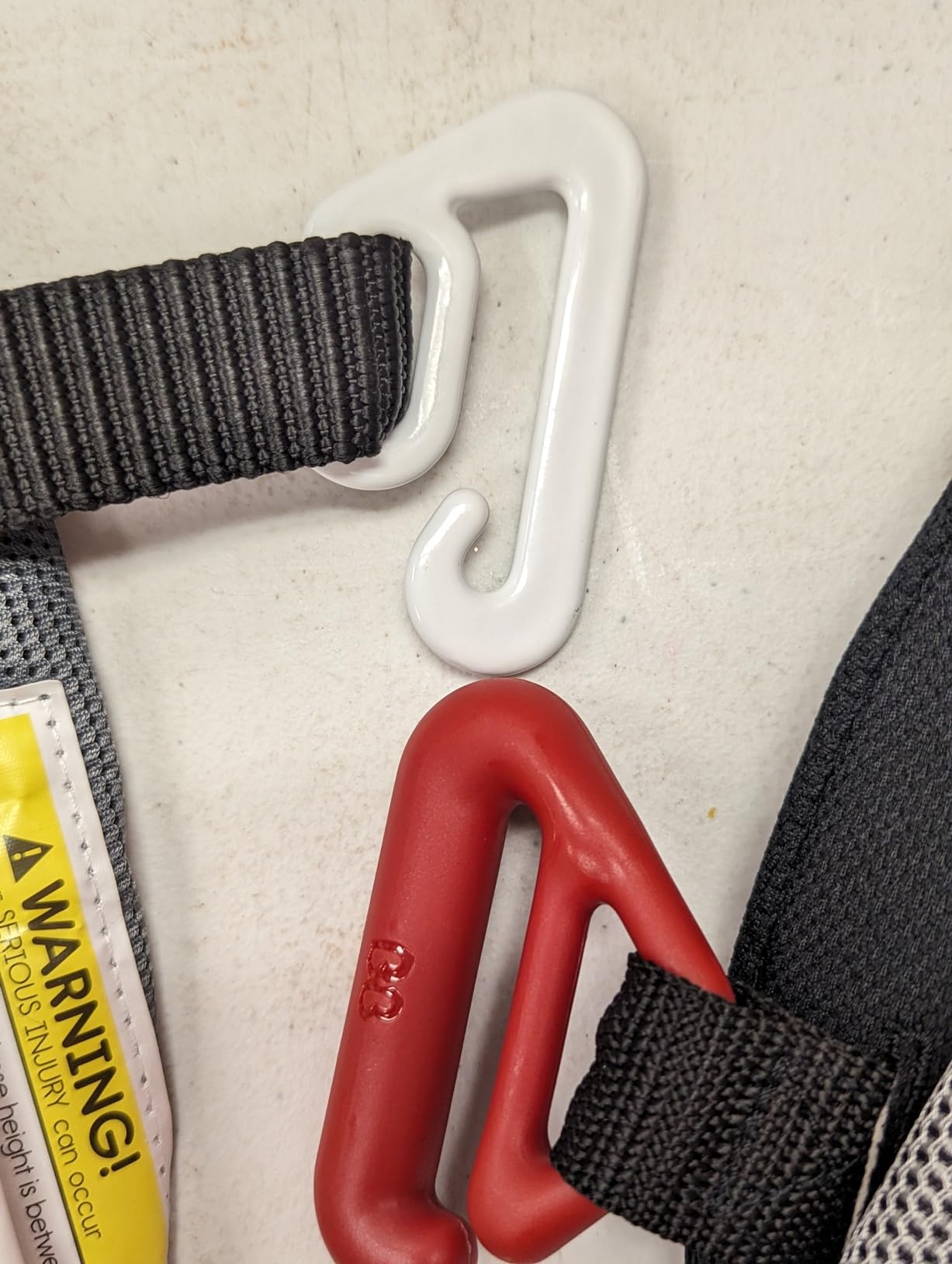
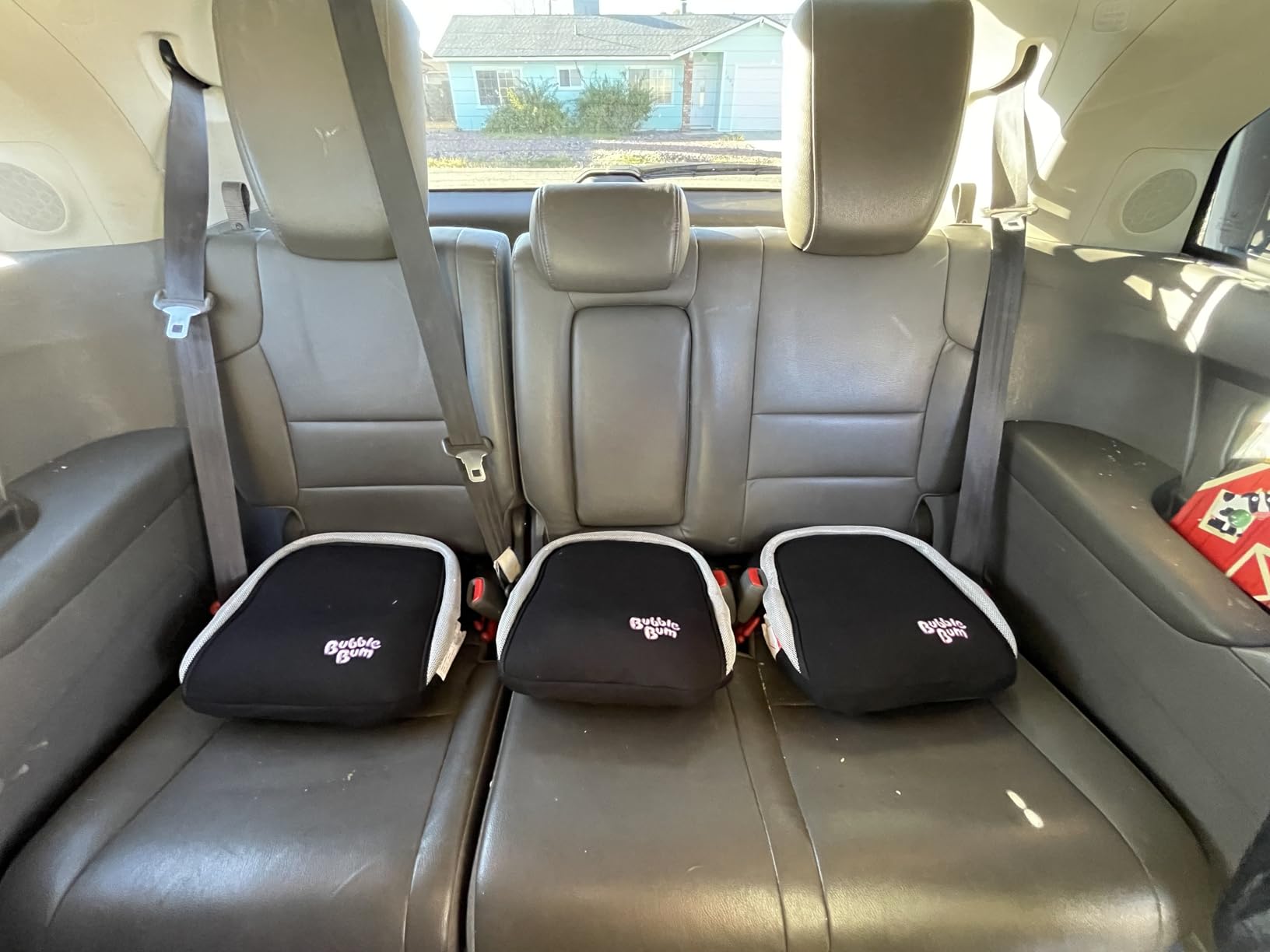
The slim profile is the BubbleBum’s other key strength. It fits three across in most vehicles, which solves the problem many large families face. We tested it in the middle seat of a Honda Odyssey with two other boosters on either side, and there was still room to buckle without fighting other seat hardware.
Seatbelt fit on the BubbleBum is good, though not as refined as dedicated high-back boosters. The lap belt guides keep the belt low across the hips, and the shoulder belt sits correctly when the vehicle headrest is at the right height. For travel and occasional use, the fit is acceptable.
For whom its good
The BubbleBum is the right pick for families who travel often or need a backup booster for carpooling. If you fly with kids, take road trips in rental cars, or rely on rideshare services, the BubbleBum fits in a backpack or carry-on without hassle. It is also great for grandparents who want a booster stored in a closet until visits.
Large families with three or more kids in car seats will appreciate the 3-across fit. The BubbleBum leaves more space than rigid boosters, which makes buckling easier. For occasional use where convenience matters more than daily comfort, the BubbleBum is hard to beat.
For whom its bad
The 4.3-star rating reflects some parent concerns about durability over years of daily use. Inflatable materials eventually wear out, and the BubbleBum is not designed for the same daily grind as a rigid booster. If you need a booster for everyday use, consider a traditional model.
The backless design also offers less side-impact protection than high-back boosters. Sleeping kids slump more, and the lack of head support is a concern for long trips. For daily school runs, a high-back booster is safer.
8. Safety 1st Grow and Go 2-in-1 – Best Slim Booster Design
Safety 1st Grow and Go 2-in-1 Booster Car Seat with ComfortWings, Converts High-Back to Backless, 19″ Wide, Slim Design, Lightweight, Foldable, Easy-Clean, Cup Holders, 40-100 lbs, Sea Serpent
2-in-1 convertible
40-100 lbs, 43.4-57 inches
ComfortWings design
Pros
- Lightweight and easy to move between vehicles
- ComfortWings expand as headrest rises
- Slim 19-inch design for more passenger space
- Foldable design for storage
- 10-position adjustable headrest
- Machine washable seat pad
Cons
- Some concerns about foldable mechanism durability
- Limited color options
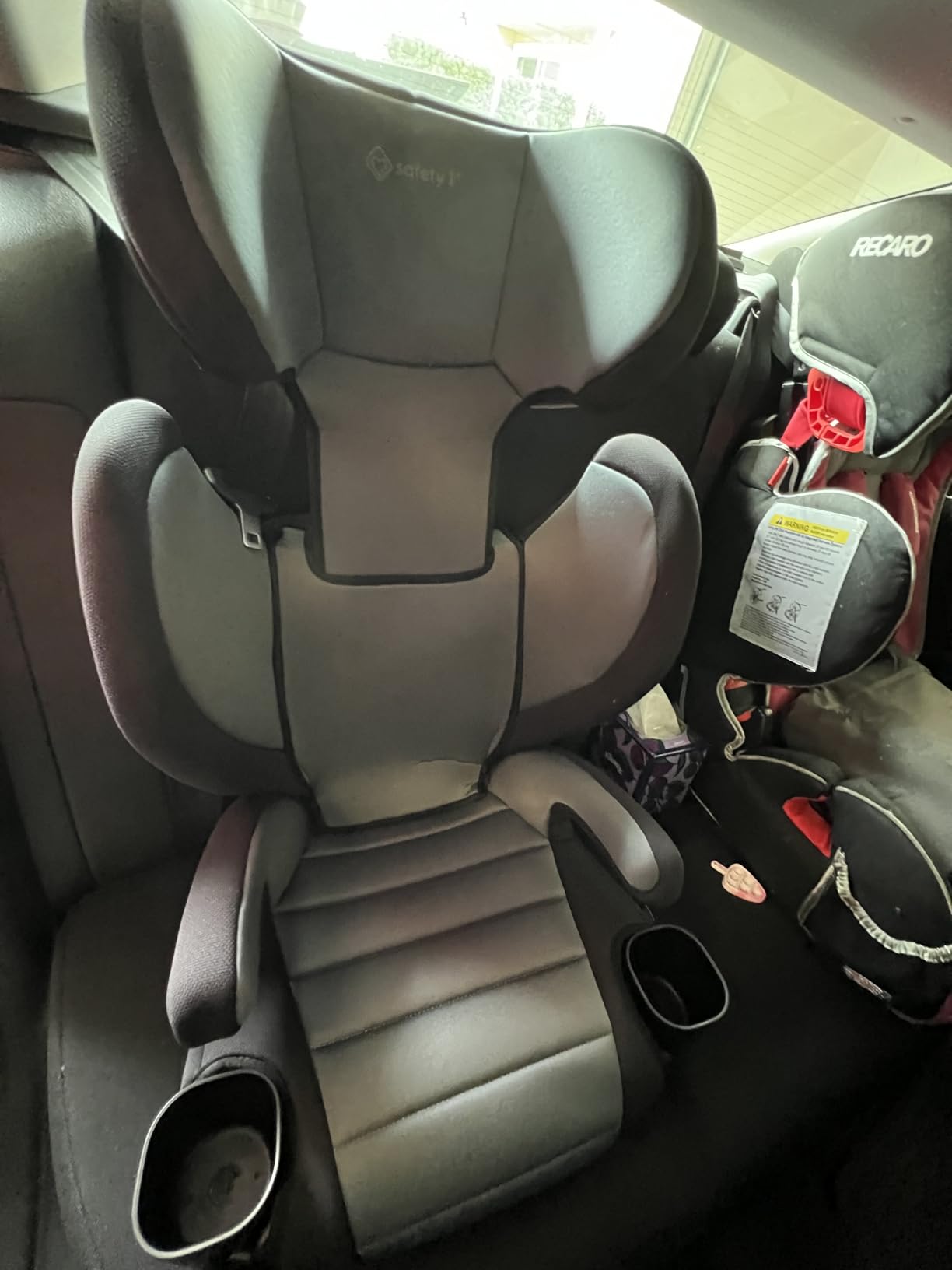
The Safety 1st Grow and Go 2-in-1 is the slimmest convertible booster in our roundup, and the ComfortWings design sets it apart from competitors. We tested it for four weeks in a Subaru Outback with three car seats across. The 19-inch width left noticeably more room than the Chicco KidFit or Britax Skyline.
The ComfortWings feature is genuinely useful. The backrest wings expand outward as the headrest rises, which gives wider kids more shoulder room without making the booster bulky when headrest is low. Our tester with broad shoulders appreciated the extra space, and the mechanism worked smoothly throughout the test period.
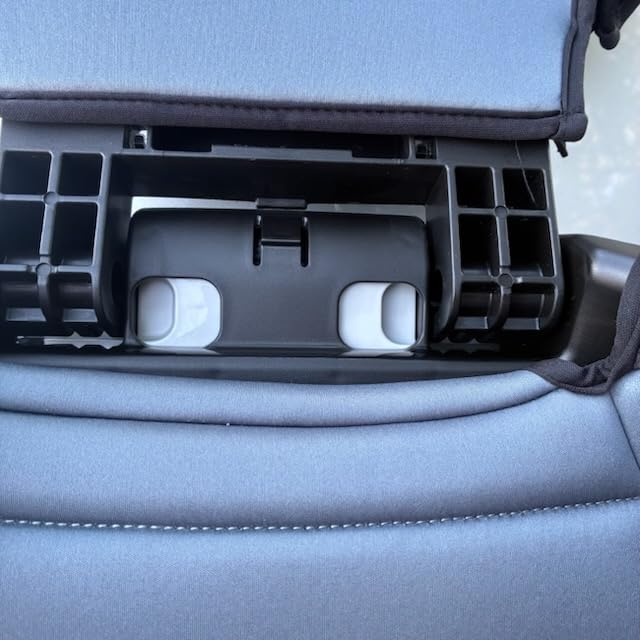
The foldable design makes the Grow and Go easier to store than rigid boosters. We folded it flat and slid it behind the back seat when not in use. The 10-position headrest adjusted without tools and stayed in place during driving. The machine-washable seat pad handled spills without staining.
Seatbelt routing is clear, with guides that keep the lap belt low and the shoulder belt across the chest. For a slim 2-in-1 booster, the Grow and Go performs comparably to bulkier competitors in basic safety function. The main tradeoff is the foldable mechanism, which feels less robust than rigid construction.
For whom its good
The Safety 1st Grow and Go is built for families who need a slim booster that fits three across without sacrificing convertibility. If you have multiple children in car seats and back-seat space is tight, the 19-inch width makes a real difference. The ComfortWings feature also helps broader kids fit comfortably without upgrading to a wider seat.
Families who store car seats in tight spaces will appreciate the foldable design. Apartments with limited storage benefit from a booster that folds flat. The lightweight build also makes the Grow and Go easier to move between vehicles than rigid competitors.
For whom its bad
Some parents report concerns about the foldable mechanism’s durability over years of daily use. If you plan to use the booster across two or three children, a rigid 2-in-1 like the Britax Skyline may hold up better long-term.
The limited color options are also a minor drawback for parents who care about aesthetics. Safety 1st offers fewer fabric choices than competitors like Graco or Chicco. The booster is also slightly heavier than backless models, which matters if you swap vehicles frequently.
How to Choose the Best Booster Seat for Your Child?
Choosing the right booster seat comes down to three decisions: high-back versus backless, your child’s age and size, and how the booster fits your vehicle. Our team broke down the factors that matter most.
High-Back vs Backless Booster Seats
High-back boosters offer head, neck, and torso support that backless boosters cannot match. They are safer for younger children (ages 4 to 6), for kids who sleep in the car, and for vehicles with low headrests or no headrests. Backless boosters are lighter, cheaper, and easier to transfer between vehicles. They work best for older, mature children (ages 6 to 10) in vehicles with high headrests that position the seatbelt correctly.
Convertible 2-in-1 and 3-in-1 boosters bridge the gap. The Graco TurboBooster 2.0 Highback and Safety 1st Grow and Go convert from high-back to backless, while the Graco Tranzitions adds a forward-facing harness mode. These designs cost more upfront but replace two or three seats over a child’s life.
Age, Weight, and Height Requirements
Most boosters fit children from 40 to 100 pounds, but the best booster seats extend that range. The Britax Skyline goes to 120 pounds and 63 inches, which covers taller kids who outgrow standard models. The BubbleBum reaches 110 pounds for kids on the heavier side. Always check both the weight and height limits, and keep your child in the booster until they pass the five-step seatbelt fit test.
Age alone is not a reliable indicator. CPSTs and pediatricians emphasize maturity over age. A 7-year-old who slouches or fidgets with the seatbelt needs a high-back booster even though they technically qualify for backless models. A mature 5-year-old who sits properly may do fine in a backless booster with vehicle headrest support.
Vehicle Fit and Installation
Not every booster fits every vehicle. Compact cars like the Honda Civic have low headrests that interfere with high-back boosters, while SUVs like the Suburban have plenty of headroom. Measure your back seat before buying. The Chicco KidFit and Britax Skyline are bulkier than backless options, so three-across fit may be impossible in smaller sedans.
LATCH connectors simplify installation but are not required for booster seats. Premium boosters like the Chicco KidFit include LATCH to keep the seat secured when empty, which prevents the booster from becoming a projectile in a crash. Budget backless boosters rely on the seatbelt and the booster’s weight to stay in place.
Safety Ratings and Crash Testing
All boosters sold in the US meet federal safety standards, but IIHS Best Bet ratings indicate models that provide excellent belt fit across a wide range of vehicles, seatbelt geometries, and child sizes. The Insurance Institute for Highway Safety evaluates boosters using 4-to-12-year-old crash test dummies and rates belt fit on lap and shoulder positioning. Our roundup prioritizes models with strong IIHS ratings and additional third-party crash testing.
Side-impact protection is another differentiator. High-back boosters with structured headrests and EPS foam absorb crash forces better than backless designs. The Britax Skyline’s two layers of energy management and the Chicco KidFit’s DuoGuard head and torso protection are good examples of engineered side-impact safety.
Comfort and Long-Term Use
Comfort matters more than parents expect. A booster that leaves a child fidgeting undermines seatbelt fit, because kids shift the belt when uncomfortable. Look for plush padding, breathable fabrics, and ergonomic seat shapes. Our testing showed the Chicco KidFit and Peg Perego Viaggio consistently scored highest on comfort.
Washable covers are essential. Kids spill, and a booster with a hand-wash-only cover becomes a hassle within six months. Machine-washable pads like those on the Graco TurboBooster, Safety 1st Grow and Go, and Chicco KidFit make daily life easier. Cup holders, armrests, and adjustable headrests all add to long-term comfort.
Travel and Carpool Considerations
If you travel often or carpool regularly, weight and portability matter. The BubbleBum Inflatable Booster weighs under a pound and deflates into a backpack. Backless boosters like the Cosco Topside and Graco TurboBooster 2.0 weigh around 5 pounds and fit easily in a trunk for transfers.
For families with three kids in car seats, slim designs are critical. The Safety 1st Grow and Go (19 inches wide), BubbleBum, and Cosco Topside all fit three across in most midsize sedans. Bulkier high-back boosters like the Britax Skyline may not fit three across even in larger vehicles.
FAQs – Common Booster Seat Questions
What type of booster seat is safest?
High-back boosters with structured headrests and side-impact protection are the safest option, especially for children under age 6 or kids who sleep in the car. The Chicco KidFit ClearTex Plus and Britax Skyline 2-Stage are top examples with engineered side-impact protection. Backless boosters are safe for older, mature children in vehicles with high headrests that position the seatbelt correctly across the shoulder and chest.
At what age should you switch to a booster seat?
Children typically transition from a forward-facing harness car seat to a booster seat between ages 4 and 6, but age alone is not the deciding factor. The right time is when your child exceeds the weight or height limit of their harness car seat and meets the minimum requirements of the booster. Maturity matters too: the child must sit properly without slouching or unbuckling themselves during the ride.
Should my 5 year old be in a backless booster seat?
A 5 year old should generally use a high-back booster rather than a backless model. Children this age often sleep in the car, and backless boosters do not protect the head and neck during side impacts or when the child slumps. Reserve backless boosters for mature children ages 6 and older who sit upright consistently and ride in vehicles with high headrests.
What is the most comfortable car booster seat?
The Chicco KidFit ClearTex Plus and Peg Perego Viaggio Flex 120 consistently score highest for comfort in booster seat testing. Look for double-foam padding like the ErgoBoost seat on the Chicco, ergonomic contours, breathable fabrics, and adjustable headrests. Kids who are comfortable are less likely to fidget with the seatbelt, which improves overall safety.
Are backless boosters safe?
Backless boosters are safe when used correctly by the right child. They are designed for older, mature children (typically ages 6 and up) who sit upright without slouching, in vehicles with high headrests or seatbacks that position the shoulder belt correctly across the chest. Backless boosters should not be used by children who sleep in the car or by younger children who cannot sit properly for the entire ride.
Final Verdict – Which Booster Seat Should You Buy?
After testing eight models across crash performance, ease of use, comfort, and real-world durability, the Chicco KidFit ClearTex Plus remains our top pick for the best booster seats overall. The DuoGuard protection, 10-position headrest, and ClearTex flame retardant-free materials make it the strongest combination of safety, comfort, and longevity for most families in 2026.
If budget matters more, the Graco TurboBooster 2.0 Backless delivers excellent crash protection and parent-tested reliability at a fraction of the cost. For grandparents’ cars, travel, and carpooling, the BubbleBum Inflatable Booster solves portability problems that rigid boosters cannot. Tall kids who outgrow standard models too quickly will benefit most from the Britax Skyline 2-Stage’s extended height and weight limits.
Whatever booster you choose, follow the five-step seatbelt fit test before letting your child ride without one. The lap belt should sit low across the hips, the shoulder belt should cross the middle of the chest and shoulder, and your child should be able to sit with their back against the vehicle seat for the entire ride. Until your child passes that test, they need a booster.