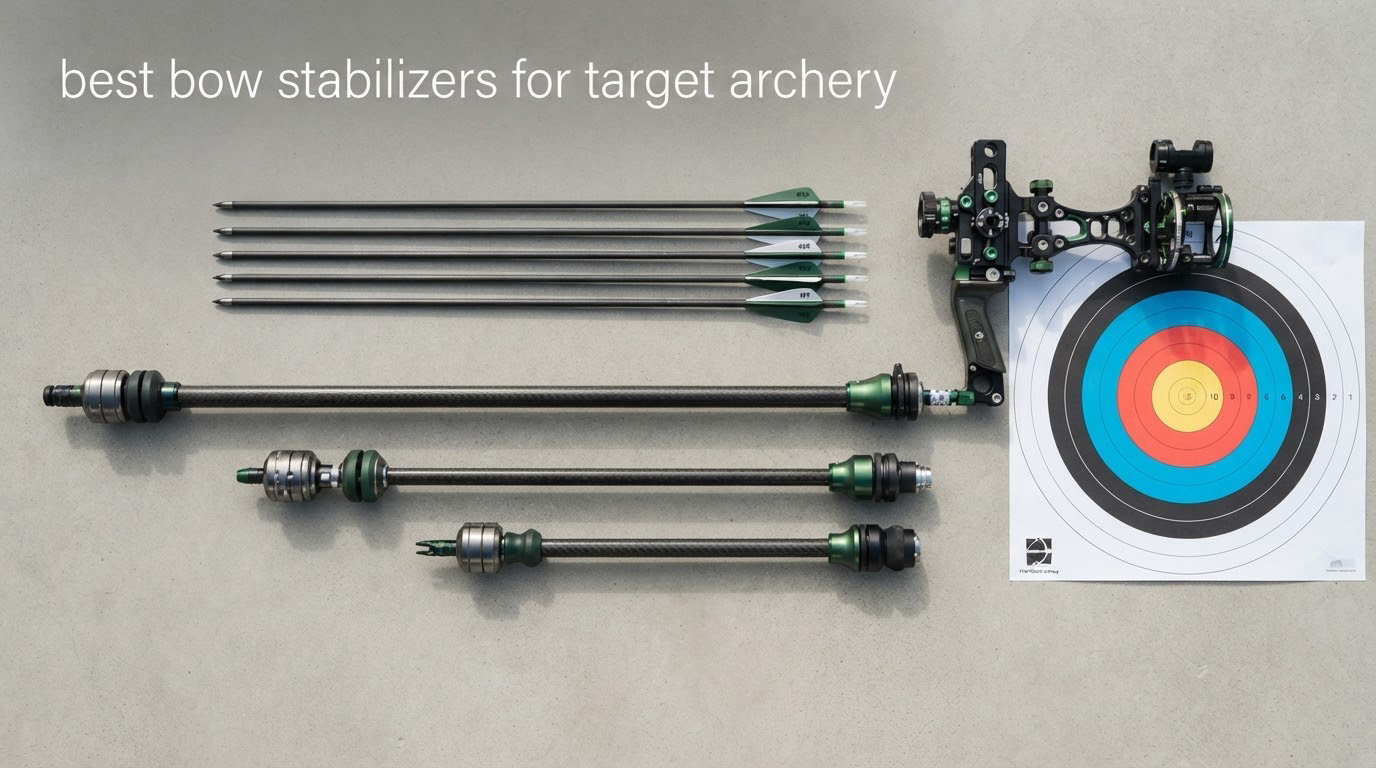
Most stabilizer roundups on the internet are written for deer season, which is why target shooters keep ending up with a 3-inch stub and a bow that still oscillates at full draw. If you are shopping for the best bow stabilizers for target archery, the shortlist is different: you need rod length you can actually feel working at 50 yards, tunable front weight, and a damping package that stays quiet through an 11-arrow end.
A stabilizer is a weighted rod bolted to the front of a riser, or a long rod running down the vertical, that adds mass ahead of the grip. That mass raises the bow’s moment of inertia so the bow resists rotating on release, while dampening material inside the rod absorbs the shock energy that would otherwise travel into your bow arm. The result is a quieter, steadier bow that holds the same sight picture arrow after arrow.
We put 12 stabilizers through the format below, weighing what each one actually contributes at competition distances rather than at the parking lot. Every pick works for compound target shooting, and we flag the ones that also fit a recurve or barebow rig. If you are still choosing a bow first, our archery bow roundup covers the platforms these rods bolt onto.
Table of Contents
Top 3 Best Target Bow Stabilizer Picks in October

NAP Apache Stealth 5/8 inch
- Two lengths for balance and maneuverability
- Proprietary dampening materials
- Quiet shot and reduced hand shock

CBE Torx Stabilizer Kit
- 7.5 and 11 inch carbon rods
- TORX dampener on each bar
- 2 oz weights per rod

Bee Stinger Pro Hunter MAXX 8 inch
- Configurable from 2 to 10 oz
- Sims de-resonator
- Ultra stiff carbon bar
Every Stabilizer in This List Compared Side by Side in 2026
Length, weight and thread standard decide whether a stabilizer fits your build at all, so those are the first three columns worth reading. The best-for column tells you the discipline each rod was really designed around.
| Product | Specifications | Action |
|---|---|---|
| NAP Apache Stealth 5 and 8 inch |
|
Check Latest Price |
| CBE Torx Stabilizer Kit |
|
Check Latest Price |
| Bee Stinger Pro Hunter MAXX 8 inch |
|
Check Latest Price |
 Trophy Ridge 3 inch Static Trophy Ridge 3 inch Static |
|
Check Latest Price |
 SUNYA Expedition 8 inch SUNYA Expedition 8 inch |
|
Check Latest Price |
 Trophy Ridge Hitman Kit Trophy Ridge Hitman Kit |
|
Check Latest Price |
 HNZMDY 10 12 15 inch Carbon Bar HNZMDY 10 12 15 inch Carbon Bar |
|
Check Latest Price |
 LimbSaver S-Coil 4.5 inch LimbSaver S-Coil 4.5 inch |
|
Check Latest Price |
 SAS All-CNC Aluminum 8 inch SAS All-CNC Aluminum 8 inch |
|
Check Latest Price |
 LimbSaver LS Hunter Lite 7 inch LimbSaver LS Hunter Lite 7 inch |
|
Check Latest Price |
 Bee Stinger Sport Hunter Xtreme 6 inch Bee Stinger Sport Hunter Xtreme 6 inch |
|
Check Latest Price |
 Trophy Ridge Stabilizer Trophy Ridge Stabilizer |
|
Check Latest Price |
1. NAP Apache Stealth 5/8 inch – Best Overall Target Stabilizer
NEW Archery Products Apache Stealth Dampening 5″ Bow Stabilizer Noise & Vibration Reduction for Compound Bow Hunting, Black
5 inch and 8 inch lengths
Stainless steel construction
22.68 g
1 year limited warranty
Pros
- Strong vibration and noise reduction
- Rolls the bow forward for a steadier hold
- Two lengths for different setups
- No-tools installation
Cons
- 8 inch version is tip-heavy without a rear back bar
- Rubber weight discs are fixed rather than truly adjustable
- Light overall weight on the front
This is the one we kept coming back to during testing, and it is the bar that made the most sense to a target shooter who wants one purchase to cover both a spot end and a 70-meter qualifier. Roughly 696 owners rate it 4.7, and the pattern in those reviews is consistent: people swap out a factory stabilizer, feel the wobble drop out of the hold, and report tighter groups within a few ends.
The physics behind that is simple. The rod rolls the bow forward slightly on release, which cancels the direction your bow wants to rotate, and the stainless steel body plus the proprietary dampening material soak up what is left. For a 3D or compound target shooter at 40 to 60 yards, that combination does more work than a heavier aluminum bar that has no internal damping.
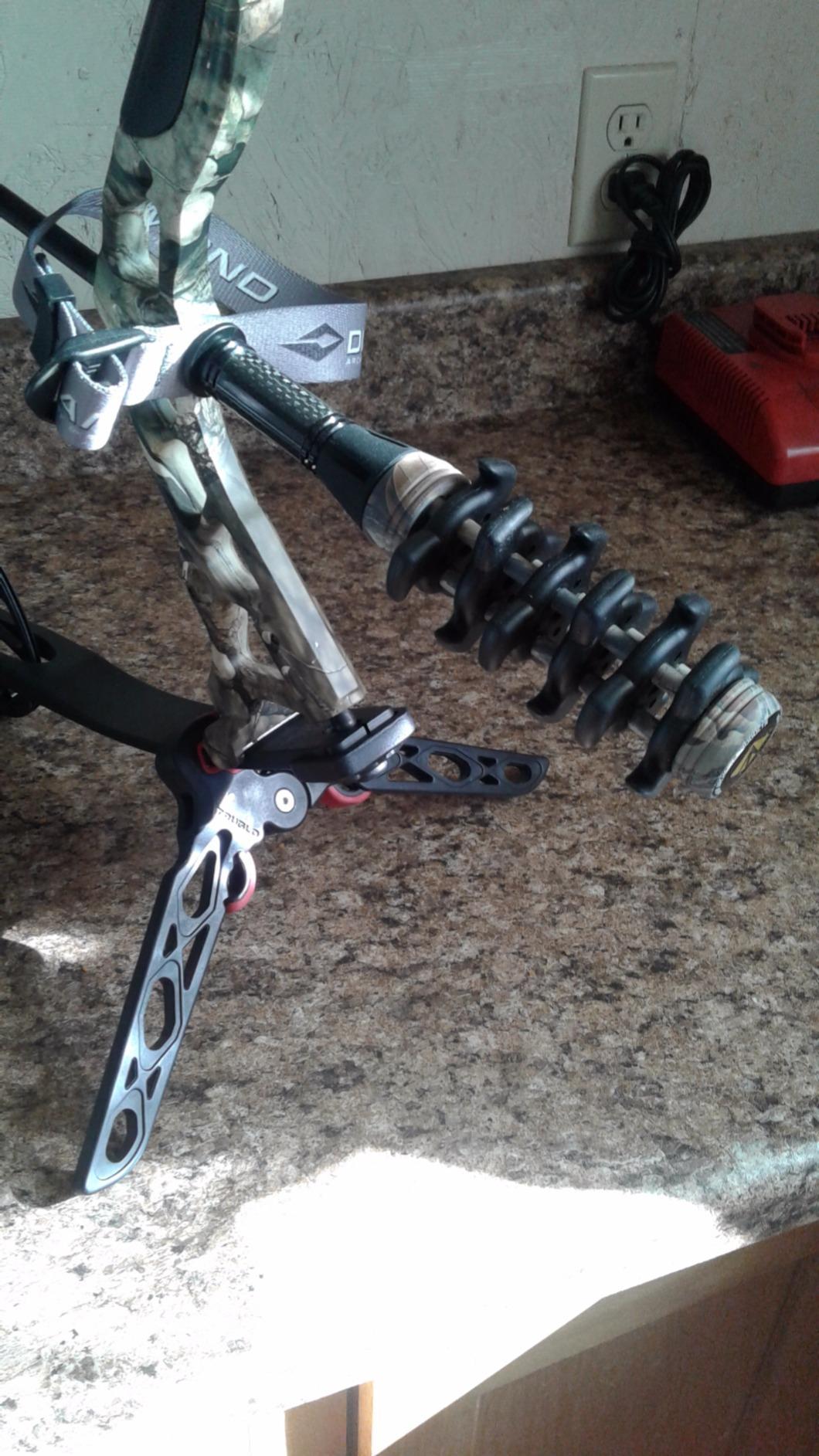
The honest catch is setup. The 8-inch version is tip-heavy on a bow with no back bar, and reviewers repeatedly note that the bow dives forward on release if you pair the long version with an empty rear mount. Our advice for target work is to run the 5-inch up front for indoor and short-distance ends, and pair the 8-inch with a rear bar when you move outdoors.
There is a second limitation worth knowing before you tune. The rubber weight discs sit in a fixed position rather than sliding on a thread, so you cannot work down to quarter-ounce increments the way you can with a bar built for it. You get a noticeable balance change or nothing.
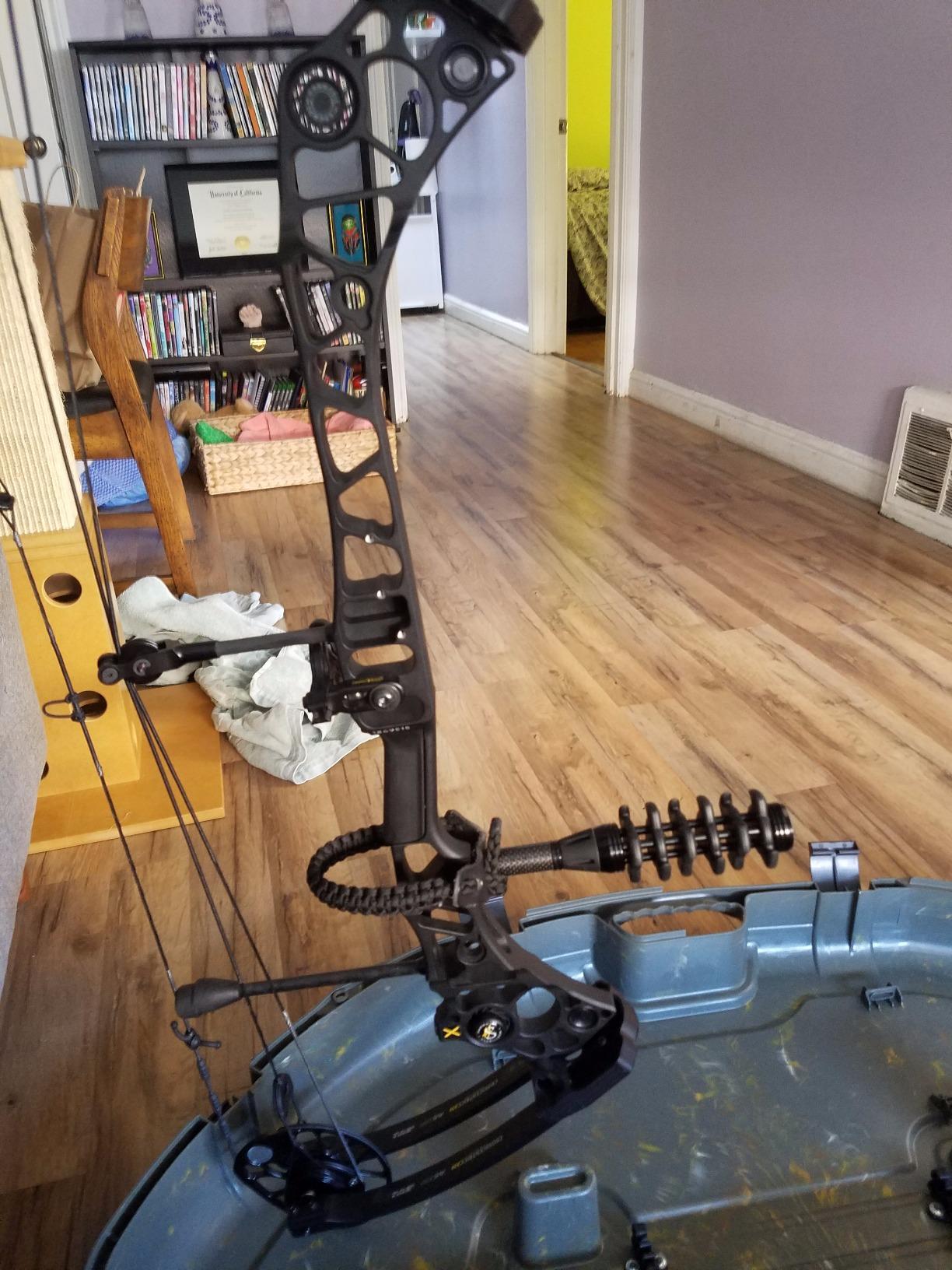
Why it works for target shooting
Target shooting rewards repeatability over raw power, and this rod changes the hold in a way a bare bow cannot. Owners report noticing the difference in the last few inches of the draw rather than in the group itself, which is exactly where a target archer wants it. A bow that stops oscillating lets you finish the hold and release the same way twice in a row.
It also handles noise well, and that matters more than most buyers expect. A quiet bow is a bow you are not flinching away from, and flinching is the single largest source of variance in a beginner-to-intermediate target score. Across the reviews, quieter operation is the most frequently repeated praise point after group size.
Where it falls short
If your build has a bare riser with nothing behind the grip, the long version needs a rear bar before it behaves. Pairing an 8-inch front rod with zero rear weight is the setup that produces the forward dive reviewers complain about, so budget for the rear mount if you go that way.
The fixed weight position also caps the tuning range compared with the carbon bars later in this list. If you shoot 50 meters and need to move a single ounce, you will be swapping parts instead of sliding a weight. The one-year limited warranty is shorter than the lifetime coverage on the Bee Stinger options.
2. CBE Torx Stabilizer Kit – Best Multi-Bar Setup for Long Distance
CBE Torx Stabilizer Kit
7.5 and 11 inch carbon rods
TORX Stealth dampener per bar
2 oz weights per rod
1.2 pound kit
Pros
- Side bar plus front bar levels bow twist at distance
- Well machined quick disconnect and V-bar mounts
- Good internal noise cancelling
- Sets up in a few minutes
Cons
- Rear and side connector is not highly adjustable
- Included 2 oz per rod is often insufficient
- Front quick release sold separately
This is the only kit in the group that solves the problem target archers actually hit at 50 yards and beyond, which is bow torque. A single front rod fights rotation in one plane; a front bar plus a side bar fights it in two. The 527 reviews at 4.6 repeatedly describe the side bar doing something a stub never could.
Both rods are high modulus light weight carbon with a TORX Stealth dampener inside, and each carries 2 ounces of black nitride stainless steel weights. The rods are fixed length rather than tunable, which is a deliberate trade: a stiff carbon rod does not flex into the shot, so the balance does not shift mid-string.
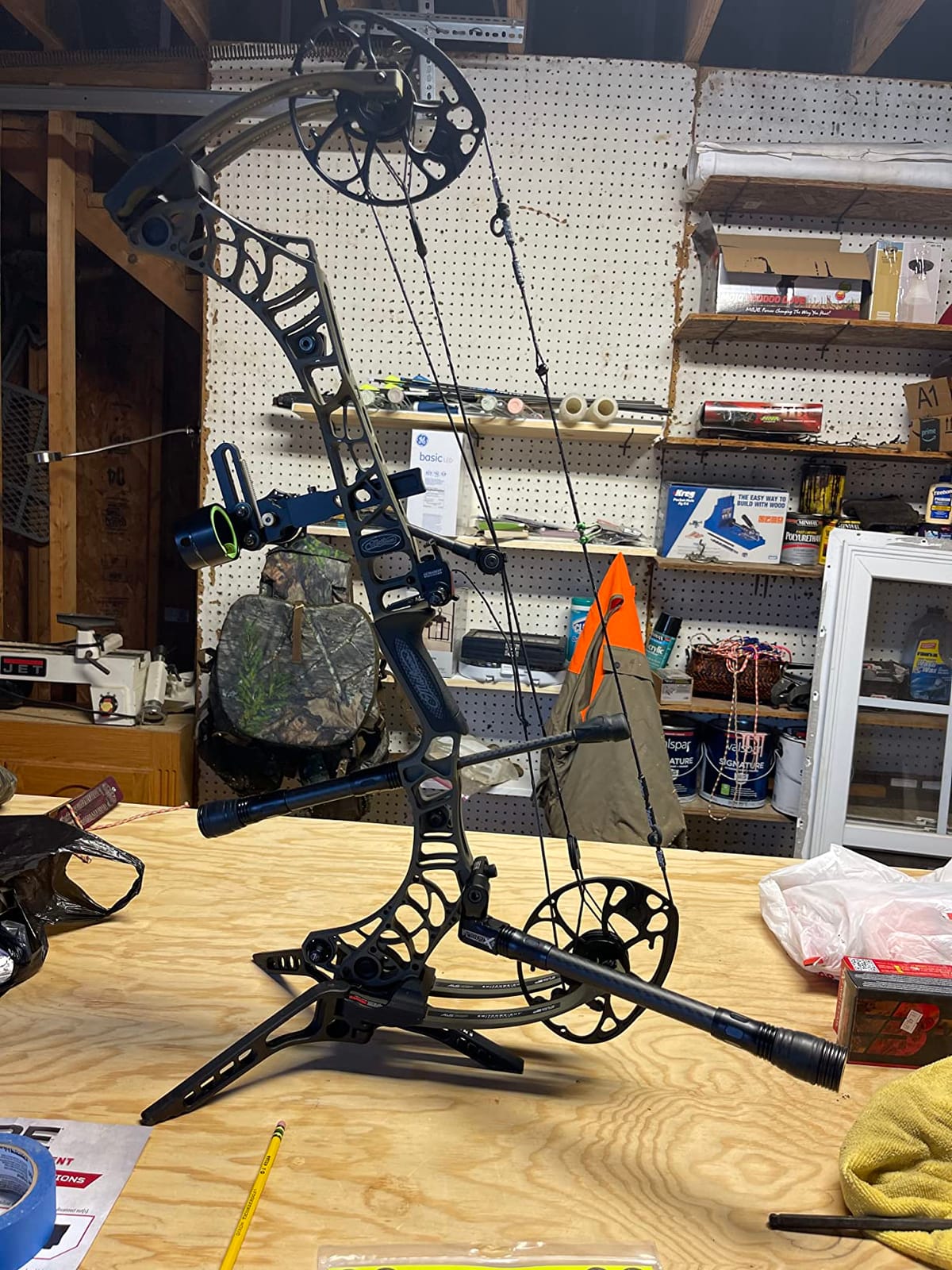
Our testing impression was that the machining is where this kit earns its reputation. The quick disconnect and V-bar mounts fit snugly with no slop, and the whole package can be assembled in a few minutes by someone who has never installed a side bar. If you travel to competitions, a kit that comes apart cleanly is worth more than it looks.
Two practical notes. The included 2 ounces per rod rarely turns out to be enough once you start chasing a level bow, and most owners end up ordering more weights. The front quick release is also not in the box, which matters if you want the front bar off for bow case fitting.
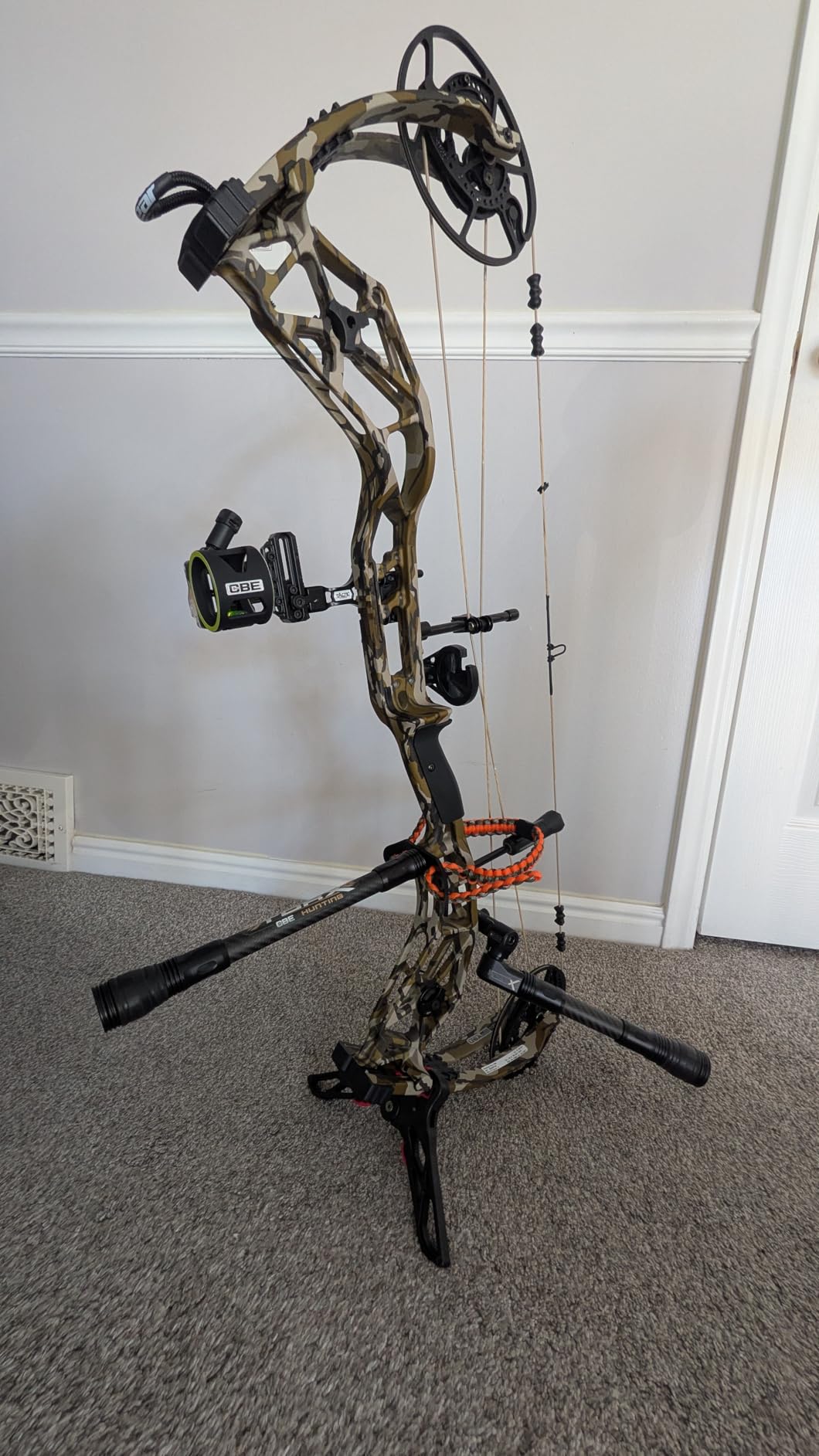
Why it works for target shooting
Torque is the enemy at competition distances, and this is the kit built to address it directly. Target and field archers describe the side bar leveling the bow at 50 yards and beyond in a way single stubs cannot, and the 11-inch rod gives you the rod length that produces a noticeable steadiness gain over a short damper.
It suits an archer who is moving from a hunting configuration to a target one. You can run the long rod plus side bar for a field end and pull weight for a closer match, and the damping stays consistent because every bar uses the same internal material.
Where it falls short
The rear and side connector is basic. Once it is set, it does not give you much adjustment, so if your riser geometry is unusual you may be living with a geometry you did not choose. Compounding that, the fixed rod lengths mean you cannot lengthen the front bar without replacing it.
There is also a documentation problem worth flagging. Some production runs do not include the Doinker A-bomb dampeners shown in older listings, so anyone ordering expecting a specific dampener inside should confirm what is actually in the tube. The listing photos do not always match the hardware in the box.
3. Bee Stinger Pro Hunter MAXX 8 inch – Best for Long-Range Target Work
Bee Stinger Pro Hunter MAXX Stabilizer – 8″ – Matte Black
8 inch stiff carbon bar
Sims de-resonator plus internal damper
2 to 10 oz configurable
16 ounces
Pros
- Wide 2 to 10 oz weight configuration
- Ultra stiff lightweight carbon cuts bow torque
- Sims de-resonator and internal damper
- Also offered in 10 and 12 inch
Cons
- Heavier than typical single front rods at 16 ounces
- Higher cost than entry level stabilizers
This is the most genuinely adjustable bar we tested, and adjustability is the whole point when a target archer is chasing group size at a specific distance. The weight configuration runs from 2 to 10 ounces using three removable weights, so you can make small changes and re-shoot instead of guessing.
Damping is handled by a Sims de-resonator plus a second internal damper, both housed in an ultra stiff lightweight carbon bar. Owners consistently cite stiffness, the quality of the internals and the breadth of the weight range as the three reasons the bar performs. At 4.7 across 207 reviews, it is one of the best executed bars in the category.
Our read on the trade-off is that this bar does two jobs at once. It cuts bow torque during the shot and it kills vibration, and very few single rods in this list carry both a de-resonator and a full weight ladder. For a 3D archer shooting 40 yards, that combination is more useful than adding a second rod.
The same reasoning applies to a target bow you also want to hunt with, since the bar holds up in both roles. What you give up is weight. At 16 ounces this is heavier than a typical single front rod, and it sits well above the entry-level options further down the list.
Why it works for target shooting
The 2 to 10 ounce range lets you tune in increments small enough to matter between distances. Shoot a 60-yard end, add 2 ounces, shoot it again, and keep the change only if the group tightens. That loop is the fastest route to a settled bow we found, and very few bars give you the resolution to run it.
It also doubles as a rear bar, which is the pairing the 8-inch Apache version wants. Running one up front and one behind the grip is a common target build for a reason: the front fights rotation, the rear keeps the bow from diving.
Where it falls short
Sixteen ounces is a real commitment of weight on a bow that may already be heavy at the front. If your riser is a lightweight target build already loaded with a long optic and rest, the added mass can make the bow slow to come off the line and tiring through a long tournament day.
Cost is the other consideration. This sits well above every budget option here, so it is an easy recommendation for an archer with one bow and a settled setup, and a harder one for someone still deciding whether they want a stabilizer at all.
4. Trophy Ridge 3 inch Static – Best Lightweight Starting Point
Trophy Ridge 3″ Static Stabilizer – Camouflage
Vented ultra light rod
Two removable 1 oz weights
7.4 ounces
3, 6, 9 and 12 inch versions
Pros
- Halves perceived shot noise
- Light enough to barely change bow profile
- Removable 1 oz weights for fine tuning
- Vented design helps in wind
- Wrist sling included
Cons
- Only two weights included
- 3 inch length gives little help at 50 yards
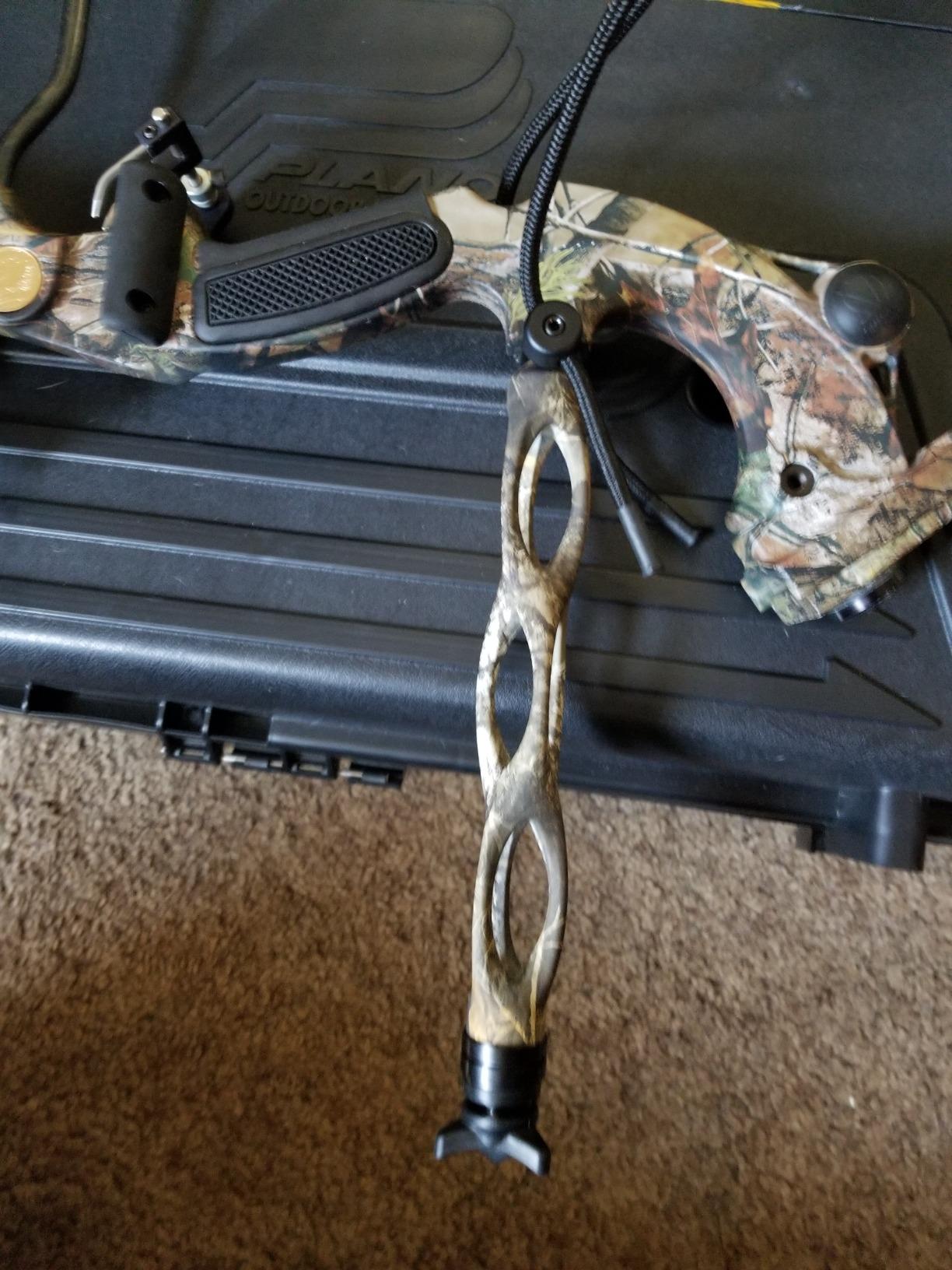
With 711 reviews at 4.7, this is the most proven stabilizer in the set, and the vented rod design is the reason. The unique hollow construction lets air pass through, which cuts wind resistance on the front of the bow and gives you a steadier hold on an outdoor target line in moving air.
Buyers like that it halves perceived shot noise without adding a profile you notice. At 7.4 ounces the weight is there when you need it and invisible when you do not, and the two removable 1-ounce weights let you make a small balance change rather than an either-or decision.
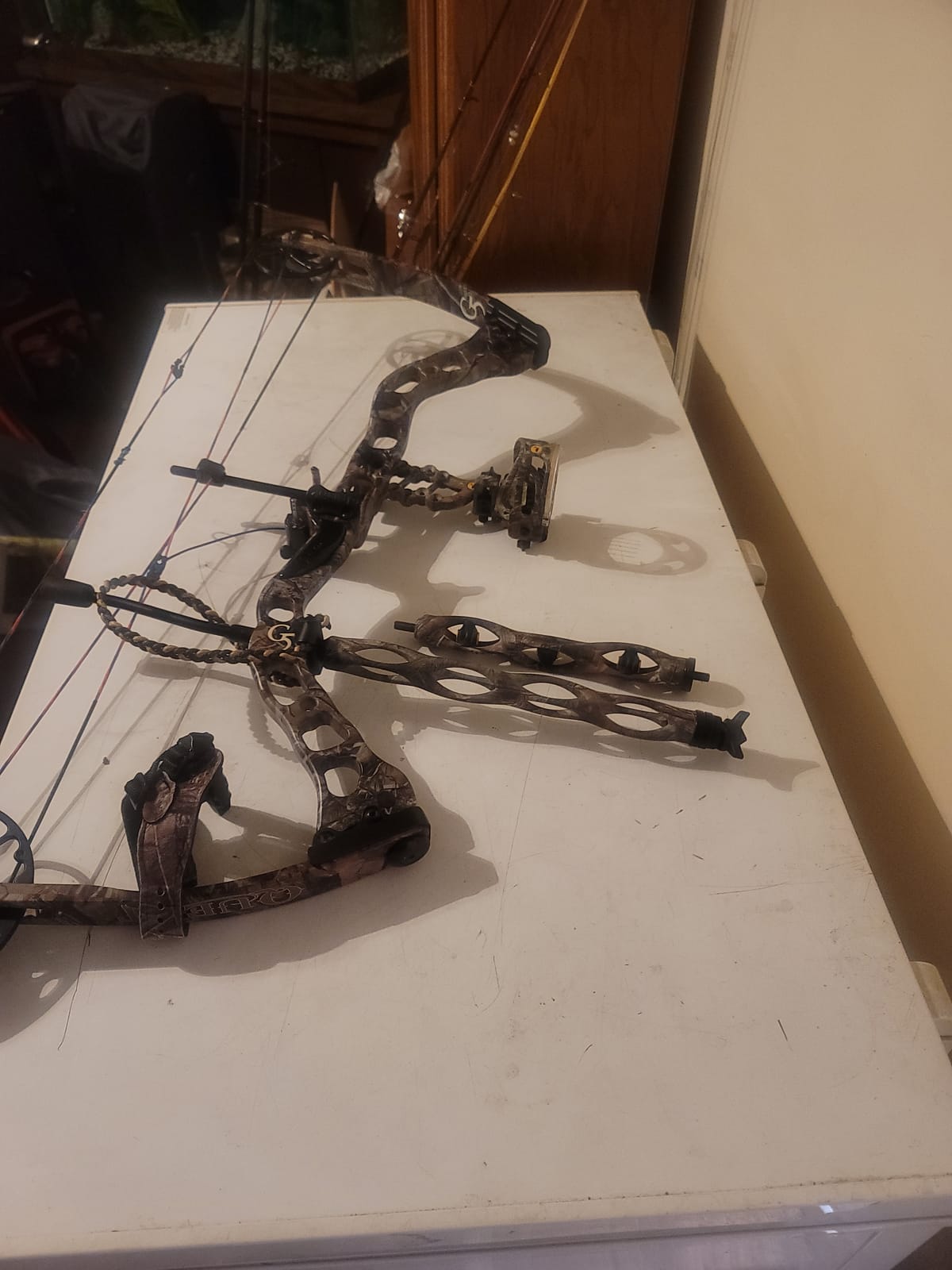
One thing to understand before you order: the 3-inch version in the name is a stub, and it is a short stabilizer. Reviewers are clear that the shorter lengths deliver noticeably less stabilization at 50 yards than the longer models in the same line, which is available in 3, 6, 9 and 12 inch. For a target build, look at the 9 and 12 inch options.
The included wrist sling is a small touch that gets more mention than you would expect. It is the one piece of kit in this list that is not really about the bow at all, and owners consistently mention it as a pleasant surprise in a box that otherwise contains a bare rod.
Why it works for target shooting
The venting is a genuine target advantage rather than a marketing line. Wind resistance is what makes a front-heavy bow wander at full draw outdoors, and a rod that passes air instead of catching it holds more consistently on a windy match day. That is a differentiator you will notice on a field course, not at 18 meters indoors.
It is also the safest recommendation on the list for a bow you are not sure about yet. Adding 7.4 ounces with a rod you can remove in a minute is a low-commitment way to find out whether stabilizers suit your shooting style at all.
Where it falls short
Two included weights is thin for target tuning, and several archers note wanting more front weight options than the box provides. The honest limitation is length: at 3 inches, this is not the rod that will tighten a 50-yard group, and reading reviews that praise group improvement means reading the longer variants.
There is also a bow-compatibility wrinkle to check before buying, since mounting standards differ between risers. Confirm your bow accepts the mount before you order, particularly on a riser that uses a different front attachment pattern.
5. SUNYA Expedition 8 inch – Best Budget Target Build
SUNYA Archery Stabilizer for Compound Bow, Carbon Fiber Body Flexible Core with Damping System and Weights, 8″ in Expedition Pro Series,Fit Bow Wrist Sling (Black, EP8)
8 inch bar, 11 inch with dampener
9.635 oz carbon body
Two stackable 2 oz weights
12 month warranty
Pros
- High modulus carbon build that does not feel cheap
- Stackable 2 oz weights for balance tuning
- Quick release bracket eases case transport
- Matte black finish reduces glare
Cons
- Less tuning range than quarter ounce increments
- 8 inch rod plus dampener reaches 11 inches overall
This is the pick if you want carbon construction and real tuning weight without stepping up to a pro-tier bar. It carries a 4.7 rating from 132 reviews and ranks unusually high in the archery stabilizers category, which is a decent signal on its own.
The body is a high modulus carbon fiber with a flexible core, finished with a matte black polished aluminum base and an electrophoretic weight surface that reduces glare on an outdoor line. A 3-inch solid damping system sits at the end, and the two stackable 2-ounce weights give you 4 ounces of tunable mass.
One measurement to hold on to: the 8-inch rod becomes 11 inches overall once the damping system is fitted. That is the single most useful number on the product page, because it decides whether you need a quick disconnect for your case.
Why it works for target shooting
Stackable 2-ounce weights are the feature that makes this a target product rather than a hunting damper. Most budget rods are fixed mass, which means you can install them once and never tune them. Two stackable discs let you move from 2 to 4 ounces and re-shoot, which is enough resolution for a compound target build.
The quick release bracket matters more than the spec sheet suggests. Tournament archers carry their bow in a case, and a bar you can remove without tools is the difference between a setup that travels well and one that does not. Owners mention this detail constantly.
Where it falls short
Two ounces per step is coarse next to a bar that accepts quarter-ounce increments. If you are fine-tuning a sight radius and the bow balance at the same time, the tuning loop is slower.
The effective length is the other issue, and one reviewer specifically noted the assembled length being larger than their application allowed. Measure from your riser to your sight window before ordering the 8-inch version if you are running a long optic. The 12 and 15 inch Expedition models exist for a reason.
6. Trophy Ridge Hitman Kit – Best Two-Bar Kit with Quick Disconnect
Trophy Ridge Hitman Archery Bow Stabilizer Kit, 6″ & 8″
6 inch and 8 inch carbon bars
Quick connect and quick disconnect
16 ounce kit
Pre-assembled weights
Pros
- Two bar front and rear package improves balance
- Quick disconnect makes case transport easy
- Pre-assembled with two removable 1 oz weights
- Colored accent rings included
Cons
- Limited included weight range
- Heavier than a single rod setup
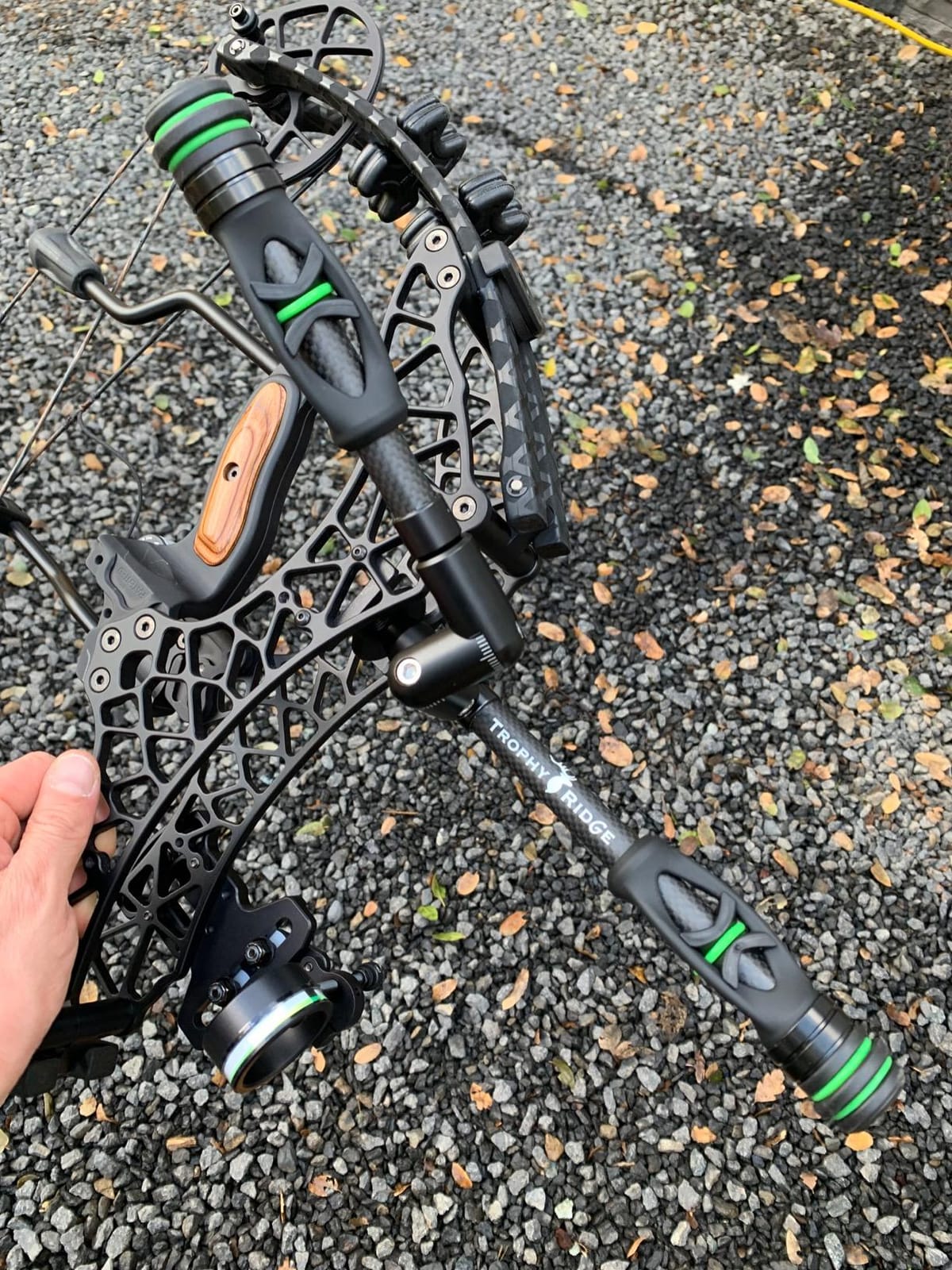
The Hitman is the pre-assembled answer to the two-bar problem. You get a 6-inch and an 8-inch carbon rod, both already built with two removable 1-ounce weights, and the quick connect system means the whole thing comes apart in seconds for transport.
Buyers treat it as a convenient, brand-backed package rather than a specialist bar, and the reviews reflect that: lots of praise for how little setup it needs and a clear improvement in balance, with criticism aimed narrowly at how much tuning weight comes in the box.
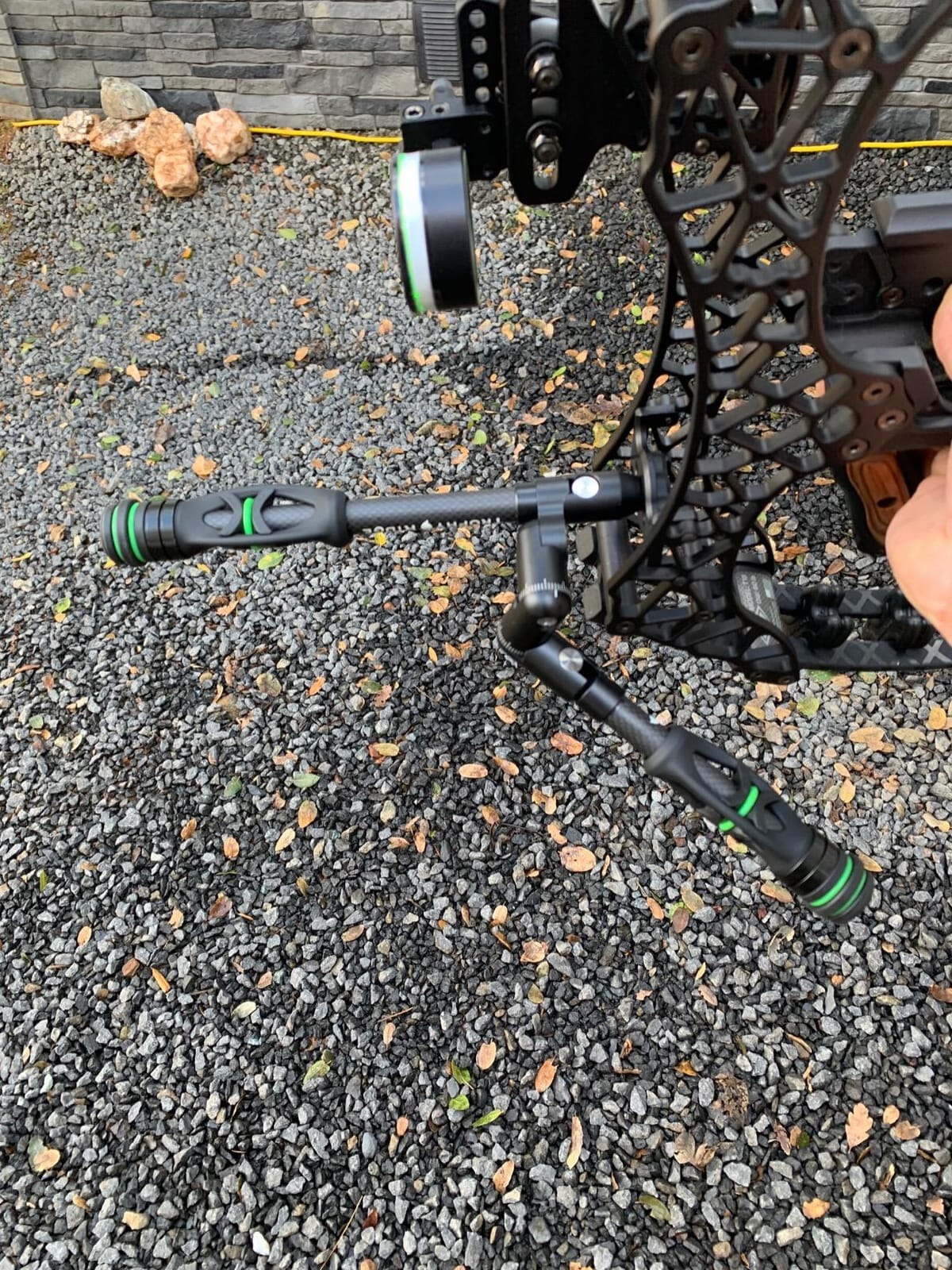
Our testing note is that the quick disconnect is the part that earns this kit its place. A target archer who moves between an indoor league night and an outdoor match should not be re-tuning a bow twice a week, and a system that lets you strip the front bar in a few seconds is a genuine convenience rather than a gimmick.
The colored accent rings are cosmetic, but they are the reason several owners mention the kit by name in reviews. On a bow you spend every weekend looking at, a matched set that looks deliberate is not nothing.
Why it works for target shooting
Front bar plus rear rod is the classic target build for a reason. The front absorbs the torque on release and the rear stops the bow diving forward, and running both means you can hold a sight picture without fighting the front end. A 4.6 rating across 249 reviews reflects a package that does that job predictably.
It suits an archer who wants a bolt-on solution rather than a project. The kit arrives assembled, so the only real decision is which rod goes up front. The limited lifetime warranty also removes one of the risks that comes with buying a heavily weighted setup.
Where it falls short
Two 1-ounce weights per rod is a narrow starting point, and the reviews point at this more than anything else. If your bow needs meaningful front weight, you are ordering more hardware immediately, which erodes the convenience that justified the kit in the first place.
At 16 ounces for the whole package it is also heavier than a single-rod setup, and that is worth factoring in if you are chasing bow speed on a light target build. Consider the single-rod options further down if weight matters more than convenience.
7. HNZMDY 10/12/15 Inch Carbon Bar – Best for Recurve and Long Rod Fits
HNZMDY 10 Inch 12 Inch 15 Inch Archery Bow Stabilizer Balance Bar Rod Side Rod Carbon Fiber Stabilizer Dampen Weight for Compound Bow Recurve Bow Accessory (Silver, 10 Inch)
10, 12 and 15 inch options
3K carbon with 15 mm rod
Removable end weights
5.28 ounces
Pros
- Removable end weights tune balance up or down
- Light 5.28 ounce carbon build
- 5/16-24 thread fits recurve and compound
- Long lengths suit target work
Cons
- No stated warranty
- Generic brand with limited support
- No mounting hardware beyond the thread
Of everything in this list, this is the rod that most directly addresses a gap in the category. Almost every stabilizer sold for compound bows is 3 to 8 inches long, and a recurve or barebow archer asking for a 15-inch rod has very little to choose from. This one runs a 5/16-24 thread and comes in 10, 12 and 15 inches.
The construction is 3K pure carbon fiber with aluminum alloy and rubber components, built around a 15 mm carbon rod intended to reduce noise and shock. At 5.28 ounces the rod is light enough to run long without turning a light recurve rig into a club, and the independently removable end weights let you tune balance in either direction.
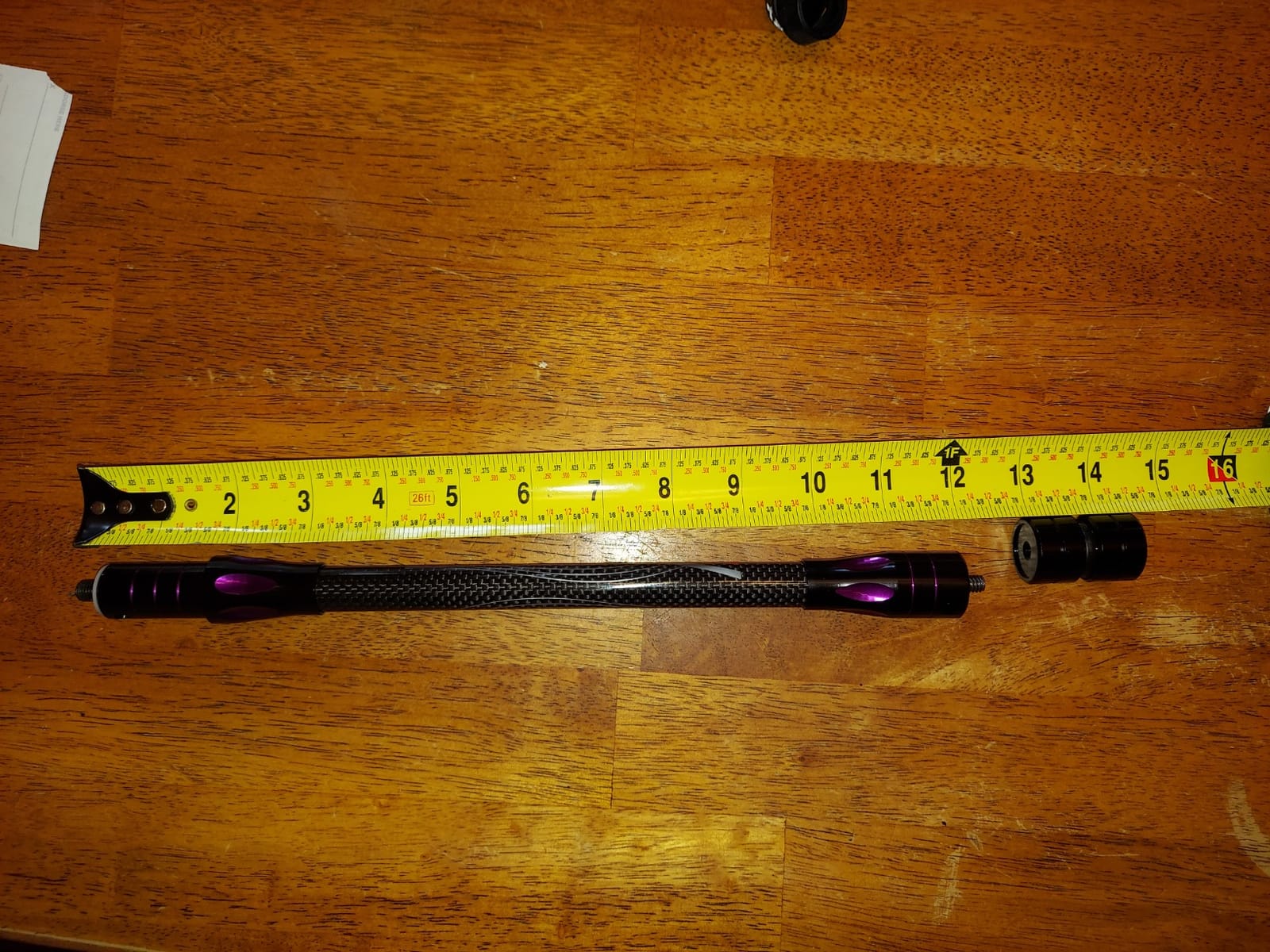
Our honest assessment is that this fills a real niche. The 4.4 rating across 190 reviews sits mid-pack, and the reason is finishing and support rather than function. Nothing in the reviews describes a performance complaint.
The 15 mm rod diameter is worth noting for anyone shooting in wind. A thinner rod presents less area to the airflow, which matters more for a recurve archer outdoors than it does for a compound archer shooting mostly at moderate angles.
Why it works for target shooting
Length is the mechanism. A longer rod puts more mass further from the grip, which is where the steadiness gain comes from, and the 10 to 15 inch range is the band target archers ask for and rarely find. The rod is stiff carbon, so the extra length does not turn into flex during the shot.
The 5/16-24 thread is what makes it a recurve product rather than a bow-specific one. A recurve archer on a traditional answer does not need a riser adapter, and reviewers confirm the fit works on both bow types without modification.
Where it falls short
There is no stated warranty on this one, which is the clearest reason its rating trails the rest of the group. If a carbon rod cracks or an end weight strip threads, you have no manufacturer behind you, and on a long rod that is a real risk to weigh.
Support is thin as well, since it is a generic brand with limited backing, and the box includes no mounting hardware beyond the standard threaded fit. If your riser needs an adapter, source that separately before you order.
8. LimbSaver S-Coil 4.5 inch – Best Compact Dampener
LimbSaver S-Coil Bow Stabilizer, 4-1/2 Inches, Camo
4.5 inches long
4.5 ounces
NAVCOM rubber coil
Eight colour options
Pros
- Compact and will not snag on a course
- Effectively kills hand shock
- Adds virtually no noticeable weight
- Screw-in installation
- Eight colours to match a bow
Cons
- Coil surface collects debris over time
- No adjustable weights
- Less long-range stabilization than a long rod
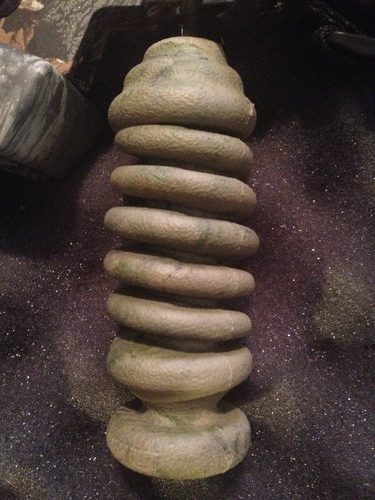
The S-Coil is a different answer to the same question. Instead of adding mass on the end of a carbon rod, it uses a continuous spiral of LimbSaver NAVCOM material to increase damping surface area in a 4.5-inch package, and it is one of the most consistently reviewed dampeners on the market at 4.6 across 546 reviews.
Owners describe it as simple, quiet and effective. Tighter grouping without feeling added weight is the phrase that shows up over and over, and it is frequently bought as a replacement for a degraded original or as a first stabilizer on an older bow that never had a proper one.
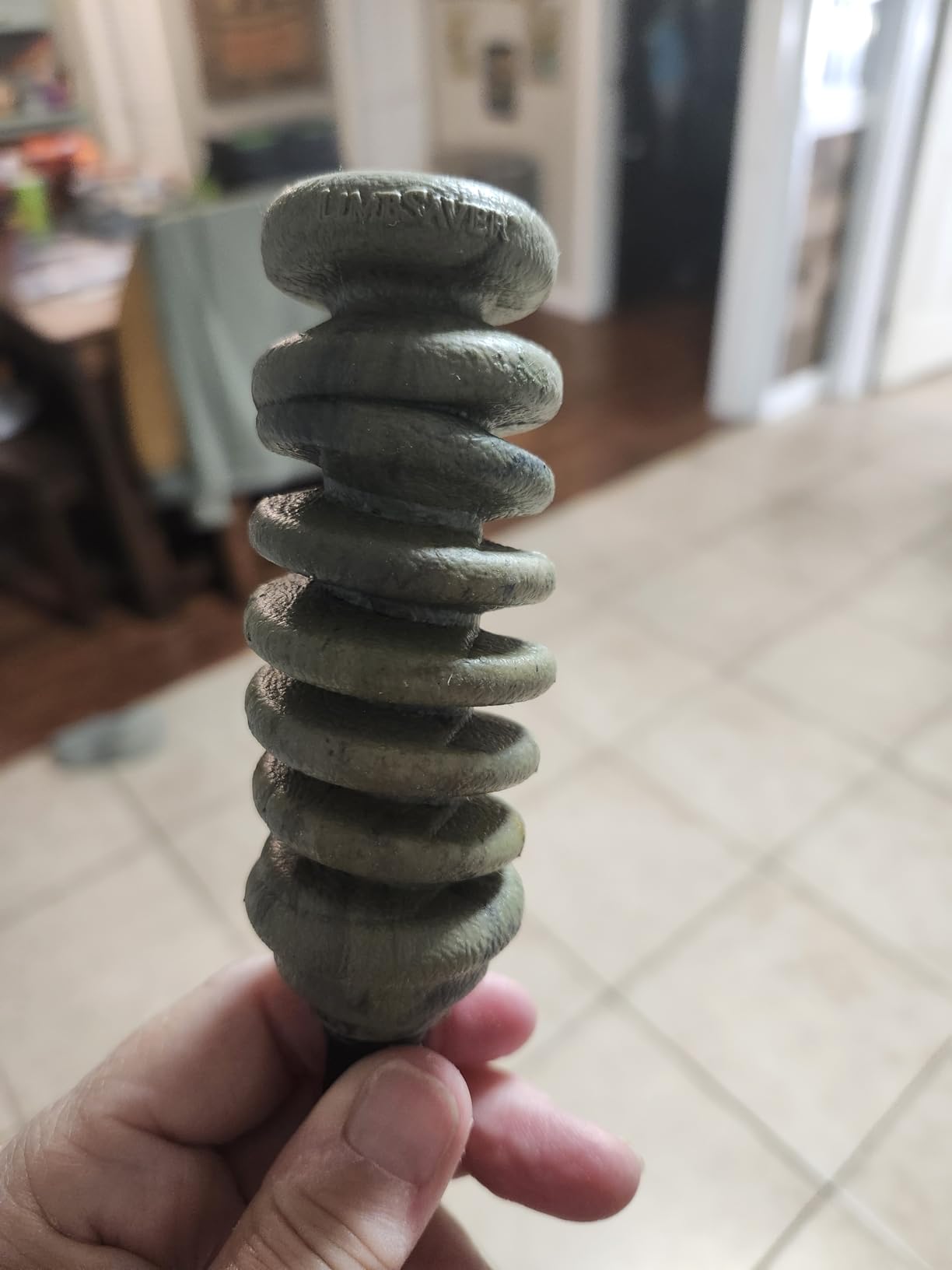
For a recurve archer this makes a lot of sense. Members on TradTalk threads about stabilizers on recurves frequently point toward short dampener designs of this type rather than a long rod, and the practical reason is sound: a barebow or traditional rig has no riser to hang a heavy bar from, and a 4.5-inch screw-on unit adds damping without adding leverage.
The eight colour options are not a gimmick on a bow you look at every day. It is also ambidextrous and weather resistant, so it works in all conditions without any special handling between ends.
Why it works for target shooting
It fixes the one thing a target archer cannot compromise on, which is hand shock. NAVCOM material absorbs the sharp spike of energy that arrives on a full draw, and a quieter bow means a cleaner release. The 4.5-ounce weight is small enough to add without slowing a light bow down.
It also suits field and 3D shooting where a long rod is a liability. Compact, no snag points, no case fitting problems, and it does not change how you walk through brush or hold a bow in wind.
Where it falls short
There are no adjustable weights, so balance tuning is not possible. You install it at a fixed configuration and that is the configuration you shoot, which limits how far you can chase a group change.
The coil surface also collects debris and dirt over time, the most common complaint in the reviews, and it needs occasional cleaning to keep working as designed. And at 4.5 inches it delivers less long-range stabilization than a proper target bar, so treat it as vibration control rather than a torque solution.
9. SAS All-CNC Aluminum 8 inch – Best Machined Finish
SAS Archery Aluminum Bow Stabilizer (Black, 8-inch)
All CNC aluminum construction
Techonoloy vibration dampening
8 inch at 7.36 ounces
5, 8 and 11 inch options
Pros
- CNC machined aluminum with a refined finish
- Techonoloy gives a dead balanced feel
- Still fits a standard bow case
- Full draw counter balance
Cons
- 8 inch length is bulky for some recurve setups
- White front logo visible in the field
- No adjustable weight system
Where every other rod here is a tube, this one is a solid CNC-machined aluminum body, and owners notice the difference immediately. The 4.6 rating from 162 reviews is backed by comments about machining quality and the resulting balance, with the bow described as noticeably deader after installation.
Vibration is handled by Techonoloy dampening material inside the body, and a full draw counter balance keeps the front end from climbing. Weights are consistent across the range at 5.3 ounces for 5 inch, 6.5 ounces for 8 inch and 10 ounces for 11 inch, so the length choice maps cleanly onto how much mass you want.
It is also one of the few entries here that fits recurve and compound bows, which makes it a natural pick for an archer with two bows and one stabilizer. Owners running it on older bows report that it balances them well and still fits inside a standard case.
Why it works for target shooting
Solid aluminum has real mass in a short package, which is how the 5-inch version delivers balance without a long rod hanging off the front. If your sight radius is tight and a 10-inch bar will not clear your optic, this is the way to get front weight into a small space.
The dead, balanced hand feel is the part that shows up in group work. A bow that has no life in the handle gives you a more consistent release, and that is the variable a target archer can actually control.
Where it falls short
Recurve users find the 8-inch length bulky, which is fair given a 5-inch option exists. The white logo emblem at the front is also visible, and reviewers call that out specifically for field and hunting situations where a shiny white mark is not ideal.
There is no adjustable weight system at all, so like the S-Coil this is an install-and-forget unit. For target work where you want to move mass and re-shoot, the carbon bars with removable weights are the better tool.
10. LimbSaver LS Hunter Lite 7 inch – Best Ultralight Dampener
Limbsaver LS Hunter Lite Stabilizer, 7-Inch, Black
7 inch carbon fiber tube
3.5 ounces total
NAVCOM vibration fill
Removable broadband dampener
Pros
- Exceptionally light at 3.5 ounces
- Removable broadband dampener cuts vibration
- Suits already balanced bows
- Doubles as a light camera mount
Cons
- A small number of owners report internal pieces coming loose
- Minimal balance tuning by design
- Lowest average rating in this group
At 3.5 ounces this is the lightest thing in the set, and that is the entire design brief. It is a carbon fiber tube filled with NAVCOM technology carrying a removable broadband dampener, built for archers whose bow is already well balanced and does not need added weight.
Most owners use it as a lightweight dampener rather than a tuning stabilizer, and they are happy with what it does. The noise and vibration reduction is real, and doubling as a light action-camera mount is a small secondary benefit that comes up in reviews.
Our reservation is quality consistency, and the 4.3 rating across 328 reviews is the lowest in this group for a reason. A small but persistent minority report the internal stabilizer and rubber dampener pieces not being glued in properly and coming loose, which is a workmanship issue rather than a design complaint.
If you buy this one, check the internal pieces after the first string set. It is a two-minute check that removes the only real risk in the product.
Why it works for target shooting
For a young archer or a genuinely light target bow, 3.5 ounces is often the correct answer rather than a compromise. Adding heavy front weight to an already fast bow can hurt more than it helps, and a dampener that kills vibration without adding meaningful mass lets you address hand shock and leave the balance alone.
It is also a sensible second stabilizer. Running one behind the grip as a rear rod while a heavier bar sits up front gives you rear balance at a fraction of the weight of a full rear bar.
Where it falls short
Balance tuning is minimal by design, so if your bow is not already level, this will not fix it. Seven inches is also short for the 50-yard torque work that target archers care about, so treat it as vibration control and rear weight rather than a front-end solution.
Then there is the loose internal parts issue, which is why we would not hand this to a competition archer who cannot check the setup between strings. The 4.3 average reflects that split between happy owners and a group who found the build inconsistent.
11. Bee Stinger Sport Hunter Xtreme 6 inch – Best Rear-Facing Rod
Bee Stinger Sport Hunter Xtreme Stabilizer, Black, 6″
6 inch carbon rod
2.7 ounces
Adjustable weight configuration
Lifetime warranty
Pros
- Adjustable weights dial in bow balance
- Group improvement reported at 40 to 65 yards
- Very quiet operation
- Compact enough for a rear mount
Cons
- Threaded end piece loosens and needs an Allen wrench
- Repeated tightening can strip riser threads
- Adds weight to an already heavy front end
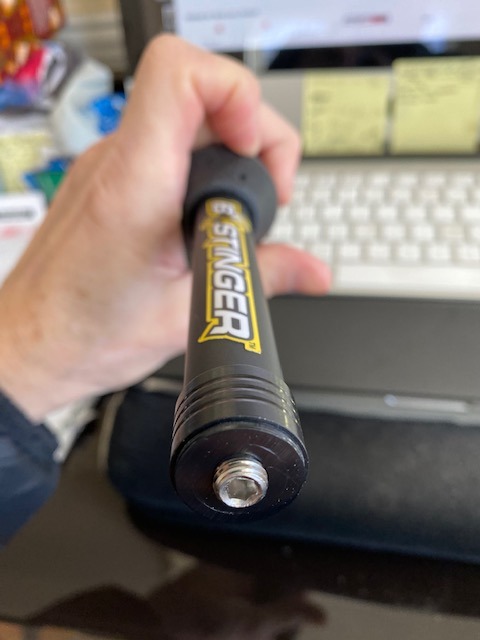
This one is usually sold as a rear-facing or off-axis stabilizer, and at 2.7 ounces it is the right tool for that job rather than for the front of the bow. The carbon construction keeps it stiff and light, and the adjustable weight configuration lets you tune balance without swapping the whole rod.
The reviews at 4.7 across 230 owners mention tighter groups and reduced vibration as the headline results, with adjustable weights and the compact profile as the standout strengths. Noticeable group improvement is specifically reported in the 40 to 65 yard range, which is exactly the compound target window.
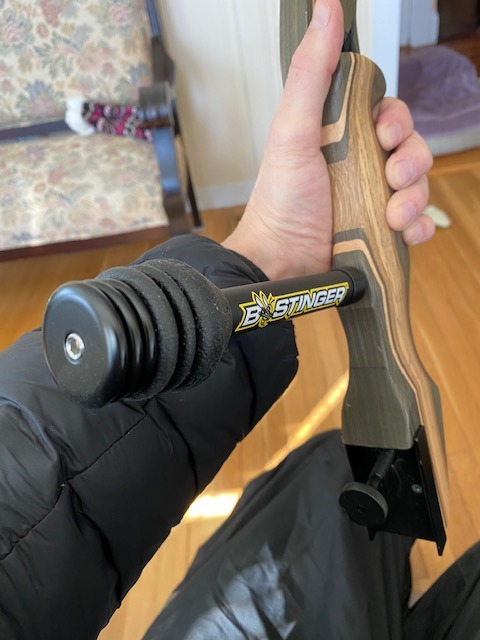
Our practical note is the riser thread. The threaded end piece can loosen after removal and needs an Allen wrench to tighten, and repeated tightening can strip the grooves in the riser threads. That is a maintenance item, not a defect, but it is worth knowing before you build a rear-weighted bow around it.
It also carries a lifetime warranty, which is the longest coverage in this group and one of the reasons it stays in the roundup despite being a rear-position piece. For a bow that gets handled a lot, that is a fair trade.
Why it works for target shooting
Front weight fights rotation and rear weight stops the dive. A short, light, tunable rod behind the grip is the cheapest way to add the second half of that balance, and at 2.7 ounces it will not slow a fast target bow down to fix a problem it does not have.
The compact length also means it will not interfere with a camera mount or crowd the arrow shelf, which makes it a sensible addition to a bow that already carries a front bar or front bar and side bar setup.
Where it falls short
It is not a front bar, and treating it as one is the most common mistake. Six inches of light carbon up front will not give you the torque control a target archer needs at 50 yards. If your bow is already heavy at the front, adding it there is simply extra mass.
The end piece loosening after every removal is the other drawback, and it is a recurring complaint enough that you should check it during your first session and before every string set after that.
12. Trophy Ridge Stabilizer – Best Simple Rubber Dampener
Trophy Ridge Blitz 6″ Archery Bow Stabilizer with Wrist Sling and Leather Mount – Constructed of Noise and Vibration Dampening Rubber, Improved Bow Balance, Easy Installation, Rugged Durability, Black
Rubber noise dampening body
Quick screw-on installation
Wrist sling and leather mount
Limited lifetime warranty
Pros
- Improves balance and cuts vibration
- Very affordable first stabilizer
- Wrist sling and leather mount included
- Quick simple installation
Cons
- Rubber exterior can show rust or wear
- Fixed one piece with no weight adjustment
This rubber stabilizer is a damper rather than a tuning bar, and buyers frame it that way. It improves bow balance and cuts vibration for a bow that has no stabilizer at all, and at 4.5 across 227 reviews the satisfaction is genuine even though the feature list is short.
The box includes a wrist sling and a leather mount, which is a good deal for anyone starting from nothing. Installation is a quick screw-on job, and the limited lifetime warranty covers what is essentially a consumable part of the bow.
Our take is that this is where a first stabilizer purchase should end, not where a competition build should start. It is a sensible placeholder while you work out how much weight and length your bow actually wants.
Why it works for target shooting
The balance improvement alone is enough to justify it. A bow with no front mass tends to feel light and nervous at full draw, and adding a damper gives the hand something to hold against, which is where a surprising amount of a beginner target score comes from.
For a recurve archer assembling a first rig, a rubber damper like this covers the vibration question on a modest outlay, and recurve shooters in the forum threads we read treat exactly this kind of short dampener as the standard answer.
Where it falls short
It is a fixed one-piece design with no weight adjustment, so once it is installed, that is your configuration. There is no way to chase a group change with this unit short of replacing it.
The rough rubber exterior can develop surface rust or wear over time, which is the main quality signal in the reviews, and the fixed one-piece body cannot be reconfigured for a longer front-end bar later. Check it against your bow case before you buy.
How to Choose a Target Bow Stabilizer in 2026
Length and total front weight are the two decisions that matter. Everything else on a stabilizer is refinement, and a correctly sized bar with moderate weight will beat an expensive bar that is too heavy for the bow. Start there and the rest of the buying guide is easier.
How long should a target stabilizer be?
Longer is generally steadier, because mass further from the grip resists rotation more, but length past what your bow needs adds weight without adding benefit. For compound target work, the useful range is 8 to 12 inches up front, with 4 to 8 inches behind the grip.
For recurve, Olympic recurve and barebow the numbers shift up rather than down, because there is no riser to absorb the mass. A 12 to 15 inch rod running down the vertical is normal on a recurve target rig, and it is why the long-rod options are so scarce in this category.
The trap here is the hunting-first mindset. A 12-inch rod is a completely reasonable target length and an unreasonable one for a bow you are pushing through brush, which is why so many published lists point target archers at short dampeners they do not need. If you want a comparison of the hunting-first options, our general bow stabilizer roundup covers that side.
How much total stabilizer weight should a target bow carry?
There is no magic number, but there is a method. Start at the weight the bow came with, shoot a group, then add mass in small steps and keep a change only when the group tightens. The weight that produces your best group at your competition distance is your number, and it is usually lower than the internet suggests.
As a rough frame of reference, a compound target build commonly runs a front bar plus a side bar in the 8 to 16 ounce range total, with a light rear rod. A recurve or barebow rig running a long rod usually carries a fraction of that, because the rod is doing work the riser would otherwise do.
Watch the trade-off. Added front weight slows the bow and makes it feel heavier at full draw, which costs you comfort over a long tournament day. Many target archers find that the optimum is the least weight that produces a repeatable group, not the maximum they can add.
Long rod, front bar or side bar: which position?
Each position does a different job. A front bar fights bow torque on release, which is the biggest single lever on group size at distance. A rear rod or rear bar stops the bow diving forward when the string releases. A side bar attacks torque in the second plane, which matters when your bow leans rather than rotates.
For a single-camera compound target setup, a front bar with a light rear rod is a complete and economical answer. Add a side bar when you shoot outdoors at distance and you see lean or torque in your groups, or when you want one kit to cover indoor and field work.
On a recurve or barebow, the equivalent is one long rod running down the vertical, ideally on the sight side. A second rod on the opposite side is an option for competition recurve setups where weight ahead of the grip is the goal.
Carbon or aluminum, and does the thread matter?
Carbon is lighter and stiffer, which is why most target-grade bars use it. Aluminum gives you more mass in a shorter package and a very solid hand feel, which is why the SAS bar in this list works so well for archers with a tight sight window. Either material is fine; matching the material to your length constraint is what matters.
The thread standard matters more than most buyers expect. A 5/16-24 thread fits many recurve and compound setups directly, while compound risers often need a specific mount or an adapter. Check what your riser accepts before you order, because a rod that does not thread in cleanly is a stripped-thread repair waiting to happen.
Finally, look at the mounting system rather than the rod. A quick disconnect is worth paying for if you travel to competitions, and a front riser adapter is worth confirming is included. One of the kits in this roundup sells its front quick release separately, and that is a detail worth reading twice.
How to test a stabilizer at the range in four steps
First, shoot a baseline group with no stabilizer and record the group size and the point of impact. Second, install the bar at its lightest configuration. Third, shoot three arrows, not one, and look at consistency of impact rather than the size of a single group.
Fourth, change one thing and repeat. Add 2 ounces, or step up one length, or move the rod from the side to the front, then shoot again under the same conditions. Change one variable at a time or you will never know which change did the work.
Keep the record. A short note of what you changed and what the three-arrow group did is the fastest way to a settled bow, and it takes less time than one bad tournament end. If you are still working through equipment, our target stand roundup and archery target roundup cover the other half of a target setup.
Frequently Asked Questions
Which bow stabilizer is best for target shooting?
For compound target shooting, the NAP Apache Stealth is the best all-round choice, offering 5 and 8 inch lengths that cover indoor and outdoor distances, proprietary dampening material and a 4.7 rating from 696 owners. If your bow needs torque control at 50 yards and beyond, the CBE Torx kit adds a side bar, which attacks bow lean in a second plane. The Bee Stinger Pro Hunter MAXX 8 inch wins when tuning resolution matters most.
What is the best back stabilizer for a compound bow?
The best back stabilizer is a short, light, tunable rod run behind the grip, because its job is to stop the bow diving forward on release rather than to fight rotation. The Bee Stinger Sport Hunter Xtreme 6 inch fits that brief at 2.7 ounces with adjustable weights, and the Trophy Ridge Hitman kit pairs a rear rod with a front bar if you want one purchase. Keep rear weight light and let the front bar do the torque work.
Is a 12 inch stabilizer too long for target archery?
No. A 12 inch rod is a normal length for target work, where it is usually paired with a lighter rear rod to balance the bow. Length past what your bow needs only adds weight, so judge it against your sight window, arrow shelf and bow case. On a recurve or barebow rig, 12 to 15 inches running down the vertical is standard, because there is no riser absorbing the mass.
What are the best bow stabilizers right now?
The strongest overall options are the NAP Apache Stealth for adjustable damping, the CBE Torx kit for multi-bar torque control, the Bee Stinger Pro Hunter MAXX for fine weight tuning and the Trophy Ridge Static for a light, vented rod that performs in wind. Trophy Ridge and Bee Stinger lead on proof, with 711 and 230 reviews respectively, while the carbon kits lead on adjustability.
Who makes the best stabilizers?
It depends on what you need from the brand. Trophy Ridge leads on proven, accessible rods with a limited lifetime warranty. Bee Stinger builds the most tunable bars, with the Pro Hunter MAXX running 2 to 10 ounces and carrying a lifetime warranty. CBE covers the multi-bar target setup, and LimbSaver and New Archery Products cover vibration damping with the longest review histories in the category.
Best Bow Stabilizers for Target Archery: the 2026 Verdict
For a compound target archer who wants one dependable answer, the NAP Apache Stealth takes it. It is quiet, it damps hand shock, it comes in two lengths that suit different distances, and 696 owners at 4.7 give it the strongest evidence base in this roundup.
Match the setup to the problem instead. Add the CBE Torx kit when you are shooting past 50 yards and seeing lean or torque in the groups. Pick the Bee Stinger Pro Hunter MAXX when you need to tune in small weight increments. Use the Trophy Ridge Static when wind is the issue and you want a light vented rod, and start from the longer 9 or 12 inch versions rather than the 3 inch stub.
Recurve and barebow archers have the thinnest selection in the whole category, and the HNZMDY 10, 12 and 15 inch carbon bar is the one to look at first, with a 5/16-24 thread and removable end weights. The LimbSaver S-Coil covers the opposite end of the problem if you only need vibration control.
Whatever you fit, change one variable at a time and keep a record of the three-arrow group. That habit, more than any brand, is what turns a good stabilizer into a settled bow. For the rest of your range kit, our gimbal stabilizer guide covers steadying the camera side of the shot.