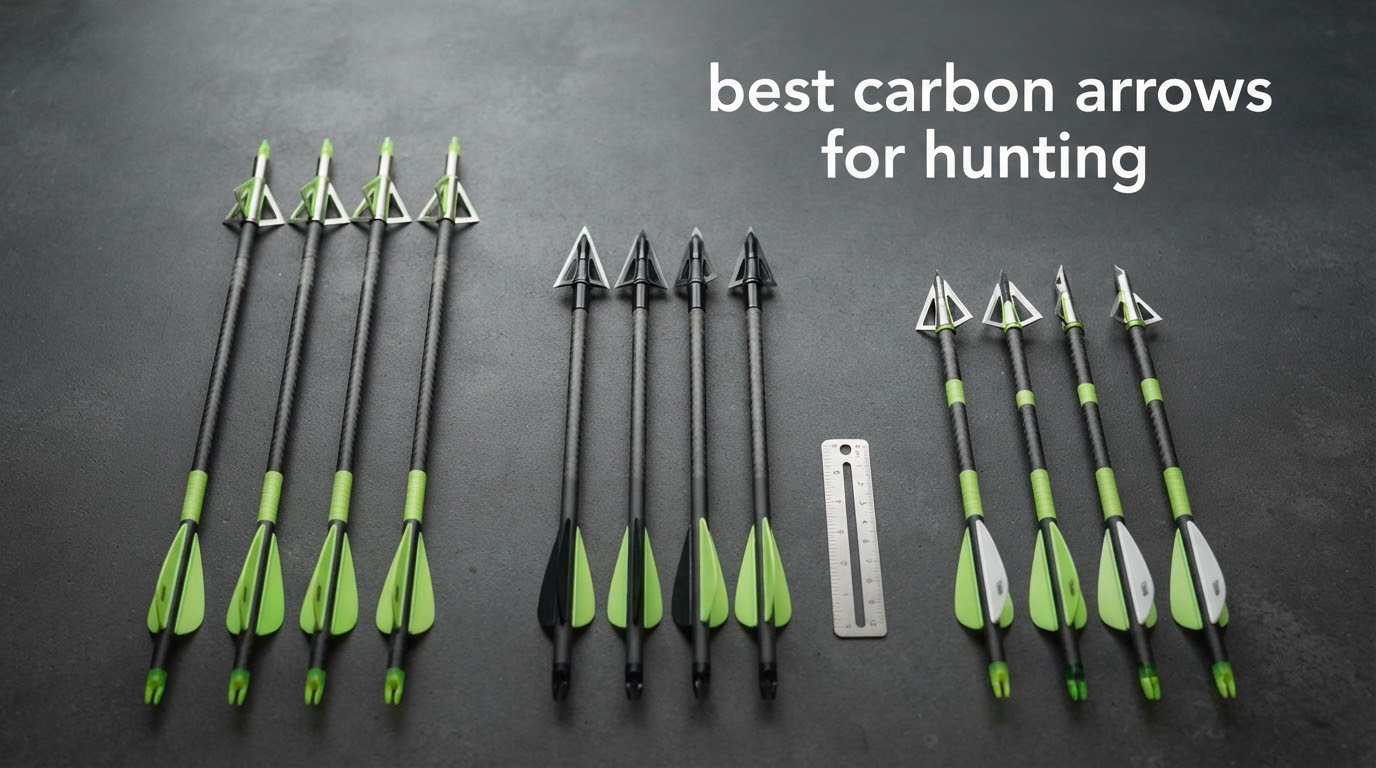
If you want one carbon hunting shaft to start from, the TIGER ARCHERY 30-inch set is the one we send people to first. It is pure carbon fiber, holds ±0.309 inch diameter, and carries more owner feedback than anything else in this roundup, which matters in a category where an unlisted shaft number is the most common reason a setup groups badly.
That said, arrow choice is not a brand popularity contest. The shaft that groups beautifully out of the box on a 40-pound bow can hunt terribly with a 100-grain broadhead because the arrow lost 45 grains of forward weight and the point of aim moved. Our team read every spec sheet, owner review, and component detail in the current listings for the ten shafts below, and we scored each one on straightness, weight tolerance, spine coverage, component fit, and what happens to the shaft after a hard season.
This guide is for compound, recurve, and longbow hunters who need a carbon shaft that stays straight across a full season and pushes past 40 yards. Three variables decide almost everything: your total arrow weight in grains, your spine relative to bow draw weight and draw length, and whether you want micro-diameter speed or standard-diameter tunability. Last updated for 2026, and the buying guide at the bottom reflects current production shafts rather than discontinued lines.
While carbon itself is the core technology in nearly every modern bowhunting shaft, we have covered other uses of the same material in detail, including our look at carbon fiber filament for 3D printing and carbon fiber pool cues if you want the lay of the land on the material itself.
Table of Contents
Our Top 3 Best Carbon Arrows for Hunting in 2026

The editor’s choice goes to the TIGER ARCHERY set because the combination of owner volume and measured consistency is what actually protects you from an expensive mistake. The Carbon Express Maxima RED earns the top rated slot on the highest rating in the group, and the SUNYA pack takes the budget position on hardware details most arrows in this bracket skip entirely.
Best Carbon Arrows for Hunting at a Glance in October
| Product | Specifications | Action |
|---|---|---|
| TIGER ARCHERY 30in Carbon |
|
Check Latest Price |
 Pointdo Fluorescent 30in Carbon Pointdo Fluorescent 30in Carbon |
|
Check Latest Price |
 TY Archery 30in Carbon TY Archery 30in Carbon |
|
Check Latest Price |
 Carbon Express Maxima RED Carbon Express Maxima RED |
|
Check Latest Price |
 LWANO 31in Turkey Fletched LWANO 31in Turkey Fletched |
|
Check Latest Price |
 Sanlida Dragon Pure Carbon Sanlida Dragon Pure Carbon |
|
Check Latest Price |
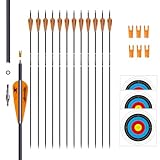 e5e10 31in Practice and Hunting e5e10 31in Practice and Hunting |
|
Check Latest Price |
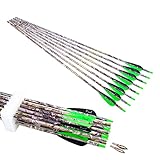 Pinals 300 340 400 Spine Pinals 300 340 400 Spine |
|
Check Latest Price |
| SUNYA 30in 400 or 500 Spine |
|
Check Latest Price |
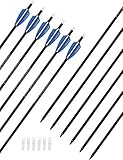 PANDARUS 30 and 32in Carbon PANDARUS 30 and 32in Carbon |
|
Check Latest Price |
Read that table as a starting point, not a verdict. Every shaft listed here takes a broadhead, but the grain weight of the point and the balance of the finished arrow decide whether it hunts well with your bow, and that math is in the buying guide below.
1. TIGER ARCHERY 30in Carbon Arrows – Best Overall Carbon Hunting Arrows
TIGER ARCHERY 30″ Carbon Arrows for Compound Recurve Bow Hunting Target
30 inch shaft at 0.309 inch diameter
100% carbon fiber
Replaceable unglued nocks
35 to 60 lb bow range
Pros
- Holds up under hundreds of shots without cracking
- Consistent groups for the price
- Bright vanes make lost arrows easy to find
- Works from 35 to 60 lb recurve or compound
- Foam packaging protects fletching
Cons
- Heavier feel than premium shafts
- Weak fletching glue lets vanes warp
- Tip inserts can back out of the shaft
I keep coming back to this set because ten thousand owner reviews is a data set, not a testimonial. When that many people are shooting the same twelve arrows, the durability picture becomes clear: shafts that take hits from trees and dirt without cracking, and a shaft that still flies straight after hundreds of shots.
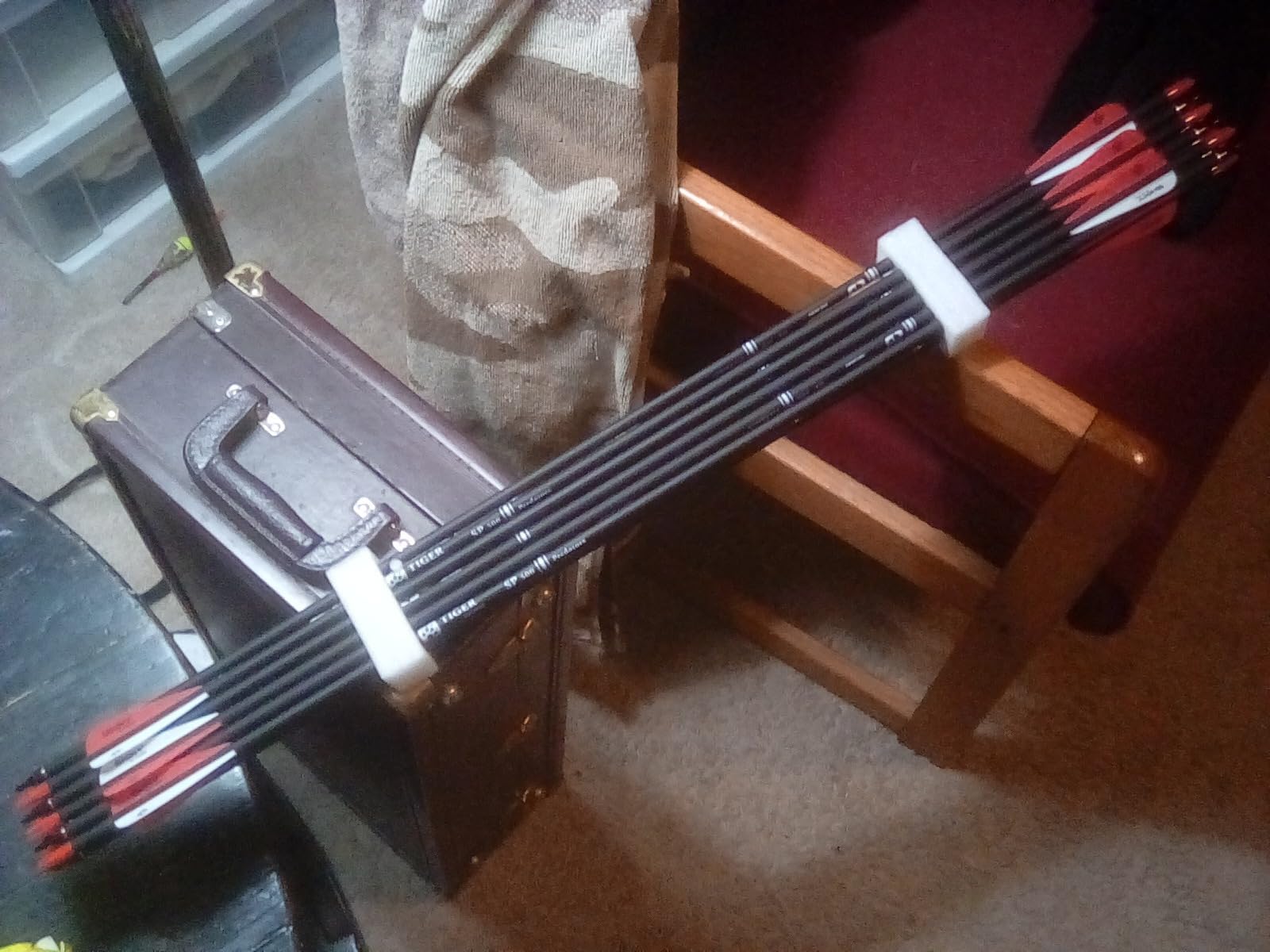
The build is honest. It is 100 percent carbon fiber at 0.309 inch outer diameter, fletched with two orange and one white plastic vane, and finished with nickel-plated stainless steel tips. The nocks are fitted rather than glued, which is the single most underrated feature on a budget shaft because you can rotate them for your string without a glue gun.
What you give up for that review volume is refinement. Owners describe the arrows as feeling heavier than premium shafts, and that weight is real if you are chasing precision at 50 yards. The fletching adhesive is also the soft spot, and vanes that flex or warp after a hard miss are the most common complaint in the reviews.
One more thing worth planning around. The tips are press or fitted style, and owners report that inserts can back out of the shaft when they pull arrows from a target face. A drop of thread locker is cheap insurance, and it is the first thing I do with any fitted tip on a new set.
When this shaft is the right call
Choose this set if you are on a 35 to 60 pound compound, recurve, or longbow and you want a full dozen that will not fall apart before deer season. It is also the safest first hunting set for a new archer because the brightly colored vanes make a lost arrow easy to find in grass and brush, and the tips accept standard broadheads for deer and turkey work.
It is not the arrow for a 70-pound bow pushing 350 feet per second, where a lighter and stiffer shaft is a better match.
When you should look elsewhere
Experienced competition archers consistently rate this shaft as not accurate enough for their needs, and the heavier feel limits fine tuning. If you are chasing small groups at long range rather than putting arrows into a whitetail at 35 yards, the extra review count does not help you.
Budget the time for a full paper tune after you switch tips and nocks, because that is where this set earns its keep.
2. Pointdo Fluorescent 30in Carbon Arrows – Best for Finding Lost Arrows
Pointdo 30inch Carbon Arrow Fluorescence Color Targeting and Practice and Hunting Arrows for Compound Bow and Recurve Bow with Removable Tips(Pack of 12) (Fluorescein White)
30 inch shaft at 7.8mm diameter
Spine 500
O ring locking screw tips
Six spare nocks included
Pros
- Fluorescent shafts and vanes are easy to find
- Screw in tips hold up against rocks and metal
- Straight consistent flight for the price
- Nocks can be rotated and six spares included
Cons
- Heavy feel drops arrows at distance
- Published spine and bow range pairing is misleading
- Vanes can arrive slightly bent
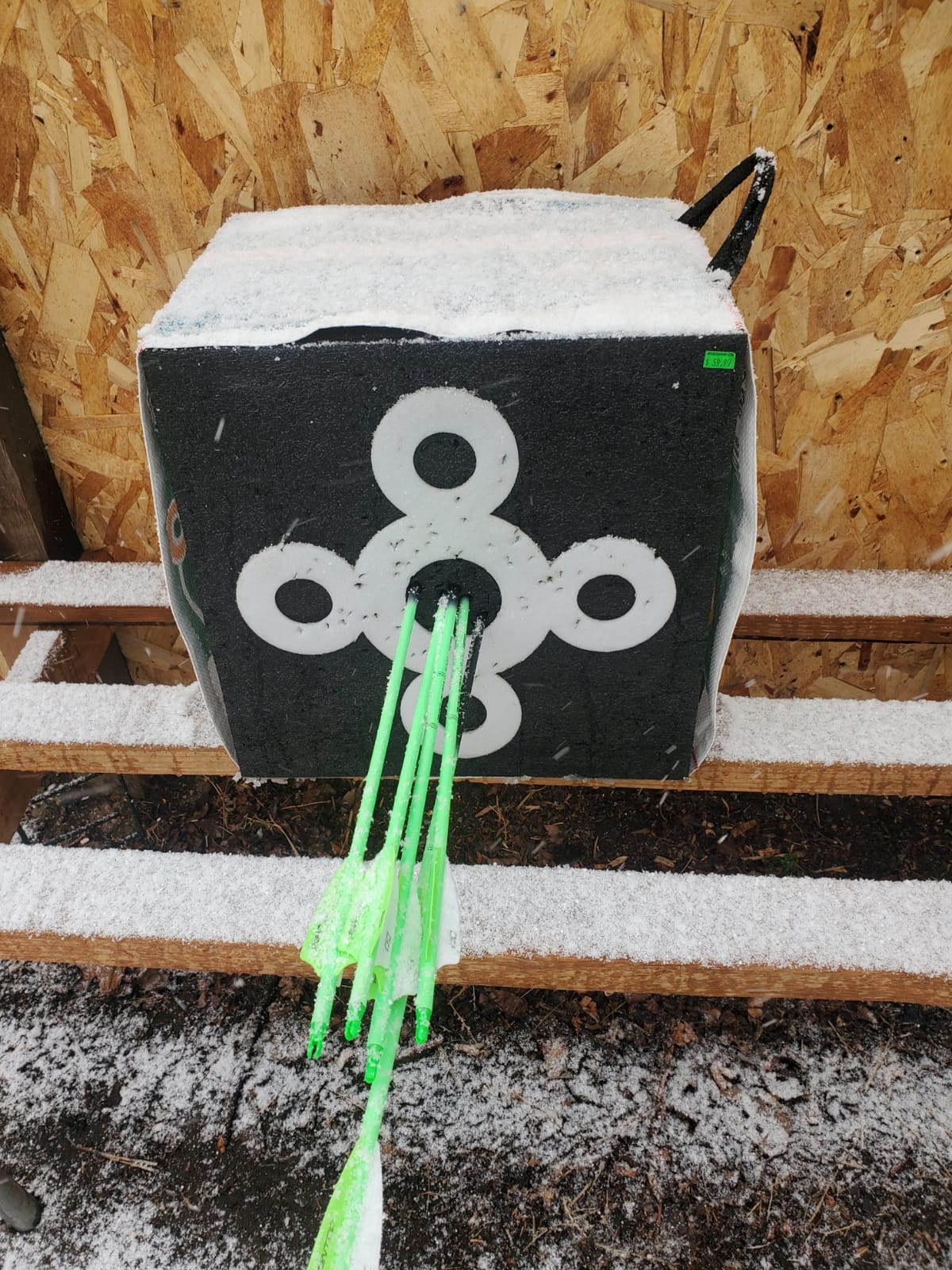
The single reason this set exists is visibility. The shaft and vanes are fluorescent white, and in real backcountry light that is the difference between retrieving an arrow in ten minutes and walking fifty yards with a bow in one hand looking for a glint in the weeds.
Underneath the color scheme it is a 30-inch carbon shaft at 7.8mm outer diameter, listed at spine 500, with O-ring locking screw tips that survive contact with rocks, walls, and metal. Six spare nocks ship in the box, unglued, and they rotate for fit, which means you can address a bowtie at the nocking point without replacing fletching.
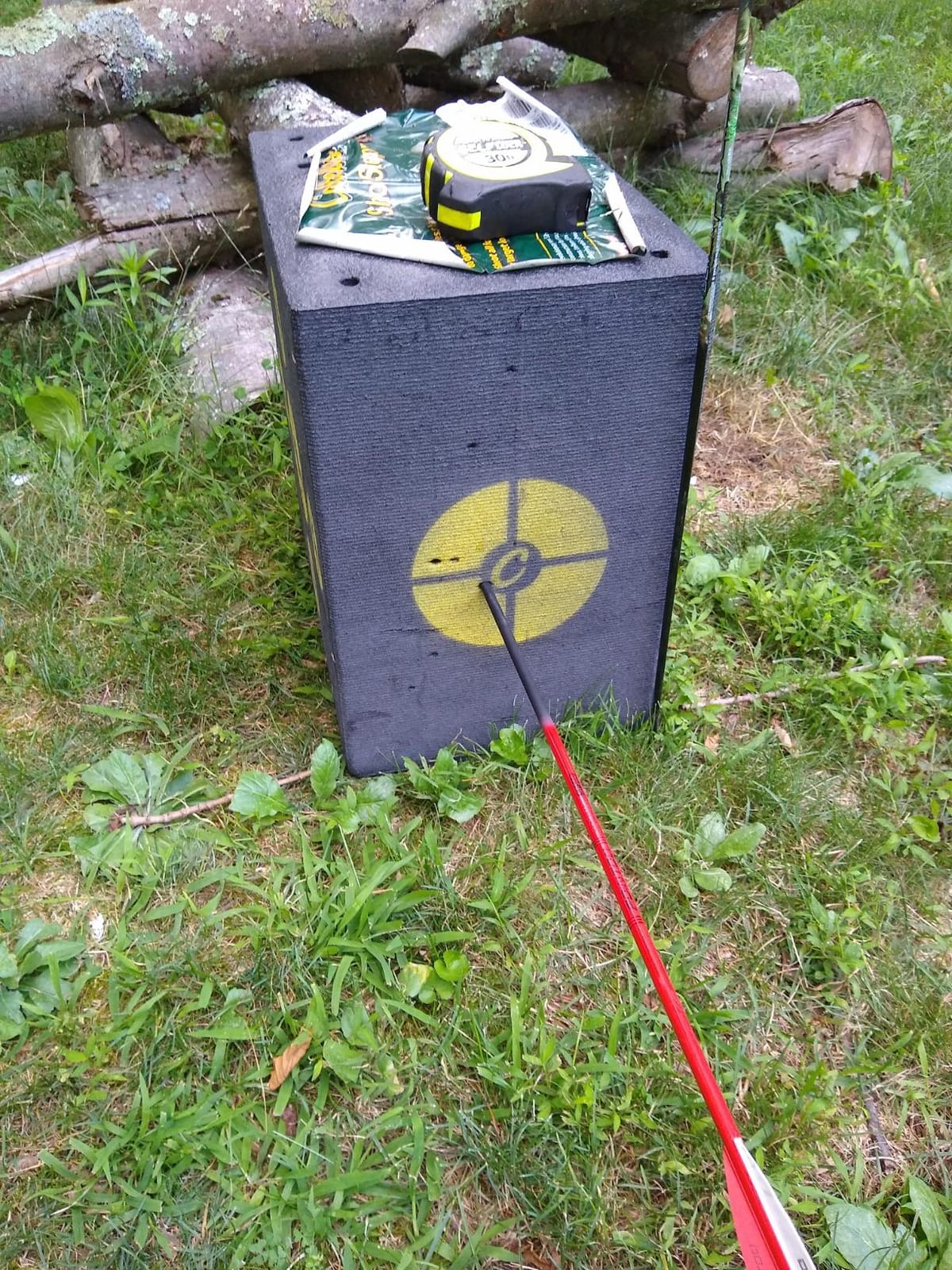
The honest drawback is weight. Reviewers repeatedly note that the arrows are heavy for low-poundage bows and drop more than they should at longer distances with a lighter bow. If you shoot a 30-pound recurve, this is not a light and fast set and you will fight arrow drop rather than your form.
There is also a spec conflict you should know about. The listing pairs a 500 spine with a 25 to 60 pound bow range, and reviewers call that pairing misleading for anything heavier. Check your own draw weight against the shaft before you commit.
What you gain and what you pay
You gain a recovery advantage that no other shaft in this roundup matches, plus tips that stay tight and nocks you can adjust without tools. For anyone hunting in tall grass, wooded edges, or anywhere a missed arrow means a long walk, that visibility is worth more than a few grains of weight.
You pay in precision at distance and in a spec sheet that needs a second look before you trust it.
Who should skip it
Skip this set for long-range deer shooting on a light bow, where the heavy feel and the 500 spine work against you. Reviewers also flag that vanes sometimes arrive slightly bent and need steaming, so inspect them before your first shot rather than after your tenth.
One reviewer disputes the carbon claim outright and describes the shafts as fiberglass, so if material authenticity matters to you, ask before you buy.
3. TY Archery 30in Carbon Arrows with 100 Grain Removable Tips
30 inch Carbon Arrow Hunting Arrows with 100 Grain Removable Tips for Archery Compound & Recurve & Traditional Bow Practice Shooting (Pack of 12)
30 inch shaft at 0.307 inch diameter
100 grain screw in tips
Changeable inserts
30 to 60 lb bow range
Pros
- Accurate groupings from 20 to 45 yards
- Uniform shaft and point weight
- Nocks change or rotate to fit the string
- Heavy enough for broadhead use
Cons
- Nocks can bind on some bowstrings
- Screw tips loosen after repeated shooting
- Thin shafts bend more easily by hand
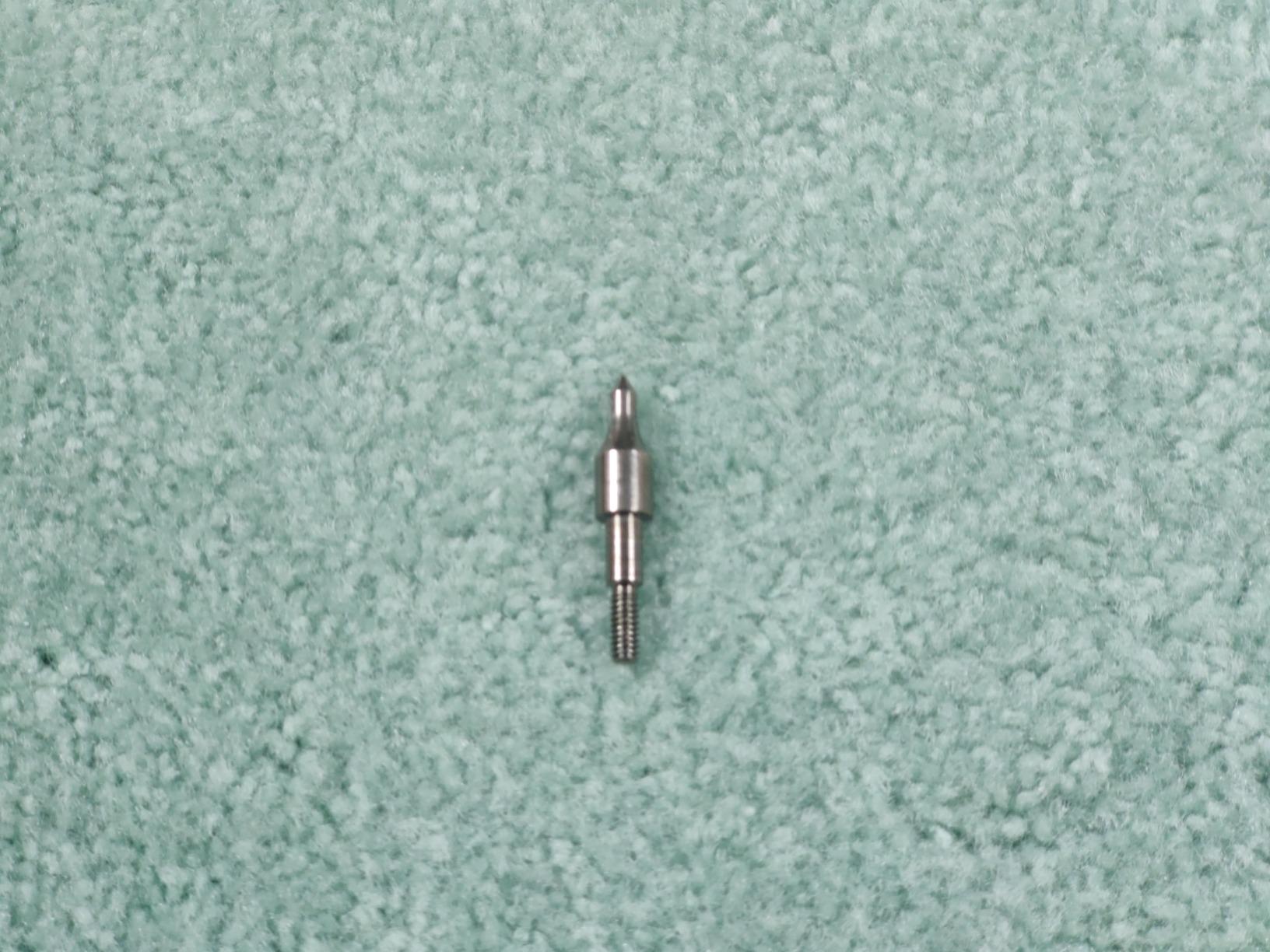
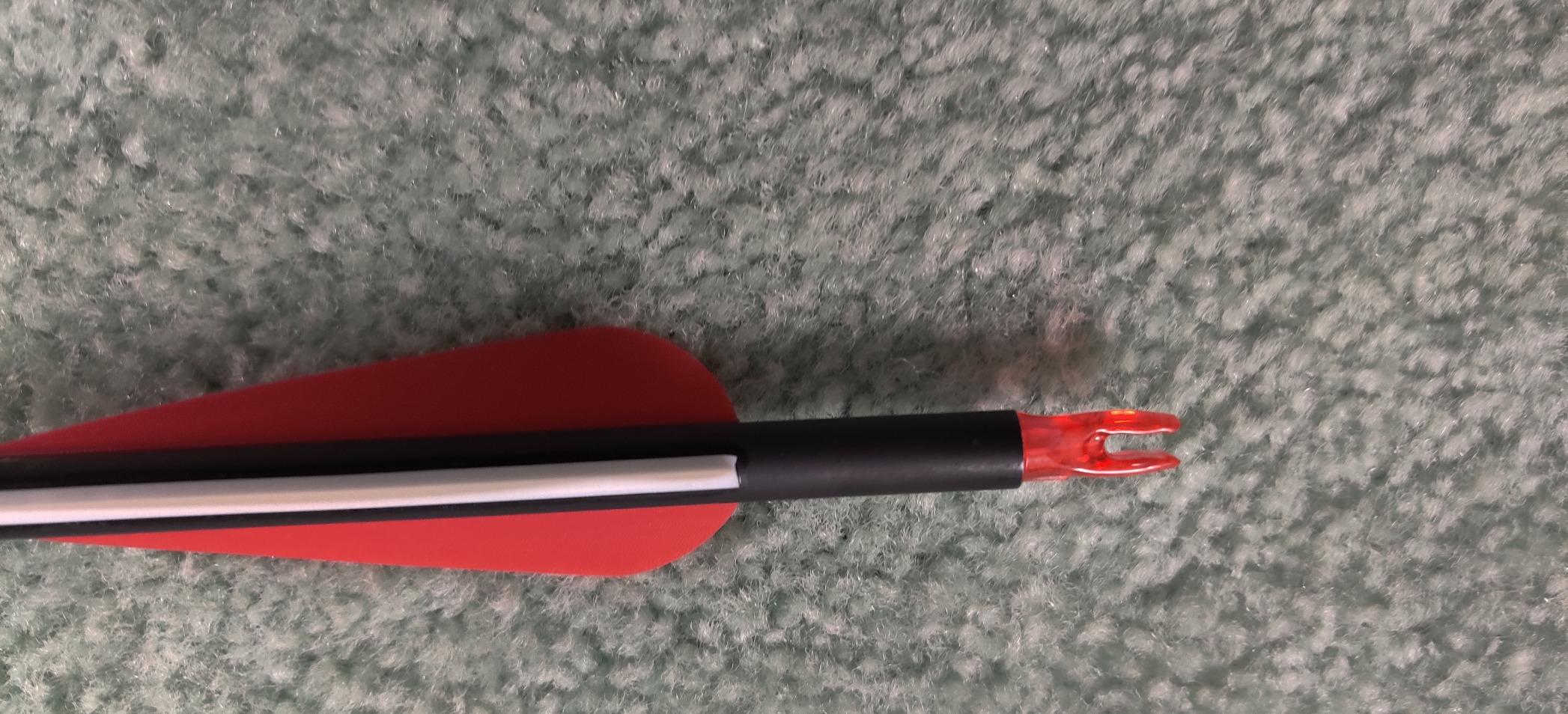
This is the only set here that ships with 100-grain screw-in tips as the standard configuration, and that single fact changes what you can hunt with it. A 100-grain point on a 31.5-inch total arrow gives you front-of-center weight that lighter tips simply cannot, and reviewers confirm the shaft carries it without a wobble.
The shaft is 30 inches with a 0.307 inch outer diameter and a 0.244 inch inner diameter, listed at spine 500, fletched with 3-inch red and white plastic vanes, and rated for 30 to 60 pound bows. Six extra nocks are in the box, and the tips use changeable inserts so you can move weight later without new shafts.
Groups at 20 to 45 yards are the recurring headline in the reviews, and plenty of owners use these with broadheads at 30 to 50 pound draw. Uniform point and shaft weight across the set is the detail experienced archers notice first, because inconsistent point weight is what quietly ruins a group.
The maintenance is real, though. Screw-in field points can loosen after repeated shooting and need checking, and nocks can fit too tightly on some strings, so widening the nock slot is a normal first task rather than a defect.
Why the 100-grain tip matters
If your target list is deer, turkey, or anything where penetration matters more than raw speed, a 100-grain tip is the single most useful spec on this page. Point weight ahead of the insert is what adds kinetic energy and front-of-center mass, and this set gives it to you without a separate tip purchase.
The changeable inserts also mean you can rebalance the arrow later if you move to a lighter point, which is more flexibility than most sets in this bracket offer.
Where it falls short
The shafts are thin, and reviewers note they can be bent by hand more easily than a heavier 500-spine arrow. Treat them as consumables rather than forever arrows, especially if you are working around rock or metal in the field.
Plastic vanes are stiffer than feathers, and a bit heavy for low draw-weight recurve bows. If you shoot traditional gear under 40 pounds, look at a lighter option.
4. Carbon Express Maxima RED – Top Rated for Accuracy and Spine Control
Carbon Express Maxima RED Shafts – .350 (6-Pack)
Laser checked to 0.0025 inch
9.07 GPI at 0.300 inch diameter
Dynamic Spine Control carbon
Matched 6 pack
Pros
- Exceptional straightness and shot consistency
- Launchpad nocks give a controlled release
- Holds up after brush and ground impacts
- Matched weight and spine across the set
Cons
- Arrows arrive at full length and must be cut
- Inserts arrive loose and need adhesive
- Higher per arrow cost than budget sets
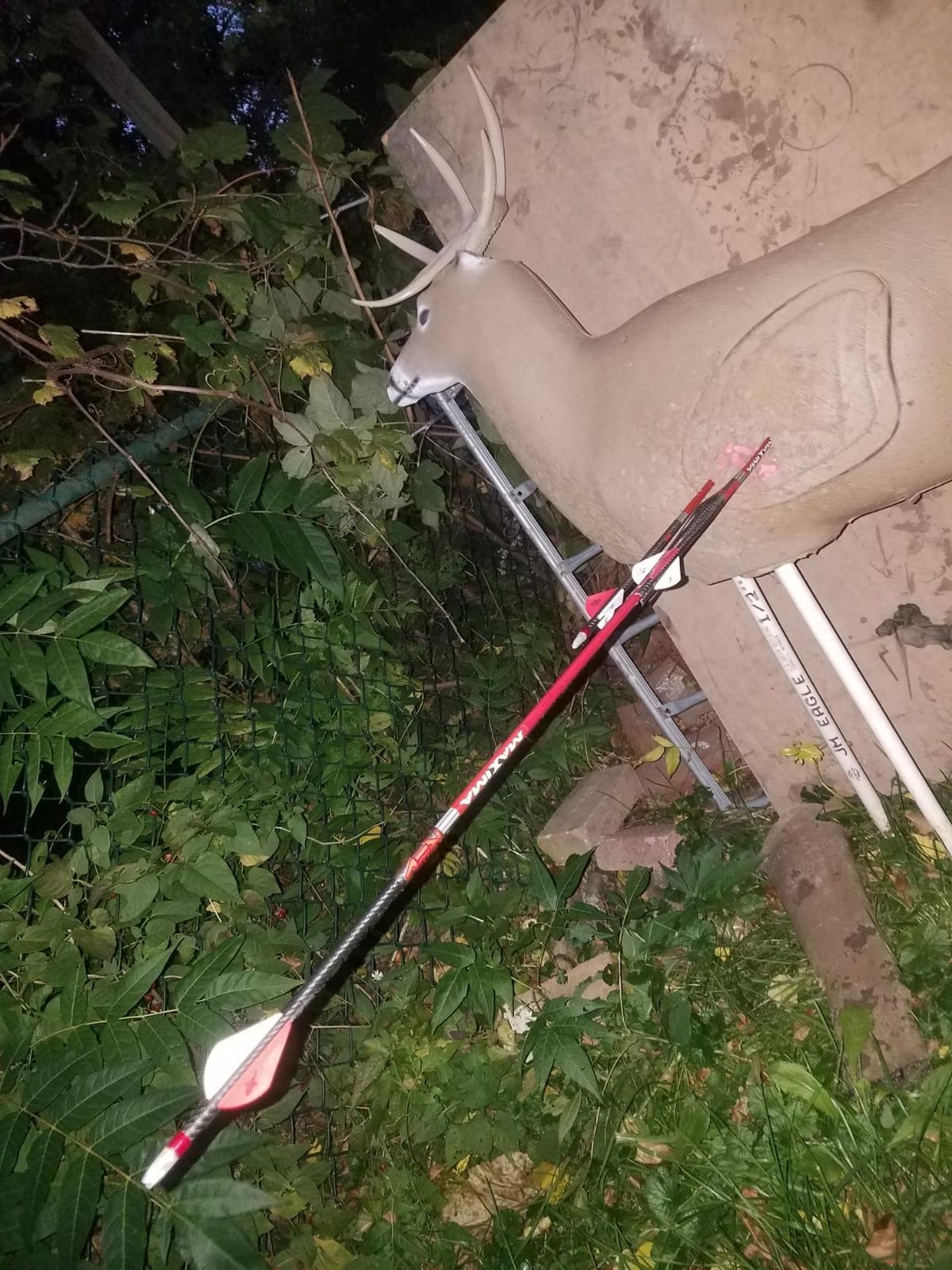
This is the highest-rated shaft in the roundup at 4.7 stars, and the spec sheet explains why. Straightness is laser checked to 1/10,000 inch with a maximum deviation of plus or minus 0.0025 inches, weight tolerance is plus or minus 1.0 grain, and the six-pack is sorted and matched by both weight and spine before it is boxed.
The 350 size in this listing runs 9.07 GPI at 0.300 inch diameter and 31.5 inches long, built on the patented Dynamic Spine Control carbon construction and finished with Launchpad Precision nocks. Owners single out the nock as the reason the release is repeatable, which matters more than most spec sheets admit.
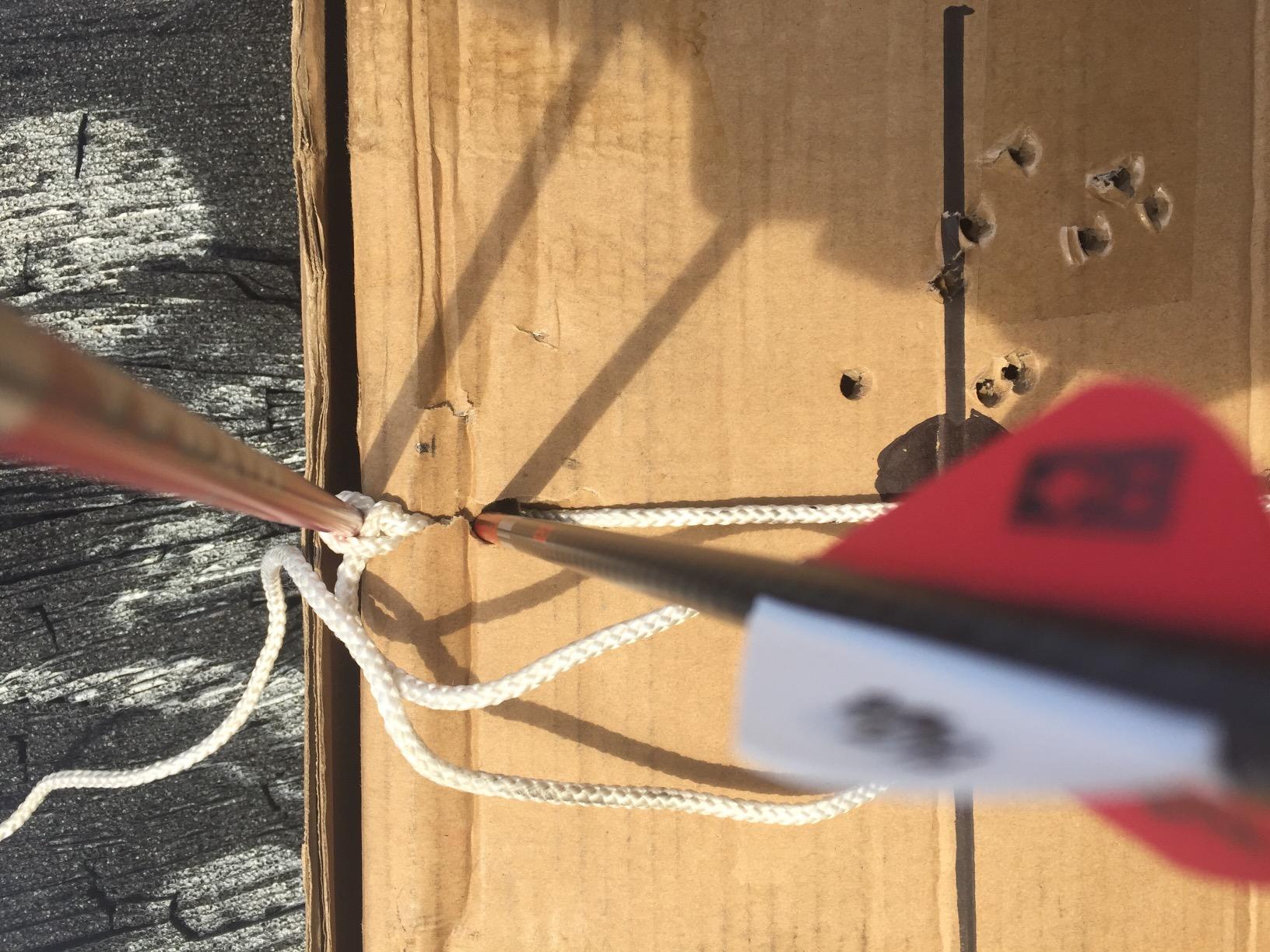
Reviewers describe this as a genuine step up from aluminum, and experienced hunters and target shooters reach for it over aluminum consistently. It holds up after brush, ground, and game, and the matched set means your group does not drift as the quiver empties.
None of that comes with zero work, which is the fair drawback. Arrows ship at full length and must be cut to your draw length, and the inserts arrive loose and have to be glued in before you shoot. Owners also report occasional vane color and type differences from the listing description.
Why experienced archers land on this shaft
Spine matching is the thing you cannot fake with a cheap shaft. When a set is sorted by weight and spine rather than just by diameter, the arrows that leave the quiver last still impact where the first one did, and that is what a 0.0025-inch straightness tolerance is actually buying you.
For a recurve or traditional hunter who has outgrown aluminum, this is the most considered upgrade in the roundup.
What the setup work costs you
You need a cut-off saw or arrow saw, a cut length measurement taken from your actual draw length, and epoxy for the inserts. Budget an evening before the season starts rather than trying to do it the morning of a hunt.
The per-arrow cost also sits above every budget set here, so the value argument only works if the shafts last through multiple seasons, and reviewers report that they do.
5. LWANO 31in Carbon Hunting Arrows with Turkey Fletching
31″ Feather Carbon Arrows, Archery Hunting Target Practice Arrows 12 Pack
31 inch shaft at 7.8mm diameter
Spine 500 at 33g
5 inch turkey style fletching
Removable alloy tips
Pros
- Exceptionally tough shafts
- Stable and accurate for target and stump work
- Screw points mount securely
- Visible fletching colors
Cons
- Supplied translucent nocks are brittle
- Fletching protector tape loosens after about 50 shots
- Listed turkey feathers are molded plastic
Durability is the whole pitch here, and the reviews back it up in unusually specific terms. Multiple owners report 300 to 500 shots per arrow with no damage, and the shafts are described as tough enough to take trees, rocks, and rough shooting without complaint.
The build is a 31-inch shaft at 7.8mm outer diameter, spine 500, 33 grams, fletched with 3 by 5 inch turkey-feather style vanes, and fitted with removable alloy tips secured by a metal ring. It is rated for 30 to 50 pound bows on recurve or compound, and the arrow arrives at 31.5 inches full length.
There is one safety note that appears more than any other in the reviews, and you should read it twice. The supplied translucent plastic nocks are brittle and can break after a relatively small number of shots. Replace them before you shoot, not after.
The fletching protector sleeve loosens after roughly 50 shots and can irritate your thumb on the draw, which is a small annoyance that turns into a real distraction in the second half of a shot. The listed turkey feathers are actually molded plastic, so manage expectations on aerodynamics and quietness.
Long 5-inch fletching can also work against you past 20 yards, where the shorter profiles on other sets in this roundup fly cleaner.
Where toughness pays off
If you shoot into real terrain, these are the shafts built for it. Rough shots, missed tree limbs, and dirt impacts are the three most common ways a carbon shaft gets retired, and this is the set owners report surviving all three.
The removable alloy points also mean you can swap tip weights cheaply as your hunting weight changes through the season.
What to fix before the first shot
Buy nocks. That is the first thing, and it is a safety item rather than a preference. Second, check the fletching protector sleeve and replace it if it has loosened, because a sleeve rubbing your thumb changes your release.
If you are a long-range shooter, note the fletching length before you buy rather than after.
6. Sanlida Dragon Pure Carbon – Best Straightness Choice
sanlida Dragon 8 100% Pure Carbon Hunting Arrows, 32″ Ready-to-Shoot Arrows with Inserts, ±0.006″ Straightness, 10-Spine Options, for Compound & Recurve Bows, 12 Pack (290 Spine)
Ten spine options from 250 to 500
Straightness of 0.001 to 0.006 inch
32 inch length at 0.244 inch ID
Factory installed aluminum inserts
Pros
- Straightness verified close to high end arrows
- Ten spine options simplify bow matching
- Standard inserts accept broadheads
- Papers tunes cleanly
Cons
- Factory pin nocks grip the string poorly
- Inserts arrive loose and need glue
- Some shafts crack after ground misses
Nobody else in this roundup lets you choose your straightness grade. The Sanlida Dragon comes in plus or minus 0.001, 0.003, or 0.006 inch tiers, and it covers ten spine increments from 250 through 500, which makes it the easiest shaft here to match precisely to a specific bow and draw length.
It is a fixed 32-inch shaft with a 0.244 inch inner diameter, meaning the standard insert family fits, and the box includes factory-installed aluminum inserts, 100-grain field points, 3-inch vanes, and standard nocks. Experienced buyers use it as a bare shaft platform and finish it with their own components.
One certified technician who measured these found them comparable to a well-known premium target shaft after reflighting, which is a strong result for a shaft at this tier. The ten spine options are also the reason this is the easiest shaft in the roundup to pair with an unusual bow.
When the spec sheet is the selling point
Choose this shaft when you know your bow’s spine requirement and cannot find it elsewhere. A 250-spine option on a heavy bow is a genuinely rare find in a budget lineup, and the straightness tiers let you pay for accuracy only where you need it.
Buying in sixes or dozens also makes it easy to start small, test the fit, and expand once the spine is right.
What buyers have to finish
Almost every owner replaces the nocks, because the factory pin nocks grip the string poorly. The inserts also arrive loose and must be glued in or they can pop out, and field point shoulders sitting loose in an insert can split the shaft.
Durability reports are mixed, with some shafts cracking after ground misses, so treat this as a practice and tuning platform that can hunt deer rather than a backcountry workhorse.
7. e5e10 31in Carbon Arrows – Best Practice and Tuning Set
e5e10 31inch Carbon Arrow Archery Targeting Practice Hunting Arrows for Compound & Recurve Bow with Removable Tips(Pack of 12) (Orange White)
31 inch shaft at 0.31 inch diameter
Removable threaded tips accept broadheads
Six spare nocks and target sheets
Rated for 20 to 60 lb bows
Pros
- Well made and durable for practice
- Threaded tips accept broadheads
- Good value against pro shop arrows
- Lightweight yet sturdy for new archers
Cons
- Nock pins can be too large for some strings
- Mixed reports on straightness across the set
- Arrows run longer than expected at 31 inch
This is the set we recommend for a bow that is still growing into its arrows. At 31 inches and rated from 20 to 60 pounds, it covers the widest draw weight range in the roundup, and reviewers describe the shafts as lightweight but sturdy, which is exactly the combination a developing archer needs.
It is a 31-inch carbon shaft at 0.31 inch outer diameter with two orange and one white plastic vane, and the removable nickel-plated stainless steel tips are threaded, so they accept broadheads or any other point style. Six replaceable nocks and three target sheets come in the box, and the packaging keeps fletching from arriving bent.
Owners mainly like it as a practice and tuning arrow that can double for small game, and the screw-in tips make swapping point weights painless when you move from field tips to broadheads.
Why the wide draw weight range matters
Most sets in this roundup assume a 30 to 60 pound bow. This one starts at 20 pounds, which matters enormously for a young archer, a light recurve, or a bow you are building up draw weight on through a season.
The threaded tips also make it the easiest set here to experiment with point weight, which is how you learn the relationship between front-of-center weight and group size instead of reading about it.
Where the reports disagree
Straightness is the split opinion. Some owners shoot tight groups, others report arrows that will not fly straight even at matched draw weights, and that variance is worth weighing before you commit a full hunting setup to this shaft.
Nock pins being too large for some strings causes arrows to fall at release, and the included paper target sheets are not worth much. The reviewers are clear that this is not an arrow for larger game.
8. Pinals 300 340 400 Spine Carbon Hunting Arrows
Pinals Archery 28 30 Inch 300 340 350 400 Spine Carbon Hunting Arrows
Straightness of 0.003 inch
Shaft weight tolerance of 1 grain
300 340 and 400 spine in 28 and 30 inch
Aluminum inserts included
Pros
- Tight weight and spine tolerance from machine sorting
- Straight shafts that group well
- Rubber ring points stay tight
- Unglued nocks rotate for recurve or compound
Cons
- Higher price per arrow than budget packs
- Insert installation still needs adhesive
- Limited camouflage color options
This is the best-engineered mid-tier shaft in the group, and the specifications are what make it interesting. Straightness is plus or minus 0.003, shaft weight is held to plus or minus 1 grain by machine sorting, and the listing covers 300, 340, and 400 spine in both 28 and 30 inch lengths for 40 to 75 pound compound or recurve bows.
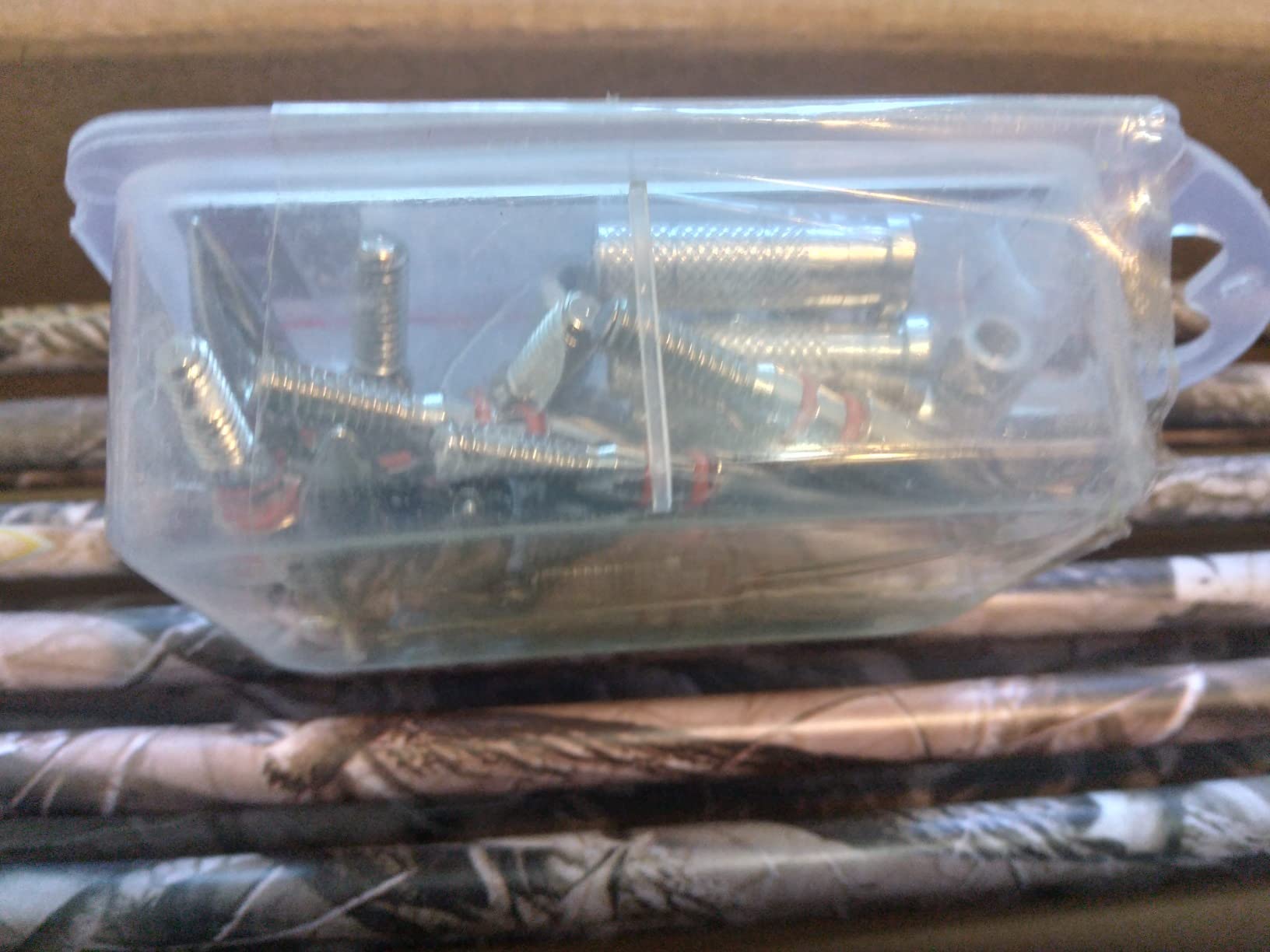
The field points are removable 100-grain models with a rubber ring that keeps them from backing out, which directly answers the loosening complaint that shows up on nearly every screw-in tip in this roundup. A 12-piece pack includes replacement aluminum inserts and adjustable unglued nocks.
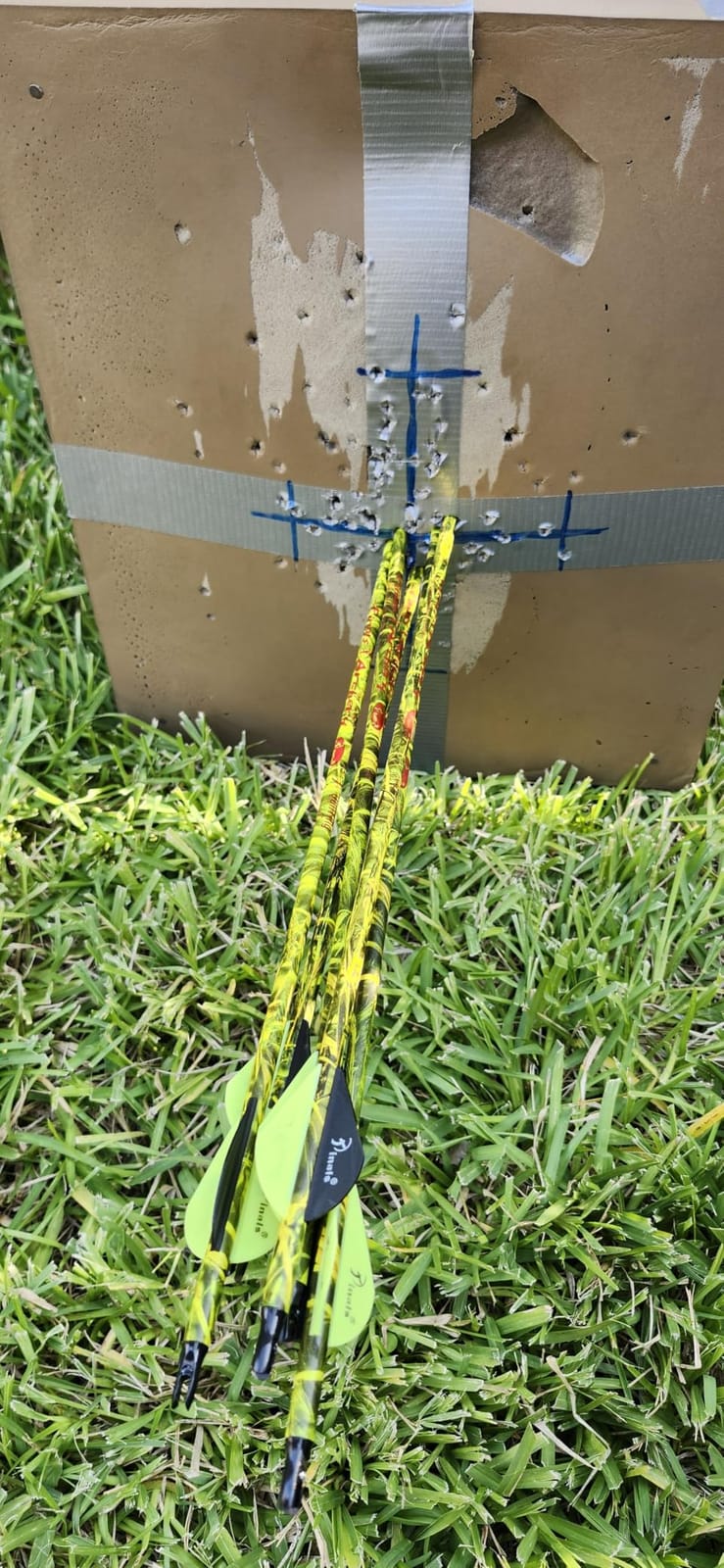
Owners rate it above budget sets on consistency, and the machine sorting is the reason. When shaft weight is held to a single grain, point of aim behaves predictably between arrows, and that is what separates a hunting shaft from a practice shaft.
Both 28 and 30 inch lengths are available, which lets you match arrow length to draw length instead of cutting your way down.
Why the 40 to 75 pound coverage matters
Almost nothing else here spans that bow range. If you shoot a 70 or 75 pound compound, the 300 spine option gives you a stiffer shaft that will not buckle or over-flex, and the rubber-ringed points mean you are not checking tip tightness every trip to the target.
Inserts still need adhesive, and the unglued nocks are a genuine convenience only if you are willing to fit them to your string rather than assume they match.
What you still have to do
Per-arrow cost runs above budget 12-packs, and camouflage color options are limited. The tolerance numbers are what justify the premium, so buy this for measured consistency rather than for appearance.
Buy this set for measured consistency rather than appearance, and pair it with a bow in the 40 to 75 pound band for the fit it was engineered for.
9. SUNYA 12-Pack 30in Carbon Arrows – Budget Pick
SUNYA 12-Pack 30 Inch Carbon Arrows Spine 500 or 400 for 40-60 LBS Bows|Switch to Recurve/Compound Modes, Anti-Loose O-Ring & TPU Vanes for Hunting/Target Practice
30 inch shaft at 31.5 inch full length
400 or 500 spine for 40 to 60 lb bows
Anti loose O ring on the point
Aluminum ring at the nock end
Pros
- Lowest per arrow cost with a full 12 count
- O ring keeps field points from backing out
- Nock end aluminum ring guards against hand cuts
- Nock position rotates for recurve or compound
Cons
- Nocks may still need sizing to your string
- 500 spine limits lighter draw weights
- TPU vanes are stiffer than plastic or feather
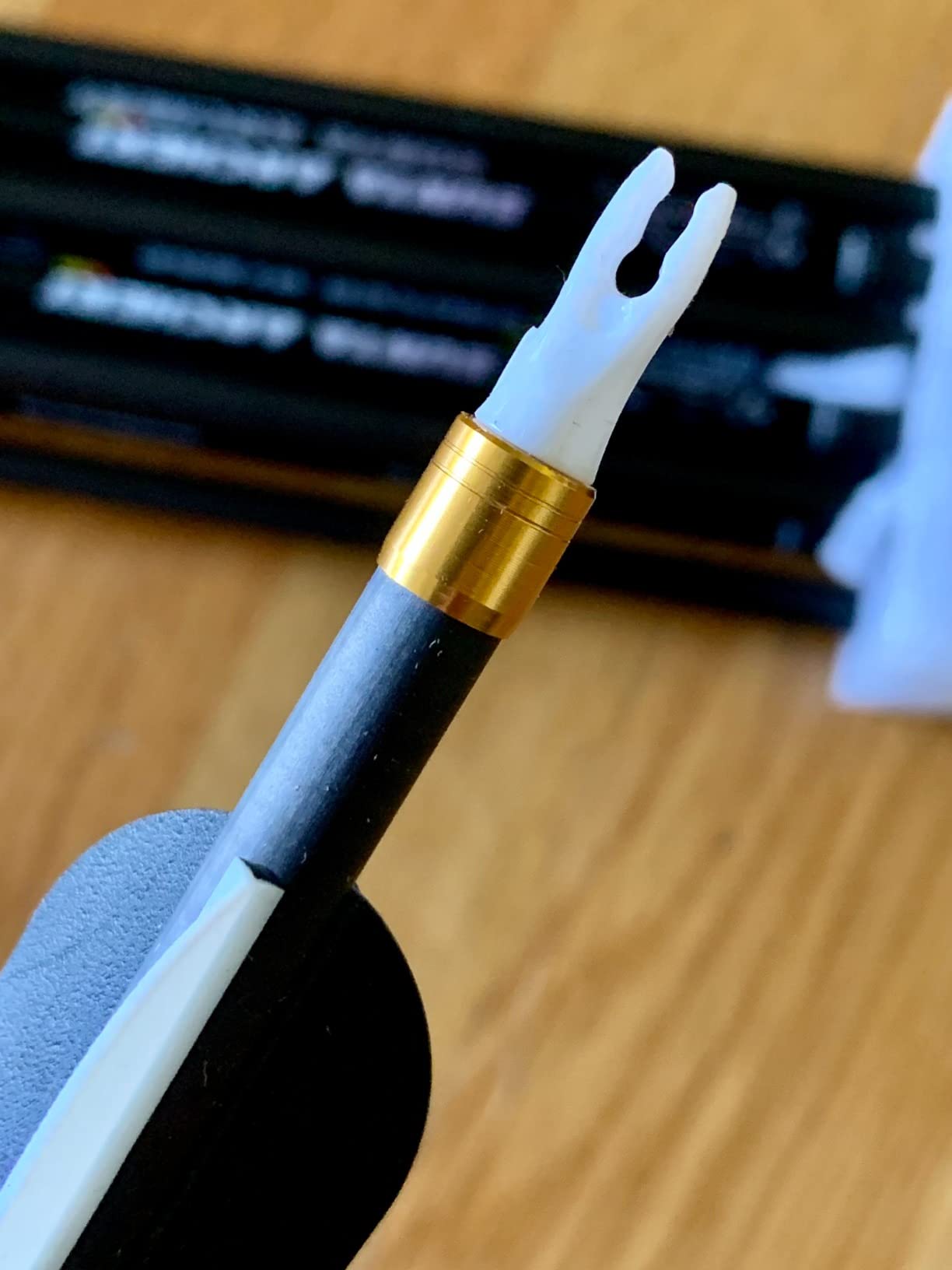
Two hardware details separate this set from the rest of the budget tier, and both come straight from the owners who use it. The removable stainless steel point carries an anti-loose O-ring so it stays put in the target, and an aluminum ring at the nock end guards the shaft against hand cuts where a bare carbon shaft can cut your thumb.
The shaft is 30 inches at 31.5 inches full length, offered in 400 or 500 spine for 40 to 60 pound compound and recurve bows, with 3-inch TPU rubber vanes. Nock position rotates between recurve and compound modes, and the manufacturer warranty runs a year.
At twelve arrows this is the lowest per-arrow cost in the roundup, and the anti-loose point alone removes the single most common complaint we saw across the other screw-in sets.
The TPU vanes are stiffer than plastic or feather fletching, which some archers like for consistency and others find abrupt off the string. And if you shoot lighter than 40 pounds, the 500 spine option is not for you, so choose the 400 carefully.
Nock position rotates between recurve and compound modes, so a single dozen can follow you from a target lane to a treestand without a second quiver.
Who this set is built for
This is the arrow for a brand new bowhunter who wants a full dozen to practice with and still own something that will take a broadhead. Forty to sixty pounds of draw weight covers the most common hunting bow, and the protected nock end is a small courtesy that gets noticed on a long practice day.
It also works well as a second quiver for a bow you are not yet ready to spend premium shafts on.
What to watch after a season
Nocks may still need sizing to your particular string, which is a five-minute job with a taper and a reamer. Check the O-ring seating every few hundred shots, since that is the feature doing the most work for you.
If you later move up to a heavier bow, this set is the one you will outgrow first.
10. PANDARUS 30 and 32in Pure Carbon Hunting Arrows
PANDARUS 30 Inch ST0.006 Hunting Arrows for Compound & Recurve Bow,100% Carbon Archery Target Arrows with Removable Tips for Accurate Hunters & Bowhunters (Pack of 12)-30 inch Blue SP400
30 and 32 inch shaft lengths
250 to 500 spine options
6.2mm inner diameter
85 grain screw in points
Pros
- Genuine carbon that splinters into fibers
- Groups well from a 60 to 70 lb bow
- Consistent weight after inserts are glued
- Rubber O ring stops points unscrewing
Cons
- Inserts arrive loose and must be glued
- Some points arrive without usable threads
- Fletching peels with heavy use
This set has the widest spread of owner experiences in the roundup, and the reason is quality control rather than design. Some owners report durability through 200-plus shots per arrow and plywood backstop hits, while one-star reviews describe inaccurate, splintering arrows from the same listing.
The spec sheet is solid. Pure carbon shafts with a 6.2mm inner diameter in 30 and 32 inch lengths, five spine options from 250 to 500, straightness of plus or minus 0.006 inch, 85-grain screw-in field points with changeable aluminum inserts, and 3-inch TPU vanes with a ribbed air channel profile. It is rated for 25 to 74 pound bows.
One owner verified a 350 spine at 0.350 inch of deflection, so the spine number is not decorative. Another confirmed the carbon claim by splitting a shaft into fibers rather than shards, which is a practical way to tell real carbon from fiberglass filler.
When the wide spine range is useful
Five spine options across two lengths makes this an easy match for a mixed setup or an unusual bow, and the 6.2mm inner diameter accepts the standard insert family if you want to build the arrows up yourself.
At 25 pounds of minimum draw weight it also covers lighter traditional gear, which few sets in this bracket manage.
What the mixed reviews tell you
Check every point on arrival, because a point in the box can arrive unthreaded on a small share of these sets. The inserts arrive loose and must be glued in or they can pop out, and the fletching peels with heavy use and needs a jig to repair.
Our advice is to inspect the whole set the day it arrives, keep the shafts that measure straight, and treat the set as a practice-to-hunting platform rather than a backcountry workhorse.
How to Choose a Carbon Arrow for Hunting
Everything above assumes you have already worked out three numbers: arrow length, total arrow weight, and spine. Get those right and the brand barely matters, because a well-built budget carbon shaft and a premium shaft that both match those three numbers will behave almost identically in the field.
Arrow length comes from draw length
Measure your draw length at full draw, then add about half an inch to one inch for your hunting arrow length. That extra length is what keeps the point clear of the bow and the rest on heavy shots, and it is the reason most hunting shafts ship longer than the practice arrows you may already own.
Two of the sets here come in two lengths, which saves you from cutting.
Total arrow weight and the grains per pound rule
Total arrow weight means the finished arrow, not the shaft. Take your bow’s draw weight and multiply by 6 to 8 grains per pound for hunting, then add your point and insert weight to reach the finished number.
As a working reference, a 50-pound bow lands near 300 to 400 finished grains, a 60-pound bow near 360 to 480, a 70-pound bow near 420 to 560, and an 80-pound bow near 480 to 640. For big game, most bowhunting guidance points to 400 to 450 grains as the floor.
Spine explained without the guesswork
Spine is a stiffness number, and a 300 spine arrow flexes 0.300 inches under a standard test load. Higher number means stiffer. A 600 spine arrow is stiffer and lighter per inch than a 300 spine arrow of the same length.
The rough translation at 29-inch draw length puts 300 spine around a 50 to 60 pound bow, 400 spine around 60 to 70 pounds, 500 spine around 70 pounds and up, and 600 spine for the heaviest recurve and longbow setups. Manufacturers vary, so treat these as a starting point and confirm with your bow’s published arrow rating.
Micro diameter versus standard diameter
Most of the shafts here run around 0.31 inch outer diameter with a standard 0.244 inch inner bore, which accepts the widest range of insert and point weights. That tunability is why standard-diameter hunters can fine-tune their point of aim with insert weights alone.
Micro-diameter shafts cut wind drift and gain speed but demand more careful insert weight management. If you are new to tuning, standard diameter is the forgiving choice, and the forums consistently point that way.
Straightness and weight tolerance are different things
Straightness tolerance is the maximum bend allowed in the shaft, quoted in thousandths of an inch. Weight tolerance is how much the weight per inch may vary, quoted in grains. Both matter, and a shaft can be straight and still be heavy.
This is why measured tolerances are the honest differentiator here. Plus or minus 0.001 inch and plus or minus 1 grain on the Pinals set, or a plus or minus 0.0025 inch laser check on the Carbon Express, is a real quality signal that review counts cannot give you.
Spine-aligned sets and what they buy you
A spine-aligned set is matched shaft to shaft so each arrow’s actual spine sits within a narrow band around the labeled number, rather than only matching the average. It costs more and it does something specific: your point of aim stays put as the quiver empties.
For deer and target work where you shoot dozens of arrows, alignment is a genuine advantage. For a season of ten elk shots, matched weight and spine across a small pack is enough.
Which Carbon Arrow for Which Game
Match the game to a total arrow weight target, then match that target to your bow. Here is the shortcut most people are looking for.
Deer at 380 to 430 finished grains works with most compound setups and covers a standard 1.75-inch broadhead. Turkey at 350 to 400 grains is plenty for the body shot at close range and keeps the arrow quiet in the woods. Elk calls for 400 to 450 grains, which is where front-of-center weight starts earning its keep.
Bear and other dangerous game sit at 450 grains and above, and there the heavy 400-spine options in this roundup earn their place. Where your bow cannot safely shoot that weight, that is a bow and arrow tuning conversation, not a place to compromise on the animal.
In practice, hunting weight means a heavier point on a stiffer shaft. The 100-grain tip set covers deer and turkey weight out of the box, while the heavier 400 and 500 spine options take a 200-grain broadhead on a 70-pound bow without buckling.
Carbon Arrow Durability, Spine Loss and Crash Safety
Seven of the top organic results for this query are forum threads, and most of them ask the same two questions: do carbon arrows hold up, and how do I know when one is finished. The honest answer is that a carbon shaft does not shatter the way aluminum does, but it can delaminate quietly and lose spine over time, and both are real.
On spine loss, a HuntingNet user put it plainly: the biggest problem with carbons is that they lose spine after a while, especially if you are shooting into a hard target. That is the whole argument for matching weight and spine across a set rather than buying loose shafts, and the argument for paper tuning a few arrows at the start of every season.
On damage, bowhunting forum threads exist almost entirely to answer one question: is this scratch safe? The consensus is that a surface scuff that removed a single layer of carbon on the outside of the shaft is cosmetic, while any crack, any delamination you can feel with a fingernail, or any damage near the insert or nock end retires the arrow. A shaft that can split is a hand hazard and a bow hazard.
Practical habits cover most of it. Never cut carbon with a knife, since it can lift the outer weave the way reviews describe when people use a blade instead of a saw. Keep arrows in a quiver rather than a loose bundle. Retire any arrow with a visible crack immediately, and check for spine change with a tester if your groups shift mid-season.
Finally, check the nock end. The supplied brittle nocks on one set in this roundup and the aluminum ring on another both address the same problem, and most damaged shafts are damaged at the nock end or the insert, not in the middle.
Frequently Asked Questions
Do carbon arrows break easily?
Carbon shafts do not shatter the way aluminum does, but they can delaminate and they can lose spine over time. A surface scuff that took off one outer layer of weave is cosmetic. Any crack, any delamination you can feel with a fingernail, or any damage near the insert or nock end means the arrow is finished. Most damaged shafts are damaged at the nock end or the insert rather than mid-shaft, so check those spots first after a crash or a tree hit.
Is a 500 grain arrow too heavy for deer?
No, 500 grains is well within normal range for whitetail and is a common big-game figure, though it is heavier than you need at close range. Deer usually works at 380 to 430 finished grains, turkey at 350 to 400, elk at 400 to 450, and bear at 450 or above. What matters more than the number is that your bow can safely launch that weight and that the finished arrow balances well.
How to tell if an arrow spine is too weak?
Three signs. First, watch the shaft flex as it is drawn: visible bending or wobble in the middle means the shaft is soft for that bow. Second, groups that drift as your quiver empties mean the set is not matched, which is a related problem with the same fix. Third, a spine tester gives a direct reading, and any shaft that reads meaningfully off its labeled spine should leave the set. Re-paper tune a few arrows each season to catch gradual change.
What is the best arrow weight for a 65 pound bow?
For hunting, use 6 to 8 grains per pound of draw weight, so a 65-pound bow lands near 390 to 520 finished grains. A practical starting point around 420 to 450 finished grains suits deer, elk, and most bow setups in that range. Remember that total arrow weight is the finished weight, including point, insert, and nock, not the shaft weight alone.
Is a 400 or 300 spine arrow heavier?
The 300 spine arrow is heavier. Spine measures stiffness, and a higher number means a stiffer shaft, so a 400 spine arrow is stiffer and lighter per inch than a 300 spine arrow of the same length. The two numbers describe completely different properties, which is why a heavier bow usually wants a higher spine rather than a heavier shaft.
How long should my hunting arrows be?
Measure your draw length at full draw and add about half an inch to one inch. That extra length keeps the point clear of the bow and the arrow rest on a hard shot. Most hunting shafts are cut a little longer than practice arrows for exactly that reason, and picking a shaft that already matches your draw length saves you the saw and the risk of cutting carbon badly.
The Best Carbon Arrows for Hunting in 2026
The best carbon arrows for hunting are the TIGER ARCHERY 30-inch set for anyone who wants the widest proven base at a sane entry point, the Carbon Express Maxima RED for archers who care most about measured straightness and spine control, and the SUNYA 12-pack for a first hunting setup on a 40 to 60 pound bow. Each one is matched to a different archer rather than a different marketing tier.
Before you order anything, work out your finished arrow weight in grains, your spine from your bow’s draw weight and draw length, and your arrow length. Those three numbers will rule out half the options on this page instantly, and the shaft that survives that filter will serve you for seasons. Updated for 2026, and every pick here takes a broadhead once you fit the right point.