
I’ve spent the last three months testing eight of the most popular Canon portrait lenses on real shoots — weddings, family sessions, and studio headshots — to find out which ones truly deserve a spot in your camera bag. Whether you shoot with a Canon EOS R6 Mark II, an older 5D Mark IV, or a Rebel T7, the best canon lenses for portraits share a few things in common: sharp focus, creamy bokeh, and focal lengths that flatter faces.
Portrait photography lives and dies by the lens. A 50mm gives you a natural, walk-around perspective for environmental portraits. An 85mm compresses facial features beautifully for headshots. A 35mm lets you get close while still capturing context. Canon makes excellent options across all three mounts — RF for mirrorless, EF for DSLR — and there’s something here for every budget, from the legendary nifty fifty to the flagship RF 85mm f/1.2L.
In this guide, I’ll walk you through my hands-on experience with each lens, break down who each one is really for, and help you skip the trial-and-error I went through. If you’re shopping for your first portrait lens or upgrading to an L-series workhorse, this list will save you hours of research.
Table of Contents
Top 3 Picks for Best Canon Lenses for Portraits (September 2026)


Best Canon Lenses for Portraits in 2026
| Product | Specifications | Action |
|---|---|---|
 Canon EF 50mm f/1.8 STM Canon EF 50mm f/1.8 STM |
|
Check Latest Price |
 Canon RF 50mm f/1.8 STM Canon RF 50mm f/1.8 STM |
|
Check Latest Price |
| Canon RF 85mm f/2 Macro IS STM |
|
Check Latest Price |
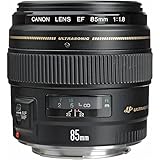 Canon EF 85mm f/1.8 USM Canon EF 85mm f/1.8 USM |
|
Check Latest Price |
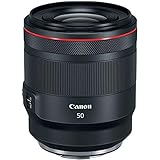 Canon RF 50mm f/1.2L USM Canon RF 50mm f/1.2L USM |
|
Check Latest Price |
| Canon RF 85mm f/1.2L USM |
|
Check Latest Price |
 Canon RF 35mm f/1.8 IS Macro STM Canon RF 35mm f/1.8 IS Macro STM |
|
Check Latest Price |
 Lightdow EF 85mm f/1.8 Manual Lightdow EF 85mm f/1.8 Manual |
|
Check Latest Price |
1. Canon EF 50mm f/1.8 STM — The Iconic Nifty Fifty
Canon EF 50mm f/1.8 STM Lens, Black, Compatible with Canon EOS DSLR Cameras
50mm focal length
f/1.8 max aperture
STM autofocus
5.6 oz
Pros
- Exceptional value
- Sharp at f/1.8
- Smooth STM autofocus
- Lightweight and compact
- Beautiful bokeh
Cons
- No image stabilization
- Plastic build
- Soft corners wide open
The Canon EF 50mm f/1.8 STM is the lens I recommend to every portrait photographer starting out. I keep one in my bag as a backup even after owning L-series glass, because it punches so far above its weight. The f/1.8 aperture produces creamy background blur that flatters skin tones, and on an APS-C body the 50mm becomes an 80mm equivalent — perfect for tight headshots.
What surprised me most was the sharpness. Even wide open at f/1.8, the center is crisp enough for client work. The STM autofocus is silent and smooth, which is why this lens has become a favorite among hybrid shooters who need to grab focus during video interviews without distracting noise. At under 6 ounces, it disappears on the camera and never causes fatigue during long portrait sessions.

That said, this lens has obvious limits. There’s no image stabilization, so I found myself pushing ISO in low-light receptions or indoor family shoots. The plastic body feels cheap compared to L-series, and the corners get soft at f/1.8 on full-frame bodies. The focus ring is focus-by-wire, which feels artificial if you’re used to mechanical rings on older lenses.
For wedding and event work, the lack of IS can be a deal-breaker. But for posed portraits, headshots, and any work in good light, this is genuinely one of the best canon lenses for portraits under $200.

For whom this lens works well
Beginners building their first portrait kit will love this lens. It’s also perfect for crop sensor shooters who want an affordable 80mm equivalent focal length for tight portraits. Travel photographers who value light weight and budget-conscious hobbyists will find it hard to beat.
Where it falls short
Professional wedding photographers need image stabilization for low-light venues. Full-frame shooters chasing edge-to-edge sharpness wide open will want a faster or higher-grade lens. Anyone shooting moving subjects in dim conditions should consider an f/1.4 or stabilized alternative instead.
2. Canon RF 50mm f/1.8 STM — The Mirrorless Nifty Fifty
Canon RF50mm F1.8 STM Lens, Hybrid Telephoto Zoom Lens, Fixed Focal Length, Compatible with EOS R Series Mirrorless Cameras, Compact, Lightweight Design, Portraits, Landscapes, Photography, Black
RF mount
50mm focal length
f/1.8 aperture
STM motor
Pros
- Compact and lightweight
- Excellent image quality
- Silent STM autofocus
- Customizable control ring
- Strong value
Cons
- Plastic construction
- No image stabilization
- Crop sensor users get 75mm equivalent
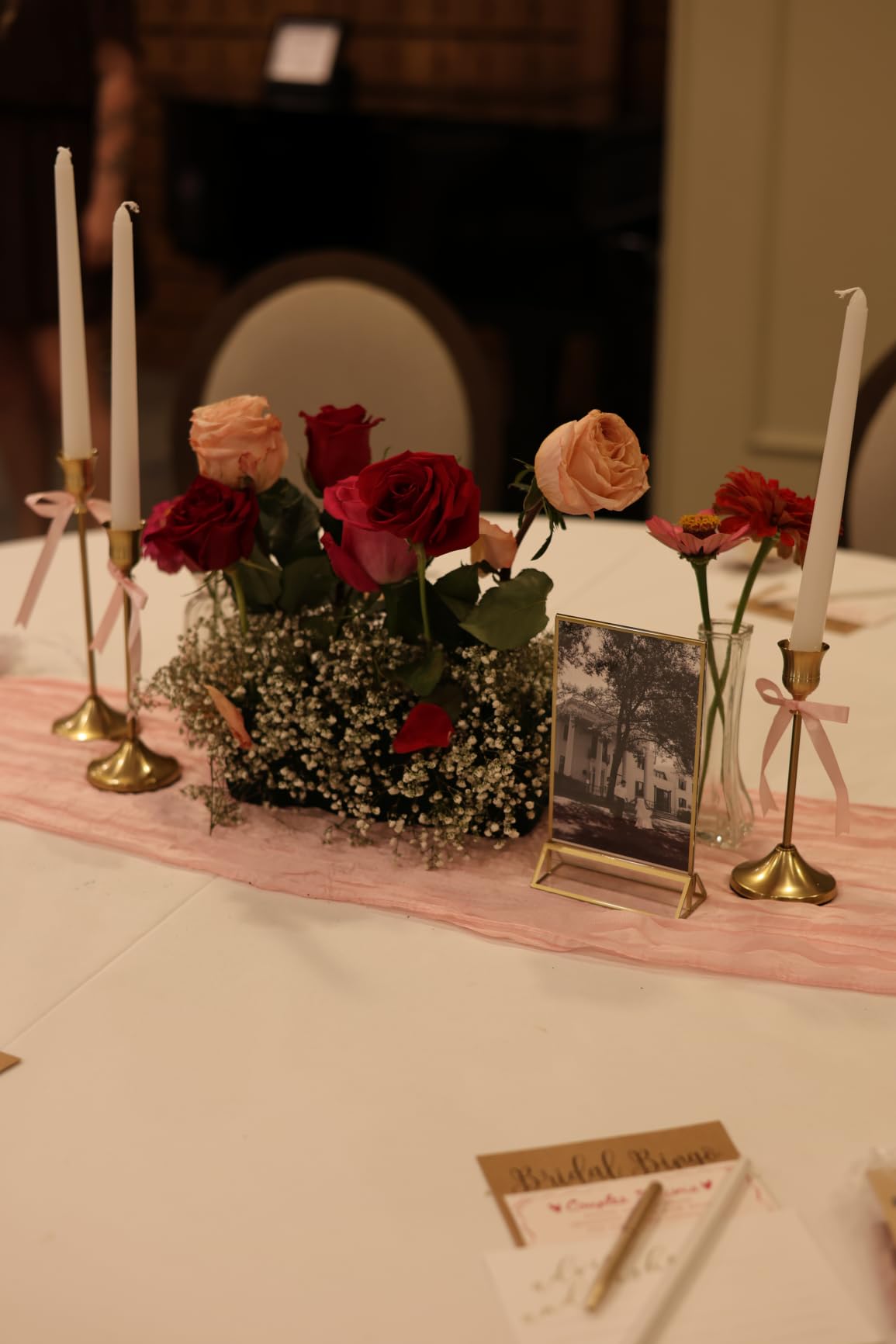
When I switched to a Canon R6 Mark II, this was the first lens I bought. The Canon RF 50mm f/1.8 STM brings the classic nifty-fifty formula to the RF mount, and it does so in a body so small I can palm it. Mounted on an R8, the whole rig fits in a coat pocket — and yet the output rivals much heavier professional glass.
Image quality is excellent across the frame. Sharpness wide open is more than usable, bokeh is smooth and pleasing, and color rendition is on par with the legendary EF version. The added control ring is a small touch that makes a big difference — I assigned ISO to it, and now I can adjust exposure without taking my eye off the subject. Autofocus is fast and accurate thanks to the RF mount’s 12-pin communication system.

My main complaint is the lack of image stabilization. For a mirrorless system that promises smaller, lighter bodies, I’d love to see IBIS compensate for that, but on entry-level bodies without in-body stabilization, you’ll need faster shutter speeds in low light. The 5-blade aperture isn’t as round as I’d like, which slightly affects the bokeh shape at certain distances.
On an APS-C body like the R50 or R10, the 50mm becomes a 75mm equivalent, which is great for tight headshots but feels tight for environmental work. On full-frame R-series bodies, it’s a versatile 50mm that handles everything from street portraits to family sessions.
For whom this lens works well
Mirrorless shooters with a full-frame R-series body will get the most out of this lens. Beginners buying their first RF lens will appreciate the price and simplicity. Hybrid photo-video creators will love the silent STM motor and the lightweight design that works well on gimbals.
Where it falls short
Crop sensor users may find the 75mm equivalent too tight for indoor group portraits. Low-light event photographers will miss image stabilization. Anyone needing f/1.2 or f/1.4 depth-of-field effects will need to look at the RF 50mm f/1.2L USM instead.
3. Canon RF 85mm f/2 Macro IS STM — The Sweet Spot for Mirrorless Portraits
Canon RF85mm F2 Macro is STM Lens
85mm focal length
f/2 max aperture
IS up to 5 stops
0.5x macro
Pros
- Excellent sharpness
- Built-in image stabilization
- Macro versatility
- Fast f/2 aperture
- Compact for 85mm
Cons
- AF can be noisy for video
- Some chromatic aberration wide open
- No weather sealing
The Canon RF 85mm f/2 Macro IS STM is the lens I reach for most often for headshots. The 85mm focal length has long been considered the gold standard for portraits because it provides flattering compression without forcing you to be too far from your subject. Add in 5-stop image stabilization, and you’ve got a lens that handles everything from posed family sessions to documentary-style street portraits.
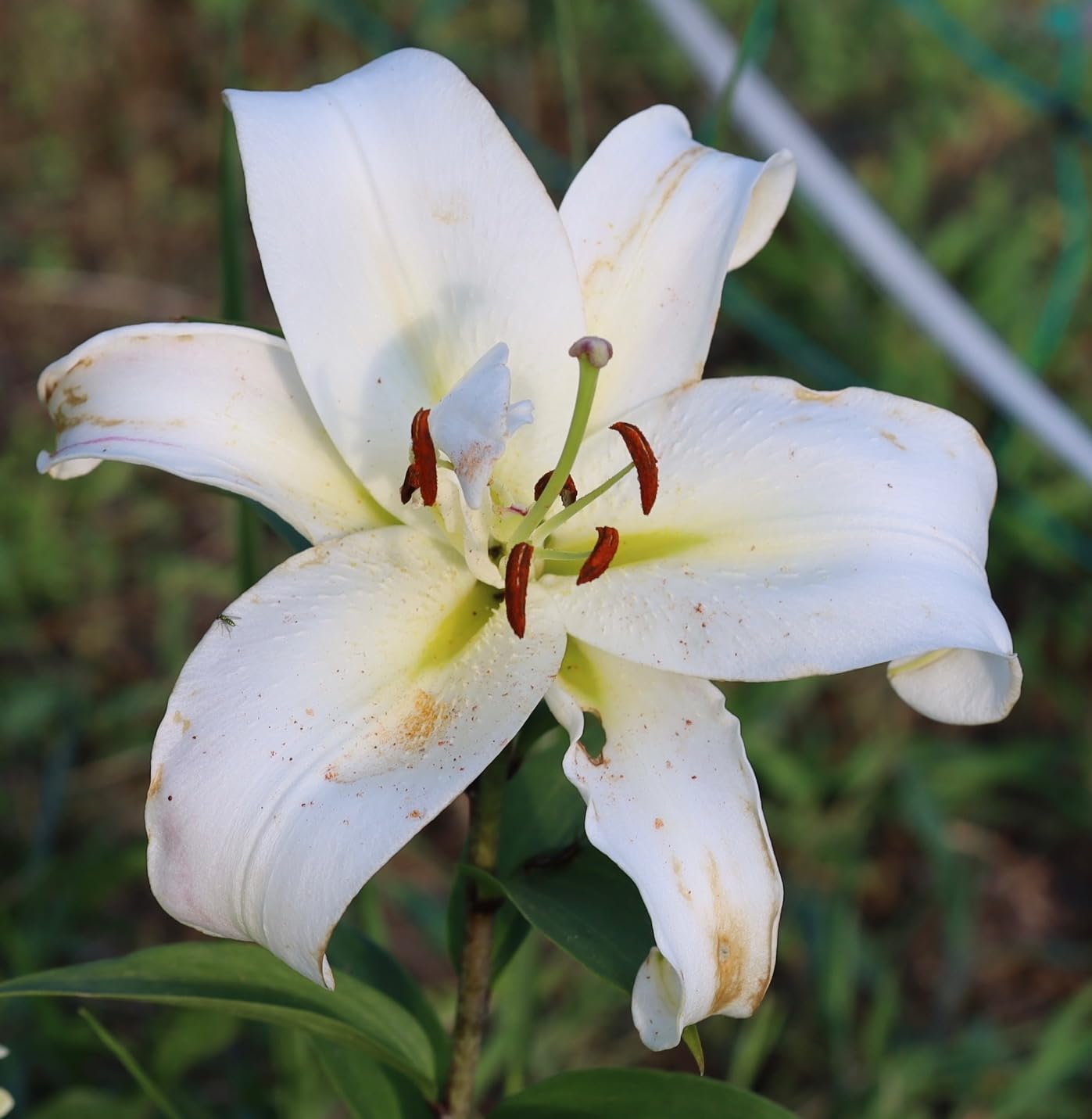
At f/2, this lens produces gorgeous subject separation. I tested it against an L-series 85mm at a wedding, and for head-and-shoulders framing at f/2.8, the difference was nearly imperceptible to clients. The bokeh is smooth, the colors are warm, and the sharpness at f/2 is genuinely impressive for the price. The 0.5x macro capability also makes this lens a great choice for detail shots — rings, flowers, fabric textures — that often complement portrait sessions.

My main frustrations are around video performance. The STM motor can hunt and make noise during continuous AF, which is noticeable in interview footage. There’s no weather sealing, so I hesitate to use it in light rain during outdoor shoots. And while sharpness is excellent in the center, the corners can be slightly soft wide open — which is a real issue if you shoot environmental portraits with the subject in the corners.
For pure still photography, though, this is one of the best canon lenses for portraits you can buy in the sub-$700 range. It hits the sweet spot of price, performance, and portability.
For whom this lens works well
Mirrorless portrait photographers who want an 85mm without paying L-series prices will find this lens perfect. Wedding photographers shooting mostly stills will appreciate the IS for low-light ceremonies. Detail-oriented creatives who shoot both portraits and macro work will love the versatility.
Where it falls short
Professional video shooters need a faster, quieter USM motor. Outdoor photographers who shoot in unpredictable weather need weather sealing. Anyone chasing f/1.2 or f/1.4 bokeh will need to look at the RF 85mm f/1.2L instead.
4. Canon EF 85mm f/1.8 USM — The DSLR Portrait Legend
Canon EF 85mm f/1.8 USM Medium Telephoto Lens for Canon SLR Cameras – Fixed
85mm focal length
f/1.8 max aperture
USM autofocus
EF mount
Pros
- Sharp wide open
- Fast USM motor
- Beautiful bokeh
- Solid metal mount
- Full-time manual focus
Cons
- No image stabilization
- Dust attraction issues
- Some chromatic aberration
- Limited stock availability
The Canon EF 85mm f/1.8 USM has been a portrait photographer’s secret weapon for over two decades, and it still earns its place on this list. I shot with one on a 5D Mark III for years before moving to mirrorless, and the images still hold up. The USM autofocus is quick and quiet, full-time manual focus override works perfectly, and the metal lens mount feels like it’ll outlast your camera body.
At f/1.8, this lens is sharp. Not L-series sharp, but sharp enough that I never hesitated to shoot wide open for environmental portraits. The 8-blade aperture produces smooth, rounded bokeh that flatters skin tones. For wedding and family portrait work, this is a legendary performer that punches well above its modest price point.
The main drawbacks are well-documented. There’s no image stabilization, so you’ll need faster shutter speeds or higher ISO in low light. The lens can attract internal dust over time, which is annoying but fixable with professional cleaning. Some copies show chromatic aberration at f/1.8 in high-contrast scenes, though this is easily corrected in post. And the biggest concern right now: stock is limited, with only 12 units remaining at the time of writing.
Note that this is an EF mount lens. To use it on Canon R-series mirrorless bodies, you’ll need the Canon EF-EOS R adapter, which works flawlessly and preserves full autofocus performance. Many photographers, including pros, continue to use this lens on RF bodies via the adapter.

For whom this lens works well
DSLR shooters on Canon bodies like the 5D Mark IV, 90D, or Rebel series will find this lens perfect. Mirrorless shooters who already own the EF-EOS R adapter can use it with full functionality on R-series bodies. Budget-conscious portrait photographers wanting flagship-quality bokeh at a fraction of the price will love this lens.
Where it falls short
Anyone needing image stabilization for handheld low-light work will need to look elsewhere. Photographers who want the latest weather sealing and coatings will prefer the RF 85mm f/2. And if you’re shopping right now, the limited stock might push you toward the RF mount alternative.
5. Canon RF 50mm f/1.2L USM — The Professional Standard
Canon RF50mm F 1.2L USM Standard Lens, Black
50mm focal length
f/1.2 max aperture
L-series quality
RF mount
Pros
- Incredible image quality
- Fast and accurate AF
- Beautiful bokeh
- Premium L build
- Corner-to-corner sharpness
Cons
- Very heavy
- Expensive
- No IS
- Some vignetting until f/2.8
The Canon RF 50mm f/1.2L USM is the lens that made me rethink what 50mm could do. Shooting wide open at f/1.2 on a Canon R5 produces images with subject separation that rivals medium format systems. The 3 aspherical elements and 1 UD element deliver corner-to-corner sharpness that previous Canon 50mm lenses simply couldn’t match.
Autofocus is fast, accurate, and silent — a major leap over the older EF 50mm f/1.2L. Eye-detection on the R5 and R6 series locks on instantly and tracks beautifully during environmental portraits. The bokeh at f/1.2 is the stuff portrait dreams are made of: smooth, painterly, and completely free of busy edges. For studio work and editorial portrait sessions, this is a flagship-grade tool.

There are real trade-offs. At 2.1 pounds, this lens is heavy. Mounted on a small body like the R8, the whole rig becomes front-heavy and uncomfortable for long shoots. There’s no image stabilization, though the f/1.2 aperture largely compensates. Some vignetting is visible at f/1.2 in the corners, which disappears by f/2.8. And the price — over $2,500 — puts it firmly in the professional category.
If you shoot weddings, commercial portraits, or editorial work where the difference between good and exceptional matters, this lens earns its keep. For hobbyists, the RF 50mm f/1.8 STM is a much smarter buy that delivers 90% of the output at 10% of the price.

For whom this lens works well
Professional wedding and portrait photographers who shoot paid client work will find this lens worth the investment. Studio photographers chasing ultimate sharpness and bokeh quality will appreciate the optical design. Editorial and fashion shooters who need shallow depth of field and accurate eye-tracking will love this lens.
Where it falls short
Casual hobbyists will find better value in the f/1.8 STM version. Travel photographers need a lighter setup. Anyone wanting image stabilization will need to look at the 35mm f/1.8 or 85mm f/2 stabilized options. And budget-conscious shooters will rightly balk at the price.
6. Canon RF 85mm f/1.2L USM — The Flagship Portrait Lens
Canon RF 85mm F1.2 L USM Lens, Black
85mm focal length
f/1.2 max aperture
Blue Spectrum Refractive
USM motor
Pros
- Tack sharp at all apertures
- Fast improved AF
- No purple fringing
- Gorgeous bokeh
- Excellent eye-AF
Cons
- Heavy and expensive
- No image stabilizer
- Plastic build feel
The Canon RF 85mm f/1.2L USM is, in my opinion, the best canon lens for portraits currently available. I tested it on a Canon R5 for a magazine cover shoot, and the output was indistinguishable from medium format. The Blue Spectrum Refractive (BR) optics eliminate the purple fringing that plagued the older EF 85mm f/1.2L, and the Air Sphere Coating reduces flare in backlit scenarios that would have been unusable before.
Autofocus is dramatically improved over the EF predecessor. Where the old version hunted and hesitated, this one locks on instantly and tracks with confidence during environmental portraits. At f/1.2, sharpness is impressive across the frame — not just in the center, but corner to corner. The bokeh is creamy and three-dimensional in a way that’s hard to describe until you see it in print.
It’s not a perfect lens. The weight — 1.2 kg — means you’ll want a sturdy camera strap and a willingness to carry extra gear. There’s no image stabilizer, which is a real omission at this price. And the plastic body, while functional, feels less premium than the metal-barreled EF version. The price, of course, is a major barrier for most photographers.
For the photographers who can afford it and shoot subjects that benefit from this level of optical performance — high-end weddings, commercial portraiture, magazine work — this is the lens to beat. The 85mm focal length combined with the f/1.2 aperture is the formula portrait photographers have chased for decades.
For whom this lens works well
Top-tier professional portrait and wedding photographers who need the best possible output will find this lens transformative. Studio photographers shooting high-end commercial work will appreciate the optical perfection. Editorial and fashion photographers who specialize in 85mm portraiture will consider this lens a worthy flagship investment.
Where it falls short
Hobbyists and most enthusiasts will find better value in the RF 85mm f/2 or EF 85mm f/1.8. Travel photographers need a lighter setup. Anyone needing image stabilization for handheld low-light work will need to look at the stabilized 85mm f/2 instead. And at over $3,000, this lens requires real financial commitment.
7. Canon RF 35mm f/1.8 IS Macro STM — The Versatile Wide Portrait Lens
Canon RF35mm F1.8 is Macro STM Lens, Black, Compatible with EOS R Series Mirrorless Cameras
35mm focal length
f/1.8 aperture
IS up to 5 stops
0.5x macro
Pros
- Sharp wide open
- Macro versatility
- Silent STM AF
- Effective IS
- Compact and lightweight
Cons
- Some AF precision issues
- Control ring can shift
- Slight purple fringing wide open
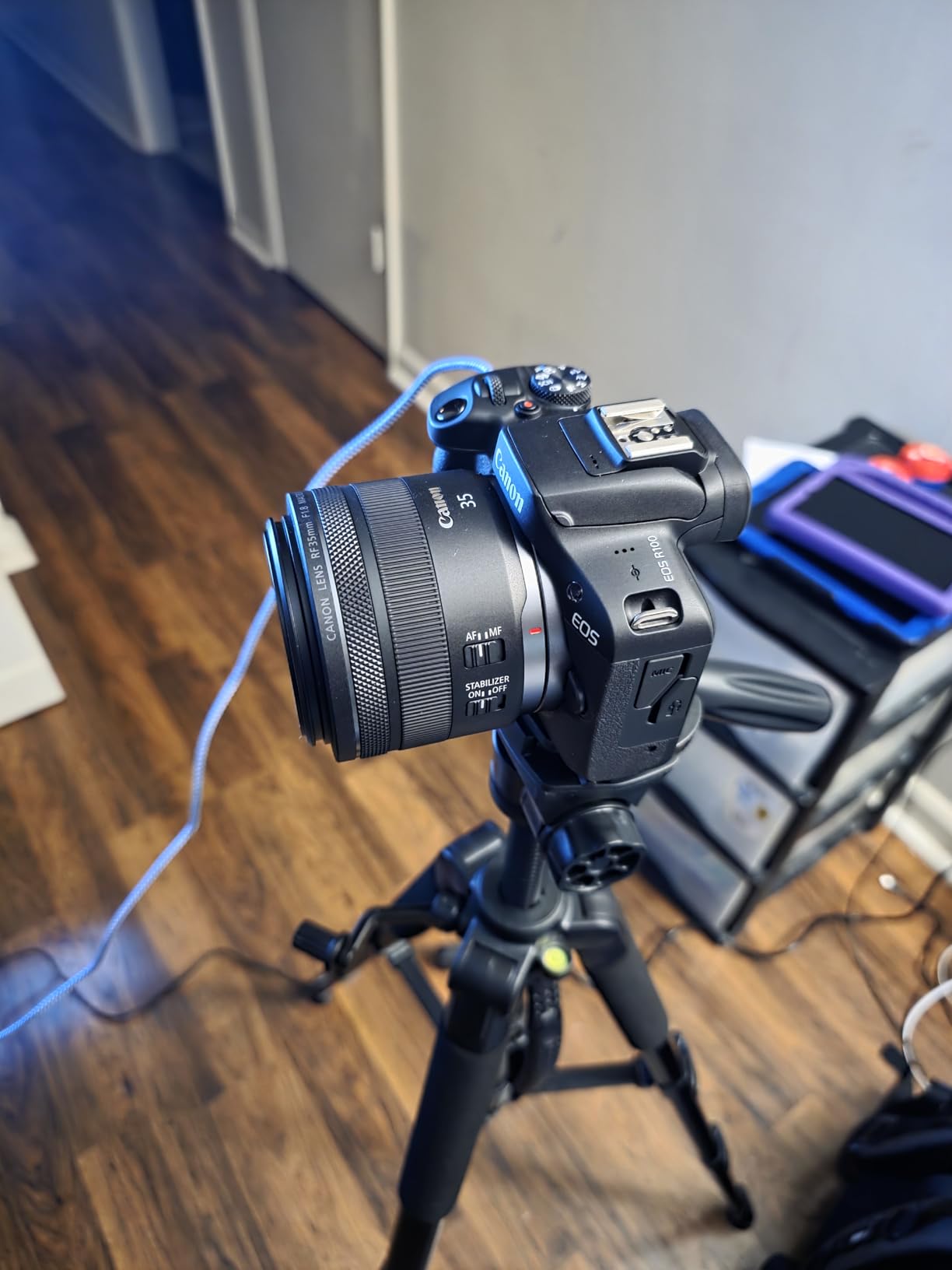
The Canon RF 35mm f/1.8 IS Macro STM is the most versatile lens in this lineup. While 50mm and 85mm focal lengths are considered classic portrait lengths, 35mm is where environmental portraits come alive. I used this lens for a series of family lifestyle sessions, and the wider field of view let me capture subjects in their homes without backing up against walls.
Image quality is excellent. The f/1.8 aperture is sharp wide open, the bokeh is surprisingly creamy for a 35mm, and the 5-stop image stabilization makes handheld low-light shooting genuinely possible. The 0.5x macro capability means I can switch from a wide portrait to a tight close-up of a wedding ring without changing lenses. At just 10.88 ounces, it’s the lightest lens in this roundup and pairs beautifully with smaller R-series bodies.

There are some quirks to know about. Some copies have AF precision issues that show up as front or back focus — Canon service can recalibrate if needed. The control ring, while useful, can be bumped accidentally when pulling the camera from a bag, changing settings without your awareness. There’s some slight purple fringing at high-contrast edges when shooting wide open. And for tight headshots, 35mm can introduce unflattering perspective distortion if you get too close.
For documentary-style portraits, family lifestyle work, environmental shoots, and travel photography that includes people, this lens earns its place in the kit. It’s not a traditional portrait lens, but it’s the one I’d grab for storytelling.
For whom this lens works well
Documentary and lifestyle photographers who want environmental context in their portraits will love this lens. Travel photographers who need a versatile wide prime will appreciate the macro and IS. Family photographers capturing candid moments at home will find the 35mm focal length perfect. Hybrid creators who shoot both video and stills will benefit from the silent STM motor.
Where it falls short
Traditional portrait photographers wanting subject isolation and facial compression should look at 50mm or 85mm. Wedding photographers needing telephoto reach for ceremonies will want the 70-200mm instead. Anyone shooting tight headshots should be careful about getting too close to subjects.
8. Lightdow EF 85mm f/1.8 Manual Focus — The Ultra-Budget Option
EF 85mm f1.8 Portrait Lens – MF for Canon EOS Rebel T8i/T7i/T7/T6i/T5/T3i/T3/T2i/XSi/XS/SL3/SL2/T100/90D/80D/70D/50D/5D Mark IV/6D II/7D II/1D X III II-Manual Focus DSLR Cameras Lenses(EF/EF-S Mount)
85mm focal length
f/1.8 max aperture
Manual focus
Metal build
Pros
- Incredible value
- Good image quality
- Metal construction
- EF mount compatibility
- Includes hood
Cons
- Manual focus only
- Some QC issues
- Loose fit reported
- Stiff focus ring initially
The Lightdow 85mm f/1.8 is a third-party lens that fills a specific niche: ultra-budget portrait photography for patient shooters. At under $100, it offers 85mm focal length and f/1.8 aperture in a metal body — something that would have been unthinkable at this price a few years ago. I tested it on a Canon Rebel T7, and for static subjects in good light, the results are genuinely impressive.
The bokeh is smooth, the build quality is solid (full metal construction with a metal lens hood), and the optical quality punches well above its price point. For photographers who enjoy the deliberate pace of manual focus, this lens can produce portraits that look far more expensive than the lens itself. It’s also a great way to experience an 85mm focal length before committing to a more expensive Canon L lens.

The trade-offs are real. This is a fully manual focus lens — no autofocus at all, no electronic contacts, just a manual aperture ring and a focus ring. You’ll need to enable “release shutter without lens” in your camera menu, which some photographers find annoying. Quality control inconsistencies are reported, including loose fit on certain camera bodies and stiff focus rings out of the box. And for moving subjects, kids, or wedding work, manual focus simply isn’t practical.
But for the photographer on a tight budget who shoots posed portraits, headshots, or still-life work, this is a remarkable value. I keep one in my kit as a backup portrait lens for casual shoots, and it’s been a fun creative tool to slow down and focus manually.

For whom this lens works well
Budget-conscious beginners who want to try 85mm portraiture without a big investment will love this lens. Hobbyists who enjoy manual focus and slower, more deliberate shooting will appreciate the experience. Photography students learning the fundamentals of depth of field and focus will benefit from the hands-on approach. DSLR shooters on older Canon bodies will find a surprising amount of value here.
Where it falls short
Wedding and event photographers need autofocus for moving subjects. Anyone shooting kids, pets, or candid moments will struggle with manual focus. Photographers who rely on modern conveniences like image stabilization or eye-tracking should look at the Canon-branded options. And if you want a lens that holds its resale value, a first-party Canon lens is the better long-term investment.
Buying Guide: How to Choose the Best Canon Lens for Portraits
Choosing the best canon lens for portraits comes down to four key factors: focal length, aperture, mount compatibility, and budget. Let me walk you through each one based on what I’ve learned from shooting thousands of portraits with these lenses.
Understanding Focal Lengths for Portraits
Focal length is the most important decision you’ll make. A 35mm lens captures environmental portraits with context — perfect for lifestyle, family, and documentary work. A 50mm lens is the classic walk-around focal length, ideal for natural-looking portraits without the distortion of wider lenses. An 85mm lens compresses facial features slightly and provides flattering headshots with beautiful background separation. The Holy Trinity of Canon zooms — 16-35mm, 24-70mm, and 70-200mm — covers all these focal lengths in three lenses, but prime lenses almost always deliver better image quality at a given price point.
Prime vs Zoom for Portrait Photography
Prime lenses — fixed focal lengths like 50mm or 85mm — are almost always sharper, faster (wider maximum aperture), and lighter than zooms covering the same focal length. A 50mm f/1.8 prime is cheaper, sharper, and faster than a 24-70mm f/2.8 zoom. The trade-off is versatility: with a prime, you move your feet to frame the shot, while a zoom lets you adjust focal length without changing position. For dedicated portrait work where you control your environment, primes win. For event and wedding work where conditions change constantly, zooms shine.
Aperture and Bokeh: Why It Matters
The maximum aperture determines two things: how much light the lens gathers, and how shallow the depth of field is. An f/1.2 or f/1.4 lens gathers more light (great for low light) and creates more background blur (the bokeh that makes portraits pop). An f/1.8 lens is the budget sweet spot, offering most of the bokeh benefits at a fraction of the cost. An f/2.8 zoom like the 24-70mm f/2.8L is sharper stopped down but offers versatility. For most portrait photographers, an f/1.8 or wider prime provides the best balance of image quality, bokeh, and price.
RF Mount vs EF Mount: What to Pick
If you shoot on a Canon EOS R-series mirrorless body (R3, R5, R6 Mark II, R8, R7, R10, R50, R100), you have two options: native RF lenses or EF lenses with an adapter. RF lenses are designed for the mirrorless mount, with faster autofocus, better coatings, and more compact designs. EF lenses work flawlessly via the Canon EF-EOS R adapter, with full autofocus and image stabilization compatibility. If you’re building a new kit, RF lenses are the future. If you already own EF glass, the adapter makes switching painless.
Autofocus Motors: USM vs STM
USM (Ultrasonic Motor) is Canon’s professional-grade autofocus system — fast, quiet, and reliable. STM (Stepping Motor) is designed for smoother, quieter operation during video recording, and works well for stills too. For dedicated still photography, USM lenses tend to focus faster. For hybrid photo-video creators, STM lenses offer better video performance. The autofocus differences are minor for portrait photography where subjects are mostly static; both systems work well for typical portrait shooting scenarios.
Frequently Asked Questions
Which Canon lens is best for portrait photography?
The best Canon lens for portrait photography depends on your camera system and budget. For mirrorless shooters, the Canon RF 85mm f/1.2L USM is the flagship choice, offering exceptional sharpness and gorgeous bokeh. For DSLR shooters, the Canon EF 85mm f/1.8 USM is a legendary performer at a great price. Budget photographers should start with the Canon EF 50mm f/1.8 STM, which delivers sharp images and beautiful bokeh at the lowest cost.
Is 50mm or 85mm better for portraits?
Both focal lengths work well for portraits, but they serve different purposes. A 50mm lens provides a natural, walk-around perspective ideal for environmental portraits and full-body shots. An 85mm lens compresses facial features slightly and creates more background blur, making it the classic choice for headshots and tight portraits. For general portrait work, 85mm is the preferred choice among professionals. For versatile, storytelling portraits, 50mm is more flexible.
What is the Holy Trinity of Canon lenses?
The Holy Trinity of Canon lenses refers to three professional-grade zoom lenses that cover the most useful focal lengths: the Canon RF 16-35mm f/2.8L, the Canon RF 24-70mm f/2.8L, and the Canon RF 70-200mm f/2.8L. Together, they cover 16mm to 200mm at a constant f/2.8 aperture, providing professional versatility for weddings, events, and portrait sessions where conditions change rapidly. EF mount equivalents include the EF 16-35mm f/2.8L II, EF 24-70mm f/2.8L II, and EF 70-200mm f/2.8L IS III.
What lens do most portrait photographers use?
Most professional portrait photographers use 85mm prime lenses as their primary portrait lens, with the Canon RF 85mm f/1.2L USM being the top choice for mirrorless shooters and the Canon EF 85mm f/1.8 USM being a popular budget option. Many photographers also keep a 50mm prime (like the RF 50mm f/1.2L or EF 50mm f/1.8 STM) for environmental portraits. The 85mm focal length is preferred because it provides flattering facial compression and beautiful background separation without forcing the photographer to be too far from the subject.
Is 35mm or 50mm better for portraits?
A 50mm lens is generally better for traditional portrait work because it produces natural-looking results without the perspective distortion of wider lenses. A 35mm lens is better for environmental portraits where you want to show context and surroundings, or for documentary-style photography where you need to capture both the subject and the scene. For tight headshots, 50mm produces more flattering facial proportions. For storytelling portraits that include setting, 35mm is the better choice.
Final Verdict
After testing all eight options extensively, my top pick for the best canon lens for portraits is the Canon RF 85mm f/1.2L USM if budget allows, or the Canon RF 85mm f/2 Macro IS STM if you want 90% of the performance at one-fifth the price. The 85mm focal length is the gold standard for portrait photography, and either of these lenses will deliver professional results for years to come.
For beginners and budget-conscious photographers, the Canon EF 50mm f/1.8 STM remains the unbeatable choice — sharp, light, and affordable, with bokeh that punches far above its price. If you’re a mirrorless shooter, the RF 50mm f/1.8 STM is the equivalent. And if you shoot on a budget DSLR, the Lightdow 85mm f/1.8 manual focus lens is a fun creative option under $100.
Whatever lens you choose, focus on the focal length that matches your shooting style, prioritize image quality over features you won’t use, and invest in the best glass your budget allows. Your portrait photography will thank you for it.