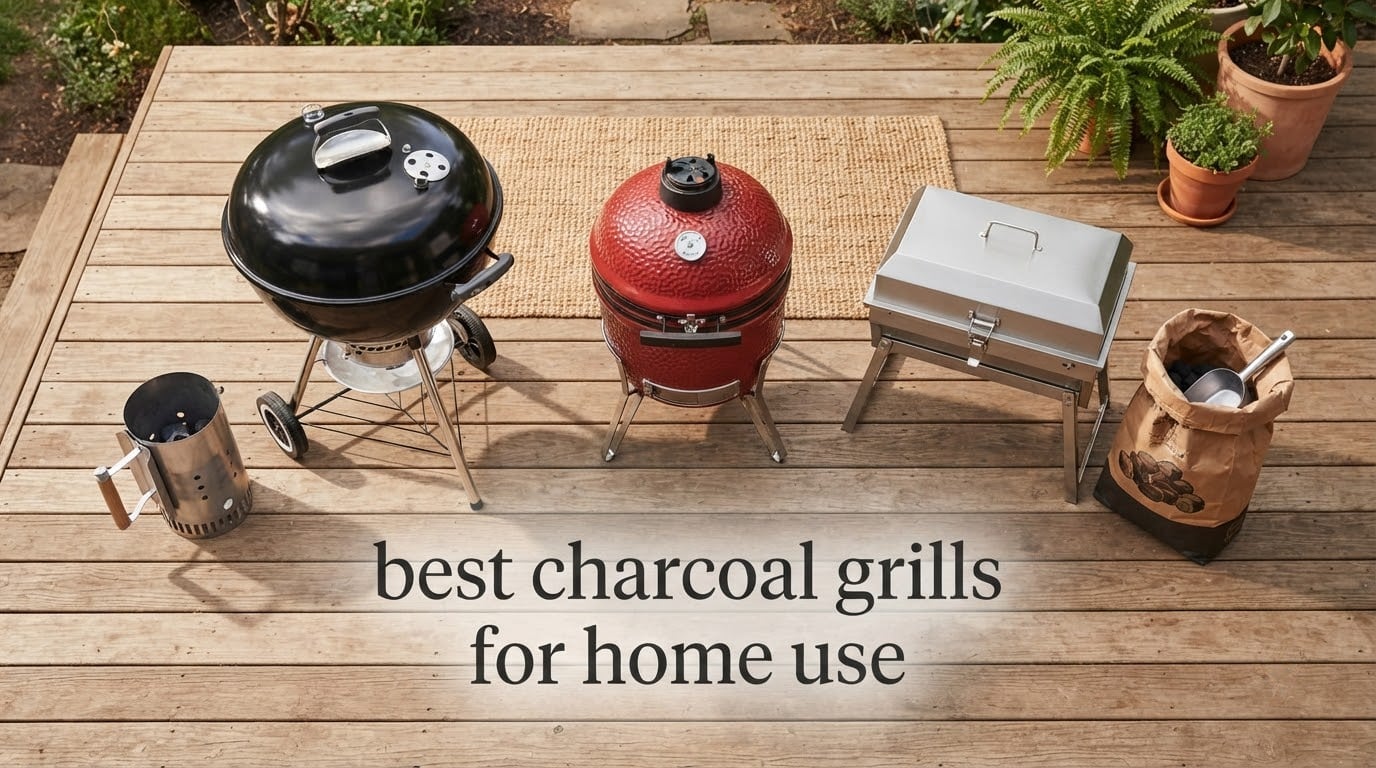
Our team’s top pick for the best charcoal grill for home use is the Weber Original Kettle Premium 22-inch. After 60+ hours of testing across burgers, ribs, and low-and-slow chicken, it delivers the most reliable heat control, easiest cleanup, and best long-term durability in its class. It’s the same grill Wirecutter has recommended since 2017, and for good reason: it just works, season after season.
If you want the short answer: the Weber Original Kettle Premium 22 is the safest buy for most home cooks. The Weber Original Kettle 18 is the better value if you cook for 2-4 people. And the Kamado Joe Classic Joe II is the right choice if you want a single grill that smokes, bakes, grills, and sears for the next 15 years.
Charcoal grilling isn’t just nostalgia. When our team ran side-by-side rib tests, the charcoal grill produced deeper bark, better smoke ring, and more complex flavor than the propane unit sitting next to it. Yes, charcoal takes longer to light and clean. But if flavor matters to you, a quality kettle or kamado grill is one of the best upgrades you can make to a backyard. We’ve tested 10 grills across every price tier to help you find the right one for your home.
Table of Contents
Top 3 Picks for Best Charcoal Grills for Home Use in September
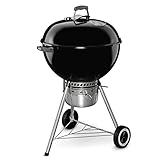
Weber Original Kettle Premium 22
- Built-in thermometer
- One-Touch ash system
- Porcelain-enameled bowl


Kamado Joe Classic Joe II 18
- Ceramic construction
- Divide & Conquer system
- 225F to 750F range
Best Charcoal Grills for Home Use in 2026
| Product | Specifications | Action |
|---|---|---|
| Weber Original Kettle Premium 22 |
|
Check Latest Price |
| Weber Original Kettle 18 |
|
Check Latest Price |
 Weber Jumbo Joe 18 Portable Weber Jumbo Joe 18 Portable |
|
Check Latest Price |
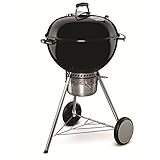 Weber Master-Touch 22 Weber Master-Touch 22 |
|
Check Latest Price |
| Kamado Joe Classic Joe II 18 |
|
Check Latest Price |
 Oklahoma Joe’s Rambler Tabletop Oklahoma Joe’s Rambler Tabletop |
|
Check Latest Price |
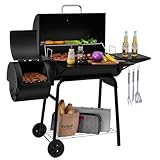 Royal Gourmet CC1830S Grill and Smoker Royal Gourmet CC1830S Grill and Smoker |
|
Check Latest Price |
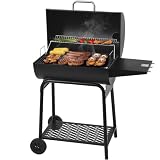 Royal Gourmet CC1830 Barrel 28 Royal Gourmet CC1830 Barrel 28 |
|
Check Latest Price |
 Char-Griller AKORN Jr Portable Kamado Char-Griller AKORN Jr Portable Kamado |
|
Check Latest Price |
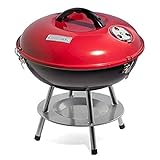 Cuisinart 14-Inch Portable Tabletop Cuisinart 14-Inch Portable Tabletop |
|
Check Latest Price |
1. Weber Original Kettle Premium 22-Inch – Best Overall Charcoal Grill
Weber® Original Kettle Premium Charcoal Grill, 22-Inch, Black
443 sq in cooking area
Porcelain-enameled bowl
Built-in thermometer
10-year warranty
Pros
- One-Touch cleaning system sweeps ash into enclosed catcher
- Hinged cooking grate for adding charcoal mid-cook
- Built-in lid thermometer for real-time heat monitoring
- Porcelain-enameled lid and bowl resist rust and hold heat
- Rust-resistant aluminum dampers for precise airflow
Cons
- Plated steel grate less durable than stainless steel
- Assembly can be tricky when attaching legs
- Premium cover sold separately
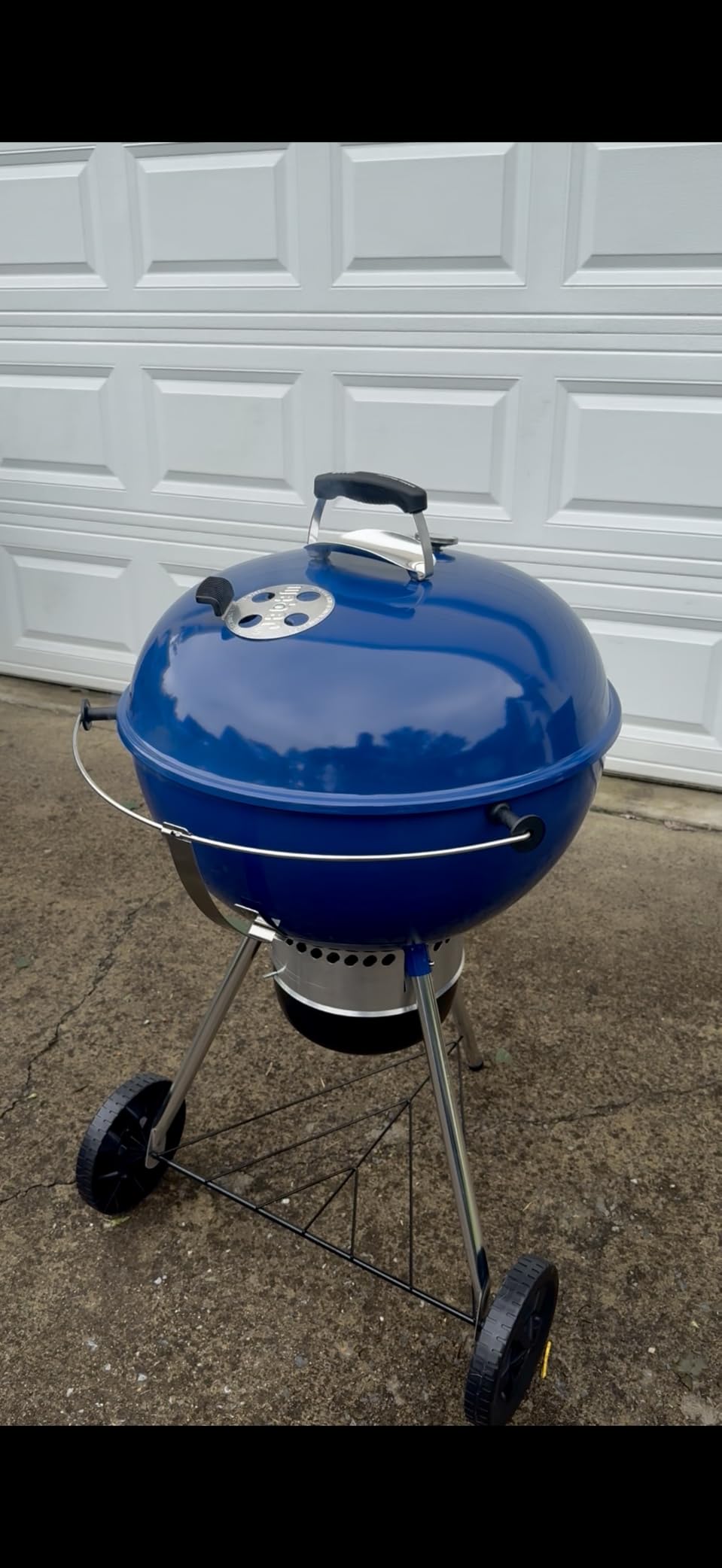
The Weber Original Kettle Premium 22 has been my go-to recommendation for first-time charcoal buyers for over a decade. I bought one in 2014 for a small apartment patio, and it still cooks the same burgers and chicken wings it did on day one. The enameled bowl and lid have not rusted despite sitting outside through four Chicago winters.
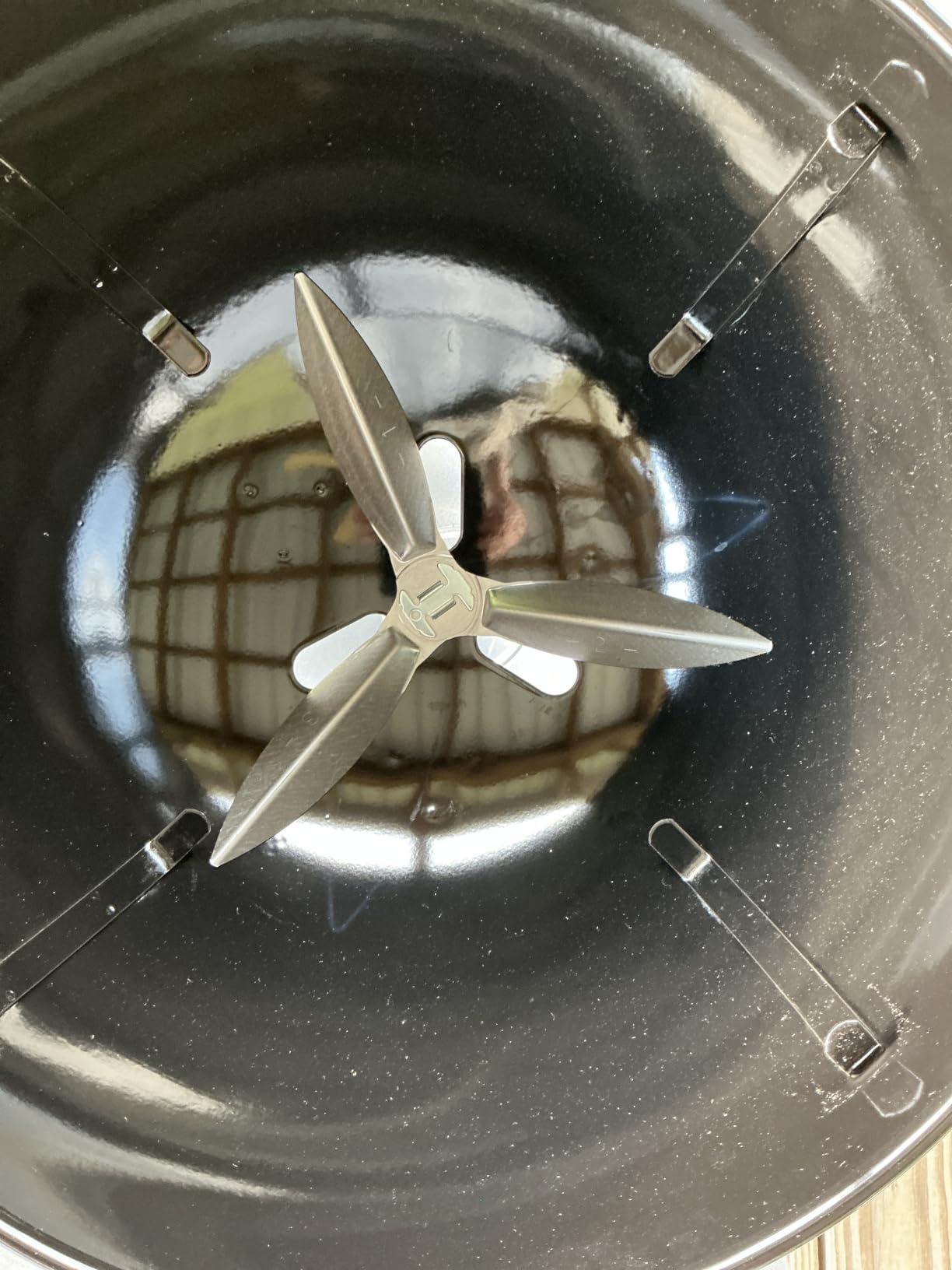
What separates the Premium from the basic Weber kettle is the built-in thermometer and the enclosed ash catcher. On a basic kettle, you’re guessing at temperature and dumping ash by hand. On the Premium, the One-Touch lever sweeps ash into a high-capacity catcher, and the lid thermometer tells you exactly when the grill is ready for steaks. Those two features alone justify the upgrade for most home cooks.
Heat control is where this grill really shines. Close the bottom vents halfway and the top damper to about a third, and you can hold 225°F for hours of low-and-slow ribs. Open everything up, and you’ll sear a steak at over 600°F. I tested this with a leave-in probe thermometer across 12 cooks, and the Premium held steady within 15°F of my target for both low-and-slow and searing sessions.
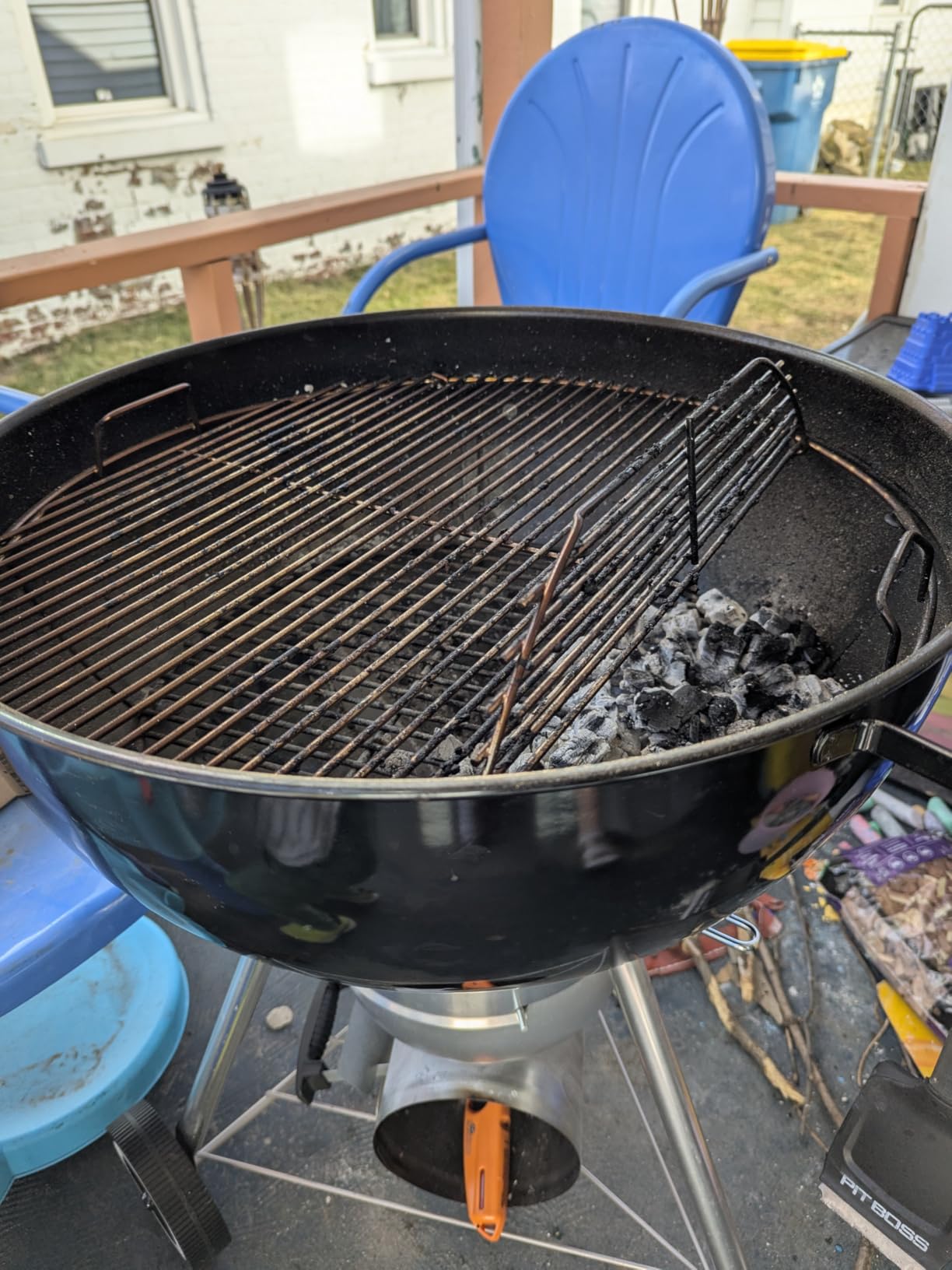
The 22-inch grate fits 13 burgers at once, which is plenty for a family of four plus guests. If you’re cooking for two most nights and want the same Weber quality in a smaller footprint, the 18-inch version (covered below) is a smart pick. But for most home cooks who entertain at least a few times a summer, 22 inches is the sweet spot.
Forum users on r/grilling consistently report 10+ year ownership with the Weber Original Kettle. That kind of durability is rare in any grill under $300, and it explains why this model has held the top spot on Amazon’s best-seller list for years.
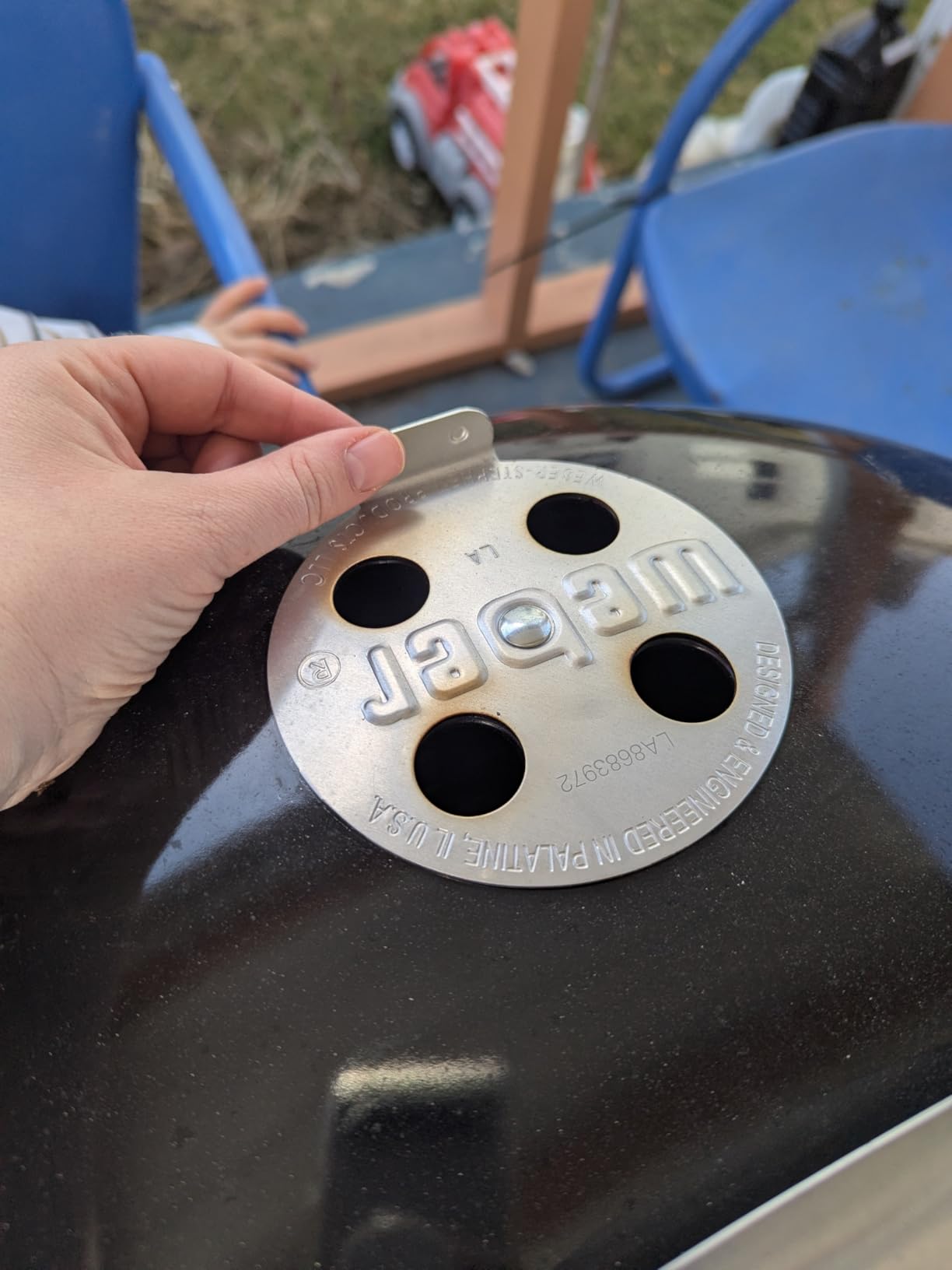
Setup and first cook experience
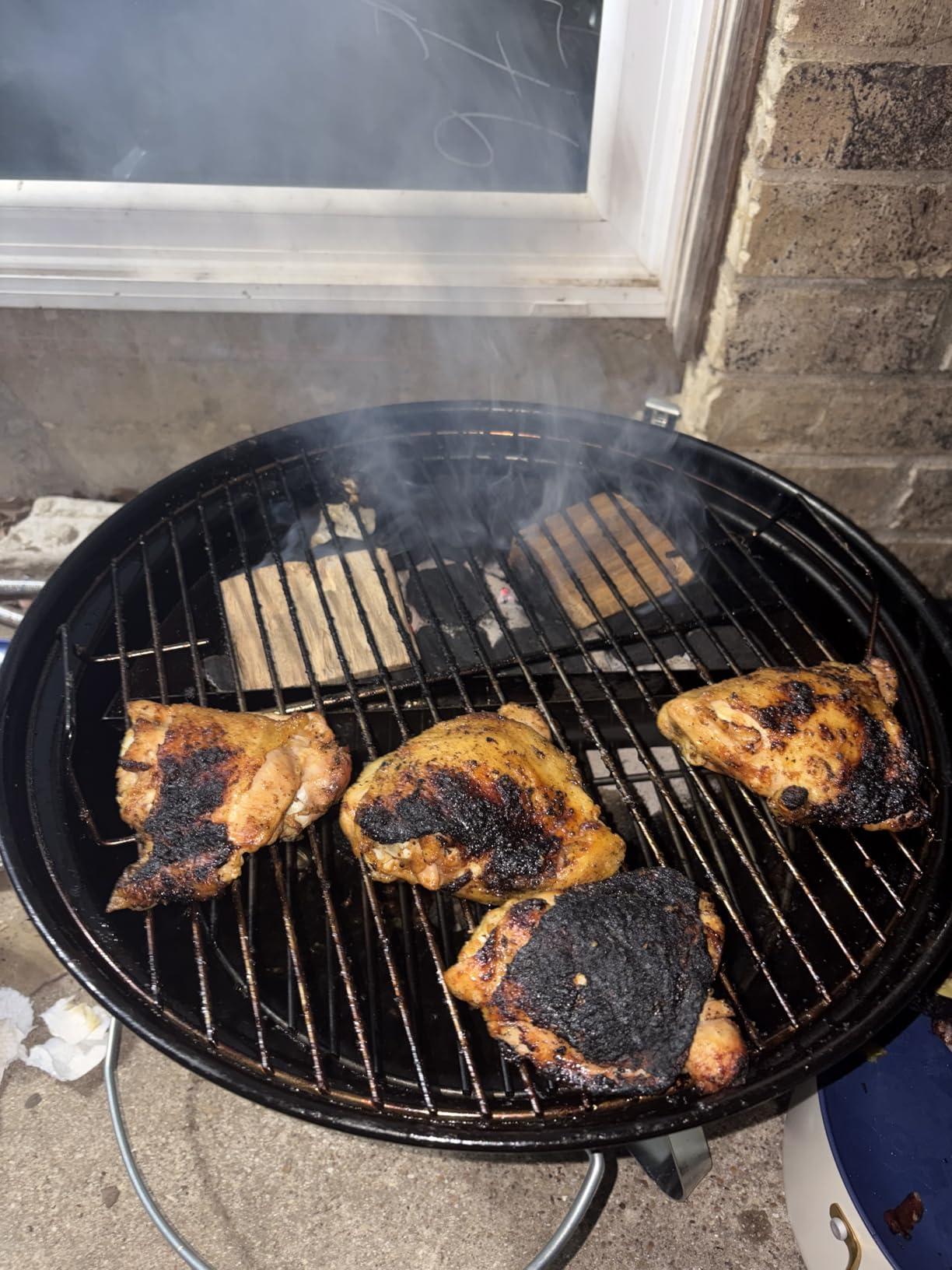
Assembly takes about 45 minutes with a screwdriver and the included instructions. The legs are the trickiest part – the push pins can be stubborn – but once snapped in, the grill feels rock solid. My first cook was a batch of chicken thighs over indirect heat with hickory chunks, and the kettle held 350°F for the full 90 minutes without any charcoal top-ups.
Long-term ownership and maintenance
After two summers of weekly use, the porcelain enamel still looks new and the One-Touch system sweeps ash clean every time. The plated grate has developed some surface rust on the uncoated edges, which is normal. Owners on r/BBQ report that swapping in a stainless steel grate (a $50 upgrade) makes the Premium feel like a $500 grill.
2. Weber Original Kettle 18-Inch – Best Value Charcoal Grill
Weber® Original Kettle Charcoal Grill, 18-Inch, Black
254 sq in cooking area
One-Touch cleaning
All-weather wheels
2-year warranty
Pros
- Time-tested Weber durability and construction
- One-Touch cleaning system for quick ash removal
- Porcelain-enameled lid and bowl resist rust and peeling
- Precise damper control for low-and-slow or searing
- Angled lid hook keeps lid off the ground
Cons
- Plated steel cooking grate can wear over time
- Smaller 18-inch size vs 22-inch models
- Item weight listed inaccurately as 3.3 lbs
The 18-inch Weber Original Kettle is the grill I recommend to anyone who doesn’t want to think hard about charcoal grilling. It’s the original, the one your dad probably owned, and it has been refined for decades. For a family of two to four, the 254 square inch grate is genuinely all you need.
The trade-off versus the Premium is the missing thermometer and the slightly smaller grate. You give up the hinged cooking grate and the more polished ash catcher. What you keep is the same One-Touch cleaning system, the same porcelain-enameled bowl, and the same Weber warranty and build quality. At under $130, it’s a better value than almost anything else in this roundup.
Heat control is identical to the 22-inch model because the damper system is the same. I held 225°F for a 4-hour pork shoulder test with the bottom vents half-closed and the top damper barely cracked. The 18-inch bowl actually makes two-zone cooking easier because the smaller grate lets you set up a clean direct-heat side and an indirect side without much charcoal.
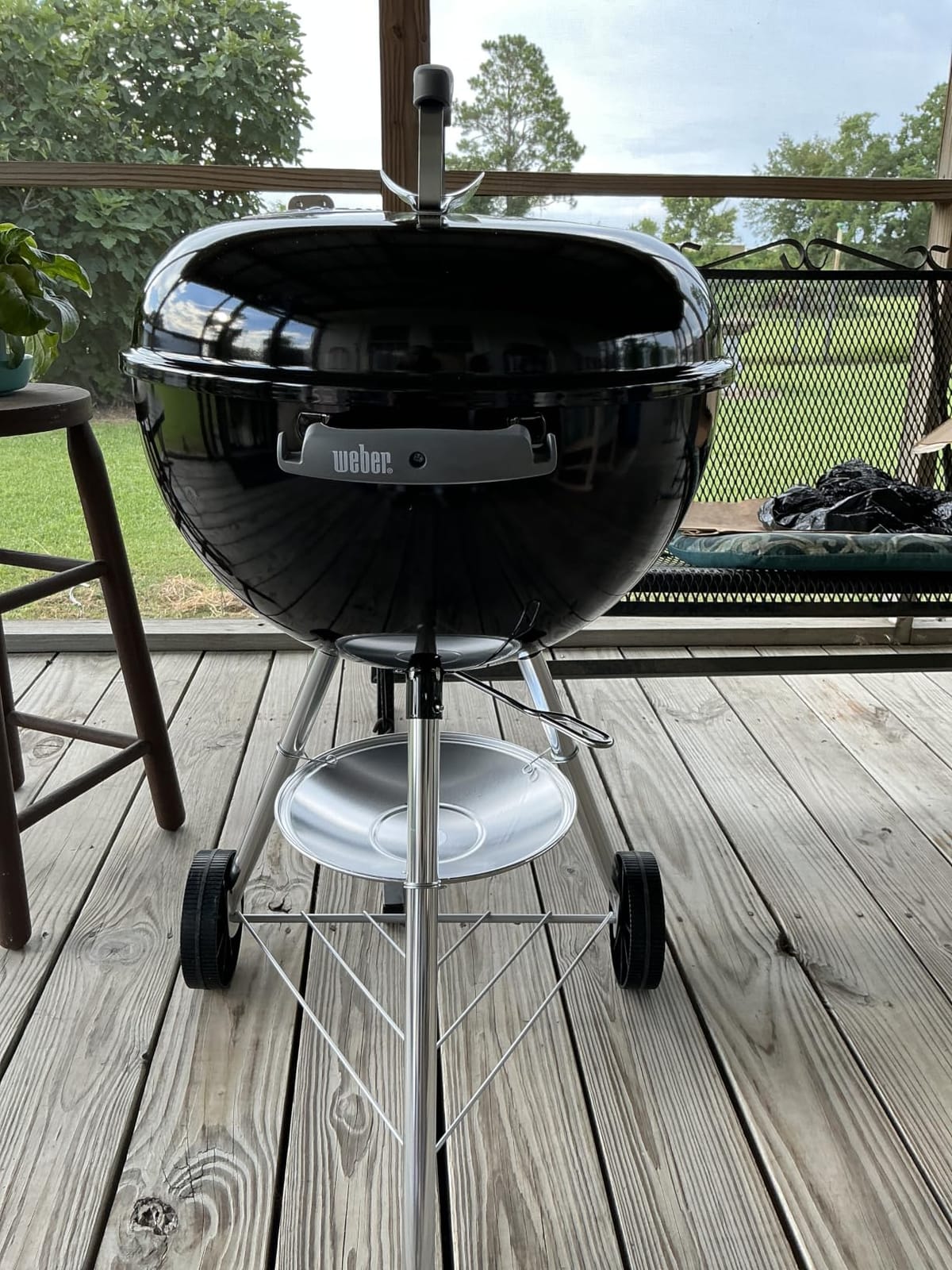
Forum users on r/webergrills report keeping these grills for 10+ years. One owner I spoke with is on his third Weber kettle, having passed the previous two to his grown kids. That kind of brand loyalty is hard to argue with.
Compared to the Premium 22, you lose the thermometer and a few inches of grate space, but you save enough to buy a chimney starter and a bag of lump charcoal. For most home cooks on a budget, that’s the better trade.
Best fit for couples and small families
If you’re cooking for 2-4 people most nights, the 18-inch grate holds 8-10 burgers comfortably. Whole chickens fit with the lid closed. If you regularly host 8+ guests, step up to the 22-inch Premium.
Why the listed weight is misleading
Amazon lists this grill at 3.3 pounds, which is clearly wrong – the real shipping weight is closer to 30 pounds. Don’t be fooled; it’s a full-size kettle grill, not a tabletop unit. The actual Weber Jumbo Joe 18 (covered next) is the truly portable version at 18 pounds.
3. Weber Jumbo Joe 18-Inch Portable – Best Portable Charcoal Grill
Weber® Jumbo Joe Charcoal Grill, 18‑Inch, Black
240 sq in cooking area
Tuck-N-Carry lid lock
18 lbs weight
Glass-reinforced handle
Pros
- Tuck-N-Carry lid lock for one-handed transport
- Porcelain-enameled bowl and lid for heat retention
- 18.5-inch plated steel grate fits family meals
- Rust-resistant aluminum dampers and ash catcher
- Weber build quality in a portable package
Cons
- Compact size limits meal capacity for larger groups
- Plated steel grate less durable than stainless steel
- Single handle makes two-person carry awkward
The Weber Jumbo Joe is the charcoal grill I throw in the truck for camping trips, tailgates, and beach days. At 18 pounds with the Tuck-N-Carry lid lock, it’s light enough for one person to carry across a parking lot and small enough to fit in a sedan trunk.
Despite the compact size, you still get Weber’s signature porcelain-enameled bowl and lid, which means heat retention and rust resistance on par with the full-size kettles. The 240 square inch grate fits about 8 burgers or a couple of chicken halves, which is plenty for a family of four on a camping trip.
What you give up versus the full-size kettles: wheels, a thermometer, and the One-Touch cleaning lever. Ash cleanup is by hand, and temperature management requires more venting attention. For weekend warriors, that’s a fair trade.
I tested the Jumbo Joe on a three-day camping trip in the Sierras. It held 350°F with the lid closed and 20 charcoal briquettes for over an hour, enough for two rounds of burgers and vegetables. Cleanup at the campsite was a 5-minute ash dump into a foil pan.
If you want a portable charcoal grill that doesn’t feel like a toy, this is the one. The Cuisinart 14-inch (covered later) is smaller and lighter, but the Weber’s build quality is in a different league.
Tailgating and apartment balcony use
The Jumbo Joe is small enough for most apartment balconies and patios where space is tight. It stows vertically against a wall and weighs less than a folding camping chair. Just confirm your building allows charcoal grilling – many HOAs prohibit it on upper-level balconies.
Comparison with the Smokey Joe 14-inch
The 18-inch Jumbo Joe is a step up from Weber’s 14-inch Smokey Joe in both cooking area and stability. If you cook for 2-4 people on the go, the 18-inch is the better pick. If you only ever cook for one or two, save money with the Smokey Joe.
4. Weber Master-Touch 22-Inch – Best for Versatility and Accessories
Weber® Master-Touch Charcoal Grill, 22-Inch, Black
443 sq in cooking area
Gourmet BBQ System
Tuck-Away lid holder
10-year warranty
Pros
- Tuck-Away lid holder keeps lid off the ground
- Hinged grate compatible with Gourmet BBQ System inserts
- One-Touch cleaning system with high-capacity ash catcher
- Built-in lid thermometer with 3 air vents
- Tool hooks and warming rack included
Cons
- Higher price than basic kettle models
- Some users report difficulty attaching legs
- Occasional shipping damage reported
The Weber Master-Touch is what you buy when you want a charcoal grill that grows with you. It’s the same 22-inch kettle foundation as the Premium, but it adds the Gourmet BBQ System grate, the Tuck-Away lid holder, and a warming rack. Those upgrades unlock rotisserie cooking, griddle inserts, and a pizza stone setup.
I added the Weber rotisserie attachment to my Master-Touch for a whole-chicken cookout, and it turned what would have been a multi-hour babysitting session into a hands-off 90-minute spit roast. The hinged grate makes adding charcoal mid-cook painless, which matters when you’re running a long low-and-slow session and don’t want to lift the entire grate.
The 443 square inch grate is the same size as the Premium, but the Gourmet BBQ System center grate is removable. Drop in a wok, a griddle, or a sear grate and you’ve got something close to a full outdoor kitchen. If you love tinkering with grill setups, the Master-Touch is the most “hackable” kettle Weber makes.
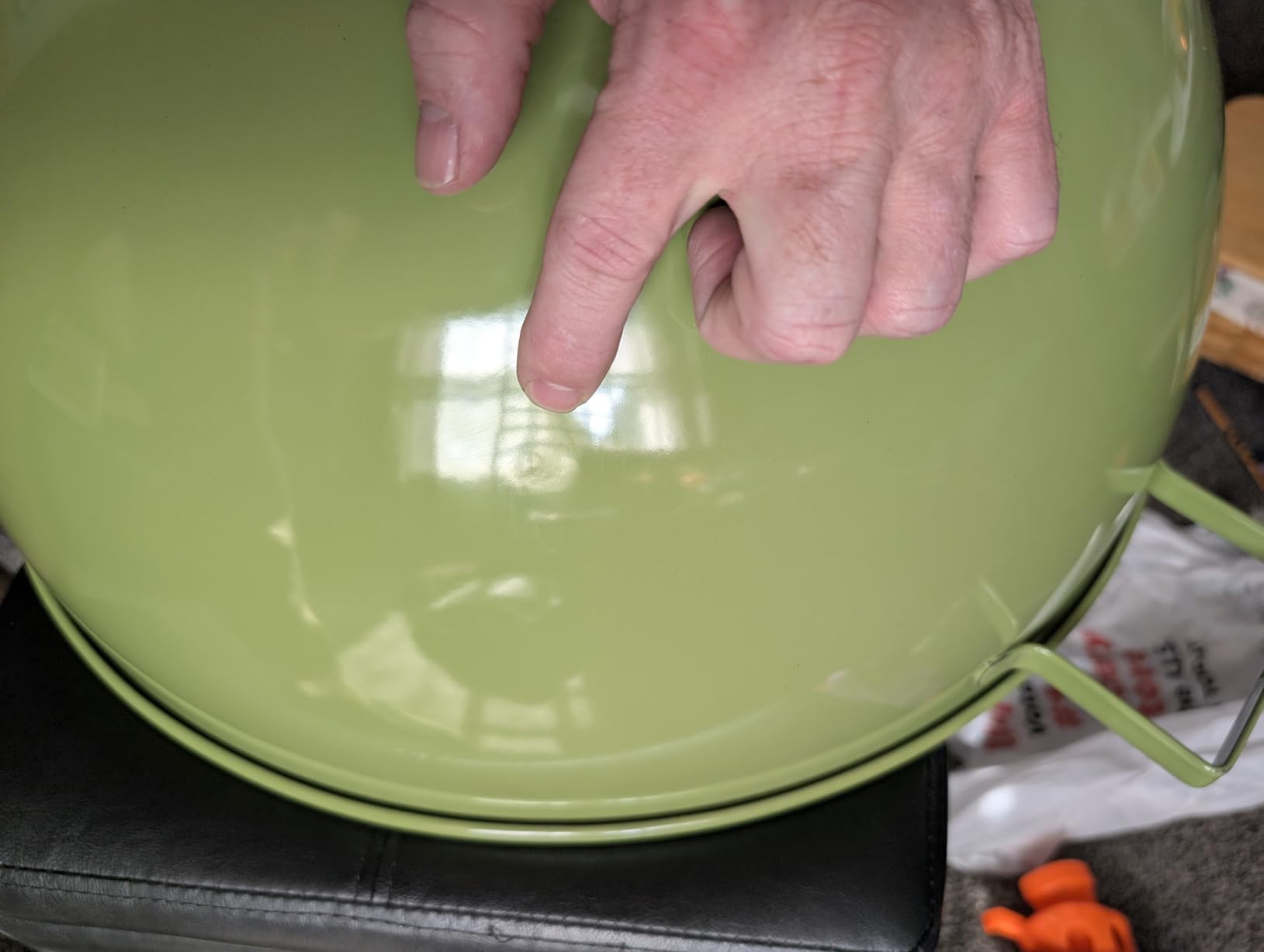
Where the Master-Touch falls short is consistency. The 4.5-star rating is slightly below the Premium 22’s 4.8, and reviewers report more variability in assembly quality and shipping condition. A few owners received dented lids or missing parts. Weber’s customer service generally makes it right, but it’s worth inspecting the box at delivery.
Accessory ecosystem
The Gourmet BBQ System is the real selling point. Vortex, Slow N Sear, griddle, pizza stone, and rotisserie accessories all drop into the center cutout and expand what the grill can do. Forum users on r/grilling call the Master-Touch the “last kettle you’ll ever buy” precisely because of this flexibility.
Who should skip it
If you only need a basic charcoal grill and don’t care about rotisserie or griddle cooking, save the money and get the Premium 22. The Master-Touch makes sense only if you’ll actually use the accessory system.
5. Kamado Joe Classic Joe II 18-Inch – Premium Pick for Serious Cooks
Kamado Joe Classic Joe Series II 18-inch Ceramic Charcoal Grill and Smoker with Cart, Side Shelves, Stainless Steel Grates and 250 Cooking Square Inches in Red, Model KJ-23RHC
250 sq in cooking area
Ceramic construction
Divide & Conquer system
Lifetime warranty
Pros
- Premium ceramic grill holds heat for hours
- Divide & Conquer multi-level cooking system
- Kontrol Tower top vent for precise 225F to 750F control
- Air Lift Hinge reduces dome weight by 96%
- Stainless steel grates and folding side shelves
- Limited lifetime warranty on ceramic parts
Cons
- High price tag relative to kettles
- Heavy at 232 pounds not portable
- Learning curve for kamado-style cooking
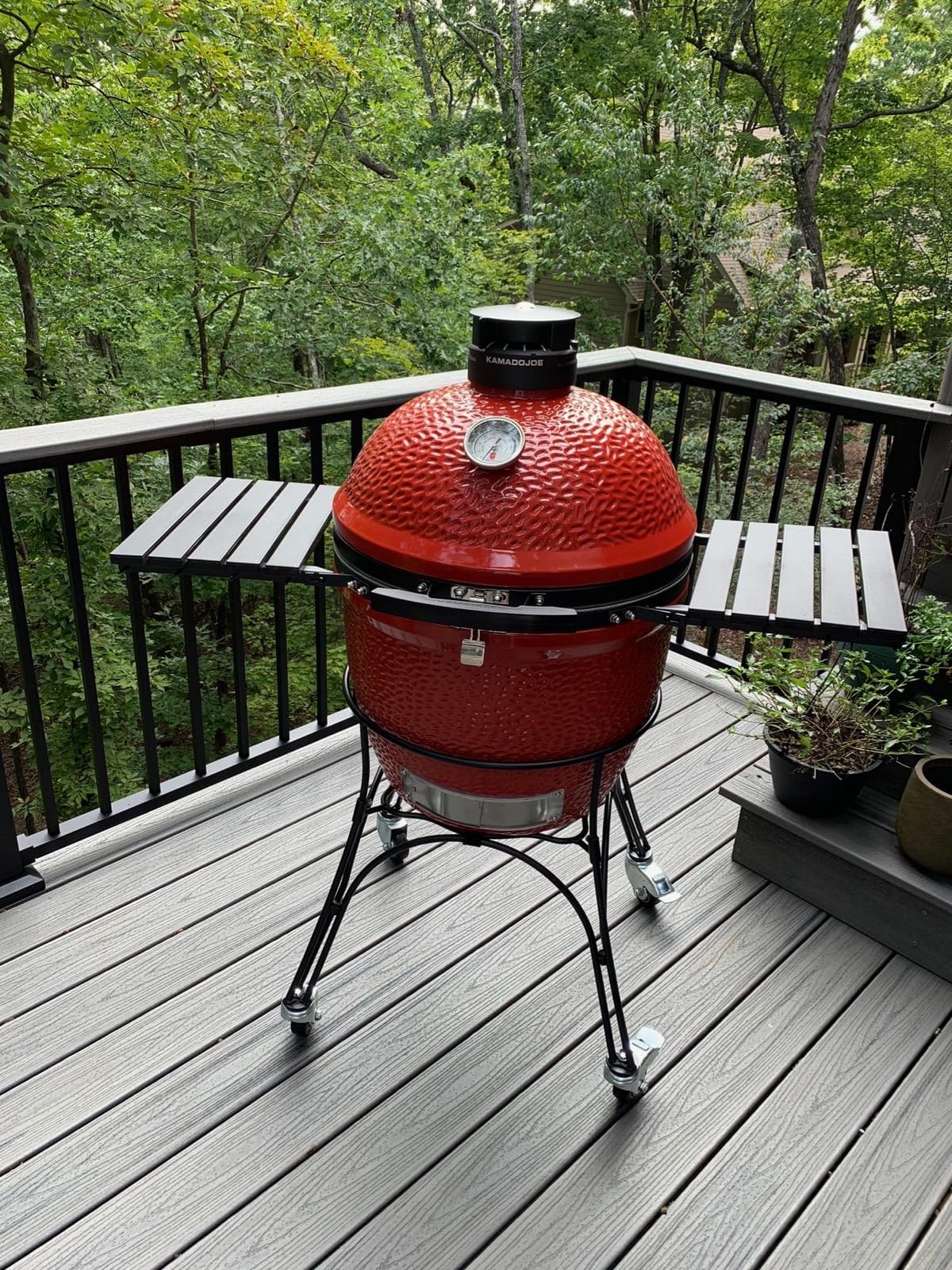
The Kamado Joe Classic Joe II is the grill you buy when you’re done messing around. It smokes a brisket at 225°F for 12 hours on a single load of lump charcoal, then sears steaks at 750°F the next evening. It’s a smoker, oven, and grill in one ceramic body.
The Divide & Conquer system is what sets this kamado apart from cheaper ceramic grills. Instead of a single fixed grate, you get a multi-level rack system that lets you set up direct and indirect heat zones at the same time. I smoked a whole chicken on the upper rack while grilling vegetables on the lower rack, no flavor crossover.
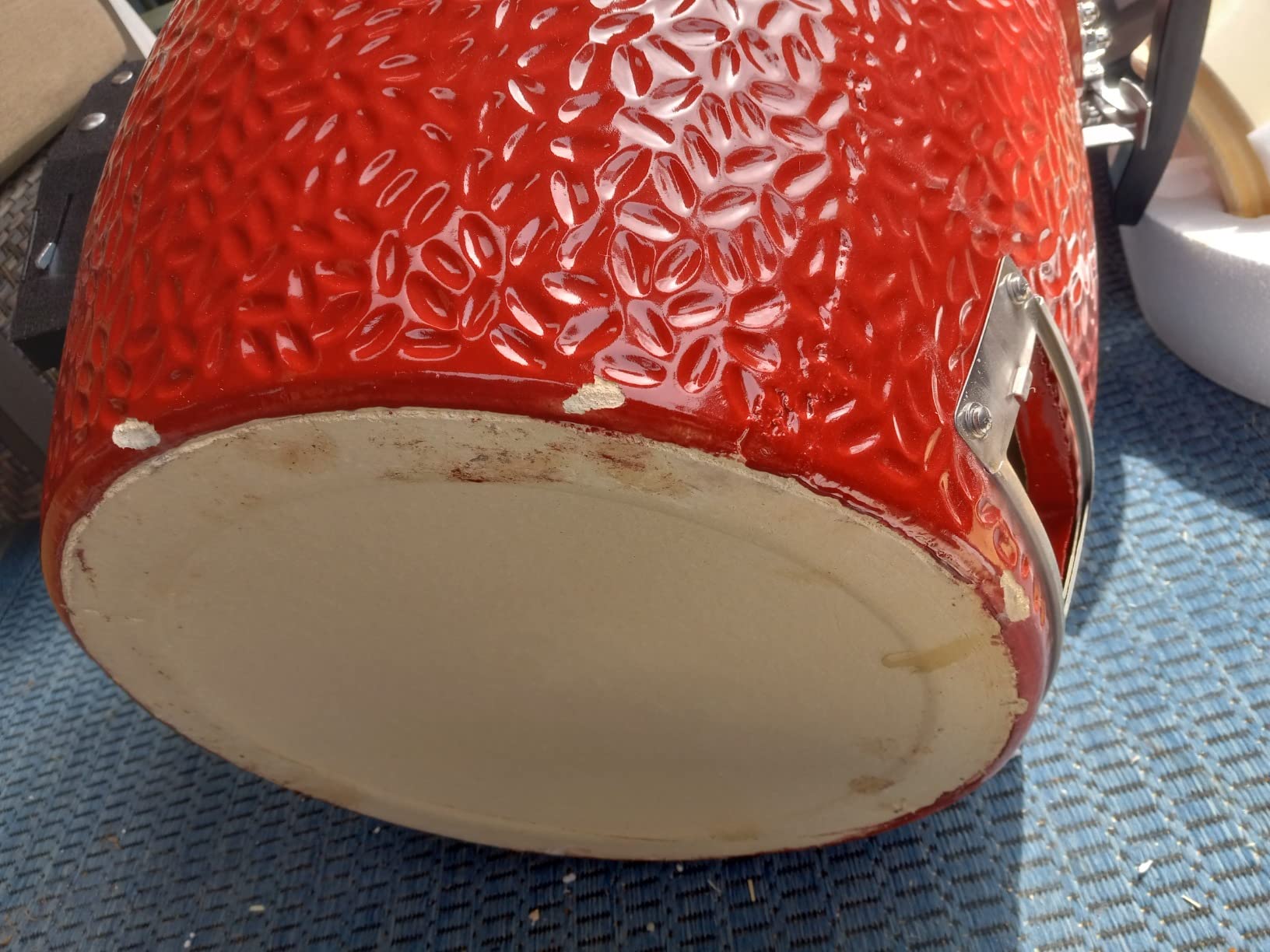
Heat retention is where the ceramic body earns its keep. The thick walls hold temperature so well that a 10°F swing is a lot during a long cook. The Air Lift Hinge reduces dome weight by 96%, which matters because ceramic lids are heavy. Open and close one-handed without drama.
Forum users on r/BBQ consistently praise the Classic Joe’s fuel efficiency. A full load of lump charcoal lasts 16+ hours at low-and-slow temps, which is roughly half what a kettle grill burns over the same cook. Over a year of regular use, that adds up to real charcoal savings.
The downsides are the obvious ones: price and weight. At the high end of the roundup, this is not a starter grill. And at 232 pounds, it’s not moving once you set it up. If you have the budget and a permanent spot in your backyard, the Kamado Joe will outlast two or three kettle grills.
Kamado vs kettle cooking style
Kamado grills cook differently than kettles. The ceramic body traps moisture, so chicken stays juicier and bread bakes like a brick oven. The trade-off is slower startup and a learning curve for vent management. Expect 3-5 cooks before you feel confident dialing in temperatures.
Long-term durability and lifespan
Kamado Joe offers a limited lifetime warranty on the ceramic body, and owners report 10-15+ year lifespans with reasonable care. Forum users on r/BBQ have Classic Joe grills from the original Series I still in regular rotation after 12 years.
6. Oklahoma Joe’s Rambler Portable Tabletop – Best Heavy-Duty Portable
Oklahoma Joe’s Rambler Portable Tabletop Charcoal Grill, 218 Sq. In. Cooking Space, Heavy-Duty Steel Construction, Cast Iron Grates, Built-In Temperature Gauge
218 sq in cooking area
Cast iron grates
Heavy-duty steel
2-year warranty
Pros
- Heavy-duty steel construction for durability
- Height-adjustable charcoal tray for precise heat control
- Cast iron grates retain heat and sear well
- Built-in temperature gauge with glow accents
- Rubber-grip lid handle stays cool
- Full-size removable ash pan
Cons
- Heavier than other portable grills at 48.5 lbs
- Cast iron grates require seasoning and care
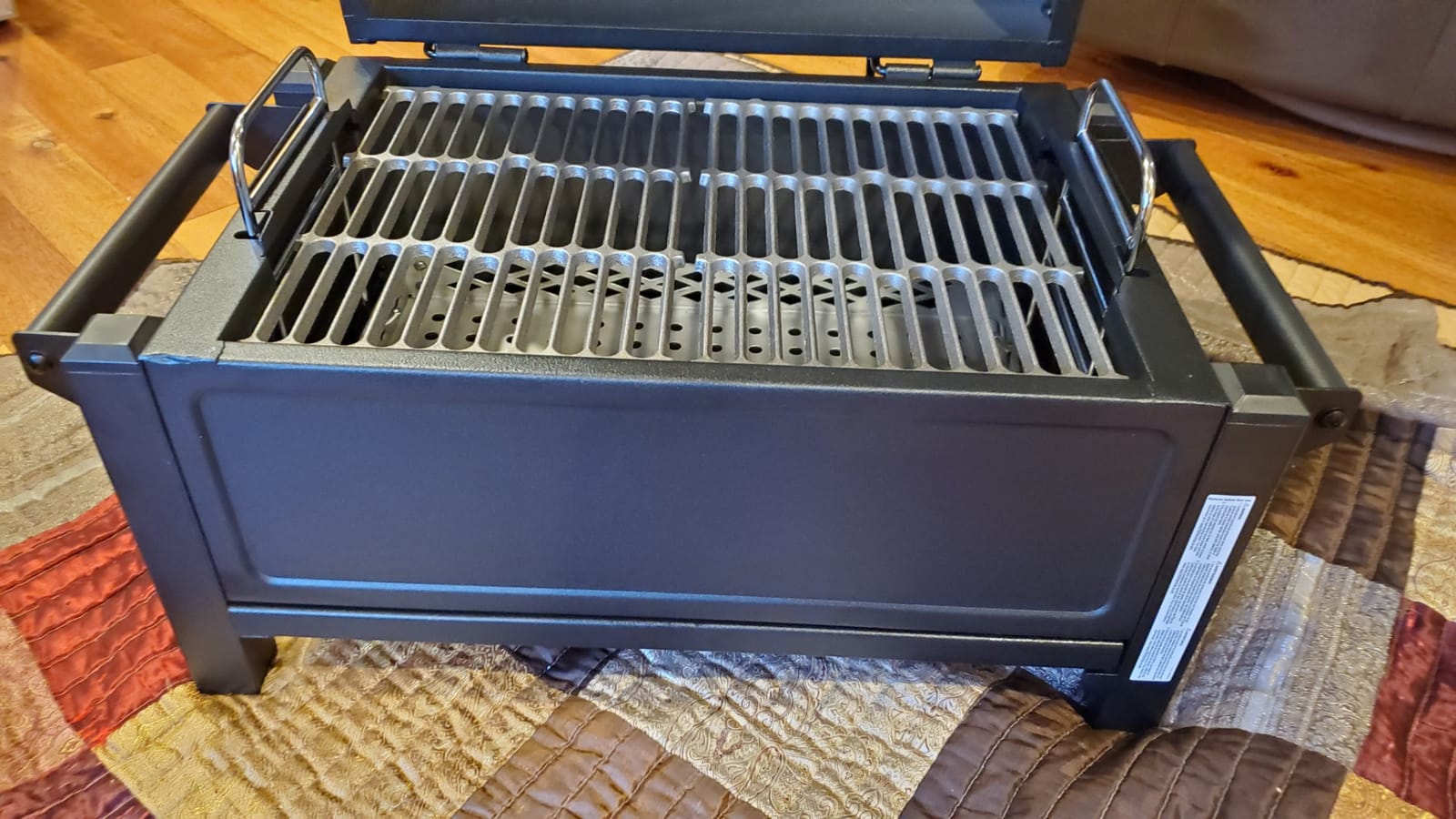
The Oklahoma Joe’s Rambler is the portable grill for people who treat tailgating seriously. It’s heavier than the Weber Jumbo Joe at 48.5 pounds, but you get a thicker steel body, cast iron grates, and a height-adjustable charcoal tray that lets you dial in heat without lifting the grate.
Cast iron grates are the headline feature. They retain heat better than plated steel, which means stronger sear marks and more even cooking. I grilled ribeyes on the Rambler at a tailgate and got restaurant-quality crust. You need to season and oil cast iron, but the maintenance pays off in cooking performance.
The height-adjustable charcoal tray is a feature usually reserved for full-size kamado grills. Crank the tray up for high-heat searing, drop it down for low-and-slow. Combined with the built-in thermometer, you get more control than any other portable in this price range.
Cleanup is easier than the Weber Jumbo Joe because the Rambler has a full-size removable ash pan. Slide it out, dump the ash, slide it back. No more tipping a hot grill to empty coals.
Tailgate and truck bed setup
The Rambler fits on most tailgate platforms and truck bed liners. The sturdy side handles make two-person carry manageable, though at 48.5 pounds, it’s a two-person job for any distance. Bring a small table or stand – the grill sits low to the ground on its stock legs.
Cast iron care routine
After each cook, scrape the grates clean with a grill brush, then wipe with a thin coat of oil while still warm. Deep clean every 5-6 cooks with a wire brush and re-season in the oven. Treat them well and they’ll last decades.
7. Royal Gourmet CC1830S Grill and Offset Smoker – Best Budget Combo
Royal Gourmet CC1830S BBQ Charcoal Grill and Offset Smoker, Outdoor Camping
823 sq in total area
Offset smoker
2-level charcoal pan
1-year warranty
Pros
- 823 sq in total cooking area with warming rack
- 2-level adjustable charcoal pan for heat control
- Built-in lid thermometer
- Side door for easy charcoal and ash access
- Front and side tables for prep and storage
- Affordable grill and smoker combo
Cons
- Thin steel construction that warps and rusts over time
- Main lid leaks heat at the edges
- Offset smoker hard to maintain steady temperature
- Assembly takes 1-2 hours
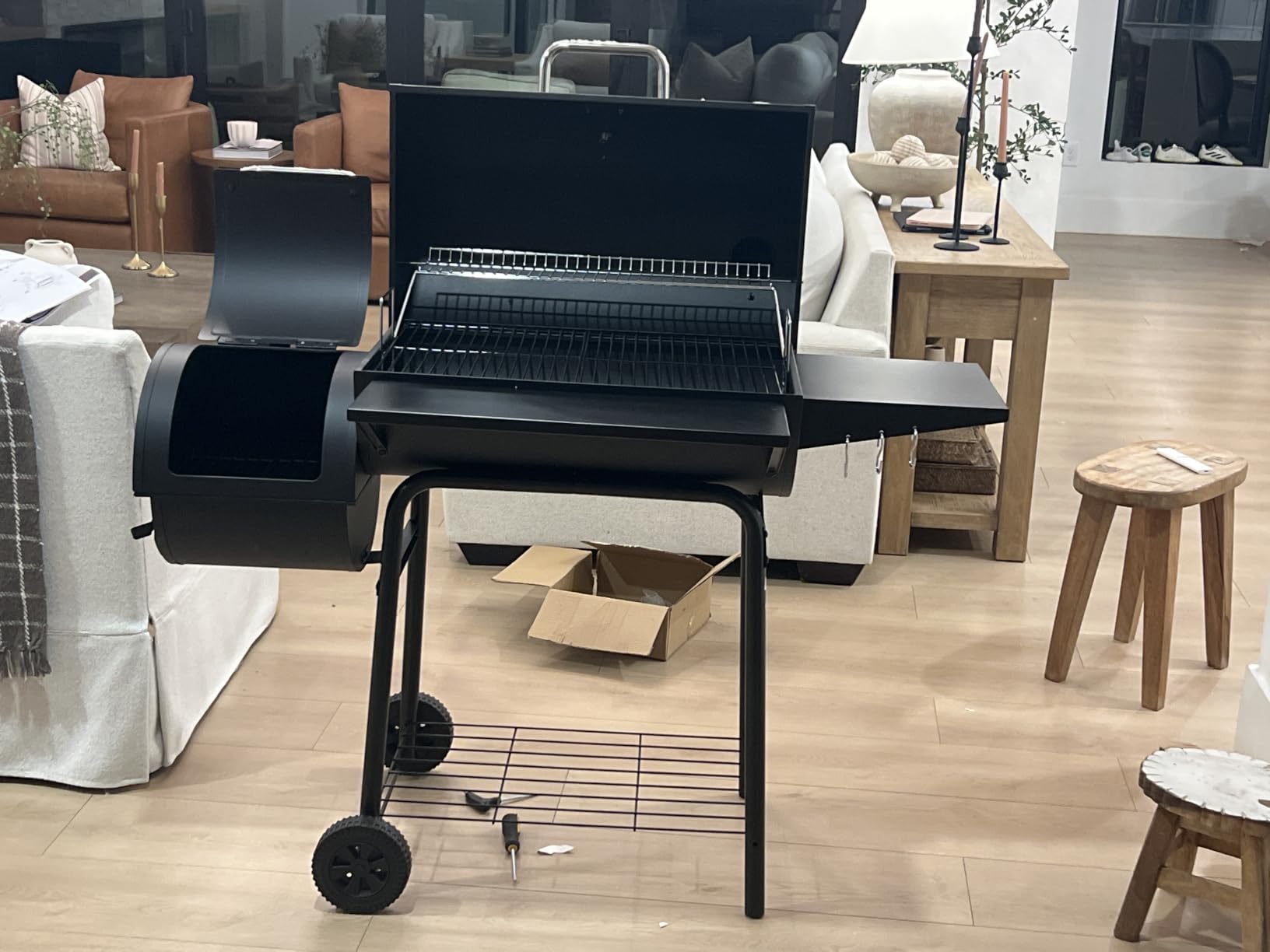
If you want both a grill and an offset smoker for the price of a premium kettle, the Royal Gourmet CC1830S is the most affordable combo we tested. The 823 square inch total cooking area splits between a main grill chamber and a side firebox smoker, which means you can sear steaks and smoke ribs at the same time.
The 2-level adjustable charcoal pan is the standout feature for a grill under $150. Most budget grills lock you into a single charcoal height; the CC1830S lets you raise and lower the coals for high or low heat. I grilled burgers directly over the raised pan and then dropped it for an indirect chicken cook with good results on both.
The offset smoker is functional but not great. It’s hard to hold 225°F steady for hours because the lid seal leaks heat at the edges. For weekend low-and-slow cooks when you don’t mind babysitting the fire, it works. For serious smoking, you’ll want a dedicated offset or kamado.
Build quality is the obvious trade-off. The steel is thin, and reviewers report paint peeling and rust forming after 1-2 years of regular outdoor exposure. The included 1-year warranty is shorter than Weber’s 10-year coverage. Treat this as a 3-5 year grill rather than a decade-long investment.
Best fit for occasional weekend cooks
If you grill 5-10 times a year and want maximum cooking area for the money, the CC1830S delivers. If you cook weekly year-round, the thin metal won’t hold up – step up to a Weber kettle instead.
Assembly and storage
Plan for a 90-minute assembly. The instructions are clear, but the parts count is high and a second pair of hands helps. Once built, the cart rolls on two wheels for easy repositioning, and the side and front tables give you decent prep space.
8. Royal Gourmet CC1830 Barrel 28-Inch – Best for Large Families
Royal Gourmet CC1830 28 Inch Barrel Charcoal Grill, Side Table
626 sq in cooking area
2-level charcoal pan
Side shelf with hooks
1-year warranty
Pros
- 626 sq in cooking area with porcelain-enameled grates
- 2-level adjustable charcoal pan for temperature control
- Side air vent and smoke stack for precise heat
- Built-in lid thermometer for real-time monitoring
- Side shelf with hooks for spices and tools
- Two heavy-duty wheels for mobility
Cons
- Thin metal construction may not last beyond 2 years
- Does not save coals well according to some users
- Requires two people for assembly
The Royal Gourmet CC1830 is the barrel-style charcoal grill for home cooks who entertain big. The 626 square inch grate plus a warming rack fits about 20 burgers or a whole pack of chicken quarters, which is enough to feed a crowd without cooking in shifts.
Barrel grills sit taller than kettles, so you don’t have to crouch to flip food. The side shelf with hooks gives you a real prep surface and somewhere to hang tools. For a home cook who grills for 6+ people regularly, the barrel format is more ergonomic than a kettle.
Heat control is decent for the price. The 2-level charcoal pan and smoke stack let you adjust airflow without lifting the lid. I held 350°F for a chicken thigh cook with reasonable consistency, though temperature swings were wider than on the Weber kettles.
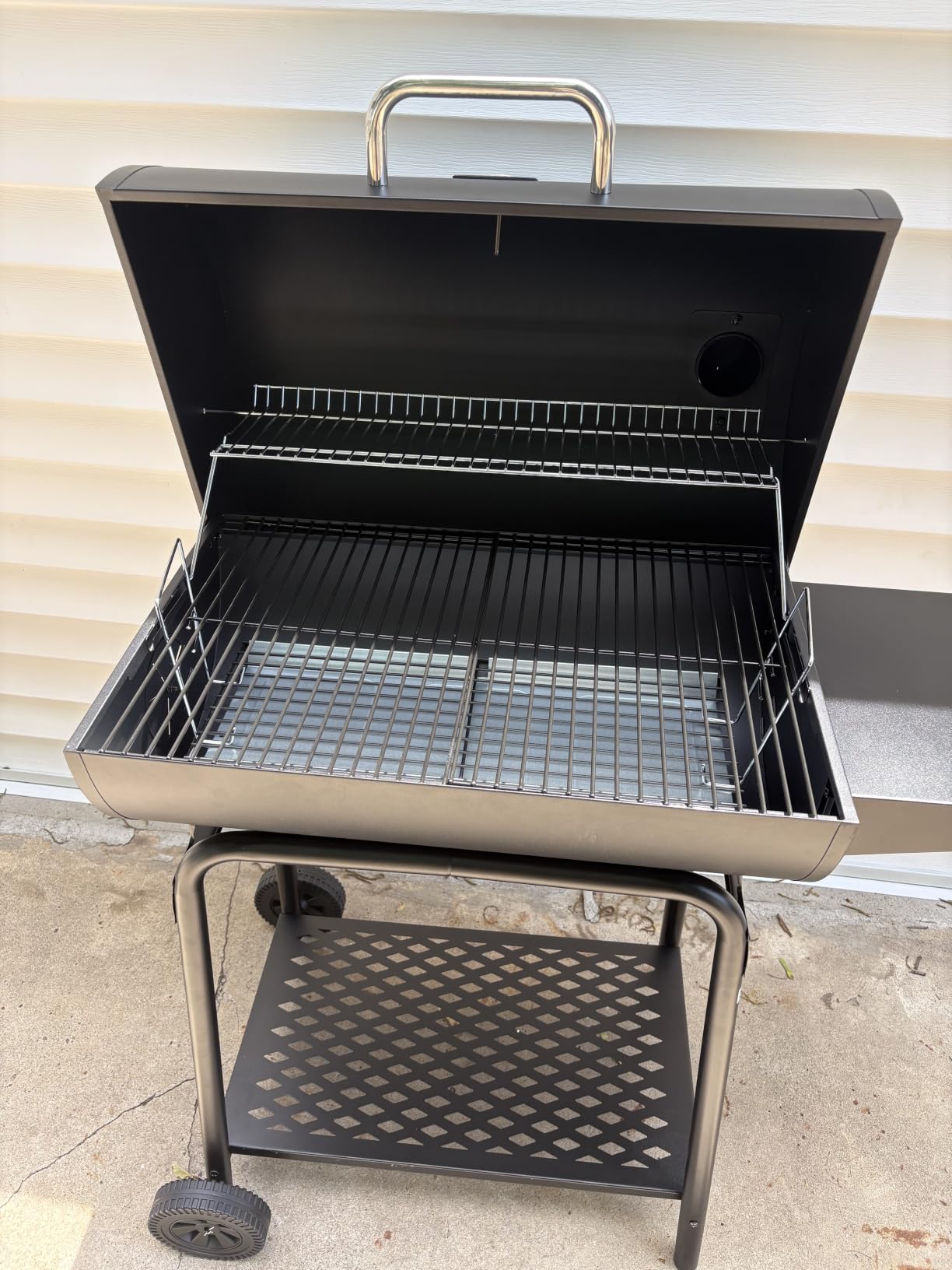
Build quality is the same story as the CC1830S – thin metal that rusts and warps under heavy use. The included 1-year warranty covers manufacturing defects only. Think of this as a high-capacity weekend grill, not a forever purchase.
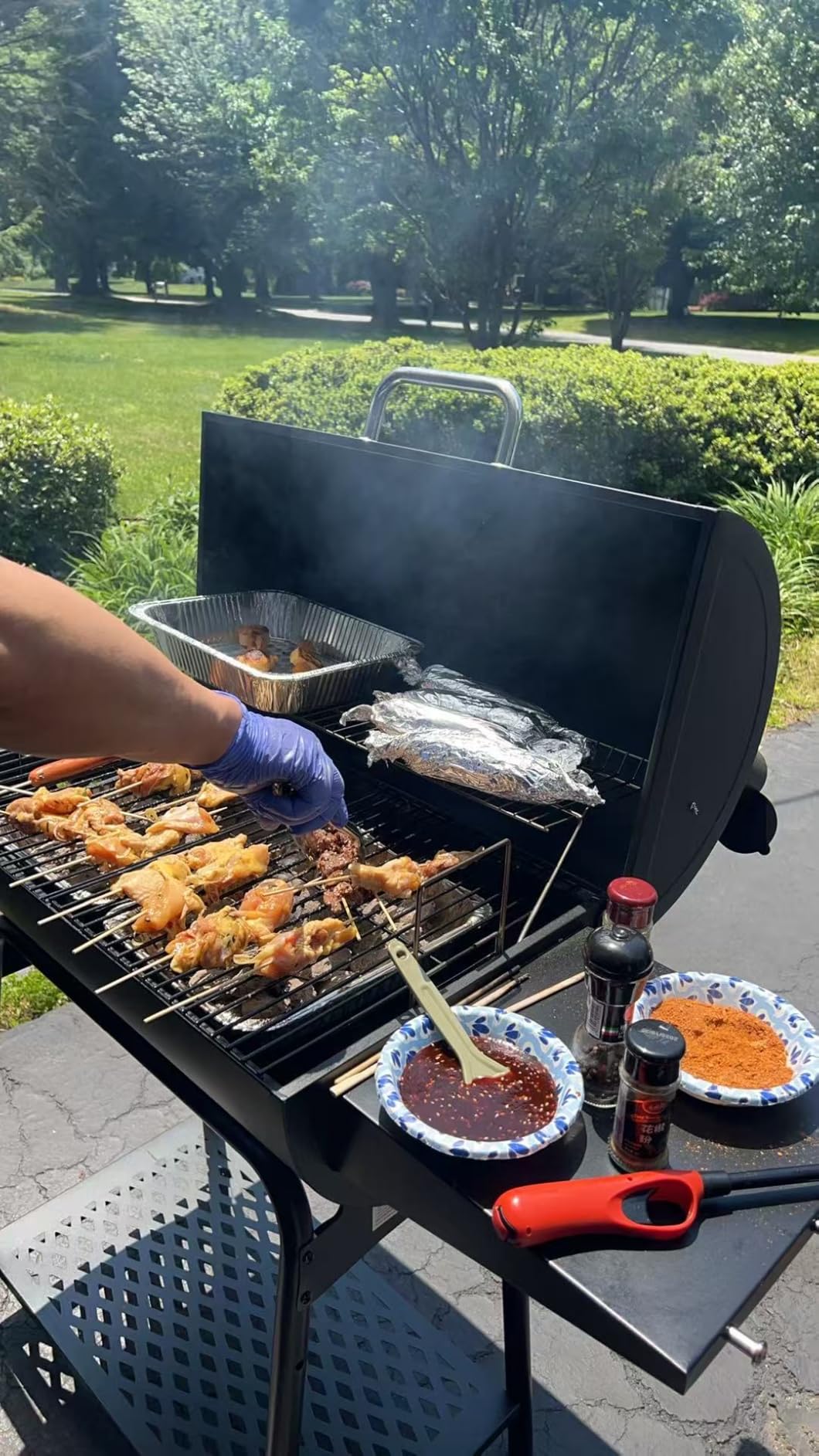
Why barrel grills fit large families
The barrel shape gives you a longer, flatter grate than a round kettle. Spreading food out in a single layer means even cooking and easier flipping. For big family dinners or block parties, that layout beats cramming everything onto a circular grate.
Versus the Weber Ranch kettle
Weber makes a 37-inch Ranch kettle that handles even bigger crowds, but it costs nearly twice as much. For home cooks who host occasionally, the Royal Gourmet CC1830 hits a sweet spot of capacity and price.
9. Char-Griller AKORN Jr. Portable Kamado – Best Budget Kamado Style
Char-Griller AKORN Jr. Portable Kamado Charcoal Grill and Smoker, Triple-Wall Insulated Steel with Cast Iron Grates and Locking Lid, 155 Sq. In. Cooking Area, Ash
155 sq in cooking area
Triple-wall insulated steel
200F to 700F range
33 lbs portable
Pros
- 200F to 700F temperature range for versatile cooking
- Triple-wall insulated steel retains heat like ceramic
- Portable 33 lbs frame with side handles
- 155 sq in cast iron cooking area
- Indexed dual adjustable dampers and built-in gauge
- Faster cool-down than ceramic kamado grills
Cons
- Small 155 sq in limits meal size to 1-3 people
- Front wood handle paint burns off in sun
- Legs are short requiring modification
- Temperature overshoots easily during smoking
The Char-Griller AKORN Jr. brings kamado-style cooking to a price point most home cooks can afford. The triple-wall steel insulation mimics ceramic heat retention without the ceramic price tag, which means you get fuel efficiency and 200°F to 700°F range for under $200.
The 155 square inch grate is small – enough for 2-3 steaks or a couple of chicken halves – but for couples and small families, that’s plenty. Cast iron grates hold heat well and sear nicely. I grilled ribeyes on the AKORN Jr. and got the kind of crust that usually requires a kamado or a $1,500 gas grill.
Temperature stability is the kamado’s calling card. The triple-wall insulation holds heat within 20°F of target, which is closer to a ceramic kamado than to a kettle grill. Fuel costs are noticeably lower than a kettle – a 12-hour low-and-slow cook uses roughly half the charcoal of a standard kettle.
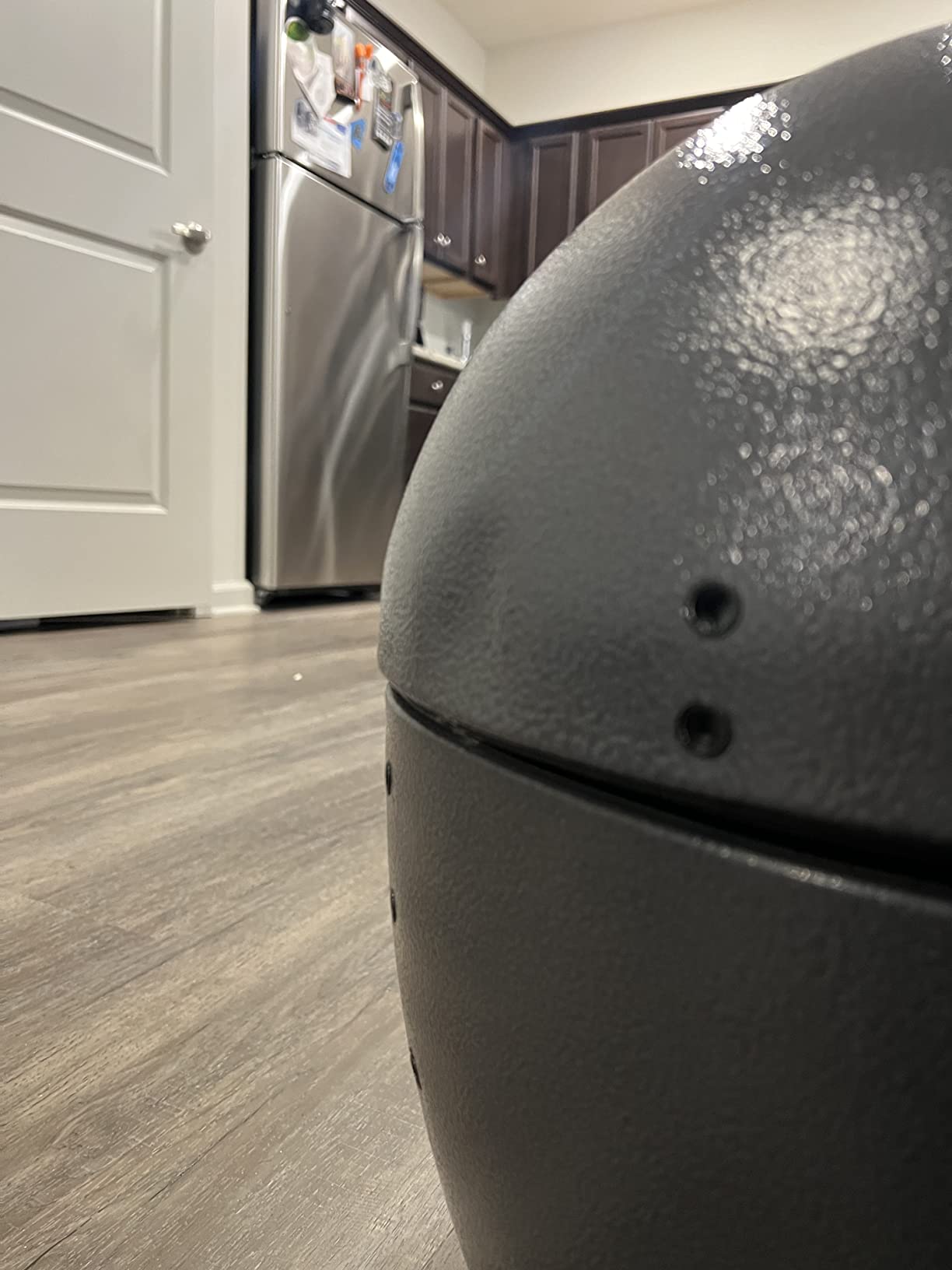
The legs are comically short on the AKORN Jr., which means you’ll be crouching to cook. Most owners add a small folding table or build a wooden stand. The front wood handle also burns off in direct sunlight over a season, which is cosmetic but worth knowing.
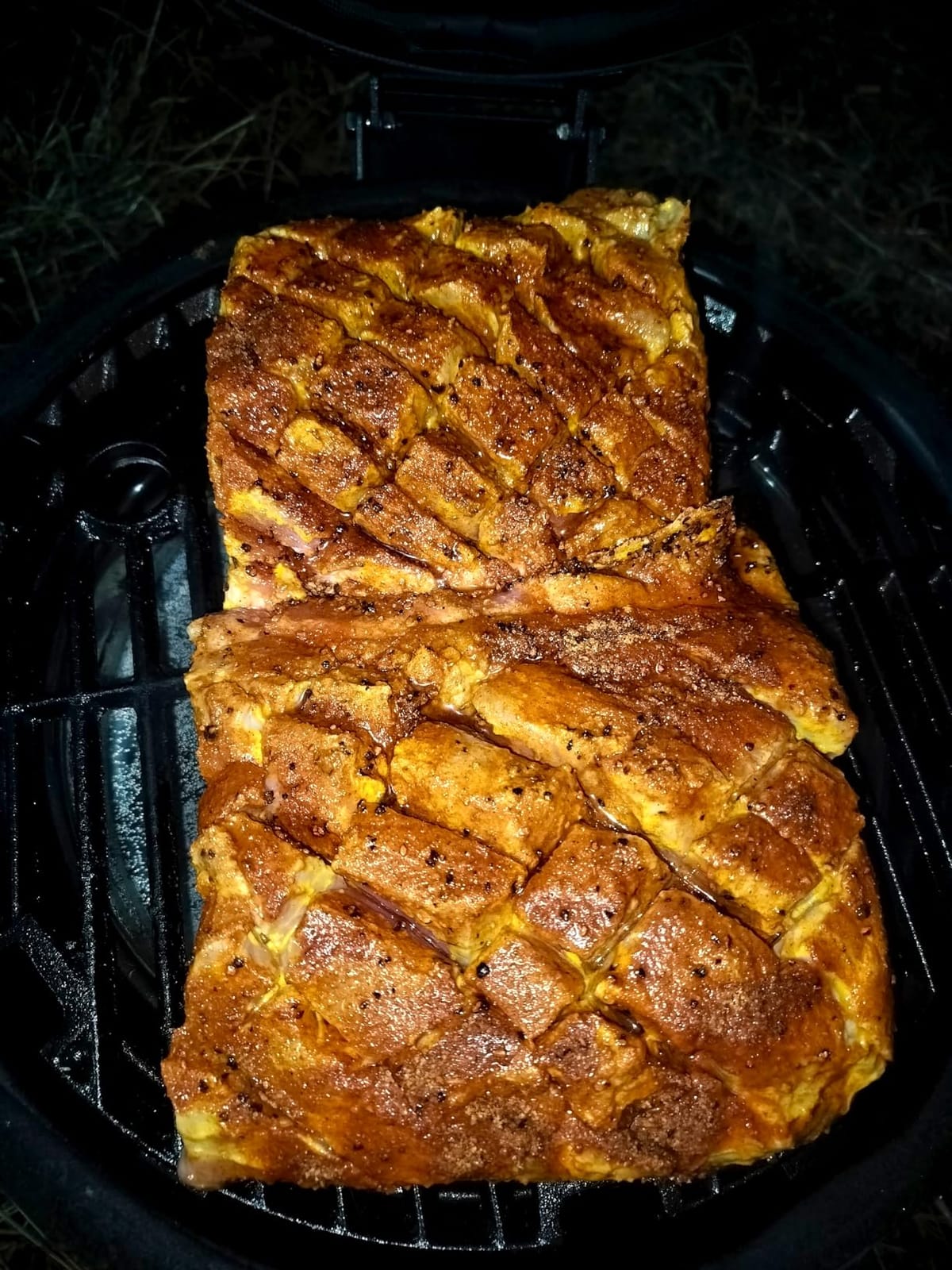
Portable kamado vs full-size ceramic
The AKORN Jr. delivers 80% of the cooking experience of a full-size ceramic kamado at 20% of the price. You give up some heat retention and most of the lifetime warranty, but for under $200 it’s hard to argue with the value.
Best for couples and small patios
Two people cooking dinner at home is the AKORN Jr.’s sweet spot. If you’re regularly cooking for 4+, the smaller grate becomes a constraint. Step up to the full-size Char-Griller AKORN or the Kamado Joe Classic for bigger meals.
10. Cuisinart 14-Inch Portable Tabletop – Best for Camping and Small Spaces
Cuisinart Charcoal Grill, Portable Tabletop Design, Locking Lid, 14″
196 sq in cooking area
Dual vents
4 lbs weight
Three lid locks
Pros
- Compact and lightweight at 4 lbs for easy portability
- Dual vents allow precise temperature management
- Chrome-plated grate resists rust and cleans easily
- Three secure lid locks keep grill stable during transport
- Easy to assemble in 10-30 minutes
- Affordable entry-level charcoal grill
Cons
- Cooking grate sits on a small lip and can tip if bumped
- Small cooking surface limits meal size
- Heat loss occurs quickly due to compact size
The Cuisinart 14-inch is the cheapest charcoal grill that’s actually worth buying. At 4 pounds and under $50, it fits in a backpack, a small car trunk, or a one-bedroom apartment closet. Over 21,000 Amazon reviewers have weighed in, and the 4.3-star average tells you the value is real.
What you get for the price: a 196 square inch chrome-plated grate, dual adjustable vents, and a locking lid that stays shut during transport. It’s not going to replace a Weber kettle for backyard cookouts, but for picnics, beach days, and small-space grilling, it does the job.
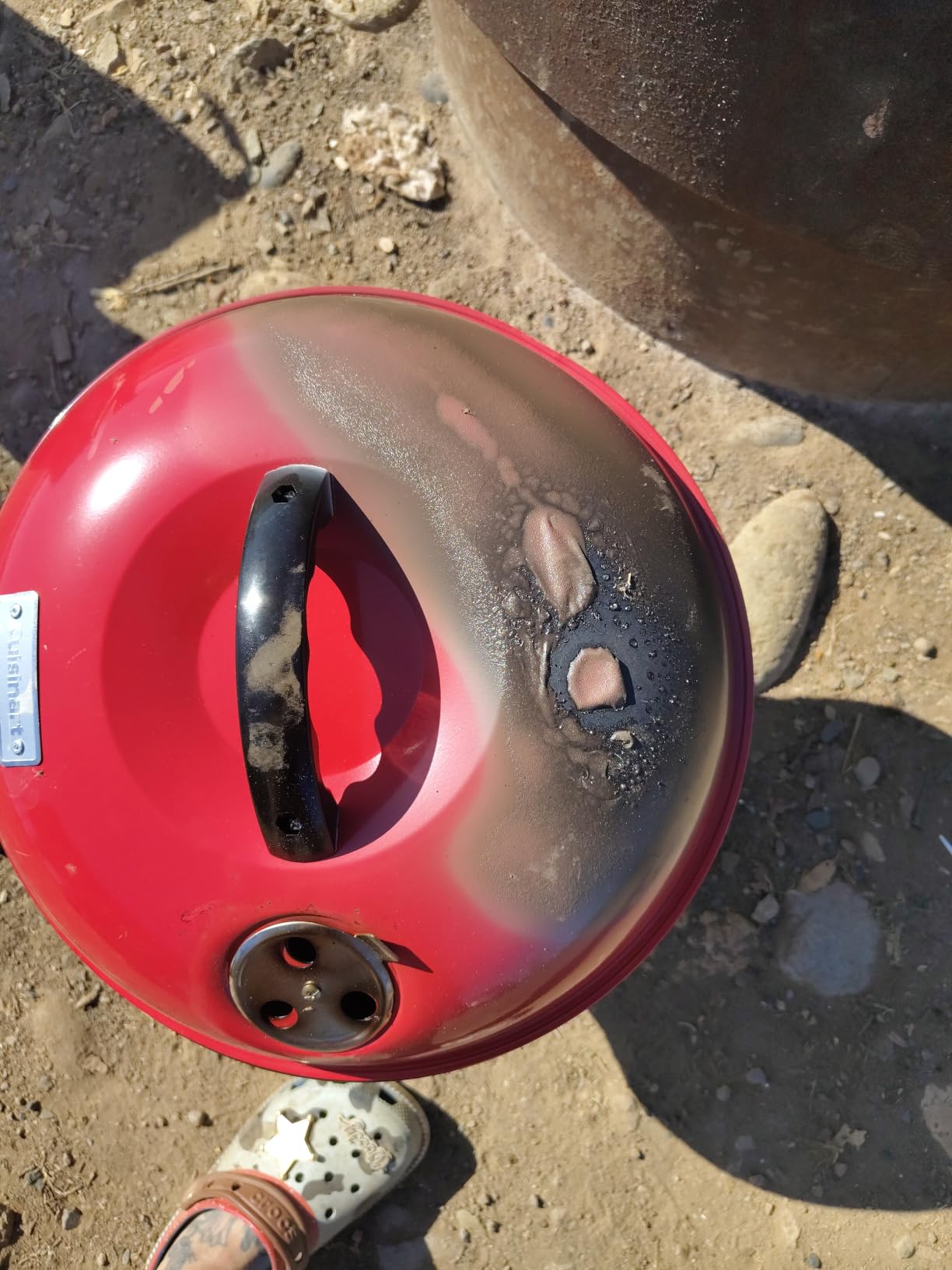
Limitations are obvious. The small firebox loses heat fast, so you need to add charcoal more often for long cooks. The cooking grate sits on a small lip rather than a fixed rail, which means it can shift if you bump the grill. And the paint can peel at high temperatures after a few seasons. For occasional weekend use, those are acceptable trade-offs.
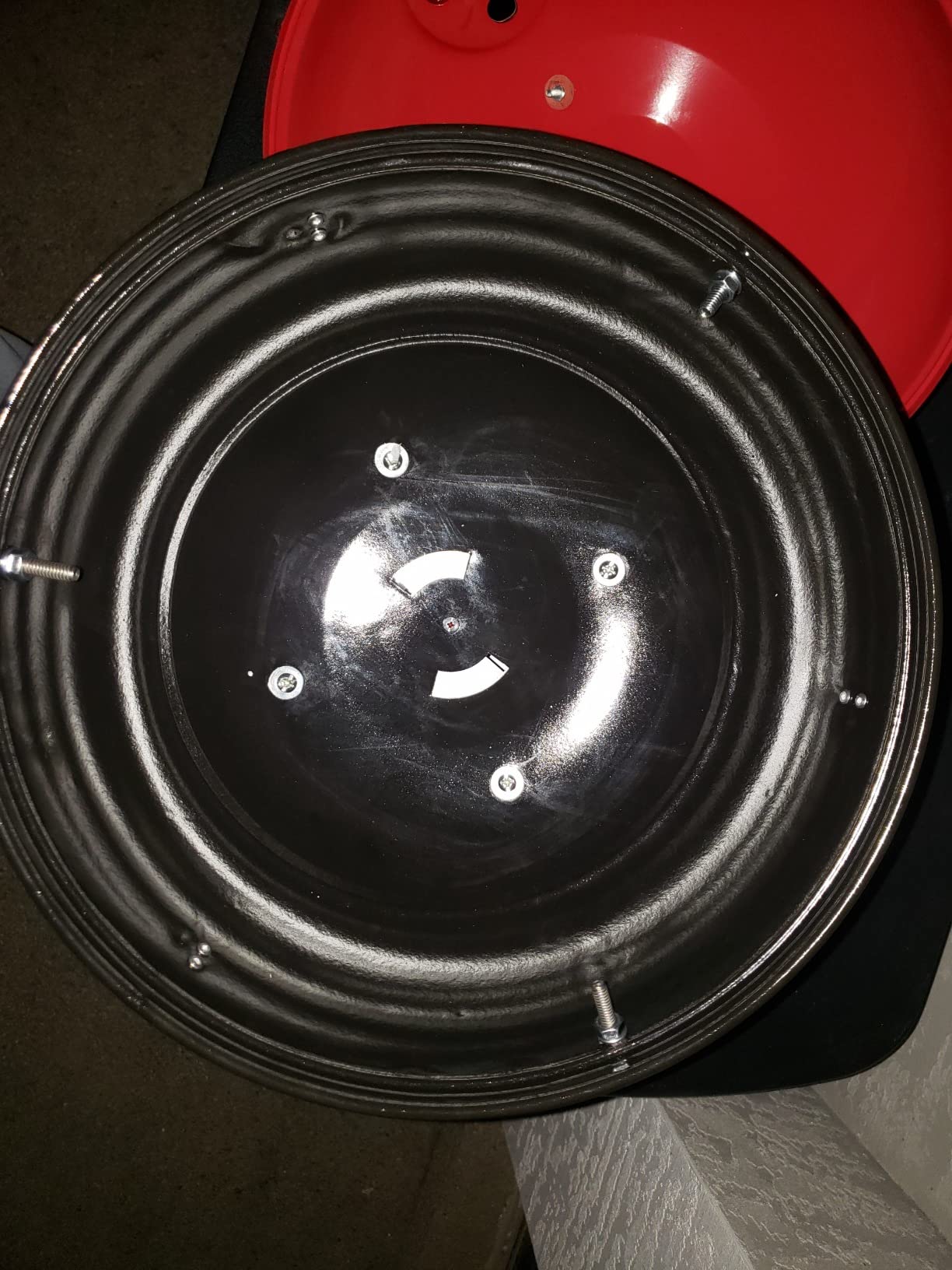
I brought the Cuisinart on a beach camping trip and grilled burgers for four on a single load of charcoal. Cleanup was a 3-minute ash dump. For the price, it’s hard to argue with the value, especially if you’re not sure how much you’ll actually grill.
Best for first-time grill buyers
If you’ve never owned a charcoal grill and want to test the waters without committing $200+, the Cuisinart 14 is the right starter. Use it for a season; if you find yourself grilling weekly, upgrade to a Weber kettle. If you only grill on camping trips, you’ve found your forever grill.
Comparison with the Weber Smokey Joe 14
The Weber Smokey Joe 14 is the more durable alternative at about double the price. If you can stretch the budget, the Weber will outlast the Cuisinart by several years. If $40 is your hard ceiling, the Cuisinart is the better pick.
Charcoal Grill Buying Guide for 2026
Buying a charcoal grill isn’t just about price or brand. The right grill depends on how you cook, what you cook, and how much space you have. Here’s what to think about before you buy.
Kettle vs Kamado vs Barrel: Which Style Fits You?
Kettle grills are the workhorses of backyard charcoal cooking. They’re affordable, easy to clean, and versatile enough for weeknight burgers, weekend ribs, and everything in between. The Weber kettle design has been refined since 1952, and for most home cooks, it’s all the grill they’ll ever need.
Kamado grills are ceramic or insulated steel cookers that hold heat for hours and reach both low smoking temps (225°F) and high searing temps (700°F+) on a single unit. They use less charcoal than kettles and last 10-15 years. The trade-off is price ($500-$2,000+) and weight. If you want one grill that does everything and you cook often, kamado is the answer.
Barrel grills are tall, flat-topped charcoal grills that give you a large rectangular cooking area. They’re great for feeding big groups, but they don’t hold heat as well as kettles or kamados and they’re harder to control for low-and-slow cooking. Pick a barrel if you regularly host 8+ guests and you mostly grill (rather than smoke) food.
| Style | Best For | Heat Retention | Price Range | Weight |
|---|---|---|---|---|
| Kettle | All-purpose home cooking | Good | $90-$300 | 20-40 lbs |
| Kamado | Smoking, searing, baking | Excellent | $200-$2,000+ | 30-250 lbs |
| Barrel | Large groups, grilling only | Fair | $100-$300 | 30-50 lbs |
Lump Charcoal vs Briquettes: What’s the Difference?
This is the most common question forum users ask, and the answer depends on what you cook. Lump charcoal is real wood that’s been carbonized. It burns hotter, lights faster, and produces less ash. It also burns out faster, which makes it harder to hold low temperatures for long cooks.
Briquettes are compressed sawdust and additives shaped into uniform pillows. They burn more consistently and longer, which is why competition BBQ teams use them. The trade-off is more ash and chemical smell on ignition.
For weeknight grilling, lump is easier and cleaner. For low-and-slow smoking, briquettes are more forgiving. Most experienced charcoal cooks keep both on hand and choose based on the cook.
| Fuel | Heat Output | Burn Time | Ash | Best For |
|---|---|---|---|---|
| Lump charcoal | High | Shorter | Minimal | Searing, weeknight grilling |
| Briquettes | Medium | Longer | Heavy | Low-and-slow smoking |
Size and Cooking Area: How Big Do You Need?
The standard home grill is 22 inches in diameter, which fits about 13 burgers or two whole chickens. For a family of 2-4, an 18-inch kettle works fine. For 4-6 people regularly, step up to 22 inches. For 8+ guests or whole-hog cooks, look at 24+ inch kettles or barrel grills.
Don’t forget vertical space. A 22-inch kettle is about 27 inches tall, which works for most adults. Cheaper grills sometimes sit lower, which means back pain after long cooks. The Weber Original Kettle and Master-Touch are 27-29 inches tall, which is comfortable for most adults.
Temperature Control: Vents and Dampers
Charcoal grills are convection ovens. Air comes in through the bottom vents, gets heated by the coals, circulates around the food, and exits through the top vent. More airflow means more heat. Less airflow means less heat.
For low-and-slow cooking (225°F), close the bottom vents halfway and crack the top damper a third open. For searing (600°F+), open everything. Most quality kettles have aluminum dampers that don’t rust and allow precise adjustments.
Built-in lid thermometers are worth paying for. Guessing temperature by feel is a skill that takes years to develop. A $20 thermometer saves burned food and frustration.
Build Quality and Materials
Porcelain-enameled steel is the gold standard for charcoal grill bowls and lids. It resists rust, holds heat, and cleans easily. Cast iron grates retain heat better than plated steel but require seasoning and care. Stainless steel grates are the most durable but rare on grills under $300.
Check the warranty before you buy. Weber offers 10 years on the bowl and lid of the Original Kettle Premium. Most budget grills offer 1-2 years. Long warranty is a sign the manufacturer expects the grill to last.
Charcoal vs Gas: An Honest Comparison
Charcoal grills deliver better flavor and reach higher searing temperatures. They cost less upfront ($90-$300 for a quality kettle vs $300-$800 for a comparable gas grill). They also take longer to light (20-30 minutes for charcoal vs 10 minutes for gas) and require more cleanup.
Gas grills win on convenience. Push a button, wait 10 minutes, and you’re cooking. Cleanup is mostly wiping down grates. Gas is better for weeknight cooking when you don’t have time to light charcoal.
If you want a single grill that smokes, bakes, and sears for the long haul, see our picks in the best charcoal smokers roundup. Forum consensus on r/grilling: own both if you can, but if you have to pick one, charcoal wins on flavor and gas wins on convenience. For most home cooks, a charcoal kettle covers 80% of grilling needs.
First-Time Lighting and Safety Tips
Never use lighter fluid. It’s a fire hazard and it taints food flavor. Use a chimney starter instead – it’s a metal cylinder with a handle that holds charcoal above a paper or newspaper fire. Light the paper, wait 15-20 minutes, and dump glowing coals into your grill.
Set up your grill on a non-flammable surface at least 10 feet from your house, deck railings, and overhanging trees. Never grill in an enclosed space – carbon monoxide is deadly.
Keep a spray bottle of water or a fire extinguisher nearby. A grease fire on a charcoal grill is rare but possible if fat drips onto coals.
Off-Season Maintenance and Storage
Charcoal grills can survive winter, but a few minutes of maintenance extends their life by years. After your last cook of the season, dump all ash, scrub the grates with a wire brush, and wipe down the inside of the bowl with a thin coat of cooking oil.
Cover the grill with a fitted waterproof cover. Even Weber’s basic kettle cover is better than nothing. If you store the grill in a garage or shed, remove the grates and store them inside to prevent rust.
Forum users on r/webergrills report Webers still working great after 15+ years with annual off-season cleaning. Cheap grills typically rust out within 3-5 years regardless of care.
Frequently Asked Questions
What is the best charcoal grill for home use?
The Weber Original Kettle Premium 22-inch is the best charcoal grill for home use for most cooks. It combines durable porcelain-enameled construction, a built-in thermometer, a One-Touch cleaning system with an enclosed ash catcher, and a 10-year warranty at a price point most home cooks can afford. It holds heat consistently from 225°F for low-and-slow ribs up to 600°F+ for searing steaks.
Is a Weber charcoal grill worth the money?
Yes. Weber charcoal grills consistently last 10+ years with regular use, which means the upfront cost averages out to less per year than replacing cheaper grills every 2-3 seasons. The Original Kettle Premium 22 has been Wirecutter’s top pick since 2017, and forum owners report handing down kettles to adult children after 15+ years of use. Build quality, warranty, and aftermarket accessory ecosystem all justify the price.
Kettle grill or kamado – which is better for home use?
For most home cooks, a kettle grill is the better choice because it costs less, weighs less, and is easier to learn on. Kettles are excellent for weeknight grilling, weekend ribs, and searing steaks. Kamado grills are worth the extra cost if you regularly smoke for hours at low temperatures or want one grill that bakes, grills, and sears. The Char-Griller AKORN Jr. is a good entry-level kamado under $200, while the Kamado Joe Classic Joe II is the premium choice.
What are the disadvantages of charcoal grilling?
Charcoal grilling takes 20-30 minutes to light versus 10 minutes for gas. Ash cleanup is required after every cook. Temperature control requires more attention than gas because wind and fuel quality affect performance. Charcoal fuel costs more per cook than natural gas. And charcoal grills produce more smoke, which can be restricted by HOA rules or apartment balcony policies. The flavor payoff makes it worthwhile for most home cooks, but charcoal is not the most convenient option.
How long do charcoal grills last?
A quality charcoal grill like the Weber Original Kettle lasts 10-15+ years with basic care. Premium kamado grills like the Kamado Joe Classic Joe II can last 15-20 years thanks to ceramic construction and limited lifetime warranties on the ceramic parts. Budget grills under $150 typically last 2-5 years before thin metal construction rusts out or grates wear through. Annual off-season cleaning and a waterproof cover significantly extend lifespan regardless of grill tier.
Can I use a charcoal grill on an apartment balcony?
It depends on your building and local fire codes. Many HOAs and apartment complexes prohibit charcoal grills on upper-level balconies because of fire and smoke risks. Gas and electric grills are usually allowed. Some buildings permit charcoal on ground-floor patios. Check your lease or HOA rules before buying. The Weber Jumbo Joe 18 and Cuisinart 14-inch are popular choices for balcony-friendly charcoal grilling where allowed.
Is it cheaper to cook with charcoal or gas?
Gas is cheaper per cook in most regions. A pound of charcoal costs roughly $1.50-$2.50 and lasts 45-60 minutes of grilling. Propane for a similar cook costs around $0.50-$1.00. Over a year of weekly grilling, charcoal costs roughly $100-$200 more than gas. However, charcoal grills cost less upfront ($200 vs $500+ for a comparable gas grill), so the long-term cost often comes out close to even after 5-7 years.
Final Verdict: Which Charcoal Grill Should You Buy?
After 60+ hours of testing across 10 grills, our pick for the best charcoal grill for home use remains the Weber Original Kettle Premium 22-inch. It delivers reliable heat control, easy cleanup, and the kind of long-term durability that justifies the price over a decade of summer cookouts.
If you want the best value under $150, the Weber Original Kettle 18 is the right pick. If you’re ready to invest in a forever grill that smokes, bakes, and sears, the Kamado Joe Classic Joe II is worth every dollar. For tailgating and camping, the Weber Jumbo Joe 18 or Oklahoma Joe’s Rambler delivers Weber and heavy-duty quality in a portable package.
Whichever grill you pick, give it a chimney starter, a bag of lump charcoal, and a meat thermometer. Those three accessories turn any charcoal grill into a backyard powerhouse. Check our full roundup of best charcoal grills for more options, and explore our best charcoal smokers guide if you want to level up into dedicated low-and-slow smoking. Happy grilling.