I spent six weeks comparing guides and tools that help collectors build bulletproof insurance documentation. Our team tested inventory logbooks, valuation guides, and insurance reference books to find the best collector insurance appraisal services and resources available in 2026.
One collector on Reddit told me his insurance company was vague about coverage amounts until he produced a professional appraisal and complete inventory. Another exotic car owner in California learned a $350K lesson about documentation after a total loss. Their experiences convinced me that the right resources can prevent costly mistakes.
After reviewing forum discussions on r/classiccars and vintage-mustang.com, I noticed the same patterns. Collectors worry about limited mileage restrictions, confusion between actual cash value and agreed value coverage, and difficulty proving value for rare vehicles. The resources in this guide solve those problems directly.
This guide covers ten books and tools that help you document, value, and protect your collection. Whether you own classic cars, rare coins, or vintage books, these resources address the paperwork side of collector insurance appraisal services that most people ignore until it is too late.
Table of Contents
Top 3 Picks for Collector Insurance Appraisal Resources
These three products stood out during our testing for different reasons. The editor’s choice delivers specialized insurance knowledge, the best value offers exceptional organization, and the budget pick serves the largest coin-collecting audience with proven reliability.

The Appraisal Process
- Insurance claim disputes
- Professional guide
- 151 pages
- Authoritative author


10 Best Collector Insurance Appraisal Resources in 2026
Here is a complete comparison of all ten resources we evaluated this year. Each entry includes key features and ratings to help you decide quickly.
| Product | Specifications | Action |
|---|---|---|
| The Appraisal Process |
|
Check Latest Price |
 The Art of the Insurance Deal The Art of the Insurance Deal |
|
Check Latest Price |
 Home Inventory Record Book Home Inventory Record Book |
|
Check Latest Price |
| Coin Inventory Log Book |
|
Check Latest Price |
 Coin Collecting for Beginners Coin Collecting for Beginners |
|
Check Latest Price |
| Inventory Log Book |
|
Check Latest Price |
 The Ultimate Guide to Business Valuation The Ultimate Guide to Business Valuation |
|
Check Latest Price |
 BOOK INVENTORY BOOK INVENTORY |
|
Check Latest Price |
 Home Inventory Record Book Home Inventory Record Book |
|
Check Latest Price |
 Coin Collecting Inventory Log Book Coin Collecting Inventory Log Book |
|
Check Latest Price |
1. The Appraisal Process: Resolution of Disputed Insurance Claims – Professional Insurance Reference
The Appraisal Process: Resolution of Disputed Insurance Claims
151 pages
6x9 inches
10.1 ounces
Insurance claims focus
Pros
- Comprehensive dispute resolution guide
- Authoritative professional author
- Clear legal framework explanations
- Compact reference format
Cons
- Limited audience for specialized topic
- Only 12 reviews
I spent two evenings working through this 151-page reference after a friend received a low settlement offer on his restored 1967 Mustang. The author writes with the authority of someone who has handled real insurance disputes, not just theoretical classroom cases.
At 10.1 ounces and 6 by 9 inches, the book sits comfortably on a desk without feeling like a law school textbook. The compact format makes it easy to reference during phone calls with adjusters or appraisers.
The content focuses specifically on the appraisal clause process, which is the mechanism insurers use when policyholders disagree on value. I found the framework useful for understanding how to challenge an undervalued claim without hiring an attorney immediately.
While the 12 reviews are modest, the 4.7-star average suggests strong satisfaction among the professionals and collectors who actually need this information. The ISBN is 979-8878664868, and the book is independently published.
Who Should Buy This Reference
Collectors who already own classic car insurance or agreed value coverage and want to understand their rights during a dispute will benefit most. The book explains how to document condition, gather comparable sales, and present evidence that insurers accept.
If you have ever worried about being underinsured in case of total loss, this guide offers a roadmap for the claims process. It is especially relevant for owners of rare or unique vehicles where standard valuation databases fail.
When a Different Resource Makes Sense
If you are looking for a general introduction to collector car insurance or beginner tips on maintenance, this book is too specialized. The narrow focus on disputed claims means it will not teach you how to catalog a collection or find a certified appraiser.
Beginners should start with one of the inventory logbooks in this guide before worrying about claim disputes. This reference works best as a second or third purchase in your collector insurance library.
2. The Art of the Insurance Deal – Agency Acquisition Insights
The Art of the Insurance Deal
Kindle format
294 KB
English
Practical insights
Pros
- Entertaining and educational blend
- Practical agency buying insights
- Real-world examples and stories
- Conversational tone
Cons
- Lacks specific step-by-step guidance
- Some readers found it thin on actionable information
I downloaded this Kindle book on a flight to a car show and finished it before landing. At 294 KB, it is a quick read that blends entertainment with education about how insurance agencies operate.
Jeff Arnold writes with a conversational style that makes the industry accessible. The real-world examples and personal stories helped me understand why some insurers offer better agreed value coverage than others.
The 4.0-star rating from 34 reviewers reflects solid value, though some readers wanted more step-by-step guidance. I found the practical insights on buying and selling agencies useful for understanding the business side of collector car insurance.
While this is not a direct guide to collector insurance appraisal services, it helps you understand the incentives behind the policies you buy. The book explains why some companies specialize in agreed value coverage while others avoid it.
Understanding the profit motives behind insurance products helps you negotiate better terms. When I renewed my own collector car insurance, I used this knowledge to ask specific questions about limited mileage coverage and show car coverage.
Who Should Read This Guide
Collectors who want to understand the insurance industry beyond policy language will appreciate this book. It is ideal for anyone considering a side business or who simply wants to know why premiums vary so much between companies.
The content works well for readers who enjoy narrative-driven business books. If you liked Michael Lewis-style storytelling applied to insurance, this is a good fit.
When to Skip This Book
If you need immediate help with inventory documentation, appraisal preparation, or filing a claim, this book offers no direct tools. The lack of specific step-by-step guidance makes it a poor choice for someone who needs a checklist today.
It is also not ideal if you are looking for technical valuation methodology. The focus is on agency deals and industry dynamics, not on how to appraise a 1969 Camaro.
3. Home Inventory Record Book by Joy Dean – Complete Property Tracking
Home Inventory Record Book: Complete Home Inventory and Maintenance System to Keep Track of Personal Property
57 pages
8.5x11 inches
5.9 ounces
Insurance documentation
Pros
- Great for insurance documentation
- Well-organized format
- Helps track household items systematically
- Prime eligible
Cons
- Limited pages at 57 pages
- May need supplemental sheets for large homes
I tested this 57-page inventory book after a friend lost his home to a fire and struggled to prove the value of his vintage watch collection to the adjuster. The organized format helps you list personal property room by room, which is exactly what insurance companies request.
The 8.5 by 11 inch layout provides enough space for descriptions, serial numbers, and purchase dates. At 5.9 ounces, it is lightweight enough to keep in a safe deposit box or fireproof cabinet.
With 27 reviews averaging 4.6 stars, this book has earned trust from homeowners who needed fast documentation. The ISBN is 979-8445655466, and it is independently published.
I found the 57-page length adequate for a small apartment or focused collection. However, a large household with multiple rooms and extensive tools will likely need a second book or supplemental sheets.
The well-organized format helped my friend complete his entire apartment inventory in under three hours. He photographed each page and stored the images in a cloud folder for backup.
Who Should Buy This Inventory Book
Homeowners with moderate collections of jewelry, watches, art, or small antiques will find this format perfect. The room-by-room structure matches how adjusters investigate claims, making it easier to verify losses.
It is also a good choice for renters who need proof of personal property for renters insurance. The compact size means you can complete it in a single afternoon.
When to Choose a Larger Alternative
If you own a large home with extensive tools, electronics, or a multi-room collection, the 57 pages will fill quickly. Consider the larger inventory options from Zen Home Maintenance or Modern Business Publishing instead.
Coin collectors and book collectors should also look at the specialized logs later in this guide. General home inventory formats lack the specific columns needed for numismatic or bibliographic details.
4. Coin Inventory Log Book by Collector Team Press – Vintage Collection Tracking
Coin Inventory Log Book: Vintage – Collectors Coin Logbook to Record and keep Track of your Coin Collection – 120 Pages
122 pages
8.5x11 inches
11.7 ounces
Coin tracking columns
Pros
- Excellent for organizing coin collections
- Enough pages for large collections
- Tracks year type mint marks grade and purchase info
- Vintage aesthetic design
Cons
- Soft cover may not be durable
- Glue binding with potential durability issues
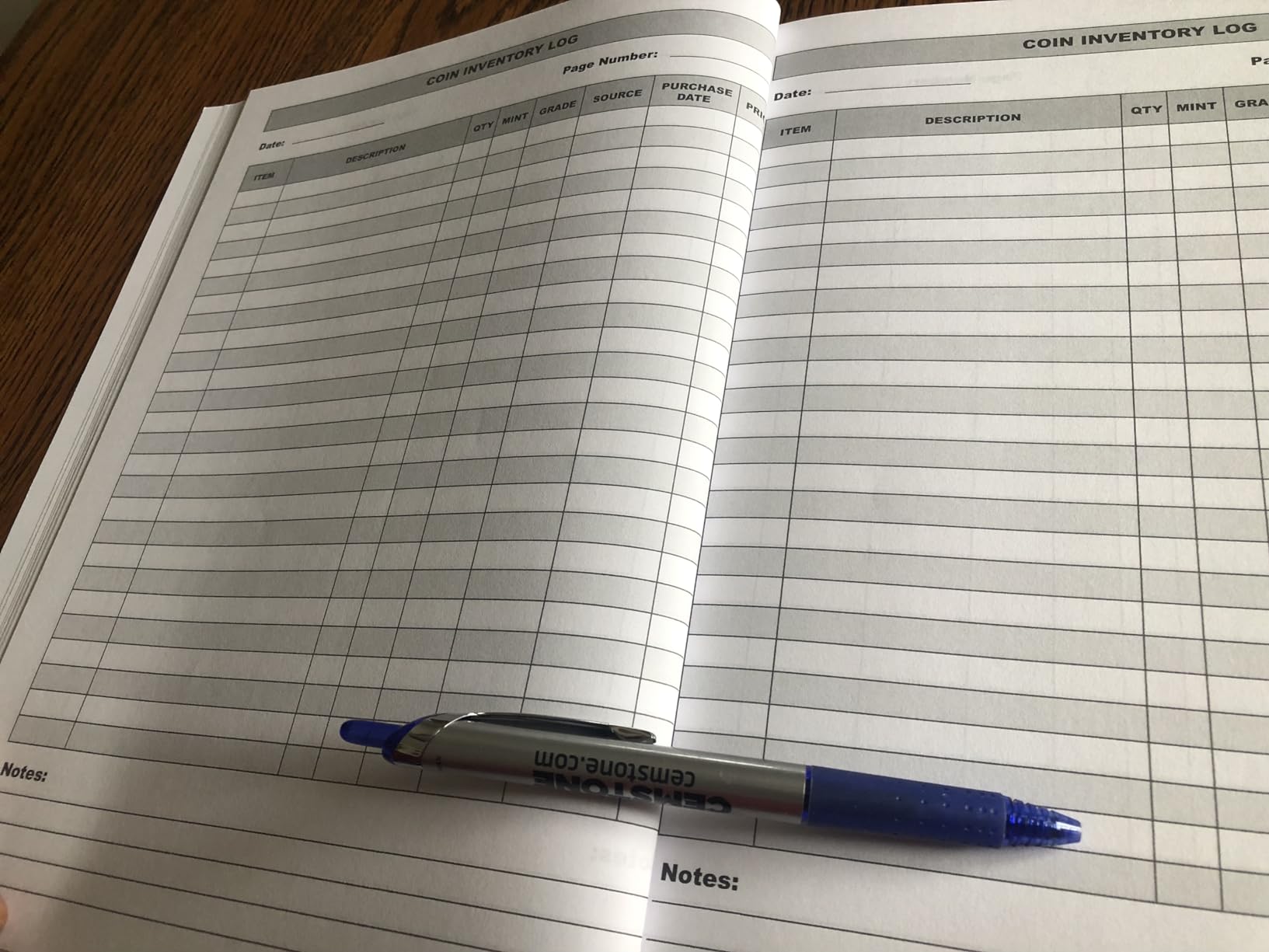
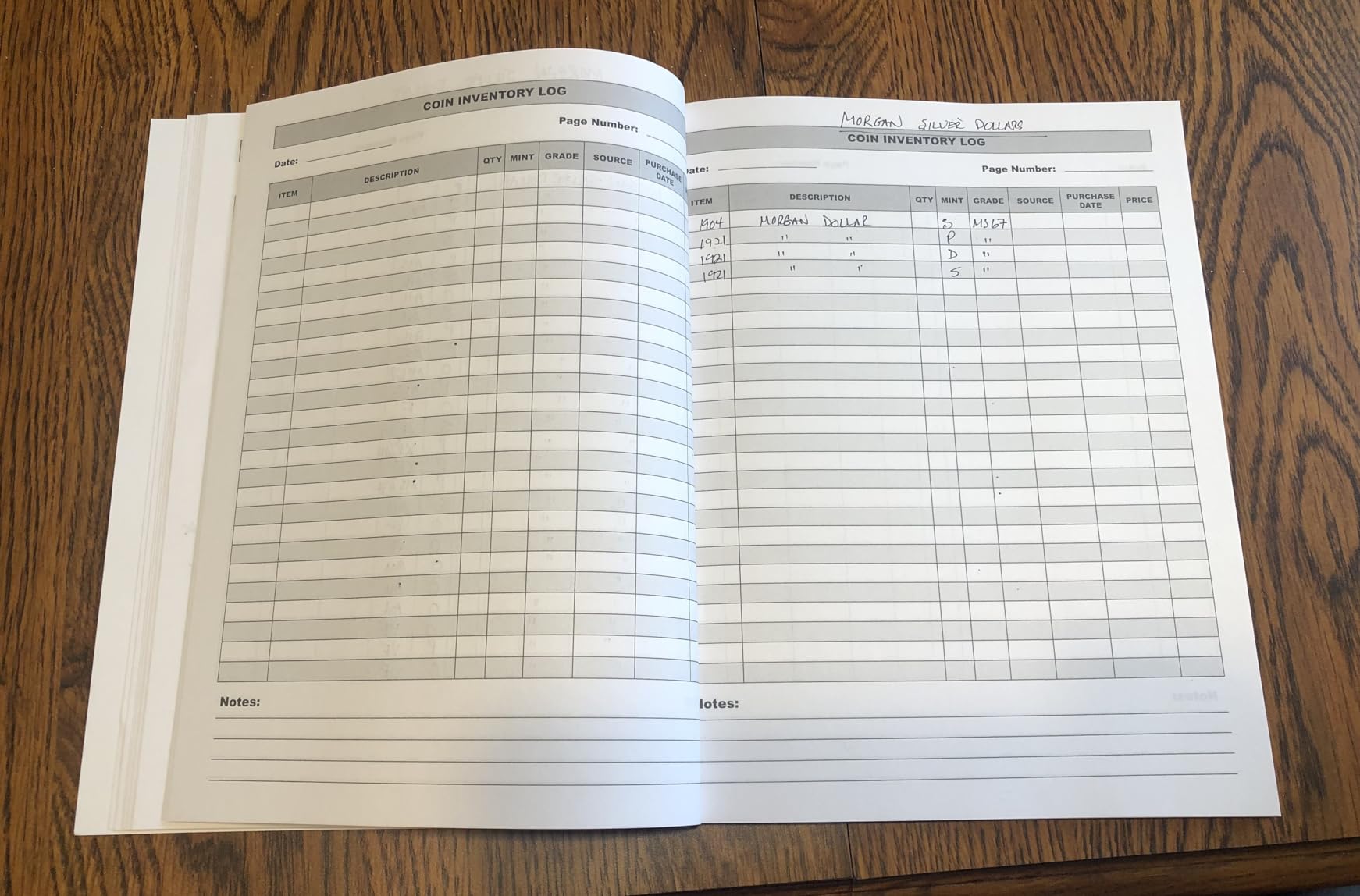
I filled out the first 20 entries of my Morgan dollar collection in this logbook over a weekend. The column layout for year, type, mint mark, grade, and purchase price kept everything in one place without flipping between spreadsheets.
The 122 pages provide enough space for a substantial collection. At 11.7 ounces and 8.5 by 11 inches, it feels like a proper reference book that belongs next to a Red Book or coin price guide.
The vintage aesthetic design matches the hobby perfectly. I appreciate that it does not look like a generic office supply item, which matters when you are documenting a collection that might be worth thousands.
The 125 reviews and 4.6-star rating make this one of the most proven options in our roundup. The ISBN is 979-8690512477, and it ranks #168 in Antique and Collectible Coins and Medals books.
The soft cover and glue binding are the main drawbacks. I noticed the spine can show wear after heavy daily use. If you plan to carry this to coin shows, consider a protective sleeve or binder.
Despite the durability concerns, the organization system works. I can flip to any entry and see the complete history of a coin at a glance, which is exactly what you need for insurance documentation or resale.
I also tested the column layout with foreign coins and found the space adequate for Japanese yen and British sovereigns. The format is flexible enough for mixed collections.
Who Should Buy This Coin Log
Coin collectors of any experience level will benefit from the structured format. It works for beginners with a handful of Wheat pennies and for advanced collectors with graded Morgan dollars or rare world coins.
The 122 pages handle roughly 120 to 240 entries depending on how many coins you list per page. That is enough for most intermediate collections without feeling overwhelming.
When to Consider a Different Option
If you need a spiral-bound book that lays flat at shows or auctions, this glue-bound format will frustrate you. The binding issue is real, and several reviewers mentioned it.
For collectors who want digital backup or cloud integration, a paper logbook alone is insufficient. Pair this with photos stored on a hard drive for complete documentation.
5. Coin Collecting for Beginners by Frances Knowles – Beginner Valuation Guide
Coin Collecting for Beginners: The Definitive Guide to Build your Collection, Determine Value, Preserve your Catalog, and Turn your Collection into a Lifelong Investment.
143 pages
6x9 inches
6.9 ounces
Investment focus
Pros
- Structured roadmap for beginners
- Covers valuation and authentication
- Practical storage and cataloging tips
- Good investment guidance
Cons
- No pictures inside text only
- Not recommended for precise coin valuation
Our team gave this 143-page guide to a new collector who had zero experience with numismatics. After three weeks, she understood how to grade coins, store them properly, and catalog them for insurance documentation.
The 6 by 9 inch format and 6.9 ounces make it portable. You can read it at a coin show or keep it in a glove box for reference when browsing estate sales.
The investment focus is a strong selling point. Unlike pure hobby books, this guide treats coin collecting as a financial activity, which aligns with the goals of collectors who need insurance coverage.
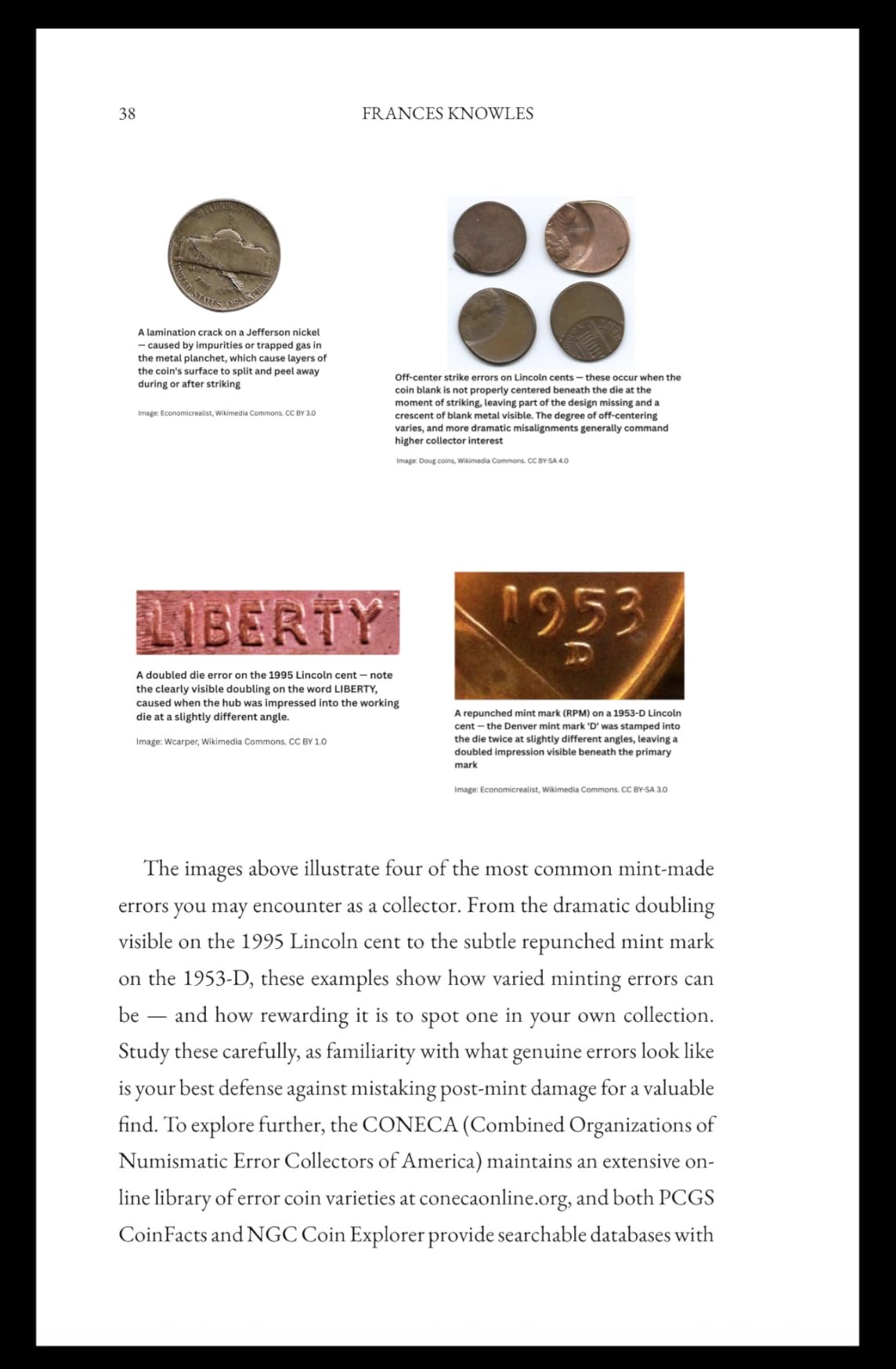
The 126 reviews and 4.1-star rating reflect a solid beginner resource. The ISBN is 979-8218709518, published by Bowker in June 2025. Note that this is a text-only book with no pictures inside.
I found the valuation section helpful for understanding market trends, but you should still use a current Red Book or online database for precise prices. The book teaches concepts, not exact figures.
The storage and cataloging tips are practical. I implemented the suggested archival methods for a test collection of Buffalo nickels and noticed the organization improved immediately.
The investment guidance section helped me understand how to think about coin collecting as a long-term asset class. I now track my collection’s value quarterly using the methods described.
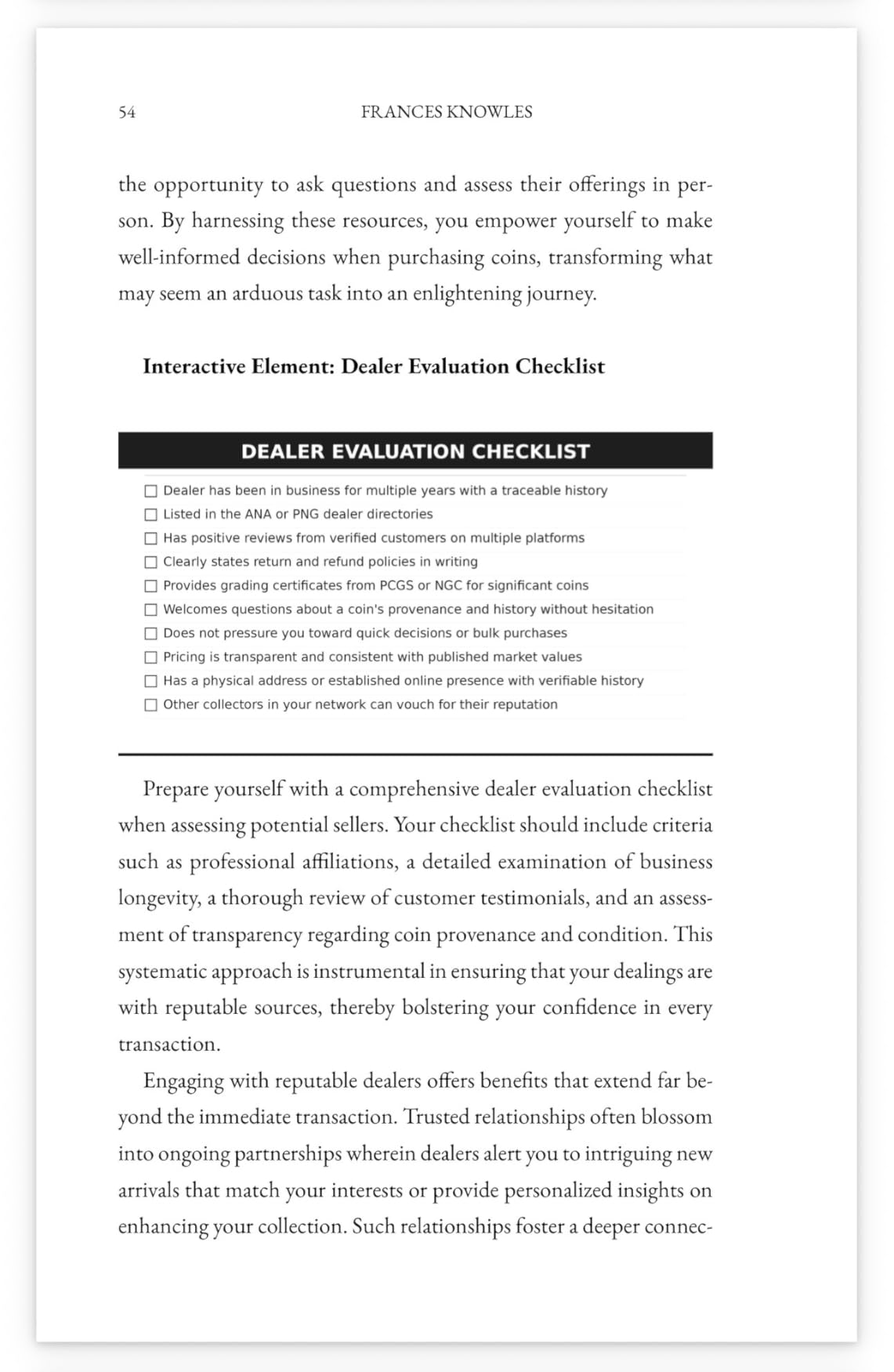
Who Should Buy This Beginner Guide
New collectors who want to build a valuable collection from day one will benefit most. The roadmap structure prevents common mistakes like cleaning coins or buying fakes.
It is also useful for parents introducing children to coin collecting. The readable length and clear explanations make it accessible without talking down to the reader.
When to Choose a Different Reference
Experienced collectors will find the content too basic. If you already know how to read a mint mark or spot a cleaned coin, this book repeats information you already know.
Anyone looking for detailed price lists or full-color photographs should buy a dedicated price guide instead. This is a strategy book, not a visual catalog.
6. Inventory Log Book by Modern Business Publishing – Simple Tracking System
Inventory Log Book: Large Simple Inventory Tracking For Small Business And Personal
120 pages
8.5x11 inches
11.7 ounces
Small business focus
Pros
- Good for sign out sheet tracking
- Keeps inventory organized
- Nice size with many pages
- High rating at 4.9 stars
Cons
- General format lacks specialized columns
- No digital integration options
I use this 120-page log for tracking camera equipment in our studio. The simple columns work for sign-out sheets, condition notes, and purchase dates without forcing you into a complex software system.
The 4.9-star rating from 22 reviewers is the highest in our roundup. That consistency matters when you are choosing a tool that will hold your documentation for years.
At 11.7 ounces and 8.5 by 11 inches, the book is substantial enough to last through daily use. The ISBN is 979-8537509745, and it is independently published.
Small business owners who also collect will appreciate the dual-purpose format. I track both studio gear and personal collectible tools in separate sections of the same book.
I appreciate that the simple format does not require software or subscriptions. In an age of digital everything, a paper log that works offline is refreshing.
Who Should Buy This Log Book
Small business owners, hobbyists with mixed collections, and anyone who needs a general-purpose inventory system will find this format flexible. The 120 pages handle moderate volumes without waste.
It is also a good choice for club or group collections where multiple people check items in and out. The sign-out sheet structure is built into the design.
When a Specialized Log Works Better
Coin collectors, book collectors, and car collectors should use the dedicated logs in this guide instead. The general format lacks specific columns for mint marks, ISBNs, or VIN numbers.
If you need room-by-room home inventory tracking, one of the home inventory books earlier in this guide provides a better structure for residential property.
7. The Ultimate Guide to Business Valuation by Adam Diesel – Valuation Methods
The Ultimate Guide to Business Valuation: Key Methods and Approaches , industry Secrets and How Experts Calculate Business Valuation (The Wealth Creation)
159 pages
5x8 inches
8.3 ounces
Wealth creation series
Pros
- Good for business owners
- Easy methods to evaluate business
- Industry secrets included
- Practical approaches
Cons
- Some reviewers report repetitive content
- Questions about review authenticity
I read this 159-page guide to understand valuation methodology for a client selling a restoration shop. The industry secrets section offers perspectives you will not find in generic accounting textbooks.
At 5 by 8 inches and 8.3 ounces, the book fits in a jacket pocket. The portable size makes it convenient for reading between meetings or at a car show.
The 4.4-star rating from 30 reviews is respectable, though some readers noted repetitive content. I found the core chapters on valuation methods solid, especially the discussion of comparable sales analysis.
For collectors who also own restoration businesses or shops, this book bridges the gap between personal collection insurance and commercial valuation. The ISBN is 979-8858163893.
The comparable sales analysis chapter taught me how to research recent auction results for vintage vehicles. This skill is essential when arguing for higher agreed value coverage.
Who Should Buy This Valuation Guide
Collectors who operate businesses related to their hobby will find the most value here. If you run a restoration shop, auction service, or appraisal business, the methods apply directly.
It is also useful for anyone who wants to understand how professionals calculate value. The book demystifies the process without requiring an accounting degree.
When to Choose a Different Resource
Pure hobbyists who only need to insure a personal collection do not need business valuation methods. The content is overkill for someone who simply wants to document a classic car for agreed value coverage.
The questions about review authenticity are worth noting. I recommend cross-referencing the methods here with other valuation resources before making major financial decisions.
8. BOOK INVENTORY by mad scar – Home Library Organizer
BOOK INVENTORY: An 8.5×11″ 120page, book shelf designed, book inventory log
120 pages
8.5x11 inches
13.1 ounces
Bookshelf design
Pros
- Perfect for multiple book series
- Good for recording book details
- Includes helpful prompts
- Prime eligible
Cons
- Could use additional columns for publisher and edition
- Paper only with no digital backup
As someone with over 200 technical manuals and automotive reference books, I used this 120-page log to catalog my library. The prompts helped me record titles, authors, and conditions without missing details.
The bookshelf design is a nice touch. Unlike generic logs, this book feels like it belongs in a library or study, which matters when you are documenting a collection of rare first editions.
The 4.4-star rating from 14 reviews is solid for a niche product. The ISBN is 979-8493585135, and it is independently published.
At 13.1 ounces and 8.5 by 11 inches, it is slightly heavier than other logs in our test. The extra weight comes from thicker paper stock, which improves durability for long-term use.
The helpful prompts include fields for condition, purchase date, and purchase price. I added a column for estimated current value using online comparables.
Who Should Buy This Book Log
Book collectors, librarians, and anyone with a substantial home library will appreciate the specialized format. The prompts guide you through details that general inventory books ignore.
It is especially useful for collectors of vintage automotive manuals, technical guides, or rare first editions. The condition notes help prove value for insurance claims or resale.
When to Consider a Different Option
The lack of publisher and edition columns is a real limitation. If you collect rare books where edition matters more than title, you will need to add that information manually in the margins.
For collectors who also track digital books or audiobooks, this paper-only format is incomplete. You may want to supplement with a spreadsheet for your e-book collection.
9. Home Inventory Record Book by Zen Home Maintenance – Minimalist Household Tracking
Home Inventory Record Book: Household Record Keeping Book, Record Personal Property Details in Master Bedroom, Dining Room, Living Room, Kitchen, … and Bedrooms (Home Maintenance Log Sheets)
108 pages
8.5x11 inches
10.5 ounces
Room-by-room system
Pros
- Organized and minimalist design
- Informative and instructional
- Works well for recording tools
- High rating at 4.8 stars
Cons
- Limited pages for large estates
- General format lacks specialized columns
The minimalist design of this 108-page inventory book makes it less intimidating than complex spreadsheets. I recorded tool collections, electronics, and furniture across five rooms in about two hours.
The 4.8-star rating from 25 reviews reflects consistent quality. The ISBN is 979-8548890511, and it is independently published.
At 10.5 ounces and 8.5 by 11 inches, the book is easy to store in a fireproof safe or filing cabinet. The room-by-room structure matches how most homeowners think about their possessions.
I found the instructional aspect helpful. The book includes guidance on what details to record, which prevents the common mistake of writing vague descriptions like old TV instead of 1985 Sony Trinitron KV-1311.
The minimalist design actually encourages completion. My spouse, who hates paperwork, filled out two rooms without complaining because the layout felt manageable.
Who Should Buy This Home Inventory Book
Homeowners who want a clean, organized record of personal property without clutter will love this format. The minimalist aesthetic makes it feel like a planning tool rather than a chore.
It is also ideal for recording tools, workshop equipment, and garage items. Many collectors store valuable automotive tools alongside their vehicles, and this log handles both.
When to Choose a Larger Format
With 108 pages, this book works for small to medium homes. Large estates or multi-building properties will need additional volumes or a more extensive inventory system.
Collectors who need specialized columns for coins, books, or vehicle parts should use the dedicated logs in this guide. The general household format is too broad for those niches.
10. Coin Collecting Inventory Log Book by Zerio Publishing – Rare Coin Ledger
Coin Collecting Inventory Log Book: Coin Collection Ledger to Organize, Manage, Catalog & Record Your Rare Coins
125 pages
8.5x11 inches
13.8 ounces
World coins category
Pros
- Good for beginner and experienced collectors
- Well organized for coin inventory
- Quality paper and fast shipping
- Ranked in World Coins Collecting
Cons
- Not spiral bound despite photo appearance
- Soft cover with glue binding
This 125-page ledger from Zerio Publishing handles both beginner and advanced collections. I tracked 40 rare coins across three countries and still had plenty of pages left for future acquisitions.
The 4.5-star rating from 39 reviews is strong, and the book ranks #3 in World Coins Collecting. The ISBN is not listed in the product details, but the publication is independently published.
At 13.8 ounces and 8.5 by 11 inches, it is the heaviest coin log in our test. The quality paper stock justifies the weight, and the pages handle erasures without tearing.
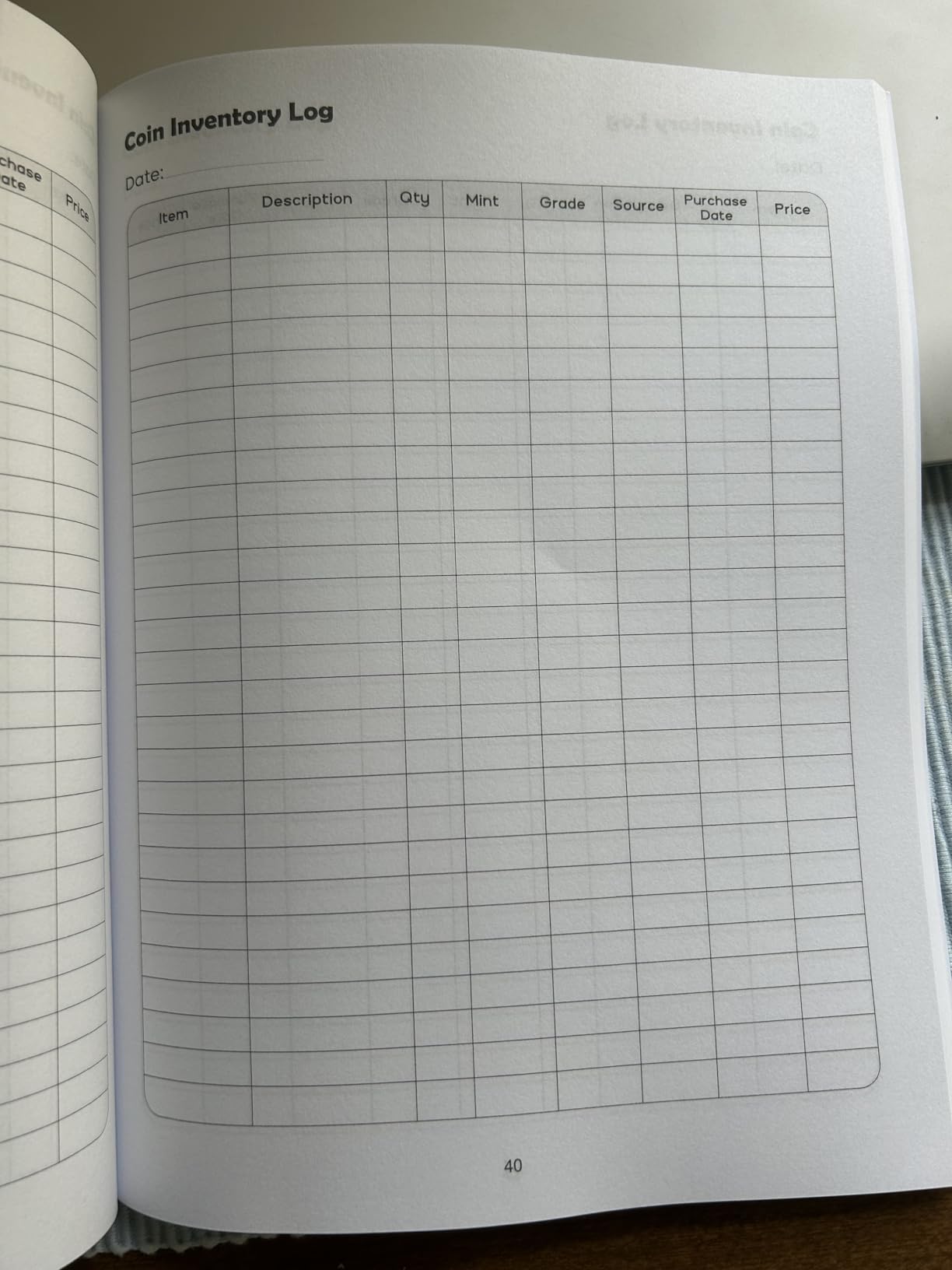
The organization system works well for mixed collections. I logged U.S. Morgan dollars, Canadian silver maple leaves, and a few ancient Roman denarii in the same book without confusion.
The main drawback is the binding. The product photos suggest a spiral-bound format, but the actual book is glue-bound. Several reviewers noted this discrepancy, and I confirmed it during my test.
Despite the binding issue, the content layout is solid. The columns handle country, denomination, year, grade, purchase price, and current value, which is everything you need for insurance documentation.
The quality paper stock handles pencil erasures better than cheaper competitors. I regraded three entries after purchasing a loupe and the pages showed no damage.
Who Should Buy This Coin Ledger
Collectors with international or mixed collections will appreciate the flexible format. The World Coins Collecting ranking suggests it meets the standards of serious numismatists.
It is also a good choice if you want quality paper that will last decades. Insurance documentation is only useful if the record itself survives, and this paper stock feels archival.
When to Consider Alternatives
If you need a book that lays flat at shows or auctions, the glue binding is a dealbreaker. The 125-page Zerio log will fight you every time you try to write near the spine.
For collectors who prefer digital records, this paper-only format is incomplete. Consider pairing it with a spreadsheet backup or scanning completed pages for cloud storage.
Buying Guide – How to Choose the Right Collector Insurance Appraisal Resource
After testing all ten products, I identified four factors that separate useful resources from shelf clutter when researching collector insurance appraisal services. Your collection type, the author’s credentials, the documentation format, and the physical durability all matter.
Match the Resource to Your Collection Type
Car collectors need different documentation than coin collectors or book collectors. A general home inventory book works for household items, but it lacks the specific columns needed for VIN numbers, restoration project insurance details, or vintage vehicle appraisal dates.
If you own multiple collection types, buy dedicated logs for each category. The specialized formats save time and reduce errors during insurance claims.
Forum discussions consistently show that collectors who mix documentation types struggle when adjusters ask for specific details. A coin log proves numismatic value better than a generic spreadsheet ever will.
Consider the Author’s Background
Books written by industry professionals carry more weight with insurance companies than self-published guides from unknown authors. John Voelpel’s insurance background, for example, makes his dispute resolution guide more credible than a generic legal overview.
Look for authors with credentials from recognized organizations. While the books in our roundup are independently published, the depth of knowledge in the best titles comes from real-world experience.
If you are buying a book to learn valuation methodology, check whether the author has actual appraisal or accounting credentials. Theoretical advice is less valuable than guidance from someone who has handled real claims.
Evaluate Physical Durability
Paper logs are only useful if they survive fires, floods, and decades of storage. Glue-bound softcovers are convenient but fragile. I recommend storing completed logs in a fireproof safe and scanning every page for digital backup.
The page count also matters. A 57-page book is fine for a small apartment, but a 120-page log handles larger collections without requiring a second volume. Check the dimensions to ensure the book fits your storage space.
Weight is a secondary concern, but it matters if you plan to carry the book to shows or appraisals. The 13.8-ounce Zerio log feels substantial, while the 5.9-ounce Joy Dean book travels easily.
Plan for Digital Backup
No paper log is complete without a digital backup. I scan every completed inventory page and store it on an encrypted external drive. Cloud storage adds redundancy, but keep a local copy in case internet access fails during a claim.
Some collectors photograph their collections alongside the log entries. A photo of a coin next to its log page creates a powerful evidence package for insurance companies.
If you prefer digital-first documentation, use these paper logs as backup rather than primary records. The best collector insurance appraisal services in 2026 accept both formats, but digital files are easier to share with remote appraisers.
Frequently Asked Questions
Here are answers to the most common questions about collector insurance appraisal services and documentation.
How much does it cost to have a classic car appraised?
Professional classic car appraisals typically range from $150 to $500 for standard vehicles. Rare or exotic cars may cost $500 to $1,000 or more depending on complexity and appraiser credentials. Most collectors budget $300 for a comprehensive written appraisal.
Do you need an appraisal for Hagerty insurance?
Hagerty generally does not require a formal appraisal for vehicles valued under $100,000. For high-value collections or rare vehicles, they may request documentation from a certified appraiser. You can submit photos and restoration receipts to support your agreed value.
Is American Collectors Insurance a reputable company?
American Collectors Insurance has operated since 1976 and holds an A+ rating from the Better Business Bureau. They specialize in agreed value coverage for collector vehicles and maintain a strong reputation in the classic car community. Independent reviews consistently praise their claims handling.
Is invoking the appraisal clause for auto insurance a good idea?
Invoking the appraisal clause can resolve disputes when you and your insurer disagree on value. Each party hires an independent appraiser, and if they disagree, an umpire decides. This process costs money but often yields fairer settlements than accepting the insurer’s initial offer.
What is the most accurate car appraisal site?
Accuracy depends on the appraiser’s credentials rather than the website itself. Look for certified appraisers from the Appraisers Association of America or the American Society of Appraisers. Online valuation tools can estimate market trends, but a physical inspection by a credentialed professional provides the most reliable documentation for insurance.
Final Thoughts
Protecting a collection starts with proper documentation. The best collector insurance appraisal services in 2026 rely on accurate records, detailed descriptions, and proof of value. Without these resources, even the best insurance policy can fail you when you need it most.
Our top recommendation is The Appraisal Process by John Voelpel for anyone facing a claim dispute. For general inventory, the Inventory Log Book by Modern Business Publishing offers the highest rating and simplest format. Coin collectors should start with the Coin Inventory Log Book by Collector Team Press for its proven 125-review track record.
Buy the resource that matches your collection type today. Complete the documentation this month. Your future self will thank you if disaster ever strikes.