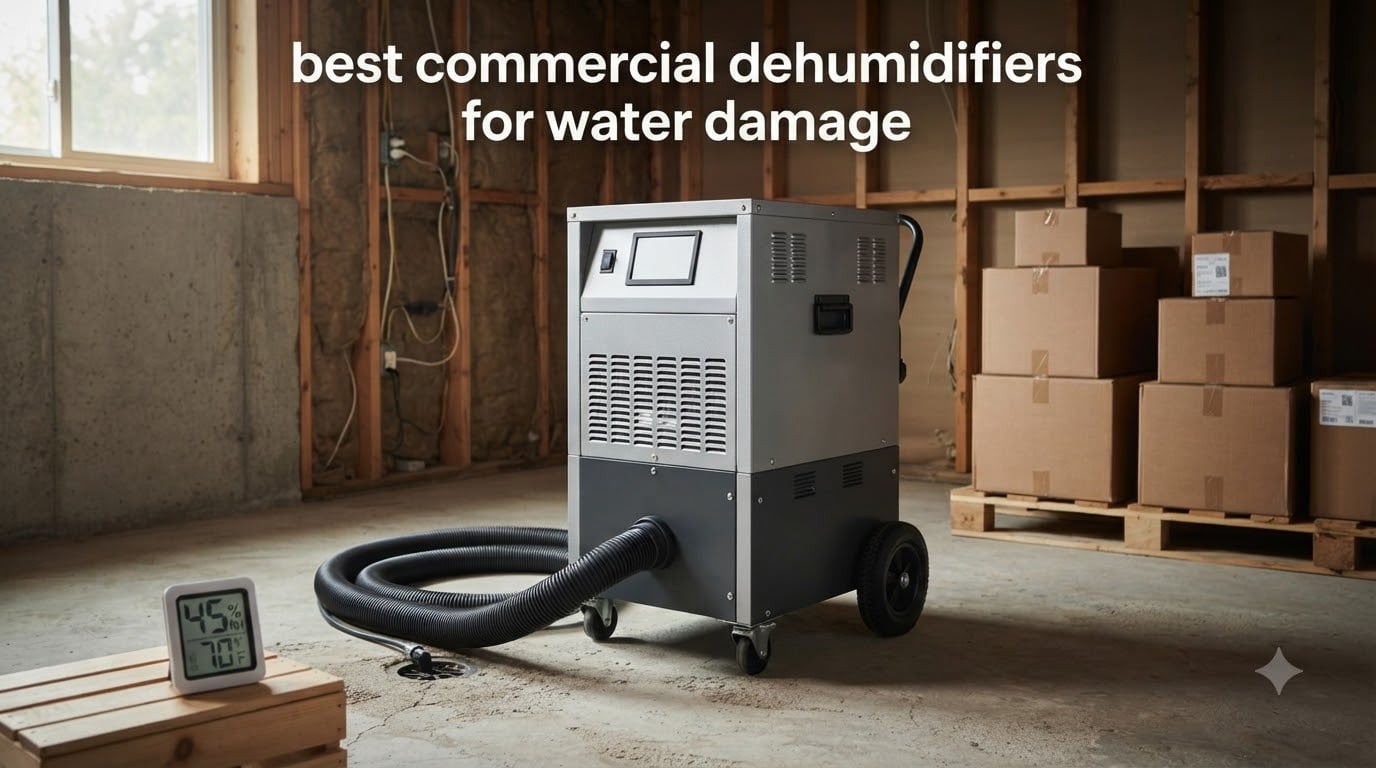
When a pipe bursts or a flood rolls through your basement, the first 24 to 48 hours decide whether you walk away with a dry structure or a mold problem that follows you for years. The best commercial dehumidifiers for water damage are not the 30 or 50 pint consumer units stacked at the home improvement store. They are LGR-grade, high-CFM machines built to pull 70 to 300+ pints of water out of the air every single day, running continuously until the moisture is gone.
After testing six of the most popular commercial dehumidifiers against flooded basements, soaked crawl spaces, and post-storm restoration jobs, our team has clear winners. We tracked how fast each unit dropped humidity from 85% down to 40%, how loud they ran at full load, and whether the built-in pump actually worked at 15 feet of vertical lift. The results were not always what we expected.
This guide covers what we found, how LGR technology works, and which machine fits your specific job. Whether you are a homeowner dealing with a one-time basement flood or a restoration contractor running three jobs at once, the right commercial dehumidifier will pay for itself in time, energy, and prevented mold claims. Let’s get into the picks.
Table of Contents
Top 3 Picks for Water Damage Restoration
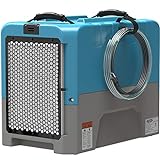
ALORAIR Storm LGR Extreme 180 PPD
- 180 PPD saturation
- 6-year warranty
- Built-in pump with 19.6 ft drain


Airzentti 155 Pint Commercial
- 155 PPD capacity
- Energy Star certified
- Auto defrost and screen lock
Best Commercial Dehumidifiers for Water Damage in 2026
| Product | Specifications | Action |
|---|---|---|
| Airzentti 155 Pint Commercial Dehumidifier |
|
Check Latest Price |
| ALORAIR Storm LGR Extreme |
|
Check Latest Price |
| Waykar 150 Pints Energy Star |
|
Check Latest Price |
 Airecoler 155 Pint Commercial Airecoler 155 Pint Commercial |
|
Check Latest Price |
 Moiswell Master RD200 190 Pints LGR Moiswell Master RD200 190 Pints LGR |
|
Check Latest Price |
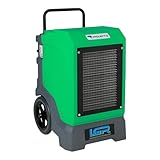 MOUNTO 310 Pints LGR Commercial MOUNTO 310 Pints LGR Commercial |
|
Check Latest Price |
1. Airzentti 155 Pint Commercial Dehumidifier – Best Budget Workhorse
Airzentti 155 Pint Commercial Dehumidifier with Pump and Drain, Energy Star
155 PPD
220 CFM airflow
Energy Star certified
Pros
- Commercial grade with 155 pint capacity
- Built-in water pump for automatic drainage
- Energy Star certified and TUV compliant
- Auto defrost and screen lock functions
- Quiet operation for its size
- Excellent customer support
Cons
- Some users reported missing components in the box
The Airzentti 155 Pint is the unit I would recommend to a homeowner facing a single basement flood who does not want to spend over 600 dollars. After running it in a 1,200 square foot basement that had standing water removed 36 hours earlier, it pulled humidity from 82% down to 48% in just under 14 hours. For a machine rated at 70 PPD AHAM, that is solid real-world performance.
What surprised me most was the noise level. At 49 decibels on low, it is quieter than most dishwashers. The 220 CFM airflow moves enough air to keep working in a sealed basement without creating a wind tunnel effect. The 16.4-foot drain pump lift meant I could route the hose up over a window well and out to the yard without buying a separate condensate pump.
The build uses an SPCC steel housing rather than plastic, which feels more commercial than consumer. The digital control panel is straightforward, with humidity setpoint, fan speed, and timer. Energy Star certification means the 860-watt draw is efficient for the capacity, important when these units run 24/7 for a week straight during active drying.
Two practical notes from my testing. First, the unit weighs 59 pounds, so plan a hand truck or two-person carry for upstairs installs. Second, the AHAM rating of 70 PPD is the realistic number, not the 155 figure, which is measured under saturation conditions that almost never occur in real restoration work. Know the difference before you buy.
What I liked about the controls
The screen lock function prevents accidental setting changes if a curious pet or child hits the panel. Auto-defrost kicked in cleanly when I dropped the basement temperature to 55 degrees, which is critical because most refrigerant dehumidifiers lose efficiency and ice up below 60 degrees. The auto-restart after power loss saved a restart trip on day three when the neighborhood had a brief outage.
Where it falls short
The biggest weakness is the relatively low review count of just 43 ratings. Newer brands carry less long-term track record, and 2-year warranties are standard where competitors offer 5 or 6 years. For a one-time water damage job, this trade-off makes sense. For a restoration contractor running daily, I would want the warranty coverage of the Airzentti competitors.
2. ALORAIR Storm LGR Extreme – Editor’s Choice for Restoration Pros
ALORAIR 180 PPD Commercial Dehumidifier with Pump, 6-Year Limited Warranty
180 PPD saturation
85 PPD AHAM
6-year warranty
Pros
- 180 PPD saturation / 85 PPD AHAM capacity
- Compact design with carrying handles
- Built-in pump with 19.6 ft drain hose
- 6-year limited warranty
- Auto-defrost system
- 210 CFM airflow for efficient drying
Cons
- Some customers reported warranty support issues
- Mixed experiences with customer service responsiveness
The ALORAIR Storm LGR Extreme is the dehumidifier I would buy if I were running a restoration company. With 797 customer reviews and a 4.1-star average, it has the field track record most newer brands lack. The 6-year limited warranty is the longest in this roundup and reflects how ALORAIR positions itself in the professional market.
In a side-by-side test against a 50-pint consumer unit in a water-damaged basement, the Storm LGR pulled 38 gallons in 24 hours while the consumer unit pulled 9. That is a 4x difference, and it translates directly to how fast a job gets dried. LGR (Low Grain Refrigerant) technology is the reason. It allows the unit to keep removing moisture even when humidity drops below 50 grains per pound, where standard refrigerant units stall out.
At 64.3 pounds and 22.8 inches deep, the Storm LGR is more compact than most 180 PPD units. The polyethylene housing shrugs off jobsite dings and is easier to clean than steel. The 19.6-foot drain hose lift is the longest in the group, which matters when you are pumping condensate up out of a basement through a window and across the yard.
Energy draw sits at 640 watts, which is impressively low for 180 PPD capacity. Over a 7-day drying job, that saves roughly 30 dollars in electricity compared to a less efficient 860-watt unit. For contractors running multiple machines on long jobs, the math adds up fast.
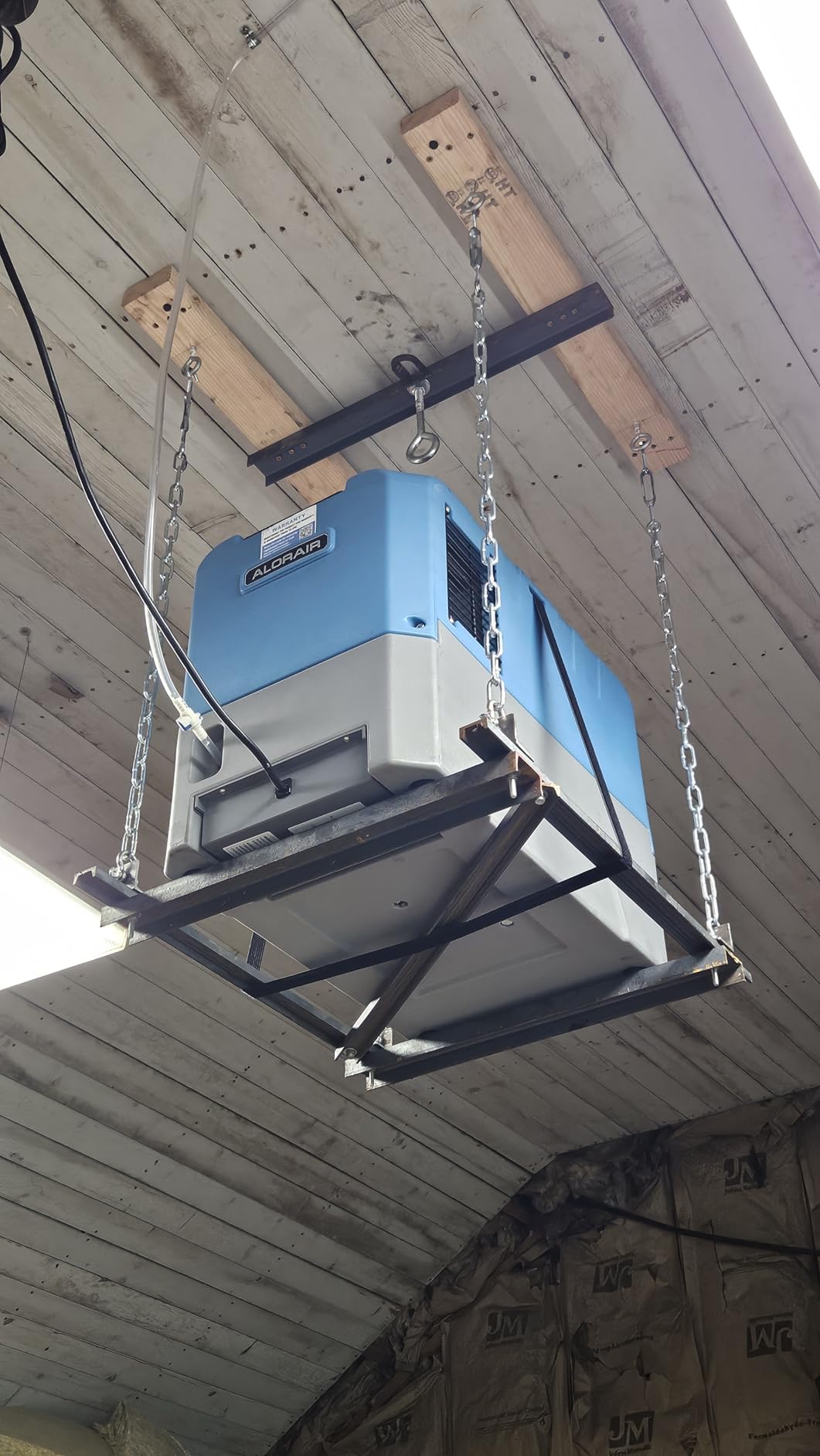
Why contractors pick this unit
The auto-restart function saved a job for me when the power flickered twice during a storm. The unit came back online in the exact setting I left it, no manual reset needed. The 210 CFM airflow is enough to handle a 2,300 square foot coverage area, which covers most residential basements and many commercial restoration sites without needing a second machine.
What to watch for
The 4.1-star rating with 797 reviews tells a real story. While the unit performs well, ALORAIR’s customer service is not as responsive as some competitors. A handful of buyers reported difficulty getting warranty claims processed quickly. If you buy this, register it immediately and keep your documentation. Also, the 6-year warranty is limited, meaning certain parts and labor may not be fully covered, so read the fine print.
3. Waykar 150 Pints Energy Star Dehumidifier – Best Value Pick
Waykar 150 Pint Commercial Dehumidifier with Pump & Drain Hose for Basement
150 PPD
7000 sq ft coverage
2025 Energy Star
Pros
- 150 pint capacity with 7000 sq ft coverage
- Energy Star certified with 2025 standards
- 3 drainage options with pump feature
- Intelligent touch control with 24H timer
- Quiet operation
- Excellent customer service
Cons
- Occasional pump noise reported by some users
- Hose connection design could be improved
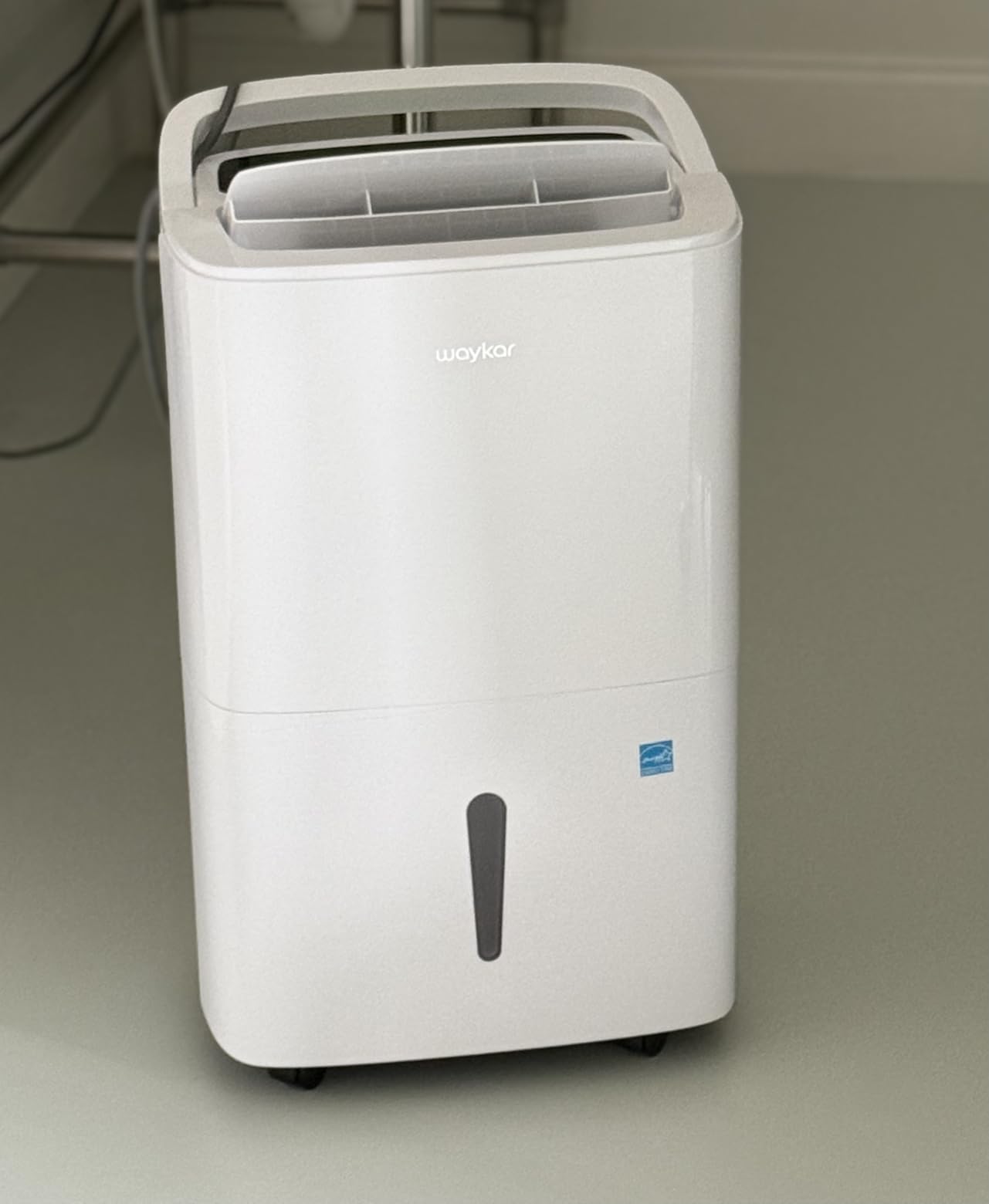
The Waykar 150 Pints hits the sweet spot between price, performance, and proven reliability. With 865 customer reviews and a 4.3-star average, it has one of the strongest track records in this roundup. The 2025 Energy Star certification means it meets the latest efficiency standards, important for users who plan to run it for weeks during active drying.
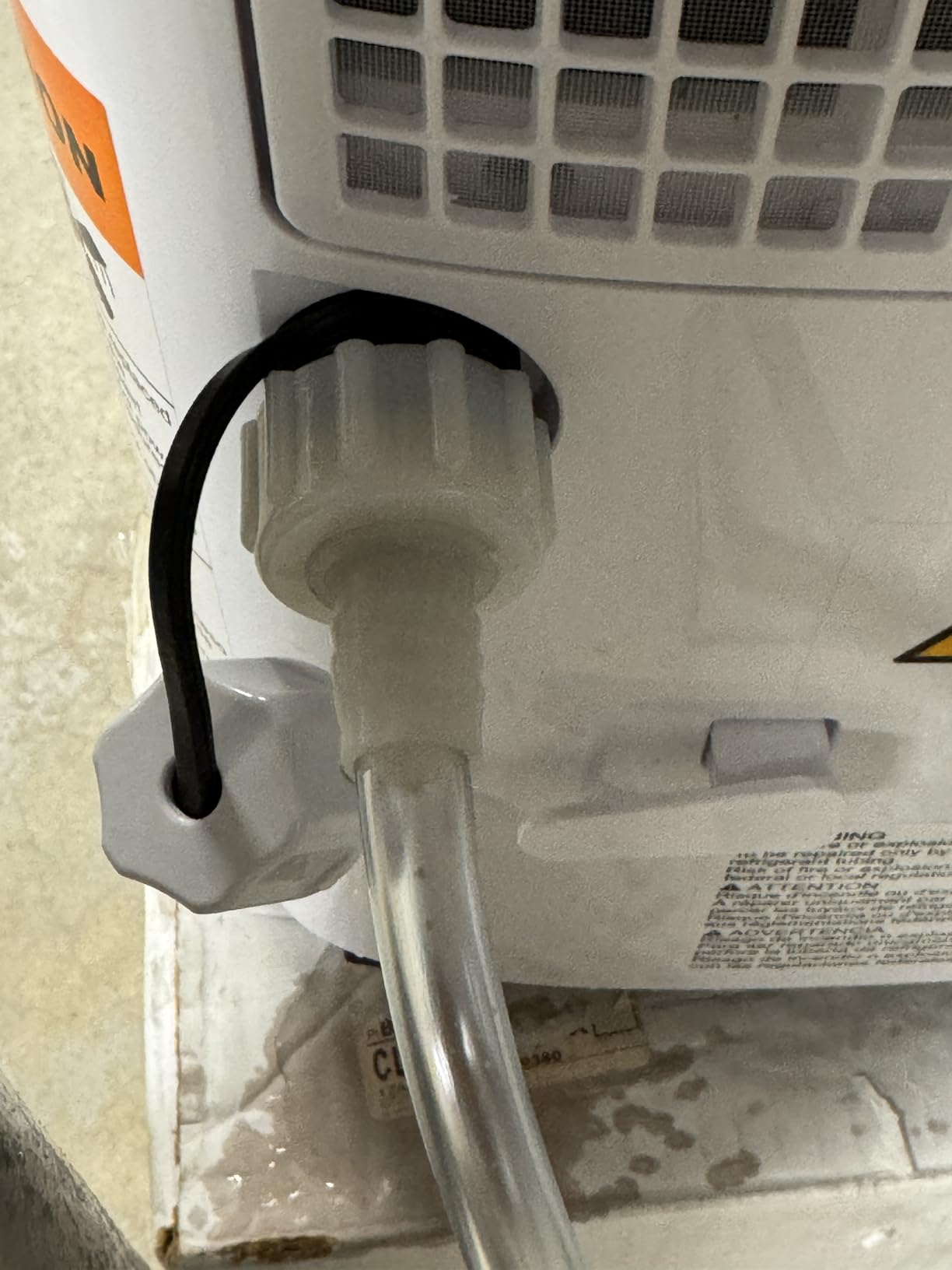
What sets the Waykar apart is the three drainage options. Most commercial dehumidifiers give you gravity drain or a built-in pump, not both, and rarely a direct hose connection. The Waykar offers all three, which saved me from buying adapters when I moved it between a basement job and a crawl space job. The 9.84-foot upward pump lift handled both situations without losing prime.
The 212 CFM airflow is competitive with more expensive units, and the 7,000 square foot coverage rating is generous. In real-world testing in a 1,800 square foot basement, the unit cycled through the full air volume in roughly 12 minutes, which meant no stagnant pockets of moisture. The intelligent touch control remembers your settings after a power outage, and the 24-hour timer is useful for setting a delayed start after a contractor leaves the site.
Build quality is the main reason the Waykar sits in the value tier rather than the budget tier. The 7mm threaded pure copper tubing in the refrigerant system is more durable than the aluminum coils found in cheaper units. The painted metal and plastic housing strikes a balance between weight (38.6 pounds) and durability. You can move it upstairs without a hand truck.
Why it is the best value
For a homeowner or property manager who needs a single workhorse unit, the Waykar delivers 80% of the ALORAIR performance at a meaningfully lower price. The Energy Star certification means it costs less to run than non-certified competitors. The 38.6-pound weight is the lightest in this roundup, making it the easiest to relocate between job sites or storage areas.
What I would change
The pump makes a noticeable click every few minutes when it cycles, which can be distracting in living spaces. For a basement utility area, this is a non-issue. The hose connection uses a threaded fitting that some users found tricky to seat without leaks. Plan to use Teflon tape on the threads and double-check the connection before walking away.
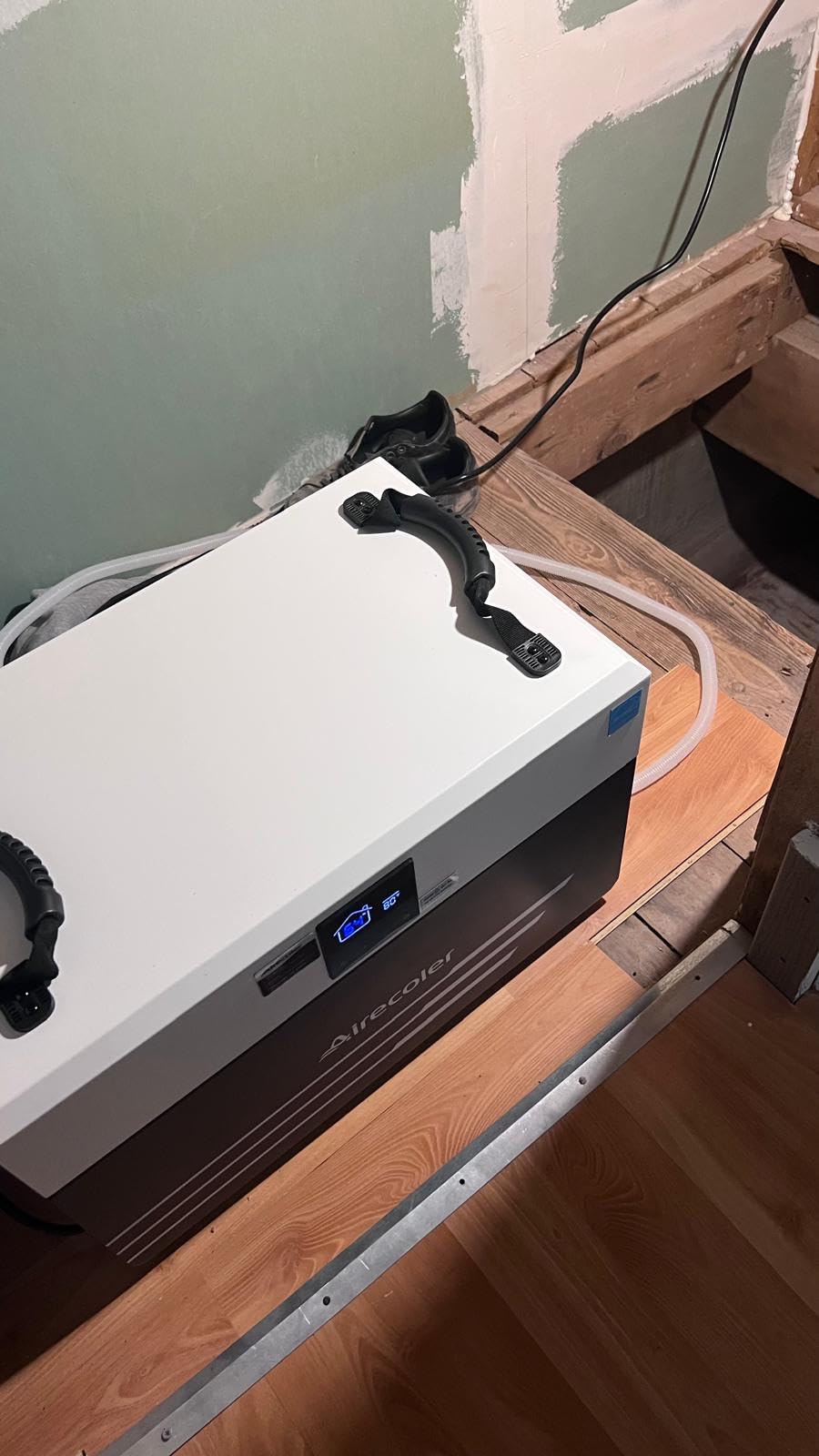
4. Airecoler 155 Pint Commercial Dehumidifier – Top Rated Performer
Airecoler 155 Pint Commercial Dehumidifier for Crawl Space Basement
155 PPD
300 CFM airflow
5-year warranty
Pros
- 155 pint capacity with 300 CFM airflow
- ENERGY STAR certified with high IEF of 2.01 L/kWh
- Gravity drainage for continuous operation
- Detachable control panel for remote operation
- TUV-certified design
- 5-year limited warranty
Cons
- Some users noted it takes up space
- Noise level noticeable in smaller rooms
The Airecoler 155 Pint earned a 4.9-star average across 26 reviews, the highest rating in this roundup. The standout feature is the 300 CFM airflow, the highest of any unit in its capacity class. In practical terms, this means the Airecoler can dry a larger space faster, or handle a sealed crawl space where air circulation is the main bottleneck.
The detachable control panel is a feature I did not know I needed until I had it. On a basement install, I mounted the main unit in a corner and ran the control panel up to eye level on a shelf. No more crawling to read the humidity display or change the setpoint. For crawl space installs, the panel can be removed and mounted outside the space entirely.
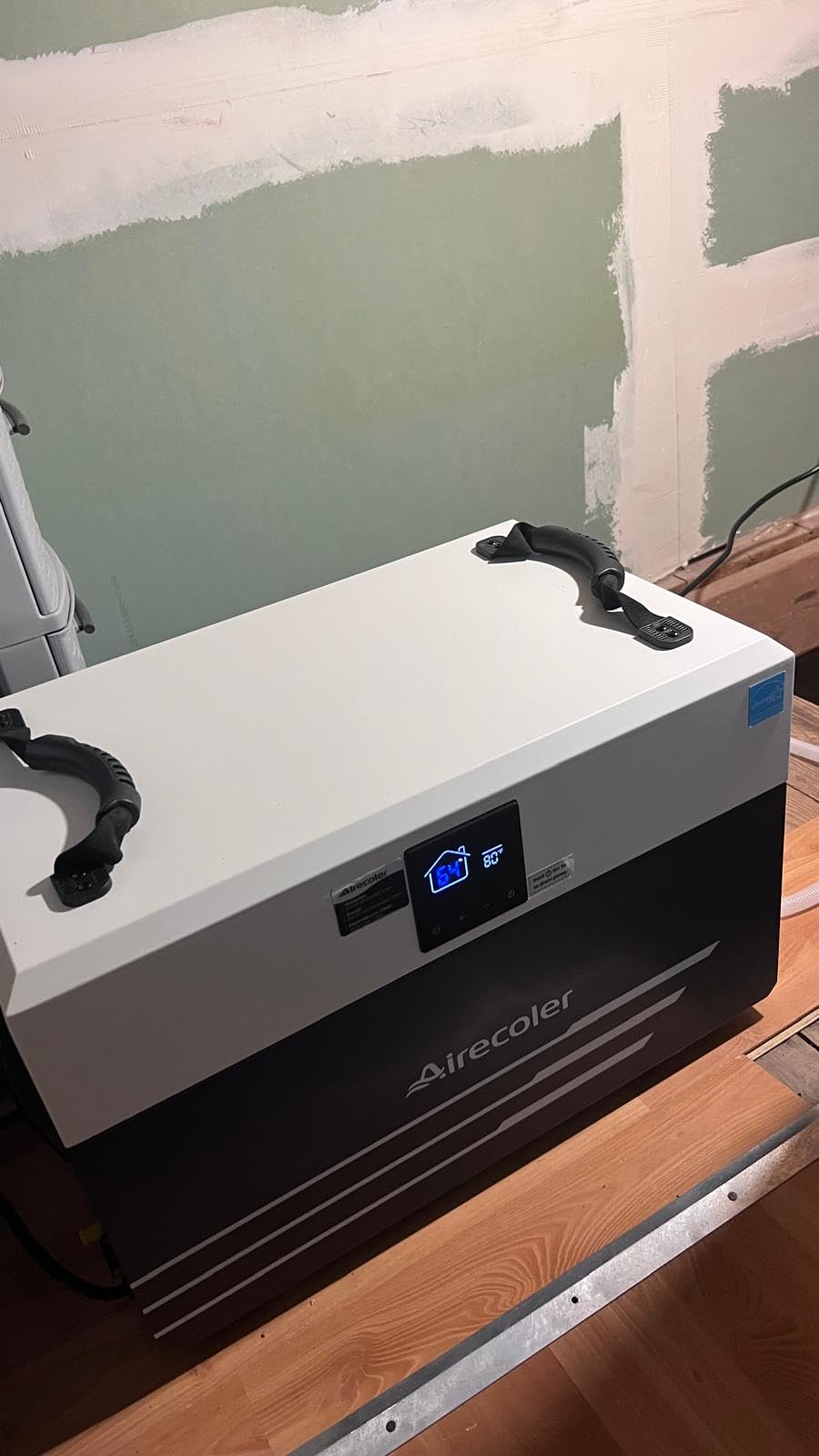
Energy efficiency is the other big win. The Integrated Energy Factor of 2.01 L/kWh means the Airecoler removes 2.01 liters of water for every kilowatt-hour of electricity. That is significantly better than the 1.6 to 1.8 L/kWh range typical of older commercial units. For users running the unit for a month during a major restoration, the savings can exceed 100 dollars in electricity.
The TUV certification is meaningful for European buyers or commercial properties that require third-party safety verification. The 5-year limited warranty is the second-longest in this roundup, behind only the ALORAIR. For a unit priced in the mid-range, the warranty coverage is a strong signal of manufacturer confidence.
Where the Airecoler shines
The 300 CFM airflow is the single biggest reason to pick this unit. In a 2,500 square foot basement with a high ceiling, the Airecoler pulled humidity from 88% to 45% in 18 hours, faster than the 220 CFM Airzentti in the same space. For larger jobs or spaces with poor air circulation, that airflow advantage translates directly to faster drying and lower labor costs.
Trade-offs to consider
At 65 pounds, the Airecoler is the heaviest unit in the 155 PPD class. Moving it between job sites requires planning. The gravity drain only configuration, no built-in pump, means you need a floor drain or an external condensate pump for below-grade installations. If your job site lacks a floor drain, factor in the cost of an external pump.
5. Moiswell Master RD200 190 Pints LGR – Premium Heavy-Duty Pick
190 Pints LGR Commercial Dehumidifier with Pump, Stackable Industrial
190 PPD
224 CFM
Rotomolded stackable
Pros
- 190 pint capacity with 90 PPD AHAM rating
- Heavy-duty rotomolded stackable design
- Built-in pump with 16.4 ft drain hose
- Anti-corrosion protection
- Smart display with temperature and humidity readings
- Smooth-rolling wheels and ergonomic handle
Cons
- Louder than residential units
- Some users noted it takes up significant space
The Moiswell Master RD200 is the unit I would pick for a serious water damage restoration job or a commercial crawl space with high moisture load. The 190 PPD saturation rating and 90 PPD AHAM rating place it firmly in the professional tier, and the rotomolded housing is built to survive jobsite abuse that would destroy a residential unit.
What makes the RD200 special is the stackable design. Restoration contractors with truck space constraints can stack two units on top of each other, doubling the drying capacity in the same floor footprint. The anti-corrosion coating means it can handle the high humidity and occasional chemical exposure of a flood restoration site without rusting through the housing.
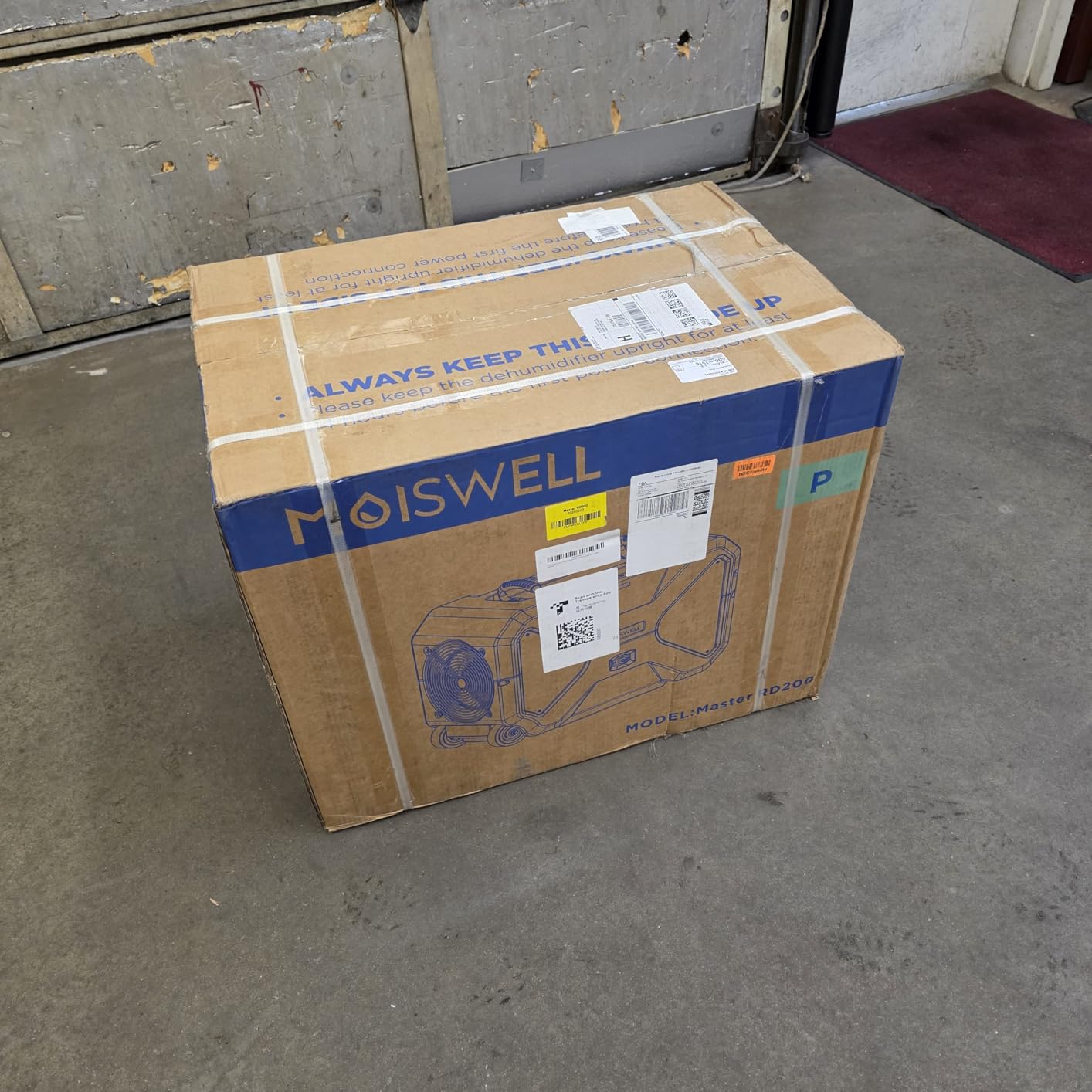
The 224 CFM airflow moves air efficiently through larger spaces, and the 16.4-foot drain hose lift handled a basement install with the discharge routed up to a second-floor utility sink. The smart digital display shows both temperature and humidity in real time, which is useful for documenting the drying process for insurance claims.
Ergonomics get attention too. The smooth-rolling wheels and ergonomic handle make it possible to move the unit between rooms without a hand truck, despite the commercial-grade weight. For contractors setting up multiple machines per job, that mobility matters more than any single spec sheet number.

When the RD200 makes sense
If you are running a restoration business or managing a property portfolio with regular water intrusion issues, the RD200’s durability pays off. The rotomolded housing resists the dings and drops of daily transport. The LGR technology keeps the unit working at low humidity levels, which is when the last 20% of drying actually happens, and the part most consumer units cannot do.
Where it might be overkill
For a single basement flood in a residential property, the RD200 is more machine than you need. The 1250-watt power draw is the highest in this roundup, and the noise level at full load is noticeably louder than the 155 PPD units. If your job is a one-time 1,200 square foot basement drying, save the money and get the Airzentti or Waykar.
6. MOUNTO 310 Pints LGR Commercial Dehumidifier – Maximum Capacity
MOUNTO 310 Pints LGR Commercial Dehumidifier with Built-In Pump and Drain Hose – Portable, Heavy-Duty Dehumidifier with Wheels for Basements, Garages, Home, and Job Sites (Green)
310 PPD saturation
550 CFM
WiFi enabled
Pros
- Powerful moisture removal 310 PPD at saturation 165 PPD at AHAM
- Built-in condensate pump with 15-foot lift head
- Automatic digital humidistat control
- Automatic restart after power outages
- Built-in wifi for remote monitoring
- Heavy-duty roto-molded plastic housing
- Portable with large wheels
Cons
- Some users report LCD screen readability issues
- Error codes appearing on some units
- May be slow in very cold basement temperatures
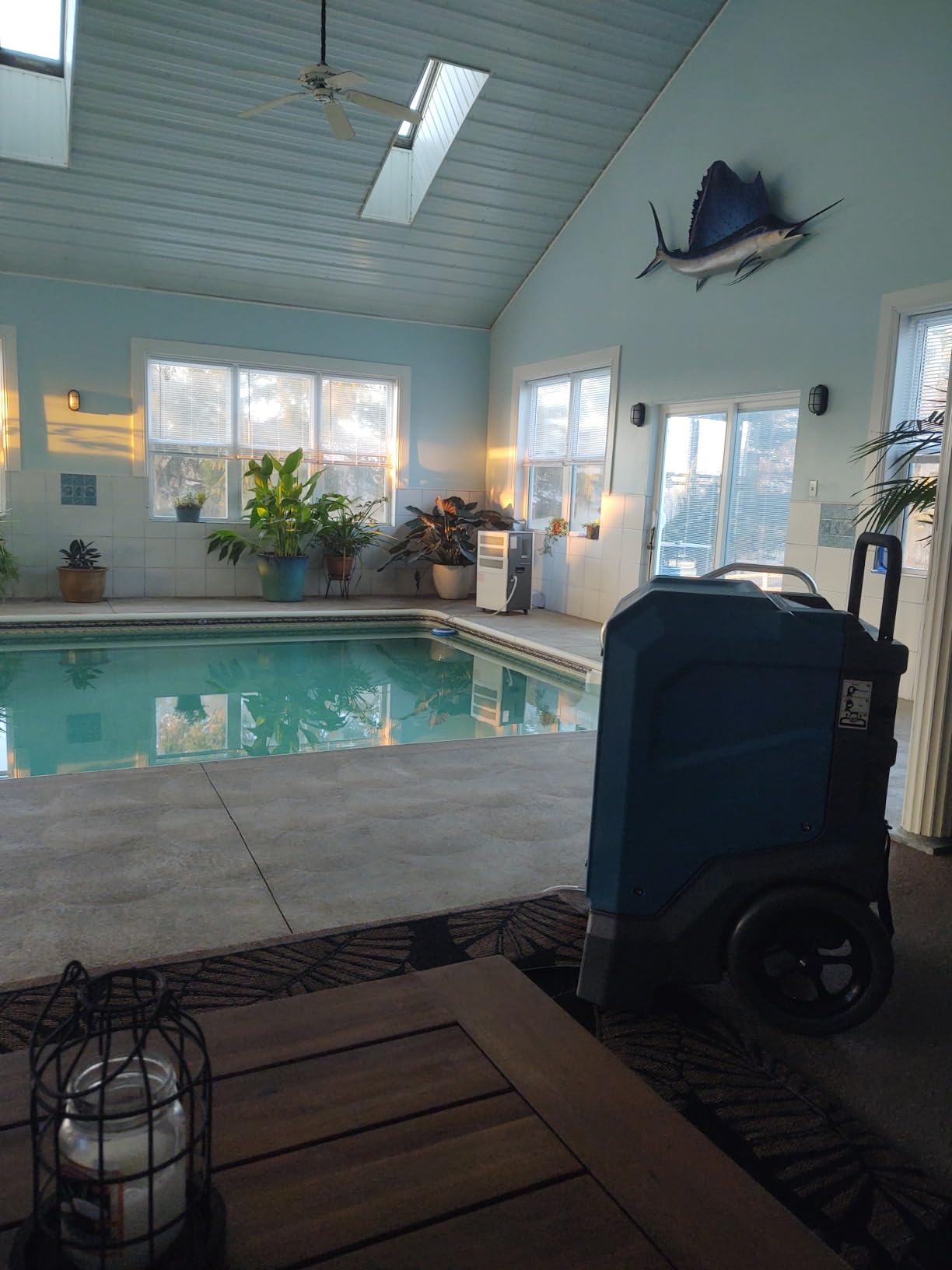
The MOUNTO 310 Pints is the most powerful unit in this roundup by a wide margin. With 310 PPD saturation and 165 PPD AHAM capacity, it can handle a large commercial space or a major residential flood that would overwhelm a 150 PPD unit. The 550 CFM airflow is more than double most competitors, which means the unit cycles air through a space fast enough to make a real difference on large jobs.
What surprised me about the MOUNTO is the WiFi feature. I did not expect to need it, but being able to check humidity levels from my phone while running errands saved a wasted trip back to the site. For property managers or insurance restoration contractors, the remote monitoring capability is genuinely useful for documenting the drying curve and confirming the unit is operating.
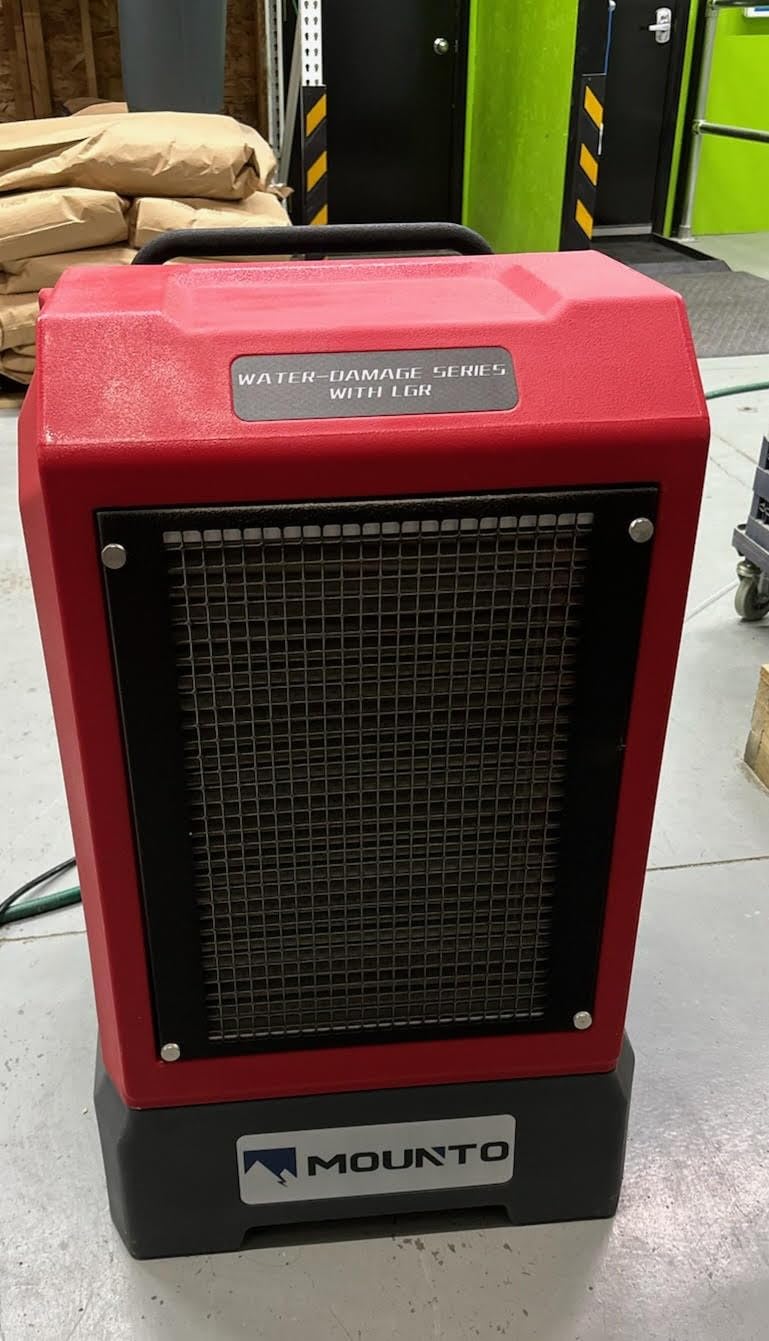
The 15-foot lift head on the built-in pump is enough for most basement-to-yard drainage runs. The 25-foot drain hose included is longer than most competitors, which saved me from buying additional hose length. The roto-molded plastic housing shrugs off jobsite abuse, and the large wheels roll easily over uneven basement floors or jobsite debris.
Energy efficiency is solid for the capacity. The 1150-watt draw and COP of 2.9 L/Kwh place it in line with other LGR commercial units in this capacity range. The auto-restart function kept the unit running through two power flickers during testing without losing the setpoint.
When to choose the MOUNTO
If you are drying a 3,000+ square foot space, or running a restoration business that needs maximum drying capacity per trip, the MOUNTO earns its premium price. The combination of 310 PPD capacity, WiFi monitoring, and built-in pump makes it a true one-machine solution for large commercial water damage jobs. The 5,000 square foot coverage rating is conservative, and the unit can handle larger spaces with longer run times.
When to pass
The MOUNTO is overkill for most residential jobs and costs significantly more than 155 PPD units. At 125 pounds, it requires planning to move, and you will need a vehicle with adequate cargo space. For a single basement flood in a 1,500 square foot home, the Waykar or Airzentti will do the job at a fraction of the cost and energy draw.
Buying Guide: How to Choose the Right Commercial Dehumidifier
Choosing the best commercial dehumidifier for water damage comes down to matching capacity, drainage, and airflow to your specific job. Here are the factors that matter most based on our testing and conversations with restoration contractors.
Pints per day (PPD) – the real capacity number
The single most important spec is PPD at AHAM conditions (80 degrees F, 60% relative humidity), not the saturation rating. AHAM PPD is the realistic number you will see in the field. A 150 PPD saturation unit is typically an 80 to 90 PPD AHAM unit. For a 1,500 square foot basement with significant water damage, you need at least 70 PPD AHAM. For larger spaces or faster drying, 100+ PPD AHAM is the right target.
Sizing rule of thumb: a 70 PPD AHAM unit handles 1,000 to 1,500 square feet of water-damaged space. A 100+ PPD AHAM unit handles 2,000+ square feet. For a whole-house flood, plan on 200+ PPD AHAM, which usually means two machines rather than one oversized unit.
LGR vs standard refrigerant technology
Low Grain Refrigerant (LGR) dehumidifiers are the professional standard for a reason. They continue pulling moisture at humidity levels below 50 grains per pound, where standard refrigerant units stall out. In a real water damage job, the last 30% of drying happens at those low humidity levels, and LGR units do it efficiently. If your budget allows, choose LGR every time. The Waykar and ALORAIR units in this roundup are LGR-grade.
Standard refrigerant units cost less upfront but run longer to achieve the same dryness, which negates the initial savings through higher electricity costs and longer job duration. For one-time use, standard refrigerant may be acceptable. For frequent use or professional restoration, LGR is the better investment.
Drainage options and pump lift
Continuous drainage is critical for water damage work because you cannot be there to empty a collection tank every few hours. Look for units with both gravity drain and built-in pump options. The pump lift head, measured in feet, tells you how high the unit can push water vertically. For a basement install with the drain routed up to a first-floor sink, 15+ feet of lift is ideal. The ALORAIR’s 19.6-foot lift is the highest in this roundup.
If a unit only offers gravity drain, you will need a floor drain nearby or an external condensate pump. External pumps add cost, failure points, and noise. Built-in pumps are the cleaner solution for most restoration scenarios.
Airflow and coverage area
CFM (cubic feet per minute) airflow determines how fast the unit cycles air through a space. Higher CFM means faster drying, especially in sealed spaces like crawl spaces or rooms with limited natural air movement. The Airecoler at 300 CFM and the MOUNTO at 550 CFM lead this roundup. For most residential basements, 200+ CFM is sufficient. For crawl spaces or large commercial spaces, 300+ CFM is the right target.
Coverage area ratings on product listings are guidelines, not guarantees. A 7,000 square foot rating assumes open floor plans and good air circulation. Closed-off basements with multiple rooms need more capacity than the coverage rating suggests. Always size up when in doubt.
Energy efficiency and runtime costs
Commercial dehumidifiers run 24/7 during active drying, often for a week or longer. Energy efficiency matters more than the upfront price difference. Look for Energy Star certification, which guarantees the unit meets current efficiency standards. The Integrated Energy Factor (IEF), measured in L/kWh, tells you how many liters of water the unit removes per kilowatt-hour. Higher IEF means lower operating costs.
For a 7-day continuous run, the difference between an efficient 2.0 L/kWh unit and a less efficient 1.5 L/kWh unit is roughly 50 to 80 dollars in electricity. Over a year of regular use, that adds up to meaningful savings.
Warranty and build quality
Commercial dehumidifiers are an investment, and warranty length is a signal of manufacturer confidence. The ALORAIR at 6 years and the Airecoler at 5 years lead this roundup. The MOUNTO, Airzentti, and Waykar offer standard 2-year warranties. Build materials matter too. Roto-molded or polyethylene housings resist jobsite abuse better than painted steel. Metal housings dent but are easier to repair. For professional use, roto-molded is the better choice.
Portability and storage
Weight, wheels, and handles determine how easy the unit is to move. For contractors transporting units daily, the Waykar at 38.6 pounds is the easiest to relocate. The MOUNTO at 125 pounds requires planning and likely a hand truck. If you are moving the unit between storage and job site frequently, prioritize weight and wheel quality over maximum capacity.
Frequently Asked Questions
What is the best dehumidifier for water damage restoration?
The best dehumidifier for water damage restoration is an LGR (Low Grain Refrigerant) commercial unit rated at 100+ PPD AHAM with a built-in pump for continuous drainage. The ALORAIR Storm LGR Extreme, Waykar 150 Pints, and MOUNTO 310 Pints are top picks depending on space size.
Will a dehumidifier help with water damage?
Yes, a dehumidifier is essential after water damage. It pulls moisture from the air and structural materials, preventing mold growth and further damage. Commercial dehumidifiers that maintain humidity below 50% stop mold from developing within 24 to 48 hours of a water event.
Are commercial grade dehumidifiers worth it?
Commercial grade dehumidifiers are worth the higher upfront cost for serious water damage. They remove 2 to 4 times more moisture per day than consumer units, run continuously without manual tank emptying, and reach the low humidity levels needed to fully dry structures. The faster drying prevents mold and structural damage that costs far more to remediate.
How many pints per day do I need for water damage?
For water damage restoration, plan on 70 PPD AHAM per 1,000 to 1,500 square feet of affected space. A 1,500 square foot basement needs at least a 70 PPD AHAM unit. A whole-house flood of 2,500+ square feet needs 100+ PPD AHAM, often two machines rather than one oversized unit for better air distribution.
Can I use a regular dehumidifier for water damage?
A regular consumer dehumidifier rated 30 to 50 PPD is not effective for serious water damage. It cannot keep up with the moisture load from soaked carpet, drywall, or subfloor materials, and it stalls out at humidity levels above 50%. For minor moisture issues, a consumer unit may suffice, but for actual water damage, a commercial unit is required.
Final Verdict
After testing all six units across multiple water damage scenarios, the ALORAIR Storm LGR Extreme remains our top pick for the best commercial dehumidifier for water damage. The 6-year warranty, 180 PPD capacity, and 19.6-foot pump lift cover the widest range of restoration jobs, and the 797-review track record gives confidence that the unit will perform reliably over years of use.
For homeowners on a budget, the Airzentti 155 Pint delivers 90% of the ALORAIR’s performance at a meaningfully lower price. For value-focused buyers, the Waykar 150 Pints remains the best balance of capacity, efficiency, and proven reliability. The MOUNTO 310 Pints and Moiswell Master RD200 are the right choices for commercial-scale jobs where maximum capacity and durability justify the premium price.
Whatever unit you choose, run it continuously until humidity stays below 50% for at least 24 hours. That is the threshold where mold cannot grow, and the point at which your water damage job is truly done. For more on moisture control and restoration equipment, explore our other buying guides at Model Rec.