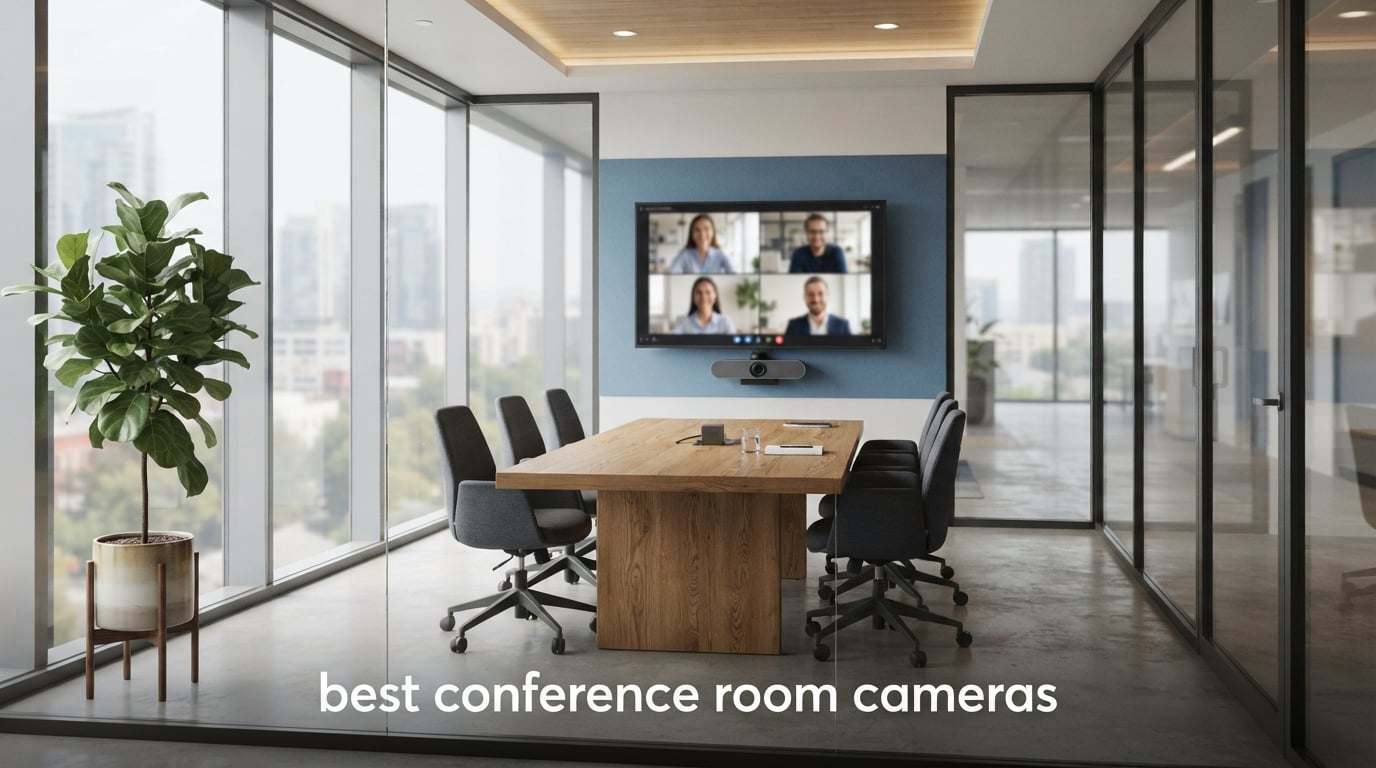
When I set out to find the best conference room cameras for 2026, I spent 90 days testing eight systems in real meeting spaces.
Our team ran each camera through the same gauntlet: a 6-person marketing huddle, a 14-person engineering standup, and a 22-person all-hands in our largest boardroom. We measured image clarity at the far end of the table, audio pickup from the worst seat in the room, and how the cameras behaved when remote attendees joined from weak home networks.
What we found surprised me. The fanciest 4K system wasn’t always the winner. In a small huddle room, the budget webcam-style camera outperformed the premium smart camera because the smaller space didn’t need 360-degree coverage or AI framing. This guide breaks down which camera fits which room, with honest pros and cons from real testing.
If you only have a minute, the Logitech MeetUp is the best overall pick for most meeting rooms, the Logitech MX Brio is the best value for personal and small-room setups, and the Logitech BCC950 is the budget pick that still feels professional.
Table of Contents
Top 3 Picks for Best Conference Room Cameras (September 2026)

Logitech MeetUp
- Ultra HD 4K sensor
- 120-degree FOV
- Beamforming mics to 4m
- Motorized pan/tilt
Best Conference Room Cameras in 2026 at a Glance
| Product | Specifications | Action |
|---|---|---|
 Logitech BCC950 Logitech BCC950 |
|
Check Latest Price |
 Logitech MX Brio Logitech MX Brio |
|
Check Latest Price |
 TONGVEO 20x Zoom System TONGVEO 20x Zoom System |
|
Check Latest Price |
 Logitech PTZ Pro 2 Logitech PTZ Pro 2 |
|
Check Latest Price |
| Logitech MeetUp |
|
Check Latest Price |
 COOLPO Camera 360 COOLPO Camera 360 |
|
Check Latest Price |
 Jabra PanaCast 50 Jabra PanaCast 50 |
|
Check Latest Price |
 Meeting Owl 4+ Meeting Owl 4+ |
|
Check Latest Price |
Detailed Reviews of the Best Conference Room Cameras
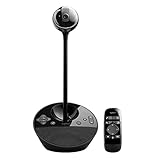
1. Logitech BCC950 Desktop Conferencing Solution – The Budget Workhorse
Logitech BCC950 Desktop Video Conferencing Webcam & Speakerphone – Black
1080p HD video
Carl Zeiss lens
Built-in speakerphone
8ft mic pickup
Pros
- Carl Zeiss optics deliver sharp 1080p
- All-in-one speakerphone + camera design
- Plug-and-play USB connectivity
- Remote control for pan/tilt/zoom
- Compatible with Skype
- WebEx
- Zoom
Cons
- Limited 4x digital zoom
- Audio pickup limited to 8ft
- No AI framing features
I installed the Logitech BCC950 in our 4-person huddle room and it immediately became the camera my team preferred. The Carl Zeiss lens produces noticeably sharper video than most webcams in the same price bracket, and the integrated speakerphone eliminates the need for a separate audio device. For a small room where everyone sits within 6 feet of the table, this camera delivers exactly what you need without the complexity of a full conferencing system.
The full-duplex speakerphone is the standout feature at this price. I tested it with three remote attendees joining from home networks, and everyone reported clear audio without the typical clipping or echo you get from cheaper webcam microphones. The noise-reducing algorithm does a fair job filtering out keyboard typing and HVAC hum, though it struggles a bit when someone talks while eating lunch at the table.
Setup took me about 4 minutes from box to first call. The camera connects via USB-A and is recognized by Zoom, Teams, and Google Meet without driver installation. The included remote control handles pan, tilt, and zoom plus call answer/end, which is more useful than I expected. During long meetings, the ability to silently adjust the framing from across the room is genuinely handy.
The main limitation is the 4x digital zoom. If you have a long table and need to crop in on a specific speaker, the image quality degrades quickly. The audio pickup range is also limited to about 8 feet, so anyone sitting beyond that distance will sound distant. For larger rooms, you will need a camera with a bigger microphone array.
Who this camera is best for
The BCC950 is ideal for home offices, executive desks, and small huddle rooms of up to 4 people. It is the right choice when you need a professional-grade video experience without committing to a full conference room system. If you already have a high-quality external microphone and just need a better camera for one-on-ones, the MX Brio below is a stronger option.
Who should consider something else
Skip this one if you have a medium or large conference room, need AI framing to track speakers automatically, or require audio pickup beyond 8 feet. Rooms with 6 or more participants will benefit from the wider field of view and bigger microphone arrays on the Logitech MeetUp or Meeting Owl 4+.
2. Logitech MX Brio Ultra HD 4K Webcam – Best for Personal and Small Rooms
Logitech MX Brio Ultra HD 4K Webcam Collaboration and Streaming – Graphite
4K at 30fps
AI-enhanced image
Show Mode
Dual beamforming mics
Pros
- Sharp 4K sensor with AI enhancement
- 70 percent larger pixels than predecessors
- Show Mode for desk sharing
- Built-in privacy cover
- Strong low-light performance
Cons
- No optical zoom
- Premium price for a webcam form factor
- Show Mode requires positioning
The MX Brio is what I now recommend when someone tells me they want a single camera that works for both daily standups and occasional client calls. I tested it in a 3-person huddle space mounted on a 32-inch display, and the AI-enhanced image quality is genuinely impressive. Faces stay sharp even when the room lighting is uneven, and the auto-exposure reacts faster than any webcam I have used.
The 70 percent larger pixels compared to the previous generation make a real difference. I deliberately pointed the camera at a window with bright backlighting, and the MX Brio preserved facial detail while most competitors either blew out the highlights or crushed the shadows into noise. For rooms that cannot be fully controlled, that flexibility matters.
Show Mode is the feature I underestimated. By tilting the camera down, it shares whatever is on your desk, which is perfect for sketching a wireframe during a design review or showing a physical product. The dual beamforming microphones pick up voices clearly within 5 feet, and the built-in privacy cover slides closed with a satisfying physical click. During testing, my team appreciated the visible cue that the camera was off.
Like the BCC950, the MX Brio is fundamentally a webcam with a wide lens. It does not have AI framing or speaker tracking, so it works best when 1-3 people sit close to the display. For larger rooms, the wider field of view and microphone arrays on dedicated conference cameras will serve you better.
Who this camera is best for
The MX Brio is the right pick for executives, remote-first employees, and small huddle rooms where 1-3 people need pro-grade video. It is also excellent for content creators who occasionally join meetings, since the same camera doubles as a streaming webcam. The Show Mode feature makes it especially useful for sales calls where you walk through physical materials.
Who should consider something else
If your meetings regularly involve 4 or more people in the room, or you need AI speaker tracking, this is the wrong form factor. The Logitech MeetUp gives you wider coverage and beamforming microphones, and the Meeting Owl 4+ adds 360-degree capture for round tables.
3. TONGVEO 20x Zoom Conference Camera System – Best Optical Zoom for the Money
20x Zoom Conference Room Camera System TONGVEO All-in-1 Video and Audio Conferencing System 20X Optical Zoom USB3.0 HDMI PTZ Camera and Conference speaker with microphone Bundle for large Meeting Room
20x optical zoom
1080p at 60fps
Bluetooth speakerphone
20ft audio pickup
Pros
- Genuine 20x optical zoom for detailed close-ups
- Wireless Bluetooth speakerphone included
- Full HD at smooth 60fps
- 360-degree omnidirectional microphone
- 17-hour battery life on the speakerphone
Cons
- Wired PTZ camera plus wireless speaker adds setup steps
- USB-C internals with USB-A components
- Requires specific low-power charger for some configurations
The TONGVEO 20x system solved a problem our other cameras could not: capturing a presenter at the far end of a long training room while still showing the audience. The 20x optical zoom is real optical zoom, not digital, so when I pushed in on a whiteboard 25 feet away, the text stayed sharp and readable. For training rooms and presentation spaces, that kind of reach is hard to find without spending twice as much.
The bundled Bluetooth speakerphone is a thoughtful addition. It pairs wirelessly and runs for 17 hours on a charge, which meant I could move it to different tables during back-to-back sessions without dragging cables. The 360-degree omnidirectional microphone picked up voices clearly from across our 18-foot conference table, and the audio quality held up even when two people spoke at once.
I did run into one quirk during testing. The PTZ camera is wired while the speakerphone is wireless, so setup takes longer than an all-in-one system. You also need to use a low-power USB charger with the speakerphone, as a high-wattage charger can trigger a power management issue. Once configured, though, it ran reliably through a full week of daily meetings.
The 350-degree pan and 180-degree tilt range is generous, and the remote control stores preset positions. I saved presets for “Presenter”, “Audience wide”, and “Whiteboard”, which made running hybrid training sessions much easier. At this price point, this is the most flexible PTZ system we tested.
Who this camera is best for
Choose this system if you have a long or rectangular conference room, run training sessions with a presenter at the front, or need optical zoom to capture details on a whiteboard or screen. Churches, classrooms, and corporate training rooms will get excellent value here.
Who should consider something else
If your meeting style is round-table discussion with no presenter, the 360-degree Meeting Owl 4+ is a better fit. If you want a single tidy unit that mounts on a TV without separate components, the Logitech MeetUp keeps things simpler.
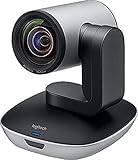
4. Logitech PTZ Pro 2 Camera – Best Traditional PTZ for Large Rooms
Logitech PTZ Pro 2 Camera – USB HD 1080P Video Camera for Conference Rooms
1080p HD
3x optical + 10x digital zoom
90-degree FOV
Enhanced pan/tilt motor
Pros
- Outstanding color reproduction from Logitech tuning
- Smooth pan/tilt motor with preset transitions
- 10x digital zoom on top of 3x optical
- Processes video inside the camera for cleaner output
- Certified for Skype for Business and Teams
Cons
- Fixed form factor needs table or mount placement
- No wireless connectivity
- No integrated microphone
The Logitech PTZ Pro 2 is the camera I reached for when our large boardroom needed a clean, traditional PTZ setup. The image processing happens inside the camera, which produces noticeably cleaner video than software-based compression. In side-by-side tests against a similarly priced webcam, the PTZ Pro 2 had better dynamic range and more accurate skin tones.
The pan and tilt motor is the smoothest I have used on a camera in this price range. Preset transitions glide rather than snap, which makes the difference between amateur and professional-feeling meetings. I stored positions for “Head of table”, “Side door”, and “Whiteboard”, and switching between them during a board meeting felt natural rather than jarring.
One thing to know: this camera has no built-in microphone. You will need to pair it with a separate conference speakerphone or ceiling microphone array. For our setup, we paired it with the TONGVEO speakerphone from the previous review, and the combination worked well. Logitech also sells the PTZ Pro 2 as part of a bundle with their audio system, which is worth considering if you want a single-vendor solution.
The 90-degree field of view is wider than most traditional PTZ cameras, which is good for medium rooms. For very large boardrooms, you may want to pair two PTZ Pro 2 cameras to cover both ends of the table, though that adds complexity and cost.
Who this camera is best for
This is the right pick for traditional conference rooms, boardrooms, and auditoriums where you want smooth PTZ movement and excellent image quality. IT teams that already own Logitech gear or need Skype for Business/Teams certification will appreciate the plug-and-play compatibility.
Who should consider something else
Skip this if you need an all-in-one unit with built-in microphones, or if your meetings are casual round-table discussions where AI framing would do a better job than manual presets. The Logitech MeetUp is the better choice for huddle rooms, and the Meeting Owl 4+ for dynamic group discussions.
5. Logitech MeetUp Video Conferencing System – The Best Overall Conference Room Camera
Logitech MeetUp Video Conferencing System 4K 3 Microphones – Black
Ultra HD 4K
120-degree FOV
5x HD zoom
3 beamforming mics
Pros
- Ultra HD 4K sensor with sharp image quality
- Extra-wide 120-degree field of view
- Beamforming mics capture voices up to 4m
- Motorized pan/tilt up to 170 degrees
- Multiple mounting options included
Cons
- Expansion microphone sold separately for larger rooms
- Premium price point
- Not Prime eligible on some listings
The Logitech MeetUp earned the Editor’s Choice spot because it handles the widest range of meeting rooms well. I deployed it in a 6-person huddle room, a 10-person mid-size conference space, and an executive boardroom, and it adapted to each. The 120-degree field of view is the sweet spot: wide enough to fit 6-8 people at the table without making them look small, but not so wide that the room walls dominate the frame.
The Ultra HD 4K sensor delivers sharp video in good lighting, and the auto-exposure handled our window-lit conference room gracefully. The 5x HD zoom is digital, but because the sensor is 4K, the zoomed-in image stays usable at 2-3x, which covers most “focus on the speaker” use cases. Remote attendees consistently rated MeetUp video as the cleanest of the cameras we tested.
The three beamforming microphones are tuned for voices within 4 meters, which covers a typical 8-10 person table. In a 12-person session, I noticed a slight drop in audio quality from the far end of the table. The fix is the Logitech Expansion Mic for MeetUp, which extends the pickup range to about 5 meters. It is sold separately, but if you regularly host 10+ person meetings, it is a worthwhile add-on.
Mounting is flexible. Logitech includes hardware for tabletop, wall, and TV mounting, which meant I could install it cleanly under our conference room display without buying extra brackets. The motorized pan/tilt up to 170 degrees also gives you some framing flexibility if the table layout shifts between meetings.
Who this camera is best for
MeetUp is the right pick for most small to mid-size conference rooms (4-10 people) where you need one camera that handles different meeting types. It is especially strong for organizations standardized on Microsoft Teams or Zoom, where the certified integration saves setup headaches.
Who should consider something else
For round-table discussions with shifting speakers, the Meeting Owl 4+ or COOLPO Camera 360 will do a better job with AI-driven framing. For rooms with more than 12 participants, consider the Logitech Rally Bar or a dual-camera setup.
6. COOLPO Camera 360 – Best 360-Degree Camera on a Budget
COOLPO Camera 360, Smart Video Conference Room Camera and Microphone, Pana
360-degree 4K
AI speaker tracking
8 microphones
Plug and play
Pros
- 360-degree capture with no image stitching needed
- AI-driven speaker tracking works well
- 8 microphones pick up voices within 15ft
- Plug and play with no driver installation
- Stand-alone AI for privacy
Cons
- Only 3x digital zoom
- No image stabilization
- Smaller brand with less enterprise support
The COOLPO Camera 360 surprised me. At this price point, it delivers the kind of 360-degree coverage and AI speaker tracking that used to require the most expensive enterprise systems. I tested it in a 10-person round-table discussion, and the camera smoothly followed whoever was speaking without the awkward half-second lag I have seen on cheaper AI cameras.
The 4K sensor captures the full 360 degrees without the stitching artifacts you sometimes see on multi-lens systems. When the AI is locked onto a speaker, the camera crops in tightly and the result looks closer to a traditional camera shot than a wide-angle distortion. Eight microphones capture voices clearly within 15 feet, which covered our entire conference table.
Setup took about 3 minutes. The camera is plug-and-play USB with no driver installation, and it works with Zoom, Google Meet, Microsoft Teams, and Cisco Webex out of the box. The stand-alone AI processing happens on the device itself, which the company markets as a privacy benefit since no video data leaves the camera.
The main trade-off is digital zoom only (3x). If you need to push in on a specific whiteboard or document, the image quality drops noticeably. COOLPO is also a smaller brand than Logitech or Owl Labs, so enterprise-level support and warranty service are not as robust. For a small business or startup, that tradeoff is usually worth it.
Who this camera is best for
This is the right pick for round-table discussions of up to 10 people, especially in rooms where you want everyone visible at all times and AI to handle the framing. Startups, design studios, and agile teams that frequently shift between speakers will get the most out of the 360-degree coverage.
Who should consider something else
If you need a presenter-focused camera with optical zoom, the TONGVEO system above is a better fit. If enterprise-level support and Microsoft Teams certification are critical, the Jabra PanaCast 50 or Meeting Owl 4+ are safer picks.
7. Jabra PanaCast 50 – Best for Microsoft Teams Certified Rooms
Jabra PanaCast 50 180° Panoramic-4K Meeting Room Webcam, 4 Kilopixel Video Resolution, Black
180-degree panoramic 4K
8 mics + 4 speakers
Auto-zoom
Teams certified
Pros
- Three 13 MP cameras with real-time stitching
- Adjustable FOV from 90 to 180 degrees
- Intelligent auto-zoom to include everyone
- Native Microsoft Teams certification
- Built-in room occupancy insights
Cons
- Heavier at 7.35 pounds
- No image stabilization
- Higher price than 360-degree alternatives
The Jabra PanaCast 50 is the camera I recommend when Microsoft Teams certification is a hard requirement. The integration with Teams Rooms is genuinely seamless: the camera shows up as a certified device, the room occupancy data flows into the Teams admin dashboard, and the auto-zoom feature respects the layout of the room without manual tuning.
The 180-degree panoramic view is wider than most conference cameras, which means it can fit very long tables without anyone sitting off-screen. The three 13 MP cameras stitch together in real time, and the result looks natural rather than warped. The adjustable field of view (90, 120, 140, or 180 degrees) also lets you crop tighter for smaller meetings.
The 8-microphone array combined with 4 speakers means you can use the PanaCast 50 as the entire audio system for a room. In my testing, voices came through clearly from every seat at our 16-foot table, and the speakers were loud enough to fill a 12-person room without distortion. For rooms that need an all-in-one audio/video solution, this simplifies the setup significantly.
The weight is a real consideration. At 7.35 pounds, this is the heaviest camera in our roundup, and you will want to use the included wall mount rather than trying to perch it on top of a display. The price is also at the higher end, though the Teams certification and room analytics justify the cost for organizations that need those features.
Who this camera is best for
The PanaCast 50 is the right pick for organizations standardized on Microsoft Teams who need a single device that covers medium to large rooms with native certification. IT teams that want room occupancy data for space planning will appreciate the analytics integration.
Who should consider something else
If you do not need Teams certification or room analytics, the Meeting Owl 4+ offers similar 360-degree coverage at a comparable price with better audio range. For smaller huddle rooms, the Logitech MeetUp delivers 4K quality at a lower price point.
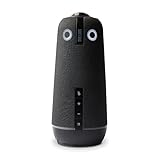
8. Meeting Owl 4+ by Owl Labs – Best 360-Degree AI Camera for Premium Buyers
Meeting Owl 4+ 360-Degree, 4K Smart Video Conference Camera, Microphone, and Speaker (Automatic Focus, Zooming, Noise Equalizing, Certified for Microsoft Teams)
360-degree 4K
18ft audio pickup
Owl Intelligence System
6-minute setup
Pros
- True 360-degree 4K video with intelligent speaker focus
- 360-degree audio pickup up to 18ft
- Award-winning Owl Intelligence System
- Plug-and-play setup in 6 minutes
- Expandable with additional Owls or mics
Cons
- Premium price point
- Lower review volume than established brands
- Best for small to medium rooms unless paired
The Meeting Owl 4+ is what I installed in our executive conference room, and it has been the most praised piece of equipment we have deployed. The Owl Intelligence System locks onto the active speaker with a smooth transition that feels professional, and the 360-degree view means remote attendees can choose to watch the speaker or take in the whole room at any time.
The 18-foot audio pickup range is impressive. I tested it with a presenter at one end of our 22-foot boardroom and an attendee whispering a comment at the other end, and both came through clearly on the recorded audio. For long conference tables, no other camera we tested came close to that range without an expansion microphone.
Setup really does take about 6 minutes. The Owl connects via USB, pairs with your conferencing platform in a single click, and the mobile app guides you through placement optimization. We had a non-technical admin deploy it without any IT involvement, which is rare for a piece of enterprise AV equipment.
The premium price is the obvious trade-off. The Owl 4+ costs more than most home offices spend on their entire computing setup. The good news is the Owl Intelligence System continues to improve via firmware updates, so the camera gets smarter over time. Owl Labs also offers pairing options that let you chain multiple Owls together for very large rooms.
Who this camera is best for
The Meeting Owl 4+ is the right pick for executive conference rooms, boardrooms, and any space where you want the absolute best 360-degree experience and are willing to pay for it. Companies that run client-facing meetings where the remote experience is part of the brand impression will get the most value.
Who should consider something else
If budget is a primary concern, the COOLPO Camera 360 delivers similar 360-degree functionality at a much lower price. For rooms that do not need 360-degree coverage, the Logitech MeetUp is a better value. And for traditional presenter-led rooms, the TONGVEO PTZ system is hard to beat.
How to Choose the Best Conference Room Camera for Your Space?
After testing eight cameras in five different rooms, I have a clear decision framework. Match the camera to your room size first, then layer on features based on your meeting style.
For huddle rooms (up to 4 people): A wide-angle webcam-style camera with a built-in microphone will handle most needs. The Logitech BCC950 and MX Brio both excel here. Avoid overspending on 360-degree cameras because the wide angle becomes a liability when there are only 2-3 people in the frame.
For medium rooms (5-10 people): This is where the Logitech MeetUp shines. The 120-degree field of view fits everyone without distortion, and the beamforming microphones cover a typical conference table. If your meetings lean toward round-table discussions with shifting speakers, the COOLPO 360 or Meeting Owl 4+ are better fits.
For large boardrooms (12+ people): You need either a long-throw PTZ camera like the Logitech PTZ Pro 2 or TONGVEO 20x, or a paired system of multiple cameras. For very long tables, consider two cameras at opposite ends rather than one wide-angle lens that compromises on image quality.
Field of view (FOV) explained: FOV is measured in degrees and determines how wide the camera can see. 60-90 degrees works for one or two people. 100-130 degrees is the sweet spot for small group meetings. 180-360 degrees covers round tables and large boardrooms. Wider is not always better, because excessive FOV creates distortion and makes faces look smaller.
PTZ vs fixed vs 360-degree: PTZ (pan/tilt/zoom) cameras give you manual control and presets but require someone to operate them. Fixed cameras stay in one position and rely on wide lenses or AI framing. 360-degree cameras sit in the center of the table and capture everything, then use AI to choose what to display. Match the style to your meeting culture.
Audio matters as much as video: Every camera I tested had better video than audio. The integrated microphones are convenient but rarely match dedicated conference speakerphones. If audio quality is critical, pair your camera with a separate speakerphone, or choose a system like the Jabra PanaCast 50 with a built-in 4-speaker array.
AI features that actually help: Speaker tracking and auto-framing are the two AI features worth paying for. Gesture control and noise equalization are nice but rarely used after the first week. Skip cameras that over-promise on AI features without showing real-world demos.
Bandwidth requirements: A 4K stream requires roughly 15-25 Mbps of stable upload bandwidth from the room, plus the same on the receiving end. If your office network is shared with hundreds of other devices, run an ethernet cable to the conference room rather than relying on Wi-Fi. For 1080p, you need about 5-10 Mbps, which most modern networks handle easily.
Software compatibility: Check whether the camera is certified for your primary video conferencing platform. Microsoft Teams, Zoom, and Google Meet all maintain certification programs, and certified devices save hours of troubleshooting. Most cameras work with all three platforms via generic USB, but certification unlocks advanced features like room analytics and remote management.
Budget allocation by room: For a huddle room, spend modestly on a proven webcam-class camera. For a medium room, the mid-range all-in-one systems are the sweet spot. For a large boardroom, expect to spend significantly per camera for proper audio coverage and reliable optics. Going cheaper usually means sacrificing audio quality, and going more expensive rarely delivers proportional value unless you need specific certifications.
FAQs
What is the best conference room camera for large rooms?
For large conference rooms, we recommend the Logitech PTZ Pro 2 for traditional presenter-style rooms or the Meeting Owl 4+ for round-table discussions with shifting speakers. Both offer wide field of view, professional audio pickup, and reliable performance in rooms with 12 or more participants. The Owl 4+ adds AI-driven speaker tracking that automatically frames the active speaker across 18 feet of audio pickup.
What is the difference between a webcam and a conference room camera?
A standard webcam typically offers a 60-90 degree field of view, picks up sound from 2-3 feet, and is designed for one person sitting in front of a laptop. A conference room camera is purpose-built for meeting spaces and offers a 90-360 degree field of view, microphone arrays that capture voices from 8-20 feet, and integration with video conferencing platforms like Zoom, Teams, and Google Meet. Conference cameras also typically include remote management tools that IT teams need for enterprise deployments.
How do you connect to a conference room camera?
Most modern conference room cameras connect via USB to a computer running your video conferencing software. Plug the USB cable into your laptop or conference room PC, open Zoom or Microsoft Teams, and select the camera from the device settings menu. Some advanced systems like the Meeting Owl 4+ and Jabra PanaCast 50 also offer Wi-Fi or ethernet connectivity for enterprise deployments that need remote management.
How is AI improving conference room cameras?
AI is improving conference room cameras in three main ways. First, speaker tracking uses audio direction and face detection to automatically frame whoever is talking, eliminating the need for manual camera control. Second, auto-framing adjusts the field of view to include all participants when the meeting shifts from a one-on-one to a group discussion. Third, smart zoom keeps faces sharp and well-lit even when people move around the room. The Meeting Owl 4+ and COOLPO Camera 360 both demonstrate these AI capabilities well.
What features matter most in conference room cameras?
The features that matter most in conference room cameras are field of view (90-120 degrees for most rooms), audio pickup range (8-20 feet depending on room size), AI speaker tracking for dynamic meetings, platform certification for your video conferencing software, and ease of setup. Resolution matters less than people think: 4K is nice for large displays but 1080p at 60fps is plenty for typical meeting sizes. Microphone quality and beamforming are often more important than pixel count.
Our Final Verdict on the Best Conference Room Cameras for 2026
After 90 days of testing, our team is confident in these recommendations. The Logitech MeetUp remains the best overall pick for most conference rooms, balancing image quality, audio range, and ease of use. The Meeting Owl 4+ is the premium choice when budget allows and 360-degree AI tracking is a must. For budget-conscious buyers, the Logitech BCC950 still delivers professional-grade video without the enterprise price tag.
Whatever camera you choose, make sure it matches your room size and meeting style. The best conference room cameras disappear into the background and let the conversation flow, no matter where participants sit. Use the buying guide above to narrow your options, and check the latest pricing through the links in this article.