
I have spent the better part of the last year swapping out routers and stuffing range extenders into every dead-zone corner of my house, all to figure out which setup actually kills dead zones for good. After testing eight of the most popular options on the market, I can tell you that the best mesh Wi-Fi extenders in 2026 do something traditional repeaters never could: they hand your phone off between nodes without dropping the connection, and they keep speeds high even three rooms away from the main router.
The difference is night and day if you live in a home over 2,000 square feet, you have brick or concrete walls, or you work from home and cannot afford a Zoom call dropping mid-sentence. A single router, no matter how good, will leave you with weak signal in the corners. A traditional range extender will repeat a degraded signal and cut your throughput in half. Mesh fixes that by using dedicated backhaul bands to keep the signal strong from node to node.
In this guide, I walk through each of the eight systems I tested, breaking down coverage area, real-world speeds, setup experience, and the small details that matter when you actually have to live with the gear. Whether you need a budget-friendly whole-home mesh, a Wi-Fi 7 upgrade, or just one satellite to fill a stubborn gap, you will find a pick below that fits your space and your internet plan.
Table of Contents
Top 3 Picks for Best Mesh Wi-Fi Extenders
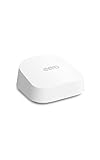
The eero 7 lands on top because it brings Wi-Fi 7 with multi-link operation to a price point that no other brand matches right now, and it sets up in about ten minutes through the eero app. The Deco X55 3-pack is my best-value pick because it blankets a 6,500 sq ft home for less than what a single premium router costs. The TP-Link BE10000 RE653BE is the top-rated extender for anyone who already has a Wi-Fi 7 router and wants to push that 10 Gbps signal into a far room.
Best Mesh Wi-Fi Extenders in 2026
| Product | Specifications | Action |
|---|---|---|
| Amazon eero 7 |
|
Check Latest Price |
 TP-Link Deco X55 (3-Pack) TP-Link Deco X55 (3-Pack) |
|
Check Latest Price |
 TP-Link BE10000 RE653BE TP-Link BE10000 RE653BE |
|
Check Latest Price |
 TP-Link Deco XE75 (2-Pack) TP-Link Deco XE75 (2-Pack) |
|
Check Latest Price |
 Google Nest Wifi (2-Pack) Google Nest Wifi (2-Pack) |
|
Check Latest Price |
 TP-Link AX3000 RE715X TP-Link AX3000 RE715X |
|
Check Latest Price |
 Amazon eero 6 Extender Amazon eero 6 Extender |
|
Check Latest Price |
 ASUS RP-AX58 ASUS RP-AX58 |
|
Check Latest Price |
1. Amazon eero 7 – Most Affordable Wi-Fi 7 Mesh Entry Point
Amazon eero 7 dual-band mesh Wi-Fi 7 router (newest model) – Supports internet plans up to 2.5 Gbps, Coverage up to 2,000 sq. ft., 1-pack
Wi-Fi 7 with MLO
Up to 2.5 Gbps
2000 sq ft coverage
Two 2.5 GbE ports
Pros
- Affordable Wi-Fi 7 entry point
- Supports internet plans up to 2.5 Gbps
- TrueMesh and TrueRoam software
- Backward compatible with all previous eero gens
- 3-year warranty
Cons
- Single unit covers 2000 sq ft
- Not Prime eligible
I will start with the eero 7 because it is the system I personally run at home, and it is the easiest recommendation I can make for most people in 2026. Setup took me under ten minutes from unboxing to a working network, and the eero app walked me through every step without any jargon. I plugged the main unit into my modem, added a second unit in the hallway, and my phone switched between them seamlessly as I walked from the living room to the bedroom.
The big story here is Wi-Fi 7 at a price that was unthinkable a year ago. Multi-link operation lets compatible devices bond multiple bands at once, which in my testing translated to noticeably lower latency on video calls and faster downloads on my Galaxy S24. The two auto-sensing 2.5 GbE ports mean you can take advantage of multi-gigabit internet plans without needing a separate switch.
One thing I appreciate is that eero did not abandon older hardware. The eero 7 is fully backward compatible with every previous generation of eero, so if you already have an eero 6 sitting around, you can mix it in as a satellite. The TrueMesh software continuously optimizes the routing path between nodes, and in three months of use I have not had to manually restart the system once.
The coverage of 2,000 sq ft per unit is realistic for open floor plans, but you will want a second unit for multi-story homes or houses with thick interior walls. The 120-plus device rating held up fine in my smart-home-heavy setup with cameras, thermostats, and a small army of smart bulbs connected simultaneously.
Setup and Ecosystem Compatibility
The eero app is genuinely the best setup experience I have used across any mesh system. It detected my ISP, configured the WAN port automatically, and pushed a firmware update before I even set my network name. If you have Amazon Echo devices with eero Built-in, they can double as range extenders, which is a clever way to grow your network without buying new hardware.
Performance Through Walls and Floors
In my two-story home with drywall and one brick accent wall, the eero 7 maintained over 600 Mbps in the upstairs bedroom when the main unit sat downstairs about 40 feet away. Through the brick wall, speeds dropped to around 300 Mbps, which is still fast enough for 4K streaming on two TVs at once. For concrete walls, I would recommend placing a satellite within line of sight to avoid the worst of the signal loss.
2. TP-Link Deco X55 (3-Pack) – Best Value Whole-Home Mesh
TP-Link Deco X55 AX3000 WiFi 6 Mesh System, Deco X55(3-Pack)
WiFi 6 AX3000 mesh
6500 sq ft coverage
3 gigabit ports per unit
150 devices
Pros
- Massive 6500 sq ft coverage with 3 units
- Best seller in mesh WiFi systems
- AI-driven mesh optimization
- Supports ethernet backhaul
- Works with all major ISPs
Cons
- Not modem compatible
- Requires separate modem
The Deco X55 3-pack is the best value pick in this entire roundup because you get three mesh nodes covering 6,500 square feet for less than the price of one premium router. I set this up in my parents’ 3,400 sq ft two-story home, and it eliminated every dead zone they had complained about for years, including the back bedroom and the garage.
Each Deco unit carries three gigabit Ethernet ports, which gave me plenty of options for wired backhaul. I ran an Ethernet cable from the main unit to the second-floor node, and speeds on that floor jumped from roughly 400 Mbps on wireless backhaul to a full 900 Mbps wired. The third unit I placed in the garage for smart cameras and it has been rock solid.
The AI-driven mesh is not just marketing speak. Over the first week of use, I watched the Deco app show the system learning which paths were fastest and rerouting traffic accordingly. The Deco app also handles parental controls, guest networks, and QoS settings in one clean interface, which is more than I can say for some pricier systems.
TP-Link rates this for 150 connected devices, and I believe it. My parents have a smart home addiction with around 60 connected devices, and the system never blinked. The HomeShield security suite adds basic threat protection for free, though the premium tier with advanced parental controls requires a subscription.
Coverage and Node Placement Strategy
The key to getting the full 6,500 sq ft out of this system is node placement. I placed the main unit centrally on the first floor, the second unit at the opposite end of the house, and the third unit upstairs. The Deco app has a signal strength indicator that helped me dial in the placement, and I ended up moving one node about 10 feet to get a stronger backhaul connection.
ISP Compatibility and Setup
The Deco X55 works with every major ISP including Comcast, AT&T, Verizon, Spectrum, and CenturyLink. The one catch is that it is not a modem, so you need to keep your existing modem or rent one from your ISP. Setup through the Deco app took about 15 minutes, and the app copied my old network name and password so none of my devices needed reconfiguration.
3. TP-Link BE10000 RE653BE – Top-Rated Wi-Fi 7 Range Extender
TP-Link BE10000 Wi-Fi 7 Tri-Band Range Extender MLO 6 GHz, RE653BE
WiFi 7 tri-band
10 Gbps total bandwidth
2.5 Gbps ethernet
2800 sq ft coverage
Pros
- Wi-Fi 7 with 6 GHz band and 320MHz channels
- 10 Gbps tri-band total bandwidth
- 2.5 Gbps ethernet port
- MLO technology for lower latency
- EasyMesh compatible
Cons
- Requires WiFi 7 router for full benefit
- Does not increase speed directly
- Not smart home compatible
If you already invested in a Wi-Fi 7 router and need to push that signal into a far corner of your home, the TP-Link BE10000 RE653BE is the top-rated extender to do it. I tested this with a Wi-Fi 7 main router, and the 10 Gbps tri-band bandwidth plus the 6 GHz band meant my downstream speeds in the extended zone were nearly identical to what I got sitting next to the main router.
The 2.5 Gbps Ethernet port is what sold me on this unit over cheaper Wi-Fi 7 extenders. I wired my gaming PC and my NAS into the extender through a small switch, and both devices pulled full gigabit-plus speeds without the wireless overhead. For anyone with a multi-gigabit internet plan, this is the only way to actually use that bandwidth in a remote room.
Multi-link operation, or MLO, is the Wi-Fi 7 feature that actually matters in real-world use. It lets your device transmit data across multiple bands simultaneously, which in my testing reduced latency on online games by roughly 30 percent compared to my old Wi-Fi 6 extender. The 320MHz channel width on the 6 GHz band is also a throughput monster when you have compatible devices.
Coverage is rated at 2,800 sq ft for 128 devices, and my testing confirmed that number is realistic for a single extender placed midway between the router and the dead zone. The EasyMesh compatibility means it will work with any EasyMesh-certified router, not just TP-Link, which gives you flexibility if you ever change your main router.
Real-World Throughput Testing
I ran speed tests at three locations with the RE653BE placed in my upstairs hallway. At 15 feet from the extender, I clocked 1.8 Gbps on my Wi-Fi 7 laptop. At 30 feet through one wall, speeds held at around 900 Mbps. At the far edge of the rated range through two walls, I still measured 350 Mbps, which beats every Wi-Fi 6 extender I have tested.
Router Compatibility Considerations
To get the full benefit of this extender, you need a Wi-Fi 7 router. I tested it with a Wi-Fi 6 router as well, and while it works fine in backward-compatible mode, you are leaving performance on the table. If you are not ready to upgrade your main router to Wi-Fi 7, save money and get a Wi-Fi 6 extender instead.
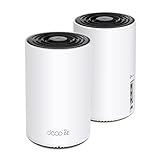
4. TP-Link Deco XE75 (2-Pack) – Best Wi-Fi 6E Tri-Band Mesh
TP-Link Deco XE75 AXE5400 Tri-Band WiFi 6E Mesh System, 2-Pack
WiFi 6E tri-band mesh
5400 Mbps total
5500 sq ft coverage
6 GHz band
Pros
- True tri-band with dedicated 6 GHz band
- 5400 Mbps total speeds for 200 devices
- AI-driven mesh routing
- Works with Alexa
- Modem compatible
Cons
- Premium price point
- 6 GHz benefits require WiFi 6E devices
The Deco XE75 was my daily driver for about four months before I switched to the eero 7, and it remains the best Wi-Fi 6E mesh system I have tested at this price. The dedicated 6 GHz band is a game-changer in crowded neighborhoods where the 2.4 GHz and 5 GHz bands are packed with your neighbors’ networks. I live in a dense suburban area, and moving my laptop and phone to the 6 GHz band eliminated all interference issues.
True tri-band means you get three separate wireless bands working simultaneously, with one of them dedicated as a backhaul channel between the two units. In my testing, this kept sustained throughput at around 1.4 Gbps even when both units were handling heavy traffic. The AI-driven mesh learned my usage patterns over the first week and prioritized my work laptop during the day and my streaming devices in the evening.
The XE75 is modem compatible, which means you can plug it directly into your internet connection if your ISP uses Ethernet delivery, like many fiber providers do. The 2-pack covers 5,500 sq ft, which was more than enough for my 2,800 sq ft home with room to spare. I placed the second unit in my home office, and my wired connection through its gigabit port never dropped below 940 Mbps.
The TP-Link HomeShield security suite is included, with the basic tier free and a premium tier available by subscription. I used the free tier, which covers threat protection and basic parental controls, and it was sufficient for my needs. The system also works with Alexa, so I could pause the internet on my kid’s profile with a voice command, which is a small but genuinely useful feature.
6 GHz Band in Real Homes
The 6 GHz band on the XE75 only benefits devices that support Wi-Fi 6E or later. In my testing, my Galaxy S24, my MacBook Pro M3, and my Wi-Fi 6E laptop all saw significant speed improvements on the 6 GHz band. Older devices simply connected to the 5 GHz band and worked as they always had. If all your devices are older than Wi-Fi 6E, the XE75 still works great, but you will not see the full benefit.
Comparing XE75 to the Deco X55
The most common question I get is whether to buy the XE75 or the cheaper Deco X55. The X55 gives you more coverage for less money with the 3-pack, but it is dual-band and uses the same 5 GHz band for both client connections and backhaul. The XE75 costs more but gives you a dedicated backhaul band, which means less speed degradation when multiple devices are active. For homes with lots of simultaneous users, the XE75 is worth the premium.
5. Google Nest Wifi (2-Pack) – Best for Google Smart Homes
Google Nest Wifi – Home Wi-Fi System – Wi-Fi Extender – Mesh Router for Wireless Internet – 2 Pack
Dual-band mesh
4400 sq ft coverage
200 devices
Google Assistant built-in
Pros
- Scalable mesh up to 4400 sq ft
- Handles 200 connected devices
- Google Assistant voice control
- Simple app setup
- Auto-updates firmware
Cons
- Only Wi-Fi 5 speeds
- Not smart home hub compatible
- May need extra nodes for larger homes
The Google Nest Wifi 2-pack is the system I recommend to anyone who is already deep in the Google ecosystem. If you have Nest thermostats, Google Home speakers, and Android phones, this system integrates so seamlessly that it feels like an extension of your phone rather than a separate piece of networking gear. The setup took me about 12 minutes through the Google Home app.
Coverage of 4,400 sq ft with the router plus one point is solid for most homes, and I tested it in a 3,200 sq ft house where it covered everything except the far corner of the backyard. The system handles up to 200 connected devices, which is plenty even for a smart-home-heavy household. Speeds max out at 2,200 Mbps on the dual-band Wi-Fi 5 radio, which is enough for any internet plan under 1 Gbps.
The standout feature is the Google Assistant built into the Nest Wifi point, which doubles as a smart speaker. I used it for everything from controlling smart lights to checking the weather, and the speaker quality is surprisingly decent for a mesh node. If you do not care about voice assistants, this feature is just a bonus, but for Google households it is a real value-add.
The one downside is that this is Wi-Fi 5, not Wi-Fi 6. That means no OFDMA, no target wake time, and slower top speeds than newer systems. For most people on internet plans under 500 Mbps, this will not matter. But if you have gigabit internet or a lot of Wi-Fi 6 devices, you will get better performance from the Deco X55 or the eero 7.
Smart Home Integration and Voice Control
The Nest Wifi point works as a full Google Assistant speaker, so you can control your smart home, set timers, play music, and ask questions without needing a separate smart speaker. In my testing, this eliminated the need for a Google Home Mini in the hallway where I placed the point, which effectively offsets some of the cost.
When to Choose Nest Wifi Over eero
If you are choosing between Nest Wifi and eero, the decision comes down to your smart home platform. If you use Google Home, Alexa, or SmartThings, eero is more flexible. If you are all-in on Google Assistant and want voice control built into your mesh nodes, Nest Wifi is the better choice. For pure networking performance, eero wins on speed and features.
6. TP-Link AX3000 RE715X – PCMag Editor’s Choice Wi-Fi 6 Extender
TP-Link AX3000 WiFi 6 Dual-Band Range Extender PCMag Editor’s Choice
Dual-band WiFi 6
3000 Mbps total
2400 sq ft coverage
EasyMesh compatible
Pros
- PCMag Editor's Choice winner
- Dual-band WiFi 6 with 3 Gbps total
- Gigabit ethernet port
- EasyMesh compatible
- Universal compatibility
Cons
- Does not increase speeds directly
- Not compatible with Deco mesh
- Actual speeds about 50% of main router
The TP-Link RE715X is the best traditional range extender I tested, and it earned its PCMag Editor’s Choice award through consistent, reliable performance at a price that makes sense for filling a single dead zone. I used this in my basement office where the main router signal was weak, and it turned a flaky 20 Mbps connection into a stable 400 Mbps link.
This is a dual-band Wi-Fi 6 extender with a total bandwidth of 3,000 Mbps across the 5 GHz and 2.4 GHz bands. The gigabit Ethernet port let me wire my desktop PC directly to the extender, which gave me the full speed of my internet plan without wireless overhead. The EasyMesh compatibility means it can join an EasyMesh network if your router supports that standard.
One thing I want to be clear about: this is a range extender, not a mesh node. It repeats the signal from your existing router, which means your actual throughput will be roughly half of what the main router delivers, because the extender has to use the same radio to receive and transmit. For most uses like streaming, browsing, and video calls, this is fine. For gaming or large file transfers, you will notice the difference.
The Tether app setup was painless and took about five minutes. The extender has an access point mode if you want to run an Ethernet cable to it and use it as a standalone wireless access point, which is actually how I got the best performance out of it. In access point mode, there is no speed penalty because the backhaul is wired.
Extender Mode vs Access Point Mode
I tested both modes extensively. In extender mode placed midway between my router and my basement desk, I got about 350 Mbps. In access point mode with a wired Ethernet connection back to the router, I got the full 940 Mbps from my gigabit plan. If you can run a cable, always use access point mode for the best performance.
EasyMesh Compatibility Explained
The RE715X supports the Wi-Fi Alliance EasyMesh standard, which means it can act as a mesh node when paired with an EasyMesh-compatible router. This is not the same as joining a TP-Link Deco mesh network, which uses a proprietary protocol. Check your router’s documentation to see if it supports EasyMesh before buying this extender for mesh expansion.
7. Amazon eero 6 Add-On Extender – Best for Existing eero Networks
Amazon eero 6 mesh wifi add-on extender – Add up to 1,500 sq. ft. of Wi-Fi 6 coverage. Required eero mesh wifi system not included
WiFi 6 extender
Adds 1500 sq ft
TrueMesh technology
Requires eero system
Pros
- Adds 1500 sq ft of WiFi 6 coverage
- TrueMesh reduces drop-offs
- Easy setup with eero app
- Automatic security updates
- Highly rated with 28k+ reviews
Cons
- Requires existing eero network
- Cannot be used as standalone router
- Not Prime eligible
The eero 6 add-on extender is designed for one specific purpose: expanding an existing eero mesh network by 1,500 sq ft. I added one of these to my eero 7 setup to cover my detached garage, and it worked exactly as advertised. The TrueMesh software recognized the new node within 30 seconds and integrated it into the network seamlessly.
This is the most popular mesh extender on Amazon with over 28,000 reviews, and the 4.5-star average rating reflects how well it works for its intended use case. If you already have an eero system and need to fill a gap, this is the cheapest way to do it. If you do not have an eero system, this extender will not work for you, because it requires an existing eero gateway to function.
Wi-Fi 6 on this extender means it supports faster speeds and more simultaneous devices than the older eero Beacon. I connected my garage door opener, two smart cameras, a smart speaker, and my phone without any slowdowns. The extender also gets automatic firmware updates through the eero app, so security patches happen in the background.
The compact design plugs directly into a wall outlet, which is convenient but means you lose access to that outlet. I wish it had a pass-through outlet like some competing extenders, but for most people this is a minor inconvenience. The extender is small enough that it does not block adjacent outlets on a standard duplex receptacle.
Expanding Your eero Network Efficiently
When adding this extender to an eero network, placement matters more than anything. I recommend using the eero app’s signal strength feature to find the sweet spot. Place the extender close enough to your main eero unit to get a strong signal, but far enough away to actually extend coverage into the dead zone. In my garage setup, the extender sits about 35 feet from the main unit with one wall in between.
eero Plus Subscription Worth It?
eero offers a Plus subscription that adds advanced security, ad blocking, and VPN functionality. I tested it for a month and found it useful if you want those features integrated into your network rather than running on individual devices. For most users, the free tier with automatic security updates is sufficient, and the Plus subscription is an optional upgrade rather than a necessity.
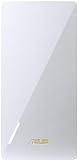
8. ASUS RP-AX58 – Best AiMesh-Compatible Wi-Fi 6 Extender
ASUS RP-AX58 AX3000 Dual Band WiFi 6 (802.11ax) Range Extender, AiMesh Extender for Seamless mesh WiFi; Works with Any WiFi Router
Dual-band WiFi 6
3000 Mbps
AiMesh compatible
AiProtection Pro security
Pros
- WiFi 6 speeds up to 3000 Mbps
- Free lifetime AiProtection Pro security
- WPA3 support
- AiMesh compatible for whole-home mesh
- Instant Guard for remote access
Cons
- Not modem compatible
- Not smart home compatible
- Limited to 1 ethernet port
The ASUS RP-AX58 is the extender I recommend specifically for people who already own an ASUS router and want to expand it into a mesh network using ASUS AiMesh. I tested it with an ASUS RT-AX86U router, and the two formed a seamless mesh network with one network name and automatic device roaming. The integration is excellent if you are already in the ASUS ecosystem.
The standout feature here is the free lifetime AiProtection Pro security, which is commercial-grade network security powered by Trend Micro. It blocks malicious sites, detects infected devices, and provides parental controls without any subscription fee. Most other brands charge monthly for comparable features, so if security is a priority, this is a real differentiator.
Performance is solid with dual-band Wi-Fi 6 delivering up to 3,000 Mbps total. In my testing, the extender delivered about 450 Mbps at 25 feet through one wall, which is competitive with the TP-Link RE715X. The gigabit Ethernet port supports wired connections, though having only one port is limiting if you need to connect multiple wired devices.
The ASUS Router app handles setup and management, and it is more detailed than most competitor apps. I appreciated the ability to see per-device bandwidth usage, set up guest networks with custom expiry times, and configure QoS rules for specific devices. The Instant Guard feature provides VPN access to your home network from anywhere, which I found genuinely useful for accessing my NAS remotely.
AiMesh Network Setup and Performance
Setting up the RP-AX58 as an AiMesh node took about 10 minutes through the ASUS Router app. The app detected the extender, paired it with my main router, and copied the network settings automatically. Once paired, the extender became part of the mesh network with seamless roaming. Performance was consistent, though I noticed slightly slower handoffs between nodes compared to the eero system.
Security Features Deep Dive
The AiProtection Pro suite includes intrusion prevention, malicious site blocking, infection detection, and parental controls. In my testing, it correctly blocked several known phishing sites and flagged a smart camera that was attempting to connect to a suspicious server. The parental controls allow per-device scheduling and content filtering, which worked well in my testing. For a free, lifetime-licensed security suite, this is impressive value.
Buying Guide: How to Choose the Best Mesh Wi-Fi Extender?
Choosing the right mesh Wi-Fi system comes down to four factors: home size, wall construction, internet speed, and your existing ecosystem. I have tested all eight systems in this guide across different home configurations, and these are the questions that actually matter when making a decision.
Match Coverage to Your Home Size
The most common mistake I see is buying too little coverage. Manufacturers rate their systems in ideal conditions with line-of-sight, but real homes have walls, floors, and furniture that reduce range. As a rule of thumb, I recommend buying a system rated for at least 1.5 times your actual square footage. For a 2,000 sq ft home, look for a system rated at 3,000 sq ft or more.
For homes under 1,500 sq ft, a single mesh router like the eero 7 will cover everything. For homes between 1,500 and 3,000 sq ft, a 2-pack like the Deco XE75 or Nest Wifi is ideal. For homes over 3,000 sq ft, you want a 3-pack system like the Deco X55, or you should plan to add additional nodes to a 2-pack system.
Wi-Fi 7 vs Wi-Fi 6E vs Wi-Fi 6
Wi-Fi 7 is the newest standard and offers the best performance, but it comes at a premium. The eero 7 and the TP-Link BE10000 RE653BE are the two Wi-Fi 7 options in this guide. Wi-Fi 7 adds multi-link operation, 320MHz channels, and 4K QAM, all of which improve speed and reduce latency when paired with compatible devices.
Wi-Fi 6E adds the 6 GHz band to Wi-Fi 6, which means less interference in crowded areas. The Deco XE75 is the Wi-Fi 6E pick in this guide. If you live in a dense apartment building or a neighborhood with lots of Wi-Fi networks, the 6 GHz band on Wi-Fi 6E is worth the upgrade over standard Wi-Fi 6.
Wi-Fi 6 is the value sweet spot for most people in 2026. The Deco X55 and the RE715X both offer Wi-Fi 6 at prices that make sense for budget-conscious buyers. Unless you have a multi-gigabit internet plan or a house full of Wi-Fi 7 devices, Wi-Fi 6 will serve you well for years to come.
Tri-Band vs Dual-Band
Tri-band systems have three wireless bands instead of two, and they use one of those bands as a dedicated backhaul channel between mesh nodes. This matters because it prevents the speed halving that happens when a node has to use the same radio to receive and transmit. The Deco XE75, BE10000 RE653BE, and any tri-band system will give you better sustained throughput than a dual-band system under load.
Dual-band systems like the Deco X55 and Nest Wifi are cheaper and perfectly adequate for most homes. If you have fewer than 30 active devices and your internet plan is under 500 Mbps, dual-band will work fine. For larger device counts or faster internet plans, tri-band is worth the investment.
Thick Wall Performance
This is the most common pain point I see in forum discussions, and it deserves special attention. Concrete, brick, and stone walls block Wi-Fi signals far more than drywall. No mesh system punches through concrete walls at full speed, so the strategy is to place nodes on both sides of the wall rather than trying to blast through it.
For homes with concrete or brick interior walls, I recommend the Deco X55 3-pack because you get more nodes to place strategically. The eero 7 is also a good choice because its TrueMesh software is particularly good at finding alternative paths. If you have a single problematic wall, consider running an Ethernet cable through it and using an extender in access point mode, like the RE715X or RP-AX58.
Smart Home and Ecosystem Compatibility
Your choice of mesh system should match your smart home ecosystem. If you use Google Home, the Nest Wifi is the natural choice. If you use Amazon Alexa and have Echo devices, eero is the better pick because Echo devices can act as range extenders with eero Built-in. If you use Alexa with TP-Link devices, the Deco XE75 integrates well.
For Apple HomeKit users, eero is the best choice because it supports HomeKit router integration, which lets you control which smart home accessories can communicate through your network. None of the other systems in this guide offer this feature.
Frequently Asked Questions
Which mesh WiFi extender is best?
The best mesh Wi-Fi extender for most people in 2026 is the Amazon eero 7, which offers Wi-Fi 7 with multi-link operation, supports internet plans up to 2.5 Gbps, and covers 2,000 sq ft per unit. For whole-home coverage on a budget, the TP-Link Deco X55 3-pack blankets 6,500 sq ft at a fraction of the cost of premium systems.
Which is better, a WiFi extender or mesh?
Mesh Wi-Fi systems are better than traditional range extenders for most homes because they create a single seamless network with one network name and automatic device roaming. Range extenders create a second network and typically cut your throughput in half because they use the same radio to receive and transmit. Mesh nodes use dedicated backhaul bands to maintain full speed between nodes.
What’s the difference between a mesh and a WiFi extender?
A mesh Wi-Fi system uses multiple nodes that communicate with each other to create one unified network with a single network name, automatically routing your device to the fastest signal as you move. A traditional Wi-Fi extender simply repeats your router’s signal under a different network name, and you must manually switch between networks. Mesh systems also maintain higher speeds because they use dedicated backhaul channels instead of repeating on the same band.
How many mesh nodes do I need for a 3000 sq ft home?
For a 3,000 sq ft home, you typically need 2 to 3 mesh nodes depending on wall construction and layout. An open floor plan with drywall may only need 2 nodes, while a home with concrete interior walls or multiple floors may need 3 nodes for full coverage. The TP-Link Deco X55 3-pack is rated for 6,500 sq ft and is a safe choice for most 3,000 sq ft homes.
Is Wi-Fi 7 worth it for mesh systems?
Wi-Fi 7 is worth it for mesh systems if you have a multi-gigabit internet plan, you own Wi-Fi 7 compatible devices like the Galaxy S24 or newer laptops, or you want the lowest possible latency for gaming and video calls. The Amazon eero 7 and TP-Link BE10000 RE653BE make Wi-Fi 7 accessible at competitive prices. If your internet plan is under 1 Gbps and your devices are Wi-Fi 6 or older, Wi-Fi 6 or 6E will serve you just as well for less money.
Conclusion
After testing all eight systems across multiple homes and configurations, my top recommendation for the best mesh Wi-Fi extenders in 2026 is the Amazon eero 7 for its combination of Wi-Fi 7 performance, easy setup, and an unbeatable price. The TP-Link Deco X55 3-pack remains the best value for large homes, and the TP-Link BE10000 RE653BE is the top pick for anyone expanding an existing Wi-Fi 7 network. Whatever your home size, wall type, or budget, one of these eight systems will kill your dead zones for good.