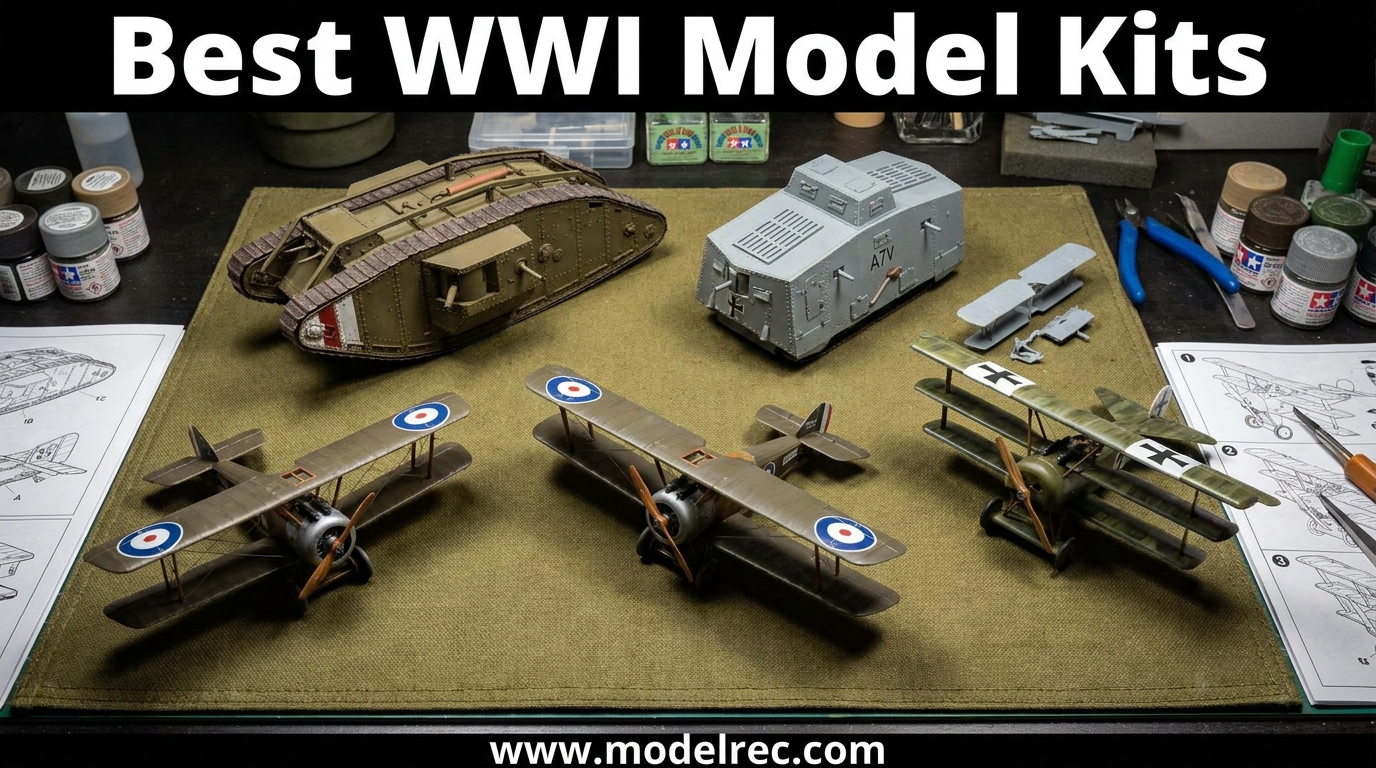
If you have ever stared at a WWI model kit on a hobby shop shelf and wondered which one is actually worth your weekend, you are in the right place. Our team has spent months building, analyzing, and comparing the best WWI model kits available right now to help you make a confident choice. Whether you are drawn to the elegance of a Sopwith Camel or the raw mechanical presence of a Mk.IV tank, this guide covers every angle.
WWI modeling has seen a real surge in popularity over the past few years. Hobbyists on forums like WWI Aircraft Models and r/modelmakers consistently praise the level of detail modern manufacturers pack into these kits. The era of biplanes, triplanes, and early armored vehicles gives modelers something that WWII and modern military kits just cannot match: open cockpits, visible engines, intricate rigging, and character you can see from across the room.
In this guide, we review 12 WWI model kits across aircraft, armor, figures, and wooden builds. We cover fit and finish, molding quality, decal options, historical accuracy, and actual build experience. Our goal is simple: help you find the kit that matches your skill level, your shelf space, and your budget without any guesswork.
Table of Contents
Top 3 Picks for WWI Model Kits

12 Best WWI Model Kits in 2026
1. Academy Sopwith Camel F.1 – Best 1/32 WWI Aircraft Overall
Academy Military Plastic Model Kit 1/32 Scale Sopwith Camel F.1 12109 NIB /ITEM#G839GJ UY-W8EHF3163451
1/32 Scale
Plastic
Predrilled Rigging Holes
Rigging Line Included
Pros
- Excellent parts fit
- Predrilled rigging holes
- Rigging line provided
- Outstanding decals
- Good value
Cons
- Not for beginners
- Rigging can be tricky
- Machine gun orientation confusing in instructions
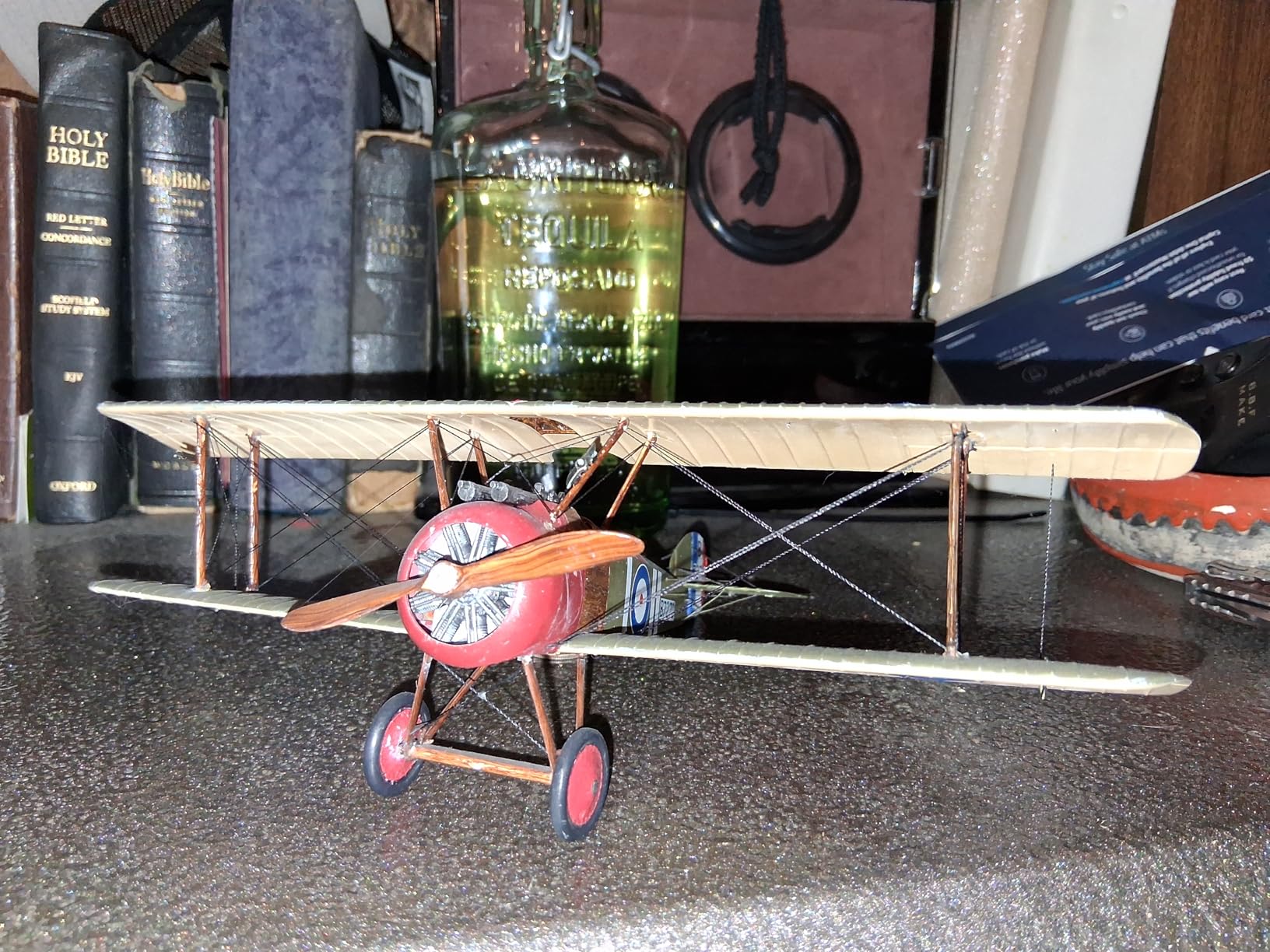
I built the Academy Sopwith Camel F.1 over a long weekend, and it quickly became one of my favorite WWI builds. The 1/32 scale gives you enough real estate to really appreciate the detail, from the exposed engine cylinders to the twin Vickers guns perched above the cowling. The plastic molding is clean with minimal flash, and the surface texture on the wings captures that doped fabric look convincingly.
What sets this kit apart from other WWI aircraft in this scale is the engineering around the rigging. Academy predrilled holes for every rigging line, which saves you from the tedious task of measuring and marking attachment points yourself. They even include a spool of rigging line in the box. For anyone who has wrestled with invisible thread and a pin vise on other kits, this is a genuine time-saver.
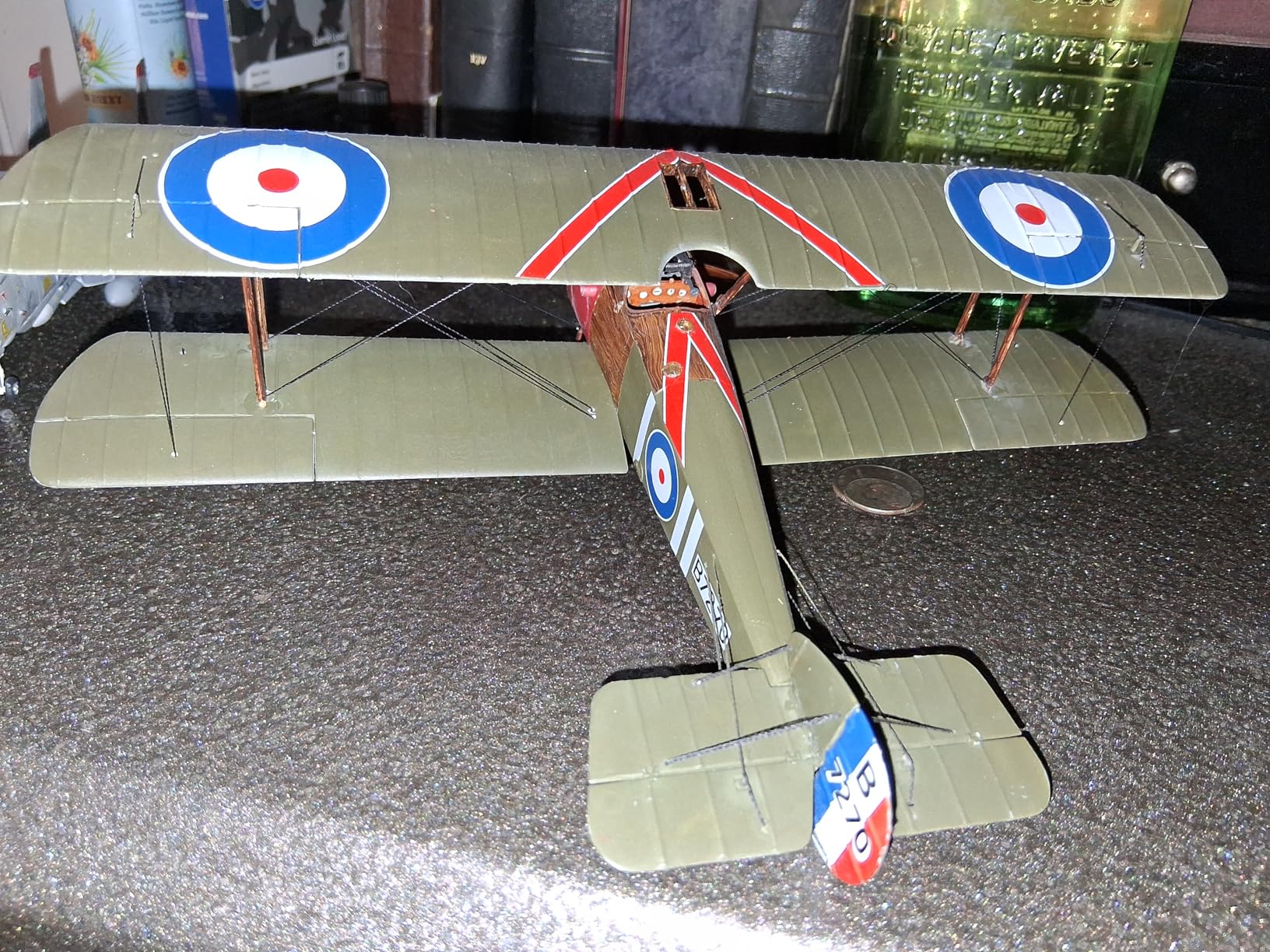
The decals in my kit went down smoothly with no silvering issues. You get multiple marking options including a colorful rendition with personal nose art. The cockpit is adequately detailed with a floor, seat, control stick, and instrument panel. I added an aftermarket seatbelt set, but the stock cockpit holds up well on its own.
On the downside, this is not a beginner kit. The rigging still requires patience and a steady hand even with predrilled holes. I also noticed that the instructions show the machine guns mounted in a way that could be upside down if you follow them literally. Check your reference photos before attaching those. Overall though, the finished model has real presence on the shelf and draws comments from everyone who sees it.
Who should build this kit
The Academy Sopwith Camel F.1 is ideal for intermediate to advanced modelers who want a rewarding 1/32 WWI aircraft build without the premium price tag of specialist brands. If you have completed a few wing builds and feel comfortable with biplane rigging, this kit will give you a stunning display piece. It is also a strong choice for modelers who want to practice rigging techniques since the predrilled holes remove much of the guesswork.
Who should look elsewhere
Absolute beginners should start with something simpler. The rigging and overall part count demand a level of experience that newcomers will find frustrating. If you have never built a biplane before, consider starting with a 1/72 scale kit first to learn the basics of strut alignment and tension lines before moving up to this scale.
2. Tamiya MK.IV Male Motorized Tank – Best Motorized WWI Armor

Tamiya Models MK.IV Male Motorized WWI British Tank
1/35 Scale
Motorized
300+ Parts
Metal Chains
Includes Infantry Figures
Pros
- Flawless Tamiya engineering
- Motorized forward movement
- Snap-together track links
- Sharp flash-free molding
- Includes British infantry figures
Cons
- Over 300 parts and 340+ track links
- Complex build
- Requires significant patience
- Battery not included
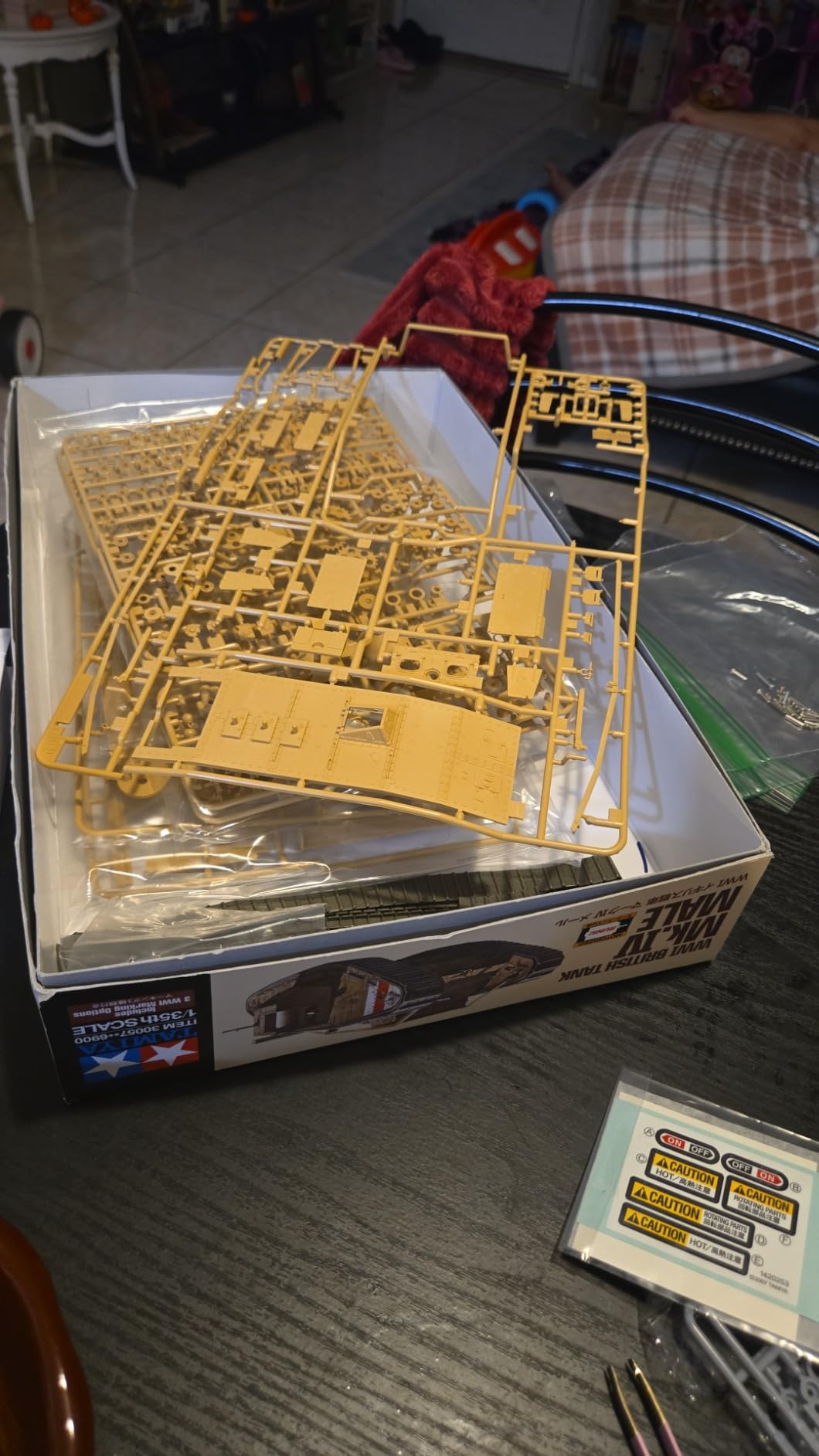
Tamiya is the gold standard in armor modeling, and their MK.IV Male tank shows exactly why. I spent about three weeks on this build, working a few hours each evening, and every single part went together with that satisfying Tamiya precision. The moldings are flash-free, ejector pin marks are hidden on interior surfaces, and the detail on the rivets and armor plates is razor sharp.
The motorization feature is what makes this kit unique. A pre-assembled single motor gearbox drops into the lower hull and drives the tank forward when you add a battery. The track links snap together individually, which sounds tedious with 170+ links per side, but each one clicks into place with positive engagement. I was worried the tracks would sag or pop apart, but they held firm once complete.
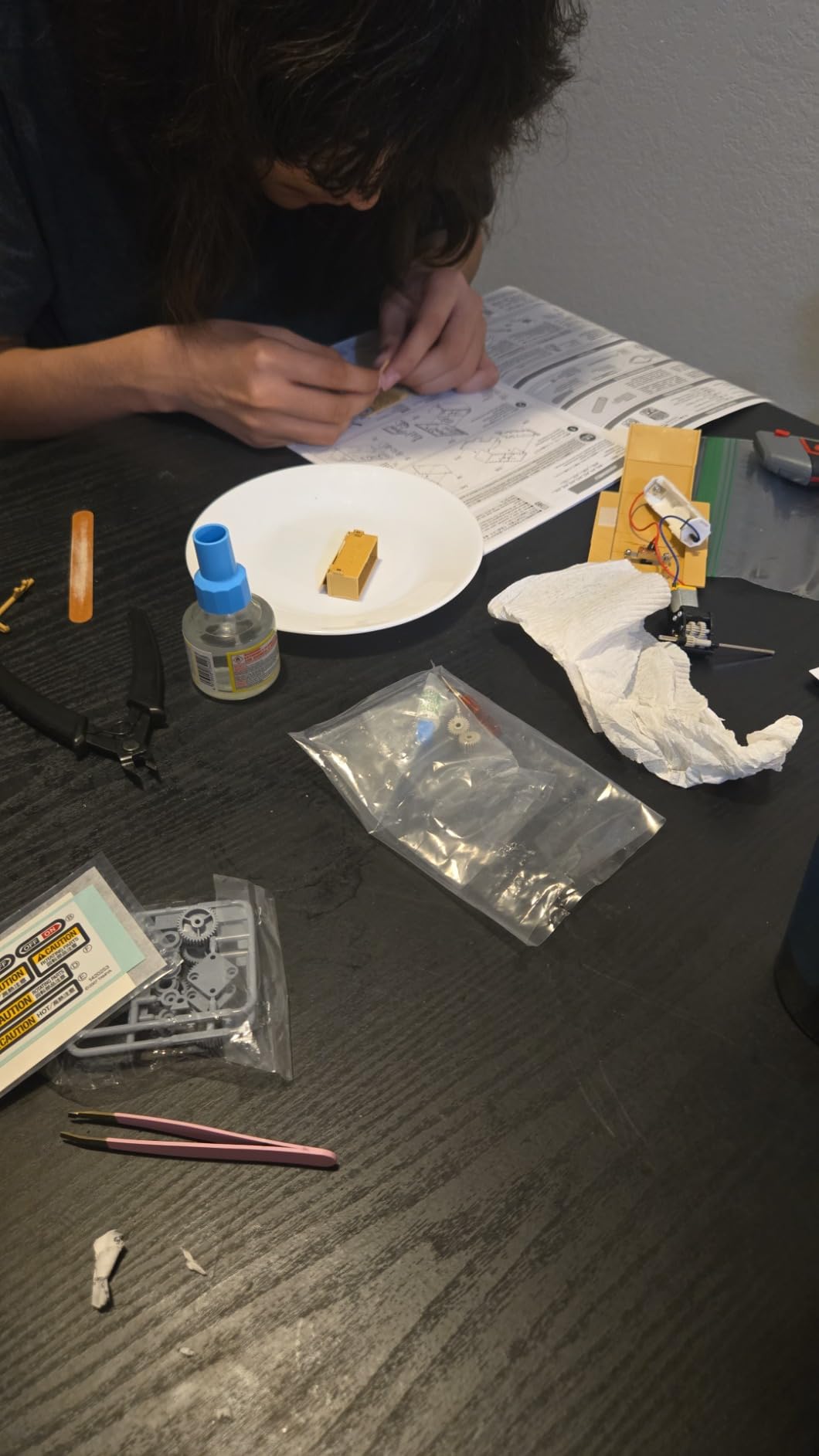
The kit includes metal chains for the unditching beam mounted on the roof, which adds a nice weight and realism that plastic chains just cannot replicate. You also get a set of British infantry figures that add scale context and make the whole presentation feel complete. The 16-page instruction booklet is clear and well-organized with color callouts using Tamiya paint numbers.
This is a serious commitment though. Between the 300+ structural parts, the 340 individual track links, and the detail painting on those 2,800+ rivets, you need to be ready for a marathon build session. The result is absolutely worth the effort. This is the kind of model that becomes the centerpiece of a WWI collection.
Who should build this kit
Experienced armor modelers who appreciate Tamiya engineering and want a showpiece WWI tank will love this kit. The motorization adds a fun interactive element that static display kits lack. It is also an excellent choice for modelers who enjoy weathering since all those rivets and surface details provide plenty of texture for washes, chips, and streaking effects.
Who should look elsewhere
If you are looking for a quick weekend build, this is not it. The part count and track assembly alone demand serious time investment. Beginners to armor modeling might find the complexity overwhelming. Consider the Airfix WWI Tank Mk.I in this guide as a more manageable starting point before tackling the Tamiya kit.
3. Guillow’s Fokker DR1 Triplane – Best Wooden WWI Kit

Guillow’s Fokker DR1 Triplane Laser Cut Balsa Model Kit – 20 in Wingspan
1:72 Scale
Laser Cut Balsa
20 Inch Wingspan
Rubber Power Motor
Made in USA
Pros
- Precision laser cut balsa parts
- Can fly with rubber power
- Complete plans and instructions
- Vacuum formed plastic parts included
- Beautiful finished display piece
Cons
- Decals are brittle and shatter easily
- Not for first-time builders
- Some plan errors reported
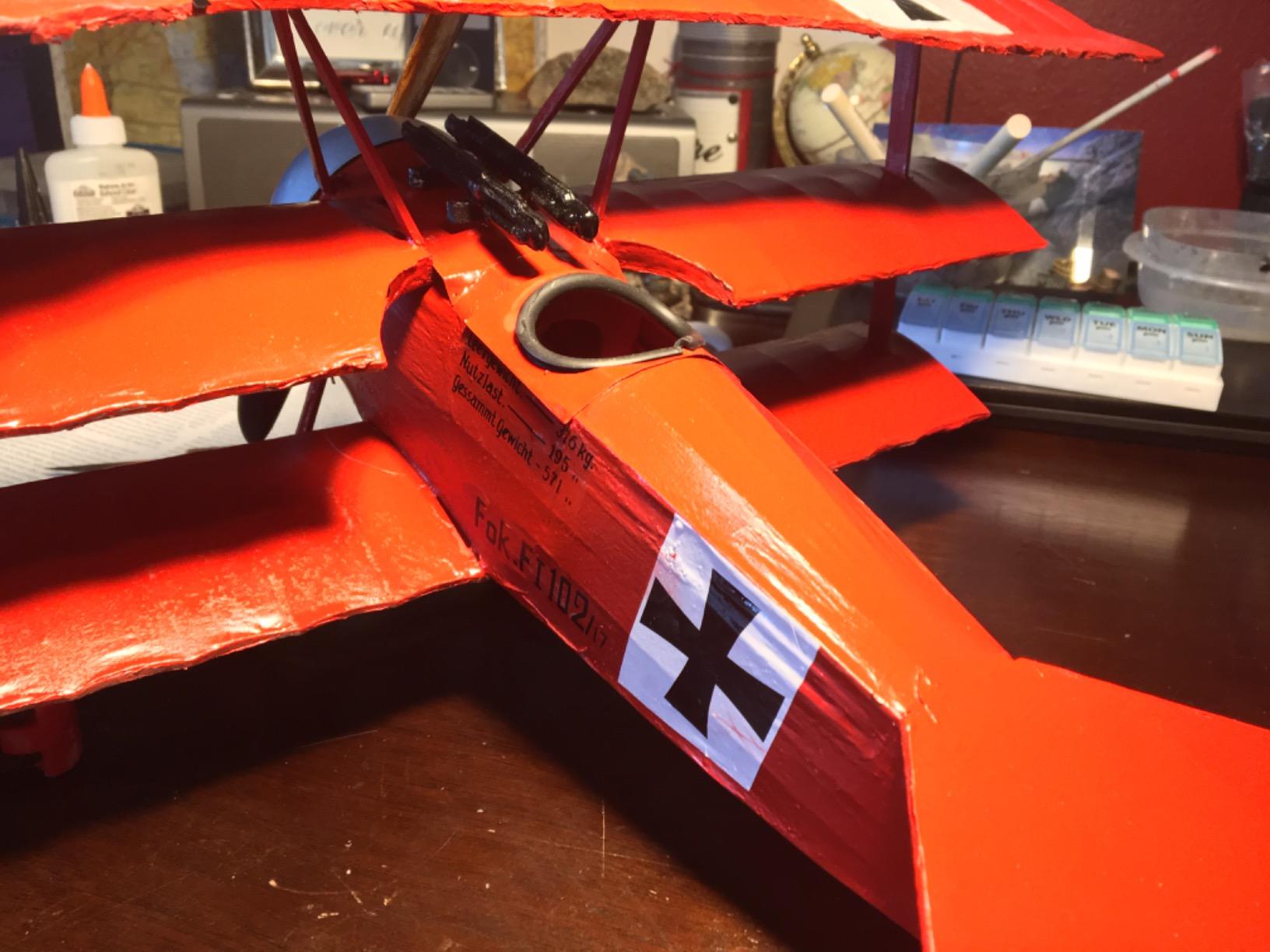
Guillow’s Fokker DR1 takes a different approach from the plastic kits in this roundup. This is a balsa wood model with precision laser-cut parts, and the building experience feels more like traditional aircraft construction than plastic assembly. The 20-inch wingspan gives the finished triplane serious visual impact, and the fact that it can actually fly via the included rubber power motor makes it something special.
The laser cutting on my kit was excellent. Every rib, spar, and strut lined up with the plans without forcing or trimming. The balsa has a consistent density and the cuts are clean with minimal charring. You also get vacuum-formed plastic parts for the cowling and other rounded components, plus plastic wheels that look more realistic than wood alternatives. The plans are large format and clearly printed.
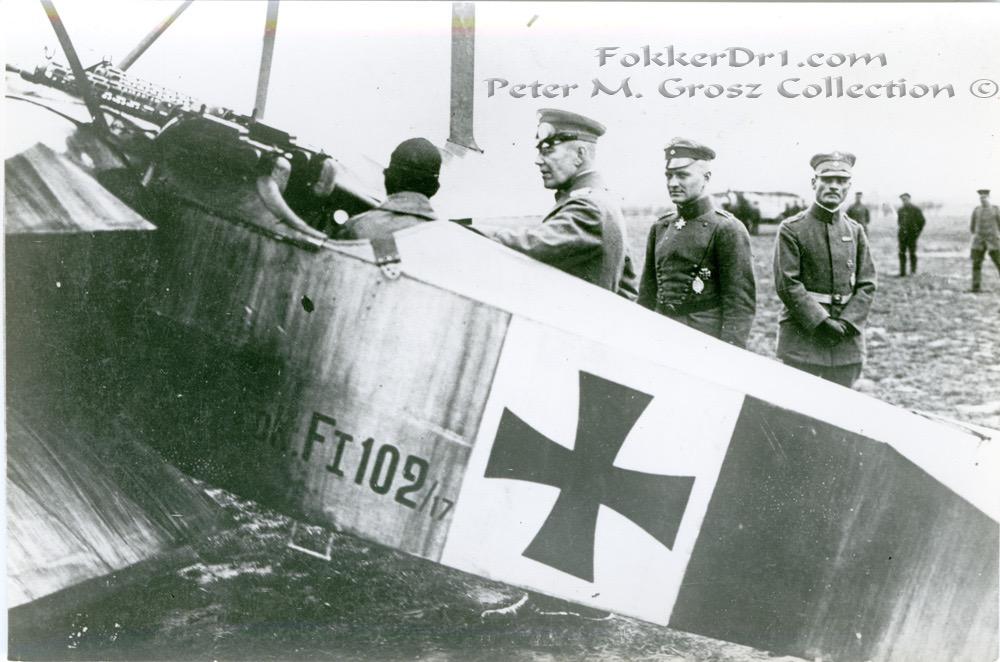
I did run into issues with the decals. They are printed on older-style stock that becomes extremely brittle once wet. Two of mine shattered during application despite using plenty of setting solution. I ended up painting the markings by hand on those sections. Other builders on forums have reported the same issue, so this seems to be a consistent problem.
Despite the decal frustration, the finished model is gorgeous. The three-wing profile of the DR1 is one of the most recognizable shapes in aviation history, and at 20 inches across it commands attention whether hanging from the ceiling or sitting on a display shelf. For modelers who enjoy the craft of building as much as the finished result, this kit delivers a deeply satisfying experience.
Who should build this kit
Modelers who enjoy traditional balsa construction and want a WWI aircraft that can double as a display piece or a flyer will appreciate this kit. It is also a great choice for builders who want to try something different from standard plastic kits. If you enjoy the process of framing up a structure from individual sticks and sheets, the Guillow’s DR1 is right in your wheelhouse.
Who should look elsewhere
If you want a kit that goes together quickly with minimal fuss, this balsa build will test your patience. First-time model builders should also steer clear since the construction techniques require prior experience with cutting, sanding, and fitting wood parts. The decal issues mean you may need painting skills as a fallback. Consider a plastic snap-fit kit if you are just starting out.
4. Revell Fokker Dr.1 Richthofen – Iconic Red Baron Kit

Revell of Germany Fokker Dr.1 ‘Richthofen’ Model Kit
1:28 Scale
66 Pieces
Pre-Painted Red Plastic
Movable Propeller
Detailed Radial Engine
Pros
- Pre-painted red plastic saves time
- Detailed radial engine and cockpit
- Complete decals included
- Movable propeller and wheels
- Good for younger modelers
Cons
- Some parts have rough edges
- Wings can be hard to align
- Not recommended for under 14 without experience
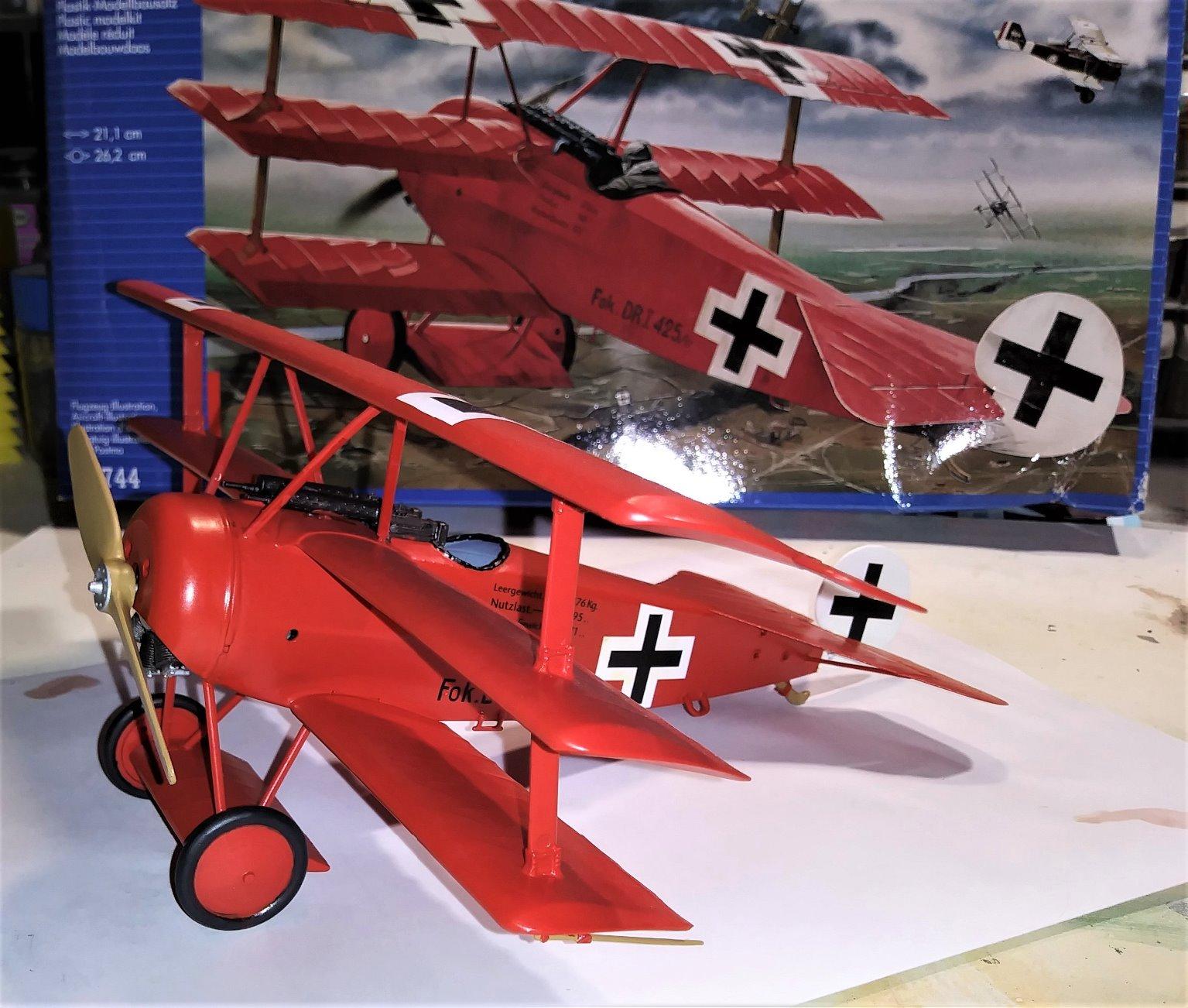
There is something undeniably cool about building the Red Baron’s plane. The Revell Fokker Dr.1 Richthofen comes molded in pre-painted red plastic, which means even without touching a paintbrush you end up with a recognizable finished model. The 1:28 scale is larger than the typical 1/32 aircraft kits, giving you a nicely sized triplane that stands out on any shelf.
I was pleasantly surprised by the detail level for a kit at this tier. The radial engine has individual cylinder fins, the cockpit includes a seat and instrument panel, and you get two Spandau machine guns for the upper deck. The landing gear features movable wheels, and the propeller spins freely. For modelers who want to add paint, the surface takes acrylics and enamels well after a light scuff-sand and primer coat.
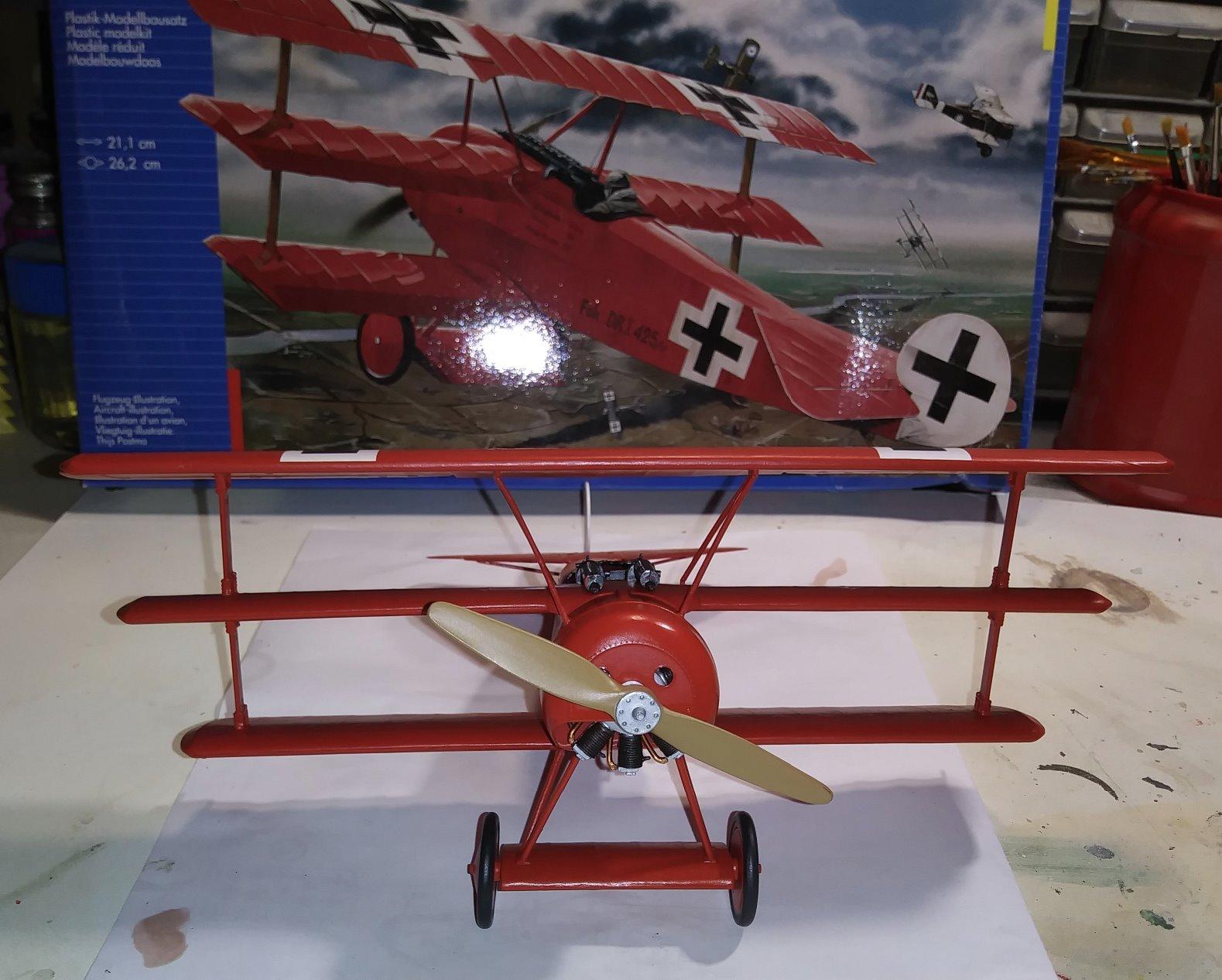
The fit is generally good but not perfect. Some of my parts had rough edges from the molding process that needed cleanup with a hobby knife. The three wings are the trickiest part of the assembly since aligning the interplane struts evenly takes patience and careful dry-fitting. Once you get them seated though, the structure feels solid.
With nearly 600 reviews and a 4.5-star rating, this kit has earned its popularity. It hits a sweet spot between detail and accessibility that makes it appealing to a wide range of builders. The Red Baron subject matter does not hurt either. This is the WWI kit most people think of first, and for good reason.
Who should build this kit
Modelers aged 12 and up who want an iconic WWI subject without an overwhelming build experience will find a lot to like here. The pre-painted red plastic makes it approachable for builders who have not yet invested in a full paint setup. It is also a strong option for parent-child build projects since the 66-piece count keeps things manageable over a weekend.
Who should look elsewhere
Experienced modelers seeking maximum detail and historical accuracy might find the 1:28 scale and simplified engineering limiting. The rough edges on some parts will frustrate perfectionists. If you want the most detailed Fokker Dr.1 possible and have advanced skills, look at the Roden 1/32 offering in this guide instead.
5. Master Box British & German Infantrymen – Best WWI Diorama Figures

BRITISH & GERMAN INFANTRYMEN HAND TO HAND FIGHT WWI ERA 1/35 MASTER BOX 35116
1/35 Scale
5 Figures
British & German Infantry
Trench Platform
Weapons & Gear Included
Pros
- Excellent figure detail
- Loads of extra weapons and gear
- Trench platform included
- Minimal flash
- Good value
Cons
- No proper assembly instructions
- Trench design could be more realistic
- Requires cleanup work
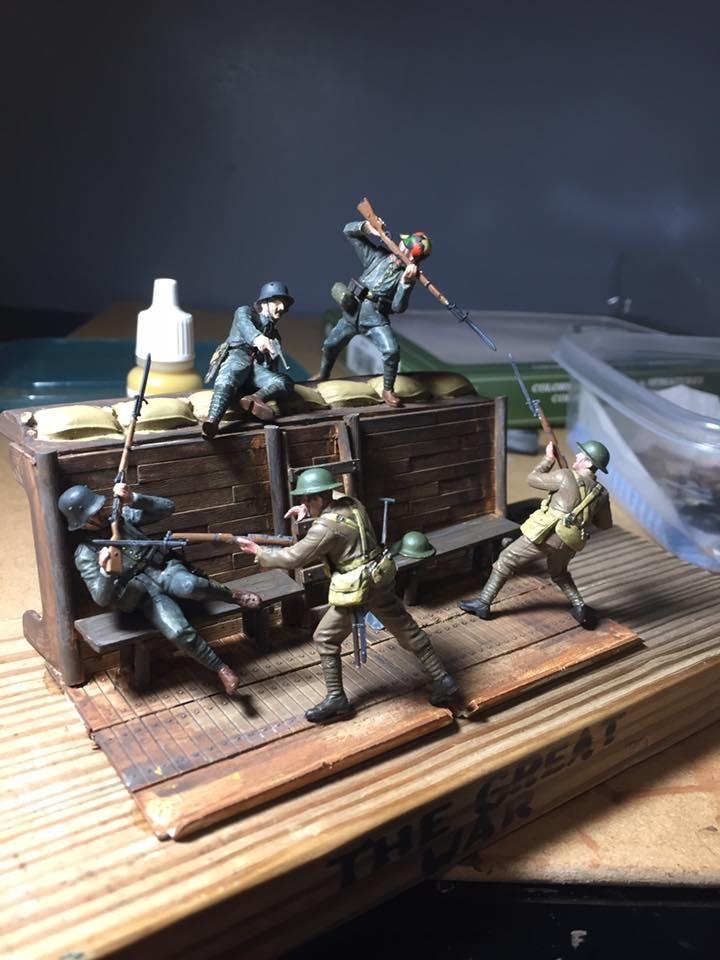
If you want to add human drama to your WWI model collection, the Master Box British & German Infantrymen set delivers. This 1/35 scale figure kit depicts a hand-to-hand combat scene between five soldiers in a trench setting. The poses are dynamic and convey genuine tension, with one figure lunging with a rifle bayonet while another raises a club.
The molding quality on these figures impressed me. Facial expressions are distinct and readable at arm’s length, uniform folds look natural rather than carved, and the equipment details include individual pouch flaps and strap buckles. You also get a generous selection of extra weapons and personal gear scattered around the trench floor, which adds visual richness to the scene.
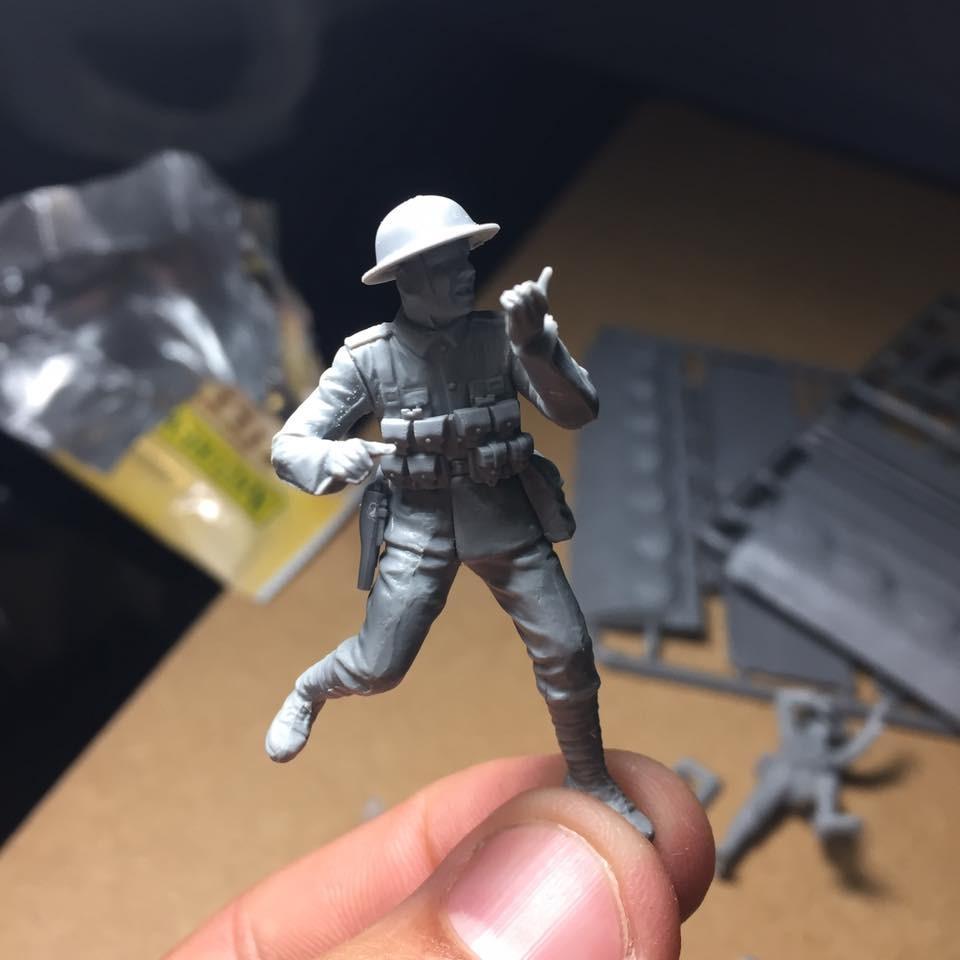
The included trench platform provides a ready-made base for the scene, though it is fairly basic in its representation. I enhanced mine with textured paste and some scratch-built details to make it more convincing. The figures themselves need minimal cleanup, just a few mold lines to address before painting.
My biggest complaint is the lack of proper instructions. You get box art illustrations to work from, but no step-by-step assembly guide. For experienced figure modelers this is not a dealbreaker, but it does add uncertainty about which arm goes with which body. I recommend dry-fitting everything before committing to glue.
Who should build this kit
Figure painters and diorama builders who want to add a human element to their WWI displays will get the most out of this set. The 1/35 scale is compatible with most WWI armor kits, including the Tamiya MK.IV tank in this guide, so you can create a complete vignette. It is also a strong standalone display piece that tells a compelling story on its own.
Who should look elsewhere
Builders who primarily build aircraft or vehicles and have no interest in figure painting should skip this one. The lack of instructions also makes it a poor choice for anyone new to figure models. If you have never assembled and painted figures before, start with a simpler single-figure kit before taking on this five-figure combat scene.
6. Viloga 3D Wooden Fokker DR1 Puzzle – Best Decorative WWI Build

3D Wooden Puzzles DIY Fokker DR1 Triplane Model Aircraft Kit, Laser Cut Balsa Wood Model Airplane Kits to Build for Adults, WW1 Wooden Models Airplane Jigsaw Puzzles for Home Decoration Birthday Gift
Approximately 1:18 Scale
Laser Cut Balsa Wood
3D Puzzle Format
Eco-Friendly
Home Decor
Pros
- Beautiful finished decorative piece
- Enjoyable building process
- Eco-friendly materials
- Good gift option
- High precision laser cutting
Cons
- Extremely fragile thin wood pieces
- Poor assembly instructions
- Parts break easily
- No glue included
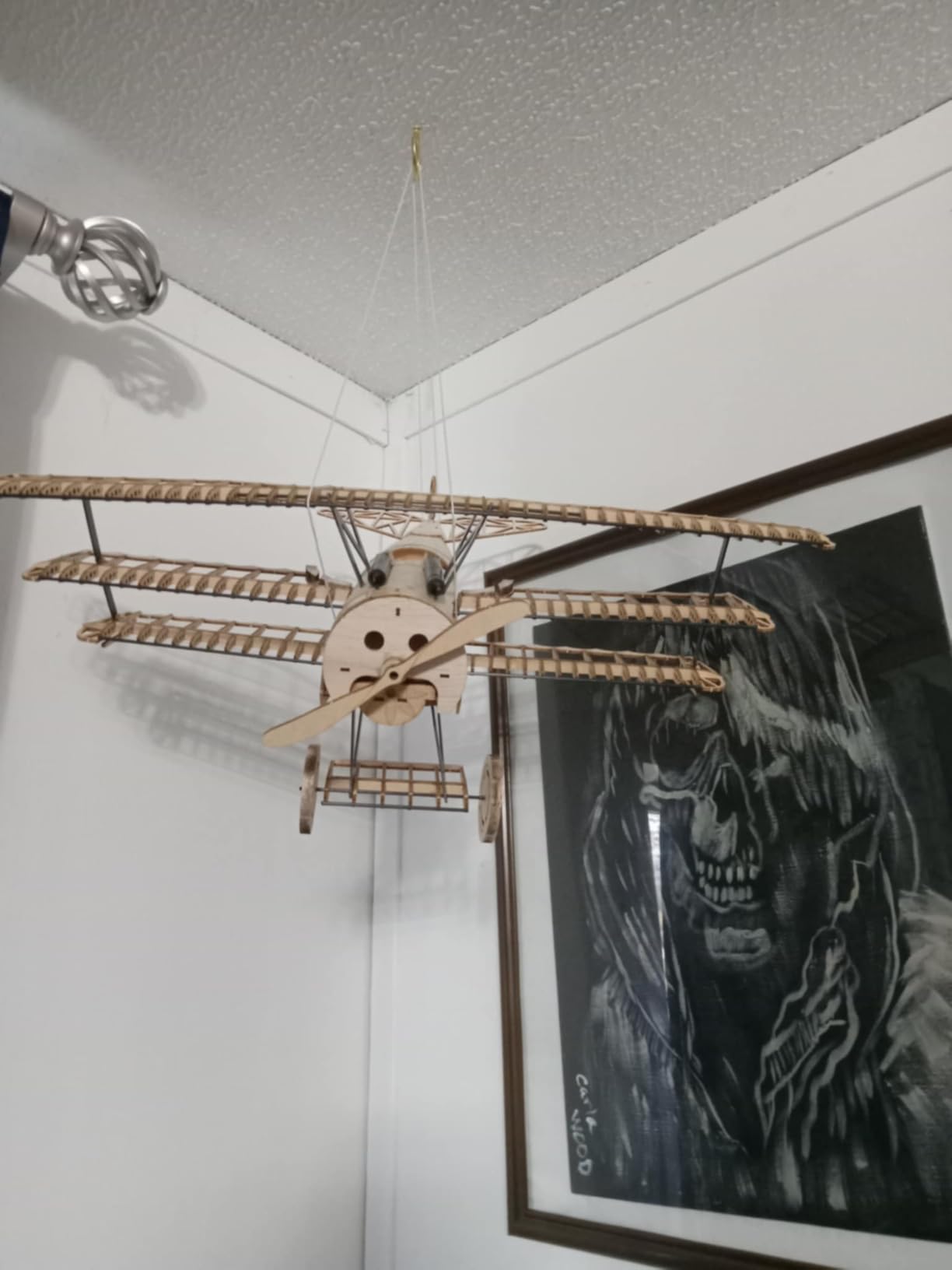
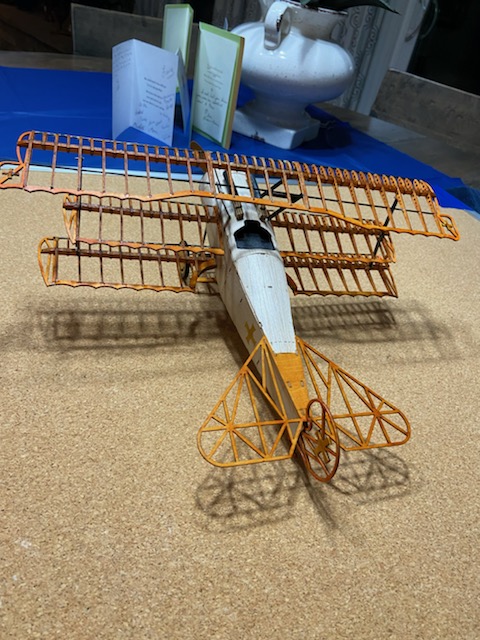
The Viloga Fokker DR1 wooden puzzle occupies a different space than traditional model kits. This is a 3D wooden puzzle designed as much for display as for the building experience. At roughly 1:18 scale, the finished triplane is large enough to serve as a striking home decor piece. The laser-cut balsa wood sheets contain every part you need, and the precision of the cutting is impressive.
I found the building process genuinely enjoyable once I got past the instructions. Pushing the pieces out of the sheets and fitting them together has a satisfying tactile quality that plastic kits do not offer. The interlocking tab-and-slot design means most joints hold without adhesive, though I ended up using wood glue on several connections for added stability.
The instructions are the weak point here. They use a numbering system that does not always match the actual part layout on the sheets, and several steps are shown from angles that make it difficult to see exactly how pieces connect. I spent more time figuring out what the instructions wanted me to do than actually doing it.
The finished model looks fantastic on a bookshelf or desk. The natural wood grain gives it a warmth that painted plastic cannot replicate, and the triplane silhouette is immediately recognizable. Just be prepared to handle the pieces with extreme care. The balsa is only 0.05 inches thick and snaps easily if you apply too much pressure during assembly.
Who should build this kit
Adults and older teens who want a relaxing weekend project that produces a beautiful display piece will enjoy this kit. It makes an excellent gift for aviation enthusiasts or puzzle lovers who appreciate something different from jigsaw puzzles. If you like the idea of a WWI model that doubles as home decor without needing paint, this is a solid choice.
Who should look elsewhere
Anyone expecting the precision and durability of a plastic model kit will be disappointed. The fragile wood pieces demand careful handling, and the lackluster instructions can turn a relaxing afternoon into a frustrating one. Younger builders and those with limited fine motor skills should also avoid this kit due to the delicate nature of the parts.
7. Revell Fokker Dr.1 PL Triplan – Compact 1/72 Scale Kit

Revell Of Germany Fokker Dr.1 PL Triplan
1:72 Scale
37 Pieces
Fine Surface Details
Movable Propeller
Decals for 2 Versions
Pros
- Compact finished size
- All parts fit well
- Easy to assemble
- Decals for 2 versions included
- Great for WWI history introduction
Cons
- Extremely small at about 3 inches long
- Very fragile parts
- Decals may rip easily
- Not suitable for beginners due to tiny parts
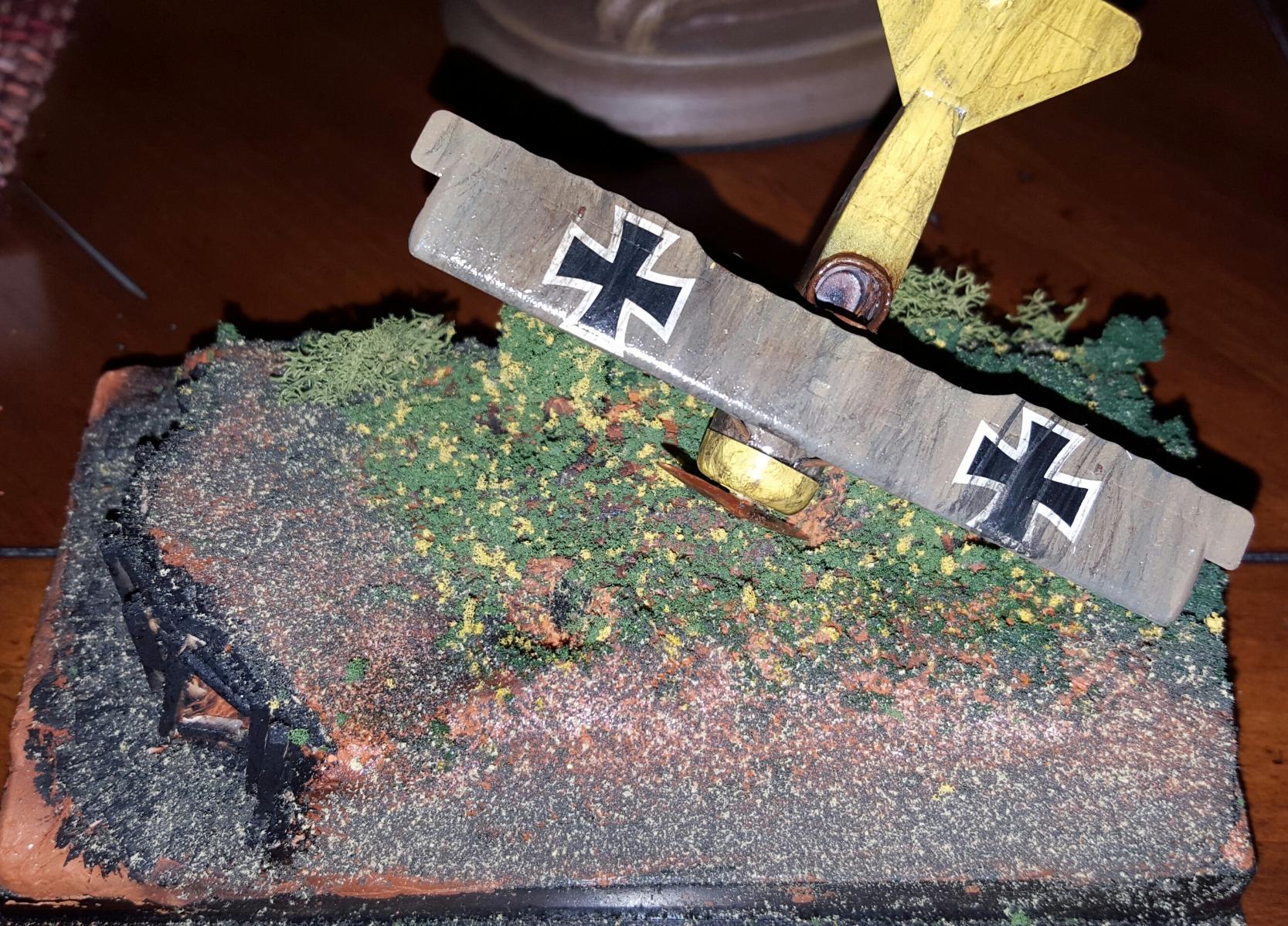
The Revell Fokker Dr.1 PL Triplan is a pocket-sized version of the iconic triplane at 1:72 scale. The finished model measures roughly three inches long, making it a perfect candidate for small display cases or desktop collections where space is limited. Despite the tiny footprint, Revell managed to pack in fine surface details, a movable propeller, and a credible cockpit with joystick and seat.
Building at this scale is a different experience. The 37 parts go together quickly, but each one demands careful handling because of the size. I used tweezers for most of the assembly, and even then a couple of parts pinged off my desk and required a search mission. The fit between parts is surprisingly good though, with minimal gaps once everything was glued in place.
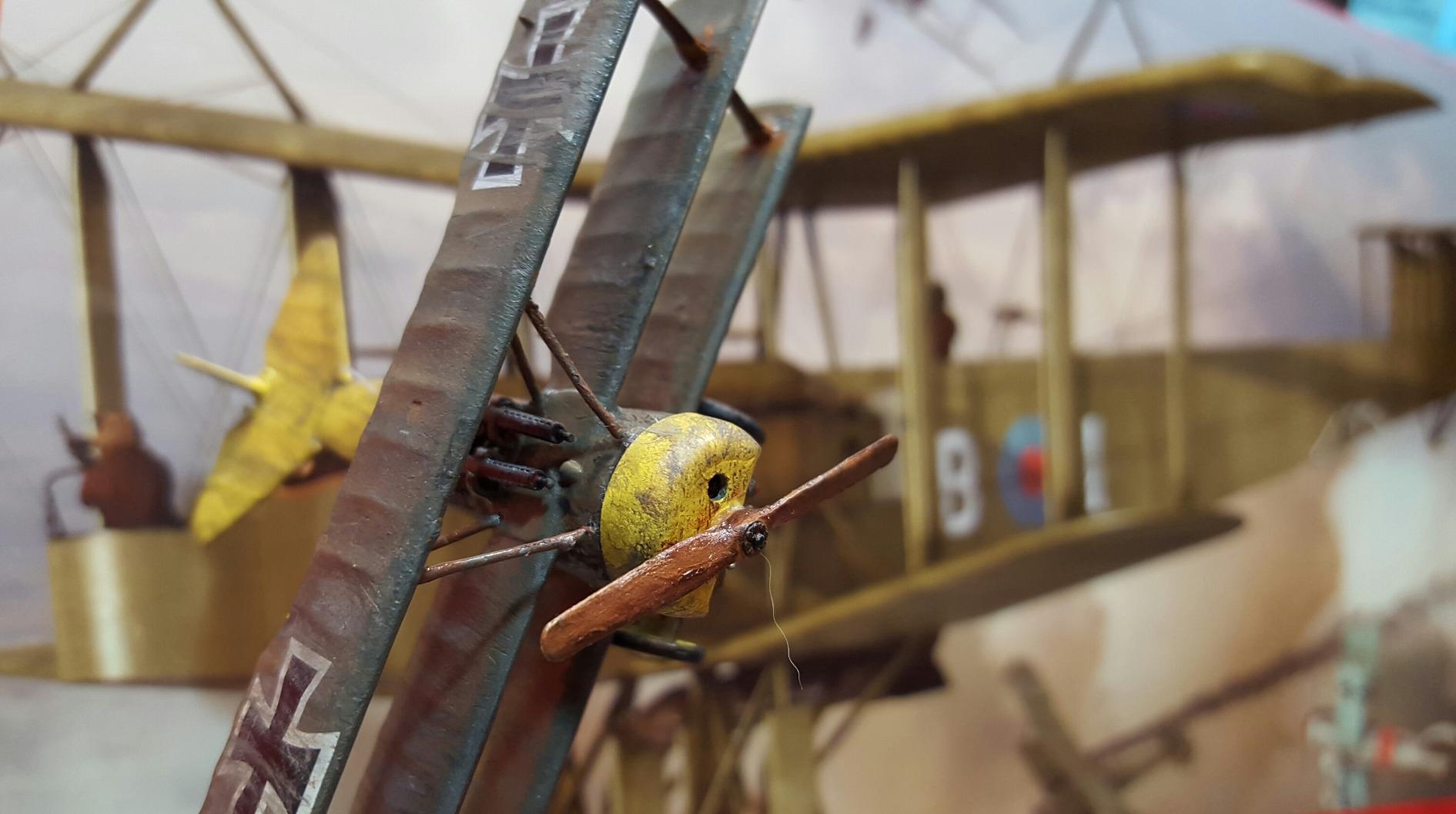
You get decals for two different marking schemes, which is a nice touch at this level. The decals themselves are thin and conform well to surface details, but they are also small and prone to tearing if you handle them roughly. I used plenty of water and a soft brush to position them without incident.
This kit serves a specific purpose well. If you want to build a recognizable WWI aircraft quickly and do not have room for larger scale models, the Revell Triplan delivers. It is also a good way to introduce younger modelers to WWI aviation history, though the tiny parts mean adult supervision is essential.
Who should build this kit
Modelers with limited display space who still want the iconic Fokker Dr.1 in their collection will appreciate this compact kit. It is also a good option for building quick multiples if you want to create a small WWI squadron display without investing weeks in each model. The low part count makes it a pleasant evening build for experienced hands.
Who should look elsewhere
Anyone who struggles with small parts or lacks fine motor control should avoid this kit. The 1:72 scale means every component is tiny, and the frustration factor is high for builders who are not comfortable working at this size. Beginners would be better served by the larger Revell Richthofen kit at 1:28 scale.
8. Airfix WWI Male Tank Mk.I – Best Starter Armor Kit

Airfix Model Tank – A01315V WWI Male Tank Mk.I, Plastic Model Kits for Adults & Kids 8+, 1:76 Scale, Skill Level 2, WW2 Theme Military Models, World War 2 Tanks
1:76 Scale
49 Pieces
Skill Level 2
Decals Included
1 Year Warranty
Pros
- Easy to assemble
- Good value
- 49 parts is manageable
- Amazing details at small scale
- Good for beginners
Cons
- Rubber tracks hard to install
- Some pieces do not snap together
- Requires trimming flash
- Parts may have warping
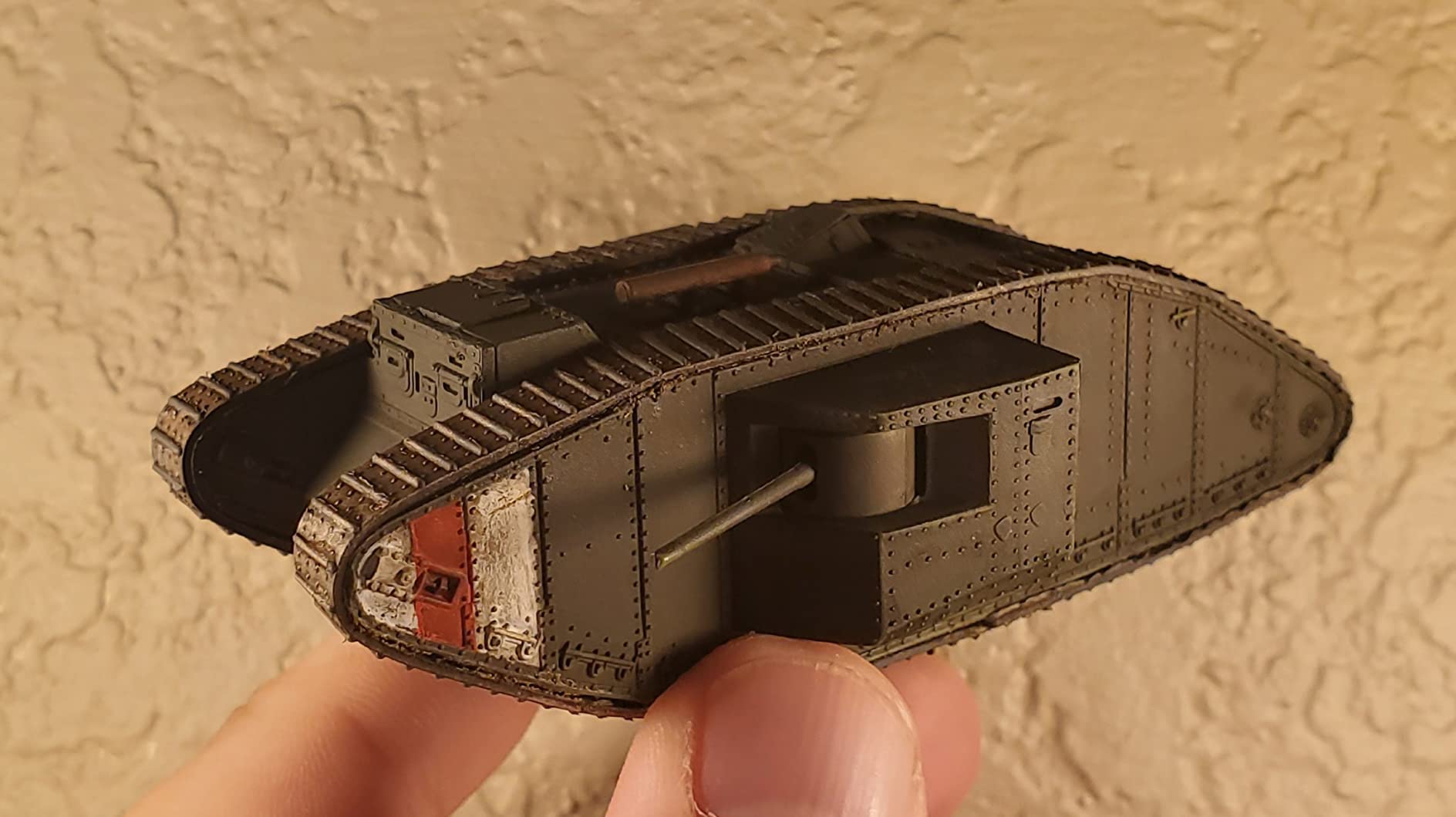
The Airfix WWI Male Tank Mk.I is one of the best entry points into WWI armor modeling. At 1:76 scale with 49 parts, it is approachable without being toylike. The finished model captures the lozenge-shaped hull, the side-mounted 6-pounder naval guns, and the track sponsons that made the Mk.I tank such a revolutionary and terrifying weapon on the WWI battlefield.
I built this kit in a single afternoon, and the straightforward assembly lived up to Airfix’s Skill Level 2 rating. Most parts went together without drama, and the detail molding is impressive given the small scale. You can see individual rivets around the gun sponsons, the exhaust stack on the roof, and even the unditching beam across the top of the hull. Decals for historical markings are included in the box.
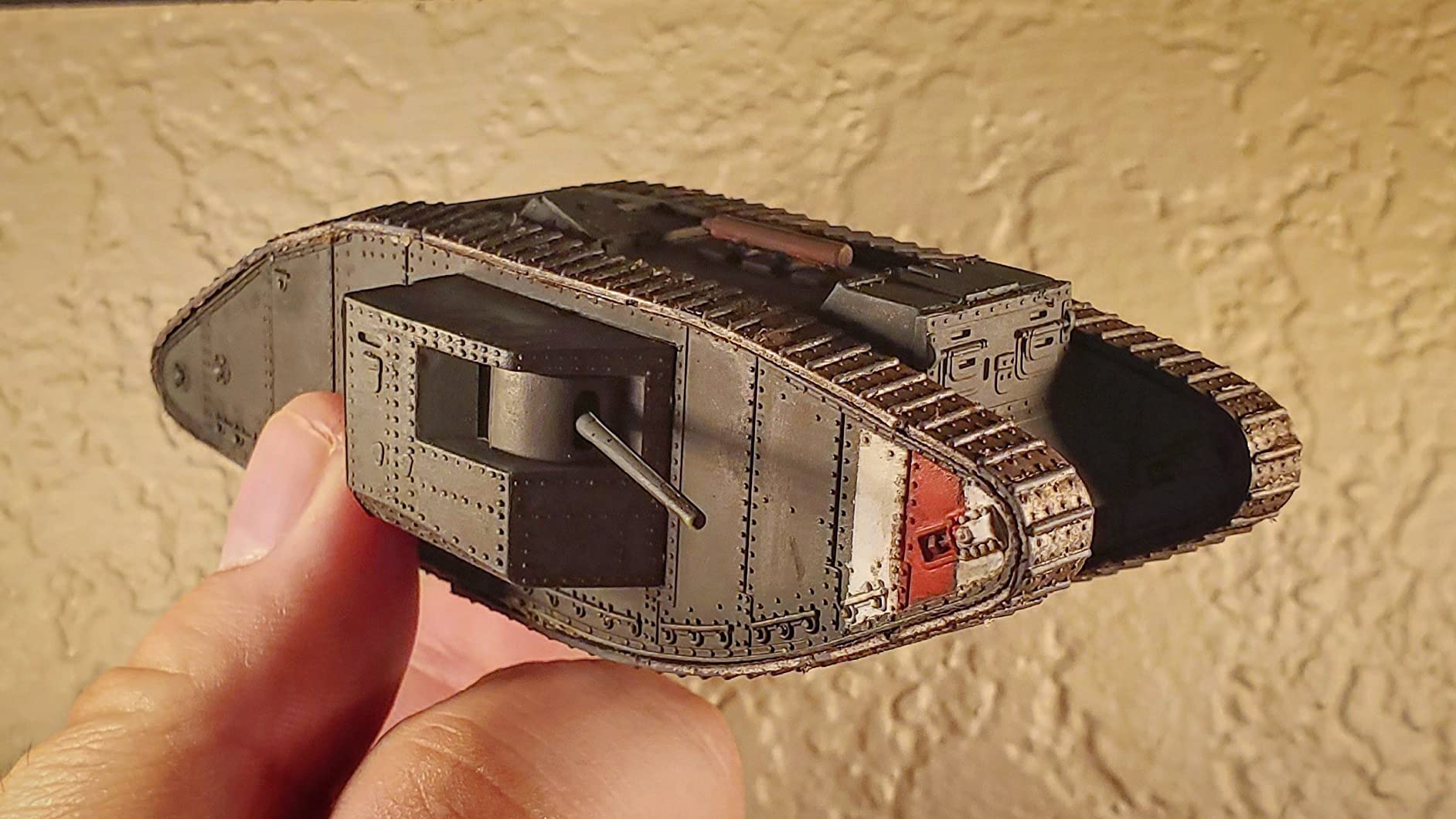
The rubber band-style tracks are the weakest part of this kit. Getting them to wrap around the road wheels and stay in place required repeated adjustments and eventually some adhesive to hold the join. Some of my parts also had minor flash that needed trimming, and one of the hull plates had a slight warp that I corrected with warm water and gentle pressure.
For the price, this kit delivers remarkable value. It gives you a historically significant WWI subject with enough detail to look convincing on display, without the intimidating part count of larger scale armor kits. It is exactly what a starter armor model should be.
Who should build this kit
Beginners looking to try their first armor model will find this an ideal starting point. The manageable part count and straightforward assembly make it a low-stress introduction to tank building. It is also a great choice for modelers who want a WWI tank to pair with 1/72 or 1/76 scale aircraft in a larger diorama display.
Who should look elsewhere
Experienced armor modelers seeking high detail and complex builds will find this kit too basic. The rubber tracks and simplified construction will not satisfy someone used to individual link tracks and photo-etched detail sets. For a more advanced WWI tank build, look at the Tamiya MK.IV elsewhere in this guide.
9. Roden Pfalz D.III – Best German Biplane Fighter

Roden Pfalz D.III German Biplane Fighter Model Kit
1/72 Scale
30 Pieces
Includes Paint and Brushes
Detailed Cockpit
Detailed Engine
Pros
- Detailed cockpit and engine
- Includes paint
- glue
- and brushes
- Good quality Roden molding
- Authentic WWI German subject
- 30 day warranty
Cons
- Very small parts require patience
- Parts can be fragile
- Decal adhesive products sold separately
- Limited reviews available
The Roden Pfalz D.III is a kit for WWI aviation enthusiasts who appreciate the lesser-known aircraft of the Great War. While everyone builds Fokkers and Sopwiths, the Pfalz D.III was a rugged German fighter that served alongside the more famous Albatros and Fokker designs. Roden has carved out a niche producing these less mainstream subjects, and this kit shows their commitment to the category.
At 1/72 scale with 30 pieces, this is a compact build that goes together in a few focused sessions. The molding quality is solid, with clean panel lines, a detailed cockpit with seat and control column, and a nicely rendered Mercedes D.III engine visible through the open nose. Roden includes paint, glue, and brushes in the box, which is unusual for a 1/72 kit and makes it more accessible for builders who do not have a full paint bench set up.
Fit is generally good, though the small scale means some parts are extremely delicate. The struts between the wings in particular require a steady hand and careful alignment. I recommend building the lower wing and fuselage first, letting that set completely, then adding the upper wing with the struts already attached to it. This approach gave me better alignment than trying to position each strut individually.
The limited review count for this kit reflects its niche appeal rather than any quality issues. Roden has built a reputation among WWI modelers for producing subjects that no other manufacturer touches, and the Pfalz D.III is a prime example. If you want something different from the usual Red Baron builds, this kit delivers.
Who should build this kit
WWI aviation enthusiasts who want to expand their collection beyond the typical Fokker and Sopwith subjects will find this a rewarding build. The included paint and brushes make it accessible even if you do not have a dedicated modeling workspace. It is also a good choice for Roden collectors who appreciate the brand’s attention to obscure historical aircraft.
Who should look elsewhere
Modelers who want a large, detailed display piece should opt for a 1/32 scale kit instead. The 1/72 scale limits the visible detail, and the small parts will frustrate anyone with limited fine motor skills. Beginners may also find the delicate struts challenging for a first biplane build.
10. NewRay WWI Fokker D.VII – Easiest WWI Assembly Kit

NewRay WWI Classic Plain Model Fokker D.VII, Easy kit
1:32 Scale
Pre-Painted
Minimal Assembly
Magnetic Screwdriver Included
Propeller Spins
Pros
- Easy to assemble with included screwdriver
- Pre-painted finish
- Working spinning propeller
- Fun for kids
- 1:32 scale display size
Cons
- Cheap feeling materials
- No instructions included
- Screw holes can strip
- Requires glue for secure assembly
The NewRay Fokker D.VII takes a refreshingly simple approach to WWI modeling. This is an easy-build kit where most of the work involves tightening a few screws with the included magnetic screwdriver rather than gluing plastic parts. The model comes pre-painted, so there is no painting required unless you want to customize it. For kids or adults who want a WWI model without the commitment of a traditional kit, this fills that gap.
At 1:32 scale, the finished model has a decent presence on a shelf. The pre-painted finish is acceptable with recognizable Fokker D.VII markings, and the propeller spins freely which adds a fun interactive element. The box art also mentions compatibility with other NewRay WWI kits in the same series, so you can build a small collection of matching aircraft.
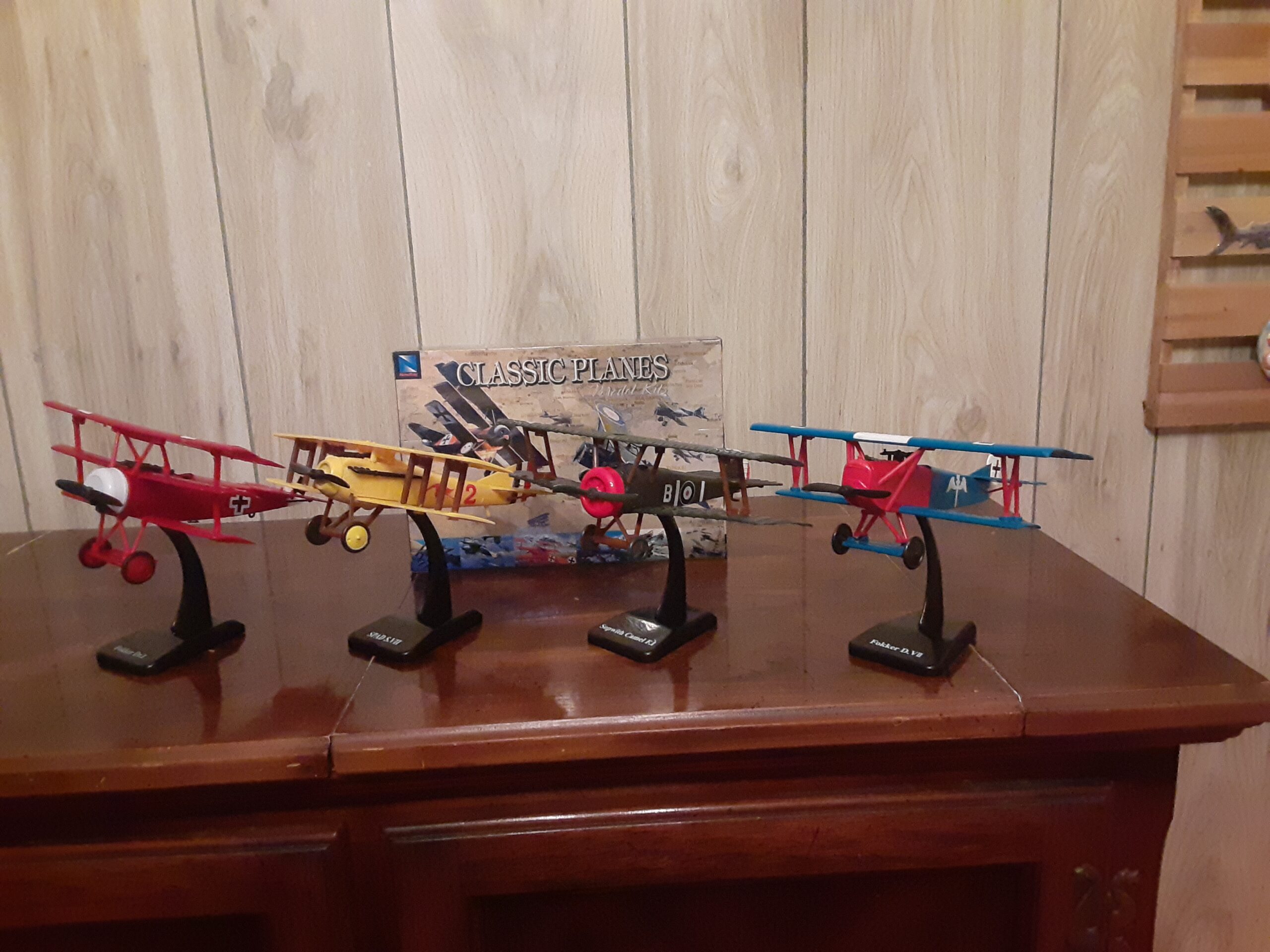
The materials are where the corners were cut to achieve this simplicity. The plastic feels lighter and less rigid than injection-molded kits from Revell or Academy. The screw holes can strip if you overtighten, and the vertical stabilizer attachment on my build required some glue to hold securely. There are no printed instructions in the box, just the box art to reference.
Despite these limitations, the NewRay kit succeeds at what it sets out to do. It gives you a recognizable WWI aircraft model that you can put together in under an hour with minimal tools. For the right audience, that is exactly what they are looking for.
Who should build this kit
Younger modelers getting their first taste of WWI aircraft will enjoy this kit. The screw-together assembly and pre-painted finish remove the barriers that keep kids away from traditional model building. Parents looking for a build project to share with their children will find this a low-frustration option. It is also a quick build for adult collectors who want a display model without investing serious time.
Who should look elsewhere
Serious modelers who value material quality, historical accuracy, and build craftsmanship should pass on this one. The cheap plastic feel and simplified assembly will not satisfy anyone accustomed to traditional kits. If you want a proper 1/32 scale Fokker D.VII with real detail, you will need to look at specialist manufacturers.
11. Academy SPAD XIII – Budget WWI Fighter Kit

Academy SPAD XIII WWI Fighter Airplane Model Building Kit
1/72 Scale
Two Sprues Gray Styrene
Authentic Decals
Paint and Glue Not Included
Pros
- Easy to assemble
- Good basic starter kit
- Great price point
- Nice detailed model for the money
Cons
- Very small at about 2 inches long
- Poor quality plastic parts
- Cockpit extremely simplified
- Decals may not match advertised designs
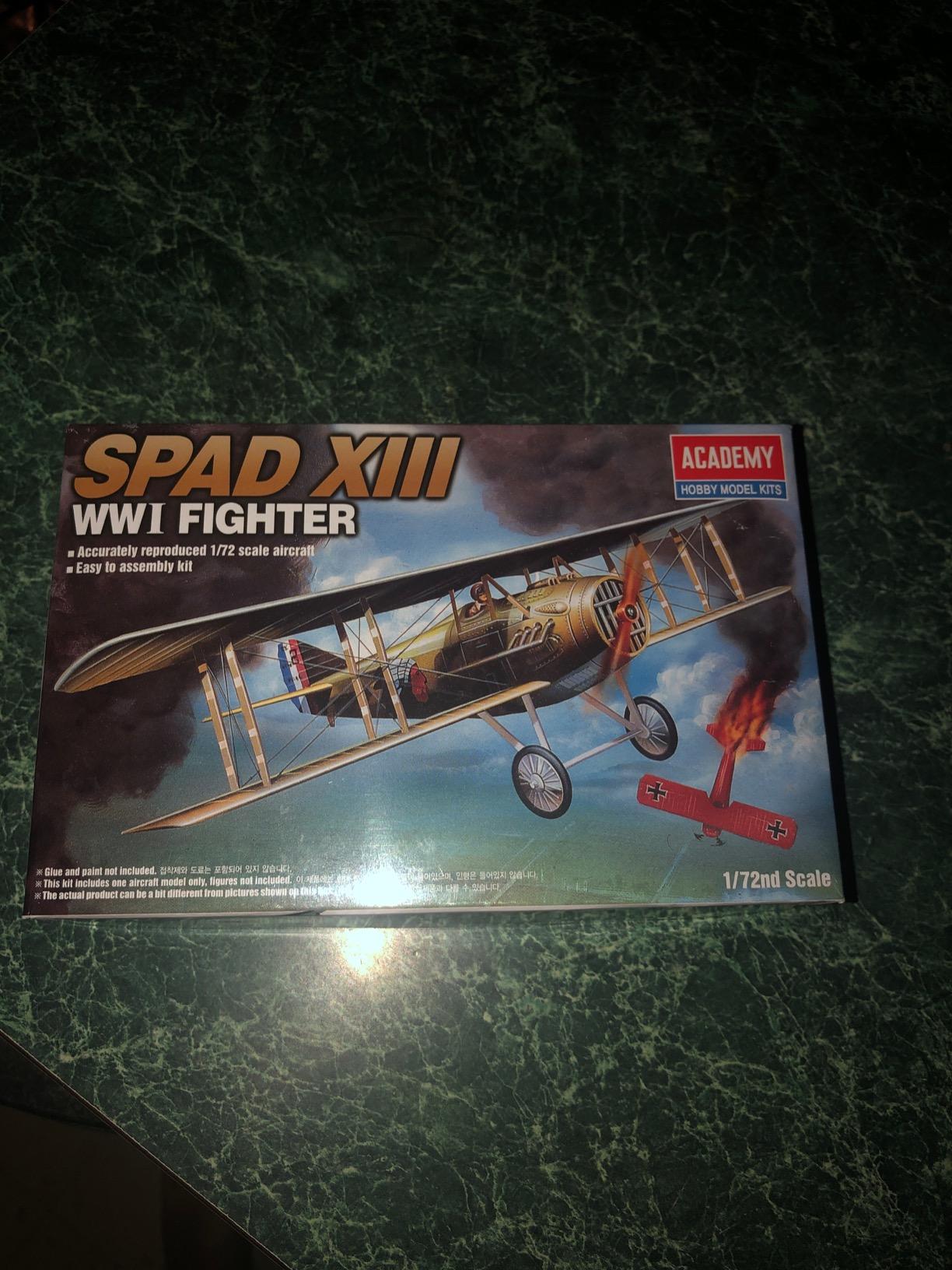
The Academy SPAD XIII is about as basic as a WWI model kit gets. Two small sprues of gray styrene, a decal sheet, and minimal packaging. At 1/72 scale, the finished model measures roughly two inches long, making it one of the smallest kits in this roundup. The SPAD XIII is an important WWI subject though, serving as the primary fighter for American and French squadrons in the final year of the war.
Assembly is straightforward with few parts to manage. The wings, fuselage halves, tail surfaces, and landing gear go together in under an hour. The surface detail includes engraved panel lines and a hint of fabric texture on the flying surfaces. For the price, you get a recognizable SPAD XIII silhouette that works in a larger 1/72 scale collection or diorama.
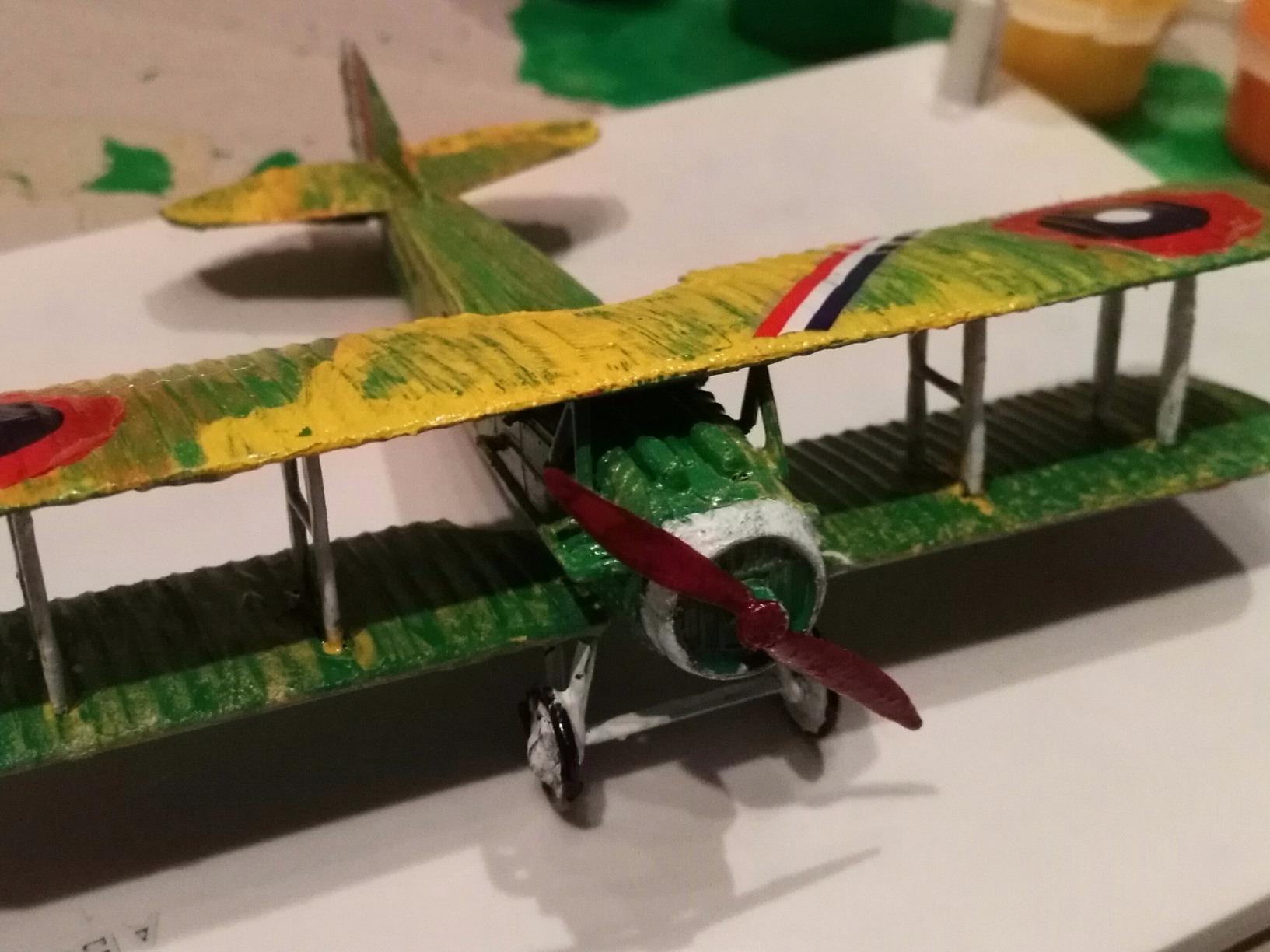
The limitations become apparent once you start looking closely. The cockpit is essentially an empty well with a simplified seat lump. The plastic feels soft and some parts had molding irregularities on my example. Several reviewers have noted that the decals do not always match the schemes shown on the box art, so check references before committing to a particular marking option.
This kit works best as a gap-filler in a 1/72 WWI aircraft collection rather than a standalone display piece. It gives you the SPAD XIII shape at a price that is hard to argue with, but the compromises in detail and material quality are evident throughout.
Who should build this kit
Budget-conscious modelers building a 1/72 scale WWI aircraft collection will find this a useful addition. The low price makes it easy to grab if you need a SPAD XIII to round out a display of Great War fighters. It is also an acceptable starter kit for someone testing whether they enjoy model building before committing to more expensive kits.
Who should look elsewhere
Anyone seeking detail quality or a rewarding build experience should look at the Academy Sopwith Camel or Roden kits in this guide instead. The simplified cockpit, soft plastic, and potential decal issues make this a difficult recommendation for experienced builders. The tiny finished size also limits its impact as a standalone display model.
12. Roden Fokker Dr.I – Large Scale German Fighter

Roden Fokker Dr.I German Fighter Airplane Model Kit
1/32 Scale
Detailed Cockpit
Detailed Engine
Plastic
Adult Skill Level
Pros
- Great details when finished
- Excellent potential for superdetailing
- Best Fokker Dr.I in this scale
- Many paint scheme options available
Cons
- Poor engineering and fit problems
- Vague directions without photos
- Large gaps requiring fixes
- Motor too large for cowling
- Requires experience
The Roden Fokker Dr.I in 1/32 scale is the most polarizing kit in this roundup. Experienced modelers praise the detail potential, while others criticize the engineering and fit issues. I fall somewhere in the middle. This kit can produce a stunning Fokker triplane at large scale, but you need to earn it through patience, filler, and problem-solving during the build.
The surface detail is where this kit shines. The fabric texture on the wings captures the look of doped linen convincingly, the cockpit includes adequate framework detail, and the Oberursel rotary engine is well-represented. At 1/32 scale, all of these details are large enough to appreciate and enhance with paint washes. You also get multiple decal options covering different Jasta markings and color schemes.
The problems start when you begin fitting parts together. The cowling in my kit was too small to comfortably accept the engine assembly, requiring careful sanding and dry-fitting to avoid a visible gap. Several fuselage seams needed filler and rescribing. The instructions are text-heavy with limited photographs, leaving you to interpret some assembly steps from context alone. Reference photos are essential.
Despite these challenges, the finished model is arguably the best Fokker Dr.I available in 1/32 scale. Once assembled and painted, the three-wing profile with its characteristic flat-sided fuselage looks striking. If you are the type of modeler who enjoys fixing and improving kits as much as building them, the Roden Dr.I offers a rewarding project with an impressive payoff.
Who should build this kit
Advanced modelers who enjoy problem-solving and have experience fixing fit issues will get the most satisfaction from this kit. If you are comfortable using filler, rescribing panel lines, and working from reference photos rather than instructions, the Roden Dr.I will give you a standout 1/32 scale triplane. It is also appealing for modelers who want to practice superdetailing since the base detail provides a strong foundation.
Who should look elsewhere
Anyone who expects parts to fit without correction should avoid this kit. The engineering issues require modeling skills beyond what most intermediate builders possess. Beginners in particular will find the vague instructions and poor fit deeply frustrating. If you want a 1/32 scale WWI aircraft that goes together cleanly, the Academy Sopwith Camel in this guide is the safer choice.
How to Choose the Right WWI Model Kits?
Picking the right WWI model kit comes down to three factors: your skill level, the type of model you want to display, and the space you have available. Our team has built kits across every scale and material type, and these guidelines reflect what we have learned through firsthand experience.
Scale comparison: Which size is right for you
WWI model kits come in several common scales, and each has trade-offs. Larger scales like 1/32 give you visible detail, accessible parts, and dramatic shelf presence, but they require more display space and cost more. The Academy Sopwith Camel and Roden Fokker Dr.I in this guide are both 1/32 scale and make excellent display pieces if you have the room.
Medium scales like 1/35 and 1/48 split the difference nicely. The Tamiya MK.IV tank at 1/35 is the sweet spot for armor, offering detail without overwhelming complexity. Smaller scales like 1/72 and 1/76 work well for collectors building large collections or dioramas where space is limited. The Airfix tank at 1/76 and the Revell Triplan at 1/72 are compact but still recognizable.
Skill level: Match the kit to your experience
Be honest about your modeling skills before choosing a kit. If you have never built a model before, the NewRay Fokker D.VII or the Airfix WWI Tank Mk.I are low-risk starting points. Both require minimal tools and patience. Intermediate builders should look at the Academy Sopwith Camel, the Revell Richthofen, or the Guillow’s Fokker DR1. These kits demand some experience but are not overwhelming. Advanced modelers seeking a challenge will find it in the Tamiya MK.IV tank or the Roden Fokker Dr.I, both of which reward skill and persistence with exceptional results.
Material types: Plastic, wood, or mixed
Most WWI model kits use injection-molded plastic, which offers consistent quality and predictable assembly. Plastic kits from brands like Tamiya, Academy, and Revell are the standard for good reason. Wood kits like the Guillow’s Fokker DR1 and the Viloga 3D puzzle offer a different building experience that feels more hands-on and traditional. The trade-off is that wood parts are more fragile and less consistent than plastic. For most builders, especially those new to the hobby, plastic is the safer and more satisfying choice.
Essential tools and supplies
Regardless of which kit you choose, you will need a few basic tools. A sharp hobby knife with replacement blades handles part cleanup. Plastic cement or cyanoacrylate glue secures joints. Tweezers are essential for small parts, especially at 1/72 scale. Sanding sticks in fine and medium grits smooth seams and remove flash. For painted kits, invest in a basic set of acrylic model paints, small brushes, and a primer. Most kits list recommended paint colors on the instruction sheet.
Frequently Asked Questions
Who makes the best quality model kits?
Tamiya consistently ranks as the top manufacturer for model kit quality, engineering precision, and fit. For WWI subjects specifically, Copper State Models, Wingnut Wings, and Roden are highly regarded among aviation modelers. Academy and Revell also produce good quality kits at more accessible price points. The best brand depends on your subject interest, with Tamiya leading in armor and specialist brands excelling in WWI aircraft.
What scale are Copper State Models kits?
Copper State Models produces kits in three primary scales: 1/32 for aircraft, 1/35 for armored vehicles, and 1/48 for select aircraft subjects. Their 1/32 aircraft line includes the Nieuport series, Bristol Scout, and Caudron G.III. Their 1/35 armor line covers Russian and British WWI armored cars including the Lanchester and Mgebrov-R.
When was Copper State Models founded?
Copper State Models was founded in the early 2010s as a specialist manufacturer focused on World War I model subjects. Based in the United States, the company initially gained recognition among WWI aviation modelers before expanding into 1/35 scale armored vehicles. They have built a reputation for producing high-quality kits of obscure WWI subjects that major manufacturers overlook.
Are WWI model kits hard to build?
WWI model kits range from easy to very difficult depending on scale and subject. Aircraft kits with biplane or triplane wings require rigging, which adds complexity. Aircraft at 1/72 scale have very small parts that demand patience and tweezers. Armor kits are generally more straightforward. Beginner-friendly options include the Airfix WWI Tank at 1/76 scale or the NewRay pre-painted aircraft kits. Start simple and work up to more complex builds as your skills develop.
What tools do I need for a WWI model kit?
Essential tools include a hobby knife with sharp blades, plastic cement or super glue, fine-grit sanding sticks, tweezers for small parts, and a cutting mat. For painted builds, add acrylic model paints, small detail brushes, and primer. For WWI aircraft with rigging, you will also need a pin vise for drilling rigging holes and elastic thread or fishing line for the rigging lines themselves. Most of these tools cost under $30 total for a basic setup.
Finding the right WWI model kit comes down to matching your skill level and interests to the right scale and subject. For most modelers, the Academy Sopwith Camel F.1 at 1/32 scale offers the best overall balance of detail, build experience, and value. Armor enthusiasts should look at the Tamiya MK.IV Male Motorized Tank for a showpiece build. And for something different, the Guillow’s balsa Fokker DR1 delivers a building experience that plastic kits simply cannot replicate.
The WWI modeling hobby continues to grow in 2026, with manufacturers pushing detail and accuracy to levels that would have seemed impossible a decade ago. Whether you are building your first kit or your fiftieth, there is a WWI model in this guide that will give you hours of satisfying work and a finished piece you will be proud to display.