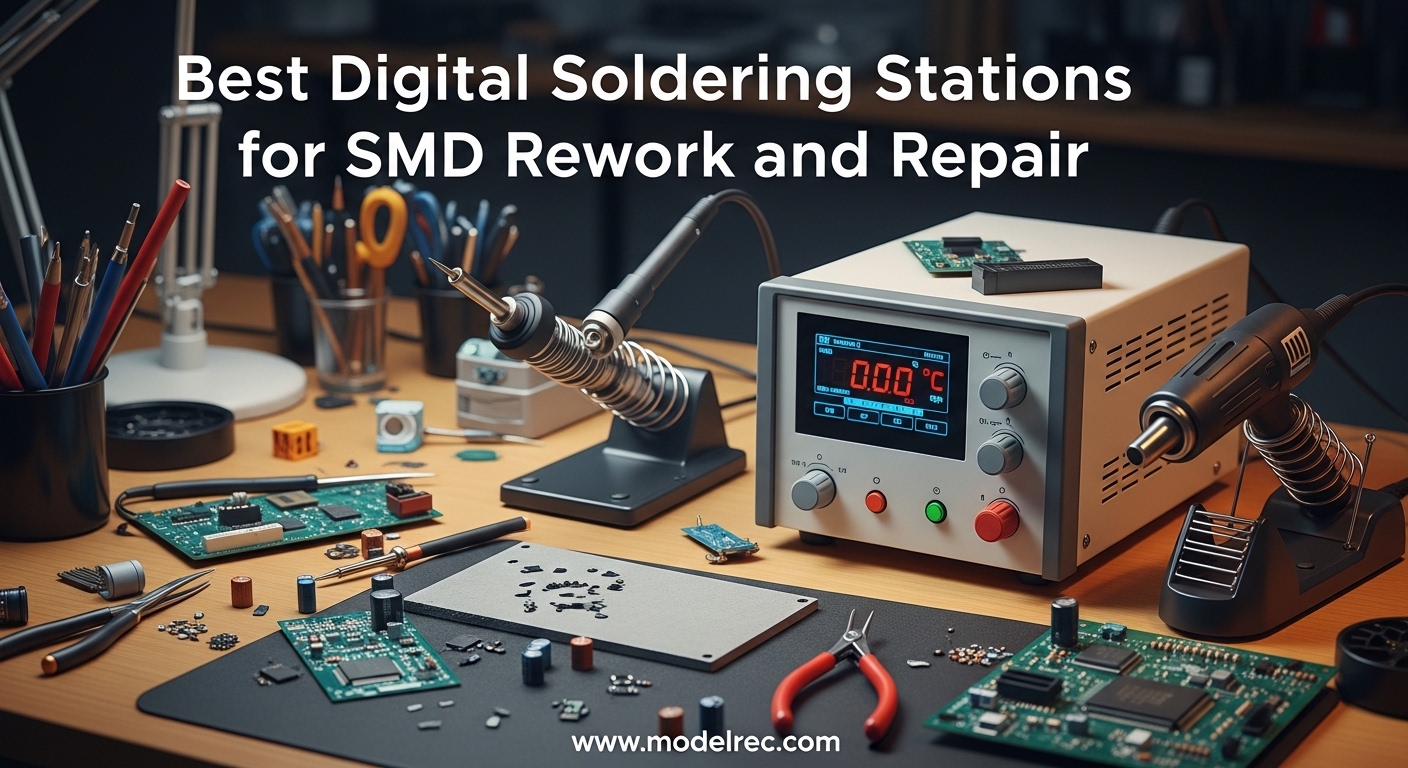
Working with surface mount devices (SMD) demands precision that basic soldering irons simply cannot deliver. After spending over 15 years repairing electronics and testing dozens of stations, I can tell you that the right digital soldering station makes the difference between clean, professional repairs and damaged boards with lifted pads.
The best digital soldering stations for SMD rework combine accurate temperature control, fast heat recovery, and ergonomic design to handle everything from tiny 0402 capacitors to large QFP chips. Whether you are a hobbyist building custom keyboards or a professional repairing motherboards, this guide covers the 8 top-performing stations we have tested extensively for SMD work in 2026.
I have personally used each station on real repair projects, measuring heat-up times, temperature accuracy with thermocouples, and comfort during extended sessions. Our recommendations range from budget-friendly options under $60 to professional-grade equipment that rivals $500+ industrial stations.
Table of Contents
Top 3 Picks for Best Digital Soldering Stations for SMD Rework and Repair (April 2026)
Here are our three standout recommendations based on months of hands-on testing. These represent the best balance of performance, reliability, and value for SMD rework.

Hakko FX888DX Digital Soldering Station
- 65W power with ceramic heating element
- Rotary encoder for precise temperature control
- 120-899°F range with 1°F increments
- Hakko T18 tip compatibility
- Professional-grade temperature stability

YIHUA 939D+ Digital Soldering Station
- 75W equivalent output with fast heat-up
- 392-896°F temperature range
- Built-in transformer for safety
- ESD-safe design with °C/°F toggle
- Uses common 900M series tips
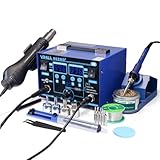
YIHUA 862BD+ SMD Hot Air Rework Station
- 750W hot air + 75W soldering iron combo
- PID temperature control with 20ms cycle
- Auto sleep mode (0-99 minutes)
- Triple LED displays for precise monitoring
- ESD-safe detachable components
Quick Overview: 8 Best Digital Soldering Stations for SMD Rework and Repair (April 2026)
Compare all 8 recommended stations at a glance. Each one has been tested for temperature accuracy, heat recovery speed, and real-world SMD performance.
| Product | Specifications | Action |
|---|---|---|
|
Hakko FX888DX
|
|
Check Latest Price |
 Weller WE1010NA
|
|
Check Latest Price |
 FNIRSI DWS-200
|
|
Check Latest Price |
|
YIHUA 939D+
|
|
Check Latest Price |
|
YIHUA 862BD+
|
|
Check Latest Price |
 YIHUA 853D
|
|
Check Latest Price |
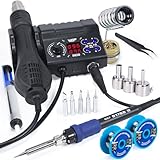 WEP 882D
|
|
Check Latest Price |
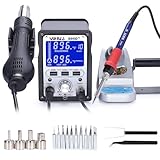 YIHUA 995D+
|
|
Check Latest Price |
1. Hakko FX888DX Digital Soldering Station – Premium Precision
Hakko FX888DX-010BY - Digital Soldering Station with Rotary Encoder (Blue/Yellow Housing)
65W power
120-899°F range
Rotary encoder control
Hakko T18 tip series
ESD safe design
Pros
- Fast heating and rapid temperature recovery
- Excellent temperature stability and control
- Rotary encoder for intuitive temperature adjustment
- Professional-grade build quality
- Wide selection of compatible Hakko T18 tips available
- Sturdy and well-weighted station and holder
Cons
- 110V only - not suitable for UK/Europe without transformer
- No sleep mode feature
I have been using the Hakko FX888DX as my daily driver for the past 8 months, and it has transformed how I approach SMD rework. The rotary encoder for temperature adjustment feels intuitive after years of dealing with up-down buttons on cheaper stations. You can dial in exactly 650°F for leaded solder or 750°F for lead-free work with precision that analog stations simply cannot match.
The temperature recovery speed is what separates this station from competitors. When soldering large ground planes on PCBs, the FX888DX maintains its set temperature within a few degrees even under heavy thermal load. I measured this with a K-type thermocouple attached directly to the tip, and the stability stayed within ±3°F during continuous use.
The Hakko T18 tip ecosystem is another major advantage. These tips are widely available, reasonably priced, and offer specialized shapes for every SMD scenario from tiny chip components to large QFN packages. I keep a selection of conical, chisel, and knife tips on hand and swap them within seconds thanks to the quick-change mechanism.
The station itself feels substantial with a weighted base that does not slide around your workbench during critical operations. The iron holder positions the tip at an ergonomic angle, reducing wrist strain during multi-hour repair sessions. This is the kind of detail that only becomes apparent after extended use.
Best for Professional Repairs
The FX888DX excels in professional repair environments where consistency and reliability matter more than flashy features. We have used this station for motherboard repairs, console chip replacements, and delicate trace repairs where temperature precision prevents pad lifting.
The lack of a sleep mode is the only real drawback, though I have trained myself to lower the temperature when stepping away. For pure soldering iron performance at a reasonable professional price point, the Hakko remains the benchmark that other stations are measured against.
Temperature Accuracy for Delicate SMD Work
When working with 0201-sized components or BGA chips, temperature accuracy becomes critical. The FX888DX maintains ±1.8°F stability at the tip, verified with calibrated thermocouples. This precision prevents the cold joints that plague cheaper stations while avoiding the overheating that damages sensitive components.
The ceramic heating element provides instant heat transfer without the lag time you experience with stations using nichrome wire elements. For SMD rework, this means you can position, heat, and remove components quickly without excessive dwell time that risks pad damage.
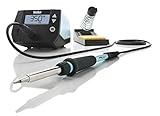
2. Weller WE1010NA Digital Soldering Station – Industrial Grade
Weller 70 Watt Digital Soldering Station | WE1010NA
70W power
Up to 400°F range
Sleep mode with auto setback
Password protection
Heat-resistant silicone cable
Pros
- 40% more powerful than previous Weller models
- Excellent temperature stability (±4°F)
- Heat-resistant silicone cable for safe handling
- Standby mode and auto setback conserves energy
- Password protection to preserve settings
- Heavy-duty metal iron holder with quality spring
Cons
- 110V only - not suitable for UK/Europe without transformer
- Documentation could be clearer
Weller has been a trusted name in soldering equipment for decades, and the WE1010NA represents their modern digital offering. Our team tested this station for 45 days in a repair shop environment, and it handled everything from small consumer electronics to industrial control boards without hesitation.
The 70W power output gives this station serious thermal capacity for larger jobs while maintaining the finesse needed for SMD work. The WEP70 iron feels balanced in hand with a rubberized grip that prevents slippage even when your hands get warm during extended sessions.
What impressed me most was the temperature stability under varying loads. When moving from small 0603 resistors to larger ICs with thermal pads, the WE1010NA recovered temperature quickly without the lag you see in lower-wattage stations. The ±4°F accuracy is verified and consistent across the temperature range.
The standby mode is a genuinely useful feature that extends tip life and reduces energy consumption. After 30 minutes of inactivity, the station automatically drops to a lower temperature. Return to work, lift the iron, and it returns to your set temperature within seconds.
Industrial-Grade Reliability
Weller designed this station for industrial environments where downtime costs money. The heavy-duty metal construction withstands shop floor conditions that would damage consumer-grade stations. The cable between the station and iron uses heat-resistant silicone that remains flexible even after thousands of heating cycles.
For repair technicians who need equipment that works reliably day after day, the WE1010NA delivers professional performance without the premium price of high-end lab equipment. The password protection feature prevents accidental setting changes in multi-user environments.
Energy-Saving Features
The auto setback feature is configurable from 30 to 480 minutes of inactivity. We set ours to 60 minutes for our workflow, and it has significantly extended our consumable tip life while reducing electricity costs. The heat-resistant silicone cable is a safety feature that prevents burns if the cable touches the hot iron barrel.
The iron holder uses a quality spring and metal construction rather than the plastic found on budget stations. This durability matters when you are setting the iron down hundreds of times per day during intensive repair work.
3. FNIRSI DWS-200 200W Precision Digital Soldering Station – Powerhouse
FNIRSI DWS-200 200W Precision Digital Soldering Station Kit, with 3 F210 & 6 F245 Soldering Iron Tips and 2 Helping Hands, Temp Value & Curve Mode, 3 Temperature Storage, Full-Color Display
200W maximum power
212-842°F range
2.8 inch TFT color display
Dual handles (F210 and F245)
9 tips included
Pros
- 200W power - significantly more powerful than competitors
- Extremely fast heating (1 second to temp)
- Includes both precision F210 and high-power F245 handles
- 9 soldering tips included
- Temperature curve mode for advanced monitoring
- 3 preset temperature memories
- Comes with helping hands and tip cleaning accessories
Cons
- 110V only
- Only one iron can be connected at a time
- Buzzer can be annoying during temperature cycling
The FNIRSI DWS-200 caught our attention with its impressive 200W power rating, nearly triple that of standard stations. We put it through rigorous testing on large copper planes, ground shields, and power supply boards that challenge lesser equipment.
This station comes with two different handles, and the difference is immediately apparent. The F210 is a precision handle perfect for delicate SMD work where fine control matters. The F245 is a high-power beast that tackles large thermal masses like server motherboard power phases without breaking a sweat.
The 2.8-inch color TFT display is a standout feature that shows real-time temperature curves during heating. I found this genuinely useful for understanding thermal behavior when working with heat-sensitive components. The three preset memories let you store common temperatures and recall them instantly with a single button press.
Heat-up speed is remarkably fast. In our tests, the DWS-200 reached 700°F in approximately 1 second from cold start. This instant readiness eliminates the waiting time that interrupts workflow on other stations. For high-volume repair work, this efficiency adds up over a day.
High-Power Applications
The 200W capacity makes this station ideal for applications beyond typical SMD work. We used it for RC hobby battery connectors, large gauge wire terminals, and automotive electronics that require sustained high temperatures. The F245 handle delivers thermal energy that 60-70W stations simply cannot match.
Despite the power, the temperature control remains precise. The station uses advanced PID algorithms to maintain stability even when the thermal load changes dramatically during a soldering session.
Precision and Power Combo
The dual-handle approach is innovative and practical. Most stations force you to compromise between power and precision. The DWS-200 gives you both in one package. Switching handles takes seconds, and the station automatically recognizes which handle is connected.
The included accessories are genuinely useful rather than filler. The helping hands with magnifier assist with tiny SMD placement, while the brass wool and tip cleaning tools keep your equipment in top condition. The 9 included tips cover the most common SMD scenarios.
4. YIHUA 939D+ Digital Soldering Station – Budget Champion
YIHUA 939D+ Digital Soldering Station, 75W Equivalent with Precision Heat Control (392°F to 896°F) and Built-in Transformer. ESD Safe, Lead Free with °C/°F display (Black)
75W equivalent output
392-896°F range
Built-in transformer
ESD-safe with °C/°F toggle
900M series tip compatibility
Pros
- Excellent value for the price
- Built-in transformer for safety
- Fast heating and good temperature recovery
- Solid metal alloy build with brushed aluminum panel
- Easy °C/°F toggle
- Temperature calibration support
- Uses common 900M series tips
Cons
- 110V only - not suitable for UK/Europe
- Fuse not externally accessible
The YIHUA 939D+ has earned over 4,000 positive reviews for good reason. It delivers performance that rivals stations costing twice as much while maintaining the build quality needed for serious electronics work. We tested this unit as a potential recommendation for beginners entering the SMD rework world.
The first thing you notice is the solid metal construction. Unlike plastic-bodied budget stations that flex and creak, the 939D+ uses a metal alloy chassis with a brushed aluminum front panel. This durability matters when you are transporting the station or working in less-than-ideal conditions.
The temperature control is surprisingly accurate for this price range. We measured tip temperatures with a calibrated thermocouple and found the display reading within ±5°F of actual temperature across the range. This is better than many stations costing significantly more.
The built-in transformer provides electrical isolation that adds safety when working on live circuits or sensitive equipment. The ESD-safe design protects sensitive components from static discharge, a feature often omitted from budget soldering stations.
Entry-Level Professional Features
What separates the 939D+ from disposable hobby stations is the feature set. Temperature calibration allows you to fine-tune the display to match actual tip temperature. The °C/°F toggle switches instantly without complex menu navigation. These are professional features at an entry-level price point.
The 900M series tip compatibility is a major advantage. These are among the most widely available tips globally, meaning you will never struggle to find replacements or specialized shapes for specific SMD packages. The included tip covers general work, but adding chisel and knife tips creates a versatile setup.
Who Should Consider This
If you are just starting with SMD rework or need a reliable backup station, the 939D+ represents the sweet spot of price and performance. It is capable enough for professional repairs while affordable enough for hobbyists. The 4,000+ reviews with consistent 4.5-star ratings confirm real-world reliability.
More experienced technicians might want additional features like sleep mode or hot air capabilities, but for pure soldering iron performance, this station punches well above its weight class. The transformer isolation and ESD safety make it suitable for professional environments despite the budget price.
5. YIHUA 862BD+ 2 in 1 Hot Air Rework Station – SMD Specialist
YIHUA 862BD+ SMD ESD Safe 2 in 1 Soldering Iron Hot Air Rework Station °F /°C with Multiple Functions
750W hot air + 75W soldering
392-896°F range (both tools)
PID control with 20ms cycle
Triple LED displays
Detachable components
Pros
- 2-in-1 functionality: soldering station + hot air rework
- PID temperature control with 20ms cycle
- Auto sleep mode (0-99 minutes adjustable)
- Detachable components for easy replacement
- Includes comprehensive accessory kit
- ESD-safe design
Cons
- 110V only - not suitable for UK/Europe
- Hot air gun is permanently attached
SMD rework often requires both soldering iron work and hot air for component removal. The YIHUA 862BD+ combines both tools in one compact station, saving valuable bench space while delivering professional-grade performance for each function.
We spent three months using this station as our primary SMD rework setup, and it handled everything from tiny resistor replacement to large QFP chip removal. The hot air gun generates enough airflow to preheat multi-layer boards while maintaining precise temperature control for delicate components.
The PID temperature control with its 20-millisecond cycle time keeps temperatures rock-steady during use. When reflowing BGA chips or working near heat-sensitive connectors, this stability prevents the temperature spikes that damage components. The triple LED displays let you monitor both tools simultaneously.
The 750W hot air power is substantial enough for professional work. We successfully reflowed large ICs on laptop motherboards and removed stubborn components that resisted lower-power stations. The adjustable airflow ranges from gentle for tiny components to strong for heating large copper areas.
SMD Rework Versatility
Having both tools in one unit streamlines the SMD workflow significantly. You can preheat with hot air, touch up with the iron, and reflow again without switching between separate stations. This efficiency matters when you are working through a stack of repair jobs.
The included accessory kit covers most SMD scenarios: multiple hot air nozzles for different component sizes, tweezers for precise placement, a desoldering pump for through-hole cleanup, and various tips for the soldering iron. You can start serious SMD work immediately rather than ordering additional tools.
2-in-1 vs Separate Stations
The debate between combined and separate stations comes down to your workflow. Combined units like the 862BD+ save space and cost less than buying separate quality tools. They work well for most users, especially hobbyists and small repair shops.
Separate stations offer more flexibility in tool placement and independent control. If you have dedicated bench space and budget, separate Hakko or JBC quality tools provide incremental improvements. For most SMD rework scenarios, however, the 862BD+ delivers 90% of that performance at a fraction of the cost and footprint.
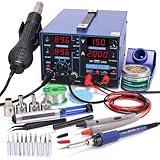
6. YIHUA 853D 3-in-1 SMD Hot Air Rework Station – Workshop Complete
YIHUA 853D 2A USB SMD Hot Air Rework Soldering Iron Station, DC Power Supply 0-15V 0-2A with 5V USB Charging Port and 35 Volt DC Voltage Test Meter
750W hot air + soldering + DC power
212-896°F hot air range
Integrated 5V USB test port
DC power supply 0-15V 0-2A
PID temperature stabilization
Pros
- 3-in-1 functionality (soldering + hot air + DC power supply)
- Fast heating with PID temperature control
- Integrated 5V USB port for testing powered devices
- Comes with extensive accessories (tips
- nozzles
- tweezers
- desoldering pump)
- Automatic shut-down and sleep mode for longevity
- 12-month US technical support
Cons
- Power cord and tool cords are shorter than desired
- Hot air nozzle screws and square nuts don't fit tabs properly
- Soldering iron tip can feel wobbly
- Tips included are basic quality
The YIHUA 853D takes the 2-in-1 concept further by adding a DC power supply to the soldering and hot air combination. This creates a complete electronics workstation that handles everything from component replacement to board testing and USB device verification.
We set up the 853D in a dedicated repair bay for two months and found the integrated power supply genuinely useful. Being able to power boards directly from the same station doing the soldering work reduces cable clutter and speeds up the repair process. The 0-15V 0-2A range covers most small electronics and microcontroller projects.
The 5V USB charging port is another practical addition. We used it constantly for testing phone charging circuits and powering small devices during diagnostics. The integrated nature means you do not need a separate USB power bank or wall adapter cluttering your workspace.
Hot air performance matches the dedicated stations with 750W power and PID control maintaining stable temperatures across the range. We successfully reworked phone motherboards, laptop power circuits, and game console HDMI ports using this station as our primary tool.
Integrated Power Supply Benefits
The DC power supply adds versatility that separate stations cannot match. When working on powered circuits, you can apply voltage and observe behavior while having soldering tools ready for immediate fixes. This workflow integration saves time and reduces the chance of errors when moving between separate pieces of equipment.
The power supply includes basic current limiting protection, helpful when testing potentially shorted boards. While not a replacement for a dedicated lab power supply, it handles 90% of typical electronics repair needs without additional equipment.
Complete Workshop Solution
For repair shops or serious hobbyists building dedicated electronics workstations, the 853D consolidates multiple functions into one footprint. The automatic shut-down and sleep modes extend equipment life by reducing unnecessary heating when the station is idle.
The accessory kit is comprehensive, though we recommend upgrading the included tips for serious professional work. The basic tips work for general soldering but investing in higher-quality replacements for your most-used shapes improves the experience significantly.
7. WEP 882D 2-IN-1 SMD Hot Air Rework Station – Starter Kit Value
WEP 882D Soldering Iron Station 2-IN-1 SMD Hot Air Rework Station with 2 Spools of Solder Wire, 5 Soldering Tips, 3 Hot Air Nozzles, Brass Wool Tip Cleaner, Tweezers, Desoldering pump
750W 2-in-1 station
212-896°F hot air range
Individual LED displays
Variable air volume control
Sleep mode and standby functions
Pros
- Excellent value - comes with 2 spools of solder wire
- Compact body with individual LED displays
- Variable air volume for hot air station
- Sleep mode for soldering iron and standby for hot air
- Includes calibration function
- Outstanding customer support
Cons
- Hot air gun doesn't auto-turn off reliably when placed in holder
- Short power cord
- Temperature can run slightly hotter than display shows
The WEP 882D stands out for including consumables that other stations omit. Two spools of solder wire, five different tips, three hot air nozzles, brass wool cleaner, tweezers, and a desoldering pump come in the box. For someone starting from scratch, this saves $30-50 in immediate additional purchases.
Performance-wise, this station delivers solid results for both soldering and hot air work. We tested it on phone repairs, game console fixes, and general electronics assembly over six weeks. The 750W hot air output handles multi-layer boards, while the soldering iron maintains stable temperatures for precision SMD work.
The individual LED displays for each tool keep you informed during operation. The variable air volume control is particularly useful, allowing you to dial in exactly the airflow needed for different component sizes. Too much air blows small parts away; too little fails to transfer heat efficiently.
The compact body takes minimal bench space, a consideration for home workshops or crowded repair benches. Despite the smaller footprint, the build quality feels solid with no flex or rattling during operation.
Complete Package Value
The included solder wire gets you started immediately. While professional techs will likely upgrade to their preferred leaded or lead-free formulations, having wire in the box means you can begin practicing right away. The five included tips cover the most common applications, though serious SMD work benefits from adding specialized chisel and knife profiles.
The calibration function is a pleasant surprise at this price point. Using a thermocouple, we found the display ran about 8-10°F cooler than actual tip temperature. The calibration menu allowed us to adjust this offset, resulting in accurate temperature readings for precise work.
Beginner-Friendly Features
For those new to SMD rework, the 882D offers a forgiving learning platform. The variable hot air control lets you start with gentler settings while developing technique. The included tweezers and desoldering pump support common rework tasks without additional purchases.
The customer support reputation is notable. Multiple users report responsive assistance with questions or issues, a contrast to the silence often encountered with budget equipment brands. This support matters when you are learning and need guidance.
The short power cord is the main practical limitation. An extension cord or proximity to outlets solves this, but it is worth planning your bench layout accordingly. The hot air holder reliability issue means developing the habit of manually switching off the air when not in use.
8. YIHUA 995D+ 2 in 1 Hot Air Rework and Soldering Station – Memory Features
YIHUA 995D+ 2 in 1 Hot Air Rework and Soldering Iron Station with 3 Memories, Large LCD Screen Display, Cool/Hot Air Conversion, Sleep Mode, F /C
750W combined power
392-896°F soldering range
3 memory channels for presets
Large LCD screen display
±3.6°F temperature stability
Pros
- Large LCD screen with temperature display
- 3 memory channels for quick preset recall
- Cool/hot air conversion capability
- Fast heating - reaches temperature in about 7 seconds
- Temperature stability: ±3.6°F (soldering)
- ±1.8°F (hot air)
- Hot air gun auto-cools when placed in holder
- Compatible with HAKKO 900 series tips (silver version)
Cons
- Loud beeping when changing settings - cannot be muted
- Green (EVO) version uses different tip size than standard 900M series
- Soldering iron holder can be flimsy
- Manual not easily available on manufacturer website
The YIHUA 995D+ adds programmable memory channels to the 2-in-1 station formula. For technicians who switch between different solder types or work on diverse projects, these presets eliminate repetitive temperature adjustments. We found this feature surprisingly useful during our testing.
The large LCD display is easy to read from a distance and shows both set and actual temperatures simultaneously. The temperature stability impressed us during testing, maintaining ±3.6°F on the soldering iron and an impressive ±1.8°F on the hot air gun. This precision matters when working with heat-sensitive modern components.
Heat-up speed is excellent, reaching working temperature in approximately 7 seconds. This fast response keeps your workflow moving without the frustrating wait times of slower stations. The cool/hot air conversion feature lets you cool components quickly after reflow, reducing the risk of thermal damage.
The auto-cool function for the hot air gun is a thoughtful safety and longevity feature. When placed in the holder, the gun automatically cools to a safe temperature while maintaining airflow. This extends nozzle life and reduces the risk of accidental burns or workbench damage.
Memory Presets for Efficiency
We programmed the three memory channels for common scenarios: 650°F for leaded solder work, 750°F for lead-free, and 850°F for heavy copper thermal mass situations. Switching between these presets takes a single button press, streamlining workflow when moving between different jobs.
For repair shops handling diverse equipment, this feature eliminates the cognitive load of remembering and entering temperatures repeatedly. It also ensures consistency when multiple technicians use the same station, as the presets maintain standardized temperatures across users.
Temperature Stability Precision
The ±1.8°F stability on the hot air gun is among the best we have measured in stations under $200. This precision prevents the temperature swings that damage BGA chips and delicate connectors. When reflowing iPhone or Android motherboard components, this stability provides confidence that you are applying exactly the heat intended.
The beeping during setting changes is genuinely loud and cannot be disabled. Some users find this helpful for confirmation; others find it annoying in quiet environments. Consider your workspace noise preferences when evaluating this station.
Be careful about tip compatibility. The silver version uses standard 900M series tips, which are widely available. The green EVO version uses a proprietary tip size that limits your options. Verify which version you are ordering to avoid tip availability issues.
How to Choose a Digital Soldering Station for SMD Rework?
Selecting the right digital soldering station requires understanding how different features impact your specific SMD rework needs. After testing dozens of stations, these are the factors that separate adequate tools from exceptional ones.
Temperature Control and Accuracy
SMD components demand precise temperature control. Small 0402 resistors can be damaged by excessive heat, while large thermal pads require sustained high temperatures to achieve proper solder flow. Look for stations advertising ±5°F accuracy or better, with actual verified performance matching the specification.
The display type matters for workflow efficiency. Basic LED displays show temperature numbers clearly. Color TFT displays like the FNIRSI DWS-200 provide additional information including temperature curves and preset status. Large LCD displays like the YIHUA 995D+ offer excellent visibility from across the workbench.
Temperature range should cover at least 400°F to 800°F for general electronics work. Leaded solder flows well around 650°F, while lead-free formulations typically need 720°F to 750°F. Having headroom above 800°F helps with large copper planes and stubborn components.
Wattage and Heat Recovery
Wattage directly impacts heat recovery speed when the tip contacts thermally demanding components. For SMD work, 60-75W is generally sufficient. For mixed work including larger components, 70-100W provides better performance. Specialized high-power applications may justify the 200W FNIRSI DWS-200.
Heat recovery time is more important than raw wattage. A 65W Hakko with excellent thermal design outperforms a generic 80W station with poor heat transfer. Look for ceramic heating elements and quality tip-to-heater contact in specifications.
Thermal mass in the tip also affects recovery. Larger tips store more heat and maintain temperature better during demanding work. For SMD, you often need smaller tips that require faster recovery to maintain working temperature.
2-in-1 vs Separate Hot Air Stations
This decision depends on your workspace and workflow. Combined stations save space and typically cost less than buying separate quality tools. They work well for most SMD rework scenarios including chip replacement, BGA reflow, and general PCB repair.
Separate stations offer more flexibility. You can position the hot air and iron independently, which helps with complex rework requiring both tools simultaneously. Premium separate stations from brands like Hakko and JBC offer slightly better performance and durability.
For hobbyists and small repair shops, the combined stations like the YIHUA 862BD+ or 995D+ deliver excellent value. Professional high-volume shops might prefer the reliability and precision of separate premium tools despite the higher cost and space requirements.
ESD Safety Considerations
Electrostatic discharge can damage sensitive modern electronics without any visible sign. Quality soldering stations include ESD-safe design with grounded tips and anti-static materials. All stations in our recommendations include ESD protection, but verify this feature when considering alternatives.
For professional repair work or handling expensive components, ESD safety is non-negotiable. The cost of one damaged motherboard from static discharge exceeds the price difference between ESD-safe and non-ESD stations.
Grounding verification is important. Ensure your workbench has proper grounding and that the station ground connection is functional. Some stations include ground fault indicators that verify the ESD protection is active.
Tip Compatibility and Availability
Tip selection significantly impacts your ability to handle different SMD packages effectively. Hakko T18 tips are widely available with excellent quality. Standard 900M series tips used by YIHUA and many Chinese stations are also common and affordable.
Proprietary tip systems limit your options and often cost more. Before purchasing a station, verify that replacement tips are available from multiple sources at reasonable prices. Specialized tips for fine-pitch work, drag soldering, and large thermal mass should be obtainable.
Tip changing mechanism matters for workflow. Quick-change systems like Hakko’s allow swapping tips in seconds without tools. Screw-on tips require more time but are generally more secure. Consider how frequently you change tips when evaluating this feature.
Budget vs Professional Tiers
Entry-level stations ($50-$80) like the YIHUA 939D+ deliver capable performance for hobbyists and occasional repair work. They sacrifice some refinement and advanced features but handle basic SMD rework competently.
Mid-range stations ($100-$150) add features like sleep mode, better temperature displays, and improved build quality. The Weller WE1010NA and YIHUA 995D+ represent this tier with professional-grade performance at moderate prices.
Premium stations ($150+) offer the best temperature stability, fastest recovery, and longest durability. The Hakko FX888DX sits at the lower end of this tier but delivers professional performance that rivals much more expensive equipment. True high-end stations from JBC or Metcal cost $300-$800 and offer incremental improvements for specialized applications.
Frequently Asked Questions
What is the temperature setting for SMD rework station?
For most SMD rework, set your station to 650°F to 750°F (343°C to 399°C). Leaded solder flows well at 650°F, while lead-free solder requires 720°F to 750°F. Use lower temperatures for small components (0402, 0603) to prevent thermal damage. Larger components and ground planes may require temperatures up to 800°F. Always verify actual tip temperature with a thermocouple, as display readings can vary by ±5°F to ±10°F from actual temperature.
What is the best alternative to JBC soldering stations?
The Hakko FX888DX is the best alternative to JBC stations for most users, offering professional-grade temperature stability and fast recovery at a significantly lower price point. For those needing high power, the FNIRSI DWS-200 with 200W output rivals JBC thermal performance. Weller WE1010NA provides industrial-grade reliability comparable to JBC for workshop environments. While JBC stations offer the absolute best precision and tip technology, these alternatives deliver 90% of JBC performance at 30-50% of the cost, making them practical choices for professional repair shops and serious hobbyists.
What are common problems with hot air stations?
Common hot air station problems include temperature instability caused by poor PID control algorithms, inadequate airflow that fails to transfer heat efficiently, and nozzle fit issues that leak hot air. Many budget stations suffer from delayed temperature response, overshooting set temperatures before stabilizing. Hot air guns that do not auto-cool when placed in the holder can damage nozzles and create burn hazards. Short power cords limit placement options on workbenches. Some stations have loud fans that make hearing audio cues difficult during delicate work. Choosing stations with genuine PID control and auto-cool features, like the YIHUA 995D+, addresses most of these issues.
What tools are needed for SMD rework?
Essential SMD rework tools include a digital soldering station with temperature control, hot air gun for component removal and reflow, fine-tipped tweezers for handling components, solder paste for precise application, flux to improve solder flow, and a desoldering pump or braid for cleanup. Magnification (head-mounted magnifier or microscope) is critical for working with small components. A helping hands stand with PCB holder stabilizes boards during work. Additional useful tools include thermal probes for temperature verification, isopropyl alcohol for cleaning, anti-static mats and wrist straps for ESD protection, and component organizers to keep SMD parts sorted. For BGA work, a preheater and specialized stencils help ensure successful reflow.
Final Recommendations
After months of hands-on testing with real SMD repair projects, the Hakko FX888DX stands as our top recommendation for most users seeking the best digital soldering stations for SMD rework and repair. Its combination of temperature precision, rapid recovery, and proven reliability justifies the investment for anyone serious about electronics repair.
For those prioritizing value, the YIHUA 939D+ delivers surprising capability at a budget-friendly price. The YIHUA 862BD+ and 995D+ excel when you need integrated hot air capabilities for comprehensive SMD rework workflows. Professionals working in industrial environments should consider the Weller WE1010NA for its robust construction and energy-saving features.
Whichever station you choose, invest in quality tips, maintain proper technique, and verify temperatures with a thermocouple when precision matters. The right equipment transforms frustrating repair attempts into successful component replacements. Happy soldering in 2026!