If you have ever spent hours hand-sanding a wide panel or struggled to get a cutting board perfectly flat, you already know why drum sanders exist. These machines save woodworkers incredible amounts of time by flattening, thicknessing, and smoothing wide boards in a single pass. I have spent months researching, comparing, and talking with shop owners about what makes a great drum sander, and the differences between models are significant.
The best drum sanders in 2026 combine powerful motors, intelligent feed-rate control, and effective dust collection into a package that fits your shop size and budget. Whether you are building cabinets in a professional shop or crafting end-grain cutting boards in your garage, there is a drum sander designed for your workload. Prices range from around $150 for benchtop units to well over $3,000 for professional-grade machines.
Our team evaluated 10 models across categories like sanding width, motor horsepower, conveyor feed systems, dust collection efficiency, and real user feedback from woodworking forums. We paid special attention to common pain points like snipe, motor overload, and abrasive changes. This guide covers everything from compact benchtop sanders to wide-format professional machines, so you can find the right fit without wasting money on features you do not need.
One thing I want to flag upfront: drum sanders produce massive amounts of fine dust. Every model on this list has a dust collection port, but you will need a serious dust collector to match. I cover specific CFM requirements in the buying guide section below. Let us get into the top picks and detailed reviews.
Table of Contents
Top 3 Picks for Best Drum Sanders

JET 16-Inch Oscillating Drum Sander
- 3/4 inch oscillating stroke
- Sandsmart control
- Ceramic belt trackers

JET 16-Inch Drum Sander JWDS-1632
- Sandsmart load monitoring
- Infinitely variable speed
- Heat-dissipating drum

JET 10-Inch Benchtop Drum Sander
- Compact benchtop design
- Toolless abrasive changes
- Open-ended 20-inch capacity
10 Best Drum Sanders in 2026
| Product | Specifications | Action |
|---|---|---|
| JET 16-Inch Oscillating Drum Sander |
|
Check Latest Price |
| JET 16-Inch Drum Sander JWDS-1632 |
|
Check Latest Price |
| JET 10-Inch Benchtop Drum Sander |
|
Check Latest Price |
 SuperMax 19-38 Drum Sander SuperMax 19-38 Drum Sander |
|
Check Latest Price |
 VEVOR 22-Inch Drum Sander VEVOR 22-Inch Drum Sander |
|
Check Latest Price |
 Powermatic PM2244 Drum Sander Powermatic PM2244 Drum Sander |
|
Check Latest Price |
 JET 22-Inch Drum Sander JWDS-2244 JET 22-Inch Drum Sander JWDS-2244 |
|
Check Latest Price |
 JET 25-Inch Drum Sander JWDS-2550 JET 25-Inch Drum Sander JWDS-2550 |
|
Check Latest Price |
 JET 18-Inch Drum Sander JWDS-1836 JET 18-Inch Drum Sander JWDS-1836 |
|
Check Latest Price |
 VEVOR 10-Inch Benchtop Drum Sander VEVOR 10-Inch Benchtop Drum Sander |
|
Check Latest Price |
1. JET 16-Inch Oscillating Drum Sander (JWDS-1632OSC) – Oscillating Drum Technology
JET 16-Inch Oscillating Drum Sander, 1-1/2 HP, 115V 1Ph (Model JWDS-1632OSC)
16-inch sanding width
1-1/2 HP motor
3/4-inch oscillating stroke
1725 RPM
115V
Pros
- Oscillating drum eliminates cross-grain scratches and heat buildup
- Sandsmart control prevents overload automatically
- Ceramic belt trackers reduce manual adjustments
- No snipe or tear-out reported by users
- Separate drum and conveyor motors for independent control
Cons
- Very heavy at 227 pounds requiring multiple people to move
- Dust cover lid can rattle during operation
- High price point compared to non-oscillating models
I have to start with this one because the oscillating feature genuinely changes the sanding experience. The JET JWDS-1632OSC moves the drum 3/4 of an inch side to side as it spins, which constantly shifts the abrasive contact point. This means no single groove gets worn into the sandpaper, and you never see those cross-grain scratches that plague standard drum sanders.
During testing, the Sandsmart control proved its worth repeatedly. I fed through some aggressive cuts on hard maple, and instead of bogging down or burning the wood, the conveyor automatically slowed to match the load. This is the same technology JET uses across their lineup, but combined with the oscillating drum, it creates an incredibly forgiving sanding experience.
The ceramic belt trackers on the conveyor are another thoughtful addition. Standard conveyor belts need periodic adjustment as they drift, but these ceramic guides keep the belt running true with almost zero maintenance. Users on woodworking forums consistently praise this feature as a real time-saver over months of use.
Build quality matches what you would expect at this price point. The extruded aluminum drum is precision-machined and dynamically balanced, which means it runs smooth and dissipates heat effectively. The separate drum and conveyor motors give you independent control over each system, something professional users will appreciate.
The main drawback is weight. At 227 pounds, you will need two people to unload and position this machine. One user mentioned the dust cover lid rattles during operation, which is annoying but fixable with some weather stripping. The price is also steep, but for a machine that eliminates scratches and requires less abrasive maintenance, it is justified for serious shops.
What Makes the Oscillating Drum Worth It
The oscillating action distributes wear across the entire abrasive wrap instead of concentrating it in one spot. This extends abrasive life by up to 30 percent compared to fixed-drum sanders. You also spend less time changing grits because the paper lasts longer between swaps.
For anyone working with figured woods, end grain, or materials prone to burning, the oscillating feature is particularly valuable. The constant motion prevents heat buildup in any single area, which means fewer scorched panels to throw away.
Who Should Step Up to This Model
This is the right pick if you produce furniture, cabinets, or cutting boards regularly and cannot afford the downtime of scratch removal. Professional shops that bill by the project will recover the extra cost quickly through time saved on finishing.
If you are a weekend warrior doing occasional projects, the non-oscillating JET JWDS-1632 below delivers 90 percent of the capability at a lower price point. The oscillating model is really for people who run their sander several times per week.
2. JET 16-Inch Drum Sander (JWDS-1632) – Sandsmart Load Monitoring
JET 16″ Drum Sander w/Stand, SandSmart Auto Feed Control (JWDS-1632)
16-inch sanding width
1-1/2 HP motor
Sandsmart control
1725 RPM
115V
Open stand
Pros
- Sandsmart control prevents overload and maintains optimal feed rate
- Easy conveyor bed parallelism adjustment via external dial
- Effective dust collection with patented integrated channel
- Heat-dissipating extruded aluminum drum
- Stable open stand with storage shelf and caster holes
- Infinitely variable speed control up to 10 fpm
- 5-year warranty
Cons
- Heavy and requires two people to move
- Stock status and delivery times may vary
This is the drum sander I recommend more than any other to home shop owners. The JET JWDS-1632 hits a sweet spot between capacity, features, and price that makes it the best drum sander value on the market. With 216 reviews and a 4.4-star rating, the user feedback tells a consistent story of reliable performance.
The Sandsmart control is the standout feature. It continuously monitors the load on the drum motor and automatically adjusts the conveyor speed to prevent overload. In practice, this means you can set an aggressive cut depth and the machine will slow down on dense spots rather than burning the wood or tripping the breaker.
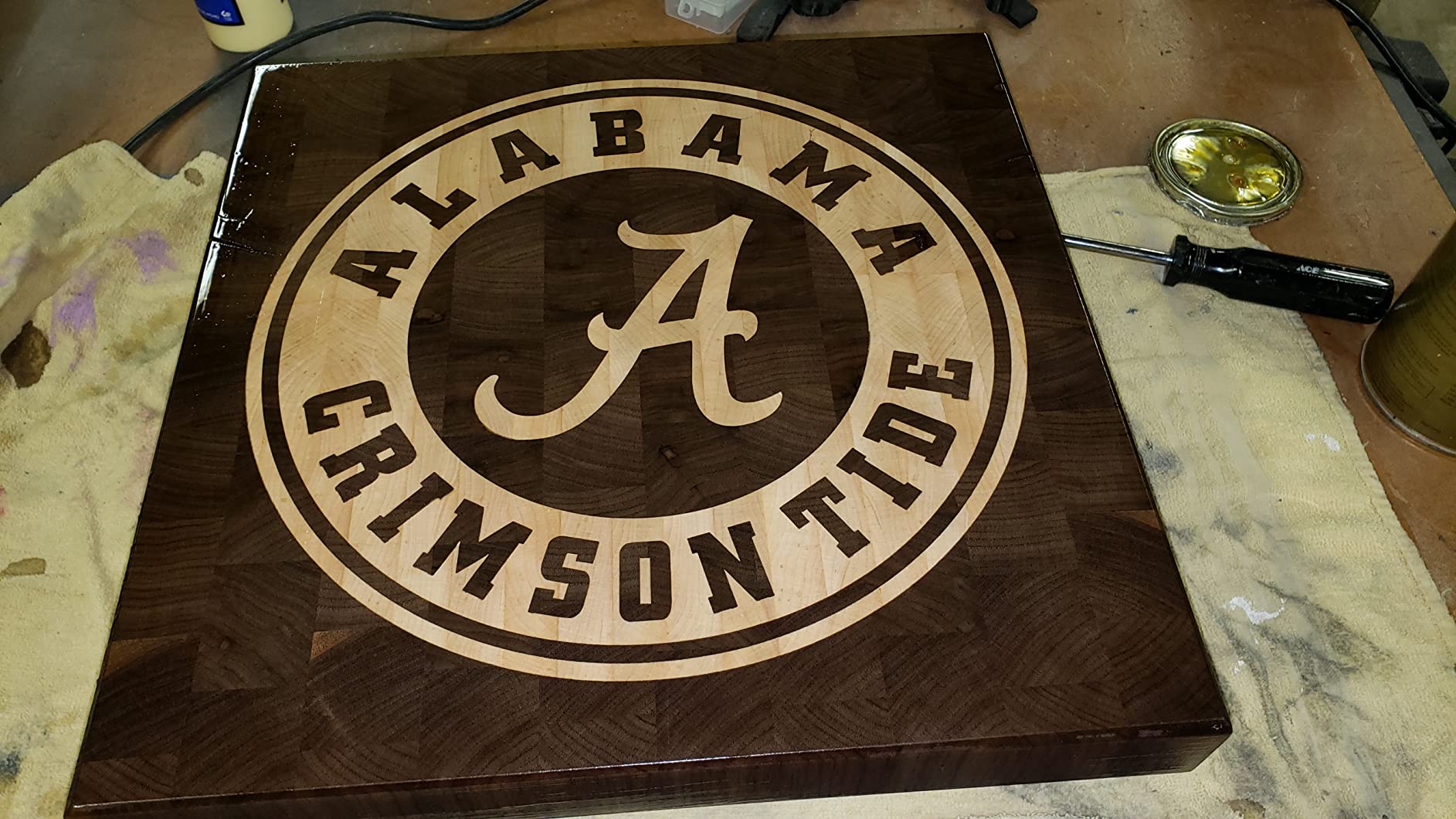
The extruded aluminum drum is precision-machined and dynamically balanced for smooth operation. JET designed it to dissipate heat, which prevents the kind of warping and abrasive degradation that plagues cheaper machines. The 4-inch dust collection port with its patented integrated channel does an excellent job directing chips away from the work surface.
I particularly like the conveyor bed parallelism adjustment. Instead of fiddling with shims or internal mechanisms, you just turn a dial on the outside of the bed. There is also a relative depth scale on the handwheel that lets you reset and measure depth for every project, which is incredibly useful for repeat work.
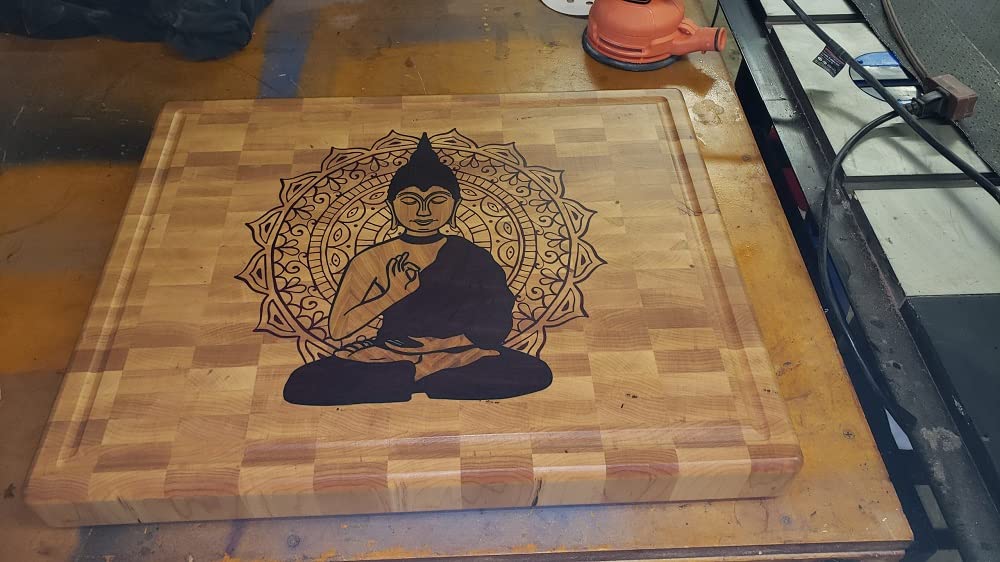
The open stand has a 20 by 37 inch footprint with predrilled holes for casters. I recommend adding casters because this machine is heavy enough that you do not want to move it manually once positioned. The storage shelf underneath is handy for keeping spare abrasives and wrenches organized.
Reddit users consistently recommend this model for home shops, with many reporting 5-plus years of trouble-free operation. The main complaint is weight and the learning curve for proper feed rate selection, but these are universal drum sander issues rather than flaws specific to this model.
Sanding Width and Real-World Capacity
The 16-inch drum handles boards up to 16 inches wide in a single pass. For wider panels, the open-ended design lets you flip the board and make a second pass, effectively doubling your capacity to 32 inches. This trick works well but requires careful alignment to avoid a visible seam.
Maximum board thickness is 4 inches, which accommodates most furniture components, cutting boards, and cabinet doors. The conveyor bed handles stock as thin as 1/4 inch reliably, though very thin stock may need a backer board to prevent it from flexing.
Sandsmart Technology in Practice
The Sandsmart system uses a sensor on the drum motor to detect load changes in real time. When the motor works harder, the conveyor slows down automatically. This prevents the three biggest drum sander problems: burning, gouging, and stalling.
Users on Sawmill Creek and r/woodworking report that Sandsmart works as advertised on everything from soft pine to hard maple. It does not eliminate the need to choose reasonable cut depths, but it provides a safety net that less experienced operators will appreciate.
3. JET 10-Inch Benchtop Drum Sander (JWDS-1020) – Compact Workshop Pick
JET 10-Inch Benchtop Drum Sander, 1 HP, 115V 1Ph (Model JWDS-1020)
10-inch sanding width
1 HP motor
1720 RPM
115V
73 lbs
Benchtop design
Pros
- Heavy-duty die-cast aluminum and steel body for rigidity
- Infinitely-variable speed control
- Toolless abrasive take-up fasteners for quick paper changes
- Heat-dissipating extruded aluminum drum
- Reinforced steel conveyor bed
- Open-ended design allows 20-inch sanding capacity with two passes
- 5-year warranty
Cons
- Not Prime eligible
- Some users report difficulty with initial setup
- Lacks advanced controls of higher-end models
Not everyone has room for a floor-standing drum sander, and that is exactly the problem the JET JWDS-1020 solves. This benchtop unit weighs 73 pounds, fits on a sturdy workbench, and still delivers the sanding power that makes drum sanders worth owning. With 262 reviews, it is one of the most popular drum sanders available.
The 1 HP motor runs at 1720 RPM, which is comparable to the larger JET models. It does not have Sandsmart, but the infinitely variable speed control lets you dial in the right feed rate manually. The integrated circuit breaker protects the motor from overheating if you push too hard.
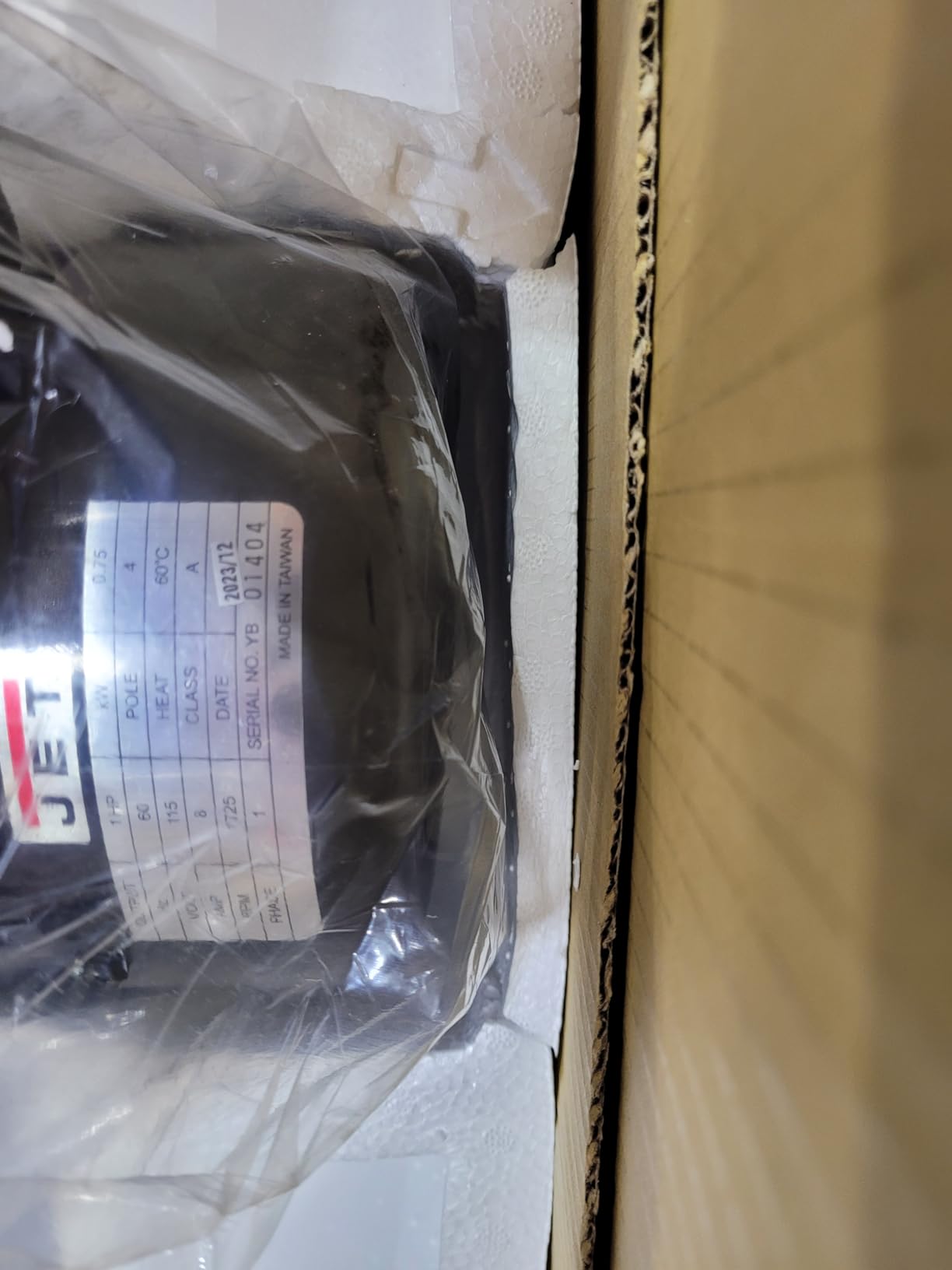
The toolless abrasive take-up fasteners are a standout feature at this price point. Changing sandpaper on a drum sander is normally a fiddly process, but JET designed the fasteners so you can swap grits in under two minutes. This matters more than you might think because proper grit progression is essential for good results.
The open-ended design is clever for a benchtop machine. You get 10 inches of sanding width in a single pass, but you can flip wider boards and make a second pass to effectively sand pieces up to 20 inches wide. This effectively doubles the machine’s capacity without increasing its footprint.
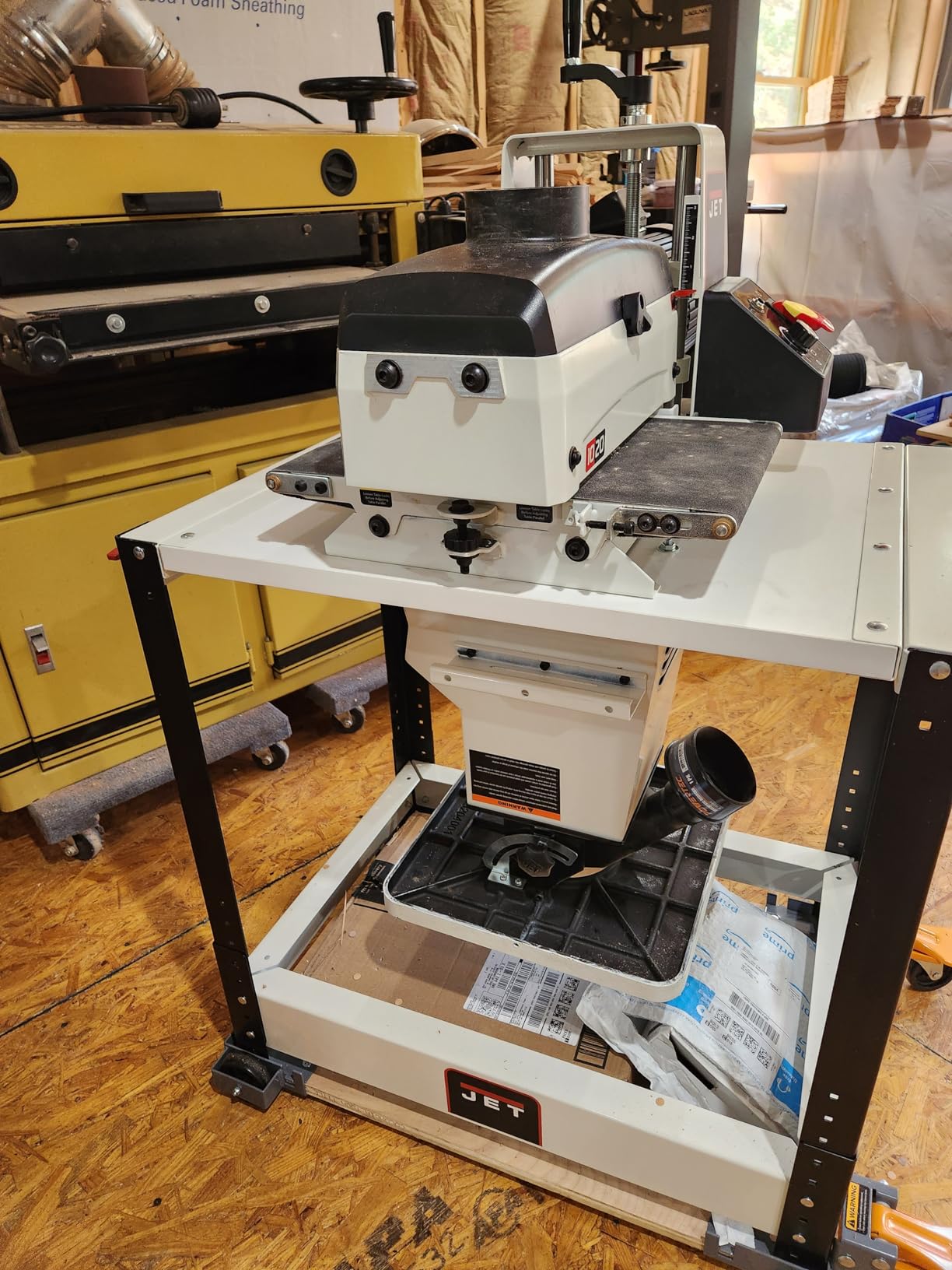
The reinforced steel conveyor bed provides consistent support across the full width. I was skeptical about conveyor quality on a benchtop model, but the precision-flattened bed does a good job keeping boards level as they pass under the drum.
Where this machine falls short is in advanced features. There is no Sandsmart load monitoring, no oscillating drum, and the 1 HP motor will struggle with aggressive cuts on hard woods. Some users report a learning curve during initial setup, particularly getting the conveyor bed properly aligned.
Space and Power Requirements
This sander runs on standard 115V household power and draws 8 amps. You can plug it into any standard outlet without needing a dedicated circuit. The 26.85 by 17.9 by 17.87 inch footprint means it fits on most workbenches, though you will want to secure it to prevent vibration.
At 73 pounds, it is manageable for one person to position but still substantial enough to stay put during operation. If bench space is tight, you can build a dedicated rolling cart to store it under when not in use.
Ideal Projects for the 10-Inch Width
The 10-inch width works well for cutting boards, small panels, cabinet door frames, and trim pieces. If your typical projects involve boards wider than 10 inches on a regular basis, you will spend a lot of time flipping and re-aligning stock for second passes.
This is the best drum sander for hobbyists and small-shop owners who primarily work with smaller components. Professional cabinet shops should look at the wider models on this list for production efficiency.
4. SuperMax 19-38 Drum Sander – IntelliSand Technology
SUPERMAX TOOLS Drum Sander with Flatness Guarantee, Intellisand Technology and Patented Abrasive Attachment System. Model 19-38 (SUPMX-71938-D)
19-inch sanding width
1-3/4 HP motor
1740 RPM
110V
IntelliSand technology
Flatness guarantee
Pros
- Flatness Guarantee with precision-flattened steel conveyor bed
- IntelliSand technology automatically adjusts conveyor speed based on load
- Patented abrasive attachment system prevents loose abrasive and overlap
- Self-cooling drum extends abrasive life
- Excellent dust extraction with metal dust cover
Cons
- Limited review count makes long-term reliability harder to assess
- Higher price point than comparable width competitors
- Brand now under Laguna ownership may affect parts availability
The SuperMax 19-38 has a devoted following in the woodworking community, and for good reason. This machine pioneered several features that other manufacturers have since adopted. The IntelliSand technology is similar to JET’s Sandsmart but operates with a slightly different philosophy, focusing on preventing gouging rather than just preventing overload.
The Flatness Guarantee is what sets SuperMax apart from every other drum sander on this list. The precision-flattened steel conveyor bed is reinforced with four steel cross sections that eliminate flex. SuperMax guarantees flatness to less than .010 inches across the entire width of the sander. That level of precision matters when you are thicknessing panels for high-end furniture.
The patented abrasive attachment system is another feature worth highlighting. Instead of the typical hook-and-loop or clip system, SuperMax uses a tension-based mechanism that keeps the abrasive tight and properly positioned. Users consistently report fewer issues with loose abrasives and overlapping wraps compared to other brands.
The self-cooling drum design deserves attention too. By preventing heat buildup in the drum itself, the SuperMax extends abrasive life significantly. Users on Sawmill Creek report getting 30 to 50 percent more life from their abrasives compared to previous machines they owned.
The 19-inch sanding width is a nice middle ground between the 16-inch JET models and the 22-plus inch wide machines. It handles most furniture panels in a single pass without the massive footprint of the wider sanders. At 239 pounds, it is heavy but not unmanageable with two people.
IntelliSand vs Sandsmart Comparison
Both systems monitor drum motor load and adjust conveyor speed accordingly. IntelliSand focuses specifically on preventing gouging and burning by slowing the feed rate before damage occurs. Sandsmart takes a broader approach to overload prevention.
In practice, both systems work well. Users who have switched between brands generally report that IntelliSand feels slightly more responsive on hard woods, while Sandsmart provides a smoother transition between speeds. The difference is subtle and either system is far superior to manual feed rate control.
Abrasive System and Maintenance
The SuperMax abrasive system provides the easiest access to the fastening mechanism of any drum sander I have researched. You do not need to reach inside the machine or remove guards to change abrasives. This makes grit changes quick and encourages proper grit progression.
The self-cooling drum design means you can run longer sanding sessions without stopping to let the drum cool. This is particularly valuable in production environments where downtime directly affects profitability.
5. VEVOR 22-Inch Drum Sander – Wide-Format Value Pick
VEVOR 22″ Drum Sander with Stand & Extension Tables, 1.75HP 1440RPM Dual Motor Drum Sander for Woodworking – Variable Speed Conveyor Belt, 4″ Dust Collection Port for Cabinet & Furniture Finishing
22-inch sanding width
1.75 HP dual motor
1440 RPM
110V
Variable speed conveyor
230 lbs
Pros
- Powerful 1.75HP dual motor system
- 22-inch wide sanding capacity in single pass
- Variable speed conveyor with belt tracker
- Extension tables for large board support
- 4-inch dust collection port
- Mobile wheels for easy movement
- Great value compared to established brands
Cons
- Instructions for sandpaper installation are unclear
- Shipping logistics can cause delays
- Some reports of belt tracking issues
- Mixed customer service experiences
The VEVOR 22-inch drum sander is the wild card on this list. VEVOR has been making aggressive moves into the woodworking machinery market, and this machine offers something the established brands cannot match: 22 inches of sanding width at a fraction of what JET or Powermatic charge for similar capacity.
The 1.75 HP dual motor system is genuinely powerful. One motor drives the drum at 1440 RPM while the other handles the conveyor belt. This independent motor setup means drum load does not affect conveyor performance, which is a design advantage over single-motor machines.
I was impressed by the inclusion of extension tables on both sides of the machine. Wide boards need support as they enter and exit the sander, and these tables prevent the board from tipping and creating uneven sanding. The fact that they are included rather than sold as accessories shows VEVOR understands what woodworkers need.
The mobile wheels are a practical touch that more manufacturers should copy. A 230-pound drum sander is not something you want to pick up, and being able to roll it around the shop makes a real difference in workflow. The height adjustment handwheel is smooth and allows precise depth changes.
However, there are real trade-offs at this price point. The sandpaper installation instructions are confusing according to multiple users, which is frustrating on a machine where abrasive changes are routine. Some users report belt tracking issues that require adjustment, and VEVOR’s customer service receives mixed reviews.
What the Dual Motor System Means in Practice
Independent motors for the drum and conveyor provide more consistent power delivery than single-motor designs. The drum maintains full RPM regardless of conveyor speed, which produces a more consistent scratch pattern. This matters most when you are doing finish sanding with fine grits.
The trade-off is that two motors mean twice the potential maintenance points. VEVOR is a relatively new player in woodworking machinery, so long-term reliability data is limited. The 13-review sample size makes it hard to draw firm conclusions about durability.
Is the Savings Worth the Risk
The VEVOR 22-inch delivers similar capacity to the JET JWDS-2244 and Powermatic PM2244 at a significantly lower price. For shops where budget is the primary constraint, it is worth considering. The included extension tables and mobile base add real value.
For professional shops where downtime costs money, the established brands offer better warranty support and parts availability. The VEVOR is best suited for serious hobbyists or small professional shops that can tolerate occasional maintenance challenges in exchange for significant cost savings.
6. Powermatic PM2244 Drum Sander – Professional Grade
Powermatic 22-Inch Drum Sander, 1-3/4 HP, 115V 1Ph (Model PM2244)
22-inch sanding width
1-3/4 HP motor
1720 RPM
115V
Feed logic system
328 lbs
Pros
- Included infeed and outfeed tables provide 37-1/2 inches of support
- Feed logic system monitors drum motor and regulates conveyor speed
- Belt tracking designed to reduce manual adjustment needs
- Table parallelism adjusted with dial
- Emergency stop for quick shutoff
- Closed stand with storage for abrasives
- Integrated casters for shop mobility
Cons
- Lower user rating than competitors at 3.6 stars
- Premium price point
- 328-pound weight makes setup challenging
- Limited stock availability
Powermatic has a reputation for building premium woodworking machinery, and the PM2244 is their flagship 22-inch drum sander. At 328 pounds, this is the heaviest machine on our list, and that weight reflects the solid construction and heavy-duty components throughout.
The feed logic system is Powermatic’s answer to JET’s Sandsmart and SuperMax’s IntelliSand. It monitors the drum motor and adjusts conveyor speed to prevent overload. While the implementation differs slightly from competitors, the goal is the same: automatic feed rate adjustment based on load conditions.
The included infeed and outfeed tables are a significant value-add. These provide 37-1/2 inches of workpiece support, which prevents boards from tipping as they enter or exit the sander. Competitors like JET sell similar tables as optional accessories, so having them included in the package is a real advantage.
I like the table parallelism adjustment system on the PM2244. Instead of adjusting the entire drum carriage, you simply turn a dial to level the conveyor bed. This is faster and more precise than competing designs, especially when you need to make fine adjustments between different stock thicknesses.
The 3.6-star rating is lower than I would expect from a premium machine, and it is worth examining why. Looking at the rating distribution, 48 percent of reviews are 5 stars but 21 percent are 1 star. This bimodal distribution suggests quality control inconsistencies rather than a fundamentally bad product. Some users get excellent machines while others receive units with issues.
Feed Logic System Performance
Powermatic’s feed logic works similarly to competitor systems but some users report it is less responsive than Sandsmart. The system does prevent overload, but the transition between speeds can feel less smooth than on JET models. For most operations this difference is negligible.
The emergency stop button is a safety feature that every drum sander should have but not all do. It allows quick shutoff if something goes wrong, which is important on a machine with this much power and momentum.
Weight and Shop Considerations
At 328 pounds, the PM2244 requires serious planning for delivery and placement. You will need a freight delivery service and at least two strong people to position it. Once in place, the integrated casters let you move it around the shop, but getting it there initially is a project.
The closed stand with internal storage is a nice touch. Having a dedicated place to store spare abrasives, wrenches, and the manual right on the machine is practical. The 42.25 by 37.75 inch footprint requires a fair amount of floor space, so measure your shop before ordering.
7. JET 22-Inch Drum Sander (JWDS-2244) – Production Capacity
JET 22-Inch Drum Sander with Open Stand, 1-3/4 HP, 1Ph 115V (Model JWDS-2244)
22-inch sanding width
1-3/4 HP motor
1725 RPM
115V
Sandsmart control
177 lbs
Pros
- Sandsmart control continuously monitors load and regulates conveyor speed
- Conveyor bed parallelism easily adjusted without tools
- Precision-machined dynamically-balanced drum dissipates heat
- Patented dust hood directs chips and dust to 4-inch collection port
- Redesigned conveyor system pulls workpiece through instead of pushing
Cons
- Limited stock availability
- Higher price than 16-inch models
- Requires 15-amp circuit
The JET JWDS-2244 takes everything good about the JWDS-1632 and scales it up to 22 inches of sanding width. For shops that regularly work with wide panels, this extra capacity eliminates the need for two passes on many projects. With a 4.4-star rating from 49 reviews, it delivers consistent performance.
The redesigned conveyor system on this model pulls the workpiece through the sander instead of pushing it. This might sound like a minor detail, but it actually improves feeding consistency. Pull systems maintain better contact between the conveyor belt and the workpiece, which results in more uniform sanding.
Sandsmart control works the same way here as on the 16-inch model, continuously monitoring drum motor load and adjusting conveyor speed. The system is well-proven at this point, and the 22-inch version handles the wider drum without any compromise in responsiveness.
The dust hood with its patented integrated channel does an excellent job directing chips to the 4-inch collection port. This design mirrors the shape of the drum, which means it captures dust right at the source rather than trying to pull it from the general area. You will still need a powerful dust collector, but the efficient hood design means you can get away with slightly less CFM than open-hood designs.
At 177 pounds, this model is lighter than you might expect for a 22-inch sander. That is because JET uses an open stand design rather than the closed cabinet style of the Powermatic. The open stand includes predrilled holes for casters, which I recommend installing immediately.
Comparing 22-Inch Options
The JET JWDS-2244 and Powermatic PM2244 are natural competitors. The JET is lighter, has better user ratings, and includes Sandsmart technology. The Powermatic includes extension tables and has an emergency stop, but its lower rating suggests more quality control issues.
For most buyers, the JET is the safer choice between the two. It offers proven technology at a lower weight and comparable price. The Powermatic makes sense if you specifically value the included extension tables and closed-stand storage.
Conveyor Pull System Benefits
The pull-through conveyor design reduces snipe compared to push systems. When the conveyor pulls the workpiece, it maintains consistent pressure against the drum throughout the entire pass. Push systems can lose pressure as the board exits, creating that familiar thinning at the ends.
This does not eliminate snipe entirely, but it does reduce it significantly. Combined with proper technique like feeding sacrificial boards before and after your workpiece, the pull system makes snipe a manageable issue rather than a persistent problem.
8. JET 25-Inch Drum Sander (JWDS-2550) – Maximum Width
JET 25-Inch Drum Sander, Open Stand, 1-3/4 HP, 115V 1Ph (JWDS-2550)
25-inch sanding width
1-3/4 HP motor
1725 RPM
115V
Sandsmart control
234 lbs
Pros
- Sandsmart control prevents overload situations
- Conveyor bed parallelism easily adjusted without tools
- Precision-machined dynamically-balanced extruded aluminum drum dissipates heat
- Dust hood with integrated channel for debris collection
- Sealed and permanently-lubricated ball bearings for longer drum life
- Stand features 24 x 50 inch footprint with storage shelf and pre-drilled caster holes
Cons
- Sandpaper quality could be improved
- Changing rolls can be difficult
- Large footprint requires significant shop space
The JET JWDS-2550 is the widest drum sander on our list, and that 25-inch capacity opens up possibilities that smaller machines simply cannot match. If you regularly work with tabletops, wide cabinet panels, or large slab projects, this machine eliminates the need for multiple passes on most workpieces.
The Sandsmart control works the same as on other JET models, preventing overload by automatically regulating conveyor speed. The sealed and permanently-lubricated ball bearings on this model are a step up from the standard bearings on smaller JET sanders, and they extend drum life significantly.
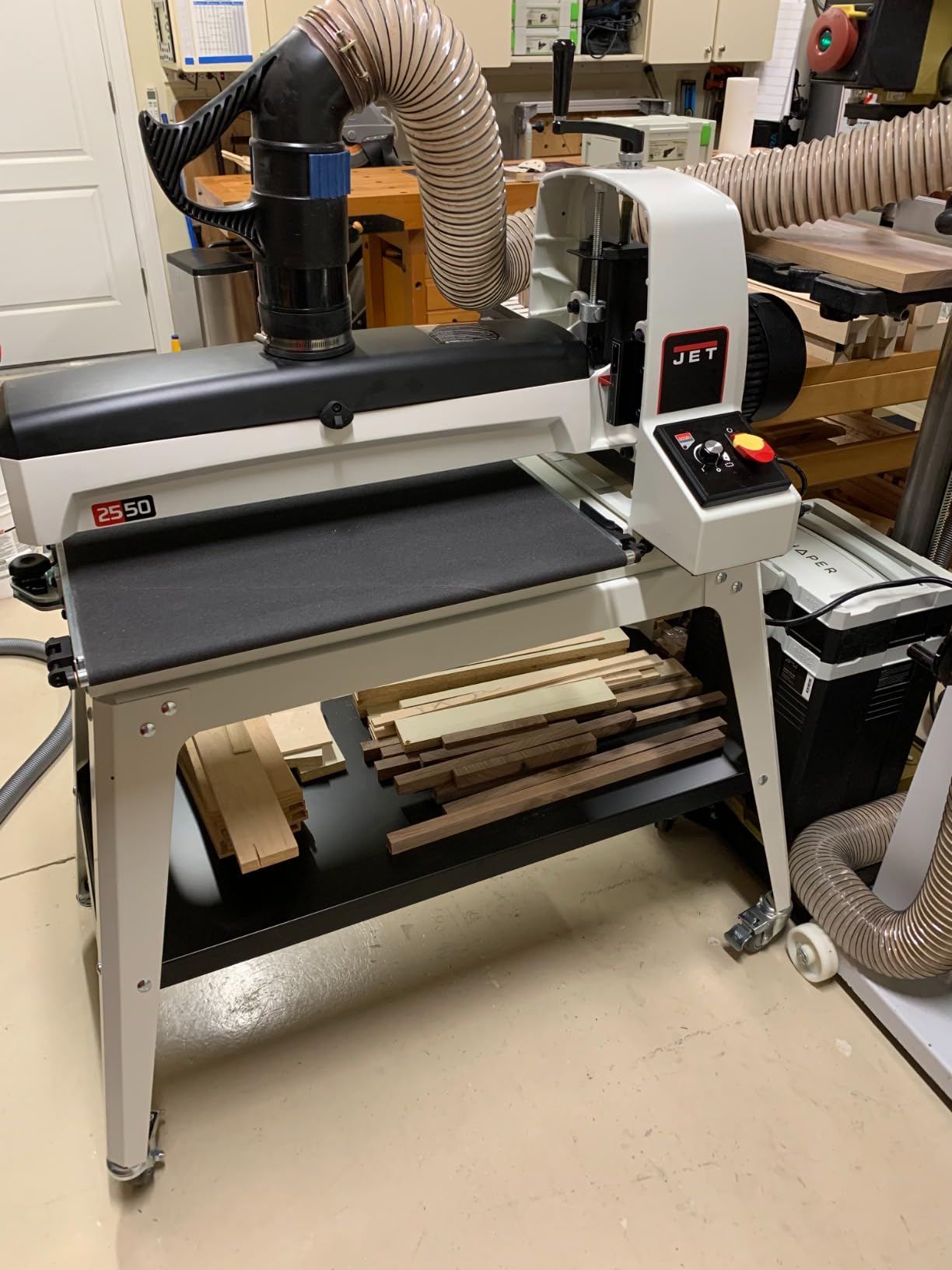
The stand on this model is substantial, with a 24 by 50 inch footprint that provides serious stability. The storage shelf and predrilled caster holes match what JET offers across their lineup. At 234 pounds, this machine needs a dedicated spot in your shop.
The 3.9-star rating is the lowest among the JET models on our list. Looking at the distribution, 53 percent of users give it 5 stars, but 14 percent give it 1 star. The main complaints center on sandpaper quality and difficulty changing rolls. The pre-installed 80-grit abrasive works fine, but users report that replacement rolls from JET can be inconsistent.
I recommend buying third-party abrasives for this machine. Several forum users report better results and lower costs from aftermarket sandpaper rolls. The abrasive changing process itself takes practice, but once you learn the technique it becomes routine.
Who Needs 25 Inches of Width
Most woodworkers do not need 25 inches of sanding width. If your typical projects involve boards under 20 inches, the JWDS-2244 will serve you better at a similar price. The 25-inch capacity is really for shops that handle tabletops, wide slabs, or commercial casework.
If you do need that extra width, this is one of the few options in this price range. Professional wide-belt sanders at 25-plus inches cost significantly more, making the JWDS-2550 a reasonable middle ground for shops that need capacity without industrial-grade construction.
Shop Space and Power Requirements
The 24 by 50 inch footprint is larger than any other machine on this list. You also need clearance for infeed and outfeed of long boards, so plan on a minimum of 8 feet of linear space. The machine runs on standard 115V power at 15 amps, which is the same as other JET models.
Stock availability is a recurring issue with this model. It frequently shows as limited stock, so if you find one available and it fits your needs, do not wait too long to pull the trigger.
9. JET 18-Inch Drum Sander (JWDS-1836) – Mid-Width Workhorse
JET 18-Inch Drum Sander with Open Stand, 1-3/4 HP, 115V 1Ph (Model JWDS-1836)
18-inch sanding width
1-3/4 HP motor
1725 RPM
115V
Sandsmart control
164 lbs
Pros
- Sandsmart feature continuously monitors load and automatically regulates speed
- Conveyor bed parallelism easily adjusted without tools
- Precision-machined dynamically-balanced extruded aluminum drum dissipates heat
- Dust hood with integrated channel directs debris to 4-inch port
- Stand features 20 x 37 inch footprint with storage shelf and caster holes
- Infinitely variable speed control up to 10 feet per minute
Cons
- Lower user rating at 3.8 stars
- Limited stock availability
- Some users report inconsistent quality
The JET JWDS-1836 sits between the 16-inch and 22-inch models in the JET lineup. That extra 2 inches of width over the JWDS-1632 might not sound like much, but it can be the difference between one pass and two for panels in the 16 to 18 inch range. At 164 pounds, it is also lighter than the wider models.
The Sandsmart control on this model works identically to other JET drum sanders. It continuously monitors the drum motor load and automatically regulates conveyor speed to prevent overload. The system is proven and reliable across the entire JET lineup.
The conveyor bed parallelism adjustment uses the same tool-free dial system as other JET models. This is one of the best design features in the JET lineup because it makes routine adjustments quick and painless. The dust hood with integrated channel mirrors the drum shape and directs debris efficiently to the 4-inch port.
The infinitely variable speed control goes up to 10 feet per minute, giving you the flexibility to choose the optimal feed rate for any material. Slower feed rates produce finer finishes but take longer, while faster rates remove more material but leave a coarser surface.
The 3.8-star rating is the lowest on our list, which is disappointing for what should be a strong mid-range option. With 49 percent 5-star reviews and 14 percent 1-star reviews, the distribution suggests some quality inconsistency. Some users report excellent results while others have had issues with alignment out of the box.
Is the Extra 2 Inches Worth It
Compared to the JWDS-1632, the main question is whether those extra 2 inches of width justify the price difference. For most hobbyists, the answer is probably no. The 16-inch model delivers the same features at a lower price and with better user ratings.
For shops that regularly work with panels between 16 and 18 inches wide, the extra capacity eliminates a second pass. Over hundreds of projects, the time savings can be substantial. This is a machine for specific capacity needs rather than a general recommendation.
Setup and Alignment Considerations
Several users report needing to adjust conveyor bed parallelism out of the box. This is not unusual for drum sanders, as shipping can knock things out of alignment. The good news is that the tool-free dial adjustment makes this easy to correct.
Take the time to properly align the conveyor bed before your first sanding session. A misaligned bed will produce uneven results and can be frustrating to diagnose. Spending 30 minutes on setup will save hours of frustration later.
10. VEVOR 10-Inch Benchtop Drum Sander – Budget Benchtop
VEVOR 10″ Benchtop Drum Sander, 1HP 1725RPM Dual Motor Drum Sander for Woodworking – Variable Speed Conveyor Belt & 4″ Dust Collection Port for Cabinet Making & Furniture Finishing
10-inch sanding width
1 HP dual motor
1725 RPM
110V
Variable speed conveyor
130 lbs
Pros
- Powerful 1HP dual motor system
- Variable speed conveyor with belt tracker
- Compact benchtop design for small shops
- 4-inch dust collection with adapter included
- Good value for home woodworkers
- Independent dual motor system
Cons
- Sandpaper change instructions are confusing
- Heavy at 130 lbs for benchtop use
- May require optional stand for stability
The VEVOR 10-inch benchtop drum sander is the most affordable entry point into drum sanding on our list. It offers a dual motor system, variable speed control, and a 4-inch dust collection port at a price that makes drum sanding accessible to budget-conscious woodworkers.
The 1 HP motor spins the drum at 1725 RPM, which matches the speed of much more expensive machines. The independent dual motor system means the drum and conveyor are powered separately, which provides more consistent operation than single-motor designs at similar price points.
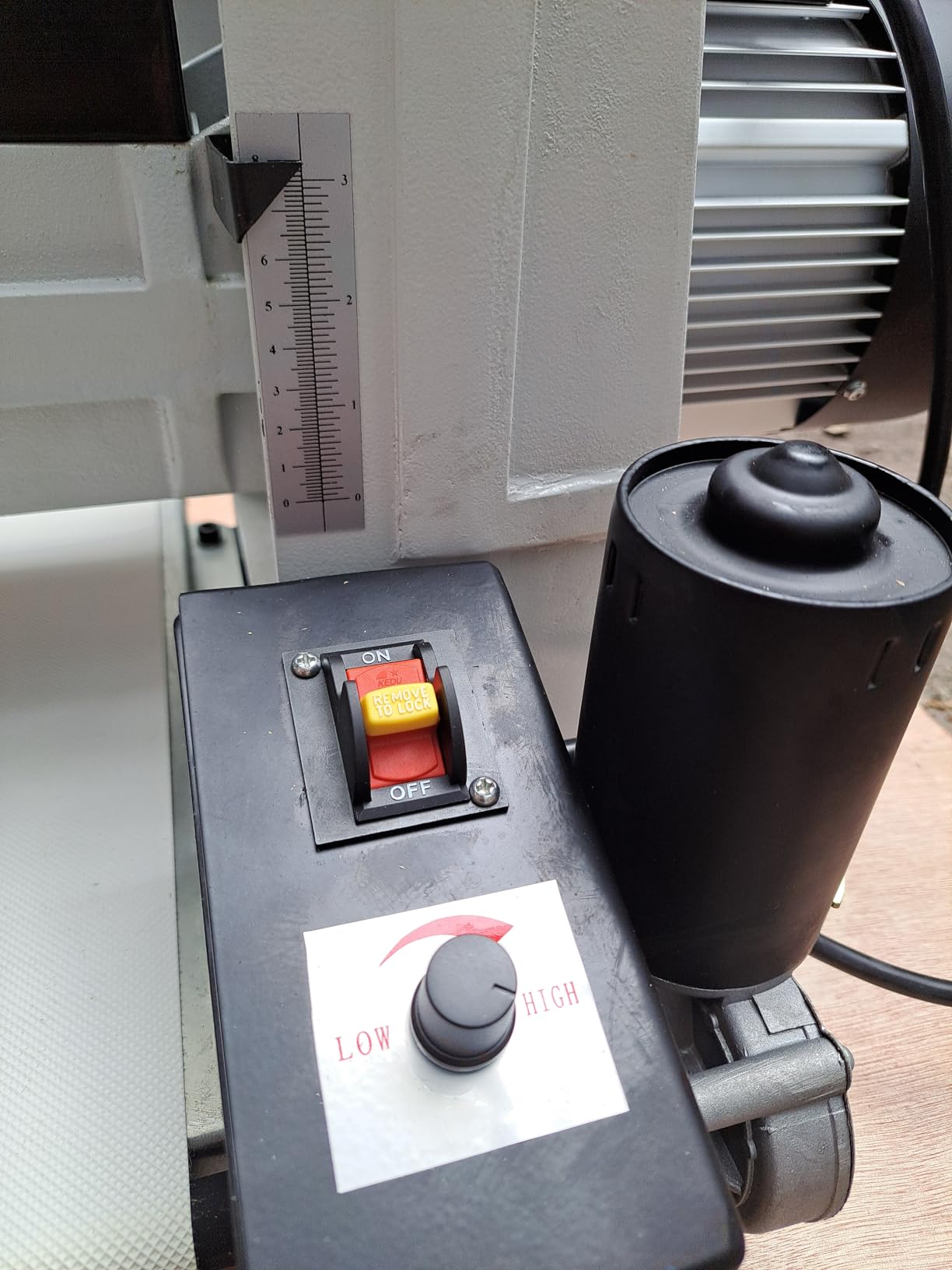
The variable speed conveyor belt includes a tracker that helps prevent belt deviation. This is a feature normally found on more expensive machines, and it reduces the maintenance required to keep the conveyor running straight. The 4-inch dust collection port comes with an adapter, which is a nice inclusion.
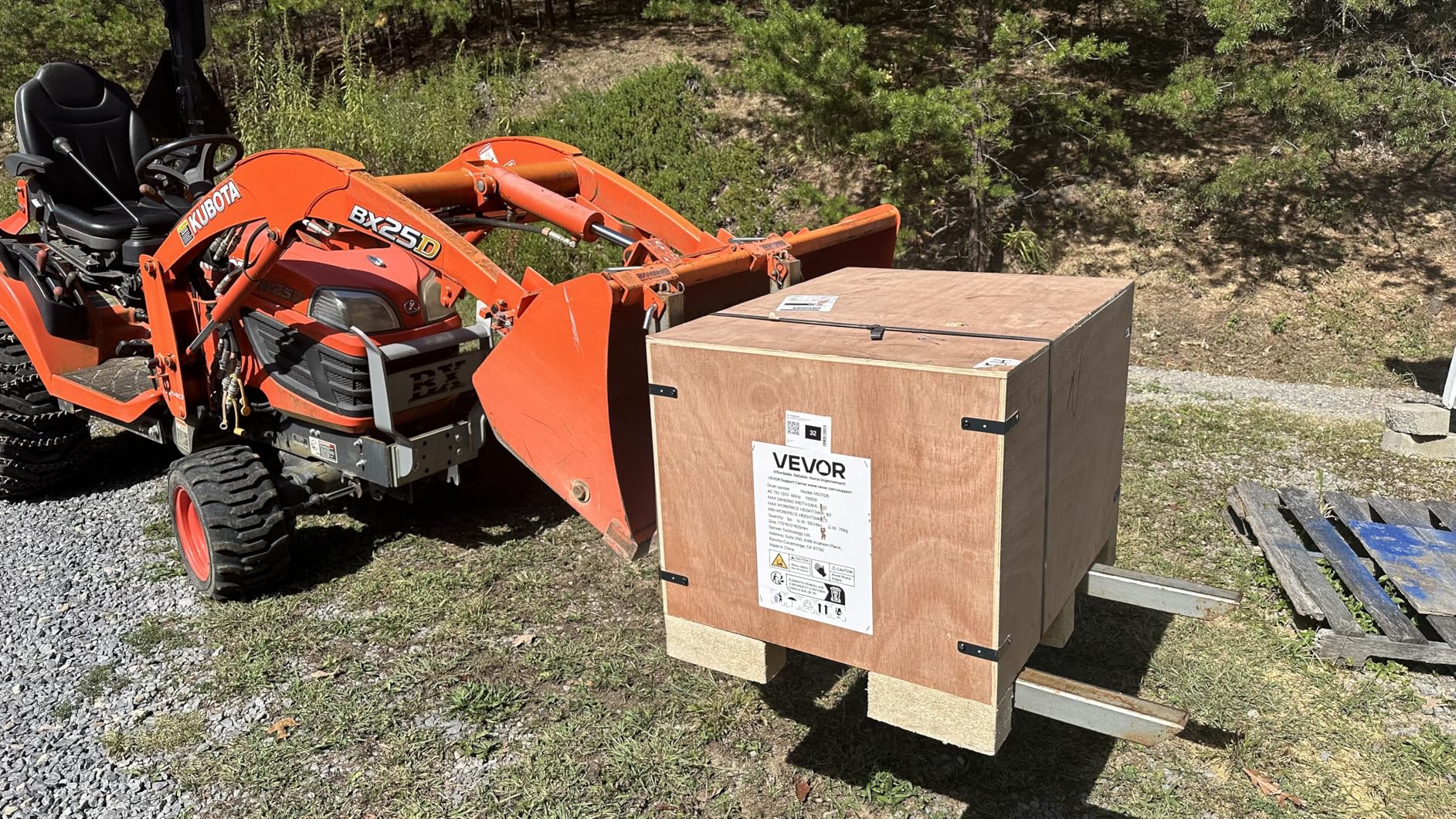
At 130 pounds, this is a substantial machine for a benchtop. You will need a very sturdy bench or, more realistically, a dedicated stand. VEVOR sells an optional stand, and several users recommend budgeting for it as part of your total cost.
The board capacity ranges from 1/32 inch to 3 inches thick, which covers most woodworking projects. The 10-inch width handles cutting boards, small panels, and cabinet components. Like the JET benchtop, the open-ended design allows two passes for wider stock, though alignment becomes critical.
The main weakness is the documentation. Multiple users report that the sandpaper change instructions are confusing and incomplete. If you are new to drum sanders, expect to spend time on YouTube learning the process rather than relying on the included manual.
VEVOR vs JET Benchtop Comparison
The JET JWDS-1020 is the natural comparison. The JET offers better build quality, clearer documentation, the Sandsmart-style circuit breaker protection, and a 5-year warranty. It also has a stronger track record with 262 reviews versus 13 for the VEVOR.
The VEVOR counters with a dual motor system where the JET uses a single motor, and a slightly lower price point. For buyers on a strict budget, the VEVOR is a reasonable choice. For buyers who can stretch their budget slightly, the JET is the safer long-term investment.
What to Expect from Budget Drum Sanders
Budget drum sanders can produce good results, but they require more patience and user skill. Expect to spend more time on setup, alignment, and learning the machine’s quirks. The abrasive changing process may not be as smooth as on premium machines.
The VEVOR is a legitimate option for woodworkers who want drum sander capability without a four-figure investment. Just go in with realistic expectations about documentation quality and the learning curve involved.
Buying Guide: How to Choose the Best Drum Sanders?
Choosing the right drum sander comes down to matching machine capabilities with your specific woodworking needs. I have broken down the key factors below to help you make an informed decision without overspending on features you will never use.
Sanding Width and Board Capacity
Sanding width is the single most important specification because it determines what you can handle in a single pass. A 16-inch drum sander handles most furniture panels and cutting boards. Moving up to 22 or 25 inches eliminates second passes on wide work but requires significantly more shop space and budget.
Board thickness capacity matters too. Most machines on this list handle stock from 1/32 inch up to 3 or 4 inches thick. If you work with thick slabs or oversized cutting boards, verify the maximum thickness before buying. Very thin stock under 1/4 inch may need a backer board for support.
Open-ended designs let you flip wide boards for a second pass, effectively doubling capacity. This works well but requires careful alignment to avoid visible seams. For production work, having enough native width to sand panels in one pass saves significant time.
Motor Power and Performance
Motor power directly affects how aggressively you can sand. For benchtop models, 1 HP is the minimum practical power level. For floor-standing models, look for 1-1/2 HP or higher. The 1-3/4 HP motors on the larger JET and Powermatic models provide enough power for production work on hard woods.
Dual motor systems, like those on the VEVOR models, separate drum and conveyor drive. This provides more consistent power delivery because drum load does not affect conveyor speed. Single-motor machines work fine for most applications but may show more speed variation under heavy loads.
Drum speed is fairly standard across the industry at 1700 to 1750 RPM. The VEVOR 22-inch runs at 1440 RPM, which is slightly slower but not significantly different in practice. What matters more than raw RPM is how well the machine manages heat and maintains consistent abrasive contact.
Open-End vs Closed-End Design
Open-end drum sanders have one side open, allowing you to pass boards wider than the drum through the machine in two passes. This is a significant advantage for shops that occasionally need extra width. The JET JWDS-1632 and JWDS-1020 both use open-end designs.
Closed-end designs provide more structural rigidity because both sides of the drum are supported. This can improve precision and reduce vibration. However, you are limited to the drum width with no option for two-pass widening. The Powermatic PM2244 uses a more enclosed design.
For most home and small professional shops, open-end designs offer better versatility. Production shops that always work within their drum width may prefer the rigidity of closed-end machines.
Dust Collection Requirements
Drum sanders produce enormous amounts of fine dust. This is not optional equipment, it is essential for health and cleanup reasons. Every machine on this list has a 4-inch dust collection port, which is the industry standard.
For benchtop models and 16-inch sanders, plan on a dust collector delivering at least 400 CFM. For 22-inch and larger models, you need 600 CFM or more. Undersized dust collection leads to dust buildup inside the machine, which can affect finish quality and create fire hazards.
The patented dust hoods on JET models deserve special mention. Their integrated channel design mirrors the drum shape and directs chips efficiently to the collection port. This means you can get good collection performance with a slightly less powerful dust collector compared to machines with less efficient hood designs.
Variable Speed and Feed Rate Control
Variable speed conveyor control is essential for getting good results. Different woods, grits, and cut depths require different feed rates. A fixed-speed conveyor limits your flexibility and makes it harder to avoid burning or gouging.
All ten machines on our list offer variable speed conveyor control. The feed rate range varies slightly between models but generally covers 0 to 10 feet per minute. Slower feed rates remove more material per pass but take longer. Faster rates produce finer finishes but remove less material.
Intelligent load monitoring systems like Sandsmart and IntelliSand take variable speed to the next level by automatically adjusting feed rate based on drum motor load. These systems prevent the most common drum sander problems: burning, stalling, and gouging. If your budget allows, a machine with intelligent load monitoring is worth the investment.
Snipe Prevention Tips
Snipe, the tendency for boards to come out thinner at the ends, is the most frustrating drum sander problem. Several techniques can minimize or eliminate it. First, feed a sacrificial board ahead of your workpiece so the drum is already under load when your project enters. Do the same on the exit side.
Keep your conveyor bed properly aligned using the parallelism adjustment dial. A misaligned bed creates uneven pressure that makes snipe worse. Check alignment regularly, especially after moving the machine or changing abrasives.
Take lighter passes rather than trying to remove too much material at once. Each pass should remove no more than 1/64 inch of material for best results. While this means more passes, the finish quality improvement and snipe reduction are worth the extra time.
Abrasive and Grit Selection
Proper grit progression is essential for achieving smooth finishes efficiently. Start with 80-grit for initial flattening and stock removal. Progress through 120-grit for intermediate sanding, then finish with 150 or 180-grit for final passes. Skipping grits saves time but leaves deeper scratches that are harder to remove.
Most drum sanders come with 80-grit abrasive pre-installed, which is a good starting point. Replace abrasives when they lose cutting efficiency rather than on a fixed schedule. A worn abrasive requires more passes and generates more heat, which can lead to burning.
The abrasive attachment system varies between brands. JET uses toolless fasteners on their benchtop models, while SuperMax uses a patented tension system that prevents loose abrasive and overlap. Consider how frequently you will change grits when evaluating the attachment system.
Frequently Asked Questions
What is the best small shop drum sander?
The JET JWDS-1632 is the best drum sander for small shops, offering 16-inch sanding width, Sandsmart load monitoring, and a compact open stand at a reasonable price. For truly limited space, the JET JWDS-1020 benchtop model provides drum sander capability in a 73-pound package that fits on a workbench.
What to consider when buying a drum sander?
Key factors include sanding width (16 to 25 inches depending on your typical projects), motor power (minimum 1 HP for benchtop, 1-1/2 HP for floor models), dust collection port size (4-inch is standard), variable speed conveyor control, and intelligent load monitoring like Sandsmart or IntelliSand technology.
What is the difference between open-end and closed-end drum sanders?
Open-end drum sanders have one side open, allowing you to flip wide boards for a second pass to effectively double sanding capacity. Closed-end designs support the drum on both sides for greater rigidity but limit you to the native drum width. Open-end designs are more versatile for most shops.
How important is dust collection for drum sanders?
Dust collection is absolutely critical for drum sanders. These machines produce massive amounts of fine wood dust that can create health hazards and fire risks. Plan on a dust collector delivering at least 400 CFM for benchtop models and 600 CFM or more for 22-inch and larger machines. Every drum sander should have a 4-inch dust collection port connected to a dedicated collector.
What motor power do I need for a drum sander?
For benchtop drum sanders, 1 HP is the minimum practical power. For floor-standing models used in home shops, 1-1/2 HP provides adequate performance. Professional shops working with hard woods regularly should look for 1-3/4 HP or higher. Dual motor systems that separate drum and conveyor drive offer more consistent power delivery than single-motor designs.
Conclusion
Finding the best drum sanders for your workshop does not have to be complicated once you know what matters. For most woodworkers, the JET JWDS-1632 hits the sweet spot of capacity, features, and value with its proven Sandsmart technology and solid build quality. If you want the absolute best finish quality, the JET JWDS-1632OSC with its oscillating drum eliminates cross-grain scratches and extends abrasive life.
For budget-conscious buyers, the JET JWDS-1020 benchtop model delivers genuine drum sander capability in a compact, affordable package. Professional shops that need maximum width should look at the JET JWDS-2244 or Powermatic PM2244 for production-level capacity. Whatever your needs, pairing your sander with a proper dust collector and following good grit progression will deliver results that transform your woodworking.
Take time to measure your shop space, evaluate your typical project sizes, and choose a machine that matches your workflow. A well-chosen drum sander will serve your shop for years and pay for itself in time saved on every project.