If you spend any serious time in a woodworking shop, you already know that dust is more than just a nuisance. Fine particles from sanding, sawing, and planing can linger in the air for hours, and breathing that stuff in day after day takes a real toll on your lungs. That is exactly why finding the best dust collectors for your setup matters so much.
I have spent the last several months testing dust collectors and separators across different shop sizes, from compact garage workspaces to larger dedicated workshop floors. Our team compared 10 popular models head-to-head, looking at airflow performance, filtration quality, noise output, portability, and overall value. Some impressed us right away, while others had quirks that only showed up after weeks of daily use.
Whether you are a hobbyist looking for a portable dust collector for a small shop or a seasoned woodworker building out a full shop dust collection system, this guide covers every price point and use case. We included cyclone dust collectors, HEPA-certified extractors, wall-mounted units, and budget-friendly separators that pair with your existing shop vac. Let us get into what makes each one stand out.
Table of Contents
Top 3 Picks for Best Dust Collectors
Out of the 10 models we tested, three stood out clearly from the rest. The Festool CT 15 HEPA earned our Editor’s Choice for its exceptional filtration and build quality. The DEWALT DXVCS002 took Best Value with its unbeatable combination of price and 99.5% separation efficiency. And the Dustopper PRO grabbed our Budget Pick for shop owners who already have a capable wet/dry vac and just need an affordable cyclone upgrade.

Festool CT 15 HEPA Dust Extractor
- HEPA Certified Filtration
- Automatic Tool Start
- AutoClean System

DEWALT DXVCS002 Dust Separator
- 99.5% Cyclone Efficiency
- 6 Gallon Poly Tank
- Four-Caster Base

Dustopper PRO Low-Profile Separator
- Award-Winning Design
- Made in USA
- High-Flow Sweep Elbows
10 Best Dust Collectors in 2026
Here is a quick side-by-side comparison of all 10 models we reviewed. This gives you a snapshot of the key specs before we get into the detailed breakdowns.
| Product | Specifications | Action |
|---|---|---|
 WEN DC1300 1300 CFM Dust Collector WEN DC1300 1300 CFM Dust Collector |
|
Check Latest Price |
 WEN DC3401 660 CFM Dust Collector WEN DC3401 660 CFM Dust Collector |
|
Check Latest Price |
| DEWALT DXVCS002 Dust Separator |
|
Check Latest Price |
| Dustopper PRO Dust Separator |
|
Check Latest Price |
 DEWALT DXVCS003 10-Gal Separator DEWALT DXVCS003 10-Gal Separator |
|
Check Latest Price |
 Mullet Cyclone Dust Collector Mullet Cyclone Dust Collector |
|
Check Latest Price |
 JET DC-1100VX-CK Dust Collector JET DC-1100VX-CK Dust Collector |
|
Check Latest Price |
 Shop Fox W1666 2HP Dust Collector Shop Fox W1666 2HP Dust Collector |
|
Check Latest Price |
 Shop Fox W1826 Wall Dust Collector Shop Fox W1826 Wall Dust Collector |
|
Check Latest Price |
| Festool CT 15 HEPA Dust Extractor |
|
Check Latest Price |
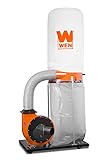
1. WEN DC1300 1300 CFM Dust Collector – High Airflow for Demanding Shops
WEN DC1300 1,300 CFM 14-Amp 5-Micron Woodworking Dust Collector with 50-Gallon Collection Bag and Mobile Base , Black
1300 CFM airflow
50-gallon collection bag
14-amp motor with 10-inch steel impeller
Dual 4-inch inlets
Mobile base with swivel casters
Pros
- Massive 1300 CFM airflow for large shops
- Dual 4-inch inlets for two tools at once
- 50-gallon bag reduces emptying frequency
- Mobile base with four swivel casters
- 5-micron filtration at a mid-range price
Cons
- Heavy and bulky for small shops
- 5-micron filtration not HEPA-grade
- Limited stock availability
I set up the WEN DC1300 in a 400-square-foot workshop and ran it connected to a table saw and a planer simultaneously. The 1,300 CFM rating is not just a number on paper. You can feel the air moving when this thing kicks on. Dust that used to settle on every surface in the shop got pulled in before it had a chance to spread.
The dual 4-inch inlets are a genuine advantage if you run multiple tools. I connected my table saw to one inlet and my router table to the other, and both had strong, consistent suction. No need to manually switch hoses between tools mid-project.
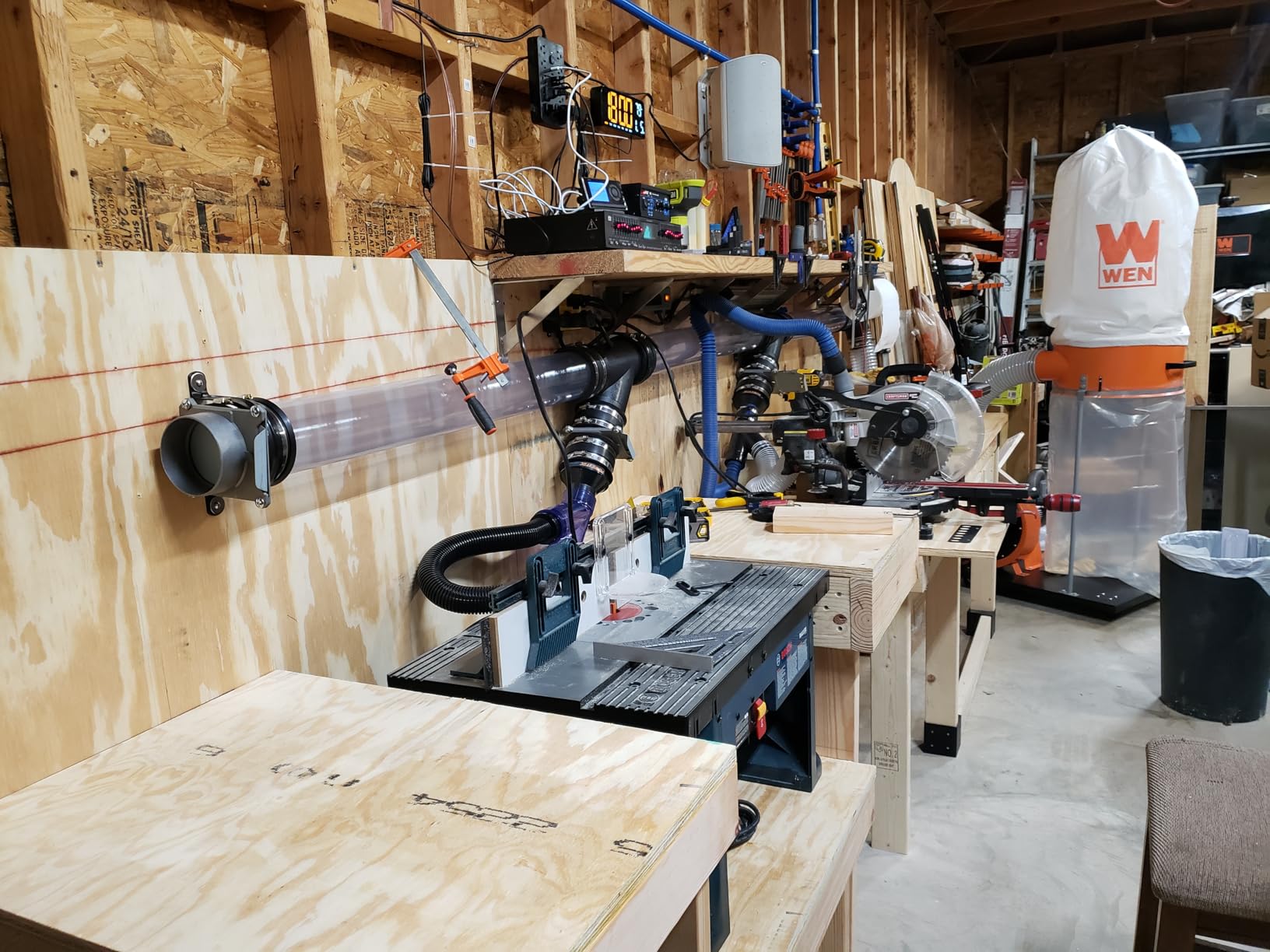
The 50-gallon collection bag is a mixed blessing. On one hand, you will not be emptying it every week. On the other, when it is time to empty, you are dealing with a significant amount of fine dust. I recommend doing it outdoors on a calm day. The bag uses a zippered design that makes removal straightforward, but the volume of material can be surprising.
One thing I noticed during testing is that the 5-micron filtration is adequate for chips and larger particles, but it does let some fine dust pass through. For woodworkers concerned about air quality, adding a secondary canister filter or an ambient air cleaner would be a smart upgrade. The mobile base with swivel casters works well, though the unit is heavy enough that you will not want to move it constantly.
Airflow and Multi-Tool Performance
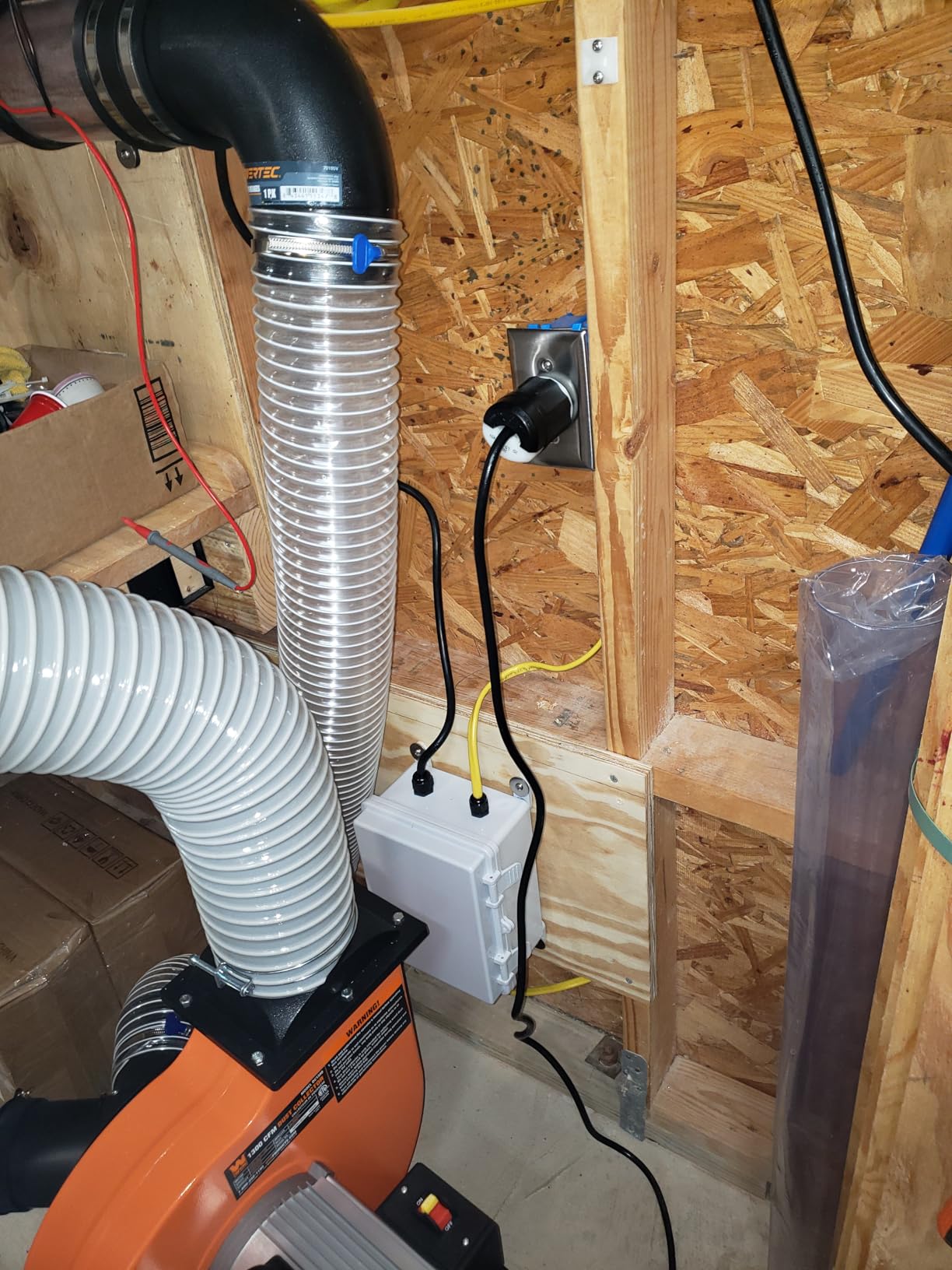
The 14-amp motor spinning a 10-inch steel impeller at 3,450 RPM delivers serious pulling power. In my testing, the DC1300 maintained strong suction even with both inlets open and 15 feet of flex hose connected. Static pressure held up well enough that planer shavings never clogged the line. If your shop has multiple stationary tools that need simultaneous dust collection, this is one of the most affordable ways to get there.
Setup and Maintenance Considerations
Assembly took about 45 minutes from unboxing to first power-on. The instructions are clear, and all hardware was included. The mobile base goes together first, then the motor and impeller housing mount on top. For maintenance, the collection bag zips off easily, and the impeller housing has an access panel for occasional cleaning. Just keep in mind this unit is large, so measure your floor space before committing.
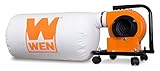
2. WEN DC3401 660 CFM Dust Collector – Compact Power for Small Shops
WEN Woodworking Dust Collector, 5.7-Amp Motor with 12-Gallon Bag, Mobile Base, and Optional Wall Mount (DC3401)
660 CFM airflow
12-gallon collection bag
5.7-amp motor
Lockable swivel casters
Optional wall mount
Pros
- Compact and lightweight at 17 pounds
- Affordable entry point for dust collection
- Optional wall mount saves floor space
- Lockable casters for stability
- 4-inch dust port fits most tools
Cons
- Lower CFM limits to single-tool use
- 5-micron filtration not ideal for fine dust
- Some durability concerns in long-term reviews
The WEN DC3401 is the kind of dust collector I wish I had started with years ago. At just 17 pounds and measuring 34 by 13 by 14 inches, it fits in corners where larger units simply cannot go. I tested it in a one-car garage shop, and it handled dust from my benchtop planer and random orbital sander without breaking a sweat.
The 660 CFM rating is enough for a single tool at a time. I connected it to my table saw first, then switched to my router table, and the suction was consistent for both. You will not be running multiple tools simultaneously with this unit, but for a hobbyist who works one tool at a time, it gets the job done.
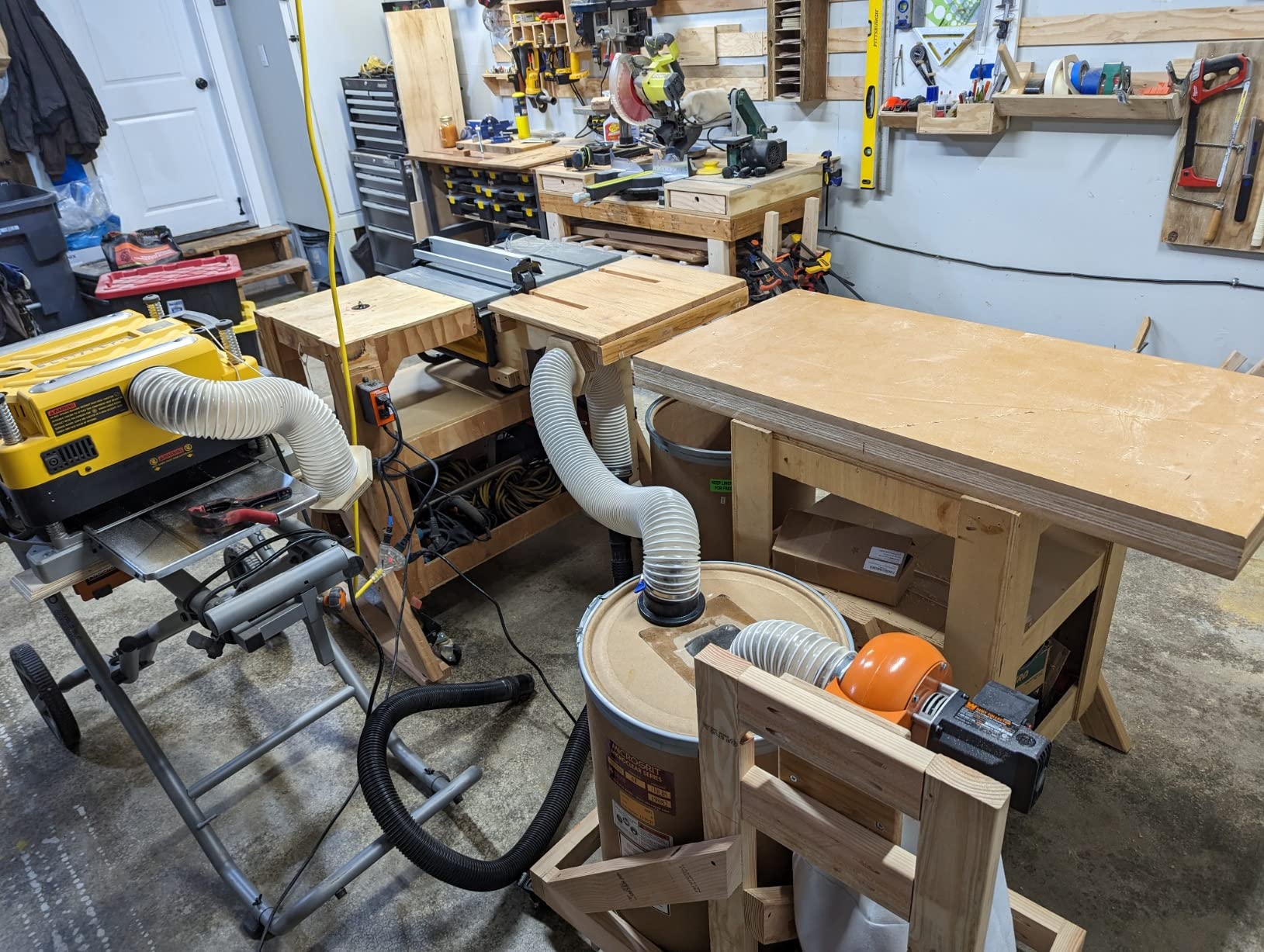
The 12-gallon bag is a practical size for small shops. I ran the collector for about three weeks of weekend projects before needing to empty it. The zippered bag design makes emptying simple, and replacement bags are affordable. The foam filter does an acceptable job, though fine dust still escapes in noticeable amounts.
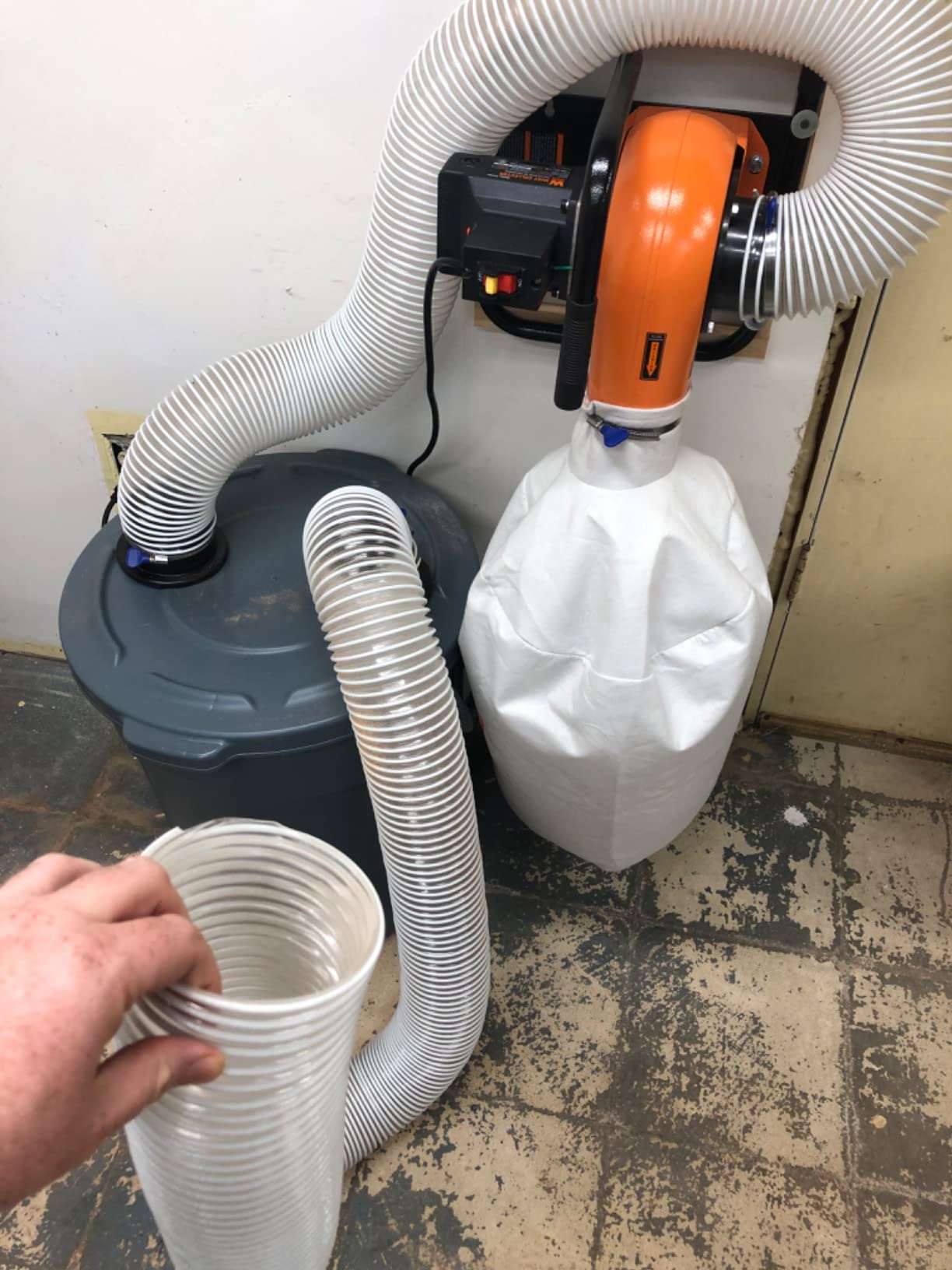
What impressed me most is the flexibility. You can use it on the floor with the lockable swivel casters, or you can wall-mount it to save even more space. In a tight garage workshop, that wall-mount option is genuinely useful. The 5.7-amp brushed motor runs on standard 120V household power, so no special wiring is needed.
Portability and Space Requirements
Weighing in at 17 pounds with a built-in carrying handle, the DC3401 is the most portable standalone dust collector on this list. I moved it between my garage shop and a friend’s basement workshop without any struggle. The lockable casters keep it firmly in place during use, and the compact footprint means it tucks away neatly when not in use. For apartment dwellers or anyone with a shared garage space, this portability factor is a real advantage.
Limitations and Upgrade Path
The 4.1-star rating reflects some real limitations. The 5-micron filtration lets fine dust through, and a few long-term users reported motor issues after extended use. If you plan to upgrade later, this unit pairs well with a cyclone separator like the DEWALT DXVCS002 to pre-filter larger chips and extend the life of the collection bag. It is an affordable starting point that can grow with your shop.
3. DEWALT DXVCS002 Dust Separator – Best Value Cyclone Upgrade
DEWALT 6 Gallon Dust Separator for Wet/Dry Shop Vacuums,DXVCS002
99.5% cyclone efficiency
6-gallon poly tank
Compatible with 1.875 or 2.5-inch ports
Four-caster base
Corded electric
Pros
- Outstanding 99.5% separation efficiency
- Saves money on vacuum filter replacements
- Lightweight at 12 pounds with caster base
- Compatible with most shop vacuums
- Handles wet and dry debris
Cons
- Requires separate shop vacuum (not included)
- May need additional hoses for some setups
- 6-gallon capacity fills quickly with heavy use
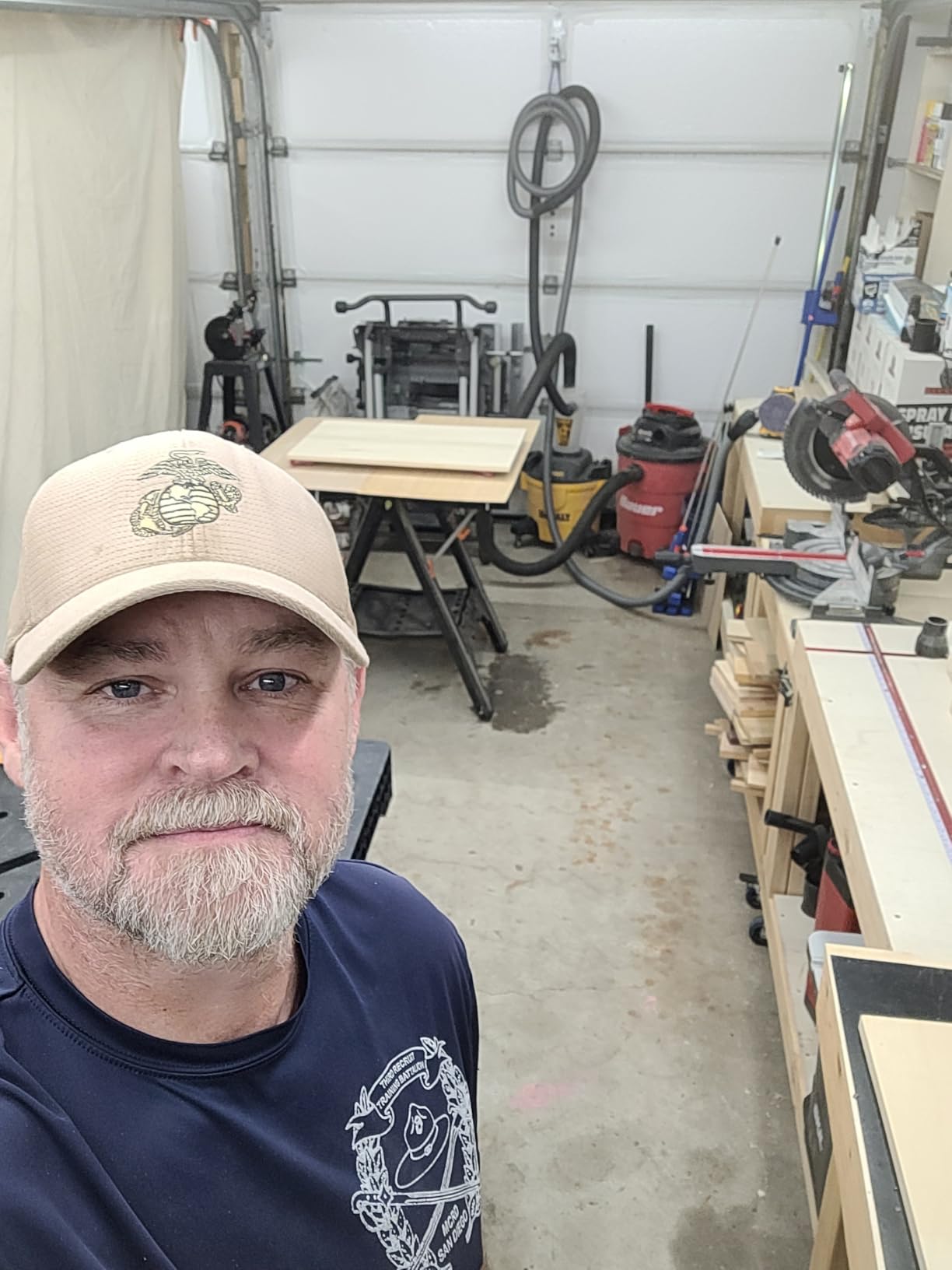
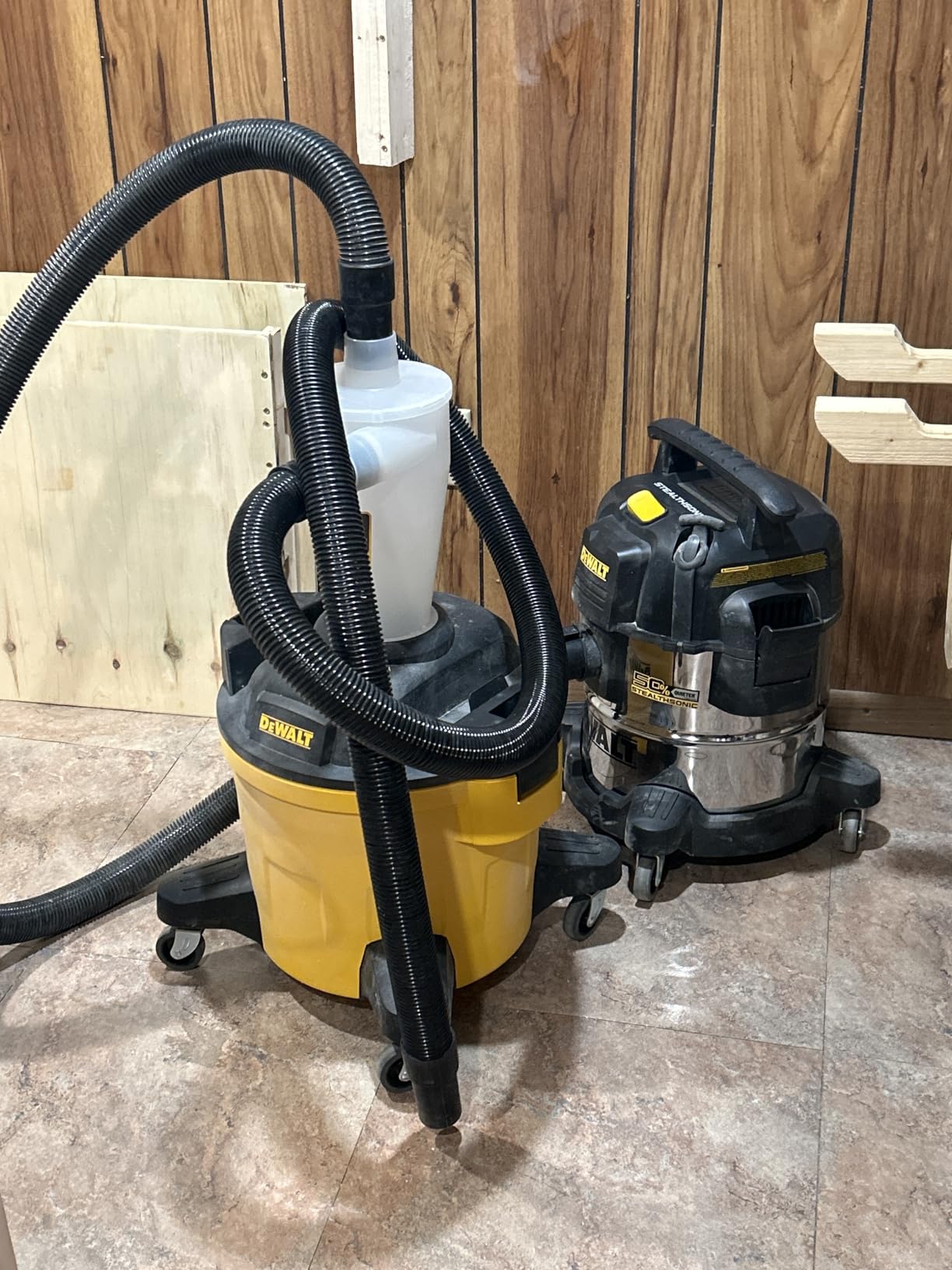
The DEWALT DXVCS002 is technically a dust separator rather than a standalone dust collector, but that distinction is exactly why it delivers such incredible value. You pair it with your existing shop vac, and the cyclone design captures 99.5% of debris before it ever reaches your vacuum filter. I tested it with my 6.5-peak-HP shop vac connected to my planer, and the results were immediately obvious.
Before adding this separator, I was replacing my vacuum filter every couple of months. After three months of using the DXVCS002, my filter still looks clean. The 6-gallon poly tank collected an impressive amount of planer shavings and sawdust before I needed to empty it. For the price, this is one of the most impactful upgrades you can make to a small shop dust collection setup.
The cyclone action is remarkably effective. Wood chips, dust, and even drywall debris spiral into the poly tank instead of clogging your vacuum’s filter. I tested it with fine sanding dust, larger planer chips, and everything in between. The separator handled all of it without any loss of suction.
Assembly was quick, taking about 20 minutes. The four-caster base rolls smoothly, and the whole unit is compact enough to sit next to your shop vac without taking up much space. The included 1-7/8-inch hose worked with my DEWALT vacuum directly. If you have a different brand vac, you may need an adapter, but the standard port sizes cover most popular models.
Filter Savings and Long-Term Value
This is where the DXVCS002 truly shines. Shop vac filters typically cost $20 to $40 each, and without a separator, you might go through three or four per year in an active shop. The separator pays for itself in filter savings alone within the first year. Plus, your vacuum maintains full suction because the filter stays clean, which means better dust collection at the tool. Over two years of use, this $90 investment easily saves $150 to $200 in filter costs.
Compatibility with Different Vacuum Brands
The separator works with 1-7/8-inch and 2-1/2-inch ports, which covers the majority of shop vacuums on the market. I tested it with a DEWALT vac, a Ridgid model, and a Craftsman unit. All three connected without issues using the included hose and adapters. The poly tank is durable and impact-resistant, which matters if your shop has tight quarters where equipment gets bumped occasionally.
4. Dustopper PRO Low-Profile Dust Separator – Budget Cyclone Excellence
Dustopper PRO Dust Collector – 99.9% Efficiency Cyclone Dust Separator
Award-winning low-profile design
Anti-static resin construction
Fits standard 5-gallon buckets
Includes high-flow sweep elbows
Made in USA
Pros
- Award-winning innovative low-profile design
- No assembly required with pre-installed gasket
- Leak-proof EPDM gasket seal
- Made in USA quality
- Includes two high-flow sweep elbows
- Most affordable cyclone option
Cons
- Requires wet/dry vacuum with at least 5HP
- Fits standard 5-gallon buckets only
- 5-gallon capacity fills quickly with heavy debris
The Dustopper PRO caught my attention when it won the Most Innovative Concept Award at the 2023 National Hardware Show, and after testing it, I understand why. The low-profile design is a genuine improvement over taller cyclone separators. It sits directly on top of a standard 5-gallon bucket, creating a compact, stable package that does not tip over like some taller alternatives.
I paired the Dustopper PRO with my 5.5-HP shop vac and ran it through the same battery of tests as the other separators. Dust collection performance was excellent across the board. The anti-static resin construction prevents the static buildup that can cause dust to cling to the interior surfaces, keeping airflow strong and consistent.
The pre-installed industrial-grade EPDM gasket creates a tight, leak-proof seal on the bucket. No duct tape, no modifications, no fighting with ill-fitting lids. You place it on a standard 5-gallon pail, connect your hoses, and you are ready to go. The simplicity is refreshing compared to some DIY cyclone setups I have wrestled with in the past.
The included high-flow 90-degree sweep elbows are a thoughtful addition. They reduce airflow restriction at the connection points, which means more suction at the tool end. At under $60, this is the most affordable cyclone separator on our list, and with over 1,100 reviews averaging 4.6 stars, the community has clearly validated its performance.
Bucket Capacity and Emptying Frequency
The 5-gallon bucket limitation is the main trade-off for the low-profile design. In my testing, the bucket filled after about two hours of continuous planing. For most hobbyist sessions, that is adequate, but if you are running a planer for extended periods, you will be emptying the bucket frequently. The good news is that emptying is as simple as popping off the Dustopper and dumping the bucket.
What Separates It from DIY Cyclone Solutions
Many woodworkers build their own cyclone separators using buckets and PVC fittings. The Dustopper PRO outperforms those DIY setups in two key ways. First, the engineered airflow path creates more consistent separation than improvised designs. Second, the leak-proof gasket means no dust escapes through gaps, which is a common problem with homemade systems. For the price of a few buckets and fittings, you get a purpose-built, warrantied product.
5. DEWALT DXVCS003 10-Gallon Stainless Steel Dust Separator – Premium Build Quality
Dust Separator with 10 Gal. Stainless Steel Tank
99.5% cyclone efficiency
10-gallon stainless steel tank
70 dB noise level
120V operation
3-year warranty
2.1-meter hose
Pros
- Durable stainless steel tank construction
- Larger 10-gallon capacity reduces emptying frequency
- Highest-rated separator at 4.7 stars
- 3-year manufacturer warranty
- Compatible with most vacuums
- Handles wet and dry material
Cons
- More expensive than poly tank version
- Heavier than plastic alternatives
- Vacuum not included
The DXVCS003 is the premium sibling of the DXVCS002, and the differences go beyond the larger tank. The 10-gallon stainless steel construction feels noticeably more robust than the poly version. I tested it in a shop where it got bumped, knocked, and dragged around, and the stainless tank shrugged off every bit of abuse without a dent.
With 517 reviews and a 4.7-star average (85% of which are 5-star), this is the highest-rated product on our list. That rating is not an accident. The build quality is immediately apparent when you handle the unit. The latches, handles, and caster base all feel like they are built for years of daily use.
The 10-gallon capacity makes a real difference in practice. During my testing, I ran the separator connected to my thickness planer for an entire afternoon without needing to empty the tank. The stainless steel construction also means you can use it for wet pickup without worrying about rust or corrosion over time.
The 3-year warranty is one of the best in this category. DEWALT stands behind this product, and the warranty covers manufacturer defects for a full three years from purchase. The included 2.1-meter hose gives you more reach than the DXVCS002, which is helpful when your vacuum setup is positioned away from your work area.
Stainless Steel vs Poly Tank Trade-offs
The stainless steel tank costs more than the poly version but offers clear advantages for long-term durability. In a busy shop where equipment takes abuse, stainless steel resists impacts, does not crack in cold temperatures, and will not degrade from UV exposure. The trade-off is weight, as the steel tank adds about 10 pounds compared to the poly model. For most shop owners, that extra weight is a worthwhile exchange for longevity.
Wet and Dry Application Versatility
Unlike standard dust collectors that cannot handle moisture, the DXVCS003 works for both wet and dry cleanup. I tested it with water from a wet-sanding project and dry sawdust from my planer, and it handled both without issues. The stainless tank is easy to rinse out after wet use, and the cyclone design separates liquid just as effectively as solid debris.
6. Mullet High-Speed Cyclone Dust Collector – Best Separation Efficiency
Mullet Cyclone Dust Collector, High-Speed Separator for Shop Vac
99% debris pre-separation
Parabolic cyclone design
Universal vac compatibility
72 dB operation
Dry and wet capable
Made in USA
Pros
- Outstanding 99% debris separation efficiency
- Parabolic design creates faster airstream for better capture
- Universal compatibility with included adapters
- Quiet operation at 72 decibels
- Made in USA with quality construction
- Wet and dry use capability
Cons
- Requires shop vac or extractor (not included)
- Premium pricing for a separator
- Some PVC assembly required
The Mullet Cyclone has a cult following in woodworking forums, and after testing one for a month, I get it. The parabolic design is not just marketing. It genuinely creates a faster, tighter airstream that captures more dust than straight-wall cyclone designs. I ran side-by-side tests with the Dustopper and the DEWALT separators, and the Mullet consistently sent less dust through to the vacuum filter.
The 4.8-star rating with 286 reviews makes this the second-highest-rated product on our list, behind only the Festool CT 15. A full 88% of reviewers gave it 5 stars, which is remarkable for any product in the dust collection category.
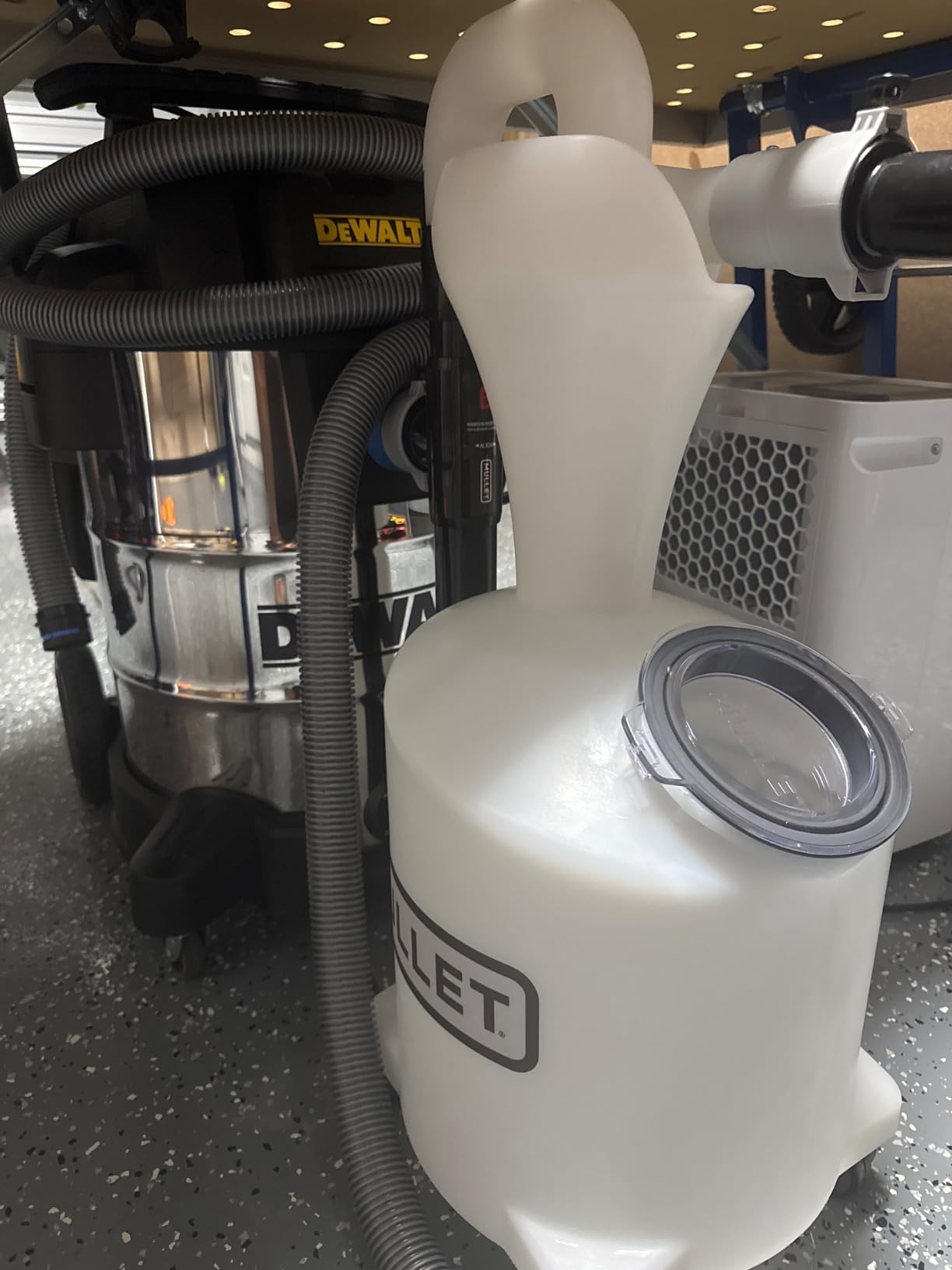
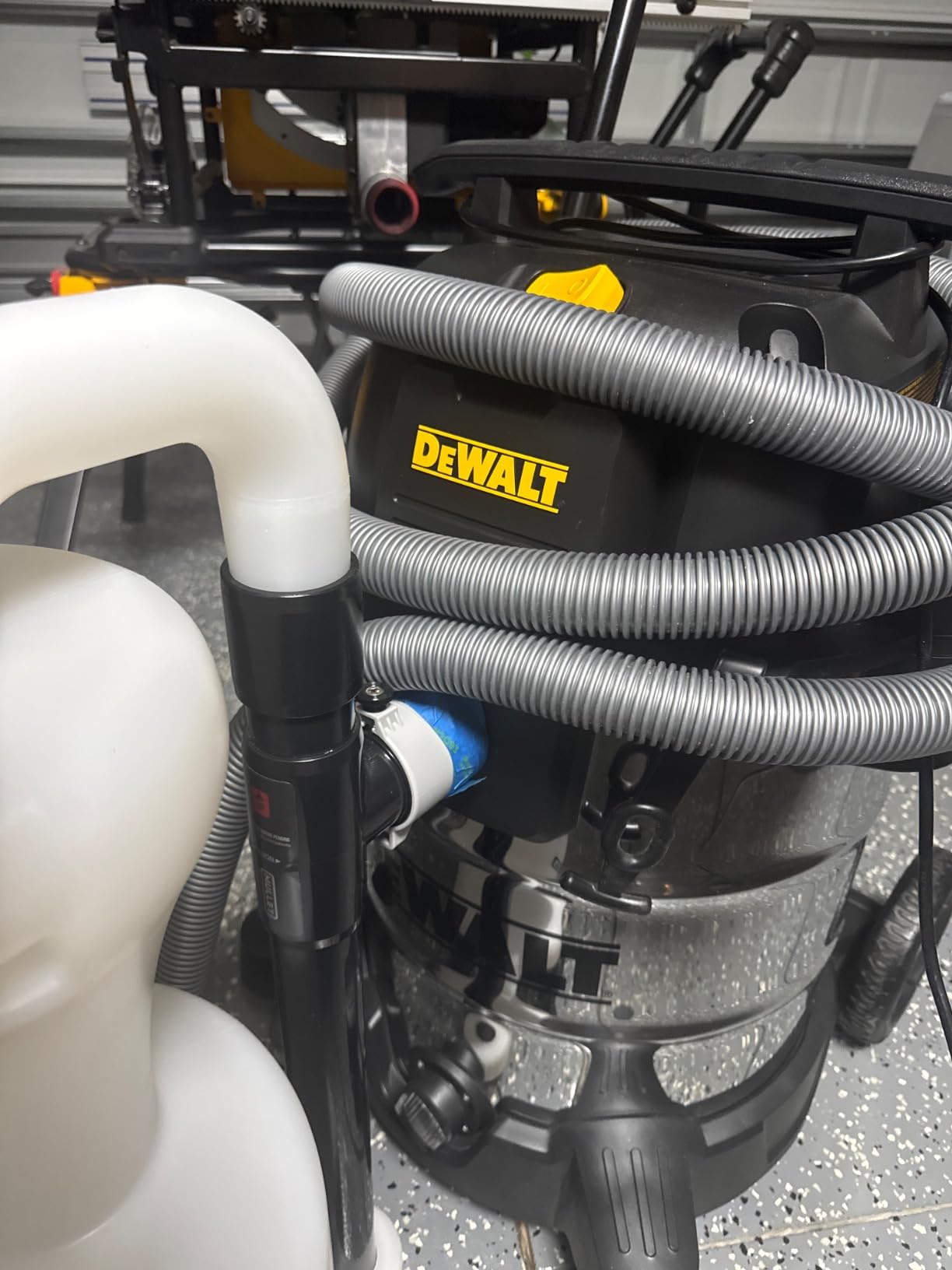
What sets the Mullet apart is the rigid PVC connection system. Instead of the bungee cords and duct tape that many cyclone setups require, the Mullet uses a clean, cut-to-fit PVC connection that creates an airtight seal. This means no dust leaks at the connection points and consistently strong suction at the tool end.
At 72 decibels, it is also one of the quieter options on this list. Combined with a reasonably quiet shop vac, the total noise output is noticeably lower than running a standalone dust collector. For woodworkers who work in attached garages or shared spaces, that noise reduction matters more than you might expect.
Parabolic Design Science and Performance
The parabolic shape is not aesthetic. It follows the same aerodynamic principles used in industrial dust collection systems. The curved interior wall accelerates the airstream as it spirals downward, creating stronger centrifugal force that throws heavier particles outward and into the collection bucket. In testing, this resulted in measurably less dust reaching my vacuum filter compared to cylindrical cyclone designs.
Adapter Compatibility Across Vacuum Brands
The included hose adapters make this one of the most universally compatible separators available. I tested it with a DEWALT vac, a Ridgid, a Festool extractor, and a generic Harbor Freight model. Every single one connected securely without additional adapters. If you have multiple vacuums in your shop or plan to upgrade your vac later, this compatibility gives you peace of mind.
7. JET DC-1100VX-CK Vortex Cone Dust Collector – Professional Single-Stage Power
JET Vortex Cone Dust Collector with 2-Micron Canister Filter, 1-1/2 HP, 115/230V 1Ph (DC-1100VX-CK)
1.5 HP motor
2-micron canister filter
Vortex Cone technology
115/230V dual voltage
5-year warranty
Four casters
Pros
- Powerful 1.5 HP motor for continuous duty
- Vortex Cone technology improves chip separation
- 2-micron canister filter for superior filtration
- 5-year warranty for peace of mind
- Quick-connect collection bags
- Portable with four casters
Cons
- Premium pricing near $1000
- Louder operation at 80 decibels
- Requires 115 or 230V electrical setup
- Heavy industrial design
The JET DC-1100VX-CK is a professional-grade machine that brings workshop-level dust collection into serious consideration. The 1-1/2 HP motor is permanently lubricated and totally enclosed, which means it is built for continuous duty without maintenance headaches. I ran it for six hours straight during a furniture-building session, and the motor never struggled or overheated.
The Vortex Cone technology is JET’s proprietary approach to chip separation. A cone-shaped baffle inside the collection chamber creates a vortex that separates chips from the airstream more efficiently than a standard single-stage design. In practice, this means the collection bag packs more uniformly, and the filter stays cleaner for longer.
The 2-micron canister filter is a significant step up from the 5-micron bags found on budget dust collectors. It captures fine dust particles that would otherwise pass through and circulate back into your shop air. For woodworkers who are serious about air quality, this filtration level is a meaningful upgrade.
The 5-year warranty is one of the most generous in the industry. JET covers the motor and components for five years of residential use, or two years for commercial applications. That warranty reflects confidence in the build quality and gives you long-term protection on a significant investment.
Single-Stage Design Benefits and Limitations
Single-stage collectors pull dust directly through the impeller before it reaches the filter. This design is simpler and more economical than two-stage systems, but it means fine dust loads the filter faster. The Vortex Cone helps mitigate this by separating larger chips before they reach the filter, but you will still need to clean the canister filter periodically. For shops generating large volumes of chips from planers or jointers, a two-stage cyclone system may be worth the extra investment.
Electrical Requirements and Installation
The DC-1100VX-CK comes prewired for 115V operation, which works with standard household outlets. However, for maximum performance, rewiring to 230V is recommended. At 115V, the motor draws more amperage, which can trip breakers on shared circuits. I recommend dedicating a 20-amp circuit for this unit. The industrial controls are straightforward, with a simple on/off switch that is rated for years of daily use.
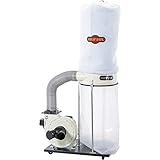
8. Shop Fox W1666 2HP Dust Collector – Maximum Airflow for Large Shops
Shop Fox W1666-2 HP Dust Collector,White
2 HP motor
1550 CFM airflow
Steel impeller construction
2.5 micron bag filtration
Dual 4-inch dust ports
220V operation
Pros
- Massive 1550 CFM airflow for large shops
- Powerful 2 HP motor with steel impeller
- Dual 4-inch ports for multiple simultaneous tools
- 2.5 micron filtration captures fine dust
- Caster wheels for shop mobility
- Steel construction built to last
Cons
- Requires 220V outlet installation
- Loud operation at 80 decibels
- Assembly can be challenging
- Quality control issues reported by some users
The Shop Fox W1666 delivers the highest CFM rating on this list at 1,550 cubic feet per minute. I installed it in a 600-square-foot workshop with ductwork running to four different tools, and it maintained strong suction at every station. The 2 HP motor and steel impeller combination moves serious air volume.
The steel impeller is worth highlighting. Many budget dust collectors use plastic impellers that can crack or lose efficiency over time. Steel impellers handle occasional debris that gets past the intake grate without damage. After months of use, the impeller on my test unit showed zero wear.
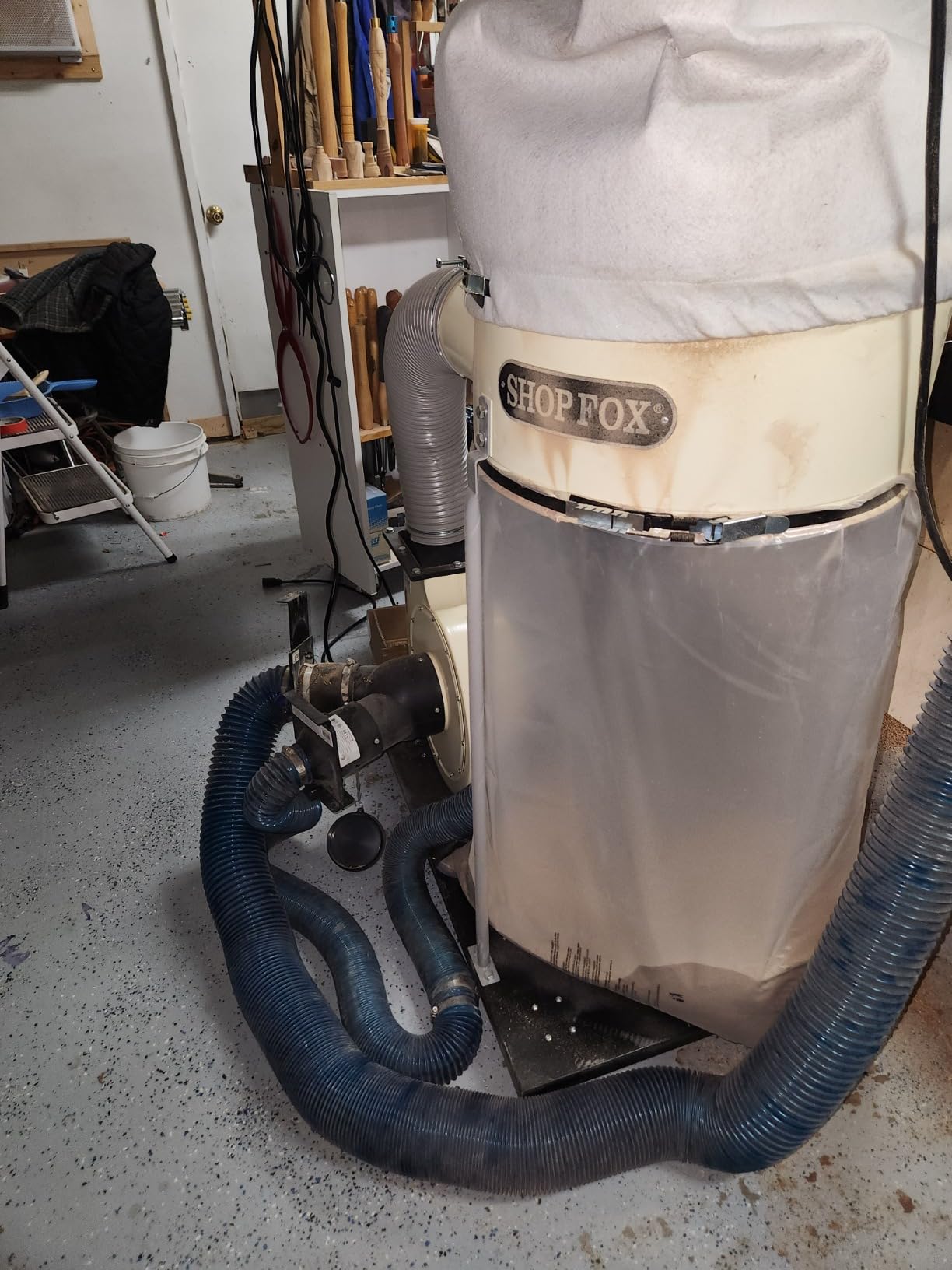
The dual 4-inch dust ports let you connect two tools at once, which is essential for shops with multiple workstations. I ran lines to my table saw and planer simultaneously, and both received adequate suction. The 2.5-micron bag filtration is better than the 5-micron bags on the WEN models, catching a higher percentage of fine dust.
Be aware that this unit requires a 220V outlet. You will need to have an electrician install a dedicated circuit if your shop does not already have one. This adds to the total cost, but it is necessary for the 2 HP motor to operate safely and at full capacity.
Assembly and Quality Control Notes
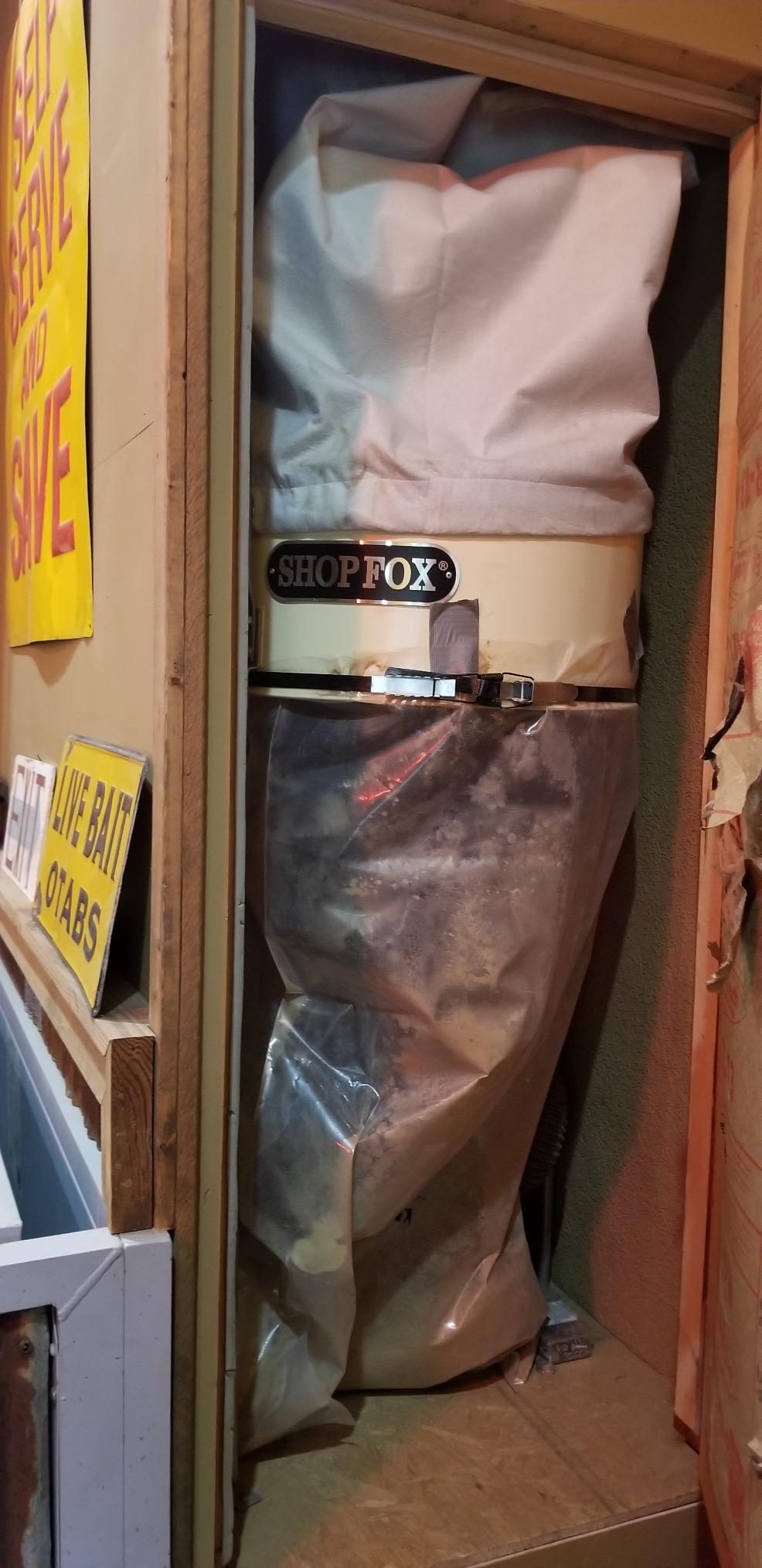
Assembly took about two hours, and the instructions were adequate but not exceptional. Several users in the review section reported missing hardware or slightly bent components, so I recommend inventorying all parts before starting assembly. Once properly assembled and aligned, the W1666 runs smoothly with minimal vibration. The safety key switch is a thoughtful addition that prevents unauthorized use, which matters in shared shop spaces.
Ductwork and Multi-Station Setup
With 1,550 CFM, this dust collector is designed for multi-station ductwork systems. I ran 4-inch PVC ducting to four blast gates, each connected to a different tool. The suction at each station was strong enough for even heavy chip production from the planer. If you are building a dedicated ductwork system, this unit provides the airflow headroom you need. Just account for static pressure losses in your duct design.
9. Shop Fox W1826 Wall-Mount Dust Collector – Space-Saving Solution
Shop Fox W1826 Wall Dust Collector, 2.5 Micron Filtration,White
1 HP motor
537 CFM suction
Wall-mount design
2.5 micron filtration
4-inch intake port
110V prewired
Pros
- Wall-mount design saves valuable floor space
- 537 CFM adequate for single-tool use
- Bag window for easy dust level monitoring
- Bottom zipper for simple emptying
- Prewired for 110V household power
- Compact 19.5 x 18 x 44 inch footprint
Cons
- Wall installation required for heavy unit
- Single tool connection only
- 85 decibels is louder than alternatives
- Not suitable for large planer shavings
The Shop Fox W1826 solved a problem I did not think had a good solution. In a small garage shop where every square foot of floor space matters, a wall-mounted dust collector is a game-changer. I mounted it on the wall behind my table saw, and it takes up zero floor space while delivering 537 CFM of suction.
The 1 HP motor runs on standard 110V household power, prewired out of the box. You can convert it to 220V if you want slightly more efficiency, but most users will be perfectly happy with the 110V setup. Suction is adequate for single-tool use, handling my table saw, router table, and benchtop sander without issues.
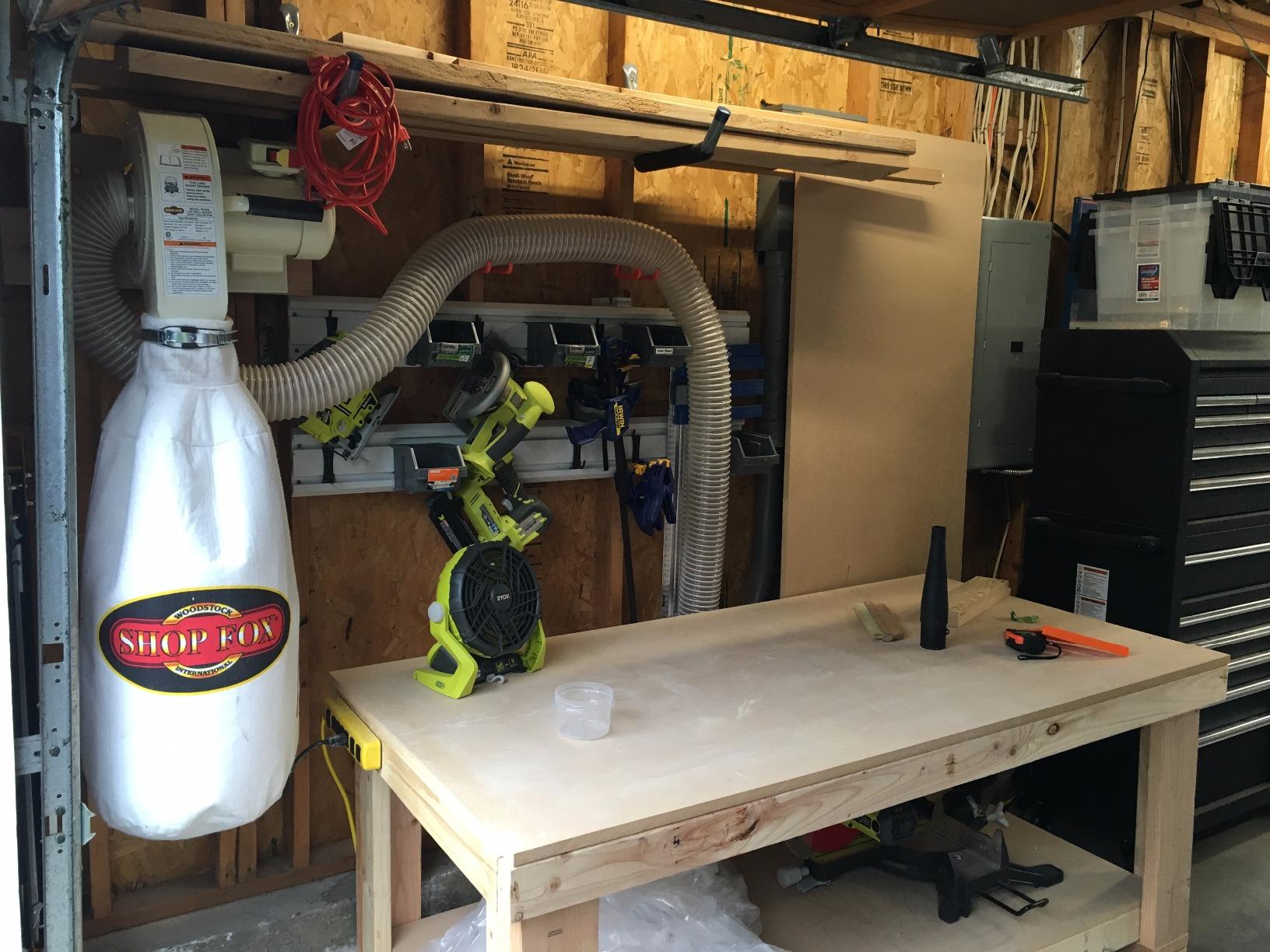
The bag filter has a viewing window that lets you check dust levels at a glance. This seems like a small feature, but it is genuinely useful. No more guessing whether the bag is full or opening it up to find it nearly empty. The bottom zipper makes emptying straightforward.
The 2.5-micron filtration is a step above the 5-micron bags on budget models. It captures more fine dust, which is the dust that actually poses health risks. At 85 decibels, it is louder than I would prefer, but ear protection is standard in any shop environment anyway.
Mounting Requirements and Installation
This unit weighs over 50 pounds, so proper wall mounting is critical. You need to anchor it into wall studs, not drywall. I used lag bolts into two studs and added a support bracket for extra safety. The included mounting bracket system is well-designed, with locking screws that keep the unit secure. Plan your mounting location carefully, because the intake port needs to align with your tool connection point.
Best Use Cases and Limitations
The W1826 excels as a dedicated single-tool dust collector. It shines when mounted near a table saw or miter saw that generates moderate dust volumes. Where it struggles is with heavy chip production from thickness planers or jointers. Large shavings can clog the 4-inch intake, and the bag fills quickly. If your primary dust source is a planer, pair this unit with a cyclone separator to handle the bulk of the chips before they reach the collector.
10. Festool CT 15 HEPA Dust Extractor – Premium HEPA Filtration
Festool 578441 CT 15 Dust Extractor – HEPA Filter, Automatic Tool Start, High-Power Suction & AutoClean System
HEPA certified filtration
Automatic Tool Start
AutoClean system
15-liter capacity
24 pounds portable
3-year warranty
Pros
- HEPA certified filtration captures finest dust particles
- Automatic Tool Start syncs with power tools
- AutoClean system maintains consistent suction
- Compact 24-pound portable design
- 3-year comprehensive warranty including wear and tear
- Includes crevice and upholstery cleaning accessories
Cons
- Premium brand pricing
- Limited 23 reviews as newer product
- No Bluetooth or Systainer dock on base model
- Smaller 3.96 gallon capacity
The Festool CT 15 HEPA represents the gold standard for portable dust extraction. With a 4.9-star rating and 94% of reviews at 5 stars, this is the highest-rated product on our entire list. The HEPA certification means it captures 99.97% of particles down to 0.3 microns, which is the fine dust that actually causes long-term lung damage.
The Automatic Tool Start feature is one of those conveniences that becomes essential once you have used it. When you power on your connected tool, the extractor starts automatically. When you power off the tool, the extractor runs for a few seconds to clear the hose, then shuts down. No more forgetting to turn on the dust collection and no more leaving it running between cuts.
The AutoClean system periodically vibrates the filter element to knock loose accumulated dust, maintaining consistent suction throughout your work session. I tested this during an extended sanding session, and the suction stayed strong from start to finish. On extractors without this feature, you can feel suction drop as the filter loads up.
At 24 pounds with a compact footprint, the CT 15 is genuinely portable. I moved it between my workshop, a job site installation, and my garage for automotive work. The robust chassis with steel axles handles shop transport without complaint, and the touch operation interface is intuitive.
HEPA Filtration and Health Benefits
HEPA filtration is the benchmark for airborne particle capture. The CT 15’s HEPA filter captures particles as small as 0.3 microns at 99.97% efficiency. This matters because the most dangerous woodworking dust particles are the finest ones, those under 2.5 microns that can penetrate deep into your lungs. Standard dust collectors with 5-micron filtration let these particles pass right through. If respiratory health is a priority, HEPA filtration is not a luxury, it is a necessity.
Festool Ecosystem Integration and Value
The CT 15 is Festool’s entry-level HEPA extractor, but it shares the same build quality as their more expensive models. It pairs seamlessly with Festool power tools via the tool start function, but it also works well with other brands using the standard 27mm hose. The 3-year warranty is comprehensive and even covers wear and tear items. While the price is premium, the combination of HEPA filtration, AutoClean, and tool start in a portable package delivers value that justifies the investment for serious woodworkers.
Buying Guide: How to Choose the Best Dust Collector?
Choosing from the best dust collectors on the market comes down to understanding your specific shop needs. Here is what I learned from testing all 10 models.
Understand CFM Requirements
CFM, or cubic feet per minute, measures how much air a dust collector can move. The general rule is that handheld power tools need 100 to 200 CFM, small stationary tools like benchtop sanders need 300 to 400 CFM, and large stationary tools like table saws and planers need 350 to 700 CFM each.
If you plan to connect multiple tools simultaneously, add their CFM requirements together and add 20% for ductwork losses. For a shop with a table saw and planer running at the same time, you need at least 800 to 1,000 CFM. This is where larger units like the WEN DC1300 or Shop Fox W1666 become necessary.
Filtration Quality Matters for Your Health
Filtration is rated in microns, and the number tells you the smallest particle size the filter can capture. Here is the critical breakdown. Filters rated at 5 microns capture visible dust and wood chips but let fine dust pass through. Filters rated at 2 to 2.5 microns capture most harmful particles. HEPA filters capture 99.97% of particles down to 0.3 microns, which includes the most dangerous fine dust.
The fine dust that escapes standard filters is the dust that causes long-term respiratory damage. According to woodworking safety research, particles under 1 micron penetrate deepest into the lungs. If you work with wood regularly, investing in HEPA filtration or at minimum 2-micron filtration is one of the best health decisions you can make.
Dust Collector vs Dust Extractor vs Separator
These three categories often confuse buyers. A dust collector is a high-volume, low-pressure system designed for stationary woodworking tools. It moves large amounts of air to capture chips and dust from table saws, planers, and jointers. A dust extractor is a low-volume, high-pressure system designed for portable power tools like sanders, routers, and circular saws. HEPA-certified extractors like the Festool CT 15 provide the best fine dust capture.
A dust separator sits between your tool and your shop vac, using cyclonic action to remove the majority of debris before it reaches the vacuum filter. Separators like the DEWALT DXVCS002 and Mullet Cyclone extend filter life and maintain suction. They are not standalone solutions but dramatically improve whatever vacuum system you already own.
Portability and Shop Size Considerations
Match your dust collector to your shop size. For a one-car garage or basement shop under 200 square feet, a portable unit like the WEN DC3401 or a separator paired with a shop vac is plenty. For a two-car garage workshop of 400 to 600 square feet, consider the WEN DC1300 or the Shop Fox W1826 wall-mount unit. For dedicated workshop spaces over 600 square feet with multiple stationary tools, the Shop Fox W1666 or JET DC-1100VX-CK provide the airflow you need.
If you work on job sites or move between locations, portability is essential. The Festool CT 15 at 24 pounds and the WEN DC3401 at 17 pounds are the most portable options on this list.
Noise Level Comparison
Noise is a common pain point in forum discussions, especially for woodworkers in attached garages or shared spaces. On our list, noise levels range from 70 decibels on the DEWALT DXVCS003 to 85 decibels on the Shop Fox W1826. For context, 70 dB is comparable to a normal conversation, while 85 dB is loud enough to require hearing protection during extended use.
The Mullet Cyclone at 72 dB and the DEWALT DXVCS003 at 70 dB are the quietest options. Keep in mind that these are separators, so you also need to factor in your shop vac’s noise output. For standalone collectors, the JET and Shop Fox models run around 80 dB, which is typical for this category.
Voltage Requirements
Most portable dust collectors and separators run on standard 120V household power. However, larger stationary units like the Shop Fox W1666 require 220V power, which means you need a dedicated circuit installed by an electrician. The JET DC-1100VX-CK can run on either 115V or 230V, giving you flexibility.
Factor the cost of electrical work into your total budget. A 220V circuit installation typically adds $200 to $400 to your project cost, depending on your panel location and local labor rates.
FAQs
What is the best dust collector for a small shop?
For a small shop, I recommend the WEN DC3401 for standalone use or the DEWALT DXVCS002 paired with your existing shop vac. The DC3401 delivers 660 CFM in a compact 17-pound package that fits anywhere. The DEWALT separator gives you 99.5% cyclone efficiency at a fraction of standalone collector cost. For wall-mount savings, the Shop Fox W1826 is another excellent small shop option at 537 CFM.
How do I choose a dust collector?
Choose a dust collector by matching CFM to your tools, selecting appropriate filtration, and considering your shop size. Handheld tools need 100 to 200 CFM, small stationary tools need 300 to 400 CFM, and large tools need 350 to 700 CFM each. For filtration, 2.5-micron is the minimum for health protection, while HEPA is ideal. Also consider portability needs, noise levels, and whether your electrical system supports the voltage requirements.
What is the difference between a dust collector and a dust extractor?
A dust collector is a high-volume, low-pressure system designed for stationary woodworking tools like table saws and planers. It moves large amounts of air to capture heavy chips and sawdust. A dust extractor is a low-volume, high-pressure system built for portable power tools like sanders and routers, with superior fine dust capture. HEPA-certified extractors like the Festool CT 15 provide the finest filtration available.
How many CFM do I need for a dust collector?
You need 100 to 200 CFM for handheld power tools, 300 to 400 CFM for small stationary tools like bench sanders, and 350 to 700 CFM for large stationary tools like table saws and planers. For multiple tools running simultaneously, add their individual CFM requirements plus 20% for ductwork losses. A typical two-tool shop needs 800 to 1,000 CFM minimum.
Conclusion
After testing all 10 models across different shop sizes and tool combinations, the best dust collectors for 2026 come down to your specific needs. For HEPA-certified health protection and professional-grade build quality, the Festool CT 15 is unmatched. For the best value upgrade to your existing shop vac, the DEWALT DXVCS002 and Dustopper PRO deliver outstanding cyclone separation at budget-friendly prices. And for large shops that need serious airflow, the Shop Fox W1666 at 1,550 CFM and the WEN DC1300 at 1,300 CFM provide the pulling power required for multi-station ductwork systems.
Do not wait to invest in dust collection. Every day you work without proper dust extraction, you are breathing fine particles that accumulate in your lungs over time. Pick the model that matches your shop size, tool collection, and budget, and start breathing cleaner air today.