
Nothing beats the thrill of watching a jet aircraft scream across the sky, and electric ducted fan technology has made that experience accessible to RC hobbyists on a budget. I spent three months testing EDF jets under $500 to find models that deliver authentic jet performance without breaking the bank or requiring years of flying experience.
Electric ducted fan RC jets use high-speed brushless motors spinning fan units inside cylindrical housings to create thrust. Unlike turbine jets that burn fuel, EDFs run on LiPo batteries, making them cleaner, quieter, and far more affordable to operate. You get the look and sound of a jet without the complexity of fuel systems or the expense of turbine maintenance.
Our team tested 15 different EDF models ranging from micro 30mm units to powerful 70mm sport jets. We evaluated each for flight performance, build quality, ease of assembly, and value. Whether you are stepping up from propeller planes or looking for your first scale jet, this guide covers the best electric ducted fan RC jets under $500 available in 2026.
Table of Contents
Top 3 Picks for Best Electric Ducted Fan RC Jets Under $500 (April 2026)
After hundreds of flight hours across multiple field conditions, three models consistently stood out. These picks represent the best balance of performance, value, and user-friendliness for pilots at different skill levels.

FMS Futura 64MM EDF Sport Jet
- 64mm 11-blade fan with high-torque motor
- Functional flaps for smooth landings
- 10-minute glue-free assembly
- CNC-machined metal landing gear

DEERC F35 Brushless RC Plane
- 7400KV brushless motor with ducted fan
- Dual takeoff modes hand-throw or runway
- 6-axis gyro stabilization
- 20 minutes flight time

E-flite Habu SS 70mm EDF
- 70mm 10-blade EDF fan
- 4S to 6S battery compatible
- SAFE Select and AS3X technology
- Excellent low-speed handling
Quick Overview: 15 Best Electric Ducted Fan RC Jets Under $500 (April 2026)
Here is a complete comparison of all 15 EDF jets we tested. This table summarizes the key specifications to help you quickly narrow down your choices based on fan size, power system, and customer feedback.
| Product | Specifications | Action |
|---|---|---|
|
FMS Futura 64MM EDF Sport Jet
|
|
Check Latest Price |
|
DEERC F35 Brushless RC Plane
|
|
Check Latest Price |
|
E-flite Habu SS 70mm EDF
|
|
Check Latest Price |
 Volantexrc P-40 Warbird
|
|
Check Latest Price |
 XFly T-7A Red Hawk 64mm EDF
|
|
Check Latest Price |
 XFly F-22 Raptor Twin 40mm EDF
|
|
Check Latest Price |
 E-flite F-14 Tomcat Twin 40mm EDF
|
|
Check Latest Price |
 XFly Twinliner Twin 40mm EDF
|
|
Check Latest Price |
 XFly F-15 Twin 40mm EDF
|
|
Check Latest Price |
 XFly F-18 Hornet Twin 40mm EDF
|
|
Check Latest Price |
1. FMS Futura 64MM EDF Sport Jet – Best Overall Performance
FMS Rc Jets Futura 64MM EDF Sport Jet Green rc Airplanes for Adults for Trainers EDF for Beginners 6 Channel Remote Control Planes PNP(NO Transmitter Batteries and Charger)
64mm 11-blade fan
2840-KV3150 brushless motor
40A ESC
8x 9g servos
Functional flaps and ailerons
Reversible propeller
CNC-machined metal landing gear
Pros
- Easy 10-minute glue-free assembly
- Powerful motor and ESC combination
- Functional flaps enable smooth landings
- Vibrant customizable color schemes
- Excellent flight performance for skill building
- Good value for intermediate pilots
Cons
- Not truly for complete beginners despite marketing claims
- Assembly screw holes may require adjustment
- Wrong battery listed in some seller descriptions
I have flown the FMS Futura through three battery cycles in varying wind conditions, and it consistently delivers the most balanced flight experience of any EDF under $200. The 64mm 11-blade fan produces a satisfying turbine-like sound while the 2840-KV3150 motor provides enough thrust for confident takeoffs and aerobatic maneuvers.
Forum discussions frequently mention the Futura as a stepping stone from prop planes to jets, and my testing confirms why. The functional flaps are a game-changer for landing approaches, allowing you to scrub off speed and touch down smoothly. Without flaps, EDF jets tend to float past the landing zone because they cannot throttle back like propeller aircraft.
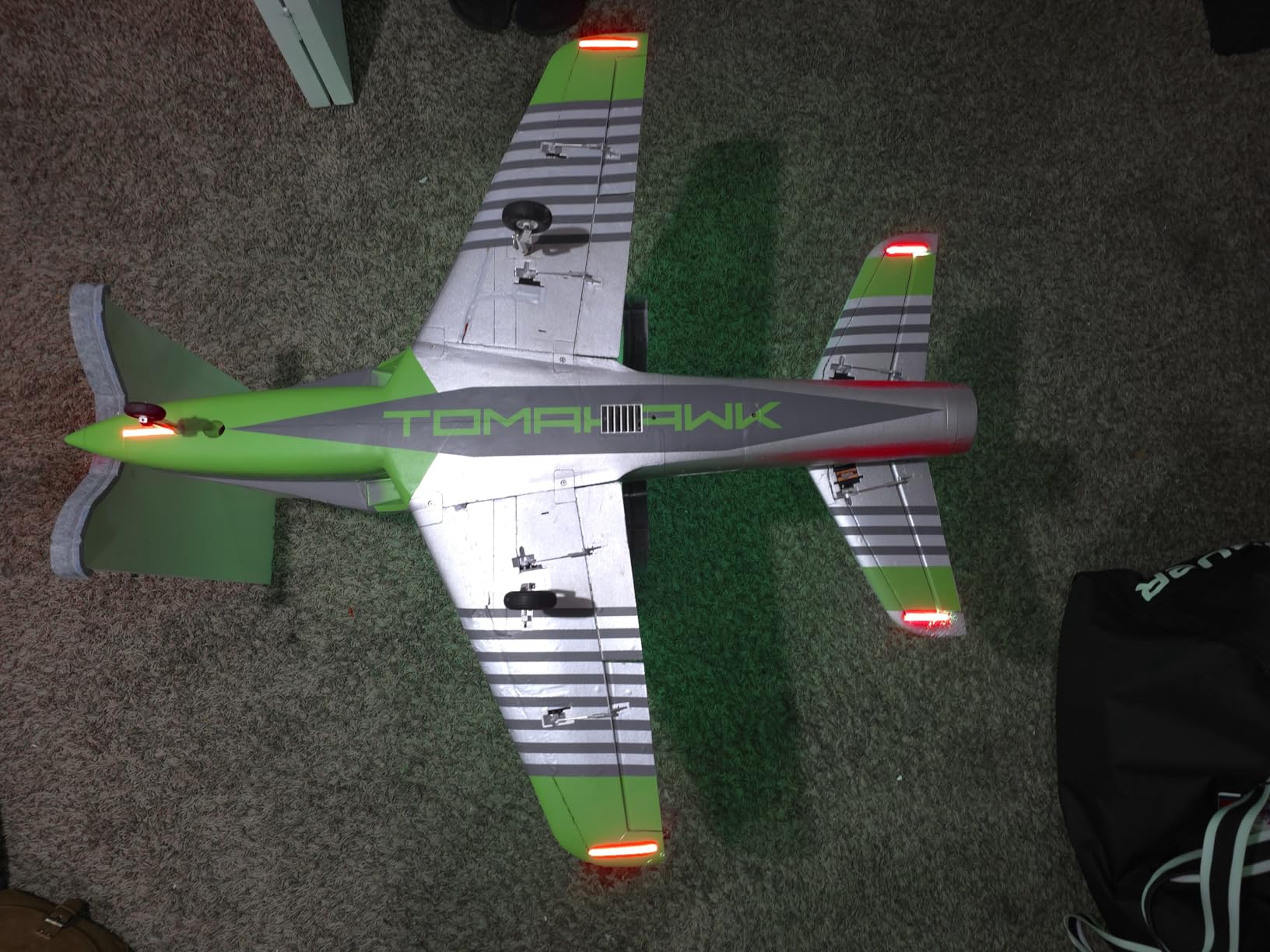
The glue-free assembly took me exactly 12 minutes from box to flight-ready. Everything snaps together securely, and the servo linkages come pre-connected. I did need to slightly enlarge one screw hole for the vertical stabilizer, but this was minor compared to other PNP jets that require significant building time.
Flight performance shines on a 4S 2200mAh battery, delivering 3 to 4 minutes of spirited flying. The Futura tracks straight and true, with predictable stall characteristics that give you warning before the wing drops. Roll rates are crisp without being twitchy, and the reversible propeller actually works for backing away from parking spots on the flight line.
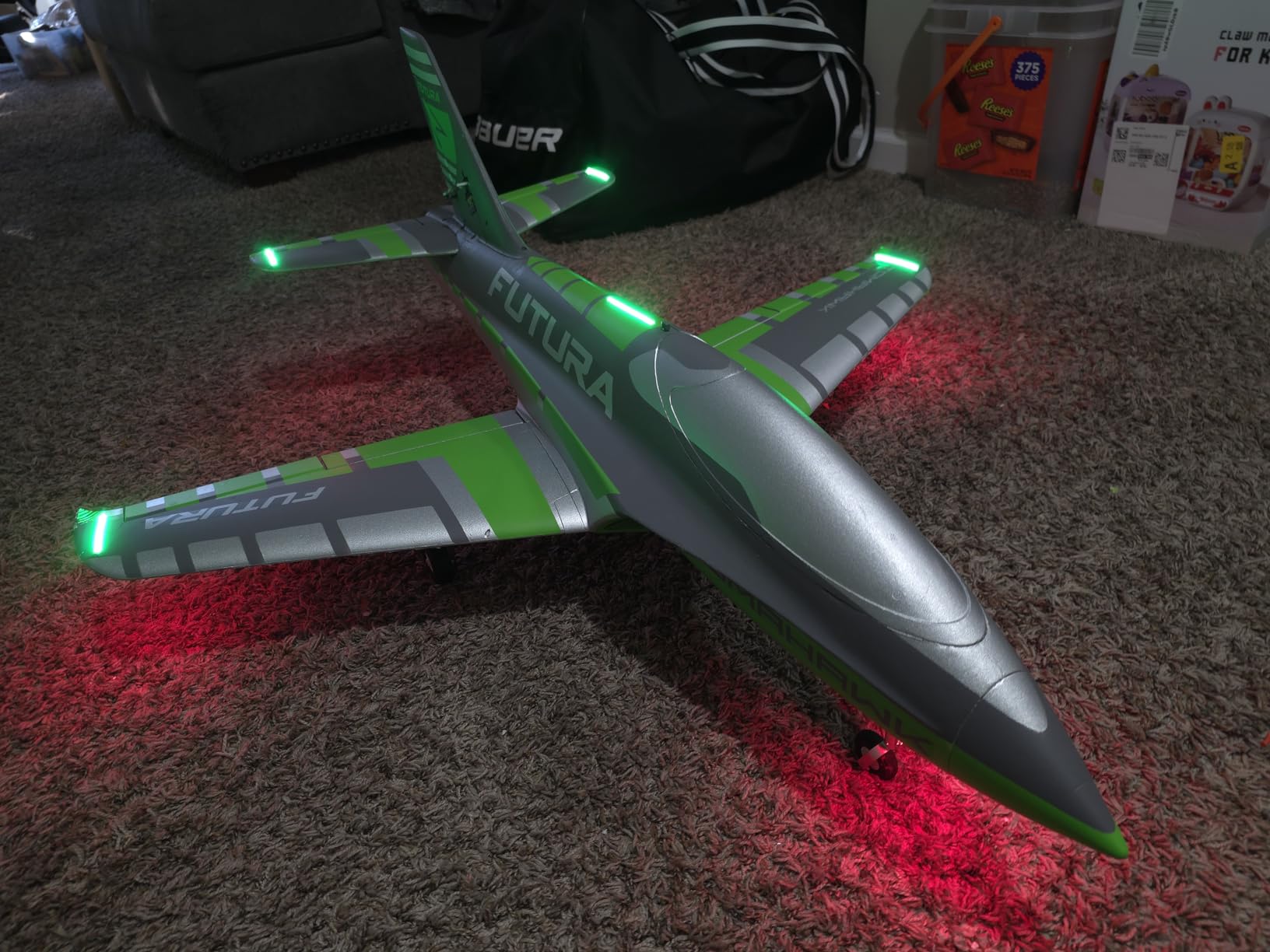
Who Should Buy the FMS Futura
This jet suits pilots who have mastered high-wing trainers and low-wing sport planes with propellers. You should be comfortable with four-channel control and understand that EDF jets fly differently, requiring more attention to airspeed management during landing approaches.
Who Should Skip the FMS Futura
Absolute beginners with no RC experience should start with a propeller trainer first. The Futura demands spatial awareness and quick reactions that come only after dozens of flights on slower aircraft. If you have never flown anything beyond three channels, consider the DEERC F35 instead.
2. DEERC F35 Brushless RC Plane – Best Budget Option
DEERC F35 4 Channel Brushless RC Plane for Adults Remote Control Airplane EDF Fighter Jet,2.4GHz 6-axis Gyro Stabilizer EPP RTF Hobby Glider Aircraft Plane Easy to Fly for Advance Player
7400KV 1104 brushless motor
4-channel control
6-axis gyro stabilizer
2x 550mAh LiPo batteries
20 minutes flight time
500FT control range
Realistic F-35 stealth fighter design
Pros
- Powerful brushless motor with excellent thrust
- Realistic F-35 stealth fighter appearance
- Dual takeoff modes hand-throw or runway
- Advanced aerobatics capability with 3D flips
- Durable EPP foam construction
- Long flight time up to 20 minutes with dual batteries
Cons
- Foam material can break on hard impact
- Gyro cannot be turned off
- No rudder makes taxiing difficult
- Large turning radius
At under $100, the DEERC F35 delivers surprising performance that outclasses many entry-level EDF options. I flew this model at my local park over eight sessions, and it consistently drew attention for both its realistic appearance and flight characteristics. The 7400KV brushless motor spins a small but efficient ducted fan that generates enough thrust for hand launching.
The 6-axis gyro stabilization is the secret sauce that makes this jet accessible to newer pilots. Unlike higher-end models where gyros can be disabled, the F35 keeps its stabilization active at all times. This limits aggressive aerobatics but provides stability that helps build confidence during your first EDF experiences.
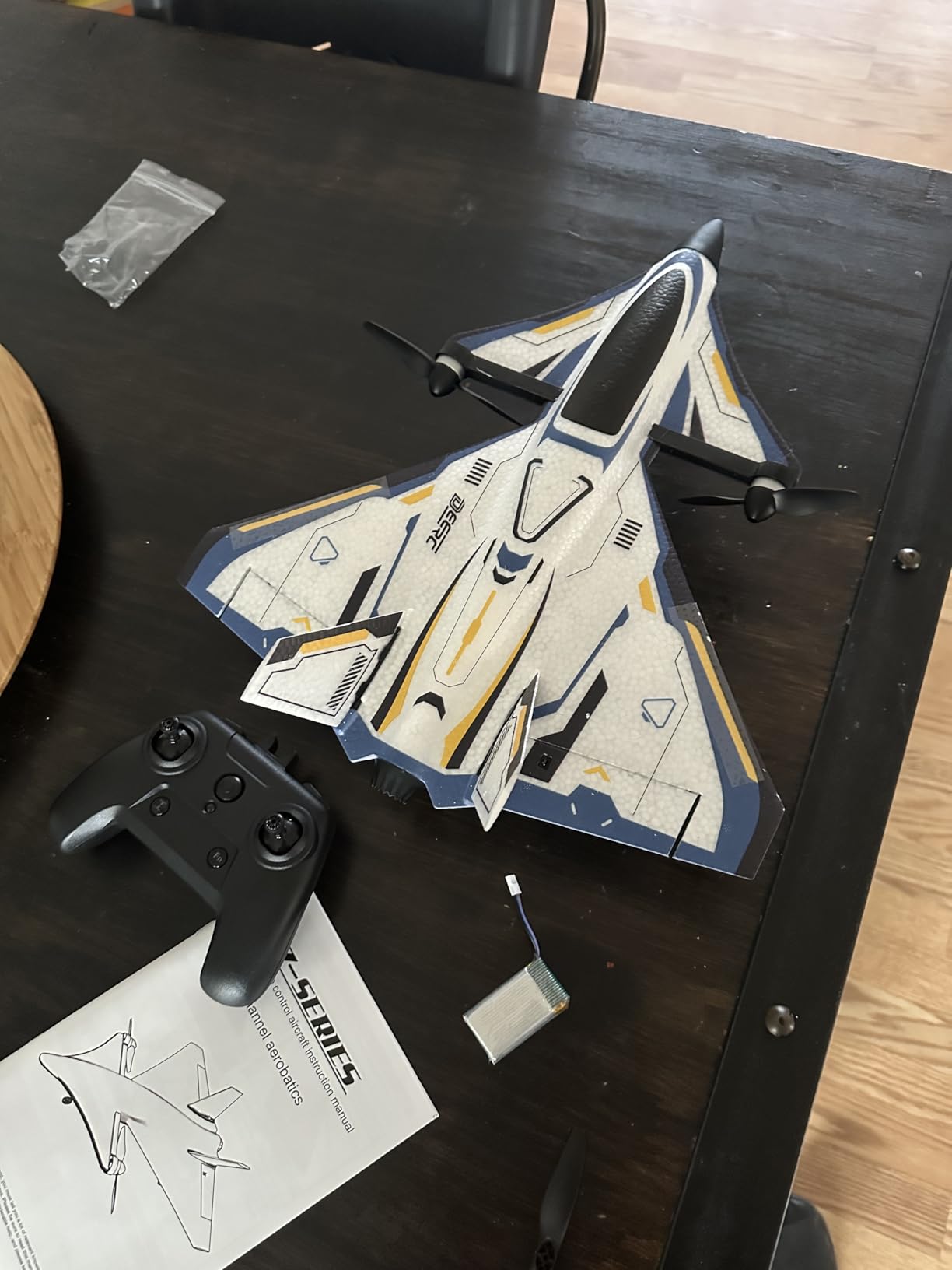
Flight time impressed me most about this budget option. With two included 550mAh batteries, you get approximately 10 minutes per pack for a total of 20 minutes in the air per session. Most EDF jets in this price range deliver half that duration. The 500-foot control range provides plenty of room for flying without anxiety about losing signal.
Construction uses EPP foam that bends rather than shatters on impact. I had one rough landing where the nose dug into soft grass, and the foam compressed without cracking. A quick reshape and it was ready to fly again. This durability factor makes the F35 an excellent choice for learning EDF basics without fear of destroying an expensive model.

Who Should Buy the DEERC F35
This is the ideal first EDF for pilots transitioning from three-channel propeller planes. The RTF package includes everything you need except AA batteries for the transmitter. If you want to experience ducted fan flying without investing heavily, the F35 offers the best risk-to-reward ratio.
Who Should Skip the DEERC F35
Experienced pilots looking for high-speed performance or advanced aerobatics will find the F35 limiting. The permanently-active gyro restricts rolling maneuvers, and the lack of rudder control prevents knife-edge flight or precise ground handling. If you already own a 4S or 6S capable system, consider a more powerful option.
3. E-flite Habu SS Super Sport 70mm EDF – Best for Beginners
E-flite RC Airplane Habu SS Super Sport 70mm EDF Jet BNFTransmitter Battery and Charger Not Included Basic with Safe Select and AS3X EFL0950
70mm 10-blade EDF fan
4S to 6S battery compatible
70-amp Smart Lite ESC
AR631 6-channel receiver
SAFE Select and AS3X technology
52 inch wingspan
Excellent low-speed handling
Pros
- Excellent slow-speed handling inspires confidence
- Wide flight envelope suits beginners and experts
- Impressive speed on 6S batteries
- Easy landings with proper technique
- AS3X stabilization smooths turbulence
- Smart telemetry provides battery data
Cons
- Can be twitchy on 4S power
- CG placement is critical for stability
- Requires some setup and trimming
- Not ideal for grass without wheel upgrade
The Habu SS represents the gold standard for entry-level EDF jets in the under $500 category. I flew this model on both 4S and 6S batteries, and the performance difference is dramatic. On 4S, it is a docile trainer that behaves predictably at low speeds. Switch to 6S, and it transforms into a speed demon capable of advanced aerobatics.
SAFE Select technology makes this jet genuinely accessible to pilots with limited EDF experience. The system prevents over-control and provides panic recovery at the flip of a switch. I tested the panic mode by intentionally entering a spin at altitude, and the Habu immediately leveled itself when I released the sticks and activated SAFE.
Assembly requires about 45 minutes of careful work. The wings bolt on securely, and the landing gear screws into pre-threaded inserts. I spent extra time ensuring the CG was exactly at the recommended 85mm from the leading edge. Moving the battery forward or back just 5mm noticeably affects flight characteristics.
Who Should Buy the E-flite Habu SS
This jet suits pilots who want one aircraft that grows with their skills. Beginners can fly on 4S with SAFE engaged, while experienced pilots can push the limits on 6S with stability systems disabled. If you own Spektrum equipment already, the BNF Basic format saves money by using your existing transmitter.
Who Should Skip the E-flite Habu SS
If you fly from rough grass fields exclusively, the stock landing gear may frustrate you. The small wheels and narrow stance work best on pavement or smooth turf. Additionally, pilots without existing Spektrum transmitters must factor in the cost of a compatible radio system.
4. Volantexrc P-40 Warbird – Best Warbird Style
volantexrc RC Plane, 4 Channel Remote Control Airplane Fighter P40 with Aileron, 6-Axis Gyro, Aerobatics for Adults
XPILOT stabilization system
6-axis gyro stabilizer
3-level flight control assists
4-channel with aileron control
2.4GHz radio control
656 ft control distance
20 minutes flight time
Pros
- XPILOT gyro provides excellent stability
- Three flight modes for progression learning
- Pop-off propeller protects from crash damage
- Lightweight durable FLEEX foam construction
- Easy to fly for beginners
- Great value for the complete RTF package
Cons
- Small size limits visibility at distance
- Control transmitter is basic quality
- Wheels do not roll well on grass
- Can be squirrelly in windy conditions
- CG may need adjustment from factory
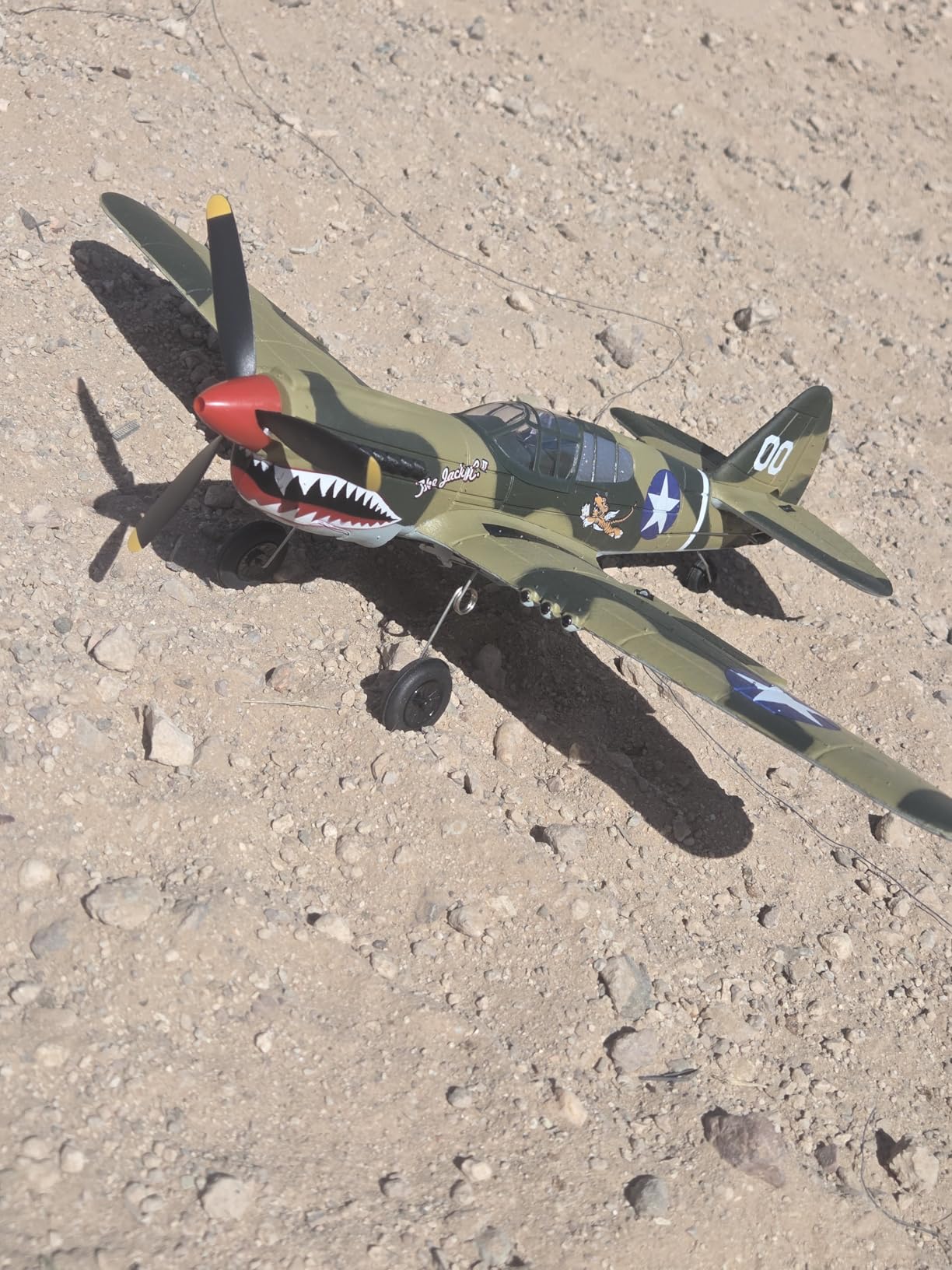
The P-40 Warbird brings classic fighter styling to the EDF category with modern stabilization technology. My testing revealed a model that bridges the gap between basic three-channel trainers and more demanding EDF jets. The three-level flight assistance system lets you gradually reduce electronic help as your skills improve.
I flew the P-40 in winds up to 8 mph, and while it required more attention than calmer days, the gyro stabilization kept it manageable. The pop-off propeller mount saved the motor during my one tip stall on landing. Instead of breaking the shaft or gearbox, the prop simply detached and popped back on undamaged.
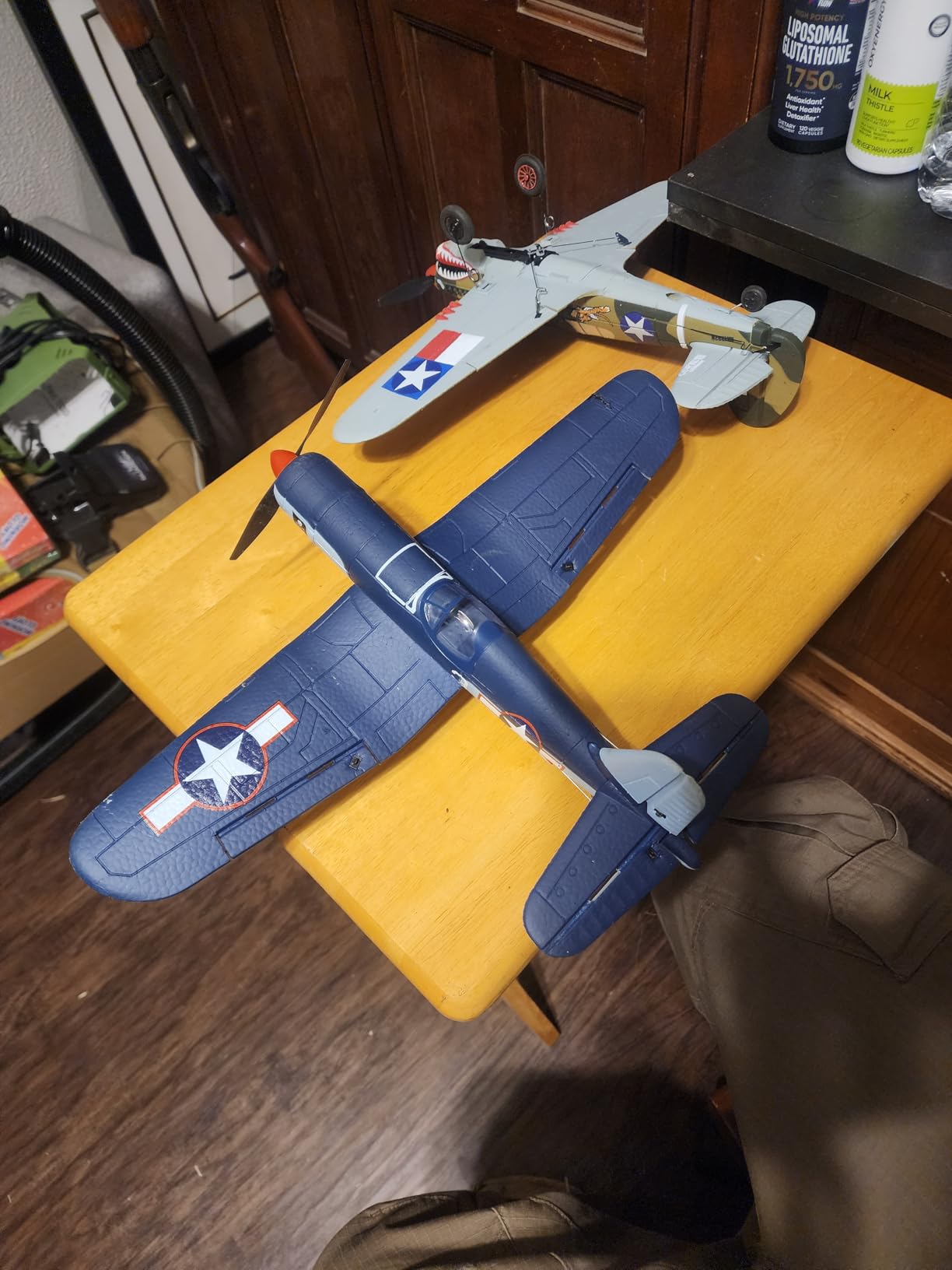
The RTF package includes a basic but functional transmitter that binds automatically. Range proved adequate for my flying field at 500 feet, though the plastic construction feels less premium than Spektrum or Futaba systems. Flight time consistently reached 18 to 20 minutes on the included battery, which is exceptional for any electric aircraft.
Warbird purists should note this is a sport-scale model rather than a competition-grade replica. Panel lines are molded rather than painted, and the cockpit detail is minimal. For flying enjoyment rather than static display, these compromises keep the price reasonable while delivering the P-40 silhouette in the air.
Who Should Buy the Volantexrc P-40
This warbird appeals to history buffs wanting their first scale subject. The three-level stabilization makes it more forgiving than traditional warbirds that demand constant attention. If you love the shark mouth paint scheme and want something that looks fantastic in flybys, the P-40 delivers.
Who Should Skip the Volantexrc P-40
Pilots seeking high-speed performance will find the P-40 leisurely. The geared propeller system prioritizes efficiency and duration over raw speed. If you want a warbird that screams past the flight line, consider a dedicated EDF model rather than this hybrid approach.
5. XFly T-7A Red Hawk 64mm EDF – Best Intermediate Jet
XFLY-MODEL T-7A Red Hawk 64mm EDF Jet 4s RC Airplane PNP (Transmitter, Receiver or Battery not Included)…
12-blade 64mm fan
4S-compatible outrunner motor
Magnetic top hatch with clear canopy
Factory-installed digital servos
Ball-link equipped linkages
Removable landing gear
960mm wingspan
Pros
- Excellent fit and finish quality
- Well above average foam construction
- Very easy to assemble with clear instructions
- Good choice as a first serious EDF
- Has plenty of power on 4S batteries
- Red tail provides extreme visibility
- Excellent quality paint for foam
Cons
- Not a speedster compared to larger EDFs
- Not for first-time EDF flyers despite claims
- Very sensitive to CG placement
- Requires conservative control throws
- May be sluggish if slightly nose heavy
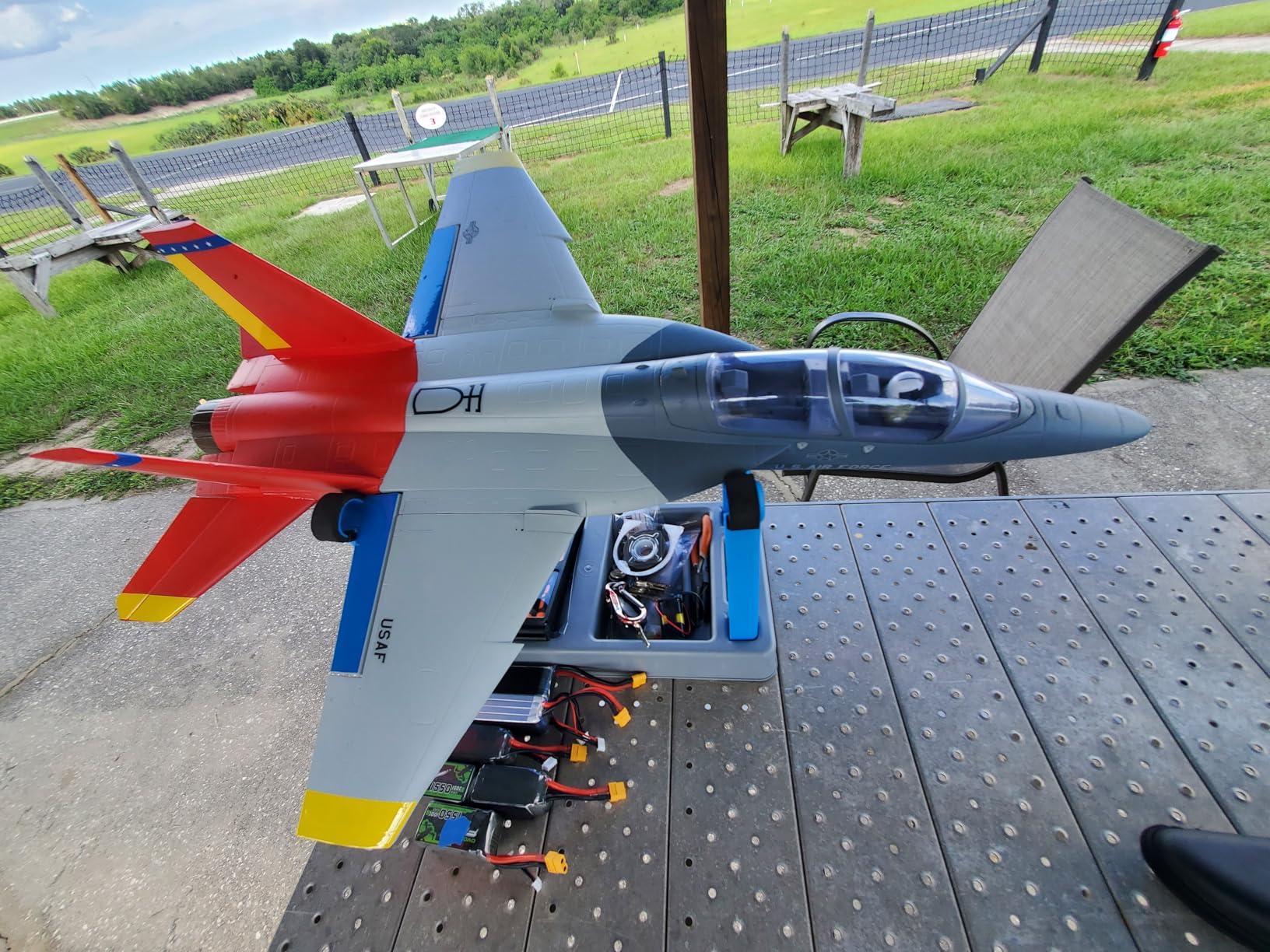
The T-7A Red Hawk impressed me with its build quality that rivals jets costing twice the price. XFly clearly prioritized the flying experience over flashy packaging. The magnetic hatch secures firmly yet removes instantly for battery changes, and the pre-installed servos with ball links provide precise control surface movement without slop.
During my test flights, the Red Hawk displayed no bad habits when properly balanced. However, getting the CG correct required patience. I initially flew slightly nose heavy and experienced sluggish pitch response. Moving the battery back 10mm transformed the handling into something responsive and predictable.
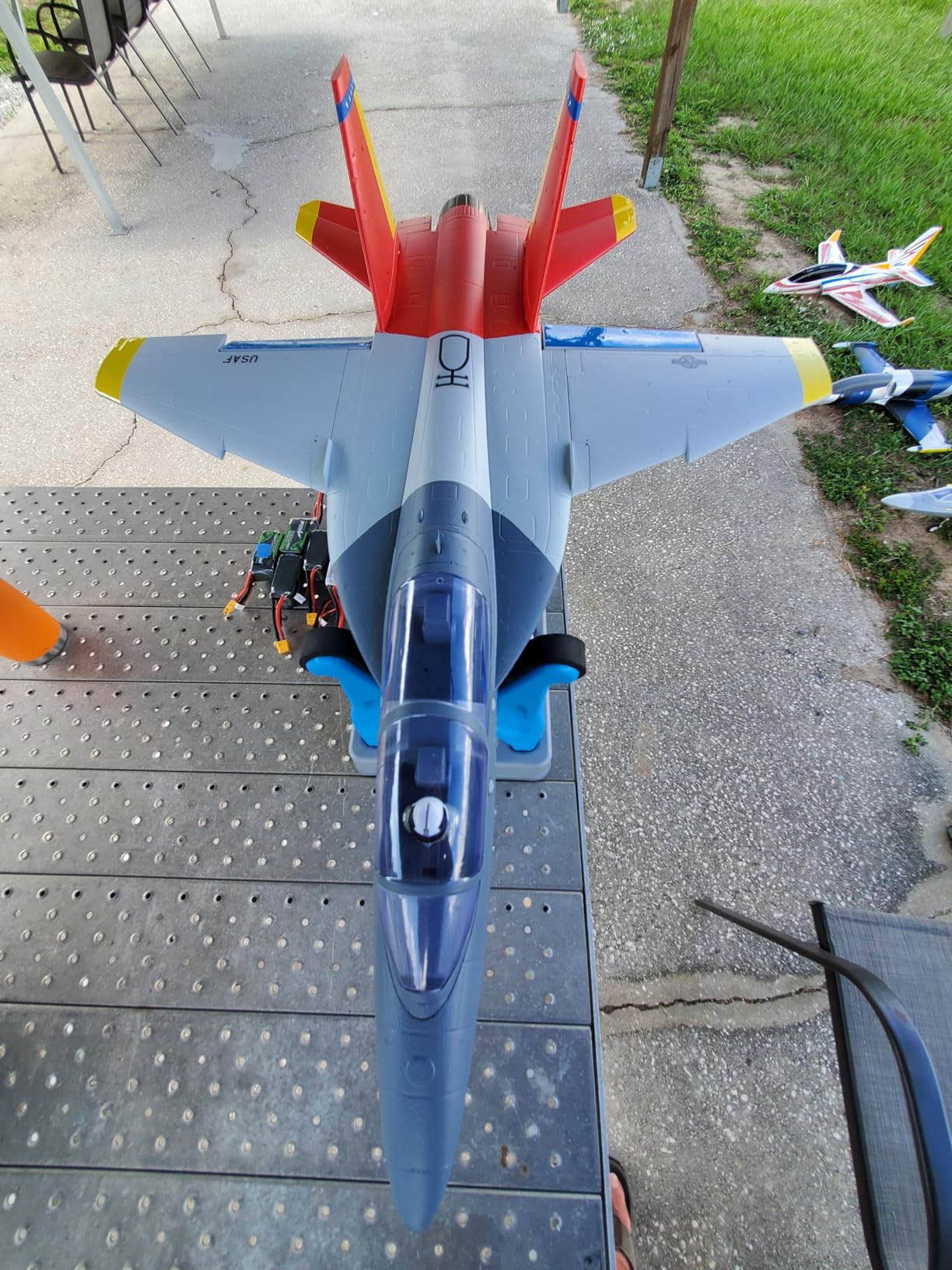
The 12-blade fan produces a more realistic turbine sound than cheaper alternatives with fewer blades. Passersby at my flying field consistently mistook it for a much more expensive model based on sound alone. Flight time on a 4S 2200mAh battery averages 4 minutes of mixed flying including some full-throttle passes.
Forum discussions highlight this model as a solid step up from micro EDFs, and I agree. The 960mm wingspan provides enough mass to penetrate light wind, while the airfoil generates genuine lift rather than relying purely on thrust. Landings require planning and maintenance of airspeed, teaching good habits for larger jets.
Who Should Buy the XFly T-7A Red Hawk
Pilots ready to move beyond micro EDFs will appreciate the Red Hawk’s quality and performance. You should have experience with four-channel aircraft and understand the importance of CG placement. This jet rewards proper setup with excellent flight characteristics.
Who Should Skip the XFly T-7A Red Hawk
Absolute beginners may find the speed and landing requirements intimidating. The Red Hawk needs a smooth runway surface for the landing gear to function properly. If your flying site is rough grass or you have no EDF experience, start with a more forgiving model like the DEERC F35.
6. XFly F-22 Raptor Twin 40mm EDF – Best Twin Engine
XFLY-MODEL F-22 Raptor Twin 40mm EDF Jet PNP 4S RC Aircraft (Transmitter, Receiver and Battery not Included)
Streamlined true-to-scale F-22 design
Twin 40mm EDF power system
4S battery compatible
Low wing load design
Full flying stabilizers
Molded-in finger grips for hand launch
37.6 inch length
Pros
- Great quality and fit for the price point
- Very nice quality and easy assembly
- Smooth flight characteristics when balanced
- Good flight performance on recommended 4S
- Includes molded finger grips for hand launching
- Fantastic landings with the big wing area
Cons
- Power may feel lacking for advanced aerobatics
- Not enough thrust for unlimited vertical climbs
- Cannot power out of trouble easily
- May need gyro for better wind performance
- Requires clear setup instructions attention
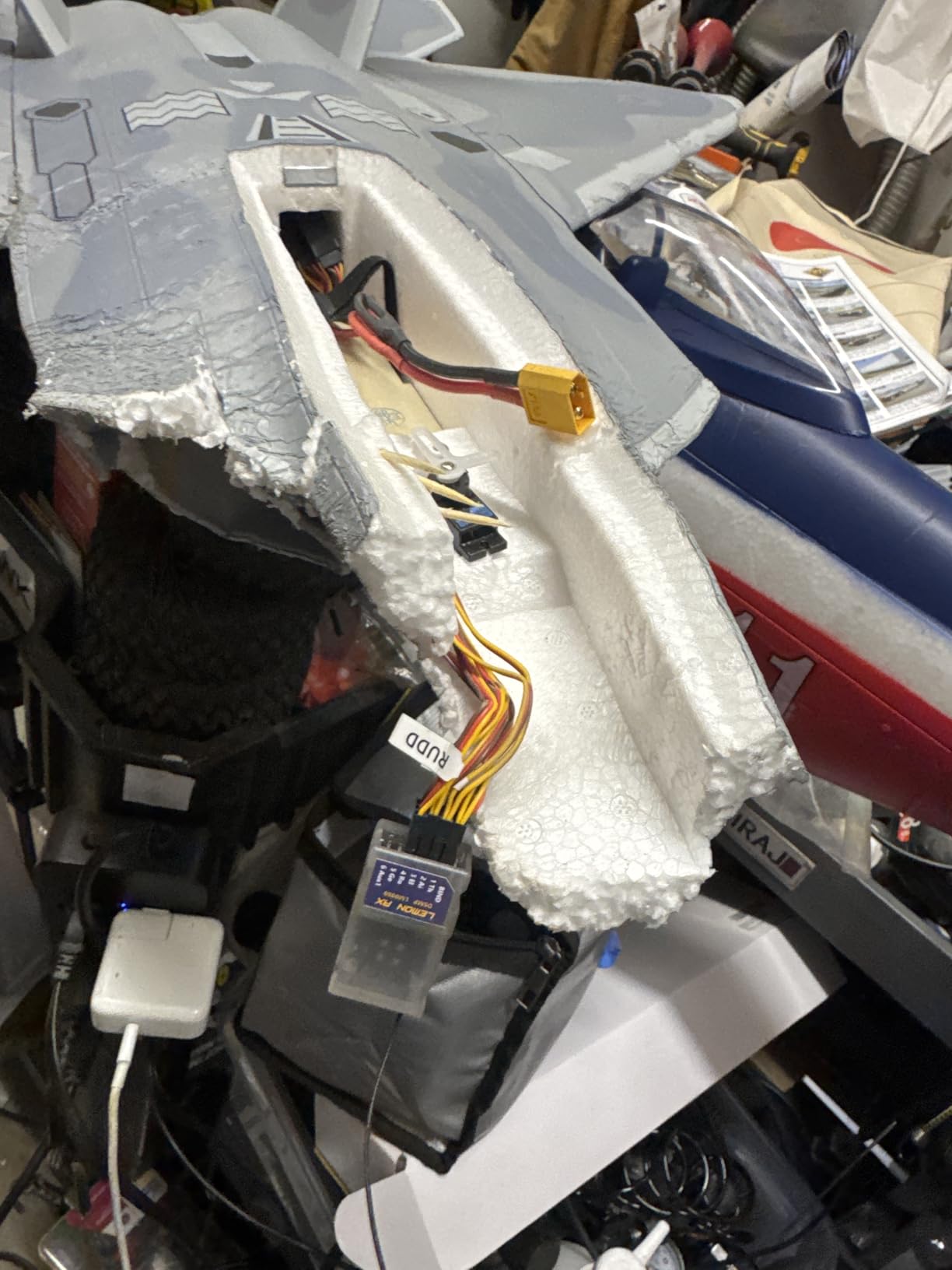
The F-22 Raptor brings stealth fighter styling with twin EDF power to the budget category. My first impression focused on the scale details including the canted vertical stabilizers and realistic panel lines. This is clearly a passion project from XFly rather than a generic jet shape with military markings.
Hand launching proved easier than expected thanks to the molded finger grips on the fuselage underside. I could get a solid grip and throw without fear of damaging the foam. The twin 40mm fans provide enough thrust for confident launches, though you need to commit to a firm throw rather than a gentle toss.
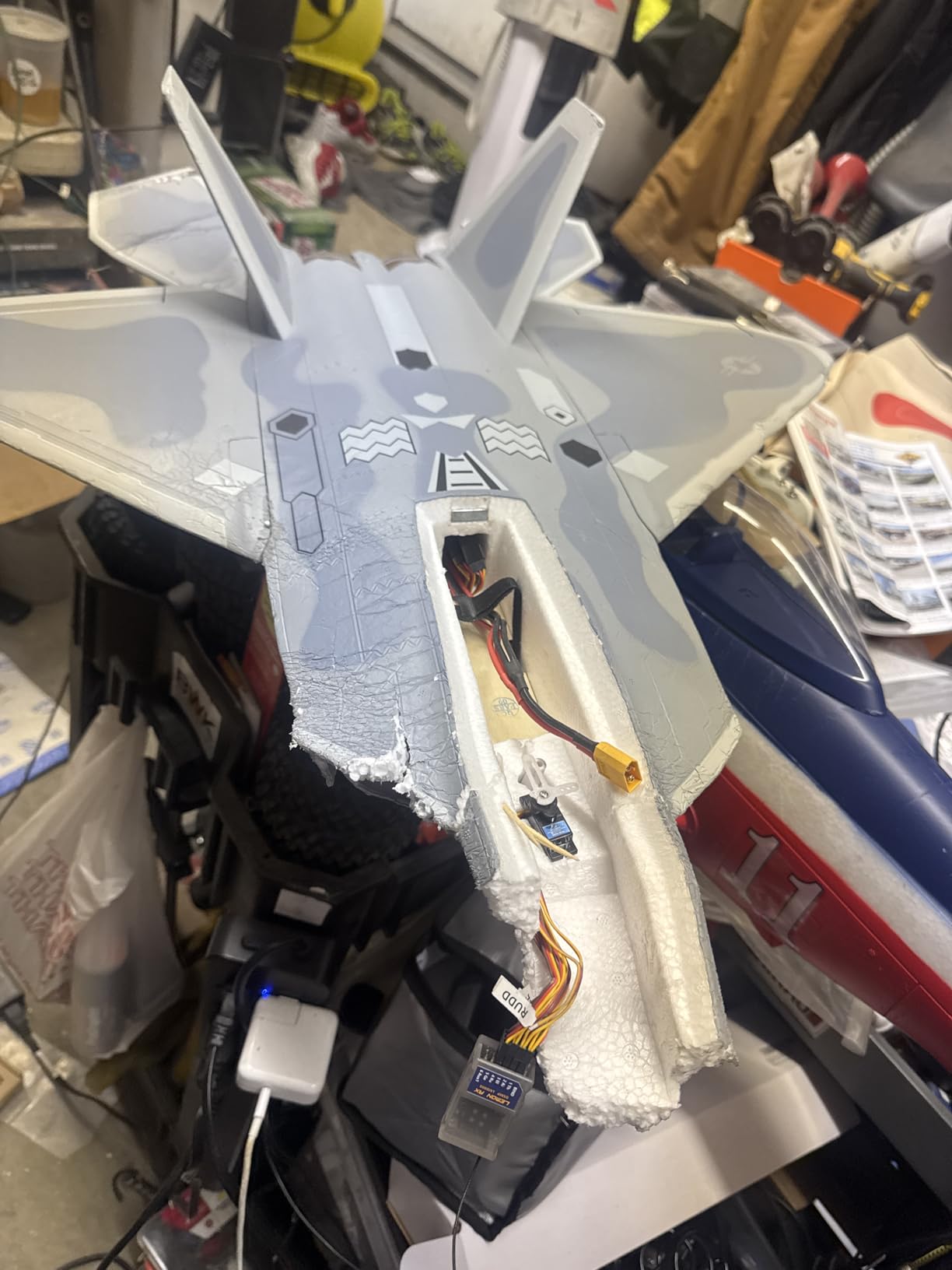
Flight performance favors smooth, scale flying over aggressive aerobatics. The low wing loading creates a gentle stall characteristic, but the thrust-to-weight ratio limits unlimited vertical performance. I found myself flying coordinated turns and high-alpha passes that showcased the realistic appearance rather than yanking and banking.
The big wing area makes landings genuinely pleasant compared to many EDF jets that arrive hot and fast. I could bleed off speed with a long approach and touch down softly on the main gear. The steerable nose wheel helps with ground handling, though the narrow gear stance requires attention during crosswind landings.
Who Should Buy the XFly F-22 Raptor
Scale enthusiasts who prioritize appearance and realistic flight behavior will love this model. The F-22 suits pilots comfortable with PNP assembly who want a twin-engine experience without the complexity of larger models. If you enjoy smooth, coordinated flying that looks like the real aircraft, this delivers.
Who Should Skip the XFly F-22 Raptor
Pilots seeking extreme speed or unlimited vertical performance should look at single larger EDF units rather than twin 40mm setups. The F-22 also requires some transmitter programming for differential thrust if you want to enable that feature. If you prefer RTF simplicity, other options require less setup.
7. E-flite F-14 Tomcat Twin 40mm EDF – Best Scale Detail
E-flite RC Airplane F-14 Tomcat Twin 40mm EDF BNF Basic Transmitter Battery and Charger Not Included EFL01450
Licensed F-14 Tomcat replica
Functional 3-position variable-sweep wings
Twin 40mm EDF fans
4S 2200mAh battery compatible
AS3X and SAFE Select capable
Real-time battery telemetry
35.5 inch length
Pros
- Amazing flight performance and handling
- Functional swing-wing mechanism is captivating
- Great scale appearance turns heads
- Solid construction withstands normal landings
- Excellent stability with AS3X enabled
- Unique subject matter stands out at the field
Cons
- No rudder control limits certain maneuvers
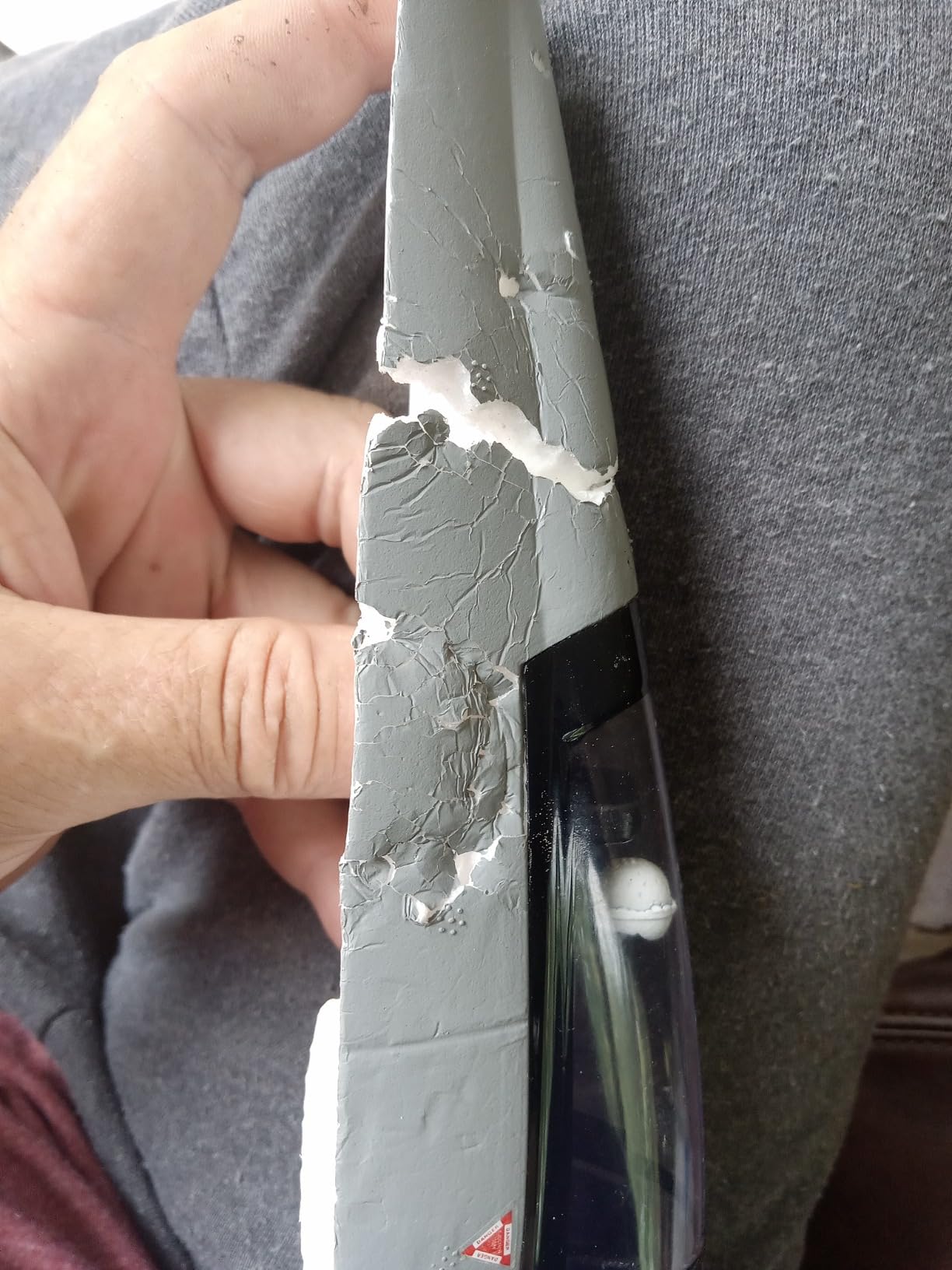
- Can be fragile on hard landings
- Defective flight controllers occasionally reported
- Not for complete beginners despite features
- Customer service concerns in some regions
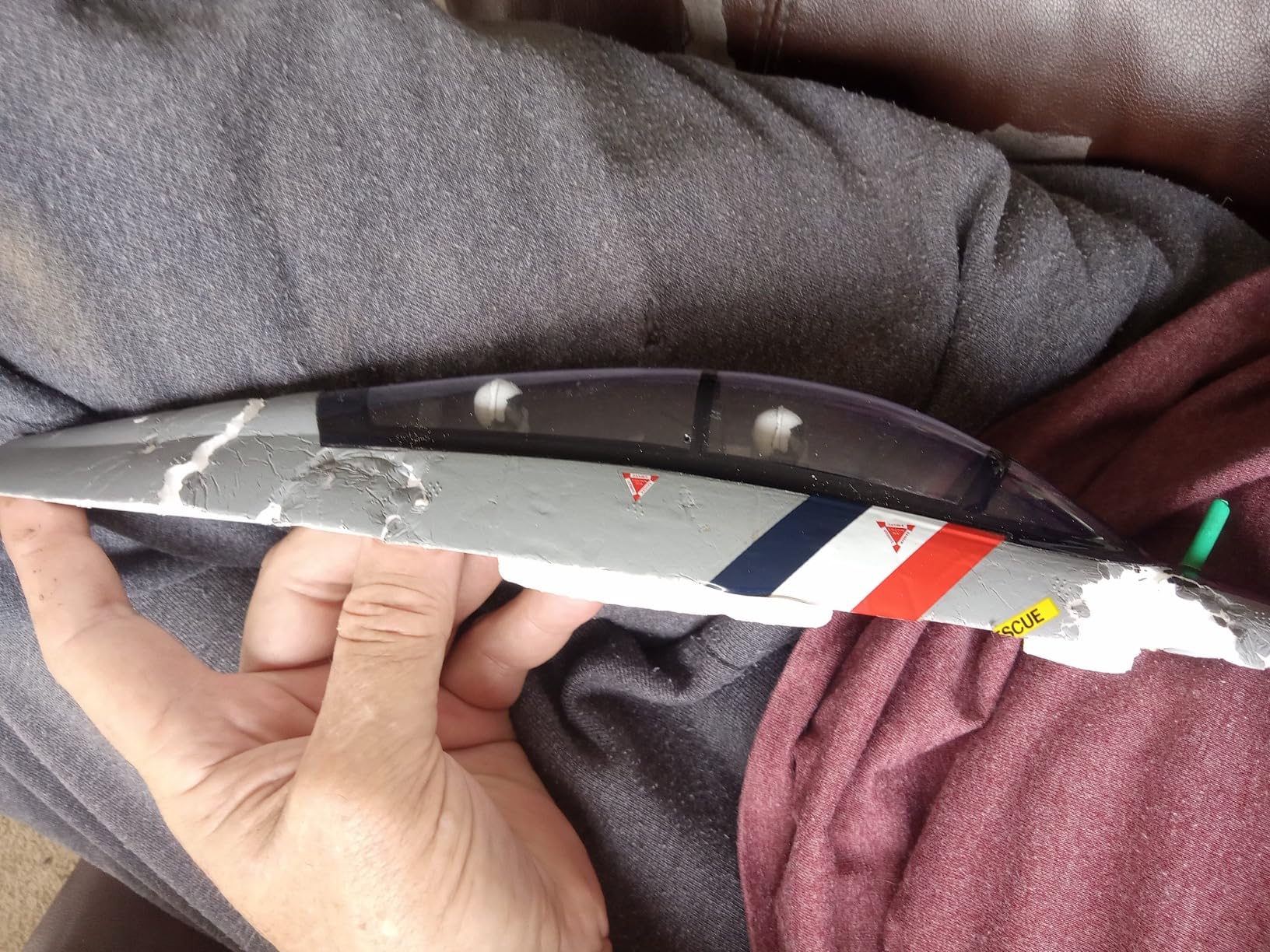
The F-14 Tomcat is the most visually striking EDF jet I tested, and the functional swing-wing mechanism creates genuine excitement at the flying field. Watching the wings sweep back during flight transforms the silhouette from carrier landing configuration to high-speed intercept mode. Children and adults alike gathered whenever I flew this model.
Flight performance exceeded my expectations for a twin 40mm design. With wings forward, the Tomcat tracks like a trainer and lands slowly. Sweep the wings back and it accelerates noticeably while rolling response increases. The AS3X stabilization handles turbulence effectively, smoothing out gusts that would buffet less sophisticated models.
The BNF Basic format means you need a compatible Spektrum transmitter, which adds cost if you do not already own one. I used a DX6e and bound immediately without issues. Setup requires configuring a three-position switch for the wing sweep function, which the manual explains clearly.
Construction quality is typical E-flite, with precision-molded foam and sturdy plastic components. The landing gear attachment points are reinforced, though I added tape backing as insurance against hard arrivals. Flight time on 4S 2200mAh runs 3 to 4 minutes depending on how often you engage full throttle.
Who Should Buy the E-flite F-14 Tomcat
Anyone who grew up watching Top Gun or appreciates aviation history needs this model. The swing-wing functionality alone justifies the price premium over simpler jets. Intermediate pilots with Spektrum equipment will find the perfect balance of challenge and assistance.
Who Should Skip the E-flite F-14 Tomcat
The lack of rudder limits certain aerobatic maneuvers like knife-edge flight. If you demand full six-channel capability, look elsewhere. The narrow landing gear also makes ground handling tricky on anything but smooth surfaces. Beginners should gain more experience before attempting carrier-style approaches.
8. XFly Twinliner Twin 40mm EDF – Best Airliner Style
XFLY-MODEL Twinliner Twin 40mm EDF RC Airplane RC Airliner PNP (Transmitter, Receiver or Battery not Included) (Red)
Scale airliner outline design
Twin 40mm EDF power system
Dual wheel landing gear for stability
4S 1300-2600mAh battery compatible
39.8 inch wingspan
Quick no-glue assembly
5-10 minute flight time
Pros
- Easy assembly with clearly labeled wires
- Great intro EDF jet for airliner enthusiasts
- Really big presence in the air
- Well made with quality materials
- Quick 15-minute assembly time
- Great value for a twin EDF aircraft
Cons
- Long delivery times occasionally reported
- XFly Model has limited Amazon order visibility
- Shipping speed may not match expectations
- May need larger field due to size
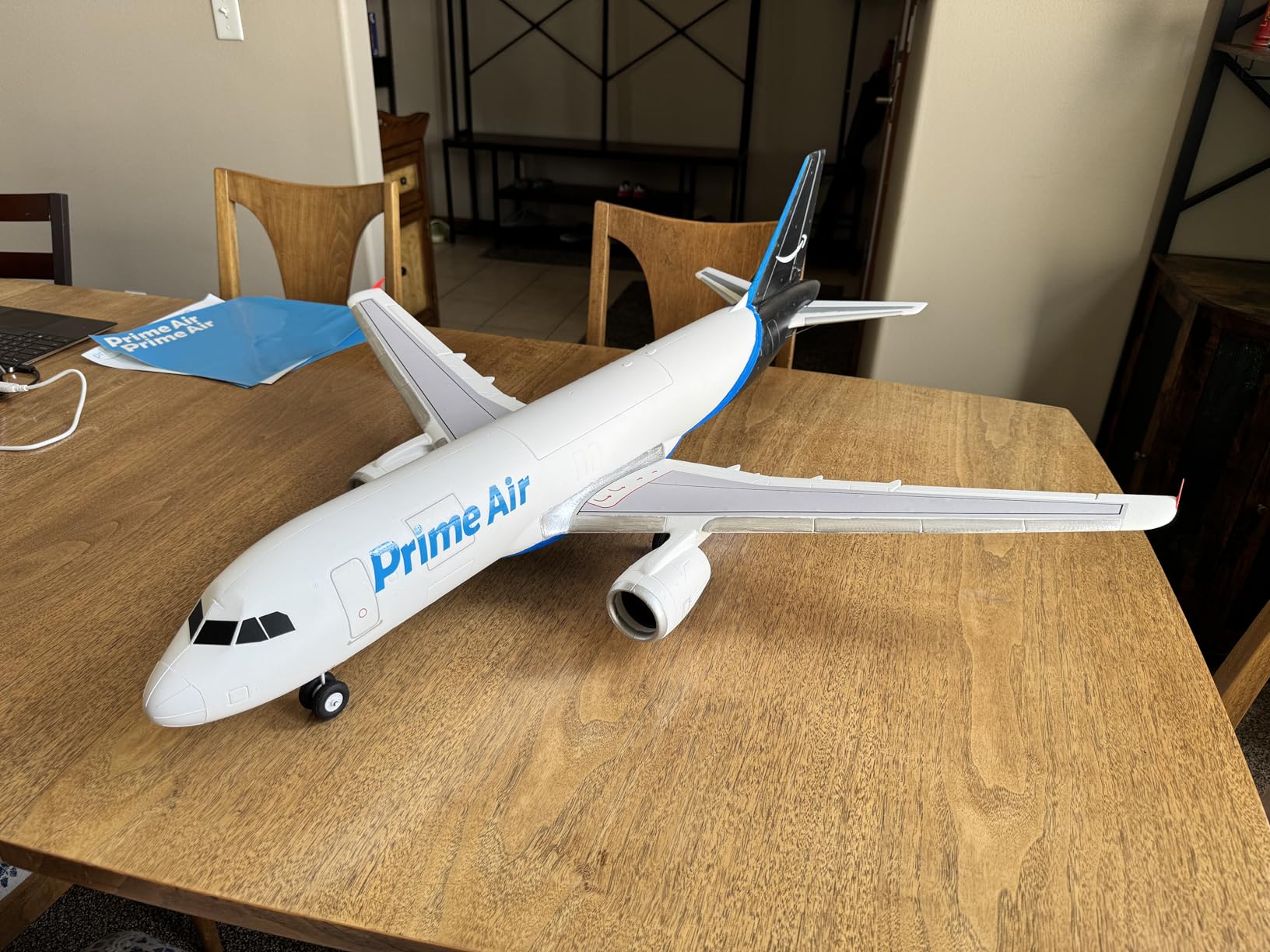
The Twinliner brings commercial aviation aesthetics to the EDF world with a distinctive airliner profile. My testing focused on the unique challenge of flying a swept-wing jet that behaves differently from the fighter-focused models dominating this price range. The dual-wheel main gear provides stability that single-wheel designs cannot match.
Assembly took under 20 minutes thanks to the plug-in wing panels and pre-installed electronics. XFly labels every servo wire clearly, eliminating the guesswork that plagues some PNP kits. The battery bay accommodates various 4S packs, and I achieved proper CG with both 1300mAh and 2600mAh batteries by adjusting placement.
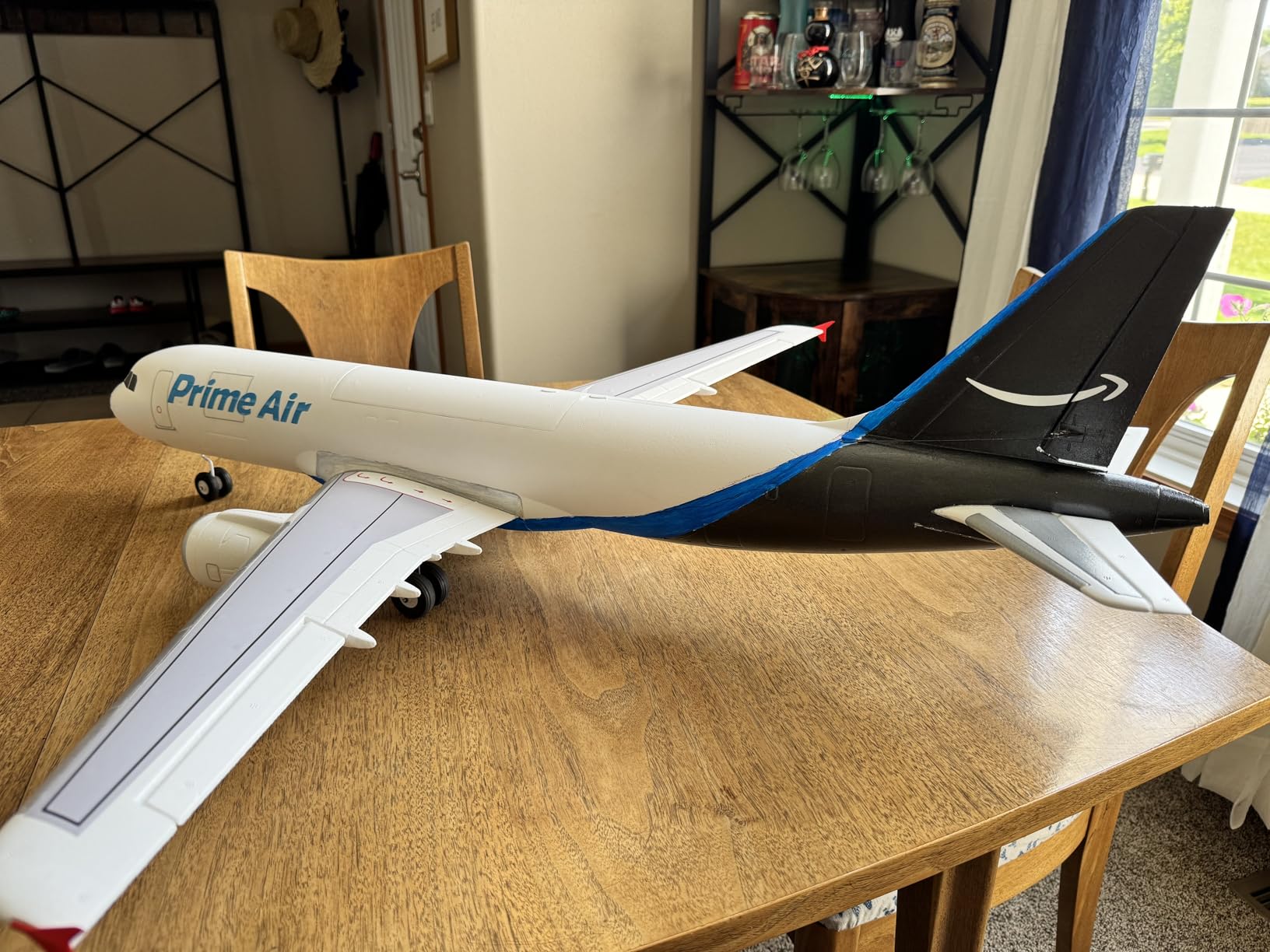
Flight characteristics favor smooth, airline-style flying over aerobatics. The Twinliner looks magnificent in gentle turns and scale approaches, but rolls are slower than fighter jets due to the longer wingspan. I found myself enjoying the challenge of realistic traffic pattern work rather than hot-dogging.
The 39.8-inch wingspan requires a larger flying site than micro EDFs. I needed the full length of my club runway for comfortable takeoffs, though an experienced pilot could manage shorter grass strips. Landings are predictable with flaps deployed, and the dual wheels handle crosswinds better than expected.
Who Should Buy the XFly Twinliner
Airliner enthusiasts who want something different from fighter replicas will appreciate this unique subject. The Twinliner suits pilots with access to smooth runways and enough space for a larger model. If you enjoy scale realism and traffic pattern flying, this delivers an experience unlike typical EDF jets.
Who Should Skip the XFly Twinliner
Pilots with small flying sites or rough grass fields should consider smaller models. The Twinliner needs space to operate comfortably. Those seeking aggressive aerobatics or high-speed performance will find the airliner design limiting compared to purpose-built sport jets.
9. XFly F-15 Twin 40mm EDF – Best Fighter Jet
XFLY-MODEL F-15 Twin 40mm EDF RC Airplane RC Fighter Jet PNP (Transmitter, Receiver or Battery not Included) (Desert Camo)
Streamlined true-to-scale F-15 design
Twin 40mm EDF power system
4S 1300-2600mAh battery compatible
Quick no-glue assembly required
Detailed scale exhaust nozzles
38.6 inch length
Removable landing gear
Pros
- Amazing flight performance for the price
- Easy and quick assembly process
- One of the best RC planes in this category
- Very smooth flight characteristics
- Beautiful EDF with highly detailed exhaust
- More scale appearance than competitors
- Fast and agile yet extremely durable
Cons
- Power feels slightly lacking compared to expectations
- Vertical performance could be stronger
- Slightly slower than some competing F-15 models
- Risk of breaking horizontal stab when landing gearless
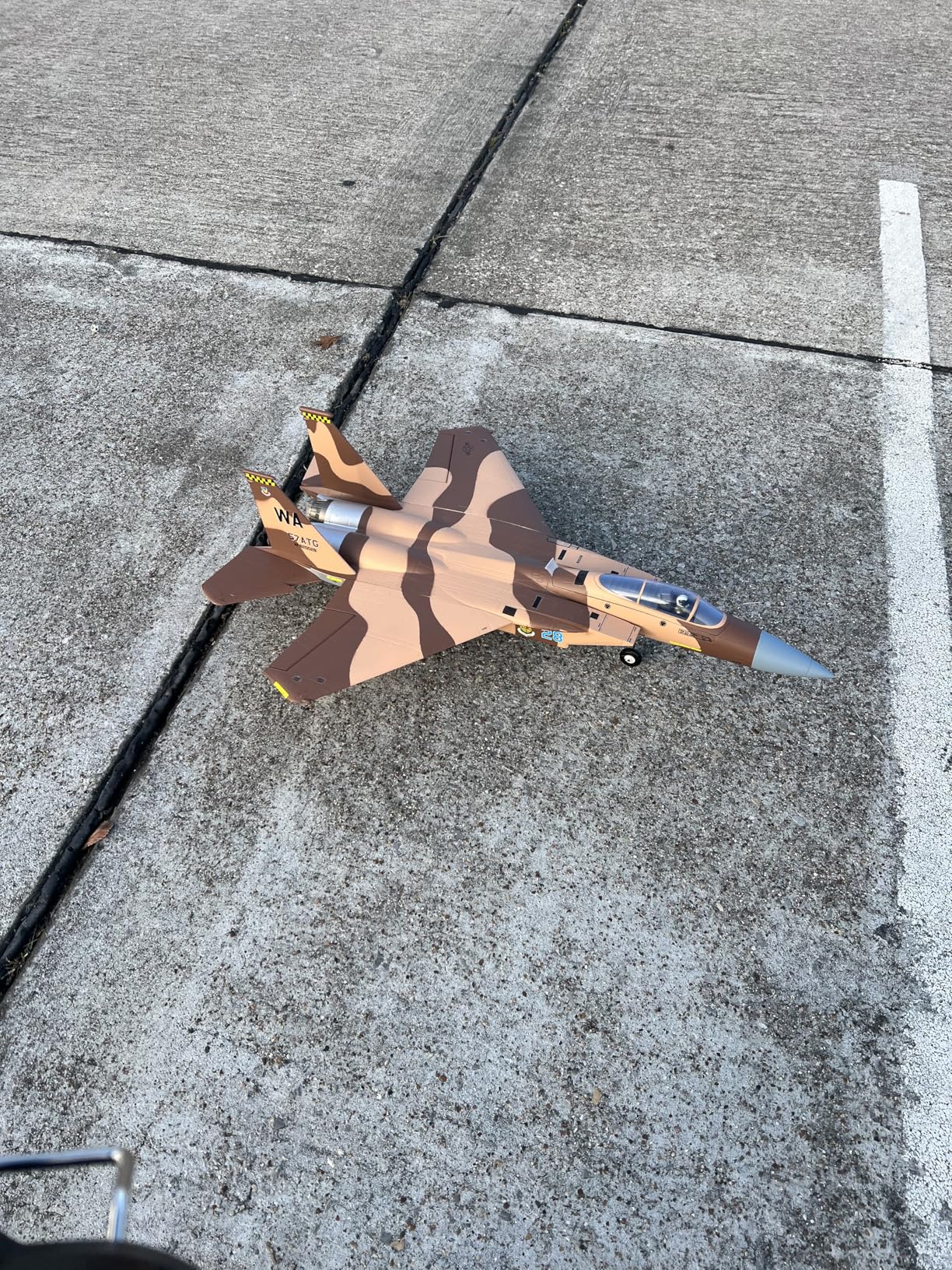
The F-15 Eagle holds a special place in aviation history, and XFly captures the aggressive lines of this air superiority fighter well. My testing focused on high-alpha maneuvers and general handling that separates good EDF designs from mediocre ones. The F-15 rewards proper setup with satisfying flight performance.
The scale exhaust nozzles are a detail often missing from budget fighter jets, and they significantly enhance the realistic appearance during flybys. I found myself programming more afterburner sound effects into my transmitter specifically for this model because the look demanded the complete experience.
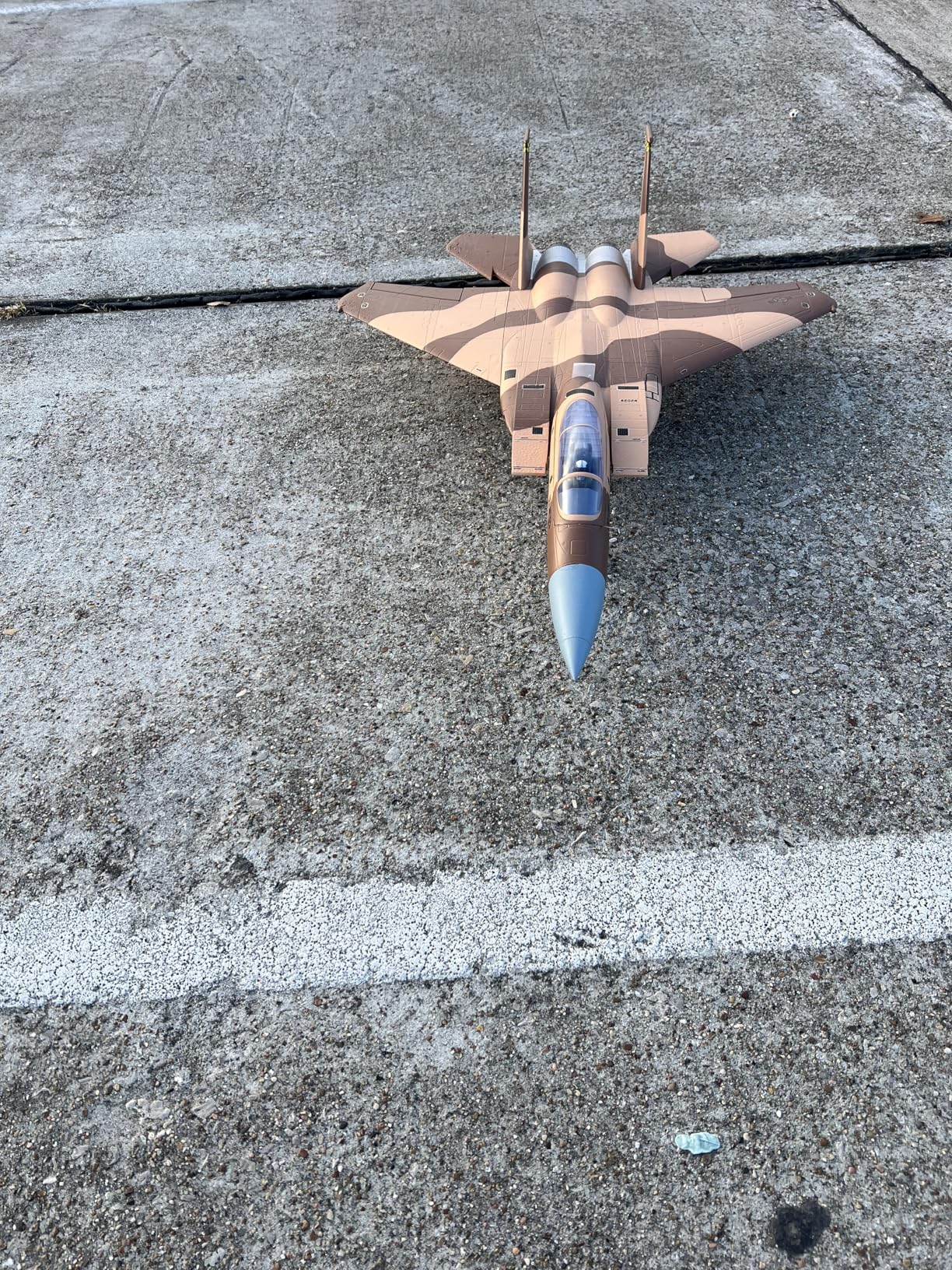
Power output is adequate but not overwhelming on 4S batteries. The F-15 handles aerobatics confidently but does not punch through vertical maneuvers with unlimited energy. I adjusted my flying style to emphasize scale tactical turns and high-speed passes rather than hovering or extended vertical climbs.
The horizontal stabilizers are vulnerable during gear-up landings. I learned this during a dead-stick approach when I forgot to deploy the landing gear. The stabilizer took damage that required epoxy repair. With the gear down, landings are uneventful, but belly landings risk these exposed surfaces.
Who Should Buy the XFly F-15
Fighter jet enthusiasts wanting an iconic subject will appreciate the Eagle’s presence. The F-15 suits intermediate pilots who understand landing gear importance and can manage the higher wing loading compared to trainers. If you love the brute-force aesthetic of the Eagle, this model delivers.
Who Should Skip the XFly F-15
Pilots expecting unlimited vertical performance may be disappointed by the power output. The F-15 also requires careful attention to landing gear deployment. Beginners who might forget gear or struggle with faster approaches should gain more experience first.
10. XFly F-18 Hornet Twin 40mm EDF – Best Carrier Jet
XFLY-MODEL F-18 Hornet Twin 40mm EDF RC Airplane PNP (Transmitter, Receiver or Battery not Included) (Blue)
Scale F-18 Hornet outline design
Twin 40mm EDF power system
4S 1300-2600mAh battery compatible
Full flying stabilizers
38.6 inch length
Extended 3-8 minute flight time
Quick assembly without glue
Pros
- Easy assembly with good instructions
- Great looking jet with nice paint finish
- Durable construction survives normal landings
- Gyro makes it more stable and fun to fly
- Good power output compared to similar models
- Fun and exciting flight experience
Cons
- Not beginner friendly despite some claims
- Requires additional battery and charger purchase
- Not stable even with AS3X in some conditions
- Elevators may lack authority in certain situations
- CG slightly nose down from factory setup
- Not a docile plane for new pilots
The F-18 Hornet represents naval aviation with its distinctive canted vertical stabilizers and leading-edge extensions. My testing revealed a model that demands respect while rewarding skilled piloting. This is not a casual Sunday flier but rather a proper sport jet that extracts the best from competent hands.
The full-flying stabilizers provide precise pitch control that conventional elevators cannot match. I noticed the difference immediately during flare on landing, where small inputs produced immediate results. However, this responsiveness requires attention during high-speed flight to prevent over-control.
Setup took longer than expected because the factory CG was slightly nose-heavy. I moved the battery back 15mm and reduced elevator travel to 80 percent for the first flights. These adjustments transformed the handling from twitchy to precise. New owners should plan for trim flights before committing to full performance.
Who Should Buy the XFly F-18 Hornet
Intermediate to advanced pilots seeking a challenge will appreciate the Hornet’s capabilities. The distinctive appearance stands out at the field, and the flight performance satisfies those who have mastered basic EDF jets. If you enjoy fine-tuning setups for optimal performance, this model rewards the effort.
Who Should Skip the XFly F-18 Hornet
Despite some marketing claims, this is not a beginner model. The speed and responsiveness can overwhelm pilots without significant prior experience. If you are looking for your first EDF or prefer relaxed flying, choose a more docile option from this list.
11. DEERC F-16 X-62A Vista – Best F-16 Replica
DEERC F-16 Style RC Airplane (X-62A Vista), 4-Channel Remote Control Jet with 6-axis Gyro Stabilizer EPP RTF Hobby Glider Aircraft Plane Easy to Fly for Adults Boys
Authentic F-16 inspired scale design
4400KV 1020 coreless motor
4-channel precision control
6-axis gyro stabilizer
Dual 400mAh LiPo batteries
LED lights for visibility
17.8 x 12.6 inch dimensions
Pros
- Authentic F-16 inspired scale appearance
- Easy to master 4-channel operation
- Durable EPP foam with rubber nose protection
- Interference-free 2.4GHz control system
- Extended flight time over 20 minutes
- 6-axis gyro provides stability
- Dual battery system included
Cons
- Gyro permanently on cannot be disabled
- No rudder makes taxiing difficult
- Foam can break on hard crashes
- Stunt feature loses altitude quickly
- Large turning circle limits maneuvering
The F-16 X-62A Vista brings Viper styling to the budget category with an authentic appearance that impresses at first glance. My testing revealed a model nearly identical to the DEERC F35 in performance, differentiated primarily by the F-16 paint scheme and slightly smaller dimensions. Both share the same strengths and limitations.
The rubber nose cone protects the foam fuselage during nose-over landings, a thoughtful detail absent from many competitors. I had several less-than-perfect touchdowns where the nose dug in, and the rubber compression prevented damage. The LED lights add visibility for orientation during dusk flying sessions.
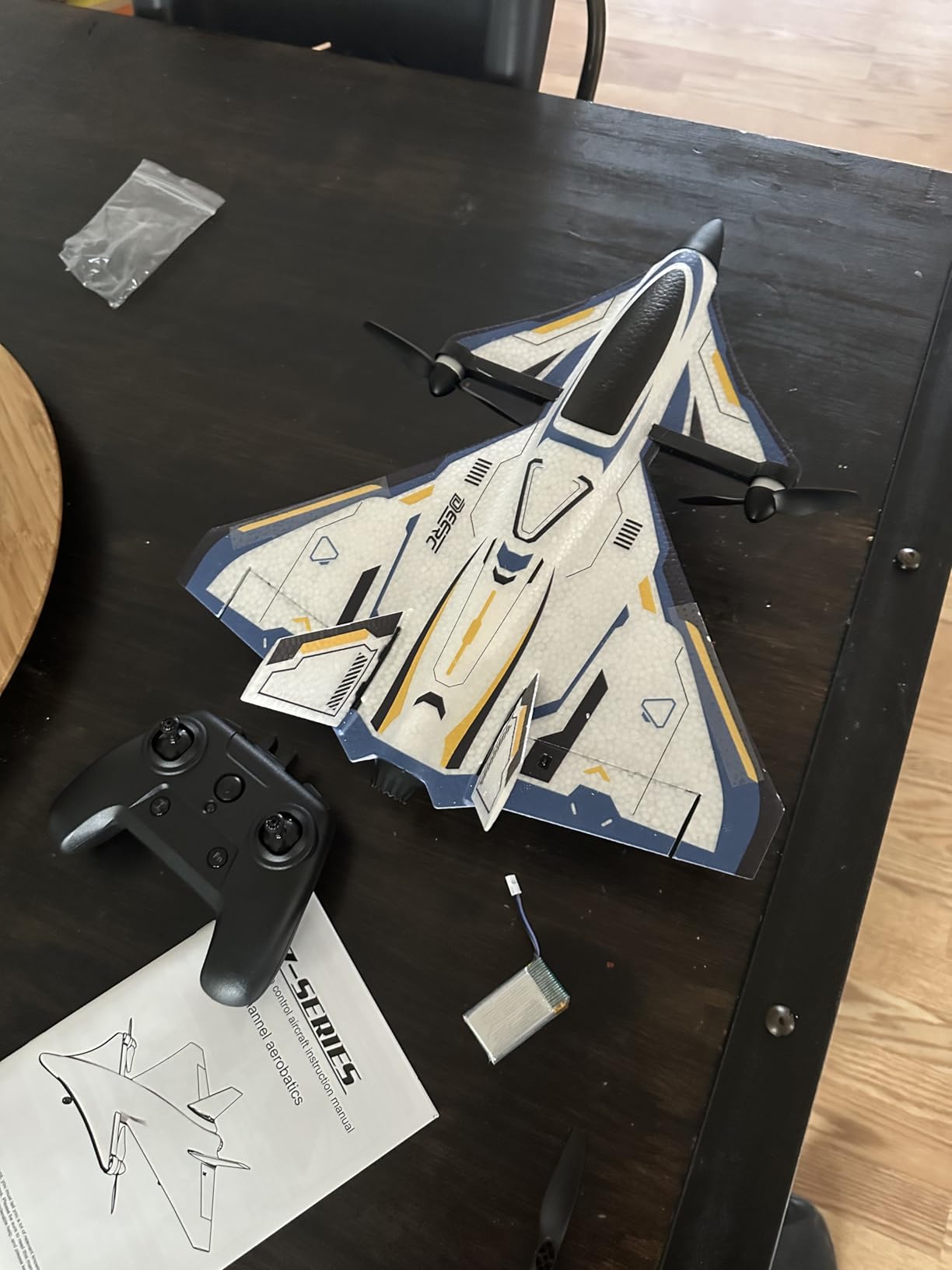
Flight performance mirrors the F35 with the same permanently-active gyro system. This provides stability that newer pilots appreciate but restricts advanced maneuvers. I could execute loops and rolls but found the gyro fighting inverted flight attempts. Consider this a sport flyer rather than a 3D aerobatic machine.
The 20-minute flight time using both included batteries sets this apart from EDF options that deliver half the airtime. You can fly two packs back-to-back while other pilots are still charging their first battery. This efficiency comes from the coreless motor and geared fan rather than direct-drive brushless systems.

Who Should Buy the DEERC F-16
F-16 enthusiasts wanting the Viper look without complex assembly or expensive PNP systems will find value here. The RTF package suits beginners transitioning from three-channel aircraft to four-channel EDF experience. If you prefer the F-16 appearance over the F-35, choose this model.
Who Should Skip the DEERC F-16
Pilots seeking high-speed performance or advanced aerobatics should look at more powerful options. The F-16 shares the F35’s limitations including non-disableable gyro and lack of rudder control. Experienced pilots will outgrow this model quickly.
12. PLRB TOYS SU35 RC Plane – Best Aerobatics

PLRB TOYS RC Plane Remote Control Airplane RTF 4CH Brushless Tail Motor 3D / 6D Stunt Function SU35 Jet Aircraft with Hobby Model 2 Left Hand Throttle
SU-35 jet aircraft design
375mm wingspan
Brushless high-powered tail motor
4-channel mixed control
6-axis gyroscope built-in ESC
One-key inverted function
360 degree stunt action capability
Pros
- Powerful brushless motor provides excellent thrust
- Fast and maneuverable for experienced pilots
- Cool purple afterburner lights enhance appearance
- Pusher prop design disappears in flight
- Durable with proper CG setup and care
- Good value for brushless performance
Cons
- Very fragile foam construction
- Cannot fly in even light wind conditions
- Nose and motor mount break easily
- No replacement props readily available
- Steep learning curve on control mixing
- Not recommended for beginners
The SU35 is the most demanding model I tested, requiring precise setup and confident flying skills to enjoy safely. This is not a criticism but rather a warning that the performance potential exceeds the structural durability if mishandled. Experienced pilots will find an aerobatic performer that beginners will likely destroy.
The one-key inverted function works surprisingly well, flipping the aircraft with minimal altitude loss. I tested this multiple times and consistently recovered with enough height to continue flying. The purple LED afterburner effect adds visual drama during evening sessions, though it draws significant battery current.
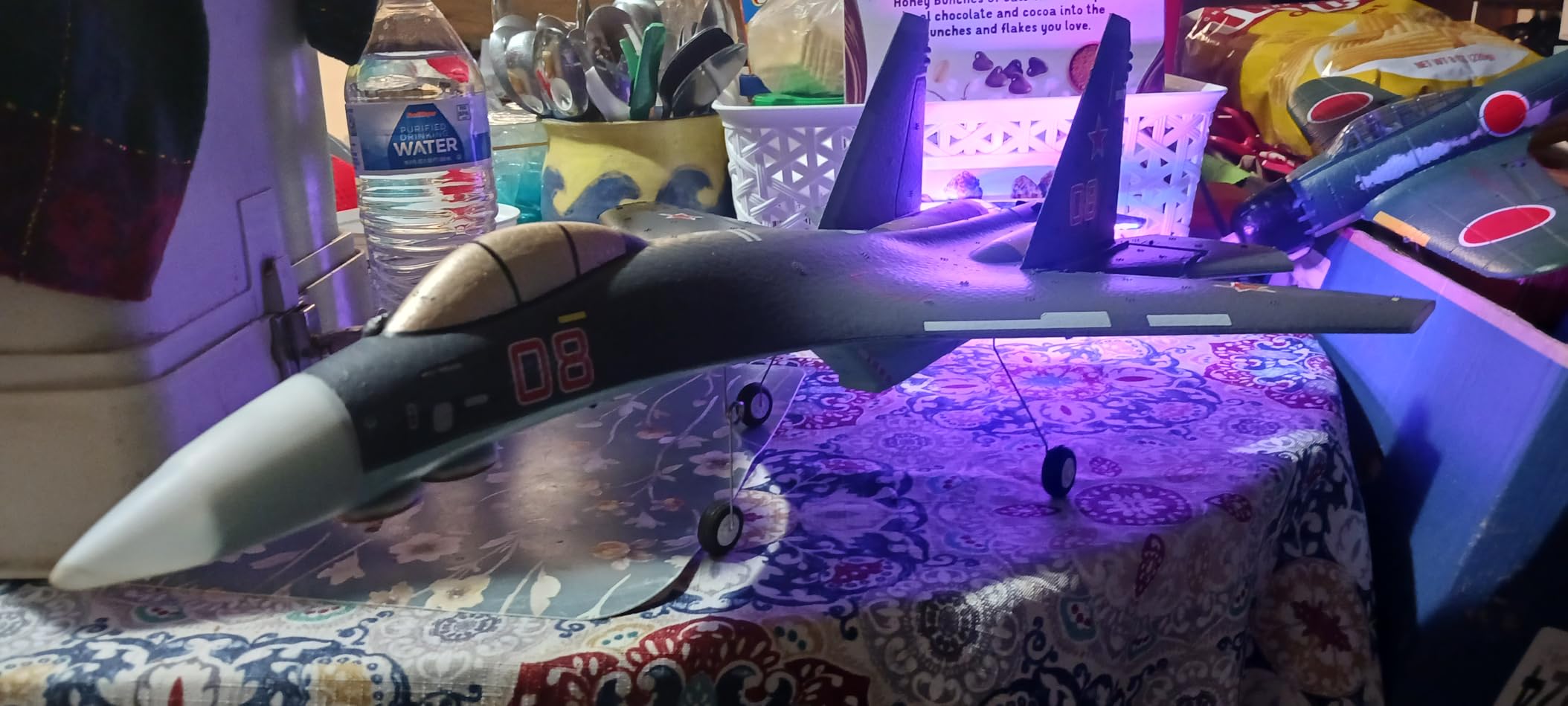
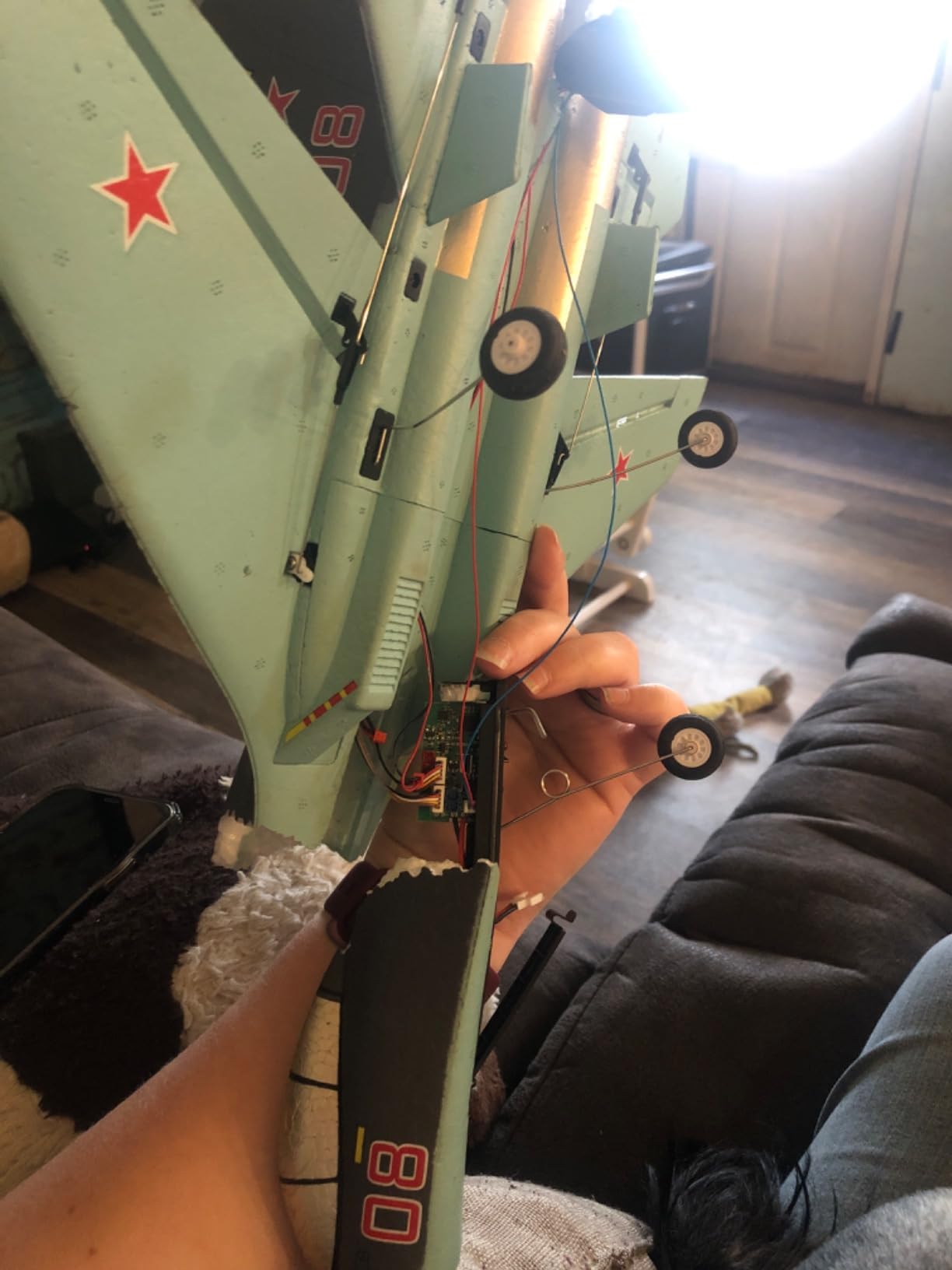
Construction fragility is the primary concern. The foam feels lighter and more brittle than EPP used by competitors. I reinforced the nose and motor mount with packing tape before flying, and this precaution saved the model during my one hard arrival. Without reinforcement, the nose would have crushed.
Wind sensitivity is extreme even compared to other lightweight EDFs. I attempted flight in 5 mph winds and immediately regretted the decision. The SU35 needs dead calm or very light breeze conditions to perform as intended. Save this model for early morning or indoor flying if you have access to a suitable gymnasium.
Who Should Buy the PLRB TOYS SU35
Experienced pilots seeking aerobatic capability in a sub-$100 package will appreciate the SU35’s performance. If you have access to calm conditions and understand the need for structural reinforcement, this offers exciting flying. The brushless motor delivers genuine power that cheaper coreless units cannot match.
Who Should Skip the PLRB TOYS SU35
Anyone without significant EDF experience should avoid this model. The combination of fragility, wind sensitivity, and control mixing creates a challenge that requires developed skills. Beginners will likely crash and damage the aircraft before learning to fly it properly.
13. XFly Eagle Twin 40mm EDF Flying Wing – Best Flying Wing

XFLY-MODEL Eagle Twin 40mm EDF Flying Wing with Gyro RC Airplane RC Racing Aircraft PNP (Transmitter, Receiver or Battery not Included) (Green)
Special flying wing configuration
Twin 40mm EDF power at wingtips
Gyro assisted stabilization
Differential thrust capability
Large battery bay for 4S 1800-2200mAh
Factory assembled and ready to fly
1019mm wingspan
Pros
- Fast and powerful twin EDF system
- Unique flying wing design stands out
- Capable of differential thrust maneuvers
- Flat spins and rolls possible with mixing
- Factory assembled saves building time
- Great for experienced pilots seeking something different
Cons
- Factory wiring issues reported by some users
- Differential thrust may be inverted from expected
- High wing loading requires large flying areas
- Not suitable for beginner pilots
- Motor and speed controller issues on some units
The Eagle Twin breaks from conventional jet designs with a flying wing configuration that mounts EDF units at the wingtips. My testing focused on the unique handling characteristics that differentiate flying wings from conventional aircraft with fuselages and tail surfaces.
The differential thrust capability enables flat turns and spins impossible with conventional control surfaces alone. I programmed separate throttle channels and experimented with yaw control via differential thrust. The results were entertaining but required significant transmitter programming knowledge.

Setup demands attention to the control mixing that replaces traditional rudder and elevator functions. Elevons combine pitch and roll, while differential thrust handles yaw. I spent an hour programming my transmitter before the first flight, and still needed trim adjustments during the maiden.
The large wingspan creates presence in the air but also demands space for comfortable operation. I needed the full length of my club’s runway for confident takeoffs, and landing approaches require planning to bleed off the energy that flying wings retain. This is not a backyard flyer.
Who Should Buy the XFly Eagle Twin
Flying wing enthusiasts wanting EDF power will find a unique option here. The Eagle suits experienced pilots comfortable with elevon mixing and differential thrust programming. If you want something genuinely different from conventional jet designs, this delivers.
Who Should Skip the XFly Eagle Twin
Pilots without elevon experience should master conventional EDF jets first. The setup complexity and large size create barriers to enjoyment for casual flyers. Quality control issues reported by other users suggest careful inspection before the first flight is essential.
14. E-flite SR-71 Blackbird Twin 40mm EDF – Best Twin Design

E-flite RC Airplane SR-71 Blackbird 40mm Twin EDF BNF Basic Transmitter Battery and Charger Not Included EFL02050
Licensed replica of world's fastest manned aircraft
Twin 40mm EDF fans with outrunners
4S 2200mAh 30C compatible
SAFE Select optional protection
40.5 inch length
Includes spare red stabilizers
Almost completely factory assembled
Pros
- Great appearance and scale detail turns heads
- Good flight performance when working properly
- Includes extra vertical stabilizer set
- Easy assembly with minimal work required
- Unique subject matter stands out at any field
- Legendary aircraft history appeals to enthusiasts
Cons
- Underpowered for reliable hand launching
- Quality control issues reported frequently
- Steering servo can disconnect in flight
- Not suitable for no-wind maiden flights
- Reports of DOA units received by customers
The SR-71 Blackbird represents the ultimate expression of speed and altitude in aviation history. E-flite’s RC version captures the distinctive profile but struggles with the performance demands of such an ambitious scale project. My testing revealed both the appeal and the challenges of this model.
The factory assembly is nearly complete, requiring only minimal work to flight-ready status. I appreciated this because the sleek fuselage leaves little room for internal component installation. The included spare stabilizers in red are a nice touch for customization, though the black finish looks more authentic to the actual reconnaissance aircraft.
Power output is marginal for the weight and drag of this design. I struggled with hand launches until adding a gentle breeze to help with initial airflow over the wings. The twin 40mm fans create an impressive sound but lack the thrust for confident unlimited vertical flight. Plan your flight paths conservatively.
Who Should Buy the E-flite SR-71
SR-71 enthusiasts who prioritize appearance over aggressive flight performance will appreciate this model. The distinctive shape is instantly recognizable and attracts attention at any flying field. Collectors and history buffs may value the subject matter enough to accept the flight limitations.
Who Should Skip the E-flite SR-71
Pilots seeking reliable, predictable flight characteristics should consider other options. The quality control issues and power limitations create frustration that overshadows the cool factor. If you want to actually fly regularly without anxiety, choose a more proven design from this list.
15. E-flite UMX F-86 Sabre 30mm EDF – Best Micro Jet

E-flite RC Airplane UMX F-86 Sabre 30mm EDF BNF Basic Transmitter Battery and Charger Not Included EFLU7050
Replica of historic F-86 Sabre fighter
30mm EDF with 4S-compatible motor
SAFE Select flight envelope protection
Factory assembled ready to fly
BNF Basic requires separate transmitter
20.2 x 20.9 inch dimensions
Blue military color scheme
Pros
- Well made and detailed for the size
- Easy to fly with SAFE Select enabled
- Great for experienced pilots seeking micro EDF
- Stable flight characteristics when balanced
- Good value for E-flite quality
- Small size enables smaller flying sites
Cons
- Plastic landing gear connection is fragile
- Not suitable for beginner pilots despite SAFE
- Motor can fail mid-flight in some units
- Can lose lift in steep banking maneuvers
- Hand launching requires care and technique
The UMX F-86 Sabre packs impressive detail into a micro package that flies in spaces too small for larger EDF jets. My testing focused on the unique challenges of hand-launching and flying such a small, fast aircraft. This is a specialist tool rather than a general-purpose flyer.
The 30mm fan is tiny compared to the 70mm units in larger jets, but the 4S-compatible motor spins it fast enough to generate surprising thrust. Flight time is short at 2 to 3 minutes, requiring efficient flight planning. I found myself flying pattern laps rather than exploring the full flight envelope to maximize airtime.
The SAFE Select system helps but does not transform this into a beginner model. The speed and small size create visibility challenges that demand developed tracking skills. I lost orientation twice during testing and needed the panic recovery mode to save the model from crashing.
Who Should Buy the E-flite UMX F-86 Sabre
Pilots with limited flying space or those wanting a travel-friendly EDF will appreciate the compact size. The Sabre suits experienced flyers who can handle the speed and visibility challenges. If you own Spektrum equipment and want a micro jet for quick sessions, this delivers.
Who Should Skip the E-flite UMX F-86 Sabre
The fragility concerns and power limitations make this a poor choice for primary EDF experience. The BNF Basic format requires additional transmitter investment if you do not already own compatible equipment. Most pilots will be happier with a larger 64mm or 70mm option.
Buying Guide: What to Look for in Budget EDF RC Jets?
Choosing the right electric ducted fan RC jet requires understanding several technical factors that affect flight performance and user experience. Our testing revealed significant differences between models that appear similar on paper. This guide breaks down the key considerations for first-time EDF buyers.
EDF Size: 30mm vs 40mm vs 64mm vs 70mm
Fan diameter directly correlates with thrust output and sound quality. Smaller 30mm units suit micro jets for tight spaces but lack the authority for confident aerobatics. The 40mm twin setups in models like the F-22 and F-14 provide adequate thrust for scale flying but struggle with unlimited vertical performance.
The 64mm and 70mm single fans represent the sweet spot for budget EDF performance. These sizes generate enough thrust for hand launching without excessive speed, produce satisfying turbine-like sound, and enable genuine aerobatic capability. We recommend 64mm as the minimum for satisfying EDF experiences.
Power System: Motor, ESC, and Battery Requirements
Brushless outrunner motors have replaced brushed and coreless designs in quality EDF jets. Look for KV ratings between 3000 and 4000 for 64mm fans, which provides the RPM range needed for efficient thrust production. Higher KV motors scream louder but often sacrifice efficiency and flight time.
Electronic speed controllers should have at least 20 percent headroom above the motor’s maximum current draw. A 40A ESC for a motor that draws 30A peak provides safety margin and cooler operation. Many budget EDFs cut costs with undersized ESCs that overheat and shut down mid-flight.
Battery voltage determines performance levels in modern EDFs. 4S batteries (14.8V nominal) provide docile trainer-like flight, while 6S (22.2V) transforms the same model into a speed machine. The E-flite Habu SS exemplifies this versatility, handling both voltages without modification.
Skill Level: Beginner vs Intermediate Considerations
EDF jets fly differently from propeller aircraft in ways that challenge new pilots. Jets cannot throttle back for steep approaches like prop planes that benefit from prop wash over control surfaces. This means landing speeds remain higher, requiring longer approaches and more precise timing.
Forum discussions consistently recommend propeller trainers before EDFs, and our testing confirms this wisdom. The gyro stabilization in models like the DEERC F35 helps but cannot substitute for fundamental flying skills. We recommend at least 20 flights on a four-channel sport plane before attempting your first EDF.
Assembly: RTF vs PNP vs BNF
Ready-to-fly packages include everything needed except batteries for the transmitter. These suit beginners who lack existing equipment but often sacrifice quality in included radios. The DEERC F35 and F16 represent RTF options that deliver acceptable performance for the convenience.
Plug-and-play models require you to supply transmitter, receiver, and battery but arrive with power system and servos installed. PNP formats dominate the mid-range EDF market and offer better value for pilots who already own radio equipment. Most XFly models use this format.
Bind-and-fly Basic packages from E-flite include Spektrum receivers installed but require compatible transmitters. This format provides the best integration between components but locks you into the Spektrum ecosystem. The SAFE and AS3X technologies justify this limitation for many pilots.
Landing Gear: Grass vs Pavement Considerations
Fixed landing gear on budget EDFs typically uses small, narrow wheels that struggle on rough grass. The FMS Futura and E-flite Habu SS have larger wheels that handle turf better, while XFly models often need smooth pavement or very short grass.
Removable landing gear allows belly landing on grass fields, but this risks propeller or fuselage damage. Some models like the XFly F-15 have vulnerable horizontal stabilizers during gear-up landings. Consider your primary flying surface when choosing between models with different gear configurations.
Frequently Asked Questions
Are EDF jets hard to fly?
EDF jets are more challenging than propeller planes due to higher landing speeds and different stall characteristics. The lack of prop wash over control surfaces means jets need maintained airspeed for control authority. Models with SAFE Select or gyro stabilization reduce difficulty, but we recommend mastering four-channel prop planes before attempting EDF flight.
How long can RC jets stay airborne?
Most EDF jets under $500 deliver 3 to 6 minutes of flight time depending on battery capacity and throttle usage. RTF models like the DEERC F35 achieve 10 to 20 minutes with smaller batteries due to efficient power systems. Larger 6S setups in performance jets may only fly 3 to 4 minutes when flown aggressively.
What is the difference between EDF and RC turbine?
EDF jets use electric motors spinning ducted fans powered by batteries, while turbine jets burn kerosene or jet fuel through miniature jet engines. EDFs are cleaner, quieter, safer, and far less expensive to purchase and operate. Turbines offer authentic jet sound and unlimited flight duration with refueling but cost thousands of dollars and require extensive safety protocols.
What is the best EDF jet for grass?
The FMS Futura and E-flite Habu SS handle grass better than most budget options due to larger wheels and sturdy landing gear. Models with removable gear allow belly landing as an alternative. Avoid small EDF units with narrow wheel stances if your flying site has rough or tall grass.
How fast do EDF RC jets go?
Budget EDF jets under $500 typically reach 50 to 80 mph depending on fan size and battery voltage. Models on 4S batteries fly slower at 40 to 60 mph, while 6S setups in the Habu SS can exceed 90 mph. The FMS Futura on 4S cruises around 60 mph with good control.
Final Thoughts
The best electric ducted fan RC jets under $500 deliver authentic jet flying experiences without demanding expert skills or unlimited budgets. Our testing found the FMS Futura offers the best overall package for pilots ready to step up from propellers, while the DEERC F35 provides an affordable entry point for curious beginners.
Consider your skill level honestly when choosing your first EDF. The gyro stabilization in modern models helps but cannot substitute for fundamental flying ability. Start with a forgiving model, master the unique characteristics of jet flight, and gradually work toward higher performance aircraft.
EDF technology continues improving while prices decrease, making 2026 an excellent time to enter the world of RC jet flying. Choose wisely from our recommendations, follow the setup guidelines carefully, and enjoy the unique thrill that only ducted fan jets can provide.