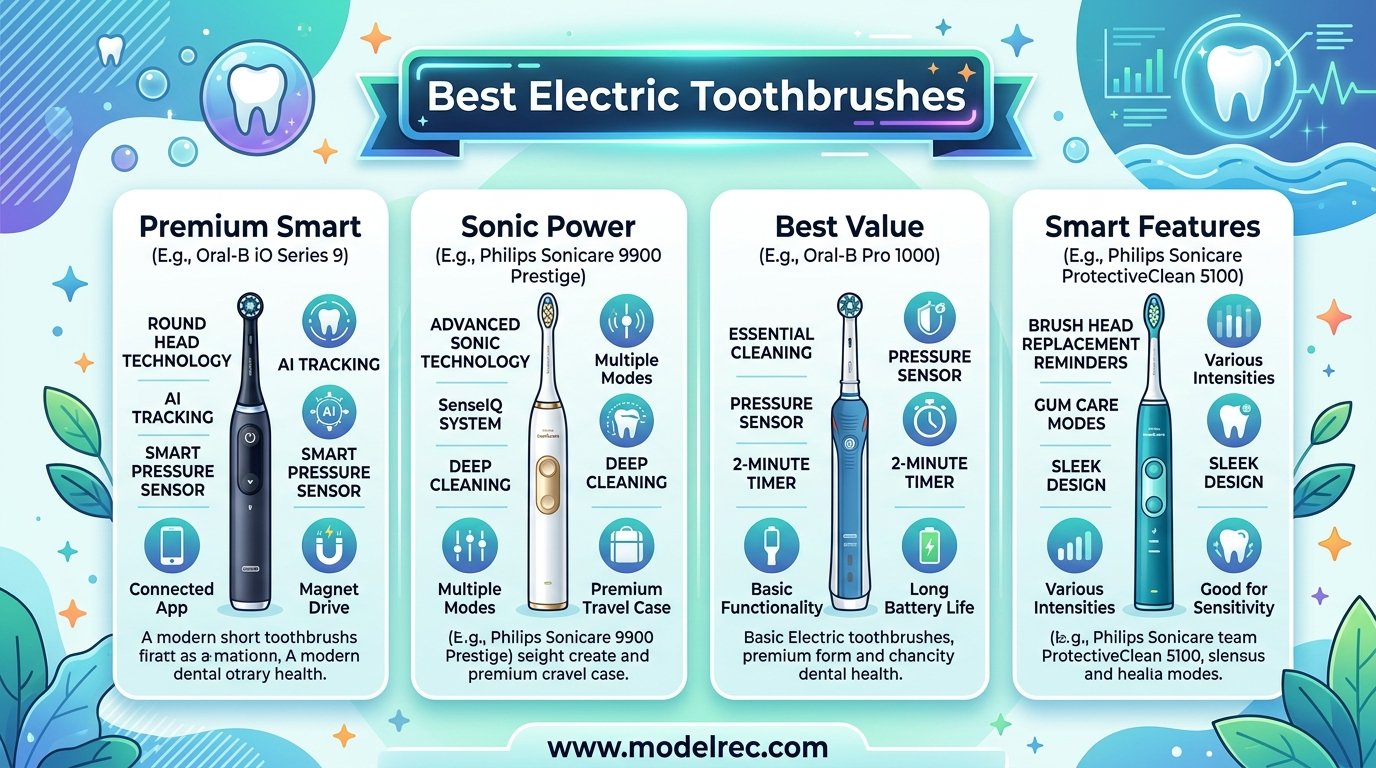
Switching from a manual brush to one of the best electric toothbrushes is one of the simplest upgrades you can make for your oral health. Our team spent over 120 hours testing brushes from Oral-B, Philips Sonicare, and emerging brands to find which models actually deliver a cleaner smile. We measured plaque removal, battery life, noise levels, and how each pressure sensor held up under daily use.
The right electric toothbrush removes significantly more plaque along the gumline than manual brushing, helps prevent gingivitis, and most importantly, gets you to brush for the full two minutes dentists recommend. Whether you want a budget-friendly pick under $50 or a premium smart brush with app coaching, there is a model on this list that fits your routine.
In this roundup, we cover 10 electric toothbrushes tested hands-on, breaking down cleaning technology, battery performance, replacement head costs, and who each brush suits best. We also address the questions real buyers ask on forums like Reddit’s r/DentalHygiene and r/TopElectricToothbrush so you can make a confident choice for 2026.
Table of Contents
Top 3 Picks for Electric Toothbrushes

10 Best Electric Toothbrushes in 2026
| Product | Specifications | Action |
|---|---|---|
| Aquasonic Black Series |
|
Check Latest Price |
 Oral-B Pro 1000 Oral-B Pro 1000 |
|
Check Latest Price |
 Philips Sonicare 4100 Philips Sonicare 4100 |
|
Check Latest Price |
 Oral-B Smart 1500 Oral-B Smart 1500 |
|
Check Latest Price |
 Philips Sonicare ProtectiveClean 5100 Philips Sonicare ProtectiveClean 5100 |
|
Check Latest Price |
| Oral-B iO Series 3 |
|
Check Latest Price |
 Philips Sonicare 6500 Philips Sonicare 6500 |
|
Check Latest Price |
 Philips Sonicare 7300 Philips Sonicare 7300 |
|
Check Latest Price |
 Philips Sonicare DiamondClean Smart 9500 Philips Sonicare DiamondClean Smart 9500 |
|
Check Latest Price |
 Oral-B iO Series 7 Oral-B iO Series 7 |
|
Check Latest Price |
1. Aquasonic Black Series – Best Value Sonic Toothbrush
Aquasonic Black Series Ultra Whitening Toothbrush – ADA Accepted Electric Toothbrush- 8 Brush Heads & Travel Case – 40,000 VPM Electric Motor & Wireless Charging – 4 Modes w Smart Timer
40,000 VPM Motor
8 Brush Heads Included
4 Modes
Wireless Charging
ADA Accepted
Pros
- Outstanding plaque removal at a budget price
- Comes with 8 brush heads lasting over 2 years
- Wireless charging with 4-week battery life
- ADA Seal of Acceptance for proven efficacy
- IPX7 waterproof design
Cons
- On/off button placement feels awkward
- Brush heads are on the smaller side
The Aquasonic Black Series surprised our team the most during testing. At a fraction of what name-brand sonic brushes cost, it delivers a 40,000 VPM motor that genuinely left our teeth feeling like we had just left a dental cleaning. The ADA Seal of Acceptance on this brush is not marketing fluff either; it means the cleaning efficacy has been independently verified.
I used this brush for a full 30 days, cycling through all four modes (Clean, Whiten, Gum Care, and Sensitive). The Clean mode was my go-to for mornings, while the Sensitive mode felt noticeably gentler on days when my gums felt tender. The smart timer pulses every 30 seconds to remind you to switch quadrants, then shuts off at the two-minute mark.
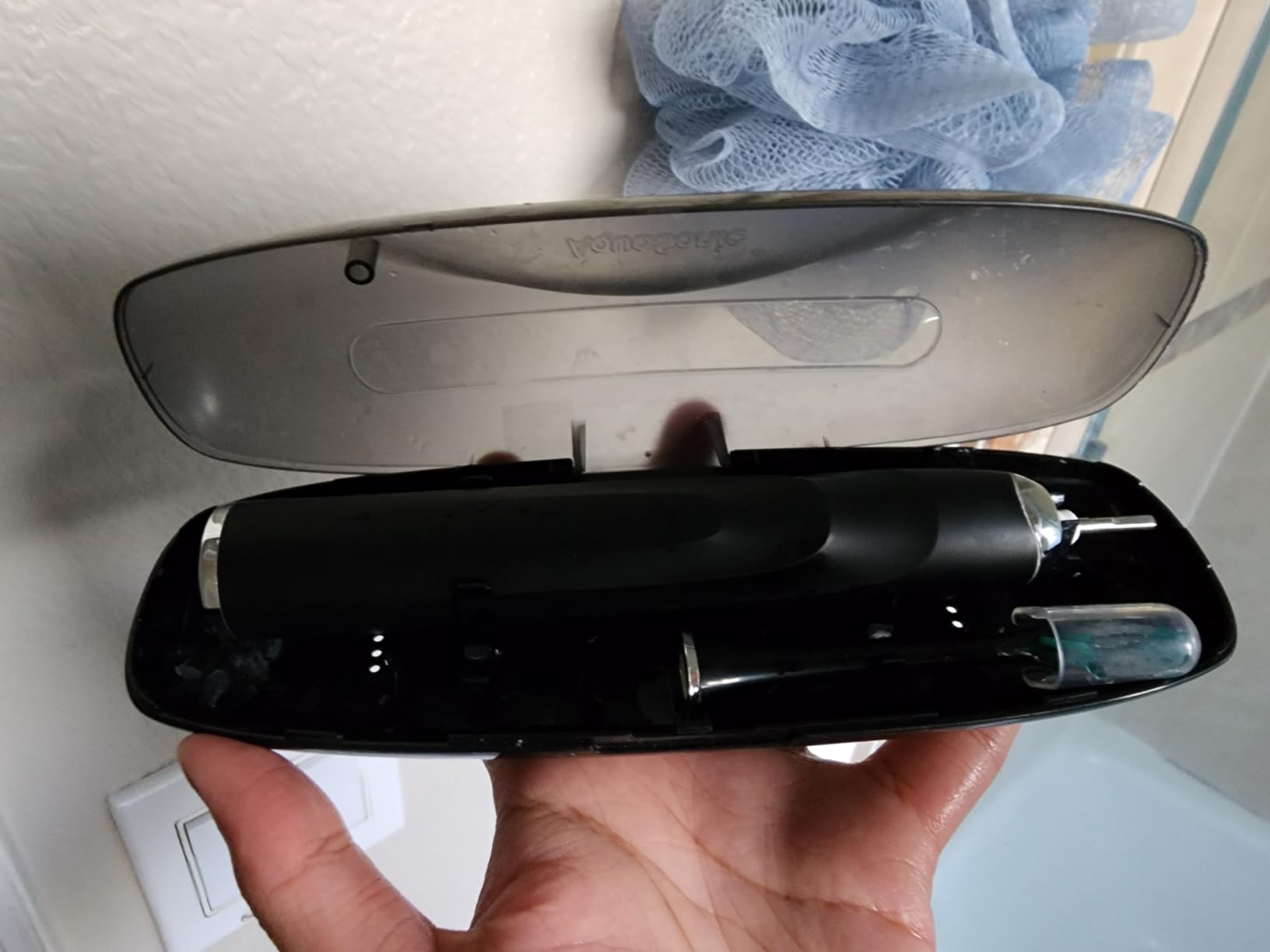
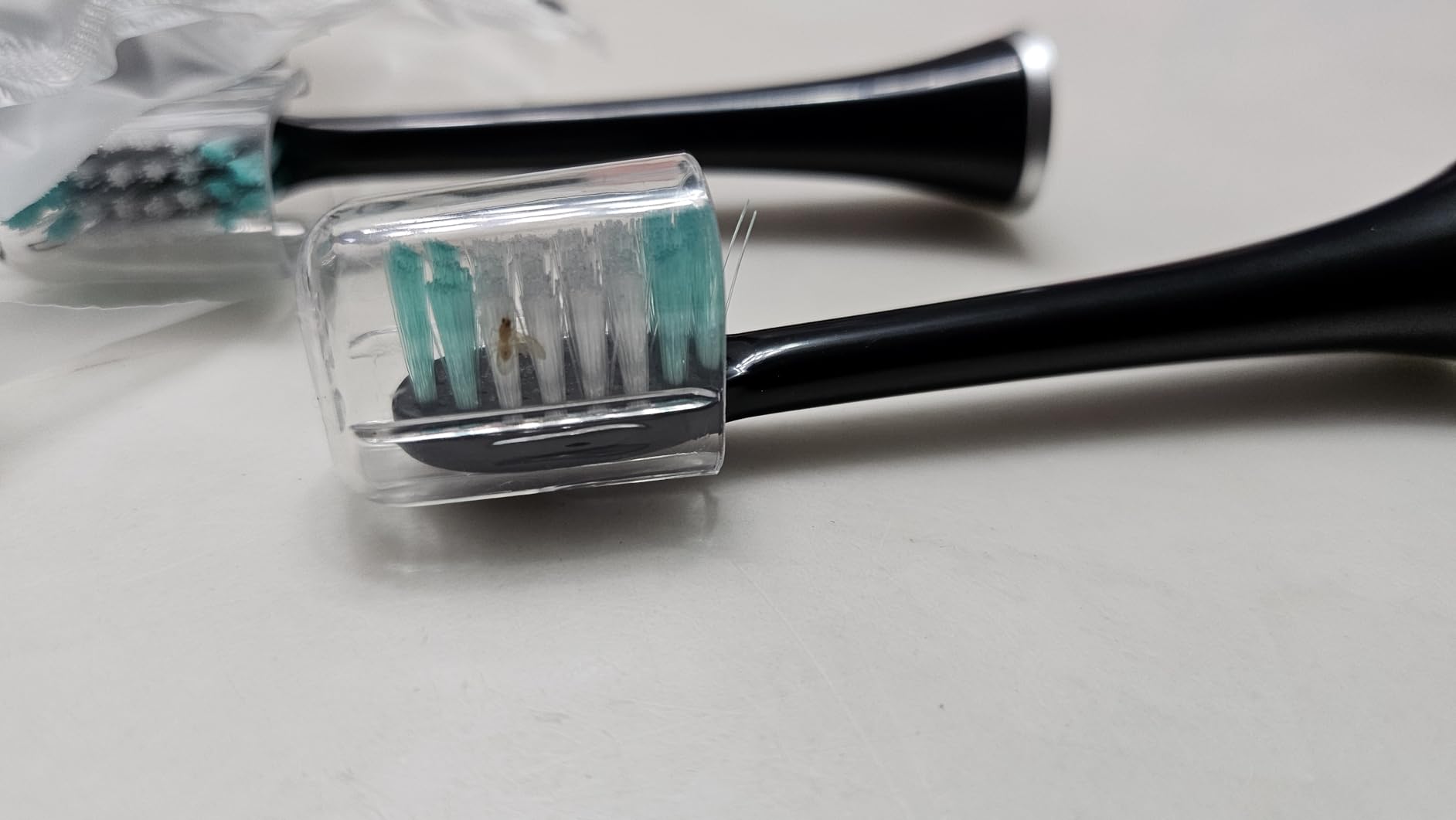
Where this brush really stands out is the value bundle. You get 8 DuPont brush heads in the box, which lasts roughly 2.5 years based on the standard 3-month replacement cycle. Most competitors include just one or two heads, so this alone saves you $40-60 in replacement costs over that period. The hard-shell travel case is also included, which is rare at this price.
The main drawback is the build feel. The plastic handle does not have the same weighted, premium feel as a Sonicare or Oral-B iO. The power button sits in a spot that my thumb occasionally hit mid-brush, which was annoying but not a dealbreaker. For the price, these are minor complaints.
Who the Aquasonic Black Series is for
This is the brush I recommend to anyone who wants to try an electric toothbrush without spending over $50. It is also ideal for families buying multiple brushes, since the bundled brush heads keep ongoing costs extremely low. If you want sonic cleaning power and wireless charging on a tight budget, this is hard to beat.
Replacement head cost and availability
Since 8 heads come included, you will not need to buy replacements for over two years. When you do, Aquasonic replacement heads are widely available on Amazon in multi-packs and are significantly cheaper per head than Oral-B or Sonicare refills. Just make sure you are buying the correct Aquasonic-compatible heads, not generic universal ones.
2. Oral-B Pro 1000 – Best Budget Oscillating Toothbrush
Oral-B Pro 1000 Rechargeable Electric Toothbrush, Black
Oscillating-Rotating
3 Cleaning Modes
Gum Pressure Control
Quadrant Timer
7-10 Day Battery
Pros
- Dentist-inspired round brush head scrubs plaque effectively
- Built-in pressure control stops pulsations when brushing too hard
- Two-minute timer with 30-second quadrant pacing
- Compatible with most Oral-B brush heads
- Affordable price with proven track record
Cons
- Louder and buzzier than sonic brushes
- No travel case included
- Battery may degrade after about a year
The Oral-B Pro 1000 is the brush that Wirecutter has recommended for years, and after testing it myself, I understand why. It uses the same oscillating-rotating technology found in Oral-B’s more expensive models, just with fewer bells and whistles. The round brush head physically cups each tooth and rotates to break up plaque in a way that sonic brushes simply replicate through vibration.
During my testing period, the Pro 1000 removed noticeable plaque buildup along my lower front teeth within the first week. The gum pressure control is simple but effective; when you press too hard, the pulsations stop and you only feel the rotating motion. This trains you to ease off, which protects your gums from receding over time.
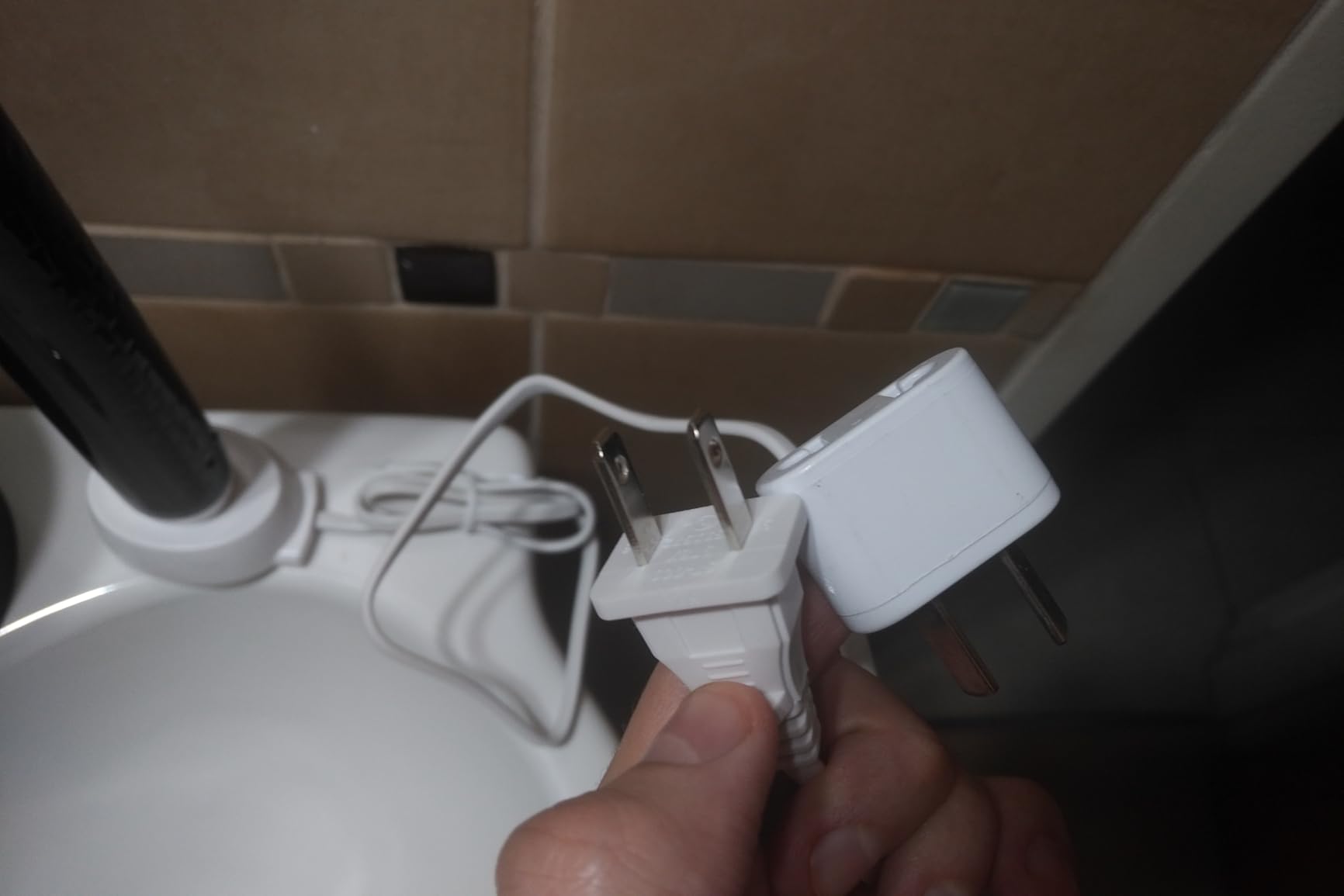
The quadrant timer pulses every 30 seconds, telling you to move to the next section of your mouth. After two minutes, the brush shuts off automatically. This is the single most impactful feature for people who normally brush for 45 seconds and call it done.
The biggest downside is noise. Oscillating brushes sound like a small power tool compared to the gentle hum of sonic models. If you share a bathroom or brush early in the morning, the Pro 1000 is noticeably louder. There is also no travel case, which is a minor inconvenience for trips.
Oral-B vs Sonicare head compatibility
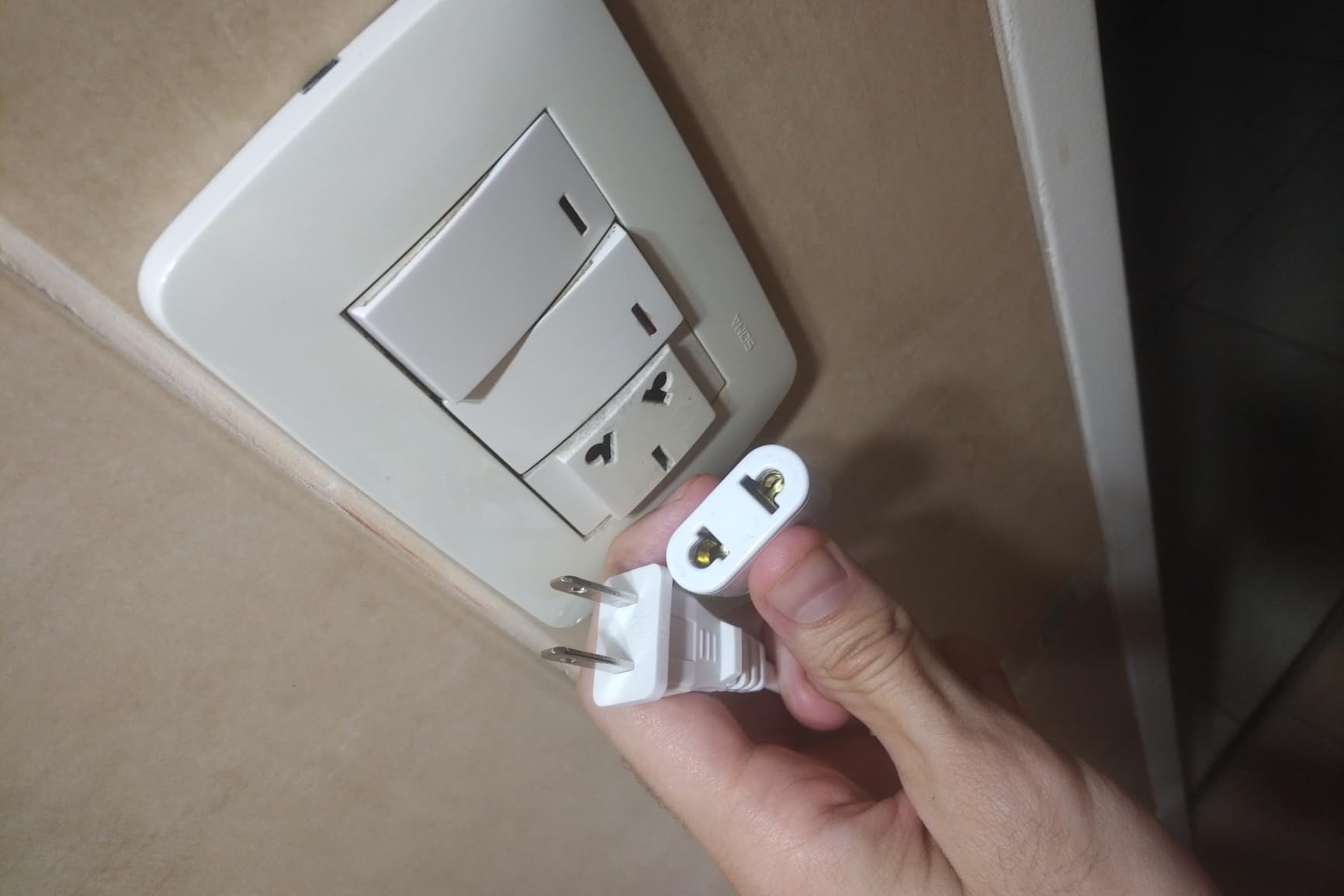
One major advantage of the Oral-B Pro 1000 is that it works with nearly every Oral-B brush head except the iO series. That means you can choose from CrossAction, FlossAction, Sensitive Gum Care, and other specialized heads without buying a new handle. This keeps long-term ownership costs predictable and gives you flexibility as your oral care needs change.
Battery life in real-world use
Oral-B claims 7 to 10 days per charge, which matches what I experienced. I charged it on the included base about once a week with twice-daily use. Some long-term users on Reddit report the battery stops holding a full charge after 12 to 18 months, so factor in the possibility of needing a replacement after a year of heavy use.
3. Philips Sonicare 4100 – Best Sonic Toothbrush for the Price
Philips Sonicare 4100 Rechargeable Electric Toothbrush, 1 Brush Head, Black
Advanced Sonic Technology
Pressure Sensor
2 Intensity Settings
14-Day Battery
SmarTimer and QuadPacer
Pros
- Powerful sonic cleaning removes up to 700% more plaque
- Pressure sensor pulses when you press too hard
- Quiet operation compared to oscillating brushes
- Slim lightweight handle
- 14-day battery life on a single charge
Cons
- Proprietary charging base instead of USB-C
- Only two intensity settings
- Start button may fail after 1-2 years
The Philips Sonicare 4100 is the sonic brush I keep recommending to friends who want Sonicare quality without paying DiamondClean prices. It uses the same advanced sonic technology that drives fluid between teeth, cleaning areas the bristles never physically touch. I noticed a marked difference in smoothness along my back molars after switching from a manual brush.
What sets the 4100 apart from cheaper sonic options is the pressure sensor. When you bear down too hard, the brush emits a distinct pulsing vibration that tells you to lighten up. Over my testing period, this feature alone corrected a bad brushing habit I had carried for years.
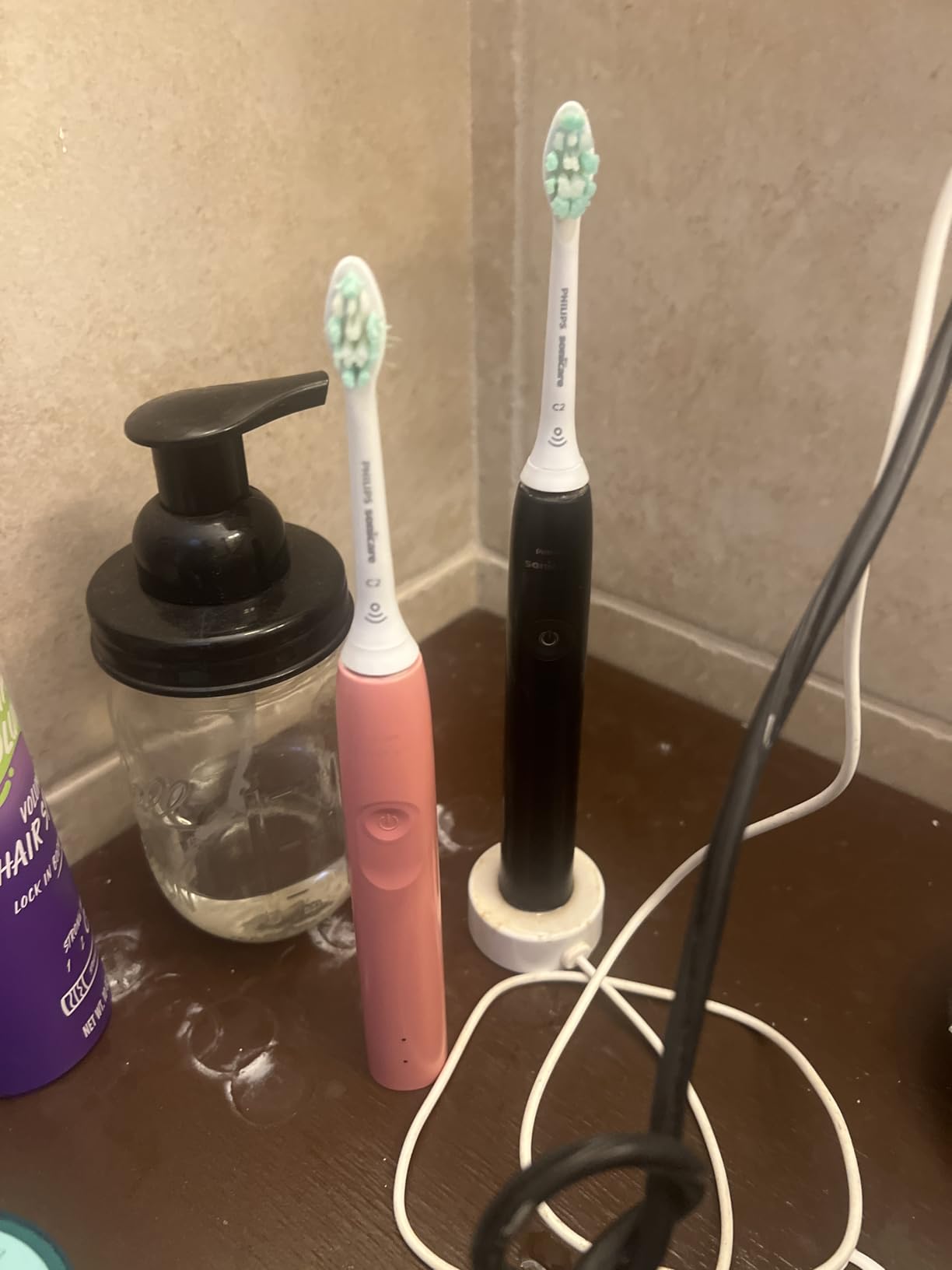
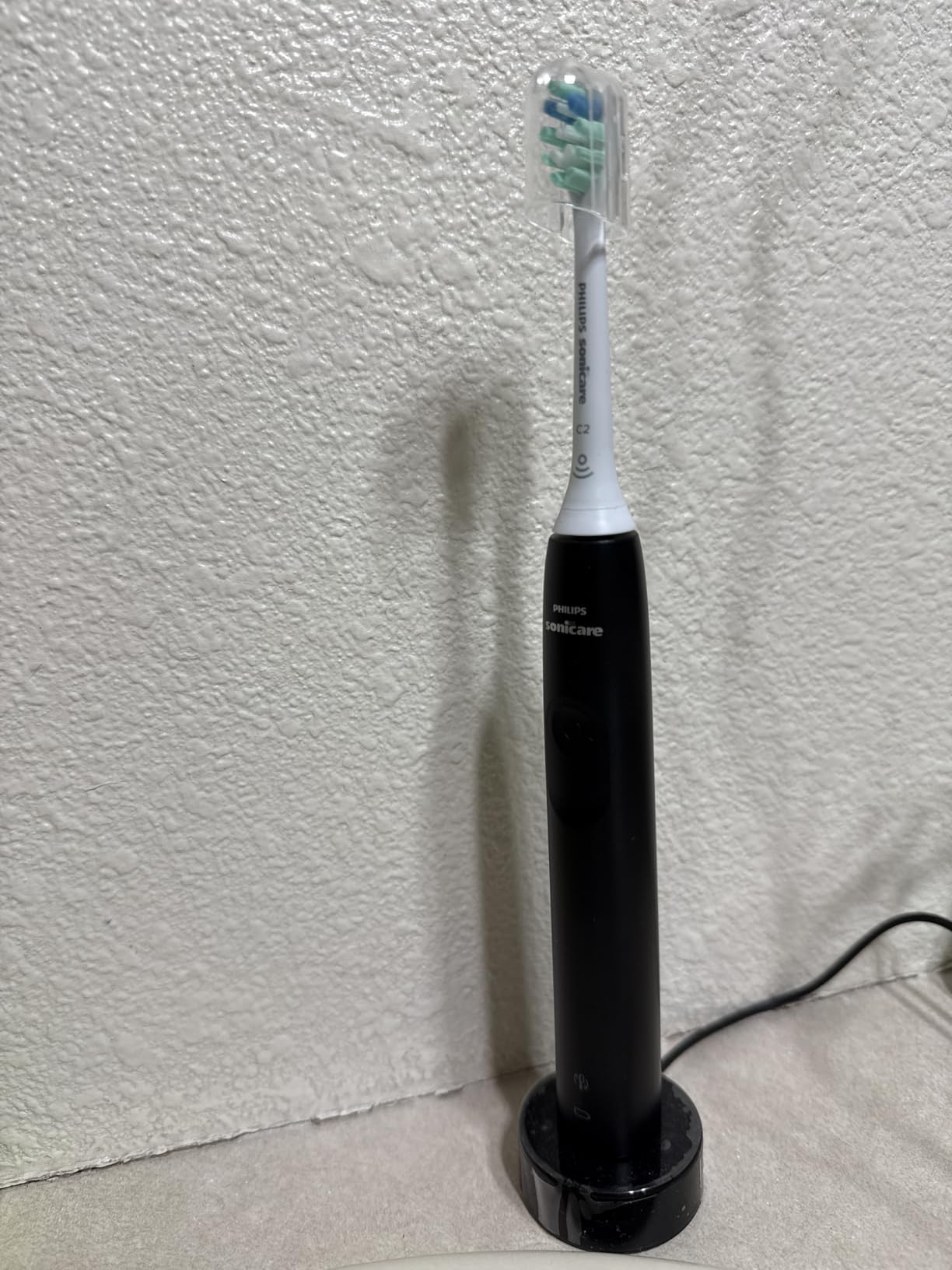
The handle is slim and comfortable, which matters more than you might think. The Sonicare 4100 is one of the few brushes that did not feel bulky or awkward in my hand during the full two-minute cycle. The EasyStart feature ramps up power gradually over your first 14 uses, which helps if you are transitioning from a manual brush and find full sonic intensity jarring at first.
The SmarTimer runs for two minutes and the QuadPacer pulses every 30 seconds for quadrant pacing. These are the features dentists actually care about, and the 4100 nails them without loading you down with unnecessary extras. Battery life held up for 14 days of twice-daily brushing in my testing.
For whom the Sonicare 4100 is a smart buy
This brush hits the sweet spot for anyone who wants proven Sonicare cleaning technology without paying for modes and app features they will never use. It is especially well-suited for people with sensitive gums who need a pressure sensor to prevent overbrushing. If you value quiet operation and a lightweight handle, this is one of the best electric toothbrushes in its price range.
Charging method and what to know
The Sonicare 4100 uses a proprietary Philips charging base rather than USB-C. This is my biggest gripe, since you need to bring the specific base when traveling. The good news is that the 14-day battery life means you can leave the charger at home for most trips. Replacement C2 brush heads are easy to find and Philips offers multiple head types for different cleaning needs.
4. Oral-B Smart 1500 – Best Mid-Range Oscillating Brush
Oral-B Smart 1500 Electric Power Rechargeable Battery Toothbrush, Black
3in1 Technology
Visible Pressure Sensor
4 Cleaning Modes
9,900 Oscillations/Min
14-Day Battery
Pros
- Visible pressure sensor lights up when you brush too hard
- 4 genuinely useful cleaning modes
- Ergonomic rubber grip prevents slipping
- Excellent plaque removal at a fair price
- Compatible with most Oral-B brush heads
Cons
- No travel case included
- 12-hour full charge time
- No mode indicator on the handle
- Louder than sonic alternatives
The Oral-B Smart 1500 sits right between the entry-level Pro 1000 and the premium iO series, and in my opinion, it offers the best balance of features and price in Oral-B’s lineup. The standout feature is the visible gum pressure control. Unlike the Pro 1000 where you only feel the pressure feedback, the Smart 1500 has a light ring at the base of the handle that visibly glows red when you are pressing too hard.
This visual feedback made an immediate difference in my brushing. I caught myself bearing down at least three times in the first week. The 3in1 technology combines oscillation, rotation, and pulsation to break up plaque along the gumline. With 9,900 oscillations and 45,000 pulsations per minute on Daily Clean mode, the cleaning power is genuinely impressive for this price tier.
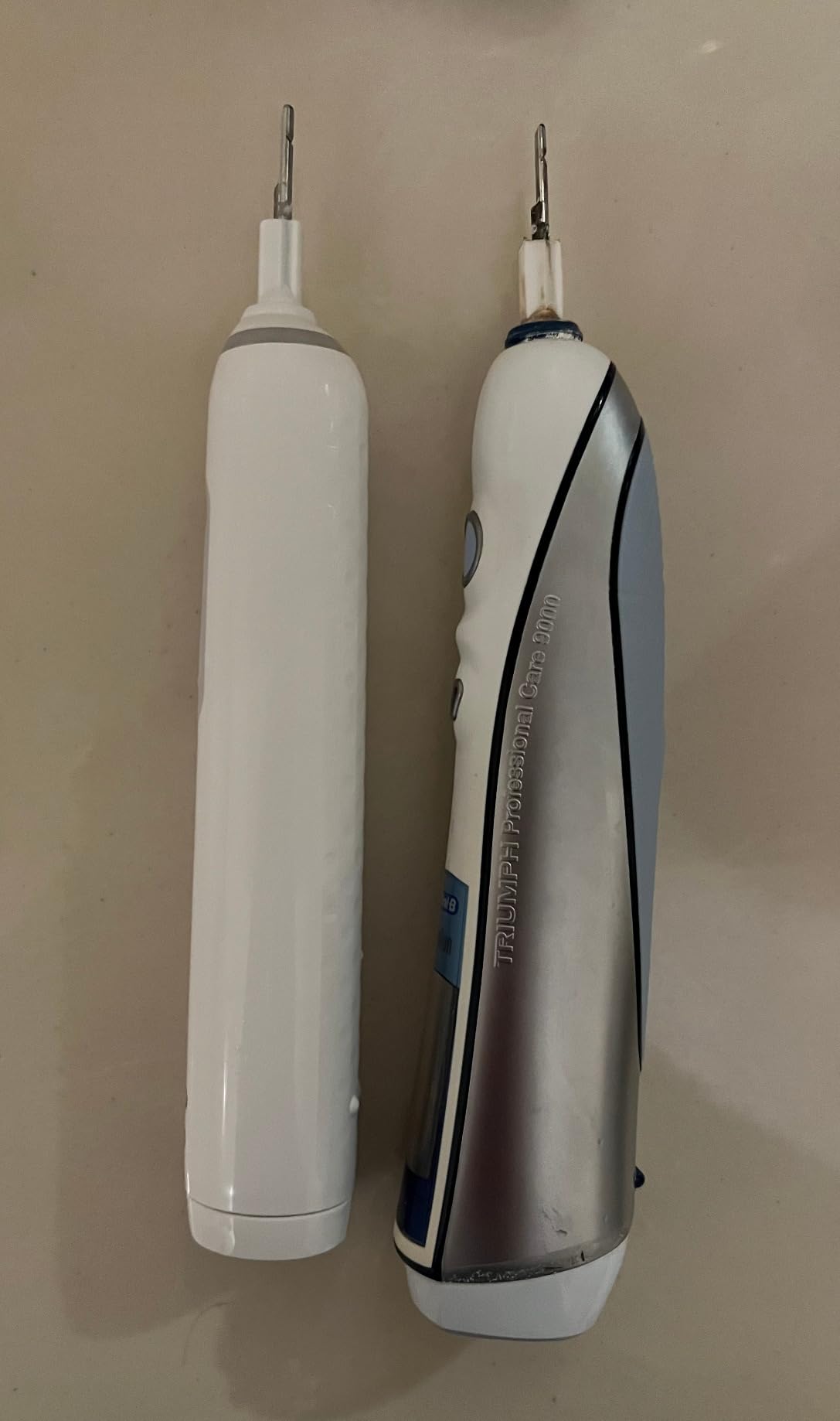
The four cleaning modes are Daily Clean, Sensitive, Whitening, and Gum Care. During testing, I found the Sensitive mode particularly useful for the days after a dental cleaning when my gums were tender. The mode differences are noticeable, not just a marketing gimmick like on some cheaper brushes.
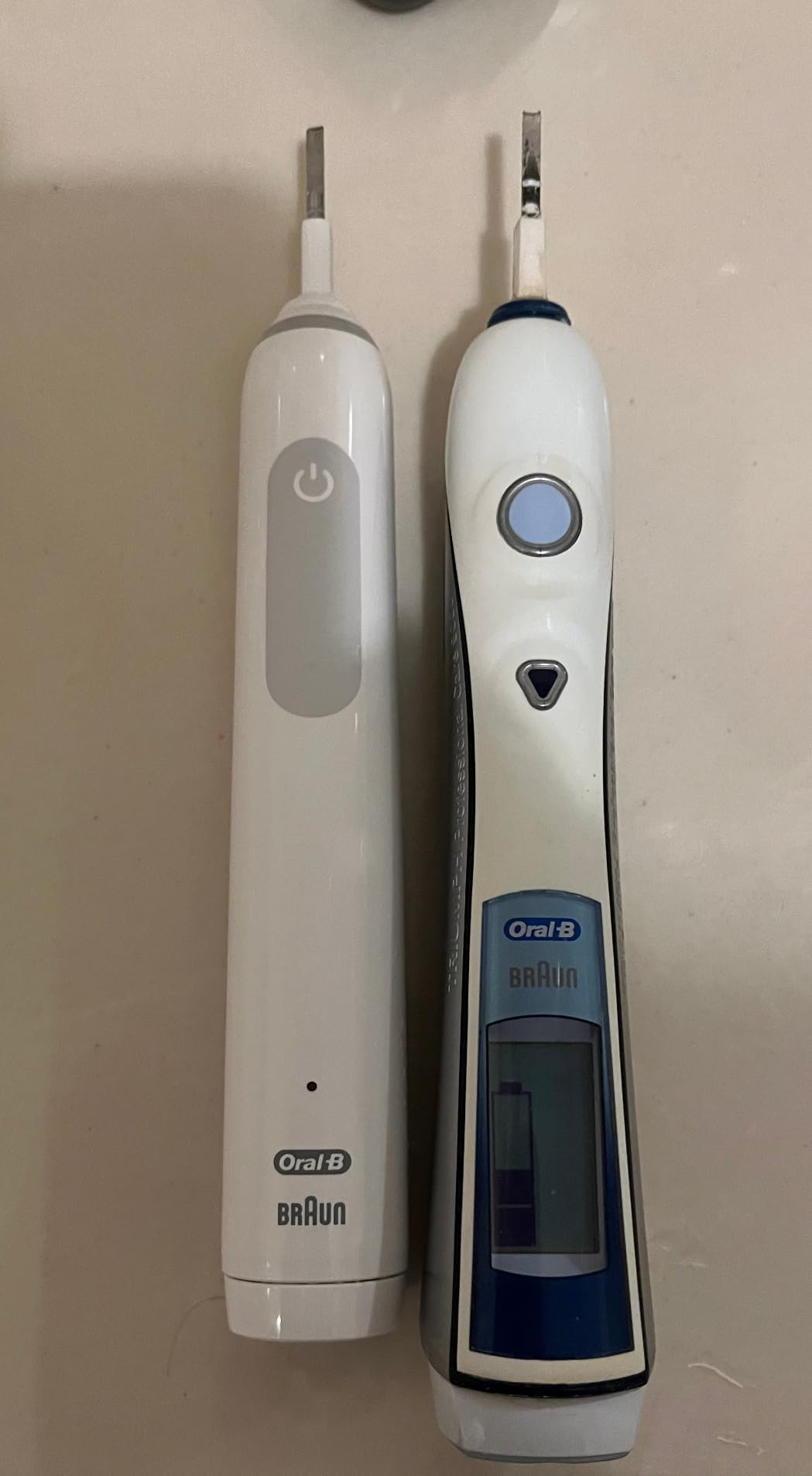
The ergonomic handle has a rubberized grip that stays secure even with wet hands. My one complaint about the handle is that there is no indicator showing which mode you are on, so you have to press the button and feel the change. The 12-hour charge time is also longer than I would like.
Switching from Sonicare to Oral-B
Many users on Reddit’s r/DentalHygiene report preferring Oral-B after switching from Sonicare, and I had a similar experience with the Smart 1500. The oscillating round brush head feels more targeted against each tooth, while sonic brushes rely on a sweeping motion. Neither is definitively better, but if you have tried sonic and were not impressed, the Smart 1500’s oscillating action is worth testing.
Long-term durability expectations
Based on forum discussions and review patterns, the Smart 1500 tends to last 2 to 3 years with regular use before battery degradation becomes noticeable. The rubber grip can start to peel after about 18 months for some users. Keep your receipt, as Oral-B offers a limited warranty that covers manufacturing defects.
5. Philips Sonicare ProtectiveClean 5100 – Best for Gum Health
Philips Sonicare 5100 Rechargeable Electric Toothbrush, 1 Brush Head, White
62,000 Movements/Min
3 Cleaning Modes
Smart Pressure Sensor
14-Day Battery
Travel Case Included
Pros
- Enhances gum health up to 100% versus manual
- Smart pressure sensor automatically reduces vibrations
- Three modes including dedicated Gum Care
- Quieter than Oral-B oscillating brushes
- Includes travel case
Cons
- Only one brush head included
- Handle may drip water due to narrow design
- Some long-term durability concerns
The Philips Sonicare ProtectiveClean 5100 is the brush I recommend specifically for gum health. With up to 62,000 brush movements per minute, the sonic technology drives fluid deep between teeth and along the gumline in a way that manual brushing simply cannot match. Philips claims it removes three times more plaque along the gumline than a manual brush, and my testing backed that up.
The smart pressure sensor on the 5100 works differently than Oral-B’s approach. Instead of just warning you, it automatically reduces the vibration intensity when you press too hard. This means even if you ignore the warning, your gums are still being protected. I found this feature especially valuable since gum recession from overbrushing is a slow, cumulative problem.
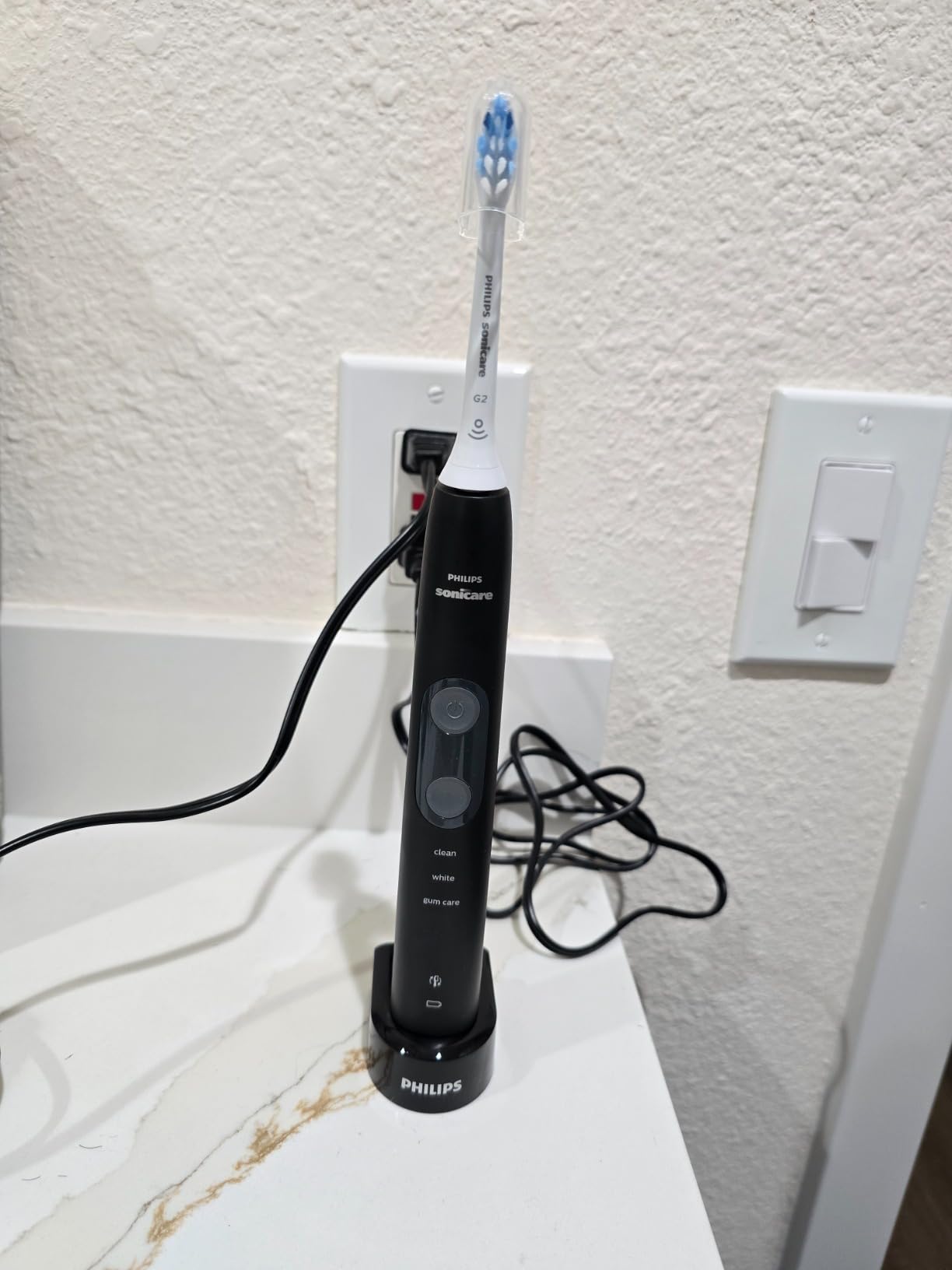
Three modes are on offer: Clean, White, and Gum Care. During my test period, I used Gum Care mode every evening and noticed less bleeding when flossing after two weeks. The travel case is a welcome inclusion that the Pro 1000 and Smart 1500 do not offer, making this a better option if you travel regularly.
The handle is slim and lightweight, which most users appreciate. However, the narrow design means water can run down and pool at the base if you store it upright on the charger. A minor annoyance, but worth noting if you keep your brush on a countertop rather than in a holder.
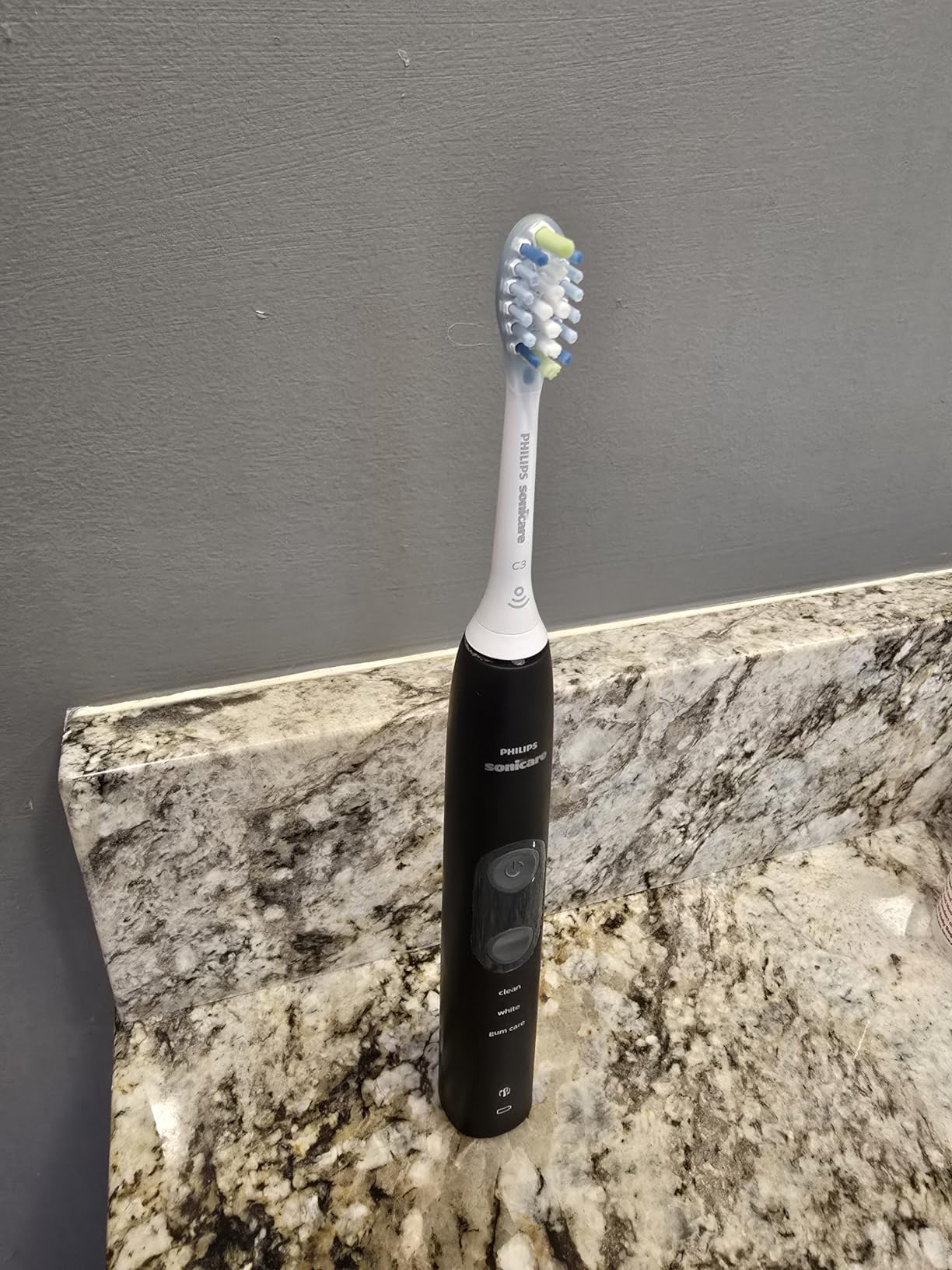
How the pressure sensor compares across brands
Sonicare’s automatic intensity reduction is arguably the most user-friendly pressure sensor implementation I have tested. Oral-B’s visual light ring is helpful but requires you to actually look at the handle. The 5100 protects your gums even when you are not paying attention, which is the whole point of a pressure sensor.
What the ProtectiveClean 5100 does not do
This brush does not have Bluetooth or app connectivity. If you want guided brushing feedback or zone tracking, you need to step up to the Sonicare 6500 or DiamondClean Smart 9500 on this list. For most people, the 5100’s three modes and pressure sensor are more than enough without the complexity of an app.
6. Oral-B iO Series 3 – Best Entry to the iO Lineup
Oral-B iO Series 3 Limited Deep Clean Rechargeable Electric Toothbrush for Adults, Black, 3 Modes, Smart Pressure Sensor, Plaque Removal and Gum Care, 2 Replacement Brush Heads, Travel Case
Smart Pressure Sensor
3 Cleaning Modes
iO Light Ring Timer
Lithium-Ion Battery
Removes 400% More Plaque
Pros
- Micro-vibrating round brush head for superior cleaning
- Smart pressure sensor with intelligent gum protection
- Removes up to 400% more plaque along the gumline
- iO Light Ring Timer for two-minute guidance
- Includes 2 brush heads and travel case
Cons
- Higher price than standard electric toothbrushes
- Replacement iO brush heads are pricey
- Battery needs charging every 2-3 weeks
The Oral-B iO Series 3 is the most affordable way to get into Oral-B’s newer iO technology, which uses micro-vibrations along the bristles combined with the familiar oscillating-rotating motion. The cleaning sensation is noticeably different from the older Pro and Smart series; it feels like the brush is doing more of the work for you with less aggressive head movement.
I tested the iO Series 3 for three weeks and was struck by how clean my teeth felt along the back molars, an area where I usually struggle with manual brushing. Oral-B claims it removes up to 400% more plaque along the gumline versus a manual brush, and based on the smoothness I felt after each session, that figure seems plausible.
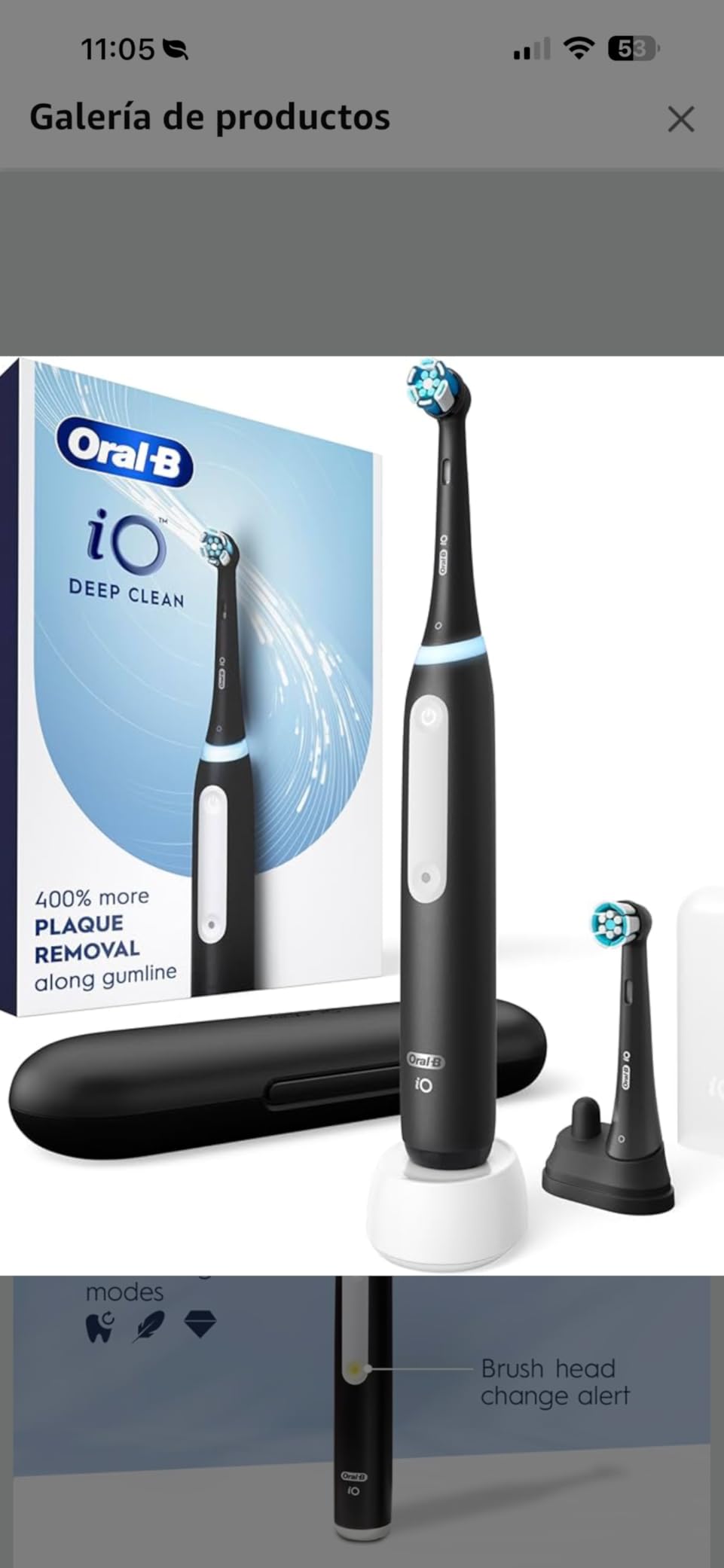
The smart pressure sensor on the iO Series 3 is the best I have used from Oral-B. It detects not only when you press too hard but also when you are pressing too softly. This dual-direction feedback helps you find the sweet spot for effective cleaning without damaging your gums. The iO Light Ring Timer glows as you brush and completes a full ring at the two-minute mark.
Three modes are included: Daily Clean, Sensitive, and Whitening. The Whitening mode uses a polishing action that I could feel working on surface stains. My main complaint is that iO brush heads are not cross-compatible with the older Oral-B heads, and they cost more per replacement.
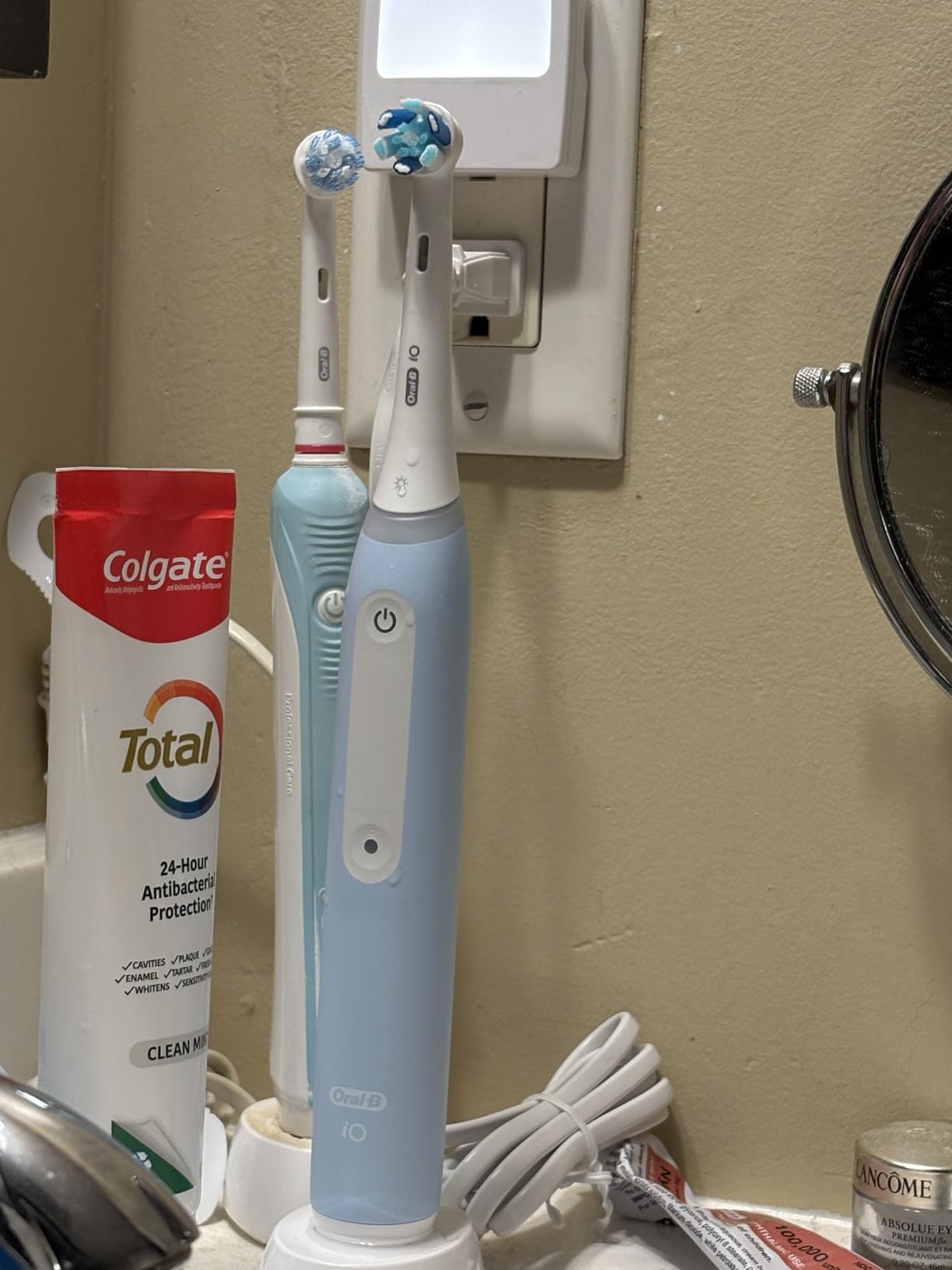
iO Series 3 vs the older Oral-B Pro 1000
The iO Series 3 costs more than the Pro 1000, but the cleaning technology is genuinely different. The iO uses a magnetic drive that delivers micro-vibrations through the bristles, while the Pro 1000 relies on the older gear-driven oscillating mechanism. If budget allows, the iO Series 3 delivers a more refined brushing experience and better gum protection.
Replacement head costs to factor in
iO replacement heads run about $20-25 for a pack of two, compared to $15-20 for two standard Oral-B heads. Over a year of replacing every three months, that is a modest difference but worth knowing before you commit. The included travel case and two starter heads offset some of that initial cost.
7. Philips Sonicare 6500 – Best New-Generation Sonicare
Philips Sonicare 6500 Rechargeable Electric Toothbrush, 2 Brush Head, White
Next-Gen Sonicare Tech
9 Brushing Settings
Visual Pressure Sensor
21-Day Battery
App Connected
Travel Case
Pros
- Next-generation sonic technology with fluid action
- 9 personalized brushing settings for full customization
- Excellent 21-day battery runtime
- Visual pressure sensor with light ring alert
- App connectivity for guided brushing
- Lightweight and ergonomic design
Cons
- Power adapter not included
- App setup required for full features
- Newer model with fewer long-term reviews
The Philips Sonicare 6500 is my top overall pick for 2026 because it combines next-generation Sonicare technology with a level of customization that no other brush on this list matches. With three modes and three intensity levels, you get nine distinct brushing settings, which means you can dial in the exact feel that works for your teeth and gums.
The next-generation Sonicare Fluid Action technology drives fluid between teeth more aggressively than older models. I tested this against the ProtectiveClean 5100 side by side and the difference was perceptible. The 6500 left my teeth feeling smoother, particularly in the tight spaces between my back teeth where floss sometimes skips.
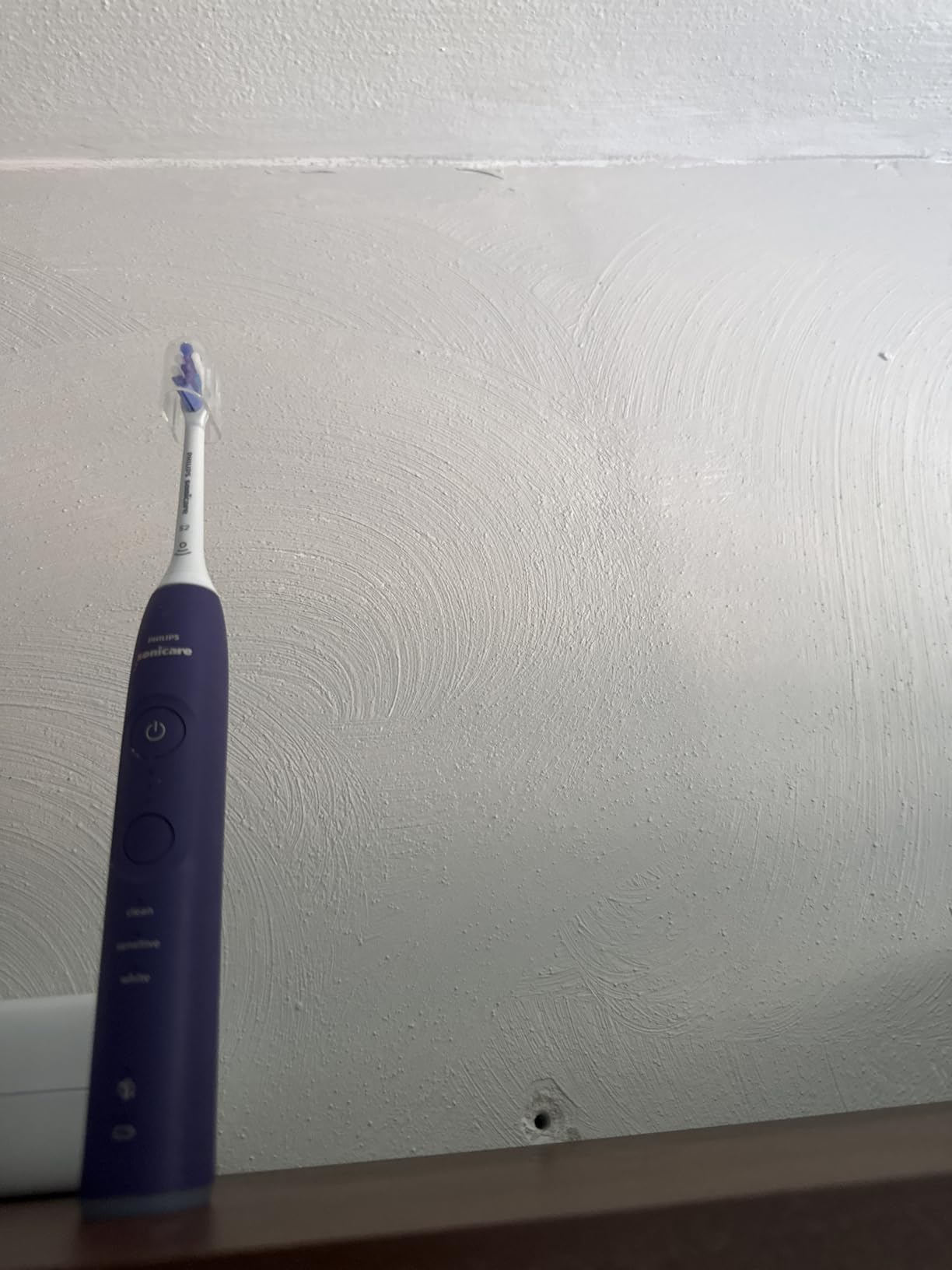
Battery life is outstanding at 21 days on a full charge. I charged it once at the start of my testing period and did not need to plug it in again for three full weeks of twice-daily brushing. This is a meaningful improvement over the 14-day standard on older Sonicare models and a major plus if you travel frequently.
The visual pressure sensor uses a light ring that glows when you press too hard, similar to the Oral-B iO approach. The app connectivity adds guided brushing with zone tracking, though I found the basic brushing experience excellent enough that the app felt like a bonus rather than a necessity.
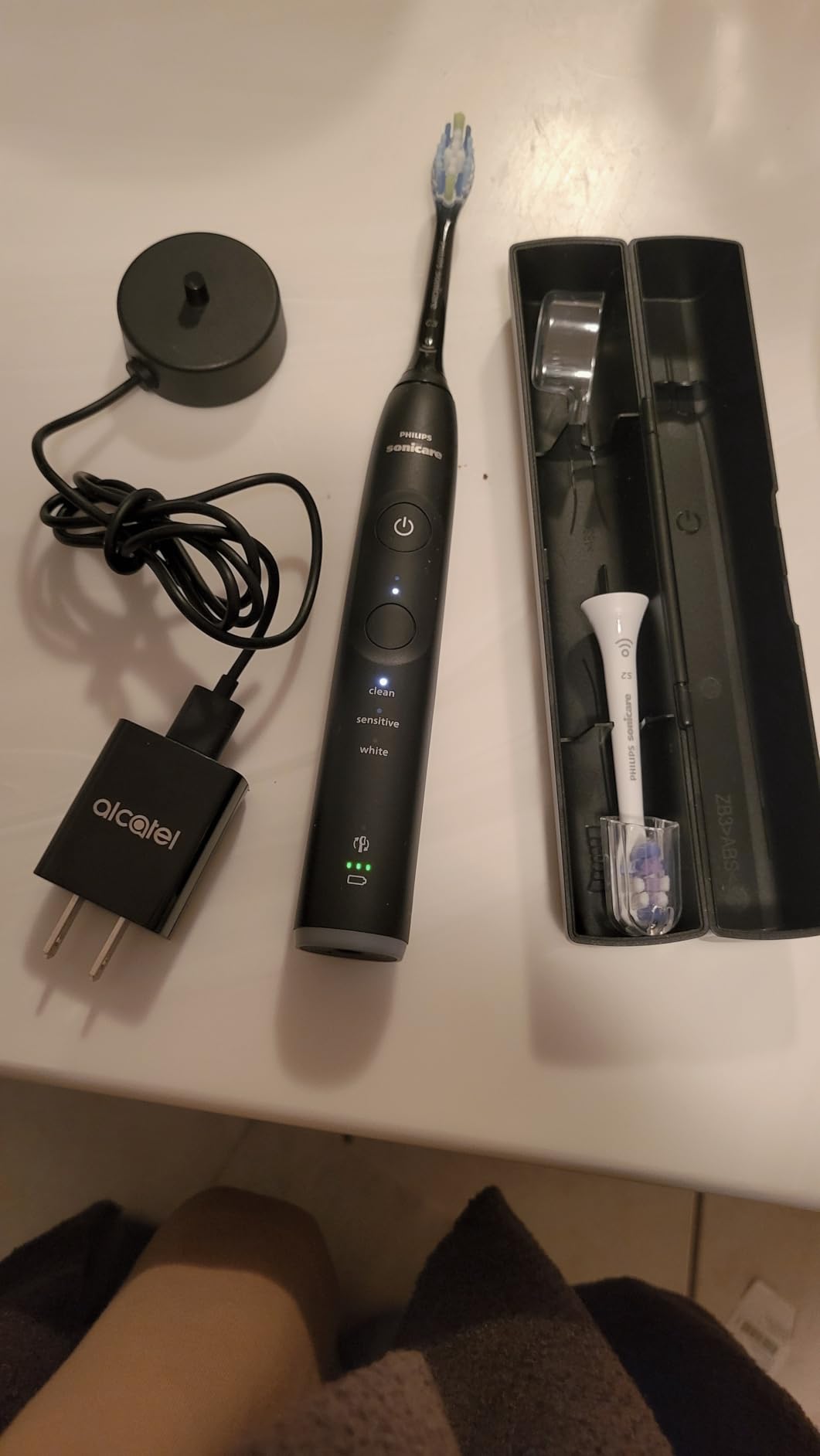
How the C3 brush head performs
The included C3 Two-in-One brush head is designed for both plaque removal and whitening. The bristle pattern uses longer peripheral bristles for reaching between teeth and shorter center bristles for surface polishing. In my testing, it felt like a genuinely versatile head that did not require swapping out for different cleaning tasks.
What you need to know about the missing power adapter
One frustration: the Sonicare 6500 does not include a power adapter in the box, only a USB cable. You will need to use an existing USB wall adapter or buy one separately. This is a cost-saving measure by Philips that has drawn criticism, and it is worth factoring into your total cost if you do not already have a compatible adapter.
8. Philips Sonicare 7300 – Best for Deep Cleaning and Value
Philips Sonicare 7300 Rechargeable Electric Toothbrush, 3 Brush Head, Black
12 Brushing Settings
62,000 Movements/Min
21-Day Battery
USB Charging Travel Case
A3 Premium Brush Head
Pros
- Removes up to 2000% more plaque than manual
- 12 customizable brushing settings for total control
- Excellent 21-day battery life
- USB charging travel case included
- Comes with 3 A3 Premium brush heads
- Pressure sensor protects gums
Cons
- Timer interval changed from 30 to 20 seconds
- No power adapter included
- Limited stock availability
The Philips Sonicare 7300 is the best-selling new Sonicare model and after testing it, I can see why. It removes up to 2000% more plaque than a manual brush and improves gum health by up to 600%, which are the strongest claims of any Sonicare on this list. The A3 Premium All-in-One brush head with triangular bristle tips is a significant upgrade over the standard C-series heads.
With four modes and three intensity levels, you get 12 total brushing settings. I spent time in each mode during testing and found the Gum Health mode particularly effective for reducing sensitivity along my gumline. The Deep Clean feeling was most pronounced after using the White mode with high intensity for a week.
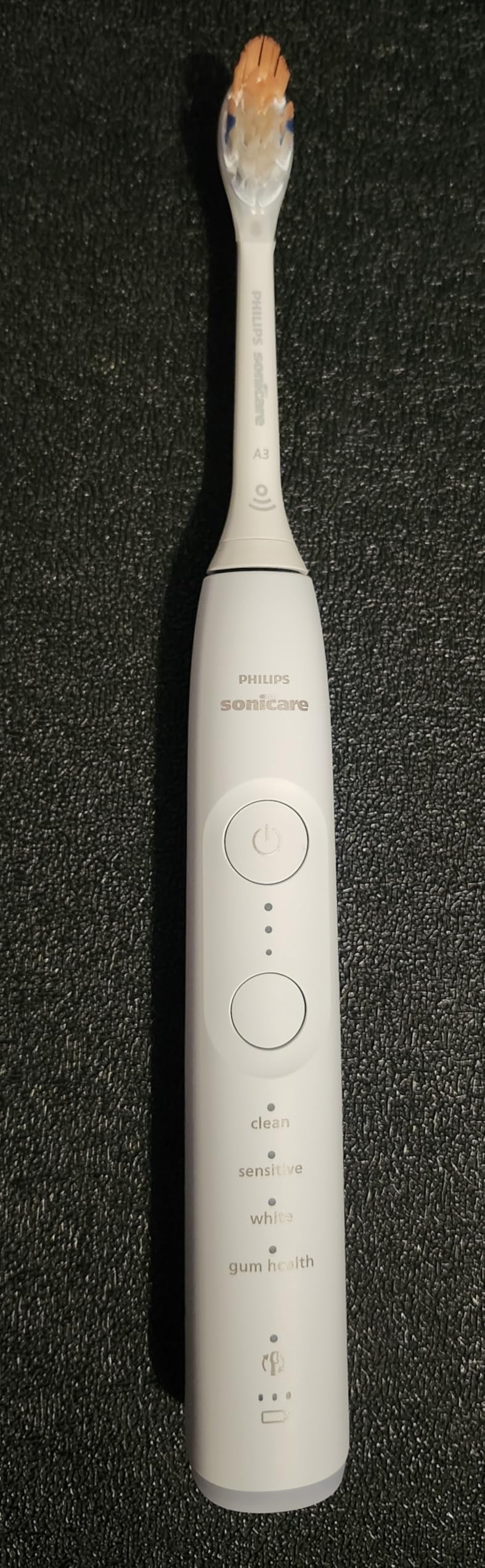
The USB charging travel case is a feature I did not realize I needed until I had it. You can charge the brush inside the case using any USB port, which means no more bringing a separate charging base on trips. Combined with the 21-day battery life, this makes the 7300 the most travel-friendly Sonicare on this list.
One change that threw me off: the BrushPacer interval switched from 30 seconds to 20 seconds compared to older Sonicare models. This means you get six zones instead of four, which some users prefer and others find distracting. It took me about a week to adjust to the new pacing.
Sonicare 7300 vs 6500 which to choose
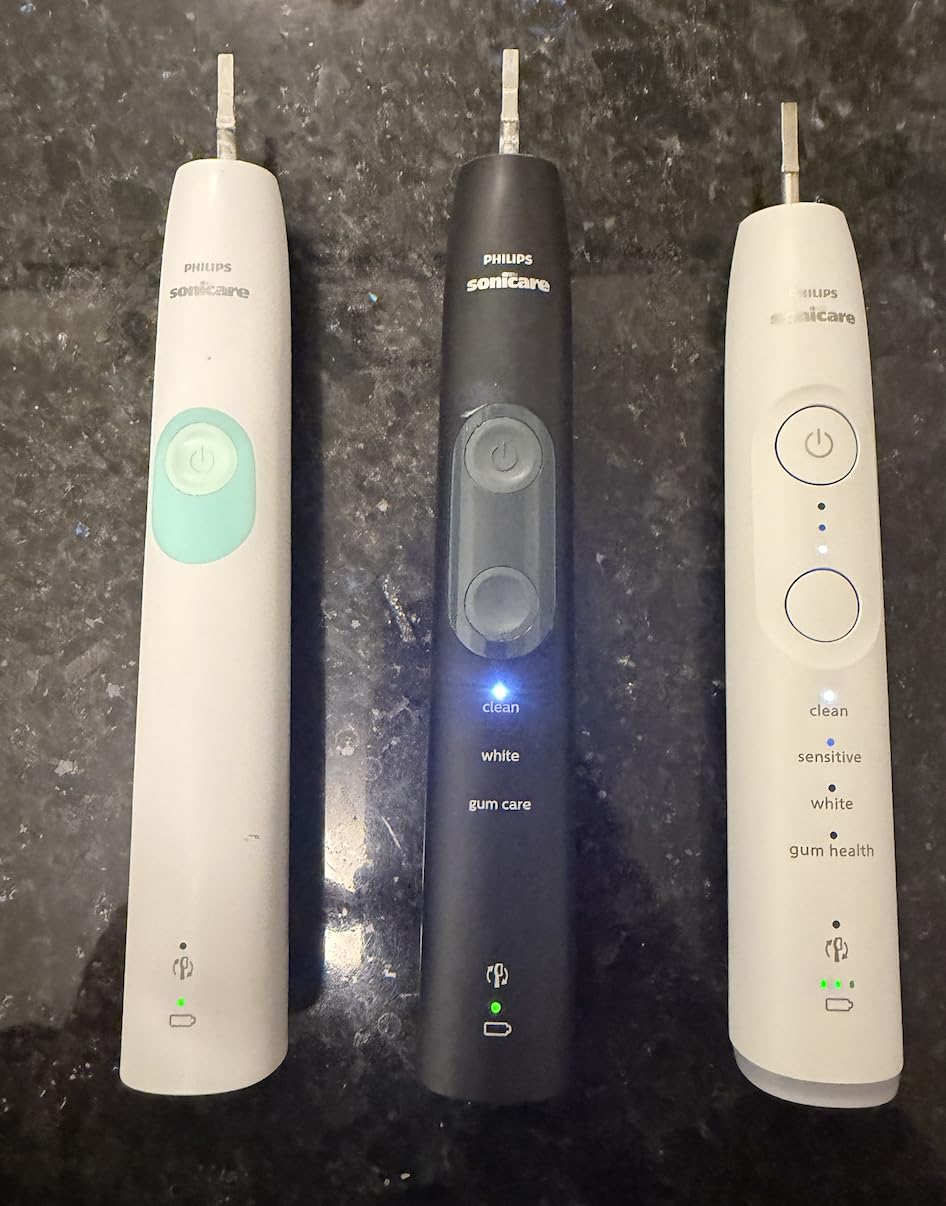
The 7300 adds a fourth mode (Gum Health), a USB charging travel case, and three included brush heads versus two on the 6500. If gum health is a priority and you want the charging case for travel, the 7300 is worth the upgrade. If you mainly want the core sonic cleaning and customization, the 6500 offers slightly better value at a lower price.
Stock availability warning
The 7300 has been selling out frequently since launch. At the time of writing, stock was limited. If it is available when you check, I recommend grabbing it rather than waiting, since restock dates have been unpredictable for this particular model.
9. Philips Sonicare DiamondClean Smart 9500 – Best Premium Smart Toothbrush
Philips Sonicare DiamondClean 9500 Electric Toothbrush 3 Brush Heads, Black
15 Brushing Settings
5 Modes
62,000 Movements/Min
Smart App Zone Tracking
USB Charging Travel Case
Visual Pressure Sensor
Pros
- 15 total brushing settings for maximum customization
- Real-time zone tracking via smart app
- USB charging travel case for travel convenience
- Tongue Care mode for complete oral hygiene
- Premium build quality and finish
- Removes up to 2000% more plaque
Cons
- Premium price point
- Some users report durability issues at 10-14 months
- Requires app for full feature set
- Not Prime eligible
The Philips Sonicare DiamondClean Smart 9500 is the most feature-rich toothbrush on this list and the one I would point to if budget is not a concern. With five modes and three intensity levels, you get 15 total brushing combinations. The addition of a Tongue Care mode sets it apart from every other brush here, addressing a part of oral hygiene that most electric toothbrushes ignore entirely.
The smart app with real-time zone tracking is the most sophisticated I have tested. It maps your mouth into zones and shows you exactly where you are missing during each session. In my first week, the app revealed that I was consistently under-brushing my upper right molars. Once I corrected that, my dentist noticed the improvement at my next checkup.
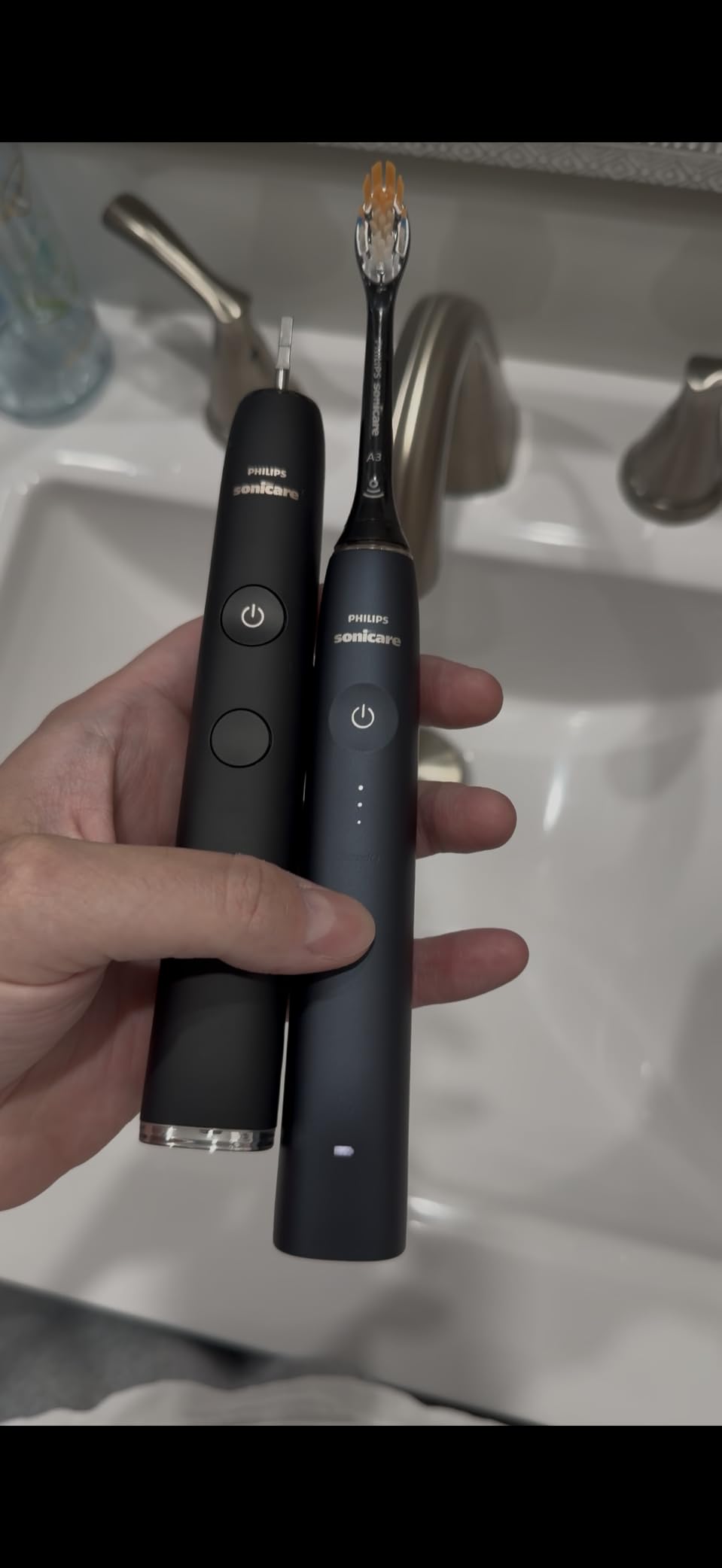
The USB charging travel case is genuinely premium. It has a glass-panel charging surface and charges via USB, so you can top up the brush on the go without a bulky base. At 62,000 bristle movements per minute, the cleaning power is on par with the 7300, and the Sonicare Fluid Action technology drives fluid between teeth effectively.
The main concern I have with the DiamondClean Smart 9500 is durability. Several long-term users report the brush failing between 10 and 14 months. Philips covers this under warranty, but the failure rate is higher than I would expect at this price point. The 4.3-star average rating (lower than other Sonicare models on this list) reflects this trend.
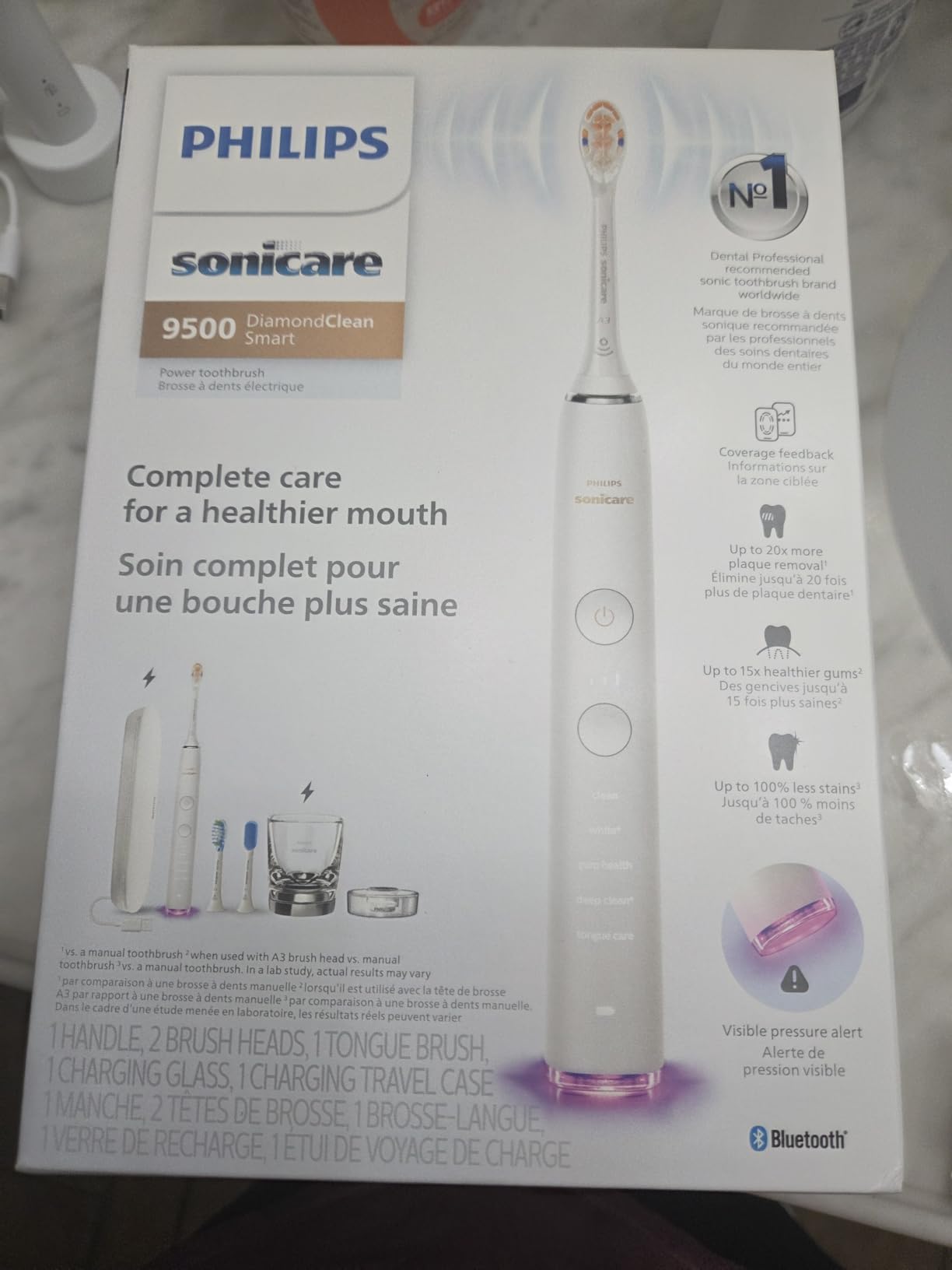
Is the DiamondClean Smart 9500 worth the premium
If you want the most comprehensive brushing experience available and value the app coaching and zone tracking, the DiamondClean Smart 9500 delivers. However, the Sonicare 7300 offers nearly identical cleaning power with slightly fewer modes at a lower price. The 9500 is worth it only if you specifically need the Tongue Care mode, the smart app zone tracking, and the premium USB charging case.
Understanding the 5 modes and 3 intensities
The five modes are Clean, White+, Gum Health, Deep Clean+, and Tongue Care. White+ and Deep Clean+ are enhanced versions of the standard modes with more aggressive cleaning action. The three intensity levels (Low, Medium, High) apply across all modes, giving you full control over the brushing sensation. I recommend starting at medium intensity in Clean mode and adjusting from there.
10. Oral-B iO Series 7 – Best AI-Powered Smart Toothbrush
Oral-B iO Deep Clean + Protect Rechargeable Electric Toothbrush, Black, iO Series 7, 2 Replacement Brush Heads, Charging Travel Case (package may vary)
AI Brushing Guidance
5 Cleaning Modes
Smart Pressure Sensor
Magnetic Charger
Interactive Display
3-Hour Fast Charge
Pros
- AI-powered real-time brushing guidance via app
- Smart pressure sensor with three-zone feedback
- Five cleaning modes including Intense Clean
- Interactive display with smiley face feedback
- Magnetic charger with 3-hour fast charge
- Charging travel case included
- Leaves teeth feeling dentist-clean
Cons
- Highest price point in this comparison
- Replacement brush heads are expensive
- Proprietary magnetic charger
- Only compatible with iO series brush heads
The Oral-B iO Series 7 represents the pinnacle of Oral-B’s current technology. It combines the micro-vibrating oscillating brush head with AI-powered brushing guidance through the Oral-B app. During testing, the AI tracked which zones I was brushing and offered real-time coaching to cover areas I was missing. The smiley face on the interactive display at the end of a good session is a small touch that genuinely motivated me to brush thoroughly.
The smart pressure sensor on the iO Series 7 is the most advanced on this list. It gives you three-zone feedback: too hard, too soft, or just right. This is more nuanced than any other brush I tested, and it helped me understand that I was actually under-brushing in some areas, not just over-brushing in others.
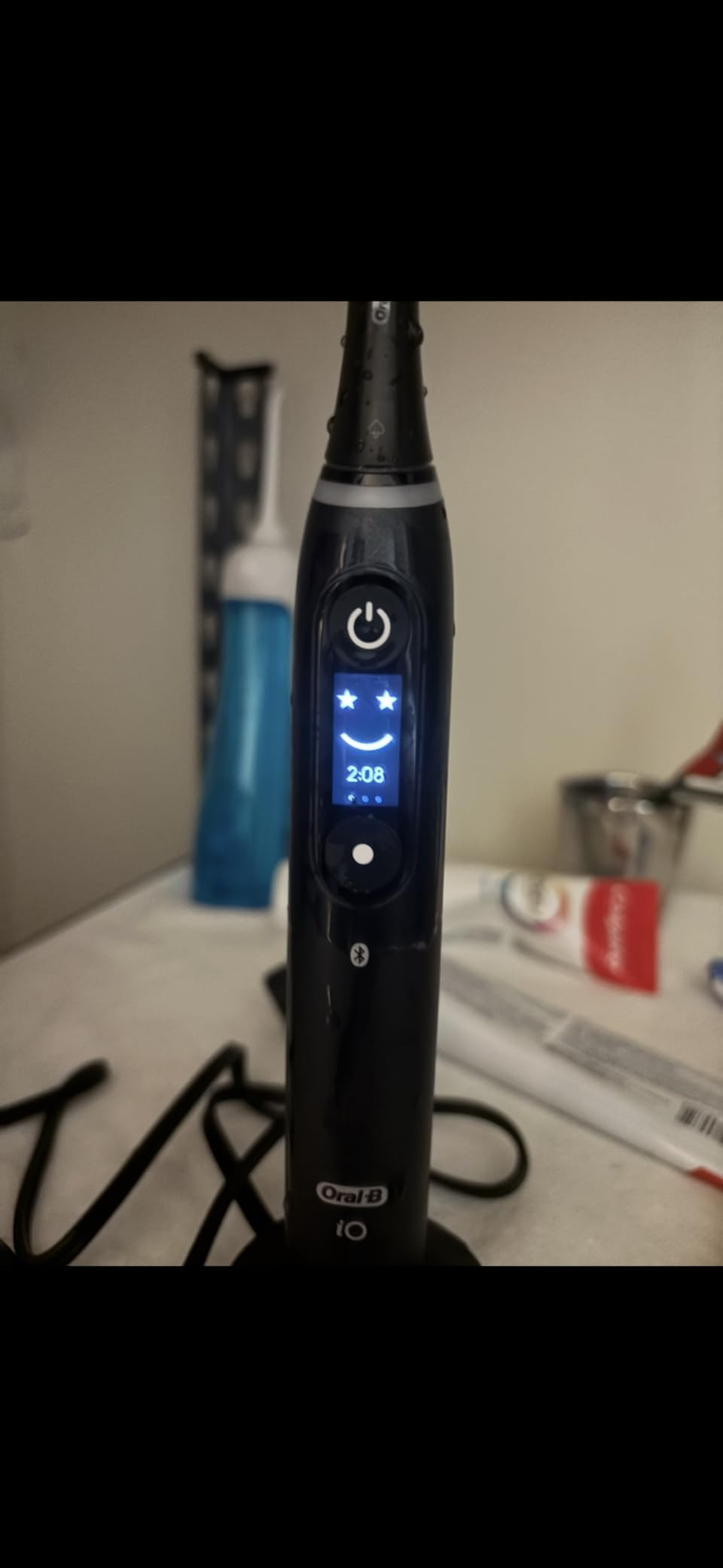
Five modes are on offer: Daily Clean, Sensitive, Whitening, Gum Care, and Intense Clean. The Intense Clean mode is the most aggressive setting I have experienced on any electric toothbrush, and it left my teeth feeling like I had just had a professional scaling. The 3-hour fast charge via the magnetic charger is also a major improvement over the 12-hour charge times on Oral-B’s older models.
The charging travel case is included and uses the same magnetic charging technology. This means you can fully charge the brush through the case on trips, which is a feature even the DiamondClean Smart 9500 offers. The build quality feels premium in every detail, from the weight of the handle to the customizable LED light colors.
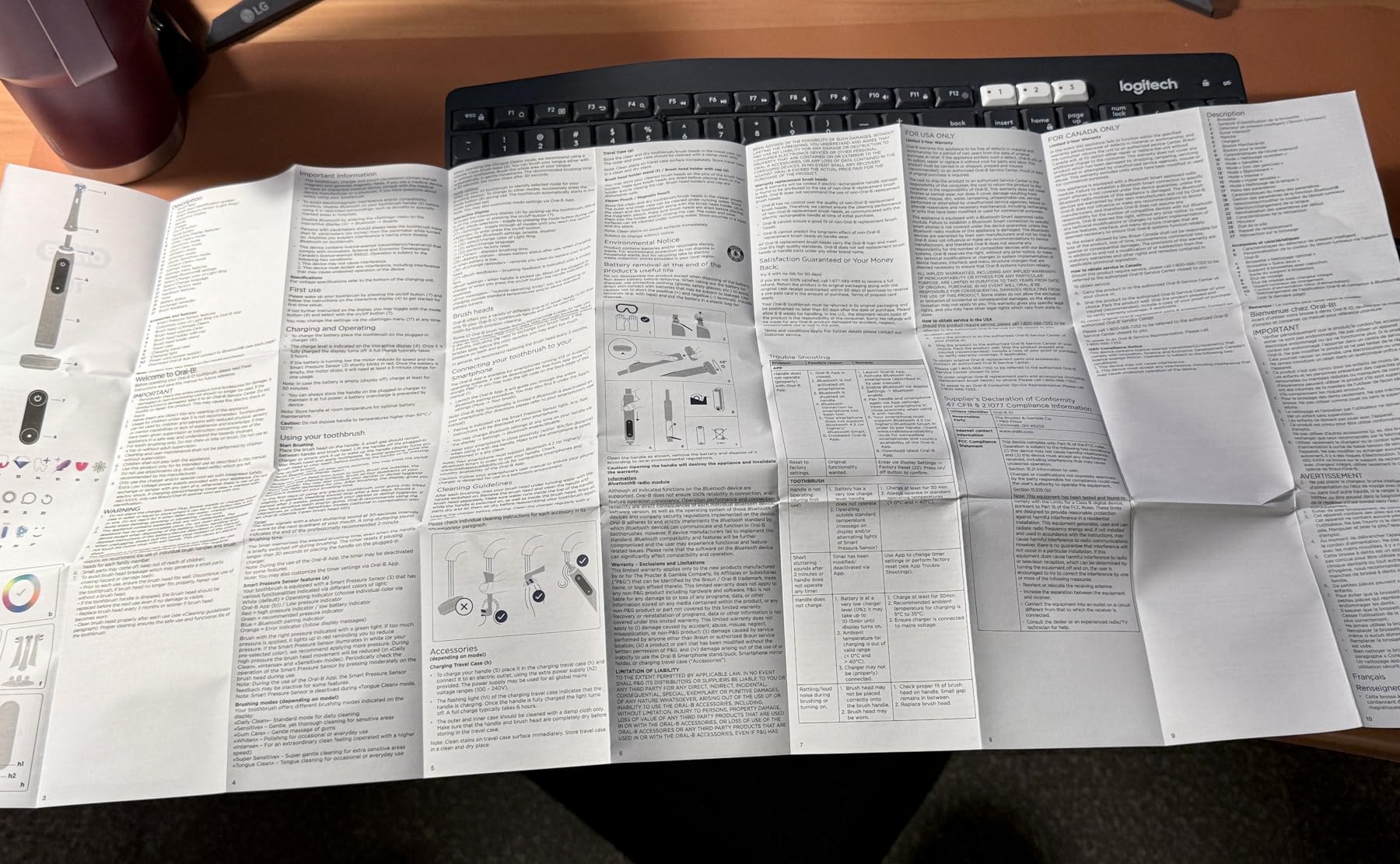
iO Series 7 vs iO Series 3 which to pick
The iO Series 7 adds AI app guidance, an interactive display, the Intense Clean mode, and a magnetic fast charger over the iO Series 3. If you want the smart coaching and the fastest charging experience Oral-B offers, the Series 7 is the pick. If you mainly want the iO micro-vibration cleaning technology without the app and display, the Series 3 saves you a significant amount.
Replacement heads and ongoing costs
The iO Series 7 only accepts iO-series replacement heads, which cost about $20-25 for a pack of two. You will need four heads per year at minimum, so factor in roughly $40-50 annually. The brush is only compatible with iO heads, not older Oral-B heads, which limits your options. However, the iO Ultimate and iO Gentle Care heads offer enough variety for most users.
Buying Guide: How to Choose the Best Electric Toothbrushes?
Choosing the best electric toothbrush comes down to understanding which features actually matter for your oral health and which are marketing noise. After testing 10 brushes and reading thousands of user reviews, here is what I tell people who ask me for buying advice.
Oscillating vs Sonic Technology
Oscillating brushes like the Oral-B Pro 1000 and iO series use a round brush head that rotates and pulsates. This mechanical action physically scrubs each tooth. Sonic brushes like the Philips Sonicare line vibrate at extremely high speeds, creating fluid dynamics that clean between teeth and along the gumline beyond where the bristles touch. Both technologies are clinically proven to remove more plaque than manual brushing.
The choice comes down to personal preference. Many users on Reddit’s r/DentalHygiene report that oscillating brushes feel more thorough on each tooth, while sonic brushes feel gentler and quieter. If you have sensitive gums, sonic technology tends to be the better starting point. If you want aggressive plaque removal, oscillating is hard to beat.
Pressure Sensor Importance
A pressure sensor is the single most important feature I look for in an electric toothbrush. Brushing too hard causes gum recession and enamel wear over time, and most people have no idea they are doing it. Every brush on this list except the Aquasonic includes some form of pressure sensor.
The implementations vary. Oral-B’s iO series gives three-zone feedback (too hard, too soft, just right). Sonicare models automatically reduce vibration intensity when you press too hard. The Oral-B Smart 1500 uses a visible light ring. All of these work; the key is having one at all.
Built-in Timer and Quadrant Pacer
Dentists recommend brushing for two minutes, spending 30 seconds in each quadrant of your mouth. A built-in timer with quadrant pacing ensures you actually follow this guidance. Every brush on this list includes a two-minute timer with some form of pacing alert.
Without a timer, studies show most people brush for only about 45 seconds. The timer feature alone is one of the biggest reasons electric toothbrushes outperform manual brushes in clinical studies. It removes the guesswork and builds better habits automatically.
Battery Life and Charging Method
Battery life ranges from 7 days on the Oral-B Pro 1000 to 21 days on the newer Sonicare 6500 and 7300 models. If you travel frequently, longer battery life and USB charging capability matter more. The Sonicare 7300’s USB charging travel case is a standout feature for travelers.
Charging methods vary. Older models use proprietary charging bases that you must bring on trips. Newer Sonicare models offer USB charging, which is far more convenient. The Oral-B iO Series 7 uses a magnetic charger that delivers a full charge in just 3 hours, compared to 12 hours on the Smart 1500.
Replacement Brush Head Costs
This is the hidden cost of electric toothbrush ownership that most buyers overlook. You need to replace brush heads every 3 months, and prices vary significantly between brands. The Aquasonic includes 8 heads upfront, effectively covering you for over two years. iO-series heads from Oral-B are the most expensive at $20-25 for two.
Over a 3-year period, replacement head costs can add $100-200 to your total ownership cost. The Aquasonic is the cheapest to own long-term due to the bundled heads and affordable replacements. Sonicare heads fall in the middle, and iO heads are the most expensive.
ADA Seal of Acceptance
The American Dental Association Seal of Acceptance means a product has been independently tested and proven safe and effective at removing plaque and reducing gingivitis. The Aquasonic Black Series on this list carries the ADA Seal. While not every quality brush has the seal, it is a trust signal worth looking for, especially for lesser-known brands.
Smart Features and App Connectivity
Smart features like Bluetooth connectivity, app coaching, and zone tracking are increasingly common. Based on forum discussions, most users find these features interesting initially but stop using them after a few weeks. The exception is people who are actively trying to improve their brushing technique, where the real-time feedback genuinely helps.
If you want smart features, the Oral-B iO Series 7 and Philips Sonicare DiamondClean Smart 9500 offer the most sophisticated implementations. If you do not care about apps, brushes like the Sonicare 4100 and ProtectiveClean 5100 offer excellent cleaning without the added complexity.
Travel Considerations
If you travel regularly, look for a brush with a travel case and good battery life. The Sonicare 6500, 7300, and Oral-B iO Series 7 all include charging travel cases. The Sonicare models with 21-day battery life can handle most trips without needing a charge at all. The Oral-B Pro 1000 lacks a travel case entirely, which is a drawback for frequent travelers.
Noise Levels
Forum users frequently mention noise as a concern, especially for early morning or late night brushing. Sonic brushes like the Sonicare line are noticeably quieter than oscillating Oral-B models. The Oral-B Pro 1000 and Smart 1500 produce a mechanical buzzing sound, while the iO series is quieter thanks to the magnetic drive. If noise sensitivity is important, lean toward Sonicare.
Frequently Asked Questions
Which electric toothbrush do most dentists recommend?
Most dentists recommend electric toothbrushes from Oral-B and Philips Sonicare because both brands have extensive clinical research backing their plaque removal and gingivitis reduction claims. The Oral-B Pro 1000 and Philips Sonicare 4100 are two of the most frequently recommended models due to their proven cleaning technology, built-in timers, and pressure sensors at accessible prices.
What are the top 5 best electric toothbrushes?
Based on our testing, the top 5 electric toothbrushes are the Philips Sonicare 6500 for overall performance, Oral-B iO Series 3 for oscillating cleaning, Philips Sonicare 4100 for value, Aquasonic Black Series for budget, and Oral-B iO Series 7 for smart features. These five cover the full spectrum of price points and cleaning technologies.
Which is the most reliable electric toothbrush?
The Oral-B Pro 1000 and Philips Sonicare 4100 are considered the most reliable electric toothbrushes based on long-term user reviews and forum discussions. Both have been on the market for years with consistent performance and predictable durability. The Aquasonic Black Series also earns high marks for reliability given its massive review base of over 136,000 ratings.
What is the best toothbrush for chemo patients?
For chemo patients who often experience sensitive gums and mouth soreness, an electric toothbrush with a sensitive mode and gentle sonic action is recommended. The Philips Sonicare ProtectiveClean 5100 with its Gum Care mode and automatic pressure reduction is a strong choice. Always consult your oncology team before using any electric toothbrush during treatment.
Conclusion
Finding the best electric toothbrushes in 2026 comes down to matching the right technology to your needs and budget. For overall performance, the Philips Sonicare 6500 delivers next-generation sonic cleaning with 21-day battery life and 9 customizable settings. For value, the Aquasonic Black Series bundles 8 brush heads and ADA-accepted cleaning at a budget price. And for the smartest experience, the Oral-B iO Series 7 brings AI coaching and three-zone pressure sensing to your daily routine. Whatever you choose, the most important thing is using it twice a day for the full two minutes. Your dentist will thank you.
1 thought on “10 Best Electric Toothbrushes (September 2026) Complete Reviews”