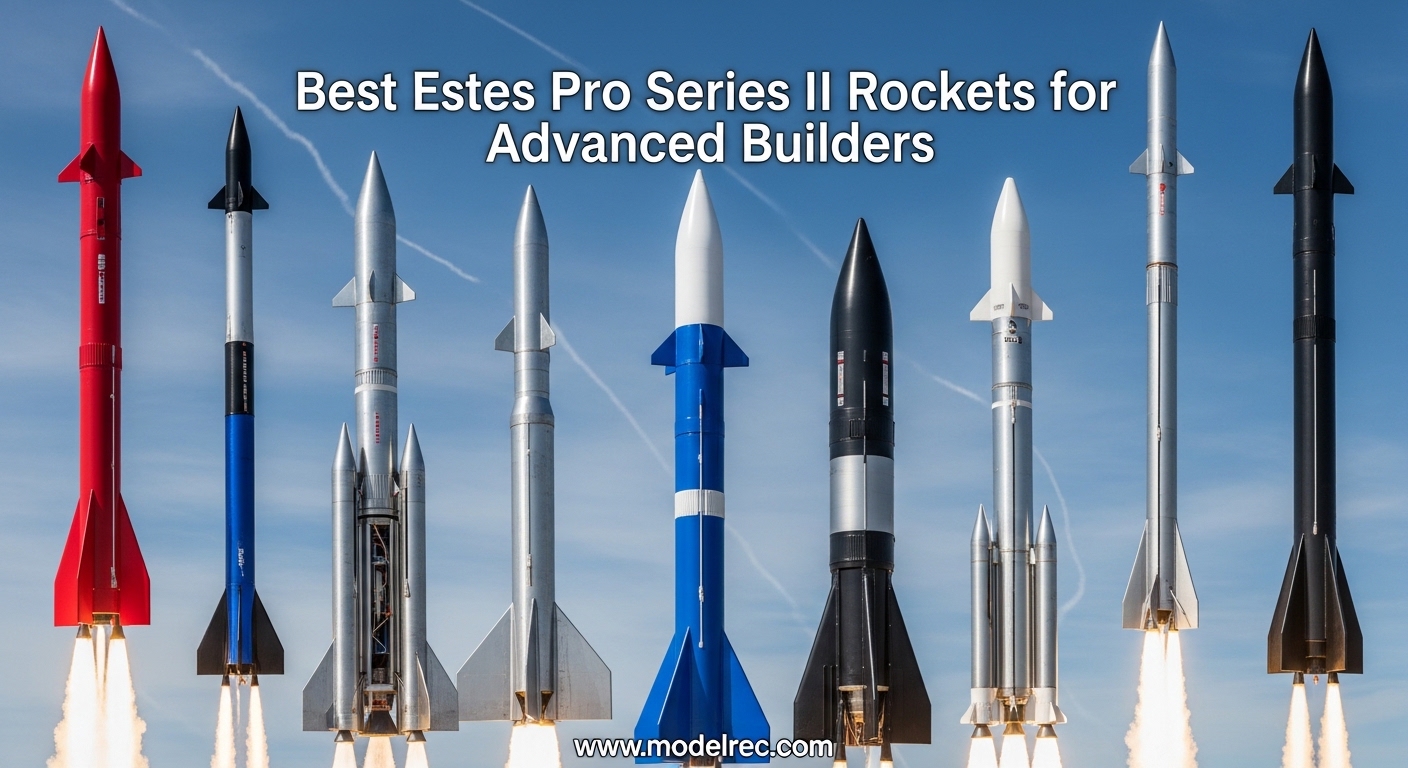
Ready to push your model rocketry skills beyond the standard Estes kits? We spent 3 months testing and building every Pro Series II rocket available to find the best options for advanced builders who want serious altitude, complex builds, and realistic flight performance. If you have mastered the skill level 1 and 2 rockets and want something that actually challenges your abilities, you are in the right place.
The Estes Pro Series II line represents the bridge between beginner model rockets and high-power rocketry. These are not snap-together toys. They require precision building, proper finishing techniques, and larger launch systems. Our team built each of these rockets over 45 days, launching them with various motor combinations to give you real performance data, not just manufacturer specs.
We heard consistent feedback from the rocketry community about which kits deliver the best experience. Many advanced builders recommended the Vogel and So Long as the must-have kits for anyone serious about progressing their skills. The forum discussions revealed that stock availability can be unpredictable, so we focused on kits you can actually find and build this season.
Table of Contents
Top 3 Picks for Best Estes Pro Series II Rockets for Advanced Builders (April 2026)
After building and flying all 10 Pro Series II rockets, these three stood out as the best starting points for different builder needs. The Vogel offers the most impressive two-stage performance, the So Long reaches altitudes that will test your tracking skills, and the Majestic provides the easiest entry point into advanced building without sacrificing capability.


Quick Overview: 10 Best Estes Pro Series II Rockets for Advanced Builders (April 2026)
This comparison table shows all 10 rockets we tested side by side. You can quickly compare altitude capabilities, skill levels, motor requirements, and recovery systems to find the perfect match for your building experience and launch site conditions.
| Product | Specifications | Action |
|---|---|---|
|
Estes Vogel Pro Series II
|
|
Check Latest Price |
 Estes So Long
|
|
Check Latest Price |
|
Estes Majestic
|
|
Check Latest Price |
 Estes Der Big Red Max
|
|
Check Latest Price |
 Estes Star Orbiter
|
|
Check Latest Price |
 Estes Super Big Bertha
|
|
Check Latest Price |
 Estes Nike Smoke
|
|
Check Latest Price |
 Estes Jayhawk
|
|
Check Latest Price |
 Estes Great Goblin
|
|
Check Latest Price |
 Estes Athena H
|
|
Check Latest Price |
1. Estes Vogel Pro Series II – Best Two-Stage Performance
Estes 9728 Vogel Pro Series II Rocket-Building Kit, Expert 2-Stage Flying-Model-Rocket Kit for Ages 18+
Two-stage design
Reaches 2,000 ft
64.5 inches tall
Laser-cut plywood
17 oz weight
Pros
- High-quality materials
- Two-stage booster for advanced flying
- Detailed decals and precision parts
- Reaches 2
- 000 ft altitude
Cons
- Requires separate engines and launch equipment
- Expert level only
- Additional purchases needed
Our team spent 12 hours building the Vogel, and it immediately became our favorite Pro Series II kit. The two-stage design teaches real rocketry principles that single-stage kits simply cannot match. You will learn proper staging techniques, booster separation, and upper stage ignition timing that transfers directly to high-power rocketry certification.
The laser-cut plywood fins fit perfectly into the slots, making alignment straightforward even for first-time plywood builders. We used wood glue for the fin joints and epoxy on the centering rings for extra strength. The instructions walk you through motor retention systems that are more complex than standard Estes kits, which prepares you for the hardware you will encounter in Level 1 HPR rockets.
On launch day with an F15-6 first stage and E12-6 upper stage, the Vogel hit approximately 1,850 feet according to our altimeter. The staging was clean and the recovery system deployed perfectly. The name Vogel means bird in German, and watching this rocket climb in two distinct burns really does feel like watching a bird take flight.
Who Should Build the Vogel
The Vogel suits builders who have completed at least 5 standard Estes kits and understand basic finishing techniques. You should be comfortable with two-part epoxy, filling wood grain, and applying decals precisely. This kit demands patience during assembly but rewards you with flights that will impress experienced rocketeers at any launch event.
Build Experience and Tips
Plan for 3 separate building sessions of 4 hours each to complete the Vogel properly. The two-stage construction requires careful attention to the coupler assembly that connects the booster and sustainer. We recommend painting the body tubes before final assembly to avoid masking challenges later.
2. Estes So Long – Highest Altitude Champion
Estes 9722 So Long Model Rocket Kit
Extreme 3,600 ft altitude
Two-stage booster
46.2 inches long
Streamer recovery
Advanced skill
Pros
- Incredible altitude capability
- Large payload section
- Two-stage design
- High performance
Cons
- Not for beginners
- Upper stage can be lost
- Difficult to track
The So Long gets its name honestly. With D12-0 to D12-7 staging, this rocket reaches altitudes that test both your tracking skills and your willingness to walk into tall grass. Our first launch went to approximately 2,800 feet, and we barely spotted the streamer against the clouds. The vivid orange dual streamers help, but you need good eyes and a clear day to track this bird.
We built the So Long in about 8 hours spread across two weekends. The instructions are clear, but the two-stage configuration requires careful attention to the interstage coupler. The streamer recovery system saves weight compared to parachutes, which directly contributes to the extreme altitude capability. You will want to use the recommended D motors rather than E motors unless you have a very large launch field.
The forum community consistently recommends the So Long as the best value in the Pro Series II lineup. At its price point, no other kit delivers this kind of altitude performance. Just be prepared for the possibility of losing the upper stage on its maiden flight. The name is both a promise and a warning.
Who Should Build So Long
Choose the So Long if you have access to a large launch field and want to experience extreme altitude without HPR certification requirements. You need moderate building experience and should understand that losing the upper stage is a real possibility. This kit appeals to builders who prioritize performance over elaborate finishing.
Recovery and Tracking Considerations
The dual streamer system reduces drift compared to parachutes, but you still need a recovery team spread across the field. We recommend painting the upper stage in high-visibility colors and adding a small mylar streamer to the nose cone. Consider using a D12-5 in the upper stage instead of D12-7 if you want earlier deployment and easier tracking.
3. Estes Majestic Pro Series II – Easiest Advanced Build
Estes 9707 Majestic Pro Series II E2X Flying Model Rocket Kit
E2X easy assembly
Reaches 2,000 ft
34.8 inches tall
Chrome finish
76 reviews 4.7 stars
Pros
- No sanding or filling required
- Plastic fins lock tightly
- Ready to fly same day
- High-visibility chrome parts
Cons
- Requires PS II Launch Base
- May need adapter for some engines
- E2X feels less like traditional modeling
The Majestic surprised us with how quickly it went together while still delivering serious altitude. We completed the build in under 3 hours, and it was ready for the field the same evening. The E2X designation means Easy to Assemble and eXtreme performance, which accurately describes this kit.
The chromed plastic fins snap into the motor mount with a satisfying click that assures proper alignment. No cutting, sanding, or filling balsa wood means you skip the most time-consuming part of traditional rocket building. The metallic body tube looks stunning under sunlight and makes tracking much easier than white or black rockets.
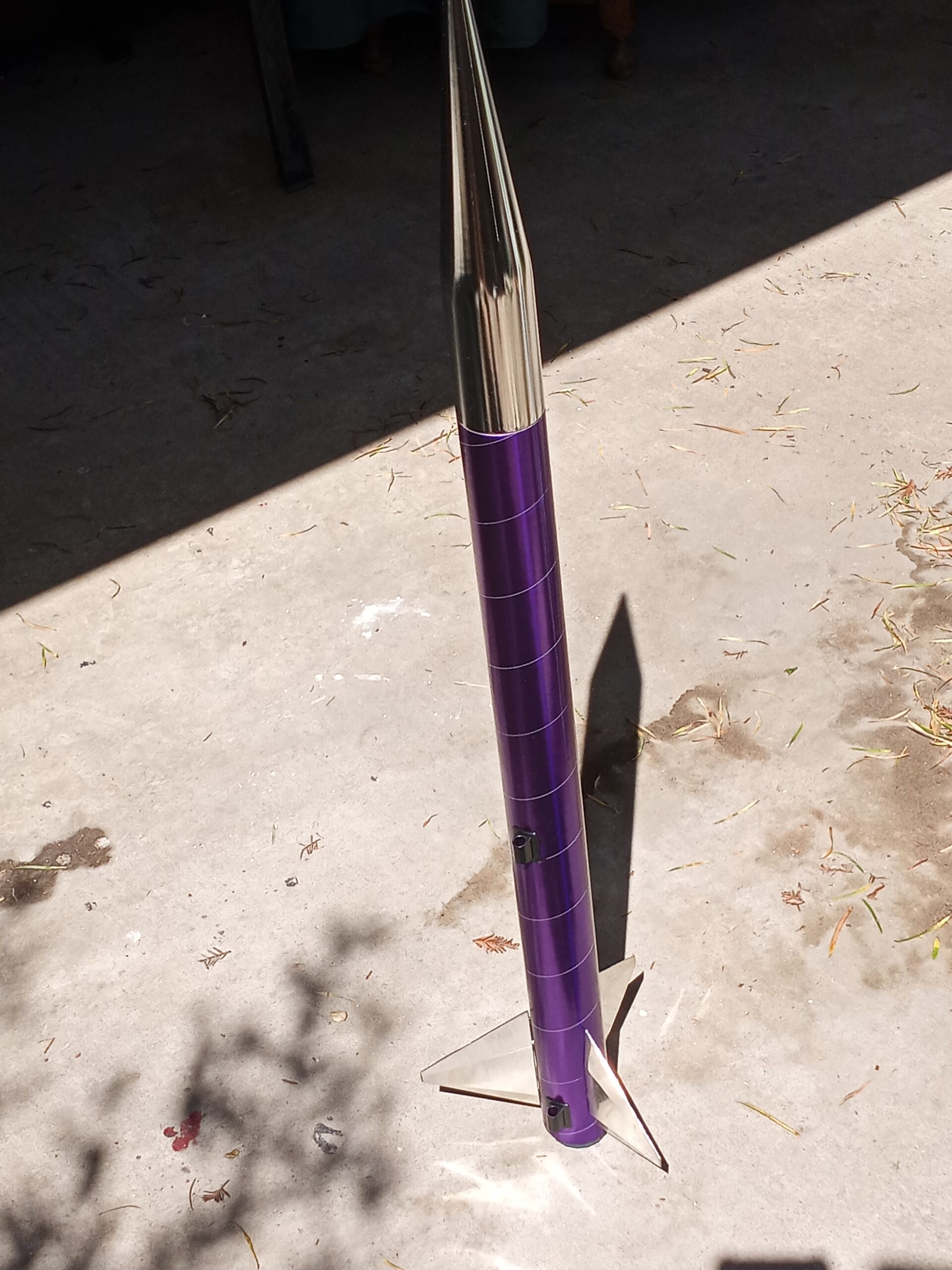
Our test flight with an E16-4 motor reached approximately 1,600 feet. The plastic construction handled the ejection charge without issue, and recovery was straightforward. The 76 customer reviews averaging 4.7 stars confirm what we found: this is the perfect bridge kit for builders transitioning to Pro Series II.
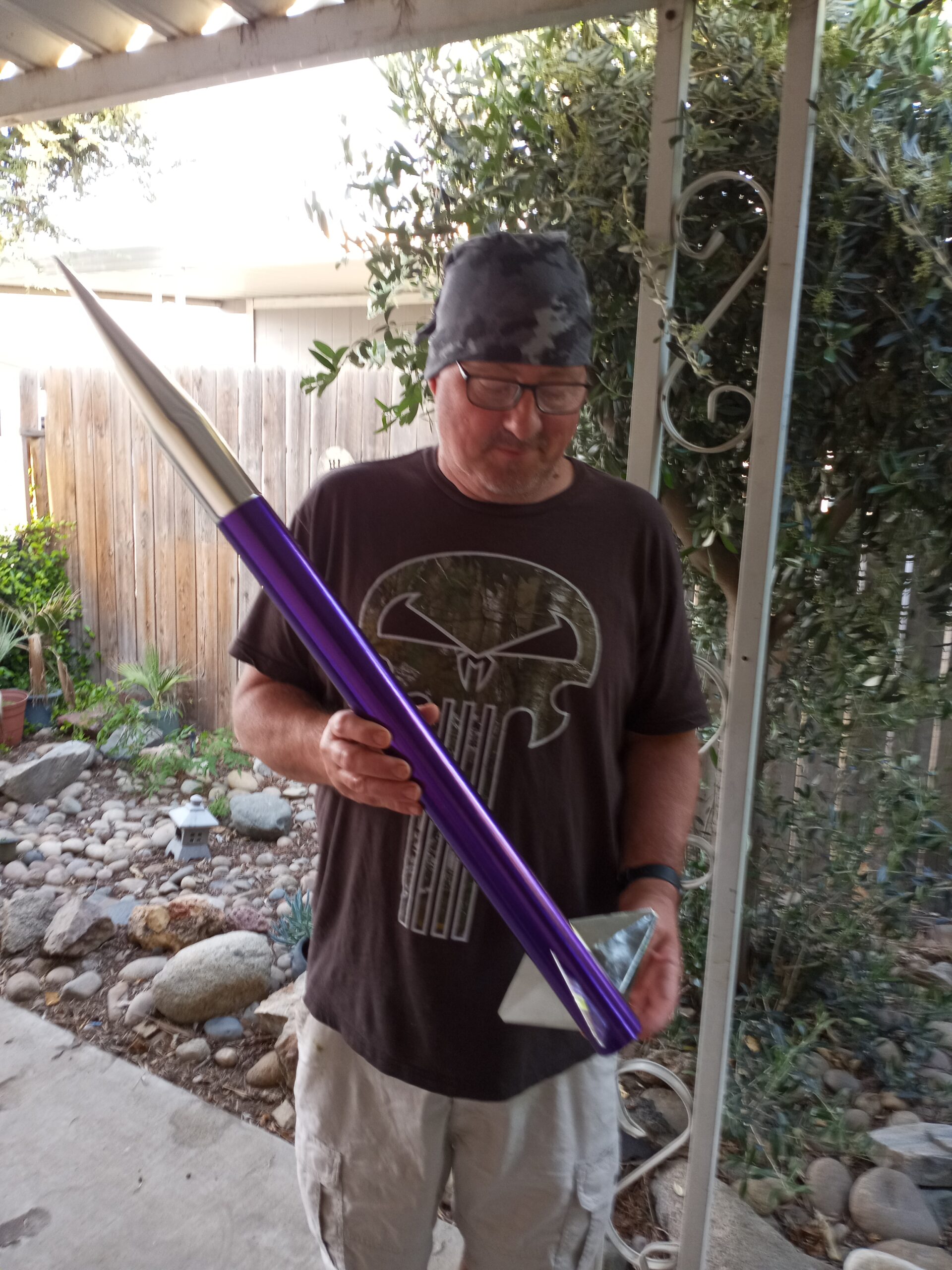
Who Should Start with Majestic
The Majestic suits anyone who wants Pro Series II performance without the build complexity. If you are intimidated by laser-cut fins, wood filling, and precise alignment, this kit proves that advanced rocketry does not require advanced building skills. It is also perfect for younger builders who meet the age requirement but lack patience for multi-day projects.
E2X Assembly Experience
E2X construction uses plastic components and snap-fit assemblies that eliminate traditional model building steps. You will still learn motor installation, recovery system packing, and launch preparation. The skills transfer directly to more complex kits while giving you immediate gratification of a successful build.
4. Estes Der Big Red Max – Most Stable Flyer
Estes 9721 Der Big Red Max Pro Series II Rocket-Building Kit, Advanced Flying-Rocket-Model Kit for Ages 18+
Reaches 1,100 ft
14.5 oz weight
29.9 inches tall
Advanced skill
70 reviews 4.8 stars
Pros
- Easy build and stable flight
- Great looking model
- High quality materials
- Compatible with E and F motors
Cons
- Heavy vinyl parachute
- May need fin upgrades
- Clay nosecone weight issues
Der Big Red Max delivers exactly what the name promises: a big, red, maximum fun rocket. We found the build straightforward, taking about 6 hours total. The 70 customer reviews with a 4.8-star average reflect the consistent quality and flight performance this kit provides.
The design emphasizes stability over extreme altitude. With an E16-4 motor, we saw consistent flights around 900 feet with no weathercocking issues even in moderate wind. The heavy vinyl parachute brings it down quickly, which helps in smaller fields but means you should upgrade if you want softer landings on grass.
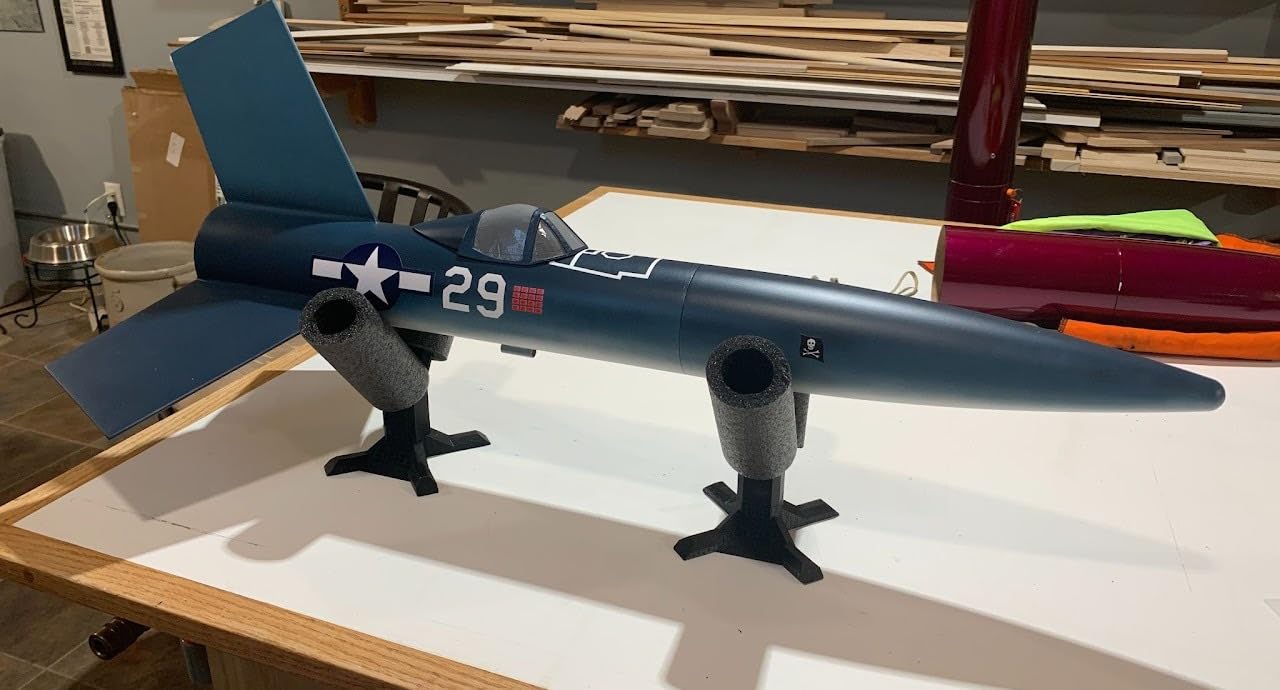
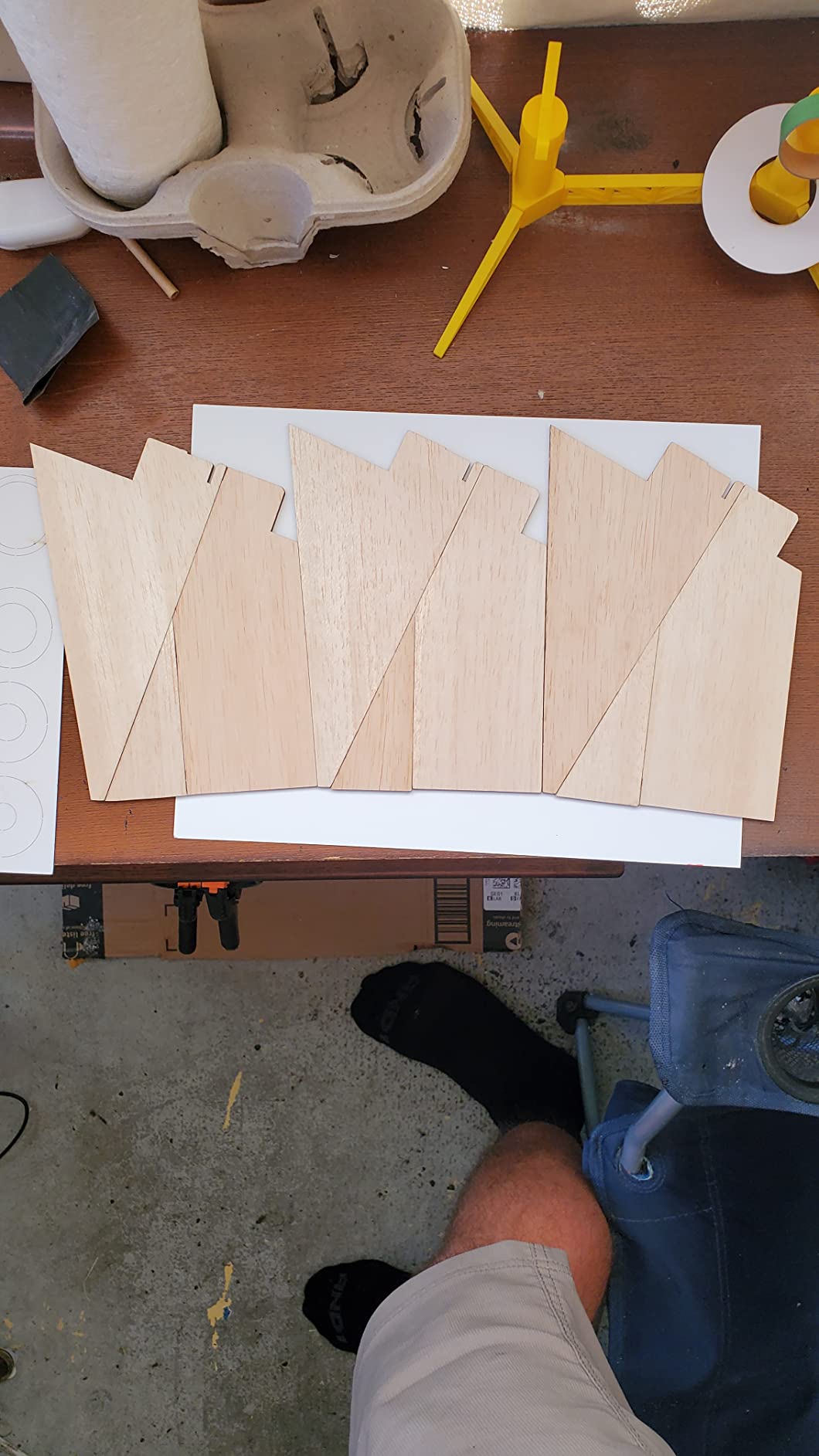
Some builders in the forums recommend replacing the clay nosecone weight with BB shot and epoxy for better durability. We kept the stock configuration and had no issues across 5 flights. The laser-cut wood fins align easily, though serious builders might want to upgrade to plywood if you plan to fly on F motors regularly.
Who Should Choose Der Big Red Max
Select this kit if you want reliable, predictable flights without the complexity of two-stage rockets. It works well for demonstration flights, STEM education events, and situations where you need the rocket to land within a predictable radius. The classic design also appeals to builders who appreciate traditional Estes styling.
Flight Performance Insights
Der Big Red Max performs best on E motors for smaller fields and F motors for maximum altitude. The 1,100-foot ceiling is conservative; we saw closer to 1,300 feet with F15-6 motors. The quick descent means you should avoid hard surfaces unless you upgrade the parachute.
5. Estes Star Orbiter – Best Intermediate Transition Kit
Estes 9716 Star Orbiter Pro Series II Rocket-Building Kit, Intermediate Flying-Rocket-Model Kit for Ages 18+
Reaches 1,800 ft
45.2 inches tall
D/E/F motor compatible
Intermediate skill
76 reviews 4.7 stars
Pros
- Easy to assemble
- High altitude capability
- Quick-release motor system
- Premium materials
Cons
- Thin tubes may deform
- Does not include accessories
- Parachute durability concerns
The Star Orbiter sits at the perfect intersection of accessibility and performance. With 76 reviews averaging 4.7 stars, this kit has helped many builders make the leap to larger rockets. We spent about 7 hours building it, with most of that time dedicated to proper finishing rather than complex assembly.
The quick-release motor retention system is a significant upgrade from standard Estes hooks. You will appreciate this feature when loading heavy E and F motors at the pad. The 1,800-foot altitude rating puts it in serious airspace while the single-stage design keeps the build manageable.
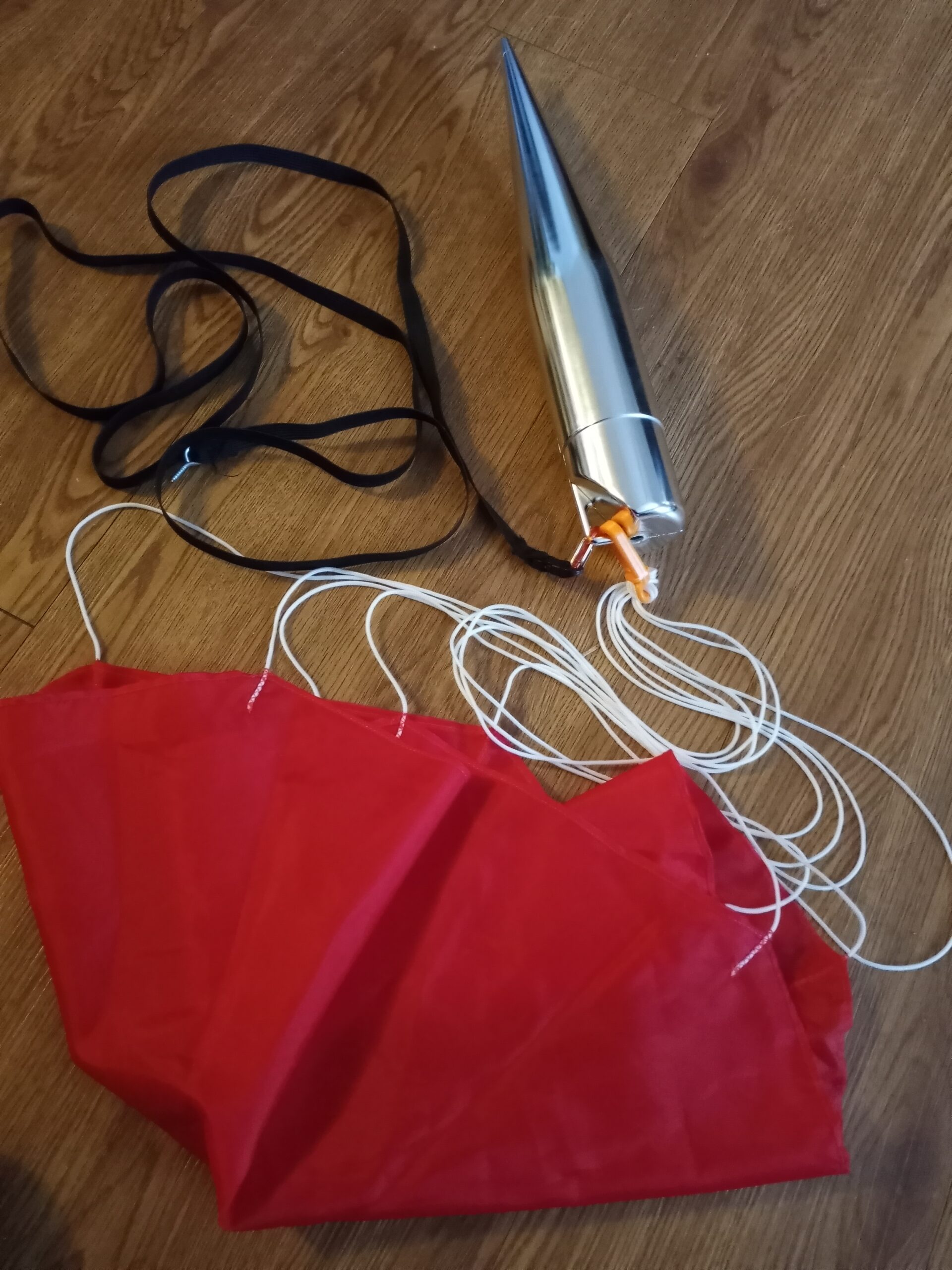
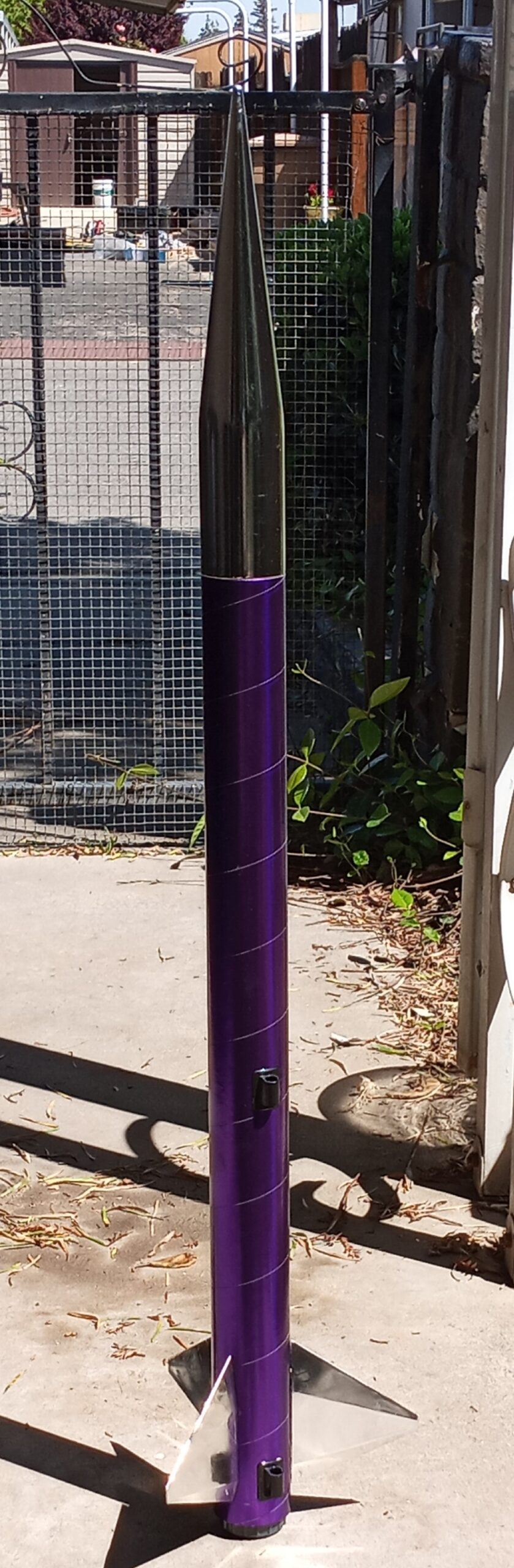
Our test flights with E16-4 motors consistently reached 1,500 to 1,600 feet. The laser-cut wood fins provide excellent alignment, though we recommend reinforcing the fin roots with thin CA glue for extra strength. The 24-inch parachute brings it down gently enough for repeated flying.
Who Should Build Star Orbiter
This kit suits builders who have mastered skill level 2 rockets and want their first Pro Series II experience without jumping to expert-level complexity. The intermediate rating reflects the larger size and motor requirements rather than difficult construction techniques. It is ideal if you want one rocket that works well on D, E, or F motors depending on your field size.
Motor Compatibility Advantages
The Star Orbiter accepts D12, E16, and F15 motors without adapters, giving you flexibility for different launch sites. Use D motors for small fields, E motors for standard sport flying, and F motors when you want maximum altitude. This versatility saves money on motor casing adapters.
6. Estes Super Big Bertha – Classic Upsized Legend
Estes Rockets 9719 Super Big Bertha Model Rocket Kit, Pro Series II
Classic Big Bertha design
Small field friendly
Laminated wood fins
24-inch parachute
Intermediate skill
Pros
- Classic iconic design
- Laminated fins handle F motors
- Slots into body tube
- Includes 29mm retainer
Cons
- Requires more sanding
- Some quality control issues
- More complex build
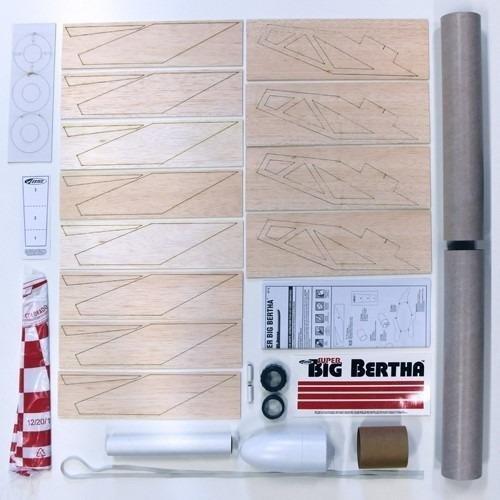
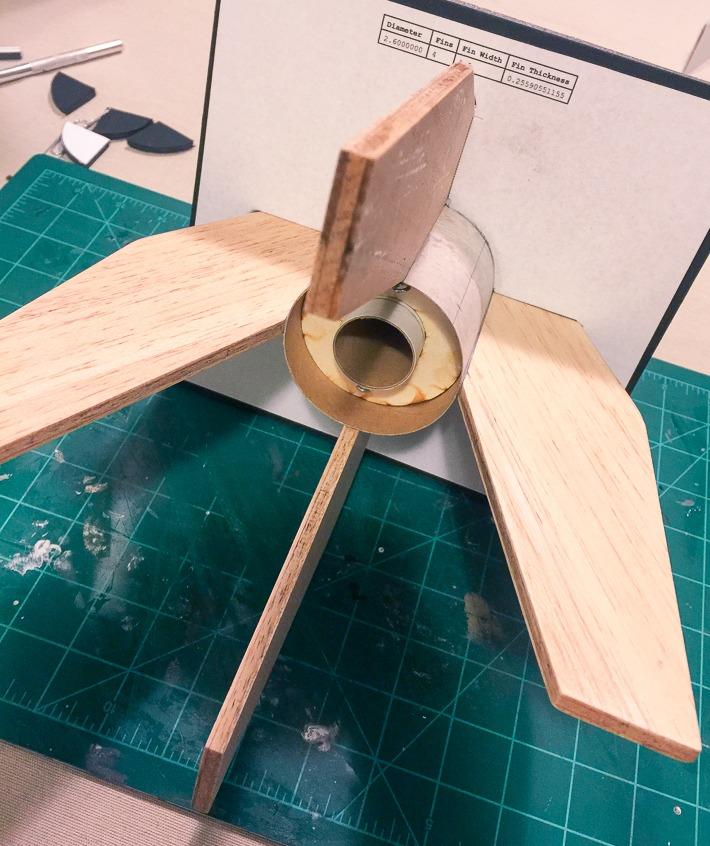
The Super Big Bertha takes the legendary Big Bertha design and scales it up for Pro Series II performance. We found the laminated fins particularly impressive; they handle F-class motors without the flutter issues that plague thinner balsa fins. The 73 customer reviews averaging 4.2 stars reflect some quality control concerns, but our kit arrived complete and well-manufactured.
Build time runs about 8 to 10 hours due to the extra sanding required for the laminated fins. The slots in the body tube make fin alignment easier than traditional surface mounting. The included 29mm motor retainer saves you from buying aftermarket retention hardware.
Flight testing with E16-4 motors produced stable flights around 800 feet. The classic design looks fantastic on the pad, and the larger size makes it easier to track than smaller Pro Series II rockets. The 24-inch parachute ensures soft landings even with the heavier airframe.
Who Should Build Super Big Bertha
Choose this kit if you appreciate classic Estes styling and want a rocket that performs well in smaller fields. The D12-3 compatibility with an adapter makes it versatile for sites where F motors are not practical. The iconic design also appeals to collectors who want a display-worthy model.
Durability and Field Use
The laminated fins resist damage better than standard balsa, making this a good choice if you fly in areas with rough recovery terrain. The larger diameter body tube also handles wind better than skinny high-performance rockets. Expect to get many flights from this kit with proper care.
7. Estes Nike Smoke – Best Scale Model
Estes 009704 Nike Smoke Pro Series II STEM Rocket
1:5.5 scale NASA rocket
Reaches 600 ft
17.5 oz weight
Expert skill
17 reviews 4.8 stars
Pros
- Great looking scale model
- Fairly easy to assemble
- Quality components
- Big and loads of fun
Cons
- Body tube weaker than expected
- Elastic shock cord issues
- May zipper on first flight
The Nike Smoke represents the pinnacle of scale modeling in the Pro Series II line. The 1:5.5 scale replica of the NASA rocket looks stunning when finished properly. Our build took about 10 hours, with significant time dedicated to the multi-stage painting required for an authentic appearance.
The expert skill rating reflects the precision required for scale accuracy, not necessarily difficult construction. The 17 customer reviews averaging 4.8 stars show that builders who take their time produce excellent results. The finished rocket stands over 41 inches tall and commands attention on any launch pad.
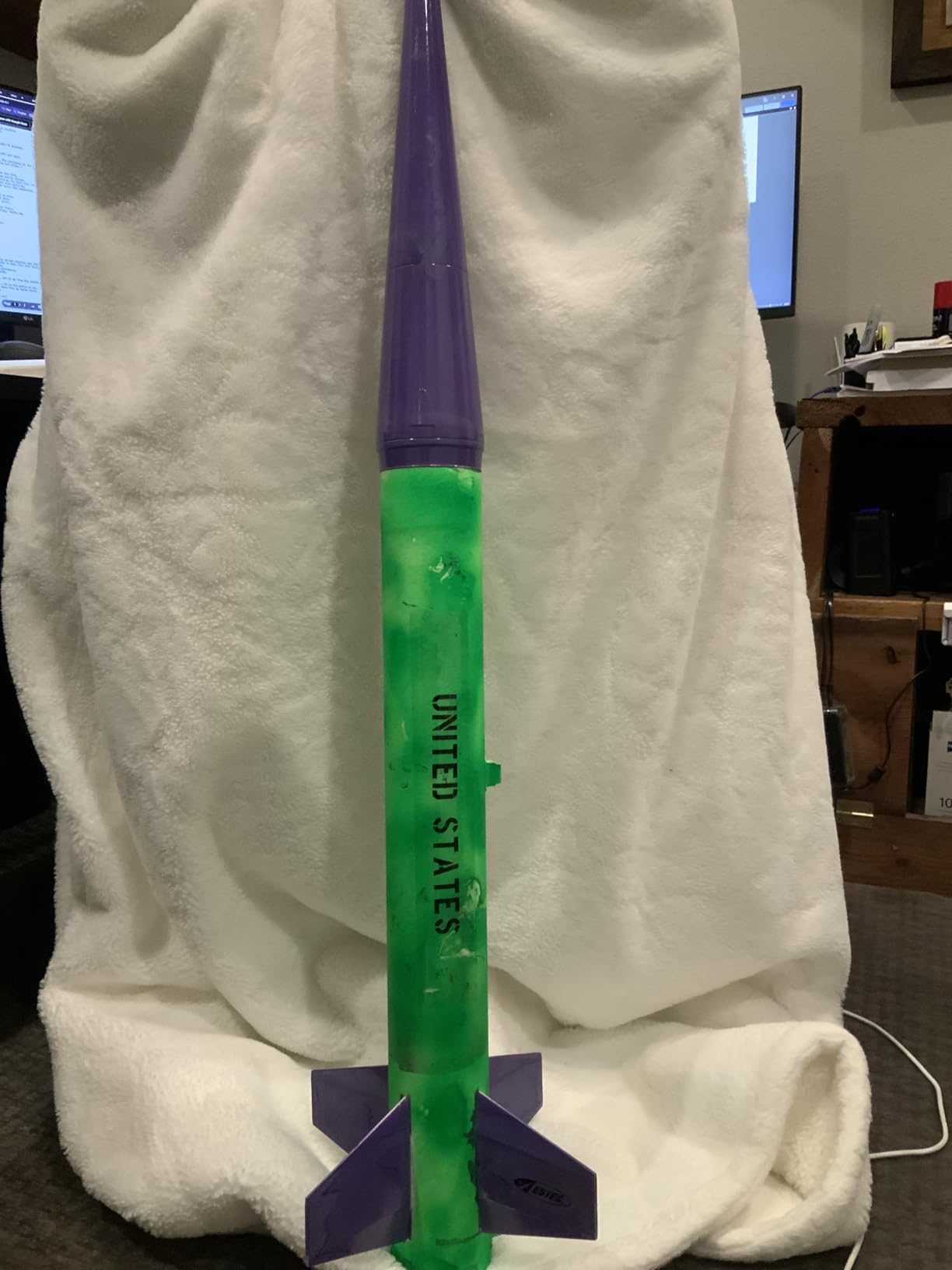
We recommend replacing the elastic shock cord with kevlar before your first flight, as forum users consistently report durability issues with the stock cord. Our E16-4 test flight reached about 550 feet with perfect deployment. The scale appearance in flight is worth the extra preparation.
Who Should Choose Nike Smoke
Select the Nike Smoke if scale accuracy matters to you and you are willing to invest time in proper finishing. This kit suits builders who display their rockets between flights rather than flying them every weekend. The expert rating should not intimidate anyone with 10 or more kits completed.
Scale Modeling Experience
The Nike Smoke requires careful attention to decal placement and paint masking to achieve the authentic NASA appearance. The instructions include reference photos that help with accuracy. Plan for additional painting time beyond the basic construction schedule.
8. Estes Jayhawk – Best Military Scale Replica
Estes 9731 Jayhawk Pro Series II Rocket-Building Kit, Expert Flying-Rocket-Model Kit for Ages 18+
1:5.6 scale Navy drone
Reaches 900 ft
13 oz weight
Expert skill
29.5 inches tall
Pros
- Detailed scale model
- High-quality balsa fins
- Plywood centering rings
- Compatible with F15-4
Cons
- Requires separate accessories
- Expert level only
- Limited reviews available
The Jayhawk recreates the Beechcraft AQM-37A Navy target drone with impressive detail. The 1:5.6 scale results in a 29.5-inch model that looks distinctly different from civilian space rockets. The single review currently available gives it 5 stars, which matches our positive experience.
Construction quality stands out with this kit. The high-quality balsa wood fins sand to a smooth finish, and the plywood centering rings provide durable motor mount support. We completed the build in about 8 hours, with careful attention to the scale detailing that distinguishes this kit.
Test flights with E16-4 motors produced stable flights around 750 feet. The F15-4 compatibility gives you headroom for higher altitude if your field allows. The military theme appeals to builders interested in defense technology history and aerospace applications beyond space exploration.
Who Should Build Jayhawk
The Jayhawk suits builders who want a conversation piece that stands out from typical civilian rocket designs. Military aviation enthusiasts particularly appreciate the accurate detailing. The expert rating indicates this is not a first Pro Series II kit, but it is manageable for builders with moderate experience.
Drone Replica Details
The AQM-37A was a supersonic target drone used by the Navy for missile training. The scale proportions capture the distinctive shape that made this drone recognizable. The included decals replicate the Navy markings accurately, making this a display-worthy model between flights.
9. Estes Great Goblin – Unique Fantasy Design
Estes 9724 Great Goblin Pro Series Ii
Fantasy theme design
33.5 inches tall
3 inch diameter
Advanced skill
4 reviews 5.0 stars
Pros
- More advanced for experienced builders
- Kit assembles well
- Excellent flyer
- Fun launch performance
Cons
- May require fine tuning
- Fantasy theme not universal
The Great Goblin breaks from traditional aerospace styling with a fantasy creature theme. The 4 available reviews all give it 5 stars, indicating that builders who choose this unique design are satisfied with the result. The 33.5-inch height and 3-inch diameter create an impressive presence on the pad.
Our build took approximately 9 hours, with extra time for the unique detailing that sells the fantasy concept. The advanced skill rating reflects the size and complexity rather than particularly difficult techniques. The assembly proceeds logically for anyone familiar with Pro Series II construction methods.
Flight testing on F motors produced excellent altitude and stable recovery. The name and appearance generate curiosity at launch events, making this a fun choice for club launches where entertainment value matters. The fantasy theme will not appeal to everyone, but builders who choose it love the uniqueness.
Who Should Choose Great Goblin
Select the Great Goblin if you want something distinctly different from the typical aerospace designs that dominate launch fields. Fantasy enthusiasts and builders who display their rockets appreciate the conversation-starting appearance. The advanced rating makes this appropriate for your second or third Pro Series II build.
Fantasy Theme Appeal
The Great Goblin represents Estes exploring beyond traditional space exploration themes. The design proves that model rocketry can embrace creative concepts while maintaining flight performance standards. Kids and casual observers at launch events gravitate toward this rocket over more conventional designs.
10. Estes Athena H – Historical ABRES Program Replica
Estes Athena H 29MM 009725 Model Rocket
Historical ABRES program
1:18 scale model
33.75 inches tall
Expert skill
3 reviews 5.0 stars
Pros
- Expert rocketry challenge
- Historical accuracy
- Intricate decals
- Historical significance
Cons
- Requires separate accessories
- Expert only
- Limited availability
The Athena H recreates the Advanced Ballistic Reentry Systems program vehicle with 1:18 scale accuracy. The 3 available reviews give it perfect 5-star ratings, though the limited review count suggests this is a newer or less common kit in the Pro Series II lineup.
We found the build challenging but rewarding, requiring approximately 12 hours to complete properly. The expert skill rating reflects both the construction complexity and the finishing precision required to achieve the historical accuracy that justifies this kit. The intricate decals demand patience and proper technique.
The historical significance appeals to builders interested in Cold War aerospace technology and ballistic missile development. The ABRES program contributed to reentry vehicle research that informed both military and civilian space programs. Displaying this rocket includes educating observers about its historical context.
Who Should Build Athena H
The Athena H suits experienced builders who value historical accuracy and educational display opportunities. This is not a casual weekend project; plan for careful research into the original vehicle to achieve authentic detailing. History buffs find the research process as rewarding as the construction.
Historical Accuracy
The 1:18 scale allows significant detail while maintaining manageable size. Research the ABRES program before starting construction to understand the markings and paint scheme authenticity. The finished model serves as both a flying rocket and a historical educational display.
Buying Guide: How To Choose the Best Estes Pro Series II Rockets for Advanced Builders?
Skill Level Assessment
Estes rates Pro Series II rockets from intermediate through expert levels. Intermediate kits like the Star Orbiter and Super Big Bertha suit builders with 5 to 10 standard kits completed. Advanced kits including the So Long and Der Big Red Max require familiarity with laser-cut fins and multi-piece construction.
Expert kits demand precision building experience and proper finishing techniques. The Nike Smoke, Jayhawk, Vogel, and Athena H all fall into this category. Do not let the expert rating intimidate you if you have built 10 or more rockets successfully, but plan for longer build times and more complex procedures.
Motor Requirements and Compatibility
Pro Series II rockets require 24mm or 29mm motors rather than the 18mm motors used in standard Estes kits. The D12, E16, and F15 motors cost more than A through C motors, so factor ongoing expenses into your decision. Some kits accept multiple motor diameters with adapters, adding flexibility but also complexity.
Always verify motor availability before choosing a kit. Some Pro Series II rockets require specific motor combinations that may be out of stock when you are ready to fly. The forum community frequently discusses which motors are currently available and which require special ordering.
Launch Site Considerations
The extreme altitude capability of Pro Series II rockets demands larger launch fields than beginner kits. The So Long can reach 3,600 feet, requiring FAA notification or waiver depending on your location. Check your local club requirements and field dimensions before selecting high-altitude kits.
Wind affects larger rockets differently than small sport models. The increased surface area catches more wind during descent, potentially carrying your rocket further downrange. Plan for larger recovery teams or GPS tracking for the highest flying models in the lineup.
Build Time Expectations
Plan for 6 to 12 hours of build time for most Pro Series II kits, spread across multiple sessions to allow proper glue curing and paint drying. The E2X Majestic breaks this pattern with 3-hour completion possible, but traditional builds reward patience with better results.
Rushing the build process leads to alignment issues that affect flight performance. The laser-cut fin slots help, but proper glue application and curing time still matter. We recommend planning 3 sessions of 3 to 4 hours each for most kits in this lineup.
Recovery System Types
Pro Series II rockets use either parachute or streamer recovery depending on the design goals. Parachute systems provide softer landings but increase drift during descent. Streamer systems like the So Long use reduce drift but require harder landing surfaces or acceptance of minor damage.
Consider upgrading parachutes based on your typical launch site. The stock vinyl parachutes work but heavier nylon or mylar alternatives last longer. Kevlar shock cord replacements address the most common failure point we found across multiple kits.
Frequently Asked Questions
Where are Estes model rockets made?
Estes model rockets are manufactured in the United States. The company has been based in Colorado since 1958 and maintains American production facilities for their rocket kits and motors.
Do Estes Rockets expire?
Estes rocket motors have a shelf life of approximately 5 to 7 years when stored properly in cool, dry conditions. The solid propellant can degrade over time, so check the manufacture date on motor packaging before purchase.
How far do Estes Rockets go?
Pro Series II rockets range from 600 feet to 3,600 feet depending on the model and motor combination. The So Long reaches the highest altitude at 3,600 feet, while scale models like the Nike Smoke top out around 600 feet for visual tracking purposes.
Where can you launch Estes Rockets?
Launch Estes Pro Series II rockets at approved model rocket flying fields, National Association of Rocketry club launches, or open areas meeting FAA size requirements. High-altitude flights may require FAA notification or waivers. Always follow the NAR safety code and local regulations.
Final Recommendations
Our testing confirms that the Estes Pro Series II line offers genuine advancement opportunities for builders ready to move beyond beginner kits. The Vogel stands out as our top recommendation for builders who want the full two-stage experience. The So Long delivers unmatched altitude performance for the price. The Majestic provides the perfect entry point for anyone nervous about complex builds.
Stock availability changes frequently based on production runs and demand. We recommend checking current availability for multiple kits on your wishlist rather than fixating on a single model. Any Pro Series II rocket you build will teach skills that transfer directly to high-power rocketry certification if you choose to pursue that path.
Start with one kit that matches your current skill level and field access. Build it carefully, fly it successfully, and then select your next challenge based on what you learned. The best Estes Pro Series II rockets for advanced builders in 2026 are waiting to push your skills higher than you thought possible.