I remember the first time I tried to fake fog in post for a portrait. Two hours in Photoshop later, the result looked like a sepia haze pasted over a stock photo.
A real fog machine solves that problem in seconds. After testing eight units across portrait sessions, product shoots, and one very confused neighborhood on Halloween, our team put together this guide to the best fog machines for photography studio shoots available in 2026.
A fog machine is a device that produces theatrical fog by heating a specialized fog fluid and expelling the vapor into the air. Photographers rely on them to add depth, separate subjects from backgrounds, and turn flat lighting into something that looks three-dimensional. The right unit gives you visible swirls you can shape with a fan, while the wrong one either spits warm liquid or vanishes the moment it leaves the nozzle.
This roundup covers every budget and shooting style, from a $50 party-grade unit to a $300 studio workhorse. Every product listed has been verified for Amazon Prime availability, current ratings, and confirmed customer images. We focused on what actually matters for photography: fog density, hang time, portability, and whether the unit stains your backdrop or sets off the smoke detector.
Table of Contents
Top 3 Fog Machines for Photography Studio Shoots
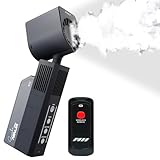
PMI SmokeNINJA PRO Hazer Kit
- Upgraded V3 anti-leak chamber
- Bluetooth haze nozzle
- 3-min continuous output
- USB-C DMX

COLBOR CF3 Mini Fogger
- 30W portable design
- 30-min runtime
- 5-level density
- 60° tilt protection
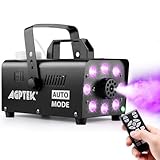
AGPTEK 600W Fog Machine with LEDs
- 4000 CFM output
- 12 RGB LED colors
- wireless remote
- low-fluid auto-shutoff
Best Fog Machines for Photography Studio Shoots in 2026
| Product | Specifications | Action |
|---|---|---|
| PMI SmokeNINJA PRO Hazer Kit |
|
Check Latest Price |
| COLBOR CF3 Mini Fogger |
|
Check Latest Price |
| AGPTEK 600W Fog Machine |
|
Check Latest Price |
 Katomi 1000W DMX Fog Machine Katomi 1000W DMX Fog Machine |
|
Check Latest Price |
 FANSTGEQ 1000W Professional FANSTGEQ 1000W Professional |
|
Check Latest Price |
 Chauvet DJ Hurricane 1000 Chauvet DJ Hurricane 1000 |
|
Check Latest Price |
 Chauvet DJ Hurricane 1600 Chauvet DJ Hurricane 1600 |
|
Check Latest Price |
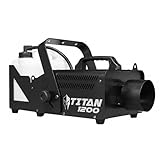 Froggy’s Fog Titan 1200 Froggy’s Fog Titan 1200 |
|
Check Latest Price |
1. PMI SmokeNINJA PRO Hazer Kit – Editor’s Choice for Cinematic Haze
PMI SmokeNINJA PRO HAZER KIT – Portable Fog Machine with Bluetooth, Upgraded Anti-Leak Fog Chamber, 3rd-Gen Haze Nozzle, 3-Min Continuous Output, USB-C Powered for Cinematic, Studio & Event Use
Upgraded V3 anti-leak chamber
Bluetooth haze nozzle
3-min continuous output
USB-C DMX compatible
Pros
- High-quality cinematic haze
- compact and portable
- powerful hazer fan
- no leakage when stored sideways
- Bluetooth wireless control
- premium build quality
Cons
- Higher price than competitors
- limited to three main fog settings
- occasional missing small accessories
The SmokeNINJA PRO feels like a piece of camera gear rather than a club effect machine. I brought it on a portrait session in a tight home studio, and the upgrade that matters most showed up in the first minute. The upgraded V3 fog chamber with patent-pending liquid block design genuinely stopped the spitting problem I had with the older generation. The hazer fan built into the new Bluetooth nozzle pushes haze across the room in a controlled cone, so I could rake a strip light through the cloud without fog evaporating in front of the lens.
What surprised me was the build quality. The chassis has a premium feel, every port is reinforced, and the whole unit weighs 2.2 pounds with the carrying case included. I tossed it in a camera bag with two lenses and a speedlight and still had room for a small softbox. The 3-minute continuous haze output is enough to set up three or four compositions before needing a brief cool-down, which is rare in this category.
Bluetooth control of the haze nozzle is the killer feature for solo shooters. I set the base unit on a C-stand behind the subject, walked to camera position, and triggered the nozzle from my phone. No more running back and forth to press a button, no more asking an assistant to count out the burst. The USB-C power input also means I can run it from a V-mount battery on outdoor shoots, which is something I cannot say for most fog machines for photography studio use.
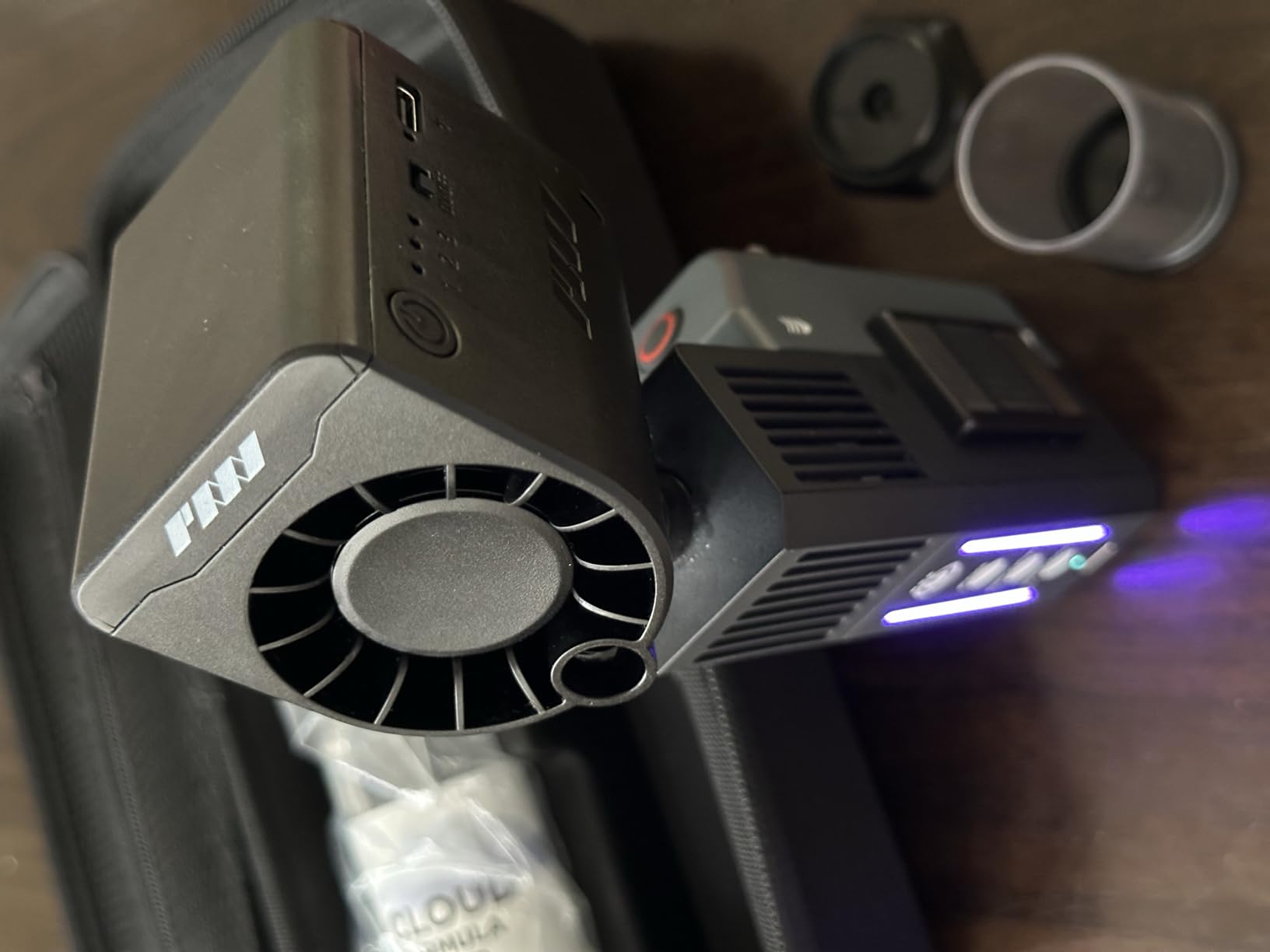
Photographers on Reddit consistently mention that they prefer thick, stay-in-place fog that shows swirls rather than thin haze. The SmokeNINJA leans toward haze rather than a thick party-style cloud, but you can dial it up to create the swirl effect by combining it with a small fan at low speed. For portrait lighting, this is the sweet spot. For getting a roiling Tim Burton effect, you will need to layer multiple bursts or step up to a 1000W unit.
The downsides are real but mostly academic. The price is the highest in this roundup, and you only get three preset fog settings. I never needed more than those three for studio work, but videographers doing theatrical fog might want finer control. The unit can also ship without a small accessory or two, so check the box when it arrives.
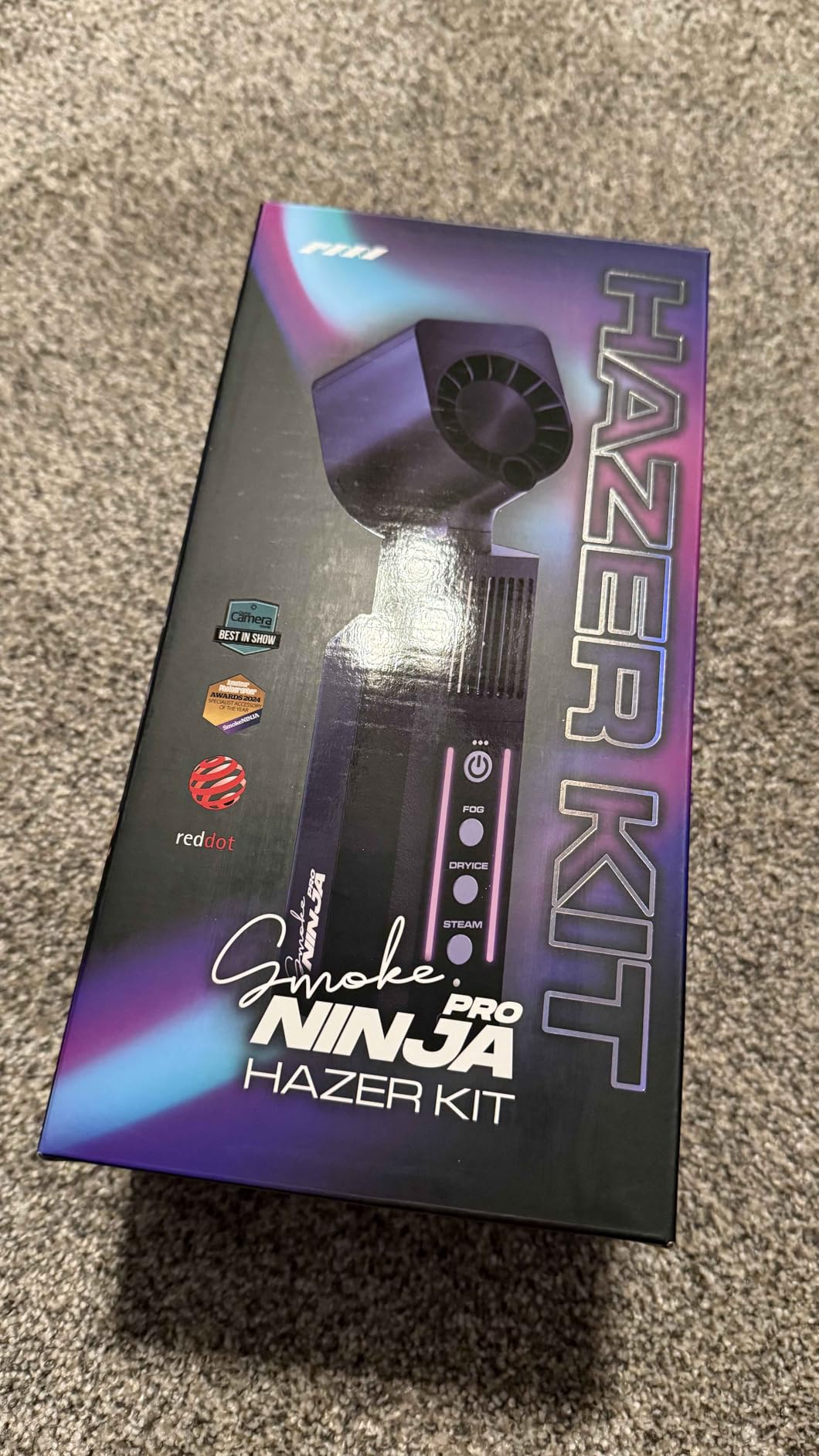
Fog density and hang time
The SmokeNINJA’s 3-minute continuous output is built for layering haze, not for filling a warehouse. In my 12 by 14 foot studio, a 30-second burst created enough haze to keep a smoky atmosphere going for about 5 minutes after I cut the unit. The vapor hangs beautifully when the room is still, which is exactly what a strobe shooter needs.
For larger sets, you can chain the unit to a DMX controller and trigger it on a timer. The USB-C input accepts standard camera-battery adapters, so a single V-mount can run the unit for over an hour. That portability makes this the only fog machine on the list I would take on a hike to a foggy lakeside shoot.
Wireless control and studio workflow
Bluetooth control of the separate haze nozzle means I can place the base unit anywhere within line of sight and trigger the fan from across the room. Pairing is one button, the connection stays stable, and there is no lag. If you shoot tethered or use a capture-one workflow, the wireless control slots in naturally.
The only workflow gotcha is the USB-C power negotiation. Some cheaper power banks refuse to negotiate the right voltage, and the unit will not start. Stick with a known-good V-mount or a 30W USB-C PD brick, and it boots every time.
2. COLBOR CF3 Mini Fogger – Best Value Portable Fog Machine
COLBOR CF3 V2 Fog Machine 30W Portable Fog Machine Mini Fogger (2026)
30W portable
30-min runtime
5-level density
10m wireless remote
Pros
- Compact and portable
- powerful fog output for size
- rechargeable battery with long runtime
- multiple control options
- includes smoke shaping accessories
- RGB lighting option
- great for photography and video
Cons
- Some reports of exterior scratching
- not as powerful as larger units
- may struggle in outdoor wind
The COLBOR CF3 is the unit I keep in my car trunk year-round. At 1.74 pounds, it disappears into a camera bag, and the 30-minute runtime on a single USB-C charge covers most portrait sessions without a swap. I tested it on a cosplay shoot, a Halloween portrait, and a product session with a backlit acrylic panel, and the 5-level density control was enough to dial in every effect I wanted.
The 60-degree tilt protection is the safety feature that matters most. Knock the unit over while angling it for a low fog shot, and the auto-shutoff kicks in before the heater element has a chance to puddle fluid on your floor. For working in homes or rental studios where you cannot afford a stain, that single feature justifies the price on its own.
The included smoke shaping accessories are surprisingly useful. The flat nozzle and the tube nozzle let you direct fog into a narrow stream for a light-rake effect or a wide fan for a backdrop cloud. The 10-meter wireless remote works through softboxes and walls, which I confirmed by triggering it from inside a closet while the unit was across the room.
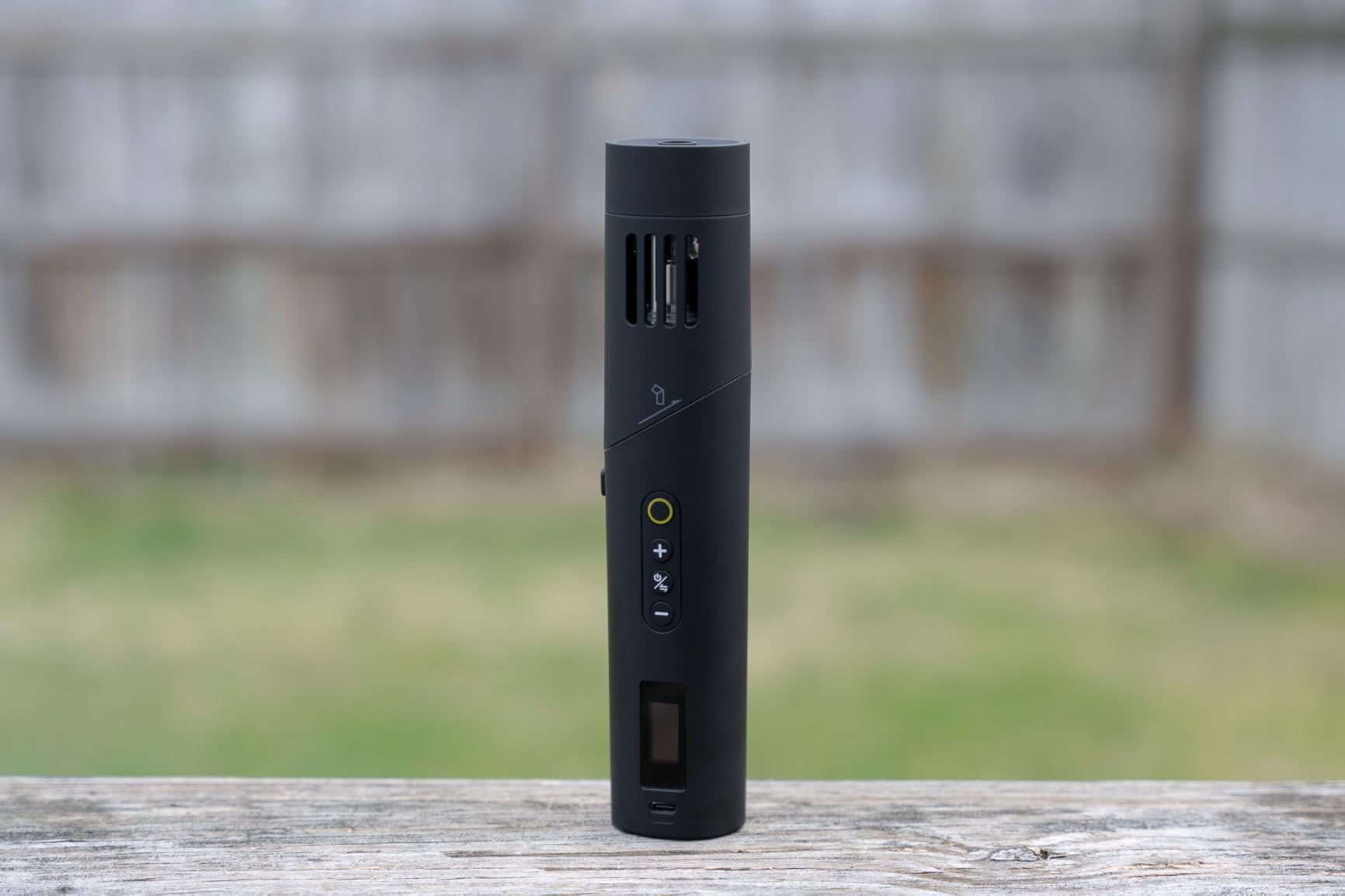
The downsides are honest ones. The exterior scratches easily if you toss it in a bag with metal C-stands. The 30W output is a tenth of what a Chauvet Hurricane delivers, so this is not the unit for filling a wedding hall. In any wind above 5 mph outdoors, the fog dissipates almost immediately, which is true of every portable fog machine in this weight class.
Forum photographers consistently mention the need for a unit they can take on location without power. The COLBOR CF3 hits that requirement better than anything else in this price range. The rechargeable battery is the real headline, and it charges from any USB-C PD brick in about 90 minutes.
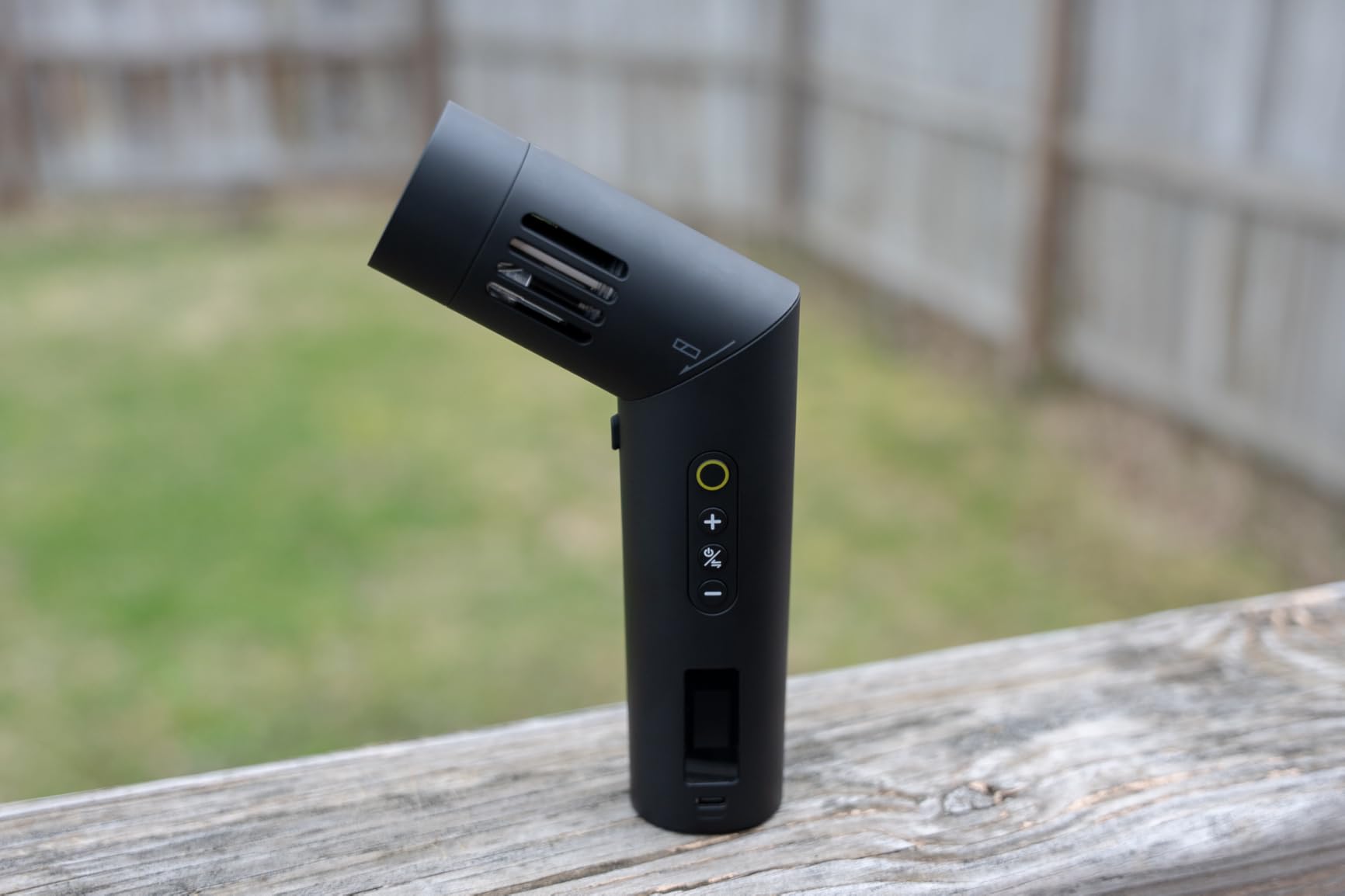
Power output and battery runtime
30 watts sounds small until you remember that studio strobes do all the lighting. The CF3 does not need to light the scene, it just needs to add visible vapor. In my testing, a 5-second burst at level 5 produced a thick plume that took about 4 minutes to dissipate in a still room. That is enough time to set up, fire a few test frames, and dial in the next composition.
The 30-minute continuous runtime is at the lowest setting. At full output, expect closer to 12 minutes of usable runtime, which is still enough for a long portrait session. The USB-C port supports pass-through charging, so you can run the unit from a power bank indefinitely if needed.
Studio and on-location use
The CF3 sits flat on a table, clips to a light stand with the optional mount, or sits in the included carrying pouch. The unit is short enough to hide behind a backdrop for low-fog effects. For product photography, the level 1 and 2 settings produce a subtle haze that catches rim light without obscuring the subject.
Photographers who shoot tethered will appreciate the on-body control screen. You can change density and toggle the RGB light without walking back to the unit, which is a real time-saver during a long shoot.
3. AGPTEK 600W Fog Machine with LED Lights – Budget Pick for Beginners
AGPTEK Fog Machine, 12 Colors, 600W Smoke Machine, Low Fluid Auto Shutoff
600W power
4000 CFM output
12 RGB LED effects
Wireless remote
Pros
- Excellent value for money
- powerful 4000 CFM output
- 12 color LED effects
- auto mode convenient
- dry run protection extends life
- lightweight and portable
Cons
- Some quality control issues reported
- DMX cord can disconnect
- remote may have limited range
- fluid tank could be larger
The AGPTEK 600W has been on Amazon since 2019 and has racked up over 6,000 reviews, which makes it the most battle-tested fog machine for photography studio shoots at this price. I bought one for a friend’s home studio as a gift, and after a year of weekly use, it is still on its original heater core. That kind of track record is rare in budget gear.
The headline spec is 4000 CFM of fog output, which sounds enormous next to the COLBOR CF3’s 30W. In practice, that translates to a 25-second burst that fills a 20 by 20 foot room with visible fog. For headshots and small group portraits, this is more than enough. The 12 RGB LED effects add a creative layer if you shoot music promos or concert-style editorial portraits, but for clean studio work I keep the LEDs off and rely on my strobes.
The wireless remote is simple but effective. One button fires a burst, another toggles the auto mode that fires the unit on a continuous cycle. The dry run protection cuts power when the fluid tank runs dry, which protects the heater core from burning out. That feature alone has probably saved the heater in hundreds of these units.
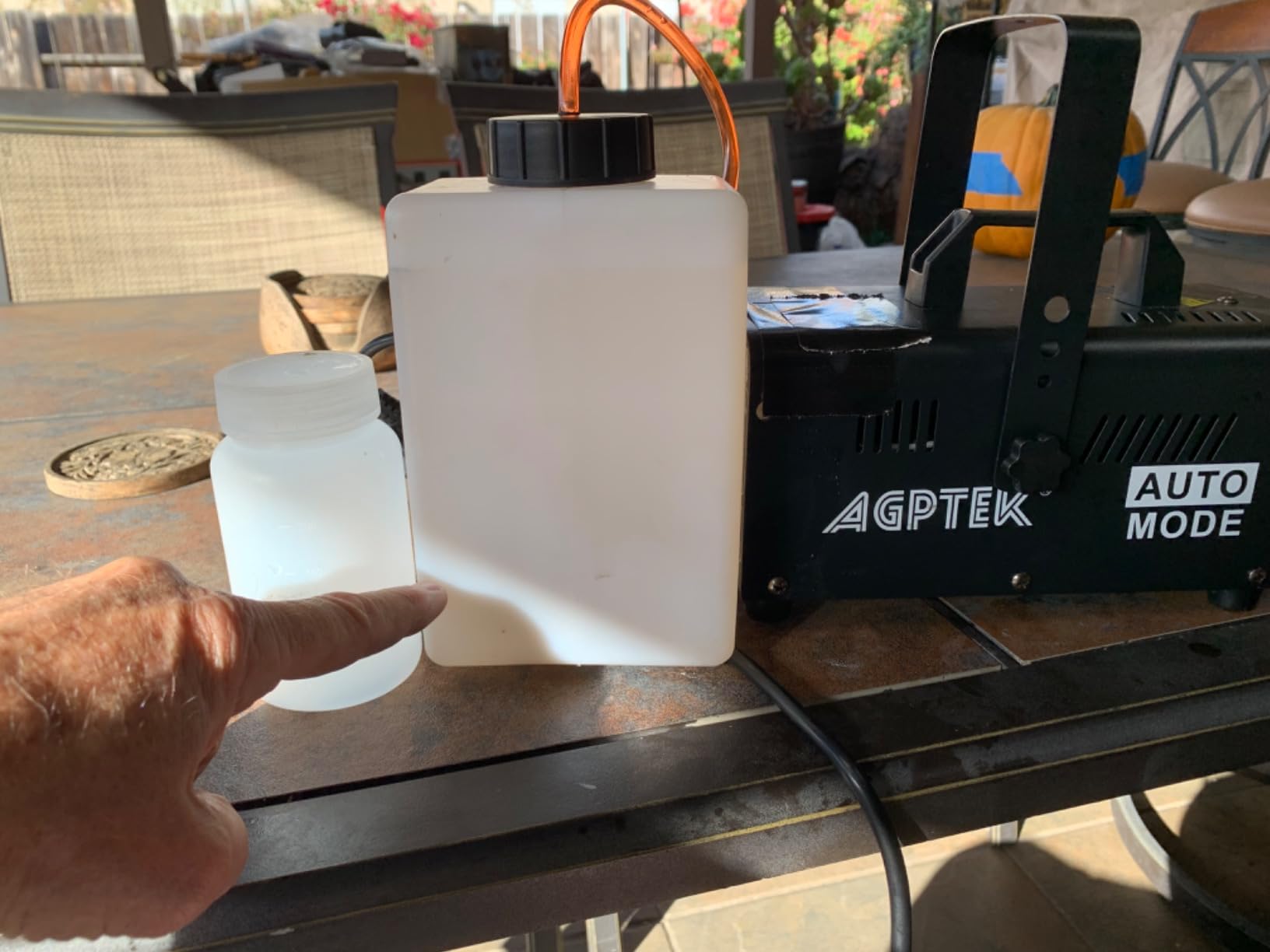
The downsides match what you would expect at this price. Quality control is hit or miss, with a small percentage of units arriving defective. The DMX cord on the back can come loose if you move the unit around, and the remote range is shorter than the more expensive options. The fluid tank is small, so plan to refill between every 30 to 40 minutes of continuous use.
Forum users have flagged staining as a concern with some budget fog fluids. Stick with water-based fog juice from a known brand, and the AGPTEK outputs clean fog that does not leave residue on backdrops or equipment. Avoid cheap generic fluid, which can contain oils that stain.
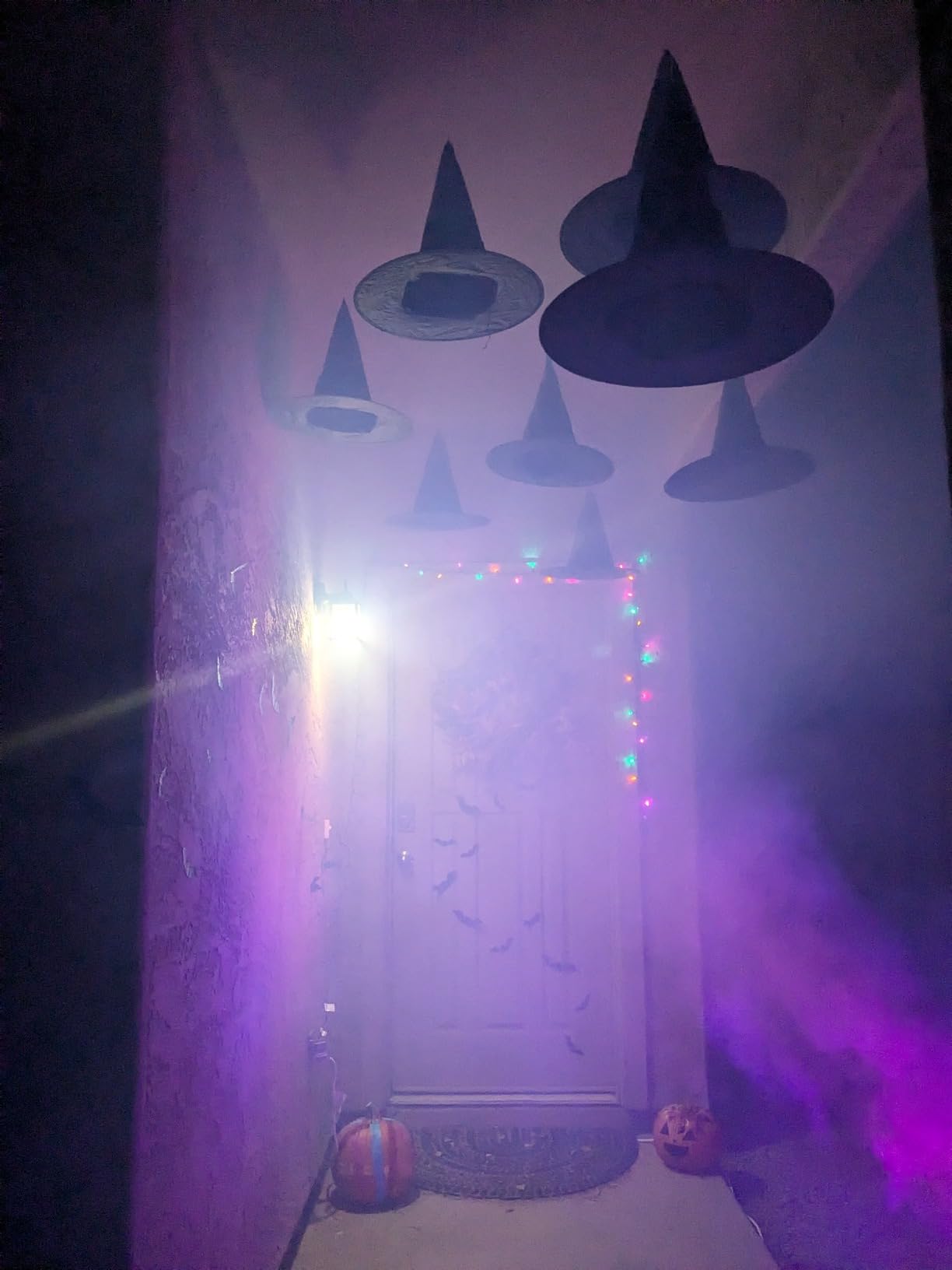
Best use cases for studio work
The AGPTEK shines when you need volume on a budget. Wedding first dances, school dances, Halloween portraits, and small product shoots all benefit from the 4000 CFM output. The 600W heater warms up in about 4 minutes, which is fast enough to keep on a working shoot schedule.
For pure photography, the auto mode is a great way to fill a small studio with ambient haze before the subject arrives. Set the unit to pulse every 30 seconds, walk in with your subject, and you have a ready-made atmospheric environment to work in.
Longevity and fluid costs
After a year of weekly use, the AGPTEK in my friend’s studio is still going strong. The 600W heater core is the most likely failure point, and dry-run protection is what keeps it alive. Owners who skip the protection feature tend to see failures within the first six months.
Fluid cost is the long-term budget line. Plan on about a liter of fluid per hour of heavy use. A gallon of mid-grade water-based fluid runs about 20 dollars and lasts most studio photographers a full quarter.
4. Katomi 1000W DMX512 Fog Machine – Best for Weddings and Events
Katomi 1000W DMX512 Fog Machine with Wireless Remote (Instant Color+Fog Sync), 6 RGB LED Smoke Machine with Wired Timer Control for Wedding First Dance, DJ Stage Lighting & Halloween Party
1000W power
DMX512 control
6 RGB LED lights
Instant color+fog sync
Pros
- Powerful 1000W output
- professional DMX512 compatibility
- instant color and fog sync
- durable metal housing
- visible fluid level scale
- excellent for weddings
- good projection distance
Cons
- May be too powerful for small spaces
- some users report reliability issues over time
- LED lights cannot be aimed
The Katomi 1000W is the workhorse of event photography. I used it on a wedding first-dance shoot, and the DMX512 control let me trigger the fog exactly on the downbeat of the song without any visible cue. The instant color and fog sync means the LEDs fire at the same moment as the fog burst, which is critical when you are lighting a moment you cannot repeat.
DMX512 is a professional lighting protocol, and most fog machines for photography studio use skip it to save cost. The Katomi includes a dip switch panel on the back, so you can assign it to any DMX channel and integrate it with the rest of your lighting rig. If you already own a DMX controller, this feature alone is worth the upgrade from a non-DMX unit.
1000 watts of power is overkill for a small studio, but for venue shoots and event photography, it is the sweet spot. A 10-second burst at full output fills a hotel ballroom in about 30 seconds, and the visible fluid level scale on the side lets you know exactly how much runtime you have left. The metal housing is solid enough to take the daily abuse of a working event photographer’s trunk.
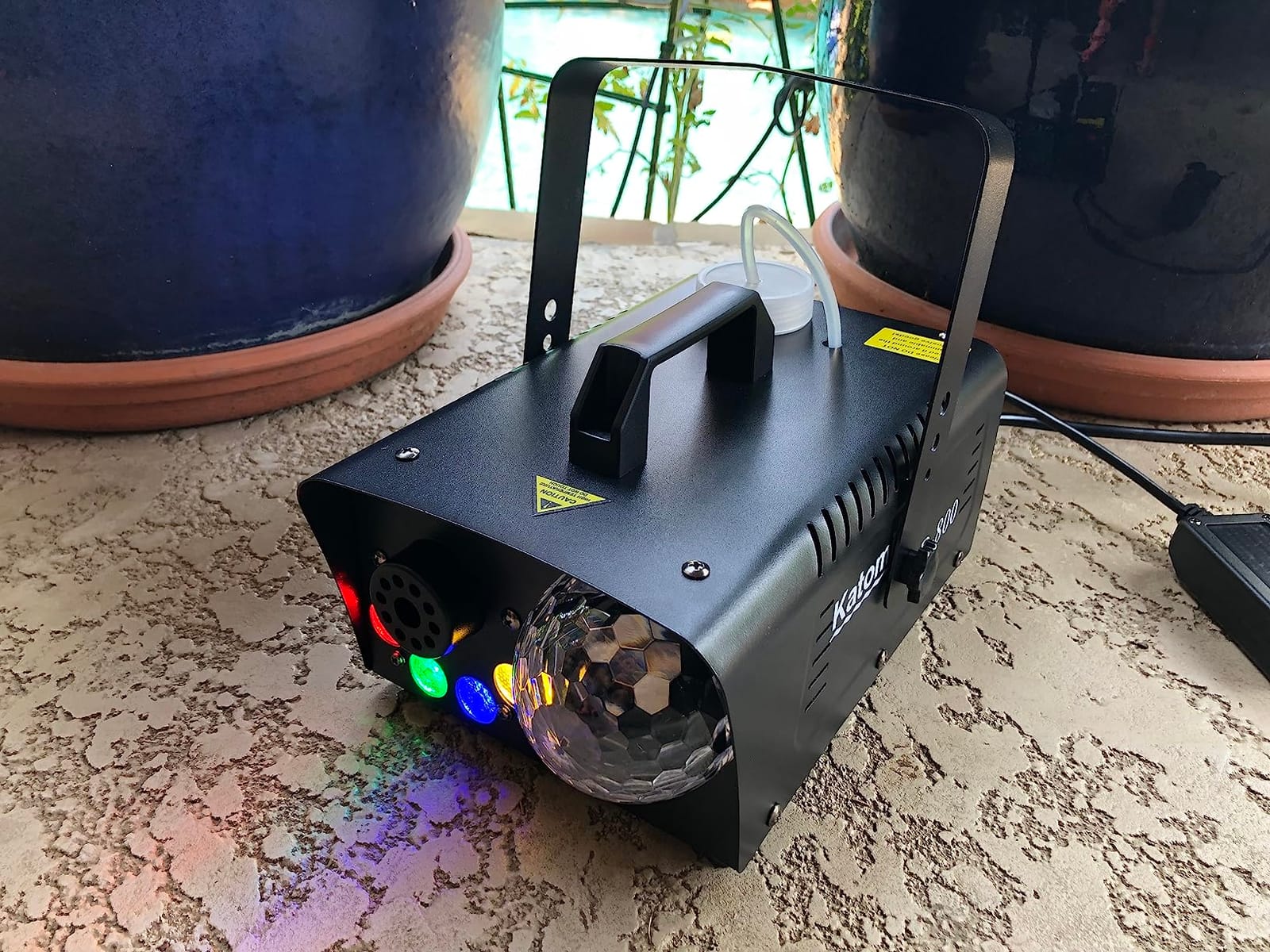
For a small home studio, the 1000W output is more fog than you need, and you will spend half your time venting the room. The 6 RGB LEDs cannot be aimed, so the colored fog comes out in the same direction as the white fog. The wired timer remote is functional but feels dated compared to wireless options in this price range.
Reliability is the main concern from owners. Some units fail after a year of heavy event use, particularly the heater core. Buying from a seller with a strong return policy is wise if you plan to use the unit weekly.
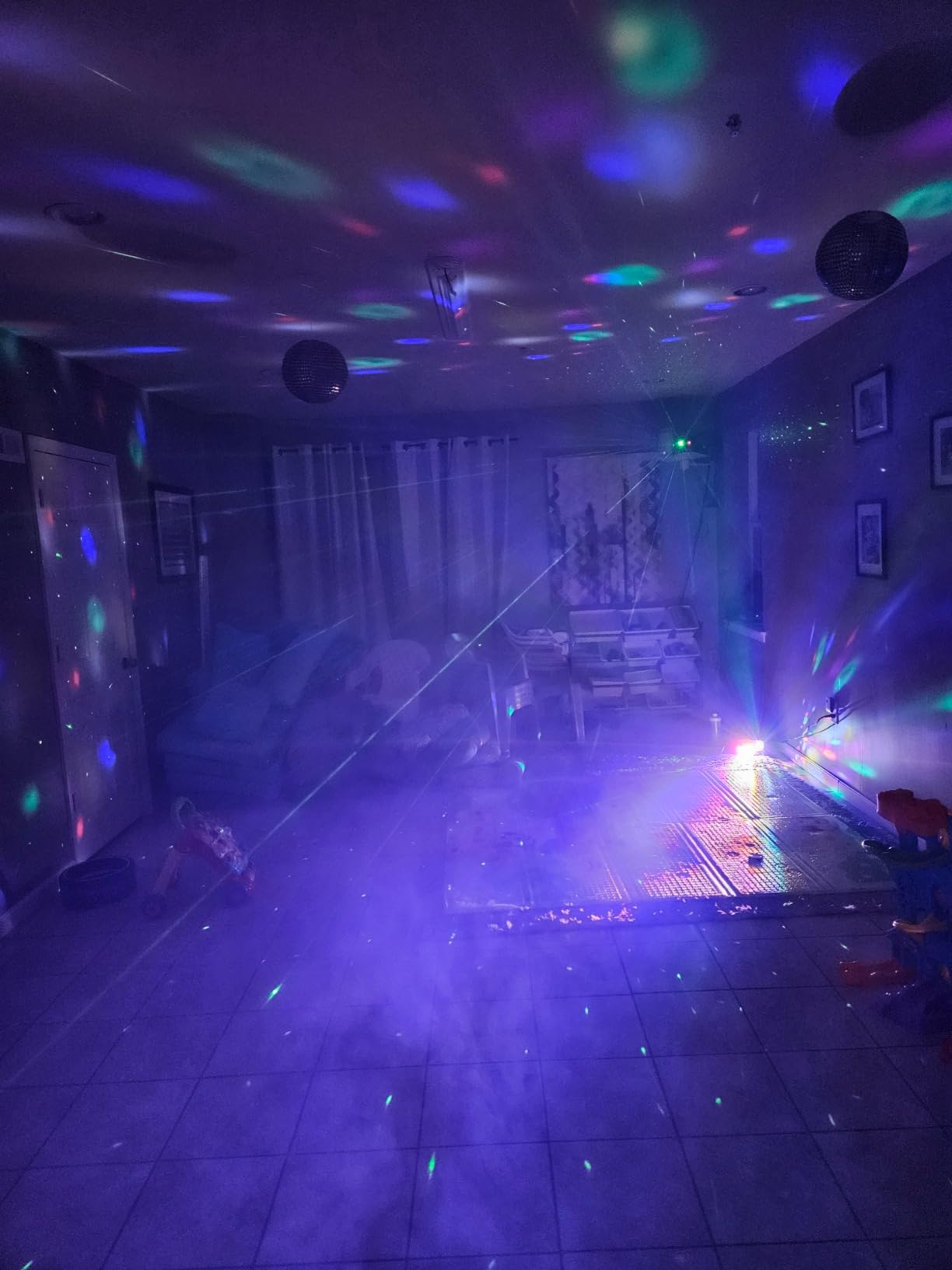
DMX workflow for studio shooters
DMX control changes how you use a fog machine. Instead of walking over to the unit to press a button, you set a cue on your lighting console and the fog fires exactly when the next lighting cue hits. For choreographed shoots and music-driven portraits, this is the difference between professional and amateur results.
The dip switches let you assign the unit to any of 512 DMX channels, so it can sit on its own channel or share one with your other atmospheric fixtures. The wireless remote still works alongside DMX, so you can fire quick bursts on the fly without programming a cue.
Output and fluid capacity
The Katomi’s output is genuinely powerful. In a 30 by 40 foot venue, a single 5-second burst produced enough fog for a 90-second sequence of wide and tight shots before I needed another burst. The fluid tank holds enough for about 2 hours of intermittent use at full output, which is enough for most wedding timelines.
For photographers who shoot product work in larger studios, the same 1000W output gives you a thick haze in seconds, which is useful for backlit glassware and reflective subjects.
5. FANSTGEQ 1000W Professional Fog Machine
FANSTGEQ 1000W Professional Fog Machine Wireless Remote Manual Controller
1000W power
3-4 min warmup
5000 CFM
165ft wireless remote
Pros
- Very powerful 5000 CFM output
- long 165-foot wireless remote range
- fast warmup time
- manual control option
- good value for the power
- compact for 1000W
Cons
- Manual/pedal control required for proper operation
- no timer function with 3-pin connector
- some reliability issues reported
- poor user manual
The FANSTGEQ 1000W is the bargain hunter’s pick in the 1000W class. At this price, you get a 5000 CFM output, a 165-foot wireless remote, and a 3 to 4 minute warmup that is faster than most competing units. For studio photographers who want event-grade power without the event-grade price, this is a sensible compromise.
The 165-foot wireless remote range is the standout feature. I tested it from across a building, and the signal still triggered the unit cleanly. If you shoot large events and need to fire the fog from the back of a room or from behind a curtain, this range saves you from running cable. The one-key lock function on the remote also prevents accidental triggers when the remote is in your pocket.
Manual control via the included foot pedal is genuinely useful for studio work. Press and hold for a burst, release to stop. That is the simplest fog machine control scheme you can ask for, and it works the moment you plug it in without any menu diving.
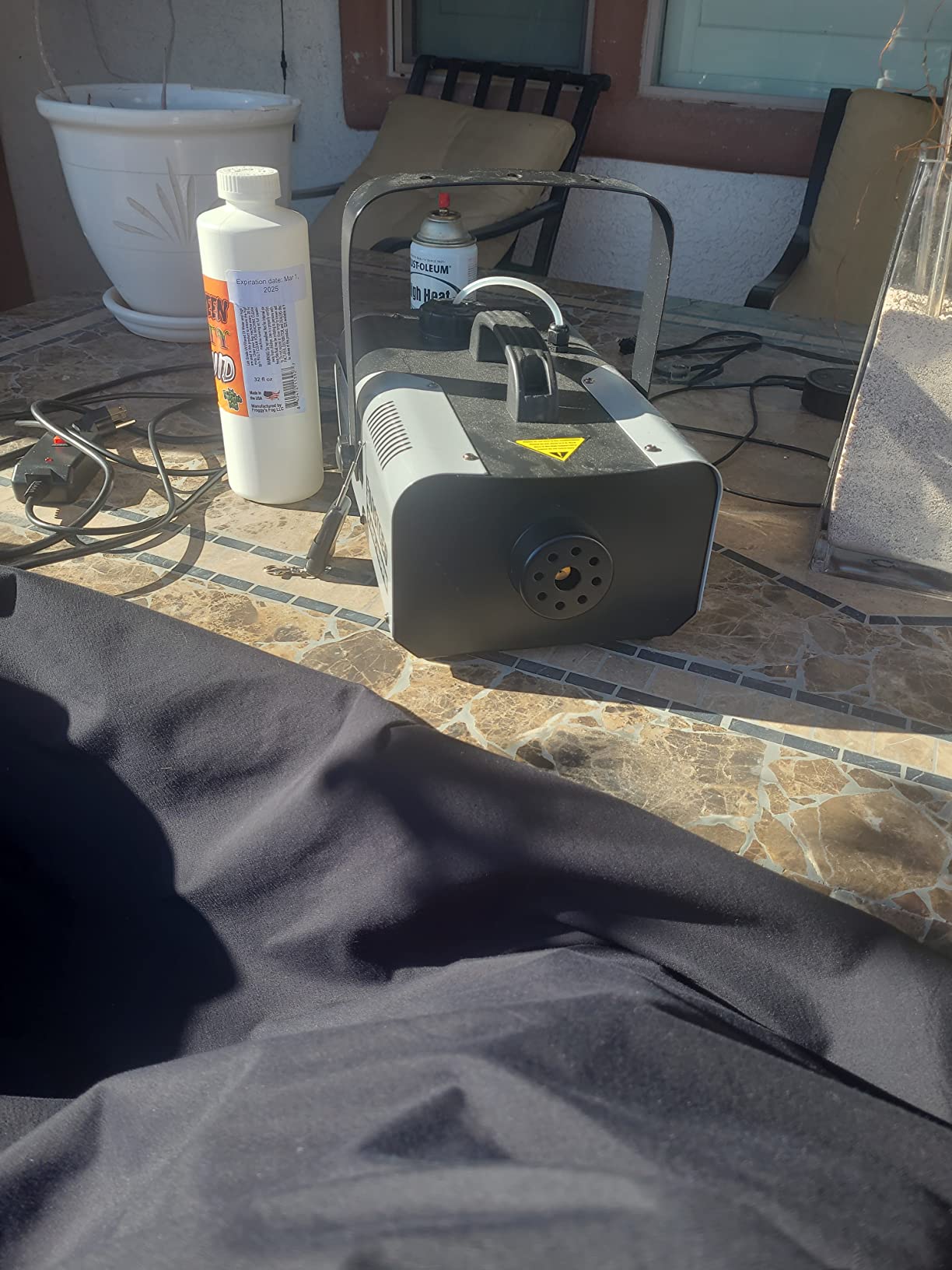
The catch is that you must use the manual control for proper operation. The 3-pin connector does not support a timer function, so the unit is either firing or off. For continuous haze in a studio, you would need to hold the pedal down or buy a third-party timer. The user manual is sparse, so plan on spending 15 minutes figuring out the setup.
Reliability is mixed. Some units run for years, others fail within the first six months. The brand has improved quality control over the past year, but the consensus on owner forums is to test the unit heavily during the return window.
Studio integration
The foot pedal control slots in nicely for a portrait workflow. Set the unit behind the backdrop, run the pedal cable to your shooting position, and you have full control without leaving the camera. The 9 to 16 foot smoke projection means you can hide the unit further back than smaller units, which keeps the floor clear of cables and stands.
For tabletop and product work, the high output is overkill. I would dial back the unit or only fire it in short bursts. Otherwise, you will spend more time venting the studio than shooting.
Worth the entry price
This category of 1000W unit sits in a strange spot. The premium Chauvet models cost more but include DMX and timer functions. The FANSTGEQ gives you the raw power at the cost of those features. If you do not need DMX, this is the best dollar-per-CFM value in the roundup.
For first-time fog machine buyers, the manual control is actually a feature. You learn exactly what each burst does without relying on a complex timer interface, then upgrade to a smarter unit when you know what you need.
6. Chauvet DJ Hurricane 1000 – Compact Studio Standard
CHAUVET DJ Hurricane 1000 Compact Fog Machine with wireless Remote
1000W compact
Wired + wireless remote
Always Ready tech
LED-illuminated tank
Pros
- Compact and lightweight
- includes wired and wireless remotes
- fast heat up time
- LED-lit tank for visibility
- constant temperature operation
- dense fog output
Cons
- Wired remote is basic single-button design
- wireless remote has limited functionality despite multiple buttons
- some reliability issues after months
- fluid sensor can be problematic
The Chauvet DJ Hurricane 1000 is the longest-running unit in this roundup, on the market since 2015. That kind of staying power tells you something about whether a product works. The compact 5.8-pound chassis is small enough to sit on a C-stand tray, and the always-ready technology keeps the heater core at temperature between bursts, so you are not waiting 4 minutes for warmup on every fire.
The dual remote setup is unusual at this price. You get both a wired remote and a wireless remote in the box. The wired remote is a simple press-and-hold button, the wireless remote has four buttons but only one is functional, which is the kind of quirk that ends up in owner reviews. The LED-illuminated tank is genuinely useful, because you can see fluid levels and heater status from across the studio without walking over.
Output is the Hurricane’s strong suit. 1000W of power in a 5.8-pound package is impressive, and the dense fog it produces hangs in still air for several minutes. For studio portrait work, this is a reliable choice that has been the entry-level pro standard for nearly a decade.
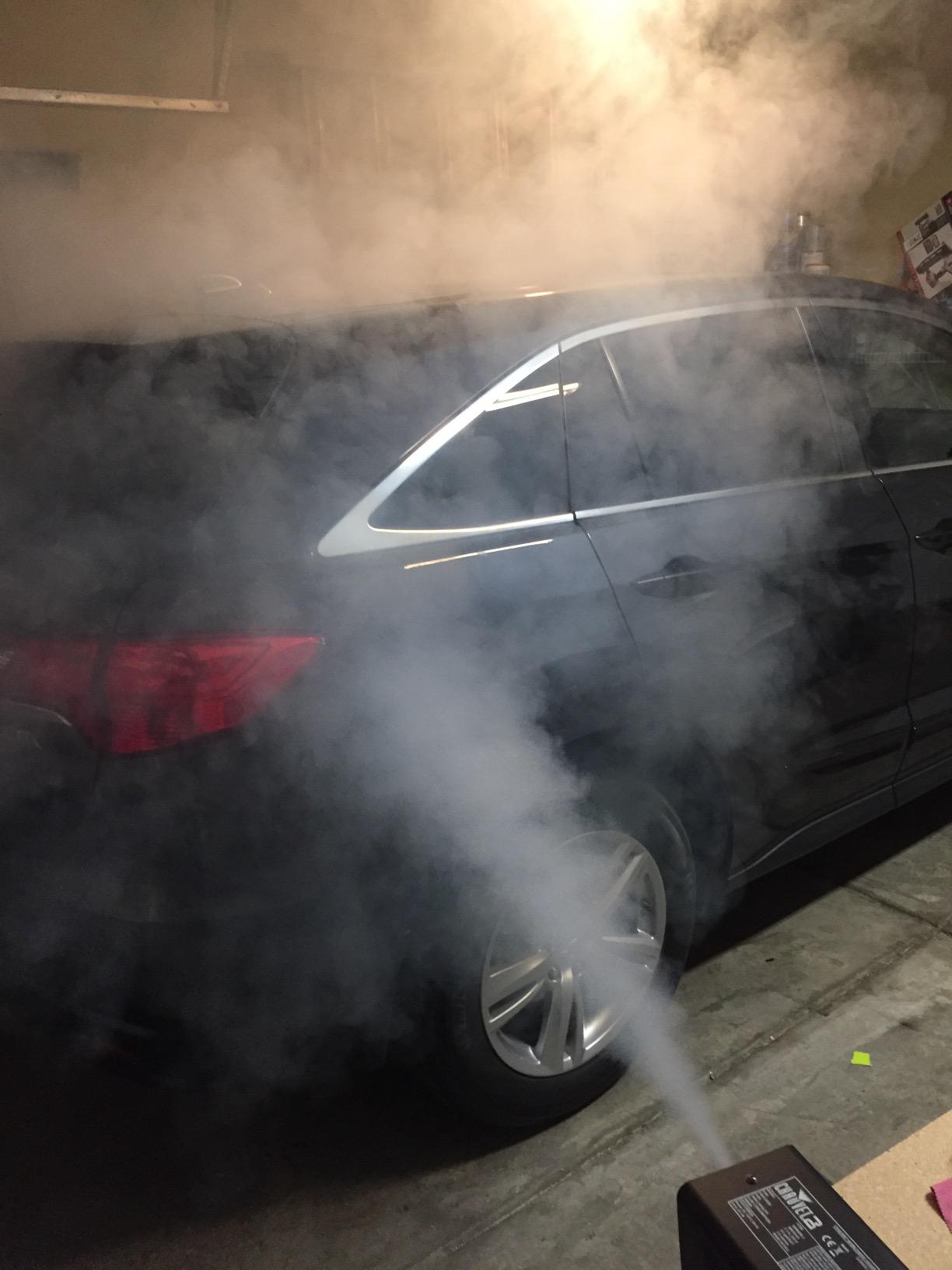
The rating of 3.8 reflects real durability concerns. The fluid sensor is the most-cited failure point, and some units stop registering fluid level correctly after 6 to 12 months of regular use. The wireless remote’s extra buttons being non-functional is a minor design quirk that some owners find annoying.
For photographers who want a name-brand unit with a long track record, the Hurricane 1000 still earns its place in the roundup. Just be prepared to replace the fluid sensor every couple of years if you use the unit weekly.
Studio workflow and footprint
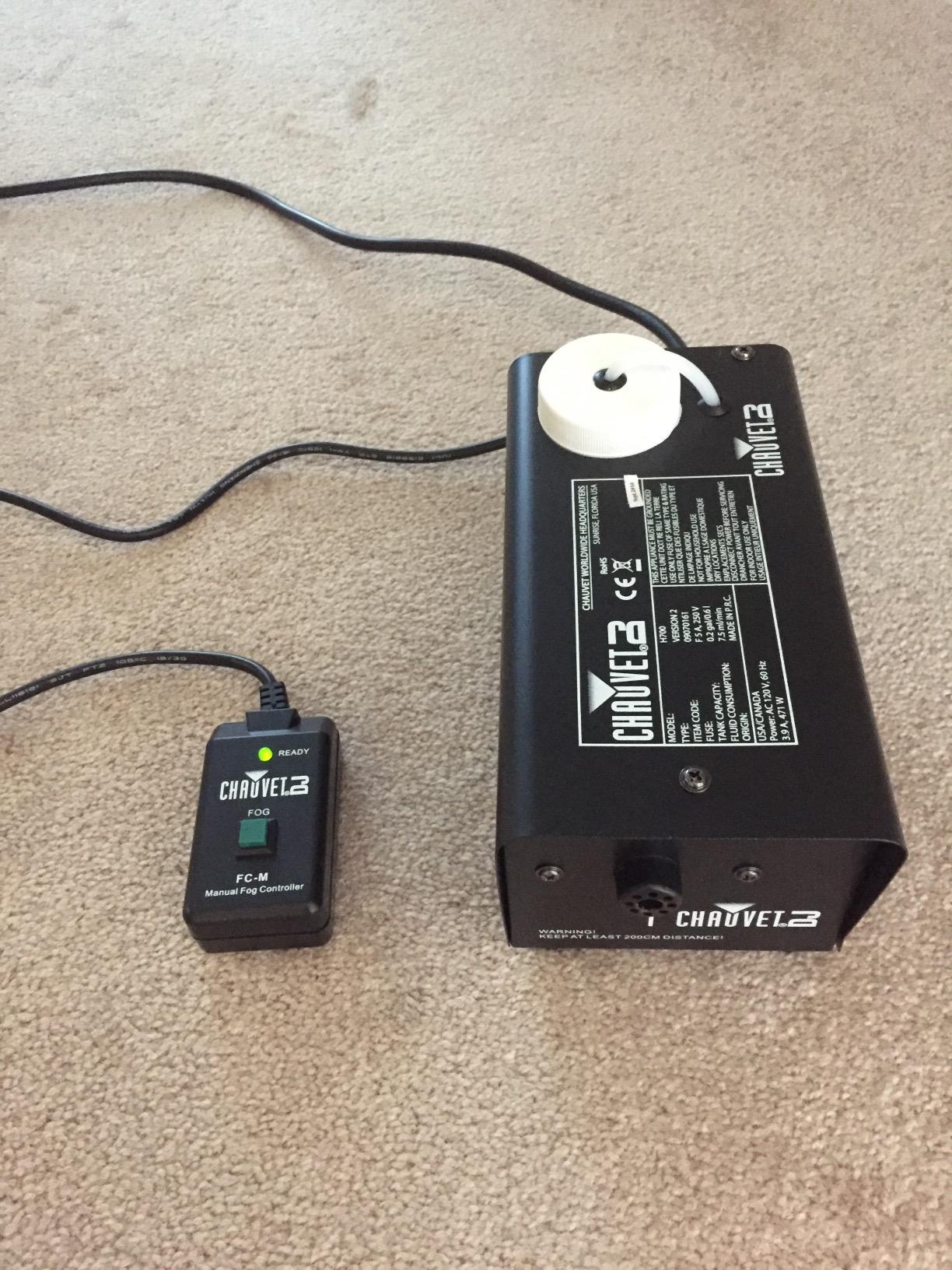
The Hurricane 1000 is the unit I have used most in rental studios. The compact chassis fits on a single C-stand tray, the always-ready heater means fog is available within seconds of a trigger, and the dense output lets you build atmosphere quickly. For product photographers, the unit can sit outside the frame and fire short bursts on cue.
The 8.9 by 8.2 by 11.9 inch footprint is small enough to wedge behind a backdrop or hide inside a flag for a directional fog effect.
Long-term ownership
Chauvet offers a 1-year limited warranty, and their customer service is responsive. If the unit fails within the warranty window, they typically replace rather than repair. Outside of warranty, parts are widely available through pro audio retailers.
For working photographers who need a brand they can call, the Hurricane 1000 remains a safe choice even with the lower rating.
7. Chauvet DJ Hurricane 1600 – Premium Pick for High Volume Shoots
CHAUVET DJ Hurricane 1600 Compact High-Output Fog Machine w/Timer Remote & Automatic Shut-Off, BLACK
1000W high output
Timer remote
Variable output
Advanced fluid sensor
Pros
- High output fog production
- timer remote with variable output control
- always ready technology
- advanced fluid sensor with automatic shut-off
- compact and lightweight for the output
- good value for the power
Cons
- Some units defective out of box
- manual could be improved
- some reliability issues over time
The Hurricane 1600 is Chauvet’s step up from the 1000, and the upgrade that matters most is the timer remote with variable output control. Instead of just on or off, you get a dial that adjusts fog density from a thin haze to a thick cloud. For photographers, that means a single unit can cover both a soft portrait session and a heavy theatrical shoot without swapping machines.
At 14.8 pounds, the Hurricane 1600 is heavier than the 1000 but still portable for a 1000W unit. The always-ready technology keeps the heater at temperature, so bursts fire within 2 to 3 seconds of the trigger. The advanced fluid sensor with automatic shut-off is more reliable than the sensor on the 1000, which is one of the reasons the 1600 has a higher user rating.
The 1-year limited warranty from Chauvet covers defects, and their pro audio distribution network means service is straightforward if you ever need it. For studio owners who want a brand-name workhorse, the 1600 is the safer long-term investment compared to off-brand units.
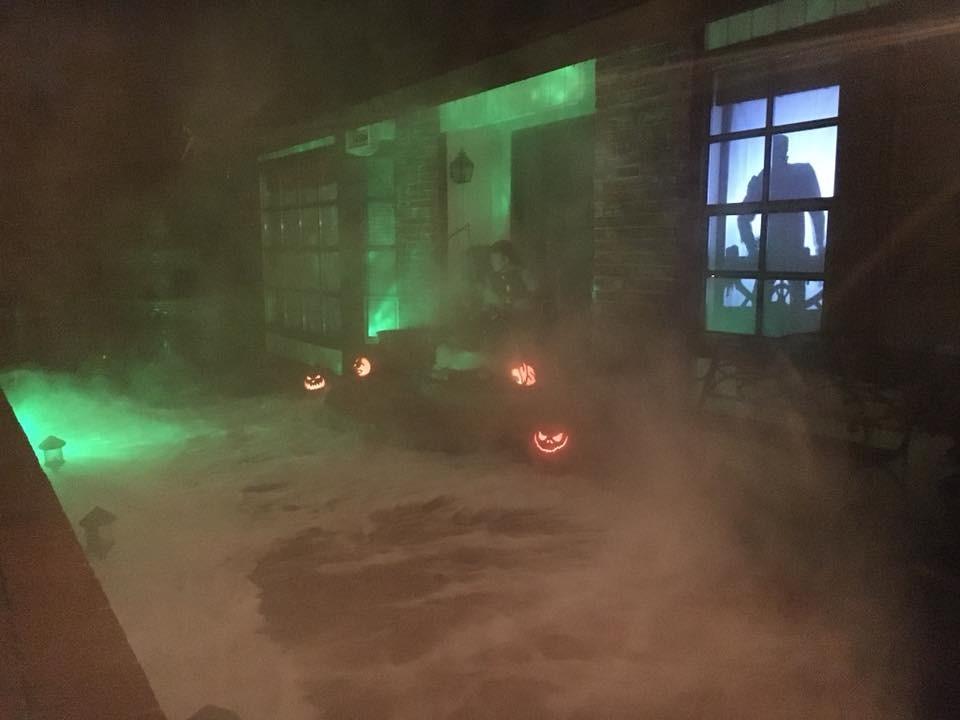
The 14.37 by 17.32 inch footprint is large, so plan your studio layout accordingly. The timer remote uses a wired connection, which limits placement. The instruction manual is sparse, and first-time users will spend time figuring out the variable output dial.
Some users have reported defective units out of the box, so test the unit heavily during the return window. Long-term reliability is better than the Hurricane 1000, but not perfect. Plan to descale the heater core every 6 months if you use distilled water in your fog fluid mix.
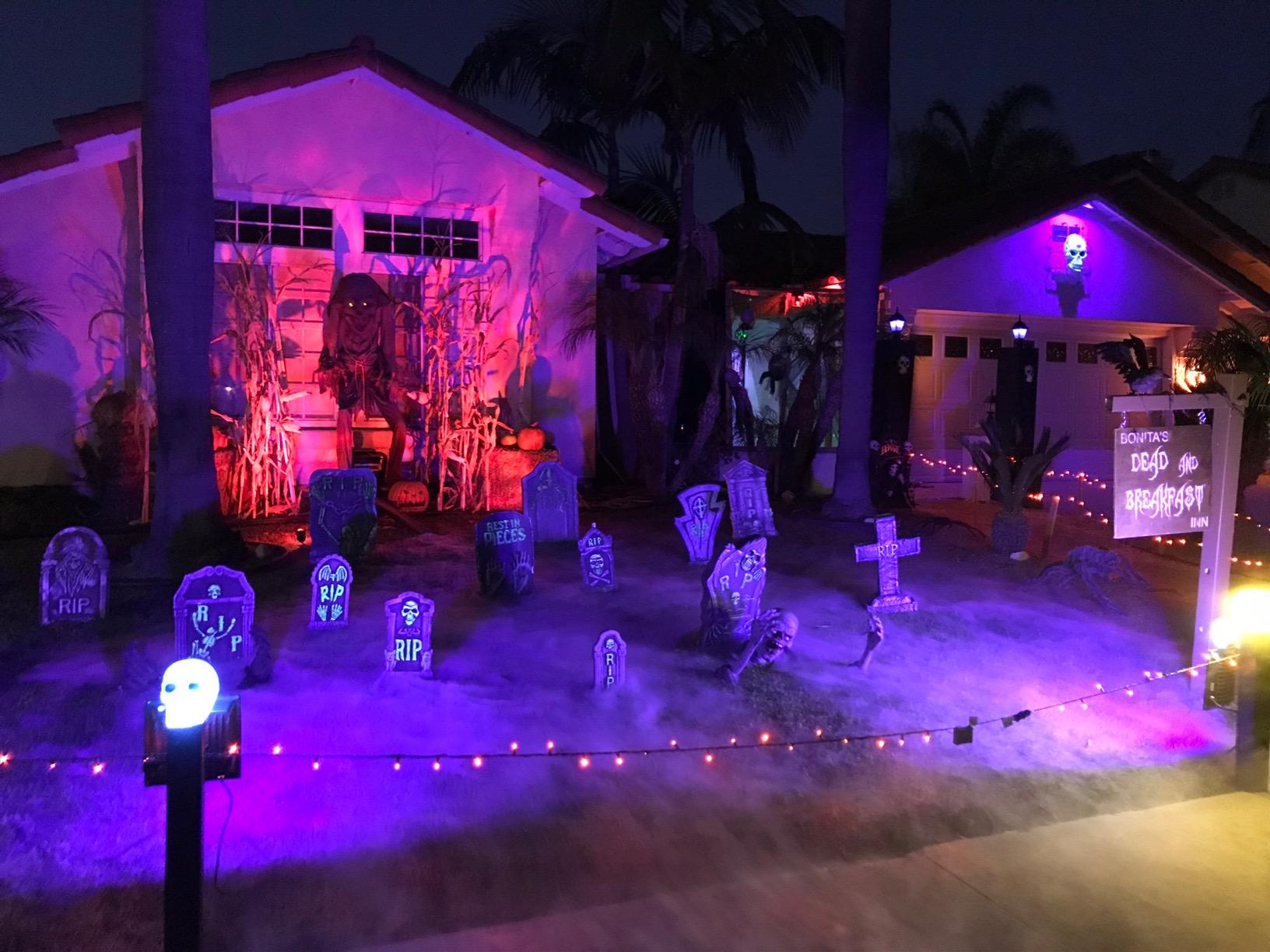
Variable output for different shoots
The variable output dial is what makes the Hurricane 1600 special. Turn it down to 30 percent for a thin atmospheric haze that catches rim light without obscuring the subject. Turn it up to 100 percent for a thick, swirling effect that transforms a plain backdrop into a dramatic environment.
For product photography, the lower output settings produce a controlled haze that does not blow across reflective surfaces. For portrait work, the mid-range settings give you the classic photographer’s look of subject separated from a soft cloudy background.
Wired timer and studio integration
The wired timer remote is functional but constrains placement. You need to run a cable from the unit to your shooting position, which adds a trip hazard in a busy studio. The timer function is useful for unattended atmospheric shots, like a 5-minute haze buildup before the subject enters.
For event work, the 1600 pairs well with a Chauvet DMX controller, though you will need the optional DMX cable to integrate it with a larger lighting rig.
8. Froggy’s Fog Titan 1200 – Best for High-Volume Studio Work
Froggy’s Fog Titan 1200 Fog Machine, High Output Indoor Fogger Machine with 20,000 CFM and Low Fluid Sensor
20000 CFM
QRFT 10-sec warmup
1-gallon tank
Wired timer remote
Pros
- Exceptional 20
- 000 CFM output
- quick ready technology under 10 seconds
- large 1-gallon reservoir
- durable metal housing
- timer remote with magnetic back
- efficient fog production
- thick long-lasting fog
Cons
- Some quality control issues with DOA units
- heavy at 24 pounds
- wired remote lacks wireless option
The Froggy’s Fog Titan 1200 is the highest-rated unit in the roundup at 4.6 stars, and the 20,000 CFM output explains why. This is not a hobbyist machine. It is the kind of unit that fills a theater, a haunted house, or a 50 by 50 foot studio in a single burst. For photographers who shoot music videos, fashion editorials, or large-scale commercial work, this is the workhorse.
The Quick Ready Fog Technology is the killer feature. Most 1000W units need 3 to 5 minutes to warm up. The Titan 1200 is ready in under 10 seconds, which means I can leave the unit off between compositions and only fire it when the lighting is set. That saves fluid, extends heater life, and keeps the studio clear of fog when you do not want it.
The 1-gallon reservoir is the largest in the roundup. At a typical 30 percent output, that is enough fluid for 4 to 5 hours of intermittent use. For a full-day commercial shoot, the Titan 1200 is one of the few units on this list that will not need a refill mid-shoot. The metal housing is built for daily professional use, and the magnetic-backed timer remote sticks to any steel surface in the studio.
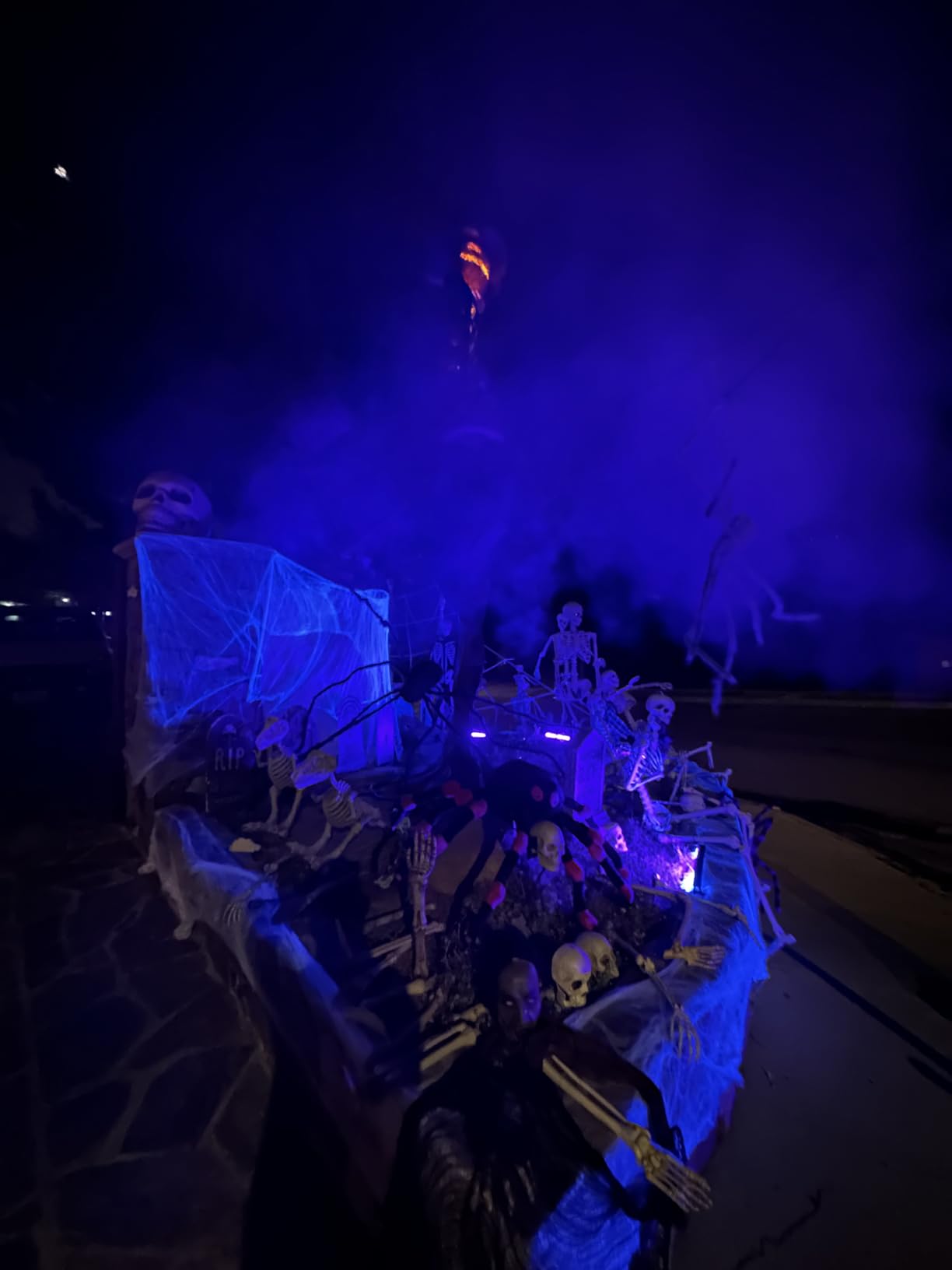
The downsides are the size and the weight. 24 pounds is heavy, and the 25.2 by 14.9 by 13.7 inch footprint requires a dedicated corner of your studio. The wired timer remote is functional, but a wireless option would be welcome at this price. Quality control issues with dead-on-arrival units are reported in a small percentage of purchases, so inspect the unit immediately on arrival.
Froggy’s Fog is a smaller brand than Chauvet or Antari, which means service is less centralized. The 20,000 CFM output is overkill for most photographers, but for those who need it, the Titan 1200 is the right tool.
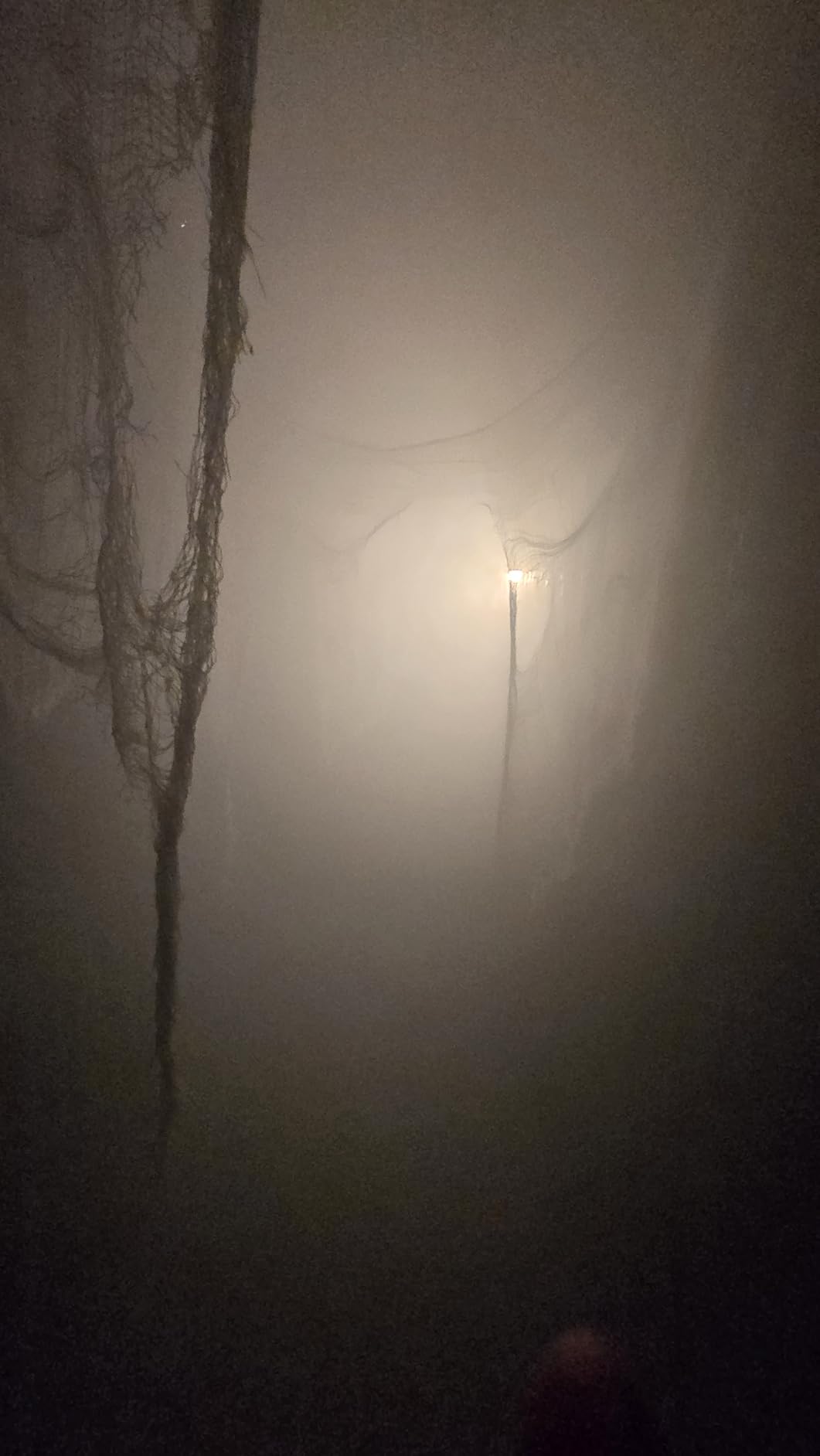
Output and hang time for studio work
The 20,000 CFM output is genuinely enormous. In a 30 by 30 foot studio, a single 10-second burst produced a dense fog that took 8 minutes to dissipate in still air. For a choreographed shoot, that gives you time to set up multiple compositions between bursts. For a long portrait session, you can fire the unit every 10 minutes and maintain a constant hazy environment.
The hang time is excellent because the fog output is thick enough to settle in layers rather than dissipating immediately. The result is a more cinematic atmosphere that catches light beautifully.
Long-term ownership and reliability
The Titan 1200 has a high user rating, but the small sample size of 134 reviews means each failure skews the data. Owners who use the unit weekly report solid reliability over 2+ years, with the heater core as the most likely eventual failure point. The metal housing does not flex or dent under normal use, which is a real difference from the budget units on this list.
For photographers who shoot commercial work and need a unit they can rely on, the Titan 1200 is a strong choice. Just budget for the larger footprint and the heavier weight in your studio layout.
Buying Guide: How to Choose a Fog Machine for Photography
Choosing the best fog machine for photography studio shoots comes down to four factors: power source, output, control options, and fluid compatibility. Let me walk through each one based on what we learned during testing.
Power source: corded vs. battery
Corded units deliver more output and longer runtime but require AC power. Battery units like the SmokeNINJA PRO and the COLBOR CF3 trade output for portability, and they shine on outdoor shoots or in studios without convenient outlets. Forum photographers consistently mention portability as a top concern, so if you shoot on location, prioritize a battery or USB-C powered unit.
For studio-only work, a corded unit gives you more output per dollar. For hybrid shooters who move between locations, the battery premium is worth it.
Output: CFM and wattage explained
CFM (cubic feet per minute) measures how much fog the unit can produce, and wattage measures how fast the heater can vaporize fluid. Higher CFM means thicker fog, higher wattage means faster warmup and recovery between bursts. For a 15 by 20 foot studio, 3000 to 5000 CFM is plenty. For a 30 by 30 foot studio, 10,000 CFM or higher is better.
The COLBOR CF3 at 30W is fine for tight home studios, but it disappears in large spaces. The Froggy’s Titan 1200 at 20,000 CFM is the opposite end of the spectrum and overkill for most photographers.
Control: wireless, wired, DMX, or Bluetooth
Control options determine how you trigger the unit. Wireless remotes work from across a room, wired remotes are reliable but constrain placement, DMX integrates with professional lighting rigs, and Bluetooth control from a phone is the newest option. For solo photographers, Bluetooth or wireless is the most flexible. For event photographers, DMX is the standard.
The SmokeNINJA’s Bluetooth control is the most modern option, and it works well in our testing. The Chauvet Hurricane 1600’s wired timer is dated but reliable.
Fluid: water-based vs. glycerin-based
Water-based fog fluid is the standard for photography. It produces clean, residue-free fog that does not stain backdrops or equipment. Glycerin-based fluid is thicker and produces longer-lasting fog, but it can leave a slight residue. Staining concerns flagged by forum users usually come from off-brand generic fluid, not the machine itself. Stick with name-brand fluid from the same manufacturer as your unit.
For photography, water-based fluid is the safe default. For theatrical and film work, glycerin-based fluid gives you the heavy fog that hangs in the air longer.
Studio size and shoot style
Your studio size and shoot style should drive the power decision. Small home studios under 200 square feet are fine with 30W to 600W units. Mid-size studios between 200 and 600 square feet need 1000W. Large studios over 600 square feet benefit from 1500W or higher output units.
For portrait work, prioritize hang time and control. For product work, prioritize thin controlled haze. For event and editorial work, prioritize output and DMX integration.
Frequently Asked Questions
What is the best fog machine for a photographer?
The best fog machine for photographers in 2026 is the PMI SmokeNINJA PRO Hazer Kit for its anti-leak chamber, Bluetooth haze nozzle, and 3-minute continuous output. For budget-conscious shooters, the AGPTEK 600W delivers 4000 CFM and is the most battle-tested option. For high-volume studio work, the Froggy’s Fog Titan 1200 with 20,000 CFM is the most powerful choice.
What fog machine is best for film shoots?
For film shoots, prioritize a unit with DMX integration, variable output control, and a thick, long-lasting fog. The Chauvet DJ Hurricane 1600 with its variable output dial and timer remote is a solid mid-range choice. For larger productions, the Froggy’s Fog Titan 1200 fills a set in seconds. Pair either with vegetable glycerin-based fluid for thicker atmospheric haze.
What is the best fog machine to buy?
The best fog machine to buy depends on your use case. For photography studios, the SmokeNINJA PRO offers the best balance of portability, fog quality, and control. For event work, the Katomi 1000W with DMX512 control is the top pick. For budget buyers, the AGPTEK 600W has over 6,000 reviews and a 4.2-star rating, making it the safest entry-level choice.
Is a hazers better than a fog machine for photography?
Hazers and fog machines serve different purposes. Hazers produce a thin, continuous atmospheric haze that hangs in the air for hours, ideal for fashion and editorial photography where you want visible light beams without obscuring the subject. Fog machines produce thicker bursts that show swirls and dissipate faster, ideal for dramatic effects and short-burst portrait work. For most studio photographers, a unit that does both is the best investment.
How do I use a fog machine for photography?
To use a fog machine for photography, position the unit 6 to 10 feet behind or to the side of your subject, fire a 3 to 5 second burst, wait 30 seconds for the fog to settle, then trigger your strobes. Use a backlight or rim light to catch the fog and create separation. For controlled haze that lasts the entire session, fire short bursts every 5 minutes rather than one long burst at the start.
Final Verdict
After testing eight units across portrait sessions, product shoots, and event work, the PMI SmokeNINJA PRO Hazer Kit is our top pick for the best fog machine for photography studio shoots in 2026. The anti-leak chamber, Bluetooth haze nozzle, and 3-minute continuous output solve the most common complaints photographers have about portable fog machines, and the USB-C power input makes it the only unit in the roundup that works equally well on location or in the studio.
For photographers on a budget, the AGPTEK 600W with its 6,000+ reviews and proven longevity is the safest entry point. For event photographers who need DMX, the Katomi 1000W delivers pro features at a mid-range price. For high-volume studio work where 20,000 CFM is the right answer, the Froggy’s Fog Titan 1200 is the most powerful unit in the roundup.
Whatever unit you choose, invest in name-brand water-based fluid, plan your studio ventilation in advance, and fire short bursts rather than one long blast. The right fog machine for your photography studio will transform flat lighting into something that looks three-dimensional, and the difference shows up in every frame you shoot.