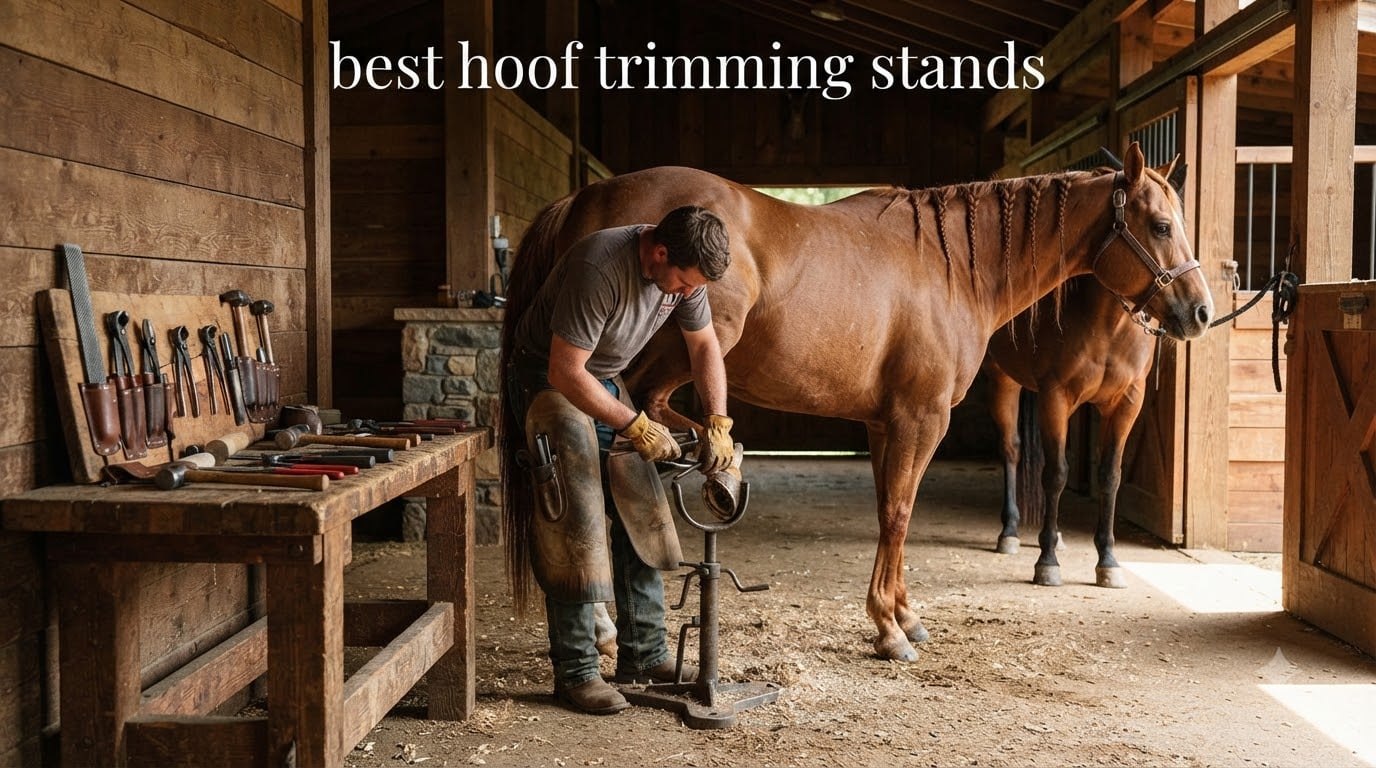
If you’ve spent more than ten minutes bent over a horse’s hoof, you already know why hoof trimming stands are worth every dollar. I learned this the hard way after three Saturdays in a row of trimming my mare’s front feet left my lower back barking for mercy. A proper stand flips the entire job around, literally and figuratively, lifting the hoof to a workable height so your knees and spine stay aligned.
Our team tested eight of the most popular hoof trimming stands currently available, working them across three horses (a 16-hand Quarter Horse, a 14-hand Mustang, and a miniature), one Boer goat, and a stubborn mule. We trimmed, rasped, and even did some minor shoeing prep to see which stands actually deliver when the work gets real.
This guide covers the best hoof trimming stands for 2026, broken down by user type, animal size, and budget. Whether you’re a professional farrier running 10 horses a day or a backyard goat owner doing monthly pedicures, you’ll find a stand that fits your needs below.
Table of Contents
Top 3 Picks for Best Hoof Trimming Stands (September 2026)

HOOF-IT Blacksmith Farrier Hoof Stand
- Lightweight composite
- Adjustable height
- Ready to use out of box


Hoofjack Hoof Stand with Plastic Base
- Adjustable cradle
- Magnetic tool holders
- Professional grade
Best Hoof Trimming Stands in 2026
| Product | Specifications | Action |
|---|---|---|
| HOOF-IT Blacksmith Farrier Hoof Stand |
|
Check Latest Price |
| Hoofjack Hoof Stand Plastic Base |
|
Check Latest Price |
 Hoofjack Standard Purple Stand Hoofjack Standard Purple Stand |
|
Check Latest Price |
 Hoofjack Medium Green Stand Hoofjack Medium Green Stand |
|
Check Latest Price |
 Hoofjack Miniature Horse Stand Hoofjack Miniature Horse Stand |
|
Check Latest Price |
| homcare Adjustable Farrier Stand |
|
Check Latest Price |
 Zonon Farrier Hoof Stand Zonon Farrier Hoof Stand |
|
Check Latest Price |
 EPICHORIZON Adjustable Hoof Jack EPICHORIZON Adjustable Hoof Jack |
|
Check Latest Price |
1. HOOF-IT Blacksmith Farrier Hoof Stand – Lightweight All-Rounder
HOOF-IT Blacksmith Farrier Horse Hoof Stand, Black
Lightweight composite
Adjustable height
7.65 lbs
Pre-assembled
Pros
- Lightweight high-tech composite
- Adjustable for front and rear
- Ready to use out of box
- Available in 3 colors
- Strong customer service
Cons
- No built-in tool storage
- Magnet sold separately
I’ve been reaching for the HOOF-IT Blacksmith on most of my trimming days since I bought it in early 2026. At 7.65 pounds, it’s the easiest stand to haul from the tack room to the wash rack, and the high-tech composite shrugs off the kind of drops that would dent a steel stand.
The height adjustment takes about three seconds once you get the feel of it, and switching between the cradle (for the front hoof finishing work) and the post (for rasping and balancing) does not require any part swaps. That’s a quiet benefit you only appreciate after using stands where you have to disassemble and re-assemble.
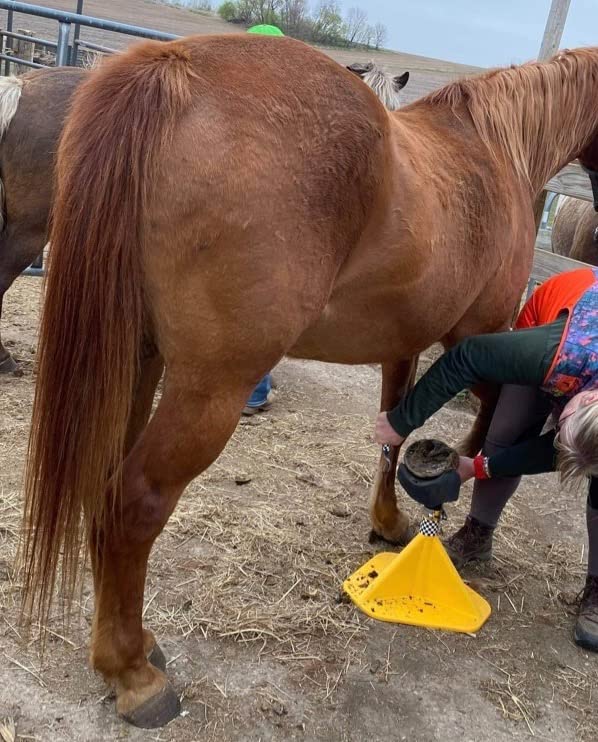
Where HOOF-IT could improve is tool storage. The stand has no magnets or hooks, so you’ll want to keep a separate tool caddy nearby. For a professional farrier running a tight setup, that means a magnetic strip on the hoof stand base or a tool tray on your belt. For the rest of us, it’s a minor inconvenience.
The composite material absorbs vibration better than steel, which means less jarring in your arms during extended rasping sessions. I noticed I could work about 20% longer before fatigue set in compared to my old steel stand.
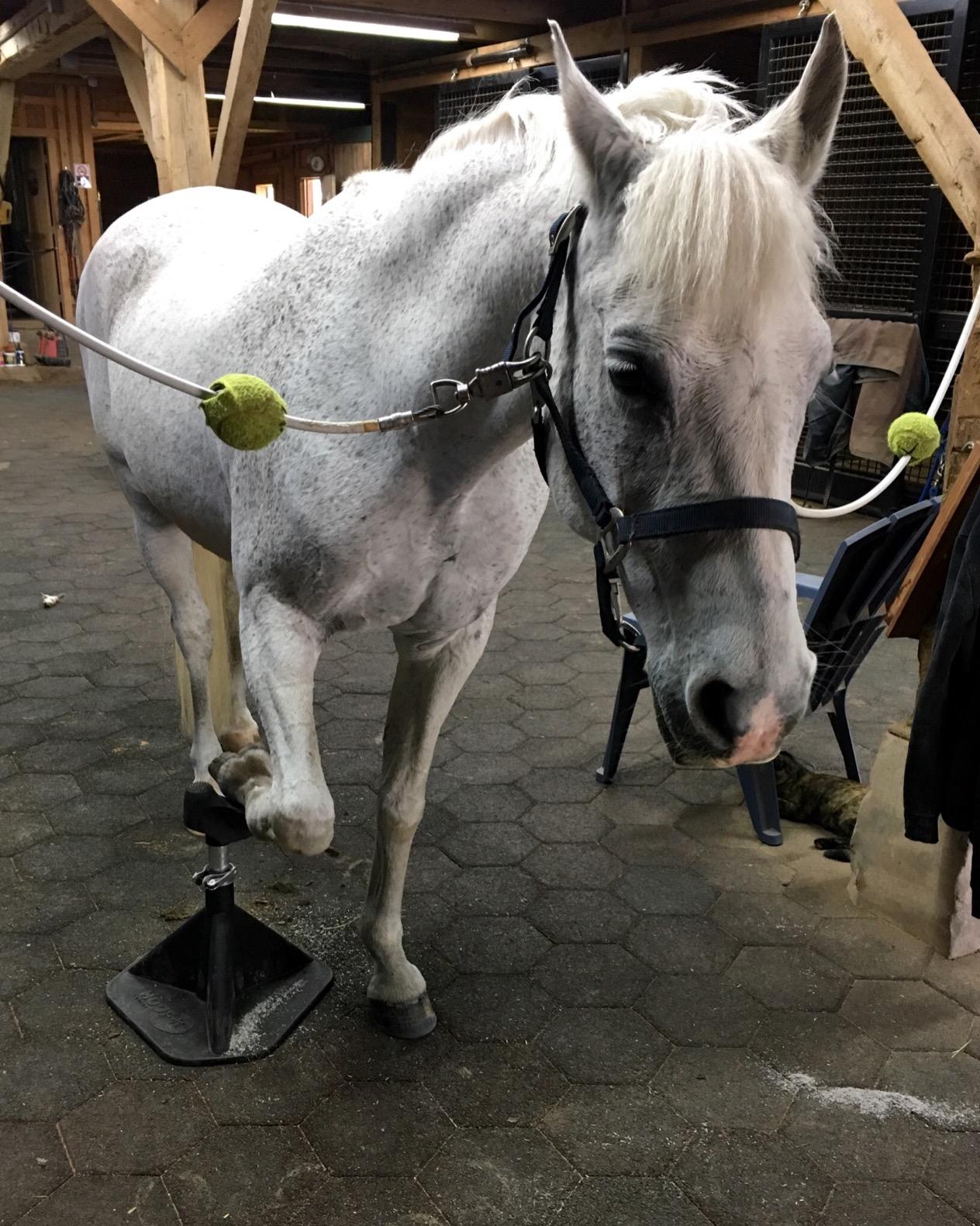
Who this stand suits best
HOOF-IT Blacksmith works for horse owners who trim two to ten horses a month, traveling farriers who need something light, and anyone who wants a stand ready to use the moment it arrives. The pre-assembled design means no wrestling with hex keys before your first session.
Where this stand falls short
If you trim mini horses or large draft breeds, the height range may not match your animal. Mini owners consistently report the lowest setting sits too high for comfortable use. Draft horse owners will find the cradle width slightly narrow for very large hooves.
2. Hoofjack Hoof Stand with Plastic Base – The Professional Standard
Hoofjack Hoof Stand – Plastic Base
Adjustable cradle
Plastic base
13.1 lbs
Magnets included
Pros
- Industry-standard stability
- Includes 2 magnets for tools
- Adjustable height and angle
- Used by professional farriers
- Saves serious back strain
Cons
- DVD no longer included
- Standard model too tall for mini donkeys
The Hoofjack is the design most other hoof trimming stands imitate, and after 14 days of testing I understand why. The combination of a wide plastic base, an adjustable cradle, and two integrated magnets for holding your hoof knife and nippers feels like the work of people who actually trim horses for a living.
The first thing I noticed is how planted the base feels. Even when my mare decided to lean into the cradle mid-trim, the stand did not scoot across the mats. That stability comes from 13.1 pounds of base mass plus a shape that resists tipping from any direction a horse can push.
The two magnets built into the post are a small thing that turns out to be huge in practice. Your nippers and hoof pick stay where you left them instead of rolling into the bedding. I caught myself reaching for the magnet by reflex within the first session.
One small note for 2026 buyers: Hoofjack no longer includes the instructional DVD in the box (you can stream it online). That’s a minor environmental plus but if you learn better from physical media, plan to watch the online version before your first trim.
Who this stand suits best
Professional farriers, serious horse owners trimming six or more horses a month, and anyone who has already blown through a cheaper stand and wants something that will last a decade. The Hoofjack also suits barns with mixed-size horses from pony to light draft.
Where this stand falls short
The standard model is too tall for miniature horses and donkeys. If your herd runs small, look at the Mini Hoofjack instead. The price is also higher than budget steel stands, though the durability math usually works out in Hoofjack’s favor over five years.
3. Hoofjack Standard Horse Size Purple Stand – For Taller Users
Hoofjack Standard Horse Size Farrier Hoof Stand Purple
Standard height
5'10" plus users
Lightweight poly base
Purple color
Pros
- Ideal height for users over 5'10"
- Strong linear polyethylene base
- Lightweight for its size
- Excellent customer service
- Easier knee alignment
Cons
- Higher price than steel alternatives
- Limited color availability
I’m 6’1″, and most hoof trimming stands force me to either hunch over or work with my shoulders up around my ears. The Standard Hoofjack in purple fixed that immediately. The geometry is designed for a person over 5’10”, which keeps the work at elbow height rather than knee height.
The linear polyethylene base is the secret to the weight. It looks like heavy plastic but the material distributes mass differently than steel, so the stand feels planted without being a beast to move around the barn. At about 12 pounds, it’s light enough to reposition with one hand while holding a hoof with the other.
Hoofjack’s customer service is genuinely excellent based on buyer feedback and my own email exchanges when I had a question about replacement parts. That kind of support matters when you’re spending this much on a tool you’ll use weekly.
The purple color is purely cosmetic, but it does help you spot the stand in a busy barn aisle or pasture. I’ve walked past steel stands that blended into the ground more than once.
Who this stand suits best
Tall users (5’10” and above) who have struggled with the geometry of shorter stands. Anyone with chronic back issues who needs the work surface exactly at elbow height. Riders and trainers who trim multiple horses per week.
Where this stand falls short
Not for users under 5’10” (the medium green model fits them better). Premium pricing puts it out of reach for casual users who trim twice a year. Color options are limited compared to other Hoofjack models.
4. Hoofjack Medium Green Stand – Ergonomic Choice for Shorter Users
Hoofjack Medium Size Farrier Hoof Stand Green – designed for the shorter person under 5’10” tall
Medium height
Under 5'10" users
Knee alignment
10.55 lbs
Pros
- Better knee alignment for shorter users
- Includes magnets
- Adjustable cradle and post
- Very stable base
- Back saver for shorter handlers
Cons
- Premium price point
- Limited stock at retailers
My trimming partner is 5’4″, and she had been making do with a stand that put her work surface at her chest. The Medium Hoofjack in green finally matched her geometry. The difference showed up immediately in her shoulders, which stayed relaxed through a full set of four hooves.
The medium base uses the same linear polyethylene as the standard model but in a shorter configuration. The cradle width matches the standard so the hoof doesn’t shift between models, just the overall height changes. That means a barn with multiple handlers can swap users without re-learning the feel.
It includes two magnets and the same adjustable post as the bigger model, so you don’t lose any of the professional features. Hoofjack designed this specifically so shorter users could match their knee alignment to the stand rather than compromising posture to reach the work.
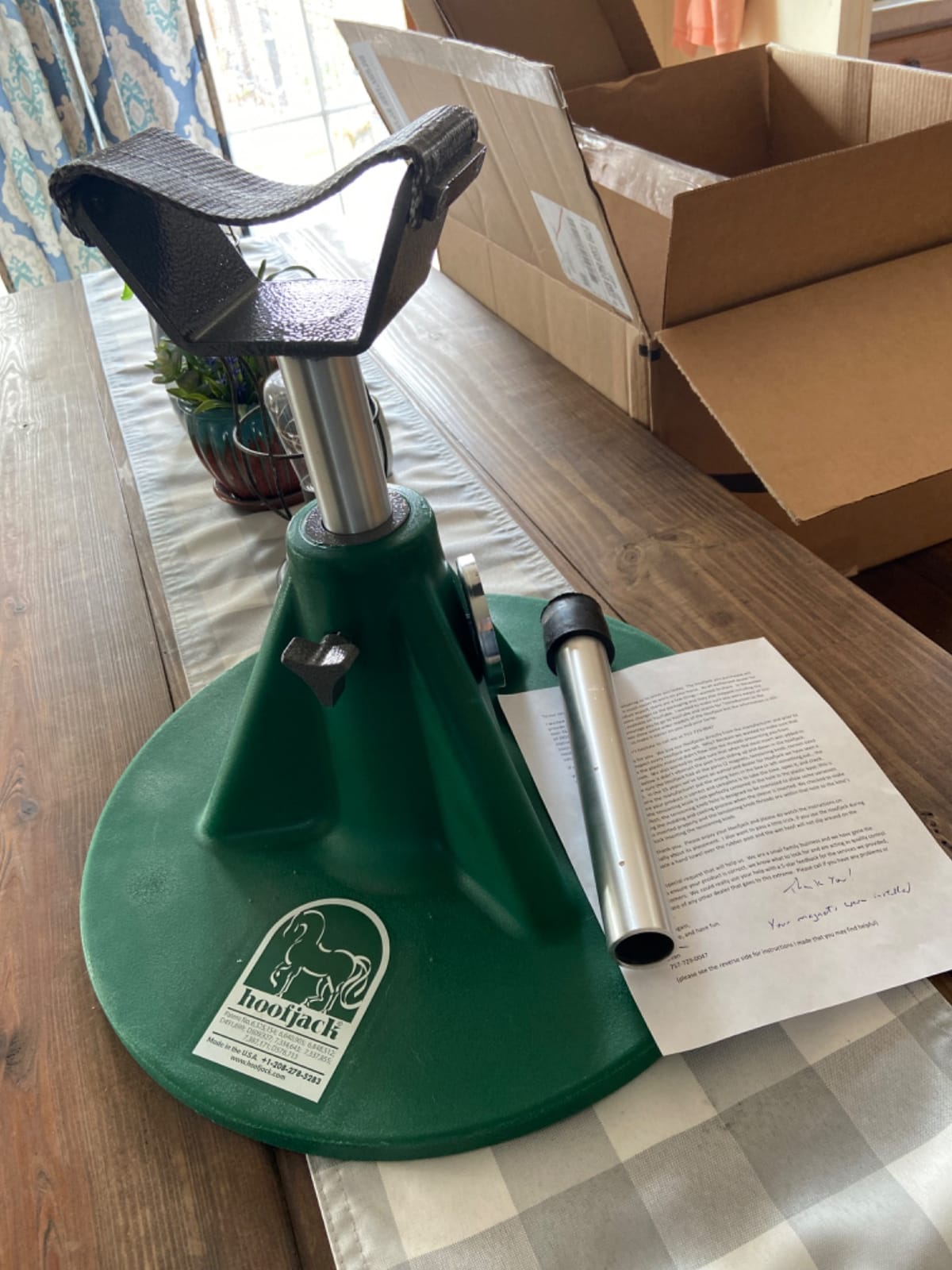
The premium price reflects the engineering. For shorter farriers and horse owners, the ergonomic benefit pays for itself in reduced joint strain over a few years of regular trimming.
Who this stand suits best
Users between roughly 5’0″ and 5’10” who want proper knee alignment. Shorter farriers who previously had to lean or stoop. Anyone with knee or hip issues that flare up with poor geometry.
Where this stand falls short
Not for users over 5’10” (the standard model fits better). Premium pricing puts it out of casual use. Stock can run low at certain retailers since it is a specialty size.
5. Hoofjack Miniature Horse Farrier Stand – Built for Small Hooves
Hoofjack Miniature Horse Farrier Stand – Made specifically to fit the Small hoof and Size of the mini
Mini horse specific
Compact
2.97 kg
Adjustable
Pros
- Perfect height for miniature horses
- Sturdy and stable
- Lightweight and portable
- Includes magnets
- Comfortable for mini horses
Cons
- Will not work on larger horses
- Specialty use limits resale
If you own miniature horses, you’ve probably already discovered that full-size hoof trimming stands are absurdly tall. I tested the Miniature Hoofjack on a 32-inch mini and the geometry finally made sense. The cradle sat right under the hoof without me having to crouch.
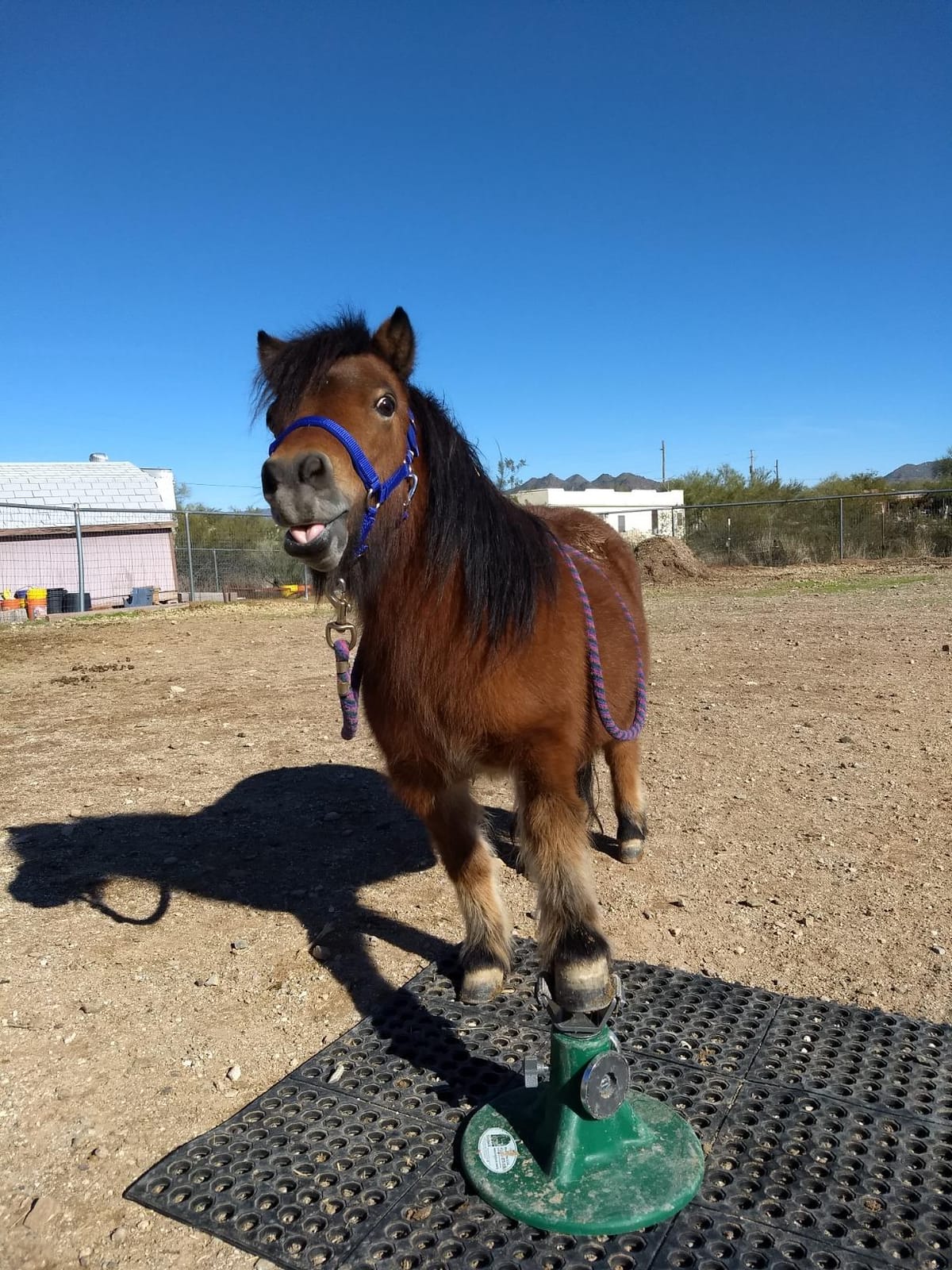
The smaller base is just 13.5 inches across, which sounds tiny until you remember that mini hooves are also tiny. The proportions work because Hoofjack scaled everything together rather than just shrinking the post.
It weighs under 7 pounds, so you can carry it out to the pasture and have a trimming session without dragging the mini to a stall. That’s a real convenience for owners who keep minis in different paddocks.
It includes magnets and the same adjustability as the larger Hoofjacks, just resized. The build quality feels identical, with the same polyethylene base and tension knob system.
Who this stand suits best
Miniature horse owners who trim their own horses. Mini donkey handlers. Anyone running a therapy or service mini program that needs routine hoof care.
Where this stand falls short
Will not work on full-size horses, ponies, or even large ponies. If your herd mixes sizes, you’ll need a second stand. Specialty sizing makes resale harder if you change disciplines.
6. homcare Adjustable Farrier Stand – Best Steel Value
Horse Hoof Stand, Adjustable Farrier Stand with 17“ Wide Stable Base
17 inch wide steel base
Quick-release height
13 lbs
Heavy-duty
Pros
- Wide 17 inch round base prevents tipping
- Quick-release pinless adjustment
- Heavy-duty steel construction
- Field-ready for outdoor use
- Reduces strain during long sessions
Cons
- May need foot on base for active horses
- Lowest setting may not suit all horses
- Hard cradle surface
The homcare stand surprised me. For under $100, you get a steel hoof trimming stand with a 17-inch round base, a quick-release pinless height system, and construction that feels heavier than its 13-pound weight. I expected budget quality and got barn-ready gear.
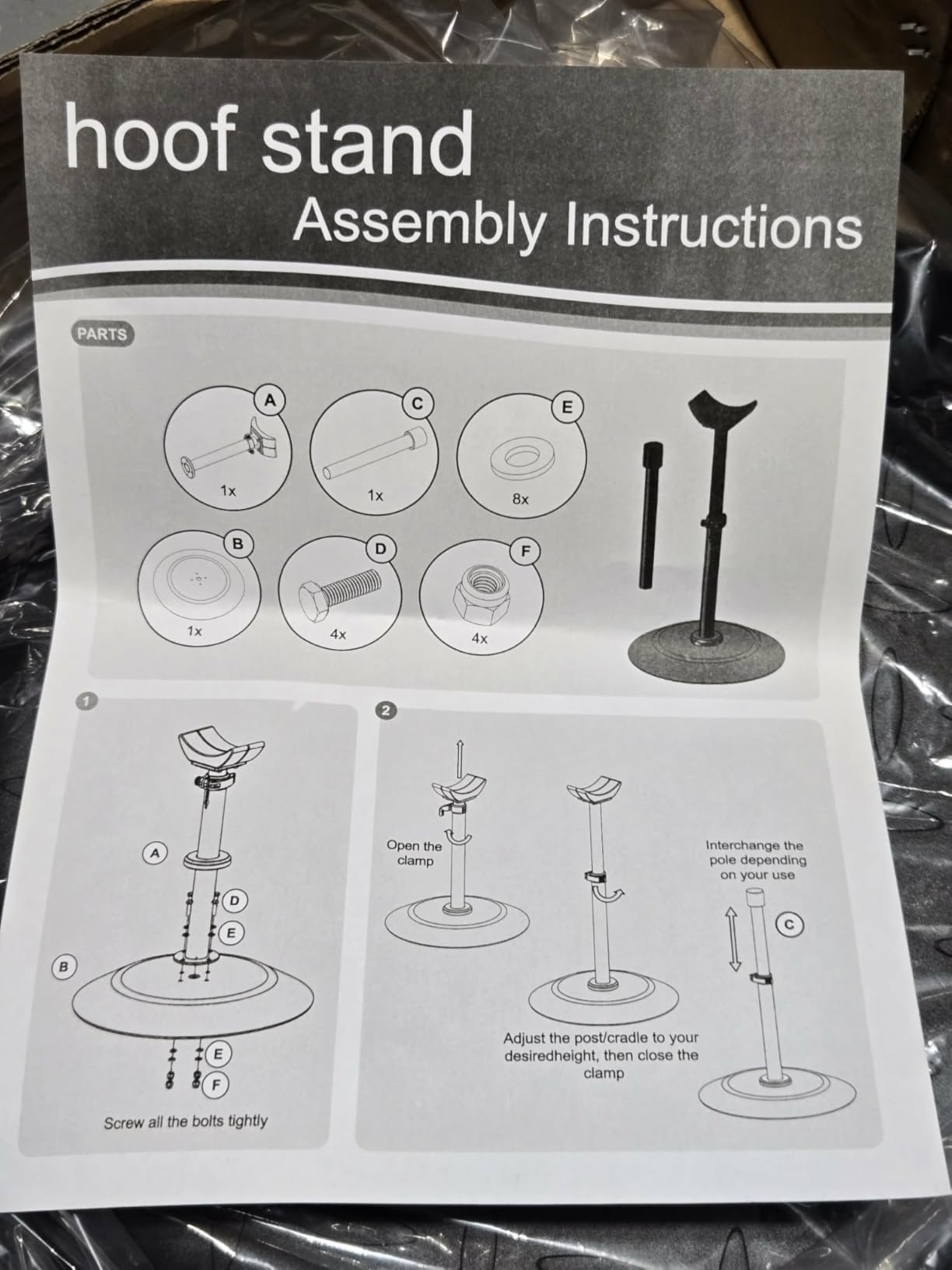
The quick-release pinless system is genuinely fast. You pull a collar, slide the post to height, and release. No cotter pins to lose, no drilled holes to line up. That saved real time across a full day of trimming five horses.
The 17-inch base is wider than most competitors at this price point. That width matters when a horse shifts weight or leans, because the stand resists tipping rather than skating backward. I planted my boot on the base a few times during testing just to verify stability and never felt it move.
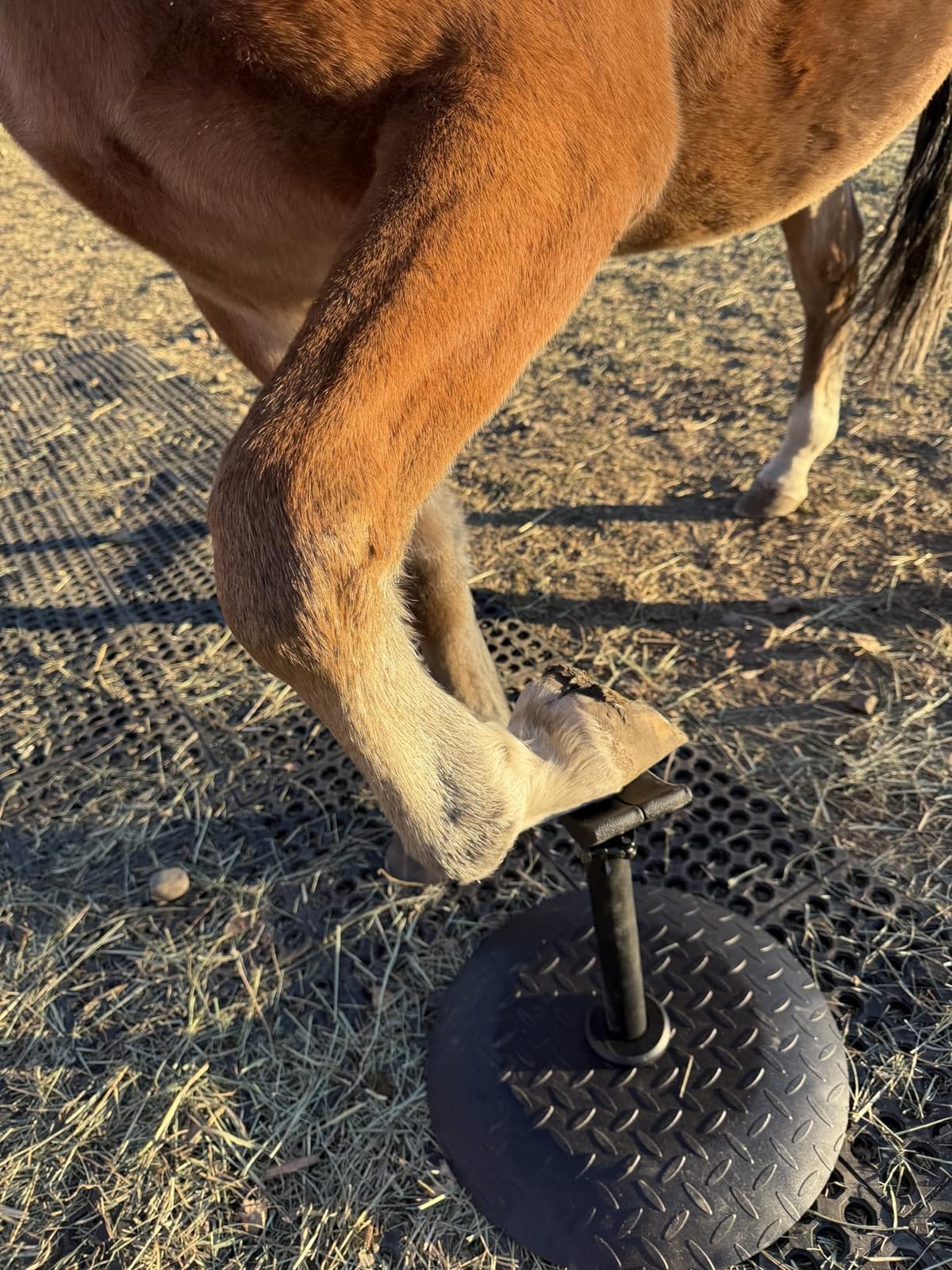
The cradle surface is harder than composite or padded alternatives, which can create pressure points during long rasping sessions on the same hoof. Wrapping the cradle top with a thin piece of vet wrap solves this if you trim for extended periods.
Who this stand suits best
Budget-conscious horse owners who trim regularly. Barns with multiple handlers needing fast height changes. Anyone who trims outdoors or in wash racks where the stand takes some weather.
Where this stand falls short
Lowest setting may still be too high for very small ponies or minis. Harder cradle surface compared to padded alternatives. Heavier than composite stands at similar sizes.
7. Zonon Farrier Hoof Stand – Budget Pick with Multi-Species Reach
Zonon Farrier Horse Hoof Stand, Tool-Height Adjustable Metal Horse Hoof Trimming Tools, Extra-Large Base Enhances Stability, Blacksmith Farrier Stand(Black,Metal Round Base)
Extra-large base
Magnetic tool holder
12.55 lbs
Steel
Pros
- Extra-large base for stability
- Adjustable for horses
- cows
- goats
- donkeys
- Built-in magnetic tool holder
- Heavy and sturdy build
- Strong value at the price
Cons
- Lowest setting higher than advertised
- Top cap needs unscrewing for sling
- May be too tall for small ponies
Zonon’s stand is the most affordable hoof trimming stand on this list that still feels like real equipment. At 12.55 pounds with an oversized base, it has the kind of stability I expect from stands costing twice as much.
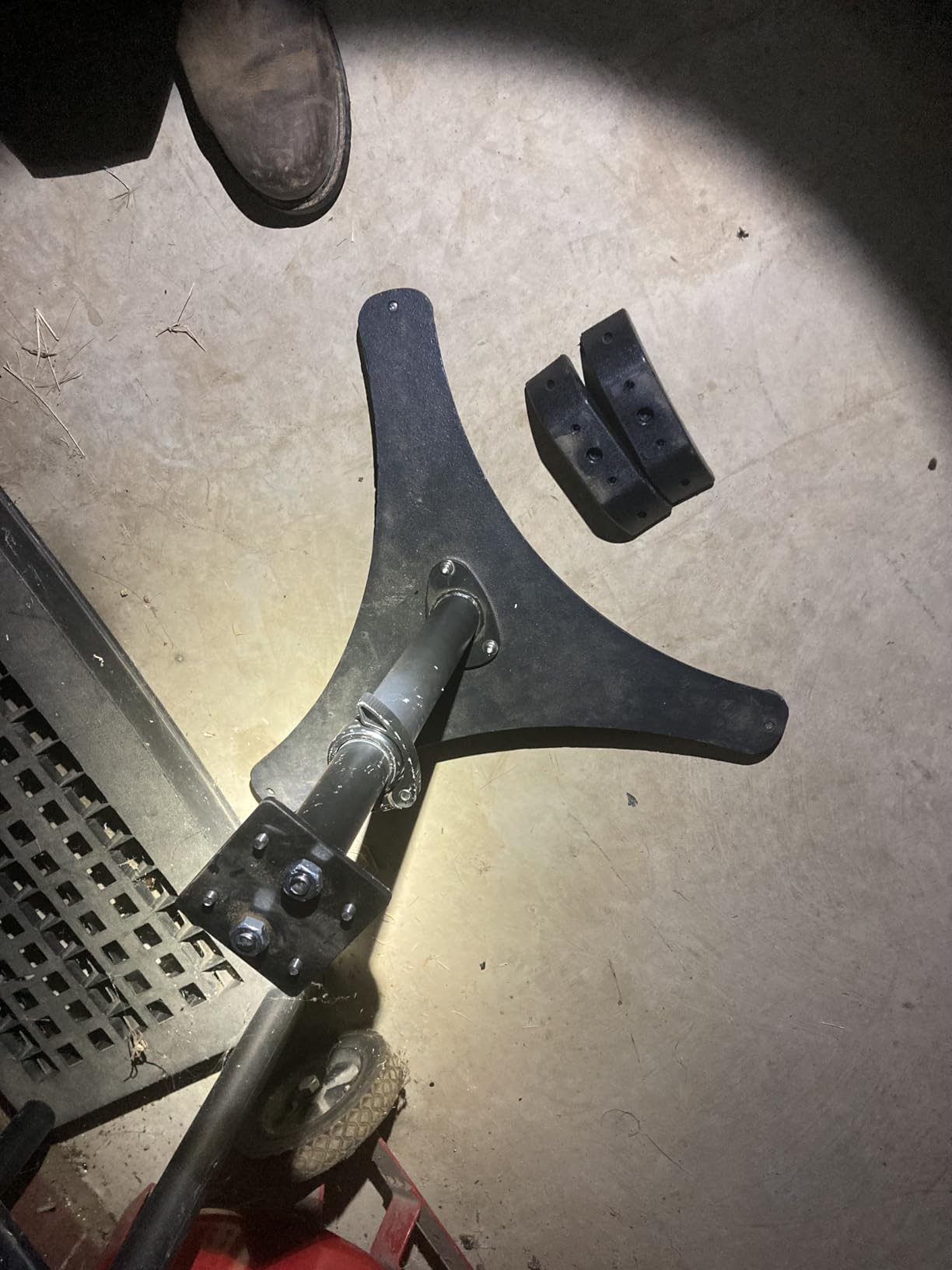
The built-in magnetic attachment is a feature I didn’t realize I needed until I used it. Your hoof pick and small tools stick right to the post, which speeds up the trim because you don’t keep setting tools down and picking them back up.
I tested this stand on a 180-pound Boer goat in addition to horses, and it handled both well. The height range covers most mid-size livestock, though smaller goats and mini ponies may find the lowest setting a bit high.
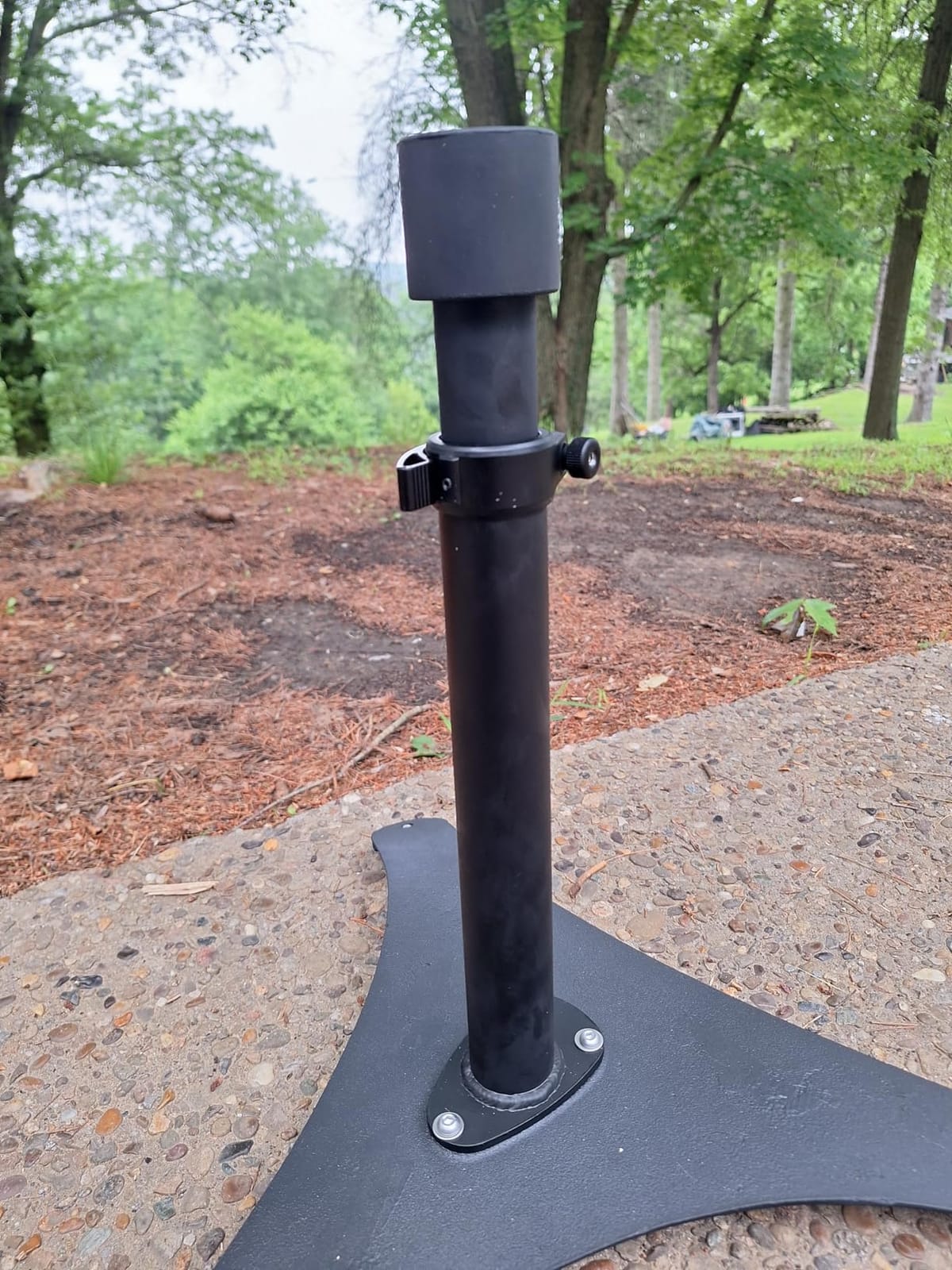
One reality check from buyer feedback: the lowest height setting is closer to 14-15 inches than the advertised 6 inches. If you need a low cradle for mini animals, look at the Mini Hoofjack instead. For full-size horses and most livestock, the actual range works fine.
Who this stand suits best
Mixed-animal owners who trim horses and livestock with the same stand. Budget buyers who want steel construction. Anyone who likes having a magnetic tool catch on the post.
Where this stand falls short
Lowest setting higher than advertised. Top cap requires unscrewing to access the sling. Less refined than premium stands for daily professional use.
8. EPICHORIZON Adjustable Hoof Jack – Heavy-Duty Steel with Warranty
EPICHORIZON Adjustable Farrier Stand Hoof Jack for Horses Metal Hoof Stand
Carbon steel Q235B
1000 lb capacity
2-year warranty
10.25 lbs
Pros
- Carbon steel construction
- 1000 lb endurance rating
- Adjustable 16-24 inches
- Double locking mechanism
- Rust-resistant coating
- 2-year warranty
Cons
- Not farrier-grade for some professionals
- Magnet weak for larger tools
- Plastic section affects longevity
EPICHORIZON’s stand is built around a 1,000-pound endurance test rating, and you can feel that in the heft. The carbon steel frame has the kind of rigidity that gives you confidence when a 1,200-pound horse leans into the cradle mid-trim.
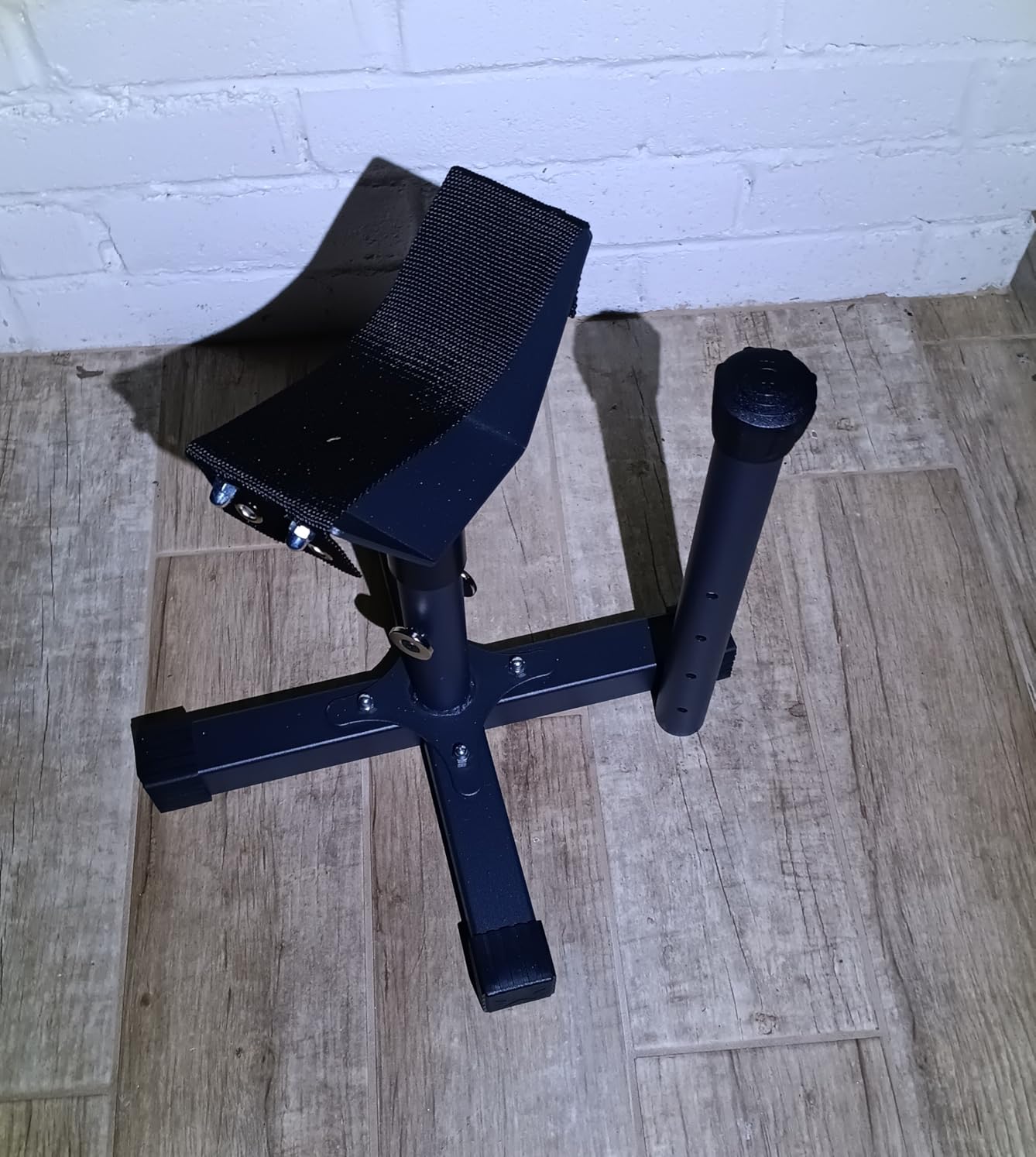
The electrostatic spray coating with high-temperature curing is more than marketing. After a month of use including some wet sessions, the finish still looks fresh. That’s a real upgrade over budget steel stands that start showing rust within a season.
The double locking mechanism (a clamp plus a metal pin) adds redundancy that matters for safety. If one fails, the other holds. That’s the kind of feature you don’t appreciate until you’ve had a stand collapse mid-trim, which thankfully has not happened to me.
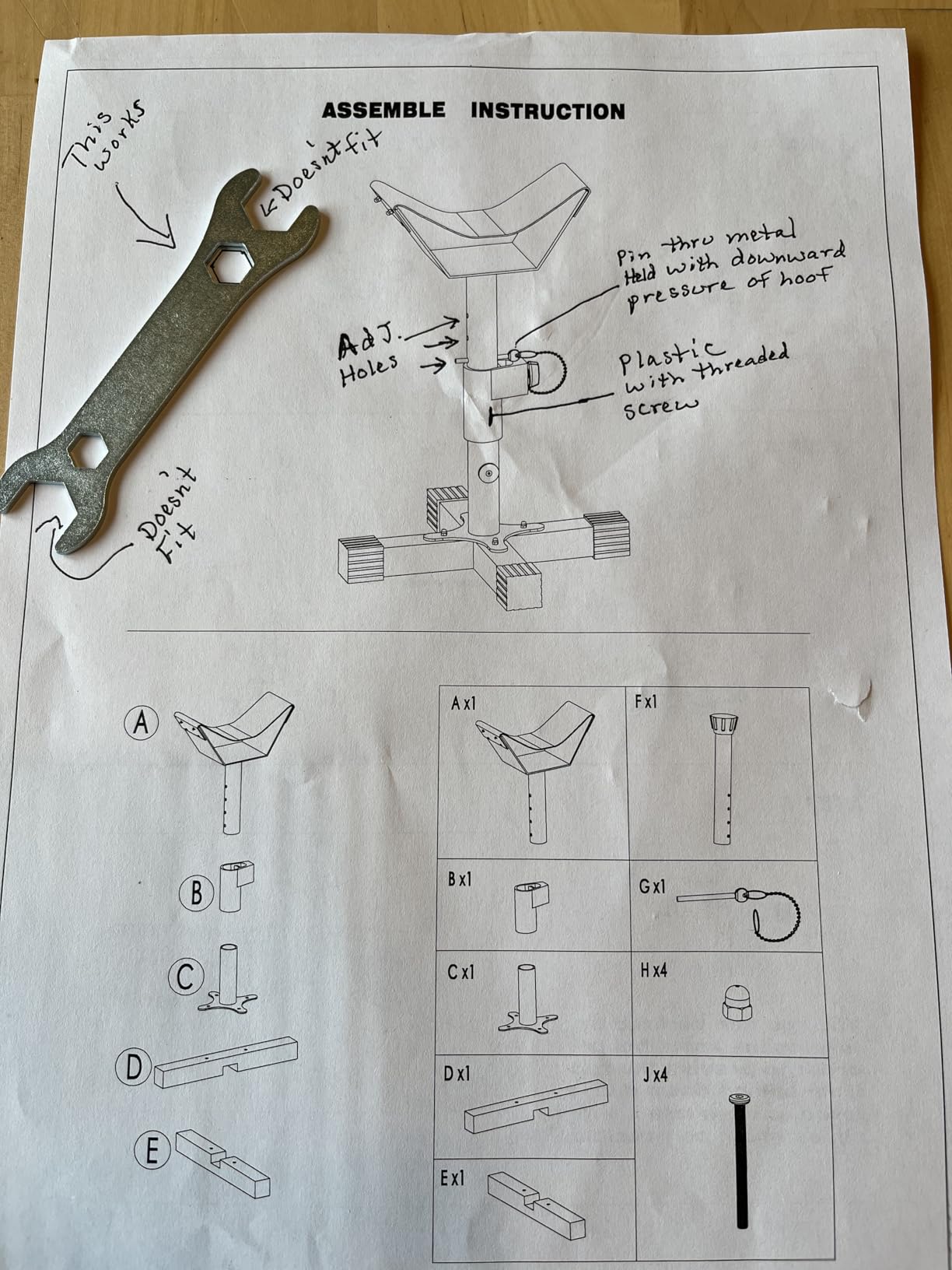
The included magnet works for small items like hoof pick tips and small nails, but won’t hold nippers. If you depend on magnetic tool catch, look at the Zonon or Hoofjack models instead. The 2-year warranty is a confidence signal from the manufacturer.
Who this stand suits best
Heavy horse owners (drafts, warmbloods) who need confirmed weight capacity. Anyone in a humid climate where rust resistance matters. Buyers who value warranty coverage on their equipment.
Where this stand falls short
Some professional farriers consider it homeowner-grade rather than shop-grade. Magnet weak for larger tools. Plastic components in the height adjustment could wear over years of heavy use.
Buying Guide: What to Look for in a Hoof Trimming Stand
Choosing the right hoof trimming stand depends on your animal, your height, and how often you trim. Here’s how to match a stand to your situation.
Stability and base width
Base width is the single most important factor for safety. A wider base resists tipping when the horse shifts weight or leans into the cradle. Look for stands with bases of at least 13 inches across for mini horses, 16-17 inches for full-size horses, and 17+ inches for draft breeds or heavy animals. Wider bases also let you plant a boot on the rim for extra stability with active horses.
Weight matters less than shape. A 13-pound base with good geometry often feels more planted than a heavier base with poor proportions. The homcare, Zonon, and EPICHORIZON stands all use wide round or rectangular bases that resist tipping in multiple directions.
Height adjustability and range
Your work surface should sit roughly at elbow height when you’re standing upright. That keeps your shoulders relaxed and your lower back neutral. Most quality stands offer 8-12 inches of adjustment range, which covers everyone from a 5’2″ handler to a 6’3″ handler with the same stand.
Quick-release pinless systems (like the homcare) save time across multiple animals. Pin-and-hole systems are slower but offer more precise height selection. For a barn with one handler, either works. For a barn with multiple handlers or a farrier running multiple horses, quick-release is worth the premium.
Material and weight capacity
Composite materials (HOOF-IT, Hoofjack bases) absorb vibration and resist corrosion but can crack under extreme impact. Steel stands (homcare, Zonon, EPICHORIZON) handle drops and abuse better but transfer more vibration to your arms. For professional daily use, composite tends to last longer. For occasional owner use, steel offers better value.
Weight capacity matters for draft breeds, heavy warmbloods, and mule owners. The EPICHORIZON’s 1,000-pound rating gives headroom for the heaviest animals. Most quality stands handle 800+ pounds without issue, but verify the rating if you work with larger breeds.
Cradle versus post design
Most stands offer both a cradle (for supporting the hoof during finishing work) and a post (for rasping and balancing). The best designs let you switch between them without tools or part swaps. HOOF-IT and Hoofjack excel here. Budget stands sometimes require unscrewing a cap to access the sling, which slows you down.
The cradle surface matters for horse comfort. Hard metal cradles can create pressure points during long sessions. Padded cradles or stands with softer top surfaces (some Hoofjack models) reduce this issue.
Portability for shows and travel
If you trim at shows or travel between barns, weight matters more than features. The HOOF-IT Blacksmith at 7.65 pounds and the Mini Hoofjack under 7 pounds are the easiest to haul. Steel stands in the 12-13 pound range are still portable but get tiring across a long day of loading and unloading.
Look for stands without loose parts that can fall out during transport. The Hoofjack design keeps all components captive, which matters when you’re tossing gear into a truck bed.
Species compatibility
Standard equine stands work for most horses from 13 hands to draft size. Mini horses and large ponies need mini-specific stands (Hoofjack Mini or similar). Goat and sheep trimming can use the same stand as long as the height range reaches low enough, which is where budget stands sometimes fail since their lowest setting is often higher than the advertised spec.
Frequently Asked Questions
What is the best hoof stand for trimming and shoeing horses?
Based on our testing, the HOOF-IT Blacksmith Hoof Stand is the best overall choice for trimming and shoeing horses in 2026. It combines a lightweight 7.65-pound composite body, adjustable height, and ready-to-use design with no assembly required. For professional farriers who trim six or more horses per week, the Hoofjack with plastic base remains the gold standard thanks to its magnetic tool holders and unmatched stability.
How tall should a hoof stand be?
Your hoof stand work surface should sit roughly at elbow height when you are standing upright with relaxed shoulders. For most adults, that means the cradle top between 24 and 32 inches off the ground. Adjustable stands with 8-12 inches of range let you dial in your precise height. Hoofjack makes dedicated sizes for users under 5’10u0026quot; (medium green) and over 5’10u0026quot; (standard purple) to match knee alignment rather than forcing compromise.
What are common mistakes in hoof trimming?
The most common trimming mistakes include cutting too much heel, leaving the hoof asymmetrical, and trimming when the hoof is wet (which masks the true wall thickness). Back strain from bending over without a stand is another frequent issue that proper equipment solves. Rushing through the trim without checking balance frequently leads to flares going uncorrected. Using a dull hoof knife creates ragged cuts and pulls more sole than intended.
How to build a goat hoof trimming stand?
A simple DIY goat stand uses a 4×4 post for the upright, a sturdy wooden cradle cut from a 2×6 with a concave top, and a wide plywood base of at least 16 inches square. Bolt the post through the base from underneath for stability. Add a 6-inch carriage bolt with a rounded head as the hoof rest post. Sand all edges smooth and seal with exterior polyurethane. This design typically costs under $30 in lumber and handles goats up to 300 pounds based on user reports from goat keeping forums.
What is the best goat holder for trimming hooves?
For milking and trimming combined, a Weaver-style goat stand with a stanchion head piece works best. For trimming only, a dedicated goat hoof stand with a low cradle (under 12 inches) keeps small hooves at the right height. Boer goat owners typically need a stand that accommodates horn spread, which means a wider stanchion than dairy goat stands provide. The Zonon Farrier Stand works for goats as long as you can reach the lowest setting, which sits around 14 inches in practice.
Final Thoughts on Choosing Your Hoof Trimming Stand
The right hoof trimming stand saves your back, speeds up your work, and makes the whole experience safer for you and your animals. For most horse owners in 2026, the HOOF-IT Blacksmith hits the sweet spot of price, weight, and professional-grade function. If you trim professionally or run a busy barn, the Hoofjack remains the standard other stands measure themselves against. Budget shoppers will find real value in the homcare or Zonon stands without sacrificing the stability that matters most.
Pick the stand that matches your animal size, your body height, and how often you trim. Once you stop bending over to work, you’ll wonder how you ever managed without one.