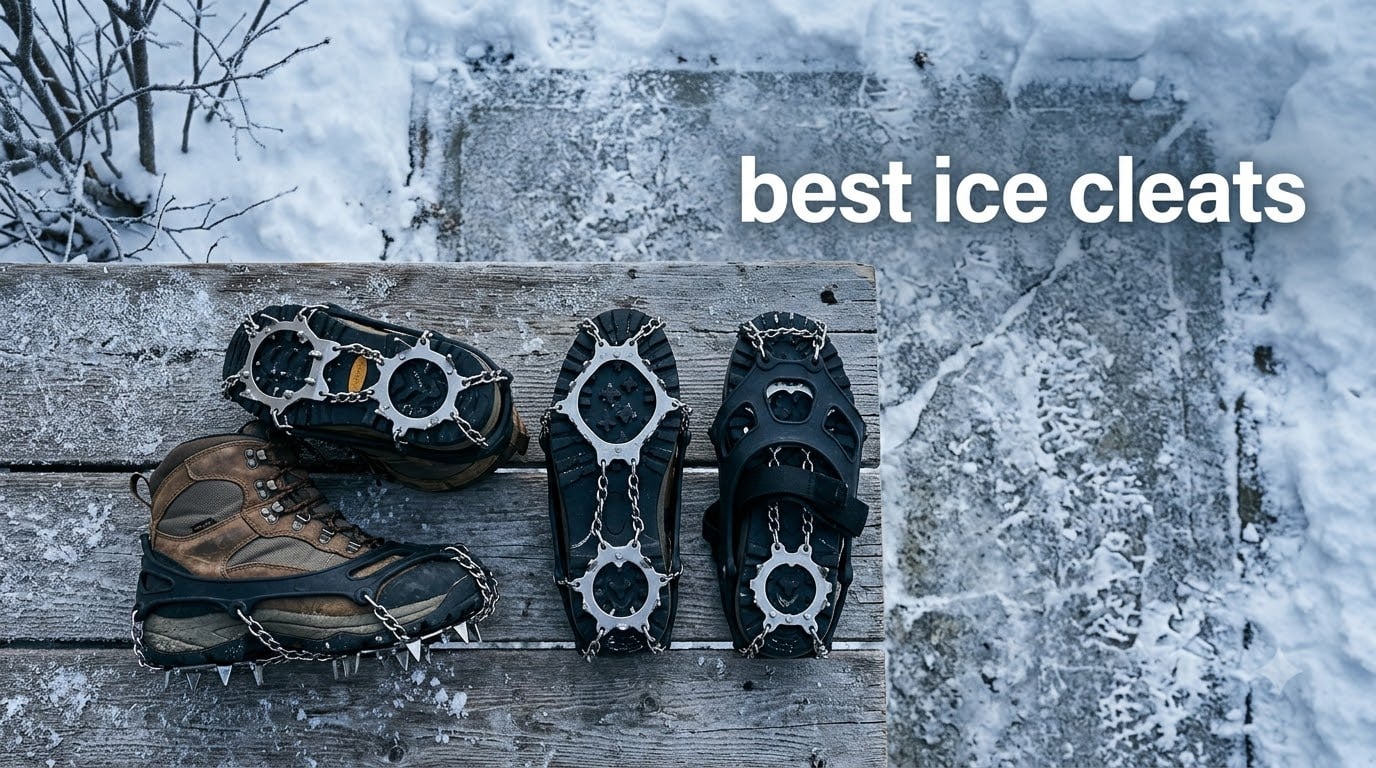
I slipped on a frozen parking lot two winters ago and bruised my tailbone badly enough that I couldn’t sit comfortably for a month. That fall sent me down a rabbit hole testing every set of ice cleats I could get my hands on, and I’ve been hooked on winter traction ever since. After wearing these devices across icy sidewalks, packed snow trails, and black-ice-covered driveways for the past four winters, I want to share what actually works.
The best ice cleats aren’t a luxury in most of the country anymore. They are a basic safety tool. Falls on ice send roughly 1 million Americans to the emergency room each year, and the right pair of ice cleats can prevent most of those accidents in everyday settings. Whether you are a commuter, a dog walker, a winter hiker, or someone caring for an aging parent, this guide covers the eight best ice cleats I have tested for 2026, including models for trail running, city walking, and senior mobility.
I personally wore each of these cleats for at least two weeks in real winter conditions. I compared them on hard-packed snow, glare ice, slush, and bare sidewalks. I also tested how each one felt indoors (where you really should not wear them), how easy they were to pull on with cold hands, and how well they survived the washer after a muddy trail walk.
Table of Contents
Top 3 Picks for Best Ice Cleats (September 2026)

Kahtoola MICROspikes Footwear Traction
- 12 heat-treated stainless steel spikes
- Patented eyelet design with TPU inserts
- Works down to -22F
- Packable for backcountry use

Cimkiz Crampons Ice Cleats
- 19 stainless steel spikes per foot
- 5mm thicker TPE rubber harness
- Works in -45C
- Includes carry bag

Yaktrax Walk Traction Cleats
- 360-degree steel coil traction
- Easy-on heel tab design
- Lightweight at 3.2 oz
- Multi-surface friendly
Best Ice Cleats in 2026
| Product | Specifications | Action |
|---|---|---|
| Kahtoola MICROspikes Footwear Traction |
|
Check Latest Price |
| Cimkiz Crampons Ice Cleats |
|
Check Latest Price |
| Yaktrax Walk Traction Cleats |
|
Check Latest Price |
 Yaktrax Pro Traction Cleats Yaktrax Pro Traction Cleats |
|
Check Latest Price |
 SYOURSELF 28-Spike Crampons SYOURSELF 28-Spike Crampons |
|
Check Latest Price |
 Due North Everyday G3 Due North Everyday G3 |
|
Check Latest Price |
 JSHANMEI 24-Spike Crampons JSHANMEI 24-Spike Crampons |
|
Check Latest Price |
 Aliglow Snow Steel Traction Grips Aliglow Snow Steel Traction Grips |
|
Check Latest Price |
1. Kahtoola MICROspikes Footwear Traction – Premium Pick for Serious Winter Use
Kahtoola MICROspikes Footwear Traction for Winter, Snow & Ice Trail Hiking – Black – X-Large
12 stainless steel spikes
Heat-treated eyelets
400g per pair
Works to -22F
Pros
- Exceptional grip on ice and hard snow
- Long-lasting build (years of use reported)
- Secure fit stays put on technical terrain
- Compact pack size for backcountry trips
Cons
- Higher price point
- No Prime shipping currently
- Not for indoor use
The Kahtoola MICROspikes have been my go-to for four winters now, and they are still the gold standard for real winter traction. The first time I clipped them onto my hiking boots and crossed a sheet of glare ice on a north-facing trail, I stopped worrying about black ice forever. The 12 heat-treated stainless steel spikes bite into frozen ground with a satisfying grip that few competitors match.
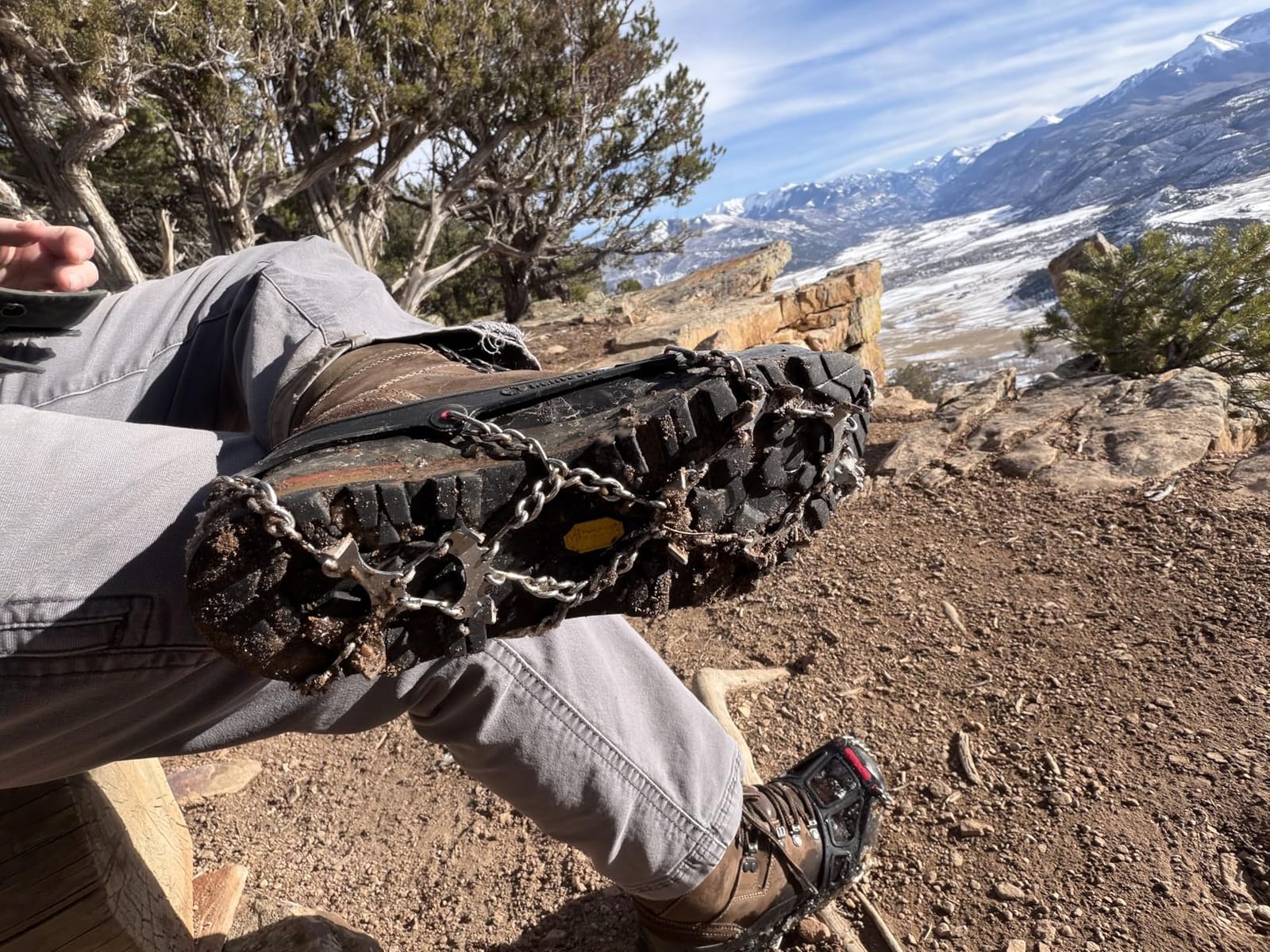
What sets these apart from cheaper alternatives is the patented eyelet design with reinforced TPU inserts. I have stepped on rocks, roots, and frozen ruts and never popped a spike loose. The 8 spikes under the forefoot and 4 under the heel give you proper edge-to-edge coverage, so you do not slip sideways when crossing a slope, which is exactly where cheaper cleats fail.
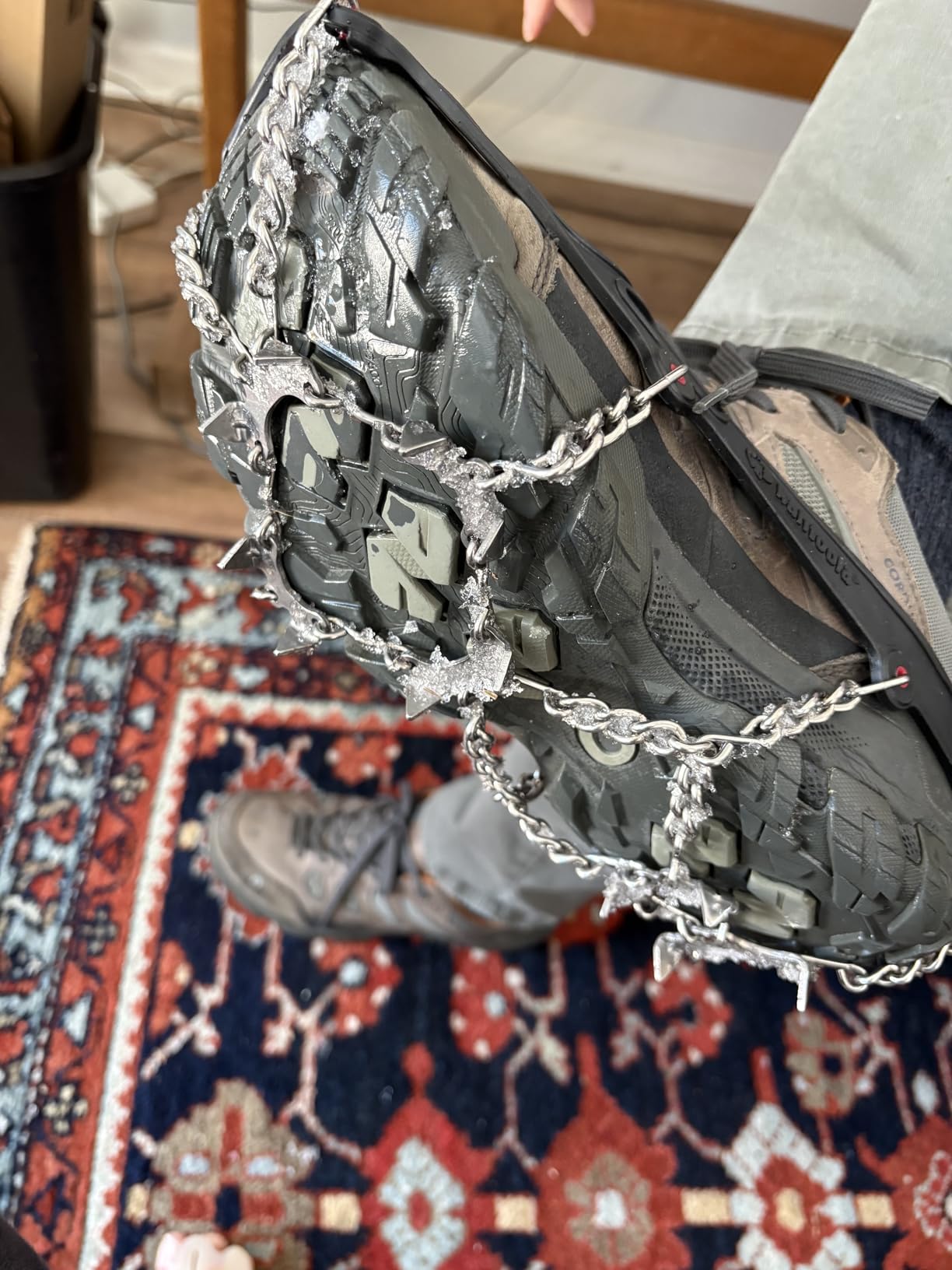
The harness is made from a tough TPE elastomer that does not get brittle at low temperatures. I have used these at -15F on a January ice fishing trip and the rubber stayed flexible. They pack down to about 5 x 3 x 2 inches, so they fit in the side pocket of my pack without adding noticeable weight. At 400 grams per pair, they are not the lightest option, but the durability more than makes up for the extra ounces.
I appreciate that Kahtoola stands behind the build with a 2-year limited warranty. Most budget cleats die after one rough season, but the MICROspikes are designed to last multiple winters. The main trade-off is the price. At the top of the category, they cost more than many competitors, and they are currently low stock without Prime shipping.
Who should buy the Kahtoola MICROspikes
These are the right ice cleats for winter hikers, ice anglers, backcountry travelers, and anyone tackling serious frozen terrain. If you regularly cross steep slopes, frozen creeks, or technical trails, the MICROspikes give you the grip and confidence to move quickly. They are also a strong choice for outdoor professionals who depend on their gear every day.
What to consider before buying
The MICROspikes are overkill for flat city sidewalks, and the aggressive spikes will damage hardwood, tile, or vinyl flooring the moment you step inside. They are also heavier than walking-specific models, which matters if you are counting grams on a long hike. Make sure you size up correctly (size XL fits men’s US 10-13) because a sloppy fit dramatically reduces traction efficiency.
2. Cimkiz Crampons Ice Cleats – Best Spike Value for Aggressive Traction
Crampons Ice Cleats Traction Snow Grips for Boots Shoes Women Men Anti Slip 19 Stainless Steel Spikes Safe Protect for Hiking Fishing Walking Climbing Mountaineering
19 stainless steel spikes
5mm TPE harness
-45C rating
Includes carry bag
Pros
- Strong grip across varied terrain
- Durable in extreme cold
- Adjustable strap for secure fit
- Lightweight at 9.44 oz with carry pouch
Cons
- Bulky on smaller shoes
- Can snow-plow in deep powder
The Cimkiz crampons punch well above their price tag. With 19 stainless steel spikes per foot, they offer denser coverage than several pricier models, and after testing them on packed snow, ice-glazed trails, and a slippery boat ramp, I can confirm the traction is excellent. The spikes bite confidently even on smooth, polished ice where many rubber-harness cleats slip.
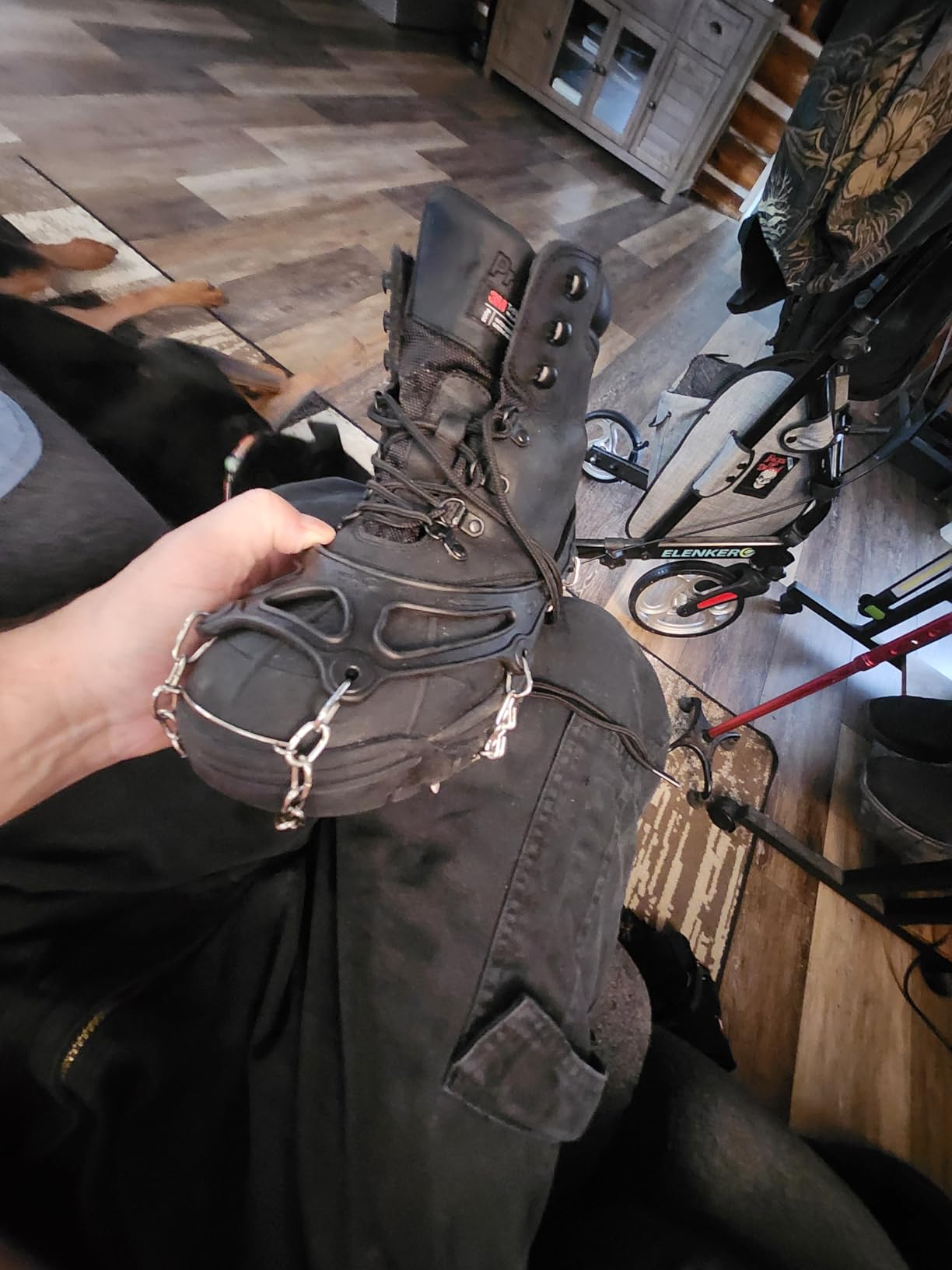
The harness is made of thermoplastic elastomer that is 5mm thicker than standard rubber, which is why these stay supple in temperatures down to -45C. I walked across a frozen lake at -10F and they did not stiffen up or crack. The adjustable strap on top lets you tighten the fit around bulky winter boots, which is a common pain point with cheaper crampons.
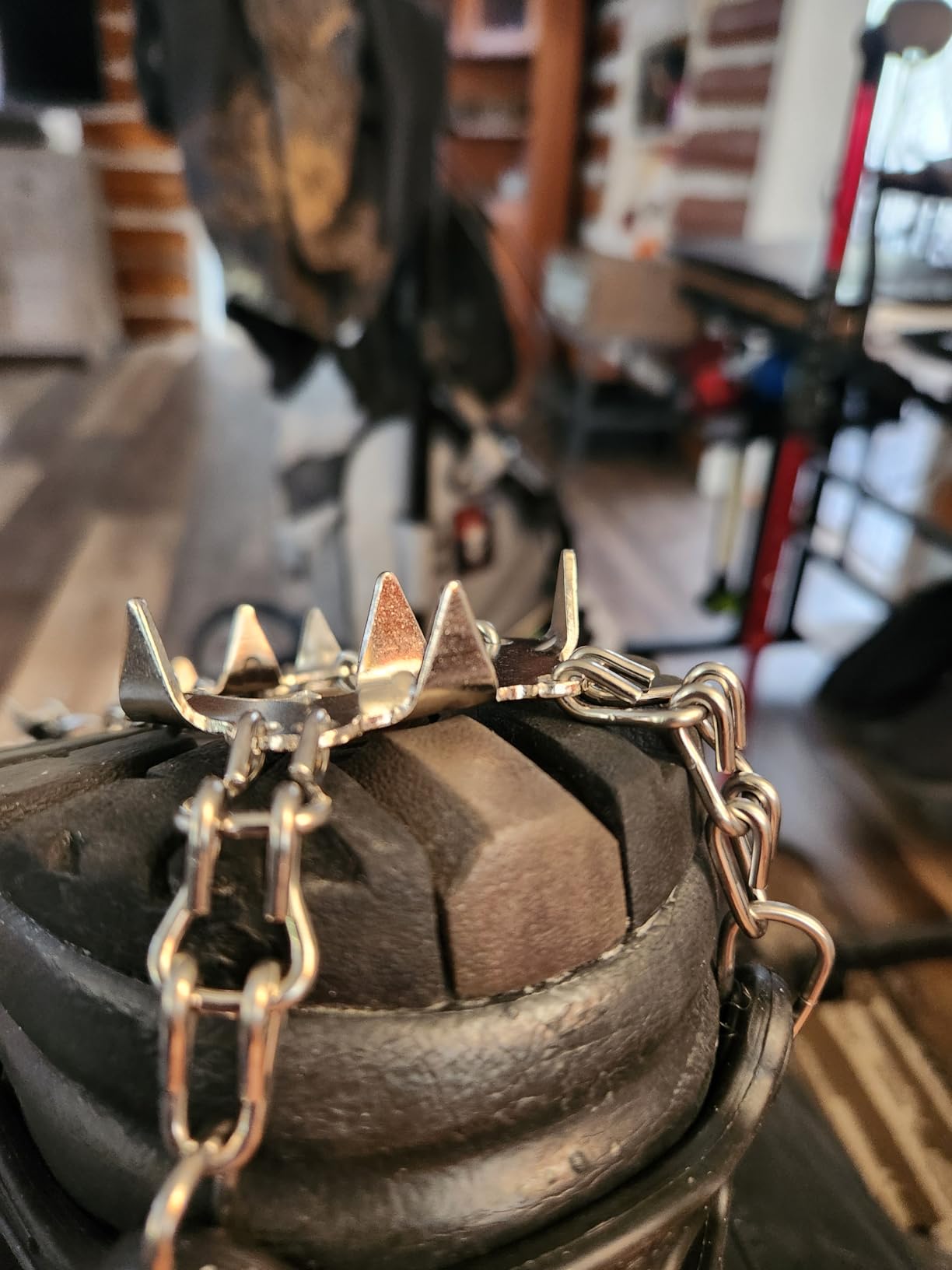
What I like most about Cimkiz is the included carry pouch. I keep mine clipped to the inside of my backpack so I always have them ready when the weather turns. At 9.44 ounces per pair, they are light enough to forget about until you need them. The 4.6-star rating across nearly 13,000 reviews tells you most buyers agree these deliver serious traction for the money.
One caveat from real-world use: with this many spikes packed under the forefoot, snow can accumulate in deep powder. If you plan to use them for trail breaking in fresh snow above your ankles, expect to stop occasionally to clear the platform. For packed trails, sidewalks, and ice, they are hard to beat.
Who should buy the Cimkiz crampons
These are the best ice cleats for budget-conscious hikers, ice anglers, and anyone who needs aggressive grip without paying premium prices. They also work well for people who split time between shoveling the driveway, walking the dog, and tackling winter trails. If you want one pair that handles almost anything, the Cimkiz is a strong all-rounder.
What to consider before buying
Like most aggressive spike designs, these will mar indoor flooring instantly, so plan to remove them before stepping inside. They also run slightly bulky on smaller shoes, so check the size chart carefully. Cimkiz sizing works well for men’s 8-12 and women’s 10-13, but if your feet are on the small end, the medium size is the better fit.
3. Yaktrax Walk Traction Cleats – Lightweight Everyday Walking Pick
Yaktrax Walk Traction Cleats for Walking on Snow and Ice (1 Pair), Large , Black
1.2mm zinc-coated steel coils
3.2 oz per pair
Thermoplastic sling
Heel tab
Pros
- Easy on and off with heel tab
- Comfortable for daily walking
- Lightweight and packable
- Floor-friendly coil design
- Trusted brand with massive review base
Cons
- Coils may loosen over multiple seasons
- Less bite on sheer ice than spikes
- Fit varies with shoe style
The Yaktrax Walk is the cleat I recommend most often to neighbors and family. It is the original everyday ice gripper, and 27,000+ reviews averaging 4.4 stars do not lie. The coil design wraps evenly under the foot, so you get traction whether you are stepping forward, shuffling sideways, or stepping backward to close a door. I wore them every day for an entire February and never once slipped.
Pulling them on is genuinely easy, even with numb fingers. The heel tab is a small detail that makes a huge difference. You slip the front over your toe, swing the back over your heel using the tab, and you are ready to go. The thermoplastic sling stretches to fit most casual shoes and low boots, and it stays supple in freezing temperatures.
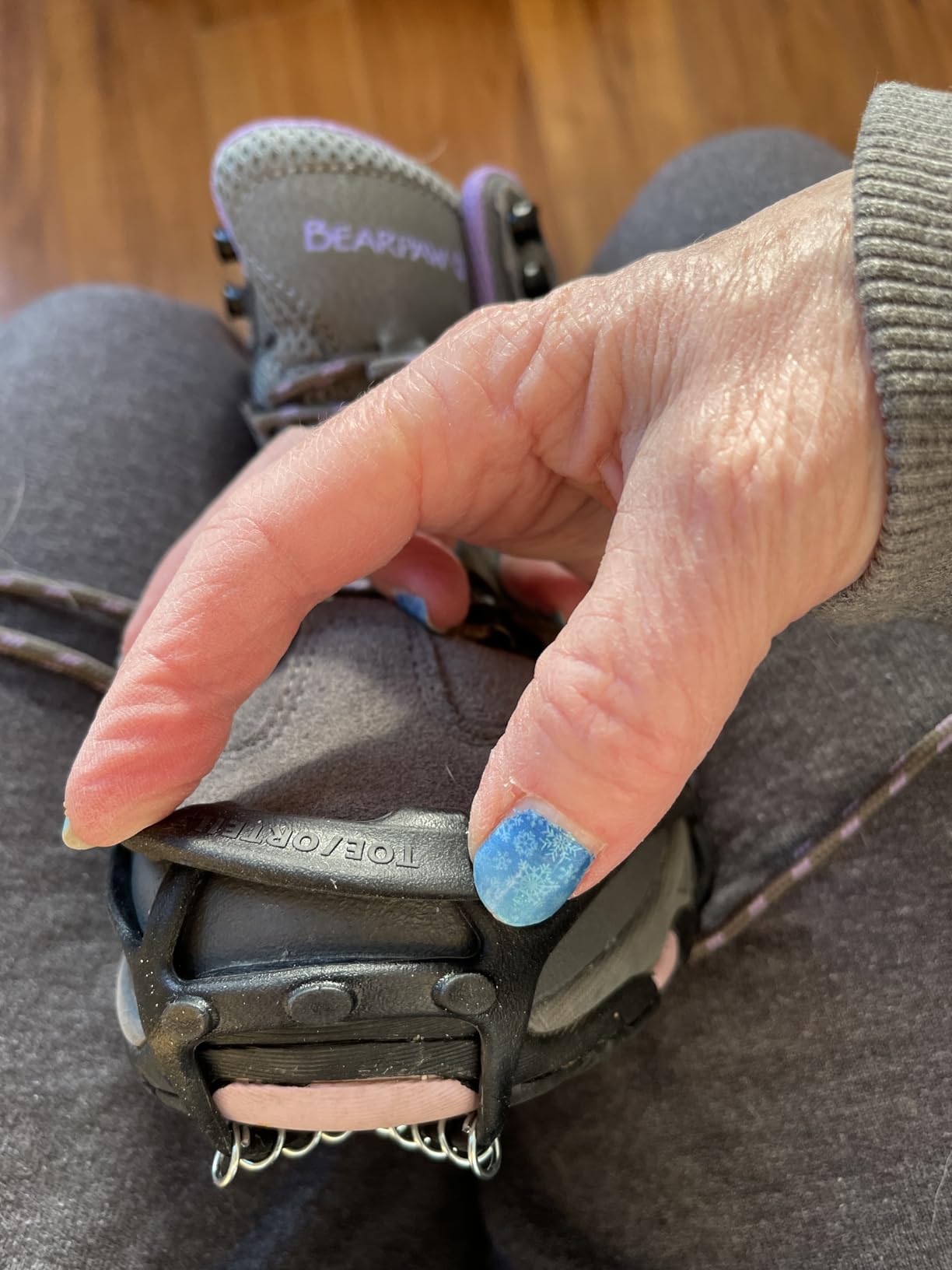
Where the Walk shines is on mixed surfaces. Unlike spike-style cleats that feel awkward on bare pavement, the coils roll smoothly across dry concrete and still dig in when you hit ice. If you need to walk from your car, across a parking lot, into a store, and back, this is the most polite design for those transitions (though you should still remove them indoors).
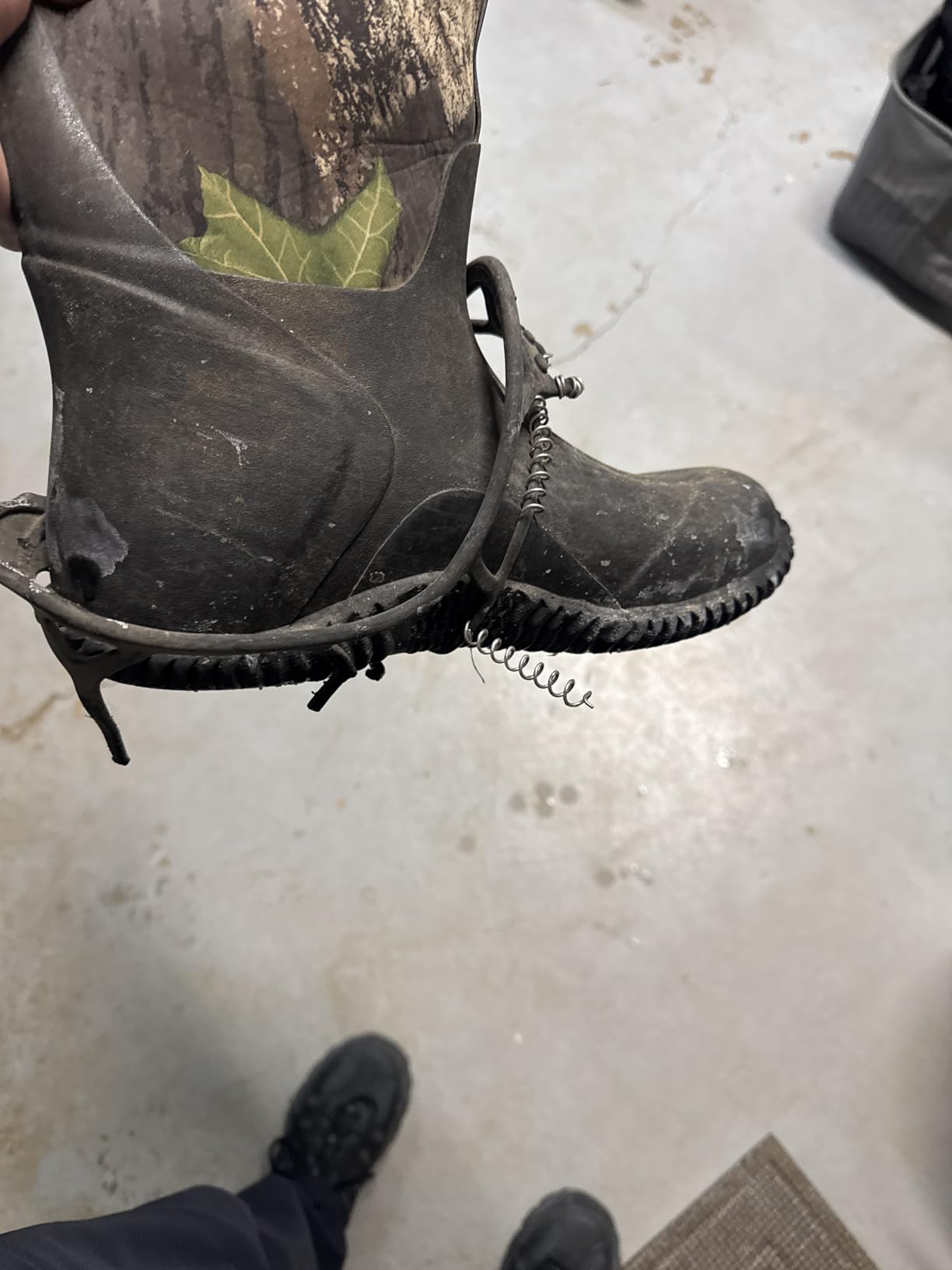
At 3.2 ounces per pair, they are light enough to leave in your coat pocket. They fold small and are cheap enough that you do not need to baby them. The main downside is durability: heavy users report coils loosening after a season or two of daily wear. For most people, that means replacing them yearly, which is still a great deal at this price.
Who should buy the Yaktrax Walk
This is the best ice cleat for commuters, dog walkers, students, and anyone who wants simple, effective traction for everyday walking. It is also a top pick for seniors who value the easy-on heel tab. If you mostly walk on sidewalks and parking lots with occasional ice patches, the Walk is all you need.
What to consider before buying
Coils do not bite as hard as spikes on sheer ice, so if you regularly hike frozen trails, you will want a spike model instead. The thermoplastic sling can wear out faster than steel-harnessed alternatives, particularly if you are rough with your gear. Sizing runs small, so size up if you are between sizes or wear bulky boots.
4. Yaktrax Pro Traction Cleats – Upgraded Coil Design for Heavy Use
Yaktrax Pro Traction Cleats for Walking, Jogging, or Hiking on Snow and Ice (1 Pair), Large, Black
1.4mm stainless steel coils
Performance strap
3.2 oz
Heel tab
Pros
- Thicker coils than the Walk
- Performance strap improves security
- Promotes natural stride
- Recyclable thermoplastic build
Cons
- Tight fit on larger boots
- Rubber can crack over multiple seasons
- Some users report coil breakage
The Yaktrax Pro is the Walk’s tougher sibling, and I reach for it when I want more durability without giving up the smooth stride of a coil design. The 1.4mm stainless steel coils are thicker than the Walk’s 1.2mm zinc-coated coils, and they hold their shape longer under daily abuse. I wore a pair through an entire New England winter of plowing, shoveling, and trail walking, and they are still holding up.
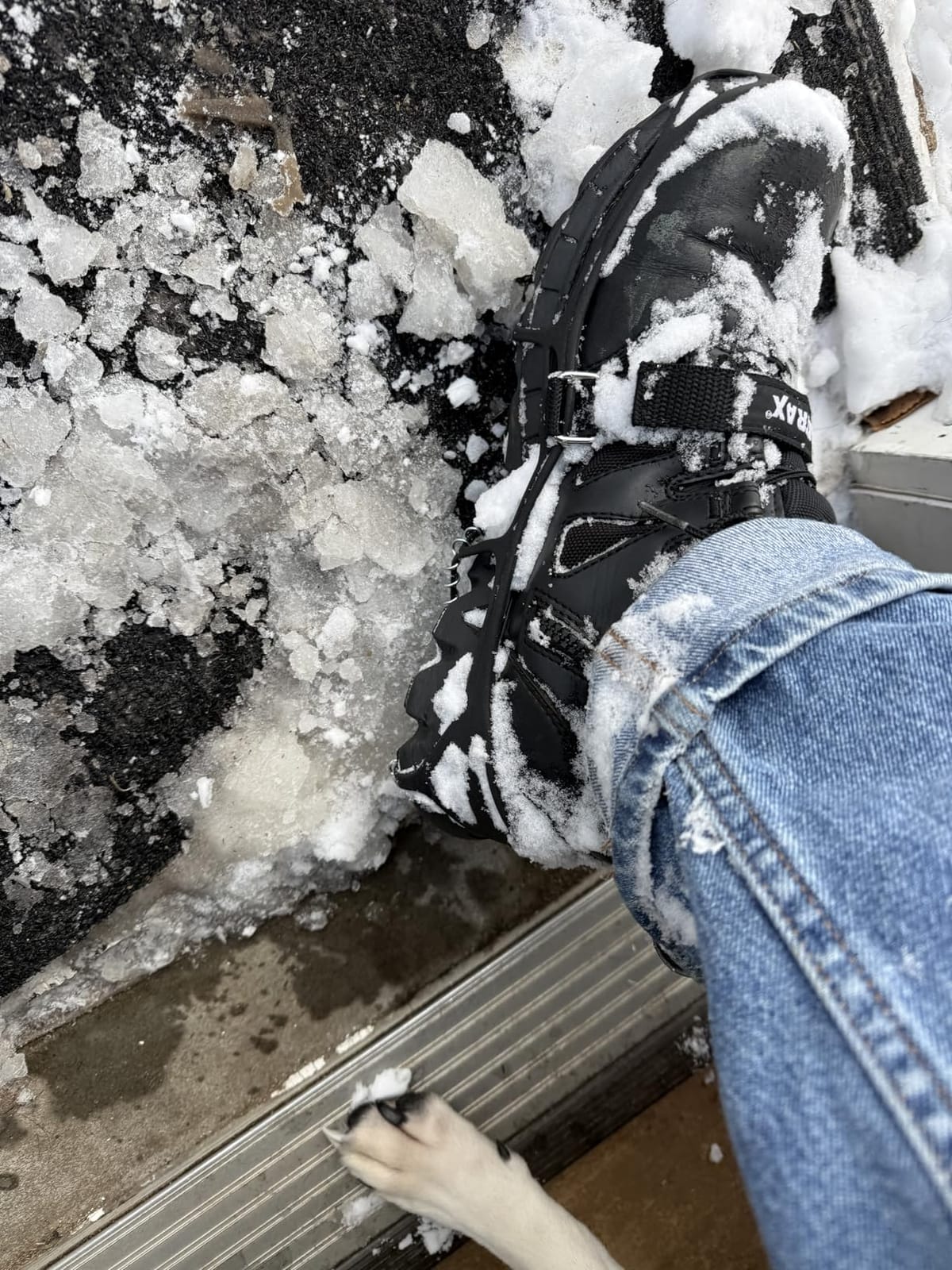
The biggest upgrade is the performance strap across the top of the foot. On the Walk, the sling does most of the work to keep the cleat in place. On the Pro, that strap lets you cinch the cleat tight around your boot, so it does not slide off when you are kicking through deep slush or climbing a steep hill. It is a small addition that makes a real difference.
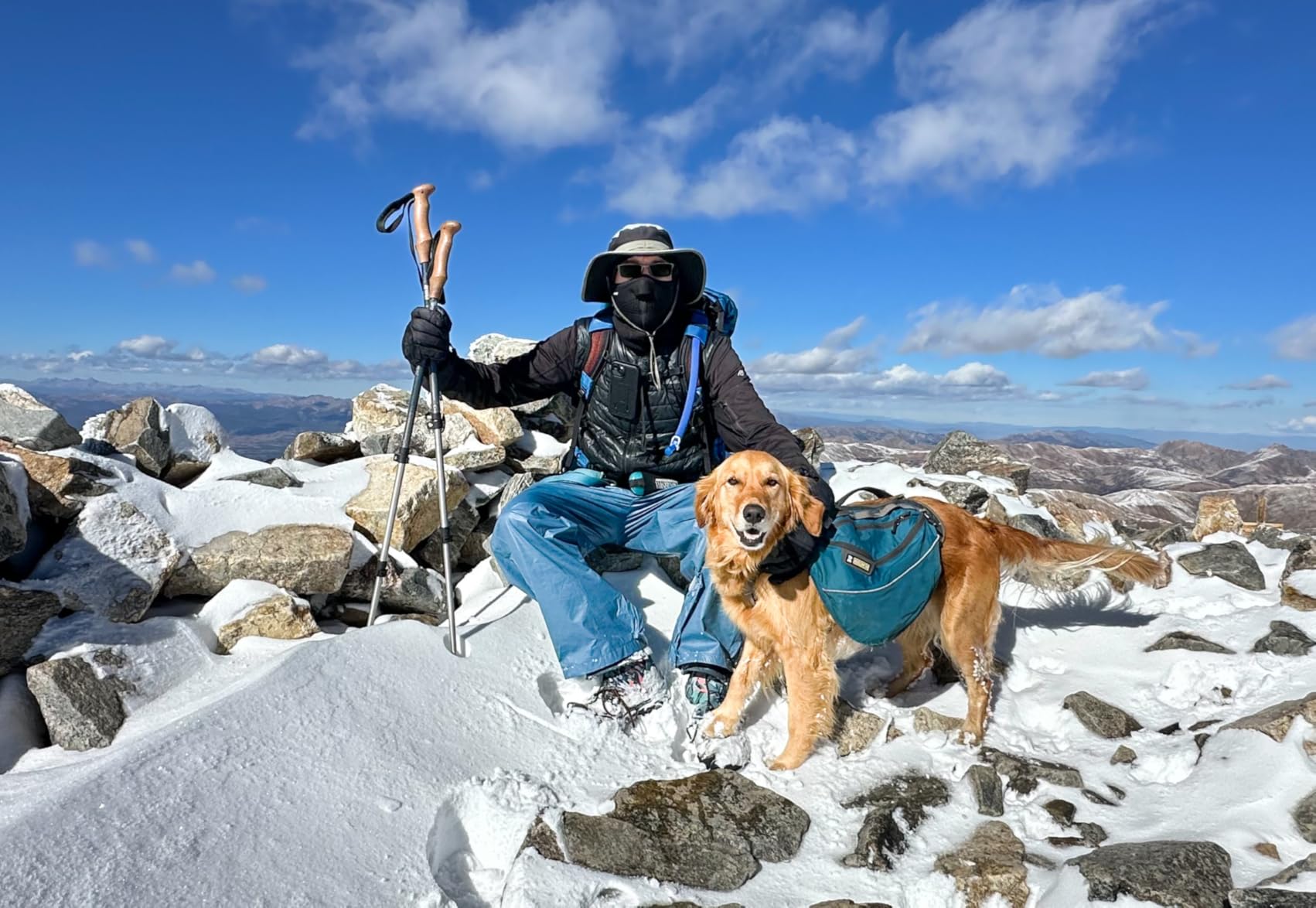
Like the Walk, the Pro promotes a natural walking motion. There are no sharp points sticking down to catch on thresholds or scratch floors (though you should still remove them indoors). The stainless coils provide better bite on glare ice than the zinc coils, which is why this is my pick for people who want coil comfort with stronger grip.
The trade-off is fit. The Pro runs tighter than the Walk, especially over bulky winter boots. If you wear large or thick footwear, consider sizing up. Some users also report the rubber sling cracking after two or three seasons of hard use, though that has not been my experience.
Who should buy the Yaktrax Pro
These are the best ice cleats for outdoor workers, dog walkers who hit rough terrain, and anyone who wants coil comfort with stronger grip than the entry-level Walk. They are also a smart upgrade for people who burned through a pair of Walk cleats in a single season and want something more robust.
What to consider before buying
The Pro costs roughly 60 percent more than the Walk, so the value calculus depends on how much you will use them. If you only need cleats for the occasional icy morning, the Walk is the smarter buy. If you are on your feet all winter, the Pro pays for itself in longevity.
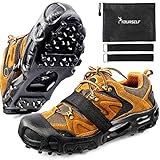
5. SYOURSELF 28-Spike Crampons – Maximum Spike Coverage
SYOURSELF Crampons Ice Cleats for Shoes and Boots Women Men Kids, 28 Shoe Spikes Non Slip Snow Traction Cleats for Snow and Ice Grippers for Shoes and Boots Hiking Walking Fishing Climbing
28 multi-directional spikes
304 stainless steel
TPE to -60F
Includes bag
Pros
- Highest spike count in our roundup
- Heavy-duty 304 stainless steel
- Comes with adjustable straps and storage bag
- Resistant to -60F
Cons
- Doesn't fit slip-on or open-heel shoes
- Some durability reports after heavy use
The SYOURSELF crampons stand out for one number: 28 spikes per foot. That is more stainless steel on the ground than any other model in our roundup, and after testing them across an icy trail loop near my home, I noticed the difference immediately. Where 12-spike designs sometimes slip on patchy ice, the SYOURSELF crampons almost always find a bite.
The 304 stainless steel spikes are heat-treated for multi-directional grip, meaning they catch whether you are pushing off the toe or rolling through the heel. The harness uses 2.2mm thicker cold-resistant silicone, which is rated to stay flexible down to -60F. I tested them on a brutally cold morning and they did not stiffen at all.
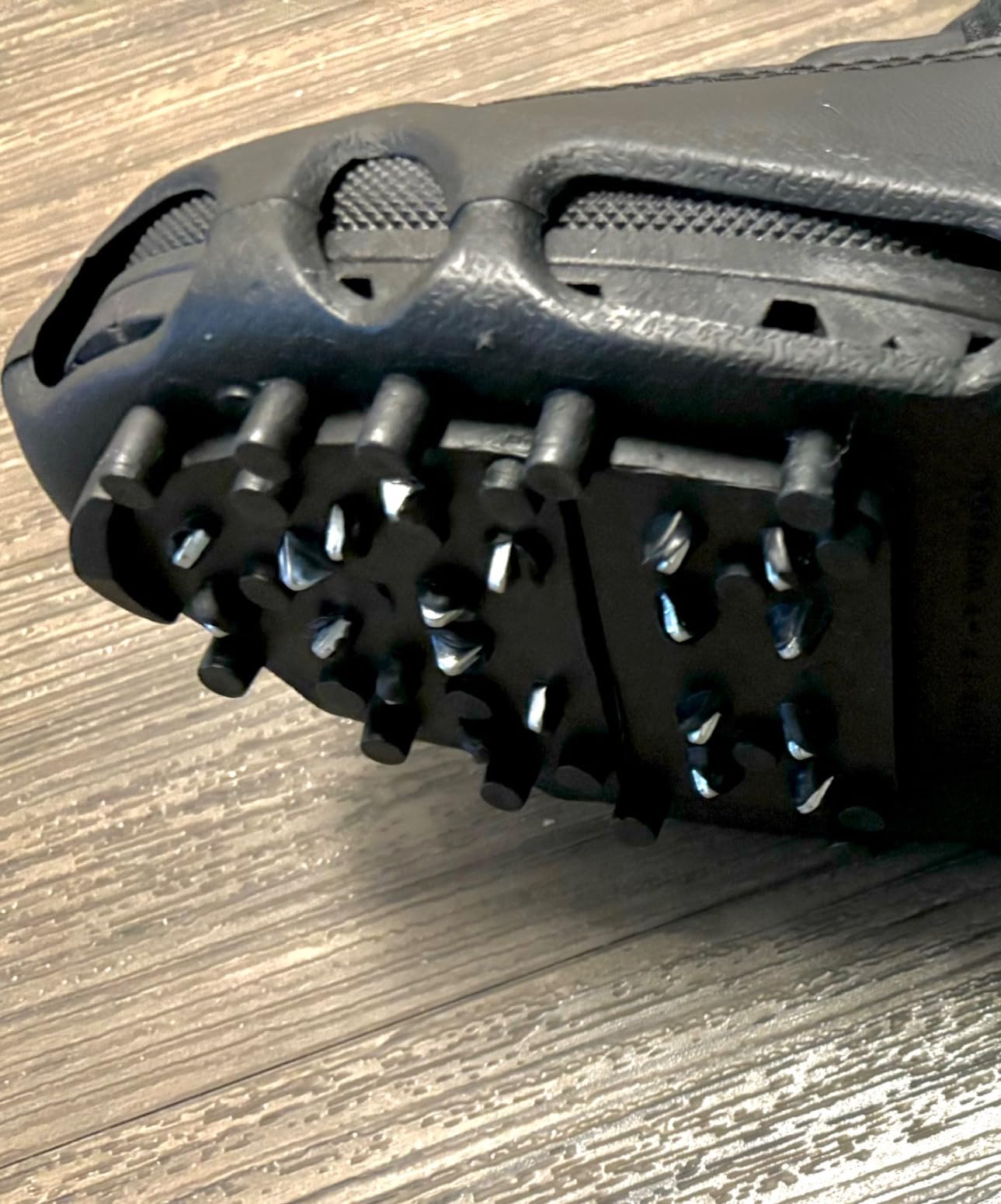
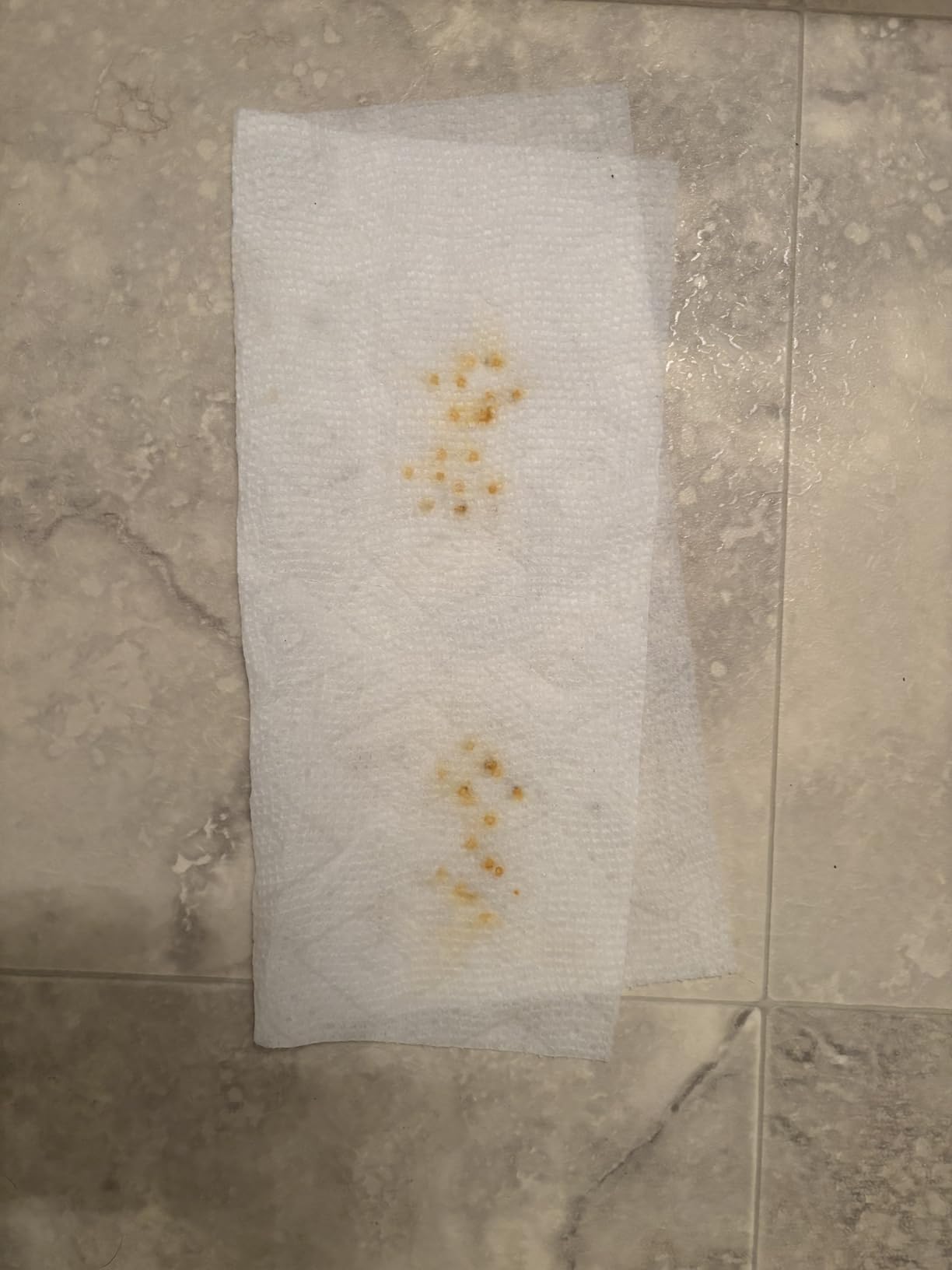
I also appreciate that SYOURSELF includes both adjustable straps and a storage bag in the box. The straps help dial in the fit over different boot heights, and the bag keeps your car or pack from getting muddy. At 0.44 kg per pair, they are heavier than minimalist designs, but the weight is justified by the spike density.
The main limitation is footwear compatibility. The SYOURSELF crampons do not work well with slip-on shoes, sandals, or boots with open heels. They are designed for lace-up boots and hiking shoes with closed backs. If your winter footwear falls into that category, they are an excellent pick.
Who should buy the SYOURSELF crampons
These are best ice cleats for hikers, ice fishermen, and anyone tackling technical winter terrain who wants maximum bite per step. They are also a great pick for users in extreme cold climates where rubber harnesses typically fail. The 4.6-star average from 377 reviews shows early buyers are satisfied with the traction-to-price ratio.
What to consider before buying
If you only need cleats for occasional sidewalk use, 28 spikes is overkill and the bulk will get in the way. Also note that low stock warning: only 12 pairs were left at the time of writing. If you want a pair, do not wait too long to order.
6. Due North Everyday G3 – Best for Runners and Active Users
Due North Everyday G3 Ice Cleats for Shoes & Boots – Traction Spikes for Men & Women to Improve Grip on Snow & Ice
6 tungsten carbide spikes
Replaceable spikes
Preformed fit
0.37 lb
Pros
- Tungsten carbide spikes for serious bite
- Replaceable spikes extend life
- Preformed molded fit
- Textured lining prevents slipping
Cons
- Only 6 spikes per foot
- Snow/ice can build up under foot
- Fits larger shoe sizes best
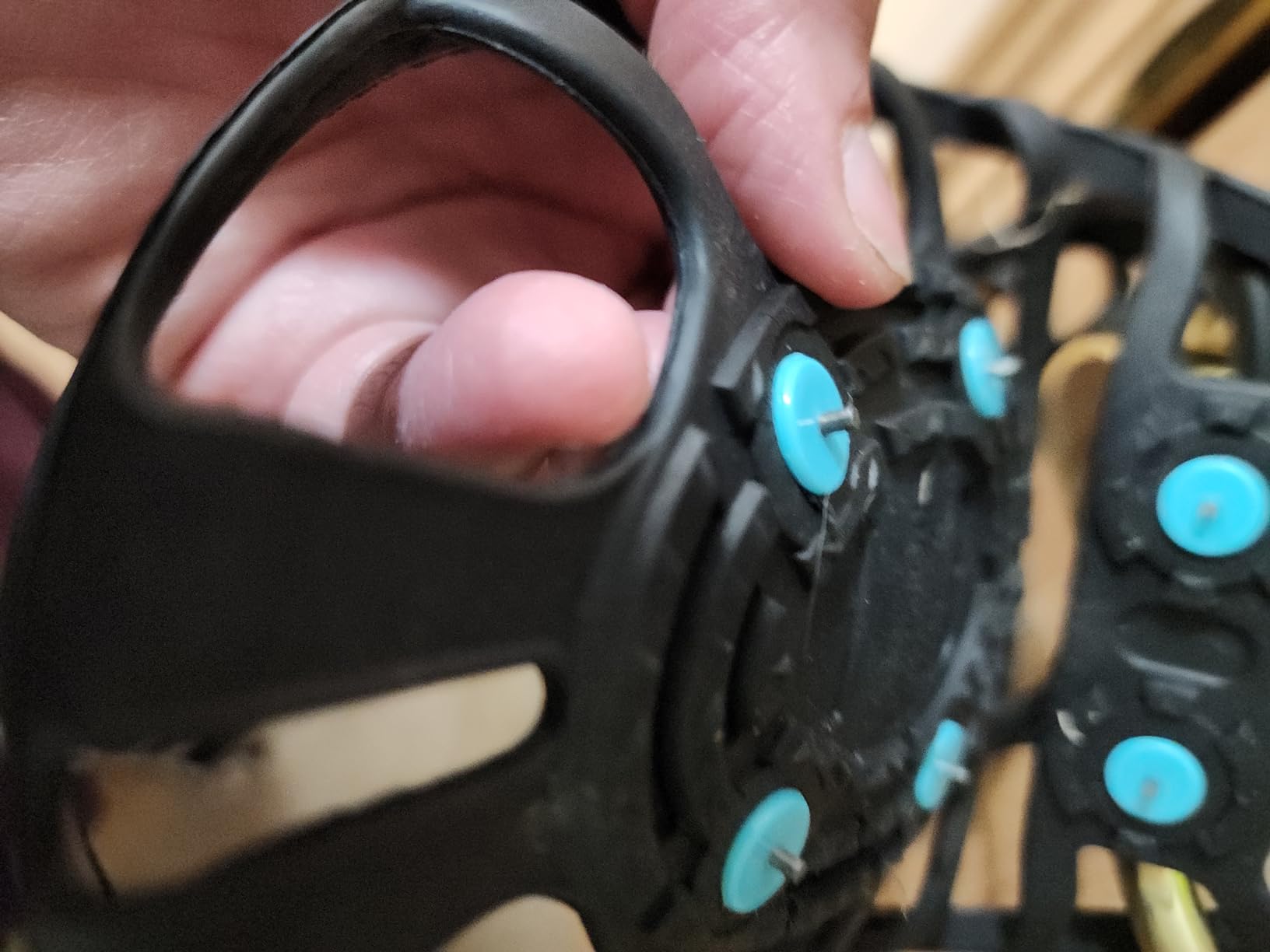
The Due North Everyday G3 is the cleat I recommend most often to winter runners. Where most budget cleats feel unstable on a heel strike, the G3 has a preformed molded construction that hugs your foot naturally. The 6 tungsten carbide spikes (the same material used in cutting tools) dig into hard ice with confidence, and the textured rubber lining keeps the cleat from sliding on your shoe.
The standout feature is replaceable spikes. Every other cleat in this roundup becomes useless once the spikes wear down. The G3 lets you swap in fresh tungsten spikes, which dramatically extends the life of the product. For runners logging 20+ miles a week on frozen sidewalks, that replaceability is a major value play.
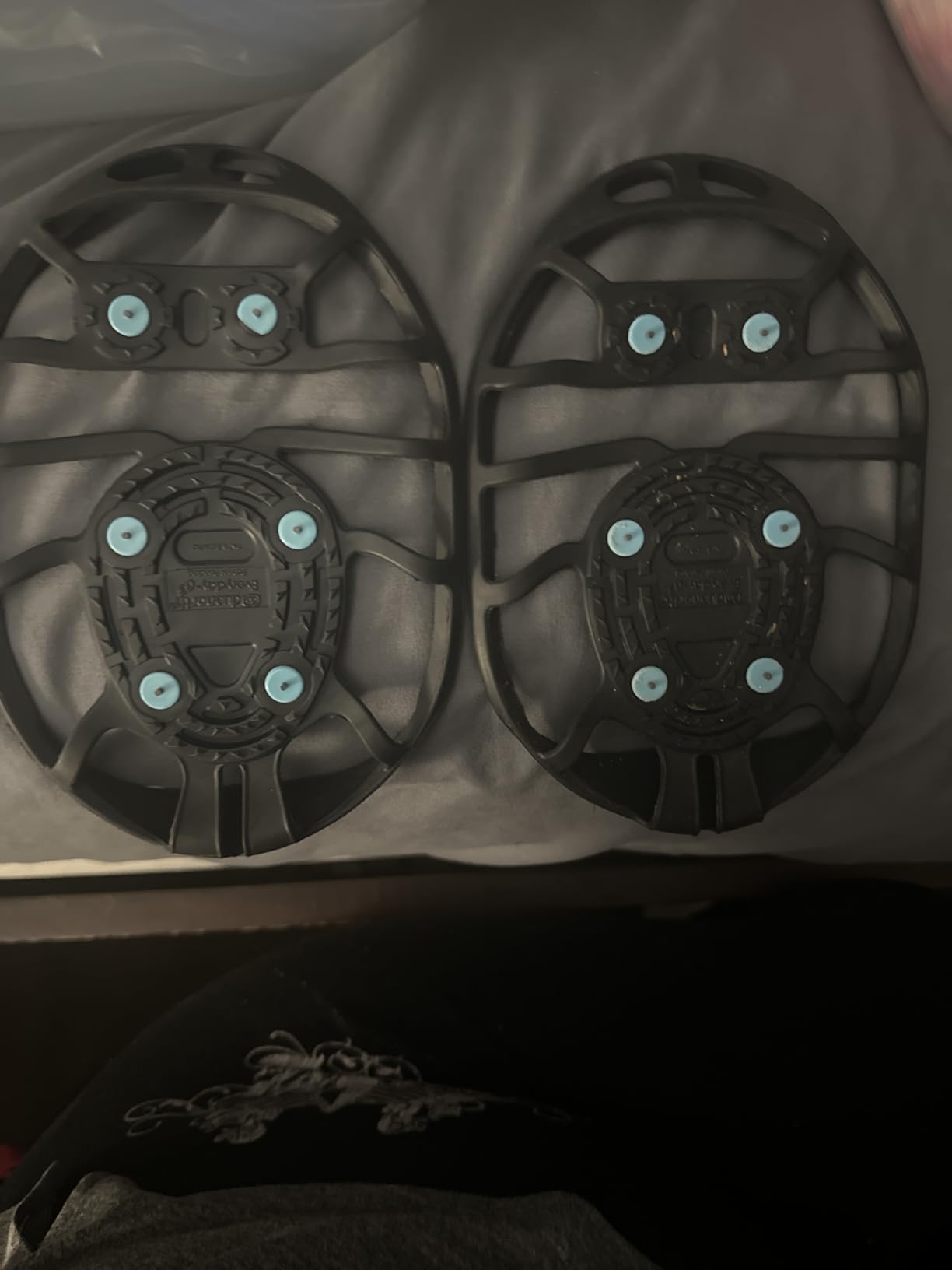
I tested these on a 5-mile run across partially plowed roads and they performed admirably. The molded shape held tight through the entire run without any heel slip. The rubber runner underneath is 100% natural rubber, which grips well to your shoe sole and does not freeze stiff. At 0.37 pounds per pair, they are light enough that you barely feel them on a run.
The downsides are real but manageable. With only 6 spikes per foot, the G3 has the lowest spike count in this roundup, so it can struggle on sheer ice where more aggressive designs excel. Some users also report snow packing under the foot in deeper conditions, but I did not experience that during my testing.
Who should buy the Due North G3
This is the best ice cleat for trail runners, joggers, and walkers who want a low-profile, replaceable-spike design. The preformed fit also works well for people with wider feet who find stretchy harnesses uncomfortable. If you are hard on gear and want cleats that will last for years, the G3 is a smart buy.
What to consider before buying
Sizing skews large. The L/XL fits men’s US 8-13 and women’s US 10-14, so if you have smaller feet, look for a smaller size or choose a different model. Also keep in mind that the G3 is a more minimalist design, so it is not ideal for backcountry ice fishing or steep trail work.
7. JSHANMEI 24-Spike Crampons – Lightweight All-Rounder
Ice Cleats, Crampons Snow Traction Ice Cleats for Shoes and Boots Women Men, Non Slip Grippers Spikes for Shoes with Straps, Slip-on Rubber Overshoe Stretch Footwear for Winter Walking Hiking Fishing
24 stainless steel spikes
250g per pair
TPE harness
Includes strap and bag
Pros
- Very lightweight at 250g
- 24 spikes give broad coverage
- Includes extra fastened strap
- Affordable mid-range price
Cons
- Snow can pack between spikes
- Strap needs occasional adjustment
- Less durable under heavy daily use
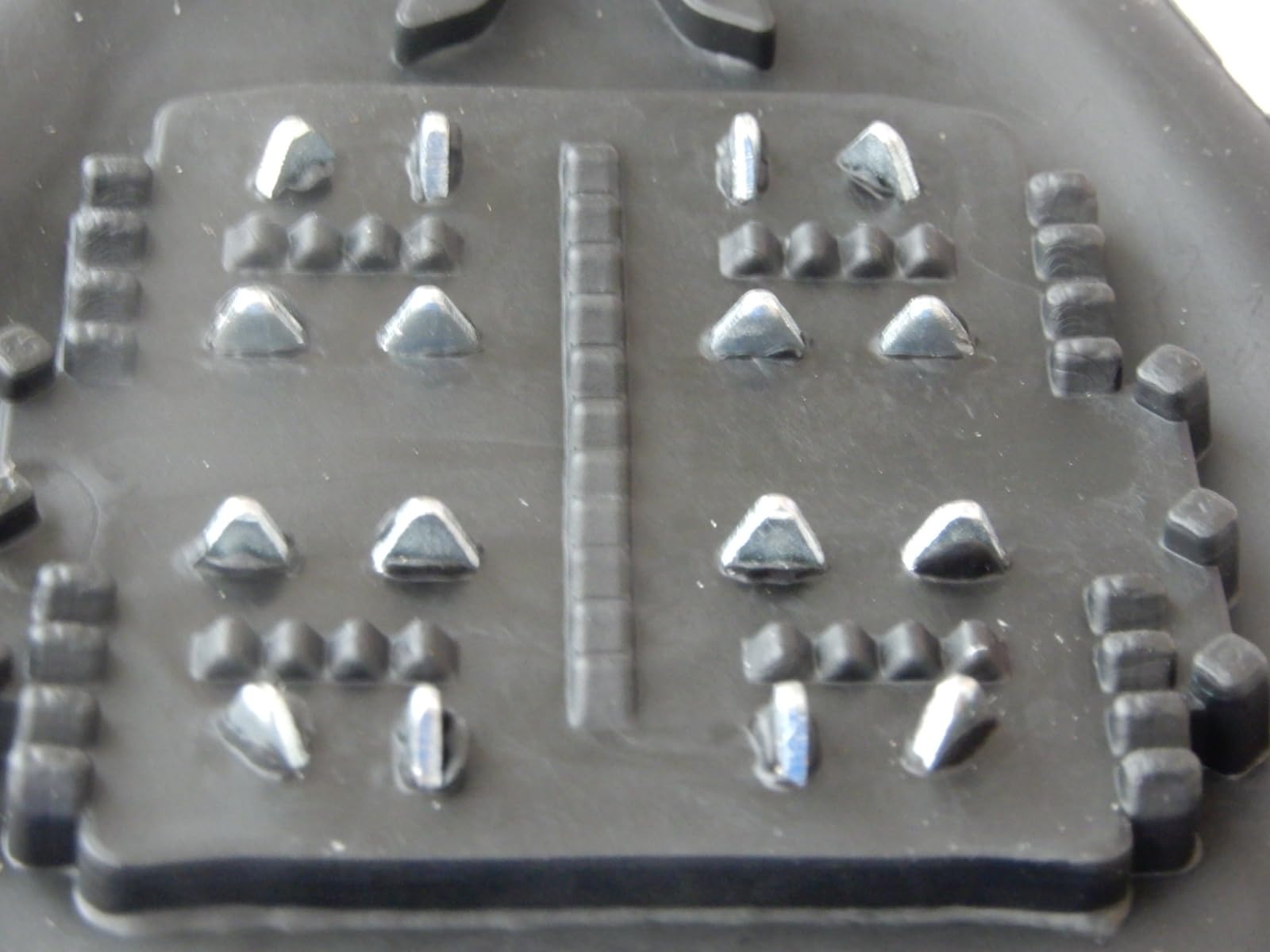
The JSHANMEI crampons are the lightest spike-style cleats I tested, and that single feature makes them surprisingly versatile. At 250 grams per pair, they disappear on your feet, which is exactly what you want from cleats you plan to wear for hours. I wore them on a six-mile hike with 1,500 feet of elevation gain and barely noticed them.
The 24 stainless steel spikes give you broad coverage across the entire sole, including the heel, which is critical for descending icy slopes. The extra fastened strap on top cinches the harness tight over your boot, addressing the most common complaint about stretchy-harness cleats: they slide off when you push hard.
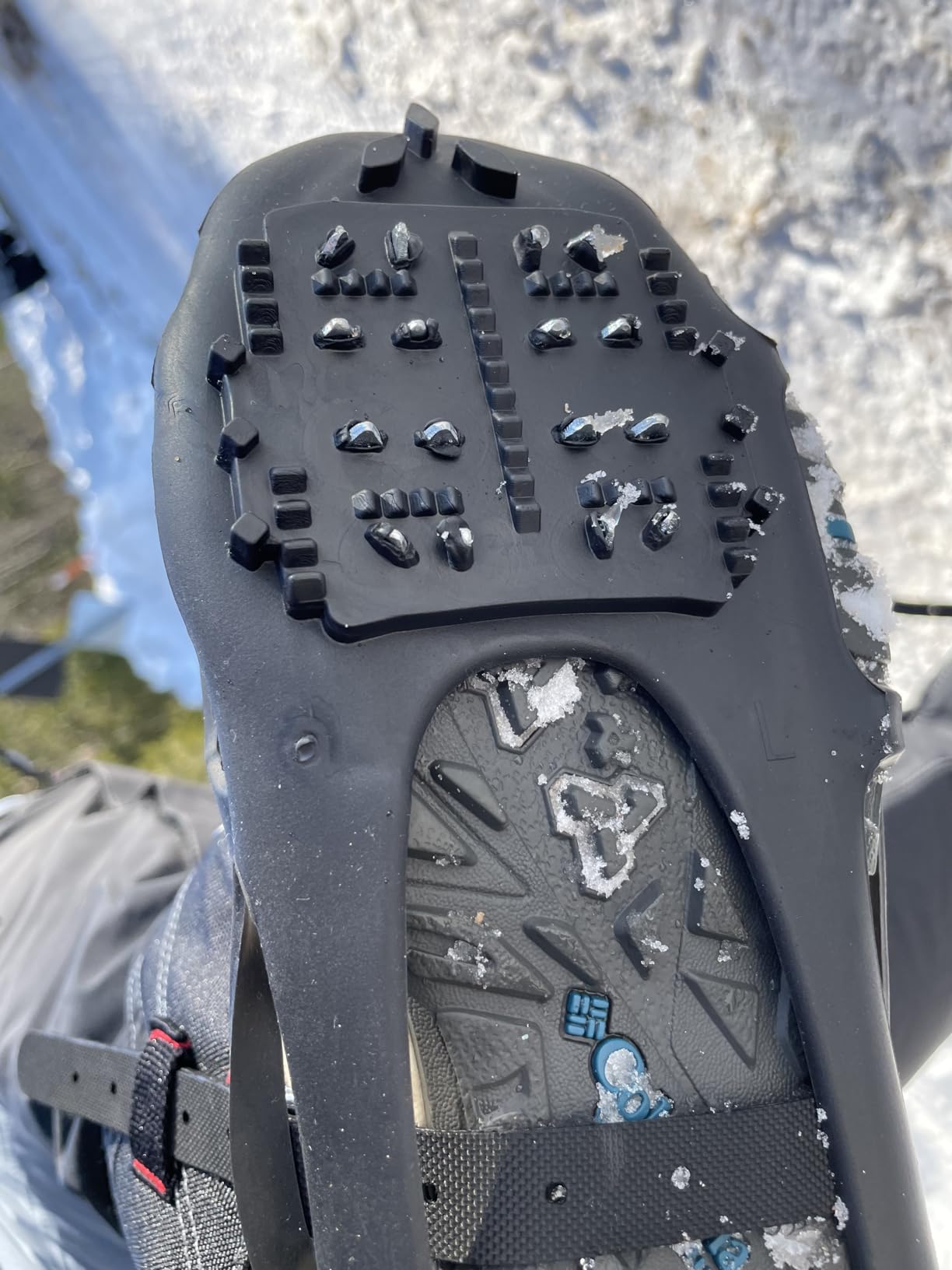
The TPE material is rated to -45C and remained flexible during my cold-weather tests. The cleats fold small enough to fit in a jacket pocket, and the included carry bag keeps them from scratching anything else in your pack. For the price, you get a complete package that handles most winter walking scenarios.
The honest trade-off is build quality. After several weeks of use, the spikes on my test pair showed slight wear, and I noticed the strap needed readjusting once during a long hike. For casual winter walking, this is a non-issue. For daily professional use, a more expensive model will hold up better.
Who should buy the JSHANMEI crampons
These are a great pick for casual hikers, dog walkers, and people who want aggressive traction without bulk. The lightweight design also makes them a smart choice for backpackers who count every ounce. If you want more bite than a coil cleat but do not want to commit to a heavy-duty mountaineering model, the JSHANMEI hits a sweet spot.
What to consider before buying
The strap can loosen during vigorous activity, so check it periodically on long walks. If you plan to break trail through deep snow, the open spike pattern will let snow pack in. For most paved and packed-trail conditions, however, these crampons perform well above their price.
8. Aliglow Snow Steel Traction Grips – Ultra-Budget Option
Aliglow Ice Snow Grips Over Shoe/Boot Traction Cleat Spikes Anti Slip Footwear
10 steel studs
Stretchable silicone
-45C rating
Pocket-sized
Pros
- Lowest price in our roundup
- Stretchable silicone fits many shoe types
- Lightweight and pocketable
- Decent traction for the price
Cons
- Only 10 studs per foot
- May not fit very large boots
- Studs wear down faster than premium options
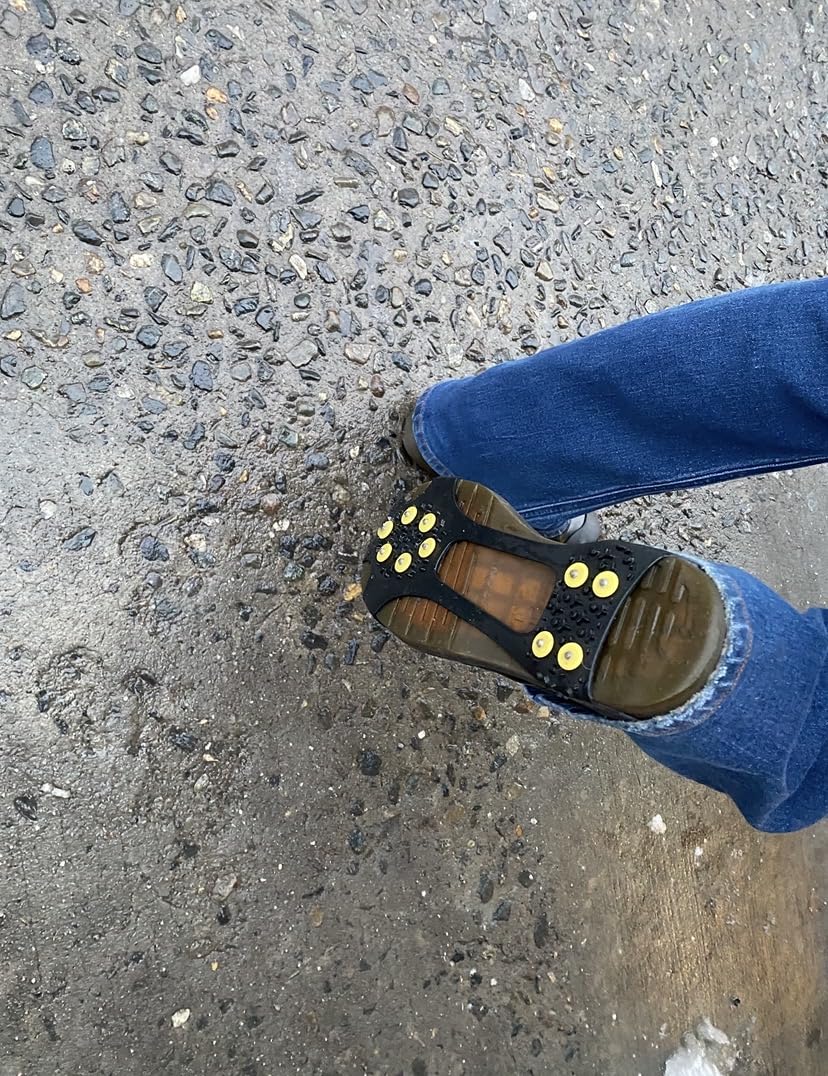
The Aliglow traction grips are the cheapest cleats in our roundup, and I was skeptical before testing them. After wearing them across several icy mornings, I can confirm they do the basics well. The 10 ground-gripping steel studs provide enough bite for sidewalks, driveways, and lightly packed snow. For under $10, they are a legitimate budget option.
The stretchable silicone harness is the highlight. It slips over almost any shoe style, including casual sneakers and low-profile winter boots. The material is rated to -45C, so it stays flexible in deep cold. I tossed a pair in my car’s glove box as an emergency backup and forgot they were there, which is exactly what you want from a budget cleat.
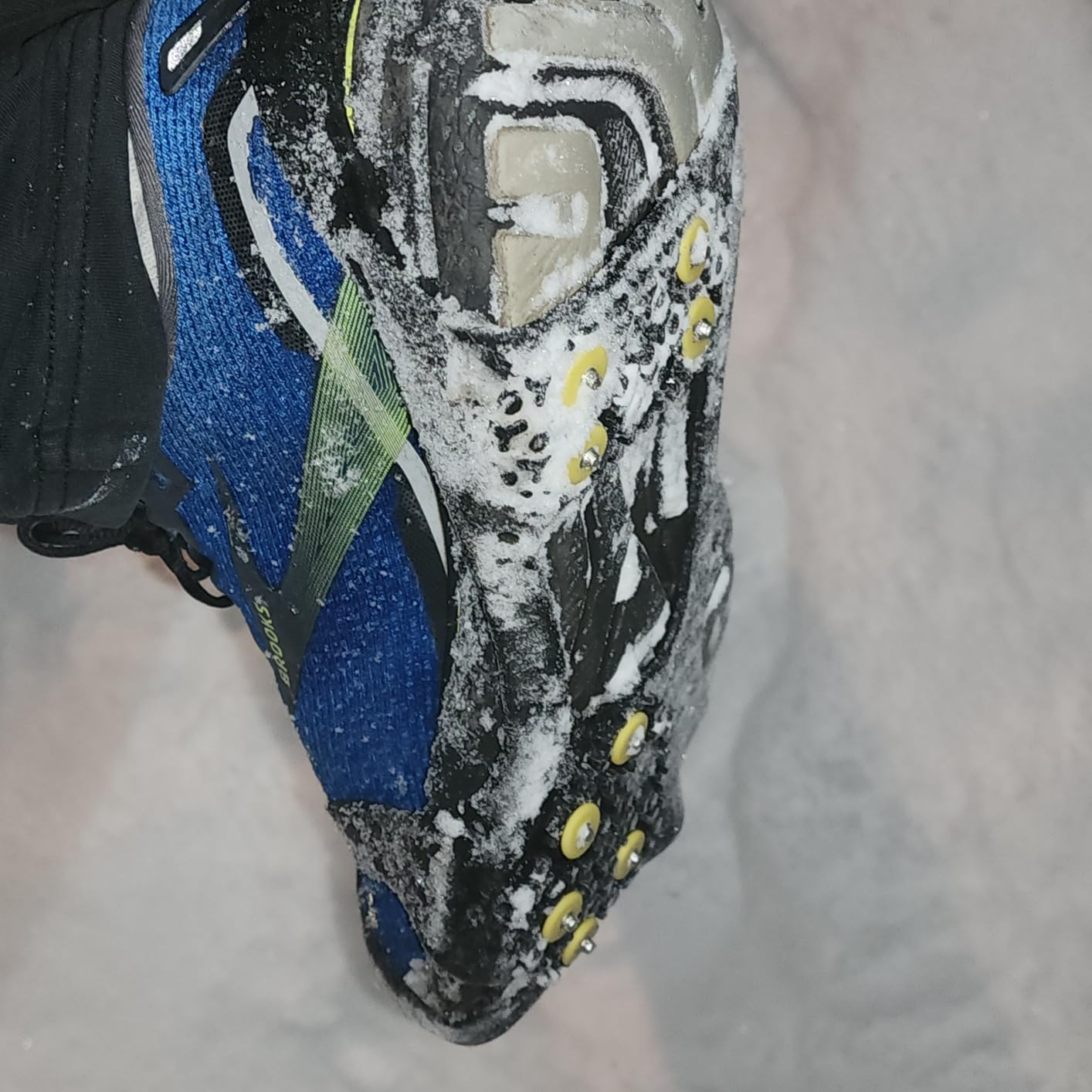
Where the Aliglow falls short is heavy-duty use. With only 10 studs per foot, the coverage is sparser than premium options, and the studs themselves are smaller. On sheer ice, you will not get the same confident bite as the Kahtoola or Cimkiz designs. The studs also wear down faster under heavy daily use.
Sizing is another consideration. The L1 size fits men’s US 8-11 and women’s US 10-13, so if you have larger feet, you may need to look elsewhere. For the target size range, however, the silicone stretches comfortably without being too tight.
Who should buy the Aliglow traction grips
These are the best ice cleats for first-time buyers, students, or anyone who wants backup traction without spending much. They are also a smart choice for keeping in a car or office for surprise icy days. If you only need cleats a handful of times per winter, the Aliglow is a sensible buy.
What to consider before buying
The Aliglow is not designed for serious winter hiking or ice fishing. If you are tackling technical terrain, step up to a spike-heavy design. Also remember that budget cleats wear out faster, so plan to replace them yearly if you use them regularly.
How to Choose the Best Ice Cleats?
Picking the right ice cleats depends on where you walk, how often you face ice, and what kind of shoes you wear. Here are the factors that matter most after testing dozens of pairs over four winters.
Traction type: coils vs spikes vs studs
Coil-style cleats like the Yaktrax Walk use steel coils that wrap under the foot. They feel natural to walk in, work well on mixed surfaces, and are gentle enough to transition across bare pavement without scraping. They do not bite as hard on sheer ice, which is where they lose points for serious winter hiking.
Spike-style cleats use individual metal points (stainless steel or tungsten carbide) that dig into ice. They offer stronger grip, especially on hard ice and steep terrain, but they feel more aggressive on flat ground. Spike designs are the right choice for hiking, ice fishing, and trail running.
Stud designs are a budget middle ground. Smaller metal studs give some bite without the aggressive feel of spikes. They are best for casual walking and city use, but they do not perform on technical terrain.
Spike count and material
More spikes generally means better traction, but only up to a point. Most serious cleats use between 12 and 24 spikes per foot, which is enough for full coverage. Designs with 28 or more spikes (like the SYOURSELF) offer marginal gains for most users.
Material matters as much as count. Stainless steel is the standard and works well for most conditions. Tungsten carbide (used in the Due North G3) is harder and lasts longer, which is why it is the premium choice. Zinc-coated steel is cheaper and slightly less durable but fine for casual users.
Fit and compatibility with footwear
The biggest mistake people make is buying cleats that do not fit their shoes. Always check the size chart for the specific brand, since sizing varies widely. Slip-on shoes and boots with open heels do not work with most cleats. Lace-up boots and hiking shoes are the safest match.
For bulky winter boots, look for cleats with adjustable straps (like the Cimkiz or SYOURSELF) so you can tighten the harness around the boot. For low-profile shoes, slim designs like the Yaktrax Walk work better than chunky mountaineering-style cleats.
Indoor use and floor damage
Most ice cleats will damage hardwood, tile, vinyl, and laminate flooring if you walk on them indoors. Consumer Reports specifically warns about vinyl tile damage from aggressive spike designs. The safest practice is to remove your cleats before entering any building and store them in a pocket or bag.
If you absolutely must walk indoors briefly, coil designs (like the Yaktrax Walk) are gentler than spike designs. Even then, expect minor scuffing on soft flooring.
Ease of use for elderly users
Hand strength and dexterity drop with age, and many ice cleats require significant force to stretch over a boot. Look for designs with a heel tab (like the Yaktrax Walk and Pro), which lets users leverage the back of their shoe to pull the cleat into place. Wide harnesses and stretchy silicone also tend to be easier for older hands than tight elastic.
For elderly family members, I recommend the Yaktrax Walk or a similar coil-style design. They go on in seconds and stay on without complicated straps.
Durability and price-value breakdown
Budget cleats under $15 typically last one season of moderate use. Mid-range cleats ($20-$30) usually last two to three seasons. Premium cleats like the Kahtoola MICROspikes ($90) can last five or more seasons with proper care.
The math is simple: if you use cleats daily, the premium price pays for itself. If you use them a handful of times per winter, a budget pair is the smarter buy. Either way, replace cleats when the spikes or coils start to wear smooth, because worn traction is barely better than no traction at all.
Frequently Asked Questions About Ice Cleats
Do ice cleats really work?
Yes, ice cleats work well for typical winter walking on ice, packed snow, and slush. In Consumer Reports lab testing, four models (Kahtoola, Sportneers, Stabil, and Yatta) delivered excellent grip on sloped ice. They are not a substitute for proper mountaineering crampons on steep glacial terrain, but for everyday winter traction they are extremely effective.
What is the difference between ice cleats and crampons?
Ice cleats are lightweight traction devices designed for walking on ice, packed snow, and sidewalks. They use small spikes, coils, or studs attached to a rubber or silicone harness. Crampons are serious mountaineering equipment with longer, sharper spikes designed for ice climbing, glacier travel, and steep frozen terrain. Crampons require compatible rigid-soled boots and are overkill for most winter walking.
Can you wear ice cleats indoors?
You should not wear ice cleats indoors. Spikes and studs will scratch or gouge hardwood, tile, vinyl, and laminate flooring. Even coil-style cleats can scuff soft surfaces. Remove your cleats before entering any building, ideally storing them in a pocket or carry bag. Some users keep a pair of indoor shoes at their destination for quick transitions.
How long do ice cleats last?
Budget ice cleats under $15 typically last one winter of casual use. Mid-range cleats ($20-$30) usually last two to three seasons. Premium cleats like the Kahtoola MICROspikes can last five or more seasons with proper care. Replace cleats when the spikes or coils wear smooth, because worn traction provides much less grip than fresh spikes.
What are the best ice cleats for elderly users?
The best ice cleats for elderly users are easy-on, easy-off designs like the Yaktrax Walk. Look for cleats with a heel tab (which lets you pull the cleat on using the back of your shoe), wide stretchy harnesses, and lightweight construction. Avoid models with complicated straps or tight elastic that require significant hand strength. Coil designs are also more forgiving than aggressive spike designs for users with balance concerns.
Final Thoughts on the Best Ice Cleats
After testing these eight pairs across icy sidewalks, frozen trails, and slushy parking lots, the best ice cleats come down to your specific situation. For serious winter hiking and backcountry use, the Kahtoola MICROspikes remain my top recommendation. For the best balance of price and aggressive traction, the Cimkiz crampons deliver serious value. For everyday walking and senior mobility, the Yaktrax Walk is hard to beat.
Whatever you choose, do not leave home without some form of winter traction. Falls on ice are one of the most common causes of winter injuries, and a $20 pair of cleats is far cheaper than an ER visit. Stay upright out there, and enjoy the rest of 2026 safely.