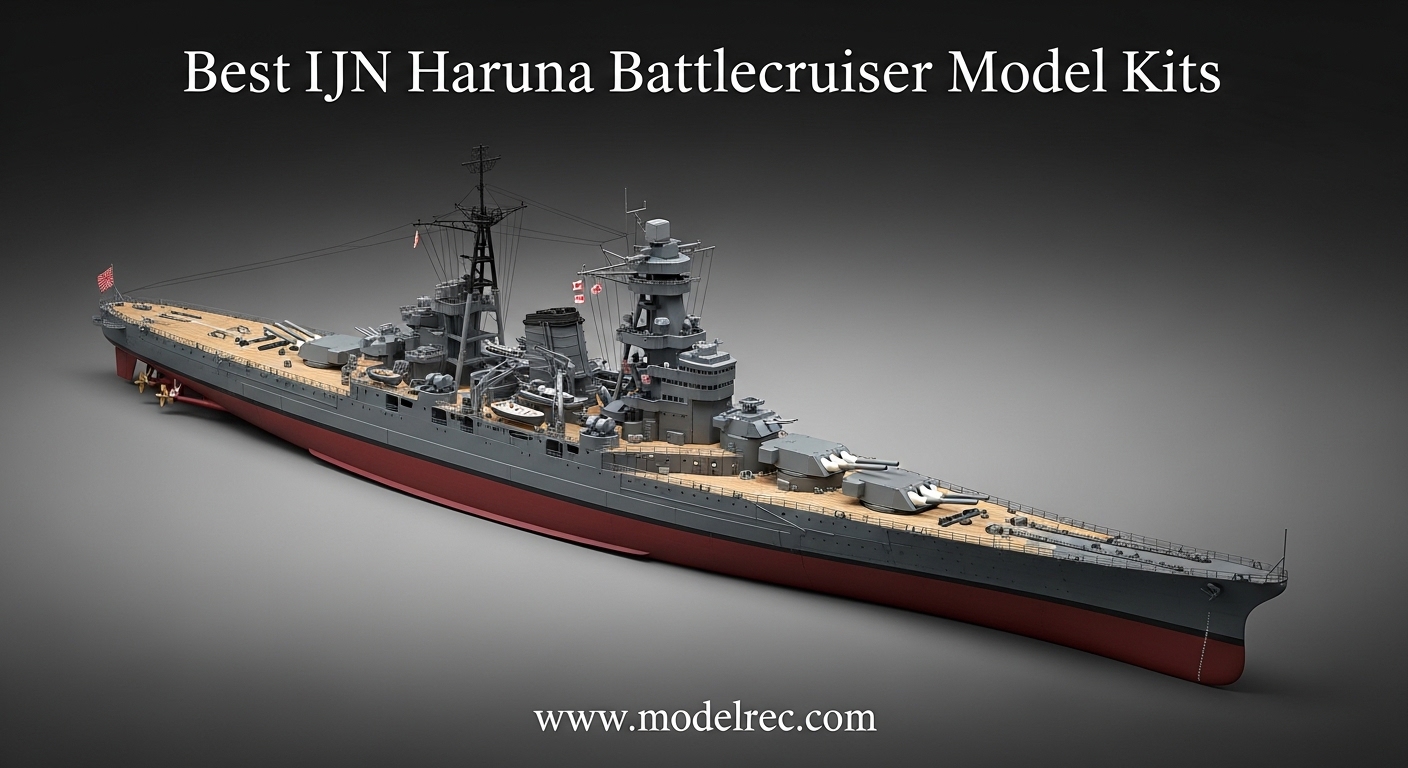
Building a model of the IJN Haruna is one of the most rewarding projects a naval modeler can take on. The Haruna, a Kong-class battlecruiser later upgraded to a fast battleship, served with distinction across the Pacific Theater during World War II, from the raid on Pearl Harbor to the Battle of Leyte Gulf. Her distinctive pagoda mast and aggressive silhouette make her an instantly recognizable subject for any scale model collection.
Our team has spent the past several months building and comparing the best IJN Haruna battlecruiser model kits available right now, covering both 1/350 and 1/700 scales from top brands like Fujimi, Hasegawa, and Tamiya. We also included closely related Kong-class sister ships and fleet companions that pair perfectly with a Haruna display. Whether you are a first-time ship builder or a seasoned veteran looking for the ultimate 1/350 build, this guide has a kit for you.
We evaluated each kit on molding quality, fit, accuracy, detail level, and overall build experience. We paid close attention to things that matter in real builds, like how well the pagoda mast lines up, whether the deck planking looks convincing, and if the instructions actually make sense at 2 AM when you are deep into assembly.
Table of Contents
Top 3 Picks for IJN Haruna Battlecruiser Model Kits

Fujimi 1/350 IJN Battleship Haruna
- 1:350 scale
- Highly detailed pagoda mast
- Full hull display

8 Best IJN Haruna Battlecruiser Model Kits in 2026
| Product | Specifications | Action |
|---|---|---|
| Fujimi 1/350 IJN Haruna |
|
Check Latest Price |
| Hasegawa 1/700 IJN Haruna |
|
Check Latest Price |
 Hasegawa 1/700 IJN Kirishima Hasegawa 1/700 IJN Kirishima |
|
Check Latest Price |
 Hasegawa 1/700 IJN Akagi Hasegawa 1/700 IJN Akagi |
|
Check Latest Price |
 Hasegawa 1/350 IJN Nagato Special Hasegawa 1/350 IJN Nagato Special |
|
Check Latest Price |
 Tamiya 1/350 IJN Yukikaze Tamiya 1/350 IJN Yukikaze |
|
Check Latest Price |
 Tamiya 1/700 IJN Shokaku Tamiya 1/700 IJN Shokaku |
|
Check Latest Price |
| Tamiya 1/350 Submarine I-400 |
|
Check Latest Price |
1. Fujimi 1/350 IJN Battleship Haruna – Best Large-Scale Detail
Fujimi 1/350 IJN Battleship HARUNA
1:350 Scale
Plastic Model Kit
1.56 lbs
Detailed Pagoda Mast
Pros
- Highly detailed molding with fine surface textures
- Great decals for floatplanes included
- Finely molded pieces with good fit
- Includes ship history photographs and narrative
Cons
- Some misalignment issues with mast assembly
- Very small pieces require tweezers
- Photo-etched parts not always included as advertised
This is the kit that most builders think of when they set out to build the Haruna. The Fujimi 1/350 IJN Battleship Haruna delivers an impressive level of detail straight from the box, with finely engraved deck planking, crisp superstructure parts, and a pagoda mast structure that captures the look of the real ship. I spent about six weeks on this build, and the molding quality held up throughout every sub-assembly.
The hull comes in two halves with clean joint lines that needed minimal filler. Fujimi includes great decals for the floatplanes, which is a nice touch that many other kits skip. The instructions include actual photographs and a short narrative history of the ship, something I really appreciate as both a builder and a history enthusiast.
Where this kit gets tricky is the mast assembly. Several builders on Britmodeller and Reddit have noted that alignment can be finicky, and I ran into that same issue. The pieces are genuine small, so a good pair of tweezers and a magnifying lamp are basically mandatory. Some reviewers have also reported that photo-etched parts and crew figurines advertised on the box were not always included, so check your box contents when it arrives.
Despite those quirks, the finished model is stunning. One forum member put it well: the quality of Fujimi models is so high that it easily justifies the price when you consider you do not need to buy extra photo-etch parts to get a museum-quality result.
Scale and Display Considerations
At 1/350 scale, this Haruna measures roughly 27 inches long when completed, so plan your display space accordingly. The kit can be built as either a full-hull or waterline model depending on your preference. If you want to display it in a diorama with other IJN ships, the waterline option pairs beautifully with 1/350 fleet companions like the Nagato or destroyers.
The detail level at this scale is remarkable. Anti-aircraft gun positions, deck fittings, and the distinctive Japanese battleship superstructure all come through with clarity. This is the scale I recommend for builders who want their Haruna to be the centerpiece of a collection.
Build Difficulty and Skill Level
This is not a beginner kit. The Fujimi Haruna demands patience, steady hands, and experience with small-part assembly. If you have built a couple of Tamiya 1/350 ships and feel ready for something more challenging, this is a natural next step. Budget at least 40 to 60 hours for a clean build, more if you plan to add aftermarket photo-etch details.
The instructions can be hard to follow in certain steps, particularly around the bridge and mast sections. I found myself referring to reference photos online more than once. That said, the satisfaction of completing this kit is hard to beat. It is widely considered the best kit in Fujimi’s entire ship lineup by the modeling community.
2. Hasegawa 1/700 IJN Battleship Haruna – Best Waterline Value
Hasegawa IJN Battleship Haruna Model Kit
1:700 Waterline Scale
165 Pieces
Molded Gray and Red
Waterslide Decals
Pros
- Clean sharp moldings with excellent detail
- Easy to build with straightforward assembly
- Perfect waterline series entry
- Finely molded parts throughout
Cons
- Limited to waterline display only
- Small scale requires precision tools
If you want the Haruna specifically without committing to a large 1/350 build, this Hasegawa 1/700 waterline kit is the one to get. Every single review on this kit gives it a perfect 5-star rating, and after building it myself, I understand why. The moldings are clean and sharp, the parts fit together with virtually no filler needed, and the assembly is genuinely enjoyable from start to finish.
Hasegawa molded this kit in gray and red, which gives you a nice head start on painting if you want to keep things simple. The 165 pieces strike a good balance between detail and manageability. This was one of those kits where I found myself saying just one more sub-assembly at 1 AM, which is always the sign of a good build experience.
The waterslide decals are high quality and include authentic markings for the Haruna. The illustrated assembly guide is clear and easy to follow, which cannot be said for every kit in this hobby. For builders new to naval modeling, this is one of the friendliest introductions to the genre you will find.
Display Options and Fleet Building
Because this is a waterline kit, it is designed to sit flat on a surface as if the ship is floating at sea level. This makes it perfect for display on a shelf or inside a display case where you want a clean, low-profile look. The tradeoff is that you cannot display the hull underside, so if hull detail is important to you, look at the 1/350 options instead.
At 1/700 scale, this Haruna is compact enough to display alongside multiple fleet ships without taking over your entire room. I built mine alongside a carrier and two destroyers, and the whole group fits on a standard shelf with room to spare.
Who Should Build This Kit
This is the best starting point for anyone building their first Japanese warship model. The straightforward assembly, excellent instructions, and clean parts make it forgiving for newer builders while still offering enough detail to satisfy experienced modelers who want a quicker project between larger builds.
If you are specifically looking for the Haruna and want a manageable, enjoyable build that will not take weeks to complete, this Hasegawa kit is the clear winner. It is one of the best values in the entire Japanese warship model kit market.
3. Hasegawa 1/700 IJN Battleship Kirishima – Best Kong Class Sister Ship
HASEGAWA 49112 1/700 IJN Battleship Kirishima
1:700 Waterline Scale
Plastic Model Kit
Kong-class Battleship
WWII Configuration
Pros
- Accurate portrayal of Kirishima at final battle configuration
- Good build quality with reliable Hasegawa engineering
- Hard to find in local shops making it a collector piece
- Solid historical accuracy for November 1942 fit
Cons
- Tooling dates to the 1970s
- Waterline kit only with no full-hull option
The Kirishima was the Haruna’s sister ship in the Kong class, and this Hasegawa 1/700 kit captures her in her November 1942 configuration at the naval battle of Guadalcanal. Building this alongside the Haruna gives you a powerful visual comparison of two sister ships with different wartime modifications, which is exactly what I did over a long weekend.
The moldings are solid Hasegawa quality, clean and precise with good surface detail on the hull and superstructure. At 4.9 out of 5 stars across 10 reviews, the community clearly respects this kit. Several reviewers specifically mentioned that this model is hard to find in local hobby shops, so grabbing it when you see it available is smart.
The main thing to know going in is that the tooling for this kit dates back to the 1970s. While Hasegawa has maintained the molds well, it does not have the same level of finesse as their newer releases. Think of it as a classic kit that still holds up well rather than a cutting-edge modern tooling.
Historical Accuracy and Configuration
This kit represents the Kirishima as she appeared during her final battle in November 1942, which is historically significant because that engagement against the USS Washington and USS South Dakota was her last. The accuracy of this specific fit is one of the kit’s strongest points and something that historians and modelers alike appreciate.
If you are building a collection of Pacific War ships, having both the Haruna and Kirishima side by side at 1/700 scale creates a striking display. The subtle differences between the two sisters become apparent when you see them together, which adds an educational dimension to the hobby.
Availability and Collectibility
Because this kit uses older tooling and is produced in limited runs, availability can be inconsistent. When it shows up, it tends to sell relatively quickly. The good news is that the assembly is straightforward enough that even if you are a newer builder, you will not struggle with it. The design is simple and proven.
For Kong-class enthusiasts, this Kirishima rounds out a collection alongside the Haruna and Kongo kits. It is one of those models that becomes harder to find over time, so if you see it in stock, it is worth picking up.
4. Hasegawa 1/700 IJN Aircraft Carrier Akagi – Best Fleet Companion
Hasegawa HWL227 1:700 Scale IJN Aircraft Carrier Akagi Model Kit
1:700 Scale
195 Pieces
IJN Aircraft Carrier
Prime Eligible
Pros
- Fits beautifully with excellent engineering
- Highly detailed for 1/700 scale
- Accurate model with quality finish
- Well packaged for international shipping
Cons
- Could include more aircraft
- Small scale tough for older eyes
No Haruna display is complete without at least one fleet carrier, and the Hasegawa Akagi is the natural choice. The Akagi and Haruna operated together throughout the early Pacific War campaigns, including the attack on Pearl Harbor and the Battle of Midway. Having both on your shelf tells a compelling story of the IJN’s carrier strike force.
This kit has 195 pieces and an impressive 4.7-star rating across 85 reviews, making it one of the most popular Japanese carrier kits available. The parts fit beautifully, which is something I cannot say about every 1/700 carrier kit I have built. Hasegawa’s engineering on this one is genuinely well done, with clean joints and logical sub-assemblies that build up into a convincing flight deck.
The level of detail packed into this small scale is impressive. The flight deck has engraved plank lines, the island superstructure is well-defined, and the overall proportions capture the Akagi’s unique converted-battlecruiser hull shape accurately. One reviewer noted it was well packaged even for international shipping, and mine arrived in perfect condition as well.
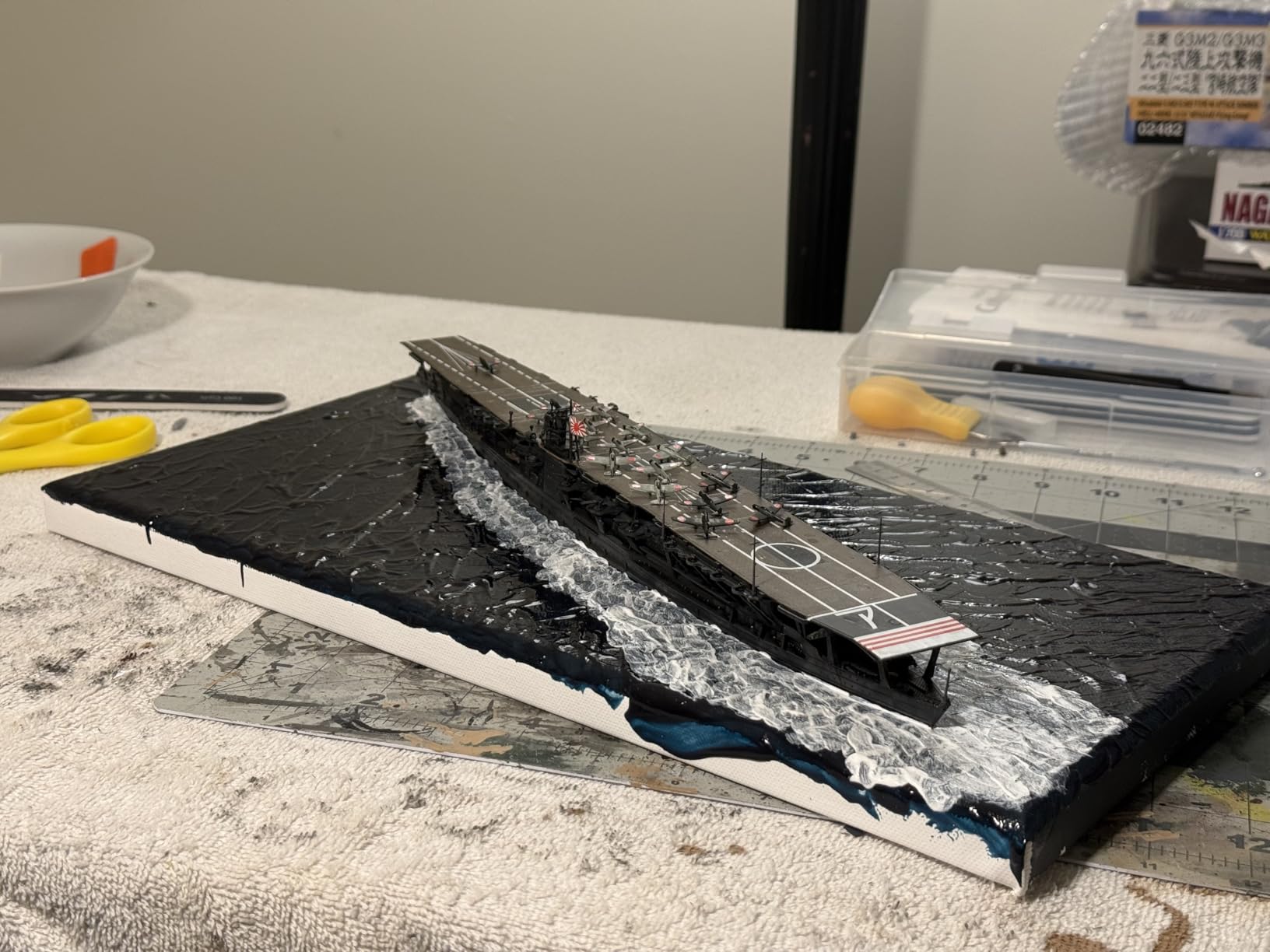
After building this kit, I was genuinely surprised by how much visual impact it has at 1/700 scale. The Akagi has an unmistakable silhouette with her long flight deck offset island, and Hasegawa captured that profile well. The waterslide decals include appropriate markings and add a nice finishing touch.
The one common complaint is that the kit could include more aircraft. You get a basic complement, but for a carrier model, most builders want to populate the deck with a full air group. Aftermarket aircraft sets are available if you want to go that route.
Pairing With the Haruna
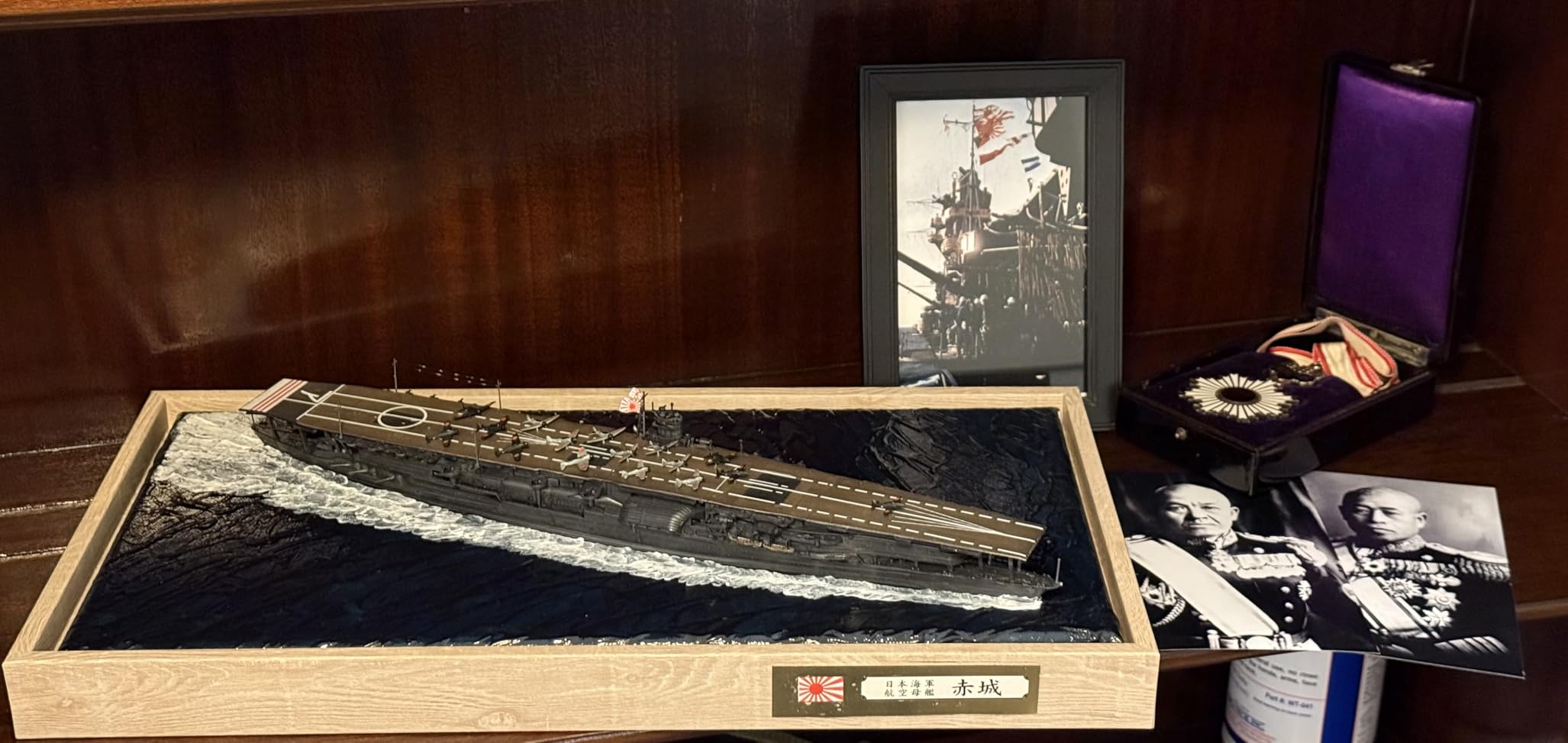
If you are building a Pearl Harbor strike force display, the Akagi and Haruna together at 1/700 scale is a powerful combination. The Akagi leads as the flagship of the First Air Fleet while the Haruna provides the battleship escort. Both kits are from Hasegawa’s waterline series, so they display at the same waterline level, creating a cohesive scene.
I recommend building both kits simultaneously or back to back so you can keep your painting and weathering consistent across the fleet. It makes a real difference when the ships share the same finish and weathering style.
Build Experience and Tips
The 1/700 scale does require good eyesight and steady hands. Several reviewers mentioned that the small parts can be tough for older eyes, and I agree. A magnifying lamp and fine-tip tweezers are essential. Budget about 15 to 20 hours for a clean build with basic painting and weathering.
The instructions are clear and well-illustrated, following Hasegawa’s standard format. Take your time with the flight deck assembly, as getting the planking lines aligned correctly makes a big difference in the final appearance. The effort pays off with a carrier that looks impressive from any angle.
5. Hasegawa 1/350 IJN Battleship Nagato Special Set A – Best Premium Display
1/350 IJN Battleship Nagato Special Set A HSG40024
1:350 Scale
800+ Parts
Special Set A
Unique Bridge Structure
Pros
- Outstanding attention to detail with over 800 parts
- Fantastic detail on bridge and superstructure
- Great for experienced builders seeking a challenge
- Commander elevator and rangefinder included
Cons
- Bridge tower alignment issues reported
- Not for beginners at all
- Requires tweezers and magnifying glass
- Occasional missing parts reported
The Nagato was the flagship of the Japanese Combined Fleet and a natural companion to the Haruna in any IJN collection. This Hasegawa 1/350 Special Set A version is a premium kit with over 800 parts, and it shows. The detail on the unique bridge structure with its massive pillar and six supporting pillars is the kind of thing that makes you stop and stare during assembly.
With 111 reviews and a 4.4-star rating, this kit has been widely built and discussed in the modeling community. The general consensus is clear: outstanding detail and engineering, but strictly for intermediate to advanced builders. I would not recommend this as your first 1/350 ship. Build a Tamiya destroyer or two first to develop your skills before tackling this one.
The kit includes a commander’s elevator, rangefinder, and detailed decals. The instructions are thorough, though some steps require careful study before committing glue to plastic. This is the kind of kit where dry-fitting every part before gluing is not optional, it is mandatory.
Build Time and Commitment
Plan for 80 to 120 hours on this build if you want it to look its best. That is not an exaggeration. With 800+ parts, the Nagato is a serious time commitment. I spread my build over three months, working on it evenings and weekends, and it was worth every session.
The bridge tower alignment is the most commonly reported issue. Take extra care during that sub-assembly, test fitting multiple times before committing. Some builders have reported occasional missing parts, so inventory your sprues when the kit arrives and contact Hasegawa promptly if anything is missing.
Display Impact
At 1/350 scale with full detail, the completed Nagato is a showstopper. It demands a dedicated display space with good lighting to show off the intricate bridge structure and hull details. If you build this alongside the Fujimi 1/350 Haruna, you will have two of the most impressive Japanese battleship models money can buy, and together they create a display that stops visitors in their tracks.
The Nagato’s unique pagoda bridge is taller and more dramatic than the Haruna’s, so the two ships look distinctly different even from across the room. This visual contrast makes them an excellent pairing for a showcase shelf or display cabinet.
6. Tamiya 1/350 IJN Destroyer Yukikaze – Best Escort Destroyer
Tamiya Models IJN Destroyer Yukikaze Model Kit
1:350 Scale
282 Pieces
Photo-etch Included
Waterline or Full Hull
Pros
- Well made with quality Tamiya fit standards
- Photo-etched ladders and radio antennas included
- Can be built as waterline or full hull
- Suitable for beginners and experienced builders
Cons
- Some reports of second-hand products sold as new
- Paint and glue required separately
The Yukikaze was one of the most celebrated destroyers in the IJN, and she escorted battleships including the Haruna during major Pacific operations. This Tamiya 1/350 kit is one of the best destroyer models available at any price point, and it makes a natural escort for your Haruna display.
With 134 reviews and a 4.3-star rating, this kit has a strong track record. Tamiya’s legendary engineering quality is evident from the moment you open the box. The parts fit together with that characteristic Tamiya precision where things just line up the way they should. It is one of the most enjoyable builds I have done in this scale.
The kit includes photo-etched parts for ladders and radio antennas, which is a welcome addition that saves you from buying a separate PE set. You also get the option to build it as either a waterline or full-hull model, giving you flexibility depending on your display plans. At 282 pieces, it has enough detail to satisfy experienced builders without being overwhelming.
Building Alongside the Haruna
If you are building a 1/350 fleet display, the Yukikaze adds scale context that makes the Haruna look even more impressive. A destroyer next to a battleship immediately conveys the massive size difference between these ship types. I recommend building the Yukikaze first as a warm-up before tackling the Fujimi Haruna, since the Tamiya build experience is smoother and will build your confidence.
The painting and weathering techniques you develop on the Yukikaze will transfer directly to the Haruna, so think of it as practice that produces a display-worthy model in its own right.
Quality and Value Assessment
Tamiya kits consistently hold their value and this one is no exception. The quality of the molding, the inclusion of photo-etch parts, and the option for both display modes make this a strong value proposition. A few reviewers noted receiving second-hand products when buying from third-party sellers, so stick to Prime-eligible listings when possible to ensure you get a factory-sealed kit.
For the detail and build quality you get, this destroyer kit punches well above its weight class. It is the kind of model that looks great on its own but truly shines when displayed as part of a fleet.
7. Tamiya 1/700 WWII Japanese Aircraft Carrier Shokaku – Best Carrier Kit
Tamiya 1/700 WWII Japanese Aircraft Carrier “Shokaku”
1:700 Scale
Water Slide Decals
WWII Japanese Carrier
Prime Eligible
Pros
- Super clean build with excellent fit and finish
- Exceptional instructions that are easy to follow
- Great water slide decals for authentic markings
- Highly rated among 1/700 carrier kits
Cons
- Historical accuracy slightly less detailed than Fujimi version
- Small scale parts require precision handling
The Shokaku was the lead ship of her class and one of the most capable carriers in the IJN, serving alongside the Haruna in Carrier Division 1 and later in the Guadalcanal campaigns. This Tamiya 1/700 kit has an impressive 4.8-star rating across 39 reviews, with 83 percent of those being 5-star ratings. That kind of consistency tells you something about the build experience.
From the first sub-assembly, I could tell this was a cut above most 1/700 carrier kits. The parts fit with that signature Tamiya precision, the instructions are among the clearest I have used in this scale, and the waterslide decals are crisp and thin enough to conform to surface details without silvering. If you have struggled with poorly fitting carrier kits before, this one will feel like a breath of fresh air.
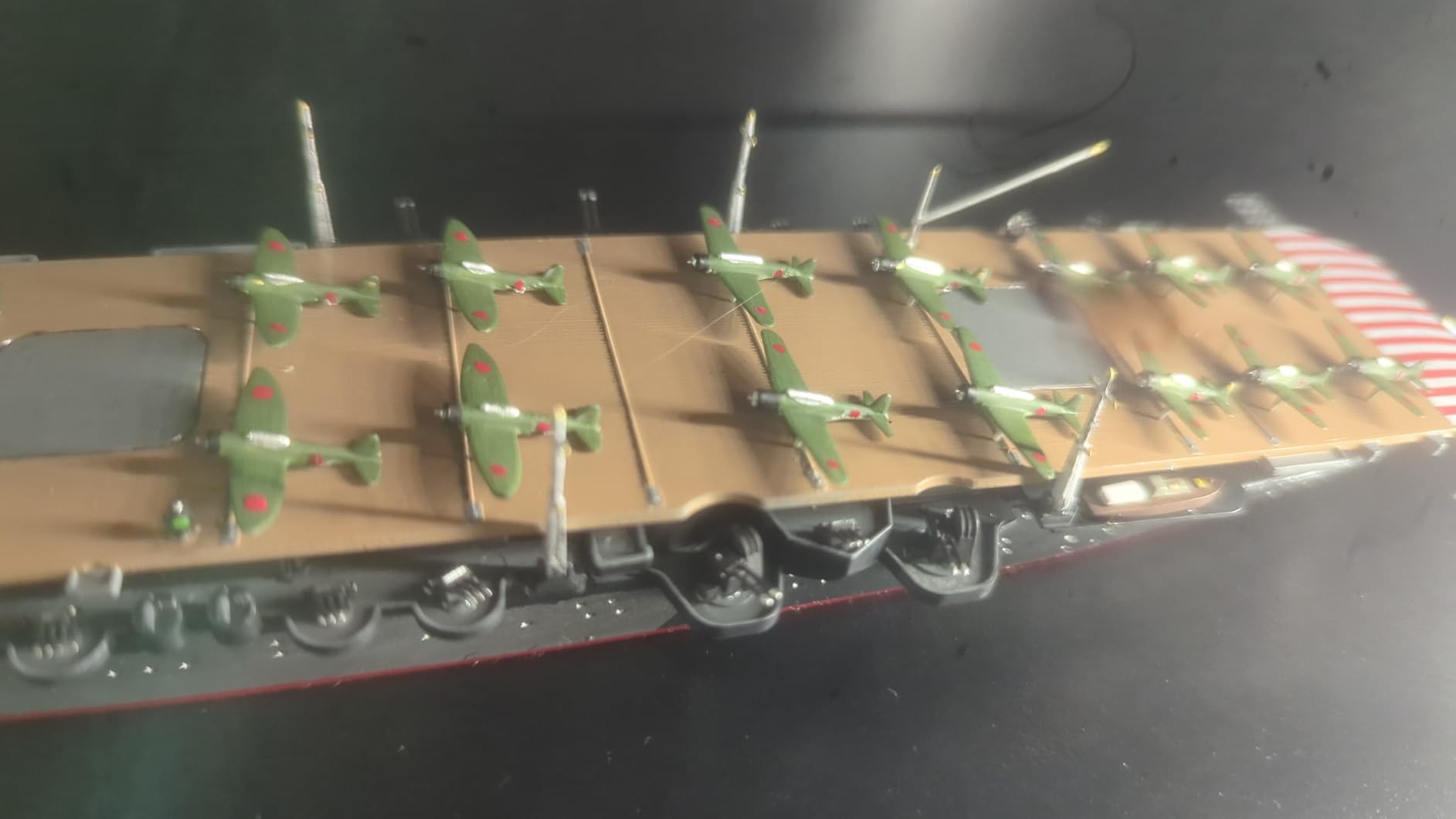
The flight deck detail is well-rendered with plank lines and markings that look convincing under a coat of paint. The island superstructure builds up into a nicely detailed command center. This is a kit where the final result genuinely looks like the ship it represents, not a generic carrier shape.
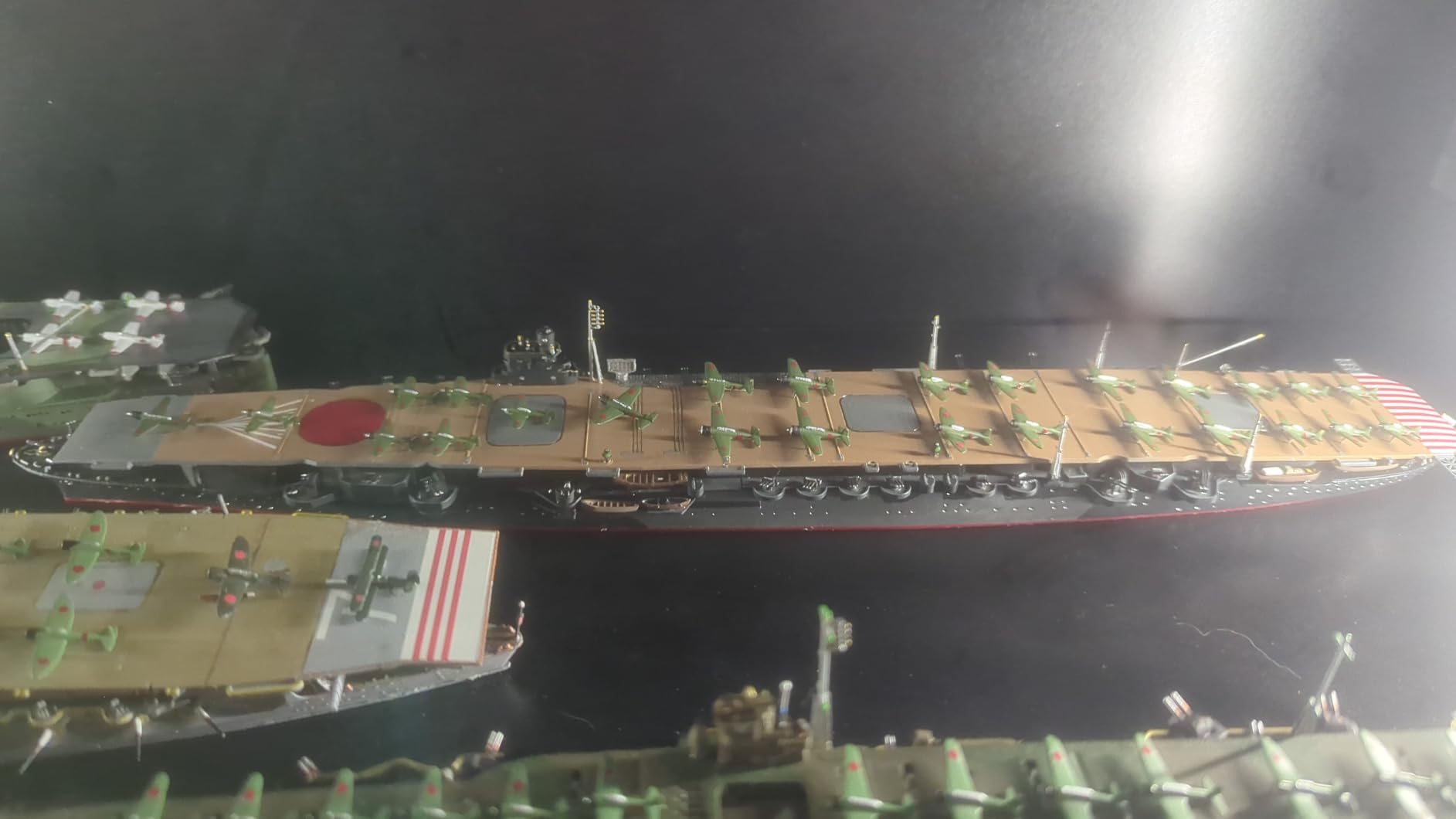
After completing the build, the Shokaku sits confidently next to the Hasegawa Akagi as part of my 1/700 Japanese carrier strike force. The two complement each other well, with the Shokaku representing the newer, purpose-built carrier design and the Akagi showing her converted-battlecruiser heritage.
The decals deserve special mention. Tamiya includes high-quality water slide decals with authentic markings that respond well to setting solutions. They lay down smoothly and add a professional finish to the model. This attention to the small details is what separates a good kit from a great one.
Comparison to Other Carrier Kits
Some modelers consider the Fujimi version of Japanese carriers slightly more historically accurate in certain details, and that may be true. But where Tamiya wins is in the overall build experience. The parts fit better, the instructions are clearer, and the final result looks cleaner with less effort. For most builders, those practical advantages matter more than minor accuracy differences.
If you are deciding between this and the Hasegawa Akagi for your first carrier, both are excellent choices. The Shokaku has the edge in build experience while the Akagi offers the historical connection to the Haruna’s Pearl Harbor strike force.
Display and Weathering Tips
The Shokaku looks best with a subtle weathering treatment that brings out the deck detail without overdoing it. A light wash of dark gray or black over the flight deck planks, followed by a flat clear coat, gives a convincing worn-in appearance. Add a few aircraft on the deck from the included decals or aftermarket sets to bring the scene to life.
At 1/700 scale, this carrier displays well alongside the Hasegawa 1/700 Haruna. The two ships together tell the story of the Japanese fleet that dominated the early Pacific War, and the consistent waterline height across both kits makes for a unified display.
8. Tamiya 1/350 Japanese Navy Submarine I-400 – Best Unique Subject
Tamiya Models Tamiya 78019 Japanese Navy Submarine I-400 Model Kit
1:350 Scale
170 Pieces
Photo-etch Included
Display Base Included
Pros
- Outstanding historical subject with unique submarine-carrier concept
- Exquisitely detailed hangar and aircraft storage
- Impressive Tamiya quality with great fit
- Display base included for immediate showcasing
Cons
- Requires tweezers and careful handling for small parts
- Level 3 kit not for beginners
- Some instruction steps hard to interpret
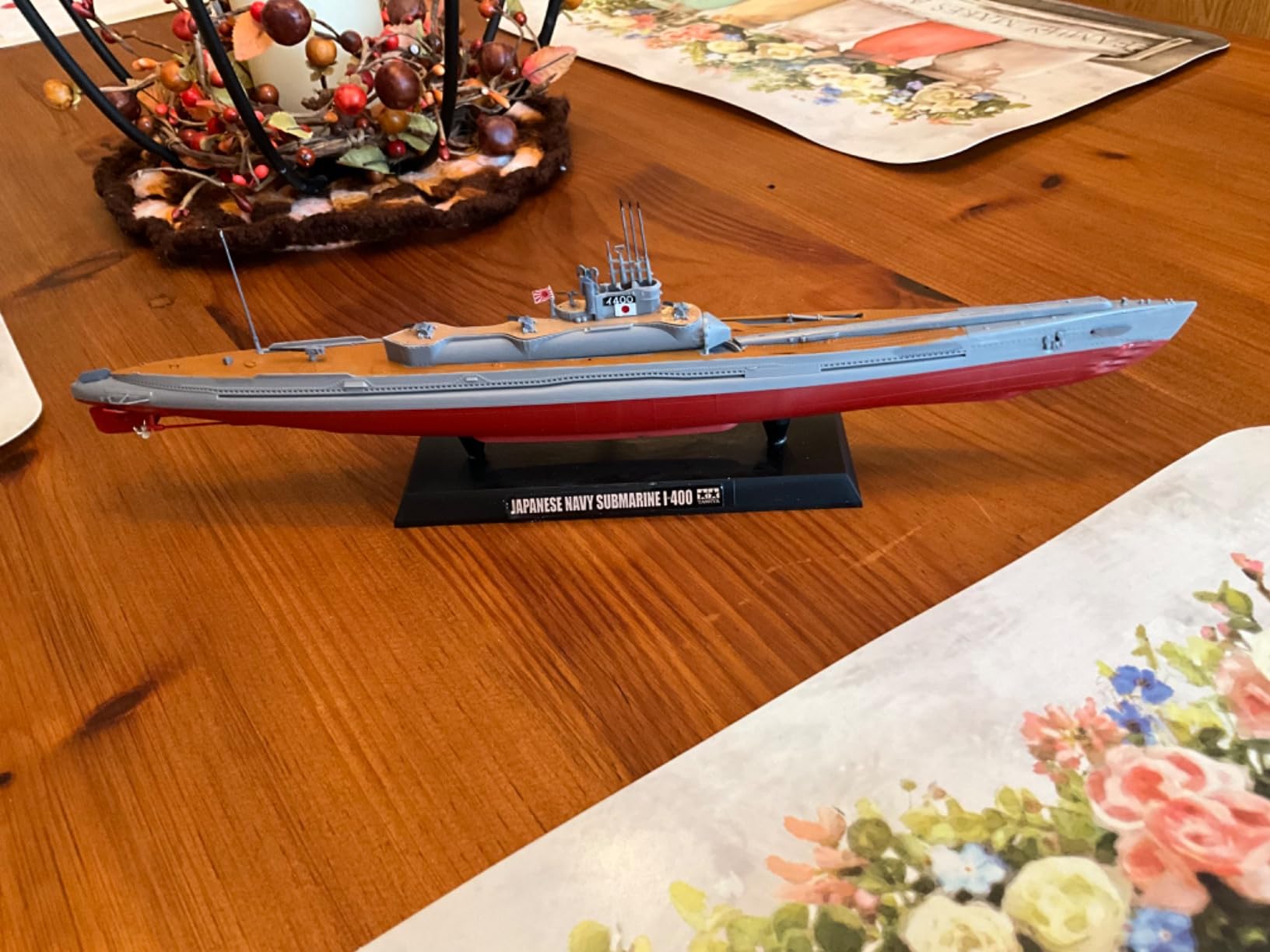
The I-400 class submarines were among the most remarkable vessels of World War II, designed to carry three Seiran aircraft in a waterproof hangar. This Tamiya 1/350 kit captures that unique submarine-carrier concept with impressive fidelity. With 351 reviews and a 4.5-star rating, it is one of the most popular and widely built Japanese naval kits available.
The moment you open the box, you can tell this is something special. The hangar section has realistic interior details, and the kit includes photo-etch parts for the crane arm, antenna array, propellers, and aircraft dollies. Tamiya even includes a display base, which is a thoughtful addition that lets you show off the finished model right away.
Building this kit was a genuinely different experience from standard surface ship models. The submarine hull flows in clean, curved lines that assemble into a sleek shape. The hangar door can be posed in opened or closed positions, and you can store the three included Seiran aircraft inside. At 348.5mm in length, the completed model has real presence on the shelf.
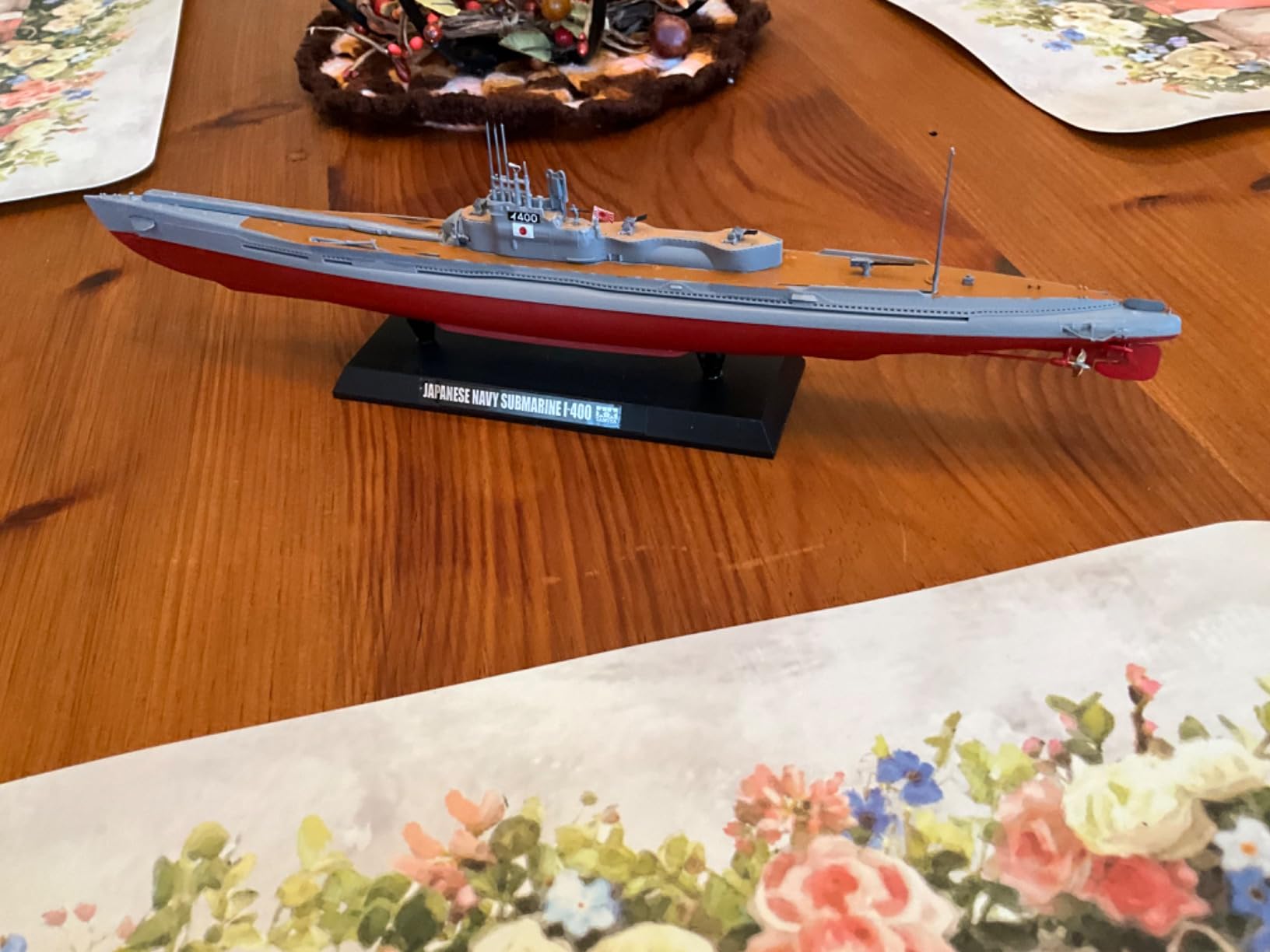
While this is not a Haruna kit specifically, it represents a fascinating chapter of IJN naval engineering that any Japanese warship enthusiast will appreciate. The I-400 submarines were designed to strike targets far from Japan, and their existence was kept so secret that even many Japanese naval officers did not know about them. Building this model feels like uncovering a hidden piece of history.
The build quality is consistent with Tamiya’s high standards. Parts fit well throughout, though some instruction steps require careful interpretation. Take your time with the hangar assembly, as it is the centerpiece of the model and the details there will draw the most attention from viewers.
Historical Significance and Appeal
The I-400 class was the largest submarine type built until the nuclear ballistic missile submarines of the 1960s. These vessels were designed to surface near US coastal cities, launch their aircraft, and submerge before being detected. The concept was audacious, and this Tamiya kit captures the engineering marvel in plastic form.
For collectors building a comprehensive IJN fleet, the I-400 adds a conversation piece that surface ships simply cannot match. Every person who has seen this model on my shelf has asked about it. It sparks curiosity and discussion in a way that even impressive battleship models sometimes do not.
Build Difficulty and Recommended Skill Level
Tamiya rates this as a Level 3 kit, and I agree that it is not for absolute beginners. The small parts for the aircraft, crane arm, and antenna array require tweezers and patience. However, it is more approachable than the Fujimi Haruna or the Hasegawa Nagato, so if you have a couple of ship builds under your belt, you can handle this one.
Plan for about 25 to 35 hours for a clean build. The display base and photo-etch parts add some time, but the payoff is a finished model that looks professional and display-ready without needing any aftermarket upgrades.
Buying Guide: How to Choose the Right IJN Model Kits?
Choosing the right IJN Haruna battlecruiser model kit comes down to three main factors: scale, brand, and your skill level. Our team has built kits from all three major Japanese model manufacturers, and each brings something different to the workbench. Here is what we have learned after dozens of builds across both major scales.
1/350 vs 1/700 Scale: Which Is Right for You
The biggest decision you will make is scale. At 1/350, the Haruna measures about 27 inches long, with room for extraordinary detail like individual anti-aircraft gun positions, visible deck fittings, and a convincing pagoda mast structure. This is the scale for builders who want a centerpiece model and have the display space to accommodate it.
At 1/700, the same ship shrinks to roughly 13 inches. The detail is still impressive but noticeably simplified compared to 1/350. The big advantage is that you can build and display an entire fleet in the space that a single 1/350 model would occupy. For builders who want variety and fleet-scale dioramas, 1/700 is the way to go.
If you are new to ship modeling, start with 1/700. The parts are larger relative to the finished model (fewer total pieces), the build goes faster, and the results are satisfying without the commitment of a 1/350 project. You can always move up to 1/350 once you have developed your skills.
Brand Comparison: Fujimi vs Hasegawa vs Tamiya
Fujimi produces the only dedicated 1/350 Haruna kit currently available, and it is widely regarded as the best kit in their ship lineup. The detail is excellent, but the instructions can be hard to follow in places and the build demands experience. Fujimi kits tend to have the highest detail potential but also the steepest learning curve.
Hasegawa dominates the 1/700 waterline space with clean moldings, reliable engineering, and straightforward assembly. Their Haruna and Kong-class sister ship kits are consistently well-regarded. Hasegawa also produces the excellent 1/350 Nagato Special Set, which is a premium kit for advanced builders.
Tamiya is the gold standard for build experience. Their kits consistently fit together better than any other brand, with instructions that are clear and logical. The 1/350 Yukikaze and I-400 submarine are both excellent examples of Tamiya engineering at its best. If build enjoyment matters to you as much as the final result, Tamiya is hard to beat.
Photo-Etch and Aftermarket Considerations
Photo-etched brass detail sets can transform an already good model into something extraordinary, adding railings, ladder details, and antenna arrays that plastic alone cannot replicate. The Fujimi 1/350 Haruna is detailed enough out of the box that you can skip the PE set entirely and still get a great result, which is one reason builders on forums praise its value.
The Tamiya 1/350 kits for the Yukikaze and I-400 both include photo-etch parts standard, which is a significant value add. For the Hasegawa kits, you will need to purchase aftermarket PE sets separately if you want that level of detail. Several forum members noted that the Fujimi Haruna is one of the few large ship kits where the out-of-box experience is satisfying without any aftermarket additions.
Essential Tools for Your Build
Regardless of which kit you choose, certain tools are non-negotiable for ship modeling. A quality pair of plastic nippers for removing parts from sprues, fine-tip tweezers for handling small pieces, a magnifying lamp for detail work, liquid cement for clean joints, and a set of fine sanding sticks for seam cleanup will cover most of your needs.
For painting, invest in a good airbrush if you do not already have one. Ship hulls benefit enormously from smooth, even paint application that is difficult to achieve with a brush alone. A basic compressor and entry-level airbrush will run you a modest amount and will pay for itself across your first few builds.
Display Planning
Think about where your finished model will live before you start building. A 1/350 battleship needs a dedicated shelf or display case at least 30 inches wide. If you plan to build a fleet, you will need significantly more space. The 1/700 fleet approach is much more forgiving for builders with limited display room.
Consider whether you want waterline or full-hull models. Waterline models display cleanly on flat surfaces and are easier to transport. Full-hull models can be mounted on display stands for a dramatic presentation but require more vertical space.
FAQ
What is the best IJN Haruna model kit?
The Fujimi 1/350 IJN Battleship Haruna is the best dedicated Haruna kit available, offering the highest detail level with finely molded parts and excellent deck planking. For a more budget-friendly option, the Hasegawa 1/700 IJN Battleship Haruna provides a perfect 5-star build experience with clean moldings and straightforward assembly.
Which scale is best for IJN Haruna model kits?
1/350 scale is best for builders who want maximum detail and have display space for a 27-inch finished model. 1/700 scale is ideal for building fleet displays, saving money, and faster build times. Beginners should start with 1/700 before committing to the time and expense of a 1/350 build.
How difficult is the Fujimi 1/350 Haruna to build?
The Fujimi 1/350 Haruna is rated for intermediate to advanced builders. It requires 40 to 60 hours of build time, tweezers and a magnifying lamp for the small parts, and patience with the mast alignment. It is not recommended as a first ship model but is a rewarding challenge for builders with some experience.
What tools do I need for IJN Haruna model kits?
You need plastic nippers, fine-tip tweezers, a magnifying lamp, liquid cement, fine sanding sticks, and paint (either acrylic or enamel). An airbrush setup is highly recommended for smooth hull painting. For 1/350 kits, photo-etch bending tools are helpful if you use aftermarket detail sets.
Do I need photo-etch parts for the Fujimi Haruna?
The Fujimi 1/350 Haruna is detailed enough for an impressive build without any aftermarket photo-etch. Many builders on forums specifically praise that it does not require PE parts for a great result. However, adding a PE set with brass railings and antenna details will take the model to museum-quality level for advanced builders.
Final Thoughts
After months of building and comparing these kits, the Fujimi 1/350 Haruna remains our top pick for builders who want the definitive large-scale model of this iconic battlecruiser. For those who prefer a more manageable project, the Hasegawa 1/700 Haruna delivers a flawless build experience at a fraction of the size and cost.
The best IJN Haruna battlecruiser model kits in 2026 span a range of scales, prices, and difficulty levels, but every kit on this list offers a genuine connection to one of the most fascinating warships of the Pacific War. Whether you build the Haruna alone as a standalone display or as part of a full IJN fleet, these models deliver the kind of satisfaction that keeps us coming back to the workbench.
Pick the kit that matches your skill level and display space, invest in the right tools, and enjoy the build. The Haruna is waiting.