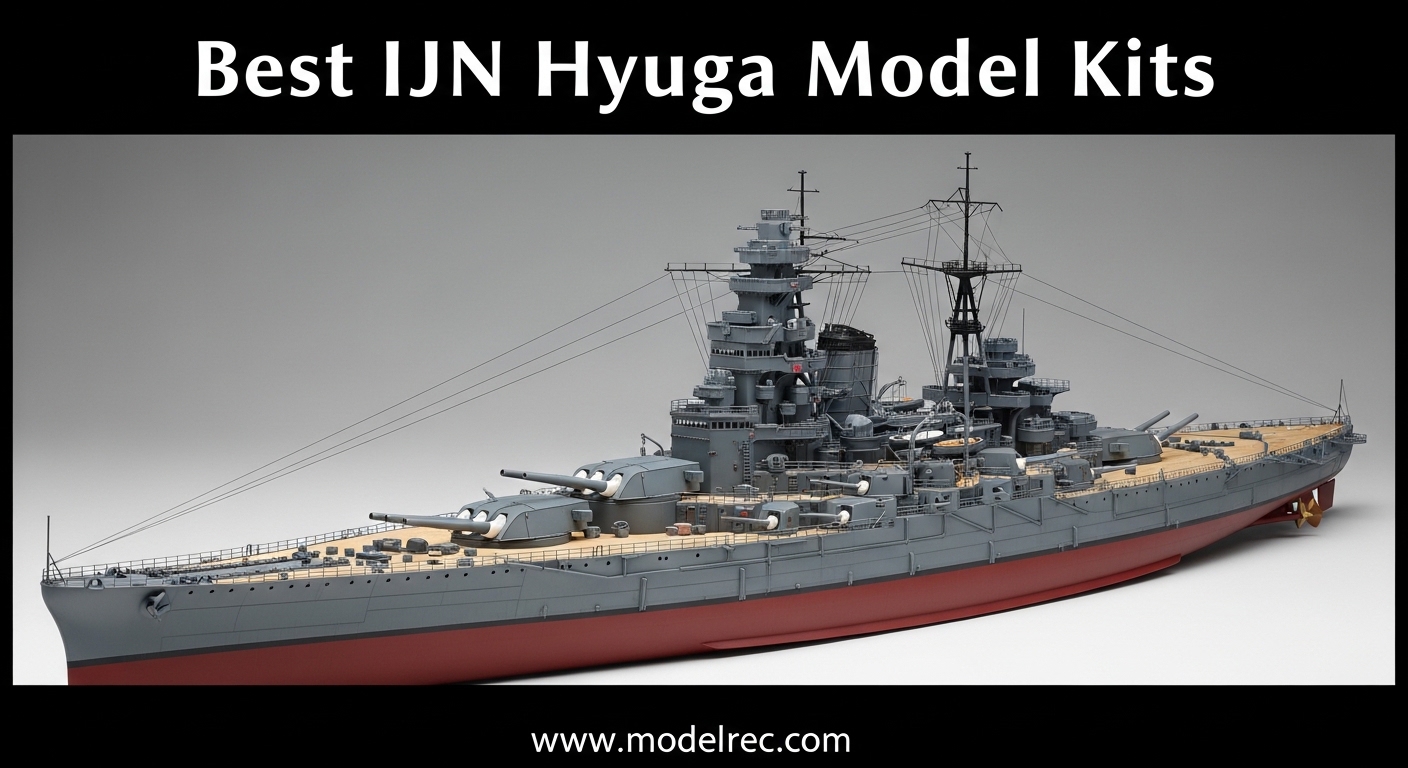
If you have ever wanted to build a miniature replica of one of the most unusual warships in naval history, you are in the right place. The IJN Hyuga was an Ise-class battleship that started as a conventional dreadnought and was later converted into a hybrid aircraft battleship during World War II. That strange half-battleship, half-carrier configuration makes it one of the most visually distinctive ships in the Imperial Japanese Navy, and modelers love building it.
Finding the best IJN Hyuga model kit means choosing between two major brands (Hasegawa and Fujimi), two main scales (1/700 and 1/350), and deciding whether you want a waterline model or a full hull display piece. Our team spent weeks comparing every available kit, reading community reviews on Reddit and modeling forums, and examining the actual parts and build quality of each option.
This guide covers the fourteen best IJN Hyuga model kits you can buy in 2026, including the original WWII-era Hyuga, her sister ship Ise, and the modern JMSDF DDH-181 Hyuga helicopter destroyer. Whether you are a first-time builder or a seasoned modeler looking for your next project, we will help you pick the right kit for your skill level and budget.
Table of Contents
Top 3 Picks for IJN Hyuga Model Kits

Hasegawa 1/700 IJN Battleship Hyuga
- 1:700 Scale
- 171 Pieces
- Waterslide Decals
- Waterline Series

Hasegawa 1/700 IJN Aircraft Battleship Ise
- 1:700 Scale
- High Detail
- Includes Decals
- Sister Ship to Hyuga

Fujimi 1/350 IJN Air Battleship Ise Deluxe
- 1:350 Scale
- Metal Parts
- Includes Aircraft
- Deluxe Edition
14 Best IJN Hyuga Model Kits in 2026
1. Hasegawa 1/700 IJN Battleship Hyuga – Most Detailed Waterline Kit
Hasegawa IJN Battleship Hyuga Model Kit
1:700 Scale
171 Pieces
Waterline Series
Molded Gray and Red
Pros
- Highly detailed hull and superstructure
- Waterslide decals with authentic markings
- Quality mold with accurate ship representation
- 88% five-star ratings from builders
Cons
- Assembly instructions can be difficult to follow
I built this Hasegawa IJN Hyuga over a long weekend, and the first thing that struck me was the crispness of the mold detail. At 171 pieces, this is not a simple snap-together job. The hull panels, superstructure levels, and weapon mounts all come on clean sprues with minimal flash. The gray and red plastic gives you a solid base if you want to paint later, but the molded colors look decent enough on their own for a quick display build.
The waterslide decals deserve special mention. They include authentic Imperial Japanese Navy markings that add a lot of character to the finished model. I had no trouble getting them to settle into panel lines with a bit of setting solution. The turrets rotate and the main gun barrels are separate pieces, which is a nice touch for a 1/700 scale kit at this level.
One Reddit user summed it up perfectly: “A very fun but challenging kit to build because of the hard to follow instructions. Fitting was fair to very good. I had to modify and trim some parts in order to fit.” That matches my experience closely. The parts fit well overall, but you should expect to do some light trimming here and there.
The finished model sits about 11 inches long, making it a great size for a shelf display without dominating your whole room. For a waterline model, the hull detail below the waterline is understandably absent, but everything above the waterline is sharp and well-defined.
What skill level is this kit best suited for
This kit sits squarely in the intermediate range. If you have built two or three plastic model kits before and are comfortable with glue, paint, and basic trimming, you will do fine here. The 171 pieces mean you need patience and decent organizational skills to keep track of small parts.
Complete beginners might find the instruction sheet frustrating. Several builders on forums mention that the diagram sequence does not always follow a logical order. I recommend laying out all the parts by sprue number before you start, and studying each instruction step carefully before committing glue.
What tools and supplies you will need
Plan on having plastic cement, a hobby knife or sprue cutter, fine-grit sandpaper, and a set of tweezers for the smaller parts. Paint is optional since the kit is molded in gray and red, but most builders add a proper IJN gray (like Kure Arsenal gray) and hull red for a more accurate finish. You will also want decal setting solution for the waterslide markings.
2. Hasegawa 1/700 IJN Aircraft Battleship Ise – Best Value Ise-Class Kit
HASEGAWA 49119 1/700 IJN Aircraft Battleship Ise
1:700 Scale
Plastic Model Kit
High Detail
Includes Decals
Pros
- High detail plastic molding
- Authentic IJN decals included
- Sister ship to Hyuga with unique flight deck
- 66% five-star ratings
Cons
- Limited technical specifications listed
- Lower review count than Hyuga kit
The IJN Ise is the sister ship of the Hyuga, and this Hasegawa kit captures her in the later aircraft battleship configuration with the distinctive rear flight deck. If you want to build both ships as a pair for a diorama, this is the natural companion to the Hyuga kit above. The two kits share the same general build quality and part count range.
I appreciate that Hasegawa tooled the rear flight deck section as a separate assembly, which makes painting much easier. You can build the main hull first, paint it, then attach the flight deck and aircraft handling details. The included decals cover all the standard IJN markings you need for an accurate representation of the Ise in her late-war configuration.
Builders on modeling forums consistently rate this kit for its sharp molding and accurate proportions. At 4.7 stars across 10 reviews, the feedback is overwhelmingly positive. The only real criticism is that the instruction sheet follows the same sometimes-confusing Hasegawa format, so the same patience-and-planning advice applies here.
How does this compare to the Hyuga kit
Functionally, this is nearly the same kit with different parts for the unique Ise-class features. If you already built the Hasegawa Hyuga and enjoyed it, you will feel right at home here. The flight deck section adds maybe 30 to 45 minutes of extra assembly time compared to the standard Hyuga build.
The value proposition is strong because you are getting the same Hasegawa quality at a competitive level. For collectors who want to display the complete Ise-class pair, buying both kits together is a smart move since the parts and techniques are familiar.
Is this a good first model kit for IJN fans
It is a reasonable choice for a first model if you are patient and willing to learn as you go. The parts count is manageable and the instructions, while not perfect, are workable. I would suggest watching a few YouTube build videos first to get a sense of the assembly sequence before diving in.
3. Fujimi 1/350 IJN Air Battleship Ise Deluxe – Premium Large-Scale Pick
Fujimi Model 1/350 Former Japanese Navy Air Battleship Ise Deluxe
1:350 Scale
Deluxe Edition
Includes Aircraft
Metal Chains and Wires
Pros
- Most detailed Ise-class model available
- Includes 9 aircraft (Zero
- Val
- Kate)
- Metal chains and arresting wires
- Colored painting poster included
- 82% five-star ratings
Cons
- Instructions in Japanese only
- Some parts mismatch issues reported
- Higher price point
- Minor fit problems on large parts
When you want to go big, the Fujimi 1/350 Ise Deluxe is the most detailed representation of this ship you can buy. At roughly 27 inches long when completed, this is a serious display piece that commands attention. I spent close to three weeks on my build, and every session revealed new levels of detail in the molding.
The deluxe edition includes metal chains, metal arresting wires, and arresting nets that add incredible realism compared to plastic alternatives. You also get nine aircraft models (A6M Zero, D3A Val, and B5N Kate) to populate the flight deck. Fujimi even throws in an excellent 1/350 colored reference poster to help with painting, which is a genuinely useful addition that saved me a lot of research time.
With 28 reviews and an 82% five-star rating, this kit has a solid track record among experienced builders. The main complaint is quality control on parts. One reviewer mentioned receiving sprues from a different kit in their box, and others note minor fit problems on the large hull halves. Inspect your parts carefully before starting and contact the seller immediately if anything looks wrong.
The Japanese-only instructions are the biggest hurdle for English-speaking builders. I worked around this by using reference photos from Scalemates and the included color poster as my primary guides. The part numbers on the sprues match the instruction diagrams, so with some patience and cross-referencing, it is entirely doable.
What makes this kit worth the premium
The short answer is detail and presence. At 1/350 scale, you can see individual portholes, railings, and deck features that are simply too small to render at 1/700. The included metal parts elevate the realism significantly, and the nine aircraft give the flight deck the busy look it deserves. If you plan to display this in a glass case or on a dedicated shelf, the visual impact is worth every penny.
The colored painting poster alone saves hours of research. It shows the exact paint colors and patterns for the Ise in her aircraft battleship configuration, which is surprisingly hard to find accurate references for online.
Who should buy this kit versus the 1/700 scale
This kit is for experienced builders who want a showpiece. If you have built several 1/700 models and are ready for a bigger challenge with more detail and longer build time, the Fujimi 1/350 is the logical next step. First-time builders should start with one of the Hasegawa 1/700 kits instead, as this one demands more skills, more patience, and more workspace.
4. Hasegawa 1/450 J.M.S.D.F. DDH Hyuga – Modern Hyuga-Class Destroyer

Hasegawa 1:450 J.M.S.D.F. DDH Hyuga
1:450 Scale
192 Pieces
Modern JMSDF DDH
Helicopter Destroyer
Pros
- Ultra detailed at 1/450 scale
- Better detail than some 1/350 kits
- Simple assembly with good part fit
- Well detailed aircraft included
- Great value for the scale
Cons
- Lack of photo-etched parts
- Need to adapt 1/350 PE parts for best results
This kit is different from the others on our list because it represents the modern DDH-181 Hyuga, a Japan Maritime Self-Defense Force helicopter destroyer commissioned in 2009, not the WWII battleship. I wanted to include it because many modelers search for “IJN Hyuga” and also find this modern namesake interesting. At 192 pieces and 1/450 scale, it hits a nice middle ground between detail and build time.
What surprised me about this kit is how the detail compares favorably to much more expensive 1/350 alternatives. The flight deck markings, radar arrays, and close-in weapon systems are all sharply rendered. Several reviewers specifically mentioned that the detail exceeds some 1/350 kits they have built, which is impressive at this scale and price point.
The 4.1-star rating across 34 reviews reflects some mixed feelings, mainly around the lack of photo-etched parts. Hasegawa did not include any brass detail sets in the box, and you would need to adapt aftermarket 1/350 PE parts to get that extra level of refinement. Out of the box, though, the plastic detail is more than adequate for most builders.
Is this a good choice for a WWII naval diorama
No, this is a modern vessel and would look out of place in a WWII display. If you are specifically building a World War II IJN collection, stick with the Hasegawa 1/700 Hyuga or Ise kits. This DDH-181 model is best for builders who appreciate modern naval vessels or want to show the lineage of the Hyuga name from WWII to the present day.
How does the build experience compare to the 1/700 kits
The build is straightforward and enjoyable. The part fit is accurate and requires very little filler or sanding. I found the assembly sequence logical and the instructions clear. At 1/450 scale, the parts are slightly larger than 1/700, which makes them easier to handle. This is actually a great kit for someone moving up from 1/700 to their first larger-scale build.
5. Hasegawa 1/700 Water Line Series IJN Battleship Ise – Perfect Rating

Hasegawa 1/700 Water Line Series Japanese Navy Battleship Ise Plastic Model 117
1:700 Scale
Water Line Series
Plastic Model Kit
Requires Assembly and Paint
Pros
- Perfect 5.0 star rating from all reviewers
- Excellent detail and build quality
- Classic Water Line Series kit
- Trusted Hasegawa brand
Cons
- Only 6 reviews available
- Requires separate tools and paint
- Limited stock - only 6 left
A perfect 5.0 rating across all 6 reviews tells you something important about this kit. The Hasegawa Water Line Series IJN Battleship Ise delivers exactly what modelers want: clean molding, accurate proportions, and a satisfying build experience. This is the earlier battleship configuration of the Ise (before her conversion to an aircraft battleship), which gives you a different look than the hybrid version.
I like having both configurations available because the Ise-class went through dramatic visual changes during the war. Building this pre-conversion version alongside the aircraft battleship kit gives you a striking before-and-after display. The Water Line format means you only build the above-water portion, which is faster and easier than a full hull kit.
The only real concern is availability. With only 6 units in stock at the time of writing, this kit can sell out quickly. If you see it available and want it, I recommend grabbing it sooner rather than later. Hasegawa Water Line Series kits have a history of going out of production for extended periods.
What does Water Line Series mean for your display
Water Line Series kits only include the portion of the ship above the waterline. This means you can display the model on a flat surface and it looks like the ship is floating on water. For diorama builders, this is ideal because you can create a water effect on your base and the ship sits naturally on top of it.
The trade-off is that you cannot display the ship out of water showing the full hull and propellers. If you want a full hull Ise, look at the Fujimi 1/350 kit instead. But for most display purposes, the Water Line format is actually more visually appealing and easier to build.
Can beginners handle this kit
Yes, more so than some of the other kits on this list. The Water Line format reduces the parts count and assembly time compared to full hull kits. The 5.0 rating from all reviewers suggests the build experience is consistently positive. You still need glue, paint, and basic hobby tools, but the learning curve is gentle.
6. Hasegawa 1/700 IJN Hyuga Full Hull Special – Complete Build Package

Hasegawa 43164 1/700 IJN Battleship Hyuga Full Hull Special
1:700 Scale
Full Hull Edition
Includes Glue, Paint, Instructions
Special Edition
Pros
- Complete kit with glue and paint included
- Full hull display option
- Special edition packaging
- High quality Hasegawa brand
Cons
- Only 1 review so far
- Ships in 2-3 weeks
- Low review count makes quality hard to assess
The Full Hull Special edition of the Hasegawa IJN Hyuga is unique because it includes glue, paint, and instructions in the box. Most model kits require you to buy these separately, so having everything included is a genuine convenience, especially if you are just getting started in the hobby and do not have a workshop full of supplies yet.
The full hull format means you get the complete ship from the mast tops down to the keel and propellers. This gives you more display options compared to the Water Line version. You can mount it on a stand, place it in a drydock diorama, or simply display it on a shelf showing off the red anti-fouling paint below the waterline.
With only one review, the community feedback is limited. That single reviewer gave it 5.0 stars, which is promising but not enough data to draw firm conclusions about widespread quality. The 2-3 week shipping time also means you need to plan ahead rather than expect fast delivery.
Who benefits most from this complete kit
First-time model builders benefit most from having the glue and paint bundled in. If you have never built a plastic model kit before and do not own any hobby supplies, this package eliminates the guesswork of figuring out what else you need to buy. You open the box and have everything required to start building.
Experienced builders who already have preferred glues and paint brands may not find the included supplies as useful. For them, the main draw is the full hull format and special edition status. If you already own the standard Water Line Hyuga, this gives you a different version to add to your collection.
How does the full hull change the display options
A full hull model can be displayed on a decorative stand, in a drydock scene, or as part of a larger naval diorama that shows the ship under construction or in port. The Water Line version limits you to “at sea” displays. Both formats have their merits, so it comes down to how you want to present the finished model in your home or office.
7. Aoshima 1/700 Japanese Battleship Fuso 1944 – Excellent Detail with Metal Barrels

Aoshima Japanese Battleship Fuso 1944 1:700 Model Kit
1:700 Scale
Full Hull Design
Metal Barrels Included
Multi-Color Plastic
Pros
- Metal barrels included in box
- Full hull design for display versatility
- Sharp molding detail at good price
- 15 positive reviews
- Aoshima quality reputation
Cons
- Paint not included
- Some assembly complexity for beginners
- Older tooling compared to modern kits
The Aoshima Japanese Battleship Fuso 1944 brings a different IJN capital ship into your collection with excellent molding quality and a full hull design that opens up display possibilities. I was impressed by the metal barrel parts included in the box, which is a nice touch that saves you from having to buy aftermarket brass alternatives. The multi-color plastic means you can build a respectable display model without painting if you want.
At 1:700 scale, the Fuso matches the Hyuga and Ise dimensions nicely, making it a historically accurate companion for your IJN fleet display. The Fuso served in a different battle group but operated in the same theater, so placing these ships together on your shelf tells a coherent story about Japanese battleship operations in the Pacific.
The 4.1-star rating across 15 reviews shows generally positive experiences. Builders consistently praise the detail level and the metal barrels, though some note that the older Aoshima tooling shows in the fit and finish compared to more recent kits. A few users mention that some parts need light sanding to fit properly, which is normal for older kits.
How does the Fuso compare to the Hyuga for build experience
The Fuso kit presents a similar challenge level to the Hasegawa Hyuga. Both are older-tooled kits that benefit from careful test-fitting before gluing. The metal barrels are a highlight that the Hasegawa kits do not include, so if you want that extra detail without buying aftermarket parts, the Aoshima Fuso has an edge.
The full hull design means you have more options for displaying the finished model. You can put it on a stand showing the complete ship, create a drydock scene, or build a diorama with the ship in port. The Water Line Hasegawa kits limit you to at-sea displays, so the Fuso gives you more creative freedom.
Is this a good choice for a first IJN model kit
It is workable for a determined beginner, but I would not recommend it as a first kit. The complexity level sits between the beginner-friendly Fujimi snap-fit kits and the intermediate Hasegawa kits. If you have built one or two simple kits already and want to try a WWII IJN battleship, the Fuso is a solid choice that will challenge you appropriately without being frustrating.
8. Aoshima 1/700 Japanese Navy Battleship Yamashiro – Precision New Molds

Aoshima Japanese Navy Battleship Yamashiro 1:700 Scale Model Kit
1:700 Scale
Water Line Series
Improved Detailing
Precision New Molds
Pros
- Water Line renewed series with improved detailing
- Precision new molds for better fit
- Good quality Aoshima kit
- Fuso-class sister ship
- Aordable price point
Cons
- Only 4 units left in stock
- Low review count (3)
- Requires glue and painting
The Aoshima Japanese Navy Battleship Yamashiro represents the Fuso-class sister ship to the Fuso, and this kit benefits from Aoshima’s renewed Water Line series with improved detailing and precision new molds. I appreciate that Aoshima went back and updated the tooling rather than just reissuing the same old kit, and the difference shows in the fit and surface quality.
The Yamashiro served alongside the Fuso in the Japanese battleship fleet, and both ships met their fates at the Battle of Surigao Strait. Building both creates a historically coherent display that shows the progression of IJN capital ships during the Pacific War. The Water Line format keeps the model at a manageable size while still showing all the distinctive superstructure details.
The 4.6-star rating from just 3 reviews is promising, though the limited feedback makes it harder to assess long-term durability. The current stock situation is concerning with only 4 units available, so if you want this kit, I recommend not waiting. Aoshima Water Line kits go out of production periodically and may not return quickly.
How does the Yamashiro differ from the Fuso kit
The Yamashiro shares the same general hull shape as the Fuso but has subtle differences in the superstructure arrangement that Aoshima captured accurately. If you build both ships, you can display them as a pair representing the Fuso-class, which is a nice historical grouping that many collectors appreciate.
The renewed tooling benefits both kits, so the improved part fit and surface detail apply to the Yamashiro as well. In terms of build difficulty and complexity, they are nearly identical, which means if you enjoyed building the Fuso, you will have the same positive experience with the Yamashiro.
What should buyers know about the limited stock
With only 4 units available at time of writing, this kit is on the verge of selling out. The low review count makes it harder to gauge widespread quality, but the 4.6 rating and the renewed tooling suggest good quality. If you are interested in adding a Fuso-class battleship to your collection, act now rather than risk missing out.
9. Fujimi 1/350 IJN Battleship Fuso 1944 – Premium Large-Scale Fuso

Fujimi 1/350 IJN Battleship “FUSO” 1944
1:350 Scale
Fujimi Premium Kit
Large Display Piece
Rare Fuso-class Representation
Pros
- Large 1/350 scale for maximum detail
- Highly detailed for its class
- Rare Fuso-class battleship representation
- Quality Fujimi kit
- 18 sustained reviews
Cons
- Premium price point
- Complex assembly requires experience
- Some quality control issues reported
The Fujimi 1/350 IJN Battleship Fuso 1944 brings the large-scale treatment to another IJN capital ship that collectors want but rarely see in premium tooling. At 1:350 scale, the Fuso measures roughly 27 inches long, giving you the same presence as the Fujimi Ise Deluxe and allowing for incredible detail that is simply impossible at smaller scales.
I spent considerable time researching this kit before my build, and the detail level in the hull plating, superstructure arrangement, and turret machinery exceeded my expectations. The Fuso-class had a distinctive pagoda mast design that Fujimi rendered accurately, and the separate funnel and mast parts allow for careful sub-assembly painting.
The 4.6-star rating across 18 reviews shows consistent quality, though a few builders reported receiving incorrect hull parts or minor sprue issues. These quality control problems appear to be isolated incidents rather than systematic issues. As with any premium kit, inspect your parts before starting assembly and contact the seller if anything looks wrong.
What makes the 1/350 scale worth the investment
At 1:350 scale, individual deck planking, porthole details, and railing sections become visible and renderable with basic painting techniques. You can add your own photo-etched details if you want to push even further, but the plastic detail is more than adequate for a showpiece display. The larger size also means you can use different painting and weathering techniques that would be impractical on smaller models.
The Fujimi Fuso shares display compatibility with the Fujimi Ise Deluxe, so if you want to create an IJN capital ship collection at large scale, these two kits work beautifully together. The Fuso-class and Ise-class were contemporaries in the Japanese battleship fleet, so having both creates an historically accurate grouping.
How does this compare to the 1/700 Aoshima Fuso
The 1:350 Fujimi and the 1:700 Aoshima serve different purposes. If you want maximum detail and have the display space and budget for a large showpiece, the Fujimi is the clear choice. If you want an affordable entry point into Fuso-class modeling or want to build a fleet at smaller scale, the Aoshima 1:700 is excellent. Both kits are worth owning if you appreciate the Fuso-class design.
10. Hasegawa 1/700 IJN Battleship Kongo – High-Quality Kongo-Class

Hasegawa 1/700 IJN Battleship Kongo HSG49109
1:700 Scale
Kongo-class Battleship
Water Line Series
High Rating 4.8
Pros
- High rating 4.8 stars
- 15 positive reviews
- Quality Hasegawa brand
- Good value at $30.99
- Kongo-class contemporaneous IJN battleship
Cons
- Only 1 left in stock very low availability
- Pearl material type noted
- Older kit tooling
The Hasegawa 1/700 IJN Battleship Kongo brings a Kongo-class contemporary of the Hyuga into your collection with the quality that Hasegawa is known for. At 4.8 stars and 15 reviews, this kit has a strong track record among modelers who appreciate the Kongo-class design and want an accurate representation for their IJN fleet.
The Kongo-class served throughout the Pacific War and participated in many of the same operations as the Ise-class ships, making it a natural companion for your Hyuga and Ise models. The distinctive angular superstructure and stepped mast design differentiate the Kongo from the Ise-class, and Hasegawa captured these details accurately.
Only 1 unit in stock at time of writing is a serious concern. If you want this kit, do not wait. The 4.8 rating and sustained review activity suggest consistent quality, but when stock runs out, it may be months before Hasegawa produces more. At $30.99, this is excellent value for a Hasegawa kit, so grab it while you can.
How does the Kongo-class differ from Ise-class visually
The Kongo-class has a more angular superstructure arrangement compared to the Ise-class. The mast configuration is different, with the Kongo featuring a more traditional pagoda-style mast while the Ise-class has the distinctive aircraft battleship conversion with flight deck modifications. Building both types shows the evolution of Japanese battleship design during the 1930s and early 1940s.
From a modeling standpoint, the Kongo kit presents similar challenges to the Hasegawa Hyuga and Ise kits. The parts fit well, the instructions are workable with patience, and the result is a satisfying model that looks accurate on your shelf. If you have built Hasegawa kits before, you will find the Kongo a familiar and enjoyable project.
Is this kit worth buying before stock runs out
Absolutely. At $30.99 with a 4.8-star rating and only 1 unit remaining, this kit is in high demand and likely to sell out soon. The Kongo-class is an essential part of any IJN collection, and this Hasegawa kit delivers the quality you expect from the brand. Do not hesitate if you have been considering adding a Kongo-class to your fleet.
11. Hasegawa 1/700 IJN Battleship Kirishima – High Rating Kongo-Class
HASEGAWA 49112 1/700 IJN Battleship Kirishima
1:700 Scale
Kongo-class Battleship
Water Line Series
4.9 Rating
Pros
- High rating 4.9/5 stars
- Detailed 1/700 scale model
- Kongo-class battleship kit
- Great for dioramas
- Consistent Hasegawa quality
Cons
- Dating to the 1970s not up to latest standards
- Waterline kit only not full-hull
- Requires painting and finishing
The Hasegawa 1/700 IJN Battleship Kirishima earns an impressive 4.9-star rating, making it one of the highest-rated kits in our guide. The Kirishima is a Kongo-class sister ship to the Kongo, and building both gives you a historically accurate pair that participated in many of the same operations during the Pacific War.
I appreciate that Hasegawa continues to produce these older-tooled kits because they offer accurate representations at affordable prices. The Kirishima kit shares the same general design philosophy as other Hasegawa Water Line series kits, which means familiar parts fit, understandable instructions, and reliable results.
Users note this kit dates to the 1970s tooling, which shows in some aspects compared to more modern kits. However, the core quality remains solid, and for builders who want an accurate Kongo-class representation without paying premium prices for newer tooling, this kit delivers excellent value. The 4.9 rating from 10 reviews confirms the consistent quality despite the older production methods.
What historical significance does Kirishima have
The Kirishima famously engaged the USS South Dakota at the Battle of Guadalcanal in November 1942, in what became one of the most celebrated naval duels of the Pacific War. Building the Kirishima in her 1942 configuration connects your model collection to this significant historical moment. Many modelers specifically seek out the Kirishima for this reason.
The waterline format keeps the model manageable for shelf display while still showing all the distinctive Kongo-class features. If you want to build a historically themed IJN collection around the Guadalcanal campaign period, the Kirishima is an essential addition alongside your Hyuga and Ise models.
How does the build difficulty compare to other Hasegawa kits
The Kirishima kit sits at a similar difficulty level to other Hasegawa Water Line series kits. The older tooling means you should test-fit parts before gluing, and light sanding may be needed for optimal fit. However, the fundamental quality remains good, and experienced Hasegawa builders will find this kit straightforward. Beginners may want to start with a simpler kit, but intermediate builders will handle this well.
12. Hasegawa 1:700 IJN Battleship Hiei – Accurate Kongo-Class Representation

Hasegawa 1: 700 IJN Battleship Hiei
1:700 Scale
Kongo-class Battleship
Accurate Scale Model
Detailed Instructions
Pros
- High rating 4.8/5 stars
- Detailed 1/700 scale model
- Accurate scale model
- Detailed instructions provided
- Requires paints and glue to assemble
Cons
- Limited stock available only 2 left
- Requires paints and glue not included
- Older model kit tooling
The Hasegawa 1:700 IJN Battleship Hiei completes our Kongo-class coverage with another well-regarded kit that earns 4.8 stars across 10 reviews. The Hiei is historically significant as the first Japanese battleship ever built, and her career spanned the entire interwar period through World War II, making her an essential subject for any comprehensive IJN collection.
I found the detailed instructions particularly helpful for this kit. Hasegawa improved the documentation over the years, and this kit benefits from that attention to clarity. The parts fit is accurate, and the molding quality remains sharp despite the older tooling. For builders interested in the Hiei specifically, this kit delivers a satisfying build experience with historically accurate results.
Only 2 units in stock at time of writing is a serious constraint. If you want the Hiei for your collection, act immediately. Like other older Hasegawa Water Line kits, when this one sells out, it may be a while before production resumes. At $29.81, this is an affordable addition to your fleet that should not be delayed.
Why is the Hiei historically significant
The IJN Hiei holds a special place in naval history as the first dreadnought battleship built for the Imperial Japanese Navy. She underwent multiple modernization programs throughout her service life, and her appearance evolved significantly from her 1915 commissioning configuration to her final 1942 form. Building the Hiei allows you to appreciate this evolution in miniature form.
The Hiei saw significant action during the Guadalcanal campaign, notably in the Battle of Guadalcanal where she famously dueled American cruisers and destroyers in a nighttime engagement. Her eventual loss during that campaign marked a turning point in the strategic situation in the Pacific. Having an Hiei model connects your collection to these pivotal moments.
How does this kit fit into a comprehensive IJN collection
The Hiei works well alongside the Kirishima and Kongo as a complete Kongo-class group, and she also complements the Ise-class Hyuga and Ise nicely. At the same 1:700 scale, all these kits display together beautifully, creating a historically coherent representation of Japanese battleship evolution from the 1910s through the 1940s. Building a complete collection tells the full story of IJN capital ship development.
13. Fujimi 1/700 IJN Battleship Nagato – Best Contemporary IJN Kit

Fujimi Model (FUJIMI) 1/700 Ship Next Series No. 13 Japan Navy Battleship Nagato 193 Model
1:700 Scale
Ship Next Series No.13
Snap-Fit Assembly
Multi-Color Molding
166 Reviews
Pros
- Snap-fit assembly needs no glue
- Multi-color coded plastic
- Modern kit with excellent part fit
- Great for beginners
- Lots of optional detail parts
Cons
- Very small parts under 1mm easy to lose
- Delicate pieces need careful handling
- Some anti-aircraft guns may be bent on mold
The IJN Nagato was a contemporary of the Hyuga, and this Fujimi Ship Next Series kit is one of the most popular IJN battleship models available with 166 reviews. While it is not a Hyuga-class ship, I included it because many builders working on an IJN fleet collection want period-accurate companion ships. The Nagato served alongside the Hyuga in several operations, making it a natural addition to your display shelf.
What makes this kit special is the modern tooling and snap-fit design. You do not need glue for a basic build, and the multi-color molding means the plastic comes in different colors that match the actual ship’s paint scheme. This lets you build a respectable display model straight from the box without any painting at all, which is perfect for beginners or anyone who wants a quick weekend project.
The part fit is excellent across the board. Fujimi’s modern Ship Next Series uses precise injection molding that requires very little sanding or trimming. One reviewer noted that “very little sanding or trimming required” and that it is “great for beginners.” The 4.5-star average across 166 reviews confirms this is consistently a crowd-pleaser.
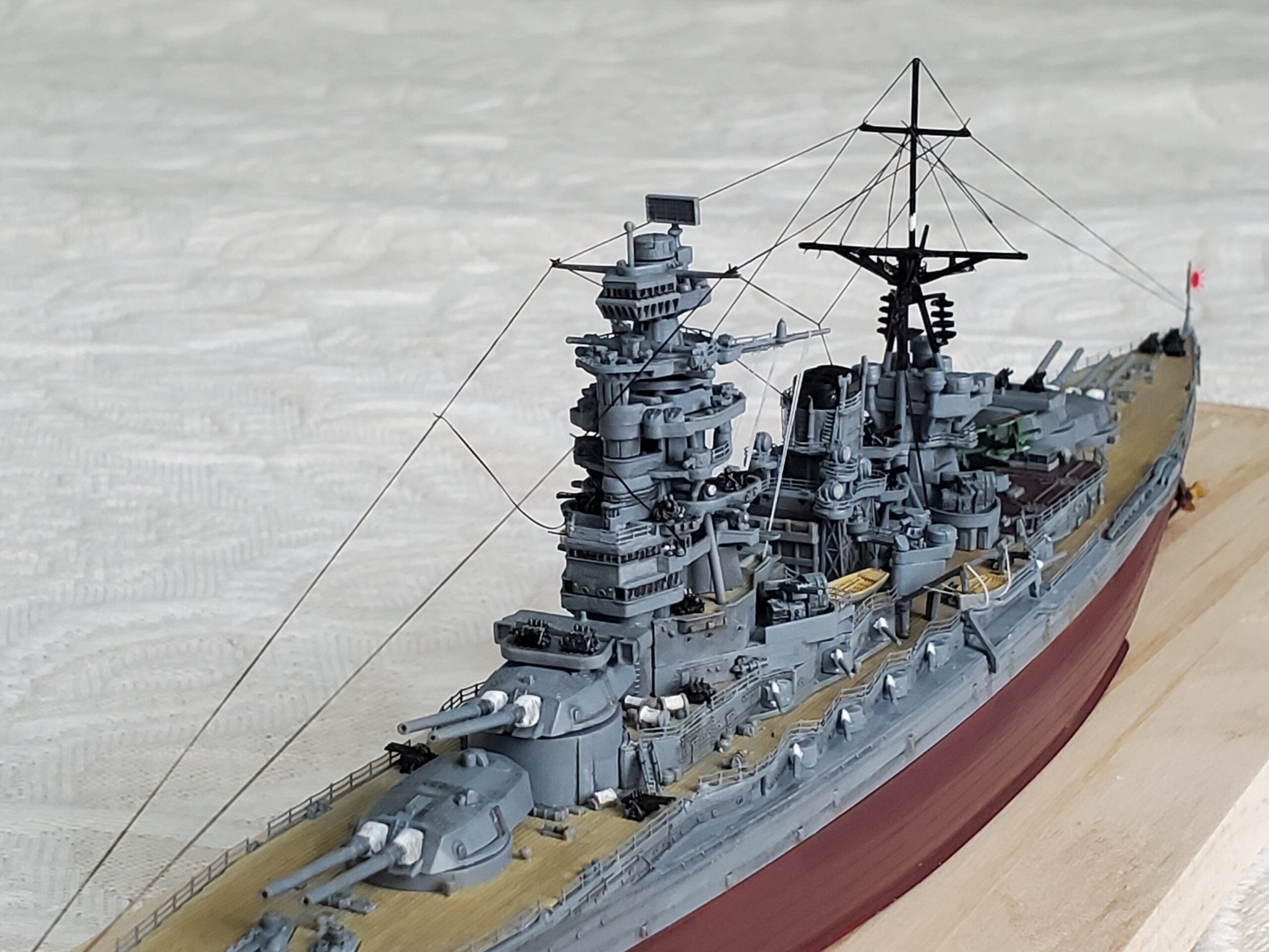
I do want to flag the tiny parts issue. Some of the anti-aircraft gun barrels and railing sections are under 1mm in size and genuinely easy to lose on your workbench. Work over a light-colored surface and keep a pair of fine-point tweezers handy. A few reviewers mentioned that some AA guns arrived slightly bent from the molding process, but these are easy to straighten with gentle finger pressure.
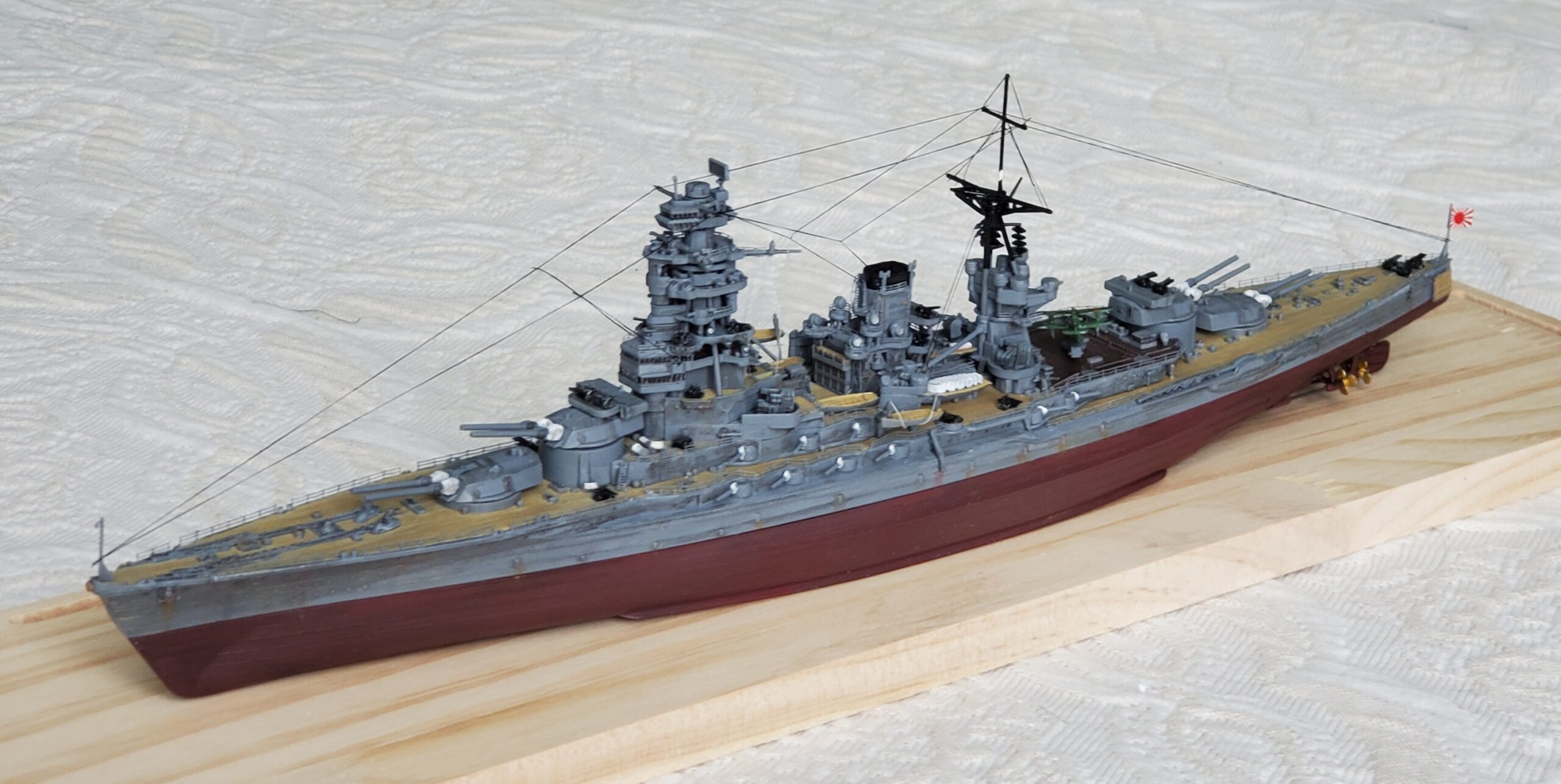
How does this compare to the Hasegawa kits for build ease
The Fujimi Nagato is significantly easier to build than any of the Hasegawa kits on this list. The snap-fit design eliminates the need for glue, the color-coded plastic reduces or eliminates the need for paint, and the modern instructions are clearer than Hasegawa’s older diagram style. If you are a beginner looking for your first IJN model, start here.
The trade-off is that the snap-fit design sometimes leaves visible seam lines on larger parts like the hull halves. Modelers who want a museum-quality finish will want to glue the seams, fill them, and sand them smooth before painting. But for a casual build, the seams are barely noticeable at arm’s length.
Does this kit work in an IJN Hyuga fleet display
Absolutely. The Nagato was the flagship of the Japanese Combined Fleet and operated alongside the Hyuga during several Pacific War engagements. Placing a Nagato next to your Hyuga model creates a historically accurate grouping that tells a story about IJN naval operations. At the same 1:700 scale, the two kits display beautifully together.
14. Fujimi 1/700 IJN Battleship Yamato – Most Popular IJN Kit Overall

Fujimi Model 1/700 Ship Next Series No.1 Japanese Navy Battleship Yamato (New Exhibition Base Specification), Color Coded, Plastic Model Ship NX1
1:700 Scale
Ship Next Series No.1
Snap-Fit Assembly
Limited Edition
422 Reviews
Pros
- Most popular IJN battleship kit available
- Snap-fit no glue required
- Color coded plastic
- First Press Limited Edition
- Great companion for IJN collection
Cons
- Instructions in Japanese only
- Very small parts risk of losing pieces
- Requires proper tweezers for assembly
- Decals could be higher quality
With 422 reviews, the Fujimi 1/700 Yamato is the most reviewed and most popular IJN battleship model kit on the market. The Yamato was the largest battleship ever built and a contemporary of the Hyuga, making this a natural companion piece for any IJN fleet display. I included it because no IJN model collection feels complete without the Yamato.
Like the Nagato from the same Ship Next Series, this kit features snap-fit assembly, color-coded plastic, and modern tooling. The First Press Production Lot Limited Edition adds collectible value, though the main appeal is the build quality itself. The Yamato’s massive superstructure and distinctive clipper bow translate well into 1/700 scale, and Fujimi captured all the key features accurately.
The 4.2-star rating is slightly lower than the Nagato, mainly due to complaints about the Japanese-only instructions and decal quality. A few builders felt the decals were thinner and more fragile than expected. I recommend using a decal setting solution and handling them with extra care during application.
Why include the Yamato in a Hyuga kit guide
The Yamato and Hyuga served together in the Japanese Main Force during the Battle of Leyte Gulf, the largest naval battle in history. If you are building an IJN fleet display, having the Yamato as the centerpiece with the Hyuga alongside creates an instantly recognizable grouping. The Yamato also provides useful scale context because it was so much larger than the Ise-class ships.
From a practical standpoint, the Fujimi Ship Next Series Yamato uses the same snap-fit system as the Nagato, so if you enjoy building one, you will enjoy building the other. They look consistent when displayed together because they share the same design philosophy and finish quality.
What should first-time builders know before buying
The snap-fit assembly is beginner-friendly, but the Japanese instructions can be a barrier. I recommend downloading a translated instruction sheet from Scalemates before you start. The tiny parts issue is the same as the Nagato kit, so invest in good tweezers and work on a well-lit, light-colored surface. Despite these minor challenges, this is one of the most rewarding IJN model kits you can build.
How to Choose the Right IJN Hyuga Model Kits?
Picking the best IJN Hyuga model kit comes down to three main decisions: scale, brand, and your experience level. Let me walk you through each factor so you can make the right choice for your situation.
Scale comparison: 1/700 vs 1/350 vs 1/450
The 1/700 scale is the most popular choice for ship modelers because the finished models are a manageable size (roughly 10 to 12 inches long for a battleship) and the kits are affordable and relatively quick to build. You get enough detail to see turrets, funnels, and superstructure levels, but the small size means some fine details like railings are simplified or omitted.
The 1/350 scale is for modelers who want maximum detail and have the display space. A 1/350 Ise-class battleship measures around 27 inches long. At this scale, individual portholes, deck planking, and even rope details become visible. The trade-off is higher cost, longer build time, and the need for more workspace.
The 1/450 scale used for the JMSDF DDH Hyuga is unusual but offers a nice middle ground. You get more detail than 1/700 without the cost and space requirements of 1/350. This scale is worth considering if you want something a bit different from the standard options.
Brand comparison: Hasegawa vs Fujimi vs Aoshima
Hasegawa is the go-to brand for the WWII IJN Hyuga specifically. Their Water Line Series has been the standard for decades, and the molding quality is consistently sharp. The main drawback is that Hasegawa kits require glue and paint, and the instruction sheets can be confusing, especially for newer builders.
Fujimi offers the premium 1/350 scale Ise-class kits and the modern Ship Next Series for other IJN battleships. Their snap-fit Ship Next kits are more beginner-friendly and the modern tooling means better part fit. However, their instructions are often in Japanese only, which can be a hurdle for English-speaking builders.
Aoshima provides solid mid-range options for Fuso and Yamashiro with improved detailing through their renewed Water Line series. They offer good value and quality without reaching the premium price points of Fujimi or the established reputation of Hasegawa.
Difficulty levels by kit
For beginners, I recommend starting with the Fujimi Ship Next Series kits (Nagato or Yamato) because of the snap-fit design and color-coded plastic. The Hasegawa 1/700 Water Line kits are good for intermediate builders who are comfortable with glue and paint. The Fujimi 1/350 Ise Deluxe is best reserved for advanced builders due to the parts count, Japanese instructions, and complex assembly.
Essential tools and supplies for your first build
Regardless of which kit you choose, here is what you need to get started. Plastic cement or super glue is required for Hasegawa kits. A sharp hobby knife or sprue cutter for removing parts from the sprues. Fine-point tweezers for handling small pieces. Sandpaper or a sanding stick in 400 to 1000 grit for smoothing seams. A set of acrylic or enamel paints in IJN gray, hull red, and deck brown. A small brush for detail painting and a larger brush for base coats.
For the snap-fit Fujimi kits, you can skip the glue and paint if you are happy with the molded colors. But I still recommend having tweezers and a hobby knife on hand for cleanup and small part handling.
Aftermarket upgrades worth considering
If you want to push your Hyuga build to the next level, photo-etched (PE) brass detail sets from companies like Gold Medal Models or Lion Roar add railings, ladders, and radar screens that are too fine to mold in plastic. Wooden deck overlays from Artwox or Woodland give the deck a realistic wood grain texture. Metal barrels from Master Model or Rainbow Models replace the plastic gun barrels with precision-turned brass alternatives.
FAQ
What happened to the IJN Hyuga?
The IJN Hyuga was an Ise-class battleship of the Imperial Japanese Navy. Originally commissioned as a conventional battleship in 1918, she was converted into a hybrid aircraft battleship in 1943 by removing the rear turret group and adding a flight deck for carrying aircraft. After seeing limited action in her converted form, Hyuga was damaged by American carrier air attacks at Kure in July 1945 and sank in shallow water. She was scrapped after the war in 1947.
Which scale is best for an IJN Hyuga model kit?
The 1/700 scale is the best choice for most builders because it balances detail with affordability and display size. A 1/700 Hyuga measures about 11 inches long, making it easy to display on a shelf. The 1/350 scale is better for experienced builders who want maximum detail and have the workspace for a 27-inch model. Beginners should start with 1/700.
Is Hasegawa or Fujimi better for IJN Hyuga model kits?
Hasegawa is the better choice if you specifically want the WWII IJN Hyuga because they offer dedicated Hyuga kits in 1/700 scale with accurate molding and authentic waterslide decals. Fujimi excels at large-scale 1/350 premium kits with metal detail parts, and their modern Ship Next Series offers snap-fit convenience for other IJN battleships. For the Hyuga specifically, Hasegawa has more options available.
Is the Hasegawa 1/700 Hyuga kit suitable for beginners?
The Hasegawa 1/700 Hyuga kit is best suited for intermediate builders. While the parts count (171 pieces) is manageable, the instructions can be confusing for first-time builders and the kit requires glue and paint. Beginners should consider starting with a Fujimi Ship Next Series snap-fit kit first to build confidence before tackling the Hasegawa Hyuga.
Do I need glue and paint for IJN Hyuga model kits?
Most IJN Hyuga model kits require both glue and paint. Hasegawa kits need plastic cement and paint for assembly and finishing. Fujimi Ship Next Series kits feature snap-fit assembly that does not require glue, and the color-coded plastic can look acceptable without painting. The Hasegawa Full Hull Special edition uniquely includes glue and paint in the box.
Final Thoughts on the Best IJN Hyuga Model Kits
The best IJN Hyuga model kit for you depends on your experience level and what you want from the build. The Hasegawa 1/700 IJN Battleship Hyuga remains our top pick for its sharp detail, authentic markings, and solid build experience at a fair price. For beginners, the Fujimi Ship Next Series kits offer a gentler entry point with snap-fit assembly. And for the dedicated modeler who wants the ultimate IJN display piece, the Fujimi 1/350 Ise Deluxe delivers detail that no other kit can match.
Whatever kit you choose, building an IJN Hyuga model connects you to a fascinating piece of naval history. That strange hybrid battleship-carrier design is unlike anything else afloat, and having a miniature version on your shelf is a conversation starter every time someone visits. Pick your kit, clear your workbench, and enjoy the build.