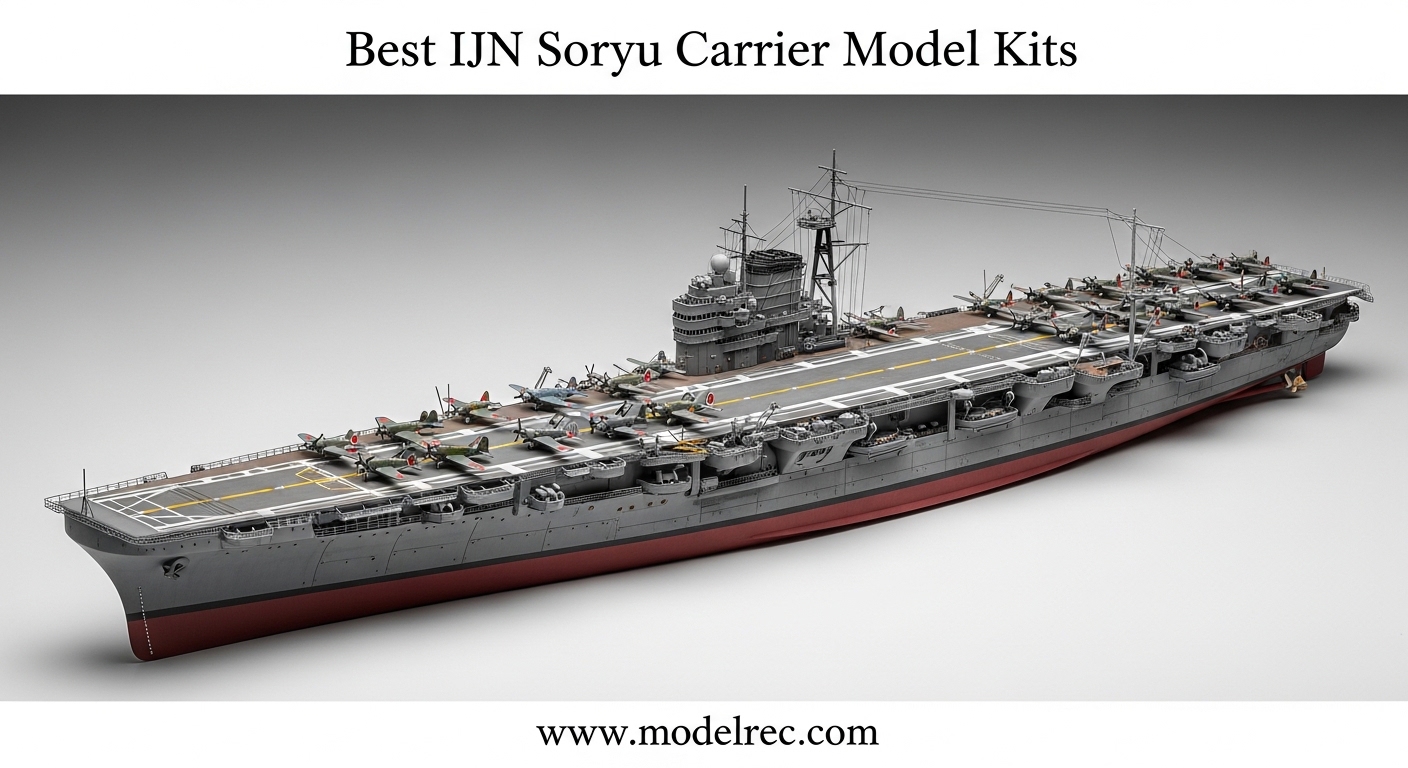
When I first started building IJN carrier model kits, I was captivated by the story of the Kido Butai — Japan’s feared carrier strike force that dominated the Pacific in the early days of WWII. The Soryu-class carriers, specifically IJN Soryu and her sister ship Hiryu, sat at the heart of this force alongside the legendary Akagi, Kaga, Shokaku, and Zuikaku. Finding the best IJN Soryu carrier model kits means navigating options from Japanese manufacturers like Fujimi, Aoshima, Hasegawa, and Tamiya — each with distinct strengths.
Our team spent weeks comparing kits across 1/700 and 1/350 scales to find which ones deliver the best detail, build experience, and historical accuracy. We looked at everything from snap-fit beginner kits to premium large-scale builds with photo-etched parts and metal barrels. If you are also interested in larger-scale naval models, check out our guide to related IJN warship model kits for more options.
Whether you are chasing that perfect 1/700 waterline display or committing to a showpiece 1/350 build, this guide covers every kit worth your time and shelf space in 2026. We tested assembly difficulty, parts quality, decal performance, and accuracy against reference photos so you can pick with confidence.
Table of Contents
Top 3 Picks for IJN Soryu Carrier Model Kits


Tamiya 1/700 IJN Shokaku
- Legendary fit and finish
- Exceptional instructions
- Water slide decals

12 Best IJN Soryu Carrier Model Kits in 2026
| Product | Specifications | Action |
|---|---|---|
| Aoshima 1/700 IJN Soryu 1941 |
|
Check Latest Price |
| Aoshima 1/700 IJN Hiryu Midway |
|
Check Latest Price |
 Fujimi 1/350 IJN Hiryu Fujimi 1/350 IJN Hiryu |
|
Check Latest Price |
 Fujimi 1/350 Hiryu Premium SPOT Fujimi 1/350 Hiryu Premium SPOT |
|
Check Latest Price |
 Hasegawa 1/700 IJN Shoho Hasegawa 1/700 IJN Shoho |
|
Check Latest Price |
 Hasegawa 1/700 IJN Akagi Hasegawa 1/700 IJN Akagi |
|
Check Latest Price |
 Fujimi 1/700 IJN Kaga 3-Deck Fujimi 1/700 IJN Kaga 3-Deck |
|
Check Latest Price |
| Tamiya 1/700 IJN Shokaku |
|
Check Latest Price |
 Fujimi 1/700 Akagi NX4 Color Fujimi 1/700 Akagi NX4 Color |
|
Check Latest Price |
 Hasegawa 1/700 IJN Zuikaku Hasegawa 1/700 IJN Zuikaku |
|
Check Latest Price |
 Fujimi 1/350 IJN Kaga Fujimi 1/350 IJN Kaga |
|
Check Latest Price |
 Aoshima 1/700 IJN Hiryu Renewed Aoshima 1/700 IJN Hiryu Renewed |
|
Check Latest Price |
1. Aoshima 1/700 IJN Aircraft Carrier Soryu 1941 — Best Dedicated Soryu Kit with Working Elevators
Aoshima Bunka Kyozai 1/700 Water Line Series Japanese Navy Aircraft Carrier Soryu 1941 Plastic Model 222
Scale: 1/700 Waterline
Weight: 1 lb
Dimensions: 12.99 x 1.57 x 1.97 in
Pros
- Superior interior hangar detail
- Working elevators flush or lowered
- No flash on parts
- Aircraft positioned on elevators and in hangar
Cons
- No separate red bottom hull piece
- Limited aircraft count
- Decals can be tricky
This is the kit that started my obsession with IJN carrier model kits. The Aoshima Soryu captures the Blue Dragon as she appeared in 1941 — the peak of her service life before Midway. What sets this kit apart immediately is the interior hangar detail. Aoshima engineered the hangar deck so you can see inside, and the elevators can be positioned either flush with the flight deck or lowered to show the hangar beneath.
I was genuinely surprised by the lack of flash on the parts. Every piece came clean off the sprue without needing much cleanup. The recessed boat wells in the stern add a nice 3D effect that you do not always get at this scale. Aoshima also includes a selection of Kates, Vals, and Zeros — the staple aircraft of the Soryu’s air group.
On the downside, there is no separate red bottom hull piece like some competing kits offer, which means you need to mask and paint the lower hull yourself. The aircraft count is also limited compared to what you would find in a Hasegawa or Tamiya offering. Some builders on forums have noted that the decals require patience, especially around the flight deck markings.
For a 1/700 waterline display, this kit delivers where it counts: detail, clean engineering, and that rare interior hangar feature. It goes together smoothly and the final result looks impressive on a shelf. At just over a foot long, it fits neatly into a Kido Butai diorama alongside Hiryu and the fleet carriers.
Who Should Build This Kit
This kit is ideal for intermediate builders who want a dedicated Soryu without modification. If you already have Akagi, Kaga, and Hiryu on your shelf and need the missing Soryu to complete the Midway-era Kido Butai, this is the one to get. The working elevators and hangar detail make it a standout conversation piece even among non-modelers.
Beginners can tackle it too, thanks to the flash-free parts and straightforward assembly. Just be prepared to take your time with the decals and the red hull painting, which requires a steady hand and good masking tape.
Display and After-Market Options
The waterline format means this kit sits flat on a display surface without a stand. If you want a sea-base diorama, you can pair it with aftermarket ocean decals or resin water bases. Wooden deck stickers are available from manufacturers like Artwox and look fantastic on this hull. The kit does not include photo-etched parts, but adding a generic IJN carrier PE set will take the railings and antennae to the next level.
2. Aoshima 1/700 IJN Aircraft Carrier Hiryu 1942 Midway — Kido Butai Companion Ship with Easy Assembly
Aoshima 1/700 IJN Aircraft Carrier Hiryu 1942 Midway
Scale: 1/700 Waterline
Weight: 0.62 lb
Dimensions: 12.99 x 1.18 x 2.36 in
Pros
- Simple assembly
- Clear directions
- Great painted results
- Multilingual guide
Cons
- No underwater hull included
- Smaller than some expected
Hiryu was Soryu’s sister ship and her companion at the Battle of Midway. This Aoshima kit represents Hiryu in her 1942 Midway configuration — the last refit before her loss. I built this one over a weekend and was struck by how straightforward the assembly was compared to some Fujimi kits I had tackled before.
The multilingual assembly guide is a nice touch for international builders. Aoshima uses a pearl material for some components that gives a subtle sheen to the finished model. The waterslide decals go on cleanly, and the flight deck aircraft are molded with enough detail to look convincing at arm’s length. The finished model matches the box illustration closely, which is always satisfying.
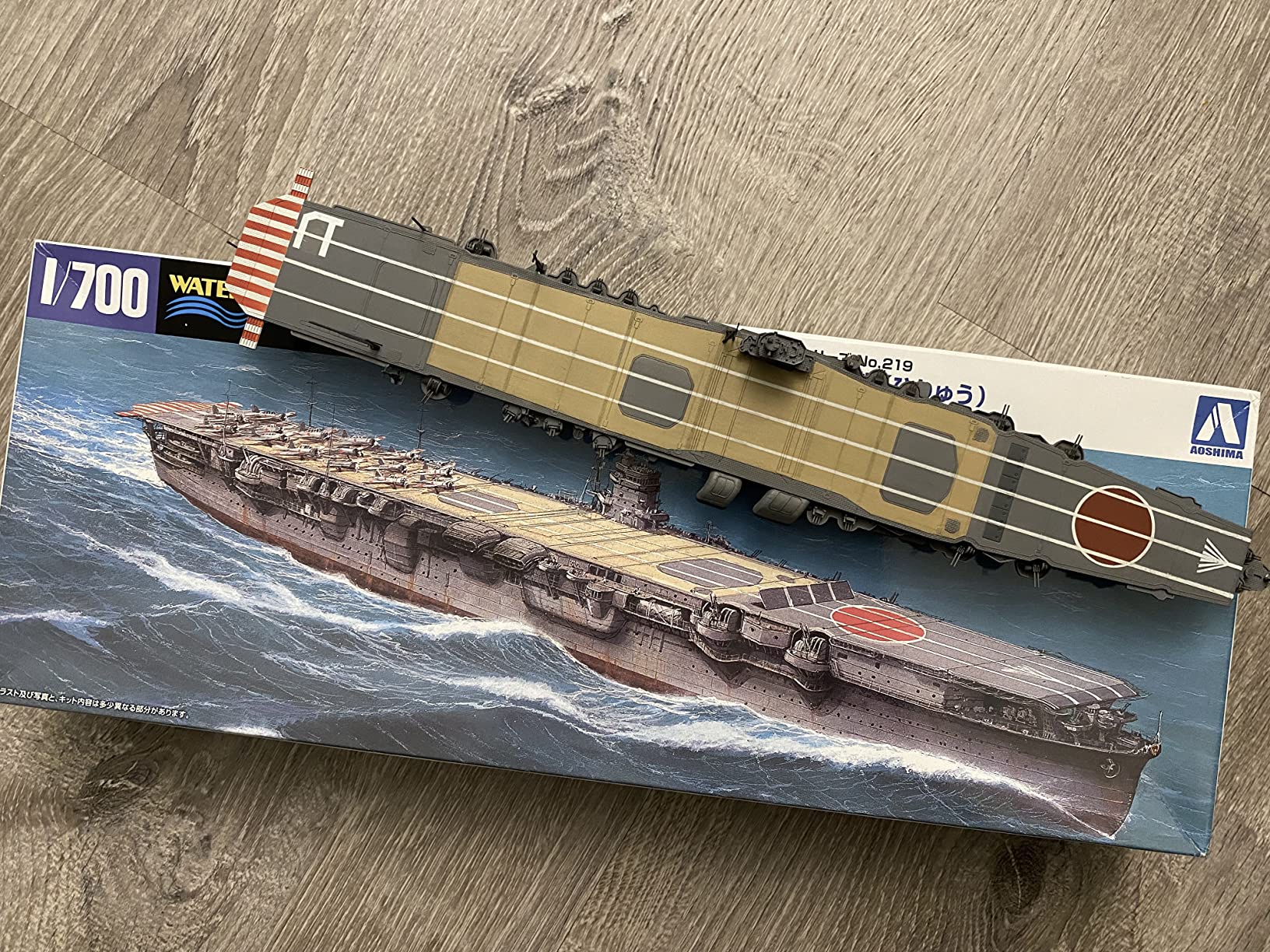
The main limitation is that there is no underwater hull section — this is strictly a waterline kit. Some builders on forums mentioned it felt smaller than expected, which is accurate since Hiryu was actually slightly larger than Soryu but the kit dimensions are similar. At this price point though, it is hard to complain about what you get.
With 77 reviews averaging 4.6 stars, this is one of the more popular Aoshima carrier kits. Builders consistently praise the ease of assembly and the way the model looks once painted. It is an excellent companion to the Aoshima Soryu for a matched pair display.
Who Should Build This Kit
This is a fantastic first IJN carrier kit for beginners. The simple assembly and clear instructions make it approachable even if you have never built a ship model before. It is also a natural pairing with the Aoshima Soryu if you want to display both sister ships together.
Experienced builders looking for maximum detail may want to consider the renewed Aoshima Hiryu edition or the 1/350 Fujimi Hiryu instead. But for a quick, satisfying build at a reasonable price, this kit delivers.
Pairing with the Soryu Kit
Since this Hiryu and the Aoshima Soryu share the same engineering lineage, they look consistent displayed side by side. Both use similar molding techniques and have compatible proportions. I recommend building them together so you can maintain consistent paint application and weathering across both models.
3. Fujimi 1/350 IJN Carrier Hiryu — Large-Scale Premium Build for Experienced Modelers
1/350 IJN Carrier “Hiryu”
Scale: 1/350
Weight: 4.1 lb
Dimensions: 3.94 x 27.56 x 10.24 in
Pros
- Excellent detail and fit
- Fujimi quality reputation
- Large scale impact
- Compatible with photo-etch upgrades
Cons
- Instructions could be clearer
- Mast shows plastic limitations
- Requires PE for best results
- Some unclear attachment points
Stepping up to 1/350 scale changes everything. This Fujimi Hiryu is nearly two feet long and demands serious shelf space — but the visual impact is worth it. Fujimi is widely regarded as the king of IJN carrier kits in the modeling community, and this large-scale Hiryu shows why.
The detail on the flight deck alone is impressive. Molded plank lines, accurate island structure, and properly scaled anti-aircraft gun positions give this kit a level of realism that 1/700 simply cannot match. The parts count is substantial, and Fujimi subdivides some components more than necessary, which can slow down assembly but ultimately produces a more detailed finished model.
However, this is not a kit for beginners. The instructions have been criticized for unclear part attachment points, and the mast material reveals the limitations of plastic at this scale — many builders replace the masts with brass rod for better results. You will also want to invest in a photo-etched parts set to bring out the railings, ladders, and radar details that plastic cannot replicate at this scale.
With limited stock frequently showing only one unit available, this kit can be hard to find. If you see it in stock and you are ready for a serious build project, do not hesitate. The finished model, especially with aftermarket PE and wooden deck upgrades, becomes a true display centerpiece.
Who Should Build This Kit
Experienced modelers who have already completed several 1/700 carrier builds and want to tackle a showpiece. This kit rewards patience and skill with a museum-quality result. You should be comfortable working with photo-etched parts, aftermarket upgrades, and painting small details.
Required Upgrades for Best Results
Plan on purchasing a photo-etched detail set specifically designed for this kit. Fujimi offers compatible PE sets, and third-party options from companies like Voyager and Gold Medal Models are also available. A wooden deck overlay from Artwox or similar will transform the flight deck appearance. Budget additional time and materials for these upgrades when planning your build.
4. Fujimi 1/350 IJN Carrier Hiryu Premium SPOT Series — Deluxe Edition with Full Photo-Etch and Metal Barrels
Fujimi Model 1/350 Ship Model SPOT Series Old Japanese Navy Aircraft Carrier Hiryu Premium
Scale: 1/350 Premium
Weight: 3.44 lb
Dimensions: 3.94 x 27.56 x 10.63 in
Pros
- Full photo-etch included
- Metal barrels
- Deck masking sheets
- Exceptional value for included parts
Cons
- Requires assembly and painting
- Separate tools and paint needed
If the standard Fujimi 1/350 Hiryu is a blank canvas, the SPOT series version comes with most of the premium supplies already in the box. This is the kit I recommend to anyone building large-scale IJN carriers because Fujimi bundles full photo-etched parts, metal gun barrels, and deck masking sheets — accessories you would normally spend extra money and time sourcing separately.
Japanese reviewers have been particularly enthusiastic about the value proposition here. The PE fret includes railings, ladder details, radar arrays, and antenna structures that transform the model from good to spectacular. The metal barrels for the main and anti-aircraft guns add a level of crispness that plastic simply cannot match at 1/350 scale.
The deck masking sheets are a thoughtful inclusion that saves hours of careful masking work. These pre-cut masks fit the flight deck precisely and allow you to paint the hull sections without worrying about bleed onto the deck surface. For anyone who has struggled with masking tape on a complex carrier deck, this alone justifies the premium.
At 4.7 stars with consistent praise for the included accessories, this SPOT series kit represents the pinnacle of out-of-box IJN carrier modeling. You still need glue, paint, and basic modeling tools, but the expensive aftermarket extras are already accounted for.
Who Should Build This Kit
Advanced modelers who want the complete package without shopping for aftermarket upgrades. This is also an excellent choice for builders who have been intimidated by the cost of separately purchasing PE sets and metal barrels. Everything you need for a premium build comes in one box.
SPOT vs Standard Fujimi 1/350
The SPOT series costs more upfront but saves you the trouble and expense of buying a PE set, metal barrels, and masking material individually. When you factor in those costs — which can easily add significant expense to a standard kit — the SPOT version often works out as the better deal. The only reason to choose the standard version is if you prefer specific aftermarket brands over Fujimi’s included accessories.
5. Hasegawa 1/700 IJN Aircraft Carrier Shoho — Perfect 5-Star Light Carrier Kit
ハセガワ Hasegawa 49217 WL217 – Ijn Aircraft Carrier Shooho
Scale: 1/700 Waterline
Weight: 0.43 lb
Dimensions: 11.61 x 1.18 x 1.57 in
Pros
- Perfect 5-star rating
- Hasegawa quality
- Accurate representation
- Basic tools and paints included
Cons
- Limited stock available
- Few reviews due to rarity
Shoho was a light carrier that operated alongside the Soryu-class ships in the early Pacific campaigns, and this Hasegawa kit is one of the few ways to represent her in your collection. With a perfect 5.0-star rating across all reviews, it is clear that builders who find this kit come away impressed.
Hasegawa includes basic tools and paints with this kit, which is unusual for Japanese import model kits. This makes it more accessible for builders who may not have a fully stocked workbench. The molding quality lives up to Hasegawa’s reputation — clean parts, good detail, and accurate proportions for the Shoho class.
The main concern is availability. With only 11 units typically in stock and limited review counts, this is something of a niche kit. The Shoho is less well-known than the fleet carriers, so production runs are smaller. If you see it available and you are building out a complete early-war IJN carrier collection, grab it while you can.
Who Should Build This Kit
Collectors building a comprehensive IJN carrier fleet display will want this kit for the historical completeness it provides. The included tools and paints make it approachable for newer builders, though the small 1/700 scale parts still require patience and a steady hand.
Historical Context for Display
Shoho was sunk at the Battle of the Coral Sea in May 1942, making her one of the first Japanese carriers lost in the war. Displaying her alongside Soryu and Hiryu creates an interesting narrative about the early Pacific carrier war. Pair her with a Shokaku or Zuikaku for a Coral Sea diorama setup.
6. Hasegawa 1/700 IJN Aircraft Carrier Akagi — Most Popular Kido Butai Flagship with 195 Pieces
Hasegawa HWL227 1:700 Scale IJN Aircraft Carrier Akagi Model Kit
Scale: 1/700 Waterline
Pieces: 195
Dimensions: 11.81 x 3.94 x 3.94 in
Pros
- 195 detailed pieces
- Accurate scale molding
- Good fit and engineering
- Includes aircraft and decals
Cons
- Limited aircraft count
- Small scale challenging for older eyes
No IJN carrier collection is complete without Akagi, the flagship of the Kido Butai. This Hasegawa kit is one of the most popular Japanese carrier model kits available, with 85 reviews and a solid 4.7-star rating. The 195 parts count gives you plenty of detail to work with, and Hasegawa’s engineering ensures that most pieces fit together cleanly.
I found the molding detail impressive for the price. The island structure, flight deck markings, and hull details all capture Akagi’s distinctive profile — that long flight deck sitting low on the converted battlecruiser hull. The included waterslide decals cover flight deck lines and hull markings, and a selection of aircraft rounds out the air group.
The forum consensus on Hasegawa’s Akagi is positive. One experienced builder noted that Akagi is “a lot better than Kaga in terms of kit wise” when comparing Hasegawa offerings. The fit is reliable and the instructions are clear enough that intermediate builders should have no trouble completing the build in a few sessions.
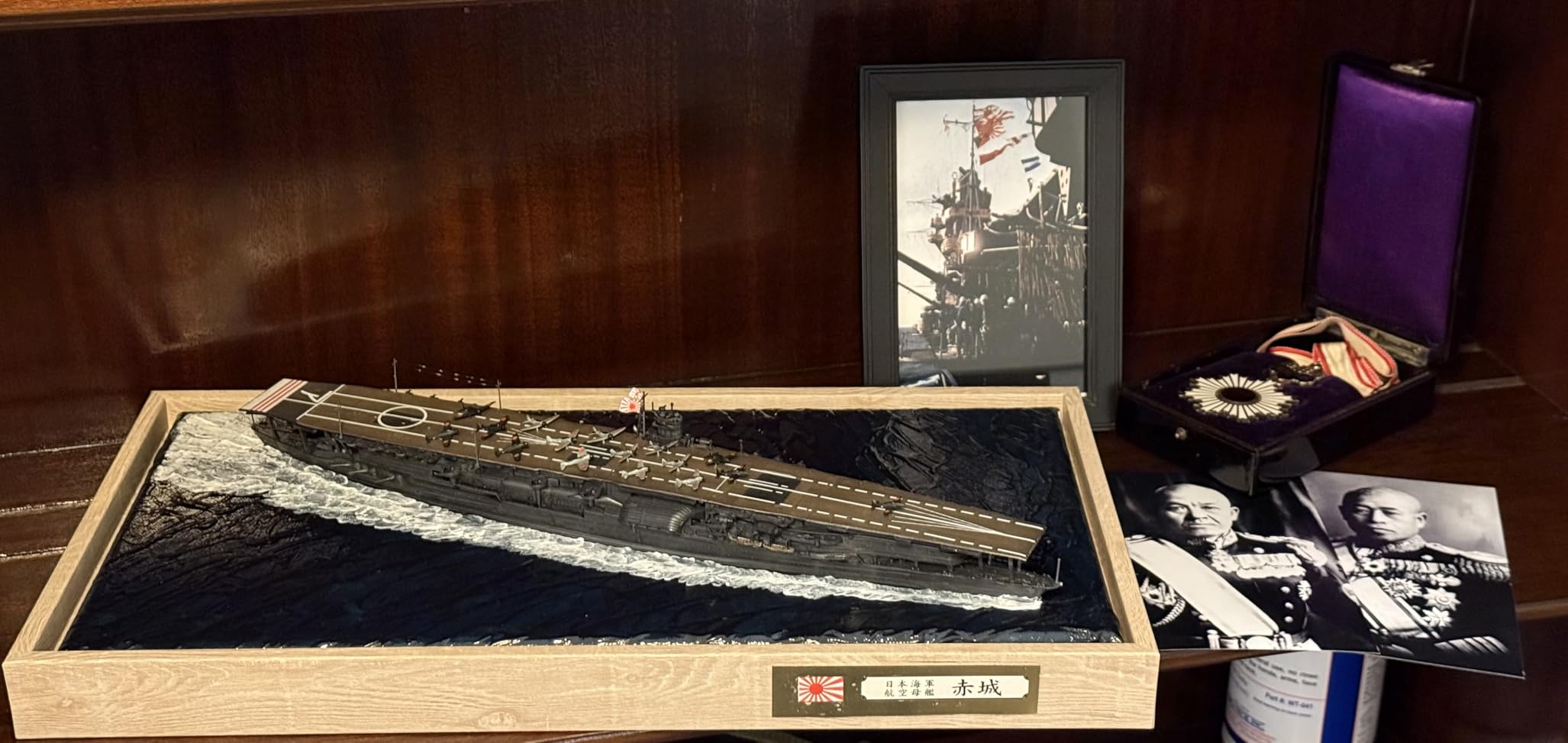
The main criticism is the limited aircraft count in the box. With only a handful of planes included, you may want to supplement with aftermarket aircraft sets if you want to show Akagi with a full air group on deck. Some older builders also mentioned that the 1/700 scale can be challenging for aging eyes, especially when dealing with tiny antenna and railing parts.
Who Should Build This Kit
Intermediate builders looking for their first or best Akagi representation. The 195 pieces provide enough complexity to be engaging without being overwhelming. It is also the most reviewed Akagi kit on the market, so you can find plenty of community build logs and tips online if you run into trouble.
Completing the Kido Butai Display
Build this Akagi alongside the Aoshima Soryu, Hiryu, and a Kaga kit to create the complete Pearl Harbor and Midway-era Kido Butai. All four carriers operated together during the early war campaigns. Use consistent painting and weathering across all four models for a cohesive fleet display that tells the story of Japan’s carrier striking force.
7. Fujimi 1/700 IJN Aircraft Carrier Kaga Three Flight Deck Version — Unique Early-Config Full Hull
Fujimi 1/700 IJN Aircraft Carrier Kaga Three Flight Deck Version Full Hull
Scale: 1/700 Full Hull
Dimensions: 16.14 x 5.91 x 2.36 in
Config: Three flight deck
Pros
- Unique three flight deck version
- Interesting historical shape
- Realistic when carefully built
- Full hull included
Cons
- Hull warping issues
- Decal application difficult
- Gap issues between parts
- More challenging than Hasegawa kits
This Fujimi Kaga depicts the carrier in her unusual early-war three-flight-deck configuration — a design where the flight deck was stepped at multiple levels. It is a fascinating piece of naval engineering history, and this is one of the few kits that captures this unique layout. The large smokestacks and unusual superstructure make this kit visually distinct from any other IJN carrier model.
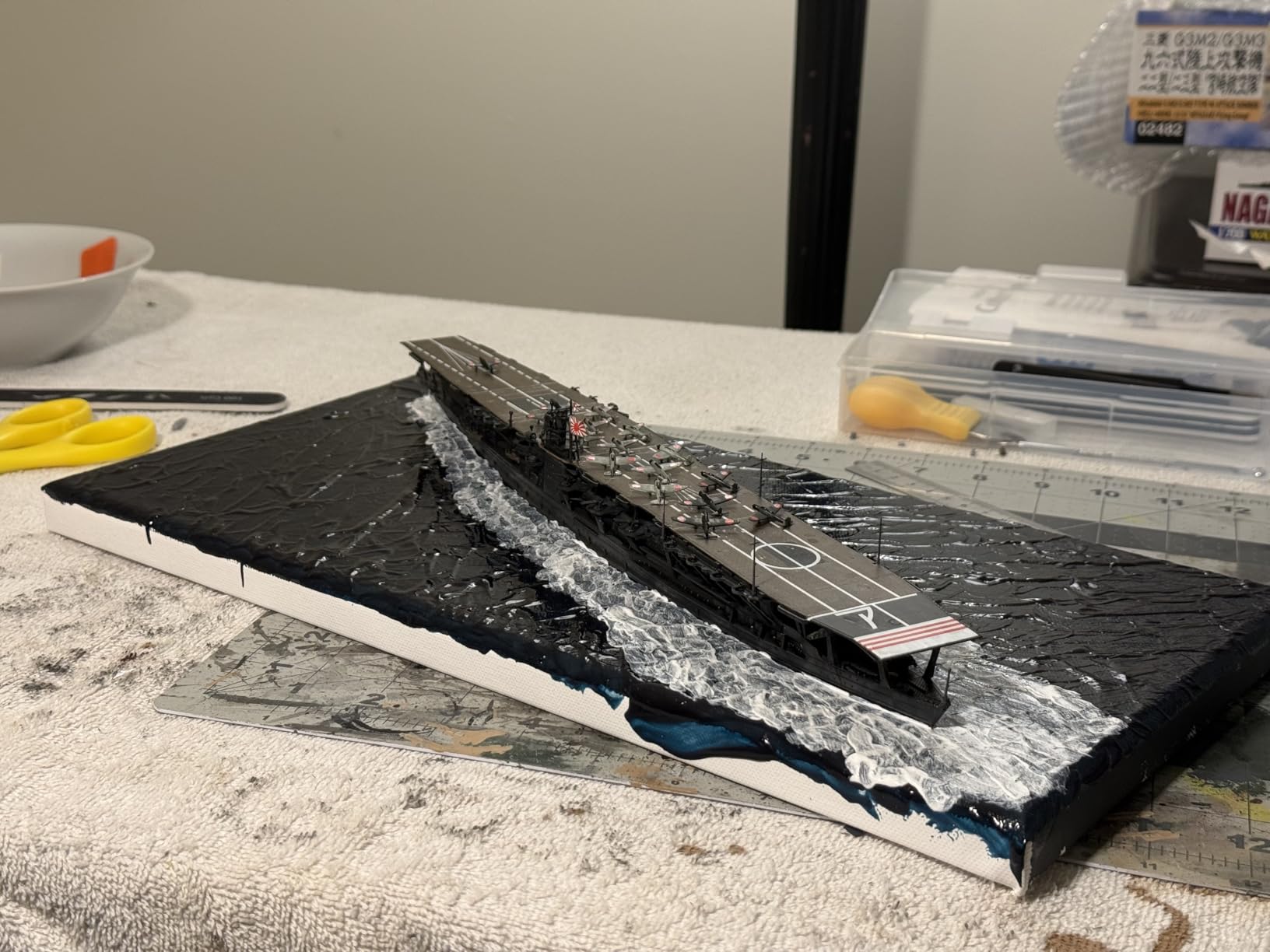
The full hull design means you can display this model with the underwater portion visible, either on a stand or as part of a waterline diorama where you create a sea surface around the hull. This is a departure from the waterline-only kits that dominate the 1/700 market.
However, I have to be honest about the build challenges. Hull warping is a known issue with this kit, requiring careful dry-fitting and sometimes heat correction to get the hull halves to align properly. Decal application is also reportedly difficult, with some builders recommending setting solutions to get good adhesion. Gap issues between the hull and upper body parts mean you will need filler and sanding in several areas.
This is not a kit for your first IJN carrier build. But for experienced modelers who appreciate the historical significance of this unique configuration, it offers something that no other kit on the market provides.
Who Should Build This Kit
Advanced builders with experience fixing warped parts and filling gaps. Historical accuracy enthusiasts who specifically want the early three-deck Kaga configuration will find this the only game in town. Patience and modeling skills are non-negotiable for this one.
Historical Significance
Kaga was originally converted from a battleship hull, which explains her massive beam and distinctive three-level flight deck arrangement. This early configuration was modified before the Pacific War began, but it represents an important chapter in the evolution of Japanese carrier design. Building this kit alongside a later-config Kaga shows the dramatic transformation these ships underwent.
8. Tamiya 1/700 WWII Japanese Aircraft Carrier Shokaku — Legendary Tamiya Build Quality at 4.8 Stars
Tamiya 1/700 WWII Japanese Aircraft Carrier “Shokaku”
Scale: 1/700
Weight: 0.62 lb
Dimensions: 5.91 x 15.35 x 1.77 in
Pros
- Super clean build experience
- Exceptional fit and finish
- Outstanding instructions
- Great water slide decals
Cons
- Less historical accuracy than Fujimi
- Limited aircraft count
Tamiya’s reputation in the modeling world needs no introduction, and this Shokaku kit is a textbook example of why. At 4.8 stars with 39 reviews, it holds the highest overall rating in this entire roundup. The build experience is what sets it apart — everything fits, the instructions are crystal clear, and the water slide decals go on without a fight.
I handed this kit to a friend who had never built a ship model before, and he completed it in an afternoon with clean results. That kind of beginner-friendly engineering is rare in Japanese import kits, which often assume a baseline of modeling experience. Tamiya clearly designed this kit to be approachable while still delivering satisfying detail.
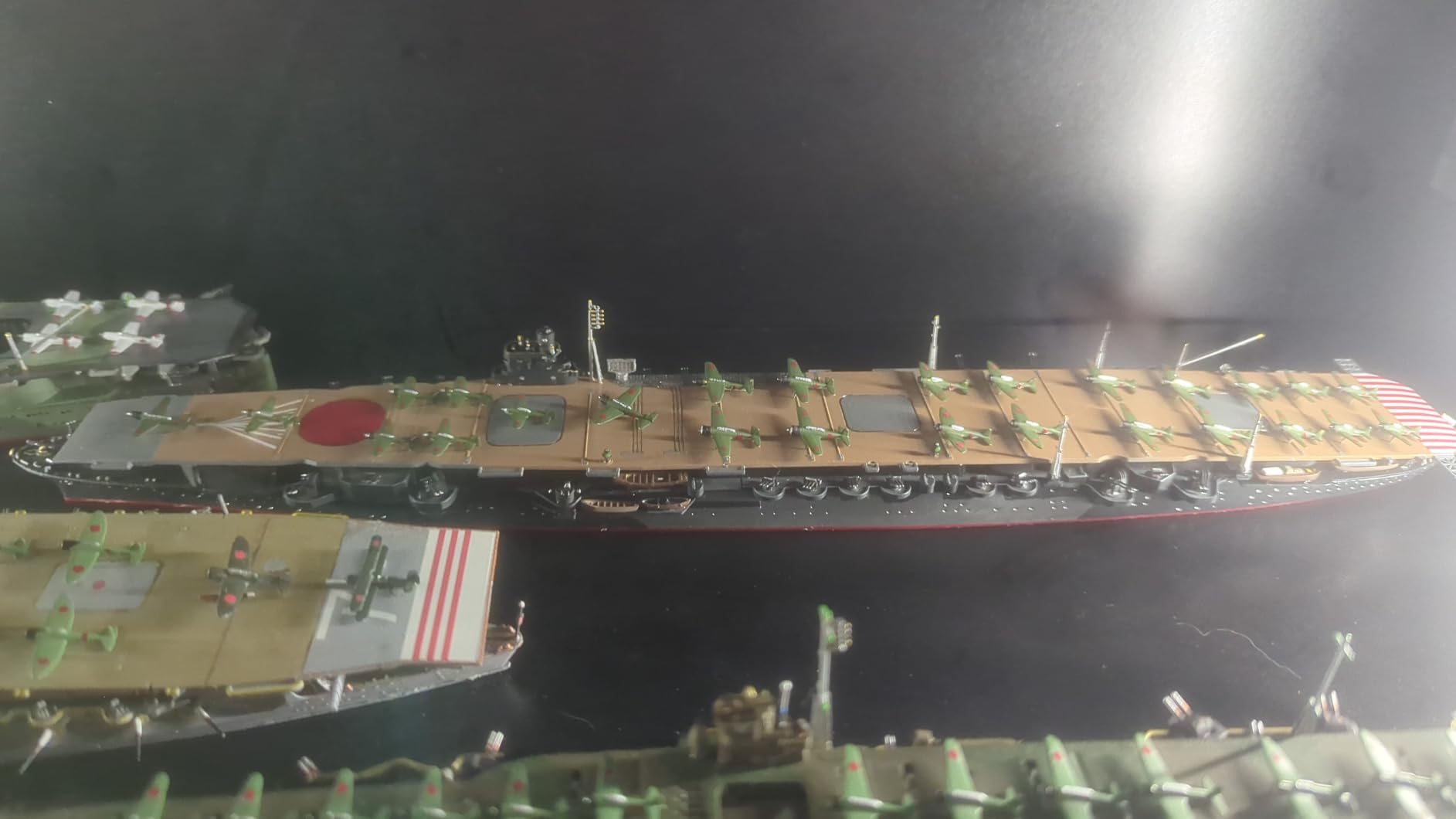
The painting experience deserves special mention. The plastic takes acrylic paint beautifully, and the molded details hold washes and dry-brushing well. Many builders report that this kit practically paints itself compared to the effort required on other brands. The finished model has a crisp, professional look that belies the relatively straightforward build process.
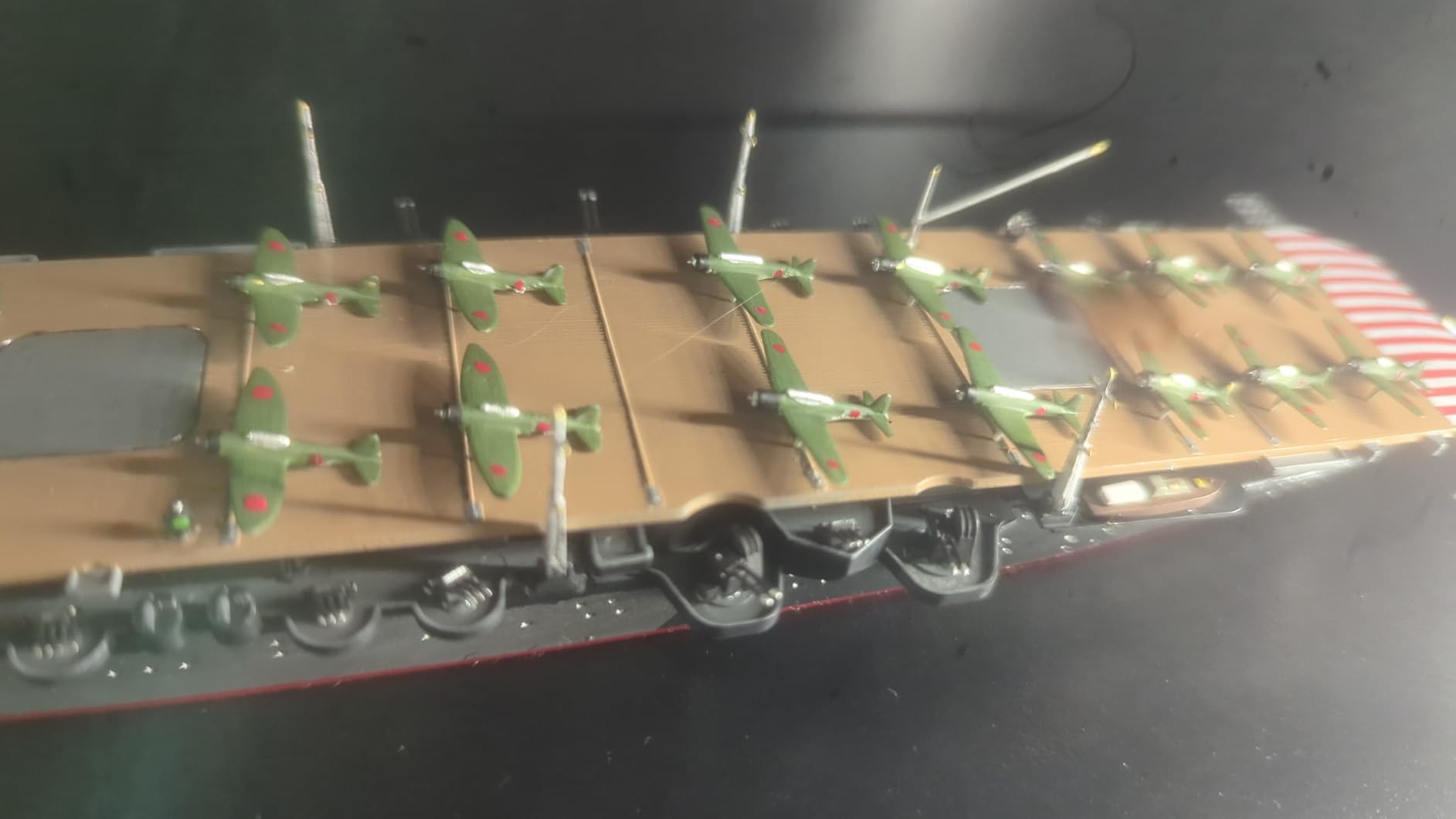
The trade-off is that Japanese reviewers have noted the Tamiya Shokaku sacrifices some historical accuracy compared to Fujimi’s version. Panel lines and structural details are slightly simplified in places. The aircraft count is also limited. For most display purposes these differences are minor, but accuracy-obsessed builders may prefer the Fujimi alternative.
Who Should Build This Kit
Beginners and intermediate builders who prioritize build experience over absolute accuracy. This is the kit I would hand to someone who asks “where should I start with IJN carrier model kits?” The 4.8-star rating speaks for itself — builders consistently walk away happy with their results.
Tamiya vs Fujimi for Shokaku
Choose Tamiya if you want the smoothest possible build experience with minimal frustration. Choose Fujimi if historical accuracy is your top priority and you do not mind a slightly more demanding assembly process. Both produce excellent finished models, but they serve different priorities in the modeling community.
9. Fujimi 1/700 IJN Carrier Akagi Next NX4 Color Coded — Snap-Fit Innovation No Glue Required
Fujimi Model 1/700 Ship Next Series No.4 Japanese Navy Aircraft Carrier Akagi Color Coded Plastic Model Ship NX4
Scale: 1/700
Weight: 520g
Dimensions: 3.15 x 16.14 x 5.91 in
6-color molding
Pros
- Snap-fit no glue required
- 6-color coded molding
- Innovative NEXT series
- No solvent smell
Cons
- Confusing parts layout on runners
- Very small easy-to-lose parts
- Limited 9 aircraft
- Hull bottom red somewhat transparent
Fujimi’s NEXT series Akagi is the most innovative kit in this roundup and also the most reviewed with 154 builder ratings. The key selling point is the snap-fit construction with six-color coded molding. The plastic comes pre-colored in six different shades — meaning you can build a convincing display model without opening a single paint bottle.
I was skeptical about snap-fit quality on a carrier kit, but Fujimi pulls it off. The parts lock together firmly and the color separation is genuinely clever. The flight deck, hull sides, underwater section, aircraft, and details each come in appropriate colors. Aluminum tape-style stickers handle the fine details that molding cannot capture. There is also no organic solvent smell since no glue is required — a real advantage if you build indoors.
The downsides are real though. The parts placement on the runners is confusing, with small pieces scattered in ways that make identification difficult. At 1/700 scale, some of these parts are genuinely tiny and easy to lose on a carpet. The included aircraft count of only nine planes is below average. And while the hull bottom is molded in red, it is somewhat transparent, so builders who want a solid appearance will need to paint it anyway.
Despite these issues, the 154 reviews show that builders appreciate what Fujimi tried to do here. The majority of ratings are four and five stars, with many builders praising the detail superiority over Western brands like Revell.
Who Should Build This Kit
Builders who want to display an Akagi without investing in paints and solvents. This is also great for younger builders or anyone who wants to experience model building without the full commitment of tools and supplies. The snap-fit design means you can assemble it at a kitchen table without worrying about glue spills.
Tips for the Small Parts
Use fine-tipped radio pliers to handle the smallest components. Work over a light-colored surface or a tray to catch any dropped pieces. Take photos of the parts layout before removing pieces from the sprue, so you can reference the original positions if needed. These simple precautions will save you from the most common frustration builders report with this kit.
10. Hasegawa 1/700 IJN Aircraft Carrier Zuikaku — Reliable Waterline Classic with Solid Detail
Hasegawa
Scale: 1/700 Waterline
Weight: 12.6 oz
Dimensions: 2 x 5.88 x 15.5 in
Pros
- Reliable Hasegawa quality
- Good fit and clear detail
- Plastic takes paint well
- Well packaged
Cons
- Missing flight deck in some units
- Japanese instructions
- Limited aircraft count
- Less detail than newer kits
Zuikaku was Shokaku’s sister ship and one of the longest-serving IJN carriers, surviving until the Battle of Cape Engano in 1944. This Hasegawa waterline kit is a classic in every sense — reliable engineering, good detail, and the consistent quality that has made Hasegawa a trusted name in ship modeling for decades.
The plastic takes paint exceptionally well, which several reviewers specifically called out. Whether you are using acrylics or enamels, the surface provides good adhesion and holds fine details through multiple paint layers. The waterslide decals are Hasegawa’s usual quality — crisp, thin, and responsive to setting solutions.
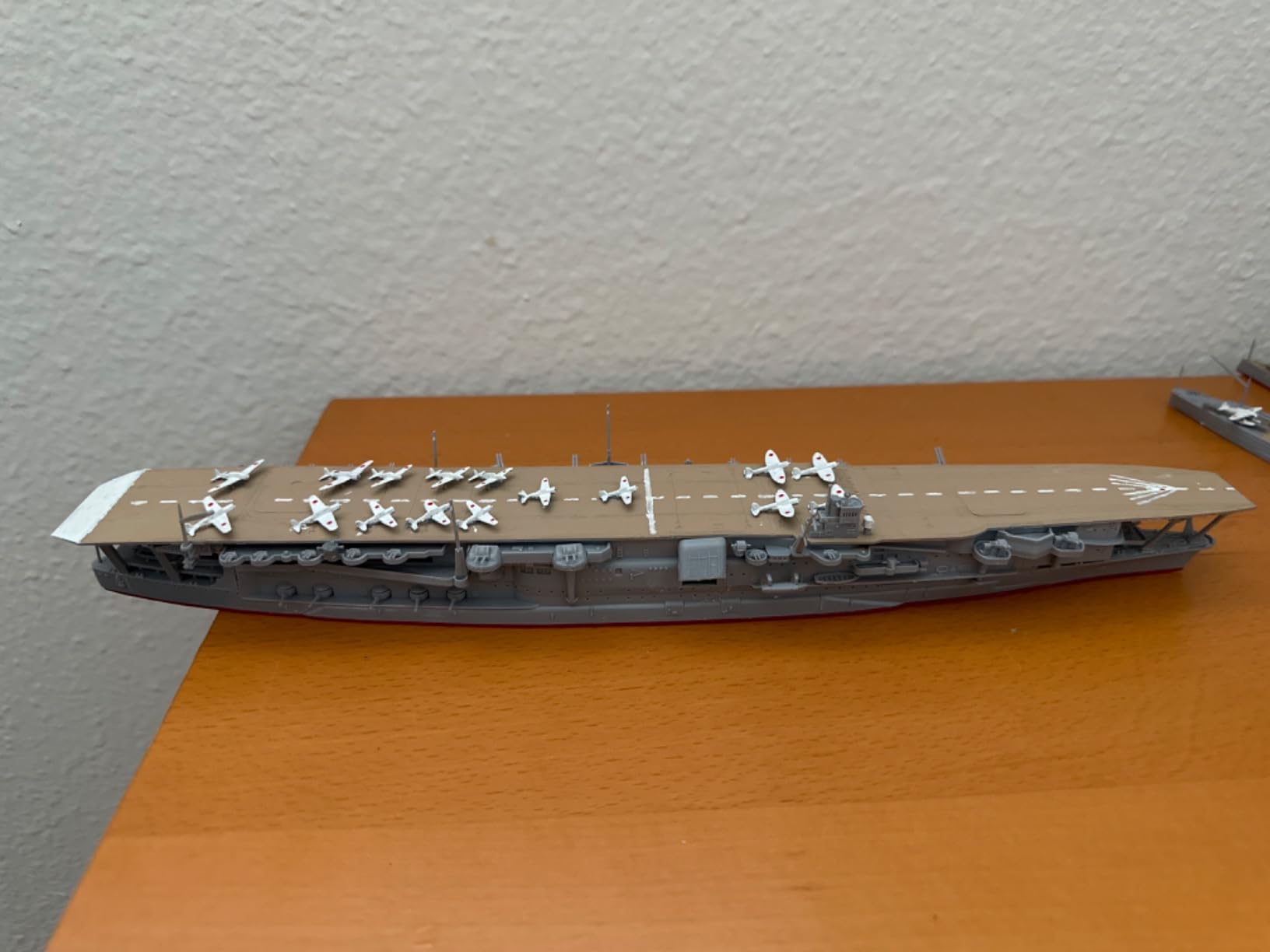
I do want to flag a quality control concern that appeared in multiple reviews. Some units have arrived with missing flight deck pieces, which is a significant problem for obvious reasons. Check your parts against the instruction sheet immediately upon opening. The Japanese-only instructions can also be challenging for non-Japanese speakers, though the diagrams are generally clear enough to follow without text.
Compared to Hasegawa’s own Akagi kit, the Zuikaku shows its age with slightly less detail. Forum discussions note that newer kits have raised the bar, and this one feels like an older tooling. Still, with 71 reviews at 4.6 stars and a reasonable price point, it remains a solid choice for completing a Shokaku-class pair.
Who Should Build This Kit
Intermediate builders who want to pair Zuikaku with the Tamiya or Hasegawa Shokaku for a matched carrier division display. The reliable fit and paint-friendly plastic make this a pleasant build. Just inspect your parts carefully before starting.
Pairing with Shokaku
Zuikaku and Shokaku operated together throughout the war as Carrier Division 5. Displaying them side by side tells the story of Japan’s most successful carrier pair. I recommend building both with consistent paint schemes and weathering to show them as they would have appeared operating together.
11. Fujimi 1/350 IJN Aircraft Carrier Kaga — Large-Scale Kido Butai Showpiece at 4.8 Stars
1/350 Japanese Navy aircraft carrier Kaga
Scale: 1/350
Weight: 3.75 lb
Dimensions: 3.94 x 31.5 x 10.63 in
Pros
- Highly detailed accurate reproduction
- Premium 1/350 large scale
- Fast Japan shipping
- Brand new retail packaging
Cons
- Assembly and painting required
- Tools not included
- Some QC issues reported
- Airplane parts inferior to Hasegawa
At nearly 32 inches long, this Fujimi 1/350 Kaga is the largest kit in our roundup and one of the most impressive IJN carrier models you can buy. The 4.8-star rating with 84% five-star reviews tells you everything about builder satisfaction. This is a kit that rewards the time and effort you put into it.
The detail level at 1/350 scale is remarkable. Every gun tub, aircraft elevator, and deck feature is rendered with precision that makes the finished model look like a museum piece. Fujimi’s reputation for IJN carrier accuracy is well-earned, and this Kaga captures the distinctive converted-battleship hull shape with its wide beam and unique profile.
Builders consistently praise the shipping quality — even coming from Japan, the kits arrive in pristine retail packaging. One reviewer mentioned it would make an impressive gift for any naval history enthusiast, and I agree. The presentation is first-rate from the moment you open the box.
The main downsides are practical. You need your own glue, paint, and tools — none are included. Some builders have reported quality control issues with the decal bags, including foreign material inside. The airplane parts are also considered inferior to what Hasegawa produces for their carrier kits. At this scale, many builders replace the kit aircraft with aftermarket alternatives for better detail.
Who Should Build This Kit
Advanced modelers looking for a flagship display piece. This Kaga demands a serious time commitment and a well-equipped workbench. The finished model, especially with aftermarket wooden decks and photo-etched details, becomes the centerpiece of any naval collection.
Display and Storage Considerations
At 32 inches long and over 10 inches wide, this model needs dedicated display space. A glass-front cabinet or shelf with adequate depth is essential. Consider building a display case specifically for this model to protect it from dust. The weight of 3.75 pounds means you need a sturdy shelf — this is not something you want falling off a bookcase.
12. Aoshima 1/700 IJN Aircraft Carrier Hiryu Renewed Edition — Updated Molds with Renewed Detail
Aoshima Japanese Navy Aircraft Carrier Hiryu 1:700 Scale Plastic Model Kit
Scale: 1/700
Weight: 0.29 kg
Dimensions: 10 x 7 x 3 in
Pros
- Renewed molds with more detail
- Updated main guns and armaments
- Good decal quality
- Nice finished appearance
Cons
- Requires experience to build
- Decal application difficult on red areas
- No hull bottom cover
- Some fit issues
This is Aoshima’s updated take on the Hiryu, featuring renewed molds with improved detail and precision over their earlier release. The common outfitting parts have been retooled with new molds, and the main guns, machine guns, and other armaments reflect updated engineering. If you already built the older Aoshima Hiryu and want a more detailed version, this is the answer.
The renewed molds are noticeable. Surface details are sharper, and the updated armament parts look more refined than the original release. Builders who have completed this kit report good decal quality overall, with the finished model presenting a nice appearance on display. The Japanese manufacturing quality is apparent throughout the parts.
However, the 3.9-star rating — the lowest in our roundup — reflects some real issues. The decal application is reportedly difficult, especially on the red hull sections where alignment and adhesion are problematic. There is no hull bottom cover included, which is a letdown for builders expecting a complete model. Some fit issues require filling and adjustment during assembly. Multiple reviewers emphasized that this kit requires prior building experience.
This is clearly a kit meant for experienced hands. If you are new to ship modeling, the standard Aoshima Hiryu or the Tamiya Shokaku would be better starting points. But for builders who want the latest tooling and are willing to work through the challenges, this renewed edition delivers improved detail where it counts.
Who Should Build This Kit
Experienced builders who specifically want the newest Hiryu tooling available. If you have already built the older Aoshima Hiryu and want to upgrade, or if you are a completionist who demands the latest mold technology, this kit offers tangible improvements in detail and precision.
How It Compares to the Standard Aoshima Hiryu
The renewed edition trades the ease of assembly that makes the standard Aoshima Hiryu so popular for improved surface detail and updated armament parts. The standard kit rates 4.6 stars and is much more beginner-friendly. Choose the renewed edition only if the updated molds are important enough to you to justify the more demanding build process and lower overall rating.
Buying Guide: How to Choose the Right IJN Carrier Model Kits?
Choosing the right kit from the options above comes down to four key factors: scale, skill level, display goals, and brand preference. Here is how I break down the decision process.
Scale Selection: 1/700 vs 1/350
The 1/700 scale is the most popular choice for IJN carrier kits, and for good reason. These models are roughly a foot long, affordable, and take up reasonable shelf space. You can display an entire carrier division — four to six ships — on a standard bookshelf. The trade-off is that small details like railings and antennae are either molded on or absent entirely.
The 1/350 scale produces showpiece models that are two to three feet long. The detail level is dramatically higher, with room for photo-etched railings, individual aircraft with separate wings, and visible hangar deck interiors. The downside is cost, build time, and the need for serious display space. A single 1/350 carrier can dominate a room.
For most builders, I recommend starting at 1/700 and moving to 1/350 only after you have completed several smaller builds and know what you are getting into. Check out our guide to the best 1/350 scale warship model kits if you are ready for the jump.
Waterline vs Full Hull
Waterline models show the ship as it would appear floating at sea — no underwater hull section. These are the most common format for 1/700 kits and are ideal for flat display surfaces and dioramas. Full hull models include the complete underwater portion and are typically displayed on stands. Most 1/350 kits offer full hull, while 1/700 kits are predominantly waterline.
Brand Comparison
Fujimi leads in historical accuracy and 1/350 scale offerings. Their SPOT series bundles premium accessories. Best for experienced builders who want the most accurate representation.
Aoshima offers unique features like the working elevators on the Soryu kit. Their kits strike a good balance between detail and buildability. The best source for dedicated Soryu and Hiryu kits.
Hasegawa provides reliable quality with consistent engineering. Their Akagi and Zuikaku are community favorites. Good for builders who want predictable results without surprises.
Tamiya delivers the best build experience with the most beginner-friendly kits. Their Shokaku is the highest-rated kit in this roundup for good reason. Choose Tamiya when you want a smooth, frustration-free build.
Skill Level Recommendations
Beginners: Start with the Tamiya Shokaku or the Aoshima Hiryu 1942. Both have clear instructions, good fit, and forgiving assembly. The Fujimi Akagi NX4 snap-fit is also an option if you want to skip painting entirely.
Intermediate builders: The Aoshima Soryu, Hasegawa Akagi, and Hasegawa Zuikaku all offer satisfying builds with moderate complexity. You should be comfortable with waterslide decals and basic painting.
Advanced builders: The Fujimi 1/350 kits (Hiryu, Hiryu SPOT, Kaga) and the Fujimi Kaga three-flight-deck version demand experience with photo-etched parts, gap filling, and careful painting. These are rewarding builds that produce display-quality results.
Frequently Asked Questions
Which Soryu carrier model kit is best for beginners?
The Aoshima 1/700 IJN Soryu 1941 is the best dedicated Soryu kit for beginners. It features flash-free parts, straightforward assembly, and clear instructions. If you cannot find the Soryu specifically, the Tamiya 1/700 Shokaku offers the easiest build experience of any IJN carrier kit and will teach you the skills needed before tackling the Soryu.
Fujimi or Aoshima – which makes better IJN carrier kits?
It depends on your priorities. Fujimi offers better historical accuracy, more scale options including 1/350, and premium SPOT series bundles with photo-etched parts. Aoshima provides unique features like working elevators on the Soryu kit and generally simpler assembly. For dedicated Soryu-class ships, Aoshima is the only manufacturer offering a current Soryu kit, while Fujimi excels with Hiryu and Kaga.
What scale is best for IJN aircraft carrier models?
1/700 scale is the most popular choice because it balances detail with display space and affordability. A 1/700 carrier is roughly a foot long, letting you display multiple ships together. 1/350 scale offers dramatically higher detail and is ideal for a single showpiece build, but costs significantly more and requires dedicated display space measuring two to three feet in length.
How hard is it to build a 1/350 carrier model?
Building a 1/350 carrier model is a significant project that typically takes 40 to 80 hours depending on the kit and your skill level. These kits have hundreds of small parts, require separate tools and paints, and benefit greatly from aftermarket photo-etched detail sets. They are recommended for experienced modelers who have completed several 1/700 builds first. The Fujimi 1/350 Hiryu SPOT series helps by including photo-etch and metal barrels in the box.
What was Japan’s best aircraft carrier in WWII?
Historically, the Shokaku-class carriers (Shokaku and Zuikaku) are considered Japan’s best designed and most effective fleet carriers. They combined speed, aircraft capacity, and survivability better than any other Japanese carrier class. The Soryu and Hiryu were excellent ships but smaller and less capable. In modeling terms, the community consensus from forums like r/modelmakers suggests that the best kits come from Fujimi for accuracy and Tamiya for build experience.
Final Thoughts on the Best IJN Soryu Carrier Model Kits
Building IJN carrier model kits is about more than assembling plastic — it is about connecting with a fascinating chapter of naval history. The Soryu-class carriers and their Kido Butai companions represent a unique moment in military engineering, and the kits from Aoshima, Fujimi, Hasegawa, and Tamiya each capture different aspects of these remarkable ships.
For my top recommendation, the Aoshima 1/700 Soryu delivers the best dedicated Soryu build with those standout working elevators and interior hangar detail. The Tamiya Shokaku offers the finest build experience for beginners at 4.8 stars. And the Fujimi 1/350 Hiryu SPOT series is the ultimate premium build for experienced modelers who want everything in one box.
Whatever kit you choose from our roundup of the best IJN Soryu carrier model kits, take your time and enjoy the build. These models reward patience with display pieces that you will be proud to show off for years to come. The IJN carrier modeling community is active and welcoming — do not hesitate to share your builds and ask questions on forums like r/modelmakers and Britmodeller.