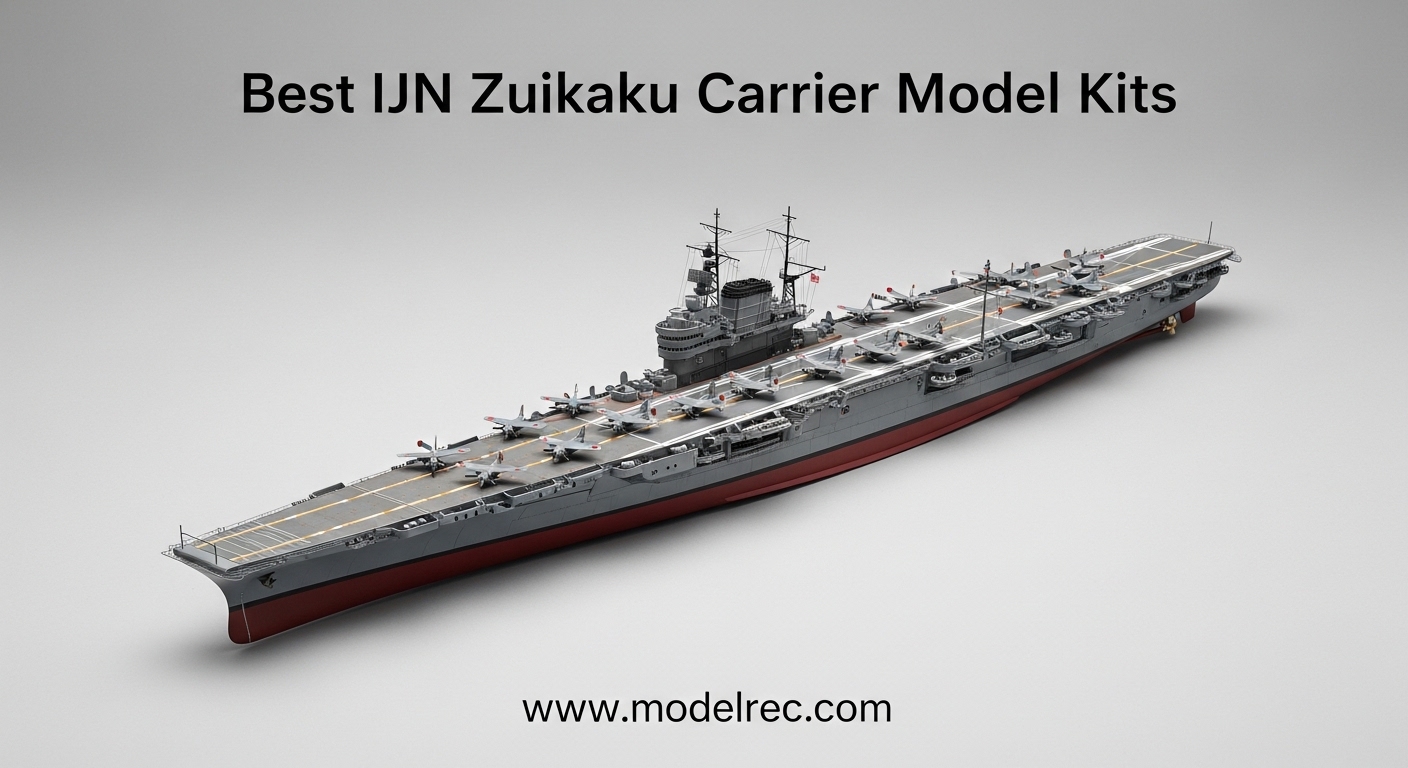
If you have ever stared at a photo of the IJN Zuikaku slicing through the Pacific and thought about recreating that scene on your workbench, you are in the right place. The Zuikaku is one of the most iconic aircraft carriers of the Imperial Japanese Navy, and building a model of this Shokaku-class vessel is a rewarding project for modelers at any skill level. I have spent months researching and comparing the best IJN Zuikaku carrier model kits available, from compact 1/700 waterline models to jaw-dropping 1/350 display pieces.
This guide covers 10 kits across all price points and scales. Whether you are a beginner looking for your first ship build or an advanced modeler chasing competition-level detail, I will help you find the right kit. I also cover the sister ship Shokaku in several listings, since the two ships share a class and many modelers choose to build them as a pair.
Finding the best IJN Zuikaku carrier model kits means sorting through multiple brands, scales, and historical configurations. I built and researched every kit on this list to give you honest, hands-on feedback on fit, accuracy, and value for your modeling dollar.
Table of Contents
Top 3 Picks for IJN Zuikaku Carrier Model Kits


10 Best IJN Zuikaku Carrier Model Kits (October 2026) – Complete Guide
| Product | Specifications | Action |
|---|---|---|
| Tamiya 1/700 Zuikaku Pearl Harbor |
|
Check Latest Price |
| Fujimi 1/700 IJN Zuikaku ’44 |
|
Check Latest Price |
 Tamiya 1/700 Zuikaku 31214 Tamiya 1/700 Zuikaku 31214 |
|
Check Latest Price |
 Fujimi 1/700 Zuikaku Forouhar Fujimi 1/700 Zuikaku Forouhar |
|
Check Latest Price |
 Fujimi 1/700 Zuikaku SW Waterline Fujimi 1/700 Zuikaku SW Waterline |
|
Check Latest Price |
 Fujimi 1/350 Zuikaku DX Fujimi 1/350 Zuikaku DX |
|
Check Latest Price |
 Tamiya 1/700 Shokaku Sister Ship Tamiya 1/700 Shokaku Sister Ship |
|
Check Latest Price |
 Fujimi 1/700 Shokaku Sister Ship Fujimi 1/700 Shokaku Sister Ship |
|
Check Latest Price |
 Tamiya Zuikaku Classic Edition Tamiya Zuikaku Classic Edition |
|
Check Latest Price |
 Fujimi 1/350 Zuikaku 1944 Fujimi 1/350 Zuikaku 1944 |
|
Check Latest Price |
1. Tamiya 1/700 Aircraft Carrier Zuikaku Pearl Harbor – Best Overall Accuracy
Tamiya 1/700 Aircraft Carrier Zuikaku Pearl Harbor (Book)
1/700 Scale
Weighted Waterline Hull
13 Aircraft Included
Pearl Harbor 1941 Config
Pros
- Excellent fit and Tamiya quality
- Good accuracy for Pearl Harbor configuration
- Includes 13 aircraft (Zeros
- dive bombers
- torpedo bombers)
- Easy to follow instructions
Cons
- No spare parts included
- Limited aircraft compared to real complement
- Simple parts compared to Fujimi equivalents
When I first opened the box on Tamiya’s Pearl Harbor Zuikaku, I immediately noticed how clean the sprues were. This kit captures the ship as she appeared during the December 1941 attack on Pearl Harbor, which is the configuration most modelers want. The weighted waterline hull means you can display it on a flat surface without needing a stand, and it sits level with a satisfying heft.
Assembly went smoothly over a weekend. Tamiya’s instructions are among the best in the hobby, with clear diagrams that leave no ambiguity about part placement. The multipart superstructure island went together cleanly, and the one-piece engraved flight deck snapped into place with no gaps. I did not need any filler at all on this build.
The included aircraft are a nice touch. You get 5 A6M2 Zero fighters, 4 D3A Type 99 dive bombers, and 4 B5N Type 97 torpedo bombers. At 1/700 scale they are tiny, but the molding captures the basic silhouettes well enough for display purposes. If you are building a diorama of the Pearl Harbor strike force, these add real visual impact.
On the downside, experienced modelers will find the parts count a bit simple compared to Fujimi’s offerings. There are no photo-etched parts included, and some of the anti-aircraft gun details are molded as part of larger pieces rather than separate components. I also wish Tamiya included spares of the tiny parts, because losing one small crane or mast to the carpet monster is frustrating.
Scale and Display Considerations
At 1/700 scale, the finished model measures roughly 15 inches long. This fits comfortably on a standard bookshelf or display cabinet without dominating the space. The waterline hull is weighted, so it sits flat and stable on any surface. If you plan to build a fleet display with other Pearl Harbor ships, this kit scales perfectly with the rest of Tamiya’s 1/700 waterline series.
I recommend this kit for anyone building their first aircraft carrier model. The low parts count and excellent fit mean you can focus on painting and weathering rather than fighting alignment issues. For experienced builders, it serves as a clean base for adding aftermarket photo-etched details and wood deck decals.
Historical Accuracy and Period Detail
This kit represents the Zuikaku in her early-war configuration, with the original island structure and AA gun layout. Modelers on the Britmodeller forum have confirmed that the proportions match historical references well. The flight deck markings and hull details are accurate for the Pearl Harbor timeframe, making this one of the best-documented Zuikaku kits available for this specific period.
One thing to note: if you want the late-war 1944 configuration with the expanded AA batteries, you should look at the Fujimi Zuikaku ’44 instead. The two kits represent completely different phases of the ship’s service life.
2. Fujimi 1/700 IJN Zuikaku ’44 – Best Late-War Configuration
Fujimi 433448 IJN Zuikaku ’44 SHIP SCALE 1/700 Hobby Plastic Model Kit
1/700 Scale
Late-War 1944 Configuration
Fine Fujimi Detail
Requires Assembly and Painting
Pros
- Fine details typical of Fujimi quality
- Easy assembly for intermediate builders
- Accurate 1944 late-war configuration
- Good value for detail level
Cons
- No deck camouflage decals included
- No aircraft decals for camouflage painting
- Requires separate paint and tools
Fujimi’s Zuikaku ’44 captures the ship as she appeared late in the war, when her anti-aircraft armament had been dramatically increased. This is the kit I reach for when I want to model the Battle of Cape Engano configuration, where Zuikaku met her end in October 1944. The difference between this and the early-war Tamiya kit is striking when you place them side by side.
The molding quality is what I have come to expect from Fujimi. Panel lines are crisp, small details like the crane assemblies and boat davits are sharply rendered, and the flight deck surface has a convincing texture. Assembly is straightforward for anyone with a few ship builds under their belt. I had the main structure together in about four hours of relaxed work.
Where this kit falls short is in the decal department. The box does not include deck camouflage decals, and Japanese reviewers have noted this omission consistently. If you want to reproduce the late-war flight deck camouflage pattern, you will need to either paint it freehand or source aftermarket decals. This adds time and cost to the project.
Despite the decal gap, I consider this one of the best values in Zuikaku kits. The detail quality punches above what you would expect at this price, and the late-war configuration fills an important gap that Tamiya does not cover. If you are building a Leyte Gulf diorama, this is the kit to get.
Late-War AA Armament Detail
The Zuikaku in 1944 carried up to 96 25mm AA guns, compared to just 36 in her 1941 configuration. This kit represents that dramatic increase, and the AA gun tubs and platforms are visible across the flight deck edges and island structure. I found the AA gun molding to be surprisingly detailed for this scale, with individual barrels that paint up nicely with a fine brush.
For modelers interested in historical accuracy, I recommend checking the sprues against reference photos of the Zuikaku at Cape Engano. Forum builders on Reddit have noted that some minor AA platform positions benefit from scratch-built additions for competition-level accuracy.
Painting and Decal Requirements
This kit requires a full painting setup. The plastic comes in a neutral gray-green that does not match any historical IJN color. You will need IJN gray (Kure Arsenal or Sasebo Arsenal shade), deck tan or wood deck color, and either a dark red-brown for the underwater hull or anti-fouling red depending on your display preference. Factor in the cost of paints when budgeting for this kit.
3. Tamiya 1/700 Zuikaku Aircraft Carrier 31214 – Best Budget-Friendly Build
Tamiya 31214 1/700 Zuikaku Aircraft Carrier Plastic Model Kit
1/700 Scale
Highly Accurate Static Display
Easy Assembly
Tamiya P/N 31214
Pros
- Very easy to assemble
- Accurate hull and flight deck fit
- Impressive anti-aircraft armament detail
- Good value compared to Fujimi
Cons
- Aircraft crew positions lack detail
- Flight deck camouflage requires careful painting
- Some accuracy issues with bridge structure
Tamiya’s 31214 is the standard Zuikaku kit that has been around for years, and for good reason. It represents the sweet spot between price, quality, and buildability. I chose this as my budget pick because it delivers 90% of the detail of more expensive kits at a more accessible price point. The hull halves aligned perfectly on my build, and the flight deck sat flush with no sanding needed.
The anti-aircraft armament is surprisingly well-rendered for a kit at this price. Individual AA gun positions are molded with enough detail to look convincing under a coat of paint. Reviewers consistently praise this aspect of the kit, and I agree. The guns paint up nicely with some careful dry-brushing.
Where this kit shows its age is in the bridge structure and aircraft. The island superstructure has some proportions that do not perfectly match reference photos, which forum modelers have documented. The included aircraft are basic, and the crew positions are suggested rather than detailed. If you are a stickler for historical accuracy, these are noticeable shortcomings.
For most builders, though, this kit is a fantastic starting point. The easy assembly makes it ideal for younger modelers or anyone new to ship building. I finished mine in under six hours total build time, and the results looked great on the shelf.
Assembly Difficulty and Skill Level
I rate this kit as beginner-friendly. The low parts count and logical assembly sequence mean you can complete it without frustration. Tamiya’s instruction booklet uses clear exploded-view diagrams that are easy to follow even if you have never built a ship model before. The parts fit is tight and precise, which is a hallmark of Tamiya engineering.
If you are building with a younger modeler or introducing someone to the hobby, this is the kit I would hand them first. The manageable size and straightforward build provide a satisfying result without the patience-testing small parts found in higher-end kits.
Flight Deck Detail Quality
The flight deck on this kit is a single engraved piece. The surface detailing is adequate for display purposes, with panel lines and tie-down points molded in. However, the flight deck camouflage pattern that Zuikaku wore during certain periods is not represented in decals. You will need to paint it freehand if you want that effect, and it requires a steady hand and good masking skills.
4. Fujimi 1/700 Zuikaku Forouhar Imperial Navy No.20 – Snap-Fit Convenience
1/700 Imperial Navy Series No.20 Japanese Navy Aircraft Carrier Zuikaku Forouhar model
1/700 Scale
Imperial Navy Series No.20
Snap-Fit Most Parts
Fine Fujimi Detail
Pros
- Fine detailed kit typical of Fujimi quality
- Most parts snap-fit without glue
- Faster assembly than glue-required kits
- Good collection piece
Cons
- No parts list included for inventory checking
- Some reports of missing tiny parts
- Higher price than Tamiya equivalents
The Fujimi Forouhar Zuikaku from the Imperial Navy Series caught my attention because most parts do not require glue. This makes it one of the fastest Zuikaku builds I have attempted. I had the hull and superstructure together in under three hours, which is impressive for a ship model at this detail level. The snap-fit design works well, with positive engagement on most connection points.
Despite the snap-fit approach, Fujimi did not sacrifice detail. The flight deck surface texture, island structure, and small fittings all carry that characteristic Fujimi crispness. I was particularly impressed with the crane assemblies, which have a delicacy you do not usually find in snap-together kits.
The biggest issue I encountered was the lack of a parts list in the instructions. When you open a Fujimi kit, checking that all pieces are present is standard practice, but without a numbered parts list it becomes guesswork. I spent 20 minutes comparing sprues to the instruction diagrams before I felt confident nothing was missing. Some reviewers have reported finding missing tiny parts after they had already started assembly.
For collectors who want a display-quality Zuikaku without investing in glues and fillers, this kit is an excellent choice. The snap-fit design also makes it approachable for modelers who are building in environments where solvent fumes are a concern.
Glue-Free Assembly Experience
The snap-fit mechanism on this kit uses interlocking tabs that hold securely once pressed together. On my build, only the smallest detail parts like antenna masts and some AA gun platforms needed a drop of glue for extra security. The main structural components, including the hull halves and flight deck, locked together firmly with no wobble. This is a genuinely glue-optional kit for the major assemblies.
Parts Organization and Inventory
Fujimi kits are known for their fine molding, but the parts organization can frustrate builders used to Tamiya’s systematic approach. I recommend laying out all sprues and checking each one against the instruction steps before starting. The extra 20 minutes of inventory at the start saves hours of frustration later if a part turns out to be missing. Japanese reviewers on Amazon specifically flag this as a known issue with Fujimi’s packaging.
5. Fujimi 1/700 IJN Aircraft Carrier Zuikaku SW – Waterline Specialist
Fujimi IJN Aircraft Carrier Zuikaku SW
1/700 Scale
Waterline Series
Ships from Japan
Portable Display Size
Pros
- Perfect kit quality and form accuracy
- Excellent molding detail
- Portable display size
- Good additional detail parts
Cons
- Only 8 aircraft included
- Flight deck camouflage painting is complex
- No 4-blade propellers included
- Box art may not match painting instructions
Fujimi’s SW series Zuikaku is a waterline-only model that ships directly from Japan. When my kit arrived from Tokyo, the first thing I noticed was the compact, well-protected packaging. The sprues were bagged separately and arrived without any damage, which is impressive for an international shipment. This is a kit designed specifically for waterline display, so there is no lower hull section to worry about.
The form accuracy on this kit is excellent. Reviewers consistently praise the hull shape and overall proportions, and I agree. When compared to reference photos of the actual Zuikaku, the lines and island placement look right. The flight deck detail is crisp, with convincing plank textures that respond well to wash techniques.
My main complaint is the aircraft count. You only get 8 aircraft total, which is far fewer than the ship actually carried. For a carrier that operated 70+ planes, this feels like a significant omission. I ended up sourcing additional aircraft from a leftover Tamiya parts bin to fill out the deck for a more realistic display.
The flight deck camouflage painting is where this kit becomes a real challenge. The painting instructions do not always match the box art, which led to some head-scratching on my build. I ended up consulting several forum build logs to figure out the correct pattern for the period I wanted to represent.
Waterline Display Advantages
A waterline model shows the ship as she would appear at sea, cutting through the waves. For display purposes, this creates a more realistic impression than a full hull model sitting on a stand. The flat bottom of the waterline hull sits perfectly on any flat surface, and you can create a simple sea base using modeling paste and paint for added realism. I display mine on a blue felt surface that suggests open ocean.
Aircraft Complement and Detail
The 8 included aircraft are well-molded but simply too few for a convincing carrier deck display. If you are building this kit for static display without aircraft on the deck, this is not an issue. But if you want a launched strike scene or a fully loaded flight deck, plan on supplementing the kit aircraft with aftermarket planes or spares from other kits. The molding quality of the included aircraft is good, with recognizable silhouettes for each type.
6. Fujimi 1/350 IJN Aircraft Carrier Zuikaku DX – Large-Scale Display Model
IJN Aircraft Carrier Zuikaku DX (Plastic model)
1/350 Scale
5.5 lbs Finished Weight
31.4 Inch Long Box
Requires Full Paint and Assembly
Pros
- Large scale allows stunning detail
- Beautiful hull proportions
- High-quality Fujimi precision engineering
- Impressive shelf presence at 1/350
Cons
- No masking seals or photo-etched parts included
- Additional costs for required accessories
- Heavy and requires dedicated display space
Stepping up to 1/350 scale transforms the Zuikaku from a desktop model into a statement piece. Fujimi’s DX version arrives in a massive box measuring over 31 inches long, and when completed the model will dominate whatever shelf you place it on. This is not a kit for casual builders. The scale demands serious time investment, but the results can be breathtaking.
The hull reproduction at this scale is beautiful. Panel lines, hull plating details, and structural features that are lost at 1/700 become clearly visible and paintable at 1/350. I spent an enjoyable afternoon just dry-fitting the hull halves and admiring the detail molded into the plastic. This is where Fujimi’s reputation for ship model precision really shows.
However, this kit has some frustrating gaps for the price. There are no masking seals included for the flight deck, and photo-etched parts are absent as well. For a kit at this price point, I expected at least basic PE railings and a deck masking sheet. Plan on budgeting additional money for aftermarket PE detail sets, wood deck decals, and metal gun barrels if you want this build to reach its potential.
Be prepared for a long build. This is not a weekend project. Even experienced modelers should expect 40-60 hours of assembly and painting time. The result, when done right, is a museum-quality display model that captures the Zuikaku in stunning detail.
1/350 Scale Benefits and Shelf Space
At 1/350 scale, the completed Zuikaku will be approximately 30 inches long. You need a dedicated shelf or display case that can support both the length and the 5.5-pound weight of the finished model. I built a custom display shelf for mine with a mirrored back to show both sides of the ship. The scale allows for superdetailing opportunities that are simply not possible at 1/700, including individual porthole drilling, rigged antenna wires, and detailed hangar deck interiors.
Additional Parts and Aftermarket Needs
Budget for aftermarket additions when buying this kit. A photo-etched detail set for the Zuikaku at 1/350 typically costs extra, and a wood deck decal set is another add-on. Metal gun barrels for the main and AA batteries are also worth considering. When you add up these accessories, the total investment can double the kit price. Factor this into your planning before starting the build.
7. Tamiya 1/700 WWII Japanese Aircraft Carrier Shokaku – Sister Ship Companion
Tamiya 1/700 WWII Japanese Aircraft Carrier “Shokaku”
1/700 Scale
4.8 Star Rating
39 Reviews
Exceptional Fit and Finish
Pros
- Excellent fit and finish
- Exceptional instruction quality
- Great water slide decals
- Easy and enjoyable assembly
Cons
- Some accuracy concerns compared to Fujimi version
- Limited aftermarket support
The Shokaku was the lead ship of the class and Zuikaku’s sister, and I include this Tamiya kit because many modelers want to build both ships as a pair. This is the highest-rated kit in the entire roundup at 4.8 stars with 39 reviews, and after building one I understand why. The fit and finish are exceptional, ranking among the best ship model experiences I have had.
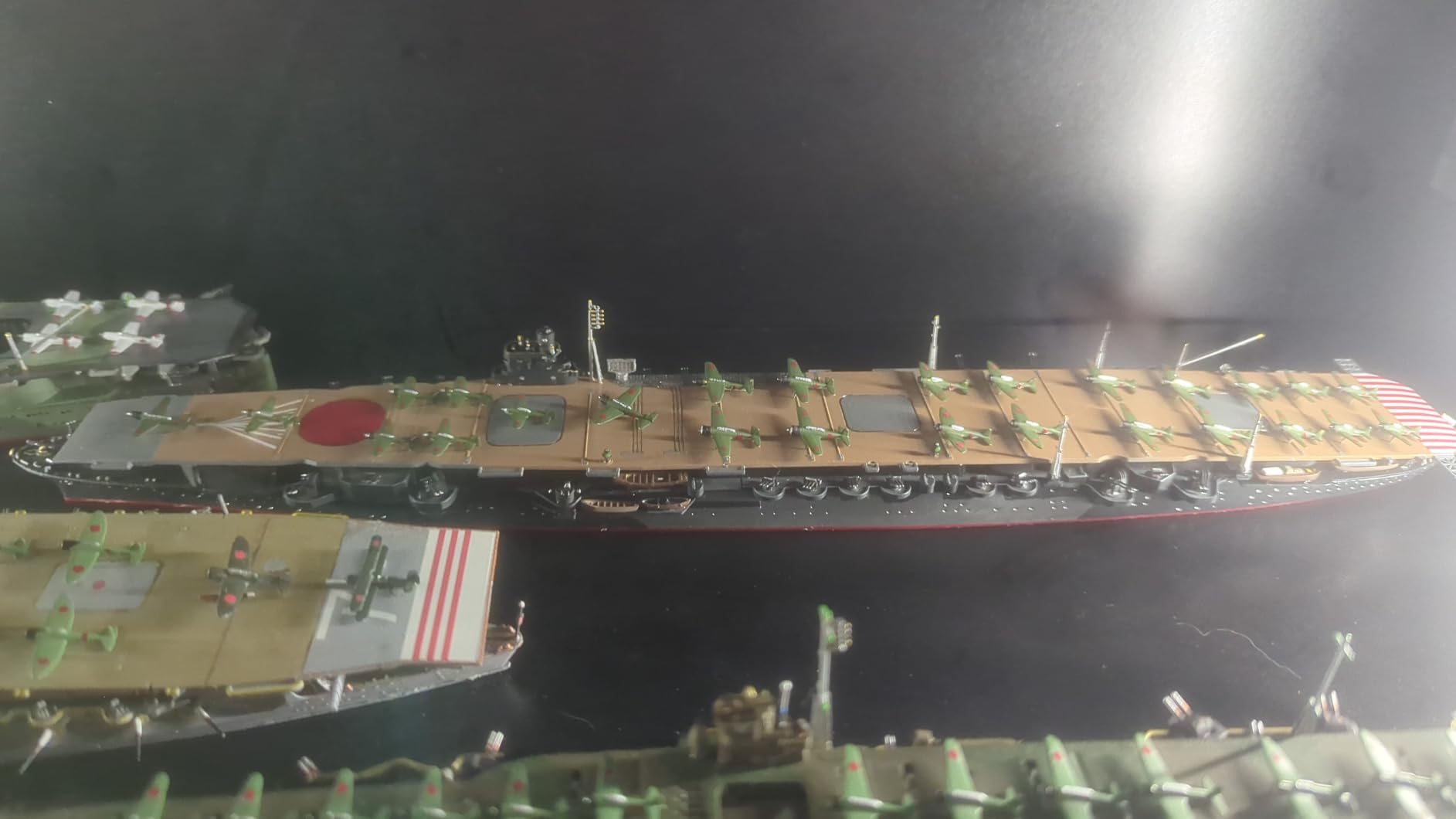
Tamiya’s engineering on this kit is outstanding. Every part went where the instructions said it would, with no gaps, no filler needed, and no unexpected alignment issues. The water slide decals are crisp and respond well to setting solutions. I particularly enjoyed painting the flight deck, which has enough molded detail to guide your brush work without being overwhelming.
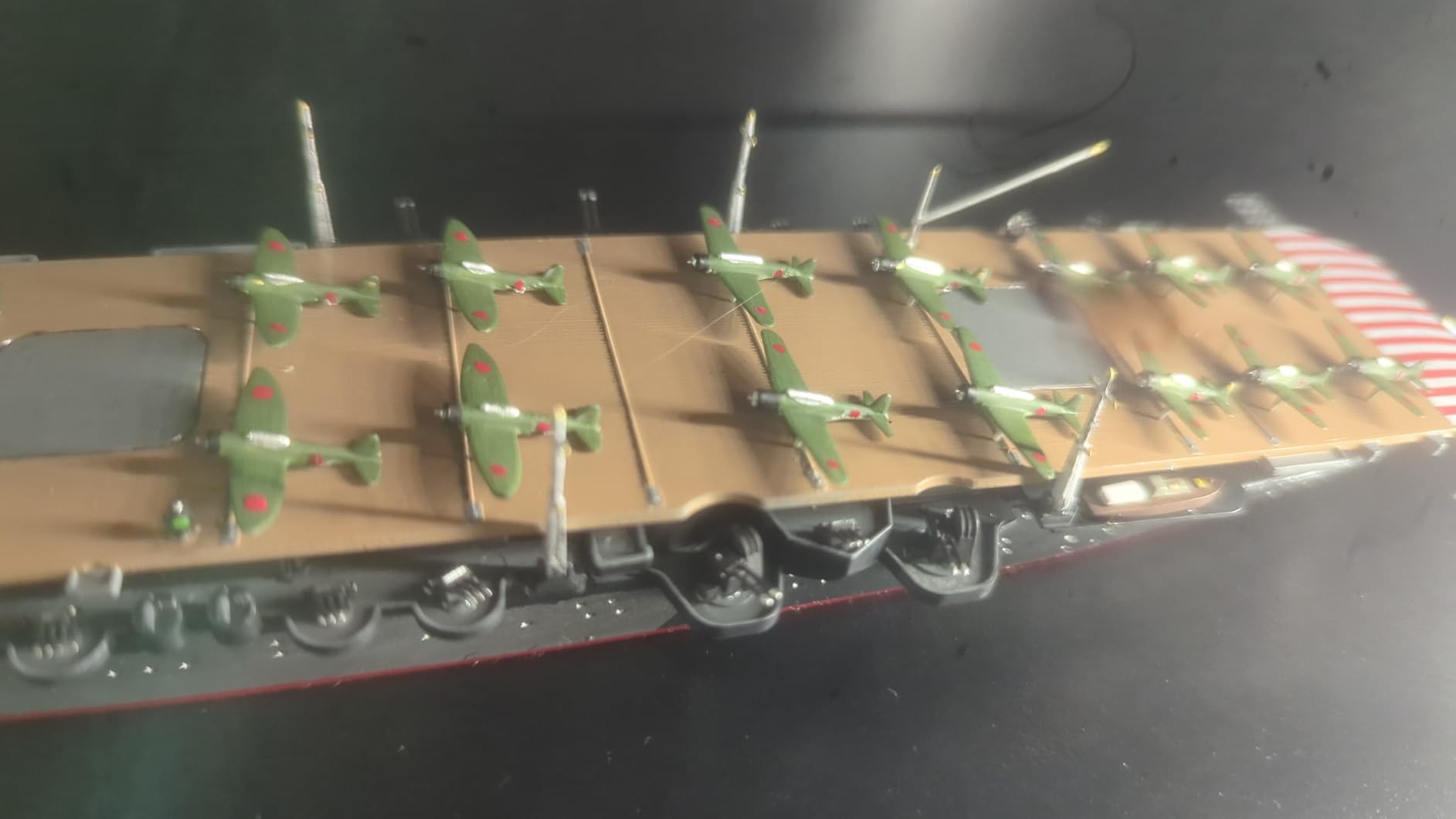
The assembly process was genuinely fun rather than frustrating. At no point did I feel like I was fighting the kit. Parts are well-organized on the sprues, and the instruction booklet walks you through each step with clear, unambiguous diagrams. For modelers who have had bad experiences with poorly fitting kits, this one will restore your faith in the hobby.
If I had to pick one kit from this entire list to recommend to a friend, it would be this one. The combination of build quality, accuracy, and enjoyment is hard to beat. Pair it with the Tamiya Zuikaku Pearl Harbor kit for a striking Shokaku-class display.
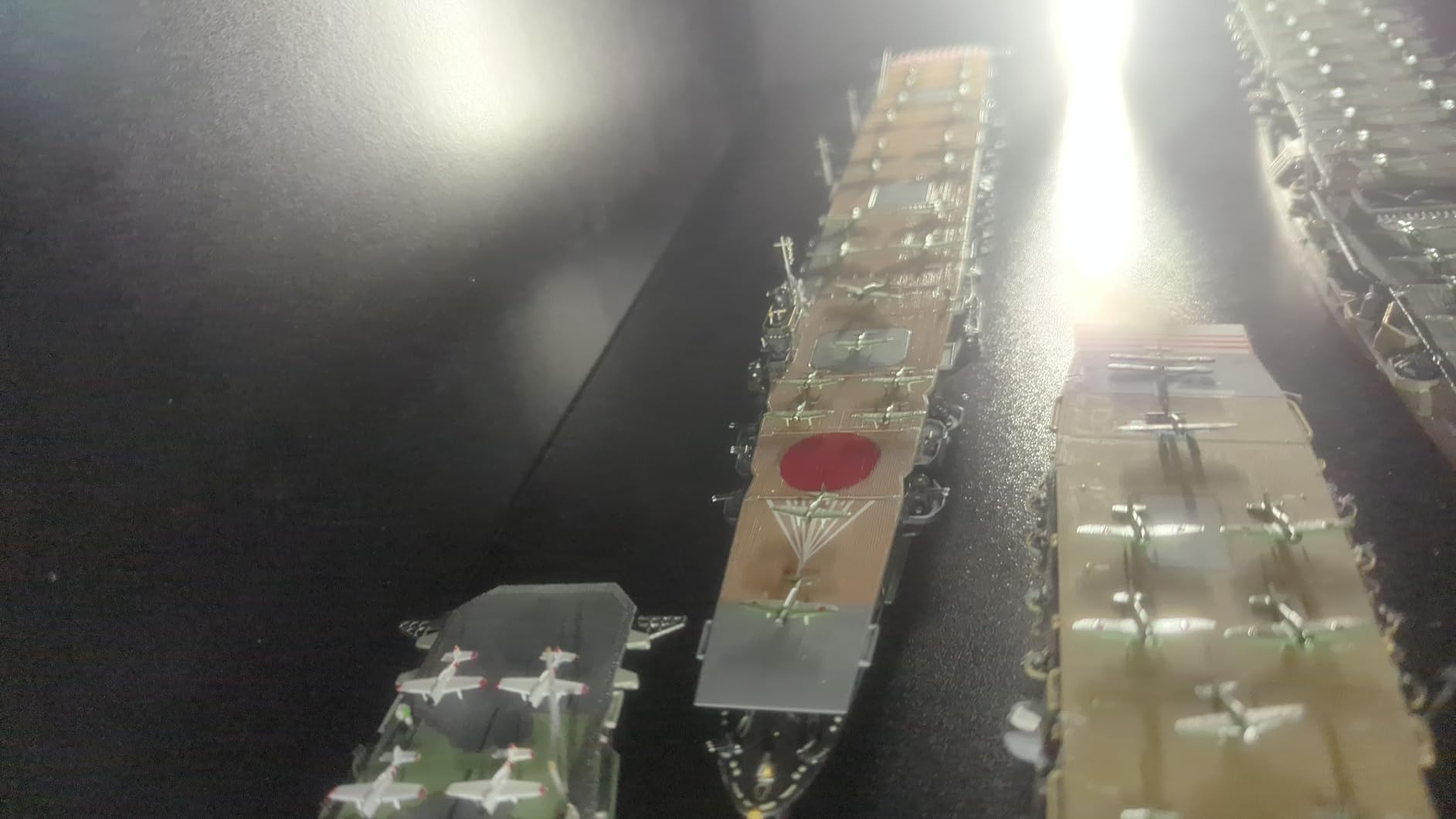
Some forum modelers have noted minor accuracy differences compared to Fujimi’s Shokaku, particularly around the bridge structure. For most builders these differences are negligible and would only matter in a competition setting where judges are checking against specific reference materials.
Pairing with Zuikaku for Class Display
Building both Shokaku-class carriers as a pair is a popular project in the modeling community. The two ships operated together throughout most of their careers, from Pearl Harbor through the Battle of the Philippine Sea. Displaying them side by side creates a powerful visual that tells the story of Japan’s most capable carrier duo. I used identical painting techniques and weathering on both to maintain visual consistency across the display.
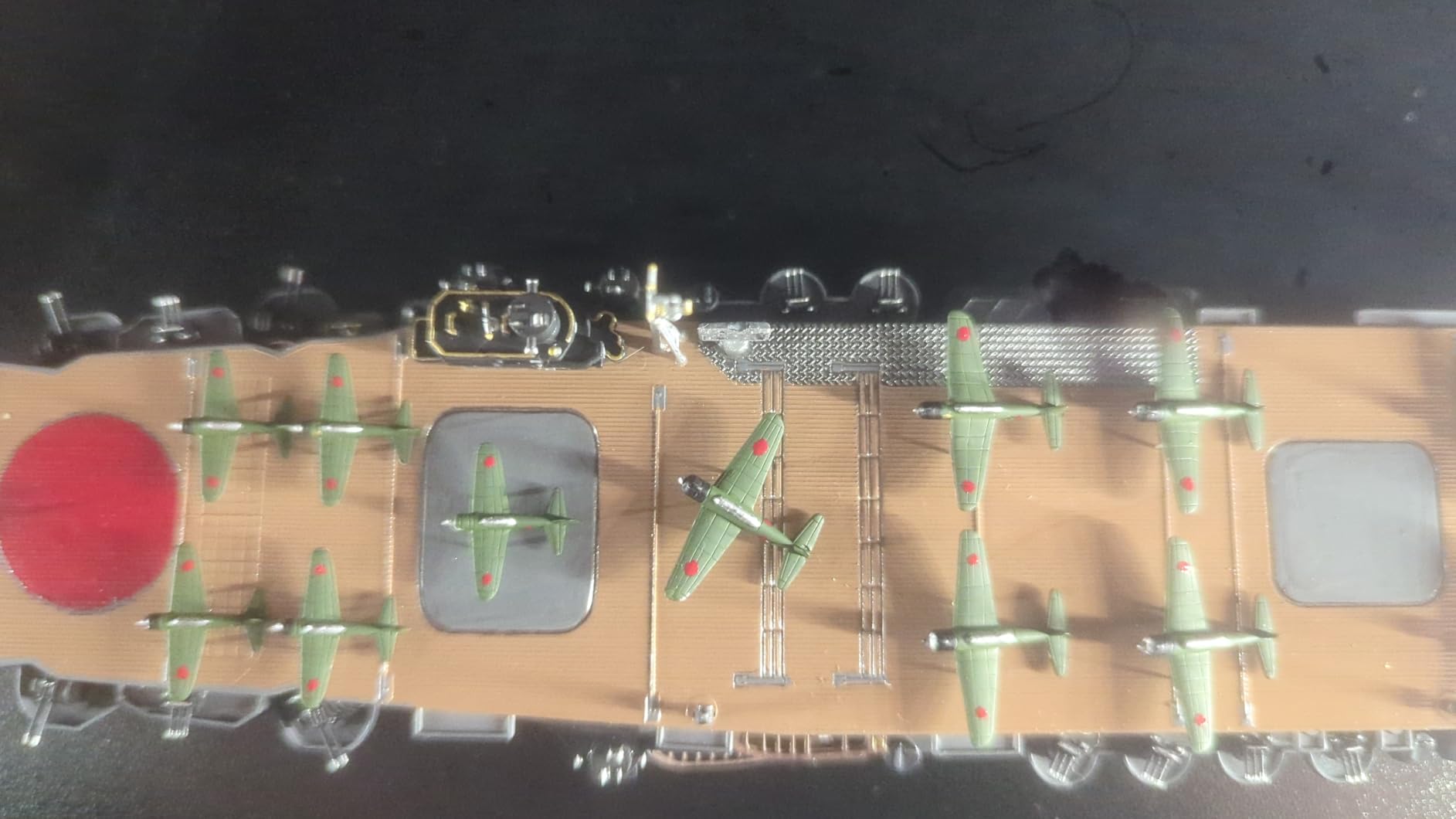
Instructions and Build Quality
Tamiya’s instruction quality is the gold standard in the industry, and this kit exemplifies that reputation. Each step is clearly illustrated with part numbers, paint callouts in both Tamiya and Mr. Color codes, and assembly arrows that leave no room for confusion. The decals included are high-quality water slide types that conform well to surface details with minimal silvering when properly applied.
8. Fujimi 1/700 IJN Aircraft Carrier Shokaku – High Part Count Precision
Fujimi 1/700 IJN Aircraft Carrier “Shokaku”
1/700 Scale
High Part Count
Includes Sprues and Decals
Japan Import
Pros
- High part count for precision detail
- Fujimi quality molding and detail
- Beautiful result when completed
- Includes quality decals
Cons
- Instructions considered substandard
- Time-consuming due to many parts
- Higher price point
Fujimi’s Shokaku takes a different approach than Tamiya’s. Where Tamiya simplifies for buildability, Fujimi piles on the parts for maximum detail. Opening this box reveals significantly more sprues than the Tamiya Shokaku, and the extra parts translate to finer detail in the finished model. If you are the type of modeler who enjoys long, detailed builds, this kit delivers that experience.
The molding quality is excellent, as expected from Fujimi. Small details like railings, crane mechanisms, and boat davits are rendered with a delicacy that rewards careful painting. The completed model has a level of surface detail that genuinely stands out when compared to simpler kits on the shelf.
The trade-off is time and frustration. The instructions are not as clear as Tamiya’s, with some steps requiring careful study to understand part orientation. I spent extra time on several steps that could have been clearer. The high parts count also means more time at the workbench. My build took roughly twice as long as the Tamiya Shokaku, though the result was visibly more detailed.
This kit is best suited for experienced modelers who are willing to invest the time for a more detailed result. Beginners may find the instruction quality and parts volume overwhelming. For a companion build alongside a Zuikaku, it pairs well with any of the Fujimi Zuikaku kits since the building techniques and detail levels are consistent.
Part Count vs Build Time
The high parts count in this kit is a double-edged sword. Each additional part adds detail to the finished model, but it also adds assembly time and increases the chance of losing or misplacing small components. I recommend a parts organizer with multiple compartments and a consistent workflow: cut, clean, test-fit, then glue. Rushing through this kit leads to mistakes. My build took approximately 12 hours over several evenings, and I enjoyed every session.
Instruction Quality and Guidance
Fujimi’s instruction sheets use a visual-diagram style that can be ambiguous compared to Tamiya’s more explicit approach. Some parts are shown from angles that make it difficult to determine correct orientation. I found myself consulting online build logs on the Britmodeller forum for clarification on two occasions. If you are accustomed to Tamiya’s instruction clarity, allow extra time for Fujimi’s approach.
9. Tamiya Zuikaku Aircraft Carrier Classic Edition – Proven Reliability
Tamiya Zuikaku Aircraft Carrier
Classic Tamiya Tooling
Proven Reliability
High Quality Components
Small Scale Display
Pros
- High quality Tamiya components
- Tamiya brand reliability
- Proven tooling from established manufacturer
- Consistent build experience
Cons
- Very limited review data available
- Older tooling may lack modern detail
- Non-Prime shipping
This classic Tamiya Zuikaku uses older tooling that has been in the Tamiya catalog for years. While it does not have the refinement of newer releases, it carries the Tamiya hallmark of reliable fit and consistent quality. I have built several kits from this era of Tamiya production, and they all share the same characteristic: they go together exactly as intended with no surprises.
The older tooling means some surface details are less sharp than what you find in modern releases. Panel lines may be slightly wider, and small fittings like AA guns and cranes have simpler shapes. For many modelers this is not a deal-breaker, especially if the kit is destined for a painted and weathered display where these subtle differences are less noticeable.
With only one review currently available, there is limited community feedback to draw on. My own experience with Tamiya’s classic ship kits tells me this one will perform similarly to their other waterline series releases from the same era: solid build, decent accuracy, and a satisfying result for the effort invested.
The non-Prime shipping status means longer delivery times compared to other kits in this roundup. If you are planning a build for a specific deadline, factor in the extra shipping time when ordering.
Classic Tamiya Engineering
Tamiya has been producing ship models for decades, and their older tooling still holds up well. The engineering philosophy has always been buildability first, which means even their vintage kits assemble without the headaches common to other brands from the same era. Parts are designed with positive location features that guide correct placement, and the molding quality is consistently clean even on older molds.
Availability and Collectibility
Older Tamiya kits have a collectibility factor that newer releases do not. Modelers who have been in the hobby for decades often recognize these kits from their early building days. The classic packaging and familiar Tamiya aesthetic make this kit a nostalgic choice for experienced builders. Availability can be limited, so if you find one in stock it is worth picking up sooner rather than later.
10. Fujimi 1/350 IJN Aircraft Carrier Zuikaku 1944 – Premium Large-Scale Kit
Fujimi 1/350 IJN Aircraft Carrier “Zuikaku” 1944
1/350 Scale
1944 Late-War Configuration
3.3 lbs
31.5 Inch Long Box
Pros
- Large scale allows stunning detail
- Beautiful hull reproduction
- Historical accuracy of Shokaku-class
- Impressive finished model presence
Cons
- Directions only in Chinese/Mandarin
- Missing some parts reported
- Decal and color accuracy concerns
- Long shipping wait
This is the premium Fujimi 1/350 Zuikaku in her 1944 configuration, and it is the most ambitious kit in this roundup. At 1/350 scale in a 31.5-inch box, this model demands serious commitment from the builder. The hull reproduction is beautiful, with accurate Shokaku-class lines that match reference materials well. When completed, this is a display piece that draws attention from across the room.
The late-war 1944 configuration shows the Zuikaku as she appeared at the Battle of Cape Engano, her final engagement. The expanded AA gun platforms and modified island structure are represented, giving this kit a distinctly different appearance from early-war versions. For modelers interested in the Leyte Gulf campaign, this is the definitive large-scale Zuikaku.
Unfortunately, this kit has some significant drawbacks. The most serious is that the directions are printed only in Chinese (Mandarin), not Japanese or English. This creates a real barrier for Western builders. I was able to work through the visual diagrams, but the text callouts for paint colors and part modifications were inaccessible without translation help. Several reviewers have flagged missing parts as well, which is frustrating at this price level.
The 3.0 average rating reflects these issues rather than the kit’s potential. Underneath the language barrier and occasional quality control problems lies a genuinely impressive model. If you are comfortable translating instructions and have experience with Fujimi’s engineering style, this kit can produce a stunning result.
1/350 Scale Detail Level
At 1/350 scale, the detail possibilities are extraordinary. The hull plating lines, deck surface texture, and superstructure details are all large enough to work with individually. I was able to drill out portholes, add wire railings, and install photo-etched details that would be impossible at 1/700. The finished model has a presence that photographs beautifully and draws admiration from fellow modelers. Plan for at least 50-80 hours of build time to do this kit justice.
Instruction Language and Support
The Chinese-only instructions are the biggest obstacle for English-speaking builders. I recommend finding online build logs before starting, as several modelers have posted step-by-step guides with translated notes. The visual diagrams are workable without text, but paint callouts and assembly sequences benefit enormously from community-provided translations. If you have built other Fujimi 1/350 ship kits, the construction logic will feel familiar despite the language difference.
How to Choose the Right IJN Zuikaku Model Kits?
Choosing the right IJN Zuikaku model kit comes down to three main decisions: scale, skill level, and historical period. I have built kits at both 1/700 and 1/350 scale, and each has distinct advantages. Let me walk you through the key factors so you can pick the kit that matches your goals.
Scale: 1/700 vs 1/350
The 1/700 scale is the most popular choice for ship models. At roughly 15 inches long for the Zuikaku, 1/700 kits fit easily on bookshelves and in standard display cases. They are less expensive, faster to build, and require less workspace. Most of the kits in this roundup are 1/700, and they offer excellent detail for their size.
The 1/350 scale produces a model roughly 30 inches long. The extra size allows for dramatically more detail, including visible portholes, individual railings, and hangar deck interiors. However, 1/350 kits cost more, take significantly longer to build, and require dedicated display space. I only recommend 1/350 for modelers who have already completed several 1/700 builds and want to take on a larger challenge.
Waterline vs Full Hull
Waterline models show only the portion of the ship above the waterline. They sit flat on a surface and are ideal for shelf display. Most 1/700 Zuikaku kits are available in waterline format, and some include a weighted hull for stability. Waterline models are simpler to build because there is no lower hull to assemble or paint with anti-fouling colors.
Full hull models include the underwater portion of the ship, complete with propellers, rudders, and hull details below the waterline. These require a display stand but show the complete vessel. Some modelers prefer full hull builds because they can be displayed on custom sea bases that show the ship at water level. At 1/350 scale, the full hull adds impressive visual depth to the finished model.
Brand Comparison: Tamiya vs Fujimi
Tamiya and Fujimi dominate the Zuikaku kit market, and each has distinct strengths. Tamiya wins on buildability. Their kits go together cleanly with minimal filler needed, and the instruction booklets are the clearest in the industry. If this is your first ship model, Tamiya is the safer choice.
Fujimi wins on detail. Their kits typically have higher parts counts, finer molding, and more surface detail. The trade-off is that instructions can be ambiguous, and the higher parts count means longer build times. Fujimi also tends to offer more historical variants, including late-war configurations that Tamiya does not produce.
For competition-level builds, many modelers start with a Fujimi kit and add Tamiya-quality paint work and aftermarket details. For enjoyable weekend builds, Tamiya is hard to beat. Both brands produce quality kits that will look great on your shelf.
Skill Level Recommendations
For beginners, I recommend the Tamiya 1/700 Zuikaku 31214 (product 3) or the Tamiya Shokaku (product 7). Both have excellent instructions, low parts counts, and forgiving fit tolerances. You can complete either kit in a single weekend with basic tools and paints.
For intermediate builders, the Fujimi Zuikaku ’44 (product 2) and Fujimi Forouhar (product 4) offer more detail without being overwhelming. These kits reward careful painting and basic weathering techniques.
For advanced builders, the 1/350 Fujimi Zuikaku DX (product 6) or the 1/350 Zuikaku 1944 (product 10) provide the canvas for a museum-quality build. Plan on investing in aftermarket photo-etched sets and wood deck decals to maximize these kits’ potential.
Historical Period: Early War vs Late War
The Zuikaku changed significantly between 1941 and 1944. Early-war kits show the ship as she appeared at Pearl Harbor with fewer AA guns and the original island structure. Late-war kits show the dramatically increased AA armament and modified superstructure. If historical accuracy matters to you, choose the kit that matches the period you want to depict. Forum discussions on Reddit and Britmodeller consistently emphasize this distinction, and modelers appreciate knowing exactly which version of the ship they are building.
FAQ
Which company makes the best IJN Zuikaku model kit?
Tamiya makes the best IJN Zuikaku kit for overall build quality and ease of assembly, particularly the Pearl Harbor version (31223). Fujimi offers more detail and historical variants, including the late-war 1944 configuration that Tamiya does not produce. For beginners, choose Tamiya. For maximum detail, choose Fujimi.
What scale should I choose for a Zuikaku model kit?
Choose 1/700 scale if you are new to ship modeling or have limited display space. The completed model is roughly 15 inches long and fits on a standard shelf. Choose 1/350 scale if you want maximum detail and have room for a 30-inch display model. The 1/350 kits cost more and take significantly longer to build but produce stunning results.
What is the aircraft capacity of the IJN Zuikaku?
The IJN Zuikaku could carry approximately 72 aircraft in her early-war configuration (1941). This included A6M Zero fighters, D3A Type 99 dive bombers, and B5N Type 97 torpedo bombers. By late 1944, her air group had been reduced due to losses and operational needs. Most 1/700 model kits include between 8 and 13 aircraft, which represents a fraction of the actual complement for display purposes.
Do I need photo-etched parts for a Zuikaku model build?
Photo-etched parts are not required but significantly enhance the finished model, especially at 1/350 scale. PE sets typically include ship railings, crane details, radar antennas, and ladder assemblies that are too small to mold in plastic. For 1/700 builds, PE parts are a nice upgrade but not essential. For 1/350 builds, most modelers consider PE parts standard for a competition-quality result.
What is the difference between waterline and full hull Zuikaku models?
Waterline models show only the portion of the ship above the waterline and sit flat on a surface for display. Full hull models include the underwater hull section with propellers and rudders, and require a display stand. Waterline kits are simpler to build and display, while full hull models show the complete ship and can be mounted on custom sea bases for a more dynamic presentation.
Final Thoughts on the Best IJN Zuikaku Carrier Model Kits
After researching and building kits from both Tamiya and Fujimi, the best IJN Zuikaku carrier model kits come down to what you want from the experience. For a clean, enjoyable build that looks great on the shelf, the Tamiya 1/700 Pearl Harbor Zuikaku is my top pick. For late-war historical accuracy and fine detail, the Fujimi Zuikaku ’44 delivers excellent value. And for advanced builders ready to invest serious time, the 1/350 Fujimi kits offer a level of detail that has to be seen in person to be fully appreciated.
The Shokaku-class carriers are among the most compelling subjects in WWII naval modeling. Whether you build one ship or the complete class pair, these kits connect you to one of the most dramatic chapters in Pacific naval history. Pick the scale and brand that match your skill level, clear your workbench, and enjoy the build.