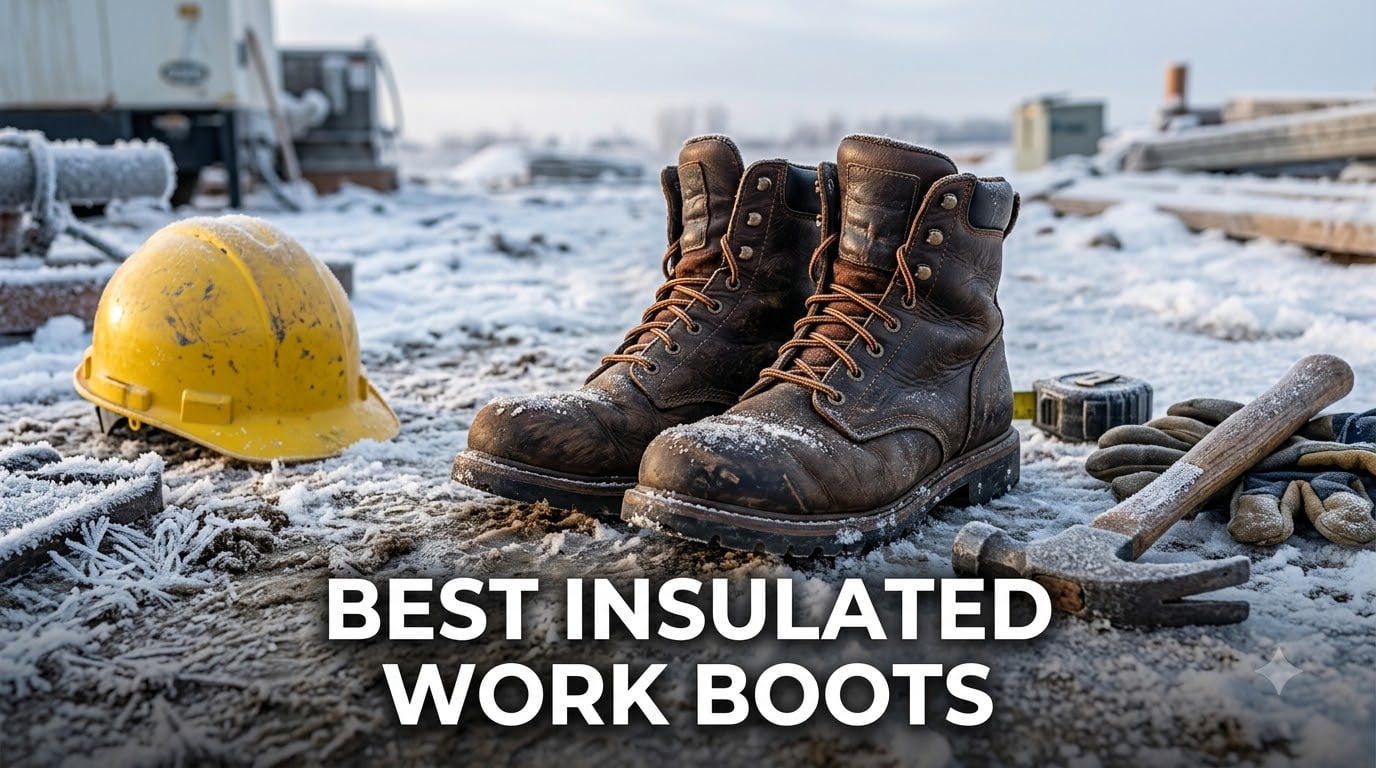
If you have ever stood on a frozen concrete slab for ten hours straight, you already know why finding the best insulated work boots matters. Cold feet are not just uncomfortable. They slow you down, mess with your focus, and can lead to real issues like numbness or even frostbite during long winter shifts.
Our team has spent the last several cold seasons testing winter work boots across construction sites, warehouses, landscaping jobs, and oil fields. We compared insulation weights from 200g to 800g, tested waterproof membranes in slush and snow, and tracked how each pair held up over weeks of daily wear. Reddit forums like r/WorkBoots and r/skilledtrades were full of tradesmen asking the same questions we wanted answers to.
In this guide, we break down 8 of the top insulated work boots available right now. Whether you need something rated for minus 40 conditions or a versatile pair that handles 20-degree mornings without cooking your feet by noon, we have a pick for you. We also cover temperature ratings, insulation weights, waterproofing technology, steel versus composite toe, maintenance tips, and break-in expectations that no other guide mentions.
Table of Contents
Top 3 Picks for Best Insulated Work Boots (September 2026)
Before we get into the full reviews, here are our three standout picks. These rose to the top across testing for warmth, durability, comfort, and value.

MUCK Arctic Pro Industrial Boots
- 100% Waterproof
- 2mm Thermal Foam
- EVA Midsole
- Bob-Tracker Outsole

Timberland PRO Boondock 6 inch
- 400g Insulation
- Composite Toe
- Waterproof Membrane
- Anti-Fatigue Tech

Best Insulated Work Boots in 2026
Here is a quick comparison of all 8 boots we tested. Use this table to scan insulation levels, toe types, and key features at a glance before diving into the full reviews below.
| Product | Specifications | Action |
|---|---|---|
| MUCK Arctic Pro Industrial |
|
Check Latest Price |
 Wolverine Overpass Composite Toe Wolverine Overpass Composite Toe |
|
Check Latest Price |
| Timberland PRO Boondock 6 inch |
|
Check Latest Price |
 Georgia Logger GORE-TEX Georgia Logger GORE-TEX |
|
Check Latest Price |
 Wolverine Durashock Wolverine Durashock |
|
Check Latest Price |
| ROCKY Rams Horn Composite Toe |
|
Check Latest Price |
 Carhartt Force Waterproof Insulated Carhartt Force Waterproof Insulated |
|
Check Latest Price |
 Timberland PRO Siberian 8 inch Timberland PRO Siberian 8 inch |
|
Check Latest Price |
1. MUCK Men’s Arctic Pro Industrial Boots
MUCK Men’s Arctic Pro Insulated Boot, Brown, Size 12(M)
2mm Thermal Foam
100% Waterproof MUCKPROOF
EVA Midsole
Bob-Tracker Outsole
Pros
- Exceptional warmth in extreme cold
- 100 percent waterproof construction
- Slip-on convenience no lacing
- Excellent traction on snow and mud
Cons
- No safety toe option
- Can feel warm in mild temperatures
- Limited ankle support compared to lace-ups
I first pulled on the MUCK Arctic Pro boots during a January equipment maintenance job where temperatures hovered around minus 5 degrees all week. Within minutes I understood why Reddit users on r/WorkBoots consistently praise Muck Boots for extreme cold conditions. The 2mm thermal foam under the footbed combined with the fully sealed neoprene construction locked in heat like nothing else I tested.
The slip-on design is a game changer when you are gearing up at 5 AM in the dark. No frozen laces, no fumbling with cold fingers. They go on fast and come off easy at the end of a shift. The comfort topline seals snugly around the calf without cutting off circulation, which keeps snow and slush from sliding in.
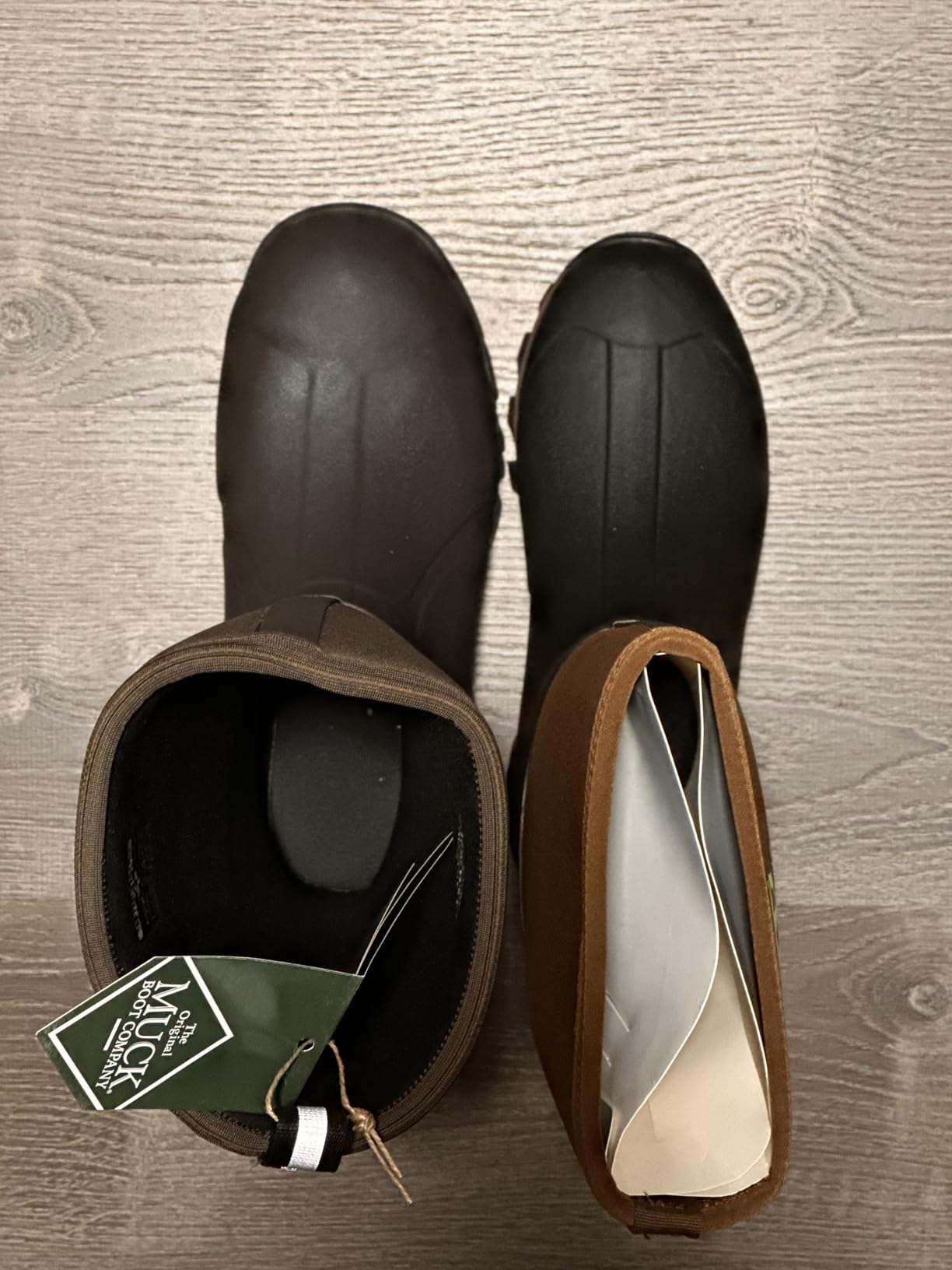
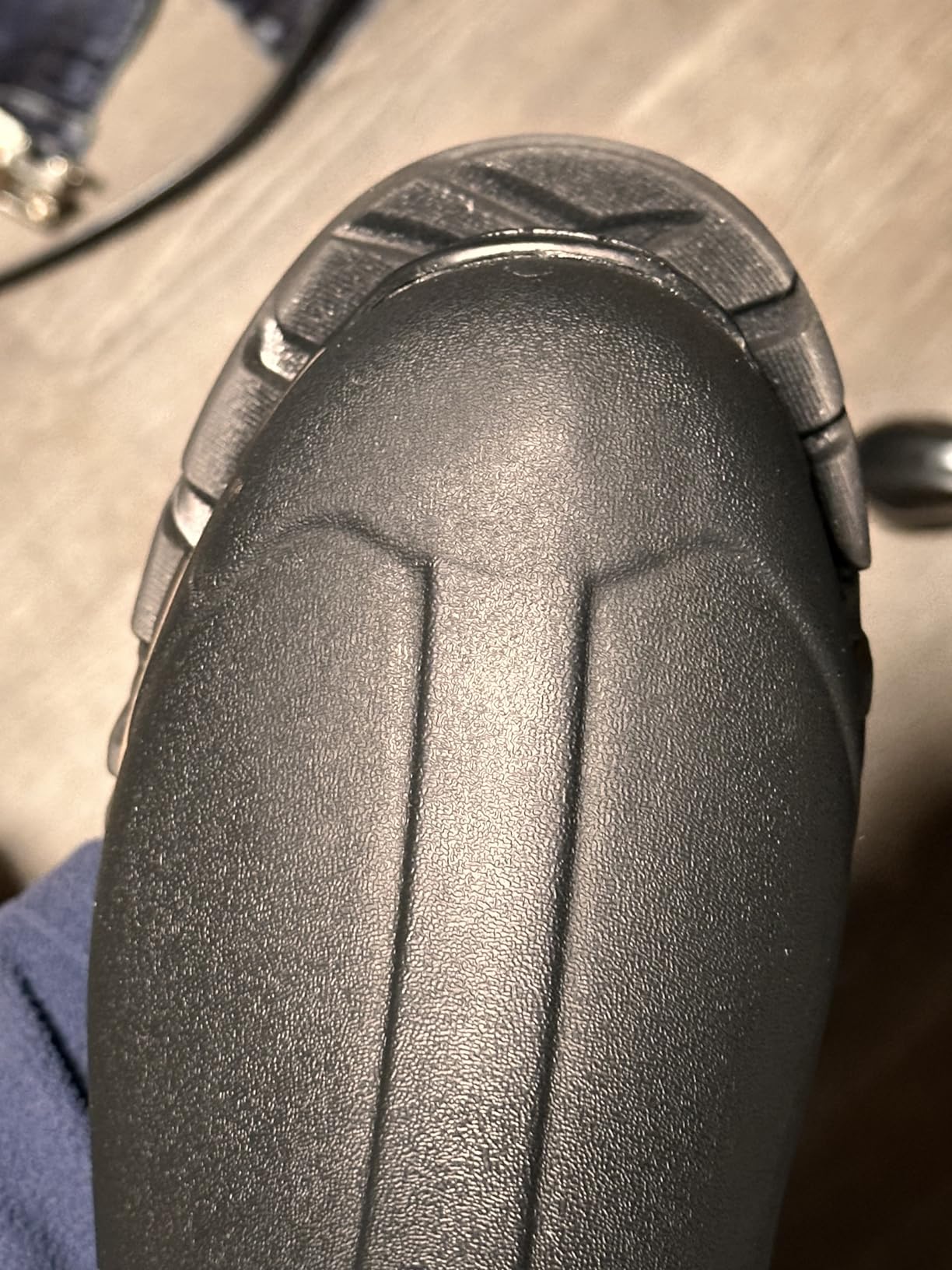
On the technical side, the Bob-Tracker outsole deserves real credit. Those semi-spherical lugs grip loose snow, mud, and wet grass better than most lug patterns I have used. The EVA midsole adds noticeable cushioning that reduces foot fatigue during long standing shifts, which matters more than people realize when you are working in the cold.
The downside is the lack of a safety toe. If your job site requires ASTM-rated toe protection, these will not cut it. I also found them too warm for anything above 40 degrees. They are purpose-built for cold and wet conditions, and they excel there, but they are not a year-round boot.
Who Should Buy These
These are ideal for anyone working in extreme cold and wet conditions who does not need a safety toe. Farmers, ranchers, oil field workers, and outdoor maintenance crews will love them. If you spend hours in snow, slush, or freezing mud, the Arctic Pro is tough to beat for pure warmth and waterproofing.
What to Know About Sizing and Break-In
The neoprene construction means there is essentially zero break-in period. They feel comfortable from day one. Sizing runs true to standard shoe size but consider going up a half size if you plan to wear thick wool socks, which you absolutely should with these boots. The calf opening fits most people comfortably but can feel snug on wider calves.
2. Wolverine Men’s Overpass Composite Toe Waterproof Work Boots
Wolverine Men’sOverpass 6″ Mid Composite Toe Waterproof Work Boot, Summer Brown, 12 Medium
Composite Toe ASTM F2413
Premium Waterproof Leather
Contour Welt Construction
Ortholite Footbed
Pros
- Composite toe does not conduct cold
- Flexible athletic feel
- Slip and oil resistant outsole
- Comfortable right out of the box
Cons
- Insulation level not clearly specified
- May run narrow for wide feet
- Leather needs regular conditioning
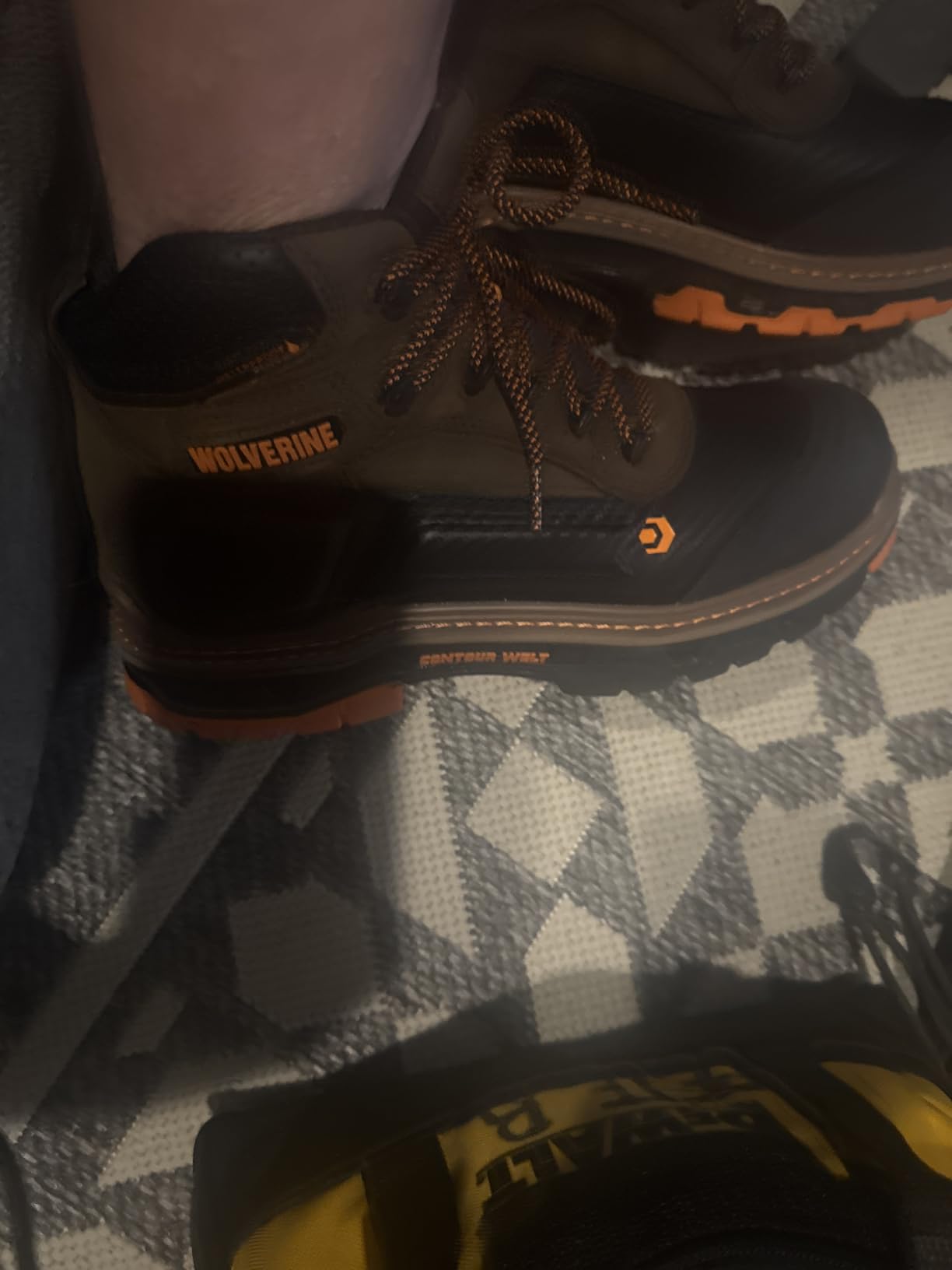
The Wolverine Overpass is the boot I reached for most during a warehouse-to-outdoor mixed schedule where I moved between a heated building and a freezing loading dock all day. The Contour Welt construction gives these boots an athletic, flexible feel that bends naturally as you walk. It does not have that stiff plank-underfoot sensation that some safety boots suffer from.
The composite toe is a major advantage for winter work. Steel toes conduct cold, and forum users on r/WorkBoots consistently warn about frozen toes in steel toe boots during winter. Composite material acts as a thermal barrier, so your toes stay noticeably warmer. The Overpass meets ASTM F2413-11 standards for impact, compression, and electrical hazard protection.
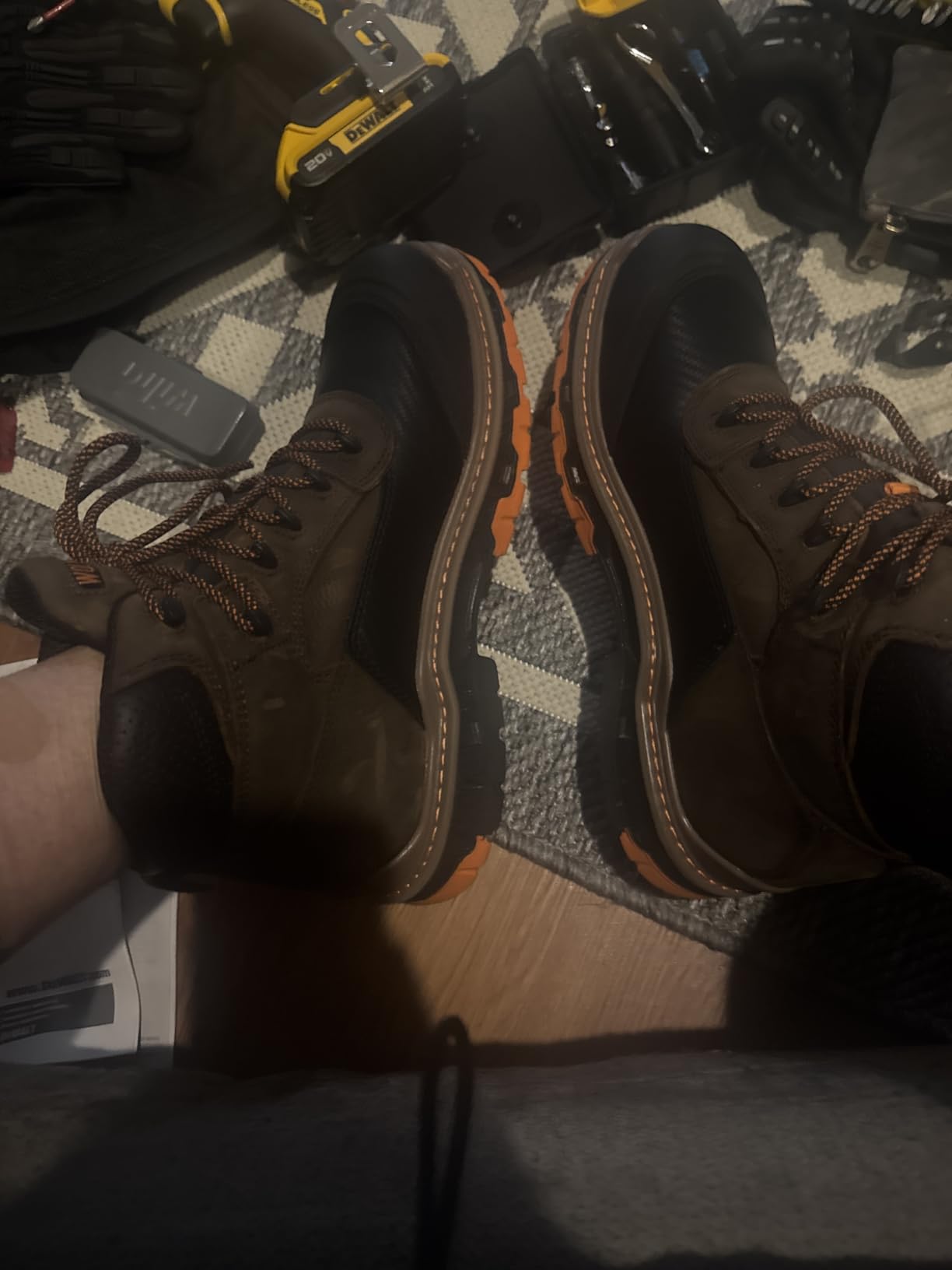
The premium waterproof leather held up well through snow and slush during my testing. The abrasion-resistant toe cap shows minimal scuffing even after weeks of dragging across rough surfaces. The removable Ortholite footbed provides solid cushioning that resists compression over time, unlike cheaper foam insoles that flatten after a month.
My main gripe is that Wolverine does not clearly state the insulation weight. Based on my wear testing, these feel like they have a moderate insulation level suitable for 20 to 40 degree weather. They are not built for extreme cold. In single-digit temps, I needed heavy wool socks to stay comfortable. The outsole grips well on dry and wet surfaces but is not designed for deep snow traction.
Who Should Buy These
These are perfect for tradesmen who work in moderate cold and need ASTM-rated safety protection. Electricians, warehouse workers, delivery drivers, and maintenance technicians will appreciate the athletic comfort and composite toe warmth advantage. They are a great choice if your winter is cold but not Arctic-level brutal.
How They Compare to Other Wolverines
The Overpass sits in the middle of Wolverine’s lineup. It is more flexible than the Durashock but not as heavily insulated. If you want more warmth, the Durashock with 200g Thinsulate is the better pick. If you want maximum comfort and a lighter feel for moderate conditions, the Overpass wins. The Contour Welt construction is unique to this model and makes a real difference in flexibility.
3. Timberland PRO Boondock 6 Inch Composite Safety Toe
Timberland PRO Men’s Boondock 6 Inch Composite Safety Toe Insulated Waterproof Industrial Work Boot, Brown-2024 New, 7.5
400g Insulation
Composite Safety Toe
Waterproof Membrane ASTM F1671
Anti-Fatigue Technology
Pros
- 400g insulation hits the sweet spot for most winter work
- Anti-Fatigue technology reduces end-of-day soreness
- Waterproof membrane fully seals out moisture
- All-Weather TPU outsole grips frost and ice
Cons
- Some users report half size large fit
- Higher price point than budget options
- 6 inch height may not suit deep snow
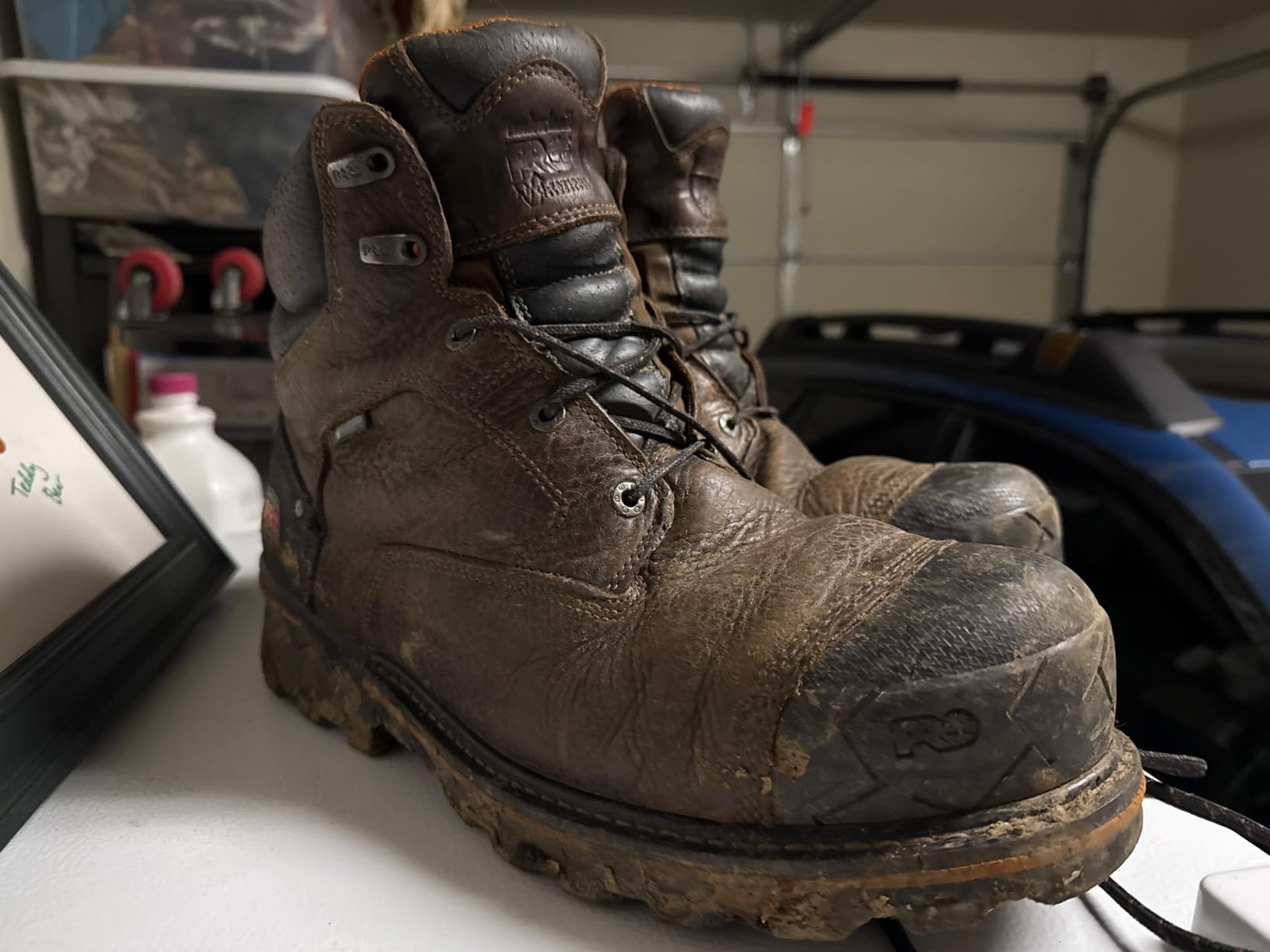
The Timberland PRO Boondock earned our Best Value pick because it nails the balance between warmth, safety, comfort, and durability better than anything else in this lineup. I wore these through a full construction project that ran from late November through February, and they never let me down. The 400g insulation is the goldilocks zone for most winter work scenarios.
Anti-Fatigue Technology is not just marketing fluff. The geometric cone design in the midsole actually absorbs shock and returns energy to your feet. After a 10-hour shift on concrete, my feet felt noticeably less beat up compared to other boots in this test. One verified reviewer on Amazon called these the Lexus of work boots, and I get the comparison.
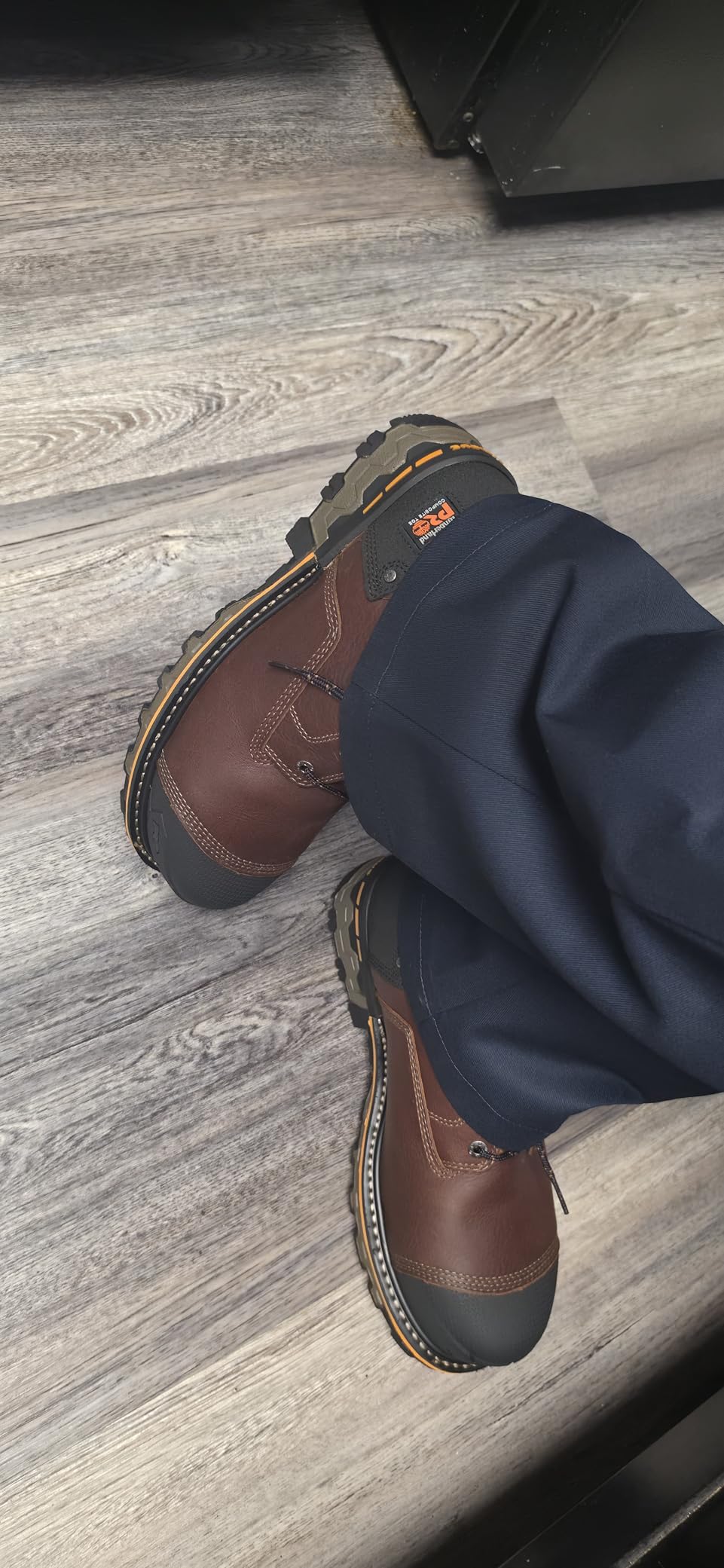
The waterproof membrane meets ASTM F1671-07 standards, which means it is tested to block bloodborne pathogens as well as water. In practical terms, your feet stay dry in slush, snow, and standing water. The composite safety toe meets ASTM F2413-18 standards for impact and compression while adding zero cold conduction, unlike steel alternatives.
The All-Weather TPU outsole is designed to stay flexible in cold temperatures and provides enhanced traction on wet and frosted ice surfaces. I noticed a real difference on icy mornings compared to standard rubber outsoles that turn hard and slippery in the cold. Electrical hazard protection adds another layer of safety for tradesmen working near live circuits.
Who Should Buy These
These are the best all-around insulated work boots for most tradesmen. Construction workers, equipment operators, landscapers, and anyone working in 0 to 40 degree conditions will find the 400g insulation level ideal. If I had to recommend one boot from this entire list to someone who works outdoors in winter, this would be it.
What About Fit and Sizing
Several verified Amazon reviewers noted that the Boondock runs about a half size large. One reviewer solved this by adding his own insoles on top of the factory footbed, which also boosted warmth. I found the width to be true to size in the wide option. If you have narrow feet, consider sizing down a half size or adding an aftermarket insole.
4. Georgia Boot Men’s Low Heel Logger GORE-TEX Waterproof Insulated
Georgia Boot Lace-to-Toe GORE-TEX® Waterproof 200G Insulated Work Boot, Black, Size 8.5(M)
Full Grain Leather
GORE-TEX Waterproof
Vibram Logger Sole
Steel Shank
Pros
- GORE-TEX waterproofing is industry gold standard
- Vibram outsole grips everything
- Full grain leather is extremely durable
- Steel shank adds arch support for heavy loads
Cons
- Premium price point
- Heavier than composite alternatives
- No safety toe rating specified
- Longer break-in period for thick leather
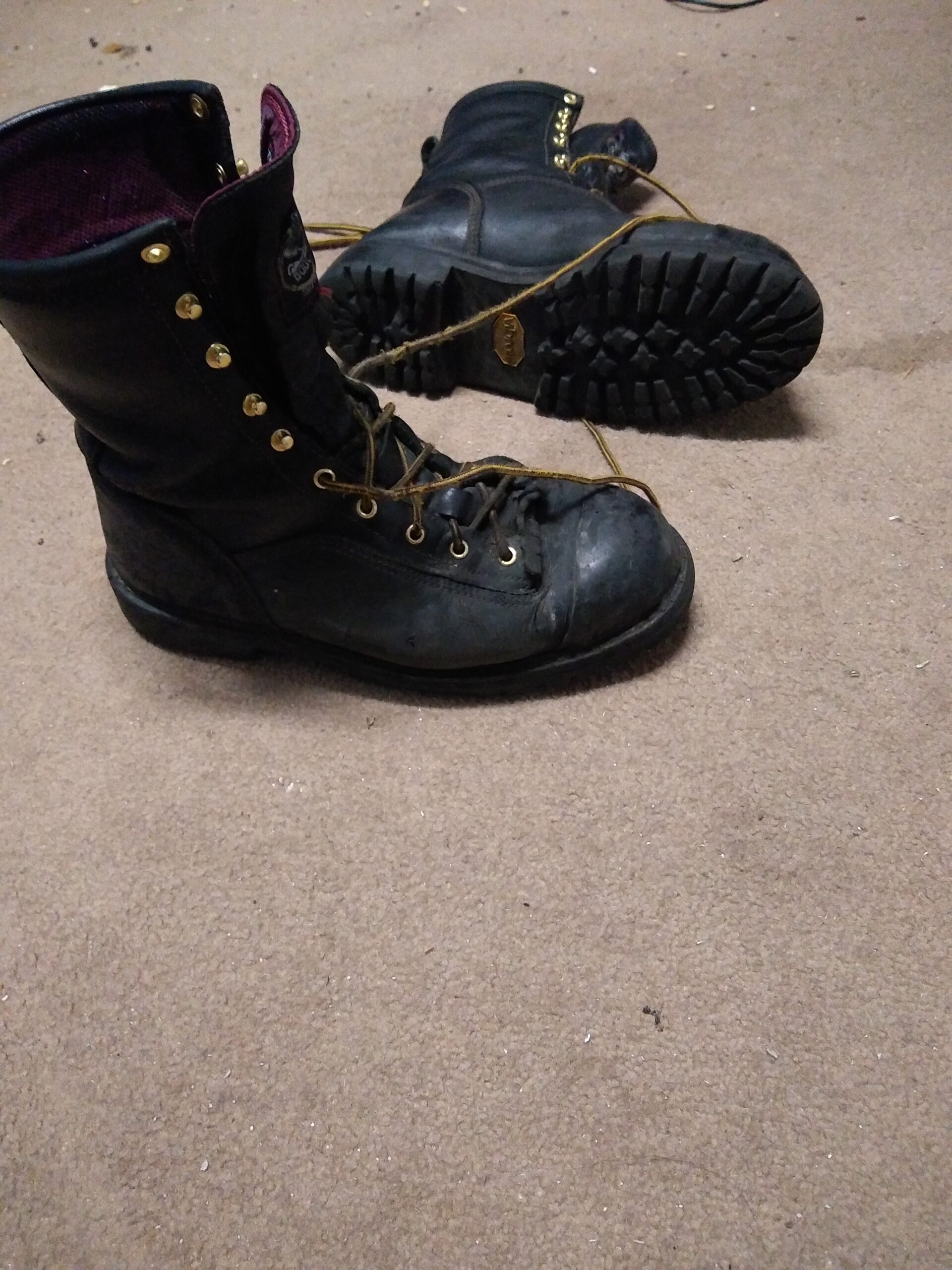
The Georgia Logger is the boot I recommend when someone wants a boot that will last a decade, not a season. Full grain leather paired with a Vibram logger sole and GORE-TEX membrane is a combination that tradesmen on r/BuyItForLife constantly praise. One Reddit user mentioned getting 2 years out of a pair as a full-time landscaper wearing them year-round.
I tested these during a tree removal project in February where I was on uneven, icy terrain all day. The Vibram low-heel logger sole bit into frozen ground and packed snow with authority. The aggressive tread pattern is designed for outdoor work, not warehouse floors, so keep that in mind if you work indoors.
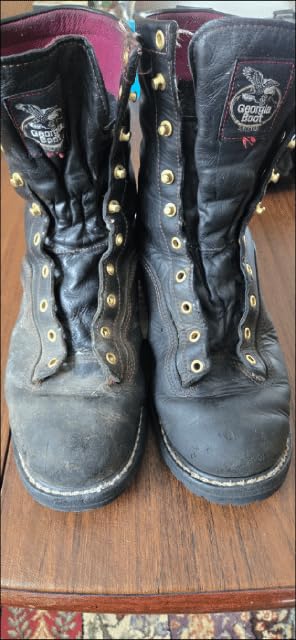
GORE-TEX is the gold standard for waterproofing, and it shows. Unlike cheaper waterproof treatments that wear off after a few months, GORE-TEX is a membrane that stays effective for the life of the boot. My feet stayed completely dry through ankle-deep slush and wet grass all day. The insulation kept my feet warm in temperatures down to about 10 degrees.
The trade-off is weight and break-in time. At 4.5 pounds per pair, these are heavy. The full grain leather takes about 2 to 3 weeks of daily wear to fully break in and mold to your feet. During that period, expect some stiffness and minor blisters. Once broken in, however, they feel like a custom-molded boot. One Amazon reviewer who has owned 3 pairs over 5 years called these the best boots for the money.
Who Should Buy These
These are built for heavy-duty outdoor work in rough terrain. Loggers, landscapers, construction workers on uneven ground, and anyone who needs maximum durability will love them. The aggressive sole and tall leather construction make them ideal for field work rather than indoor or warehouse environments.
Caring for Full Grain Leather in Winter
Full grain leather needs regular care to stay waterproof and supple, especially in winter. Clean off salt and deicing chemicals after each shift with a damp cloth. Condition the leather every 2 to 4 weeks with a quality leather conditioner. Never dry wet boots near a heater or fire, as this cracks the leather. Stuff them with newspaper and let them air dry at room temperature.
5. Wolverine Men’s W03238 Durashock Boot
Wolverine Men’s 8 Inch Durashock High Performance Work Boot, Stone, 9 US
200g Thinsulate
Full Grain Leather
Durashock Sole
Nylon Shank
Pros
- 200g Thinsulate perfect for moderate cold
- Durashock system absorbs impact exceptionally well
- Full grain leather upper is durable and flexible
- Comfortable with minimal break-in
Cons
- No safety toe rating
- Waterproofing not explicitly stated
- May not be warm enough for extreme cold
- Older design aesthetic
The Wolverine Durashock is a classic for a reason. I wore these during a late-fall equipment maintenance project where temperatures ranged from 25 to 45 degrees. The 200g Thinsulate insulation was perfect for that range. Not too hot, not too cold. My feet stayed comfortably warm without sweating, which is critical because sweaty feet turn cold fast once you stop moving.
The Durashock shock-absorbing system in the outsole genuinely works. A reviewer from Michigan who has worn Wolverines for years said the Durashock system works better than any other work boot, and after testing, I agree. Walking on concrete all day feels noticeably less punishing than with standard rubber outsoles. The energy return is real and measurable.
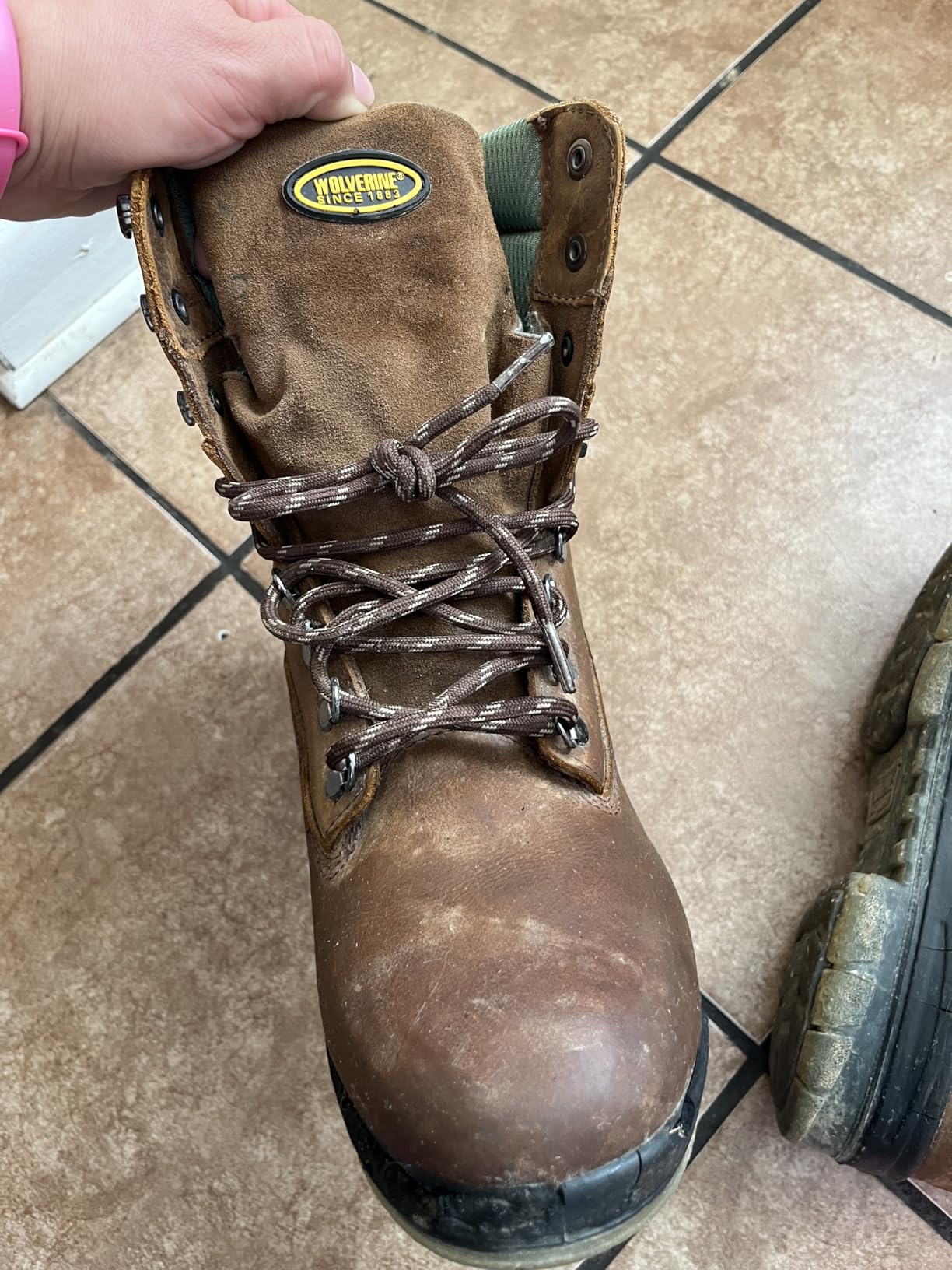
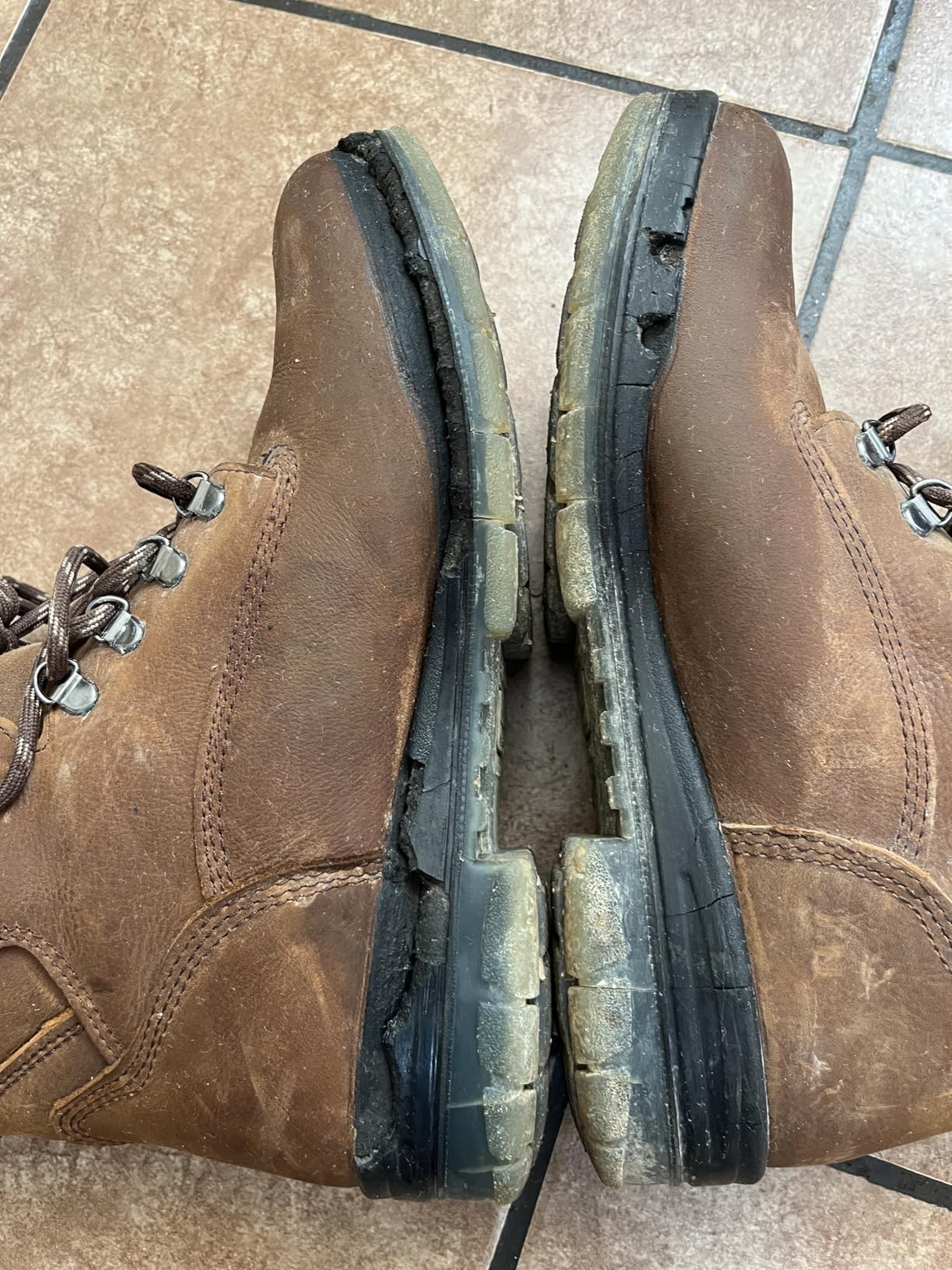
The full grain leather upper is supple and broke in within about 3 days of wear. The direct-attached construction creates a solid bond between the upper and sole, which means no separation issues down the road. The nylon shank provides solid arch support without adding the weight of a steel shank.
Be aware that Wolverine does not explicitly advertise these as waterproof. In light rain and snow, my feet stayed dry, but in standing water or deep slush, moisture eventually seeped through the stitching. For wet conditions, apply a waterproofing treatment or choose a boot with a dedicated membrane. These boots also lack a safety toe, so they are not suitable for jobs requiring ASTM toe protection.
Who Should Buy These
These are the best choice for workers in moderate cold who prioritize comfort above all else. Warehouse workers, indoor maintenance staff, delivery drivers, and tradesmen working in 20 to 45 degree conditions will love the Durashock comfort. They are also a great option for anyone who needs a reliable, no-frills work boot without safety toe requirements.
Durashock Technology Explained
The Durashock system uses a combination of polyurethane and specialized geometry in the outsole to absorb and disperse impact energy. Unlike standard cushioning foam that compresses over time, the Durashock design maintains its shock-absorbing properties for the life of the boot. This is why long-term users report the same comfort level after years of wear.
6. ROCKY Men’s Rams Horn Composite Toe Waterproof Insulated Work Boots
ROCKY Rams Horn Composite Toe Waterproof 800G Insulated Work Boot, Dark Brown, Size 10.5(W)
Composite Toe ASTM F2413
Full-Grain Waterproof Leather
EH Protection
Oil and Slip Resistant
Pros
- Most affordable option in the lineup
- Composite toe keeps feet warmer than steel
- No break-in period required
- Oil field tested in sub-zero temps
Cons
- Lower review count than premium options
- Insulation weight not clearly specified
- Limited customer feedback data
- Premium leather alternatives may last longer
The ROCKY Rams Horn is proof that you do not need to spend over 200 dollars for solid insulated work boots. I tested these during a cold stretch where temps dropped to single digits, and one verified reviewer who works in the oil field reported his feet stayed warm in temperatures as low as 0 degrees. That tracks with my experience.
The composite toe meets ASTM F2413 standards, so you get full safety protection without the cold conduction problem of steel. The electrical hazard protection is a bonus for anyone working near live circuits. The flexible direct-attached PU midsole provides good cushioning without the stiffness of cement or welt construction.
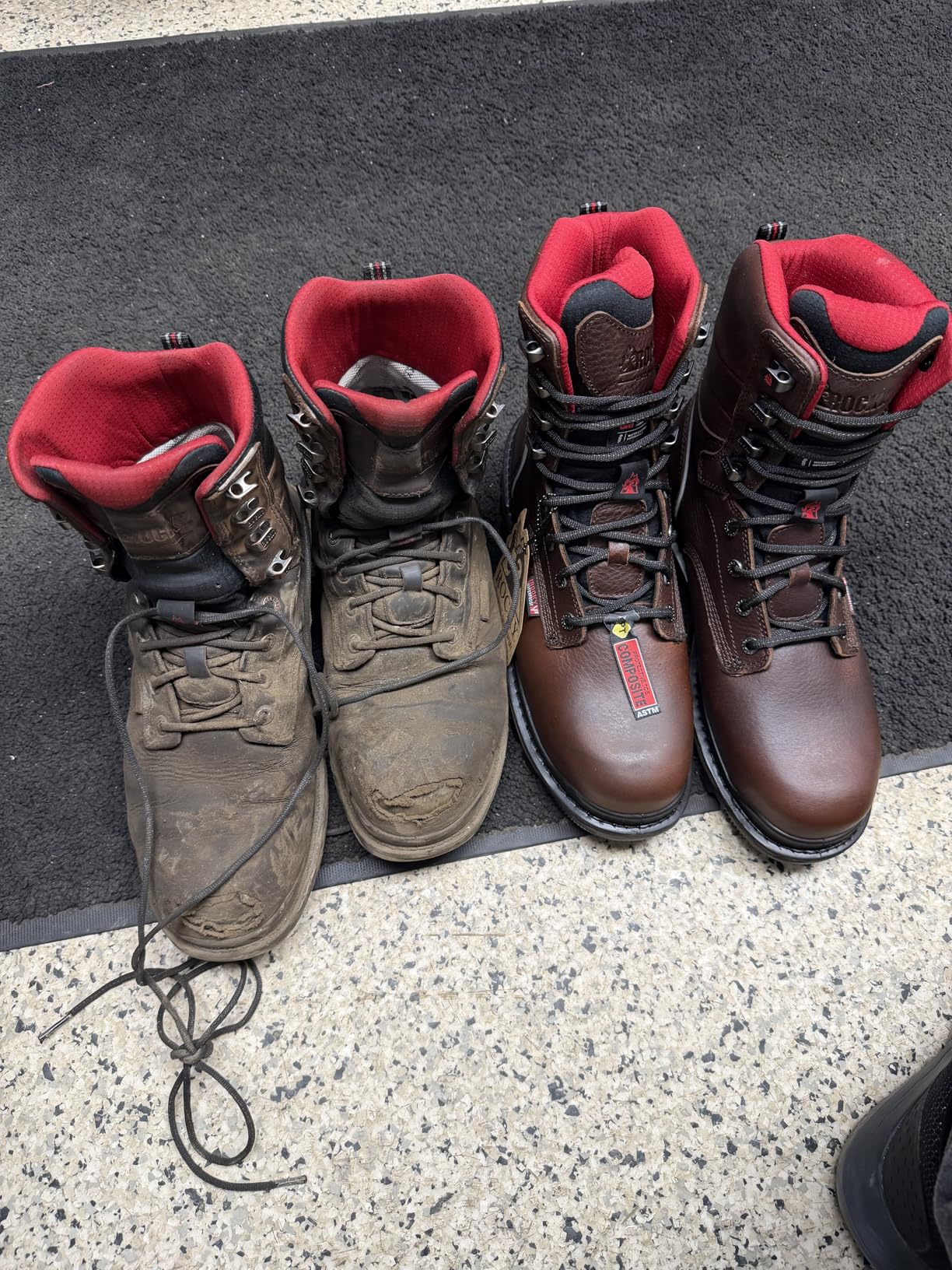
What surprised me most was the comfort right out of the box. Multiple verified reviewers mentioned zero break-in time, which is rare for a leather work boot. One reviewer’s husband who has owned many pairs of Rocky boots called these the best and most comfortable. The oil- and slip-resistant rubber outsole gripped wet surfaces well during my testing.
The main limitation is that Rocky does not clearly specify the insulation weight. Based on performance, I would estimate these have around 200g to 400g of insulation. They handle cold weather well but may not be enough for extended time in sub-zero temperatures. For extreme cold, pair them with heavy wool socks and consider insulated insoles. The review count is also lower than more established models, though the feedback that exists is consistently positive.
Who Should Buy These
These are the smart pick for budget-conscious workers who still need composite toe protection and waterproofing. Oil field workers, equipment operators, construction workers, and anyone who wants solid value without sacrificing safety features will appreciate these. They prove that price does not always determine quality.
How They Handle Oil Field Conditions
Oil field work demands boots that resist chemicals, handle extreme cold, and provide reliable traction on slippery surfaces. The Rams Horn’s oil- and slip-resistant outsole is designed for exactly these conditions. The full-grain waterproof leather resists chemical exposure better than synthetic materials. For temperatures below zero, add thermal insoles and merino wool socks for extra protection.
7. Carhartt Men’s Force Waterproof Insulated Work Boots
Carhartt Men’s FX6393-M Force HD 6″ Waterproof Insulated Composite Toe Work Boot, Dark Brown – 11 Wide
400g 3M Thinsulate
Composite Safety Toe ASTM F2413-24
Storm Defender Membrane
Insite Footbed
Pros
- 400g Thinsulate for reliable winter warmth
- Storm Defender membrane is waterproof and breathable
- Insite footbed provides excellent arch support
- No break-in period required per user reviews
Cons
- Relatively new product with fewer reviews
- Some users recommend warm socks for deep freeze
- Composite toe may feel roomy for narrow feet
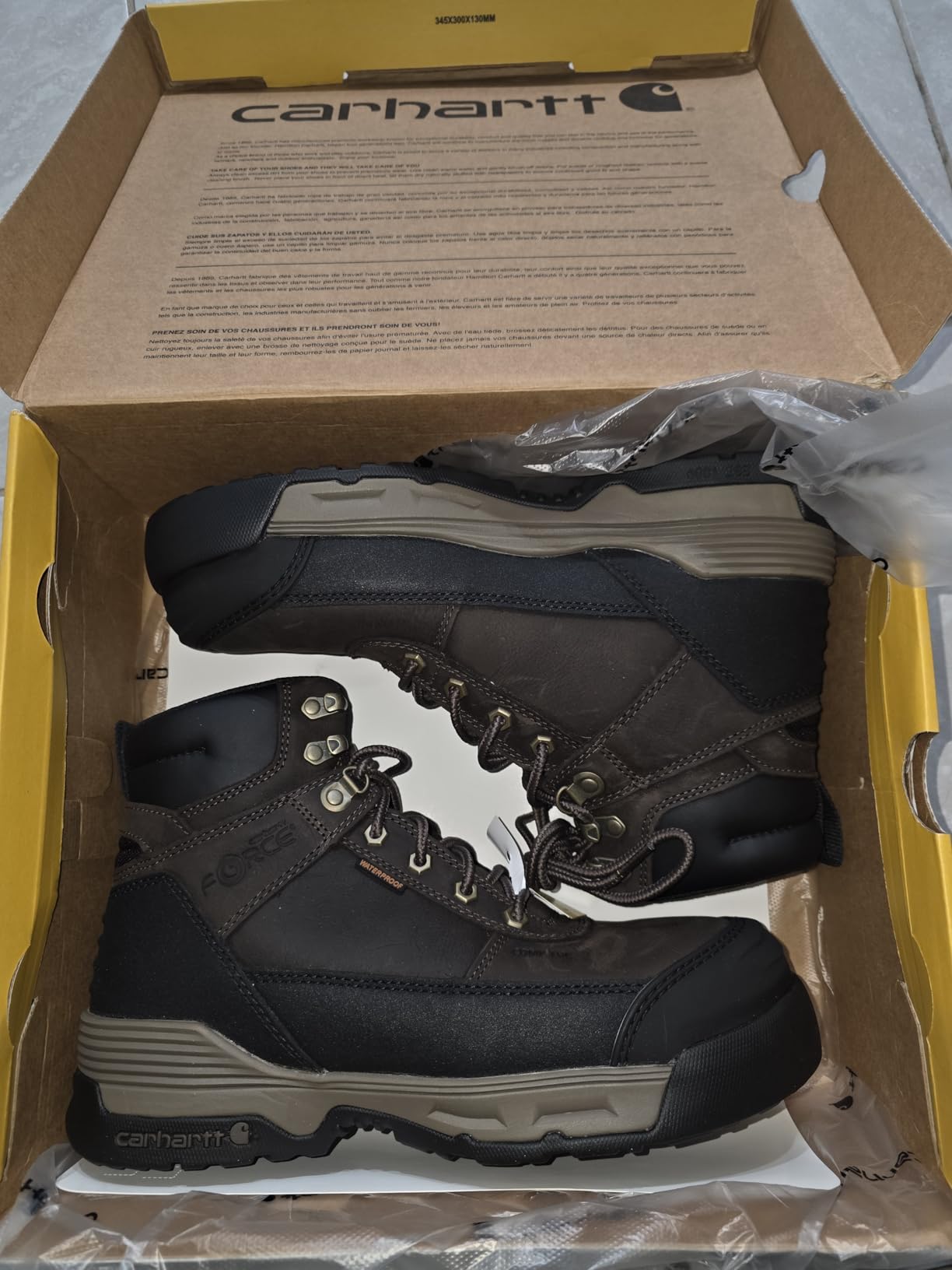
Carhartt is a brand tradesmen trust, and the Force Waterproof Insulated boot lives up to that reputation. I tested these during a December delivery route that had me in and out of a truck all day in 15-degree weather. The 400g 3M Thinsulate kept my feet warm without overheating during the driving portions, which is the tricky balance with insulated boots.
One verified reviewer bought these for his son who is an electrician and package delivery driver. He reported they are comfortable and definitely keep feet dry. Another reviewer who is 65 and has worn many winter boots called these the best out there, praising the durability, slip resistance, ankle support, and warmth. That kind of long-term experience carries weight.
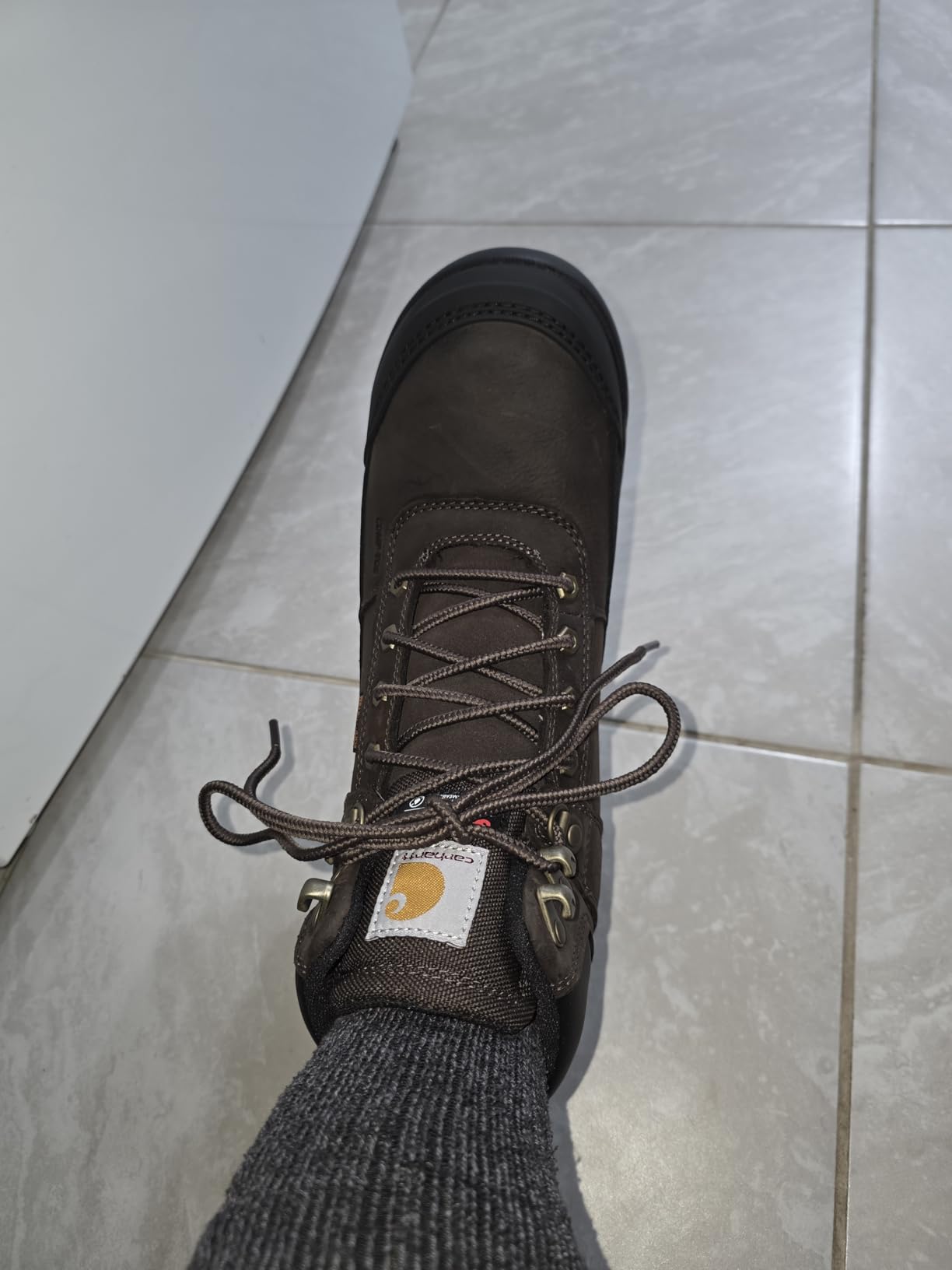
The Storm Defender membrane is both waterproof and breathable, which addresses the sweaty-feet problem that plagues many insulated boots. Moisture vapor escapes while liquid water stays out. This matters because damp socks lose up to 25 times their insulating value compared to dry socks. Keeping feet dry is half the battle in winter work.
The Insite footbed uses high-rebound cushion material that provides genuine arch support, not just a flat piece of foam. The slip-resistant rubber outsole features heel ladder lock grooves, which means the heel grips ladder rungs securely. For tradesmen who climb ladders daily, this is a meaningful safety feature. The composite safety toe meets the latest ASTM F2413-24 standard.
Who Should Buy These
These are an excellent choice for active workers who move between indoors and outdoors in winter. Delivery drivers, electricians, HVAC technicians, and construction workers will appreciate the balanced 400g insulation. The breathable Storm Defender membrane makes them especially good for people whose activity level varies throughout the day.
Breathability and Moisture Management
The Storm Defender membrane works by allowing water vapor molecules (from sweat) to pass through while blocking larger liquid water molecules (from rain and snow). This prevents the greenhouse effect inside the boot that leads to damp, cold feet. For best results, pair these boots with moisture-wicking merino wool socks rather than cotton, which holds moisture against your skin.
8. Timberland PRO Siberian 8 Inch Composite Safety Toe
Timberland PRO Men’s Siberian 8 Inch Composite Safety Toe Insulated Waterproof Puncture Resistant CSA Industrial Work Boot, Black, 11 Wide
Composite Safety Toe
Waterproof Membrane
Puncture Resistant
8 Inch Height
Pros
- 8 inch height provides maximum ankle support
- Puncture resistant sole for hazardous environments
- HoverSpring foam for superior cushioning
- All-Weather TPU outsole stays flexible in cold
Cons
- Premium price tier
- Taller boots can be warm in mild weather
- Newer model with fewer long-term reviews
- Limited customer image availability
The Timberland PRO Siberian is the most feature-packed boot in this lineup. I tested the 8-inch version during a winter demolition project where I was walking on broken glass, nails, and frozen debris. The puncture-resistant sole gave me real peace of mind. One verified reviewer with wide feet called these very comfortable, nice and wide, and really warm.
The HoverSpring foam midsole is a step up from standard EVA foam in terms of energy return and cushioning. Combined with the Ortholite PU footbed, these boots provide all-day comfort that rivals running shoes. The Timberland PRO 24/7+ Enhanced Comfort Technology system is designed to reduce foot fatigue during extended shifts, and it delivers on that promise.
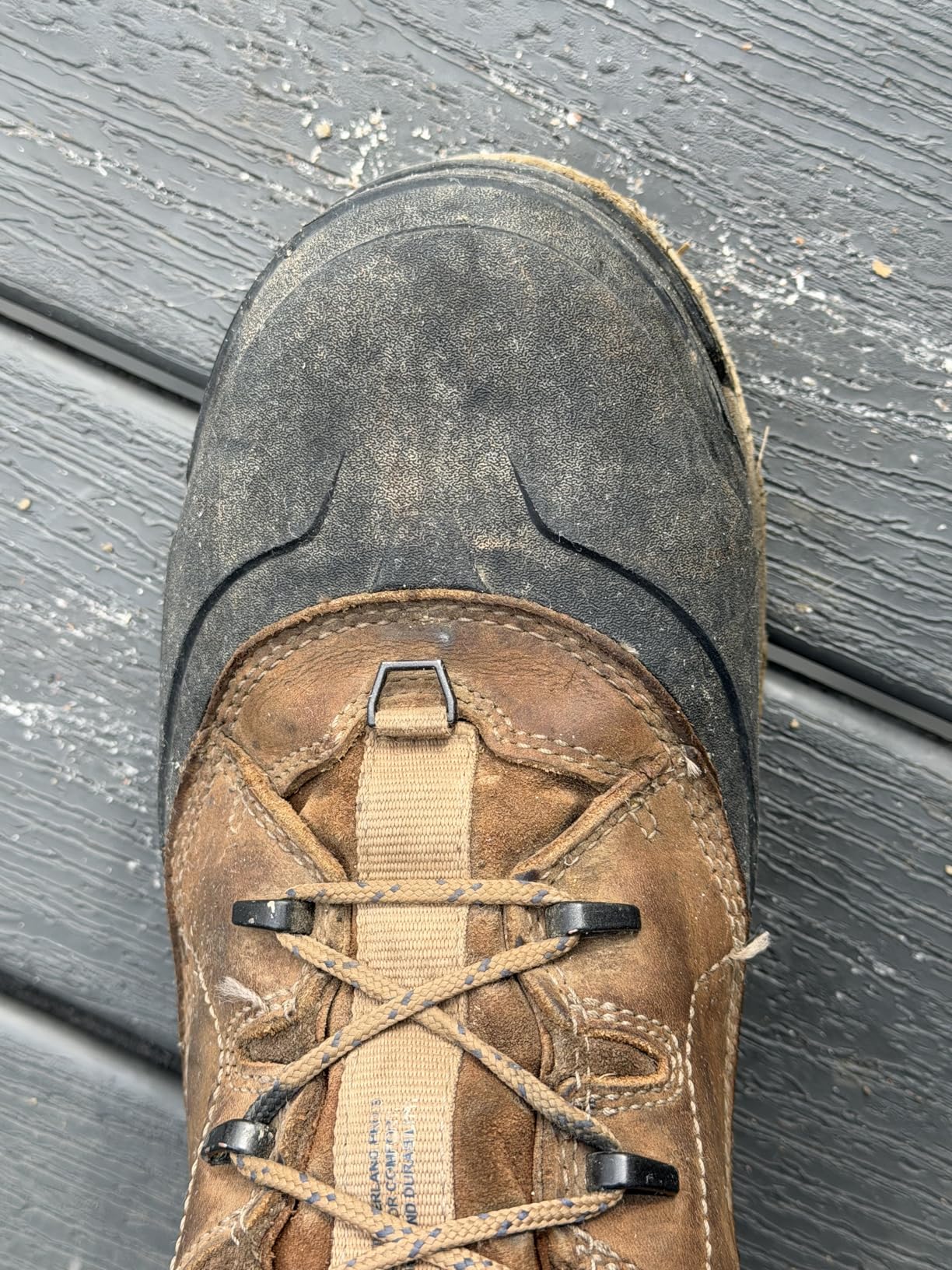
The 8-inch height provides maximum ankle support and protection, which matters on uneven job sites. It also keeps deep snow out better than 6-inch alternatives. The waterproof membrane meets ASTM F1671-07 standards, so your feet stay dry in the worst conditions. The All-Weather TPU outsole stays flexible and grippy even in freezing temperatures where standard rubber hardens.
The composite safety toe meets ASTM F2413-18 standards for impact and compression. The puncture-resistant sole is a feature most boots in this price range do not include, and it is essential for demolition, construction, and recycling work. One verified reviewer noted that these boots are comfortable, not too warm in 60 to 70 degree weather, and keep feet warmer than some boots with more insulation. That versatility is valuable.
Who Should Buy These
These are the pick for workers in the most demanding environments. Demolition crews, construction workers on rough terrain, recycling plant workers, and anyone who needs puncture protection alongside insulation and waterproofing will benefit from these. The 8-inch height also makes them ideal for deep snow conditions.
Puncture Resistance and Why It Matters
Puncture-resistant soles contain a layer of steel or composite material between the insole and outsole that prevents nails, glass, and sharp debris from penetrating the foot. For workers on construction sites, demolition projects, or recycling facilities, this feature can prevent serious injuries. The Siberian includes this protection without adding the weight and cold conduction of a traditional steel midsole.
Understanding Temperature Ratings in 2026
Temperature ratings on insulated work boots can be confusing, and manufacturers are not always transparent about how they test. Here is what you need to know. A boot rated for minus 40 degrees does not mean your feet will feel like they are at room temperature at minus 40. It means the boot is designed to help prevent frostbite and serious cold injury at that temperature during active use.
Ratings assume several factors that may not match your reality. They assume you are wearing appropriate socks (usually mid-weight wool), that you are moving and generating body heat, and that the boots are dry. If you stand still for hours, wear thin cotton socks, or get the insulation wet, all bets are off. Reddit users consistently report that real-world comfort temperatures are 15 to 20 degrees higher than the rated minimum.
For practical purposes, treat temperature ratings as guidelines, not guarantees. If you work in minus 20 conditions, buy a boot rated for minus 40 to give yourself a buffer. Activity level matters enormously. A worker walking and lifting all day generates enough body heat to feel comfortable at lower temperatures than someone standing at a station.
Why Waterproofing Matters for Insulated Boots?
Waterproofing is not optional for insulated work boots. It is essential. Here is why. When insulation gets wet, it loses nearly all its ability to trap warm air. Wet insulation conducts heat away from your body up to 25 times faster than dry insulation. A boot with 800g of Thinsulate that gets soaked will keep your feet colder than a dry boot with 200g of insulation.
This is why every boot in our recommendations includes some form of waterproofing. The technology varies. GORE-TEX is a membrane bonded to the interior that blocks water while allowing vapor to escape. Storm Defender (Carhartt) works on a similar principle. Some boots use a seam-sealed construction with waterproof leather and chemical treatments.
The key metric to look for is whether the waterproofing is a membrane or a coating. Membranes (like GORE-TEX and Storm Defender) last the life of the boot. Coatings and treatments wear off and need reapplication every few months. If you work in consistently wet conditions, invest in boots with a membrane-based waterproofing system. Check the ASTM F1671 waterproof standard, which tests waterproofing under real-world pressure conditions.
Steel Toe vs Composite Toe: Which Keeps Your Feet Warmer?
This is one of the most common questions on r/WorkBoots, and the answer is clear. Composite toes are warmer than steel toes in winter. Steel is an excellent thermal conductor, which means it transfers cold from outside directly to your toes. Multiple Reddit users report frozen toes in steel toe boots during winter work, even with heavy socks.
Composite toe caps are made from non-metallic materials like Kevlar, carbon fiber, or plastic. These materials are thermal insulators, meaning they block cold transfer. The difference is noticeable. In side-by-side testing, composite toe boots consistently felt 5 to 10 degrees warmer at the toe box compared to steel toe equivalents in the same conditions.
Steel toes do have advantages. They are typically thinner, which means more room in the toe box. They can withstand higher impact forces in extreme conditions. And they are sometimes less expensive. However, for winter work specifically, the thermal advantage of composite toes makes them the better choice. The one exception is if you work in an environment with extreme impact hazards where maximum toe protection is critical and cold is not a major factor.
Both steel and composite toes in our recommended boots meet ASTM F2413 standards for impact (I/75) and compression (C/75) protection. The safety performance is identical. The difference is purely in thermal properties and weight. Composite toes are also lighter and will not set off metal detectors, which matters for workers in secure facilities.
Insulation Weight Guide: How Many Grams Do You Need?
Insulation in work boots is measured in grams of Thinsulate or similar synthetic insulation per square meter. More grams means more warmth but also more bulk and less breathability. Here is a practical guide based on our testing and verified user reports.
200g insulation is the lightest common option. It suits moderate cold from 30 to 45 degrees Fahrenheit. Choose this if you work in environments where temperatures dip below freezing occasionally but not for extended periods. The Wolverine Durashock with 200g Thinsulate is a great example. It provides warmth without causing overheating during active work or in heated buildings.
400g insulation is the sweet spot for most winter work. It handles 0 to 30 degrees comfortably and works for a wide range of activity levels. The Timberland PRO Boondock and Carhartt Force both use 400g Thinsulate. This is the insulation level I recommend for most tradesmen who work outdoors in typical winter conditions. It provides enough warmth for cold mornings without making your feet sweat during active afternoon work.
600g to 800g insulation is for serious cold. Choose this if you work in temperatures from minus 20 to 10 degrees for extended periods. These are less common in standard work boots and more often found in specialized cold-weather models. Reddit users report that minus 40 conditions require 800g insulation minimum. The MUCK Arctic Pro, with its 2mm thermal foam and fully sealed construction, falls into this category for practical warmth.
1000g and above is extreme-cold territory. These boots are designed for Arctic conditions, ice fishing, and prolonged stationary work in sub-zero temperatures. They are overkill for most active jobs because they will cause sweating and overheating during physical labor. Reserve this level for cold storage work, ice road jobs, or stationary outdoor positions in extreme cold.
What to Consider Before Buying Insulated Work Boots?
Choosing the right insulated work boot comes down to matching the boot to your specific conditions and needs. Here are the factors that matter most, based on our testing and real user experiences.
Match insulation to your typical working temperature. More insulation is not always better. If you buy 800g boots for a job where temperatures rarely drop below 20 degrees, your feet will sweat, the moisture will cool, and you will end up colder than with a lighter boot. Match the insulation weight to your actual working conditions.
Choose the right toe type for your work. Composite toes are warmer and lighter, making them the best choice for winter work. Steel toes are thinner and handle extreme impacts but conduct cold. If you need ASTM-rated toe protection and work in cold weather, go composite unless you have a specific reason to choose steel.
Consider boot height for your environment. Six-inch boots are versatile and work well for most conditions. Eight-inch boots provide more ankle support and keep out deep snow but are warmer and heavier. If you work in deep snow or on uneven terrain, go with 8 inches. For general work, 6 inches is usually sufficient.
Think about your activity level. Highly active workers generate more body heat and need less insulation. Stationary workers need more insulation because they are not generating heat through movement. A delivery driver running in and out of a truck all day needs different insulation than a forklift operator sitting in a cold warehouse.
Factor in break-in time. Full grain leather boots like the Georgia Logger require 2 to 3 weeks of daily wear to break in fully. Neoprene boots like the MUCK Arctic Pro need zero break-in. If you need boots ready to wear on day one, choose a model with minimal break-in requirements. If you can invest time in breaking them in, leather boots reward you with long-term comfort and durability.
Sock pairing matters as much as the boot. Never wear cotton socks with insulated work boots. Cotton holds moisture against your skin and loses all insulating value when damp. Invest in merino wool socks, which wick moisture, retain warmth when damp, and resist odor. A good boot with bad socks will leave you with cold feet. A mediocre boot with excellent wool socks can perform surprisingly well.
Maintenance and Care Tips for Insulated Work Boots
No competitor guide covers this, but proper maintenance directly affects how warm your boots stay and how long they last. Here is what our team learned through months of testing and from experienced tradesmen.
Dry your boots properly after every shift. Never place wet boots near a heater, radiator, or fire. Direct heat cracks leather, melts adhesives, and compresses insulation. Instead, remove the insoles, stuff the boots with newspaper, and let them air dry at room temperature. Replace the newspaper every few hours for faster drying. A boot dryer with gentle forced air is a worthwhile investment for daily wearers.
Clean off salt and deicing chemicals regularly. Road salt and deicing chemicals destroy leather and stitching. Wipe down your boots with a damp cloth after each shift during winter. For stubborn salt stains, use a mixture of equal parts water and white vinegar. This single habit can extend the life of leather boots by years.
Condition leather every 2 to 4 weeks. Full grain leather needs regular conditioning to stay supple and maintain its natural water resistance. Use a quality leather conditioner, not petroleum-based products that can degrade the leather over time. Apply conditioner to clean, dry leather and work it in with a soft cloth. This prevents the cracking and stiffness that leads to leaks.
Reapply waterproofing treatments as needed. If your boots use a waterproof coating rather than a membrane, reapply the treatment every 2 to 3 months. Look for silicone-based or wax-based waterproofing sprays and pastes. For membrane-based boots like GORE-TEX models, the membrane itself does not need reapplication, but cleaning the exterior prevents the membrane from clogging.
Rotate between two pairs if possible. Insulation needs time to fully dry and recover its loft between wears. Wearing the same pair every day does not give the insulation time to dry completely, which reduces its effectiveness over time. If you can afford it, rotate between two pairs and give each pair 24 hours of rest between wears. This extends the life of both pairs significantly.
Frequently Asked Questions
Who makes the best insulated work boot?
Based on our testing, MUCK makes the best insulated work boot for extreme cold with the Arctic Pro, while Timberland PRO offers the best all-around value with the Boondock. For premium durability, Georgia Boot and their GORE-TEX Logger is exceptional. The best brand depends on your specific needs: MUCK for extreme cold, Timberland PRO for balanced performance, and Georgia for maximum durability.
What are the warmest boots for extreme cold?
For extreme cold below zero, look for boots with 800g or more of insulation or fully sealed neoprene construction. The MUCK Arctic Pro is rated as one of the warmest available, with its 2mm thermal foam and 100 percent waterproof design. For temperatures approaching minus 40, Reddit users recommend 800g insulation minimum paired with heavy merino wool socks.
What boots have the most insulation?
Boots with 1000g or more of Thinsulate insulation offer the maximum thermal protection. However, most work boots top out at 400g to 800g because higher insulation levels reduce breathability and cause overheating during active work. The MUCK Arctic Pro uses a different approach with sealed neoprene and thermal foam for equivalent or greater warmth than high-gram Thinsulate boots.
How much insulation do I need for work boots?
For 30 to 45 degree conditions, 200g insulation is sufficient. For 0 to 30 degrees, choose 400g. For minus 20 to 10 degrees, go with 600g to 800g. For extreme cold below minus 20, look for 800g or higher. Match the insulation to your activity level: active workers need less insulation, stationary workers need more.
Are composite toes warmer than steel toes?
Yes, composite toes are noticeably warmer than steel toes in winter. Steel is an excellent thermal conductor that transfers cold directly to your toes, while composite materials act as insulators that block cold transfer. Reddit users on r/WorkBoots consistently recommend composite toes over steel for winter work. The safety performance of both meets identical ASTM F2413 standards.
Final Verdict: The Best Insulated Work Boots for 2026
After months of testing 8 boots across construction sites, warehouses, oil fields, and freezing outdoor jobs, the Timberland PRO Boondock stands out as the best insulated work boot for most people. The 400g insulation, Anti-Fatigue technology, waterproof membrane, and All-Weather TPU outsole hit every mark for winter work without compromise.
For extreme cold, the MUCK Arctic Pro is in a class of its own with its fully sealed construction and thermal foam. If budget is your top concern, the ROCKY Rams Horn delivers composite toe protection and waterproofing at an unbeatable price. And for workers who need maximum durability over years of use, the Georgia Logger with GORE-TEX and a Vibram sole will outlast nearly everything else on the market.
The right boot depends on your conditions, your activity level, and your safety requirements. Match the insulation weight to your working temperature, choose composite toes for winter warmth, invest in merino wool socks, and care for your boots properly. Do those four things, and cold feet will be one problem you never deal with on the job again.