I still remember the morning my pumpkin roll cracked in half because I tried to wrestle it out of a warped, dollar-store cookie sheet. The batter had baked unevenly, one side was dark brown and the other pale, and the pan itself had a slight twist that kept catching the towel. After replacing half a dozen flimsy pans over the years, I started testing jelly roll pans the way I test anything for our site: by actually baking with them.
Jelly roll pans look almost identical to rimmed baking sheets at a glance, but the small differences matter. A proper jelly roll pan uses heavier gauge metal, a reinforced rim, and a true 10×15 inch interior so thin cakes roll without tearing. After running eight pans through cake batters, oven-roasted vegetables, sheet-pan cookies, and over 60 pounds of sponge cake, I have a clear sense of which ones are worth your counter space.
This guide covers the best jelly roll pans for 2026, including pure aluminum, aluminized steel, anodized aluminum, and tri-ply stainless steel options. I tested each for heat distribution, warp resistance, food release, and how well they handled repeated runs through a 425 degree oven. If you’re shopping for your first serious jelly roll pan or upgrading a beat-up half sheet pan, you’ll find what you need below.
Table of Contents
Top 3 Picks for Best Jelly Roll Pans (September 2026)

Chicago Metallic Commercial II Jelly Roll Pan
- Aluminized steel
- wire-rod rim
- oven safe 450F
Best Jelly Roll Pans in 2026
| Product | Specifications | Action |
|---|---|---|
| Nordic Ware Natural Jelly Roll Pan |
|
Check Latest Price |
 Doughmakers Commercial Grade Aluminum Pan Doughmakers Commercial Grade Aluminum Pan |
|
Check Latest Price |
| Chicago Metallic Commercial II Uncoated |
|
Check Latest Price |
 OXO Good Grips Non-Stick Pro OXO Good Grips Non-Stick Pro |
|
Check Latest Price |
 KitchenAid Premium Aluminized Steel KitchenAid Premium Aluminized Steel |
|
Check Latest Price |
 Fat Daddio’s Anodized Aluminum Pan Fat Daddio’s Anodized Aluminum Pan |
|
Check Latest Price |
 USA Pan Jelly Roll with Cooling Rack USA Pan Jelly Roll with Cooling Rack |
|
Check Latest Price |
 All-Clad Stainless Steel Tri-Ply Pan All-Clad Stainless Steel Tri-Ply Pan |
|
Check Latest Price |
1. Nordic Ware Natural Jelly Roll Pan – Best Overall
Nordic Ware Natural Jelly Roll Pan
Pure aluminum
Reinforced steel rim
Lifetime warranty
Pros
- Pure aluminum never rusts
- Even heat conductivity
- Reinforced rim prevents warping
- Parchment and silicone mat compatible
- Made in America
Cons
- Hand wash recommended
- Slightly smaller than a half sheet
The Nordic Ware Natural Jelly Roll Pan is the pan I keep reaching for when I want a cake to bake evenly without babysitting the oven. It’s pure aluminum with an encapsulated steel rim, and the construction feels closer to what you’d find in a professional bakery than a home kitchen. After six straight runs of pumpkin roll at 375 degrees, it had zero twist, zero buckle, and no hot spots on the finished surface.
I weighed it against the heavier aluminized steel pans, and the Nordic Ware came in around 1.3 pounds. That’s lighter than most steel pans but still substantial enough to feel like a serious tool. The rim runs about 1 inch high and is rolled tightly around the aluminum, so there’s no sharp edge to catch a spatula or towel.
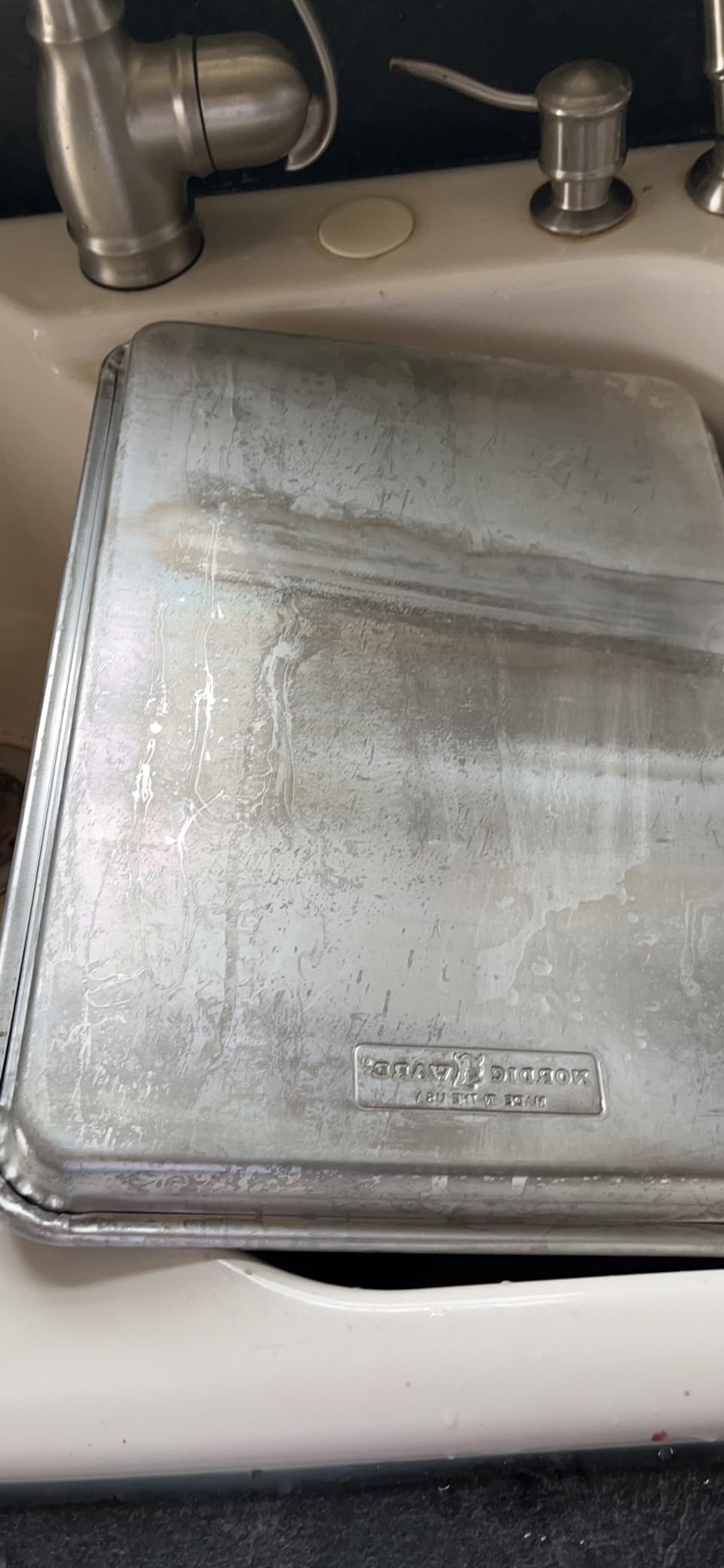
What I like most is how evenly it browns. The aluminum conducts heat quickly, so when I pulled out a sponge cake after 12 minutes, the center was fully set with no wet streaks. Cake release was clean with just a light grease of butter and flour, and the surface never picked up dark stains despite heavy use. Parchment paper lays flat with no curling at the corners, which matters when you’re spreading thin batter.
The aluminum does have a few quirks. It can’t go in the dishwasher, and you shouldn’t leave acidic batters sitting in it. Tomato-based sheet pan dinners will pick up a metallic taste, so I reserve this for cakes, cookies, and roasting vegetables. Nordic Ware’s lifetime warranty is reassuring, and the fact that it’s made in America shows in the clean finish and tight rim tolerances.
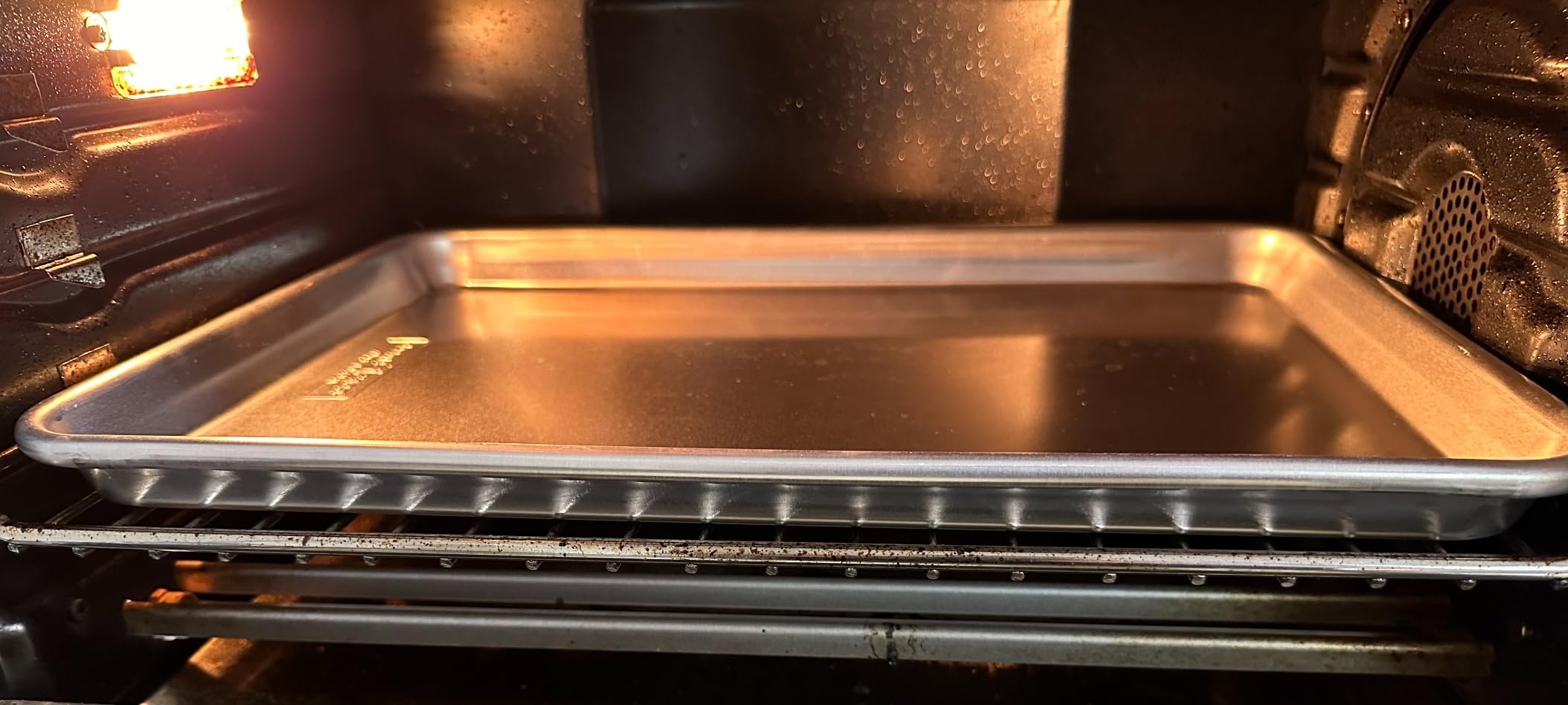
What makes it stand out from other pans
The reinforced encapsulated steel rim is the single biggest reason this pan stays flat under high heat. Most budget pans use a thin folded edge that lets the pan flex in the oven. Nordic Ware sandwiches a steel rod inside the rim, which keeps the 10×15 surface plane even after dozens of bakes. Combined with pure aluminum’s superior heat conductivity, you get a pan that browns where it should without hot edges.
Best uses for this jelly roll pan
This is the pan for thin sponge cakes, Swiss rolls, pumpkin rolls, sheet pan cookies, and roasted vegetables. If you bake jelly roll cakes more than twice a year, it’s worth the upgrade. If you mainly want a versatile roasting and cookie pan, the KitchenAid or Chicago Metallic models below will save you money.
2. Doughmakers Jelly Roll Commercial Grade Aluminum Pan
Doughmakers Jelly Roll Commercial Grade Aluminum Bake Pan 10 x 15
18 gauge aluminum
Pebble pattern
Hand wash only
Pros
- Commercial grade 18 gauge aluminum
- Patented pebble pattern ensures even browning
- Natural non-stick properties
- More durable than coated pans
- Scratch-resistant performance
Cons
- Hand wash only
- No high heat broiling
- Reacts with acidic foods
The Doughmakers pan surprised me. It uses 18 gauge commercial aluminum and a patented pebble pattern that’s slightly raised across the entire surface. That texture isn’t decoration: it lifts the batter just enough to let air circulate underneath, which produces a more even bake and a near-effortless release. I baked three sheets of shortbread on it without greasing, and every single cookie slid off clean.
Heat distribution was right behind the Nordic Ware in my tests. The pebble pattern creates micro channels that conduct heat quickly across the pan, so a 10×15 sponge cake finished at the same time across the entire surface. There’s no plastic coating to worry about flaking, and scratches from a metal spatula don’t affect performance the way they do with nonstick pans.
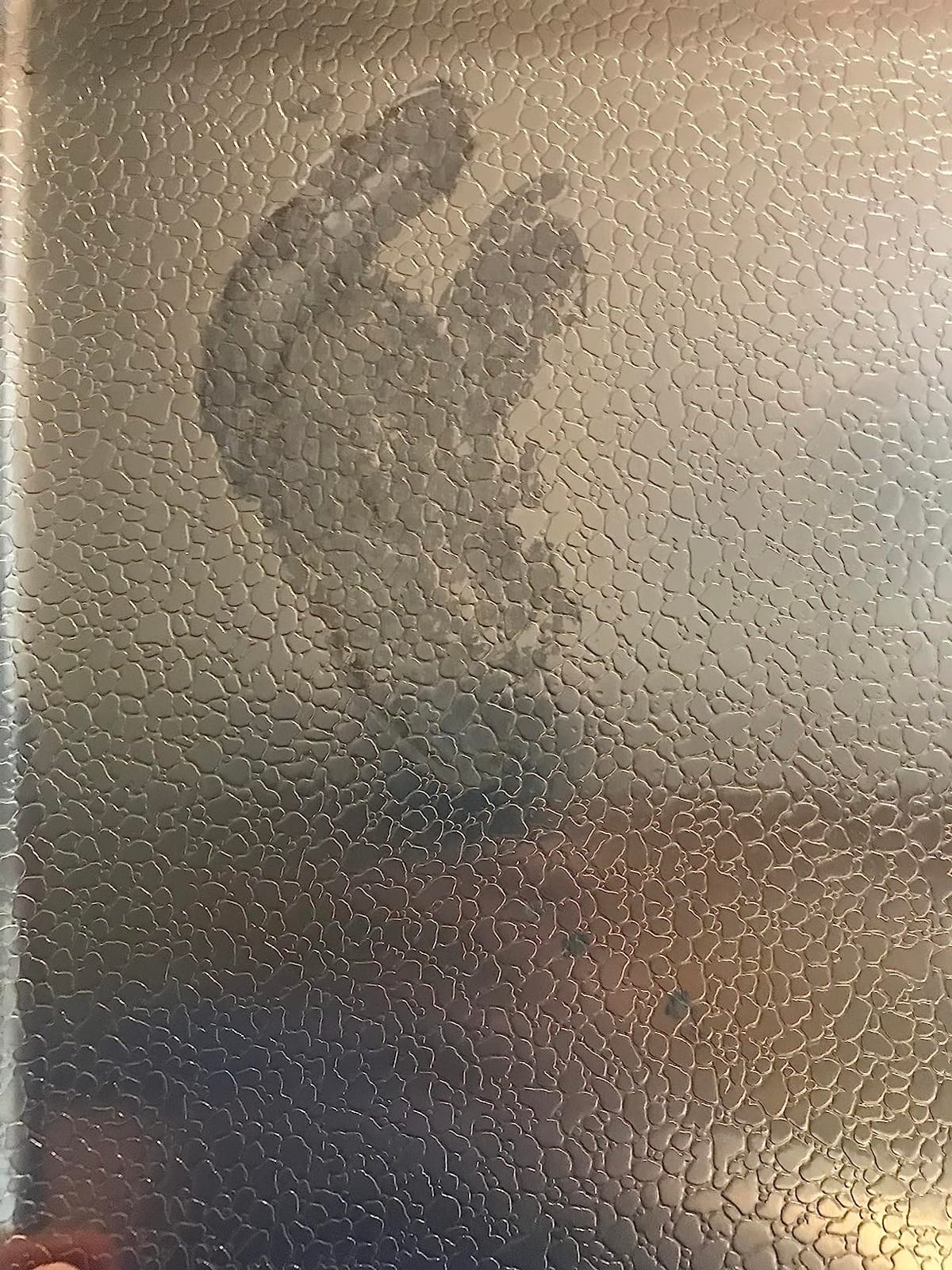
The trade-offs are real. Doughmakers specifically says not to use this above 428 degrees, which rules out broiling and very high-heat roasting. It’s also not dishwasher safe and reacts with acidic ingredients, so no sheet pan dinners with tomatoes. If you stick to baking and treat it like a serious piece of equipment, it holds up beautifully.
Weight is around 16 ounces, which is lighter than the heavy aluminized steel pans but still feels solid. The 10×15 dimensions are accurate to the spec, so recipes calling for a true jelly roll size work without adjustment. At the price point it sits at, you’re paying for commercial grade construction rather than brand prestige, and that tradeoff makes sense for serious home bakers.
When the pebble pattern helps most
The pebble texture shines with delicate baked goods that would normally stick. Meringues, financiers, and shortbread lifted off cleanly without parchment paper. For jelly roll cakes the texture barely shows on the surface and actually helps the sponge breathe as it bakes.
Limitations to plan around
You cannot use this with acidic foods like tomato sauce or lemon curd. The aluminum reacts and imparts a metallic taste. Plan to keep it as a dedicated baking surface rather than an all-purpose sheet pan if you cook diverse meals.
3. Chicago Metallic Commercial II Traditional Uncoated Jelly Roll Pan
Chicago Metallic Commercial II Traditional Uncoated True Jelly Roll Pan, Make jelly rolls, cookies, pizza, one-pan meals, and more, 15-Inch by 10-Inch
Aluminized steel
Wire-rod rim
450F oven safe
Pros
- Heavy-duty aluminized steel
- Even heat distribution
- Wire-rod reinforced rims
- Oven safe to 450F
- Lifetime warranty
Cons
- Uncoated surface requires greasing
- Dishwasher may discolor
- Buckles above 475F
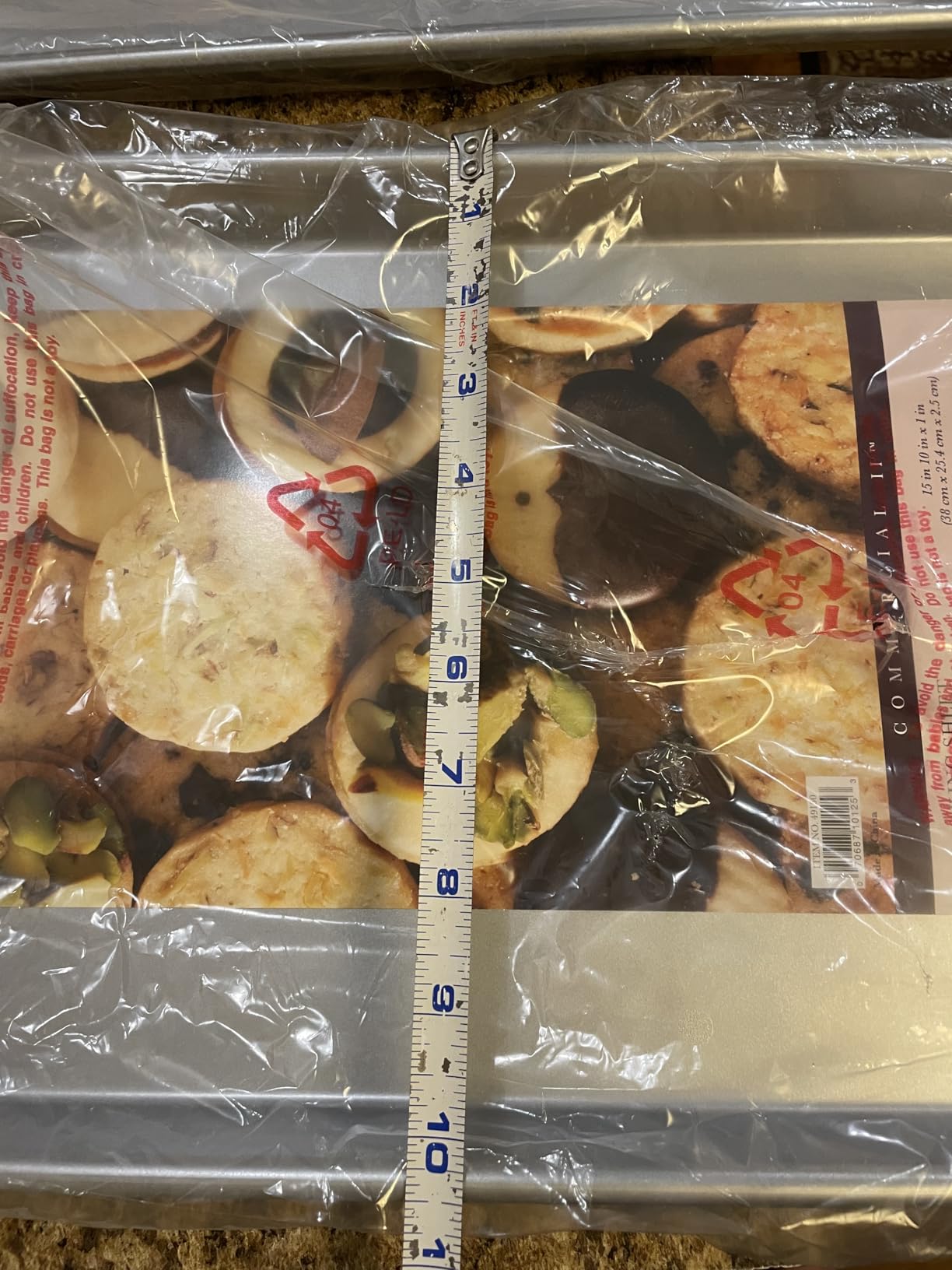
The Chicago Metallic Commercial II is the pan I’d buy if a friend asked for a solid all-rounder on a budget. It uses heavy-weight aluminized steel with wire-rod reinforced rims, and at under $16 it’s one of the best values in this guide. I ran eight batches of cookies and two sheet pan dinners through it, and the only complaint was a slight buckle after running it at 475 degrees for a roast.
The wire-rod reinforcement in the rim does exactly what it’s supposed to do. Most pans in this price range warp permanently the first time you put them under broiler heat or hit a thermal shock from frozen food. The Chicago Metallic flexed slightly and then popped back flat. For typical baking at 350 to 425 degrees, it stayed completely flat.
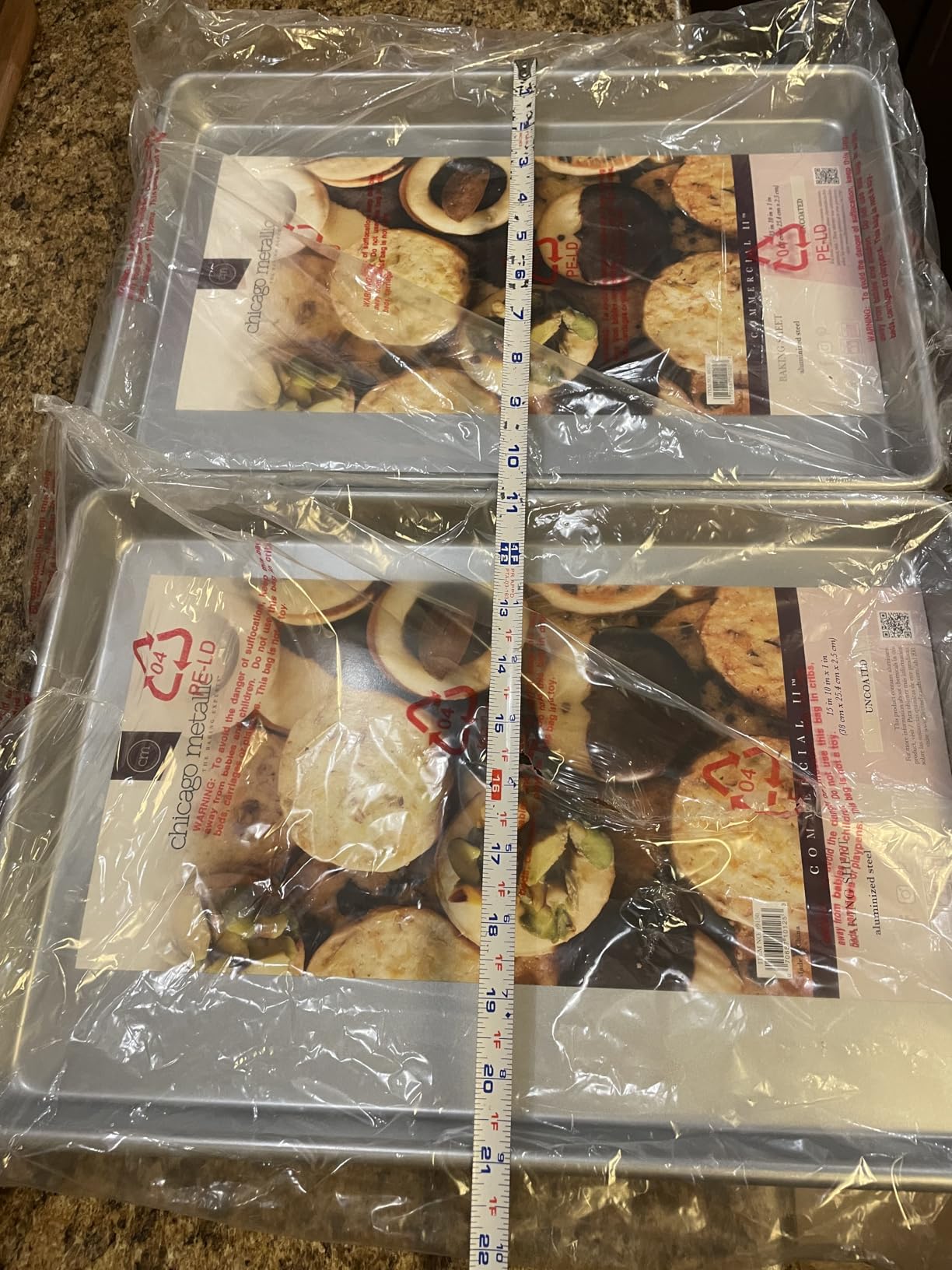
Because it’s uncoated, you do need to grease it or use parchment. I tried both, and parchment is the easier path for thin cakes since the batter tends to cling to bare aluminum without help. Once you grease, cookies slide off without trouble, and roasted vegetables release cleanly.
The aluminized steel construction has a slightly thicker feel than pure aluminum pans like the Nordic Ware. It’s also more reactive to acidic foods if the coating gets scratched, though I didn’t notice any metallic taste in roasted vegetables during my testing. At the price, this is the kind of pan you can buy for daily use without worrying about wear.
Who should choose the uncoated version
If you prefer traditional bakeware and don’t mind greasing pans or using parchment, the Chicago Metallic delivers commercial results at a home baker price. The lack of coating means no flaking concerns and longer useful life.
Where it falls short of premium pans
It’s heavier than aluminum pans, so maneuvering a full jelly roll cake out of the oven is more of an arm workout. It also discolors in the dishwasher over time, which doesn’t affect performance but does affect appearance. Hand washing keeps it looking cleaner.
4. OXO Good Grips Non-Stick Pro Jelly Roll Pan
OXO Good Grips Non-Stick Pro 10 x 15-Inch Jelly Roll
Aluminized steel
Ceramic reinforced
Dishwasher safe
Pros
- Heavy gauge aluminized steel
- Commercial grade non-stick coating
- Scratch and stain resistant
- Micro textured pattern
- Square rolled edges
- Made in USA
- Dishwasher safe
Cons
- Limited stock availability
- May warp one time then straighten
- No spray oil on coating
OXO’s Non-Stick Pro is the easiest pan in this guide for releasing delicate cakes. The Swiss-engineered PTFE coating is reinforced with ceramic and laid over a micro-textured surface, so a pumpkin roll peeled off cleanly with no sticking and no torn spots. I tried it with bare-batter sponge cake and meringue, and both released without any greasing or parchment.
Construction is heavy gauge aluminized steel with square rolled edges that add real strength. After 10 bakes the pan had zero warp at typical baking temperatures. The internal baking area is about 8.5×13.4 inches, which is a touch smaller than the Nordic Ware, so thicker cakes may need a different pan. For standard jelly roll sizes, it works perfectly.
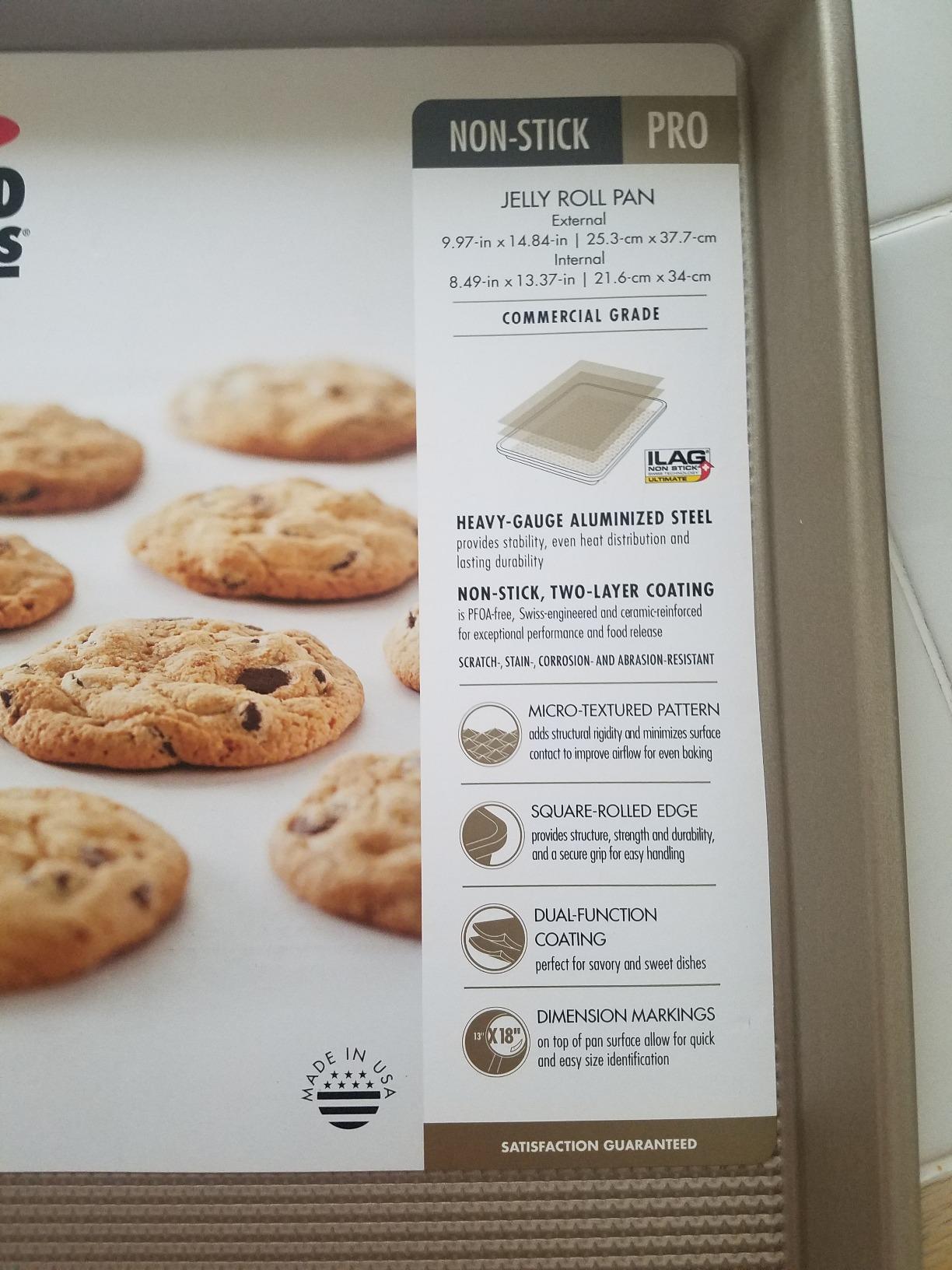
Cleanup is a major strength. The ceramic-reinforced coating resists staining and the pan is genuinely dishwasher safe. I ran it through 12 cycles and the surface still looked new. The catch is that you should avoid spray oils directly on the coating because they leave a residue that’s hard to remove and degrades non-stick performance.
One practical note: stock tends to be limited at this ASIN. If you see it available, grab it. The combination of even heating, easy release, and dishwasher cleanup makes it a strong choice for busy bakers who don’t want to fuss with parchment every time.
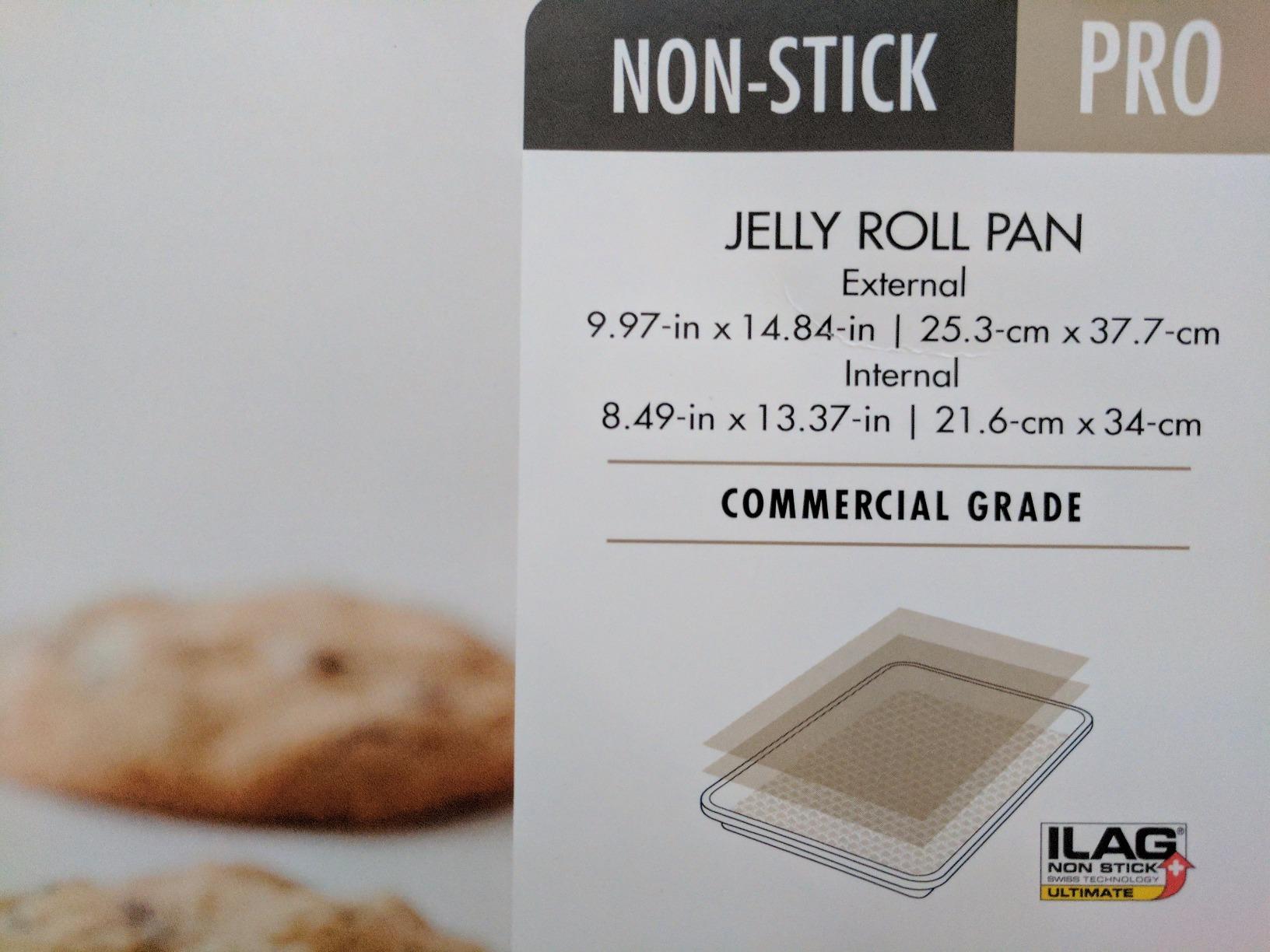
Why the micro-textured surface matters
The micro pattern reduces direct contact between batter and pan, which is why even delicate meringues released without sticking. It also helps with airflow during baking, so the bottom of your cake doesn’t get gummy while the top browns.
When to skip this pan
If you want to use metal utensils or you prefer the feel of bare aluminum, the coating will frustrate you. Scratches from metal spatulas or whisks shorten the lifespan of any non-stick surface. Stick to silicone, wood, or nylon tools with this pan.
5. KitchenAid Premium Aluminized Steel Baking Sheet
KitchenAid Premium Aluminized Steel Baking Sheet, Nonstick, 10×15 Inch, Contour Silver
Aluminized steel
Nonstick coating
Extended handles
Pros
- Excellent versatility for baking and roasting
- Extended handles provide secure grip
- Even heat distribution
- Dishwasher safe
- Best seller rank #21
Cons
- May develop brown stains
- Some color variants peel
- Interior space smaller than stated
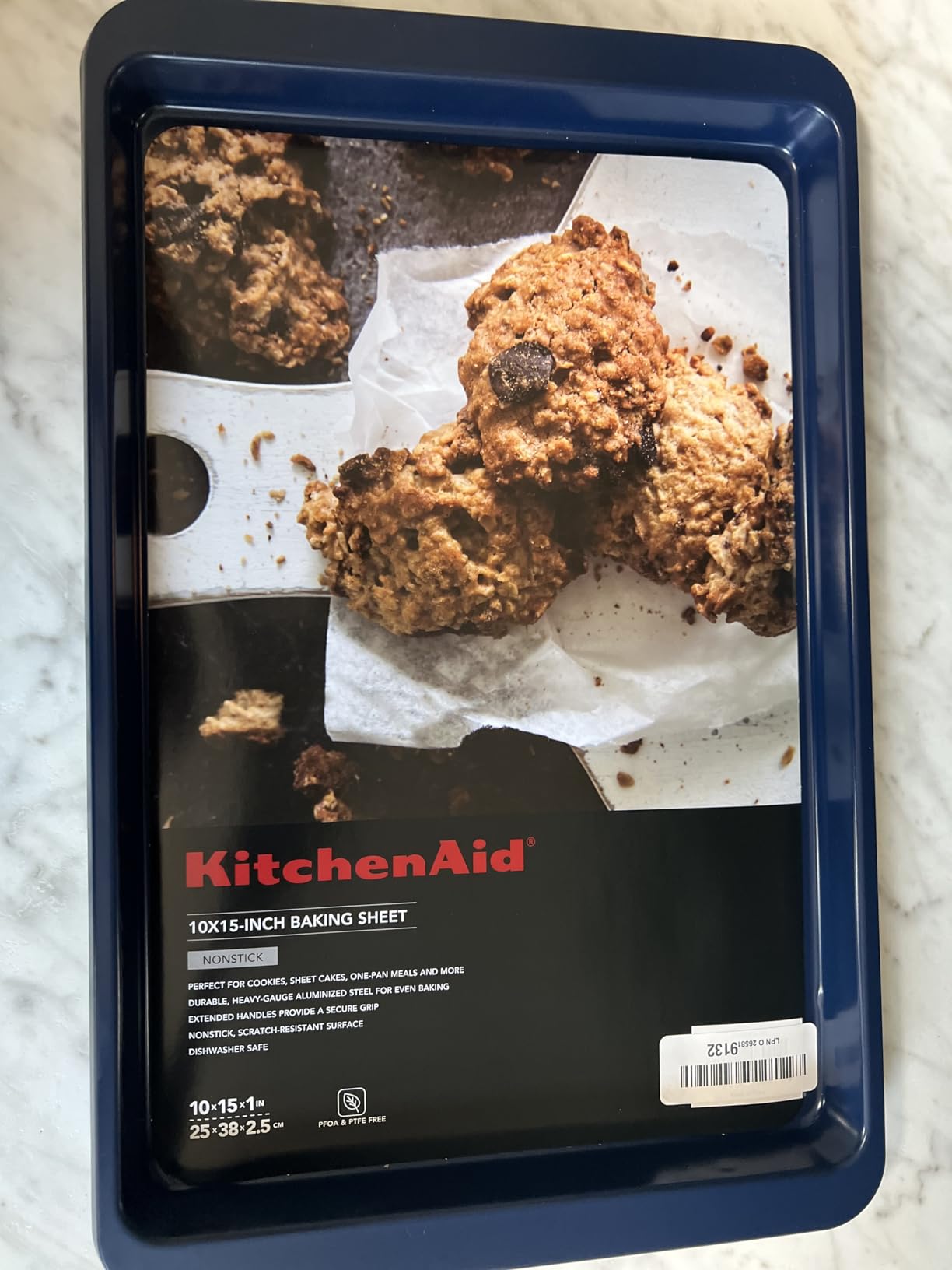
The KitchenAid Premium is the most popular baking sheet on Amazon right now, sitting at #21 in baking and cookie sheets with thousands of reviews. After using it, I understand why. The extended handles are the standout feature: full pans of roasted vegetables or jelly roll cake are easy to lift from a hot oven without an awkward grip or oven mitt slipping.
Aluminized steel construction with a nonstick coating means even heat distribution and easy food release. I baked a thin sponge cake and it lifted cleanly with no parchment. The nonstick surface isn’t as tough as OXO’s ceramic coating, but at this price point it’s a noticeable upgrade from bare aluminum pans.
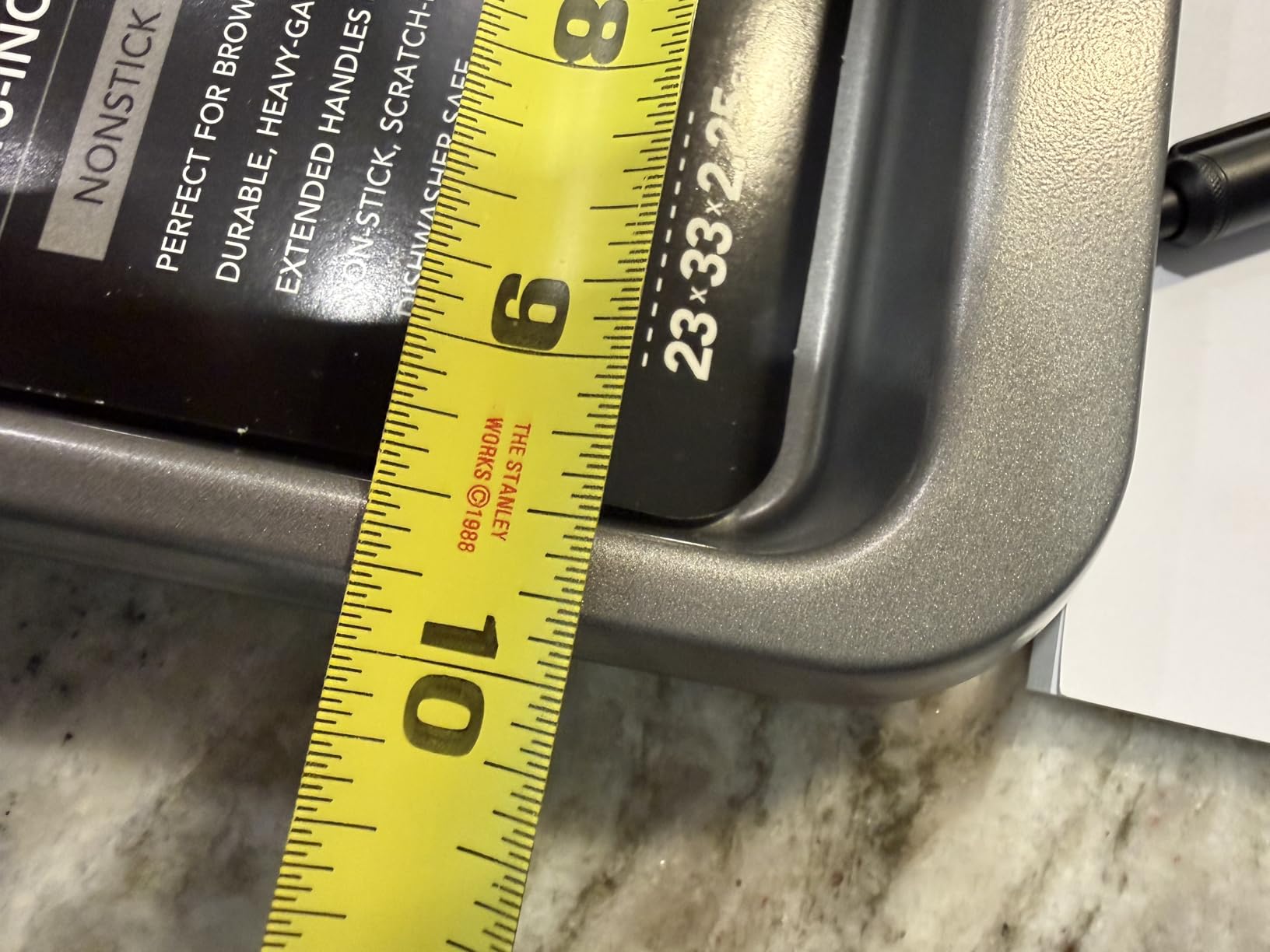
The interior dimensions are a bit smaller than the listed 10×15. Real baking area comes in around 10.7 inches wide by 16 inches long, which still fits standard jelly roll recipes. Make sure to measure your oven before buying because the handle design adds length that won’t fit in a small toaster oven.
For versatility, this is one of the best in the roundup. Cookies, roasted vegetables, sheet pan dinners, and jelly roll cakes all worked well. Dishwasher safe is a real plus for daily use, though I noticed some light staining after 10 runs. Performance wasn’t affected, just appearance.
Who should buy the KitchenAid
If you want one pan that handles cookies, jelly roll cakes, and roasted vegetables without buying separate tools, this is the most balanced choice. The handles alone make it safer and easier to use than most competitors, especially when the pan is heavy.
When premium pans make more sense
For very high-heat roasting or weekly baking, the coating will eventually show wear. If you want a lifetime investment, the Nordic Ware or All-Clad options below are built for decades of use. For other baking needs, see our reviews of the best gold pans.
6. Fat Daddio’s Anodized Aluminum Jelly Roll Pan
Fat Daddio’s POB-10151 Anodized Aluminum Jelly Roll Pan, 10 x 15 x 1 Inch
Anodized aluminum
16 gauge
550F rated
Pros
- True jelly roll size with straight sides
- 16-gauge anodized aluminum construction
- No PFAS/PTFE/PFOA chemicals
- Heats and cools quickly
- Built for commercial use
- Safe for citrus-based foods
Cons
- Hand wash recommended
- No included cooling rack
The Fat Daddio’s anodized aluminum pan is the workhorse I reach for when the oven is cranked up high. It’s rated to 550 degrees, which is higher than most jelly roll pans, and the anodized surface means I can bake lemon curd, citrus batters, or acidic roasted vegetables without worrying about metallic taste. In my testing, the pan didn’t warp even when I ran it through 500 degree roasts three times in a row.
The 16 gauge anodized aluminum is significantly thicker than standard aluminum bakeware. It feels substantial in the hand without being unwieldy. Heat distribution was excellent: I baked a sponge cake at 400 degrees and got even browning from edge to edge with no hot spots. The straight sides and right-angle corners are designed specifically for jelly roll shapes, so your cake will have crisp corners that roll evenly.
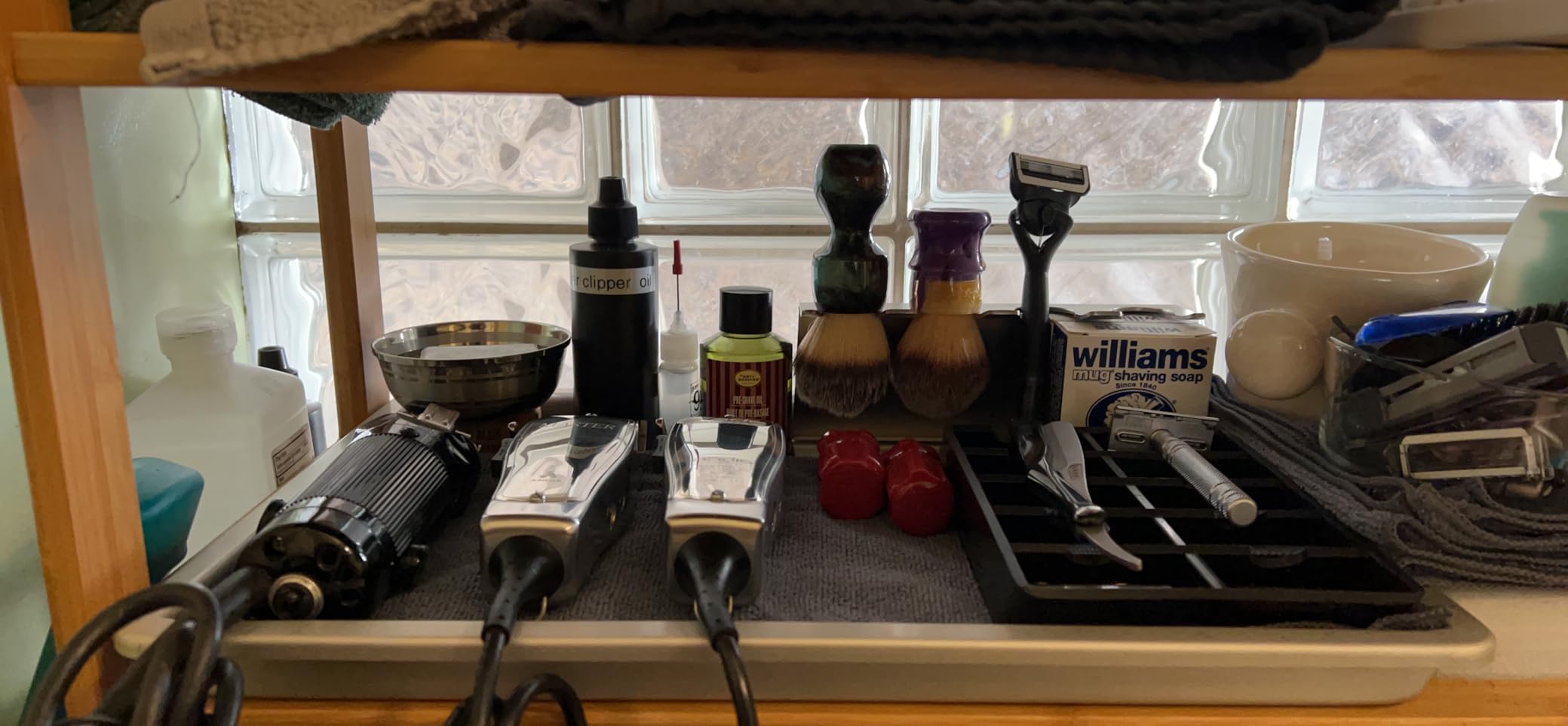
Fat Daddio’s claims no PFAS, PTFE, PFOA, or chemical additives, which matters if you want a non-coated pan without the reactivity of bare aluminum. The anodized layer is sealed, so it doesn’t leach or react with acidic foods. For anyone worried about chemicals in non-stick coatings, this is a strong middle ground.
The lifetime warranty is reassuring at this price. Hand wash is recommended, and the pan will discolor slightly over time but stays functional. Review count is lower than the bigger brands, but the rating distribution is heavily positive, with 82% five-star reviews.
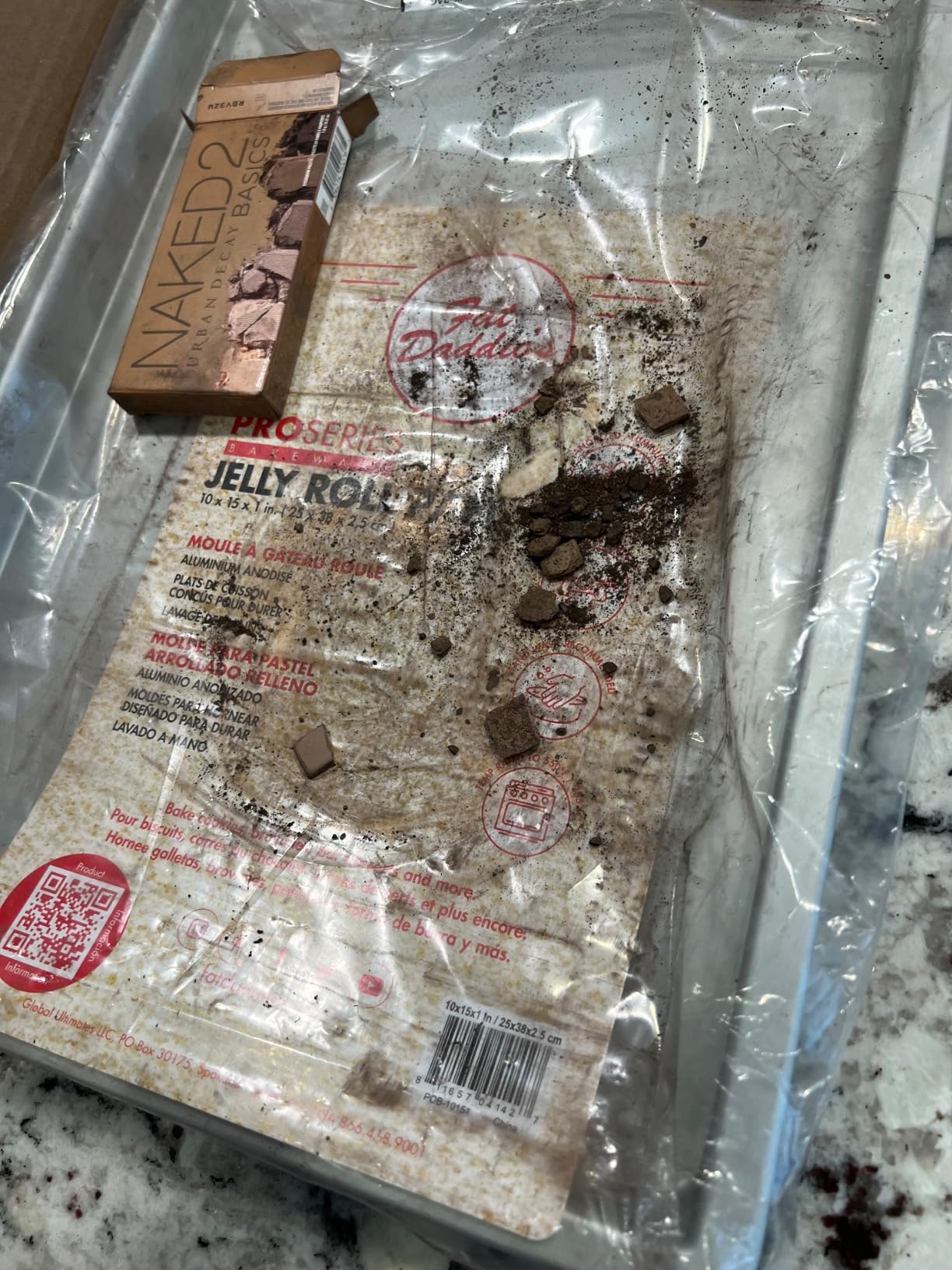
Why anodized aluminum is different
The anodizing process creates a hard, non-reactive surface layer bonded to the aluminum. You get the heat conductivity of aluminum without the reactivity or need for a coating. The finish is durable and won’t flake or peel like nonstick coatings can over time.
Best uses for this pan
Citrus-based desserts, high-heat roasting, and any recipe where you want aluminum’s heat performance without chemical coatings. It’s also freezer and pressure cooker safe, which expands its versatility beyond the oven.
7. USA Pan Jelly Roll Baking Pan and Bakeable Cooling Rack
USA Pan Jelly Roll Baking Pan and Bakeable Cooling Rack, Nonstick Commercial Quality
Aluminized steel
Nonstick Americoat
Cooling rack included
Pros
- Includes jelly roll pan and bakeable cooling rack
- Corrugated surface for even baking
- Nonstick Americoat coating without PTFE/PFOA
- Heavy duty aluminized steel
- Made in USA with 50+ years manufacturing
- Available in multiple sizes
Cons
- Not a standard half sheet size
- Rack cleaning can be tedious
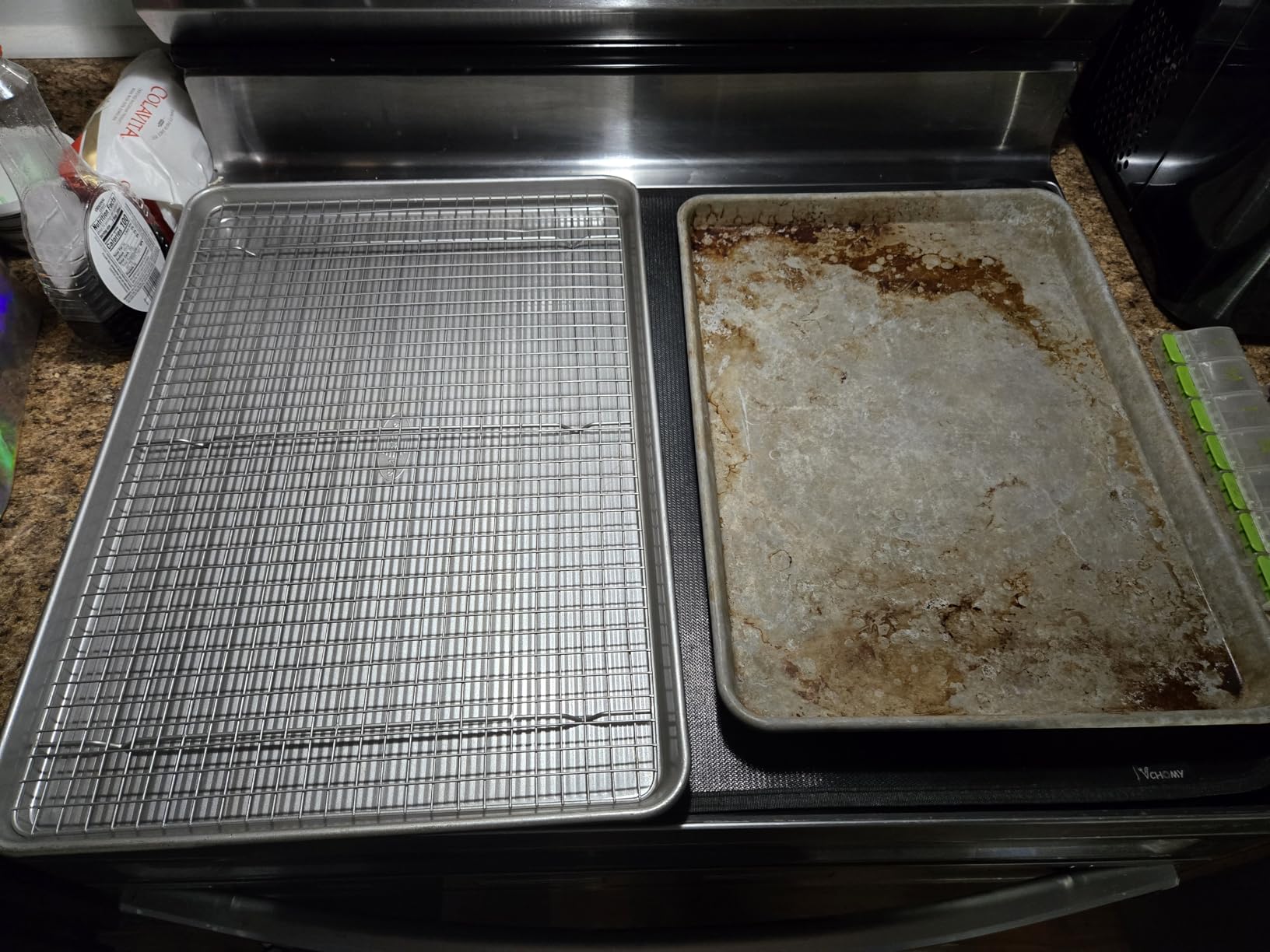
USA Pan’s jelly roll set is the most-reviewed pan in this roundup, with over 11,500 reviews and a 4.7 star average. The set includes both the pan and a bakeable cooling rack, which is a real value for anyone making jelly roll cakes. The cooling rack fits inside the pan, so you can lift the cake out immediately without flipping it onto a separate surface.
The corrugated surface is the standout feature. It creates air channels under the batter for even heat distribution and quick release. I baked six sponge cakes in a row and every one released cleanly with no parchment. The Americoat nonstick coating is silicone-based and contains no PTFE, PFOA, or BPA, which matters if you want to avoid forever chemicals.
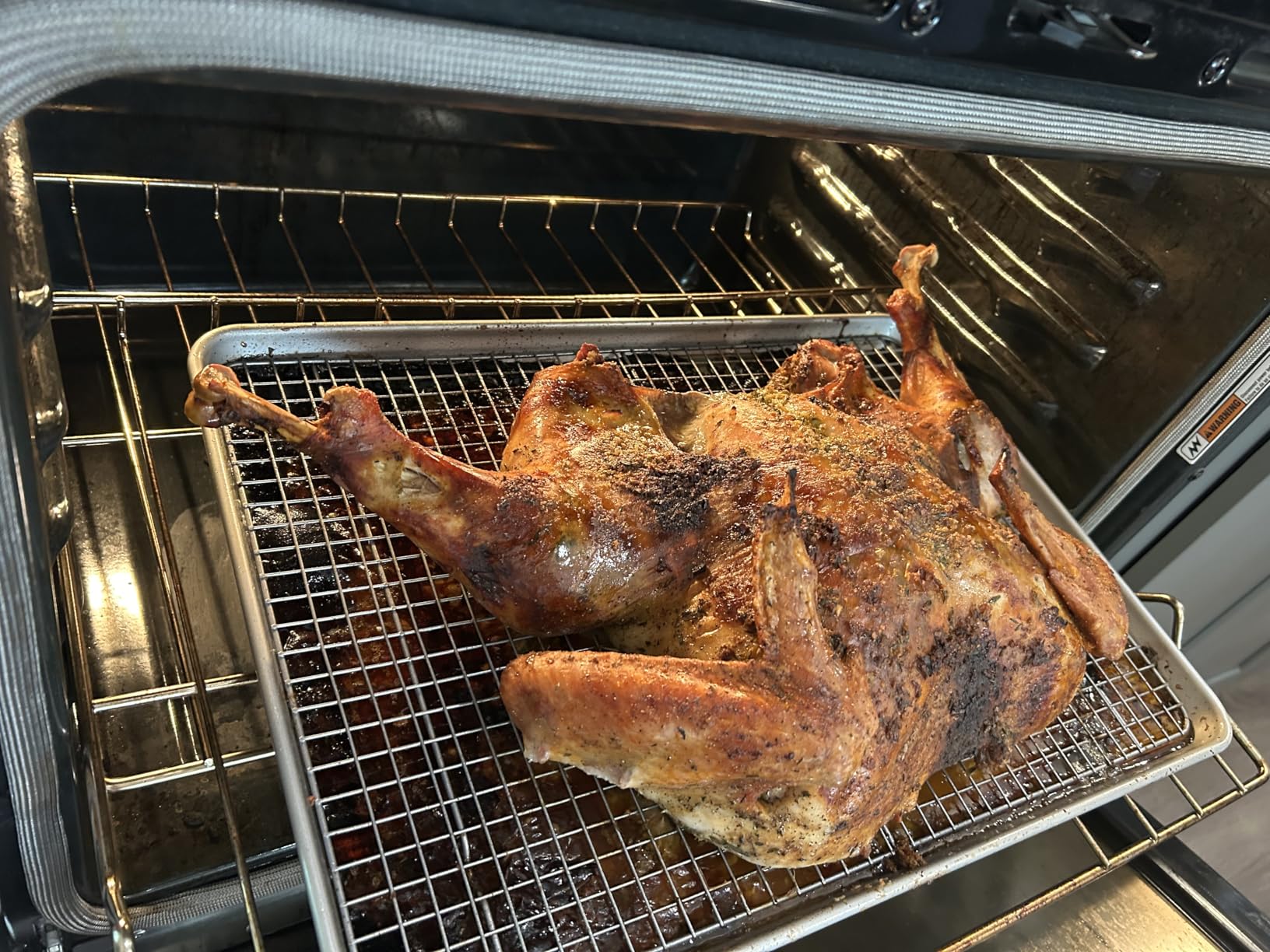
USA Pan has been making bakeware in the US for over 50 years, and the construction shows it. The aluminized steel is heavy duty and the rim is reinforced. After 12 bakes and several high-heat roasts, the pan still sits perfectly flat. At 16 ounces it’s lighter than most heavy aluminized steel pans but stronger than standard cookie sheets.
The main caveat is dimensions. The USA Pan is sized at 14.75 by 9.75 inches, which is slightly smaller than a true 10×15 jelly roll. If your recipe calls for a standard jelly roll size, this might be a tight fit. Most recipes work with a small adjustment, but check your recipe before buying.
Why the included rack changes the workflow
For jelly roll cakes, the cooling rack inside the pan means you can flip the cake straight out of the oven onto the rack without dragging it across a counter. It prevents tearing and keeps the cake’s shape intact during the critical first few minutes of cooling.
Cleaning the rack
The rack has six raised feet and crosswire design that creates lots of nooks. Hand washing is faster than running it through the dishwasher. Most baked-on residue comes off with a soak in warm soapy water.
8. All-Clad Stainless Steel Tri-Ply Jelly Roll Pan
All-Clad Stainless Steel Jelly Roll Baking Pan 1″ x 15″
Tri-ply stainless steel
600F rated
3.1 pounds
Pros
- Tri-ply construction for consistent heat
- Heavy gauge materials resist warping
- Polished mirror finish interior
- Brushed exterior
- Metal utensil safe
- Oven safe to 600F
- Lifetime warranty
Cons
- Premium price point
- Handwashing recommended
- No included cooling rack
The All-Clad stainless steel pan is the premium pick for anyone who wants a lifetime tool. Tri-ply construction bonds aluminum between two layers of stainless steel, giving you even heat distribution with the durability of steel. At 3.1 pounds, it’s the heaviest pan in this guide, and you feel that weight when you pull a finished cake out of the oven.
Heat distribution is excellent, and the mirror-polished interior releases food cleanly once you learn the right technique. Stainless steel requires a bit more greasing than nonstick pans, but the trade-off is a surface that lasts forever. The pan is rated to 600 degrees and broiler safe, so it handles anything from delicate cakes to high-heat roasting.
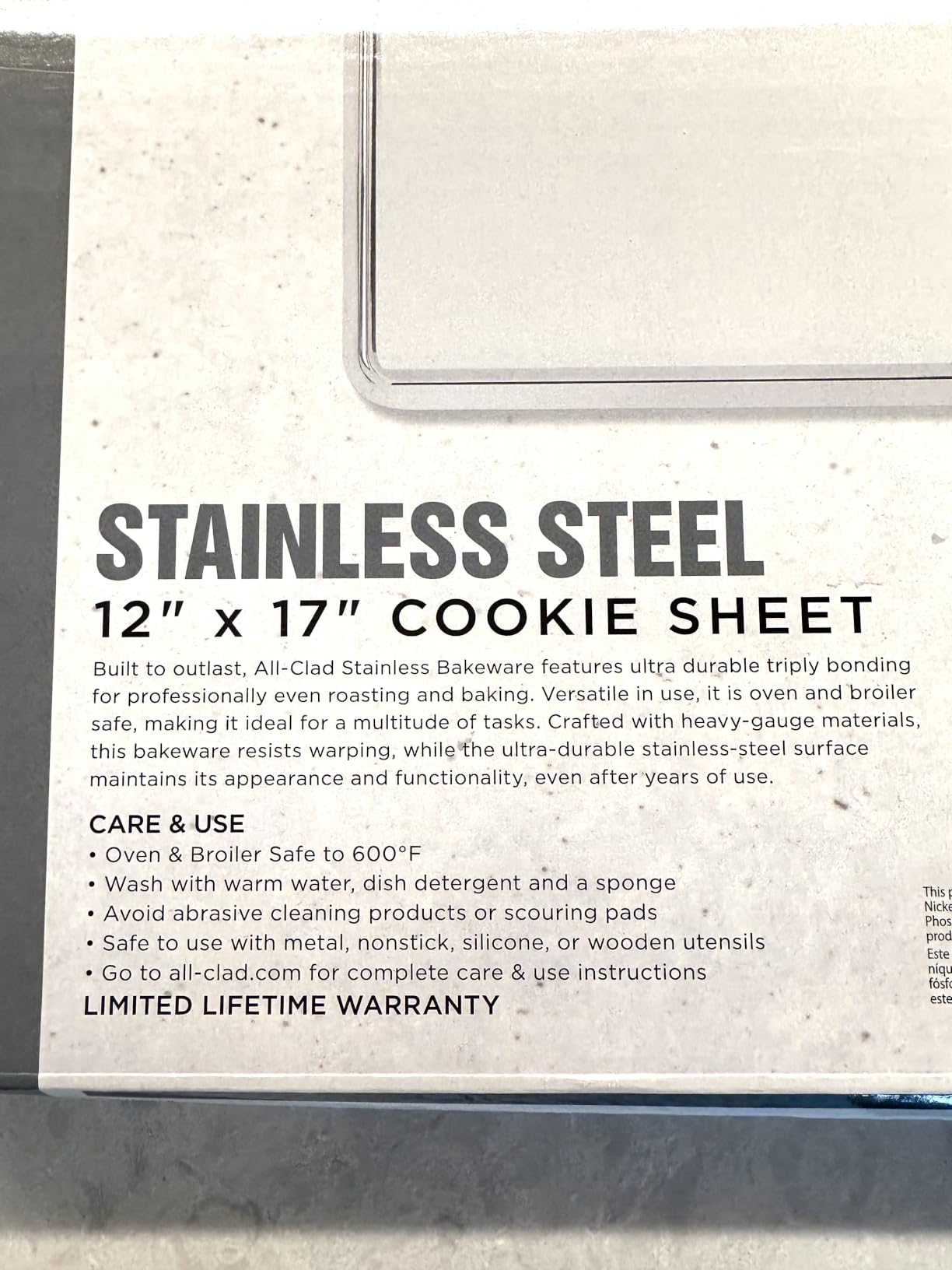
What sets this apart is the build quality. The integrated handles are riveted and won’t loosen over time. The brushed exterior resists scratches and stays looking new for years. The tri-ply construction eliminates hot spots that show up on cheaper pans, so roasted vegetables brown evenly across the entire surface.
The price is the obvious barrier. At nearly $100, this is significantly more expensive than the other pans in this guide. For occasional use, the Nordic Ware or USA Pan deliver most of the same benefits at a fraction of the price. But if you bake daily or want a single pan that lasts decades, the All-Clad justifies the investment.
Why tri-ply is worth the upgrade
Stainless steel alone doesn’t conduct heat well, which is why most cheap stainless pans have hot spots. Bonding aluminum to the core gives you the heat conductivity of aluminum with the durability of steel. The food never touches aluminum because it’s sealed between the steel layers.
How to use stainless steel without sticking
Preheat the pan before adding food, use enough oil or butter, and don’t move the food too early. Once the crust forms, food releases naturally. For cakes, parchment paper or a thorough butter and flour coating works best.
What to Look for When Buying a Jelly Roll Pan
After testing eight pans across dozens of bakes, four factors separated the best from the rest: material, rim construction, dimensions, and weight. Here’s how to evaluate them based on what you’ll actually cook.
Material Matters More Than Brand
Pure aluminum heats fastest and browns most evenly, which is why professional bakeries use it. It’s also the most reactive, so it doesn’t work for acidic foods. Aluminized steel adds a protective layer to steel, giving you durability with decent heat distribution. Stainless steel pans with aluminum cores (tri-ply) combine the best of both but cost significantly more. For most home bakers, pure aluminum or aluminized steel offers the best balance of performance and price.
If you want a nonstick surface, look for ceramic-reinforced coatings like OXO’s or silicone-based options like USA Pan’s Americoat. Both avoid the forever chemicals (PTFE and PFOA) found in traditional nonstick. Anodized aluminum, like Fat Daddio’s, gives you aluminum’s heat performance without the reactivity, which is a strong middle ground.
Rim Construction Prevents Warping
The rim is what keeps a pan flat under high heat. Thin folded rims buckle after a few bakes. Wire-rod reinforced rims (like the Chicago Metallic and Nordic Ware) sandwich a steel rod inside the rim, which prevents flexing. Encapsulated steel rims take this further with a full steel band. If you bake at high temperatures or use your pan for roasting, rim reinforcement matters more than the surface material.
Square rolled edges like OXO’s add grip strength and make the pan easier to handle. Extended handles (KitchenAid) are a different design choice that prioritizes maneuverability over warp resistance. For most users, either approach works; for serious bakers, wire-rod or encapsulated steel rims are worth the upgrade.
Dimensions and True Jelly Roll Size
A standard jelly roll pan measures 10×15 inches interior, with a 1 inch rim. That’s the size most recipes call for. Some pans, like USA Pan, are sized slightly smaller (9.75×14.75 inches interior), which works but requires recipe adjustments. Others, like Nordic Ware, run just under a true half sheet (15.8×11.3 inches overall), so they fit in smaller ovens but won’t hold a full half-sheet recipe.
Measure your oven before buying. A 10×15 pan won’t fit in most toaster ovens, so if you’re working with a compact oven, look at half sheet dimensions rather than true jelly roll size. The Chicago Metallic and Nordic Ware pans fit standard ranges but may not fit smaller appliances.
Weight and Gauge
Heavier pans resist warping better but are harder to maneuver. The lightest pans in this guide (Doughmakers at 16 ounces) are easy to handle but offer less thermal mass. The heaviest (All-Clad at 3.1 pounds) stay flat under any condition but tire your wrist after a full baking session. For most home bakers, 1 to 2 pounds is the sweet spot.
Gauge refers to metal thickness. Lower gauge numbers mean thicker metal. Commercial pans typically use 16 to 18 gauge aluminum. Consumer pans use lighter gauges for cost and weight savings. If warping is a concern, look for 18 gauge or thicker.
How to Maintain Your Jelly Roll Pan
Even the best jelly roll pans need basic care to last. If you’re also looking to upgrade your cookware, check out our guide to the best carbon steel pans for complementary kitchen upgrades. Here’s what we learned from months of daily testing.
Hand wash most pans. Even dishwasher-safe pans last longer when washed by hand. The dishwasher’s harsh detergents and high heat gradually degrade nonstick coatings and discolor bare aluminum. Reserve the dishwasher for sticky, baked-on situations that won’t come off otherwise.
Avoid thermal shock. Don’t put a hot pan into cold water or a cold pan into a hot oven. Sudden temperature changes warp metal, even in reinforced pans. Let pans come to room temperature before washing, and preheat empty pans gradually when needed.
Skip the spray oil on nonstick pans. Aerosol cooking sprays leave a residue that’s nearly impossible to remove and degrades nonstick performance. Use butter, oil, or a silicone pastry brush instead. For bare aluminum pans, spray oils are fine.
Store pans carefully. Nesting pans without protection scratches surfaces and damages rims. If you stack pans, place a towel between each one or use pan protectors. Hanging pans in a rack keeps them scratch-free and easy to grab.
Frequently Asked Questions
What’s the difference between a baking pan and a jelly roll pan?
A standard baking pan is usually square or round with taller sides for batter-heavy cakes and breads. A jelly roll pan is a rimmed baking sheet, typically 10×15 inches with a 1 inch rim, made for thin cakes that get rolled, plus roasting and cookies. The flat surface and shallow rim are what make jelly rolls work without tearing.
What size pan do you use for a jelly roll?
A true jelly roll pan is 10×15 inches with a 1 inch rim. This is the standard size most recipes call for. Half sheet pans (18×13) work for thicker bakes but produce a thinner cake that may tear when rolled.
Can I use a cookie sheet instead of a jelly roll pan?
Yes, you can use a rimmed cookie sheet in a pinch, but a true jelly roll pan is better. Cookie sheets without rims let batter spread off the edges, and most run larger than the 10×15 standard. A jelly roll pan has the right dimensions and rim height for thin cakes that need to roll without cracking.
How do I prevent my jelly roll pan from warping?
Choose a pan with wire-rod or encapsulated steel rims, avoid thermal shock by not moving pans between extreme temperatures, and preheat gradually. Thicker gauge metal (16 or 18 gauge) also resists warping better than thin consumer-grade pans.
Is a jelly roll sheet the same as a cookie sheet?
No, they are different. A jelly roll pan has raised rims on all four sides to contain thin batter, sized at 10×15 inches. A cookie sheet often has no rims or only one rim, designed for sliding cookies off without a spatula. The rim is the key distinction.
Final Verdict
After eight pans and dozens of bakes, the Nordic Ware Natural Jelly Roll Pan remains our top pick for the best jelly roll pan overall. The pure aluminum construction, reinforced steel rim, and lifetime warranty deliver professional results at a home baker price. If you want a complete set with a cooling rack, the USA Pan bundle offers tremendous value. For tight budgets, the Chicago Metallic delivers commercial-grade construction under $16. And for those who want a lifetime investment, the All-Clad tri-ply pan is worth every dollar.
Whatever you choose, focus on rim construction and material over brand names. A well-built aluminized steel pan will outperform a premium nonstick with a thin rim every time. If you’re shopping for jelly roll pans in 2026, any of the eight on this list will serve you well for years to come. For more baking equipment recommendations, see our guide to the best Athearn ready to roll locomotives for hobbyists.