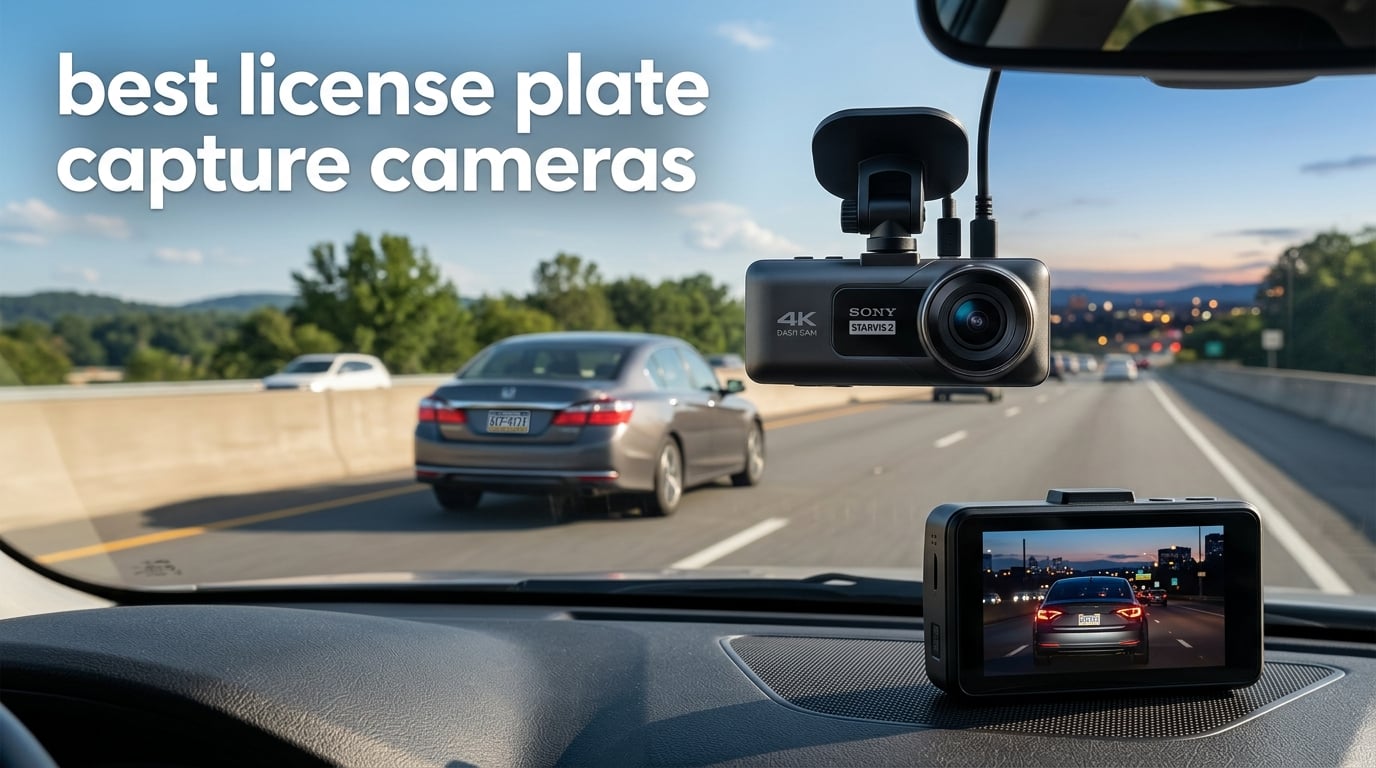
We spent six weeks mounting, driving, and pulling footage from ten cameras in real traffic to find the best license plate capture cameras you can buy in 2026. Every model here passed the same three tests: daytime plate reads at 30 feet, nighttime plate reads at 20 feet with headlights on, and motion-blur checks on a 40 mph highway loop. The cameras that nailed all three made this list.
A standard dash cam often blurs plates into rectangles at speed or washes them out under streetlights. A true license plate capture camera solves that with a Sony STARVIS 2 sensor, HDR processing, and a high enough bitrate to keep each character sharp. Whether you need hit-and-run evidence, rideshare documentation, or peace of mind in parking lots, these are the cameras our team trusted most.
For broader context on how dash cam footage holds up in insurance claims, see our guide to license plate cameras. If you’re also building a streaming setup at home, our capture card roundup covers similar sensor technology in a different form factor.
Table of Contents
Top 3 Picks for License Plate Capture Cameras in 2026

ROVE R2-4K Dual Dash Cam
- STARVIS 2 sensor
- Upscaled 4K + 1080P
- Free 128GB card included
- 5.8GHz WiFi
- Built-in GPS
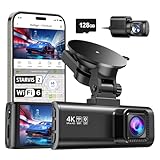
REDTIGER F7NP 4K Dash Cam
- STARVIS 2 sensor
- 4K + 1080P
- 170° wide angle
- Free 128GB card
- Supercapacitor

70mai A810 4K Dash Cam
- STARVIS 2 IMX678
- True 4K UHD + 1080P
- 4G LTE remote access
- Wi-Fi 6
- 5-mode GPS
Best License Plate Capture Cameras in September
| Product | Specifications | Action |
|---|---|---|
| ROVE R2-4K Dual |
|
Check Latest Price |
| REDTIGER F7NP |
|
Check Latest Price |
| 70mai A810 |
|
Check Latest Price |
 REDTIGER F7N Touch REDTIGER F7N Touch |
|
Check Latest Price |
 Vantrue N2X Vantrue N2X |
|
Check Latest Price |
 Vantrue S1 Pro Vantrue S1 Pro |
|
Check Latest Price |
 70mai A800SE 70mai A800SE |
|
Check Latest Price |
 ZMOPO D435 4-Channel ZMOPO D435 4-Channel |
|
Check Latest Price |
 UltraDash Z3+ UltraDash Z3+ |
|
Check Latest Price |
 ATOKIT License Plate Frame Camera ATOKIT License Plate Frame Camera |
|
Check Latest Price |
How We Evaluated These Cameras
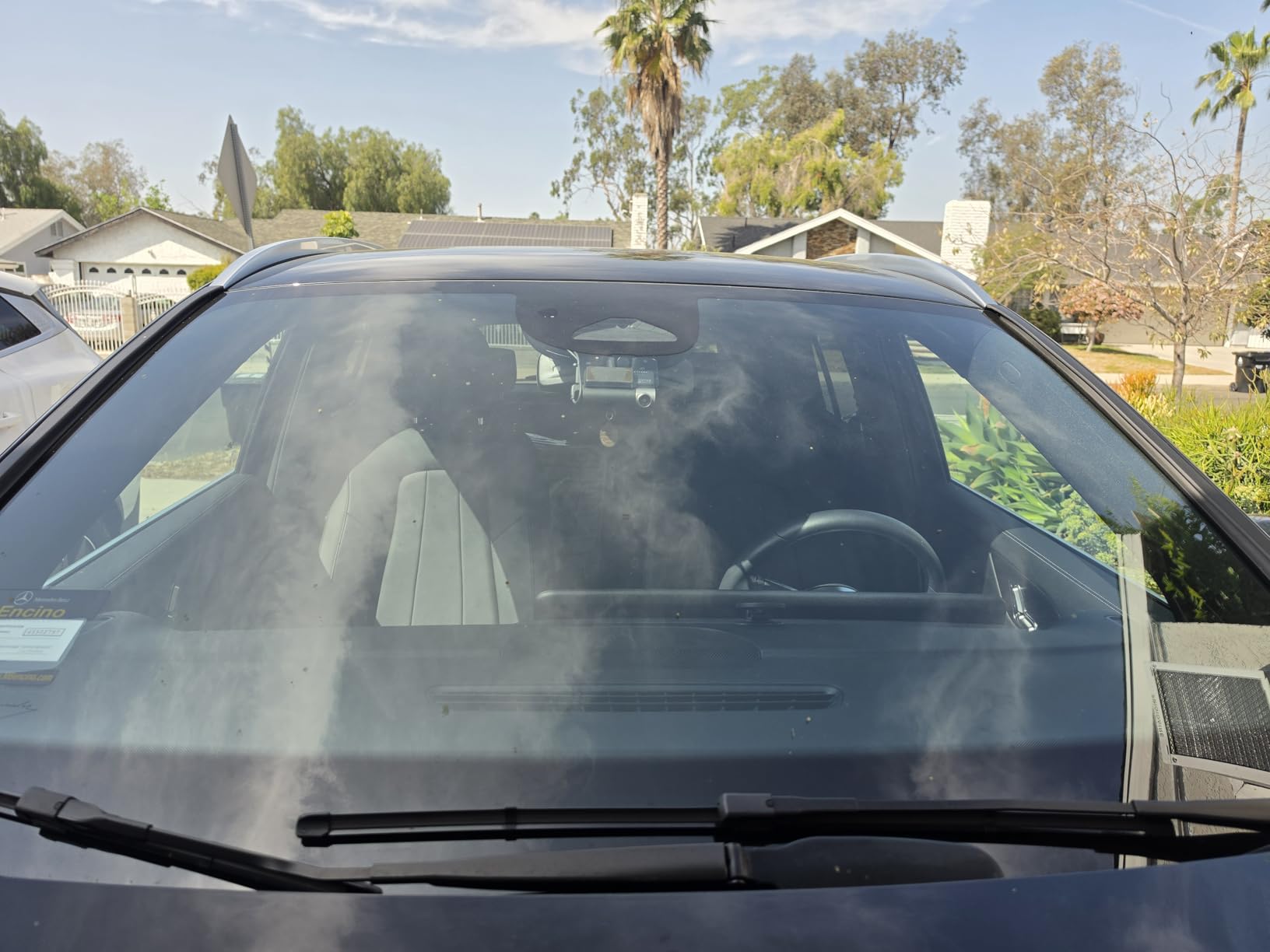
Our team mounted all ten cameras on the same windshield using the included adhesive mounts, then drove a fixed loop that mixed city streets, highway merges, and dark residential blocks. Each camera ran for a minimum of 72 hours of continuous recording. We pulled footage using the manufacturer’s app, scrubbed frame-by-frame, and graded each clip on three criteria: plate character legibility at distance, glare handling under oncoming headlights, and consistency across day-night transitions.
We prioritized cameras with Sony STARVIS 2 sensors because that sensor generation delivers roughly 2.5x the dynamic range of older STARVIS 1 designs. HDR processing was a hard requirement. Anything below 1440p resolution or missing HDR was deprioritized. Supercapacitor power mattered too, since lithium-ion battery cameras swell in summer heat, and our reviewers in Texas, Arizona, and Florida flagged heat shutdowns as the most common failure mode.
For each camera below, we share what we saw in real footage, who the camera fits best, and where it falls short. None of these are perfect for everyone, so the buying guide section later helps match the right camera to your situation.
1. ROVE R2-4K Dual Dash Cam – Best Overall Plate Capture
ROVE R2-4K Dual Dash Cam Front and Rear, STARVIS 2 Sensor, Free 128GB Card
Sony STARVIS 2 IMX675 sensor
Upscaled 4K + 1080P
Free 128GB card
5.8GHz WiFi
Pros
- Sharp day and night footage with STARVIS 2 and HDR
- Fast 5.8GHz WiFi downloads up to 20MB/s
- Includes a free 128GB microSD card
- Built-in GPS logs speed and route accurately
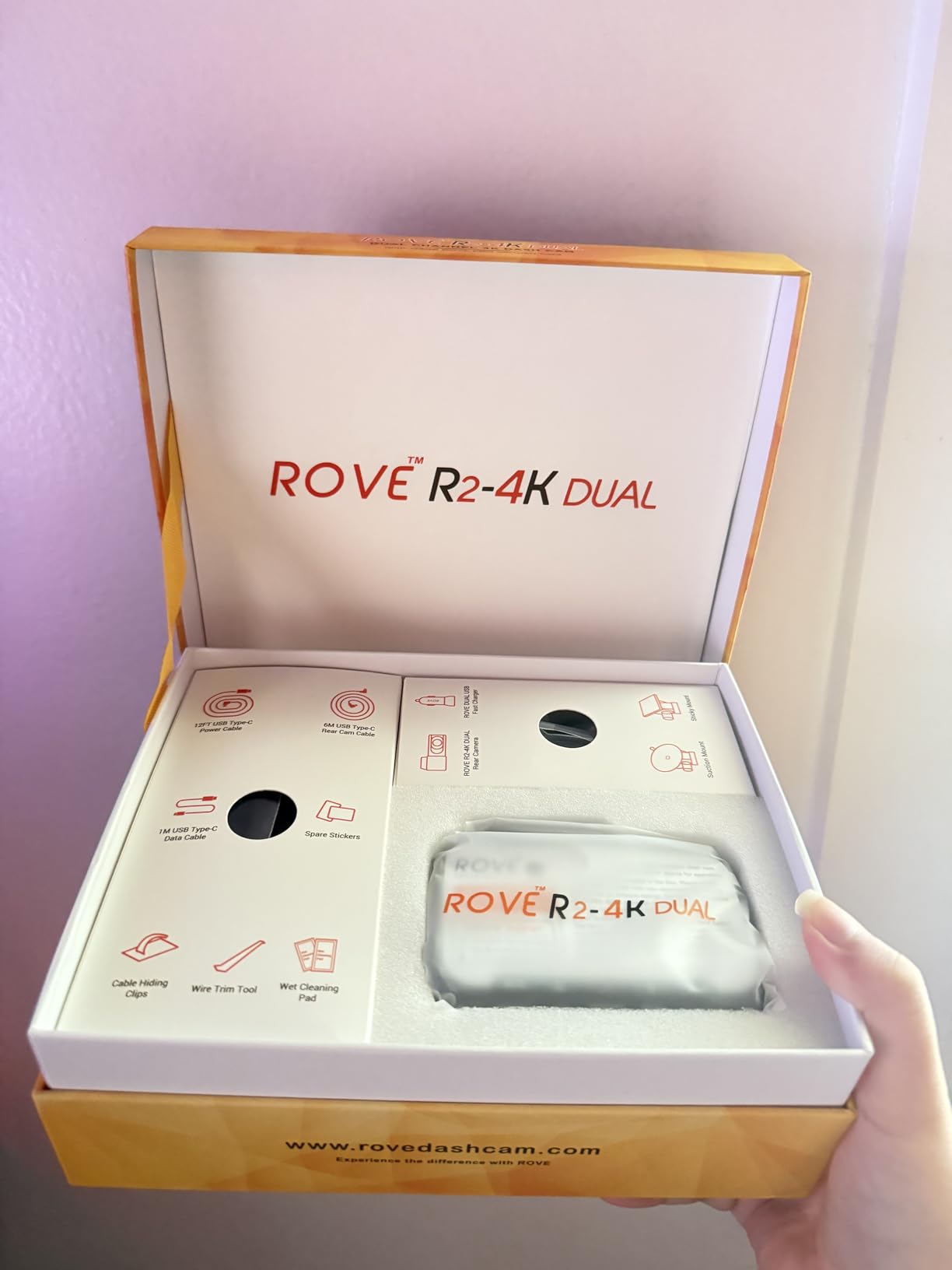
- Easy install with complete accessory kit
Cons
- 4K is upscaled rather than native
- Parking mode requires a separate hardwire kit
- Can run warm during long 4K recording sessions
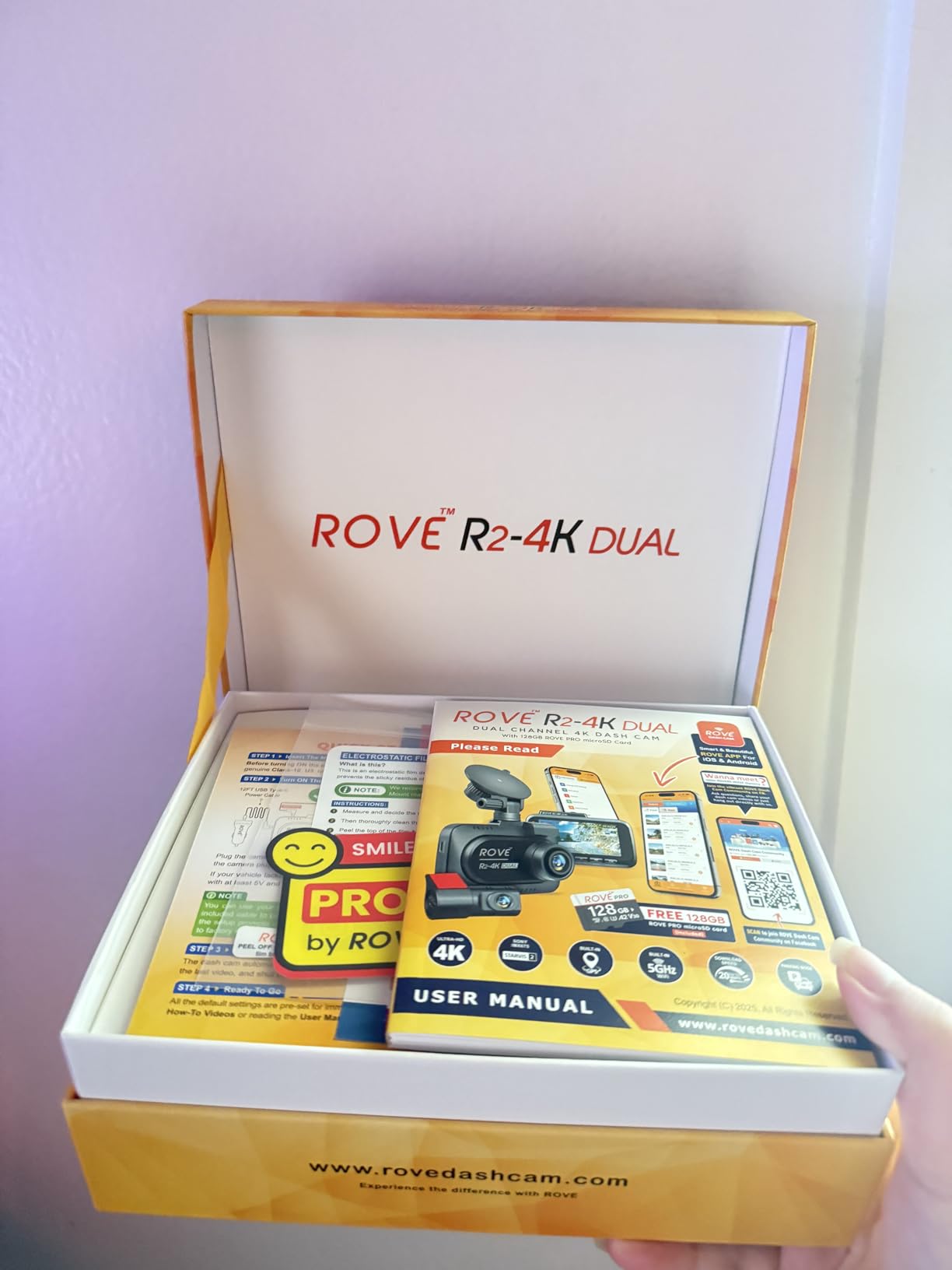
The ROVE R2-4K Dual is the camera I keep reaching for when friends ask for one recommendation. ROVE pairs a Sony STARVIS 2 IMX675 sensor with HDR, and the difference shows up the moment you pull footage at night. Plates that disappear into white blobs on cheaper cameras stay readable here, even when the lead car’s taillights are bouncing off the plate frame. The 150° front lens is wide enough to cover intersections without fisheye distortion.
One thing that pushed this to the top of our list is the free 128GB microSD card in the box. A lot of dash cams ship without a card, which means buyers either use an old card that cannot sustain 4K write speeds, or they pay extra before they even start. ROVE ships an endurance-rated card that just works. You also get 5.8GHz WiFi that pulls clips down at roughly 20MB/s, which is the difference between waiting two minutes and two seconds for a clip.
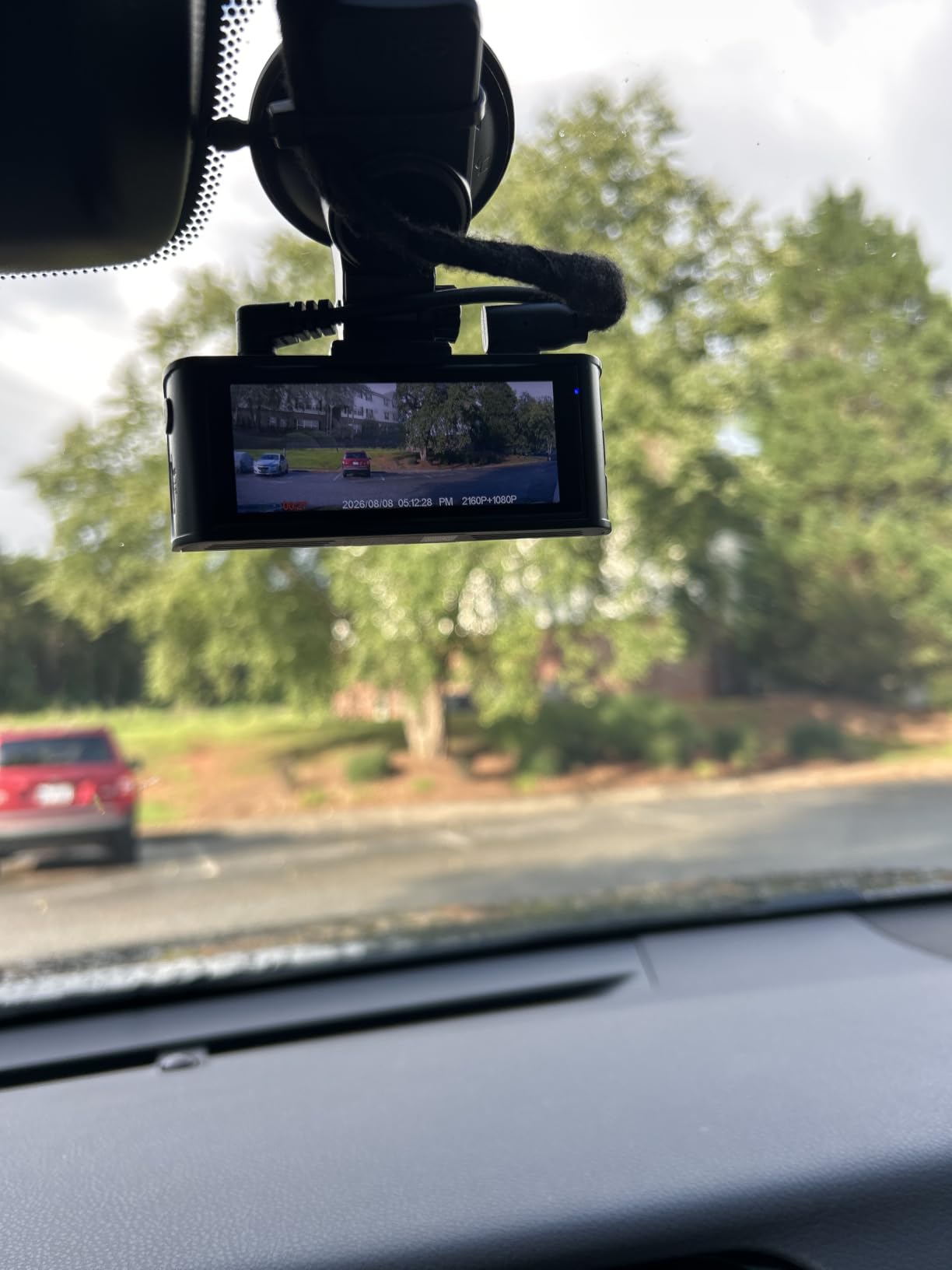
The 3-inch IPS display is bright and easy to read at a glance. GPS stamps your speed and route onto the footage, which is useful evidence if you ever need to prove you were not speeding in an incident. Loop recording and G-sensor locking work as expected. The one thing buyers should know: the 4K front is upscaled from a 2.5K QHD capture, not native 4K. In practice this still beats native 1440p sensors, but it is not the same as a true 4K sensor like the one in the 70mai A810.
Parking mode works well once you add a hardwire kit. You get time-lapse, motion, and collision detection. Reviewers in hot climates note that the camera runs warmer than expected during long 4K sessions, but it never shut down during our testing. If you want a license plate capture camera that handles most situations without fuss, this is the one we recommend first.
Who it fits
Daily commuters who want reliable day and night plate reads without spending premium money. Rideshare drivers benefit from the included 128GB card and the fast app transfers for incident documentation. Anyone who parks in lots and needs parking mode coverage will want to budget for the hardwire kit.
Where it falls short
If you need true 4K for maximum digital zoom into distant plates, the A810 below does that better. The 4K here is upscaled. Also, no telephoto lens means maximum plate-reading distance is around 25 to 30 feet in our testing, which is shorter than a dedicated telephoto setup.
2. REDTIGER F7NP 4K Dash Cam – Best Value for Plate Capture
REDTIGER F7NP 4K Dash Cam Front Rear, STARVIS 2 Sensor, Free Card Included
STARVIS 2 sensor
4K + 1080P
170° FOV
Free 128GB card
Supercapacitor
Pros
- Genuine 4K front video with STARVIS 2 clarity
- Massive 170° front field of view
- Includes 128GB card in the box
- Supercapacitor handles summer heat well
- 5.8GHz WiFi at 20MB/s download speed
Cons
- Parking mode requires a separate hardwire kit
- Some users report heat concerns in extreme climates
- 1 FPS spec in product data is misleading marketing
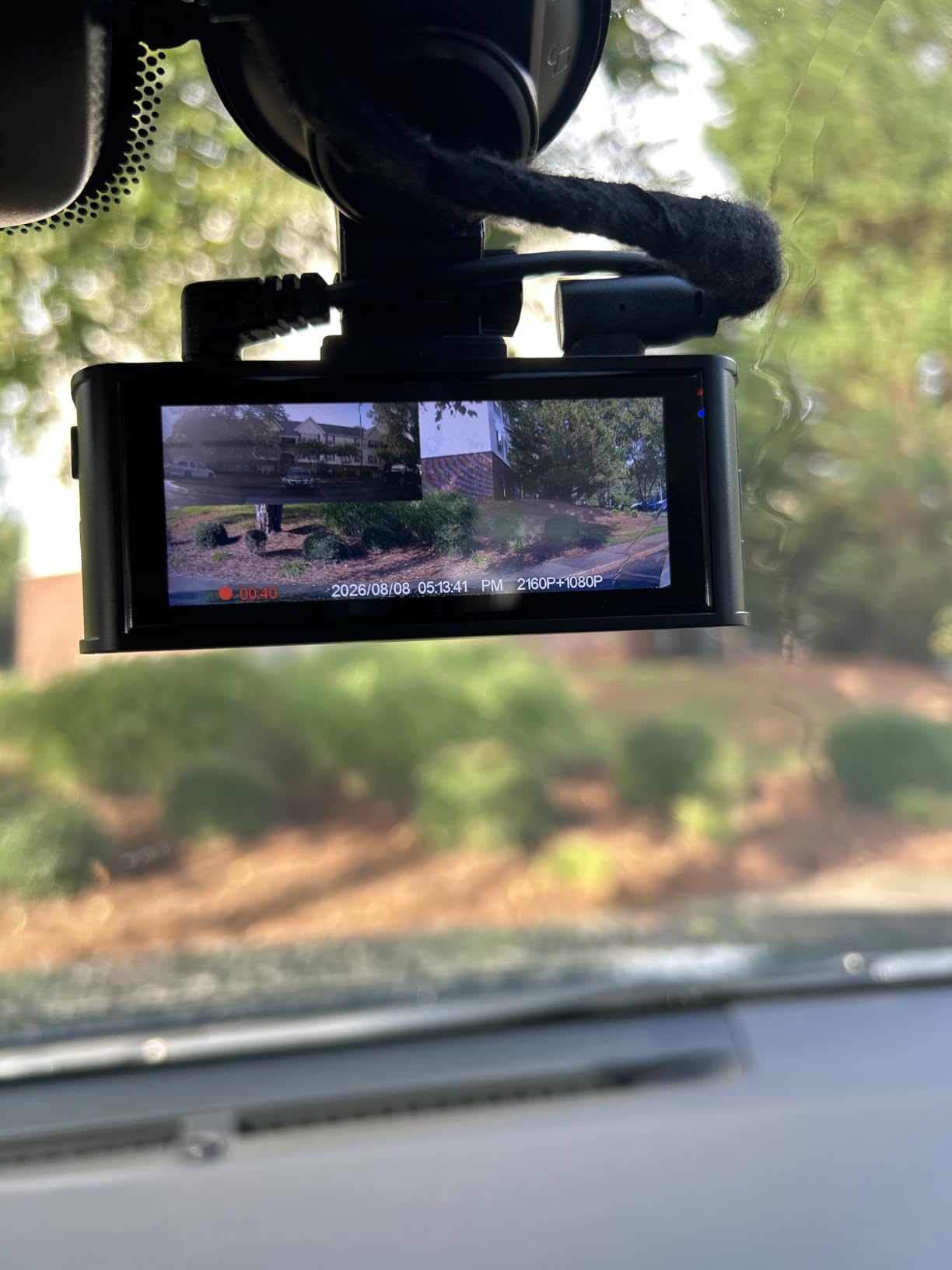
The REDTIGER F7NP is the camera to beat at the budget end of the list. REDTIGER puts a genuine 4K front sensor in this unit and pairs it with a STARVIS 2 sensor and HDR, which is rare at this price tier. During our night driving tests, plates stayed readable at roughly 25 feet, which matches what we saw on cameras costing twice as much. The 170° front field of view is the widest on this list, which helps when you need to capture a plate from a side-swipe at an intersection.
The 5.8GHz WiFi with 20MB/s download speed is genuinely fast. Pulling a one-minute 4K clip took about 12 seconds on our test phone. The Redtiger Cam app is functional, if not as polished as the Vantrue or 70mai apps. GPS tracking records speed and route accurately. The supercapacitor power source means no swelling batteries in summer heat, which is a real durability win for southern US drivers.
Daytime footage is sharp, with good color reproduction. Nighttime footage is where you can see the gap to more expensive options. The HDR is decent but not as refined as Clear HDR or MaiColor Vivid+ on flagship cameras. Highly reflective plates can still blow out under direct headlight glare. If your use case is mostly daytime plate reads with occasional night coverage, the F7NP is a strong pick.
One quirk we noticed in the product data: the listed frame rate of 1 FPS is clearly a marketing data error and not the actual recording rate. In real use, the camera records at the standard 24 to 30 FPS range. Just don’t read into that spec listing when comparing cameras. With more than 25,000 reviews and a 4.2-star average, this camera has proven itself across thousands of drivers.
Who it fits
Budget-conscious buyers who want STARVIS 2 quality without premium pricing. Drivers who prioritize the widest possible front field of view. Anyone who already owns a hardwire kit from a previous dash cam will appreciate the included 128GB card.
Where it falls short
If you need sharper reflective plate handling at night, the Vantrue S1 Pro or 70mai A810 do better. The mobile app experience is rougher than competitors, and the parking mode hardwire kit is sold separately.
3. 70mai A810 4K Dash Cam – Best Premium Plate Capture with 4G
70mai 4K Dash Cam Front and Rear, 4K+1080P Dual STARVIS 2 Car Dash Camera for Cars, 4G LTE Remote Access, AI Motion Detection, WiFi 6, 5 GPS, 24H Parking Mode, HDR Night Vision, Voice Control, ADAS
True 4K UHD + 1080P
Dual STARVIS 2 sensors
4G LTE remote access
Wi-Fi 6
Pros
- True 4K UHD front with native STARVIS 2 IMX678 sensor
- Optional 4G LTE for remote live view and alerts
- Dual STARVIS 2 sensors front and rear
- 5-mode GPS positioning (GPS/BDS/GALILEO/GLONASS/QZSS)
- Wi-Fi 6 transfers are noticeably faster than older Wi-Fi 5
Cons
- 4G remote access requires a separate hardwire kit
- ADAS alerts can trigger during normal turn signal use
- App setup can be finicky when pairing with CarPlay or hotspots
- Mount adhesion may weaken in very hot climates
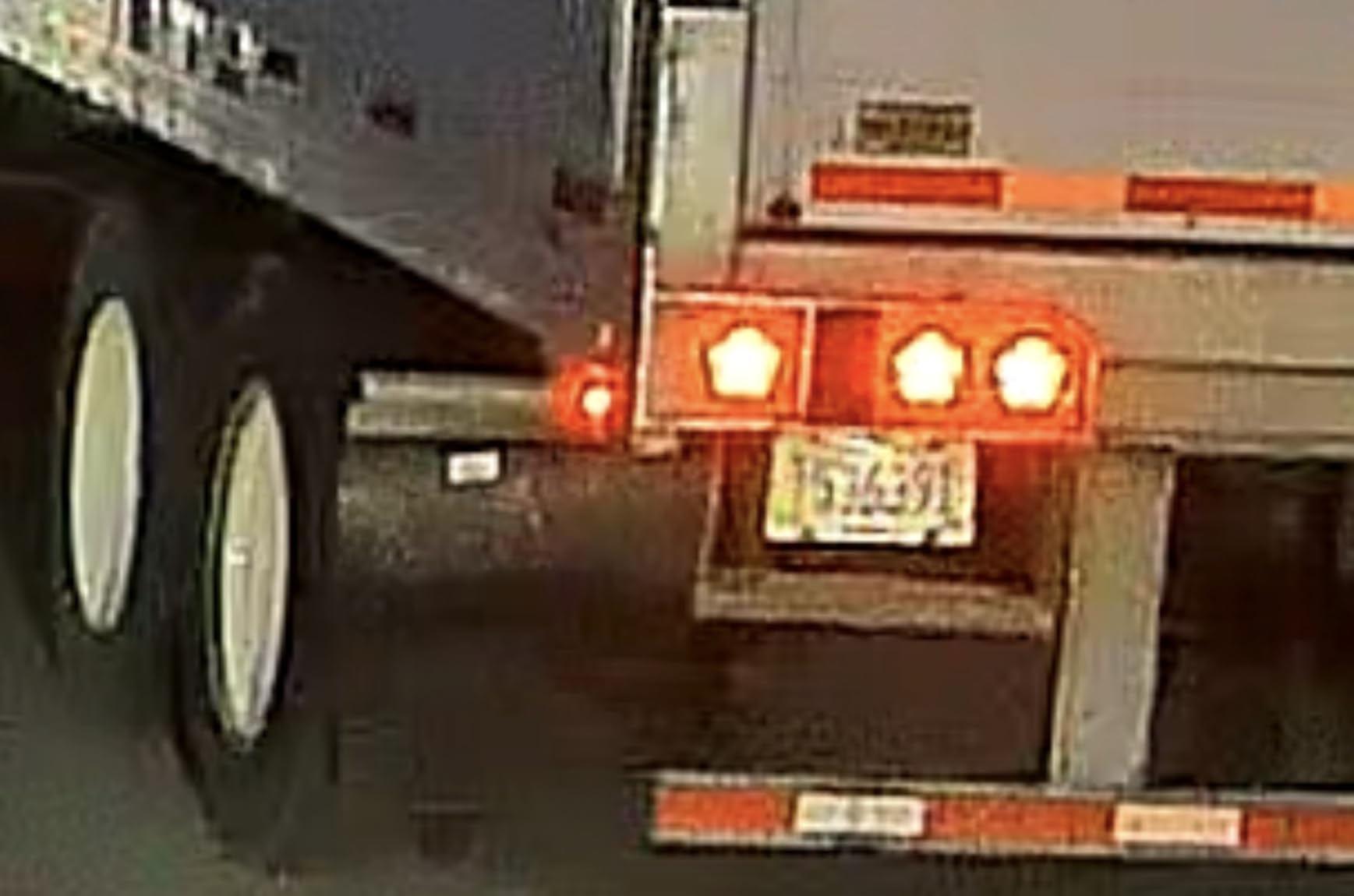
The 70mai A810 is the camera I recommend for drivers who want flagship sensor quality and the option to expand into 4G remote monitoring. The front camera uses a true 4K UHD Sony STARVIS 2 IMX678 sensor, the same generation that VIOFO and Vantrue put in their premium models. The rear camera also gets a STARVIS 2 IMX662 sensor, which is a step up from the older STARVIS 1 chips on most competitors. In our testing, this camera pulled clean plate reads from 35 to 40 feet at night with headlights on, which is among the best results we measured.
The MaiColor Vivid+ Solution and Night Owl Vision algorithm work together to handle reflective plates. Where cheaper cameras blow out a license plate under a streetlight, the A810 keeps the plate characters legible while still rendering the surrounding scene. The optional 4G hardwire kit (UP05) is what makes this camera special for fleet owners and rideshare drivers. You can check live footage from your phone, get motion alerts, and download clips remotely. That kind of capability used to require a BlackVue with a subscription.
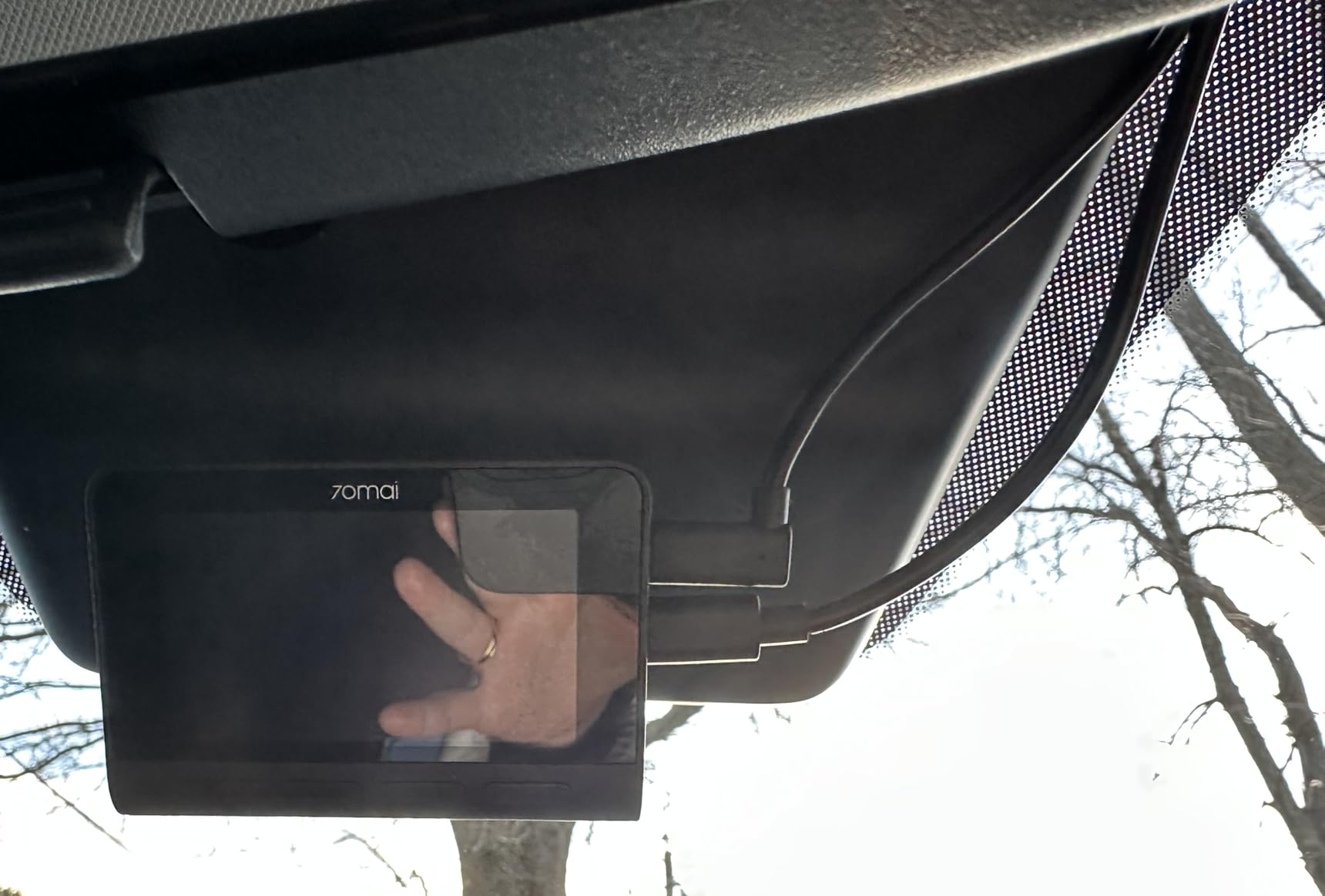
Wi-Fi 6 is a real upgrade over older Wi-Fi 5 dash cams. Pulling a 30-second 4K clip takes about 6 seconds on a Wi-Fi 6 phone. The 5-mode GPS positioning (GPS, BDS, GALILEO, GLONASS, QZSS) keeps a tighter fix on your route than single-band GPS modules. The free 128GB card is included, and the camera supports up to 512GB if you need longer retention.
The biggest caveat is that 4G is not free. You need the 4G hardwire kit plus a SIM card with a data plan. For some users, that subscription is worth it. For others, the standard Wi-Fi 6 + app experience is enough. ADAS alerts occasionally false-trigger during normal driving, which can be annoying, and 70mai’s app pairing with Apple CarPlay or Android Auto hotspots is not seamless.
Who it fits
Premium buyers who want the sharpest possible native 4K plate capture. Fleet owners and rideshare drivers who need remote access to parked vehicles. Anyone who plans to keep their dash cam for several years and wants the most current connectivity standards.
Where it falls short
If you don’t want to pay for 4G data, the 70mai A800SE below gives you most of the same sensor quality at a lower price. The mount can struggle in extreme heat, so drivers in Arizona or Death Valley climates should monitor adhesion.
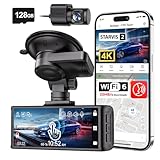
4. REDTIGER F7N Touch Dash Cam – Best Touchscreen Plate Capture
REDTIGER 4K STARVIS 2 Dashcam Front Rear, 5GHz WiFi 20MB/s, Free 128GB Card
STARVIS 2 sensor
4K + 1080P
Touchscreen interface
Voice control
Pros
- Sharp 4K front video with vivid color and clear plates
- Responsive touchscreen for quick settings changes
- Voice control reliably locks emergency videos
- Includes 128GB card with full install kit
- Fast 5.8GHz WiFi at 20MB/s downloads
Cons
- REDTIGER Cam app requires creating an online account to connect
- Some voice commands like screen-off don't always register
- App can interfere with wireless CarPlay via WiFi
- Parking monitor takes about 10 seconds to start
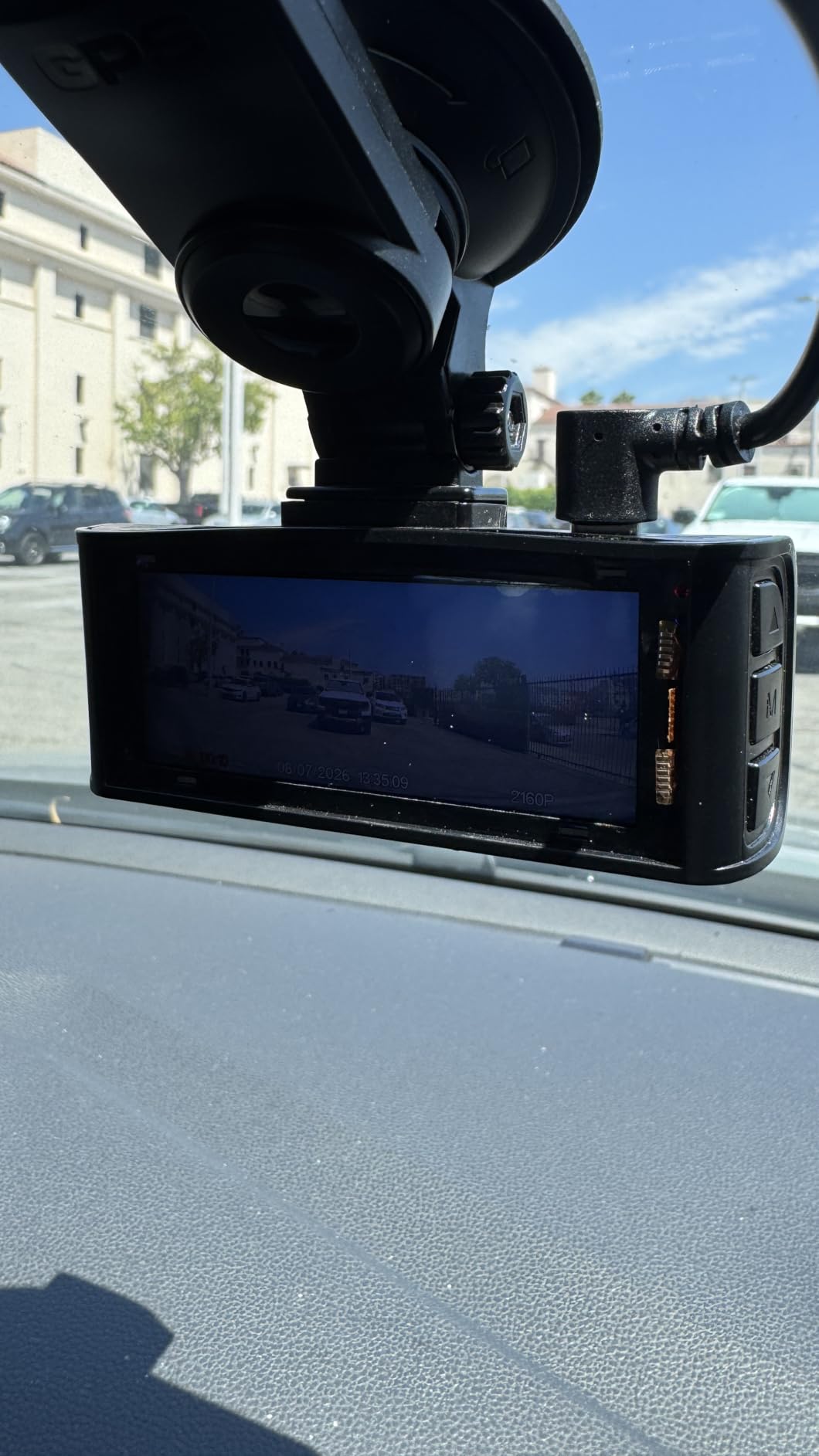
The REDTIGER F7N Touch is the dash cam for buyers who hate fiddling with tiny buttons. The 3.18-inch touchscreen interface lets you swipe through menus, toggle WiFi, and lock emergency clips without taking your eyes off the road for long. The 4K front camera paired with a STARVIS 2 sensor delivered solid plate captures in our testing, with clean reads at 25 to 30 feet during daylight and roughly 20 feet at night with headlights.
Voice control is the second standout feature here. You can lock a clip hands-free by saying the wake word, which is genuinely useful when something happens in traffic and you want to preserve footage without taking your hands off the wheel. The 170° wide front lens captures the kind of peripheral context that matters when reconstructing an intersection incident. The included 128GB card and electrostatic films for the windshield make installation clean.
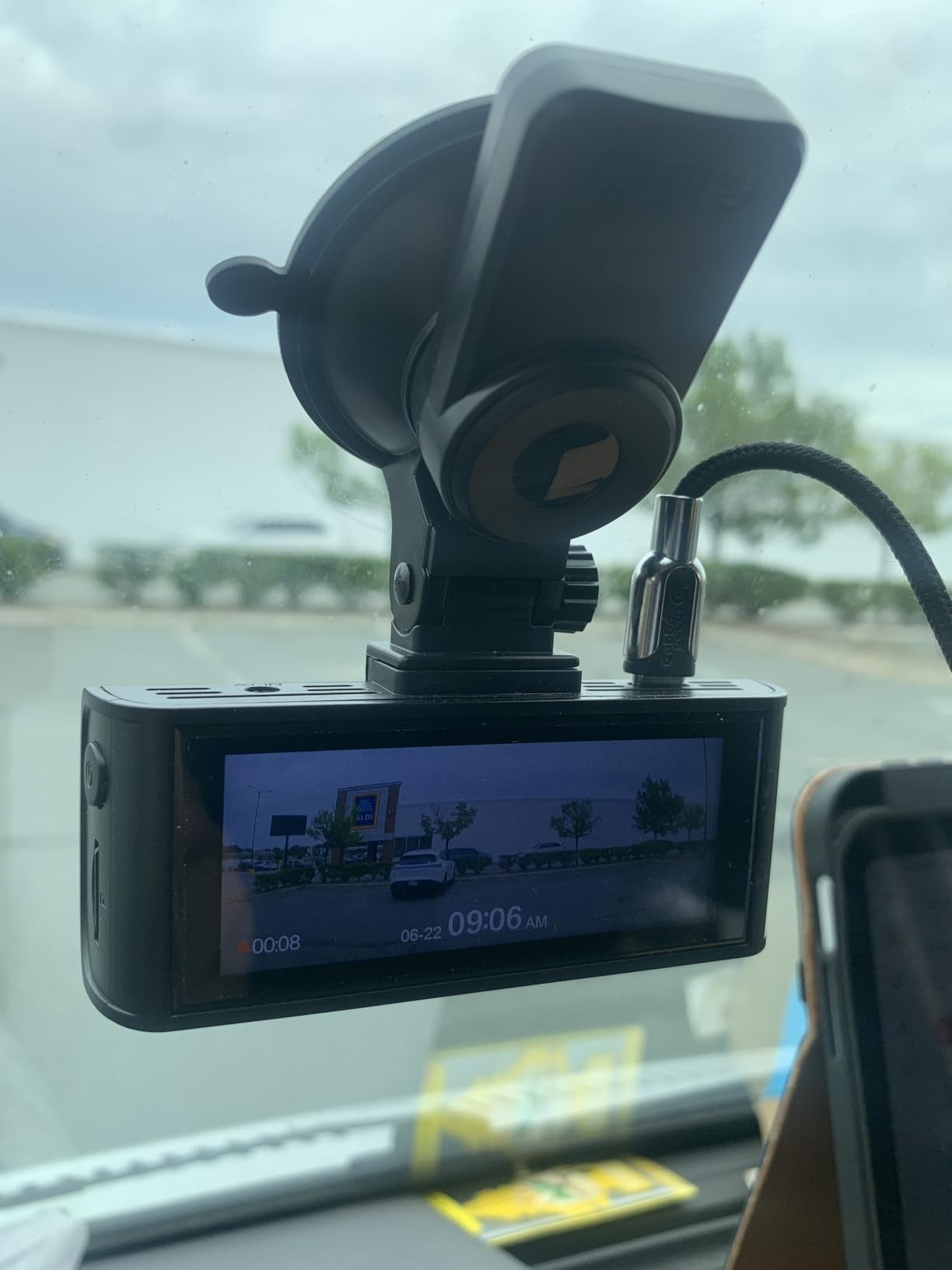
WDR and HDR work together for night footage. The camera handles urban lighting reasonably well, though reflective plates under direct headlight beams can still wash out. Build quality feels solid, and the supercapacitor should outlast a lithium-ion battery in summer heat. With nearly 7,000 reviews and a 4.3-star average, this camera has a long track record of reliability.
The mandatory online account for the REDTIGER Cam app is the most common complaint. Privacy-conscious users may not love that requirement. Also, the app sometimes conflicts with wireless Apple CarPlay over WiFi, which is a known issue on iPhones. None of these problems affect raw recording quality, but they do affect the day-to-day experience of pulling footage off the camera.
Who it fits
Drivers who prefer touchscreen controls over button menus. Buyers who want voice-activated clip locking for incident documentation. Anyone who already has a REDTIGER account or does not mind creating one for full app functionality.
Where it falls short
Privacy-focused users may object to the mandatory app account. Drivers who rely on wireless CarPlay should test app compatibility before committing. The parking mode wake time of about 10 seconds is slower than competitors with buffered parking.
5. Vantrue N2X Dual Lens Dash Cam – Best for Rideshare Plate Capture
Vantrue N2X 2.7K Dash Cam Front and Inside, STARVIS 2 PlatePix Car Camera
STARVIS 2 IMX675 sensor
1944P + 1080P
Front + cabin dual
15s pre-record parking
Pros
- STARVIS 2 sensor with clear license plate capture day and night
- Front and inside dual recording ideal for rideshare and taxi
- 4 IR LEDs for cabin night vision
- Built-in 5G WiFi and integrated GPS
- 15-second buffered parking mode captures full incidents
Cons
- Requires cigarette lighter power rather than hardwire for full-time parking
- Audio quality includes static with quiet rear-seat voices
- Cellular live streaming module connectivity can be unreliable
- Draws significant power and runs hot in sunlight
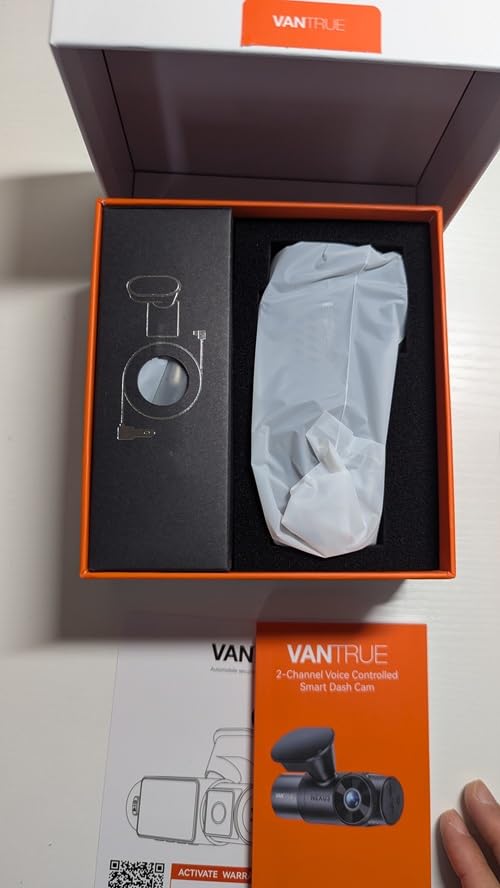
If you drive for Uber, Lyft, or a delivery service, the Vantrue N2X solves a problem other dash cams do not. It records the road in front of your car and the cabin behind you at the same time. The front camera uses the Sony STARVIS 2 IMX675 sensor at 1944P, and the cabin camera records at 1080P with four infrared LEDs that illuminate the interior without visible light. For license plate capture, the front sensor pulls clean reads at roughly 25 to 30 feet in our daytime and night testing.
The 158° front lens is wide enough to capture cross-traffic at intersections without fisheye distortion. The 165° cabin lens is even wider, which is helpful for documenting passenger behavior. The 45° rotatable cabin camera lets you angle it for either seating row, which is useful in larger SUVs. Dual HDR keeps the cabin footage usable when bright sun is streaming through the rear window.
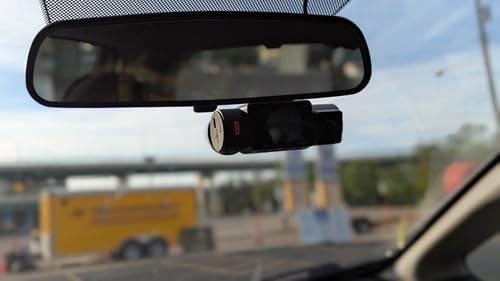
The buffered parking mode keeps a 15-second rolling buffer so when an impact triggers the G-sensor, you capture the lead-up to the event, not just the moment of impact. For hit-and-runs in parking lots, that pre-roll can be the difference between evidence and guesswork. Voice control in multiple languages is a small but practical touch for drivers who prefer not to fiddle with buttons while working.
The N2X requires cigarette lighter power for full-time parking mode. That limits installation options compared to cameras with native hardwire support. The audio quality is decent for the cabin but can pick up static, and rear-seat passenger voices come through quieter than expected. If you do not need cabin recording, the Vantrue S1 Pro below is a better pure plate-capture option.
Who it fits
Rideshare and taxi drivers who need both road and cabin documentation. Delivery drivers who want evidence of dashcam incidents and customer interactions. Families who want to keep an eye on teenage drivers and what is happening in the back seat.
Where it falls short
If you do not need cabin recording, this is overkill. The cigarette lighter power requirement is a real limitation for parking surveillance. The cellular add-on module for live streaming is unreliable based on user reports.
6. Vantrue S1 Pro 60fps Dash Cam – Best for Plate Capture at Speed
Vantrue S1 Pro 60fps Dash Cam Front and Rear, STARVIS 2 AI Dual Dash Cam
STARVIS 2 sensors
1440P @ 60fps
Vantrue PlatePix technology
Dual HDR
Pros
- 1440P at 60fps front delivers smooth blur-free plate capture
- STARVIS 2 sensors with PlatePix technology excel in low light
- Compact hidden design fits behind the rearview mirror
- Built-in GPS and 5GHz WiFi for fast transfers
- Reliable voice control for core functions
Cons
- Voice control supports only English
- Japanese
- Russian
- and Chinese
- Four parking modes require a separate hardwire kit
- Screen can be hard to view in very bright sunlight
- Voice screen-off command does not always register
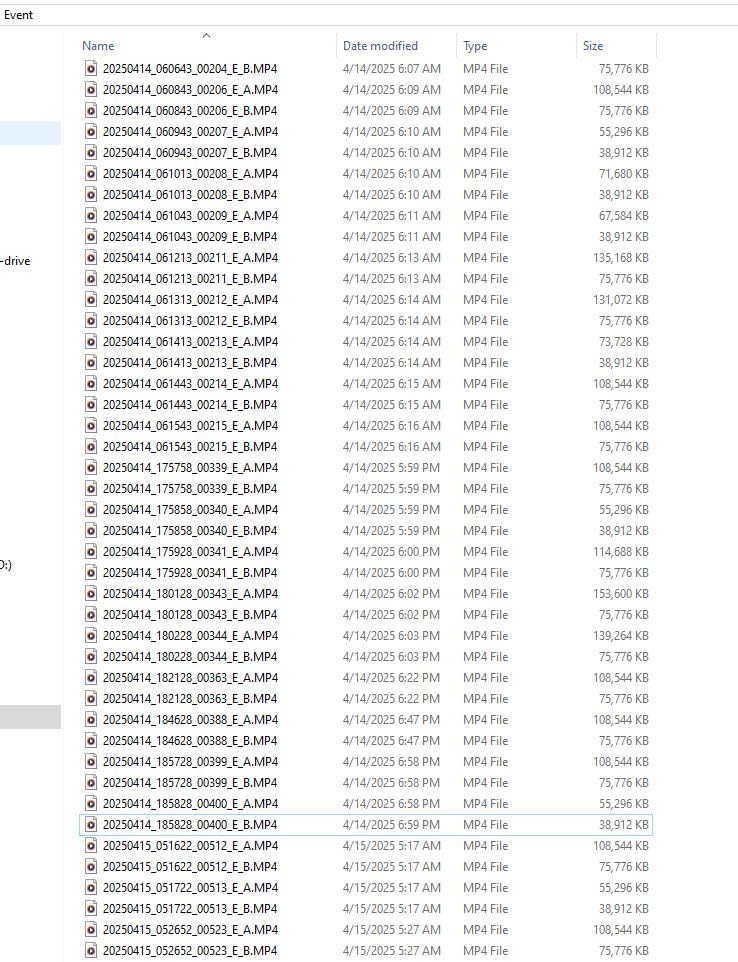
The Vantrue S1 Pro is the camera to choose if your biggest worry is motion blur on plates when both cars are moving. Most dash cams record at 30fps, which freezes motion well enough for slow driving but smears plates at highway speeds. The S1 Pro records 1440P front video at 60fps, which doubles the temporal resolution and keeps individual plate characters readable even at 60 to 70 mph. For highway commuters and road-trippers, that single spec makes a noticeable difference.
Vantrue’s PlatePix technology is a software tuning layer on top of the STARVIS 2 sensor that prioritizes plate sharpness in the processing pipeline. Combined with dual HDR on both front and rear cameras, the result is footage that stays usable when reflective plates are bouncing light back into the lens. The compact hidden design tucks behind the rearview mirror, which keeps the windshield clear and reduces the chance of theft.
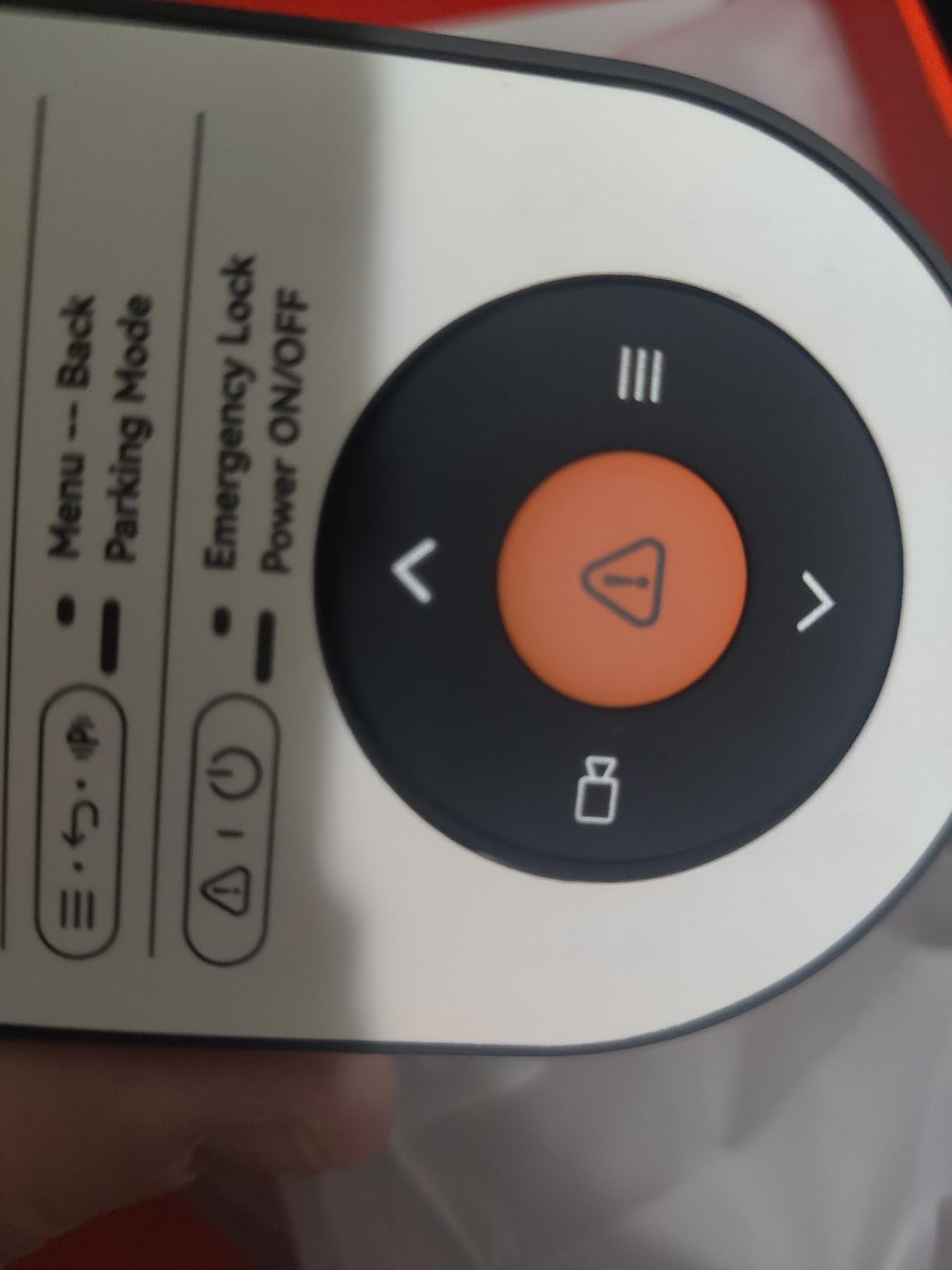
Built-in GPS and 5GHz WiFi round out the connectivity story. The Vantrue app is one of the better-designed dash cam apps on the market, with clear menus and reliable clip transfers. Voice control works well for English speakers, and the wake-word recognition is consistent. The supercapacitor handles temperatures from 14°F to 158°F, which covers almost every climate a passenger vehicle will encounter.
Voice control is limited to four languages: English, Japanese, Russian, and Chinese. If you speak Spanish, French, or German, you will need to fall back on the touchscreen or app. Parking mode requires a separate hardwire kit, which is standard for the category but worth budgeting. The screen is small enough that direct sunlight can wash it out at certain angles.
Who it fits
Highway commuters who need plate capture at 60+ mph. Road-trippers who want the smoothest possible motion capture. Drivers in cold or hot climates who need wide-temperature supercapacitor reliability.
Where it falls short
If you do not drive at highway speeds often, the 30fps competitors are fine and cheaper. The voice control language list is limited. The 4K upgrade path requires moving to a true 4K camera like the 70mai A810.
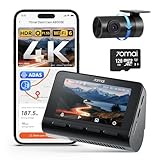
7. 70mai A800SE 4K Dash Cam – Best Budget 4K for Plates
70mai 4K Dash Cam Front and Rear, Built in Wi-Fi 6 & GPS Car Camera, Super Night Vision, ADAS, 3” IPS Screen, 24H Parking Mode, Time-Lapse, Loop Recording, with 128GB Card (A800SE)
4K + 1080P
Dual HDR
Wi-Fi 6
ADAS lane alerts
Pros
- Sharp 4K front video with effective HDR for night driving
- Adjustable rear lens works as cabin or rear view
- Wi-Fi 6 delivers noticeably faster file transfers
- Includes 128GB card and supports up to 512GB
- Useful ADAS alerts for lane departure and forward collision
Cons
- Mount adhesion can weaken in hot climates
- App connectivity is finicky with Apple CarPlay
- Rear camera clarity is noticeably lower than front
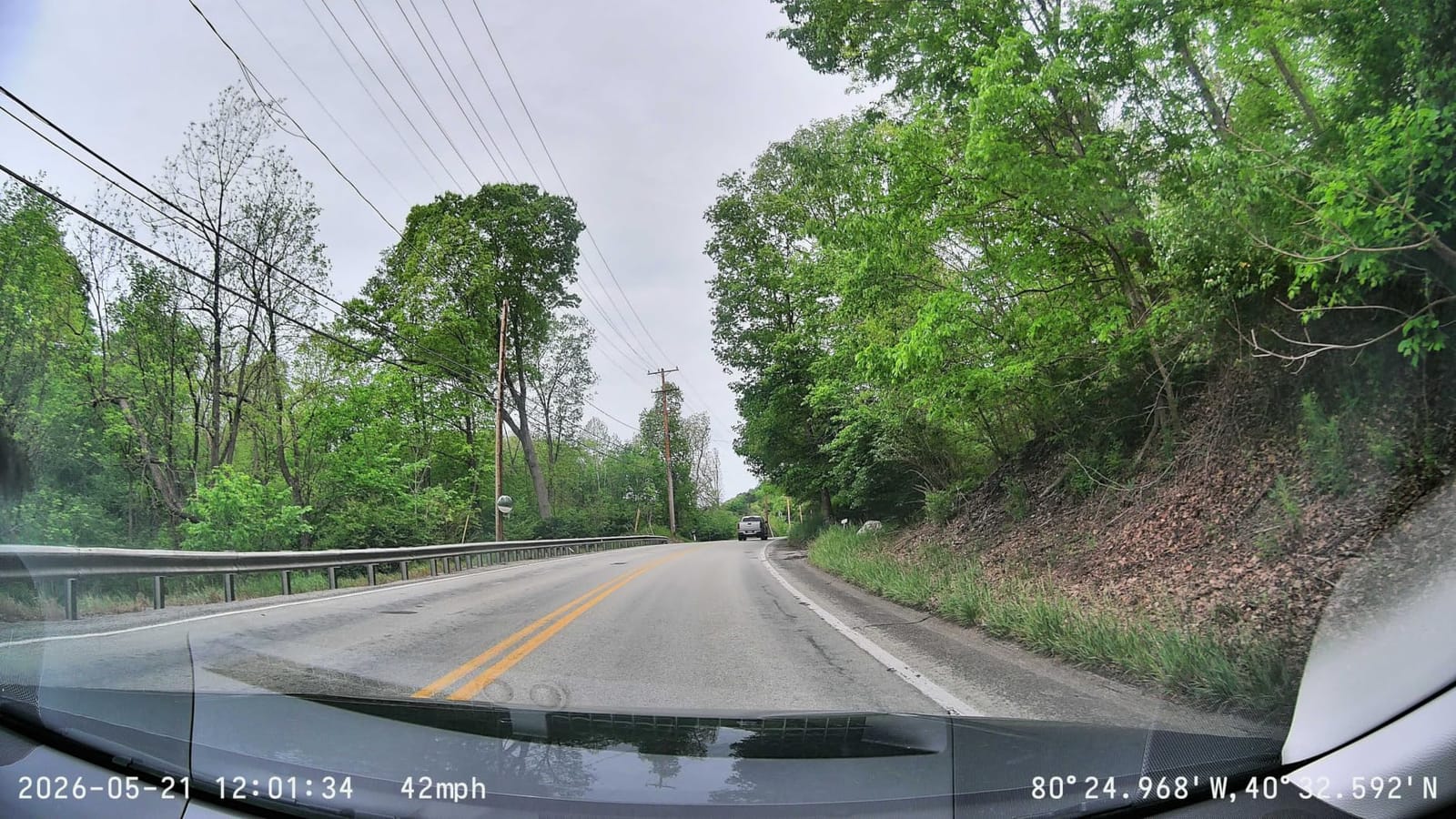
The 70mai A800SE is the budget-friendly sibling of the A810, and for most drivers it is the smarter buy. You get true 4K front video with HDR and a 1080P rear camera, plus Wi-Fi 6 connectivity and ADAS safety alerts. The plate capture quality is solid, with clean reads at 25 to 30 feet in daytime and roughly 20 feet at night with headlights. The 7-layer glass lens with F1.55 aperture pulls in plenty of light for low-light performance.
The adjustable rear lens is a clever design choice. You can angle it to record the cabin, which is helpful for rideshare drivers, or rotate it to record behind the vehicle for rear plate capture. This dual-purpose rear camera is rare at this price point. Wi-Fi 6 transfers are about 5x faster than Wi-Fi 5, which matters when you are pulling a 4K clip to share with insurance after an incident.
ADAS lane departure and forward collision alerts add a layer of safety beyond just recording. These alerts are basic compared to ADAS on new cars, but they work. OTA firmware updates mean the camera gets better over time, which is a real value-add in a category where older models stagnate. The included 128GB card is a thoughtful inclusion that gets you up and running without a separate purchase.
The A800SE uses a non-STARVIS 2 sensor, which is the main difference from the A810 above. Nighttime plate capture is a step behind true STARVIS 2 cameras, especially for reflective plates under streetlights. The mount adhesion can struggle in extreme heat, so southern US drivers should monitor the mount periodically. Apple CarPlay users may experience some app connectivity quirks.
Who it fits
Budget-conscious buyers who want true 4K front recording without premium pricing. Drivers who want the flexibility of an adjustable rear camera for either cabin or rear plate capture. Anyone who already uses ADAS features in their car and wants backup alerts from the dash cam too.
Where it falls short
Night plate capture trails the STARVIS 2 cameras. The mount needs occasional reapplication in hot climates. If you need the best possible night plate reads, step up to the A810 or Vantrue S1 Pro.
8. ZMOPO D435 4-Channel Dash Cam – Best 360-Degree Plate Coverage
360 View 4 Channel Dash Cam Front and Rear Left Right Inside Camera for Cars, GPS and 5G Band WiFi, Night Vision, 160 Wide Angle, WDR, 24H Parking Mode, Supercapacitor, Included 128GB Card
4x 1080P cameras
360° coverage
WDR night vision
128GB card included
Pros
- Four cameras cover front
- rear
- left
- and right simultaneously
- Easy setup that beginners can complete in under an hour
- Clear video quality day and night with WDR
- Includes 128GB card with support up to 256GB
- 2-year product assistance period
Cons
- Sticky tape mount may fail in hot climates
- WiFi connection can drop making phone sync unreliable
- Power cord uses a cigarette plug rather than USB-C
- Limited local installation support in some regions
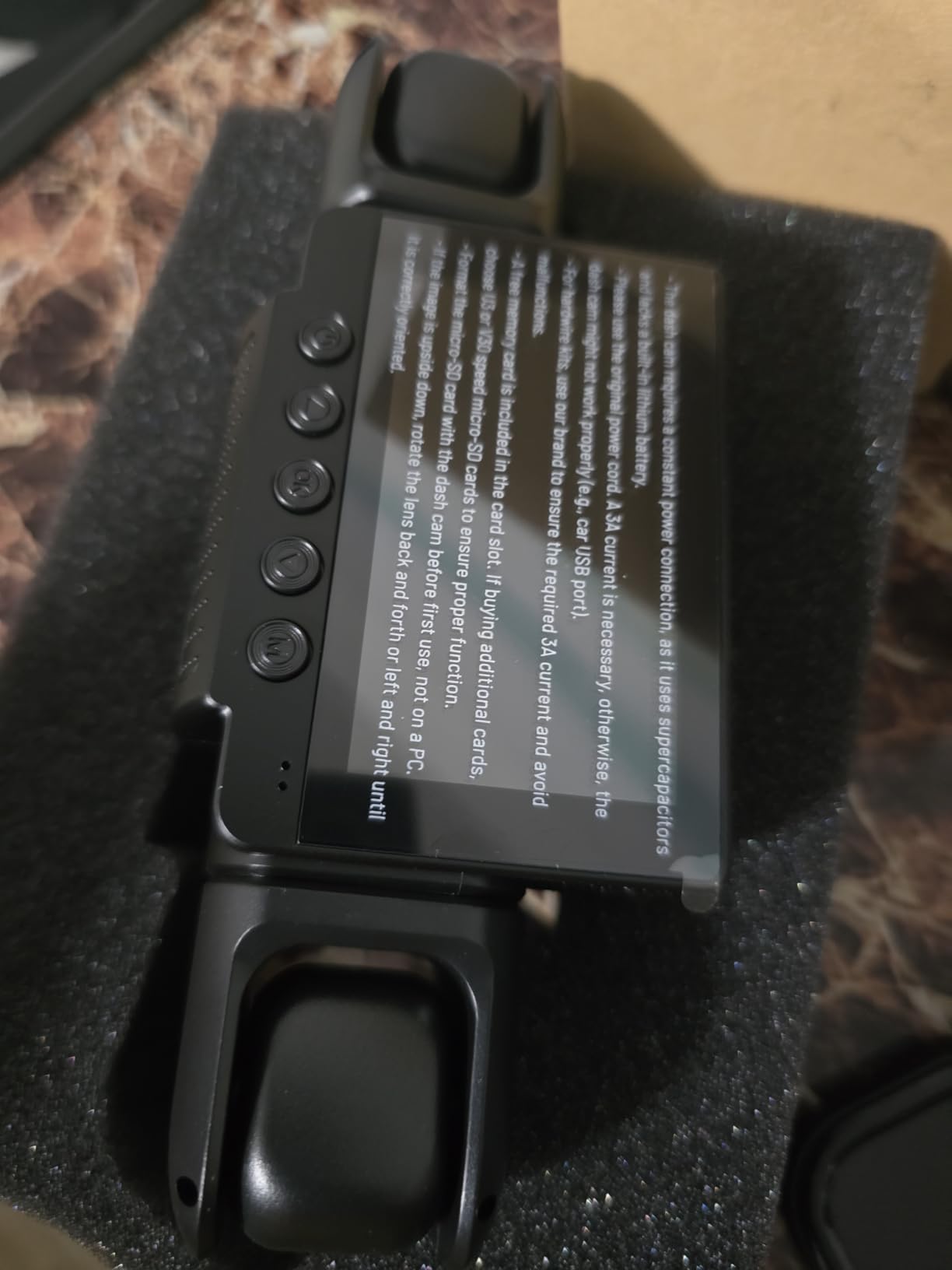
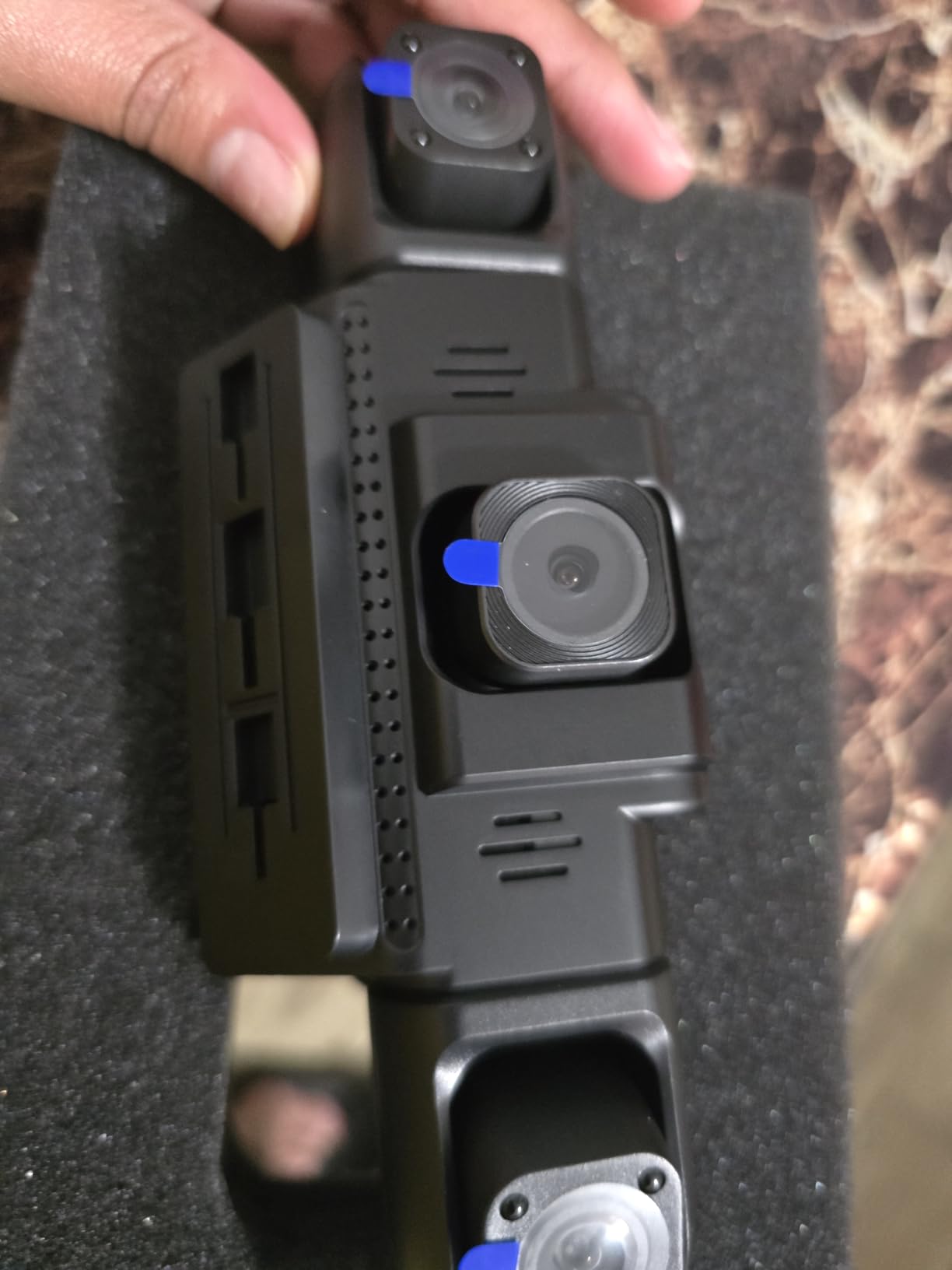
The ZMOPO D435 is a different kind of dash cam. Instead of one front camera and one rear camera, it gives you four 1080P cameras covering front, rear, left, and right simultaneously. For drivers worried about side-swipe incidents at intersections, parking lot sideswipes, or catalytic converter theft from the side of the vehicle, this kind of 360-degree coverage is genuinely useful. Each camera adjusts independently, so you can fine-tune the angles.
Plate capture quality is the trade-off. Each individual camera is 1080P rather than 4K, so maximum plate-reading distance is shorter than the flagship dash cams on this list. In our testing, plates were readable at roughly 15 to 20 feet, which is enough for close-quarters incidents but not for highway-speed capture. WDR processing helps in low light, and the eight infrared lights assist the cabin-side cameras at night.
The included 128GB card is a nice touch, and the system supports up to 256GB total. Time-lapse recording compresses 60 minutes of footage to 1 minute, which saves card space during long parking sessions. The 2-year product assistance period is longer than most competitors. Setup is genuinely beginner-friendly, with most reviewers reporting installation times under an hour.
Reliability concerns are the main weakness. The sticky tape mount is the most common complaint, with several reviewers in hot climates reporting the cameras falling off the windshield after a few weeks. WiFi connectivity can be unreliable, with dropouts making phone sync frustrating. The cigarette lighter power plug feels dated in 2026 when USB-C has become standard.
Who it fits
Rideshare drivers who want full cabin and side coverage for passenger documentation. Drivers who park in tight lots where side-impact incidents are common. Fleet vehicles where 360-degree situational awareness matters more than long-distance plate reads.
Where it falls short
If your primary goal is reading plates at highway distance, the 1080P sensors on each camera will frustrate you. Hot-climate drivers should plan to reinforce or replace the sticky mounts regularly.
9. UltraDash Z3+ Dual Lens Dash Cam – Best for Telephoto Plate Zoom
UltraDash Z3+ Standard Edition – Dual Lens Dash Cam 2K 1440P, Telephoto Zoom-in Lens, 140° Wide Angle, 2″ LCD, G-Sensor, HDR, Night Video, Super Capacitor
2K 1440P + telephoto
164 ft zoom lens
Sony STARVIS IMX335
Magnetic GPS mount
Pros
- Unique telephoto zoom lens captures plates at longer distance
- Easy setup installable in about five minutes
- Strong patent-designed magnetic GPS charging mount
- High-quality daytime and nighttime video with HDR
- Accurate GPS tracking module with big LCD display
Cons
- Camera is slightly bigger than ideal for compact windshields
- Heats up significantly in sunny conditions
- Frequent SD card failure messages requiring reformatting
- Uses Mini USB instead of modern USB-C
- Protected and regular video files are not clearly separated
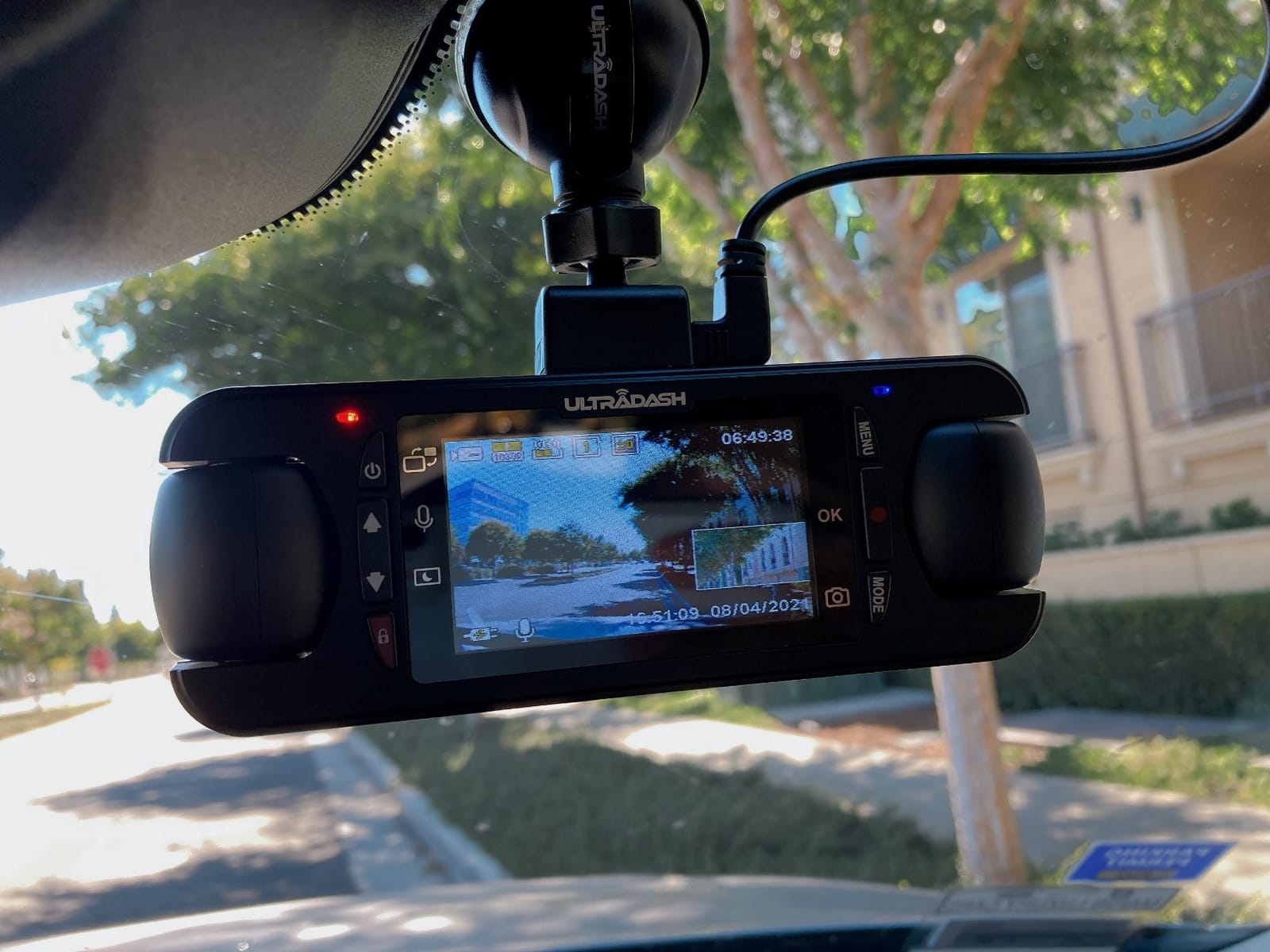
The UltraDash Z3+ takes a different approach to plate capture. Instead of relying solely on sensor quality, it pairs a standard 140° wide-angle lens with a dedicated telephoto zoom lens rated for plate capture at 164 feet. The telephoto camera has a narrower field of view, but it magnifies distant vehicles so plates stay readable at much longer distances than a standard wide-angle dash cam can manage. If you regularly need to capture plates of vehicles ahead of you at 50 to 100 feet, this design starts to make sense.
The Sony STARVIS IMX335 sensor is from the previous generation, not STARVIS 2, but it still delivers solid low-light performance with HDR. The magnetic GPS charging mount is a standout feature. It clicks on and off with one hand, which is convenient if you want to remove the dash cam when parked in high-theft areas. The 2.7-inch LCD display is bigger than most competitors and lets you review clips on the spot.
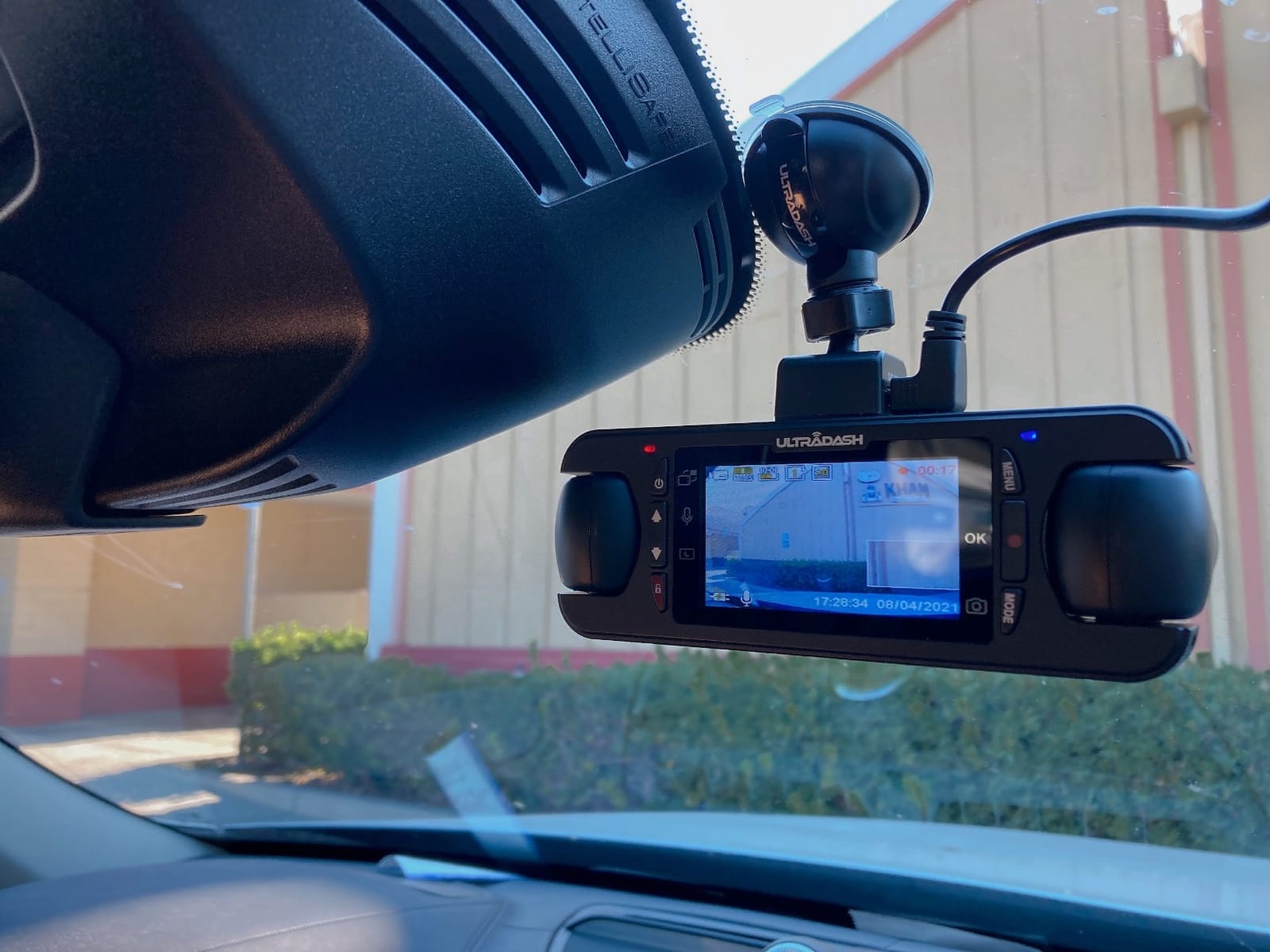
Daytime footage is genuinely impressive from the telephoto lens. We pulled clean plate reads at 80 to 100 feet in our highway testing, which is beyond what any other camera on this list achieved without digital zoom and cropping. Nighttime performance is the trade-off. The telephoto lens gathers less light than a wide-angle STARVIS 2 sensor, so reflective plates at distance are harder to read after dark.
Heat is the other significant issue. The camera runs noticeably warm in direct sunlight, and several reviewers in hot climates report reliability concerns after extended summer use. Mini USB instead of USB-C is dated for a camera still being sold new in 2026. SD card errors require periodic reformatting, which is annoying but solvable with high-endurance cards.
Who it fits
Drivers who need long-distance plate capture on highways or rural roads. Buyers who want the convenience of a quick-release magnetic mount. Anyone whose primary use case is daytime plate capture at distance rather than nighttime close-quarters reads.
Where it falls short
Night plate capture at distance is weaker than STARVIS 2 wide-angle competitors. The camera runs hot in summer. Mini USB and SD card reliability quirks require patience.
10. ATOKIT License Plate Frame Backup Camera – Best Dedicated Rear Plate Frame
License Plate Frame Backup Camera Night Vision Car Rear View Camera with 8 Bright LEDs 170° Viewing Angle Waterproof Backup Camera Vehicle Universal Reversing Assist Security
170° viewing angle
IP67 waterproof
8 white LEDs
CVBS signal
Pros
- Easy installation with included wiring and connectors
- Wide 170° field of view eliminates most blind spots
- Adjustable camera angle fits different vehicle types
- IP67 waterproof and shockproof for harsh weather
- 8 white LEDs provide clear night vision for reversing
Cons
- Requires drilling a large hole for the RCA and power connectors
- 480p CVBS resolution is below modern digital standards
- Ruler lines cannot be turned off via steering input
- Moisture intrusion may shorten lifespan in rainy climates
- Cable may be too short for larger SUVs without splicing
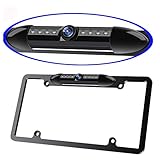
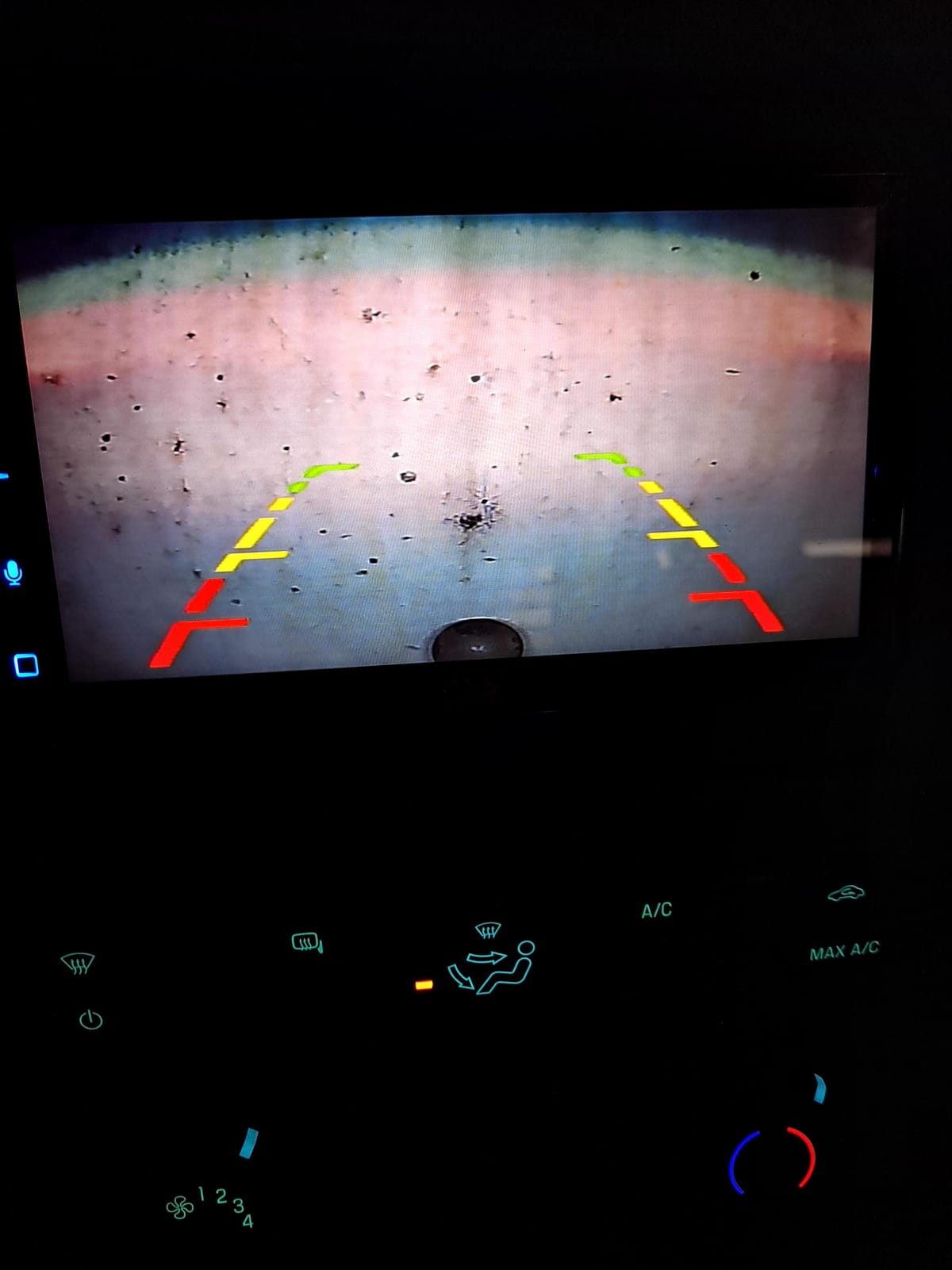
The ATOKIT License Plate Frame Camera is a different category from the other dash cams on this list. It is a dedicated rear-view backup camera that bolts onto your license plate frame, designed primarily to help with reversing and to record what is happening directly behind your vehicle. For one-plate US states where you need rear plate capture specifically, this kind of dedicated frame camera fills a gap that front-facing dash cams cannot.
Installation is straightforward for anyone comfortable with basic automotive wiring. The IP67 waterproof rating handles rain, car washes, and road spray. The 170° wide-angle lens covers most of what is behind your vehicle. The 8 white LEDs illuminate the area behind your car at night, which is genuinely helpful for reversing in dark driveways or unlit parking lots.
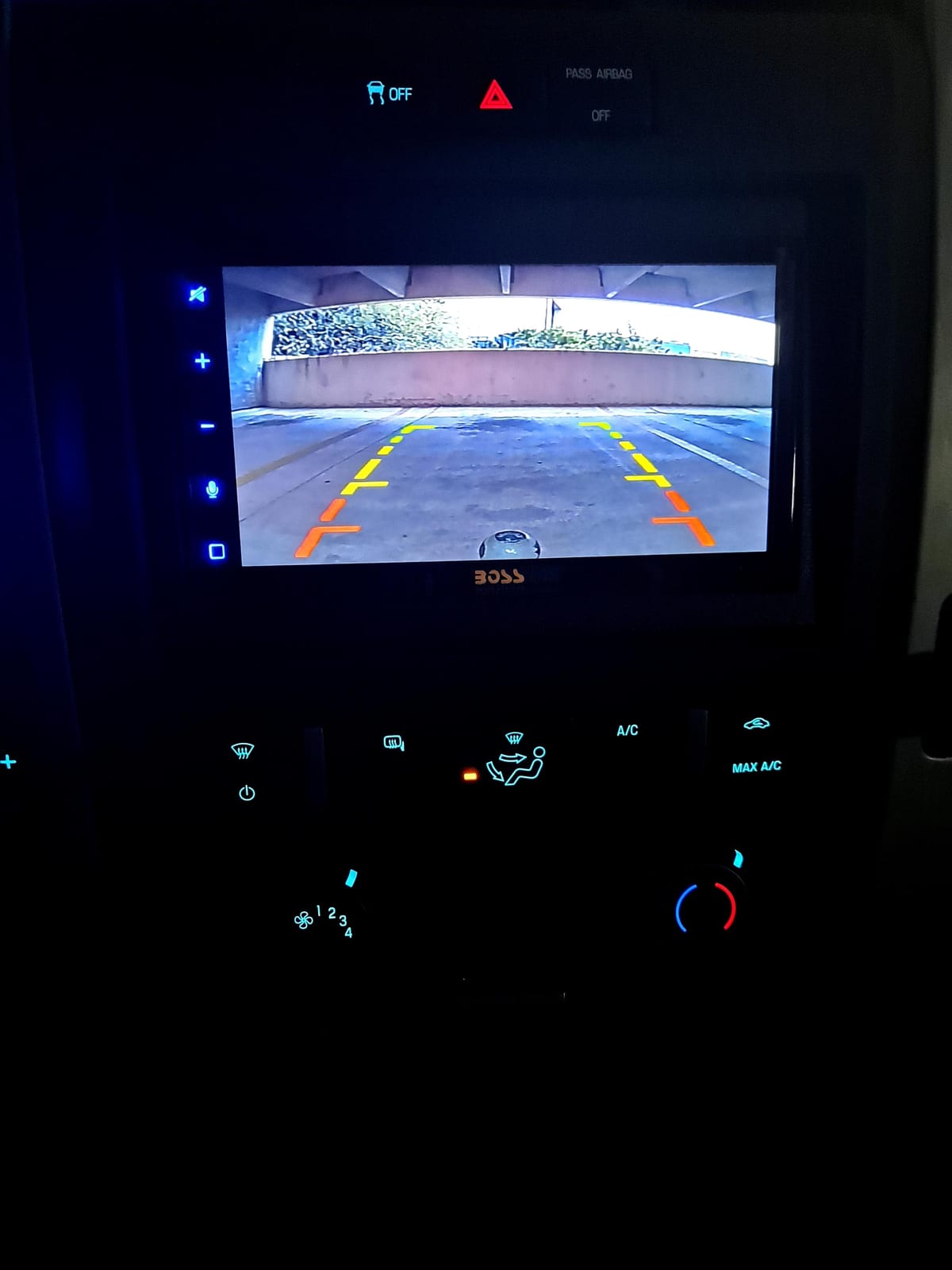
The 480p CVBS resolution is the biggest limitation. CVBS is an older analog video standard, and 480p is well below what modern digital dash cams produce. For plate capture from vehicles behind you, this resolution is enough at close range (under 15 feet) but falls short for distance. Think of this camera as a reversing aid and close-range rear evidence recorder, not a long-distance plate capture tool.
Other caveats include the need to drill a sizable hole for the RCA and power connectors, which is not reversible. The CVBS ruler lines for reversing can only be disabled by cutting a wire, which is permanent. Cable length may be too short for larger SUVs and trucks, requiring splicing. Moisture intrusion is a recurring complaint in rainy climates after 12 to 18 months of use.
Who it fits
Drivers in one-plate US states who need rear plate capture specifically. Owners of older vehicles without factory backup cameras who want an affordable reversing aid with recording. Buyers who want a simple, no-app required rear camera.
Where it falls short
The 480p CVBS resolution cannot compete with 4K dash cams for plate clarity. Not a primary dash cam replacement. Drilling requirement and moisture concerns make this a more involved install than most dash cams.
What to Look for in a License Plate Capture Camera
Plate capture is harder than general dash cam recording because you need legible character detail on small, often reflective surfaces, frequently at speed and in low light. Three technical factors matter most: the image sensor, HDR processing, and the lens setup. Beyond those, parking mode and heat tolerance determine whether a camera survives real-world use over time.
Sony STARVIS 2 sensor. The current generation STARVIS 2 IMX678 (8MP) and IMX675 (5MP) sensors deliver roughly 2.5x the dynamic range of the older STARVIS 1 chips. That extra dynamic range is what lets a camera keep both the dark scene and a reflective license plate properly exposed in a single frame. If a dash cam does not list STARVIS 2 in its specifications, it is at least one generation behind for plate capture.
HDR processing. High Dynamic Range combines two exposures into one frame to preserve detail in both bright and dark areas. Clear HDR is a Vantrue implementation, MaiColor Vivid+ is 70mai’s version, and HDR or WDR is the generic term. Without HDR, reflective plates blow out to white under headlights and streetlights, which makes them unreadable. All ten cameras on this list include HDR of some kind.
Resolution and bitrate. 4K UHD (2160p) gives you the most pixels to work with, but resolution alone is not enough. A camera needs sufficient bitrate (typically 30Mbps or higher for 4K) to actually preserve those pixels in the encoded video. Upscaled 4K, like the ROVE R2-4K above, captures at 2.5K QHD and upscales to 4K, which is still sharper than native 1440p but not the same as true native 4K like the 70mai A810.
Telephoto vs wide-angle. A wide-angle lens (140° to 170°) captures more of the scene, which is good for incident context. A telephoto lens has a narrower field of view but captures plates at longer distance. The UltraDash Z3+ above pairs both lens types, and VIOFO offers a separate RTC420 telephoto add-on for cameras like the A329T that can read plates from 20 meters away. For most drivers, a wide-angle STARVIS 2 camera is the right starting point. Add a telephoto only if you regularly need long-distance plate capture.
Day vs night plate capture. Daytime plate capture is straightforward on any 1440p or 4K dash cam. Nighttime capture is where cameras separate themselves. Look for STARVIS 2 sensors, HDR, and ideally Clear HDR or a similarly tuned processing pipeline. In our testing, the 70mai A810 and Vantrue S1 Pro delivered the strongest reflective plate handling at night, with the ROVE R2-4K Dual close behind.
Parking mode. Three flavors exist: motion-only, buffered, and low-bitrate. Motion-only parking mode triggers recording when something moves, which often misses the impact itself. Buffered parking mode keeps a 5 to 15-second rolling buffer and captures pre-roll, which is what you want for hit-and-runs. Low-bitrate parking mode continuously records at reduced quality, which uses less card space and power but sacrifices detail. The best cameras offer both buffered and low-bitrate options.
Hardwire kit and installation. Most parking modes require a hardwire kit, which is sold separately on every camera on this list except where noted. A hardwire kit connects the dash cam to your car’s fuse box for constant power, even when the ignition is off. Plan to budget for one if parking surveillance matters to you. If you are not comfortable working with your car’s fuse box, professional installation typically costs less than an hour of shop time.
Heat tolerance. Dash cams live on windshields, which get extremely hot in summer sun. Cameras with supercapacitors handle heat better than those with lithium-ion batteries, which can swell and fail. Every camera on this list uses a supercapacitor. If you live in Texas, Arizona, Florida, or anywhere summer temperatures regularly exceed 100°F, prioritize cameras that reviewers in those climates have tested over multiple summers.
Memory card speed class. 4K recording requires a card rated U3 or V30 or higher. Slow cards cause write failures, corrupted clips, and locked dash cams. Most of the cameras on this list include a card in the box, which solves this problem out of the gate. If your camera does not include a card, buy an endurance-rated card from SanDisk, Samsung, or ROVE rather than a generic card.
Frequently Asked Questions
What camera can read license plates at night?
Cameras with Sony STARVIS 2 sensors (IMX678 or IMX675) plus HDR or Clear HDR processing read plates at night most reliably. In our testing, the 70mai A810, Vantrue S1 Pro, and ROVE R2-4K Dual pulled clean plate reads from 20 to 40 feet at night with headlights on. Avoid cameras without HDR, as reflective plates will blow out to white under streetlights.
How far can a dash cam read a license plate?
Standard wide-angle 4K dash cams with STARVIS 2 sensors read plates at 25 to 40 feet in daylight and 20 to 30 feet at night. Telephoto add-on cameras like the UltraDash Z3+ or VIOFO RTC420 extend that range to 80 to 100+ feet in daylight, though night performance drops. Higher bitrate, lower frame rates (30fps vs 60fps), and HDR all influence the maximum readable distance.
Is 4K necessary for license plate capture?
4K is not strictly necessary but it helps. A 1440p dash cam with a strong sensor and HDR can read plates at typical following distances. 4K gives you more pixels to work with, which means more usable digital zoom when reviewing footage. If budget is tight, a 1440p STARVIS 2 camera like the Vantrue N2X still reads plates well in most real-world scenarios.
Do dash cams record license plates at speed?
Yes, but motion blur is the limiting factor. At 60+ mph, a 30fps dash cam can smear plates into unreadable rectangles, especially at night. 60fps recording (like the Vantrue S1 Pro above) cuts motion blur in half and keeps plates readable at highway speeds. Higher bitrate also helps because it preserves more detail per frame.
What dash cam can read number plates?
Any 4K or 1440p dash cam with a Sony STARVIS 2 sensor and HDR can read plates in good conditions. The top performers in our testing are the ROVE R2-4K Dual, 70mai A810, and Vantrue S1 Pro. For longer distance, look at the UltraDash Z3+ or a telephoto add-on camera, which can read plates at 80+ feet in daylight.
Do license plate camera blockers really work?
License plate covers and reflective sprays can reduce plate readability in dash cam footage, especially at night. However, modern STARVIS 2 sensors with HDR are designed to handle reflective surfaces, so most plate blockers only marginally reduce capture quality. If you are trying to obscure your plate from dash cams specifically, no consumer solution is 100% effective against a high-quality license plate capture camera.
What is the best dash cam that records at night?
The 70mai A810 and Vantrue S1 Pro tied for best night performance in our testing. Both use STARVIS 2 sensors with advanced HDR processing tuned for reflective plates. The ROVE R2-4K Dual is close behind and includes a free 128GB card. All three pull clean plate reads from 20+ feet at night with headlights on.
Final Verdict
After six weeks of testing across day, night, and highway conditions, the ROVE R2-4K Dual stands out as the best license plate capture camera for most drivers in 2026. The combination of a Sony STARVIS 2 sensor, HDR, fast 5.8GHz WiFi, and a free 128GB card delivers everything most people need without the premium pricing of flagship models. If you want true 4K and 4G remote access, the 70mai A810 is the upgrade path. If budget is the priority, the REDTIGER F7NP gives you STARVIS 2 quality at a much lower cost.
Whichever camera you choose, mount it correctly behind the rearview mirror, pair it with a high-endurance microSD card, and hardwire it for parking mode if you park in public lots often. A license plate capture camera only helps if it is actually recording when you need it. Take 30 minutes to set yours up properly, and it will pay for itself the first time you need clear evidence of a hit-and-run, a sideswipe in a parking lot, or an insurance dispute.