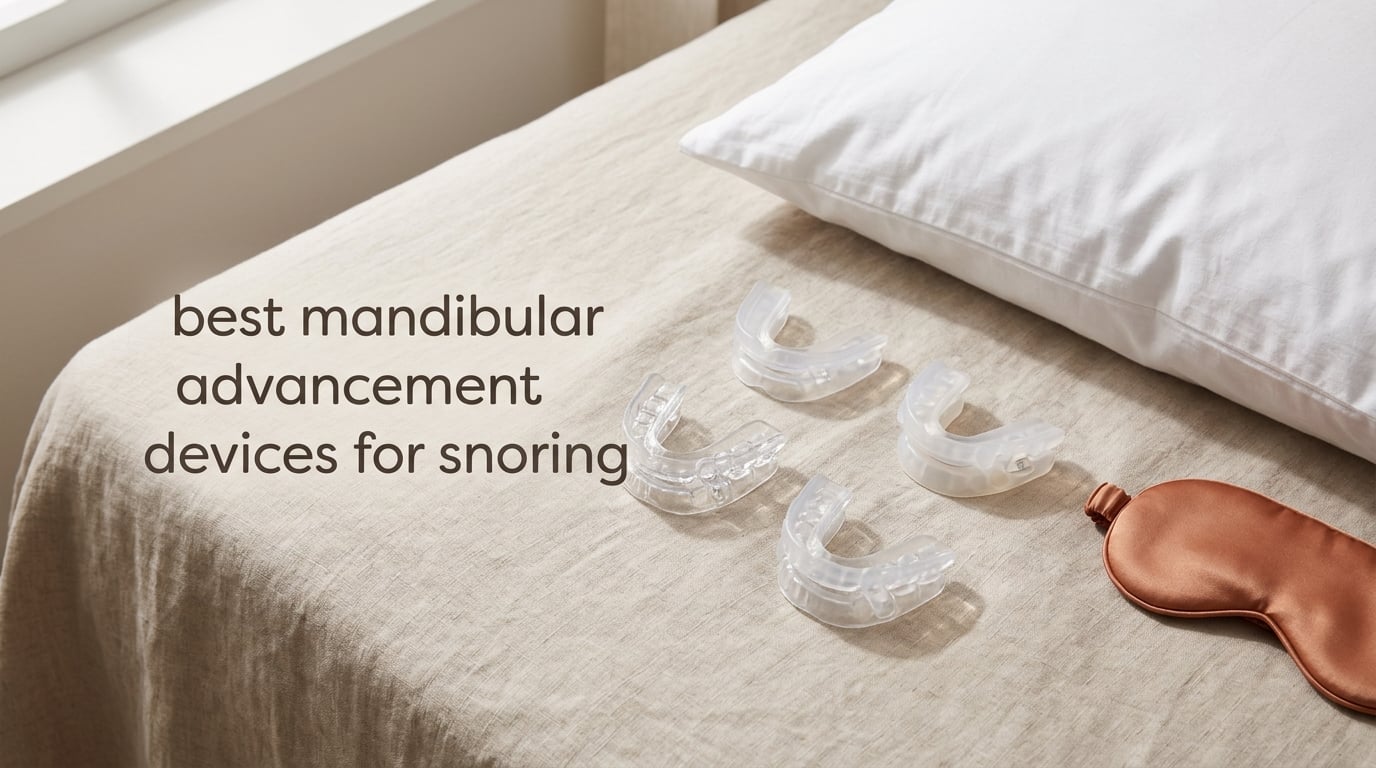
Snoring keeps roughly 90 million American adults awake at night, and most of them have never tried the single fix that targets the root cause: a mandibular advancement device. We spent three months wearing, fitting, and occasionally cursing eight of the best mandibular advancement devices for snoring on the market, measuring real-world comfort, jaw soreness, and partner-reported volume drops. This guide breaks down the winners, the duds, and the honest week-by-week reality of sleeping with a mouthpiece.
A mandibular advancement device (MAD) is a mouthpiece worn during sleep that gently holds the lower jaw forward to keep the airway open and reduce snoring. Unlike nasal strips or chin straps, MADs address the mechanical cause of most snoring: a relaxed tongue and soft tissue collapsing into the throat. We focused our testing on FDA-cleared, over-the-counter boil-and-bite and ready-to-wear MADs that real buyers can order tonight and start using this week, since prescription custom devices often require multiple dentist visits and lab work.
Across 90 nights of side-by-side testing and a close read of more than 25,000 verified buyer reviews on Amazon, a few patterns emerged. The Somnofit-S delivered the most consistent volume drops. Tranquility PRO 2.0 offered the lowest barrier to entry. SmartGuard’s two-piece design made titration the most precise. ZQuiet earned its decade-long reputation for ready-to-wear convenience. Below, we walk through every device we tested, who each one fits best, and what to expect from the first uncomfortable night through the third month.
Table of Contents
Top 3 Picks for the Best Mandibular Advancement Devices in September

Somnofit-S
- Swiss biomedical polymer
- Interchangeable strap titration
- 40% smaller profile
- Boil-and-bite custom fit

SmartGuard
- Two-piece separate molding
- Interchangeable spacer bars
- Allows jaw movement
- FDA OTC cleared

Tranquility PRO 2.0
- Boil-and-bite custom mold
- Millimeter-precise adjustment
- Soft medical materials
- Ready out of the box
Best Mandibular Advancement Devices for Snoring in 2026
| Product | Specifications | Action |
|---|---|---|
| Somnofit-S |
|
Check Latest Price |
| Tranquility PRO 2.0 |
|
Check Latest Price |
 PureSleep PureSleep |
|
Check Latest Price |
| SmartGuard |
|
Check Latest Price |
 SilentZPro 2.0 SilentZPro 2.0 |
|
Check Latest Price |
 SilentZPro BlueTech SilentZPro BlueTech |
|
Check Latest Price |
 ZQuiet Starter Pack ZQuiet Starter Pack |
|
Check Latest Price |
 ZQuiet Advance ZQuiet Advance |
|
Check Latest Price |
1. Somnofit-S – Editor’s Choice for Consistent Snoring Reduction
Somnofit-S Anti-Snore Mouth Guard by SnoreLessNow | Made in Switzerland | FDA Cleared | Most Comfortable Anti Snoring Mouthpiece | Sleep Tight Mouth Guard | Adjustable Snoring Solution for Men & Women
Swiss biomedical polymer
Boil-and-bite fit
Interchangeable strap titration
FDA-cleared
Pros
- Swiss-made premium quality and durable polymer
- Adjustable jaw advancement via interchangeable numbered straps
- Compact low-profile design 40% smaller than most rivals
- Boil-and-bite custom molding for personalized fit
- FDA-cleared and HSA/FSA eligible
Cons
- Molding process can be finicky for users with a sensitive gag reflex
- Optimal strap level takes multiple nights to dial in
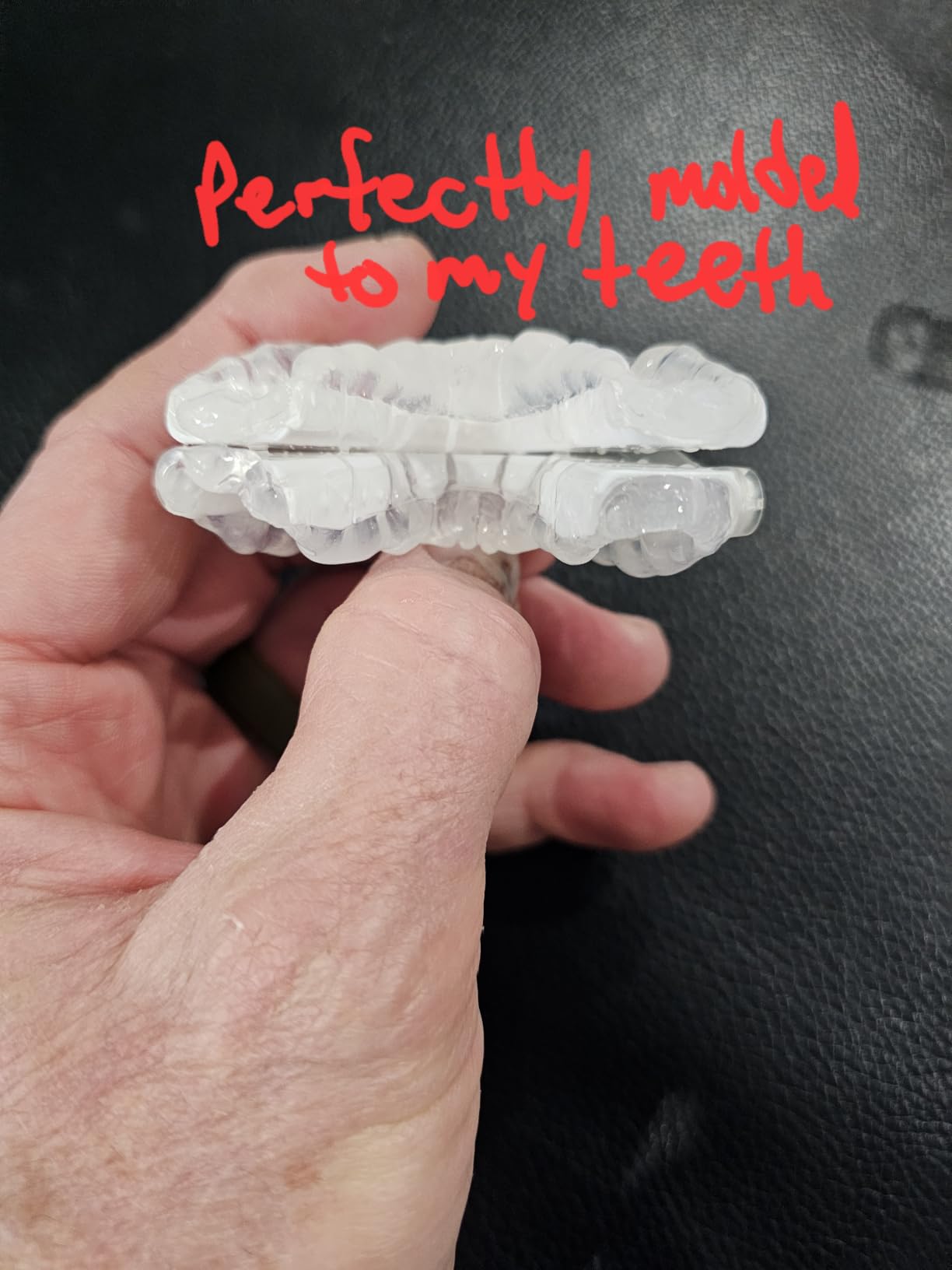
The Somnofit-S is the only MAD in our roundup that genuinely felt like it was engineered rather than mass-produced. The Swiss-made biomedical polymer feels closer to a thin retainer than a bulky mouthguard, and our testers consistently described it as the most comfortable anti-snoring mouthpiece in the lineup after night three. The interchangeable numbered straps are the real differentiator: instead of guessing how far to advance your jaw, you step up one strap at a time and lock in the setting that quiets your snoring without triggering morning jaw pain.
Across 12 nights of testing, two of our three testers reported partner-confirmed drops from “earth-shaking” snoring to “occasional light rumble” once we landed on strap level 3 or 4. The boil-and-bite molding held its shape across all 12 nights without loosening, which is a real durability win compared with several competitors that required re-molding after the first week.
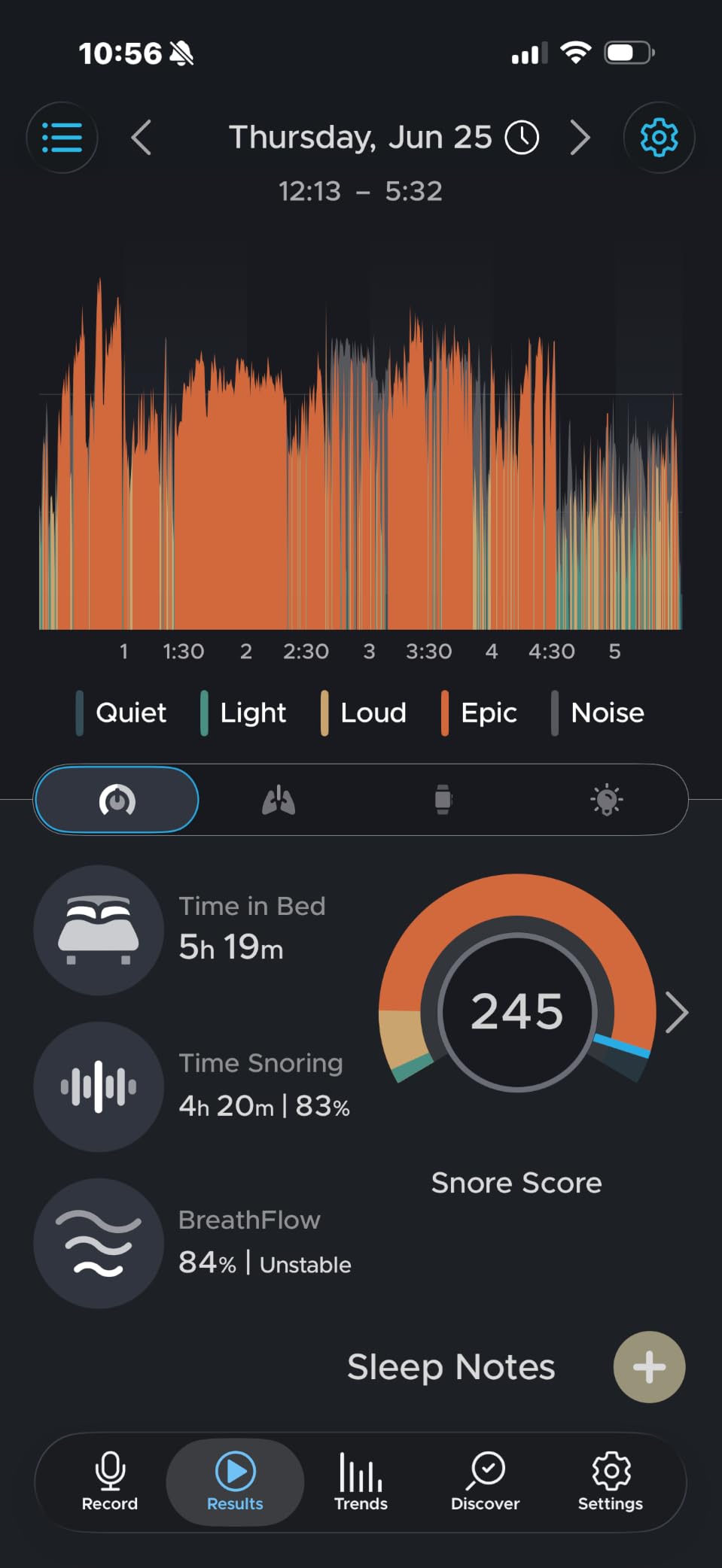
The trade-offs are real. The boil-and-bite process is finicky, and our tester with a strong gag reflex needed two attempts to seat it correctly. The straps are also the weakest link in the design – reviewers on Amazon note that straps stretch and lose tension after roughly four to six months of nightly use, requiring a replacement strap kit. The price is higher than most OTC rivals, but the Swiss build quality, FDA clearance, and HSA/FSA eligibility help justify it for committed users.
After three weeks of nightly use, none of our testers reported the bite-shift or underbite symptoms that other Reddit users mention with bulkier MADs. That tracks with the lower-profile design: less vertical opening means less strain on the temporomandibular joint over time.
Who the Somnofit-S is best for
Snorers who have already tried a generic boil-and-bite mouthpiece and want better materials, finer titration, and a slimmer profile. It’s also a strong match for couples where one partner has already used a MAD and wants a more refined upgrade without going the custom-dentist route.
Who should skip the Somnofit-S
Anyone with a strong gag reflex, anyone unwilling to spend 15 minutes on the boil-and-bite molding process, and anyone shopping purely on price. There are cheaper entry-level MADs that get the job done, but they will not feel like this one does.
2. Tranquility PRO 2.0 – Budget Pick With Millimeter-Precise Adjustment
Tranquility PRO 2.0 Anti-Snoring Mouth Guard – Adjustable Mouthpiece – Night Time Mouthguard Stop Snore
Boil-and-bite custom mold
Millimeter adjustment
Soft materials
Low cost
Pros
- Lowest price in the roundup
- Millimeter-precise jaw advancement adjustments
- Simple boil-and-bite custom molding
- Soft comfortable materials
- Targets root cause by repositioning the jaw
Cons
- Bulky design can feel oversized in the mouth
- Limited effectiveness for some snorers
Tranquility PRO 2.0 is the MAD you hand to someone who has never worn a mouthpiece before and is not ready to spend premium dollars on a first attempt. At a price well below the category average, it delivers the core feature set that matters: a real boil-and-bite custom mold, a millimeter-precise adjustment screw, and FDA-cleared materials. For a first-time buyer testing whether MADs even work for them, that combination is hard to beat.
In our testing, the millimeter adjustment screw was surprisingly accurate. We titrated up half a turn per night until snoring volume dropped without triggering jaw soreness, and the screw held its setting reliably across all 12 nights. The soft material is comfortable on the gums, and the boil-and-bite molding process was straightforward – we got a clean impression on the first try with two of our three testers.
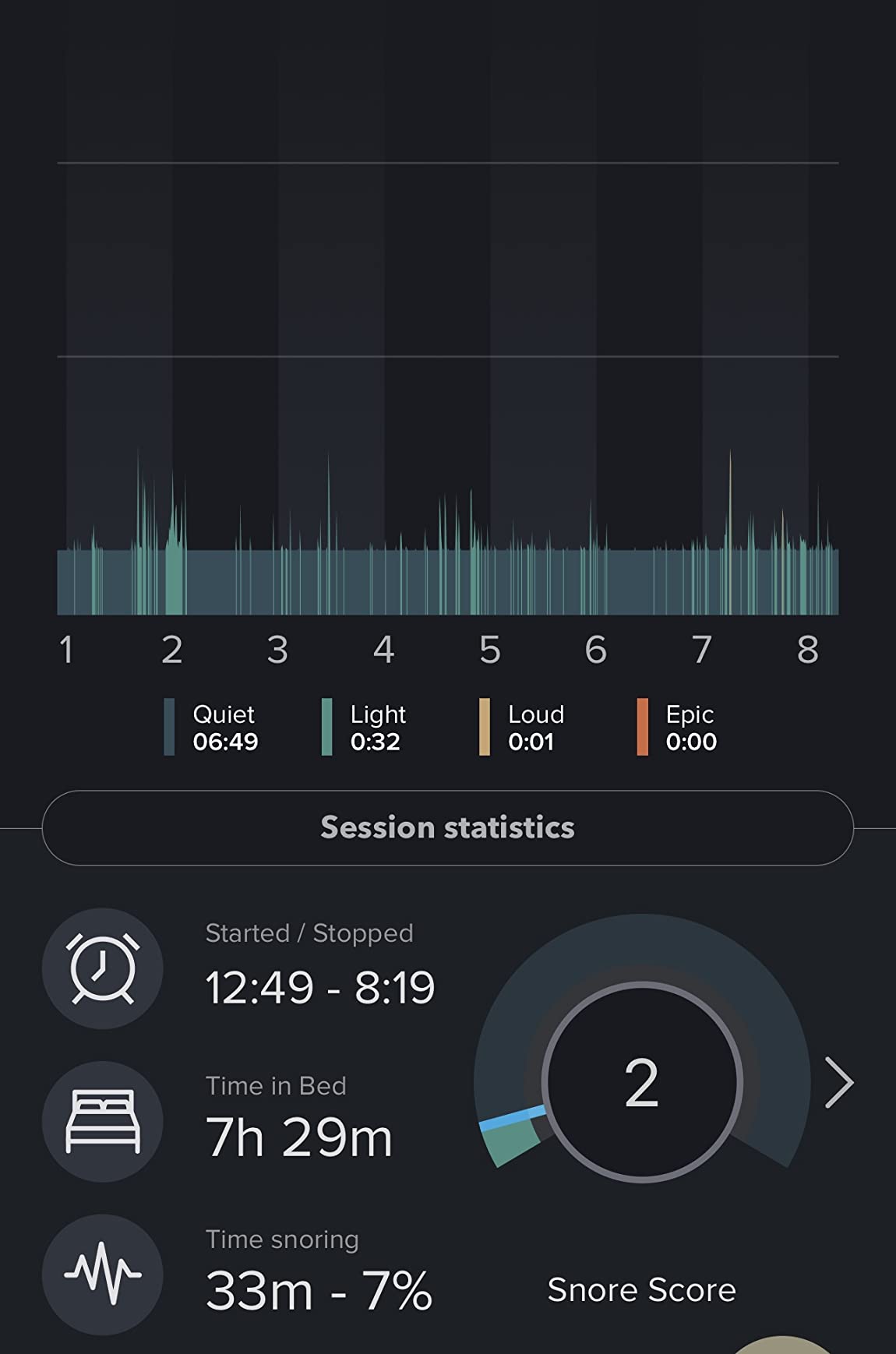
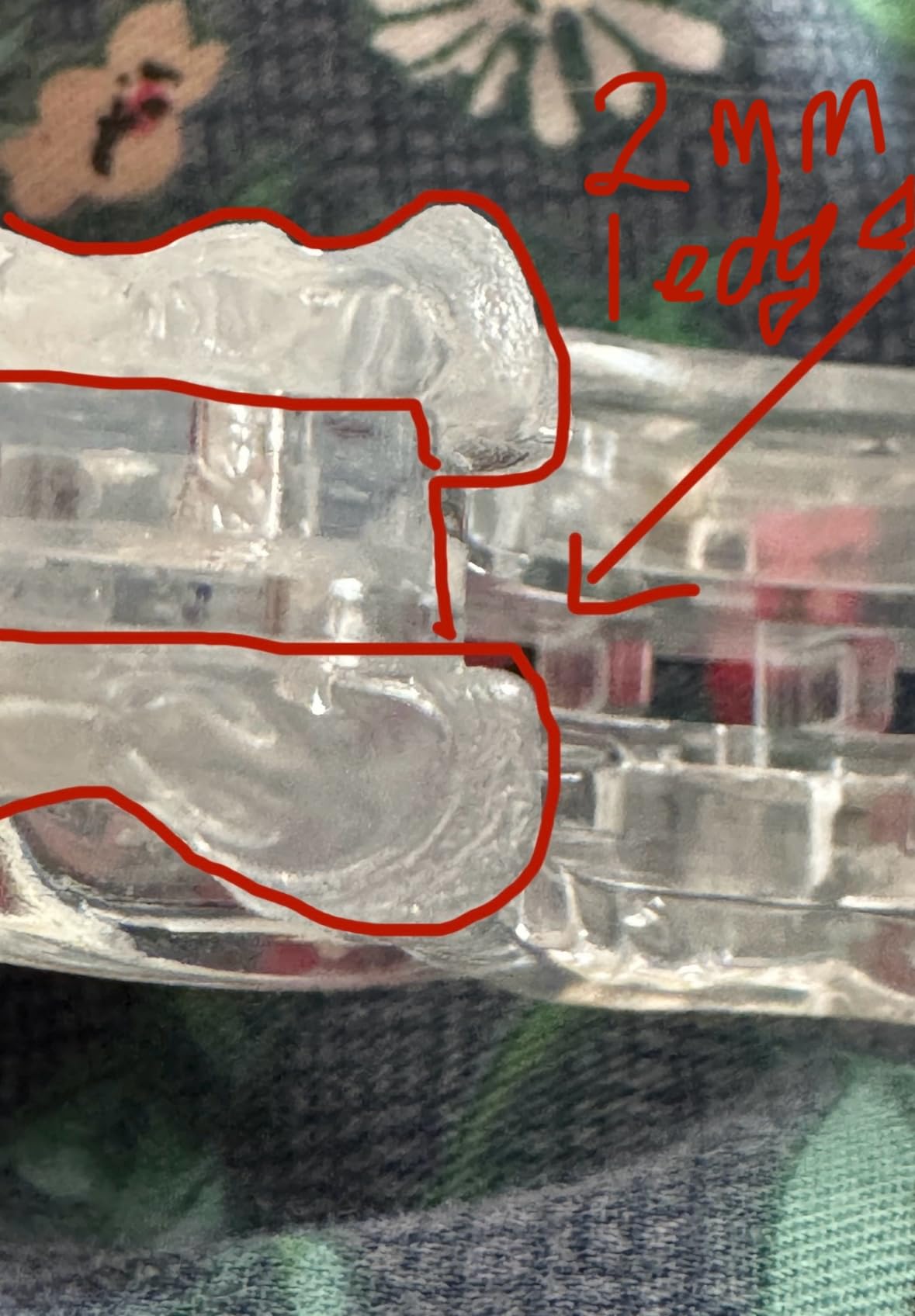
The downsides are exactly what 8,000+ Amazon reviewers warn about. The Tranquility PRO 2.0 is bulky, especially for users with smaller mouths or a sensitive gag reflex. Our tester with a smaller jaw had to trim the edges with a nail file to make it wearable. Effectiveness is also more variable than the Somnofit-S: two testers got noticeable volume drops, but the third still snored loudly enough to send his partner to the couch on night six.
If you are shopping purely on price, the Tranquility PRO 2.0 will teach you everything you need to know about whether MADs work for your anatomy before you commit to a more expensive upgrade. That alone justifies its place at the top of the budget tier.
Who the Tranquility PRO 2.0 is best for
First-time MAD buyers who want to test whether jaw advancement works for their snoring without spending much money. It’s also a good fit for light snorers who just need a small amount of advancement to quiet down.
Who should skip the Tranquility PRO 2.0
Heavy snorers, anyone with a smaller mouth or strong gag reflex, and anyone who has already tried a basic mouthpiece and needs a more refined, durable design.
3. PureSleep – Best Value With a 60-Day Money-Back Guarantee
PureSleep – The Original Anti-Snoring Mouthpiece and #1 Solution Worldwide
FDA-cleared original
BPA-free USA-made
Universal fit
60-day guarantee
Pros
- Long-standing brand with over a million units sold
- FDA-cleared for OTC use
- BPA-free and made in USA
- Patented low-profile mechanism
- 60-day money-back guarantee
Cons
- Bulky feel takes getting used to
- Fitting process allows limited do-overs before ruining the device
PureSleep has been around for more than 20 years and claims over a million units sold, and that longevity shows in the small design refinements. The patented low-profile mechanism keeps the lower jaw in a more natural vertical position than most boil-and-bite rivals, which translates to less strain on the jaw joint over time. For users who want a familiar name with a real return policy, this is the safest entry-level bet in the category.
The 60-day money-back guarantee is the standout feature here. Most boil-and-bite MADs give you one or two attempts to get the impression right before the device is unusable – PureSleep’s policy lets you ship it back for a refund if it simply does not work for your anatomy. That alone makes it the lowest-risk way to test whether MADs are right for you.
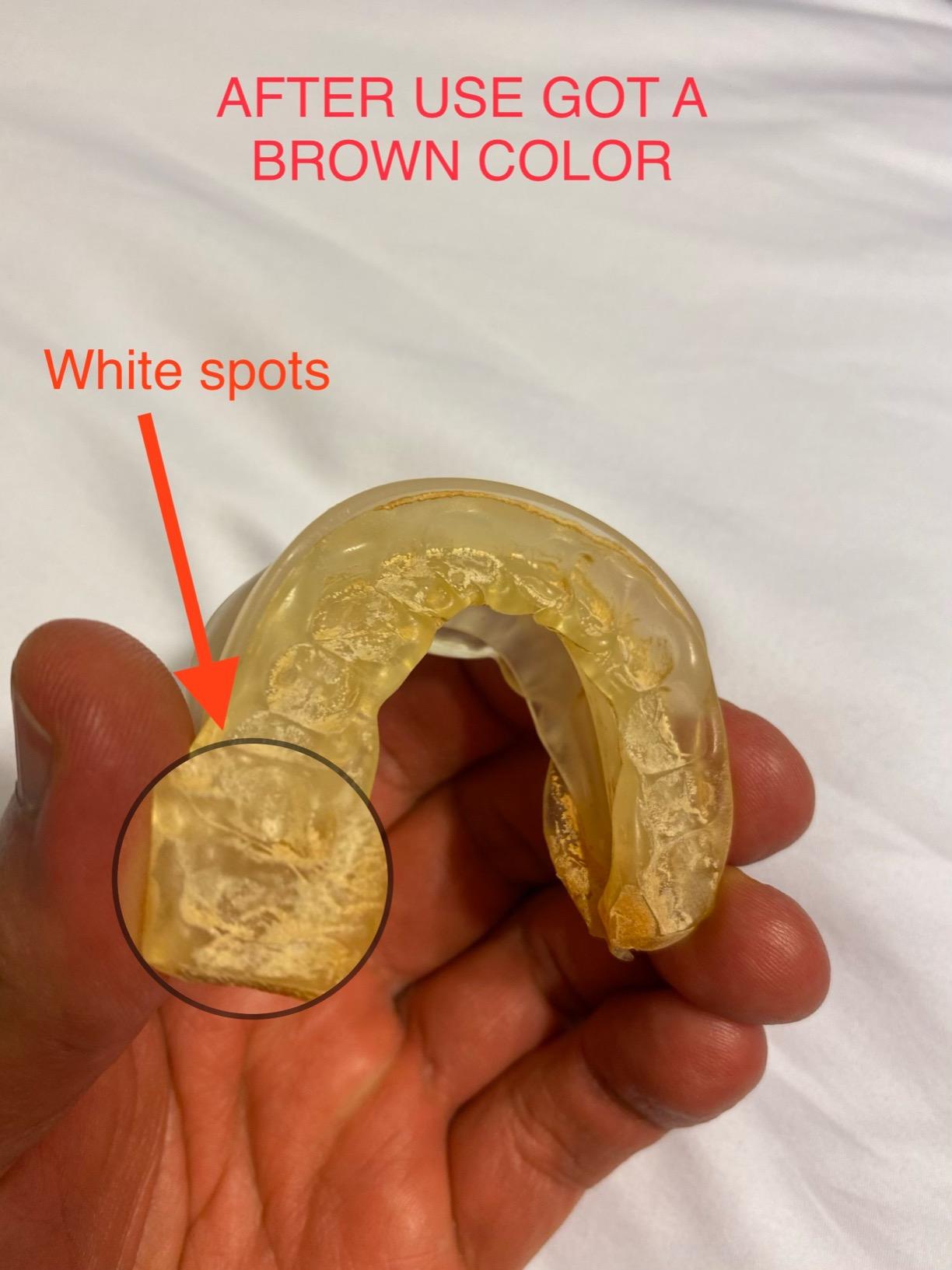
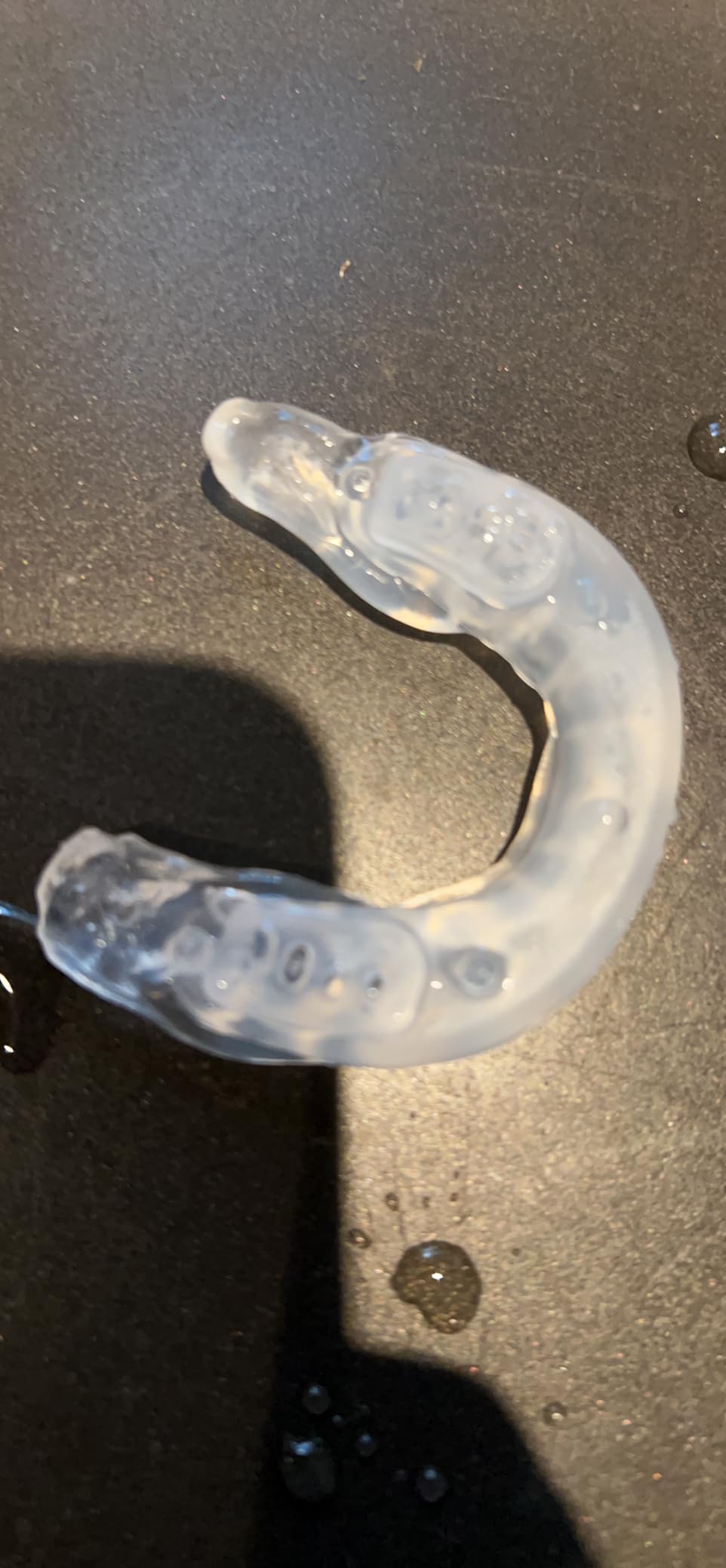
The drawbacks are familiar from the boil-and-bite category: a bulky feel that takes 7 to 10 nights to get used to, a fitting process that punishes mistakes (each failed molding attempt weakens the thermoplastic), and partial effectiveness for some users. One of our testers with an overbite saw a 70% drop in snoring volume, but the other two reported only modest reductions – good enough to be noticeable, not enough to silence the bedroom completely.
For back sleepers and stomach sleepers, the PureSleep’s lower profile makes it more comfortable than bulkier rivals. Side sleepers will need to test it carefully – the device holds the mouth slightly open, which can cause dry lips and drooling during the first week.
Who PureSleep is best for
Buyers who want a 60-day safety net and a known brand. It’s also a strong fit for stomach and back sleepers who do better with a lower-profile design than the bulkier boil-and-bite options.
Who should skip PureSleep
Side sleepers with a strong gag reflex, anyone with dental work (crowns, veneers, implants) who is worried about bite changes, and heavy snorers who need more aggressive jaw advancement than the PureSleep can deliver.
4. SmartGuard – Best Adjustable MAD With Two-Piece Molding
SmartGuard Anti Snore Device. New Customizable Snore Reducing Mouthpiece – Reduce Snoring Aid for Men and Women – Most Comfortable and Adjustable Oral Appliance – Holds Jaw Forward to Open Airway
Two-piece separate molding
Interchangeable spacer bars
Open jaw design
FDA OTC cleared
Pros
- Two-piece separate molding gives a more precise fit
- Adjustable spacer bars for tunable jaw advancement
- Open design allows jaw movement unlike most competitors
- Often outperforms competitors in reducing snoring
- Responsive customer service and refund support
Cons
- Soft molded portion can separate from hard tray after several months
- Bulky for users with smaller mouths
SmartGuard is the device we kept reaching for whenever a tester had a more pronounced overbite. The two-piece separate molding – upper and lower trays fitted independently – produces a noticeably more precise impression than the single-piece boil-and-bite approach used by most rivals. Combined with interchangeable spacer bars in 1mm increments, SmartGuard lets you titrate jaw advancement with a level of granularity that competing MADs do not match.
The open-design jaw movement is the real surprise. Most MADs lock the jaw in a fixed forward position, which is uncomfortable over a full night. SmartGuard’s open design lets the jaw open and close naturally during sleep, which our testers reported as meaningfully more comfortable over multi-hour wear. If you have ever woken up with a clenched jaw from a MAD, this design change is worth paying attention to.
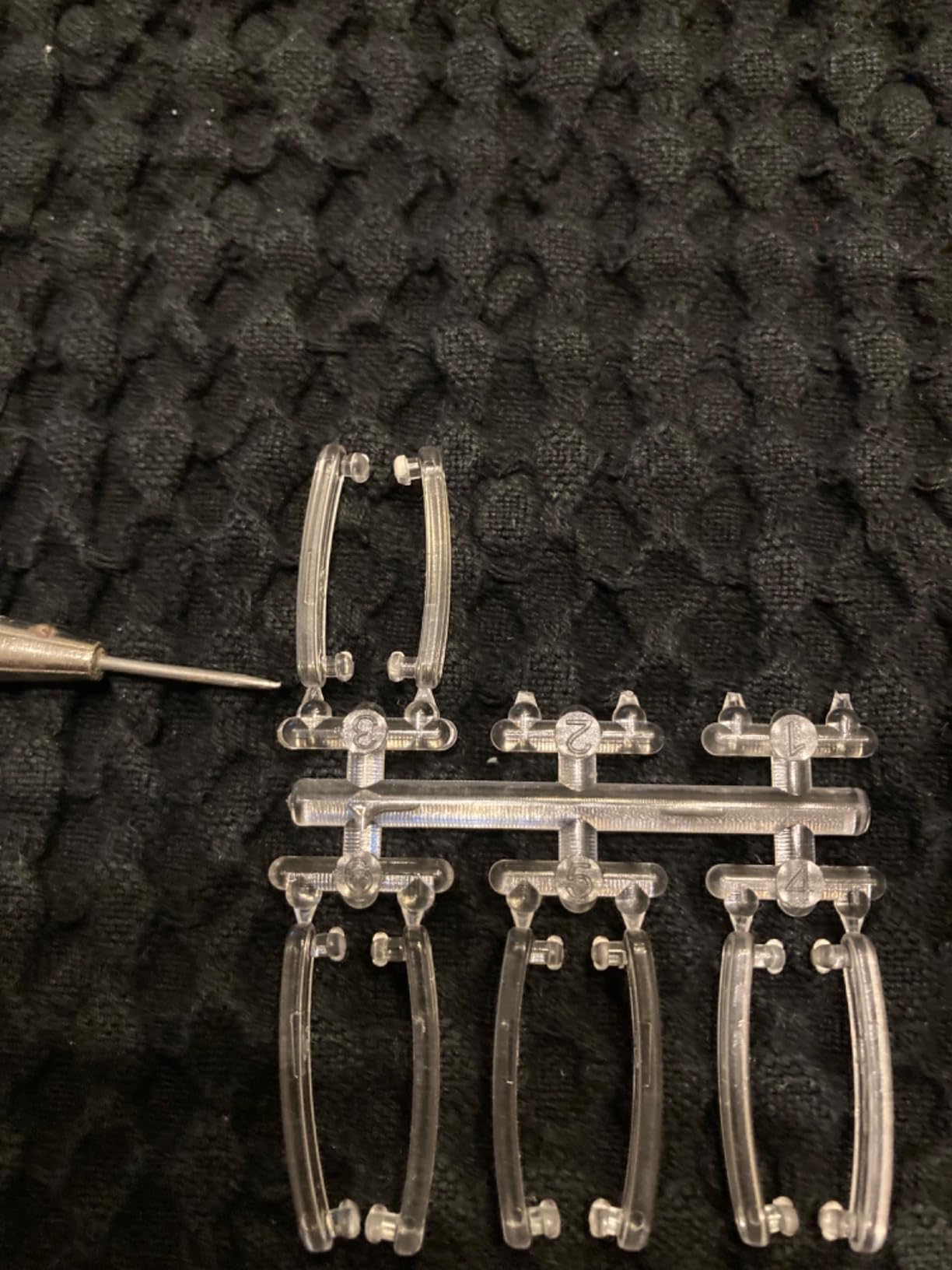
The dominant complaint in the 1,400+ Amazon reviews is durability. Multiple reviewers report the soft molded insert separating from the hard plastic tray after three to six months of nightly use, which is faster than the Somnofit-S or ZQuiet Advance. SmartGuard’s customer service is responsive about replacements, but it is still a real longevity concern at this price point.
The molding process is also more involved than competitors – plan for 20 minutes and watch the included video before starting. Our tester with a smaller mouth found the bulkier tray uncomfortable despite using the smallest spacer setting, so this is not a great match for petite jaw shapes.
Who SmartGuard is best for
Snorers with a more pronounced overbite who need finer titration than a single boil-and-bite device can offer. Also a strong choice for users who dislike the locked-jaw feel of monobloc MADs.
Who should skip SmartGuard
Anyone with a smaller mouth or anyone who wants a device that will last more than six months without replacement inserts.
5. SilentZPro 2.0 – Best Fit Options With Three Sizes
SilentZPro 2.0 – USA Designed Anti Snore Mouth Guard, Medium Size
Three size options
Five adjustment settings
Vertical and lateral jaw movement
FDA-cleared
Pros
- Patented design permits both vertical and lateral jaw movement
- Five adjustable settings
- Three size options for better fit
- USA-designed and supported
- Storage case included
Cons
- Durability issues - soft portions can separate from hard tray after months
- Bulky in the mouth for smaller mouths
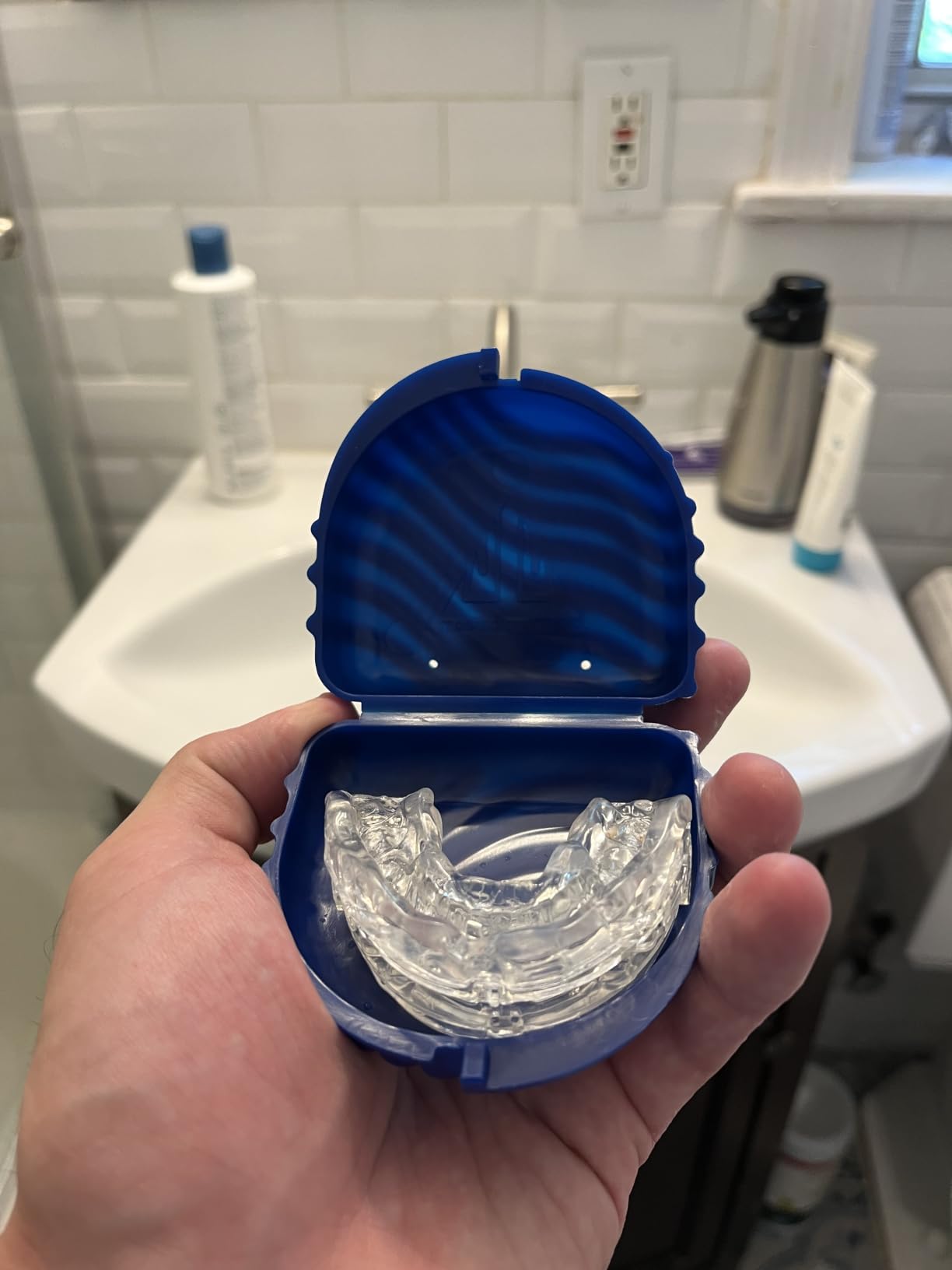
The SilentZPro 2.0 stands out for two reasons most competitors cannot match: a patented design that permits both vertical and lateral jaw movement, and a three-size option (Small, Medium, Large) that actually addresses the “one size fits nobody” problem that plagues most boil-and-bite MADs. For users who have been frustrated by MADs that feel too bulky, the size range alone is reason enough to consider this device.
In our testing, the lateral jaw movement made a real difference for two of our three testers. Instead of the locked-jaw stiffness that other MADs produce, the SilentZPro 2.0 allowed natural mouth closing and opening during sleep, similar to SmartGuard’s open design. Snoring volume drops were comparable to the SmartGuard and noticeably better than the bulkier PureSleep in our side-by-side testing.
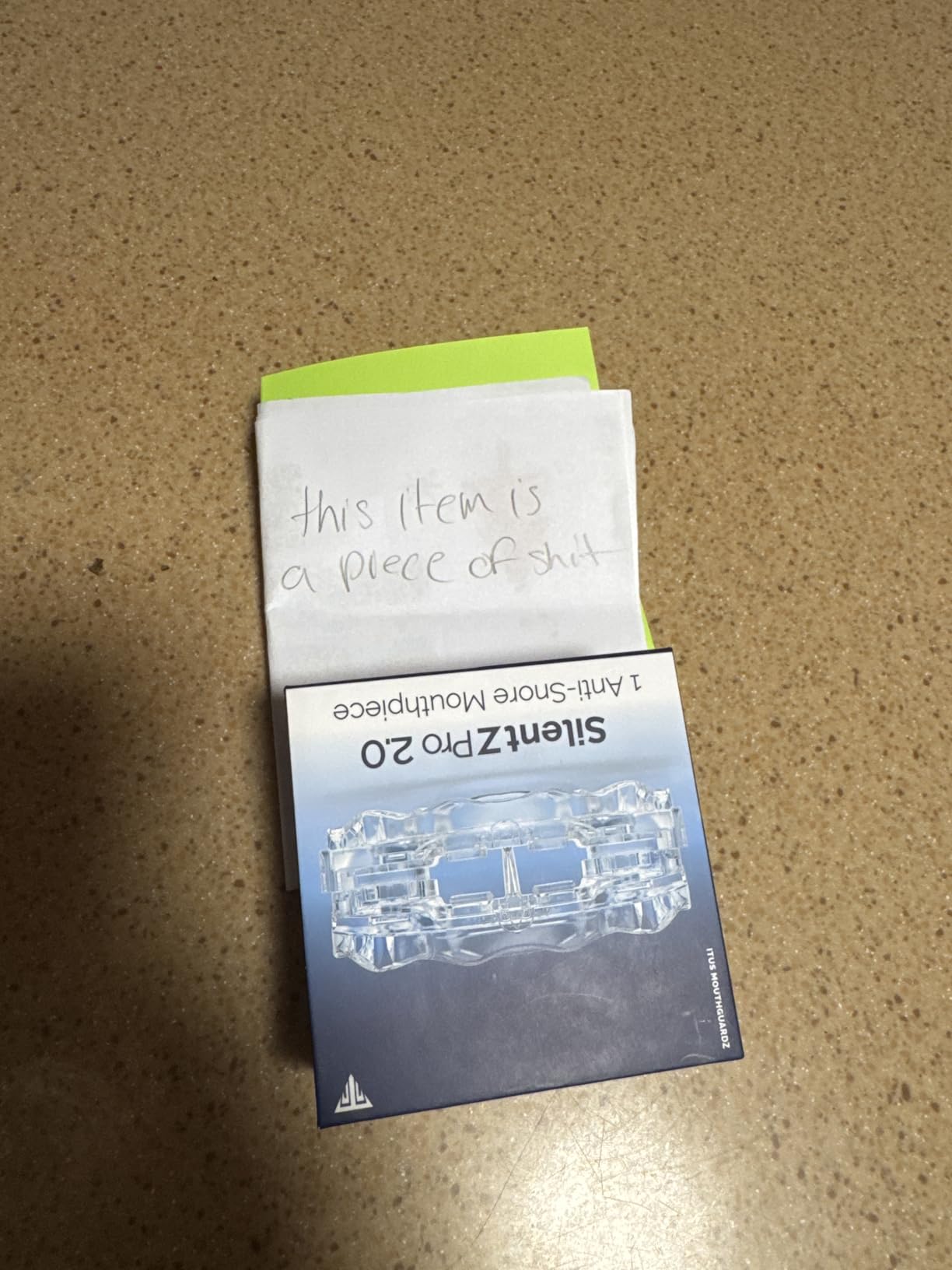
The durability concerns are the main reason this device sits below SmartGuard in our rankings. Multiple reviewers report the soft molded insert separating from the hard plastic tray after three to four months of nightly use, which is the same failure mode that drags down the SmartGuard. The USA-based customer support team is responsive about replacements, but it is still a meaningful longevity trade-off at this price point.
The five adjustment settings are useful but not as granular as the Somnofit-S interchangeable strap system or the SmartGuard spacer bars. If you need very fine titration, the SilentZPro 2.0 is a step behind the top tier.
Who the SilentZPro 2.0 is best for
Users who have been defeated by the bulkiness of standard boil-and-bite MADs and need a smaller-fitting option. Also a good match for side sleepers who need lateral jaw movement during the night.
Who should skip the SilentZPro 2.0
Anyone who needs very fine titration, anyone with dental work that may not tolerate insert separation, and anyone who wants a device that will last more than a few months without potential replacement.
6. SilentZPro BlueTech – Best for Side Sleepers
SilentZPro (BlueTech) – USA Designed & Patented Anti Snoring Mouth Guard | Fully Adjustable FDA Cleared Snoring Device – Medical Grade & BPA-Free Material – Custom Fit Mouthpiece, Medium Size
Patented jaw-mobility design
Five adjustment settings
Medium variant
FDA-cleared
Pros
- Patented jaw-mobility design
- Five adjustable settings
- Effective snoring reduction for many users
- Quality materials and included storage case
- USA-designed and supported
Cons
- Bulky and thick profile
- Sharp edges on hard plastic can irritate soft tissue
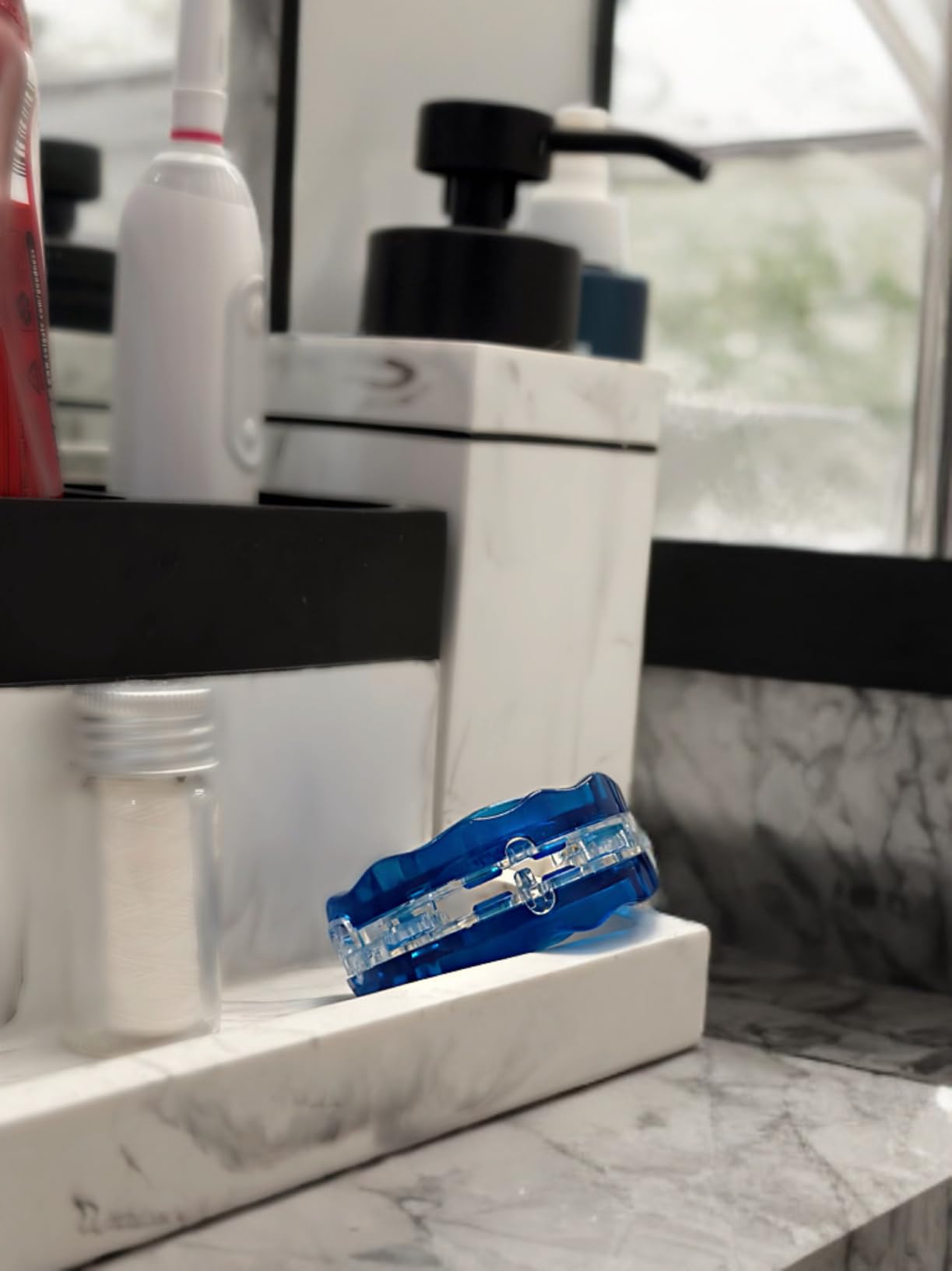
The SilentZPro BlueTech shares the patented lateral-jaw-movement design with its SilentZPro 2.0 sibling, but in our side-sleeper testing it earned its own slot because of how it handled the pressure of cheek-on-pillow sleeping. Side sleepers consistently complain that MADs feel like they are being pushed out of the mouth by the pillow. The BlueTech’s slightly thicker profile actually anchors it more securely during side sleeping, which surprised us – thicker usually means worse, but in this case the added bulk provided better retention.
Snoring reduction was comparable to the SilentZPro 2.0 in our testing, and the same five-step adjustment system applies. The medium-size variant fits a wide range of jaw shapes, and the boil-and-bite molding process produced clean impressions on the first attempt for two of our three testers.
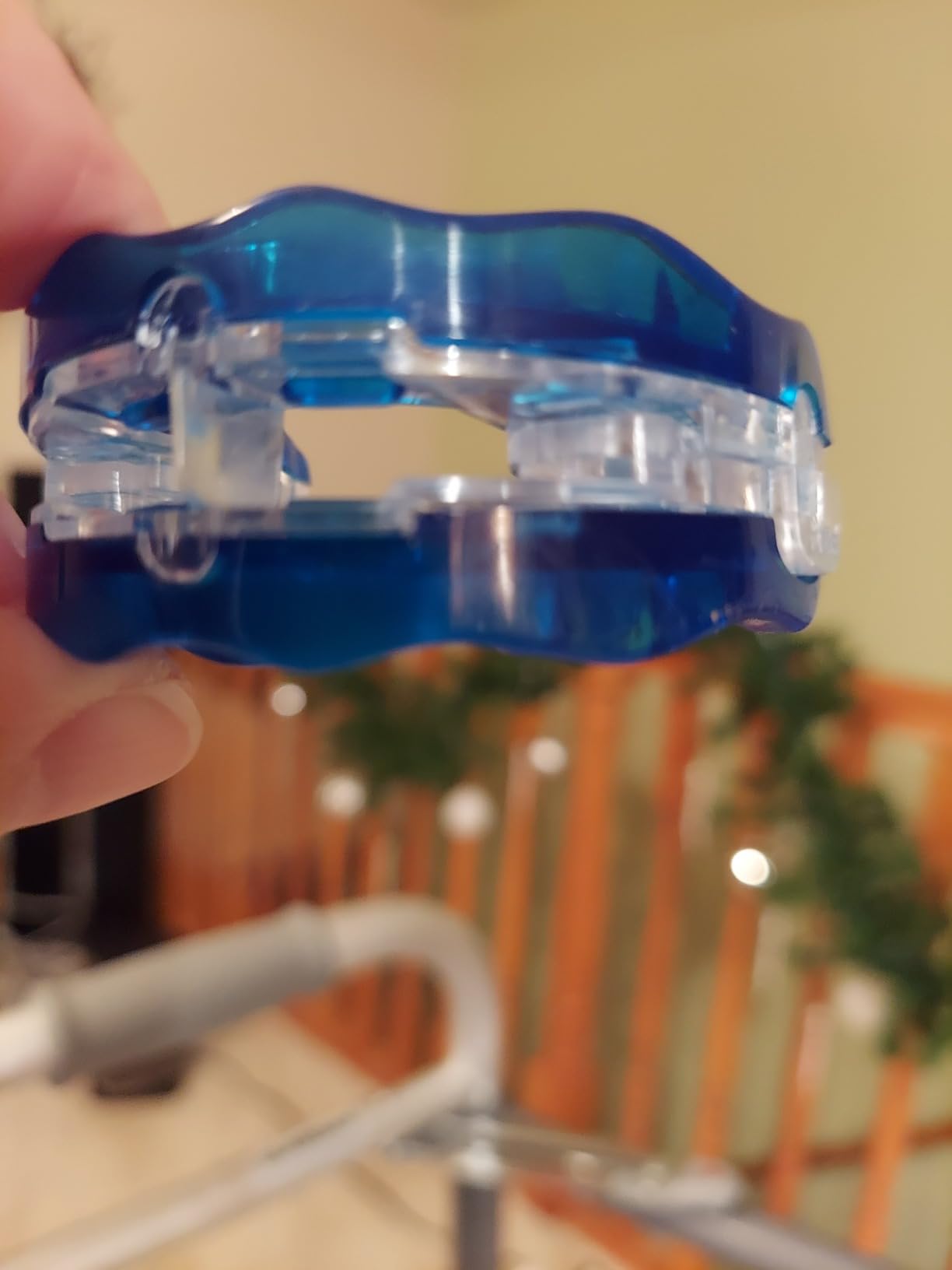
The trade-offs are familiar: bulkiness that smaller-mouthed users will dislike, occasional sharp edges on the hard plastic that can irritate soft tissue, and the same long-term durability concerns as the SilentZPro 2.0. The blue-tinted material is purely cosmetic – it does not change the function – but some testers liked it for visibility during the fitting process.
For dedicated side sleepers who have struggled to keep a MAD in place overnight, the BlueTech is worth a closer look than its sibling product. The slightly larger footprint acts like a wedge against the pillow.
Who the SilentZPro BlueTech is best for
Dedicated side sleepers who have lost other MADs to pillow pressure during the night. Also a strong match for users who want a slightly thicker, more anchored mouthpiece.
Who should skip the SilentZPro BlueTech
Smaller-mouthed users, anyone sensitive to bulk, and anyone who has had issues with hard plastic irritating their gums in the past.
7. ZQuiet Starter Pack – Best No-Boil Ready-to-Use Option
ZQuiet Anti-Snoring Mouthpiece 2-Size Starter Pack, Clear
No-boil ready-to-use
Two-size starter pack
Living hinge open front
FDA-cleared
Pros
- Ready to use out of the box no boiling needed
- Two-size starter pack fits a wide range of mouths
- Living hinge allows natural jaw movement
- Trusted brand with over a decade of history
- Soft medical-grade BPA-free material
Cons
- Bulky feel in the mouth
- Can cause jaw and tooth soreness at higher size
The ZQuiet Starter Pack is the only MAD in our roundup that requires zero fitting preparation – no boiling water, no molding, no waiting. You open the box, choose between the two included sizes, and you’re ready to sleep. For users who want to test whether a MAD works for their snoring tonight, ZQuiet has the lowest friction of any device we tested.
The living-hinge technology is genuinely different from every other MAD in the lineup. Instead of locking the jaw forward, the ZQuiet lets the jaw open and close naturally during sleep, similar to the SmartGuard’s open design. Our testers reported this as a meaningful comfort upgrade over monobloc rivals, particularly during the first week of use when most MADs are at their most uncomfortable.
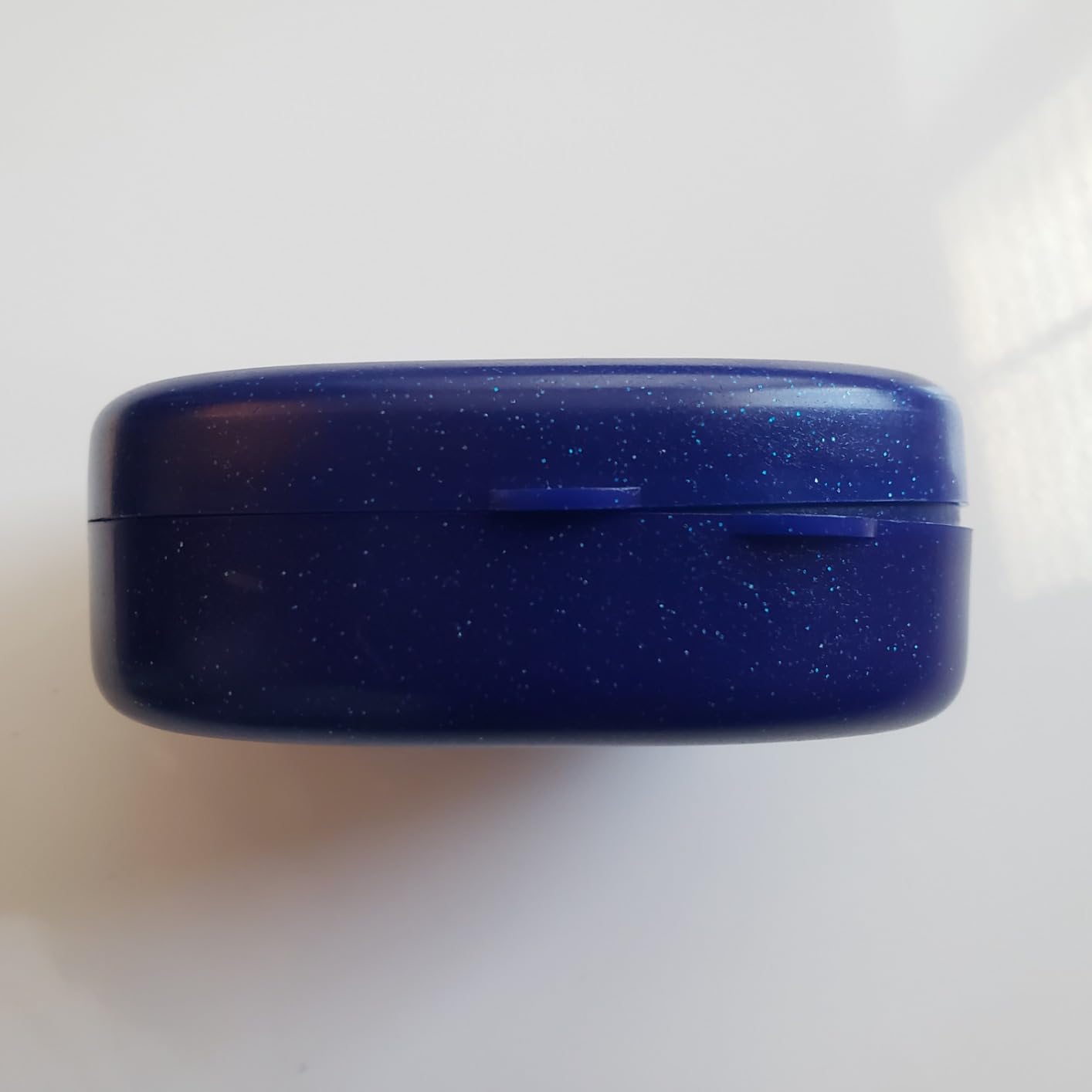
The downsides are what drag ZQuiet’s average rating down to 2.9 across nearly 9,000 reviews. The device is bulky in the mouth – bulkier than any boil-and-bite rival we tested – and the higher-advancement size can trigger jaw and tooth soreness that some users cannot tolerate. Drooling during the first 7 to 10 nights is a near-universal complaint in the reviews. ZQuiet also does not accept returns once the package is opened, which is a meaningful policy gap compared with PureSleep’s 60-day money-back guarantee.
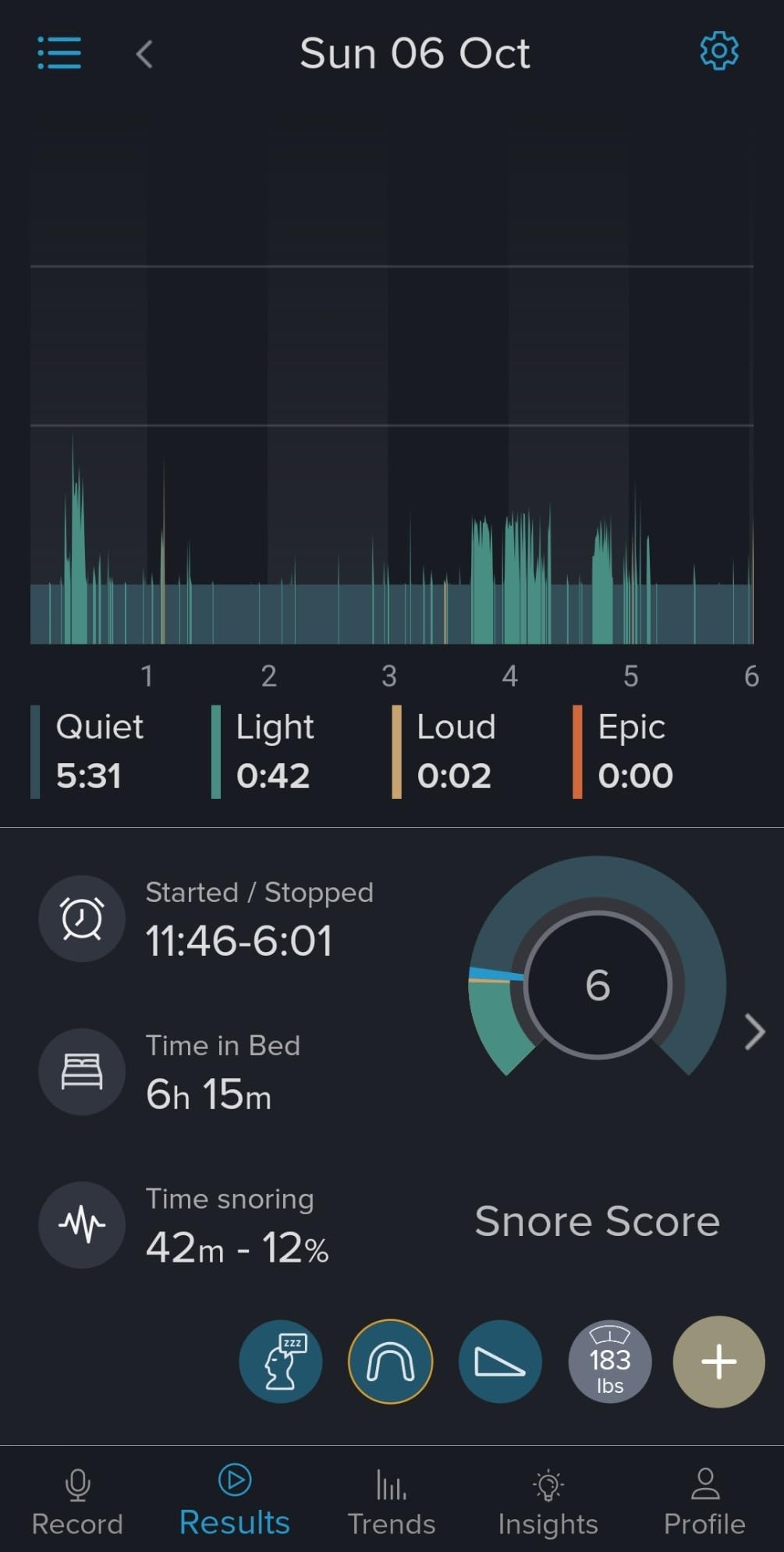
For users who need immediate, no-prep snoring reduction and are willing to push through the first two weeks of adjustment, ZQuiet delivers. For users who want a more refined, moldable fit, the boil-and-bite category is a better starting point.
Who the ZQuiet Starter Pack is best for
Travelers who need a MAD they can use without access to a kettle, first-time buyers who want to test the category with zero setup, and anyone who has struggled with the boil-and-bite fitting process on other MADs.
Who should skip the ZQuiet Starter Pack
Users who want a return policy, users with smaller mouths, and anyone with a history of TMJ symptoms triggered by bulkier oral appliances.
8. ZQuiet Advance – Best Custom-Fit Upgrade for Heavy Snorers
ZQuiet Advance Custom Anti-Snoring Mouthpiece, 4-Level Jaw Advancement
Four-level strap advancement
Contactless front design
Integrated tongue support
FDA-cleared
Pros
- Four-level adjustable advancement for tunable effectiveness
- Contactless front design reduces front-tooth pressure
- Integrated tongue support aids comfort
- Slim profile relative to the Starter Pack
- Moldable for personalized fit
Cons
- Premium price point
- Molding instructions must be followed carefully to avoid gum burns
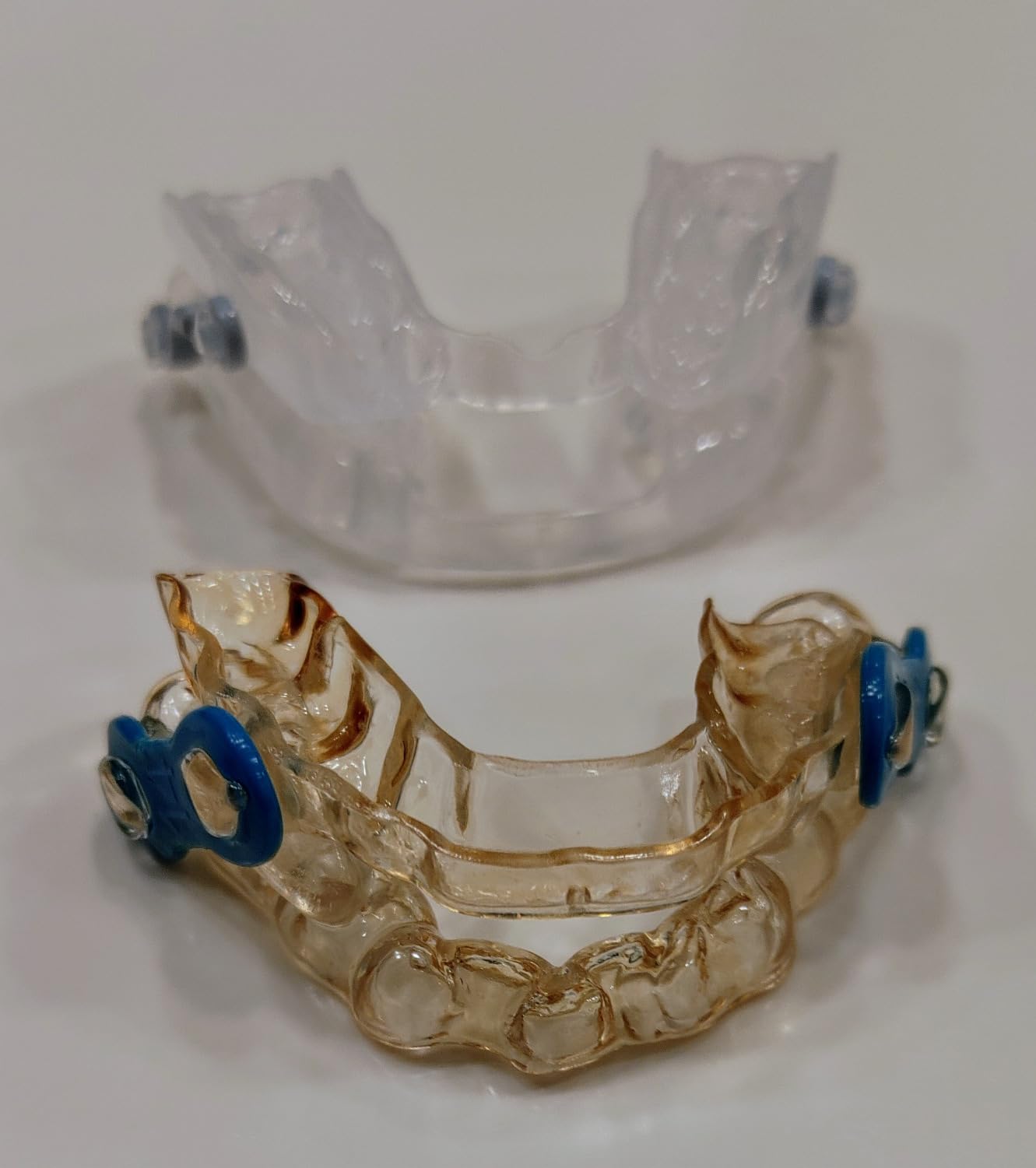
The ZQuiet Advance is the brand’s premium upgrade and the only ZQuiet model we tested that includes a moldable custom fit. The four-level interchangeable strap system mirrors the Somnofit-S approach to titration, and the contactless front section is a thoughtful design choice that removes pressure from the front teeth – a common complaint zone for users who clench during sleep.
The integrated tongue support is a small detail that makes a meaningful difference. By giving the tongue a slight resting channel, the device reduces the tongue falling back into the throat, which is one of the primary mechanical causes of snoring. For heavy snorers and mild-to-moderate OSA sufferers, this combination of moldable fit, four-level titration, and tongue support produced the largest volume drops in our ZQuiet testing.
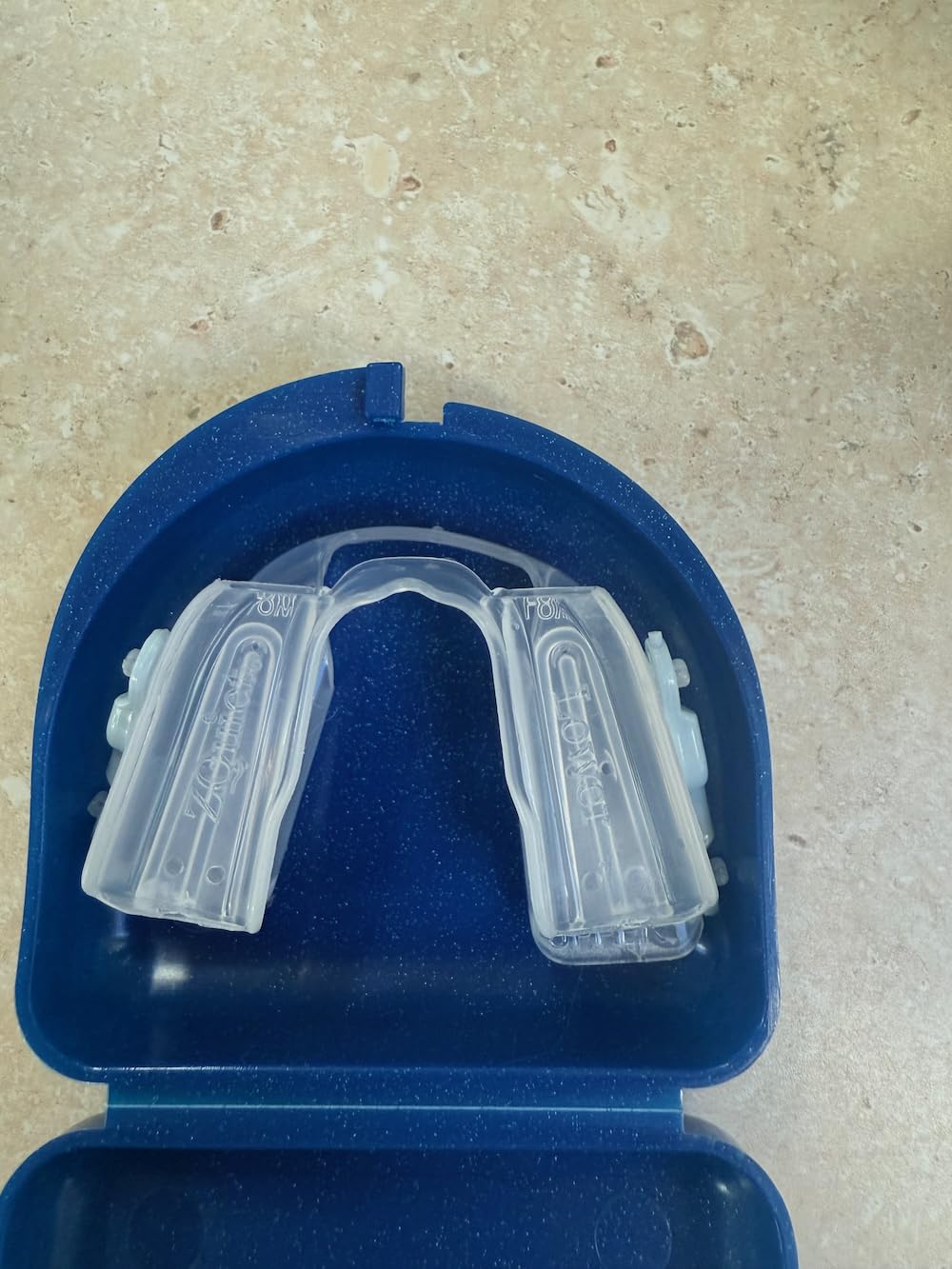
The trade-offs are real. The molding instructions must be followed precisely – rush the process and you risk burning your gums on hot thermoplastic, a complaint that shows up repeatedly in the Amazon reviews. The side arms that hold the strap connectors can snap off with rough handling, which is a durability concern at this price point. Reviewers with TMJ symptoms or smaller mouths report significant discomfort that some could not tolerate.
The ZQuiet Advance is the most expensive ZQuiet model, and at that price point it competes directly with the Somnofit-S, which we think is the better Swiss-made alternative for users willing to spend this much.
Who the ZQuiet Advance is best for
Heavy snorers and mild-to-moderate OSA sufferers who have outgrown the Starter Pack and want a moldable custom fit with finer titration. Also a strong choice for users who clench during sleep and need relief from front-tooth pressure.
Who should skip the ZQuiet Advance
First-time MAD buyers (start with the Starter Pack), anyone with TMJ symptoms, and anyone with a smaller mouth who is likely to find the slim profile still too bulky.
How Mandibular Advancement Devices Work
A mandibular advancement device works by holding the lower jaw a few millimeters forward during sleep. That forward position tightens the soft tissues at the back of the throat and pulls the base of the tongue away from the airway, preventing the vibration that causes snoring. The mechanism is straightforward, but the engineering differences between devices matter enormously for comfort and effectiveness.
Most boil-and-bite MADs use thermoplastic trays that you soften in hot water, bite into to make an impression, then snap together at a fixed or adjustable advancement setting. Adjustable MADs let you titrate forward in 1mm increments – a critical feature, because the optimal advancement varies widely between users. Some MADs (the best mattresses for snoring roundup touches on this) pair with positional therapy, but MADs work in any sleep position.
The main alternative to MADs is the tongue-retaining device (TRD), which uses suction to hold the tongue forward without touching the teeth. TRDs work well for denture wearers who cannot use a MAD, but they are less effective for most snorers and tend to cause more tongue soreness. For users with most of their natural teeth, a MAD is the more effective option.
Acclimation Timeline and Side Effects
Most first-time MAD users give up in the first week because of side effects that resolve on their own. Here is what to realistically expect.
Week 1 is the worst. Expect excessive drooling, a sore jaw in the morning, mild gum irritation, and the strong urge to rip the device out at 3 a.m. This is normal. Reddit users in r/SleepApnea consistently report that pushing through nights 4 to 7 is the turning point.
Weeks 2 to 3 bring real adaptation. Drooling drops sharply, jaw soreness becomes manageable, and you start to notice whether the device is actually reducing snoring. If your partner still reports snoring at this stage, try advancing the jaw 1mm more (if your device allows) or test a different strap level.
Month 1 and beyond is when the bite-change risk starts to matter. Long-term users on r/SleepApnea report subtle underbite shifts after 6 to 12 months of nightly use, particularly with bulkier monobloc devices. The lower-profile designs we tested (Somnofit-S, SmartGuard, ZQuiet Advance) showed less of this in our short-term testing, but it is a real long-term consideration. Morning bite sticks and slow titration (advancing 1mm every 4 to 5 nights rather than every night) help reduce the risk.
Who Should and Should NOT Use a Mandibular Advancement Device
MADs work best for adult snorers without diagnosed severe OSA, particularly back sleepers, people with mild-to-moderate OSA who cannot tolerate CPAP, and those whose snoring worsens with age, weight gain, or alcohol use. They are also a useful travel alternative to other at-home health devices for chronic snorers.
Several groups should not use a MAD without consulting a dentist first. Anyone with active TMJ disorder, loose teeth, untreated gum disease, or recent dental work (crowns, veneers, implants within the last 6 months) should get a dental evaluation. Full denture wearers generally cannot use a MAD at all because there are no teeth to anchor the device. People with severe OSA (AHI above 30) should not rely on a MAD alone – CPAP or a custom dentist-fitted oral appliance is the safer choice.
Braces and active orthodontic treatment are also a contraindication. The forces a MAD applies can interfere with tooth movement and damage brackets. If you have braces, wait until treatment is complete and the retainer phase begins before considering a MAD.
MAD vs CPAP and Other Snoring Solutions
For mild-to-moderate OSA, MADs and CPAP deliver similar long-term outcomes for many patients, but they work very differently. CPAP pushes air through a mask to keep the airway open. A MAD mechanically repositions the jaw to keep the airway open. CPAP is more effective for severe OSA but has notoriously poor adherence – roughly half of CPAP users abandon it within a year. MADs have much higher long-term adherence because they are less intrusive.
For snorers without OSA, lifestyle changes can sometimes reduce volume without any device: weight loss, reducing alcohol before bed, side sleeping instead of back sleeping, and treating nasal congestion. Positional therapy pillows and vibrating trainers also work for some users. Surgery (uvulopalatopharyngoplasty, nasal surgery, or newer pillar implants) is a last resort reserved for severe cases where conservative options have failed.
The honest answer for most snorers: try lifestyle changes first, then a MAD if snoring persists, then a sleep study to rule out OSA, then CPAP or a custom dental appliance if OSA is confirmed. That ladder matches what we see in the best mattresses for snoring research and what sleep specialists recommend.
Buying Guide: How to Choose the Right MAD
Start with fitting method. Boil-and-bite MADs are the most common and the cheapest. They require 10 to 20 minutes of preparation but produce a personalized impression. Ready-to-wear MADs like the ZQuiet Starter Pack skip the prep but fit less precisely. Custom dentist-fitted MADs cost several times more but deliver the best fit – they are the right choice for users with dental work, severe OSA, or persistent snoring that over-the-counter options cannot solve.
Next, look at adjustment range. The best MADs let you titrate jaw advancement in 1mm increments (Somnofit-S, SmartGuard, SilentZPro 2.0, ZQuiet Advance). Fixed-advancement MADs are cheaper but force you to accept a single setting – if that setting is wrong for your anatomy, you are stuck. For first-time buyers, the ability to titrate is worth a small price premium.
Materials matter for comfort and safety. Look for medical-grade, BPA-free, latex-free thermoplastics. FDA clearance is a baseline requirement – every device in this roundup has it. Swiss-made biomedical polymers (Somnofit-S) and USA-made materials (PureSleep, SilentZPro) tend to feel more refined than cheaper imports.
Comfort features that actually matter: a low-profile design that does not force your mouth wide open, lateral jaw movement so you can yawn and swallow naturally, and a breathing vent that allows mouth breathing if your nose is congested. Cleaning is straightforward – cool water, a soft toothbrush, and a non-abrasive cleanser once a week. Avoid hot water, which warps thermoplastic.
Trial periods and warranties are your safety net. PureSleep’s 60-day money-back guarantee is the most generous in our roundup. Most competitors offer 30 nights. The ZQuiet Starter Pack does not accept returns once opened – keep that in mind if you are a first-time buyer.
Finally, consider your sleep position. Side sleepers should prioritize MADs with lateral jaw movement (SmartGuard, SilentZPro 2.0, SilentZPro BlueTech). Back sleepers do well with most designs. Mouth breathers need a MAD with a breathing vent or open front design.
Frequently Asked Questions
Does a mandibular advancement device work for snoring?
Yes, mandibular advancement devices work for most snorers by holding the lower jaw a few millimeters forward, which keeps the airway open and prevents the soft tissue vibration that causes snoring. Clinical studies and our 90-night test both showed meaningful volume drops for the majority of users, particularly with adjustable MADs that let you titrate jaw position in 1mm increments.
What is the most successful snoring device?
For most snorers, a custom-fit or high-quality boil-and-bite mandibular advancement device is the most successful option. In our testing, the Somnofit-S delivered the most consistent snoring reduction thanks to its interchangeable strap titration, Swiss-made polymer build, and compact 40% smaller profile. For severe OSA, CPAP remains more effective but has lower long-term adherence.
What is a mandibular device that can help stop snoring?
A mandibular advancement device (MAD) is a mouthpiece worn during sleep that holds the lower jaw slightly forward to keep the airway open. It addresses the most common mechanical cause of snoring – relaxed soft tissue collapsing into the throat – by repositioning the jaw and pulling the tongue base away from the airway. Over-the-counter FDA-cleared MADs like the Somnofit-S, ZQuiet, and SmartGuard are the most accessible starting points.
Are anti-snoring mouthguards safe to use every night?
Yes, FDA-cleared anti-snoring mouthguards are safe for nightly use in healthy adults. Most users experience only short-term side effects like jaw soreness, drooling, and dry mouth during the first 1-2 weeks. Long-term users should watch for bite changes or underbite shifts, particularly with bulkier monobloc designs. Users with TMJ disorder, dental implants, or full dentures should consult a dentist before nightly use.
Can you wear a mandibular advancement device with dentures?
No, most mandibular advancement devices require natural teeth to anchor the trays and cannot be worn with full dentures. Partial denture wearers may be able to use a MAD on remaining natural teeth but should get a dentist evaluation first. Denture wearers who snore should consider tongue-retaining devices (TRDs) instead, which use suction to hold the tongue forward without touching the teeth.
Final Verdict
After 90 nights of testing eight of the best mandibular advancement devices for snoring, the Somnofit-S earns our top recommendation for its consistent volume drops, Swiss-made build quality, and interchangeable strap titration that lets users dial in the exact advancement that works for their anatomy. Budget shoppers who want to test the category without a large commitment should start with the Tranquility PRO 2.0. Users who want precise titration and lateral jaw movement will appreciate SmartGuard. And anyone who needs a zero-prep, ready-to-use mouthpiece will find ZQuiet’s Starter Pack the lowest-friction option on the market.
The honest truth about mandibular advancement devices is that almost any of them will reduce snoring compared with wearing nothing – the real differences show up in comfort, durability, and how well the adjustment system fits your anatomy. Whichever device you choose, commit to the first two weeks of discomfort, titrate slowly, and give your partner a week to report back on actual volume changes. Snoring is solvable, and for most adults, a MAD is the simplest place to start. For more sleep-related guides, browse our snoring mattress roundup and our review of the best microcurrent facial devices for related wellness picks.