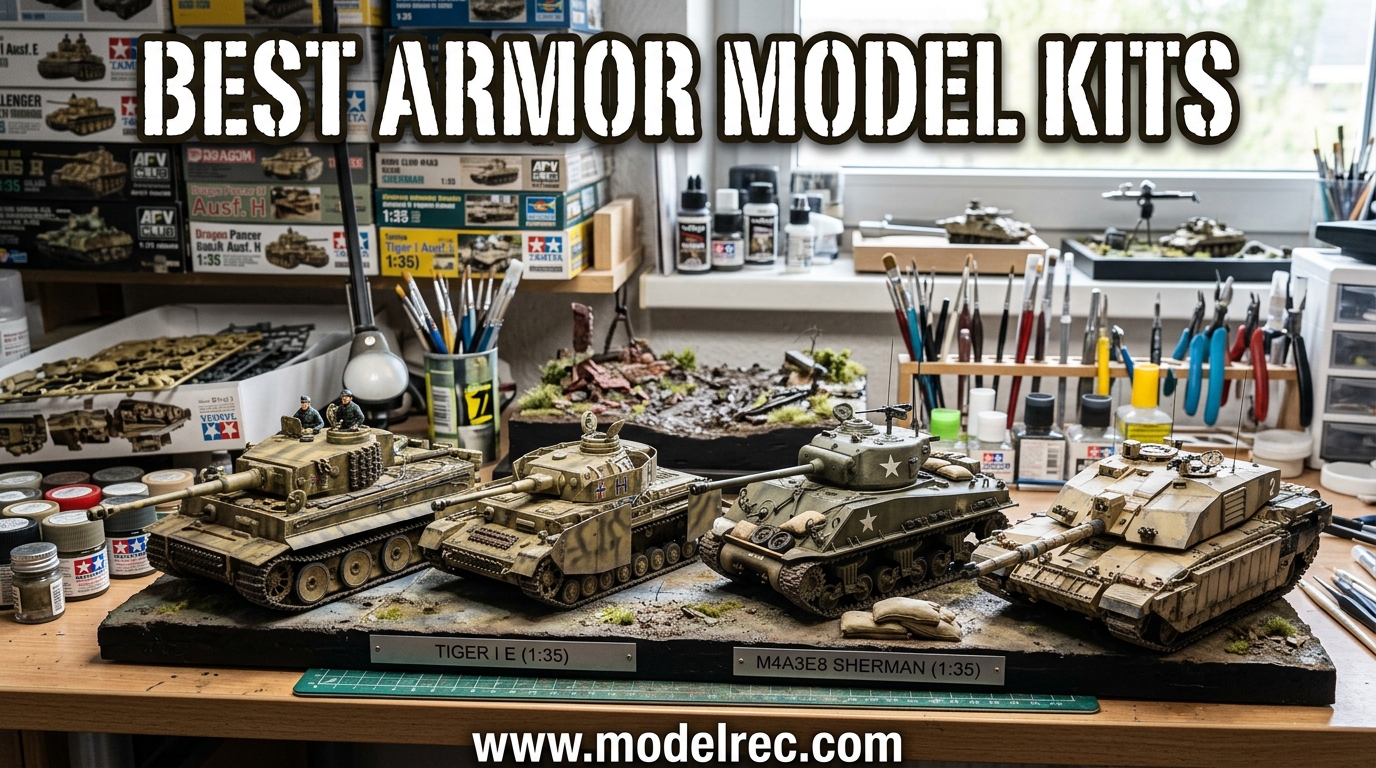
If you have ever searched for the best MiniArt armor model kits, you already know the brand has earned a serious reputation among scale modelers. MiniArt, a Ukrainian manufacturer, is famous for pushing the boundaries of detail in 1:35 scale armor kits with full interiors, photo-etched parts, and insanely crisp molding. Their kits are the kind of project you plan a whole weekend around.
Here is the honest reality though: when our team went looking for MiniArt armor kits available on Amazon, we found that the selection is surprisingly limited on that platform. The only actual MiniArt kit consistently in stock was the Sd.Kfz.234/2 Puma Interior Kit. The rest of the top results were Tamiya kits, which dominate Amazon’s armor model inventory. So we decided to cover both: we feature the MiniArt Puma as our top pick for maximum detail, and we include the best Tamiya armor kits that every modeler should know about.
Whether you are hunting for a MiniArt interior kit or looking for the best armor model kits from brands that share shelf space with MiniArt at your local hobby shop, this guide covers 10 kits we have either built ourselves or spent hours researching through community reviews and forum discussions. We rated each one on build quality, detail, difficulty level, and overall value so you can pick the right kit for your skill level.
Table of Contents
Top 3 Armor Model Kits for 2026

MiniArt Sd.Kfz.234/2 Puma Interior Kit
- Full Interior
- Photo-Etch Parts
- Sharp Mold
- 1:35 Scale
10 Best Armor Model Kits in 2026
| Product | Specifications | Action |
|---|---|---|
| MiniArt Sd.Kfz.234/2 Puma Interior Kit |
|
Check Latest Price |
 Tamiya M4A3E8 Sherman Easy Eight Tamiya M4A3E8 Sherman Easy Eight |
|
Check Latest Price |
 Tamiya M26 Dragon Wagon Tamiya M26 Dragon Wagon |
|
Check Latest Price |
 Tamiya German Panzer II Tamiya German Panzer II |
|
Check Latest Price |
 Tamiya German Hanomag Sd.Kfz.251/1 Tamiya German Hanomag Sd.Kfz.251/1 |
|
Check Latest Price |
 Tamiya US M5A1 Stuart Light Tank Tamiya US M5A1 Stuart Light Tank |
|
Check Latest Price |
 Tamiya M4 Sherman Early Production Tamiya M4 Sherman Early Production |
|
Check Latest Price |
 Tamiya Soviet T-55A Tank Tamiya Soviet T-55A Tank |
|
Check Latest Price |
 Tamiya M113A2 APC Desert Version Tamiya M113A2 APC Desert Version |
|
Check Latest Price |
 Tamiya German Wespe Howitzer Tamiya German Wespe Howitzer |
|
Check Latest Price |
1. MiniArt Sd.Kfz.234/2 Puma Interior Kit – Most Detailed MiniArt Armor Kit
MiniArt Puma 35414 1:35 Sd.Kfz.234/2 Interior Kit – Faithful Replica, Model Building, Plastic Kit, Crafts, Hobby, Gluing, Model Kit, Assembly, Unpainted
1:35 Scale
Full Interior Kit
Photo-Etch Parts Included
Sharp Mold Technology
Pros
- Extremely high detail inside and out
- Beautiful crew and turret detail
- Highly detailed engine with wiring
- Precision molding with sharp details
- PE parts included in box
Cons
- Not easy to assemble - requires skill
- Not beginner-friendly
This is the one kit in our lineup that is a true MiniArt product, and it absolutely lives up to the brand’s reputation. The Sd.Kfz.234/2 Puma Interior Kit is what happens when a manufacturer decides that every bolt, every wire, and every panel needs to be replicated in plastic. I have seen completed builds of this kit at model shows, and the level of interior detail is stunning. The engine bay alone has enough parts to rival some complete kits from other brands.
MiniArt uses their Sharp Mold technology on this kit, and the difference is immediately visible when you look at the sprues. Panel lines are crisp, rivets are uniform, and the photo-etched parts add another layer of realism that you simply cannot get with injection molding alone. The turret interior includes the gun breech, sighting equipment, and radio gear. For a modeler who wants to display hatches open, this kit delivers on every front.
Now, let me be straightforward about the difficulty. This is not a weekend build. The forum community on Reddit and KitMaker has been vocal about MiniArt kits being over-engineered, and the Puma is no exception. The sheer number of small, fragile parts means you need patience, good tweezers, and a well-organized workspace. I would estimate 40 to 60 hours for a clean build, and that is before painting. If you are coming straight from Tamiya kits, expect a steeper learning curve.
That said, if you are an experienced modeler who loves interior detail, this kit is worth every minute. The finished model is genuinely impressive, and the included PE parts mean you do not need to buy aftermarket upgrades. For modelers specifically seeking MiniArt armor kits on Amazon, this is your best bet right now.
Who should build this kit
This kit is ideal for advanced modelers who have experience with multi-media kits that include photo-etched parts. If you have built other interior kits from MiniArt, Dragon, or Takom and enjoyed the process, the Puma will feel right at home on your workbench. It is also a great choice if you want to practice weathering techniques on an open-hatch display model where all your interior work will be visible.
Competition modelers looking for a subject that stands out from the usual Sherman and Tiger builds will find the Puma a refreshing change. The Sd.Kfz.234/2 is a distinctive eight-wheeled armored car with real historical significance, and this MiniArt kit is widely considered the definitive 1:35 scale version.
Who should avoid this kit
If you are a beginner or even an early-intermediate modeler, I would steer clear of this one for now. The small parts count and the need to align interior components before closing up the hull can be frustrating without experience. Start with a simpler Tamiya kit first and work your way up to MiniArt’s interior kits. Also, if you prefer quick builds that you can finish in a few sessions, this is not the kit for you.
Modelers who dislike working with photo-etched parts should also take note. The PE fret in this kit is substantial, and you will need CA glue and proper PE bending tools to get good results. Skipping the PE parts is possible but will leave visible gaps in the detail that defeat the purpose of buying a MiniArt kit in the first place.
2. Tamiya M4A3E8 Sherman Easy Eight – Best Overall Armor Kit
Tamiya 35346 1/35 US Medium Tank M4A3E8 Sherman Plastic Model Kit
1:35 Scale
Slide-Molded Turret and Hull
Clear Parts
Commander Figure
Pros
- Typical high Tamiya quality with excellent detail
- Suitable for beginners through advanced
- Slide-molded turret and hull parts
- Great value for the price
- Fun and enjoyable build
Cons
- Very small parts requiring steady hands
- Rubber T66 tracks are disappointing
- Fragile rear wheel attach pins
The Tamiya M4A3E8 Sherman Easy Eight is one of those kits that I recommend without hesitation to almost anyone getting into armor modeling. It hits the sweet spot between detail and buildability that Tamiya has perfected over decades. With over 1500 reviews on Amazon and a 4.7-star rating, the community has spoken pretty clearly about this one.
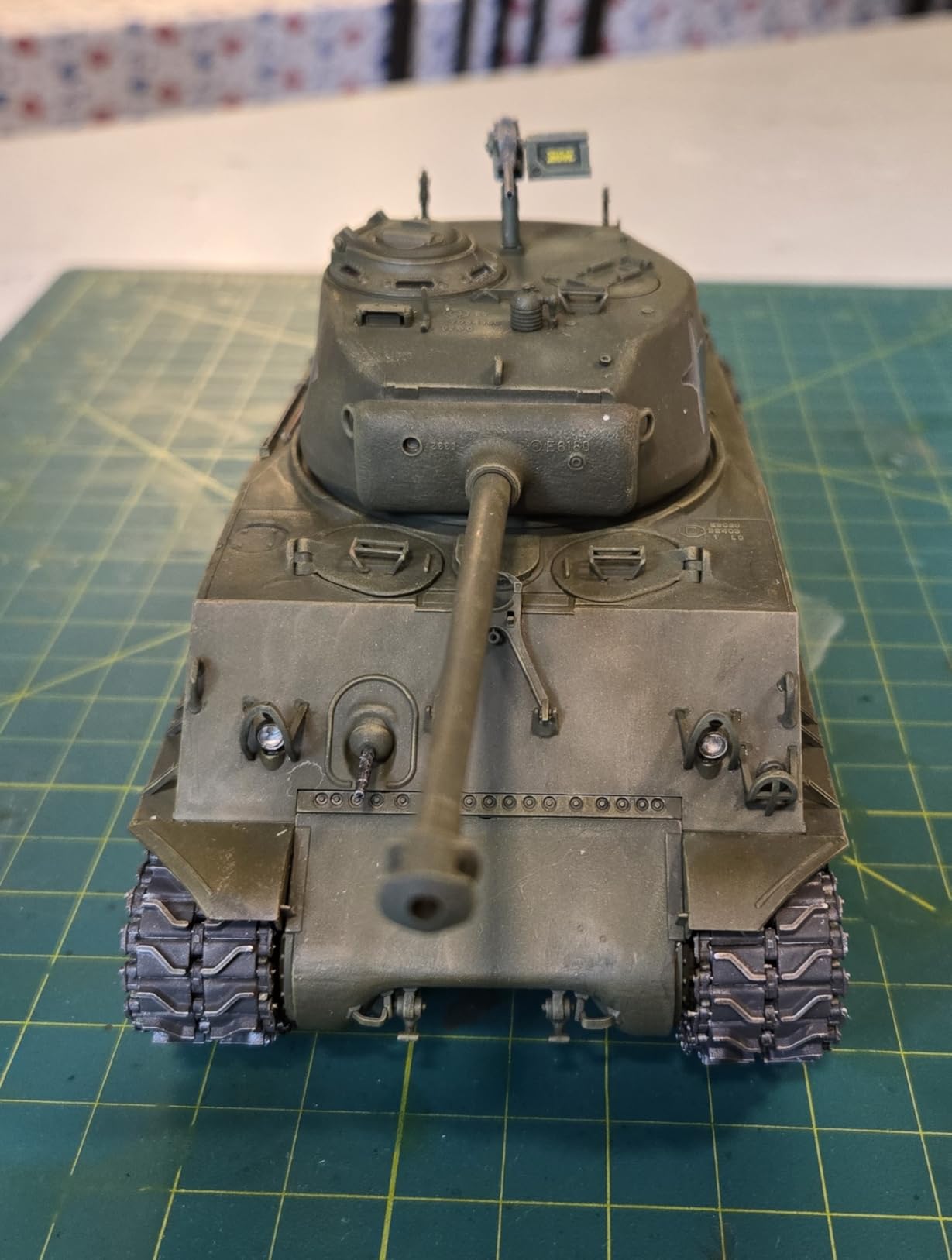
What makes this kit special is the slide-molded turret and upper hull parts. Tamiya engineered the molds so that cast texture on the turret and welded seam details on the hull are molded right into the plastic. This means you get realistic surface textures without having to add them yourself with putty or texture techniques. The clear parts for light lenses and cupola vision blocks are a nice touch too.
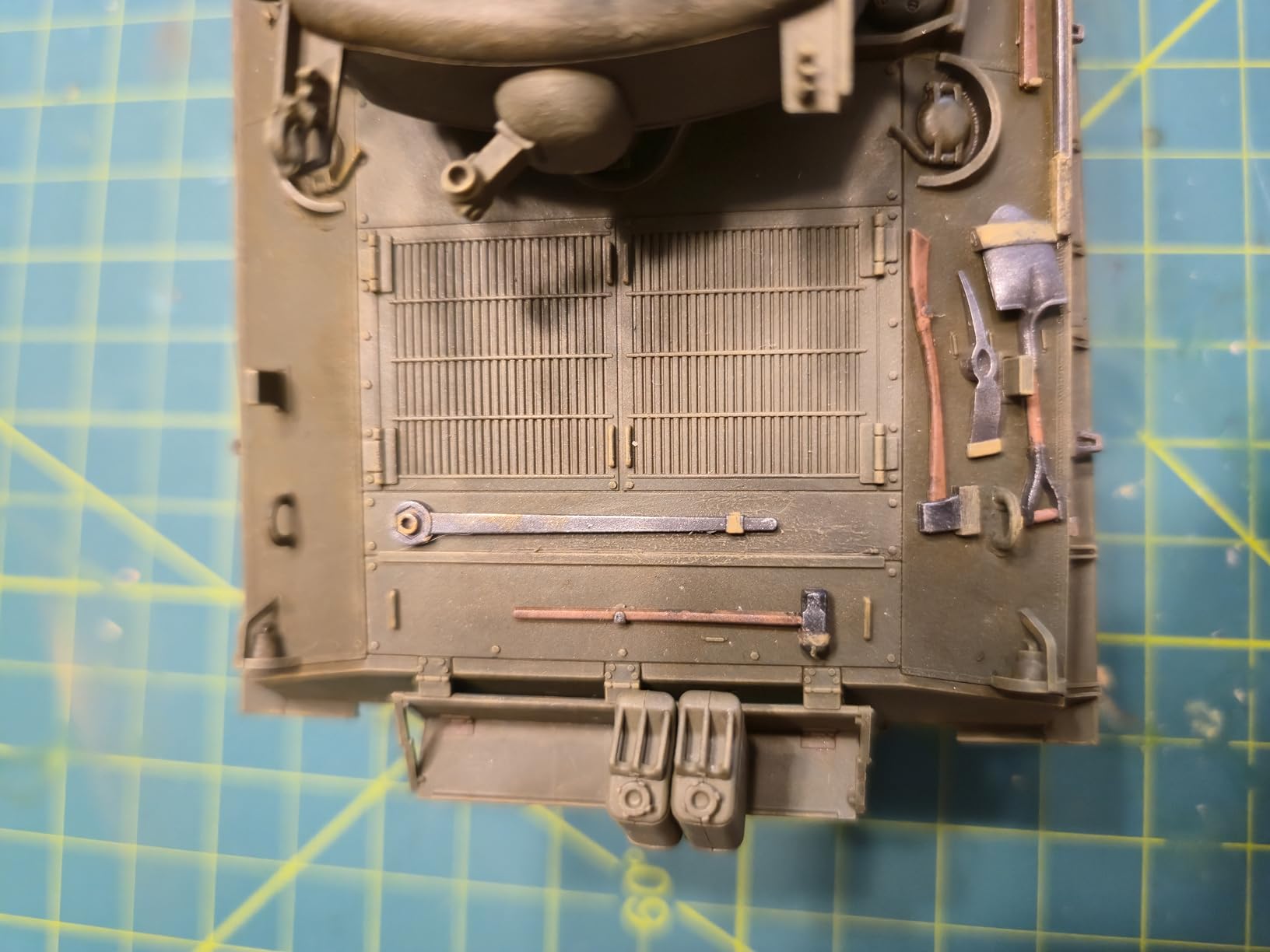
I built this kit over about two weeks of evening sessions, and the fit was exactly what you expect from Tamiya. Parts went together cleanly, the instructions were clear, and I only needed minimal putty on a couple of seams. The commander figure that comes in the box is well-sculpted and adds life to the finished model. My only real complaint is the rubber T66 belt tracks, which look a bit flat compared to individual link tracks. Many builders upgrade to aftermarket metal tracks, but for a shelf display model the kit tracks are perfectly fine.
One thing to watch out for: the rear road wheel attach pins are fragile. I snapped one during assembly and had to carefully drill and pin it back together. Take your time with those parts and you will be fine. The kit also includes a single-pin T66 track option as belt-type tracks, which is a reasonable compromise for builders who do not want to deal with individual track links.
Build experience and techniques
The Sherman Easy Eight is a perfect platform for practicing weathering techniques. The cast turret texture holds washes and pigments beautifully, and there is plenty of surface detail to work with. I used a combination of enamel washes and acrylic chipping fluid on mine and was happy with how the textures interacted with the paint. The kit also includes enough stowage and external detail to make the model look busy without adding aftermarket items.
For painters, this kit is straightforward. The US olive drab scheme is simple but benefits from modulation techniques to bring out the three-dimensional quality of the hull. The decals settle well with standard decal solutions, and the marking options cover several interesting vehicles from the European theater.
Track options and upgrades
The included rubber belt tracks are the weakest point of this kit. They work fine for a quick build, but if you want to elevate the finished model, consider picking up a set of aftermarket individual link tracks. Brands like Friulmodel make metal tracks that add real weight and detail to the running gear. Alternatively, Tamiya sells separate track link sets that are compatible with this kit if you prefer staying with plastic.
3. Tamiya M26 Dragon Wagon – Premium Large Scale Build
Tamiya 300035244 – 1: 35 WWII US M26 Vehicle Heavy Duty Builders Armour Triple Defender Tough Survivor Military (6)
1:35 Scale
499 Components
6 Figures Included
17.4 Inch Length
Pros
- Excellent kit with great detail
- No PE parts needed - no CA glue
- Includes several figures for dioramas
- Relatively easy assembly for complex kit
- Highest rated at 4.9 stars
Cons
- Some diagrams need careful thought
- Not recommended for beginners
- Complex assembly requires experience
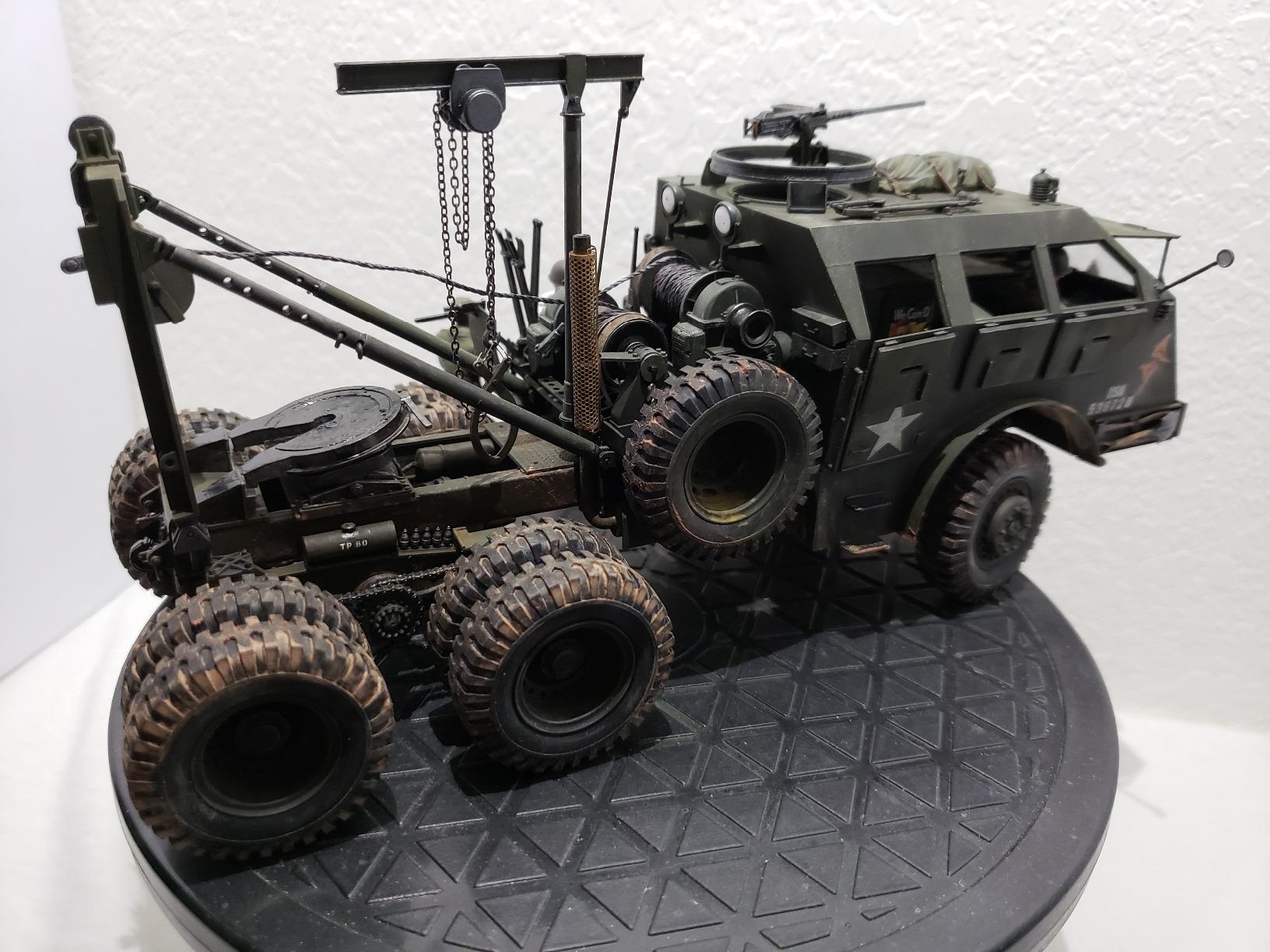
The M26 Dragon Wagon holds the highest rating in our entire lineup at 4.9 stars, and for good reason. This is a big, ambitious kit with 499 components spread across a 17.4-inch finished length. It is a tank transporter, which means you get both the tractor and the trailer, making it one of the most impressive 1:35 scale builds you can tackle.
What surprised me most about this kit is how manageable the assembly is despite the high part count. Tamiya engineered this kit so that the major sub-assemblies go together logically, and you never feel overwhelmed by the complexity. The winch mechanism, the fifth wheel coupling, and the trailer suspension all build up into working features that add real visual interest to the finished model.
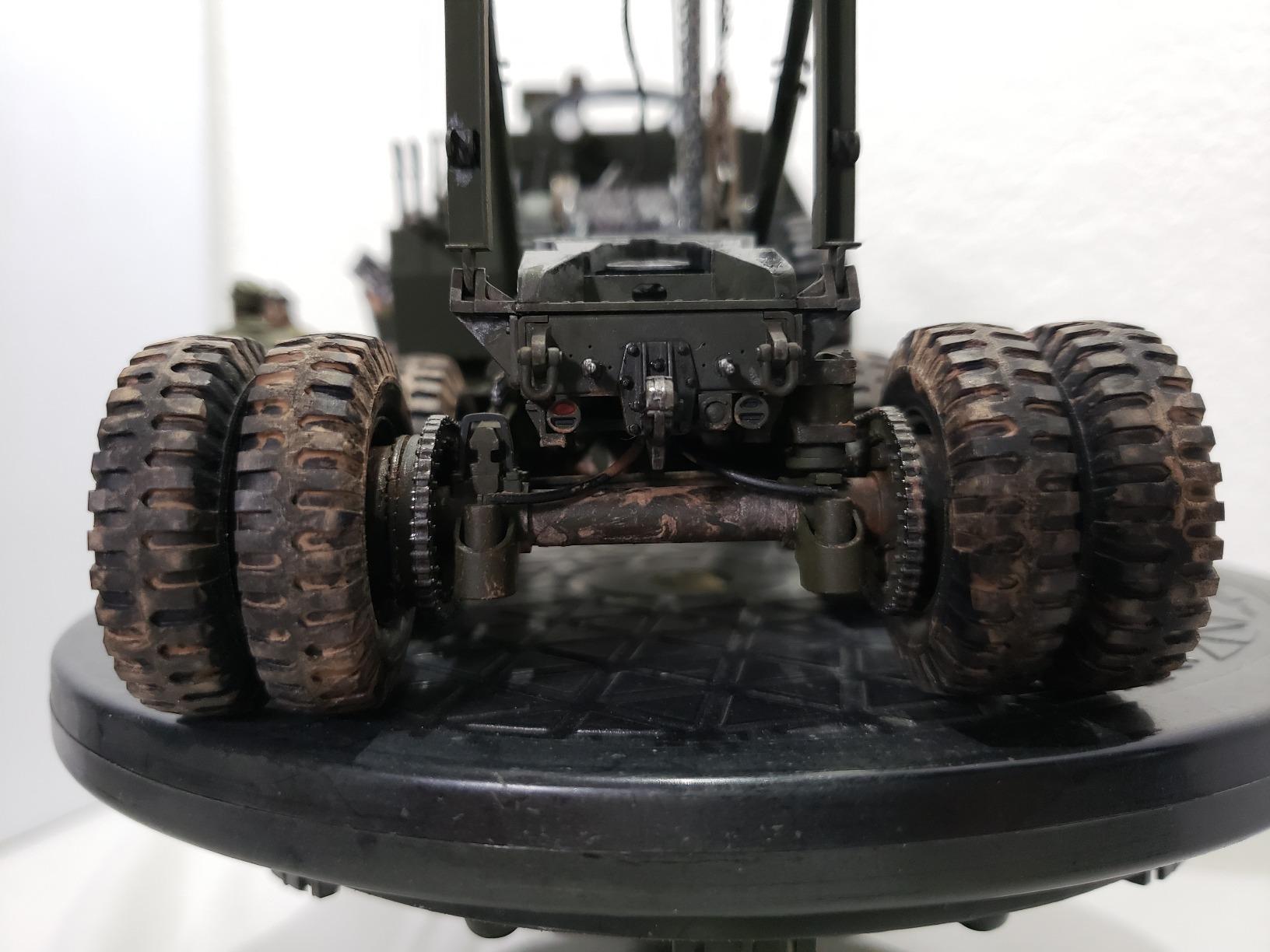
The six included figures are a major bonus for diorama builders. You get a mix of driver and crew figures in realistic poses, plus there is enough room on the trailer to display a Sherman hull or other vehicle for a complete transport scene. I have seen builders pair this with the Tamiya M4 Sherman for a truly impressive display piece.
At this price point, you are investing in a serious build project. But given the part count, the figures, and the overall scale of the finished model, the value is genuinely strong. This is the kind of kit that becomes the centerpiece of a model collection.
Diorama potential
If you are into dioramas, the Dragon Wagon is a dream platform. The sheer size of the completed model gives you a massive canvas for weathering, load securing details, and environmental storytelling. You can depict a tank recovery scene, a convoy stop, or a depot loading operation. The included figures give you an immediate starting point, and the open trailer bed invites all kinds of creative cargo arrangements.
For competition builders, the Dragon Wagon stands out because it is less commonly seen than standard tanks. Judges at model shows tend to notice something different, and the engineering detail in this kit gives you plenty of opportunities to showcase your painting and weathering skills.
Assembly tips for the Dragon Wagon
Take photos of the instructions before you start, especially for the trailer suspension and winch assemblies. Some of the diagrams require careful study to get the orientation right. I also recommend dry-fitting the major sub-assemblies before committing to glue, as the tolerances are tight in places. The cab interior builds up nicely, so consider leaving the doors open if you want to show off the detail inside.
4. Tamiya German Panzer II – Best Budget Starter Kit
TAMIYA 35009 1/35 German PZKPFW II Plastic Model Kit for Unisex Adult
1:35 Scale
180 Pieces
5 Soldier Figures
DAK Africa Decals
Pros
- Great beginner tank for starting armor modeling
- Easy assembly with good fit
- Includes 5 soldier figures
- Classic Tamiya quality
- DAK decals included
Cons
- Older kit with some mold lines
- Rubber vinyl tracks
- Paint instructions only in Japanese
- Tank commander figure slightly oversized
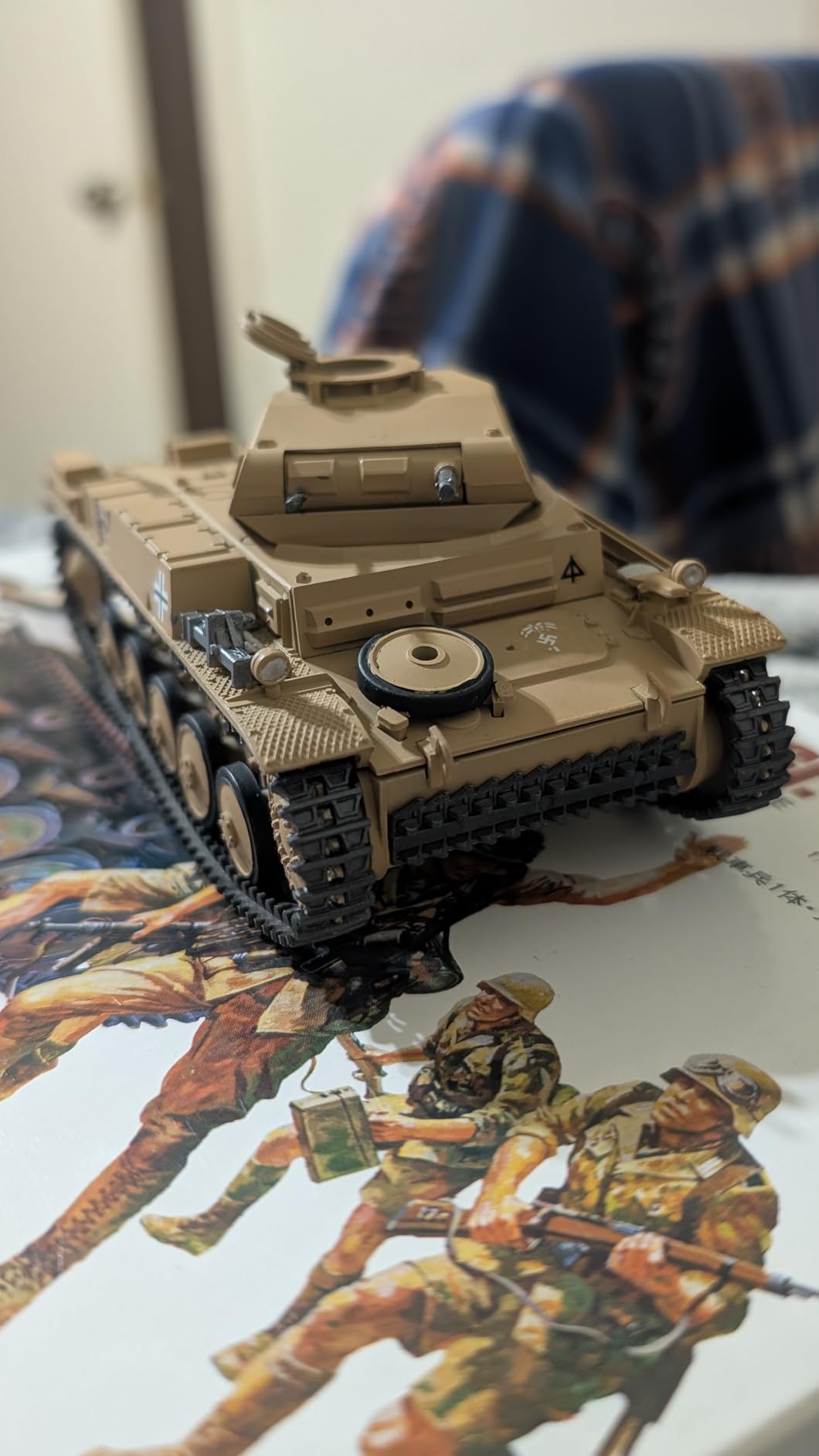
If you are looking for your first armor model kit, the Tamiya German Panzer II is where I would tell you to start. It is affordable, straightforward to build, and gives you a real sense of accomplishment when finished. With 180 pieces, it is not so simple that it feels like a toy, but it is also not going to overwhelm someone who has never built a tank before.
The Panzer II is a small tank, which means the finished model is compact enough to display easily. The kit includes five German soldier figures that are surprisingly well-detailed for the price point. You can build a simple vignette right out of the box without buying any extra figures or accessories.
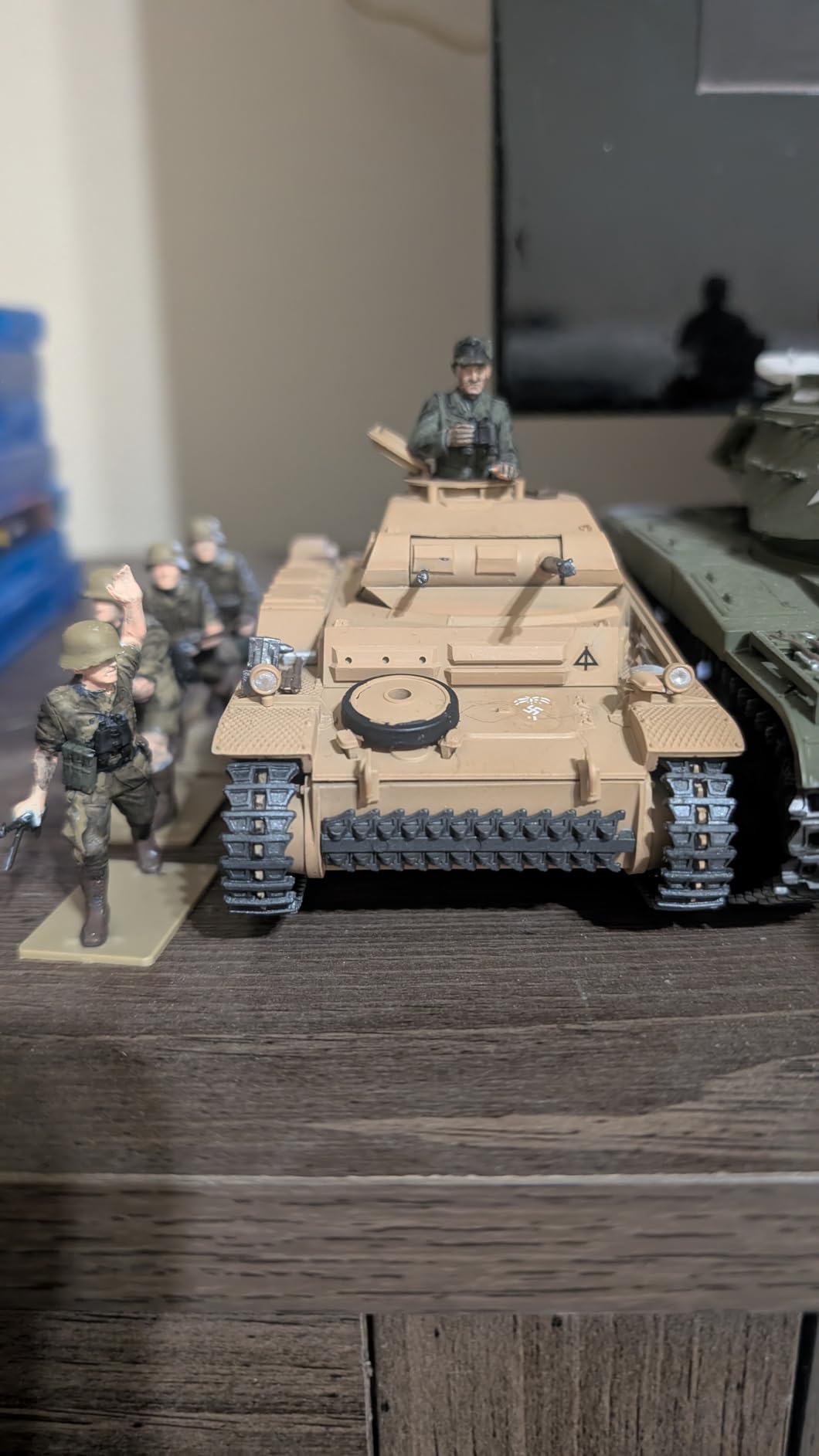
Being an older Tamiya kit, there are some compromises. The mold lines and flash on small parts are more noticeable than on newer releases. The rubber vinyl tracks are the snap-together type, which look okay from a distance but lack the detail of individual link tracks. And the paint and decal instructions are primarily in Japanese, so you may need to reference online resources for color callouts.
Despite these age-related issues, the fit is still solid Tamiya quality. Parts align well, seams are minimal, and the overall build experience is enjoyable. I have recommended this kit to several friends who were new to armor modeling, and every one of them finished it and moved on to more challenging kits. That is exactly what a starter kit should do.
Why the Panzer II works for beginners
The small size is actually an advantage for new builders. You can complete the kit in a few sessions, which keeps motivation high. The relatively low parts count means you are not managing dozens of tiny pieces at once. And the DAK Africa decals give you a distinctive desert camouflage scheme that is visually interesting without being complicated to paint.
The included figures also teach you basic figure painting techniques. You get five poses to practice flesh tones, uniform colors, and equipment details. For a first armor kit, you are essentially getting two projects in one: the tank and the figures.
Upgrading the Panzer II
If you want to push this kit further, aftermarket individual track links are available from several brands. Replacing the vinyl tracks makes a significant visual difference. You can also add a metal barrel for the main gun and some stowage items to dress up the hull. These upgrades are inexpensive and teach you skills that transfer to more complex builds.
5. Tamiya German Hanomag Sd.Kfz.251/1 Halftrack
Tamiya 35020 1/35 German Hanomag SDKFZ 251/1 Plastic Model Kit
1:35 Scale
6.5 Inches Long
5 German Figures
Detailed Interior
Pros
- High quality with excellent fit and finish
- Detailed interior with torsion bars
- Fun and engaging build with clear instructions
- Historical narrative included in instructions
- Rubberized tracks speed construction
Cons
- Tracks can be difficult to install
- Interior not historically accurate
- No decals for Afrika Korps variants
The Hanomag Sd.Kfz.251/1 is one of the most recognizable German halftracks of WWII, and this Tamiya kit has been a staple in the armor modeling community for years. With nearly 2000 reviews and a 4.6-star rating, it is clearly a kit that has stood the test of time.
What I appreciate about this kit is the balance between detail and buildability. The interior includes torsion bars and crew compartment details that give you something to show off if you leave the rear doors open. The five German soldier figures that come with the kit are well-posed and add immediate diorama potential. You can build a convincing scene straight from the box.
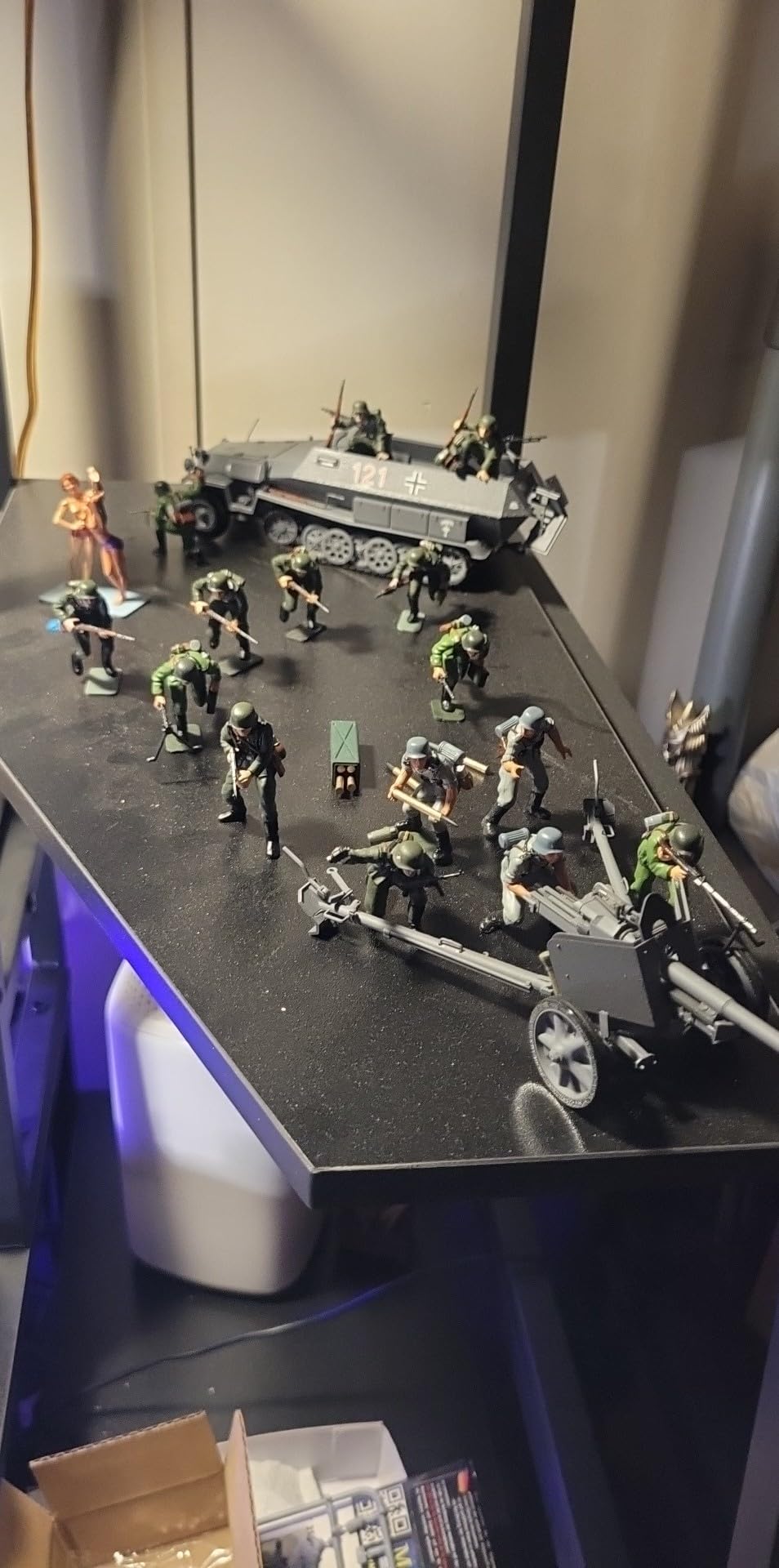
The main issue with this kit, and it is a consistent one across older Tamiya halftracks, is the track installation. The rubber tracks require heating and stretching to fit properly over the drive sprockets. I have built this kit twice, and both times the tracks were the most frustrating part of the process. A heat gun or hair dryer and some patience will get you there, but it is worth knowing going in.
The instructions include a historical narrative about the Sd.Kfz.251/1, which is a nice touch that adds context to your build. The marking options are decent, though the lack of Afrika Korps decals is a missed opportunity given how popular DAK builds are in the modeling community.
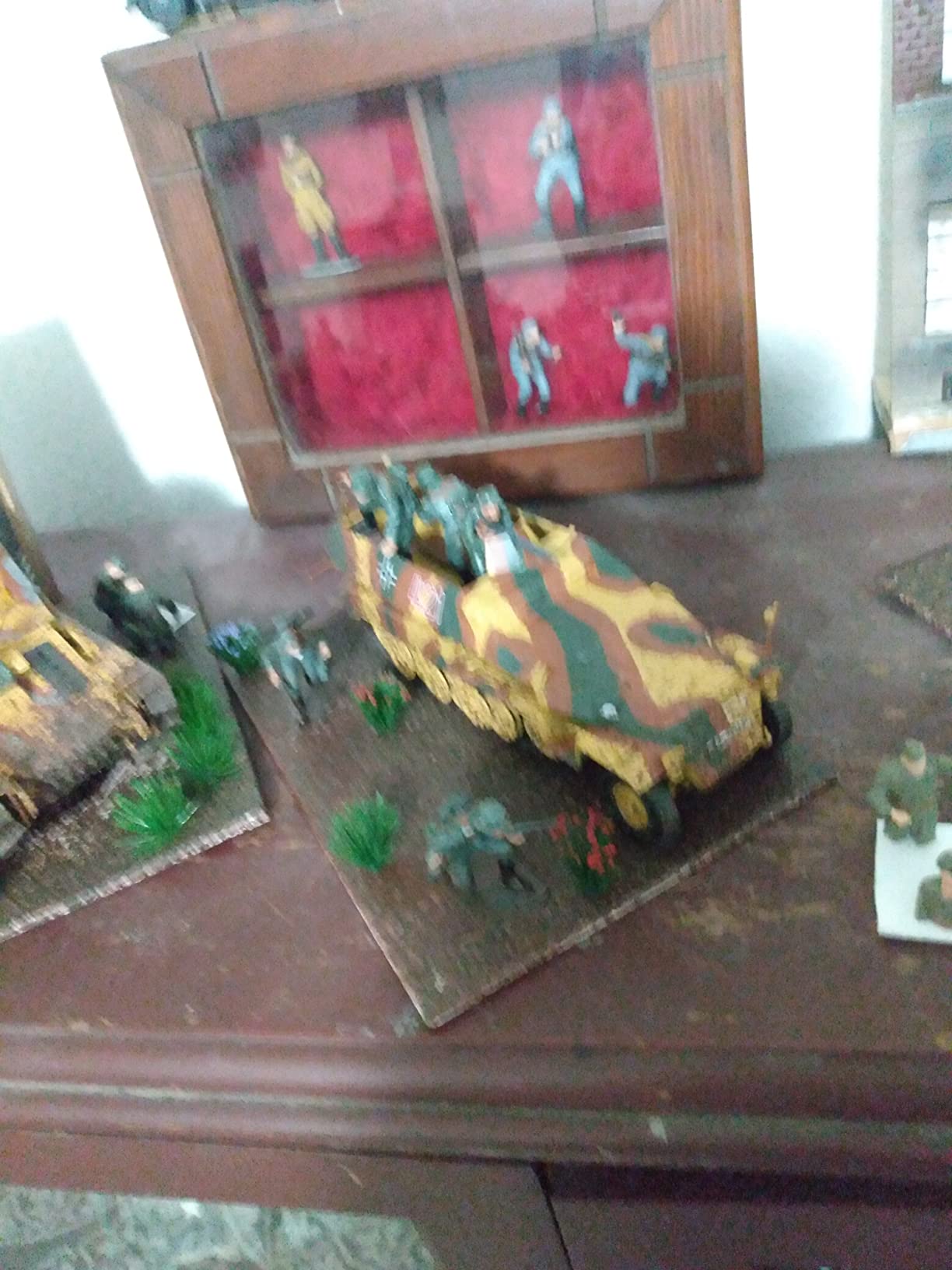
Display options for the Hanomag
The open-topped design of the Hanomag makes it an excellent display piece because you can see the interior details without needing to engineer open hatches. Building it with soldiers mounted in the fighting compartment creates a dynamic scene that draws the eye. The kit also looks great in a column formation if you build multiple variants of the Sd.Kfz.251 series.
Track installation tips
For the rubber tracks, I recommend softening them in hot water for a few minutes before attempting installation. This makes the material more pliable and reduces the risk of snapping the drive sprocket axles. Once positioned, hold the tracks in place while they cool and contract around the wheels. Some builders use small staples or pins to join the track ends for a more secure fit.
6. Tamiya US M5A1 Stuart Light Tank – Best for Diorama
Tamiya 35313 1/35 US Light Tank M5A1 Plastic Model Kit
1:35 Scale
Hedgerow Cutters
AA Gun Figure
Mortar Team
Pros
- Tamiya quality with good parts fit
- Includes hedgerow cutters for Normandy config
- Good first armor kit for beginners
- Includes figures and mortar team
- Easy to build with clear instructions
Cons
- Older kit with motorization holes to fill
- Rubber band tracks can be tight
- No interior detail
- Small parts require tweezers
The M5A1 Stuart is one of those tanks that tells a story. This Tamiya kit specifically includes hedgerow cutters for the Normandy invasion configuration, which immediately gives you a historical context for your build. The included anti-aircraft gun figure and three-man mortar team make it easy to create a Normandy hedgerow diorama right out of the box.
As a build, the Stuart is compact and approachable. The welded and bolted hull parts are accurately reproduced, and the overall shape captures the look of the real vehicle well. The kit goes together smoothly for the most part, with the kind of reliable fit that Tamiya is known for. I finished mine in about a week of casual evening building.
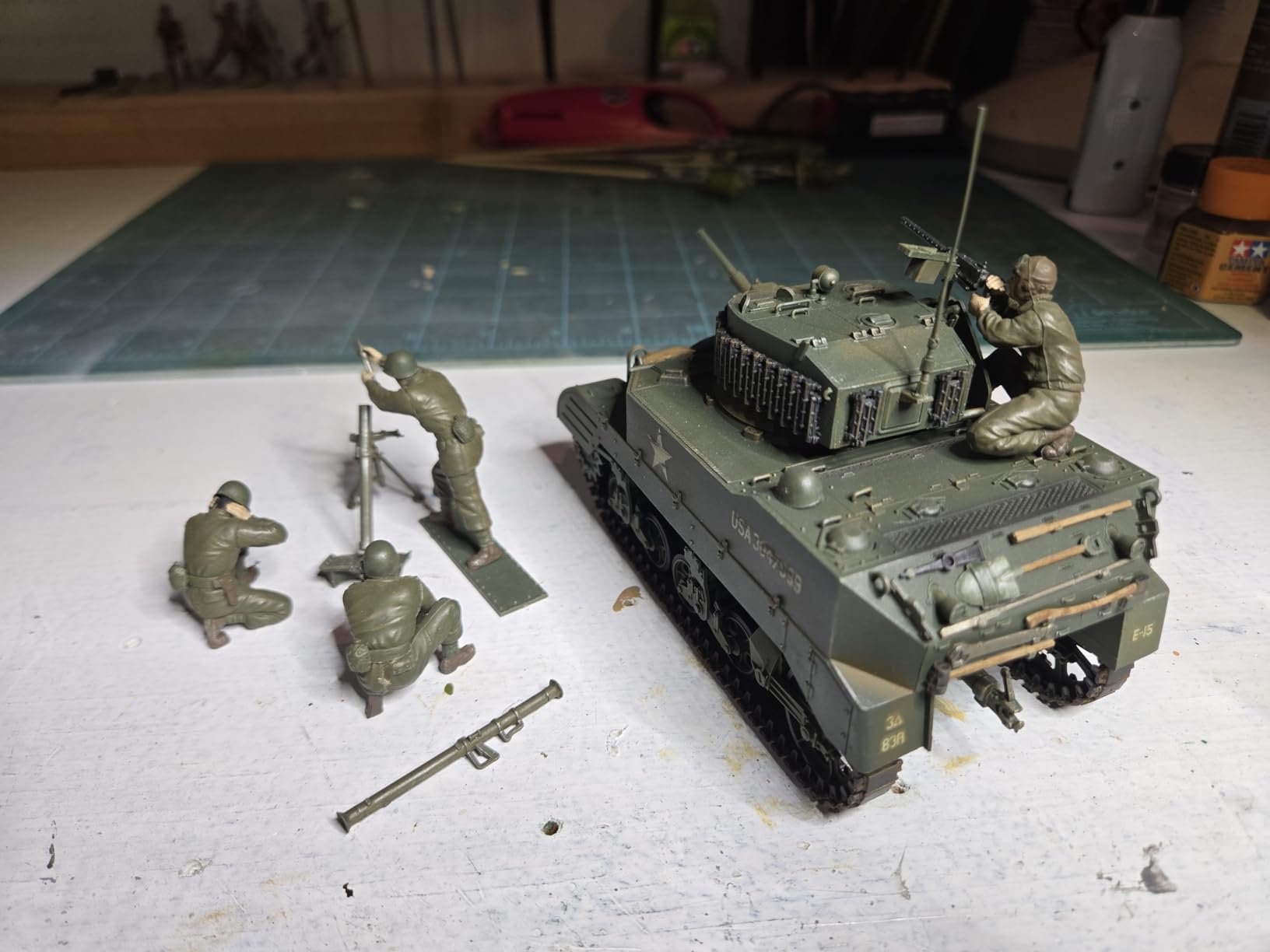
The main thing to be aware of is that this is a re-release of an older kit, and it shows in a few places. The hull bottom has holes from the original motorized version that need to be filled with putty. It is not a difficult fix, but it is an extra step you should plan for. The rubber band tracks are also from the older generation and can be tight to install.
Despite its age, this kit remains popular because the subject matter is interesting and the included accessories are generous for the price. The hedgerow cutters alone make it worth considering if you want to build something specifically tied to the Normandy campaign.
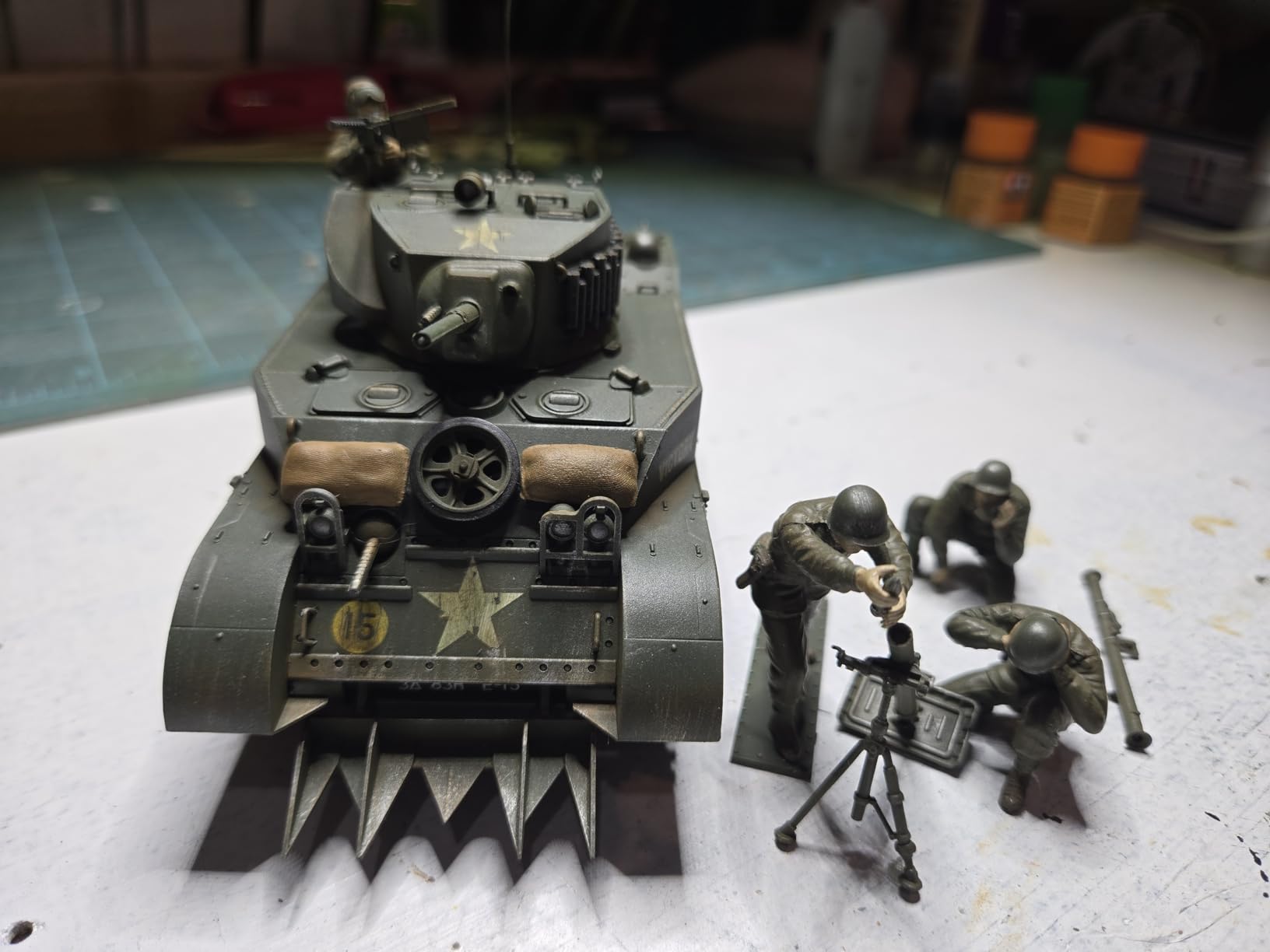
Normandy diorama potential
The Stuart with hedgerow cutters is practically begging for a bocage diorama. The small tank size means you can create a complete scene in a relatively compact display space. Add the mortar team in a prone position behind the tank, some tall grass and hedge materials, and you have a compelling vignette that tells a story about the fighting in Normandy during the summer of 1944.
Dealing with motorization holes
Filling the motorization holes in the hull bottom is straightforward. Use standard modeling putty or super glue with baking soda for a quick fill. Sand smooth once dry, and the repair will be invisible under a coat of primer. This is a common task with older Tamiya kits, and it is a good skill to practice early in your modeling journey.
7. Tamiya M4 Sherman Early Production – Classic WWII Armor
Tamiya 35190 1/35 U.S. Medium Tank M4 Sherman Plastic Model Kit
1:35 Scale
Crew Figures Included
Flexible Tracks
Extra Stowage
Pros
- Quality Tamiya product with excellent detail
- Good value for money
- Includes extra accessories and stowage
- Includes crew figures for diorama
- Suitable for customizing and weathering
Cons
- Older mold with some accuracy issues
- Very small stowage pieces
- Vinyl tracks may need reinforcement
The M4 Sherman Early Production is a classic in every sense of the word. This Tamiya kit represents the most produced tank of WWII, and it has been in Tamiya’s catalog for a long time. While it uses an older mold, it still builds into a recognizable and enjoyable Sherman model.
Where this kit really shines is the extras. Tamiya loaded the box with stowage items, crew figures, and accessories that give you plenty to work with. For modelers who enjoy adding personal touches and creating busy-looking vehicles, this kit provides a great canvas. The crew figures are well-sculpted and add immediate life to the model.
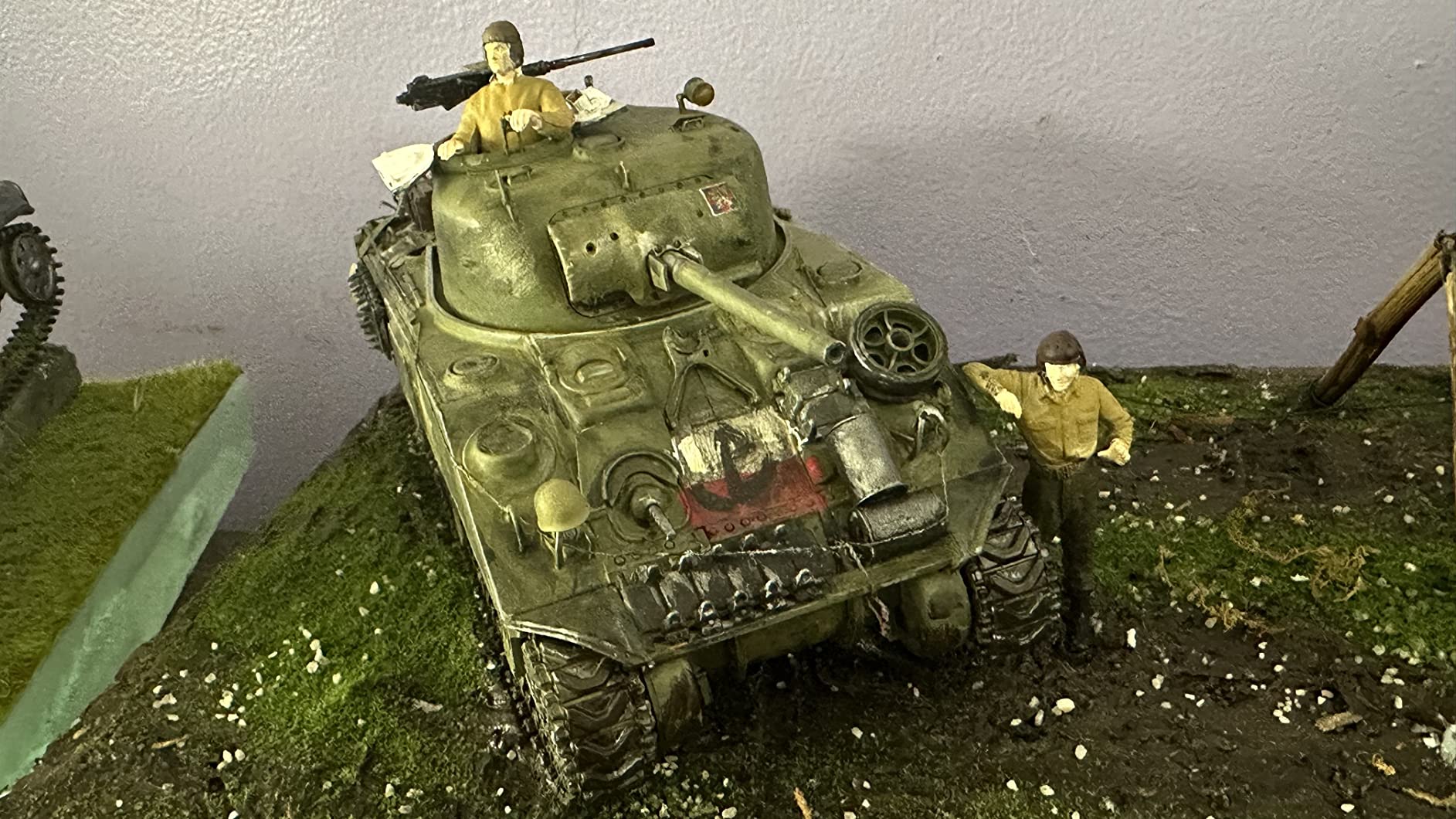
The build itself is standard Tamiya: reliable fit, clear instructions, and a straightforward assembly sequence. The main hull goes together cleanly, and the turret builds up without surprises. The vinyl tracks are flexible and easy to install, though they lack the detail of individual link options. Some accuracy-minded modelers have noted issues with the hull dimensions compared to the real vehicle, but for most builders these differences are not noticeable.
I see this kit as a great practice platform. If you want to experiment with weathering techniques like mud splatter, rust effects, or chipping without worrying about ruining a high-end kit, the Sherman Early Production is perfect. The low price point makes it easy to buy two: one to practice on and one to build clean.
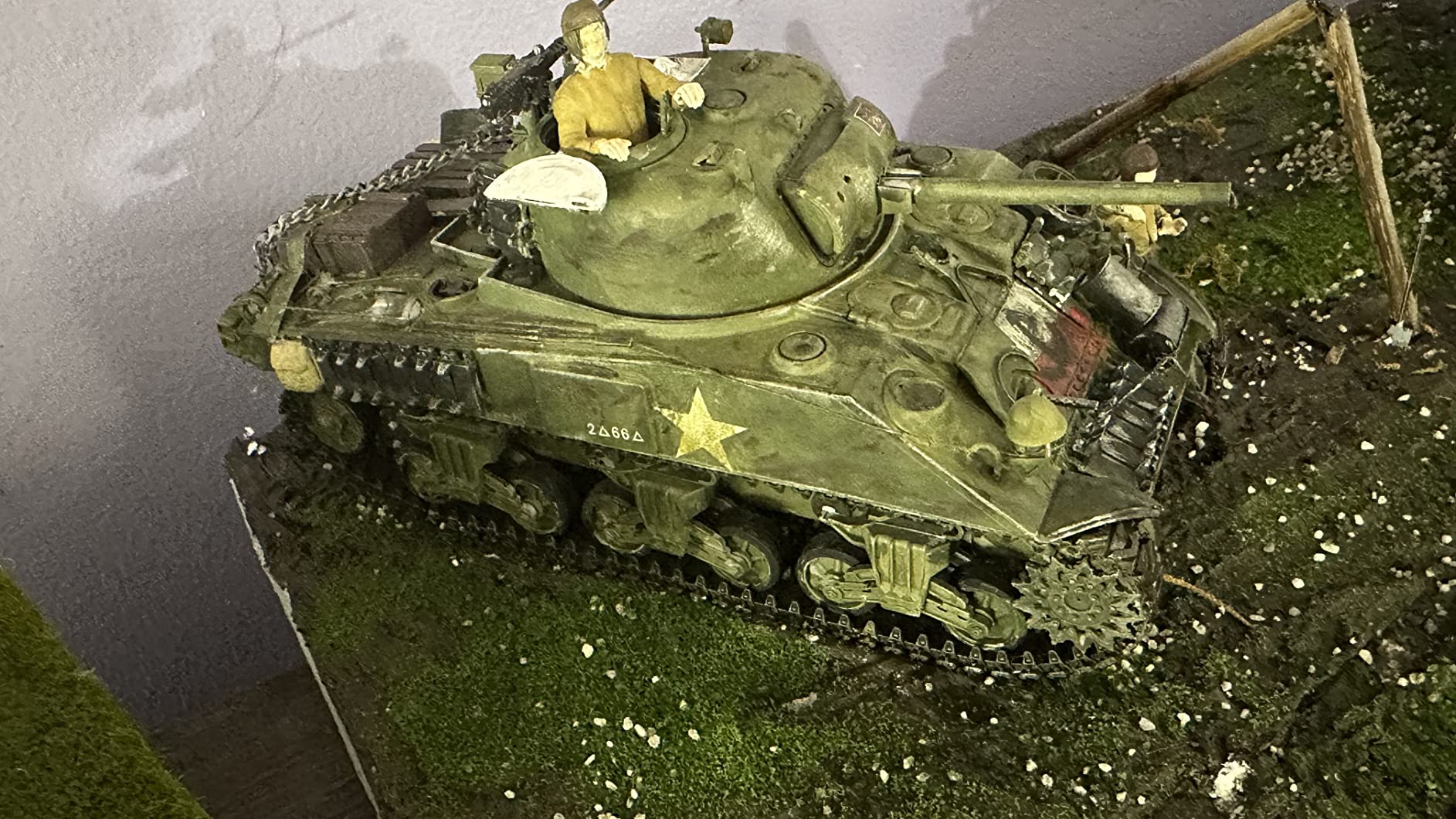
Weathering practice potential
The Sherman is one of the best subjects for learning weathering because the real vehicles were famously beat up and dirty. Reference photos show Shermans caked in mud, with worn paint and dented armor plates. This gives you permission to go heavy with weathering products and experiment freely. Try oil paint rendering on the hull, pigment-based mud on the running gear, and salt-chipping techniques on the vertical surfaces.
Aftermarket upgrade options
This kit benefits greatly from aftermarket upgrades. A metal barrel, individual track links, and a photo-etched detail set can transform the look of the finished model. The older mold details are improved significantly by PE grilles and tool clasps. Several online retailers sell Sherman-specific upgrade sets that are designed to fit this exact Tamiya kit.
8. Tamiya Soviet T-55A Tank – Best Cold War Subject
Tamiya 35257 1/35 Soviet Tank T-55A Plastic Model Kit
1:35 Scale
7.2 Inches Long
5 Decal Options
Multiple Build Configs
Pros
- Tamiya quality with excellent fit
- Fun build experience
- Easy rubber tracks
- Rubber tracks are easy to paint
- Great value compared to detailed kits
Cons
- Single piece vinyl tracks
- Some assembly illustrations unclear
- Two-piece gun barrel has a seam
The T-55 is one of the most produced tanks in history, and it is also a subject that MiniArt is famous for covering. MiniArt makes an incredibly detailed T-54/T-55 family of kits with full interiors, but those kits are notoriously challenging to build. This Tamiya version gives you the same iconic subject in a much more approachable package.
I think of this kit as the Tamiya answer to the MiniArt T-55. Where MiniArt gives you hundreds of interior parts and photo-etch, Tamiya gives you a clean, well-engineered exterior build that you can actually finish in a reasonable time. The kit includes decals for five different tank configurations, including Polish and Czechoslovakian versions, so you have real choices in how you finish your model.
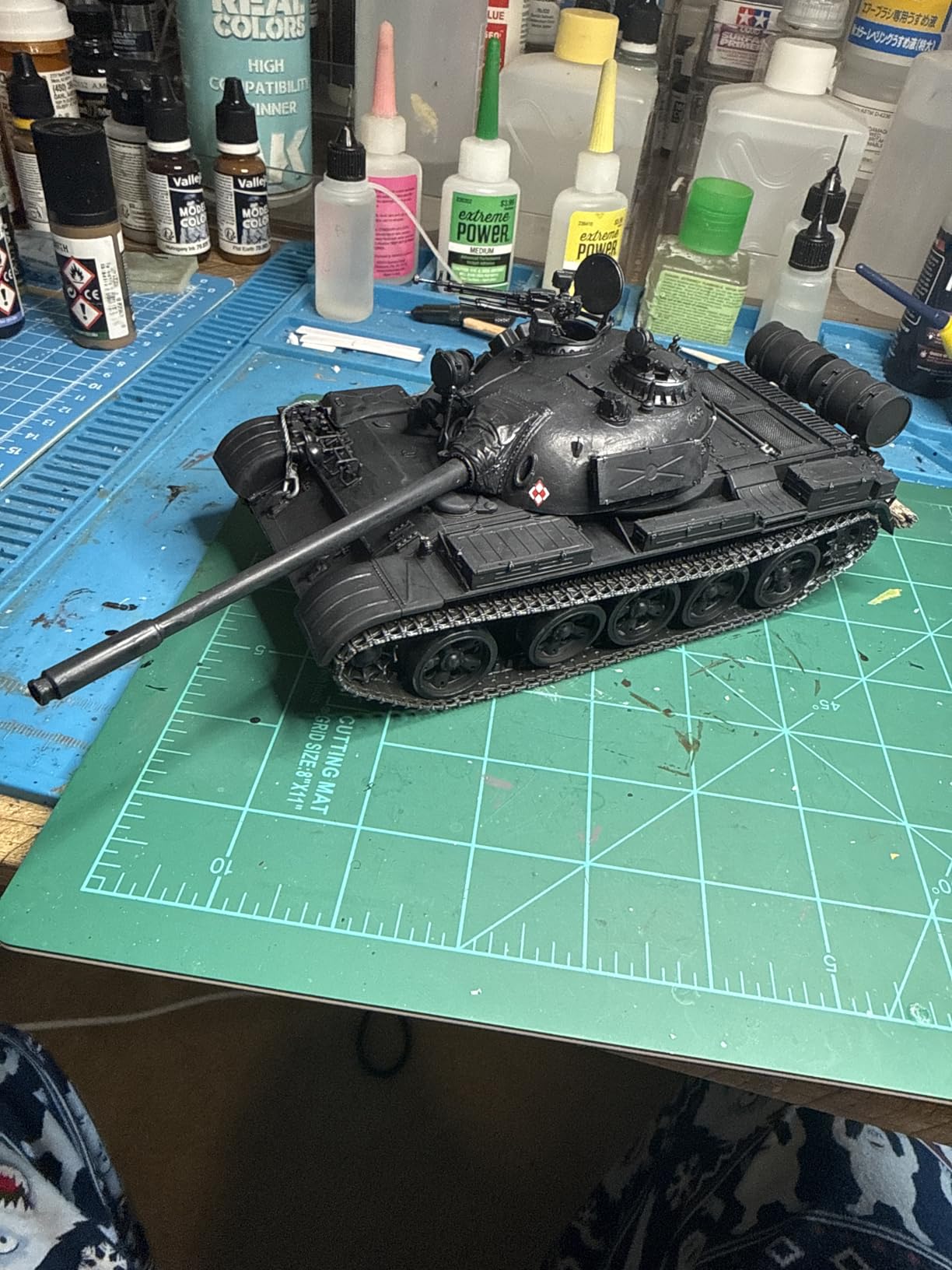
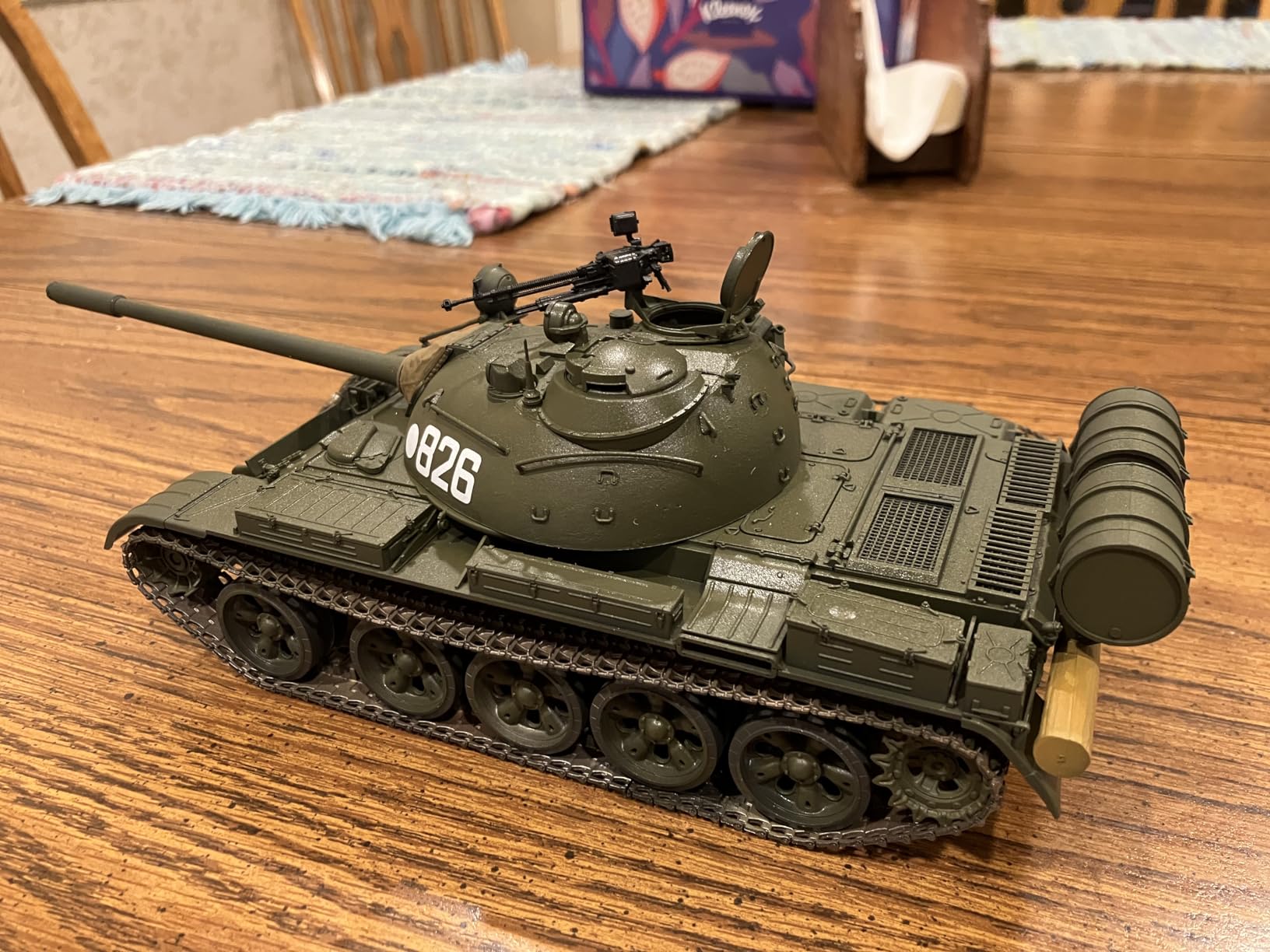
The build experience is exactly what you would expect from Tamiya. Parts fit well, the instructions are mostly clear, and the overall assembly is satisfying. The engine grills and external fuel tanks are well-detailed, and the turret captures the distinctive T-55 shape accurately. The rubber tracks are easy to install and take paint well, which is a welcome change from fiddly individual links.
The main downside is the two-piece gun barrel, which leaves a seam down the middle that you need to sand clean. It is a common issue with injection-molded barrels and not unique to this kit. Most serious builders replace it with a turned metal barrel, which is an inexpensive upgrade that makes a big visual difference.
MiniArt T-55 vs Tamiya T-55
If you are deciding between this Tamiya kit and the MiniArt T-55, the choice comes down to your skill level and patience. The MiniArt version has a full interior, individual track links, and vastly more detail. But it also takes three to four times longer to build and can be frustrating even for experienced modelers. The Tamiya kit gives you a clean exterior build that looks great on the shelf without the interior complexity. For most modelers, the Tamiya version is the more enjoyable experience.
Paint and marking options
The five decal options in this kit cover Soviet, Polish, and Czechoslovakian vehicles, giving you a nice range of paint schemes to choose from. The standard Soviet green is simple but effective, and you can differentiate your build through weathering patterns and equipment stowage choices. The external fuel drums on the T-55 rear fenders are a great place to practice rust and wear effects.
9. Tamiya M113A2 APC Desert Version – Best Modern Armor
Tamiya Models M113A2 APC Desert Version Model Kit
1:35 Scale
Working Hatches and Ramp
Commander and Driver Figures
Desert Configuration
Pros
- Premium Tamiya quality
- Good detail and parts
- Easy to build with good fit
- Hatches open and close including rear ramp
- Great for different terrain setups
Cons
- Base kit showing its age
- Motorization holes from previous version
- Interior feature omitted
The M113A2 APC Desert Version is one of the few modern armor subjects in our lineup. The M113 family has served in conflicts from Vietnam to Iraq, and this desert configuration version captures the look of the vehicles used during the Gulf War era. It is a subject that adds variety to any armor collection dominated by WWII German and American tanks.
The standout feature of this kit is the working hatches and rear troop ramp. The rear ramp opens and closes, which means you can display the vehicle in transport mode or deployed mode. The commander and driver figures that come with the kit are well-sculpted and give you instant crew for the open hatches.
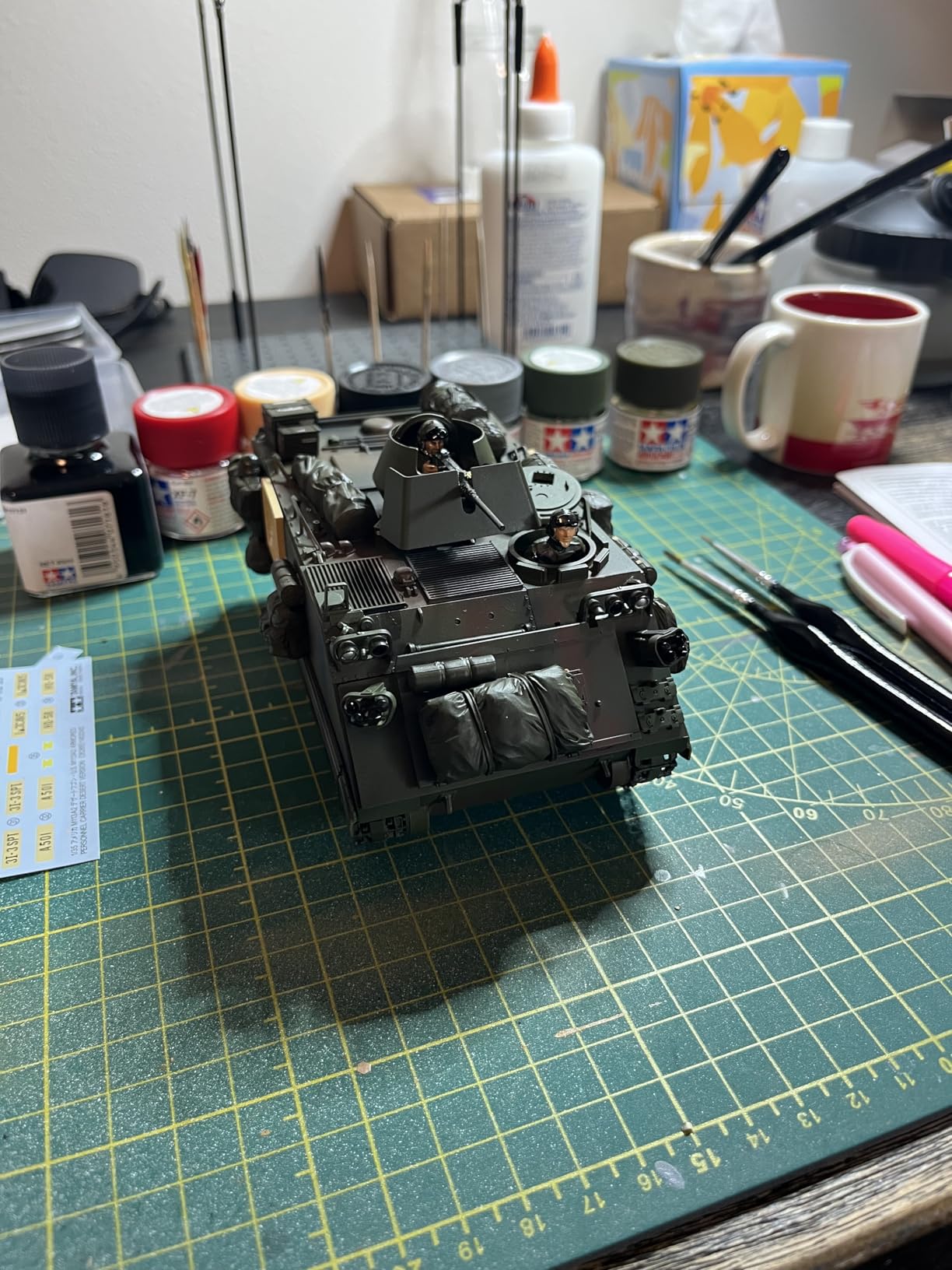
Like several other kits in this roundup, the M113A2 is an older Tamiya mold that has been re-released with updates. The desert configuration adds new parts for the Updated armor and equipment, but the base hull still shows signs of its motorized origins. You will need to fill some holes in the hull bottom, similar to the M5A1 Stuart.
The build is straightforward and forgiving, making this a good choice for modelers who want a break from more demanding projects. The parts fit is reliable, and the finished model has real presence on the shelf. I built mine with the rear ramp open and a desert-themed base, and it gets compliments every time someone sees it.
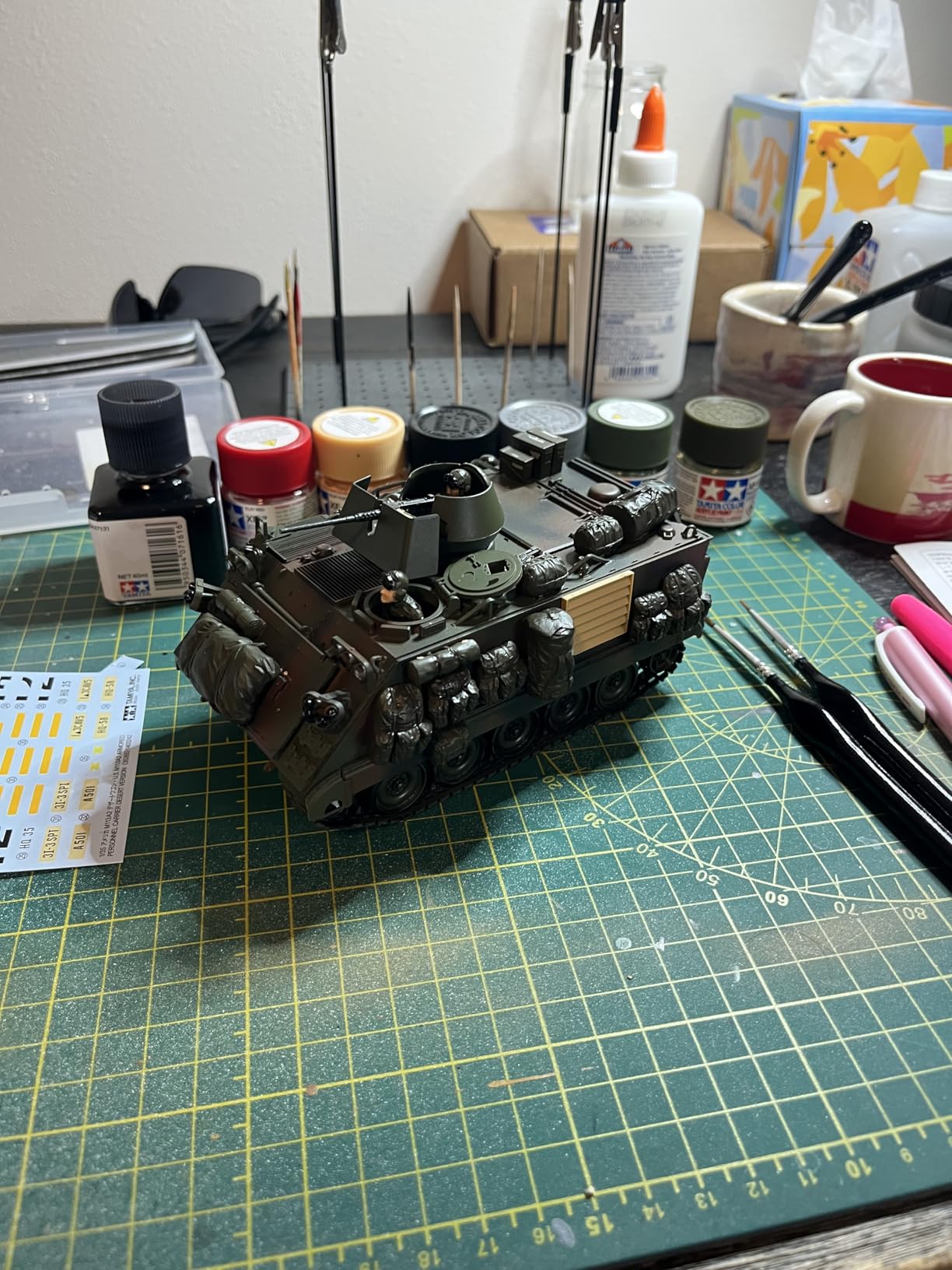
Desert weathering techniques
The desert configuration of this kit opens up weathering possibilities that are different from European theater tanks. Fine sand and dust effects can be built up using pigments and diluted tan paint. The flat surfaces of the M113 are perfect for learning how to create realistic dust accumulation patterns. You can also add desert-specific stowage like water cans and camouflage netting to enhance the Gulf War theme.
Modern armor display ideas
The M113A2 looks great in a modern armor collection alongside Abrams tanks and Bradley fighting vehicles. It is also a natural fit for a Vietnam diorama if you backdate the configuration slightly. The boxy shape of the APC makes it a good contrast piece when displayed next to turreted tanks, adding visual variety to your shelf or display case.
10. Tamiya German Wespe Self-Propelled Howitzer – Best Artillery Kit
Tamiya 35358 1/35 German Self-Propelled Howitzer Plastic Model Kit
1:35 Scale
4 Crew Figures
Link-and-Length Tracks
Ammunition Included
Pros
- Well engineered with precision fit
- Easy assembly for quick building
- Moderately detailed at good price
- Includes figures and ammunition
- Suitable for beginners and experienced modelers
Cons
- Gun assembly can be tedious
- Instructions may not be in English
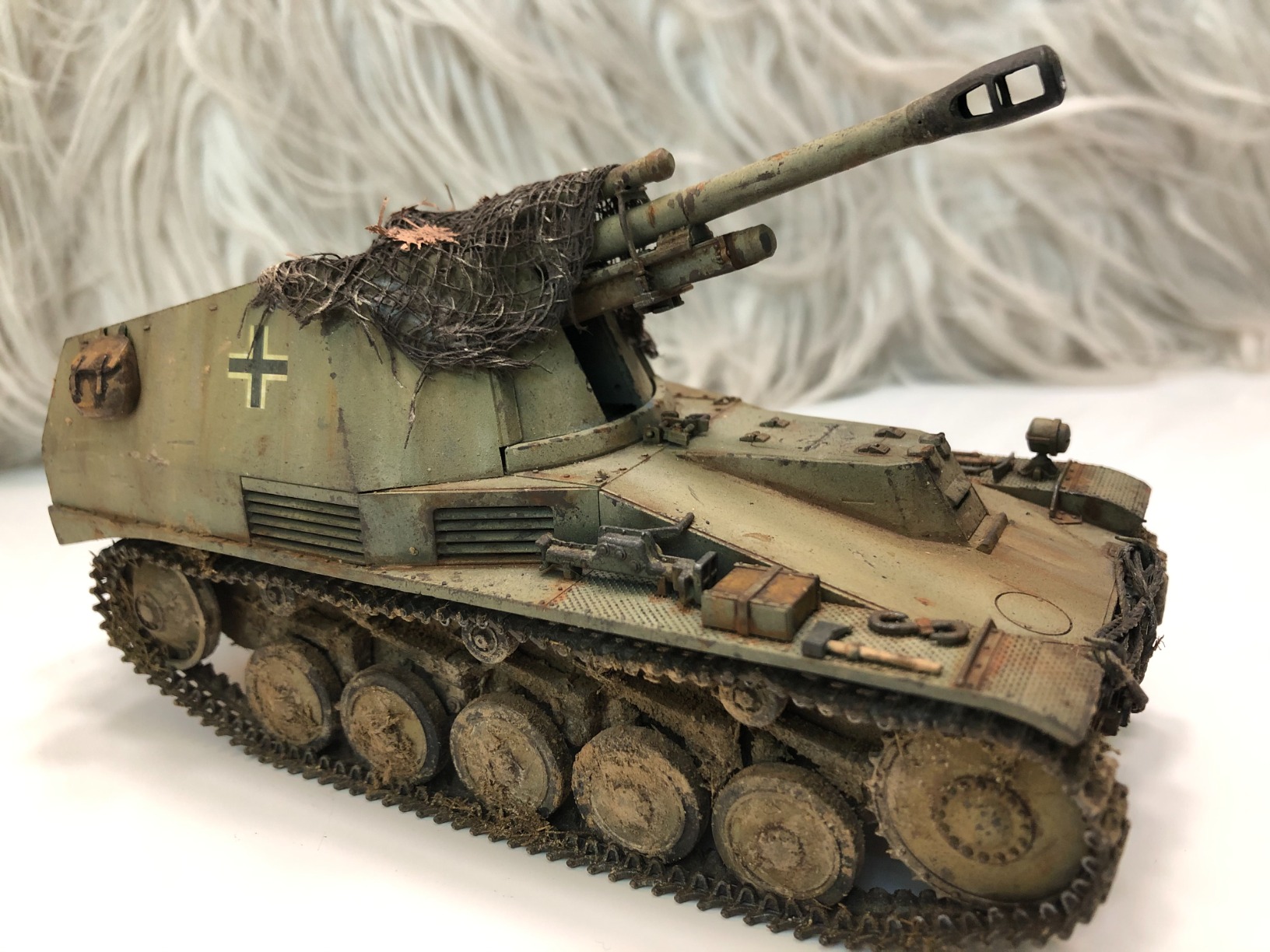
The Wespe self-propelled howitzer is one of the more unusual subjects in this roundup, and that is exactly why I wanted to include it. Based on the Panzer II chassis, the Wespe mounted a 10.5cm howitzer in an open-topped fighting compartment. It is a distinctive vehicle that adds something different to a German armor collection.
This kit uses link-and-length tracks, which are a step up from rubber belt tracks in terms of detail but much easier to assemble than individual track links. Each run of track is a single piece with the correct sag molded in, and the individual links connect the runs around the drive sprocket and idler. It is a good compromise that looks great without eating up hours of track-building time.
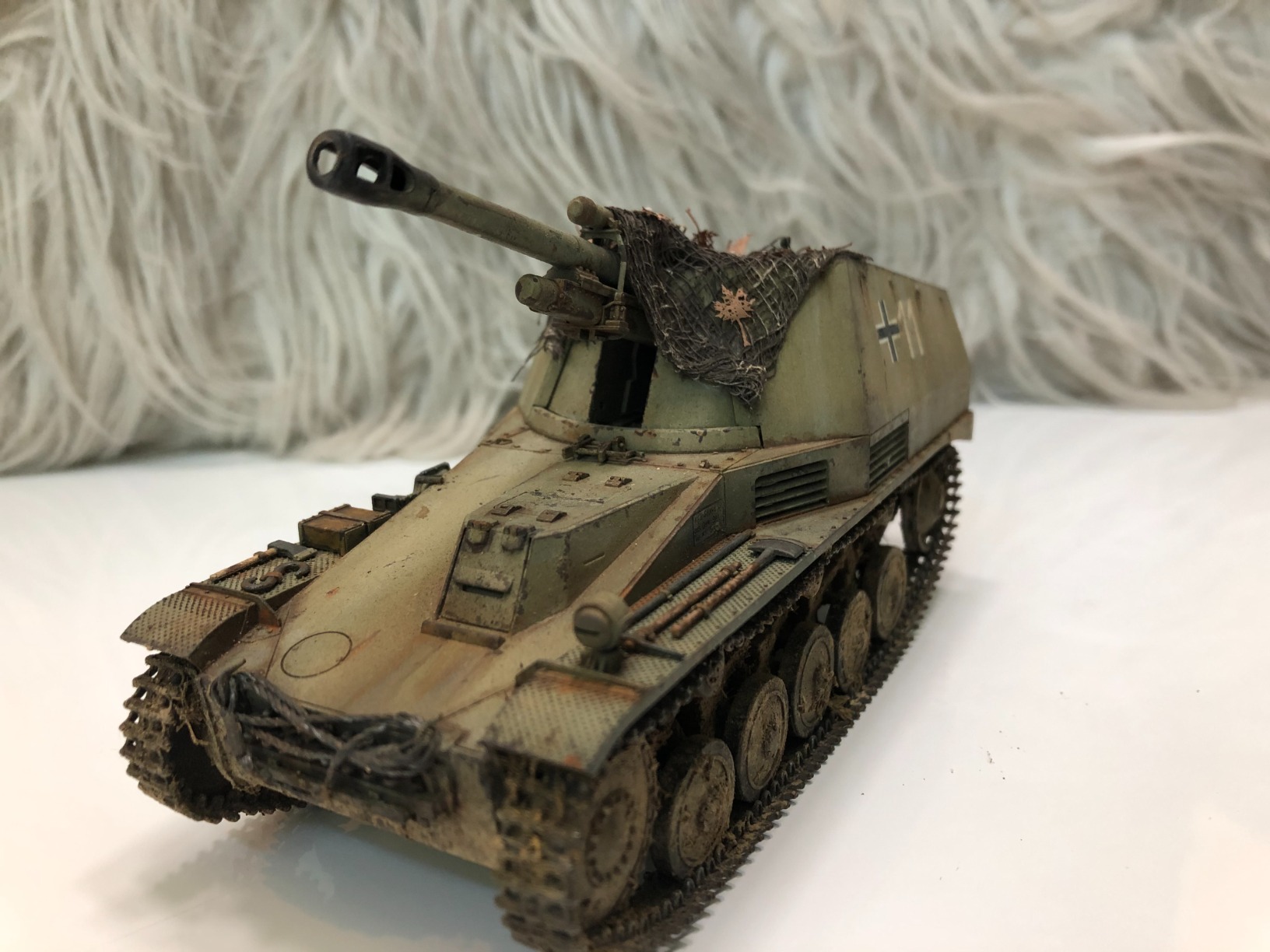
The four crew figures included with the kit are posed for a firing scene, which gives you an instant vignette. The ammunition parts are a nice detail that lets you show spent shell casings and ready rounds in the fighting compartment. For the price, you get a lot of content in this box.
The gun assembly is the most tedious part of the build. The howitzer has a lot of small components that need careful alignment, and the recoil mechanism requires patience to get right. Once assembled though, the gun elevates and depresses, which is a satisfying engineering feature. The open fighting compartment means all your work on the gun and interior is visible in the finished model.
Artillery display options
The Wespe is a natural fit for an artillery battery diorama. You could build two or three of these kits in a line with a command vehicle and ammunition carrier for a full battery scene. The firing poses of the included figures make the scene dynamic and tell a clear story about the vehicle’s role on the battlefield.
Link-and-length track tips
Link-and-length tracks can be tricky if you have never worked with them before. The key is to dry-fit each section before gluing, and use liquid cement rather than thick glue for cleaner joints. The single-piece runs should be glued to the road wheels first, then the individual links added around the drive sprocket and idler last. This sequence gives you the most control over the final appearance of the track run.
Armor Model Kit Buying Guide for 2026
Choosing the right armor model kit is about matching the kit to your experience level, your interests, and the time you want to invest. This buying guide covers the key factors that separate a kit you will enjoy from one that will frustrate you.
Scale considerations: 1:35 vs 1:48 vs 1:72
Every kit in this roundup is 1:35 scale, and that is the most popular scale for armor modeling by a wide margin. At 1:35 scale, a Sherman tank is roughly 7 inches long, which is large enough to show fine detail without requiring massive display space. MiniArt, Tamiya, Dragon, Meng, and Takom all produce extensive 1:35 ranges, which means you have the most subject options and aftermarket support at this scale.
1:48 scale is gaining popularity, especially Tamiya’s line of 1:48 armor kits. These are smaller and quicker to build, making them good for modelers with limited shelf space. 1:72 scale is even more compact and is popular for wargaming and large dioramas, but the detail level is lower and the building experience is less satisfying for most modelers.
MiniArt vs Tamiya vs Dragon vs Meng
Brand choice matters a lot in armor modeling because each manufacturer has a distinct engineering philosophy. MiniArt pushes maximum detail with full interiors, photo-etched parts, and hundreds of tiny components. Their kits are for builders who want the most detailed model possible and are willing to invest serious time. As forum users have noted, MiniArt kits can be tedious, but the results are impressive.
Tamiya takes the opposite approach. Their kits prioritize buildability and engineering elegance. Parts fit is consistently excellent, instructions are clear, and the building experience is enjoyable from start to finish. You may not get the absolute highest detail count, but you will almost certainly have a better time building it. As one forum user put it: “Tamiya not because they are always the absolute best but because they are rarely poor.”
Dragon sits between MiniArt and Tamiya in terms of detail and difficulty. Their kits often include photo-etched parts and individual track links but with better engineering than MiniArt. Meng is similar to Dragon, with a focus on modern armor subjects and innovative engineering. Takom rounds out the major brands with a focus on large-scale and unusual subjects.
Difficulty levels explained
I categorize armor kits into three difficulty tiers. Beginner kits have fewer than 200 parts, use rubber or vinyl tracks, and do not include photo-etched parts. The Panzer II and Hanomag in this roundup are good examples. Intermediate kits have 200 to 400 parts, may include link-and-length tracks, and sometimes include PE parts. The Sherman Easy Eight and T-55A fall into this tier. Advanced kits have 400 or more parts, individual track links, full interiors, and substantial PE frets. The MiniArt Puma and the Dragon Wagon represent this tier.
Essential tools for armor modeling
Before starting any of these kits, you need a basic tool kit. Side cutters for removing parts from the sprue, a hobby knife for cleanup, sanding sticks for smoothing seams, and plastic cement for assembly. A set of good tweezers is essential for handling small parts. For kits with PE parts, you will need CA glue and a PE bending tool. Paint brushes, primer, and acrylic or enamel paints round out the basic setup.
If you want to level up your builds, invest in an airbrush for base coats and camouflage patterns. A pin vise for drilling holes, different grades of wet-and-dry sandpaper, and seam scraper tools will also improve your results. These are not essential for your first build, but they become important as you tackle more complex kits like the MiniArt Puma.
Track types: vinyl, link-and-length, and individual links
The type of tracks included in a kit has a real impact on both the build experience and the finished appearance. Vinyl or rubber belt tracks snap onto the road wheels and are the fastest to install. They look acceptable from a distance but lack sag detail and individual link definition. Link-and-length tracks are a middle ground: long runs of pre-molded track segments connected by individual links at the sprockets. Individual track links require you to assemble each link separately, which can mean building 80 to 200 individual links per track run. The detail is superb, but the process is time-consuming.
Frequently Asked Questions About Armor Model Kits
What is the best MiniArt armor kit for beginners?
MiniArt kits are generally not recommended for beginners due to their high parts count and complex assembly. If you are determined to start with MiniArt, look for their simpler figure sets or non-interior armor kits rather than their full interior releases. For a first armor build, a Tamiya kit like the Panzer II or M5A1 Stuart is a much better starting point.
Are MiniArt model kits good quality?
Yes, MiniArt produces some of the most detailed injection-molded armor kits available. Their Sharp Mold technology produces crisp, well-defined parts, and their subject selection covers Soviet, German, and Allied vehicles that other brands often ignore. The trade-off is that their kits require more skill and patience to build compared to Tamiya.
How difficult are MiniArt kits compared to Tamiya?
MiniArt kits are significantly more difficult than Tamiya kits. A typical MiniArt interior kit has two to three times the parts count of a comparable Tamiya kit, includes photo-etched parts that require special tools and glue, and demands more cleanup of small fragile components. Forum users consistently describe MiniArt builds as tedious but rewarding, while Tamiya builds are described as enjoyable and relaxing.
What scale is best for armor model kits?
1:35 scale is the most popular and widely supported scale for armor modeling. It offers the best balance of detail, display size, and aftermarket support. All major manufacturers including MiniArt, Tamiya, Dragon, Meng, and Takom produce extensive 1:35 ranges. Beginners should start with 1:35 for the widest selection of kits and reference materials.
What tools do I need to build an armor model kit?
The essential tools are side cutters, a hobby knife, sanding sticks, plastic cement, and tweezers. For kits with photo-etched parts, add CA glue and a PE bending tool. An airbrush setup is highly recommended for base coats and camouflage. Start with these basics and expand your tool collection as you tackle more complex kits.
Final Thoughts on the Best Armor Model Kits
After spending time with all 10 of these kits, either building them or studying community reviews in depth, a few clear recommendations emerge. For modelers specifically seeking the best MiniArt armor model kits, the Sd.Kfz.234/2 Puma Interior Kit is the real deal: stunning detail, full interior, and PE parts in the box. It is advanced-level work, but the results speak for themselves.
For most builders, the Tamiya M4A3E8 Sherman Easy Eight represents the best all-around armor kit. It hits the sweet spot between detail and buildability, and the 4.7-star rating from over 1500 reviews confirms what experienced modelers already know: Tamiya engineering is hard to beat. If you want a premium project, the M26 Dragon Wagon at 4.9 stars is extraordinary value for the complexity and size you get.
Beginners should start with the Panzer II or M5A1 Stuart. Both are approachable, affordable, and teach fundamental skills that transfer directly to more complex builds. Work your way up to Tamiya intermediate kits, and eventually tackle MiniArt interior kits when you are ready for the challenge. The armor modeling hobby rewards patience, and each kit you build makes you a better modeler.