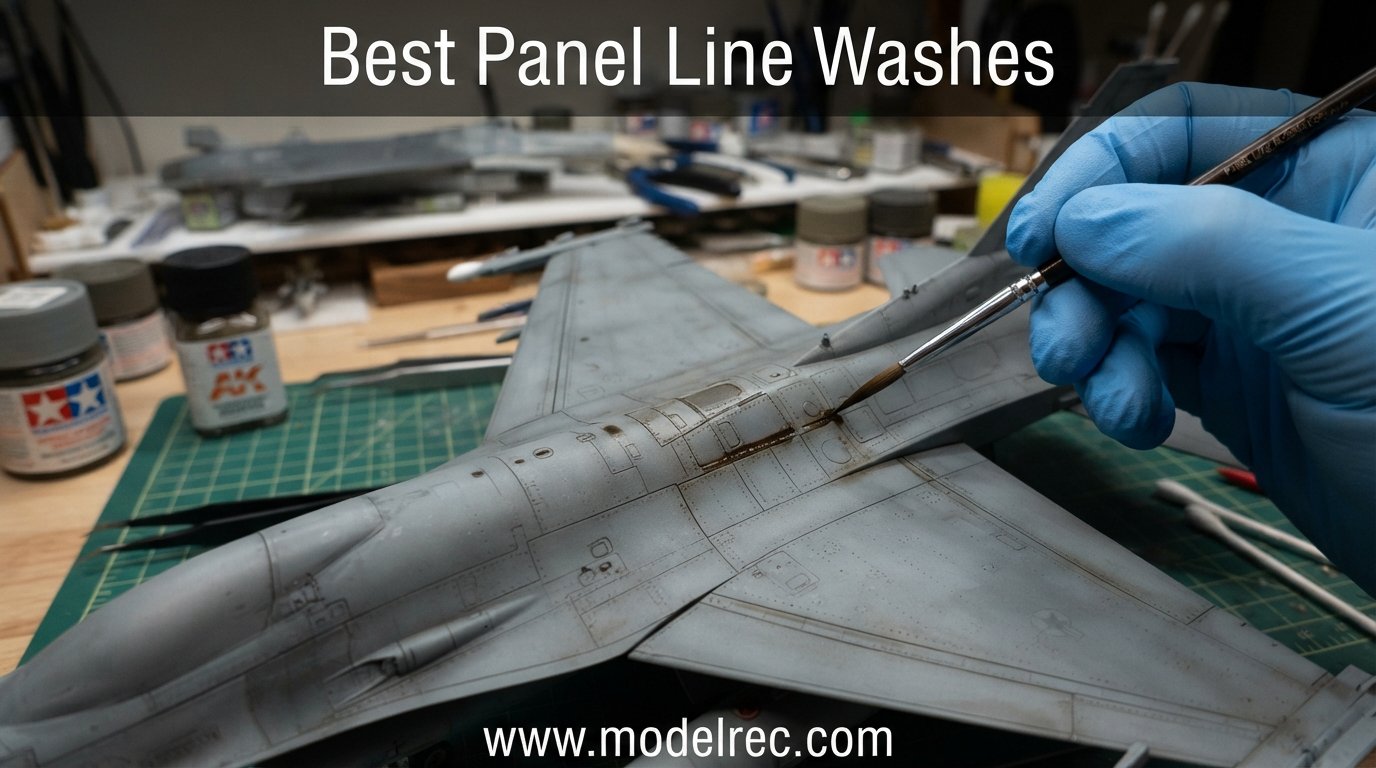
Panel lines are what separate a flat, toy-like model from one that looks like a real aircraft, tank, or mecha suit fresh off the assembly line. A good panel line wash flows into those recessed grooves through capillary action and creates the depth and contrast that brings a build to life. The trick is picking the right wash for your paint system, model type, and skill level.
I have spent years building everything from 1/72 aircraft to MG Gunpla kits, and I have tried nearly every panel line wash on the market in that time. Some flow like a dream and clean up with a swipe. Others stain your paint, eat your gloss coat, or refuse to settle into shallow lines. This guide covers the best panel line washes I keep reaching for in 2026, with hands-on notes on flow, cleanup, color, and which models each one suits best.
Whether you are looking for the best panel line washes for aircraft models, Gunpla, or military armor, the ten products below cover every major brand and price point. I have organized them from enamel classics like Tamiya and AMMO MIG to acrylic options like Vallejo, plus a multi-color set and a pour-type marker for builders who want something simpler. Let us start with the top three that beat the rest across my test builds.
Table of Contents
Top 3 Panel Line Washes for 2026

These three cover the three approaches I recommend most often. The Tamiya Black is the enamel wash I trust on almost any plastic kit, the Vallejo Wash FX is the safer water-based pick for builders who dislike fumes, and the Mr Hobby Gundam Marker is the simplest tool I hand to total beginners. Read on for the full lineup.
10 Best Panel Line Washes in 2026
| Product | Specifications | Action |
|---|---|---|
| Tamiya Panel Line Accent Black |
|
Check Latest Price |
 Tamiya Panel Line Accent Brown Tamiya Panel Line Accent Brown |
|
Check Latest Price |
 Tamiya Panel Line Accent Dark Brown Tamiya Panel Line Accent Dark Brown |
|
Check Latest Price |
 AMMO MIG Panel Line Wash Black Night AMMO MIG Panel Line Wash Black Night |
|
Check Latest Price |
 AMMO MIG Panel Line Wash Dark Grey AMMO MIG Panel Line Wash Dark Grey |
|
Check Latest Price |
 Vallejo Wash FX Black Vallejo Wash FX Black |
|
Check Latest Price |
 Vallejo Model Wash Dark Brown Vallejo Model Wash Dark Brown |
|
Check Latest Price |
| Mr Hobby Pour Type Gundam Marker |
|
Check Latest Price |
 AK Interactive Panel Liner 5-Color Set AK Interactive Panel Liner 5-Color Set |
|
Check Latest Price |
 Humbrol Enamel Wash Black Humbrol Enamel Wash Black |
|
Check Latest Price |
1. Tamiya Panel Line Accent Color Black (TAM87131) – Editor’s Choice
Tamiya Panel Line Accent Color 40ml Black TAM87131 Plastics Paint Enamels
Enamel
40ml bottle
Matte black
Built-in brush cap
Pros
- Flows smoothly into panel lines
- Built-in applicator brush
- A little goes a long way
- Quick drying time
Cons
- Needs enamel thinner for cleanup
- Can weaken bare plastic if overapplied
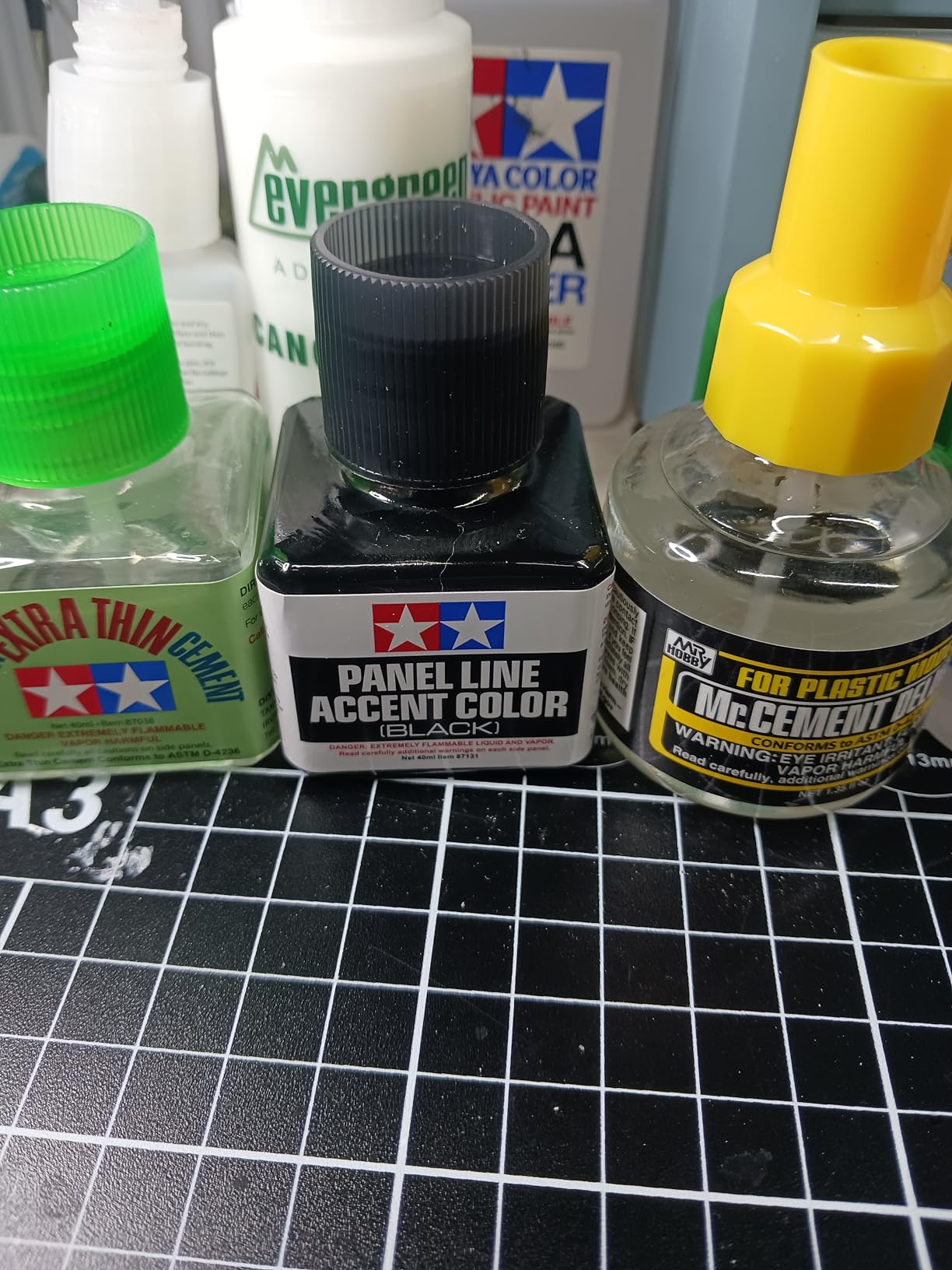
This is the panel line wash I have used on more builds than any other, and it is the one I recommend first when someone asks where to start. The Tamiya Panel Line Accent Color in Black comes in a 40ml glass bottle with a brush built into the cap, and the enamel formula is pre-thinned to the exact consistency that flows into recessed lines without help. You just touch the brush to a panel line and watch capillary action pull the wash along the groove.
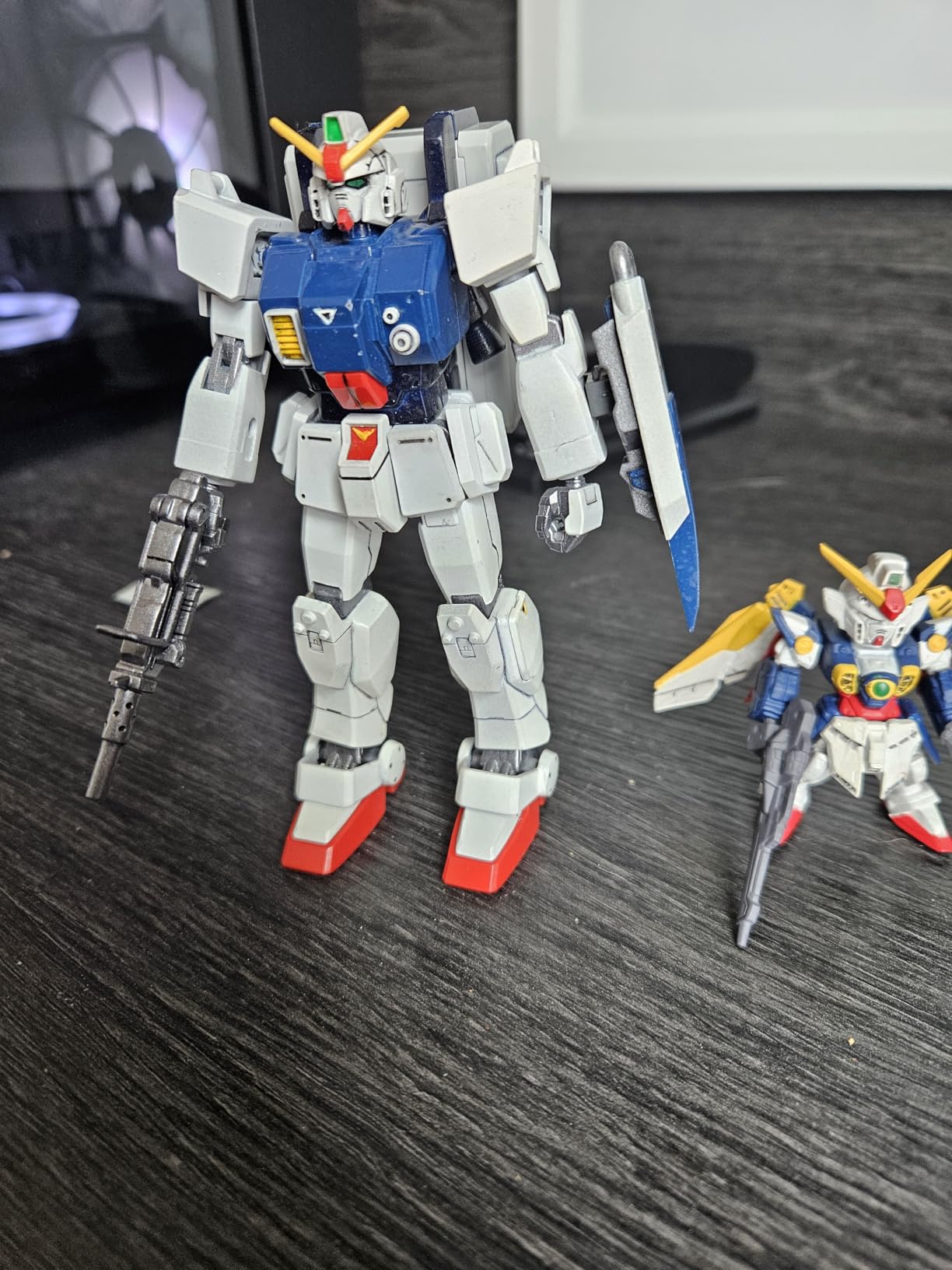
On my last RG Nu Gundam build, I panel-lined the entire kit in under fifteen minutes with this bottle. The black settles into a clean, slightly matte line that reads as a real shadow from a foot away. Cleanup is simple: I wait about ten minutes, then wipe excess with a cotton bud lightly dampened with enamel thinner or Zippo lighter fluid. The wash lifts off the raised surfaces cleanly and stays put in the lines.
The one warning I give every new builder is about bare plastic. Tamiya’s enamel solvent can attack polystyrene if you flood the part, especially on tight seams where it pools. I always lay down a clear gloss coat first, whether acrylic or lacquer, before I touch this wash to the model. That single step prevents the crazing and cracking you see in forum horror photos.
At 4.8 stars across over 2,400 reviews, this is also the most tried-and-tested panel wash on Amazon. Builders use it on everything from 1/144 Gunpla to 1/35 armor and report the same smooth flow and consistent black. The 40ml bottle lasts through dozens of kits because you only need a tiny amount per line.
Which Models It Suits Best
This black wash is my default for Gunpla, sci-fi kits, and any model with cooler base colors like grey, blue, or white. The matte black line gives that crisp anime-shadow look that makes panel detail pop on mecha. For aircraft with lighter grey paint, it can look a touch harsh, which is where the brown shades below come in.
I also reach for it on modern military armor where I want a sharp, sooty read on the panel detail. Combined with a light drybrush of grey on top, the contrast is striking.
Paint System Compatibility
Tamiya Accent Color is enamel-based, so it sits cleanly over cured acrylics, lacquers, and gloss clear coats. I have used it over Mr Color, Tamiya XS, Vallejo Model Air, and AK Real Colors with no issues as long as the base is fully dry. Never apply it over a fresh acrylic base without a barrier coat, because the solvent will soften or lift water-based paint.
For cleanup, I use white spirit or Tamiya’s own enamel thinner. Zippo lighter fluid is the forum favorite because it is gentler and smells milder than mineral spirits.
2. Tamiya Panel Line Accent Color Brown (TAM87132) – Top Rated for Warm Tones
TAMIYA Panel Line Accent Color 40ml Brown TAM87132 Plastics Paint Enamels
Enamel
40ml bottle
Matte brown
Fast-drying formula
Pros
- Fast-drying enamel
- Ideal for warm-toned models
- Good coverage and pigmentation
- Same easy brush cap design
Cons
- Needs enamel thinner for cleanup
- Care needed to avoid pooling on bare plastic
This is the brown sibling of the black Tamiya wash above, and it lives in my bench caddy right next to it. The same 40ml bottle, the same brush-in-cap applicator, the same enamel chemistry that flows like a dream. The difference is the color: a warm, slightly reddish brown that reads as dirt, oil staining, or sun-faded shadow rather than the sharp soot-black of the original.
I reach for this brown on aircraft with tan, olive, or natural metal finishes, where pure black panel lines look too clean and artificial. On a 1/48 P-51D I finished in OD upper surfaces, the brown accent gave the panel detail a dusty, well-flown look that black would have ruined. It also pairs beautifully with red, orange, and yellow Gunpla armor panels where black is too cold.
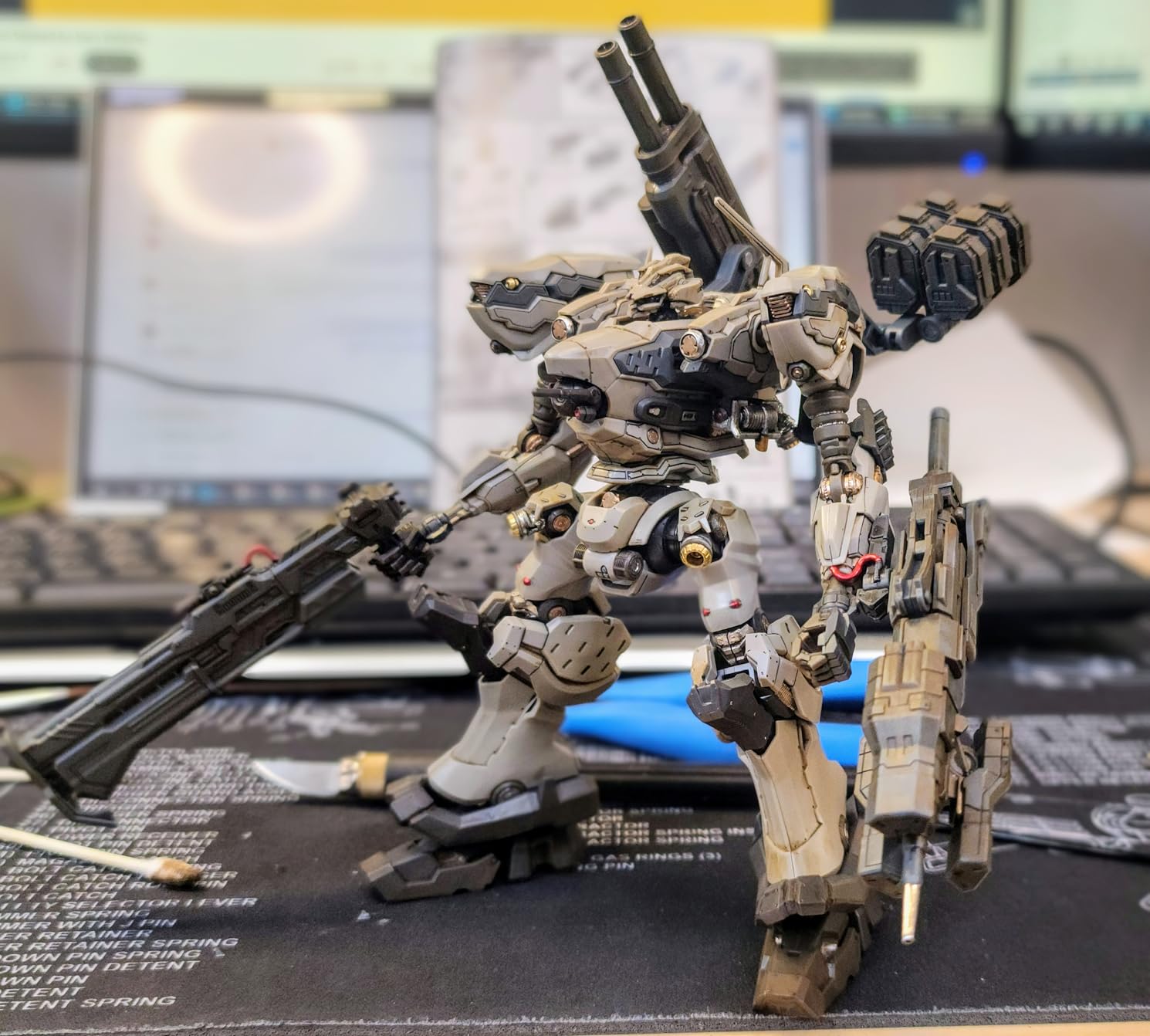
The fast-drying formula is genuinely fast. I can usually start cleanup with a cotton bud after about five minutes, which is quicker than the dark brown variant. Pigmentation is dense enough that one pass fills the line; you rarely need a second coat. Cleanup behaves exactly like the black version, with white spirit or lighter fluid lifting excess off the gloss coat.
At 4.7 stars across nearly 600 reviews, the brown is less popular than the black but no less loved by the people who use it. Most negative notes come from builders who skipped the gloss coat step and ran into plastic damage, which is a user error rather than a product flaw.
Best Use Cases for the Brown Wash
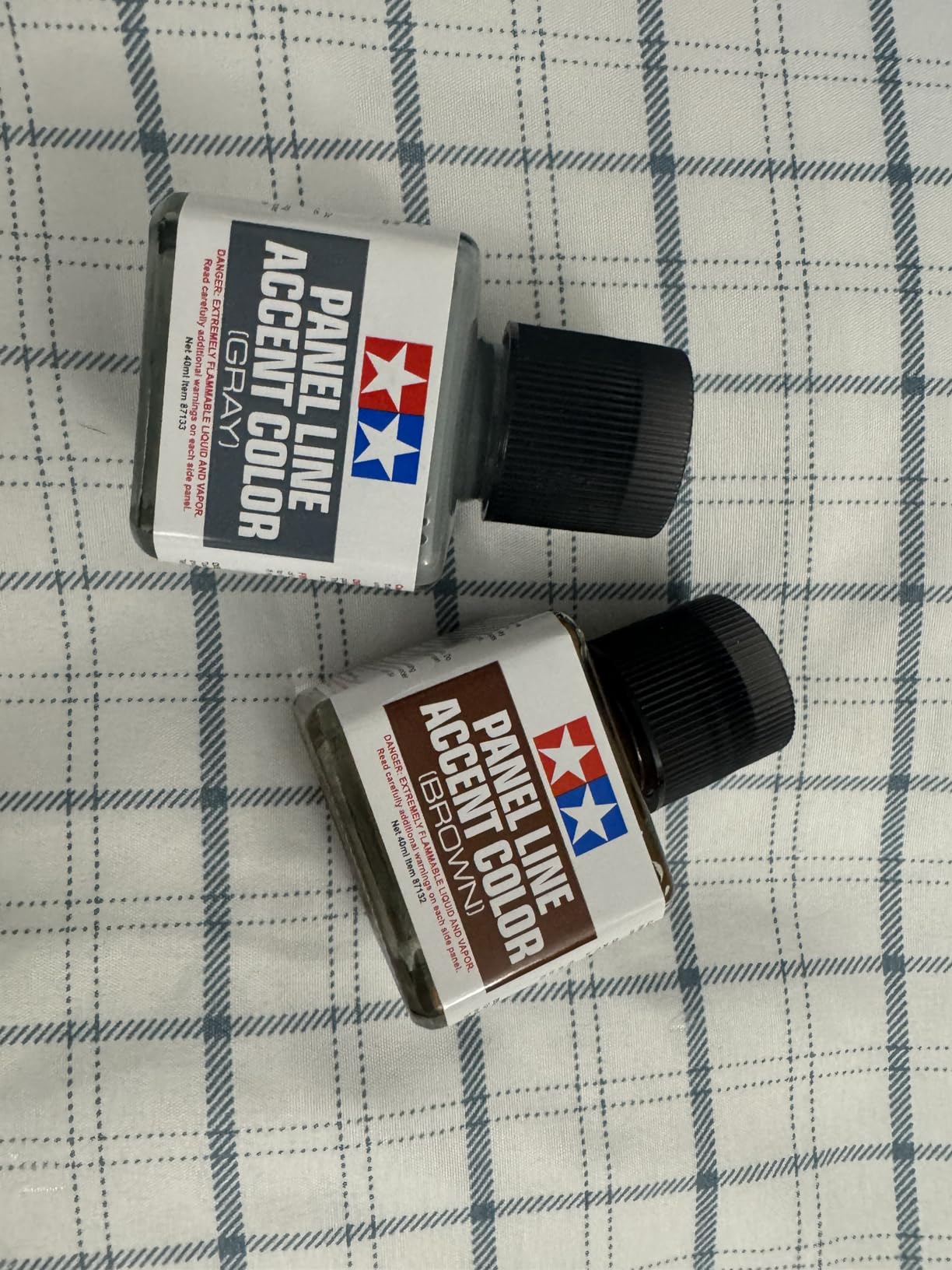
The brown wash shines on WWII aircraft in desert schemes, modern jets with tactical greys that lean warm, and any figure or vehicle where you want a dirt-and-grime look instead of a clean-shadow look. I also use it as a filter over light tan paint for a sun-bleached effect.
On Gunpla, it is my pick for the inner frame and weapon handles, where brown reads as grease and oil wear better than the cartoonish black.
How It Differs From the Black Accent
Other than color, the brown dries a touch faster and feels slightly less aggressive on the solvent side. Both come in the same bottle size and use the same applicator. If you can only afford one, pick the color that matches your most common paint scheme. If you can grab both, you have a working two-color system that covers 90 percent of builds.
3. Tamiya Panel Line Accent Color Dark Brown (TAM87140) – For Subtle Warm Shadow
TAMIYA Panel Line Accent Color 40ml Dark Brown TAM87140 Plastics Paint Enamels
Enamel
40ml bottle
Matte dark brown
Washable formula
Pros
- Ideal when black is too dark
- Great for warm-toned panels
- Excellent capillary flow
- Quality for restoring old kits
Cons
- 24-hour full dry time
- Needs gloss coat barrier to protect plastic
The Dark Brown completes Tamiya’s trio of Accent Colors, and it sits between the original black and the lighter brown in tone. I describe it as a deep, slightly chocolate brown that reads as shadow on reds, yellows, and oranges without going full black. For builders who find the black version too harsh on warm paint schemes, this is the answer.
I tested this on a 1/100 Gunpla in metallic red and the result was a richer, more natural shadow line than the black gave me on the same kit. The capillary flow is just as good as the rest of the Tamiya range. You touch the brush to the line, and the wash runs the groove end to end. The dark brown pigment is dense, so a single pass usually does the job.
One spec difference worth noting: Tamiya lists this one with a 24-hour dry time, longer than the brown variant. In practice I can clean up excess after about ten minutes, but the wash continues to cure and set for the full day. Plan your build schedule around that if you are sealing the model with a topcoat right after.
This one is harder to find than the black and brown, with a smaller review pool of just 45 ratings. Those ratings average 4.9 stars, with 94 percent of reviewers giving five stars. The consensus is clear: if you can find a bottle, it is the best warm-toned panel wash Tamiya makes.
Best Models for Dark Brown Accent
I save this color for kits with warm primary panels: reds, yellows, oranges, browns, and warm metallics. It is also my go-to for restoring older kits where the original panel definition has faded. A light pass of dark brown in the recesses brings a tired 1990s kit back to life without the harsh modern look of pure black.
Setup and Gloss Coat Notes
Like every Tamiya Accent Color, this one needs a gloss clear coat between the wash and the bare plastic. The enamel solvent will craze polystyrene if it pools. I use either a rattle-can acrylic clear or a self-leveling lacquer like Mr Color Super Clear, applied in two thin coats before I start panel lining.
Once the gloss is cured overnight, the dark brown flows and cleans up exactly like its siblings. Keep the bottle upright when not in use to prevent the brush cap from drying out.
4. AMMO MIG Panel Line Wash Black Night (AMIG1611) – Best Value Enamel
Ammo of Mig Jimenez PANEL LINE WASH BLACK NIGHT AMIG1611
Enamel
35ml
Black Night color
Hobby model formula
Pros
- Smooth fine-pigment flow
- Adds realistic depth
- Favorite of experienced builders
- Compact 35ml size
Cons
- Smaller review pool
- Standard shipping only
AMMO by Mig Jimenez is the brand I see recommended most often in experienced-builder circles, and their dedicated Panel Line Wash range is the reason. The Black Night shade is a deep, slightly desaturated black that reads as oil staining or weathered shadow rather than the clean ink-line of Tamiya’s formula. For builders going for a more realistic, weathered finish, that subtle difference matters.
I used this on a 1/35 Tiger I build where I wanted greasy, well-used panel detail instead of the cartoon shadow on a mecha kit. The Black Night flowed beautifully into the scribed lines and pooled just enough in the deeper rivet recesses to suggest old oil. Cleanup with white spirit lifted the surface excess cleanly once the wash had set for about ten minutes.
The 35ml bottle is a touch smaller than Tamiya’s 40ml, but the pigment load is high enough that a single bottle still covers dozens of builds. AMMO MIG formulates these washes specifically for scale model weathering rather than as a generic enamel, and you can feel that in how the wash settles. It is thinner and more controlled than a homemade thinner-and-paint mix.
This product has a smaller review footprint on Amazon, with only six ratings. Those six average 4.7 stars, and every reviewer confirms it works as expected and adds realism. The small sample size reflects AMMO MIG’s distribution rather than product quality; on hobby forums like r/modelmakers and Britmodeller, the brand is treated as a benchmark for fine-pigment weathering products.
Best Builds for the Black Night Shade
I save Black Night for military armor, weathered aircraft, and dioramas where I want grime rather than crisp shadow. It also pairs well with brown and grey washes as part of a layered weathering pass. For clean sci-fi Gunpla, the Tamiya black gives a sharper look.
Cleanup and Thinner Choice
AMMO MIG recommends their own enamel thinner for thinning and cleanup, but in practice white spirit and Zippo lighter fluid both work fine. I keep a small jar of lighter fluid on the bench for cleanup because it is gentle on cured acrylic and lacquer base coats. For deeper information on the broader AMMO enamel range, see our guide to AMMO by Mig enamel washes.
5. AMMO MIG Panel Line Wash Dark Grey (A.MIG-1602)
AMMO MIG-1602 – Pajarita, Color Gris Oscuro, MulticolorL8
Enamel
35ml can
Dark Grey
Gloss finish
Pros
- Softer read than black
- Washable formula
- Adds realistic depth
- First-rate pigment quality
Cons
- Smaller review pool
- Standard shipping only
The Dark Grey is the lighter sibling of the Black Night and the one I reach for when I want panel detail without the dramatic contrast of full black. On a modern grey aircraft scheme, pure black can look stamped on. The Dark Grey sits a half-step darker than the surrounding paint and reads as natural shadow, which is exactly what scale realism calls for.
I tested this on a 1/72 F-16 in the Have Glass V grey scheme, where the surface is already a flat mid-grey. The Dark Grey wash settled into the panel lines and gave the jet the kind of subtle definition you see in parked-aircraft photos rather than the heavy black lines of a plastic look. It is the kind of result that makes the model read as a real object at arm’s length.
The wash behaves like every other AMMO MIG enamel: smooth capillary flow, fine pigment, and clean cleanup with white spirit or lighter fluid. The 35ml can format is a little unusual compared to the bottles most brands use, but the wide mouth makes brush loading easy and the cap seals tightly to prevent skinning.
This Dark Grey has the same small review footprint as the Black Night, six ratings at 4.8 stars. Forum chatter treats it as a reliable workhorse for any builder who finds black too aggressive. If you mostly build modern jets and armour in grey schemes, this should be your default wash.
When to Choose Dark Grey Over Black
Dark Grey wins on modern aircraft in low-visibility grey schemes, sci-fi kits in white or light grey, and any model where you want definition without drama. Black is the better choice on warm colors, deep blues, and any build where you want maximum contrast.
Pairing With Other AMMO MIG Products
This wash layers cleanly with AMMO MIG streaking grimes and pigments if you want to push the weathering further. I usually lay down the panel wash first, seal it with a flat clear coat, then add streaks and dust on top. For the broader AMMO paint line, our AMMO by Mig acrylic paints review covers the complementary colors.
6. Vallejo Wash FX Black (VJ76518) – Budget Pick and Acrylic Favorite
Vallejo – Wash FX | Black 35 ml. (1.18 fl.oz.) | Designed for Dark Vehicles | Visual Realism for your Projects | Brush or Airbrush Use
Acrylic
35ml
Matte black
Water-based, brush or airbrush
Pros
- Water-based with low odor
- Brush or airbrush use
- Fast 20-minute dry
- Versatile as wash or filter
Cons
- Cleanup needs care to avoid lifting base
- Can need multiple passes for deep lines
Vallejo Wash FX is the panel wash I recommend to anyone who cannot stand enamel fumes or who builds in a shared space without good ventilation. The water-based acrylic formula has almost no smell, cleans up with water, and still flows into recessed lines via capillary action. At under ten dollars for a 35ml bottle, it is also one of the most affordable name-brand washes on the market.
I ran this on a 1/48 helicopter build where I was working at the kitchen table and could not justify the mineral spirit smell. The Wash FX Black settled into the recessed lines within seconds of touching the brush to the surface. Cleanup was a damp cotton bud, and the wash lifted off the raised detail without marring the Vallejo Model Air base coat underneath.
One trade-off compared to enamel washes is durability. Acrylic wash sits on top of the paint rather than etching in, so a hard knock or aggressive handling can scuff the line. I always seal Vallejo Wash FX with a flat clear coat before I call a build finished. The coat also evens out the slight sheen difference between the wash and the surrounding paint.
With nearly 6,000 ratings on Amazon averaging 4.7 stars, this is one of the most-reviewed panel washes in the hobby. Builders praise its versatility: it works as a panel line wash, a pin wash, a filter, or even a full-coat shading layer depending on how much you thin it. The 20-minute dry time between coats is also faster than most enamels.
Best Models for Wash FX Black
I use this on aircraft, fantasy figures, and any build where I am painting in a non-ventilated space. It is also my pick for younger builders or anyone sensitive to solvent fumes. The water cleanup makes it the most beginner-friendly option in this guide.
Application and Cleanup Tips
Always apply Wash FX over a gloss or satin acrylic clear coat for the cleanest capillary flow. A flat base coat grabs the wash and stains rather than letting it slide into the lines. After the wash sets for 10 to 20 minutes, wipe excess with a cotton bud slightly damp with water or Vallejo Airbrush Thinner. For compatible base colors, our Mr Hobby aqueous paints guide covers a popular water-based option that pairs well.
7. Vallejo Model Wash Dark Brown (76514)
Vallejo Model Wash 76514 Dark Brown Wash (35ml)
Acrylic
35ml
Dark Brown
Water-based, high capillarity
Pros
- Water-based with high capillarity
- Good depth and realism
- Fast 20-minute dry
- Easy water cleanup
Cons
- Can leave surface bubbles
- Smaller review footprint
The Vallejo Model Wash range is the brand’s dedicated wash line, and the Dark Brown is the warm-tone companion to the Wash FX Black above. Same water-based acrylic chemistry, same 35ml bottle, same low-odor cleanup with water. The difference is a rich dark brown that reads as dirt, dust, or sun-faded shadow rather than soot-black.
I tested this on a 1/35 military truck in desert tan, where pure black would have looked out of place. The Dark Brown settled into the panel lines and rivets and gave the vehicle the kind of dusty, road-worn look you see in reference photos from North Africa. A second light pass as a filter over the upper surfaces tied the whole weathering pass together.
The high capillarity claim on the bottle is real. This wash runs further along a scribed line per brush touch than any other acrylic wash I have tried. That said, I noticed occasional surface bubbles when the wash pooled in deeper recesses. A quick flick with a clean brush breaks them before they dry, so it is a minor annoyance rather than a deal-breaker.
This Dark Brown has a smaller review footprint than the Wash FX Black, with just 33 ratings averaging 4.6 stars. Builders who tried it praise the depth and realism it adds to models. Most complaints focus on the bubble issue, which is easy to manage with a little practice.
Best Use Cases for Model Wash Dark Brown
This is my pick for WWII desert schemes, modern armor in desert tan or olive drab, and any diorama where you want dust rather than grime. It also works as a pin wash around bolts, rivets, and panel edges to suggest accumulated dirt.
Difference From Wash FX Line
Vallejo positions Model Wash as a general-purpose weathering wash for armor, vehicles, and figures, while Wash FX is aimed more at panel line work on aircraft and vehicles. In practice both lines do similar jobs; the Model Wash Dark Brown has slightly higher pigment density and a denser finish, while the Wash FX line is a touch thinner and easier to control on fine panel lines.
8. Mr Hobby Pour Type Gundam Marker Black (GM301P) – Simplest Tool for Beginners
Mr. Hobby – Pour Type Gundam Marker [Black], GSI Creos Gundam Marker (GM301P)
Pour marker
Black ink
Capillary action
Paint marker
Pros
- Capillary action for clean lines
- Easy for beginners
- Erases with matching eraser pen
- Great value per marker
Cons
- Not waterproof
- Requires separate eraser pen for fixes
- Limited to finer lines
This is not technically a wash, but it solves the same problem and I always include it when someone asks for the easiest way to panel-line a Gunpla kit. The Mr Hobby Pour Type Gundam Marker is a paint marker with a fine tip that uses the same capillary action as a liquid wash. You touch the tip to a panel line, and ink flows along the groove until you lift off.
I keep one of these in my travel kit because it is the only panel-lining tool I can use on a train or at a meetup without bottles, brushes, or thinner. For a beginner who has never panel-lined a kit, I would hand them this marker and an eraser pen and have them fully lined in 20 minutes. The learning curve is essentially zero.
The trade-off is that the marker ink sits closer to the surface than a real enamel wash, and it is not waterproof. You need to handle the kit gently until you seal it with a topcoat, and any sweat or moisture on your fingers can lift the lines. The matching Mr Hobby Eraser Pen (sold separately) cleans up stray marks and mistakes quickly, but it is an extra purchase.
With over 1,100 ratings averaging 4.7 stars, this is one of the most popular panel-lining tools on Amazon, especially among Gunpla builders. Reviewers consistently call it the fastest, cleanest way to line a kit, and I agree. At under six dollars per marker, it is also the cheapest entry point in this guide.
Best Models for the Gundam Marker
As the name suggests, this marker was built for Gunpla. It is my default for High Grade, Real Grade, and Master Grade kits where the panel lines are fine and consistent. I have also used it on sci-fi kits like Star Wars models and Macross fighters with good results. It is less suited to large-scale aircraft or armor where you want a softer wash read.
Sealing and Long-Term Durability
Always topcoat any kit you have lined with this marker before you call it done. A spray coat of Mr Hobby Top Coat or any acrylic flat clear locks the ink in place and protects it from finger oils. Without that step, the lines can smudge or fade over time. For compatible base paint, our Mr Color lacquer paint guide covers a popular system that layers well under this marker.
9. AK Interactive Air Series Panel Liners Weathering Combo (5 Colors)
AK Interactive Air Series: Panel Liners Weathering Combo Enamel Paint Set (5 Colors) 35ml Bottle
Enamel
5 x 35ml bottles
Assorted colors
Matte finish combo
Pros
- Five colors in one set
- Matte enamel formula
- Designed for aircraft weathering
- Full coverage with dense pigment
Cons
- Higher upfront cost than single bottles
- Color selection is fixed
If you know you want to build a weathering toolkit in one purchase, the AK Interactive Air Series Panel Liners combo is the best bundle I have used. The set ships five 35ml bottles of enamel panel liner in a curated color selection, all matte finish, all designed specifically for model aircraft and vehicle weathering. You get a working palette for a single price instead of buying each bottle separately.
I tested this set on a 1/48 B-25 Mitchell in a three-tone scheme, where I wanted different panel wash tones for the olive drab upper, the neutral grey lower, and the yellow nose ID markings. The five-color set let me match each zone without improvising custom mixes. The enamel formula behaved consistently across all five shades, with the same flow, dry time, and cleanup behavior.
The pigmentation is dense and the matte finish matches real aircraft paint rather than the glossy look of cheaper washes. Each bottle includes a built-in brush in the cap, which is convenient but a touch coarser than a dedicated detail brush. I still load from the bottle cap with my own fine brush for the tightest panel lines.
At a higher price point than any single bottle in this guide, this set is an investment. With over 200 ratings averaging 4.6 stars, buyers call it a great value for builders who know they will use multiple colors. If you only ever build one type of model in one color scheme, a single bottle from Tamiya or AMMO MIG is more cost-effective.
Who Should Buy the Combo Set
I recommend this set to intermediate builders who have moved past single-color washes and want a complete weathering palette. It is also a smart gift for a modeler who already has basic tools and wants to expand into proper weathering. The fixed color selection covers the most common aircraft weathering needs.
Color Mixing and Custom Shades
The five colors mix cleanly with each other and with standard enamel thinner, so you can blend custom shades for unusual paint schemes. I have mixed the brown and grey shades from this set to match a faded Vietnam-era Tan paint scheme with good results. Always test custom mixes on a paint mule before applying to your model.
10. Humbrol Enamel Wash Black (AV0201) – Classic British Standard
Humbrol Enamel Wash Black Finish for Plastic Model Kits 28 ml AV0201
Enamel
28ml
Matte black
Fade resistant, brush included
Pros
- Flows easily into recessed detail
- Works on enamel and acrylic bases
- Brush included in lid
- Can be mixed for custom shades
Cons
- Bottles can dry out over time
- Limited stock availability
- Solvent can break down with age
Humbrol is the British hobby standard that has been on workbenches for decades, and their Enamel Wash in Black is the brand’s dedicated panel line product. The 28ml bottle is the smallest in this guide, but the wash is pre-thinned, fade-resistant, and includes a small brush molded into the lid. For Airfix and older-style British kit builders, this is the household choice.
I used this on a 1/72 Air Spitfire build where I wanted a classic Humbrol-paint workflow from base color to weathering. The wash flowed into the recessed panel lines and around the rivet detail without flooding the surface. Cleanup with Humbrol Enamel Thinner lifted the surface excess cleanly, and the matte finish matched the Humbrol Authentics paint I had used underneath.
One thing I like about this wash is the lid design. The brush is built into the underside of the cap and a small scoop on the rim lets you control how much wash you load. That small touch makes a difference when you are working fine detail on a small scale kit.
With 250 ratings averaging 4.5 stars, this is the lowest-rated product in this guide, but only by a small margin. Most complaints focus on the bottle seals drying out over time, which is a real issue if you store your supplies for years between builds. Buy fresh, use within a year or two, and the wash performs as advertised.
Best Models for the Humbrol Wash
I reach for this on Airfix kits, classic British aircraft, and any build where I am already using Humbrol paints and want to stay within one paint system. The fade-resistant formula is also a plus for display models that sit under lights for years.
Storage and Shelf Life
Humbrol’s solvent is more volatile than Tamiya’s, so the bottle seal matters. Keep the cap tight between uses, store the bottle upright in a cool place, and decant a small amount into a palette rather than working straight from the bottle. If you notice the wash thickening after a year, a few drops of fresh enamel thinner will bring it back to working consistency.
How to Choose the Best Panel Line Washes for Your Builds?
Picking the right panel line wash comes down to four questions: what paint system are you using, what color is your base coat, where are you building, and what look do you want. Get those answers right and the brand choice almost picks itself. Here is how I think through each one.
Enamel vs Acrylic: The First Decision
Enamel washes (Tamiya Accent Color, AMMO MIG, AK Interactive, Humbrol) flow better, dry harder, and clean up with white spirit or lighter fluid. They are the standard for fine panel line work and the choice of most experienced builders I know. The downside is solvent fumes and the need for a gloss coat barrier to protect bare plastic and acrylic base coats.
Acrylic washes (Vallejo Wash FX and Model Wash, plus the broader 502 Abteilung weathering wash range) clean up with water, smell almost nothing, and are safer for younger builders and shared workspaces. The trade-off is slightly lower durability and a softer look. You also need to be more careful during cleanup because a wet cotton bud can lift the wash right out of the lines.
My rule of thumb: use enamel if you have a dedicated building space with ventilation, and use acrylic if you build at the kitchen table or have kids around. Both can give professional-looking results.
Color Selection Guide by Model Type
The right wash color depends on the base paint and the look you are going for. Here is the system I use:
For black washes, pick them for Gunpla, sci-fi kits, modern armor, and any model with cool base colors like grey, blue, white, or black. Black gives the sharp, defined shadow that reads as clean and graphic from a distance.
For brown and dark brown washes, choose them for warm base colors like red, yellow, orange, olive, tan, and natural metal. Brown reads as dirt, dust, oil, or sun fading, which matches the way real warm-painted surfaces age in sunlight.
For dark grey washes, save them for modern aircraft in low-visibility grey schemes and any model where you want subtle definition without dramatic contrast. Dark grey is the bridge between the graphic look of black and the weathered look of brown.
Application Workflow: The Short Version
The panel line wash process I follow on every build is the same five steps. First, finish your paint job and let the base coat cure fully, at least overnight for acrylics and a few hours for lacquers. Second, apply a gloss clear coat over the entire model to give the wash a smooth surface to flow over. Let the gloss cure for at least a few hours.
Third, touch your loaded brush to a panel line and let capillary action pull the wash along the groove. Work in small sections so you can clean up before the wash sets too hard. Fourth, wait 10 to 30 minutes depending on the wash, then wipe excess off the raised surfaces with a cotton bud lightly dampened with the correct thinner. Fifth, let the wash cure overnight before sealing with a flat clear topcoat.
Safety and Ventilation
Enamel washes and their thinners give off fumes that can cause headaches and dizziness in poorly ventilated spaces. Always work in a room with an open window or a fan pulling air away from your bench, and consider a respirator with organic vapor cartridges if you enamel-wash regularly. Acrylic washes avoid this problem entirely, which is one reason they have grown in popularity.
Keep all thinners and washes away from children and pets. Even water-based washes contain pigments and additives that are not safe to ingest. A locked hobby cabinet is a worthwhile investment if you share your home with curious hands.
Pre-Scribing for Shallow Panel Lines
Many modern kits have shallow panel lines that barely hold a wash. If you find your wash pooling on the surface instead of flowing into the lines, you may need to re-scribe the detail before painting. A scribing tool like a Madworks chisel or a Tamiya scriber deepens the recessed lines so the wash has somewhere to settle. Do this before priming, then clean up the plastic dust before you start painting.
FAQs
What is the best panel line wash for aircraft models?
For most aircraft, I recommend the AMMO MIG Panel Line Wash in Dark Grey for modern low-viz grey schemes and the Tamiya Panel Line Accent Color in Brown for WWII and warm-tone schemes. Both flow cleanly via capillary action and clean up with white spirit or lighter fluid without damaging a properly cured gloss coat.
What is the difference between panel wash and panel lining?
Panel lining is the broader term for any technique that darkens recessed lines on a model, including paint markers, fine brushes, and pencils. Panel washing specifically refers to applying a thinned liquid wash that flows through panel lines by capillary action. A panel line wash is one tool used for panel lining, but the two terms are often used interchangeably in the hobby.
How do I apply a panel line wash for Gunpla?
Apply a gloss clear topcoat over the assembled and painted kit, let it cure, then touch a brush loaded with panel line wash to a scribed line and let capillary action pull it along the groove. Wait 10 to 20 minutes, wipe excess with a cotton bud dampened with the correct thinner, then seal the kit with a flat topcoat. The Mr Hobby Pour Type Gundam Marker is the simplest tool for beginners and skips the brush-and-thinner step entirely.
Which brand has the best panel line washes – Tamiya or MIG?
Tamiya Panel Line Accent Color is the easiest to find, has the largest user base, and includes a built-in brush cap that makes application foolproof. AMMO MIG Panel Line Washes have finer pigment, a more weathered-realistic look, and a wider color range, but are harder to source and have a smaller review footprint. Tamiya wins for beginners and availability; AMMO MIG wins for fine realism and color variety.
Final Thoughts on the Best Panel Line Washes for 2026
The best panel line washes turn a flat plastic kit into something that reads as a real aircraft, vehicle, or mecha at arm’s length. The Tamiya Panel Line Accent Color in Black remains my top pick for most builders in 2026 because it flows perfectly, cleans up easily, and has the largest community knowledge base. The Vallejo Wash FX Black is the safest pick for builders who want to skip the solvent fumes, and the Mr Hobby Gundam Marker is the simplest tool I hand to a total beginner. Pick the one that matches your paint system, your build space, and the look you want, and your next model will look noticeably more real the moment the wash settles into the lines.