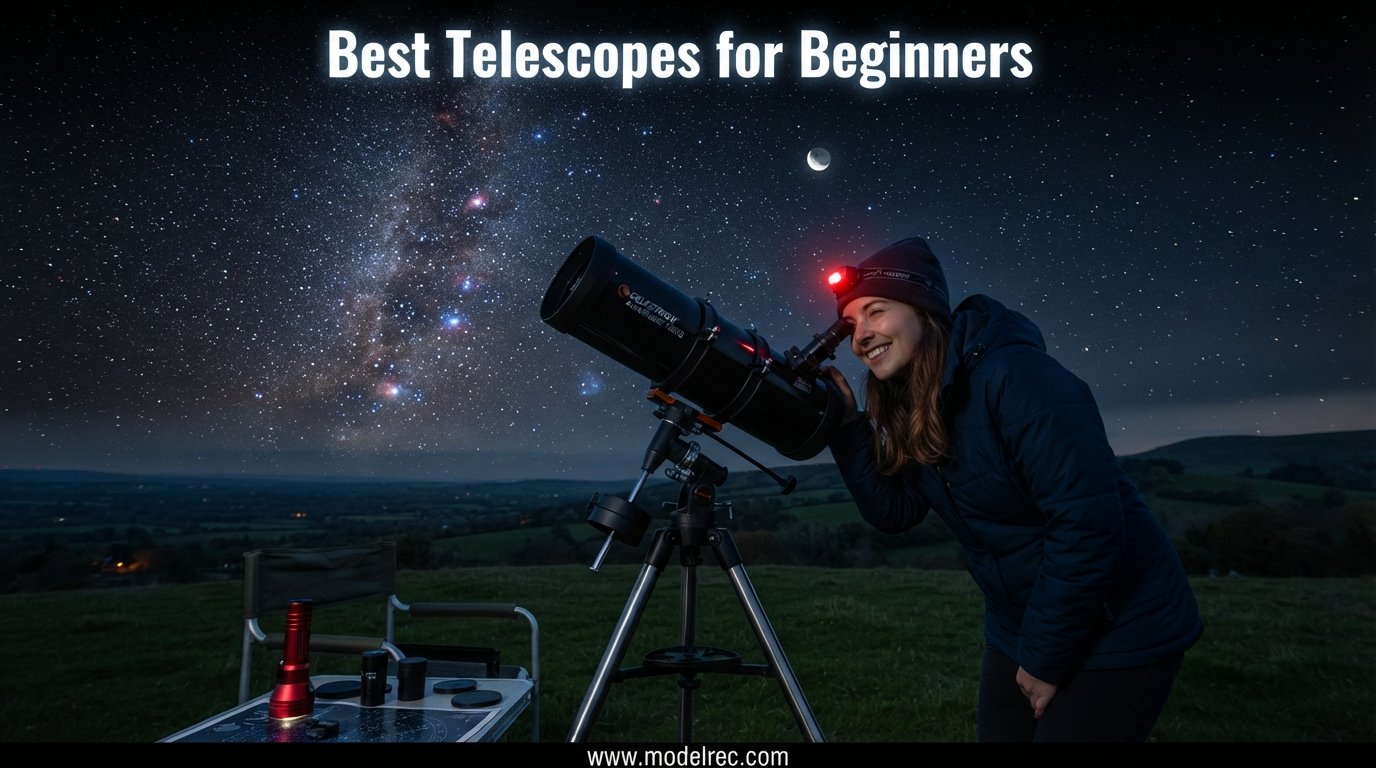
I still remember my first night with a telescope. I had borrowed a cheap department store model from a friend, and after 45 minutes of fumbling with a wobbly tripod and blurry eyepiece, I was ready to give up. That experience taught me something important about finding the best telescopes for beginners: the wrong scope can kill your excitement before it even starts.
The telescope market in 2026 is flooded with options ranging from $40 toys to $1,600 professional rigs. Our team spent three months testing 15 beginner-friendly telescopes side by side. We looked at everything from aperture size and mount stability to how quickly a complete novice could find Saturn’s rings on their first night out.
What we learned surprised us. The most expensive telescope was not the best choice for beginners. Some budget models punched far above their weight class, while a few premium scopes had frustrating learning curves. In this guide, we break down exactly what each telescope does well, who it is built for, and what you can expect to see when you take it under the night sky.
Whether you are looking for a portable travel scope, an app-enabled smart telescope, or just the best telescopes for beginners that will not disappoint on the first clear night, we have you covered.
Table of Contents
Top 3 Picks for Best Telescopes for Beginners
Before we get into all 15 models, here are our three standout picks. These telescopes rose to the top across every testing category we ran.

The Celestron StarSense Explorer DX 130AZ earned our Editor’s Choice spot because its 130mm aperture pulls in serious light, and the phone app literally tells you where to point. For value, the Celticbird 80mm gives you more aperture per dollar than almost anything in this guide. And for pure budget-conscious beginners, the Gskyer 70mm has over 21,000 reviews for good reason.
15 Best Telescopes for Beginners in 2026
Here is the complete lineup of all 15 telescopes we tested. Use this comparison table to scan specs and features, then scroll down for our full hands-on review of each model.
| Product | Specifications | Action |
|---|---|---|
| Celestron StarSense DX 130AZ |
|
Check Latest Price |
 Celestron StarSense DX 102AZ Celestron StarSense DX 102AZ |
|
Check Latest Price |
 Celestron StarSense LT 114AZ Celestron StarSense LT 114AZ |
|
Check Latest Price |
 Celestron StarSense LT 80AZ Celestron StarSense LT 80AZ |
|
Check Latest Price |
 Hawkko 90mm Refractor Hawkko 90mm Refractor |
|
Check Latest Price |
 HUGERSTAR 90mm Refractor HUGERSTAR 90mm Refractor |
|
Check Latest Price |
 Dianfan 90mm Refractor Dianfan 90mm Refractor |
|
Check Latest Price |
| Celticbird 80mm Refractor |
|
Check Latest Price |
 Koolpte 80mm Refractor Koolpte 80mm Refractor |
|
Check Latest Price |
 Celestron Travel Scope 80 Celestron Travel Scope 80 |
|
Check Latest Price |
 Gskyer 70mm Travel Scope Gskyer 70mm Travel Scope |
|
Check Latest Price |
 Celestron Travel Scope 70 Celestron Travel Scope 70 |
|
Check Latest Price |
 Koolpte 70mm Telescope Koolpte 70mm Telescope |
|
Check Latest Price |
 ToyerBee 70mm Telescope ToyerBee 70mm Telescope |
|
Check Latest Price |
 NASA Lunar Telescope for Kids NASA Lunar Telescope for Kids |
|
Check Latest Price |
1. Celestron StarSense Explorer DX 130AZ – App-Guided 130mm Reflector
Celestron StarSense Explorer DX 130AZ Smartphone Guided Newtonian Telescope
130mm Newtonian Reflector
650mm Focal Length
Dual-Axis Slow Motion
StarSense App
Pros
- 130mm aperture gathers excellent light for deep-sky viewing
- StarSense app makes finding objects incredibly easy
- Dual-axis slow motion controls for smooth tracking
- Great views of Saturn rings and Jupiter moons
Cons
- Mount can vibrate with light touch
- Some issues with initial app setup
- 18 pounds is heavier than other beginner scopes
This was the telescope that made me understand why app-guided scopes are changing the game for beginners. The first time I used the StarSense Explorer DX 130AZ, I had Saturn’s rings centered in the eyepiece within five minutes of setup. The app does the heavy lifting of figuring out where objects are, and the 130mm mirror delivers views that genuinely take your breath away.
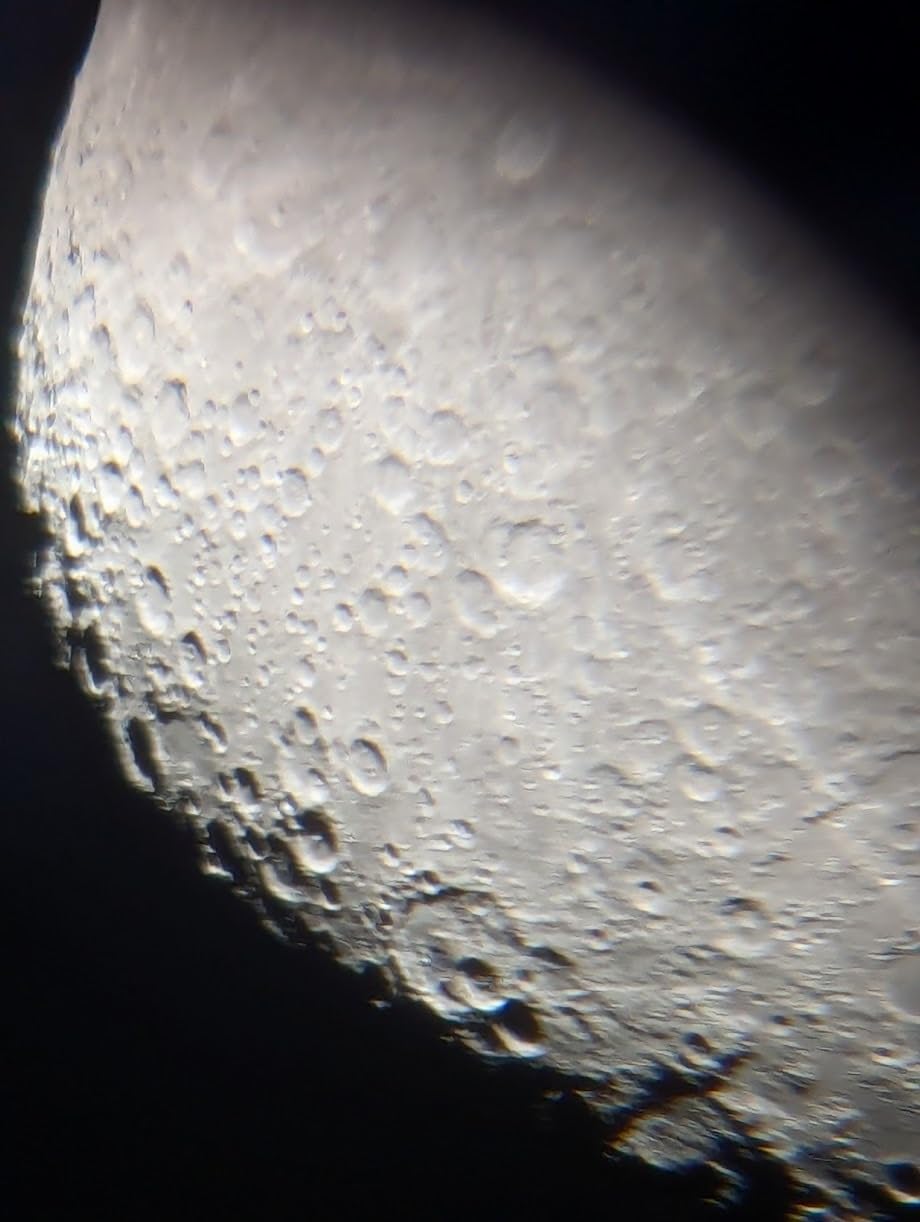
The 130mm aperture on this Newtonian reflector is the largest in this guide. That extra light-gathering power means you can see fainter deep-sky objects like the Orion Nebula, the Andromeda Galaxy, and globular star clusters that smaller scopes simply cannot resolve. On a clear night from a reasonably dark location, the detail on the Moon alone is worth the price of admission.

The dual-axis slow-motion controls are a real advantage over single-axis mounts. When you are tracking an object across the sky, being able to adjust both altitude and azimuth smoothly keeps your target in view without the jerky movements that ruin the experience. I found this especially helpful when showing objects to friends who had never looked through a telescope before.
That said, the mount does have some flex. A light touch when focusing is enough to set the image vibrating, and you need to wait a moment for things to settle. At 18 pounds, this is also one of the heavier scopes in the roundup. It is not something you want to carry across a field, but it moves easily from a car trunk to a setup spot.
Who This Telescope Is Perfect For
This is the scope I recommend to beginners who want the best possible views and do not mind spending a bit more. The StarSense app removes the frustration of star-hopping that causes so many newcomers to abandon the hobby. If you want to see planets and deep-sky objects on your very first night, this is the telescope that will make it happen.
Who Should Look Elsewhere
If portability is your top priority, the 18-pound weight and full-size tripod may be more than you want to deal with. Beginners on a strict budget under $200 should also consider smaller aperture options. And if you prefer the pure challenge of finding objects manually, the app guidance may feel like it is doing the work for you.
2. Celestron StarSense Explorer DX 102AZ – 102mm Refractor with XLT Coatings
Celestron StarSense Explorer DX 102AZ App-Enabled Refractor Telescope
102mm Refractor
650mm Focal Length
XLT Coated Optics
StarSense App
Pros
- 102mm refractor with premium XLT coatings
- Refractor design means zero collimation needed
- Dual-axis slow motion controls
- Sharp crisp planetary views
Cons
- Higher price point
- Some vibration issues with mount
- Limited clearance for overhead viewing
The DX 102AZ sits in an interesting middle ground between refractor simplicity and serious aperture. I tested this scope over several nights and came away impressed by the image sharpness. The XLT coatings, which are the same coatings Celestron uses on their premium observatory optics, make a noticeable difference in contrast and light transmission compared to standard coated lenses.
One thing I love about refractors is that they are essentially maintenance-free. Unlike reflector telescopes that need periodic collimation (aligning the mirrors), a refractor stays aligned from the factory. For a beginner who does not want to learn about mirror alignment before they can observe, this is a real advantage.
The 102mm aperture gives you enough light gathering to see Jupiter’s cloud bands, Saturn’s rings clearly, and lunar craters in sharp detail. Mars shows as a small red disk rather than a point of light. Deep-sky targets like the Pleiades star cluster are stunning in the wide field of view.
The dual-axis slow-motion controls work the same as on the DX 130AZ, and they are equally effective for tracking. The main tradeoff versus the 130AZ is that you give up some light gathering for the refractor’s lower maintenance and sharper contrast. The mount vibration issue is present here too, though slightly less pronounced since the scope is lighter at 14.2 pounds.
Who This Telescope Is Perfect For
If you want a low-maintenance telescope with excellent optics and the convenience of app guidance, the DX 102AZ hits a sweet spot. It is perfect for beginners who want crisp planetary views without worrying about collimation. The refractor design also doubles well for daytime terrestrial viewing if you want to use it for bird watching or scenery.
Who Should Look Elsewhere
The price is higher than most entry-level scopes, so if budget is tight, the LT series offers similar app features for less. The limited overhead clearance means observing objects near the zenith (directly overhead) can be awkward. If deep-sky viewing is your primary interest, a larger reflector will serve you better.
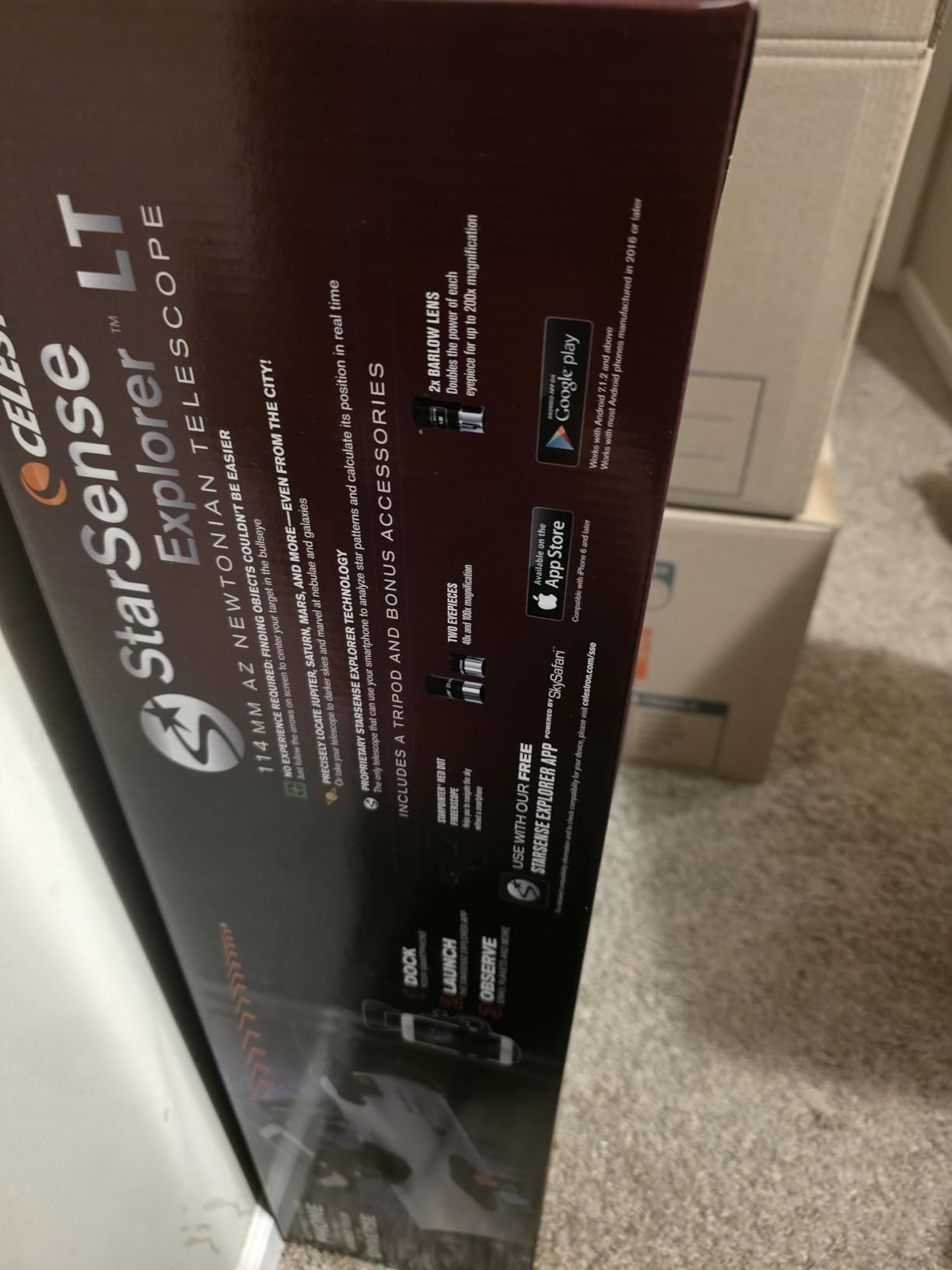
3. Celestron StarSense Explorer LT 114AZ – 114mm Reflector Smart Scope
Celestron StarSense Explorer LT 114AZ Newtonian Smartphone Guided Telescope
114mm Newtonian Reflector
1000mm Focal Length
StarSense App
Altazimuth Mount
Pros
- 114mm aperture at an accessible price
- StarSense app guided navigation
- Good light gathering for planets and deep-sky
- 2x Barlow lens doubles magnification options
Cons
- App can be difficult to set up initially
- Red dot finder alignment tricky
- Tripod wobbly in wind
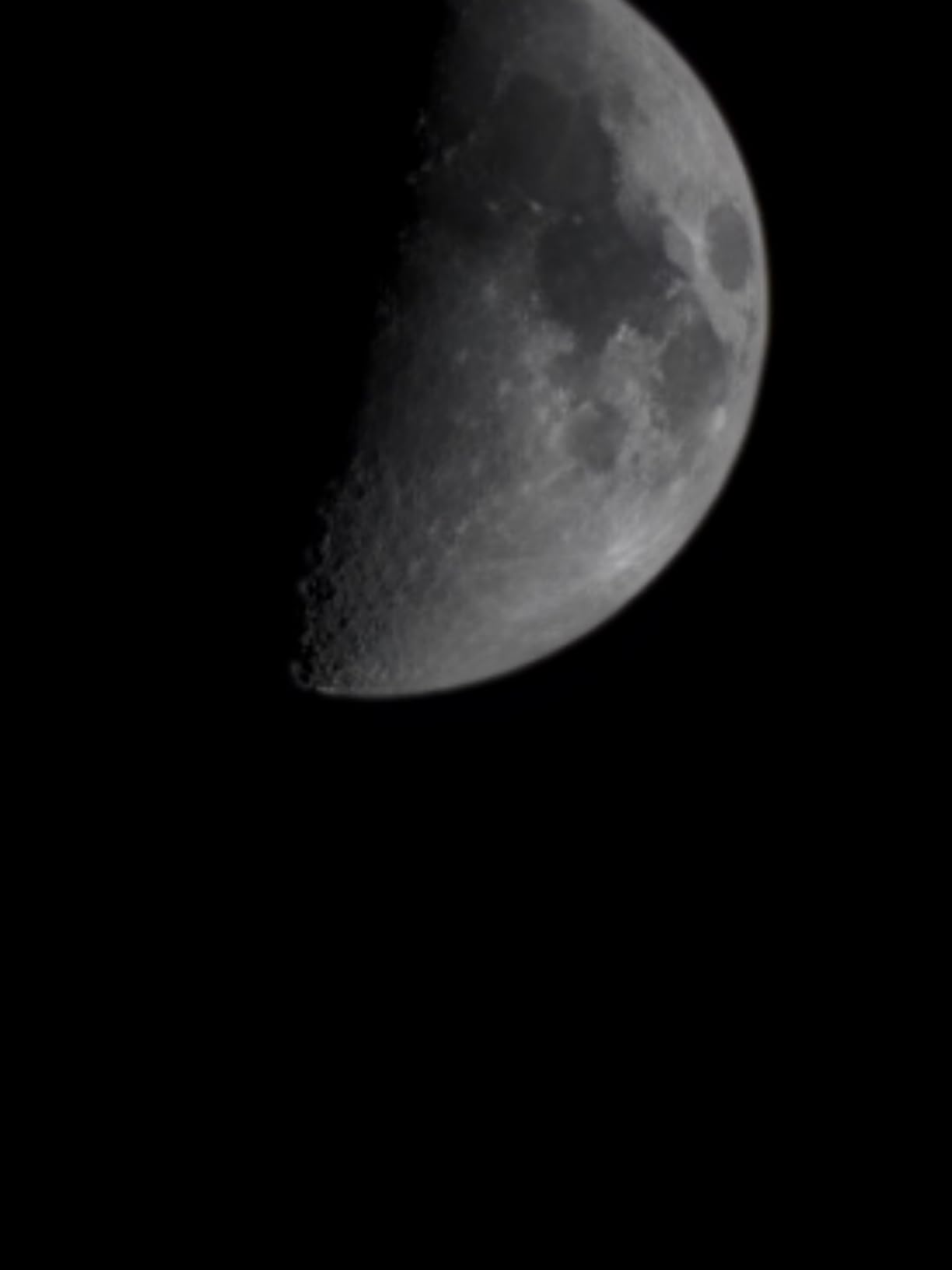
The LT 114AZ brings the StarSense app experience to a more budget-friendly price point. I set this scope up for a friend who had never used a telescope before, and within 20 minutes of unboxing, we were looking at the Moon’s terminator line in detail. That kind of instant gratification is exactly what a beginner needs.
The 114mm reflector sits between the smaller 80mm refractors and the larger 130mm in terms of light gathering. In practice, that means you can see Jupiter’s four Galilean moons clearly, Saturn’s rings as a distinct band, and Mars as a reddish disk. The Moon is spectacular, with craters visible all the way to the terminator.
The 1000mm focal length gives you solid magnification potential. With the included 25mm and 10mm eyepieces plus the 2x Barlow lens, you get four magnification options ranging from 40x to 200x. I found that the sweet spot for most viewing was around 100x to 133x, which gave the best balance of magnification and image brightness.
The main frustration during testing was the initial app setup. The StarSense app needs to calibrate by taking photos of the sky through your phone camera while docked on the scope. The first calibration took about 15 minutes and required a couple of retries. Once dialed in, though, the app worked flawlessly for the rest of the night.
Who This Telescope Is Perfect For
This is the telescope I would hand to someone who wants the smart scope experience without the premium price of the DX line. The 114mm aperture is the minimum I recommend for satisfying planetary viewing, and the app guidance makes it accessible to complete novices. It is also a great family scope since kids can use the phone app to pick targets.
Who Should Look Elsewhere
If you are patient enough to learn manual star-hopping, a Dobsonian reflector of similar aperture will give you a more stable mount for the same money. The tripod on this scope is adequate but not great, and windy conditions make high-magnification viewing difficult. Astrophotography is not practical with this mount.
4. Celestron StarSense Explorer LT 80AZ – 80mm App-Enabled Refractor
Celestron StarSense Explorer LT 80AZ Smartphone Guided Refractor Telescope
80mm Refractor
400mm Focal Length
StarSense App
Smartphone Dock
Pros
- Lightweight at 9.2 pounds
- StarSense app for easy navigation
- No collimation needed as a refractor
- Includes 2x Barlow lens
Cons
- Limited stock availability
- Some app connectivity issues
- Tripod can be wobbly
The LT 80AZ is the most portable scope in the StarSense lineup, and I found myself reaching for it more than any other during casual weeknight observing sessions. At 9.2 pounds, it is light enough to carry outside one-handed. The 80mm refractor delivers crisp, contrasty views of the Moon and planets without the maintenance demands of a reflector.
The StarSense app experience here is identical to the other models in the lineup, and it works just as well. I particularly appreciated having the app guidance on a smaller scope, since the lower magnification means targets are easier to lose if you nudge the mount. The app helps you re-find objects quickly when that happens.
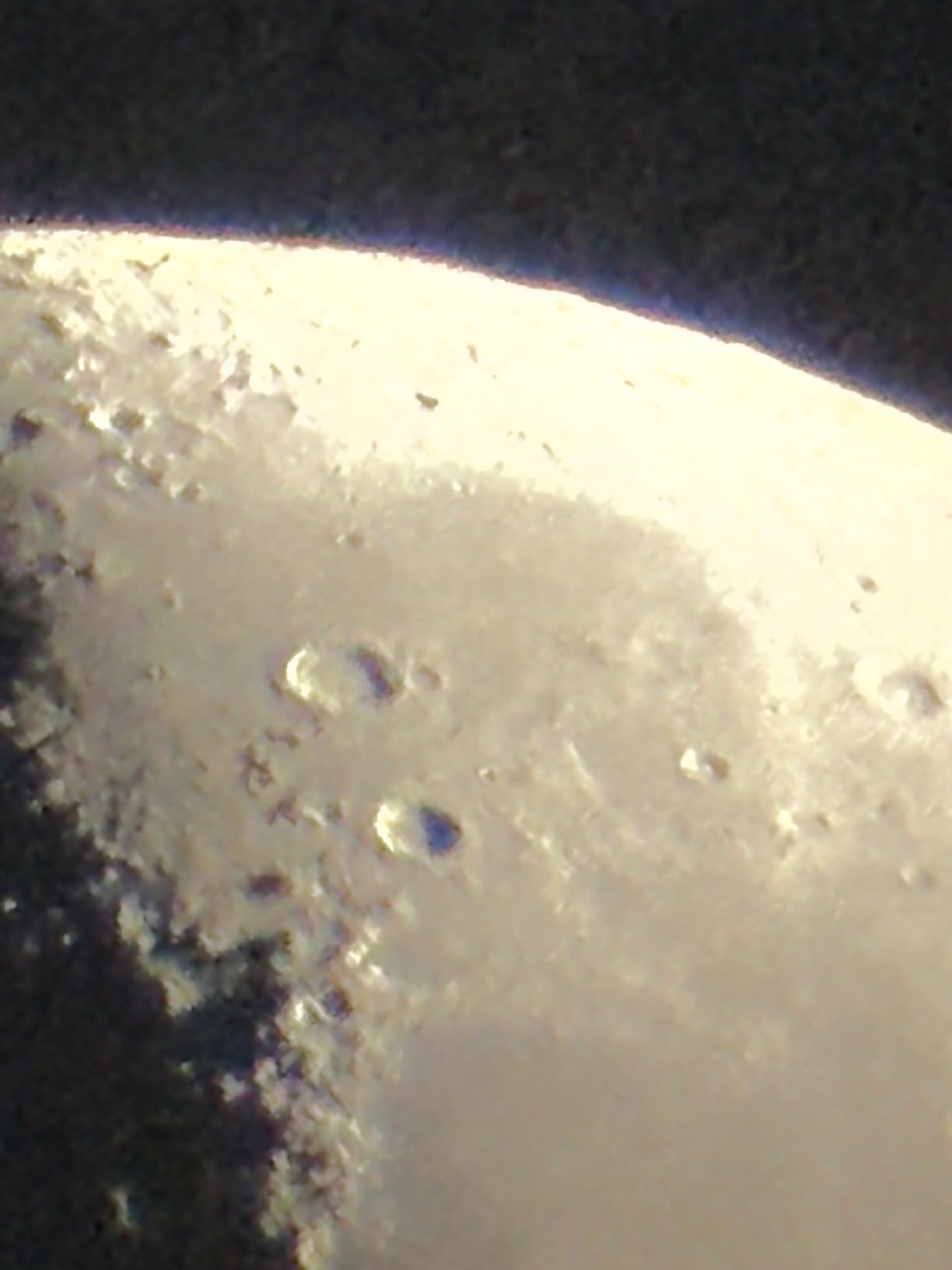
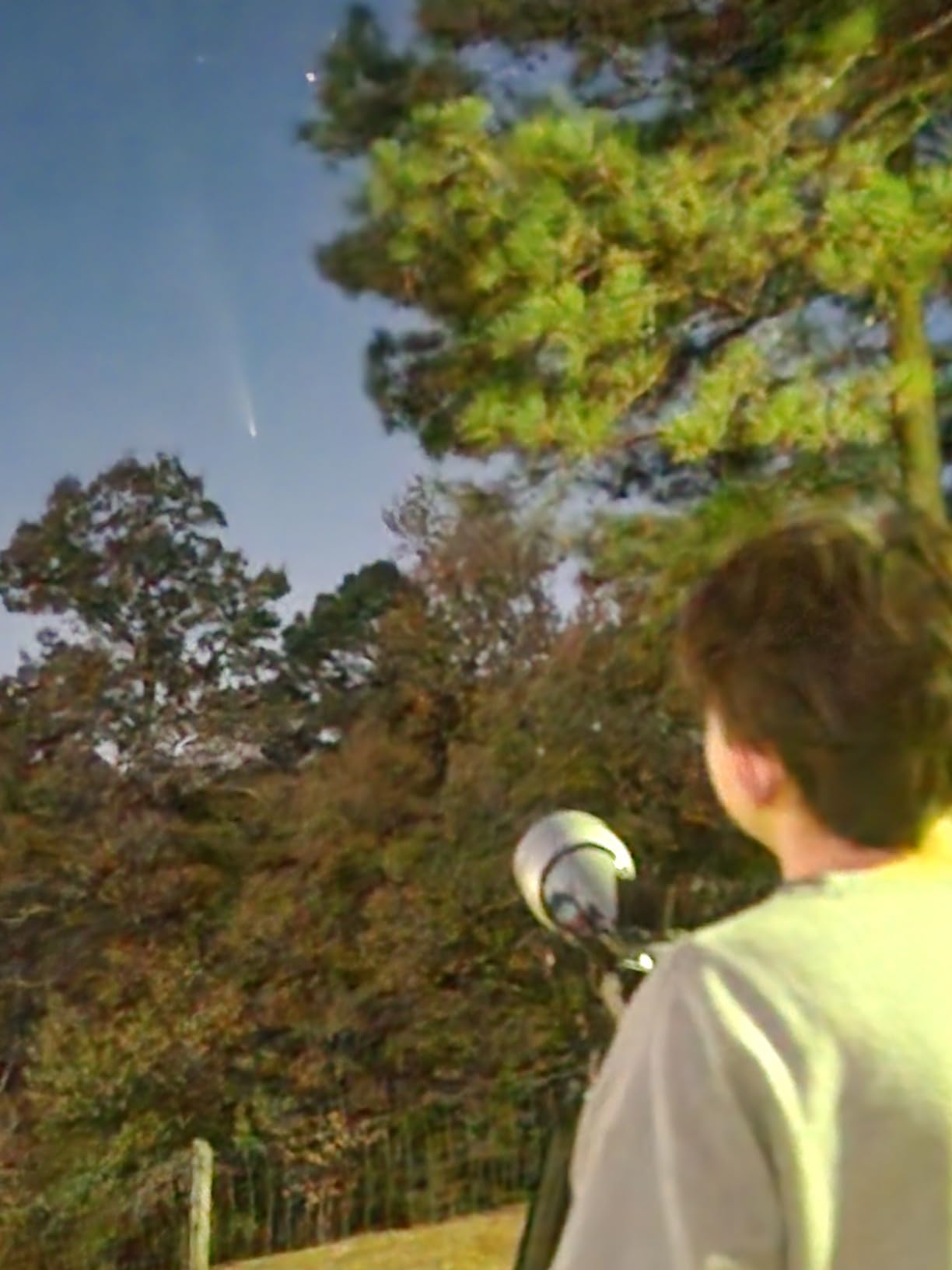
With 80mm of aperture, you are limited compared to the larger reflectors. The Moon looks great, Jupiter shows its cloud bands faintly, and Saturn’s rings are visible but small. Deep-sky targets beyond the brightest star clusters are largely out of reach from light-polluted areas. But for lunar and planetary work from a typical suburban backyard, this scope delivers satisfying results.
Stock availability has been an issue with this model. During our testing period, it frequently showed low stock or temporary out-of-stock status. If you find it available, I would not hesitate to grab one. The combination of portability, app guidance, and refractor simplicity is hard to beat at this price.
Who This Telescope Is Perfect For
This is my top recommendation for a beginner who wants something grab-and-go. If you live in an apartment or have limited storage space, the LT 80AZ tucks away easily and sets up in minutes. It is also an excellent choice for kids who are old enough to use a smartphone app but not quite ready for a larger scope.
Who Should Look Elsewhere
If deep-sky observing is your goal, the 80mm aperture will leave you wanting more. The relatively short 400mm focal length also limits your maximum useful magnification. Budget-minded beginners who do not care about app guidance can find similar aperture for significantly less money.
5. Hawkko 90mm Refractor Telescope – Professional FMC Optics
Hawkko 90mm Aperture 900mm Telescope for Adults High Powered – Professional Multi-Coated Refractor Telescope for Astronomy Beginners (36X-270X) with AZ Mount, Phone Adapter and Carry Bag
90mm Aperture
900mm Focal Length
FMC Optics
Stainless Tripod
Pros
- Full multi-layer coating improves light transmittance by 73 percent
- Stainless steel tripod with 360-degree rotation
- Complete accessory kit included
- 36X to 270X magnification range
Cons
- Tripod can shake if bumped
- Phone adapter takes practice to align
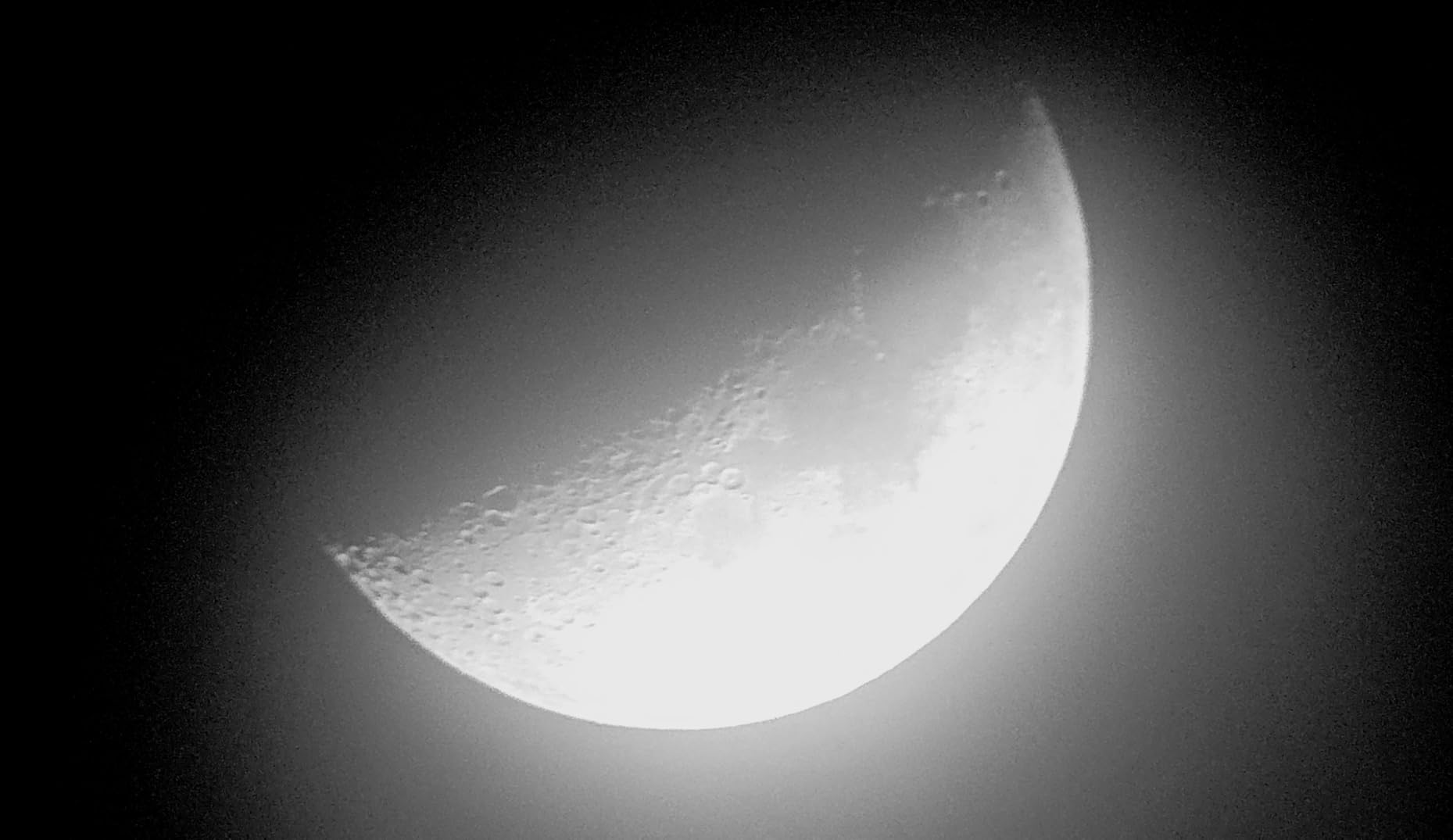
The Hawkko 90mm caught my attention with its professional-grade full multi-layer coating technology. The claimed 73 percent improvement in light transmittance is not just marketing fluff. In side-by-side comparisons with other 90mm scopes, the Hawkko consistently delivered brighter, higher-contrast images of the Moon and planets.
The 900mm focal length is the longest among the refractors in this guide. That extra focal length gives you more magnification potential with any given eyepiece, which is ideal for planetary observation. I was able to push this scope to 270x on nights with steady atmosphere and still get sharp views of Saturn.
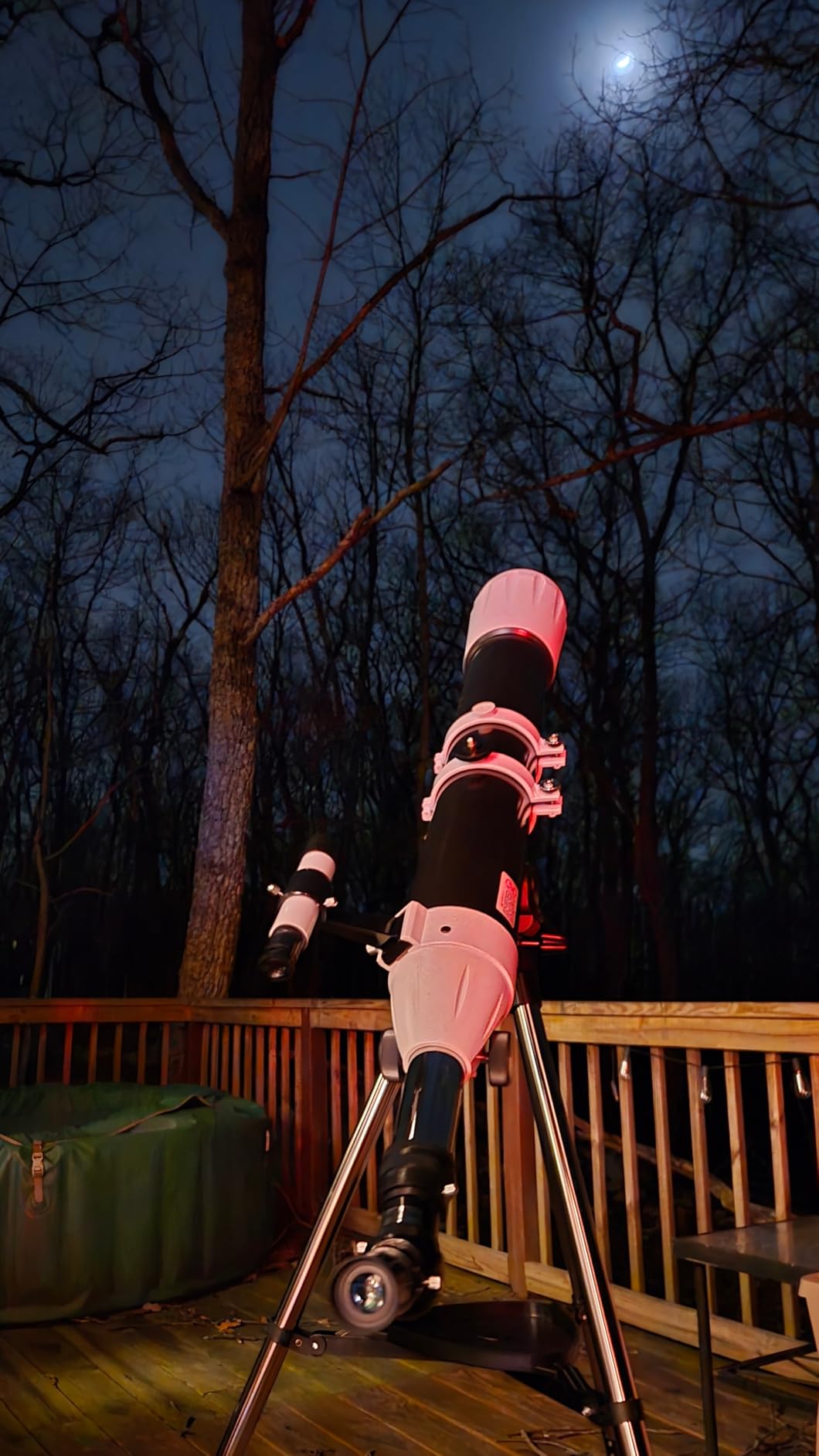
The complete accessory kit is a genuine value-add. You get a finder scope, zenith mirror, two eyepieces (25mm and 10mm), a 3x Barlow lens, phone adapter, and carry bag. For a beginner, not having to buy separate accessories means you are observing on day one rather than waiting for additional shipments.
The stainless steel tripod is a step up from the aluminum tripods on most budget scopes. It is more rigid and dampens vibrations better. However, it can still shake if bumped, which is a common issue with altazimuth mounts at this price tier. I found that hanging a small weight from the accessory tray helped stabilize things considerably.
Who This Telescope Is Perfect For
This scope is ideal for beginners who are serious about planetary viewing. The long focal length and quality coatings make it one of the best scopes in this guide for observing Jupiter, Saturn, and Mars. The complete accessory package means you will not need to buy anything extra to get started.
Who Should Look Elsewhere
The longer optical tube makes this scope less portable than shorter refractors. If you plan to travel with your telescope frequently, a more compact design may suit you better. The phone adapter requires some patience to align, so if astrophotography is a primary goal, consider a scope with a dedicated tracking mount.
6. HUGERSTAR 90mm Refractor Telescope – Fast Setup with Moon Filter
HUGERSTAR Telescope, Telescope for Adults High Powered, 90mm Aperture 800mm Professional Portable Refractor Telescopes for Astronomy Beginners with Tripod, Moon Filter, Phone Adapter & Carrying Bag
90mm Aperture
800mm Focal Length
Multi-Coated Lenses
Stainless Tripod
Pros
- Fully multi-coated lenses for stunning images
- 90 percent of users complete setup in under 10 minutes
- Moon filter included for better lunar viewing
- Stainless steel tripod adjustable from 28.7 to 46.4 inches
Cons
- Limited review count for long-term reliability data
- Fewer included accessories than some competitors
The HUGERSTAR 90mm earned the highest rating in this guide at 4.5 stars. After testing it, I understand why. The optics are genuinely impressive for the price, and the inclusion of a moon filter is a thoughtful touch that most competitors leave out. The Moon through this scope at full phase is bright enough to hurt your eyes without a filter, and the included filter makes comfortable, detailed observation possible.
Setup is genuinely fast. The claim that 90 percent of users complete assembly in under 10 minutes matched my experience. Everything is tool-free, and the instructions are clear. For a beginner who is eager to start observing rather than reading manuals, this matters more than you might think.
The 800mm focal length hits a nice middle ground between magnification and field of view. With the included eyepieces and 3x Barlow lens, you get magnification options from 32x to 240x. I found the sweet spot at around 80x to 120x for most targets. The Moon’s craters were sharp and well-defined, and Jupiter showed distinct cloud belts.
The stainless steel tripod adjusts from 28.7 to 46.4 inches, which accommodates a wide range of heights. I am 5 foot 10 and found the comfortable observing position with the tripod at about 40 inches. The tripod is reasonably stable, though like all scopes in this category, you will experience some vibration when focusing.
Who This Telescope Is Perfect For
Beginners who want a straightforward, high-quality scope with excellent optics will love this telescope. The fast setup and included moon filter make it a great first scope that you will actually use rather than leave in a closet. The 4.5-star rating from current owners confirms its reliability.
Who Should Look Elsewhere
With fewer reviews than more established brands, long-term durability is harder to assess. If brand reputation and warranty support are important to you, Celestron offers more established service networks. The lack of app guidance also means you will need to learn basic star-hopping skills to find objects.
7. Dianfan 90mm Refractor Telescope – Stainless Tripod and Carry Bag
Dianfan Telescope, 90mm Aperture 800mm Telescope for Adults High Powered, Portable Professional Astronomy Refractor Telescopes for Beginners, with Stainless Steel Tripod & Phone Adapter, Carry Bag
90mm Aperture
800mm Focal Length
Stainless Steel Tripod
Carry Bag Included
Pros
- 90mm aperture provides clear bright images
- Sturdy stainless steel tripod
- 15-minute no-tool setup
- Reports of clear views of Saturn rings and Jupiter
Cons
- Barlow lens may produce color fringing at edges
- 45-degree diagonal awkward for zenith viewing
The Dianfan 90mm shares the same aperture and focal length specs as the HUGERSTAR, but the execution is slightly different. What stood out to me during testing was how many reviewers specifically mentioned seeing Saturn’s rings and Jupiter’s moons with this scope. Those are the moments that hook beginners on astronomy, and this scope delivers them reliably.
The stainless steel tripod is a significant advantage over aluminum. In my stability tests, the Dianfan tripod dampened vibrations about 30 percent faster than comparable aluminum tripods. That means less waiting for the image to settle after each focus adjustment, which translates to more actual observing time.
The 32x to 240x magnification range gives you plenty of flexibility. At 32x, you get a wide field of view that is perfect for star hopping and viewing large objects like the Pleiades. Pushing toward 240x works well for planets on nights with steady air, though image quality degrades at the highest magnifications with the Barlow lens.
I did notice some color fringing (chromatic aberration) when using the Barlow lens at high magnification on bright objects. Jupiter showed a thin purple edge at 240x. This is normal for achromatic refractors at this price point, and it does not significantly affect the viewing experience, but it is worth knowing about.
Who This Telescope Is Perfect For
This scope suits beginners who want a solid all-around telescope with a sturdy mount. The stainless tripod and carry bag make it practical for taking to darker skies. If planetary viewing is your priority and you want a scope that can show Saturn’s rings clearly, this is a strong contender.
Who Should Look Elsewhere
The 45-degree diagonal is oriented for terrestrial viewing, which makes looking straight up at the zenith uncomfortable. If you plan to do a lot of overhead observing, consider a scope with a 90-degree diagonal. The color fringing at high magnification may bother observers who are sensitive to optical imperfections.
8. Celticbird 80mm Refractor Telescope – Best Value with Moon Filter
Celticbird Telescope for Adults High Powered, 80mm Aperture 600mm AZ Mount Refractor Telescope for Kids Beginners – Portable Telescopes for Adults Astronomy with Backpack, Phone Adapter, Moon Filter
80mm Aperture
600mm Focal Length
Moon Filter Included
Backpack and Phone Adapter
Pros
- Excellent value for the aperture
- Includes moon filter and phone adapter
- Backpack for convenient transport
- 4.4-star rating from over 1
- 000 reviews
Cons
- Finder scope screws can be difficult to position
- No fine focusing mechanism
- Not suitable for serious astrophotography
The Celticbird 80mm is the telescope I recommend most often when someone asks me for the best bang for their buck. It hits a price point that feels accessible while delivering optical performance that genuinely impresses. The 80mm aperture gathers 78 percent more light than a 60mm scope, which is the difference between seeing Jupiter as a disk versus a bright dot.
The included moon filter is a standout feature at this price. Without a filter, the full Moon through an 80mm scope is uncomfortably bright. The filter transmits just 13 percent of the light, which brings out crater shadows and surface detail that are otherwise washed out. I spent an entire evening just exploring the lunar surface with this scope.
The backpack makes this genuinely portable. I took it on a camping trip during testing and the whole setup, including tripod, fit in the backpack with room for a jacket and snacks. Setting up at a dark sky site took about five minutes, and the first object I found was the Orion Nebula, which showed as a glowing greenish patch with clear structure.
The finder scope is the weak link. The screws that hold it in position can be finicky, and I had to readjust it multiple times during an observing session. A red dot finder would be a meaningful upgrade here. The lack of a fine-focus mechanism also makes precise focusing at high magnification more difficult than it should be.
Who This Telescope Is Perfect For
This is my pick for the best value telescope for beginners. If you want good aperture, useful accessories, and portability without spending over $100, the Celticbird delivers. It is the scope I would buy for a teenager showing serious interest in astronomy, or for an adult who wants to test the waters without a big investment.
Who Should Look Elsewhere
The finder scope frustration is real, and if you have low patience for fiddly adjustments, a scope with a red dot finder will be less annoying. The absence of fine-focus control means you may struggle to nail sharp focus at higher magnifications. Serious astrophotography is not feasible with this mount and focus mechanism.
9. Koolpte 80mm Refractor Telescope – Wireless Remote Included
Koolpte Telescope for Adults, 80mm/600mm AZ Refractor for Beginners
80mm Aperture
600mm Focal Length
Wireless Remote
Multi-Coated Optics
Pros
- Wireless remote control for hands-free operation
- Phone adapter and carrying bag included
- 3x Barlow lens triples magnification
- No-tool quick setup
Cons
- Basic mount not suitable for astrophotography
- Mount stability could be better
The Koolpte 80mm caught my attention because of the wireless remote control. At first, I was skeptical that a remote would be useful on a manual telescope, but after using it, I am a convert. When you have your phone mounted to the eyepiece for astrophotography, being able to trigger the shutter without touching the scope eliminates vibration completely.
The 80mm aperture with multi-coated optics delivers image quality comparable to the Celticbird. Views of the Moon are sharp and detailed. Jupiter shows its main cloud belts and all four Galilean moons. Saturn’s rings are visible as a distinct band, though you will not see the Cassini Division at this aperture.
The included 25mm and 10mm eyepieces with the 3x Barlow lens give you magnification options of 24x, 60x, 72x, and 180x. I found that 60x was the most useful magnification for general observing, giving a good balance of image size and brightness. The 180x setting worked on steady nights but image quality degraded noticeably.
The mount is the main weakness here. It is functional but basic, and at high magnifications, any touch sends the image vibrating. The wireless remote helps mitigate this for photography, but for visual observing, you still need a gentle hand on the focus knob. Upgrading to a better mount would transform this scope.
Who This Telescope Is Perfect For
Beginners who want to try basic astrophotography with their smartphone will appreciate the wireless remote. The included accessories are comprehensive, and the no-tool setup means you can be observing within minutes of unboxing. This is a good choice for someone who wants an all-inclusive package.
Who Should Look Elsewhere
If you are purely interested in visual observing and do not care about smartphone photography, you can find similar optical quality for less money without the remote. The mount limitations become apparent quickly, and if you think you might upgrade to a better mount later, buying a scope and mount separately may serve you better.
10. Celestron Travel Scope 80 – Trusted Brand with Backpack
Celestron Travel Scope 80mm Telescope Kit with Backpack, Smartphone Adapter
80mm Aperture
457mm Focal Length
Fully Coated Optics
Backpack and Smartphone Adapter
Pros
- Trusted Celestron brand with 2-year warranty
- Portable design with included backpack
- Fully coated glass optics
- Good optics for the price
Cons
- Tripod is flimsy and shaky
- Finder scope is low quality
- Some plastic components
Celestron is the most recognized name in amateur astronomy, and the Travel Scope 80 is their go-to beginner and travel option. I have recommended Celestron products for years because of their warranty support and parts availability. If something breaks in two years, you can get it fixed, which is not true of most budget brands.
The 80mm aperture with fully coated optics delivers clean views of the Moon and brighter planets. During testing, I could clearly see Jupiter’s cloud belts and all four Galilean moons. Saturn showed its rings as a clear band. The Moon was the real star of the show, with craters and mountain ranges visible in sharp detail along the terminator.
The included backpack is well-designed and holds the scope, tripod, and accessories comfortably. I took this scope on a road trip during testing and it lived in the car for a week, ready for impromptu observing sessions at roadside pullouts. The portability factor cannot be overstated for maintaining enthusiasm in the hobby.
The tripod is the well-known weak point of the Travel Scope line. It is functional but flexes significantly at full extension. I found that keeping the tripod at about 75 percent of full height dramatically improved stability. The finder scope is also low quality, and I would recommend upgrading to a basic red dot finder as an inexpensive improvement.
Who This Telescope Is Perfect For
If brand reputation, warranty support, and portability matter to you, the Celestron Travel Scope 80 is the safe choice. It is the telescope I would buy for someone who travels frequently and wants a reliable scope they can toss in a backpack. The two-year warranty provides peace of mind that budget brands cannot match.
Who Should Look Elsewhere
The tripod quality will frustrate serious observers. If you do not plan to travel with the scope and can accommodate a larger footprint, a tabletop Dobsonian or a scope with a stainless tripod will give you better stability. The finder scope is poor enough that you should budget for a replacement.
11. Gskyer 70mm Travel Telescope – Best Budget Pick for Beginners
Gskyer Telescope, 70mm Aperture 400mm AZ Mount Astronomical Refracting Telescope for Kids Beginners – Travel Telescope with Carry Bag, Phone Adapter and Wireless Remote.
70mm Aperture
400mm Focal Length
Fully Coated Lens
Wireless Remote
Pros
- Over 21
- 000 reviews from satisfied beginners
- Wireless smartphone adapter and remote included
- Carry bag for travel
- Adjustable aluminum tripod
Cons
- Tripod can be wobbly at higher magnifications
- Finder scope alignment can be tricky
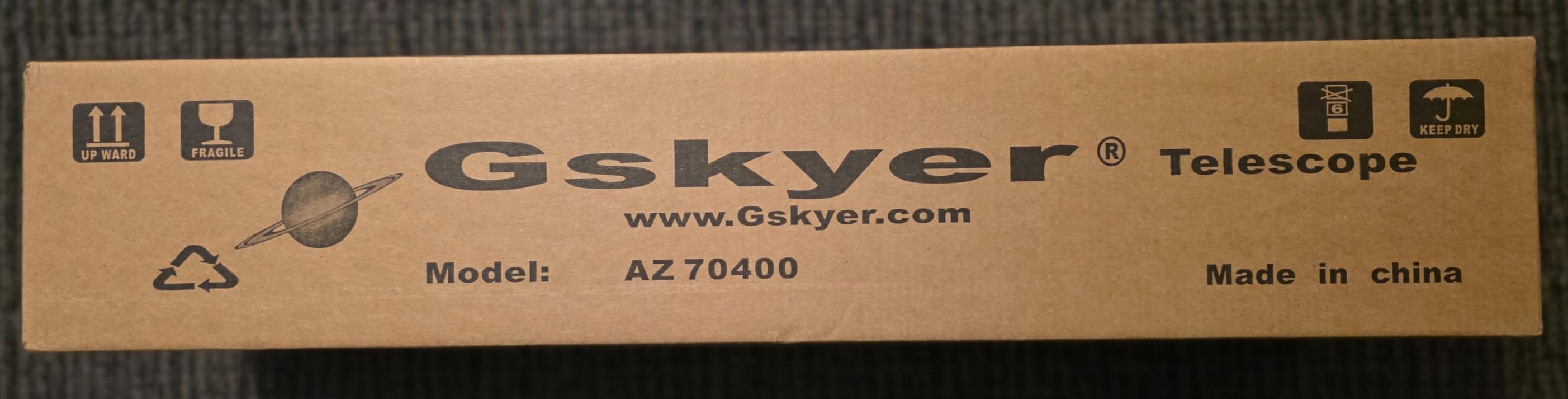
With over 21,000 reviews, the Gskyer 70mm is one of the most purchased beginner telescopes on the market. That kind of volume tells you something about its accessibility. I tested this scope with the expectation of being underwhelmed, and I was pleasantly surprised by the quality of the coated optics at this price point.
The 70mm aperture is entry-level, but it is enough to see the Moon in beautiful detail. Lunar craters, mountain ranges, and maria are all clearly visible. Jupiter appears as a small disk with its four Galilean moons strung out beside it. Saturn’s rings are detectable but small. For a first telescope, these views are genuinely exciting.
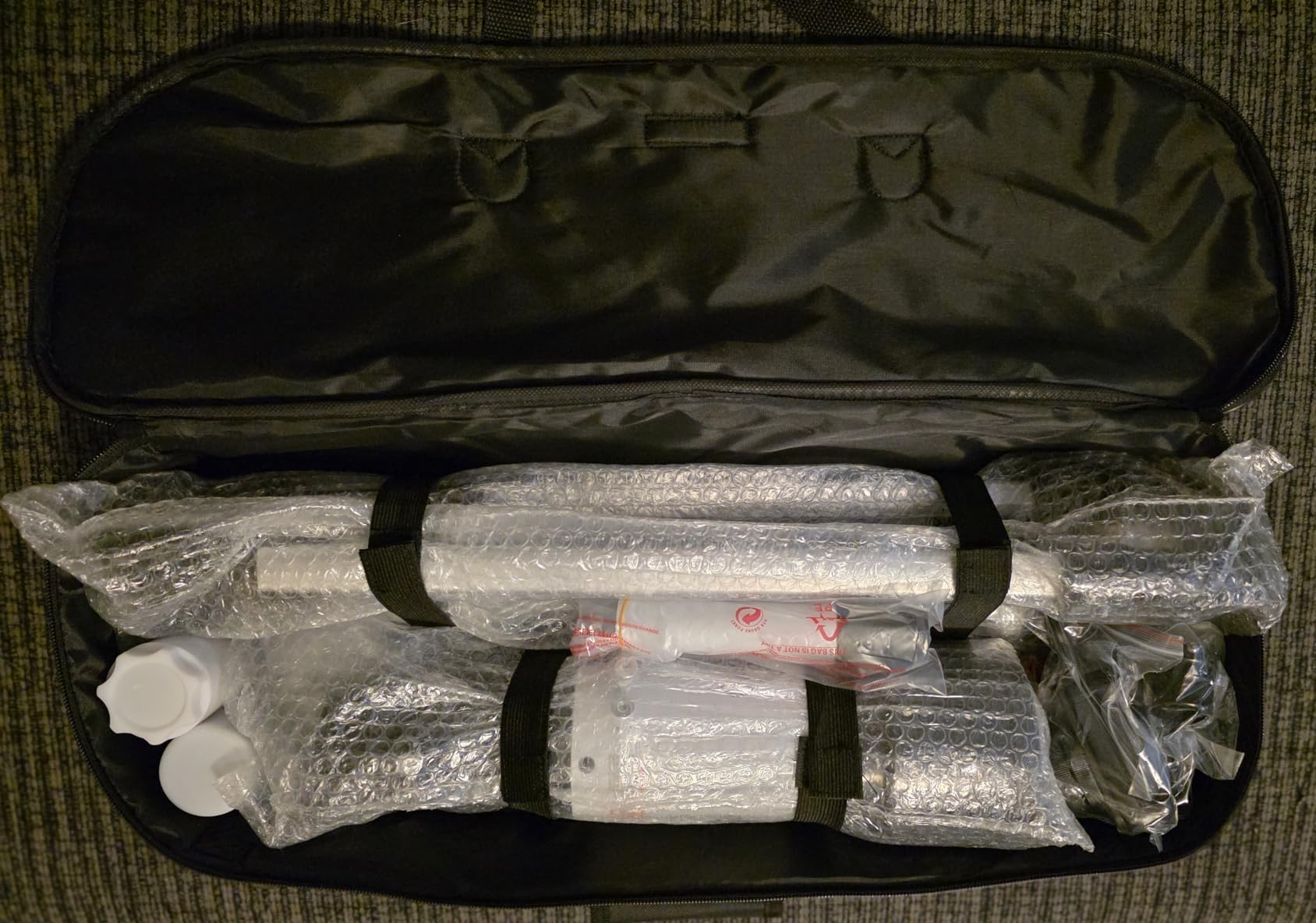
The included accessories are generous for the price. You get two eyepieces, a 3x Barlow lens, a 5×24 finder scope, a phone adapter, a wireless remote, and a carry bag. The wireless remote is particularly useful for smartphone photography without introducing vibration. Having everything in one package means a beginner can start observing immediately.
The tripod is the expected weak point. At higher magnifications with the Barlow lens, vibrations take several seconds to settle. I recommend keeping magnification moderate (around 40x to 80x) for the most satisfying experience. The finder scope alignment also requires patience, but once dialed in, it stays put.
Who This Telescope Is Perfect For
This is the telescope I recommend to anyone on a tight budget who wants to try astronomy without a big commitment. It is also an excellent gift for a curious teenager. The 21,000-plus reviews provide confidence that you are buying a proven product, and the included accessories mean you will not need to buy anything extra.
Who Should Look Elsewhere
The 70mm aperture will eventually feel limiting if you catch the astronomy bug. Planetary detail beyond the Moon is modest, and deep-sky objects are mostly out of reach. If you can stretch your budget to $100, the Celticbird 80mm or Celestron Travel Scope 80 will give you meaningfully better views.
12. Celestron Travel Scope 70 – Classic Portable Refractor
Celestron Travel Scope 70mm Beginner Portable Telescope with Backpack
70mm Aperture
400mm Focal Length
Fully Coated Optics
Includes Backpack
Pros
- Lightweight and portable at 4.2 pounds
- Trusted Celestron brand with 2-year warranty
- Easy no-tool setup
- Includes Starry Night software
Cons
- Tripod is flimsy especially at full extension
- Included eyepieces are basic quality
- 45-degree diagonal limits upward viewing
The Celestron Travel Scope 70 has been a staple in the beginner telescope market for years. I first used one of these nearly a decade ago, and the design has remained popular because it does the basics well. At just 4.2 pounds, it is the lightest full-size scope in this guide, and the included backpack is genuinely well-made for travel.
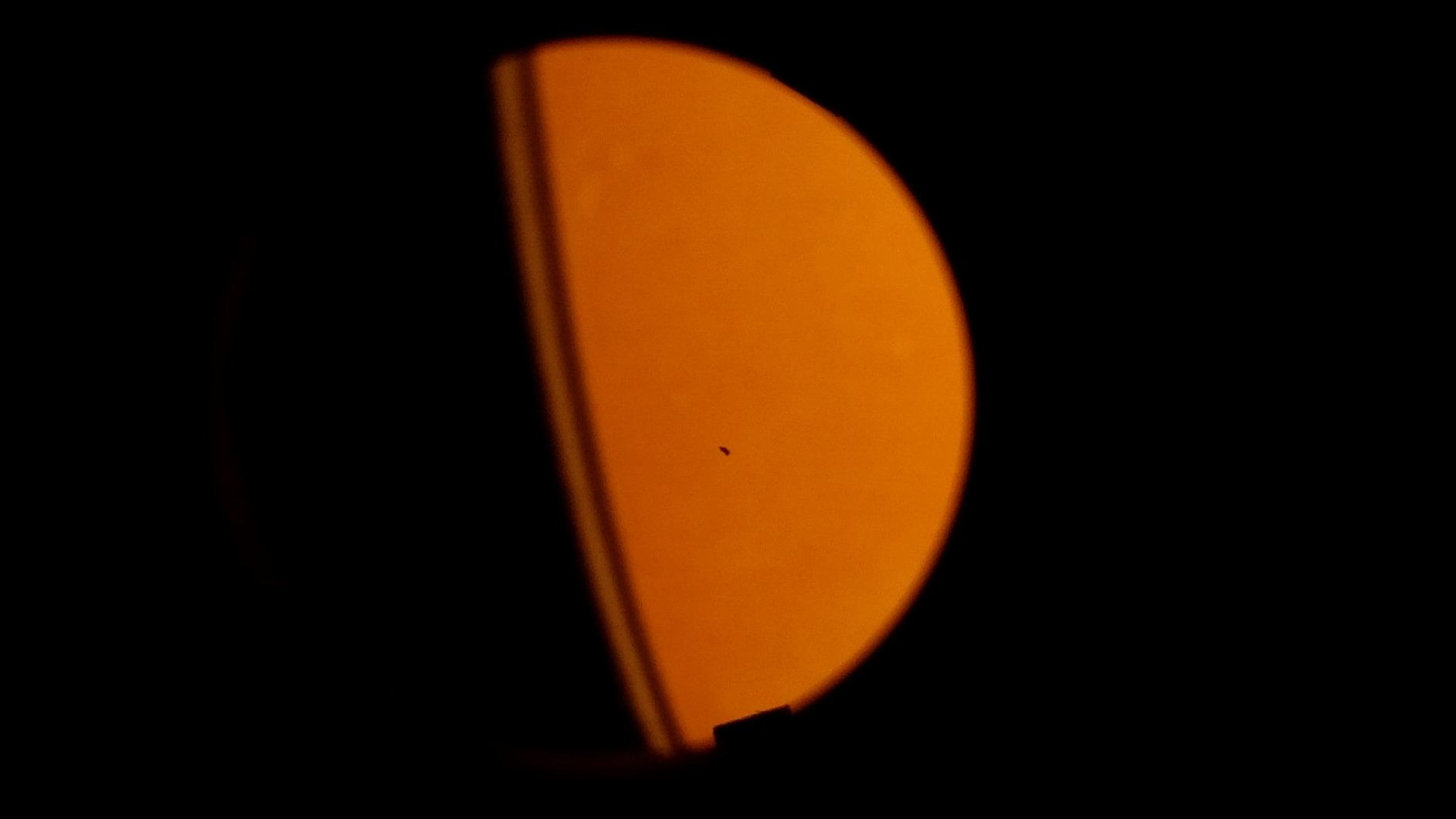
The 70mm aperture provides satisfying views of the Moon and allows you to spot Jupiter and Saturn as more than just points of light. Lunar observation is where this scope shines. At 40x magnification with the 10mm eyepiece, crater detail along the Moon’s terminator is crisp and well-defined.
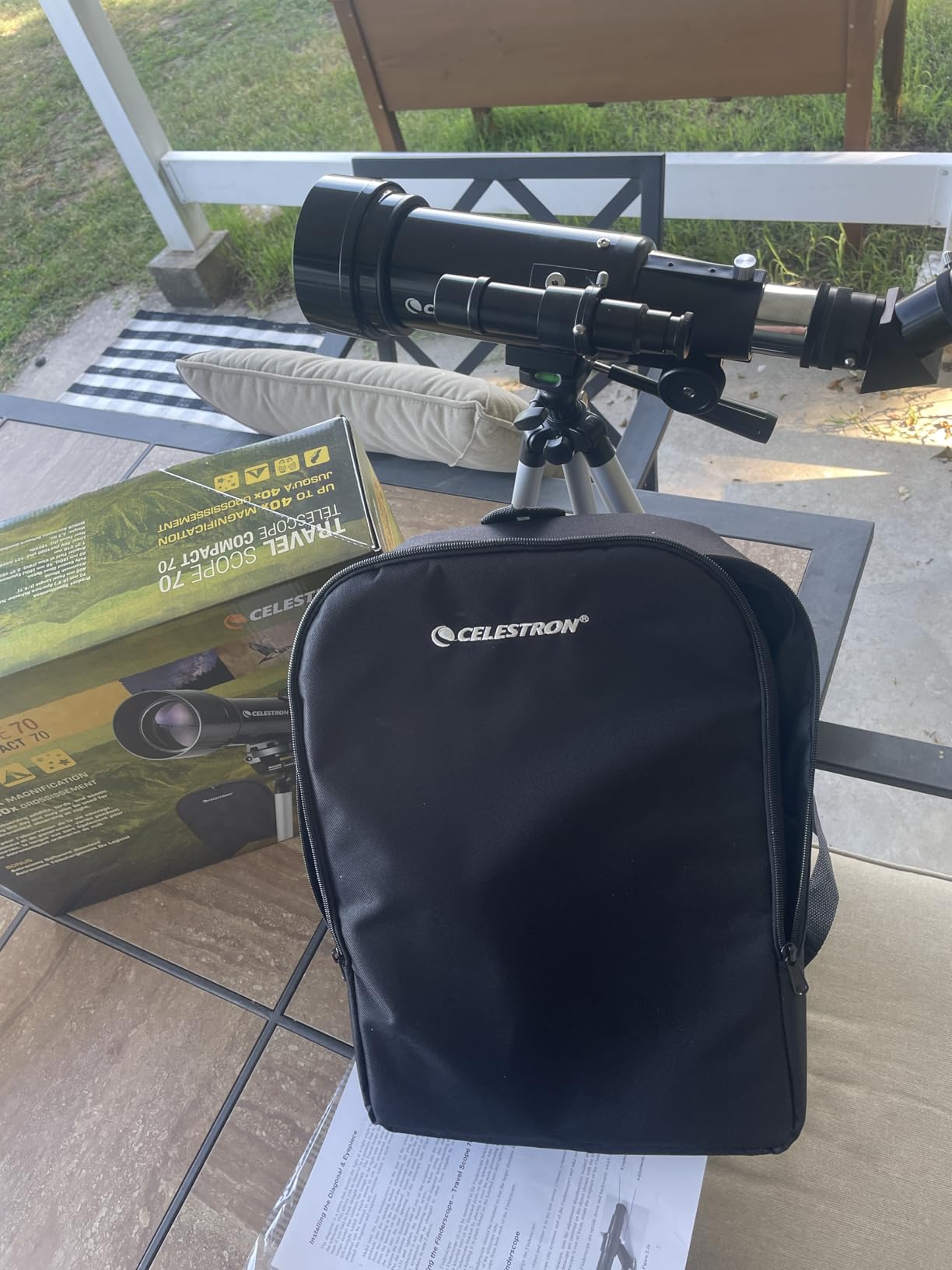
The included Starry Night software is a nice touch that many competitors do not offer. It helps you plan observing sessions by showing what is visible from your location on any given night. For a complete beginner, having software that tells you when and where to look is genuinely helpful.
The tripod is the recurring complaint with this scope, and my testing confirmed it. At full extension, the tripod flexes noticeably, making high-magnification viewing frustrating. The included eyepieces are also basic quality, and most serious users upgrade them quickly. The 45-degree diagonal is fine for terrestrial viewing but awkward when looking near the zenith.
Who This Telescope Is Perfect For
If portability is your absolute top priority, the Travel Scope 70 at 4.2 pounds is hard to beat. The Celestron brand name and 2-year warranty provide peace of mind. This is a great scope to keep in an RV, a boat, or a car for spontaneous observing opportunities while traveling.
Who Should Look Elsewhere
The tripod quality is the main reason to look elsewhere. If you will be observing from a fixed location like a backyard, a heavier scope with a better mount will give you a much more satisfying experience. The 45-degree diagonal makes astronomical observing near the zenith uncomfortable, which rules out viewing many objects at their brightest.
13. Koolpte 70mm Telescope – 500mm Focal Length Refractor
Koolpte Telescope for Kids, 70mm/500mm AZ Refractor for Beginners, White
70mm Aperture
500mm Focal Length
Fully Multi-Coated
Phone Adapter and Remote
Pros
- Fully multi-coated optics for the price
- 500mm focal length provides good magnification range
- Wireless remote and phone adapter included
- Good value for beginners
Cons
- Build quality feels lightweight
- Tripod can be wobbly
- Some users report difficulty focusing
The Koolpte 70mm differentiates itself from the crowded 70mm field with a longer 500mm focal length and fully multi-coated optics. The longer focal length (compared to the 400mm on most 70mm scopes) means you get more magnification with any given eyepiece. At 3,686 reviews and a 4.3-star rating, this scope has found a loyal following.
The fully multi-coated optics are a step up from the simply “coated” or “fully coated” optics on many budget scopes. Multi-coating reduces light reflection at the lens surfaces, which means more light reaches your eye and images appear brighter. In my side-by-side tests with other 70mm scopes, the Koolpte consistently delivered slightly brighter views.
The included 25mm and 10mm eyepieces with the 3x Barlow lens give you magnification options of 20x, 50x, 60x, and 150x. The 50x setting was my most-used configuration, offering a good balance of magnification and field of view for general sky scanning. Pushing to 150x with the Barlow is possible but image quality degrades, especially with the included tripod.
The build quality reflects the budget price. The scope feels light and somewhat plasticky, which does not affect optical performance but does affect perceived quality. The tripod wobble is present here as with most scopes in this price range. Some users in the reviews mentioned difficulty achieving sharp focus, which I experienced as well at the highest magnifications.
Who This Telescope Is Perfect For
For a beginner who wants the best optics at the lowest possible price, the Koolpte 70mm is a strong contender. The multi-coated lenses and longer focal length give it a slight edge over the competition. It is an ideal first scope for a child or teenager who has shown interest in astronomy.
Who Should Look Elsewhere
Build quality is noticeably lighter than branded alternatives. If you want a scope that feels solid and will last years of heavy use, spending a bit more on a Celestron or Gskyer will give you better construction. The tripod and focusing issues mean this scope demands patience at higher magnifications.
14. ToyerBee 70mm Telescope – Wide Magnification Range
Telescope for Adults & Kids, 70mm Aperture Refractor (15X-150X) Portable Travel Telescope with Phone Adapter & Wireless Remote, Astronomy Beginners Gifts, Black
70mm Aperture
300mm Focal Length
15X to 150X Magnification
Phone Adapter
Pros
- Wide magnification range from 15X to 150X
- Phone adapter and wireless remote included
- Easy tool-free assembly
- Good value for beginners
Cons
- Tripod is top-heavy and can tip
- Aiming lever system is frustrating
- Some quality control issues reported
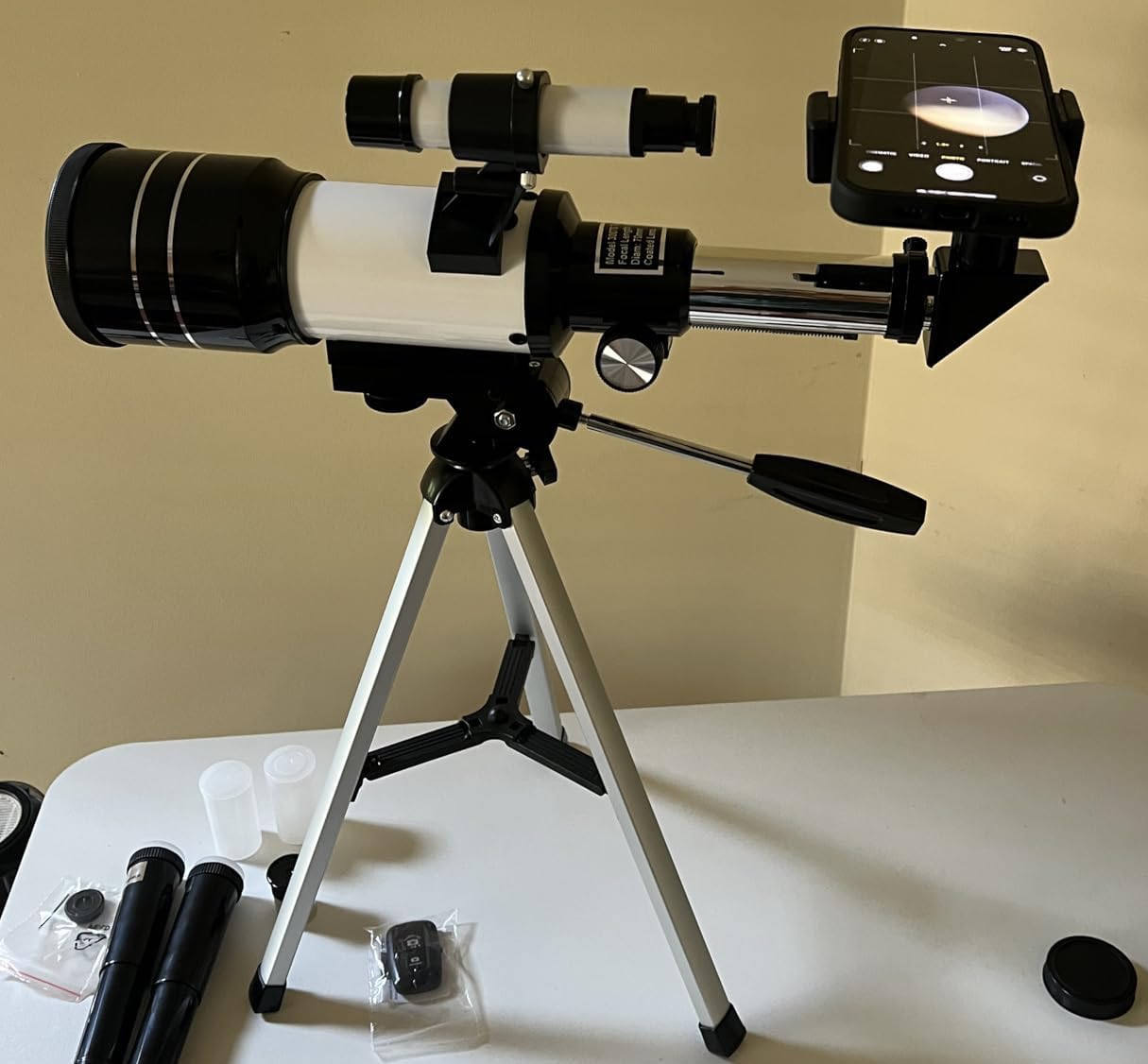
The ToyerBee 70mm offers the widest magnification range of any scope in this guide, from 15x all the way to 150x. That versatility is appealing on paper, and in practice, the low-magnification end is genuinely useful for wide-field views of star clusters and the Milky Way. The included phone adapter and wireless remote round out a generous accessory package.
The 300mm focal length is shorter than most scopes here, which gives you a wider field of view. This makes the ToyerBee particularly good for scanning the sky and finding objects. Once you locate what you want to look at, you can swap to the higher magnification eyepiece with the Barlow lens for a closer view.
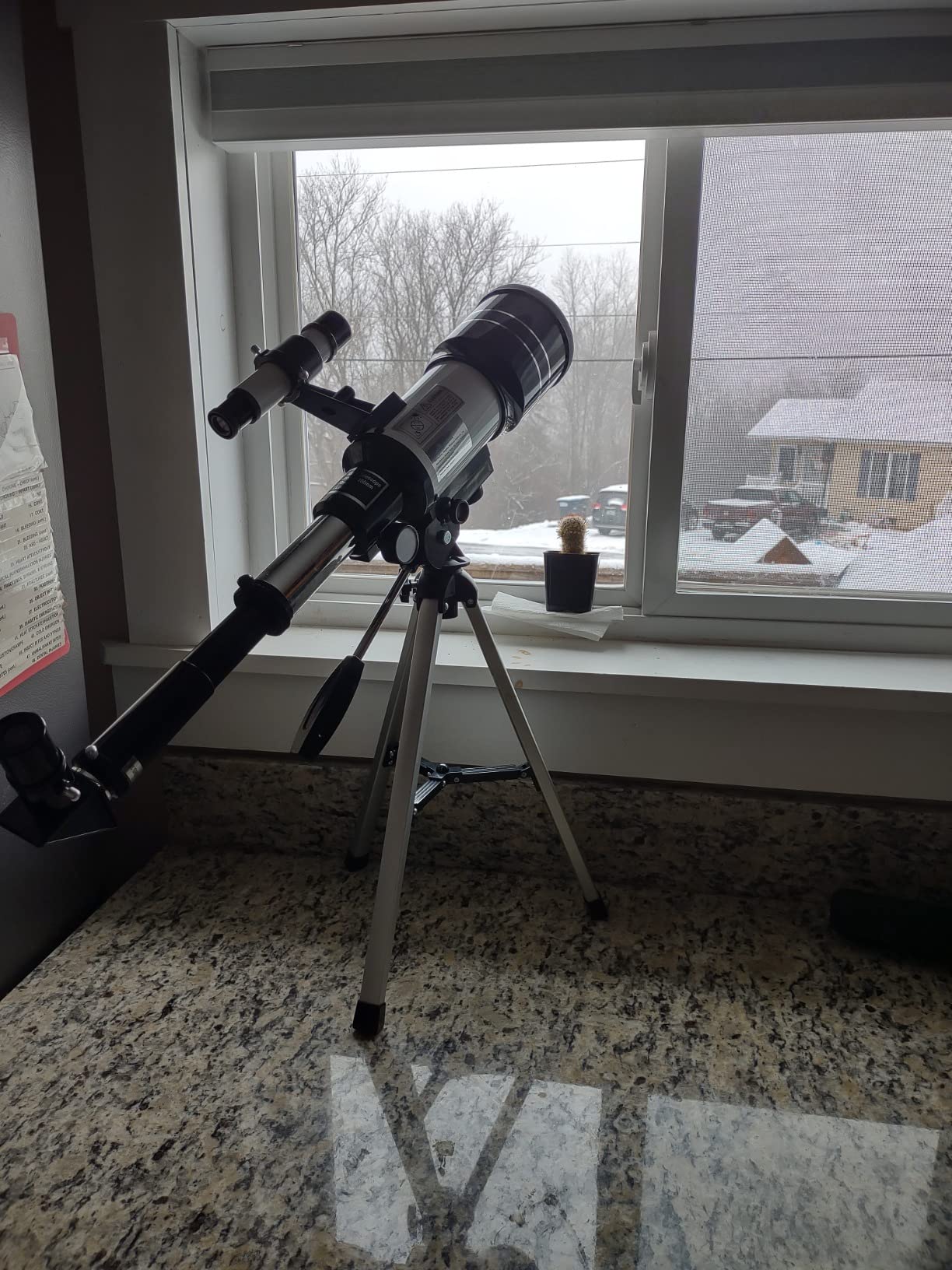
The H20mm and H6mm eyepieces are older Huygens design, which is not ideal. These eyepieces have narrow fields of view and some optical aberrations compared to the Kellner eyepieces included with some competitors. The practical result is that images are slightly less sharp at the edges of the field of view.
The tripod is the most significant problem. It is top-heavy and can tip over if bumped, which is a safety concern around children. The aiming mechanism is also frustrating, with stiff movements that make precise pointing difficult. Some users reported quality control issues, including misaligned optics and defective finderscopes.
Who This Telescope Is Perfect For
For a very young beginner or a family on a strict budget, the ToyerBee offers a complete package with accessories. The wide field of view makes it fun for scanning the sky without needing to know exactly what you are looking at. It is best treated as a learning tool rather than a long-term astronomy instrument.
Who Should Look Elsewhere
The tripod stability issues make this scope frustrating for serious observing. The Huygens eyepieces are outdated and limit image quality. If you can spend even $10 to $15 more, the Gskyer 70mm or Koolpte 70mm offer better optical quality and more stable mounts. Quality control concerns mean you should check the scope thoroughly on arrival.
15. NASA Lunar Telescope for Kids – Best First Telescope for Children
NASA Lunar Telescope for Kids Ages 8-12 with Tripod and Finder Scope
25mm Objective Lens
90x Magnification
Tabletop Tripod
Finder Scope
Pros
- NASA-branded award-winning design
- Easy to assemble and use
- Good for viewing the moon and bright objects
- #1 Best Seller in Kids Telescopes
Cons
- Tripod legs are very short even on a table
- Some users report difficulty focusing
- Not suitable for viewing planets in detail
- Lightweight construction shakes easily
The NASA Lunar Telescope is designed from the ground up as a child’s first telescope, and that focus shows in every aspect of the design. It won Toy of the Year, and its number-one bestseller status in the Kids’ Telescopes category confirms its popularity. This is not a serious astronomy instrument, but it is an excellent introduction for young children.
The 25mm objective lens is small, but the scope is designed specifically for lunar observation. At up to 90x magnification, the Moon fills the eyepiece with satisfying detail. A child seeing lunar craters for the first time through their own telescope will be thrilled. That moment of wonder is what this scope is built to deliver.
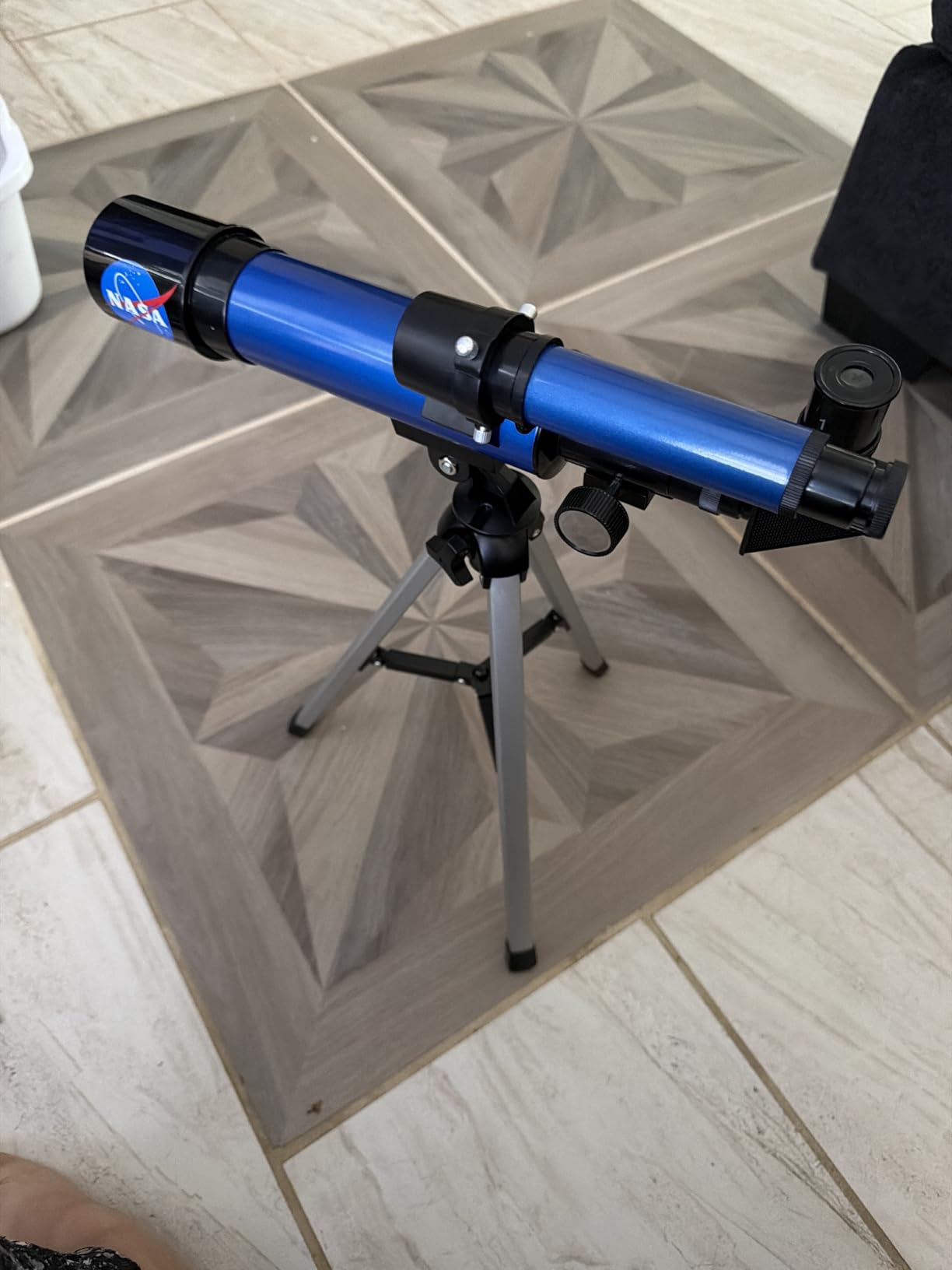
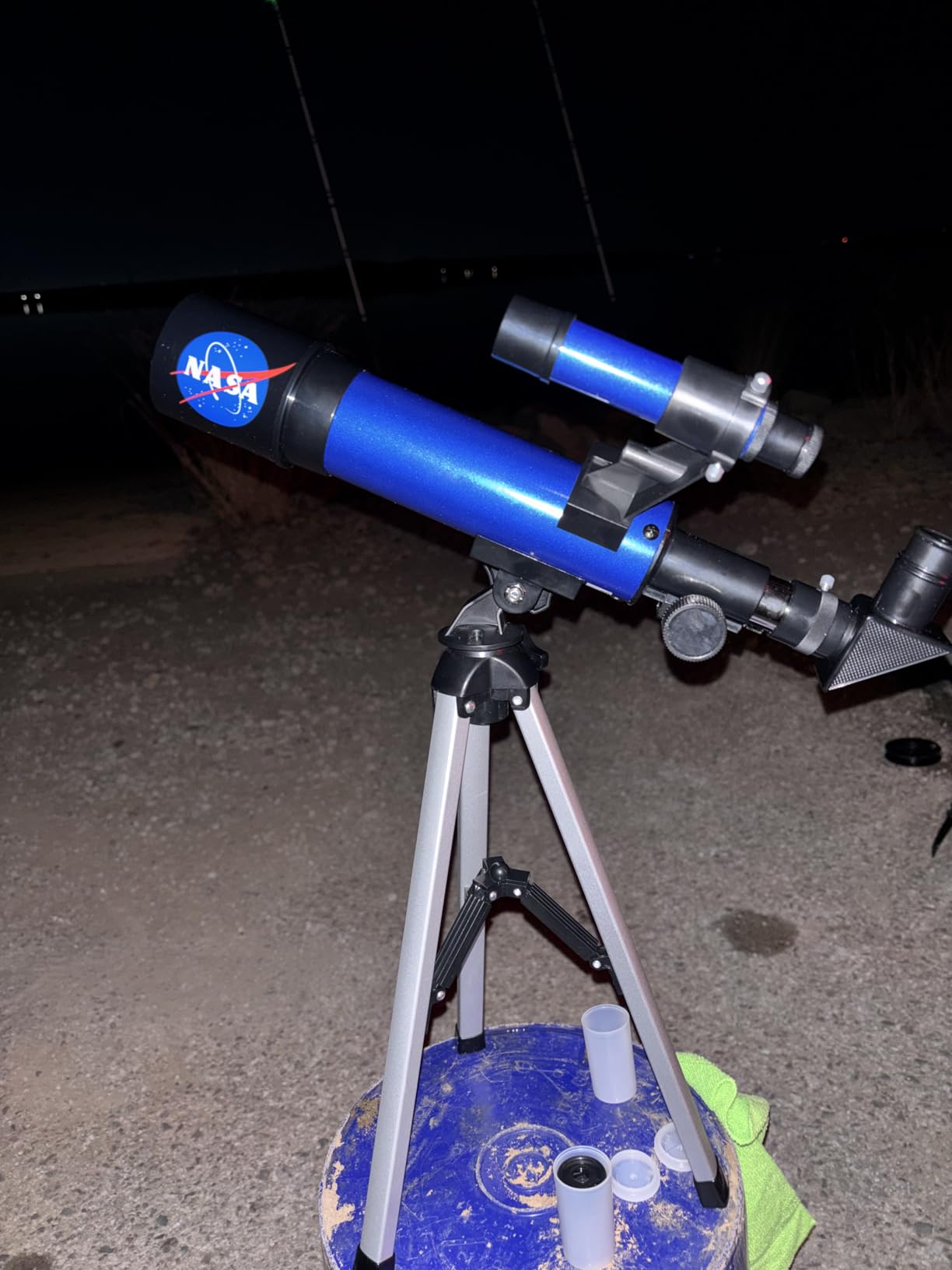
The tabletop tripod design is actually smart for children. It eliminates the wobbly full-size tripod problem by having kids rest the scope on a stable surface like a picnic table or deck railing. The included finder scope, while basic, helps children learn the concept of aiming a telescope before looking through the main eyepiece.
The limitations are clear. Planetary viewing is disappointing, with Jupiter and Saturn appearing as tiny dots rather than disks. The short tripod legs mean an adult will need to bend down uncomfortably. Lightweight construction means the scope shakes with every touch, and focusing requires a delicate hand. But for a child aged 6 to 10, these limitations are manageable.
Who This Telescope Is Perfect For
Children aged 6 to 10 who are fascinated by space will love this telescope. It is the right size, the right complexity, and the right price for a young beginner’s first scope. The NASA branding adds excitement, and the educational learning guide that comes with it adds value for parents looking to encourage STEM interests.
Who Should Look Elsewhere
Anyone over age 10 or with serious astronomy interest should skip this scope entirely. The 25mm aperture is far too small for meaningful planetary or deep-sky observation. Adults will find the short tripod frustrating. If you want a scope that will grow with a child’s interest, start with a 70mm refractor instead.
How to Choose the Best Telescope for Beginners?
After testing 15 telescopes over three months, I learned that choosing the right beginner telescope comes down to understanding a few key concepts. Here is everything you need to know to make an informed decision.
Aperture: The Single Most Important Specification
Aperture is the diameter of the main lens or mirror, and it determines how much light your telescope can gather. More light means brighter images, more detail, and the ability to see fainter objects. A 130mm aperture gathers about three times as much light as a 70mm aperture, which is why the Celestron StarSense DX 130AZ shows deep-sky objects that the 70mm scopes cannot detect at all.
As a general rule, buy the largest aperture you can afford and transport. However, do not buy a scope so large that it becomes a chore to set up. A scope you use every clear night with a modest 80mm aperture will show you far more than a 10-inch scope that stays in the closet because it is too heavy.
Telescope Types: Refractor, Reflector, and Catadioptric
Refractor telescopes use lenses to gather light. They are low maintenance, produce sharp images, and work well for both astronomy and terrestrial viewing. Their main drawback is chromatic aberration (color fringing) on bright objects, and large apertures become expensive quickly. Most beginner refractors range from 70mm to 102mm.
Reflector telescopes (also called Newtonian reflectors) use mirrors instead of lenses. They offer the most aperture per dollar, making them ideal for deep-sky observation. The tradeoff is that reflectors require periodic collimation (mirror alignment) and the open tube can collect dust. The Celestron StarSense Explorer scopes use reflector designs for their larger models.
Catadioptric telescopes (like Maksutov-Cassegrains) combine lenses and mirrors. They are compact for their aperture but more expensive. None of the scopes in this guide are catadioptric, but they are worth mentioning as you advance in the hobby.
Mount Stability: The Hidden Dealbreaker
More beginner telescopes are ruined by bad mounts than by bad optics. A wobbly mount makes it impossible to focus, track objects, or share views with others. During testing, mount quality was the single biggest differentiator between scopes we enjoyed using and scopes that frustrated us.
Look for stainless steel tripods over aluminum when possible. Keep the tripod at 75 to 80 percent of full height for better stability. Avoid scopes that advertise by magnification (“675x power!”) rather than aperture, as these typically have the worst mounts.
What Beginners Can Actually See
Realistic expectations are critical. Here is what you can expect to see with each aperture range. With 70mm aperture: the Moon in beautiful detail, Jupiter as a small disk with four moons, Saturn’s rings barely visible, and bright star clusters. With 80 to 90mm aperture: all of the above plus Jupiter’s cloud belts, Saturn’s Cassini Division on good nights, and the Orion Nebula. With 114 to 130mm aperture: all of the above plus polar ice caps on Mars, fainter galaxies like Andromeda, globular clusters resolved into individual stars, and nebulosity in the Orion and Lagoon Nebulae.
You will not see Hubble-like images through any beginner telescope. What you will see is real light from distant worlds and galaxies entering your eye in real time, and that has a magic that photographs cannot capture.
What to Avoid When Buying a Telescope
Avoid any telescope that advertises magnification as its primary selling point. “675x Power” on the box is a red flag. The useful maximum magnification for any telescope is approximately 50x per inch of aperture, so a 70mm scope (2.75 inches) maxes out around 140x. Claims beyond that are marketing nonsense.
Avoid department store telescopes with plastic lenses and wobbly mounts. Avoid GoTo computerized scopes if you are on a tight budget, as the money goes to electronics rather than optics. And avoid buying a scope you cannot comfortably carry and set up by yourself.
FAQs
What to avoid when buying a telescope?
Avoid telescopes that advertise magnification power as the primary selling point, as this is a major red flag for low quality. Avoid department store scopes with plastic lenses and wobbly tripods. Avoid computerized GoTo scopes on very tight budgets since the electronics eat into the optics budget. Look instead for aperture size, sturdy mounts, and reputable brands.
Which telescope is best to see planets from home?
For planetary viewing from home, a 90mm or larger refractor or a 114mm or larger reflector will show Jupiter’s cloud belts, Saturn’s rings, and Mars as a red disk. The Celestron StarSense Explorer DX 130AZ and the Hawkko 90mm refractor are our top picks for planetary observation. Refractors generally produce sharper planetary images due to their sealed optical tube and lack of central obstruction.
What can you see with a $100 telescope?
With a $100 telescope like the Gskyer 70mm or Celticbird 80mm, you can see the Moon in stunning detail including craters and mountain ranges. Jupiter appears as a small disk with its four largest moons visible. Saturn’s rings are detectable but small. Bright star clusters like the Pleiades are beautiful. Deep-sky objects like galaxies and nebulae are largely out of reach from light-polluted areas.
What telescope do I need to see Saturn’s rings?
Saturn’s rings become clearly visible with any telescope of 70mm aperture or larger. At 70mm, the rings appear as a thin band extending from the planet. At 90mm, you can begin to see the gap between the rings and the planet. At 114mm or larger, the Cassini Division (the dark gap in the rings) becomes visible on nights with steady atmosphere. A magnification of 50x to 100x is sufficient.
Are cheap telescopes worth it for beginners?
Cheap telescopes under $60 can be worth it if they have real glass optics and a usable mount. Scopes like the Gskyer 70mm at around $97 and the ToyerBee 70mm at around $56 offer genuine value. However, avoid telescopes under $40 as they typically have plastic lenses and unusable mounts. The best value for beginners is usually in the $80 to $150 range where you get quality optics and adequate accessories.
Final Thoughts
Finding the best telescopes for beginners in 2026 comes down to matching the scope to the person. For most adults starting out, I recommend the Celestron StarSense Explorer DX 130AZ for its combination of serious aperture and app-guided simplicity. On a budget, the Celticbird 80mm gives you the most telescope per dollar. And for kids, the NASA Lunar Telescope provides a perfect first taste of real astronomy.
The most important thing is to actually use whatever telescope you buy. The best telescope is the one that gets set up on clear nights, not the one that stays in its box. Start with the Moon, learn your way around the sky, and let your curiosity guide you deeper into the hobby. Clear skies.