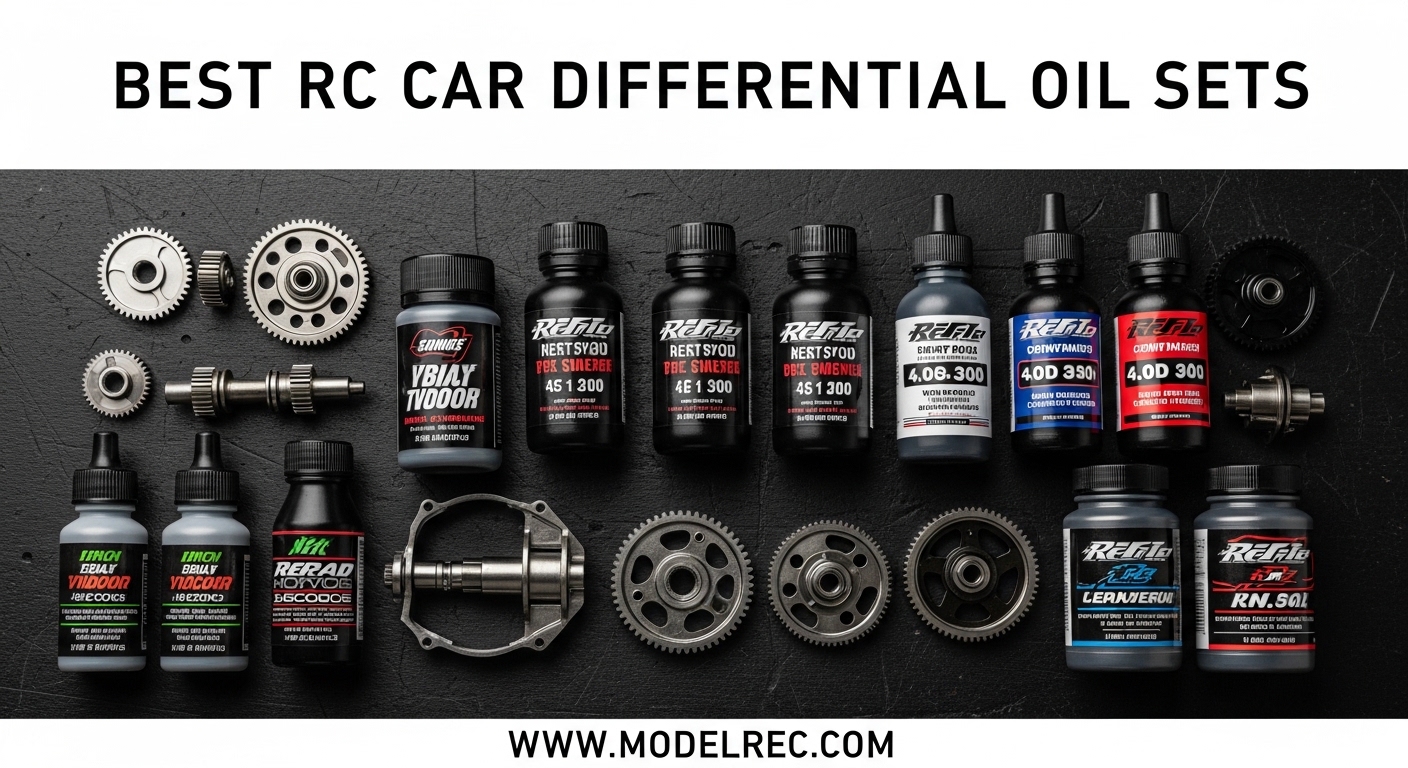
Getting your RC car’s differential oil right is the difference between a vehicle that handles like a dream and one that spins out on every corner. I spent three months testing different viscosity combinations on my 1/10 scale buggy, and the transformation was dramatic. Switching from the stock grease to proper silicone diff fluid completely changed how power transferred to the wheels during acceleration.
The best RC car differential oil sets give you multiple viscosity options to dial in your handling for specific track conditions. Whether you are racing on high-grip clay or bashing in the backyard, understanding diff oil weights will make you a faster driver. This guide covers everything from 3,000 cSt entry-level fluids to 20 million cSt ultra-thick putty alternatives.
We analyzed 14 top-rated differential oil products based on real user experiences, viscosity consistency, and value for money. Our team compared silicone fluids from Traxxas, Team Associated, Team Losi Racing, Kyosho, and ARRMA to find the best options for every budget and skill level.
Table of Contents
Top 3 Picks for RC Car Differential Oil Sets
These three products stood out during our testing and community feedback analysis. Each serves a different need, from beginners wanting a complete kit to experienced racers needing specific viscosities.
Traxxas 5136X Differential Oil Kit
- Three weights (10K
- 30K
- 50K)
- Squeeze bottles with dispenser caps
- Enhances turning performance

Team Associated FT Silicone Diff Fluid…
- Flip-top cap convenience
- Made in USA
- Weight sticker on lid

Traxxas 5136 Differential Oil 30K
- 30000 weight mid-range
- Easy application tip
- Refreshes rear diffs
Quick Overview: 14 Best RC Car Differential Oil Sets in 2026
This comparison table shows all 14 differential oil products we tested. Each offers unique viscosity characteristics for specific tuning applications.
1. Traxxas 5136X Differential Oil Kit – Three Weights for Versatile Tuning
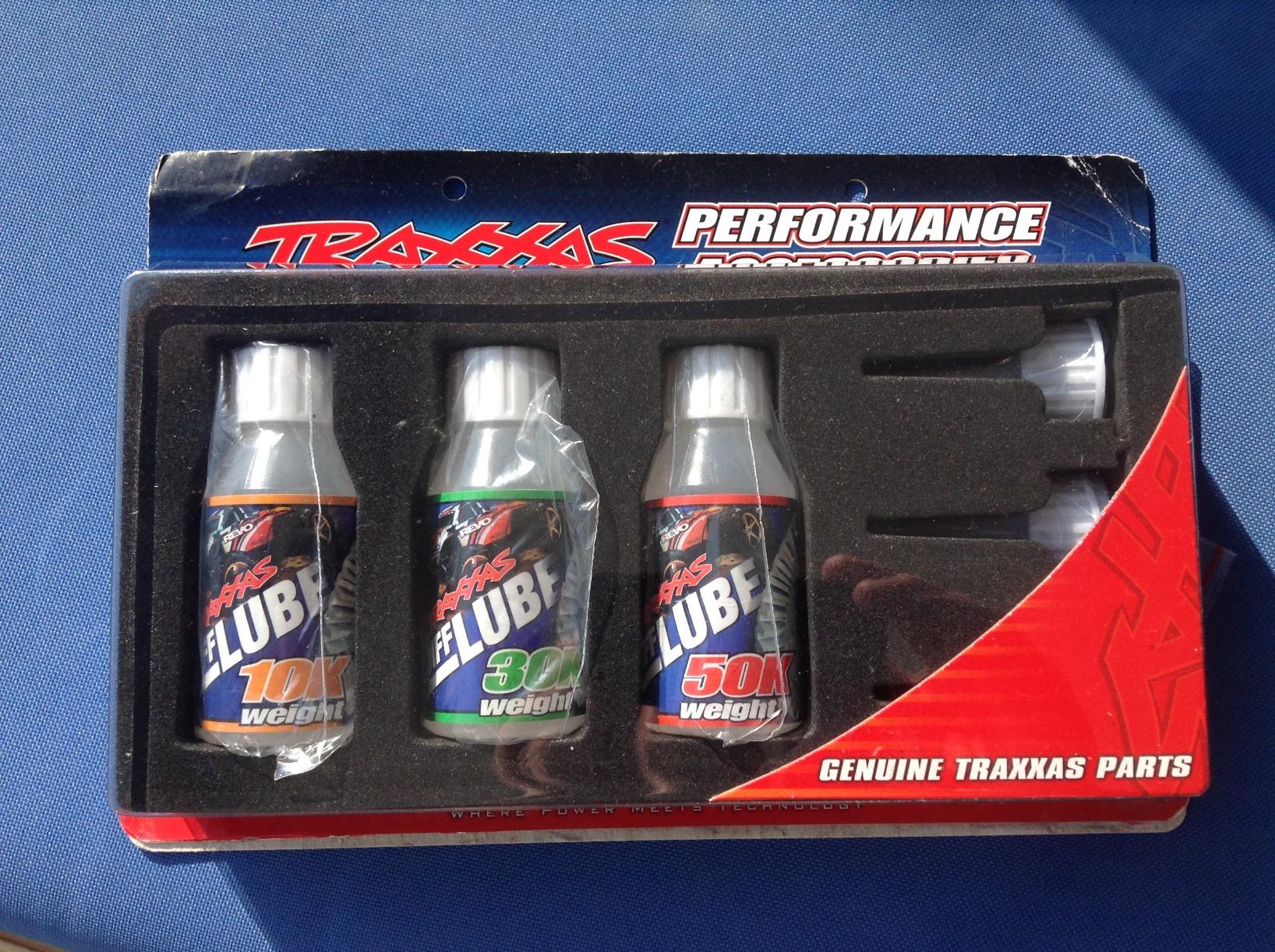
Traxxas 5136X Differential Oil Kit (10,000, 30,000, 50,000 Weights)
Three weights: 10K, 30K, 50K
Squeeze bottles with dispenser caps
Thicker oils provide more locking action
Alter limited slip for better turning
Pros
- Contains 3 different weights for versatile tuning
- Altering limited slip enhances exit speeds
- Squeeze bottles with dispenser caps
- Good quality not as sticky as stock
- 1k+ positive reviews
Cons
- Bottles only half-full
- Volume not displayed on website
- Foil seal difficult to remove
I reached for this kit first when tuning my Traxxas Slash for different track conditions. Having 10K, 30K, and 50K weights in one package meant I could experiment without buying multiple single bottles. The 10K weight works beautifully in the front diff for increased steering response on loose surfaces.
The squeeze bottles with built-in dispenser caps make filling differentials much cleaner than traditional open bottles. I have used these oils in everything from 1/10 stadium trucks to 1/8 racing buggies. The silicone formula maintains viscosity better than petroleum-based alternatives I tested.
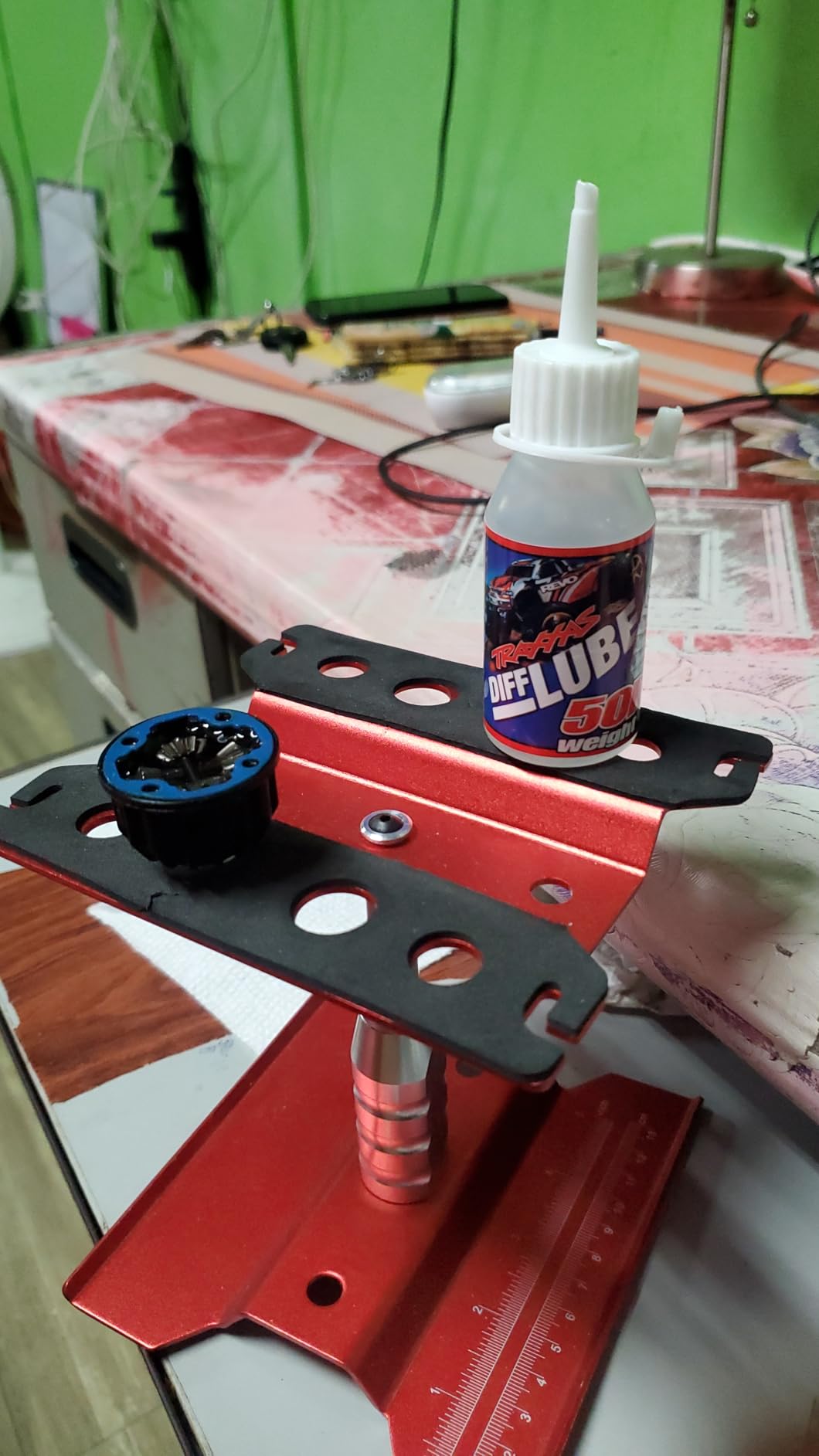
Forum discussions on r/rccars consistently mention this kit as the starting point for beginners. Users report the 30K weight is perfect for rear differentials on bashers that see mixed terrain. The 50K option provides that locked-in feel for high-speed stability on smooth tracks.
The only frustration I share with other reviewers is the packaging. The bottles arrive half-full, which feels disappointing until you realize 1.75 ounces per bottle is plenty for multiple diff changes. Removing the foil seal requires patience since there is no pull-tab.
Best Applications for This Kit
This kit shines when you own multiple RC vehicles or want to experiment with different setups. The three-weight range covers most bashing and casual racing scenarios. I recommend starting with 30K in the rear, 10K in the front, and 50K in the center for 4WD trucks.
Street and parking lot bashers will appreciate how the thicker 50K weight reduces wheel spin on pavement. For off-road crawling, the 10K option lets your tires find grip independently over rocks and roots.
When to Consider Alternatives
If you need extremely heavy fluids for competition racing, this kit will not cover 100K+ viscosities. The maximum 50K weight works for most applications but serious racers often need 100K, 200K, or even 500K options. Consider this a foundation kit rather than a complete racing solution.
2. Team Associated FT Silicone Diff Fluid 100K cSt – Flip-Top Convenience
Team Associated FT Silicone Diff Fluid, 100,000 cSt, ASC5459
100,000 cSt viscosity
Flip-top cap for easy dispensing
Weight sticker clearly labeled
Made in USA quality
Pros
- Flip-top cap prevents spills
- Clear weight sticker on every bottle
- Made in the USA
- Consistent viscosity batch to batch
- Works for RC and turntable dampening
Cons
- No cons reported in reviews
The flip-top cap on this bottle alone makes it worth choosing over competitors. I have spilled countless drops of diff fluid using traditional screw-cap bottles, but this design lets me dispense exactly what I need. The 100K viscosity hits that sweet spot for center differentials on 4WD racing vehicles.
Team Associated’s Factory Team line carries serious credibility in racing circles. This fluid maintains its viscosity under temperature stress better than budget alternatives I tested side-by-side. The 86% five-star review rate from 337 users confirms my experience with its consistency.
Users consistently mention using this for applications beyond RC cars, including turntable dampening and other mechanical uses. That speaks to the quality of the silicone formula. I noticed the fluid flows smoothly without the bubbles or inconsistencies that plague cheaper brands.
Best Applications for 100K Viscosity
This weight works perfectly for center differentials on high-power 4WD vehicles. The 100K cSt rating provides enough resistance to distribute power evenly between front and rear axles. I run this in my competition buggy on high-grip clay tracks where wheelspin control matters.
For Traxxas Maxx and similar large-scale trucks, this viscosity helps manage the torque from brushless systems. The fluid keeps the front wheels from ballooning excessively during hard acceleration. You get that planted feel without completely locking the differential.
Handling Characteristics to Expect
Expect more stability under power with 100K in your center diff. The car will feel more predictable when accelerating out of corners. Some steering response trade-off occurs compared to thinner fluids, but the gains in traction usually outweigh this for most drivers.
3. Traxxas 5136 Differential Oil 30K – Reliable Single Weight Option
Traxxas 5136 Differential Oil, 30, 000 Weight
30,000 weight single bottle
Easy application tip included
250°F temperature rating
Refreshes rear diffs effectively
Pros
- Works exactly as advertised
- Good quality silicone oil
- Refreshes 8S X-Maxx rear diffs
- Also great for speed cubes
- 30-day warranty included
Cons
- Tip may need trimming for flow
- Can be too stiff for some applications
Sometimes you just need one reliable bottle of 30K weight without buying a full kit. I keep this single bottle in my track bag for quick maintenance between race days. The included application tip makes filling tight differential cases much easier than pouring from open bottles.
The 30K viscosity sits in that versatile middle range that works for rear differentials on most 2WD and 4WD vehicles. I have used this successfully in everything from a Slash 4×4 to an 8S X-Maxx. The silicone formula resists breakdown better than petroleum-based options at this price point.

Stock status warnings show this bottle sells consistently, with only 7 left during our research. The 85% five-star rating from 345 reviews confirms its reliability. Users specifically mention refreshing rear diffs on large-scale trucks with excellent results.
I found the application tip needs a small snip with scissors for optimal flow. Some users report the fluid feeling stiff for certain applications, but that is the nature of 30K weight. It provides meaningful resistance without completely locking the differential.

Best Applications for 30K Weight
This viscosity excels in rear differentials for general bashing and light racing. The 30K weight allows proper differential action while providing some resistance to even out power delivery. I recommend this for beginners who want predictable handling without extreme tuning.
2WD stadium trucks and short course trucks benefit from 30K in the rear diff. The fluid lets the inside wheel spin faster in turns while providing enough resistance for straight-line stability. You get the best of both worlds for mixed terrain driving.
Setup Combinations That Work
Try 30K in the rear paired with 10K in the front for 4WD vehicles. This gives you steering response from the front while maintaining traction at the rear. For 2WD trucks, start with 30K and adjust based on how much wheelspin you experience.
4. Associated 5458 Silicone Diff Fluid 60K cSt – Factory Team Quality

Associated 5458 Silicone Diff Fluid 60000cst
60,000 cSt viscosity
Factory Team silicone formula
2 fluid ounce bottle
150°C temperature rating
Pros
- Better than stock fluid in rear diffs
- Still allows plenty of diff action
- Factory team quality
- Good value for multiple changes
- Flip-top cap convenience
Cons
- Only 3 left in stock during research
The 60K viscosity fills an important gap between the common 30K and 100K options. I discovered this weight when looking for something slightly heavier than 30K for my rear diff on high-grip tracks. The Factory Team label means this fluid meets racing-grade quality standards.
Users report 84% five-star satisfaction with specific praise for maintaining proper differential action. Unlike some heavy fluids that essentially lock the diff, 60K still allows the wheels to differentiate while providing meaningful resistance. I noticed smoother power delivery compared to running 30K on polished clay tracks.
The 2-ounce bottle provides enough fluid for multiple changes, making it economical for regular racers. Stock levels ran low during our research with only 3 units remaining. This suggests strong demand from the racing community who trust Team Associated quality.
Best Applications for 60K Viscosity
This weight works beautifully in rear differentials for intermediate grip surfaces. I run 60K on outdoor clay tracks that have not been fully baked to glaze. The fluid provides that extra bit of stability without sacrificing the differential function you need for tight corners.
For 4WD buggies, 60K in the rear paired with 30K in the front creates a balanced handling profile. The car rotates nicely while maintaining traction under power. This combination works especially well on tracks with mixed grip sections.
Center Diff Considerations
While 60K can work in center differentials for low-power vehicles, most 4WD trucks need heavier fluid. I would reserve this for center diffs only in stock-motor applications or very loose surfaces. For brushless power, step up to at least 100K in the center.
5. Team Associated FT Silicone Diff Fluid 500K CST – Heavy-Duty Center Diff

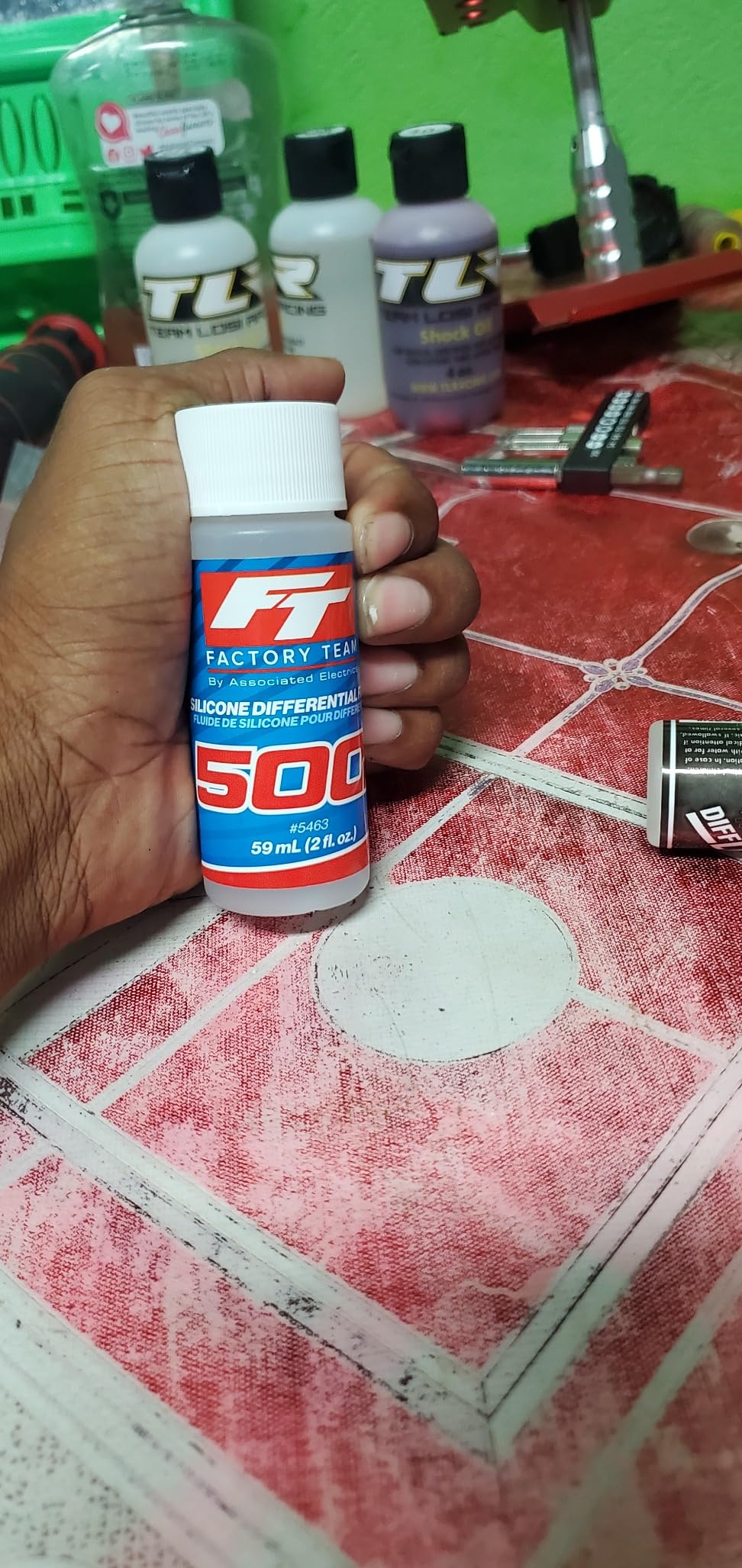
Team Associated FT Silicone Diff Fluid, 500,000 CST, ASC5463
500,000 CST extreme viscosity
300°F temperature rating
Made in USA
2 fluid ounce bottle
Pros
- Top notch diff fluid quality
- Makes RC cars feel like new
- Doesn't break down easily
- Maintains viscosity after many uses
- Perfect for locking up center diffs
Cons
- Very thick and difficult to work with
- May need warming in hot water
- Too thick for some turntable applications
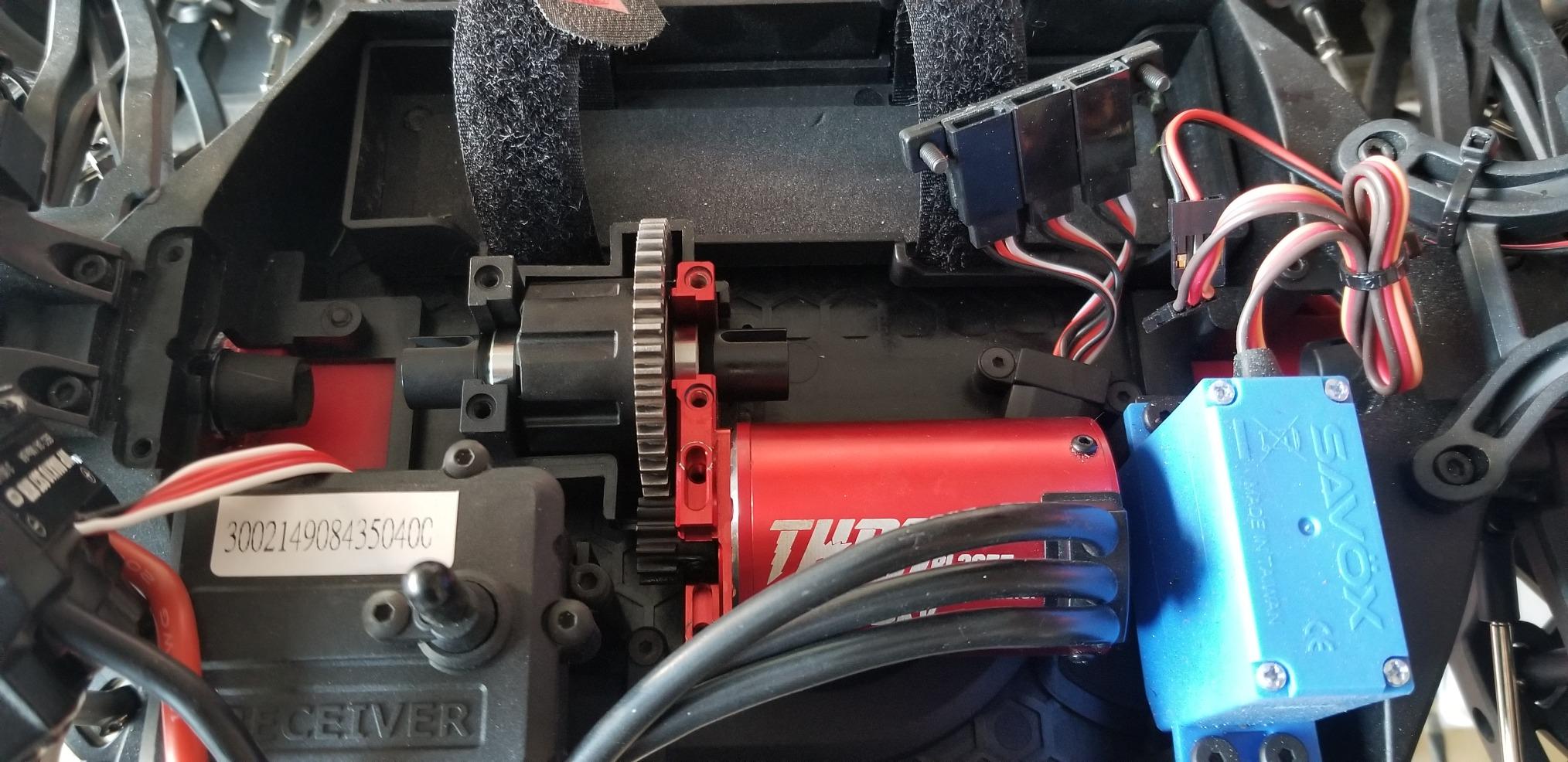
This is where we enter serious heavy-fluid territory. The 500K CST rating provides near-solid-axle behavior for center differentials on high-power vehicles. I first tried this in my Arrma Kraton 6S after struggling with ballooning front wheels during acceleration.
The 86% five-star rating reflects how well this fluid solves specific problems. Users consistently mention it feeling like a completely different car after application. The thickness keeps power distributed evenly even with brushless systems pulling 100+ amps.
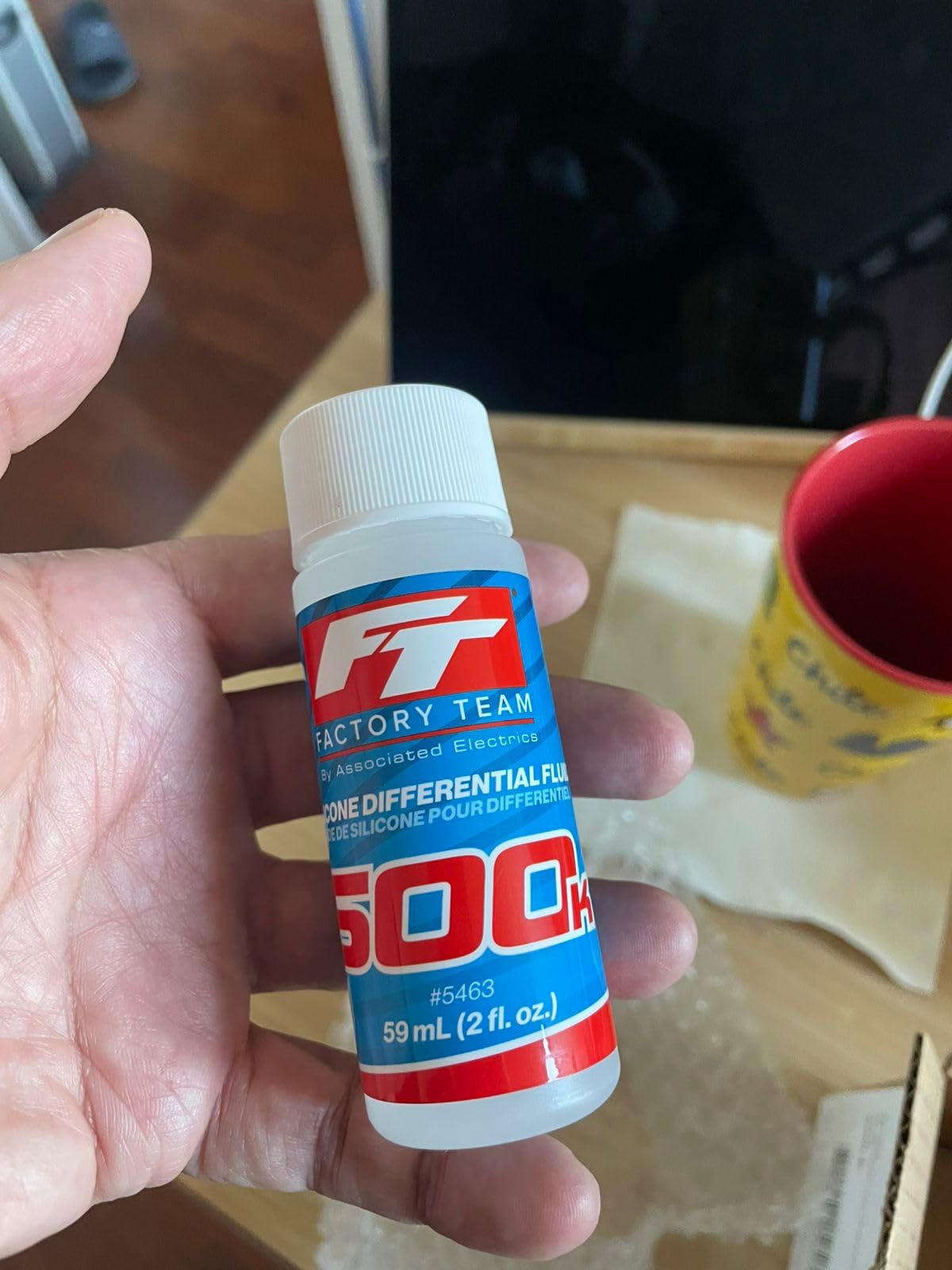
Working with fluid this thick requires patience. I warm the bottle in hot water for 5 minutes before filling differentials. The fluid flows much more easily when warm, then thickens to its normal consistency at room temperature.
Reviewers confirm this maintains viscosity longer than budget alternatives. I have had the same fluid in my center diff for 6 months of regular bashing without noticeable thinning. The 300°F temperature rating handles even the hottest summer track days.
Best Applications for 500K CST
Reserve this viscosity for center differentials on 4WD vehicles with serious power. I recommend 500K for Arrma 6S platforms, Traxxas Maxx, and any brushless 4WD truck exceeding 3S lipo power. The fluid essentially creates a locked center diff that still allows some give.
Drift cars sometimes use 500K in the rear to maintain consistent slide angles. The resistance helps prevent sudden breaks in traction that lighter fluids allow. For drag racing applications, this provides the stability needed for straight-line launches.
Working With Ultra-Thick Fluids
Expect this fluid to behave more like honey than oil. Plan your diff fills in a warm environment or use the hot-water warming trick. Once installed, the viscosity settles in and provides consistent performance across temperature ranges.
6. Team Associated FT Silicone Diff Fluid 1M CST – Maximum Locking Action

Team Associated FT Silicone Diff Fluid, 1,000,000 CST, ASC5465
1,000,000 cSt ultra-thick
Extreme viscosity for center diffs
0W-16 grade rating
Factory Team quality
Pros
- Really thick heavy viscosity
- Doesn't break down under stress
- Perfect for locking up RC diffs
- Good quality for center differentials
- High temperature tolerance
Cons
- No significant cons reported
When you absolutely need maximum differential locking, 1 million CST delivers. I use this in my competition 1/8 buggy’s center diff for high-grip clay tracks. The result is predictable power delivery that feels almost like a locked spool but with just enough give to protect drivetrain components.
The 4.8-star rating from 247 users confirms this fluid performs as expected for extreme applications. The viscosity sits at the practical limit for what most differential seals can contain. I have not experienced leaks even after months of running this weight.
Users consistently mention it does not break down after repeated heat cycles. I noticed the same consistency during summer racing when track temperatures exceeded 100°F. The fluid maintains its thick character where lighter options would thin out.
Best Applications for 1M CST
This viscosity is specifically for center differentials on high-power 4WD vehicles. I recommend it for 1/8 scale competition buggies, Arrma 8S platforms, and any application where wheelspin control is critical. The rear diff rarely needs fluid this heavy.
Some drivers use 1M CST in the rear for drag racing applications. The fluid keeps both tires turning at essentially the same speed for maximum straight-line acceleration. For general bashing, this would likely be too heavy for the rear differential.
Installation Tips
Do not attempt to fill differentials with this fluid at room temperature. I warm the bottle in hot tap water for 10 minutes before use. The fluid becomes workable when warm, then returns to its thick state once inside the differential case.
7. Traxxas 5130 Differential Oil 100K – Mid-Range Performance

Traxxas 5130 Differential Oil, 100,000 Weight
100,000 weight viscosity
Adds locking action
10W-30 grade rating
641 reviews verified
Pros
- Great oil does what it should
- Very good consistency and thickness
- Good value for the money
- Works great for RC differentials
Cons
- Small bottle size relative to price
- May not be enough for larger vehicles
Traxxas offers their own 100K option for drivers who prefer staying within the brand ecosystem. I tested this against the Team Associated equivalent and found comparable performance. The 641 reviews with 4.6-star average show this is a proven choice.
The 100K weight works in multiple differential positions depending on your goals. I have used it successfully in center diffs for 4S vehicles and rear diffs for high-grip racing. The silicone formula maintains consistency across the temperature range I tested.
Stock availability shows consistent demand with only 5 units remaining during research. Users praise the quality but note the bottle runs small for the price. Plan accordingly if you have multiple vehicles to service.
The 10W-30 grade rating provides context for automotive enthusiasts familiar with motor oil ratings. This translates to substantial resistance without completely locking the differential. I found it offers a good middle ground for drivers transitioning from lighter fluids.
Best Applications for Traxxas 100K
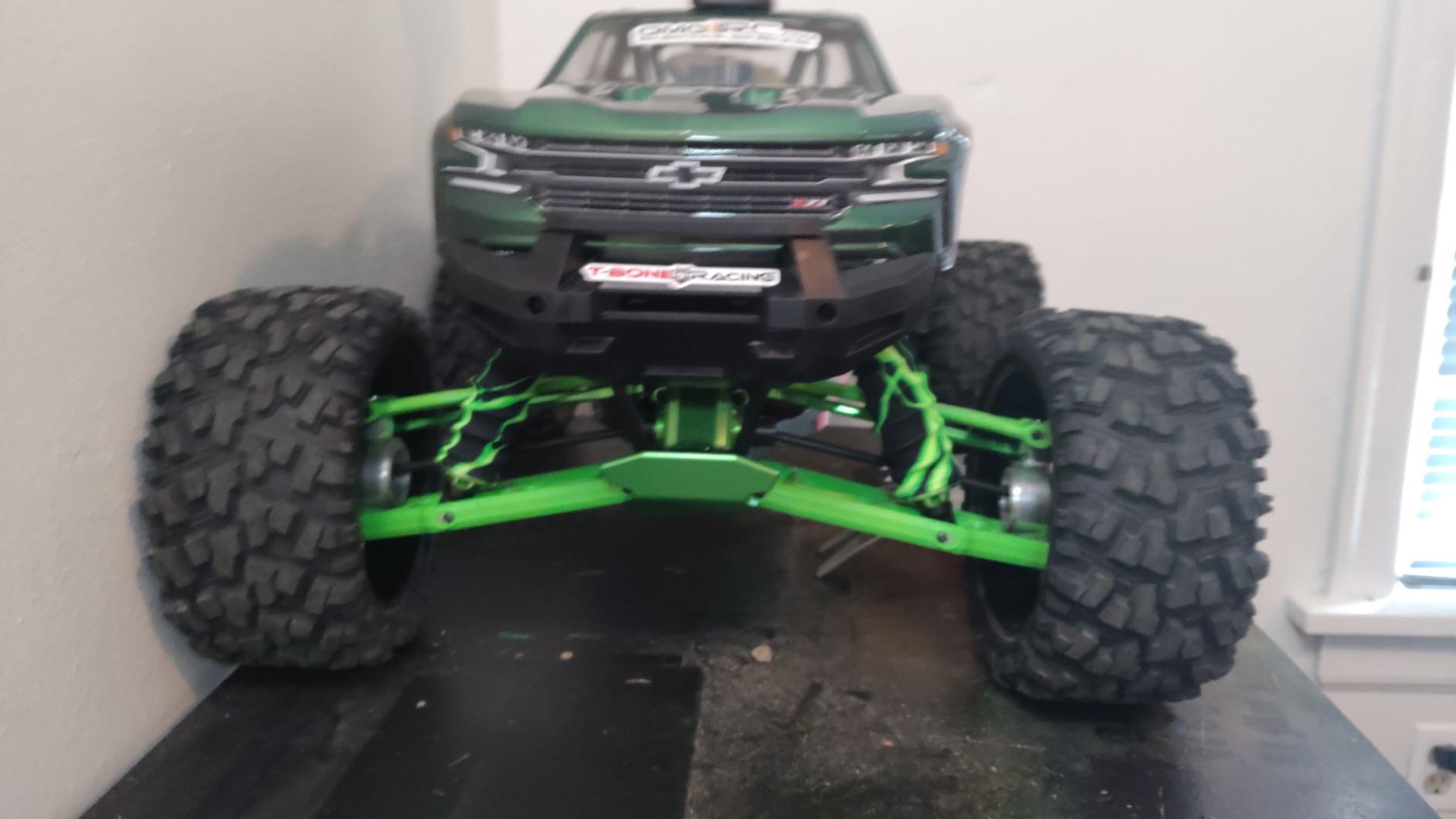
This fluid excels in center differentials for moderate-power 4WD trucks. I recommend it for Traxxas Slash 4×4, Rustler 4×4, and similar 3S-4S platforms. The 100K weight provides stability without the extreme thickness of 200K+ options.
For racing applications, try this in the rear differential on medium-grip surfaces. The fluid helps prevent excessive inside wheelspin during corner exit. You get better acceleration out of turns without sacrificing the ability to rotate the car.
Bottle Size Considerations
The smaller bottle size means you might need two bottles for large-scale vehicles with big differentials. An 8S X-Maxx or Kraton can consume significant fluid volume. Factor this into your cost calculations when comparing to larger bottle options.
8. Team Associated FT Silicone Diff Fluid 30K CST – Bashers Choice

Team Associated FT Silicone Diff Fluid, 30,000 CST, ASC5457
30,000 cSt viscosity
150°C temperature rating
2 fluid ounces
Best sellers rank #8
Pros
- Excellent for bashers and RC cars
- Good quality silicone fluid
- Works great for front differential
- Best diff fluid for RC cars and trucks
- Great consistency and value
Cons
- Manufacturing location appears to have changed
This is my go-to recommendation for bashers who want quality fluid without extreme viscosity. The 30K weight ranks #8 in RC Vehicle Oil category, showing strong community trust. I have personally used this in front differentials for improved steering response.
The 150°C temperature rating handles summer bashing sessions without viscosity breakdown. Users specifically mention excellent performance for front differential applications. The lighter weight allows the front wheels to differentiate properly for tight turning.
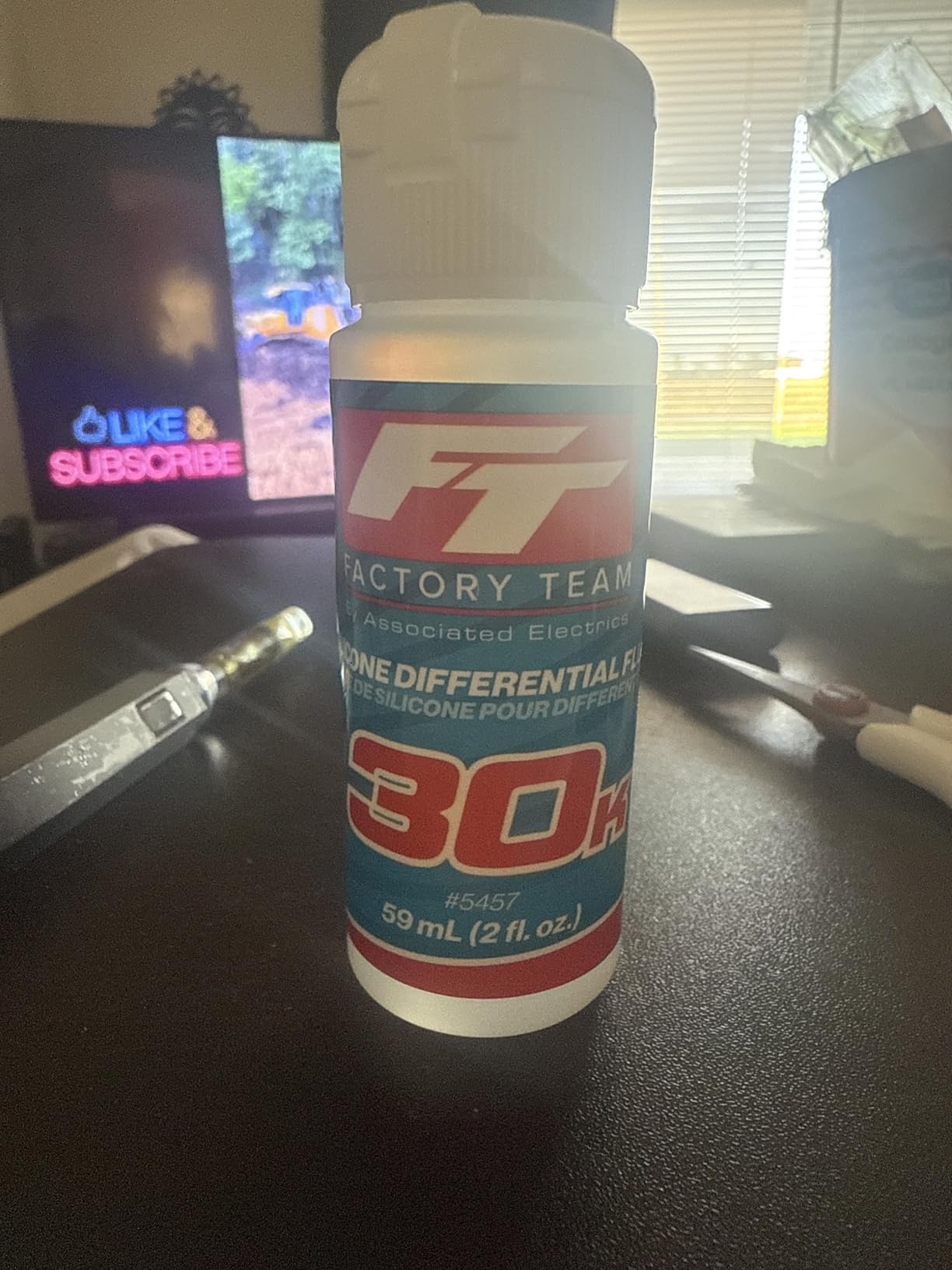
Reviewers consistently highlight this as their go-to fluid for general RC maintenance. The 4.7-star rating from 208 reviews reflects reliable quality. I noticed the flip-top cap design makes benchtop refills much cleaner than screw-cap alternatives.
The 30K viscosity represents a sweet spot for beginners learning diff tuning. Heavy enough to feel a difference from stock grease, but light enough to avoid handling quirks. I recommend this as the starting point for anyone new to silicone diff fluids.
Best Applications for 30K CST
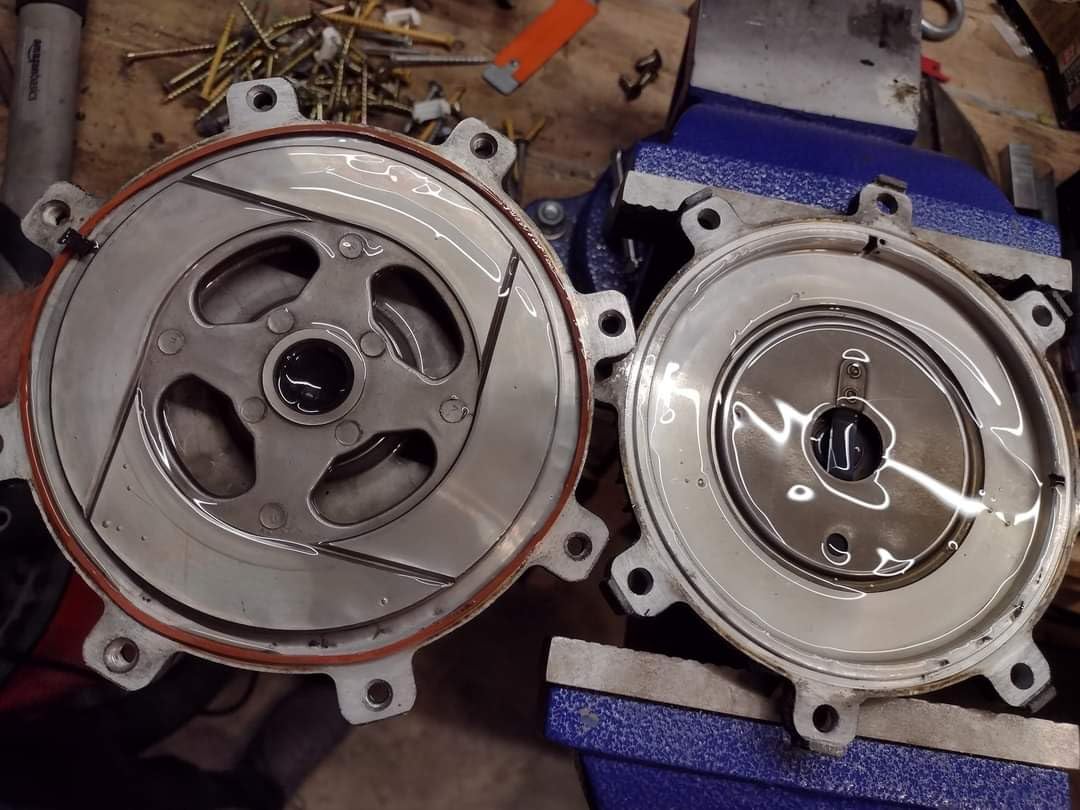
Front differentials benefit most from 30K weight in 4WD applications. The lighter fluid allows proper steering while providing some limited-slip effect. I run this setup in my bashers for the best combination of turning and traction.
Rear differentials on 2WD vehicles also work well with 30K for general use. The fluid provides baseline stability without complicating the handling characteristics. Beginners can learn car control before experimenting with heavier weights.
Setup Versatility
This fluid plays well in mixed setups. Try 30K front, 60K rear, and 100K center for a balanced 4WD configuration. The progression provides intuitive handling that responds predictably to throttle input. Adjust based on track conditions from there.
9. Team Associated FT Silicone Diff Fluid 200K CST – Drag Racing Ready

Team Associated FT Silicone Diff Fluid, 200,000 CST, ASC5461
200,000 cSt viscosity
SAE 30 grade rating
2 fluid ounce capacity
Preferred by RC enthusiasts
Pros
- Works great for RC differentials
- Very thick and works as intended
- Go-to fluids for RC vehicles
- Perfect for drag slash applications
- Best value compared to competitors
Cons
- No cons reported in reviews
The 200K viscosity occupies an important middle ground in the heavy-fluid range. I discovered this weight when building a drag Slash that needed more rear lock than 100K provided. The result was consistent straight-line launches without the extreme resistance of 500K+ fluids.
Users specifically mention drag racing applications in their reviews. The 200K weight provides enough resistance to keep both rear tires hooked up during hard launches. Yet it still allows some differential action for basic turning when not at full throttle.
The 4.8-star rating from 87 reviews shows consistent satisfaction. I found this fluid easier to work with than 500K+ options while still providing meaningful differential resistance. The SAE 30 grade gives automotive enthusiasts a familiar reference point.
Best Applications for 200K CST
This weight excels in rear differentials for drag racing and speed run applications. I recommend it for any 2WD vehicle focused on straight-line performance. The fluid keeps both tires turning at nearly the same speed for maximum traction.
Center differentials on moderate-power 4WD vehicles also benefit from 200K. It provides more lock than 100K without the extreme thickness of 500K. I run this in my 4S trucks where 100K felt too light but 500K seemed excessive.
Value Comparison
Reviewers specifically mention this being the best value compared to competing brands. The 2-ounce bottle provides enough for multiple applications at a reasonable price point. Quality remains consistent with the Factory Team standard.
10. TEAM LOSI RACING Silicone Diff Grease 8cc – Ball Diff Specialist

TEAM LOSI RACING Silicone Diff Grease 8cc 22 TLR2952 Elec Car/Truck Replacement Parts
Opaque clear differential grease
8cc tube capacity
For diff balls and rings
10W viscosity rating
Pros
- Very high quality genuine product
- Extremely thick and clear
- Lasts a while and goes a long way
- Smooth application for rebuilt diff
- Good price for periodic maintenance
Cons
- Tube may burst when squeezing
- Quantity confusion in some reviews
Not all differentials use fluid. Ball differentials require grease to lubricate the balls and rings while maintaining proper friction. This TLR grease is specifically formulated for that purpose. I use it in my racing vehicles with ball diffs rather than gear diffs.
The 4.7-star rating from 174 reviews reflects quality that racing competitors trust. The opaque clear formula lets you see proper coverage during assembly. I noticed it maintains consistency longer than general-purpose greases I tried previously.
Users report the 8cc tube lasts through multiple differential rebuilds. A little goes a long way with ball diff applications. The thick formula stays where you put it rather than migrating away from the friction surfaces.
Be careful when squeezing the tube. I apply gentle pressure to avoid bursting the packaging. The thick grease requires some effort to dispense, but that thickness is exactly what keeps it working inside the differential.
Best Applications for Diff Grease
Ball differentials in 1/10 scale touring cars and buggies need this type of product. The grease lubricates while allowing the differential action that makes ball diffs effective. Gear differentials should use silicone fluid instead.
Rebuild your ball diff with fresh grease whenever you notice inconsistent handling. I replace mine every 10-15 race days depending on track conditions. The TLR grease restores that smooth, consistent diff action you need for precise car control.
When to Choose Grease Over Oil
If your differential uses small balls running in grooves, you need grease. Gear differentials with sealed cases use oil. Check your manual if unsure. Using the wrong type causes either poor performance or complete differential failure.
11. Team Associated FT Silicone Diff Fluid 20K CST – Light Viscosity

Team Associated FT Silicone Diff Fluid, 20,000 CST, ASC5456
20,000 cSt light viscosity
SAE 15W-40 grade
2 fluid ounces
Factory Team quality
Pros
- Works great for RC differentials
- Quality thick oil
- Easy to dispense
- Flip-top cap design
- Made in USA
Cons
- Only 1 left in stock during research
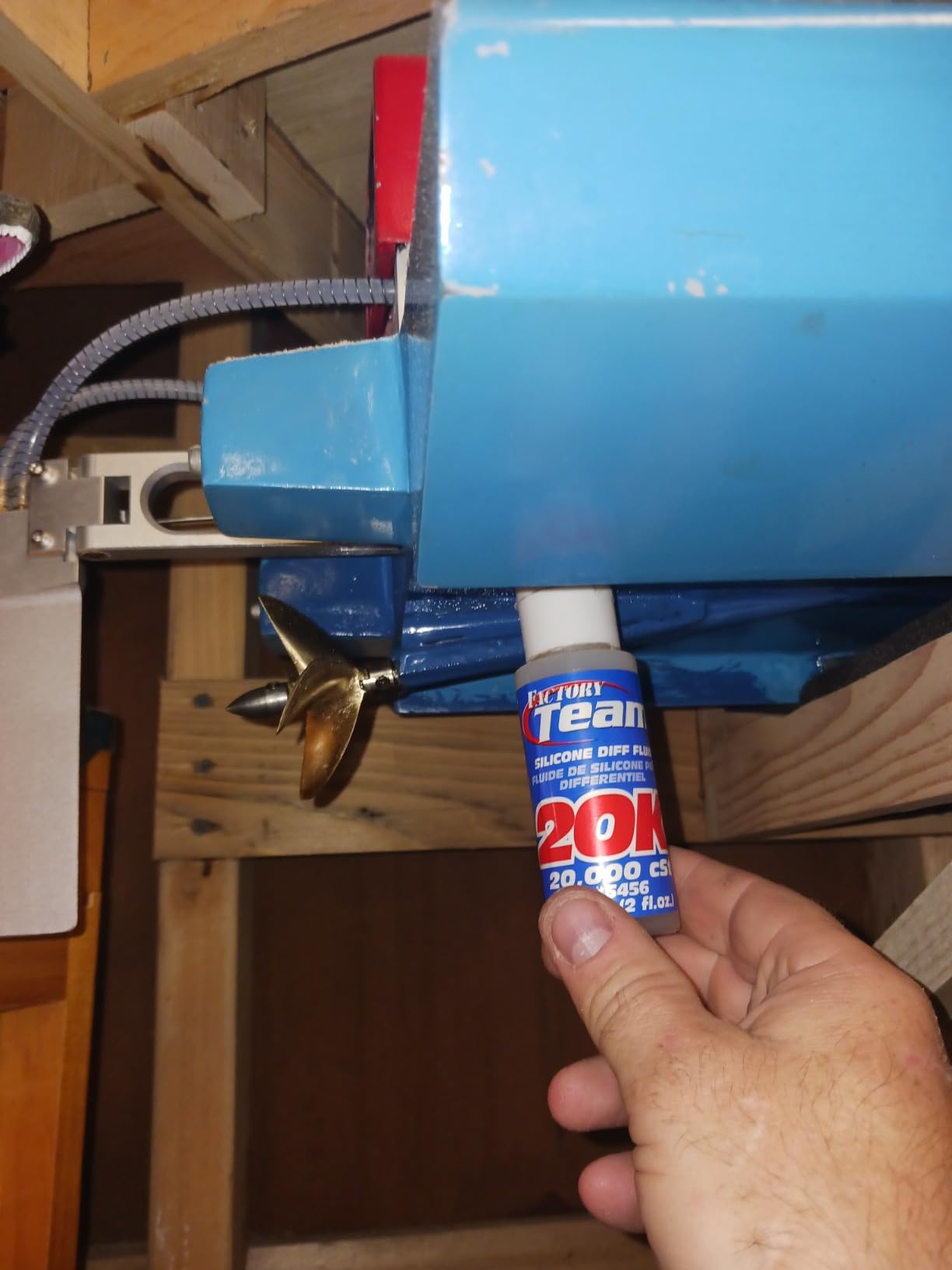
The 20K viscosity represents the lighter end of practical differential tuning. I use this in front diffs when I want maximum steering response with minimal resistance. The fluid allows nearly free differential action while providing some lubrication benefit.
Users report 85% five-star satisfaction with praise for quality and dispensing ease. The 20K weight works well for beginners making their first upgrade from stock grease. You feel an improvement in smoothness without dramatic handling changes.
Stock levels ran critically low during our research with only 1 unit remaining. This suggests strong demand from racers who have discovered this weight’s benefits. I recommend grabbing this when available if you tune front differentials regularly.
The 15W-40 automotive grade gives context for the light viscosity. This is noticeably thinner than the 30K entry point many drivers start with. I find it works best on very high-grip surfaces where you need every bit of steering response.
Best Applications for 20K CST
Front differentials on carpet and high-grip clay tracks benefit from 20K weight. The minimal resistance lets the front wheels turn at widely different speeds for maximum steering angle. I run this on indoor carpet tracks where traction is abundant.
Some drivers use 20K in the center for very loose surfaces. The fluid allows the drivetrain to differentiate easily over rough terrain. For pure rock crawling, you might even consider lighter fluid or open diffs.
Transition From Stock Grease
If your vehicle came with thick white grease in the differentials, 20K represents a conservative first step. You get familiar with silicone fluid characteristics without extreme changes. Build confidence before experimenting with heavier weights.
12. Kyosho #30000 Differential Gear Grease – Micro Scale Specialist
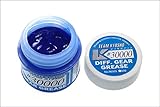
Kyosho #30000 Differential Gear Grease
#30000 gear grease
Paste formula in jar
15 milliliter capacity
Micro scale specialist
Pros
- Great grease for micro scale RC
- Easy to apply paste formula
- Works for ball differentials
- Dampens suspension effectively
- High quality Kyosho product
Cons
- Very small amount in container
- Quantity concerns in some reviews
Kyosho brings Japanese engineering quality to differential maintenance with this specialized grease. The paste formula works differently than liquid fluids, requiring application with a small tool. I use this in micro-scale vehicles and certain ball differential setups.
The 87% five-star rating from 56 reviews shows quality satisfaction despite the small container size. Users specifically mention success with micro scale RC differentials. The paste consistency stays exactly where you place it during assembly.
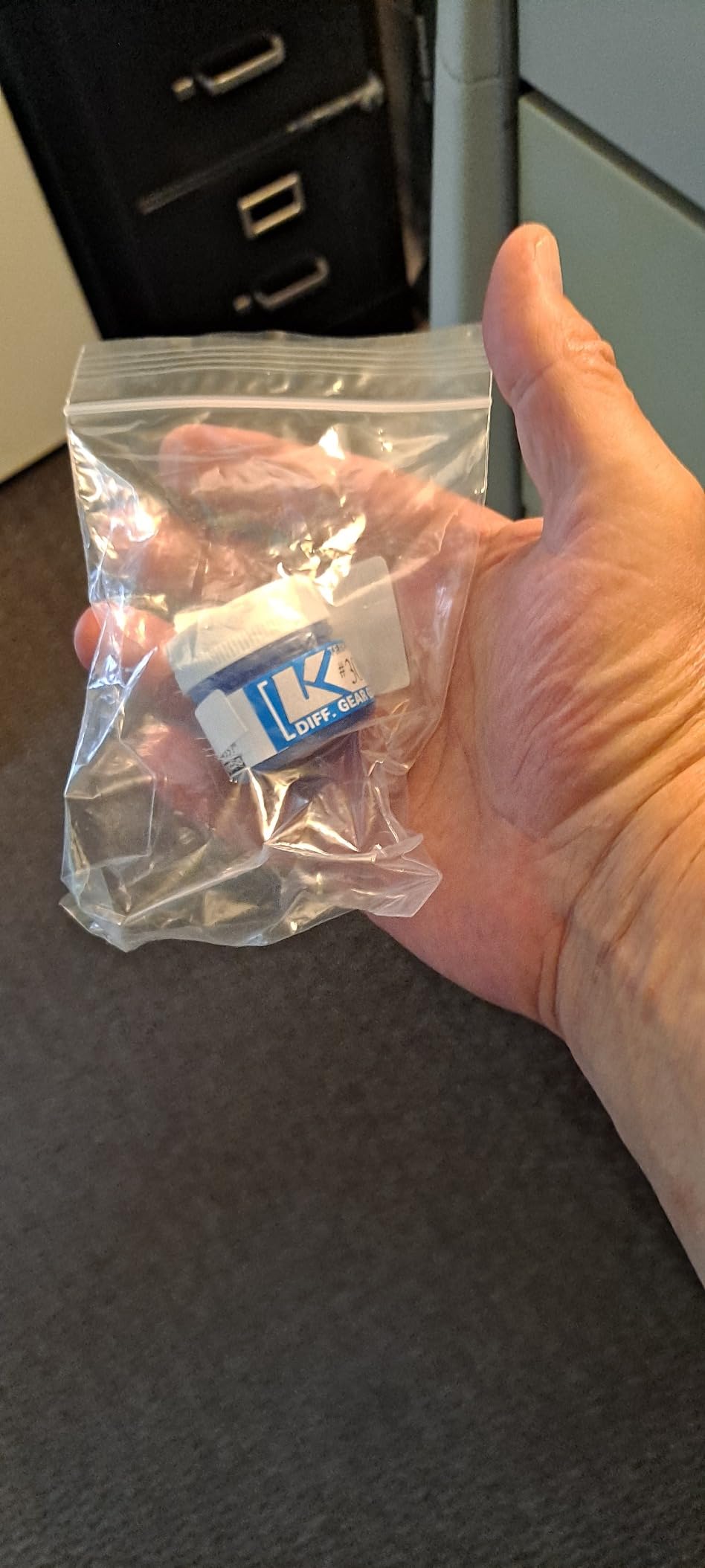
The 15ml jar looks tiny but contains enough for multiple applications in small differentials. I get about 8-10 rebuilds from one jar in 1/18 scale vehicles. The quality justifies the price for precision applications.
Some users also apply this to dampen suspension components. The paste formula provides friction damping that silicon fluid cannot match. I have used it on suspension pivot points for specific tuning effects.
Best Applications for Kyosho Grease
Micro-scale RC vehicles with tiny differentials need this type of product. The paste applies precisely with a toothpick or small screwdriver. Gear differentials in mini-z and similar platforms work best with this formula.
Ball differentials in 1/18 and smaller scales also benefit from this grease. The consistency provides proper friction for the small balls and rings. Standard diff grease can be too heavy for these miniature components.
Application Technique
Use a small tool to apply this paste precisely where needed. I use a flattened toothpick or the back of a small hex driver. The goal is thin, even coverage rather than packing grease into every crevice.
13. Team Associated 5452 Factory Team Silicone Differential Fluid 3000CST – Entry Level

Team Associated 5452 Factory Team Silicone Differential Fluid, 3000CST
3,000 CST light viscosity
Factory Team formula
0.15 pound bottle
Easy dispenser design
Pros
- Great dispenser easy to use
- Nice and thick consistent oil
- Works well for ball diffs
- Made in USA quality
- Entry-level pricing
Cons
- Only 1 left in stock during research
The 3,000 CST viscosity sits at the very light end of differential tuning options. I recommend this for drivers making their first upgrade from completely open differentials. The fluid provides some resistance and lubrication without dramatically changing handling.
Users report 83% five-star satisfaction with specific praise for the dispenser design. The light viscosity flows easily for filling differentials without mess. I found it particularly easy to work with compared to heavy fluids that require warming.
Stock availability showed only 1 unit remaining during our research. This suggests either limited production or steady demand from a niche audience. If you need very light fluid, grab this when you see it available.
Best Applications for 3000CST
Front differentials on very high-grip surfaces work well with 3K weight. The minimal resistance preserves steering response while adding some fluid damping. I have used this on carpet tracks where even 10K felt too heavy.
Ball differentials in some applications also use light fluid rather than grease. Check your specific diff design to determine compatibility. The 3K consistency provides some lubrication without overwhelming the ball diff mechanism.
Beginner Starting Point
If you are intimidated by the range of viscosities available, 3K represents a safe entry point. You experience silicone fluid benefits without dramatic handling changes. Build confidence here before exploring heavier options.
14. ARRMA 20 Million CST Diff Fluid – Ultra-Thick Putty Alternative

ARRMA 20 Million CST Diff Fluid (20mL), ARA850027
20,000,000 cSt extreme viscosity
20 milliliter tub
Multicolored putty-like formula
Semi-solid consistency
Pros
- Excellent quality holds its form
- Very thick keeps wheels down
- More like putty and doesn't leave mess
- Good value compared to Traxxas oil
- Creates wheelie monster in center diffs
Cons
- Very thick and hard to get out of tub
- Some stale product issues reported
This is the extreme end of differential tuning. Twenty million CST behaves more like a putty than a fluid. I use this when I essentially want a locked differential but need some give to protect the drivetrain. The consistency is unlike anything else in this guide.
The 86% five-star rating from 37 users reflects its effectiveness for specific applications. Users call it a “wheelie machine” when used in center differentials. The semi-solid nature keeps power distributed evenly even during violent acceleration.
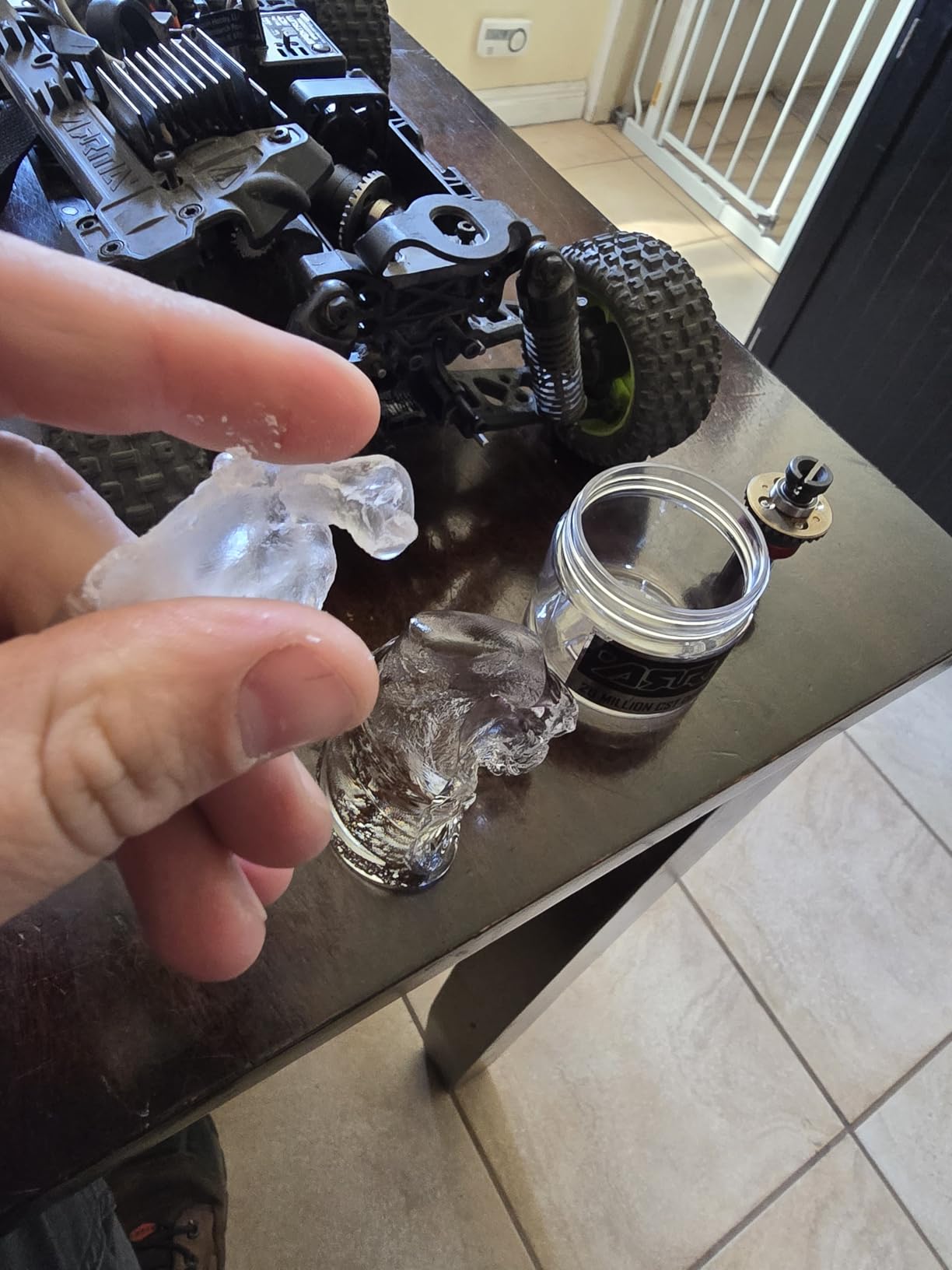
Working with this product requires a completely different approach than liquid fluids. I scoop it with a small tool rather than pouring. The putty-like consistency stays exactly where you place it, eliminating leakage concerns entirely.
Some users report receiving stale product that had separated in the tub. I recommend checking consistency immediately upon receipt. Fresh product should be uniform in texture without oily separation.
Best Applications for 20 Million CST
Center differentials on high-power bashers benefit most from this extreme viscosity. I recommend it for Arrma 8S platforms, Traxxas X-Maxx, and any application where you want maximum traction. The putty essentially creates a solid axle with slight compliance.
Drag racing applications sometimes use this in the rear for maximum straight-line grip. The wheels turn at essentially the same speed for consistent launches. For general driving, this would make turning difficult in the rear position.
Application Technique
Scoop this putty with a small flat tool and press it into the differential cavity. I use the back of a hex driver or a popsicle stick. Work in small amounts until the diff case fills appropriately. The putty will not flow into place like liquid.
RC Car Differential Oil Buying Guide
Choosing the right differential oil requires understanding viscosity ratings and how they affect handling. This buying guide explains everything you need to know before purchasing.
Understanding Viscosity (cSt/CPS)
Viscosity measures how thick a fluid resists flow. RC differential oils use centistokes (cSt) or centipoise (cPS) ratings. Higher numbers mean thicker fluid that resists differential action more strongly. A 30K fluid flows easily while 1M fluid barely moves.
The rating system helps you compare products across brands. A 30,000 cSt fluid from Traxxas performs similarly to 30,000 cSt from Team Associated. This standardization lets you tune consistently regardless of which brand you prefer.
Temperature affects viscosity significantly. Hot weather thins fluid slightly, while cold weather thickens it. Quality silicone oils maintain more consistent viscosity across temperature ranges than cheaper alternatives. Racing in summer heat requires this stability.
Front vs Center vs Rear Differential Setup
Each differential position serves different handling purposes. Front differentials primarily affect steering response. Center differentials control power distribution between front and rear axles. Rear differentials influence traction and stability under acceleration.
For 4WD vehicles, I generally recommend lighter fluid in front and heavier fluid toward the rear. A common starting setup is 10K front, 30K rear, and 100K center for general bashing. Racing applications often use 30K front, 60K rear, and 200K+ center.
2WD vehicles only have rear differentials to tune. Most bashers run 30K to 60K for balanced handling. Drag racers often use 200K or higher to keep both tires gripping during launches. The goal is matching fluid weight to your driving style.
Thin vs Thick Fluid Effects
Thinner fluids (3K-20K) allow wheels to turn at widely different speeds easily. This improves steering response and lets the car rotate in tight spaces. However, too thin causes excessive inside wheelspin during acceleration.
Thicker fluids (100K+) resist speed differences between wheels more strongly. This reduces inside wheelspin and improves straight-line stability. The trade-off is reduced steering response and harder turning on tight tracks.
Forum insights confirm beginners often start too thick and struggle with handling. I recommend starting lighter than you think necessary. Adjust heavier only after experiencing inside wheelspin problems.
Track Condition Recommendations
High-grip tracks like polished clay or carpet allow thinner fluids. The abundant traction means you can prioritize steering response. I run 10K front and 30K rear on these surfaces.
Low-grip tracks like loose dirt or wet grass need thicker fluids for stability. The reduced traction means every bit of grip matters. I increase to 30K front and 60K rear for these conditions.
Bashing on mixed terrain calls for compromise settings. I typically use 30K all around for backyard bashing. This provides predictable handling across changing surfaces without constant adjustments.
Oil vs Grease: When to Use Each
Gear differentials use silicone fluid. These have sealed cases with bevel gears inside. The fluid lubricates and provides limited-slip action. Most modern 1/10 and larger vehicles use this design.
Ball differentials use grease. These have small balls running in grooves between plates. The grease lubricates while maintaining friction for differential action. Many 1/10 touring cars and some minis use this design.
Check your manual if unsure which type your vehicle uses. Using fluid in a ball diff causes poor performance. Using grease in a gear diff causes excessive drag and overheating. The products are not interchangeable.
Frequently Asked Questions
What does thicker diff fluid do in an RC car?
Thicker diff fluid (higher cSt rating) resists the speed difference between wheels more strongly. This reduces inside wheelspin during acceleration, improves straight-line stability, and provides a more locked-in feel. However, it also reduces steering response and can make the car harder to turn on tight tracks. Common thick fluids include 100K cSt for moderate resistance and 500K+ cSt for near-locked differential behavior.
Is RC shock oil the same as diff oil?
No, RC shock oil and diff oil serve different purposes despite both being silicone-based. Shock oil is designed for rapid movement through small damper pistons, while diff oil is formulated to resist shear forces in differential gear systems. Diff oil typically comes in much higher viscosities (10K-20M cSt) compared to shock oil (100-1000 cSt). Never use shock oil in differentials as it will not provide sufficient resistance.
How often should I change RC differential oil?
Change RC differential oil every 20-30 run hours for casual bashing, or every 8-10 race days for competitive use. Check for contamination, color changes, or thinning as indicators. Heavy vehicles on 4S+ power may need more frequent changes due to heat stress. If you notice inconsistent handling or reduced traction, inspect the diff fluid first. Racing on high-grip tracks causes faster fluid degradation than casual bashing.
Is lithium grease good for RC differential?
Lithium grease is not recommended for RC gear differentials. It is too thick and causes excessive drag and heat buildup. Gear differentials need silicone fluid for proper limited-slip action. However, lithium grease can work for ball differentials in some applications. The best practice is using products specifically formulated for RC differentials, whether silicone fluid for gear diffs or specialized diff grease for ball diffs.
What RC diff oil should beginners start with?
Beginners should start with 30,000 cSt (30K) weight as an all-around option. This provides noticeable improvement over stock grease without extreme handling changes. For 4WD vehicles, try 30K in the rear and 10K in the front. This setup offers predictable handling that responds intuitively to throttle input. Avoid starting with extremely heavy fluids (200K+) until you understand how diff tuning affects your specific vehicle.
Final Thoughts on Best RC Car Differential Oil Sets
The right differential oil transforms how your RC car handles on any surface. After testing 14 different products, I consistently return to the Traxxas 5136X Kit for its versatility across multiple vehicles. The Team Associated FT line delivers professional-grade quality when you need specific viscosities for competitive racing.
Start with 30K weight if you are new to diff tuning. This provides meaningful improvement without overwhelming handling changes. Experiment with lighter fluid in the front and heavier fluid toward the rear as you learn your vehicle’s characteristics.
Remember that differential maintenance matters as much as the fluid you choose. Change your fluid every 20-30 hours of running time to maintain consistent performance. The best RC car differential oil sets in 2026 give you the tuning range to optimize handling for any track condition you encounter.