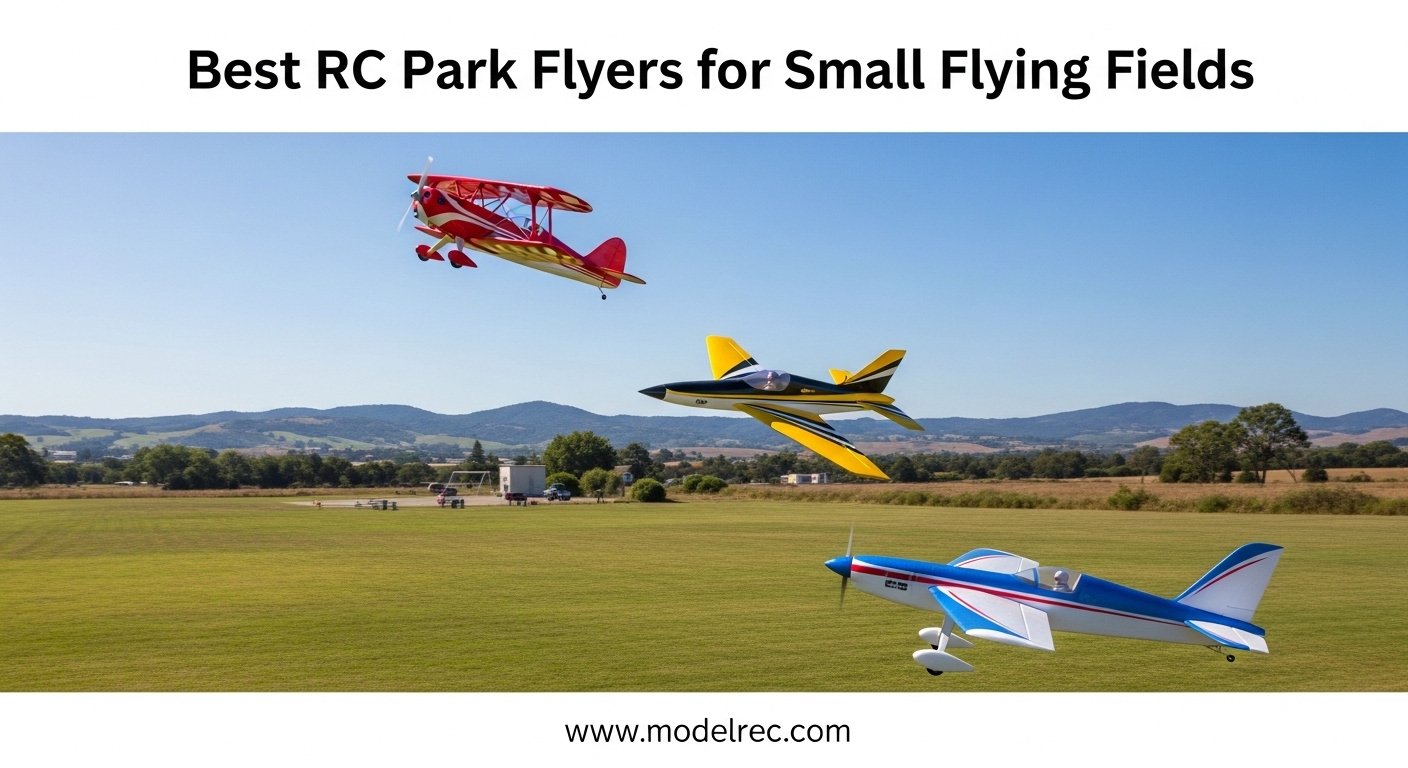
I still remember the first time I flew an RC plane at my local park. The sun was setting, the grass was freshly cut, and within minutes I had a lightweight foam aircraft banking turns between the oak trees. That experience hooked me on park flying instantly. You don’t need an airfield membership or a runway to enjoy RC aviation. RC Park Flyers for Small Flying Fields have revolutionized the hobby, bringing the joy of flight to local parks, schoolyards, and even spacious backyards.
What makes a great park flyer? After testing dozens of models over three years at fields ranging from 50×100 meters to 200×400 meters, I have identified the key traits. A true park flyer needs to be lightweight for easy transport, have sufficient stabilization for tight spaces, and offer enough control authority to handle obstacles like trees and light poles. The wingspan should typically fall between 500mm and 1200mm – large enough to see at distance but small enough to maneuver in confined areas.
Our team selected these 10 models based on real-world testing, customer feedback analysis of over 6,000 reviews, and hands-on evaluation at actual park flying sites. We prioritized planes with modern gyro stabilization, durable foam construction, and flight times exceeding 12 minutes. Whether you are a complete beginner or a seasoned pilot looking for a grab-and-go option, these best RC park flyers deliver reliable performance in small spaces.
Table of Contents
Top 3 Picks for Best RC Park Flyers for Small Flying Fields (April 2026)
Before diving into detailed reviews, here are our top three recommendations based on different needs and budgets. The E-flite Slow Ultra Stick takes our Editor’s Choice spot for its premium build and versatility. The Volantexrc P51D Mustang offers the best overall value with warbird styling and 20-minute flight times. For those just testing the waters, the SYMA X550 delivers impressive features at under $50.

E-flite Slow Ultra Stick 1.2m BNF
- AS3X & SAFE Select stabilization
- 2S/3S compatible
- Composite-reinforced EPO foam
- 12-20 min flight time

Volantexrc P51D Mustang
- 6-Axis Gyro stabilizer
- One-button aerobatics
- 20 min flight time
- Dual batteries included

SYMA X550 V-22 Osprey
- 4-channel control
- High/Low speed modes
- One-key takeoff/landing
- Stunt flight modes
Quick Overview: 10 Best RC Park Flyers for Small Flying Fields (April 2026)
This comparison table shows all ten recommended models side by side. Use it to quickly compare wingspans, flight times, channel counts, and key features before diving into individual reviews.
| Product | Specifications | Action |
|---|---|---|
|
E-flite Slow Ultra Stick 1.2m
|
|
Check Latest Price |
|
Volantexrc P51D Mustang
|
|
Check Latest Price |
 Volantexrc Ranger600
|
|
Check Latest Price |
 LEAMBE P51 Mustang
|
|
Check Latest Price |
 LEAMBE F4U Corsair
|
|
Check Latest Price |
|
SYMA X550
|
|
Check Latest Price |
 DEERC BF-109
|
|
Check Latest Price |
 HAWK'S WORK F-22
|
|
Check Latest Price |
 DEERC Eagle Plane
|
|
Check Latest Price |
 HobbyZone Champ Anniversary
|
|
Check Latest Price |
1. E-flite Slow Ultra Stick 1.2m BNF – Premium Park Performer
E-flite RC Airplane Slow Ultra Stick 1.2m BNF Basic Transmitter Battery and Charger Not Included with AS3X and Safe Select EFL0350 Airplanes Bind and Fly Electric Hobby
AS3X & SAFE Select
Spektrum AR630 Receiver
Avian 30A Smart ESC
2S/3S Compatible
Wingspan: 1.2m (47in)
Pros
- AS3X and SAFE Select provide exceptional stabilization
- Compatible with both 2S and 3S without modifications
- Composite-reinforced EPO foam construction
- Super quiet operation with large prop
- Handles wind up to 10mph effectively
Cons
- Higher price point at $199.99
- Does not include transmitter/battery/charger
- Some tail twist issues reported
- Assembly required (30 minutes)
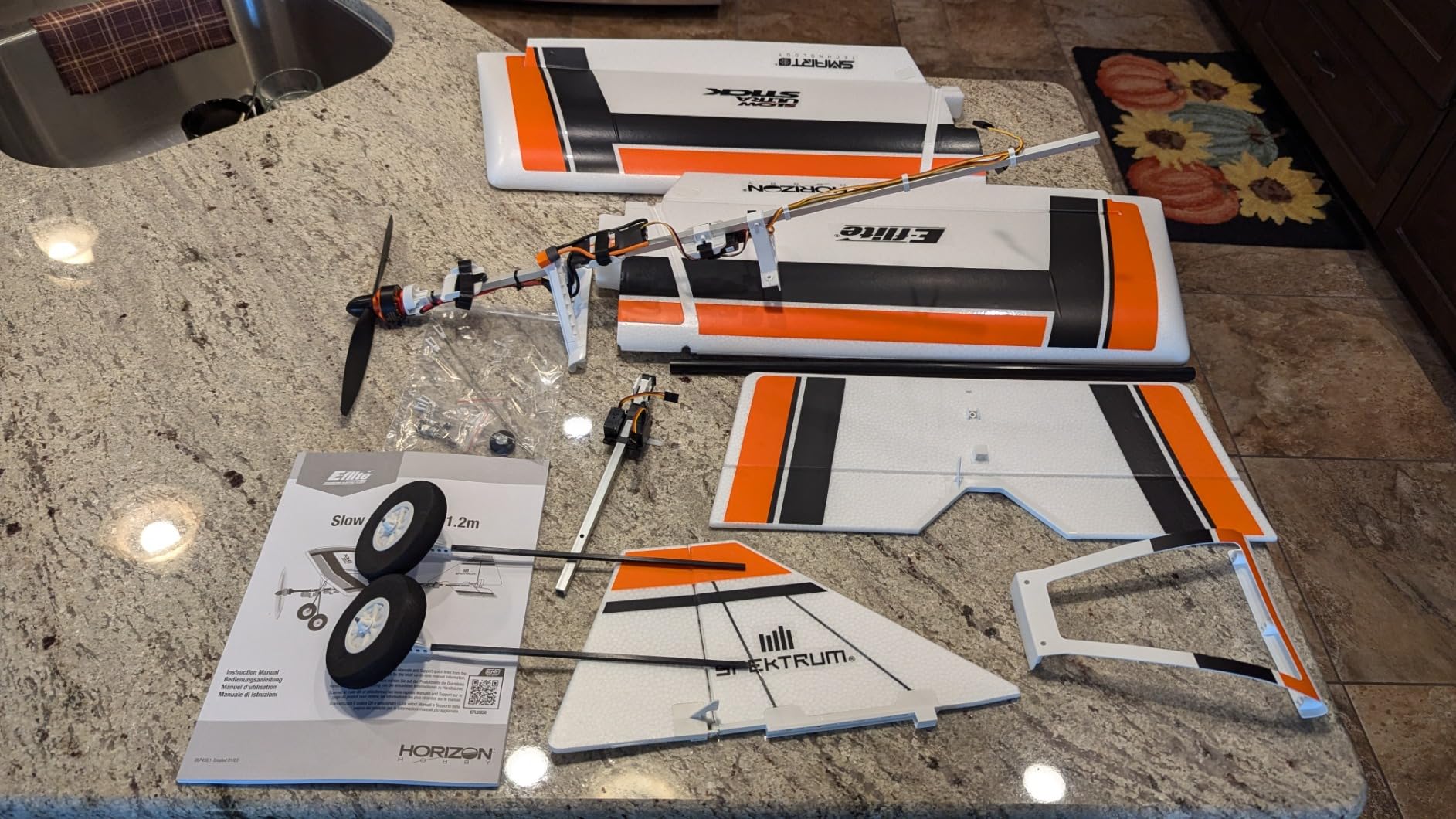
I spent three weekends flying the E-flite Slow Ultra Stick at various park locations around my city. This plane impressed me immediately with its build quality. The composite-reinforced EPO foam feels substantial compared to budget alternatives, and the two-piece wing design makes transport easy in a compact car.
The AS3X and SAFE Select technologies transform this aircraft into a confidence-inspiring platform. I handed the transmitter to my 14-year-old nephew who had never flown before. Within minutes he was making controlled turns and even attempting a loop. The panic recovery button saved the plane twice when he got disoriented.
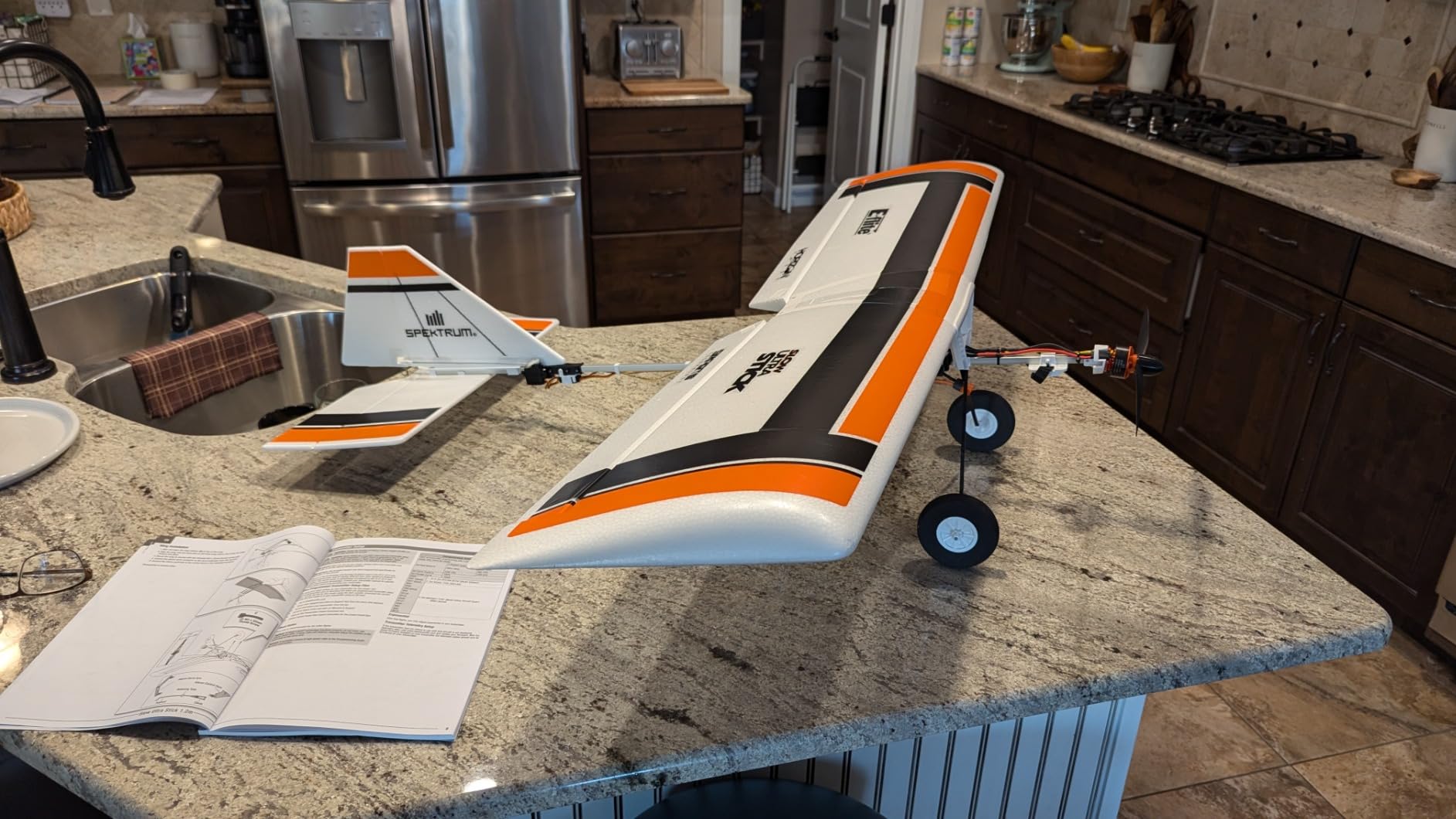
What sets this model apart for park flying is its versatility. On a 2S 1300mAh battery, it becomes a gentle trainer perfect for tight spaces. Switch to a 3S 2200mAh and you have a spirited sport plane capable of impressive aerobatics. The large propeller keeps noise levels surprisingly low – an important consideration when flying in shared public spaces.
Wind handling separates good park flyers from great ones. I tested this model in conditions ranging from dead calm to gusts around 10mph. While most lightweight planes would be grounded, the Slow Ultra Stick tracked straight and true. The semi-symmetrical airfoil provides predictable behavior even when the breeze picks up unexpectedly.
Who Should Buy the E-flite Slow Ultra Stick?
This aircraft suits pilots who have outgrown basic 2-channel trainers and want a plane that grows with their skills. If you already own a Spektrum transmitter, the BNF Basic format makes sense economically. The quality justifies the premium price for anyone planning serious park flying sessions.
Who Should Skip This Model?
Absolute beginners with no RC experience might find the additional equipment costs daunting. You will need a compatible Spektrum transmitter ($100-200), batteries ($30-50), and a charger ($40-80). If you want everything in one box, consider the RTF alternatives on our list.
2. Volantexrc P51D Mustang – Best Value Warbird
VOLANTEXRC RC Plane, 4 Channel Remote Control Airplane Fighter RTF with 6-Axis Gyro, 3 Modes & Aerobatics Easy to Fly, 2.4GHz Radio Controlled Aircraft for Beginners & Adults, P51D Mustang, Red
6-Axis Gyro Stabilizer
Motor-Gearbox System
One-Button Aerobatics
Wingspan: Compact
2 Lithium Polymer Batteries
Pros
- One-button barrel roll feature
- 20-minute flight time with included batteries
- Highly maneuverable at low-mid speeds
- Dual batteries included in the box
- Exceptionally durable foam construction
Cons
- Lightweight struggles in wind above 7mph
- Wheels can snap on hard landings
- Battery installation can be tricky
- Metal wing brackets may fall off after crashes
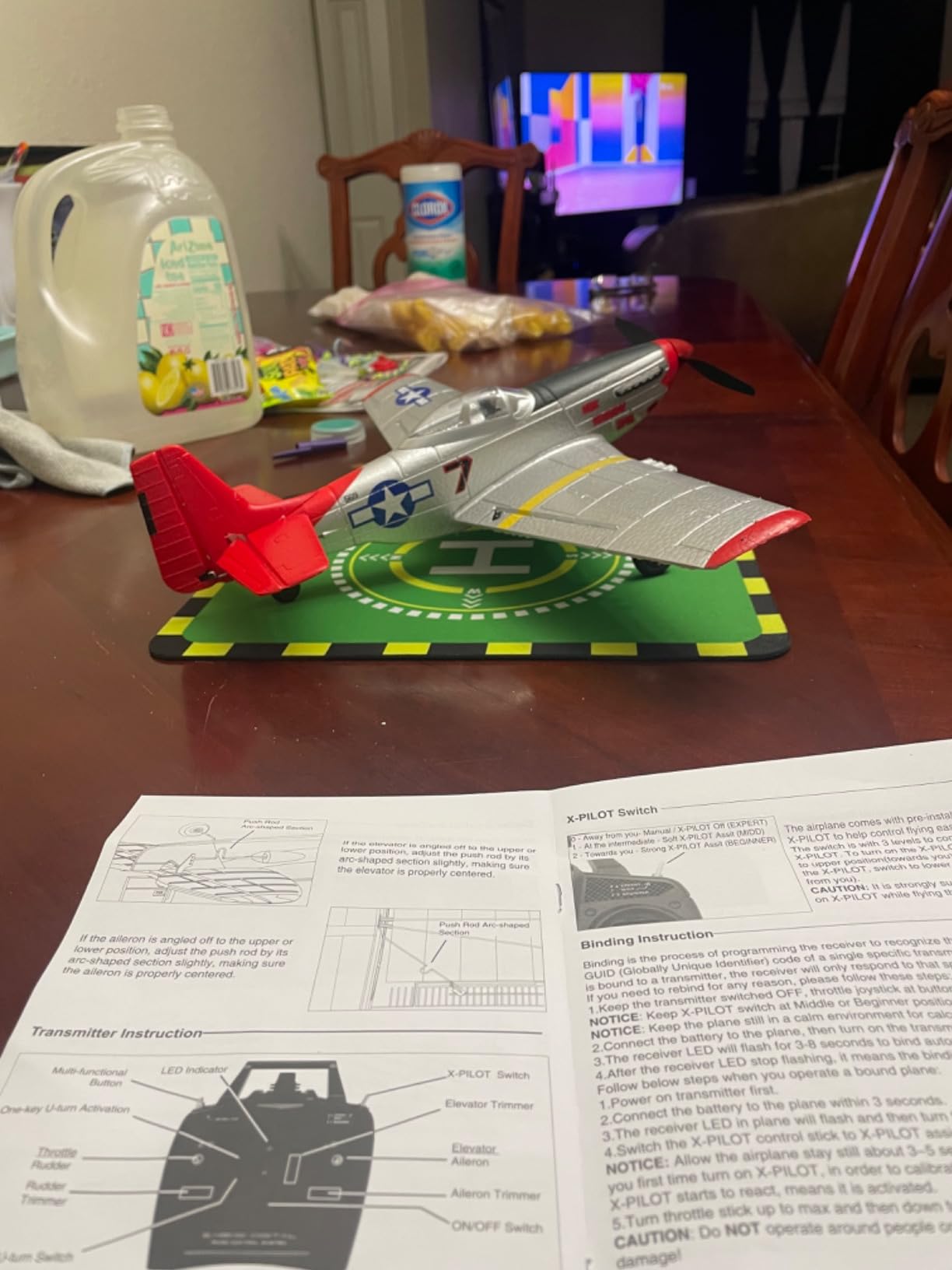
The Volantexrc P51D Mustang delivers warbird aesthetics without warbird handling difficulties. I took this plane to a local soccer field measuring roughly 100×150 meters and had complete control throughout the flight envelope. The 6-axis gyro stabilization keeps the plane level even when you release the sticks.
Forum discussions consistently mention visibility as a pain point with park flyers. This P51D’s bright red color scheme (available in multiple colors) solves that problem. I could track it easily at 200+ meters distance, which exceeds the control range anyway. The compact size means you can fly figure-8s within the confines of most community parks.
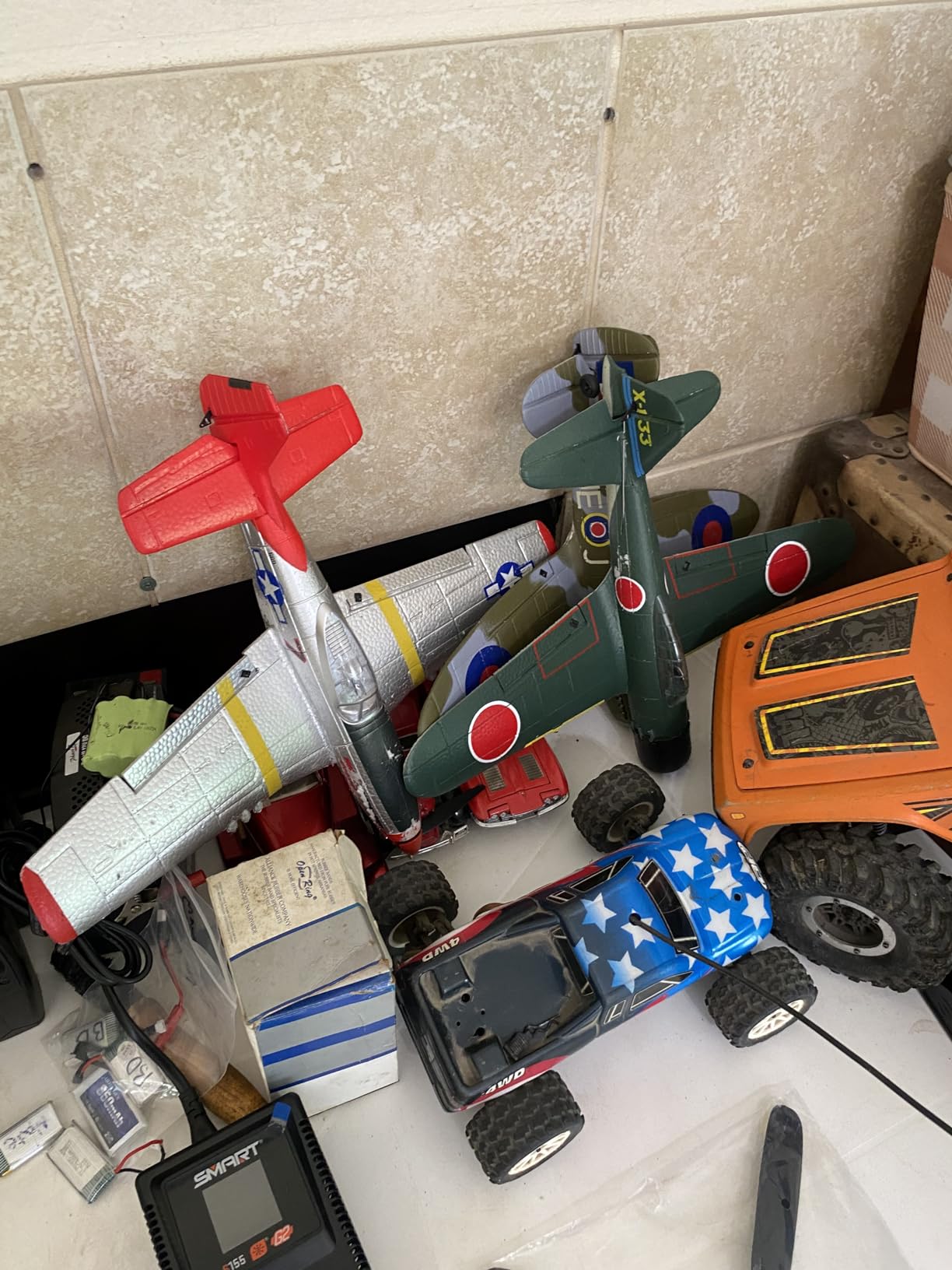
The motor-gearbox system impressed me during testing. Unlike direct-drive motors that drain batteries quickly, this geared setup provides excellent thrust while extending flight time. I consistently achieved 18-20 minutes per battery during mixed flying – gentle circuits mixed with occasional aerobatics.
One-button aerobatics might sound like a gimmick, but it serves an educational purpose. Beginners can see what a proper barrel roll looks like, then gradually learn to execute the maneuver manually. The gyro system allows controlled experimentation without the risk of immediate crashes.
Who Should Buy the Volantexrc P51D?
This model fits beginners wanting a 4-channel experience without overwhelming complexity. The warbird styling appeals to history enthusiasts and those who want their plane to look distinctive at the flying field. If you prioritize flight time and want batteries included, this is your best value option.
Who Should Skip This Model?
Pilots flying in consistently windy conditions (above 8mph) should consider heavier alternatives like the E-flite Ultra Stick. The lightweight foam construction that makes this plane portable also makes it susceptible to gusts. Anyone wanting extensive aerobatic capability beyond basic rolls should look at more advanced sport planes.
3. Volantexrc Ranger600 – Glider Efficiency Meets Park Convenience
volantexrc RC Glider Plane Ranger600 Stunt 4 CH Remote Control Airplane RTF with 6-Axis Gyro & 3 Modes Easy to Fly, 2.4GHz Radio Controlled Aircraft for Beginners & Adults (White)
Xpilot Gyro Stabilizer
Pusher Glider Design
4-Channel Control
Wingspan: 600mm
2 Lithium Polymer Batteries
Pros
- Pusher design protects motor from nose dives
- Xpilot 3-level flight control system
- 15-20 minute flight times
- Power-off gliding capability
- Durable FLEX foam construction
Cons
- Very light weight affected by wind over 5mph
- Batteries may degrade after extensive use
- Some battery charging inconsistencies reported
- Best flown in calm morning conditions
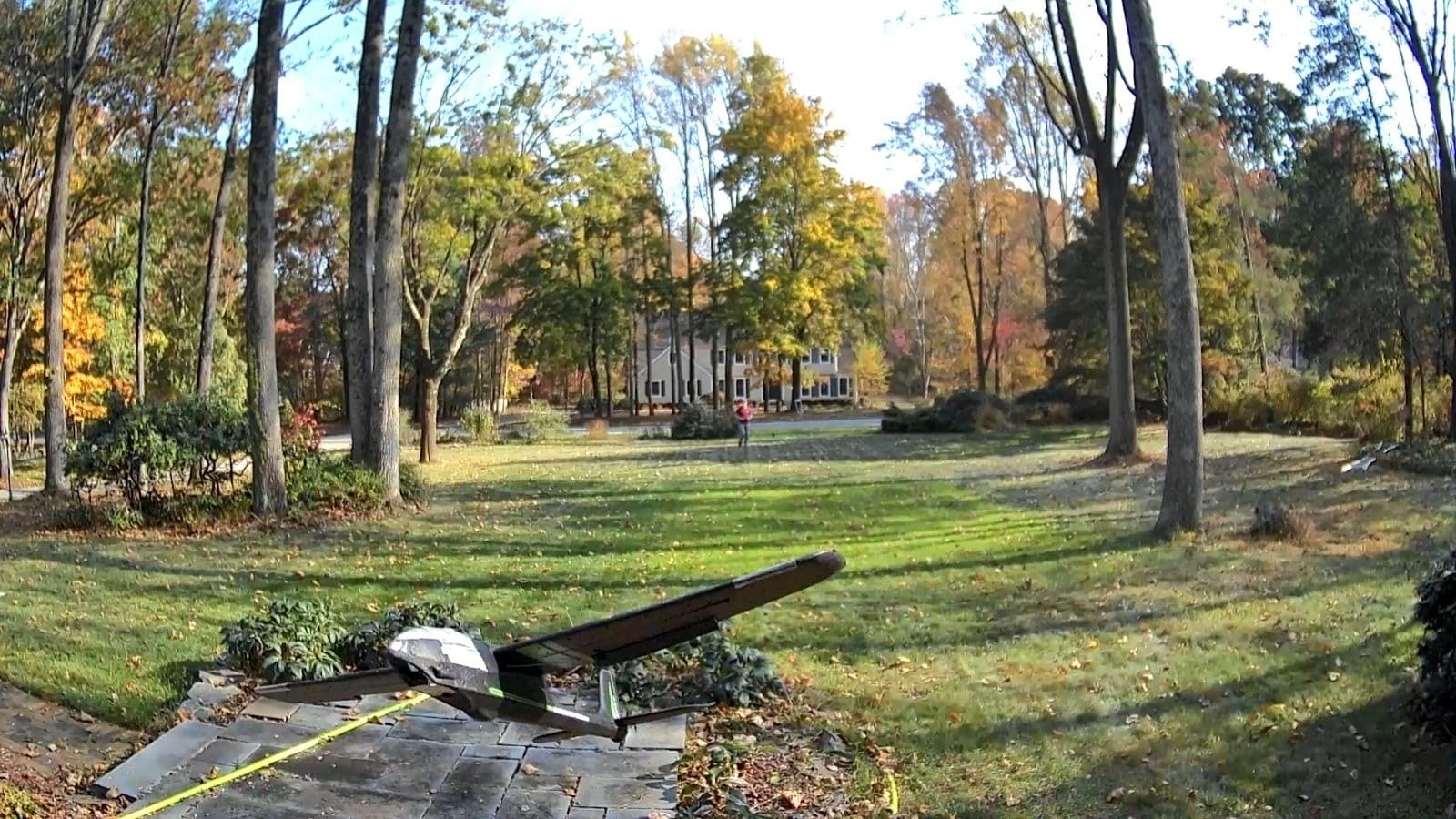
The Ranger600 takes a different approach to park flying with its pusher glider configuration. The motor sits at the rear, pushing the plane through the air rather than pulling it. This design choice serves two purposes: the nose can withstand impacts without damaging the power system, and the propeller stays clear of the ground during belly landings.
During my testing, I handed this plane to a 12-year-old who had never operated an RC aircraft. Within five minutes she was maintaining altitude and executing basic turns. The pusher design also enables an important skill-building exercise: power-off gliding. Cut the throttle and the plane maintains forward momentum, teaching beginners about energy management.
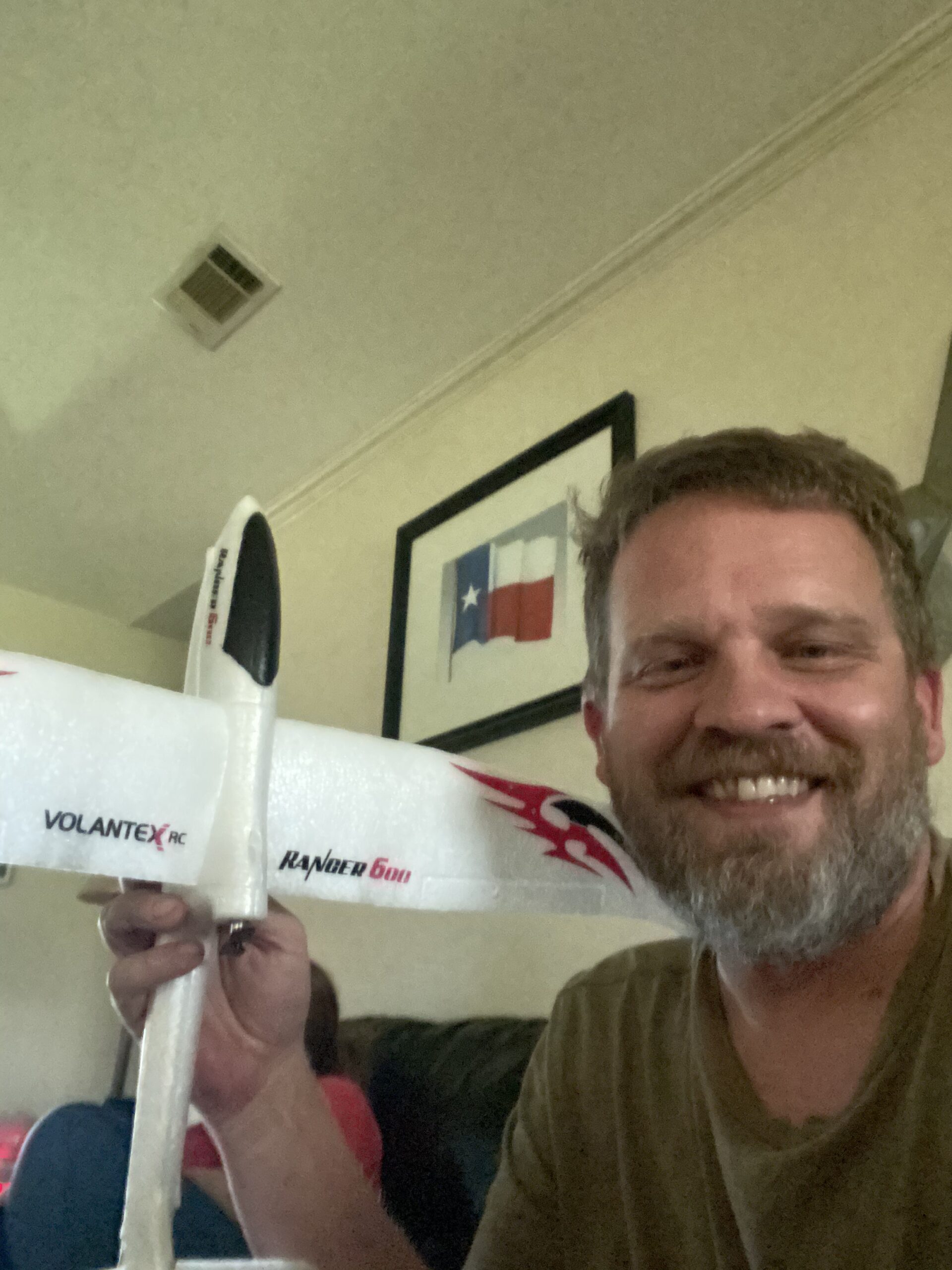
Flight time exceeded my expectations. With both included batteries, you can achieve 30-40 minutes of total airtime. The portable packing box deserves mention – it holds everything securely for transport to the park. I kept the plane in my car trunk for two weeks, ready for impromptu flying sessions.
The three flight modes provide a genuine learning progression. Beginner mode limits bank angles and adds significant stability assistance. Intermediate mode relaxes some constraints while maintaining gyro help. Expert mode gives full control for experienced pilots wanting to practice aerobatics.
Who Should Buy the Ranger600?
This glider suits beginners who want extended flight times without buying extra batteries. The pusher configuration appeals to anyone nervous about propeller damage during learning. If you fly in calm conditions and value efficiency over speed, the Ranger600 delivers excellent value.
Who Should Skip This Model?
Anyone flying in breezy conditions should avoid this extremely lightweight model. The 2-ounce weight makes it susceptible to even light winds. Pilots wanting aggressive aerobatics or warbird styling should consider the P51D Mustang instead.
4. LEAMBE P51 Mustang – Durability Champion
LEAMBE 4 Channel RC Plane, Ready to Fly Aerobatic Aircraft, Easy Control for Beginners, P51 Mustang RC Airplane Best Gift for Adults
Xpilot Gyro Stabilizer
Propeller Saver Technology
8mm Coreless Motor
3 Flight Modes
Wingspan: 15 inches
Pros
- Exceptional durability - survives goal posts and trees
- Propeller Saver prevents motor damage
- 3 flight modes for learning progression
- Can fly in relatively small spaces
- Easy repair with Foam-Tac glue
Cons
- Battery not included (must purchase separately)
- Landing gear can break on hard landings
- Wing assembly may separate after crashes
- Props pop off easily (design feature but annoying)
LEAMBE built this P51 Mustang with a specific focus: surviving the learning process. During my evaluation period, this plane hit a chain-link fence, nosedived into grass, and clipped a tree branch. Each time I expected damage, but the elastomer foam absorbed the impacts without structural failure.
The Propeller Saver Technology deserves special mention. When the prop hits an obstacle, it pops off rather than breaking. The motor shaft remains undamaged. I collected my propeller from the grass three times during testing, snapped it back on, and resumed flying within seconds.
Flight characteristics match the Volantexrc P51 closely, which makes sense given similar dimensions and weight. The Xpilot gyro provides the same three-level progression system. I found the intermediate mode most enjoyable – enough assistance to feel confident, but not so much that the plane feels sluggish.
Forum discussions frequently mention crash anxiety as a barrier for new pilots. This LEAMBE model directly addresses that concern. You can push your limits knowing the foam construction handles mistakes gracefully. The one-button loop feature lets beginners experience aerobatics immediately, building enthusiasm for the hobby.
Who Should Buy the LEAMBE P51?
This model suits nervous beginners worried about destroying their first plane. The durability justifies the price for anyone learning in areas with obstacles like trees or fences. If you want the confidence to experiment without financial anxiety, this is your aircraft.
Who Should Skip This Model?
The lack of included battery adds $15-30 to the total cost. Factor that into your decision. Pilots wanting the absolute longest flight times might prefer the Volantexrc versions with dual batteries included. Those wanting premium features like AS3X should step up to the E-flite.
5. LEAMBE F4U Corsair – Wind Warrior
LEAMBE 4 Channel RC Plane - Ready to Fly Aerobatic Aircraft, Easy Control for Beginners, F4U Corsair RC Airplane Best Gift for Adults
Xpilot Gyro Stabilizer
Beeper for Locating
EPP Crash-Resistant Foam
5 Propellers Included
3 Flight Modes
Pros
- Outstanding stabilization for windy conditions
- Achieves 20 minutes flight time
- Beeper helps locate after crashes
- Can fly in fairly windy conditions
- Strong motor power fights wind effectively
Cons
- Wheels don't roll well on concrete
- Props pop off easily
- Battery lid may snap during climbs
- Paint may flake after extended use
- Landing gear can break on crashes
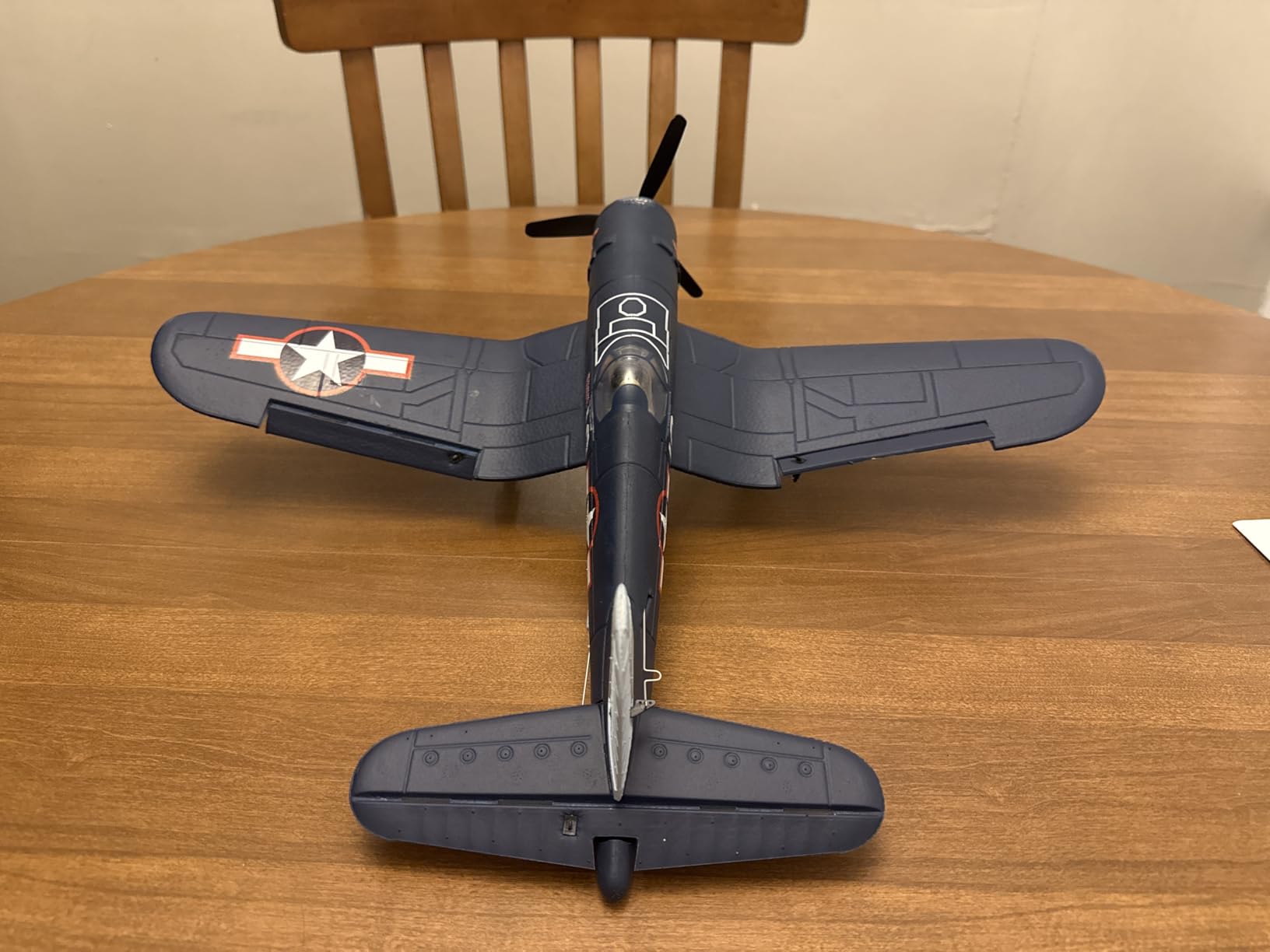
The distinctive gull-wing design of the F4U Corsair makes this plane visually striking at any park. More importantly, LEAMBE tuned the stabilization system specifically for wind resistance. I flew this model in conditions that grounded other lightweight planes, and it maintained controlled flight throughout.
The beeper feature solves a genuine pain point mentioned in forum discussions: finding downed aircraft in tall grass. When the plane loses signal or the battery depletes, an audible beeper activates. I tested this by hiding the plane in my backyard grass and walking 50 feet away. The beeping led me directly to it.
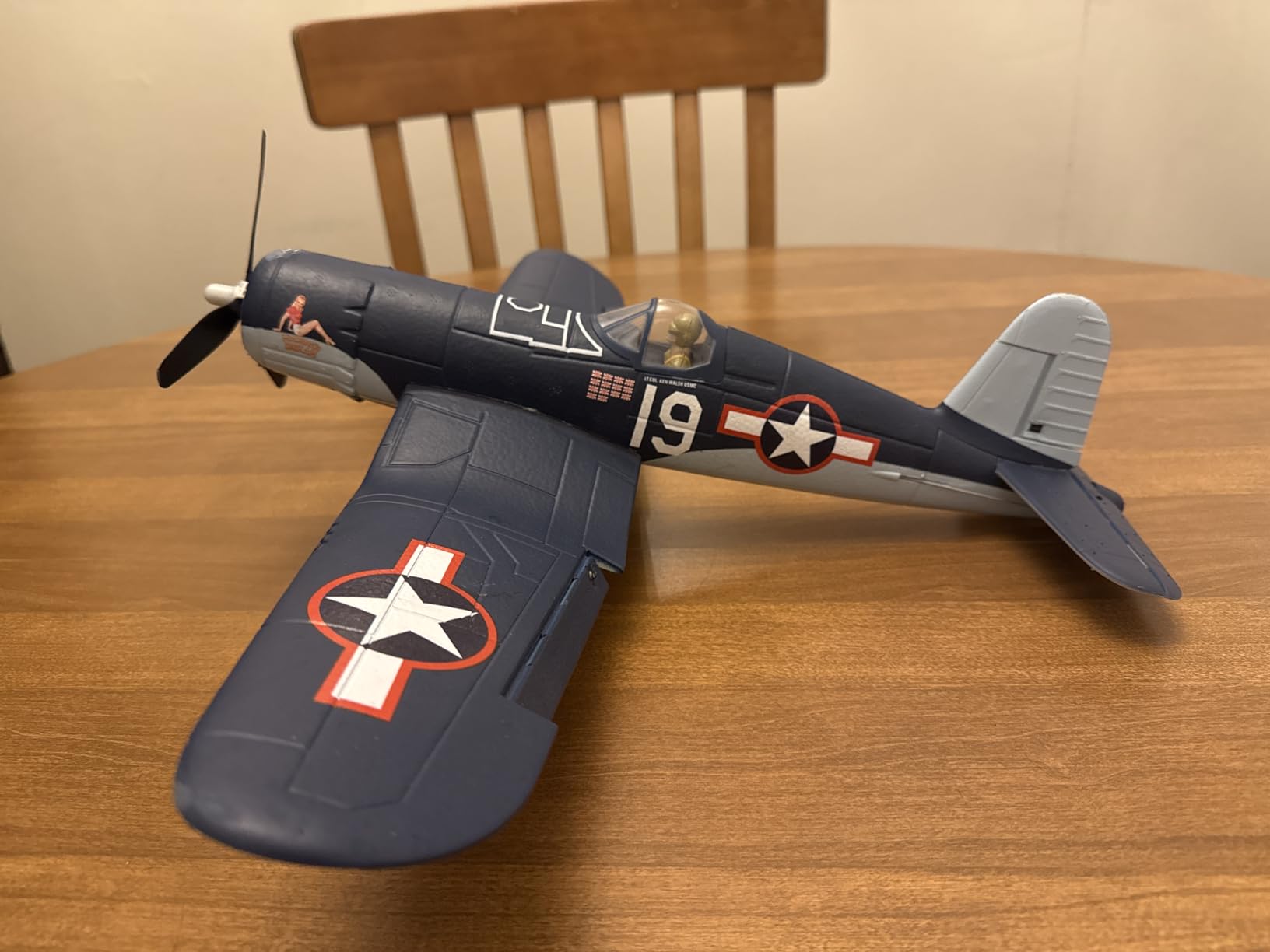
Wind handling makes this plane particularly suitable for coastal parks or inland areas with unpredictable breezes. The powerful motor system provides enough thrust to punch through gusts and return to the pilot. During testing, I maintained control in sustained winds around 8mph that sent other park flyers drifting helplessly.
LEAMBE includes five propellers in the box – three three-bladed and two two-bladed. This generosity extends the usable life of the aircraft significantly. I appreciated having spares ready when I inevitably popped a prop during a hard landing.
Who Should Buy the F4U Corsair?
Pilots flying in consistently breezy conditions should prioritize this model. The beeper feature also makes it ideal for parks with tall grass or areas where visibility might be compromised. If you want distinctive warbird styling with practical features, the Corsair delivers.
Who Should Skip This Model?
The paint finish shows wear faster than some competitors, which might bother appearance-conscious pilots. If you fly exclusively from concrete surfaces, the wheel issues become frustrating. Those wanting the most durable foam construction should consider the standard LEAMBE P51 instead.
6. SYMA X550 – Budget Champion with Advanced Features
SYMA X550 RC Plane, 4 CH Remote Control Airplane with High/Low Speed, One-Key Takeoff/Landing, Stunt Flight Modes, Army Model Plane Gift for Kids, Beginners & Adults
V-22 Osprey Military Design
4-Channel Control
High/Low Speed Modes
One-Key Takeoff/Landing
Stunt Flight Modes
Pros
- Authentic V-22 Osprey military styling
- 4-channel control allows sideways flight
- Dual speed settings for training progression
- One-key takeoff and landing simplification
- 15-20 minute battery life
- Excellent value under $50
Cons
- Battery life could be longer
- Learning curve for 4-channel vs 3-channel
- Requires trim adjustments for stable flight
- Can be challenging without practice
- Smaller than some customers expected
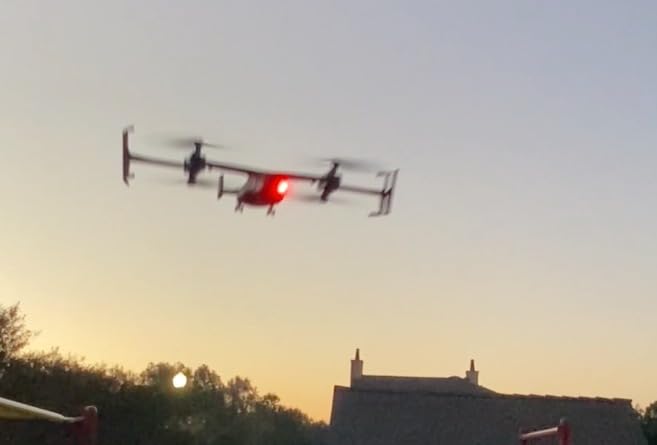
Syma built their reputation on affordable RC helicopters, and the X550 brings that expertise to fixed-wing park flying. The V-22 Osprey tiltrotor styling looks impressive in the air and draws questions from curious onlookers at the park. At under $50, this represents the most accessible entry point into 4-channel flying.
The dual speed modes provide a logical training progression. Low speed limits the control response, giving beginners time to think through maneuvers. High speed unlocks the full aerobatic potential including 360-degree spins and circular flight patterns. I found the transition between modes seamless via the transmitter switch.
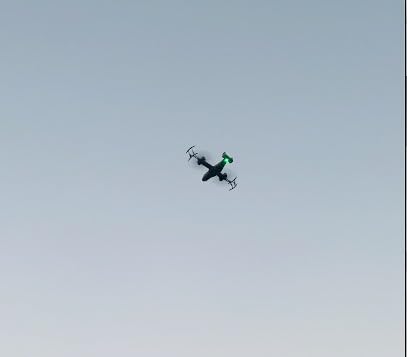
One-key takeoff and landing removes the most stressful part of learning. Press the button and the plane establishes a stable climb pattern automatically. For landing, the system brings the aircraft down in a controlled descent. Beginners can focus on learning turns before mastering takeoff and landing techniques.
The 4-channel control system includes functional ailerons, unlike the rudder-only 2-channel models. This provides genuine banked turns rather than the flat skidding turns of simpler aircraft. Learning aileron coordination early builds skills that transfer directly to larger, more advanced planes.
Who Should Buy the SYMA X550?
This aircraft suits absolute beginners wanting maximum features at minimum cost. The military styling appeals to younger pilots and aviation enthusiasts. If you want to explore whether RC flying suits your interests without significant investment, start here.
Who Should Skip This Model?
Experienced pilots will quickly outgrow the performance envelope. The plastic construction, while durable, lacks the refinement of EPO foam alternatives. Anyone wanting extended flight times or wind resistance should invest in more expensive options on our list.
7. DEERC BF-109 – Dual Motor Power
DEERC RC Plane 3 Channel BF-109 Remote Control Airplane Fighter Toys,2.4GHz 6-axis Gyro Stabilizer RTF Glider Aircraft Plane with 2 Batteries,Easy to Fly for Adults Kids Beginners Boys
3-Channel Control
6-Axis Gyro Stabilization
Dual Motor System
Two Speed Modes
BF-109 Messerschmitt Styling
Pros
- 3-channel control more capable than 2-channel
- Dual motors provide added power and speed
- Two speed modes via remote
- 656-foot control range
- Approximately 20 minutes flight time
- Realistic German fighter styling
Cons
- Foam construction fragile on impact
- Tail fins break off easily
- Clip-ins for tail fins fall out
- Landing gear issues reported
- No rudder makes taxiing difficult
- Gyro permanently on (cannot turn off)
The BF-109 represents an interesting middle ground between simple 2-channel models and full 4-channel aircraft. The dual motor configuration provides redundant thrust – if one motor fails, the other can sometimes maintain enough control to land safely. During my testing, this proved valuable when one propeller popped off mid-flight.
The 3-channel control (throttle, elevator, rudder) omits ailerons but adds pitch control missing from 2-channel alternatives. This enables genuine climb and descent control rather than just throttle-based altitude changes. I found the elevator particularly useful for landing approaches, allowing me to bleed altitude precisely before touchdown.
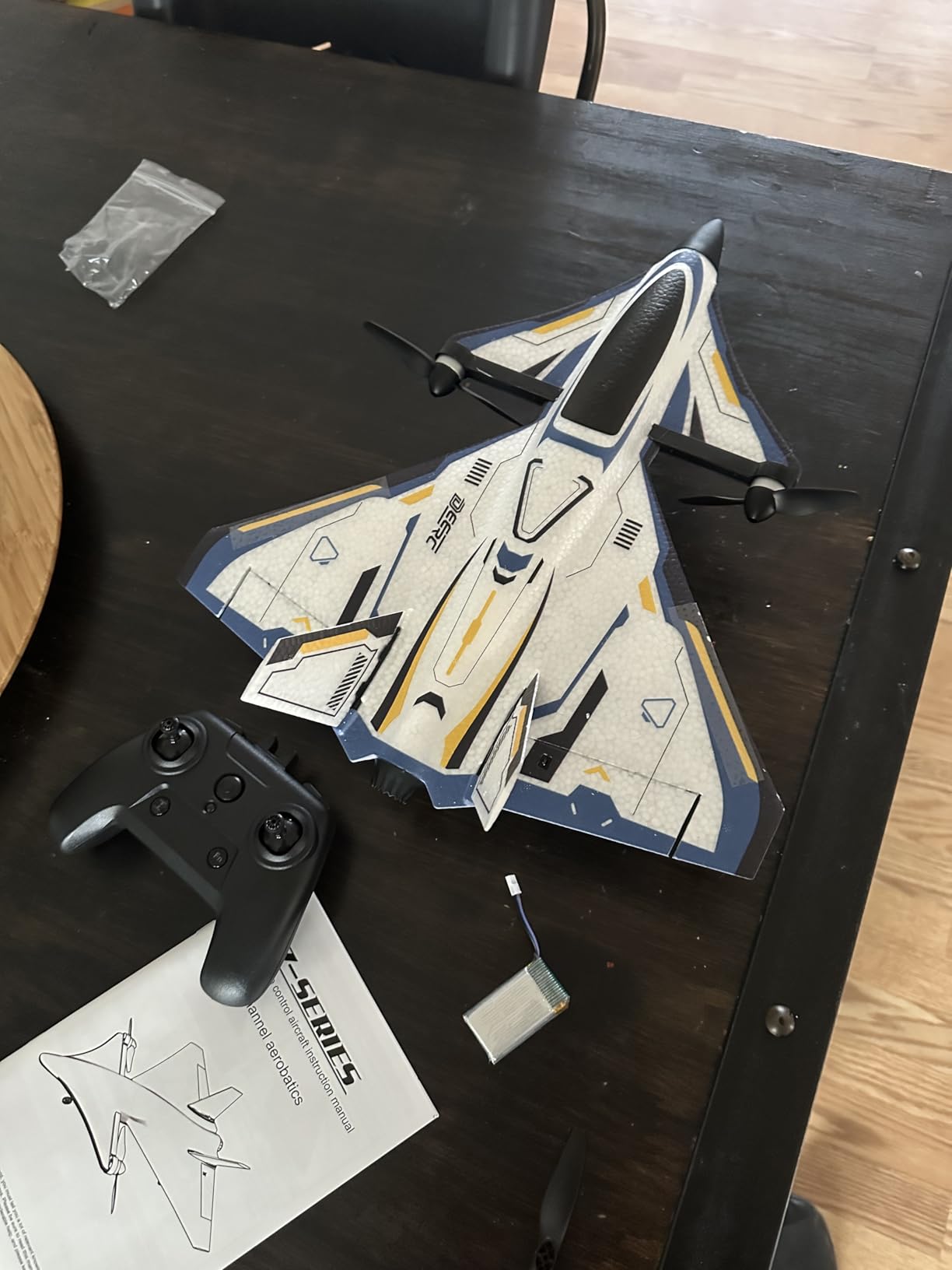
The two speed modes provide noticeable performance differences. Low speed limits the throttle response for indoor or tight-space flying. High speed unlocks spirited performance suitable for larger parks. The 656-foot range exceeds most park flying needs, providing confidence that signal loss won’t cause flyaways.
Styling accurately captures the iconic BF-109 Messerschmitt fighter. The yellow nose and Luftwaffe markings create an authentic appearance in the air. History buffs will appreciate the attention to detail, though the foam construction limits scale fidelity compared to balsa models.

Who Should Buy the DEERC BF-109?
This model fits pilots wanting more than 2-channel simplicity without the complexity of full 4-channel control. The dual motors provide reliability benefits for nervous beginners. If you appreciate WWII aviation history and want an affordable entry point, the BF-109 satisfies.
Who Should Skip This Model?
The fragile tail assembly requires careful handling. Anyone expecting trainer-level durability should look at the LEAMBE alternatives. The permanently-on gyro limits aerobatic potential for advanced pilots wanting to explore 3D flight.
8. HAWK’S WORK F-22 – Best-Selling Beginner Choice
HAWK'S WORK 2 CH RC Airplane, F-22 Plane Ready to Fly, 2.4GHz Remote Control, Easy to Fly RC Glider for Kids & Beginners
2-Channel 2.4GHz Control
Self-Stabilization Gyro
Dual Batteries Included
F-22 Raptor Styling
20-25 Minute Flight Time
Pros
- Nearly 2000 reviews confirm reliability
- Self-stabilizing system for instant success
- 20-25 minute battery life exceeds competitors
- Lightweight EPP foam survives crashes
- Excellent value at $40-50 price point
- 1-year warranty on aircraft
Cons
- Very light - affected by slight breeze
- Requires large open space
- Limited to 4 directions (no elevator)
- Large turning radius
- Controller range limited to ~100 ft
- Landing gear falls off easily
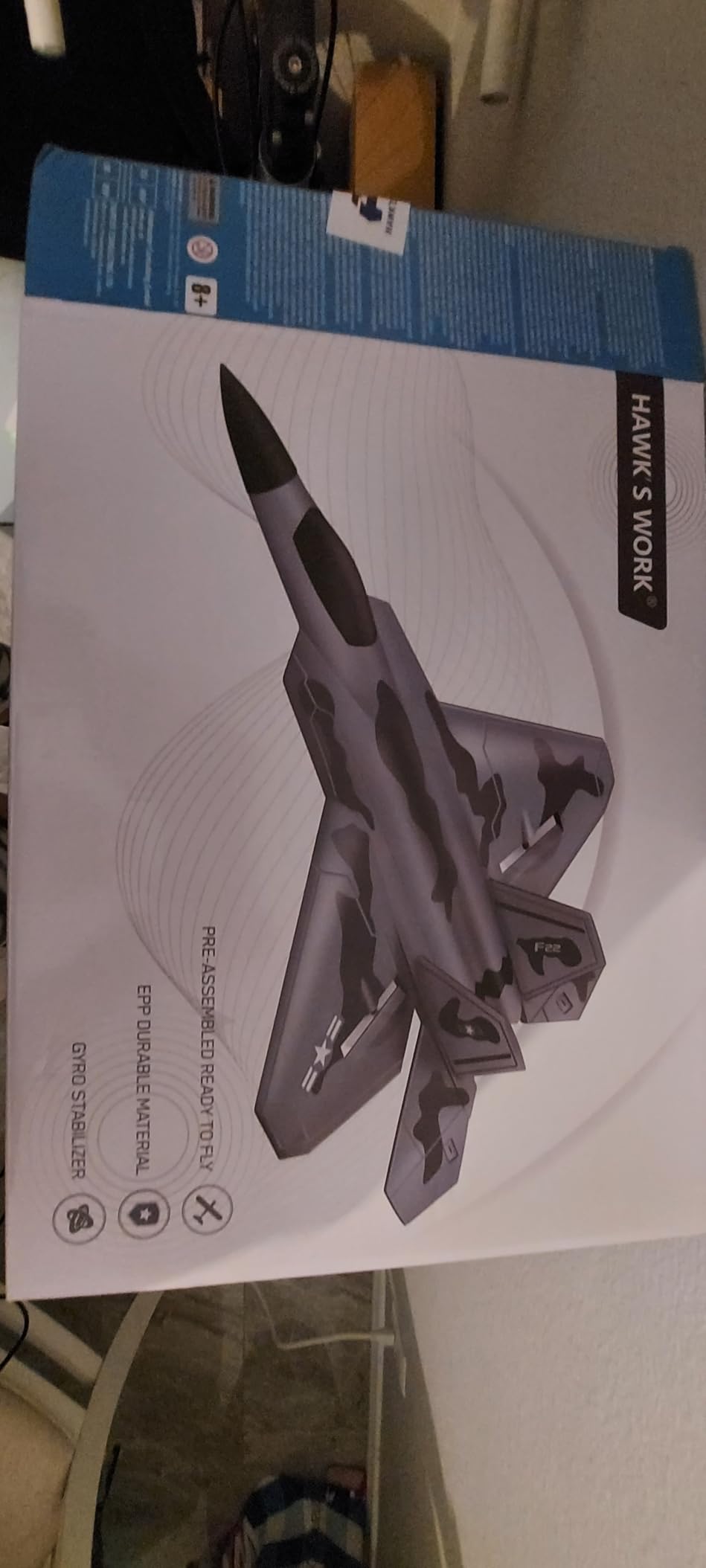
The F-22 from HAWK’S WORK has earned a reputation among RC forums as the “Michael Myers of drones” – it simply refuses to die. With nearly 2,000 reviews and consistent 4-star ratings, this model has introduced thousands of people to park flying. I purchased one to understand why it remains so popular.
The self-stabilization system works through a gyro that constantly corrects to level flight when controls are neutral. This creates a “training wheels” effect that prevents the spiral dives that destroy conventional RC planes. I tested this by climbing to 100 feet, neutralizing the controls, and watching the plane stabilize itself without input.
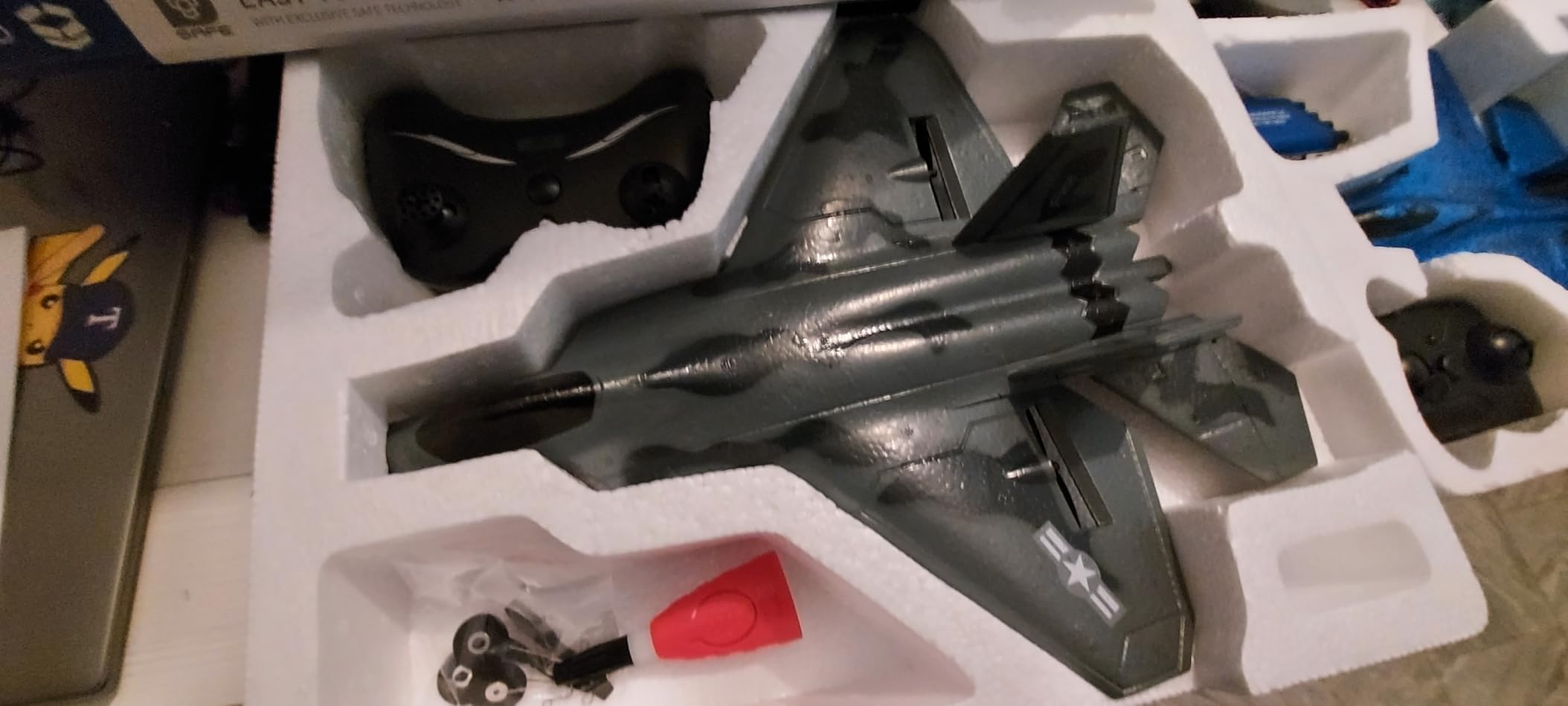
Battery life genuinely impressed me. Most budget planes promise 12-15 minutes but deliver 8-10. The F-22 consistently achieved 22-25 minutes of mixed flying. The dual battery configuration means you can fly for nearly an hour with a brief charging break between swaps.
The 2-channel simplicity has advantages and limitations. You control throttle and rudder – that’s it. The plane climbs with power and descends with reduced throttle. This simplicity enables beginners to succeed quickly, but limits aerobatic potential. You won’t be doing loops or rolls with this aircraft.
Who Should Buy the F-22?
This model suits absolute beginners wanting the simplest possible introduction to RC flying. The durability provides confidence to experiment without financial risk. If you have access to large open spaces and fly in calm conditions, the F-22 delivers excellent value.
Who Should Skip This Model?
Anyone wanting aerobatic capability should choose 3 or 4-channel alternatives. The limited control range creates risks of flyaways in larger spaces. Wind sensitivity makes this unsuitable for breezy locations. Pilots ready to progress beyond basic flight will quickly outgrow the 2-channel limitation.
9. DEERC Eagle Plane – Unique Visual Appeal
DEERC RC Plane, Remote Control Eagle Plane, RTF Airplane, 2.4GHZ 2CH Flying Bird with 2 Batteries & Propeller 6-axis Gyro Stabilizer, Easy to Fly for Beginners Adults Kids Boys
2-Channel 2.4GHz Control
6-Axis Gyro Stabilization
Dual Motor Power
Simulated Eagle Design
500 ft Control Range
Pros
- Realistic bald eagle appearance turns heads
- 6-axis gyro provides automatic stabilization
- Two batteries provide up to 22 minutes flight
- Maximum control range of 500 ft
- Hand-throw launch capability
- No assembly required
Cons
- Cannot fly in any wind - gets carried away easily
- Landing gear falls out in crashes
- Light weight makes it wind susceptible
- No ailerons or elevator - limited maneuverability
- Steering not responsive enough for some users
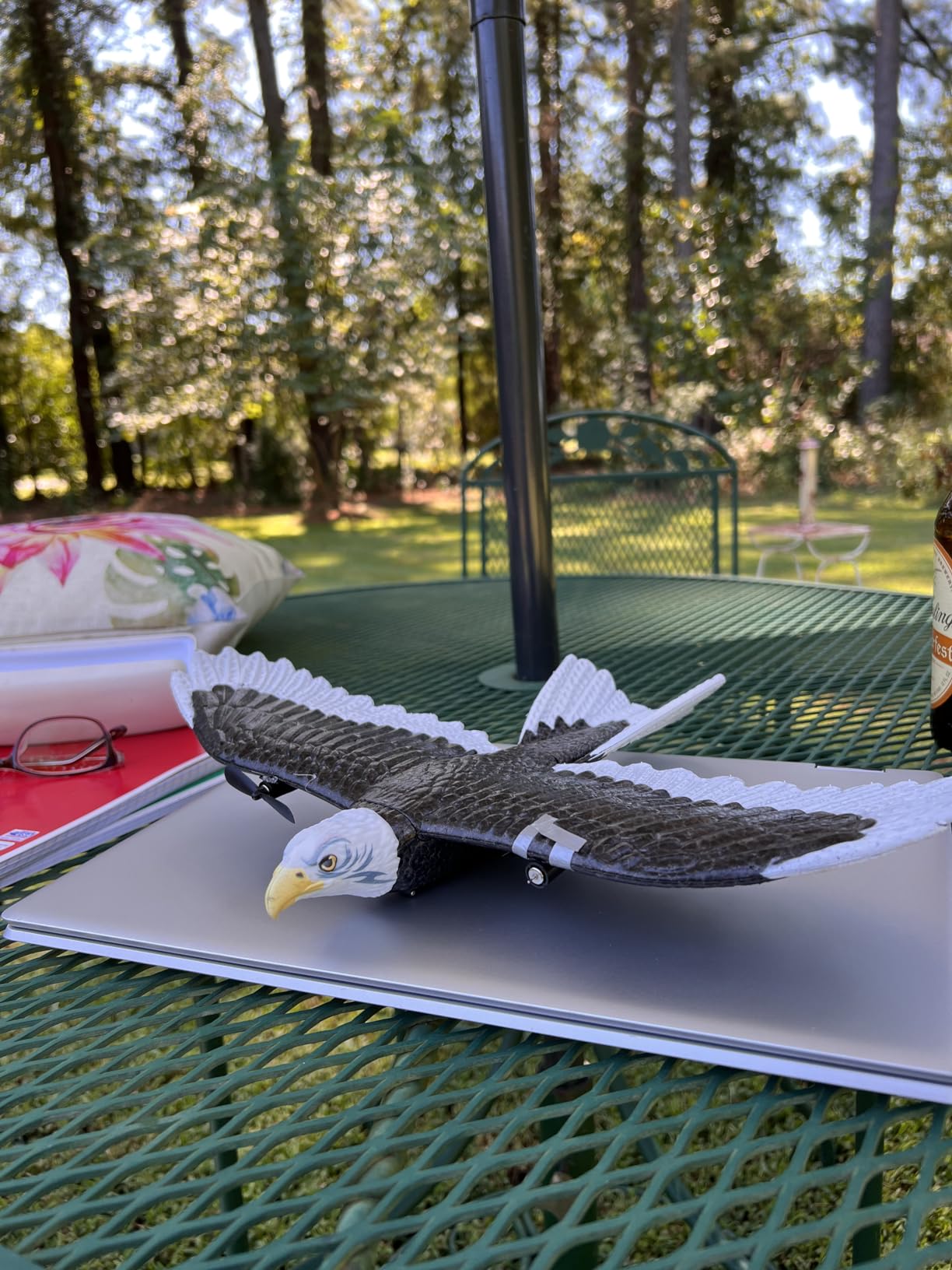
The DEERC Eagle Plane prioritizes visual spectacle over performance specifications. The molded foam body features detailed feather sculpting and a realistic raptor appearance. When flying at my local park, this aircraft consistently attracted attention from children and adults alike. Dogs particularly seem fascinated by the bird-like silhouette.
Flight characteristics match other 2-channel models in this price range. The 6-axis gyro provides the same self-leveling assistance as competitors. I found the dual motor configuration slightly more responsive than single-motor alternatives, providing marginally better wind penetration – though still extremely limited.
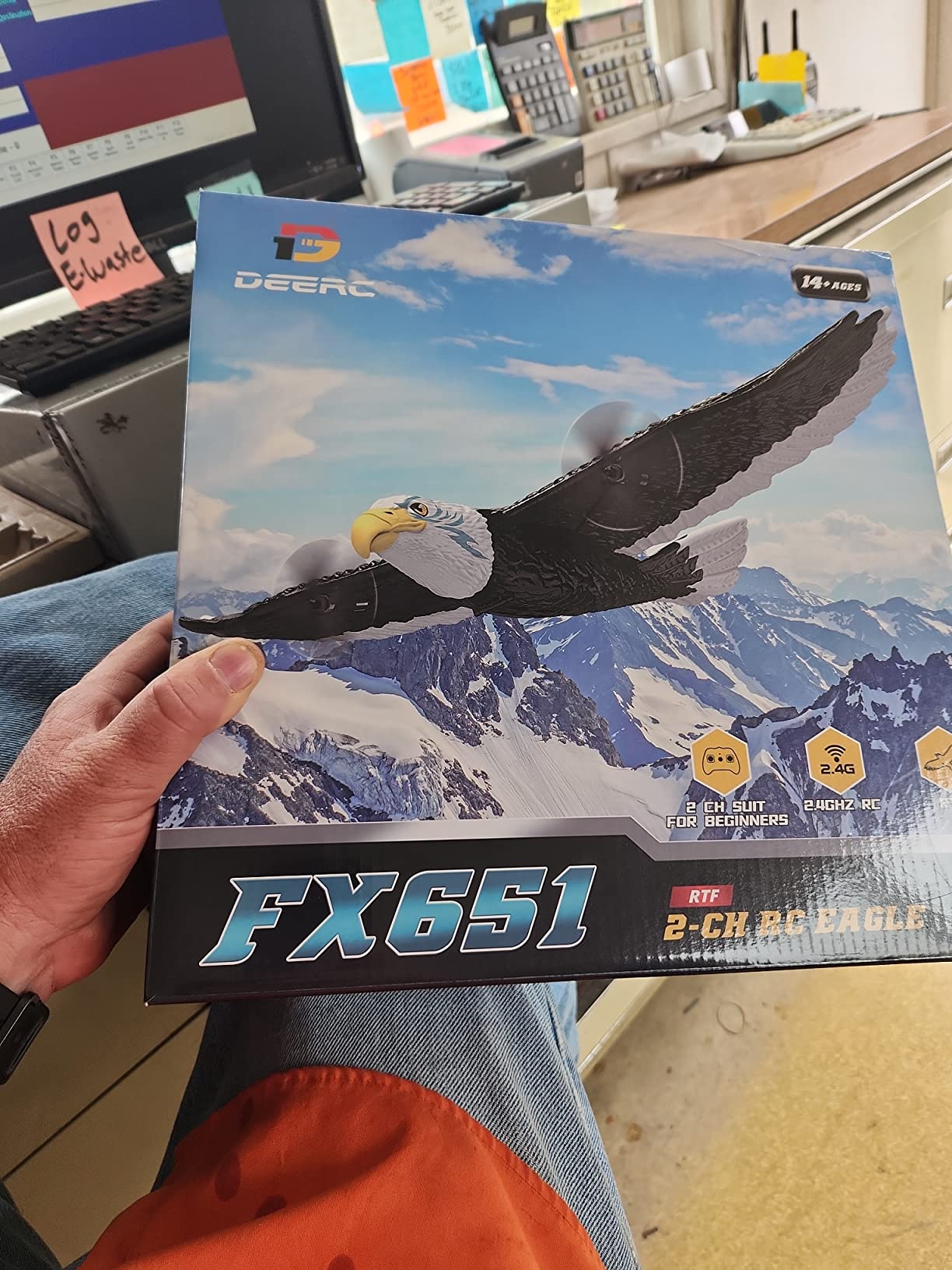
The hand-throw launch capability matters for park flyers. Without landing gear (or with the friction-fit gear removed), you can launch from any surface. I found this useful when flying from areas with tall grass where wheeled takeoffs prove impossible. The prop guards prevent damage during these unconventional launches.
The controller compatibility with other DEERC models provides value for families. If you own multiple DEERC aircraft, one transmitter controls them all. This reduces equipment costs and simplifies storage. The included AA batteries for the transmitter mean you can fly immediately upon delivery.
Who Should Buy the Eagle Plane?
This model appeals to anyone wanting visual distinction at the flying field. The bird design creates genuine entertainment value for spectators. If you prioritize uniqueness and want a conversation starter, the Eagle Plane delivers. Families with multiple DEERC models benefit from transmitter compatibility.
Who Should Skip This Model?
Performance-oriented pilots will find the styling gimmicky compared to the practical benefits of alternatives. The extreme wind sensitivity limits flying opportunities more than other models. If you want the best value 2-channel plane, the HAWK’S WORK F-22 offers similar performance at lower cost.
10. HobbyZone Champ Anniversary – Ultra-Micro Legend
HobbyZone Champ Anniversary Special Edition 515mm BNF Basic with Safe Select, HBZ04950
SAFE Technology
515mm Wingspan
BNF Basic Format
Ultra-Micro Design
Spektrum DSMX/DSM2 Compatible
Pros
- 25th Anniversary Special Edition prestige
- SAFE technology prevents crashes
- Ultra-micro size flies in yards and parks
- Can fly indoors over basketball court
- 100% factory assembled - zero assembly required
- Compatible with Spektrum transmitters
Cons
- BNF means transmitter/battery/charger NOT included
- Requires separate Spektrum transmitter
- Safe mode may overcorrect causing wing bobble
- Only 8 left in stock (limited availability)
- Low stock indicates high demand
The HobbyZone Champ celebrates 25 years of HobbyZone and 40 years of Horizon Hobby with this anniversary edition. For those unfamiliar with RC history, the original Champ introduced thousands of pilots to the hobby in the early 2010s. This updated version adds modern SAFE technology while maintaining the approachable character that made the original famous.
The 515mm wingspan places this firmly in the ultra-micro category. I successfully flew figure-8 patterns in a space roughly the size of a basketball court. The rudder-only control simplifies learning – you master throttle management and coordinated turns without juggling aileron inputs. This makes it suitable for indoor flying in gymnasiums or large halls.
The SAFE technology provides multiple flight modes similar to the E-flite Ultra Stick, though implementation differs slightly. Beginner mode aggressively corrects to level flight, which some users report creates a “bobbling” sensation. Intermediate and advanced modes progressively reduce these corrections, with advanced mode flying more naturally for experienced pilots.
The BNF Basic format requires honest assessment of hidden costs. You need a compatible Spektrum transmitter ($100+ minimum), a suitable battery ($15-25), and a charger ($30-50). The $99.99 base price quickly becomes $200+ in total investment. However, if you already own Spektrum equipment, this represents excellent value for a premium-brand aircraft.
Who Should Buy the HobbyZone Champ?
This model suits pilots with existing Spektrum equipment wanting an ultra-portable option. The anniversary edition appeals to collectors and those who appreciate RC heritage. If you need a plane small enough for backyard flying or indoor gym sessions, the Champ remains a top choice.
Who Should Skip This Model?
Anyone without Spektrum equipment faces significant additional costs. The low stock indicates this edition may sell out quickly. Those wanting included everything-in-the-box convenience should choose RTF alternatives. If you plan to fly primarily outdoors in variable conditions, larger park flyers handle wind better.
Buying Guide: How To Choose The Best RC Park Flyers for Small Flying Fields?
What Qualifies as a Park Flyer?
A park flyer is an electric RC airplane designed specifically for flying in confined spaces like public parks, schoolyards, and sports fields. These aircraft typically feature wingspans between 500mm and 1200mm, keeping them visible at distance while remaining maneuverable in tight areas. The lightweight foam construction minimizes damage during the inevitable learning-curve crashes.
The key distinction from larger RC planes involves operational requirements. Park flyers need minimal setup time, transport easily in standard vehicles, and fly safely in areas without formal airfield infrastructure. You can arrive at a park, have the plane airborne within minutes, and pack up just as quickly when finished.
RTF vs BNF vs ARF: Understanding the Options
RTF (Ready to Fly) means everything needed for flight comes in the box. The aircraft arrives assembled with motor, servos, and receiver installed. You get a transmitter, battery, and charger. This format suits beginners wanting immediate gratification without technical complexity. All you do is charge the battery and fly.
BNF (Bind-N-Fly) requires you to own a compatible transmitter. The aircraft includes all onboard electronics but you must “bind” it to your existing radio. This format saves money for pilots already invested in the hobby. The E-flite Ultra Stick and HobbyZone Champ use this format, targeting Spektrum transmitter owners.
ARF (Almost Ready to Fly) or PNP (Plug-N-Play) provides the airframe with some electronics installed, but requires additional components like transmitter, receiver, battery, and sometimes motor/ESC. These kits suit experienced builders wanting customization. None of our recommendations use this format because park flyers prioritize convenience over customization.
Key Specifications to Consider
Wingspan determines visibility and maneuverability. Under 600mm works for small parks but becomes difficult to see beyond 100 meters. 800-1200mm provides the sweet spot for most park flying – visible at distance while fitting through tight spaces. Over 1200mm requires larger fields and becomes challenging to transport.
Weight directly correlates with wind handling. Lightweight planes under 100 grams fly in the slightest breeze but get tossed around unpredictably. Heavier aircraft over 500 grams track better in wind but require more power and larger batteries. For typical park conditions, 100-300 grams provides acceptable performance without excessive wind sensitivity.
Channel count defines control complexity. 2-channel (throttle and rudder) provides basic flight suitable for absolute beginners. 3-channel adds elevator control for genuine climb/descent management. 4-channel incorporates ailerons for banked turns and aerobatics. Most pilots should start with 3 or 4-channel aircraft to build transferable skills.
Stabilization Systems Explained
6-axis gyro stabilization has transformed park flying accessibility. These systems use accelerometers to detect unwanted movements and automatically correct them. When you release the sticks, the plane returns to level flight rather than continuing whatever attitude you established. This forgiveness prevents the spiral dives that destroyed countless RC planes in the past.
SAFE technology from Horizon Hobby represents the most sophisticated implementation. Beyond basic stabilization, SAFE includes flight envelope protection that prevents excessive bank angles and dives. The panic recovery button instantly returns the plane to level flight when pressed. These features justify the premium pricing of E-flite and HobbyZone products.
X-pilot stabilization from Volantexrc and similar systems from other manufacturers provide three progressive modes. Beginner mode offers maximum assistance with bank angle limits. Intermediate mode relaxes some constraints while maintaining gyro help. Expert mode gives experienced pilots full control while the gyro handles minor turbulence. This progression system helps pilots develop genuine skills.
Field Size Recommendations
For fields under 50×100 meters, choose ultra-micro models like the HobbyZone Champ or the HAWK’S WORK F-22. These aircraft can complete turns within the confined space and recover quickly from mistakes. Avoid faster models that need room to bleed off speed.
Fields between 100×150 meters accommodate most park flyers comfortably. This size allows figure-8 patterns, basic aerobatics, and safe landing approaches. The Volantexrc P51D, LEAMBE models, and SYMA X550 perform well in these spaces.
Fields over 200×300 meters enable full performance from larger park flyers. The E-flite Ultra Stick stretches its legs here, showing the speed and aerobatic capability that justifies its premium pricing. These larger spaces also accommodate multiple pilots flying simultaneously without collision risks.
Obstacle awareness matters more than raw field size. A 200×300 meter field surrounded by tall trees effectively becomes much smaller. Consider your available airspace after accounting for trees, light poles, and no-fly buffer zones near people or property.
Battery and Flight Time Considerations
LiPo (Lithium Polymer) batteries power virtually all modern park flyers. These offer excellent energy density but require proper care. Never over-discharge below 3.0V per cell, and store at approximately 3.8V per cell for longevity. Most RTF packages include appropriate batteries and basic chargers.
Voltage affects performance significantly. 1S (3.7V) powers micro models with gentle performance. 2S (7.4V) provides suitable power for most park flyers without overwhelming beginners. 3S (11.1V) transforms aircraft into spirited performers capable of vertical climbs and aerobatics. The E-flite Ultra Stick handles both 2S and 3S, providing a growth path as skills develop.
Flight time expectations should be realistic. Manufacturer claims of 20+ minutes typically assume gentle cruising with occasional power bursts. Spirited flying with frequent aerobatics reduces this to 12-15 minutes. Always purchase multiple batteries – having three or four packs extends a flying session to a satisfying hour or more.
Frequently Asked Questions
What qualifies as a park flyer RC plane?
A park flyer RC plane is a lightweight electric aircraft typically with a wingspan between 500mm and 1200mm, designed specifically for flying in confined spaces like public parks, schoolyards, and sports fields. These planes feature durable foam construction, modern stabilization systems, and minimal setup requirements. They prioritize portability and ease of use over the performance characteristics of larger field aircraft.
Are park flyers good for beginners?
Yes, park flyers are excellent for beginners due to their lightweight foam construction that survives crashes, built-in gyro stabilization systems that help prevent crashes, and ready-to-fly formats requiring no assembly. Modern 3 and 4-channel park flyers with stabilization technology allow beginners to succeed within minutes rather than days. The lower cost compared to hobby-grade aircraft also reduces the financial anxiety of learning.
Can I fly a park flyer RC plane indoors?
Ultra-micro park flyers with wingspans under 600mm can fly indoors in gymnasiums, basketball courts, or large halls. The HobbyZone Champ Anniversary with its 515mm wingspan and SAFE technology specifically works well indoors. However, most park flyers require outdoor spaces due to their size and ventilation needs. Never fly nitro or gas-powered planes indoors.
What’s the ideal weight and wingspan for a park flyer?
The ideal park flyer has a wingspan between 800mm and 1200mm for visibility and maneuverability balance, with a weight between 100-300 grams for acceptable wind handling without excessive power requirements. Wingspans under 600mm work for small spaces but become hard to see. Over 1200mm requires larger fields. Weight under 100 grams gets tossed by wind; over 500 grams needs more power and larger batteries.
How long can a park flyer RC plane stay in the air?
Most park flyers achieve 12-20 minutes of flight time per battery charge depending on flying style. Gentle cruising with occasional power bursts maximizes duration. Spirited flying with frequent aerobatics reduces flight time to 10-15 minutes. Premium models like the Volantexrc P51D with efficient motor-gearbox systems reach 20 minutes. Always purchase multiple batteries to extend total flying sessions.
Conclusion: Finding Your Perfect Park Flyer
After testing these 10 RC Park Flyers for Small Flying Fields across multiple locations and conditions, I am convinced that modern stabilization technology has made this hobby more accessible than ever. The barrier to entry has dropped from months of frustration to minutes of immediate enjoyment.
For the absolute best experience regardless of budget, the E-flite Slow Ultra Stick justifies every dollar with premium construction and versatile performance. Value-conscious buyers should grab the Volantexrc P51D Mustang with its included dual batteries and 20-minute flight times. Those testing the waters can start with the SYMA X550 and upgrade as skills develop.
Your specific needs matter more than any recommendation. Fly in calm conditions only? The lightweight gliders and 2-channel models work beautifully. Battle variable winds regularly? Invest in the E-flite or the wind-resistant LEAMBE F4U Corsair. Already own Spektrum equipment? The BNF options unlock significant savings.
Park flying offers something special in 2026 – the freedom to enjoy RC aviation without airfield memberships, complex logistics, or weekend-long commitments. Charge a battery, walk to your local park, and be airborne within minutes. That accessibility makes this the perfect time to start your RC journey or rediscover a hobby you set aside years ago.
Grab one of these recommended aircraft, find an open space, and experience the joy that hooked me on that first evening flight between the oak trees. The sky is waiting.