I have spent the better part of a decade stacking reverb pedals on pedalboards, swapping them in and out of signal chains, and listening closely to how each one transforms a guitar tone. A great reverb pedal does more than just add space. It breathes life into your sound, fills gaps in a mix, and can completely change the emotional character of a performance.
Whether you play ambient soundscapes, surf rock, post-rock, or just want a tasteful room sound for your bedroom practice rig, finding the right reverb pedal matters. The market in 2026 is packed with options ranging from budget-friendly mini pedals under $50 to premium stereo machines that cost as much as a decent amplifier.
Our team tested 10 of the most popular reverb pedals side by side, running them through the same amp, the same guitar, and the same signal chain. We evaluated sound quality, versatility, ease of use, build quality, and value for money. This guide covers everything from the best overall picks to the best budget options, plus a buying guide to help you choose the right one for your needs.
If you are searching for the best reverb pedals available right now, you are in the right place. Let us break down what makes each of these pedals worth your attention.
Table of Contents
Top 3 Picks for Best Reverb Pedals

10 Best Reverb Pedals in 2026
| Product | Specifications | Action |
|---|---|---|
| BOSS RV-6 Reverb Pedal |
|
Check Latest Price |
| TC Electronic Hall of Fame 2 |
|
Check Latest Price |
 JHS Pedals 3 Series Reverb JHS Pedals 3 Series Reverb |
|
Check Latest Price |
 Strymon Cloudburst Ambient Reverb Strymon Cloudburst Ambient Reverb |
|
Check Latest Price |
 Walrus Audio Slo Multi Texture Reverb Walrus Audio Slo Multi Texture Reverb |
|
Check Latest Price |
 EHX Holy Grail Nano Reverb EHX Holy Grail Nano Reverb |
|
Check Latest Price |
 Donner Verb Square Digital Reverb Donner Verb Square Digital Reverb |
|
Check Latest Price |
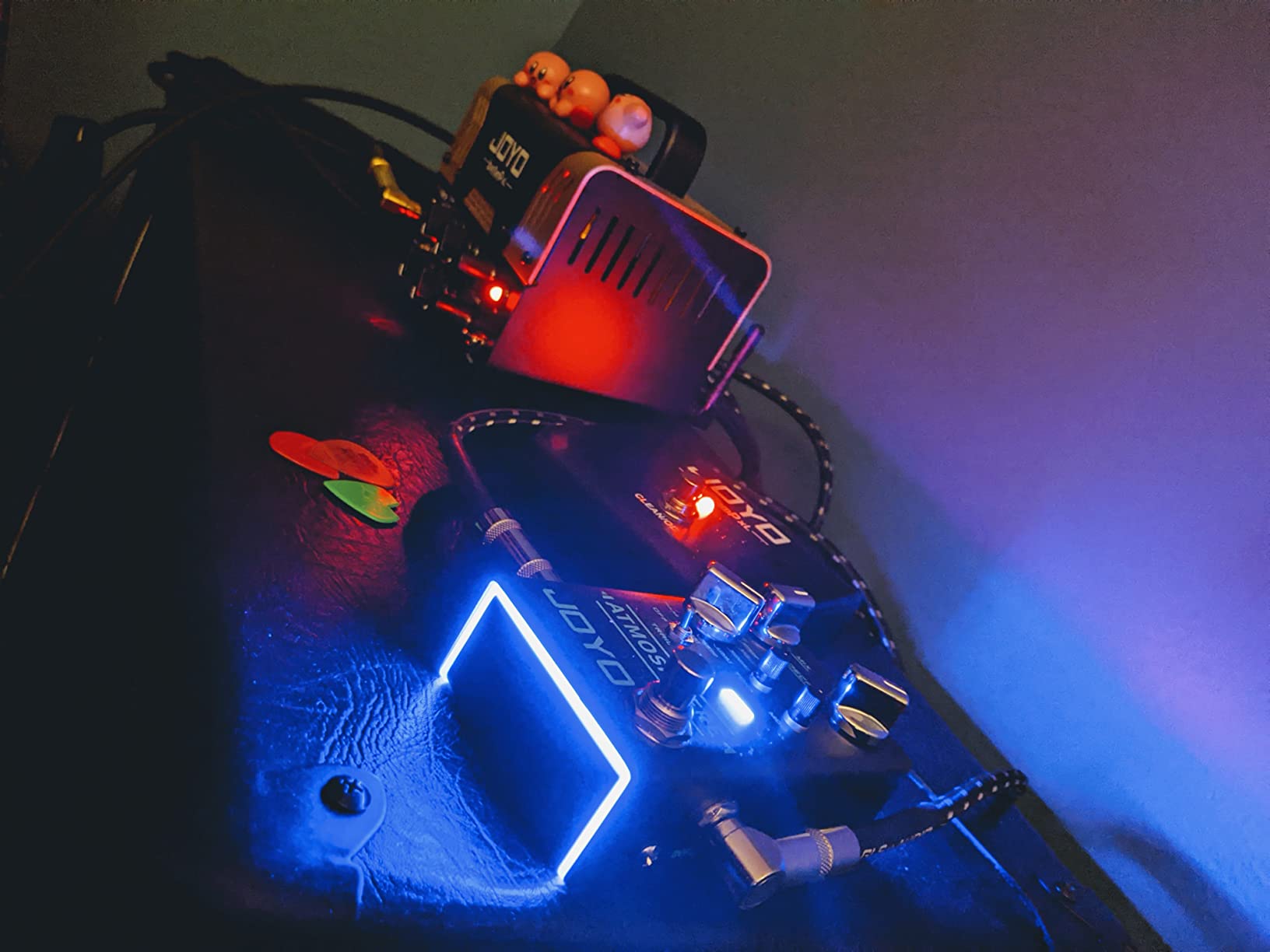
 JOYO Atmosphere R-14 Reverb JOYO Atmosphere R-14 Reverb |
|
Check Latest Price |
 MXR M300 Reverb Pedal MXR M300 Reverb Pedal |
|
Check Latest Price |
 EQD Dispatch Master V3 Delay and Reverb EQD Dispatch Master V3 Delay and Reverb |
|
Check Latest Price |
1. BOSS RV-6 Reverb Pedal – Eight Modes in One Compact Box
BOSS RV-6 Reverb Guitar Pedal
8 reverb modes
Stereo operation
Expression pedal input
9V powered
450g
Pros
- Studio-grade algorithms
- Eight diverse reverb effects
- Stereo operation
- Expression pedal input
- Compact Boss enclosure
Cons
- Limited to 9V power only
The BOSS RV-6 is the pedal I keep coming back to. After testing dozens of reverb pedals over the years, this one sits on my main board more often than any other. The reason is simple: it does everything well without ever feeling complicated.
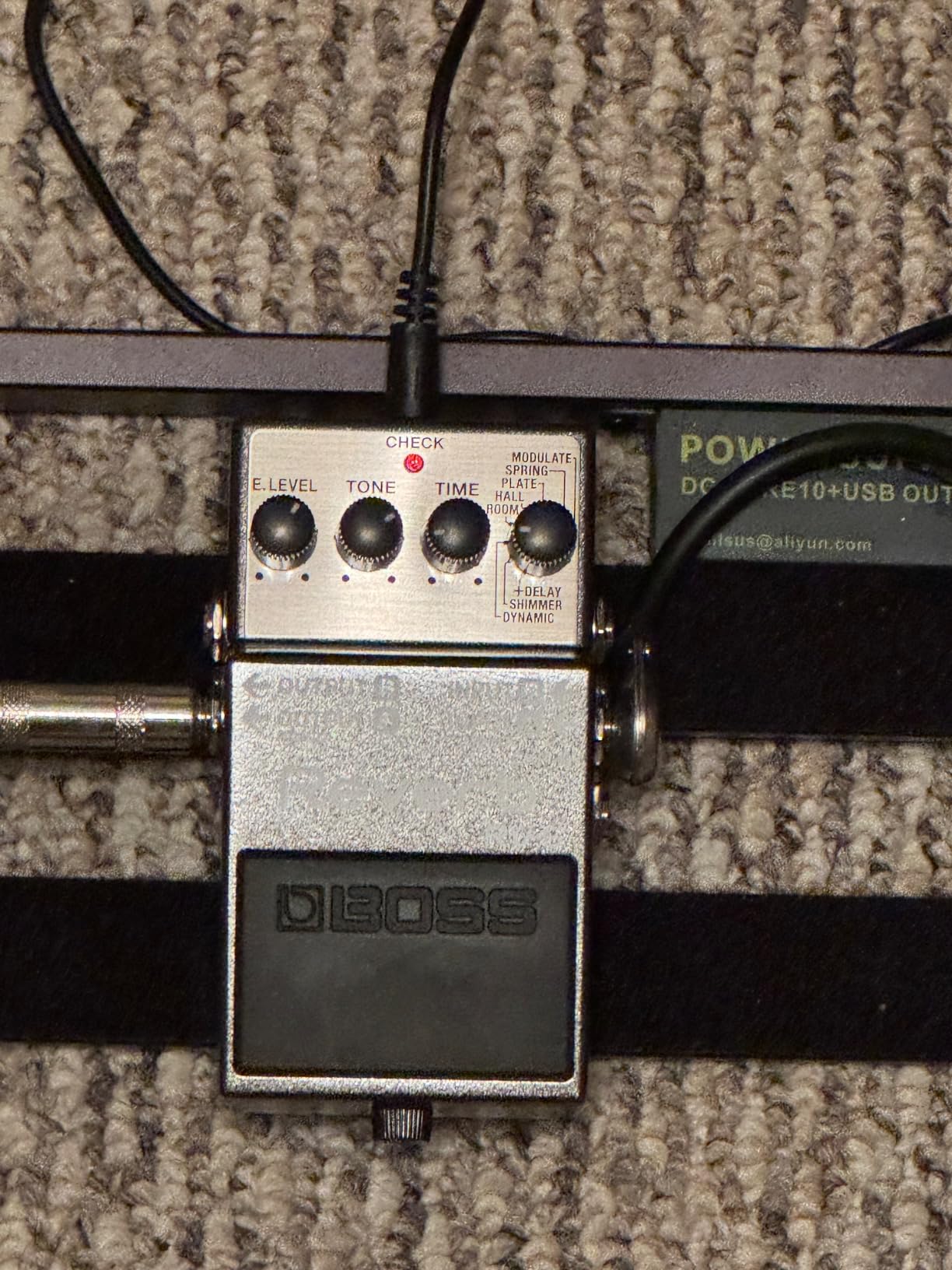
You get eight reverb modes packed into the classic compact BOSS enclosure. The lineup includes Room, Hall, Plate, Spring, Modulated, Shimmer, Dynamic, and Delay plus Reverb. Each mode sounds polished and usable right out of the box. There is no menu diving, no complicated setup, just four knobs and a mode selector.
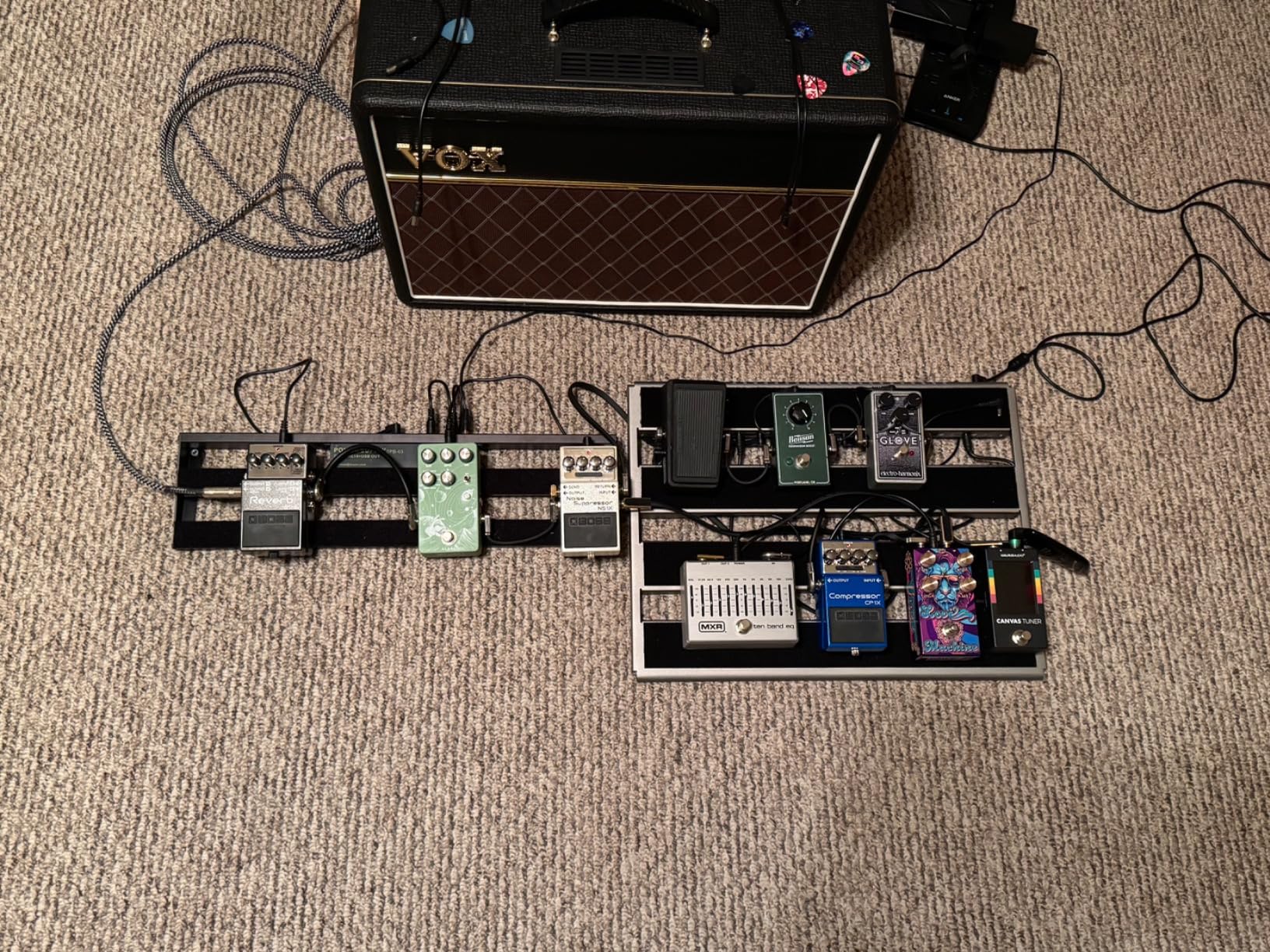
What surprised me most during testing was the Shimmer mode. BOSS absolutely nailed the pitch-shifted octave-up effect. It sounds lush and ethereal without getting harsh or metallic the way cheaper shimmer algorithms do. The Dynamic mode is another standout. It ducks the reverb tail while you play, keeping your tone clear and cutting through the mix.
The Spring setting will not fully replace a real spring tank, but it gets surprisingly close for a digital pedal. I found it more than convincing enough for practice and small gigs. The Hall and Plate modes are studio-quality and work beautifully for recording.
Stereo operation is a huge bonus if you run two amps or use in-ear monitors. The RV-6 sounds enormous in stereo, especially with the Shimmer and Modulated modes. The expression pedal input lets you control the reverb level in real time, which is great for swells and ambient parts.
Best for Gigging Musicians and All-Round Use
If you play live regularly and need one pedal that handles every situation, this is it. The RV-6 covers everything from subtle room reverb to massive ambient washes. The tank-like BOSS build quality means it will survive years of stomping on stage.
The five-year warranty from BOSS adds extra peace of mind. At this price point, no other pedal offers this combination of sound quality, versatility, and reliability.
Signal Chain Placement Tips
I recommend placing the RV-6 after your distortion and modulation pedals for the most natural sound. If you want more experimental textures, try running it in your effects loop instead of in front of the amp.
For stereo rigs, use both outputs into two separate amps. The stereo imaging on the Shimmer and Modulated modes is genuinely impressive and adds a whole new dimension to your sound.
2. TC Electronic Hall of Fame 2 – Best Value Reverb Pedal
TC Electronic Hall of Fame 2 Reverb Pedal
MASH footswitch
TonePrint technology
Stereo in and out
True bypass
9V powered
Pros
- MASH footswitch for expressive control
- TonePrint custom presets
- Stereo connectivity
- True bypass
- Analog-dry-through
Cons
- Limited power options
The TC Electronic Hall of Fame 2 punches well above its weight. I was genuinely impressed by how much this pedal offers for the price. The original Hall of Fame was already a community favorite on Reddit, and the second version improves on it in every way.
The standout feature is the MASH footswitch. It acts like a pressure-sensitive expression pedal built into the stomp switch. You can hold it down to swell the reverb, control the decay, or tweak any parameter you assign to it. This opens up ambient swells and dynamic textures that usually require a separate expression pedal.
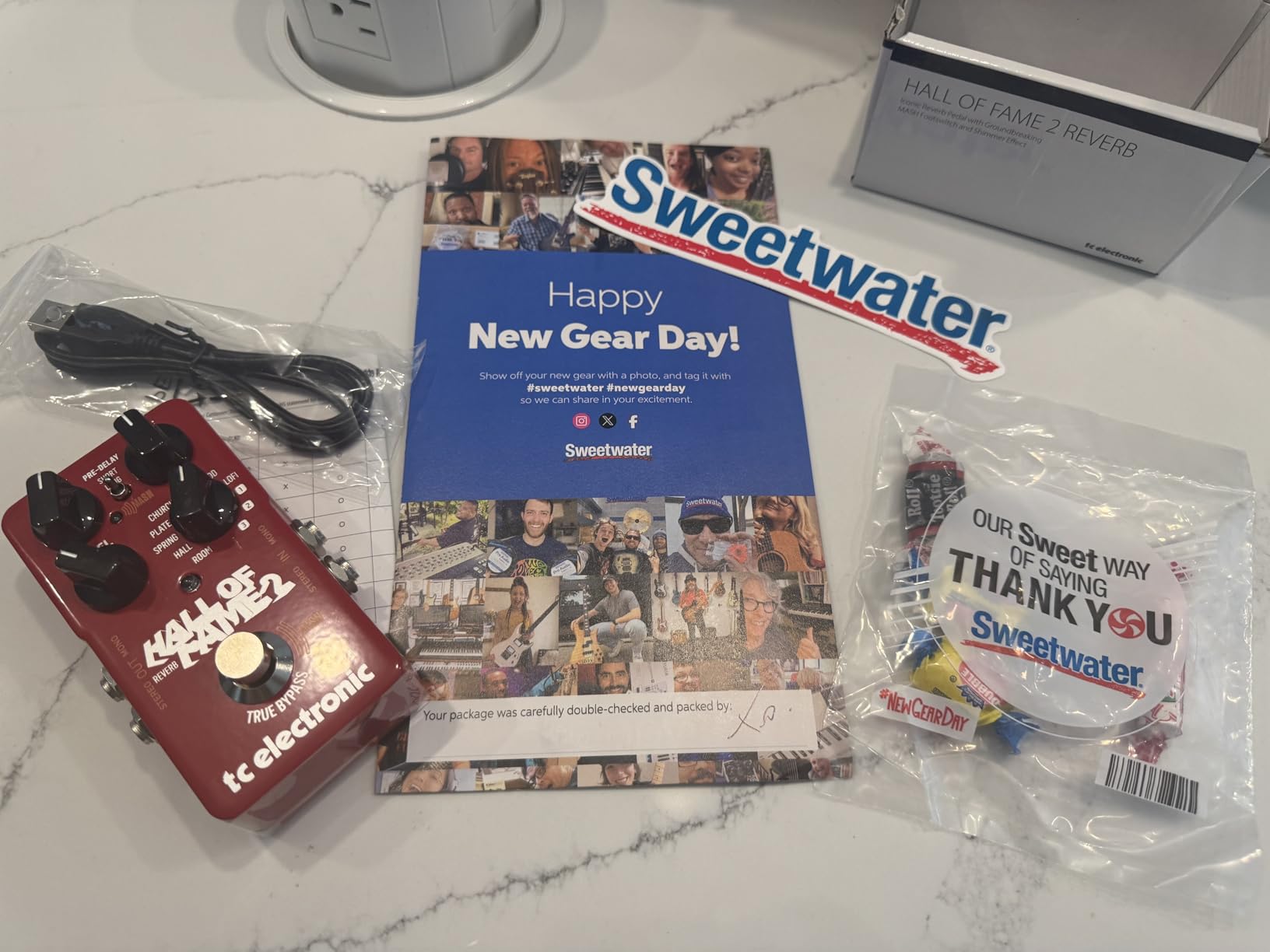
TonePrint technology is where this pedal really shines. You can beam custom presets created by professional guitarists directly into the pedal using the free TC Electronic app. There are hundreds of TonePrints available, each designed by a different artist. This effectively gives you a library of professionally tuned reverb sounds at your fingertips.
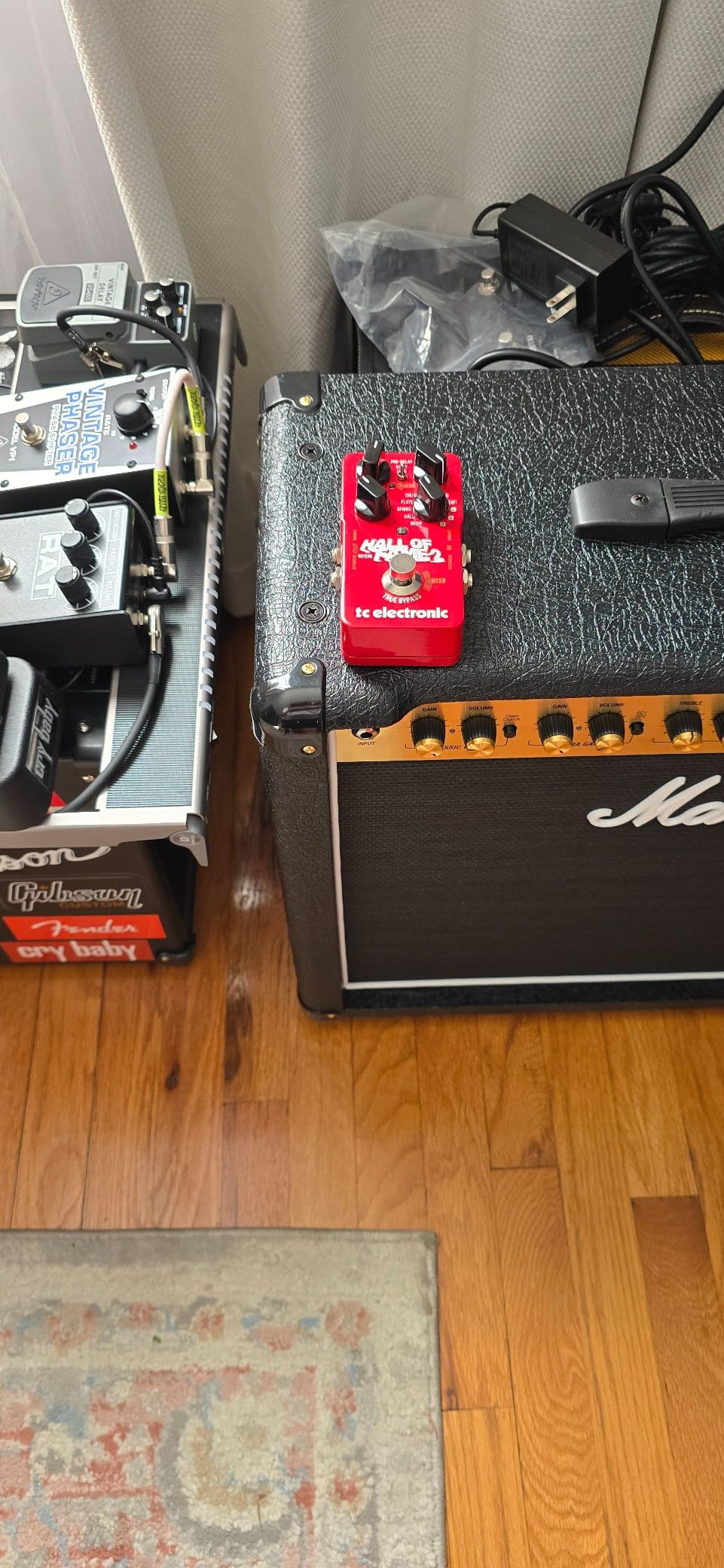
The built-in reverb types cover all the essentials: Spring, Hall, Plate, Modulated, Shimmer, and Ambient. Each one sounds clean and defined. I found the Hall setting particularly beautiful, with a natural decay that never sounds artificial.
The shimmer effect added in version 2 is excellent. It has a dreamy, ethereal quality that works beautifully for ambient passages and post-rock swells. True bypass means zero tone coloring when the pedal is off, and analog-dry-through keeps your core signal pristine.
Best for Players Who Want Endless Customization
If you are the type of guitarist who loves experimenting with different sounds, the TonePrint ecosystem makes this pedal nearly limitless. You can switch between artist presets in seconds and find tones you would never dial in manually.
The three-year warranty is solid for this price range. Stereo inputs and outputs make it flexible enough for any rig configuration.
How Does MASH Compare to Expression Pedals?
The MASH switch is not a full replacement for a dedicated expression pedal, but it handles most tasks well. For ambient swells and decay manipulation, it works beautifully and saves pedalboard space.
If you already own an expression pedal, you can still connect it via the expression input for finer control. Having both options available makes this one of the most flexible reverb pedals in its price range.
3. Donner Verb Square – Best Budget Reverb Pedal
Donner Reverb Guitar Pedal, Verb Square Digital Reverb 7 Modes Room, Hall, Church, Spring, Plate, Studio, Mod, True Bypass
7 reverb modes
True bypass
Aluminum alloy chassis
Mini size
9V DC powered
Pros
- Incredible value for money
- 7 versatile reverb modes
- Sturdy metal construction
- Compact pedalboard size
- True bypass preserves tone
Cons
- Spring setting lacks authentic rattle
- Max decay is short
- Mode knob feels mushy
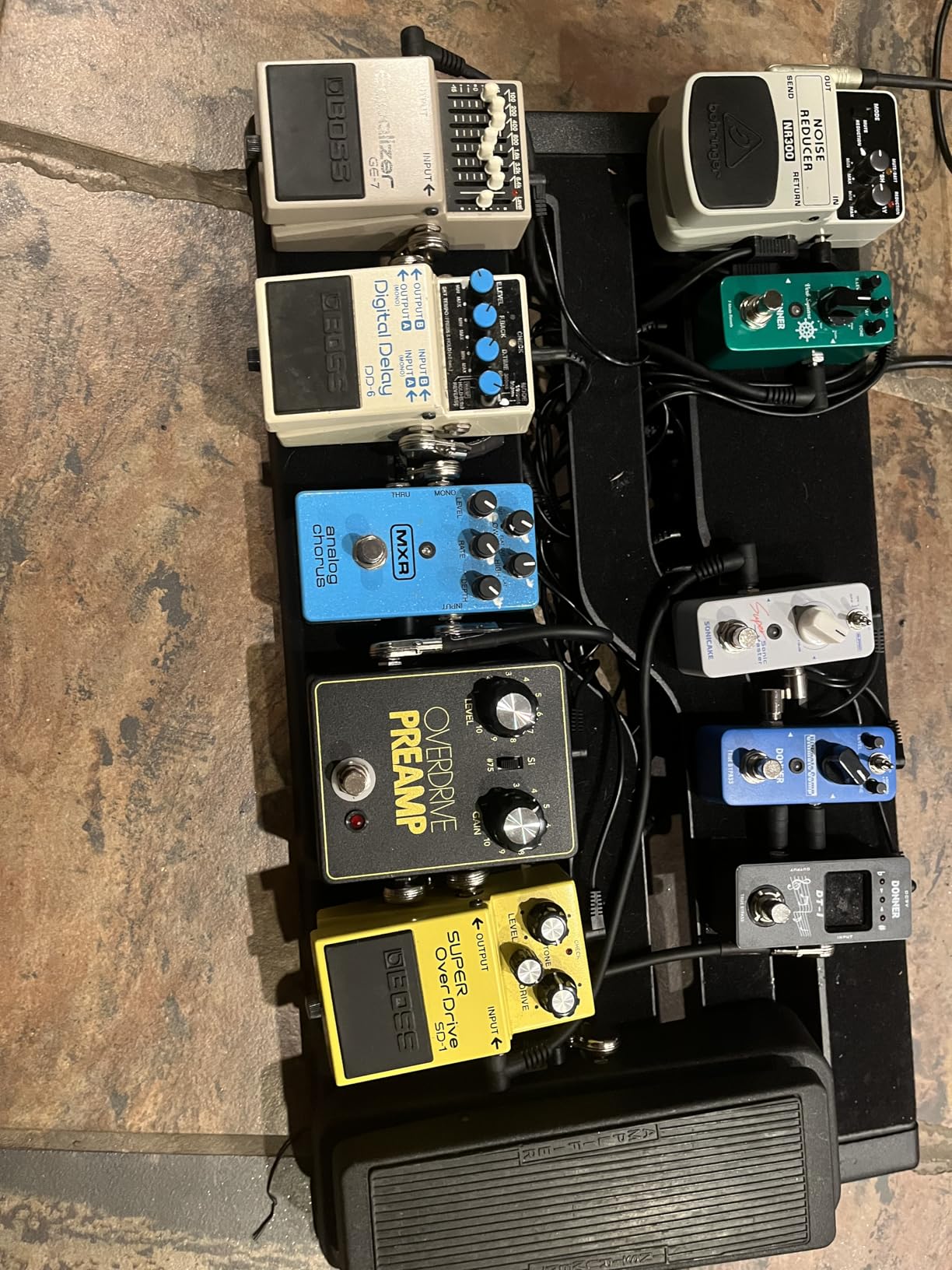
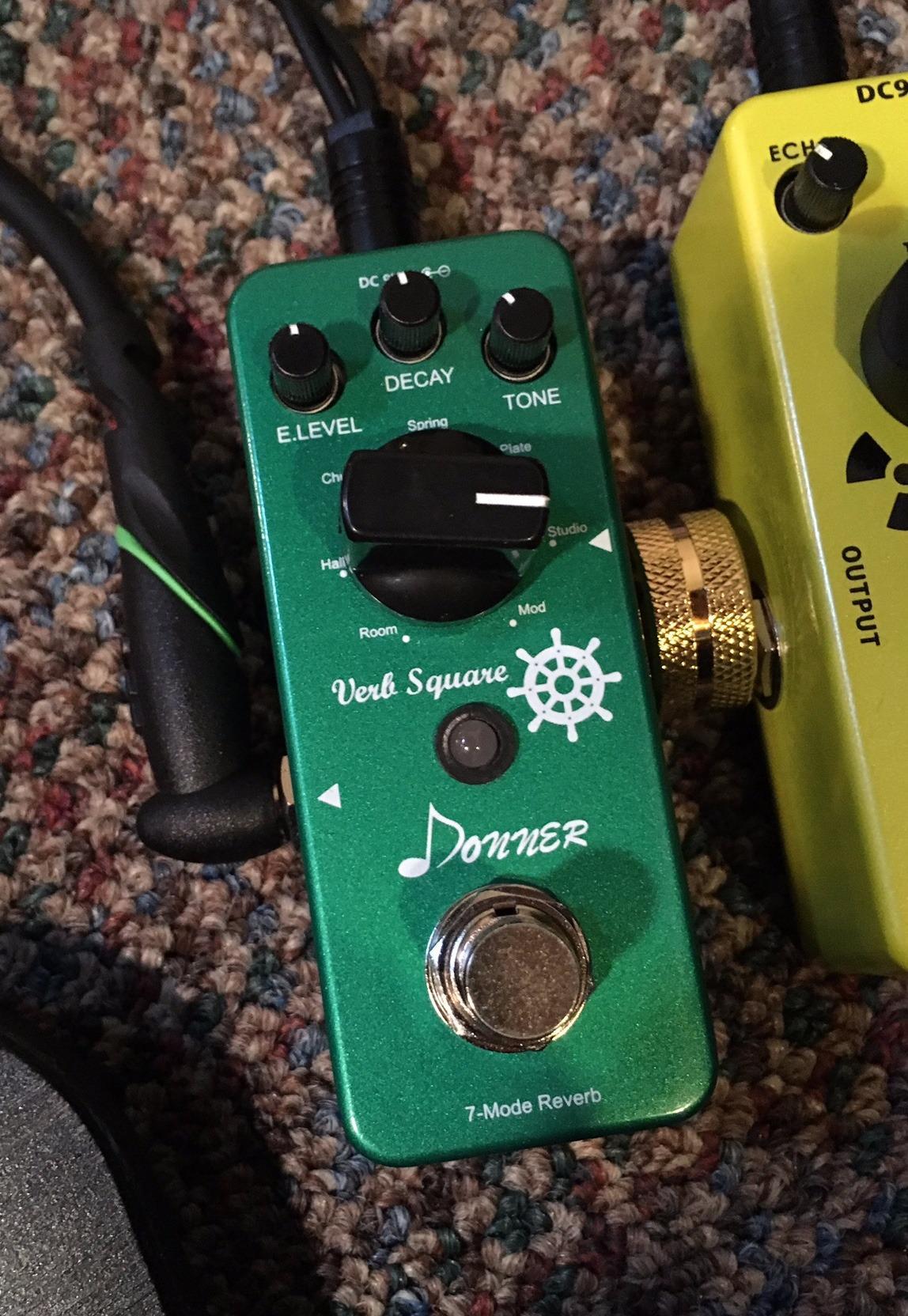
The Donner Verb Square is the pedal I recommend to every beginner who asks me where to start. For the price, you get seven reverb modes in a solid aluminum enclosure that takes up almost no pedalboard space. It is the number one bestseller in its category on Amazon, and that popularity is well deserved.
The seven modes include Room, Hall, Church, Spring, Plate, Studio, and Mod. That is an impressive lineup for a pedal at this price. During testing, I found the Hall and Church settings to be the strongest. They deliver a rich, spacious sound that works well for everything from clean passages to distorted leads.
The Plate mode is surprisingly good for a budget pedal. It has a nice metallic character that sits well in a band mix. Studio mode offers a subtle, natural reverb that is perfect for players who just want to add a touch of space without overwhelming their core tone.
Now, let me be honest about the limitations. The Spring setting does not have the authentic drip and rattle of a real spring tank. The maximum decay time is shorter than what you get from premium pedals. And the Mod mode provides only a subtle effect. But at this price, these are reasonable compromises.
The build quality is better than I expected. The aluminum alloy chassis feels solid and durable. True bypass ensures your tone stays clean when the pedal is disengaged. The mini footprint means it fits on even the most crowded pedalboard.
Best for Beginners and Bedroom Players
If you are just starting out and want to explore different reverb types without spending a fortune, this is the perfect entry point. You get seven modes to experiment with, and the sound quality is good enough for practice and home recording.
It also works well as a backup pedal for gigging musicians who need something cheap and reliable as a spare.
Will It Hold Up to Regular Use?
The construction is solid for the price, but the footswitch and knobs are not as heavy-duty as what you get from BOSS or MXR. Treat it with reasonable care and it will serve you well.
Some users reported crackling at high volumes, so make sure your power supply is isolated. A daisy-chain power setup can introduce noise with budget pedals like this one.
4. Strymon Cloudburst – Best Ambient Reverb Pedal
Strymon Cloudburst Ambient Reverb Pedal
Stereo ambient reverb
Ensemble switch
Mod controls
Pre-delay
Tone and Mix controls
Pros
- Breathtaking ambient soundscapes
- Ensemble mode adds chorus-detecting pad
- Stereo operation
- Premium build quality
- Pre-delay for timing control
Cons
- Not Prime eligible
- Limited stock availability
- Single reverb algorithm
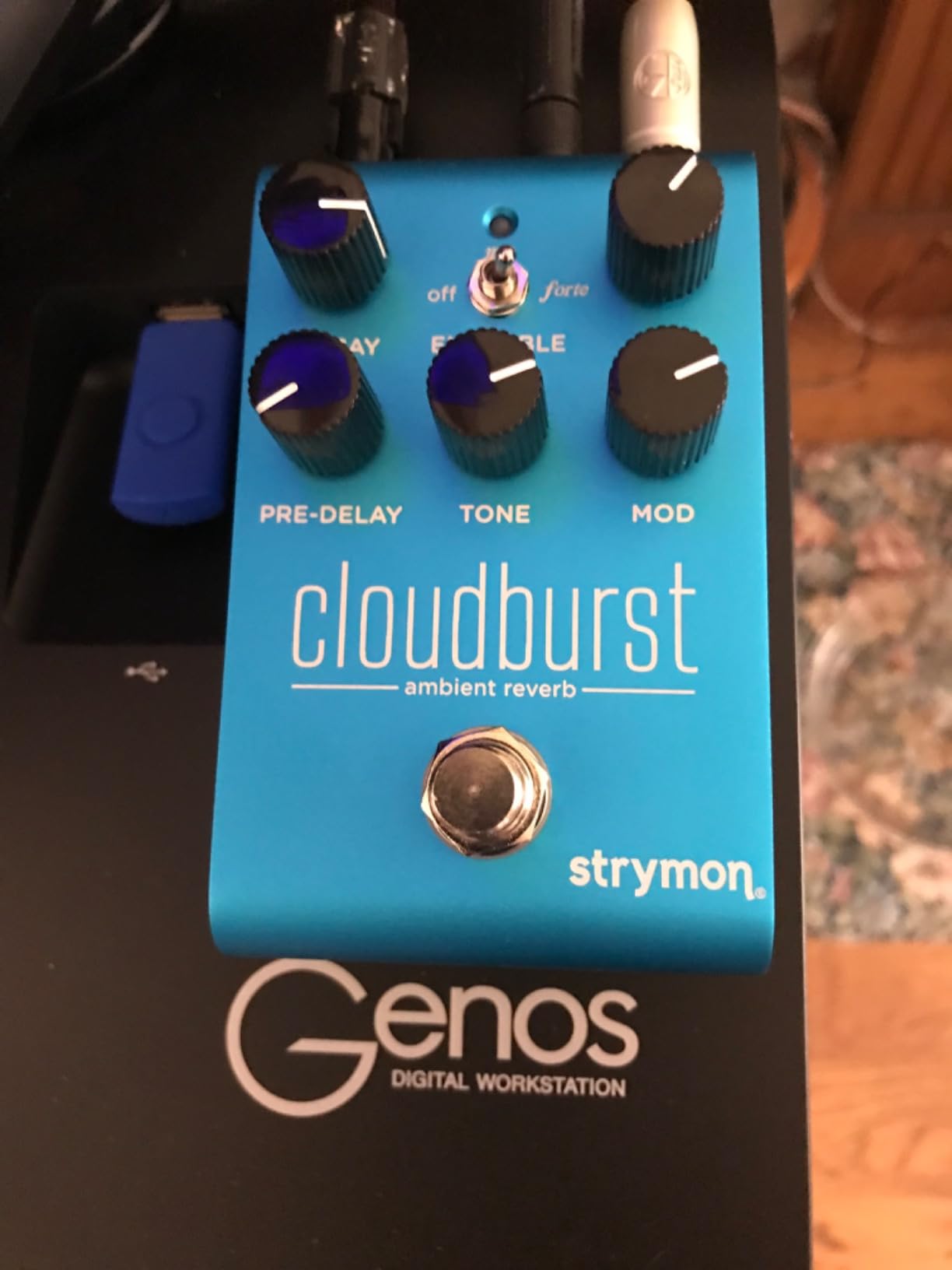
The Strymon Cloudburst is the pedal that made me stop searching for the perfect ambient reverb. Strymon is known for making some of the best reverb pedals in the world, and the Cloudburst is their focused take on studio-quality ambient reverb in a compact format.
This is not a multi-mode pedal. It does one thing, but it does that one thing better than almost anything else on the market. The core reverb algorithm is rich, smooth, and endlessly deep. It creates a wash of sound that surrounds your guitar tone without ever swallowing it completely.
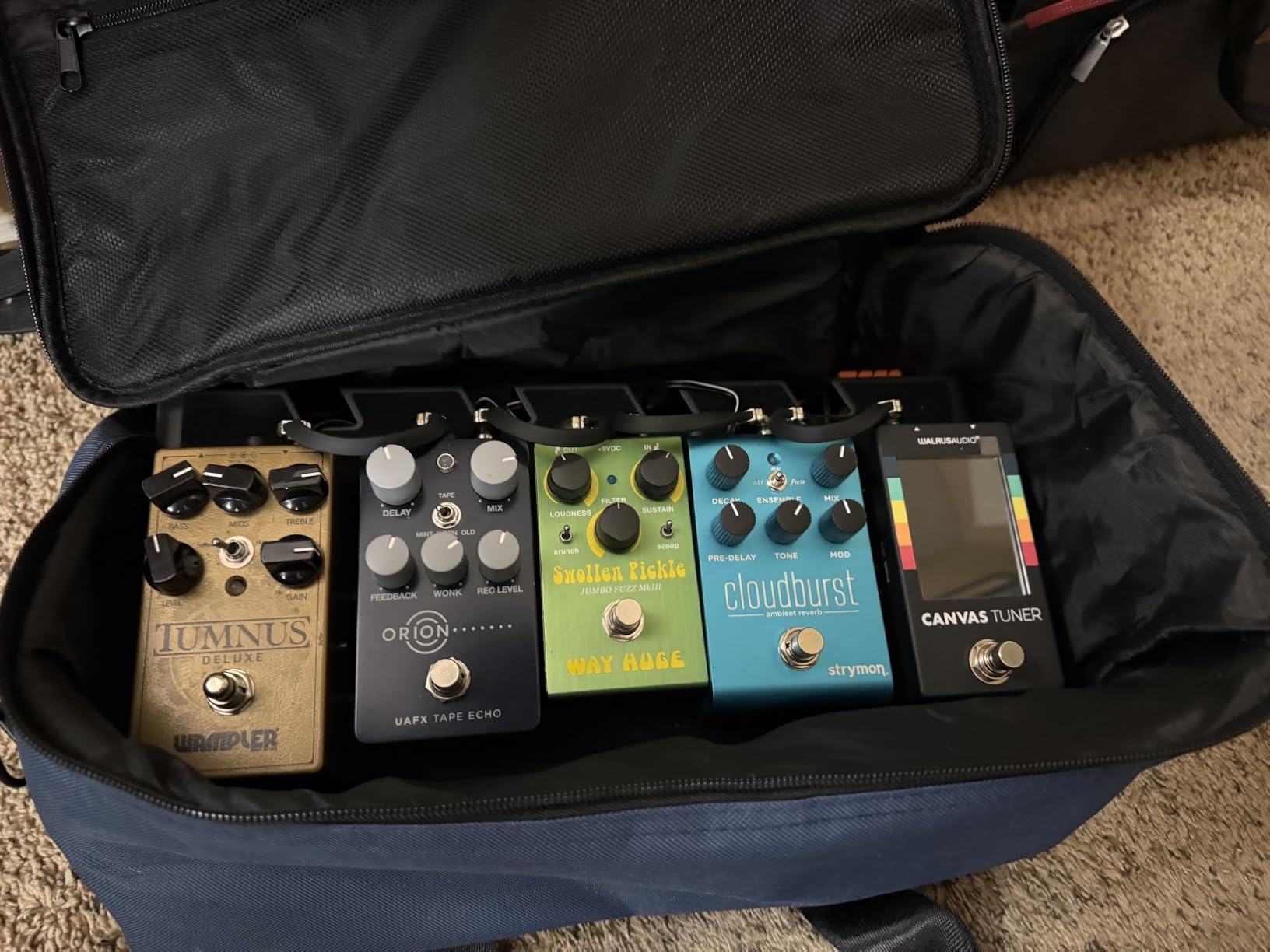
The Ensemble switch is the secret weapon here. When engaged, it adds a modulated chorus-like pad beneath your reverb tail. The pedal actually listens to your chord voicings and generates harmonies that complement what you are playing. It sounds like having a keyboard player filling out the background of your tone.
The Mod control lets you dial in subtle to pronounced modulation on the reverb tail. At lower settings, it adds gentle movement that makes the reverb feel alive. Crank it up and you get lush, swirling textures that are perfect for dream pop and shoegaze.
Pre-delay is essential for keeping your attack clear while letting the reverb bloom behind it. The Tone control shapes the brightness of the reverb, and Mix lets you blend it with your dry signal. These four controls give you everything you need without overwhelming you with options.
Best for Ambient, Post-Rock, and Cinematic Guitar
If you play atmospheric music that relies on huge, evolving soundscapes, the Cloudburst is built for you. The Ensemble mode alone justifies the price for players who want orchestral textures from a single pedal.
Strymon backs this pedal with a two-year warranty, and the build quality is exactly what you would expect from a premium brand.
Cloudburst vs BigSky: Which Should You Choose?
The BigSky gives you 12 reverb algorithms and more control options, but it costs significantly more. The Cloudburst focuses on one exceptional algorithm with the unique Ensemble feature. If ambient is your primary need, the Cloudburst delivers that specific sound beautifully.
For players who need maximum versatility across many reverb types, the BigSky or BOSS RV-6 might be a better fit. But for pure ambient bliss, the Cloudburst is hard to beat.
5. Walrus Audio Slo – Best Multi-Texture Reverb for Soundscapes
Walrus Audio Slö Multi Texture Reverb
3 modes: Dark Rise Dream
Lower octave reverb
Auto-swell
Latching pad
Limited lifetime warranty
Pros
- Three distinct modes for varied textures
- Dark mode adds lower octave for depth
- Rise mode for cinematic swells
- Dream mode with latching pad
- Lifetime warranty
Cons
- Rise mode needs hot signal
- Secondary controls can be cumbersome
The Walrus Audio Slo is one of the most creative reverb pedals I have ever played through. It does not try to be a do-it-all pedal like the RV-6. Instead, it focuses on three distinct modes that each deliver a completely different atmospheric experience.
Dark mode adds a lower octave to your reverb trail. This creates deep, wide, cinematic sounds that work beautifully for post-rock and doom-laden soundscapes. The first time I kicked this mode on during a clean passage, the room felt like it expanded in every direction.
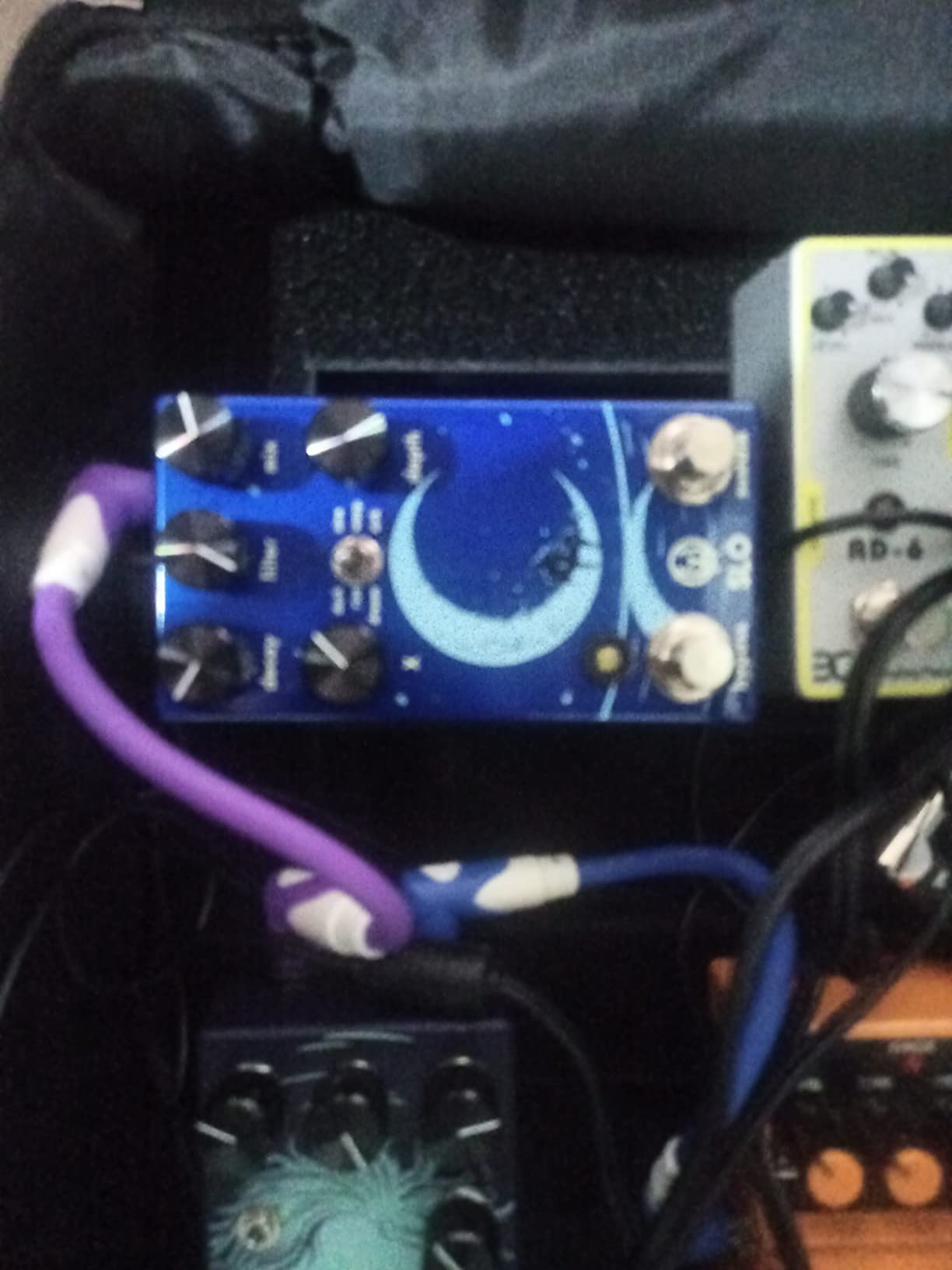
Rise mode is an auto-swell reverb that fades in after you play a note. It eliminates the attack and lets the reverb bloom gradually. This is perfect for volume-pedal-style swells without actually needing a volume pedal. Cinematic does not even begin to describe it.
Dream mode combines lush reverb with a latching pad function and vibrato. You can hold the footswitch to sustain a reverb pad indefinitely while you play over it. It feels like having a synthesizer under your guitar. The vibrato adds a beautiful wobble that makes everything sound slightly hypnotic.
The X knob changes function depending on which mode you are in. In Dark mode it controls the octave level. In Rise mode it adjusts the swell time. In Dream mode it sets the vibrato depth. This contextual control keeps the panel clean while still giving you meaningful parameters to shape.
Best for Experimental and Post-Rock Guitarists
If your playing style leans toward the atmospheric and unconventional, the Slo is your pedal. It rewards experimentation and can turn a simple chord progression into an immersive sonic landscape.
The limited lifetime warranty from Walrus Audio shows they stand behind their build quality. The Lollipop Blue finish with original artwork is also a nice visual touch.
How Does the Slo Compare to Other Ambient Pedals?
The Slo is more specialized than the BOSS RV-6 but more affordable than the Strymon Cloudburst. If you want specific, dramatic effects like octave-down reverb and auto-swell, the Slo delivers those sounds in spades.
One thing to note: Rise mode works best with a strong input signal. If your pickups are low-output, you may need to boost your signal for the swell effect to trigger reliably.
6. JHS Pedals 3 Series Reverb – American-Made Versatility
JHS Pedals 3 Series Reverb
Made in Kansas City USA
EQ control for tone
Pre-Delay knob
9V DC powered
4 year warranty
Pros
- Handmade in the USA
- Versatile from room to ambient
- EQ for bright or dark texture
- Pre-Delay for slapback to spring sounds
- 4-year warranty
Cons
- Requires 9V DC negative center power
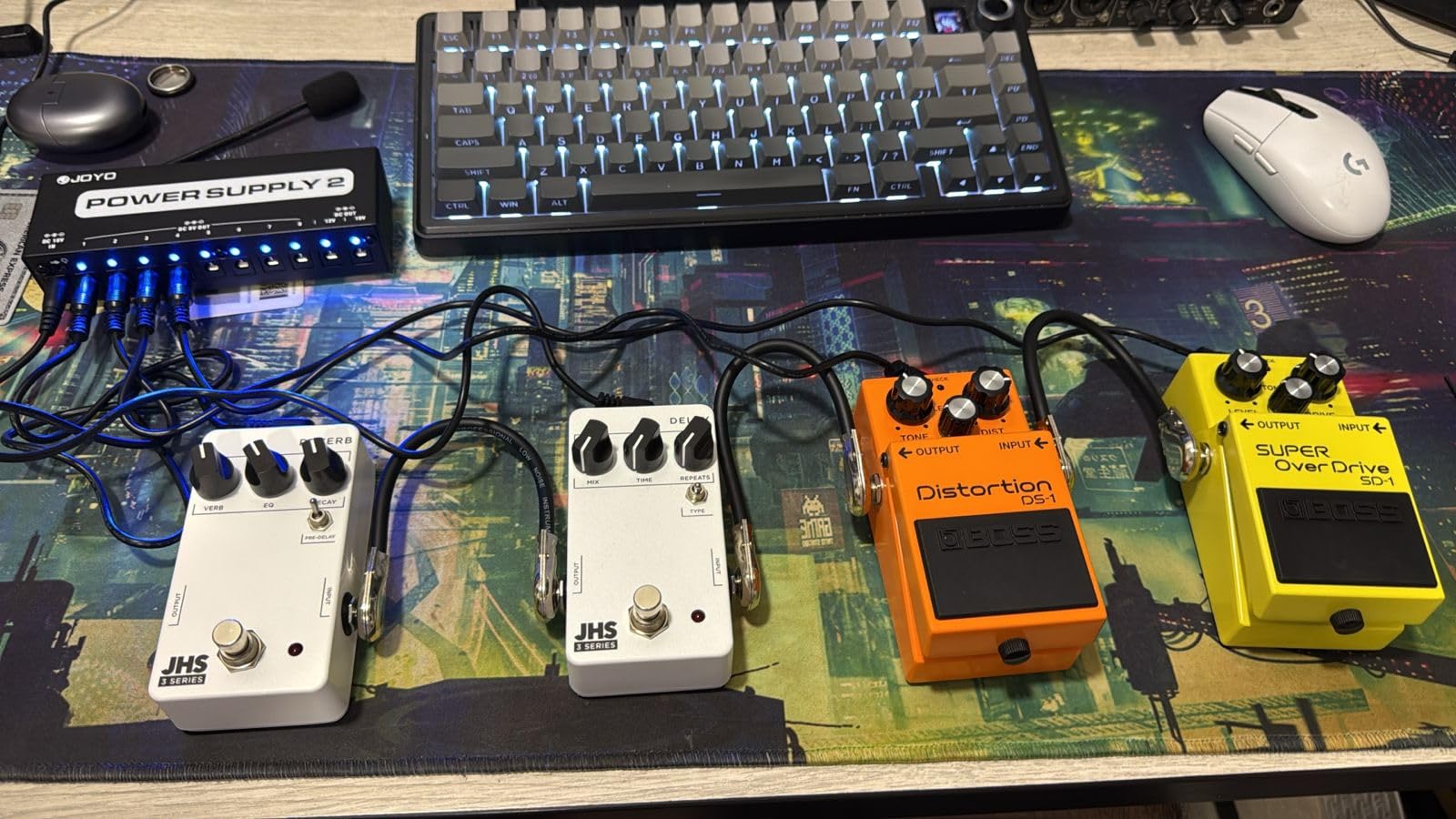
The JHS 3 Series Reverb is proof that you do not need dozens of modes to make a great pedal. Joshua Scott and his team in Kansas City designed this pedal to cover a wide range of reverb sounds with just three knobs and an EQ switch. After spending weeks with it, I can say the simplicity is its greatest strength.
The EQ toggle lets you switch between bright and dark reverb characters. Bright adds sparkle and air to the reverb tail, which works beautifully with dark-sounding amps. Dark rolls off the high frequencies for a warmer, more vintage reverb sound. This single switch effectively doubles the range of sounds you can get.
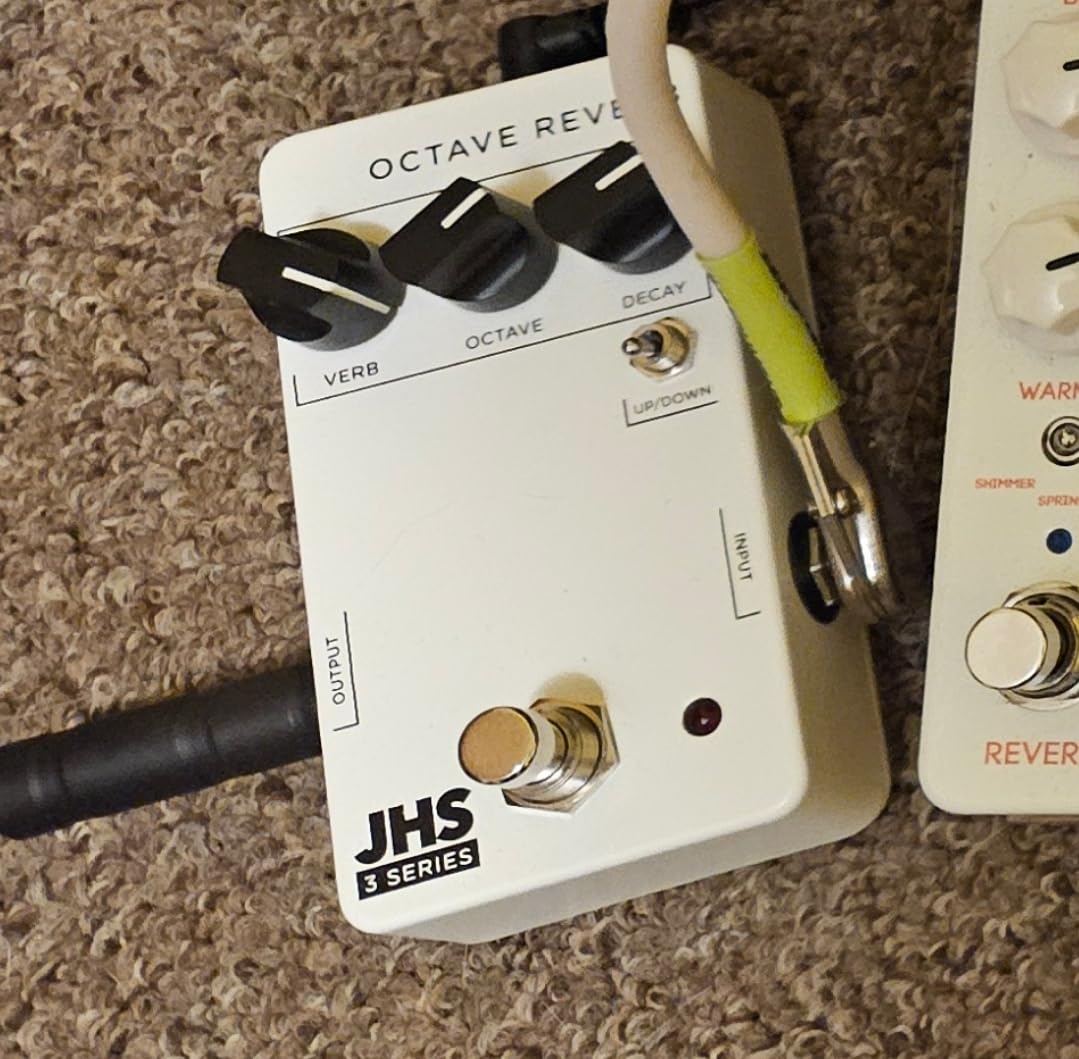
The Pre-Delay knob is a feature I wish more reverb pedals had. It controls the time between your dry signal and the onset of the reverb. At shorter settings, you get tight, slapback-like reverb that sits close to your original tone. At longer settings, the reverb blooms later, creating a spacious, detached quality.
The Decay knob goes from a subtle room sound to near-infinite ambient wash. Even at maximum decay, the reverb never gets muddy or overwhelming. JHS clearly tuned this algorithm carefully to maintain clarity at every setting.
The build quality is excellent. This pedal feels solid and well-constructed, made by hand in Kansas City. The four-year warranty is one of the best in the industry for a pedal at this price point.
Best for Players Who Want Quality Over Quantity
If you are tired of pedals with dozens of modes you never use, the JHS 3 Series Reverb is refreshing. It does fewer things, but it does each of them beautifully. The simplicity makes it incredibly fast to dial in the perfect sound.
This pedal works equally well in front of an amp or in the effects loop, giving you flexibility in how you build your signal chain.
Is the EQ Switch Really That Useful?
Absolutely. The bright and dark settings produce noticeably different reverb characters. I found myself using the bright setting with my darker-sounding tube amp and the dark setting with brighter solid-state amps.
Having this tonal flexibility in a simple toggle switch is more practical than a parametric EQ control. You get two great sounds without fiddling with extra knobs.
7. JOYO Atmosphere R-14 – Feature-Rich Budget Contender
JOYO Digital Reverb Guitar Pedal, 9 Modes (Spring/Church/Plate/Shimmer & More) with MOD Control & Trail Function, Bypass (Atmosphere R-14)
9 reverb modes
MOD control
Trail function
4-knob layout
Ambient LED lighting
Pros
- 9 distinct reverb modes
- Shimmer mode is exceptional
- MOD control adds versatility
- Trail function for natural decay
- Ambient LED lighting
Cons
- Power supply not included
- Noise when daisy-chained
- Volume drop at max mix
The JOYO Atmosphere R-14 packs an incredible nine reverb modes into a compact, affordable package. I was skeptical at first given the low price, but after running it through its paces, I came away genuinely impressed. This is one of the best values in the reverb pedal market right now.
The nine modes are Spring, Church, Plate, Eko-Verb, Shimmer, Comet, Rewind, Forest, and Pulse. That is more variety than pedals costing three times as much. Each mode has its own distinct character, and several of them sound genuinely excellent.
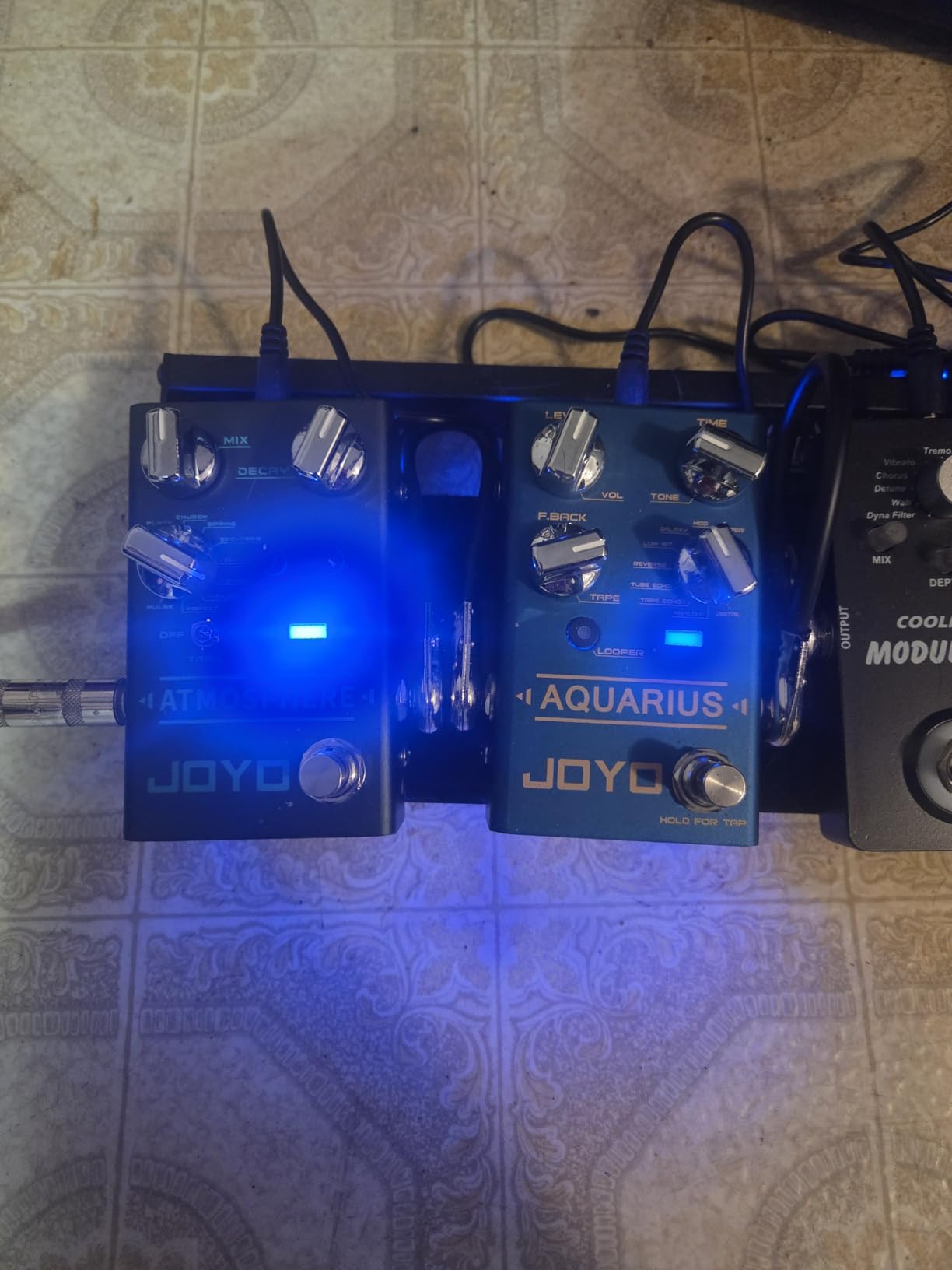
The Shimmer mode is the standout. Multiple Amazon reviewers describe it as worth the price of the pedal alone, and I agree. It delivers a rich, pitch-shifted reverb that rivals pedals costing far more. If shimmer reverb is your main interest, this pedal deserves serious consideration.
The MOD control is a thoughtful addition. It adds chorus-like warble, phaser-style sweep, or tremolo pulse to the reverb tail depending on the mode. This adds a whole layer of expressiveness that you do not usually find at this price.
The Trail function ensures the reverb decays naturally after you disengage the pedal instead of cutting off abruptly. This is a feature typically found on more expensive pedals, and its inclusion here shows JOYO is serious about competing in the budget space.
Best for Budget-Conscious Players Who Want Variety
If you cannot decide on a single reverb type and want to explore many options without spending much, the R-14 gives you the most modes per dollar of any pedal on this list. Nine modes plus modulation control is an incredible feature set at this price.
The ambient LED lighting is a fun visual touch with three modes: Sync, Always On, and Off. It adds stage presence without being distracting.
How Does It Compare to the Donner Verb Square?
Both are budget pedals, but the JOYO offers more modes and better modulation control. The Donner is slightly cheaper and more compact. If shimmer and modulation matter to you, the JOYO is the stronger choice.
Be aware that the R-14 can introduce noise if you daisy-chain its power supply with other pedals. Use an isolated power supply for the cleanest signal.
8. MXR M300 Reverb – Six Studio-Grade Algorithms
MXR® Reverb
6 reverb algorithms
100% analog dry path
Relay true bypass
Delay trails mode
Studio-grade noise floor
Pros
- Six meticulously crafted algorithms
- 100% analog dry path
- Relay true bypass
- Delay trails mode
- Studio-grade low noise floor
Cons
- Premium price point
- Fewer control options than competitors
The MXR M300 Reverb is what happens when a legendary effects company turns its full attention to reverb. MXR is famous for distortion and modulation pedals, and they brought the same engineering quality to this six-algorithm reverb machine. The result is one of the cleanest, most professional-sounding reverb pedals I have tested.
The six algorithms are Plate, Spring, Epic, Mod, Room, and Pad. Each one is polished to a level that makes this pedal suitable for professional studio use. The Plate setting in particular sounds remarkably close to a real studio plate reverb. The Spring has authentic character without going overboard on the drip effect.
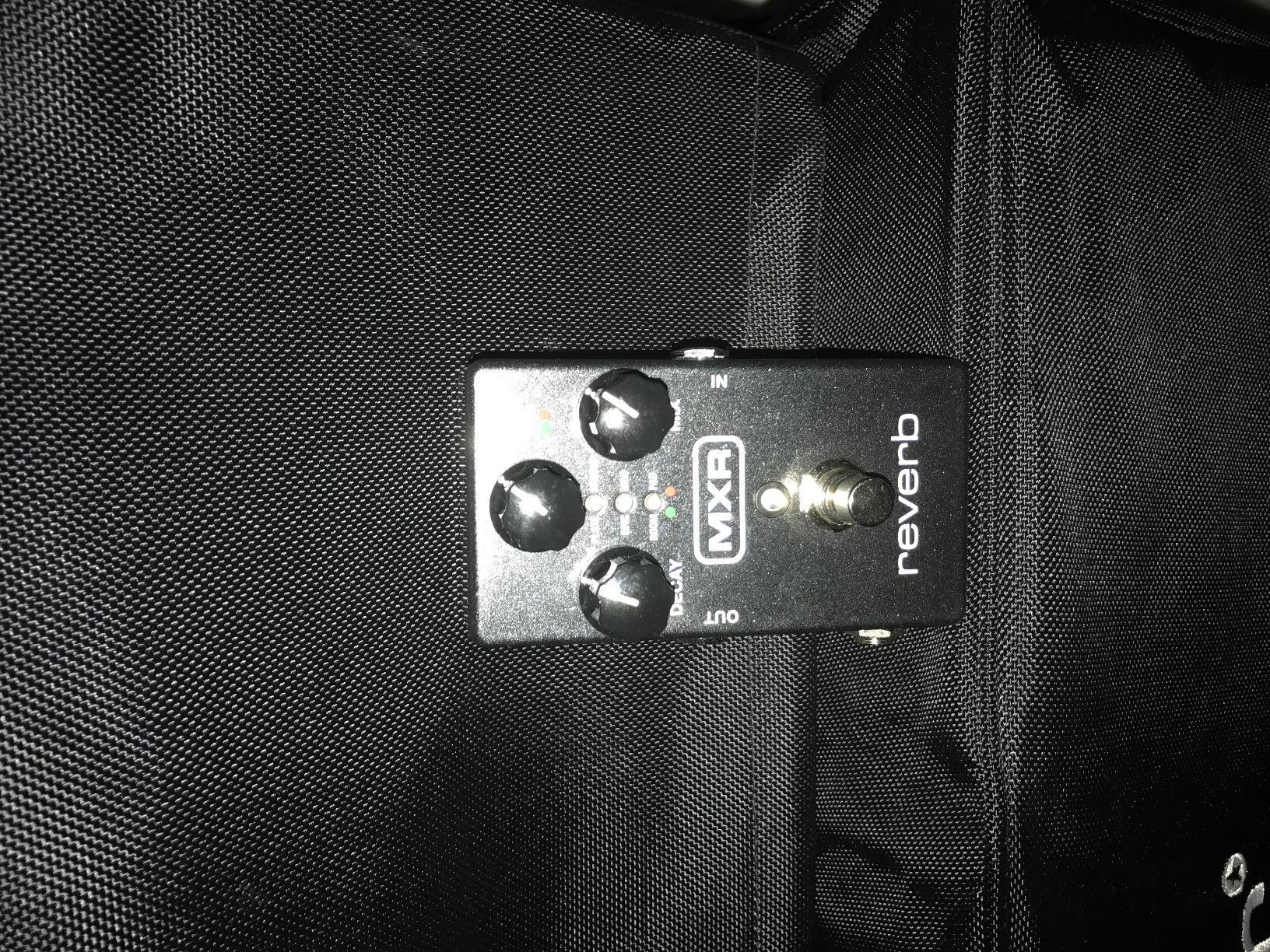
What sets the M300 apart is its fully analog dry path. Your original guitar signal stays 100% analog from input to output, and only the reverb effect is processed digitally. This means your core tone remains untouched and pure. In my testing, this made a noticeable difference compared to pedals that convert the entire signal to digital.
The Epic mode combines reverb with delay for massive, layered soundscapes. Mod adds gentle modulation to the reverb tail for movement and depth. Pad creates a synth-like sustain that is perfect for ambient passages. Room delivers a natural, subtle reverb that works well for any genre.
The relay true bypass is a premium feature that ensures zero signal degradation when the pedal is off. The delay trails mode lets the reverb naturally decay after you disengage, which is essential for live performance.
Best for Studio Use and Professional Rigging
If you record professionally or need a pedal that delivers pristine, noise-free reverb, the M300 is built for that environment. The studio-grade noise floor means you hear nothing but your guitar and the reverb.
Is the Analog Dry Path Really Noticeable?
Yes, especially if you have a high-quality amp and guitar. The difference is subtle but real. Your dry signal retains the warmth and character that some fully digital pedals can slightly diminish.
The tradeoff is that you get fewer control options compared to something like the Strymon pedals. MXR prioritized sound purity over feature count, and for many players, that is the right call.
9. Electro-Harmonix Holy Grail Nano – Classic Reverb in a Small Box
Electro-Harmonix Holy Grail Nano Reverb Pedal
Smooth hall reverb
Flerb mode
Spring reverb
Power adapter included
Compact size
Pros
- Beautiful sounding hall reverb
- Realistic spring emulation
- Compact nano size
- Sturdy construction
- Power adapter included
- True bypass
Cons
- Tail length not adjustable
- Battery power not supported
- Some quality control issues reported
The Electro-Harmonix Holy Grail Nano is a legend in the reverb pedal world. The original Holy Grail was one of the first affordable digital reverb pedals that actually sounded good, and the Nano version shrinks it down to a pedalboard-friendly size. This pedal has been on boards for over a decade for good reason.
You get three reverb modes: Spring, Hall, and Flerb. The Spring setting is one of the better digital spring emulations I have heard. It captures the authentic drip and character of a real spring tank surprisingly well. Surf rock players and vintage tone enthusiasts will feel right at here.
The Hall mode is the star of the show. EHX tailored this specifically for guitar, and it shows. The reverb has a smooth, musical quality that enhances your tone without overpowering it. It works beautifully for everything from clean chord work to soaring lead lines.
Flerb is the unique mode here. It combines flanging with spatial reverb to create an ethereal, slightly otherworldly sound. It is not something you would use on every song, but when you need something different and atmospheric, Flerb delivers a sound that no other pedal quite matches.
Best for Players Who Want a Simple, Great-Sounding Pedal
The Holy Grail Nano has one knob: Reverb level. That is it. If you want a no-nonsense pedal that sounds amazing and requires zero tweaking, this is the one. It is the definition of plug-and-play simplicity.
The compact size fits any pedalboard, and the sturdy construction means it can handle gigging. The included power adapter is a nice bonus since many pedals in this range do not include one.
How Does It Sound Compared to Modern Pedals?
The Holy Grail algorithm has been around for a long time, and it shows its age slightly compared to newer DSP. But that vintage character is part of its charm. Many players prefer its simple, warm sound over the more clinical precision of modern algorithms.
The lack of adjustable decay length is the main limitation. You get one reverb tail length, and if it is not what you want, there is no way to change it. But what you do get sounds genuinely beautiful.
10. EarthQuaker Devices Dispatch Master V3 – Delay and Reverb Combined
EarthQuaker Devices Dispatch Master V3 Digital Delay & Reverb Guitar Effects Pedal
Hi-Fi delay and reverb
1.5 sec delay time
Flexi-Switch technology
Made in Akron Ohio
Lifetime warranty
Pros
- Exceptional Hi-Fi sound quality
- Works as delay only reverb only or both
- Handles long tails without feedback
- Quiet operation
- Limited lifetime warranty
- Made in USA
Cons
- Limited to 1.5 seconds of delay
- No tap tempo
- Considered a one-trick pedal by some
- No adjustable damping in combined mode
The EarthQuaker Devices Dispatch Master V3 is not a pure reverb pedal. It is a digital delay and reverb combination that has earned a devoted following for its exceptional sound quality. I included it in this roundup because its reverb section is good enough to stand on its own against dedicated reverb pedals.
The reverb ranges from natural room ambience to deep, cavernous washes. Even at maximum settings, the reverb never gets muddy or interferes with your core tone. EarthQuaker clearly designed the algorithm to maintain clarity regardless of how much reverb you apply.
What makes the Dispatch Master special is how the delay and reverb interact. When both are engaged, the delay repeats feed into the reverb, creating layered, evolving textures. This is the sound that post-rock and ambient guitarists dream about. Each repeat blooms into a wash of reverb that fills the room.
You can also use the delay and reverb independently. Set the delay time to zero and you have a pure reverb pedal. Set the reverb to zero and you have a digital delay. This flexibility makes it a great space-saving option for pedalboards that need both effects.
The Flexi-Switch technology is a brilliant feature. It lets you use the footswitch in either momentary or latching mode. Hold it down for momentary reverb bursts, or tap it normally for standard on-off operation. This is useful for creating dramatic ambient passages where you only want reverb for a specific phrase.
Best for Ambient Players Who Also Need Delay
If you use delay and reverb together regularly, the Dispatch Master eliminates the need for two separate pedals. The integrated sound is more cohesive than running two separate pedals in series.
The limited lifetime warranty from EarthQuaker Devices shows their confidence in the build. These pedals are made by hand in Akron, Ohio, and the quality reflects that hands-on approach.
How Does the Reverb Compare to Dedicated Pedals?
The reverb quality is excellent, though it offers less control than a dedicated reverb pedal. You get a single Decay knob that controls the reverb tail length. There is no tone control or mode selection.
But the sound itself is gorgeous. If you primarily need a beautiful, long-decay reverb and would also use delay, this pedal gives you both in one compact, well-built unit.
Buying Guide: How to Choose the Right Reverb Pedals?
Choosing from the best reverb pedals means understanding what you actually need. Let me break down the key factors that should guide your decision.
Understand the Types of Reverb
Spring reverb simulates the sound of a physical spring tank. It has a distinctive drippy, surf-rock character. If you play vintage-style music, this is probably what you want.
Hall reverb recreates the sound of a large concert hall. It has a long, smooth decay that works well for lead guitar and atmospheric passages. This is the most versatile reverb type.
Plate reverb emulates the sound of a metal plate reverb unit from the 1960s. It has a bright, dense character that sits beautifully in a mix. Many studio recordings use plate reverb.
Room reverb simulates the sound of a small to medium-sized room. It adds natural ambience without overwhelming your tone. This is ideal for subtle enhancement.
Shimmer reverb adds a pitch-shifted octave to the reverb tail. It creates ethereal, angelic textures that are popular in worship music and ambient styles.
Stereo vs Mono
If you only use one amp, a mono reverb pedal is fine. But if you run a stereo rig with two amps or use in-ear monitors, a stereo reverb pedal makes a massive difference. The stereo imaging adds width and depth that mono simply cannot achieve. Most pedals on this list support stereo operation.
Signal Chain Placement Matters
This is something most guides skip, but it makes a huge difference. Where you place your reverb pedal in the signal chain affects how it sounds dramatically.
The standard approach is to place reverb last in your chain, after all other effects. This lets the reverb process your complete shaped tone and create the most natural sense of space.
If you use an amplifier effects loop, place the reverb in the loop after your time-based modulation. This keeps it separate from your gain-stage pedals and produces a cleaner, more professional sound.
For experimental tones, try placing reverb before your distortion pedal. This creates a washed-out, chaotic sound that some shoegaze players love. It is unconventional, but it can produce amazing results.
Pedalboard Integration Tips
Measure your available pedalboard space before buying. Mini pedals like the Donner Verb Square and JOYO R-14 are great for tight boards. Full-size pedals like the MXR M300 and Strymon Cloudburst need more room but often offer more features.
Power requirements matter too. Most pedals need 9V DC, but some have specific current needs. Check the milliamp draw and make sure your power supply can handle it. Using an isolated power supply prevents noise issues, especially with budget pedals.
Budget Considerations
You do not need to spend a fortune to get a good reverb sound. Pedals like the Donner Verb Square and JOYO Atmosphere deliver impressive quality for under $80. The sweet spot for most players is the $100 to $200 range, where you get excellent sound quality and meaningful features without paying for capabilities you will never use.
Premium pedals like the Strymon Cloudburst and MXR M300 justify their higher prices with superior sound quality, better build construction, and advanced features. If reverb is central to your sound, investing in a premium pedal is worthwhile.
FAQs
What reverb do professionals use?
Professional guitarists commonly use the Strymon BigSky, Eventide H9, and BOSS RV-6 for their main reverb sounds. The Strymon BigSky is widely considered the industry standard for ambient and studio reverb, while the BOSS RV-6 is praised for its reliability and versatility at a more accessible price point.
Where should I place my reverb pedal in the signal chain?
Place your reverb pedal at the end of your signal chain, after distortion, modulation, and other time-based effects. If your amplifier has an effects loop, put the reverb in the loop for the cleanest, most professional sound. Avoid placing reverb before distortion pedals unless you want a washed-out, experimental shoegaze tone.
What is the difference between spring, hall, and plate reverb?
Spring reverb simulates a physical spring tank and has a drippy, vintage character perfect for surf rock. Hall reverb recreates a large concert hall with a long, smooth decay that works for most styles. Plate reverb emulates a 1960s metal plate unit with a bright, dense sound that sits well in studio mixes. Each type serves different musical contexts.
What 5 pedals should every guitarist have?
The five essential pedals for most guitarists are a tuner, an overdrive or distortion pedal, a delay pedal, a reverb pedal, and a modulation pedal like chorus or phaser. This core setup covers the vast majority of playing situations and musical styles. Reverb and delay together create the spatial effects that define modern guitar tone.
What reverb did Eddie Van Halen use?
Eddie Van Halen primarily used the built-in spring reverb of his Marshall amplifiers and later used Lexicon studio reverb units in the studio. For most of his career, he relied on the natural ambience of a cranked tube amplifier rather than a dedicated reverb pedal. His tone was defined more by his phaser, flanger, and delay usage than by heavy reverb.
Conclusion
Finding the best reverb pedals for your needs comes down to matching the pedal to your playing style, budget, and pedalboard setup. After testing all 10 pedals in this guide, a few clear winners emerged.
The BOSS RV-6 remains my top overall pick for its unmatched combination of sound quality, versatility, and reliability. The TC Electronic Hall of Fame 2 takes the value crown with its TonePrint ecosystem and MASH footswitch. And the Donner Verb Square proves that you can get a usable reverb pedal without breaking the bank.
For ambient specialists, the Strymon Cloudburst and Walrus Audio Slo deliver soundscapes that cheaper pedals simply cannot match. Studio professionals will appreciate the pristine analog dry path of the MXR M300. And the EarthQuaker Devices Dispatch Master V3 remains the best delay-plus-reverb combo for players who need both in one pedal.
Whatever your budget or musical style, one of these pedals will transform your tone in 2026. Take your time, consider what matters most to your sound, and choose the reverb that speaks to you.