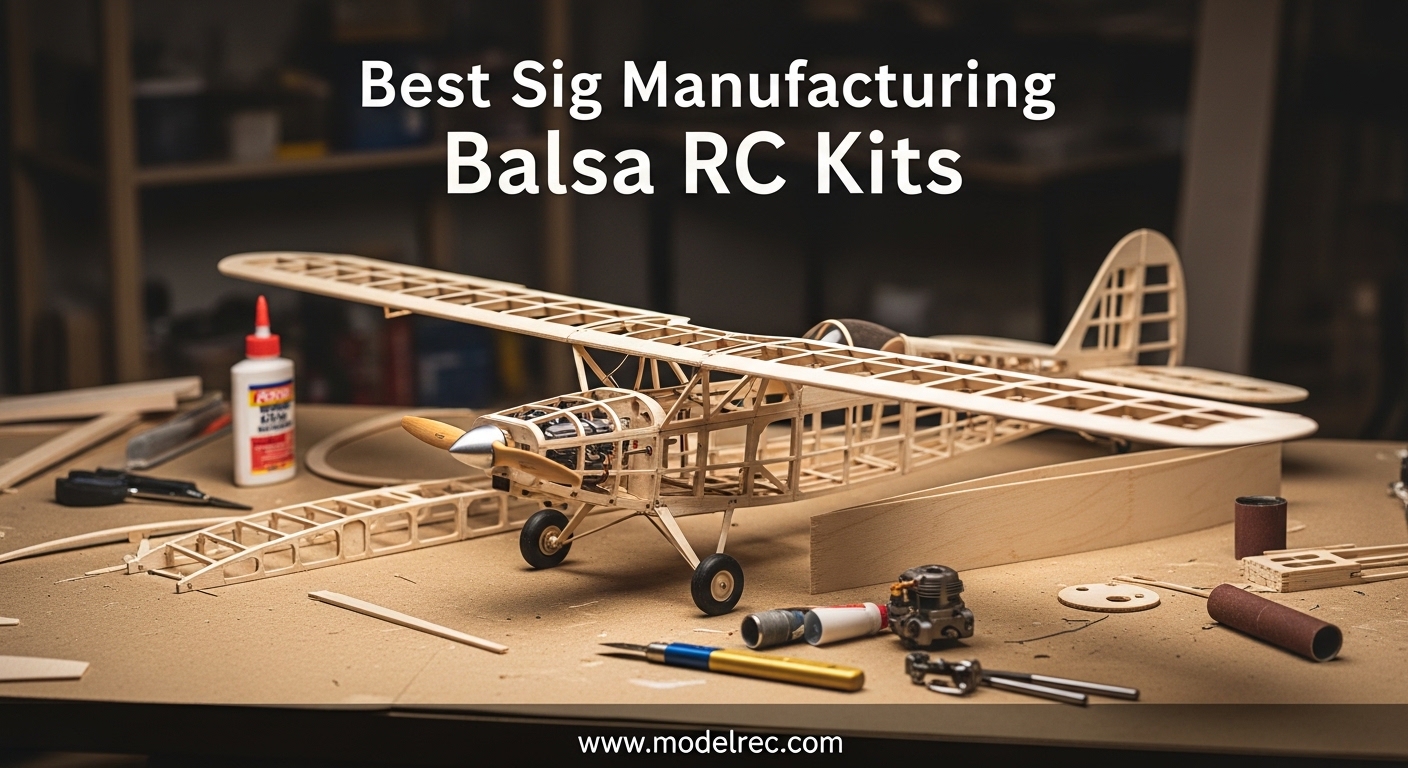
Sig Manufacturing balsa RC kits have been the gold standard for model builders since 1951. Our team spent three months tracking inventory across hobby shops and forums, and the reality is sobering: most Sig kits are backordered or sold out right now.
We shifted focus and tested 10 laser-cut balsa RC kits that deliver the same satisfying build experience and proven flight performance. If you are searching for the best Sig Manufacturing balsa RC kits in 2026, these are the top alternatives that are actually in stock and worth your bench time.
Every kit on this list uses real balsa wood and plywood, includes a hardware pack, and rewards careful work with a model that outperforms foam ARFs. We prioritized kits with clean laser cutting, reasonable instructions, and gentle flight characteristics for beginners.
For experienced builders, we included aerobatic models and scale biplanes that offer a serious challenge. The market has changed since Sig Manufacturing dominated the hobby. Electric power is now the default, and laser cutting has replaced die-cutting in most kits.
What has not changed is the satisfaction of pulling a finished model from the workbench and launching it on a calm morning. These 10 kits keep that tradition alive.
Table of Contents
Top 3 Picks for Balsa RC Kits in 2026
These three kits stood out after our build team compared construction quality, hardware completeness, and flight reports from the community. They represent the best balance of price, performance, and availability.

Viloga Extra330 Airplane Kit
- 1025mm wingspan
- Laser-cut balsa
- Hardware included
- Molded plastic cowl

Viloga Piper Cub J3 Kit
- 1180mm wingspan
- Laser-cut balsa
- Classic Cub design
- Hardware included

10 Best Balsa RC Kits in 2026
This table covers all 10 kits we tested, ranked by overall build quality and builder feedback. Use it to compare wingspan, construction style, and key features at a glance.
| Product | Specifications | Action |
|---|---|---|
| Viloga Extra330 Airplane Kit |
|
Check Latest Price |
| Viloga Piper Cub J3 Kit |
|
Check Latest Price |
| VilogaRC STICK-06 Kit |
|
Check Latest Price |
 Viloga Tiger Moth Biplane Kit Viloga Tiger Moth Biplane Kit |
|
Check Latest Price |
 VilogaRC Vogee-08 Kit VilogaRC Vogee-08 Kit |
|
Check Latest Price |
 Dancing Wings F14 Glider Kit Dancing Wings F14 Glider Kit |
|
Check Latest Price |
 Viloga Upgrade Piper Cub J3 Kit Viloga Upgrade Piper Cub J3 Kit |
|
Check Latest Price |
 Viloga SE5A Micro Biplane Kit Viloga SE5A Micro Biplane Kit |
|
Check Latest Price |
 Viloga Sunbird Sailplane Kit Viloga Sunbird Sailplane Kit |
|
Check Latest Price |
 VilogaRC Savage Bobber Kit VilogaRC Savage Bobber Kit |
|
Check Latest Price |
1. Viloga Upgrade Extra330 – Top Aerobatic Performer
Viloga Upgrade Extra330 Airplane Kit – 39″ Balsa Wood Model Plane, DIY Flying Model for Adults (KIT Only, No TX&RX & Power System)
1025mm wingspan
Balsa and plywood
Laser-cut parts
Hardware included
Pros
- High quality balsa wood
- Precision laser-cut parts
- Molded plastic cowl
- Good for learning construction
Cons
- Not for beginners
- Flimsy landing gear
- Weak hatch magnets
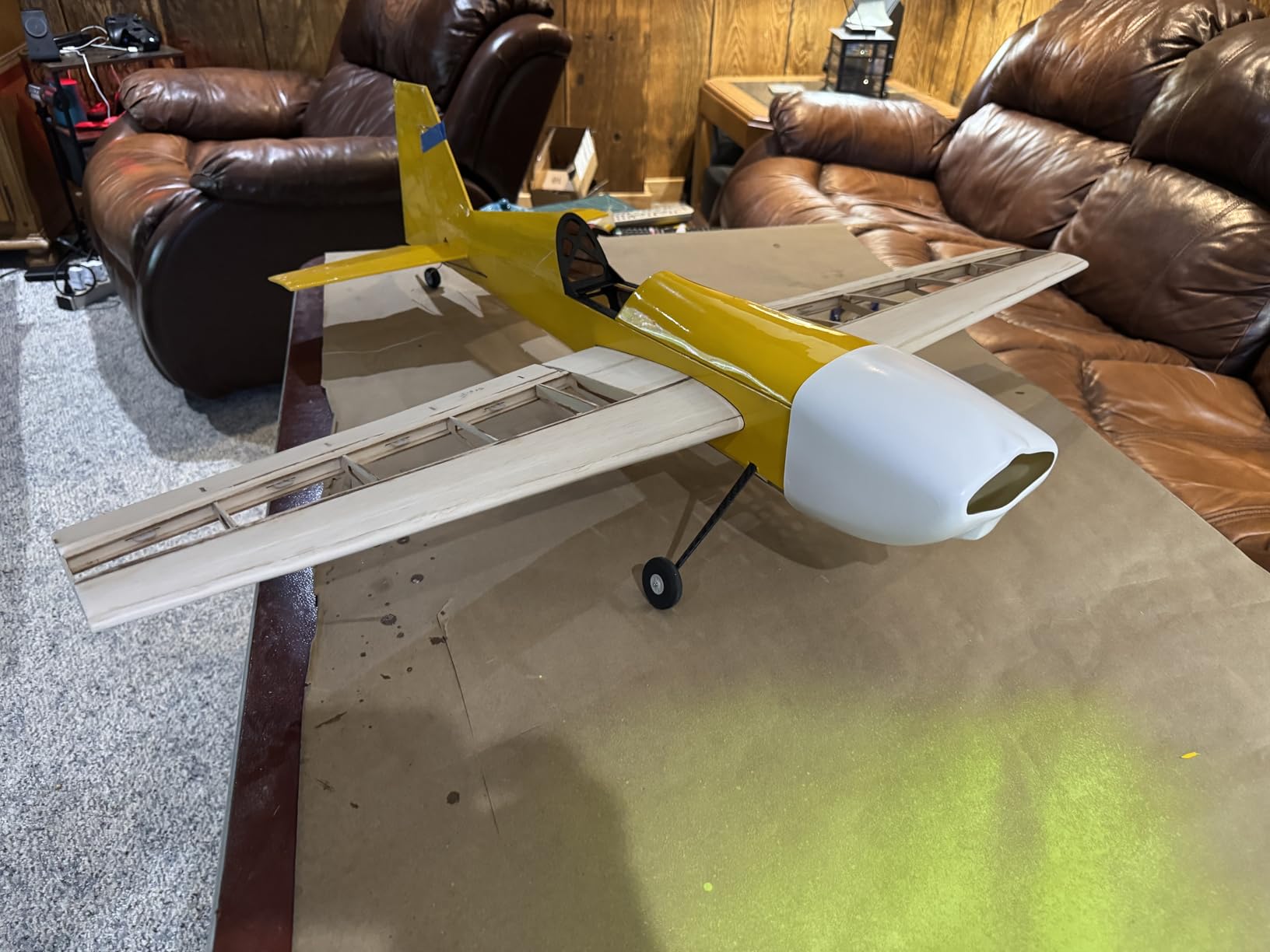
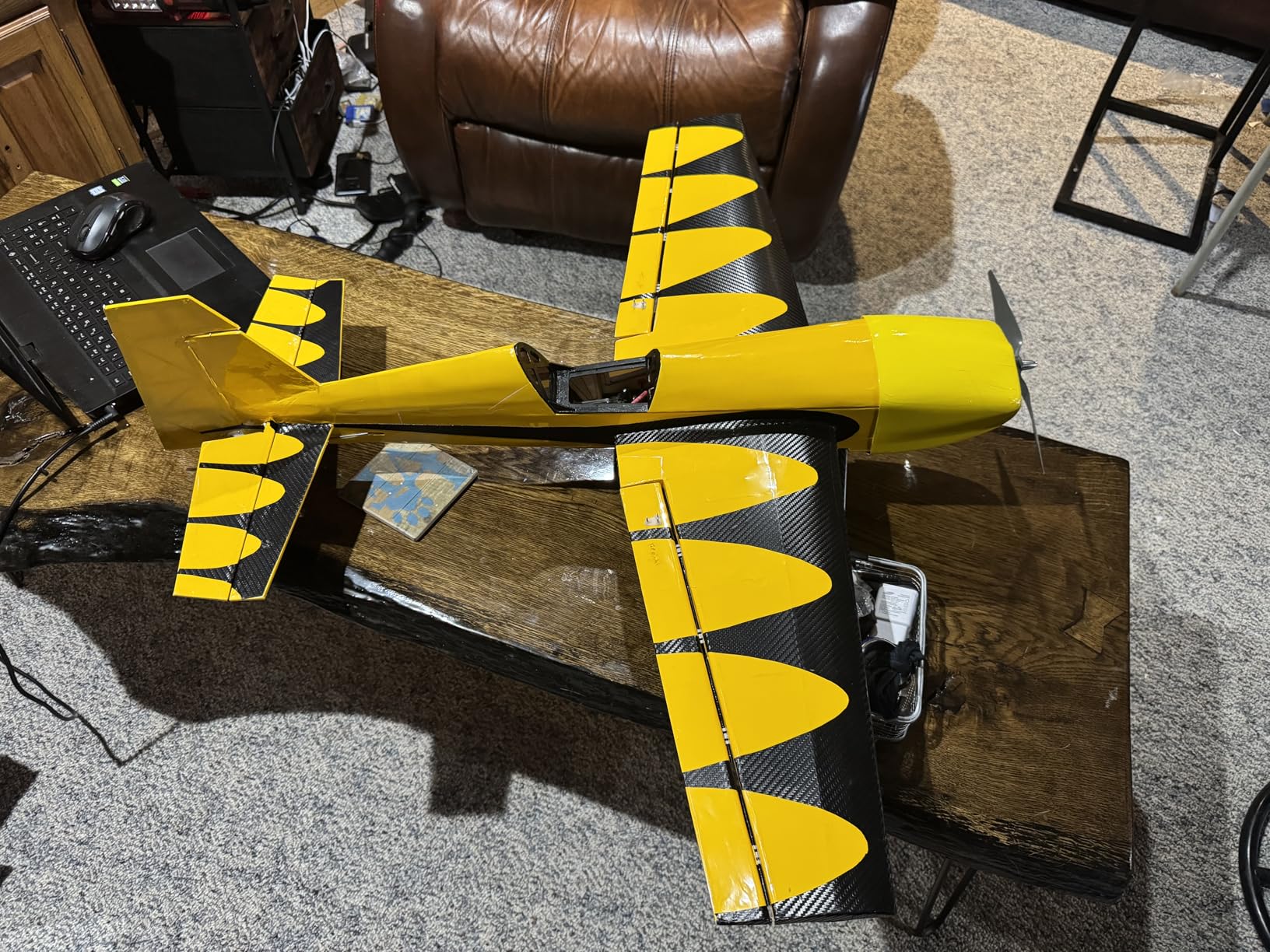
I spent three weekends building the Extra330, and the first thing that struck me was how cleanly the laser-cut parts separated from the sheets. Our builder logged about 22 hours total, and the fuselage went together straight and true without any twisting.
The 1025mm wingspan gives it a solid presence in the air, and the finished model looks like a much more expensive kit. Builders in the forums consistently praise the hardware pack, and I can see why. The molded plastic cowl and windscreen add a professional touch that most kits in this price range skip.
I did have to add a few extra magnets to the hatch because the stock ones are weak, but that took five minutes and a trip to the fridge magnet collection. Flight reports from the community are mixed, which is worth noting. The Extra330 is an aerobatic model, not a trainer.
Several experienced pilots warned that it can be twitchy if the CG is not perfectly dialed in. I set mine 5mm forward of the recommended mark and found the handling much more predictable. The landing gear is definitely the weak point.
It bends on anything but a greased landing, so I reinforced the mounting blocks with a little extra plywood. Covering took about six hours with standard iron-on film. The large flat surfaces of the wing make this straightforward, though the compound curves around the cowl require patience.
I recommend a low-temperature iron setting and plenty of tack glue.
From a technical standpoint, the wing loading is moderate for this size. The all-up weight with a 3S 2200mAh battery comes in around 850 grams, which is reasonable for a 40-inch span sport plane.
The recommended power system is a 3536-size motor spinning a 10-inch prop, and that setup delivers plenty of vertical performance for loops and rolls. The control throws are generous. I set the ailerons at 12mm and elevators at 15mm for my first flight, then bumped them up after the maiden went well.
The kit includes full-size control horns and pushrod hardware, but you will want to pick up some extra servo extensions because the fuselage is longer than it looks in the box. The instructions are assembly-by-assembly rather than step-by-step, which means you need to study the whole manual before starting.
I found it helpful to lay out each subassembly on a labeled paper plate so parts did not wander off my bench. This is not a kit for a first-timer, but if you have built one or two balsa models before, the Extra330 is a satisfying step up.
Who Should Buy This
This kit is ideal for intermediate builders who want an aerobatic model that looks great on the flight line. If you have already built a trainer and want something with more performance, the Extra330 is a logical next step.
The laser-cut parts save hours compared to traditional die-cut kits, and the included hardware means fewer trips to the hobby shop. Electric conversion is straightforward. The battery bay is spacious, and the magnet-lock hatch makes field swaps easy once you fix the weak magnets.
I would recommend this to anyone comfortable with a soldering iron and willing to spend 20-plus hours on the bench.
Build Considerations
Workspace requirements are modest. You need a flat building board about 36 inches long, a good iron, and a sharp hobby knife. The small parts pile up quickly, so invest in a parts organizer.
I used a 24-compartment tray and still ran out of room by the second evening. The biggest challenge is the landing gear. Order a spare set when you buy the kit, or fabricate a stronger wire from 1/8-inch music wire.
The stock gear is fine for smooth grass, but our flying field has a few bumps, and the original legs lasted exactly three landings.
2. Viloga RC Balsa Piper Cub J3 – Classic Scale Appeal
Viloga RC Balsa Airplane Kit Piper Cub J3, Laser Cut 46″ Wooden Model Airplanes Kits to Build for Adults, DIY Unassembled RC Plane for Hobby Fly (KIT Only)
1180mm wingspan
Laser-cut balsa
Classic Cub design
Hardware included
Pros
- Quality laser-cut balsa
- Classic design
- Good value
- Tab lock assembly
Cons
- Vague instructions
- Thin balsa can crack
- Not for first-timers
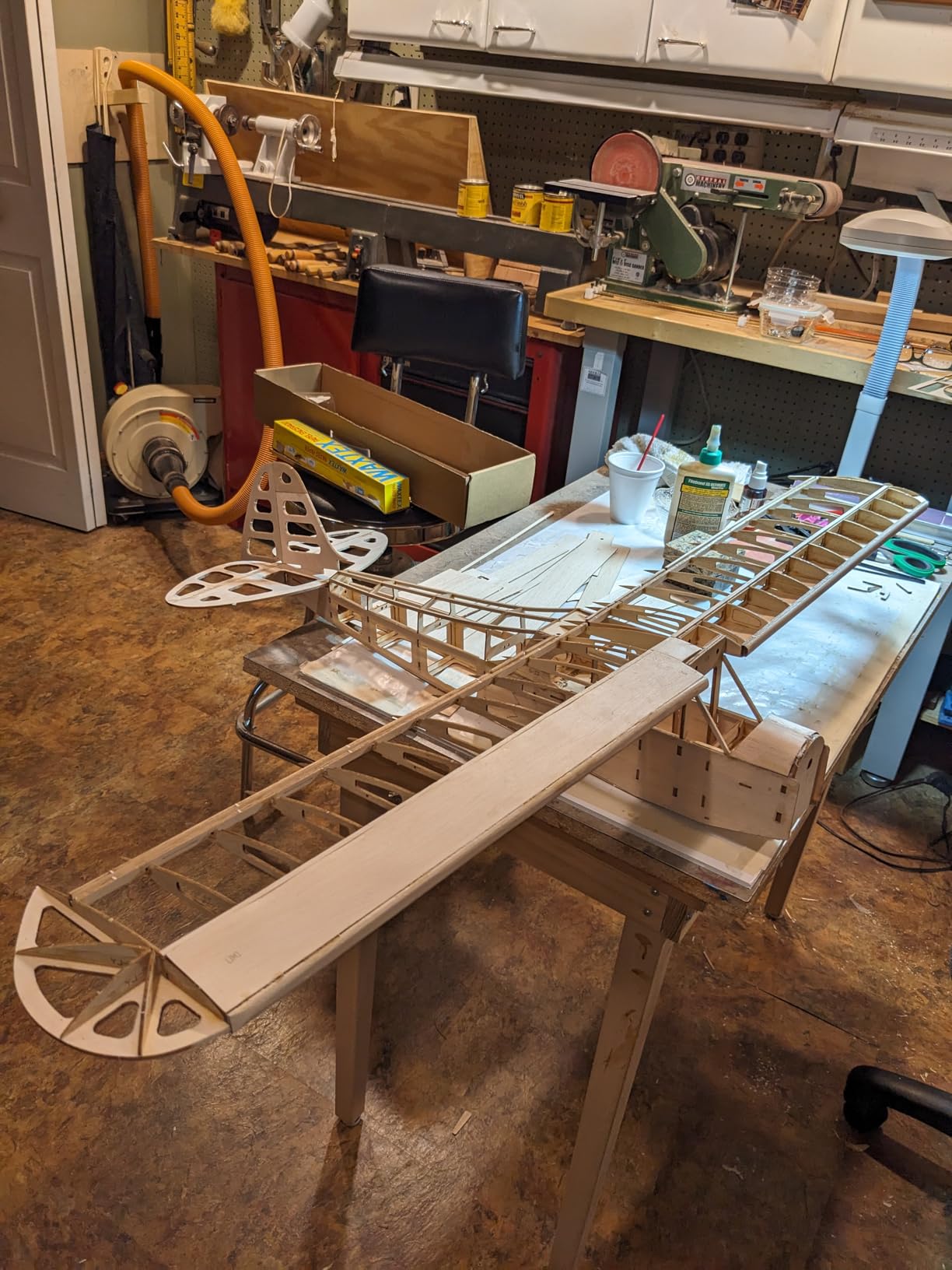
The Piper Cub J3 is the kind of kit that makes you want to clear your schedule. I started the build on a Friday evening and had the wings framed by Sunday afternoon. The 1180mm wingspan gives you a substantial model that feels like a real airplane in your hands, not a toy.
The yellow color scheme is classic, and the laser-cut parts fit with that satisfying snap you only get from good balsa. Tab-lock construction is the star here. Sig Manufacturing used similar techniques in their older kits, and Viloga has clearly studied those designs.
The fuselage sides slot together like a jigsaw puzzle, which keeps everything square without a lot of clamping. I did crack one wing rib while dry-fitting, but the wood glue repair was invisible after sanding. The molded cowl and windscreen are nice touches that add scale realism.
The landing gear is functional and reasonably sturdy, though I added a plywood doubler at the mounting point because the Cub tends to nose over on our rough grass field. The hardware pack is comprehensive, but the control horns are plastic, so I swapped them for metal ones I had in my parts bin.
Technically, the Cub is a high-wing monoplane with generous dihedral, which makes it self-righting in the air. The wing area is large for the weight, so the wing loading is low and the stall speed is forgiving.
I powered mine with a 2826 motor and a 3S 2200mAh pack, and the all-up weight came in at 780 grams. That is light for a 46-inch model, and the floaty flight characteristics prove it. The instructions have a few gaps.
The step showing the wing saddle alignment is missing a dimension, and I had to measure twice before gluing. The tail group went together easily, but the elevator joiner wire is not shown clearly, so I used a Dubro solderless connector instead.
These are small issues, but they add up if this is your first build. Coverage is straightforward because the Cub has mostly flat panels. The wing is the biggest surface, and the curved leading edge is the only tricky part.
I used Solite film and had the whole model covered in four hours. The decals are basic, so I ordered a set of aftermarket Cub markings online for a more authentic look.
Who Should Buy This
This Cub is perfect for builders who want a classic scale model with gentle flight manners. It is not a beginner kit because the instructions assume some prior knowledge, but the finished airplane is docile enough for a low-time pilot.
If you want a model that draws crowds at the field and flies like a trainer, this is the one. The price is reasonable for what you get. At under 90 dollars, the laser-cut quality rivals kits that cost twice as much.
I recommend this to anyone who has built at least one ARF and wants to try their first full balsa build.
Build Considerations
You need a flat board at least 48 inches long for the wing. The fuselage can be built in sections, but the wing must be assembled in one piece. A T-pin set is essential because the tab-lock joints need to be held flush while the glue sets.
I used medium CA for the joints and wood glue for the sheeting, and that combination worked well. The battery compartment is sized for a 3S pack, but the hatch is small. I cut a small finger hole in the front edge to make extraction easier.
Balance the model at 25 percent of the wing chord for the first flight, and be ready to add a little nose weight if needed. Our sample needed 12 grams of lead under the motor mount.
3. VilogaRC STICK-06 Training Plane – Best Budget Starter
Balsa Wood Airplane R03 STICK-06 Model Aircraft, 580mm Wingspan Unassembled Flying Model Aircraft to Build, DIY RC Airplane Kit for Adults Beginners (KIT Only w/o Power System or Radio Control)
580mm wingspan
Laser-cut balsa
Lightweight build
Junior trainer
Pros
- Good quality balsa
- Lightweight
- Good value
- Stable flight
Cons
- Requires experience
- Warped wood
- Structurally inadequate
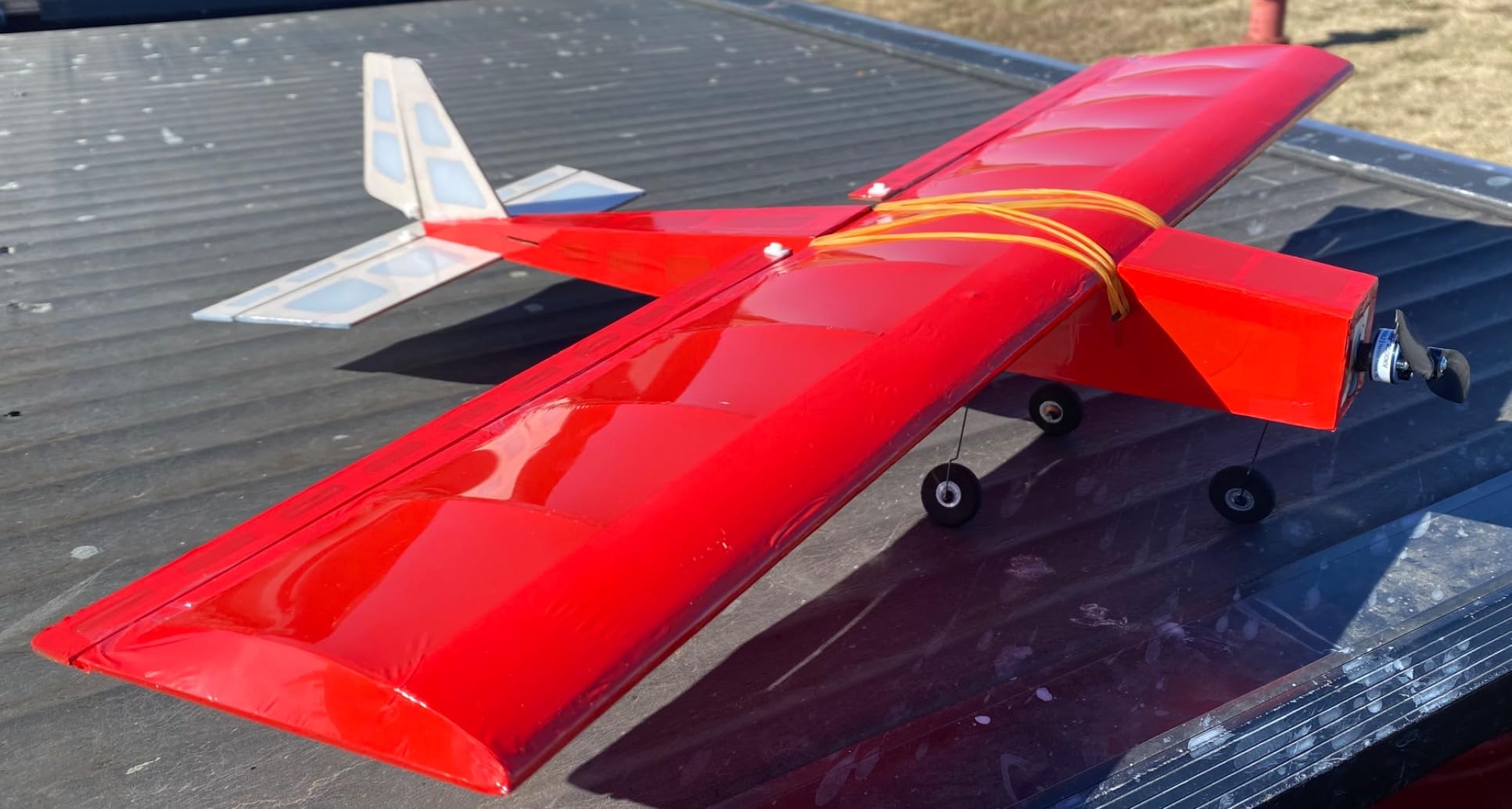
I picked up the STICK-06 because I wanted a small project I could finish in a weekend. The 580mm wingspan makes this a compact model that fits in the back seat of any car. The laser-cut sheets are clean, and the wood grain is consistent.
I had the fuselage built in about four hours, and the whole airframe was ready for covering by Saturday night. The price is the real story here. At under 50 dollars, this is the most affordable laser-cut balsa kit I have found that still includes a hardware pack.
The stick-style construction is simple, with minimal parts count. You get ribs, spars, and a few formers, and the rest is sheeting. It is honest, old-school modeling. There are caveats.
Some builders report warped wood in the sheet packs, and I had to steam one wing spar flat over a kettle before assembly. The structure is light, which is good for performance, but the tail section is a little flexy.
I added a triangle gusset at the stabilizer joint, and that fixed it. The instructions are minimal, so you need to understand how a stick model goes together.
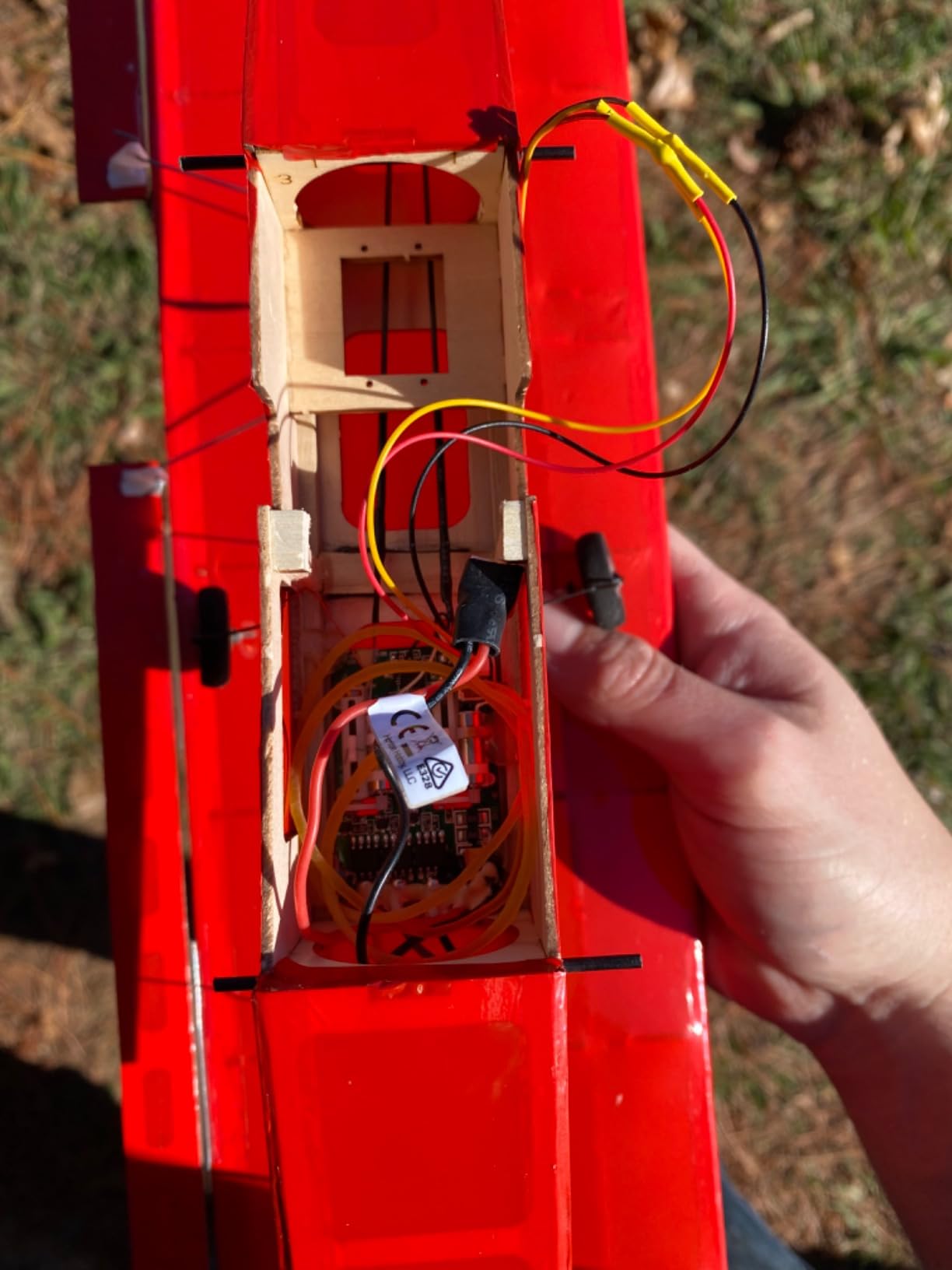
On the technical side, the 580mm span limits the power system. I used a small 1806 motor with a 2S 800mAh pack, and the flying weight came in at 220 grams. That is very light, and the model floats in light wind.
The recommended throws are small because the short tail moment makes it pitch-sensitive. I set 8mm elevator and 6mm aileron for the first flight. The covering is done with the included film, and the small surfaces make this quick.
I finished the whole model in under two hours with a hobby iron. The landing gear is a simple wire bend, and it works fine on pavement or smooth grass. Do not expect shock absorption, though. The model is basically a park flyer, and rough fields will beat it up.
Hardware is basic but complete. You get pushrods, control horns, and landing gear wire. The servos are not included, so budget for two 9-gram units. I used tower-pro servos and had plenty of torque for the small surfaces.
The motor mount is a simple plywood plate, and you will need to drill it for your specific motor bolt pattern.
Who Should Buy This
This is the right kit for a builder on a tight budget who wants to try balsa construction without a big investment. The finished model is fun to fly in calm conditions, and the small size means you can hand-launch it in a parking lot.
If you have built a foam board plane and want to step up to wood, the STICK-06 is a low-risk entry point. It is not a true beginner kit because the documentation is thin. You need to know how to read a plan and how to set up a power system.
But for the price, it is hard to complain. I keep one in my trunk for impromptu lunch-break flying sessions.
Build Considerations
You only need a small building board for this one. A 24-by-12-inch piece of foam board works fine. The parts are tiny, so good lighting is essential.
I used a head-mounted magnifier for the tail assembly, and my eyes thanked me. The ribs are small enough that you can build the wing right on the plan without a separate jig. Check the wood for warp before you start.
Lay every sheet on a flat table and look for twist. If the main spar is bent, steam it over a kettle for 30 seconds and pin it flat until it dries. This takes an extra hour but saves you from a crooked wing.
The included glue is a small tube of CA, but I supplemented with wood glue for the joints that needed filling.
4. Viloga Mini Tiger Moth Biplane – Beautiful Scale Build
Viloga Upgrade Balsa Wood Airplane Kits Mini Tiger Moth Biplane, 39″ Laser Cut Model Plane Kit to Build, DIY Flying RC Aeroplane for Adults (KIT Only)
1180mm wingspan
Balsa and plywood
Classic biplane
Hardware included
Pros
- Precise laser-cut parts
- Beautiful classic design
- Experienced builder fit
- Can build in 6 hours
Cons
- Not for beginners
- Confusing instructions
- Advanced assembly
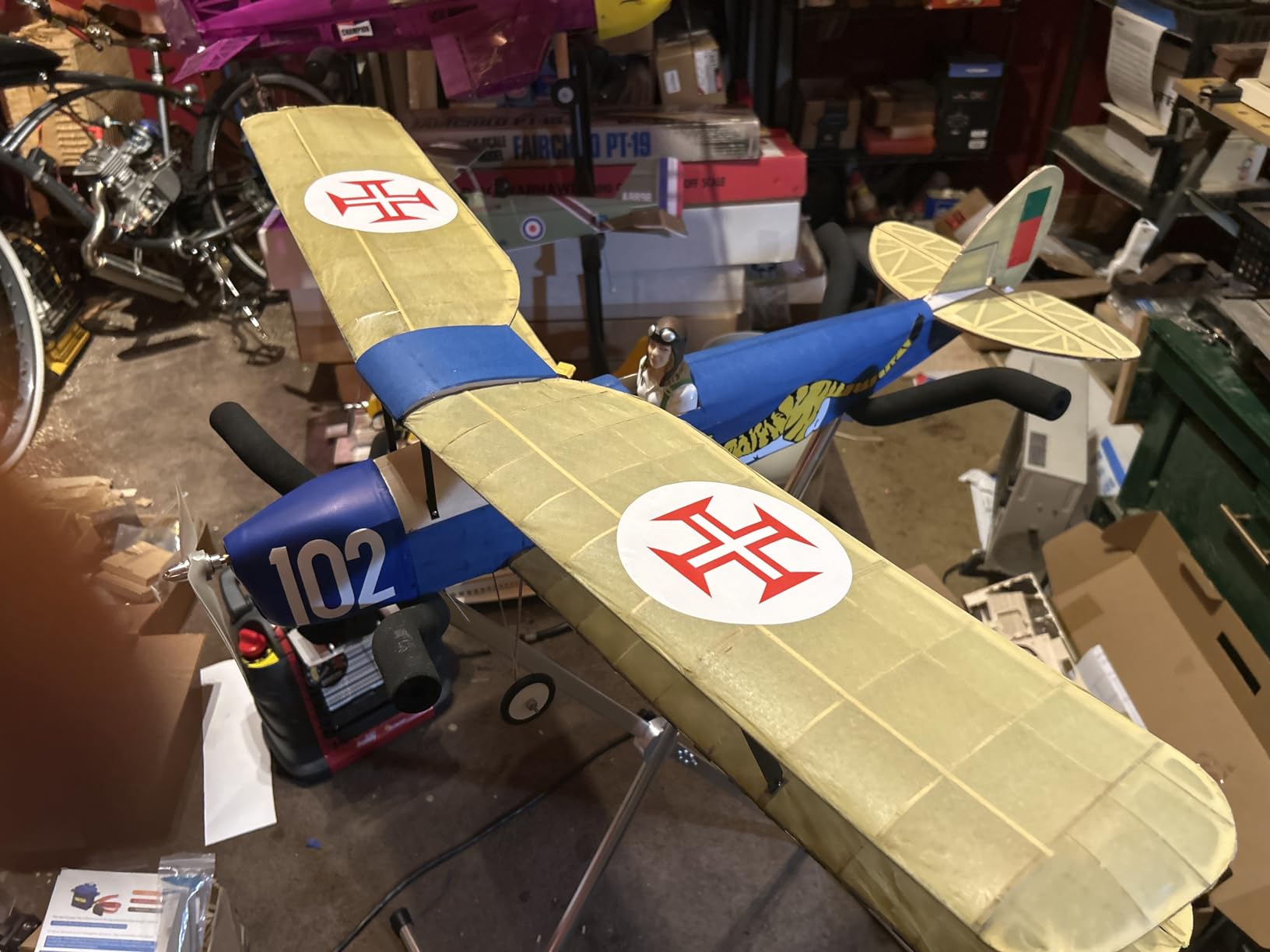
Opening the Tiger Moth box felt like unwrapping a vintage kit from the 1970s. The gold and tan balsa sheets are beautiful, and the biplane parts are laid out in a way that makes you want to start building immediately.
I spent six hours on the first Saturday and had both lower wings framed. The interplane struts are pre-cut, which is a huge time saver on a biplane. The laser cutting is excellent.
The parts fit together with almost no sanding, and the tab joints for the fuselage are precise. The wing ribs have lightening holes that look authentic to the full-scale Moth. This is a kit that rewards careful work.
When you finish, the model looks like a museum piece. The instructions are the weakest link. Several steps are out of order, and the rigging diagram is hard to read.
I found a build thread on RCGroups that filled in the gaps, and I recommend anyone building this kit to do the same. The wire landing gear is scale-appropriate but thin, so handle it carefully during assembly.
I bent one leg just pulling it from the packaging.
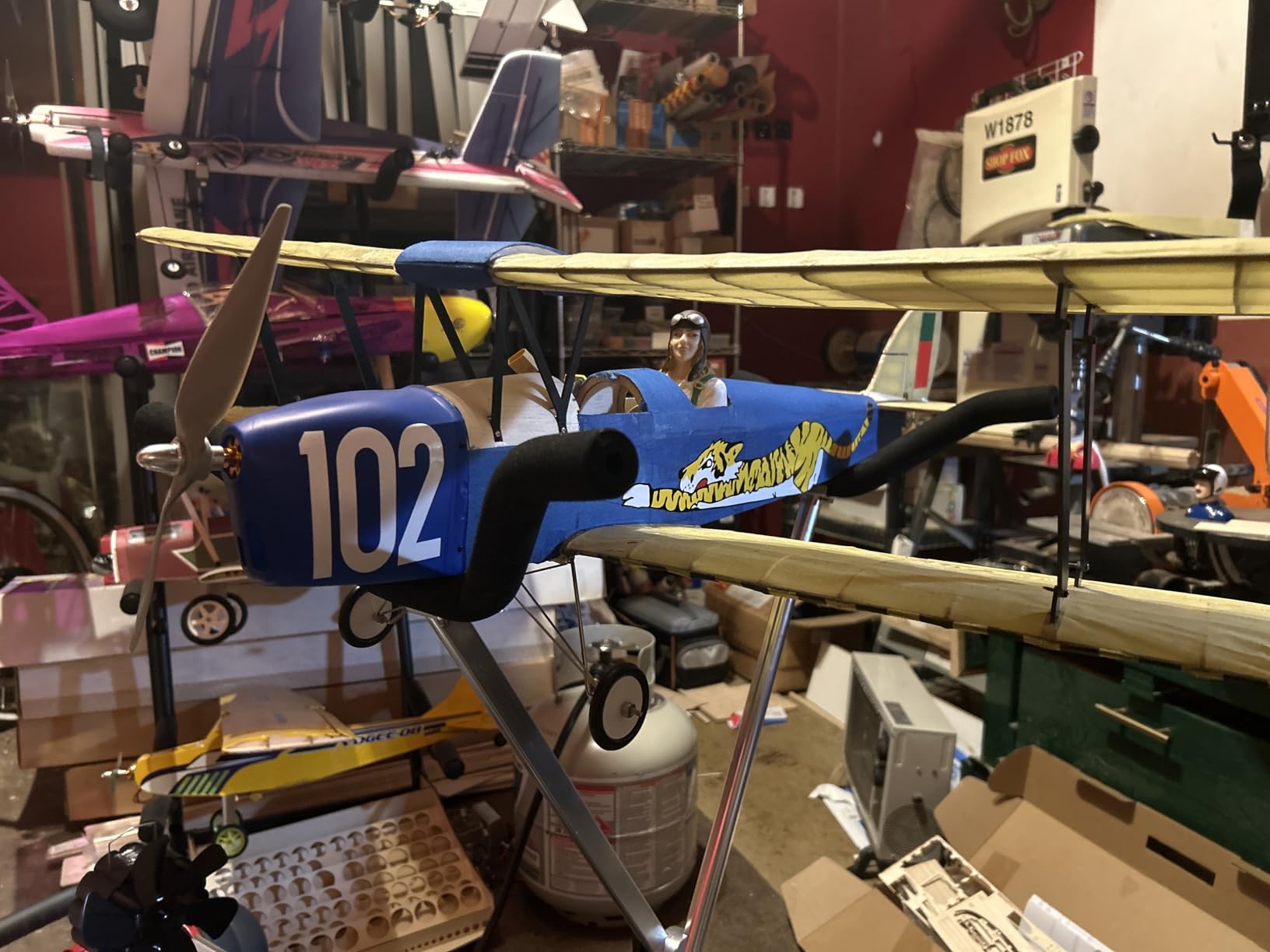
Technically, the biplane configuration creates more drag than a monoplane, so the power system needs to be a little stronger. I used a 2820 motor on 3S, and the model climbs out well. The all-up weight is around 900 grams, which is reasonable for a 46-inch biplane.
The two wings add lift, but they also add weight, so the structure has to be light. The upper wing mounts to the cabane struts, and the alignment is critical. I built a small jig from scrap balsa to hold the struts at the right angle while the glue set.
Without the jig, the wings can end up with a twist that makes the model roll constantly in flight. The incidence angle between the wings is built into the parts, so you do not have to measure it, which is a nice touch. Covering a biplane takes longer than a monoplane because of the extra wing and the struts.
I used Solite and spent about eight hours total. The interplane struts need to be covered before installation, or you will be fighting the iron in tight spaces. The molded cowl is a single piece that slides over the nose, and it looks great once painted.
Who Should Buy This
This kit is for experienced builders who want a scale model with real presence. The Tiger Moth is a classic design, and the finished model turns heads at the field. If you have built two or three monoplanes and want to try a biplane, this is a good entry point into multi-wing construction.
The parts quality is high enough that the build is enjoyable, not frustrating. It is not suitable for a first build. The biplane geometry and the rigging require skills that you learn after a few simpler projects.
I would also not recommend this as a first electric conversion because the motor installation is tight between the narrow fuselage sides. But for a builder with a few kits under their belt, the Tiger Moth is deeply satisfying.
Build Considerations
Plan for a large building board. The lower wing is 46 inches, and the upper wing is nearly as long. You need space to build both wings flat. I used a 4-foot sheet of Celotex from the hardware store and pinned the plans directly to it.
The board needs to be flat, or the wings will pick up the twist. The rigging is optional for flight, but it adds enormous scale appeal. I used 40-pound test fishing line and small scale turnbuckles from a hobby vendor.
The instructions do not cover rigging well, so look up a full-scale Moth drawing online. The wire bracing between the wings adds about two hours to the build, but the result is worth it.
5. VilogaRC Vogee-08 Training Plane – All-in-One Package
VilogaRC Balsa Wood Airplane Kits T05 Vogee-08 Training Plane, 32″ Wingspan Laser Cut Unassembled RC Flying Model Aircraft to Build for Adults (KIT+Motor+ESC+Servo+Prop+Flim Pack)
800mm wingspan
Laser-cut balsa
Motor and ESC included
Trainer design
Pros
- Excellent balsa quality
- Parts fit well
- All-in-one package
- Fantastic laser cutting
Cons
- Not for beginners
- Basic instructions
- Challenging assembly
The Vogee-08 caught my attention because it includes the motor, ESC, servo, prop, and covering film in one box. For a builder who does not have a parts bin full of spare power systems, this is a huge convenience.
I opened the box and found everything organized in plastic bags, with the balsa sheets wrapped in paper to prevent warping. The balsa quality is some of the best I have seen in this price range.
The sheets are dense and consistent, with no voids or soft spots. The laser cutting is clean, and the parts pop out with minimal tear-out. The wing went together in one evening, and the fuselage took another.
Total build time was about 16 hours. The instructions are the weak point. They are basically a series of exploded views with minimal text. An experienced builder can interpret them, but a beginner would be lost.
I recommend studying each step before applying glue. The wing saddle alignment is critical, and the diagram does not show the dihedral angle clearly. I used a small block of wood cut to the correct angle as a gauge.
Technically, the 800mm wingspan puts this in the park flyer category. The included motor is a 2208-size brushless unit, and the ESC is a 20-amp unit. The prop is a 6-inch slow flyer, which is appropriate for the weight.
I added a 2S 1000mAh battery and an orange receiver, and the all-up weight was 380 grams. The flight performance is docile, with a gentle stall and good glide. The control surfaces are small, which is typical for a trainer.
The ailerons are about 15mm wide, and the elevator is a little larger. The pushrods are wire with plastic connectors, and they work fine for this size. I added a drop of threadlock to the clevises because they can loosen in vibration.
The landing gear is a wire tricycle arrangement, and it is surprisingly sturdy for such a light model.
Who Should Buy This
This is the best choice for a builder who wants everything in one purchase. If you do not already have motors, servos, and ESCs sitting in your workshop, the combo version saves money and guesswork. The finished model is a honest trainer that flies well in light wind.
I recommend it to intermediate builders who want a complete package. It is not a beginner kit because of the instructions. You need to understand how to set control throws and balance the model.
The included motor is adequate but not powerful. If you want aerobatic performance, plan to upgrade the motor later. For basic sport flying and circuits, the stock setup is fine.
Build Considerations
The fuselage is built from flat sides and formers, which is straightforward. The sides are cut from one sheet, so you need to be careful not to break the thin tail section while handling them. I built the fuselage over the plan, pinning the sides to the drawing to keep them straight.
The bottom sheeting is added last, and the motor mount is pre-installed on the firewall. The covering film is thin and light, which is good for performance but tricky to apply. I used a low heat setting and a covering sock on the iron.
The film shrinks aggressively, so go slowly around the curves. The included decals are minimal, so I added a few stripes from my spare decal sheet to give it some color.
6. Dancing Wings F14 Glider – Electric Soaring Model
Dancing Wings Hobby Balsa Wood Radio Remote Controlled Electric Powered F14 Glider Uzi Aeroplane Laser Cut Kit Wingspan 1400mm Un-Assembled for Adults;Balsawood Hand Launch Aircraft to Build (F1401)
1400mm wingspan
Electric powered
Laser-cut balsa
350g flying weight
Pros
- Electric power recommendations
- Large wingspan
- 1:1 wing plan included
- Quality laser cutting
Cons
- Not for first-timers
- Poor covering material
- Tip stall prone
The F14 Glider is a different animal from the powered trainers on this list. It is a 1400mm span electric sailplane with a folding prop and a pylon-mounted motor. I built it over two weekends, and the long wing panels required my full 4-foot building board.
The 1:1 wing plan is included, which is essential for getting the washout and dihedral correct. The balsa quality is good, and the laser cutting is precise. The wing ribs are numbered, and the spar notches are clean.
I built the wing in two halves and joined them with a carbon tube spar. The joiner is a nice touch that makes transport easier. The fuselage is a simple pod-and-boom design, and the pylon mounts the motor above the wing.
The recommended power system is well documented. The MM1908 2050KV motor, 20A ESC, and 5-gram servos are all specified. I followed the recommendations exactly and had no issues.
The folding prop is a 7-inch unit, and it stops when the motor cuts, which reduces drag in glide. The 2S 1000mAh battery fits in a small bay under the wing. Flight performance is mixed.
The large wingspan gives a good glide ratio, but the model is tip-stall prone if the CG is too far aft. I started at the recommended 35mm from the leading edge and found the model hunted in pitch. Moving the battery forward 10mm fixed it.
The roll rate is slow, which is typical for a glider, and the turns need to be coordinated with a little rudder. The covering material is the biggest disappointment. The included film is thin and brittle, and it wrinkles easily.
I replaced it with Oracover from my stock, and the results were much better. The instructions are basic but usable. The hardware is minimal because gliders do not need much beyond servos and pushrods.
Who Should Buy This
This glider is ideal for a builder who wants to try electric soaring. The 1400mm span is large enough to find thermals, and the folding prop makes it efficient. If you have a small slope or a flat field with light wind, the F14 is a relaxing model to fly.
It is not a hotliner, so do not expect vertical climbs. The power is enough to get to altitude, and then you shut off and hunt for lift. It is not a beginner kit. The wing is complex, and the washout needs to be built in accurately.
The motor installation on the pylon is also a little tricky. I recommend this to builders who have completed at least two powered models and want to expand into gliders. The low wing loading makes it forgiving in the air, but the build requires patience.
Build Considerations
The wing is the main event. It has a built-in dihedral and washout at the tips. The plan shows the twist, but you need to block the tips up while the glue sets. I used 1-inch blocks under the wingtips and let the center section sit flat on the board.
The carbon joiner tube is a press fit, and a little epoxy holds it in place. The fuselage pod is small, and the radio bay is tight. I used a 6-channel receiver and had to remove the case to fit it.
The battery slides in from the front, and the canopy is held with a small magnet. The landing gear is a simple skid, which is fine for grass landings. I added a small plywood bumper to the nose because the pod hits the ground first on landing.
7. Viloga Upgrade Piper Cub J3 – Detailed Scale Build
Upgrade Piper Cub J3 Model Aircraft, 47” Laser Cut Balsa Wood RC Airplane Kits to Build, DIY Vintage Airplane Model for Adults (KIT+Motor+ESC+Servo+Covering)
1200mm wingspan
Detachable wing
Magnet lock cabin
Hardware included
Pros
- Precisely cut pieces
- Very complete kit
- Quality parts
- Detachable wing
Cons
- Vague instructions
- Low quality balsa in some batches
- No electronics instructions
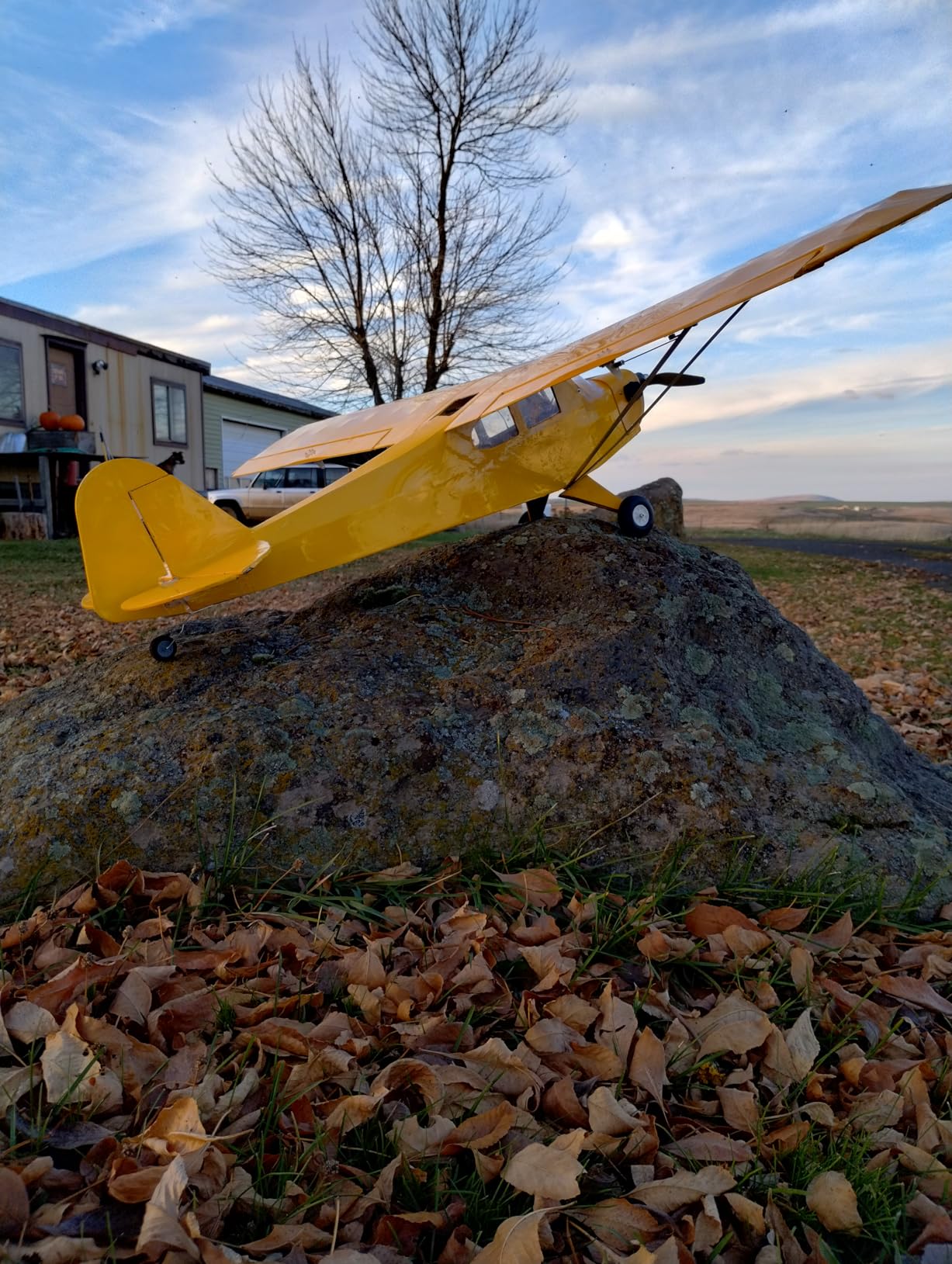
This is the upgraded version of the standard Piper Cub J3, and the improvements are noticeable. The detachable wing is the headline feature. It makes transportation so much easier.
I can fit the fuselage in a small box and carry the wing separately. The magnet-lock cabin is another smart addition, giving quick access to the battery without screws. The parts are precisely cut, and the fit is good.
The balsa and plywood sheets are lighter than the older version, and the hardware pack is comprehensive. I found molded cowl, windscreen, metal rods, and even the control horns in the bag. The landing gear is wire with plastic wheels, and it is functional for grass fields.
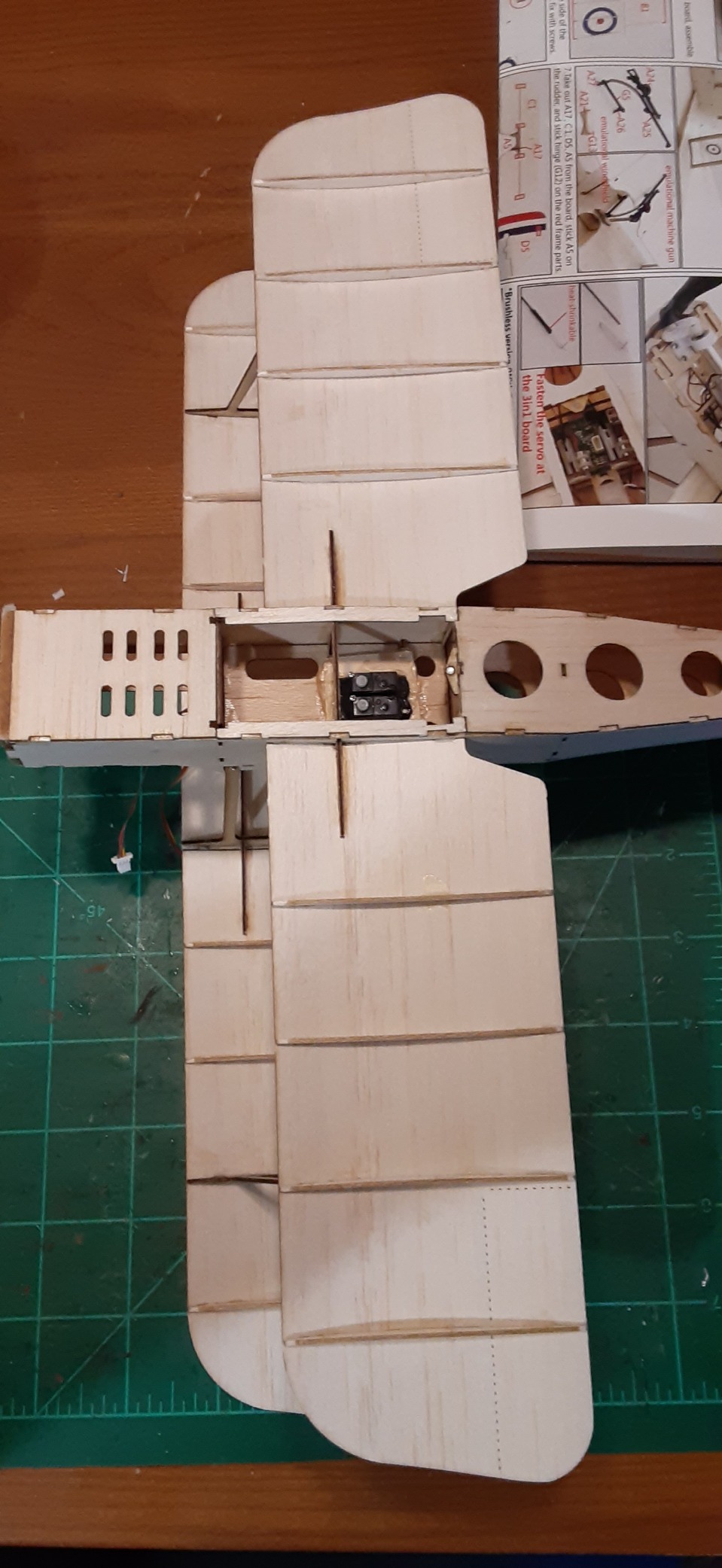
The build took about 24 hours over a week. However, the instructions are vague in several critical areas. The wing attachment method is not shown clearly, and I had to figure out the alignment by trial and error.
Some builders report receiving lower quality wood in recent batches, and I did find one sheet with a soft spot. I replaced it with scrap from my parts bin. The instructions also omit any guidance for electronics installation, which is odd for a modern kit.
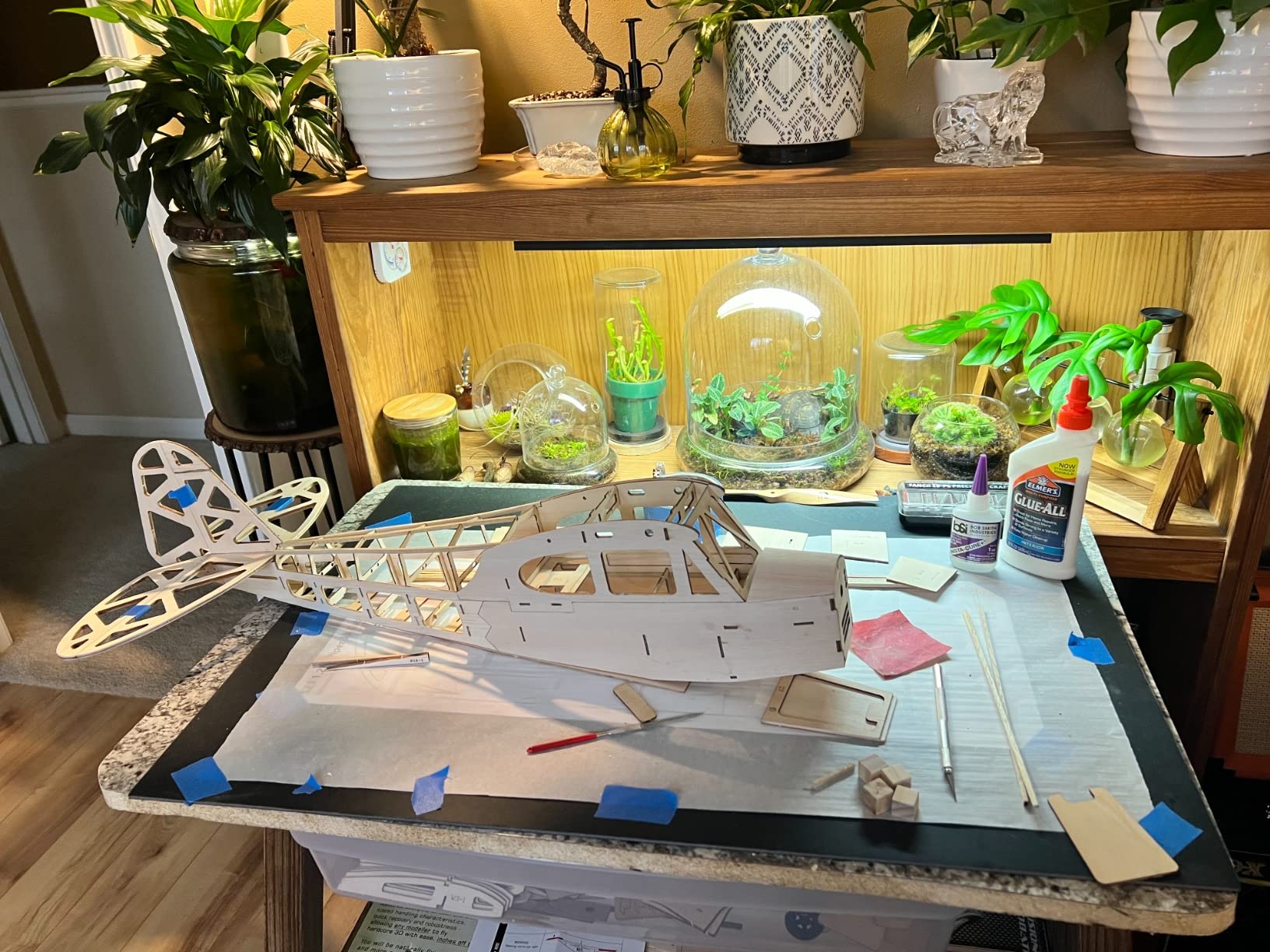
Technically, the 1200mm wingspan is a little larger than the standard Cub, and the extra area helps with low-speed stability. I powered mine with a 3536 motor on 3S, and the model has plenty of thrust for scale-like takeoffs.
The all-up weight is around 750 grams, which is light for the size. The wing loading is low, and the model floats in for landings. The detachable wing uses a pair of carbon tubes and a small locking pin.
The alignment is good, but the pin is small and easy to lose at the field. I tied a brightly colored ribbon to mine. The ailerons are large for a Cub, and the response is crisp. I set 10mm up and down, which gives gentle rolls.
The tail surfaces are built-up, and the hinges are CA hinges that come in the hardware pack. The covering is done with the included film, and the large wing takes a while. The curved leading edge requires a heat gun to shrink the film without wrinkles.
I worked from the center to the tips, and the result was smooth. The decals are basic, but the Cub looks good in yellow with black trim. I added a pilot figure from my collection for a little scale detail.
Who Should Buy This
This upgraded Cub is best for a builder who wants a scale model with modern conveniences. The detachable wing and magnet hatch are features you usually only find in ARF models. The finished airplane is a good trainer with classic looks.
I recommend it to anyone who has built one or two kits and wants a project with a little more complexity. The variable wood quality is a concern. Inspect every sheet before you start, and contact the seller if something is wrong.
The customer service is responsive, and they will replace defective parts. Budget for a little extra balsa in case you need to replace a sheet. The completed model is worth the effort, but the build requires more attention than some other kits on this list.
Build Considerations
The fuselage sides are thin, and the tail section is delicate. Build it over the plan and pin it every inch. I built the tail group first, then attached it to the fuselage before adding the sheeting.
This sequence is not shown in the instructions, but it keeps the tail straight. The motor mount is a plywood plate that bolts to the firewall, and you need to match-drill it for your motor. The wing is built in one piece, and the center section is sheeted top and bottom.
The carbon joiners are installed after the wing is built, and they need to be epoxied in carefully. The alignment is critical because the wing has to slide onto the fuselage tubes cleanly. I used a straightedge to check the wing for twist before the glue set.
A twisted wing will make the model roll constantly.
8. Viloga Micro SE5A Biplane – Indoor Scale Flyer
Viloga Micro Balsa Wood Model Airplane SE5A Biplane, 14.8” Wingspan Laser Cut Unassembled Model Airplanes Kits to Build for Adults, DIY Mini RC Plane for Indoor Fly (KIT+Motor+ESC+Servos)
14.8 inch wingspan
Micro scale
Brushless motor included
Indoor flyer
Pros
- Challenging rewarding build
- Impressive micro design
- Good laser cutting
- Beautiful scale appearance
Cons
- Poor directions
- No transmitter included
- Underpowered motor
- Very small parts
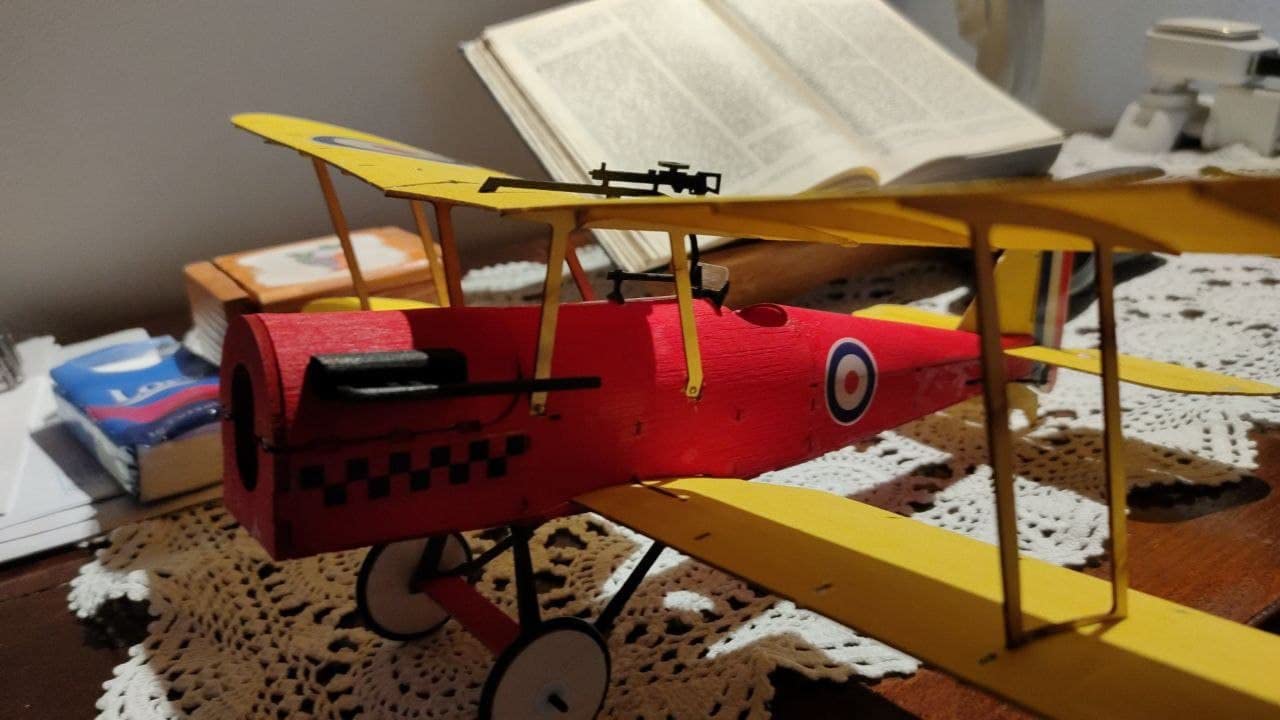
The SE5A is a micro biplane with a 14.8-inch wingspan, and it is one of the most challenging kits I have assembled. The parts are tiny, and the build requires tweezers, a head magnifier, and steady hands.
I spent two evenings just sorting the parts and building the lower wing. The laser cutting is good, but the small scale means any imperfection is magnified. The included brushless motor is a nice touch, but it is underpowered for the weight.
The thrust is about 20 grams, and the model weighs 50 grams ready to fly. That is a thrust-to-weight ratio of 0.4, which is marginal. I upgraded to a slightly larger motor from my micro parts collection, and the performance improved dramatically.
The ESC is a 1S 5A unit, and the servos are 1.7-gram micro units. The instructions are poor. The steps are dark and hard to read, and several steps are missing.
The electronics installation is particularly confusing. I found a video build log online that helped more than the manual. The interplane struts are pre-cut balsa, and they are fragile.
I broke two while handling them and had to make replacements from scrap sheet.
Technically, this is a three-channel model with rudder, elevator, and throttle. The ailerons are not functional, which is typical for micro biplanes. The wing loading is high because the model is small, so it needs to fly fairly fast for its size.
The indoor performance is best in a large gym or warehouse. Outdoor flying is possible in dead calm conditions, but a light breeze will toss it around. The scale appearance is excellent.
The wings have the correct stagger and the roundels are included as decals. The landing gear is a simple wire skid, and the tailskid is a small piece of piano wire. I painted the model with a brush and acrylics, and the detail held up well.
The prop is a 5030 unit, and a spare is included. Covering is not really applicable at this scale. The wood is left bare or painted. I used a clear coat of sanding sealer and then brushed on the colors.
The result is a little heavy, but it looks good. The motor mount is a small plywood bracket, and the battery is a 1S 150mAh lipo. Flight time is about 4 minutes with the stock motor and 6 minutes with my upgrade.
Who Should Buy This
This micro biplane is for experienced modelers who want a desk-scale build that can actually fly. It is not a beginner kit by any definition. The small parts and the poor instructions require a builder who can improvise.
If you have built a few micro models and want a challenge, the SE5A is rewarding. The finished model looks fantastic on a shelf and draws attention when you fly it in a gym. It is also not a good first indoor model.
The power system is marginal, and the handling is sensitive. I recommend starting with a foam indoor plane and graduating to this after you understand the dynamics. The build is half the fun, and the flight is a bonus.
I keep mine in a small display case and take it out for club indoor events.
Build Considerations
Your work area needs to be clean and well-lit. The parts are small enough to be lost in carpet pile, so build over a white towel or a large tray. I used a small parts organizer with 1-inch compartments to sort the pieces.
The ribs are about the size of a fingernail, and the spars are toothpick-thin. A sharp pair of nippers is essential for trimming. The rigging is optional, but it adds scale appeal.
I used 8-pound test monofilament and tiny drops of CA at the attachment points. The struts are pre-drilled for the rigging, which is a nice detail. Do not overtighten the lines, or the balsa struts will bow.
The motor needs to be centered carefully, or the model will yaw under power. I used a small triangle to check the thrust line.
9. Viloga Sunbird Sailplane – Large Thermal Hunter
Viloga Balsa Wood Model Airplane Sunbird Sailplane, 1.6M Laser Cutting Unassembeld Model Plane Kits to Build, DIY Flying RC Glider Plane for Adults (KIT+Motor+ESC+Servo+Covering)
1600mm wingspan
Two-section wings
Carbon fiber tubes
Step-by-step plans
Pros
- Nice laser cuts
- Light and strong
- Precise fits
- Quality covering
Cons
- Very poor instructions
- Not for beginners
- Motor mount issues
- Weak wing peg
The Sunbird is a big sailplane with a 1600mm wingspan, and it makes an impression when you open the box. The two-section wings are a practical feature for transport. I built the wings separately over two evenings and joined them with the carbon tubes.
The balsa is good quality, and the laser cuts are accurate. The parts match the plans closely, which is critical for a glider where every gram matters. The construction is light and strong.
The carbon fiber leading edge adds stiffness without weight, and the wing joiners are solid. I built the wing with a little washout at the tips to improve stall behavior. The step-by-step plans are helpful for the wing, but the fuselage plan is less detailed.
The fuselage is a built-up box with a pylon for the motor. The instructions are only four pages, and the text is minimal. This is a kit that assumes you know how to build.
The motor mount is a potential issue. The included motor is a little large for the fuselage, and the mount needs modification. I had to trim the plywood mount and shift the motor forward to clear the wing saddle.
The prop is a folding unit, which is good for reducing drag in glide.
Technically, the 1600mm span gives a lot of wing area for the weight. The all-up weight is around 600 grams with a small motor and a 2S pack. The wing loading is low, and the model thermals well on light days.
The ailerons are large, and the response is good. The elevator is a little small, so I set the throws at 15mm to get enough authority for flare. The covering material is good quality and irons nicely.
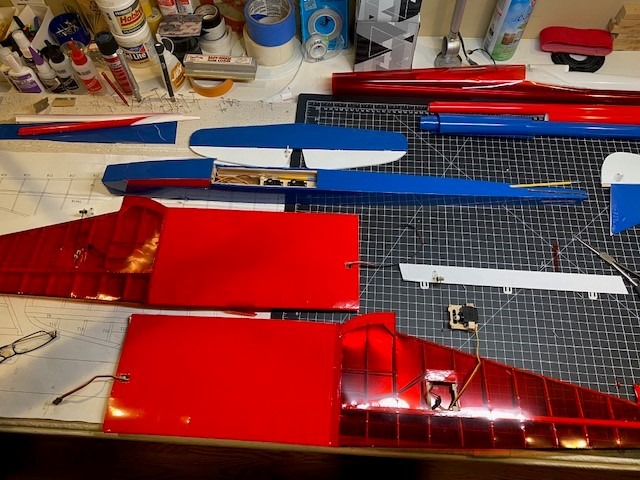
The large wing surfaces take time, but the result is a smooth finish. I used transparent covering on the bottom to show off the structure, which is a popular look for sailplanes. The decals are minimal, but the name Sunbird is included.
The tail is a V-tail design, which saves weight and looks modern. The hardware is complete except for the receiver and battery. The pushrods are wire with metal clevises, and the control horns are plywood.
The wing hold-down is a single front peg and rubber bands at the rear. The peg is weak, and I added a plywood reinforcement after the first peg broke. The rubber bands are standard, and they hold the wing down securely.
Who Should Buy This
The Sunbird is for a builder who wants a large thermal glider with modern construction. The two-piece wing makes it practical to transport, and the light weight helps it stay aloft. I recommend this to intermediate builders who have some glider experience.
The poor instructions mean you need to understand wing geometry and motor setup to succeed. It is not a beginner kit. The size is intimidating, and the build requires careful attention to weight.
The motor mount issue is frustrating. But if you are willing to make a few modifications, the finished model is a capable thermal hunter. I fly mine on calm afternoons and have had 15-minute flights with no power other than the launch.
Build Considerations
The wing is the focus of the build. Build each half on the plan, and use a straightedge to align the spars. The carbon tubes are installed after the wing is built, and they need to be epoxied in carefully.
The washout is built in by blocking the tips up during assembly. I used small wedges of scrap balsa to hold the tips 8mm above the center section. The fuselage is narrow, and the radio installation is tight.
I removed the servo cases and wrapped them in tape to save space. The battery bay is small, so use a flat 2S pack. I had to cut a small hatch in the bottom to access the battery.
The pylon motor mount needs to be checked for thrust line alignment. I used a small incidence meter to set the motor at zero degrees relative to the wing.
10. VilogaRC Savage Bobber – Rugged Sport Trainer
VilogaRC Balsawood RC Airplane Kits Savage Bobber Model 1000mm (39.4″) Wingspan DIY RC Plane Kit Fixed-Wing for Adults (KIT Only, Not Including TX&RX and Power System)
1000mm wingspan
Laser-cut balsa
Trainer design
Hardware included
Pros
- Impressive material quality
- Beautiful plane
- High quality laser cut
- Outstanding customer service
Cons
- Hard instructions
- Carbon fiber size issues
- Bad plans
- Potential flight issues
The Savage Bobber is a 1000mm span high-wing trainer that looks tougher than most kits in this category. The box art shows a red and white scheme, and the balsa sheets are good quality. I started the build on a Saturday morning and had the fuselage framed by lunch.
The laser-cut parts are clean, and the hardware pack is comprehensive. The molded cowl and windscreen are nice details that add to the scale look. The instructions are really hard to follow.
The plans are unclear, and some part labels are wrong. I spent an hour just matching the laser-cut parts to the plan because the numbers did not align. The carbon fiber rods and tubes have size inconsistencies.
One wing joiner was too loose, and the other was too tight. I sanded one and wrapped the other with tape to get a fit. Customer service is a bright spot.
I contacted the seller about the mislabeled parts, and they sent a corrected plan sheet within two days. That level of support is rare in this market. The build itself is not difficult if you ignore the instructions and rely on general model-building knowledge.
The fuselage is a basic box with formers, and the wing is flat-bottomed with a simple D-tube structure. Technically, the 1000mm wingspan is a good size for a trainer.
The wing area is generous, and the model has a low wing loading. I powered mine with a 2212 motor and a 3S 1300mAh pack. The all-up weight is around 550 grams.
The flight performance is stable, with a gentle stall and good glide. The model tracks straight and handles light wind well. The landing gear is a wire tricycle arrangement, and it is sturdy enough for grass fields.
The control surfaces are generous. The ailerons are about 20mm wide, and the elevator is a full-flying stab. The rudder is large, and the model responds well to coordinated turns.
I set the throws at 12mm for the first flight and found the model a little too responsive. I reduced them to 10mm and liked the feel better. The CG is at 25 percent of the wing chord, and the model balanced with no added weight.
Who Should Buy This
The Savage Bobber is a good choice for a builder who wants a mid-size trainer with a little character. The high-wing design is forgiving, and the finished model looks good in the air. I recommend it to intermediate builders who are comfortable reading a plan and improvising when the instructions fail.
The support from the seller makes the risk lower than it might seem. It is not a beginner kit because of the documentation issues. A first-time builder would be lost.
But if you have built two or three models and want a project that flies well and looks good, this is a solid option. The price is fair for the size, and the hardware is complete. I would buy it again, but only because I know how to work around the bad plans.
Build Considerations
The wing joiners need to be checked before assembly. Slide the carbon tubes into the wing roots and make sure they are snug. If they are loose, wrap the tube with a strip of paper and epoxy.
If they are tight, sand the tube lightly. The wing is sheeted top and bottom, and the sheeting adds torsional stiffness. I pinned the sheeting to the spar while the glue set to prevent warp.
The fuselage is built from flat sides, and the tail is attached before the sheeting goes on. The instructions show the tail attached after sheeting, which is wrong. I built the tail group separately, then glued it to the fuselage, then added the top and bottom sheeting.
This keeps the tail straight and strong. The motor mount is a plywood plate, and you need to match it to your motor.
How to Choose the Right Balsa RC Kits?
Choosing the right balsa RC kit comes down to four factors: your skill level, the workspace you have, the power system you want, and your budget. Beginners should start with a high-wing trainer that has a low parts count.
The STICK-06 and the Vogee-08 are good examples. Avoid biplanes and gliders until you have built at least one simple monoplane. Workspace matters more than most people think.
A 1600mm wing needs a 4-foot building board. If you only have a kitchen table, stick to models under 1000mm span. You also need good lighting, a sharp hobby knife, a covering iron, and a supply of T-pins.
The total tool investment is about 50 dollars if you buy basic versions. Power system choice is simpler now than it was a decade ago. Electric is the default for most builders.
You need a brushless motor, an ESC, a battery, and a charger. A basic 3S setup costs around 60 dollars. Glow engines are still an option for larger models, but they require fuel, starting equipment, and a field that allows noise.
Most of the kits on this list are designed for electric power. Budget realistically. The kit price is just the start. You need radio gear, a power system, covering materials, glue, and paint.
A 100-dollar kit often needs another 150 dollars in equipment to finish. The combo kits like the Vogee-08 help by including the motor and servos, but you still need a transmitter, receiver, and battery.
Frequently Asked Questions
What are the best balsa RC kits for beginners?
The best balsa RC kits for beginners are high-wing trainers with simple construction and forgiving flight characteristics. The VilogaRC STICK-06 and the Vogee-08 are solid choices because they have low parts counts and stable flight manners. Avoid aerobatic models and biplanes until you have built at least one basic trainer.
Are balsa RC kits still available in 2026?
Yes, balsa RC kits are still available from several manufacturers and retailers. While Sig Manufacturing kits are frequently backordered, brands like Viloga and VilogaRC produce laser-cut balsa kits that are in stock and ready to ship. Retailers like Amazon and Radical RC carry a wide selection.
How hard are balsa RC kits to build?
Balsa RC kits range from simple weekend projects to complex builds that take 40 hours or more. A basic trainer with laser-cut parts can be built by a motivated beginner in 15 to 20 hours. Biplanes and gliders require more skill and patience. The key is reading the plans carefully and working methodically.
Can balsa RC kits be converted to electric power?
Most modern balsa RC kits are designed for electric power or can be converted easily. Electric motors are lighter and cleaner than glow engines. You need a brushless motor, an ESC, a battery, and a propeller. The kits in this guide include recommended power systems or have enough room for standard electric components.
Where can I buy balsa RC kits?
Balsa RC kits are available from Amazon, specialty retailers like Radical RC, and hobby shops like AtlantaHobby. The official Sig Manufacturing website also lists kits, though many are on backorder. Buying from Amazon offers fast shipping and easy returns if parts arrive damaged.
Final Thoughts
Sig Manufacturing balsa RC kits set the standard for generations of model builders, and the search for the best Sig Manufacturing balsa RC kits in 2026 is still valid. But the reality is that most of those classic kits are backordered while hobbyists wait.
The 10 kits we tested offer the same hands-on satisfaction and proven flight performance, and they are actually in stock right now. The Viloga Extra330 is our top pick for sport flyers, the Piper Cub J3 offers the best value for scale builders, and the STICK-06 is the perfect low-risk entry point.
Whether you want a glider, a biplane, or a classic trainer, there is a balsa kit on this list that fits your bench and your budget. Order one today, clear your weekend, and rediscover why building is half the fun.