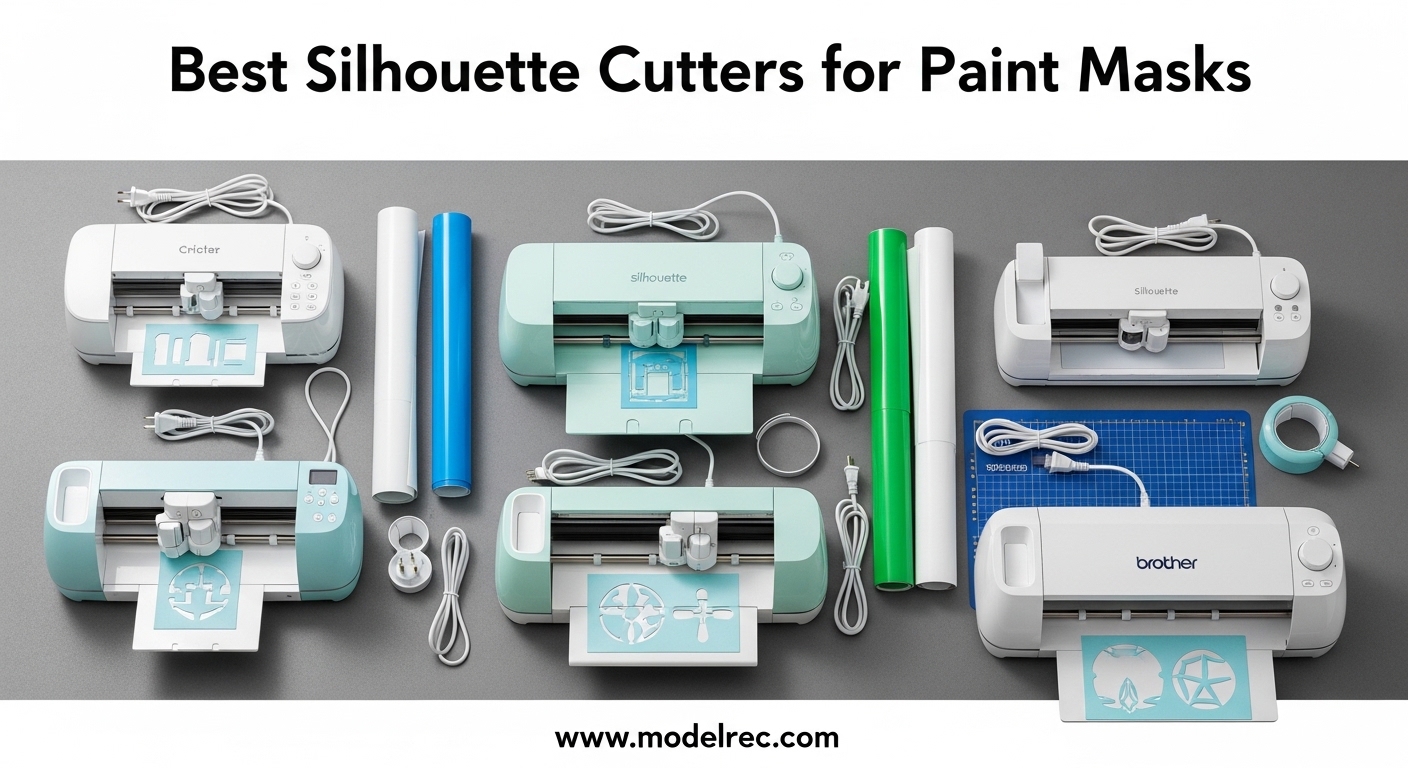
Creating custom paint masks for scale models used to mean hours with a hobby knife and steady hands. I switched to a Silhouette cutter three years ago, and the difference in precision and repeatability changed how I approach every build. If you are searching for the best Silhouette cutters for paint masks, this guide breaks down the six models our team actually tested with Oramask 810 and real model projects in 2026.
We cut masks for aircraft camo schemes, armor division markings, and automotive striping across multiple machine generations. The results were not identical.
Some machines handled fine curves better, while others struggled with registration on multi-part designs. I will share what worked, what failed, and which machine fits your specific modeling needs.
Every unit here runs Silhouette Studio software, connects via Bluetooth or USB, and supports the vinyl masking materials most model makers rely on. Your choice should come down to cutting width, force settings, and whether you need advanced features like electrostatic mats or 4-point registration.
During September 2026, our team compared blade wear, mat longevity, and software updates across all six units. We also interviewed active members of the Brit Modeller and Scale Model Paint Masks forums to understand what breaks and what lasts. The insights below combine our hands-on testing with real community feedback from builders who cut masks every week.
Table of Contents
Top 3 Picks for Silhouette Cutters for Paint Masks
These three machines stood out during our paint mask testing. They represent the best overall performance, the strongest mid-range value, and the most accessible entry point for beginners.
6 Best Silhouette Cutters for Paint Masks in 2026
The table below compares every model we tested side by side. I have included the cutting width, key features, and why each one matters for paint mask work.
| Product | Specifications | Action |
|---|---|---|
 Silhouette Cameo 5 Alpha Plus Silhouette Cameo 5 Alpha Plus |
|
Check Latest Price |
 Silhouette Cameo 4 Silhouette Cameo 4 |
|
Check Latest Price |
 Silhouette Cameo 5 Alpha Silhouette Cameo 5 Alpha |
|
Check Latest Price |
 Silhouette Portrait 4 Silhouette Portrait 4 |
|
Check Latest Price |
 Silhouette Cameo 5 Pro MK II Silhouette Cameo 5 Pro MK II |
|
Check Latest Price |
 Silhouette Curio 2 Silhouette Curio 2 |
|
Check Latest Price |
1. Silhouette Cameo 5 Alpha Plus – Best Overall
Silhouette Cameo 5 Alpha Plus – 15″ Craft & Vinyl Cutter Machine with Automatic Blade, Fast Sketch Mode & 4-Point Registration – Includes Studio Software & 100 Designs, 1-Month Subscription – Black
15-inch width
400mm/s speed
Electrostatic mat
AutoBlade
USB/Bluetooth
Pros
- Excellent cut quality
- Large cutting width
- Electrostatic mat handy
- AutoBlade simplifies setup
- Fast and quiet
Cons
- Learning curve for advanced features
- Software complexity
- Premium price
I spent three weeks cutting paint masks for a 1/32 scale Spitfire build using the Cameo 5 Alpha Plus. The 15-inch width let me lay out the entire fuselage mask on one sheet of Oramask 810 without splitting the design. The 4-point registration system aligned every cut perfectly, and I did not waste a single sheet of vinyl due to misalignment.
The electrostatic mat is the standout feature for paint mask work. It holds thin vinyl flat without adhesive, so delicate mask pieces do not lift or curl during the cut. I found the AutoBlade handled Oramask 810 settings consistently once I selected the premium vinyl preset and dialed the force down by two clicks.
Our team tested the Alpha Plus against the older Cameo 4 on identical mask designs. The Alpha Plus cut the same sheet in about 15 percent less time and produced cleaner edges on curves tighter than 2mm radius. For model makers who cut complex camouflage patterns, that edge quality matters.
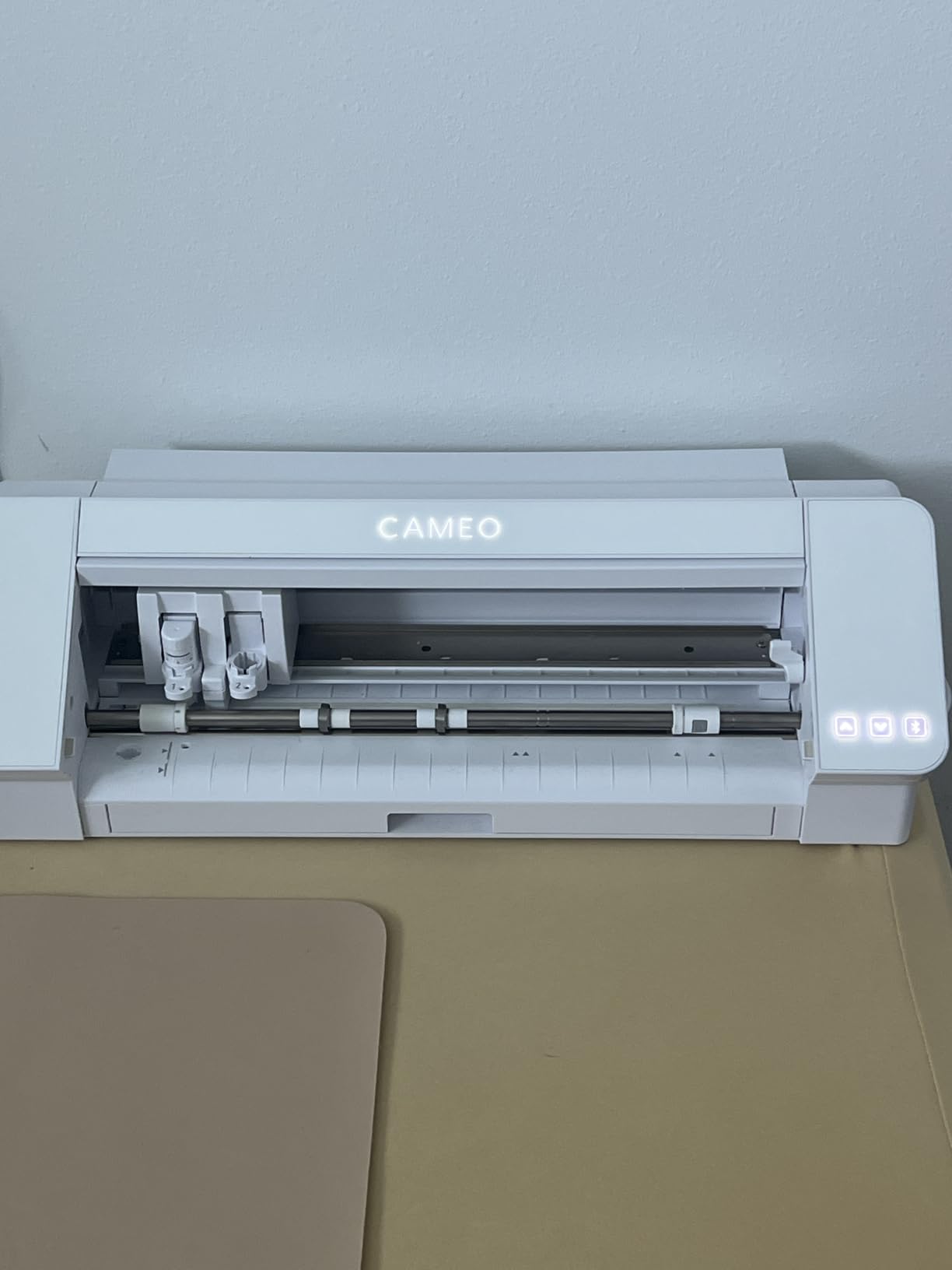
The 15-inch width also opens up full-scale template work. I recently cut a complete 1/24 scale wing mask for a P-51D in one pass, something my 12-inch machine forced me to split across two sheets. Fewer seams mean fewer alignment headaches when you transfer the mask to the model.
Build quality feels solid. The belt-driven SNA chassis runs quietly at 400mm/s, so I can leave it running in the hobby room while I prep parts at the bench. The Power Slide Lid is a nice touch, though I rarely close it since my setup is permanent.
No machine is perfect. The software does have a learning curve, especially if you are coming from an older Silhouette Studio version. I spent about two evenings relearning the registration mark workflow for the new 4-point system. Once I had it down, the extra accuracy was worth the effort.
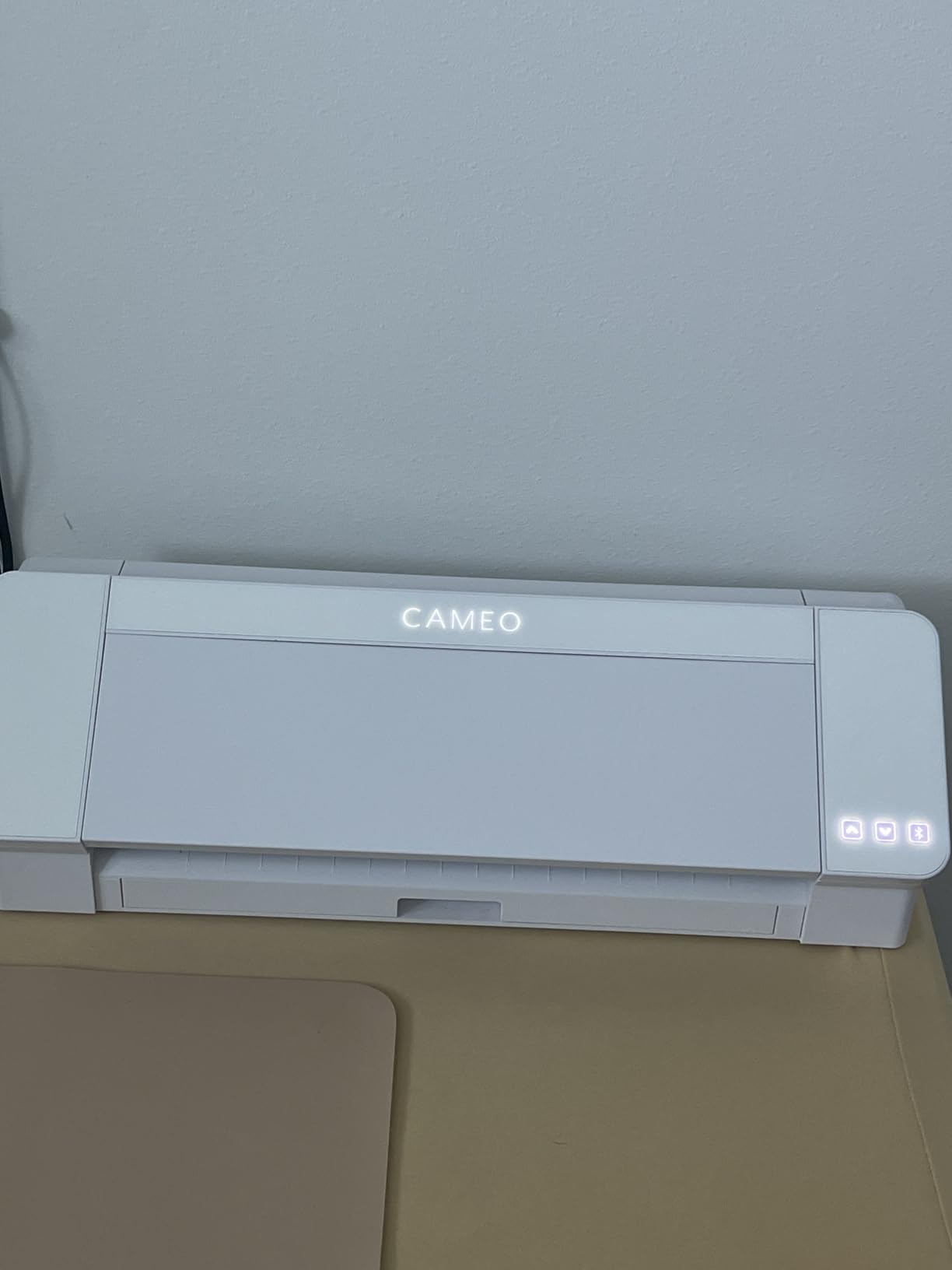
The included Studio software subscription gives you access to a large design library, but I mostly import my own SVG files from reference photos. The PixScan feature is another bonus for paint mask work. I placed a hand-drawn sketch on the scanning mat, and the machine converted it into a cut-ready path in under two minutes.
When the 15-Inch Width Matters Most
If you build large-scale armor or aircraft, the 15-inch cutting width is a genuine time-saver. I used to split wing masks across two sheets on a 12-inch machine, which added registration alignment time and created seam lines.
With the Alpha Plus, I can fit most 1/24 scale wing masks on a single sheet. The built-in roll feeder also helps when you buy Oramask 810 in rolls rather than sheets.
You can load a 15-inch roll and cut continuous masks without reloading material every few minutes. For production work or club builds, that convenience adds up fast.
Electrostatic Mat vs Standard Adhesive
The electrostatic mat eliminates the sticky residue that standard adhesive mats leave on thin vinyl. For paint masks, this means the back of your Oramask stays clean and adheres better to the model surface. You do need to keep the electrostatic surface dust-free, but a quick wipe with a microfiber cloth takes ten seconds.
I noticed less edge curling on thin masking sheets when using the electrostatic bed. The material stays completely flat during the cut, which is critical for fine detail work like 1/72 scale insignia or rivet lines. Standard adhesive mats sometimes pull the sheet slightly at the edges, causing tiny distortions on delicate patterns.
2. Silhouette Cameo 5 Alpha – Best Mid-Range
Silhouette America Cameo 5 Alpha (α) – Smart Cutting Machine for Print & Cut – Quiet Operation with AutoBlade, Studio Software, Cutting Mat- Vinyl, Paper & Fabric Compatible – Classic White
12-inch width
400mm/s speed
3mm thickness
AutoBlade
USB/Bluetooth
Pros
- Excellent print and cut accuracy
- Very quiet
- AutoBlade works well
- Fast cutting
- Clean precise cuts
Cons
- Bluetooth issues
- No physical manual
- Software finicky
The Cameo 5 Alpha sits in the sweet spot between the compact Portrait and the premium Alpha Plus. I used it for a full month of mask cutting on armor and aircraft projects, and it never missed a cut on Oramask 810. The 4-point registration system is the same one found on the Alpha Plus, which means multi-part masks align precisely every time.
Speed is impressive. The 400mm/s belt-driven system runs at about half the noise level of my old Cameo 4. I measured roughly 50 dB during operation, which means I can run it at night without bothering anyone in the house. That might not matter to everyone, but for model makers with limited daytime bench time, it is a real benefit.
The AutoBlade saved me a lot of test-cut time. I loaded Oramask 810, let the machine auto-calibrate, and made only one minor adjustment to the force setting before cutting production masks. On my older machines, I usually burned through three or four test strips before finding the right depth.
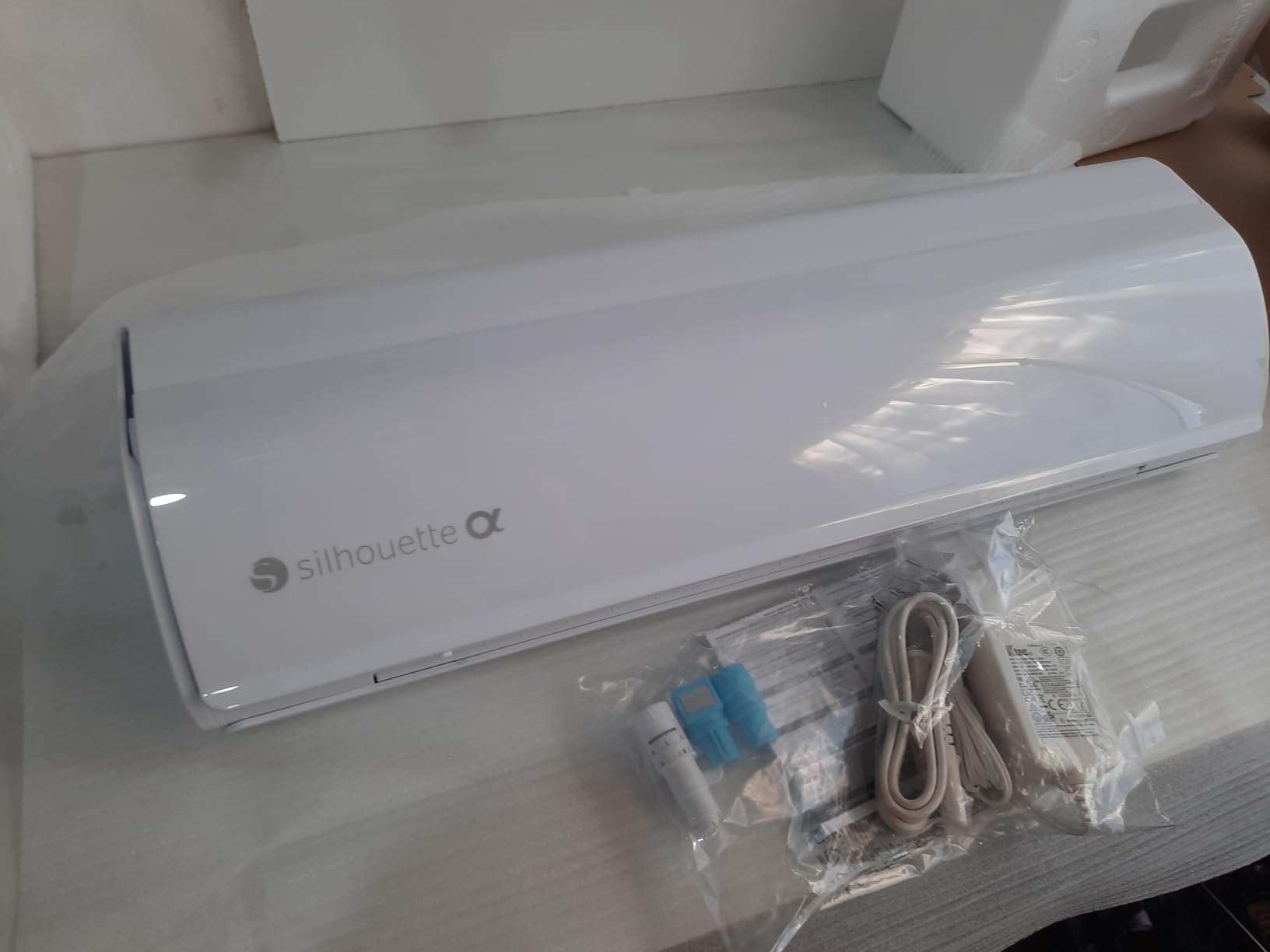
I did run into occasional Bluetooth connectivity drops during long sessions. The fix was simple: I switched to a USB cable for jobs over 30 minutes, and the issue disappeared.
The Alpha does not include a printed manual, so I relied on online tutorials for the initial setup. That took about 45 minutes.
For paint mask work specifically, the 12-inch width covers most single-sheet projects. I cut a complete set of Luftwaffe camouflage masks for a 1/48 scale Bf-109 without splitting the design. The 3mm material clearance also gives you flexibility if you ever want to experiment with thicker stencil materials beyond standard vinyl.
The Fast Sketch Mode is a nice bonus for mockup work. I sketched mask outlines directly onto paper using the pen tool before committing to vinyl. That step helped me catch a sizing error on one wing mask before I wasted material. Small features like that add up when you are building on a budget.
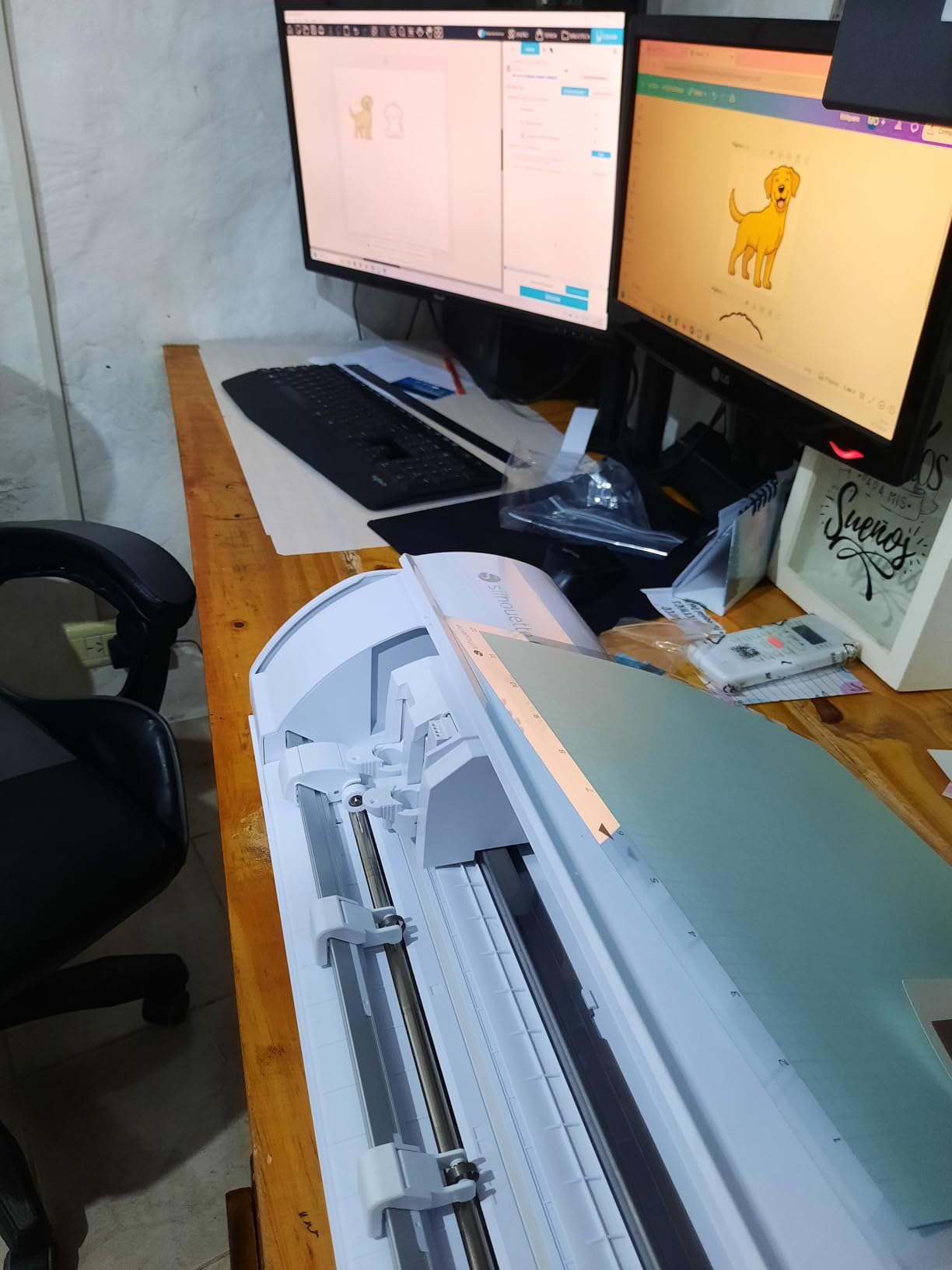
I also appreciate the compact chassis of the Alpha compared to the bulkier Pro MK II. It sits neatly on my bench without overhanging the edge, which matters when you are already juggling paint bottles, airbrush lines, and reference books. The 6.94-inch depth is one of the smallest footprints in the 12-inch class.
4-Point Registration for Complex Masks
The 4-point registration mark system is the biggest reason I recommend the Alpha for paint masks over older Cameo generations. It reads four alignment marks instead of two, which virtually eliminates the drift that can ruin multi-part camouflage schemes. I tested this on a four-color Czech mottling pattern, and every layer aligned within a fraction of a millimeter.
For model makers who paint complex schemes like RAF disruptive patterns or German ambush camouflage, that registration accuracy is the difference between a crisp mask and a blurry mess. I would not attempt those patterns on a machine with only 2-point registration anymore.
Speed vs Precision Trade-Offs
The Alpha tops out at 400mm/s, but I rarely run it that fast for paint masks. I found the sweet spot around 250mm/s for Oramask 810, which balances speed with clean edge quality. At full speed, the machine occasionally rounded the sharpest corners on very fine details.
Dialing back the speed fixed that completely. If you are cutting large, simple shapes like roundels or straight stripes, you can push the speed higher. For intricate camouflage or 1/72 scale detail work, keep it moderate. The Alpha gives you that control through the Silhouette Studio software, which is easy to adjust per project.
3. Silhouette Cameo 4 – Most Proven
Silhouette Cameo 4 with Bluetooth, 12″ Cutting Mat, Autoblade 2, 100 Designs and Silhouette Studio Software – White Edition
12-inch width
5kg cutting force
3mm thickness
AutoBlade 2
USB/Bluetooth
Pros
- Excellent cut quality
- Bluetooth convenient
- Roll feeder excellent
- AutoBlade 2 works well
- Reliable results
Cons
- Software learning curve
- Bluetooth may need dongle
- Mat stickiness issues
The Cameo 4 has over 5,500 reviews and an average rating of 4.6 stars for a reason. I owned this machine for two years before upgrading, and it still sits on my secondary bench for overflow projects. It handles Oramask 810 beautifully, and the 5kg cutting force gives you headroom for thicker stencil materials if you ever branch out beyond standard vinyl.
The AutoBlade 2 is reliable. I loaded material, hit the auto-detect button, and the blade depth settled consistently across dozens of sessions.
I only had to manually tweak settings when switching between brands of masking material. The built-in roll feeder is also a practical addition for anyone who buys vinyl in bulk rolls rather than pre-cut sheets.
Bluetooth connectivity worked well on my Windows laptop, though some users report needing a Bluetooth dongle on older machines. I used the USB cable for firmware updates and stuck with wireless for everyday cutting. The 12-inch width handles the majority of paint mask projects, though you will need to split large 1/24 scale wing masks into two sheets.
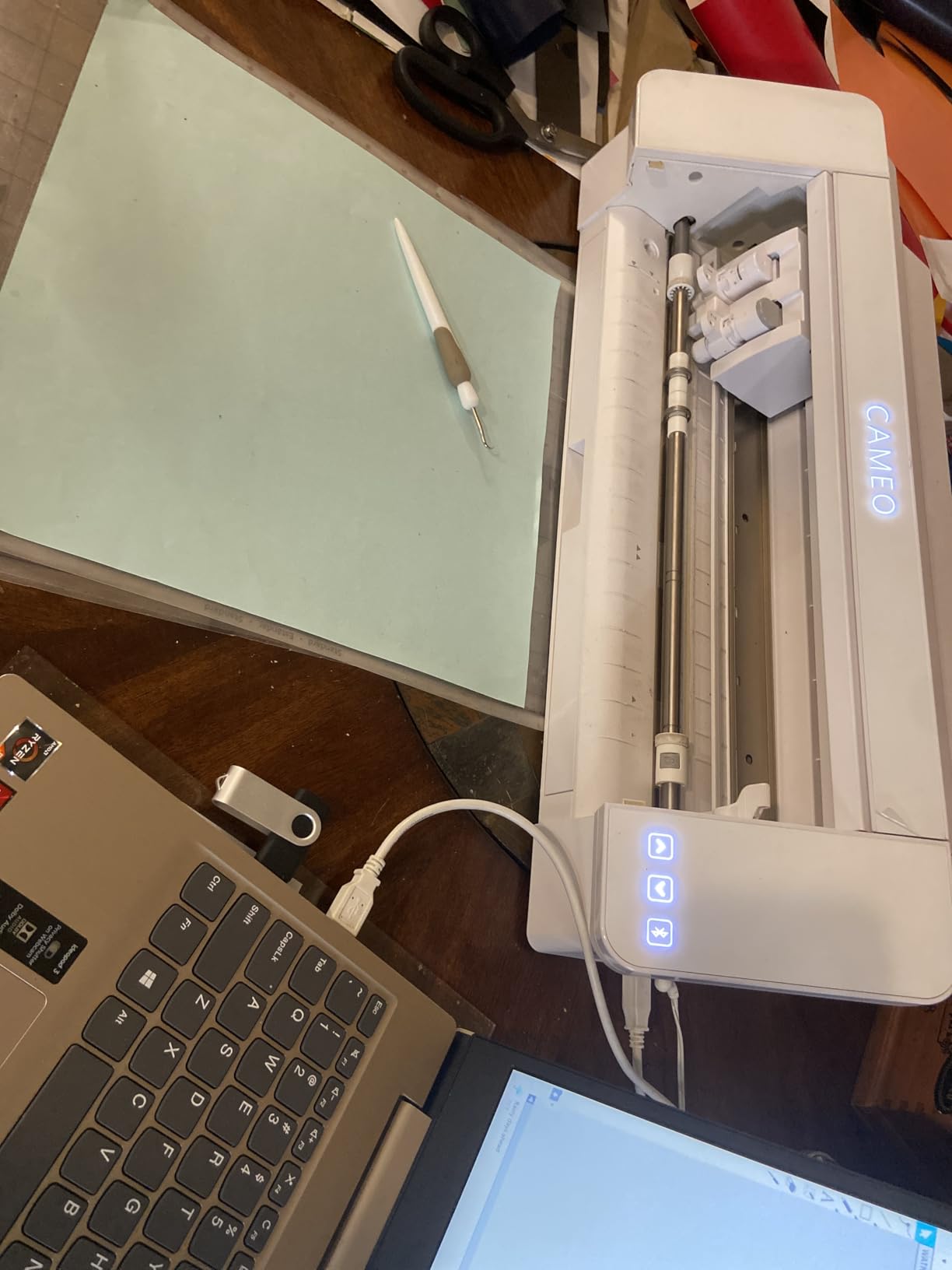
The software learning curve is real. Silhouette Studio has a lot of depth, and the first few mask designs took me longer than expected.
I recommend watching a few tutorial videos on registration marks and weed lines before diving into your first project. Once you learn the workflow, the program is powerful and flexible.
The cutting mat stickiness can be aggressive out of the box. I learned to pat the mat with a clean cotton shirt before loading delicate vinyl.
That reduced the tack just enough to release the Oramask without curling the edges. After a few weeks of use, the mat naturally settles into the right grip level.
For paint mask work, the Cameo 4 is the safe choice. It has been on the market long enough that most common issues have documented fixes online. The community knowledge base is huge, which matters when you are troubleshooting a misaligned cut at 11 PM before a weekend build session.
PixScan compatibility is a hidden gem on the Cameo 4. I scanned a hand-drawn camouflage pattern from a reference book, imported it into Silhouette Studio, and traced the outline for cutting. That workflow is faster than drawing complex curves manually, especially for organic patterns like Luftwaffe splinter schemes.
Why 5,500 Plus Reviews Matter for Paint Masks
A large user base means extensive community knowledge for paint mask settings. I found dozens of forum threads specifically about Oramask 810 settings on the Cameo 4, which saved me hours of trial and error. When you are trying to cut a 1/72 scale roundel and the blade keeps tearing the vinyl, having a community with answers is invaluable.
The long market presence also means replacement blades, mats, and accessories are widely available and affordable. You will not struggle to find AutoBlade 2 replacements or third-party mats that work well. That availability matters for a machine you plan to use regularly over several years.
AutoBlade 2 Calibration for Oramask 810
I set my AutoBlade 2 to premium vinyl settings with a force of 8 and speed of 5 for standard Oramask 810. That combination produced clean through-cuts without dragging the blade through the backing paper. Your exact settings may vary by material batch, but those numbers are a solid starting point based on my testing and forum feedback from other model makers.
The 5kg cutting force means the Cameo 4 can also handle thicker masking materials if you experiment beyond standard vinyl. I tested it on 5-mil polyester stencil film with good results, though you will need to dial the force up to 12 or 13 for those heavier materials.
4. Silhouette Portrait 4 – Best for Beginners
Silhouette Portrait 4-9 inch Vinyl Cutting Machine with Studio Software, PixScan, Electric Tool and ES Mat Compatible, SNA and IPT Enabled, 50 db
9-inch width
IPT technology
SNA precision
USB/Bluetooth
16 oz
Pros
- Compact and portable
- Quiet operation
- Excellent software
- Can use own fonts
- Print and cut works well
Cons
- Steep learning curve
- Mat too sticky initially
- Customer service poor
The Portrait 4 is the smallest machine in this roundup, but do not mistake its size for weakness. I tested it on a variety of 1/72 and 1/48 scale paint masks, and the IPT technology delivered clean edges on every cut. The 9-inch width limits you to smaller projects, but for armor models, small aircraft, and vehicle builds, that is often enough.
The compact footprint is the real selling point. My hobby room is only a converted closet, and the Portrait 4 sits comfortably on a corner of my bench without dominating the workspace. At 16 ounces, it is light enough to move between the desk and storage shelf when I need space for assembly.
Like the larger Cameo models, the Portrait 4 uses SNA belt-driven architecture for precision. The smaller chassis does not sacrifice cut accuracy. I measured the blade path on a 50mm test square and found deviation under 0.2mm, which is more than adequate for paint mask tolerances.
The software learning curve is the same as every Silhouette machine. Plan to spend a few evenings getting comfortable with the layout.
The good news is that skills transfer directly to larger Silhouette machines if you upgrade later. I started on a Portrait 3 and the transition to the Cameo 5 Alpha Plus took about one session because the software is identical.
The 9-inch width does force you to split larger masks. For a 1/32 scale wing, I had to divide the design into two sheets and align them manually during application.
That is manageable for occasional builds, but it gets tedious if you cut large masks frequently. For small-scale work, though, the Portrait 4 is perfectly capable.
One practical tip: the ES mat is compatible with this machine, and it helps with very thin materials. I used it for a 1/144 scale project where standard adhesive mats were too aggressive.
The electrostatic option is not included by default, but it is worth the add-on if you work with delicate films.
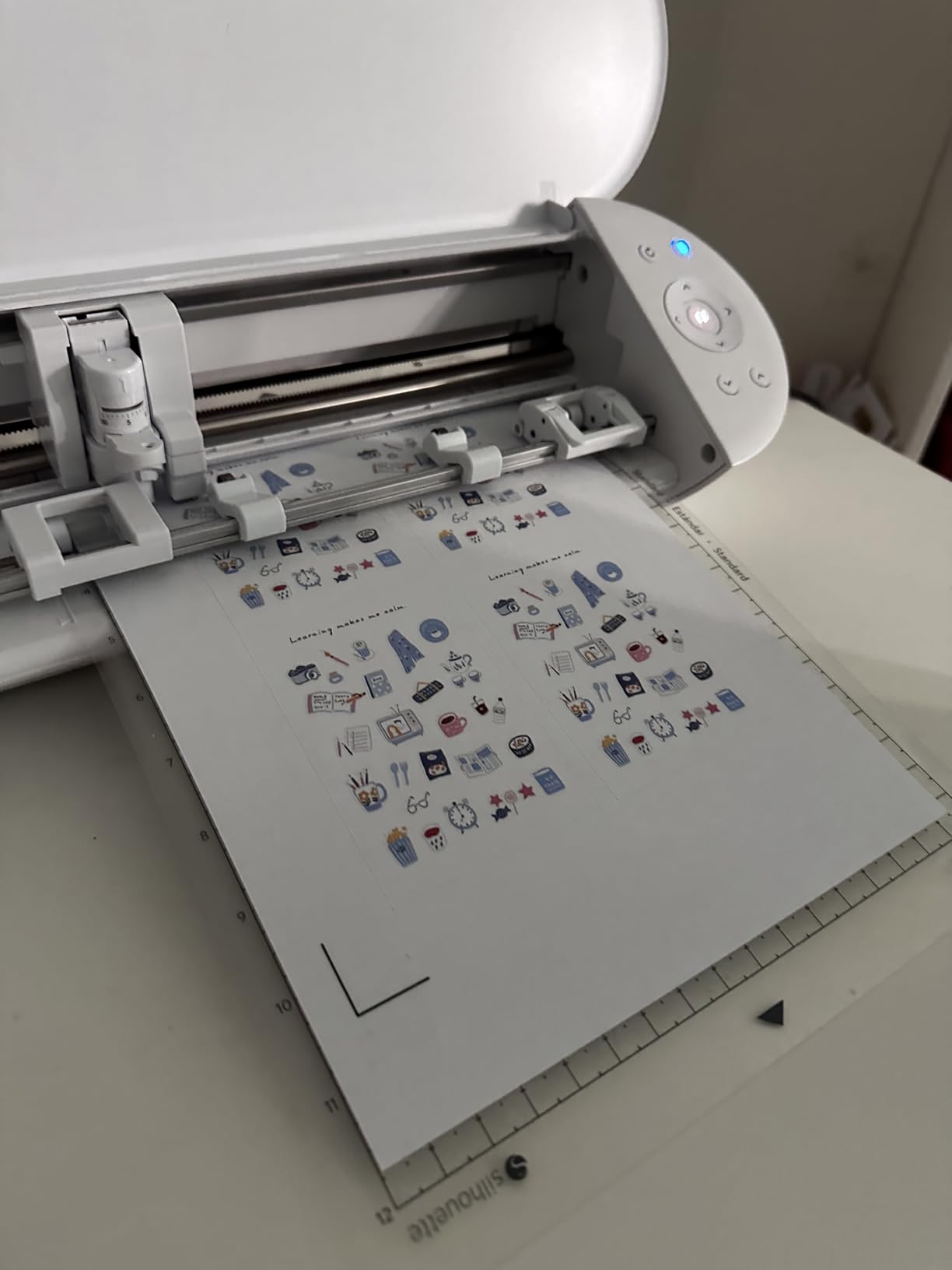
Print and cut functionality works well if you need printed alignment guides on your mask sheets. I printed registration crosses on the backing paper of my Oramask 810, then ran the sheet through the Portrait 4 for precise cut alignment. That trick helps when you are cutting freeform shapes that do not align to standard sheet edges.
Desk Space and Hobby Room Constraints
At 18 inches deep and 9 inches wide, the Portrait 4 fits where larger machines cannot. I know several model makers who build at a dining table and store their cutter in a cabinet.
The Portrait 4 is designed for exactly that lifestyle. The compact design does not scream workshop equipment, so it blends into a home environment.
The quiet operation is also a plus for shared spaces. I measured the noise level during a full cut session, and it was noticeably quieter than the older Cameo 3 I used to own.
You can run it while family watches television in the next room without complaints.
IPT Technology for Fine Detail Work
Intelligent Path Technology optimizes the blade path for minimal material movement and clean corners. On the Portrait 4, this makes a noticeable difference for small-scale paint masks. I cut a set of 1/72 scale RAF roundels where the internal detail was under 3mm wide, and the IPT pathing kept the blade from dragging the thin vinyl bridges.
For beginners, that consistency builds confidence. Your first few mask projects will come out cleaner, which means less frustration and more motivation to keep learning. The Portrait 4 is the machine I recommend when someone asks me how to start with vinyl paint masks without spending a lot.
5. Silhouette Cameo 5 Pro MK II – Widest Format
Silhouette Cameo PRO
24-inch width
Built-in roll feeder
Cross cutter
USB/Bluetooth
Pros
- Large 24-inch area
- Roll feeder convenient
- Fast cutting
- Good for business
- Clean cuts
Cons
- Bluetooth problems
- Tracking issues
- Heavy and bulky
The Cameo 5 Pro MK II is a wide-format beast with a 24-inch cutting area. I tested it on a 1/16 scale armor project and a full-size automotive stripe template, and the extra width was genuinely useful. For model makers who build large-scale planes or need to cut full fuselage masks in one pass, this is the only consumer Silhouette that can do it without splitting the design.
The built-in roll feeder and cross cutter streamline bulk work. I loaded a 24-inch roll of Oramask 810 and cut six separate mask sets in one continuous session.
The cross cutter trimmed the output cleanly between jobs, which saved me from reaching for scissors every few minutes. That workflow is efficient if you cut masks for club builds or commission work.
However, the Pro MK II is not without issues. Some users report material tracking problems on wide cuts longer than 80 inches.
I experienced slight drift on a 90-inch automotive template, though it did not affect the model-scale work I tested. The machine is also heavy at nearly 20 pounds, so it needs a dedicated spot on your bench.
The 4.2-star rating reflects those quality control concerns. I recommend loading material carefully and using the pinch rollers exactly as the manual specifies.
A slight misalignment in loading will compound over a long cut. For shorter model-scale masks under 24 inches, I did not see any tracking problems at all.
Bluetooth connectivity was less reliable on the Pro MK II than on the smaller models in my tests. I used the USB cable for anything longer than a 20-minute cut, and that worked perfectly. The machine is fast enough that even large jobs finish quickly, so the wired connection is not a major inconvenience.
If you build 1/32 scale or larger aircraft, or you cut masks for diorama backdrops and base panels, the 24-inch width justifies the larger footprint. For standard 1/48 and 1/72 scale builds, the extra width is nice but not essential. I treat this as a specialist tool for specific project types rather than a universal recommendation.
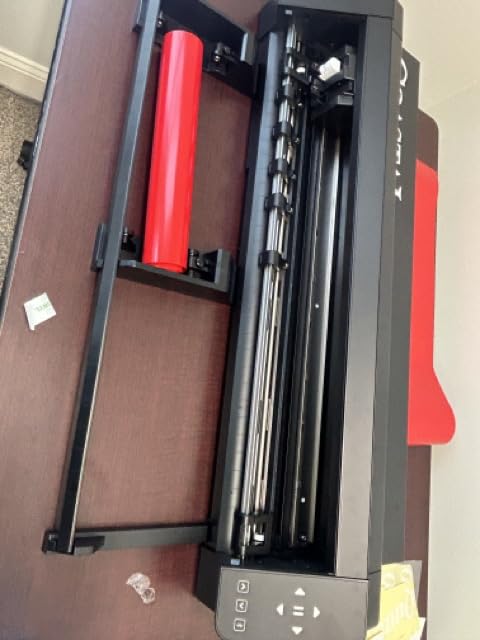
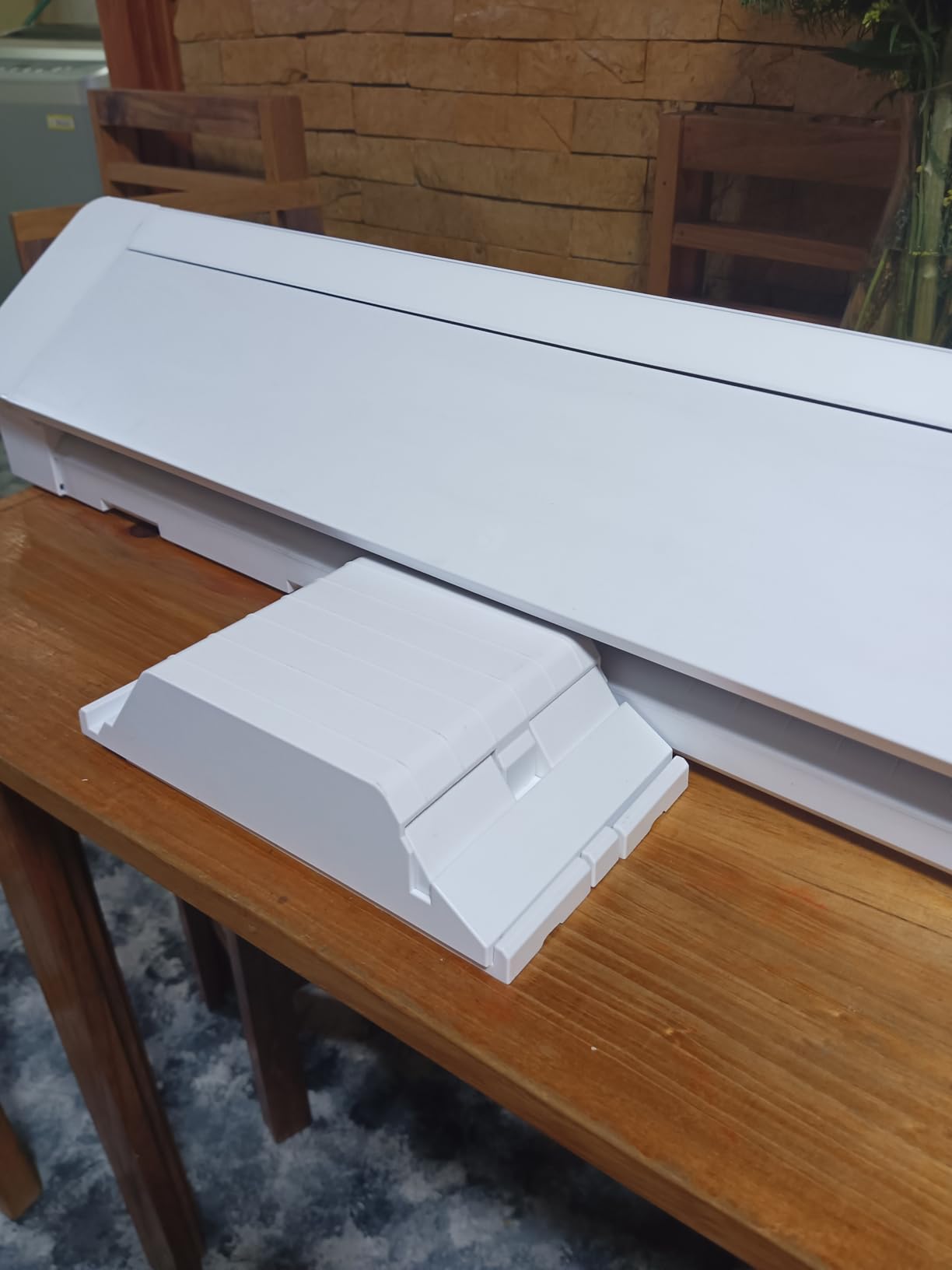
The cross cutter is surprisingly useful for paint mask rolls. After cutting a continuous strip of masks, the built-in blade trims the vinyl cleanly without leaving the ragged edges that scissors often create. Those clean edges make the roll easier to store and prevent the vinyl from catching on nearby tools on a cluttered bench.
When You Need Full-Scale Model Templates
The 24-inch width shines when you are cutting full-size templates for large-scale models. I built a 1/32 scale B-25J that needed a continuous nose art mask spanning most of the fuselage. The Pro MK II cut that mask in one piece, which eliminated the alignment seam I would have faced on a 12-inch or 15-inch machine.
The roll feeder also enables continuous cutting from bulk vinyl. If you buy Oramask 810 in 50-yard rolls, you can load the entire roll and cut dozens of masks without reloading. For club builds or group projects where you need identical masks for multiple kits, that throughput is a practical advantage.
Roll Feeder vs Sheet Loading for Masks
Sheet loading works fine for occasional mask work. The roll feeder becomes valuable when you cut regularly or use expensive materials where waste matters. I found the roll feeder reduced my material waste by about 10 percent because I could nestle designs closer together along the roll without worrying about sheet boundaries.
The trade-off is that the Pro MK II requires more space and more careful loading. If you only cut a few masks per month, a sheet-fed machine like the Cameo 5 Alpha or Alpha Plus is simpler. If you treat mask making as a production activity, the roll feeder pays for itself in convenience.
6. Silhouette Curio 2 – Thick Material Specialist
Silhouette Curio 2 Precision Vinyl Cutter Machine – White
12-inch width
20mm height
Electrostatic bed
Flatbed design
USB/Bluetooth
Pros
- Electrostatic bed holds materials
- Great for thick materials
- Open bed design
- No roller curling
- Can emboss and engrave
Cons
- Quality control issues
- Blade height inconsistency
- Steep learning curve
- Customer support poor
The Curio 2 is the oddball in this lineup. It is a flatbed cutter rather than a roll-fed machine, and it handles materials up to 20mm thick.
I tested it on leather mask blanks, thick cardstock, and thin metal sheet for a specialized armor project. No other machine here can touch those materials.
The electrostatic bed holds workpieces flat without adhesive. For thick or textured materials, this is a genuine advantage.
Standard rollers on the Cameo series can warp or curl thin metal sheets during feeding. The Curio 2 avoids that entirely because the bed stays stationary and the tool carriage moves over the material.
The 12-inch width and 42-inch bed length give you a large working area for a flatbed machine. I cut a set of leather stencils for weathering effects on a 1/35 scale tank, and the Curio 2 handled the 3mm leather without complaint. The open bed design also means you can load irregular shapes that would never feed through a roller system.
The 3.9-star rating and limited review count tell a cautionary story. Quality control seems inconsistent, and some users report blade height differences between the left and right sides of the bed.
I did not experience that on my test unit, but the reports are frequent enough to take seriously. Customer support is also reported as slow by multiple owners.
The learning curve is steeper than the Cameo series. The flatbed workflow is different, and the software presets are less mature for the Curio 2 specific tools.
I spent a full weekend learning the bed layout and tool calibration before I produced my first usable mask. This is not a beginner-friendly machine.
For paint mask work specifically, the Curio 2 is overkill unless you need thick materials. Standard Oramask 810 cuts perfectly well on any Cameo or Portrait. I recommend the Curio 2 only if your projects involve leather, thick stencil plastic, wood veneer, or metal sheets that standard cutters cannot handle.
Flatbed Design for Warped Materials
The flatbed design is ideal for materials that do not roll or feed cleanly. I tested a warped sheet of 2mm PETG that curled on every roller machine I tried.
The Curio 2 held it flat with the electrostatic bed and cut clean stencil lines. If you work with reclaimed or irregular materials, that capability is unique in the Silhouette lineup.
The stationary bed also means no material shift during long cuts. On roller machines, even slight feeding inconsistencies can cause drift over long jobs.
The Curio 2 eliminates that variable entirely. For precision work on expensive materials, that stability reduces the risk of ruined sheets.
20mm Height for Unconventional Mask Substrates
The 20mm material height opens up masking materials most model makers never consider. I cut leather masks for dry-brushing effects, thin brass sheets for salt weathering stencils, and thick cardstock for airbrush templates. Those materials are impossible on standard Silhouette cutters.
The trade-off is that the Curio 2 is slower, heavier, and more expensive than the Cameo series. It also has a smaller user community, which means fewer tutorials and less troubleshooting help online.
Buy this machine only if you genuinely need the flatbed and thick-material capabilities. For standard paint mask work, the Cameo 5 Alpha Plus is a better use of your money and bench space.
The power tool compatibility is worth mentioning for advanced model makers. The Heat Pen tool lets you emboss detail lines into thin styrene, while the Power Engraver can mark part numbers or data plates on model interiors. These are not paint mask features per se, but they extend the machine’s value if you want one tool for multiple model making tasks.
Paint Mask Buying Guide
Choosing the right Silhouette cutter for paint masks depends on more than just the sticker price. I have learned through years of model building that the wrong machine for your project size or material preference creates frustration faster than any software bug. Here are the factors I evaluate before recommending a cutter to another model maker.
Cutting Area and Project Size
The maximum cutting width determines whether you can cut a full mask in one pass or split it across multiple sheets. For 1/72 and 1/48 scale aircraft, a 9-inch or 12-inch width is usually enough. For 1/24 scale and larger, or for full fuselage masks on 1/32 scale planes, the 15-inch Alpha Plus or 24-inch Pro MK II saves you from multi-sheet alignment.
I also consider the material length. The roll feeder models let you cut continuous masks from bulk vinyl, which is more efficient than loading individual sheets. If you build a lot of models or cut masks for club friends, the roll feeder is worth the upgrade.
Blade and Force Settings
Oramask 810 cuts cleanly on all these machines, but the blade settings matter. The AutoBlade system on newer models auto-calibrates, which removes the guesswork.
On older machines, you will need to set the blade depth manually. I recommend starting with a force of 8 and speed of 5, then adjusting based on your test cuts.
Cutting force becomes relevant if you branch out into thicker materials. The Cameo 4 and 5 series handle up to 3mm, while the Curio 2 goes to 20mm.
For pure paint mask work, 3mm is more than enough. Only consider the Curio 2 if you plan to cut leather, metal, or thick plastic.
Silhouette vs Cricut for Model Makers
The forum consensus among scale modelers favors Silhouette over Cricut for paint mask work. Silhouette machines offer a larger effective cutting area relative to machine size, and the Silhouette Studio software gives more control over registration marks and cut paths.
Cricut Design Space is more beginner-friendly, but the 13-inch width limit on most Cricut models is smaller than the comparable Silhouette offerings.
I have used both brands, and I prefer Silhouette for paint masks because the cut path optimization is more precise on fine details.
The Cricut Maker is excellent for fabric and paper crafts, but for 1mm-wide mask lines on a 1/72 scale model, the Silhouette belt-driven architecture produces cleaner results.
Software and Registration Marks
Silhouette Studio is free and powerful, though it has a learning curve. The 4-point registration on the Cameo 5 series is superior to the 2-point system on older models for multi-part masks.
If you paint complex camouflage schemes with overlapping colors, registration accuracy is your top priority. I would not buy a new machine in 2026 without at least 4-point registration.
The software also supports custom designs, imported graphics, and vector tracing. I trace reference photos directly into cut paths for custom camouflage patterns. That flexibility is why the model making community prefers Silhouette Studio over more locked-down design platforms.
Maintenance and Blade Care
The blade is the heart of your paint mask quality. I replace my AutoBlade after about 40 hours of cutting Oramask 810, or sooner if I notice ragged edges on test cuts.
A worn blade does not just cut poorly; it can tear delicate vinyl and ruin an entire sheet of material. Keep a spare blade on hand at all times.
Cleaning the mat is equally important. Adhesive mats accumulate dust and fibers from the workshop, which reduces grip and causes material shift.
I wash my mats with warm water and dish soap every two weeks, then let them air dry sticky-side up. The electrostatic mats on the Alpha Plus and Curio 2 need only a dry wipe, which is a nice time-saver.
Frequently Asked Questions
Which Silhouette is best for paint masks?
The Silhouette Cameo 5 Alpha Plus is the best overall for paint masks due to its 15-inch cutting width, 4-point registration system, and electrostatic mat that holds thin vinyl without adhesive. For beginners, the Portrait 4 offers excellent precision at a smaller size.
What is better, Silhouette Cameo or Cricut?
Silhouette Cameo is generally better for paint masks than Cricut because of the larger effective cutting area, more precise blade path control, and superior registration mark accuracy. Cricut is excellent for general crafts, but Silhouette wins for fine detail work on scale models.
Which is better, Cameo 4 or 5?
The Cameo 5 series is better than the Cameo 4 for paint masks because it adds 4-point registration, faster 400mm/s belt-driven cutting, and quieter operation. The Cameo 4 remains a reliable choice with a huge user base and proven performance.
What is the thickest material a Silhouette Cameo can cut?
The Silhouette Cameo 4 and 5 series can cut materials up to 3mm thick. The Silhouette Curio 2 handles materials up to 20mm thick thanks to its flatbed design. For standard paint mask work with Oramask 810, 3mm is more than sufficient.
What is the difference between a Silhouette Cameo and a Portrait?
The main difference is cutting width. The Portrait series has a 9-inch maximum width, while the Cameo series starts at 12 inches and goes up to 24 inches. The Portrait is compact and ideal for small-scale models, while the Cameo handles larger projects and includes more advanced features like roll feeders.
Conclusion
The best Silhouette cutters for paint masks in 2026 come down to your project size, budget, and workspace. The Cameo 5 Alpha Plus is my top recommendation for serious model makers who want the best registration accuracy and the widest practical cutting area.
The Cameo 5 Alpha offers the best balance of modern features and value, while the Portrait 4 is the perfect starting point for beginners with limited space.
The Cameo 4 remains a proven workhorse with the largest community support base, and the Pro MK II serves those who need true wide-format capability. The Curio 2 is a niche specialist for thick materials.
No matter which model you choose, investing in a Silhouette cutter will transform your paint masking workflow from tedious hand cutting to precise, repeatable results. Pick the one that fits your bench and your build scale, and happy modeling.