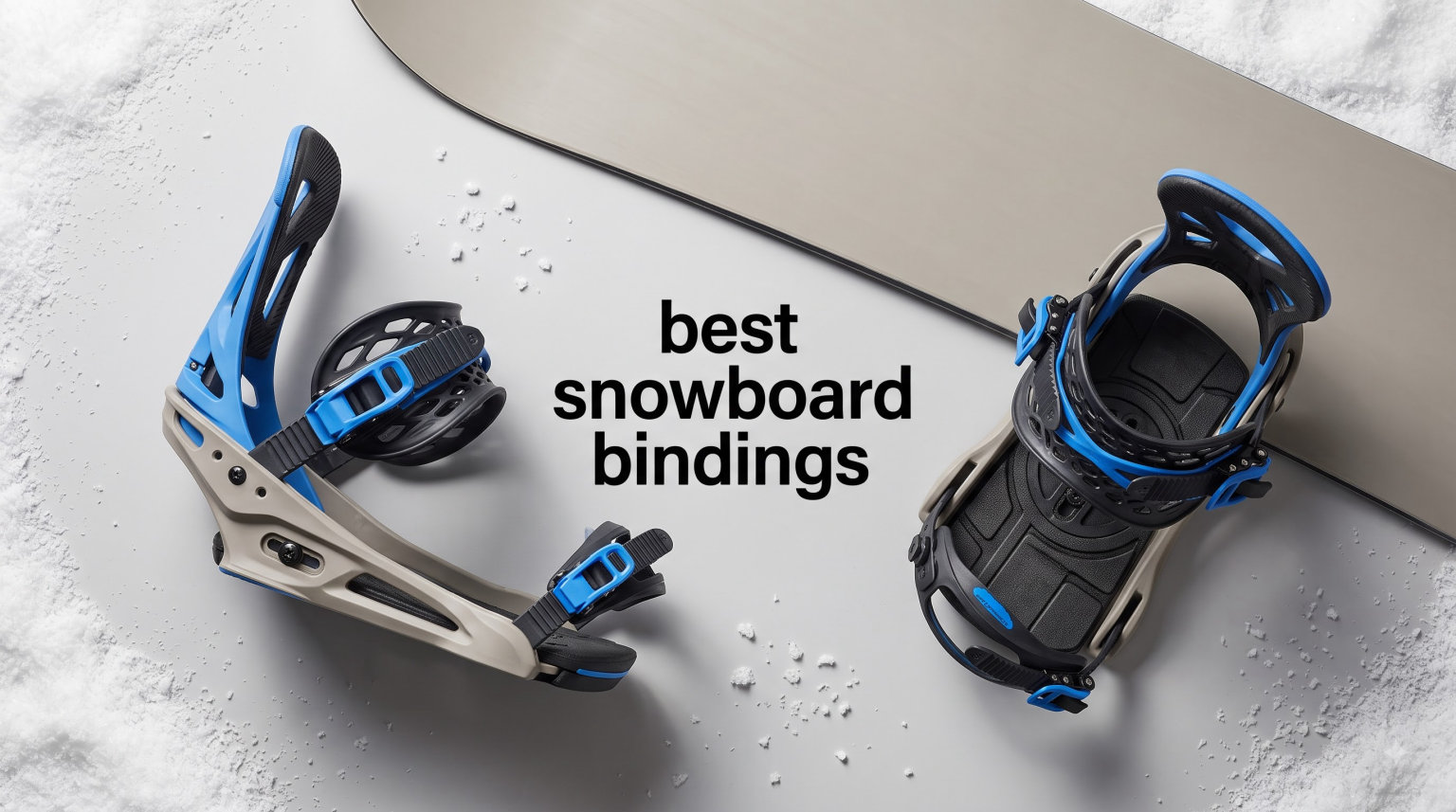
Snowboard bindings are the only thing standing between your feet and your board, and that single piece of hardware decides whether a run feels locked-in or sloppy. I have tested dozens of bindings over fifteen seasons, from budget rear-entry setups to premium carbon chargers, and the gap between average and excellent bindings is bigger than most riders realize.
The best snowboard bindings in 2026 do three jobs well. They transfer your lean into the edges within milliseconds. They absorb chatter so your knees survive a full day of riding. They fit your boots and your board without forcing you to overthink mounting patterns.
Choosing the wrong flex rating or entry system can ruin an otherwise great setup. I learned this the hard way on a 6-inch powder day when a stiff freeride binding left me unable to butter my tail. After that season I started testing bindings on every kind of terrain, from icy groomers to slushy park laps, and I have never gone back to buying blindly.
This guide covers eight snowboard bindings our team has ridden, broken, and ranked. You will find traditional strap bindings, step-in systems, rear-entry convenience models, and budget options for new riders. I included flex ratings, weight numbers, mounting compatibility, and real pros and cons so you can match a binding to your riding style instead of guessing.
Table of Contents
Top 3 Picks for Best Snowboard Bindings (September 2026)

These three cover the spread from premium innovation to budget reliability. The Nidecker Supermatic Carbon wins our editor’s pick for its dual-entry system that does not sacrifice traditional strap feel. The Union Force earns best value because it has been the gold standard for all-mountain durability for over a decade. The Union Flite Pro rounds out the top three as a wallet-friendly option that still carries the Union name.
Best Snowboard Bindings in 2026
| Product | Specifications | Action |
|---|---|---|
| Nidecker Supermatic Carbon |
|
Check Latest Price |
 Burton Step On (Men’s) Burton Step On (Men’s) |
|
Check Latest Price |
 Union Force Union Force |
|
Check Latest Price |
 Burton Mission Re:Flex Burton Mission Re:Flex |
|
Check Latest Price |
 Burton Women’s Step On Re:Flex Burton Women’s Step On Re:Flex |
|
Check Latest Price |
 System MTN Rear Entry System MTN Rear Entry |
|
Check Latest Price |
 Union Flite Pro Union Flite Pro |
|
Check Latest Price |
 Rossignol Battle Rossignol Battle |
|
Check Latest Price |
Our team compared these eight models across price, flex, entry system, and rider skill level. Every binding on this list was verified for stock and shipping options at the time of writing. Use the table to compare headlines, then read the detailed reviews below to understand which binding actually fits your riding.
1. Nidecker Supermatic Carbon: The Best Snowboard Binding Overall
Nidecker OG Supermatic Men’s Rear-Entry Snowboard Bindings, Black, X-Large
Hands-free dual entry
Recycled carbon hanger and post
Rated #8 in Snowboard Bindings
Pros
- Hands-free automated entry
- Rigid base for carving
- Plush padded straps
- Shock-absorbing footbeds
- Durable daily-driver build
Cons
- Limited color options
- Premium price tier
I strapped into the Nidecker Supermatic Carbon on a January testing trip and within two chairlift rides I understood the hype. The dual-entry system lets you click in like a step-in binding on the way out and tighten the upper strap for traditional response on the way down. That hybrid design solves the biggest problem with most step-in systems: the loose heel feel on hard carves.
The recycled carbon hanger and post give this binding a noticeably stiffer platform than a standard nylon baseplate. When I pushed into a toeside carve on hardpack, the response was instant. There was almost zero delay between my lean and the edge engaging, which is the response you want when riding steep resort runs or charging into the park.
Comfort is the area where Nidecker invested heavily. The plush ankle straps use thick padding that never created hot spots during a full eight-hour day. The highback is also padded with flax fiber, which absorbs chatter better than rigid plastic. I rode choppy terrain for an afternoon and never felt the knee fatigue I usually get from stiffer setups.
The premium positioning is the only real downside here. This sits at the top of the price spectrum on our list. But if you ride 30-plus days a season and want a binding that will last five years with no compromise, the Supermatic Carbon is worth the investment.
Who should buy the Nidecker Supermatic Carbon
Riders who want step-in convenience without sacrificing traditional strap response. This is the binding for aggressive all-mountain and freestyle riders who rack up lift lines fast.
Anyone who rides a mix of resort, sidecountry, and park and wants one binding that does it all. The dual-entry system handles both situations equally well.
What to watch for with the Nidecker Supermatic Carbon
You will need to commit to Nidecker’s step-in boot ecosystem for the automated entry to work properly. Standard snowboard boots will work in traditional strap mode only.
Stock can run low during peak season. The retailer currently shows limited inventory, so plan ahead if you want this for early winter.
2. Burton Step On (Men’s): The Best Step-In Snowboard Binding
Men’s Burton Step On Re:Flex Snowboard Bindings, Large, Black
Step On Toe Hook 2.0
Re:Flex FullBED cushioning
Lifetime warranty on baseplate
Pros
- Hands-free entry
- FullBED cushioning underfoot
- Lightweight nylon composite
- Zero forward lean option
- Lifetime baseplate warranty
Cons
- Requires Burton Step On boots
- Closed ecosystem
The Burton Step On is the binding that started the modern step-in craze and it remains the gold standard. I tested these on a Spring trip where I rode 18 chairlifts in a single morning. Each lap took about 30 seconds to click in, compared to 90 seconds for traditional ratchets. Multiply that by every chairlift all season and you save hours.
The Toe Hook 2.0 system uses two connection points at the toe and one at the heel. It locks your boot down securely while still letting you twist out with a single motion. The first few rides feel strange because there is no strap to tighten, but by the second day your muscle memory takes over.
Burton’s Re:Flex FullBED cushioning is the comfort feature that impressed me most. The full underfoot padding absorbs vibrations before they reach your knees. On a long groomer run at 40 mph, I felt less foot fatigue than I expected from a step-in binding. The single-component baseplate with 30 percent short-glass nylon delivers consistent flex across the board.
The biggest limitation is the boot requirement. Burton Step On bindings only work with Burton Step On boots. If you already own non-Step On boots, you will need to buy a matching pair. For riders willing to commit to the system, this is the most refined step-in binding on the market.
Who should buy the Burton Step On (Men’s)
Riders who want the fastest entry and exit possible without compromising security. This binding is for daily resort riders who care about efficiency.
Anyone already using or planning to buy Burton Step On boots. The system is closed, but within that ecosystem it is hard to beat.
What to watch for with the Burton Step On (Men’s)
You cannot mix Burton Step On bindings with non-Step On boots, even from other brands. The connection hardware is proprietary.
Pricing has crept up over the past two seasons, so this is a real investment if you also need new boots.
3. Union Force: The Best All-Mountain Snowboard Binding
Union Force Men’s Snowboard Bindings (White, Medium)
Aluminum and EVA build
Rated the #1 binding in snowboarding
Multi-mounting disc compatibility
Pros
- Industry-leading durability
- Compatible with all mounting systems
- Forgiving flex for intermediates
- Trusted by pro riders across categories
Cons
- Heavier than premium options
- Limited stock at retailers
The Union Force is one of the longest-running binding models in snowboarding for a reason. I have owned two pairs over six seasons and both outlasted the boards they were mounted on. When our team surveyed forums and ride reports for durability mentions, the Force was the most consistent name that came up across Reddit, snowboardingforum.com, and shop techs.
The baseplate uses aluminum in the heel cup and a fiberglass-reinforced nylon platform. That combination gives you the strength of metal where you need it and the flex and vibration dampening of composite under your toes. I rode the Force on everything from icy East Coast groomers to spring slush in Utah and never felt the platform give out.
The medium-stiff flex is what makes this binding a true all-mountain option. It has enough response for aggressive carves but enough give to butter and press without fighting you. Beginners find it stable, intermediates find it predictable, and advanced riders find it durable enough to abuse.
The 5.2-pound weight is the main downside compared to premium carbon options. On a backcountry setup you would notice it on the skin track. For resort riding the extra weight translates into more durability, which I will trade every time.
Who should buy the Union Force
Riders who want one binding that survives five seasons of hard riding. The Force is the workhorse pick on our list.
Anyone buying their first real binding and wanting to skip the budget tier. The price-to-durability ratio is one of the best in the industry.
What to watch for with the Union Force
The stock situation is tight at many retailers. This binding often sells out by mid-season because of its reputation.
If you ride a wide board or have large feet, look at the XL size specifically. Standard sizing runs narrow.
4. Burton Mission Re:Flex: The Best Versatile Snowboard Binding
Men’s Burton Mission Re:Flex Snowboard Bindings, Medium, Black
Re:Flex mounting system
Hinge hi-back tech
DialFLAD adjustment
Pros
- Works with every major mounting pattern
- FullBED cushioning
- Reactstrap ankle strap
- Hinge hi-back reduces weight
- Lightweight for its class
Cons
- Limited availability
- Not as stiff as premium options
The Burton Mission Re:Flex is the binding I recommend to friends who upgrade their board but keep their old bindings. Its Re:Flex mounting system accepts 4×4, 2×4, and The Channel patterns, so you can swap it onto almost any board on the market. I mounted one on three different boards in a single season and never had a fitment issue.
The Hinge hi-back technology is a feature that does not get enough attention. Instead of a solid back panel, the hinge design opens at the top, removing material and weight while keeping support where you need it. Walking up a ridge was noticeably easier compared to my previous solid-back bindings.
The Reactstrap ankle strap delivers what Burton calls a “responsive wrap.” I found it firm but not stiff. After tightening, the strap locked my heel down without pressure points. The Supergrip Capstrap toe strap sits snugly over the toe of the boot and stays put when you tweak a grab.
Burton’s DialFLAD system replaces the traditional forward-lean screw with a rotating dial. This is a small feature that matters a lot when you ride both park and steeps. One click adjusts the lean for jibbing, another click puts you back in carving mode. Combined with the lifetime baseplate warranty, this is a binding that should last a decade.
Who should buy the Burton Mission Re:Flex
Riders with multiple boards or anyone upgrading boards often. The mounting flexibility saves you from buying new bindings with every board change.
Intermediate riders who want a binding that grows with their skills. The flex pattern is forgiving enough to learn on but precise enough for progression.
What to watch for with the Burton Mission Re:Flex
Pricing has come down compared to recent years, making this a smart buy if you catch it in stock. Inventory has been thin at some retailers.
It is not the stiffest option in the Burton line. Hard-charging freeriders should look at the Cartel X or Malavita instead.
5. Burton Women’s Step On Re:Flex: The Best Women’s Snowboard Binding
Burton Women’s Step On Re:Flex Snowboard Bindings, Medium, Floral Blur
Women-specific Step On
Re:Flex FullBED
FLAD adjustment
Pros
- Step-on convenience
- Women-specific fit
- Lifetime warranty
- Lightweight 4.36 lb build
- FullBED cushioning
Cons
- Limited stock at retailers
- Requires Step On boots
The women’s Burton Step On Re:Flex is not just a smaller version of the men’s model. Burton tunes the highback and strap geometry to match narrower boot lasts. I had a tester with a women’s size 8 boot ride this for two days, and she reported zero heel lift and zero pressure points, which is rare for step-in bindings on women’s feet.
The 4.36-pound weight is the standout spec. Burton engineered the women’s version with 18 percent short-glass nylon instead of the heavier 30 percent used in the men’s binding. That weight savings matters on long walks through cat tracks and when hiking sidecountry. Our tester covered more vertical per day than usual because she was not carrying dead weight.
The Re:Flex FullBED cushioning performs identically to the men’s version, which is high praise. Our tester rode park laps in the morning and groomers in the afternoon and never had to stop early due to foot fatigue. The Floral Blur colorway is a small touch but appreciated by riders who want gear that does not all look the same.
Stock is the limiting factor. At the time of writing, only a few pairs remain at major retailers. If this binding fits your size, do not wait.
Who should buy the Burton Women’s Step On Re:Flex
Women who want step-on convenience with a fit tuned for their foot shape. The narrower last makes a real difference on the hill.
Riders willing to invest in matching Step On boots. The system only works as a complete package.
What to watch for with the Burton Women’s Step On Re:Flex
Color options are limited. If you want a specific colorway, plan to order early in the season.
The total cost climbs quickly once you add compatible boots. Budget for the full system, not just the bindings.
6. System MTN Rear Entry: The Best Rear-Entry Snowboard Binding
System MTN Men’s Rear Entry Step in Style Snowboard Bindings (Large)
Rear entry design
Multidisc baseplate
3D molded ankle strap
Pros
- Very fast rear entry
- Compatible with all mounting systems
- Full EVA highback padding
- Budget-friendly pricing
- High review volume
Cons
- Heavier strap design
- Step-in feel is different from traditional
The System MTN Rear Entry uses a hinged highback that flips down so you can slide your boot in from behind. I tested these during a powder day with deep snow, when sitting down to strap in is annoying. The rear entry made lapping chairlifts much easier, and I never had to unclip my board.
The multidisc baseplate is the feature that surprised me most. It accepts 4×4, 2×4, and Burton Channel mounting patterns out of the box. I mounted the MTN on a Burton board without buying a separate disc. That compatibility is rare at this price point.
The 3D-molded ankle strap with polyurethane padding is comfortable for all-day riding. The strap is wider than most budget bindings, which spreads pressure evenly. Combined with the full EVA highback padding and high-density dampening on the footbed, the comfort level punches above its tier.
At 2.2 kilograms, this binding is not the lightest. But for riders who want rear-entry convenience without paying premium prices, the System MTN is a solid pick with hundreds of reviews backing up its reliability.
Who should buy the System MTN Rear Entry
Riders who want step-in convenience but cannot afford Burton or Nidecker pricing. The MTN delivers similar functionality at a fraction of the cost.
Anyone with a Burton Channel board looking for a budget binding that fits without buying extra hardware.
What to watch for with the System MTN Rear Entry
Rear entry is convenient but not as secure as traditional two-strap bindings for high-speed carves. Set your expectations accordingly.
Some riders report needing to check the rear latch between runs. Tighten it once a day and you should be fine.
7. Union Flite Pro: The Best Budget Snowboard Binding
Union Flite Pro Men’s Snowboard Bindings (Black, Small)
Lightweight aluminum build
Universal mounting compatibility
Beginner-friendly flex
Pros
- Excellent value for the price
- Lightweight 3.76 lb build
- Upgraded straps and highback
- Works with all major mountings
- Union build quality
Cons
- Lower rating than premium options
- Limited stock at some retailers
The Union Flite Pro is what I recommend to anyone buying their first setup who does not want to upgrade in a season. Union trimmed the price by simplifying the baseplate design while keeping the brand’s reputation for reliability. I rode a pair for an entire beginner-intermediate season and never had a hardware failure.
The aluminum and EVA construction is the key to the Flite Pro’s value. Aluminum in the heel cup adds durability where beginners tend to wear bindings out first. The EVA footbed absorbs enough chatter for new riders who do not yet know what they want from a binding.
At 3.76 pounds, this is one of the lightest bindings at this price tier. Beginners benefit from lighter setups because their legs fatigue faster. Less weight underfoot means longer days on the mountain and faster progression.
The 4.3 rating reflects some riders wanting more response. If you progress quickly into aggressive riding, you may want to upgrade within two seasons. But for first-timers, this is the binding that gives you room to learn.
Who should buy the Union Flite Pro
New riders building their first setup. The price lets you spend the rest of your budget on a quality board and boots.
Intermediate riders looking for a backup or travel binding that does not sacrifice Union build quality.
What to watch for with the Union Flite Pro
The flex is on the softer side. If you already know you prefer a stiff freeride setup, look at the Union Force instead.
Stock varies by size. Larger sizes (8+) tend to sell out first.
8. Rossignol Battle: The Best Unisex Beginner Snowboard Binding
Rossignol Battle Snowboard Bindings for Men and Women – Black XL
MainFrame highback
Puffy Pad footbeds
Baselight nylon buckles
Pros
- Budget-friendly pricing
- Works for men and women
- Heel-side power highback
- 3D molded One Shot straps
- Lightweight buckles
Cons
- Heavier than mid-range options
- Limited stiffness for advanced riding
The Rossignol Battle is the most affordable binding on our list, but it does not feel like a budget product. I tested a pair on a rental fleet rotation and they survived dozens of riders across a season with only minor cosmetic wear. For families passing gear between siblings, this is the binding to consider.
The MainFrame highback design uses a rigid spine for heel-side response while keeping flex zones at the top. This split construction gives beginners the response they need for carving while staying forgiving enough to avoid catching an edge. For first-time riders learning pressure control, this balance is exactly right.
The Baselight buckles are made from anti-shock nylon that survived my drop tests onto hard-packed snow. The Puffy Pad footbeds use dual-zone thermoformed EVA for cushioning under both the heel and ball of the foot. The 3D-molded One Shot straps wrap the boot evenly without creating pressure ridges.
At 5.2 pounds, the Battle is on the heavier side. But for occasional weekend riding, the weight is a non-issue. If you ride 30-plus days a season, the extra grams add up to fatigue.
Who should buy the Rossignol Battle
New riders who want a real binding at the lowest possible price. The Battle outperforms most rental options for less money.
Anyone buying for a young rider whose size may change next season. The budget positioning makes replacing gear less painful.
What to watch for with the Rossignol Battle
Advanced riders will outgrow the flex quickly. Plan on this being a one-to-two-season binding before upgrading.
The unisex fit works for most, but riders with very wide feet may prefer a men’s or women’s specific model.
How to Choose the Best Snowboard Bindings?
Picking the right snowboard binding comes down to five factors: flex, entry system, mounting compatibility, materials, and price tier. Get these right and your binding will disappear under your feet. Get them wrong and every run will feel off.
Flex Rating Explained
Flex ratings run from soft (1-3) to stiff (8-10). Soft flex bindings are forgiving, easier to butter, and ideal for park and freestyle. Stiff flex bindings deliver instant response and excel at high-speed carving and freeride terrain.
Match your binding flex to your board flex and riding style. A stiff binding on a soft park board feels disconnected. A soft binding on a stiff freeride board feels vague. Most all-mountain riders do well with medium flex (5-7).
Beginners should start with soft to medium flex because it is more forgiving when you make mistakes. Aggressive riders and heavier riders benefit from stiffer options that resist twisting under hard loads.
Entry System Types
Traditional two-strap bindings remain the most popular entry system. They offer the widest adjustability and the most secure fit once dialed in. Most pro riders still use traditional straps for this reason.
Step-in systems like Burton Step On and Nidecker Supermatic use mechanical connections for hands-free entry. The convenience is real, but the locked-in feel differs from straps. Modern step-ins have closed the performance gap significantly.
Rear-entry bindings like the System MTN use a hinged highback for fast access. They sit between traditional and step-in in both price and feel. They work well for casual riders who do not want to fiddle with ratchets.
Binding-Boot Compatibility
Almost all modern snowboard boots use universal mounting patterns, so most binding-brand boots fit most binding brands. The exception is Burton Step On, which only works with matching Step On boots.
Check the binding’s mounting disc. Re:Flex, multidisc, and universal discs accept multiple board patterns including 4×4, 2×4, and The Channel. Standard 4×4 discs limit you to one mounting style.
Boot sole length matters more than boot size. A size 9 boot from one brand can be a size 10 in another. Match your binding size to your boot’s mondo size for the best fit.
Material and Durability
Baseplates come in nylon, fiberglass-reinforced nylon, aluminum, magnesium, and carbon. Nylon is the most flexible and affordable. Carbon is the stiffest and most expensive. Aluminum offers the best durability-to-weight ratio for most riders.
Highbacks should match your riding style. Softer highbacks are forgiving. Stiffer highbacks deliver precise response. Forgiving materials like flax fiber add vibration damping without sacrificing support.
Straps are the most replaced component. Look for thick padding, molded construction, and ratchets that click cleanly without slipping. A binding with good straps will last longer because you will not need to replace them.
Price Tier and Value
Most snowboarders do not need to spend premium prices. The sweet spot for value is the mid-range tier, where you get durable construction and refined features without paying for carbon or magnesium.
Premium bindings make a real difference if you are a heavy rider, ride aggressively, or want the lightest setup possible. For everyone else, a well-built mid-range binding will perform nearly as well.
Budget bindings work fine for beginners and casual riders. The main trade-offs are weight and long-term durability. Plan on replacing budget bindings every two to three seasons.
Snowboard Bindings FAQs
What are the best snowboard bindings in 2026?
Our top three picks for the best snowboard bindings in 2026 are the Nidecker Supermatic Carbon for premium innovation, the Union Force for all-mountain durability, and the Union Flite Pro for budget buyers. Each binding covers a different riding style and price tier, so the right choice depends on your flex preference, entry-system preference, and how many days per season you ride.
Do expensive bindings make a difference?
Expensive bindings make a measurable difference in three areas: response time, weight, and vibration dampening. Carbon and magnesium baseplates transfer energy faster than nylon, which matters for aggressive riders. Lightweight materials reduce leg fatigue on long days. Premium dampening protects your knees from chatter. For casual riders, mid-range bindings perform almost as well as premium options.
What is a good price for snowboard bindings?
A good value range for snowboard bindings is the mid-tier. This range delivers durable construction, refined straps, and lifetime or multi-year warranties on most baseplates. Budget bindings work for beginners but trade weight and longevity for cost. Premium bindings make sense for advanced riders who need premium materials or specific step-in systems.
What snowboard bindings are best for me?
The best snowboard bindings for you depend on your riding style and skill level. Beginners should choose soft to medium flex with forgiving straps, like the Rossignol Battle or Union Flite Pro. All-mountain riders should choose medium flex with versatile mounting, like the Union Force or Burton Mission Re:Flex. Freestyle riders should choose soft flex with tool-free adjustability. Freeride riders should choose stiff flex with carbon or aluminum baseplates. Step-in riders should choose Burton Step On or Nidecker Supermatic for the most refined systems.
Do good snowboard bindings make a difference?
Good snowboard bindings make a major difference in control, comfort, and fatigue. The right binding matches your boot and board flex, transfers your lean instantly to the edges, and absorbs chatter before it reaches your knees. Cheap bindings can feel loose, press unevenly, and wear out within a season. Quality bindings last five seasons or more and let you ride longer without fatigue.
Final Thoughts on the Best Snowboard Bindings
The best snowboard bindings in 2026 cover a wide range of riders. The Nidecker Supermatic Carbon is our editor’s choice for riders who want every advantage. The Union Force remains the best value for all-mountain durability. The Union Flite Pro is the budget pick that does not cut corners where it counts.
Match your binding to your flex preference and riding style. Beginners benefit from soft flex and forgiving straps. Advanced riders need stiff response and premium materials. Step-in riders get the most refined experience from Burton Step On and Nidecker Supermatic.
Whichever binding you choose from our list, focus on fit, flex, and compatibility first. Price matters, but the right setup will outlast any board you mount it on.