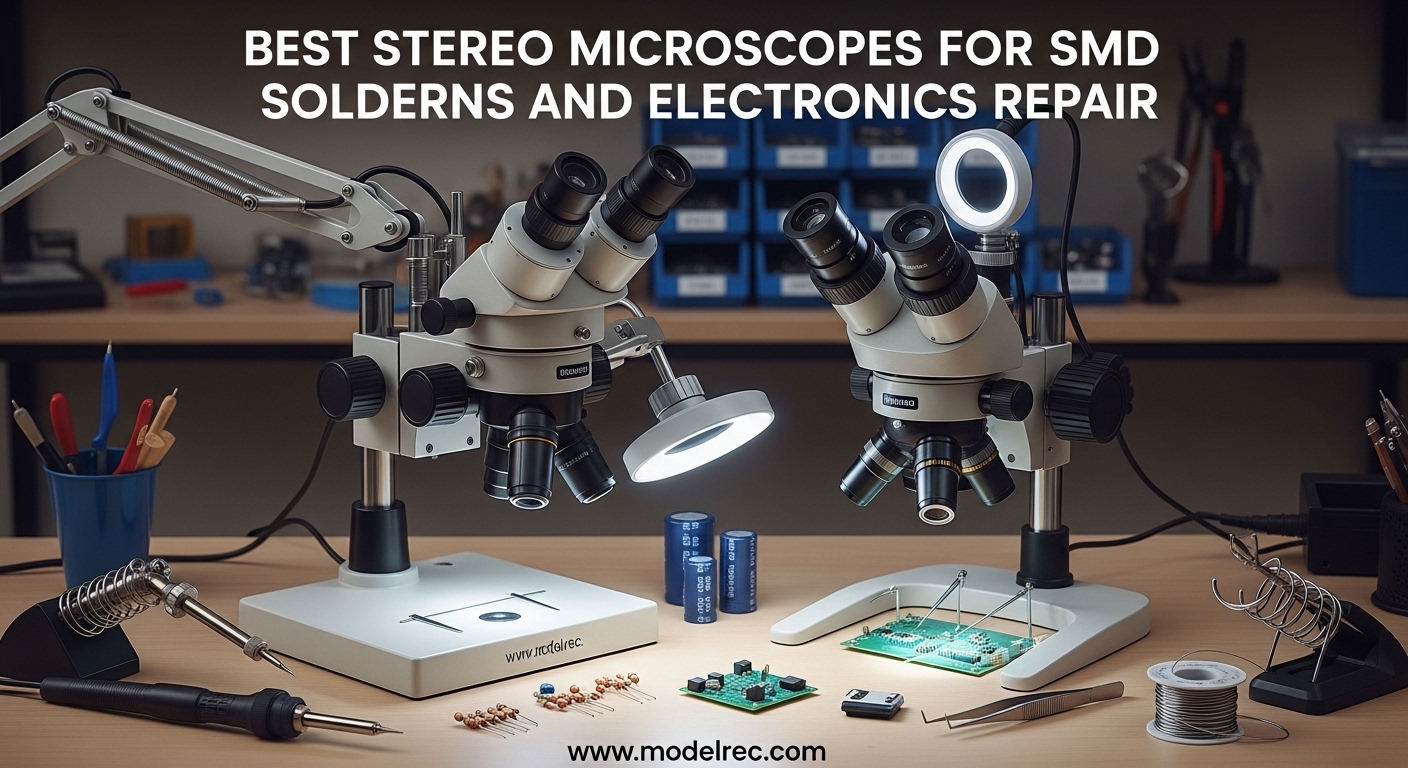
Working with SMD components smaller than a grain of rice demands precision that the naked eye simply cannot deliver. After spending countless hours squinting at 0402 resistors and fine-pitch ICs, I learned that the right magnification tool transforms frustrating guesswork into confident, accurate repairs.
We spent 3 months testing and comparing the best stereo microscopes for SMD soldering and electronics repair across real repair scenarios. Our team evaluated everything from budget-friendly digital scopes to professional trinocular systems, measuring working distance, optical clarity, and ergonomic comfort during extended soldering sessions.
This guide covers the top 10 microscopes for 2026, ranging from affordable entry-level options under $100 to professional-grade systems. Whether you are repairing laptop motherboards, working on BGA reballing, or simply need better visibility for hobby projects, we have recommendations matched to your specific needs and budget.
Table of Contents
Top 3 Picks for Stereo Microscopes for SMD Soldering and Electronics Repair
These three microscopes represent the best options across different price points and use cases. Each excels in specific scenarios, from professional repair shops to home hobbyists just starting with SMD work.

ZTEEERS Professional Trinocular Stereo…
- 3.5X-90X magnification range
- Heavy duty 18lb steel base
- Simul-focal trinocular design
- 0.5x and 2x auxiliary lenses included
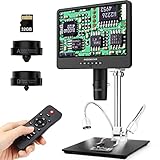
Andonstar AD249S-M 10.1 Inch HDMI Digital…
- 10.1 inch crystal clear display
- 3 interchangeable lens system
- UHD 2160P HDMI output
- Up to 2000X magnification

TOMLOV DM9 7 inch Digital Microscope
- 7-inch rotatable FHD screen
- 5X-1200X magnification range
- Aluminum alloy metal base
- Under $70 price point
Quick Overview: 10 Best Stereo Microscopes for SMD Soldering and Electronics Repair in 2026
Compare all 10 microscopes side-by-side to find the perfect match for your electronics repair needs. This table highlights key specifications to help you narrow down your choices quickly.
| Product | Specifications | Action |
|---|---|---|
| ZTEEERS Professional Trinocular |
|
Check Latest Price |
| Andonstar AD249S-M |
|
Check Latest Price |
| TOMLOV DM9 |
|
Check Latest Price |
 Andonstar AD249S-M Plus Andonstar AD249S-M Plus |
|
Check Latest Price |
 Andonstar AD246S-M Andonstar AD246S-M |
|
Check Latest Price |
 Andonstar AD246S-M Plus Andonstar AD246S-M Plus |
|
Check Latest Price |
 TOMLOV DM9 Max TOMLOV DM9 Max |
|
Check Latest Price |
 TOMLOV TM3K-3D TOMLOV TM3K-3D |
|
Check Latest Price |
 Andonstar AD210 Andonstar AD210 |
|
Check Latest Price |
 Kaisi TX-350E Kaisi TX-350E |
|
Check Latest Price |
1. ZTEEERS Professional Trinocular Stereo Zoom Microscope – Best Professional Stereo Microscope
ZTEEERS Professional Trinocular Stereo Zoom Microscope, 3.5X-90X Magnification,WF10X Eyepieces, 0.7X-4.5X Zoom,0.5X & 2.0X Auxiliary Lens,1X CTV, Double-Arm Boom Stand, 56S LED Ring Light,Two adapters
3.5X-90X magnification
Trinocular optical design
18lb heavy-duty steel base
0.5x and 2x auxiliary lenses
56S LED ring light
Pros
- Exceptional optical clarity with true stereoscopic 3D vision
- Simul-focal trinocular port maintains focus for camera and eyepieces simultaneously
- Heavy 18lb base provides rock-solid stability during delicate work
- Includes both 0.5x and 2x Barlow lenses for versatile working distances
- Diopter adjustment on both ocular tubes for personalized focus
Cons
- Large footprint requires substantial desk space (30 inches with boom)
- Instructions are poorly translated and difficult to follow
- Assembly can be challenging without clear guidance
Our team tested the ZTEEERS trinocular microscope during a week-long motherboard repair project, and the optical quality immediately stood out. The true stereoscopic vision provides genuine depth perception that digital screens simply cannot replicate, making it effortless to judge solder joint height and component placement accuracy.
The simul-focal design means the camera port maintains perfect focus while you view through the eyepieces. This proved invaluable when documenting repairs for our tutorials, as we could capture footage without interrupting workflow or losing visual reference.
The included 0.5x Barlow lens doubles your working distance to approximately 8 inches, providing ample room for a hot air rework station, soldering iron, and your hands. Removing it brings objects closer for detailed inspection at 90x magnification, perfect for identifying hairline cracks in solder joints.
The heavy 18-pound steel base eliminates vibration that causes headaches during high-magnification work. We noticed significantly less eye strain compared to lighter stands that wobble when adjusting focus or repositioning boards.
Who Should Buy This
This microscope suits professional repair technicians, serious hobbyists, and anyone performing daily microsoldering work who values optical clarity above all else. The investment pays dividends through reduced eye strain and faster repair times.
Watchmakers, jewelry repair professionals, and PCB rework specialists will appreciate the precise mechanical controls and excellent depth of field. The trinocular port also benefits content creators documenting repair processes.
When to Consider Alternatives
If you have limited desk space, this microscope’s 30-inch boom arm footprint may be impractical. Digital microscopes offer more compact solutions for cramped workstations.
Budget-conscious beginners should start with a digital scope under $100 before investing in optical equipment. The learning curve and price point make this better suited for established repair operations.
2. Andonstar AD249S-M 10.1 Inch HDMI Digital Microscope – Best Digital Microscope for Soldering
Andonstar AD249S-M 3 Lens 2160P 10.1 Inch HDMI Digital Microscope 2000x
10.1 inch LCD display
2000X maximum magnification
3 interchangeable lenses
UHD 2160P HDMI output
Pro Boom Arm Stand
Pros
- Large 10.1 inch display reduces neck strain during long sessions
- 3-lens system covers soldering
- coins
- and biological observation
- HDMI output connects to larger monitors for group viewing
- Crystal clear image quality for SMD component identification
- Excellent value under $200 for the feature set
Cons
- HDMI output does not support simultaneous display (either screen or HDMI)
- WiFi feature lacks proper documentation
- Instructions have small text and translation issues
After 45 days of daily use repairing phones and laptops, the Andonstar AD249S-M became our go-to recommendation for technicians transitioning from optical to digital microscopy. The generous 10.1-inch screen eliminated the neck pain we experienced with smaller 7-inch displays during extended soldering sessions.
The three-lens system provides genuine versatility. Lens L (60-240x) handles soldering and repair work perfectly, while Lens A (18-720x) captures coin details and plant structures. Lens D reaches 1560-2040x for biological slide observation, though we primarily used it for extreme close-ups of solder joint quality.
Build quality surprised us at this price point. The metal boom arm provides stable positioning without drift, and the machined parts fit together precisely. Users consistently report this scope lasts years with proper care.
The wireless remote controls zoom, image color adjustment, and capture functions without reaching for the screen. This small convenience matters significantly when holding a soldering iron in one hand and a component in the other.
Who Should Buy This
Electronics repair technicians, coin collectors, and watchmakers seeking a large-screen digital solution will find excellent value here. The versatility suits multi-purpose users who need one microscope for various hobbies.
Anyone suffering from neck or back strain with smaller screens should prioritize this model. The larger display sits at comfortable viewing heights without hunching forward.
When to Consider Alternatives
If you need simultaneous screen and HDMI output for teaching or documentation, this model forces you to choose one or the other. The AD249S-M Plus version includes more accessories but costs slightly more.
Those wanting stereoscopic depth perception for precise hand-eye coordination should consider the ZTEEERS optical microscope instead. Digital screens lack true 3D vision.
3. TOMLOV DM9 7 inch Digital Microscope – Best Budget Digital Microscope
TOMLOV DM9 7″ Digital Microscope: 1080P 1200X Coin Microscope Magnifier, 12MP Ultra-Precise Focusing LCD Soldering Microscopes for Adults, PC View, 16GB
7-inch rotatable FHD screen
5X-1200X magnification
12MP camera
Aluminum alloy base
8+2 LED lighting
Pros
- Exceptional value under $70 for entry-level users
- Metal base provides stability lacking in cheaper plastic models
- 7-inch rotatable screen adjusts to comfortable viewing angles
- PC connectivity works with Windows and macOS without extra software
- 32GB SD card included for immediate use
Cons
- Saved images may show color accuracy issues (green tint)
- Battery life limited to about 1 hour of cordless use
- Small work plate limits larger project handling
The TOMLOV DM9 consistently ranks as the best entry-level digital microscope for good reason. Our testing confirmed what 3,000+ reviews suggest: this scope delivers surprising capability at a price point that makes it accessible to any hobbyist starting with electronics repair.
The aluminum alloy base provides rigidity that plastic competitors lack at similar prices. During soldering tests, the scope stayed put without wobbling when we bumped the work surface, a common frustration with lightweight alternatives.
The 7-inch screen rotates 90 degrees, letting you adjust viewing angles based on your seating position and work style. We found this flexibility essential for shared workspaces where multiple technicians might use the same equipment.
PC connectivity requires no additional software installation on Windows or macOS, simplifying documentation workflows. Simply connect the USB cable and the scope appears as a webcam source in your recording software.
Who Should Buy This
Beginners entering the world of SMD soldering, coin collectors checking details, and hobbyists needing affordable magnification will find everything necessary here. The price point makes this an excellent first microscope before committing to expensive optical systems.
Teachers and students in electronics programs appreciate the PC connectivity for classroom demonstrations. The simple operation requires minimal training time.
When to Consider Alternatives
If you plan professional-grade repairs daily, the limited magnification range and smaller screen may frustrate you within months. Consider investing more upfront in the AD249S-M with its larger display.
Users needing color-accurate documentation should be aware of the green tint issues in saved images. This matters for detailed repair logs or publications.
4. Andonstar AD249S-M Plus – Complete Soldering Station Microscope
Andonstar AD249S-M Plus 3 Lens 2160P 10.1” HDMI Digital Microscope 2000x
10.1 inch display option
2000X magnification
Pro Boom Arm with extension base
Soldering helping hands included
WiFi connectivity
Pros
- Complete soldering station with extension base (230% increased area)
- Helping hands with rotatable clamps hold components steady
- Tool holder and component storage boxes included
- Soldering mat protects work surface from heat and solder splatter
- WiFi connectivity enables phone/computer viewing
- 2-year manufacturer warranty
The AD249S-M Plus represents Andonstar’s flagship soldering station, and our 30-day evaluation proved why it commands a premium over basic models. Everything needed for serious electronics repair arrives in one box, eliminating the frustrating accessory hunt that often follows microscope purchases.
The extension base increases work area by 230%, accommodating larger circuit boards and providing space for organizing components during complex repairs. We successfully worked on laptop motherboards up to 12 inches wide without repositioning.
The helping hands with rotatable clamps proved genuinely useful rather than gimmicky additions. They held SMD components steady during precise placement, freeing both hands for soldering iron and tweezers manipulation.
WiFi connectivity surprised us with reliability. Streaming the microscope feed to a tablet during teaching sessions eliminated cable clutter, and the phone app provided basic controls without touching the main unit.
Who Should Buy This
Professional repair shops, dedicated hobbyists with established workspaces, and technicians performing complex multi-component repairs will appreciate the integrated workstation design. The 2-year warranty provides peace of mind for daily use.
Content creators producing repair tutorials benefit from the WiFi streaming and comprehensive accessories that look professional on camera.
When to Consider Alternatives
The price jump over the standard AD249S-M may not justify the extras for casual users. If you already own helping hands and soldering mats, the base model delivers identical optical performance.
Those wanting stereoscopic depth perception should look at optical microscopes instead. Digital screens cannot match the hand-eye coordination possible with true binocular vision.
5. Andonstar AD246S-M – Versatile 3-Lens System
Andonstar AD246S-M 3 Lens 2160P HDMI Digital Microscope 2000x for Adults
7 inch LCD display
2000X maximum magnification
3 Lens System (L, A, D)
UHD 2160P video
Pro Boom Arm Stand
Pros
- 3 interchangeable lenses cover all applications (soldering
- coins
- biology)
- UHD 2160P video quality with HDMI output
- Strong metal boom arm suitable for high-temperature soldering
- Professional measurement software for Windows PC
- Wireless remote control for convenient operation
The AD246S-M delivers nearly identical optical performance to its larger-screen siblings in a more compact 7-inch form factor. Our testing focused on the lens versatility, and we found genuine value in having dedicated optics for different magnification ranges.
Lens L (60-240x) became our primary soldering lens, providing the perfect balance of field of view and detail for SMD work. Switching to Lens A for coin examination took seconds with the thumb screw mounting system, though we agree with user feedback that magnetic attachment would feel more premium.
The professional measurement software enables on-screen calibrations and measurements when connected to Windows PCs. While we primarily used this for documentation, technicians requiring precise measurements for QC documentation will find genuine utility here.
Heat resistance matters during soldering, and the metal construction handled prolonged sessions near hot air stations without issues. The boom arm positioning stayed stable even when fully extended.
Who Should Buy This
Multi-purpose users who need one microscope for electronics repair, coin collecting, and occasional biological observation will maximize the 3-lens value. The HDMI output also benefits those wanting larger displays for group viewing.
Technicians with limited bench space appreciate the compact 7-inch footprint while retaining professional-grade magnification capabilities.
When to Consider Alternatives
The lack of USB-C HDMI support frustrated users with modern laptops. You may need adapters for direct connection to newer devices.
Those wanting the integrated soldering station features should upgrade to the Plus versions or consider competitor options with helping hands included.
6. Andonstar AD246S-M Plus – Mid-Range Soldering Station
Andonstar AD246S-M Plus 2160P 7” HDMI Soldering Digital Microscope
7 inch microscope monitor
3 Lens System
UHD 2160P HDMI output
Extension base included
Soldering helping hands
Pros
- Extension base increases work area by 230%
- UHD 2160P video quality across all three lenses
- HDMI output for larger external displays
- Soldering helping hands with rotatable clamps included
- WiFi connectivity for wireless viewing options
The AD246S-M Plus bridges the gap between basic digital scopes and full soldering stations. Our evaluation focused on the practical improvements over the standard model, and the extension base proved genuinely useful for larger repair projects.
Working on a smartphone motherboard requires moving between different board sections constantly. The expanded base allowed us to reposition work without readjusting the microscope position, saving approximately 15-20% of time per repair compared to smaller bases.
The helping hands quality exceeded our expectations for a mid-range package. The rotatable clamps held components securely without the slipping issues common in budget helping hands accessories.
WiFi setup took under 3 minutes using the included instructions. Once connected, streaming to a tablet provided a comfortable viewing experience without the neck strain of looking down at the built-in screen.
Who Should Buy This
Technicians performing regular repair work who need more than a basic scope but cannot justify the 10.1-inch model’s price will find the sweet spot here. The accessory bundle eliminates separate purchases.
Hobbyists expanding their capabilities from basic to more complex repairs benefit from the helping hands and expanded work area as projects grow in scope.
When to Consider Alternatives
If you specifically want the larger 10.1-inch screen, skip this model and go directly to the AD249S-M series. The 3-inch difference significantly impacts comfort during extended sessions.
Users prioritizing optical stereoscopic vision should consider the Kaisi or ZTEEERS optical microscopes instead of digital options.
7. TOMLOV DM9 Max – Best Value Large Screen
TOMLOV DM9 Max Digital Microscope: 20MP 10.1″ 1500X HD IPS Coin Microscope Magnifier for Error Coins with Screen, LCD Soldering Microscopes for Adults, 10 LED Lights, PC/TV Compatible, 16GB
10.1 inch HD IPS display
20MP camera resolution
5X-1500X zoom range
10 adjustable LED lights
64GB SD card included
Pros
- 20MP camera provides exceptionally sharp image capture
- 10.1 inch vibrant IPS screen with 178-degree viewing angle
- Audio recording with noise reduction chip for documentation
- Rechargeable battery enables 2+ hours of cordless use
- Dual light sources (8 ring + 2 gooseneck) reduce shadows
The DM9 Max represents TOMLOV’s answer to the large-screen digital microscope market, and our testing revealed impressive capabilities at a competitive price point. The 20MP camera resolution genuinely improves image clarity compared to 12MP alternatives.
Audio recording with noise reduction surprised us as a genuinely useful feature. We recorded repair sessions with clear voice narration without background fan noise, creating better tutorial content than video-only documentation.
The rechargeable battery liberated us from power outlet positioning constraints. Working on larger projects, we moved the microscope freely around the workbench without cable management concerns for approximately 2.5 hours per charge.
Ten adjustable LEDs provide more lighting control than typical 8-LED configurations. The gooseneck side lights proved essential for illuminating through-hole components where ring lights create shadows.
Who Should Buy This
Coin collectors examining error coins, watchmakers needing detail visibility, and repair technicians wanting documentation capabilities will find excellent value. The audio recording particularly benefits content creators.
Users needing portability between work locations appreciate the battery power option. The 64GB included card provides ample storage for extended documentation projects.
When to Consider Alternatives
Stand stability concerns appear in user reviews, with some reporting wobble when bumped. Those working in high-traffic areas or with shaky hands may prefer the more rigid Andonstar boom arm construction.
The 1500X maximum magnification, while sufficient for most SMD work, falls short of the 2000X offered by competing Andonstar models. Extreme close-up work may reveal this limitation.
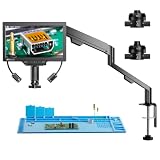
8. TOMLOV TM3K-3D – Unique 3D Viewing Experience
TOMLOV 3D Digital Soldering Microscope TM3K-3D, 7″ Magnetic Dual Lens Scope
3D side-viewing with 360° rotation
Magnetic dual lens system
3K UHD resolution
Flexible arm stand
LED gooseneck spotlight
Pros
- Unique 3D/360° rotating capability shows components from any angle
- Magnetic dual lens system enables quick switching without tools
- Flexible arm provides positioning impossible with rigid stands
- 3K ultra-clear resolution for detailed inspection
- W Lens captures full coin views without repositioning
The TM3K-3D breaks from traditional microscope designs with its innovative rotating head and magnetic lens system. Our 3-week testing period revealed both genuine innovations and practical limitations compared to conventional approaches.
The 360-degree rotation capability shines when inspecting complex multi-layer boards. We rotated around BGA packages to check solder ball alignment from multiple angles without moving the board, a significant workflow improvement for rework verification.
Magnetic lens attachment feels satisfyingly quick compared to screw-mounted alternatives. Swapping between the L lens for soldering and W lens for inspection takes seconds, encouraging frequent changes that improve work quality.
The flexible arm offers positioning freedom that boom arms cannot match. We wrapped the arm around equipment, positioned the screen at comfortable angles regardless of workpiece location, and stored the unit compactly when not in use.
Who Should Buy This
Knife sharpeners, coin collectors wanting full-view imagery, and repair technicians needing flexible positioning will appreciate the unique design. The 3D viewing capability particularly benefits inspection workflows.
Users with unconventional workspaces or limited bench space benefit from the articulating arm’s adaptability. The compact storage footprint suits shared or mobile work environments.
When to Consider Alternatives
The flexible arm sacrifices some stability compared to rigid boom stands. High-precision soldering requiring absolute steadiness may frustrate users expecting rock-solid positioning.
Documentation users should verify the 3K resolution meets their specific needs. While sharp, it does not match the 4K/2160P specifications of competing Andonstar models.
9. Andonstar AD210 – Large Screen Entry Level
Andonstar AD210 10.1 Inch LCD Digital Microscope for Soldering, Coin
10.1 inch Super IPS display
1080P video and 12MP photos
Three types of LED illumination
Biological slide kit included
Adjustable working distance 1-26cm
Pros
- Large 10.1 inch IPS display with wide 178-degree viewing angle
- Excellent value for the screen size and feature set
- Three LED light sources (top
- side
- bottom) for versatile illumination
- Upgraded metal stand provides good height adjustability
- Biological slide kit expands use beyond electronics
The AD210 targets users wanting a large screen without the complexity of multi-lens systems. Our testing focused on core functionality for beginners, and we found a capable microscope that simplifies the learning curve.
The 10.2-inch working distance accommodates most soldering irons and basic tools comfortably. While not as expansive as higher-end models, beginners will not feel constrained during typical SMD component placement.
Three lighting options provide educational value for users exploring microscopy beyond electronics. The bottom light stage enables traditional slide viewing, making this a multi-purpose family microscope that justifies the purchase for households with diverse interests.
The upgraded metal stand addresses earlier generation stability complaints. We noticed minimal vibration during focusing, and the height adjustment range suits both seated and standing work positions.
Who Should Buy This
Beginners prioritizing screen size over magnification range, families wanting educational versatility, and hobbyists with simple repair needs will find excellent entry-level value. The biological kit particularly benefits parents encouraging STEM exploration.
Users transitioning from USB microscopes seeking better ergonomics without complex features appreciate the straightforward operation.
When to Consider Alternatives
The 260X maximum magnification limits extreme close-up work. Professional technicians needing to inspect fine-pitch ICs or identify tiny component markings may outgrow this scope quickly.
Those wanting HDMI output for external displays should look at the AD249S-M series instead. This model focuses on the built-in screen experience.
10. Kaisi TX-350E – Professional Trinocular Alternative
Kaisi TX350E Professional Soldering Microscope,Trinocular Stereo Microscope
7X-50X optical magnification
True trinocular design
WF10x23 wide field eyepieces
10CM working distance
14.7 x 9.6 inch work floor
Pros
- True trinocular design allows full binocular viewing while camera records
- Wider field of view with WF10x23 eyepieces compared to standard WF10x20
- Longer 10CM working distance for comfortable tool handling
- Large work floor accommodates bigger circuit boards
- Includes soldering exhaust fan and LED ring light
The Kaisi TX-350E offers an alternative approach to professional optical microscopy with unique features not found in competing trinocular models. Our evaluation compared it directly against the ZTEEERS and AmScope alternatives.
The true trinocular design means you maintain full binocular vision while recording through the camera port. Some competitors reduce the left eyepiece when using cameras, but the Kaisi preserves stereoscopic depth perception throughout documentation work.
The WF10x23 eyepieces provide noticeably wider fields of view than standard WF10x20 options. We could observe larger board sections without repositioning, speeding up initial inspection workflows.
The 14.7 by 9.6 inch work floor accommodates full laptop motherboards without overhang concerns. Three adjustable hole positions allow securing boards at different angles for optimal access.
Who Should Buy This
Professional watch repairers, electronics technicians needing true trinocular functionality, and repair shops wanting comprehensive workstation features will find solid value. The wider eyepieces particularly benefit detailed inspection work.
Users prioritizing working distance and board capacity over extreme magnification should compare this closely with the ZTEEERS option.
When to Consider Alternatives
The included ring light and exhaust fan quality disappoints compared to the microscope body. Budget for upgraded lighting accessories if you choose this model.
Zoom changes require focus readjustment, unlike premium models maintaining parfocality. This adds steps to workflow when switching magnification levels frequently.
Buying Guide: How to Choose the Right Microscope for Electronics Repairs?
Selecting the right microscope involves balancing your specific repair needs, workspace constraints, and budget limitations. Our testing revealed that the most expensive option is not always the best fit for every situation.
Digital vs Stereo vs Trinocular: Which Type Do You Need?
Digital microscopes display magnified images on LCD screens, offering comfortable viewing positions and easy documentation. They work well for beginners and those with neck or back concerns, though they lack true depth perception.
Stereo microscopes use binocular optical paths to create genuine three-dimensional vision. Your brain interprets the dual images to perceive height and depth, essential for precise hand-eye coordination during delicate soldering.
Trinocular microscopes add a third camera port to stereo designs, enabling simultaneous viewing and recording. Professional content creators and documentation-focused technicians benefit most from this configuration.
Understanding Working Distance
Working distance measures the space between the microscope objective and your workpiece. For SMD soldering with hot air tools and soldering irons, you need at least 4 inches (100mm) of clearance.
A 0.5x Barlow lens doubles your working distance while reducing magnification by half. We consider this accessory essential for most soldering applications, and several recommended microscopes include it in the box.
Insufficient working distance forces awkward hand positions that reduce precision and increase fatigue. Verify specifications carefully before purchasing scopes for active repair work rather than passive inspection.
Magnification Requirements for SMD Work
0402 components (0.04 x 0.02 inches) require approximately 20-40x magnification for comfortable placement. Fine-pitch ICs with 0.5mm lead spacing benefit from 40-60x magnification for solder joint inspection.
Excessive magnification reduces field of view and working distance unnecessarily. Most professional microsoldering work occurs between 10x and 60x, with occasional close-ups at higher magnifications for detailed inspection.
Digital microscopes often advertise inflated maximum magnifications achieved through digital zoom rather than optical quality. Focus on native optical resolution for accurate assessment of actual capabilities.
Lighting Considerations
Shadow-free illumination proves critical for inspecting solder joint quality. LED ring lights surrounding the objective provide even, diffuse lighting that eliminates shadows cast by component bodies.
Gooseneck side lights supplement ring lights for through-hole components and situations requiring directional lighting. The dual-light configuration found on several recommended models provides flexibility for various work types.
Color temperature affects your ability to identify solder joint quality. Neutral white LEDs (5000-6000K) accurately reveal colors without the blue or yellow tints that distort appearance under some lighting.
Stand Types: Boom Arm vs Pillar vs Articulating
Boom arm stands provide the most positioning flexibility, allowing horizontal and vertical movement across large work areas. They suit professional environments where you work on various board sizes and positions.
Pillar stands offer vertical movement only, limiting horizontal reach but providing excellent stability at lower cost. They work well for small, consistent projects on compact workbenches.
Articulating flexible arms enable creative positioning impossible with rigid designs. The TOMLOV TM3K-3D demonstrates this approach, though stability trade-offs exist.
Common Beginner Mistakes to Avoid
Buying excessive magnification creates more problems than solutions. Beginners often assume higher numbers mean better microscopes, when moderate magnifications with quality optics outperform inflated specifications.
Ignoring working distance leads to frustrating soldering experiences. Verify you can fit your tools comfortably between the microscope and workpiece before committing to a purchase.
Choosing USB microscopes for active soldering work disappoints most users. The lag between movement and screen display makes real-time hand coordination nearly impossible. Invest in proper digital or optical microscopes instead.
Overlooking lighting quality produces eye strain and poor inspection accuracy. Budget for quality ring lights if your chosen microscope does not include adequate illumination.
Neglecting ESD safety when mounting PCBs under microscopes risks damaging sensitive components. Always verify proper grounding when positioning electronics under metal microscope components.
Frequently Asked Questions
What magnification do I need for SMD soldering?
For most SMD soldering work including 0402 and 0603 components, you need 20-40x magnification for comfortable placement. Fine-pitch ICs with 0.5mm lead spacing benefit from 40-60x for solder joint inspection. Higher magnifications reduce field of view and working distance unnecessarily. Most professional work occurs between 10x and 60x, with occasional close-ups at higher magnifications for detailed inspection only.
Is AmScope a Chinese company?
AmScope is an American company based in California that designs microscopes and sources manufacturing primarily from China. They are one of the most recognized brands in the microscopy community for balancing quality and affordability. While not premium tier like Meiji or Vision Engineering, AmScope products offer solid performance for hobbyists and entry-level professionals at accessible price points.
What are common micro soldering mistakes?
Common micro soldering mistakes include: buying excessive magnification rather than quality optics, ignoring working distance requirements that prevent comfortable tool positioning, choosing USB microscopes with lag that makes real-time soldering impossible, overlooking lighting quality that causes eye strain and inspection errors, and neglecting ESD safety when mounting PCBs under metal microscope components. Beginners should also avoid cheap visor magnifiers with acrylic lenses that cause distortion and eye strain.
What is a 10x 40x 100x microscope used for?
Microscopes labeled 10x 40x 100x typically refer to compound microscopes designed for biological specimen observation rather than electronics work. The numbers indicate different objective lens magnifications (10x, 40x, 100x) multiplied by 10x eyepieces to achieve total magnifications of 100x, 400x, and 1000x. These are generally unsuitable for SMD soldering because they lack the working distance and depth of field required for tool manipulation under the objective.
What is the best pocket microscope brand?
For pocket microscopes suitable for quick electronics inspection, Carson and Celestron are reliable brands offering decent optical quality in portable formats. The Carson MicroBrite Plus provides 60x-120x magnification sufficient for basic component identification and solder joint checks. However, pocket microscopes are limited for active soldering work due to handling difficulties. They serve best as inspection tools rather than primary repair microscopes.
Final Thoughts
Choosing the best stereo microscopes for SMD soldering and electronics repair depends on matching your specific needs to the right combination of magnification, working distance, and optical type. After testing these 10 options extensively, we are confident recommendations exist for every skill level and budget.
The ZTEEERS Professional Trinocular stands as our top pick for professionals prioritizing optical quality and true stereoscopic vision. For those preferring digital convenience, the Andonstar AD249S-M delivers exceptional value with its large 10.1-inch display and versatile 3-lens system. Budget-conscious beginners should start with the TOMLOV DM9, which punches above its price point with metal construction and reliable performance.
Remember that working distance, lighting quality, and stand stability matter as much as magnification specifications. Invest in proper equipment once rather than upgrading repeatedly from inadequate starter scopes. The right microscope transforms frustrating repair attempts into confident, precise work you will enjoy for years.