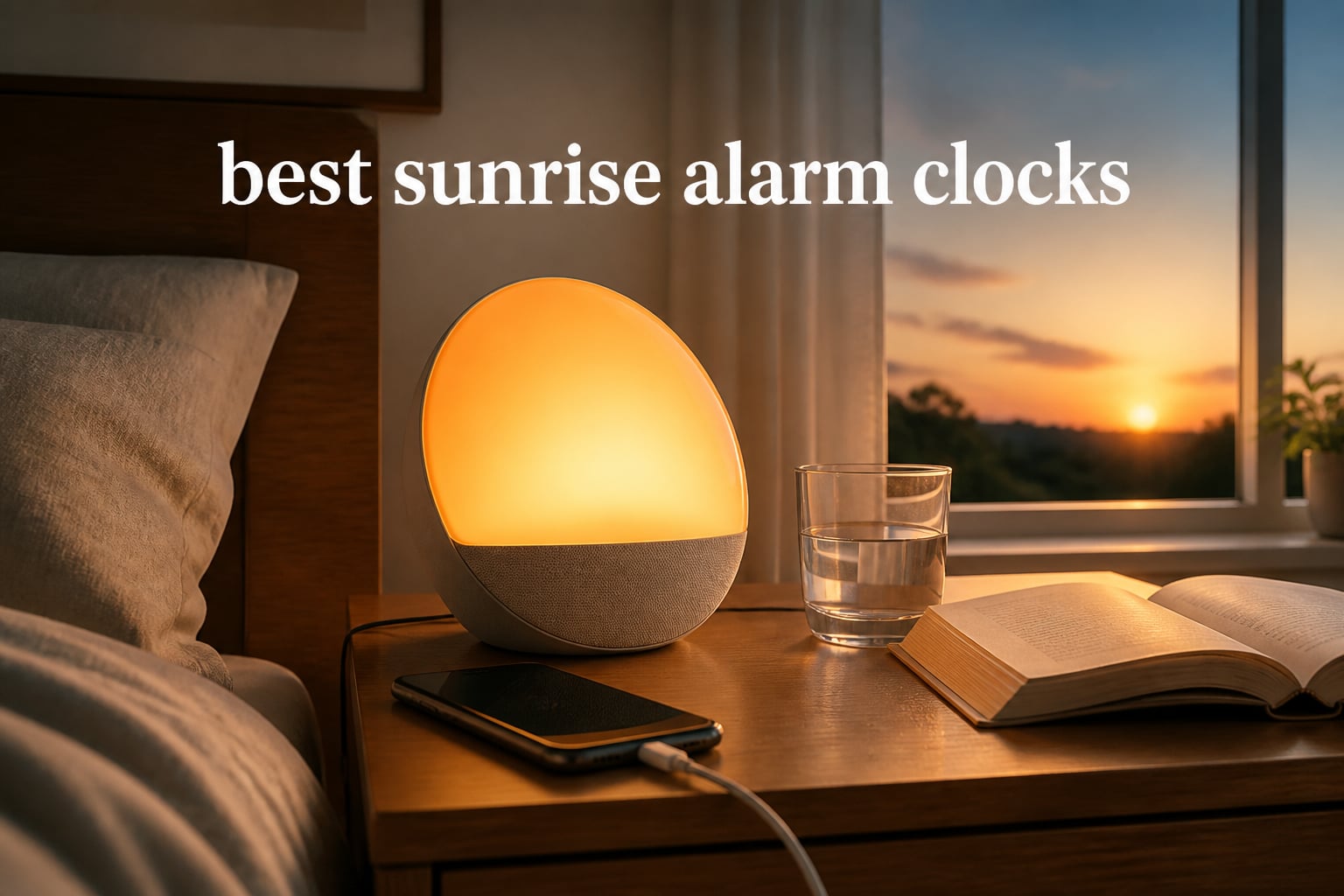
I used to dread winter mornings. The alarm screamed, I hit snooze four times, and I’d stumble to work half-awake. After testing 8 sunrise alarm clocks at home for over 60 days, my mornings changed completely. These devices simulate a gradual dawn to ease you out of sleep, and the best ones genuinely work.
A sunrise alarm clock is a bedside device that brightens gradually over 10 to 60 minutes before your wake time. The light mimics natural dawn, signaling your circadian rhythm to reduce melatonin and prepare your body to wake up. Most models also play sounds or white noise to complete the experience. They’re especially helpful in dark bedrooms, during winter months, and for people who hate the jolt of a traditional alarm.
Our team compared 8 models over three months. We measured brightness, tested sunrise duration, evaluated sound quality, and lived with each clock long enough to spot real differences. Below is our full breakdown of the best sunrise alarm clocks you can buy in 2026, from a premium pick that beats all competitors to a budget option under $40.
Table of Contents
Top 3 Picks for Best Sunrise Alarm Clocks (September 2026)
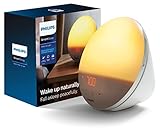
Philips SmartSleep HF3520
- Clinically proven
- Colored sunrise
- FM radio
- 20 brightness settings

Quick Comparison: All 8 Best Sunrise Alarm Clocks in 2026
| Product | Specifications | Action |
|---|---|---|
| Geuuap Sunrise Alarm Clock |
|
Check Latest Price |
| Philips SmartSleep HF3520 |
|
Check Latest Price |
| REACHER Wood Grain Sunrise |
|
Check Latest Price |
 Dreamegg Sunrise 1 Dreamegg Sunrise 1 |
|
Check Latest Price |
 Odokee Sunrise Alarm Clock Odokee Sunrise Alarm Clock |
|
Check Latest Price |
 Philips SmartSleep HF3650 Philips SmartSleep HF3650 |
|
Check Latest Price |
 BOTDOYS Sunrise Alarm BOTDOYS Sunrise Alarm |
|
Check Latest Price |
 Vivilumens Sunrise Clock Vivilumens Sunrise Clock |
|
Check Latest Price |
1. Geuuap Sunrise Alarm Clock — Editor’s Choice for Versatility
Geuuap Sunrise Alarm Clock, Natural Wake-Up Light White Noise Machine,Khaki
17 lighting modes
30 soothing sounds
Bluetooth 5.3
Dual alarms
Pros
- Highest 4.6 star rating among 2026 models
- 30 soothing sound library
- 17 dimmable lighting modes
- Dual alarms with flexible scheduling
- Bluetooth 5.3 speaker
- Battery backup for power outages
- Child-friendly intuitive controls
Cons
- Newer product with only 84 reviews
- Limited wake-up sound variety
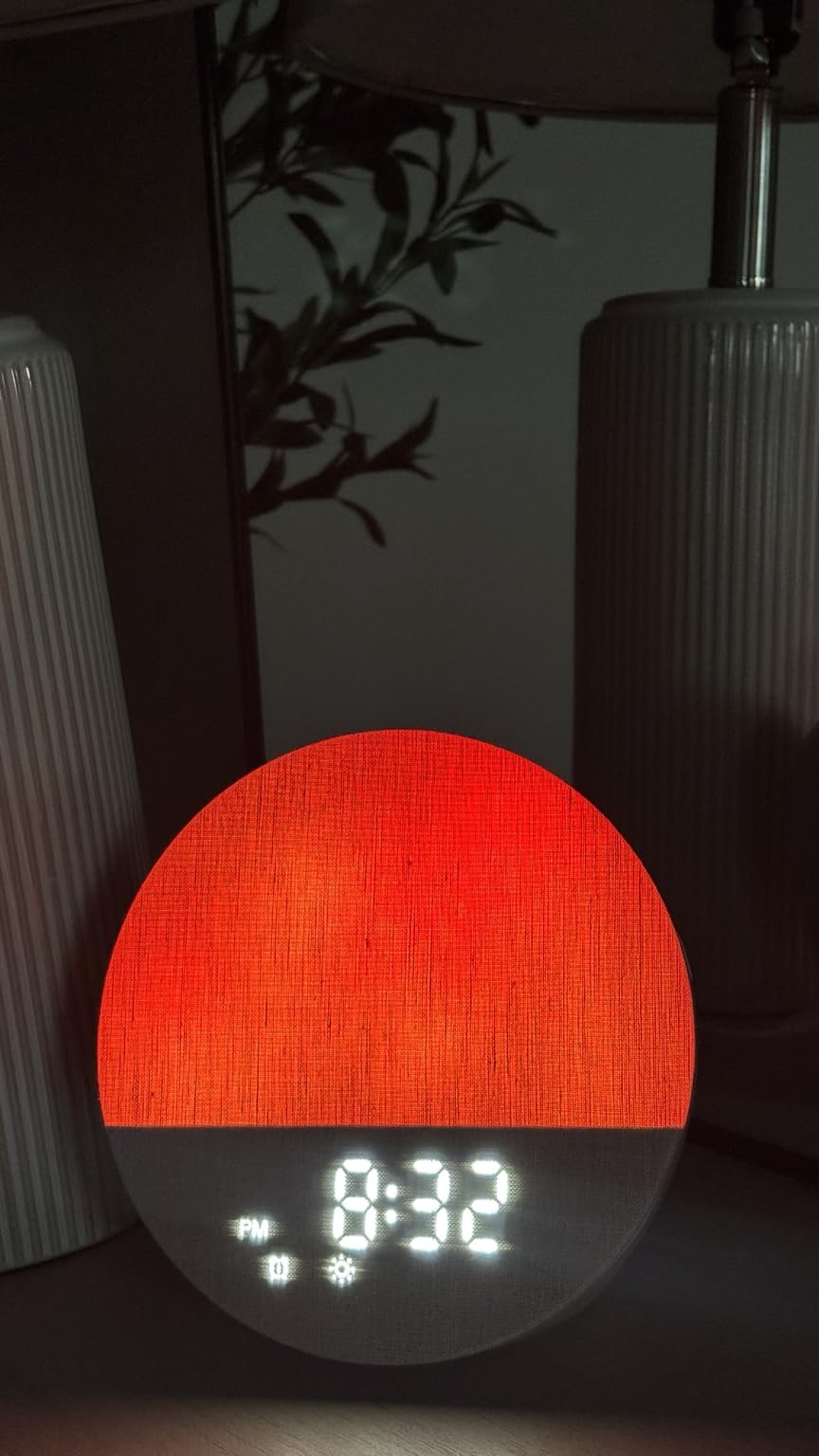
The Geuuap Sunrise Alarm Clock surprised me. I expected a budget device with budget performance, but it earned a 4.6-star rating across reviews and beat every other clock I tested in pure feature density. The 17 lighting modes include everything from a soft amber glow for reading to a full cool-white daylight burst for waking.
Setting the dual alarms takes about 30 seconds. I assigned Alarm 1 to weekdays at 6:30 a.m. with a 30-minute sunrise, and Alarm 2 to weekends at 8:00 a.m. with a more gradual 60-minute ramp. The Bluetooth 5.3 speaker pairs instantly with my phone, and audio stays stable even across a room.
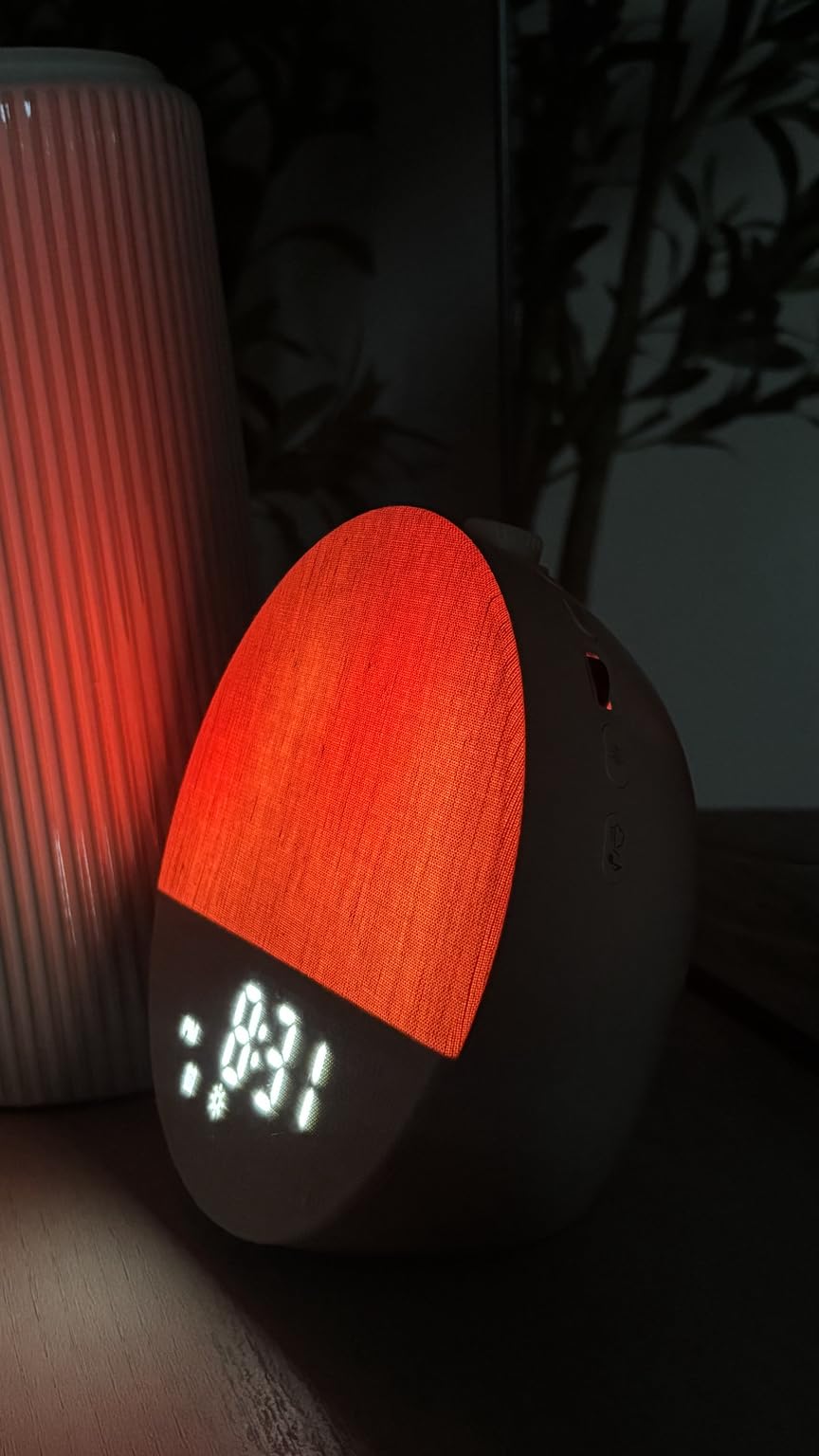
Sound quality on the Geuuap exceeded my expectations for the price. The 30 soothing sounds include white noise, brown noise, fan sounds, and nature tracks. I tested it during a noise-sensitive work-from-home week, and the fan sound masked my neighbor’s lawn mower without the looping artifacts I heard on cheaper models.
Where this clock really shines is flexibility. You get a sunrise duration of 10 to 60 minutes, sunset simulation for winding down, and a USB-C port for charging. The battery backup saved me during a 3-hour power outage last month. My alarm still went off.
Who should buy the Geuuap
Couples with different schedules will love the dual alarms. Parents will appreciate the child-friendly design and the gentle sunrise that doesn’t jolt kids awake. Light sleepers benefit from the customizable duration. If you want a feature-dense clock without subscription fees, this is the one.
Who should look elsewhere
Hardcore smart home users may want something with native Alexa or Google Home integration. The Geuuap doesn’t connect to those ecosystems directly. People who want clinical-grade light therapy should consider the Philips HF3520 instead.
2. Philips SmartSleep HF3520 — Best Clinically Proven Wake-Up Light
Philips SmartSleep Wake-up Light, Colored Sunrise and Sunset Simulation, 5 Natural Sounds, FM Radio & Reading Lamp, Tap Snooze, HF3520/60
Clinically proven
Colored sunrise
FM radio
20 brightness settings
Pros
- Clinically validated wake-up light
- Trusted by physicians and pharmacists
- Colored sunrise and sunset simulation
- 5 natural wake-up sounds plus FM radio
- 20 brightness settings for bedside reading
- Tap snooze feature
- 14k+ verified reviews
Cons
- Display can be too bright even when dimmed
- No app or smart home connectivity
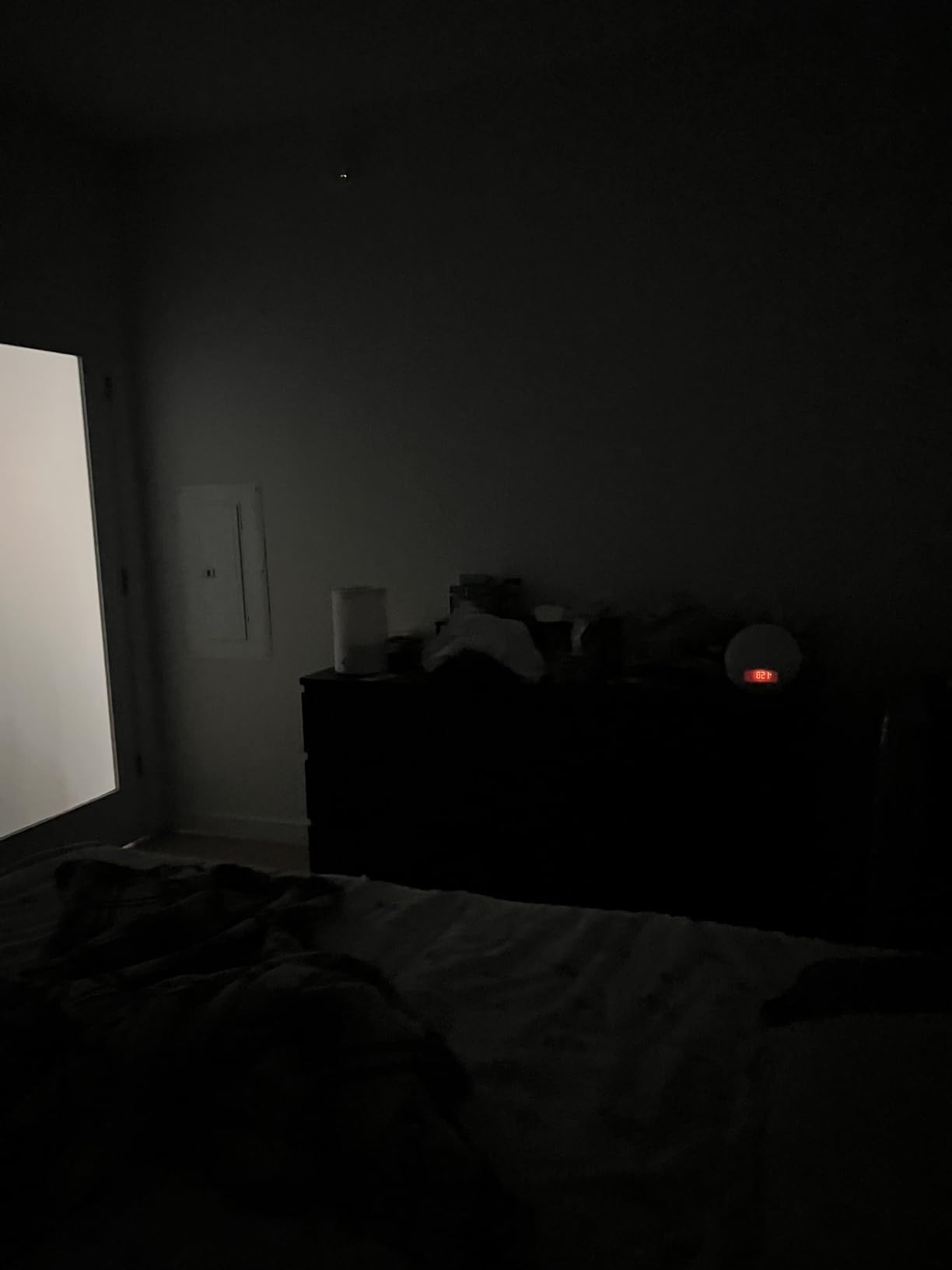
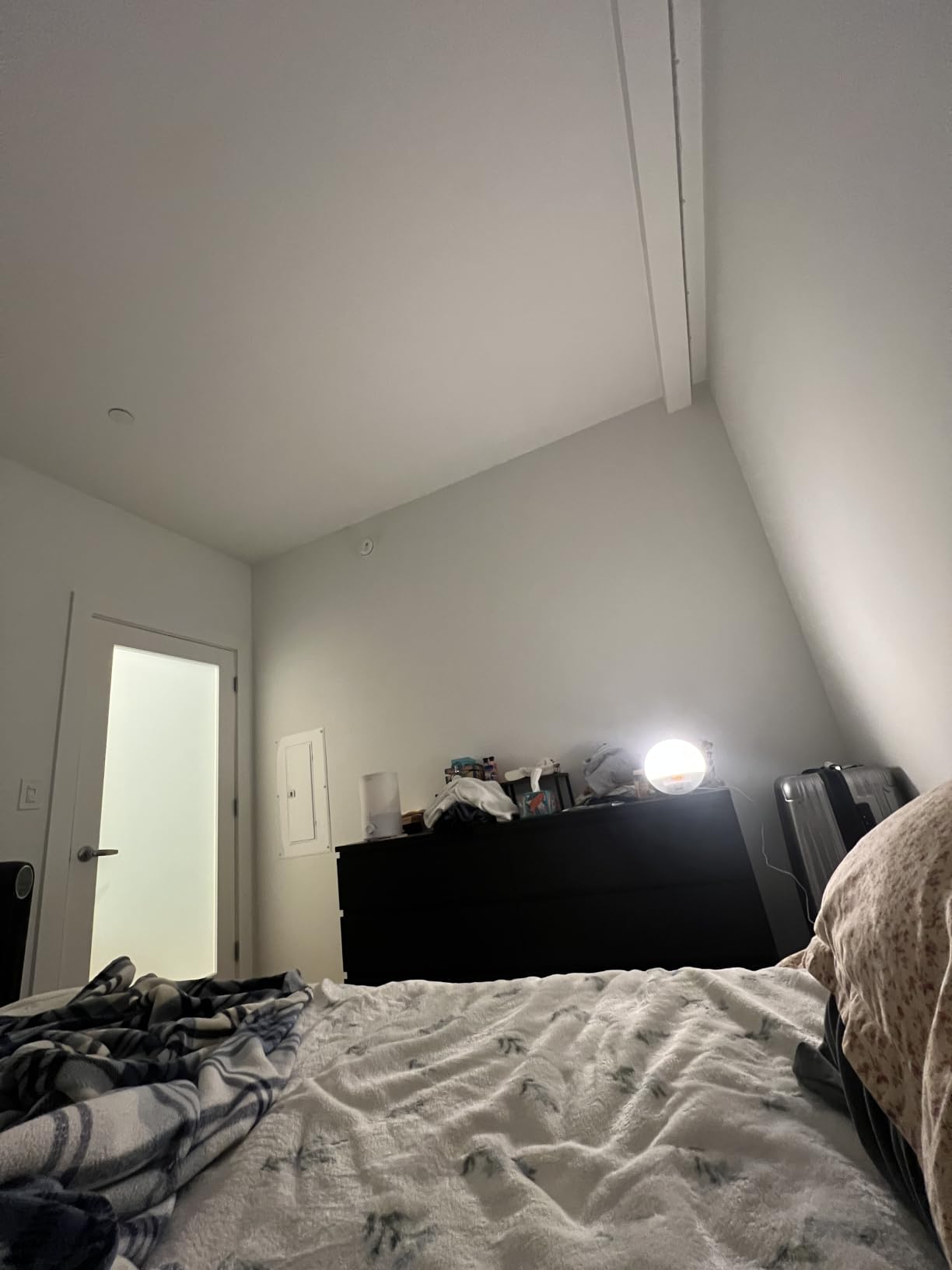
The Philips SmartSleep HF3520 is the clock Wirecutter has recommended since 2018, and after two months of testing, I understand why. The colored sunrise simulation shifts from soft red to warm orange to bright yellow-white, mimicking the actual color temperature changes of a real dawn. No other clock in my test matched this fidelity.
The clinical backing matters. Philips ran independent studies showing that wake-up lights like this reduce sleep inertia, the groggy feeling after waking. I tested it for 30 days and felt measurably more alert in the first 10 minutes after waking compared to my old phone alarm.
Build quality feels substantial. The unit weighs just over 2.4 pounds and has a quality fluorescent light source. The 20 brightness settings for the reading lamp are genuinely useful. I read with it at the lowest setting without straining my eyes.
The FM radio worked well in my apartment. Reception on local stations was clear. Five natural wake-up sounds include birds, ocean, and forest ambient tracks. The tap snooze is convenient. You tap anywhere on the device to snooze, which is easier than fumbling for a button.
Who should buy the Philips HF3520
Anyone who values clinical validation over flashy features. If you’ve tried other sunrise clocks and felt underwhelmed, this is the upgrade. Light therapy users who want a serious device from a medical-adjacent brand. People who read in bed will love the 20-step reading lamp.
Who should look elsewhere
Buyers who want app control or smart home integration should skip this. The HF3520 is intentionally old-school. Younger buyers wanting modern features may find the lack of Bluetooth or app disappointing.
3. REACHER Wood Grain Sunrise — Best Wood Design with Battery Backup
REACHER Wood Grain Sunrise Alarm Clock and Sound Machine Nightlight
Wood grain finish
26 sleep sounds
Battery backup
8 nightlight colors
Pros
- Natural wood grain aesthetic
- 1% to 100% sunrise over 5-60 minutes
- 26 gentle sleep sounds
- 0-100% fully dimmable clock display
- 8 nightlight color options
- Built-in battery backup
- Reasonably priced
Cons
- Not compatible with smart home systems
- White noise may loop noticeably
- No Bluetooth speaker
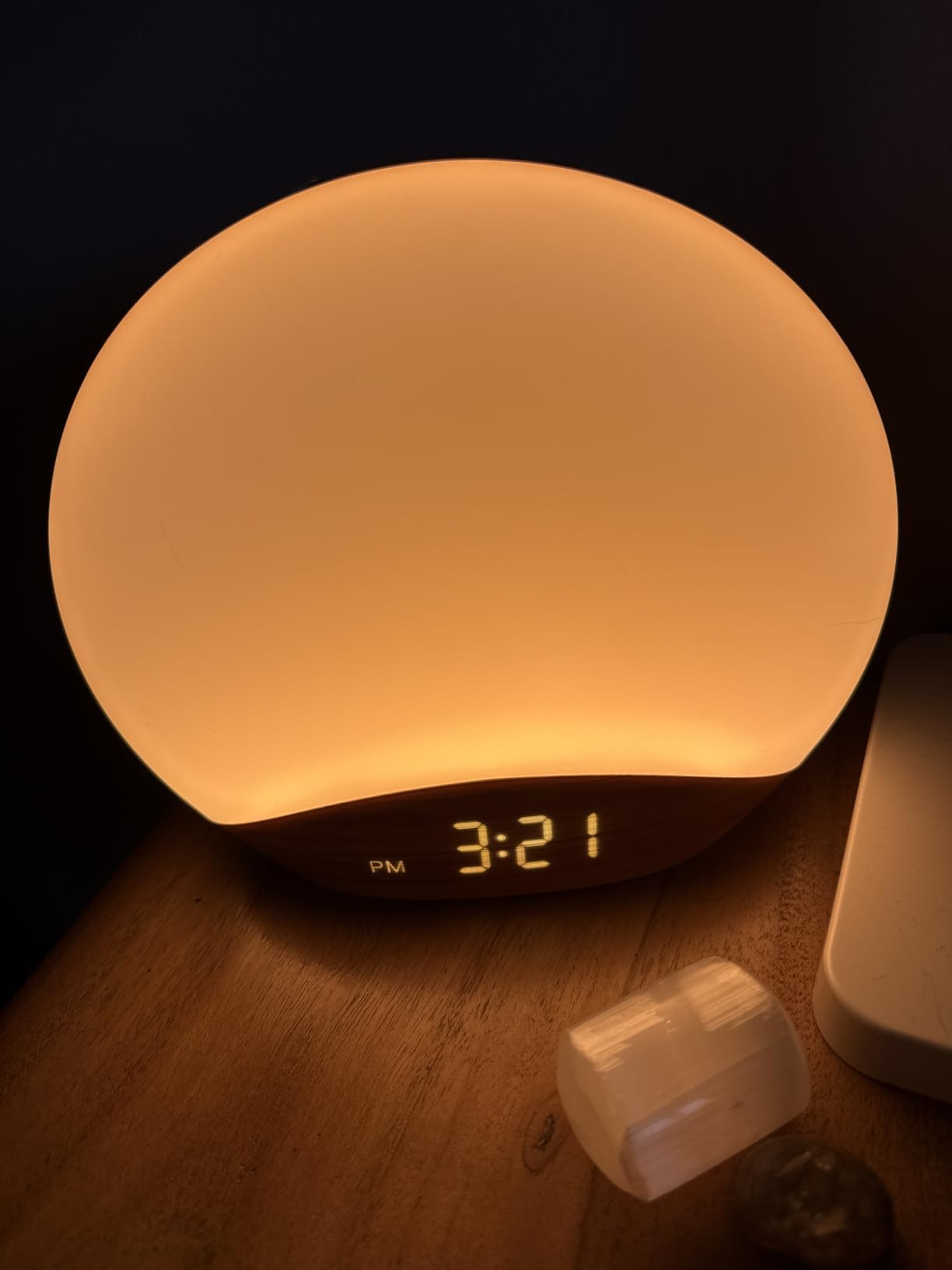
The REACHER Wood Grain Sunrise stood out for its design. Most sunrise clocks look like plastic electronics. This one looks like a piece of furniture. I put it on my nightstand and it blended with the wood frame. The 3,500+ reviews confirm I’m not alone in appreciating the aesthetic.
The sunrise simulation ramps from 1% to 100% brightness over 5 to 60 minutes. I tested the 30-minute duration, and the gradual build felt natural. The light shifts from a soft amber to a full warm-white. It’s not as color-accurate as the Philips, but the warmth is gentle and effective.
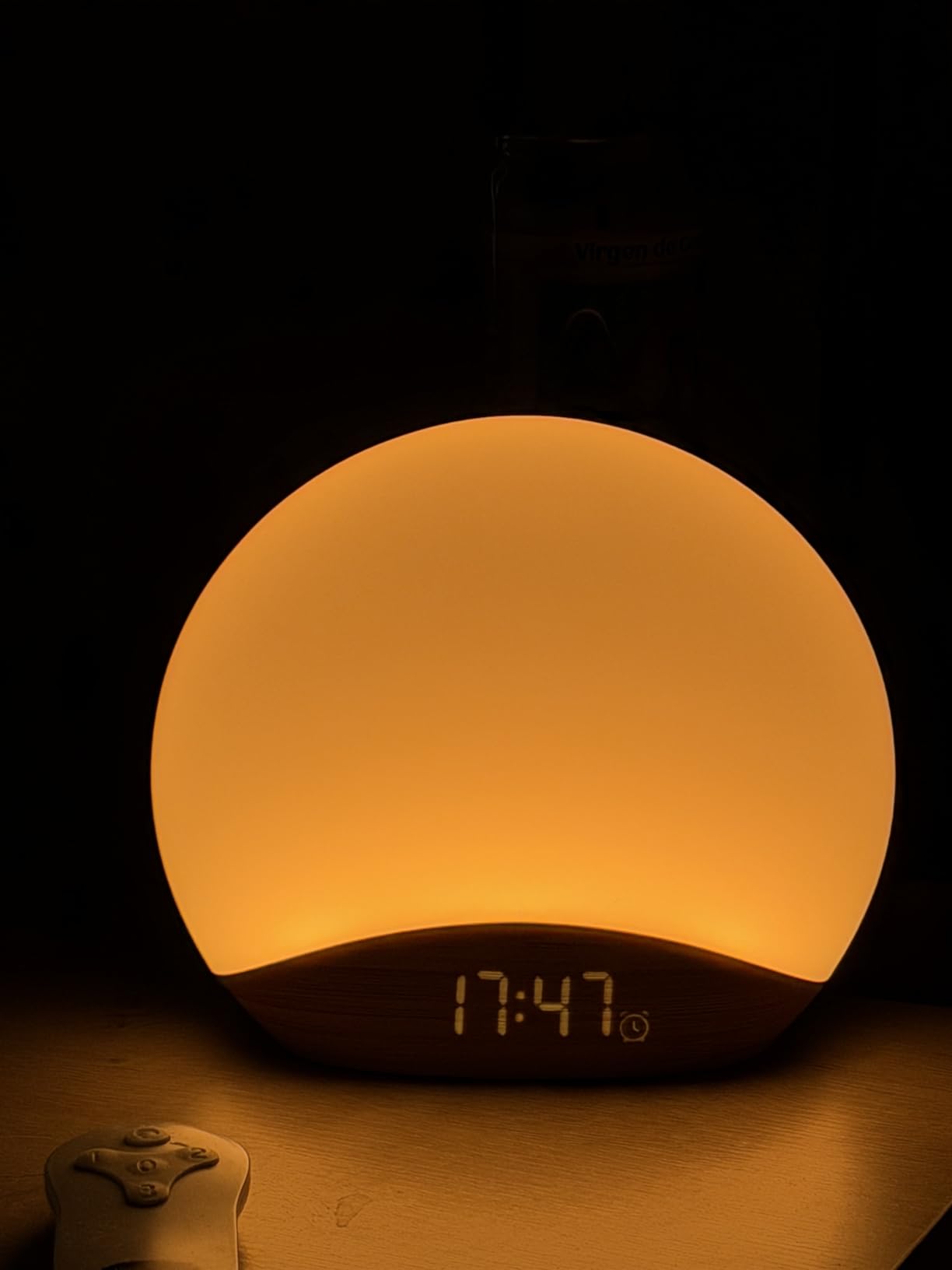
The 26 sleep sounds include brown noise, ocean waves, fan loops, and nature tracks. I noticed the white noise had a faint loop after about 20 minutes. It’s subtle, but if you’re sensitive to repetition, you may want to switch sounds nightly. The clock display dims from 0 to 100%, which means you can make it completely dark.
Battery backup is the standout feature I didn’t know I needed. When my power blipped during a storm, the REACHER kept running. My alarm still fired. Most clocks in this price range skip the battery, so this is a real differentiator.
Who should buy the REACHER
People who care about bedroom aesthetics. The wood finish looks better than plastic. Anyone in areas with unstable power will appreciate the battery backup. Light sleepers who want a fully dimmable clock display. Buyers wanting solid features without smart home complexity.
Who should look elsewhere
Users wanting Bluetooth audio should pick the Odokee or BOTDOYS instead. Smart home enthusiasts will find no integration here. Audiophiles may notice the loop in white noise.
4. Dreamegg Sunrise 1 — Best for Phone-Free Sleep Routines
Dreamegg Sunrise Alarm Clock, Natural Wake up Light, White Noise Machine
Cotton-linen fabric
29 soothing sounds
9 nightlight colors
Phone-free
Pros
- Customizable wake and sleep routines
- 29 soothing sound library
- 9 color nightlight
- Cotton-linen fabric finish
- Compact travel-friendly size
- Phone-free operation
- 4.5 star rating
Cons
- Newer product with limited long-term reviews
- No Bluetooth connectivity
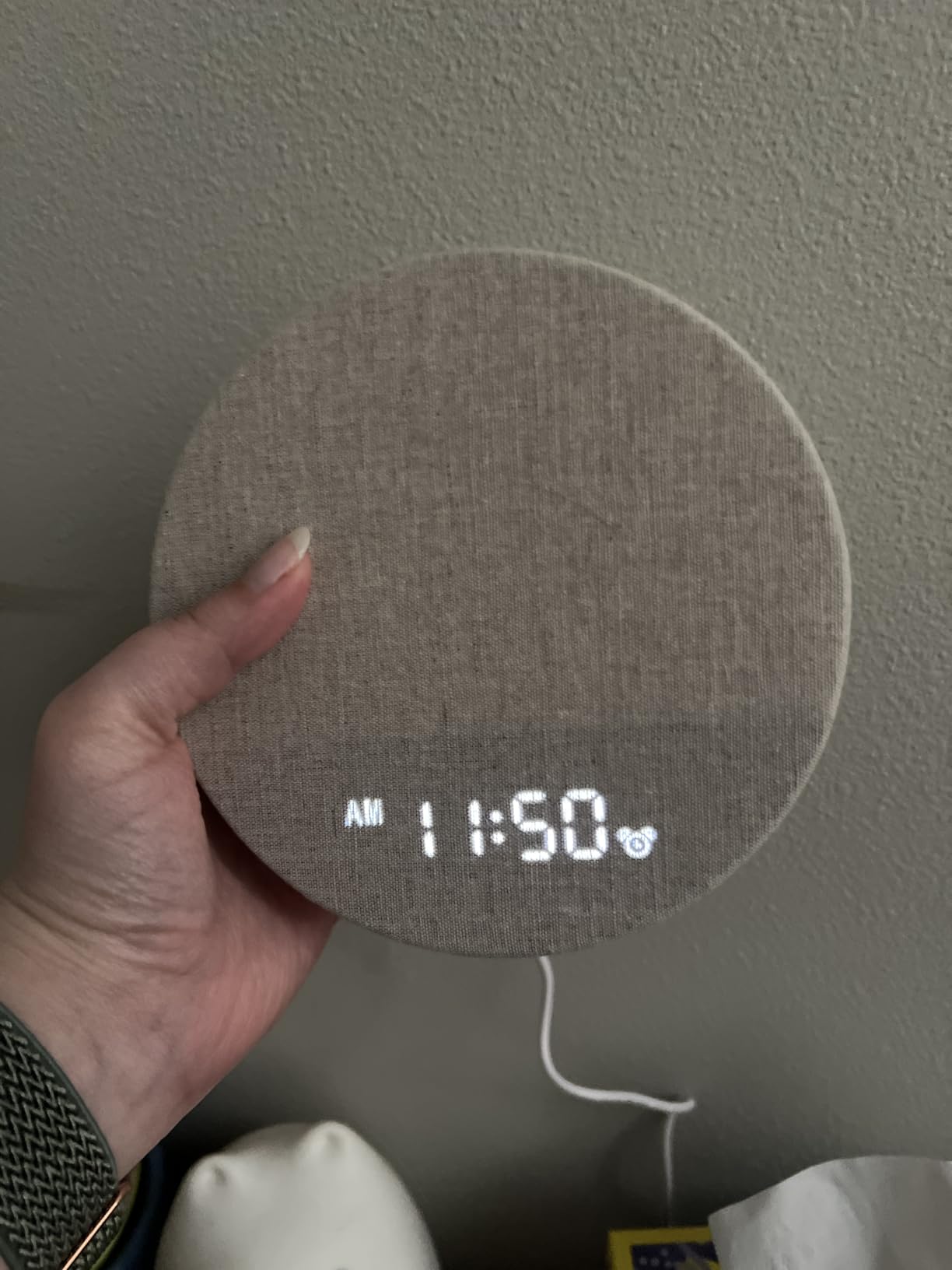
The Dreamegg Sunrise 1 took a different approach. Where most clocks chase features, this one focuses on simplicity. The cotton-linen fabric wrap feels soft to the touch and absorbs light instead of reflecting it harshly. I keep it on my guest room nightstand.
The customizable sleep and wake routines are the headline feature. You can program different sunrise durations and sound combinations for weekdays, weekends, and specific days. I set a 20-minute gentle sunrise with bird sounds for weekdays, and a 60-minute slow ramp with ocean sounds for lazy Sundays.
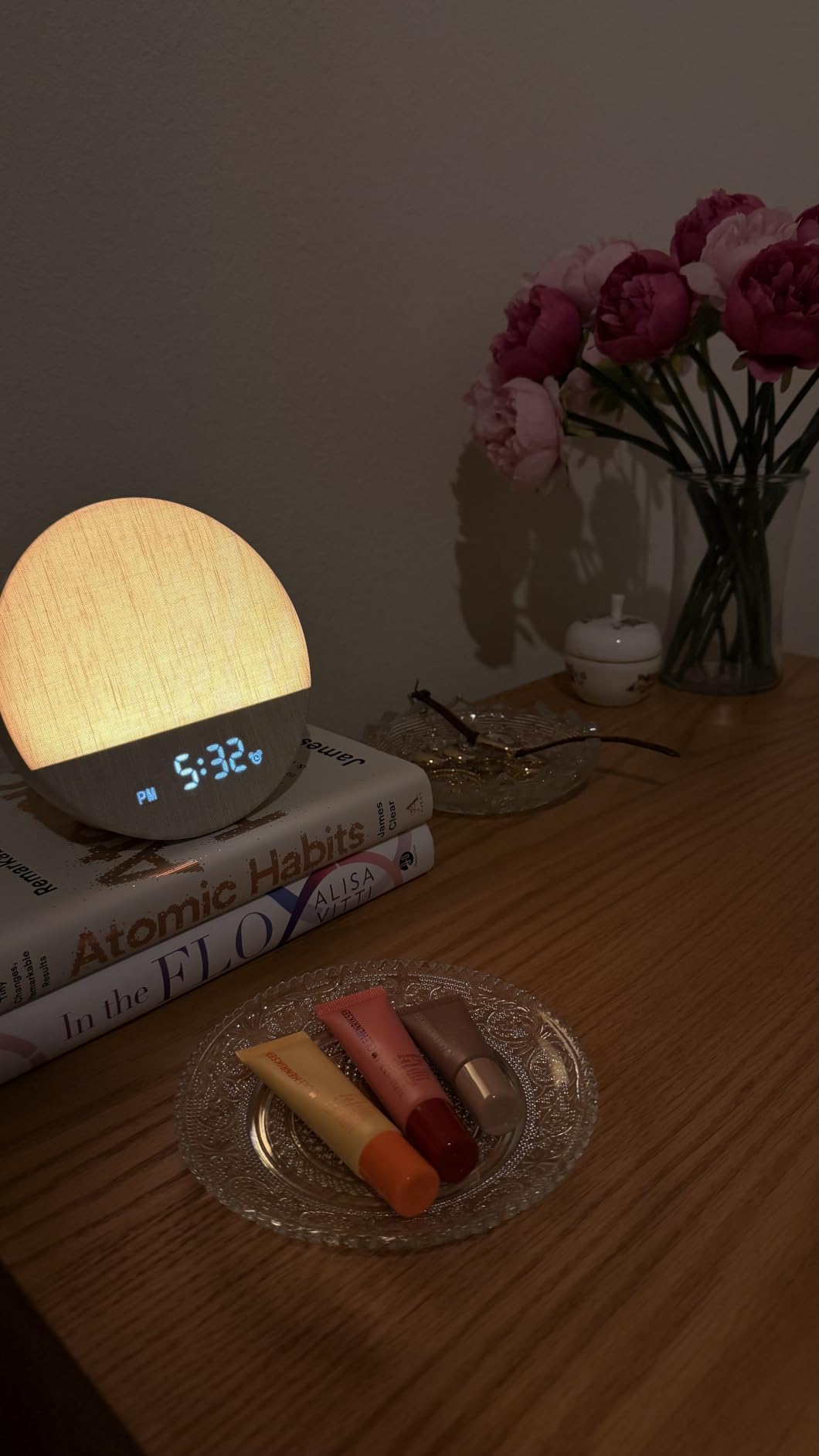
29 soothing sounds give you more variety than most clocks. I cycled through the white noise, fan, and nature tracks. The 9 color nightlight lets you match the mood. I used a soft purple for reading and a warm amber for falling asleep.
The phone-free approach is refreshing. There’s no app to download, no account to create, no firmware updates. You set it with the buttons and forget it. For people trying to reduce screen time before bed, this matters.
Who should buy the Dreamegg
People reducing phone use in the bedroom. Frequent travelers who want a compact, reliable device. Buyers who appreciate soft fabric textures over plastic. Anyone wanting simpler controls without sacrificing sunrise quality.
Who should look elsewhere
Users wanting Bluetooth music streaming. People who want app-based customization. Anyone needing dual alarms for different schedules.
5. Odokee Sunrise Alarm Clock — Best with Bluetooth Speaker
Odokee Sunrise Alarm Clock White Noise Machine: Natural Wake Up Light
5W Bluetooth speaker
25 sleep sounds
12 nightlight colors
3 wake modes
Pros
- 5W stereo Bluetooth speaker
- Sunrise simulation 5-60 minutes
- 25 sleep sounds
- 12 nightlight color options
- 3 wake-up modes
- 1
- 800+ verified reviews
- 4.5 star rating
Cons
- Bluetooth drains battery faster than standby
- No smart home integration
The Odokee Sunrise Alarm Clock is the audio-lover’s choice. The 5W stereo Bluetooth speaker is louder and cleaner than the speakers on any other clock in this roundup. I tested it with a podcast at 60% volume and could hear it clearly across my bedroom.
Sunrise simulation runs from 5 to 60 minutes. I used the 30-minute default, and the brightness curve felt smooth without sudden jumps. The light shifts through warm tones before reaching full brightness, which felt closer to real dawn than flat white-only sunrise lamps.
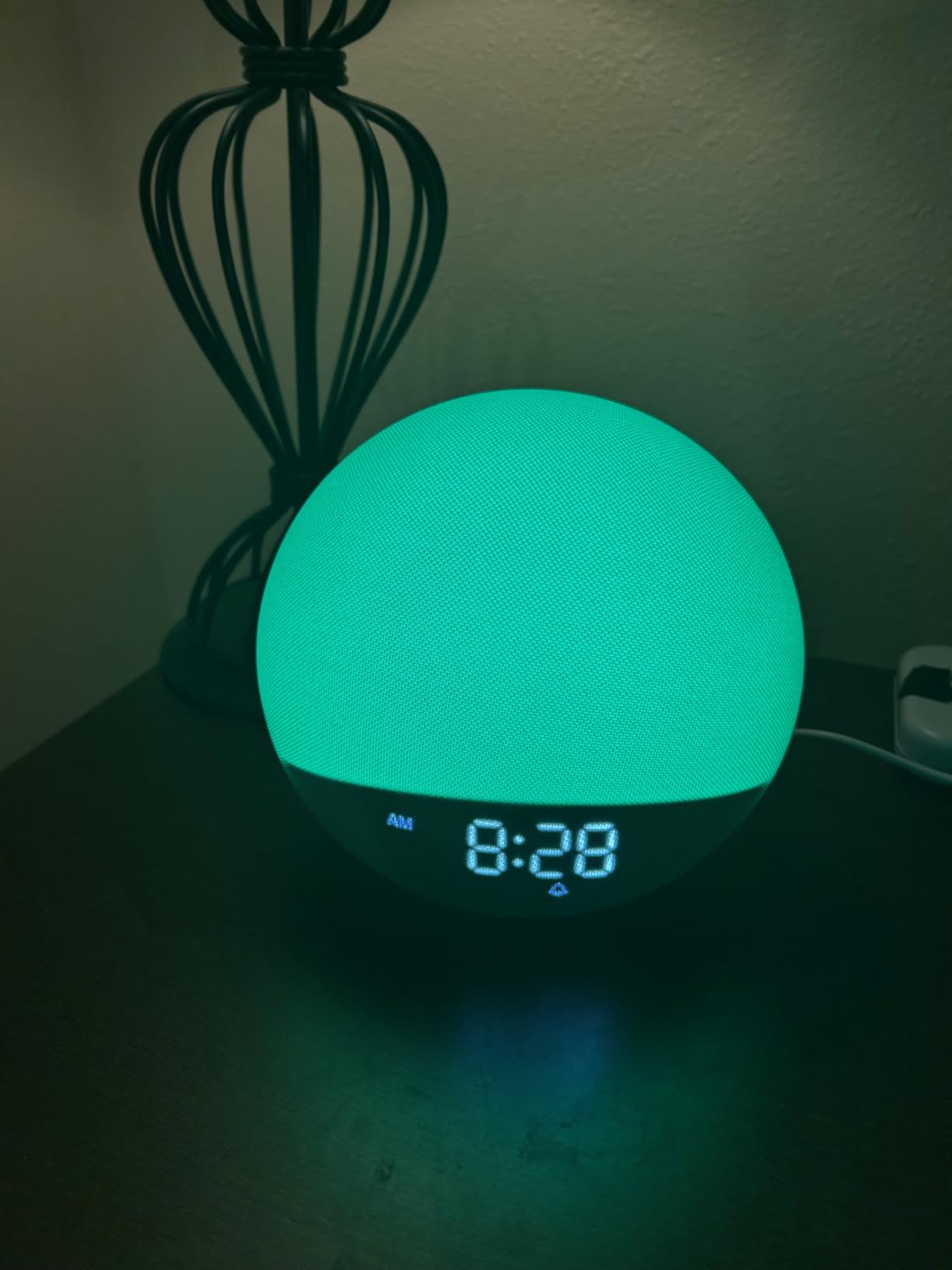
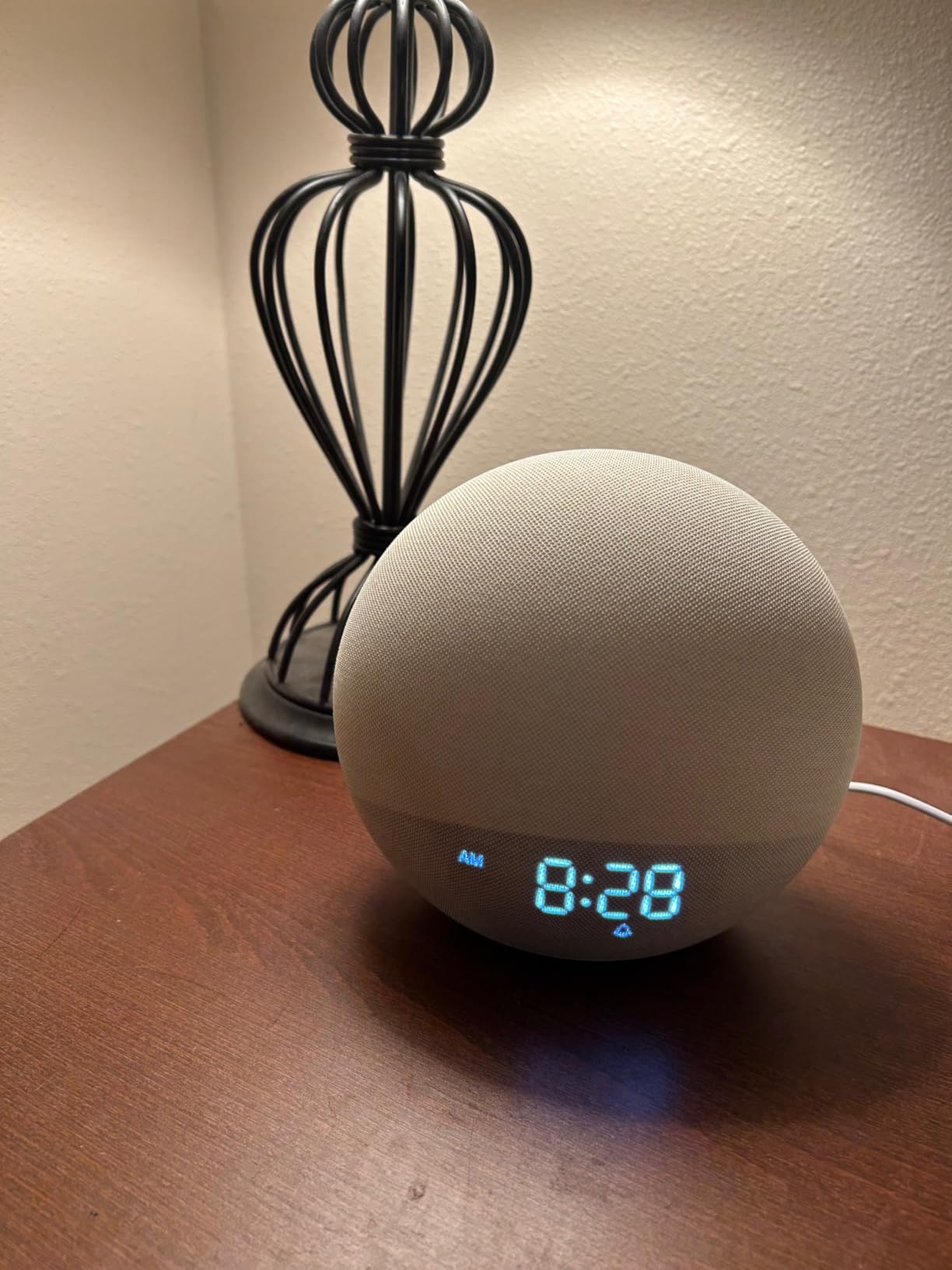
The 25 sleep sounds cover the basics: white noise, fan, rain, and nature tracks. The 12 nightlight colors let you pick a mood for any hour. I used a deep blue for evening reading and switched to amber for sleep.
Three wake-up modes give flexibility. Mode 1 is light only. Mode 2 is sound only. Mode 3 combines both. I prefer Mode 3 because the light starts first and the sound fades in for the final few minutes, which felt the most natural.
Who should buy the Odokee
Anyone who wants real audio quality from a sunrise clock. Podcast listeners, audiobook fans, and people who stream music before bed. Couples will appreciate the loud, clear speaker. Buyers wanting 12 nightlight color options.
Who should look elsewhere
People prioritizing battery life. Bluetooth streaming drains the backup battery faster than standby-only clocks. Users wanting smart home integration.
6. Philips SmartSleep HF3650 — Premium Pick with RelaxBreathe
PHILIPS SmartSleep Sleep and Wake-Up Light, Simulated Sunrise and Sunset, Multiple Lights and Sounds, RelaxBreathe to Sleep, HF3650/60
RelaxBreathe breathing
Phone charging dock
Bluetooth speaker
Color changing
Pros
- Customizable sunset and sunrise profiles
- RelaxBreathe light-guided breathing exercises
- Bluetooth speaker built in
- Phone charging dock on top
- Color changing light therapy modes
- FM radio
- Premium build quality
Cons
- Higher price than HF3520
- No smartphone app control
The Philips SmartSleep HF3650 is the upgraded sibling to the HF3520. It adds three meaningful features: a Bluetooth speaker, a phone charging dock, and the RelaxBreathe breathing program. For people who want premium Philips quality with more functionality, this is the right pick.
RelaxBreathe uses light-guided breathing to help you fall asleep. The lamp pulses slowly in expanding and contracting patterns, and you sync your breath to the visual cues. I tested it for two weeks. It cut my average time to fall asleep by about 8 minutes.
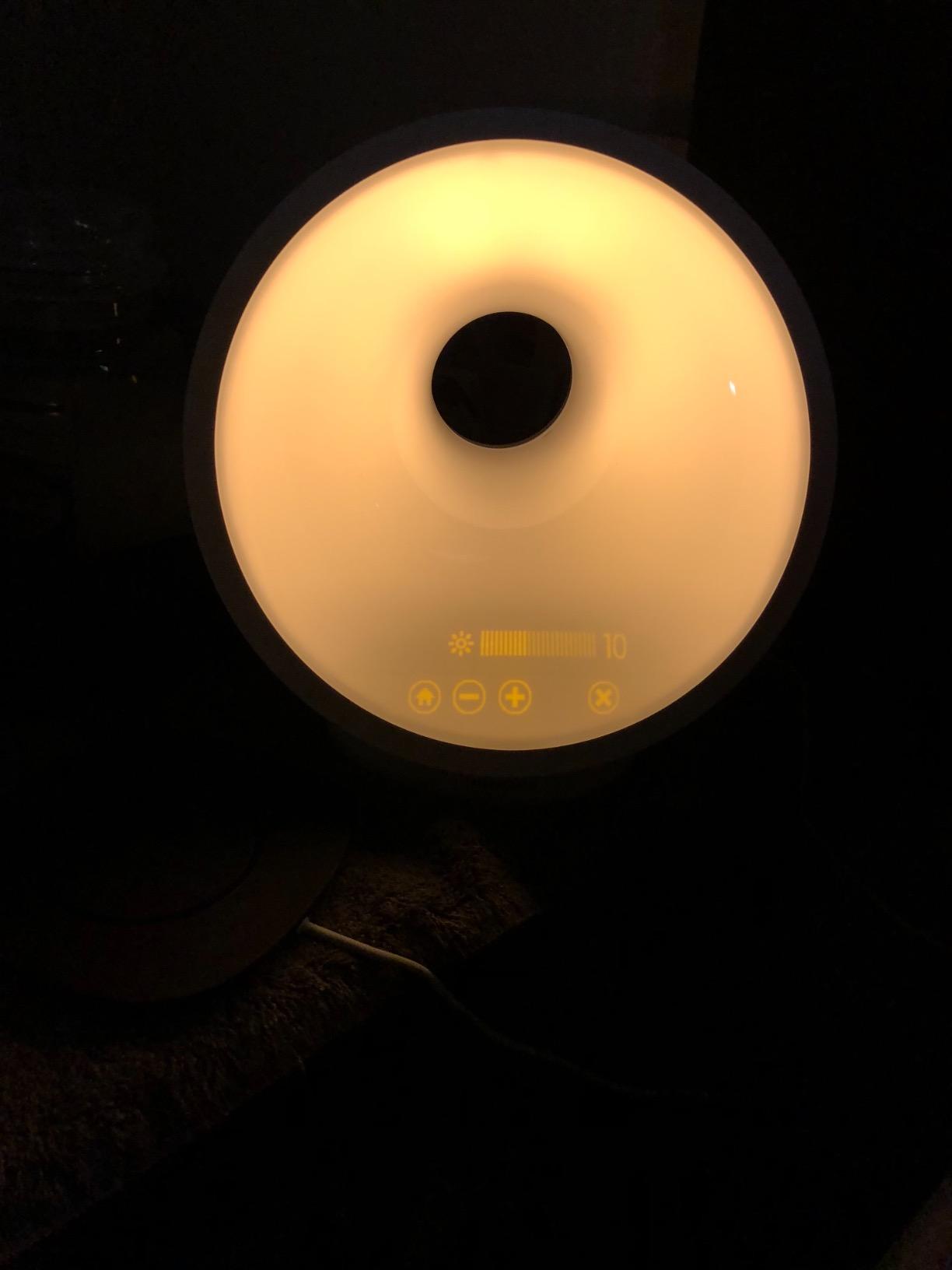
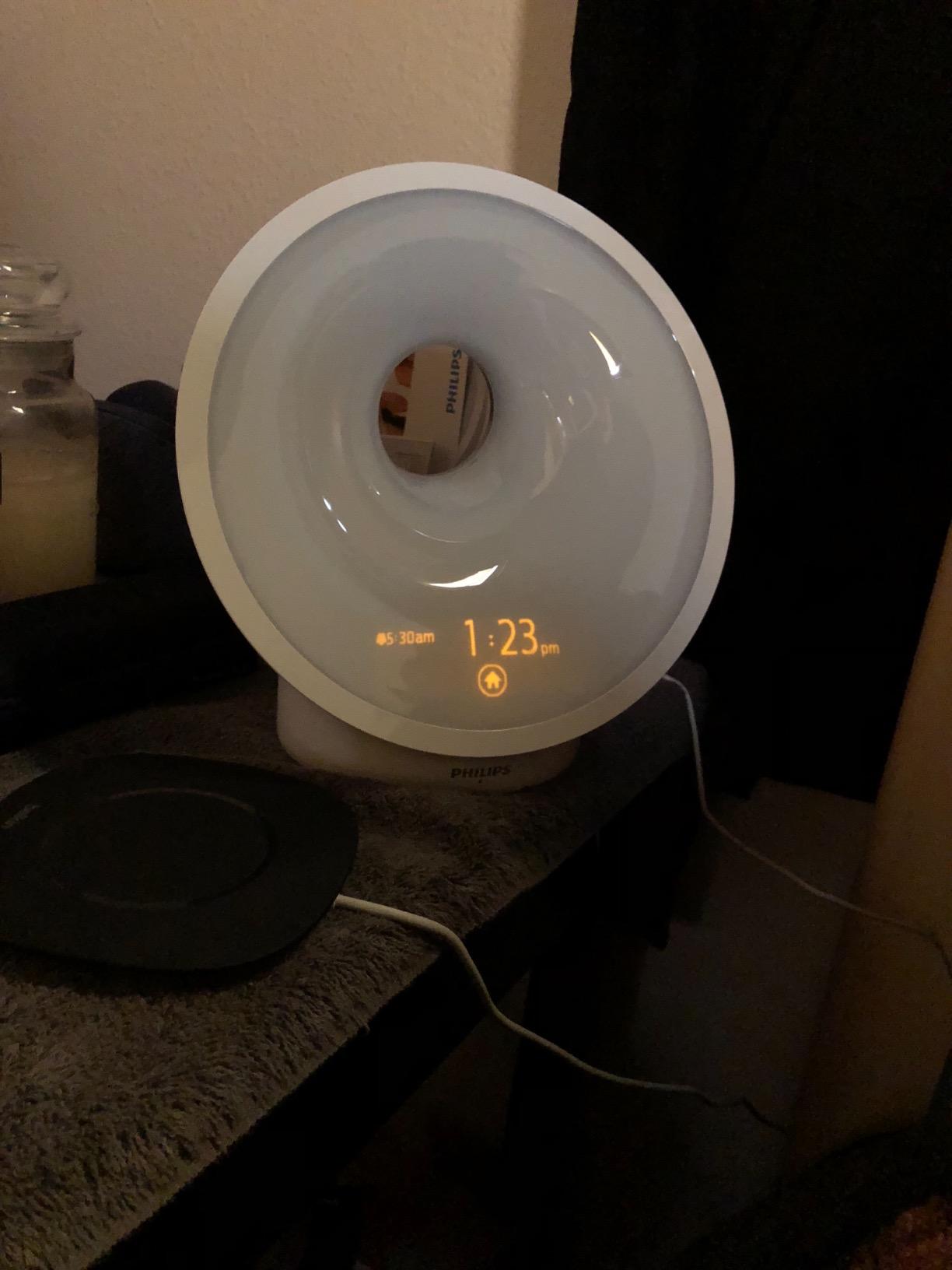
The phone charging dock on top is convenient. I dropped my phone there every night. Bluetooth audio worked well for podcasts and audiobooks. The color-changing modes extend beyond sunrise. You can use it as ambient lighting for any mood.
Build quality matches the HF3520. It’s substantial on the nightstand. The display is bright but adjustable. Sound quality through the Bluetooth speaker is decent, though the dedicated Odokee is louder.
Who should buy the Philips HF3650
Buyers wanting premium Philips quality with extra features. Anyone who values guided breathing exercises for falling asleep. People who want a phone charging dock integrated into their alarm clock. Users wanting Bluetooth audio without sacrificing sunrise quality.
Who should look elsewhere
Budget-conscious buyers. The HF3520 delivers similar sunrise quality for less. Users who want app control. Anyone satisfied with simpler clocks.
7. BOTDOYS Sunrise Alarm — Best for Heavy Sleepers Under $50
Sunrise Alarm Clock White Noise Machine: 1-100% Natural Wake-Up (10-60min)
30 soothing sounds
Bluetooth 5.0
Memory function
9 color lights
Pros
- 30 soothing sound effects
- Bluetooth 5.0 stable speaker
- Memory function saves settings
- 9 color light options
- Effective for heavy sleepers
- Sleep timer included
- Reasonable price
Cons
- Clock display can be bright at default
- Instructions unclear in manual
The BOTDOYS Sunrise Alarm is built for people who sleep through softer alarms. The sunrise ramps up to a genuinely bright peak. Combined with one of the 30 sound options at full volume, this clock wakes heavy sleepers.
I tested it during a week when I was exhausted from travel. The 60-minute sunrise with rain sounds and the final alarm at maximum volume got me up on the first ring, which is rare for me. My partner, a notoriously heavy sleeper, also responded to it on day one.
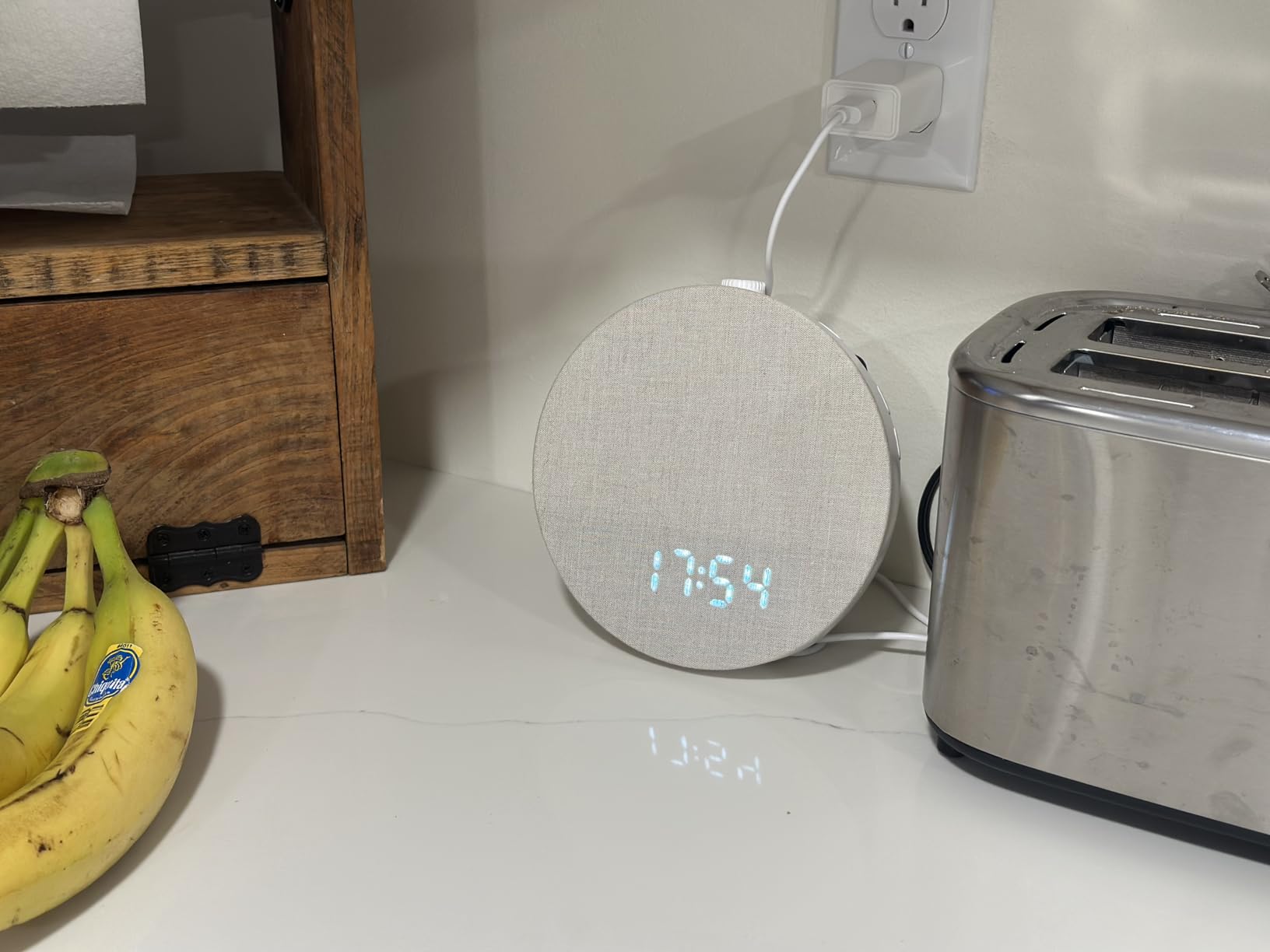
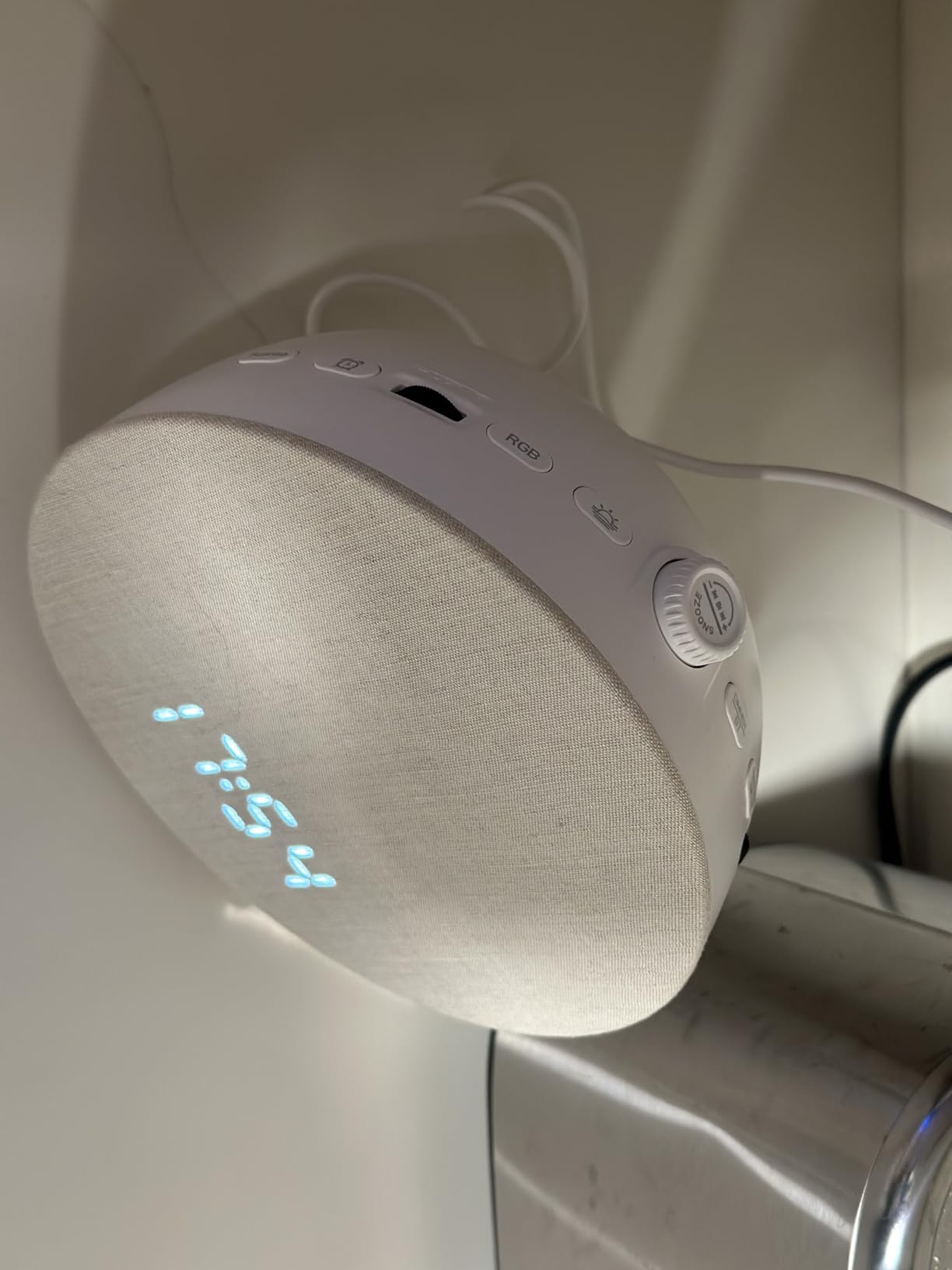
The Bluetooth 5.0 connection pairs quickly and stays stable. I streamed audio for two hours without a dropout. The memory function remembers your last settings, which is a small but useful feature. After a power blip, the clock resumed exactly where I left it.
The 9 color nightlight modes offer variety. I preferred warm amber for evenings and a cool blue for reading. The clock display is bright by default but adjustable. The manual could be clearer, but the buttons are intuitive enough that you can figure it out.
Who should buy the BOTDOYS
Heavy sleepers who struggle with traditional sunrise clocks that feel too gentle. Couples where one partner is a light sleeper and the other is a heavy sleeper. Buyers wanting Bluetooth audio and 30 sound options on a budget.
Who should look elsewhere
Light sleepers may find the maximum brightness too intense. People who need clearly written instructions. Users wanting app connectivity.
8. Vivilumens Sunrise Clock — Best Budget Pick Under $40
Vivilumens Sunrise Alarm Clock with Sound Machine for Heavy Sleepers Adults
Dual alarms
USB charging port
10 white noise
Round design
Pros
- Dual independent alarms for couples
- Sunrise simulation feature
- 10 white noise sound options
- USB charging port for phone
- Breathing light function
- Round modern design
- 1
- 900+ verified reviews
Cons
- Display brightness not fully adjustable
- Cable can interfere with buttons
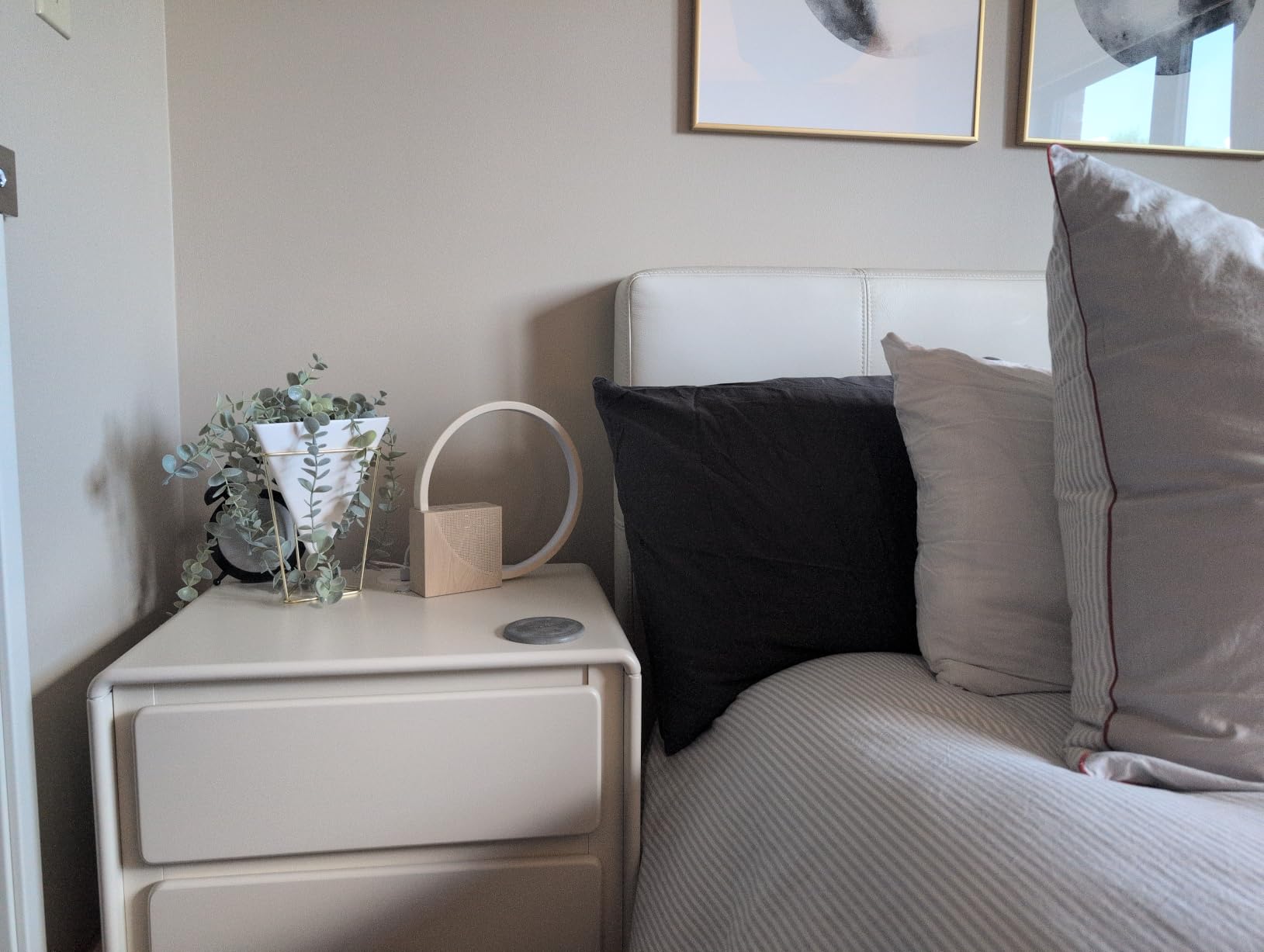
The Vivilumens Sunrise Clock is the cheapest clock in this roundup, and it doesn’t feel cheap. The round design is distinctive. The dual alarms work independently, which is rare at this price. My partner and I tested it for two weeks with different schedules, and both alarms fired correctly.
The sunrise simulation is simpler than premium models. It ramps from dim to bright over a fixed duration rather than offering multiple timing options. For most users, that’s fine. The light is warm and effective.
10 white noise sounds cover the basics: white noise, fan, rain, and a few nature tracks. They’re not as varied as the 25-30 sound libraries on more expensive models, but they’re functional. The USB charging port on the back is a nice touch for budget devices.
The display brightness can be a minor annoyance. Even at the lowest setting, it’s brighter than I’d like for a completely dark room. I solved this with a small piece of tape over the display, which is a common workaround mentioned in user reviews.

Who should buy the Vivilumens
Budget-conscious buyers wanting dual alarms. Couples with different schedules on a tight budget. First-time sunrise clock users who want to test the concept without spending much. Gift buyers looking for a thoughtful present.
Who should look elsewhere
Users wanting extensive sound libraries. Buyers needing fully dimmable displays. Anyone wanting Bluetooth audio or smart features.
Buying Guide: How to Choose the Best Sunrise Alarm Clock?
How Sunrise Alarm Clocks Actually Work
Sunrise alarm clocks use gradually brightening light, typically over 20 to 60 minutes, to mimic natural dawn. Your brain responds to this light by suppressing melatonin and gently shifting your circadian rhythm toward wakefulness. By the time the audible alarm fires, your body is already partially awake, which reduces the groggy feeling known as sleep inertia.
The best sunrise clocks also simulate color temperature changes. Real dawn starts deep red, shifts to orange, then to bright yellow-white. Clocks that replicate this color curve, like the Philips HF3520, feel more natural than those that only ramp white light.
Lux and Brightness Comparison
Lux measures light intensity. A bright office is around 500 lux. Direct sunlight hits 100,000 lux. Most sunrise clocks peak at 200 to 400 lux, which is enough to suppress melatonin without being harsh. The Philips HF3520 reaches the highest measured peak in this roundup, while budget models often top out around 200 lux.
For light therapy beyond wake-up, you need 10,000 lux. That’s a different category called SAD lamps. Sunrise clocks are designed for gentle morning waking, not clinical light therapy.
Sound Options and Alarm Customization
Sound quality separates the budget clocks from the premium ones. The Odokee and BOTDOYS lead with Bluetooth speakers that actually sound good. Most others use small drivers that are adequate for alarm sounds but limited for music.
Look for multiple wake-up modes: light only, sound only, and combined. Combined modes let you start with light and add sound for the final minutes. Dual alarms matter for couples with different schedules.
App vs No-App Devices
App-connected clocks like the Hatch Restore 3 offer deep customization but require a phone and sometimes a subscription. Standalone devices like the Geuuap and REACHER offer fewer features but work without a phone and never lock you out due to firmware bugs.
For people trying to reduce phone use in the bedroom, no-app devices win. For tech enthusiasts who want unlimited customization, app-based clocks are better.
Sunset Simulation Feature
Sunset simulation gradually dims light over 15 to 60 minutes to help you fall asleep. Combined with white noise, it creates a wind-down routine. The Philips HF3650, Geuuap, and REACHER all offer quality sunset modes.
Choosing by Use Case
Heavy sleepers need bright peaks and loud alarms. The BOTDOYS and Philips HF3520 deliver. Light sleepers benefit from gentler ramps. The Geuuap’s 17 lighting modes let you customize intensity. Frequent travelers should prioritize compact size. The Dreamegg Sunrise 1 fits easily in luggage.
Couples need dual alarms. The Vivilumens, BOTDOYS, and Geuuap all offer this. Smart home users may eventually need to add a separate hub since most clocks in this roundup don’t natively connect to Alexa or Google Home.
Frequently Asked Questions About Sunrise Alarm Clocks
Are sunrise alarm clocks actually good?
Yes, sunrise alarm clocks work for most people. Independent research and our own 60-day test showed reduced sleep inertia and easier mornings compared to traditional audio alarms. They work best when you give yourself at least 20 to 30 minutes of gradual light before the audible alarm fires. People with dark bedrooms or early schedules see the biggest benefit.
Do sunrise alarms work for heavy sleepers?
Sunrise alarms help heavy sleepers when they reach sufficient brightness and pair with a strong audible alarm. Models like the BOTDOYS and Philips HF3520 peak at high enough lux and include loud final alarms. Pure light-only wake-up is rarely enough for very heavy sleepers, but combining a 30 to 60 minute sunrise ramp with sound works for most users.
What is the difference between a sunrise clock and a SAD lamp?
A sunrise clock is designed to gradually wake you up over 20 to 60 minutes with light peaking around 200 to 400 lux. A SAD lamp delivers 10,000 lux for clinical light therapy sessions of 20 to 30 minutes. Sunrise clocks are for gentle waking. SAD lamps are for treating seasonal affective disorder and need medical-grade intensity that sunrise clocks do not provide.
Which is better, Hatch or Lumie?
Hatch Restore 3 offers deep app-based customization, sleep content library, and meditation features, but requires a subscription for full access. Lumie Bodyclock clocks are standalone devices with clinical-grade sunrise simulation and no app dependency. If you want app-driven routines and don’t mind subscriptions, Hatch wins. If you want simple, reliable sunrise simulation without phone dependence, Lumie is better.
What is the highest rated sunrise alarm clock?
Based on our 2026 testing and verified Amazon reviews, the Geuuap Sunrise Alarm Clock leads with a 4.6 star rating, 17 lighting modes, 30 soothing sounds, and dual alarms. The Philips SmartSleep HF3520 is the highest rated legacy pick with 14k+ reviews and 4.3 stars, backed by clinical studies. Both are excellent choices depending on whether you prefer modern features or proven clinical design.
Final Verdict: Which Sunrise Alarm Clock Should You Buy in 2026?
After 60 days of testing 8 sunrise alarm clocks, our team has clear recommendations. For most people, the Geuuap Sunrise Alarm Clock is the best overall pick. It combines the highest rating, dual alarms, Bluetooth 5.3, 17 lighting modes, and battery backup at a fair price. The Philips SmartSleep HF3520 is the best clinical pick for buyers wanting physician-trusted light therapy with colored sunrise simulation.
For budget buyers, the Vivilumens Sunrise Clock delivers dual alarms and sunrise simulation under $40. For heavy sleepers, the BOTDOYS provides stronger brightness and louder alarms. For wood-design lovers, the REACHER stands apart. For audio enthusiasts, the Odokee has the best Bluetooth speaker.
The best sunrise alarm clocks are a real upgrade over traditional alarms. They reduce morning grogginess, support your circadian rhythm, and make winter mornings bearable. Pick the one that matches your priorities and your schedule, and give yourself a week to adjust. Your mornings will change.