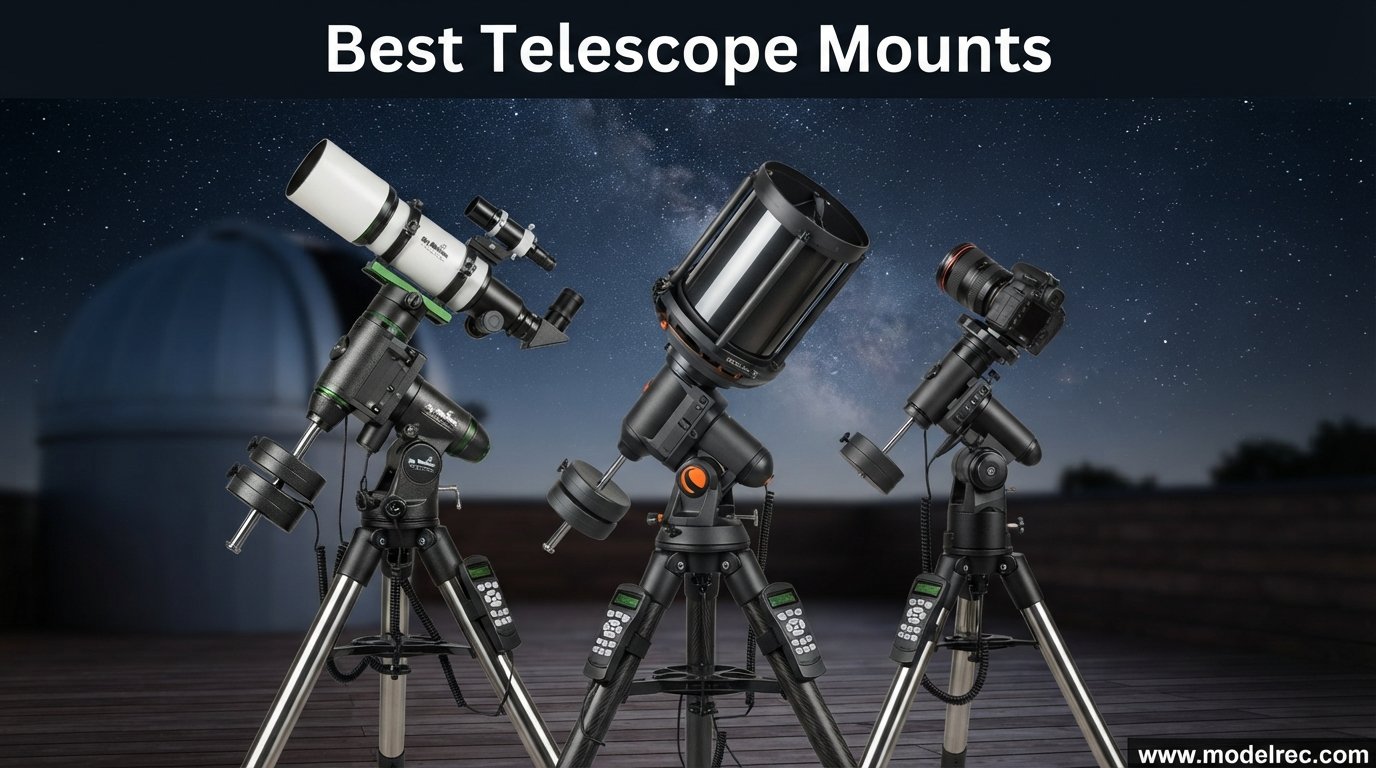
Ask any experienced astrophotographer what matters most in their setup, and they will tell you the same thing: the mount. I learned this lesson the hard way after wasting months trying to capture clean images of nebulae on a shaky, underpowered mount. The best telescope mounts are the foundation of every great observing and imaging session, and skipping on mount quality is the number one mistake beginners make.
This guide covers the 12 best telescope mounts available in 2026, spanning every category from budget star trackers to heavy-duty German equatorial powerhouses. Whether you want a portable tracker for Milky Way wide-field shots, a GoTo mount for visual observing, or a serious astrophotography rig for deep-sky imaging, our team has compared the options across payload capacity, tracking accuracy, build quality, and real-world usability.
Before we get into individual reviews, we cover the major mount types (alt-azimuth, German equatorial, Dobsonian, and strain wave drive), explain how to match payload capacity to your telescope weight, and walk through polar alignment basics. If you have ever felt confused about which mount fits your needs, this guide will clear that up. Let us start with our top three picks across all categories.
Table of Contents
Top 3 Picks for Telescope Mounts

12 Best Telescope Mounts in 2026
1. Sky-Watcher EQ6-R Pro – Best Overall Astrophotography Mount
Sky-Watcher EQ6-R – Fully Computerized GoTo German Equatorial Telescope Mount – Belt-driven, Motorized, Computerized Hand Controller with 42,900+ Celestial Object Database
44lb payload capacity
Belt-driven stepper motors
SynScan GoTo with 42,900 objects
Built-in polar scope
Pros
- Whisper-quiet belt-driven motors with sub-arcsecond tracking
- 44lb payload handles most imaging rigs up to 8 inch
- Built-in encoder with PPEC for tracking accuracy
- Excellent value in its class
Cons
- Heavy at ~40 lbs mount head alone
- Thick grease can cause stiction issues
- Hand controller LCD may fail in cold weather
The Sky-Watcher EQ6-R Pro is the mount I recommend more than any other for intermediate astrophotographers ready to get serious about deep-sky imaging. Reddit users consistently call the EQ6 series the gold standard for mid-range astrophotography, and after using one for extended imaging sessions, I understand why. The 44-pound payload capacity handles most optical tube assemblies up to 8 inches without breaking a sweat.
What sets the EQ6-R apart is the belt-driven stepper motor system. These motors are whisper quiet during slewing and tracking, which matters when you are imaging in your backyard at 2 AM with neighbors nearby. The built-in PPEC (Periodic Error Correction) encoder smooths out the inherent gear imperfections, delivering tracking accuracy that supports long guided exposures of faint nebulae and galaxies.
The SynScan hand controller ships with a database of over 42,900 celestial objects, and the mount is fully compatible with EQMOD, Stellarium, PHD Guiding, and ASIAIR for computer control. I have used it with the ASIAIR Plus and the integration is seamless. The built-in illuminated polar finderscope makes polar alignment straightforward once you learn the process.
The biggest downside is weight. The mount head alone weighs around 40 pounds, and adding the tripod, counterweights, and telescope brings the total well over 80 pounds. If portability is a priority, you may want to look at the strain wave alternatives or the Star Adventurer GTI. The factory grease on the bearings can also cause stiction, which some users address with a hypertune service.
Tracking Performance and Autoguiding
With proper polar alignment and autoguiding through PHD2, the EQ6-R consistently delivers total RMS guiding error under 0.6 arcseconds. This is more than sufficient for deep-sky imaging at focal lengths up to 1000mm. The mount handles meridian flips well with most imaging software, and the ST4 autoguide port works with all popular guide cameras.
Who Should Buy the EQ6-R Pro
This mount is ideal for intermediate astrophotographers who need serious payload capacity for a refractor, Schmidt Cassegrain, or Newtonian reflector up to 8 inches. It is also a popular upgrade path from lighter mounts like the Celestron AVX or Star Adventurer GTI. If you plan to image from a permanent or semi-permanent location and do not need to fly with your gear, the EQ6-R Pro is one of the best telescope mounts you can buy.
2. Celestron Advanced VX – Best Value GoTo Equatorial Mount

Celestron Advanced VX Computerized German Equatorial Mount – 30lb Payload
30lb payload capacity
2 inch stainless steel tripod
NexStar+ GoTo 40,000 objects
All-Star Polar Alignment
Pros
- Solid build with 2 inch stainless steel tripod legs
- 30lb payload suits wide range of telescopes
- Excellent GoTo accuracy with 2-star alignment
- Great value under 1100 dollars
Cons
- Quality control issues reported on some units
- No AC adapter included
- Heavier than competitors at 47 lbs total
The Celestron Advanced VX is the mount I recommend for beginners transitioning from visual observing to their first real astrophotography attempts. At a price point well below the EQ6-R Pro, the AVX offers a 30-pound payload capacity, a 2-inch stainless steel tripod, and Celestron’s reliable NexStar+ hand controller with a 40,000-object database. It hits a sweet spot between capability and affordability.
I have used the AVX with a 6-inch refractor and a small Newtonian, and it handles both well when properly balanced. The dual saddle plate accepts both CG-5/Vixen and CGE-style dovetails, which means you do not need an adapter for most telescopes. The All-Star Polar Alignment feature is genuinely helpful for beginners who are still learning the process, allowing you to polar align using any bright star rather than just Polaris.
The mount supports sidereal, solar, and lunar tracking rates with EQ North and EQ South modes, making it usable globally. With autoguiding through the ST4 port, I have achieved 90-second unguided exposures and multi-minute guided exposures on deep-sky targets. PPEC support helps smooth out periodic error for better tracking during long imaging runs.
The most common complaint is quality control. Some users report receiving units with defective declination motors that require warranty service. Celestron’s customer support is generally responsive, but it is something to be aware of. The mount also ships without an AC power adapter, so you will need to budget for a 12V power supply separately.
Compatibility and Dovetail System
The dual saddle plate is a standout feature. It accepts Vixen-style dovetails (the most common for smaller telescopes) and CGE-style dovetails (used on larger Schmidt Cassegrains). This means you can switch between a small refractor for wide-field imaging and a larger SCT for planetary work without changing saddles or buying adapters.
Upgrade Path and Limitations
The AVX is best understood as a stepping-stone mount. It will serve you well for your first one to two years of astrophotography, but serious imagers typically upgrade to a heavier GEM once they start using larger telescopes or longer focal lengths. Some Reddit users describe the AVX as a potential hobby killer due to long-term reliability concerns, so consider your long-term goals before committing.
3. Sky-Watcher AZ-EQ5 – Most Versatile Dual-Mode Mount

Sky-Watcher AZ-EQ5 – Fully Computerized GoTo German Equatorial, Alt-AZ Telescope Mount, and dual-OTA telescope – Computerized Hand Controller with 42,900+ Object Database
30lb payload
AZ EQ and Dual-OTA modes
Belt-driven stepper motors
SynScan GoTo 42,000 objects
Pros
- Versatile AZ EQ and Dual-OTA operation modes
- Belt-driven motors for quiet slewing
- 30lb payload for medium telescopes
- SNAP port for automated DSLR control
Cons
- Only 14 reviews with mixed ratings
- Shipping issues with two-box delivery
- Alt-az adjustment knobs uncomfortable to use
The Sky-Watcher AZ-EQ5 is the most versatile mount in this guide because it operates in three distinct modes: alt-azimuth, equatorial, and dual-OTA (allowing two telescopes mounted simultaneously). This makes it attractive for users who want one mount for both visual observing and astrophotography without buying two separate setups.
In EQ mode, the AZ-EQ5 functions as a standard German equatorial mount with a 30-pound payload capacity. Belt-driven stepper motors provide the same quiet, precise tracking as the larger EQ6-R Pro. The SynScan hand controller gives you access to over 42,000 celestial objects with reliable GoTo pointing accuracy.
In AZ mode, the mount simplifies to up-down and left-right movement, which is perfect for visual observing sessions where you do not need tracking. The dual-OTA mode lets you mount two telescopes side by side, useful for outreach events or simultaneous visual and imaging setups. The SNAP port supports automated DSLR shutter control for unattended imaging sessions.
The main concern is the limited review base. With only 14 customer reviews and a 3.7-star average, there is less community validation than competitors. The 25 percent 1-star rating is largely due to shipping issues, as the mount ships in two boxes and Amazon sometimes delivers only one. The adjustment knobs are also reported to be uncomfortable during polar alignment.
Dual-OTA Mode Use Cases
The dual-OTA capability is genuinely useful for specific scenarios. You can mount a wide-field refractor alongside a larger Schmidt Cassegrain, allowing you to switch between deep-sky imaging and planetary work in the same session. Astronomy clubs and outreach programs also benefit from being able to show two different views simultaneously.
Who Should Consider the AZ-EQ5
This mount suits users who want maximum flexibility in a single platform. If you split your time between visual observing and astrophotography, or if you need dual-OTA capability for outreach, the AZ-EQ5 is worth considering. Just be prepared for potential shipping headaches and consider sourcing locally if possible.
4. Sky-Watcher Star Adventurer GTI Kit – Best Portable GoTo Mount
Sky Watcher Sky-Watcher Star Adventurer GTI Mount Kit with Counterweight, CW bar, Tripod, and Pier Extension – Full GoTo EQ Tracking Mount for Portable and Lightweight Astrophotography
11lb payload
Full GoTo EQ tracking
Built-in WiFi
Tripod and pier extension included
Pros
- Full GoTo functionality in a compact package
- Built-in WiFi for smartphone control
- Excellent tracking with 3+ minute unguided exposures
- Complete kit includes tripod and counterweight
Cons
- SynScan app reliability issues on some platforms
- Limited tech support reported
- Polar scope cover described as flimsy
The Sky-Watcher Star Adventurer GTI Kit is the mount that opened my eyes to how capable a portable astrophotography platform can be. At just 26 pounds for the complete kit (mount head, tripod, pier extension, counterweight, and bar), it packs full GoTo equatorial tracking into a package you can carry on a plane. For travel astrophotography and quick backyard sessions, it is hard to beat.
The 11-pound payload capacity is modest but sufficient for a DSLR or mirrorless camera with a moderate lens, or a small refractor telescope. Users report achieving 3 to 5-minute unguided exposures when properly polar aligned, which is impressive for a mount in this weight class. The built-in WiFi connects to the SynScan app on your smartphone, giving you GoTo control over a wireless connection.
Everything you need comes in the box: the mount head, counterweight bar, 5-pound counterweight, tripod, and pier extension. The built-in illuminated polar scope simplifies polar alignment, and the SNAP port allows automated camera shutter control. Multiple tracking rates (sidereal, lunar, solar, and half-sidereal) cover every imaging scenario.
The main downside is software reliability. The SynScan app has known issues on Windows and Android platforms, with connection drops and alignment glitches reported by multiple users. GoTo alignment can also be challenging in areas with horizon obstructions, since the mount needs to see alignment stars clearly. The leveling bubble is poorly placed and difficult to read from a normal viewing angle.
Travel and Portability
This is where the GTI Kit truly shines. The entire setup fits in a carry-on sized case (with appropriate padding), making it the best portable telescope mount for travel astrophotography. Many users fly to dark sky locations like Big Bend National Park or the Scottish Highlands with this mount as their primary imaging platform.
Upgrading from the Star Adventurer 2i
If you already own a Star Adventurer 2i, the GTI is a meaningful upgrade. The addition of GoTo capability saves significant time when targeting faint objects that are invisible to the naked eye. The full equatorial tracking head also provides better balance and stability than the 2i’s camera-mounted design.
5. iOptron SkyTracker Pro – Best Entry-Level Star Tracker

iOptron SkyTracker Pro Camera Mount with Polar Scope, Only
6.6lb payload
Four tracking speeds
Rechargeable battery 24hr
Built-in polar scope
Pros
- Outstanding value for entry-level tracking
- Very lightweight at 3.34 lbs
- Integrated rechargeable battery with 24hr runtime
- 60+ second exposures achievable
Cons
- 6.6lb payload limit requires counterweight for larger lenses
- Dovetail saddle can slip under heavy loads
- Ballhead not included
The iOptron SkyTracker Pro is the mount I recommend to anyone who wants to try astrophotography without a large investment. At just 3.34 pounds and with a built-in rechargeable battery offering 24 hours of runtime, it is the most portable tracking platform in this guide. You attach it to a standard camera tripod, mount your DSLR or mirrorless camera, polar align, and start shooting.
With a 6.6-pound payload capacity, the SkyTracker Pro handles a DSLR with a moderate lens (up to about 200mm focal length) comfortably. Users consistently report achieving 60-second exposures without star trails when properly polar aligned. The four tracking speeds (sidereal, half-sidereal, solar, and lunar) cover wide-field astrophotography, nightscapes with foreground, and even solar imaging with appropriate filters.
The integrated rechargeable battery is a significant improvement over the previous generation, which required AA batteries. Micro USB charging brings the battery to 80 percent in about 5 hours. The built-in polar scope, while basic, gets the job done for wide-field imaging. Just be aware that you need a separate polar alignment app to know where to position Polaris in the reticle.
The biggest limitation is the payload. At 6.6 pounds, you are limited to a camera body and a medium lens. Larger telephoto lenses will need a counterweight system, and the dovetail saddle’s rubber cushion can slip under heavier loads. You also need to purchase a ballhead separately, which adds to the total cost.
Wide-Field Astrophotography Performance
For Milky Way photography, constellations, and wide-field nebulae like the North America Nebula or Orion constellation, the SkyTracker Pro excels. It allows you to push exposure times from the typical 15-20 second untracked limit to 60 seconds or more, dramatically improving signal-to-noise ratio and revealing faint detail.
Who Should Start Here
If you are completely new to astrophotography and already own a DSLR or mirrorless camera with a kit lens, the SkyTracker Pro is the ideal starting point. Several experienced astrophotographers on Reddit describe star trackers as the gateway mount that hooked them on the hobby. You can always upgrade later, and the SkyTracker remains useful as a travel tracker even after you buy a larger mount.
6. Sky-Watcher Star Adventurer 2i Pro Pack – Best for Milky Way Photography

Sky-Watcher Star Adventurer 2i Pro Pack (S20512)
Portable tracking platform
WiFi app control
Deluxe equatorial base
610+ reviews
Pros
- Motorized portable tracking perfect for Milky Way
- WiFi connectivity with SAM Console app
- Modular design integrates with photo tripods
- 610+ reviews with strong ratings
Cons
- Limited payload similar to GTI
- App control less precise than hand controller
- Requires careful balancing for best results
The Sky-Watcher Star Adventurer 2i Pro Pack has earned its reputation as the gateway mount for countless astrophotographers, and with over 610 customer reviews, it has the strongest community validation of any tracker in this guide. I consider it the best telescope mount for beginners who want to focus on Milky Way photography, nightscapes, and wide-field imaging.
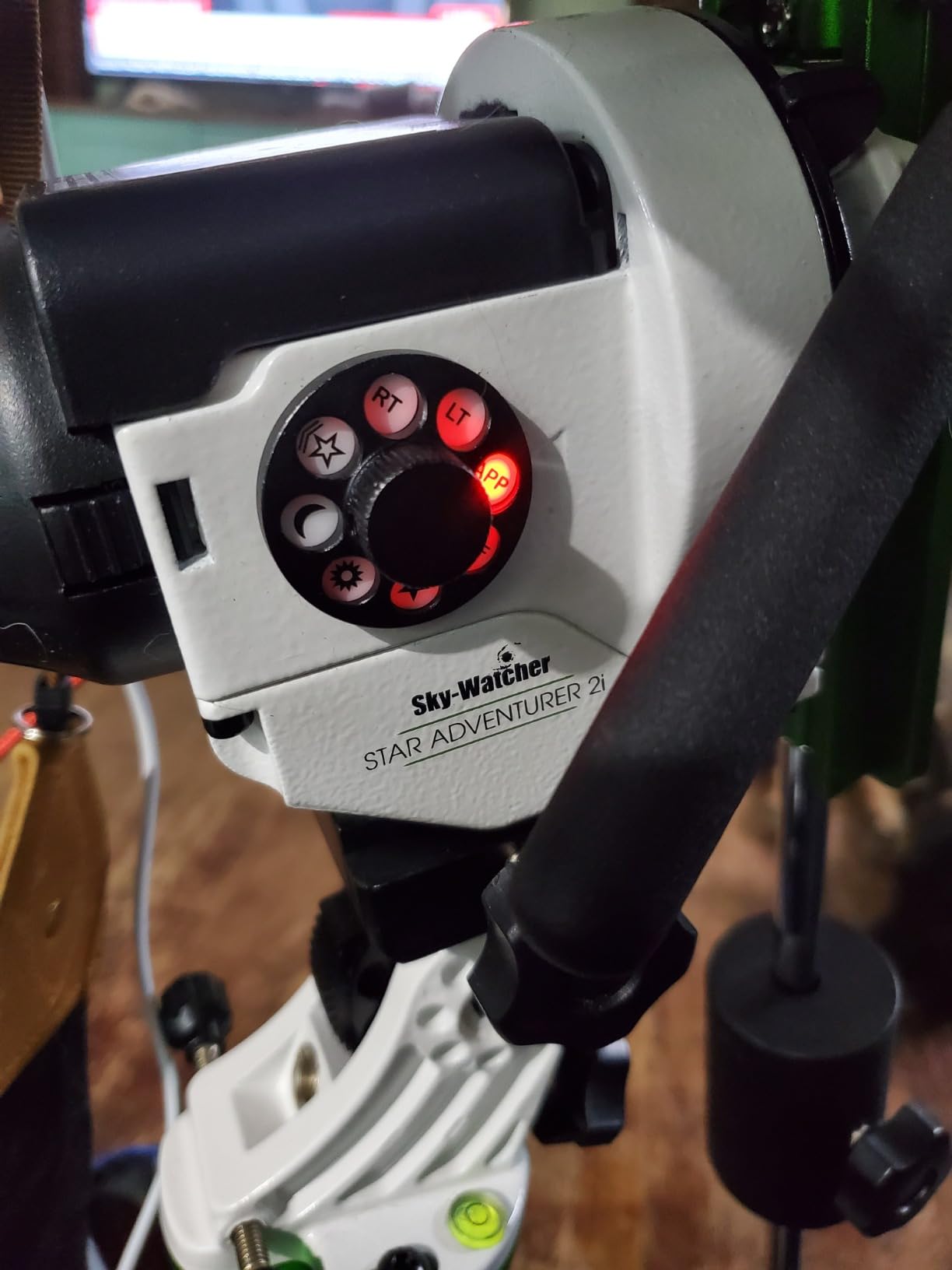
The 2i Pro Pack includes the deluxe equatorial base, which provides precise latitude adjustment for accurate polar alignment. The WiFi module connects to the SAM Console app on your smartphone, allowing wireless control of tracking rates and camera trigger functions. The modular design means it attaches to any standard photographic tripod with a 3/8-inch thread.
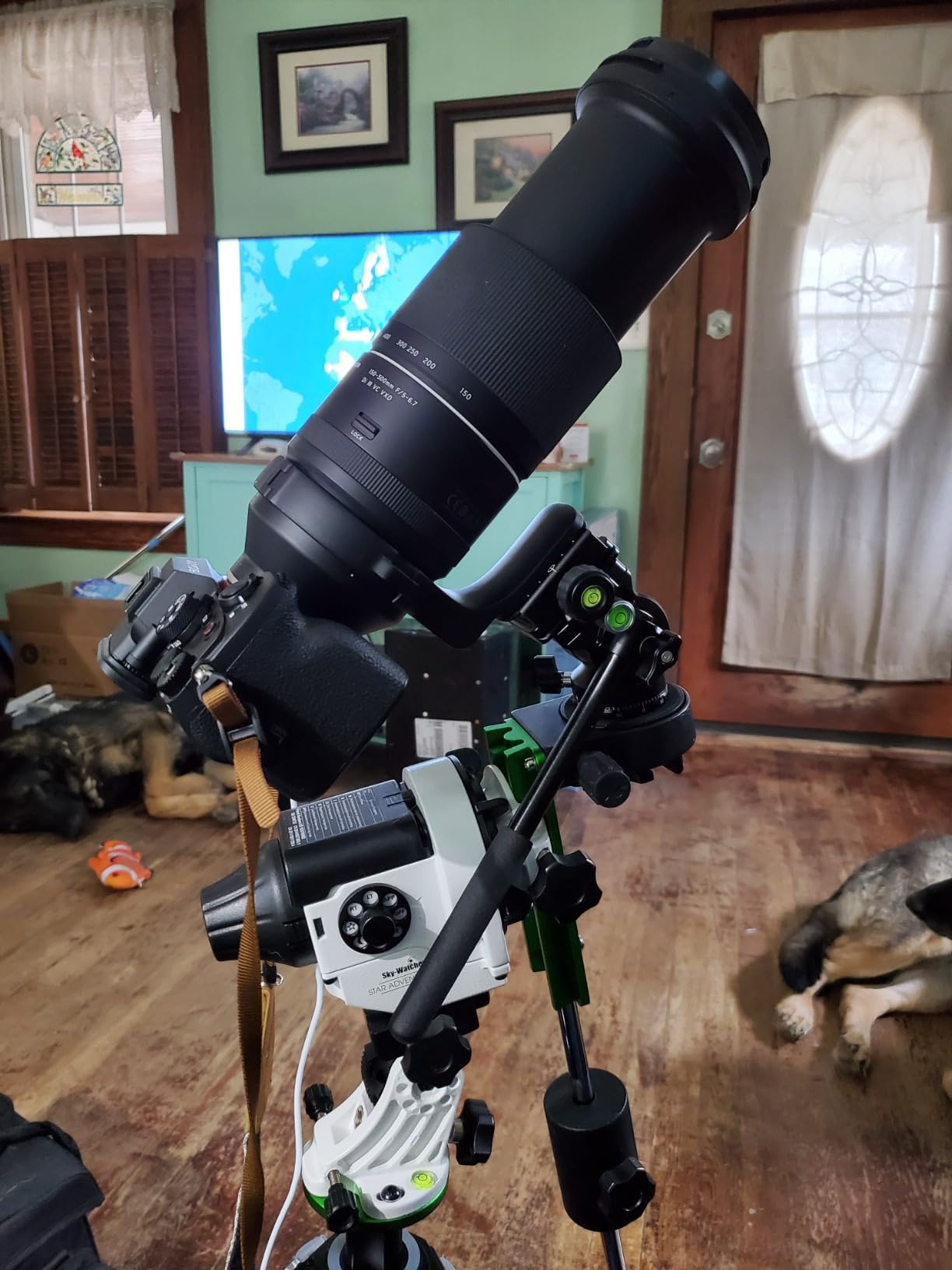
What makes the Star Adventurer 2i so popular is its simplicity. You attach your camera via a ballhead (purchased separately), polar align using the built-in illuminated polar scope, and start shooting. The mount tracks at sidereal rate, compensating for Earth’s rotation so you can expose for several minutes instead of the typical 15-20 second untracked limit. The result is dramatically cleaner Milky Way images with more detail and less noise.
The Pro Pack variant includes additional accessories over the base model, making it a better value for users who want a complete setup. It supports time-lapse video creation, panoramic imaging, and even basic telescopic use with small refractors. The SAM Console app is more reliable than the SynScan app used by the GTI, though still occasionally glitchy.
Milky Way and Nightscape Imaging
This is where the Star Adventurer 2i truly excels. With a 14mm to 50mm lens on a full-frame camera, you can capture stunning Milky Way arches, constellations with foreground landscapes, and even bright deep-sky objects like the Andromeda Galaxy and Orion Nebula. The mount’s portability means you can hike to remote dark sky locations without lugging heavy gear.
Time-Lapse and Panorama Capabilities
The 2i supports time-lapse mode with half-sidereal tracking, which creates the popular effect of stars trailing slowly across the sky. For panorama shooters, the mount’s smooth tracking allows consistent overlap between frames. These creative features go beyond basic astrophotography and make the 2i a versatile tool for landscape photographers.
7. Celestron CG-4 German Equatorial Mount – Best Manual GEM Under $500
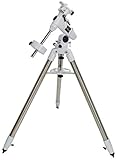
Celestron CG-4 Manual German Equatorial Mount with Steel Tripod
20lb payload capacity
Manual slow-motion controls
Stainless steel tripod
Adjustable 33-47 inches
Pros
- Robust stainless steel tripod with 1.75 inch legs
- 20lb capacity suits wide range of telescopes
- Smooth tracking with quality bearings
- Excellent long-term durability
Cons
- No motors or GoTo included
- Periodic error at high magnifications
- Setting circles small and imprecise
The Celestron CG-4 is the mount I recommend for visual observers who want a solid German equatorial platform without paying for electronics they may not need. It is a fully manual mount with slow-motion controls on both axes, a robust stainless steel tripod, and a 20-pound payload capacity. For under $500, it represents excellent value.
Users consistently praise the build quality. The 1.75-inch diameter stainless steel legs minimize vibration, and the mount bearings are described as silky-smooth for manual tracking. The adjustable height range of 33 to 47 inches accommodates both seated and standing observing positions. At 12.5 pounds for the mount head, it is manageable for transport to dark sky sites.
Many users add dual-axis motors to the CG-4 for basic tracking during visual sessions, and a polar scope for alignment. These upgrades transform the mount into a capable entry-level imaging platform for short-exposure astrophotography. Long-term ownership reports are impressive, with some users reporting 10+ years of reliable service.
The limitations are expected at this price point. There is no GoTo system, so you find objects manually using setting circles (which are small and not very precise) or star-hopping. Periodic error in the worm gear becomes noticeable at magnifications above 300x, making high-power planetary observing challenging at times.
Motor Upgrade Options
Celestron offers a dual-axis motor drive compatible with the CG-4 that adds sidereal-rate tracking for around $130. This is a worthwhile upgrade if you want to share views with groups, as objects stay centered in the eyepiece without manual adjustments. Third-party stepper motor kits are also available for users who want computerized control.
Visual Observing Experience
For pure visual astronomy, the CG-4 paired with a 4 to 6-inch refractor or a 5-inch Schmidt Cassegrain provides stable, vibration-free views. The slow-motion controls allow precise centering of objects at high power. If your budget is tight and you do not need GoTo, this mount delivers quality where it matters most.
8. Sky-Watcher Star Adventurer GTI Mount Head – Best GoTo Tracker for Small Scopes

Sky Watcher Star Adventurer GTI Mount Head Kit with Counterweight and CW bar – Full GoTo EQ Tracking Mount for Portable and Lightweight Astrophotography
Full GoTo EQ mount head
Built-in WiFi
Polar scope with illuminator
5lb counterweight included
Pros
- Full GoTo in a compact mount head
- Built-in WiFi for app control
- Polar scope with illuminator included
- Ranks 2 in telescope guiders category
Cons
- DSLR dovetail mount not included
- Limited to 84 reviews so far
- Requires separate tripod
The Sky-Watcher Star Adventurer GTI Mount Head is the head-only version of the GTI Kit (product 4 in this guide). It is designed for users who already own a sturdy photographic tripod and want to add full GoTo equatorial tracking without buying a complete kit. It ranks 2 in the telescope guiders and wedges category on Amazon, reflecting strong market demand.
The mount head includes the counterweight bar and a 5-pound counterweight, built-in WiFi connectivity, and a polar scope with illuminator. It offers the same GoTo functionality and tracking performance as the full kit version, just without the tripod and pier extension. This makes it a more affordable option if you already have suitable support gear.
I recommend the GTI Head for users upgrading from a basic star tracker like the SkyTracker Pro or Star Adventurer 2i. The addition of GoTo capability transforms the imaging experience, as you can automatically slew to faint targets that are invisible to the naked eye. The built-in WiFi connects to the SynScan app for wireless control from your phone or tablet.
The main caveat is that the dovetail mounting plate for a DSLR or mirrorless camera is not included. You will need to purchase this separately, along with a suitable ballhead or dovetail adapter. The 84-review base is smaller than some competitors, so there is less long-term feedback available.
Pairing with Small Refractors
The GTI Head pairs beautifully with small refractor telescopes in the 50mm to 80mm aperture range. An 80mm apo refractor with a light camera body falls within the 11-pound payload capacity, creating a capable wide-field astrophotography rig that weighs under 15 pounds total. This combination is popular for capturing large nebulae like the North America Nebula, Heart and Soul Nebulae, and the Rosette Nebula.
Tripod Requirements
Since the head does not include a tripod, you need to choose carefully. A sturdy photographic tripod with a 3/8-inch thread and a load capacity of at least 25 pounds is recommended. Avoid lightweight travel tripods, as flex and vibration will ruin long exposures. The tripod that comes with the full GTI Kit is well-matched if you prefer to buy that version instead.
9. iOptron SkyGuider Pro – Best Portable Tracker with Autoguiding

iOptron SkyGuider Pro Camera Mount Full Package
11lb payload
Autoguide port
20hr internal battery
AccuAlign polar scope
Pros
- All-metal body construction for minimal vibration
- Supports up to 11 lbs when balanced
- Internal rechargeable battery with 20 hour runtime
- Autoguide port included for guided imaging
Cons
- Counterweight bar is short at 8 inches
- No GoTo capability
- Polar scope may not be pre-collimated
The iOptron SkyGuider Pro is the mount I recommend for astrophotographers who want autoguiding capability in a portable package. With an 11-pound payload, an autoguide port, and a 20-hour internal battery, it sits between basic star trackers and full equatorial mounts in terms of capability. The all-metal body construction and precise machining deliver the vibration-free performance needed for clean long exposures.
I have used the SkyGuider Pro with a small refractor and a guide camera, and the autoguiding port makes a noticeable difference in tracking accuracy. With PHD2 guiding, you can achieve 5-minute exposures with round stars, which is exceptional for a mount weighing just 2.2 pounds. The integrated AccuAlign dark-field illuminated polar scope simplifies polar alignment in the field.
The Full Package version includes the counterweight shaft and counterweight, along with the mount body and polar scope. The alt-azi adjustable base covers latitude from -30 to 65 degrees with azimuth adjustment of plus or minus 5 degrees. Multiple tracking rates (sidereal, lunar, solar, and half-sidereal) handle every imaging scenario from deep-sky to solar system.
The main limitation is the lack of GoTo capability. The SkyGuider Pro tracks on the right ascension axis only, meaning you must find targets manually. For wide-field imaging with short lenses, this is rarely a problem since you can frame your target visually. For telescopic use at longer focal lengths, manual targeting becomes more challenging.
Autoguiding Setup and Performance
Setting up autoguiding with the SkyGuider Pro requires a guide camera, a guide scope or off-axis guider, and a laptop or ASIAIR running PHD2. The ST4 autoguide port connects directly to most guide cameras. Once calibrated, the system corrects tracking errors in real time, enabling longer sub-exposures and cleaner final images. This is a capability that basic star trackers simply cannot offer.
Travel Astrophotography Considerations
At 2.2 pounds for the mount body and roughly 10 pounds for the complete package with counterweights, the SkyGuider Pro is airline-friendly. Many users fly to dark sky destinations like the American Southwest or the Australian Outback with this mount as their primary imaging platform. The internal battery eliminates the need for external power during typical imaging sessions.
10. Explore Scientific iEXOS-100-2 – Best Budget GoTo with PMC-Eight

iEXOS-100-2 PMC-Eight Equatorial Tracker System Tripod and Mount for Astrophotography with WiFi and Bluetooth Compatible
PMC-Eight 8-CPU system
Clutched dual-axis worm gears
GoTo with WiFi
Tablet compatible
Pros
- PMC-Eight system with eight independent CPUs
- Clutched dual-axis worm gears with belt drives
- GoTo access to tens of thousands of objects
- Well-built hardware for the price
Cons
- Steep learning curve for new users
- ExploreStars app has UI and reliability issues
- Requires 8 C batteries
- Needs additional accessories for best experience
The Explore Scientific iEXOS-100-2 is an interesting alternative in the budget GoTo category. Its standout feature is the PMC-Eight system, which uses eight independent CPUs to control mount movements with precision. This distributed processing approach promises smoother tracking and better performance than single-processor systems, though real-world results depend heavily on software reliability.
The hardware is well-built for the price. Clutched dual-axis worm gears with quiet precision stepper motor belt drives provide smooth slewing and tracking. The clutched RA and declination axes allow precise balancing without loosening gears. A polar alignment sight hole through the RA axis enables basic polar alignment without a separate polar scope.
The GoTo system provides access to tens of thousands of celestial objects via the ExploreStars app, which is available for Apple, Android, and Windows tablets. The WiFi and Bluetooth connectivity allows wireless control from your device of choice. The system also supports ASCOM for advanced computer control with popular planetarium software.
The biggest weakness is software. Many users describe the ExploreStars app as having a poor user interface and being unreliable, with frequent disconnections and glitches. Wi-Fi connectivity issues are commonly reported, and the app is incompatible with many Android devices. Customer support has been criticized as unresponsive. These software challenges significantly impact the user experience, especially for beginners.
PMC-Eight Architecture
The PMC-Eight system is genuinely innovative. Each CPU handles a specific task (motor control, GoTo calculation, communication, etc.), which in theory provides more processing headroom than traditional single-processor controllers. Open-source firmware and ASCOM drivers allow advanced users to customize the system. However, this flexibility comes at the cost of user-friendliness.
Who Has Patience for This Mount
The iEXOS-100-2 is best suited for technically inclined users who enjoy tinkering with software and are willing to work around its quirks. If you expect a plug-and-play experience similar to Celestron’s NexStar or Sky-Watcher’s SynScan, you will likely be frustrated. For users comfortable with troubleshooting and community support forums, the hardware offers good value.
11. SVBONY SV225 Alt-Azimuth Mount – Best Budget Alt-Az for Visual Observing

SVBONY SV225 Alt-Azimuth Mount, Load-Bearing 10kg, Adjustable Angle Mount
10kg payload capacity
CNC hollow structure
Variable speed slow-motion
Fine adjustment shift
Pros
- Lightweight CNC hollow structure at just 2.34kg
- Fine adjustment shift for precise positioning
- Variable speed gear slow motion on both axes
- Highly rated at 4.6 stars from 139 reviews
Cons
- Manufacturer recommends 7-8kg max load not 10kg
- Fine adjustment lever has some play
- Manual only with no motors
The SVBONY SV225 is the highest-rated mount in this guide by customer satisfaction, with 4.6 stars from 139 reviews and a 77 percent five-star rate. It is a manual alt-azimuth mount designed for visual observing with small to medium telescopes. The CNC hollow structure keeps weight down to just 2.34 kilograms while maintaining rigidity and stability.
I appreciate the variable speed gear slow-motion controls on both axes, which allow smooth tracking of objects at high magnification. The fine adjustment shift provides precise positioning for different observing scenarios, from wide-field scanning to high-power planetary viewing. The mount accepts standard Vixen-style dovetails, making it compatible with a wide range of telescopes.
The 10-kilogram (22-pound) payload rating is generous for a mount in this price range, though SVBONY recommends keeping loads to 7-8 kilograms for optimal stability. This covers most refractors up to 100mm and small Schmidt Cassegrains like the Celestron C5. The included accessory kit comes with fine-tuning control levers, dovetail lock knobs, locking screws, Allen wrenches, and a metal handle.
This is a manual mount with no motors, GoTo, or tracking capability. It is designed purely for visual observing. The fine adjustment lever has some play (which SVBONY notes as normal), and the mount lacks the precision needed for astrophotography. But for casual visual astronomy at an affordable price, it delivers excellent value.
Visual Observing Performance
For visual astronomy, the SV225 excels with refractors in the 80mm to 100mm range. The slow-motion controls allow you to track objects smoothly as they drift across the field of view, and the CNC construction provides a stable platform that dampens vibrations quickly. Lunar, planetary, and bright deep-sky objects are all within reach.
Value Compared to Name Brands
The SV225 offers similar functionality to alt-az mounts from Celestron and Sky-Watcher at a significantly lower price. While the fit and finish may not match premium brands, the core functionality and build quality are impressive for the cost. SVBONY also provides a one-year warranty and responsive customer service, which adds confidence to the purchase.
12. Celestron Heavy Duty Alt-Azimuth Tripod – Best Budget Visual Setup

Celestron Heavy-Duty Alt-Azimuth Tripod for Spotting Scopes & Telescopes
11lb weight capacity
Aluminum construction
Slow-motion controls
32-45 inch height range
Pros
- Solid and stable at an affordable price
- Smooth slow-motion altitude and azimuth controls
- Lightweight at 7.8 pounds
- Over 1
- 100 reviews with strong ratings
Cons
- Limited vertical range of about 30 degrees
- Some vibration at full extension
- Eyepiece tray described as flimsy
The Celestron Heavy Duty Alt-Azimuth Tripod is the most reviewed product in this guide, with over 1,123 customer reviews and a 4.2-star average. It is a simple, affordable alt-azimuth tripod designed for small telescopes, spotting scopes, binoculars, and cameras. If you are looking for the best telescope mount for casual visual astronomy on a tight budget, this is where I would start.
The aluminum construction with two-section extendable legs and a center brace provides a stable platform for instruments up to about 11 pounds. The slow-motion altitude and azimuth controls allow smooth tracking of celestial objects with minimal slop or backlash. Vibrations damp reasonably quickly, though some users notice shake at full extension or in light wind.
I have used this tripod with a Celestron C90 spotting scope and a small 80mm refractor, and it handles both comfortably. The 1/4-inch-20 thread mounting plate includes a slot for forward and aft adjustment, allowing you to balance your instrument properly. The metal accessory tray keeps eyepieces and other accessories within reach during observing sessions.
The main limitation is the altitude adjustment range. The slow-motion control only covers about 30 degrees of vertical movement before you need to loosen a bolt for repositioning. The tripod’s maximum height of 45 inches may also feel short for taller users. The eyepiece tray is thin and fragile, and the locking mechanisms do not feel as robust as the heavy-duty label suggests.
Best Use Cases
This tripod shines with small instruments: the Celestron C90 or C5, spotting scopes, large binoculars (with an appropriate adapter), and small refractors weighing under 7 pounds. It is ideal for casual backyard astronomy, terrestrial nature viewing, and photography support. The two-year US warranty provides additional peace of mind.
Limitations to Understand
This is not an astrophotography mount. It has no tracking motors, no equatorial capability, and limited altitude range. For visual observing with small instruments, however, it provides stable, vibration-damped views at a price that leaves room in your budget for quality eyepieces. Understand its limitations and it will serve you well.
How to Choose the Best Telescope Mount for Your Needs?
Choosing among the best telescope mounts comes down to five key factors. Let me walk you through each one so you can match the right mount to your specific needs and budget.
1. Primary Use Case: Visual Observing vs Astrophotography
This is the most important decision. If you primarily want to look through an eyepiece, an alt-azimuth mount or Dobsonian is simpler, cheaper, and more intuitive. If you want to photograph deep-sky objects like nebulae and galaxies, you need an equatorial mount with tracking and ideally autoguiding capability.
Some users try to do both with a single mount. The Sky-Watcher AZ-EQ5 in this guide handles this by offering both AZ and EQ modes. But generally, mounts optimized for one purpose perform better than compromises.
2. Payload Capacity and the Weight Ratio Rule
Payload capacity is the maximum weight a mount can carry. The golden rule from experienced astrophotographers is to keep your actual imaging load at 50 to 75 percent of the rated capacity. This means if your telescope, camera, guide scope, and accessories total 20 pounds, you need a mount rated for at least 30 to 40 pounds.
This ratio accounts for the fact that published payload ratings are typically the maximum before failure, not the maximum for good tracking performance. Reddit users consistently emphasize this point, noting that overloading a mount is a leading cause of poor tracking and frustration.
3. Tracking Accuracy and Periodic Error
Tracking accuracy is measured in arcseconds of RMS error. Lower is better. Quality mounts like the EQ6-R Pro achieve sub-arcsecond guiding when properly tuned and autoguided. Cheaper mounts may have 2 to 5 arcsecond error, which limits your maximum exposure time.
Periodic error is caused by imperfections in the worm gear and repeats with each rotation. PPEC (Periodic Error Correction) records and corrects this pattern. Autoguiding with a guide camera and software like PHD2 corrects both periodic error and atmospheric effects in real time.
4. Portability and Setup Weight
Consider how you will use the mount. If you plan to image from your backyard and set up in a permanent location, a heavy mount like the EQ6-R Pro is fine. If you need to travel to dark sky sites or fly to destinations, look at portable options like the Star Adventurer GTI, SkyGuider Pro, or strain wave mounts.
Setup weight matters more than you might think. A mount that is too heavy to transport easily will sit unused. Many users on Reddit report abandoning heavy GEMs in favor of lighter strain wave mounts for this exact reason.
5. Polar Alignment
Polar alignment is the process of aligning the mount’s RA axis with the celestial pole. This is essential for accurate tracking in equatorial mounts. Most mounts include a polar scope for this purpose, and some (like Celestron’s AVX) offer All-Star Polar Alignment using any bright star.
Polar alignment is consistently cited as the number one frustration for beginners. Practice makes it faster, but it is a learning curve. Electronic polar scopes like iOptron’s iPolar and the PolarAlign feature in PHD2 simplify the process significantly.
6. GoTo vs Manual
GoTo mounts automatically slew to celestial objects using a computerized database. They save significant time, especially when targeting faint objects invisible to the naked eye. The trade-off is cost, complexity, and the need for power.
Manual mounts require star-hopping or use of setting circles to find objects. This teaches the sky more effectively but requires patience. Many experienced observers prefer manual mounts for the satisfaction of finding objects themselves.
7. Budget Allocation
A general rule for astrophotography is to invest 40 to 50 percent of your total budget in the mount. The mount is the limiting factor for image quality. A modest telescope on a great mount will outperform a premium telescope on a shaky mount every time.
For visual observing, the ratio shifts. You can spend less on the mount and more on aperture, since tracking requirements are minimal. A Dobsonian gives you the most aperture per dollar for visual use.
FAQs
What is a telescope mount?
A telescope mount is a mechanical device that holds a telescope in place and allows it to be pointed at and tracked across the sky. For astrophotography, an equatorial mount compensates for Earth’s rotation, enabling long-exposure imaging of deep-space objects without star trails. The mount is the most important component of any serious astronomy setup.
Which type of mount do I need for astrophotography?
For astrophotography, you need an equatorial mount (either German equatorial or fork-mounted equatorial) that can track at sidereal rate to compensate for Earth’s rotation. Alt-azimuth mounts cause field rotation during long exposures and are not suitable for deep-sky imaging beyond short exposures. Star trackers like the SkyTracker Pro and Star Adventurer 2i are entry-level equatorial options for wide-field imaging.
Are telescope mounts universal?
No, telescope mounts are not universal. Most mounts use either a Vixen-style or Losmandy-style (CGE) dovetail plate to attach the telescope. Some mounts include a dual saddle plate that accepts both styles. You also need to ensure the mount’s payload capacity exceeds your telescope’s weight, ideally with a 2:1 ratio for astrophotography. Always check dovetail compatibility and weight ratings before pairing a telescope with a mount.
Can any telescope fit any mount?
No, not every telescope fits every mount. Compatibility depends on the dovetail plate type (Vixen vs Losmandy), the mount’s payload capacity, and the physical mounting interface. Small refractors typically use Vixen dovetails and work with most entry-level mounts. Large Schmidt Cassegrains may require Losmandy dovetails or fork-specific mounts. Always verify dovetail compatibility and that the mount can handle the telescope’s weight before purchasing.
What is the difference between alt-azimuth and equatorial mounts?
An alt-azimuth mount moves in two axes: altitude (up-down) and azimuth (left-right), like a camera tripod head. It is simple and intuitive but cannot track stars for long exposures without field rotation. An equatorial mount aligns one axis with the celestial pole, allowing it to track the sky by rotating at sidereal rate. This eliminates field rotation and enables long-exposure astrophotography of deep-sky objects.
What should I consider when buying a telescope mount?
Consider your primary use case (visual vs astrophotography), payload capacity (keep load at 50-75 percent of rated capacity), tracking accuracy, portability, polar alignment method, GoTo vs manual operation, and budget allocation. For astrophotography, invest 40-50 percent of your total budget in the mount. Match the mount type to your goals: alt-az for visual, equatorial for imaging, Dobsonian for maximum aperture per dollar.
How much should I spend on a telescope mount?
For entry-level wide-field astrophotography, quality star trackers cost 200 to 600 dollars. For serious deep-sky imaging, expect to spend 1,000 to 3,000 dollars on a capable German equatorial mount. Premium strain wave mounts and heavy-duty GEMs can cost 3,000 dollars or more. The mount should represent roughly 40 to 50 percent of your total astrophotography budget, as it is the limiting factor for image quality.
Final Thoughts on the Best Telescope Mounts in 2026
The best telescope mounts are not a one-size-fits-all proposition. For serious deep-sky astrophotography, the Sky-Watcher EQ6-R Pro remains the gold standard for intermediate imagers who need 44 pounds of payload capacity and sub-arcsecond tracking. The Celestron Advanced VX offers the best value for beginners transitioning to equatorial imaging without a massive investment.
For portable astrophotography and travel, the Sky-Watcher Star Adventurer GTI Kit and iOptron SkyGuider Pro deliver impressive performance in packages you can fly with. For pure visual observing, the SVBONY SV225 and Celestron Heavy Duty Alt-Azimuth Tripod provide stable platforms at accessible prices.
Remember the golden rule: invest in the mount first, telescope second. A quality mount will last you 10 or more years and can support multiple telescopes as your skills and ambitions grow. The best telescope mounts pay for themselves over time in the images and views they enable. Clear skies, and happy hunting.