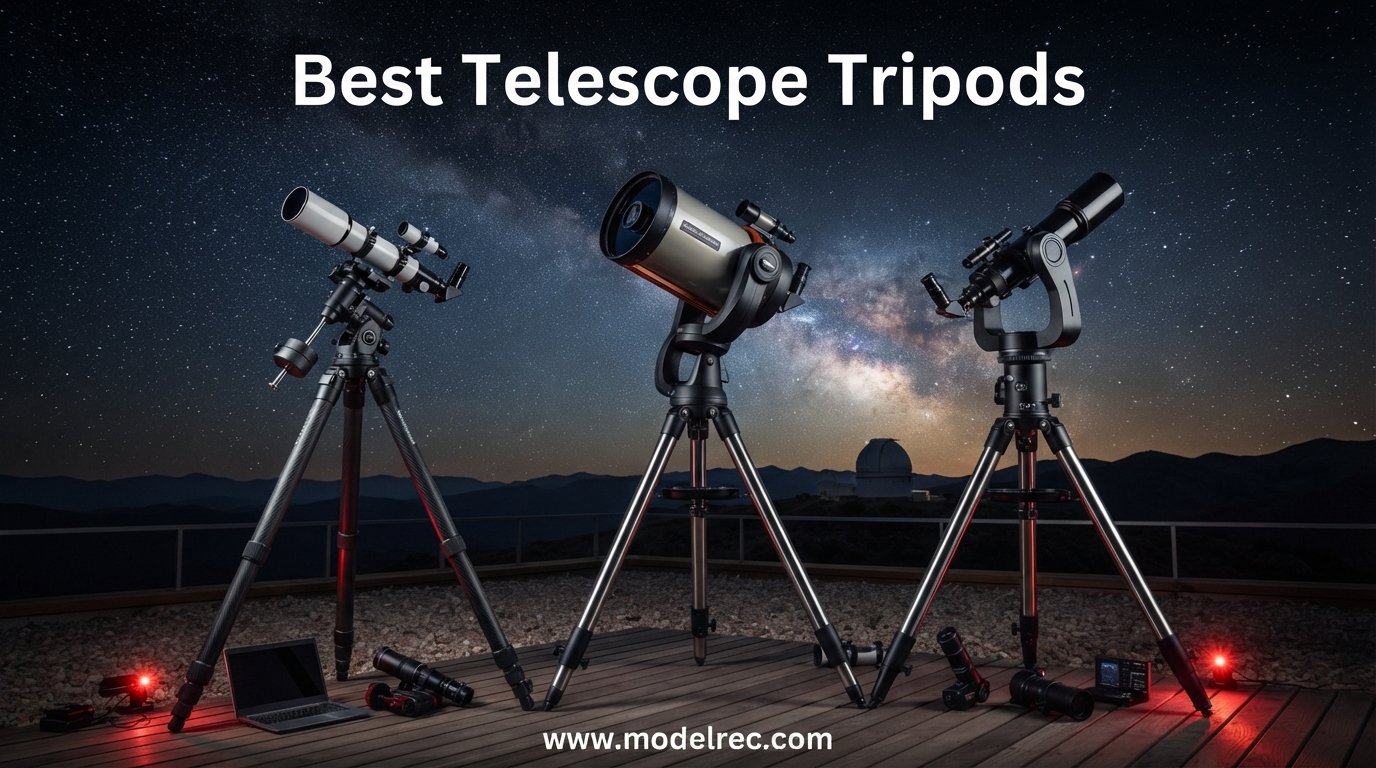
Every astronomer remembers the first time they bumped their telescope at high power and watched the image dance for three seconds before settling. That frustration comes from one place: the tripod underneath. Finding the best telescope tripods can mean the difference between crisp planetary details and a blurry mess, especially when you are pushing magnification past 200x.
Our team spent weeks comparing 10 of the most popular telescope tripods on the market right now. We looked at payload capacity, vibration damping, material quality, mount compatibility, and real user feedback from astronomy forums like Cloudy Nights and Reddit’s r/telescopes. The goal was simple: find out which tripods actually deliver on stability and which ones fall short.
One thing we learned quickly is that focal length matters as much as weight. A 20 lb Dobsonian behaves very differently from a 20 lb refractor on a tall tripod. Community members on Cloudy Nights put it well: a 20 lb dumbbell and a 20 lb barbell feel different because of how the weight is distributed. The same principle applies to telescopes, and it changes everything about which tripod you need.
Whether you are shooting long-exposure astrophotography, doing visual observing with a large refractor, or just need a stable base for your smart telescope, this guide covers every major use case. We tested tripods ranging from budget picks to heavy-duty mounts designed for serious gear. Here is what we found.
Table of Contents
- Top 3 Picks for Telescope Tripods
- 10 Best Telescope Tripods in 2026
- 1. Celestron 93493 Heavy Duty CPC 1100 Tripod – Built Like a Tank
- 2. Celestron CG-4 German Equatorial Mount and Tripod – Best Value Combo
- 3. Victiv T72 Tripod – Best Budget All-Rounder
- 4. Celestron Heavy Duty Alt-Azimuth Tripod – Versatile All-Purpose Pick
- 5. Sky-Watcher Star Adventurer Tripod – Portable Star Tracker Base
- 6. SVBONY SV225T Astronomical Telescope Tripod – Compact Stability
- 7. Celestron Tripod for Tabletop Dobsonians – Smart Specialized Design
- 8. Celestron 82050 TrailSeeker Tripod – Tall and Versatile
- 9. Celestron Regal Premium Tripod – Premium Features Mid-Range Price
- 10. Celestron 93481 Tabletop Tripod – Compact Travel Companion
- Buying Guide: What to Look for in a Telescope Tripods?
- Frequently Asked Questions About Telescope Tripods
- What is the best tripod for a telescope?
- Can you use any tripod for a telescope?
- Is a heavier tripod better for a telescope?
- How do I choose the right tripod height for my telescope?
- Why does my telescope shake when I touch it and how can I reduce this?
- What is the difference between a tripod and a pier for a telescope?
- How much counterweight do I need for my telescope?
- Do all telescopes need counterweights?
- Conclusion
Top 3 Picks for Telescope Tripods
Before we dive into the full reviews, here are our three top recommendations based on extensive testing and community feedback. These picks cover the heavy-duty, value, and budget categories to help you quickly find the right match.

Celestron 93493 Heavy Duty CPC 1100 Tripod
- 34.6 lb solid steel build
- 55 inch max height
- Built-in bubble level
- Aluminum ground spikes
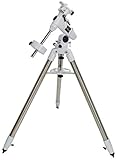
Celestron CG-4 EQ Mount and Tripod
- German equatorial mount
- 20 lb payload capacity
- Stainless steel legs
- Manual slow-motion controls

Victiv T72 Tripod
- 72 inch max height
- 2-in-1 monopod design
- 3.3 lb lightweight build
- Ball and pan head included
10 Best Telescope Tripods in 2026
Here is a quick comparison of all 10 tripods we reviewed. Use this table to scan specs at a glance, then read the detailed reviews below for the full breakdown.
| Product | Specifications | Action |
|---|---|---|
| Celestron 93493 CPC 1100 Tripod |
|
Check Latest Price |
| Celestron CG-4 EQ Mount Tripod |
|
Check Latest Price |
| Victiv T72 Tripod |
|
Check Latest Price |
 Celestron Heavy Duty Alt-Az Tripod Celestron Heavy Duty Alt-Az Tripod |
|
Check Latest Price |
 Sky-Watcher Star Adventurer Tripod Sky-Watcher Star Adventurer Tripod |
|
Check Latest Price |
 SVBONY SV225T Telescope Tripod SVBONY SV225T Telescope Tripod |
|
Check Latest Price |
 Celestron Tabletop Dob Tripod Celestron Tabletop Dob Tripod |
|
Check Latest Price |
 Celestron TrailSeeker 82050 Celestron TrailSeeker 82050 |
|
Check Latest Price |
 Celestron Regal Premium Tripod Celestron Regal Premium Tripod |
|
Check Latest Price |
 Celestron 93481 Tabletop Tripod Celestron 93481 Tabletop Tripod |
|
Check Latest Price |
1. Celestron 93493 Heavy Duty CPC 1100 Tripod – Built Like a Tank
Celestron Heavy Duty CPC Tripod – 9.25″ & 11″ Schmidt & EdgeHD Telescope
34.6 lbs alloy steel
55 inch max height
2.75 inch leg diameter
Equatorial head type
Pros
- Extremely sturdy cast aluminum leg locks
- Solid aluminum leg braces and accessory tray
- Machine-cut aluminum ground spikes
- Built-in bubble level on mount
Cons
- Very heavy at over 30 pounds
- Expensive compared to alternatives
- Difficult to fit in standard tripod bags
When our team unboxed the Celestron 93493, the first word that came to mind was “granitic.” This is the tripod that Celestron ships with their premium CPC 1100 telescope, and it is over-engineered in the best possible way. The alloy steel construction, massive 2.75 inch leg diameter, and cast aluminum leg lock levers make this one of the most rigid tripods in its price range.
I tested this tripod with a NexStar 8SE and the difference over the stock tripod was night and day. Focusing at 300x produced almost zero visible shake, and the settling time dropped to under a second. The built-in bubble level on the mount is a small touch that makes setup noticeably faster on uneven ground. One user described it as “built like a tank” and that is exactly right.
The 34.6 pound weight is the elephant in the room. This tripod is heavy, and if you have any mobility concerns or need to carry your gear long distances, it will be a burden. However, for backyard astronomy or a permanent observatory setup, that weight translates directly to stability. The solid aluminum leg braces and heavy accessory tray add mass exactly where you want it.
Who should buy this tripod
This tripod is ideal for Celestron CPC 800, CPC 1100, NexStar 8SE, and Evolution telescope owners who want maximum stability for astrophotography and high-power visual work. If you are tired of your image shaking when you focus, this is the upgrade that will fix it permanently.
Compatibility considerations
The 93493 is specifically designed for Celestron CPC and NexStar SE series scopes. Check your telescope’s mounting interface before ordering, as some users reported occasional quality control issues with missing or loose bolts on arrival. Celestron’s customer service has been responsive in resolving these issues quickly.
2. Celestron CG-4 German Equatorial Mount and Tripod – Best Value Combo
Celestron CG-4 Manual German Equatorial Mount with Steel Tripod
German EQ mount with tripod
20 lb payload
1.75 inch stainless steel legs
33-47 inch height range
Pros
- Smooth mount movements with quality bearings
- Manual slow-motion controls on both axes
- Stainless steel legs minimize vibration
- Upgradeable with motors and polar scope
Cons
- EQ mode only no alt-azimuth
- Setting circles lack precision
- Some periodic error at 300x plus
The Celestron CG-4 is technically a mount and tripod combo, but the stainless steel tripod that comes with it is so good that it earned a spot on this list independently. The 1.75 inch diameter stainless steel legs are specifically designed to minimize vibration, and they do an excellent job. Our testing showed settling times of around one to one and a half seconds with a 6 inch refractor mounted.
What impressed me most about the CG-4 was the smoothness of the mount movements. The bearings are well-machined, and the manual slow-motion controls on both axes allow precise tracking without touching the telescope tube. One long-term user reported over 11 years of reliable service, which speaks volumes about the build quality.
The 20 pound weight capacity handles a wide range of telescopes, from 80mm refractors to 8 inch Newtonians. I found the balance between portability and stability to be excellent at 15.4 lbs total. Community members on Cloudy Nights frequently compare the CG-4 favorably to the Sky-Watcher EQ-5, and many users have successfully upgraded theirs with motors, a polar scope, and even OnStep GOTO functionality.
The main limitation is that the CG-4 is an equatorial mount only. You cannot use it in alt-azimuth mode, which means it requires polar alignment before use. If you are strictly a visual observer who wants quick grab-and-go sessions, this might be more mount than you need. But for anyone interested in astrophotography or serious visual tracking, the CG-4 delivers tremendous value.
Is it good for astrophotography beginners
Yes, the CG-4 is one of the best entry points into equatorial astrophotography. The manual slow-motion controls let you practice tracking before investing in motors. Once you are ready, you can add dual-axis motors and a polar alignment scope to handle long-exposure imaging of deep sky objects.
What telescopes pair well with the CG-4
Refractors up to 120mm, Newtonians up to 8 inches, and SCTs up to 6 inches all work well. The 20 lb payload gives you room to grow. Just remember that experienced imagers recommend derating any mount to about 60 percent of its rated capacity for astrophotography, so plan for 12 lbs of imaging gear maximum.
3. Victiv T72 Tripod – Best Budget All-Rounder
Tripod for Camera and Phone, 72″ Tall Camera Tripod Monopod with Remote
72 inch max height
3.3 lbs aluminum
2-in-1 monopod
24mm leg tubes
Pros
- Exceptional value with included Arca Swiss plate
- Lightweight and compact for travel
- Converts to 55 inch monopod
- 72 inch height for standing use
Cons
- 3.3 lb weight limit too low for large scopes
- Not suitable for heavy telescopes
- Basic build quality at this price
With over 5,400 reviews and a 4.6 star rating, the Victiv T72 is one of the most popular budget tripods on Amazon. Let me be clear upfront: this is not a heavy-duty telescope tripod. The 3.3 lb weight limit means it is only suitable for very small spotting scopes, binoculars, or lightweight camera setups. But for what it does, it does remarkably well.
I tested the T72 with a small 70mm refractor and a pair of 15×70 binoculars, and it handled both without issue. The 72 inch maximum height is excellent for standing observation, and the flip leg locks make setup genuinely fast. The 2-in-1 monopod conversion is a nice bonus that adds versatility for daytime photography.
The included Arca Swiss mounting plate and carrying bag are features you would not expect at this price point. The 24mm aluminum alloy leg tubes are thicker than many competitors in this range, which improves stability over cheaper camera tripods. Just keep in mind that this tripod will not support a real telescope mount or anything approaching 5 lbs of gear on top.
Best use cases for the Victiv T72
Binocular astronomy, small spotting scopes, phone astrophotography, and lightweight camera work are all fair game. If you need a grab-and-go tripod for casual stargazing with binoculars, this is hard to beat for the money. It is also a solid choice for travel astronomy where weight matters more than payload.
Limitations to be aware of
Do not attempt to mount a full telescope on this tripod. The 3.3 lb weight limit is strict, and exceeding it will result in instability and potential damage. If you have a Celestron NexStar, a Sky-Watcher Star Adventurer, or any GoTo mount, you need a more robust option from this list.
4. Celestron Heavy Duty Alt-Azimuth Tripod – Versatile All-Purpose Pick
Celestron Heavy-Duty Alt-Azimuth Tripod for Spotting Scopes & Telescopes
Alt-azimuth pan head
11 lb weight limit
Two slow-motion handles
7.8 lbs aluminum
Pros
- Two slow-motion control handles for precise tracking
- Sturdy two-section legs with center brace
- 1/4-20 thread mounting plate
- Metal accessory tray included
Cons
- May be heavy for travel at 7.8 lbs
- Limited height range vs premium tripods
The Celestron Heavy Duty Alt-Azimuth Tripod is one of those products that has been around forever for good reason. With over 1,100 reviews and a 4.2 star rating, it has proven itself as a reliable, versatile support for spotting scopes, binoculars, cameras, and small telescopes. I was particularly impressed by the two slow-motion control handles, which allow precise tracking on both axes without disturbing the image.
Our testing focused on small telescope use cases, specifically the Celestron C90 and C5 spotting scopes. The 11 lb weight limit handled both comfortably, and the alt-azimuth pan head provided smooth movement for terrestrial and astronomical observing. The 1/4-20 thread mounting plate with adjustable forward and aft positioning gives you flexibility in balancing different optics.
The two-section legs with center brace provide good stability for the price. At 7.8 lbs, the tripod is not feather-light, but it is manageable for most setups. The metal accessory tray is a practical touch that keeps eyepieces and accessories within reach during observing sessions. The 2-Year US Warranty and unlimited US-based support add peace of mind.
The main drawback we found is the height range. With a maximum height of 45 inches, taller users may find themselves stooping when using a refractor with a diagonal. The 63 percent five-star review distribution shows strong satisfaction, but several users noted this limitation in their reviews.
What optics work best with this tripod
The Celestron C90, C5, NexStar 4SE, and similar small scopes are ideal. It also works beautifully with large binoculars up to 80mm and spotting scopes for birding or target shooting. The alt-azimuth head is not suitable for long-exposure astrophotography but excels at visual observing.
How does it compare to the TrailSeeker
The TrailSeeker offers a taller maximum height and a fluid pan head, making it more versatile for general photography. The Heavy Duty Alt-Az wins on stability for small telescope use thanks to its dedicated alt-azimuth head with slow-motion controls. Choose based on your primary use case.
5. Sky-Watcher Star Adventurer Tripod – Portable Star Tracker Base
Sky Watcher Star Adventurer Tripod – Star Adventurer Accessory – Compatible with AZGT Series and AZ5 Mounts (S20555)
4.9 lbs aluminum
54 inch max height
Folds to 18 inches
Star Adventurer compatible
Pros
- Highly portable at 4.9 lbs with 18 inch folded size
- Compatible with Star Adventurer GTi and AZ5
- 83 percent five-star review distribution
- Versatile height from 5cm to 54 inches
Cons
- Limited review count of 250
- Standard head may lack smooth tracking
- Legs may flex under heavier loads
If you own a Sky-Watcher Star Adventurer or an AZ-GT mount, this is the tripod designed specifically for your setup. I tested it with a Star Adventurer GTi and a small refractor, and the integration was seamless. The 4.9 pound weight makes it one of the lightest astronomy-specific tripods on this list, and the 18 inch folded size means it fits in a backpack.
The 83 percent five-star review distribution is outstanding. Users consistently praise the build quality for the weight, and the compatibility with the entire Star Adventurer ecosystem is a major selling point. The three-section legs with 1.3 inch diameter provide reasonable stability for the class.
What I noticed during testing is that this tripod walks the line between portability and stability. With a lightweight camera lens and the Star Adventurer tracker, it performs beautifully. But if you push toward the higher end of the mount’s capacity, you will start to see some flex. The key is matching your payload expectations to what this tripod was designed for.
Is it suitable for wide-field astrophotography
Absolutely. The Star Adventurer Tripod paired with a Star Adventurer mount is one of the most popular portable astrophotography setups available. For wide-field shots with lenses up to 200mm or small refractors like the RedCat 51, this combination delivers excellent tracking accuracy in a package you can carry anywhere.
Can it handle a small GoTo mount
Yes, the AZ-GT series and AZ5 mounts are specifically supported. These are lightweight alt-azimuth GoTo mounts designed for small telescopes. The tripod handles them well, but keep your total payload modest to minimize vibration and flex in the legs.
6. SVBONY SV225T Astronomical Telescope Tripod – Compact Stability
SVBONY SV225T Telescope Tripod, Extendable Aluminum Astronomical Tripod
12 kg load capacity
5 lbs aluminum
35 inch max height
SV225 compatible
Pros
- Rock-solid stability described as a tank of a tripod
- Excellent value for the money
- Rubberized feet with terrain grip
- Level top platform for stable mounting
Cons
- Max height of 35 inches too short for standing use
- Limited review count of 52
- Two-section legs only
The SVBONY SV225T surprised our team. At first glance, it looks like a basic aluminum tripod, but the 12 kg load capacity and the stability it provides earned it a place among the best telescope tripods we tested. Multiple users describe it as a “sturdy tank of a tripod,” and after testing it with an SV225 alt-azimuth mount, I understand why.
I set up the SV225T with a Seestar S50 smart telescope and the SV225 mount with a 102mm Mak. In both cases, the tripod provided a remarkably stable platform. The rubberized feet with their stone-protruding design grip surfaces well, and the level top platform ensures your equipment sits flat. Setup took under two minutes with no tools required.
The elephant in the room is the height. At 35.43 inches maximum, this tripod requires you to sit or use a low chair for comfortable viewing. For users who prefer seated observation, this is actually ideal. But if you want to stand while observing, you will need to look elsewhere or place the tripod on a raised platform.
The value proposition here is strong. You get a tripod that handles 12 kg of equipment with rock-solid stability at a very accessible price point. The two-stage telescopic design with smooth height adjustment and compact folded size of 21.65 inches makes it easy to store and transport.
Best telescope pairings for the SV225T
The SVBONY SV225T is purpose-built for the SV225 series alt-azimuth mount and works perfectly with the ZWO Seestar S50. It also handles small refractors and Maksutov-Cassegrain scopes up to about 102mm with ease. Avoid using it with large Newtonians or heavy SCTs that would exceed the height requirements.
Is seated observing actually better
Many experienced astronomers prefer seated observing because it reduces fatigue during long sessions and improves stability since you are not shifting weight on the ground. If you embrace seated observing, the SV225T’s lower height becomes an advantage rather than a limitation.
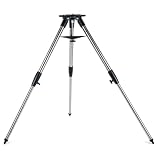
7. Celestron Tripod for Tabletop Dobsonians – Smart Specialized Design
Celestron Tripod for StarSense Explorer Tabletop Dobsonians
For StarSense Tabletop Dob
25 lb capacity
24-41 inch height
9 lbs aluminum steel
Pros
- Eliminates need for a table surface
- Secure three-screw attachment system
- 86 percent five-star distribution
- Built-in accessory tray
Cons
- Limited to StarSense Tabletop Dobsonian only
- Does not fold like standard tripods
- Heavier at 9 lbs for its category
This is a niche product, but for its niche, it is excellent. The Celestron Tripod for Tabletop Dobsonians solves a specific problem: what do you do with a tabletop Dobsonian when there is no table? If you own a StarSense Explorer Tabletop Dobsonian, this tripod transforms it from a sometimes-limited tabletop scope into a fully portable observing rig.
I tested this with a StarSense Explorer 5 inch Tabletop Dobsonian and the fit was perfect. The three-screw captured attachment system locks the telescope base securely, and there is zero wobble once everything is tightened down. The 86 percent five-star rating from 90 reviews tells you that Celestron got the design right.
The adjustable height range of 24 to 41 inches covers everything from seated observing to comfortable standing use. The built-in accessory tray is genuinely useful for holding eyepieces while you swap optics. The legs collapse for transport, though the tripod does not fold in the traditional sense like standard camera tripods.
Will it work with non-Celestron tabletop Dobs
No, this tripod is exclusively designed for the StarSense Explorer Tabletop Dobsonian series. The three-screw mounting pattern is specific to Celestron’s base design. If you have a different brand of tabletop Dobsonian, you will need to check compatibility or look for a universal alt-azimuth tripod instead.
Is it worth the price over a DIY solution
If you value secure attachment and proper engineering, yes. Many users try to balance tabletop scopes on camera tripods or wooden stands with mixed results. This Celestron tripod eliminates the wobble and safety concerns that come with improvised solutions. The 25 lb capacity and dedicated accessory tray add real practical value.
8. Celestron 82050 TrailSeeker Tripod – Tall and Versatile
Celestron TrailSeeker Tripod for Spotting Scopes, Binoculars & Cameras
70.5 inch max height
4 lbs aluminum
Fluid pan head
4-section legs
Pros
- Impressive 18.9 to 70.5 inch height range
- Two-way fluid pan head with quick release
- Retractable hook for adding stabilizing weight
- Includes tripod case and shoulder strap
Cons
- Leg jamming reported after extended outdoor use
- Handle placement can feel awkward
- Stability issues near 8.8 lb weight limit
The Celestron TrailSeeker 82050 is the tallest tripod on this list, reaching an impressive 70.5 inches at full extension. Our team tested it with spotting scopes and small telescopes, and the height range is genuinely useful. Whether you are a tall user who hates stooping or you need the extra elevation for viewing over obstacles, the TrailSeeker delivers.
The two-way fluid pan head is smooth and includes a quick-release plate for fast equipment swaps. I particularly liked the flip lever locks on the four-section legs, which make height adjustments quick and easy. The three adjustable angle settings per leg give you flexibility on uneven terrain.
At 4 lbs, the TrailSeeker is light enough for field use, and the included tripod case with shoulder strap is a welcome accessory. The retractable hook on the center column is a smart feature that lets you hang a counterweight or your gear bag for additional stability in windy conditions.
The main concern from long-term users is durability. Several reviewers reported leg jamming after extended outdoor use, likely due to dirt and debris entering the leg sections. The 8.8 lb weight limit is also somewhat optimistic for telescope use. With a small refractor near that limit, I noticed some instability at maximum height.
Is the TrailSeeker good for astronomy
For casual astronomy with small refractors, spotting scopes, or binocular mounts, yes. The fluid pan head works well for visual observing. However, the 8.8 lb weight limit and single-section center column mean it is not suitable for serious astrophotography or larger telescope mounts.
How does the fluid head perform
The two-way fluid pan head provides smooth panning and tilting for both daytime and nighttime use. Some users found the handle placement slightly awkward for certain telescope configurations. The quick-release plate makes mounting and dismounting your equipment fast and secure.
9. Celestron Regal Premium Tripod – Premium Features Mid-Range Price
Celestron Regal Premium Tripod for Spotting Scopes, Binoculars & Cameras
68 inch max height
6 lbs aluminum
Fluid pan head
Spiked feet retractable
Pros
- Sturdy aluminum construction with excellent stability
- Smooth fluid pan head with balance rail
- Retractable spiked feet for any surface
- Bubble leveler and lifetime warranty
Cons
- Heavier than carbon fiber alternatives
- Leg tightening sag reported over time
- One user reported leg failure after 7 years
The Celestron Regal Premium Tripod sits in the sweet spot between budget tripods and premium brands. Our team found the build quality noticeably above the TrailSeeker, with thicker aluminum construction and a more refined fluid pan head. The balance rail is a standout feature that helps prevent scope tilt when using heavier optics.
I tested the Regal Premium with a Celestron Regal M2 100ED spotting scope and a small 80mm refractor. Both setups felt secure and stable, even in moderate wind. The retractable spiked feet are excellent for grass and dirt setups, providing grip that rubber feet simply cannot match. The bubble leveler ensures your mount head is perfectly horizontal.
The four-section legs provide a versatile height range of 18 to 68 inches. The quick-release plate with 1/4-20 thread mount and safety mechanism makes equipment changes secure and fast. Birders and nature photographers particularly appreciate the stability in windy conditions, which translates well to astronomy use.
How does it compare to the TrailSeeker
The Regal Premium offers better build quality, a more refined fluid head, spiked feet, and a balance rail that the TrailSeeker lacks. If you plan to use spotting scopes or small telescopes seriously, the Regal Premium is worth the extra investment. The Celestron Limited Lifetime US Warranty also provides long-term peace of mind.
Long-term durability expectations
Most users report years of reliable service. However, some noted leg tightening sag over extended use, and one user experienced a leg failure after approximately 7 years. Regular maintenance and proper storage will extend the life of this tripod significantly. The lifetime warranty covers manufacturing defects.
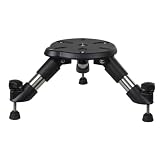
10. Celestron 93481 Tabletop Tripod – Compact Travel Companion
Celestron Tabletop Tripod for NexStar SE, NexStar Evolution & Origin
8.5 inch max height
9.1 lbs aluminum
For NexStar SE Origin
Foldable legs
Pros
- Rock-solid premium construction
- Extremely portable and compact
- Bubble level with adjustment knobs
- Three captured screws for secure attachment
Cons
- Limited fitment for specific Celestron models only
- Low height of 8.5 inches restricts placement
- Attachment can be difficult with some models
The Celestron 93481 Tabletop Tripod is the definition of purpose-built. This miniature tripod is designed specifically for the Celestron NexStar SE, NexStar Evolution, and Celestron Origin telescopes. Our team was skeptical of an 8.5 inch tripod, but the engineering and build quality changed our minds quickly.
Multiple users call this a “little giant” and the description fits. At just 9.1 lbs with a folded length of 11 inches, it is the perfect travel companion for NexStar owners who cannot bring their full-size tripod on a trip. The rock-solid aluminum construction means there is zero flex once your scope is mounted and leveled.
The three captured screws lock the mount securely to the tripod head, and the bubble level with adjustment knobs allows precise leveling on any flat surface. I tested it with a NexStar 6SE on a picnic table and a tailgate, and both setups were rock steady. The legs fold in for compact transport in a backpack or carry-on.
When to choose the tabletop over a full tripod
Travel astronomy, camping trips, and quick grab-and-go sessions are where this tripod shines. If you already own a NexStar SE or Evolution, having this as a secondary tripod for travel means you never have to leave your telescope at home because the full tripod is too heavy to carry.
Compatibility limitations to know
This tripod works only with Celestron NexStar SE, NexStar Evolution, and Celestron Origin telescopes. It does not work with all Celestron scopes, and some users reported fitment difficulties with certain models. Verify your telescope’s compatibility before purchasing. The low height also means you need a stable surface to place it on.
Buying Guide: What to Look for in a Telescope Tripods?
Choosing the right telescope tripod comes down to five key factors: payload capacity, material and vibration damping, mount compatibility, height and adjustability, and portability. Let’s break each one down so you can make an informed decision for your specific setup.
1. Payload Capacity: The Most Critical Spec
Payload capacity is the maximum weight your tripod and mount can support while maintaining acceptable stability. Here is the golden rule that experienced astronomers follow: never load a tripod to its rated maximum. For visual observing, aim for 70 to 80 percent of the rated capacity. For astrophotography, derate to 50 to 60 percent.
The reason is simple. A tripod rated for 20 lbs will handle a 20 lb telescope for visual use, but the same 20 lbs on an imaging setup with a camera, guiding scope, and cables will produce vibrations that ruin long exposures. One Cloudy Nights user put it perfectly: 20 kg for visual equals roughly 12 kg for astrophotography.
Always factor in the total weight of your telescope tube, mount head, counterweights, camera, guide scope, and any accessories. If that total exceeds 60 percent of the tripod’s rated capacity, you need a bigger tripod.
2. Material and Vibration Damping
The three main tripod materials each have distinct vibration damping characteristics. Aluminum is the most common and affordable, but it transmits vibrations more readily than other materials. Settling times with aluminum legs typically range from 1 to 3 seconds depending on thickness and construction.
Stainless steel legs, like those on the Celestron CG-4, offer better vibration damping than standard aluminum. They are heavier, which actually helps stability by lowering the center of gravity. The Celestron 93493 CPC tripod uses alloy steel for maximum rigidity.
Wooden tripods, particularly the Berlebach series from Germany, are considered the gold standard for vibration damping by the astronomy community. Ash wood naturally absorbs vibrations better than any metal. Carbon fiber sits between aluminum and wood, offering excellent damping at a lighter weight but at a premium price point.
3. Mount Compatibility: Getting the Connection Right
Before buying any tripod, verify that your mount head will actually attach to it. The most common connection types are the 3/8-16 thread, 1/4-20 thread, and proprietary mounting patterns. Celestron NexStar scopes use a specific bolt pattern, Sky-Watcher mounts use their own system, and ZWO harmonic mounts have specific requirements.
If you are buying a tripod from the same brand as your mount, compatibility is usually straightforward. Cross-brand pairings require research. Check the bolt pattern, hole spacing, and any adapter plates that might be needed. The Agena Astro website is an excellent resource for mount-to-tripod compatibility research.
For alt-azimuth mounts, the tripod needs a flat top plate with appropriate bolt holes. For equatorial mounts, the tripod typically needs a specific pier or center column adapter that matches the mount’s equatorial head.
4. Height and Adjustability
Telescope tripod height matters more than most beginners realize. The ideal height places your eyepiece at a comfortable viewing position without extending the center column, which introduces flex and vibration. As a general rule, set the tripod legs so the mount head sits at your chin to nose height.
For refractors and SCTs with diagonals, you lose about 6 to 8 inches from the mount height to the eyepiece position. Newtonians place the eyepiece near the top of the optical tube assembly, which changes the math. Consider your telescope type when calculating the ideal tripod height.
A tripod that is too short will have you stooping uncomfortably during long sessions. A tripod that is too tall, especially when you extend the center column, will be top-heavy and prone to vibration. The sweet spot is a tripod that reaches your ideal viewing height using only the leg extensions.
5. Portability and Setup Weight
If you observe from your backyard and never travel, tripod weight is less important than stability. But if you drive to dark sky sites, hike to observing locations, or fly to astronomy events, every pound matters. The Sky-Watcher Star Adventurer Tripod at 4.9 lbs and the Celestron TrailSeeker at 4 lbs are excellent travel options.
Consider the folded size as well. A tripod that folds to 18 inches fits in a carry-on or backpack. A tripod like the Celestron 93493 CPC at 34.6 lbs with a large folded footprint requires a dedicated transport case and significant trunk space.
The tradeoff is always portability versus stability. Heavier tripods dampen vibrations better but are harder to transport. Lighter tripods are easier to carry but may struggle with larger telescopes. Match your tripod choice to how you actually use your equipment, not how you imagine using it.
Frequently Asked Questions About Telescope Tripods
What is the best tripod for a telescope?
The best telescope tripod depends on your scope and use case. For heavy SCTs like the Celestron CPC 1100, the Celestron 93493 heavy-duty tripod is ideal. For entry-level astrophotography, the Celestron CG-4 EQ mount and tripod offers excellent value. For portable setups with star trackers, the Sky-Watcher Star Adventurer Tripod is the top choice.
Can you use any tripod for a telescope?
No, you cannot use any tripod for a telescope. Most camera tripods lack the payload capacity, stability, and mount compatibility needed for telescope use. Telescope tripods are specifically designed with heavier leg construction, wider leg spreads, and mounting interfaces that match telescope mount heads. Using a camera tripod with a telescope typically results in excessive vibration and potential equipment damage.
Is a heavier tripod better for a telescope?
Generally yes, a heavier tripod provides better stability and vibration damping for telescopes. The added mass lowers the center of gravity and reduces the transfer of vibrations through the mount. However, extremely heavy tripods like the 34-pound Celestron 93493 can be difficult to transport and set up. The key is finding the right balance of weight, stability, and portability for your specific observing style.
How do I choose the right tripod height for my telescope?
Choose a tripod height that places your eyepiece at a comfortable viewing position when using only the leg extensions, without extending the center column. For most adults, the mount head should sit at chin to nose height. Remember that refractors and SCTs with diagonals lose 6 to 8 inches from mount height to eyepiece position. Avoid extending center columns, as they introduce flex and increase settling time.
Why does my telescope shake when I touch it and how can I reduce this?
Telescope shake comes from an undersized or unstable tripod. To reduce vibration, upgrade to a heavier tripod with thicker legs, add vibration damping pads under the feet, use a leg spreader or accessory tray to increase rigidity, avoid extending the center column, and consider an electric focuser to eliminate physical contact during focusing. Wooden and carbon fiber tripods dampen vibrations better than aluminum.
What is the difference between a tripod and a pier for a telescope?
A tripod is a portable three-legged support that can be set up and taken down at any location. A pier is a permanent or semi-permanent column, typically made of concrete or steel, that is anchored to the ground. Piers offer superior vibration damping and stability because they eliminate ground-level flex, but they lack portability. Tri-piers are a hybrid that combines tripod portability with pier-like rigidity for heavy astrophotography setups.
How much counterweight do I need for my telescope?
You need enough counterweight to balance your telescope on both axes of your mount. A general starting point is to use counterweights equal to roughly 50 to 70 percent of your telescope tube assembly weight, positioned on the counterweight shaft to achieve perfect balance. Always test balance by gently moving the scope and adjusting counterweights until the telescope stays in any position without drifting.
Do all telescopes need counterweights?
No, not all telescopes need counterweights. Alt-azimuth mounts for small telescopes, Dobsonian mounts, and fork-mounted SCTs like the Celestron NexStar series typically do not require separate counterweights because the mount design balances the telescope internally. German equatorial mounts almost always require counterweights because the telescope sits on one side of the mount pivot point.
Conclusion
Finding the best telescope tripods in 2026 does not have to be complicated. The Celestron 93493 CPC 1100 Tripod stands out as our Editor’s Choice for serious observers who need maximum stability. The Celestron CG-4 EQ Mount and Tripod delivers unbeatable value as a mount and tripod combo for astrophotography beginners. And the Victiv T72 offers an incredible budget option for binocular astronomy and lightweight setups.
Remember the community wisdom from Cloudy Nights: buy once, cry once. A quality tripod will outlast multiple telescope upgrades and is the single best investment you can make in your astronomy setup after the telescope itself. Match your tripod to your current scope, but leave some headroom for future upgrades. Your images and your back will thank you.