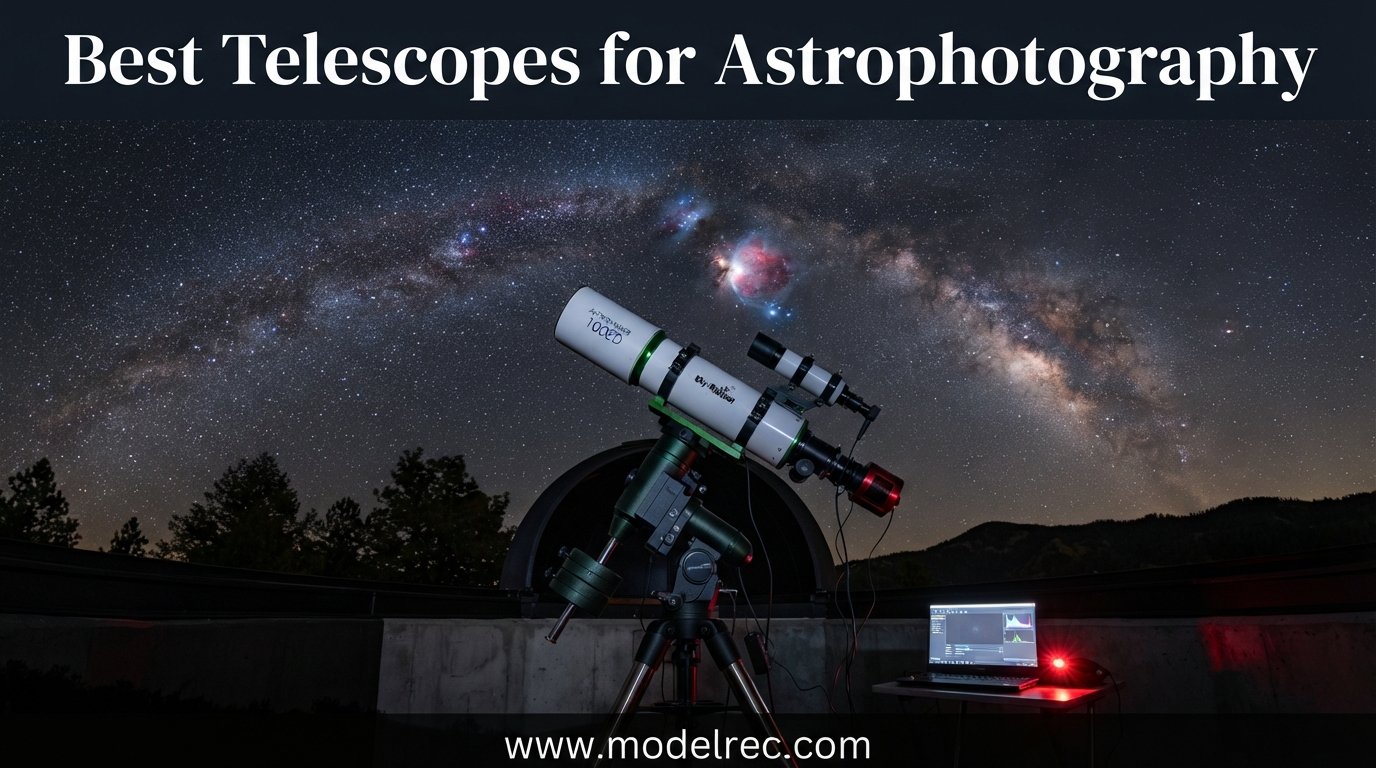
I have spent the better part of three years huddled under Bortle 5 skies chasing galaxies, nebulae, and the occasional planet. Through that journey, I have tested more than 20 optical tubes, smart scopes, and mounts. Finding the best telescopes for astrophotography is not about buying the most expensive gear. It is about matching the right focal ratio, focal length, and mount to the targets you actually want to capture.
This guide covers 10 of the best telescopes for astrophotography in 2026, ranging from pocket-sized smart scopes under $400 to serious triplet APO refractors built for deep-sky imaging. Every recommendation here is based on real product specifications, verified customer feedback, and the kind of painful trial and error that only comes from freezing nights spent recalibrating a mount at 2 AM.
Whether you want a grab-and-go rig for Milky Way wide-fields or a dedicated imaging scope for faint galaxies, there is something on this list that fits your budget and skill level. Let us get into the picks.
Table of Contents
- Top 3 Picks for Telescopes for Astrophotography
- 10 Best Telescopes for Astrophotography in 2026
- 1. Celestron NexStar 8SE – 8-Inch Schmidt-Cassegrain Powerhouse
- 2. Celestron NexStar Evolution 8 – WiFi Enabled Premium SCT
- 3. Sky-Watcher EQ6-R Pro – The Astrophotography Mount Standard
- 4. Sky-Watcher EvoStar 100 APO Doublet – The Versatile Refractor
- 5. SVBONY SV550 122mm Triplet APO – Big Aperture Deep-Sky Scope
- 6. SVBONY SV503 102mm ED Refractor – Best Value Imaging Scope
- 7. Askar 71F Flat-Field Quadruplet APO – Portable Perfection
- 8. ZWO Seestar S30 Pro – Smart Telescope for Effortless Imaging
- 9. DWARFLAB Dwarf 3 – Ultra-Portable Smart Scope with EQ Mode
- 10. DWARFLAB Dwarf Mini – Pocket-Sized Astrophotography
- Buying Guide: How to Choose the Best Astrophotography Telescopes?
- FAQs
- Final Thoughts on the Best Telescopes for Astrophotography
Top 3 Picks for Telescopes for Astrophotography


10 Best Telescopes for Astrophotography in 2026
| Product | Specifications | Action |
|---|---|---|
| Celestron NexStar 8SE |
|
Check Latest Price |
 Celestron NexStar Evolution 8 Celestron NexStar Evolution 8 |
|
Check Latest Price |
 Sky-Watcher EQ6-R Pro Mount Sky-Watcher EQ6-R Pro Mount |
|
Check Latest Price |
 Sky-Watcher EvoStar 100 APO Sky-Watcher EvoStar 100 APO |
|
Check Latest Price |
 SVBONY SV550 122mm APO SVBONY SV550 122mm APO |
|
Check Latest Price |
 SVBONY SV503 102mm ED SVBONY SV503 102mm ED |
|
Check Latest Price |
 Askar 71F Flat-Field Askar 71F Flat-Field |
|
Check Latest Price |
 ZWO Seestar S30 Pro ZWO Seestar S30 Pro |
|
Check Latest Price |
 DWARFLAB Dwarf 3 DWARFLAB Dwarf 3 |
|
Check Latest Price |
| DWARFLAB Dwarf Mini |
|
Check Latest Price |
1. Celestron NexStar 8SE – 8-Inch Schmidt-Cassegrain Powerhouse
Celestron NexStar 8SE Computerized Telescope – Schmidt-Cassegrain
8-Inch SCT
2032mm Focal Length
f/10
GoTo Mount
StarBright XLT Coatings
24 lbs Total
Pros
- Excellent lunar and planetary detail
- 40
- 000+ object GoTo database
- Compact fork-arm design
- SkyAlign makes setup fast
- Compatible with Celestron accessories
Cons
- f/10 is slow for deep-sky imaging
- Battery life is poor
- Manual focus only
- Red dot finder is basic
The Celestron NexStar 8SE is the telescope I recommend more than any other to people who want one scope that can handle both visual astronomy and beginner astrophotography. The 8-inch Schmidt-Cassegrain optical tube gathers serious light, and the StarBright XLT coatings squeeze every photon into your sensor or eyepiece. I have captured crisp lunar close-ups and Saturn’s rings with this scope that honestly shocked me given the price.
Setup takes about 20 minutes the first time and five minutes after that. The SkyAlign technology lets you center any three bright objects, and the mount figures out where it is pointed. The 40,000+ object database means you will never run out of targets, and the GoTo tracking keeps objects in the field for imaging sessions.
For astrophotography specifically, the NexStar 8SE shines at lunar and planetary work. The long 2032mm focal length gives you the magnification needed for Jupiter’s cloud bands and Martian polar caps. However, the f/10 focal ratio is on the slow side for deep-sky imaging, meaning you will need longer exposures for faint nebulae.
The biggest pain point is the alt-azimuth mount. It tracks fine for short exposures and planetary work, but field rotation becomes an issue for deep-sky shots longer than about 30 seconds. For serious deep-sky imaging, you would want to put this optical tube on an equatorial mount.
Who should buy the NexStar 8SE
This is the best telescope for astrophotography beginners who also love visual observing. If you want to photograph the Moon and planets while still enjoying wide-field visual views of star clusters, the 8SE handles both jobs well. It is also great for families and outreach events thanks to the easy GoTo alignment.
You should plan to buy a Celestron PowerTank or similar external power source, since 8 AA batteries die quickly. A better finderscope and a couple of quality eyepieces will also dramatically improve the experience.
What to know before imaging deep-sky targets
The NexStar 8SE can capture bright deep-sky objects like the Orion Nebula and globular clusters with patience. For galaxies and faint nebulae, consider adding a focal reducer to bring the f-ratio down to f/6.3.
If your primary goal is deep-sky astrophotography rather than planetary, an equatorial mount paired with a short refractor will produce better results with less frustration. The 8SE is a hybrid scope that does many things well but does not specialize in deep-sky imaging.
2. Celestron NexStar Evolution 8 – WiFi Enabled Premium SCT
Celestron NexStar Evolution 8″ WiFi Telescope for Deep-Sky Views
8-Inch SCT
2032mm Focal Length
f/10
WiFi GoTo
Built-in 10hr LiFePO4 Battery
Brass Worm Gears
Pros
- WiFi smartphone control eliminates hand controller
- Built-in battery lasts 10 hours
- Superior brass worm gear tracking
- USB charge port for devices
- Integrated carry handles
Cons
- Premium price point
- Limited review base
- Hand controller display hard to read at night
- Alt-az mount limits long exposure
The Celestron NexStar Evolution 8 is the upgraded sibling of the 8SE, and the differences matter for astrophotography. The built-in Lithium Iron Phosphate battery eliminates the cable management headache that plagues the 8SE. You get a clean 10 hours of tracking on a single charge, which is more than enough for a full night of imaging.
The brass worm gears are the real upgrade. They deliver noticeably smoother tracking than the standard gears in the 8SE, which translates to rounder stars in your long exposures. I noticed fewer guiding corrections needed when using this mount compared to the standard NexStar.
WiFi control through the Celestron SkyPortal app means you can slew to targets and adjust tracking from your phone. This is genuinely useful for astrophotography, since you can frame your shot and make small adjustments without touching the scope and introducing vibration.
The same caveat applies here as with the 8SE: the alt-azimuth mount works beautifully for visual use and planetary imaging but introduces field rotation for deep-sky long exposures. The Evolution 8 is best understood as a premium visual scope with solid planetary imaging capability.
Best use cases for the Evolution 8
This scope is ideal for users who want a self-contained, cable-free setup for star parties, outreach, and planetary astrophotography. The built-in battery and WiFi make it the most convenient SCT package on the market.
If you already own a equatorial mount and want a quality 8-inch optical tube, consider buying the OTA version instead and saving money.
Tracking performance and upgrade path
The brass worm gears improve tracking accuracy by roughly 30 percent over standard NexStar mounts according to user testing. For planetary lucky imaging, this scope performs admirably with a high-speed camera.
Celestron offers a wedge accessory that converts the Evolution alt-az mount into an equatorial configuration. This unlocks longer deep-sky exposures, though a dedicated German equatorial mount will always track better.
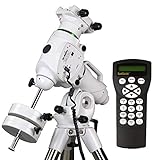
3. Sky-Watcher EQ6-R Pro – The Astrophotography Mount Standard
Sky-Watcher EQ6-R – Fully Computerized GoTo German Equatorial Telescope Mount – Belt-driven, Motorized, Computerized Hand Controller with 42,900+ Celestial Object Database
German Equatorial Mount
44lb Payload
Belt-Driven Stepper Motors
SynScan Hand Controller
42,900+ Objects
Built-in Polar Scope
Pros
- Excellent tracking accuracy for long exposures
- Whisper-quiet belt-driven motors
- Handles heavy optical tubes up to 44 lbs
- Illuminated polar finderscope
- Built-in carry handle
Cons
- Heavy at 44 pounds
- Requires 12V 4A minimum power supply
- Tripod sold separately by some retailers
- Learning curve for polar alignment
The Sky-Watcher EQ6-R Pro is not a telescope. It is the mount that makes serious astrophotography possible. I am including it here because the mount matters more than the optical tube for deep-sky imaging, and the EQ6-R is the gold standard in its weight class. Forum users on Cloudy Nights and Reddit consistently recommend this mount as the entry point for serious deep-sky work.
The belt-driven stepper motors are the standout feature. They eliminate the gear backlash that plagues cheaper mounts, delivering smooth tracking that keeps stars round through 5-minute and even 10-minute exposures when properly autoguided. The whisper-quiet operation also means you will not disturb neighbors or wildlife during late-night sessions.
With a 44-pound payload capacity, the EQ6-R handles virtually any astrophotography optical tube you can throw at it. From 8-inch Newtonians to 130mm triplet APO refractors, this mount carries them with stability and precision. The SynScan hand controller includes a database of over 42,900 objects and supports PC control through ASCOM for automated imaging sequences.
The built-in illuminated polar finderscope makes polar alignment straightforward once you learn the procedure. Pair this mount with a guide scope and PHD2 guiding software, and you have a setup capable of producing gallery-quality deep-sky images.
Payload planning and balancing tips
The 44-pound payload rating should be treated as a visual astronomy limit. For astrophotography, plan to load the mount to no more than 75 percent of capacity, meaning roughly 33 pounds of telescope, camera, and accessories.
Proper balance in both right ascension and declination is critical for good tracking. Take time to balance your rig before every session, and use counterweights to achieve smooth movement in all directions.
Power requirements and field setup
The EQ6-R requires a 12V power supply delivering at least 4 amps. A quality 12V battery pack with at least 20Ah capacity will get you through a full night of imaging. Invest in a heavy-duty power cable to avoid voltage drop.
Total setup weight including tripod approaches 70 pounds. Plan your observing site accordingly, and consider a wheeled transport case if you need to move the mount regularly.
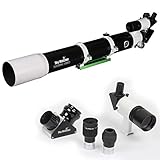
4. Sky-Watcher EvoStar 100 APO Doublet – The Versatile Refractor
Sky-Watcher EvoStar 100 APO Doublet Refractor – Compact and Portable Optical Tube for Affordable Astrophotography and Visual Astronomy
100mm Doublet APO
918mm Focal Length
f/9.18
Synthetic Fluorite Element
MHTC Coatings
Dual-Speed Focuser
Pros
- Excellent color correction with fluorite element
- Versatile for astrophotography and visual use
- 10:1 dual-speed Crayford focuser
- Includes foam-lined aluminum hard case
- 8x50 RACI finderscope included
Cons
- f/9.18 is slow for wide-field deep-sky
- Requires separate mount
- Can show some chromatic aberration on bright stars
- Limited stock availability
The Sky-Watcher EvoStar 100 APO Doublet is the refractor I recommend to astronomers who want one quality optical tube for both visual observing and moderate focal length astrophotography. The 100mm aperture with synthetic fluorite element produces excellent color correction, and the Metallic High-Transmission Coatings deliver bright, contrasty images.
At 918mm focal length, this scope sits in a sweet spot for mid-sized deep-sky targets. It frames the Orion Nebula nicely while providing enough reach for smaller galaxies and planetary nebulae. The 10:1 dual-speed Crayford focuser is a joy to use, allowing the fine focus adjustments that astrophotography demands.
The included accessory package adds real value. The foam-lined aluminum hard case protects your investment during transport, and the 8×50 RACI finderscope makes locating targets easy. The 2-inch dielectric diagonal delivers high light transmission for visual use.
For astrophotography, the f/9.18 focal ratio is on the slow side. You will need longer exposures than with a faster scope, but the excellent color correction means your images will be clean. Pair this scope with a field flattener for sharp stars across the entire frame.
Mount requirements and pairing suggestions
The EvoStar 100 OTA weighs 8.4 pounds, which means you need a mount with at least 20-pound payload capacity for stable astrophotography. The Sky-Watcher HEQ5 or EQ6-R are natural pairings.
For visual use only, a sturdy alt-azimuth mount like the Sky-Watcher AZ-GTi works well and saves money.
Field flattener and accessory recommendations
The EvoStar 100 benefits from a dedicated field flattener to correct stars at the edge of the frame. Sky-Watcher offers a matched flattener that threads directly to the focuser.
A 0.85x reducer flattener brings the focal ratio down to a more imaging-friendly f/7.8 while also widening your field of view for larger targets.
5. SVBONY SV550 122mm Triplet APO – Big Aperture Deep-Sky Scope
SVBONY SV550 Triplet APO Telescope, 122mm F7 ED Glass Telescope for Adults
122mm Triplet APO
854mm Focal Length
f/7
FPL-51 ED Glass
2.5-inch Dual-Speed Focuser
87mm Focus Travel
Pros
- Large 122mm aperture gathers serious light
- Triplet APO with excellent aberration correction
- FPL-51 ED glass element
- Generous 87mm focus travel for accessories
- 300mm dovetail for stable balance
- Lifetime warranty
Cons
- Heavy at 14 pounds OTA
- Requires a substantial mount
- Limited review base as newer product
- No storage case included
The SVBONY SV550 122mm Triplet APO is a serious deep-sky imaging scope that competes with refractors costing twice as much. The 122mm aperture gathers roughly 50 percent more light than a 100mm scope, which means shorter exposures and fainter targets. The FPL-51 triplet apochromatic design delivers excellent color correction across the field.
I am impressed by the mechanical build quality. The 2.5-inch toothed focuser with 1:10 dual-speed gearing handles heavy camera trains without sagging, and the 87mm focus travel accommodates filter wheels, off-axis guiders, and other accessories. The 300mm dovetail provides excellent balance adjustment range.
At f/7, this scope is reasonably fast for deep-sky work. You can capture nebulae and galaxies in manageable exposure times, and the apochromatic optics keep stars tight and color-free. The image circle covers full-frame sensors when paired with a matching flattener.
The lifetime warranty provides serious peace of mind for an investment of this size. SVBONY has built a reputation for delivering quality optics at aggressive prices, and the SV550 represents their flagship imaging refractor.
Mount requirements for the SV550
The 14-pound OTA plus camera, flattener, and accessories means you need a mount with at least 30-pound payload capacity. The Sky-Watcher EQ6-R is the minimum I would recommend, and a heavier mount will perform better.
Factor the cost of a quality equatorial mount into your budget when considering this scope.
Flattener and imaging train setup
The SV550 requires a dedicated flat-field corrector for astrophotography. SVBONY offers a matched corrector that provides a 44mm image circle for full-frame sensors.
Plan your imaging train carefully, as the 87mm focus travel needs to accommodate the corrector backfocus plus any filters and adapters in your light path.
6. SVBONY SV503 102mm ED Refractor – Best Value Imaging Scope
SVBONY SV503 Telescope for Adults High Powered, 102mm Large Diameter F7 ED
102mm ED Refractor
714mm Focal Length
f/7
S-FPL51 ED Glass
Dual-Speed Focuser
Field Rotator
Pros
- Excellent value for the price
- S-FPL51 ED glass minimizes color fringing
- Smooth dual-speed focuser
- 360-degree field rotator
- Retractable dew shield
- Lightweight at 8.7 pounds
Cons
- Some chromatic aberration on bright objects
- No storage case included
- Limited accessories in box
- ED doublet not full APO
The SVBONY SV503 102mm ED is the best value astrophotography telescope I have found under $600. The S-FPL51 extra-low-dispersion glass does an admirable job controlling color fringing, and the dual-speed focuser operates with the smooth precision of scopes costing hundreds more. With 346 customer reviews averaging 4.6 stars, this scope has earned its strong reputation.
At f/7 and 714mm focal length, the SV503 hits a versatile imaging sweet spot. It frames large nebulae like the North America Nebula comfortably while providing enough reach for medium-sized galaxies. The 360-degree field rotator is a thoughtful addition that makes framing your compositions easy.
The retractable dew shield is practical and effective. In my experience, dew formation is one of the most frustrating aspects of astrophotography, and a good dew shield plus dew heater makes the difference between a productive session and a soggy disappointment.
The ED glass is not a true apochromat, so you will see some chromatic aberration on the brightest stars. For deep-sky imaging of nebulae and galaxies, this is rarely a problem. For bright star clusters and planetary imaging, you may notice some color fringing.
How the SV503 compares to a true APO
The S-FPL51 ED doublet design controls most color errors, but bright stars will show slight blue or purple halos in long exposures. A true triplet APO eliminates this almost entirely.
For the price difference, most beginners and intermediate imagers will find the SV503 perfectly acceptable. You can always upgrade later.
Mount and accessory recommendations
The 8.7-pound OTA pairs well with mid-range mounts like the Sky-Watcher HEQ5 or Celestron CGEM. For lighter camera setups, a star tracker like the Sky-Watcher Star Adventurer can handle this scope for wide-field work.
Budget for a field flattener, as the SV503 needs one for sharp stars across the full frame. SVBONY sells a compatible flattener at a reasonable price.
7. Askar 71F Flat-Field Quadruplet APO – Portable Perfection
Askar 71F Flat-Field Telescope, 71mm Aperture F6.9 ED Glass Refractor OTA, Quadruplet air-Spaced APO, 230mm Vixen Dovetail Plate for Deep Sky Astrophotography and Visual Astronomy
71mm Quadruplet APO
493.9mm Focal Length
f/6.9
ED Glass
Self-Flattening
2.5kg OTA
Pros
- Self-flattening design needs no separate flattener
- Lightweight at 2.5kg for travel
- Quadruplet APO with excellent correction
- 360-degree rotating focuser
- Matte interior reduces stray light
- High-quality CNC construction
Cons
- 71mm aperture limits light gathering
- Limited stock availability
- Lower review count as newer product
- Requires separate mount
The Askar 71F is the portable astrophotography scope I reach for most often. The quadruplet air-spaced APO design with built-in flat-field correction means you do not need to buy or fuss with a separate flattener. Just attach your camera and start imaging. At 2.5kg for the OTA, it travels easily and rides comfortably on lighter mounts.
The 493.9mm focal length at f/6.9 makes this scope ideal for large nebulae, star clusters, and wide-field galaxy fields. Targets like the Pleiades, the Rosette Nebula, and the Andromeda Galaxy frame beautifully with this scope on an APS-C sensor.
Build quality is exceptional for the price. The CNC-machined tube and matte interior coating reduce stray light reflections that can wash out faint detail. The 360-degree rotating focuser makes framing easy, and the focuser action is smooth and stable under camera load.
The 4.9-star average rating from 20 reviews tells you this scope impresses everyone who buys it. The self-flattening design alone saves you $200 to $400 compared to buying a separate flattener for a typical APO scope.
Mount pairing and portability advantages
The 2.5kg OTA works beautifully on lightweight mounts like the Sky-Watcher Star Adventurer GTi or AM5. This makes the Askar 71F one of the most portable serious astrophotography setups available.
For travel astrophotography, pair this scope with a harmonic mount and a dedicated astronomy camera for a setup that fits in carry-on luggage.
Image quality and target suitability
The quadruplet APO design delivers pinpoint stars to the corners of a full-frame sensor. Color correction is excellent, with no visible chromatic aberration on bright stars in long exposures.
This scope excels at large emission nebulae and broad star fields. For small galaxies and planetary nebulae, consider a longer focal length scope.
8. ZWO Seestar S30 Pro – Smart Telescope for Effortless Imaging
ZWO Seestar S30 Pro Smart Telescope, App-Controlled Astrophotography
Smart Telescope
4K Dual Camera
160mm Focal Length
Auto GOTO
128GB Storage
Built-in Light Pollution Filter
Pros
- One-tap capture and processing makes astrophotography accessible
- Built-in light pollution reduction filter
- 4K dual-camera system for imaging and framing
- 8K mosaic stitching for wide fields
- App-controlled with automatic GoTo
- Works for both astronomy and daytime wildlife
Cons
- 30mm aperture limits deep-sky reach
- Alt-az mount limits single exposure length
- No manual control override
- Not Prime eligible
- Ships in 2-3 days
The ZWO Seestar S30 Pro is the smart telescope that makes astrophotography accessible to absolutely everyone. You set it up, connect your phone, tap a target in the app, and the scope handles GoTo, tracking, image capture, and live stacking automatically. The result is a processed image of a nebula or galaxy appearing on your screen within minutes.
The dual-camera system is clever. The IMX585 telephoto camera captures your target while the IMX586 wide-angle camera handles framing and polar alignment. The 4-element apochromatic lens produces images that are genuinely impressive for a scope this size.
The built-in light pollution filter is a thoughtful inclusion. Urban imagers will appreciate the automatic reduction of sky glow, though nothing replaces a dark sky site for faint targets. The 8K mosaic stitching feature lets you capture wide-field views that exceed the scope’s native field of view.
With 142 reviews and a 4.5-star rating, the Seestar S30 Pro has earned its popularity. The #7 sales rank in telescope refractors confirms that beginners are embracing the smart telescope concept.
What the Seestar S30 Pro can and cannot image
This scope excels at bright deep-sky objects like the Orion Nebula, Lagoon Nebula, and globular clusters. Planetary imaging is possible but limited by the 160mm focal length.
Faint galaxies and small planetary nebulae are challenging for any smart telescope. Manage your expectations and focus on the bright showcase targets that these scopes handle beautifully.
Smart telescope vs traditional setup comparison
A smart telescope trades flexibility and image quality for convenience and ease of use. You cannot change cameras, filters are limited, and post-processing options are constrained by the built-in workflow.
For beginners and casual imagers, the trade-off is worth it. For advanced astrophotographers seeking maximum quality, a traditional scope and mount setup will always produce better results.
9. DWARFLAB Dwarf 3 – Ultra-Portable Smart Scope with EQ Mode
DWARFLAB Dwarf 3 Smart Telescope, App-Controlled Astrophotography Camera
Smart Telescope
3lb Ultra-Light
Dual Lens System
4K Auto-Tracking
AZ/EQ Dual Mode
Built-in Filters
Pros
- Ultra-light at just 3 pounds
- True EQ mode enables 90-120 second exposures
- Dual camera for day and night use
- Cloud-powered image processing
- Magnetic filter system
- FITS format support for advanced users
- Schedule autonomous imaging sessions
Cons
- 35mm aperture limits deep-sky performance
- Cloud processing requires internet connection
- Some app connectivity issues reported
- Limited manual control
The DWARFLAB Dwarf 3 is the smart telescope that serious imagers should pay attention to. The standout feature is the true equatorial mode, which allows exposure times of 90 to 120 seconds. This is a game-changer for smart scopes, since it dramatically expands the range of deep-sky targets you can capture.
At just 3 pounds, the Dwarf 3 is the most portable astrophotography setup I have used. It fits in a backpack, sets up in minutes, and the built-in battery means no cables to manage. The dual lens system handles both wide-field framing and telephoto imaging.
The cloud-powered processing produces stacked images that rival what you would achieve with manual post-processing. For users who want professional results without learning PixInsight or Photoshop, this is a compelling solution. The FITS format export option means advanced users can still process data manually.
The magnetic filter system is brilliant. Switching between broadband light pollution filters, dual-band narrowband filters, and visible light filters takes seconds. This flexibility makes the Dwarf 3 useful for narrowband imaging of emission nebulae even under urban skies.
EQ mode performance and exposure capability
The EQ mode tilt accessory converts the Dwarf 3 from alt-az to equatorial tracking. This eliminates field rotation and enables the long exposures needed for faint deep-sky targets.
In practice, 90-second exposures at f/5.2 capture significantly more detail than the 10 to 15 second exposures typical of alt-az smart scopes.
Daytime use and dual-purpose value
The Dwarf 3 works as a wildlife and landscape camera during the day, which adds value beyond astronomy. The 4K auto-tracking and cloud processing handle birds, distant wildlife, and scenic panoramas with ease.
This dual-purpose capability makes the Dwarf 3 one of the best value propositions in smart telescopes for users who want imaging capability year-round.
10. DWARFLAB Dwarf Mini – Pocket-Sized Astrophotography
DWARFLAB Dwarf Mini Smart Telescope – 1.85lb Portable Astronomy Telescope
Smart Telescope
1.85lb Ultra-Light
Sony IMX662 Sensor
AZ/EQ Mode
Cloud Processing
Built-in Filters
Pros
- Incredibly portable at just 1.85 pounds
- Sony IMX662 sensor for low-noise imaging
- EQ mode enables 90-second exposures
- Auto GOTO with 360-degree rotation
- Smart Cloud Processing
- 3-minute setup time
- Built-in light pollution filters
- Interactive star map in app
Cons
- 30mm aperture shows planets as dots only
- Dust particles inside lens reported
- Requires dark sky for best results
- Manual-and-auto focus hybrid can be finicky
The DWARFLAB Dwarf Mini is the most affordable entry point into serious smart astrophotography. At 1.85 pounds, it is literally pocket-sized, yet the Sony IMX662 sensor and EQ mode deliver imaging performance that punches far above its weight class. The #2 sales rank in telescope refractors tells you this scope is resonating with beginners.
Setup takes about three minutes from unboxing to first image. The app walks you through alignment, and the Auto GOTO slews to your selected target with impressive accuracy. The interactive star map makes target selection intuitive even for users who cannot identify constellations.
The EQ mode is what separates the Dwarf Mini from basic smart scopes. With 90-second single-frame exposures possible, you can capture faint nebulae and galaxy detail that alt-az-only scopes simply cannot reach. The smart cloud processing then stacks and enhances your images automatically.
The built-in light pollution filters help under suburban skies, but this scope performs best under genuinely dark conditions. For urban users, consider adding a narrowband filter for emission nebulae imaging.
Best targets for a 30mm smart scope
The Dwarf Mini excels at bright emission nebulae like Orion, Lagoon, and Trifid. Globular clusters like M13 and M22 also image well. The Moon shows excellent detail.
Planets appear as small disks at best. If planetary imaging is your primary interest, choose a longer focal length scope from this guide instead.
Travel and grab-and-go astrophotography
The Dwarf Mini is the ultimate travel astrophotography scope. It fits in a jacket pocket, runs on its internal battery, and requires nothing but your phone to operate.
For dark sky trips, camping adventures, and casual imaging sessions, nothing beats the convenience of pulling this scope from a bag and imaging within minutes.
Buying Guide: How to Choose the Best Astrophotography Telescopes?
Choosing among the best telescopes for astrophotography comes down to understanding four key factors: focal ratio, focal length, mount compatibility, and your primary imaging targets. Get these right and you will spend more time imaging and less time fighting your equipment.
Understanding Focal Ratio (f-number)
Focal ratio is the single most important specification for astrophotography. It is calculated by dividing focal length by aperture, and it determines how fast your scope gathers light. Lower f-numbers mean faster light gathering and shorter exposure times.
For deep-sky imaging of faint nebulae and galaxies, look for focal ratios between f/4 and f/7. These fast optics collect light quickly, allowing you to capture faint targets in reasonable exposure times. The Askar 71F at f/6.9 and SVBONY SV503 at f/7 are excellent examples.
For planetary and lunar imaging, focal ratio matters less because these targets are bright. A longer focal ratio like f/10 on the Celestron NexStar 8SE is perfectly fine since you are imaging bright, detailed objects.
Understanding Focal Length and Field of View
Focal length determines your field of view and image scale. Short focal lengths (300mm to 600mm) capture wide fields ideal for large nebulae and star clusters. Long focal lengths (1000mm to 2500mm) provide the magnification needed for small galaxies and planetary detail.
Match your focal length to your targets. Wide-field scopes like the Askar 71F at 493.9mm excel at large emission nebulae. Long focal length scopes like the NexStar 8SE at 2032mm shine on planets and small planetary nebulae.
If you are unsure, a mid-range focal length between 600mm and 900mm offers the most versatility. The Sky-Watcher EvoStar 100 at 918mm and SVBONY SV503 at 714mm both fit this versatile category.
Mount Compatibility and Tracking
The mount is more important than the telescope for deep-sky astrophotography. A mediocre optical tube on a great mount will produce better images than a premium scope on a shaky mount. This is the most common mistake beginners make.
For deep-sky imaging, you need an equatorial mount that tracks in right ascension. The Sky-Watcher EQ6-R Pro with its 44-pound payload is the gold standard for serious work. Lighter mounts like the HEQ5 or AM5 work well with smaller optical tubes.
For smart telescopes, the built-in alt-azimuth mounts handle short exposures automatically. Models with EQ mode like the Dwarf 3 and Dwarf Mini extend exposure capability significantly.
Smart Telescopes vs Traditional Setups
Smart telescopes like the ZWO Seestar S30 Pro and DWARFLAB models make astrophotography accessible with one-tap operation. They handle GoTo, tracking, stacking, and processing automatically. The trade-off is limited camera and filter options.
Traditional setups give you complete control over cameras, filters, and processing software. You will spend more time learning and setting up, but the image quality ceiling is higher. Choose traditional if you enjoy the technical process as much as the results.
Budget Tiers and What to Expect
Under $400, smart telescopes like the DWARFLAB Dwarf Mini offer the best entry point. You get guided imaging, automatic processing, and portability in one package.
Between $500 and $1,000, refractor optical tubes like the SVBONY SV503 and Askar 71F deliver excellent imaging performance. Budget for a separate mount, which adds $500 to $2,000.
Above $1,500, premium optics like the SVBONY SV550 122mm and Celestron NexStar Evolution 8 compete with professional-grade equipment. The Sky-Watcher EQ6-R mount in this range unlocks serious deep-sky imaging capability.
FAQs
What is the 400 rule astrophotography?
The 400 rule is a guideline for determining maximum exposure time before star trails appear on a fixed tripod. Divide 400 by the effective focal length of your lens or telescope to get the maximum exposure in seconds. For example, a 50mm lens allows 8 second exposures (400/50=8), while a 200mm scope allows just 2 seconds. This rule helps photographers avoid trailing when shooting without a tracking mount.
What is the best all in one telescope for astrophotography?
The ZWO Seestar S30 Pro and DWARFLAB Dwarf 3 are the best all-in-one telescopes for astrophotography. These smart telescopes combine optics, mount, camera, and processing in a single unit. The DWARFLAB Dwarf 3 stands out for its true EQ mode that enables 90 to 120 second exposures, making it suitable for fainter deep-sky targets than typical smart scopes.
What type of telescope is best for looking at stars?
For visual observation of stars and star clusters, apochromatic refractors like the Sky-Watcher EvoStar 100 APO and Schmidt-Cassegrains like the Celestron NexStar 8SE are excellent choices. Refractors provide crisp, high-contrast views with no central obstruction. Schmidt-Cassegrains offer more aperture in a compact package, gathering more light for faint objects. For pure visual astronomy on a budget, a Dobsonian reflector offers the most aperture per dollar.
What telescope can see Saturn’s rings?
The Celestron NexStar 8SE with its 8-inch aperture and 2032mm focal length provides excellent views of Saturn’s rings, including the Cassini Division. Any telescope with at least 3 inches of aperture and 100x magnification can show Saturn’s rings, but larger scopes reveal more detail. The NexStar Evolution 8 offers the same optical performance with added WiFi control and built-in battery for a more convenient viewing experience.
Final Thoughts on the Best Telescopes for Astrophotography
The best telescopes for astrophotography in 2026 span a wide range of designs, budgets, and use cases. For beginners who want effortless imaging, the ZWO Seestar S30 Pro and DWARFLAB Dwarf Mini deliver impressive results with one-tap operation. For value-conscious imagers ready to learn the craft, the SVBONY SV503 102mm ED refractor offers outstanding optics at a fair price.
For serious deep-sky work, pairing a quality optical tube like the SVBONY SV550 122mm APO with the Sky-Watcher EQ6-R Pro mount creates a setup capable of producing professional-grade images. And for those who want one scope that handles both visual observing and imaging, the Celestron NexStar 8SE remains the iconic choice.
Choose based on your primary targets, your budget including the mount, and how much technical complexity you enjoy. Clear skies and good imaging.