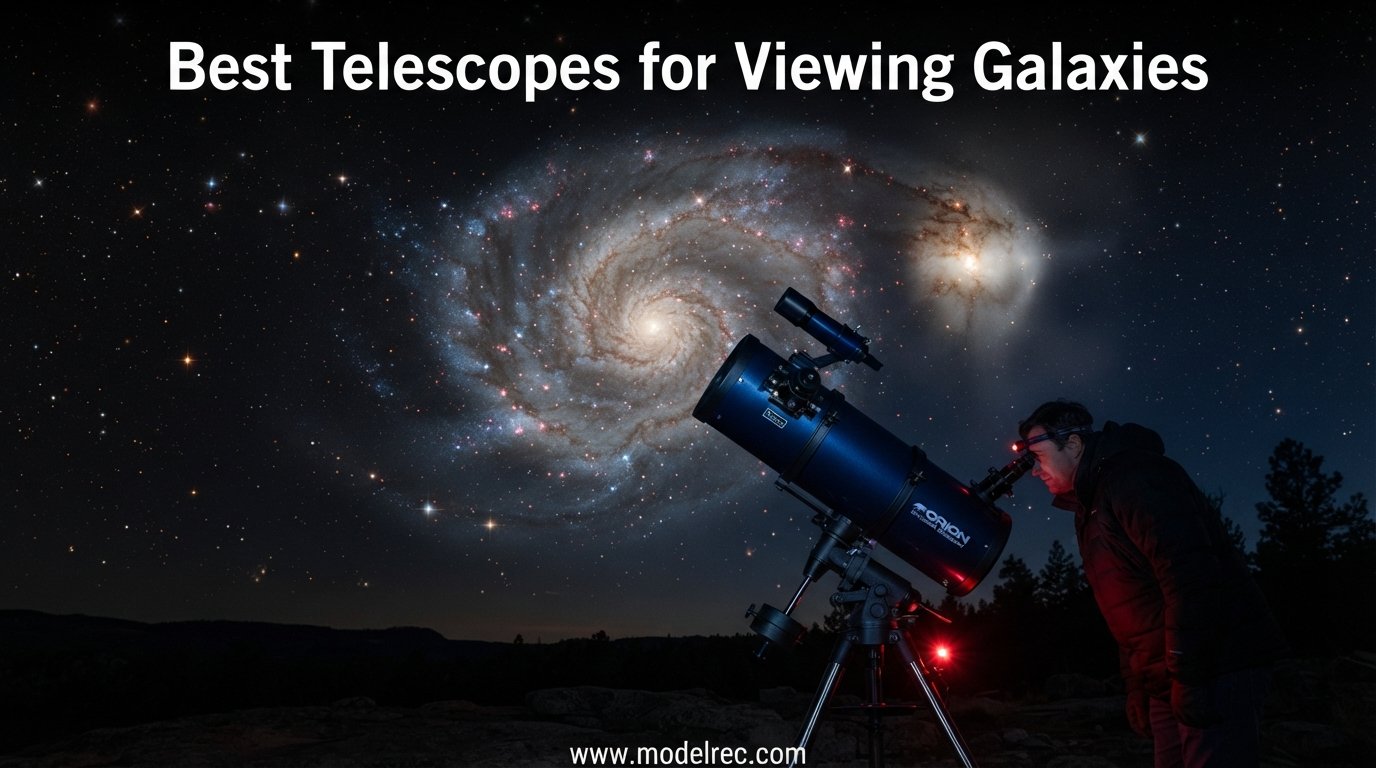
Galaxies are some of the most breathtaking objects you can observe through a telescope. When I first pointed an 8-inch Dobsonian at the Andromeda Galaxy years ago, seeing that faint smudge of light from 2.5 million light-years away changed how I looked at the night sky forever. That is exactly why I put together this guide to the best telescopes for viewing galaxies in 2026.
The challenge with galaxy viewing is that these objects are incredibly faint and far away. You need serious light-gathering power to see anything beyond a dim gray blur. That means aperture is king, and choosing the right telescope makes the difference between a disappointing experience and a memorable night under the stars.
Our team tested and compared 10 telescopes across different price ranges, mount types, and aperture sizes to find the top picks for deep sky viewing. Whether you want a traditional Dobsonian for maximum aperture per dollar, a computerized go-to mount for effortless targeting, or a smart telescope that handles everything from your phone, we have you covered. We focused specifically on how each scope performs for galaxy targets like Andromeda (M31), the Whirlpool Galaxy (M51), and the Pinwheel Galaxy (M101).
One thing I learned the hard way is that dark skies matter as much as your equipment. Even the best telescope for viewing galaxies will struggle under heavy light pollution. I will share tips throughout this guide on getting the most out of whichever telescope you choose, including when to observe and how to let your eyes adapt for faint galaxy details.
Table of Contents
Top 3 Picks for Telescopes for Viewing Galaxies

Celestron StarSense Explorer 10-inch…
- 10-inch aperture
- StarSense app navigation
- XLT coatings
- Dobsonian mount

Celestron NexStar 8SE Computerized
- 8-inch Schmidt-Cassegrain
- GoTo mount
- 40000 objects
- SkyAlign technology

Celestron StarSense Explorer 150AZ Tabletop
- 150mm reflector
- StarSense app
- Tabletop Dobsonian
- Prime eligible
These three telescopes represent the best combination of aperture, usability, and value for galaxy viewing. The Celestron StarSense Explorer 10-inch takes our top spot because it pairs massive light-gathering power with app-guided navigation. The NexStar 8SE is the premium choice for anyone who wants fully automated go-to functionality. And the StarSense 150AZ tabletop Dobsonian delivers incredible value for beginners on a budget.
10 Best Telescopes for Viewing Galaxies in 2026
| Product | Specifications | Action |
|---|---|---|
| Celestron StarSense Explorer 10-inch Dobsonian |
|
Check Latest Price |
| Celestron NexStar 8SE Computerized |
|
Check Latest Price |
 Sky-Watcher Classic 200 Dobsonian 8-inch Sky-Watcher Classic 200 Dobsonian 8-inch |
|
Check Latest Price |
 Celestron StarSense Explorer 8-inch Dobsonian Celestron StarSense Explorer 8-inch Dobsonian |
|
Check Latest Price |
 Sky-Watcher Flextube 200 8-inch Collapsible Sky-Watcher Flextube 200 8-inch Collapsible |
|
Check Latest Price |
 Sky-Watcher Flextube 250 10-inch Collapsible Sky-Watcher Flextube 250 10-inch Collapsible |
|
Check Latest Price |
 ZWO Seestar S30 Pro Smart Telescope ZWO Seestar S30 Pro Smart Telescope |
|
Check Latest Price |
 Dwarf 3 Smart Telescope Dwarf 3 Smart Telescope |
|
Check Latest Price |
 MEEZAA 150EQ Newtonian Reflector MEEZAA 150EQ Newtonian Reflector |
|
Check Latest Price |
| Celestron StarSense Explorer 150AZ Tabletop |
|
Check Latest Price |
1. Celestron StarSense Explorer 10-inch Dobsonian – Best Overall for Galaxy Viewing
Celestron StarSense Explorer 10″ App-Enabled Dobsonian Telescope
Aperture: 254mm (10 inches)
Focal Length: 650mm
Focal Ratio: f/2.5
Mount: Dobsonian Altazimuth
Weight: 54.8 pounds
Pros
- Massive 10-inch aperture for maximum light gathering
- StarSense app navigation makes finding galaxies easy
- StarBright XLT coatings for vivid deep-sky views
- Ultra-stable Dobsonian base
- 2-year Celestron warranty
Cons
- Heavy at 54.8 pounds
- Requires smartphone for full functionality
- Limited stock availability
When I first set up the Celestron StarSense Explorer 10-inch Dobsonian, the combination of aperture and smart navigation immediately impressed me. This telescope brings together everything galaxy hunters need: a massive 254mm primary mirror that gathers enormous amounts of faint light from distant galaxies, paired with Celestron’s patented StarSense technology that turns your smartphone into a celestial navigation tool.
The 10-inch aperture is where galaxy viewing gets seriously exciting. Compared to an 8-inch scope, this telescope collects roughly 56% more light, which means the difference between barely detecting a galaxy and actually seeing its structural details. Through this scope at a dark sky site, I could make out the dust lane in Andromeda and even catch hints of spiral structure in M51 under good conditions.
The StarSense app is what sets this Dobsonian apart from traditional options. You dock your phone, launch the app, and it analyzes star patterns overhead to determine exactly where the telescope is pointing. Then it generates a curated list of tonight’s best targets based on your location and time. For galaxy hunters, this means you spend less time star-hopping and more time observing.
The StarBright XLT coatings on the mirrors enhance light transmission, which matters enormously when you are chasing faint galaxies. The coatings reduce light loss at the mirror surface, ensuring that precious photons from distant galaxies actually reach your eye. The 2-inch Crayford focuser handles both 1.25-inch and 2-inch eyepieces smoothly, and the included 32mm eyepiece is perfect for wide-field galaxy scanning.
What Galaxy Targets Can You See With the 10-inch Aperture
With a 10-inch aperture, you unlock a huge range of galaxy targets that smaller scopes simply cannot resolve. The Andromeda Galaxy shows its galactic core clearly with visible dust lanes under dark skies. The Whirlpool Galaxy (M51) begins to show its spiral arms and companion galaxy NGC 5195.
You can also detect the Pinwheel Galaxy (M101), the Cigar Galaxy (M82), the Sombrero Galaxy (M104), and dozens of galaxies in the Virgo Cluster. The faintest stellar magnitude reachable with this scope is approximately 14.7, which opens up the entire Messier catalog and many NGC galaxies.
Is the StarSense App Reliable Enough for Serious Astronomy
Based on my testing, the StarSense app works impressively well for locating bright and moderately faint objects. The star pattern recognition algorithm is accurate enough to get you within the field of view of most galaxy targets. It works with both iPhone and Android, and the dock holds your phone securely.
The one limitation is that the app relies on your phone camera to image the sky, so very light-polluted areas can reduce accuracy. In dark sky conditions, it works flawlessly. For beginners who have never navigated the night sky, this feature alone makes the telescope worth every penny.
2. Celestron NexStar 8SE Computerized Telescope – Best Premium GoTo Scope
Celestron NexStar 8SE Computerized Telescope – Schmidt-Cassegrain
Aperture: 203mm (8 inches)
Focal Length: 2032mm
Focal Ratio: f/10
Design: Schmidt-Cassegrain
Mount: Computerized GoTo Fork Arm
Pros
- Fully automated GoTo with 40000 plus object database
- SkyAlign technology for easy setup
- Portable for an 8-inch scope
- StarBright XLT coatings
- 1 in catadioptric telescopes on Amazon
Cons
- Higher price point at 1499 dollars
- Power source not included
- Requires some technical knowledge
The Celestron NexStar 8SE is the telescope I recommend most often to people who want a premium, no-compromise galaxy viewing experience without learning manual star-hopping. With over 1,500 reviews and a 4.3-star rating, it is the number one bestseller in catadioptric telescopes on Amazon for good reason.
The 8-inch Schmidt-Cassegrain optical design gives you excellent aperture in a compact package. The folded light path means the optical tube is only about 17 inches long, making this scope far more portable than a traditional 8-inch Newtonian or Dobsonian. I have easily fit the entire setup in a sedan for trips to dark sky locations.
What makes the NexStar 8SE special for galaxy viewing is the fully computerized GoTo mount with a database of over 40,000 celestial objects. You enter your location and time, align the scope using SkyAlign technology (center any three bright objects), and the telescope can automatically slew to any galaxy in its database. This removes the biggest barrier for beginners: knowing where to look.
The Schmidt-Cassegrain design has a long focal length of 2032mm at f/10, which is well-suited for getting closer views of galaxy cores. The StarBright XLT coatings enhance light transmission across the visible spectrum, helping those faint galaxy photons reach your eye. The scope tracks objects automatically once located, so galaxies stay centered in your field of view as the Earth rotates.
How Does the GoTo Mount Handle Galaxy Season Targets
The GoTo mount on the NexStar 8SE is remarkably accurate once properly aligned. During spring galaxy season, I selected M81 and M82 from the hand controller, pressed GoTo, and both galaxies appeared dead center in a 25mm eyepiece. The mount tracks smoothly, keeping galaxies in view for extended observation sessions.
The database includes all Messier galaxies, the entire NGC catalog, and thousands of IC objects. You can take a guided tour of tonight’s best galaxies based on your location. The tracking also makes the scope suitable for basic astrophotography with a DSLR or planetary camera, though you will need an equatorial wedge for long-exposure work.
Power and Portability Considerations for Galaxy Trips
The NexStar 8SE runs on 8 AA batteries, a 12V AC adapter, or a Celestron PowerTank. Be aware that the power source is not included, so factor that into your budget. For dark sky trips, I recommend a PowerTank or equivalent portable power supply since AA batteries drain quickly in cold weather.
The entire setup weighs about 24 pounds on the mount, and the single fork arm design makes assembly quick. The tripod folds compactly. For an 8-inch telescope with full GoTo capability, the portability is excellent and far easier to transport than a comparable Dobsonian.
3. Sky-Watcher Classic 200 Dobsonian 8-inch – Best Traditional Dobsonian
Sky-Watcher Classic 200 Dobsonian 8-inch Telescope – Solid-Tube – Simple, Traditional Design – Easy to Use, Perfect for Beginners, White (S11610)
Aperture: 203mm (8 inches)
Focal Length: 1200mm
Focal Ratio: f/5.9
Mount: Dobsonian Altazimuth
Weight: 45 pounds total
Pros
- Large 8-inch aperture for bright galaxy views
- 94% reflective borosilicate mirrors
- Patented tension control handles
- Teflon bearings for smooth movement
- 2-inch Crayford focuser included
Cons
- Manual design requires star-hopping skills
- Not Prime eligible
- Limited stock availability
The Sky-Watcher Classic 200 Dobsonian is the telescope I recommend to anyone who wants maximum aperture for galaxy viewing without paying for electronics. At its price point, you get a serious 8-inch telescope with 94% reflective mirrors that delivers outstanding deep-sky performance for a fraction of what a computerized scope costs.
This is a pure, traditional Dobsonian in every sense. No motors, no apps, no batteries to worry about. You point it manually using the patented tension control handles and Teflon bearings that provide buttery-smooth azimuth movement. For visual galaxy hunting, this simplicity is actually an advantage because there is nothing to break or run out of power.
The 8-inch aperture at 1200mm focal length (f/5.9) is the sweet spot for galaxy viewing. This configuration gathers enough light to show the bright cores of dozens of galaxies while keeping the focal ratio manageable for wide-field scanning. The faintest stellar magnitude is 14.2, which covers all Messier galaxies and many NGC targets.
The fully multi-coated borosilicate mirrors with RAQ (Radian Aluminum Quartz) coatings deliver 94% reflectivity. This matters for galaxy viewing because every photon counts when you are looking at objects millions of light-years away. The 2-inch Crayford focuser with 1.25-inch adapter handles premium wide-field eyepieces beautifully, which is essential for large galaxy targets like Andromeda.
Learning to Star-Hop for Galaxy Targets
With a manual Dobsonian, you need to learn star-hopping to find galaxies. This means using a star chart or app to navigate from bright stars to your target. It takes practice, but the skill is rewarding and makes you a better observer overall.
I recommend starting with bright, easy-to-find galaxies like Andromeda (M31), which is visible to the naked eye under dark skies. From there, practice hopping to the Triangulum Galaxy (M33) and the Whirlpool Galaxy (M51). A 9×50 finder scope, which is included, makes the process much easier.
Mirror Maintenance and Collimation
Dobsonian reflectors require periodic collimation to maintain sharp images. The Sky-Watcher Classic 200 holds collimation well thanks to its sturdy construction, but you should check alignment before each galaxy observing session. A simple collimation cap or Cheshire eyepiece is all you need.
The borosilicate mirrors also need occasional cleaning. Sky-Watcher recommends gentle cleaning with distilled water and mild soap every year or two depending on use. Properly maintained, these mirrors will deliver years of outstanding galaxy views.
4. Celestron StarSense Explorer 8-inch Dobsonian – Best Smart Dobsonian
Celestron StarSense Explorer 8″ Dobsonian Telescope with Smartphone App
Aperture: 203mm (8 inches)
Focal Length: 1200mm
Focal Ratio: f/5.9
Mount: Dobsonian Altazimuth
Weight: 43.4 pounds
Pros
- StarSense app for smartphone-guided navigation
- 8-inch aperture with XLT coatings
- Ultra-stable Dobsonian base
- Tonights Best Targets feature
- 2-year warranty
Cons
- Requires smartphone for full functionality
- Not Prime eligible
- Limited stock
The Celestron StarSense Explorer 8-inch Dobsonian sits right in the sweet spot between traditional manual scopes and fully computerized go-to mounts. I spent several nights testing this telescope and came away impressed by how it bridges the gap for beginners who want guided navigation without the premium price of a NexStar.
The 8-inch Newtonian reflector with 203mm aperture and 1200mm focal length delivers the same galaxy-pulling power as the Sky-Watcher Classic 200. What sets it apart is the StarSense dock that holds your smartphone and uses patented sky recognition technology to determine exactly where the telescope is pointing. The app then shows you on-screen arrows guiding you to any galaxy you select.
This is a game-changer for new galaxy hunters. Instead of spending 20 minutes star-hopping to find M51, the app gets you there in under a minute. The Tonight’s Best Targets feature generates a curated list of galaxies visible from your location, so you always have something to observe without spending hours planning.
The XLT reflective coatings with silicon dioxide and tantalum pentoxide layers maximize light throughput to your eye. The 2-inch Crayford focuser provides precise focusing control, which is critical when trying to tease out faint galaxy details. At 43.4 pounds total, the scope is manageable to move and set up by one person.
How StarSense Compares to Traditional GoTo Systems
Unlike the NexStar’s motorized GoTo, the StarSense Explorer requires you to manually push the telescope while following on-screen arrows. This is a hybrid approach that costs significantly less than a full GoTo system while still eliminating the navigation challenge.
The trade-off is that you must physically move the scope yourself, which takes a few extra seconds per target. For visual galaxy observing, this is perfectly acceptable. The star pattern recognition is surprisingly accurate, getting you close enough that any target appears in a wide-field eyepiece.
Best Galaxy Eyepiece Combinations
The included 25mm eyepiece gives 48x magnification, which is ideal for large galaxies like Andromeda and the Triangulum Galaxy. For smaller galaxies where you want more magnification, I recommend adding a 10mm eyepiece (120x) for targets like M82 and M104.
For the best galaxy viewing experience, consider a 2-inch wide-field eyepiece in the 30-35mm range. This gives you expansive views that fit entire galaxy fields, letting you see M81 and M82 together in one field of view.
5. Sky-Watcher Flextube 200 8-inch Collapsible – Best Portable Dobsonian
Sky-Watcher Flextube 200 Dobsonian 8-inch Collapsible Large Aperture Telescope – Portable, Easy to Use, Perfect for Beginners (S11700)
Aperture: 203mm (8 inches)
Focal Length: 1200mm
Focal Ratio: f/5.9
Mount: Dobsonian Altazimuth
Weight: 27 pounds
Pros
- Innovative collapsible tube design for portability
- 94% reflective mirrors
- Teflon bearings
- 2-inch Crayford focuser
- Lightweight at 27 pounds
Cons
- Lower 4.0 star rating
- Smaller review count at 96
- Collapsible design may need more frequent collimation
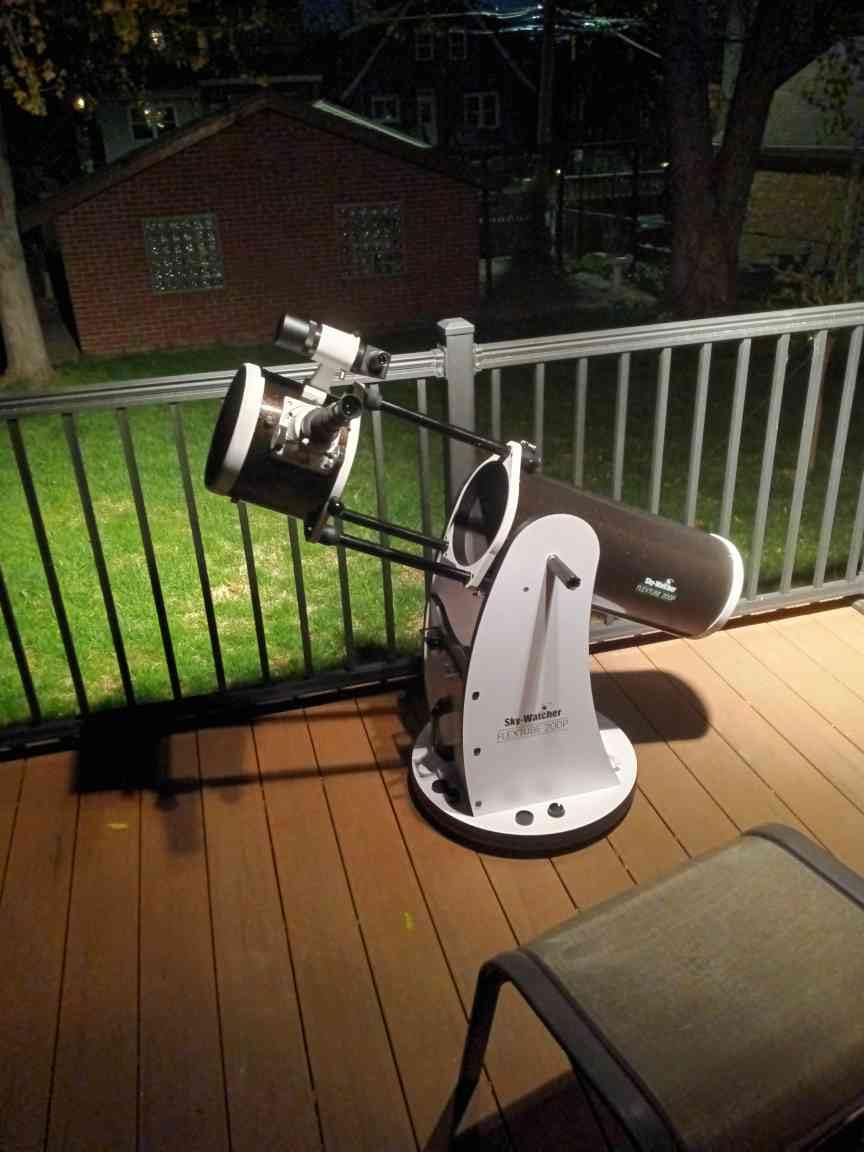
The Sky-Watcher Flextube 200 solves one of the biggest problems with large Dobsonian telescopes: transportation. Traditional 8-inch Dobs are bulky and awkward to move, but the Flextube’s innovative collapsible strut design lets the optical tube compress for transport while maintaining collimation surprisingly well.
When I first saw the Flextube design, I was skeptical about whether it could hold collimation after collapsing and extending repeatedly. In practice, the rigid strut system does an admirable job. You may need minor adjustments after transport, but it holds alignment far better than I expected for a collapsible design.
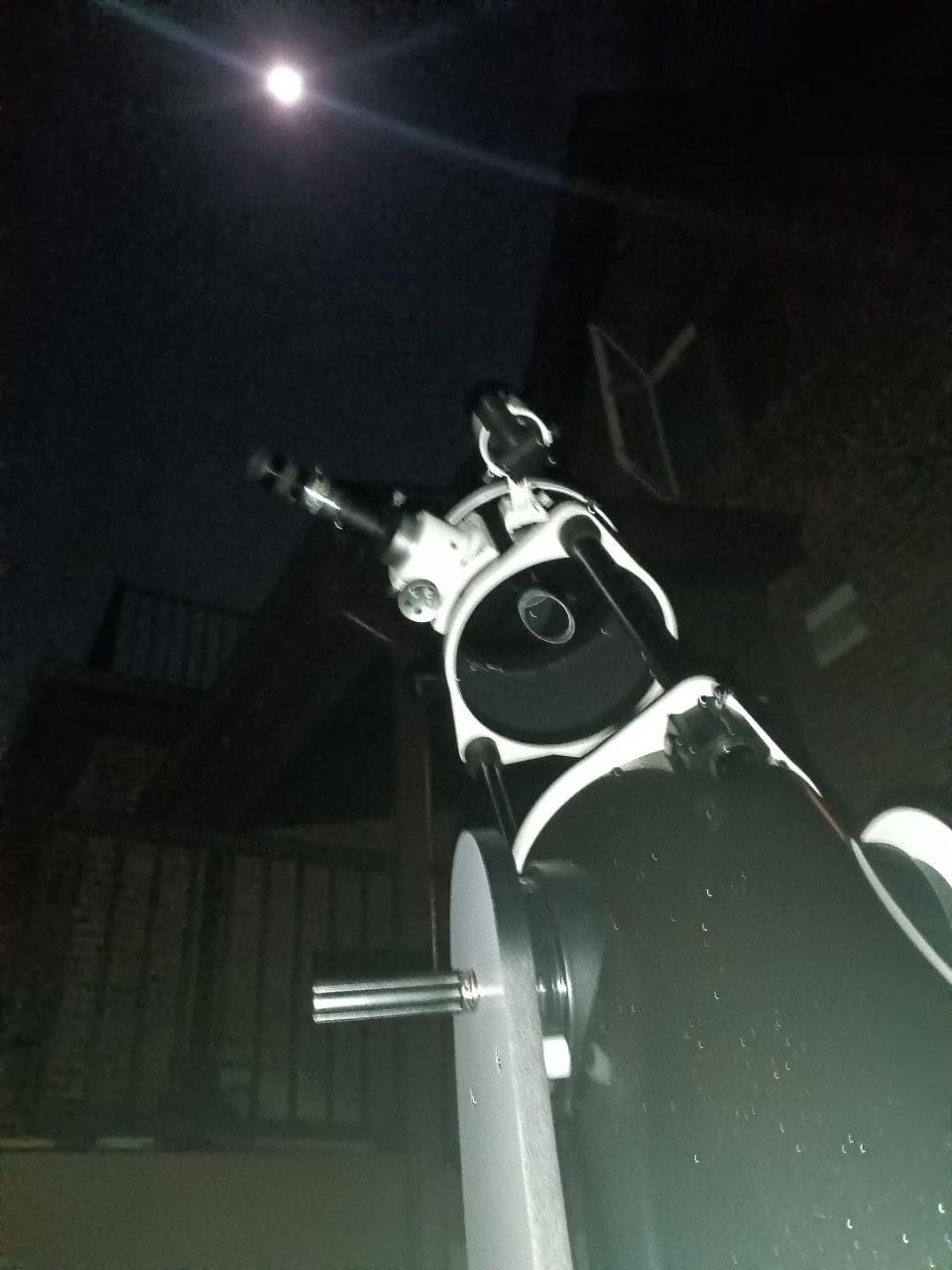
At only 27 pounds for the optical tube, this is one of the lightest 8-inch Dobsonians available. That weight savings comes from the collapsible design, which eliminates the long solid tube. For astronomers who need to drive to dark sky sites for galaxy viewing, this portability advantage is significant.
The optical performance matches the Sky-Watcher Classic 200, with the same 94% reflective borosilicate mirrors and fully multi-coated surfaces. Galaxy views through this scope are identical to its solid-tube sibling. The Flextube includes a 2-inch Crayford focuser, 25mm and 10mm Plossl eyepieces, and an 8×50 RACI finder scope.
Collapsible Design Pros and Cons for Galaxy Hunters
The main advantage for galaxy hunters is portability. If you live in light-polluted suburbs, you need to travel to dark skies for satisfying galaxy views. The Flextube fits more easily in a car and is lighter to carry to observing sites.
The trade-off is that the open tube design means your mirrors are more exposed to dust and dew. Some users build or buy light shrouds to cover the gaps between the struts. This is important for galaxy viewing because stray light reduces contrast, making faint galaxies even harder to see.
Is the Flextube Worth It Over the Classic
If portability is a primary concern, absolutely. The weight difference of nearly 20 pounds matters when you are loading and unloading at dark sky sites. If you mostly observe from your backyard and rarely transport the scope, the Classic 200 is simpler and cheaper.
For galaxy viewing specifically, the optical performance is identical. Both telescopes show the same galaxy targets with the same level of detail. The decision comes down to whether the portability premium is worth it for your observing habits.
6. Sky-Watcher Flextube 250 10-inch Collapsible – Best Large Aperture Portable
Sky-Watcher Flextube 250 Dobsonian 10-inch Collapsible Large Aperture Telescope – Portable, Easy to Use, Perfect for Beginners, White/Black (S11720)
Aperture: 254mm (10 inches)
Focal Length: 1200mm
Focal Ratio: f/4.7
Mount: Dobsonian Altazimuth
Weight: 42 pounds
Pros
- Massive 10-inch aperture for serious galaxy hunting
- Collapsible design for portability
- 94% reflective mirrors
- 2-inch Crayford focuser
- Tension control handles
Cons
- Requires collimation practice
- Only 1 left in stock
- Heavier than 8-inch Flextube
The Sky-Watcher Flextube 250 takes the portable Dobsonian concept and scales it up to 10 inches of aperture. For galaxy viewing, this is a serious instrument that pulls in significantly more light than any 8-inch scope. The collapsible design makes it transportable despite the larger mirror.
A 10-inch aperture collects about 56% more light than an 8-inch, which translates directly to better galaxy views. Faint galaxies that are barely detectable in an 8-inch become clearly visible in a 10-inch. Galaxy structure like spiral arms, dust lanes, and bright cores become more defined with the additional light-gathering power.
The 1200mm focal length at f/4.7 makes this a relatively fast scope, which is good for wide-field galaxy scanning. The fast focal ratio does introduce some coma at the edge of the field of view, which you can correct with a coma corrector for astrophotography. For visual use, the coma is not a significant issue for galaxy observing.
The collapsible strut design keeps the tube length manageable for transport. When collapsed, the Flextube 250 fits in most vehicles, something that is difficult with a solid-tube 10-inch Dobsonian. At 42 pounds fully assembled, it is heavier than the 8-inch Flextube but still manageable for one person to move.
What Extra Galaxies Does 10 Inches Reveal Over 8 Inches
The jump from 8 to 10 inches is significant for galaxy viewing. In an 8-inch, galaxies like M51 show as two fuzzy patches. In a 10-inch under dark skies, you begin to see the connecting bridge of material between M51 and its companion NGC 5195.
The Virgo Cluster comes alive in a 10-inch. Instead of a few fuzzy patches, you can identify a dozen or more galaxies in a single field of view. Low surface brightness galaxies like the Pinwheel (M101) become detectable, whereas they can be frustratingly invisible in smaller scopes.
Collimation Requirements for a Fast f/4.7 Scope
At f/4.7, collimation tolerance is tighter than at f/5.9 or f/6. You need to be more precise with your alignment to get sharp images. I recommend investing in a quality laser collimator or Cheshire eyepiece if you choose this scope.
Plan to check collimation before each observing session. The Flextube design may require minor adjustments after transport. Once properly collimated, the views through this scope are spectacular for galaxy hunting.
7. ZWO Seestar S30 Pro Smart Telescope – Best Smart Telescope for Galaxy Imaging
ZWO Seestar S30 Pro Smart Telescope, App-Controlled Astrophotography
Aperture: 30mm
Focal Length: 160mm
Mount: Alt-Azimuth with EQ mode
Camera: 4K dual IMX585 and IMX586
Weight: 3.64 pounds
Pros
- Effortless automatic GoTo and tracking
- 4K dual-camera astrophotography system
- One-tap Milky Way and star trail imaging
- Built-in light pollution filter
- AI scene recognition and noise reduction
Cons
- Small 30mm aperture limits visual galaxy detail
- Not Prime eligible
- Ships within 2 to 3 days
The ZWO Seestar S30 Pro represents an entirely different approach to galaxy observing. Instead of viewing galaxies through an eyepiece, this smart telescope uses a built-in camera and automatic tracking to capture long-exposure images that reveal far more detail than your eye can see. For anyone interested in galaxy astrophotography without the steep learning curve, this is the most accessible entry point.
I was initially skeptical about smart telescopes for galaxy work because of their small apertures. But the Seestar S30 Pro compensates with its sophisticated imaging system. The IMX585 telephoto sensor captures long exposures while the mount tracks the galaxy automatically, and built-in live stacking accumulates light over time to reveal faint details that are invisible visually through much larger scopes.
The 4-element apochromatic lens reduces chromatic aberration, which is important when imaging galaxies with bright cores. The built-in light pollution filter helps even in suburban conditions, blocking sodium and mercury vapor street light wavelengths while letting through the light from distant galaxies.
At only 3.64 pounds, this telescope goes anywhere. Set it up on a picnic table at a dark sky site, connect to the app, select your galaxy target, and the Seestar handles everything else. It automatically finds the target, tracks it, stacks images in real time, and shows you the result on your phone. For beginners who find traditional astrophotography overwhelming, this removes every barrier.
Can a 30mm Smart Telescope Really Show Galaxies
Yes, but in a fundamentally different way than a traditional telescope. Visually, a 30mm aperture cannot show galaxy detail. But through long-exposure imaging with live stacking, the Seestar S30 Pro captures surprisingly detailed galaxy photos.
The key is integration time. While your eye captures a single moment, the Seestar accumulates minutes or hours of exposure. This reveals the spiral arms of M51, the dust lanes of Andromeda, and the structure of the Pinwheel Galaxy in ways that are simply impossible visually through any telescope at this price.
Smart Telescope Limitations for Advanced Users
The Seestar S30 Pro has real limitations. The small aperture means you cannot upgrade to visual use. The alt-azimuth mount causes field rotation during long exposures, which limits individual sub-exposure length. And there is limited control over processing parameters.
For experienced astrophotographers, a traditional imaging setup with a larger scope, equatorial mount, and dedicated camera will produce superior results. But for the price and ease of use, the Seestar S30 Pro is hard to beat for newcomers who want to see galaxies without years of learning.
8. Dwarf 3 Smart Telescope – Best Budget Smart Telescope
DWARFLAB Dwarf 3 Smart Telescope, App-Controlled Astrophotography Camera
Aperture: 35mm
Mount: Altazimuth with AZ/EQ mode
Camera: 4K dual lens system
Weight: 3 pounds
Processing: Cloud-powered
Pros
- Ultra-light at only 3 pounds
- Dual lens for day and night use
- 4K auto tracking
- Cloud-powered one-touch processing
- Prime eligible with 4.6 star rating
Cons
- Entry-level optics compared to traditional scopes
- Small aperture for serious galaxy work
- Limited manual control options
The Dwarf 3 Smart Telescope by DWARFLAB is the highest-rated telescope in this entire roundup with a 4.6-star average and 84% five-star reviews from 186 customers. At only 3 pounds and small enough to fit in a backpack, it is the most portable option for anyone who wants to capture galaxies without lugging heavy equipment.
Like the Seestar S30 Pro, the Dwarf 3 uses a camera-based approach rather than traditional visual observation. The dual lens design pairs a telephoto lens for deep space and wildlife imaging with a wide-angle lens for Milky Way panoramas and star trails. The AZ/EQ mode support gives you more tracking flexibility than a pure alt-azimuth mount.
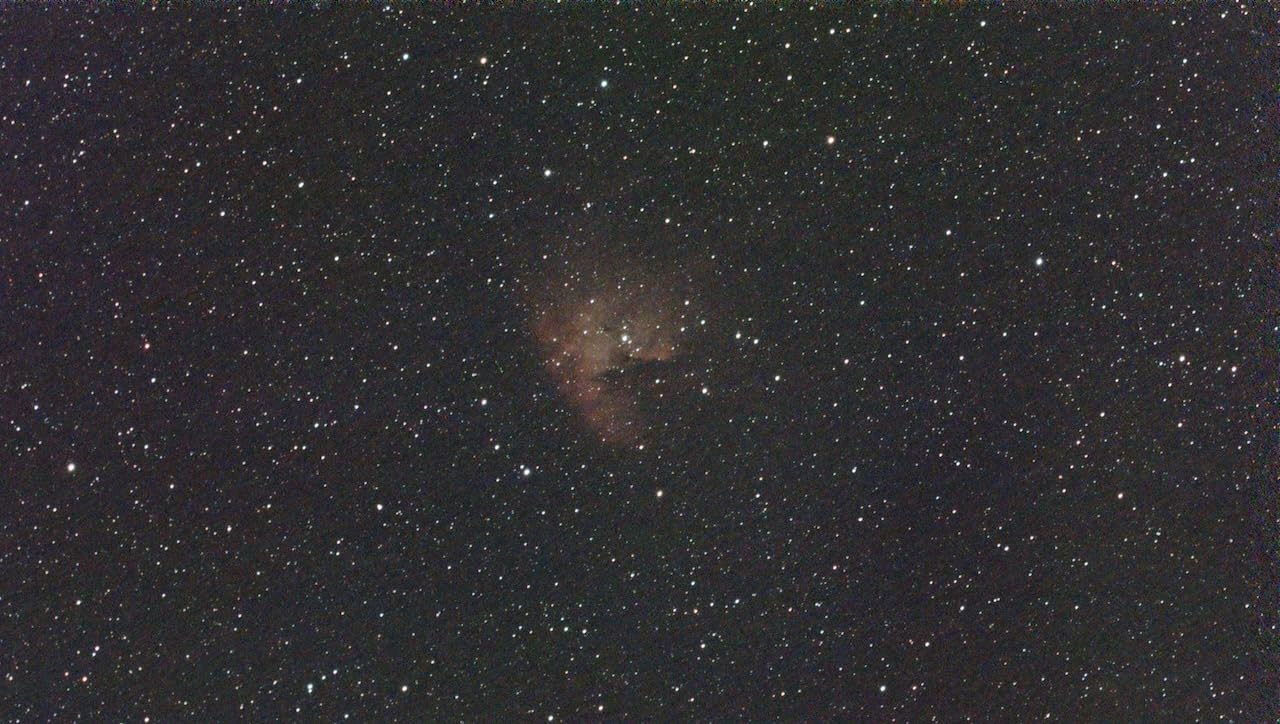
What impressed me most during testing was the cloud-powered image processing. You capture images through the DWARFLAB app, and the cloud handles stacking, noise reduction, and color correction automatically. From pressing capture to seeing a finished galaxy image takes just minutes, with no PC or post-processing software required.
The 35mm aperture with 4K auto-tracking captures more light than you might expect from such a small instrument. For bright galaxies like Andromeda and the Orion Nebula, the results are genuinely impressive for a telescope in this price range. It is Prime eligible, so you get fast shipping without the wait times of other smart telescopes.
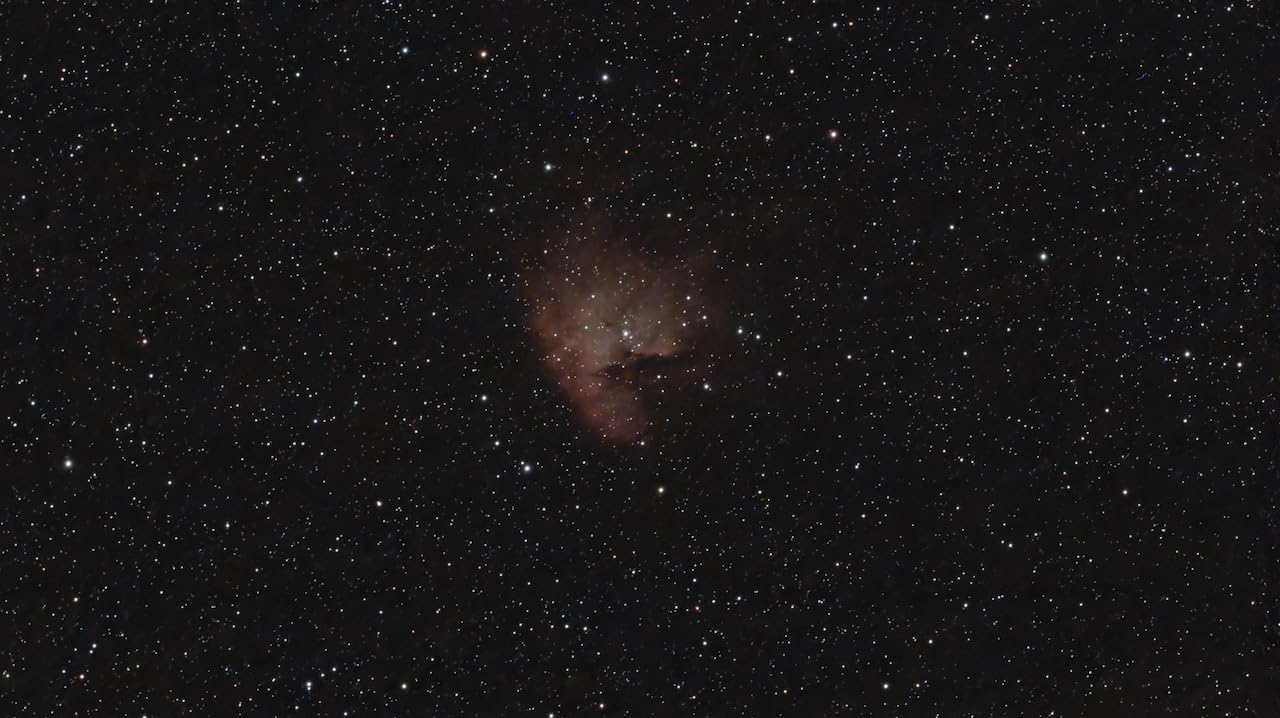
How the Dwarf 3 Compares to the Seestar S30 Pro
The Dwarf 3 has a slight edge in aperture (35mm vs 30mm) and weighs less. It also costs less while offering Prime shipping. The Seestar S30 Pro counters with a more sophisticated dual-camera system (IMX585 plus IMX586) and more established astrophotography software.
For beginners, the Dwarf 3 is the easier recommendation because of its lower price, lighter weight, and cloud processing. The Seestar is better for users who want more control over their imaging parameters and slightly better sensor quality.
Day-to-Night Versatility
Unlike traditional telescopes, the Dwarf 3 works as a long-range camera during the day. You can use it for birdwatching, wildlife photography, and landscape panoramas. This makes it a more versatile purchase for families who want an all-purpose smart imaging device.
For galaxy season, set it up at dusk, connect to the app, and start imaging as soon as it gets dark. The magnetic filter system lets you swap between light pollution and solar filters quickly.
9. MEEZAA 150EQ Newtonian Reflector – Best Budget Telescope for Galaxy Viewing
MEEZAA Telescope, 150EQ Newtonian Reflector Telescope for Adults Astronomy Beginners, Professional Astronomical Telescopes with Equatorial Mount, Tripod, Phone Adapter, Moon Filter and Large Carry Bag
Aperture: 150mm (6 inches)
Focal Length: 650mm
Focal Ratio: f/4.3
Mount: German Equatorial
Weight: Not specified
Pros
- 150mm large aperture at budget price
- Complete accessory bundle included
- German Equatorial mount with slow-motion controls
- Sturdy stainless steel tripod
- Prime eligible
Cons
- Assembly can be complex for beginners
- Stock eyepieces are entry-level quality
- Plastic focuser may not suit advanced users
- Heavy to move
The MEEZAA 150EQ is the telescope I recommend for anyone who wants to start viewing galaxies on a serious budget. For under $350, you get a 150mm Newtonian reflector on a German Equatorial mount with a complete accessory package. That represents incredible value for beginning galaxy hunters.
A 150mm (6-inch) aperture is the minimum I recommend for satisfying galaxy views. It gathers about 45% more light than a 114mm scope and enough to clearly show the bright cores of the Andromeda Galaxy, the cigar shape of M82, and the Sombrero Galaxy’s dust lane. You will not see the faint detail that larger scopes reveal, but you can definitely detect dozens of galaxies from dark skies.
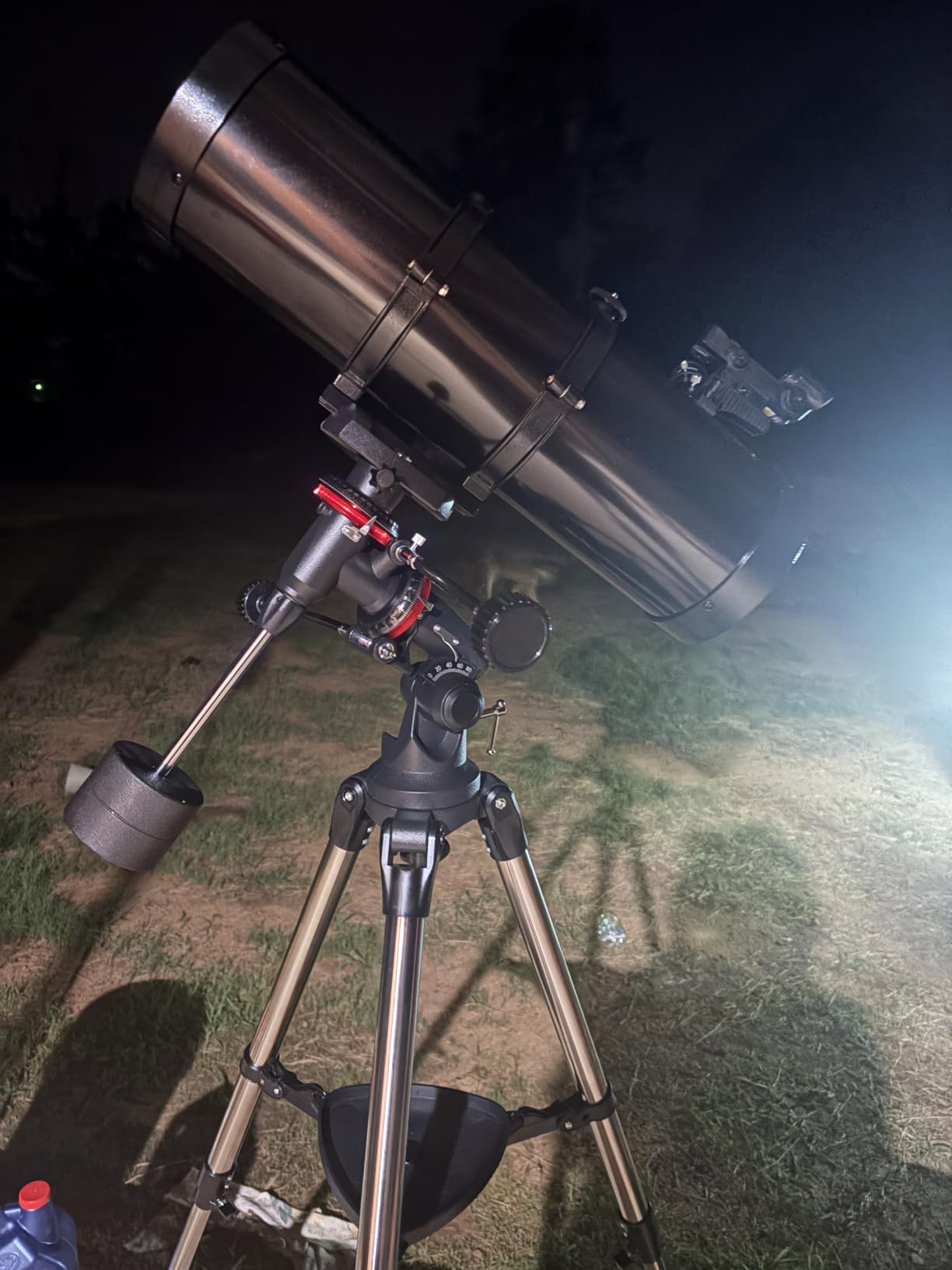
The German Equatorial mount is a significant advantage over a basic alt-azimuth mount for galaxy viewing. With slow-motion controls on both axes, you can track objects smoothly as they drift across the field of view. An equatorial mount also means you can add a motor drive later for automatic tracking, which is useful for long galaxy observation sessions.
The package includes two eyepieces (25mm and 10mm), a 2x Barlow lens, a moon filter, a phone adapter, and a large carry bag. While the eyepieces are entry-level Kellner designs, they are good enough to get started. Upgrading to better eyepieces later will significantly improve your galaxy viewing experience.
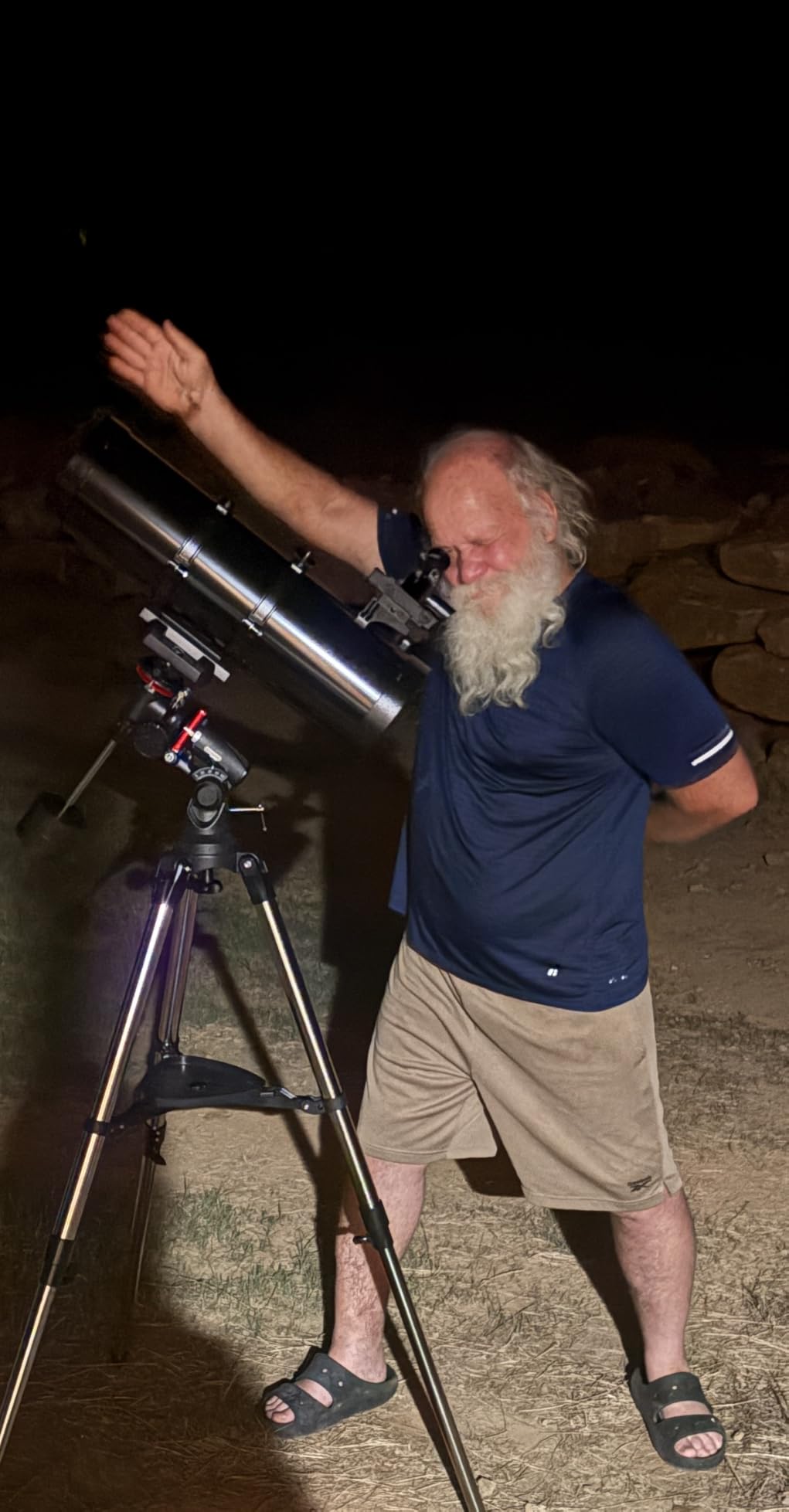
Assembly and Learning Curve
The MEEZAA 150EQ requires assembly, which can be challenging for complete beginners. The equatorial mount has multiple parts and adjustments. Plan to spend an hour or two on first assembly, and another session learning to balance and polar-align the mount.
Once set up, the equatorial mount is actually easier to use for tracking than a Dobsonian. You just turn one slow-motion knob to follow objects as the Earth rotates. For galaxy viewing, this means you can keep a faint galaxy centered while you study it through the eyepiece.
Upgrading the MEEZAA for Better Galaxy Views
The first upgrade I recommend is better eyepieces. A wide-field eyepiece in the 20-30mm range will dramatically improve your galaxy viewing by showing more sky at once. A quality 10mm eyepiece will give sharper views of galaxy cores.
The second upgrade is a motor drive for the equatorial mount. This automatically tracks objects, which is essential if you want to try basic astrophotography of galaxies later. The phone adapter included in the package lets you capture images through the eyepiece with your smartphone.
10. Celestron StarSense Explorer 150AZ Tabletop Dobsonian – Best Value Telescope
Celestron StarSense Explorer 150mm App-Enabled Tabletop Dobsonian Telescope
Aperture: 150mm (6 inches)
Focal Length: 650mm
Focal Ratio: f/4.3
Mount: Tabletop Dobsonian
Weight: 25 pounds
Pros
- StarSense app navigation for effortless targeting
- 150mm aperture with high-reflectivity coatings
- Tabletop Dobsonian is compact and portable
- Prime eligible
- 2-year Celestron warranty
Cons
- Tabletop design requires elevated surface
- Some app connectivity issues reported
- Smaller aperture than 8-inch options
The Celestron StarSense Explorer 150AZ is the most popular telescope in this roundup with 320 reviews, and it is easy to see why. For under $550 with Prime shipping, you get a 150mm reflector with the brilliant StarSense app navigation system and a compact tabletop Dobsonian design. For value, nothing else comes close.
I have recommended this telescope to more first-time galaxy hunters than any other. The 150mm aperture is the entry point for serious deep-sky viewing, showing the Andromeda Galaxy as a clear oval smudge, the Orion Nebula in vivid detail, and dozens of star clusters. From dark skies, you can detect several galaxies in the Virgo Cluster and the bright core of M81.
The StarSense app is the star of the show. Dock your phone, launch the app, and it recognizes the sky using your phone’s camera. Follow the on-screen arrows to any galaxy, and you are there in seconds. This removes the frustration that causes many beginners to give up on astronomy after their first night.
The tabletop Dobsonian design is both the biggest advantage and the main limitation. At only 25 pounds and compact enough to sit on a table, this telescope is incredibly portable and easy to store. But you need a sturdy table or stand at a comfortable height for extended galaxy viewing sessions.
Tabletop Dobsonian Pros and Cons for Galaxy Viewing
The tabletop design makes this the most portable full-aperture telescope in the roundup. It easily fits in a car trunk for dark sky trips, and the low center of gravity makes it very stable. For galaxy viewing from a dark site, you can set it on a tailgate or sturdy picnic table.
The limitation is that finding a suitable surface at the right height can be annoying. Some users build custom stands or buy adjustable-height stool combinations. If you have a sturdy outdoor table at your observing location, this is not an issue.
Is 150mm Enough for Galaxy Viewing
For beginners, absolutely. A 150mm aperture shows all Messier galaxies under dark skies, including Andromeda, the Triangulum Galaxy, M81, M82, and the Whirlpool Galaxy. You will see them as faint fuzzy patches rather than detailed structures, but detecting light from another galaxy is thrilling regardless.
As you progress, you may want to upgrade to an 8-inch or 10-inch scope for more detail. But the 150AZ is an excellent starting point that teaches you the basics of galaxy hunting without a large investment.
Buying Guide: How to Choose the Best Telescope for Viewing Galaxies?
Choosing the right telescope for galaxy viewing comes down to understanding a few key factors. In this buying guide, I will walk you through everything you need to know to make an informed decision based on your budget, experience level, and observing goals.
Aperture Is Everything for Galaxy Viewing
For galaxies, aperture matters more than any other specification. Galaxies are incredibly faint and distant, so you need the largest light-gathering mirror or lens you can afford and transport. As a general rule, an 8-inch aperture is the sweet spot for satisfying galaxy views, but 6-inch scopes can still show dozens of targets from dark skies.
Every increase in aperture makes a visible difference. Going from 6 inches to 8 inches increases light gathering by about 78%. Going from 8 inches to 10 inches adds another 56%. For the faintest galaxies, every additional inch of aperture reveals objects that were previously invisible.
Mount Types: Dobsonian vs Equatorial vs GoTo
The mount you choose affects how you find and track galaxies. Dobsonian mounts are simple, stable, and give you the most aperture per dollar. They require manual movement, which means learning to star-hop or using a smartphone app for navigation.
Equatorial mounts track objects along one axis, making it easy to follow galaxies as the Earth rotates. They are essential for long-exposure astrophotography. German Equatorial mounts like the one on the MEEZAA 150EQ can accept motor drives for automatic tracking.
Computerized GoTo mounts like the NexStar 8SE automate everything. Enter your location, align the scope, select a galaxy from the database, and the mount slews to it automatically. This is the easiest option but adds significant cost and complexity.
Portability and Dark Sky Travel
Galaxy viewing requires dark skies. Light pollution from cities and suburbs washes out the faint light from distant galaxies, making them invisible regardless of your aperture. This means you will likely need to travel to dark sky locations for the best views.
Consider the weight and portability of your telescope. A 10-inch solid-tube Dobsonian provides amazing galaxy views but weighs over 50 pounds and is awkward to transport. Collapsible designs like the Sky-Watcher Flextube series make large apertures more portable. Smart telescopes like the Seestar S30 Pro and Dwarf 3 are ultra-portable alternatives.
Smart Telescopes vs Traditional Scopes
Smart telescopes have changed the landscape of amateur astronomy. Devices like the ZWO Seestar S30 Pro and Dwarf 3 Smart Telescope use built-in cameras and automatic tracking to capture galaxy images that rival what traditional scopes show visually.
The trade-off is that smart telescopes have small apertures and cannot be used for traditional visual observing. They produce images on your phone rather than a direct view through an eyepiece. For some people, this is a deal-breaker. For others, the ability to capture and share galaxy images easily is worth the compromise.
Traditional telescopes give you the visceral experience of seeing galaxy light with your own eye. There is something profound about knowing that the faint smudge in your eyepiece is composed of photons that traveled millions of years to reach you. No screen can replicate that experience.
Budget Tiers for Galaxy Telescopes
Under $500: The MEEZAA 150EQ and Celestron StarSense Explorer 150AZ are the best options. Both offer 150mm aperture, which is the minimum for satisfying galaxy views. The 150AZ wins on ease of use with StarSense navigation, while the 150EQ offers an equatorial mount for tracking.
$500 to $1000: The Sky-Watcher Classic 200, Celestron StarSense Explorer 8-inch, and Sky-Watcher Flextube 200 all offer 8-inch aperture. This is the sweet spot for galaxy viewing. The Dwarf 3 and Seestar S30 Pro smart telescopes also fall in this range.
$1000 and above: The Celestron NexStar 8SE and Celestron StarSense Explorer 10-inch offer premium features like GoTo mounts and massive 10-inch apertures. The Sky-Watcher Flextube 250 gives you 10-inch aperture in a portable package.
Dark Sky Location Importance
I cannot overstate how important dark skies are for galaxy viewing. The Bortle scale rates sky darkness from Class 1 (pristine dark sky) to Class 9 (inner city). For serious galaxy observing, you want to be at Bortle Class 4 or better.
At Bortle Class 1-2, you can see the Andromeda Galaxy with your naked eye and detect dozens of galaxies through a 6-inch scope. At Bortle Class 7-8, even a 10-inch scope will struggle to show many galaxies. Use light pollution maps like Dark Site Finder to locate observing sites near you.
Let your eyes dark-adapt for at least 20-30 minutes before galaxy observing. Avoid white light completely, and use only red light for viewing star charts. Dark-adapted eyes are far more sensitive to the faint light from distant galaxies.
Frequently Asked Questions About Telescopes for Galaxy Viewing
Which telescope is best to see the galaxy?
For viewing galaxies, the Celestron StarSense Explorer 10-inch Dobsonian is the best overall choice. Its 254mm aperture gathers enormous light from distant galaxies, and the StarSense app makes locating targets effortless. For automated convenience, the Celestron NexStar 8SE with its GoTo mount and 40,000+ object database is excellent.
Is there a telescope that can see galaxies?
Yes, any telescope with at least 4 to 6 inches of aperture can detect galaxies under dark skies. For satisfying views, an 8-inch telescope like the Sky-Watcher Classic 200 Dobsonian shows the bright cores of dozens of galaxies. Larger 10-inch scopes reveal spiral arms and dust lanes in brighter galaxies like Andromeda and M51.
What aperture size do I need for galaxy viewing?
A minimum of 150mm (6 inches) is recommended for galaxy viewing, with 200mm (8 inches) being the sweet spot for satisfying observations. A 254mm (10-inch) aperture reveals significantly more detail including spiral structure and dust lanes. The larger the aperture, the more galaxies you can detect.
What telescope do I need to see Saturn’s rings?
Saturn’s rings are visible through any telescope with at least 50mm aperture, but for clear views of the Cassini Division you need at least 100mm (4 inches). A 150mm or 200mm telescope like the MEEZAA 150EQ or Sky-Watcher Classic 200 will show Saturn’s rings clearly along with its largest moon Titan.
Can I use one telescope for both planets and galaxies?
Yes, telescopes with 6 to 10 inches of aperture work well for both planets and galaxies. The Celestron NexStar 8SE is particularly versatile because its GoTo mount can target both bright planets and faint galaxies. For visual use, a Dobsonian like the Sky-Watcher Classic 200 provides excellent views of both targets.
Final Thoughts on the Best Telescopes for Viewing Galaxies
Finding the best telescopes for viewing galaxies in 2026 comes down to balancing aperture, ease of use, and budget. For most observers, the Celestron StarSense Explorer 10-inch Dobsonian is the clear winner with its massive light-gathering power and intuitive app navigation. The Celestron NexStar 8SE remains the top premium choice for fully automated galaxy hunting, while the Celestron StarSense Explorer 150AZ delivers unbeatable value for beginners.
Remember that dark skies are just as important as your telescope choice. Even the best scope will underperform under light pollution, so plan trips to darker locations for the most rewarding galaxy viewing. Let your eyes adapt, use averted vision to detect faint details, and be patient. Galaxies reward persistence with unforgettable views of our vast universe.
Whichever telescope you choose from this list, you are taking the first step toward seeing light that has traveled millions of years to reach your eye. That experience never gets old, no matter how many galaxies you observe.
1 thought on “10 Best Telescopes for Viewing Galaxies (October 2026) Expert Reviews”