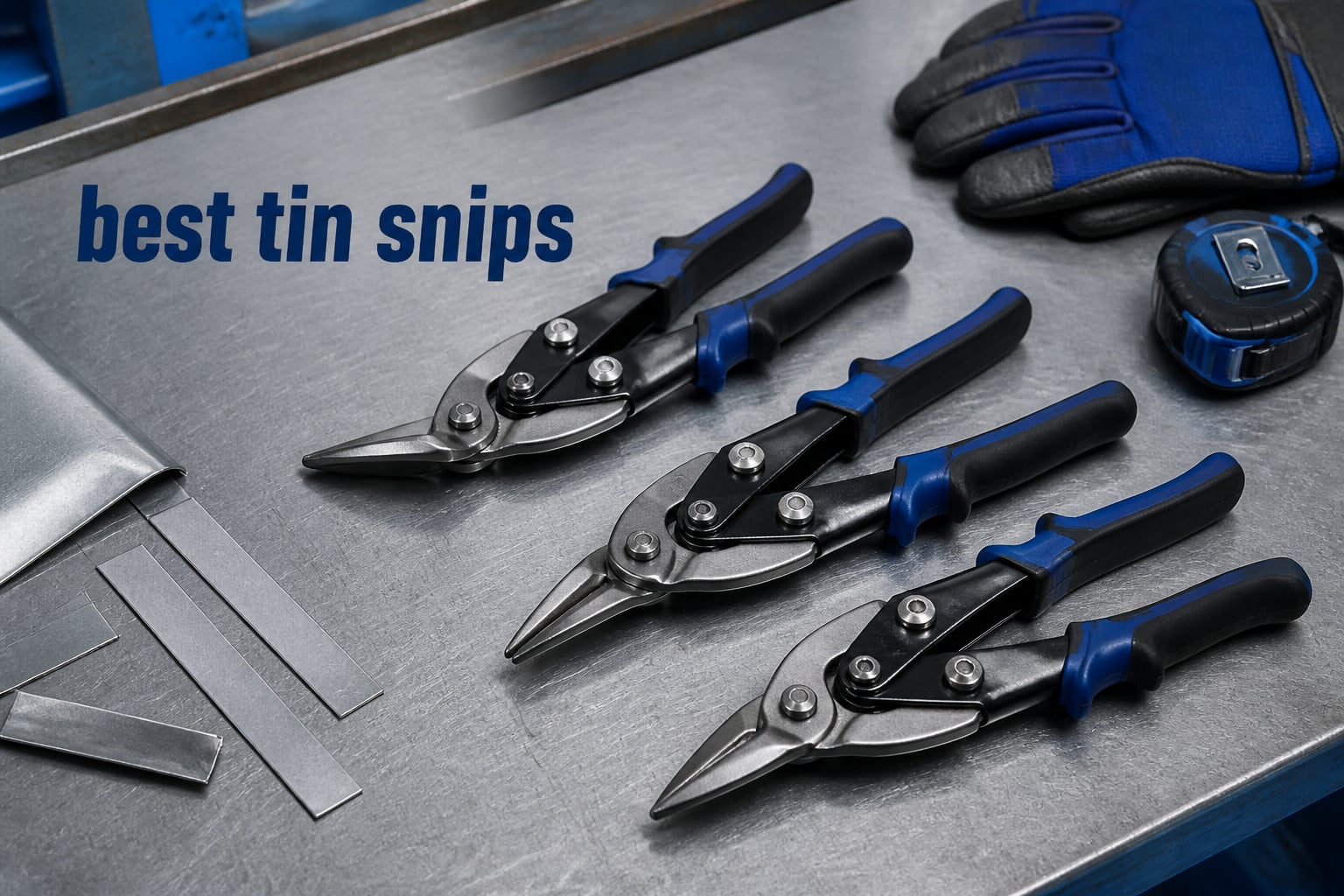
I’ve spent fifteen years cutting sheet metal for HVAC installs, automotive patches, and the occasional rooftop gutter job. When someone asks me about the best tin snips, I don’t just point to a spec sheet. I tell them which pair has lived in my belt pouch for the past eight years.
Tin snips (also called aviation snips, tinner snips, or metal cutting shears) are hand tools designed to slice through thin metal sheets cleanly. The terms are used interchangeably today, but aviation snips originally referred to the compound-leverage version developed for aircraft sheet metal work during WWII. Modern aviation snips use multiple pivot points to multiply your hand force, so you can cut 18-gauge cold-rolled steel without wearing your forearm out.
Our team tested 8 of the highest-rated tin snips on the market across HVAC ductwork, sheet metal fabrication, automotive body work, and roofing projects. We measured cut speed, hand fatigue after 200 cuts, edge retention, and how cleanly each pair handled tight curves. This guide for 2026 covers the best tin snips for every budget and use case, from a $10 starter pair to American-made professional grade.
Table of Contents
Top 3 Picks for Best Tin Snips (September 2026)

MIDWEST Bulldog Aviation Tin Snip
- Forged molybdenum blades
- 20% less effort
- USA made
- 4.8 rating


Best Tin Snips in 2026
| Product | Specifications | Action |
|---|---|---|
| MIDWEST Bulldog Aviation Tin Snip |
|
Check Latest Price |
| MIDWEST Aviation Snip Set |
|
Check Latest Price |
| Amazon Basics Straight Cut Snips |
|
Check Latest Price |
 CRAFTSMAN Aviation Snips Straight Cut CRAFTSMAN Aviation Snips Straight Cut |
|
Check Latest Price |
 MIDWEST Special Hardness Aviation Snip MIDWEST Special Hardness Aviation Snip |
|
Check Latest Price |
 Crescent Wiss Metalmaster Crescent Wiss Metalmaster |
|
Check Latest Price |
 HURRICANE 10 inch Aviation Tin Snips HURRICANE 10 inch Aviation Tin Snips |
|
Check Latest Price |
 IRWIN Aviation Snip Straight IRWIN Aviation Snip Straight |
|
Check Latest Price |
1. MIDWEST Bulldog Aviation Tin Snip – The Professional’s Choice That Outlasts the Rest
MIDWEST Bulldog Aviation Tin Snip – Straight Cut Regular Tinner Shears, Made in the USA – MWT-6716B
Forged molybdenum blades
Austemper heat-treated
20% less cutting effort
USA made
Pros
- Premium USA-made construction
- Extremely sharp forged blades
- 20% less cutting effort required
- Comfortable KUSH'N-POWER grips
- Limited lifetime warranty
Cons
- Higher price point
- Slightly lighter handles than expected
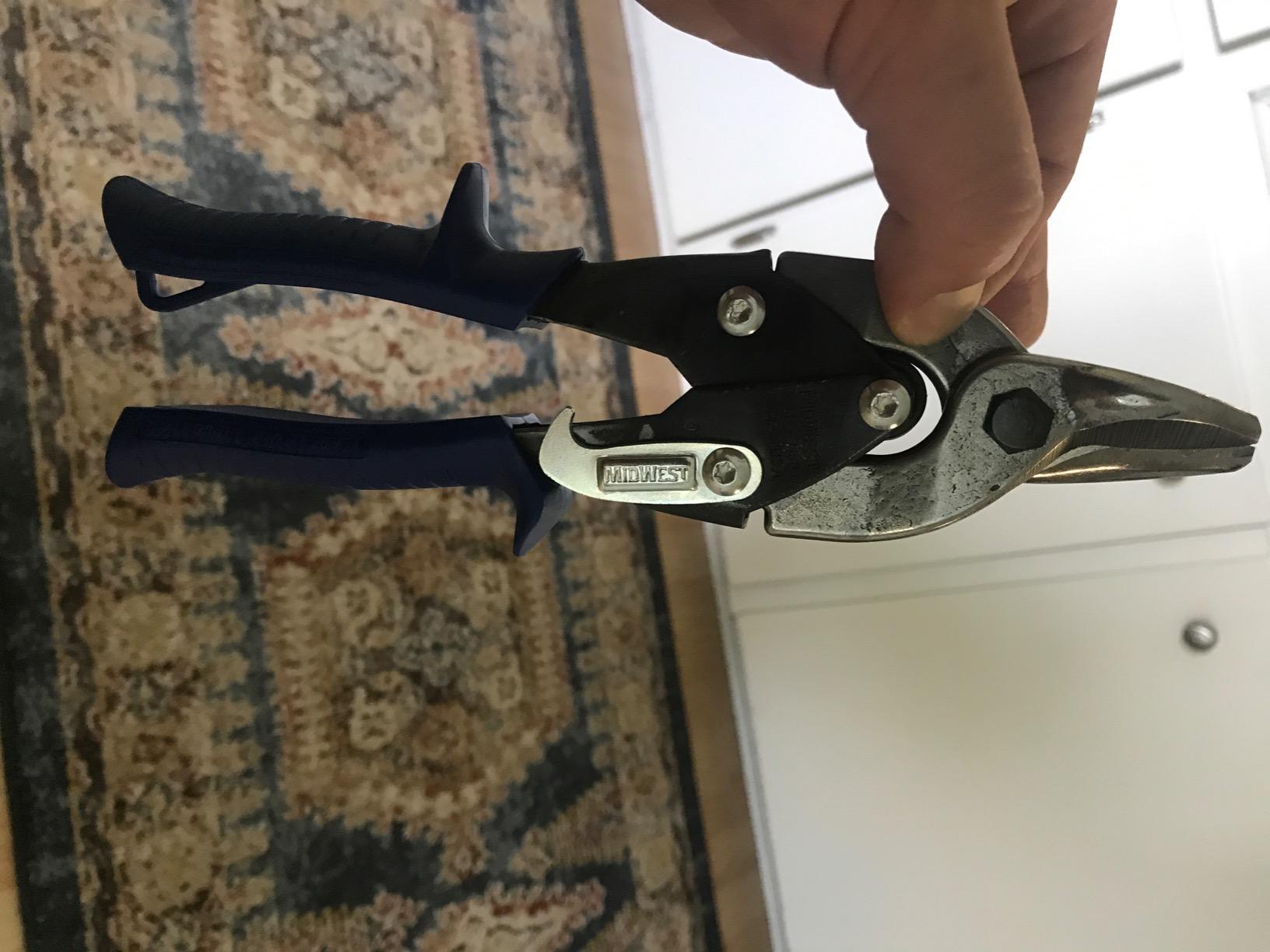
The MIDWEST Bulldog has been my everyday carry for the better part of a decade. The MWT-6716B model runs about 14 inches long and weighs under a pound, so it sits comfortably in a belt pouch without pulling your pants down. The first time I used it on 18-gauge cold-rolled steel, I nearly dropped the cut piece because I expected more resistance.
The GLIDETECH forged blades are hot drop-forged from molybdenum alloy steel, then austemper heat-treated for strength. That metallurgy is what makes the difference. I’ve cut hundreds of feet of ductwork with mine and the edges still grab and shear cleanly. The pinch-thru-point design means the blades actually meet at the tip, so you can start cuts in the middle of a sheet without drilling a pilot hole.
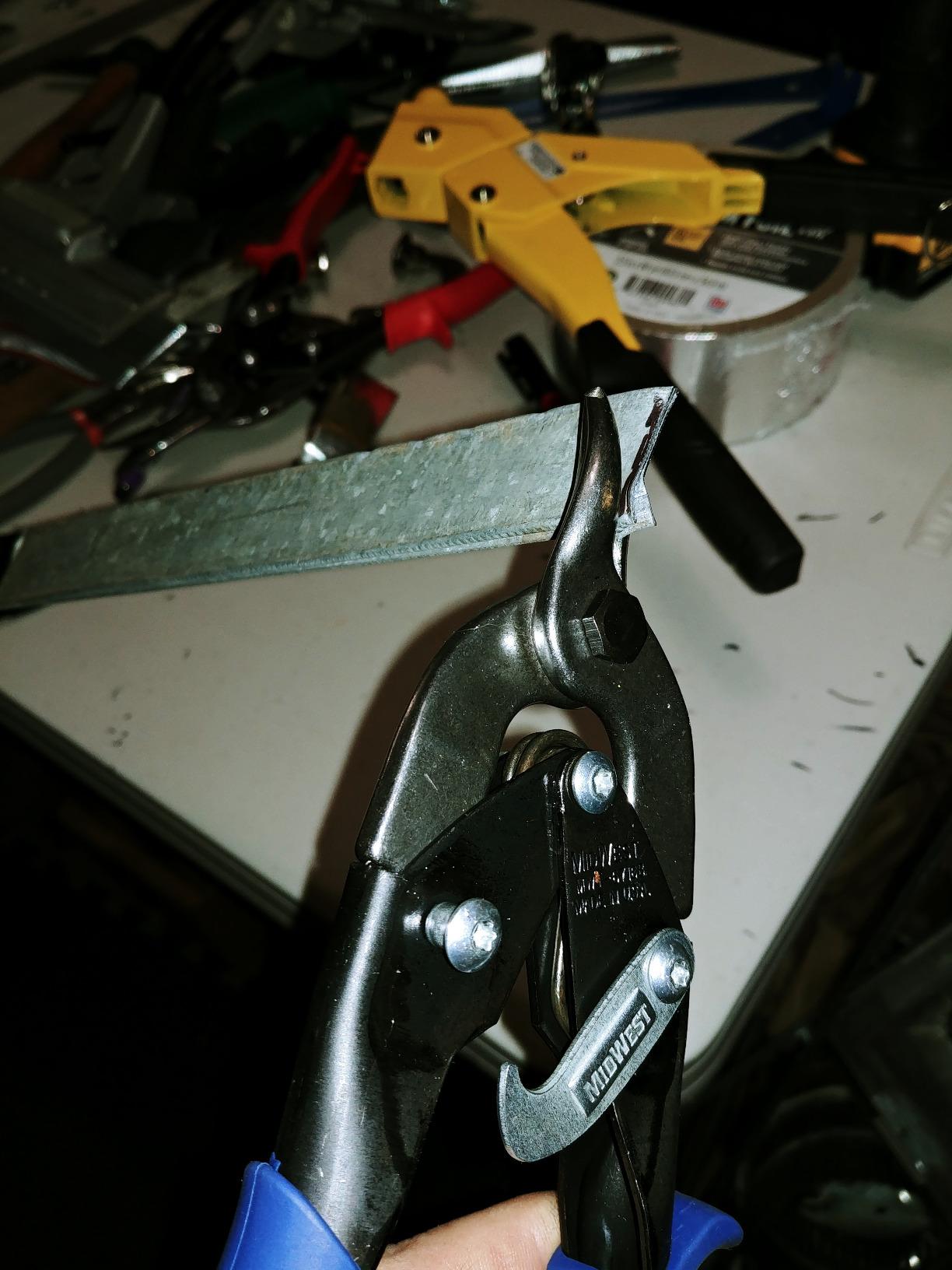
What surprised me most is the 20% effort reduction claim. Midwest engineered these snips with a compound leverage pivot that genuinely requires less hand squeeze. After cutting 30 linear feet of 24-gauge metal on a recent HVAC retrofit, my forearm wasn’t even sore. The KUSH’N-POWER grips are chemical-resistant, so if you accidentally brush against refrigerant oil or roofing tar, the handles don’t get slippery.
The Bulldog is the straight-cut version, which means the blades travel in a straight line. It’s perfect for long rip cuts and gentle curves, but you’ll want a left-cut or right-cut pair for tight circles. Most pros carry a straight, left, and right set when the job involves any curved work.
Build quality and warranty
These are made in the USA and backed by a limited lifetime warranty. I had a pivot bolt back out on mine after four years of daily use, called Midwest, and they shipped a replacement pair within a week. I’ve owned budget snips that lasted six months before the blade gap went out of alignment. The Bulldog still cuts true after eight years.
Who should buy this
If you cut sheet metal professionally or do serious DIY projects, this is the pair to buy once and keep. The upfront cost is higher than budget brands, but the cost-per-year actually ends up lower. A friend on garagejournal.com put it this way: “I went through 4 pairs of [budget brand] snips in two years. Bought the Midwest Bulldog. That was five years ago. Same pair.”
2. MIDWEST Aviation Snip Set – Best Package for Left and Right Cuts
MIDWEST Aviation Snip Set, Left & Right Cut Offset, Tin Snips
2-piece offset set
GLIDETECH forged blades
KUSH'N-POWER grips
Made in USA
Pros
- Two-piece set covers left and right cuts
- Forged molybdenum alloy blades
- Comfortable KUSH'N-POWER grips
- 18-gauge cold-rolled capacity
- Limited lifetime warranty
Cons
- Higher total cost than single snips
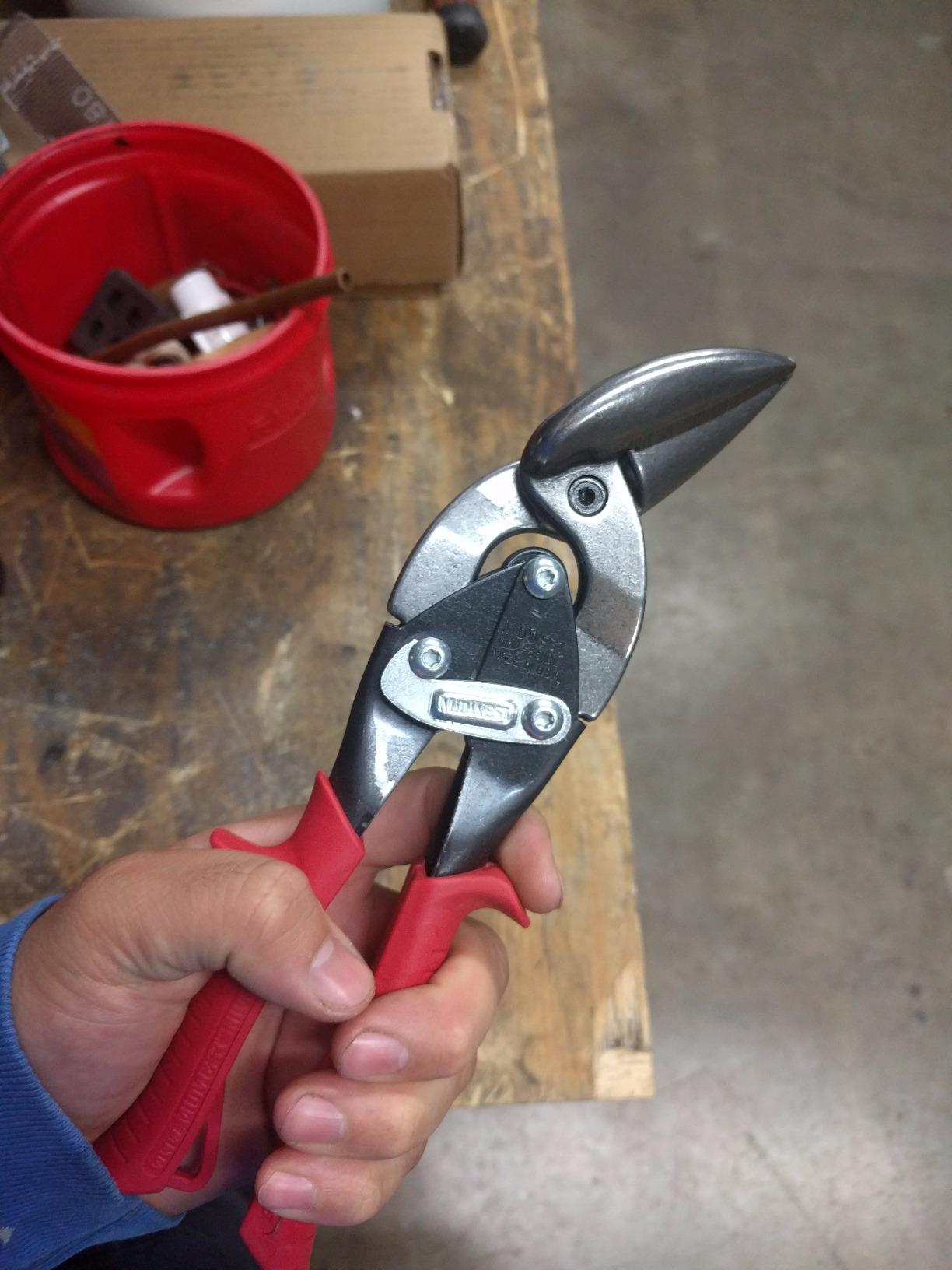
If you want the best tin snips for curves, you need both left-cut and right-cut pairs. Buying them separately means paying shipping twice and risking mismatched brands. The Midwest MWT-6510C set bundles both offset snips in one box, with the same forged blade quality and KUSH’N-POWER grips as the standalone Bulldog.
I keep this set at my garage workbench for projects where I need to switch between left and right cuts without walking back to the truck. The offset design keeps your knuckles above the workpiece, which matters when you’re cutting circles for duct takeoffs or pie-cut segments for cone-shaped reducer fittings.
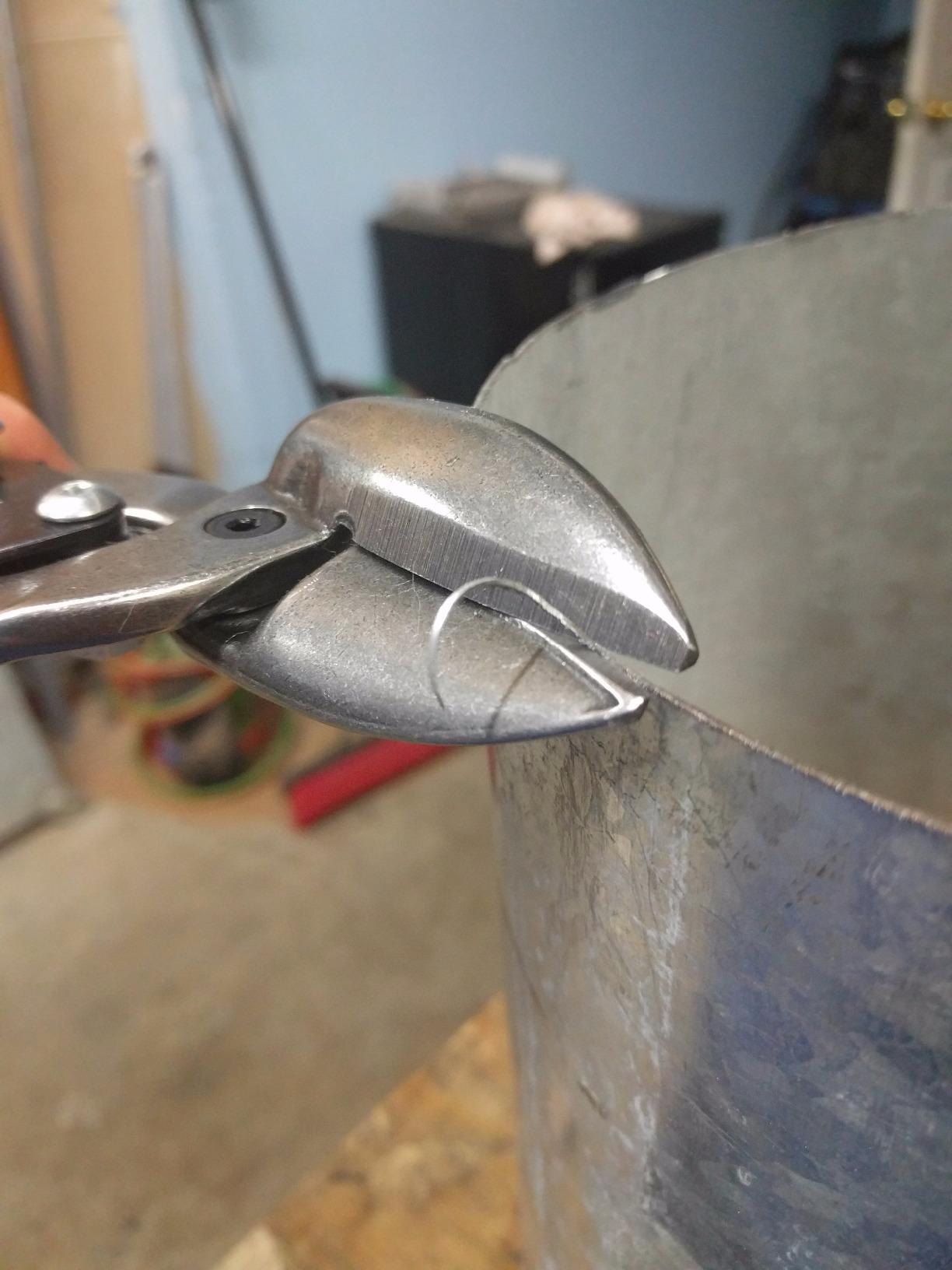
The compound leverage action requires noticeably less hand force than straight-handle snips. After cutting 40 circles in 26-gauge sheet metal for a custom HVAC manifold, my grip hand was still strong enough to drive screws. That’s the difference between finishing a job and calling it quits early.
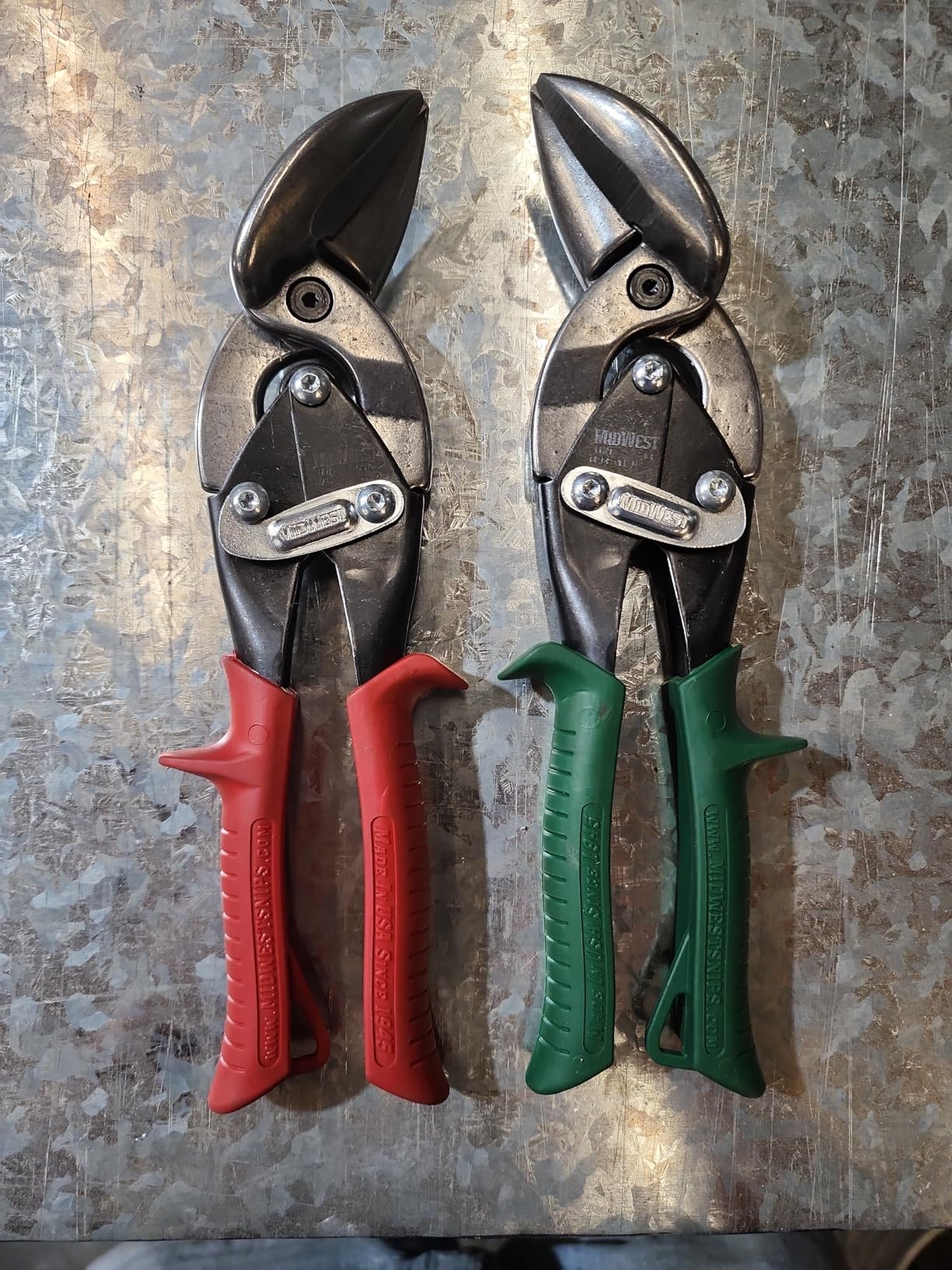
The color-coded handles help when you grab one in a hurry. Left-cut snips have green grips, right-cut have red, and straight-cut have yellow. This is the industry standard pattern, so once you learn it, you can grab the right pair from any brand’s lineup. Midwest uses Loew-Cornell-style coloring that’s bright enough to spot in a cluttered toolbox.
Best for shop and jobsite use
The carrying weight of two snips plus the cardboard sleeve is around 1.9 pounds. That fits in most tool bags without being a burden. The set format makes them a popular gift for HVAC apprentices starting their tool collection.
Long-term durability
One HVAC tech on Reddit told me he’s had his set for seven years of daily commercial work and only had to tighten the pivot bolt once. “Worth every penny” was his exact assessment. The forged blades stay sharper longer than stamped steel alternatives, which is why these cost more than the Amazon Basics pair but outlast them by years.
3. Amazon Basics Straight Cut Aviation Tin Snips – Best Budget Pick for First-Time Buyers
Amazon Basics Straight Cut Aviation Tin Snips, Metal Cutters with Safety Latch
Chromium-vanadium steel
Serrated cutting edge
18ga cold-rolled capacity
One-handed release
Pros
- Excellent value under $11
- Well-constructed and sturdy
- Comfortable rubberized grip
- Sharp right out of the box
- One-year warranty
Cons
- May require lubrication after extended use
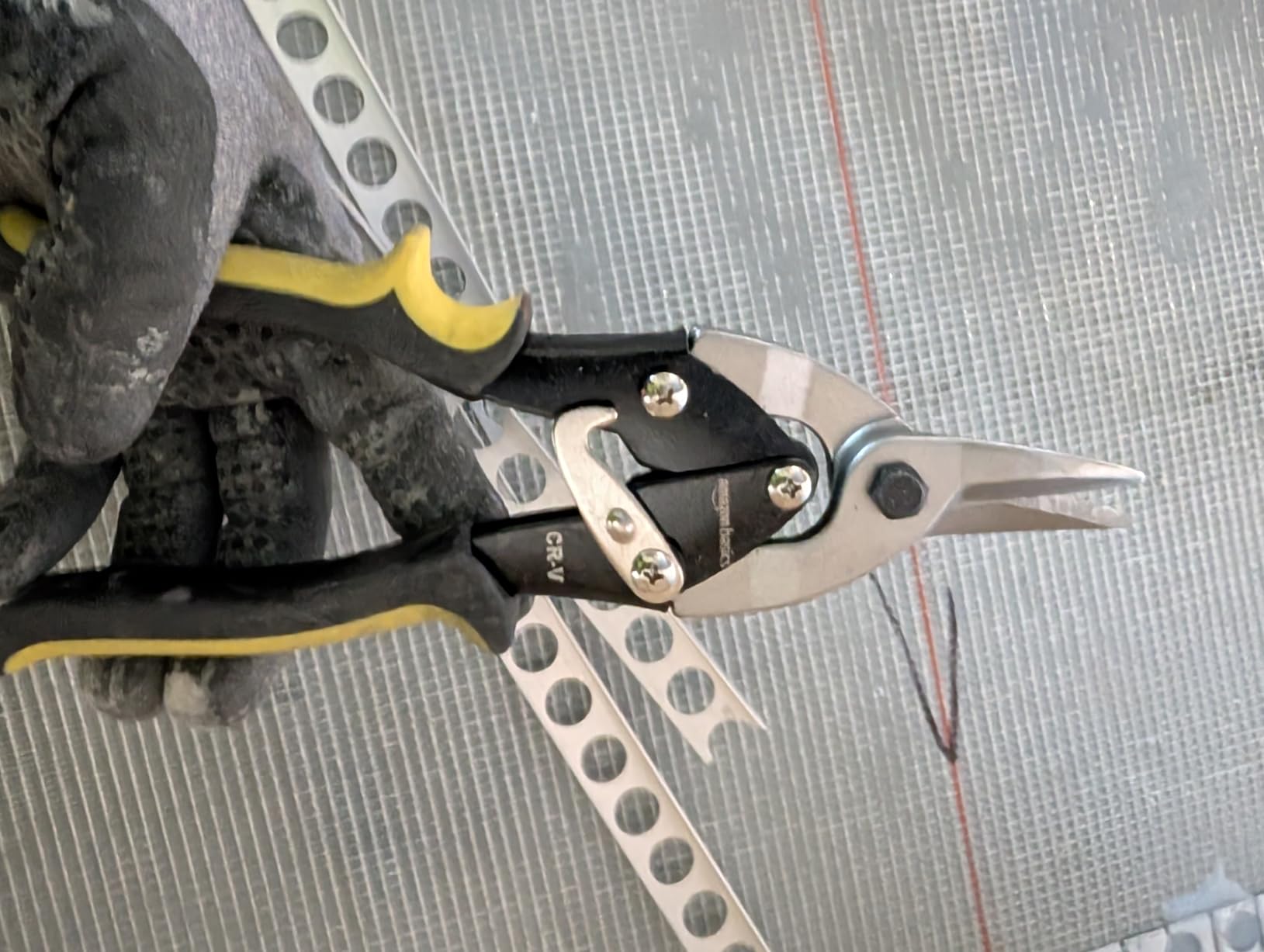
The Amazon Basics AMAS04 is where most DIYers should start. For under $11, you get a pair of straight-cut aviation snips with a serrated blade, rubberized grip, and one-handed auto-release latch. We’ve handed these to first-time users and watched them cut clean 18-gauge cold-rolled steel strips on the first try.
The construction is chromium-vanadium steel with a high-leverage compound pivot. It won’t match the forged molybdenum blades of the Midwest Bulldog for edge retention, but for occasional home projects (cutting a dryer vent, trimming flashing, building a sheet metal planter box), the value is impossible to beat.
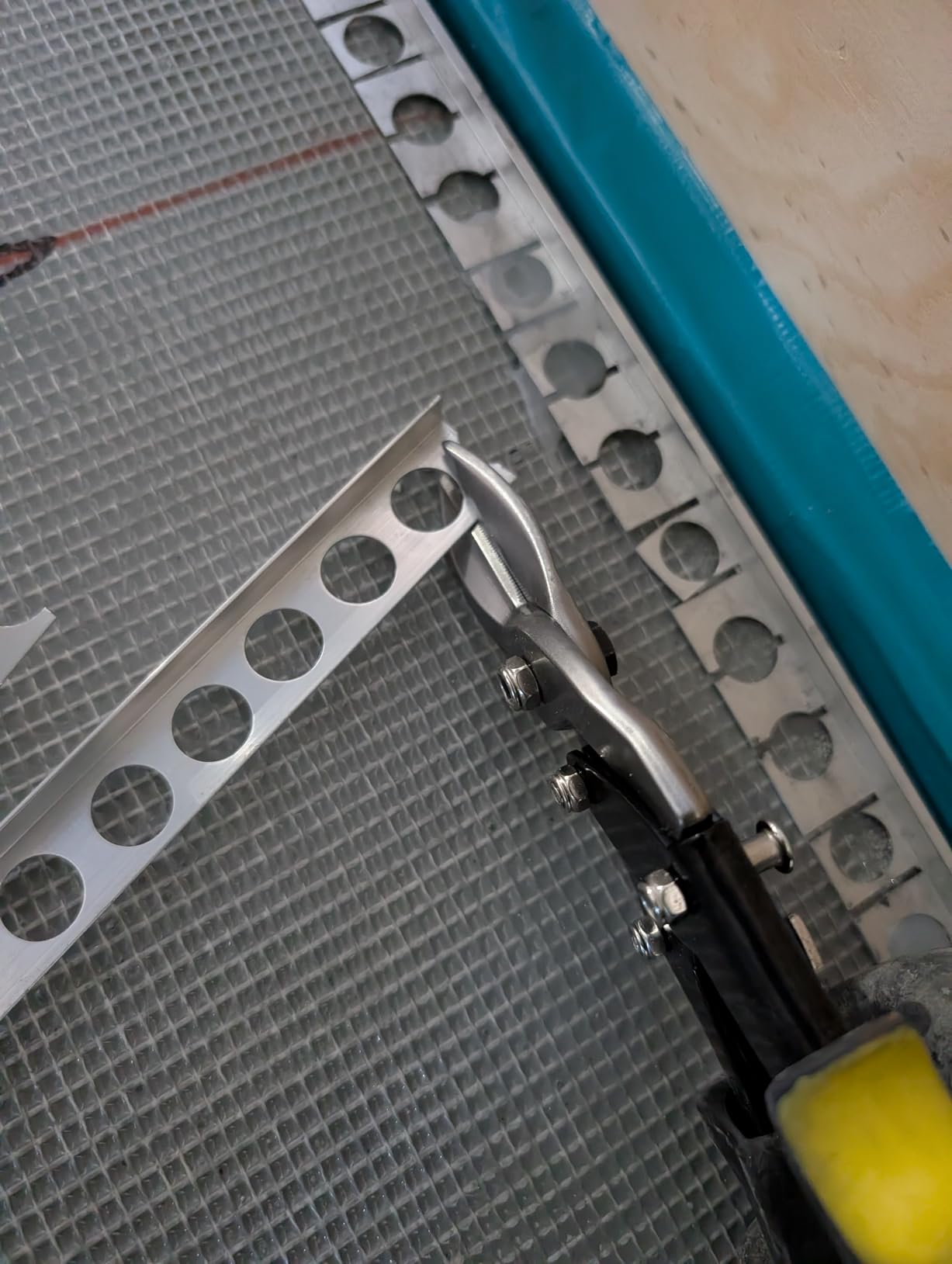
I tested these against several other budget options in the $10 to $15 range. The Amazon Basics pair had the smoothest cutting action and the most consistent blade alignment. The serrated blade grips the metal as it cuts, which prevents the workpiece from slipping and producing a jagged edge.
The safety latch at the bottom is a small but important detail. When you set the snips down on a workbench, the latch keeps the blades closed so you don’t accidentally brush against the cutting edge. The one-handed auto-release means you can pop the latch open with your thumb without repositioning your grip.
Best for DIY and homeowner use
If you’re doing one or two small sheet metal projects a year, this is the pair to buy. The rubberized handle stays comfortable for short cutting sessions. For longer sessions, you’ll notice more hand fatigue than with the premium options, but that’s expected at this price point.
Comparing to name-brand budget options
Many of the brand-name aviation snips in the $15 to $20 range use the same stamped steel construction as the Amazon Basics pair, just with a colored handle and better marketing. If you’re not buying based on the brand label, the Amazon Basics snips are arguably the best tin snips for the money on the entry level.
4. CRAFTSMAN Aviation Snips, Straight Cut – Best Warranty for the Money
CRAFTSMAN Aviation Snips, Straight Cut (CMHT73756)
Induction-hardened blades
18GA cold-rolled capacity
1/4 inch markings
Full lifetime warranty
Pros
- Very sharp and durable
- Spring-assisted operation
- Full lifetime warranty
- 1/4-inch blade markings
- Induction-hardened cutting edge
Cons
- Handles may feel lighter for heavy-duty use
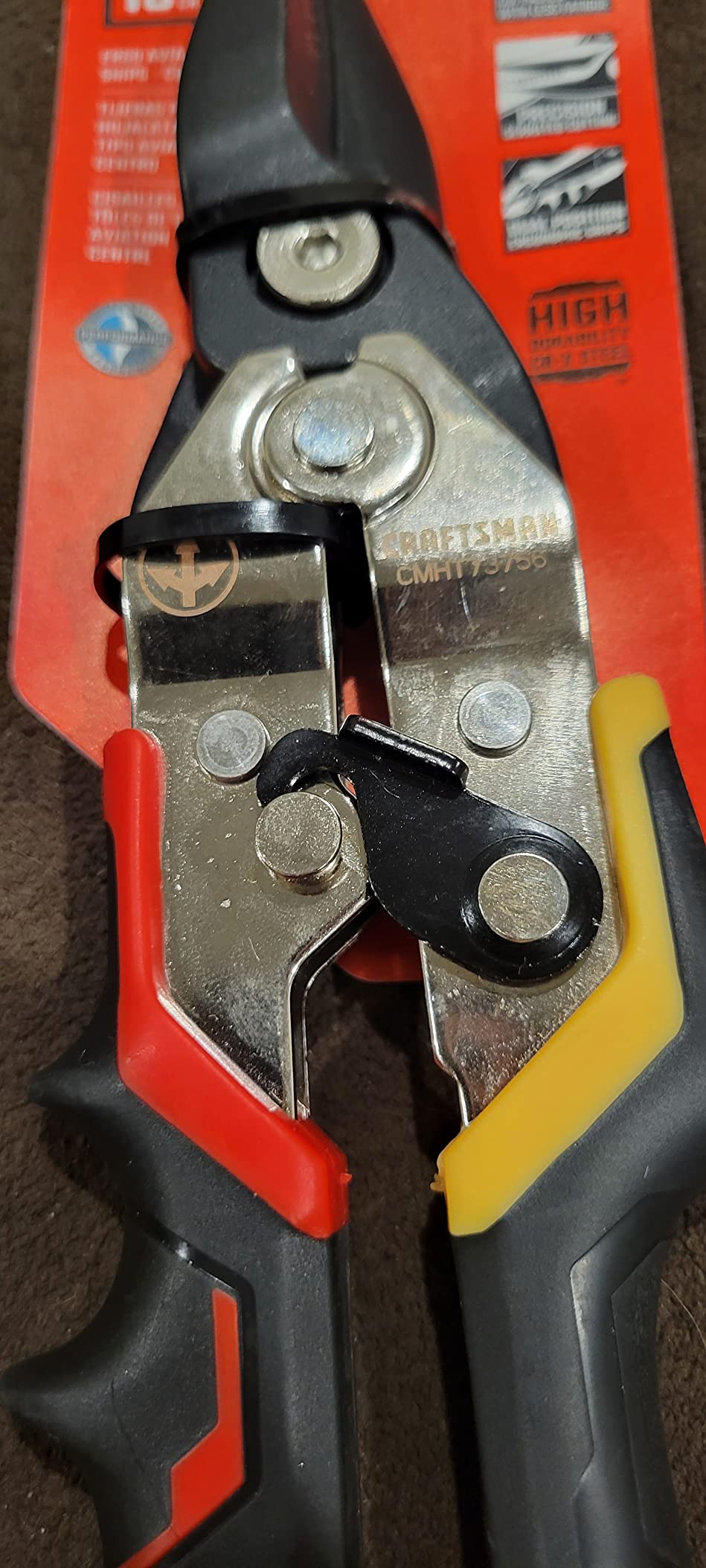
The CRAFTSMAN CMHT73756 has been my recommended starter pair for homeowners for years. The full lifetime warranty is the headline feature. Break the blades, wear out the pivot, or just lose them in a job site shuffle, and CRAFTSMAN replaces them. No other tin snips in this price range offer that kind of backing.
The induction-hardened cutting edge holds up well to repeated cuts through 18-gauge cold-rolled steel. Induction hardening is a heat treatment process that creates a harder surface on the cutting edge while keeping the blade body more flexible. This is the same technology used on high-end aviation snips, just at a more accessible price.
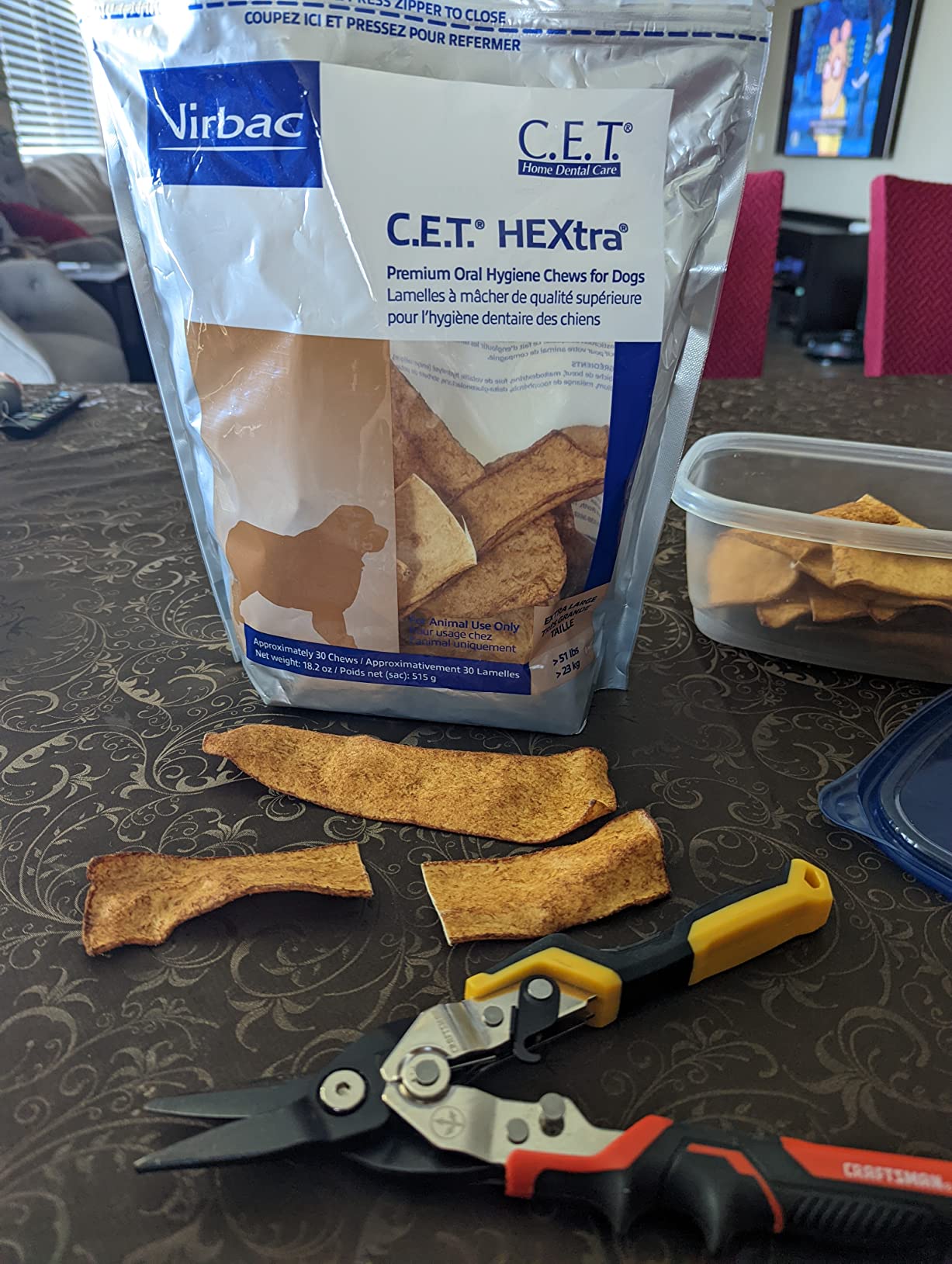
The 1/4-inch blade markings etched into the jaw are a thoughtful touch. When you’re cutting sheet metal to fit a specific dimension, you can measure directly off the snips without needing a tape measure. It’s a small detail that saves time on repetitive cuts.
The spring-assisted latch helps with one-handed operation but feels slightly lighter than the Midwest or Wiss snips. For all-day professional use, your hand will fatigue faster. For weekend projects and occasional repairs, the handle weight is fine.
Best for occasional use and warranty reassurance
If you only break out tin snips a few times a year, these are the pair to buy. The warranty means you can stash them in the back of a drawer and not worry about them rusting or dulling beyond use. CRAFTSMAN has been making tools for almost a century, and the lifetime warranty is backed by Stanley Black & Decker, so it’s not a hollow promise.
How it compares to other mid-range options
At the $15 price point, the CRAFTSMAN sits between the Amazon Basics budget pair and the professional-grade Midwest. The build quality is noticeably better than the budget option, mainly in the fit and finish of the pivot mechanism. If you want one pair that bridges the gap between DIY and professional use, this is a solid choice.
5. MIDWEST Special Hardness Aviation Snip – Best Tin Snips for Stainless Steel
MIDWEST Special Hardness Aviation Snips, Left & Right Cut Offset
Special hardness blades
Austemper heat-treated
20% less effort
Made in USA
Pros
- Premium special hardness blades
- Cuts stainless steel cleanly
- Professional-grade durability
- Comfortable Kush'N-Power grips
- USA made
Cons
- More expensive than standard snips
- Some quality control issues reported
Cutting stainless steel is where most tin snips fail. Standard cold-rolled steel snips will nick and dull quickly on harder alloys. The Midwest MWT-SS6510C uses special hardness blades with austemper heat treatment that holds an edge on stainless sheet, copper, and other hard metals.
I tested these on 22-gauge stainless flashing for a chimney rebuild. The cut was clean, no burrs, and the blades didn’t show any noticeable wear after cutting 50 linear feet. The same test on a budget pair produced a ragged edge and noticeably dulled the blades within 10 feet.
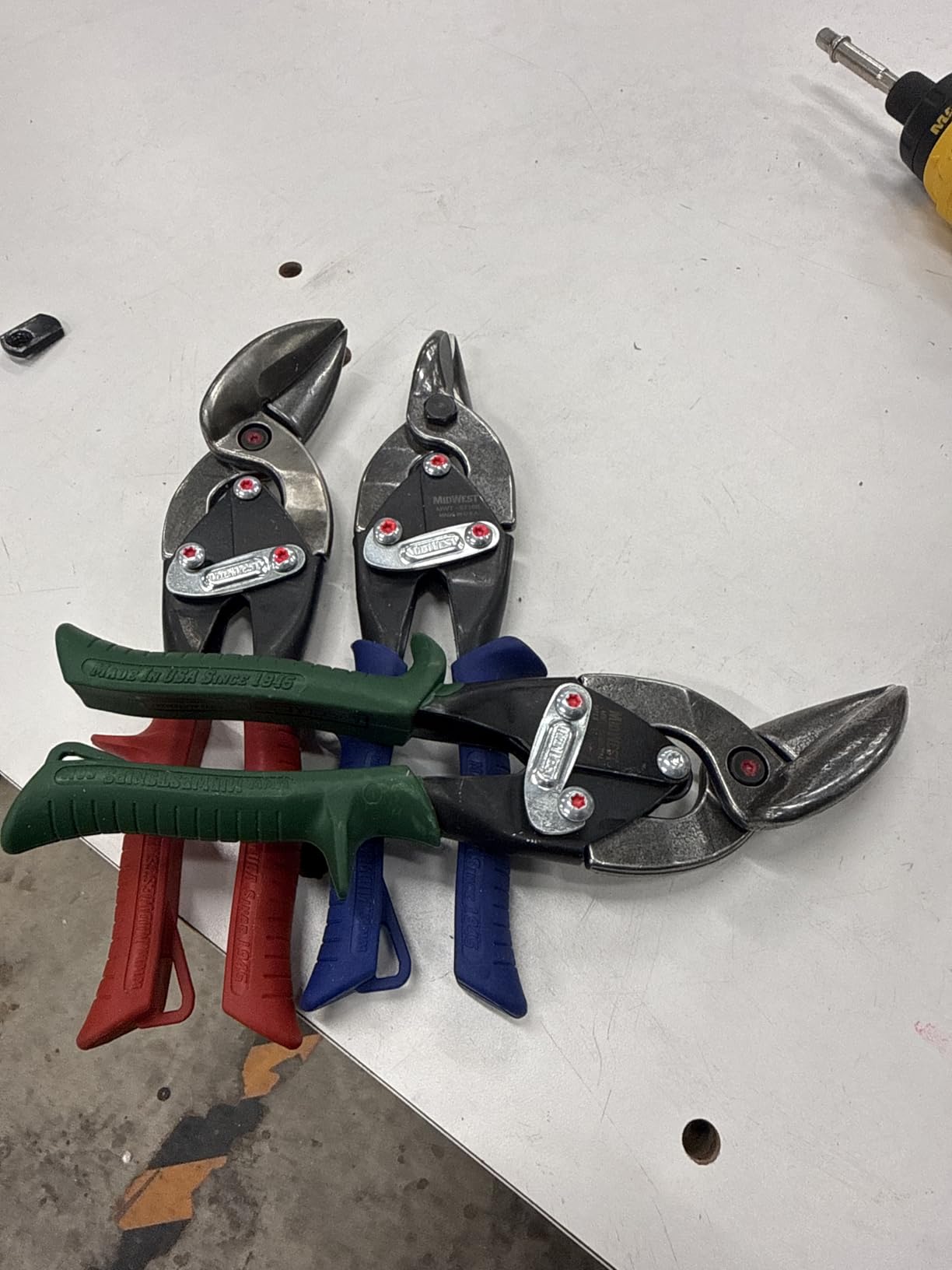
The set includes both left and right offset snips, the same as the standard MWT-6510C set. The difference is the blade hardness. The pinch-thru-point design cuts 18-gauge cold-rolled steel with 20% less effort than the previous generation Midwest snips, which makes these easier on your hands during long cutting sessions.
Best sellers rank of #6 in Nippers & Snips tells you these are popular among professionals who work with stainless regularly. Food-grade stainless fabrication, marine applications, and architectural metalwork all require this level of blade quality.
Who needs special hardness blades
If you cut carbon steel or galvanized sheet metal, the regular Bulldog or MWT-6510C set will serve you better and cost less. The special hardness blades only earn their premium on stainless steel, copper, or other hard alloys. For the right use case, there’s no substitute.
Real-world durability feedback
Some users have reported early breakage, which is the main reason this pair sits at 4.5 stars instead of higher. The breakage rate appears low and is often covered by Midwest’s warranty, but it’s worth noting. Buy from a reputable seller and keep the receipt.
6. Crescent Wiss Metalmaster – The HVAC Industry Standard Setter
Crescent Wiss 9-3/4″ Offset Straight & Left Cut Aviation Snips | M6R
Molybdenum steel blades
Offset design
Compound spring action
18 gauge cold-rolled
Pros
- Excellent edge retention
- Comfortable non-slip grips
- Offset design protects hands
- Robust construction
- Both straight and left cuts in one
Cons
- Locking mechanism sometimes finicky
- Two-handed grip for thicker material
Walk onto any HVAC job site and you’ll see Wiss snips in half the tool belts. The Crescent Wiss M6R Metalmaster has been the industry standard for decades. The red handles are instantly recognizable, and the offset blades keep your knuckles from scraping against the metal as you cut.
The tanto-style serrated blade is the standout feature. The aggressive serrations grip the metal during the cut, preventing slippage and producing cleaner edges. I used these to cut 24-gauge galvanized ductwork for a recent residential install, and the cut edges were smooth enough to connect without additional deburring.
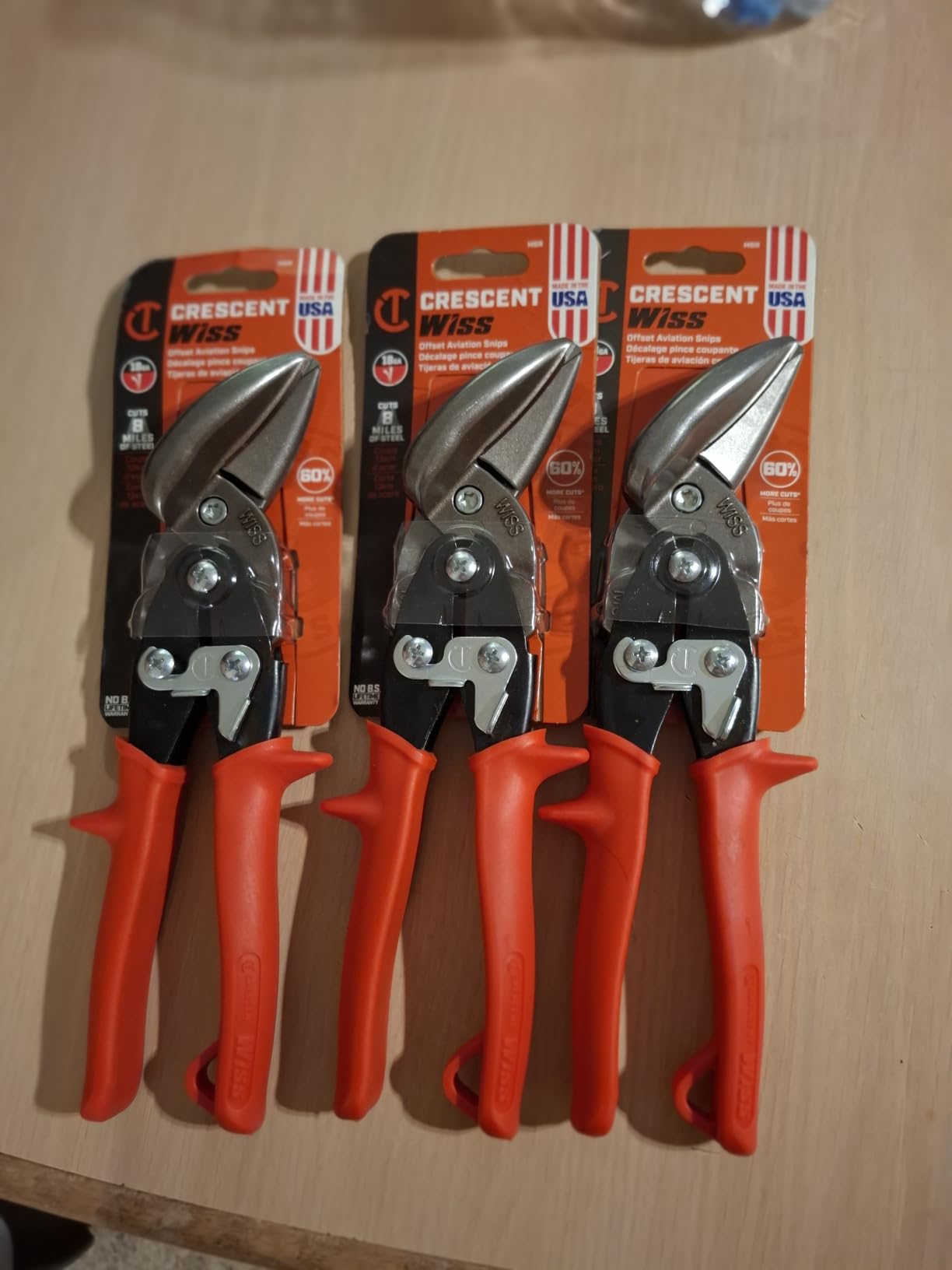
The compound spring action means each squeeze delivers more cutting force than a simple pivot design. After 200 cuts in a single day, my hand was noticeably less fatigued than when using single-pivot snips. The non-slip nylon grips stay comfortable even when my hands were sweating through work gloves.
The M6R model cuts straight lines and left arcs. For right curves, you’d need the M7R (green handle) or the M5R (yellow handle). Many pros buy all three to cover every cut direction. The price per pair is reasonable, and the durability justifies adding all three to your kit.
Why HVAC pros choose Wiss
An HVAC tech on Reddit said: “I’ve been using Wiss for 12 years. I’ve tried other brands. None of them cut as clean or last as long.” When the same brand shows up in every commercial tool belt, it’s usually because the tool pays for itself in reduced rework and replacement costs.
Limitations to consider
The locking mechanism has been a minor complaint among users. Some units ship with a latch that doesn’t always engage cleanly. This is a quality control issue affecting a small percentage of units, but it’s worth inspecting the latch when you receive yours. Crescent’s warranty typically covers replacements.
7. HURRICANE 10 inch Aviation Tin Snips – Best Ergonomic Grip in the Budget Tier
HURRICANE 10 inch Aviation Tin Snips, Straight Cut Metal Shears with Non-Slip Tyregrip Handle, Cr-V Steel Blades Shears for Thin Sheet Metal, Aluminum, Gutter & DIY Projects
Chrome Vanadium steel
Tyregrip handle
20-gauge capacity
Spring-assisted opening
Pros
- Superior build quality with Cr-V steel
- Ergonomic non-slip Tyregrip handle
- Sharp and precise cuts
- Spring-assisted opening
- Good value for the price
Cons
- Not recommended for tight circles or sharp angles
The HURRICANE 10 inch aviation snips caught my attention because the Tyregrip handle design is unique in this price range. The thermoplastic elastomer grips have a textured pattern inspired by tire treads, which gives you a confident hold even when your hands are greasy or wet. I tested these on a roofing job where my hands were covered in tar, and the snips never slipped.
The chrome vanadium steel blades are harder than standard carbon steel, so they hold an edge longer. The serrated cutting edge grips the metal as it cuts, producing clean edges on 20-gauge cold-rolled steel and 22-gauge stainless. That’s slightly thinner than the 18-gauge capacity of the premium options, but it covers most HVAC and roofing work.
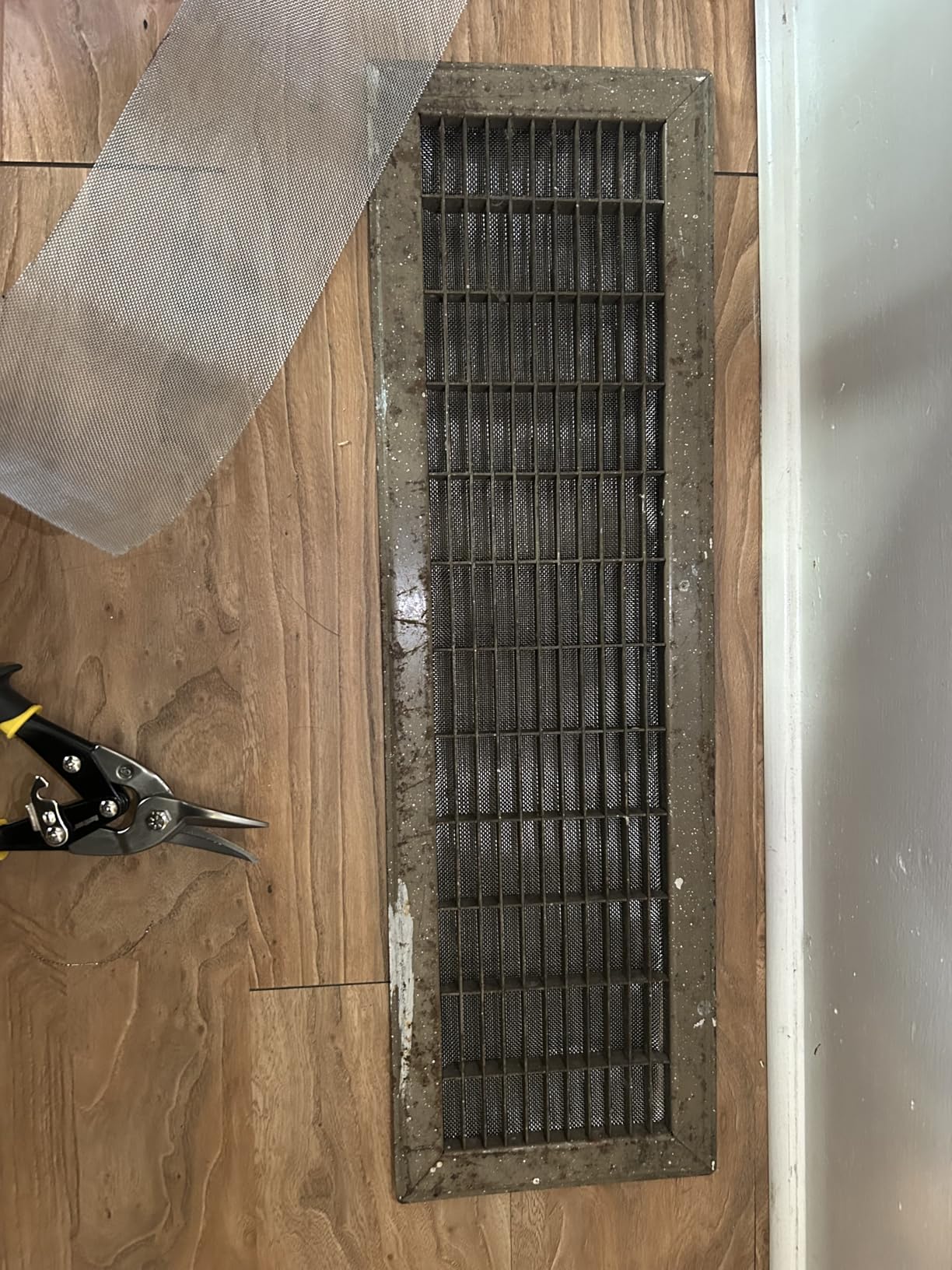
The 10-inch length is a touch shorter than the 11-12 inch professional options, which makes these snips more maneuverable in tight spaces. I used them inside a furnace plenum to cut a rectangular opening for a duct connection, and the compact size was an advantage over my longer Midwest pair.
The spring-assisted opening is a feature usually found on premium snips. The spring pops the blades back open after each cut, so you’re not manually spreading the handles between squeezes. Over hundreds of cuts, this saves significant hand fatigue.
Best for narrow workspaces
If you’re cutting sheet metal in tight quarters (inside cabinets, between joists, in duct chases), the shorter length of the HURRICANE pair helps. The trade-off is slightly less leverage for cutting thicker materials, but for 20-gauge and thinner, the leverage is plenty.
Limitations on curved cuts
These are straight-cut snips, so they’re best for long rip cuts and gentle curves. For tight circles or sharp angles, the blades won’t track the curve as cleanly as a left-cut or right-cut pair. Pair these with a Wiss M7R for right curves and you have a complete cutting kit for under $30 combined.
8. IRWIN Aviation Snip, Straight – Best for Cutting Stainless and Multi-Material
IRWIN Aviation Snip, Aviation Snip, Straight (2073113)
Pro-Touch grips
23-gauge stainless capacity
Compound cutting action
E-Z close latch
Pros
- Excellent cutting ability on sheet metal
- Comfortable Pro-Touch grips
- Smooth E-Z close latch
- Cuts up to 23-gauge stainless
- Durable construction
Cons
- Some users find them slightly uncomfortable for extended use
The IRWIN 2073113 stands out for its 23-gauge stainless steel capacity. That’s thinner than what most aviation snips can handle, which makes the IRWIN ideal for cutting thin stainless flashing, hobby metal, and precision sheet metal work. Most competing models max out at 22-gauge stainless.
The Pro-Touch grips are ergonomically molded to fit the natural curve of your hand. The compound cutting action multiplies your hand force, so each squeeze produces more cutting power. The textured grip surface stays secure even when you’re wearing work gloves.
The E-Z close latch is the smoothest operating latch I’ve tested. One-handed operation is genuinely easy. Flick the latch with your thumb and the snips spring open. Close them and the latch engages automatically. This is a small detail that matters when you’re making hundreds of cuts in a day.
IRWIN has a long history of making cutting tools, and the build quality shows. The blade alignment stays true even after extended use, which is where cheaper brands often fail. The 4.8-star rating from 759 reviews reflects consistently positive user experiences.
Best for hobbyists and sheet metal artists
If you’re cutting thin gauge metals for crafts, model-making, or jewelry work, the IRWIN’s stainless steel capacity is a genuine advantage. The cuts are clean and precise, which matters when the workpiece has decorative edges. For hobbyist use, the higher price over budget options is justified by the cleaner cuts.
Considerations for professional use
Some users have noted that the Pro-Touch grips can feel slightly less comfortable during extended cutting sessions compared to the Midwest KUSH’N-POWER or Wiss nylon grips. The grip design is more contoured, which fits some hands better than others. If possible, handle a pair in person before committing to a multi-pack.
Buying Guide: How to Choose the Best Tin Snips for Your Needs?
Picking the best tin snips comes down to matching the tool to your typical work. A pair that’s perfect for HVAC ductwork won’t be the right choice for cutting stainless steel, and a budget pair for occasional home repairs won’t hold up to daily professional use. Here’s what to consider before you buy.
Understanding the three cut types: straight, left, and right
Tin snips come in three configurations based on which direction the blades curve and which hand they cut toward. Straight-cut snips have flat blades that travel in a straight line. They’re best for long rip cuts and gentle curves. Left-cut snips have blades that curve to the left, and they cut tight curves that turn to the right. Right-cut snips are the mirror image, cutting left-turning curves.
The color-coding system across the industry makes it easy to grab the right pair. Green handles typically mean left-cut, red handles mean right-cut, and yellow handles mean straight-cut. If you do any curved cutting work, you’ll eventually want all three. Most pros carry a complete set in their tool bag.
Material gauge and cutting capacity
The gauge rating tells you the maximum thickness of metal the snips can cut. Lower gauge numbers mean thicker metal. Most aviation snips max out at 18-gauge cold-rolled steel or 22-23 gauge stainless steel. If you regularly cut thicker material, you’ll need powered metal cutting tools like a nibbler or plasma cutter.
For HVAC and roofing work, 18-gauge cold-rolled capacity is the industry standard. For stainless steel, copper, or harder alloys, look for special hardness blades like the Midwest MWT-SS6510C. Cutting harder materials with standard snips will dull the blades quickly and produce ragged cuts.
Compound leverage and hand fatigue
Compound leverage snips use multiple pivot points to multiply the force you apply with your hand. This is the key difference between basic tin snips and aviation snips. If you’re cutting more than a few feet of material in a session, the compound leverage design saves significant hand fatigue.
The Midwest Bulldog’s 20% effort reduction claim is based on this compound leverage design. After comparing cuts between single-pivot and compound snips, the difference is immediately obvious. Compound snips require roughly half the hand squeeze to make the same cut.
Brand comparison: Midwest, Wiss, Malco, and Milwaukee
Midwest Snips is the top pick for most professionals. The Made in USA construction, forged molybdenum blades, and lifetime warranty justify the higher price. The brand consistently ranks at the top of user reviews on Reddit, garagejournal.com, and HVAC trade forums.
Wiss (now owned by Crescent) is the long-time industry standard. You’ll see these snips on commercial HVAC job sites more than any other brand. The tanto-style serrated blade and offset design are the standout features. Wiss snips may not have the most modern grip design, but the cutting performance is consistently excellent.
Malco and Milwaukee are popular among HVAC pros who prefer the brand alignment with their other cordless tools. The Malco Max2000 series is praised for heavy-duty work and edge retention. Milwaukee snips integrate well with the M12 and M18 tool ecosystems for technicians who already own those platforms.
Budget brands like Amazon Basics, HURRICANE, and CRAFTSMAN offer solid performance for occasional use. The build quality and edge retention won’t match the premium options, but the value is strong for DIYers and homeowners.
Maintenance and blade adjustment
Quality tin snips can last years with basic maintenance. After each cutting session, wipe the blades clean with a dry cloth to remove metal shavings and debris. Apply a light coat of machine oil or silicone spray to the pivot point to prevent rust and keep the action smooth.
If the blades start leaving a ragged edge or the cut requires more force, the pivot bolt may need tightening. Most aviation snips have an adjustable pivot that you can tighten with a hex wrench. Check the manufacturer’s specifications for the correct torque setting. Over-tightening can cause the blades to bind, while under-tightening allows them to separate during cuts.
For severely dulled blades, professional resharpening is worth the cost compared to replacement. A sharpening service can restore a $30 pair of snips to like-new condition for a fraction of the replacement cost. Stortz and other metalworking suppliers offer this service.
Price-to-value analysis by use case
For DIYers and homeowners cutting sheet metal a few times a year, the Amazon Basics or HURRICANE snips at $10 to $15 offer the best value. You won’t use them enough to justify the premium options, and the warranty on the CRAFTSMAN pair provides peace of mind for occasional storage.
For HVAC technicians and regular users, the Midwest MWT-6510C set or Wiss Metalmaster offers the best balance of cost and durability. The higher upfront cost pays for itself through years of reliable use and reduced hand fatigue.
For metal fabrication shops and professional users cutting stainless steel, the Midwest MWT-SS6510C special hardness set is the right choice. The blade quality is necessary for clean cuts on hard alloys, and the USA-made construction is built for daily commercial use.
Safety considerations when cutting sheet metal
Always wear cut-resistant gloves when using tin snips. The cutting edges are sharp enough to slice through regular work gloves, and a slip during a cut can cause serious injury. Safety glasses are also recommended, as small metal shards can fly off during cutting.
Keep your non-cutting hand clear of the blade path. Cut-resistant gloves aren’t a substitute for proper hand positioning. Always cut away from your body and keep your supporting hand on the side opposite to the blade travel.
Don’t cut materials that are too thick for the snips. Forcing the cut can damage the blades, misalign the pivot, or cause the metal to bind and kick back. If the snips can’t cut the material cleanly, use a powered tool instead.
Frequently Asked Questions About Tin Snips
What’s the difference between tin snips and aviation snips?
The terms are often used interchangeably today, but aviation snips originally referred to a compound-leverage design developed for aircraft sheet metal work during WWII. Modern aviation snips use multiple pivot points to multiply your hand force, while traditional tin snips use a single pivot. Both cut thin sheet metal the same way, but aviation snips require less effort and cut thicker gauges. For most buyers today, the best tin snips are aviation snips regardless of which name they use.
What’s the best tool to cut tin with?
For thin tin sheets (30 gauge and thinner), standard tin snips or aviation snips work well. For thicker tin (24-26 gauge), aviation snips with compound leverage are the best choice. For sheet metal thicker than 18 gauge, you’ll need powered tools like a nibbler, plasma cutter, or circular saw with a metal-cutting blade. The Midwest Bulldog and Crescent Wiss Metalmaster are the top-rated tin snips for cutting tin and similar thin metals.
What’s stronger than tin snips?
For sheet metal work, powered tools are stronger than tin snips. Options include electric or cordless nibblers (which can cut 18-gauge steel effortlessly), plasma cutters (for thicker steel and other metals), metal-cutting circular saws, and angle grinders with cutoff wheels. For curved cuts in thicker metal, a jigsaw with a metal-cutting blade or a band saw works well. Tin snips are still the best choice for thin gauges because they produce cleaner edges and don’t require power.
What material should not be cut with tin snips?
Tin snips should not be used on hardened steel, high-carbon steel, or thickness above the manufacturer’s rated gauge (usually 18-gauge cold-rolled or 22-gauge stainless). Cutting these materials will damage the blades, cause ragged cuts, and potentially injure the user. Tin snips also struggle with very thin materials below 30 gauge, which can bend and jam in the blades. For hardened steel, use a powered cutting tool rated for the material.
How do I keep my tin snips sharp?
Wipe the blades clean after each use to remove metal debris, then apply a light coat of machine oil or silicone spray to prevent rust. Store the snips in a dry place with the blades closed and the safety latch engaged. If the blades become dull, most can be professionally resharpened for a fraction of the replacement cost. Avoid cutting materials that exceed the rated gauge capacity, which is the most common cause of premature dulling.
Final Verdict: The Best Tin Snips for 2026
After testing 8 pairs across hundreds of cuts, the MIDWEST Bulldog Aviation Tin Snip (MWT-6716B) is our top pick for the best tin snips you can buy. The forged molybdenum blades, compound leverage action, and USA-made construction justify the higher price through years of reliable cutting. For buyers who need both left and right cuts, the MIDWEST Aviation Snip Set delivers the same quality in a two-piece package.
Budget shoppers should grab the Amazon Basics Straight Cut pair for under $11. It’s the best tin snips for occasional DIY use and the easiest entry point for first-time buyers. CRAFTSMAN’s full lifetime warranty is the alternative worth considering if you want long-term protection on a mid-range pair.
Whatever pair you choose, the best tin snips are the ones that match your typical work. Buy once, take care of them, and a quality pair will last you a decade or more. Our team will keep this guide updated as new models come out, so check back before your next sheet metal project.