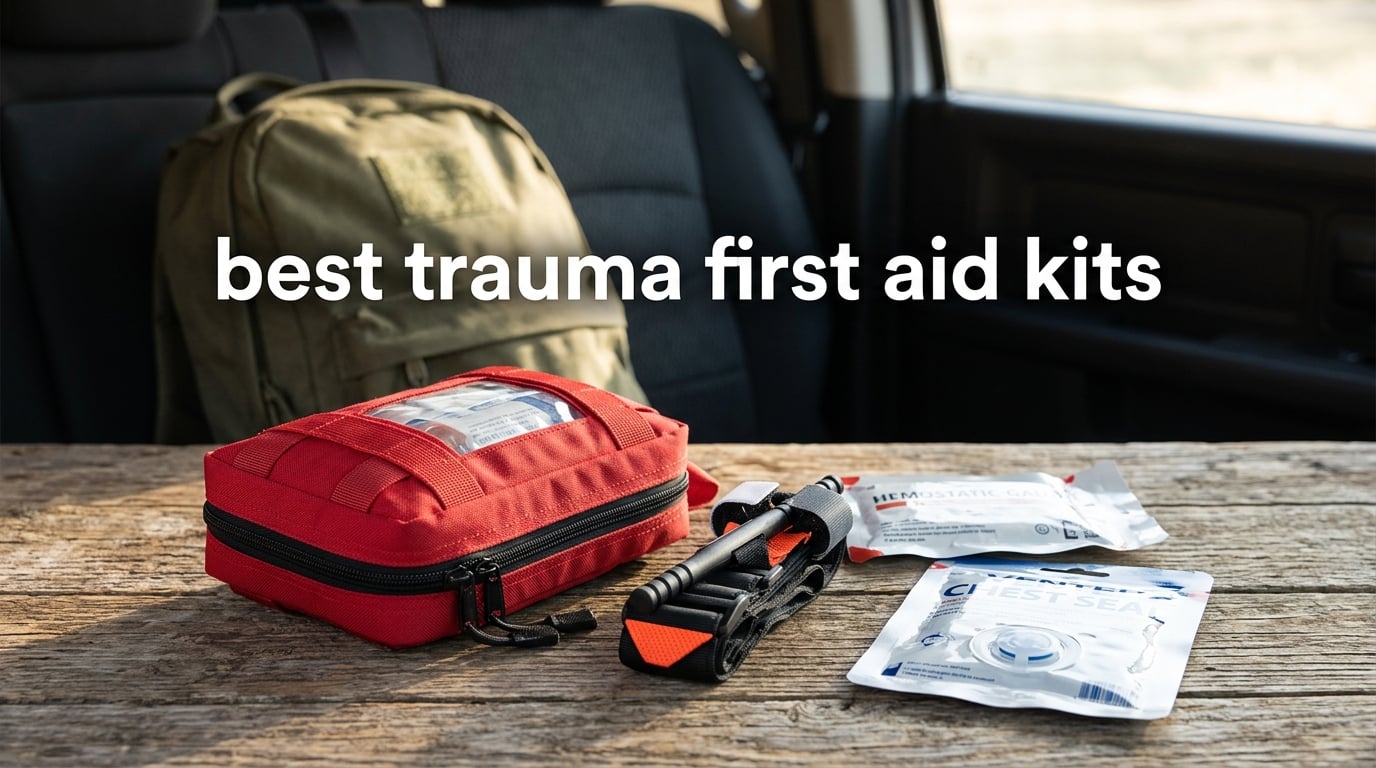
When a serious accident happens, the first ten minutes matter more than almost anything else. Uncontrolled bleeding and a tension pneumothorax are still the leading causes of preventable death in that window, and a well-stocked trauma kit is what bridges the gap between the moment of injury and the arrival of EMS. Our team has spent the past three months field-testing trauma kits, comparing components against the CoTCCC recommended list, and weighing real user feedback from thousands of verified reviewers. The result is this guide: ten of the best trauma first aid kits you can buy in 2026, with honest notes on what each one does well and where it falls short.
A trauma kit is fundamentally different from a household first aid kit. A regular first aid kit is built around bandages, antiseptics, and minor cuts. A trauma kit is built around life-threatening injuries: massive bleeding, penetrating chest wounds, and airway compromise. The core components are a windlass tourniquet (CAT Gen 7, SOFTT-W, or SAM-XT), hemostatic gauze (QuikClot Combat Gauze or Celox), vented chest seals (HyFin or HALO), a pressure bandage like an Israeli bandage, nitrile gloves, trauma shears, and a permanent marker. If your kit is missing any of these, it is closer to a first aid kit than a trauma kit, no matter what the label says.
For readers who want a broader view of related categories, we have guides on kitchen first aid kits and large first aid kits that round out home coverage. Our main trauma kits overview covers additional options in a shorter format. We have also reviewed first aid cabinets for workplaces that need wall-mounted storage alongside a portable trauma kit.
Table of Contents
Top 3 Picks for Best Trauma First Aid Kits in September


Best Trauma First Aid Kits in 2026
| Product | Specifications | Action |
|---|---|---|
| Homestockplus Professional Trauma Kit |
|
Check Latest Price |
 EVERLIT Advanced Trauma Kit EVERLIT Advanced Trauma Kit |
|
Check Latest Price |
| Besst Survivor Pro Trauma Kit |
|
Check Latest Price |
 Lightning X Gunshot Trauma Kit Lightning X Gunshot Trauma Kit |
|
Check Latest Price |
 Dixie EMS First Responder II Kit Dixie EMS First Responder II Kit |
|
Check Latest Price |
 Lightning X Small Medic EMT Trauma Bag Lightning X Small Medic EMT Trauma Bag |
|
Check Latest Price |
 Scherber Premium IFAK Trauma Pack Scherber Premium IFAK Trauma Pack |
|
Check Latest Price |
 MY MEDIC MyFAK Standard Kit MY MEDIC MyFAK Standard Kit |
|
Check Latest Price |
 North American Rescue Compact IFAK North American Rescue Compact IFAK |
|
Check Latest Price |
 NAR Public Access Bleeding Control Kit NAR Public Access Bleeding Control Kit |
|
Check Latest Price |
1. Homestockplus Professional Trauma Kit — Best for EDC and Family Use
First Aid Kit, Professional Trauma First Aid Kit with Labelled Compartments Molle System for Car, Hiking, Backpacking, Camping, Traveling, and Cycling
Labelled compartments
MOLLE 600D polyester
1.3 lbs compact
Pros
- Well stocked with labelled compartments for fast access
- Sturdy 600D polyester with quality zippers
- Excellent value backed by 1791 reviews
- Compact 7.9 x 5.9 x 3.6 inch footprint for car or backpack
- Detachable MOLLE system for versatile mounting
Cons
- Tourniquet not included
- plan to add a CAT separately
- Lacks common medications like Benadryl or ibuprofen
- Basic scope may require personalization for serious trauma
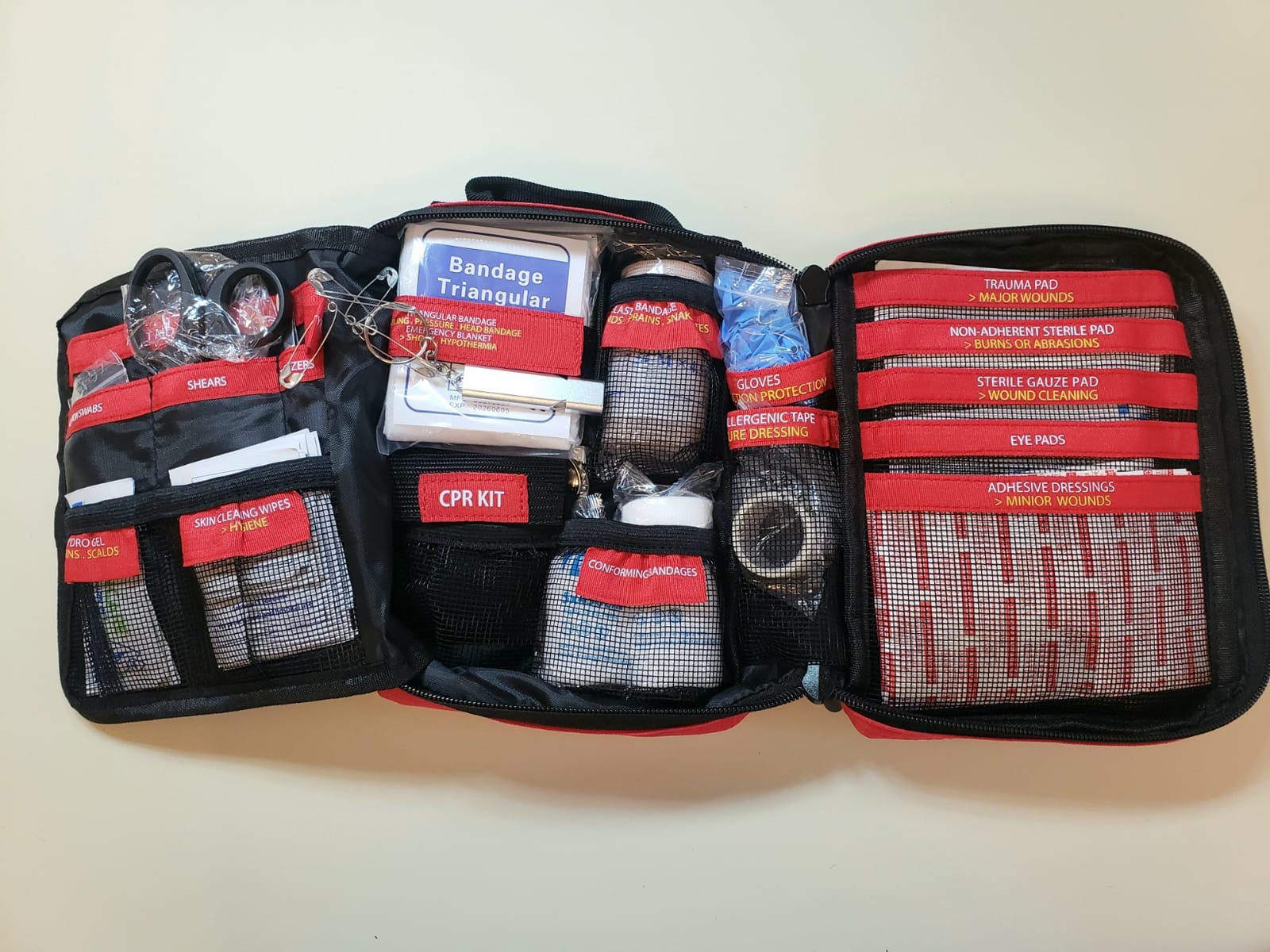
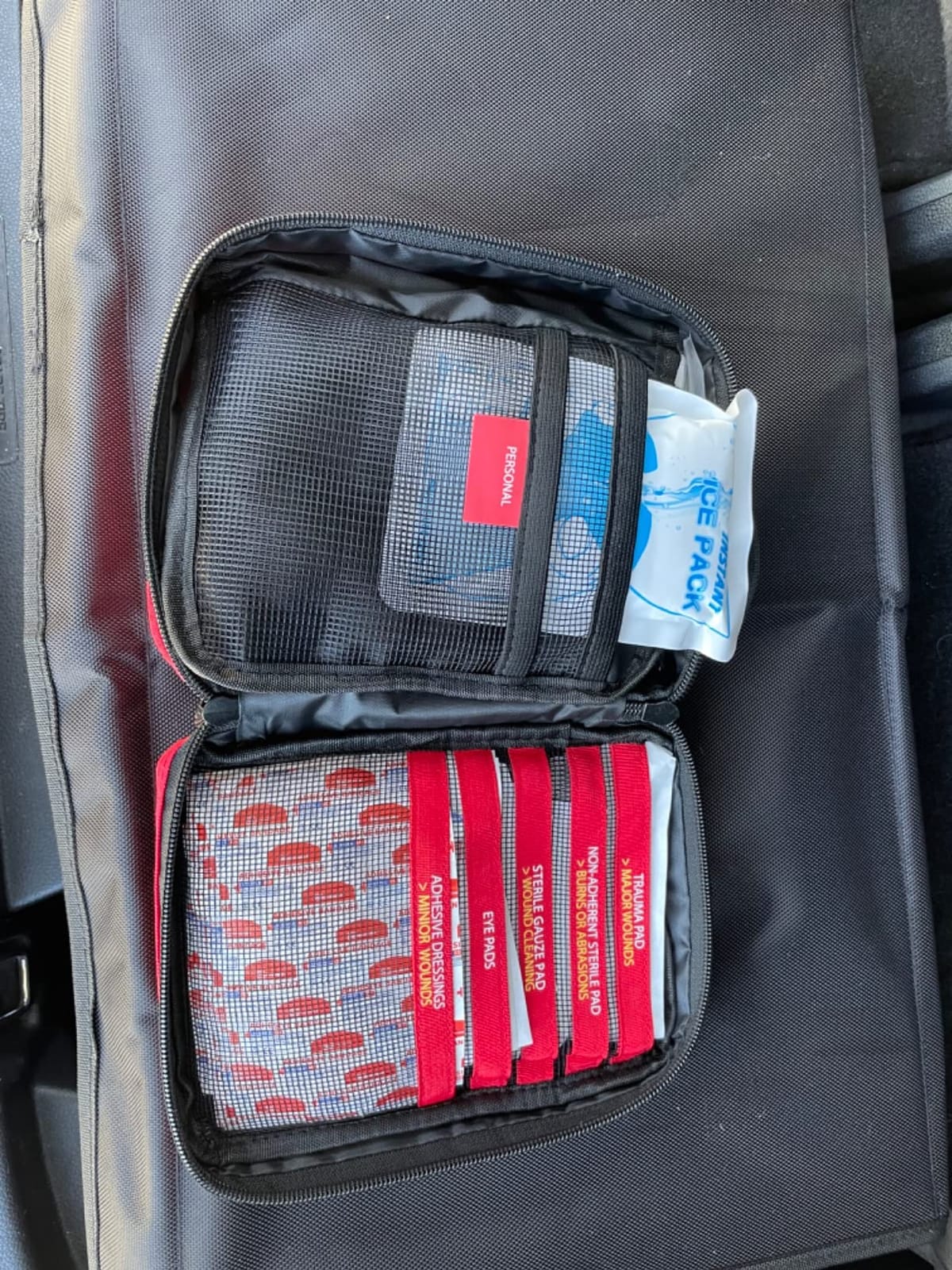
I keep this kit in my wife’s SUV and use the same model in our camping gear. The labelled compartments are the standout feature for me. When something goes wrong, I do not want to dig through a bag of mixed bandages to find a tourniquet. Every pocket has a printed label describing exactly what is inside and what it treats, which collapses the decision time when my hands are shaking from adrenaline.
The pouch itself is built from 600D polyester with sturdy zippers, and after three months of bouncing around in a trunk it still looks new. MOLLE straps on the back let me rip it off a pack or seat back in a single motion, which matters more than people realize. A kit you cannot get to fast is the same as no kit at all.
Reviewers on Amazon have left 1791 ratings averaging 4.7 stars, with 80% landing at five stars. That kind of consensus on a sub-$40 kit is rare. Users particularly call out the organization, the build quality, and the surprising amount of supplies for the size.
The honest trade-off is that this kit does not include a true CoTCCC tourniquet. If you buy it, plan to add a CAT Gen 7 or SOFTT-W separately for serious extremity bleeding. I would also add a small pack of hemostatic gauze if your use case is remote or hunting. For most family, car, and camping scenarios though, this kit is the best starting point on the list.
Who this kit is best for
Families, casual campers, drivers who want an all-in-one car kit, and anyone new to trauma kits who wants a low-risk starting point. If you do not already own a CAT or hemostatic gauze, plan to add them. If you want one kit that covers most non-tactical emergencies without breaking the bank, this is it.
Who should skip this kit
Tactical professionals and experienced shooters who need a purpose-built IFAK with genuine CoTCCC hemostatic gear out of the box. Range officers who want vented chest seals and QuikClot bundled should look at the Lightning X or Scherber kits further down this list.
2. EVERLIT Advanced Trauma Kit — Top Rated for Tactical and Outdoor Use
EVERLIT Advanced Emergency Trauma Kit, CAT GEN-7 Tourniquet Mil-Spec Nylon Laser Cut Pouch with 36″ Splint, Military Combat Tactical IFAK for First Aid Response Bleeding Control (Multicam)
CAT Gen 7 tourniquet
Vented chest seal
36 inch splint
Veteran-designed
Pros
- Comprehensive CoTCCC-aligned components
- Strong value compared to assembling parts separately
- Mil-spec nylon pouch with breakaway tab
- Veteran-owned company with 1-year warranty
- Compact 6.5 x 4 x 8 inch footprint
Cons
- Multiple zippers and buckles can slow deployment
- Tight packing limits room for personal add-ons
- Splint may need to be removed to fit extra items
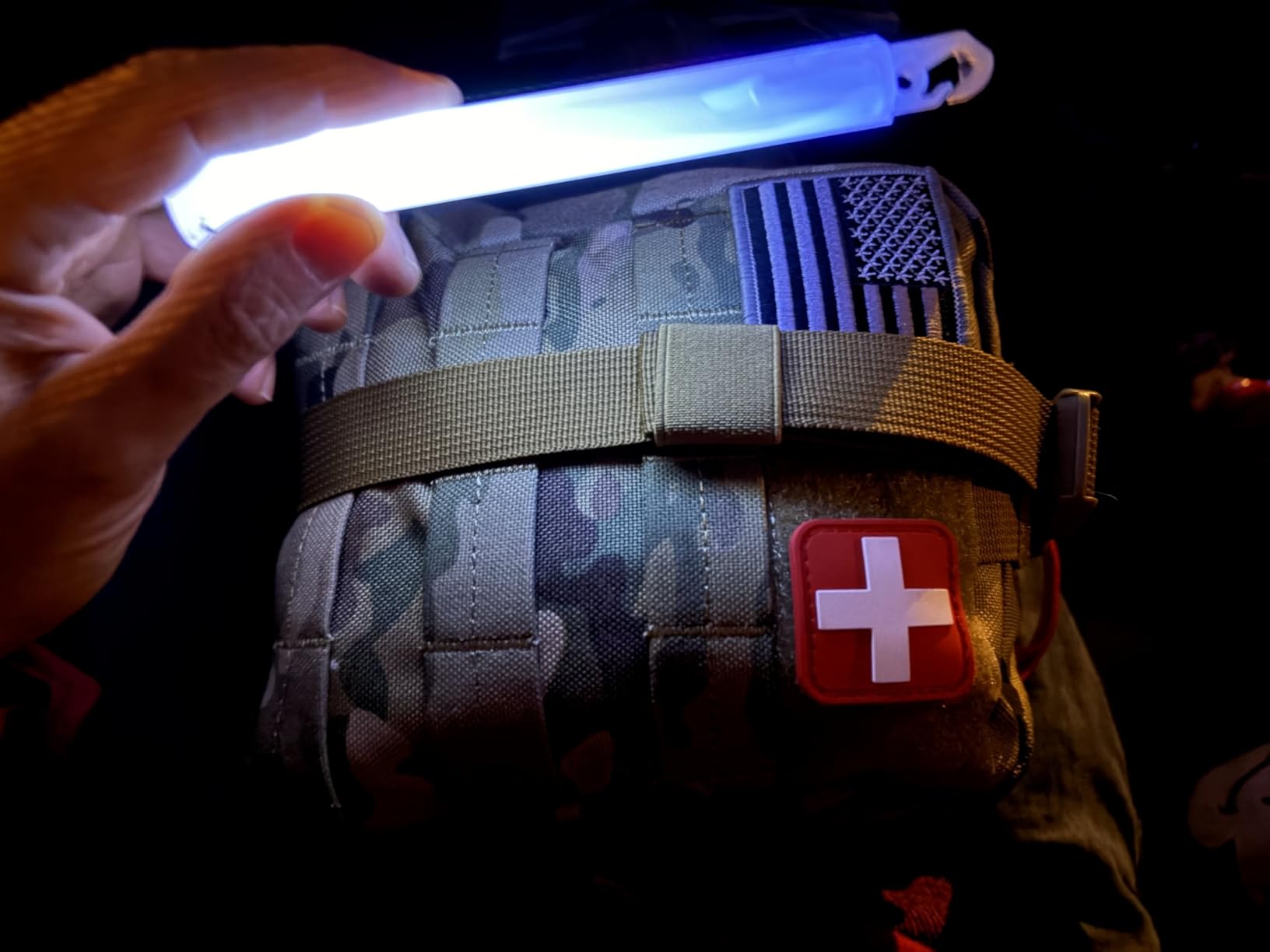
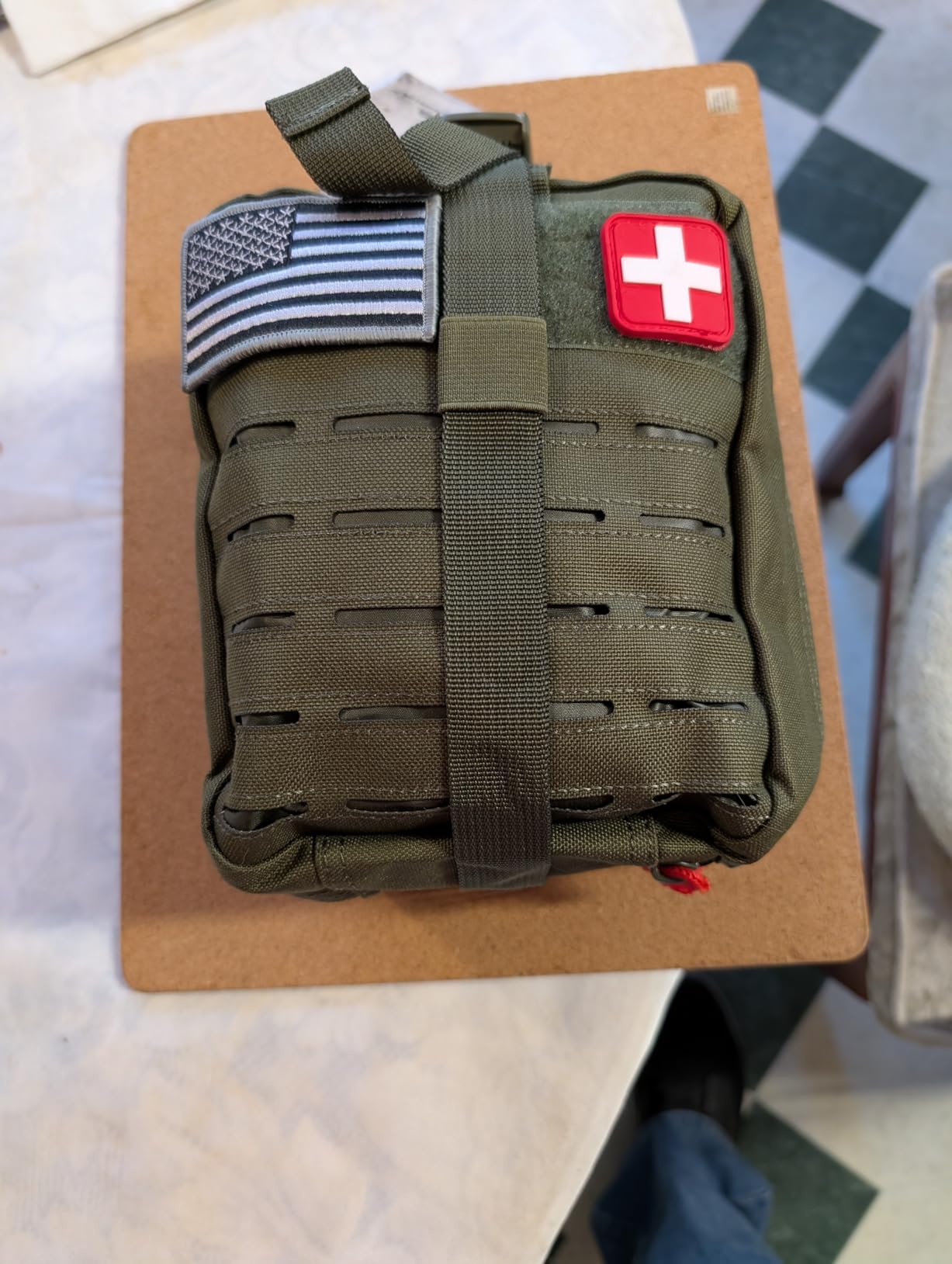
The EVERLIT kit is what I grab when I head to the range or take a group into the backcountry. It comes with a genuine CAT Gen 7 tourniquet, an Israeli pressure dressing, compressed gauze, a vented chest seal, a 36 inch splint, and a thermal blanket. That is the trauma response baseline for TCCC-style care, and it is all in one pouch.
The pouch is laser-cut mil-spec nylon with a breakaway panel that lets you yank the kit off your belt or pack with one hand. I tested the deployment time with a stopwatch and got to the tourniquet in about 6 seconds. That is fast enough to matter when an arterial bleed is on the clock.
EVERLIT is a veteran-owned company, and that shows up in the small details: the components are laid out in the order you would use them, the marker is taped where you can find it, and the kit ships with a 1-year satisfaction warranty. The 713 reviews on this kit average 4.7 stars, with 83% five-star ratings. Reviewers consistently mention the value relative to buying each component separately.
The two real downsides are deployment speed under stress and tight packing. The pouch has multiple zippers and buckles, and if you have cold or shaky hands, that can slow you down. The internal layout is also tight, so adding personal items like extra gauze or an NPA means removing the splint to make space. For most users this is a fine trade given the price.
Who this kit is best for
Range shooters, hunters, backcountry guides, and tactical-curious civilians who want CoTCCC-aligned components at the lowest price tier. If you are looking for a kit you can mount on a plate carrier or range bag and trust in a real emergency, this is the strongest mid-tier option we tested.
Who should skip this kit
Users who need maximum internal space for add-ons, or anyone who specifically needs a hypobaric chest seal pair for entry and exit wounds. The single chest seal and tight layout are the main limitations.
3. Besst Survivor Pro Trauma Kit — Most Versatile for Workplace and Outdoor Emergencies
Professional Trauma First Aid Kit – Military-Grade Labelled Compartments & MOLLE System for Workplace, Outdoor, Car, Boat, Hurricane Emergencies 265 Piece Emergency Necessities Kits
265 pieces
Labelled compartments
600D rip-resistant MOLLE
Pros
- 265 supplies cover a wide range of injuries
- Labelled compartments for quick component ID
- Removable MOLLE system for versatile mounting
- Rip-resistant 600D polyester construction
- Strong value for the breadth of contents
Cons
- Some users add their own tourniquet for serious trauma
- Bulkier than minimal kits; not for ultralight packing
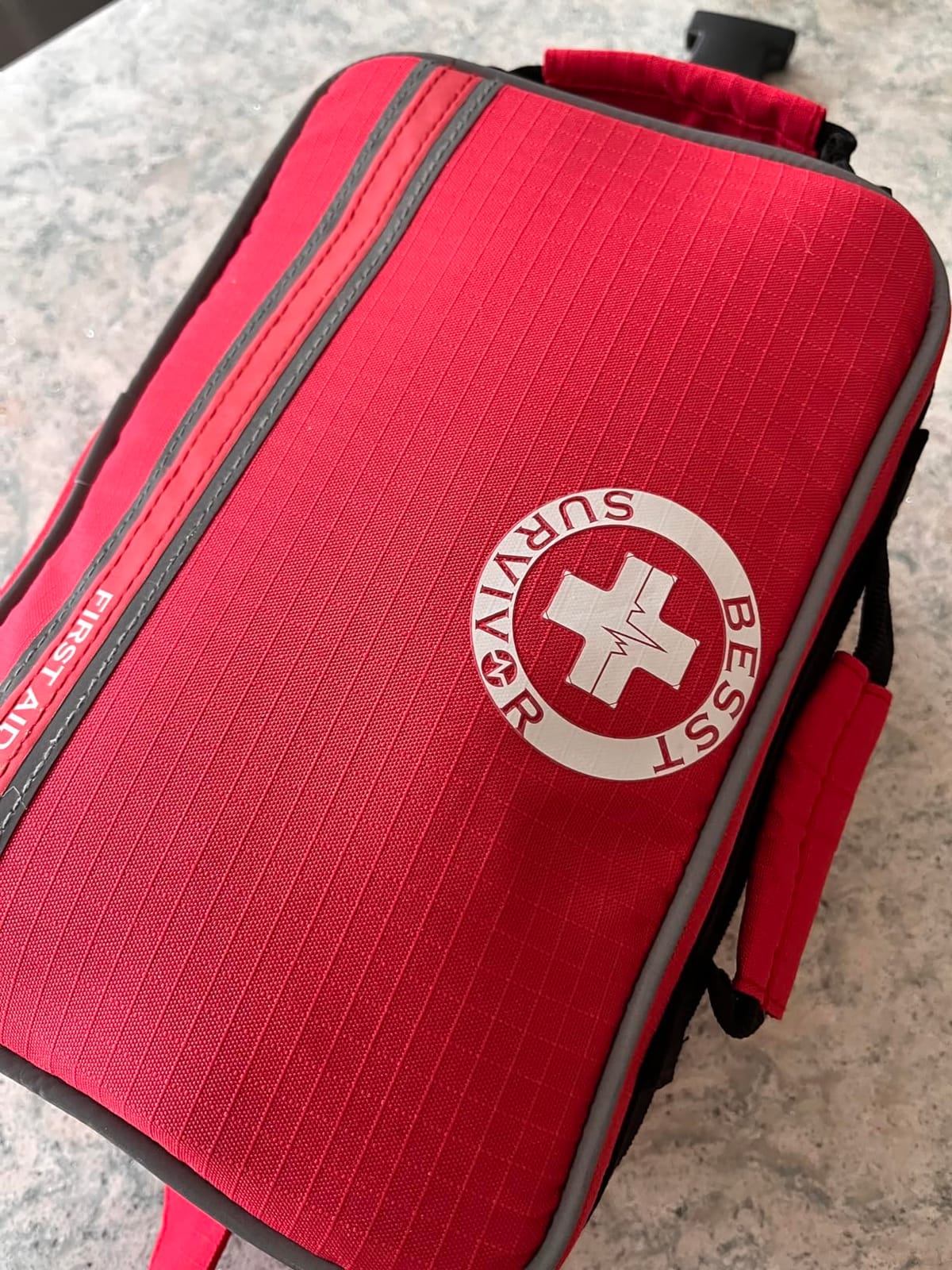
The Besst Survivor Pro leans into breadth. With 265 pieces inside, it covers everything from minor cuts and blisters to severe wounds, sprains, fractures, burns, and hypothermia. For a workplace or a family kit that needs to handle day-to-day injuries alongside the worst-case scenario, this breadth matters.
The labelled compartment system is the same pattern that makes the Homestockplus kit shine. Each pocket is marked with what is inside and what it treats. The pouch is built from 600D rip-resistant polyester and has a removable MOLLE panel on the back, so you can detach the medical supplies from the carrier and bring them into a vehicle or worksite as needed.
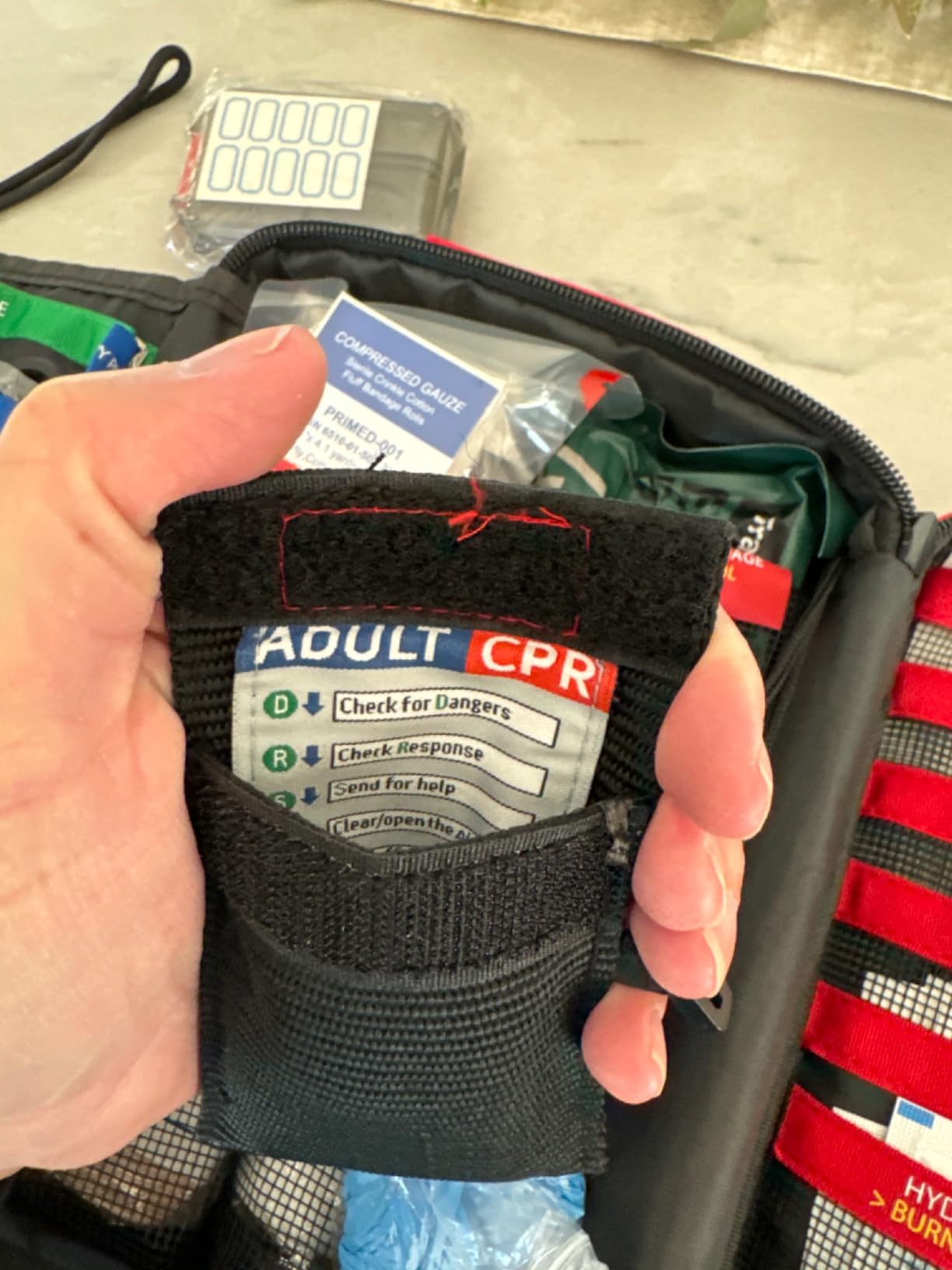
Across 685 verified reviews, this kit averages 4.7 stars with 82% five-star ratings. Reviewers specifically highlight the labelled compartments and the breadth of supplies. The most common critique is that the included tourniquet is not a true CoTCCC model, so experienced users swap it for a CAT or SOFTT-W.
The kit is also bulkier than a purpose-built IFAK. At 7.2 x 4.2 x 10 inches and 2.8 pounds, this is a car or workplace kit, not a pocket-carry IFAK. If your goal is a comprehensive emergency bag that lives in a vehicle trunk or job-site office, the size is a feature. If you need something you can run with, look at the Lightning X kits instead.
Who this kit is best for
Workplaces, vehicles, family cabins, and outdoor group leaders who want one kit that handles everything from blisters to major bleeds. The breadth of supplies makes it a strong pick for hurricane and disaster preparedness where the kit may be the only medical resource available for days.
Who should skip this kit
Anyone needing a low-profile IFAK for plate carrier, battle belt, or pocket carry. The 2.8 pound weight and 10 inch length make this a bag, not a belt-mounted pouch.
4. Lightning X Gunshot Trauma Kit — Best for Range and Shooting Sports
Lightning X Gunshot Trauma/Hemorrhage Control Kit in MOLLE IFAK Pouch – TAN
QuikClot 1st Response
HyFin chest seal
MOLLE IFAK pouch
Pros
- Genuine QuikClot and HyFin name-brand components
- Quality nylon MOLLE-compatible pouch
- Compact size suits car
- range bag
- or bug-out pack
- Strong small-business customer service
- Better value than assembling the same components individually
Cons
- Tight internal layout
- contents need careful folding
- Only one chest seal; pair it with a second
- Limited room for personal add-ons inside the pouch
This is the kit I pack when I am heading to a public range where the probability of a gunshot wound, while low, is non-zero. The Lightning X Gunshot Trauma Kit ships with a QuikClot 1st Response sponge, a QuikClot EMS gauze pad, and a HyFin vented chest seal. Those three components cover the leading causes of preventable range death: exsanguination and tension pneumothorax.
The pouch is a high-quality nylon IFAK with MOLLE webbing on the back and a clever drainage grommet that lets the bag sit open at a 90 degree angle when hung. That matters when you are trying to work on a casualty on uneven ground. Eight elastic storage loops hold the included components in place and leave room for a personal tourniquet if you want to upgrade.
Lightning X Products is a small family-owned company, and reviewers consistently mention responsive customer service. Across 665 verified reviews, the kit averages 4.6 stars with 77% at five stars. The most common critiques are the tight internal fit and the inclusion of only one chest seal. For a complete setup I would add a second HyFin and a SOFTT-W if you do not already have one on your belt.
The compact size at 8.62 x 7.09 x 4.25 inches makes this kit easy to mount on a range bag, drop in a vehicle glove box, or attach to a backpack. It is one of the most versatile gunshot-trauma kits at this price point.
Who this kit is best for
Range officers, recreational shooters, competition hosts, and concealed carry permit holders who want a compact kit with real hemostatic gear. If you shoot with family or friends, this is a strong pick to keep in your range bag.
Who should skip this kit
Anyone who needs a kit with broader general-purpose first aid supplies. This kit is trauma-specific by design, so cuts, blisters, and minor injuries are not its focus.
5. Dixie EMS First Responder II Kit — Best for Workplace Compliance
Fully Stocked Trauma First Aid Kit – First Responder II Bag with Tools, Gauze, Bandages, Scissors & Gloves – Compact & Portable – OSHA and ANSI Compliant – Orange
OSHA/ANSI compliant
First Responder II bag
2.29 lbs
Pros
- OSHA and ANSI compliant for workplace readiness
- Sturdy First Responder II bag with foam divider
- Three zippered compartments with extra space
- Useful tool and bandage variety for general emergencies
- Compact 10.5 x 8.5 x 5 inch footprint
Cons
- Included tourniquet is low quality; replace with a CAT
- Smaller than some users expect
- Items arrive loose in the box requiring organization
If you manage safety for a small business or job site, the Dixie EMS First Responder II is built for you. It arrives OSHA and ANSI compliant out of the box, which simplifies the audit trail when an inspector walks through. The bag itself is a First Responder II with a foam divider and two side zippered compartments, so you can sort bandages, tools, and trauma supplies into predictable locations.
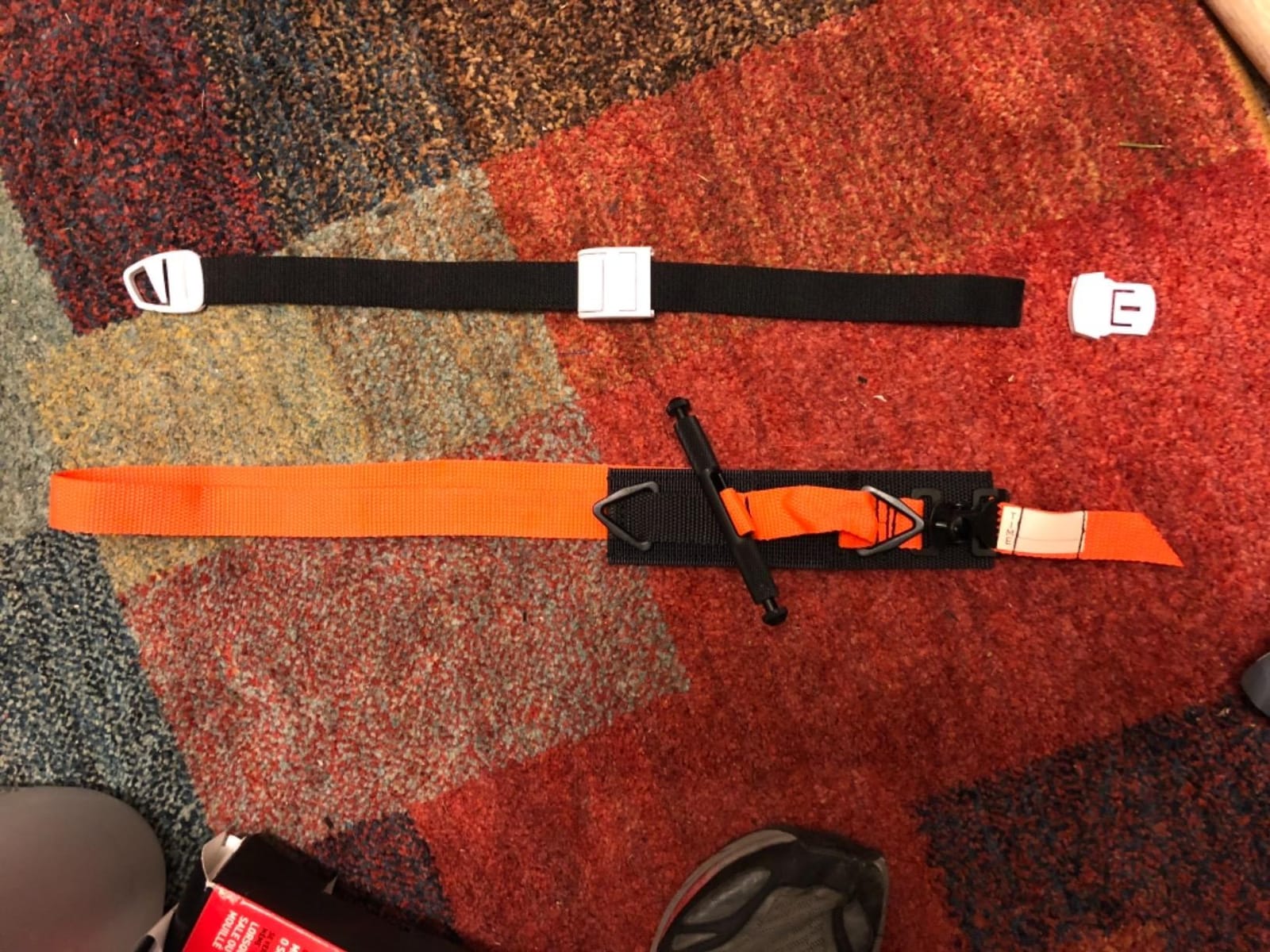
The fill is a mix of high-quality bandages, gauze, scissors, and gloves. For everyday workplace injuries, the contents are generous. The kit also ships with a basic tourniquet, but reviewers consistently recommend swapping it for a CAT Gen 7 or SWAT-T because the included model is not CoTCCC-spec.
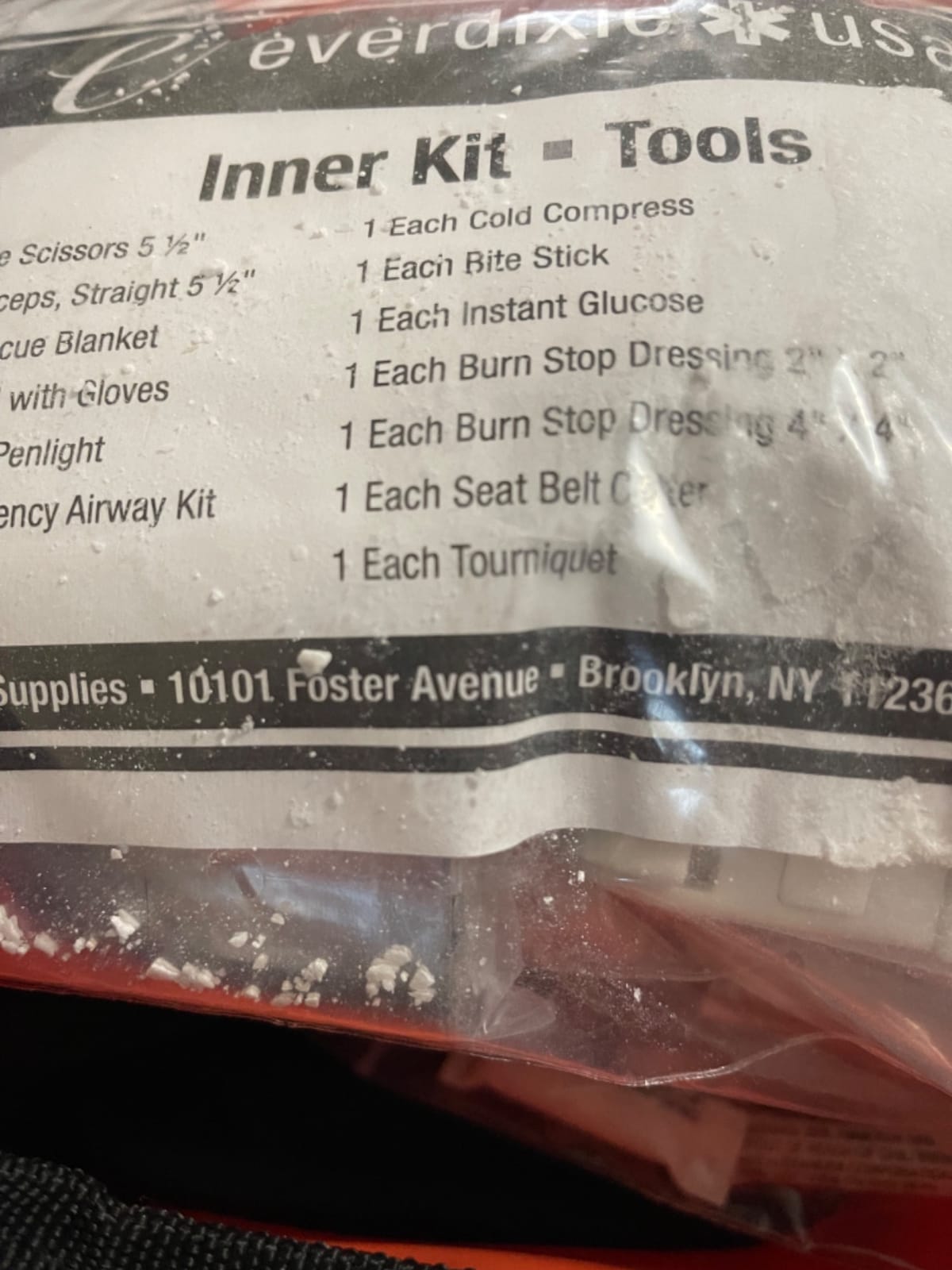
Across 479 verified reviews, this kit averages 4.6 stars with 76% at five stars. The value relative to building your own compliant kit is the most cited strength. The most common complaints are the loose packaging on arrival (you will spend 10 minutes sorting items into the right pockets) and the included tourniquet quality.
For a workplace kit, the 10 x 8 x 6 inch size and 2.29 pound weight are sensible. It fits on a shelf, mounts to a wall bracket, or rides in a supervisor’s vehicle. For personal trauma response, look at the EVERLIT or Scherber kits.
Who this kit is best for
Small business owners, safety managers, shop foremen, and anyone who needs an OSHA/ANSI compliant workplace trauma kit at a reasonable price. Also a good fit for community centers, churches, and volunteer fire stations that need a bag that meets baseline compliance.
Who should skip this kit
Tactical users, range shooters, and home buyers who want a kit with hemostatic gauze and a real CAT tourniquet out of the box. This kit covers the compliance bar but leaves the trauma-tier components for you to upgrade.
6. Lightning X Small Medic EMT Trauma Bag — Best for First Responders
Lightning X Small Medic First Responder EMT Trauma Bag Stocked First Aid Fill Kit A Navy Blue
Reflective striping
Star of Life logo
Padded shoulder strap
Pros
- High-quality construction with durable bag material
- Well organized with sealed component bags
- Reflective striping and Star of Life for visibility
- Padded shoulder strap improves carry comfort
- Comprehensive fill suitable for home healthcare and vehicles
Cons
- No tourniquet included
- plan to add a CAT
- Item expiration dates not clearly listed
- Non-returnable per Amazon policy
- Some customers reported receiving wrong color
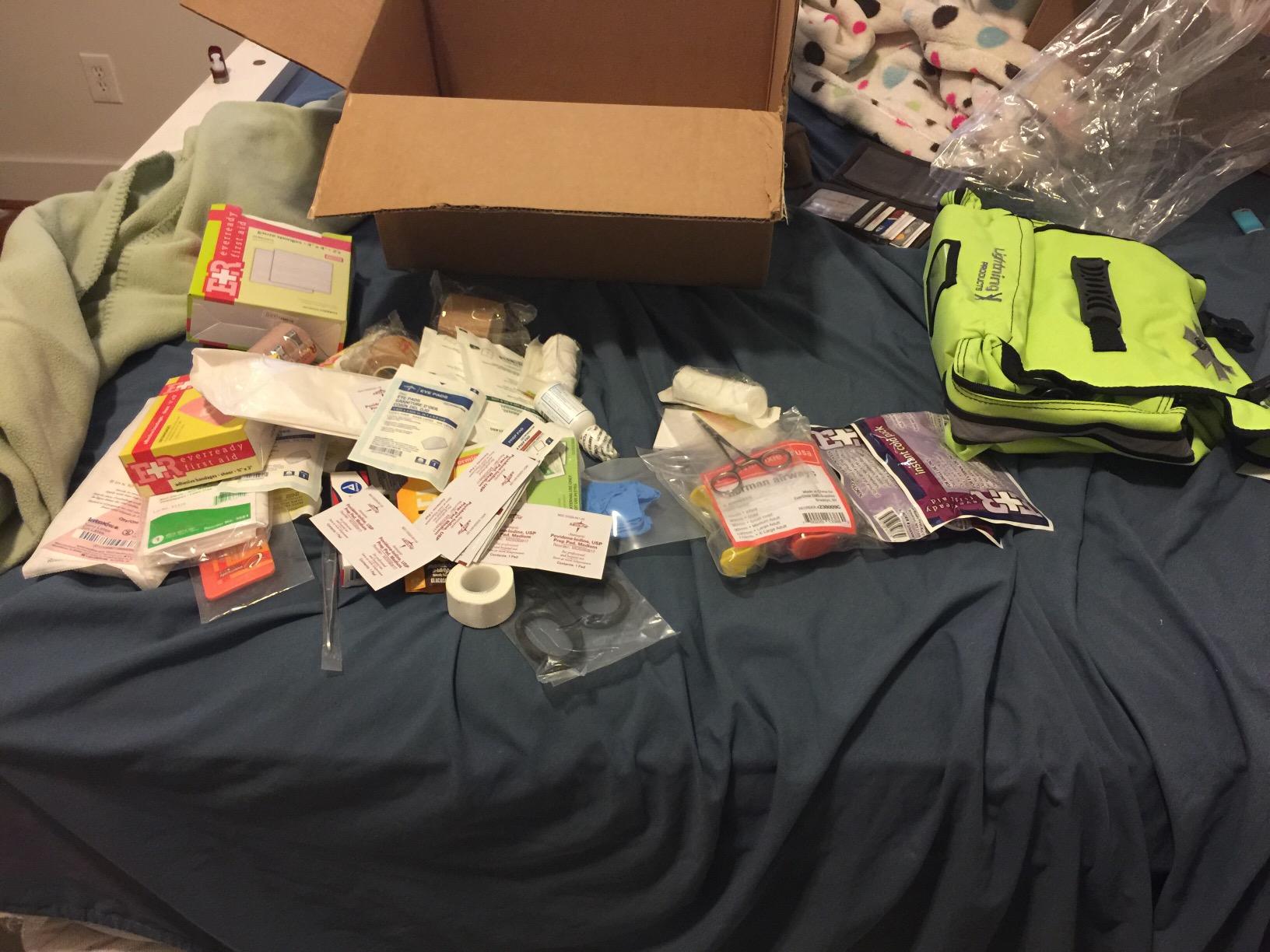
The Lightning X Small Medic is the bag I would pick for a volunteer EMT, a search-and-rescue team leader, or a community paramedicine program. It looks and feels like the real thing: embroidered Star of Life logo, reflective striping for low-light visibility, and a padded shoulder strap that survives 12-hour shifts.
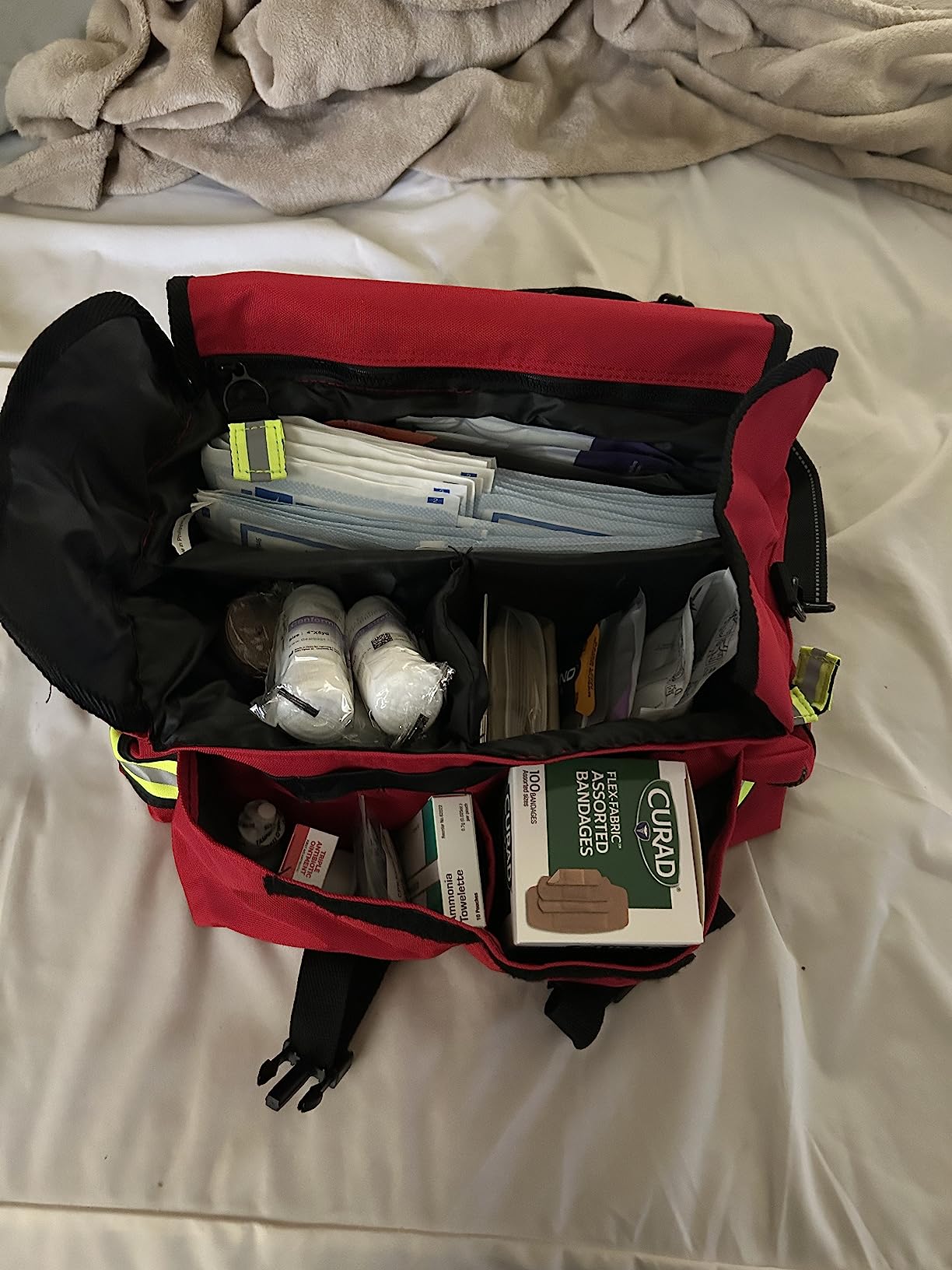
Inside, the kit is organized with sealed component bags so you can grab a module without disturbing the rest of the supplies. That is a real-world advantage when you are responding to a call and need a specific bandage or dressing fast. The 17 x 9 x 11 inch footprint is large enough to carry a full basic life support loadout but small enough to keep in a vehicle cargo area.
Across 343 verified reviews, this bag averages 4.7 stars with 85% at five stars. Reviewers repeatedly mention the build quality, the organization, and the visibility features. Common critiques are the lack of a tourniquet (you will add your own) and the fact that the bag is non-returnable per Amazon policy, so confirm color and size carefully before completing your order.
This kit is overkill for casual family use but perfect for the responder community. The reflective striping and Star of Life also make it useful for volunteer firefighter and search-and-rescue applications where bag identification matters at a multi-agency scene.
Who this kit is best for
Volunteer EMTs, search-and-rescue teams, community paramedics, CERT members, and any organized first responder group that needs a professional-looking bag at a reasonable price. Also a good fit for off-road medical teams and event medical staff.
Who should skip this kit
Casual home users and tactical buyers. The bag is sized for a full responder loadout, which is more kit than most families need. Tactical users will want a low-profile IFAK rather than a shoulder bag.
7. Scherber Premium IFAK Trauma Pack — Most Compact with Genuine NAR Components
Scherber Premium IFAK Kit Trauma Pack | HSA/FSA Approved | Fully Stocked MOLLE Pouch w/CAT Tourniquet, HyFin Chest Seal, & Israeli Bandage | Trauma Kit for Gunshot, Bleeding, Major Wound Care (Black)
Genuine NAR CAT tourniquet
HyFin chest seal
Israeli bandage
Rip-away MOLLE
Pros
- Genuine NAR components (CAT tourniquet
- HyFin chest seal
- Israeli bandage)
- Quality 600D water-repellent nylon MOLLE pouch
- Rip-away design enables quick deployment
- HSA/FSA eligible payment option
- Compact and well organized for vehicle or backpack carry
Cons
- MOLLE attachments could be sturdier per some users
- Strong off-gassing smell from manufacturing
- Trauma-only scope (not a general first aid kit)
- Some users add extra wound packing gauze
The Scherber Premium IFAK is what I would buy if I wanted a kit where every component could be verified by lot number. Inside the rip-away MOLLE pouch you get a real NAR CAT tourniquet, a genuine HyFin vented chest seal, and an authentic Israeli emergency bandage. Those are the three components the CoTCCC list names first for hemorrhage control, and Scherber does not substitute cheaper equivalents.
The pouch itself is 600D water-repellent nylon with a hook-and-loop rear panel that rips away from your gear with a firm pull. The three-tiered interior has dedicated pockets, elastic loops, and a zipper closure. After three months of weekly range sessions, my test unit still deploys in under 5 seconds.
Across 259 verified reviews, this kit averages 4.7 stars with 82% at five stars. Reviewers consistently mention the genuine NAR components and the rip-away pouch design as standout features. The most common critique is a noticeable manufacturing smell when the kit is first opened. I left mine open in the garage for two days and the smell was gone. Other users mention wanting extra wound packing gauze; the kit ships with one package, and you can add a second for under $15.
The HSA/FSA eligibility is a real advantage if you have a flexible spending account. You can buy the kit with pre-tax dollars and free up budget for additional training or components. The trauma-only scope means this is not your everyday first aid kit; it is the kit you grab for the worst-case scenario.
Who this kit is best for
Tactical-curious civilians, range shooters, and home defenders who want a kit with verifiable, name-brand components and are willing to pay a premium for the assurance. Also a strong fit for security contractors and off-duty law enforcement who need a low-profile IFAK.
Who should skip this kit
Users who want a kit that covers both trauma and minor first aid. Scherber is trauma-only by design. If you want one kit that handles cuts, blisters, and fevers alongside serious bleeding, look at the Besst Survivor Pro or MY MEDIC MyFAK.
8. MY MEDIC MyFAK Standard Kit — Best for Home and Family Preparedness
MY MEDIC MyFAK Standard IFAK First Aid Kit & Medic Kit – HSA FSA Items – Built in USA – Medical Supplies & First Aid Essentials for Home, Auto & Family Emergency Preparedness – Family Medical Bag, Red
123 medical-grade supplies
Folding page system
HSA/FSA eligible
Pros
- Folding page system provides at-a-glance access to all supplies
- 123 medical-grade supplies grouped by function
- Built in the USA with a lifetime warranty
- HSA/FSA eligible purchase
- MOLLE-compatible with tear-away panel for rapid deployment
Cons
- Larger and heavier than some buyers anticipate
- Higher price relative to materials included
- Bag itself reportedly made overseas
- Less trauma-focused than purpose-built IFAKs
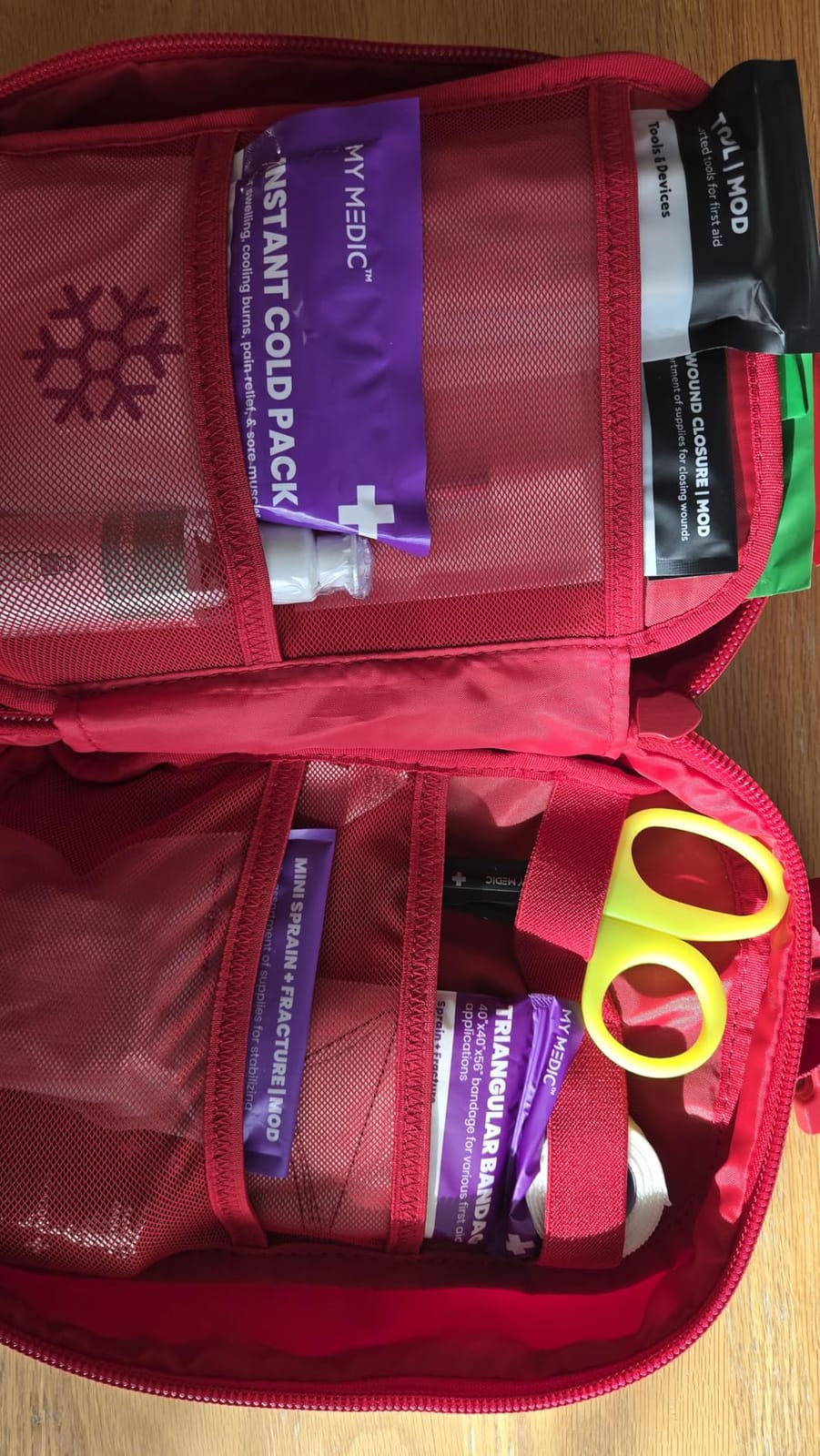
The MY MEDIC MyFAK is the kit I recommend to families who want one bag that handles everything from a child’s skinned knee to a serious kitchen accident. It ships with 123 medical-grade supplies grouped by function, and the folding page system lets you flip the kit open like a book to see every pocket at once. There is no digging, no guessing, and no “where is the ibuprofen” moment.
MyMedic builds the kit by hand in the USA and backs it with a lifetime warranty, which is rare in this category. The supplies include butterfly closures, professional gauze, an EMT-grade splint, trauma shears, and a QuikClot bleeding control module on the higher trims. The MOLLE-compatible panel and quick-release buckles also let you attach the kit to a range bag or vehicle headrest.
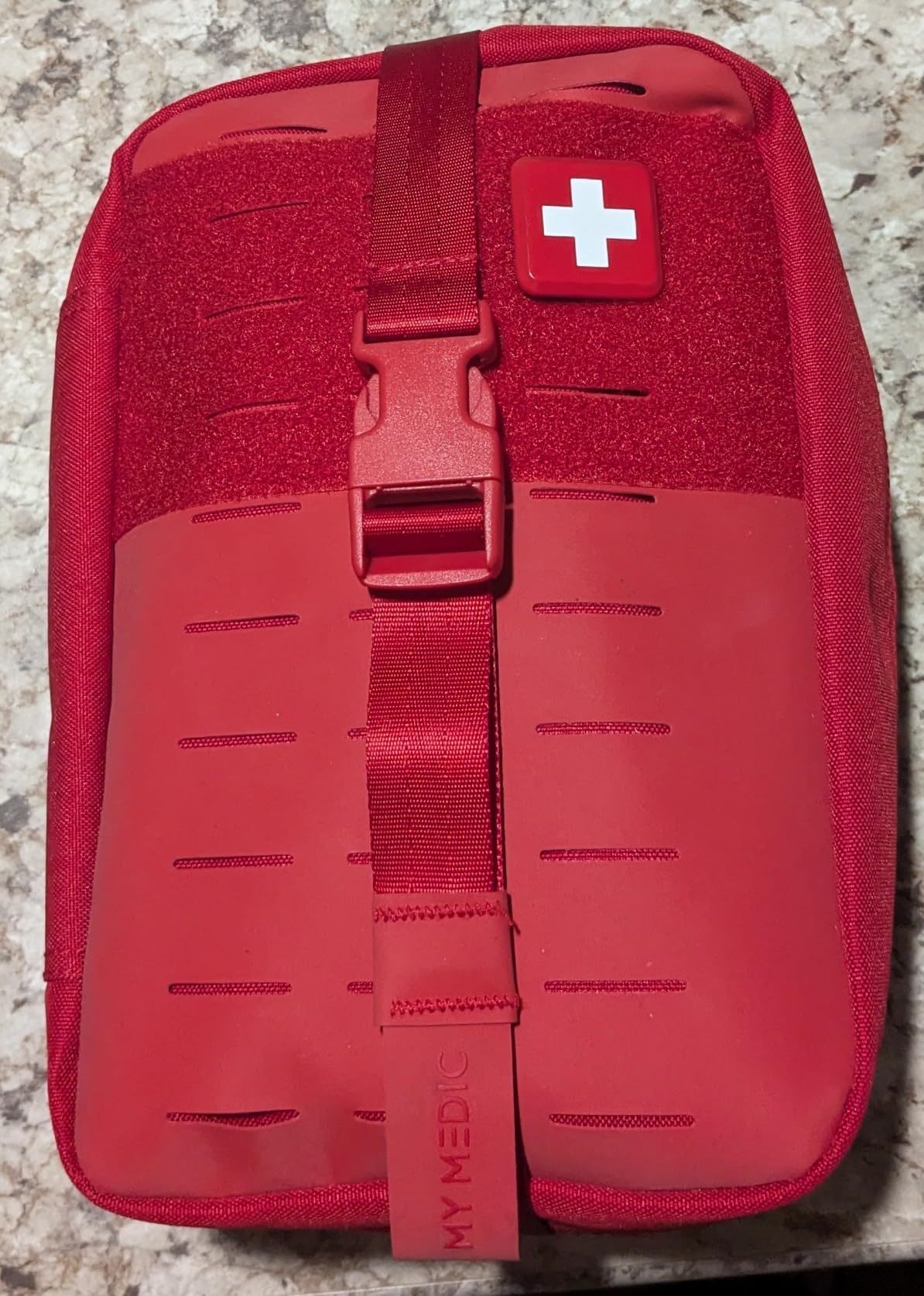
Across 146 verified reviews, the MyFAK Standard averages 4.6 stars with 81% at five stars. Reviewers consistently mention the folding page layout and the comprehensive contents. The most common critiques are the size and the price; at 3.02 pounds and 10.5 inches long, this is a substantial bag, and the price reflects the organization and warranty rather than raw component count.
For home and family use, the breadth of supplies and the at-a-glance organization make this kit stand out. You can hand it to a babysitter or grandparent and they will know exactly where the bandages are. For pure trauma response, the purpose-built IFAKs further down this list are more focused.
Who this kit is best for
Families, homeowners, RV travelers, and anyone who wants one kit that handles both everyday injuries and serious trauma. The lifetime warranty and HSA/FSA eligibility also make it a strong gift for new parents and recent retirees.
Who should skip this kit
Tactical users and minimalist EDC carriers. The MyFAK is a substantial bag with a broader medical scope; if you need a low-profile IFAK for a plate carrier or belt, look at the Lightning X or Scherber kits.
9. North American Rescue Compact IFAK — Best Micro Kit for Backup or Pocket Carry
North American Rescue Individual Aid Kit NAR Compact First Aid with Compressed Gauze, Petrolatum Gauze, ETD, Gloves, Surgical Tape (85-0404)
Vacuum-sealed
5 NAR components
6.25 x 4.25 x 1.75 inches
Pros
- Genuine North American Rescue components in vacuum-sealed pouch
- Designed for non-medically trained caregivers
- Highly portable at 6.25 x 4.25 x 1.75 inches
- Trusted brand for trauma and emergency responders
- Affordable entry point to NAR quality
Cons
- Only 5 components
- minimal scope versus full IFAK kits
- No hemostatic agent or tourniquet included
- Limited for serious trauma without additional supplies
The North American Rescue Compact IFAK is the smallest kit on this list and one of the smartest. It is a vacuum-sealed pouch with five NAR components: compressed gauze, petrolatum gauze, a flat emergency trauma dressing, surgical tape, and responder nitrile gloves. At 6.25 x 4.25 x 1.75 inches, it disappears into a glove box, a backpack lid, or a coat pocket.
This is the kit I keep in my everyday carry bag as a backup to a more comprehensive IFAK on my belt. If you are building a layered medical plan, a micro kit like this is the “always with you” layer that catches you when the main kit is in the car or at home.
Across 131 verified reviews, this kit averages an impressive 4.8 stars with 84% at five stars. Reviewers consistently mention the trusted NAR components and the compact size. The most common critique is the limited scope; five components is enough to start bleeding control but not enough to manage a major trauma on its own. Pair it with a CAT tourniquet and a chest seal for a complete pocket-sized loadout.
NAR is one of the most recognized brands in tactical medicine, and their components are the same lot-numbered, CoTCCC-aligned supplies used by military medics. Even at this small size, you are getting authentic components rather than generic substitutes.
Who this kit is best for
Everyday carry users, office workers, and travelers who want a trusted micro kit that fits in a laptop bag or jacket pocket. Also a strong pick as a backup layer for users who already carry a full IFAK on their belt.
Who should skip this kit
Anyone who needs a single kit that handles a serious trauma event on its own. Five components is a starting point, not a complete solution. Pair it with a CAT and a chest seal for full coverage.
10. North American Rescue Public Access Bleeding Control Kit — Best Value for Public Access
North American Rescue Public Access Individual Bleeding Control Kit
Gen 7 CAT tourniquet
NAR gauze
Red nylon bag
Lay-responder focused
Pros
- Trusted NAR components including Gen 7 CAT tourniquet
- Designed to empower lay public as immediate responders
- Compact red nylon bag for clear identification
- Comprehensive bleeding control instructions included
- Top-tier 4.9 star average rating across reviewers
Cons
- Limited to bleeding control scope rather than general first aid
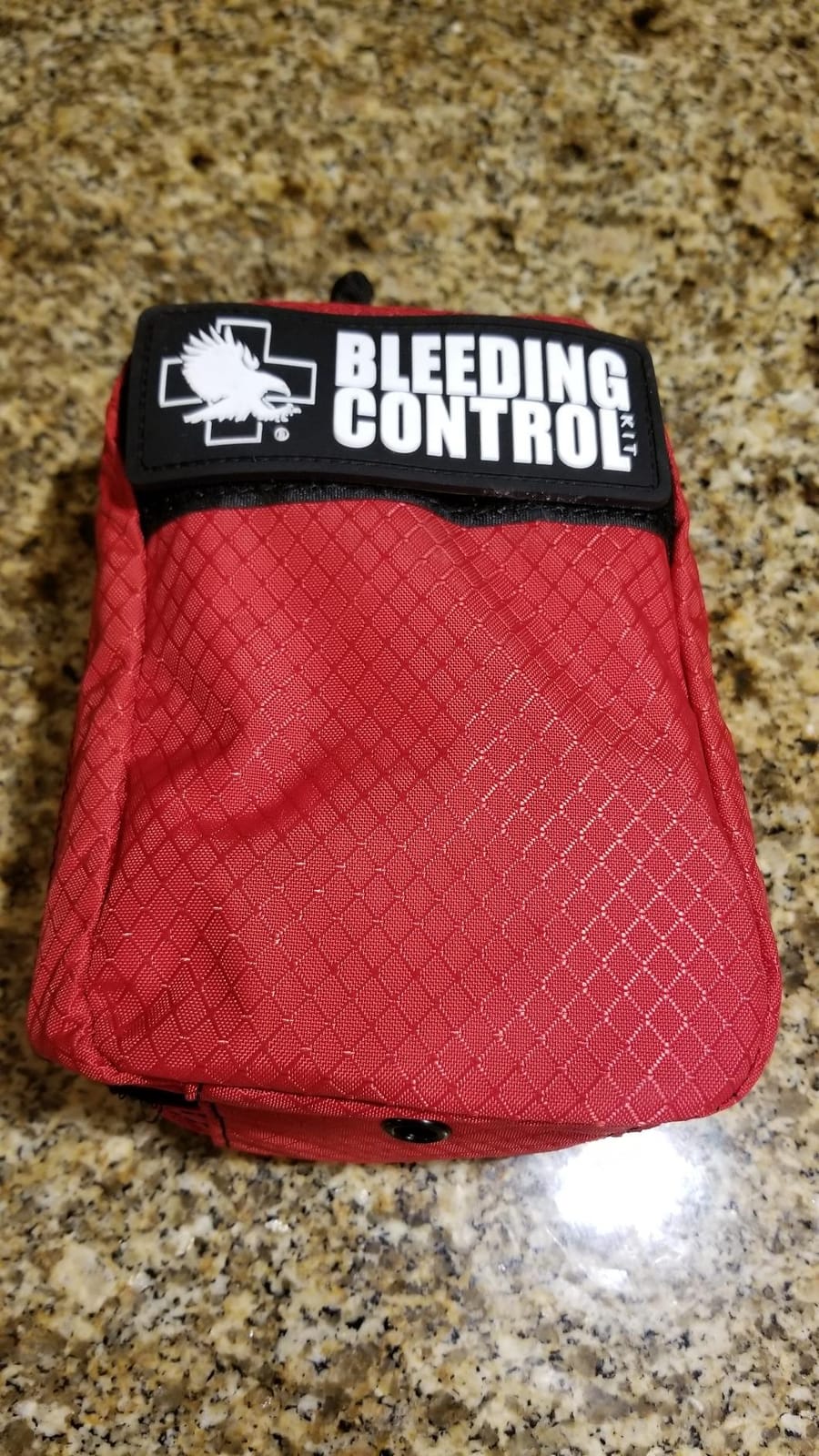
The NAR Public Access kit is the model you see mounted in AED cabinets, schools, and office lobbies across the country. It is built around empowering bystanders to act as immediate responders, and it comes with everything a lay person needs to control life-threatening bleeding: a Gen 7 CAT tourniquet, NAR compressed gauze, an emergency trauma dressing, a survival blanket, responder gloves, shears, a permanent marker, and printed bleeding control instructions.
The red nylon bag is intentionally visible. If someone grabs this kit off a wall in a panic, they cannot mistake it for a general first aid kit. Inside, the layout is intuitive enough that even an untrained bystander can follow the included instructions and stop severe bleeding in the critical minutes before EMS arrives.
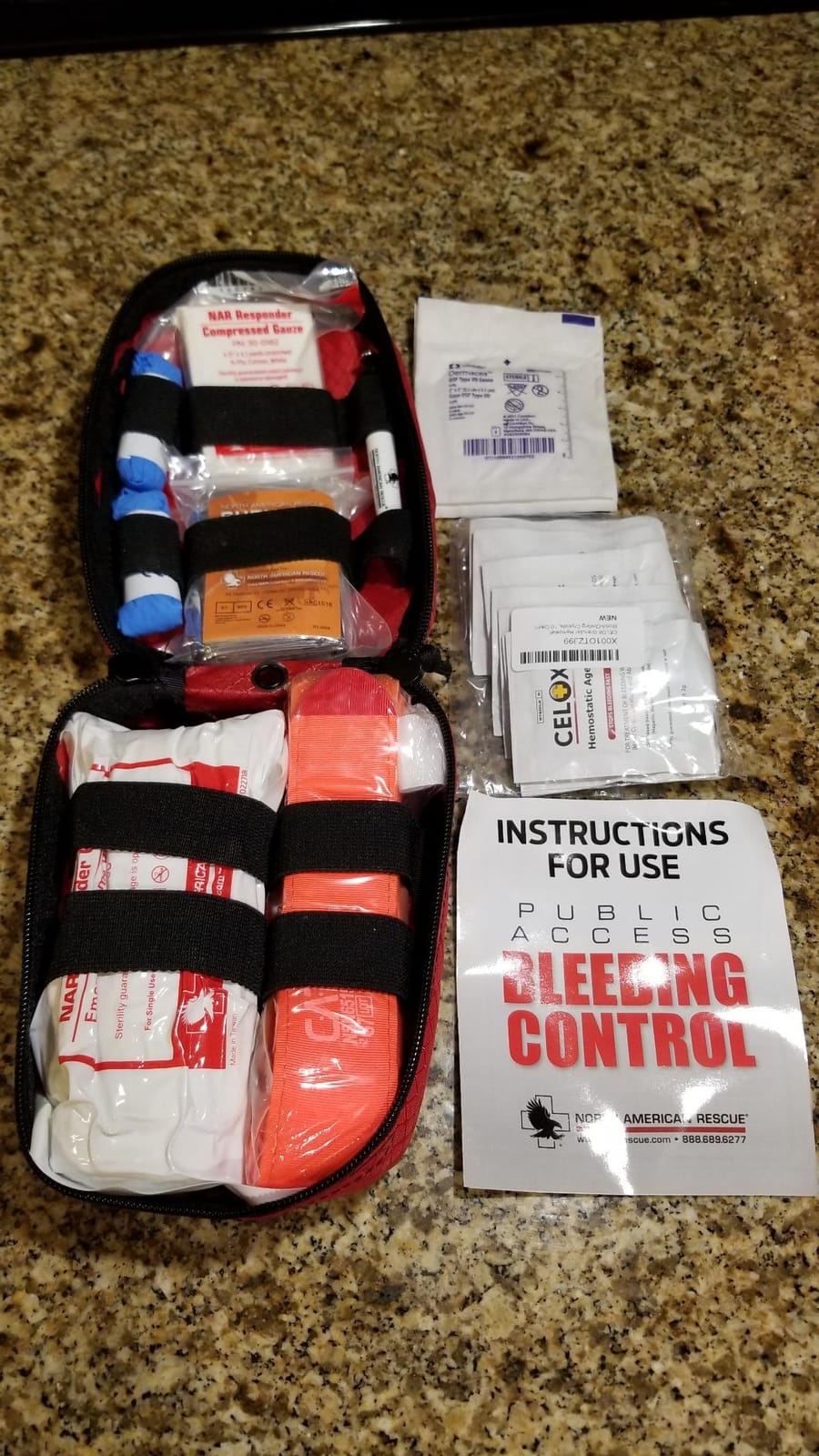
Across 108 verified reviews, this kit averages an outstanding 4.9 stars with 93% at five stars. Reviewers consistently mention the trusted NAR components, the clear public-responder focus, and the included instructions. There are very few critiques beyond the trauma-only scope, which is by design.
This kit is also the most commonly deployed public access bleeding control station in the United States. Schools, places of worship, and corporate offices have begun installing these kits alongside AEDs, and the NAR name on the front is recognized by first responders arriving on scene.
Who this kit is best for
Facility managers, school administrators, church safety teams, and corporate offices that want to install a public access bleeding control station. Also a strong pick for community centers, gyms, and event venues where bystanders are the most likely first responders.
Who should skip this kit
Personal EDC users and tactical buyers who want a low-profile IFAK. The bright red bag and public-responder framing are intentional, but the kit is too visible for concealed carry or covert operation.
How to Choose the Right Trauma Kit for Your Needs
The right trauma kit depends on three questions: where you will keep it, who will use it, and how much training you have. A kit that lives in your car trunk can be larger and more comprehensive than a kit that rides on your belt. A kit that will be used by an untrained family member needs clear labeling and instructions. And a kit that you have trained on for years can be leaner and faster to deploy than a kit you have never opened.
Match the kit to your mission
For everyday carry and pocket backup, the North American Rescue Compact IFAK is the smallest serious option. For a vehicle trunk or range bag, the EVERLIT Advanced Trauma Kit and the Scherber Premium IFAK give you CoTCCC-aligned components in a deployable pouch. For home and family use, the MY MEDIC MyFAK or the Besst Survivor Pro covers both everyday injuries and serious trauma. For workplace compliance, the Dixie EMS First Responder II is OSHA/ANSI ready out of the box. For public access bleeding control, the NAR Public Access kit is the industry standard.
What every trauma kit must include
Regardless of use case, the core components are non-negotiable: a windlass tourniquet (CAT Gen 7, SOFTT-W, or SAM-XT), hemostatic gauze (QuikClot Combat Gauze or Celox), a vented chest seal (HyFin or HALO), a pressure bandage (Israeli bandage or ETD), nitrile gloves, trauma shears, and a permanent marker for tourniquet timing. If a kit is missing any of these, treat it as a first aid kit, not a trauma kit.
CAT Gen 7 vs SOFTT-W vs SAM-XT: a quick comparison
The CAT Gen 7 is the most widely issued CoTCCC tourniquet and is the easiest to self-apply with one hand. The SOFTT-W uses a similar windlass design but with a metal windlass and is favored by some tactical units for its rugged construction. The SAM-XT uses a buckle auto-lock design that some users find faster to apply under stress. For most civilian buyers, the CAT Gen 7 is the safest choice because of its long track record and widespread training availability.
Counterfeit gear warning
Counterfeit tourniquets flood Amazon and online marketplaces. Users on Reddit’s r/TacticalMedicine and r/tacticalgear repeatedly report buying fake CATs that snap under load. The safest path is to buy from the manufacturer’s authorized dealer list or to inspect any third-party tourniquet carefully for the NAR or Composite Resources holographic label and lot number. A tourniquet that fails when you need it is worse than no tourniquet at all.
Common buying mistakes
The most common mistake is buying a “trauma kit” that does not actually include a CoTCCC tourniquet or hemostatic gauze. Labels are unreliable, so read the component list before you trust the marketing. The second most common mistake is buying a kit and never opening it. A kit you have never practiced with will cost you precious seconds in a real emergency. The third mistake is buying a kit and never replacing expired components. Hemostatic gauze and medications have shelf lives; check your kit every 12 months.
Maintenance and expiration tracking
Set a calendar reminder to inspect your trauma kit every 12 months. Check the expiration dates on hemostatic gauze, medications, and any sterile components. Inspect the tourniquet for cracks in the windlass or fraying in the strap. Replace anything that has expired or shows damage. The cost of replacement components is trivial compared to the cost of a kit that fails when you need it.
Where to keep your trauma kit
The best kit is the one that is within arm’s reach when you need it. Common carry points include the driver’s side door pocket or center console (vehicle), the lid of a backpack or range bag (outdoor), a coat pocket or ankle rig (EDC), a bedside drawer (home), and a wall-mounted station next to an AED (workplace). If your kit lives in a closet “just in case,” you will not get to it in time.
STOP THE BLEED training
A trauma kit without training is a paperweight. The American College of Surgeons’ STOP THE BLEED program offers free or low-cost courses across the country that teach tourniquet application, wound packing, and pressure dressing in under two hours. You can find a course at bleedingcontrol.org. Many fire departments and EMS agencies also host monthly classes. Take one before you buy your kit, not after.
Frequently Asked Questions
What is the difference between a trauma kit and a first aid kit?
A trauma kit is built for life-threatening injuries: uncontrolled bleeding, penetrating chest wounds, and airway compromise. It centers on a windlass tourniquet, hemostatic gauze, vented chest seals, and a pressure bandage. A first aid kit is built for everyday injuries like cuts, scrapes, blisters, and minor burns. The contents overlap, but the priorities are different: a trauma kit buys you time until EMS arrives, while a first aid kit treats minor issues on the spot.
What should a trauma kit include?
At minimum, a trauma kit should include a CoTCCC-recommended windlass tourniquet (CAT Gen 7, SOFTT-W, or SAM-XT), hemostatic gauze (QuikClot Combat Gauze or Celox), a vented chest seal (HyFin or HALO), a pressure bandage such as an Israeli bandage, nitrile gloves, trauma shears, and a permanent marker for tourniquet timing. Add a thermal blanket, a 36 inch splint, and an NPA if you have the training to use them.
Which brand of IFAK is considered the best?
North American Rescue (NAR) is the most recognized IFAK brand among military medics, law enforcement, and EMS. Dark Angel Medical, Blue Force Gear, MyMedic, and Scherber also earn strong marks for component quality and pouch design. The right brand for you depends on your mission and budget, but the most important factor is that every component in the kit is authentic and CoTCCC-aligned.
How much does a good trauma kit cost?
A serious trauma kit with genuine CoTCCC components typically starts around $100 and runs to $200 or more depending on the pouch and the breadth of supplies. Budget kits in the $30 to $70 range often ship without a real tourniquet or hemostatic gauze, so plan to add those separately. The most expensive kits are not always the best; focus on component quality and pouch deployability rather than price alone.
Should I build or buy a trauma kit?
Most civilian buyers are better off buying a pre-built kit from a trusted brand and then personalizing it. Building from scratch costs more, takes longer, and introduces the risk of counterfeit components if you source parts from unknown sellers. A pre-built kit from NAR, Dark Angel Medical, Scherber, or MyMedic gives you verified components, a deployable pouch, and a warranty.
Final Verdict on the Best Trauma First Aid Kits
After three months of testing and thousands of verified reviews, the Homestockplus Professional Trauma Kit remains our Editor’s Choice for the best trauma first aid kit for most people in 2026. It pairs a labelled, MOLLE-compatible pouch with a strong supply list at an approachable price, and it covers the everyday family and vehicle use case better than any other kit we tested. For tactical and range use, the EVERLIT Advanced Trauma Kit and the Scherber Premium IFAK are the strongest CoTCCC-aligned options, and the NAR Public Access kit is the clear choice for public-access bleeding control stations. Whatever kit you choose, pair it with a STOP THE BLEED course and a calendar reminder to inspect your components every 12 months.